EP3537660A1 - Access point deployment in a network comprising a centralized system and a distributed system - Google Patents
Access point deployment in a network comprising a centralized system and a distributed system Download PDFInfo
- Publication number
- EP3537660A1 EP3537660A1 EP19157870.7A EP19157870A EP3537660A1 EP 3537660 A1 EP3537660 A1 EP 3537660A1 EP 19157870 A EP19157870 A EP 19157870A EP 3537660 A1 EP3537660 A1 EP 3537660A1
- Authority
- EP
- European Patent Office
- Prior art keywords
- controller
- role
- network
- deployment policy
- functionalities
- Prior art date
- Legal status (The legal status is an assumption and is not a legal conclusion. Google has not performed a legal analysis and makes no representation as to the accuracy of the status listed.)
- Granted
Links
Images


Classifications
-
- H—ELECTRICITY
- H04—ELECTRIC COMMUNICATION TECHNIQUE
- H04L—TRANSMISSION OF DIGITAL INFORMATION, e.g. TELEGRAPHIC COMMUNICATION
- H04L41/00—Arrangements for maintenance, administration or management of data switching networks, e.g. of packet switching networks
- H04L41/08—Configuration management of networks or network elements
- H04L41/0803—Configuration setting
-
- H—ELECTRICITY
- H04—ELECTRIC COMMUNICATION TECHNIQUE
- H04L—TRANSMISSION OF DIGITAL INFORMATION, e.g. TELEGRAPHIC COMMUNICATION
- H04L41/00—Arrangements for maintenance, administration or management of data switching networks, e.g. of packet switching networks
- H04L41/08—Configuration management of networks or network elements
- H04L41/0803—Configuration setting
- H04L41/0806—Configuration setting for initial configuration or provisioning, e.g. plug-and-play
-
- H—ELECTRICITY
- H04—ELECTRIC COMMUNICATION TECHNIQUE
- H04L—TRANSMISSION OF DIGITAL INFORMATION, e.g. TELEGRAPHIC COMMUNICATION
- H04L61/00—Network arrangements, protocols or services for addressing or naming
- H04L61/45—Network directories; Name-to-address mapping
- H04L61/4505—Network directories; Name-to-address mapping using standardised directories; using standardised directory access protocols
- H04L61/4511—Network directories; Name-to-address mapping using standardised directories; using standardised directory access protocols using domain name system [DNS]
-
- H—ELECTRICITY
- H04—ELECTRIC COMMUNICATION TECHNIQUE
- H04L—TRANSMISSION OF DIGITAL INFORMATION, e.g. TELEGRAPHIC COMMUNICATION
- H04L61/00—Network arrangements, protocols or services for addressing or naming
- H04L61/50—Address allocation
- H04L61/5007—Internet protocol [IP] addresses
- H04L61/5014—Internet protocol [IP] addresses using dynamic host configuration protocol [DHCP] or bootstrap protocol [BOOTP]
-
- H—ELECTRICITY
- H04—ELECTRIC COMMUNICATION TECHNIQUE
- H04W—WIRELESS COMMUNICATION NETWORKS
- H04W16/00—Network planning, e.g. coverage or traffic planning tools; Network deployment, e.g. resource partitioning or cells structures
- H04W16/18—Network planning tools
-
- H—ELECTRICITY
- H04—ELECTRIC COMMUNICATION TECHNIQUE
- H04W—WIRELESS COMMUNICATION NETWORKS
- H04W28/00—Network traffic management; Network resource management
- H04W28/16—Central resource management; Negotiation of resources or communication parameters, e.g. negotiating bandwidth or QoS [Quality of Service]
-
- H—ELECTRICITY
- H04—ELECTRIC COMMUNICATION TECHNIQUE
- H04W—WIRELESS COMMUNICATION NETWORKS
- H04W88/00—Devices specially adapted for wireless communication networks, e.g. terminals, base stations or access point devices
- H04W88/08—Access point devices
-
- H—ELECTRICITY
- H04—ELECTRIC COMMUNICATION TECHNIQUE
- H04W—WIRELESS COMMUNICATION NETWORKS
- H04W84/00—Network topologies
- H04W84/02—Hierarchically pre-organised networks, e.g. paging networks, cellular networks, WLAN [Wireless Local Area Network] or WLL [Wireless Local Loop]
- H04W84/10—Small scale networks; Flat hierarchical networks
- H04W84/12—WLAN [Wireless Local Area Networks]
Definitions
- Systems and devices can comprise access points (APs) to connect user devices to a network.
- the network can be a local area network (LAN).
- the network can comprise a centralized system comprising multiple APs and user devices.
- An access point may be deployed to a network environment.
- the AP may be deployed to a network without active configurations for a centralized system of the network or a distributed system of the network, and later provisioned as an AP in the centralized system or the distributed system after joining the network.
- a controller of the network can assign an AP role to the AP to instruct the AP to function in the centralized system and/or the distributed system of the network.
- the AP can activate functionalities consistent with the AP role.
- a network and a network environment can describe a wireless network such as a wireless local area network (WLAN), among other types of wireless networks.
- the network can include a mixed WLAN infrastructure in a same layer 2 network or a single WLAN infrastructure.
- the network can include multiple systems.
- the network can include at least two different systems.
- the network can include a centralized system and/or a distributed system.
- the centralized system and the distributed system of the network can be referred to as a centralized network and a distributed network of the network, respectively.
- the centralized system manages, allocates, and/or controls network resources from a main location. That is, the centralized system can manage and/or control network resources from a centralized point comprising multiple computing devices.
- the centralized system can utilize a client-server model through which network resources and/or data passes.
- the network resources can include APs, among other network resources.
- the centralized system can comprise a portion of a network in which the APs are coupled to a central server which is the acting agent for communications.
- the central server can manage and/or control the AP.
- the central server can be referred to as a controller.
- a distributed system can provide connectivity using multiple access points without a central server.
- APs may be assigned different roles.
- An AP can be a main base station, a relay base station, and/or a remote base station, among other roles that an AP can assume within a distributed system of a network.
- a main base station can provide a wired connection to the Ethernet.
- a relay base station can relay data between the remote base station and the main base station. In some examples, the relay base station can relay data to other relay base stations.
- the remote base station can accept connections from user devices and pass received data to relay base stations and/or the main base station.
- an AP comprises hardware and software to connect a device to a wired network utilizing a wireless service such as WLAN.
- An AP can function in a controller-based mode and/or in a controller-less mode. In a controller-based mode, the AP can function as a controller-based AP.
- a controller-based AP can communicate with a controller. In a controller-less mode, the AP can function as a controller-less AP.
- a controller-less AP can function without communicating with a controller.
- the controller-based AP can define a device configured for a centralized system.
- the controller-less AP can define a device configured for a distributed system. As such, an AP functioning in a controller-based mode can function in a centralized system and an AP functioning in a controller-less mode can function in a distributed system..
- An AP that is initially introduced to a network comprised of a centralized system or a distributed system may not include activated functionalities to function within the network. Said differently, the AP may not include activated functionalities to function within a centralized system or a distributed system of the network. It may be useful to determine whether the AP is to function within a centralized system or a distributed system of the network after deploying the UAP to a particular network. In some examples, the AP may learn an AP role through interacting with a network environment using a dynamic host configuration protocol (DHCP), a domain name server (DNS) protocol, and/or a discover protocol (e.g., Aruba discovery protocol (ADP)), etc.
- DHCP dynamic host configuration protocol
- DNS domain name server
- ADP Aruba discovery protocol
- the AP can attach to a corresponding management entity and activate the set of software features corresponding to the particular network that the UAP is deployed at (e.g., either the centralized system or the distributed system).
- the AP can attach to a management entity of the centralized system and activate features corresponding to the centralized system or the AP can attach to a management entity of the distributed system and activate features corresponding to the distributed system.
- the AP can be deployed to a mixed network comprising both a centralized system and a distributed system in a layer 2 network. It may be undesirable to change the network environment such as the DHCP and/or the DNS to provide the AP access to a given AP role given that changing the network environment may affect other APs in the same network. For example, it may be undesirable to program the DNS at a first point in time to provide an AP access to an AP role and program the DNS at a second point in time to provide a different AP access to a different AP role.
- the AP role can be assigned to allow the AP to function in both the centralized system and the distributed system without configuring the DHCP, the DNS, and/or the ADP.
- the AP role of a given AP can be defined in a deployment policy which may be accessible to a controller of the centralized system.
- the deployment policy may be independent of the DHCP, the DNS, and/or the ADP which may provide an assignment or reassignment of an AP role without changes to the DHCP, the DNS, and/or the ADP.
- the deployment policy can include a mapping between properties of APs and systems of the network.
- a deployment policy can include a plurality of ranges of properties.
- the plurality of ranges of properties can be associated with different types of property.
- a first type of property of an AP policy can be associated with a first range of properties and a second range of properties
- a second type of property of the AP can be associated with a third range of properties.
- Each of the ranges of properties can be associated with the systems of the network (e.g., centralized system and/or distributed system). In some examples, some of the ranges of properties are not associated with the systems of the network.
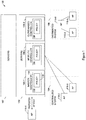
- FIG. 1 illustrates an example of a network 100 for deploying an AP 118-1 consistent with the disclosure.
- the network 100 includes the servers 102, the centralized system 104, the distributed system 106, and the servers 107.
- the centralized system 104 can include a number of APs including an AP 118-2 and an AP 118-3.
- the distributed system 106 can also include a number of APs including an AP 118-4, an AP 118-5, and an AP 118-6.
- the APs 118-1 to 118-6 can collectively be referred to as APs 118.
- the AP 118-1 upon activating the AP 118-1, can discover the servers 107. Upon discovering the servers 107, the AP 118-1 can request a pointer. The requested pointer can be to a device and/or a component that can provide an AP role. As such, the servers 107 can provide a pointer to a server from the servers 102 or multiple of the servers 102.
- the servers 107 can include hardware and/or software that contribute to the network environment.
- the servers 107 can include a DHCP server, a DNS, and/or an ADP server, among other types of servers and/or protocols that can comprise a network environment.
- the servers 107 can point to the servers 102.
- a DHCP can return an option 60 and/or an option 43 pointing to an address of the controllers 108.
- the servers 102 can comprise hardware and software to manage and/or control the resources of the centralized system 104.
- the servers 102 can include a controller or multiple controllers.
- the servers 102 include at least one of a master controller 108-1, a mobility controller 108-2, and a cloud-based controller 108-3, referred to generally as controllers 108.
- references to the controllers 108 can include references to the master controller 108-1, the mobility controller 108-2, and/or the cloud-based controller 108-3.
- an action described as being performed by the controllers 108 can reference an action performed by the mobility controller 108-2.
- the mobility controller 108-2 can comprise hardware and/or software to manage and/or control the resource of the centralized system 104.
- the master controller 108-1 can manage and/or control a cluster of mobility controllers and can be part of the centralized system 104.
- the cloud-based controller 108-3 can comprise hardware and/or software to support AP deployment. As such, the cloud-based controller 108-3 can be referred to as a deployment controller.
- the inclusion of the master controller 108-1, the mobility controller 108-2, and the cloud-based controller 108-3 in servers 102 and the network 100 is provided for illustrative purposes.
- the network 100 can comprise a greater or a0 lesser number of controllers than those shown in Figure 1 .
- the network 100 can also comprise different types of controllers than those described herein.
- Each of the controllers 108 can comprise a deployment policy 116.
- the deployment policy 116 can define a policy for assigning APs to the centralized system 104 and/or the distributed system 106.
- the deployment policy 116 can associate identifiers (IDs) of APs and/or properties of APs with systems (e.g., centralized system 104 and/or distributed system 106) of the network 100.
- IDs identifiers
- a property of the AP 118-1 can include an internet protocol (IP) address, a media access control (MAC) address of the AP 118-1, and/or a group association of the AP 118-1, among other properties of the AP 118-1.
- IP internet protocol
- MAC media access control
- the deployment policy 116 can define ranges of the properties of the APs 118 and associate the given ranges of the properties with a centralized system 104 and/or a distributed system 106.
- the deployment policy 116 can define that a first range of IP addresses of the network 100 can be deployed to a centralized system 104.
- the deployment policy 116 can also define a first range of IP addresses and a second range of IP addresses of the network 100.
- the deployment policy 116 can associate the first range with the centralized system 104 and/or the second range of IP addresses with the distributed system 106 of the network 100.
- the controllers 108 can compare a property of the AP 118-1 with the ranges of the property(s) of the APs to determine an associated system. The controller 108 can then assign an AP role based on the identified system.
- the AP role can describe the inclusion of an AP in the centralized system 104 and/or the distributed system 106.
- an AP role can include a centralized role and/or a distributed role.
- the AP role can also describe a role within the centralized system 104 and/or the distributed system 106.
- the AP 118-1 can be assigned a distributed role and a relay role to deploy the AP 118-1 to the distributed system 106 as a relay base station, among other examples.
- the controllers 108 can receive a request for an AP role from the AP 118-1.
- the request can include properties (e.g., data) associated with the AP 118-1.
- the request can include an ID of the AP 118-1, an IP address of the AP 118-1, a MAC address of the AP 118-1, and/or a group association of the AP 118-1, among other possible types of properties associated with the AP 118-1.
- the AP 118-1 can provide a property or multiple properties associated with the AP 118-1 if it is not known the type of data that the controllers 108 utilize to generate the AP role.
- the AP 118-1 can retain the property of the AP 118-1 until the controllers 108 request the property of the AP 118-1.
- the AP 118-1 can request an AP role.
- the controllers 108 responsive to receiving the request, can acknowledge the request and/or request a property or multiple properties associated with the AP 118-1. For example, the controllers 108 can request a MAC address of the AP 118-1.
- the controllers 108 can retrieve the deployment policy 116.
- the deployment policy 116 can be stored in a database 114.
- the deployment policy 116 can also be stored in memory of the servers 102 and/or the controllers 108 without the use of a database.
- Each of the controllers 108 can host a database (DB) 114.
- the database 114 can host the deployment policy 116.
- the DB 114 and/or the deployment policy 116 can be a same DB and deployment policy.
- the DB 114 and/or the deployment policy 116 can be different DB's and/or deployment policies.
- the master controller 108-1 can host a first deployment policy
- the mobility controller 108-2 can host a second deployment policy
- the cloud-based controller 108-3 can host a third policy.
- Each of the first deployment policy, the second deployment policy, and/or the third deployment policy can be maintained independently of the other deployment policies.
- each of the first, the second, and/or the third deployment policies can be utilized in the network 100.
- the controllers 108 can utilize the properties of the AP 118-1 to determine an AP role.
- the controllers 108 can compare a property of the AP 118-1 to a corresponding a range or multiple ranges of property values defined by the deployment policy 116.
- the deployment policy 118-1 can define a first range of MAC addresses and a second range of MAC addresses, the first range of MAC addresses being associated with the centralized system 104 while the second range of MAC addresses are associated with the distributed system 106.
- the controllers 108 can compare a MAC address of the AP 118-1 to the first range of MAC addresses and/or a second range of MAC addresses.
- the controllers 108 can determine that the MAC address of the AP 118-1 is in the first range of MAC addresses defined by the deployment policy 116.
- the controllers 108 can associate the property of the AP 118-1 with a range of the property values. For examples, the controllers 108 can associate the MAC address with the first range of property values.
- the controllers 108 can also associate the property of the AP 118-1 with one of the systems comprising the network 100. That is, the controllers 108 can associate the MAC address of the AP 118-1 with the centralized system 104. Based on the association of the property of the AP 118-1 to a system of the network 100, the controllers 108 can associated the AP 118-1 with the system of the network 100.
- the controllers 108 can associate the AP 118-1 with the centralized system 104.
- the controllers 108 can assign an AP role based on the association between the system of the network 100 and the AP 118-1.
- the controller 108 can assign a centralized role to the AP 118-1 based on the association between the centralized system 104 and the AP 118-1.
- the AP 118-1 can set an internal flag to indicate that future restarts of the AP 118-1 can include a new request for an AP role. For example, if a flag internal to the AP 118-1 is set, then upon reinitiating the AP 118-1 the AP 118-1 can set the features associated with the AP role previously assigned. Similarly, the AP 118-1 can store the AP role that is assigned by the controllers 108.
- the flag can comprise a plurality of bits stored in a plurality of memory cells and/or registers in the APs 118. Setting the flag can include storing a first predefined value in the memory cells and/or registers associated with the flag. Resetting the flag can include storing a second predefined value in the memory cells and/or the registers associated with the flag.
- the AP role can be assigned to the AP 118-1 using more or less associations than the associations describe herein.
- the controllers 108 can compare the property(s) of the AP 118-1 to the range(s) of property values to identify a range of values. Based on the identification of the range of values, the controllers 108 can select a corresponding system of the network 100. Based on the selection, the controllers 108 can select a corresponding AP role which can be assigned to the AP 118. For example, the controller 108 can then access an AP role associated with the centralized system 104 and provide the accessed AP role to the AP 118-1.
- the controllers 108 can receive the request for the AP role and a corresponding property of the AP 118-1.
- the controllers 108 can retrieve the deployment policy and determine that the property of the AP 118-1 is not included in a ranges of corresponding property values.
- the controllers 108 can reply to the request describing that an AP role is not determined based on the provided property.
- the AP 118-1 can determine whether to provide a different property or assume a default role.
- a default role can be a centralized role.
- the AP 118-1 can self-assign the centralized role based on receiving a message describing that an AP role was not assigned and/or based on a message describing that the property is not included in the range of corresponding property values.
- the AP 118-1 can also provide a different property to the controllers 108 and wait for an AP role.
- the AP 118-1 can provide a predetermined quantity of properties to the controllers 108 before assuming a role or throwing an exception.
- the AP 118-1 can also provide the property and/or a different property to a different one of the controllers 108-2. For example, responsive to not receiving an AP role after providing a first property to the mobility controller 108-2, the AP 118-1 can provide the first property and/or a second property of the AP 118-1 to the master controllers 108-1 and/or the cloud-based controller 108-3.
- the AP 118-1 can provide multiple properties to the controllers 108.
- the AP 118-1 can provide a first property and a second property to the controllers 108.
- the controllers 108 can determine that a portion of the provided properties are within a range of property values and that a second portion of the provided properties are not within the range or properties.
- the controllers 108 can determine that the first property of the AP 118-1 is within a range of property values associated with the first property.
- the controllers 108 can determine that the second property of the AP 118-1 are not within a range of property values associated with the second property.
- the controllers 108 can determine not to provide an AP role based on determining that the second property is not within a range of property values associated with the second property. In other examples, the controllers 108 can provide an AP role based on determining that the first property is within a range of property values associated with the first property.
- the controllers 108 can also assign an AP role based on whether the properties are within a plurality of ranges of property values and/or based on whether the properties are not within a plurality of ranges of property values. For example, the controllers 108 can determine that the first property is not within a first range of property values and can determine that the second property is within a second range of property values. The controllers 108 can assign an AP role based on the exclusion of the first property from the first range of property values and the inclusion of the first property from the second range of property values. That is, the controllers 108 can assign an AP role or decide not to assign an AP role based on the combination of properties included in ranges of property values and based on the combination of properties not included in ranges of property values.
- the specific mapping between the inclusions and exclusions of properties in the property values and AP roles can be defined by the controllers 108 and/or by the deployment policy 116.
- the deployment policy 116 can define that if the AP 118-1 comprises property values that are included in second rage of property values and not included in the first range of property values, then the AP 118-1 is to be assigned to the distributed system 106.
- the deployment policy 116 can be updated without modifying the network environment.
- the deployment policy 116 can be updated without changing a pointer stored in the servers 107.
- the deployment policy 116 can be updated without modifying the controllers 108 as described in association with Figure 3 .
- the controllers 108 can provide a notification of the updated deployment policy 116 to the APs 118.
- the APs 118 can then reset their associated flags and request a new AP role as previously defined.
- the APs 118 can also reset their flags and restart themselves.
- the APs 118 can determine that their flags are not set and can request an AP role from the controllers 108.
- the controllers 108 can then assign AP roles based on the updated deployment policy 116.
- the controllers 108 can reassign AP roles to the APs 118 without waiting for a request for an AP role.
- FIG. 2 illustrates an example of a network 200 for deploying an AP 218-1 consistent with the disclosure.
- the network 200 includes a centralized system 204 and a distributed system 206.
- the centralized system 204 can include APs 218-2 and 218-3.
- the distributed system 206 can include APs 218-4 to 218-6.
- a cloud server 220 can be part of the network 200. In other examples, the cloud server 220 can be external to the network 200.
- the cloud server 220 can include shared resources provided by a cloud service provider.
- the cloud server 220 can be accessed through a network 222.
- the network 222 can be a LAN or a wide area network (WAN) that is independent or different from the network 200.
- the cloud server 220 can include controllers 208 which are analogous to controllers 108 in Figure 1 .
- the controllers 208 can represent a master controller, a mobility controller, and/or a cloud-based controller.
- Each of the controllers 208 can include a DB 214 and a deployment policy 216.
- a plurality of servers can provide a pointer to the cloud server 220 and/or the controllers.
- the AP 218-1 can request an AP role from the controllers 208.
- the controllers 208 can provide the AP role as previously described in Figure 1 .
- Figure 3 illustrates an example a network for deploying an AP consistent with the disclosure.
- the network can include servers 302 and/or a cloud server 320, which are analogous to servers 102 and cloud server 220 in Figures 1 and 2 , respectively.
- Figure 3 also includes an AP 318.
- Figure 3 shows the deployment policy 316 as being stored externally from the servers 302 and the cloud servers 320.
- the servers 302 include can include a master controller 308-1, a mobility controller 308-2, and/or a cloud-based controller 308-3 which are analogous to the master controller 108-1, the mobility controller 108-2, and/or the cloud-based controller 108-3 in Figure 1 , respectively.
- the master controller 308-1, the mobility controller 308-2, and the cloud-based controller 308-3 can be referred to collectively as the controllers 308.
- the cloud server 320 may not be part of a network comprising APs 118, the centralized system 104, and the distributed system 206 as shown in Figure 1
- the cloud server 320 can also include the mobility controller 308-1, the mobility controller 308-2, and/or the cloud-based controller 308-3.
- references to the controllers 308 in the servers 302 can also include references to the controllers that are part of the cloud server 320.
- Figure 3 also shows a WAN 322.
- the WAN can be independent and separate from the network comprising at least the servers 302.
- the servers 302 can be coupled to the WAN 322 to access a DB 314 and a deployment policy 316.
- the WAN can be an example of the network 222 shown in Figure 2 .
- Figure 1 shows the deployment policy 116 and the DB 114 as being local to the network comprising the servers 102.
- Figure 3 shows the DM 314 and the deployment policy 316 as being external to the network comprising the servers 302.
- the DB 314 and the deployment policy 316 can be hosted by a plurality of computing devices that are connected to the network 322.
- Decoupling the DB 314 and/or the deployment policy 316 from the controllers 308 can provide the ability to modify the DB 314 and/or the deployment policy 316 without altering a network environment, the servers 302 and/or the controllers 308. That is, the DB 314 and/or the deployment policy 316 can be modified, edited, and/or replaces without making changes to a network environment associated with the serves 302, without making changes to the servers 302, and/or without making changes to the controllers 308.
- the deployment policy 316 can be modified by, for example, modifying a range of properties of the APs.
- the deployment policy 316 can also be modified by modifying a mapping between the ranges of properties and a plurality of systems of the network comprising the servers 302 (e.g., centralized system 204 and/or the distributed system 206).
- the deployment policy 316 can be deleted and a new deployment policy can be saved in its place using the DB 314 without further modification of the serves 302, the controllers 308, and/or the cloud server 320.
- the controllers 308 and/or the cloud server 320 can maintain a pointer to the DB 314 and/or the deployment policy 316.
- the pointer can include an address of the DB 314 and/or the deployment policy 316.
- the pointer can include credentials to access the deployment policy 316 via the DB 314.
- the deployment policy 316 can be deleted, rewritten, and/or modified without replacing the pointer stored in the controllers 308 and/or the cloud server 320.
- the AP 318 can provide properties to the servers 302 and/or the cloud servers 320.
- the servers 302 and/or the cloud servers 320 can retrieve and/or access the deployment policy 316 from the DB 314 which is hosted externally from the servers 302 and/or the cloud servers 320.
- the servers 302 and/or the cloud servers 320 can return an AP role using the deployment policy 316 and the properties as previously described.
- Figure 4 illustrates an example of an apparatus 450 for deploying an AP consistent with the disclosure.
- the apparatus 450 includes a processing resource 451 and a memory resource 452.
- the processing resource 451 may be a hardware processing unit such as a microprocessor, application specific instruction set processor, coprocessor, network processor, or similar hardware circuitry that can cause machine-readable instructions to be executed. In some examples, the processing resource 451 may be a plurality of hardware processing units that can cause machine-readable instructions to be executed.
- the processing resource 451 can include central processing units (CPUs) and/or graphics processing units (GPUs), among other types of processing units.
- the memory resource 452 may be any type of volatile or non-volatile memory or storage, such as random access memory
- RAM random access memory
- ROM read-only memory
- the memory resource 452 may store instructions 453 thereon. When executed by the processing resource 451, the instructions 453 may cause the apparatus 450 to perform specific tasks and/or functions. For example, at block 454, the memory resource 452 may store instructions 453 which may be executed by the processing resource 451 to cause the apparatus 450 to receive a message from an AP requesting a role (e.g., AP role) in a network. At block 455, the memory resource 452 may store instructions 453 which may be executed by the processing resource 451 to cause the apparatus 450, based on receiving the message, to access a deployment policy. At block 456, the memory resource 452 may store instructions 453 which may be executed by the processing resource 451 to cause the apparatus 450 to determine whether the deployment policy is defined for the AP.
- a role e.g., AP role
- the memory resource 452 may store instructions 453 which may be executed by the processing resource 451 to cause the apparatus 450, based on determining that the deployment policy is defined for the AP, to assign the role to the AP corresponding to the deployment policy and corresponding to at least one of a centralized system or a distributed system of the network.
- Determining whether the deployment policy is defined for the AP can include determining whether a property of the AP is incorporated in a range of property values defined in the deployment policy. That is, a determination of whether the deployment policy is defined for the AP can be based on a property of the AP.
- the properties of the AP can include an IP address of the AP, a MAC address of the AP, and/or a group associated with the AP.
- An AP can be associated with a group if the AP is part of the group, among other possible associations with a group.
- a controller can determine that the deployment policy is not defined for the AP. The controller can refrain from assigning the role to the AP based on determining that the deployment policy is not defined for the AP.
- the AP can assume a role based on not being issued a role by the controller. In some examples, the AP can assume a default or predetermined role.
- the AP can include a controller-based mode and a controller-less mode. In a controller-less mode, the AP can function as a controller-less AP. In a controller-based mode, the AP can function as a controller-based AP.
- Figure 5 illustrates an example flow diagram of a method 570 for deploying an AP consistent with the disclosure.
- the method 570 includes instructing a server of a network to return a pointer, wherein the pointer identifies a controller of the network.
- the method 570 includes providing, via the server, the pointer to an AP responsive to receiving, at the server and from the AP, a first request for the pointer.
- the method 570 includes receiving a second request for an AP role via the pointer, wherein the second request is received at the controller and from the AP.
- the method 570 includes, responsive to receiving the second request, accessing a deployment policy.
- the method includes providing the AP role corresponding to the AP as defined by the deployment policy, wherein the deployment policy defines the AP role in a centralized system.
- the controller can be a cloud server and/or can be hosted by a cloud server to manage the centralized system.
- the controller can be a master controller.
- the master controller can manage the centralized system via a virtual appliance.
- the server providing the pointer can be a DHCP server to return an option 60 and/or an option 43 pointing to an address of the controller.
- the server can comprise an environment of the network.
- the deployment can be stored locally to the controller.
- the controller and the deployment can be hosted by a same server and/or by a different server within the network that is comprised of the controller.
- the deployment policy can be external to the controller and/or the network.
- the deployment policy can be stored in a computing device that is coupled to the controller via a WAN such as the world wide web.
- the deployment policy can be hosted by a database.
- the deployment policy and/or the database can be external to the controller and/or the network comprised of the controller.
- Figure 6 illustrates an example non-transitory machine-readable medium 660 for deploying an AP consistent with the disclosure.
- a processing resource 651 may execute instructions stored on the non-transitory machine readable medium 660.
- the non-transitory machine readable medium 660 may be any type of volatile or non-volatile memory or storage, such as random access memory (RAM), flash memory, read-only memory (ROM), storage volumes, a hard disk, or a combination thereof.
- the example medium 660 stores instructions 661 executable by a processing resource 651 to retrieve a pointer to a controller of a centralized system of a network.
- the example medium 660 stores instructions 662 executable by a processing resource 651 to request an AP role from the controller.
- the example medium 660 stores instructions 663 executable by the processing resource 651 to, responsive to receiving the AP role, activate a first plurality of functionalities associated with the centralized system.
- the example medium 660 stores instructions 664 executable by the processing resource 651 to, responsive to not receiving the AP role, activate a second plurality of functionalities associated with a distribution system.
- the example medium 660 stores instructions 665 executable by the processing resource 651 to set a flag internal to an AP to indicate that the role has been assigned.
- the example medium 660 can also comprise instructions to receive a new role from the controller. Responsive to determining that the plurality of functionalities are activated at instructions 663 and/or responsive to receiving the new role, the first plurality of functionalities can be deactivated. Responsive to deactivating the first plurality of functionalities, the second plurality of functionalities can be activated.
- the example medium 660 can also comprise instructions to receive a new role new AP role from the controller. Responsive to determining that the second plurality of functionalities are activated at instructions 664 and/or based on receiving the new AP role, the second plurality of functionalities can be deactivated. Responsive to deactivating the second plurality of functionalities, the first plurality of functionalities can be activated.
- the AP may not receive a new AP role but instead can receive an indication of a new AP role from the controller. That is, the controller can provide a message and not a new AP role indicating that a new AP role is available for the AP. Based on receiving the indication of the new AP role, the AP can reset the flag and restart itself to retrieve the new AO role from the controller as previously described.
Landscapes
- Engineering & Computer Science (AREA)
- Computer Networks & Wireless Communication (AREA)
- Signal Processing (AREA)
- Quality & Reliability (AREA)
- Small-Scale Networks (AREA)
- Mobile Radio Communication Systems (AREA)
Abstract
Description
- Systems and devices can comprise access points (APs) to connect user devices to a network. The network can be a local area network (LAN). The network can comprise a centralized system comprising multiple APs and user devices.
-
-
Figure 1 illustrates an example of a network for deploying an AP consistent with the disclosure. -
Figure 2 illustrates an example of a network for deploying an AP consistent with the disclosure. -
Figure 3 illustrates an example a network for deploying an AP consistent with the disclosure. -
Figure 4 illustrates an example of an apparatus for deploying an AP consistent with the disclosure. -
Figure 5 illustrates an example flow diagram of a method for deploying an AP consistent with the disclosure. -
Figure 6 illustrates an example non-transitory machine-readable medium for deploying an AP consistent with the disclosure. - An access point (AP) may be deployed to a network environment. The AP may be deployed to a network without active configurations for a centralized system of the network or a distributed system of the network, and later provisioned as an AP in the centralized system or the distributed system after joining the network. In a number of examples, a controller of the network can assign an AP role to the AP to instruct the AP to function in the centralized system and/or the distributed system of the network. The AP can activate functionalities consistent with the AP role.
- As used herein, a network and a network environment can describe a wireless network such as a wireless local area network (WLAN), among other types of wireless networks. The network can include a mixed WLAN infrastructure in a same layer 2 network or a single WLAN infrastructure. For example, the network can include multiple systems. In some examples, the network can include at least two different systems. The network can include a centralized system and/or a distributed system. The centralized system and the distributed system of the network can be referred to as a centralized network and a distributed network of the network, respectively.
- The centralized system manages, allocates, and/or controls network resources from a main location. That is, the centralized system can manage and/or control network resources from a centralized point comprising multiple computing devices. The centralized system can utilize a client-server model through which network resources and/or data passes. The network resources can include APs, among other network resources. In some examples, the centralized system can comprise a portion of a network in which the APs are coupled to a central server which is the acting agent for communications. The central server can manage and/or control the AP. The central server can be referred to as a controller.
- A distributed system can provide connectivity using multiple access points without a central server. Within a distributed system, APs may be assigned different roles. An AP can be a main base station, a relay base station, and/or a remote base station, among other roles that an AP can assume within a distributed system of a network. A main base station can provide a wired connection to the Ethernet. A relay base station can relay data between the remote base station and the main base station. In some examples, the relay base station can relay data to other relay base stations. The remote base station can accept connections from user devices and pass received data to relay base stations and/or the main base station.
- As used herein, an AP comprises hardware and software to connect a device to a wired network utilizing a wireless service such as WLAN. An AP can function in a controller-based mode and/or in a controller-less mode. In a controller-based mode, the AP can function as a controller-based AP. A controller-based AP can communicate with a controller. In a controller-less mode, the AP can function as a controller-less AP. A controller-less AP can function without communicating with a controller. The controller-based AP can define a device configured for a centralized system. The controller-less AP can define a device configured for a distributed system. As such, an AP functioning in a controller-based mode can function in a centralized system and an AP functioning in a controller-less mode can function in a distributed system..
- An AP that is initially introduced to a network comprised of a centralized system or a distributed system may not include activated functionalities to function within the network. Said differently, the AP may not include activated functionalities to function within a centralized system or a distributed system of the network. It may be useful to determine whether the AP is to function within a centralized system or a distributed system of the network after deploying the UAP to a particular network. In some examples, the AP may learn an AP role through interacting with a network environment using a dynamic host configuration protocol (DHCP), a domain name server (DNS) protocol, and/or a discover protocol (e.g., Aruba discovery protocol (ADP)), etc. The AP can attach to a corresponding management entity and activate the set of software features corresponding to the particular network that the UAP is deployed at (e.g., either the centralized system or the distributed system). For example, the AP can attach to a management entity of the centralized system and activate features corresponding to the centralized system or the AP can attach to a management entity of the distributed system and activate features corresponding to the distributed system.
- In some examples, the AP can be deployed to a mixed network comprising both a centralized system and a distributed system in a layer 2 network. It may be undesirable to change the network environment such as the DHCP and/or the DNS to provide the AP access to a given AP role given that changing the network environment may affect other APs in the same network. For example, it may be undesirable to program the DNS at a first point in time to provide an AP access to an AP role and program the DNS at a second point in time to provide a different AP access to a different AP role.
- In some examples, the AP role can be assigned to allow the AP to function in both the centralized system and the distributed system without configuring the DHCP, the DNS, and/or the ADP. The AP role of a given AP can be defined in a deployment policy which may be accessible to a controller of the centralized system. The deployment policy may be independent of the DHCP, the DNS, and/or the ADP which may provide an assignment or reassignment of an AP role without changes to the DHCP, the DNS, and/or the ADP.
- The deployment policy can include a mapping between properties of APs and systems of the network. For example, a deployment policy can include a plurality of ranges of properties. The plurality of ranges of properties can be associated with different types of property. For example, a first type of property of an AP policy can be associated with a first range of properties and a second range of properties, a second type of property of the AP can be associated with a third range of properties. Each of the ranges of properties can be associated with the systems of the network (e.g., centralized system and/or distributed system). In some examples, some of the ranges of properties are not associated with the systems of the network.
- The figures herein follow a numbering convention in which the first digit corresponds to the drawing figure number and the remaining digits identify an element or component in the drawing. For example,
reference numeral 104 may refer to element "04" inFigure 1 and an analogous element may be identified byreference numeral 204 inFigure 2 . Elements shown in the various figures herein can be added, exchanged, and/or eliminated to provide a number of additional examples. In addition, the proportion and the relative scale of the elements provided in the figures are intended to illustrate the examples described, and should not be taken in a limiting sense. -
Figure 1 illustrates an example of anetwork 100 for deploying an AP 118-1 consistent with the disclosure. Thenetwork 100 includes theservers 102, thecentralized system 104, the distributedsystem 106, and theservers 107. Thecentralized system 104 can include a number of APs including an AP 118-2 and an AP 118-3. The distributedsystem 106 can also include a number of APs including an AP 118-4, an AP 118-5, and an AP 118-6. The APs 118-1 to 118-6 can collectively be referred to as APs 118. - In some examples, upon activating the AP 118-1, the AP 118-1 can discover the
servers 107. Upon discovering theservers 107, the AP 118-1 can request a pointer. The requested pointer can be to a device and/or a component that can provide an AP role. As such, theservers 107 can provide a pointer to a server from theservers 102 or multiple of theservers 102. - The
servers 107 can include hardware and/or software that contribute to the network environment. For example, theservers 107 can include a DHCP server, a DNS, and/or an ADP server, among other types of servers and/or protocols that can comprise a network environment. In some examples, theservers 107 can point to theservers 102. For example, a DHCP can return an option 60 and/or an option 43 pointing to an address of the controllers 108. - The
servers 102 can comprise hardware and software to manage and/or control the resources of thecentralized system 104. Theservers 102 can include a controller or multiple controllers. For example, theservers 102 include at least one of a master controller 108-1, a mobility controller 108-2, and a cloud-based controller 108-3, referred to generally as controllers 108. - In the examples described herein references to the controllers 108 can include references to the master controller 108-1, the mobility controller 108-2, and/or the cloud-based controller 108-3. For example, an action described as being performed by the controllers 108 can reference an action performed by the mobility controller 108-2.
- The mobility controller 108-2 can comprise hardware and/or software to manage and/or control the resource of the
centralized system 104. The master controller 108-1 can manage and/or control a cluster of mobility controllers and can be part of thecentralized system 104. The cloud-based controller 108-3 can comprise hardware and/or software to support AP deployment. As such, the cloud-based controller 108-3 can be referred to as a deployment controller. - The inclusion of the master controller 108-1, the mobility controller 108-2, and the cloud-based controller 108-3 in
servers 102 and thenetwork 100 is provided for illustrative purposes. Thenetwork 100 can comprise a greater or a0 lesser number of controllers than those shown inFigure 1 . Thenetwork 100 can also comprise different types of controllers than those described herein. - Each of the controllers 108 can comprise a
deployment policy 116. Thedeployment policy 116 can define a policy for assigning APs to thecentralized system 104 and/or the distributedsystem 106. Thedeployment policy 116 can associate identifiers (IDs) of APs and/or properties of APs with systems (e.g.,centralized system 104 and/or distributed system 106) of thenetwork 100. A property of the AP 118-1 can include an internet protocol (IP) address, a media access control (MAC) address of the AP 118-1, and/or a group association of the AP 118-1, among other properties of the AP 118-1. - In some examples, the
deployment policy 116 can define ranges of the properties of the APs 118 and associate the given ranges of the properties with acentralized system 104 and/or a distributedsystem 106. For example, thedeployment policy 116 can define that a first range of IP addresses of thenetwork 100 can be deployed to acentralized system 104. Thedeployment policy 116 can also define a first range of IP addresses and a second range of IP addresses of thenetwork 100. Thedeployment policy 116 can associate the first range with thecentralized system 104 and/or the second range of IP addresses with the distributedsystem 106 of thenetwork 100. - The controllers 108 can compare a property of the AP 118-1 with the ranges of the property(s) of the APs to determine an associated system. The controller 108 can then assign an AP role based on the identified system.
- In some examples, the AP role can describe the inclusion of an AP in the
centralized system 104 and/or the distributedsystem 106. For example, an AP role can include a centralized role and/or a distributed role. The AP role can also describe a role within thecentralized system 104 and/or the distributedsystem 106. The AP 118-1 can be assigned a distributed role and a relay role to deploy the AP 118-1 to the distributedsystem 106 as a relay base station, among other examples. - For example, the controllers 108 can receive a request for an AP role from the AP 118-1. The request can include properties (e.g., data) associated with the AP 118-1. For example, the request can include an ID of the AP 118-1, an IP address of the AP 118-1, a MAC address of the AP 118-1, and/or a group association of the AP 118-1, among other possible types of properties associated with the AP 118-1. The AP 118-1 can provide a property or multiple properties associated with the AP 118-1 if it is not known the type of data that the controllers 108 utilize to generate the AP role.
- In some examples, the AP 118-1 can retain the property of the AP 118-1 until the controllers 108 request the property of the AP 118-1. The AP 118-1 can request an AP role. The controllers 108, responsive to receiving the request, can acknowledge the request and/or request a property or multiple properties associated with the AP 118-1. For example, the controllers 108 can request a MAC address of the AP 118-1.
- Upon receiving the properties of the AP 118-1, the controllers 108 can retrieve the
deployment policy 116. In some examples as shown inFigure 1 , thedeployment policy 116 can be stored in adatabase 114. Thedeployment policy 116 can also be stored in memory of theservers 102 and/or the controllers 108 without the use of a database. - Each of the controllers 108 can host a database (DB) 114. The
database 114 can host thedeployment policy 116. In some examples, theDB 114 and/or thedeployment policy 116 can be a same DB and deployment policy. In other examples, theDB 114 and/or thedeployment policy 116 can be different DB's and/or deployment policies. For example, the master controller 108-1 can host a first deployment policy, the mobility controller 108-2 can host a second deployment policy and the cloud-based controller 108-3 can host a third policy. Each of the first deployment policy, the second deployment policy, and/or the third deployment policy can be maintained independently of the other deployment policies. In some examples, each of the first, the second, and/or the third deployment policies can be utilized in thenetwork 100. - The controllers 108 can utilize the properties of the AP 118-1 to determine an AP role. The controllers 108 can compare a property of the AP 118-1 to a corresponding a range or multiple ranges of property values defined by the
deployment policy 116. For example, the deployment policy 118-1 can define a first range of MAC addresses and a second range of MAC addresses, the first range of MAC addresses being associated with thecentralized system 104 while the second range of MAC addresses are associated with the distributedsystem 106. The controllers 108 can compare a MAC address of the AP 118-1 to the first range of MAC addresses and/or a second range of MAC addresses. The controllers 108 can determine that the MAC address of the AP 118-1 is in the first range of MAC addresses defined by thedeployment policy 116. - Based on the comparison of the property of the AP 118-1 to the multiple ranges of property values, the controllers 108 can associate the property of the AP 118-1 with a range of the property values. For examples, the controllers 108 can associate the MAC address with the first range of property values. The controllers 108 can also associate the property of the AP 118-1 with one of the systems comprising the
network 100. That is, the controllers 108 can associate the MAC address of the AP 118-1 with thecentralized system 104. Based on the association of the property of the AP 118-1 to a system of thenetwork 100, the controllers 108 can associated the AP 118-1 with the system of thenetwork 100. For example, the controllers 108 can associate the AP 118-1 with thecentralized system 104. The controllers 108 can assign an AP role based on the association between the system of thenetwork 100 and the AP 118-1. The controller 108 can assign a centralized role to the AP 118-1 based on the association between thecentralized system 104 and the AP 118-1. - Upon receiving the AP role, the AP 118-1 can set an internal flag to indicate that future restarts of the AP 118-1 can include a new request for an AP role. For example, if a flag internal to the AP 118-1 is set, then upon reinitiating the AP 118-1 the AP 118-1 can set the features associated with the AP role previously assigned. Similarly, the AP 118-1 can store the AP role that is assigned by the controllers 108. The flag can comprise a plurality of bits stored in a plurality of memory cells and/or registers in the APs 118. Setting the flag can include storing a first predefined value in the memory cells and/or registers associated with the flag. Resetting the flag can include storing a second predefined value in the memory cells and/or the registers associated with the flag.
- In some examples, the AP role can be assigned to the AP 118-1 using more or less associations than the associations describe herein. For example, the controllers 108 can compare the property(s) of the AP 118-1 to the range(s) of property values to identify a range of values. Based on the identification of the range of values, the controllers 108 can select a corresponding system of the
network 100. Based on the selection, the controllers 108 can select a corresponding AP role which can be assigned to the AP 118. For example, the controller 108 can then access an AP role associated with thecentralized system 104 and provide the accessed AP role to the AP 118-1. - The controllers 108 can receive the request for the AP role and a corresponding property of the AP 118-1. The controllers 108 can retrieve the deployment policy and determine that the property of the AP 118-1 is not included in a ranges of corresponding property values.
- The controllers 108 can reply to the request describing that an AP role is not determined based on the provided property. The AP 118-1 can determine whether to provide a different property or assume a default role. For example, a default role can be a centralized role. The AP 118-1 can self-assign the centralized role based on receiving a message describing that an AP role was not assigned and/or based on a message describing that the property is not included in the range of corresponding property values. The AP 118-1 can also provide a different property to the controllers 108 and wait for an AP role. The AP 118-1 can provide a predetermined quantity of properties to the controllers 108 before assuming a role or throwing an exception.
- Responsive to not receiving an AP role after providing a property to one of the controllers 108, the AP 118-1 can also provide the property and/or a different property to a different one of the controllers 108-2. For example, responsive to not receiving an AP role after providing a first property to the mobility controller 108-2, the AP 118-1 can provide the first property and/or a second property of the AP 118-1 to the master controllers 108-1 and/or the cloud-based controller 108-3.
- In some examples, the AP 118-1 can provide multiple properties to the controllers 108. For examples, the AP 118-1 can provide a first property and a second property to the controllers 108. The controllers 108 can determine that a portion of the provided properties are within a range of property values and that a second portion of the provided properties are not within the range or properties. For example, the controllers 108 can determine that the first property of the AP 118-1 is within a range of property values associated with the first property. The controllers 108 can determine that the second property of the AP 118-1 are not within a range of property values associated with the second property. In some examples, the controllers 108 can determine not to provide an AP role based on determining that the second property is not within a range of property values associated with the second property. In other examples, the controllers 108 can provide an AP role based on determining that the first property is within a range of property values associated with the first property.
- The controllers 108 can also assign an AP role based on whether the properties are within a plurality of ranges of property values and/or based on whether the properties are not within a plurality of ranges of property values. For example, the controllers 108 can determine that the first property is not within a first range of property values and can determine that the second property is within a second range of property values. The controllers 108 can assign an AP role based on the exclusion of the first property from the first range of property values and the inclusion of the first property from the second range of property values. That is, the controllers 108 can assign an AP role or decide not to assign an AP role based on the combination of properties included in ranges of property values and based on the combination of properties not included in ranges of property values.
- The specific mapping between the inclusions and exclusions of properties in the property values and AP roles can be defined by the controllers 108 and/or by the
deployment policy 116. For example, thedeployment policy 116 can define that if the AP 118-1 comprises property values that are included in second rage of property values and not included in the first range of property values, then the AP 118-1 is to be assigned to the distributedsystem 106. - In some examples, the
deployment policy 116 can be updated without modifying the network environment. Thedeployment policy 116 can be updated without changing a pointer stored in theservers 107. In some examples, thedeployment policy 116 can be updated without modifying the controllers 108 as described in association withFigure 3 . - In some examples, upon a modification of the
deployment policy 116, the controllers 108 can provide a notification of the updateddeployment policy 116 to the APs 118. The APs 118 can then reset their associated flags and request a new AP role as previously defined. The APs 118 can also reset their flags and restart themselves. Upon restarting, the APs 118 can determine that their flags are not set and can request an AP role from the controllers 108. The controllers 108 can then assign AP roles based on the updateddeployment policy 116. In other examples, upon a modification of thedeployment policy 116, the controllers 108 can reassign AP roles to the APs 118 without waiting for a request for an AP role. -
Figure 2 illustrates an example of anetwork 200 for deploying an AP 218-1 consistent with the disclosure. Thenetwork 200 includes acentralized system 204 and a distributedsystem 206. Thecentralized system 204 can include APs 218-2 and 218-3. The distributedsystem 206 can include APs 218-4 to 218-6. In some examples, acloud server 220 can be part of thenetwork 200. In other examples, thecloud server 220 can be external to thenetwork 200. - The
cloud server 220 can include shared resources provided by a cloud service provider. Thecloud server 220 can be accessed through anetwork 222. Thenetwork 222 can be a LAN or a wide area network (WAN) that is independent or different from thenetwork 200. - The
cloud server 220 can includecontrollers 208 which are analogous to controllers 108 inFigure 1 . Thecontrollers 208 can represent a master controller, a mobility controller, and/or a cloud-based controller. Each of thecontrollers 208 can include aDB 214 and adeployment policy 216. - A plurality of servers (e.g., the
servers 107 inFigure 1 ) can provide a pointer to thecloud server 220 and/or the controllers. The AP 218-1 can request an AP role from thecontrollers 208. Thecontrollers 208 can provide the AP role as previously described inFigure 1 . -
Figure 3 illustrates an example a network for deploying an AP consistent with the disclosure. The network can includeservers 302 and/or acloud server 320, which are analogous toservers 102 andcloud server 220 inFigures 1 and2 , respectively.Figure 3 also includes anAP 318.Figure 3 shows thedeployment policy 316 as being stored externally from theservers 302 and thecloud servers 320. - The
servers 302 include can include a master controller 308-1, a mobility controller 308-2, and/or a cloud-based controller 308-3 which are analogous to the master controller 108-1, the mobility controller 108-2, and/or the cloud-based controller 108-3 inFigure 1 , respectively. The master controller 308-1, the mobility controller 308-2, and the cloud-based controller 308-3 can be referred to collectively as the controllers 308. In some examples, thecloud server 320 may not be part of a network comprising APs 118, thecentralized system 104, and the distributedsystem 206 as shown inFigure 1 - Although not shown for ease of reference, the
cloud server 320 can also include the mobility controller 308-1, the mobility controller 308-2, and/or the cloud-based controller 308-3. As such, references to the controllers 308 in theservers 302 can also include references to the controllers that are part of thecloud server 320. -
Figure 3 also shows aWAN 322. The WAN can be independent and separate from the network comprising at least theservers 302. Theservers 302 can be coupled to theWAN 322 to access aDB 314 and adeployment policy 316. The WAN can be an example of thenetwork 222 shown inFigure 2 . -
Figure 1 shows thedeployment policy 116 and theDB 114 as being local to the network comprising theservers 102.Figure 3 shows theDM 314 and thedeployment policy 316 as being external to the network comprising theservers 302. Although not shown theDB 314 and thedeployment policy 316 can be hosted by a plurality of computing devices that are connected to thenetwork 322. - Decoupling the
DB 314 and/or thedeployment policy 316 from the controllers 308 can provide the ability to modify theDB 314 and/or thedeployment policy 316 without altering a network environment, theservers 302 and/or the controllers 308. That is, theDB 314 and/or thedeployment policy 316 can be modified, edited, and/or replaces without making changes to a network environment associated with theserves 302, without making changes to theservers 302, and/or without making changes to the controllers 308. - The
deployment policy 316 can be modified by, for example, modifying a range of properties of the APs. Thedeployment policy 316 can also be modified by modifying a mapping between the ranges of properties and a plurality of systems of the network comprising the servers 302 (e.g.,centralized system 204 and/or the distributed system 206). - In some examples, the
deployment policy 316 can be deleted and a new deployment policy can be saved in its place using theDB 314 without further modification of theserves 302, the controllers 308, and/or thecloud server 320. For example, the controllers 308 and/or thecloud server 320 can maintain a pointer to theDB 314 and/or thedeployment policy 316. The pointer can include an address of theDB 314 and/or thedeployment policy 316. The pointer can include credentials to access thedeployment policy 316 via theDB 314. Thedeployment policy 316 can be deleted, rewritten, and/or modified without replacing the pointer stored in the controllers 308 and/or thecloud server 320. - The
AP 318 can provide properties to theservers 302 and/or thecloud servers 320. Theservers 302 and/or thecloud servers 320 can retrieve and/or access thedeployment policy 316 from theDB 314 which is hosted externally from theservers 302 and/or thecloud servers 320. Theservers 302 and/or thecloud servers 320 can return an AP role using thedeployment policy 316 and the properties as previously described. -
Figure 4 illustrates an example of anapparatus 450 for deploying an AP consistent with the disclosure. As shown inFigure 4 , theapparatus 450 includes aprocessing resource 451 and amemory resource 452. - The
processing resource 451 may be a hardware processing unit such as a microprocessor, application specific instruction set processor, coprocessor, network processor, or similar hardware circuitry that can cause machine-readable instructions to be executed. In some examples, theprocessing resource 451 may be a plurality of hardware processing units that can cause machine-readable instructions to be executed. Theprocessing resource 451 can include central processing units (CPUs) and/or graphics processing units (GPUs), among other types of processing units. Thememory resource 452 may be any type of volatile or non-volatile memory or storage, such as random access memory - (RAM), flash memory, read-only memory (ROM), storage volumes, a hard disk, or a combination thereof.
- The
memory resource 452 may storeinstructions 453 thereon. When executed by theprocessing resource 451, theinstructions 453 may cause theapparatus 450 to perform specific tasks and/or functions. For example, atblock 454, thememory resource 452 may storeinstructions 453 which may be executed by theprocessing resource 451 to cause theapparatus 450 to receive a message from an AP requesting a role (e.g., AP role) in a network. Atblock 455, thememory resource 452 may storeinstructions 453 which may be executed by theprocessing resource 451 to cause theapparatus 450, based on receiving the message, to access a deployment policy. Atblock 456, thememory resource 452 may storeinstructions 453 which may be executed by theprocessing resource 451 to cause theapparatus 450 to determine whether the deployment policy is defined for the AP. Atblock 457, thememory resource 452 may storeinstructions 453 which may be executed by theprocessing resource 451 to cause theapparatus 450, based on determining that the deployment policy is defined for the AP, to assign the role to the AP corresponding to the deployment policy and corresponding to at least one of a centralized system or a distributed system of the network. - Determining whether the deployment policy is defined for the AP can include determining whether a property of the AP is incorporated in a range of property values defined in the deployment policy. That is, a determination of whether the deployment policy is defined for the AP can be based on a property of the AP. The properties of the AP can include an IP address of the AP, a MAC address of the AP, and/or a group associated with the AP. An AP can be associated with a group if the AP is part of the group, among other possible associations with a group.
- In some examples, a controller can determine that the deployment policy is not defined for the AP. The controller can refrain from assigning the role to the AP based on determining that the deployment policy is not defined for the AP. The AP can assume a role based on not being issued a role by the controller. In some examples, the AP can assume a default or predetermined role. The AP can include a controller-based mode and a controller-less mode. In a controller-less mode, the AP can function as a controller-less AP. In a controller-based mode, the AP can function as a controller-based AP.
-
Figure 5 illustrates an example flow diagram of amethod 570 for deploying an AP consistent with the disclosure. Atblock 571, themethod 570 includes instructing a server of a network to return a pointer, wherein the pointer identifies a controller of the network. Atblock 572, themethod 570 includes providing, via the server, the pointer to an AP responsive to receiving, at the server and from the AP, a first request for the pointer. Atblock 573, themethod 570 includes receiving a second request for an AP role via the pointer, wherein the second request is received at the controller and from the AP. Atblock 574, themethod 570 includes, responsive to receiving the second request, accessing a deployment policy. Atblock 575, the method includes providing the AP role corresponding to the AP as defined by the deployment policy, wherein the deployment policy defines the AP role in a centralized system. - In some examples, the controller can be a cloud server and/or can be hosted by a cloud server to manage the centralized system. The controller can be a master controller. The master controller can manage the centralized system via a virtual appliance.
- The server providing the pointer can be a DHCP server to return an option 60 and/or an option 43 pointing to an address of the controller. The server can comprise an environment of the network.
- In some examples, the deployment can be stored locally to the controller. The controller and the deployment can be hosted by a same server and/or by a different server within the network that is comprised of the controller.
- In other examples, the deployment policy can be external to the controller and/or the network. For examples, the deployment policy can be stored in a computing device that is coupled to the controller via a WAN such as the world wide web.
- The deployment policy can be hosted by a database. The deployment policy and/or the database can be external to the controller and/or the network comprised of the controller.
-
Figure 6 illustrates an example non-transitory machine-readable medium 660 for deploying an AP consistent with the disclosure. Aprocessing resource 651 may execute instructions stored on the non-transitory machinereadable medium 660. The non-transitory machinereadable medium 660 may be any type of volatile or non-volatile memory or storage, such as random access memory (RAM), flash memory, read-only memory (ROM), storage volumes, a hard disk, or a combination thereof. - The example medium 660
stores instructions 661 executable by aprocessing resource 651 to retrieve a pointer to a controller of a centralized system of a network. The example medium 660stores instructions 662 executable by aprocessing resource 651 to request an AP role from the controller. The example medium 660stores instructions 663 executable by theprocessing resource 651 to, responsive to receiving the AP role, activate a first plurality of functionalities associated with the centralized system. The example medium 660stores instructions 664 executable by theprocessing resource 651 to, responsive to not receiving the AP role, activate a second plurality of functionalities associated with a distribution system. The example medium 660stores instructions 665 executable by theprocessing resource 651 to set a flag internal to an AP to indicate that the role has been assigned. - The
example medium 660 can also comprise instructions to receive a new role from the controller. Responsive to determining that the plurality of functionalities are activated atinstructions 663 and/or responsive to receiving the new role, the first plurality of functionalities can be deactivated. Responsive to deactivating the first plurality of functionalities, the second plurality of functionalities can be activated. - The
example medium 660 can also comprise instructions to receive a new role new AP role from the controller. Responsive to determining that the second plurality of functionalities are activated atinstructions 664 and/or based on receiving the new AP role, the second plurality of functionalities can be deactivated. Responsive to deactivating the second plurality of functionalities, the first plurality of functionalities can be activated. - In some examples, the AP may not receive a new AP role but instead can receive an indication of a new AP role from the controller. That is, the controller can provide a message and not a new AP role indicating that a new AP role is available for the AP. Based on receiving the indication of the new AP role, the AP can reset the flag and restart itself to retrieve the new AO role from the controller as previously described.
- In the foregoing detailed description of the disclosure, reference is made to the accompanying drawings that form a part hereof, and in which is shown by way of illustration how examples of the disclosure may be practiced. These examples are described in sufficient detail to enable those of ordinary skill in the art to practice the examples of this disclosure, and it is to be understood that other examples may be utilized and that process, electrical, and/or structural changes may be made without departing from the scope of the disclosure. As used herein, designators such as "N", etc., particularly with respect to reference numerals in the drawings, indicate that a number of the particular feature so designated can be included. A "plurality of" is intended to refer to more than one of such things.
Claims (15)
- An apparatus comprising:a memory;a processor executing instructions stored in the memory to:receive a message from an access point (AP) requesting a role in a network;based on receiving the message, access a deployment policy;determine whether the deployment policy is defined for the AP; andbased on determining that the deployment policy is defined for the AP, assign the role to the AP corresponding to the deployment policy and corresponding to at least one of a centralized system or a distributed system of the network.
- The apparatus of claim 1, wherein the processor executes instructions to determine whether the deployment policy is defined for the AP based on a property of the AP.
- The apparatus of claim 2, wherein the property includes at least one of: an internet protocol (IP) address of the AP; a media access control (MAC) address of the AP; a group associated with the AP.
- The apparatus of claim 1, wherein the processor further executes instructions to, based on determining that the deployment policy is not defined for the AP, refrain from assigning the role to the AP.
- The apparatus of claim 1, wherein the AP is one of a controller-based AP or a controller-less AP.
- A method to assign a role to an access point (AP), comprising:instructing a server of a network to return a pointer, wherein the pointer identifies a controller of the network;providing, via the server, the pointer to an access point (AP) responsive to receiving, at the server and from the AP, a first request for the pointer;receiving a second request for an AP role via the pointer, wherein the second request is received at the controller and from the AP;responsive to receiving the second request, accessing a deployment policy; andproviding the AP role corresponding to the AP as defined by the deployment policy, wherein the deployment policy defines the AP role in a centralized system.
- The method of claim 6, wherein the controller is a cloud server to manage the centralized system.
- The method of claim 6, wherein the controller is a master controller to manage the centralized system as a virtual appliance.
- The method of claim 6, wherein the server is a dynamic host configuration protocol (DHCP) server to return an option 60 and 43 pointing to an address of the controller.
- The method of claim 6, wherein accessing the deployment policy further comprises accessing the deployment policy that is local to the controller.
- The method of claim 6, wherein accessing the deployment policy further comprises accessing the deployment policy that is external to the controller wherein, optionally, the deployment policy is a database hosted on a computing device that is external to the controller.
- A non-transitory machine-readable medium storing instructions executable by a processing resource to:retrieve a pointer to a controller of a centralized system of a network;request an access point (AP) role from the controller;responsive to receiving the AP role, activate a first plurality of functionalities associated with the centralized system;responsive to not receiving the AP role, activate a second plurality of functionalities associated with a distributed system; andset a flag internal to an access point (AP) to indicate that the role has been assigned.
- The non-transitory machine-readable medium of claim 12, further comprising instruction to:receive a new AP role from the controller;responsive to determining that the first plurality of functionalities are activated, deactivate the first plurality of functionalities; andresponsive to deactivating the first plurality of functionalities, activate the second plurality of functionalities.
- The non-transitory machine-readable medium of claim 12, further comprising instructions to:receive a new AP role from the controller;responsive to determining that the second plurality of functionalities are activated, deactivate the second plurality of functionalities; andresponsive to deactivating the second plurality of functionalities, activate the first plurality of functionalities.
- The non-transitory machine-readable medium of claim 12, further comprising instructions to receive an indication of a new AP role from the controller, and, optionally, non-transitory machine-readable medium further comprising instructions to:reset the flag; andrestart the AP to retrieve the new AP role from the controller.
Applications Claiming Priority (1)
| Application Number | Priority Date | Filing Date | Title |
|---|---|---|---|
| US15/915,723 US10893418B2 (en) | 2018-03-08 | 2018-03-08 | AP deployment in a network comprising a centralized system and a distributed system |
Publications (2)
| Publication Number | Publication Date |
|---|---|
| EP3537660A1 true EP3537660A1 (en) | 2019-09-11 |
| EP3537660B1 EP3537660B1 (en) | 2021-08-25 |
Family
ID=65724145
Family Applications (1)
| Application Number | Title | Priority Date | Filing Date |
|---|---|---|---|
| EP19157870.7A Active EP3537660B1 (en) | 2018-03-08 | 2019-02-18 | Access point deployment in a network comprising a centralized system and a distributed system |
Country Status (3)
| Country | Link |
|---|---|
| US (2) | US10893418B2 (en) |
| EP (1) | EP3537660B1 (en) |
| CN (1) | CN110247789A (en) |
Families Citing this family (3)
| Publication number | Priority date | Publication date | Assignee | Title |
|---|---|---|---|---|
| WO2019165594A1 (en) * | 2018-02-28 | 2019-09-06 | Hewlett Packard Enterprise Development Lp | Selecting a role for an access point |
| US11510191B2 (en) * | 2020-03-10 | 2022-11-22 | Cisco Technology, Inc. | Decentralized radio resource allocation using a distributed cache |
| CN116321325A (en) * | 2023-04-27 | 2023-06-23 | 新华三技术有限公司 | A management VLAN switching method, device, electronic equipment and storage medium |
Citations (3)
| Publication number | Priority date | Publication date | Assignee | Title |
|---|---|---|---|---|
| US20090141694A1 (en) * | 2007-07-31 | 2009-06-04 | Yang Shi | Method for configuring and managing access point and access controller |
| US20140334336A1 (en) * | 2013-05-10 | 2014-11-13 | Relay2, Inc. | Multi-Tenant Virtual Access Point- Network Resources Virtualization |
| US20150365911A1 (en) * | 2014-06-13 | 2015-12-17 | Alcatel-Lucent Usa Inc. | System and method for a distributed wireless network |
Family Cites Families (44)
| Publication number | Priority date | Publication date | Assignee | Title |
|---|---|---|---|---|
| US8284752B2 (en) * | 2003-10-15 | 2012-10-09 | Qualcomm Incorporated | Method, apparatus, and system for medium access control |
| CN1287557C (en) * | 2004-03-10 | 2006-11-29 | 中兴通讯股份有限公司 | Method of implementing loading equalization between insertion point equipment of radio local network |
| US20050257039A1 (en) * | 2004-05-13 | 2005-11-17 | Netgear, Inc. | Virtual private network configuration system and method |
| US8051463B2 (en) * | 2004-08-18 | 2011-11-01 | Broadcom Corporation | Method and system for distribution of configuration information among access points in a wireless local area network (WLAN) across a distribution system (DS) |
| EP1662727B1 (en) * | 2004-11-30 | 2013-04-03 | Canon Kabushiki Kaisha | Control of sequentially communicating with devices included in a plurality of networks (e.g. piconets) |
| US7680955B2 (en) * | 2004-12-01 | 2010-03-16 | George Mason Intellectual Properties, Inc. | SCIT-DNS: critical infrastructure protection through secure DNS server dynamic updates |
| US20060253570A1 (en) * | 2005-01-25 | 2006-11-09 | Pratik Biswas | Self-organizing sensor node network |
| US7406711B2 (en) * | 2005-09-02 | 2008-07-29 | Motorola, Inc. | Method and apparatus for enforcing independence of processors on a single IC |
| CA2665001A1 (en) * | 2005-10-21 | 2007-04-26 | Feeva, Inc. | Systems and methods of network operation and information processing, including data acquisition, processing and provision and/or interoperability features |
| KR101581142B1 (en) * | 2005-11-02 | 2015-12-30 | 인터디지탈 테크날러지 코포레이션 | Method and system for autonomous channel coordination for a wireless distribution system |
| US8756298B2 (en) * | 2005-12-21 | 2014-06-17 | Cisco Technology, Inc. | System for automatic configuration of computers in a server farm |
| US20070143851A1 (en) * | 2005-12-21 | 2007-06-21 | Fiberlink | Method and systems for controlling access to computing resources based on known security vulnerabilities |
| US8023478B2 (en) * | 2006-03-06 | 2011-09-20 | Cisco Technology, Inc. | System and method for securing mesh access points in a wireless mesh network, including rapid roaming |
| US8102814B2 (en) * | 2006-11-14 | 2012-01-24 | Cisco Technology, Inc. | Access point profile for a mesh access point in a wireless mesh network |
| US20090086639A1 (en) * | 2007-09-27 | 2009-04-02 | Verizon Services Corp. | Testing dynamically addressed network devices |
| US8248923B2 (en) * | 2007-10-05 | 2012-08-21 | Via Telecom, Inc. | Automatic provisioning of admission policy for femtocell |
| US8468374B2 (en) * | 2008-07-11 | 2013-06-18 | Marvell World Trade Ltd. | Access point rotation for sharing power load |
| US8270414B2 (en) * | 2008-08-20 | 2012-09-18 | Intel Corporation | Apparatus and method to dynamically handover master functionality to another peer in a wireless network |
| US8078906B2 (en) * | 2008-08-21 | 2011-12-13 | Infinidat, Ltd. | Grid storage system and method of operating thereof |
| CN101562812B (en) * | 2009-05-14 | 2011-06-01 | 西安西电捷通无线网络通信股份有限公司 | STA switching method when WPI is finished by AC in convergence type WLAN and system thereof |
| US20110142017A1 (en) * | 2009-12-11 | 2011-06-16 | Alcatel-Lucent Usa Inc. | Differentiated QoS for Wi-Fi clients connected to a cable/DSL network |
| IL206455A (en) * | 2010-01-28 | 2016-11-30 | Elta Systems Ltd | Cellular communication system with moving base stations and methods and apparatus useful in conjunction therewith |
| US8462734B2 (en) * | 2010-10-20 | 2013-06-11 | Nokia Corporation | Wireless docking with out-of-band initiation |
| US9398471B2 (en) * | 2010-12-22 | 2016-07-19 | Aruba Networks, Inc. | Identifying a wireless communication channel and a power setting for use by an access point to advertise a particular SSID |
| US8619581B2 (en) * | 2011-01-11 | 2013-12-31 | Intel Corporation | Method, apparatus and system for selecting wireless network controller |
| CN102724102B (en) * | 2011-03-29 | 2015-04-08 | 华为技术有限公司 | Method and apparatus for establishing connection with network management system and communication system |
| US8699379B2 (en) * | 2011-04-08 | 2014-04-15 | Blackberry Limited | Configuring mobile station according to type of wireless local area network (WLAN) deployment |
| US9084230B2 (en) * | 2011-07-19 | 2015-07-14 | Lg Electronics Inc. | Communication method in WLAN system |
| US9137171B2 (en) * | 2011-12-19 | 2015-09-15 | Cisco Technology, Inc. | System and method for resource management for operator services and internet |
| CA2864279C (en) * | 2012-02-09 | 2019-06-11 | Telefonaktiebolaget Lm Ericsson (Publ) | A network node and a method therein enabling a first unit to connect or to be connected ad-hoc to a second unit |
| US8934906B2 (en) * | 2012-04-02 | 2015-01-13 | Industrial Technology Research Institute | Method for wireless service handover and base station and relay station using the same |
| US9510263B2 (en) * | 2012-09-12 | 2016-11-29 | Industrial Technology Research Institute | Method of enhancing handover by using a group handover over a wireless connection and devices therefor |
| US9681365B2 (en) * | 2014-10-29 | 2017-06-13 | Aruba Networks, Inc. | Group owner (GO) negotiation in peer to peer (P2P) communications to obtain group owner role |
| US9756505B1 (en) * | 2015-06-08 | 2017-09-05 | Symantec Corporation | Systems and methods for utilizing authentication requests for on-demand provisioning of access-point accounts |
| US9973467B2 (en) * | 2015-07-24 | 2018-05-15 | Aruba Networks, Inc. | Auto provisioning of bulk access points |
| US10292116B2 (en) * | 2015-12-08 | 2019-05-14 | Lg Electronics Inc. | Method of performing RTS/CTS procedure in wireless LAN system and apparatus thereof |
| US10165608B2 (en) * | 2016-06-02 | 2018-12-25 | Cisco Technology, Inc. | System and method to provide fast mobility in a residential Wi-Fi network environment |
| WO2018064120A1 (en) * | 2016-09-27 | 2018-04-05 | Eero Inc. | Method for network configuration sharing |
| US20180184314A1 (en) * | 2016-12-27 | 2018-06-28 | Intel Corporation | Enhanced measurement procedure |
| US10420049B2 (en) * | 2017-07-03 | 2019-09-17 | Fortinet, Inc. | Synchronizing configurations between access point controllers over N+1 network |
| US10687227B2 (en) * | 2017-10-13 | 2020-06-16 | Plume Design, Inc. | Network operation center dashboard for cloud-based Wi-Fi systems |
| US10531360B1 (en) * | 2018-01-10 | 2020-01-07 | Mbit Wireless, Inc. | Method and apparatus for connection pooling and distribution with quality-of-service across networks |
| US12101652B2 (en) * | 2018-01-18 | 2024-09-24 | Cable Television Laboratories, Inc. | Ad-hoc wireless mesh network system and methodology for failure reporting and emergency communications |
| CN110418375B (en) * | 2018-04-27 | 2022-12-02 | 慧与发展有限责任合伙企业 | Automatically determining mesh roles for network devices |
-
2018
- 2018-03-08 US US15/915,723 patent/US10893418B2/en active Active
-
2019
- 2019-02-18 EP EP19157870.7A patent/EP3537660B1/en active Active
- 2019-03-08 CN CN201910175592.3A patent/CN110247789A/en active Pending
-
2021
- 2021-01-11 US US17/145,478 patent/US11805422B2/en active Active
Patent Citations (3)
| Publication number | Priority date | Publication date | Assignee | Title |
|---|---|---|---|---|
| US20090141694A1 (en) * | 2007-07-31 | 2009-06-04 | Yang Shi | Method for configuring and managing access point and access controller |
| US20140334336A1 (en) * | 2013-05-10 | 2014-11-13 | Relay2, Inc. | Multi-Tenant Virtual Access Point- Network Resources Virtualization |
| US20150365911A1 (en) * | 2014-06-13 | 2015-12-17 | Alcatel-Lucent Usa Inc. | System and method for a distributed wireless network |
Non-Patent Citations (2)
| Title |
|---|
| CALHOUN P ET AL: "Control And Provisioning of Wireless Access Points (CAPWAP) Protocol Specification; rfc5415.txt", CONTROL AND PROVISIONING OF WIRELESS ACCESS POINTS (CAPWAP) PROTOCOL SPECIFICATION; RFC5415.TXT, INTERNET ENGINEERING TASK FORCE, IETF; STANDARD, INTERNET SOCIETY (ISOC) 4, RUE DES FALAISES CH- 1205 GENEVA, SWITZERLAND, 1 March 2009 (2009-03-01), XP015065502 * |
| YANG INTEL CORP P ZERFOS UCLA E SADOT AVAYA L ET AL: "Points(CAPWAP); draft-ietf-capwap-arch-01.txt", POINTS(CAPWAP); DRAFT-IETF-CAPWAP-ARCH-01.TXT, INTERNET ENGINEERING TASK FORCE, IETF; STANDARDWORKINGDRAFT, INTERNET SOCIETY (ISOC) 4, RUE DES FALAISES CH- 1205 GENEVA, SWITZERLAND, vol. capwap, no. 1, 5 April 2004 (2004-04-05), XP015016303 * |
Also Published As
| Publication number | Publication date |
|---|---|
| EP3537660B1 (en) | 2021-08-25 |
| US10893418B2 (en) | 2021-01-12 |
| US20190281472A1 (en) | 2019-09-12 |
| US20210136597A1 (en) | 2021-05-06 |
| CN110247789A (en) | 2019-09-17 |
| US11805422B2 (en) | 2023-10-31 |
Similar Documents
| Publication | Publication Date | Title |
|---|---|---|
| US10187459B2 (en) | Distributed load balancing system, health check method, and service node | |
| US10862760B2 (en) | Network functions virtualization | |
| US11805422B2 (en) | AP deployment in a network comprising a centralized system and a distributed system | |
| CN105103507B (en) | Method and device for network function virtualization | |
| US20180159819A1 (en) | Methods and System for Allocating an IP Address for an Instance in a Network Function Virtualization (NFV) system | |
| CN106031116B (en) | A method, device and system for associating NS and VNF | |
| US10826768B2 (en) | Controlled node configuration | |
| CN114827248B (en) | A microservice resource allocation method, device, electronic device and storage medium | |
| US10812328B2 (en) | Network function virtualisation | |
| US20210320845A1 (en) | Network function nf management method and nf management device | |
| EP3915224A1 (en) | State controller running in a kubernetes system and method for operating same | |
| WO2018035804A1 (en) | Dial testing method, dial testing system, and compute node | |
| CN107925978B (en) | Network, cloud-based server, and registration method for service | |
| CN109862581A (en) | A communication method and device | |
| US20050188069A1 (en) | Zero-configuring IP addresses for peer-to-peer networks | |
| EP3229415B1 (en) | Method and device for deploying service in virtualized network | |
| CN111327509B (en) | Information updating method and device | |
| EP3860050B1 (en) | Commissioning/decommissioning networks in software-defined computing environments | |
| CN114938375B (en) | Container group updating equipment and container group updating method | |
| US20180159722A1 (en) | Dynamically composed network resources method and apparatus | |
| CN111031129A (en) | Access request processing method, processing device, electronic equipment and storage medium | |
| CN112968976B (en) | External network access control system, method, device, equipment and storage medium | |
| CN120090894A (en) | Method, system and device for gateway configuration | |
| CN116633989B (en) | Server control methods and devices, storage media and electronic devices | |
| US11165636B2 (en) | Systems and methods for enterprise fabric creation |
Legal Events
| Date | Code | Title | Description |
|---|---|---|---|
| PUAI | Public reference made under article 153(3) epc to a published international application that has entered the european phase |
Free format text: ORIGINAL CODE: 0009012 |
|
| STAA | Information on the status of an ep patent application or granted ep patent |
Free format text: STATUS: THE APPLICATION HAS BEEN PUBLISHED |
|
| AK | Designated contracting states |
Kind code of ref document: A1 Designated state(s): AL AT BE BG CH CY CZ DE DK EE ES FI FR GB GR HR HU IE IS IT LI LT LU LV MC MK MT NL NO PL PT RO RS SE SI SK SM TR |
|
| AX | Request for extension of the european patent |
Extension state: BA ME |
|
| STAA | Information on the status of an ep patent application or granted ep patent |
Free format text: STATUS: REQUEST FOR EXAMINATION WAS MADE |
|
| 17P | Request for examination filed |
Effective date: 20200311 |
|
| RBV | Designated contracting states (corrected) |
Designated state(s): AL AT BE BG CH CY CZ DE DK EE ES FI FR GB GR HR HU IE IS IT LI LT LU LV MC MK MT NL NO PL PT RO RS SE SI SK SM TR |
|
| STAA | Information on the status of an ep patent application or granted ep patent |
Free format text: STATUS: EXAMINATION IS IN PROGRESS |
|
| 17Q | First examination report despatched |
Effective date: 20200630 |
|
| GRAP | Despatch of communication of intention to grant a patent |
Free format text: ORIGINAL CODE: EPIDOSNIGR1 |
|
| STAA | Information on the status of an ep patent application or granted ep patent |
Free format text: STATUS: GRANT OF PATENT IS INTENDED |
|
| INTG | Intention to grant announced |
Effective date: 20210615 |
|
| GRAS | Grant fee paid |
Free format text: ORIGINAL CODE: EPIDOSNIGR3 |
|
| GRAA | (expected) grant |
Free format text: ORIGINAL CODE: 0009210 |
|
| STAA | Information on the status of an ep patent application or granted ep patent |
Free format text: STATUS: THE PATENT HAS BEEN GRANTED |
|
| AK | Designated contracting states |
Kind code of ref document: B1 Designated state(s): AL AT BE BG CH CY CZ DE DK EE ES FI FR GB GR HR HU IE IS IT LI LT LU LV MC MK MT NL NO PL PT RO RS SE SI SK SM TR |
|
| REG | Reference to a national code |
Ref country code: CH Ref legal event code: EP |
|
| REG | Reference to a national code |
Ref country code: IE Ref legal event code: FG4D Ref country code: AT Ref legal event code: REF Ref document number: 1424938 Country of ref document: AT Kind code of ref document: T Effective date: 20210915 |
|
| REG | Reference to a national code |
Ref country code: DE Ref legal event code: R096 Ref document number: 602019007038 Country of ref document: DE |
|
| REG | Reference to a national code |
Ref country code: DE Ref legal event code: R079 Ref document number: 602019007038 Country of ref document: DE Free format text: PREVIOUS MAIN CLASS: H04L0012240000 Ipc: H04L0041000000 |
|
| REG | Reference to a national code |
Ref country code: LT Ref legal event code: MG9D |
|
| REG | Reference to a national code |
Ref country code: NL Ref legal event code: MP Effective date: 20210825 |
|
| REG | Reference to a national code |
Ref country code: AT Ref legal event code: MK05 Ref document number: 1424938 Country of ref document: AT Kind code of ref document: T Effective date: 20210825 |
|
| PG25 | Lapsed in a contracting state [announced via postgrant information from national office to epo] |
Ref country code: HR Free format text: LAPSE BECAUSE OF FAILURE TO SUBMIT A TRANSLATION OF THE DESCRIPTION OR TO PAY THE FEE WITHIN THE PRESCRIBED TIME-LIMIT Effective date: 20210825 Ref country code: NO Free format text: LAPSE BECAUSE OF FAILURE TO SUBMIT A TRANSLATION OF THE DESCRIPTION OR TO PAY THE FEE WITHIN THE PRESCRIBED TIME-LIMIT Effective date: 20211125 Ref country code: PT Free format text: LAPSE BECAUSE OF FAILURE TO SUBMIT A TRANSLATION OF THE DESCRIPTION OR TO PAY THE FEE WITHIN THE PRESCRIBED TIME-LIMIT Effective date: 20211227 Ref country code: BG Free format text: LAPSE BECAUSE OF FAILURE TO SUBMIT A TRANSLATION OF THE DESCRIPTION OR TO PAY THE FEE WITHIN THE PRESCRIBED TIME-LIMIT Effective date: 20211125 Ref country code: AT Free format text: LAPSE BECAUSE OF FAILURE TO SUBMIT A TRANSLATION OF THE DESCRIPTION OR TO PAY THE FEE WITHIN THE PRESCRIBED TIME-LIMIT Effective date: 20210825 Ref country code: LT Free format text: LAPSE BECAUSE OF FAILURE TO SUBMIT A TRANSLATION OF THE DESCRIPTION OR TO PAY THE FEE WITHIN THE PRESCRIBED TIME-LIMIT Effective date: 20210825 Ref country code: SE Free format text: LAPSE BECAUSE OF FAILURE TO SUBMIT A TRANSLATION OF THE DESCRIPTION OR TO PAY THE FEE WITHIN THE PRESCRIBED TIME-LIMIT Effective date: 20210825 Ref country code: RS Free format text: LAPSE BECAUSE OF FAILURE TO SUBMIT A TRANSLATION OF THE DESCRIPTION OR TO PAY THE FEE WITHIN THE PRESCRIBED TIME-LIMIT Effective date: 20210825 Ref country code: FI Free format text: LAPSE BECAUSE OF FAILURE TO SUBMIT A TRANSLATION OF THE DESCRIPTION OR TO PAY THE FEE WITHIN THE PRESCRIBED TIME-LIMIT Effective date: 20210825 Ref country code: ES Free format text: LAPSE BECAUSE OF FAILURE TO SUBMIT A TRANSLATION OF THE DESCRIPTION OR TO PAY THE FEE WITHIN THE PRESCRIBED TIME-LIMIT Effective date: 20210825 |
|
| PG25 | Lapsed in a contracting state [announced via postgrant information from national office to epo] |
Ref country code: PL Free format text: LAPSE BECAUSE OF FAILURE TO SUBMIT A TRANSLATION OF THE DESCRIPTION OR TO PAY THE FEE WITHIN THE PRESCRIBED TIME-LIMIT Effective date: 20210825 Ref country code: LV Free format text: LAPSE BECAUSE OF FAILURE TO SUBMIT A TRANSLATION OF THE DESCRIPTION OR TO PAY THE FEE WITHIN THE PRESCRIBED TIME-LIMIT Effective date: 20210825 Ref country code: GR Free format text: LAPSE BECAUSE OF FAILURE TO SUBMIT A TRANSLATION OF THE DESCRIPTION OR TO PAY THE FEE WITHIN THE PRESCRIBED TIME-LIMIT Effective date: 20211126 |
|
| PG25 | Lapsed in a contracting state [announced via postgrant information from national office to epo] |
Ref country code: NL Free format text: LAPSE BECAUSE OF FAILURE TO SUBMIT A TRANSLATION OF THE DESCRIPTION OR TO PAY THE FEE WITHIN THE PRESCRIBED TIME-LIMIT Effective date: 20210825 |
|
| PG25 | Lapsed in a contracting state [announced via postgrant information from national office to epo] |
Ref country code: DK Free format text: LAPSE BECAUSE OF FAILURE TO SUBMIT A TRANSLATION OF THE DESCRIPTION OR TO PAY THE FEE WITHIN THE PRESCRIBED TIME-LIMIT Effective date: 20210825 |
|
| REG | Reference to a national code |
Ref country code: DE Ref legal event code: R097 Ref document number: 602019007038 Country of ref document: DE |
|
| PG25 | Lapsed in a contracting state [announced via postgrant information from national office to epo] |
Ref country code: SM Free format text: LAPSE BECAUSE OF FAILURE TO SUBMIT A TRANSLATION OF THE DESCRIPTION OR TO PAY THE FEE WITHIN THE PRESCRIBED TIME-LIMIT Effective date: 20210825 Ref country code: SK Free format text: LAPSE BECAUSE OF FAILURE TO SUBMIT A TRANSLATION OF THE DESCRIPTION OR TO PAY THE FEE WITHIN THE PRESCRIBED TIME-LIMIT Effective date: 20210825 Ref country code: RO Free format text: LAPSE BECAUSE OF FAILURE TO SUBMIT A TRANSLATION OF THE DESCRIPTION OR TO PAY THE FEE WITHIN THE PRESCRIBED TIME-LIMIT Effective date: 20210825 Ref country code: EE Free format text: LAPSE BECAUSE OF FAILURE TO SUBMIT A TRANSLATION OF THE DESCRIPTION OR TO PAY THE FEE WITHIN THE PRESCRIBED TIME-LIMIT Effective date: 20210825 Ref country code: CZ Free format text: LAPSE BECAUSE OF FAILURE TO SUBMIT A TRANSLATION OF THE DESCRIPTION OR TO PAY THE FEE WITHIN THE PRESCRIBED TIME-LIMIT Effective date: 20210825 Ref country code: AL Free format text: LAPSE BECAUSE OF FAILURE TO SUBMIT A TRANSLATION OF THE DESCRIPTION OR TO PAY THE FEE WITHIN THE PRESCRIBED TIME-LIMIT Effective date: 20210825 |
|
| PLBE | No opposition filed within time limit |
Free format text: ORIGINAL CODE: 0009261 |
|
| STAA | Information on the status of an ep patent application or granted ep patent |
Free format text: STATUS: NO OPPOSITION FILED WITHIN TIME LIMIT |
|
| PG25 | Lapsed in a contracting state [announced via postgrant information from national office to epo] |
Ref country code: IT Free format text: LAPSE BECAUSE OF FAILURE TO SUBMIT A TRANSLATION OF THE DESCRIPTION OR TO PAY THE FEE WITHIN THE PRESCRIBED TIME-LIMIT Effective date: 20210825 |
|
| 26N | No opposition filed |
Effective date: 20220527 |
|
| PG25 | Lapsed in a contracting state [announced via postgrant information from national office to epo] |
Ref country code: SI Free format text: LAPSE BECAUSE OF FAILURE TO SUBMIT A TRANSLATION OF THE DESCRIPTION OR TO PAY THE FEE WITHIN THE PRESCRIBED TIME-LIMIT Effective date: 20210825 |
|
| PG25 | Lapsed in a contracting state [announced via postgrant information from national office to epo] |
Ref country code: MC Free format text: LAPSE BECAUSE OF FAILURE TO SUBMIT A TRANSLATION OF THE DESCRIPTION OR TO PAY THE FEE WITHIN THE PRESCRIBED TIME-LIMIT Effective date: 20210825 |
|
| REG | Reference to a national code |
Ref country code: CH Ref legal event code: PL |
|
| REG | Reference to a national code |
Ref country code: BE Ref legal event code: MM Effective date: 20220228 |
|
| PG25 | Lapsed in a contracting state [announced via postgrant information from national office to epo] |
Ref country code: LU Free format text: LAPSE BECAUSE OF NON-PAYMENT OF DUE FEES Effective date: 20220218 |
|
| PG25 | Lapsed in a contracting state [announced via postgrant information from national office to epo] |
Ref country code: FR Free format text: LAPSE BECAUSE OF NON-PAYMENT OF DUE FEES Effective date: 20220228 |
|
| REG | Reference to a national code |
Ref country code: DE Ref legal event code: R082 Ref document number: 602019007038 Country of ref document: DE Representative=s name: PROCK, THOMAS, DR., GB |
|
| PG25 | Lapsed in a contracting state [announced via postgrant information from national office to epo] |
Ref country code: LI Free format text: LAPSE BECAUSE OF NON-PAYMENT OF DUE FEES Effective date: 20220228 Ref country code: IE Free format text: LAPSE BECAUSE OF NON-PAYMENT OF DUE FEES Effective date: 20220218 Ref country code: CH Free format text: LAPSE BECAUSE OF NON-PAYMENT OF DUE FEES Effective date: 20220228 |
|
| PG25 | Lapsed in a contracting state [announced via postgrant information from national office to epo] |
Ref country code: BE Free format text: LAPSE BECAUSE OF NON-PAYMENT OF DUE FEES Effective date: 20220228 |
|
| REG | Reference to a national code |
Ref country code: DE Ref legal event code: R081 Ref document number: 602019007038 Country of ref document: DE Owner name: HEWLETT PACKARD ENTERPRISE DEVELOPMENT LP, SPR, US Free format text: FORMER OWNER: HEWLETT PACKARD ENTERPRISE DEVELOPMENT LP, HOUSTON, TX, US |
|
| PG25 | Lapsed in a contracting state [announced via postgrant information from national office to epo] |
Ref country code: MK Free format text: LAPSE BECAUSE OF FAILURE TO SUBMIT A TRANSLATION OF THE DESCRIPTION OR TO PAY THE FEE WITHIN THE PRESCRIBED TIME-LIMIT Effective date: 20210825 Ref country code: CY Free format text: LAPSE BECAUSE OF FAILURE TO SUBMIT A TRANSLATION OF THE DESCRIPTION OR TO PAY THE FEE WITHIN THE PRESCRIBED TIME-LIMIT Effective date: 20210825 |
|
| PG25 | Lapsed in a contracting state [announced via postgrant information from national office to epo] |
Ref country code: HU Free format text: LAPSE BECAUSE OF FAILURE TO SUBMIT A TRANSLATION OF THE DESCRIPTION OR TO PAY THE FEE WITHIN THE PRESCRIBED TIME-LIMIT; INVALID AB INITIO Effective date: 20190218 |
|
| PG25 | Lapsed in a contracting state [announced via postgrant information from national office to epo] |
Ref country code: TR Free format text: LAPSE BECAUSE OF FAILURE TO SUBMIT A TRANSLATION OF THE DESCRIPTION OR TO PAY THE FEE WITHIN THE PRESCRIBED TIME-LIMIT Effective date: 20210825 |
|
| PG25 | Lapsed in a contracting state [announced via postgrant information from national office to epo] |
Ref country code: MT Free format text: LAPSE BECAUSE OF FAILURE TO SUBMIT A TRANSLATION OF THE DESCRIPTION OR TO PAY THE FEE WITHIN THE PRESCRIBED TIME-LIMIT Effective date: 20210825 |
|
| PGFP | Annual fee paid to national office [announced via postgrant information from national office to epo] |
Ref country code: GB Payment date: 20260223 Year of fee payment: 8 |
|
| PGFP | Annual fee paid to national office [announced via postgrant information from national office to epo] |
Ref country code: DE Payment date: 20260220 Year of fee payment: 8 |