EP3537648A1 - Data transmission method and device in wireless communication network - Google Patents
Data transmission method and device in wireless communication network Download PDFInfo
- Publication number
- EP3537648A1 EP3537648A1 EP17868314.0A EP17868314A EP3537648A1 EP 3537648 A1 EP3537648 A1 EP 3537648A1 EP 17868314 A EP17868314 A EP 17868314A EP 3537648 A1 EP3537648 A1 EP 3537648A1
- Authority
- EP
- European Patent Office
- Prior art keywords
- numerology information
- changed
- information
- wireless communication
- communication network
- Prior art date
- Legal status (The legal status is an assumption and is not a legal conclusion. Google has not performed a legal analysis and makes no representation as to the accuracy of the status listed.)
- Granted
Links
Images




Classifications
-
- H—ELECTRICITY
- H04—ELECTRIC COMMUNICATION TECHNIQUE
- H04W—WIRELESS COMMUNICATION NETWORKS
- H04W72/00—Local resource management
- H04W72/04—Wireless resource allocation
- H04W72/044—Wireless resource allocation based on the type of the allocated resource
- H04W72/0453—Resources in frequency domain, e.g. a carrier in FDMA
-
- H—ELECTRICITY
- H04—ELECTRIC COMMUNICATION TECHNIQUE
- H04L—TRANSMISSION OF DIGITAL INFORMATION, e.g. TELEGRAPHIC COMMUNICATION
- H04L5/00—Arrangements affording multiple use of the transmission path
- H04L5/0091—Signalling for the administration of the divided path, e.g. signalling of configuration information
- H04L5/0094—Indication of how sub-channels of the path are allocated
-
- H—ELECTRICITY
- H04—ELECTRIC COMMUNICATION TECHNIQUE
- H04L—TRANSMISSION OF DIGITAL INFORMATION, e.g. TELEGRAPHIC COMMUNICATION
- H04L5/00—Arrangements affording multiple use of the transmission path
-
- H—ELECTRICITY
- H04—ELECTRIC COMMUNICATION TECHNIQUE
- H04L—TRANSMISSION OF DIGITAL INFORMATION, e.g. TELEGRAPHIC COMMUNICATION
- H04L5/00—Arrangements affording multiple use of the transmission path
- H04L5/0001—Arrangements for dividing the transmission path
- H04L5/0003—Two-dimensional division
- H04L5/0005—Time-frequency
-
- H—ELECTRICITY
- H04—ELECTRIC COMMUNICATION TECHNIQUE
- H04L—TRANSMISSION OF DIGITAL INFORMATION, e.g. TELEGRAPHIC COMMUNICATION
- H04L5/00—Arrangements affording multiple use of the transmission path
- H04L5/0091—Signalling for the administration of the divided path, e.g. signalling of configuration information
- H04L5/0096—Indication of changes in allocation
- H04L5/0098—Signalling of the activation or deactivation of component carriers, subcarriers or frequency bands
-
- H—ELECTRICITY
- H04—ELECTRIC COMMUNICATION TECHNIQUE
- H04W—WIRELESS COMMUNICATION NETWORKS
- H04W72/00—Local resource management
- H04W72/04—Wireless resource allocation
-
- H—ELECTRICITY
- H04—ELECTRIC COMMUNICATION TECHNIQUE
- H04W—WIRELESS COMMUNICATION NETWORKS
- H04W72/00—Local resource management
- H04W72/20—Control channels or signalling for resource management
- H04W72/23—Control channels or signalling for resource management in the downlink direction of a wireless link, i.e. towards a terminal
-
- H—ELECTRICITY
- H04—ELECTRIC COMMUNICATION TECHNIQUE
- H04L—TRANSMISSION OF DIGITAL INFORMATION, e.g. TELEGRAPHIC COMMUNICATION
- H04L5/00—Arrangements affording multiple use of the transmission path
- H04L5/0001—Arrangements for dividing the transmission path
- H04L5/0003—Two-dimensional division
- H04L5/0005—Time-frequency
- H04L5/0007—Time-frequency the frequencies being orthogonal, e.g. OFDM(A) or DMT
-
- H—ELECTRICITY
- H04—ELECTRIC COMMUNICATION TECHNIQUE
- H04L—TRANSMISSION OF DIGITAL INFORMATION, e.g. TELEGRAPHIC COMMUNICATION
- H04L5/00—Arrangements affording multiple use of the transmission path
- H04L5/003—Arrangements for allocating sub-channels of the transmission path
- H04L5/0058—Allocation criteria
- H04L5/0064—Rate requirement of the data, e.g. scalable bandwidth, data priority
-
- H—ELECTRICITY
- H04—ELECTRIC COMMUNICATION TECHNIQUE
- H04L—TRANSMISSION OF DIGITAL INFORMATION, e.g. TELEGRAPHIC COMMUNICATION
- H04L5/00—Arrangements affording multiple use of the transmission path
- H04L5/003—Arrangements for allocating sub-channels of the transmission path
- H04L5/0078—Timing of allocation
- H04L5/0082—Timing of allocation at predetermined intervals
Definitions
- the present disclosure relates to the field of wireless communication technologies, and more particularly, to a data transmission method and device in a wireless communication network.
- the wireless communication network may support various subcarrier spacings (SCSs). Different subcarrier spacings may be applied to different scenarios. For example, regarding a high frequency band with a large bandwidth, a relatively large subcarrier spacing may be configured. At the same time, a large subcarrier spacing corresponds to a small symbol length in a time domain, which may satisfy the requirements of low-latency services.
- SCSs subcarrier spacings
- a user equipment After accessing a wireless communication network initially, a user equipment (UE) will obtain numerology information of the wireless communication network, i.e., a subcarrier spacing size, a subband bandwidth corresponding to the subcarrier spacing, and so on. Due to the timeliness of services, services transmitted in the wireless communication network may be different at different time points. However, bandwidths corresponding to different subcarrier spacings serve different services. When the service is changed, previous subcarrier numerology may be no longer applicable. If numerology information obtained at the initial access is still used to transmit data, it may not adapt to the change of different services.
- numerology information of the wireless communication network i.e., a subcarrier spacing size, a subband bandwidth corresponding to the subcarrier spacing, and so on. Due to the timeliness of services, services transmitted in the wireless communication network may be different at different time points. However, bandwidths corresponding to different subcarrier spacings serve different services. When the service is changed, previous subcarrier numerology may be no longer applicable. If numerology
- the technical problem to be solved by the present disclosure is to provide a data transmission method and device in a wireless communication network, so as to configure numerology flexibly in the wireless communication network, so as to adapt to change of different services.
- an embodiment of the present disclosure provides a data transmission method in a wireless communication network, applied to a node in the wireless communication network, including: when numerology information allocated by the wireless communication network for a terminal is changed, and after the terminal has obtained the changed numerology information, enabling the terminal to utilize resources corresponding to the changed numerology information for data transmission.
- an embodiment of the present disclosure also provides a data transmission method in a wireless communication network, applied to a terminal in the wireless communication network, including: after numerology information allocated by the wireless communication network for the terminal is changed, obtaining the changed numerology information; and, utilizing resources corresponding to the changed numerology information for data transmission.
- an embodiment of the present disclosure also provides a data transmission device in a wireless communication network, applied to a node in the wireless communication network, including: a processing module, configured to enable a terminal to utilize resources corresponding to changed numerology information for data transmission, after numerology information allocated by the wireless communication network for the terminal is changed, and the terminal has obtained the changed numerology information.
- an embodiment of the present disclosure also provides a data transmission device in a wireless communication network, applied to a terminal in the wireless communication network, including: an information obtaining module, configured to obtain changed numerology information, after numerology information allocated by the wireless communication network for the terminal is changed; a transmitting module, configured to utilize resources corresponding to the changed numerology information for data transmission.
- an embodiment of the present disclosure also provides a data transmission device in a wireless communication network, applied to a node in the wireless communication network, including: a memory, a processor, and a computer program stored by the memory, when being executed by the processor, the computer program causes the processor to perform the method in the first aspect.
- an embodiment of the present disclosure also provides a data transmission device in a wireless communication network, applied to a terminal in the wireless communication network, including: a memory, a processor, and a computer program stored by the memory, when being executed by the processor, the computer program causes the processor to perform the method in the second aspect.
- a node in the wireless communication network may transmit corresponding information to the terminal, such that the terminal may obtain the changed numerology information, and utilizes resources corresponding to the changed numerology information for data transmission, thereby configured numerology flexibly in the wireless communication network, so as to adapt to change of different services.
- the wireless communication network may support multiple subcarrier spacings (SCSs). Different SCSs may be applicable to different scenarios. For example, regarding a high frequency band with a large bandwidth, a relatively large SCS may be configured. At the same time, a large SCS corresponds to a small symbol length in the time domain, which may meet the requirements of a low-latency service.
- a multi-carrier spacing multiplexing of the wireless communication network may be applied in the time domain, or in the frequency domain.
- multiple numerologies of the wireless communication network are time division multiplexed, as shown in FIG.1 , different SCSs are adopted at different time periods, while the SCS is the same for the whole frequency band.
- the multiple numerologies are frequency division multiplexed, as shown in FIG.2
- different SCSs are adopted at different frequency bands of the frequency domain, while such numerology is unchanged in the time domain.
- a UE may obtain numerology information of the wireless communication network, i.e., an SCS, a subband bandwidth corresponding to the SCS. Due to the timeliness of services, services transmitted within the wireless communication network at different time points may be different. Bandwidths corresponding to different SCSs serve different services. When the service is changed, previous subcarrier numerology may be no longer applicable. If the numerology information obtained at the initial access is still used to transmit data, it may not adapt to the change of different services.
- embodiments of the present disclosure provide a data transmission method and device in the wireless communication network, so as to configure a subcarrier flexibly, and adapt to change of different services.
- a data transmission method in a wireless communication network is provided, which is applied to a node in the wireless communication network.
- the embodiment includes the following blocks.
- the block 101 is to, when numerology information allocated by the wireless communication network for a terminal is changed, and the terminal obtains the changed numerology information, enable the terminal to utilize resources corresponding to the changed numerology information for data transmission.
- a node in the wireless communication network may send the corresponding information to the terminal, such that the terminal may obtain changed numerology information, and utilize resources corresponding to the changed numerology information for data transmission. Subsequently, the wireless communication network may configure the numerology flexibly, so as to adapt to the change of different services.
- the foregoing resources include subcarrier resources and subband resources, which are adopted by the terminal for data transmission.
- the numerology information includes at least one of the following:
- the numerology information includes at least one of the following:
- enabling the terminal to utilize resources corresponding to the changed numerology information for data transmission includes: indicating the terminal to obtain the changed numerology information via downlink control information; or, indicating all the terminals in the network to obtain the changed numerology information via a broadcast message or a synchronization signal; or, indicating the terminal to obtain the changed numerology information via a radio resource control (RRC) message.
- RRC radio resource control
- the method further includes that: establishing and storing a corresponding relationship between multiple pieces of numerology information and index of the multiple pieces of numerology information, sending the corresponding relationship to the terminal.
- enabling the terminal to utilize resources corresponding to the changed numerology information for data transmission includes: sending the index of the numerology information corresponding to the changed numerology information to the terminal via downlink control information (DCI); or, sending the index of the numerology information corresponding to the changed numerology information to all the terminals in the network via a broadcast message or a synchronization signal; or, sending the index of the numerology information corresponding to the changed numerology information to the terminal via a radio resource control (RRC) message.
- DCI downlink control information
- RRC radio resource control
- the index of the numerology information may be an identifier, or an index of the numerology information.
- a set of numerology information may be established in advance.
- the set includes multiple pieces of numerology information. Each piece of numerology information corresponds to an index of numerology information.
- the wireless communication network notices the terminal the set of numerology information in advance. After the numerology information is changed, it is only necessary to send the index of the changed numerology information to the terminal. The terminal directly searches for the index of the numerology information, and obtains the changed numerology information.
- enabling the terminal to utilize resources corresponding to the changed numerology information for data transmission includes: sending the changed numerology information to the terminal via a pre-defined message or signal, such that the terminal obtains the changed numerology information.
- the method further includes that: sending a numerology information change indication to the terminal. Subsequently, the terminal determines that the numerology information is changed, according to the numerology information change indication, and detects the changed numerology information from the received pre-defined message or signal.
- the numerology information change indication may be indicated by 1 bit.
- sending the changed numerology information to the terminal via a pre-defined message or signal includes: sending the changed numerology information to the terminal via downlink control information; or, sending the changed numerology information to all the terminals in the network via a broadcast message or synchronization signal; or, sending the changed numerology information to the terminal via an RRC message.
- RRC Configuration via the RRC message is applied to semi-static subcarrier numerology
- indication via the DCI is applied to dynamic subcarrier numerology
- a data transmission method in a wireless communication network is provided, which is applied to a terminal in the wireless communication network.
- the embodiment includes the following blocks.
- the terminal obtains the changed numerology information.
- the terminal utilizes resources corresponding to the changed numerology information for data transmission.
- a node in the wireless communication network may send the corresponding information to the terminal, such that the terminal may obtain the changed numerology information, and utilize resources corresponding to the changed numerology information for data transmission. Subsequently, the wireless communication network may configure the numerology flexibly, so as to adapt to the change of different services.
- the numerology information includes at least one of the following:
- the numerology information includes at least one of the following:
- obtaining the changed numerology information includes: receiving downlink control information from a node in the wireless communication network, which indicates the terminal that the numerology information is changed, detecting the multiple pieces of numerology information one by one, detecting the changed numerology information from the multiple pieces of numerology information; or, receiving a broadcast message or a synchronization signal from a node in the wireless communication network, which indicates the terminal that the numerology information is changed, detecting multiple pieces of numerology information one by one, and detecting changed subcarrier numerology information from the multiple pieces of numerology information; or, receiving an RRC message from a node in the wireless communication network, which indicates the terminal that the numerology information is changed, detecting multiple pieces of numerology information one by one, and detecting the changed numerology information from the multiple pieces of numerology information.
- the synchronization signal includes a primary synchronization signal (PSS)/secondary synchronization signal (SSS), new radio-PSS (NR-PSS)/new radio-SSS (NR-SSS).
- PSS primary synchronization signal
- SSS secondary synchronization signal
- NR-PSS new radio-PSS
- NR-SSS new radio-SSS
- the method further includes: receiving a corresponding relationship from the node of the wireless communication network, in which the corresponding relationship is between multiple pieces of numerology information and index of the multiple pieces of numerology information.
- obtaining the changed numerology information includes: receiving an index of numerology information corresponding to the changed numerology information, which is transmitted by the node in the wireless communication network via downlink control information, detecting the changed numerology information according to the index of the numerology information; or, receiving an index of the numerology information corresponding to the changed numerology information, which is transmitted by the node in the wireless communication network via a broadcast message or synchronization signal, and detecting the changed numerology information according to the index of the numerology information; or, receiving the index of the numerology information corresponding to the changed numerology information, which is transmitted by the node in the wireless communication network via an RRC message, and detecting the changed numerology information according to the index of the numerology information.
- the index of the numerology information may be an identifier, or an index of the numerology information.
- a set of numerology information may be established in advance.
- the set includes multiple pieces of numerology information.
- Each piece of numerology information corresponds to an index of numerology information.
- the terminal is notified of the set of numerology information in advance. After the numerology information is changed, it is only necessary to send the index of the changed numerology information to the terminal.
- the terminal directly searches for the index of the numerology information, and then obtains the changed numerology information.
- obtaining the changed numerology information includes: receiving the changed numerology information from the node in the wireless communication network via a pre-defined message or signal.
- the method further includes: receiving a numerology information change indication from the node in the wireless communication network, determining that the numerology information is changed according to the numerology information change indication, and detecting the changed numerology information from the received pre-defined message or signal.
- the numerology information change indication may be indicated by 1 bit. Detections at the terminal side may be reduced, by using the numerology information change indication, such that the terminal performs the detections only after the numerology information is changed.
- obtaining the changed numerology information includes: receiving the changed numerology information from the node in the wireless communication network via downlink control information; or, receiving the changed numerology information from the node in the wireless communication network via a broadcast message or synchronization signal; or, receiving the changed numerology information from the node in the wireless communication network via an RRC message.
- the configuration via the RRC message is applied to semi-static subcarrier numerology, and the indication via the DCI is applied to dynamic subcarrier numerology.
- a data transmission device in a wireless communication network is provided, which is applied to a node in the wireless communication network.
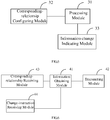
- the device includes: a processing module 31, configured to enable a terminal to utilize resources corresponding to changed numerology information for data transmission, after numerology information allocated by a wireless communication network is changed, and the terminal obtains the changed numerology information.
- the node in the wireless communication network may transmit the corresponding information to the terminal, such that the terminal may obtain the changed numerology information, and utilize the resources corresponding to the changed numerology information for data transmission. Subsequently, the wireless communication network may configure the numerology flexibly, so as to adapt to the change of different services.
- the numerology information includes at least one of the following:
- the numerology information includes at least one of the following:
- the processing module 31 is further configured to indicate the terminal to obtain the changed numerology information via downlink control information; or, indicate all the terminals in the network to obtain the changed numerology information via a broadcast message or a synchronization signal; or, indicate the terminal to obtain the changed numerology information via an RRC message.
- the synchronization signal includes PSS/SSS, NR-PSS/NR-SSS.
- the device further includes a corresponding-relationship configuring module 32, which is configured to establish and store a corresponding relationship, and sending the corresponding relationship to the terminal.
- the corresponding relationship is between multiple pieces of numerology information and index of the multiple pieces of numerology information.
- the processing module 31 is further configured to send an index of numerology information corresponding to the changed numerology information to the terminal via downlink control information; or, send an index of the changed numerology information to all the terminals in the network via a broadcast message or a synchronization signal; or, send an index of the changed numerology information to the terminal via an RRC message.
- the index of the numerology information may be an identifier, or an index of the numerology information.
- a set of numerology information may be established in advance.
- the set includes multiple pieces of numerology information.
- Each piece of numerology information corresponds to an index of the numerology information.
- the wireless communication network notices the terminal of the set of numerology information in advance. After the numerology information is changed, it is only necessary to send the index of the changed numerology information to the terminal.
- the terminal directly searches for the index of the numerology information, and obtains the changed numerology information.
- the processing module 31 is further configured to send the changed numerology information to the terminal via a pre-defined message or signal, such that the terminal obtains the changed numerology information.
- the device further includes an information change indicating module 33, which is configured to send a numerology information change indication to the terminal. Subsequently, the terminal determines that the numerology information is changed, according to the numerology information change indication, and detects the changed numerology information from the received pre-defined message or signal.
- the numerology information change indication may be indicated by 1 bit. Detections at the terminal side may be reduced, by using the numerology information change indication, such that the terminal only performs the detections, after the numerology information is changed.
- the processing module 31 is further configured to send the changed numerology information to the terminal via downlink control information; or, send the changed numerology information to all the terminals in the network via a broadcast message or synchronization signal; or, send the changed numerology information to the terminal via an RRC message.
- the configuration via the RRC message is applied to semi-static subcarrier numerology, and the indication via the DCI is applied to dynamic subcarrier numerology.
- a data transmission device in a wireless communication network is provided, which is applied to a terminal in a wireless communication network.
- the device includes: an information obtaining module 41, configured to obtain changed numerology information, after numerology information allocated by the wireless communication network for the terminal is changed; and a transmitting module 42, configured to utilize resources corresponding to the changed numerology information for data transmission.
- a node in the wireless communication network may send the corresponding information to the terminal, such that the terminal may obtain the changed numerology information, and utilize resources corresponding to the changed numerology information for data transmission. Subsequently, the wireless communication network may configure the numerology flexibly, so as to adapt to the change of different services.
- the numerology information includes at least one of the following:
- the numerology information includes at least one of the following:
- the information obtaining module 41 is configured to receive downlink control information from the node in the wireless communication network, which indicates the terminal that the numerology information is changed, detect multiple pieces of numerology information one by one, detect the changed numerology information from the multiple pieces of numerology information; or, receive a broadcast message or synchronization signal from the node in the wireless communication network, which indicates the terminal that the numerology information is changed, detect multiple pieces of numerology information one by one, and detect changed subcarrier numerology information from the multiple pieces of numerology information; or, receive an RRC message from the node in the wireless communication network, which indicates the terminal that the numerology information is changed, detect multiple pieces of numerology information one by one, and detect changed numerology information from the multiple pieces of numerology information.
- the device further includes a corresponding-relationship receiving module 43, configured to receive a corresponding relationship from the node in the wireless communication network, in which the corresponding relationship is between multiple pieces of numerology information and index of the multiple pieces of numerology information;
- the information obtaining module 41 is further configured to receive, from the node in the wireless communication network via downlink control information, an index of numerology information corresponding to the changed numerology information, detect the changed numerology information according to the index of the numerology information; or, receive, from the node in the wireless communication network via a broadcast message or synchronization signal, an index of numerology information corresponding to the changed numerology information, and detect the changed numerology information, according to the index of the numerology information; or, receive, from the node in the wireless communication network via an RRC message, an index of numerology information corresponding to the changed numerology information, and detect the changed numerology information according to the index of numerology information.
- the index of numerology information may be an identifier, or an index of numerology information.
- a set of numerology information may be established in advance.
- the set includes multiple pieces of numerology information.
- Each piece of numerology information corresponds to an index of numerology information.
- the terminal is notified of the set of the numerology information. After the numerology information is changed, it is only necessary to send the changed numerology information to the terminal.
- the terminal directly searches for the index of the numerology information, and obtains the changed numerology information.
- the information obtaining module 41 is further configured to receive, from a node in the wireless communication network via a pre-defined message or signal, the changed numerology information.
- the device further includes a change-indication receiving module 44, configured to receive a numerology information change indication from a node in the wireless communication network.
- the information obtaining module 41 is further configured to determine that, the numerology information is changed according to the numerology information change indication, and detect the changed numerology information from the received pre-defined message or signal.
- the numerology information change indication may be indicated by 1 bit. Detections at the terminal side may be reduced, by using the numerology information change indication. Subsequently, the terminal performs detections, only after the numerology information is changed.
- the information obtaining module 41 is further configured to receive, from a node in the wireless communication network via downlink control information, the changed numerology information; or, receive, from a node in the wireless communication network via a broadcast message or synchronization signal, the changed numerology information; or, receive, from a node in the wireless communication network via an RRC message, the changed numerology information.
- the configuration via the RRC message is applied to semi-static subcarrier numerology, and the indication via the DCI is applied to dynamic subcarrier numerology.
- the time-domain starting position may be indicated by a duration of a previous SCS (that is, the SCS before the change), or, be indicated by a relative position of a new and previous SCS.
- the granularity may be slot of 0.5ms, and the starting position of f1 is one slot.
- the starting position of f2 is also one slot, because compared with f1, the spacing thereof is one slot.
- the number of indication bits may be reduced by a mode, which combines large time granularity with small time granularity.
- the indication bits may be divided into two areas. One area indicates time of large granularity.
- the other area indicates time of small granularity.
- the spacing between previous and new subcarrier numerologies is 16.5ms. If the granularity may be a slot of 0.5ms, it needs to be indicated by 33 slots. And 6 bits are needed. If being represented by dividing area, 5 bits are needed. In the granularity of millisecond, 4 bits represent 16ms. 1 bit represents a slot of 0.5ms.
- the number of bits for indicating the time-domain start time depends on the maximum duration that each subcarrier numerology can last, and granularity size of granularity (1ms, 0.5ms, and so on).
- the time-domain ending position of a new SCS may be indicated in the same way.
- the wireless communication network supports different CP lengths.
- the wireless communication network needs to inform the UE (terminal) about a CP length, which is adopted by the new SCS.
- the CP length may be indicated by a few bits.
- the needed number of bits depends on a length type of the available CP. For example, the wireless communication network possesses 5 kinds of length types of different CPs, and 3 bits are needed to indicate the CP length in use.
- For the dynamic indication the UE may be informed of the change of numerology information in the DCI. In this case, the needed number of bits for indicating the time starting position may be greatly reduced.
- Current frame may be used for indicating the change of numerology information of a next frame. If processing or scheduling preparation time of the wireless communication network is not enough, the change of numerology information may be indicated by several frames (or several slots) in advance. The number of frames in advance may be specified by the standard, or may be configured by the wireless communication network.
- the DCI needs to inform the UE about the number of frames in advance, or the number of slots in advance.
- the broadcast channel or synchronization signal may include the changed numerology information, and then may be detected by all the UEs.
- the wireless communication network may provide more flexible multiplexing.
- FIG.7 assume that there are three SCSs ⁇ f1, f2, f3 ⁇ , which may be used for flexible subcarrier numerology, an indication for a new SCS is the same as that in the fifth embodiment.
- a time-domain starting position, and/or, a time-domain ending position, a CP length of the new SCS may also be indicated as in the fifth embodiment.
- frequency domain information of the new SCS if the change is in the level of wireless communication network, it is necessary to inform all the UEs in the wireless communication network. Because the pre-defined frequency domain is fully multiplexed, the UE is informed of one of the starting position or ending position of frequency domain for each kind of subcarrier numerology. If there are blank resources unused in the frequency domain, at this time, the UE should be notified of the starting position and ending position of frequency domain for each kind of subcarrier numerology. The UE may be notified of the frequency domain information with another method, that is, the subband bandwidth and corresponding center carrier frequency, or corresponding (virtual) DC carrier position. In addition, frequency domain resources of each SCS may be discontinuous. Thus, the UE should be notified of all the subband frequency-domain information corresponding to the SCS, or frequency hopping information.
- subcarrier numerology of some UEs may be changed, while other UEs may still use previous subcarrier numerology.
- FIG.7 assume that UE1, UE2 and UE3 respectively adopt SCS f1, f2, f3, after 1ms, numerology information of UE1 remains unchanged, while UE2 and UE3 adopt SCS f3. Subsequently, the bandwidth becomes the sum of first two subband bandwidths.
- UE1 detects that the subcarrier numerology is unchanged, while UE2 and UE3 detect that subcarrier numerology will be changed, meanwhile detect corresponding numerology information.
- multiple subcarrier numerologies may be multiplexed with a set of some predefined subcarrier numerologies. These predefined numerologies may be a time-domain multiplexing combination, or a frequency-domain multiplexing combination of multiple subcarrier numerologies, as shown in FIG.8 and FIG.9 .
- the wireless communication network informs the UE about these sets in advance.
- the subcarrier numerology is changed, it is only necessary to inform the UE about the identifier, or index of the UE's subcarrier numerology (which is referred to as index of numerology information).
- the UE reads corresponding multiplexing information about subcarrier numerology, and detects the corresponding resources, by using the corresponding subcarrier numerology.
- Such subcarrier change may be at the level of wireless communication network, or for some UEs. For example, all the UEs in FIG.8 should be notified every time the numerology is changed. In FIG.9 , the numerology change may be at the level of wireless communication network, all the UEs are notified, or only affected UEs are notified. For example, in the first three frames, for UE1 using SCS f1, it may be considered that the subcarrier numerology is not changed; for UE2 and UE3 respectively using SCS f2 and SCS f3, UE2 and UE3 should be informed of new numerology information. Within the fourth frame, all the UEs should be notified of the change of subcarrier numerology.
- the UE may obtain information of subcarrier numerology by blind detection.
- the UE performs the blind detection on the bandwidth of the whole wireless communication network, by using all the possible subcarrier numerologies, and obtains multiplexing information of current subcarrier numerology.
- change of subcarrier numerology can be limited to be periodical, or at predefined positions (that is, a time point at which the numerology information is changed). Subsequently, the UE only needs to perform the blind detection at these positions. Meanwhile, the wireless communication network needs to increase a small amount of signaling, so as to indicate these positions.
- an RRC message can be used to perform the numerology, or such information can be carried by the broadcast channel or synchronization signal.
- the DCI can be used to trigger the non-periodic change of subcarrier numerology in the physical layer. After receiving the DCI, the UE is triggered to perform the blind detection.
- the technical solution of the present disclosure is not only applicable to a scenario, where different subcarrier numerologies are multiplexed in 5G communication, but also applicable to a scenario in future mobile communication, where various parameter numerologies are multiplexed.
- the schematic diagrams illustrate structure of a frame for use in downlink transmission, which is also applicable to uplink transmission.
- the figure is only a simple schematic diagram, which does not illustrate a guard band or guard interval possibly included by different SCS, but does not affect the usage of the method.
- the disclosed devices and methods may be implemented by other methods.
- the above-described device embodiments are only illustrative.
- the division of module is only a logical function division. In practical implementations, there may be other division methods.
- multiple modules or components may be combined, or integrated into another system, or some features can be omitted, or not executed.
- the displayed or discussed mutual coupling, or direct coupling, or communication connection may be implemented, via indirect coupling or communication connection among some interfaces, devices or modules, which may be electrical, mechanical or in another from.
- the module described as a separate component, may be, or may be not physically separated.
- the component, displayed as a module may be, or may be not a physical module, which may be located in one place, or may be distributed to multiple network modules.
- the objectives of solutions in the embodiments may be achieved by all the modules, or some modules, which are selected according to practical requirements.
- various functional modules in each embodiment of the present disclosure may be integrated into one processing module, or each module may physically exist separately. Or, at least two modules are integrated into one module.
- Such software functional modules may be stored in a computer-readable storage medium.
- a computer-readable storage medium which includes several indications to enable a computer device (which may be a Personal Computer (PC), a server or a network device, and so on) to execute all, or some blocks of the method in each embodiment of the present disclosure.
- the above-mentioned storage medium includes various mediums for storing program codes, i.e., U disk, mobile hard disk, read-only memory (ROM), random access memory (RAM), disk, or compact disk (CD).
- the index of each block is not used for limiting the sequence of each block.
- changes of sequence of each block are also covered by the protection scope of the present disclosure.
Landscapes
- Engineering & Computer Science (AREA)
- Signal Processing (AREA)
- Computer Networks & Wireless Communication (AREA)
- Mobile Radio Communication Systems (AREA)
Abstract
Description
- This application claims priority to Chinese Patent Application No.
201610964125.5 - The present disclosure relates to the field of wireless communication technologies, and more particularly, to a data transmission method and device in a wireless communication network.
- Compared with previous mobile communication systems, the future 5G (fifth generation mobile communication technology) needs to adapt to more diverse scenarios and service requirements. The main scenarios of 5G include enhanced mobile broadband (eMBB), massive machine type communications (mMTC), and ultra reliability and low latency communication (eMTC). These scenarios put forward various requirements for the wireless communication network, such as, high reliability, low latency, large bandwidth and wide coverage. In order to adapt to services with different requirements and various service scenarios, the wireless communication network may support various subcarrier spacings (SCSs). Different subcarrier spacings may be applied to different scenarios. For example, regarding a high frequency band with a large bandwidth, a relatively large subcarrier spacing may be configured. At the same time, a large subcarrier spacing corresponds to a small symbol length in a time domain, which may satisfy the requirements of low-latency services.
- Generally speaking, after accessing a wireless communication network initially, a user equipment (UE) will obtain numerology information of the wireless communication network, i.e., a subcarrier spacing size, a subband bandwidth corresponding to the subcarrier spacing, and so on. Due to the timeliness of services, services transmitted in the wireless communication network may be different at different time points. However, bandwidths corresponding to different subcarrier spacings serve different services. When the service is changed, previous subcarrier numerology may be no longer applicable. If numerology information obtained at the initial access is still used to transmit data, it may not adapt to the change of different services.
- The technical problem to be solved by the present disclosure is to provide a data transmission method and device in a wireless communication network, so as to configure numerology flexibly in the wireless communication network, so as to adapt to change of different services.
- To solve the above-mentioned technical problem, technical solutions provided by the embodiments of the present disclosure are as follows.
- In a first aspect, an embodiment of the present disclosure provides a data transmission method in a wireless communication network, applied to a node in the wireless communication network, including: when numerology information allocated by the wireless communication network for a terminal is changed, and after the terminal has obtained the changed numerology information, enabling the terminal to utilize resources corresponding to the changed numerology information for data transmission.
- In a second aspect, an embodiment of the present disclosure also provides a data transmission method in a wireless communication network, applied to a terminal in the wireless communication network, including: after numerology information allocated by the wireless communication network for the terminal is changed, obtaining the changed numerology information; and, utilizing resources corresponding to the changed numerology information for data transmission.
- In a third aspect, an embodiment of the present disclosure also provides a data transmission device in a wireless communication network, applied to a node in the wireless communication network, including: a processing module, configured to enable a terminal to utilize resources corresponding to changed numerology information for data transmission, after numerology information allocated by the wireless communication network for the terminal is changed, and the terminal has obtained the changed numerology information.
- In a fourth aspect, an embodiment of the present disclosure also provides a data transmission device in a wireless communication network, applied to a terminal in the wireless communication network, including: an information obtaining module, configured to obtain changed numerology information, after numerology information allocated by the wireless communication network for the terminal is changed; a transmitting module, configured to utilize resources corresponding to the changed numerology information for data transmission.
- In a fifth aspect, an embodiment of the present disclosure also provides a data transmission device in a wireless communication network, applied to a node in the wireless communication network, including: a memory, a processor, and a computer program stored by the memory, when being executed by the processor, the computer program causes the processor to perform the method in the first aspect.
- In a sixth aspect, an embodiment of the present disclosure also provides a data transmission device in a wireless communication network, applied to a terminal in the wireless communication network, including: a memory, a processor, and a computer program stored by the memory, when being executed by the processor, the computer program causes the processor to perform the method in the second aspect.
- The following advantages may be achieved by the embodiments of the present disclosure. In the foregoing solution, after numerology information corresponding to a terminal is changed, a node in the wireless communication network may transmit corresponding information to the terminal, such that the terminal may obtain the changed numerology information, and utilizes resources corresponding to the changed numerology information for data transmission, thereby configured numerology flexibly in the wireless communication network, so as to adapt to change of different services.
-
-
FIG.1 is a schematic diagram illustrating multiple numerologies which are time division multiplexed. -
FIG.2 is a schematic diagram illustrating multiple numerologies which are frequency division multiplexed. -
FIG.3 is a flowchart illustrating a data transmission method in a wireless communication network, in accordance with an embodiment of the present disclosure. -
FIG.4 is a schematic diagram illustrating a structure of a data transmission device in a wireless communication network, in accordance with an embodiment of the present disclosure. -
FIG.5 is a flowchart illustrating a data transmission method in a wireless communication network, in accordance with an embodiment of the present disclosure. -
FIG.6 is a schematic diagram illustrating a structure of a data transmission device in a wireless communication network, in accordance with an embodiment of the present disclosure. -
FIG.7 is a schematic diagram illustrating multiple numerologies which are frequency division multiplexed, in accordance with an embodiment of the present disclosure. -
FIG.8 is a schematic diagram illustrating multiple numerologies which are time division multiplexed, in accordance with an embodiment of the present disclosure. -
FIG.9 is a schematic diagram illustrating multiple numerologies which are frequency division multiplexed, in accordance with an embodiment of the present disclosure. - To make technical problems, technical solutions and advantages of embodiments in the present disclosure more clear, detailed descriptions will be provided hereinafter in conjunction with the following drawings and specific embodiments.
- In order to adapt to services with different requirements and various application scenarios, the wireless communication network may support multiple subcarrier spacings (SCSs). Different SCSs may be applicable to different scenarios. For example, regarding a high frequency band with a large bandwidth, a relatively large SCS may be configured. At the same time, a large SCS corresponds to a small symbol length in the time domain, which may meet the requirements of a low-latency service. A multi-carrier spacing multiplexing of the wireless communication network may be applied in the time domain, or in the frequency domain. When multiple numerologies of the wireless communication network are time division multiplexed, as shown in
FIG.1 , different SCSs are adopted at different time periods, while the SCS is the same for the whole frequency band. When the multiple numerologies are frequency division multiplexed, as shown inFIG.2 , different SCSs are adopted at different frequency bands of the frequency domain, while such numerology is unchanged in the time domain. - Generally speaking, after initially accessing the wireless communication network, a UE (terminal) may obtain numerology information of the wireless communication network, i.e., an SCS, a subband bandwidth corresponding to the SCS. Due to the timeliness of services, services transmitted within the wireless communication network at different time points may be different. Bandwidths corresponding to different SCSs serve different services. When the service is changed, previous subcarrier numerology may be no longer applicable. If the numerology information obtained at the initial access is still used to transmit data, it may not adapt to the change of different services.
- To solve the foregoing problems, embodiments of the present disclosure provide a data transmission method and device in the wireless communication network, so as to configure a subcarrier flexibly, and adapt to change of different services.
- In some embodiments of the present disclosure, a data transmission method in a wireless communication network is provided, which is applied to a node in the wireless communication network. As shown in
FIG.3 , the embodiment includes the following blocks. Theblock 101 is to, when numerology information allocated by the wireless communication network for a terminal is changed, and the terminal obtains the changed numerology information, enable the terminal to utilize resources corresponding to the changed numerology information for data transmission. - In the embodiment, when the numerology information corresponding to the terminal is changed, a node in the wireless communication network may send the corresponding information to the terminal, such that the terminal may obtain changed numerology information, and utilize resources corresponding to the changed numerology information for data transmission. Subsequently, the wireless communication network may configure the numerology flexibly, so as to adapt to the change of different services. The foregoing resources include subcarrier resources and subband resources, which are adopted by the terminal for data transmission.
- Furthermore, when the multiple numerologies are time division multiplexed, the numerology information includes at least one of the following:
- (1) the changed SCS; the SCS may be indicated by a few bits, and the length of the bits depends on the number of available SCSs;
- (2) a time-domain starting position, and/or, a time-domain ending position of the changed SCS; the granularity of the time-domain starting position, and/or, the time-domain ending position may be subframe or millisecond, i.e., 5ms, 10ms, 40ms, or any other integer values; the time-domain starting position, and/or, the time-domain ending position may also be less than 1ms, and the granularity may be slot or mini slot, i.e., 0.5ms;
- (3) cyclic prefix (CP) information, which includes a normal CP, an extended CP, and CPs of different lengths.
- When the multiple numerologies are frequency division multiplexed, the numerology information includes at least one of the following:
- (1) the changed SCS; the SCS may be indicated by a few bits, and the length of the bits depends on the number of available SCSs;
- (2) a time-domain starting position, and/or, a time-domain ending position of the changed SCS; the granularity of the time-domain starting position and/or time-domain ending position may be subframe or millisecond, i.e., 5ms, 10ms, 40ms, or any other integer values; the time-domain starting position and/or time-domain ending position may also be less than 1ms, and the granularity may be slot or mini slot, i.e., 0.5ms;
- (3) CP information, which includes normal CP, extended CP, and CPs of different lengths;
- (4) frequency domain information of the changed SCS, which further includes at least one of the following:
- a. subband starting position;
- b. subband ending position;
- c. subband (virtual)-DC carrier position, or subband center carrier position;
- d. subband bandwidth;
- e. frequency hopping information (discrete subband allocation).
- Furthermore, when the numerology information allocated by the wireless communication network for the terminal is changed, and the terminal obtains the changed numerology information, enabling the terminal to utilize resources corresponding to the changed numerology information for data transmission includes: indicating the terminal to obtain the changed numerology information via downlink control information; or, indicating all the terminals in the network to obtain the changed numerology information via a broadcast message or a synchronization signal; or, indicating the terminal to obtain the changed numerology information via a radio resource control (RRC) message.
- Furthermore, when the numerology information allocated by the wireless communication network for the terminal is changed, after the terminal obtains the changed numerology information, before enabling the terminal to utilize resources corresponding to the changed numerology information for data transmission, the method further includes that: establishing and storing a corresponding relationship between multiple pieces of numerology information and index of the multiple pieces of numerology information, sending the corresponding relationship to the terminal. When the numerology information allocated by the wireless communication network for the terminal is changed, and after the terminal obtains the changed numerology information, enabling the terminal to utilize resources corresponding to the changed numerology information for data transmission includes: sending the index of the numerology information corresponding to the changed numerology information to the terminal via downlink control information (DCI); or, sending the index of the numerology information corresponding to the changed numerology information to all the terminals in the network via a broadcast message or a synchronization signal; or, sending the index of the numerology information corresponding to the changed numerology information to the terminal via a radio resource control (RRC) message. The index of the numerology information may be an identifier, or an index of the numerology information. Specifically, a set of numerology information may be established in advance. The set includes multiple pieces of numerology information. Each piece of numerology information corresponds to an index of numerology information. The wireless communication network notices the terminal the set of numerology information in advance. After the numerology information is changed, it is only necessary to send the index of the changed numerology information to the terminal. The terminal directly searches for the index of the numerology information, and obtains the changed numerology information.
- Furthermore, when the numerology information allocated by the wireless communication network for the terminal is changed, and after the terminal obtains the changed numerology information, enabling the terminal to utilize resources corresponding to the changed numerology information for data transmission includes: sending the changed numerology information to the terminal via a pre-defined message or signal, such that the terminal obtains the changed numerology information.
- Furthermore, before sending the changed numerology information to the terminal via a pre-defined message or signal, the method further includes that: sending a numerology information change indication to the terminal. Subsequently, the terminal determines that the numerology information is changed, according to the numerology information change indication, and detects the changed numerology information from the received pre-defined message or signal. The numerology information change indication may be indicated by 1 bit. By adopting the numerology information change indication, detections at the terminal side may be reduced, such that the terminal performs detections only after the numerology information is changed.
- Furthermore, sending the changed numerology information to the terminal via a pre-defined message or signal includes: sending the changed numerology information to the terminal via downlink control information; or, sending the changed numerology information to all the terminals in the network via a broadcast message or synchronization signal; or, sending the changed numerology information to the terminal via an RRC message.
- Configuration via the RRC message is applied to semi-static subcarrier numerology, and indication via the DCI is applied to dynamic subcarrier numerology.
- In some embodiments of the present disclosure, a data transmission method in a wireless communication network is provided, which is applied to a terminal in the wireless communication network. As shown in
FIG.4 , the embodiment includes the following blocks. Inblock 201, after numerology information allocated by a wireless communication network for a terminal is changed, the terminal obtains the changed numerology information. Inblock 202, the terminal utilizes resources corresponding to the changed numerology information for data transmission. - In the embodiment, after the numerology information corresponding to the terminal is changed, a node in the wireless communication network may send the corresponding information to the terminal, such that the terminal may obtain the changed numerology information, and utilize resources corresponding to the changed numerology information for data transmission. Subsequently, the wireless communication network may configure the numerology flexibly, so as to adapt to the change of different services.
- Furthermore, when multiple numerologies are time division multiplexed, the numerology information includes at least one of the following:
- (1) the changed SCS; the SCS may be indicated by a few bits, and the length of the bits depends on the number of available SCSs;
- (2) a time-domain starting position, and/or a time-domain ending position of the changed SCS; the granularity of the time-domain starting position, and/or, time-domain ending position may be subframe, or millisecond, i.e., 5ms, 10ms, 40ms, or any other integer values; the time-domain starting position, and/or, time-domain ending position may also be less than 1ms, and the granularity may be slot, or mini slot, i.e., 0.5ms;
- (3) CP information, which includes normal CP, extended CP, and CPs of different lengths.
- When multiple numerologies are frequency division multiplexed, the numerology information includes at least one of the following:
- (1) the changed SCS; the SCS may be indicated by a few bits, and the length of the bits depends on the number of available SCSs;
- (2) a time-domain starting position, and/or, a time-domain ending position of the changed SCS; the granularity of the time-domain starting position, and/or, time-domain ending position may be subframe, or millisecond, i.e., 5ms, 10ms, 40ms, or any other integers; the time-domain starting position, and/or, time-domain ending position may also be less than 1ms, and the granularity may be slot or mini slot, i.e., 0.5ms;
- (3) CP information, which includes normal CP, extended CP, and CPs of different lengths;
- (4) frequency domain information of the changed SCS, which further includes at least one of the following:
- a. subband starting position;
- b. subband ending position;
- c. subband (virtual)-DC carrier position, or subband-center carrier position
- d. subband bandwidth;
- e. frequency hopping information (discrete subband allocation).
- Furthermore, after the numerology information allocated by the wireless communication network for the terminal is changed, obtaining the changed numerology information includes: receiving downlink control information from a node in the wireless communication network, which indicates the terminal that the numerology information is changed, detecting the multiple pieces of numerology information one by one, detecting the changed numerology information from the multiple pieces of numerology information; or, receiving a broadcast message or a synchronization signal from a node in the wireless communication network, which indicates the terminal that the numerology information is changed, detecting multiple pieces of numerology information one by one, and detecting changed subcarrier numerology information from the multiple pieces of numerology information; or, receiving an RRC message from a node in the wireless communication network, which indicates the terminal that the numerology information is changed, detecting multiple pieces of numerology information one by one, and detecting the changed numerology information from the multiple pieces of numerology information.
- The synchronization signal includes a primary synchronization signal (PSS)/secondary synchronization signal (SSS), new radio-PSS (NR-PSS)/new radio-SSS (NR-SSS).
- Furthermore, after the numerology information allocated by the wireless communication network for the terminal is changed, before obtaining the changed numerology information, the method further includes: receiving a corresponding relationship from the node of the wireless communication network, in which the corresponding relationship is between multiple pieces of numerology information and index of the multiple pieces of numerology information. After the numerology information allocated by the wireless communication network for the terminal is changed, obtaining the changed numerology information includes: receiving an index of numerology information corresponding to the changed numerology information, which is transmitted by the node in the wireless communication network via downlink control information, detecting the changed numerology information according to the index of the numerology information; or, receiving an index of the numerology information corresponding to the changed numerology information, which is transmitted by the node in the wireless communication network via a broadcast message or synchronization signal, and detecting the changed numerology information according to the index of the numerology information; or, receiving the index of the numerology information corresponding to the changed numerology information, which is transmitted by the node in the wireless communication network via an RRC message, and detecting the changed numerology information according to the index of the numerology information.
- The index of the numerology information may be an identifier, or an index of the numerology information. Specifically, a set of numerology information may be established in advance. The set includes multiple pieces of numerology information. Each piece of numerology information corresponds to an index of numerology information. The terminal is notified of the set of numerology information in advance. After the numerology information is changed, it is only necessary to send the index of the changed numerology information to the terminal. The terminal directly searches for the index of the numerology information, and then obtains the changed numerology information.
- Furthermore, after the numerology information allocated by the wireless communication network for the terminal is changed, obtaining the changed numerology information includes: receiving the changed numerology information from the node in the wireless communication network via a pre-defined message or signal.
- Furthermore, after the numerology information allocated by the wireless communication network for the terminal is changed, before obtaining the changed numerology information, the method further includes: receiving a numerology information change indication from the node in the wireless communication network, determining that the numerology information is changed according to the numerology information change indication, and detecting the changed numerology information from the received pre-defined message or signal. The numerology information change indication may be indicated by 1 bit. Detections at the terminal side may be reduced, by using the numerology information change indication, such that the terminal performs the detections only after the numerology information is changed. Furthermore, after the numerology information allocated by the wireless communication network for the terminal is changed, obtaining the changed numerology information includes: receiving the changed numerology information from the node in the wireless communication network via downlink control information; or, receiving the changed numerology information from the node in the wireless communication network via a broadcast message or synchronization signal; or, receiving the changed numerology information from the node in the wireless communication network via an RRC message.
- The configuration via the RRC message is applied to semi-static subcarrier numerology, and the indication via the DCI is applied to dynamic subcarrier numerology.
- In some embodiments of the present disclosure, a data transmission device in a wireless communication network is provided, which is applied to a node in the wireless communication network. As shown in
FIG.5 , the device includes: aprocessing module 31, configured to enable a terminal to utilize resources corresponding to changed numerology information for data transmission, after numerology information allocated by a wireless communication network is changed, and the terminal obtains the changed numerology information. - In the embodiment, after the numerology information corresponding to the terminal is changed, the node in the wireless communication network may transmit the corresponding information to the terminal, such that the terminal may obtain the changed numerology information, and utilize the resources corresponding to the changed numerology information for data transmission. Subsequently, the wireless communication network may configure the numerology flexibly, so as to adapt to the change of different services.
- Furthermore, when multiple numerologies are time division multiplexed, the numerology information includes at least one of the following:
- (1) the changed SCS; the SCS may be indicated by a few bits, and the length of the bits depends on the number of available SCSs;
- (2) a time-domain starting position, and/or, a time-domain ending position of the changed SCS; the granularity of the time-domain starting position, and/or, the time-domain ending position may be subframe, or millisecond, i.e., 5ms, 10ms, 40ms, or any other integer values; the time-domain starting position, and/or, the time-domain ending position may also be less than 1ms, and the granularity may be slot or mini slot, i.e., 0.5ms;
- (3) CP information, which includes normal CP, extended CP, and CPs of different lengths.
- When the multiple numerologies are frequency division multiplexed, the numerology information includes at least one of the following:
- (1) the changed SCS; the SCS may be indicated by a few bits, and the length of the bits depends on the number of available SCSs;
- (2) a time-domain starting position, and/or, a time-domain ending position of the changed SCS; the granularity of the time-domain starting position, and/or, the time-domain ending position may be subframe or millisecond, i.e., 5ms, 10ms, 40ms, or any other integer values; the time-domain starting position, and/or, the time-domain ending position may also be less than 1ms, and the granularity may be slot or mini slot, i.e., 0.5ms;
- (3) CP information, which includes normal CP, extended CP, and CPs of different lengths;
- (4) frequency domain information of the changed SCS, which further includes at least one of the following:
- a. subband starting position;
- b. subband ending position;
- c. subband (virtual)-DC carrier position, or subband-center carrier position;
- d. subband bandwidth;
- e. frequency hopping information (discrete subband allocation).
- The
processing module 31 is further configured to indicate the terminal to obtain the changed numerology information via downlink control information; or, indicate all the terminals in the network to obtain the changed numerology information via a broadcast message or a synchronization signal; or, indicate the terminal to obtain the changed numerology information via an RRC message. - The synchronization signal includes PSS/SSS, NR-PSS/NR-SSS.
- The device further includes a corresponding-
relationship configuring module 32, which is configured to establish and store a corresponding relationship, and sending the corresponding relationship to the terminal. The corresponding relationship is between multiple pieces of numerology information and index of the multiple pieces of numerology information. Theprocessing module 31 is further configured to send an index of numerology information corresponding to the changed numerology information to the terminal via downlink control information; or, send an index of the changed numerology information to all the terminals in the network via a broadcast message or a synchronization signal; or, send an index of the changed numerology information to the terminal via an RRC message. - The index of the numerology information may be an identifier, or an index of the numerology information. Specifically, a set of numerology information may be established in advance. The set includes multiple pieces of numerology information. Each piece of numerology information corresponds to an index of the numerology information. The wireless communication network notices the terminal of the set of numerology information in advance. After the numerology information is changed, it is only necessary to send the index of the changed numerology information to the terminal. The terminal directly searches for the index of the numerology information, and obtains the changed numerology information.
- Furthermore, the
processing module 31 is further configured to send the changed numerology information to the terminal via a pre-defined message or signal, such that the terminal obtains the changed numerology information. - Furthermore, the device further includes an information
change indicating module 33, which is configured to send a numerology information change indication to the terminal. Subsequently, the terminal determines that the numerology information is changed, according to the numerology information change indication, and detects the changed numerology information from the received pre-defined message or signal. The numerology information change indication may be indicated by 1 bit. Detections at the terminal side may be reduced, by using the numerology information change indication, such that the terminal only performs the detections, after the numerology information is changed. - Furthermore, the
processing module 31 is further configured to send the changed numerology information to the terminal via downlink control information; or, send the changed numerology information to all the terminals in the network via a broadcast message or synchronization signal; or, send the changed numerology information to the terminal via an RRC message. - The configuration via the RRC message is applied to semi-static subcarrier numerology, and the indication via the DCI is applied to dynamic subcarrier numerology.
- In some embodiments of the present disclosure, a data transmission device in a wireless communication network is provided, which is applied to a terminal in a wireless communication network. As shown in
FIG.6 , the device includes: aninformation obtaining module 41, configured to obtain changed numerology information, after numerology information allocated by the wireless communication network for the terminal is changed; and a transmittingmodule 42, configured to utilize resources corresponding to the changed numerology information for data transmission. - In the embodiment, when the numerology information corresponding to the terminal is changed, a node in the wireless communication network may send the corresponding information to the terminal, such that the terminal may obtain the changed numerology information, and utilize resources corresponding to the changed numerology information for data transmission. Subsequently, the wireless communication network may configure the numerology flexibly, so as to adapt to the change of different services.
- Furthermore, when multiple numerologies are time division multiplexed, the numerology information includes at least one of the following:
- (1) the changed SCS; the SCS may be indicated by a few bits, and the length of the bits depends on the number of available SCSs;
- (2) a time-domain starting position, and/or, a time-domain ending position of the changed SCS; the granularity of the time-domain starting position, and/or, the time-domain ending position may be subframe, and/or, millisecond, i.e., 5ms, 10ms, 40ms, or any other integer value; the time-domain starting position, and/or, the time-domain ending position may also be less than 1ms, and the granularity may be slot or mini slot, i.e., 0.5ms;
- (3) CP information, which includes normal CP, extended CP, and CPs of different lengths.
- When multiple numerologies are frequency division multiplexed, the numerology information includes at least one of the following:
- (1) the changed SCS; the SCS may be indicated by a few bits, and the length of the bits depends on the number of available SCSs;
- (2) a time-domain starting position, and/or, a time-domain ending position of the changed SCS; the granularity of the time-domain starting position, and/or, the time-domain ending position may be subframe or millisecond, i.e., 5ms, 10ms, 40ms, or any other integer values; the time-domain starting position, and/or, the time-domain ending position may also be less than 1ms, and the granularity may be slot or mini slot, i.e., 0.5ms;
- (3) CP information, which includes normal CP, extended CP, and CPs of different lengths;
- (4) frequency domain information of the changed SCS, which further includes at least one of the following:
- a. subband starting position;
- b. subband ending position;
- c. subband (virtual)-DC carrier position, or subband center carrier position;
- d. subband bandwidth;
- e. frequency hopping information (discrete subband allocation).
- Furthermore, the
information obtaining module 41 is configured to receive downlink control information from the node in the wireless communication network, which indicates the terminal that the numerology information is changed, detect multiple pieces of numerology information one by one, detect the changed numerology information from the multiple pieces of numerology information; or, receive a broadcast message or synchronization signal from the node in the wireless communication network, which indicates the terminal that the numerology information is changed, detect multiple pieces of numerology information one by one, and detect changed subcarrier numerology information from the multiple pieces of numerology information; or, receive an RRC message from the node in the wireless communication network, which indicates the terminal that the numerology information is changed, detect multiple pieces of numerology information one by one, and detect changed numerology information from the multiple pieces of numerology information. - Furthermore, the device further includes a corresponding-
relationship receiving module 43, configured to receive a corresponding relationship from the node in the wireless communication network, in which the corresponding relationship is between multiple pieces of numerology information and index of the multiple pieces of numerology information; theinformation obtaining module 41 is further configured to receive, from the node in the wireless communication network via downlink control information, an index of numerology information corresponding to the changed numerology information, detect the changed numerology information according to the index of the numerology information; or, receive, from the node in the wireless communication network via a broadcast message or synchronization signal, an index of numerology information corresponding to the changed numerology information, and detect the changed numerology information, according to the index of the numerology information; or, receive, from the node in the wireless communication network via an RRC message, an index of numerology information corresponding to the changed numerology information, and detect the changed numerology information according to the index of numerology information. - The index of numerology information may be an identifier, or an index of numerology information. Specifically, a set of numerology information may be established in advance. The set includes multiple pieces of numerology information. Each piece of numerology information corresponds to an index of numerology information. The terminal is notified of the set of the numerology information. After the numerology information is changed, it is only necessary to send the changed numerology information to the terminal. The terminal directly searches for the index of the numerology information, and obtains the changed numerology information. Furthermore, the
information obtaining module 41 is further configured to receive, from a node in the wireless communication network via a pre-defined message or signal, the changed numerology information. - Furthermore, the device further includes a change-
indication receiving module 44, configured to receive a numerology information change indication from a node in the wireless communication network. Theinformation obtaining module 41 is further configured to determine that, the numerology information is changed according to the numerology information change indication, and detect the changed numerology information from the received pre-defined message or signal. The numerology information change indication may be indicated by 1 bit. Detections at the terminal side may be reduced, by using the numerology information change indication. Subsequently, the terminal performs detections, only after the numerology information is changed. - Furthermore, the
information obtaining module 41 is further configured to receive, from a node in the wireless communication network via downlink control information, the changed numerology information; or, receive, from a node in the wireless communication network via a broadcast message or synchronization signal, the changed numerology information; or, receive, from a node in the wireless communication network via an RRC message, the changed numerology information. The configuration via the RRC message is applied to semi-static subcarrier numerology, and the indication via the DCI is applied to dynamic subcarrier numerology. - In some embodiments, when multiple numerologies are time division multiplexed as shown in
FIG.1 , the SCSs for flexibly configuring subcarrier by the wireless communication network are {f1, f2, f3}. Assume that f2= 15kHz,FIG.1 includes two subframes, which are 2ms in total. At the time of 0.5ms, the wireless communication network changes the subcarrier spacing for the first time. At the time of 1ms, the wireless communication network changes the subcarrier spacing for the second time. Under these circumstances, since there are 3 kinds of available SCSs, 2 bits may be used to indicate these three different SCSs. For example, f1, f2 and f3 are respectively indicated by 01, 10 and 11. Definitely, other bit combinations may also be used to indicate these three different subcarrier numerologies. When the number of available SCSs increases, the number of needed bits will increase accordingly. - To reduce the number of bits for indicating time-domain starting position of a new SCS (that is, the changed SCS), the time-domain starting position may be indicated by a duration of a previous SCS (that is, the SCS before the change), or, be indicated by a relative position of a new and previous SCS. For example, in
FIG.1 , the granularity may be slot of 0.5ms, and the starting position of f1 is one slot. The starting position of f2 is also one slot, because compared with f1, the spacing thereof is one slot. Furthermore, the number of indication bits may be reduced by a mode, which combines large time granularity with small time granularity. The indication bits may be divided into two areas. One area indicates time of large granularity. The other area indicates time of small granularity. For example, the spacing between previous and new subcarrier numerologies is 16.5ms. If the granularity may be a slot of 0.5ms, it needs to be indicated by 33 slots. And 6 bits are needed. If being represented by dividing area, 5 bits are needed. In the granularity of millisecond, 4 bits represent 16ms. 1 bit represents a slot of 0.5ms. The number of bits for indicating the time-domain start time depends on the maximum duration that each subcarrier numerology can last, and granularity size of granularity (1ms, 0.5ms, and so on). The time-domain ending position of a new SCS may be indicated in the same way. - The wireless communication network supports different CP lengths. Thus, the wireless communication network needs to inform the UE (terminal) about a CP length, which is adopted by the new SCS. The CP length may be indicated by a few bits. The needed number of bits depends on a length type of the available CP. For example, the wireless communication network possesses 5 kinds of length types of different CPs, and 3 bits are needed to indicate the CP length in use.
- For the semi-static indication, foregoing numerology information may be transmitted in the RRC message. For the dynamic indication, the UE may be informed of the change of numerology information in the DCI. In this case, the needed number of bits for indicating the time starting position may be greatly reduced. Current frame may be used for indicating the change of numerology information of a next frame. If processing or scheduling preparation time of the wireless communication network is not enough, the change of numerology information may be indicated by several frames (or several slots) in advance. The number of frames in advance may be specified by the standard, or may be configured by the wireless communication network. The DCI needs to inform the UE about the number of frames in advance, or the number of slots in advance.
- For the time division multiplexing, changes of the numerology information are applicable to all the UEs in the wireless communication network. Subsequently, it is necessary to inform all the UEs about the changes of the numerology information. Thus, the broadcast channel or synchronization signal may include the changed numerology information, and then may be detected by all the UEs.
- In some embodiments, if multiple subcarrier numerologies are used in frequency domain multiplexing, and support semi-static or dynamic changing, as shown in
FIG.7 , the wireless communication network may provide more flexible multiplexing. As shown inFIG.7 , assume that there are three SCSs {f1, f2, f3}, which may be used for flexible subcarrier numerology, an indication for a new SCS is the same as that in the fifth embodiment. In addition, a time-domain starting position, and/or, a time-domain ending position, a CP length of the new SCS may also be indicated as in the fifth embodiment. - For frequency domain information of the new SCS, if the change is in the level of wireless communication network, it is necessary to inform all the UEs in the wireless communication network. Because the pre-defined frequency domain is fully multiplexed, the UE is informed of one of the starting position or ending position of frequency domain for each kind of subcarrier numerology. If there are blank resources unused in the frequency domain, at this time, the UE should be notified of the starting position and ending position of frequency domain for each kind of subcarrier numerology. The UE may be notified of the frequency domain information with another method, that is, the subband bandwidth and corresponding center carrier frequency, or corresponding (virtual) DC carrier position. In addition, frequency domain resources of each SCS may be discontinuous. Thus, the UE should be notified of all the subband frequency-domain information corresponding to the SCS, or frequency hopping information.
- For the frequency division multiplexing, if the change of subcarrier numerology is at the UE level, that is, subcarrier numerology of some UEs may be changed, while other UEs may still use previous subcarrier numerology. In this case, it is only necessary to inform the affected UEs. As shown in
FIG.7 , assume that UE1, UE2 and UE3 respectively adopt SCS f1, f2, f3, after 1ms, numerology information of UE1 remains unchanged, while UE2 and UE3 adopt SCS f3. Subsequently, the bandwidth becomes the sum of first two subband bandwidths. Thus, within the first frame, UE1 detects that the subcarrier numerology is unchanged, while UE2 and UE3 detect that subcarrier numerology will be changed, meanwhile detect corresponding numerology information. - In some embodiments, multiple subcarrier numerologies may be multiplexed with a set of some predefined subcarrier numerologies. These predefined numerologies may be a time-domain multiplexing combination, or a frequency-domain multiplexing combination of multiple subcarrier numerologies, as shown in
FIG.8 andFIG.9 . In this case, the wireless communication network informs the UE about these sets in advance. When the subcarrier numerology is changed, it is only necessary to inform the UE about the identifier, or index of the UE's subcarrier numerology (which is referred to as index of numerology information). According to the identifier or index of the subcarrier numerology, the UE reads corresponding multiplexing information about subcarrier numerology, and detects the corresponding resources, by using the corresponding subcarrier numerology. - Such subcarrier change may be at the level of wireless communication network, or for some UEs. For example, all the UEs in
FIG.8 should be notified every time the numerology is changed. InFIG.9 , the numerology change may be at the level of wireless communication network, all the UEs are notified, or only affected UEs are notified. For example, in the first three frames, for UE1 using SCS f1, it may be considered that the subcarrier numerology is not changed; for UE2 and UE3 respectively using SCS f2 and SCS f3, UE2 and UE3 should be informed of new numerology information. Within the fourth frame, all the UEs should be notified of the change of subcarrier numerology. - In some embodiments, in order to reduce overheads of signaling transmission, the UE may obtain information of subcarrier numerology by blind detection. The UE performs the blind detection on the bandwidth of the whole wireless communication network, by using all the possible subcarrier numerologies, and obtains multiplexing information of current subcarrier numerology. In addition, to reduce the number of blind detection performed by the UE, change of subcarrier numerology can be limited to be periodical, or at predefined positions (that is, a time point at which the numerology information is changed). Subsequently, the UE only needs to perform the blind detection at these positions. Meanwhile, the wireless communication network needs to increase a small amount of signaling, so as to indicate these positions.
- For the periodical change of subcarrier numerology, or the change of subcarrier numerology at predefined positions, an RRC message can be used to perform the numerology, or such information can be carried by the broadcast channel or synchronization signal. For the non-periodic change of subcarrier numerology, the DCI can be used to trigger the non-periodic change of subcarrier numerology in the physical layer. After receiving the DCI, the UE is triggered to perform the blind detection.
- The technical solution of the present disclosure is not only applicable to a scenario, where different subcarrier numerologies are multiplexed in 5G communication, but also applicable to a scenario in future mobile communication, where various parameter numerologies are multiplexed. In the present disclosure, the schematic diagrams illustrate structure of a frame for use in downlink transmission, which is also applicable to uplink transmission. The figure is only a simple schematic diagram, which does not illustrate a guard band or guard interval possibly included by different SCS, but does not affect the usage of the method.
- Persons having ordinary skill in the art may learn that, the modules and algorithm blocks described by each embodiment of the present disclosure may be implemented by electronic hardware, or a combination of computer software and electronic hardware. Whether these functions are implemented by hardware or software depends on specific application and design constraints of technical solution. For each specific application, professionals may adopt different methods to implement the described functions, but such implementation should not be considered to extend beyond the scope of the present disclosure.
- One of ordinary skill in the art may clearly learn that, to make the descriptions more convenient and concise, specific work process of above-described system, device and modules should refer to corresponding procedures of foregoing method embodiments, which are not repeated here.
- In the embodiments of the present disclosure, it should be understood that, the disclosed devices and methods may be implemented by other methods. For example, the above-described device embodiments are only illustrative. For example, the division of module is only a logical function division. In practical implementations, there may be other division methods. For example, multiple modules or components may be combined, or integrated into another system, or some features can be omitted, or not executed. From another point of view, the displayed or discussed mutual coupling, or direct coupling, or communication connection may be implemented, via indirect coupling or communication connection among some interfaces, devices or modules, which may be electrical, mechanical or in another from.
- The module, described as a separate component, may be, or may be not physically separated. The component, displayed as a module, may be, or may be not a physical module, which may be located in one place, or may be distributed to multiple network modules. The objectives of solutions in the embodiments may be achieved by all the modules, or some modules, which are selected according to practical requirements.
- In addition, various functional modules in each embodiment of the present disclosure may be integrated into one processing module, or each module may physically exist separately. Or, at least two modules are integrated into one module.
- When the functions are implemented in the form of software functional modules, and taken as an independent product to be sold or used, such software functional modules may be stored in a computer-readable storage medium. On the basis of such understanding, the essence of technical solution of the present disclosure, or part of the technical solution contributing to related technologies, or part of the technical solution may be represented in the form of software product. Such computer software product is stored in a storage medium, which includes several indications to enable a computer device (which may be a Personal Computer (PC), a server or a network device, and so on) to execute all, or some blocks of the method in each embodiment of the present disclosure. The above-mentioned storage medium includes various mediums for storing program codes, i.e., U disk, mobile hard disk, read-only memory (ROM), random access memory (RAM), disk, or compact disk (CD).
- In various method embodiments of the present disclosure, the index of each block is not used for limiting the sequence of each block. For persons having ordinary skill in the art, without any creative work, changes of sequence of each block are also covered by the protection scope of the present disclosure.
- The foregoing is preferred implementation modes of the present disclosure. It should be pointed out that, for persons having ordinary skill in the art, several improvements and modifications may be made without departing from the principle of the present disclosure, such improvements and modifications should also be covered by the protection scope of the present disclosure.
Claims (30)
- A data transmission method in a wireless communication network, applied to a node in the wireless communication network, comprising:
when numerology information allocated by the wireless communication network for a terminal is changed, and after the terminal has obtained the changed numerology information, enabling the terminal to utilize resources corresponding to the changed numerology information for data transmission. - The data transmission method according to claim 1, wherein when multiple numerologies of the wireless communication network are time division multiplexed, the numerology information comprises at least one of: subcarrier spacing (SCS), a time-domain starting position of the SCS, a time-domain ending position of the SCS, or cyclic prefix (CP) information;
when the multiple numerologies of the wireless communication network are frequency division multiplexed, the numerology information comprises at least one of: a SCS, a time-domain starting position of the SCS, a time-domain ending position of the SCS, CP information, or frequency domain information of the SCS. - The data transmission method according to claim 2, wherein the frequency domain information of the SCS comprises at least one of: a subband starting position, a subband ending position, a subband-direct current (DC) carrier position, a subband-center carrier position, a subband bandwidth, or frequency hopping information.
- The data transmission method according to claim 1, wherein when the numerology information allocated by the wireless communication network for the terminal is changed, and after the terminal has obtained the changed numerology information, enabling the terminal to utilize the resources corresponding to the changed numerology information for data transmission comprises:indicating the terminal to obtain the changed numerology information via downlink control information; or,indicating all the terminals in the wireless communication network to obtain the changed numerology information via a broadcast message or a synchronization signal; or,indicating the terminal to obtain the changed numerology information via a radio resource control (RRC) message.
- The data transmission method according to claim 1, wherein when the numerology information allocated by the wireless communication network for the terminal is changed, and after the terminal has obtained the changed numerology information, before enabling the terminal to utilize the resources corresponding to the changed numerology information for data transmission, the method further comprises:establishing and storing a corresponding relationship between multiple pieces of numerology information and index of the multiple pieces of numerology information, and sending the corresponding relationship to the terminal;wherein when the numerology information allocated by the wireless communication network for the terminal is changed, and after the terminal has obtained the changed numerology information, enabling the terminal to utilize the resources corresponding to the changed numerology information for data transmission comprises:sending, via downlink control information, an index of numerology information corresponding to the changed numerology information to the terminal; or,sending, via a broadcast message or a synchronization signal, the index of numerology information corresponding to the changed numerology information to all the terminals in the wireless communication network; or,sending, via an RRC message, the index of numerology information corresponding to the changed numerology information to the terminal.
- The data transmission method according to claim 1, wherein when the numerology information allocated by the wireless communication network for the terminal is changed, and after the terminal has obtained the changed numerology information, enabling the terminal to utilize the resources corresponding to the changed numerology information for data transmission comprises: sending the changed numerology information to the terminal via a pre-defined message or signal.
- The data transmission method according to claim 6, wherein before sending the changed numerology information to the terminal via the pre-defined message or signal, the method further comprises:
sending a numerology information change indication to the terminal. - The data transmission method according to claim 6, wherein sending the changed numerology information via the pre-defined message or signal to the terminal comprises:sending the changed numerology information to the terminal via the downlink control information; or,sending the changed numerology information to all the terminals in the wireless communication network via a broadcast message or a synchronization signal; or,sending the changed numerology information to the terminal via an RRC message.
- A data transmission method in a wireless communication network, applied to a terminal in the wireless communication network, comprising:obtaining changed numerology information after numerology information allocated by the wireless communication network for the terminal is changed; and,transmitting data in resources corresponding to the changed numerology information.
- The data transmission method according to claim 9, wherein after the numerology information allocated by the wireless communication network for the terminal is changed, obtaining the changed numerology information comprises:receiving, from a node in the wireless communication network, downlink control information indicating the terminal that the numerology information is changed, detecting multiple pieces of numerology information one by one, detecting the changed numerology information from the multiple pieces of numerology information; or,receiving, from the node in the wireless communication network, a broadcast signal or synchronization signal indicating the terminal that the numerology information is changed, detecting multiple pieces of numerology information one by one, and detecting the changed numerology information from the multiple pieces of numerology information; or,receiving, from the node in the wireless communication network, a radio resource control (RRC) message indicating the terminal that the numerology information is changed, detecting multiple pieces of numerology information one by one, and detecting the changed numerology information from the multiple pieces of numerology information.
- The data transmission method according to claim 9, wherein after the numerology information allocated by the wireless communication network for the terminal is changed, before obtaining the changed numerology information, the method further comprises: receiving, from the node in the wireless communication network, a corresponding relationship between multiple pieces of numerology information and index of the multiple pieces of numerology information;
wherein after the numerology information allocated by the wireless communication network for the terminal is changed, obtaining the changed numerology information comprises:receiving, from the node in the wireless communication network via downlink control information, an index of numerology information corresponding to the changed numerology information, and detecting the changed numerology information, according to the index of the numerology information; or,receiving, from the node in the wireless communication network via a broadcast message or a synchronization signal, the index of numerology information corresponding to the changed numerology information, and detecting the changed numerology information, according to the index of the numerology information; or,receiving, from the node in the wireless communication network via an RRC message, the index of numerology information corresponding to the changed numerology information, and detecting the changed numerology information, according to the index of the numerology information. - The data transmission method according to claim 9, wherein after the numerology information allocated by the wireless communication network for the terminal is changed, obtaining the changed numerology information comprises:
receiving, from the node in the wireless communication network via a pre-defined message or signal, the changed numerology information. - The data transmission method according to claim 12, wherein after the numerology information allocated by the wireless communication network for the terminal is changed, before obtaining the changed numerology information, the method further comprises: receiving, from the node in the wireless communication network, a numerology information change indication, determining that the numerology information is changed according to the numerology information change indication, and detecting the changed numerology information from the received pre-defined message or signal;
wherein after the numerology information allocated by the wireless communication network for the terminal is changed, obtaining the changed numerology information comprises:receiving the changed numerology information from the node in the wireless communication network via downlink control information; or,receiving the changed numerology information from the node in the wireless communication network via a broadcast message or a synchronization signal; or,receiving the changed numerology information from the node in the wireless communication network via an RRC message. - The data transmission method according to claim 12, wherein after the numerology information allocated by the wireless communication network for the terminal is changed, obtaining the changed numerology information comprises:receiving the changed numerology information from the node in the wireless communication network via downlink control information; or,receiving the changed numerology information from the node in the wireless communication network via a broadcast message or a synchronization signal; or,receiving the changed numerology information from the node in the wireless communication network via an RRC message.
- A data transmission device in a wireless communication network, applied to a node in the wireless communication network, comprising:
a processing module, configured to enable a terminal to utilize resources corresponding to changed numerology information for data transmission, after numerology information allocated by the wireless communication network for the terminal is changed, and the terminal has obtained the changed numerology information. - The data transmission device according to claim 15, wherein when multiple numerologies in the wireless communication network are time division multiplexed, the numerology information comprises at least one of:a subcarrier spacing (SCS), a time-domain start position of the SCS, a time-domain end position of the SCS, or cyclic prefix (CP) information;when the multiple numerologies in the wireless communication network are frequency division multiplexed, the numerology information comprises at least one of: an SCS, a time-domain start position of the SCS, a time-domain end position of the SCS, CP information, or frequency hopping information of the SCS.
- The data transmission device according to claim 16, wherein frequency domain information of the SCS comprises at least one of:
a subband starting position, a subband ending position, a subband-direct current (DC) carrier position, a subband-center carrier position, a subband bandwidth, or frequency hopping information. - The data transmission device according to claim 15, wherein the processing module is further configured to:indicate the terminal to obtain the changed numerology information via downlink control information; or,indicate all the terminals in the wireless communication network to obtain the changed numerology information via a broadcast message or a synchronization signal; or,indicate the terminal to obtain the changed numerology information via a radio resource control (RRC) message.
- The data transmission device according to claim 15, further comprising:a corresponding-relationship configuring module, configured to establish and store a corresponding relationship between multiple pieces of numerology information and index of the multiple pieces of numerology information, and send the corresponding relationship to the terminal; and,the processing module is further configured to:send an index of numerology information corresponding to the changed numerology information to the terminal via downlink control information ; or,send the index of numerology information corresponding to the changed numerology information to all the terminals in the wireless communication network via a broadcast message or a synchronization signal; or,send the index of numerology information corresponding to the changed numerology information to the terminal via an RRC message.
- The data transmission device according to claim 15, wherein the processing module is further configured to transmit the changed numerology information to the terminal via a pre-defined message or signal, such that the terminal obtains the changed numerology information.
- The data transmission device according to claim 20, further comprising:
an information-change indication module, configured to send a numerology information change indication to the terminal. - The data transmission device according to claim 20, wherein the processing module is further configured to:send the changed numerology information to the terminal via downlink control information; or,send the changed numerology information to all the terminals in the wireless communication network via a broadcast message or a synchronization signal; or,send the changed numerology information to the terminal via an RRC message.
- A data transmission device in a wireless communication network, applied to a terminal in the wireless communication network, comprising:an information obtaining module, configured to obtain changed numerology information, after numerology information allocated by the wireless communication network for the terminal is changed;a transmitting module, configured to utilize resources corresponding to the changed numerology information for data transmission.
- The data transmission device according to claim 23, wherein the information obtaining module is further configured to receive downlink control information from a node in the wireless communication network, which indicates the terminal that the numerology information is changed, detect multiple pieces of numerology information one by one, and detect the changed numerology information from the multiple pieces of numerology information; or,
receive a broadcast message or a synchronization signal from the node in the wireless communication network, which indicates the terminal that the numerology information is changed, detect multiple pieces of numerology information one by one, and detect changed subcarrier numerology information from the multiple pieces of numerology information; or,
receive an RRC message from the node in the wireless communication network, which indicates the terminal that the numerology information is changed, detect multiple pieces of numerology information one by one, and detect the changed numerology information from the multiple pieces of numerology information. - The data transmission device according to claim 23, further comprising:a corresponding-relationship receiving module, configured to receive a corresponding relationship from a node in the wireless communication network, which is between multiple pieces of numerology information and index of the multiple pieces of numerology information;wherein the information obtaining module is further configured to:receive, from the node in the wireless communication network via downlink control information, an index of numerology information corresponding to the changed numerology information, and detect the changed numerology information, according to the index of the numerology information; or,receive, from the node in the wireless communication network via a broadcast message or a synchronization signal, the index of numerology information corresponding to the changed numerology information, and detect the changed numerology information according to the index of the numerology information; or,receive, from a node in the wireless communication network via an RRC message, the index of numerology information corresponding to the changed numerology information, and detect the changed numerology information according to the index of the numerology information.
- The data transmission device according to claim 23, wherein the information obtaining module is further configured to receive the changed numerology information from a node in the wireless communication network via a pre-defined message or signal,.
- The data transmission device according to claim 26, further comprising:a change-indication receiving module, configured to receive a numerology information change indication from the node in the wireless communication network; and,the information obtaining module is further configured to determine that the numerology information is changed according to the numerology information change indication, and detect the changed numerology information from the received pre-defined message or signal.
- The data transmission device according to claim 26, wherein the information obtaining module is further configured to:receive the changed numerology information from the node in the wireless communication network via downlink control information; or,receive the changed numerology information from the node in the wireless communication network via a broadcast message or a synchronization signal; or,receive the changed numerology information from a node in the wireless communication network via an RRC message.
- A data transmission device in a wireless communication network, applied to a node in the wireless communication network, comprising: a memory, a processor, and a computer program stored by the memory, when being executed by the processor, the computer program causes the processor to perform steps of the data transmission method in the wireless communication network claimed in any of claims 1 to 8.
- A data transmission device in a wireless communication network, applied to a terminal in the wireless communication network, comprising: a memory, a processor, and a computer program stored by the memory, when being executed by the processor, the computer program causes the processor to perform steps of the data transmission method in the wireless communication network claimed in any of claims 9-14.
Applications Claiming Priority (2)
| Application Number | Priority Date | Filing Date | Title |
|---|---|---|---|
| CN201610964125.5A CN108023702A (en) | 2016-11-04 | 2016-11-04 | Data transmission method and device in a kind of cordless communication network |
| PCT/CN2017/092555 WO2018082336A1 (en) | 2016-11-04 | 2017-07-12 | Data transmission method and device in wireless communication network |
Publications (3)
| Publication Number | Publication Date |
|---|---|
| EP3537648A1 true EP3537648A1 (en) | 2019-09-11 |
| EP3537648A4 EP3537648A4 (en) | 2019-12-04 |
| EP3537648B1 EP3537648B1 (en) | 2023-08-16 |
Family
ID=62075685
Family Applications (1)
| Application Number | Title | Priority Date | Filing Date |
|---|---|---|---|
| EP17868314.0A Active EP3537648B1 (en) | 2016-11-04 | 2017-07-12 | Data transmission method and device in wireless communication network |
Country Status (7)
| Country | Link |
|---|---|
| US (1) | US20190273597A1 (en) |
| EP (1) | EP3537648B1 (en) |
| CN (1) | CN108023702A (en) |
| ES (1) | ES2955134T3 (en) |
| HU (1) | HUE063643T2 (en) |
| PT (1) | PT3537648T (en) |
| WO (1) | WO2018082336A1 (en) |
Families Citing this family (5)
| Publication number | Priority date | Publication date | Assignee | Title |
|---|---|---|---|---|
| US10250380B2 (en) | 2016-12-12 | 2019-04-02 | Qualcomm Incorporated | Techniques for unified synchronization channel design in new radio |
| US11659504B2 (en) * | 2017-10-06 | 2023-05-23 | Ntt Docomo, Inc. | Terminal, radio communication method, and base station |
| WO2020145487A1 (en) * | 2019-01-11 | 2020-07-16 | 엘지전자 주식회사 | Method and ue for transmitting signal in wireless communication system |
| CN111614451B (en) | 2019-04-29 | 2022-03-01 | 维沃移动通信有限公司 | Configuration information acquisition and sending method, terminal and network side equipment |
| CN114257253B (en) * | 2020-09-21 | 2023-08-01 | 珠海全志科技股份有限公司 | Broadband IQ imbalance compensation method and device |
Family Cites Families (7)
| Publication number | Priority date | Publication date | Assignee | Title |
|---|---|---|---|---|
| CN101895821B (en) * | 2009-05-22 | 2015-01-28 | 中兴通讯股份有限公司 | Bearing method and device of multimedia broadcast multicast service logical channels |
| US9226247B2 (en) * | 2011-08-19 | 2015-12-29 | Lg Electronics Inc. | Method for terminal deciding uplink transmission power in macro cell environment comprising remote radio head (RRH), and terminal apparatus for same |
| CN103220796B (en) * | 2012-01-21 | 2016-09-21 | 电信科学技术研究院 | A kind of downlink data transmission method and equipment thereof |
| CN104955106B (en) * | 2014-03-31 | 2019-01-08 | 华为技术有限公司 | resource allocation, data processing method and device |
| WO2016130175A1 (en) * | 2015-02-11 | 2016-08-18 | Intel IP Corporation | Device, system and method employing unified flexible 5g air interface |
| US10038581B2 (en) * | 2015-06-01 | 2018-07-31 | Huawei Technologies Co., Ltd. | System and scheme of scalable OFDM numerology |
| US10433283B2 (en) * | 2016-01-26 | 2019-10-01 | Huawei Technologies Co., Ltd. | System and method for bandwidth division and resource block allocation |
-
2016
- 2016-11-04 CN CN201610964125.5A patent/CN108023702A/en active Pending
-
2017
- 2017-07-12 WO PCT/CN2017/092555 patent/WO2018082336A1/en not_active Ceased
- 2017-07-12 HU HUE17868314A patent/HUE063643T2/en unknown
- 2017-07-12 ES ES17868314T patent/ES2955134T3/en active Active
- 2017-07-12 US US16/347,100 patent/US20190273597A1/en not_active Abandoned
- 2017-07-12 EP EP17868314.0A patent/EP3537648B1/en active Active
- 2017-07-12 PT PT178683140T patent/PT3537648T/en unknown
Also Published As
| Publication number | Publication date |
|---|---|
| PT3537648T (en) | 2023-09-11 |
| ES2955134T3 (en) | 2023-11-28 |
| CN108023702A (en) | 2018-05-11 |
| US20190273597A1 (en) | 2019-09-05 |
| WO2018082336A1 (en) | 2018-05-11 |
| EP3537648A4 (en) | 2019-12-04 |
| EP3537648B1 (en) | 2023-08-16 |
| HUE063643T2 (en) | 2024-01-28 |
Similar Documents
| Publication | Publication Date | Title |
|---|---|---|
| JP7447222B2 (en) | Control channel transmission and reception method, device and system for wireless communication system | |
| US12483291B2 (en) | Dynamic reconfiguration of uplink transmission in a TDD wireless communication system | |
| EP3633901B1 (en) | Method and device for applying reference signal configuration information, and storage medium | |
| US11445442B2 (en) | Efficient concurrent transmission of a wake-up signal and user data | |
| CN108365928B (en) | Configuration information sending method, control channel resource detection method and device | |
| US10797918B2 (en) | Resource allocation for data transmission in wireless systems | |
| CN108141326B (en) | Dynamic selection of multi-carrier modes based on QOS parameters | |
| EP3537648B1 (en) | Data transmission method and device in wireless communication network | |
| CN108476552B (en) | Method and user equipment for transmitting data | |
| US11374710B2 (en) | Method and device for wireless communication | |
| US10390344B2 (en) | Carrier configuration method, base station, and user equipment | |
| EP3606251B1 (en) | Information sending method and apparatus, terminal and storage medium | |
| CN117336857A (en) | Frame structure configuration method, device and system and computer readable storage medium | |
| CN109644465A (en) | A kind of resource allocation method and device, computer storage medium | |
| CN112236964B (en) | Inter-gNB Xn signaling for NR TDD radio frame configuration and CLI sensitivity | |
| EP2966788B1 (en) | Communication method, base station, user equipment, and system | |
| CN111867080B (en) | Downlink channel indication method and device | |
| EP4009738A1 (en) | Information transmission method, network device and terminal device | |
| WO2018171521A1 (en) | Methods and devices for controlling a radio access network | |
| WO2025152856A1 (en) | Preamble transmission method, and terminal and network-side device | |
| HK1256587B (en) | Dynamic selection of multicarrier mode based on qos parameters |
Legal Events
| Date | Code | Title | Description |
|---|---|---|---|
| STAA | Information on the status of an ep patent application or granted ep patent |
Free format text: STATUS: THE INTERNATIONAL PUBLICATION HAS BEEN MADE |
|
| PUAI | Public reference made under article 153(3) epc to a published international application that has entered the european phase |
Free format text: ORIGINAL CODE: 0009012 |
|
| STAA | Information on the status of an ep patent application or granted ep patent |
Free format text: STATUS: REQUEST FOR EXAMINATION WAS MADE |
|
| 17P | Request for examination filed |
Effective date: 20190521 |
|
| AK | Designated contracting states |
Kind code of ref document: A1 Designated state(s): AL AT BE BG CH CY CZ DE DK EE ES FI FR GB GR HR HU IE IS IT LI LT LU LV MC MK MT NL NO PL PT RO RS SE SI SK SM TR |
|
| AX | Request for extension of the european patent |
Extension state: BA ME |
|
| A4 | Supplementary search report drawn up and despatched |
Effective date: 20191107 |
|
| RIC1 | Information provided on ipc code assigned before grant |
Ipc: H04L 5/00 20060101AFI20191031BHEP |
|
| DAV | Request for validation of the european patent (deleted) | ||
| DAX | Request for extension of the european patent (deleted) | ||
| STAA | Information on the status of an ep patent application or granted ep patent |
Free format text: STATUS: EXAMINATION IS IN PROGRESS |
|
| 17Q | First examination report despatched |
Effective date: 20210416 |
|
| GRAP | Despatch of communication of intention to grant a patent |
Free format text: ORIGINAL CODE: EPIDOSNIGR1 |
|
| STAA | Information on the status of an ep patent application or granted ep patent |
Free format text: STATUS: GRANT OF PATENT IS INTENDED |
|
| INTG | Intention to grant announced |
Effective date: 20230519 |
|
| GRAS | Grant fee paid |
Free format text: ORIGINAL CODE: EPIDOSNIGR3 |
|
| GRAA | (expected) grant |
Free format text: ORIGINAL CODE: 0009210 |
|
| STAA | Information on the status of an ep patent application or granted ep patent |
Free format text: STATUS: THE PATENT HAS BEEN GRANTED |
|
| AK | Designated contracting states |
Kind code of ref document: B1 Designated state(s): AL AT BE BG CH CY CZ DE DK EE ES FI FR GB GR HR HU IE IS IT LI LT LU LV MC MK MT NL NO PL PT RO RS SE SI SK SM TR |
|
| REG | Reference to a national code |
Ref country code: GB Ref legal event code: FG4D |
|
| REG | Reference to a national code |
Ref country code: CH Ref legal event code: EP Ref country code: DE Ref legal event code: R096 Ref document number: 602017072913 Country of ref document: DE |
|
| REG | Reference to a national code |
Ref country code: PT Ref legal event code: SC4A Ref document number: 3537648 Country of ref document: PT Date of ref document: 20230911 Kind code of ref document: T Free format text: AVAILABILITY OF NATIONAL TRANSLATION Effective date: 20230906 |
|
| REG | Reference to a national code |
Ref country code: IE Ref legal event code: FG4D |
|
| REG | Reference to a national code |
Ref country code: NL Ref legal event code: FP |
|
| REG | Reference to a national code |
Ref country code: ES Ref legal event code: FG2A Ref document number: 2955134 Country of ref document: ES Kind code of ref document: T3 Effective date: 20231128 |
|
| REG | Reference to a national code |
Ref country code: SK Ref legal event code: T3 Ref document number: E 42315 Country of ref document: SK |
|
| REG | Reference to a national code |
Ref country code: LT Ref legal event code: MG9D |
|
| REG | Reference to a national code |
Ref country code: AT Ref legal event code: MK05 Ref document number: 1601106 Country of ref document: AT Kind code of ref document: T Effective date: 20230816 |
|
| PG25 | Lapsed in a contracting state [announced via postgrant information from national office to epo] |
Ref country code: GR Free format text: LAPSE BECAUSE OF FAILURE TO SUBMIT A TRANSLATION OF THE DESCRIPTION OR TO PAY THE FEE WITHIN THE PRESCRIBED TIME-LIMIT Effective date: 20231117 |
|
| PG25 | Lapsed in a contracting state [announced via postgrant information from national office to epo] |
Ref country code: IS Free format text: LAPSE BECAUSE OF FAILURE TO SUBMIT A TRANSLATION OF THE DESCRIPTION OR TO PAY THE FEE WITHIN THE PRESCRIBED TIME-LIMIT Effective date: 20231216 |
|
| REG | Reference to a national code |
Ref country code: HU Ref legal event code: AG4A Ref document number: E063643 Country of ref document: HU |
|
| PG25 | Lapsed in a contracting state [announced via postgrant information from national office to epo] |
Ref country code: SE Free format text: LAPSE BECAUSE OF FAILURE TO SUBMIT A TRANSLATION OF THE DESCRIPTION OR TO PAY THE FEE WITHIN THE PRESCRIBED TIME-LIMIT Effective date: 20230816 Ref country code: RS Free format text: LAPSE BECAUSE OF FAILURE TO SUBMIT A TRANSLATION OF THE DESCRIPTION OR TO PAY THE FEE WITHIN THE PRESCRIBED TIME-LIMIT Effective date: 20230816 Ref country code: NO Free format text: LAPSE BECAUSE OF FAILURE TO SUBMIT A TRANSLATION OF THE DESCRIPTION OR TO PAY THE FEE WITHIN THE PRESCRIBED TIME-LIMIT Effective date: 20231116 Ref country code: LV Free format text: LAPSE BECAUSE OF FAILURE TO SUBMIT A TRANSLATION OF THE DESCRIPTION OR TO PAY THE FEE WITHIN THE PRESCRIBED TIME-LIMIT Effective date: 20230816 Ref country code: LT Free format text: LAPSE BECAUSE OF FAILURE TO SUBMIT A TRANSLATION OF THE DESCRIPTION OR TO PAY THE FEE WITHIN THE PRESCRIBED TIME-LIMIT Effective date: 20230816 Ref country code: IS Free format text: LAPSE BECAUSE OF FAILURE TO SUBMIT A TRANSLATION OF THE DESCRIPTION OR TO PAY THE FEE WITHIN THE PRESCRIBED TIME-LIMIT Effective date: 20231216 Ref country code: HR Free format text: LAPSE BECAUSE OF FAILURE TO SUBMIT A TRANSLATION OF THE DESCRIPTION OR TO PAY THE FEE WITHIN THE PRESCRIBED TIME-LIMIT Effective date: 20230816 Ref country code: GR Free format text: LAPSE BECAUSE OF FAILURE TO SUBMIT A TRANSLATION OF THE DESCRIPTION OR TO PAY THE FEE WITHIN THE PRESCRIBED TIME-LIMIT Effective date: 20231117 Ref country code: FI Free format text: LAPSE BECAUSE OF FAILURE TO SUBMIT A TRANSLATION OF THE DESCRIPTION OR TO PAY THE FEE WITHIN THE PRESCRIBED TIME-LIMIT Effective date: 20230816 Ref country code: AT Free format text: LAPSE BECAUSE OF FAILURE TO SUBMIT A TRANSLATION OF THE DESCRIPTION OR TO PAY THE FEE WITHIN THE PRESCRIBED TIME-LIMIT Effective date: 20230816 |
|
| PG25 | Lapsed in a contracting state [announced via postgrant information from national office to epo] |
Ref country code: PL Free format text: LAPSE BECAUSE OF FAILURE TO SUBMIT A TRANSLATION OF THE DESCRIPTION OR TO PAY THE FEE WITHIN THE PRESCRIBED TIME-LIMIT Effective date: 20230816 |
|
| PG25 | Lapsed in a contracting state [announced via postgrant information from national office to epo] |
Ref country code: SM Free format text: LAPSE BECAUSE OF FAILURE TO SUBMIT A TRANSLATION OF THE DESCRIPTION OR TO PAY THE FEE WITHIN THE PRESCRIBED TIME-LIMIT Effective date: 20230816 Ref country code: RO Free format text: LAPSE BECAUSE OF FAILURE TO SUBMIT A TRANSLATION OF THE DESCRIPTION OR TO PAY THE FEE WITHIN THE PRESCRIBED TIME-LIMIT Effective date: 20230816 Ref country code: EE Free format text: LAPSE BECAUSE OF FAILURE TO SUBMIT A TRANSLATION OF THE DESCRIPTION OR TO PAY THE FEE WITHIN THE PRESCRIBED TIME-LIMIT Effective date: 20230816 Ref country code: DK Free format text: LAPSE BECAUSE OF FAILURE TO SUBMIT A TRANSLATION OF THE DESCRIPTION OR TO PAY THE FEE WITHIN THE PRESCRIBED TIME-LIMIT Effective date: 20230816 Ref country code: CZ Free format text: LAPSE BECAUSE OF FAILURE TO SUBMIT A TRANSLATION OF THE DESCRIPTION OR TO PAY THE FEE WITHIN THE PRESCRIBED TIME-LIMIT Effective date: 20230816 |
|
| REG | Reference to a national code |
Ref country code: DE Ref legal event code: R097 Ref document number: 602017072913 Country of ref document: DE |
|
| PLBE | No opposition filed within time limit |
Free format text: ORIGINAL CODE: 0009261 |
|
| STAA | Information on the status of an ep patent application or granted ep patent |
Free format text: STATUS: NO OPPOSITION FILED WITHIN TIME LIMIT |
|
| 26N | No opposition filed |
Effective date: 20240517 |
|
| PG25 | Lapsed in a contracting state [announced via postgrant information from national office to epo] |
Ref country code: SI Free format text: LAPSE BECAUSE OF FAILURE TO SUBMIT A TRANSLATION OF THE DESCRIPTION OR TO PAY THE FEE WITHIN THE PRESCRIBED TIME-LIMIT Effective date: 20230816 |
|
| PG25 | Lapsed in a contracting state [announced via postgrant information from national office to epo] |
Ref country code: BG Free format text: LAPSE BECAUSE OF FAILURE TO SUBMIT A TRANSLATION OF THE DESCRIPTION OR TO PAY THE FEE WITHIN THE PRESCRIBED TIME-LIMIT Effective date: 20230816 |
|
| PG25 | Lapsed in a contracting state [announced via postgrant information from national office to epo] |
Ref country code: BG Free format text: LAPSE BECAUSE OF FAILURE TO SUBMIT A TRANSLATION OF THE DESCRIPTION OR TO PAY THE FEE WITHIN THE PRESCRIBED TIME-LIMIT Effective date: 20230816 |
|
| PG25 | Lapsed in a contracting state [announced via postgrant information from national office to epo] |
Ref country code: MC Free format text: LAPSE BECAUSE OF FAILURE TO SUBMIT A TRANSLATION OF THE DESCRIPTION OR TO PAY THE FEE WITHIN THE PRESCRIBED TIME-LIMIT Effective date: 20230816 |
|
| PG25 | Lapsed in a contracting state [announced via postgrant information from national office to epo] |
Ref country code: LU Free format text: LAPSE BECAUSE OF NON-PAYMENT OF DUE FEES Effective date: 20240712 |
|
| PG25 | Lapsed in a contracting state [announced via postgrant information from national office to epo] |
Ref country code: LU Free format text: LAPSE BECAUSE OF NON-PAYMENT OF DUE FEES Effective date: 20240712 |
|
| PG25 | Lapsed in a contracting state [announced via postgrant information from national office to epo] |
Ref country code: BE Free format text: LAPSE BECAUSE OF NON-PAYMENT OF DUE FEES Effective date: 20240731 |
|
| REG | Reference to a national code |
Ref country code: BE Ref legal event code: MM Effective date: 20240731 |
|
| PGFP | Annual fee paid to national office [announced via postgrant information from national office to epo] |
Ref country code: GB Payment date: 20250529 Year of fee payment: 9 |
|
| PGFP | Annual fee paid to national office [announced via postgrant information from national office to epo] |
Ref country code: NL Payment date: 20250613 Year of fee payment: 9 |
|
| PGFP | Annual fee paid to national office [announced via postgrant information from national office to epo] |
Ref country code: PT Payment date: 20250618 Year of fee payment: 9 |
|
| PGFP | Annual fee paid to national office [announced via postgrant information from national office to epo] |
Ref country code: FR Payment date: 20250610 Year of fee payment: 9 |
|
| PGFP | Annual fee paid to national office [announced via postgrant information from national office to epo] |
Ref country code: SK Payment date: 20250612 Year of fee payment: 9 |
|
| PGFP | Annual fee paid to national office [announced via postgrant information from national office to epo] |
Ref country code: IE Payment date: 20250610 Year of fee payment: 9 |
|
| PGFP | Annual fee paid to national office [announced via postgrant information from national office to epo] |
Ref country code: HU Payment date: 20250630 Year of fee payment: 9 |
|
| PGFP | Annual fee paid to national office [announced via postgrant information from national office to epo] |
Ref country code: ES Payment date: 20250807 Year of fee payment: 9 |
|
| PGFP | Annual fee paid to national office [announced via postgrant information from national office to epo] |
Ref country code: DE Payment date: 20250528 Year of fee payment: 9 |
|
| PGFP | Annual fee paid to national office [announced via postgrant information from national office to epo] |
Ref country code: IT Payment date: 20250623 Year of fee payment: 9 |
|
| PGFP | Annual fee paid to national office [announced via postgrant information from national office to epo] |
Ref country code: CH Payment date: 20250801 Year of fee payment: 9 |
|
| PG25 | Lapsed in a contracting state [announced via postgrant information from national office to epo] |
Ref country code: CY Free format text: LAPSE BECAUSE OF FAILURE TO SUBMIT A TRANSLATION OF THE DESCRIPTION OR TO PAY THE FEE WITHIN THE PRESCRIBED TIME-LIMIT; INVALID AB INITIO Effective date: 20170712 |