EP3537142A1 - Glycan analysis method - Google Patents
Glycan analysis method Download PDFInfo
- Publication number
- EP3537142A1 EP3537142A1 EP16920740.4A EP16920740A EP3537142A1 EP 3537142 A1 EP3537142 A1 EP 3537142A1 EP 16920740 A EP16920740 A EP 16920740A EP 3537142 A1 EP3537142 A1 EP 3537142A1
- Authority
- EP
- European Patent Office
- Prior art keywords
- glycan
- analysis
- labeling
- glycans
- ions
- Prior art date
- Legal status (The legal status is an assumption and is not a legal conclusion. Google has not performed a legal analysis and makes no representation as to the accuracy of the status listed.)
- Withdrawn
Links
- 150000004676 glycans Chemical class 0.000 title claims abstract description 81
- 238000004458 analytical method Methods 0.000 title claims abstract description 77
- 238000002372 labelling Methods 0.000 claims abstract description 107
- 239000003795 chemical substances by application Substances 0.000 claims abstract description 63
- 238000004885 tandem mass spectrometry Methods 0.000 claims abstract description 60
- 230000009467 reduction Effects 0.000 claims abstract description 35
- 238000004949 mass spectrometry Methods 0.000 claims abstract description 27
- 239000002243 precursor Substances 0.000 claims description 12
- 125000003277 amino group Chemical group 0.000 claims description 9
- 125000003178 carboxy group Chemical group [H]OC(*)=O 0.000 claims description 9
- 125000000524 functional group Chemical group 0.000 claims description 6
- 238000002360 preparation method Methods 0.000 claims description 5
- 125000002344 aminooxy group Chemical group [H]N([H])O[*] 0.000 claims description 2
- 125000002170 glycosylamine group Chemical group 0.000 claims 1
- 150000002500 ions Chemical class 0.000 abstract description 90
- RWZYAGGXGHYGMB-UHFFFAOYSA-N anthranilic acid Chemical compound NC1=CC=CC=C1C(O)=O RWZYAGGXGHYGMB-UHFFFAOYSA-N 0.000 abstract description 34
- 238000001228 spectrum Methods 0.000 abstract description 27
- 238000012916 structural analysis Methods 0.000 abstract description 17
- 238000005576 amination reaction Methods 0.000 abstract description 8
- 238000006722 reduction reaction Methods 0.000 description 34
- 238000000034 method Methods 0.000 description 33
- 239000000523 sample Substances 0.000 description 32
- 239000011159 matrix material Substances 0.000 description 28
- 238000000816 matrix-assisted laser desorption--ionisation Methods 0.000 description 21
- 239000000047 product Substances 0.000 description 18
- 239000007788 liquid Substances 0.000 description 13
- 238000010494 dissociation reaction Methods 0.000 description 11
- 230000005593 dissociations Effects 0.000 description 11
- 230000007935 neutral effect Effects 0.000 description 10
- -1 sialyl glycan Chemical class 0.000 description 10
- NQTADLQHYWFPDB-UHFFFAOYSA-N N-Hydroxysuccinimide Chemical class ON1C(=O)CCC1=O NQTADLQHYWFPDB-UHFFFAOYSA-N 0.000 description 9
- 239000003638 chemical reducing agent Substances 0.000 description 9
- 230000000052 comparative effect Effects 0.000 description 9
- 239000000126 substance Substances 0.000 description 9
- 150000001450 anions Chemical class 0.000 description 8
- 150000002772 monosaccharides Chemical class 0.000 description 8
- 102000004169 proteins and genes Human genes 0.000 description 8
- 108090000623 proteins and genes Proteins 0.000 description 8
- 230000002829 reductive effect Effects 0.000 description 8
- 230000002378 acidificating effect Effects 0.000 description 7
- 150000001875 compounds Chemical class 0.000 description 7
- 238000005259 measurement Methods 0.000 description 7
- KBOPZPXVLCULAV-UHFFFAOYSA-N mesalamine Chemical compound NC1=CC=C(O)C(C(O)=O)=C1 KBOPZPXVLCULAV-UHFFFAOYSA-N 0.000 description 7
- 229960004963 mesalazine Drugs 0.000 description 7
- 239000000243 solution Substances 0.000 description 7
- WEVYAHXRMPXWCK-UHFFFAOYSA-N Acetonitrile Chemical compound CC#N WEVYAHXRMPXWCK-UHFFFAOYSA-N 0.000 description 6
- 238000000752 ionisation method Methods 0.000 description 6
- 238000007781 pre-processing Methods 0.000 description 6
- QAOWNCQODCNURD-UHFFFAOYSA-L sulfate group Chemical group S(=O)(=O)([O-])[O-] QAOWNCQODCNURD-UHFFFAOYSA-L 0.000 description 6
- 102000003886 Glycoproteins Human genes 0.000 description 5
- 108090000288 Glycoproteins Proteins 0.000 description 5
- 238000001360 collision-induced dissociation Methods 0.000 description 5
- 238000001819 mass spectrum Methods 0.000 description 5
- 229910002651 NO3 Inorganic materials 0.000 description 4
- NHNBFGGVMKEFGY-UHFFFAOYSA-N Nitrate Chemical compound [O-][N+]([O-])=O NHNBFGGVMKEFGY-UHFFFAOYSA-N 0.000 description 4
- 239000002253 acid Substances 0.000 description 4
- BLFLLBZGZJTVJG-UHFFFAOYSA-N benzocaine Chemical compound CCOC(=O)C1=CC=C(N)C=C1 BLFLLBZGZJTVJG-UHFFFAOYSA-N 0.000 description 4
- SQVRNKJHWKZAKO-UHFFFAOYSA-N beta-N-Acetyl-D-neuraminic acid Natural products CC(=O)NC1C(O)CC(O)(C(O)=O)OC1C(O)C(O)CO SQVRNKJHWKZAKO-UHFFFAOYSA-N 0.000 description 4
- 238000010586 diagram Methods 0.000 description 4
- 238000000132 electrospray ionisation Methods 0.000 description 4
- 238000002474 experimental method Methods 0.000 description 4
- JMUPMJGUKXYCMF-IWDIICGPSA-N n-[(2s,3r,4r,5s,6r)-2-[(2s,3s,4s,5s,6r)-2-[[(2r,3r,4s,5s,6s)-6-[(2r,3s,4r,5r,6s)-5-acetamido-6-[(2r,3s,4r,5r)-5-acetamido-1,2,4-trihydroxy-6-oxohexan-3-yl]oxy-4-hydroxy-2-(hydroxymethyl)oxan-3-yl]oxy-4-[(2r,3s,4s,5s,6r)-3-[(2s,3r,4r,5s,6r)-3-acetamido-4-h Chemical compound O[C@@H]1[C@@H](NC(C)=O)[C@H](O[C@@H]([C@H](O)[C@H](C=O)NC(=O)C)[C@H](O)CO)O[C@H](CO)[C@H]1O[C@H]1[C@@H](O)[C@@H](O[C@@H]2[C@H]([C@@H](O)[C@H](O)[C@@H](CO)O2)O[C@H]2[C@@H]([C@@H](O)[C@H](O[C@H]3[C@@H]([C@@H](O)[C@@H](O)[C@@H](CO)O3)O)[C@@H](CO)O2)NC(C)=O)[C@H](O)[C@@H](CO[C@@H]2[C@H]([C@@H](O)[C@H](O)[C@@H](CO)O2)O[C@H]2[C@@H]([C@@H](O)[C@H](O[C@H]3[C@@H]([C@@H](O)[C@@H](O)[C@@H](CO)O3)O)[C@@H](CO)O2)NC(C)=O)O1 JMUPMJGUKXYCMF-IWDIICGPSA-N 0.000 description 4
- SQVRNKJHWKZAKO-OQPLDHBCSA-N sialic acid Chemical compound CC(=O)N[C@@H]1[C@@H](O)C[C@@](O)(C(O)=O)OC1[C@H](O)[C@H](O)CO SQVRNKJHWKZAKO-OQPLDHBCSA-N 0.000 description 4
- ZVRXEZSQXWSLKP-UHFFFAOYSA-N 2-[3-(diethylamino)-6-diethylazaniumylidenexanthen-9-yl]-5-[[6-(2,5-dioxopyrrolidin-1-yl)oxy-6-oxohexyl]sulfamoyl]benzenesulfonate Chemical compound C=12C=CC(=[N+](CC)CC)C=C2OC2=CC(N(CC)CC)=CC=C2C=1C(C(=C1)S([O-])(=O)=O)=CC=C1S(=O)(=O)NCCCCCC(=O)ON1C(=O)CCC1=O ZVRXEZSQXWSLKP-UHFFFAOYSA-N 0.000 description 3
- FZWIIGKQNLYDQI-UHFFFAOYSA-N 8-aminopyrene-1,3,6-trisulfonic acid Chemical compound C1=C2C(N)=CC(S(O)(=O)=O)=C(C=C3)C2=C2C3=C(S(O)(=O)=O)C=C(S(O)(=O)=O)C2=C1 FZWIIGKQNLYDQI-UHFFFAOYSA-N 0.000 description 3
- 102000002068 Glycopeptides Human genes 0.000 description 3
- 108010015899 Glycopeptides Proteins 0.000 description 3
- OVRNDRQMDRJTHS-RTRLPJTCSA-N N-acetyl-D-glucosamine Chemical compound CC(=O)N[C@H]1C(O)O[C@H](CO)[C@@H](O)[C@@H]1O OVRNDRQMDRJTHS-RTRLPJTCSA-N 0.000 description 3
- OVRNDRQMDRJTHS-FMDGEEDCSA-N N-acetyl-beta-D-glucosamine Chemical group CC(=O)N[C@H]1[C@H](O)O[C@H](CO)[C@@H](O)[C@@H]1O OVRNDRQMDRJTHS-FMDGEEDCSA-N 0.000 description 3
- NBIIXXVUZAFLBC-UHFFFAOYSA-N Phosphoric acid Chemical group OP(O)(O)=O NBIIXXVUZAFLBC-UHFFFAOYSA-N 0.000 description 3
- SHJDVERDESTYRQ-UHFFFAOYSA-N atto 590 nhs ester Chemical compound [O-]Cl(=O)(=O)=O.C1=2C=C3C(C)=CC(C)(C)N(CC)C3=CC=2OC2=CC3=[N+](CC)C(C)(C)C=C(C)C3=CC2=C1C(C(=CC=1)C(O)=O)=CC=1C(=O)ON1C(=O)CCC1=O SHJDVERDESTYRQ-UHFFFAOYSA-N 0.000 description 3
- 238000006243 chemical reaction Methods 0.000 description 3
- 230000000694 effects Effects 0.000 description 3
- 150000002341 glycosylamines Chemical group 0.000 description 3
- 238000003385 ring cleavage reaction Methods 0.000 description 3
- 238000001269 time-of-flight mass spectrometry Methods 0.000 description 3
- KYVBNYUBXIEUFW-UHFFFAOYSA-N 1,1,3,3-tetramethylguanidine Chemical compound CN(C)C(=N)N(C)C KYVBNYUBXIEUFW-UHFFFAOYSA-N 0.000 description 2
- WXTMDXOMEHJXQO-UHFFFAOYSA-N 2,5-dihydroxybenzoic acid Chemical compound OC(=O)C1=CC(O)=CC=C1O WXTMDXOMEHJXQO-UHFFFAOYSA-N 0.000 description 2
- ZMCHBSMFKQYNKA-UHFFFAOYSA-N 2-aminobenzenesulfonic acid Chemical compound NC1=CC=CC=C1S(O)(=O)=O ZMCHBSMFKQYNKA-UHFFFAOYSA-N 0.000 description 2
- GWIAAIUASRVOIA-UHFFFAOYSA-N 2-aminonaphthalene-1-sulfonic acid Chemical compound C1=CC=CC2=C(S(O)(=O)=O)C(N)=CC=C21 GWIAAIUASRVOIA-UHFFFAOYSA-N 0.000 description 2
- NGSWKAQJJWESNS-UHFFFAOYSA-N 4-coumaric acid Chemical compound OC(=O)C=CC1=CC=C(O)C=C1 NGSWKAQJJWESNS-UHFFFAOYSA-N 0.000 description 2
- OVRNDRQMDRJTHS-UHFFFAOYSA-N N-acelyl-D-glucosamine Natural products CC(=O)NC1C(O)OC(CO)C(O)C1O OVRNDRQMDRJTHS-UHFFFAOYSA-N 0.000 description 2
- MBLBDJOUHNCFQT-LXGUWJNJSA-N N-acetylglucosamine Natural products CC(=O)N[C@@H](C=O)[C@@H](O)[C@H](O)[C@H](O)CO MBLBDJOUHNCFQT-LXGUWJNJSA-N 0.000 description 2
- 229930182474 N-glycoside Natural products 0.000 description 2
- 230000009471 action Effects 0.000 description 2
- 239000012502 diagnostic product Substances 0.000 description 2
- 238000005516 engineering process Methods 0.000 description 2
- 230000013595 glycosylation Effects 0.000 description 2
- 238000006206 glycosylation reaction Methods 0.000 description 2
- 238000005040 ion trap Methods 0.000 description 2
- DZKOKXZNCDGVRY-UHFFFAOYSA-N lenthionine Chemical compound C1SSCSSS1 DZKOKXZNCDGVRY-UHFFFAOYSA-N 0.000 description 2
- CXYUOTBJQDLAMF-ZIKNSQGESA-N (E)-3-(4-hydroxyphenyl)prop-2-enoic acid 1,1,3,3-tetramethylguanidine Chemical compound CN(C)C(=N)N(C)C.OC(=O)\C=C\c1ccc(O)cc1 CXYUOTBJQDLAMF-ZIKNSQGESA-N 0.000 description 1
- PAWQVTBBRAZDMG-UHFFFAOYSA-N 2-(3-bromo-2-fluorophenyl)acetic acid Chemical compound OC(=O)CC1=CC=CC(Br)=C1F PAWQVTBBRAZDMG-UHFFFAOYSA-N 0.000 description 1
- SVNCRRZKBNSMIV-UHFFFAOYSA-N 3-Aminoquinoline Chemical compound C1=CC=CC2=CC(N)=CN=C21 SVNCRRZKBNSMIV-UHFFFAOYSA-N 0.000 description 1
- NGSWKAQJJWESNS-ZZXKWVIFSA-M 4-Hydroxycinnamate Natural products OC1=CC=C(\C=C\C([O-])=O)C=C1 NGSWKAQJJWESNS-ZZXKWVIFSA-M 0.000 description 1
- FZWIIGKQNLYDQI-UHFFFAOYSA-K 8-aminopyrene-1,3,6-trisulfonate Chemical compound C1=C2C(N)=CC(S([O-])(=O)=O)=C(C=C3)C2=C2C3=C(S([O-])(=O)=O)C=C(S([O-])(=O)=O)C2=C1 FZWIIGKQNLYDQI-UHFFFAOYSA-K 0.000 description 1
- DFYRUELUNQRZTB-UHFFFAOYSA-N Acetovanillone Natural products COC1=CC(C(C)=O)=CC=C1O DFYRUELUNQRZTB-UHFFFAOYSA-N 0.000 description 1
- SHZGCJCMOBCMKK-UHFFFAOYSA-N D-mannomethylose Natural products CC1OC(O)C(O)C(O)C1O SHZGCJCMOBCMKK-UHFFFAOYSA-N 0.000 description 1
- 102000004190 Enzymes Human genes 0.000 description 1
- 108090000790 Enzymes Proteins 0.000 description 1
- PNNNRSAQSRJVSB-SLPGGIOYSA-N Fucose Natural products C[C@H](O)[C@@H](O)[C@H](O)[C@H](O)C=O PNNNRSAQSRJVSB-SLPGGIOYSA-N 0.000 description 1
- SHZGCJCMOBCMKK-DHVFOXMCSA-N L-fucopyranose Chemical group C[C@@H]1OC(O)[C@@H](O)[C@H](O)[C@@H]1O SHZGCJCMOBCMKK-DHVFOXMCSA-N 0.000 description 1
- 206010027476 Metastases Diseases 0.000 description 1
- 206010028980 Neoplasm Diseases 0.000 description 1
- 102000000447 Peptide-N4-(N-acetyl-beta-glucosaminyl) Asparagine Amidase Human genes 0.000 description 1
- 108010055817 Peptide-N4-(N-acetyl-beta-glucosaminyl) Asparagine Amidase Proteins 0.000 description 1
- LINDOXZENKYESA-UHFFFAOYSA-N TMG Natural products CNC(N)=NC LINDOXZENKYESA-UHFFFAOYSA-N 0.000 description 1
- 239000000654 additive Substances 0.000 description 1
- 230000000996 additive effect Effects 0.000 description 1
- 150000001412 amines Chemical class 0.000 description 1
- 230000008901 benefit Effects 0.000 description 1
- 201000011510 cancer Diseases 0.000 description 1
- 210000004027 cell Anatomy 0.000 description 1
- 230000008859 change Effects 0.000 description 1
- 239000003153 chemical reaction reagent Substances 0.000 description 1
- 238000003776 cleavage reaction Methods 0.000 description 1
- 238000007796 conventional method Methods 0.000 description 1
- 238000001212 derivatisation Methods 0.000 description 1
- 238000003795 desorption Methods 0.000 description 1
- 238000011161 development Methods 0.000 description 1
- 230000018109 developmental process Effects 0.000 description 1
- 230000004069 differentiation Effects 0.000 description 1
- 239000003814 drug Substances 0.000 description 1
- 230000004720 fertilization Effects 0.000 description 1
- 239000007850 fluorescent dye Substances 0.000 description 1
- 238000001215 fluorescent labelling Methods 0.000 description 1
- 238000009472 formulation Methods 0.000 description 1
- 238000013467 fragmentation Methods 0.000 description 1
- 238000006062 fragmentation reaction Methods 0.000 description 1
- 238000007429 general method Methods 0.000 description 1
- 238000001727 in vivo Methods 0.000 description 1
- 230000008611 intercellular interaction Effects 0.000 description 1
- 238000000534 ion trap mass spectrometry Methods 0.000 description 1
- 239000002608 ionic liquid Substances 0.000 description 1
- 238000004895 liquid chromatography mass spectrometry Methods 0.000 description 1
- 238000001906 matrix-assisted laser desorption--ionisation mass spectrometry Methods 0.000 description 1
- 238000001840 matrix-assisted laser desorption--ionisation time-of-flight mass spectrometry Methods 0.000 description 1
- 230000007246 mechanism Effects 0.000 description 1
- 230000009401 metastasis Effects 0.000 description 1
- 230000004048 modification Effects 0.000 description 1
- 238000012986 modification Methods 0.000 description 1
- 229950006780 n-acetylglucosamine Drugs 0.000 description 1
- 229920001542 oligosaccharide Polymers 0.000 description 1
- 125000002467 phosphate group Chemical group [H]OP(=O)(O[H])O[*] 0.000 description 1
- 230000035479 physiological effects, processes and functions Effects 0.000 description 1
- 230000008569 process Effects 0.000 description 1
- 102000004196 processed proteins & peptides Human genes 0.000 description 1
- 108090000765 processed proteins & peptides Proteins 0.000 description 1
- 238000000746 purification Methods 0.000 description 1
- 238000011946 reduction process Methods 0.000 description 1
- 238000006268 reductive amination reaction Methods 0.000 description 1
- 230000001105 regulatory effect Effects 0.000 description 1
- 230000027756 respiratory electron transport chain Effects 0.000 description 1
- 238000007142 ring opening reaction Methods 0.000 description 1
- 239000012488 sample solution Substances 0.000 description 1
- 230000007017 scission Effects 0.000 description 1
- 238000000926 separation method Methods 0.000 description 1
- 125000005629 sialic acid group Chemical group 0.000 description 1
- 230000019491 signal transduction Effects 0.000 description 1
- 230000000087 stabilizing effect Effects 0.000 description 1
- 239000011550 stock solution Substances 0.000 description 1
- QAOWNCQODCNURD-UHFFFAOYSA-N sulfuric acid group Chemical group S(O)(O)(=O)=O QAOWNCQODCNURD-UHFFFAOYSA-N 0.000 description 1
- 230000008685 targeting Effects 0.000 description 1
- 229910021642 ultra pure water Inorganic materials 0.000 description 1
- 239000012498 ultrapure water Substances 0.000 description 1
Images




Classifications
-
- G—PHYSICS
- G01—MEASURING; TESTING
- G01N—INVESTIGATING OR ANALYSING MATERIALS BY DETERMINING THEIR CHEMICAL OR PHYSICAL PROPERTIES
- G01N33/00—Investigating or analysing materials by specific methods not covered by groups G01N1/00 - G01N31/00
- G01N33/48—Biological material, e.g. blood, urine; Haemocytometers
- G01N33/50—Chemical analysis of biological material, e.g. blood, urine; Testing involving biospecific ligand binding methods; Immunological testing
- G01N33/68—Chemical analysis of biological material, e.g. blood, urine; Testing involving biospecific ligand binding methods; Immunological testing involving proteins, peptides or amino acids
- G01N33/6803—General methods of protein analysis not limited to specific proteins or families of proteins
- G01N33/6848—Methods of protein analysis involving mass spectrometry
-
- G—PHYSICS
- G01—MEASURING; TESTING
- G01N—INVESTIGATING OR ANALYSING MATERIALS BY DETERMINING THEIR CHEMICAL OR PHYSICAL PROPERTIES
- G01N33/00—Investigating or analysing materials by specific methods not covered by groups G01N1/00 - G01N31/00
- G01N33/48—Biological material, e.g. blood, urine; Haemocytometers
- G01N33/50—Chemical analysis of biological material, e.g. blood, urine; Testing involving biospecific ligand binding methods; Immunological testing
- G01N33/58—Chemical analysis of biological material, e.g. blood, urine; Testing involving biospecific ligand binding methods; Immunological testing involving labelled substances
-
- H—ELECTRICITY
- H01—ELECTRIC ELEMENTS
- H01J—ELECTRIC DISCHARGE TUBES OR DISCHARGE LAMPS
- H01J49/00—Particle spectrometers or separator tubes
- H01J49/0027—Methods for using particle spectrometers
-
- H—ELECTRICITY
- H01—ELECTRIC ELEMENTS
- H01J—ELECTRIC DISCHARGE TUBES OR DISCHARGE LAMPS
- H01J49/00—Particle spectrometers or separator tubes
- H01J49/004—Combinations of spectrometers, tandem spectrometers, e.g. MS/MS, MSn
-
- G—PHYSICS
- G01—MEASURING; TESTING
- G01N—INVESTIGATING OR ANALYSING MATERIALS BY DETERMINING THEIR CHEMICAL OR PHYSICAL PROPERTIES
- G01N2400/00—Assays, e.g. immunoassays or enzyme assays, involving carbohydrates
- G01N2400/10—Polysaccharides, i.e. having more than five saccharide radicals attached to each other by glycosidic linkages; Derivatives thereof, e.g. ethers, esters
Definitions
- the present invention relates to a method for analyzing a structure of glycan using mass spectrometry, and in particular to a method useful for structural analysis of glycan having a branched structure (also referred to as a tree-like structure).
- glycosylation plays an important role in regulating structure and function of proteins.
- Recent studies also show that a glycan expressed on a cell surface is involved in various in vivo phenomena such as intercellular interaction, signal transduction, development/differentiation, fertilization, and cancer metastasis.
- Glycans that modify proteins rarely have a structure in which monosaccharides are connected in a linear chain, and in many cases they have a branched structure.
- the structure of such glycans having a branched structure is extremely versatile, and the structure exerts a large influence on the function of the protein. Therefore, structural analysis of glycans is important in various fields such as physiology, life science, and medicine.
- mass spectrometry is widely used for structural analysis of glycans, especially that accompanied by ion dissociation operation called tandem mass spectrometry, multistage mass spectrometry (MS n ), or the like.
- Glycan structural analysis using mass spectrometry is generally performed based on mass spectra (in this specification, MS/MS spectra obtained by MS/MS analysis may also be referred to as mass spectra) acquired under positive ion mode.
- mass spectra mass spectra
- dissociation of positively ionized glycan by collision induced dissociation (CID) method often causes dissociation at a glycosyl bond between monosaccharides, making it difficult to obtain information on branched structure. Therefore, although such a method is useful for estimating monosaccharides constituting glycan, it is not so suitable for structural analysis of glycans having a branched structure.
- glycan structural analysis based on mass spectra acquired under negative ion mode has been also attempted, though it is not so common. It is known that dissociation reflecting a branched structure tends to occur specifically when negatively ionized glycan are dissociated by CID. For example, in N-linked glycans, D ions which reflect structural information of 1-6 arms of two branches and E ions which reflect structural information of 1-3 arms are likely to be generated, and it is possible to estimate a branched structure by detecting these ions.
- glycans are hardly negatively ionized. Since sialic acid, one of monosaccharides, has a carboxyl group, it is easily charged to a negative charge. Therefore, an acidic glycan containing sialic acid relatively easily become a negative ion. In actual measurement, however, derivatization is often performed by preprocessing so as to neutralize a negative charge of a sialic acid moiety in order to prevent a loss of sialic acid. Therefore, in general, even when a glycan contains sialic acid, it is necessary to negatively ionize a neutral glycan having no functional group to be substantially deprotonated.
- Patent Literature 1 and Non Patent Literature 1 each disclose, in order to negatively ionize glycans that are substantially neutral by a matrix-assisted laser desorption ionization (MALDI) method, a method for preparing a sample for measurement by adding anions to a special liquid matrix.
- the liquid matrix is an ionic liquid composed of, for example, ions of an amine and ions of an acid group-containing organic substance such as p-coumaric acid, and the anion is tetrafluoroboric acid or the like.
- a liquid matrix sometimes causes reduction in resolution due to the thickness of the matrix itself or other influences in a usual matrix-assisted laser desorption ionization time-of-flight mass spectrometer (MALDI-TOFMS). Therefore, it is preferable to use it in a mass spectrometer in which an ion trap described later is provided in a front stage of TOFMS.
- MALDI-TOFMS matrix-assisted laser desorption ionization time-of-flight mass spectrometer
- structural analysis of glycans may be performed in a state where the glycans are released from glycoproteins, glycopeptides or the like. But it is often performed in a state where reducing terminals of the glycans are labeled.
- Well-known method is labeling for fluorescent labeling. Some labeling agents have a moiety that is easily negatively charged, and when glycans are labeled with such a labeling agent, negative ionization of glycans becomes easy. This can be applied irrespective of the type of glycan such as neutral glycan, sialyl glycan, and modified sialyl glycan, and the glycans can be negatively ionized efficiently.
- Patent Literature 1 JP 2013-205221 A
- the present invention has been made in view of these problems, and it is an object of the present invention to provide a glycan analysis method, when performing glycan structural analysis using mass spectrometry, which is capable of certainly negatively ionizing glycans by low-cost simple preprocessing, and acquiring MS/MS spectra reflecting branched structural information of the glycans.
- a method called reduction amination is often used for labeling glycans. This is a method of reacting reducing terminals of glycans with a labeling agent having an amino group and then causing a reduction reaction with a reducing agent, thereby stabilizing a labeled form.
- a labeling method used in Non Patent Literature 2 is also a reduction amination method.
- the present inventor has attempted glycan structural analysis by negative ion mode on glycans labeled using a basic or neutral labeling agent by methods described in Patent Literature 1 and Non Patent Literature 1, and reported the results in Non Patent Literature 3 and the like.
- the present inventor has confirmed in its experiment that the presence or absence of a reduction process to obtain a stable labeled product affects whether MS/MS spectra useful for glycan structural analysis are obtained. Then, it has come to a conclusion that it is preferable not to perform reduction in order to obtain diagnostic product ion information, almost regardless of whether labeling is performed and the type of labeling.
- Non Patent Literature 4 has reported an experimental example in which a labeling method without reduction is applied to glycans.
- labeling without reduction (referred to as "closed-ring labeling" in Non Patent Literature 4) is performed using neutral 4-aminobenzoic acid ethyl ester (ABEE) as a labeling agent, and MS/MS analysis is performed in negative ion mode, whereby mass spectra equivalent to those of underivatized glycans can be obtained.
- ABEE neutral 4-aminobenzoic acid ethyl ester
- the present inventor has intensively studied by experiments and the like based on supposition that the presence or absence of reduction will affect a mode of dissociation also when labeling with a labeling agent that is easily negatively charged, that is, an acidic labeling agent.
- a labeling agent that is easily negatively charged that is, an acidic labeling agent.
- the present inventor has found that it is possible to efficiently obtain a deprotonated form by performing mass spectrometry in negative ion mode after labeling glycans using an acidic labeling agent that is easily negatively charged without performing reduction.
- the present inventor has also found that branched structure-specific product ions can be observed by performing MS/MS analysis including CID targeting the deprotonated form, and has completed the present invention.
- the present invention made to solve the above problems is a method for analyzing a structure of glycan using mass spectrometry, the method including:
- one of the following two methods can typically be adopted as a method for performing labeling without reduction.
- a sample containing a labeled form of non-reduced glycans as a sample is prepared.
- a liquid matrix is used as a matrix, and a substance serving as a labeling agent is used as an acid group-containing organic substance constituting the liquid matrix.
- the analysis execution step the prepared sample is subjected to MS/MS analysis using an appropriate mass spectrometer.
- the site capable of stably presenting a negative charge in a labeling agent generally refers to a functional group having a property that is easily negatively charged such as a carboxyl group, a phosphoric acid group, or a sulfate group.
- typical labeling agents having one carboxyl group include 2-aminobenzoic acid (2AA), 5-aminosalicylic acid (5ASA), and the like.
- examples of a compound having a sulfate group and usable as a labeling agent include 2-aminobenzenesulfonic acid, 2-amino-1-naphthalenesulfonic acid, and the like.
- Examples of a compound having a phosphoric acid group and usable as a labeling agent include 4-aminobenzylphosphonic acid, and the like.
- labeling agents having one carboxyl group in the above-described NHS esters there are “79636 Sigma Atto 590 NHS ester” (molecular formula: C 41 H 42 ClN 3 O 11 ), “72464 Sigma Atto 565 NHS ester” (molecular formula: C 35 H 34 ClN 3 O 11 ), and “F9551 Sigma-Aldrich” (fluoroscein 5-carboxymethyl thiopropanoic acid NHS ester), and the like all manufactured by SIGMA-ARDRICH, USA.
- labeling agents having one sulfate group in the same NHS esters there are “73494 Sigma Dy-560 NHS ester” (molecular formula: C 37 N 44 N 4 O 10 S 2 ), “55536 Sigma Fluorescent Red Mega 480 NHS ester” (molecular formula: C 30 H 33 N 3 O 9 S), and the like.
- labeling agents for glycans include those having one site that stably presents a negative charge in a molecule and those having a plurality of sites.
- the APTS utilized in the experiment reported in the Non Patent Literature 4 has three sulfate groups and is strongly acidic. According to such conventional knowledge, when there is a plurality of sites that stably present a negative charge in a molecule, product ions which reflect a branched structure may not be observed. Therefore, in the glycan analysis method according to the present invention, it is preferable to use, as the labeling agent, one having only one site that stably presents a negative charge in a molecule.
- the labeling agent preferably has an amino group, a hydrazide group, an aminooxy group, or a corresponding basic functional group, and binds to a reducing terminal of the glycan.
- Another type of labeling agent preferably reacts with an amino group of a glycosylamine structure in the glycan.
- the above-described 2AA, 5ASA, and the like are compounds satisfying these conditions.
- the analysis execution step preferably executes MS/MS analysis using a deprotonated form of the glycan as a precursor ion.
- the glycans to be analyzed in the glycan analysis method according to the present invention are, for example, glycans contained in glycoproteins or glycopeptides, that is, glycans that modify proteins, peptides, or the like.
- a preprocessing step of cutting out (releasing) glycans from glycoproteins, glycopeptides, and the like is usually necessary, and labeling is performed on the glycans thus obtained.
- mass spectrometry is typically MALDI mass spectrometry which performs ionization by MALDI method, but an ionization method is not limited to the MALDI method as long as it is an ionization method capable of generating ions which are deprotonated forms.
- specific examples of other useful ionization methods include electrospray ionization (ESI) method, and the like.
- ESI electrospray ionization
- ESI electrospray ionization
- mass spectrometry may be performed while performing component separation on a column, using an LC-MS system in which a high performance liquid chromatograph (HPLC) and such a mass spectrometer are connected.
- HPLC high performance liquid chromatograph
- glycans having a branched structure are certainly negatively ionized while a sample is prepared by a general preprocessing instead of a complicated and costly preprocessing, and MS/MS spectra reflecting the branched structural information can be acquired.
- a sample may be prepared using a general matrix, that is, an inexpensive and easily available matrix for MALDI mass spectrometry.
- Fig. 1 is a schematic flow chart of this analysis procedure.
- a case where a structure of glycans that modify proteins is analyzed using a MALDI mass spectrometer as a mass spectrometer will be exemplified.
- glycans are released from glycoproteins containing glycans to be analyzed by a known method, and the released glycans are further purified to prepare a sample (step S1).
- the glycans to be analyzed are labeled using, as a labeling agent, an appropriate compound containing a site that is easily negatively charged.
- the site that is easily negatively charged is typically a functional group that is easily negatively charged, that is, easily deprotonated, such as a carboxyl group, a phosphate group, or a sulfate group.
- the important thing here is to perform labeling without reduction (step S2).
- labeling agents for glycans often perform labeling by reduction amination, but such labeling agents are used in combination with a reducing agent. That is, by reacting the glycan with the labeling agent, a compound derived from the labeling agent is bound to the free reducing terminal of the glycan. Subsequently, a part of the compound bound to the glycan is reduced by the action of the reducing agent, and stable labeled glycan is formed.
- occurrence of a reduction reaction is prevented without using a reducing agent.
- the above-described 2AA and 5ASA are labeling agents which contain one carboxyl group and an amino group and bind to the reducing terminal that is a ring opening of the glycan, and are suitable for labeling that does not use a reducing agent as described above.
- an NHS ester known as a labeling agent for proteins is a compound binding to an amino group, it can also bind to the amino group of glycosylamine in the glycan. That is, NHS esters can be used as labeling agents for glycans immediately after being released from glycoproteins by an enzyme such as PNGase F (i.e., glycans having a glycosylamine structure).
- PNGase F i.e., glycans having a glycosylamine structure.
- There are various labeling agents of NHS esters some of which contain the above-described functional group that is easily negatively charged, and they can also be used as labeling agents for negatively ionizing glycans. Labeling using NHS esters is different from the above-described labeling by reduction amination in a mechanism of reaction, and there is no need to perform reduction. Therefore, in labeling glycans using NHS esters, labeling itself is labeling without reduction.
- a sample for MALDI mass spectrometry is prepared, using a labeled form of glycans formed by labeling without reduction as described above as a sample and using an appropriate matrix (step S3).
- the labeling without reduction and the preparation of the sample for MALDI mass spectrometry can be performed substantially in parallel or continuously.
- step S3 the sample prepared in step S3 is subjected to MS/MS analysis in negative ion mode, using a mass spectrometer equipped with a MALDI ion source and capable of MS/MS analysis (step S4).
- MS/MS analysis deprotonated ions of the labeled glycans may be used as precursor ions.
- the glycan analysis method according to this embodiment can accurately estimate a structure of glycans having a branched structure.
- 2-AA labeled NA2 glycan manufactured by Ludger Ltd, UK was used. It has a structure in which 2AA binds to a reducing terminal of NA2 glycan with a biantennary structure described in the following chemical formula, and reduction treatment is performed after labeling.
- DAB 2,5-dihydroxybenzoic acid
- ACN Acetonitrile
- MALDI-QIT-TOFMS equipped with a MALDI ion source, a three-dimensional ion trap, and a time-of-flight mass spectrometer, specifically, AXIMA-Resonance (registered trademark) (manufactured by Shimadzu Corporation/Kratos) was used.
- FIG. 2 shows a result of MS/MS analysis performed using singly deprotonated ([M-H] - ) ions detected at m/z 1760.7 as precursor ions.
- most of detected peaks are generated by cleavage of glycosyl bond between monosaccharides, and are y-series ion peaks in which a monosaccharide residue is desorbed in order from a non-reducing terminal of the glycan (a left terminal of the glycan structure shown in Fig. 2 ).
- unlabeled NA2 glycan manufactured by SIGMA-ARDRICH, USA was used.
- a chemical formula of this glycan is the same as that in Comparative Example 1.
- This glycan was dissolved in a liquid matrix containing 2AA as an acidic group-containing organic substance which is also a labeling agent, and heated to accelerate a reaction between the glycan and 2AA, so that a labeled form of the glycan was formed.
- TMG 1,1,3,3,-tetramethylguanidine
- 2AA 1,1,3,3,-tetramethylguanidine
- 5 ⁇ L of this solution was collected and diluted with 45 ⁇ L of 50% ACN, then used as a matrix solution (liquid matrix).
- 0.5 uL of this matrix solution and 1 uL of the sample solution were mixed on a MALDI sample plate ( ⁇ Focus MALDI plate manufactured by Hudson Surface Technology) and heated on a heat block together with the plate at a temperature of 75°C for 90 minutes.
- MALDI sample plate ⁇ Focus MALDI plate manufactured by Hudson Surface Technology
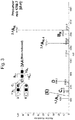
- Fig. 3 shows a result of MS/MS analysis performed using deprotonated ([M-H] - ) ions detected at m/z 1758.7 as precursor ions.
- the mass-to-charge ratio of the precursor ions is 2 Da lower than that of Comparative Example 1, but substantially the same as the precursor ions in Comparative Example 1.
- the chemical reaction for obtaining the non-reduced 2AA labeled form may be performed not on the sample plate but in a container such as a tube.
- a purification step may be provided for removing excess reagent (labeling agent) and the like before executing mass spectrometry.
- Nitrate adduct ions ([M+NO 3 ] - ) of the unlabeled NA2 glycan were subjected to MS/MS analysis based on the conventional method described in Patent Literature 1. Specifically, G 3 CA (1,1,3,3-tetramethylguanidine p-coumarate) was used as a matrix and ammonium nitrate was used as a matrix additive to prepare a measurement sample. MS/MS spectra obtained by this analysis are shown in Fig. 4. Fig. 4 shows a result of MS/MS analysis performed using nitrate adduct ([M+NO 3 ] - ) ions detected at m/z 1702.6 as precursor ions.
- Fig. 5 shows a result of MS/MS analysis performed using deprotonated ([M-H] - ) ions detected at m/z 1774.7 as precursor ions.
- labeling agents used in the experimental examples, but also other labeling agents having a carboxyl group, a phosphoric acid group, a sulfuric acid group, or the like, such as 2-aminobenzenesulfonic acid, 2-amino-1-naphthalenesulfonic acid, and 4-aminobenzylphosphonic acid may be used in non-reduction.
- NHS esters such as "79636 Sigma Atto 590 NHS ester”, “72464 Sigma Atto 565 NHS ester”, “F9551 Sigma-Aldrich”, “73494 Sigma Dy-560 NHS ester”, and "55536 Sigma Fluorescent Red Mega 480 NHS ester” exemplified above may be used.
- the glycan analysis method according to the present invention is applicable to mass spectrometry using a mass spectrometer by another ionization method performing MS/MS analysis using deprotonated forms (multiply deprotonated form) as precursor ions. That is, the glycan analysis method according to the present invention is applicable to mass spectrometry using an ionization method capable of negative ionization by so-called soft ionization method, for example, ESI method or the like.
Landscapes
- Life Sciences & Earth Sciences (AREA)
- Health & Medical Sciences (AREA)
- Engineering & Computer Science (AREA)
- Chemical & Material Sciences (AREA)
- Molecular Biology (AREA)
- Analytical Chemistry (AREA)
- Biomedical Technology (AREA)
- Hematology (AREA)
- Immunology (AREA)
- Urology & Nephrology (AREA)
- Physics & Mathematics (AREA)
- Biotechnology (AREA)
- General Physics & Mathematics (AREA)
- Food Science & Technology (AREA)
- Medicinal Chemistry (AREA)
- Cell Biology (AREA)
- Biochemistry (AREA)
- General Health & Medical Sciences (AREA)
- Microbiology (AREA)
- Pathology (AREA)
- Bioinformatics & Cheminformatics (AREA)
- Bioinformatics & Computational Biology (AREA)
- Spectroscopy & Molecular Physics (AREA)
- Biophysics (AREA)
- Proteomics, Peptides & Aminoacids (AREA)
- Other Investigation Or Analysis Of Materials By Electrical Means (AREA)
Abstract
Description
- The present invention relates to a method for analyzing a structure of glycan using mass spectrometry, and in particular to a method useful for structural analysis of glycan having a branched structure (also referred to as a tree-like structure).
- It is said that more than half of proteins constituting a living body are subject to glycosylation, and glycosylation plays an important role in regulating structure and function of proteins. Recent studies also show that a glycan expressed on a cell surface is involved in various in vivo phenomena such as intercellular interaction, signal transduction, development/differentiation, fertilization, and cancer metastasis.
- Glycans that modify proteins rarely have a structure in which monosaccharides are connected in a linear chain, and in many cases they have a branched structure. The structure of such glycans having a branched structure is extremely versatile, and the structure exerts a large influence on the function of the protein. Therefore, structural analysis of glycans is important in various fields such as physiology, life science, and medicine.
- In recent years, mass spectrometry is widely used for structural analysis of glycans, especially that accompanied by ion dissociation operation called tandem mass spectrometry, multistage mass spectrometry (MS n), or the like. Glycan structural analysis using mass spectrometry is generally performed based on mass spectra (in this specification, MS/MS spectra obtained by MS/MS analysis may also be referred to as mass spectra) acquired under positive ion mode. However, dissociation of positively ionized glycan by collision induced dissociation (CID) method often causes dissociation at a glycosyl bond between monosaccharides, making it difficult to obtain information on branched structure. Therefore, although such a method is useful for estimating monosaccharides constituting glycan, it is not so suitable for structural analysis of glycans having a branched structure.
- On the other hand, glycan structural analysis based on mass spectra acquired under negative ion mode has been also attempted, though it is not so common. It is known that dissociation reflecting a branched structure tends to occur specifically when negatively ionized glycan are dissociated by CID. For example, in N-linked glycans, D ions which reflect structural information of 1-6 arms of two branches and E ions which reflect structural information of 1-3 arms are likely to be generated, and it is possible to estimate a branched structure by detecting these ions. Moreover, these product ions are considered to be generated by simple primary dissociation, and the structural information of an original molecule is likely to be reflected in the product ions compared with ions generated by complicated secondary dissociation or tertiary dissociation. Therefore, there is an advantage that, for example, when a specific product ion is observed on mass spectra, a diagnostic analysis can be performed in which a partial structure of the original molecule is uniquely determined. From this, it can be said that mass spectrometry in negative ion mode is advantageous for structural analysis of glycans having a branched structure.
- However, there is a problem that glycans are hardly negatively ionized. Since sialic acid, one of monosaccharides, has a carboxyl group, it is easily charged to a negative charge. Therefore, an acidic glycan containing sialic acid relatively easily become a negative ion. In actual measurement, however, derivatization is often performed by preprocessing so as to neutralize a negative charge of a sialic acid moiety in order to prevent a loss of sialic acid. Therefore, in general, even when a glycan contains sialic acid, it is necessary to negatively ionize a neutral glycan having no functional group to be substantially deprotonated.
- As one method for negatively ionizing neutral glycans, a method of negative ionization by adding anions to glycan molecules has been developed. For example,
Patent Literature 1 andNon Patent Literature 1 each disclose, in order to negatively ionize glycans that are substantially neutral by a matrix-assisted laser desorption ionization (MALDI) method, a method for preparing a sample for measurement by adding anions to a special liquid matrix. The liquid matrix is an ionic liquid composed of, for example, ions of an amine and ions of an acid group-containing organic substance such as p-coumaric acid, and the anion is tetrafluoroboric acid or the like. However, with such methods, the type of matrices that can be used is considerably restricted, and it is not possible to use a general MALDI matrix, which is inexpensive and easily available. In addition, such a special matrix may not be suitable depending on the type of mass spectrometer. For example, a liquid matrix sometimes causes reduction in resolution due to the thickness of the matrix itself or other influences in a usual matrix-assisted laser desorption ionization time-of-flight mass spectrometer (MALDI-TOFMS). Therefore, it is preferable to use it in a mass spectrometer in which an ion trap described later is provided in a front stage of TOFMS. Also, even when the type of anion to be added is the same, product ions may not be obtained at all, depending on the type of glycan, so that it is difficult to select an anion. Furthermore, there is also a problem that a covalent bond is formed between anions added to glycans and the glycans, so that diagnostic product ions useful for structural analysis may not be obtained. - In some cases, structural analysis of glycans may be performed in a state where the glycans are released from glycoproteins, glycopeptides or the like. But it is often performed in a state where reducing terminals of the glycans are labeled. Well-known method is labeling for fluorescent labeling. Some labeling agents have a moiety that is easily negatively charged, and when glycans are labeled with such a labeling agent, negative ionization of glycans becomes easy. This can be applied irrespective of the type of glycan such as neutral glycan, sialyl glycan, and modified sialyl glycan, and the glycans can be negatively ionized efficiently.
- However, according to the report of
Non Patent Literature 2, MS/MS spectra obtained by MS/MS analysis of glycans labeled with a labeling agent that is easily negatively charged in negative ion mode are not specific against expectations. Only a plurality of product ions called y series, in which glycosyl bonds between monosaccharides are cleaved, is observed. InNon Patent Literature 2, it is concluded that, even when reducing terminals of glycans are labeled with a labeling agent that is easily negatively charged and subjected to MS/MS analysis in the negative ion mode, a product ion reflecting a branched structure which is important for the structural analysis of glycans cannot be obtained. - Thus, in order to perform glycan structural analysis by mass spectrometry in negative ion mode, regardless of whether the glycans are labeled, as described above, there is no way other than adopting a method of preparing a sample for MALDI using a special matrix added with anions, and measuring with a special mass spectrometer.
- Patent Literature 1:
JP 2013-205221 A -
- Non Patent Literature 1: T. Nishikaze and 3 others, "Sensitive Analysis of Neutral N-Glycans using Anion-Doped Liquid Matrix G3CA by Negative-Ion Matrix-Assisted Laser Desorption/Ionization Mass Spectrometry", Anal. Chem., 2012, Vol. 84, No. 12, pp. 6097-6103
- Non Patent Literature 2: D.J. Harvey, "Collision-induced fragmentation of negative ions from N-linked glycans derivatized with 2-aminobenzoic acid", Journal of Mass Spectrometry, 2005, Vol. 40, pp. 642-653
- Non Patent Literature 3: T. Nishikaze and 3 others, "Structural analysis of N-glycans by the glycan-labeling method using 3-aminoquinoline-based liquid matrix in negative ion MALDI-MS", Anal. Chem., 2012, Vol. 84, No. 12, pp. 6097-6103
- Non Patent Literature 4: Chen ST. and 1 other, "Linkage and Branch Analysis of High-Mannose Oligosaccharides Using Closed-Ring Labeling of 8-Aminopyrene-1,3,6-Trisulfonate and P-Aminobenzoic Ethyl Ester and Negative Ion Trap Mass Spectrometry", Journal of The American Society for Mass Spectrometry, August 2012, Vol. 23,
- As described above, in the conventional glycan analysis method, there has been a problem that the preprocessing for preparing samples requires a large cost and complicated operations, such as requiring an expensive special matrix, instead of an easily available general matrix, in order to certainly negatively ionize glycans to be analyzed to acquire MS/MS spectra reflecting the branched structural information. Furthermore, there are cases where the type of usable mass spectrometer is limited, which is not a general-purpose method.
- The present invention has been made in view of these problems, and it is an object of the present invention to provide a glycan analysis method, when performing glycan structural analysis using mass spectrometry, which is capable of certainly negatively ionizing glycans by low-cost simple preprocessing, and acquiring MS/MS spectra reflecting branched structural information of the glycans.
- Generally, a method called reduction amination (or reductive amination) is often used for labeling glycans. This is a method of reacting reducing terminals of glycans with a labeling agent having an amino group and then causing a reduction reaction with a reducing agent, thereby stabilizing a labeled form. For example, a labeling method used in
Non Patent Literature 2 is also a reduction amination method. - So far, the present inventor has attempted glycan structural analysis by negative ion mode on glycans labeled using a basic or neutral labeling agent by methods described in
Patent Literature 1 andNon Patent Literature 1, and reported the results inNon Patent Literature 3 and the like. The present inventor has confirmed in its experiment that the presence or absence of a reduction process to obtain a stable labeled product affects whether MS/MS spectra useful for glycan structural analysis are obtained. Then, it has come to a conclusion that it is preferable not to perform reduction in order to obtain diagnostic product ion information, almost regardless of whether labeling is performed and the type of labeling. This phenomenon is presumed to be attributed to the fact that an N-acetylglucosamine residue at a base (reducing terminal side) of the glycan is completely opened by reduction after labeling, and as a result, electron transfer within a ring at the time of CID becomes difficult and secondary dissociation and tertiary dissociation are promoted. - In addition,
Non Patent Literature 4 has reported an experimental example in which a labeling method without reduction is applied to glycans. Here, it is considered that labeling without reduction (referred to as "closed-ring labeling" in Non Patent Literature 4) is performed using neutral 4-aminobenzoic acid ethyl ester (ABEE) as a labeling agent, and MS/MS analysis is performed in negative ion mode, whereby mass spectra equivalent to those of underivatized glycans can be obtained. On the other hand, an experiment of performing labeling without reduction using acidic 8-aminopyrene-1,3,6-trisulfonic acid (APTS) as a labeling agent has also been done, and it is considered that specific product ions could not be observed, unlike the case of using a neutral labeling agent. That is, in this report, from the viewpoint of acquiring useful information for analyzing a branched structure, it has been concluded that there is an effect of not performing reduction when using a neutral labeling agent, but there is no effect of not performing reduction when using an acidic labeling agent. - However, in consideration of the results in the case of using a basic or neutral labeling agent, the present inventor has intensively studied by experiments and the like based on supposition that the presence or absence of reduction will affect a mode of dissociation also when labeling with a labeling agent that is easily negatively charged, that is, an acidic labeling agent. As a result, the present inventor has found that it is possible to efficiently obtain a deprotonated form by performing mass spectrometry in negative ion mode after labeling glycans using an acidic labeling agent that is easily negatively charged without performing reduction. Furthermore, the present inventor has also found that branched structure-specific product ions can be observed by performing MS/MS analysis including CID targeting the deprotonated form, and has completed the present invention.
- That is, the present invention made to solve the above problems is a method for analyzing a structure of glycan using mass spectrometry, the method including:
- a) a sample preparation step of preparing a sample by labeling glycan to be analyzed without reduction, using a labeling agent having at least one site capable of stably presenting a negative charge in a molecule; and
- b) an analysis execution step of subjecting the sample to MS/MS analysis in negative ion mode,
- In the glycan analysis method according to the present invention, one of the following two methods can typically be adopted as a method for performing labeling without reduction.
- (1) As described above, a general method used for labeling glycans is reduction amination, in which case a labeling agent and a reducing agent are used in combination. In general, when a substance derived from a labeling agent binds to a free reducing terminal of glycan, a partial structure near a binding portion is reduced by an action of the reducing agent, and a stable labeled form is formed. In this case, labeling without reduction can be performed by not using a reducing agent.
- (2) As a labeling agent often used for labeling proteins, there are N-hydroxysuccinimide (NHS) esters that bind to an amino group, and in recent years, a labeling agent for glycans using them has also been commercially available. Unlike labeling agents by reduction amination, such labeling agents originally do not need to be reduced at the time of labeling. Even such a labeling agent of NHS esters can be used in the glycan analysis method according to the present invention as long as it has at least one site capable of stably presenting a negative charge. In this case, labeling itself is labeling without reduction as described above.
- In the glycan analysis method according to the present invention, in the sample preparation step, a sample containing a labeled form of non-reduced glycans as a sample is prepared. For example, in performing mass spectrometry using a MALDI mass spectrometer, a liquid matrix is used as a matrix, and a substance serving as a labeling agent is used as an acid group-containing organic substance constituting the liquid matrix. As a result, as part of the work of preparing a sample for MALDI mass spectrometry, it is possible to perform labeling of glycans without reduction and simplify a working process. In the analysis execution step, the prepared sample is subjected to MS/MS analysis using an appropriate mass spectrometer. In the MS/MS spectra obtained by the MS/MS analysis, for example, D ions, E ions, and the like which reflect a branched structure of glycans are observed as product ions. By utilizing such product ion information, it is possible to estimate the structure of glycans having a branched structure.
- In the glycan analysis method according to the present invention, the site capable of stably presenting a negative charge in a labeling agent generally refers to a functional group having a property that is easily negatively charged such as a carboxyl group, a phosphoric acid group, or a sulfate group. Examples of typical labeling agents having one carboxyl group include 2-aminobenzoic acid (2AA), 5-aminosalicylic acid (5ASA), and the like. Also, examples of a compound having a sulfate group and usable as a labeling agent include 2-aminobenzenesulfonic acid, 2-amino-1-naphthalenesulfonic acid, and the like. Examples of a compound having a phosphoric acid group and usable as a labeling agent include 4-aminobenzylphosphonic acid, and the like.
- On the other hand, as labeling agents having one carboxyl group in the above-described NHS esters, there are "79636 Sigma Atto 590 NHS ester" (molecular formula: C41H42ClN3O11), "72464 Sigma Atto 565 NHS ester" (molecular formula: C35H34ClN3O11), and "F9551 Sigma-Aldrich" (fluoroscein 5-carboxymethyl thiopropanoic acid NHS ester), and the like all manufactured by SIGMA-ARDRICH, USA. Also, as labeling agents having one sulfate group in the same NHS esters, there are "73494 Sigma Dy-560 NHS ester" (molecular formula: C37N44N4O10S2), "55536 Sigma Fluorescent Red Mega 480 NHS ester" (molecular formula: C30H33N3O9S), and the like.
- Generally known labeling agents for glycans include those having one site that stably presents a negative charge in a molecule and those having a plurality of sites. For example, the APTS utilized in the experiment reported in the
Non Patent Literature 4 has three sulfate groups and is strongly acidic. According to such conventional knowledge, when there is a plurality of sites that stably present a negative charge in a molecule, product ions which reflect a branched structure may not be observed. Therefore, in the glycan analysis method according to the present invention, it is preferable to use, as the labeling agent, one having only one site that stably presents a negative charge in a molecule. - Also, the labeling agent preferably has an amino group, a hydrazide group, an aminooxy group, or a corresponding basic functional group, and binds to a reducing terminal of the glycan. Another type of labeling agent preferably reacts with an amino group of a glycosylamine structure in the glycan. The above-described 2AA, 5ASA, and the like are compounds satisfying these conditions.
- Moreover, in the glycan analysis method according to the present invention, the analysis execution step preferably executes MS/MS analysis using a deprotonated form of the glycan as a precursor ion.
- The glycans to be analyzed in the glycan analysis method according to the present invention are, for example, glycans contained in glycoproteins or glycopeptides, that is, glycans that modify proteins, peptides, or the like. In analyzing the structure of such glycans, a preprocessing step of cutting out (releasing) glycans from glycoproteins, glycopeptides, and the like is usually necessary, and labeling is performed on the glycans thus obtained.
- Furthermore, in the glycan analysis method according to the present invention, mass spectrometry is typically MALDI mass spectrometry which performs ionization by MALDI method, but an ionization method is not limited to the MALDI method as long as it is an ionization method capable of generating ions which are deprotonated forms. Specific examples of other useful ionization methods include electrospray ionization (ESI) method, and the like. In the case of the ESI method, multiply charged ions other than single deprotonated form are also produced, so that MS/MS analysis may be performed using the multiply charged ions (multiply deprotonated forms) as precursor ions. As a matter of course, mass spectrometry may be performed while performing component separation on a column, using an LC-MS system in which a high performance liquid chromatograph (HPLC) and such a mass spectrometer are connected.
- According to the glycan analysis method according to the present invention, glycans having a branched structure are certainly negatively ionized while a sample is prepared by a general preprocessing instead of a complicated and costly preprocessing, and MS/MS spectra reflecting the branched structural information can be acquired. Specifically, for example, in performing MALDI mass spectrometry, a sample may be prepared using a general matrix, that is, an inexpensive and easily available matrix for MALDI mass spectrometry. As a result, it is possible to estimate the structure of glycans having a branched structure relatively simply and at low cost.
-
-
Fig. 1 is a schematic flowchart of an analysis procedure in a glycan analysis method according to an embodiment of the present invention. -
Fig. 2 is a diagram showing an example of MS/MS spectra obtained by MS/MS analysis of biantennary glycans which are 2AA labeled forms (reduced) in negative ion mode. -
Fig. 3 is a diagram showing an example of MS/MS spectra obtained by MS/MS analysis of biantennary glycans which are 2AA labeled forms (not reduced) in negative ion mode. -
Fig. 4 is a diagram showing an example of MS/MS spectra obtained by MS/MS analysis of a sample prepared using a special liquid matrix added with anions in negative ion mode. -
Fig. 5 is a diagram showing an example of MS/MS spectra obtained by MS/MS analysis of biantennary glycans which are 5ASA labeled forms (not reduced) in negative ion mode. - First, an analysis procedure in a glycan analysis method according to an embodiment of the present invention will be described with reference to
Fig. 1. Fig. 1 is a schematic flow chart of this analysis procedure. Here, a case where a structure of glycans that modify proteins is analyzed using a MALDI mass spectrometer as a mass spectrometer will be exemplified. - First, glycans are released from glycoproteins containing glycans to be analyzed by a known method, and the released glycans are further purified to prepare a sample (step S1).
- Next, the glycans to be analyzed are labeled using, as a labeling agent, an appropriate compound containing a site that is easily negatively charged. The site that is easily negatively charged is typically a functional group that is easily negatively charged, that is, easily deprotonated, such as a carboxyl group, a phosphate group, or a sulfate group. The important thing here is to perform labeling without reduction (step S2).
- Generally known labeling agents for glycans often perform labeling by reduction amination, but such labeling agents are used in combination with a reducing agent. That is, by reacting the glycan with the labeling agent, a compound derived from the labeling agent is bound to the free reducing terminal of the glycan. Subsequently, a part of the compound bound to the glycan is reduced by the action of the reducing agent, and stable labeled glycan is formed. On the other hand, in using a labeling agent that performs labeling by reduction amination in the glycan analysis method according to this embodiment, occurrence of a reduction reaction is prevented without using a reducing agent.
- The above-described 2AA and 5ASA are labeling agents which contain one carboxyl group and an amino group and bind to the reducing terminal that is a ring opening of the glycan, and are suitable for labeling that does not use a reducing agent as described above.
- On the other hand, since an NHS ester known as a labeling agent for proteins is a compound binding to an amino group, it can also bind to the amino group of glycosylamine in the glycan. That is, NHS esters can be used as labeling agents for glycans immediately after being released from glycoproteins by an enzyme such as PNGase F (i.e., glycans having a glycosylamine structure). There are various labeling agents of NHS esters, some of which contain the above-described functional group that is easily negatively charged, and they can also be used as labeling agents for negatively ionizing glycans. Labeling using NHS esters is different from the above-described labeling by reduction amination in a mechanism of reaction, and there is no need to perform reduction. Therefore, in labeling glycans using NHS esters, labeling itself is labeling without reduction.
- The above-described "79636 Sigma Atto 590 NHS ester", "72464 Sigma Atto 565 NHS ester", "F9551 Sigma-Aldrich", and the like have one carboxyl group, and "73494 Sigma Dy-560 NHS ester", "55536 Sigma Fluorescent Red Mega 480 NHS ester", and the like have one sulfate group. They are suitable for labeling without reduction described above.
- Next, a sample for MALDI mass spectrometry is prepared, using a labeled form of glycans formed by labeling without reduction as described above as a sample and using an appropriate matrix (step S3). As will be described later, in a case where a liquid matrix is used for sample preparation and the labeling agent mentioned in step S2 is available as an acid group-containing organic substance constituting the liquid matrix, the labeling without reduction and the preparation of the sample for MALDI mass spectrometry can be performed substantially in parallel or continuously.
- Then, the sample prepared in step S3 is subjected to MS/MS analysis in negative ion mode, using a mass spectrometer equipped with a MALDI ion source and capable of MS/MS analysis (step S4). In MS/MS analysis, deprotonated ions of the labeled glycans may be used as precursor ions.
- In the MS/MS spectra obtained for the glycans labeled as described above, peaks derived from product ions reflecting the branched structure of glycans, for example, D ions and E ions, clearly appear. Also, when N-acetylglucosamine is present on the reducing terminal side of the glycan, a peak derived from ions due to ring dissociation of its N-acetylglucosamine residue also appears. Therefore, such product ions reflecting the branched structure are detected, and the structure of glycans is estimated based on, for example, a mass-to-charge ratio of the product ions (step S5).
- As described above, the glycan analysis method according to this embodiment can accurately estimate a structure of glycans having a branched structure.
- Hereinafter, experimental examples conducted based on the procedure of the glycan analysis method according to the foregoing embodiment and comparative examples conducted based on a procedure of a conventional glycan analysis method performed for comparison with the experimental examples will be specifically described.
- As a sample, 2-AA labeled NA2 glycan manufactured by Ludger Ltd, UK was used. It has a structure in which 2AA binds to a reducing terminal of NA2 glycan with a biantennary structure described in the following chemical formula, and reduction treatment is performed after labeling.

- The 2-AA labeled glycans were dissolved in ultrapure water to a concentration of 1 pmol/uL, 1 uL of the solution was collected, and dropped to a MALDI sample plate (µFocus MALDI plate manufactured by Hudson Surface Technology, USA). Then, 2,5-dihydroxybenzoic acid (DHB) at a concentration of 5 mg/mL as a matrix was dissolved in acetonitrile (ACN = Acetonitrile) at a concentration of 50%, and 0.5 uL of this solution was collected, overlaid on the sample on the sample plate, and air-dried to prepare a measurement sample. For this measurement sample, MS/MS analysis was performed in negative ion mode using a mass spectrometer. As the mass spectrometer, MALDI-QIT-TOFMS equipped with a MALDI ion source, a three-dimensional ion trap, and a time-of-flight mass spectrometer, specifically, AXIMA-Resonance (registered trademark) (manufactured by Shimadzu Corporation/Kratos) was used.
- MS/MS spectra acquired by the above analysis are shown in
Fig. 2. Fig. 2 shows a result of MS/MS analysis performed using singly deprotonated ([M-H]-) ions detected at m/z 1760.7 as precursor ions. As can be seen fromFig. 2 , most of detected peaks are generated by cleavage of glycosyl bond between monosaccharides, and are y-series ion peaks in which a monosaccharide residue is desorbed in order from a non-reducing terminal of the glycan (a left terminal of the glycan structure shown inFig. 2 ). In this case, little or no peaks derived from branched structure-specific product ions, such as D ions and E ions, or peaks derived from cross-ring cleavage of GlcNAc are detected. Therefore, although it is possible to estimate monosaccharides constituting the glycans from the MS/MS spectra, it is very difficult to analyze the branched structure of glycans. - As a sample, unlabeled NA2 glycan manufactured by SIGMA-ARDRICH, USA was used. A chemical formula of this glycan is the same as that in Comparative Example 1. This glycan was dissolved in a liquid matrix containing 2AA as an acidic group-containing organic substance which is also a labeling agent, and heated to accelerate a reaction between the glycan and 2AA, so that a labeled form of the glycan was formed. More specifically, 5 µL of a tetramethylguanidine (TMG = 1,1,3,3,-tetramethylguanidine) stock solution was added to and dissolved in 45 µL of a 2AA solution at 1 M concentration, and 5 µL of this solution was collected and diluted with 45 µL of 50% ACN, then used as a matrix solution (liquid matrix). 0.5 uL of this matrix solution and 1 uL of the sample solution were mixed on a MALDI sample plate (µFocus MALDI plate manufactured by Hudson Surface Technology) and heated on a heat block together with the plate at a temperature of 75°C for 90 minutes. Although 2AA binds to a reducing terminal of glycan by labeling with 2AA as a labeling agent, reduction is not performed since no reducing agent is used.
- The measurement sample thus prepared was subjected to MS/MS analysis in negative ion mode using MALDI-QIT-TOFMS in the same manner as that described in Comparative Example 1. MS/MS spectra obtained by this analysis are shown in
Fig. 3. Fig. 3 shows a result of MS/MS analysis performed using deprotonated ([M-H]-) ions detected at m/z 1758.7 as precursor ions. Here, since reduction is not performed after labeling as described above, the mass-to-charge ratio of the precursor ions is 2 Da lower than that of Comparative Example 1, but substantially the same as the precursor ions in Comparative Example 1. - As can be seen from
Fig. 3 , unlike the MS/MS spectra of Comparative Example 1 shown inFig. 2 , peaks derived from D ions and E ions containing information on branched structure are clearly observed. Also, peaks observed in a high mass-to-charge ratio region with m/z = 1200 or more are A ions due to cross-ring cleavage (A series) of a GlcNAc residue located on the reducing terminal side of the glycan, and it is possible to estimate a position of fucose from mass difference between the precursor ion and these peaks. Based on the mass-to-charge ratio of each ion, the structure of an entirety of glycan including the branched structure can be easily estimated. - Thus, it can be said that the fact that product ions containing a partial structure on the non-reducing terminal side, such as D ions, E ions, and A ions, are obtained even in a case where negative charges are locally present in the glycan structure like labeling with 2AA is completely unexpected from conventional knowledge.
- The chemical reaction for obtaining the non-reduced 2AA labeled form may be performed not on the sample plate but in a container such as a tube. In addition, as is often done with general labeling, a purification step may be provided for removing excess reagent (labeling agent) and the like before executing mass spectrometry.
- Nitrate adduct ions ([M+NO3]-) of the unlabeled NA2 glycan were subjected to MS/MS analysis based on the conventional method described in
Patent Literature 1. Specifically, G3CA (1,1,3,3-tetramethylguanidine p-coumarate) was used as a matrix and ammonium nitrate was used as a matrix additive to prepare a measurement sample. MS/MS spectra obtained by this analysis are shown inFig. 4. Fig. 4 shows a result of MS/MS analysis performed using nitrate adduct ([M+NO3]-) ions detected at m/z 1702.6 as precursor ions. It can be seen that the MS/MS spectra obtained at this time are considerably close to the MS/MS spectra obtained in Experimental Example 1 shown inFig. 3 , and branched structure-specific product ions are observed. In other words, it can be said that in the glycan analysis method according to the foregoing embodiment, it is possible to obtain MS/MS spectra containing branched structural information of the glycans without using a special matrix such as that described in Comparative Example 2. - A measurement sample was prepared based on exactly the same procedure as that described in Experimental Example 1 except that 5-aminosalicylic acid (5ASA) was used instead of 2AA for labeling glycans, and MS/MS analysis was performed in negative ion mode. MS/MS spectra obtained by this analysis are shown in
Fig. 5. Fig. 5 shows a result of MS/MS analysis performed using deprotonated ([M-H]-) ions detected at m/z 1774.7 as precursor ions. - Peaks almost the same as those of Experimental Example 1, that is, peaks derived from D ions, E ions, and A ions due to cross-ring cleavage of GlcNAc residue in the same mass-to-charge ratio as the MS/MS spectra according to Experimental Example 1 have been observed. From this, it is understood that the glycan analysis method according to the present invention can obtain MS/MS spectra reflecting the same branched structural information irrespective of a chemical structure of the labeling agent as long as the glycans are the same.
- The knowledge obtained in Experimental Example 2 is convenient in structural analysis of glycans. That is, when patterns of MS/MS spectra for samples labeled with different labeling agents are nearly the same, it can be concluded that they are the same glycans. Therefore, for example, when MS/MS spectra acquired for various glycans are stored in a database using a certain labeling agent, it is possible to identify unknown glycans prepared using another labeling agent, by collating MS/MS spectra obtained for the unknown glycans with the database. Thus, when restriction on the labeling agent that can be used in identifying glycans is relaxed, an analyst can prepare a sample using his/her own appropriate labeling agent.
- It should be noted that the foregoing embodiment is merely an example of the present invention, and any change, modification or addition appropriately made within the spirit of the present invention will evidently fall within the scope of claims of the present patent application.
- For example, not only the labeling agents used in the experimental examples, but also other labeling agents having a carboxyl group, a phosphoric acid group, a sulfuric acid group, or the like, such as 2-aminobenzenesulfonic acid, 2-amino-1-naphthalenesulfonic acid, and 4-aminobenzylphosphonic acid may be used in non-reduction. In addition, NHS esters such as "79636 Sigma Atto 590 NHS ester", "72464 Sigma Atto 565 NHS ester", "F9551 Sigma-Aldrich", "73494 Sigma Dy-560 NHS ester", and "55536 Sigma Fluorescent Red Mega 480 NHS ester" exemplified above may be used.
- In addition, although the foregoing embodiment is based on the premise that mass spectrometry is performed using a MALDI mass spectrometer, the glycan analysis method according to the present invention is applicable to mass spectrometry using a mass spectrometer by another ionization method performing MS/MS analysis using deprotonated forms (multiply deprotonated form) as precursor ions. That is, the glycan analysis method according to the present invention is applicable to mass spectrometry using an ionization method capable of negative ionization by so-called soft ionization method, for example, ESI method or the like.
Claims (6)
- A glycan analysis method for analyzing a structure of glycan using mass spectrometry, the glycan analysis method comprising:a) a sample preparation step of preparing a sample by labeling glycan to be analyzed without reduction, using a labeling agent having at least one site capable of stably presenting a negative charge in a molecule; andb) an analysis execution step of subjecting the sample to MS/MS analysis in negative ion mode,wherein branched structural information of the glycan is acquired from a result of MS/MS analysis.
- The glycan analysis method according to claim 1, wherein
the labeling agent has one site that stably presents a negative charge in a molecule. - The glycan analysis method according to claim 1, wherein
the site that stably presents a negative charge in the labeling agent is a carboxy group. - The glycan analysis method according to claim 1, wherein
the labeling agent has an amino group, a hydrazide group, an aminooxy group, or a corresponding basic functional group, and binds to a reducing terminal of the glycan. - The glycan analysis method according to claim 1, wherein
the labeling agent reacts with an amino group of a glycosylamine structure in the glycan. - The glycan analysis method according to any one of claims 1 to 5, wherein
the analysis execution step executes MS/MS analysis using a deprotonated form of the glycan as a precursor ion.
Applications Claiming Priority (1)
| Application Number | Priority Date | Filing Date | Title |
|---|---|---|---|
| PCT/JP2016/082909 WO2018083790A1 (en) | 2016-11-07 | 2016-11-07 | Glycan analysis method |
Publications (2)
| Publication Number | Publication Date |
|---|---|
| EP3537142A1 true EP3537142A1 (en) | 2019-09-11 |
| EP3537142A4 EP3537142A4 (en) | 2019-11-27 |
Family
ID=62075916
Family Applications (1)
| Application Number | Title | Priority Date | Filing Date |
|---|---|---|---|
| EP16920740.4A Withdrawn EP3537142A4 (en) | 2016-11-07 | 2016-11-07 | Glycan analysis method |
Country Status (5)
| Country | Link |
|---|---|
| US (1) | US11906522B2 (en) |
| EP (1) | EP3537142A4 (en) |
| JP (1) | JP6766880B2 (en) |
| CN (1) | CN109923407B (en) |
| WO (1) | WO2018083790A1 (en) |
Families Citing this family (1)
| Publication number | Priority date | Publication date | Assignee | Title |
|---|---|---|---|---|
| CN120577390B (en) * | 2025-05-07 | 2026-04-07 | 浙江大学 | Application of 2-amino isophthalic acid as MALDI matrix in detecting oligosaccharide additive in food |
Family Cites Families (4)
| Publication number | Priority date | Publication date | Assignee | Title |
|---|---|---|---|---|
| KR20110028295A (en) | 2008-06-12 | 2011-03-17 | 스미토모 베이클리트 컴퍼니 리미티드 | Sugar chain sample preparation method, sugar chain sample, and sugar chain analysis method |
| JP5821741B2 (en) | 2012-03-28 | 2015-11-24 | 株式会社島津製作所 | Mass spectrometry of neutral sugar chains |
| US9169331B2 (en) * | 2012-12-21 | 2015-10-27 | Dionex Corporation | Separation of glycans by mixed-mode liquid chromatography |
| CN104020216B (en) * | 2014-06-19 | 2017-02-15 | 苏州中科纳泰生物科技有限公司 | Method for relatively quantitatively analyzing carbohydrate chain in two-end labeling manner |
-
2016
- 2016-11-07 US US16/347,639 patent/US11906522B2/en active Active
- 2016-11-07 WO PCT/JP2016/082909 patent/WO2018083790A1/en not_active Ceased
- 2016-11-07 CN CN201680090635.2A patent/CN109923407B/en active Active
- 2016-11-07 JP JP2018548527A patent/JP6766880B2/en active Active
- 2016-11-07 EP EP16920740.4A patent/EP3537142A4/en not_active Withdrawn
Also Published As
| Publication number | Publication date |
|---|---|
| CN109923407B (en) | 2022-11-11 |
| CN109923407A (en) | 2019-06-21 |
| US11906522B2 (en) | 2024-02-20 |
| WO2018083790A1 (en) | 2018-05-11 |
| JPWO2018083790A1 (en) | 2019-07-11 |
| JP6766880B2 (en) | 2020-10-14 |
| US20190317101A1 (en) | 2019-10-17 |
| EP3537142A4 (en) | 2019-11-27 |
Similar Documents
| Publication | Publication Date | Title |
|---|---|---|
| Hardouin | Protein sequence information by matrix‐assisted laser desorption/ionization in‐source decay mass spectrometry | |
| Kailemia et al. | Oligosaccharide analysis by mass spectrometry: a review of recent developments | |
| Cristoni et al. | Development of new methodologies for the mass spectrometry study of bioorganic macromolecules | |
| McAlister et al. | Analysis of the acidic proteome with negative electron-transfer dissociation mass spectrometry | |
| JP6098538B2 (en) | Glycopeptide analysis method and sugar chain structure analysis program | |
| Asakawa | Principles of hydrogen radical mediated peptide/protein fragmentation during matrix‐assisted laser desorption/ionization mass spectrometry | |
| Nishikaze et al. | Sensitive analyses of neutral N-glycans using anion-doped liquid matrix G3CA by negative-ion matrix-assisted laser desorption/ionization mass spectrometry | |
| Nishikaze | Sensitive and structure-informative N-glycosylation analysis by MALDI-MS; ionization, fragmentation, and derivatization | |
| Mormann et al. | Electron capture dissociation of O-glycosylated peptides: radical site-induced fragmentation of glycosidic bonds | |
| Fukuyama | MALDI matrix research for biopolymers | |
| Liu et al. | Analysis of sialic acid linkage in N-linked glycopeptides using liquid chromatography–electron-activated dissociation time-of-flight mass spectrometry | |
| US11906522B2 (en) | Glycan analysis method | |
| Peltoniemi et al. | Novel data analysis tool for semiquantitative LC-MS-MS2 profiling of N-glycans | |
| EP2455750A1 (en) | Method for specific cleavage of n-c bond in peptide main chain | |
| Zhang et al. | Distinguishing phosphorylation and sulfation in carbohydrates and glycoproteins using ion-pairing and mass spectrometry | |
| JP5821741B2 (en) | Mass spectrometry of neutral sugar chains | |
| Pettit et al. | Broadband ion mobility deconvolution for rapid analysis of complex mixtures | |
| Rusnak et al. | Reaction of phosphorylated and O-glycosylated peptides by chemically targeted identification at ambient temperature | |
| Nakajima et al. | C-Terminal sequencing of protein by MALDI mass spectrometry through the specific derivatization of the α-carboxyl group with 3-aminopropyltris-(2, 4, 6-trimethoxyphenyl) phosphonium bromide | |
| Sandoval | Matrix‐assisted laser desorption/ionization time‐of‐flight mass analysis of peptides | |
| WO2021142137A1 (en) | Use of amino acids to enhance signal in mass spectral analyses | |
| Rohmer et al. | Fragmentation of neutral oligosaccharides using the MALDI LTQ Orbitrap | |
| WO2006109485A1 (en) | Mass spectrometry | |
| Smargiasso et al. | Optimization of matrix conditions for the control of MALDI in-source decay of permethylated glycans | |
| Asakawa | 5-Nitrosalicylic acid as a novel matrix for in-source decay in matrix-assisted laser desorption/ionization mass spectrometry |
Legal Events
| Date | Code | Title | Description |
|---|---|---|---|
| PUAI | Public reference made under article 153(3) epc to a published international application that has entered the european phase |
Free format text: ORIGINAL CODE: 0009012 |
|
| STAA | Information on the status of an ep patent application or granted ep patent |
Free format text: STATUS: REQUEST FOR EXAMINATION WAS MADE |
|
| 17P | Request for examination filed |
Effective date: 20190429 |
|
| AK | Designated contracting states |
Kind code of ref document: A1 Designated state(s): AL AT BE BG CH CY CZ DE DK EE ES FI FR GB GR HR HU IE IS IT LI LT LU LV MC MK MT NL NO PL PT RO RS SE SI SK SM TR |
|
| AX | Request for extension of the european patent |
Extension state: BA ME |
|
| A4 | Supplementary search report drawn up and despatched |
Effective date: 20191024 |
|
| RIC1 | Information provided on ipc code assigned before grant |
Ipc: G01N 27/62 20060101AFI20191018BHEP Ipc: G01N 33/68 20060101ALI20191018BHEP |
|
| DAV | Request for validation of the european patent (deleted) | ||
| DAX | Request for extension of the european patent (deleted) | ||
| STAA | Information on the status of an ep patent application or granted ep patent |
Free format text: STATUS: THE APPLICATION HAS BEEN WITHDRAWN |
|
| 17Q | First examination report despatched |
Effective date: 20210310 |
|
| 18W | Application withdrawn |
Effective date: 20210312 |