EP3534629A1 - Dynamic data package access for mobile device - Google Patents
Dynamic data package access for mobile device Download PDFInfo
- Publication number
- EP3534629A1 EP3534629A1 EP19156561.3A EP19156561A EP3534629A1 EP 3534629 A1 EP3534629 A1 EP 3534629A1 EP 19156561 A EP19156561 A EP 19156561A EP 3534629 A1 EP3534629 A1 EP 3534629A1
- Authority
- EP
- European Patent Office
- Prior art keywords
- mobile device
- data package
- identifier
- data
- application
- Prior art date
- Legal status (The legal status is an assumption and is not a legal conclusion. Google has not performed a legal analysis and makes no representation as to the accuracy of the status listed.)
- Granted
Links
Images


Classifications
-
- H—ELECTRICITY
- H04—ELECTRIC COMMUNICATION TECHNIQUE
- H04W—WIRELESS COMMUNICATION NETWORKS
- H04W4/00—Services specially adapted for wireless communication networks; Facilities therefor
- H04W4/50—Service provisioning or reconfiguring
-
- G—PHYSICS
- G06—COMPUTING OR CALCULATING; COUNTING
- G06F—ELECTRIC DIGITAL DATA PROCESSING
- G06F8/00—Arrangements for software engineering
- G06F8/60—Software deployment
- G06F8/61—Installation
-
- H—ELECTRICITY
- H04—ELECTRIC COMMUNICATION TECHNIQUE
- H04L—TRANSMISSION OF DIGITAL INFORMATION, e.g. TELEGRAPHIC COMMUNICATION
- H04L63/00—Network architectures or network communication protocols for network security
- H04L63/10—Network architectures or network communication protocols for network security for controlling access to devices or network resources
- H04L63/107—Network architectures or network communication protocols for network security for controlling access to devices or network resources wherein the security policies are location-dependent, e.g. entities privileges depend on current location or allowing specific operations only from locally connected terminals
-
- H—ELECTRICITY
- H04—ELECTRIC COMMUNICATION TECHNIQUE
- H04L—TRANSMISSION OF DIGITAL INFORMATION, e.g. TELEGRAPHIC COMMUNICATION
- H04L67/00—Network arrangements or protocols for supporting network services or applications
- H04L67/34—Network arrangements or protocols for supporting network services or applications involving the movement of software or configuration parameters
-
- H—ELECTRICITY
- H04—ELECTRIC COMMUNICATION TECHNIQUE
- H04W—WIRELESS COMMUNICATION NETWORKS
- H04W12/00—Security arrangements; Authentication; Protecting privacy or anonymity
- H04W12/06—Authentication
-
- H—ELECTRICITY
- H04—ELECTRIC COMMUNICATION TECHNIQUE
- H04W—WIRELESS COMMUNICATION NETWORKS
- H04W12/00—Security arrangements; Authentication; Protecting privacy or anonymity
- H04W12/08—Access security
-
- H—ELECTRICITY
- H04—ELECTRIC COMMUNICATION TECHNIQUE
- H04W—WIRELESS COMMUNICATION NETWORKS
- H04W12/00—Security arrangements; Authentication; Protecting privacy or anonymity
- H04W12/60—Context-dependent security
- H04W12/66—Trust-dependent, e.g. using trust scores or trust relationships
-
- H—ELECTRICITY
- H04—ELECTRIC COMMUNICATION TECHNIQUE
- H04W—WIRELESS COMMUNICATION NETWORKS
- H04W12/00—Security arrangements; Authentication; Protecting privacy or anonymity
- H04W12/60—Context-dependent security
- H04W12/69—Identity-dependent
- H04W12/72—Subscriber identity
-
- H—ELECTRICITY
- H04—ELECTRIC COMMUNICATION TECHNIQUE
- H04W—WIRELESS COMMUNICATION NETWORKS
- H04W4/00—Services specially adapted for wireless communication networks; Facilities therefor
- H04W4/60—Subscription-based services using application servers or record carriers, e.g. SIM application toolkits
-
- H—ELECTRICITY
- H04—ELECTRIC COMMUNICATION TECHNIQUE
- H04W—WIRELESS COMMUNICATION NETWORKS
- H04W4/00—Services specially adapted for wireless communication networks; Facilities therefor
- H04W4/80—Services using short range communication, e.g. near-field communication [NFC], radio-frequency identification [RFID] or low energy communication
-
- H—ELECTRICITY
- H04—ELECTRIC COMMUNICATION TECHNIQUE
- H04W—WIRELESS COMMUNICATION NETWORKS
- H04W48/00—Access restriction; Network selection; Access point selection
- H04W48/02—Access restriction performed under specific conditions
- H04W48/04—Access restriction performed under specific conditions based on user or terminal location or mobility data, e.g. moving direction, speed
-
- H—ELECTRICITY
- H04—ELECTRIC COMMUNICATION TECHNIQUE
- H04W—WIRELESS COMMUNICATION NETWORKS
- H04W8/00—Network data management
- H04W8/22—Processing or transfer of terminal data, e.g. status or physical capabilities
- H04W8/24—Transfer of terminal data
- H04W8/245—Transfer of terminal data from a network towards a terminal
-
- H—ELECTRICITY
- H04—ELECTRIC COMMUNICATION TECHNIQUE
- H04L—TRANSMISSION OF DIGITAL INFORMATION, e.g. TELEGRAPHIC COMMUNICATION
- H04L67/00—Network arrangements or protocols for supporting network services or applications
- H04L67/01—Protocols
- H04L67/12—Protocols specially adapted for proprietary or special-purpose networking environments, e.g. medical networks, sensor networks, networks in vehicles or remote metering networks
Definitions
- the present disclosure is related to a mobile device that accesses a data package.
- a network e.g., an Internet of Things (IOT) network
- IOT Internet of Things
- a mobile device entering the manufacturing environment is not equipped with assets (applications, files, multimedia, etc.) to perform different tasks.
- assets applications, files, multimedia, etc.
- the assets have to be manually installed at the mobile device after the mobile device enters the manufacturing environment, if the mobile device is to perform tasks associated with the assets.
- an end-user of the mobile device can navigate an asset installation repository (e.g., an application store) to download the assets used to perform the tasks.
- an asset installation repository e.g., an application store
- a device includes a wireless transceiver and a processor configured to detect that a mobile device is within a coverage area of the wireless transceiver.
- the processor is also configured to select, based at least in part on a mobile device identifier of the mobile device, a data package identifier from a plurality of data package identifiers.
- the wireless transceiver is configured to transmit a command instructing the mobile device to access a data package corresponding to the selected data packet identifier.
- the command includes authorization data indicating that the processor is a trusted source.
- a method includes transmitting, from a mobile device to an access point, a mobile device identifier of the mobile device.
- the method also includes receiving, at the mobile device from the access point, a command indicating a data package identifier.
- the data package identifier is selected based on the mobile device identifier, and the command includes authorization data.
- the method also includes determining, based on the authorization data, that the access point is a trusted source.
- the method further includes accessing a data package corresponding to the data package identifier in response to the determination.
- a computer-readable storage device stores instructions that, when executed by a processor, cause the processor to perform operations including detecting that a mobile device is within a coverage area of a wireless transceiver.
- the operations also include selecting, based at least in part on a mobile device identifier of the mobile device, a data package identifier from a plurality of data package identifiers.
- the operations further include initiating transmission of a command instructing the mobile device to access a data package corresponding to the selected data packet identifier.
- the command includes authorization data indicating that the processor is a trusted source.
- One advantage of the above-described implementation includes efficient data package delivery to an end-user of a mobile device entering into an environment. For example, because an access point transmits a data package identifier to the mobile device in response to receiving a mobile device identifier, the mobile device can identify the data package (used to perform tasks) without an end-user having to manually access a data package repository. Additionally, the end-user of the mobile device does not need foreknowledge of the data package and the location of the data package in order for the mobile device to receive the data package. As a result, the data package is more efficiently delivered to the mobile device (compared to a manual process). Additionally, the features, functions, and advantages that have been described can be achieved independently in various implementations or may be combined in yet other implementations, further details of which are disclosed with reference to the following description and drawings.
- the techniques described herein enable a mobile device, upon entering an environment, to dynamically access remote data packages that are used to configure the mobile device according to the environment.
- the mobile device enters into an information-rich manufacturing environment.
- the mobile device Upon entering the manufacturing environment, the mobile device lacks assets (e.g., applications, files, multi-media, etc.) to perform tasks within the manufacturing environment.
- assets e.g., applications, files, multi-media, etc.
- the mobile device transmits a mobile device identifier to an access point associated with the manufacturing environment.
- the mobile device identifier is transmitted in a beacon using a low-energy transmission protocol (e.g., a BLUETOOTH® communication protocol).
- the access point Based on the mobile device identifier, the access point identifies at least one data package for the mobile device to access from a server. For example, the access point selects a data package that, upon reception at the mobile device, enables the mobile device to perform the tasks. The access point transmits a data package identifier (identifying the data package) to the mobile device. Upon receiving the mobile device identifier, in some instances, the access point verifies that a user associated with the mobile device has a proper authorization (e.g., security clearance) to receive the remote data packages prior to sending the data package identifier to the mobile device. According to some implementation, the access point verifies a list of credentials as part of a data package request to prevent unauthorized data transmission. The list of credentials may include employee identification, certifications, an indication of role responsibility, a job assignment, etc.
- the mobile device Upon reception of the data package identifier, the mobile device transmits a data package request to the server to receive the data package indicated by the data package identifier.
- the data package request includes the data package identifier.
- the server Upon reception of the data package request, the server transmits the data package to the mobile device, and the mobile device uses information in the data package to perform the tasks.
- the data package can include configuration settings, and the mobile device can use the configuration settings to configure an operating system of the mobile device to perform the tasks.
- the data package can include multimedia (e.g., a tutorial video associated with operating equipment in the manufacturing environment), and the mobile device can playback the content to enable the user to perform the tasks (e.g., operate the equipment).
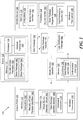
- FIG. 1 is a diagram of a system 100 that is operable to enable data package access for a mobile device.
- the system 100 includes an access point 110, a mobile device 120, and a server 130.
- the access point 110 is a beacon device.
- the mobile device 120 can be an augmented reality device, a virtual reality device, a mixed reality device, laptop, a smart phone, a smart watch, a tablet, or any other mobile device.
- the access point 110, the mobile device 120, and the server 130 are configured to communicate using a wireless technology.
- the access point 110, the mobile device 120, and the server 130 communicate according to an Institute of Electrical and Electronics Engineers (IEEE) 802.11 protocol.
- IEEE Institute of Electrical and Electronics Engineers
- the access point 110, the mobile device 120, and the server 130 communicate according to a low-energy communication protocol (e.g., a BLUETOOTH® communication protocol).
- a low-energy communication protocol e.g., a BLUETOOTH® communication protocol
- the access point 110, the mobile device 120, and the server 130 communicate according to a Near Field Communication (NFC) protocol.
- NFC Near Field Communication
- the mobile device 120 corresponds to a single mobile device associated with a group of mobile devices proximate to coverage area of the access point 110.
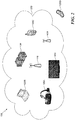
- FIG. 2 illustrates four examples of the mobile device 120, including a mobile device 120A, a mobile device 120B, a mobile device 120C, and a mobile device 120D.
- the access point 110 has a coverage area 202.
- the coverage area 202 represents a range that the wireless transceiver 116 (of the access point 110) is capable of transmitting and receiving data. According to FIG.
- the mobile device 120A is within the coverage area 202 of the access point 110
- the mobile device 120B is within the coverage area 202 of the access point 110
- the mobile device 120C is within the coverage area 202 of the access point 110.
- the access point 110 is operable to transmit messages to (and receive messages from) the mobile devices 120A, 120B, 120C.
- the mobile device 120D is outside the coverage area 202.
- the access point 110 is not operable to transmit messages to (and receive messages from) the mobile device 120D.
- the coverage area 202 also includes a media device 410 and a second device 420.
- the second device 420 includes a server, such as the server 130.
- the second device 420 includes a cloud-based device. Operations performed by the media device 410 and the second device 420 are described in greater detail with respect to FIG. 4 .
- the coverage area 202 corresponds to a manufacturing factory that supports different devices (e.g., different mobile devices). Each of the mobile devices 120A, 120B, 120C within the coverage area 202 (and the server 130) can exchange data.
- the coverage area 202 corresponds to an internet-of-things (IOT) network that enables the mobile devices 120A, 120B, 120C and the server 130 to exchange data.
- IOT internet-of-things
- each mobile device 120A, 120B, 120C within the coverage area 202 is of a different type (e.g., different model)
- each mobile device 120A, 120B, 120C is associated with a different configuration.
- the mobile device 120A is an augmented reality device
- the mobile device 120B is a laptop
- the mobile device 120C is a personal digital assistant (PDA).
- the mobile device 120A is associated with a first configuration related to augmented reality devices
- the mobile device 120B is associated with a second configuration related to laptops
- the mobile device 120C is associated with a third configuration related to PDAs.
- each mobile device 120A, 120B, 120C is associated with a different configuration, different operating systems can be installed on each mobile device 120A, 120B, 120C or different versions of an operating system can be installed on each mobile device 120A, 120B, 120C. Additionally, each mobile device 120A, 120B, 120C can have different hardware specifications or different software specifications. The techniques described herein enable each mobile device 120A, 120B, 120C to access a unique data package (related to the corresponding configuration) upon entering the coverage area 202.
- the mobile device 120 includes a memory 122, a processor 124 coupled to the memory 122, and a wireless transceiver 126 coupled to the processor 124.
- the memory 122 is a computer-readable storage device that stores instructions 150 that are executable to cause the processor 124 to perform operations.
- the processor 124 includes a source verifier 154, a data package request generator 156, and data processing circuitry 157.
- the mobile device 120 Upon entering the coverage area 202, the mobile device 120 is configured to transmit a mobile device identifier 152 to the access point 110.
- the mobile device identifier 152 is stored in the memory 122 of the mobile device 120.
- the mobile device identifier 152 includes identity information associated with the mobile device 120.
- the mobile device identifier 152 includes a product key of the mobile device 120, a credential key of an end-user associated with the mobile device 120, a key representing the end-user has fulfilled particular prerequisites (e.g., safety prerequisites) to work in the environment, etc.
- the processor 124 is configured to retrieve the mobile device identifier 152 from the memory 122, and the wireless transceiver 126 is configured to transmit the mobile device identifier 152 to the access point 110.
- the access point 110 includes a memory 112, a processor 114 coupled to the memory 112, and a wireless transceiver 116 coupled to the processor 114.
- the memory 112 is a computer-readable storage device that stores instructions 140 that are executable to cause the processor 114 to perform operations.
- the processor 114 includes a mobile device detection circuit 144, a data package identifier selector 146, and a command generator 148.
- the access point 110 is configured to detect that the mobile device 120 is within the coverage area 202.
- the wireless transceiver 116 of the access point 110 is configured to receive the mobile device identifier 152 from the mobile device 120.
- the mobile device detection circuit 144 is configured to process (e.g., decode, identify, etc.) the mobile device identifier 152 to determine that the mobile device 120 is within the coverage area 202.
- the mobile device detection circuit 144 identifies the product key of the mobile device identifier 152 and determines that the mobile device 120 is within the coverage area 202 in response to identifying the product key.
- the mobile device 120 sends a user verification package 190 to the server 130 upon detecting the access point 110.
- the user verification package includes user information that is used to authenticate the user of the mobile device 120.
- the data package identifier selector 146 is configured to select a data package identifier 108 based at least in part on the mobile device identifier 152.
- the memory 112 of the access point 110 stores a plurality of data package identifiers 142. According to one implementation, each data package identifier of the plurality of data package identifiers 142 is associated with a different mobile device.
- the data package identifier 108 is associated with the mobile device 120, a different data package identifier (not shown) of the plurality of data package identifiers 142 is associated with the mobile device 120B, and a different data package identifier (not shown) of the plurality of data package identifiers 142 is associated with the mobile device 120C.
- the data package identifier 108 indicates a data package (stored at the server 130) designated for the mobile device 120.
- the mobile device 120 uses the data package (indicated by the data package identifier 108) for different operations (e.g., configuration operations, installation operations, content-based operations, etc.).
- the data package identifier 108 is selected based at least in part on a determination that a user associated with the mobile device 120 has a level of security clearance that satisfies a security clearance threshold associated with the data package.
- the data package (indicated by the data package identifier 108) can include sensitive information that is available to personnel with a high security clearance.
- the data package identifier selector 146 can determine whether the user associated with the mobile device 120 has the level of security clearance that satisfies the security clearance threshold.
- the data package (indicated by the data package identifier 108) is associated with an item (e.g., a manufacturing item, a software item, a hardware item, tools, etc.).
- the data package identifier selector 146 selects the data package identifier 108 based on at least one of two criteria. For example, in response to a determination that item catalogue data indicates that the item is checked out to a user that is associated with the mobile device 120, the data package identifier selector 146 selects the data package identifier 108.
- the data package identifier selector 146 selects the data package identifier 108 because the data package identifier 108 corresponds to a data package associated with the particular tool.
- the data package identifier selector 146 selects the data package identifier 108 in response to a determination (or detection) that the item is within the coverage area 202 of the wireless transceiver 116.
- the data package identifier 108 is selected based other criteria. As a non-limiting example, the data package identifier 108 is selected in response to a determination that the data package (indicated by the data package identifier 108) is associated with a model of the mobile device 120. As another non-limiting example, the data package identifier 108 is selected based on a type of operating system installed on the mobile device 120. As another non-limiting example, the data package identifier 108 is selected based a version of the operating system installed on the mobile device 120. The data package identifier 108 can also be selected based on a hardware specification of the mobile device 120, a software specification of the mobile device 120, or both.
- the command generator 148 is configured to generate a command 106 that instructs the mobile device 120 to access the data package indicated by the data package identifier 108.
- the data package identifier 108 is included in the command 106.
- authorization data 109 is included in the command 106.
- the authorization data 109 indicates that the processor 114 (or the access point 110) is a trusted source.
- the wireless transceiver 116 is configured to transmit the command 106 to the mobile device 120.
- the command 106 is included in a beacon 107 that is communicated using a wireless communication protocol.
- the wireless transceiver 126 is configured to receive the command 106.
- the source verifier 154 Upon reception of the command 106, the source verifier 154 is configured to determine whether the access point 110 is a trusted source. For example, the source verifier 154 is configured to process (e.g., decode) the authorization data 109 to determine that the access point 110 is a trusted source.
- the data package request generator 156 is configured to access a data package 162 corresponding to the data package identifier 108.
- the data package request generator 156 is configured to generate a data package request 158 based on the data package identifier 108.
- the wireless transceiver 126 is configured to send the data package request 158 to the server 130.
- the server 130 includes a memory 132, a processor 134 coupled to the memory 132, and a wireless transceiver 136 coupled to the processor 134.
- a plurality of data packages 160 is stored in the memory 132.
- the plurality of data packages 160 includes a data package 162 and a data package 164. Although two data packages 162, 164 are illustrated in FIG. 1 , in other implementations, the plurality of data packages 160 includes additional data packages.
- the plurality of data packages 160 can include fifteen (or more) data packages. Each data package in the plurality of data packages 160 is associated with a different device, a different configuration for similar devices, a different format for similar devices, etc.
- the data package 162 is associated with the mobile device 120
- the data package 164 is associated with the mobile device 120B
- another data package of the plurality of data packages is associated with the mobile device 120C, etc.
- the processor 134 can dynamically generate the data package 162 for the mobile device 120 based on a set of parameters indicated in the data package request 158.
- the wireless transceiver 136 is configured to receive the data package request 158 from the mobile device 120.
- the processor 134 Upon reception of the data package request 158, the processor 134 is configured to retrieve the data package 162 (from the memory 132) that is associated with the data package request 158.
- the processor 134 is configured to process (e.g., decode) the data package request 158 to identify the corresponding data package 162 located in the memory 132. After the processor 134 identifies the data package 162, the processor 134 retrieves the data package 162 from the memory 132 and initiates transmission of the data package 162 to the mobile device 120.
- the wireless transceiver 136 is configured to transmit the data package 162 to the mobile device 120.
- the wireless transceiver 126 is configured to receive the data package 162 from the server 130.
- the data processing circuitry 157 is configured to perform operations (e.g., configuration operations, installation operations, content-based operations, etc.) at the mobile device 120 using information included in the data package 162. The operations are described using different implementations of the data package 162, as described with respect to FIGS. 3A-3C .
- the data package 162A corresponds to the data package 162 of FIG. 1 .
- the data package 162A includes a configuration setting 302.
- the command 106 instructs the data processing circuitry 157 to update a configuration of the mobile device 120 based on the configuration setting 302.
- the data processing circuitry 157 updates the configuration of the mobile device 120 using the configuration setting 302.
- the updated configuration enables the mobile device 120 to operate in an environment associated with the coverage area 202.
- the updated configuration can result in activation of particular features or applications of the mobile device 120, deactivation of other particular features or applications of the mobile device 120, or both.
- the data package 162B corresponds to the data package 162 of FIG. 1 .
- the data package 162B includes an application 304.
- the command 106 instructs the data processing circuitry 157 to install the application 304 at the mobile device 102.
- the data processing circuitry 157 initiates an installation operation using application data associated with the application 304.
- a user of the mobile device 120 can open the application 304 and use features of the application in an environment associated with the coverage area 202.
- the data package 162C corresponds to the data package 162 of FIG. 1 .
- the data package 162C includes content 306.
- the content 306 can include video content, audio content, text content, application content, etc.
- the command 106 instructs the data processing circuitry 157 to display the content 306.
- the content 306 can include encoded video.
- the data processing circuitry 157 decodes the encoded video to generate decoded video, and the decoded video is displayed at a display screen (not shown) of the mobile device 120.
- the command 106 instructs the data processing circuitry 157 to send the content 306 to an application.
- the data processing circuitry 157 sends the content 306 to the application for execution.
- the command 106 instructs the data processing circuitry 157 to store the content 306 in the memory 122.
- the data package 162 includes multiple items.
- the data package 162 can include the configuration setting 302, the application 304, and the content 306.
- the techniques described with respect to FIGS. 1-3C enable efficient data package delivery to an end-user of the mobile device 120 and reduced set-up time associated with the data package. For example, because the access point 110 transmits the data package identifier 108 to the mobile device 120 in response to receiving the mobile device identifier 152, the mobile device 120 can identify the data package 162 without an end-user having to manually access a data package repository. Additionally, the end-user of the mobile device 120 does not need foreknowledge of the data package 162 and the location of the data package 162 in order for the mobile device 120 to receive the data package 162. As a result, the data package 162 is more efficiently delivered to the mobile device 120 (compared to a manual process).
- content illustrating how to operate a particular tool can be delivered in an efficient manner to a mechanic operating the mobile device 120.
- the mechanic operating the mobile device 120 enters a manufacturing environment.
- the mobile device 120 Upon entering into a manufacturing environment, the mobile device 120 sends the mobile device identifier 152 to the access point 110, and the access point 110 determines that a particular tool is checked out to a user (e.g., the mechanic) of the mobile device 120. Based on the determination, the access point 110 sends the data package identifier 108 to the mobile device 120 to identify a data package (e.g., the data package 162) associated with particular tool.
- data package 162 can include content (e.g., an instruction manual) for the particular tool.
- the mobile device 120 sends the data package request 158 (including the data package identifier 108) to the server 130, and the server 130 sends the data package 162 to the mobile device 120.
- the mechanic can view the instruction manual at the mobile device 120.
- FIG. 4 a diagram of another implementation of the system 100 is shown.
- the system 100 is operable to activate an application at a media device is shown.
- the system 400 includes the access point 110, the mobile device 120, the media device 410, and the second device 420.
- the media device 410 is a kiosk in a manufacturing environment.
- the media device 410 includes more computing power than the mobile device 120 and has a larger screen than the mobile device 120.
- the mobile device 120 is configured to transmit a first message 450 to the access point 110.
- the first message requests activation of an application 412 at the media device 410.
- the processor 124 generates the first message 450 and includes a media device identifier 452 in the first message 450.
- the media device identifier 452 is included in the data package 162 received from the server 130.
- the media device identifier 452 includes identification information associated with the media device 410 and identification information associated with the application 412.
- the media device identifier 452 includes a product key of the media device 410.
- the first message 450 includes credentials associated with the user of the mobile device 120. To illustrate the first message 450 can include security credentials of the user.
- the wireless transceiver 126 is configured to transmit the first message 450 to the access point 110 after generation of the first message 450.
- the first message 450 is transmitted from the mobile device 120 to the access point 110 in response to a determination that the media device 410 is within a coverage area of the mobile device 120 (e.g., within the coverage area 202).
- the wireless transceiver 116 is configured to receive the first message 450 from the mobile device 120.
- the processor 114 Upon reception of the media device identifier 452 in the first message 450, the processor 114 is configured to identify a device that is capable of activating the application 412 (e.g., identify a device that can activate applications stored at the media device 410).
- the processor 114 determines that the second device 420 has the capability of activating the application 412.
- the processor 114 generates a second device identifier 454.
- the wireless transceiver 116 is configured to transmit the second device identifier 454 to the mobile device 120.
- the wireless transceiver 126 is configured to receive the second device identifier 454 from the access point 110. Upon reception of the second device identifier 454, the processor 124 is configured to generate a second message 460 that requests the second device 420 to activate the application 412 at the media device 410. For example, an activation request 462 is included in the second message 460. The wireless transceiver 126 is configured to send the second message 460 to the second device 420. Different implementations of the second message 460 are described with respect to FIGS. 5A-5C .
- the second message 460A corresponds to the second message 460 of FIG. 4 .
- the second message 460A includes the activation request 462 and the media device identifier 452.
- the media device identifier 452 identifies the media device 410, and the activation request 462 instructs the second device 420 to activate applications (e.g., the application 412) at the media device 410.
- the second message 460B corresponds to the second message 460 of FIG. 4 .
- the second message 460B includes the activation request 462 and mobile device authorization data 504.
- the mobile device authorization data 504 indicates that the mobile device 120 is authorized to request activation of the application 412, and the activation request 462 instructs the second device 420 to activate the application 412.
- the second message 460C corresponds to the second message 460 of FIG. 4 .
- the second message 460C includes the activation request 462 and an application identifier 506.
- the application identifier 506 identifies the application 412 to be activated, and the activation request 462 instructs the second device 420 to activate the application 412.
- the second message 460 includes the activation request 462, the media device identifier 452, the mobile device authorization data 504, the application identifier 506, or a combination thereof.
- the second device includes a memory 422, a processor 424 coupled to the memory 422, and a wireless transceiver 426 coupled to the processor 424.
- the processor 424 Upon reception of the second message 460, the processor 424 is configured to activate the application 412 at the media device 410.
- the processor 424 In response to activation of the application 412, the processor 424 is configured to generate a notification 464 indicating that the application 412 has been activated.
- the wireless transceiver 426 is configured to transmit the notification 464 to the mobile device 120.
- the techniques described with respect to FIGS. 4-5C enable the mobile device 120 to initiate activation of the application 412 if a user of the mobile device 120 does not have foreknowledge of the device that can activate the application 412. For example, by sending the media device identifier 452 to the access point 110, the access point 110 indicates, to the mobile device 120, the device (e.g., the second device 420) that is capable of activating the application 412.
- the device e.g., the second device 420
- the application 412 can be an instructional video displayed at the media device 410.
- the instructional video details how to use a particular piece of manufacturing equipment.
- the second device 420 is a video server that is configured to activate the instructional video at the media device 410. If a user of the mobile device 120 lacks the foreknowledge that the second device 420 is configured to activate the instructional video, the mobile device 120 sends the media device identifier 452 (of the media device 410) to the access point 110, and the access point 110 indicates (to the mobile device 120 using the second device identifier 454) that the second device 420 is configured to operate the media device 410. Based on the indication, the mobile device 120 requests the second device 420 to play the instructional video.
- FIG. 6 a flowchart illustrating a method 600 for enabling data package access for a mobile device is shown. The method 600 is performed by the access point 110 of FIG. 1 .
- the method 600 includes detecting that a mobile device is within a coverage area of a wireless transceiver, at 602. For example, referring to FIGS. 1-2 , the access point 110 detects that the mobile device 120 is within the coverage area 202 of the wireless transceiver 116 in response to receiving the mobile device identifier 152.
- the method 600 also includes selecting, based at least in part on a mobile device identifier of the mobile device, a data package identifier from a plurality of data package identifiers, at 604.
- the data package identifier selector 146 selects the data package identifier 108 from the plurality of data package identifiers 142 stored at the memory 112. Selection of the data package identifier 108 is based on the mobile device identifier 152.
- the data package identifier 108 identifies the data package 162 to be used by the mobile device 120 indicated in the mobile device identifier 152.
- the method 600 also includes transmitting a command instructing the mobile device to access a data package corresponding to the selected data packet identifier, at 606.
- the command includes authorization data that indicates that the access point is a trusted source.
- the access point 110 transmits the command 106 to the mobile device 120.
- the command 106 instructs the mobile device 120 to access the data package 162 corresponding to the data package identifier 108.
- FIG. 7 a flowchart illustrating another method 700 for enabling data package access for a mobile device is shown. The method 700 is performed by the mobile device 120 of FIG. 1 .
- the method 700 includes transmitting, from a mobile device to an access point, a mobile device identifier of the mobile device, at 702. For example, referring to FIG. 1 , the mobile device 120 transmits the mobile device identifier 152 to the access point 110.
- the method 700 also includes receiving, at the mobile device from the access point, a command indicating a data package identifier, at 704.
- the data package identifier is selected based on the mobile device identifier, and the command includes authorization data.
- the mobile device 120 receives the command 106 from the access point 110.
- the command 106 indicates the data package identifier 108 that is selected based on the mobile device identifier 152, and the command 106 includes the authorization data 109.
- the method 700 also includes determining, based on the authorization data, that the access point is a trusted source, at 706. For example, referring to FIG. 1 , the source verifier 154 determines that the access point 110 is a trusted source based on the authorization data 109.
- the method 700 also includes accessing a data package corresponding to the data package identifier in response to the determination, at 708. For example, referring to FIG. 1 , the mobile device 120 accesses the data package 162 from the server 130 in response to determining that the access point 110 is a trusted source.
- the method 700 also includes transmitting, from the mobile device to the access point, a first message requesting activation of an application at a media device.
- the message includes a media device identifier of the media device.
- the method 700 also includes receiving, at the mobile device from the access point, an identifier of a second device that is configured to activate the application at the media device.
- the method 700 also include sending, from the mobile device to the second device, a second message requesting activation of the application at the media device.
- the second message includes at least one of the media device identifier, mobile device authorization data that indicates the mobile device is authorized to access the application, or an application identifier of the application.
- the methods 600, 700 of FIGS. 6-7 enable efficient data package delivery to an end-user of the mobile device 120 and reduced set-up time associated with the data package. For example, because the access point 110 transmits the data package identifier 108 to the mobile device 120 in response to receiving the mobile device identifier 152, the mobile device 120 can identify the data package 162 without an end-user having to manually access a data package repository. Additionally, the end-user of the mobile device 120 does not need foreknowledge of the data package 162 and the location of the data package 162 in order for the mobile device 120 to receive the data package 162. As a result, the data package 162 is more efficiently delivered to the mobile device 120 (compared to a manual process).
Landscapes
- Engineering & Computer Science (AREA)
- Computer Networks & Wireless Communication (AREA)
- Signal Processing (AREA)
- Computer Security & Cryptography (AREA)
- General Engineering & Computer Science (AREA)
- Software Systems (AREA)
- Theoretical Computer Science (AREA)
- Databases & Information Systems (AREA)
- Physics & Mathematics (AREA)
- General Physics & Mathematics (AREA)
- Computer Hardware Design (AREA)
- Computing Systems (AREA)
- Mobile Radio Communication Systems (AREA)
Abstract
Description
- The present disclosure is related to a mobile device that accesses a data package.
- In a manufacturing environment, different devices are interconnected and exchange data via a network (e.g., an Internet of Things (IOT) network). In some scenarios, a mobile device entering the manufacturing environment is not equipped with assets (applications, files, multimedia, etc.) to perform different tasks. Thus, the assets have to be manually installed at the mobile device after the mobile device enters the manufacturing environment, if the mobile device is to perform tasks associated with the assets. To illustrate, an end-user of the mobile device can navigate an asset installation repository (e.g., an application store) to download the assets used to perform the tasks. However, the end-user would need foreknowledge of the assets and the location of the assets in the asset installation repository.
- According to one implementation of the present disclosure, a device includes a wireless transceiver and a processor configured to detect that a mobile device is within a coverage area of the wireless transceiver. The processor is also configured to select, based at least in part on a mobile device identifier of the mobile device, a data package identifier from a plurality of data package identifiers. The wireless transceiver is configured to transmit a command instructing the mobile device to access a data package corresponding to the selected data packet identifier. The command includes authorization data indicating that the processor is a trusted source.
- According to another implementation of the present disclosure, a method includes transmitting, from a mobile device to an access point, a mobile device identifier of the mobile device. The method also includes receiving, at the mobile device from the access point, a command indicating a data package identifier. The data package identifier is selected based on the mobile device identifier, and the command includes authorization data. The method also includes determining, based on the authorization data, that the access point is a trusted source. The method further includes accessing a data package corresponding to the data package identifier in response to the determination.
- According to another implementation of the present disclosure, a computer-readable storage device stores instructions that, when executed by a processor, cause the processor to perform operations including detecting that a mobile device is within a coverage area of a wireless transceiver. The operations also include selecting, based at least in part on a mobile device identifier of the mobile device, a data package identifier from a plurality of data package identifiers. The operations further include initiating transmission of a command instructing the mobile device to access a data package corresponding to the selected data packet identifier. The command includes authorization data indicating that the processor is a trusted source.
- One advantage of the above-described implementation includes efficient data package delivery to an end-user of a mobile device entering into an environment. For example, because an access point transmits a data package identifier to the mobile device in response to receiving a mobile device identifier, the mobile device can identify the data package (used to perform tasks) without an end-user having to manually access a data package repository. Additionally, the end-user of the mobile device does not need foreknowledge of the data package and the location of the data package in order for the mobile device to receive the data package. As a result, the data package is more efficiently delivered to the mobile device (compared to a manual process). Additionally, the features, functions, and advantages that have been described can be achieved independently in various implementations or may be combined in yet other implementations, further details of which are disclosed with reference to the following description and drawings.
-
-
FIG. 1 is a diagram of a system that enables a mobile device to dynamically access data packets; -
FIG. 2 is a diagram of an environment that includes an access point and multiple mobile devices; -
FIGS. 3A, 3B, and 3C illustrate different implementations of data packets that are dynamically accessible to a mobile device; -
FIG. 4 is a diagram of a system that is operable to activate an application at a media device; -
FIGS. 5A, 5B, and 5C illustrate different implementations of messages that include a request to activate applications at a media device; -
FIG. 6 is a flowchart of a method for enabling a mobile device to dynamically access data packets; and -
FIG. 7 is a flowchart of another method for enabling a mobile device to dynamically access data packets. - Particular embodiments of the present disclosure are described below with reference to the drawings. In the description, common features are designated by common reference numbers throughout the drawings.
- The figures and the following description illustrate specific exemplary embodiments. It will be appreciated that those skilled in the art will be able to devise various arrangements that, although not explicitly described or shown herein, embody the principles described herein and are included within the scope of the claims that follow this description. Furthermore, any examples described herein are intended to aid in understanding the principles of the disclosure and are to be construed as being without limitation. As a result, this disclosure is not limited to the specific embodiments or examples described below, but by the claims and their equivalents.
- The techniques described herein enable a mobile device, upon entering an environment, to dynamically access remote data packages that are used to configure the mobile device according to the environment. As a non-limiting example, the mobile device enters into an information-rich manufacturing environment. Upon entering the manufacturing environment, the mobile device lacks assets (e.g., applications, files, multi-media, etc.) to perform tasks within the manufacturing environment. To obtain the assets (or data packages associated with the assets), the mobile device transmits a mobile device identifier to an access point associated with the manufacturing environment. According to one implementation, the mobile device identifier is transmitted in a beacon using a low-energy transmission protocol (e.g., a BLUETOOTH® communication protocol). BLUETOOTH® is a registered trademark owned by BLUETOOTH SIG, INC., a Delaware corporation. Based on the mobile device identifier, the access point identifies at least one data package for the mobile device to access from a server. For example, the access point selects a data package that, upon reception at the mobile device, enables the mobile device to perform the tasks. The access point transmits a data package identifier (identifying the data package) to the mobile device. Upon receiving the mobile device identifier, in some instances, the access point verifies that a user associated with the mobile device has a proper authorization (e.g., security clearance) to receive the remote data packages prior to sending the data package identifier to the mobile device. According to some implementation, the access point verifies a list of credentials as part of a data package request to prevent unauthorized data transmission. The list of credentials may include employee identification, certifications, an indication of role responsibility, a job assignment, etc.
- Upon reception of the data package identifier, the mobile device transmits a data package request to the server to receive the data package indicated by the data package identifier. In some scenarios, the data package request includes the data package identifier. Upon reception of the data package request, the server transmits the data package to the mobile device, and the mobile device uses information in the data package to perform the tasks. As a non-limiting example, the data package can include configuration settings, and the mobile device can use the configuration settings to configure an operating system of the mobile device to perform the tasks. As another non-limiting example, the data package can include multimedia (e.g., a tutorial video associated with operating equipment in the manufacturing environment), and the mobile device can playback the content to enable the user to perform the tasks (e.g., operate the equipment).
-
FIG. 1 is a diagram of asystem 100 that is operable to enable data package access for a mobile device. Thesystem 100 includes anaccess point 110, amobile device 120, and aserver 130. According to one implementation, theaccess point 110 is a beacon device. Themobile device 120 can be an augmented reality device, a virtual reality device, a mixed reality device, laptop, a smart phone, a smart watch, a tablet, or any other mobile device. Theaccess point 110, themobile device 120, and theserver 130 are configured to communicate using a wireless technology. According to one implementation, theaccess point 110, themobile device 120, and theserver 130 communicate according to an Institute of Electrical and Electronics Engineers (IEEE) 802.11 protocol. According to another implementation, theaccess point 110, themobile device 120, and theserver 130 communicate according to a low-energy communication protocol (e.g., a BLUETOOTH® communication protocol). According to another implementation, theaccess point 110, themobile device 120, and theserver 130 communicate according to a Near Field Communication (NFC) protocol. - According to one implementation, the
mobile device 120 corresponds to a single mobile device associated with a group of mobile devices proximate to coverage area of theaccess point 110. For example, referring toFIG. 2 , another implementation of thesystem 100 that is operable to enable data package access for a mobile device is shown.FIG. 2 illustrates four examples of themobile device 120, including amobile device 120A, amobile device 120B, amobile device 120C, and amobile device 120D. Theaccess point 110 has acoverage area 202. Thecoverage area 202 represents a range that the wireless transceiver 116 (of the access point 110) is capable of transmitting and receiving data. According toFIG. 2 , themobile device 120A is within thecoverage area 202 of theaccess point 110, themobile device 120B is within thecoverage area 202 of theaccess point 110, and themobile device 120C is within thecoverage area 202 of theaccess point 110. Thus, theaccess point 110 is operable to transmit messages to (and receive messages from) themobile devices - According to
FIG. 2 , themobile device 120D is outside thecoverage area 202. Thus, theaccess point 110 is not operable to transmit messages to (and receive messages from) themobile device 120D. Thecoverage area 202 also includes amedia device 410 and asecond device 420. According to one implementation, thesecond device 420 includes a server, such as theserver 130. According to another implementation, thesecond device 420 includes a cloud-based device. Operations performed by themedia device 410 and thesecond device 420 are described in greater detail with respect toFIG. 4 . - According to one implementation, the
coverage area 202 corresponds to a manufacturing factory that supports different devices (e.g., different mobile devices). Each of themobile devices coverage area 202 corresponds to an internet-of-things (IOT) network that enables themobile devices server 130 to exchange data. - However, because each
mobile device coverage area 202 is of a different type (e.g., different model), eachmobile device mobile device 120A is an augmented reality device, themobile device 120B is a laptop, and themobile device 120C is a personal digital assistant (PDA). Thus, themobile device 120A is associated with a first configuration related to augmented reality devices, themobile device 120B is associated with a second configuration related to laptops, and themobile device 120C is associated with a third configuration related to PDAs. Because eachmobile device mobile device mobile device mobile device mobile device coverage area 202. - Referring back to
FIG. 1 , themobile device 120 includes amemory 122, aprocessor 124 coupled to thememory 122, and awireless transceiver 126 coupled to theprocessor 124. Thememory 122 is a computer-readable storage device that stores instructions 150 that are executable to cause theprocessor 124 to perform operations. Theprocessor 124 includes asource verifier 154, a datapackage request generator 156, anddata processing circuitry 157. - Upon entering the
coverage area 202, themobile device 120 is configured to transmit amobile device identifier 152 to theaccess point 110. For example, themobile device identifier 152 is stored in thememory 122 of themobile device 120. Themobile device identifier 152 includes identity information associated with themobile device 120. As a non-limiting example, themobile device identifier 152 includes a product key of themobile device 120, a credential key of an end-user associated with themobile device 120, a key representing the end-user has fulfilled particular prerequisites (e.g., safety prerequisites) to work in the environment, etc. Theprocessor 124 is configured to retrieve themobile device identifier 152 from thememory 122, and thewireless transceiver 126 is configured to transmit themobile device identifier 152 to theaccess point 110. - The
access point 110 includes amemory 112, aprocessor 114 coupled to thememory 112, and awireless transceiver 116 coupled to theprocessor 114. Thememory 112 is a computer-readable storage device that storesinstructions 140 that are executable to cause theprocessor 114 to perform operations. Theprocessor 114 includes a mobile device detection circuit 144, a datapackage identifier selector 146, and acommand generator 148. - The
access point 110 is configured to detect that themobile device 120 is within thecoverage area 202. For example, thewireless transceiver 116 of theaccess point 110 is configured to receive themobile device identifier 152 from themobile device 120. The mobile device detection circuit 144 is configured to process (e.g., decode, identify, etc.) themobile device identifier 152 to determine that themobile device 120 is within thecoverage area 202. As a non-limiting example, the mobile device detection circuit 144 identifies the product key of themobile device identifier 152 and determines that themobile device 120 is within thecoverage area 202 in response to identifying the product key. According to some implementations, themobile device 120 sends a user verification package 190 to theserver 130 upon detecting theaccess point 110. The user verification package includes user information that is used to authenticate the user of themobile device 120. - In response to detection of the
mobile device 120, the datapackage identifier selector 146 is configured to select adata package identifier 108 based at least in part on themobile device identifier 152. To illustrate, thememory 112 of theaccess point 110 stores a plurality ofdata package identifiers 142. According to one implementation, each data package identifier of the plurality ofdata package identifiers 142 is associated with a different mobile device. To illustrate, thedata package identifier 108 is associated with themobile device 120, a different data package identifier (not shown) of the plurality ofdata package identifiers 142 is associated with themobile device 120B, and a different data package identifier (not shown) of the plurality ofdata package identifiers 142 is associated with themobile device 120C. Thedata package identifier 108 indicates a data package (stored at the server 130) designated for themobile device 120. As described below, themobile device 120 uses the data package (indicated by the data package identifier 108) for different operations (e.g., configuration operations, installation operations, content-based operations, etc.). - According to one implementation, the
data package identifier 108 is selected based at least in part on a determination that a user associated with themobile device 120 has a level of security clearance that satisfies a security clearance threshold associated with the data package. As a non-limiting example, the data package (indicated by the data package identifier 108) can include sensitive information that is available to personnel with a high security clearance. Based on themobile device identifier 152, the datapackage identifier selector 146 can determine whether the user associated with themobile device 120 has the level of security clearance that satisfies the security clearance threshold. - According to another implementation, the data package (indicated by the data package identifier 108) is associated with an item (e.g., a manufacturing item, a software item, a hardware item, tools, etc.). The data
package identifier selector 146 selects thedata package identifier 108 based on at least one of two criteria. For example, in response to a determination that item catalogue data indicates that the item is checked out to a user that is associated with themobile device 120, the datapackage identifier selector 146 selects thedata package identifier 108. To illustrate, if the item catalogue data indicates that a mechanic using themobile device 120 checked out a particular tool (e.g., a wrench), the datapackage identifier selector 146 selects thedata package identifier 108 because thedata package identifier 108 corresponds to a data package associated with the particular tool. As another example, in response to a determination (or detection) that the item is within thecoverage area 202 of thewireless transceiver 116, the datapackage identifier selector 146 selects thedata package identifier 108. - According to another implementation, the
data package identifier 108 is selected based other criteria. As a non-limiting example, thedata package identifier 108 is selected in response to a determination that the data package (indicated by the data package identifier 108) is associated with a model of themobile device 120. As another non-limiting example, thedata package identifier 108 is selected based on a type of operating system installed on themobile device 120. As another non-limiting example, thedata package identifier 108 is selected based a version of the operating system installed on themobile device 120. Thedata package identifier 108 can also be selected based on a hardware specification of themobile device 120, a software specification of themobile device 120, or both. - After the data
package identifier selector 146 selects thedata package identifier 108, thecommand generator 148 is configured to generate acommand 106 that instructs themobile device 120 to access the data package indicated by thedata package identifier 108. To illustrate, thedata package identifier 108 is included in thecommand 106. Additionally,authorization data 109 is included in thecommand 106. Theauthorization data 109 indicates that the processor 114 (or the access point 110) is a trusted source. Thewireless transceiver 116 is configured to transmit thecommand 106 to themobile device 120. According to one implementation, thecommand 106 is included in abeacon 107 that is communicated using a wireless communication protocol. - The
wireless transceiver 126 is configured to receive thecommand 106. Upon reception of thecommand 106, thesource verifier 154 is configured to determine whether theaccess point 110 is a trusted source. For example, thesource verifier 154 is configured to process (e.g., decode) theauthorization data 109 to determine that theaccess point 110 is a trusted source. In response to determining that theaccess point 110 is a trusted source, the datapackage request generator 156 is configured to access adata package 162 corresponding to thedata package identifier 108. For example, the datapackage request generator 156 is configured to generate adata package request 158 based on thedata package identifier 108. After thedata package request 158 is generated, thewireless transceiver 126 is configured to send thedata package request 158 to theserver 130. - The
server 130 includes amemory 132, aprocessor 134 coupled to thememory 132, and awireless transceiver 136 coupled to theprocessor 134. A plurality ofdata packages 160 is stored in thememory 132. The plurality ofdata packages 160 includes adata package 162 and adata package 164. Although twodata packages FIG. 1 , in other implementations, the plurality ofdata packages 160 includes additional data packages. As a non-limiting example, the plurality ofdata packages 160 can include fifteen (or more) data packages. Each data package in the plurality ofdata packages 160 is associated with a different device, a different configuration for similar devices, a different format for similar devices, etc. As a non-limiting example, thedata package 162 is associated with themobile device 120, thedata package 164 is associated with themobile device 120B, another data package of the plurality of data packages is associated with themobile device 120C, etc. As another non-limiting example, theprocessor 134 can dynamically generate thedata package 162 for themobile device 120 based on a set of parameters indicated in thedata package request 158. - The
wireless transceiver 136 is configured to receive thedata package request 158 from themobile device 120. Upon reception of thedata package request 158, theprocessor 134 is configured to retrieve the data package 162 (from the memory 132) that is associated with thedata package request 158. To illustrate, theprocessor 134 is configured to process (e.g., decode) thedata package request 158 to identify the correspondingdata package 162 located in thememory 132. After theprocessor 134 identifies thedata package 162, theprocessor 134 retrieves thedata package 162 from thememory 132 and initiates transmission of thedata package 162 to themobile device 120. Thewireless transceiver 136 is configured to transmit thedata package 162 to themobile device 120. - The
wireless transceiver 126 is configured to receive thedata package 162 from theserver 130. Upon reception of thedata package 162, thedata processing circuitry 157 is configured to perform operations (e.g., configuration operations, installation operations, content-based operations, etc.) at themobile device 120 using information included in thedata package 162. The operations are described using different implementations of thedata package 162, as described with respect toFIGS. 3A-3C . - Referring to
FIG. 3A , a particular implementation of a data package 162A is shown. The data package 162A corresponds to thedata package 162 ofFIG. 1 . The data package 162A includes a configuration setting 302. According to one implementation, thecommand 106 instructs thedata processing circuitry 157 to update a configuration of themobile device 120 based on the configuration setting 302. To illustrate, upon reception of the data package 162A, thedata processing circuitry 157 updates the configuration of themobile device 120 using the configuration setting 302. The updated configuration enables themobile device 120 to operate in an environment associated with thecoverage area 202. As a non-limiting example, the updated configuration can result in activation of particular features or applications of themobile device 120, deactivation of other particular features or applications of themobile device 120, or both. - Referring to
FIG. 3B , a particular implementation of adata package 162B is shown. Thedata package 162B corresponds to thedata package 162 ofFIG. 1 . Thedata package 162B includes anapplication 304. According to one implementation, thecommand 106 instructs thedata processing circuitry 157 to install theapplication 304 at the mobile device 102. As a non-limiting example, thedata processing circuitry 157 initiates an installation operation using application data associated with theapplication 304. Upon completion of the installation operation, a user of themobile device 120 can open theapplication 304 and use features of the application in an environment associated with thecoverage area 202. - Referring to
FIG. 3C , a particular implementation of adata package 162C is shown. Thedata package 162C corresponds to thedata package 162 ofFIG. 1 . Thedata package 162C includescontent 306. Thecontent 306 can include video content, audio content, text content, application content, etc. According to one implementation, thecommand 106 instructs thedata processing circuitry 157 to display thecontent 306. As a non-limiting example, thecontent 306 can include encoded video. Thedata processing circuitry 157 decodes the encoded video to generate decoded video, and the decoded video is displayed at a display screen (not shown) of themobile device 120. According to another implementation, thecommand 106 instructs thedata processing circuitry 157 to send thecontent 306 to an application. As a non-limiting example, one or more applications, such as theapplication 304, are installed on themobile device 120. Thedata processing circuitry 157 sends thecontent 306 to the application for execution. According to another implementation, thecommand 106 instructs thedata processing circuitry 157 to store thecontent 306 in thememory 122. According to some implementations, thedata package 162 includes multiple items. As a non-limiting example, thedata package 162 can include the configuration setting 302, theapplication 304, and thecontent 306. - The techniques described with respect to
FIGS. 1-3C enable efficient data package delivery to an end-user of themobile device 120 and reduced set-up time associated with the data package. For example, because theaccess point 110 transmits thedata package identifier 108 to themobile device 120 in response to receiving themobile device identifier 152, themobile device 120 can identify thedata package 162 without an end-user having to manually access a data package repository. Additionally, the end-user of themobile device 120 does not need foreknowledge of thedata package 162 and the location of thedata package 162 in order for themobile device 120 to receive thedata package 162. As a result, thedata package 162 is more efficiently delivered to the mobile device 120 (compared to a manual process). - As a non-limiting example, content illustrating how to operate a particular tool can be delivered in an efficient manner to a mechanic operating the
mobile device 120. To illustrate, the mechanic operating themobile device 120 enters a manufacturing environment. Upon entering into a manufacturing environment, themobile device 120 sends themobile device identifier 152 to theaccess point 110, and theaccess point 110 determines that a particular tool is checked out to a user (e.g., the mechanic) of themobile device 120. Based on the determination, theaccess point 110 sends thedata package identifier 108 to themobile device 120 to identify a data package (e.g., the data package 162) associated with particular tool. For example,data package 162 can include content (e.g., an instruction manual) for the particular tool. Themobile device 120 sends the data package request 158 (including the data package identifier 108) to theserver 130, and theserver 130 sends thedata package 162 to themobile device 120. As a result, the mechanic can view the instruction manual at themobile device 120. - Referring to
FIG. 4 , a diagram of another implementation of thesystem 100 is shown. According toFIG. 4 , thesystem 100 is operable to activate an application at a media device is shown. The system 400 includes theaccess point 110, themobile device 120, themedia device 410, and thesecond device 420. According to one implementation, themedia device 410 is a kiosk in a manufacturing environment. For example, themedia device 410 includes more computing power than themobile device 120 and has a larger screen than themobile device 120. - The
mobile device 120 is configured to transmit afirst message 450 to theaccess point 110. The first message requests activation of anapplication 412 at themedia device 410. To illustrate, theprocessor 124 generates thefirst message 450 and includes amedia device identifier 452 in thefirst message 450. According to one implementation, themedia device identifier 452 is included in thedata package 162 received from theserver 130. Themedia device identifier 452 includes identification information associated with themedia device 410 and identification information associated with theapplication 412. As a non-limiting example, themedia device identifier 452 includes a product key of themedia device 410. According to one implementation, thefirst message 450 includes credentials associated with the user of themobile device 120. To illustrate thefirst message 450 can include security credentials of the user. Thewireless transceiver 126 is configured to transmit thefirst message 450 to theaccess point 110 after generation of thefirst message 450. According to one implementation, thefirst message 450 is transmitted from themobile device 120 to theaccess point 110 in response to a determination that themedia device 410 is within a coverage area of the mobile device 120 (e.g., within the coverage area 202). - The
wireless transceiver 116 is configured to receive thefirst message 450 from themobile device 120. Upon reception of themedia device identifier 452 in thefirst message 450, theprocessor 114 is configured to identify a device that is capable of activating the application 412 (e.g., identify a device that can activate applications stored at the media device 410). As a non-limiting example, theprocessor 114 determines that thesecond device 420 has the capability of activating theapplication 412. As a result, theprocessor 114 generates a second device identifier 454. Thewireless transceiver 116 is configured to transmit the second device identifier 454 to themobile device 120. - The
wireless transceiver 126 is configured to receive the second device identifier 454 from theaccess point 110. Upon reception of the second device identifier 454, theprocessor 124 is configured to generate asecond message 460 that requests thesecond device 420 to activate theapplication 412 at themedia device 410. For example, anactivation request 462 is included in thesecond message 460. Thewireless transceiver 126 is configured to send thesecond message 460 to thesecond device 420. Different implementations of thesecond message 460 are described with respect toFIGS. 5A-5C . - Referring to
FIG. 5A , a particular implementation of asecond message 460A is shown. Thesecond message 460A corresponds to thesecond message 460 ofFIG. 4 . Thesecond message 460A includes theactivation request 462 and themedia device identifier 452. Themedia device identifier 452 identifies themedia device 410, and theactivation request 462 instructs thesecond device 420 to activate applications (e.g., the application 412) at themedia device 410. - Referring to
FIG. 5B , a particular implementation of asecond message 460B is shown. Thesecond message 460B corresponds to thesecond message 460 ofFIG. 4 . Thesecond message 460B includes theactivation request 462 and mobiledevice authorization data 504. The mobiledevice authorization data 504 indicates that themobile device 120 is authorized to request activation of theapplication 412, and theactivation request 462 instructs thesecond device 420 to activate theapplication 412. - Referring to
FIG. 5C , a particular implementation of asecond message 460C is shown. Thesecond message 460C corresponds to thesecond message 460 ofFIG. 4 . Thesecond message 460C includes theactivation request 462 and anapplication identifier 506. Theapplication identifier 506 identifies theapplication 412 to be activated, and theactivation request 462 instructs thesecond device 420 to activate theapplication 412. According to some implementations, thesecond message 460 includes theactivation request 462, themedia device identifier 452, the mobiledevice authorization data 504, theapplication identifier 506, or a combination thereof. - The second device includes a
memory 422, aprocessor 424 coupled to thememory 422, and awireless transceiver 426 coupled to theprocessor 424. Upon reception of thesecond message 460, theprocessor 424 is configured to activate theapplication 412 at themedia device 410. In response to activation of theapplication 412, theprocessor 424 is configured to generate anotification 464 indicating that theapplication 412 has been activated. Thewireless transceiver 426 is configured to transmit thenotification 464 to themobile device 120. - Thus, the techniques described with respect to
FIGS. 4-5C enable themobile device 120 to initiate activation of theapplication 412 if a user of themobile device 120 does not have foreknowledge of the device that can activate theapplication 412. For example, by sending themedia device identifier 452 to theaccess point 110, theaccess point 110 indicates, to themobile device 120, the device (e.g., the second device 420) that is capable of activating theapplication 412. - As a non-limiting example, the
application 412 can be an instructional video displayed at themedia device 410. The instructional video details how to use a particular piece of manufacturing equipment. According to the non-limiting example, thesecond device 420 is a video server that is configured to activate the instructional video at themedia device 410. If a user of themobile device 120 lacks the foreknowledge that thesecond device 420 is configured to activate the instructional video, themobile device 120 sends the media device identifier 452 (of the media device 410) to theaccess point 110, and theaccess point 110 indicates (to themobile device 120 using the second device identifier 454) that thesecond device 420 is configured to operate themedia device 410. Based on the indication, themobile device 120 requests thesecond device 420 to play the instructional video. - Referring to
FIG. 6 , a flowchart illustrating amethod 600 for enabling data package access for a mobile device is shown. Themethod 600 is performed by theaccess point 110 ofFIG. 1 . - The
method 600 includes detecting that a mobile device is within a coverage area of a wireless transceiver, at 602. For example, referring toFIGS. 1-2 , theaccess point 110 detects that themobile device 120 is within thecoverage area 202 of thewireless transceiver 116 in response to receiving themobile device identifier 152. - The
method 600 also includes selecting, based at least in part on a mobile device identifier of the mobile device, a data package identifier from a plurality of data package identifiers, at 604. For example, referring toFIG. 1 , the datapackage identifier selector 146 selects thedata package identifier 108 from the plurality ofdata package identifiers 142 stored at thememory 112. Selection of thedata package identifier 108 is based on themobile device identifier 152. For example, thedata package identifier 108 identifies thedata package 162 to be used by themobile device 120 indicated in themobile device identifier 152. - The
method 600 also includes transmitting a command instructing the mobile device to access a data package corresponding to the selected data packet identifier, at 606. The command includes authorization data that indicates that the access point is a trusted source. For example, referring toFIG. 1 , theaccess point 110 transmits thecommand 106 to themobile device 120. Thecommand 106 instructs themobile device 120 to access thedata package 162 corresponding to thedata package identifier 108. - Referring to
FIG. 7 , a flowchart illustrating anothermethod 700 for enabling data package access for a mobile device is shown. Themethod 700 is performed by themobile device 120 ofFIG. 1 . - The
method 700 includes transmitting, from a mobile device to an access point, a mobile device identifier of the mobile device, at 702. For example, referring toFIG. 1 , themobile device 120 transmits themobile device identifier 152 to theaccess point 110. - The
method 700 also includes receiving, at the mobile device from the access point, a command indicating a data package identifier, at 704. The data package identifier is selected based on the mobile device identifier, and the command includes authorization data. For example, referring toFIG. 1 , themobile device 120 receives thecommand 106 from theaccess point 110. Thecommand 106 indicates thedata package identifier 108 that is selected based on themobile device identifier 152, and thecommand 106 includes theauthorization data 109. - The
method 700 also includes determining, based on the authorization data, that the access point is a trusted source, at 706. For example, referring toFIG. 1 , thesource verifier 154 determines that theaccess point 110 is a trusted source based on theauthorization data 109. - The
method 700 also includes accessing a data package corresponding to the data package identifier in response to the determination, at 708. For example, referring toFIG. 1 , themobile device 120 accesses thedata package 162 from theserver 130 in response to determining that theaccess point 110 is a trusted source. - According to one implementation, the
method 700 also includes transmitting, from the mobile device to the access point, a first message requesting activation of an application at a media device. The message includes a media device identifier of the media device. Themethod 700 also includes receiving, at the mobile device from the access point, an identifier of a second device that is configured to activate the application at the media device. Themethod 700 also include sending, from the mobile device to the second device, a second message requesting activation of the application at the media device. The second message includes at least one of the media device identifier, mobile device authorization data that indicates the mobile device is authorized to access the application, or an application identifier of the application. - The
methods FIGS. 6-7 enable efficient data package delivery to an end-user of themobile device 120 and reduced set-up time associated with the data package. For example, because theaccess point 110 transmits thedata package identifier 108 to themobile device 120 in response to receiving themobile device identifier 152, themobile device 120 can identify thedata package 162 without an end-user having to manually access a data package repository. Additionally, the end-user of themobile device 120 does not need foreknowledge of thedata package 162 and the location of thedata package 162 in order for themobile device 120 to receive thedata package 162. As a result, thedata package 162 is more efficiently delivered to the mobile device 120 (compared to a manual process). - Further, the disclosure comprises embodiments according to the following clauses:
- Clause 1. A device comprising:
- a processor configured to:
- detect that a mobile device is within a coverage area of a wireless transceiver; and
- select, based at least in part on a mobile device identifier of the mobile device, a data package identifier from a plurality of data package identifiers; and
- the wireless transceiver configured to transmit a command instructing the mobile device to access a data package corresponding to the selected data packet identifier, the command including authorization data indicating that the processor is a trusted source.
- a processor configured to:
- Clause 2. The device of clause 1, wherein the data package includes a configuration setting, and wherein the command further instructs the mobile device to update a configuration of the mobile device based on the configuration setting.
- Clause 3. The device of any one of clauses 1-2, wherein the data package includes an application, and wherein the command further instructs the mobile device to install the application at the mobile device.
- Clause 4. The device of any one of clauses 1-3, wherein the data package includes content, and wherein the command further instructs the mobile device to at least one of display the content, send the content to an application, or store the content in a memory.
- Clause 5. The device of any one of clauses 1-4, wherein the wireless transceiver is further configured to:
- receive a first message from the mobile device requesting activation of an application at a media device; and
- in response to receiving the first message, transmit an identifier of a second device to the mobile device, the second device configured to activate the application at the media device.
- Clause 6. The device of any one of clauses 1-5, wherein the data package identifier is selected based at least in part on determining that a user associated with the mobile device has a level of security clearance that satisfies a security clearance threshold associated with the data package.
- Clause 7. The device of any one of clauses 1-6, wherein the data package identifier is selected based at least in part on determining that the data package is associated with an item and that item catalogue data indicates that the item is checked out to a user that is associated with the mobile device.
- Clause 8. The device of any one of clauses 1-7, wherein the data package identifier is selected based at least in part on determining that the data package is associated with an item and detecting that the item is within the coverage area of the wireless transceiver.
- Clause 9. The device of any one of clauses 1-8, wherein the data package identifier is selected based at least in part on determining that the data package is associated with a model of the mobile device, a type of an operating system installed on the mobile device, a version of the operating system, a hardware specification of the mobile device, or a software specification of the mobile device.
- Clause 10. A method comprising:
- transmitting, from a mobile device to an access point, a mobile device identifier of the mobile device;
- receiving, at the mobile device from the access point, a command indicating a data package identifier, the data package identifier selected based on the mobile device identifier, wherein the command includes authorization data;
- determining, based on the authorization data, that the access point is a trusted source; and
- in response to the determination, accessing a data package corresponding to the data package identifier.
- Clause 11. The method of clause 10, further comprising:
- transmitting, from the mobile device to the access point, a first message requesting activation of an application at a media device, the first message including a media device identifier of the media device;
- receiving, at the mobile device from the access point, an identifier of a second device configured to activate the application at the media device; and
- sending, from the mobile device to the second device, a second message requesting activation of the application at the media device, the second message including at least one of the media device identifier, mobile device authorization data indicating that the mobile device is authorized to access the application, or an application identifier of the application.
- Clause 12. The method of clause 11, wherein the first message is transmitted from the mobile device to the access point in response to determining that the media device is within a coverage area of the mobile device.
- Clause 13. The method of any one of clauses 11-12, further comprising receiving a notification from the second device indicating that the application has been activated at the media device.
- Clause 14. A computer-readable storage device storing instructions that, when executed by a processor, cause the processor to perform operations comprising:
- detecting that a mobile device is within a coverage area of a wireless transceiver;
- selecting, based at least in part on a mobile device identifier of the mobile device, a data package identifier from a plurality of data package identifiers; and
- initiating transmission of a command instructing the mobile device to access a data package corresponding to the selected data packet identifier, the command including authorization data indicating that the processor is a trusted source.
- Clause 15. The computer-readable storage device of clause 14, wherein the data package includes a configuration setting, and wherein the command further instructs the mobile device to update a configuration of the mobile device based on the configuration setting.
- Clause 16. The computer-readable storage device of any one of clauses 14-15, wherein the data package includes an application, and wherein the command further instructs the mobile device to install the application at the mobile device.
- Clause 17. The computer-readable storage device of any one of clauses 14-16, wherein the data package includes content, and wherein the command further instructs the mobile device to at least one of display the content, send the content to an application, or store the content in a memory.
- Clause 18. The computer-readable storage device of any one of clauses 14-17, wherein the data package identifier is selected based at least in part on determining that a user associated with the mobile device has a level of security clearance that satisfies a security clearance threshold associated with the data package.
- Clause 19. The computer-readable storage device of any one of clauses 14-18, wherein the data package identifier is selected based at least in part on determining that the data package is associated with an item and that item catalogue data indicates that the item is checked out to a user that is associated with the mobile device.
- Clause 20. The computer-readable storage device of any one of clauses 14-19, wherein the data package identifier is selected based at least in part on determining that the data package is associated with a model of the mobile device, a type of an operating system installed on the mobile device, a version of the operating system, a hardware specification of the mobile device, or a software specification of the mobile device.
- The illustrations of the examples described herein are intended to provide a general understanding of the structure of the various implementations. The illustrations are not intended to serve as a complete description of all of the elements and features of apparatus and systems that utilize the structures or methods described herein. Many other implementations may be apparent to those of skill in the art upon reviewing the disclosure. Other implementations may be utilized and derived from the disclosure, such that structural and logical substitutions and changes may be made without departing from the scope of the disclosure. For example, method operations may be performed in a different order than shown in the figures or one or more method operations may be omitted. Accordingly, the disclosure and the figures are to be regarded as illustrative rather than restrictive.
- Moreover, although specific examples have been illustrated and described herein, it should be appreciated that any subsequent arrangement designed to achieve the same or similar results may be substituted for the specific implementations shown. This disclosure is intended to cover any and all subsequent adaptations or variations of various implementations. Combinations of the above implementations, and other implementations not specifically described herein, will be apparent to those of skill in the art upon reviewing the description.
- The Abstract of the Disclosure is submitted with the understanding that it will not be used to interpret or limit the scope or meaning of the claims. In addition, in the foregoing Detailed Description, various features may be grouped together or described in a single implementation for the purpose of streamlining the disclosure. Examples described above illustrate but do not limit the disclosure. It should also be understood that numerous modifications and variations are possible in accordance with the principles of the present disclosure. As the following claims reflect, the claimed subject matter may be directed to less than all of the features of any of the disclosed examples. Accordingly, the scope of the disclosure is defined by the following claims and their equivalents.
Claims (15)
- A device comprising:a processor (114) configured to:detect that a mobile device (120) is within a coverage area (202) of a wireless transceiver (116); andselect, based at least in part on a mobile device identifier (104) of the mobile device (120), a data package identifier (108) from a plurality of data package identifiers (142); andthe wireless transceiver (116) configured to transmit a command (106) instructing the mobile device (120) to access a data package (162) corresponding to the selected data packet identifier (108), the command (106) including authorization data (109) indicating that the processor (114) is a trusted source.
- The device of claim 1, wherein the data package (162, 162A) includes a configuration setting (302), and wherein the command (106) further instructs the mobile device (120) to update a configuration of the mobile device (120) based on the configuration setting (302).
- The device of any one of claims 1-2, wherein the data package (162, 162B) includes an application (304), and wherein the command (106) further instructs the mobile device (120) to install the application (304) at the mobile device (120).
- The device of any one of claims 1-3, wherein the data package (162, 162B) includes content (306), and wherein the command (106) further instructs the mobile device (120) to at least one of display the content (306), send the content (306) to an application, or store the content (306) in a memory (122).
- The device of any one of claims 1-4, wherein the wireless transceiver (116) is further configured to:receive a first message (450) from the mobile device (120) requesting activation (412) of an application at a media device (410); andin response to receiving the first message (450), transmit an identifier (454) of a second device (420) to the mobile device (120), the second device (420) configured to activate the application (412) at the media device (410).
- The device of any one of claims 1-5, wherein the data package identifier (108) is selected based at least in part on determining that a user associated with the mobile device (120) has a level of security clearance that satisfies a security clearance threshold associated with the data package (162).
- The device of any one of claims 1-6, wherein the data package identifier (108) is selected based at least in part on determining that the data package (162) is associated with an item and that item catalogue data indicates that the item is checked out to a user that is associated with the mobile device (120).
- The device of any one of claims 1-7, wherein the data package identifier (108) is selected based at least in part on determining that the data package (162) is associated with an item and detecting that the item is within the coverage area (202) of the wireless transceiver (116).
- The device of any one of claims 1-8, wherein the data package identifier (108) is selected based at least in part on determining that the data package (162) is associated with a model of the mobile device (120), a type of an operating system installed on the mobile device (120), a version of the operating system, a hardware specification of the mobile device (120), or a software specification of the mobile device (120).
- A method (700) comprising:transmitting (702), from a mobile device (120) to an access point (110), a mobile device identifier (104) of the mobile device (120);receiving (704), at the mobile device (120) from the access point (110), a command (106) indicating a data package identifier (108), the data package identifier (108) selected based on the mobile device identifier (104), wherein the command (106) includes authorization data (109);determining (706), based on the authorization data (109), that the access point (110) is a trusted source; andin response to the determination, accessing (708) a data package (162) corresponding to the data package identifier (108).
- The method of claim 10, further comprising:transmitting, from the mobile device (120) to the access point (110), a first message (450) requesting activation of an application (412) at a media device (410), the first message (450) including a media device identifier (452) of the media device (120);receiving, at the mobile device (120) from the access point (110), an identifier (454) of a second device (420) configured to activate the application (412) at the media device (410); andsending, from the mobile device (120) to the second device (420), a second message (460) requesting activation of the application (412) at the media device (410), the second message (460, 460A, 460B, 460C) including at least one of the media device identifier (452), mobile device authorization data (504) indicating that the mobile device (120) is authorized to access the application (412), or an application identifier (506) of the application (412).
- The method of claim 11, wherein the first message (450) is transmitted from the mobile device (120) to the access point (110) in response to determining that the media device (410) is within a coverage area of the mobile device (120).
- The method of any one of claims 11-12, further comprising receiving a notification (464) from the second device (420) indicating that the application (412) has been activated at the media device (410).
- A computer-readable storage device storing instructions that, when executed by a processor (114), cause the processor (114) to perform operations comprising:detecting (602) that a mobile device (120) is within a coverage area (202) of a wireless transceiver (116);selecting (604), based at least in part on a mobile device identifier (104) of the mobile device (120), a data package identifier (108) from a plurality of data package identifiers (142); andinitiating transmission (606) of a command (106) instructing the mobile device (120) to access a data package (162) corresponding to the selected data packet identifier (108), the command (106) including authorization data (109) indicating that the processor (114) is a trusted source.
- The computer-readable storage device of claim 14, wherein the data package (162, 162A) includes a configuration setting (302), and wherein the command (106) further instructs the mobile device (120) to update a configuration of the mobile device (120) based on the configuration setting (302).
Applications Claiming Priority (1)
| Application Number | Priority Date | Filing Date | Title |
|---|---|---|---|
| US15/909,065 US10911954B2 (en) | 2018-03-01 | 2018-03-01 | Dynamic data package access for mobile device |
Publications (2)
| Publication Number | Publication Date |
|---|---|
| EP3534629A1 true EP3534629A1 (en) | 2019-09-04 |
| EP3534629B1 EP3534629B1 (en) | 2022-10-19 |
Family
ID=65520059
Family Applications (1)
| Application Number | Title | Priority Date | Filing Date |
|---|---|---|---|
| EP19156561.3A Active EP3534629B1 (en) | 2018-03-01 | 2019-02-12 | Dynamic data package access for mobile device |
Country Status (6)
| Country | Link |
|---|---|
| US (1) | US10911954B2 (en) |
| EP (1) | EP3534629B1 (en) |
| JP (1) | JP7221719B2 (en) |
| KR (1) | KR102625632B1 (en) |
| CN (1) | CN110225513B (en) |
| RU (1) | RU2019103435A (en) |
Families Citing this family (3)
| Publication number | Priority date | Publication date | Assignee | Title |
|---|---|---|---|---|
| WO2015157295A1 (en) * | 2014-04-08 | 2015-10-15 | Capital One Financial Corporation | Systems and methods for transacting at an atm using a mobile device |
| US12149516B2 (en) * | 2020-06-02 | 2024-11-19 | Flex Integration, LLC | System and methods for tokenized hierarchical secured asset distribution |
| EP4191353A1 (en) * | 2021-12-02 | 2023-06-07 | Siemens Aktiengesellschaft | Control system for a technical plant and method of operation |
Citations (2)
| Publication number | Priority date | Publication date | Assignee | Title |
|---|---|---|---|---|
| WO2016044119A1 (en) * | 2014-09-17 | 2016-03-24 | Microsoft Technology Licensing, Llc | Contextually aware device management |
| US20160316419A1 (en) * | 2015-04-21 | 2016-10-27 | Verizon Patent And Licensing Inc. | Proximity-based verification of programming instructions |
Family Cites Families (57)
| Publication number | Priority date | Publication date | Assignee | Title |
|---|---|---|---|---|
| US20110082882A1 (en) * | 1994-11-15 | 2011-04-07 | Denison William D | Electronic Access Control Device and Management System |
| US7353289B2 (en) * | 2000-11-06 | 2008-04-01 | Telecommunication Systems, Inc. | System for an open architecture development platform with centralized synchronization |
| US8282475B2 (en) * | 2001-06-15 | 2012-10-09 | Igt | Virtual leash for personal gaming device |
| US20040205151A1 (en) * | 2002-12-19 | 2004-10-14 | Sprigg Stephen A. | Triggering event processing |
| US20040142744A1 (en) * | 2003-01-08 | 2004-07-22 | Acres Gaming Incorporated | Mobile data access |
| US7239877B2 (en) * | 2003-10-07 | 2007-07-03 | Accenture Global Services Gmbh | Mobile provisioning tool system |
| JP2005286463A (en) * | 2004-03-29 | 2005-10-13 | Kobe Steel Ltd | Wireless terminal, information distribution device |
| US20060089542A1 (en) * | 2004-10-25 | 2006-04-27 | Safe And Sound Solutions, Inc. | Mobile patient monitoring system with automatic data alerts |
| US7283816B2 (en) * | 2005-04-14 | 2007-10-16 | Qualcomm Incorporated | Apparatus and process for a universal diagnostic monitor module on a wireless device |
| US7770785B2 (en) * | 2005-06-13 | 2010-08-10 | Qualcomm Incorporated | Apparatus and methods for detection and management of unauthorized executable instructions on a wireless device |
| US8290442B2 (en) * | 2006-09-07 | 2012-10-16 | Research In Motion Limited | Testing media content for wireless communication devices |
| US8226474B2 (en) * | 2006-09-08 | 2012-07-24 | Igt | Mobile gaming devices for use in a gaming network having gaming and non-gaming zones |
| WO2008041605A1 (en) * | 2006-09-29 | 2008-04-10 | Brother Kogyo Kabushiki Kaisha | Projection apparatus, recording medium with program recoded therein, projection method and projection system |
| WO2008088923A1 (en) * | 2007-01-19 | 2008-07-24 | Taproot Systems, Inc. | Point of presence on a mobile network |
| US20080215725A1 (en) * | 2007-03-02 | 2008-09-04 | Wireless Image Limited | Systems and methods for managing the playing of ring tones and other media files on mobile devices |
| US7840687B2 (en) * | 2007-07-11 | 2010-11-23 | Intel Corporation | Generic bootstrapping protocol (GBP) |
| DE102007041768B4 (en) * | 2007-09-04 | 2010-03-04 | Deckel Maho Pfronten Gmbh | System for controlling access to a machine tool |
| US8473325B2 (en) * | 2007-10-12 | 2013-06-25 | Pie Digital, Inc. | System and method for automatic configuration and management of home network devices using a hierarchical index model |
| WO2009049325A1 (en) * | 2007-10-12 | 2009-04-16 | Pie Digital, Inc. | System and method for automatic configuration and management of home network devices |
| US8259671B2 (en) * | 2007-12-18 | 2012-09-04 | Airvana, Corp. | Attracting access terminals |
| US8311518B2 (en) * | 2008-04-29 | 2012-11-13 | Esmertec France | Method and system for executing applications in wireless telecommunication networks |
| CA2721253C (en) * | 2008-05-07 | 2014-02-11 | Chalk Media Service Corp. | A system and method for enabling a mobile content player to interface with multiple content servers |
| US8725574B2 (en) * | 2008-11-17 | 2014-05-13 | Mastercard International Incorporated | Methods and systems for payment account issuance over a mobile network |
| EP2580701A4 (en) * | 2010-06-10 | 2016-08-17 | Ericsson Telefon Ab L M | User equipment and control method therefor |
| US8676970B2 (en) * | 2010-12-18 | 2014-03-18 | Qualcomm Incorporated | Methods and systems for managing device specific content |
| US8904289B2 (en) | 2011-04-21 | 2014-12-02 | Touchstream Technologies, Inc. | Play control of content on a display device |
| US20130006869A1 (en) * | 2011-06-30 | 2013-01-03 | Rovi Corp. | Method to identify consumer electronics products |
| US9535415B2 (en) * | 2011-07-20 | 2017-01-03 | Rockwell Automation Technologies, Inc. | Software, systems, and methods for mobile visualization of industrial automation environments |
| WO2013113760A1 (en) * | 2012-01-30 | 2013-08-08 | Leica Microsystems Cms Gmbh | Microscope with wireless radio interface and microscope system |
| US9911118B2 (en) * | 2012-11-21 | 2018-03-06 | Visa International Service Association | Device pairing via trusted intermediary |
| US9148765B2 (en) * | 2012-11-27 | 2015-09-29 | Alcatel Lucent | Push service without persistent TCP connection in a mobile network |
| CN103853574B (en) * | 2012-12-06 | 2015-09-16 | 腾讯科技(深圳)有限公司 | A kind of method and system of software upgrading |
| US20160132046A1 (en) * | 2013-03-15 | 2016-05-12 | Fisher-Rosemount Systems, Inc. | Method and apparatus for controlling a process plant with wearable mobile control devices |
| US10133243B2 (en) * | 2013-03-15 | 2018-11-20 | Fisher-Rosemount Systems, Inc. | Method and apparatus for seamless state transfer between user interface devices in a mobile control room |
| CN103338254B (en) * | 2013-06-28 | 2015-05-27 | 腾讯科技(深圳)有限公司 | Terminal across application pushing method, device, terminal and system |
| US9609492B2 (en) * | 2013-10-17 | 2017-03-28 | Openet Telecom Ltd. | Method and system for dynamically creating tunnels suitable for metering and managing usage data for applications and services |
| CN104657201B (en) * | 2013-11-18 | 2019-04-19 | 华为终端有限公司 | Application push method, device, device and system |
| US10348561B1 (en) * | 2013-11-20 | 2019-07-09 | Rockwell Automation, Inc. | Systems and methods for automated access to relevant information in a mobile computing environment |
| US9489832B2 (en) * | 2014-04-04 | 2016-11-08 | Rockwell Automation Technologies, Inc. | Industrial-enabled mobile device |
| KR101458368B1 (en) * | 2014-04-28 | 2014-11-19 | 알서포트 주식회사 | Session establishment method using relay server active connection of mobile terminal |
| US9600302B2 (en) * | 2015-02-19 | 2017-03-21 | Juniper Networks, Inc. | Using a public key infrastructure for automatic device configuration |
| US11243505B2 (en) * | 2015-03-16 | 2022-02-08 | Rockwell Automation Technologies, Inc. | Cloud-based analytics for industrial automation |
| US10114670B2 (en) * | 2015-06-05 | 2018-10-30 | The Boeing Company | Point-of-use-toolkit |
| US20180262891A1 (en) * | 2015-06-11 | 2018-09-13 | 3M Innovative Properties Company | Electronic access control systems and methods using near-field communications, mobile devices and cloud computing |
| EP3362995B1 (en) * | 2015-10-12 | 2020-09-30 | Communithings SA | System and method for access control |
| US10592913B2 (en) * | 2015-12-14 | 2020-03-17 | Google Llc | Store visit data creation and management |
| US9614919B1 (en) * | 2016-01-26 | 2017-04-04 | Ale International | Service delivery through wireless access systems |
| US10228926B2 (en) * | 2016-01-28 | 2019-03-12 | T-Mobile Usa, Inc. | Remote support installation mechanism |
| US10462008B2 (en) * | 2016-04-29 | 2019-10-29 | Microsoft Technology Licensing, Llc | Cart mode provisioning of shared computing devices |
| US11605037B2 (en) * | 2016-07-20 | 2023-03-14 | Fisher-Rosemount Systems, Inc. | Fleet management system for portable maintenance tools |
| US20180024847A1 (en) * | 2016-07-22 | 2018-01-25 | Fisher-Rosemount Systems, Inc. | Help system for a portable industrial device |
| US11543805B2 (en) * | 2016-10-17 | 2023-01-03 | Fisher-Rosemount Systems, Inc. | Systems and apparatus for distribution of process control data to remote devices |
| CN108089888B (en) * | 2016-11-21 | 2019-09-13 | 杨正 | It is a kind of that operation method and system are applied based on file system |
| CN108235316B (en) * | 2016-12-21 | 2019-09-17 | 电信科学技术研究院有限公司 | A kind of method and apparatus that access node group is added |
| US20200030938A1 (en) * | 2017-02-28 | 2020-01-30 | 3M Innovative Properties Company | Abrasive product for communication with abrading tool |
| US10299342B1 (en) * | 2017-08-15 | 2019-05-21 | Rakesh Reddy | Independently-addressable light control relay, controller incorporating same, and method for controlling same |
| US10740992B2 (en) * | 2018-01-26 | 2020-08-11 | Shipperbee, Inc. | Item depository apparatus operated responsive to data bearing records |
-
2018
- 2018-03-01 US US15/909,065 patent/US10911954B2/en active Active
-
2019
- 2019-02-07 RU RU2019103435A patent/RU2019103435A/en unknown
- 2019-02-12 EP EP19156561.3A patent/EP3534629B1/en active Active
- 2019-02-13 JP JP2019023451A patent/JP7221719B2/en active Active
- 2019-02-21 KR KR1020190020654A patent/KR102625632B1/en active Active
- 2019-03-01 CN CN201910154514.5A patent/CN110225513B/en active Active
Patent Citations (2)
| Publication number | Priority date | Publication date | Assignee | Title |
|---|---|---|---|---|
| WO2016044119A1 (en) * | 2014-09-17 | 2016-03-24 | Microsoft Technology Licensing, Llc | Contextually aware device management |
| US20160316419A1 (en) * | 2015-04-21 | 2016-10-27 | Verizon Patent And Licensing Inc. | Proximity-based verification of programming instructions |
Also Published As
| Publication number | Publication date |
|---|---|
| JP7221719B2 (en) | 2023-02-14 |
| EP3534629B1 (en) | 2022-10-19 |
| CN110225513A (en) | 2019-09-10 |
| KR20190104888A (en) | 2019-09-11 |
| CN110225513B (en) | 2024-06-18 |
| RU2019103435A (en) | 2020-08-07 |
| KR102625632B1 (en) | 2024-01-15 |
| JP2019154028A (en) | 2019-09-12 |
| US10911954B2 (en) | 2021-02-02 |
| US20190274046A1 (en) | 2019-09-05 |
Similar Documents
| Publication | Publication Date | Title |
|---|---|---|
| KR101328779B1 (en) | Mobile terminal, server and information providing method using the same | |
| US10136317B2 (en) | Information pushing method, server, sharer client and third-party client | |
| US11057929B2 (en) | Priority access to a priority access channel | |
| US11824854B2 (en) | Communication system and computer readable storage medium | |
| US20160127516A1 (en) | Multi-operating system input device | |
| KR102292007B1 (en) | Network node security using short range communication | |
| US20220053079A1 (en) | System and method for supporting movable object application development | |
| EP3534629A1 (en) | Dynamic data package access for mobile device | |
| US20180352434A1 (en) | Wireless communication system, beacon device, information processing terminal, and beacon device authentication method | |
| CN104980420A (en) | Business processing method, device, terminal and server | |
| US20060141986A1 (en) | Electronic apparatus and wireless communication control method | |
| US10095451B2 (en) | Printing device proximity beacon identifications | |
| KR101626716B1 (en) | System for location-based authentication using bluetooth low energy beacon | |
| KR20200050674A (en) | Electronic device and control method thereof | |
| US20200382656A1 (en) | Information processing device and display control method | |
| KR102379865B1 (en) | IoT(Internet of Things) HUB APPARATUS AND OPERATING METHOD THEREOF | |
| JP2017182626A (en) | Communication device | |
| TW201531144A (en) | Wireless bidirectional data transmission system and transmission method thereof | |
| KR101060157B1 (en) | A plurality of relay server integrated management system for relaying data between a mobile device and a computing device, and methods and apparatus therefor | |
| WO2018083880A1 (en) | Information processing device, information processing method, and program | |
| KR102222006B1 (en) | Method, apparatus and computer program for managing password of home hub terminal | |
| KR20170058847A (en) | Method and apparatus for communicating between heterogeneous platforms | |
| JP2017062627A (en) | Authentication processing system, authentication processing method and authentication processing program | |
| HK1231648B (en) | Network node security using short range communication | |
| TW201539200A (en) | Resource sharing system and method |
Legal Events
| Date | Code | Title | Description |
|---|---|---|---|
| PUAI | Public reference made under article 153(3) epc to a published international application that has entered the european phase |
Free format text: ORIGINAL CODE: 0009012 |
|
| STAA | Information on the status of an ep patent application or granted ep patent |
Free format text: STATUS: REQUEST FOR EXAMINATION WAS MADE |
|
| 17P | Request for examination filed |
Effective date: 20190212 |
|
| AK | Designated contracting states |
Kind code of ref document: A1 Designated state(s): AL AT BE BG CH CY CZ DE DK EE ES FI FR GB GR HR HU IE IS IT LI LT LU LV MC MK MT NL NO PL PT RO RS SE SI SK SM TR |
|
| AX | Request for extension of the european patent |
Extension state: BA ME |
|
| STAA | Information on the status of an ep patent application or granted ep patent |
Free format text: STATUS: EXAMINATION IS IN PROGRESS |
|
| 17Q | First examination report despatched |
Effective date: 20200327 |
|
| GRAP | Despatch of communication of intention to grant a patent |
Free format text: ORIGINAL CODE: EPIDOSNIGR1 |
|
| STAA | Information on the status of an ep patent application or granted ep patent |
Free format text: STATUS: GRANT OF PATENT IS INTENDED |
|
| RIC1 | Information provided on ipc code assigned before grant |
Ipc: H04W 48/04 20090101ALI20220429BHEP Ipc: H04W 12/08 20090101ALI20220429BHEP Ipc: H04W 8/24 20090101ALI20220429BHEP Ipc: H04L 67/00 20220101ALI20220429BHEP Ipc: H04W 8/22 20090101ALI20220429BHEP Ipc: H04W 4/80 20180101ALI20220429BHEP Ipc: H04W 4/50 20180101AFI20220429BHEP |
|
| INTG | Intention to grant announced |
Effective date: 20220518 |
|
| GRAS | Grant fee paid |
Free format text: ORIGINAL CODE: EPIDOSNIGR3 |
|
| GRAA | (expected) grant |
Free format text: ORIGINAL CODE: 0009210 |
|
| STAA | Information on the status of an ep patent application or granted ep patent |
Free format text: STATUS: THE PATENT HAS BEEN GRANTED |
|
| AK | Designated contracting states |
Kind code of ref document: B1 Designated state(s): AL AT BE BG CH CY CZ DE DK EE ES FI FR GB GR HR HU IE IS IT LI LT LU LV MC MK MT NL NO PL PT RO RS SE SI SK SM TR |
|
| REG | Reference to a national code |
Ref country code: GB Ref legal event code: FG4D |
|
| REG | Reference to a national code |
Ref country code: CH Ref legal event code: EP |
|
| REG | Reference to a national code |
Ref country code: IE Ref legal event code: FG4D |
|
| REG | Reference to a national code |
Ref country code: DE Ref legal event code: R096 Ref document number: 602019020696 Country of ref document: DE |
|
| REG | Reference to a national code |
Ref country code: AT Ref legal event code: REF Ref document number: 1526316 Country of ref document: AT Kind code of ref document: T Effective date: 20221115 |
|
| REG | Reference to a national code |
Ref country code: LT Ref legal event code: MG9D |
|
| REG | Reference to a national code |
Ref country code: NL Ref legal event code: MP Effective date: 20221019 |
|
| REG | Reference to a national code |
Ref country code: AT Ref legal event code: MK05 Ref document number: 1526316 Country of ref document: AT Kind code of ref document: T Effective date: 20221019 |
|
| RAP4 | Party data changed (patent owner data changed or rights of a patent transferred) |
Owner name: THE BOEING COMPANY |
|
| PG25 | Lapsed in a contracting state [announced via postgrant information from national office to epo] |
Ref country code: NL Free format text: LAPSE BECAUSE OF FAILURE TO SUBMIT A TRANSLATION OF THE DESCRIPTION OR TO PAY THE FEE WITHIN THE PRESCRIBED TIME-LIMIT Effective date: 20221019 |
|
| PG25 | Lapsed in a contracting state [announced via postgrant information from national office to epo] |
Ref country code: SE Free format text: LAPSE BECAUSE OF FAILURE TO SUBMIT A TRANSLATION OF THE DESCRIPTION OR TO PAY THE FEE WITHIN THE PRESCRIBED TIME-LIMIT Effective date: 20221019 Ref country code: PT Free format text: LAPSE BECAUSE OF FAILURE TO SUBMIT A TRANSLATION OF THE DESCRIPTION OR TO PAY THE FEE WITHIN THE PRESCRIBED TIME-LIMIT Effective date: 20230220 Ref country code: NO Free format text: LAPSE BECAUSE OF FAILURE TO SUBMIT A TRANSLATION OF THE DESCRIPTION OR TO PAY THE FEE WITHIN THE PRESCRIBED TIME-LIMIT Effective date: 20230119 Ref country code: LT Free format text: LAPSE BECAUSE OF FAILURE TO SUBMIT A TRANSLATION OF THE DESCRIPTION OR TO PAY THE FEE WITHIN THE PRESCRIBED TIME-LIMIT Effective date: 20221019 Ref country code: FI Free format text: LAPSE BECAUSE OF FAILURE TO SUBMIT A TRANSLATION OF THE DESCRIPTION OR TO PAY THE FEE WITHIN THE PRESCRIBED TIME-LIMIT Effective date: 20221019 Ref country code: ES Free format text: LAPSE BECAUSE OF FAILURE TO SUBMIT A TRANSLATION OF THE DESCRIPTION OR TO PAY THE FEE WITHIN THE PRESCRIBED TIME-LIMIT Effective date: 20221019 Ref country code: AT Free format text: LAPSE BECAUSE OF FAILURE TO SUBMIT A TRANSLATION OF THE DESCRIPTION OR TO PAY THE FEE WITHIN THE PRESCRIBED TIME-LIMIT Effective date: 20221019 |
|
| PG25 | Lapsed in a contracting state [announced via postgrant information from national office to epo] |
Ref country code: RS Free format text: LAPSE BECAUSE OF FAILURE TO SUBMIT A TRANSLATION OF THE DESCRIPTION OR TO PAY THE FEE WITHIN THE PRESCRIBED TIME-LIMIT Effective date: 20221019 Ref country code: PL Free format text: LAPSE BECAUSE OF FAILURE TO SUBMIT A TRANSLATION OF THE DESCRIPTION OR TO PAY THE FEE WITHIN THE PRESCRIBED TIME-LIMIT Effective date: 20221019 Ref country code: LV Free format text: LAPSE BECAUSE OF FAILURE TO SUBMIT A TRANSLATION OF THE DESCRIPTION OR TO PAY THE FEE WITHIN THE PRESCRIBED TIME-LIMIT Effective date: 20221019 Ref country code: IS Free format text: LAPSE BECAUSE OF FAILURE TO SUBMIT A TRANSLATION OF THE DESCRIPTION OR TO PAY THE FEE WITHIN THE PRESCRIBED TIME-LIMIT Effective date: 20230219 Ref country code: HR Free format text: LAPSE BECAUSE OF FAILURE TO SUBMIT A TRANSLATION OF THE DESCRIPTION OR TO PAY THE FEE WITHIN THE PRESCRIBED TIME-LIMIT Effective date: 20221019 Ref country code: GR Free format text: LAPSE BECAUSE OF FAILURE TO SUBMIT A TRANSLATION OF THE DESCRIPTION OR TO PAY THE FEE WITHIN THE PRESCRIBED TIME-LIMIT Effective date: 20230120 |
|
| P01 | Opt-out of the competence of the unified patent court (upc) registered |
Effective date: 20230516 |
|
| REG | Reference to a national code |
Ref country code: DE Ref legal event code: R097 Ref document number: 602019020696 Country of ref document: DE |
|
| PG25 | Lapsed in a contracting state [announced via postgrant information from national office to epo] |
Ref country code: SM Free format text: LAPSE BECAUSE OF FAILURE TO SUBMIT A TRANSLATION OF THE DESCRIPTION OR TO PAY THE FEE WITHIN THE PRESCRIBED TIME-LIMIT Effective date: 20221019 Ref country code: RO Free format text: LAPSE BECAUSE OF FAILURE TO SUBMIT A TRANSLATION OF THE DESCRIPTION OR TO PAY THE FEE WITHIN THE PRESCRIBED TIME-LIMIT Effective date: 20221019 Ref country code: EE Free format text: LAPSE BECAUSE OF FAILURE TO SUBMIT A TRANSLATION OF THE DESCRIPTION OR TO PAY THE FEE WITHIN THE PRESCRIBED TIME-LIMIT Effective date: 20221019 Ref country code: DK Free format text: LAPSE BECAUSE OF FAILURE TO SUBMIT A TRANSLATION OF THE DESCRIPTION OR TO PAY THE FEE WITHIN THE PRESCRIBED TIME-LIMIT Effective date: 20221019 Ref country code: CZ Free format text: LAPSE BECAUSE OF FAILURE TO SUBMIT A TRANSLATION OF THE DESCRIPTION OR TO PAY THE FEE WITHIN THE PRESCRIBED TIME-LIMIT Effective date: 20221019 |
|
| PLBE | No opposition filed within time limit |
Free format text: ORIGINAL CODE: 0009261 |
|
| STAA | Information on the status of an ep patent application or granted ep patent |
Free format text: STATUS: NO OPPOSITION FILED WITHIN TIME LIMIT |
|
| PG25 | Lapsed in a contracting state [announced via postgrant information from national office to epo] |
Ref country code: SK Free format text: LAPSE BECAUSE OF FAILURE TO SUBMIT A TRANSLATION OF THE DESCRIPTION OR TO PAY THE FEE WITHIN THE PRESCRIBED TIME-LIMIT Effective date: 20221019 Ref country code: AL Free format text: LAPSE BECAUSE OF FAILURE TO SUBMIT A TRANSLATION OF THE DESCRIPTION OR TO PAY THE FEE WITHIN THE PRESCRIBED TIME-LIMIT Effective date: 20221019 |
|
| 26N | No opposition filed |
Effective date: 20230720 |
|
| PG25 | Lapsed in a contracting state [announced via postgrant information from national office to epo] |
Ref country code: MC Free format text: LAPSE BECAUSE OF FAILURE TO SUBMIT A TRANSLATION OF THE DESCRIPTION OR TO PAY THE FEE WITHIN THE PRESCRIBED TIME-LIMIT Effective date: 20221019 |
|
| REG | Reference to a national code |
Ref country code: CH Ref legal event code: PL |
|
| REG | Reference to a national code |
Ref country code: BE Ref legal event code: MM Effective date: 20230228 |
|
| PG25 | Lapsed in a contracting state [announced via postgrant information from national office to epo] |
Ref country code: LU Free format text: LAPSE BECAUSE OF NON-PAYMENT OF DUE FEES Effective date: 20230212 Ref country code: LI Free format text: LAPSE BECAUSE OF NON-PAYMENT OF DUE FEES Effective date: 20230228 Ref country code: CH Free format text: LAPSE BECAUSE OF NON-PAYMENT OF DUE FEES Effective date: 20230228 |
|
| PG25 | Lapsed in a contracting state [announced via postgrant information from national office to epo] |
Ref country code: SI Free format text: LAPSE BECAUSE OF FAILURE TO SUBMIT A TRANSLATION OF THE DESCRIPTION OR TO PAY THE FEE WITHIN THE PRESCRIBED TIME-LIMIT Effective date: 20221019 |
|
| REG | Reference to a national code |
Ref country code: IE Ref legal event code: MM4A |
|
| PG25 | Lapsed in a contracting state [announced via postgrant information from national office to epo] |
Ref country code: IE Free format text: LAPSE BECAUSE OF NON-PAYMENT OF DUE FEES Effective date: 20230212 |
|
| PG25 | Lapsed in a contracting state [announced via postgrant information from national office to epo] |
Ref country code: BE Free format text: LAPSE BECAUSE OF NON-PAYMENT OF DUE FEES Effective date: 20230228 |
|
| PG25 | Lapsed in a contracting state [announced via postgrant information from national office to epo] |
Ref country code: IT Free format text: LAPSE BECAUSE OF FAILURE TO SUBMIT A TRANSLATION OF THE DESCRIPTION OR TO PAY THE FEE WITHIN THE PRESCRIBED TIME-LIMIT Effective date: 20221019 |
|
| PG25 | Lapsed in a contracting state [announced via postgrant information from national office to epo] |
Ref country code: BG Free format text: LAPSE BECAUSE OF FAILURE TO SUBMIT A TRANSLATION OF THE DESCRIPTION OR TO PAY THE FEE WITHIN THE PRESCRIBED TIME-LIMIT Effective date: 20221019 |
|
| PG25 | Lapsed in a contracting state [announced via postgrant information from national office to epo] |
Ref country code: BG Free format text: LAPSE BECAUSE OF FAILURE TO SUBMIT A TRANSLATION OF THE DESCRIPTION OR TO PAY THE FEE WITHIN THE PRESCRIBED TIME-LIMIT Effective date: 20221019 |
|
| PG25 | Lapsed in a contracting state [announced via postgrant information from national office to epo] |
Ref country code: CY Free format text: LAPSE BECAUSE OF FAILURE TO SUBMIT A TRANSLATION OF THE DESCRIPTION OR TO PAY THE FEE WITHIN THE PRESCRIBED TIME-LIMIT; INVALID AB INITIO Effective date: 20190212 |
|
| PG25 | Lapsed in a contracting state [announced via postgrant information from national office to epo] |
Ref country code: HU Free format text: LAPSE BECAUSE OF FAILURE TO SUBMIT A TRANSLATION OF THE DESCRIPTION OR TO PAY THE FEE WITHIN THE PRESCRIBED TIME-LIMIT; INVALID AB INITIO Effective date: 20190212 |
|
| PG25 | Lapsed in a contracting state [announced via postgrant information from national office to epo] |
Ref country code: TR Free format text: LAPSE BECAUSE OF FAILURE TO SUBMIT A TRANSLATION OF THE DESCRIPTION OR TO PAY THE FEE WITHIN THE PRESCRIBED TIME-LIMIT Effective date: 20221019 |
|
| PGFP | Annual fee paid to national office [announced via postgrant information from national office to epo] |
Ref country code: GB Payment date: 20260227 Year of fee payment: 8 |
|
| PGFP | Annual fee paid to national office [announced via postgrant information from national office to epo] |
Ref country code: DE Payment date: 20260227 Year of fee payment: 8 |
|
| PGFP | Annual fee paid to national office [announced via postgrant information from national office to epo] |
Ref country code: FR Payment date: 20260225 Year of fee payment: 8 |