EP3534170A1 - System and method for sparse image reconstruction - Google Patents
System and method for sparse image reconstruction Download PDFInfo
- Publication number
- EP3534170A1 EP3534170A1 EP19157482.1A EP19157482A EP3534170A1 EP 3534170 A1 EP3534170 A1 EP 3534170A1 EP 19157482 A EP19157482 A EP 19157482A EP 3534170 A1 EP3534170 A1 EP 3534170A1
- Authority
- EP
- European Patent Office
- Prior art keywords
- iterative
- data
- network
- flared
- unit
- Prior art date
- Legal status (The legal status is an assumption and is not a legal conclusion. Google has not performed a legal analysis and makes no representation as to the accuracy of the status listed.)
- Withdrawn
Links
Images



Classifications
-
- G—PHYSICS
- G06—COMPUTING OR CALCULATING; COUNTING
- G06T—IMAGE DATA PROCESSING OR GENERATION, IN GENERAL
- G06T5/00—Image enhancement or restoration
- G06T5/77—Retouching; Inpainting; Scratch removal
-
- G—PHYSICS
- G06—COMPUTING OR CALCULATING; COUNTING
- G06T—IMAGE DATA PROCESSING OR GENERATION, IN GENERAL
- G06T12/00—Tomographic reconstruction from projections
- G06T12/30—Image post-processing, e.g. metal artefact correction
-
- G—PHYSICS
- G01—MEASURING; TESTING
- G01R—MEASURING ELECTRIC VARIABLES; MEASURING MAGNETIC VARIABLES
- G01R33/00—Arrangements or instruments for measuring magnetic variables
- G01R33/20—Arrangements or instruments for measuring magnetic variables involving magnetic resonance
- G01R33/44—Arrangements or instruments for measuring magnetic variables involving magnetic resonance using nuclear magnetic resonance [NMR]
- G01R33/48—NMR imaging systems
- G01R33/4818—MR characterised by data acquisition along a specific k-space trajectory or by the temporal order of k-space coverage, e.g. centric or segmented coverage of k-space
- G01R33/482—MR characterised by data acquisition along a specific k-space trajectory or by the temporal order of k-space coverage, e.g. centric or segmented coverage of k-space using a Cartesian trajectory
- G01R33/4822—MR characterised by data acquisition along a specific k-space trajectory or by the temporal order of k-space coverage, e.g. centric or segmented coverage of k-space using a Cartesian trajectory in three dimensions
-
- G—PHYSICS
- G01—MEASURING; TESTING
- G01R—MEASURING ELECTRIC VARIABLES; MEASURING MAGNETIC VARIABLES
- G01R33/00—Arrangements or instruments for measuring magnetic variables
- G01R33/20—Arrangements or instruments for measuring magnetic variables involving magnetic resonance
- G01R33/44—Arrangements or instruments for measuring magnetic variables involving magnetic resonance using nuclear magnetic resonance [NMR]
- G01R33/48—NMR imaging systems
- G01R33/54—Signal processing systems, e.g. using pulse sequences ; Generation or control of pulse sequences; Operator console
- G01R33/56—Image enhancement or correction, e.g. subtraction or averaging techniques, e.g. improvement of signal-to-noise ratio and resolution
- G01R33/561—Image enhancement or correction, e.g. subtraction or averaging techniques, e.g. improvement of signal-to-noise ratio and resolution by reduction of the scanning time, i.e. fast acquiring systems, e.g. using echo-planar pulse sequences
-
- G—PHYSICS
- G01—MEASURING; TESTING
- G01R—MEASURING ELECTRIC VARIABLES; MEASURING MAGNETIC VARIABLES
- G01R33/00—Arrangements or instruments for measuring magnetic variables
- G01R33/20—Arrangements or instruments for measuring magnetic variables involving magnetic resonance
- G01R33/44—Arrangements or instruments for measuring magnetic variables involving magnetic resonance using nuclear magnetic resonance [NMR]
- G01R33/48—NMR imaging systems
- G01R33/54—Signal processing systems, e.g. using pulse sequences ; Generation or control of pulse sequences; Operator console
- G01R33/56—Image enhancement or correction, e.g. subtraction or averaging techniques, e.g. improvement of signal-to-noise ratio and resolution
- G01R33/561—Image enhancement or correction, e.g. subtraction or averaging techniques, e.g. improvement of signal-to-noise ratio and resolution by reduction of the scanning time, i.e. fast acquiring systems, e.g. using echo-planar pulse sequences
- G01R33/5611—Parallel magnetic resonance imaging, e.g. sensitivity encoding [SENSE], simultaneous acquisition of spatial harmonics [SMASH], unaliasing by Fourier encoding of the overlaps using the temporal dimension [UNFOLD], k-t-broad-use linear acquisition speed-up technique [k-t-BLAST], k-t-SENSE
-
- G—PHYSICS
- G06—COMPUTING OR CALCULATING; COUNTING
- G06T—IMAGE DATA PROCESSING OR GENERATION, IN GENERAL
- G06T12/00—Tomographic reconstruction from projections
-
- G—PHYSICS
- G01—MEASURING; TESTING
- G01R—MEASURING ELECTRIC VARIABLES; MEASURING MAGNETIC VARIABLES
- G01R33/00—Arrangements or instruments for measuring magnetic variables
- G01R33/20—Arrangements or instruments for measuring magnetic variables involving magnetic resonance
- G01R33/44—Arrangements or instruments for measuring magnetic variables involving magnetic resonance using nuclear magnetic resonance [NMR]
- G01R33/48—NMR imaging systems
- G01R33/54—Signal processing systems, e.g. using pulse sequences ; Generation or control of pulse sequences; Operator console
- G01R33/56—Image enhancement or correction, e.g. subtraction or averaging techniques, e.g. improvement of signal-to-noise ratio and resolution
- G01R33/5608—Data processing and visualization specially adapted for MR, e.g. for feature analysis and pattern recognition on the basis of measured MR data, segmentation of measured MR data, edge contour detection on the basis of measured MR data, for enhancing measured MR data in terms of signal-to-noise ratio by means of noise filtering or apodization, for enhancing measured MR data in terms of resolution by means for deblurring, windowing, zero filling, or generation of gray-scaled images, colour-coded images or images displaying vectors instead of pixels
-
- G—PHYSICS
- G06—COMPUTING OR CALCULATING; COUNTING
- G06T—IMAGE DATA PROCESSING OR GENERATION, IN GENERAL
- G06T2207/00—Indexing scheme for image analysis or image enhancement
- G06T2207/10—Image acquisition modality
- G06T2207/10072—Tomographic images
- G06T2207/10088—Magnetic resonance imaging [MRI]
-
- G—PHYSICS
- G06—COMPUTING OR CALCULATING; COUNTING
- G06T—IMAGE DATA PROCESSING OR GENERATION, IN GENERAL
- G06T2207/00—Indexing scheme for image analysis or image enhancement
- G06T2207/20—Special algorithmic details
- G06T2207/20081—Training; Learning
-
- G—PHYSICS
- G06—COMPUTING OR CALCULATING; COUNTING
- G06T—IMAGE DATA PROCESSING OR GENERATION, IN GENERAL
- G06T2207/00—Indexing scheme for image analysis or image enhancement
- G06T2207/20—Special algorithmic details
- G06T2207/20084—Artificial neural networks [ANN]
-
- G—PHYSICS
- G06—COMPUTING OR CALCULATING; COUNTING
- G06T—IMAGE DATA PROCESSING OR GENERATION, IN GENERAL
- G06T2211/00—Image generation
- G06T2211/40—Computed tomography
- G06T2211/424—Iterative
Definitions
- Imaging techniques such as Magnetic Resonance Imaging (MRI), require longer duration for raw data acquisition and high computation power for reconstruction of images from acquired raw data.
- Parallel imaging and compressed sensing techniques have been used to reduce MRI scan time by undersampling of k-space. Different spatial sensitivities of coil arrays and/or sparsity in the transform domain are exploited for undersampling of data during image acquisition.
- conventional MRI techniques provide reconstructed images with good image quality only for smaller undersampling factors, and image artifacts are pronounced when higher undersampling factors are employed.
- skip connection refers to feeding of an output of an antecedent first iterative block as an input to a subsequent second iterative block with one or more iterative blocks in between the first iterative block and the second iterative block.
- skip block is used to refer to the antecedent first iterative block with reference to the subsequent second iterative block.
- skip input refers to an input to an iterative block from a skip block.
- intermediate feature map is used to refer to an output of an iterative block in the flared network.
- data consistency refers to maintaining fidelity of coil data in the output of an iterative block.
- the term “regularization” refers to modifying an ill-posed optimization problem to have a feasible solution.
- the term “regularization term” is used to refer to an additional term in the cost function of an optimization problem that enables generation of a feasible optimal solution.
- the term “fully sampled image” is used to refer to an image reconstructed from k-space data sampled at the Nyquist sampling rate.
- the term “undersampled image” or “subsampled image” is used to refer to an image reconstructed from undersampled k-space data.
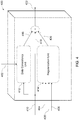
- FIG. 1 is a diagrammatic illustration of an imaging system 100 configured to provide faster image acquisition in accordance with aspects of the present specification.
- the imaging system 100 includes an imaging device 102 configured to acquire input dataset 104 corresponding to a subject 124.
- the imaging device 102 corresponds to a magnetic resonance imaging (MRI) device.
- the input dataset 104 corresponds to coil data generated by a plurality of radio frequency coils configured to transmit/receive RF signal to/from an organ of interest in the subject 124.
- the coil data includes undersampled k-space data.
- the undersampling factor of four is used to generate the coil data. However, other undersampling factors may also be used during acquisition of the coil data.
- the imaging system 100 further includes an image reconstruction subsystem 106 communicatively coupled to the imaging device 102 and configured to reconstruct images based on sparse data such as input dataset 104 using a flared network.
- any of well-known deep learning training techniques may be employed by the image processing unit to train the flared network 112 based on the training dataset.
- one or more structural parameters of the flared network may also be varied to determine optimal structure for the flared network.
- the image processing unit 114 is configured to determine a plurality of parameters corresponding to the data consistency unit and the regularization unit of the plurality of iterative blocks by training the flared network to create output images that are similar to the corresponding ground truth images. Further, the image processing unit 114 is configured to store the trained flared network in the database unit 110.
- the third iterative block 312 is configured to receive the second iterative block output through a direct connection 342 and the first iterative block output through a dense skip connection 348.
- the second iterative block 312 is also configured to receive the coil data 302 and generate a third iterative block output.
- the iterative block 316 is configured to generate a final iterative block output 338 based on an iterative block output through a direct connection of its adjacent preceding iterative block (not shown), as well as iterative block outputs from dense skip connections of iterative blocks preceding that adjacent preceding iterative block and the coil data 304.
- the iterative block 400 also includes a regularization unit 414 configured to receive the first input 410 and a plurality of iterative block outputs 404, 406, 408 as skip inputs from three skip blocks with reference to the iterative block 400.
- the regularization unit 414 is a deep learning convolution neural network as explained in a subsequent paragraph with reference to a subsequent figure ( FIG. 5 ).
- the regularization unit 414 is configured to generate regularization information 420 based on the iterative block outputs 404, 406, 408 used as skip inputs.
- the regularization information 420 is representative of additional information required to determine a valid solution to an ill-posed optimization problem.
- the regularization unit 414 is able to propagate features across multiple iterative blocks to generate regularization information 420.
- the bias provider is configured to receive the plurality of feature maps and generate a plurality of biased feature maps.
- the activation layer is configured to receive the plurality of biased output feature maps and generate one or more output images.
- the plurality of stages includes a first stage 504, a second stage 508 and a third stage 512.
- the first stage 504 is configured to process the plurality of input images 502 to generate a first plurality of output images 506.
- the plurality of input images 502 is an output of one of an immediately preceding iterative block or a skip block of an iterative block having the deep learning network 500.
- the second stage 508 is configured to process the first plurality of output images 506 and generate a second plurality of output images 510.
Landscapes
- Physics & Mathematics (AREA)
- General Physics & Mathematics (AREA)
- Engineering & Computer Science (AREA)
- High Energy & Nuclear Physics (AREA)
- Condensed Matter Physics & Semiconductors (AREA)
- Health & Medical Sciences (AREA)
- General Health & Medical Sciences (AREA)
- Nuclear Medicine, Radiotherapy & Molecular Imaging (AREA)
- Radiology & Medical Imaging (AREA)
- Signal Processing (AREA)
- Theoretical Computer Science (AREA)
- Magnetic Resonance Imaging Apparatus (AREA)
Abstract
Description
- Embodiments of the present specification relate generally to image reconstruction, and more particularly to systems and methods for reconstruction of undersampled magnetic resonance images.
- Imaging techniques such as Magnetic Resonance Imaging (MRI), require longer duration for raw data acquisition and high computation power for reconstruction of images from acquired raw data. Parallel imaging and compressed sensing techniques have been used to reduce MRI scan time by undersampling of k-space. Different spatial sensitivities of coil arrays and/or sparsity in the transform domain are exploited for undersampling of data during image acquisition. However, conventional MRI techniques provide reconstructed images with good image quality only for smaller undersampling factors, and image artifacts are pronounced when higher undersampling factors are employed.
- Deep learning networks can be used for magnetic resonance (MR) image reconstruction from undersampled acquisition data. However, increasing the number of convolutional layers in deep neural networks may not improve the quality of the reconstructed image due to ineffective feature propagation. In compressed sensing methods using wavelets or total variation, the relative strengths of the sparsity and data consistency terms are adjusted in the cost function. When the sparsity term is too weak, residual aliasing is introduced in the reconstructed images. When the sparsity term is relatively strong, the reconstructed image appears unnaturally flat.
- Acquisition of highly undersampled raw data in k-space enables faster imaging. However, the quality of the reconstructed image based on undersampled raw data must be comparable to fully sampled MR images. Image reconstruction techniques configured to generate an estimate of fully sampled MR images based on undersampled raw data in k-space are required. Specifically, newer architectures for convolution based deep learning networks are desirable.
- In accordance with one aspect of the present specification, a method for sparse image reconstruction is disclosed. The method includes acquiring coil data from a magnetic resonance imaging device, wherein the coil data includes undersampled k-space data corresponding to a subject. The method further includes processing the coil data using an image reconstruction technique to generate an initial undersampled image. The method also includes generating a reconstructed image based on the coil data, the initial undersampled image, and a plurality of iterative blocks of a flared network. A first iterative block of the flared network receives the initial undersampled image. Each of the plurality of iterative blocks includes a data consistency unit and a regularization unit and the iterative blocks are connected both by direct connections from one iterative block to the following iterative block and by a plurality of dense skip connections to non-adjacent iterative blocks. The flared network is based on a neural network trained using previously acquired coil data.
- In accordance with another aspect of the present specification, a system for sparse image reconstruction is disclosed. The system includes a database unit configured to store a flared network having a plurality of iterative blocks and previously acquired coil data. Each of the plurality of iterative blocks includes a data consistency unit and a regularization unit and the iterative blocks are connected both by direct connections from one iterative block to the following iterative block and by a plurality of dense skip connections to non-adjacent iterative blocks. The flared network is based on a neural network trained using previously acquired coil data. The system further includes a data acquisition unit configured to acquire coil data from a magnetic resonance imaging device. The coil data includes undersampled k-space data corresponding to a subject. The system also includes an image processing unit communicatively coupled to the data acquisition unit and configured to process the coil data using an image reconstruction technique to generate an initial undersampled image. The image processing unit is further configured to generate a reconstructed image based on the coil data, the initial undersampled image, and the flared network. A first iterative block of the flared network receives the initial undersampled image.
- Various features and aspects of embodiments of the present invention will become better understood when the following detailed description is read with reference to the accompanying drawings in which like characters represent like parts throughout the drawings, wherein:
-
FIG. 1 is a diagrammatic illustration of a system for reconstructing images using a flared network in accordance with aspects of the present specification; -
FIG. 2 is a flow chart illustrating a method for reconstructing images using a flared network in accordance with aspects of the present specification; -
FIG. 3 is a block diagram illustrating a flared network used for reconstructing images in accordance with aspects of the present specification; -
FIG. 4 is a block diagram of an iterative block used in flared network ofFIG. 3 in accordance with aspects of the present specification; -
FIG. 5 is a block diagram of a regularization unit used in flared network ofFIG. 3 in accordance with aspects of the present specification; and -
FIGs. 6A-6E illustrate_superior performance of the flared network used for reconstruction of images in accordance with aspects of the present specification. - As will be described in detail hereinafter, systems and methods for image reconstruction, and more particularly systems and methods for reconstruction of magnetic resonance images are provided. Embodiments disclosed herein are configured for generating a fully sampled reconstructed image based on undersampled k-space raw dataset acquired from a magnetic resonance imaging (MRI) device using a flared network. The flared network disclosed herein includes a plurality of iterative blocks having dense skip connections from each iterative block to multiple subsequent iterative blocks. Each of the iterative blocks is configured to maintain data consistency between intermediate feature maps and the undersampled k-space raw dataset. Further, the iterative blocks are also configured to direct the flared network to obtain a feasible solution for an ill-posed optimization problem of reconstructing a fully sampled image from an undersampled input image generated from the undersampled k-space raw dataset.
- The term "raw data" refers to data generated by an imaging device and the term "input dataset" refers to a plurality of two-dimensional spatial raw data corresponding to a plurality of MR coils. The term "k-space" refers to a vector space corresponding to the raw data acquired by an MR imaging device. The k-space may be considered as a 2D Fourier space and the MR images may be reconstructed using 2D inverse Fourier transformation. The k-space input dataset acquired from MR imaging device is also referred herein as "coil data". The term "undersampling" refers to subsampling or sampling the data at a fraction of the Nyquist sampling rate. Undersampling during data acquisition generates sparse data and the sparsity of the data is related to the undersampling factor. The term k-space refers to Fourier space in two dimensions (2D) or three-dimensions (3D) and the k-space data corresponds to Fourier transform of magnetic resonance (MR) image. The term "flared network" used herein refers to a deep learning image reconstruction network having a plurality of iterative blocks and configured to effectively propagate features across layers with use of dense skip connections. Specifically, in one embodiment, the deep learning network may be a convolution layer based network. The term "skip connection" refers to feeding of an output of an antecedent first iterative block as an input to a subsequent second iterative block with one or more iterative blocks in between the first iterative block and the second iterative block. The term "skip block" is used to refer to the antecedent first iterative block with reference to the subsequent second iterative block. The term "skip input" refers to an input to an iterative block from a skip block. The term "intermediate feature map" is used to refer to an output of an iterative block in the flared network. The term "data consistency" refers to maintaining fidelity of coil data in the output of an iterative block. The term "regularization" refers to modifying an ill-posed optimization problem to have a feasible solution. The term "regularization term" is used to refer to an additional term in the cost function of an optimization problem that enables generation of a feasible optimal solution. The term "fully sampled image" is used to refer to an image reconstructed from k-space data sampled at the Nyquist sampling rate. The term "undersampled image" or "subsampled image" is used to refer to an image reconstructed from undersampled k-space data.
-
FIG. 1 is a diagrammatic illustration of animaging system 100 configured to provide faster image acquisition in accordance with aspects of the present specification. Theimaging system 100 includes animaging device 102 configured to acquireinput dataset 104 corresponding to asubject 124. In one embodiment, theimaging device 102 corresponds to a magnetic resonance imaging (MRI) device. Further in this embodiment, theinput dataset 104 corresponds to coil data generated by a plurality of radio frequency coils configured to transmit/receive RF signal to/from an organ of interest in thesubject 124. In the case of MRI device, the coil data includes undersampled k-space data. In one embodiment, the undersampling factor of four is used to generate the coil data. However, other undersampling factors may also be used during acquisition of the coil data. Undersampling of k-space data provides sparsity to theinput dataset 104.Sparse input dataset 104 enables faster acquisition (or equivalently, reduced scanning duration) and faster reconstruction of MR images. Theimaging system 100 further includes animage reconstruction subsystem 106 communicatively coupled to theimaging device 102 and configured to reconstruct images based on sparse data such asinput dataset 104 using a flared network. - The
image reconstruction subsystem 106 includes adata acquisition unit 108, adatabase unit 110, animage processing unit 114, acontrol unit 116, and amemory unit 118 communicatively coupled to each other via acommunications bus 120. Thedatabase unit 110 further includes a flarednetwork 112 configured to generate a high-fidelity image from sparse data such asinput dataset 104. Specifically, the flarednetwork 112 is based on a trained neural network. - The
data acquisition unit 108 is communicatively coupled to theimaging device 102 and configured to acquireinput dataset 104. In the case of MR imaging device, theinput dataset 104 corresponds to coil data generated from a plurality of receiver coils. In one embodiment, the coil data represented by theinput dataset 104 is acquired from eight receiver coils with an undersampling factor of four. Thedata acquisition unit 108 may include analog to digital converter, pre-processing modules, data conditioning units and timing circuitry required to process theinput dataset 104. Thedata acquisition unit 108 is further configured to store theinput dataset 104 in thedatabase unit 110. - The
data acquisition unit 108 is also configured to retrieve previously acquired/stored coil data from thedatabase unit 110 for training the flarednetwork 112. - The
database unit 110 is communicatively coupled to thedata acquisition unit 108 and configured to store input datasets acquired at previous time instants, the flarednetwork 112 and other related data. The flarednetwork 112 includes a plurality of iterative blocks coupled to one another with a cascade connection. Each iterative block includes a data consistency unit and a regularization unit, and each of the fourth through final iterative blocks is configured to process a plurality of skip inputs. Specifically, most of the the plurality of iterative blocks are connected both by direct connections from one iterative block to the following iterative block and by a plurality of dense skip connections to non-adjacent iterative blocks. The data consistency unit is configured to preserve the fidelity of the coil data in the output of the corresponding iterative block. The regularization unit is configured to generate regularization information based on the plurality of skip inputs. Further, the regularization unit is configured to reduce generalization error in the output of the corresponding iterative block based on the regularization information. The regularization unit includes a plurality of convolution layers, a plurality of bias layers and a plurality of leaky ReLU layers. The convolution layer is configured to generate feature maps using a plurality of spatial filters. The bias layer is configured to improve the modelling capability of the regularization unit and the leaky ReLU layer is a leaky version of a Rectified Linear Unit (ReLU) configured to improve propagation of gradients while providing an iterative solution to the optimization problem. The regularization unit is configured to minimize generalization error in the output of the corresponding iterative block. Specifically, the flarednetwork 112 includes structural parameters of the flared network such as, but not limited to, number of iterative blocks, numbers of filters and size of filters used for generation of feature maps, number of skip connections and number of convolution layers used in regularization units. The flarednetwork 112 also includes parameter values of data consistency units and parameter values of regularization units. The parameter values of a regularization unit include parameter values of the filters used for generation of feature maps, bias values and activation layer parameters. Further, thedatabase unit 110 also includes parameter values corresponding to consistency units and the transformation used by the data consistency units. Thedatabase unit 110 is also configured to store intermediate outputs of the regularization units such as feature maps, biased featured maps and rectification layer outputs. Thedatabase unit 110 also includes ground truth images corresponding to undersampled k-space input datasets acquired at previous instants. - The
image processing unit 114 is communicatively coupled to thedata acquisition unit 108 and thedatabase unit 110 and configured to process theinput dataset 104 using the flared network. Theimage processing unit 114 is configured to generate thereconstructed image 122 based on theinput dataset 104. Specifically, theimage processing unit 114 is configured to generate an initial undersampled image based on the coil data represented as theinput dataset 104 using an image reconstruction technique. Further, theimage processing unit 114 is configured to generate thereconstructed image 122 based on the coil data represented as theinput dataset 104, the initial undersampled image and the flarednetwork 112. Theimage processing unit 114 provides the initial undersampled image to a first iterative block of the flarednetwork 112. In one embodiment, the initial undersampled image is a complex composite image. The first iterative block is configured to generate a first block output based on the initial undersampled image and the coil data. The first block output is provided via a direct connection to a second iterative block as a direct input and as a skip input via a dense skip connection to a plurality of subsequent iterative blocks such as but not limited to third iterative block and a fourth iterative block. In general, the dense skip connections fan forward from output of each of at least some of the iterative blocks to a predetermined number of subsequent iterative blocks beyond the respective following iterative block. In one embodiment, the predetermined number of subsequent iterative blocks may be specified by a user. In another embodiment, the predetermined number of subsequent iterative blocks may also be determined during generation of the flarednetwork 112. - In one embodiment, the
image processing unit 114 is configured to operate in an offline mode to generate the flarednetwork 112 corresponding to a specific input dataset stored in thedatabase unit 110. Specifically, theimage processing unit 114 is configured to train the flarednetwork 112 based on training dataset and corresponding ground truth images. The training dataset includes labelled coil datasets and the ground truth images corresponding to the labelled coil data representative of full sample reconstructed images. In one embodiment, theimage processing unit 114 is configured to receive previously acquired substantially fully-sampled coil data from a database unit. The fully-sampled coil data may be acquired from an MRI device and stored in thedatabase unit 110. Further, theimage processing unit 114 is configured to reconstruct the substantially fully-sampled coil data to generate ground truth images corresponding to the previously acquired coil data. Theimage processing unit 114 is also configured to retrospectively undersample the substantially fully-sampled coil data to generate corresponding input data to the flared network. The undersampled input data to the flared network and the corresponding ground truth images are used as training dataset to train the flared network. - Further, any of well-known deep learning training techniques may be employed by the image processing unit to train the flared
network 112 based on the training dataset. During the training, one or more structural parameters of the flared network may also be varied to determine optimal structure for the flared network. Specifically, theimage processing unit 114 is configured to determine a plurality of parameters corresponding to the data consistency unit and the regularization unit of the plurality of iterative blocks by training the flared network to create output images that are similar to the corresponding ground truth images. Further, theimage processing unit 114 is configured to store the trained flared network in thedatabase unit 110. - The
control unit 116 is communicatively coupled to one or more of thedata acquisition unit 108,image processing unit 114,database unit 110 and thememory unit 118 and configured to initiate and/or control their operation. Although thecontrol unit 116 is shown as a separate unit, in some embodiments, thecontrol unit 116 may also be a part of thedata acquisition unit 108 and theimage processing unit 114. Thecontrol unit 116 may include one or more processors either co-located within in a single integrated circuit or distributed in multiple integrated circuits networked to share data and communication in a seamless manner. Thecontrol unit 116 includes at least one arithmetic logic unit, a microprocessor, a microcontroller, a general-purpose controller, a graphics processing unit (GPU) or a processor array to perform the desired computations or run the computer program. - The
memory unit 118 is communicatively coupled to thecontrol unit 116 and configured to store programs, operating systems and related data required by thecontrol unit 116. Although thememory unit 118 is shown as separate unit, thememory unit 118 may be a part of thecontrol unit 116, theimage processing unit 114 or thedatabase unit 110. In one embodiment, thememory unit 118 may be a dynamic random-access memory (DRAM) device, a static random access memory (SRAM) device, flash memory or other memory devices. In another embodiment, the memory unit may include a non-volatile memory or similar permanent storage device, media such as a hard disk drive, a floppy disk drive, a compact disc read only memory (CD-ROM) device, a digital versatile disc read only memory (DVD-ROM) device, a digital versatile disc random access memory (DVD-RAM) device, a digital versatile disc rewritable (DVD-RW) device, a flash memory device, or other non-volatile storage devices. Thememory unit 118 may also be a non-transitory computer readable medium encoded with a program to instruct the one or more processors to generate the reconstructed image based on undersampled k-space data. -
FIG. 2 is a flow chart illustrating amethod 200 for reconstructing images using a flared network in accordance with aspects of the present specification. Themethod 200 includes acquiring coil data from a magnetic resonance imaging device atstep 202. The coil data comprises undersampled k-space raw data corresponding to a subject 124. The coil data may be generated by an eight receiver coils of an MR imaging device and an undersampling factor of 4 may be used while acquiring the coil data. - The
method 200 also includes processing the coil data using an image reconstruction technique to generate an initial undersampled image instep 204. The image reconstruction technique may include any suitable technique with one example comprising 2D inverse Fourier transformation, accounting for coil sensitivities and using a method for combining the coil data to generate a complex reconstructed image. - The
method 200 further includes generating a reconstructed image based on the coil data, the initial undersampled image, and a plurality of iterative blocks of a flared network atstep 206. Each of the plurality of iterative blocks includes a data consistency unit and a regularization unit. The flared network is based on a neural network trained using previously acquired coil data. In one embodiment, about sixteen iterative blocks may be used in the flared network. The iterative blocks are connected both by direct connections from one iterative block to the following iterative block and by a plurality of dense skip connections to non-adjacent iterative blocks. Each of the data consistency units is configured to preserve the fidelity of coil data in output of the corresponding iterative block. The regularization unit is configured to direct the reconstruction of MR image as a feasible solution of the optimization problem solved by the flared network. - Specifically, the
step 206 includes determining the reconstructed image includes preserving fidelity of the coil data in output of each of the plurality of iterative blocks based on a corresponding data consistency unit. Further, thestep 206 also includes generating regularization information to reduce generalization error in output of each of the plurality of iterative blocks based on a corresponding regularization unit. In one embodiment, the regularization information is generated by processing the direct input from the previous iterative block and a plurality of skip inputs using a convolution network. The convolution network used for generating the regularization information includes a plurality of processing stages and each of the plurality of processing stage includes a convolution layer, a bias layer and a ReLU (Rectified Linear Unit) layer. In one embodiment, a leaky version of the ReLU layer configured to improve propagation of gradients while providing an iterative solution to the optimization problem. Specifically, the convolution network includes a plurality of convolution layers, a plurality of bias layers and a plurality of leaky ReLU layers. In one embodiment, the flared network includes 16 iterative blocks and the regularization information is determined based on five skip inputs. In such embodiments, the regularization unit may include five convolution layers and the convolution layers may be configured to generate feature maps using eight, twelve, twenty, or forty filters. - In one embodiment, the
method 200 further includes receiving previously acquired substantially fully-sampled coil data from a database unit atstep 208. Further, themethod 200 includes reconstructing the substantially fully-sampled coil data to generate ground truth images corresponding to the previously acquired coil data atstep 210. Atstep 212, themethod 200 also includes retrospectively undersampling the substantially fully-sampled coil data to generate corresponding input data to the flared network. Further, themethod 200 includes determining a plurality of parameters corresponding to the data consistency unit and the regularization unit of the plurality of iterative blocks by training the flared network to create output images that are similar to the corresponding ground truth images atstep 214. Themethod 200 also includes storing the flared network in the database unit. -
FIG. 3 is a schematic 300 of a flared network used for reconstructing images in accordance with aspects of the present specification. The schematic 300 includescoil data 302 representative ofinput dataset 104 ofFIG. 1 . In the illustrated embodiment, thecoil data 302 are two-dimensional k-space datasets from a plurality of coils. The schematic 300 further includes a plurality of iterative blocks includingiterative blocks network 112 ofFIG. 1 . Each of the iterative blocks of the flared network of the illustrated embodiment provides two dense skip connections. The flared network of schematic 300 receives thecoil data 302 as input to the iterative blocks includingiterative blocks iterative block 308 further receives an initialundersampled image 306 generated based on thecoil data 302. The firstiterative block 308 is configured to generate a first iterative block output based on initialundersampled image 306 and thecoil data 302. The first iterative block output is provided to the seconditerative block 310 as a direct input by adirect connection 340. Further, the first iterative block output is also provided as skip inputs to subsequent iterative blocks such as 312 and 314 throughdense skip connections iterative block 310 is configured to generate a second iterative block output based on the firstiterative block output 340 and thecoil data 304. The thirditerative block 312 is configured to receive the second iterative block output through adirect connection 342 and the first iterative block output through adense skip connection 348. The seconditerative block 312 is also configured to receive thecoil data 302 and generate a third iterative block output. Theiterative block 316 is configured to generate a finaliterative block output 338 based on an iterative block output through a direct connection of its adjacent preceding iterative block (not shown), as well as iterative block outputs from dense skip connections of iterative blocks preceding that adjacent preceding iterative block and thecoil data 304. In the illustrated embodiment, theiterative block 314 is configured to receive threeiterative block outputs iterative blocks iterative block 314. The outputs ofiterative blocks iterative block 314. - As stated previously, each of the plurality of
iterative blocks iterative block 308 includes adata consistency unit 318 andregularization unit 320. Theiterative block 310 includes adata consistency unit 322 and aregularization unit 324. Theiterative block 312 includes adata consistency unit 326 and aregularization unit 328. Similarly, theiterative block 314 includes adata consistency unit 330 and aregularization unit 332 and theiterative block 316 includes adata consistency unit 334 and aregularization unit 336. Thedata consistency units regularization units - In one embodiment, the flared network of schematic 300 includes sixteen iterative blocks, with five skip connections per block. In such an embodiment, each iterative block (such as the
iterative block 314 in the figure) receives up to six iterative block outputs generated from previous iterative blocks. One among the six iterative block outputs is an iterative block output from immediate predecessor iterative block via a direction connection and the remaining five iterative block outputs are skip inputs received via dense skip connections. Thecoil data 302 in such an embodiment, may be generated from an MRI device having eight receiver coils. Other configurations for the flared network in other embodiments are envisaged. In such embodiments, the flared network of schematic 300 may include 10 or 50 iterative blocks with 5 or 20 dense skip connections. The convolution network in each of the iterative block may include 3 or 10 convolution layers and each of the convolution layers may be using 10 or 30 filters for generating intermediate feature maps. -
FIG. 4 is a block diagram of aniterative block 400 used in the flared network ofFIG. 3 in accordance with aspects of the present specification. Theiterative block 400 provides an iterative solution to image reconstruction formulated as an optimization problem. Theiterative block 400 includes adata consistency unit 412 configured to receive afirst input 410 which is an iterative block output from a previous iterative block such as 340 ofFIG. 3 . Further, thedata consistency unit 412 is configured to receive coil data 402 (equivalent of 304 inFIG. 3 ). Further, thedata consistency unit 412 is configured to generate afirst output 416 representative of a correction required to maintain data consistency in thefirst input 410. Theiterative block 400 also includes aregularization unit 414 configured to receive thefirst input 410 and a plurality ofiterative block outputs iterative block 400. In one embodiment, theregularization unit 414 is a deep learning convolution neural network as explained in a subsequent paragraph with reference to a subsequent figure (FIG. 5 ). Theregularization unit 414 is configured to generateregularization information 420 based on theiterative block outputs regularization information 420 is representative of additional information required to determine a valid solution to an ill-posed optimization problem. Theregularization unit 414 is able to propagate features across multiple iterative blocks to generateregularization information 420. Specifically, in one embodiment, theregularization information 420 is representative of smoothness of a loss function used in the optimization problem. In another embodiment, theregularization information 420 is representative of vector space norm. In some embodiments, theregularization information 420 may be representative of a measure of prior distribution, a sparsity measure or a measure of generalization with reference to the loss function of the optimization problem. - In one embodiment, the
data consistency unit 412 is configured to generate an output given by:
data consistency unit 412, λn is a weighing parameter corresponding to the index n, A is representative of a transformation of data from image space to k-space. Specifically, the transformation represented by matrix A includes multiplying by coil sensitivities, applying two-dimensional FFT and multiplication by sampling pattern. The term un is representative of an image generated from nth iterative block such as 410 inFIG. 4 . The term A* is an adjoint operator corresponding to A. Specifically, the adjoint operator A* includes a two-dimensional FFT operation followed by correcting a plurality of images of the coil data with corresponding coil sensitivity functions and then combining the plurality of images into a single image. The term f is representative of M-coil undersampled k-space data such as 402 ofFIG. 4 . -
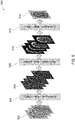
FIG. 5 is a schematic ofdeep learning network 500 used in regularization network ofFIG. 4 in accordance with aspects of the present specification. In the illustrated embodiment, thedeep learning network 500 is a convolution neural network. Thedeep learning network 500 is configured to receive a plurality ofinput images 502 from a plurality of previous iterative blocks and generate areconstructed image 514. Thedeep learning network 500 includes a plurality ofstages stages first stage 504, asecond stage 508 and athird stage 512. Thefirst stage 504 is configured to process the plurality ofinput images 502 to generate a first plurality ofoutput images 506. The plurality ofinput images 502 is an output of one of an immediately preceding iterative block or a skip block of an iterative block having thedeep learning network 500. Thesecond stage 508 is configured to process the first plurality ofoutput images 506 and generate a second plurality ofoutput images 510. Thethird stage 512 is configured to process the second plurality ofoutput images 510 to generate thereconstructed image 514. In one embodiment, about twelve filters are used to generate the first plurality ofoutput images 506 and the second plurality ofoutput images 510. Although only three stages are illustrated in the embodiment ofFIG. 5 , ten or more stages may be used to process skip inputs in each regularization unit such as 330 inFIG. 3 . -
FIGs. 6A-6E areimages image 602 corresponds to a ground truth image sampled at Nyquist sampling rate. Theimage 602 has good fidelity and is used as a reference image to compare the reconstructed image from a flared network and reconstructed images from other prior art techniques. Theimage 604 is a reconstructed image obtained from a flared network in accordance with an exemplary embodiment of the present application. Theimage 606 is a reconstructed image obtained using total variation technique. Theimage 608 is a reconstructed image obtained using Autocalibrating Reconstruction for Cartesian imaging (ARC) technique. Theimage 610 is a reconstructed image obtained from zero-filling technique. It may be noted that theimage 604 obtained from the flared network is perceptually superior compared toother images images ground truth image 602. The rMSE value for theimage 604 is equal to 0.4 much lower than rMSE values (above 1.5) forother images image 604 is higher (about 0.95) compared to lower SSIM values (less than 0.9) corresponding toimages - The disclosed technique of reconstruction of magnetic resonance images from undersampled k-space coil data using the flared network provides higher quality images. Dense skip connections provided by the flared network from each iterative block to multiple subsequent iterative blocks are able to alleviate the vanishing-gradient problem encountered in deep neural networks. The flared network with dense skip connections is able to effectively propagate features across iterative blocks of a much deeper convolutional network. The flared network is configured to concatenate features of neighboring iterative blocks enabling enhanced feature propagation. Enhanced sparse MR image reconstruction reduces the MR image scanning time.
- It is to be understood that not necessarily all such objects or advantages described above may be achieved in accordance with any particular embodiment. Thus, for example, those skilled in the art will recognize that the systems and techniques described herein may be embodied or carried out in a manner that achieves or improves one advantage or group of advantages as taught herein without necessarily achieving other objects or advantages as may be taught or suggested herein.
- While the technology has been described in detail in connection with only a limited number of embodiments, it should be readily understood that the specification is not limited to such disclosed embodiments. Rather, the technology can be modified to incorporate any number of variations, alterations, substitutions or equivalent arrangements not heretofore described, but which are commensurate with the spirit and scope of the claims. Additionally, while various embodiments of the technology have been described, it is to be understood that aspects of the specification may include only some of the described embodiments. Accordingly, the specification is not to be seen as limited by the foregoing description, but is only limited by the scope of the appended claims.
- Various aspects and embodiments of the present invention are defined by the following numbered clauses:
- 1. A method, comprising:
- acquiring coil data from a magnetic resonance imaging device, wherein the coil data comprises undersampled k-space data corresponding to a subject;
- processing the coil data using an image reconstruction technique to generate an initial undersampled image; and
- generating a reconstructed image based on the coil data, the initial undersampled image, and a plurality of iterative blocks of a flared network, wherein a first iterative block of the flared network receives the initial undersampled image, and wherein each of the plurality of iterative blocks comprises a data consistency unit and a regularization unit and wherein the iterative blocks are connected both by direct connections from one iterative block to the following iterative block and by a plurality of dense skip connections to non-adjacent iterative blocks, and wherein the flared network is based on a neural network trained using previously acquired coil data.
- 2. The method of clause 1, further comprising:
- receiving previously acquired substantially fully-sampled coil data from a database unit;
- reconstructing the substantially fully-sampled coil data to generate ground truth images corresponding to the previously acquired coil data;
- retrospectively undersampling the substantially fully-sampled coil data to generate corresponding input data to the flared network;
- determining a plurality of parameters corresponding to the data consistency unit and the regularization unit of the plurality of iterative blocks by training the flared network to create output images that are similar to the corresponding ground truth images; and
- storing the trained flared network in the database unit.
- 3. The method of any preceding clause, wherein the initial undersampled image is a complex composite image.
- 4. The method of any preceding clause, wherein generating the reconstructed image comprises preserving fidelity of the coil data in output of each of the plurality of iterative blocks based on a corresponding data consistency unit.
- 5. The method of any preceding clause, wherein generating the reconstructed image comprises generating regularization information to reduce generalization error in output of each of the plurality of iterative blocks based on a corresponding regularization unit.
- 6. The method of any preceding clause, wherein generating the regularization information comprises processing a plurality of inputs from the dense skip connections and from an immediately preceding iterative block using a convolutional network, wherein the convolutional network comprises a plurality of convolution layers, a plurality of bias layers and a plurality of leaky ReLU layers.
- 7. The method of any preceding clause, wherein dense skip connections fan forward from outputs of each of at least some of the iterative blocks to a predetermined number of subsequent iterative blocks beyond the respective following iterative block.
- 8. The method of any preceding clause, wherein output from one or more of the plurality of iterative blocks is based on five skip inputs.
- 9. The method of any preceding clause, wherein generating the reconstructed image comprises generating intermediate feature maps for each of the plurality of iterative blocks.
- 10. The method of any preceding clause, wherein generating the reconstructed image comprises:
- acquiring the coil data from eight receiver coils with an undersampling factor of four; and
- processing the coil data using a flared network having sixteen iterative blocks, each iterative block comprising five convolution layers and each convolution layer comprising twelve filters.
- 11. A system, comprising:
- a database unit configured to store a flared network comprising a plurality of iterative blocks and previously acquired coil data, wherein each of the plurality of iterative blocks comprises a data consistency unit and a regularization unit and wherein the iterative blocks are connected both by direct connections from one iterative block to the following iterative block and by a plurality of dense skip connections to non-adjacent iterative blocks, and wherein the flared network is based on a neural network trained using previously acquired coil data;
- a data acquisition unit configured to acquire coil data from a magnetic resonance imaging device, wherein the coil data comprises undersampled k-space data corresponding to a subject;
- an image processing unit communicatively coupled to the data acquisition unit and configured to:
- process the coil data using an image reconstruction technique to generate an initial undersampled image;
- generate a reconstructed image based on the coil data, the initial undersampled image, and the flared network, wherein a first iterative block of the flared network receives the initial undersampled image.
- 12. The system of any preceding clause, wherein the image processing unit is further configured to:
- receive previously acquired substantially fully-sampled coil data from a database unit;
- reconstruct the substantially fully-sampled coil data to generate ground truth images corresponding to the previously acquired coil data;
- retrospectively undersample the substantially fully-sampled coil data to generate corresponding input data to the flared network;
- determine a plurality of parameters corresponding to the data consistency unit and the regularization unit of the plurality of iterative blocks by training the flared network to create output images that are similar to the corresponding ground truth images; and
- store the trained flared network in the database unit.
- 13. The system of any preceding clause, wherein the initial undersampled image is a complex composite image.
- 14. The system of any preceding clause, wherein the flared network is configured to preserve fidelity of the coil data in output of each of the plurality of iterative blocks based on a corresponding data consistency unit.
- 15. The system of any preceding clause, wherein the flared network is configured to generate regularization information to reduce generalization error in output of each of the plurality of iterative blocks based on a corresponding regularization unit.
- 16. The system of any preceding clause, wherein the regularization unit is configured to process a plurality of inputs from the dense skip connections and from an immediately preceding iterative block using a convolutional network, wherein the convolutional network comprises a plurality of convolution layers, a plurality of bias layers and a plurality of leaky ReLU layers.
- 17. The system of any preceding clause, wherein the dense skip connections fan forward from output of each of at least some of the iterative blocks to a predetermined number of subsequent iterative blocks beyond the respective following iterative block.
- 18. The system of any preceding clause, wherein output from one or more of the plurality of iterative blocks is based on five skip inputs.
- 19. The system of any preceding clause, wherein the flared network is configured to generate intermediate feature maps for each of the plurality of iterative blocks.
- 20. The system of any preceding clause, wherein the flared network comprising sixteen iterative blocks, each iterative block comprising five convolution layers and each convolution layer comprising twelve filters is configured to process the coil data acquired from eight receiver coils with an undersampling factor of four.
Claims (15)
- A method (200), comprising:acquiring (202) coil data from a magnetic resonance imaging device, wherein the coil data comprises undersampled k-space data corresponding to a subject;processing (204) the coil data using an image reconstruction technique to generate an initial undersampled image; andgenerating (206) a reconstructed image based on the coil data, the initial undersampled image, and a plurality of iterative blocks of a flared network, wherein a first iterative block of the flared network receives the initial undersampled image, and wherein each of the plurality of iterative blocks comprises a data consistency unit and a regularization unit and wherein the iterative blocks are connected both by direct connections from one iterative block to the following iterative block and by a plurality of dense skip connections to non-adjacent iterative blocks, and wherein the flared network is based on a neural network trained using previously acquired coil data.
- The method (200) of claim 1, further comprising:receiving (208) previously acquired substantially fully-sampled coil data from a database unit;reconstructing (210) the substantially fully-sampled coil data to generate ground truth images corresponding to the previously acquired coil data;retrospectively (212) undersampling the substantially fully-sampled coil data to generate corresponding input data to the flared network;determining a plurality of parameters corresponding to the data consistency unit and the regularization unit of the plurality of iterative blocks by training the flared network to create output images that are similar to the corresponding ground truth images; andstoring the trained flared network in the database unit.
- The method (200) of any preceding claim, wherein the initial undersampled image is a complex composite image.
- The method (200) of any preceding claim, wherein generating the reconstructed image comprises preserving fidelity of the coil data in output of each of the plurality of iterative blocks based on a corresponding data consistency unit.
- The method (200) of any preceding claim, wherein generating the reconstructed image comprises generating regularization information to reduce generalization error in output of each of the plurality of iterative blocks based on a corresponding regularization unit.
- The method (200) of any preceding claim, wherein generating the regularization information comprises processing a plurality of inputs from the dense skip connections and from an immediately preceding iterative block using a convolutional network, wherein the convolutional network comprises a plurality of convolution layers, a plurality of bias layers and a plurality of leaky ReLU layers.
- The method (200) of any preceding claim, wherein dense skip connections fan forward from outputs of each of at least some of the iterative blocks to a predetermined number of subsequent iterative blocks beyond the respective following iterative block.
- The method (200) of any preceding claim, wherein output from one or more of the plurality of iterative blocks is based on five skip inputs.
- The method (200) of any preceding claim, wherein generating the reconstructed image comprises generating intermediate feature maps for each of the plurality of iterative blocks.
- The method (200) of any preceding claim, wherein generating the reconstructed image comprises:acquiring the coil data from eight receiver coils with an undersampling factor of four; andprocessing the coil data using a flared network having sixteen iterative blocks, each iterative block comprising five convolution layers and each convolution layer comprising twelve filters.
- A system (100), comprising:a database unit (110) configured to store a flared network comprising a plurality of iterative blocks and previously acquired coil data, wherein each of the plurality of iterative blocks comprises a data consistency unit and a regularization unit and wherein the iterative blocks are connected both by direct connections from one iterative block to the following iterative block and by a plurality of dense skip connections to non-adjacent iterative blocks, and wherein the flared network is based on a neural network trained using previously acquired coil data;a data acquisition unit (108) configured to acquire coil data from a magnetic resonance imaging device, wherein the coil data comprises undersampled k-space data corresponding to a subject;an image processing unit (114) communicatively coupled to the data acquisition unit and configured to:process the coil data using an image reconstruction technique to generate an initial undersampled image;generate a reconstructed image based on the coil data, the initial undersampled image, and the flared network, wherein a first iterative block of the flared network receives the initial undersampled image.
- The system (100) of claim 11, wherein the image processing unit (114) is further configured to:receive previously acquired substantially fully-sampled coil data from a database unit;reconstruct the substantially fully-sampled coil data to generate ground truth images corresponding to the previously acquired coil data;retrospectively undersample the substantially fully-sampled coil data to generate corresponding input data to the flared network;determine a plurality of parameters corresponding to the data consistency unit and the regularization unit of the plurality of iterative blocks by training the flared network to create output images that are similar to the corresponding ground truth images; andstore the trained flared network in the database unit.
- The system (100) of claim 11 or 12, wherein the initial undersampled image is a complex composite image.
- The system (100) of any of claims 11 to 13, wherein the flared network is configured to preserve fidelity of the coil data in output of each of the plurality of iterative blocks based on a corresponding data consistency unit.
- The system (100) of any of claims 11 to 14, wherein the flared network is configured to generate regularization information to reduce generalization error in output of each of the plurality of iterative blocks based on a corresponding regularization unit.
Applications Claiming Priority (1)
| Application Number | Priority Date | Filing Date | Title |
|---|---|---|---|
| US15/907,797 US10489943B2 (en) | 2018-02-28 | 2018-02-28 | System and method for sparse image reconstruction |
Publications (1)
| Publication Number | Publication Date |
|---|---|
| EP3534170A1 true EP3534170A1 (en) | 2019-09-04 |
Family
ID=65443760
Family Applications (1)
| Application Number | Title | Priority Date | Filing Date |
|---|---|---|---|
| EP19157482.1A Withdrawn EP3534170A1 (en) | 2018-02-28 | 2019-02-15 | System and method for sparse image reconstruction |
Country Status (3)
| Country | Link |
|---|---|
| US (1) | US10489943B2 (en) |
| EP (1) | EP3534170A1 (en) |
| CN (1) | CN110211050B (en) |
Families Citing this family (22)
| Publication number | Priority date | Publication date | Assignee | Title |
|---|---|---|---|---|
| US10782378B2 (en) * | 2018-05-16 | 2020-09-22 | Siemens Healthcare Gmbh | Deep learning reconstruction of free breathing perfusion |
| US10810767B2 (en) * | 2018-06-12 | 2020-10-20 | Siemens Healthcare Gmbh | Machine-learned network for Fourier transform in reconstruction for medical imaging |
| WO2020028257A2 (en) | 2018-07-30 | 2020-02-06 | Hyperfine Research, Inc. | Deep learning techniques for magnetic resonance image reconstruction |
| CN113557526B (en) | 2018-08-15 | 2025-11-14 | 海珀菲纳股份有限公司 | Magnetic resonance imaging methods, systems, and computer program products |
| CN113811921A (en) | 2019-03-14 | 2021-12-17 | 海珀菲纳股份有限公司 | Deep learning techniques for generating magnetic resonance images from spatial frequency data |
| US11992289B2 (en) * | 2019-11-29 | 2024-05-28 | Shanghai United Imaging Intelligence Co., Ltd. | Fast real-time cardiac cine MRI reconstruction with residual convolutional recurrent neural network |
| CN112494029B (en) * | 2019-11-29 | 2025-04-11 | 上海联影智能医疗科技有限公司 | Real-time MR movie data reconstruction method and system |
| US11423593B2 (en) * | 2019-12-19 | 2022-08-23 | Shanghai United Imaging Intelligence Co., Ltd. | Systems and methods for reconstructing a medical image using meta learning |
| US11307278B2 (en) * | 2020-01-02 | 2022-04-19 | General Electric Company | Reconstruction of MR image data |
| US11170543B2 (en) * | 2020-01-13 | 2021-11-09 | The Board Of Trustees Of The Leland Stanford Junior University | MRI image reconstruction from undersampled data using adversarially trained generative neural network |
| US11763134B2 (en) * | 2020-01-22 | 2023-09-19 | Shanghai United Imaging Intelligence Co., Ltd. | Systems and methods for image reconstruction |
| WO2021155782A1 (en) * | 2020-02-04 | 2021-08-12 | The University Of Hong Kong | Systems and methods for magnetic resonance image reconstruction from incomplete k-space data |
| KR102144320B1 (en) * | 2020-02-13 | 2020-08-13 | 주식회사 에어스 메디컬 | Magnetic resonance image processing apparatus and method |
| CN111489404B (en) * | 2020-03-20 | 2023-09-05 | 深圳先进技术研究院 | Image reconstruction method, image processing device and device with storage function |
| WO2022022836A1 (en) * | 2020-07-31 | 2022-02-03 | Max-Planck-Gesellschaft zur Förderung der Wissenschaften e. V. | Method and device for acquiring and reconstructing a sequence of diffusion-weighted magnetic resonance images covering a volume |
| CN113269844A (en) * | 2021-04-16 | 2021-08-17 | 西安数合信息科技有限公司 | Digital radiographic image reconstruction algorithm based on recursive dense connecting block |
| US11967004B2 (en) * | 2021-07-16 | 2024-04-23 | Shanghai United Imaging Intelligence Co., Ltd. | Deep learning based image reconstruction |
| CN113781594A (en) * | 2021-08-17 | 2021-12-10 | 杭州微影医疗科技有限公司 | Magnetic resonance imaging image reconstruction method based on anatomical prior data |
| US20240385270A1 (en) * | 2023-05-19 | 2024-11-21 | Regents Of The University Of Minnesota | System and method for denoising in magnetic resonance imaging using a transform domain local low rank technique |
| CN116597037B (en) * | 2023-05-22 | 2024-06-04 | 厦门大学 | Physical generation data-driven rapid magnetic resonance intelligent imaging method |
| CN117788477B (en) * | 2024-02-27 | 2024-05-24 | 贵州健易测科技有限公司 | Image reconstruction method and device for automatic quantification of tea curl |
| EP4718101A1 (en) * | 2024-09-30 | 2026-04-01 | Centre Hospitalier Universitaire Vaudois | System and method for improving biological object imaging |
Citations (1)
| Publication number | Priority date | Publication date | Assignee | Title |
|---|---|---|---|---|
| US9892344B1 (en) * | 2015-11-30 | 2018-02-13 | A9.Com, Inc. | Activation layers for deep learning networks |
Family Cites Families (42)
| Publication number | Priority date | Publication date | Assignee | Title |
|---|---|---|---|---|
| US9373159B2 (en) | 2012-06-18 | 2016-06-21 | University Health Network | Method and system for compressed sensing image reconstruction |
| CN103646410B (en) | 2013-11-27 | 2016-06-08 | 中国科学院深圳先进技术研究院 | Fast magnetic resonance parametric formation method and system |
| US10068331B2 (en) | 2014-02-03 | 2018-09-04 | The United States Of America, As Represented By The Secretary, Department Of Health And Human Services | System and apparatus for real-time processing of medical imaging raw data using cloud computing |
| RU2568929C1 (en) * | 2014-04-30 | 2015-11-20 | Самсунг Электроникс Ко., Лтд. | Method and system for fast mri-images reconstruction from sub-sampled data |
| US9607362B2 (en) * | 2014-05-16 | 2017-03-28 | North Carolina State University | Compressive imaging using approximate message passing with denoising |
| EP3174490B1 (en) | 2014-07-28 | 2020-04-15 | Intuitive Surgical Operations, Inc. | Systems and methods for planning multiple interventional procedures |
| BR112017004336A2 (en) | 2014-09-05 | 2017-12-05 | Hyperfine Res Inc | low field magnetic resonance imaging methods and apparatus |
| US9922272B2 (en) | 2014-09-25 | 2018-03-20 | Siemens Healthcare Gmbh | Deep similarity learning for multimodal medical images |
| CA3115673A1 (en) | 2014-11-11 | 2016-05-19 | Hyperfine Research, Inc. | Pulse sequences for low field magnetic resonance |
| US9846214B2 (en) | 2014-12-29 | 2017-12-19 | Toshiba Medical Systems Corporation | Magnetic resonance image reconstruction for undersampled data acquisitions |
| US9542761B2 (en) | 2015-02-25 | 2017-01-10 | Siemens Healthcare Gmbh | Generalized approximate message passing algorithms for sparse magnetic resonance imaging reconstruction |
| CN104779960B (en) | 2015-03-20 | 2018-04-03 | 南京邮电大学 | A kind of signal reconfiguring method perceived based on splits' positions |
| CN107624061B (en) | 2015-04-20 | 2021-01-22 | 康奈尔大学 | Machine Vision with Dimensional Data Reduction |
| CN107636659B (en) | 2015-05-11 | 2021-10-12 | 西门子保健有限责任公司 | Method and system for detecting landmarks in medical images using deep neural networks |
| CN104851101A (en) | 2015-05-25 | 2015-08-19 | 电子科技大学 | Brain tumor automatic segmentation method based on deep learning |
| US10235606B2 (en) | 2015-07-22 | 2019-03-19 | Siemens Healthcare Gmbh | Method and system for convolutional neural network regression based 2D/3D image registration |
| CN105069825B (en) | 2015-08-14 | 2018-06-12 | 厦门大学 | Image super-resolution rebuilding method based on depth confidence network |
| KR101659578B1 (en) | 2015-09-01 | 2016-09-23 | 삼성전자주식회사 | Method and apparatus for processing magnetic resonance imaging |
| RU2626184C2 (en) | 2015-09-04 | 2017-07-24 | Самсунг Электроникс Ко., Лтд. | Method, device and system for reconstructing magnetic resonance image |
| US11278250B2 (en) | 2015-11-13 | 2022-03-22 | Rensselaer Polytechnic Institute | Simultaneous interior MRI X-ray imaging system (MRX) |
| US10627470B2 (en) | 2015-12-08 | 2020-04-21 | Siemens Healthcare Gmbh | System and method for learning based magnetic resonance fingerprinting |
| WO2017100658A1 (en) | 2015-12-09 | 2017-06-15 | Xactware Solutions, Inc. | System and method for generating computerized models of structures using geometry extraction and reconstruction techniques |
| WO2017106998A1 (en) | 2015-12-21 | 2017-06-29 | Sensetime Group Limited | A method and a system for image processing |
| DE102015226400A1 (en) | 2015-12-22 | 2017-06-22 | Siemens Healthcare Gmbh | Automated determination of contours based on an iterative reconstruction |
| WO2017113205A1 (en) | 2015-12-30 | 2017-07-06 | 中国科学院深圳先进技术研究院 | Rapid magnetic resonance imaging method and apparatus based on deep convolutional neural network |
| DE102016202663B4 (en) | 2016-02-22 | 2025-04-30 | Siemens Healthineers Ag | MRI preview |
| CN105825509A (en) | 2016-03-17 | 2016-08-03 | 电子科技大学 | Cerebral vessel segmentation method based on 3D convolutional neural network |
| US9824492B2 (en) | 2016-03-24 | 2017-11-21 | Vital Images, Inc. | Hollow object model visualization in medical images |
| CN105931179B (en) | 2016-04-08 | 2018-10-26 | 武汉大学 | A kind of image super-resolution method and system of joint sparse expression and deep learning |
| US10671939B2 (en) | 2016-04-22 | 2020-06-02 | New York University | System, method and computer-accessible medium for learning an optimized variational network for medical image reconstruction |
| CN105976318A (en) | 2016-04-28 | 2016-09-28 | 北京工业大学 | Image super-resolution reconstruction method |
| CN106056647B (en) | 2016-05-30 | 2019-01-11 | 南昌大学 | A kind of magnetic resonance fast imaging method based on the sparse double-deck iterative learning of convolution |
| US10387765B2 (en) * | 2016-06-23 | 2019-08-20 | Siemens Healthcare Gmbh | Image correction using a deep generative machine-learning model |
| CN106204449B (en) | 2016-07-06 | 2019-09-10 | 安徽工业大学 | A kind of single image super resolution ratio reconstruction method based on symmetrical depth network |
| CN106529555B (en) | 2016-11-04 | 2019-12-06 | 四川大学 | DR (digital radiography) sheet lung contour extraction method based on full convolution network |
| CN106373167B (en) | 2016-11-15 | 2017-10-20 | 西安交通大学 | A kind of compression sensing magnetic resonance imaging method employing based on deep neural network |
| CN106683067B (en) | 2017-01-20 | 2020-06-23 | 福建帝视信息科技有限公司 | Deep learning super-resolution reconstruction method based on residual sub-images |
| CN106970343B (en) | 2017-04-11 | 2019-12-27 | 深圳先进技术研究院 | Magnetic resonance imaging method and device |
| CN107121654B (en) | 2017-05-16 | 2019-09-17 | 深圳先进技术研究院 | Mining method and device are owed in a kind of magnetic resonance |
| CN107064845B (en) | 2017-06-06 | 2019-07-30 | 深圳先进技术研究院 | One-dimensional partial Fourier parallel magnetic resonance imaging method based on deep convolutional nets |
| US11175365B2 (en) * | 2018-10-02 | 2021-11-16 | General Electric Company | System and method for sparse image reconstruction utilizing null data consistency |
| US10712416B1 (en) * | 2019-02-05 | 2020-07-14 | GE Precision Healthcare, LLC | Methods and systems for magnetic resonance image reconstruction using an extended sensitivity model and a deep neural network |
-
2018
- 2018-02-28 US US15/907,797 patent/US10489943B2/en active Active
-
2019
- 2019-02-15 EP EP19157482.1A patent/EP3534170A1/en not_active Withdrawn
- 2019-02-22 CN CN201910134166.5A patent/CN110211050B/en active Active
Patent Citations (1)
| Publication number | Priority date | Publication date | Assignee | Title |
|---|---|---|---|---|
| US9892344B1 (en) * | 2015-11-30 | 2018-02-13 | A9.Com, Inc. | Activation layers for deep learning networks |
Non-Patent Citations (5)
| Title |
|---|
| HUANG GAO ET AL: "Densely Connected Convolutional Networks", 2017 IEEE CONFERENCE ON COMPUTER VISION AND PATTERN RECOGNITION (CVPR), IEEE COMPUTER SOCIETY, US, 21 July 2017 (2017-07-21), pages 2261 - 2269, XP033249569, ISSN: 1063-6919, [retrieved on 20171106], DOI: 10.1109/CVPR.2017.243 * |
| MARDANI MORTEZA ET AL: "Recurrent generative adversarial neural networks for compressive imaging", 2017 IEEE 7TH INTERNATIONAL WORKSHOP ON COMPUTATIONAL ADVANCES IN MULTI-SENSOR ADAPTIVE PROCESSING (CAMSAP), IEEE, 10 December 2017 (2017-12-10), pages 1 - 5, XP033328692, DOI: 10.1109/CAMSAP.2017.8313209 * |
| SCHLEMPER JO ET AL: "A Deep Cascade of Convolutional Neural Networks for Dynamic MR Image Reconstruction", IEEE TRANSACTIONS ON MEDICAL IMAGING, IEEE, USA, vol. 37, no. 2, 1 February 2018 (2018-02-01), pages 491 - 503, XP011676601, ISSN: 0278-0062, [retrieved on 20180201], DOI: 10.1109/TMI.2017.2760978 * |
| TONG TONG ET AL: "Image Super-Resolution Using Dense Skip Connections", 2017 IEEE INTERNATIONAL CONFERENCE ON COMPUTER VISION (ICCV), IEEE, 22 October 2017 (2017-10-22), pages 4809 - 4817, XP033283357, DOI: 10.1109/ICCV.2017.514 * |
| TRAN MINH QUAN ET AL: "Compressed Sensing MRI Reconstruction with Cyclic Loss in Generative Adversarial Networks", ARXIV.ORG, CORNELL UNIVERSITY LIBRARY, 201 OLIN LIBRARY CORNELL UNIVERSITY ITHACA, NY 14853, 3 September 2017 (2017-09-03), XP080818059 * |
Also Published As
| Publication number | Publication date |
|---|---|
| US20190266761A1 (en) | 2019-08-29 |
| US10489943B2 (en) | 2019-11-26 |
| CN110211050B (en) | 2025-09-12 |
| CN110211050A (en) | 2019-09-06 |
Similar Documents
| Publication | Publication Date | Title |
|---|---|---|
| US10489943B2 (en) | System and method for sparse image reconstruction | |
| Zhang et al. | Coil compression for accelerated imaging with Cartesian sampling | |
| US20240290011A1 (en) | Dual-domain self-supervised learning for accelerated non-cartesian magnetic resonance imaging reconstruction | |
| US8638096B2 (en) | Method of autocalibrating parallel imaging interpolation from arbitrary K-space sampling with noise correlations weighted to reduce noise of reconstructed images | |
| US9709650B2 (en) | Method for calibration-free locally low-rank encouraging reconstruction of magnetic resonance images | |
| US20050100202A1 (en) | Method for generating fast magnetic resonance images | |
| US20130279786A1 (en) | Rapid parallel reconstruction for arbitrary k-space trajectories | |
| Liu et al. | Parallel imaging reconstruction for arbitrary trajectories using k‐space sparse matrices (kSPA) | |
| CN113924503B (en) | Determination of parameter maps in time-domain magnetic resonance | |
| Trzasko et al. | Calibrationless parallel MRI using CLEAR | |
| AU2019271411B2 (en) | Method and system of image reconstruction for magnetic resonance imaging | |
| US20230044166A1 (en) | Accelerated time domain magnetic resonance spin tomography | |
| CN113030813A (en) | Magnetic resonance T2Quantitative imaging method and system | |
| CN104434108B (en) | Multi-layer magnetic resonance fast imaging method based on adjacent layer information and undersampling | |
| Luo et al. | A GRAPPA algorithm for arbitrary 2D/3D non‐Cartesian sampling trajectories with rapid calibration | |
| CN113994225A (en) | System and method for image reconstruction in magnetic resonance imaging | |
| US12607695B2 (en) | Time compressed dynamic MR deep learning reconstruction | |
| US20230014745A1 (en) | Deep learning based image reconstruction | |
| CN113050009B (en) | Three-dimensional magnetic resonance fast parametric imaging method and device | |
| CN108324276A (en) | MR imaging method and device | |
| US11720794B2 (en) | Training a multi-stage network to reconstruct MR images | |
| CN119963669A (en) | Magnetic resonance imaging method, device, computer equipment and storage medium | |
| US12510614B2 (en) | Systems and methods for deep learning regularized reconstruction of under sampled magnetic resonance imaging data | |
| CN118818394B (en) | A magnetic resonance image reconstruction method, device, equipment and storage medium | |
| EP4621433A1 (en) | A method and system for accelerating mri acquisition |
Legal Events
| Date | Code | Title | Description |
|---|---|---|---|
| STAA | Information on the status of an ep patent application or granted ep patent |
Free format text: STATUS: UNKNOWN |
|
| PUAI | Public reference made under article 153(3) epc to a published international application that has entered the european phase |
Free format text: ORIGINAL CODE: 0009012 |
|
| STAA | Information on the status of an ep patent application or granted ep patent |
Free format text: STATUS: THE APPLICATION HAS BEEN PUBLISHED |
|
| AK | Designated contracting states |
Kind code of ref document: A1 Designated state(s): AL AT BE BG CH CY CZ DE DK EE ES FI FR GB GR HR HU IE IS IT LI LT LU LV MC MK MT NL NO PL PT RO RS SE SI SK SM TR |
|
| AX | Request for extension of the european patent |
Extension state: BA ME |
|
| STAA | Information on the status of an ep patent application or granted ep patent |
Free format text: STATUS: REQUEST FOR EXAMINATION WAS MADE |
|
| 17P | Request for examination filed |
Effective date: 20200302 |
|
| RBV | Designated contracting states (corrected) |
Designated state(s): AL AT BE BG CH CY CZ DE DK EE ES FI FR GB GR HR HU IE IS IT LI LT LU LV MC MK MT NL NO PL PT RO RS SE SI SK SM TR |
|
| STAA | Information on the status of an ep patent application or granted ep patent |
Free format text: STATUS: EXAMINATION IS IN PROGRESS |
|
| 17Q | First examination report despatched |
Effective date: 20220823 |
|
| P01 | Opt-out of the competence of the unified patent court (upc) registered |
Effective date: 20230528 |
|
| RAP1 | Party data changed (applicant data changed or rights of an application transferred) |
Owner name: GE PRECISION HEALTHCARE LLC |
|
| STAA | Information on the status of an ep patent application or granted ep patent |
Free format text: STATUS: THE APPLICATION IS DEEMED TO BE WITHDRAWN |
|
| 18D | Application deemed to be withdrawn |
Effective date: 20250325 |