EP3533341A1 - Food discoloration inhibitor - Google Patents
Food discoloration inhibitor Download PDFInfo
- Publication number
- EP3533341A1 EP3533341A1 EP17865190.7A EP17865190A EP3533341A1 EP 3533341 A1 EP3533341 A1 EP 3533341A1 EP 17865190 A EP17865190 A EP 17865190A EP 3533341 A1 EP3533341 A1 EP 3533341A1
- Authority
- EP
- European Patent Office
- Prior art keywords
- molecular weight
- test example
- food
- present
- discoloration
- Prior art date
- Legal status (The legal status is an assumption and is not a legal conclusion. Google has not performed a legal analysis and makes no representation as to the accuracy of the status listed.)
- Granted
Links
Images



Classifications
-
- A—HUMAN NECESSITIES
- A23—FOODS OR FOODSTUFFS; TREATMENT THEREOF, NOT COVERED BY OTHER CLASSES
- A23B—PRESERVATION OF FOODS, FOODSTUFFS OR NON-ALCOHOLIC BEVERAGES; CHEMICAL RIPENING OF FRUIT OR VEGETABLES
- A23B2/00—Preservation of foods or foodstuffs, in general
- A23B2/70—Preservation of foods or foodstuffs, in general by treatment with chemicals
- A23B2/725—Preservation of foods or foodstuffs, in general by treatment with chemicals in the form of liquids or solids
- A23B2/729—Organic compounds; Microorganisms; Enzymes
- A23B2/733—Compounds of undetermined constitution obtained from animals or plants
-
- A—HUMAN NECESSITIES
- A23—FOODS OR FOODSTUFFS; TREATMENT THEREOF, NOT COVERED BY OTHER CLASSES
- A23B—PRESERVATION OF FOODS, FOODSTUFFS OR NON-ALCOHOLIC BEVERAGES; CHEMICAL RIPENING OF FRUIT OR VEGETABLES
- A23B4/00—Preservation of meat, sausages, fish or fish products
-
- A—HUMAN NECESSITIES
- A23—FOODS OR FOODSTUFFS; TREATMENT THEREOF, NOT COVERED BY OTHER CLASSES
- A23B—PRESERVATION OF FOODS, FOODSTUFFS OR NON-ALCOHOLIC BEVERAGES; CHEMICAL RIPENING OF FRUIT OR VEGETABLES
- A23B4/00—Preservation of meat, sausages, fish or fish products
- A23B4/14—Preserving with chemicals not covered by groups A23B4/02 or A23B4/12
- A23B4/18—Preserving with chemicals not covered by groups A23B4/02 or A23B4/12 in the form of liquids or solids
- A23B4/20—Organic compounds; Microorganisms; Enzymes
-
- A—HUMAN NECESSITIES
- A23—FOODS OR FOODSTUFFS; TREATMENT THEREOF, NOT COVERED BY OTHER CLASSES
- A23B—PRESERVATION OF FOODS, FOODSTUFFS OR NON-ALCOHOLIC BEVERAGES; CHEMICAL RIPENING OF FRUIT OR VEGETABLES
- A23B7/00—Preservation of fruit or vegetables; Chemical ripening of fruit or vegetables
- A23B7/14—Preserving or ripening with chemicals not covered by group A23B7/08 or A23B7/10
- A23B7/153—Preserving or ripening with chemicals not covered by group A23B7/08 or A23B7/10 in the form of liquids or solids
- A23B7/154—Organic compounds; Microorganisms; Enzymes
-
- A—HUMAN NECESSITIES
- A23—FOODS OR FOODSTUFFS; TREATMENT THEREOF, NOT COVERED BY OTHER CLASSES
- A23L—FOODS, FOODSTUFFS OR NON-ALCOHOLIC BEVERAGES, NOT OTHERWISE PROVIDED FOR; PREPARATION OR TREATMENT THEREOF
- A23L13/00—Meat products; Meat meal; Preparation or treatment thereof
- A23L13/40—Meat products; Meat meal; Preparation or treatment thereof containing additives
-
- A—HUMAN NECESSITIES
- A23—FOODS OR FOODSTUFFS; TREATMENT THEREOF, NOT COVERED BY OTHER CLASSES
- A23L—FOODS, FOODSTUFFS OR NON-ALCOHOLIC BEVERAGES, NOT OTHERWISE PROVIDED FOR; PREPARATION OR TREATMENT THEREOF
- A23L17/00—Food-from-the-sea products; Fish products; Fish meal; Fish-egg substitutes; Preparation or treatment thereof
-
- A—HUMAN NECESSITIES
- A23—FOODS OR FOODSTUFFS; TREATMENT THEREOF, NOT COVERED BY OTHER CLASSES
- A23L—FOODS, FOODSTUFFS OR NON-ALCOHOLIC BEVERAGES, NOT OTHERWISE PROVIDED FOR; PREPARATION OR TREATMENT THEREOF
- A23L17/00—Food-from-the-sea products; Fish products; Fish meal; Fish-egg substitutes; Preparation or treatment thereof
- A23L17/40—Shell-fish
-
- A—HUMAN NECESSITIES
- A23—FOODS OR FOODSTUFFS; TREATMENT THEREOF, NOT COVERED BY OTHER CLASSES
- A23L—FOODS, FOODSTUFFS OR NON-ALCOHOLIC BEVERAGES, NOT OTHERWISE PROVIDED FOR; PREPARATION OR TREATMENT THEREOF
- A23L5/00—Preparation or treatment of foods or foodstuffs, in general; Food or foodstuffs obtained thereby; Materials therefor
- A23L5/40—Colouring or decolouring of foods
- A23L5/41—Retaining or modifying natural colour by use of additives, e.g. optical brighteners
-
- A—HUMAN NECESSITIES
- A23—FOODS OR FOODSTUFFS; TREATMENT THEREOF, NOT COVERED BY OTHER CLASSES
- A23V—INDEXING SCHEME RELATING TO FOODS, FOODSTUFFS OR NON-ALCOHOLIC BEVERAGES AND LACTIC OR PROPIONIC ACID BACTERIA USED IN FOODSTUFFS OR FOOD PREPARATION
- A23V2002/00—Food compositions, function of food ingredients or processes for food or foodstuffs
Definitions
- the present invention relates to food discoloration inhibitors.
- the residual concentration of sulfite in terms of the residual amount of sulfur dioxide is less than 5.0 g/kg for kampyo gourd, less than 1.5 g/kg for raisin, less than 0.35 g/kg for fruit liquor or miscellaneous liquor, less than 0.1 g/kg for shucked prawn meat or shucked frozen raw crab meat, and less than 0.030 g/kg for food that is not particularly designated.
- Non-Patent Literature 1 states that dipping Litopenaeus vannamei shrimps in a solution containing a ferulic acid suppresses polyphenol oxidase activity suppression and suppresses browning.
- the solution needs to have a ferulic acid concentration of 1.0 wt% (10,000 ppm, 0.7 wt% in terms of catechin) or more, and this is problematic in that the production of a high concentration ferulic acid is costly.
- Patent Literature 1 describes a method in which sugar cane squeezed juice, sucrose derived from sugar cane, or cellobiose is used as a black-discoloration inhibitor for crustaceans.
- Patent Literature 1 JP06-311842A
- Non-Patent Literature 1 Nilesh Prakash et al., Food chemistry, 116, 323-331 (2009 )
- a problem is to provide a food discoloration inhibitor that is naturally-derived and safe.
- a low molecular weight lignin having a molecular weight peak in a molecular weight range of 4,000 to 9,500 and/or a high molecular weight lignin having a molecular weight peak in a molecular weight range of 10,000 to 40,000 have/has a food discoloration inhibitor effect in place of sulfites, wherein the molecular weight peak is measured at a wavelength of 254 nm by GPC molecular weight analysis using an UV detector.
- the present inventors have completed the present invention.
- the present invention has the following components (1) to (9).
- the food discoloration inhibitor according to the present invention is a highly safe naturally-derived discoloration inhibitor, and has a discoloration inhibition effect that is the same as or greater than sulfites used as a food discoloration inhibitor have.
- Lignins are high molecular weight phenolic compounds derived from plants. Lignins have complicated and various structures, the details of which have not been clarified. In addition, although the molecular weights of lignins vary with the type of biomass, the extraction method, and the analysis method, the general number average molecular weights that have been reported are 2400 to 9700 ( Biofuels Bioproducts & Biorefinering, Volume 8, Issue 6, 836-856 (2014 )).
- the food discoloration inhibitor according to the present invention contains, as an effective ingredient, a low molecular weight lignin having a molecular weight peak in a molecular weight range of 4,000 to 9,500 and/or a high molecular weight lignin having a molecular weight peak in a molecular weight range of 10,000 to 40,000, wherein the molecular weight peak is measured at a wavelength of 254 nm by GPC molecular weight analysis.
- the low molecular weight lignin used in the present invention has a molecular weight peak in a molecular weight range of preferably 4,500 to 9,400, more preferably 5,000 to 9,300.
- the high molecular weight lignin used in the present invention has a molecular weight peak in a molecular weight range of preferably 10,200 to 37,000, more preferably 11,000 to 35,000.
- the molecular weight of a lignin can be judged based on the number average molecular weight.
- the low molecular weight lignin used in the present invention has an average molecular weight of preferably 3,500 to 6,000, more preferably 3,600 to 5,000, wherein the average molecular weight is a number average molecular weight measured by GPC molecular weight analysis using an UV detector.
- the high molecular weight lignin used in the present invention has an average molecular weight of preferably 10,000 to 20,000, more preferably 10,000 to 15,000, wherein the average molecular weight is a number average molecular weight measured by GPC molecular weight analysis using an UV detector.
- the lignin containing both a low molecular weight lignin and a high molecular weight lignin used in the present invention has an average molecular weight of preferably 4,000 to 15,000, more preferably 6,000 to 10,000, wherein the average molecular weight is a number average molecular weight measured by GPC molecular weight analysis using an UV detector.
- the low molecular weight lignin and the high molecular weight lignin used in the present invention may have a plurality of molecular weight peaks as long as the peaks are in the above-mentioned molecular weight ranges.
- the lignins may have a molecular weight peak outside the above-mentioned molecular weight ranges, and in this case, it is preferable that the highest peak of the molecular weight peaks at a wavelength of 254 nm is in a molecular weight range of 4,000 to 9,500 for the low molecular weight lignin used in the present invention and in a molecular weight range of 10,000 to 40,000 for the high molecular weight lignin used in the present invention.
- Fig. 1 shows a specific example of a GPC molecular weight analysis performed using an UV detector on a lignin containing both a low molecular weight lignin used in the present invention and a high molecular weight lignin used in the present invention.
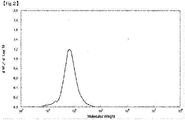
- Fig. 2 shows a specific example of a low molecular weight lignin used in the present invention
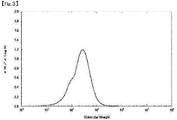
- Fig. 3 shows a specific example of a high molecular weight lignin used in the present invention.
- a low molecular weight lignin used in the present invention is referred to as the low molecular weight lignin according to the present invention
- a high molecular weight lignin used in the present invention is referred to as the high molecular weight lignin according to the present invention.
- GPC is an abbreviation of Gel Permeation chromatography, and enables compounds in a measurement sample to be separated in accordance with the molecular size. In addition, detecting the relative amounts of the separated polymers using a detector enables the molecular weights to be calculated.
- a standard polymer is used to preliminarily determine the relationship between the elution time and the molecular weight, on the basis of which relationship, the molecular weight of a measurement sample is calculated.
- the molecular weights of the low molecular weight lignin according to the present invention and the high molecular weight lignin according to the present invention are values measured using polyethylene glycol and polyethylene oxide as standard polymers.
- a detector for GPC molecular weight analysis a detector capable of detecting the absorption wavelength region of lignin ranging from 250 to 300 nm can be used.
- values measured at 254 nm at which cinnamic acids have no absorption were used in a GPC molecular weight analysis in order to eliminate the impact of cinnamic acids such as a coumaric acid and a ferulic acid that are low molecular weight aromatics.
- Values for the lignin according to the present invention were detected using a multiple wavelength ultraviolet-visible absorption detector (SPD-M20A) made by Shimadzu Corporation.
- SPD-M20A multiple wavelength ultraviolet-visible absorption detector
- Number average molecular weights can be calculated using the following Equation (1) from the molecular weights obtained by GPC molecular weight analysis.
- Mn a number average molecular weight
- M a molecular weight
- N the number of polymers
- C a sample concentration.
- a column to be used for GPC molecular weight analysis is not limited to any particular one, and TSKgelGMPW XL and G2500PW XL were used to measure molecular weight values in the present invention.
- Examples of plants that can be used as raw materials for the low molecular weight lignin according to the present invention and/or the high molecular weight lignin according to the present invention include: conifers such as pine, cedar, and cypress; broadleaf trees such as eucalyptus and acacia; herbaceous biomass such as bagasse that is the sugar cane residual left after the juice is extracted, switchgrass, napier grasses, erianthus, corn stover, rice straw, and wheat straw; biomass derived from the aquatic environment such as algae and sea grasses; cereal hull biomass such as corn hulls, wheat hulls, soya bean hulls, and chaff; and the like. Bagasse is preferable.
- Examples of methods of extracting the low molecular weight lignin according to the present invention and/or the high molecular weight lignin according to the present invention from the plants include extraction with an organic solvent (ethanol, ethyl acetate, or the like), acid extraction, alkaline extraction, hydrothermal extraction, alkaline hydrothermal extraction, alkaline hot-water extraction, and the like. Alkaline extraction or alkaline hot-water extraction is preferable, and alkaline hot-water extraction is more preferable.
- alkaline compounds to be used for alkaline extraction, alkaline hydrothermal extraction, or alkaline hot-water extraction include, but are not particularly limited to, sodium hydroxide, potassium hydroxide, calcium hydroxide, magnesium hydroxide, ammonia, and the like. Sodium hydroxide and potassium hydroxide are preferable, and sodium hydroxide is more preferable.
- reaction conditions are preferably a pH of 10 to 13.5, a temperature of 80°C to 120°C, and for 0.5 hours or more, more preferably a pH of 10.5 to 13.0, a temperature of 90°C to 120°C, and for one hour or more.
- the upper limit of the alkaline concentration is not limited to a particular one as long as the concentration enables the food discoloration inhibitor according to the present invention to be obtained.
- An alkaline concentration that is too high to biomass causes the lignin to have a lower molecular weight, and accordingly causes problems that effective ingredients for the food discoloration inhibitor according to the present invention cannot be obtained, and that coloring ingredients are generated in large amounts and color food to be processed.
- sodium hydroxide is preferably 40 g/L or less.
- a hydrothermal treatment is a method of extracting lignin by treatment with pressurized hot-water (180 to 240°C).
- An alkaline hydrothermal extraction is a method of extracting lignin by treatment with pressurized hot-water (180 to 240°C) under a pH condition of alkaline hot-water extraction.
- alkaline hot-water extraction methods include a method in which the low molecular weight lignin according to the present invention and/or the high molecular weight lignin according to the present invention can be extracted by allowing a solution having a bagasse concentration of 50 g/L (dry weight) to react with a 0.45 (wt/wt)% sodium hydroxide aqueous solution at 90°C for two hours.
- the dry weight is a weight obtained after the bagasse is dried at 105°C until the bagasse has a constant weight.
- allowing the lignin mixture to be neutralized to pH 5 or less and undergo solid-liquid separation can separate the low molecular weight lignin according to the present invention as a liquid fraction from the high molecular weight lignin according to the present invention as a solid fraction.
- the high molecular weight lignin that is insolubilized under a pH 5 condition can then be dissolved in water at a pH made more alkaline than pH 5, for example, pH 8 or more.
- the amount of the low molecular weight lignin according to the present invention and/or the high molecular weight lignin according to the present invention contained in the food discoloration inhibitor according to the present invention is preferably 0.05 wt% or more as the amount of polyphenol in terms of catechin.
- the amount is more preferably 0.1 wt% or more, most preferably 0.128 wt% or more.
- the upper limit of the polyphenol amount is not limited to a particular one in achieving the food discoloration inhibitor effect, and is preferably 2 wt% or less in that, when another brown ingredient is mixed together and when the polyphenol concentration is adjusted to a large value by concentration or the like, the mixed brown ingredient gets adhered to food and changes the appearance and flavor of the food.
- the inhibitor can be used after being adjusted so as to have a concentration in the above-mentioned range.
- the inhibitor is preferably used after being adjusted so that the weight ratio to food can be in the above-mentioned range.
- the polyphenol amount according to the present invention in terms of catechin is a value calculated using the Folin-Chiocalteu method.
- the Folin-Chiocalteu method was originally developed in order to analyze aromatic amino acids such as tyrosine and tryptophan, and proteins having these. It is a method in which a phenolic hydroxyl group, which is alkaline, reduces phosphotungstic acid or molybdic acid, and the generated blue color is quantitated by colorimetry at 700 to 770 nm. The same operation can be carried out using a specific reference material such as gallic acid or catechin, and quantitative values can be indicated in terms of the compound. Values in terms of catechin are used in the present invention.
- the food discoloration inhibitor according to the present invention has a food discoloration inhibition effect.
- Discoloration to be inhibited by the food discoloration inhibitor according to the present invention refers to a change from a natural color tone to brown in a process in which food is preserved. Color is important as an index for determining freshness, and discoloration inhibition can enhance the quality and commodity value of food.
- a food to which the food discoloration inhibitor according to the present invention is applied is not limited to a particular one as long as it is a food whose color changes during preservation, and is preferably fresh food.
- a fresh food used in the present invention is a food that is not completely heated, and may be a food a part of which, such as the surface, is heated, but is preferably an unheated food.
- An unheated food refers to a food that is preserved at room temperature (30°C) or less after the food is produced or harvested.
- a completely heated food is a food the central part of which is heated at a temperature of 75°C or more for one minute or more.
- Examples of fresh foods include cut foods, foods made by mixing a plurality of foods that have been cut into pieces, and seasoned foods, and unseasoned foods are preferable.
- fresh foods include: crustaceans such as prawns and crabs; meats such as beef, pork, and chicken; fishes such as tunas, salmons, trouts, bonitos, sardines, Pacific sauries, horse mackerels, Pacific sauries, yellowtails, cods, Atka mackerels, breams, sand lances, pufferfishes, octopuses, and squids; vegetables such as cabbages, lettuces, spinaches, eggplants, cucumbers, onions, okras, and potatoes; fruits such as apples, bananas, persimmons, peaches, and avocados; and the like.
- Crustaceans such as prawns and crabs, minced meats, tunas, cabbages, and apples are preferable.
- crustaceans include Bathysquillidae, Gonodactylidae, Odontodactylidae, Harpiosquillidae, Squillidae, Aristeidae, Solenoceridae, Penaeidae, Sicyoniidae, Sergestidae, Oplophoridae, Atyidae, Pasiphaeidae, Eugonatonotidae, Palaemonidae, Alpheidae, Hippolytidae, Pandalidae, Glyphocrangonidae, Crangonidae, Cambaridae, Astacidae, Nephropidae, Thaumastochelidae, Polychelidae, Palinuridae, Scyllaridae, Axiidae, Galatheoidae, Porcellanidae, Lithodidae, Potamonida
- Panulirus japonicus in Palinuridae Ibacus, Parribacus japonicus, and Scyllarides squamosus in Scyllaridae ; Penaeus monodon , Litopenaeus vannamei (white tiger prawn), Marsupenaeus japonicus , Metapenaeus joyneri, Metapenaeopsis barbata, Litopenaeus vannamei (whiteleg shrimp), Penaeus semisulcatus in Penaeidae ; Sergia lucens in Sergestidae ; Pandalus borealis and Pandalus nipponensis in Pandalidae ; and Nephropus japonicus in Nephropidae.
- the low molecular weight lignin according to the present invention and/or the high molecular weight lignin according to the present invention may be used as a solution in which the lignin(s) are dissolved, or may be used as the lignin(s) solidified by concentration or drying.
- the food may be dipped in the inhibitor, the inhibitor may be kneaded into food, the inhibitor may be applied to the surface of the food, or the inhibitor may be adhered to the food by spraying.
- a method of evaluating the discoloration suppression effect using the food discoloration inhibitor according to the present invention may be, for example, a method in which panelists evaluate the ratio of the discolored area by visual observation and compare the evaluation results with the food for which the food discoloration inhibitor according to the present invention has not been used.
- the discolored areas can be rated at the following grades from 0 to 10, as described in Non-Patent Literature 1. 0: no brown, 2: a brown ratio of 0% or more and less than 20%, 4: a brown ratio of 20% or more and less than 40%, 6: a brown ratio of 40% or more and less than 60%, 8: a brown ratio of 60% or more and less than 80%, 10: a brown ratio of 80% or more and 100% or less.
- the food discoloration inhibitor according to the present invention may be a composition containing the low molecular weight lignin according to the present invention and/or the high molecular weight lignin according to the present invention and another ingredient.
- the another ingredient is not limited to a particular one as long as the ingredient does not inhibit a food discoloration inhibition action.
- a cinnamic acid derived from plants particularly a coumaric acid and/or a ferulic acid
- a coumaric acid and/or a ferulic acid originally has a food discoloration inhibition action
- using a coumaric acid and/or a ferulic acid together with the low molecular weight lignin according to the present invention and/or the high molecular weight lignin according to the present invention is expected to have the effect of increasing the food discoloration inhibition action.
- a coumaric acid and a ferulic acid are known to have a food discoloration inhibitor effect, but need to have a concentration of 1.0 wt% or more in a liquid to achieve a discoloration inhibition effect for food which is dipped in the acids.
- addition of a coumaric acid and/or a ferulic acid at a high concentration will lower economical competitiveness.
- the composition contains preferably less than 1.0 wt% of coumaric acid and less than 1.0 wt% of ferulic acid, more preferably 0.04 to 0.5 wt% of coumaric acid and 0.008 to 0.5 wt% of ferulic acid.
- concentrations of a coumaric acid and a ferulic acid can be quantitated by high performance liquid chromatography using a hydrophobic column and an UV detector.
- a coumaric acid and a ferulic acid can be measured in the amount of polyphenol using the same method as the low molecular weight lignin or high molecular weight lignin according to the present invention.
- the composition preferably contains 0.0296 to 0.37 wt% of coumaric acid and 0.0064 to 0.4 wt% of ferulic acid as amounts of polyphenols in terms of catechin.
- the amount of polyphenol contained in the food discoloration inhibitor according to the present invention is preferably 0.1 wt% or more, more preferably 0.2 wt% or more, in terms of catechin, including the low molecular weight lignin according to the present invention and/or the high molecular weight lignin according to the present invention.
- the food discoloration inhibitor according to the present invention may contain an ingredient other than a coumaric acid and a ferulic acid as far as the ingredient does not inhibit the food discoloration inhibition effect.
- the food discoloration inhibitor according to the present invention may be used as a solution in which the inhibitor is dissolved or as a solidified inhibitor.
- the food In a process of cooking food or in preserving food, the food may be dipped in the inhibitor, the inhibitor may be kneaded into the food, or the inhibitor may be adhered to the surface of the food.
- the effect of the food discoloration inhibitor according to the present invention lasts even after the food is rinsed with water.
- Detector multiple wavelength ultraviolet-visible absorption detector UV (SPD-M20A made by Shimadzu Corporation, at a wavelength of 254 nm)
- Column TSKgelGMPW XL and G2500PW XL , one each, tandemly-arranged (7.8 mm in diameter ⁇ 30 cm, from Tosoh Corporation)
- Flow Rate 0.7 mL/min
- the amount of polyphenol was measured under the following conditions using the Folin-Chiocalteu method.
- a suitably diluted measurement sample in an amount of 1.0 mL, 1.0 mL of a phenol reagent solution (from Nacalai Tesque, Inc.), and 5 mL of water were added to a 25 mL graduated flask and left to stand at room temperature for five minutes, and, to the resulting mixture, 10 mL of a 7% sodium carbonate aqueous solution was added. To the resulting mixture, water was further added to make up 25 mL, and mixed, and the resulting mixture was left to stand at room temperature for two hours.
- the obtained lignin contained the low molecular weight lignin according to the present invention having a peak at a molecular weight of 7,000 and the high molecular weight lignin according to the present invention having a molecular weight peak at a molecular weight of 21,000.
- the number average molecular weight was 8,900.
- the amount of polyphenol in this bagasse alkaline hot-water extract was 0.2 wt% in terms of catechin, as measured in accordance with Reference Example 2.
- the discoloration was evaluated by visual observation at six grades in the following evaluation values from 0 to 10 (an average value of five shrimps) set in accordance with the method described in Non-Patent Literature 1.
- 0 no brown
- 2 a brown ratio of 0% or more and less than 20%
- 4 a brown ratio of 20% or more and less than 40%
- 6 a brown ratio of 40% or more and less than 60%
- 8 a brown ratio of 60% or more and less than 80%
- 10 a brown ratio of 80% or more and 100% or less.
- Table 1 The measurement results and the averages of the panelists evaluation results are shown in Table 1.
- the bagasse alkaline hot-water extract prepared in Test Example 1 was neutralized to pH 3 with 6 N hydrochloric acid, followed by depositing the high molecular weight lignin according to the present invention.
- Diatomaceous earth at 1% was added to and mixed with the liquid, the resulting mixture was subjected to solid-liquid separation using a filter press (Model YTO, made by Yabuta Kikai Co., Ltd.), and the low molecular weight lignin liquid according to the present invention and the high molecular weight lignin according to the present invention were separated into the filtrate side and the solid content side respectively.
- the obtained filtrate was adjusted to pH 7 with 50%(wt/v) sodium hydroxide, and the resulting liquid was subjected to GPC molecular weight analysis by the method described in Reference Example 1.
- the GPC molecular weight analysis result is shown in Fig. 2 .
- This analysis result confirms that the obtained lignin had the main peak from the low molecular weight lignin according to the present invention having a peak at a molecular weight of 7,000.
- the number average molecular weight determined from the GPC molecular weight analysis result was 4,000.
- the amount of polyphenol in this low molecular weight lignin according to the present invention was 0.1 wt% in terms of catechin, as measured in accordance with Reference Example 2.
- the number average molecular weight determined from this analysis result was 13,800.
- the amount of polyphenol in this high molecular weight lignin liquid according to the present invention was 0.1 wt% in terms of catechin, as measured in accordance with Reference Example 2.
- the liquid was measured for a coumaric acid and a ferulic acid by the method described in Reference Example 3, and neither coumaric acid nor ferulic acid was detected.
- the discoloration inhibition effect test was performed on shrimps using the same operation and conditions as in Test Example 1 except that the high molecular weight lignin liquid according to the present invention obtained in Test Example 3 was used. The measurement results and the averages of the panelist evaluation results are shown in Table 1.
- Test Example 1 The bagasse alkaline hot-water extract in Test Example 1 was diluted two-fold with distilled water. The test was performed using the same operation and conditions as in Test Example 1 except that the obtained two-fold diluted bagasse alkaline hot-water extract was used. The measurement results and the averages of the panelist evaluation results are shown in Table 1.
- the discoloration inhibition effect test was performed on shrimps using tap water. The test was performed using the same operation and conditions as in Test Example 1 except that tap water was used. The measurement results and the averages of the panelist evaluation results are shown in Table 1.
- Bagasse was adjusted to have a dry weight of 30 (wt/wt)% (a moisture content of 70%), and hydrothermally-processed (high pressure cooking-processed) under high pressure at 180°C for ten minutes.
- the obtained bagasse hydrothermally-processed product was subjected to solid-liquid separation, and the obtained bagasse hydrothermally-processed liquid was adjusted to pH 7 with 1 N sodium hydroxide.
- the resulting liquid was subjected to GPC molecular weight analysis by the method described in Reference Example 1. The result is shown in Fig. 4 .
- the bagasse hydrothermally-processed liquid contained lignins having a molecular weight peak at a molecular weight of 3,200, a molecular weight of 6,000, and a molecular weight of 17,000 in peak order from higher to lower.
- the number average molecular weight determined from the GPC molecular weight analysis result was 2,870.
- the amount of polyphenol in this bagasse hydrothermally-processed liquid was 0.001 wt% in terms of catechin, as measured in accordance with Reference Example 2. Accordingly, the bagasse hydrothermally-processed liquid was found to contain almost no lignin having reducing power.
- the effective ingredient having the highest peak had the peak at a molecular weight of 4,000 or less.
- This effective ingredient having the highest peak was different from the low molecular weight lignin according to the present invention and the high molecular weight lignin according to the present invention, but the composition of the ingredient included the low molecular weight lignin according to the present invention and the high molecular weight lignin according to the present invention.
- the liquid was measured for a coumaric acid and a ferulic acid by the method described in Reference Example 3, and neither coumaric acid nor ferulic acid was detected.
- the solid content of the bagasse hydrothermally-processed liquid was measured and found to be 2.5%.
- Test Example 1 The test was performed using the same operation and conditions as in Test Example 1 except that the shrimps were dipped in 150 mL of the bagasse hydrothermally-processed liquid for five minutes. The measurement results and the averages of the panelist evaluation results are shown in Table 1.
- a ferulic acid (purchased from Tokyo Chemical Industry Co., Ltd., having a purity of 98% or more and a molecular weight of 194) was adjusted to pH 7 with 4 N sodium hydroxide, and thus a ferulic acid liquid having 80 mg/L (0.008 wt%) of the acid was prepared.
- the amount of polyphenol in the ferulic acid liquid was 0.0064 wt% in terms of catechin, as measured in accordance with Reference Example 2.
- the test was performed using the same operation and conditions as in Test Example 1 except that the prepared ferulic acid liquid was used. The measurement results and the averages of the panelist evaluation results are shown in Table 1.
- a sodium pyrosulfite liquid was prepared so as to have 12.5 g/L (1.25 wt%) of sodium pyrosulfite (purchased from Nacalai Tesque, Inc., having a purity of 96% or more, otherwise known as sodium disulfite).
- the test was performed using the same operation and conditions as in Test Example 1 except that the prepared sodium pyrosulfite liquid was used.
- the measurement results and the averages of the panelist evaluation results are shown in Table 1.
- Test Example 1 The bagasse alkaline hot-water extract in Test Example 1 was diluted four-fold with distilled water to prepare a diluted liquid. The test was performed using the same operation and conditions as in Test Example 1 except that the four-fold diluted liquid was used. The measurement results and the averages of the panelist evaluation results are shown in Table 1.
- a ferulic acid (purchased from Tokyo Chemical Industry Co., Ltd., having a purity of 98% or more and a molecular weight of 194) was adjusted to pH 7 with 4 N sodium hydroxide, and thus a ferulic acid liquid having 1250 mg/L (0.125 wt%) of the acid was prepared.
- the amount of polyphenol in the ferulic acid liquid was 0.1 wt% in terms of catechin, as measured in accordance with Reference Example 2.
- the test was performed using the same operation and conditions as in Test Example 1 except that the prepared ferulic acid liquid was used. The measurement results and the averages of the panelist evaluation results are shown in Table 1.
- Test Examples 1 to 4 showed a discoloration inhibition effect on shrimps which was the same as or greater than the sodium pyrosulfite in Test Example 9 showed, and can be substitutes for sulfite which is an existing food discoloration inhibitor.
- Test Examples 2 to 4 have revealed that the discoloration inhibition effect according to the present invention is not simply proportional to the polyphenol concentration of the liquid resulting from the dipping, and, in addition, that the discoloration inhibition effect of the low molecular weight lignin according to the present invention and/or the high molecular weight lignin according to the present invention (Test Examples 1 to 4) is higher than that of the ferulic acid (Test Examples 8 and 11).
- the cut sides of a quarter cut cabbage were dipped in 30 mL of the bagasse alkaline hot-water extract prepared in Test Example 1 for five minutes. After the dipping, the dipped parts of the cabbage were washed with tap water, wrapped in a wrap film, and stored at 4°C for seven days. State observations were carried out on Day 2 and Day 7 during the storage, and the degree of discoloration on the cut sides of the cabbage was evaluated in an appearance test by panelists. The discoloration was evaluated by visual observation at the following grades from 0 to 10 (an average value of two pieces) in accordance with the method described in Non-Patent Literature 1.
- Test Example 12 The test was performed using the same operation and conditions as in Test Example 12 except that the low molecular weight lignin liquid according to the present invention which was the same as in Test Example 2 was used. The averages of the results are shown in Table 2.
- Test Example 12 The test was performed using the same operation and conditions as in Test Example 12 except that the high molecular weight lignin liquid according to the present invention obtained in Test Example 3 was used. The results are shown in Table 2.
- Test Example 12 The test was performed using the same operation and conditions as in Test Example 12 except that tap water was used. The results are shown in Table 2.
- Test Example 12 The test was performed using the same operation and conditions as in Test Example 12 except that the sugar cane squeezed juice in Test Example 6 was used. The results are shown in Table 2.
- Test Example 12 The test was performed using the same operation and conditions as in Test Example 12 except that the bagasse hydrothermally-processed liquid in Test Example 7 was used. The results are shown in Table 2.
- Test Example 12 The test was performed using the same operation and conditions as in Test Example 12 except that the ferulic acid liquid in Test Example 8 was used. The measurement results and the panelist evaluation results are shown in Table 2.
- Minced beef and pork mixed meat in an amount of 60 g was dipped in 30 mL of the bagasse alkaline hot-water extract prepared in Test Example 1 for five minutes. After the dipping, the dipped parts were washed with tap water, wrapped in a wrap film, and stored at 4°C. State observations were carried out on Days 0 to 5, and the degree of discoloration was evaluated by visual observation in an appearance test by six panelists. The discoloration was evaluated by visual observation at the following grades from 0 to 10 (an average value of two specimens).
- Test Example 20 The test was performed using the same operation and conditions as in Test Example 20 except that the low molecular weight lignin liquid according to the present invention in Test Example 2 was used. The results are shown in Table 3.
- Test Example 20 The test was performed using the same operation and conditions as in Test Example 20 except that the high molecular weight lignin liquid according to the present invention in Test Example 3 was used. The results are shown in Table 3.
- Test Example 20 The test was performed using the same operation and conditions as in Test Example 20 except that the sugar cane squeezed juice in Test Example 6 was used. The results are shown in Table 3.
- Test Example 20 The test was performed using the same operation and conditions as in Test Example 20 except that the bagasse hydrothermally-processed liquid in Test Example 7 was used. The results are shown in Table 3.
- Test Example 20 The test was performed using the same operation and conditions as in Test Example 20 except that the ferulic acid liquid in Test Example 8 was used. The results are shown in Table 3.
- Yellowfin tuna in an amount of about 80 ⁇ 10 g (purchased from Fresh Deli Tamaya) was dipped in 15 mL of the bagasse alkaline hot-water extract prepared in Test Example 1 for five minutes. After the dipping, the dipped parts were washed with tap water, wrapped in a wrap film, and stored at 4°C. State observations were carried out on Days 0 to 5, and the degree of discoloration was evaluated in an appearance test by six panelists. The discoloration was evaluated by visual observation at the following grades from 0 to 10 (an average value of two specimens) in accordance with the method described in Non-Patent Literature 1.
- Test Example 28 The test was performed using the same operation and conditions as in Test Example 28 except that the low molecular weight lignin liquid according to the present invention in Test Example 2 was used. The results are shown in Table 4.
- Test Example 28 The test was performed using the same operation and conditions as in Test Example 28 except that the high molecular weight lignin liquid according to the present invention in Test Example 3 was used. The results are shown in Table 4.
- Test Example 28 The test was performed using the same operation and conditions as in Test Example 28 except that tap water was used. The results are shown in Table 4.
- Test Example 28 The test was performed using the same operation and conditions as in Test Example 28 except that the sugar cane squeezed juice in Test Example 6 was used. The results are shown in Table 4.
- Test Example 28 The test was performed using the same operation and conditions as in Test Example 28 except that the bagasse hydrothermally-processed liquid in Test Example 7 was used. The results are shown in Table 4.
- Test Example 28 The test was performed using the same operation and conditions as in Test Example 28 except that the ferulic acid liquid in Test Example 8 was used. The results are shown in Table 4.
- the cut side of a half-cut apple was dipped in 15 mL of the bagasse alkaline hot-water extract prepared in Test Example 1 for five minutes. After the dipping, the dipped parts were washed with tap water, wrapped in a wrap film, and stored at 4°C. State observations were carried out on Days 0 to 1, and the degree of discoloration was evaluated in an appearance test by six panelists. The discoloration was evaluated by visual observation at the following grades from 0 to 10 (an average value of two specimens) in accordance with the method described in Non-Patent Literature 1.
- Test Example 36 The test was performed using the same operation and conditions as in Test Example 36 except that the low molecular weight lignin liquid according to the present invention in Test Example 2 was used. The results are shown in Table 5.
- Test Example 36 The test was performed using the same operation and conditions as in Test Example 36 except that the high molecular weight lignin liquid according to the present invention in Test Example 3 was used. The results are shown in Table 5.
- Test Example 5 The test was performed using the same operation and conditions as in Test Example 36 except that the tap water in Test Example 5 was used. The results are shown in Table 5.
- Test Example 36 The test was performed using the same operation and conditions as in Test Example 36 except that the sugar cane squeezed juice in Test Example 6 was used. The results are shown in Table 5.
- Test Example 7 The test was performed using the same operation and conditions as in Test Example 36 except that the bagasse hydrothermally-processed liquid in Test Example 7 was used. The results are shown in Table 5.
- Test Example 36 The test was performed using the same operation and conditions as in Test Example 36 except that the ferulic acid liquid in Test Example 8 was used. The results are shown in Table 5.
- a lignosulfonic acid liquid (a solution of 3% SAN-X P252, made by Nippon Paper Chemicals Co., Ltd., dissolved in an aqueous solution adjusted to pH 10 with NaOH) was subjected to GPC molecular weight analysis by the method described in Reference Example 1. The result is shown in Fig. 5 .
- This analysis result of the lignosulfonic acid liquid confirms that the obtained lignin contained a lignin having a peak at a molecular weight of 100,000.
- the number average molecular weight was 39,000.
- the amount of polyphenol in this bagasse alkaline hot-water extract was 0.1 wt% in terms of catechin, as measured in accordance with Reference Example 2.
- the discoloration inhibition effect test was performed on shrimps using the liquid further adjusted to pH 7 with 6 N hydrochloric acid.
- the test was performed using the same operation and conditions as in Test Example 1 except that the lignosulfonic acid liquid was used.
- the measurement results and the averages of the panelist evaluation results are shown in Table 6.
- the analysis result is shown in Fig. 6 .
- This analysis result confirms that the obtained lignin contained a lignin having a peak at a molecular weight of 3,700. In addition, the number average molecular weight was 3,300.
- This bagasse alkaline hydrothermally-processed liquid was neutralized to pH 7 with 6 N hydrochloric acid, and concentrated three-fold (v/v) under reduced pressure.
- the polyphenol content of the three-fold concentrated bagasse alkaline hydrothermally-processed liquid was measured in accordance with Reference Example 2 and found to be 0.1 wt% in terms of catechin. The test was performed using the same operation and conditions as in Test Example 1 except that the three-fold concentrated bagasse alkaline hydrothermally-processed liquid was used.
- the measurement results and the averages of the panelist evaluation results are shown in Table 6.
- the bagasse hydrothermally-processed liquid obtained in Test Example 7 was dried under reduced pressure at 40°C until the weight did not change any more, and the solid content of the resulting product was measured and found to be 3.3%.
- the polyphenol amount measured before the drying was 0.001 wt% in terms of catechin, and accordingly the solid content was calculated at 0.03 wt% in terms of catechin.
- Test Example 6 The test was performed in the same manner as in Test Example 1 except that the shrimps were dredged with 5 g of the solid content of the bagasse hydrothermally-processed liquid for five minutes. The measurement results and the averages of the panelist evaluation results are shown in Table 6.
Landscapes
- Life Sciences & Earth Sciences (AREA)
- Engineering & Computer Science (AREA)
- Chemical & Material Sciences (AREA)
- Food Science & Technology (AREA)
- Polymers & Plastics (AREA)
- Zoology (AREA)
- Health & Medical Sciences (AREA)
- Nutrition Science (AREA)
- Wood Science & Technology (AREA)
- Marine Sciences & Fisheries (AREA)
- General Chemical & Material Sciences (AREA)
- Chemical Kinetics & Catalysis (AREA)
- Microbiology (AREA)
- Coloring Foods And Improving Nutritive Qualities (AREA)
- Food Preservation Except Freezing, Refrigeration, And Drying (AREA)
- Meat, Egg Or Seafood Products (AREA)
- Storage Of Fruits Or Vegetables (AREA)
- Testing Resistance To Weather, Investigating Materials By Mechanical Methods (AREA)
- Botany (AREA)
- Photometry And Measurement Of Optical Pulse Characteristics (AREA)
Abstract
Description
- The present invention relates to food discoloration inhibitors.
- Food will react with oxygen in the air, and thus become dark in color or discolored during processing and storage, resulting in having lower quality. In the past, kojic acid was used as a discoloration inhibitor against food discoloration, but is now prohibited because kojic acid was suspected of causing cancer. As substitutes for kojic acid, sulfites such as sodium hyposulfite, sodium hydrogen sulfite, and sodium pyrosulfite are now used but have an unfavorable impact on the human body, and the Food Sanitation Law of Japan regulates the residual concentration of sulfite for each kind of food. For example, the residual concentration of sulfite in terms of the residual amount of sulfur dioxide is less than 5.0 g/kg for kampyo gourd, less than 1.5 g/kg for raisin, less than 0.35 g/kg for fruit liquor or miscellaneous liquor, less than 0.1 g/kg for shucked prawn meat or shucked frozen raw crab meat, and less than 0.030 g/kg for food that is not particularly designated.
- On the other hand, food discoloration inhibitors that are naturally-derived and safer are under study. For example, it is known that a ferulic acid contained in plant cell walls and the like has a discoloration inhibition effect, and Non-Patent Literature 1 states that dipping Litopenaeus vannamei shrimps in a solution containing a ferulic acid suppresses polyphenol oxidase activity suppression and suppresses browning. However, to exhibit the same browning suppression effect as sulfite, the solution needs to have a ferulic acid concentration of 1.0 wt% (10,000 ppm, 0.7 wt% in terms of catechin) or more, and this is problematic in that the production of a high concentration ferulic acid is costly.
- Furthermore, Patent Literature 1 describes a method in which sugar cane squeezed juice, sucrose derived from sugar cane, or cellobiose is used as a black-discoloration inhibitor for crustaceans.
- Patent Literature 1:
JP06-311842A - Non-Patent Literature 1: Nilesh Prakash et al., Food chemistry, 116, 323-331 (2009)
- A problem is to provide a food discoloration inhibitor that is naturally-derived and safe.
- As a result of intensive studies, the present inventors have found out that a low molecular weight lignin having a molecular weight peak in a molecular weight range of 4,000 to 9,500 and/or a high molecular weight lignin having a molecular weight peak in a molecular weight range of 10,000 to 40,000 have/has a food discoloration inhibitor effect in place of sulfites, wherein the molecular weight peak is measured at a wavelength of 254 nm by GPC molecular weight analysis using an UV detector. Thus the present inventors have completed the present invention.
- That is, the present invention has the following components (1) to (9).
- (1) A food discoloration inhibitor, containing, as an effective ingredient, a low molecular weight lignin having a molecular weight peak in a molecular weight range of 4,000 to 9,500 and/or a high molecular weight lignin having a molecular weight peak in a molecular weight range of 10,000 to 40,000, wherein the molecular weight peak is measured at a wavelength of 254 nm by GPC molecular weight analysis using an UV detector.
- (2) The food discoloration inhibitor according to (1), containing, as an effective ingredient, a composition containing the low molecular weight lignin and/or the high molecular weight lignin having a molecular weight peak in a molecular weight range of 10,000 to 40,000, wherein the lignin(s) content as a polyphenol amount is 0.05 wt% or more in terms of catechin.
- (3) The food discoloration inhibitor according to (2), containing, as an effective ingredient, the composition further containing a coumaric acid and/or a ferulic acid.
- (4) The food discoloration inhibitor according to (2) or (3), wherein the composition is a bagasse alkaline hot-water extract.
- (5) The food discoloration inhibitor according to any one of (1) to (4), wherein the food is a fresh food.
- (6) The food discoloration inhibitor according to (5), wherein the fresh food is an aquatic organism.
- (7) The food discoloration inhibitor according to (6), wherein the aquatic organism is a crustacean.
- (8) The food discoloration inhibitor according to (7), wherein the crustacean is a prawn.
- (9) A method of inhibiting food discoloration, including bringing the food discoloration inhibitor in contact with a food.
- The food discoloration inhibitor according to the present invention is a highly safe naturally-derived discoloration inhibitor, and has a discoloration inhibition effect that is the same as or greater than sulfites used as a food discoloration inhibitor have.
-
-
Fig. 1 shows a specific example of the GPC molecular weight analysis result of a low molecular weight lignin and a high molecular weight lignin. -
Fig. 2 shows a specific example of the GPC molecular weight analysis result of a low molecular weight lignin. -
Fig. 3 shows a specific example of the GPC molecular weight analysis result of a high molecular weight lignin. -
Fig. 4 shows a specific example of the GPC molecular weight analysis result of a bagasse hydrothermally-processed liquid. -
Fig. 5 shows a specific example of the GPC molecular weight analysis result of a lignosulfonic acid liquid. -
Fig. 6 shows a specific example of the GPC molecular weight analysis result of an alkaline hydrothermally-processed liquid. - Embodiments of the present invention will be described in detail.
- Lignins are high molecular weight phenolic compounds derived from plants. Lignins have complicated and various structures, the details of which have not been clarified. In addition, although the molecular weights of lignins vary with the type of biomass, the extraction method, and the analysis method, the general number average molecular weights that have been reported are 2400 to 9700 (Biofuels Bioproducts & Biorefinering, Volume 8, Issue 6, 836-856 (2014)).
- The food discoloration inhibitor according to the present invention contains, as an effective ingredient, a low molecular weight lignin having a molecular weight peak in a molecular weight range of 4,000 to 9,500 and/or a high molecular weight lignin having a molecular weight peak in a molecular weight range of 10,000 to 40,000, wherein the molecular weight peak is measured at a wavelength of 254 nm by GPC molecular weight analysis.
- The low molecular weight lignin used in the present invention has a molecular weight peak in a molecular weight range of preferably 4,500 to 9,400, more preferably 5,000 to 9,300.
- The high molecular weight lignin used in the present invention has a molecular weight peak in a molecular weight range of preferably 10,200 to 37,000, more preferably 11,000 to 35,000.
- In addition, the molecular weight of a lignin can be judged based on the number average molecular weight. The low molecular weight lignin used in the present invention has an average molecular weight of preferably 3,500 to 6,000, more preferably 3,600 to 5,000, wherein the average molecular weight is a number average molecular weight measured by GPC molecular weight analysis using an UV detector. The high molecular weight lignin used in the present invention has an average molecular weight of preferably 10,000 to 20,000, more preferably 10,000 to 15,000, wherein the average molecular weight is a number average molecular weight measured by GPC molecular weight analysis using an UV detector. The lignin containing both a low molecular weight lignin and a high molecular weight lignin used in the present invention has an average molecular weight of preferably 4,000 to 15,000, more preferably 6,000 to 10,000, wherein the average molecular weight is a number average molecular weight measured by GPC molecular weight analysis using an UV detector.
- In addition, the low molecular weight lignin and the high molecular weight lignin used in the present invention may have a plurality of molecular weight peaks as long as the peaks are in the above-mentioned molecular weight ranges. Furthermore, the lignins may have a molecular weight peak outside the above-mentioned molecular weight ranges, and in this case, it is preferable that the highest peak of the molecular weight peaks at a wavelength of 254 nm is in a molecular weight range of 4,000 to 9,500 for the low molecular weight lignin used in the present invention and in a molecular weight range of 10,000 to 40,000 for the high molecular weight lignin used in the present invention.
-
Fig. 1 shows a specific example of a GPC molecular weight analysis performed using an UV detector on a lignin containing both a low molecular weight lignin used in the present invention and a high molecular weight lignin used in the present invention. In addition,Fig. 2 shows a specific example of a low molecular weight lignin used in the present invention, andFig. 3 shows a specific example of a high molecular weight lignin used in the present invention. - Hereinafter in the DESCRIPTION, a low molecular weight lignin used in the present invention is referred to as the low molecular weight lignin according to the present invention, and a high molecular weight lignin used in the present invention is referred to as the high molecular weight lignin according to the present invention.
- GPC is an abbreviation of Gel Permeation chromatography, and enables compounds in a measurement sample to be separated in accordance with the molecular size. In addition, detecting the relative amounts of the separated polymers using a detector enables the molecular weights to be calculated. In a GPC molecular weight analysis, a standard polymer is used to preliminarily determine the relationship between the elution time and the molecular weight, on the basis of which relationship, the molecular weight of a measurement sample is calculated. The molecular weights of the low molecular weight lignin according to the present invention and the high molecular weight lignin according to the present invention are values measured using polyethylene glycol and polyethylene oxide as standard polymers.
- As a detector for GPC molecular weight analysis, a detector capable of detecting the absorption wavelength region of lignin ranging from 250 to 300 nm can be used. In the present invention, values measured at 254 nm at which cinnamic acids have no absorption were used in a GPC molecular weight analysis in order to eliminate the impact of cinnamic acids such as a coumaric acid and a ferulic acid that are low molecular weight aromatics. Values for the lignin according to the present invention were detected using a multiple wavelength ultraviolet-visible absorption detector (SPD-M20A) made by Shimadzu Corporation. Number average molecular weights can be calculated using the following Equation (1) from the molecular weights obtained by GPC molecular weight analysis. In Equation (1), Mn represents a number average molecular weight, M represents a molecular weight, N represents the number of polymers, and C represents a sample concentration.

- A column to be used for GPC molecular weight analysis is not limited to any particular one, and TSKgelGMPWXL and G2500PWXL were used to measure molecular weight values in the present invention.
- Examples of plants that can be used as raw materials for the low molecular weight lignin according to the present invention and/or the high molecular weight lignin according to the present invention include: conifers such as pine, cedar, and cypress; broadleaf trees such as eucalyptus and acacia; herbaceous biomass such as bagasse that is the sugar cane residual left after the juice is extracted, switchgrass, napier grasses, erianthus, corn stover, rice straw, and wheat straw; biomass derived from the aquatic environment such as algae and sea grasses; cereal hull biomass such as corn hulls, wheat hulls, soya bean hulls, and chaff; and the like. Bagasse is preferable.
- Examples of methods of extracting the low molecular weight lignin according to the present invention and/or the high molecular weight lignin according to the present invention from the plants include extraction with an organic solvent (ethanol, ethyl acetate, or the like), acid extraction, alkaline extraction, hydrothermal extraction, alkaline hydrothermal extraction, alkaline hot-water extraction, and the like. Alkaline extraction or alkaline hot-water extraction is preferable, and alkaline hot-water extraction is more preferable.
- Examples of alkaline compounds to be used for alkaline extraction, alkaline hydrothermal extraction, or alkaline hot-water extraction include, but are not particularly limited to, sodium hydroxide, potassium hydroxide, calcium hydroxide, magnesium hydroxide, ammonia, and the like. Sodium hydroxide and potassium hydroxide are preferable, and sodium hydroxide is more preferable.
- For alkaline hot-water extraction, reaction conditions are preferably a pH of 10 to 13.5, a temperature of 80°C to 120°C, and for 0.5 hours or more, more preferably a pH of 10.5 to 13.0, a temperature of 90°C to 120°C, and for one hour or more. The upper limit of the alkaline concentration is not limited to a particular one as long as the concentration enables the food discoloration inhibitor according to the present invention to be obtained. An alkaline concentration that is too high to biomass causes the lignin to have a lower molecular weight, and accordingly causes problems that effective ingredients for the food discoloration inhibitor according to the present invention cannot be obtained, and that coloring ingredients are generated in large amounts and color food to be processed. For example, sodium hydroxide is preferably 40 g/L or less.
- A hydrothermal treatment is a method of extracting lignin by treatment with pressurized hot-water (180 to 240°C).
- An alkaline hydrothermal extraction is a method of extracting lignin by treatment with pressurized hot-water (180 to 240°C) under a pH condition of alkaline hot-water extraction.
- Specific examples of alkaline hot-water extraction methods include a method in which the low molecular weight lignin according to the present invention and/or the high molecular weight lignin according to the present invention can be extracted by allowing a solution having a bagasse concentration of 50 g/L (dry weight) to react with a 0.45 (wt/wt)% sodium hydroxide aqueous solution at 90°C for two hours. The dry weight is a weight obtained after the bagasse is dried at 105°C until the bagasse has a constant weight.
- In a case where it is desired to separate the low molecular weight lignin according to the present invention from the high molecular weight lignin according to the present invention, allowing the lignin mixture to be neutralized to pH 5 or less and undergo solid-liquid separation can separate the low molecular weight lignin according to the present invention as a liquid fraction from the high molecular weight lignin according to the present invention as a solid fraction. This is because it is characteristic of the low molecular weight lignin according to the present invention to dissolve in water under a pH 5 condition and it is characteristic of the high molecular weight lignin according to the present invention to deposit in water without dissolving. The high molecular weight lignin that is insolubilized under a pH 5 condition can then be dissolved in water at a pH made more alkaline than pH 5, for example, pH 8 or more.
- The amount of the low molecular weight lignin according to the present invention and/or the high molecular weight lignin according to the present invention contained in the food discoloration inhibitor according to the present invention is preferably 0.05 wt% or more as the amount of polyphenol in terms of catechin. The amount is more preferably 0.1 wt% or more, most preferably 0.128 wt% or more. The upper limit of the polyphenol amount is not limited to a particular one in achieving the food discoloration inhibitor effect, and is preferably 2 wt% or less in that, when another brown ingredient is mixed together and when the polyphenol concentration is adjusted to a large value by concentration or the like, the mixed brown ingredient gets adhered to food and changes the appearance and flavor of the food. In a case where the food discoloration inhibitor according to the present invention is used as a solution, the inhibitor can be used after being adjusted so as to have a concentration in the above-mentioned range. In a case where the inhibitor is kneaded into food, the inhibitor is preferably used after being adjusted so that the weight ratio to food can be in the above-mentioned range.
- The polyphenol amount according to the present invention in terms of catechin is a value calculated using the Folin-Chiocalteu method. The Folin-Chiocalteu method was originally developed in order to analyze aromatic amino acids such as tyrosine and tryptophan, and proteins having these. It is a method in which a phenolic hydroxyl group, which is alkaline, reduces phosphotungstic acid or molybdic acid, and the generated blue color is quantitated by colorimetry at 700 to 770 nm. The same operation can be carried out using a specific reference material such as gallic acid or catechin, and quantitative values can be indicated in terms of the compound. Values in terms of catechin are used in the present invention.
- The food discoloration inhibitor according to the present invention has a food discoloration inhibition effect. Discoloration to be inhibited by the food discoloration inhibitor according to the present invention refers to a change from a natural color tone to brown in a process in which food is preserved. Color is important as an index for determining freshness, and discoloration inhibition can enhance the quality and commodity value of food.
- A food to which the food discoloration inhibitor according to the present invention is applied is not limited to a particular one as long as it is a food whose color changes during preservation, and is preferably fresh food. A fresh food used in the present invention is a food that is not completely heated, and may be a food a part of which, such as the surface, is heated, but is preferably an unheated food. An unheated food refers to a food that is preserved at room temperature (30°C) or less after the food is produced or harvested. In the present invention, a completely heated food is a food the central part of which is heated at a temperature of 75°C or more for one minute or more.
- Examples of fresh foods include cut foods, foods made by mixing a plurality of foods that have been cut into pieces, and seasoned foods, and unseasoned foods are preferable.
- Specific examples of fresh foods include: crustaceans such as prawns and crabs; meats such as beef, pork, and chicken; fishes such as tunas, salmons, trouts, bonitos, sardines, Pacific sauries, horse mackerels, Pacific sauries, yellowtails, cods, Atka mackerels, breams, sand lances, pufferfishes, octopuses, and squids; vegetables such as cabbages, lettuces, spinaches, eggplants, cucumbers, onions, okras, and potatoes; fruits such as apples, bananas, persimmons, peaches, and avocados; and the like. Crustaceans such as prawns and crabs, minced meats, tunas, cabbages, and apples are preferable.
- Specific examples of crustaceans include Bathysquillidae, Gonodactylidae, Odontodactylidae, Harpiosquillidae, Squillidae, Aristeidae, Solenoceridae, Penaeidae, Sicyoniidae, Sergestidae, Oplophoridae, Atyidae, Pasiphaeidae, Eugonatonotidae, Palaemonidae, Alpheidae, Hippolytidae, Pandalidae, Glyphocrangonidae, Crangonidae, Cambaridae, Astacidae, Nephropidae, Thaumastochelidae, Polychelidae, Palinuridae, Scyllaridae, Axiidae, Galatheoidae, Porcellanidae, Lithodidae, Potamonidae, Raninidae, Homolodromiidae, Dynomenidae, Latreilliidae, Homolidae, Dorippidae, Calappidae, Inachidae, Hymenosomatidae, Parthenopidae, Cancridae, Leucosiidae, Cheiragonidae, Corystidae, Portunidae, Geryonidae, Xanthidae, Goneplacidae, Ocypodidae, Grapsidae, Pinnotheridae, and the like. In particular, preferable examples among these are: Panulirus japonicus in Palinuridae; Ibacus, Parribacus japonicus, and Scyllarides squamosus in Scyllaridae; Penaeus monodon, Litopenaeus vannamei (white tiger prawn), Marsupenaeus japonicus, Metapenaeus joyneri, Metapenaeopsis barbata, Litopenaeus vannamei (whiteleg shrimp), Penaeus semisulcatus in Penaeidae; Sergia lucens in Sergestidae; Pandalus borealis and Pandalus nipponensis in Pandalidae; and Nephropus japonicus in Nephropidae.
- In a method of using the food discoloration inhibitor according to the present invention, the low molecular weight lignin according to the present invention and/or the high molecular weight lignin according to the present invention may be used as a solution in which the lignin(s) are dissolved, or may be used as the lignin(s) solidified by concentration or drying. In a process of cooking food or in preserving food, the food may be dipped in the inhibitor, the inhibitor may be kneaded into food, the inhibitor may be applied to the surface of the food, or the inhibitor may be adhered to the food by spraying. Once the discoloration inhibitor has been in good contact with food, the effect of the inhibitor lasts even after the food is rinsed with water. In a case where food such as vegetable, fruit, and meat, dipping the cut sides which contact oxygen, and hence which are susceptible to discoloration can suppress the discoloration. In a case where food is a crustacean such as a prawn, dipping the whole food is effective, and has an effect of inhibiting the discoloration of the whole crustacean food.
- A method of evaluating the discoloration suppression effect using the food discoloration inhibitor according to the present invention may be, for example, a method in which panelists evaluate the ratio of the discolored area by visual observation and compare the evaluation results with the food for which the food discoloration inhibitor according to the present invention has not been used. Specifically, the discolored areas can be rated at the following grades from 0 to 10, as described in Non-Patent Literature 1. 0: no brown, 2: a brown ratio of 0% or more and less than 20%, 4: a brown ratio of 20% or more and less than 40%, 6: a brown ratio of 40% or more and less than 60%, 8: a brown ratio of 60% or more and less than 80%, 10: a brown ratio of 80% or more and 100% or less.
- The food discoloration inhibitor according to the present invention may be a composition containing the low molecular weight lignin according to the present invention and/or the high molecular weight lignin according to the present invention and another ingredient. The another ingredient is not limited to a particular one as long as the ingredient does not inhibit a food discoloration inhibition action. It is known that a cinnamic acid derived from plants, particularly a coumaric acid and/or a ferulic acid, originally has a food discoloration inhibition action, and accordingly, using a coumaric acid and/or a ferulic acid together with the low molecular weight lignin according to the present invention and/or the high molecular weight lignin according to the present invention is expected to have the effect of increasing the food discoloration inhibition action.
- A coumaric acid and a ferulic acid are known to have a food discoloration inhibitor effect, but need to have a concentration of 1.0 wt% or more in a liquid to achieve a discoloration inhibition effect for food which is dipped in the acids. However, addition of a coumaric acid and/or a ferulic acid at a high concentration will lower economical competitiveness. In a case where the food discoloration inhibitor according to the present invention contains a coumaric acid and a ferulic acid, the composition contains preferably less than 1.0 wt% of coumaric acid and less than 1.0 wt% of ferulic acid, more preferably 0.04 to 0.5 wt% of coumaric acid and 0.008 to 0.5 wt% of ferulic acid. The concentrations of a coumaric acid and a ferulic acid can be quantitated by high performance liquid chromatography using a hydrophobic column and an UV detector.
- In addition, a coumaric acid and a ferulic acid can be measured in the amount of polyphenol using the same method as the low molecular weight lignin or high molecular weight lignin according to the present invention. The composition preferably contains 0.0296 to 0.37 wt% of coumaric acid and 0.0064 to 0.4 wt% of ferulic acid as amounts of polyphenols in terms of catechin.
- In a case where the food discoloration inhibitor according to the present invention contains a coumaric acid and a ferulic acid, the amount of polyphenol contained in the food discoloration inhibitor according to the present invention is preferably 0.1 wt% or more, more preferably 0.2 wt% or more, in terms of catechin, including the low molecular weight lignin according to the present invention and/or the high molecular weight lignin according to the present invention.
- The food discoloration inhibitor according to the present invention may contain an ingredient other than a coumaric acid and a ferulic acid as far as the ingredient does not inhibit the food discoloration inhibition effect.
- The food discoloration inhibitor according to the present invention may be used as a solution in which the inhibitor is dissolved or as a solidified inhibitor. In a process of cooking food or in preserving food, the food may be dipped in the inhibitor, the inhibitor may be kneaded into the food, or the inhibitor may be adhered to the surface of the food. Once the food discoloration inhibitor has been in good contact with food, the effect of the food discoloration inhibitor according to the present invention lasts even after the food is rinsed with water.
- Below, the present invention will be described specifically.
- GPC molecular weight analyses were carried out under the following conditions.
Detector: multiple wavelength ultraviolet-visible absorption detector UV (SPD-M20A made by Shimadzu Corporation, at a wavelength of 254 nm)
Column: TSKgelGMPWXL and G2500PWXL, one each, tandemly-arranged (7.8 mm in diameter × 30 cm, from Tosoh Corporation)
Solvent: ammonia buffer (pH 11)/methanol (1/1 = v/v)
Flow Rate: 0.7 mL/min
Column Temperature: 23°C
Injection Volume: 0.2 mL
Standard Sample: monodisperse polyethylene oxide and polyethylene glycol, made by Tosoh Corporation, made by Polymer Laboratories Ltd. - Using the standard sample, a relationship between elution time and logarithms of a molecular weight was obtained preliminarily, converted as a weight fraction per LogM (wherein M is a molecular weight), dW/dlogM (wherein W is a weight), and plotted with logarithms of the molecular weight as the abscissa against the ordinate such that the peak area corresponded to 1, followed by using the plot for analysis. The number average molecular weight was calculated using Equation (1).
- The amount of polyphenol was measured under the following conditions using the Folin-Chiocalteu method. A suitably diluted measurement sample in an amount of 1.0 mL, 1.0 mL of a phenol reagent solution (from Nacalai Tesque, Inc.), and 5 mL of water were added to a 25 mL graduated flask and left to stand at room temperature for five minutes, and, to the resulting mixture, 10 mL of a 7% sodium carbonate aqueous solution was added. To the resulting mixture, water was further added to make up 25 mL, and mixed, and the resulting mixture was left to stand at room temperature for two hours. Part of the reaction liquid was taken out, filtrated through a PTFE filter 0.45 µm in diameter, and measured for absorbance at 750 nm (the sample was suitably diluted such that the absorbance was 0.6 ABS or less). The measurement result was calculated in terms of catechin using a catechin reagent (from Sigma-Aldrich Co. LLC, having a purity of 98% or more) as a standard material. In the below-mentioned Test Examples, the results of polyphenol amounts measured in accordance with this Reference Example are shown in Tables 1 to 6. In the Tables, the mark "-" indicates that the catechin conversion cannot be carried out separately between the low molecular weight lignin/high molecular weight lignin according to the present invention and other lignins. The mark "0" in the Tables indicates that having no content is theoretically evident or that no value was detected in a measurement by the Folin-Chiocalteu method.
- The concentration of an aromatic compound such as a coumaric acid or a ferulic acid was measured under the following conditions.
Instrument: Hitachi high performance liquid chromatogram, LaChrom Eite
Column: Synergi 2.5 µ Hydro-RPIOOA 100 × 3.00 mm (Phenomenex)
Mobile Phase: 0.1% phosphoric acid:acetonitrile = 93:7 to 5:95, gradient
Detector: Diode Array
Flow Rate: 0.6 mL/min
Temperature: 40°C - Bagasse in an amount of 1 kg (purchased from Taito Nosan K.K., produced in Vietnam) at 5 wt% by dry weight was added to and mixed with a 0.45 (wt/wt)% sodium hydroxide aqueous solution, the resulting mixture was allowed to react at 90°C for two hours, and adjusted to pH 7 with 6 N hydrochloric acid, and then, the solid was separated through a sieve, and filtrated through an MF film (tradename: TREFIL HFS Type, made by Toray Industries, Inc.) to prepare a bagasse alkaline hot-water extract. This alkaline extract was subjected to GPC molecular weight analysis by the method described in Reference Example 1. The analysis result is shown in
Fig. 1 . This analysis result confirms that the obtained lignin contained the low molecular weight lignin according to the present invention having a peak at a molecular weight of 7,000 and the high molecular weight lignin according to the present invention having a molecular weight peak at a molecular weight of 21,000. In addition, the number average molecular weight was 8,900. Furthermore, the amount of polyphenol in this bagasse alkaline hot-water extract was 0.2 wt% in terms of catechin, as measured in accordance with Reference Example 2. In addition, measurement of a coumaric acid and a ferulic acid by the method described in Reference Example 3 showed 0.08 wt% of coumaric acid and 0.016 wt% of ferulic acid, and the polyphenol content of the liquid containing only a coumaric acid and a ferulic acid at the same respective concentrations was 0.072 wt% in terms of catechin. This fact has revealed that the low molecular weight lignin and high molecular weight lignin according to the present invention existed at 0.128 wt% in terms of catechin. - Five frozen Litopenaeus vannamei shrimps (tradename: Myoko Yuki shrimp, produced by IMT Engineering Inc.), L size (about 15 g per shrimp), for which the food discoloration inhibitor according to the present invention was not used, were quickly thawed with cold water and dipped in 150 mL of the above-mentioned bagasse alkaline hot-water extract (30 mL per shrimp) for five minutes. After the dipping, the shrimps were washed with tap water, wrapped in a wrap film, and stored at 4°C for six days. State observations were carried out on Day 2 and Day 6 during the storage, and the ratio of the areas which turned brown was evaluated in an appearance test by six panelists. The discoloration was evaluated by visual observation at six grades in the following evaluation values from 0 to 10 (an average value of five shrimps) set in accordance with the method described in Non-Patent Literature 1. 0: no brown, 2: a brown ratio of 0% or more and less than 20%, 4: a brown ratio of 20% or more and less than 40%, 6: a brown ratio of 40% or more and less than 60%, 8: a brown ratio of 60% or more and less than 80%, 10: a brown ratio of 80% or more and 100% or less. The measurement results and the averages of the panelists evaluation results are shown in Table 1.
- The bagasse alkaline hot-water extract prepared in Test Example 1 was neutralized to pH 3 with 6 N hydrochloric acid, followed by depositing the high molecular weight lignin according to the present invention. Diatomaceous earth at 1% was added to and mixed with the liquid, the resulting mixture was subjected to solid-liquid separation using a filter press (Model YTO, made by Yabuta Kikai Co., Ltd.), and the low molecular weight lignin liquid according to the present invention and the high molecular weight lignin according to the present invention were separated into the filtrate side and the solid content side respectively. The obtained filtrate was adjusted to pH 7 with 50%(wt/v) sodium hydroxide, and the resulting liquid was subjected to GPC molecular weight analysis by the method described in Reference Example 1. The GPC molecular weight analysis result is shown in
Fig. 2 . This analysis result confirms that the obtained lignin had the main peak from the low molecular weight lignin according to the present invention having a peak at a molecular weight of 7,000. In addition, the number average molecular weight determined from the GPC molecular weight analysis result was 4,000. Furthermore, the amount of polyphenol in this low molecular weight lignin according to the present invention was 0.1 wt% in terms of catechin, as measured in accordance with Reference Example 2. In addition, measurement of a coumaric acid and a ferulic acid by the method described in Reference Example 3 showed 0.06 wt% of coumaric acid and 0.012 wt% of ferulic acid, and the polyphenol content of the liquid containing only a coumaric acid and a ferulic acid at the same respective concentrations was 0.05 wt% in terms of catechin. This fact has revealed that the low molecular weight lignin according to the present invention existed 0.05 wt% in terms of catechin. The discoloration inhibition effect test was performed on shrimps using the same operation and conditions as in Test Example 1 except that the low molecular weight lignin liquid according to the present invention obtained in Test Example 2 was used. The measurement results and the averages of the panelist evaluation results are shown in Table 1. - To the solid content separated in Test Example 2, 50% (wt/v) of sodium hydroxide was added to adjust the pH to 12 and allow the high molecular weight lignin according to the present invention to dissolve. This high molecular weight lignin liquid according to the present invention was adjusted to pH 7 with 6 N hydrochloric acid, and the resulting liquid was subjected to GPC molecular weight analysis by the method described in Reference Example 1. The GPC molecular weight analysis result is shown in
Fig. 3 . This analysis result confirms that the obtained lignin was the high molecular weight lignin according to the present invention having a peak at a molecular weight of 21,000, not containing the low molecular weight lignin according to the present invention. In addition, the number average molecular weight determined from this analysis result was 13,800. Furthermore, the amount of polyphenol in this high molecular weight lignin liquid according to the present invention was 0.1 wt% in terms of catechin, as measured in accordance with Reference Example 2. In addition, the liquid was measured for a coumaric acid and a ferulic acid by the method described in Reference Example 3, and neither coumaric acid nor ferulic acid was detected. The discoloration inhibition effect test was performed on shrimps using the same operation and conditions as in Test Example 1 except that the high molecular weight lignin liquid according to the present invention obtained in Test Example 3 was used. The measurement results and the averages of the panelist evaluation results are shown in Table 1. - The bagasse alkaline hot-water extract in Test Example 1 was diluted two-fold with distilled water. The test was performed using the same operation and conditions as in Test Example 1 except that the obtained two-fold diluted bagasse alkaline hot-water extract was used. The measurement results and the averages of the panelist evaluation results are shown in Table 1.
- The discoloration inhibition effect test was performed on shrimps using tap water. The test was performed using the same operation and conditions as in Test Example 1 except that tap water was used. The measurement results and the averages of the panelist evaluation results are shown in Table 1.
- These results confirm that tap water exhibits no discoloration inhibition effect.
- Some sugar cane from which leaves had been removed were washed, crushed, and then squeezed while imbibition water (50°C warm water) was added at a ratio of a sugar cane weight of 1 to an imbibition water weight of 19. The obtained juice was used to perform a discoloration inhibition effect test on shrimps. The test was performed using the same operation and conditions as in Test Example 1 except that the sugar cane squeezed juice was used. The measurement results and the averages of the panelist evaluation results are shown in Table 1.
- Bagasse was adjusted to have a dry weight of 30 (wt/wt)% (a moisture content of 70%), and hydrothermally-processed (high pressure cooking-processed) under high pressure at 180°C for ten minutes. The obtained bagasse hydrothermally-processed product was subjected to solid-liquid separation, and the obtained bagasse hydrothermally-processed liquid was adjusted to pH 7 with 1 N sodium hydroxide. Next, the resulting liquid was subjected to GPC molecular weight analysis by the method described in Reference Example 1. The result is shown in
Fig. 4 . This analysis result has revealed that the bagasse hydrothermally-processed liquid contained lignins having a molecular weight peak at a molecular weight of 3,200, a molecular weight of 6,000, and a molecular weight of 17,000 in peak order from higher to lower. In addition, the number average molecular weight determined from the GPC molecular weight analysis result was 2,870. The amount of polyphenol in this bagasse hydrothermally-processed liquid was 0.001 wt% in terms of catechin, as measured in accordance with Reference Example 2. Accordingly, the bagasse hydrothermally-processed liquid was found to contain almost no lignin having reducing power. In the bagasse hydrothermally-processed liquid, the effective ingredient having the highest peak had the peak at a molecular weight of 4,000 or less. This effective ingredient having the highest peak was different from the low molecular weight lignin according to the present invention and the high molecular weight lignin according to the present invention, but the composition of the ingredient included the low molecular weight lignin according to the present invention and the high molecular weight lignin according to the present invention. Furthermore, the liquid was measured for a coumaric acid and a ferulic acid by the method described in Reference Example 3, and neither coumaric acid nor ferulic acid was detected. In addition, the solid content of the bagasse hydrothermally-processed liquid was measured and found to be 2.5%. - The test was performed using the same operation and conditions as in Test Example 1 except that the shrimps were dipped in 150 mL of the bagasse hydrothermally-processed liquid for five minutes. The measurement results and the averages of the panelist evaluation results are shown in Table 1.
- A ferulic acid (purchased from Tokyo Chemical Industry Co., Ltd., having a purity of 98% or more and a molecular weight of 194) was adjusted to pH 7 with 4 N sodium hydroxide, and thus a ferulic acid liquid having 80 mg/L (0.008 wt%) of the acid was prepared. In addition, the amount of polyphenol in the ferulic acid liquid was 0.0064 wt% in terms of catechin, as measured in accordance with Reference Example 2. The test was performed using the same operation and conditions as in Test Example 1 except that the prepared ferulic acid liquid was used. The measurement results and the averages of the panelist evaluation results are shown in Table 1.
- A sodium pyrosulfite liquid was prepared so as to have 12.5 g/L (1.25 wt%) of sodium pyrosulfite (purchased from Nacalai Tesque, Inc., having a purity of 96% or more, otherwise known as sodium disulfite). The test was performed using the same operation and conditions as in Test Example 1 except that the prepared sodium pyrosulfite liquid was used. The measurement results and the averages of the panelist evaluation results are shown in Table 1.
- The bagasse alkaline hot-water extract in Test Example 1 was diluted four-fold with distilled water to prepare a diluted liquid. The test was performed using the same operation and conditions as in Test Example 1 except that the four-fold diluted liquid was used. The measurement results and the averages of the panelist evaluation results are shown in Table 1.
- A ferulic acid (purchased from Tokyo Chemical Industry Co., Ltd., having a purity of 98% or more and a molecular weight of 194) was adjusted to pH 7 with 4 N sodium hydroxide, and thus a ferulic acid liquid having 1250 mg/L (0.125 wt%) of the acid was prepared. In addition, the amount of polyphenol in the ferulic acid liquid was 0.1 wt% in terms of catechin, as measured in accordance with Reference Example 2. The test was performed using the same operation and conditions as in Test Example 1 except that the prepared ferulic acid liquid was used. The measurement results and the averages of the panelist evaluation results are shown in Table 1.
[Table 1] Discoloration Inhibition Effect on Shrimp Composition of Antioxidant Evaluation Result Presence of High Molecular Weight Lignin Presence of Low Molecular Weight Lignin Polyphenol Concentration of High Molecular Weight Lignin and/or Low Molecular Weight Lignin (wt% in terms of catechin) Coumaric Acid (wt%) Ferulic Acid (wt%) Polyphenol Concentration (wt% in terms of catechin) Brown (Day 2) Brown (Day 6) Test Example 1 Yes Yes 0.128 0.08 0.016 0.2 0.8 2.0 Test Example 2 No Yes 0.05 0.06 0.012 0.1 0.8 2.4 Test Example 3 Yes No 0.1 0 0 0.1 0.8 2.6 Test Example 4 Yes Yes 0.064 0.04 0.008 0.1 0.8 2.4 Test Example 5 No No 0 0 0 0 2.0 4.8 Test Example 6 No No 0 0 0 0 2.0 4.4 Test Example 7 Yes Yes - 0 0 0.001 1.6 4.4 Test Example 8 No No 0 0 0.008 0.006 1.4 3.6 Test Example 9 No No 0 0 0 0 0.8 2.8 Test Example 10 Yes Yes 0.032 0.02 0.004 0.05 1.4 3.6 Test Example 11 No No 0 0 0.125 0.1 1.4 3.4 - The results in Table 1 have revealed that, compared with the result in Test Example 5, the discoloration of the shrimps was remarkably inhibited in Test Examples 1 to 4, the conditions of which allowed the shrimps to be dipped in the solutions that contained the low molecular weight lignin according to the present invention and/or the high molecular weight lignin according to the present invention and had a polyphenol content of 0.05 wt% or more in terms of catechin, and that the conditions exhibited a high discoloration inhibition effect. The results have also revealed that Test Examples 1 to 4 showed a discoloration inhibition effect on shrimps which was the same as or greater than the sodium pyrosulfite in Test Example 9 showed, and can be substitutes for sulfite which is an existing food discoloration inhibitor. Furthermore, the comparison between Test Examples 2 to 4 and Test Example 11 has revealed that the discoloration inhibition effect according to the present invention is not simply proportional to the polyphenol concentration of the liquid resulting from the dipping, and, in addition, that the discoloration inhibition effect of the low molecular weight lignin according to the present invention and/or the high molecular weight lignin according to the present invention (Test Examples 1 to 4) is higher than that of the ferulic acid (Test Examples 8 and 11).
- The cut sides of a quarter cut cabbage were dipped in 30 mL of the bagasse alkaline hot-water extract prepared in Test Example 1 for five minutes. After the dipping, the dipped parts of the cabbage were washed with tap water, wrapped in a wrap film, and stored at 4°C for seven days. State observations were carried out on Day 2 and Day 7 during the storage, and the degree of discoloration on the cut sides of the cabbage was evaluated in an appearance test by panelists. The discoloration was evaluated by visual observation at the following grades from 0 to 10 (an average value of two pieces) in accordance with the method described in Non-Patent Literature 1. 0: no brown, 2: a brown ratio of 0% or more and less than 20%, 4: a brown ratio of 20% or more and less than 40%, 6: a brown ratio of 40% or more and less than 60%, 8: a brown ratio of 60% or more and less than 80%, 10: a brown ratio of 80% or more and 100% or less. The results are shown in Table 2.
- The test was performed using the same operation and conditions as in Test Example 12 except that the low molecular weight lignin liquid according to the present invention which was the same as in Test Example 2 was used. The averages of the results are shown in Table 2.
- The test was performed using the same operation and conditions as in Test Example 12 except that the high molecular weight lignin liquid according to the present invention obtained in Test Example 3 was used. The results are shown in Table 2.
- The test was performed using the same operation and conditions as in Test Example 12 except that tap water was used. The results are shown in Table 2.
- The test was performed using the same operation and conditions as in Test Example 12 except that the sugar cane squeezed juice in Test Example 6 was used. The results are shown in Table 2.
- The test was performed using the same operation and conditions as in Test Example 12 except that the bagasse hydrothermally-processed liquid in Test Example 7 was used. The results are shown in Table 2.
- The test was performed using the same operation and conditions as in Test Example 12 except that the ferulic acid liquid in Test Example 8 was used. The measurement results and the panelist evaluation results are shown in Table 2.
- The test was performed using the same operation and conditions as in Test Example 12 except that the sodium pyrosulfite liquid in Test Example 9 was used. The results are shown in Table 2.
[Table 2] Discoloration Inhibition Effect on Cabbage Composition of Antioxidant Evaluation Result Presence of High Molecular Weight Lignin Presence of Low Molecular Weight Lignin Polyphenol Concentration of High Molecular Weight Lignin and/or Low Molecular Weight Lignin (wt% in terms of catechin) Coumaric Acid (wt%) Ferulic Acid (wt%) Polyphenol Concentration (wt% in terms of catechin) Brown (Day 2) Brown (Day 7) Test Example 12 Yes Yes 0.128 0.08 0.016 0.2 0 2 Test Example 13 No Yes 0.05 0.06 0.012 0.1 0 2 Test Example 14 Yes No 0.1 0 0 0.1 0 2 Test Example 15 No No 0 0 0 0 2 6 Test Example 16 No No 0 0 0 0 2 6 Test Example 17 Yes Yes - 0 0 0.001 2 4 Test Example 18 No No 0 0 0.008 0.006 2 6 Test Example 19 No No 0 0 0 0 0 2 - The results in Table 2 have revealed that, compared with the result in Test Example 15, the discoloration of the cabbages was inhibited in Test Examples 12 to 14 which allowed the cabbages to be dipped in the solutions that contained the low molecular weight lignin according to the present invention and/or the high molecular weight lignin according to the present invention and had a polyphenol content of 0.05 wt% or more in terms of catechin, and that the solutions exhibited a high discoloration inhibition effect. The results have also revealed that the discoloration inhibition action on cabbages in Test Examples 12 to 14 was the same discoloration inhibition action as the sodium pyrosulfite in Test Example 19 showed, and that the food discoloration inhibitor according to the present invention can be a substitute for sulfite which is an existing food discoloration inhibitor.
- Minced beef and pork mixed meat in an amount of 60 g was dipped in 30 mL of the bagasse alkaline hot-water extract prepared in Test Example 1 for five minutes. After the dipping, the dipped parts were washed with tap water, wrapped in a wrap film, and stored at 4°C. State observations were carried out on Days 0 to 5, and the degree of discoloration was evaluated by visual observation in an appearance test by six panelists. The discoloration was evaluated by visual observation at the following grades from 0 to 10 (an average value of two specimens). 0: no brown, 2: a brown ratio of 0% or more and less than 20%, 4: a brown ratio of 20% or more and less than 40%, 6: a brown ratio of 40% or more and less than 60%, 8: a brown ratio of 60% or more and less than 80%, 10: a brown ratio of 80% or more and 100% or less. The results are shown in Table 3.
- The test was performed using the same operation and conditions as in Test Example 20 except that the low molecular weight lignin liquid according to the present invention in Test Example 2 was used. The results are shown in Table 3.
- The test was performed using the same operation and conditions as in Test Example 20 except that the high molecular weight lignin liquid according to the present invention in Test Example 3 was used. The results are shown in Table 3.
- The test was performed using the same operation and conditions as in Test Example 20 except that tap water was used. The results are shown in Table 3.
- The test was performed using the same operation and conditions as in Test Example 20 except that the sugar cane squeezed juice in Test Example 6 was used. The results are shown in Table 3.
- The test was performed using the same operation and conditions as in Test Example 20 except that the bagasse hydrothermally-processed liquid in Test Example 7 was used. The results are shown in Table 3.
- The test was performed using the same operation and conditions as in Test Example 20 except that the ferulic acid liquid in Test Example 8 was used. The results are shown in Table 3.
- The test was performed using the same operation and conditions as in Test Example 20 except that the sodium pyrosulfite liquid in Test Example 9 was used. The results are shown in Table 3.
[Table 3] Discoloration Inhibition Effect on Minced Meat Composition of Antioxidant Evaluation Result Presence of High Molecular Weight Lignin Presence of Low Molecular Weight Lignin Polyphenol Concentration of High Molecular Weight Lignin and/or Low Molecular Weight Lignin (wt% in terms of catechin) Coumaric Acid (wt%) Ferulic Acid (wt%) Polyphenol Concentration (wt% in terms of catechin) Brown (Day 2) Brown (Day 5) Test Example 20 Yes Yes 0.128 0.08 0.016 0.2 0 2 Test Example 21 No Yes 0.05 0.06 0.012 0.1 0 4 Test Example 22 Yes No 0.1 0 0 0.1 0 4 Test Example 23 No No 0 0 0 0 2 6 Test Example 24 No No 0 0 0 0 2 6 Test Example 25 Yes Yes - 0 0 0.001 2 6 Test Example 26 No No 0 0 0.008 0.006 0 6 Test Example 27 No No 0 0 0 0 0 4 - The results in Table 3 have revealed that, compared with the result in Test Example 23, the discoloration of the minced meat was inhibited in Test Examples 20 to 22 which allowed the minced meat to be dipped in the solutions that contained the low molecular weight lignin according to the present invention and/or the high molecular weight lignin according to the present invention and had a polyphenol content of 0.05 wt% or more in terms of catechin, and that the solutions exhibited a high discoloration inhibition effect. The results have also revealed that the discoloration inhibition action on minced meat in Test Examples 20 to 22 was the same discoloration inhibition action as the sodium pyrosulfite in Test Example 27 showed, and that the food discoloration inhibitor according to the present invention can be a substitute for sulfite which is an existing food discoloration inhibitor.
- Yellowfin tuna in an amount of about 80 ±10 g (purchased from Fresh Deli Tamaya) was dipped in 15 mL of the bagasse alkaline hot-water extract prepared in Test Example 1 for five minutes. After the dipping, the dipped parts were washed with tap water, wrapped in a wrap film, and stored at 4°C. State observations were carried out on Days 0 to 5, and the degree of discoloration was evaluated in an appearance test by six panelists. The discoloration was evaluated by visual observation at the following grades from 0 to 10 (an average value of two specimens) in accordance with the method described in Non-Patent Literature 1. 0: no brown, 2: a brown ratio of 0% or more and less than 20%, 4: a brown ratio of 20% or more and less than 40%, 6: a brown ratio of 40% or more and less than 60%, 8: a brown ratio of 60% or more and less than 80%, 10: a brown ratio of 80% or more and 100% or less. The results are shown in Table 4.
- The test was performed using the same operation and conditions as in Test Example 28 except that the low molecular weight lignin liquid according to the present invention in Test Example 2 was used. The results are shown in Table 4.
- The test was performed using the same operation and conditions as in Test Example 28 except that the high molecular weight lignin liquid according to the present invention in Test Example 3 was used. The results are shown in Table 4.
- The test was performed using the same operation and conditions as in Test Example 28 except that tap water was used. The results are shown in Table 4.
- The test was performed using the same operation and conditions as in Test Example 28 except that the sugar cane squeezed juice in Test Example 6 was used. The results are shown in Table 4.
- The test was performed using the same operation and conditions as in Test Example 28 except that the bagasse hydrothermally-processed liquid in Test Example 7 was used. The results are shown in Table 4.
- The test was performed using the same operation and conditions as in Test Example 28 except that the ferulic acid liquid in Test Example 8 was used. The results are shown in Table 4.
- The test was performed in the same manner as in Test Example 28 except that the sodium pyrosulfite liquid in Test Example 9 was used. The results are shown in Table 4.
[Table 4] Discoloration Inhibition Effect on Yellowfin Tuna Composition of Antioxidant Evaluation Result Presence of High Molecular Weight Lignin Presence of Low Molecular Weight Lignin Polyphenol Concentration of High Molecular Weight Lignin and/or Low Molecular Weight Lignin (wt% in terms of catechin) Coumaric Acid (wt%) Ferulic Acid (wt%) Polyphenol Concentration (wt% in terms of catechin) Brown (Day 2) Brown (Day 5) Test Example 28 Yes Yes 0.128 0.08 0.016 0.2 0 2 Test Example 29 No Yes 0.05 0.06 0.012 0.1 0 2 Test Example 30 Yes No 0.1 0 0 0.1 0 2 Test Example 31 No No 0 0 0 0 2 4 Test Example 32 No No 0 0 0 0 2 4 Test Example 33 Yes Yes - 0 0 0.001 2 4 Test Example 34 No No 0 0 0.008 0.006 2 4 Test Example 35 No No 0 0 0 0 0 2 - The cut side of a half-cut apple was dipped in 15 mL of the bagasse alkaline hot-water extract prepared in Test Example 1 for five minutes. After the dipping, the dipped parts were washed with tap water, wrapped in a wrap film, and stored at 4°C. State observations were carried out on Days 0 to 1, and the degree of discoloration was evaluated in an appearance test by six panelists. The discoloration was evaluated by visual observation at the following grades from 0 to 10 (an average value of two specimens) in accordance with the method described in Non-Patent Literature 1. 0: no brown, 2: a brown ratio of 0% or more and less than 20%, 4: a brown ratio of 20% or more and less than 40%, 6: a brown ratio of 40% or more and less than 60%, 8: a brown ratio of 60% or more and less than 80%, 10: a brown ratio of 80% or more and 100% or less. The results are shown in Table 5.
- The test was performed using the same operation and conditions as in Test Example 36 except that the low molecular weight lignin liquid according to the present invention in Test Example 2 was used. The results are shown in Table 5.
- The test was performed using the same operation and conditions as in Test Example 36 except that the high molecular weight lignin liquid according to the present invention in Test Example 3 was used. The results are shown in Table 5.
- The test was performed using the same operation and conditions as in Test Example 36 except that the tap water in Test Example 5 was used. The results are shown in Table 5.
- The test was performed using the same operation and conditions as in Test Example 36 except that the sugar cane squeezed juice in Test Example 6 was used. The results are shown in Table 5.
- The test was performed using the same operation and conditions as in Test Example 36 except that the bagasse hydrothermally-processed liquid in Test Example 7 was used. The results are shown in Table 5.
- The test was performed using the same operation and conditions as in Test Example 36 except that the ferulic acid liquid in Test Example 8 was used. The results are shown in Table 5.
- The test was performed using the same operation and conditions as in Test Example 36 except that the sodium pyrosulfite liquid in Test Example 9 was used. The results are shown in Table 5.
[Table 5] Discoloration Inhibition Effect on Apple Composition of Antioxidant Evaluation Result Presence of High Molecular Weight Lignin Presence of Low Molecular Weight Lignin Polyphenol Concentration of High Molecular Weight Lignin and/or Low Molecular Weight Lignin (wt% in terms of catechin) Coumaric Acid (wt%) Ferulic Acid (wt%) Polyphenol Concentration (wt% in terms of catechin) Brown (Hour 12) Brown (Hour 24) Test Example 36 Yes Yes 0.128 0.08 0.016 0.2 0 2 Test Example 37 No Yes 0.05 0.06 0.012 0.1 2 2 Test Example 38 Yes No 0.1 0 0 0.1 2 2 Test Example 39 No No 0 0 0 0 6 8 Test Example 40 No No 0 0 0 0 4 8 Test Example 41 Yes Yes - 0 0 0.001 4 8 Test Example 42 No No 0 0 0.008 0.006 6 8 Test Example 43 No No 0 0 0 0 2 4 - The results in Table 5 have revealed that, compared with the result in Test Example 39, the discoloration of the apple was inhibited in Test Examples 36 to 38 which allowed the apple to be dipped in the solutions that contained the low molecular weight lignin according to the present invention and/or the high molecular weight lignin according to the present invention and had a polyphenol content of 0.05 wt% or more in terms of catechin, and that the solutions exhibited a high discoloration inhibition effect. The results have revealed that the discoloration inhibition action on apple in Test Examples 36 to 38 was the same as or greater than the discoloration inhibition effect which the sodium pyrosulfite in Test Example 43 showed, and that the food discoloration inhibitor according to the present invention can be a substitute for sulfite which is an existing food discoloration inhibitor.
- A lignosulfonic acid liquid (a solution of 3% SAN-X P252, made by Nippon Paper Chemicals Co., Ltd., dissolved in an aqueous solution adjusted to
pH 10 with NaOH) was subjected to GPC molecular weight analysis by the method described in Reference Example 1. The result is shown inFig. 5 . This analysis result of the lignosulfonic acid liquid confirms that the obtained lignin contained a lignin having a peak at a molecular weight of 100,000. In addition, the number average molecular weight was 39,000. Furthermore, the amount of polyphenol in this bagasse alkaline hot-water extract was 0.1 wt% in terms of catechin, as measured in accordance with Reference Example 2. The discoloration inhibition effect test was performed on shrimps using the liquid further adjusted to pH 7 with 6 N hydrochloric acid. The test was performed using the same operation and conditions as in Test Example 1 except that the lignosulfonic acid liquid was used. The measurement results and the averages of the panelist evaluation results are shown in Table 6. - Bagasse in an amount of 1 kg (purchased from Taito Nosan K.K., produced in Vietnam) at 5 wt% by dry weight was added to and mixed with a 0.6 (wt/wt)% sodium hydroxide aqueous solution, the resulting mixture was allowed to react at 180°C for five minutes, and adjusted to pH 7 with 6 N hydrochloric acid, and then, the solid was separated through a sieve, and filtrated through an MF film (tradename: TREFIL HFS Type, made by Toray Industries, Inc.) to prepare a bagasse alkaline hydrothermally-processed liquid. This alkaline hydrothermally-processed liquid was subjected to GPC molecular weight analysis by the method described in Reference Example 1. The analysis result is shown in
Fig. 6 . This analysis result confirms that the obtained lignin contained a lignin having a peak at a molecular weight of 3,700. In addition, the number average molecular weight was 3,300. This bagasse alkaline hydrothermally-processed liquid was neutralized to pH 7 with 6 N hydrochloric acid, and concentrated three-fold (v/v) under reduced pressure. The polyphenol content of the three-fold concentrated bagasse alkaline hydrothermally-processed liquid was measured in accordance with Reference Example 2 and found to be 0.1 wt% in terms of catechin. The test was performed using the same operation and conditions as in Test Example 1 except that the three-fold concentrated bagasse alkaline hydrothermally-processed liquid was used. The measurement results and the averages of the panelist evaluation results are shown in Table 6. - The bagasse hydrothermally-processed liquid obtained in Test Example 7 was dried under reduced pressure at 40°C until the weight did not change any more, and the solid content of the resulting product was measured and found to be 3.3%. The polyphenol amount measured before the drying was 0.001 wt% in terms of catechin, and accordingly the solid content was calculated at 0.03 wt% in terms of catechin.
- The test was performed in the same manner as in Test Example 1 except that the shrimps were dredged with 5 g of the solid content of the bagasse hydrothermally-processed liquid for five minutes. The measurement results and the averages of the panelist evaluation results are shown in Table 6.
- From the results in Table 6, the comparison between Test Examples 2 to 4 and Test Examples 44 and 45 has revealed that, even at the same polyphenol concentration of 0.1%, the lignins having a molecular weight peak at a molecular weight of more than 40,000 or less than 4,000 had a lower discoloration inhibition effect on shrimps, wherein the molecular weight peak was measured at a wavelength of 254 nm by GPC molecular weight analysis using an UV detector.
[Table 6] Discoloration Inhibition Effect on Shrimp Composition of Antioxidant Evaluation Result Presence of High Molecular Weight Lignin Presence of Low Molecular Weight Lignin Polyphenol Concentration of Lignin Having Molecular Weight Peak at Molecular Weight of 40,000 or more or 4,000 or less at Wavelength of 254 nm in GPC Molecular Weight Analysis Using UV Detector (wt% in terms of catechin) Coumaric Acid (wt%) Ferulic Acid (wt%) Polyphenol Concentration (wt% in terms of catechin) Brown (Day 2) Brown (Day 6) Test Example 44 No No 0.1 0 0 0.1 1.6 4.4 Test Example 45 No No 0.1 0 0 0.1 1.6 4.0 Test Example 46 Yes Yes - 0 0 0.03 1.6 4.4
Claims (9)
- A food discoloration inhibitor, comprising, as an effective ingredient, a low molecular weight lignin having a molecular weight peak in a molecular weight range of 4,000 to 9,500 and/or a high molecular weight lignin having a molecular weight peak in a molecular weight range of 10,000 to 40,000, wherein said molecular weight peak is measured at a wavelength of 254 nm by GPC molecular weight analysis using an UV detector.
- The food discoloration inhibitor according to claim 1, comprising, as an effective ingredient, a composition containing said low molecular weight lignin and/or said high molecular weight lignin, wherein the lignin(s) content as a polyphenol amount is 0.05 wt% or more in terms of catechin.
- The food discoloration inhibitor according to claim 2, comprising, as an effective ingredient, said composition further containing a coumaric acid and/or a ferulic acid.
- The food discoloration inhibitor according to claim 2 or 3, wherein said composition is a bagasse alkaline hot-water extract.
- The food discoloration inhibitor according to any one of claims 1 to 4, wherein the food is a fresh food.
- The food discoloration inhibitor according to claim 5, wherein said fresh food is an aquatic organism.
- The food discoloration inhibitor according to claim 6, wherein said aquatic organism is a crustacean.
- The food discoloration inhibitor according to claim 7, wherein said crustacean is a prawn.
- A method of inhibiting food discoloration, comprising bringing said food discoloration inhibitor in contact with a food.
Applications Claiming Priority (2)
| Application Number | Priority Date | Filing Date | Title |
|---|---|---|---|
| JP2016210700 | 2016-10-27 | ||
| PCT/JP2017/038641 WO2018079640A1 (en) | 2016-10-27 | 2017-10-26 | Food discoloration inhibitor |
Publications (3)
| Publication Number | Publication Date |
|---|---|
| EP3533341A1 true EP3533341A1 (en) | 2019-09-04 |
| EP3533341A4 EP3533341A4 (en) | 2020-03-18 |
| EP3533341B1 EP3533341B1 (en) | 2025-01-15 |
Family
ID=62024971
Family Applications (1)
| Application Number | Title | Priority Date | Filing Date |
|---|---|---|---|
| EP17865190.7A Active EP3533341B1 (en) | 2016-10-27 | 2017-10-26 | Food discoloration inhibitor |
Country Status (7)
| Country | Link |
|---|---|
| US (1) | US11096395B2 (en) |
| EP (1) | EP3533341B1 (en) |
| JP (1) | JP6354914B1 (en) |
| AU (1) | AU2017351403B2 (en) |
| BR (1) | BR112019006391B1 (en) |
| ES (1) | ES3013682T3 (en) |
| WO (1) | WO2018079640A1 (en) |
Families Citing this family (1)
| Publication number | Priority date | Publication date | Assignee | Title |
|---|---|---|---|---|
| US12630849B2 (en) | 2021-03-30 | 2026-05-19 | Toray Industries, Inc. | Method for producing polyphenol-containing composition |
Family Cites Families (5)
| Publication number | Priority date | Publication date | Assignee | Title |
|---|---|---|---|---|
| JP3229427B2 (en) | 1993-04-28 | 2001-11-19 | マルハ株式会社 | Crustacean blackening inhibitor and method for its blackening prevention |
| JP2005041969A (en) | 2003-07-28 | 2005-02-17 | Toyota Motor Corp | Antioxidant for resin |
| JP3681125B1 (en) | 2004-08-13 | 2005-08-10 | ニュートン株式会社 | Shrimp preservative and shrimp preservation method |
| JP2006177434A (en) * | 2004-12-22 | 2006-07-06 | Mitsubishi Electric Corp | Hydrogen storage and supply equipment |
| JP4582059B2 (en) | 2006-06-28 | 2010-11-17 | 王子製紙株式会社 | Anti-browning agent |
-
2017
- 2017-10-26 AU AU2017351403A patent/AU2017351403B2/en active Active
- 2017-10-26 US US16/342,042 patent/US11096395B2/en active Active
- 2017-10-26 ES ES17865190T patent/ES3013682T3/en active Active
- 2017-10-26 JP JP2017559132A patent/JP6354914B1/en active Active
- 2017-10-26 EP EP17865190.7A patent/EP3533341B1/en active Active
- 2017-10-26 BR BR112019006391-9A patent/BR112019006391B1/en active IP Right Grant
- 2017-10-26 WO PCT/JP2017/038641 patent/WO2018079640A1/en not_active Ceased
Also Published As
| Publication number | Publication date |
|---|---|
| BR112019006391B1 (en) | 2023-02-23 |
| EP3533341A4 (en) | 2020-03-18 |
| AU2017351403A1 (en) | 2019-05-02 |
| US11096395B2 (en) | 2021-08-24 |
| US20190246655A1 (en) | 2019-08-15 |
| EP3533341B1 (en) | 2025-01-15 |
| WO2018079640A1 (en) | 2018-05-03 |
| BR112019006391A2 (en) | 2019-06-25 |
| JPWO2018079640A1 (en) | 2018-11-01 |
| ES3013682T3 (en) | 2025-04-14 |
| JP6354914B1 (en) | 2018-07-11 |
| AU2017351403B2 (en) | 2022-04-28 |
Similar Documents
| Publication | Publication Date | Title |
|---|---|---|
| Yu et al. | Multifunctional bioactive coatings based on water-soluble chitosan with pomegranate peel extract for fish flesh preservation | |
| Viuda-Martos et al. | Antioxidant properties of pomegranate (Punica granatum L.) bagasses obtained as co-product in the juice extraction | |
| Guerreiro et al. | The effect of edible coatings on the nutritional quality of ‘Bravo de Esmolfe’fresh-cut apple through shelf-life | |
| Binsan et al. | Antioxidative activity of Mungoong, an extract paste, from the cephalothorax of white shrimp (Litopenaeus vannamei) | |
| Häkkinen et al. | Ellagic acid content in berries: Influence of domestic processing and storage | |
| Gokoglu et al. | Inhibition effects of grape seed extracts on melanosis formation in shrimp (Parapenaeus longirostris) | |
| Nara et al. | Antioxidative activity of bound-form phenolics in potato peel | |
| Amodio et al. | Post-cutting quality changes of fresh-cut artichokes treated with different anti-browning agents as evaluated by image analysis | |
| Capotorto et al. | Effect of anti-browning solutions on quality of fresh-cut fennel during storage | |
| US12201131B2 (en) | Aquatic organism growth promotor | |
| Geng et al. | The effect of organic salts on the browning of dried squid products processed by air-drying | |
| Liu et al. | Application of gelatin incorporated with red pitaya peel methanol extract as edible coating for quality enhancement of crayfish (Procambarus clarkii) during refrigerated storage | |
| Rahman et al. | Effect of freeze drying on antioxidant activity and phenolic contents of Mango (Mangifera indica) | |
| Sarkar | Influences of osmotic dehydration on drying behavior and product quality of coconut (Cocos nucifera) | |
| EP3533341B1 (en) | Food discoloration inhibitor | |
| Falah et al. | Quality characterization of freeze-dried tropical strawberries pretreated through osmotic dehydration | |
| Khan et al. | Effects of mechanical handling, storage on ice and ascorbic acid treatment on lipid oxidation in cultured Newfoundland blue mussel (Mytilus edulis) | |
| Pandiyan et al. | Effects of lemon and pomelo peel extracts on quality and melanosis of Indian white prawn during chilled storage | |
| JP2003310208A (en) | Discoloration preventing agent for food and method for preventing discoloration of food | |
| JP4582059B2 (en) | Anti-browning agent | |
| US20060034985A1 (en) | Prawn preservative and method of preserving prawn | |
| Threranukool et al. | Effect of spray-dried rice bran extract on inhibition of enzymatic browning in potato puree | |
| Eliwa et al. | Physiological, morphological, and biochemical changes in grand nain banana fruits under different storage conditions | |
| Faridullah et al. | Edible coating containing chitosan, nisin, and potato peel extract to extend shelf life of refrigerated black tiger shrimp (Penaeus monodon) | |
| Mansoor et al. | Physicochemical, nutritional and oxalate concentration of taro tubers grown in North Sumatera, Indonesia: effect of blanching and cooking treatments. |
Legal Events
| Date | Code | Title | Description |
|---|---|---|---|
| STAA | Information on the status of an ep patent application or granted ep patent |
Free format text: STATUS: THE INTERNATIONAL PUBLICATION HAS BEEN MADE |
|
| PUAI | Public reference made under article 153(3) epc to a published international application that has entered the european phase |
Free format text: ORIGINAL CODE: 0009012 |
|
| STAA | Information on the status of an ep patent application or granted ep patent |
Free format text: STATUS: REQUEST FOR EXAMINATION WAS MADE |
|
| 17P | Request for examination filed |
Effective date: 20190516 |
|
| AK | Designated contracting states |
Kind code of ref document: A1 Designated state(s): AL AT BE BG CH CY CZ DE DK EE ES FI FR GB GR HR HU IE IS IT LI LT LU LV MC MK MT NL NO PL PT RO RS SE SI SK SM TR |
|
| AX | Request for extension of the european patent |
Extension state: BA ME |
|
| DAV | Request for validation of the european patent (deleted) | ||
| DAX | Request for extension of the european patent (deleted) | ||
| A4 | Supplementary search report drawn up and despatched |
Effective date: 20200217 |
|
| RIC1 | Information provided on ipc code assigned before grant |
Ipc: A23L 17/40 20160101ALI20200211BHEP Ipc: A23B 4/00 20060101ALI20200211BHEP Ipc: A23B 4/20 20060101ALI20200211BHEP Ipc: A23L 17/00 20160101ALI20200211BHEP Ipc: A23L 5/41 20160101ALI20200211BHEP Ipc: A23L 13/40 20160101ALI20200211BHEP Ipc: A23L 3/3472 20060101AFI20200211BHEP Ipc: A23B 7/154 20060101ALI20200211BHEP |
|
| STAA | Information on the status of an ep patent application or granted ep patent |
Free format text: STATUS: EXAMINATION IS IN PROGRESS |
|
| 17Q | First examination report despatched |
Effective date: 20200922 |
|
| GRAP | Despatch of communication of intention to grant a patent |
Free format text: ORIGINAL CODE: EPIDOSNIGR1 |
|
| STAA | Information on the status of an ep patent application or granted ep patent |
Free format text: STATUS: GRANT OF PATENT IS INTENDED |
|
| INTG | Intention to grant announced |
Effective date: 20240819 |
|
| GRAS | Grant fee paid |
Free format text: ORIGINAL CODE: EPIDOSNIGR3 |
|
| GRAA | (expected) grant |
Free format text: ORIGINAL CODE: 0009210 |
|
| STAA | Information on the status of an ep patent application or granted ep patent |
Free format text: STATUS: THE PATENT HAS BEEN GRANTED |
|
| P01 | Opt-out of the competence of the unified patent court (upc) registered |
Free format text: CASE NUMBER: APP_61633/2024 Effective date: 20241118 |
|
| AK | Designated contracting states |
Kind code of ref document: B1 Designated state(s): AL AT BE BG CH CY CZ DE DK EE ES FI FR GB GR HR HU IE IS IT LI LT LU LV MC MK MT NL NO PL PT RO RS SE SI SK SM TR |
|
| REG | Reference to a national code |
Ref country code: CH Ref legal event code: EP Ref country code: GB Ref legal event code: FG4D |
|
| REG | Reference to a national code |
Ref country code: DE Ref legal event code: R096 Ref document number: 602017087385 Country of ref document: DE |
|
| REG | Reference to a national code |
Ref country code: IE Ref legal event code: FG4D |
|
| REG | Reference to a national code |
Ref country code: ES Ref legal event code: FG2A Ref document number: 3013682 Country of ref document: ES Kind code of ref document: T3 Effective date: 20250414 |
|
| REG | Reference to a national code |
Ref country code: NL Ref legal event code: MP Effective date: 20250115 |
|
| PG25 | Lapsed in a contracting state [announced via postgrant information from national office to epo] |
Ref country code: NL Free format text: LAPSE BECAUSE OF FAILURE TO SUBMIT A TRANSLATION OF THE DESCRIPTION OR TO PAY THE FEE WITHIN THE PRESCRIBED TIME-LIMIT Effective date: 20250115 |
|
| PG25 | Lapsed in a contracting state [announced via postgrant information from national office to epo] |
Ref country code: RS Free format text: LAPSE BECAUSE OF FAILURE TO SUBMIT A TRANSLATION OF THE DESCRIPTION OR TO PAY THE FEE WITHIN THE PRESCRIBED TIME-LIMIT Effective date: 20250415 |
|
| PG25 | Lapsed in a contracting state [announced via postgrant information from national office to epo] |
Ref country code: FI Free format text: LAPSE BECAUSE OF FAILURE TO SUBMIT A TRANSLATION OF THE DESCRIPTION OR TO PAY THE FEE WITHIN THE PRESCRIBED TIME-LIMIT Effective date: 20250115 |
|
| PG25 | Lapsed in a contracting state [announced via postgrant information from national office to epo] |
Ref country code: PL Free format text: LAPSE BECAUSE OF FAILURE TO SUBMIT A TRANSLATION OF THE DESCRIPTION OR TO PAY THE FEE WITHIN THE PRESCRIBED TIME-LIMIT Effective date: 20250115 |
|
| REG | Reference to a national code |
Ref country code: LT Ref legal event code: MG9D |
|
| PG25 | Lapsed in a contracting state [announced via postgrant information from national office to epo] |
Ref country code: IS Free format text: LAPSE BECAUSE OF FAILURE TO SUBMIT A TRANSLATION OF THE DESCRIPTION OR TO PAY THE FEE WITHIN THE PRESCRIBED TIME-LIMIT Effective date: 20250515 Ref country code: NO Free format text: LAPSE BECAUSE OF FAILURE TO SUBMIT A TRANSLATION OF THE DESCRIPTION OR TO PAY THE FEE WITHIN THE PRESCRIBED TIME-LIMIT Effective date: 20250415 |
|
| REG | Reference to a national code |
Ref country code: AT Ref legal event code: MK05 Ref document number: 1759215 Country of ref document: AT Kind code of ref document: T Effective date: 20250115 |
|
| PG25 | Lapsed in a contracting state [announced via postgrant information from national office to epo] |
Ref country code: HR Free format text: LAPSE BECAUSE OF FAILURE TO SUBMIT A TRANSLATION OF THE DESCRIPTION OR TO PAY THE FEE WITHIN THE PRESCRIBED TIME-LIMIT Effective date: 20250115 |
|
| PG25 | Lapsed in a contracting state [announced via postgrant information from national office to epo] |
Ref country code: LV Free format text: LAPSE BECAUSE OF FAILURE TO SUBMIT A TRANSLATION OF THE DESCRIPTION OR TO PAY THE FEE WITHIN THE PRESCRIBED TIME-LIMIT Effective date: 20250115 Ref country code: PT Free format text: LAPSE BECAUSE OF FAILURE TO SUBMIT A TRANSLATION OF THE DESCRIPTION OR TO PAY THE FEE WITHIN THE PRESCRIBED TIME-LIMIT Effective date: 20250515 |
|
| PG25 | Lapsed in a contracting state [announced via postgrant information from national office to epo] |
Ref country code: GR Free format text: LAPSE BECAUSE OF FAILURE TO SUBMIT A TRANSLATION OF THE DESCRIPTION OR TO PAY THE FEE WITHIN THE PRESCRIBED TIME-LIMIT Effective date: 20250416 Ref country code: BG Free format text: LAPSE BECAUSE OF FAILURE TO SUBMIT A TRANSLATION OF THE DESCRIPTION OR TO PAY THE FEE WITHIN THE PRESCRIBED TIME-LIMIT Effective date: 20250115 |
|
| PG25 | Lapsed in a contracting state [announced via postgrant information from national office to epo] |
Ref country code: AT Free format text: LAPSE BECAUSE OF FAILURE TO SUBMIT A TRANSLATION OF THE DESCRIPTION OR TO PAY THE FEE WITHIN THE PRESCRIBED TIME-LIMIT Effective date: 20250115 |
|
| PG25 | Lapsed in a contracting state [announced via postgrant information from national office to epo] |
Ref country code: SE Free format text: LAPSE BECAUSE OF FAILURE TO SUBMIT A TRANSLATION OF THE DESCRIPTION OR TO PAY THE FEE WITHIN THE PRESCRIBED TIME-LIMIT Effective date: 20250115 |
|
| PG25 | Lapsed in a contracting state [announced via postgrant information from national office to epo] |
Ref country code: SM Free format text: LAPSE BECAUSE OF FAILURE TO SUBMIT A TRANSLATION OF THE DESCRIPTION OR TO PAY THE FEE WITHIN THE PRESCRIBED TIME-LIMIT Effective date: 20250115 |
|
| PG25 | Lapsed in a contracting state [announced via postgrant information from national office to epo] |
Ref country code: DK Free format text: LAPSE BECAUSE OF FAILURE TO SUBMIT A TRANSLATION OF THE DESCRIPTION OR TO PAY THE FEE WITHIN THE PRESCRIBED TIME-LIMIT Effective date: 20250115 |
|
| PG25 | Lapsed in a contracting state [announced via postgrant information from national office to epo] |
Ref country code: IT Free format text: LAPSE BECAUSE OF FAILURE TO SUBMIT A TRANSLATION OF THE DESCRIPTION OR TO PAY THE FEE WITHIN THE PRESCRIBED TIME-LIMIT Effective date: 20250115 |
|
| REG | Reference to a national code |
Ref country code: DE Ref legal event code: R097 Ref document number: 602017087385 Country of ref document: DE |
|
| PGFP | Annual fee paid to national office [announced via postgrant information from national office to epo] |
Ref country code: FR Payment date: 20250908 Year of fee payment: 9 |
|
| PG25 | Lapsed in a contracting state [announced via postgrant information from national office to epo] |
Ref country code: EE Free format text: LAPSE BECAUSE OF FAILURE TO SUBMIT A TRANSLATION OF THE DESCRIPTION OR TO PAY THE FEE WITHIN THE PRESCRIBED TIME-LIMIT Effective date: 20250115 Ref country code: CZ Free format text: LAPSE BECAUSE OF FAILURE TO SUBMIT A TRANSLATION OF THE DESCRIPTION OR TO PAY THE FEE WITHIN THE PRESCRIBED TIME-LIMIT Effective date: 20250115 |
|
| PG25 | Lapsed in a contracting state [announced via postgrant information from national office to epo] |
Ref country code: RO Free format text: LAPSE BECAUSE OF FAILURE TO SUBMIT A TRANSLATION OF THE DESCRIPTION OR TO PAY THE FEE WITHIN THE PRESCRIBED TIME-LIMIT Effective date: 20250115 |
|
| PG25 | Lapsed in a contracting state [announced via postgrant information from national office to epo] |
Ref country code: SK Free format text: LAPSE BECAUSE OF FAILURE TO SUBMIT A TRANSLATION OF THE DESCRIPTION OR TO PAY THE FEE WITHIN THE PRESCRIBED TIME-LIMIT Effective date: 20250115 |
|
| PLBE | No opposition filed within time limit |
Free format text: ORIGINAL CODE: 0009261 |
|
| STAA | Information on the status of an ep patent application or granted ep patent |
Free format text: STATUS: NO OPPOSITION FILED WITHIN TIME LIMIT |
|
| REG | Reference to a national code |
Ref country code: CH Ref legal event code: L10 Free format text: ST27 STATUS EVENT CODE: U-0-0-L10-L00 (AS PROVIDED BY THE NATIONAL OFFICE) Effective date: 20251126 |
|
| 26N | No opposition filed |
Effective date: 20251016 |
|
| PGFP | Annual fee paid to national office [announced via postgrant information from national office to epo] |
Ref country code: DE Payment date: 20250902 Year of fee payment: 9 |
|
| PGFP | Annual fee paid to national office [announced via postgrant information from national office to epo] |
Ref country code: ES Payment date: 20251103 Year of fee payment: 9 |
|
| REG | Reference to a national code |
Ref country code: CH Ref legal event code: H13 Free format text: ST27 STATUS EVENT CODE: U-0-0-H10-H13 (AS PROVIDED BY THE NATIONAL OFFICE) Effective date: 20260527 |
|
| PG25 | Lapsed in a contracting state [announced via postgrant information from national office to epo] |
Ref country code: LU Free format text: LAPSE BECAUSE OF NON-PAYMENT OF DUE FEES Effective date: 20251026 |
|
| REG | Reference to a national code |
Ref country code: BE Ref legal event code: MM Effective date: 20251031 |
|
| GBPC | Gb: european patent ceased through non-payment of renewal fee |
Effective date: 20251026 |
|
| PG25 | Lapsed in a contracting state [announced via postgrant information from national office to epo] |
Ref country code: LT Free format text: LAPSE BECAUSE OF FAILURE TO SUBMIT A TRANSLATION OF THE DESCRIPTION OR TO PAY THE FEE WITHIN THE PRESCRIBED TIME-LIMIT Effective date: 20250115 |
|
| PG25 | Lapsed in a contracting state [announced via postgrant information from national office to epo] |
Ref country code: MC Free format text: LAPSE BECAUSE OF FAILURE TO SUBMIT A TRANSLATION OF THE DESCRIPTION OR TO PAY THE FEE WITHIN THE PRESCRIBED TIME-LIMIT Effective date: 20250115 |
|
| PG25 | Lapsed in a contracting state [announced via postgrant information from national office to epo] |
Ref country code: GB Free format text: LAPSE BECAUSE OF NON-PAYMENT OF DUE FEES Effective date: 20251026 |
|
| PG25 | Lapsed in a contracting state [announced via postgrant information from national office to epo] |
Ref country code: BE Free format text: LAPSE BECAUSE OF NON-PAYMENT OF DUE FEES Effective date: 20251031 Ref country code: CH Free format text: LAPSE BECAUSE OF NON-PAYMENT OF DUE FEES Effective date: 20251031 |