EP3531656A1 - Block chain-based data processing method and device - Google Patents
Block chain-based data processing method and device Download PDFInfo
- Publication number
- EP3531656A1 EP3531656A1 EP18805030.6A EP18805030A EP3531656A1 EP 3531656 A1 EP3531656 A1 EP 3531656A1 EP 18805030 A EP18805030 A EP 18805030A EP 3531656 A1 EP3531656 A1 EP 3531656A1
- Authority
- EP
- European Patent Office
- Prior art keywords
- data
- service data
- service
- medical
- blockchain node
- Prior art date
- Legal status (The legal status is an assumption and is not a legal conclusion. Google has not performed a legal analysis and makes no representation as to the accuracy of the status listed.)
- Granted
Links
Images



Classifications
-
- H—ELECTRICITY
- H04—ELECTRIC COMMUNICATION TECHNIQUE
- H04L—TRANSMISSION OF DIGITAL INFORMATION, e.g. TELEGRAPHIC COMMUNICATION
- H04L9/00—Cryptographic mechanisms or cryptographic arrangements for secret or secure communications; Network security protocols
- H04L9/32—Cryptographic mechanisms or cryptographic arrangements for secret or secure communications; Network security protocols including means for verifying the identity or authority of a user of the system or for message authentication, e.g. authorization, entity authentication, data integrity or data verification, non-repudiation, key authentication or verification of credentials
- H04L9/3236—Cryptographic mechanisms or cryptographic arrangements for secret or secure communications; Network security protocols including means for verifying the identity or authority of a user of the system or for message authentication, e.g. authorization, entity authentication, data integrity or data verification, non-repudiation, key authentication or verification of credentials using cryptographic hash functions
-
- H—ELECTRICITY
- H04—ELECTRIC COMMUNICATION TECHNIQUE
- H04L—TRANSMISSION OF DIGITAL INFORMATION, e.g. TELEGRAPHIC COMMUNICATION
- H04L63/00—Network architectures or network communication protocols for network security
- H04L63/04—Network architectures or network communication protocols for network security for providing a confidential data exchange among entities communicating through data packet networks
- H04L63/0428—Network architectures or network communication protocols for network security for providing a confidential data exchange among entities communicating through data packet networks wherein the data content is protected, e.g. by encrypting or encapsulating the payload
- H04L63/0442—Network architectures or network communication protocols for network security for providing a confidential data exchange among entities communicating through data packet networks wherein the data content is protected, e.g. by encrypting or encapsulating the payload wherein the sending and receiving network entities apply asymmetric encryption, i.e. different keys for encryption and decryption
-
- G—PHYSICS
- G16—INFORMATION AND COMMUNICATION TECHNOLOGY [ICT] SPECIALLY ADAPTED FOR SPECIFIC APPLICATION FIELDS
- G16H—HEALTHCARE INFORMATICS, i.e. INFORMATION AND COMMUNICATION TECHNOLOGY [ICT] SPECIALLY ADAPTED FOR THE HANDLING OR PROCESSING OF MEDICAL OR HEALTHCARE DATA
- G16H10/00—ICT specially adapted for the handling or processing of patient-related medical or healthcare data
- G16H10/60—ICT specially adapted for the handling or processing of patient-related medical or healthcare data for patient-specific data, e.g. for electronic patient records
-
- G—PHYSICS
- G06—COMPUTING OR CALCULATING; COUNTING
- G06F—ELECTRIC DIGITAL DATA PROCESSING
- G06F21/00—Security arrangements for protecting computers, components thereof, programs or data against unauthorised activity
- G06F21/60—Protecting data
- G06F21/62—Protecting access to data via a platform, e.g. using keys or access control rules
- G06F21/6218—Protecting access to data via a platform, e.g. using keys or access control rules to a system of files or objects, e.g. local or distributed file system or database
- G06F21/6245—Protecting personal data, e.g. for financial or medical purposes
-
- G—PHYSICS
- G16—INFORMATION AND COMMUNICATION TECHNOLOGY [ICT] SPECIALLY ADAPTED FOR SPECIFIC APPLICATION FIELDS
- G16H—HEALTHCARE INFORMATICS, i.e. INFORMATION AND COMMUNICATION TECHNOLOGY [ICT] SPECIALLY ADAPTED FOR THE HANDLING OR PROCESSING OF MEDICAL OR HEALTHCARE DATA
- G16H15/00—ICT specially adapted for medical reports, e.g. generation or transmission thereof
-
- H—ELECTRICITY
- H04—ELECTRIC COMMUNICATION TECHNIQUE
- H04L—TRANSMISSION OF DIGITAL INFORMATION, e.g. TELEGRAPHIC COMMUNICATION
- H04L63/00—Network architectures or network communication protocols for network security
- H04L63/12—Applying verification of the received information
- H04L63/123—Applying verification of the received information received data contents, e.g. message integrity
-
- H—ELECTRICITY
- H04—ELECTRIC COMMUNICATION TECHNIQUE
- H04L—TRANSMISSION OF DIGITAL INFORMATION, e.g. TELEGRAPHIC COMMUNICATION
- H04L67/00—Network arrangements or protocols for supporting network services or applications
- H04L67/01—Protocols
- H04L67/12—Protocols specially adapted for proprietary or special-purpose networking environments, e.g. medical networks, sensor networks, networks in vehicles or remote metering networks
-
- H—ELECTRICITY
- H04—ELECTRIC COMMUNICATION TECHNIQUE
- H04L—TRANSMISSION OF DIGITAL INFORMATION, e.g. TELEGRAPHIC COMMUNICATION
- H04L9/00—Cryptographic mechanisms or cryptographic arrangements for secret or secure communications; Network security protocols
- H04L9/06—Cryptographic mechanisms or cryptographic arrangements for secret or secure communications; Network security protocols the encryption apparatus using shift registers or memories for block-wise or stream coding, e.g. DES systems or RC4; Hash functions; Pseudorandom sequence generators
- H04L9/0618—Block ciphers, i.e. encrypting groups of characters of a plain text message using fixed encryption transformation
- H04L9/0637—Modes of operation, e.g. cipher block chaining [CBC], electronic codebook [ECB] or Galois/counter mode [GCM]
-
- H—ELECTRICITY
- H04—ELECTRIC COMMUNICATION TECHNIQUE
- H04L—TRANSMISSION OF DIGITAL INFORMATION, e.g. TELEGRAPHIC COMMUNICATION
- H04L9/00—Cryptographic mechanisms or cryptographic arrangements for secret or secure communications; Network security protocols
- H04L9/08—Key distribution or management, e.g. generation, sharing or updating, of cryptographic keys or passwords
- H04L9/0816—Key establishment, i.e. cryptographic processes or cryptographic protocols whereby a shared secret becomes available to two or more parties, for subsequent use
-
- H—ELECTRICITY
- H04—ELECTRIC COMMUNICATION TECHNIQUE
- H04L—TRANSMISSION OF DIGITAL INFORMATION, e.g. TELEGRAPHIC COMMUNICATION
- H04L9/00—Cryptographic mechanisms or cryptographic arrangements for secret or secure communications; Network security protocols
- H04L9/32—Cryptographic mechanisms or cryptographic arrangements for secret or secure communications; Network security protocols including means for verifying the identity or authority of a user of the system or for message authentication, e.g. authorization, entity authentication, data integrity or data verification, non-repudiation, key authentication or verification of credentials
- H04L9/3247—Cryptographic mechanisms or cryptographic arrangements for secret or secure communications; Network security protocols including means for verifying the identity or authority of a user of the system or for message authentication, e.g. authorization, entity authentication, data integrity or data verification, non-repudiation, key authentication or verification of credentials involving digital signatures
-
- H—ELECTRICITY
- H04—ELECTRIC COMMUNICATION TECHNIQUE
- H04L—TRANSMISSION OF DIGITAL INFORMATION, e.g. TELEGRAPHIC COMMUNICATION
- H04L9/00—Cryptographic mechanisms or cryptographic arrangements for secret or secure communications; Network security protocols
- H04L9/50—Cryptographic mechanisms or cryptographic arrangements for secret or secure communications; Network security protocols using hash chains, e.g. blockchains or hash trees
-
- H—ELECTRICITY
- H04—ELECTRIC COMMUNICATION TECHNIQUE
- H04W—WIRELESS COMMUNICATION NETWORKS
- H04W12/00—Security arrangements; Authentication; Protecting privacy or anonymity
- H04W12/02—Protecting privacy or anonymity, e.g. protecting personally identifiable information [PII]
Definitions
- the present disclosure relates to the fields of Internet information processing, medical and health, blockchain technologies, and in particular, to a blockchain-based data processing method and device.
- implementations of the present disclosure provide a blockchain-based data processing method and device, to solve a problem of how to share medical data.
- An implementation of the present disclosure provides a blockchain-based data processing method, including: receiving, by a blockchain node, service data to be stored, and determining a data attribute of the service data; and if the data attribute of the service data is a text type, encrypting, by the blockchain node, the service data by using a private key in a predetermined public-private key pair corresponding to a user identifier included in the service data; or if the data attribute of the service data is an image type, determining, by the blockchain node, a digest of the service data, and encrypting the digest by using a private key in a predetermined public-private key pair corresponding to a user identifier included in the service data.
- An implementation of the present disclosure provides a blockchain-based data processing method, including: receiving, by a blockchain node, service data to be stored, and determining a data attribute of the service data; and processing, by the blockchain node, the service data based on a configured processing rule corresponding to the data attribute, and sending a processing result to another blockchain node in a blockchain network.
- An implementation of the present disclosure further provides a blockchain-based data processing device, including: a receiving unit, configured to receive service data to be stored, and determine a data attribute of the service data; and a processing unit, configured to: if the data attribute of the service data is a text type, encrypt the service data by using a private key in a predetermined public-private key pair corresponding to a user identifier included in the service data; or if the data attribute of the service data is an image type, determine a digest of the service data, and encrypt the digest by using a private key in a predetermined public-private key pair corresponding to a user identifier included in the service data.
- An implementation of the present disclosure further provides a blockchain-based data processing device, including: a receiving unit, configured to receive service data to be stored, and determine a data attribute of the service data; and a processing unit, configured to process the service data based on a configured processing rule corresponding to the data attribute, and send a processing result to another blockchain node in a blockchain network.
- a blockchain-based data processing device including: a receiving unit, configured to receive service data to be stored, and determine a data attribute of the service data; and a processing unit, configured to process the service data based on a configured processing rule corresponding to the data attribute, and send a processing result to another blockchain node in a blockchain network.
- the blockchain node when receiving the service data to be stored, determines the data attribute of the service data; and if the data attribute of the service data is a text type, the blockchain node encrypts the service data by using the private key in the predetermined public-private key pair corresponding to the user identifier included in the service data; or if the data attribute of the service data is an image type, the blockchain node determines the digest of the service data, and encrypts the digest by using the private key in the predetermined public-private key pair corresponding to the user identifier included in the service data.
- the service data is the medical data
- different processing methods are used based on the data attribute of the medical data to store the medical data in the blockchain network, which can not only ensure authenticity of the medical data, but also ensure that the medical data is not tampered with, thereby maintaining integrity of the entire medical data.
- the medical data is effectively shared in the blockchain network.
- FIG. 1 is a schematic flowchart illustrating a blockchain-based data processing method, according to an implementation of the present disclosure.
- the method can be described as follows.
- Service data described in this implementation of the present disclosure can be medical data.
- An example that the service data is the medical data is used below for detailed description.
- medical data management servers used in different medical institutions are separately used as blockchain nodes in a blockchain network, and a blockchain application used for medical data management is installed on each medical data management server.
- medical data can be stored in the blockchain network based on the blockchain technology by using the blockchain application, to ensure that the medical data is authentic and is not tampered with, and that the medical data can be shared between different medical institutions.
- Step 101 A blockchain node receives medical data to be stored, and determines a data attribute of the medical data.
- medical data is generated when a patient performs a medical activity in a medical institution.
- the medical data can be gathered in a medical information system of the medical institution, and therefore the medical data needs to be stored in the blockchain network in time.
- the blockchain node can obtain the medical data to be stored from the medical information system in real time or periodically.
- the medical data can belong to one patient or a plurality of patients, which is not specifically limited here.
- the medical data can be of a text type.
- a medical staff learns of a patient's condition through language communication with the patient, the medical staff can record the learned patient's condition in a literal form based on a patient's condition record specification, which can be referred to as a patient's condition record file.
- the patient's condition record file belongs to the medical data of a text type.
- the medical data can be of an image type. For example, when a patient visits a doctor in a medical institution, some physical examinations need to be performed on the patient, and these examinations are usually performed by specific devices. Most of examination data generated by these devices are referred to as medical image data, and the medical image data belongs to the medical data of an image type, for example, computed tomography (CT).
- CT computed tomography
- the blockchain node needs to further determine the data attribute of the medical data when receiving the medical data to be stored.
- the data attribute here includes but is not limited to a text type and an image type.
- the blockchain node can determine the data attribute of the medical data based on a data format of the obtained medical data to be stored. For example, if the data format of the medical data is ".txt", the blockchain node can determine that the data attribute of the medical data is a text type. If the data format of the medical data is ".jpg", the blockchain node can determine that the data attribute of the medical data is an image type.
- the medical data can be a digitized form of an electronic medical record of a patient.
- the electronic medical record is digitized information such as words, symbols, graphs, figures, data, and images that are generated by using a medical institution information system in a process that a medical staff performs a medical activity on the patient, and is a record form of a medical record of the patient.
- the medical data described in this implementation of the present disclosure includes identity information (for example, a height, a weight, an age, and a date of birth), body feature information (for example, a blood pressure, a blood type, and a heart rate), etc. of the patient.
- Step 102 The blockchain node processes the medical data based on a configured processing rule corresponding to the data attribute, and sends a processing result to another blockchain node in a blockchain network.
- a processing rule matching medical data of different data attributes received by the blockchain node is configured, so as to improve efficiency of processing the medical data by the blockchain network.
- medical data of different data attributes corresponds to different processing rules.
- the medical data of a text type can be stored in each blockchain node in the blockchain network.
- a processing method used for the medical data of an image type that occupies a relatively large capacity is to store the original medical data of an image type in a medical information database of a medical institution, and store a digest of the medical data in the blockchain network to prevent the medical data from being tampered with, which does not affect processing efficiency of the blockchain network, and can also ensure that the medical data is not tampered with, thereby maintaining authenticity and integrity of the medical data.
- the blockchain node After determining the data attribute of the medical data, if the data attribute of the medical data is text type, the blockchain node encrypts the medical data by using a private key in a predetermined public-private key pair corresponding to a user identifier included in the medical data.
- the blockchain network can predetermine a public-private key pair for each patient, and different patients have different private keys.
- the blockchain node encrypts the medical data of the patient by using the private key of the patient, to ensure security of the medical data of the patient.
- the medical data of a text type can be stored in the blockchain network.
- the blockchain node After broadcasting an encryption processing result to another blockchain node in the blockchain network, the blockchain node initiates consensus processing on the medical data, and stores the medical data to a blockchain if the consensus succeeds.
- the blockchain node determines a check value of a first block including the user identifier based on the user identifier included in the medical data.
- the blockchain node stores the check value and the medical data in a second block, and stores the second block in a blockchain where the first block is located.
- the first block described in this implementation of the present disclosure can be understood as a block that recently stores the medical data of the patient.
- a medical record of the patient can be quickly traced, thereby helping a medical staff make an accurate diagnosis solution.
- the blockchain node After determining the data attribute of the medical data, if the data attribute of the medical data is an image type, the blockchain node determines a digest of the medical data, and encrypts the digest by using a private key in a predetermined public-private key pair corresponding to a user identifier included in the medical data.
- the medical data of an image type occupies a relatively large capacity. Therefore, when determining that the data attribute of the medical data is an image type, the blockchain node obtains the digest of the medical data through calculation by using a specified algorithm. Once the medical data is modified, it means that a digest of modified medical data is different from the digest of the original medical data. In this case, the blockchain node stores the digest in the blockchain network, which can also ensure that the medical data is not tampered with.
- the blockchain node establishes a mapping relationship between the digest and a data identifier of the medical data, and stores the medical data in a medical information database based on the mapping relationship.
- the method further includes: receiving, by the blockchain node, a medical data query request, where the medical data query request includes a digital signature of a user who initiates a query and a queried user identifier; authenticating, by the blockchain node, the user who initiates the query based on the digital signature; and sending, by the blockchain node, medical data corresponding to the queried user identifier to the user who initiates the query when the authentication succeeds.
- the authentication can include but is not limited to two aspects: whether the user is the patient and whether the user is a doctor of the patient.
- the blockchain network can preconfigure public-private key pairs for medical staffs (for example, doctors and nurses) in different medical institutions.
- medical staffs for example, doctors and nurses
- information about the medical staff can be encrypted by using a private key to obtain a digital signature of the medical staff.
- the blockchain node can authenticate the medical staff based on the data signature, to ensure security of the medical data.
- the sending, by the blockchain node, medical data corresponding to the queried user identifier to the user who initiates the query includes: determining, by the blockchain node, a medical data access permission of the user who initiates the query; and selecting, by the blockchain node, medical data satisfying the access permission from the medical data corresponding to the queried user identifier, and sending the selected medical data to the user who initiates the query.
- the blockchain network can set an access permission for the medical data. To be specific, even if the authentication succeeds, different query results can be obtained because users who initiate queries have different access permissions, which can effectively protect privacy of the patient.
- the access permission here can be set based on different levels of the medical staffs, or can be set based on different query purposes, which is not specifically limited here.
- the sending, by the blockchain node, medical data corresponding to the queried user identifier to the user who initiates the query includes: if a data attribute of the queried medical data included in the medical data query request is an image type, determining, by the blockchain node, a digest of the queried medical data, and sending the digest to the medical information database; and receiving, by the blockchain node, medical data that corresponds to the digest and that is returned by the medical information database, verifying the received medical data based on the digest, and sending the received medical data to the user who initiates the query when the verification succeeds.
- the blockchain node determines the data attribute of the medical data, processes the medical data based on the configured processing rule corresponding to the data attribute, and sends the processing result to another blockchain node in the blockchain network.
- the medical data is processed by using different processing rules based on the data attribute of the medical data, to store the medical data in the blockchain network, which can not only ensure authenticity of the medical data, but also ensure that the medical data is not tampered with, thereby maintaining integrity of the entire medical data.
- the medical data is effectively shared in the blockchain network.
- FIG. 2 is a schematic structural diagram illustrating a blockchain-based data processing device, according to an implementation of the present disclosure.
- the data processing device includes a receiving unit 201 and a processing unit 202.
- the receiving unit 201 is configured to receive service data to be stored, and determine a data attribute of the service data.
- the processing unit 202 is configured to process the service data based on a configured processing rule corresponding to the data attribute, and send a processing result to another blockchain node in a blockchain network.
- the service data is medical data.
- processing unit 202 processes the service data based on the configured processing rule corresponding to the data attribute includes: if the data attribute of the medical data is a text type, encrypting the medical data by using a private key in a predetermined public-private key pair corresponding to a user identifier included in the medical data.
- the processing unit 202 determines a check value of a first block including the user identifier based on the user identifier included in the medical data.
- the processing unit 202 stores the check value and the medical data in a second block, and stores the second block in a blockchain where the first block is located.
- processing unit 202 processes the service data based on the configured processing rule corresponding to the data attribute includes: if the data attribute of the medical data is an image type, determining a digest of the medical data, and encrypting the digest by using a private key in a predetermined public-private key pair corresponding to a user identifier included in the medical data.
- the processing unit 202 establishes a mapping relationship between the digest and a data identifier of the medical data, and stores the medical data in a medical information database based on the mapping relationship.
- the processing device further includes a verification unit 203 and a sending unit 204.
- the receiving unit 201 is configured to receive a medical data query request, where the medical data query request includes a digital signature of a user who initiates a query and a queried user identifier.
- the verification unit 203 is configured to authenticate the user who initiates the query based on the digital signature.
- the sending unit 204 is configured to send medical data corresponding to the queried user identifier to the user who initiates the query when the authentication succeeds.
- that the sending unit 204 sends the medical data corresponding to the queried user identifier to the user who initiates the query includes: determining a medical data access permission of the user who initiates the query; and selecting medical data satisfying the access permission from the medical data corresponding to the queried user identifier, and sending the selected medical data to the user who initiates the query.
- that the sending unit 204 sends the medical data corresponding to the queried user identifier to the user who initiates the query includes: if a data attribute of the queried medical data included in the medical data query request is an image type, determining a digest of the queried medical data, and sending the digest to the medical information database; and receiving medical data that corresponds to the digest and that is returned by the medical information database, verifying the received medical data based on the digest, and sending the received medical data to the user who initiates the query when the verification succeeds.
- the processing device After receiving the medical data to be stored, the processing device determines the data attribute of the medical data, processes the medical data based on the configured processing rule corresponding to the data attribute, and sends the processing result to another blockchain node in the blockchain network.
- the medical data is processed by using different processing rules based on the data attribute of the medical data, to store the medical data in the blockchain network, which can not only ensure authenticity of the medical data, but also ensure that the medical data is not tampered with, thereby maintaining integrity of the entire medical data.
- the medical data is effectively shared in the blockchain network.
- FIG. 3 is a schematic structural diagram illustrating a blockchain-based medical data processing system, according to an implementation of the present disclosure.
- the medical data processing system includes a medical data collection system 301, a medical information database 302, and a blockchain network 303.
- the medical data collection system 301 collects medical data of a patient through various medical device interfaces.
- the medical data here includes medical data in a text form (for example, patient's condition record data) and medical data in an image form (for example, medical image data).
- a blockchain node in the blockchain network 303 receives medical data to be stored from the medical data collection system 301, determines a data attribute of the medical data; and if the data attribute of the medical data is a text type, the blockchain node encrypts the medical data by using a private key in a predetermined public-private key pair corresponding to a user identifier included in the medical data; or if the data attribute of the medical data is an image type, the blockchain node determines a digest of the medical data, and encrypts the digest by using a private key in a predetermined public-private key pair corresponding to a user identifier included in the medical data.
- the blockchain node in the blockchain network 303 determines a check value of a first block including the user identifier based on the user identifier included in the medical data.
- the blockchain node stores the check value and the medical data in a second block, and stores the second block in a blockchain where the first block is located.
- the blockchain node in the blockchain network 303 establishes a mapping relationship between the digest and a data identifier of the medical data, and stores the medical data in the medical information database 302 based on the mapping relationship.
- the blockchain node in the blockchain network 303 receives a medical data query request, where the medical data query request includes a digital signature of a user who initiates a query and a queried user identifier.
- the blockchain node authenticates the user who initiates the query based on the digital signature.
- the blockchain node sends medical data corresponding to the queried user identifier to the user who initiates the query when the authentication succeeds.
- That the blockchain node in the blockchain network 303 sends the medical data corresponding to the queried user identifier to the user who initiates the query includes: determining a medical data access permission of the user who initiates the query; and selecting medical data satisfying the access permission from the medical data corresponding to the queried user identifier, and sending the selected medical data to the user who initiates the query.
- That the blockchain node in the blockchain network 303 sends the medical data corresponding to the queried user identifier to the user who initiates the query includes: if a data attribute of the queried medical data included in the medical data query request is an image type, determining, by the blockchain node, a digest of the queried medical data, and sending the digest to the medical information database; and receiving medical data that corresponds to the digest and that is returned by the medical information database, verifying the received medical data based on the digest, and sending the received medical data to the user who initiates the query when the verification succeeds.
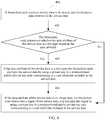
- FIG. 4 is a schematic flowchart illustrating a blockchain-based data processing method, according to an implementation of the present disclosure. The method can be described as follows.
- Step 401 A blockchain node receives service data to be stored, and determines a data attribute of the service data.
- the service data to be stored can be medical data or service data of another service, which is not limited here.
- Step 402 The blockchain node performs step 403 if the blockchain node determines that the data attribute of the service data is a text type based on the data attribute; or the blockchain node performs step 404 if the blockchain node determines that the data attribute of the service data is an image type.
- Step 403 If the data attribute of the service data is a text type, the blockchain node encrypts the service data by using a private key in a predetermined public-private key pair corresponding to a user identifier included in the service data.
- the blockchain node After broadcasting an encryption processing result to another blockchain node in a blockchain network, the blockchain node initiates consensus processing on the service data, and stores the service data to a blockchain if the consensus succeeds.
- the blockchain node determines a check value of a first block including the user identifier based on the user identifier included in the service data.
- the blockchain node stores the check value and the service data in a second block, and stores the second block in a blockchain where the first block is located.
- Step 404 If the data attribute of the service data is an image type, the blockchain node determines a digest of the service data, and encrypts the digest by using a private key in a predetermined public-private key pair corresponding to a user identifier included in the service data.
- the blockchain node obtains the digest of the service data through calculation by using a specified algorithm.
- the blockchain node After broadcasting the digest to another blockchain node in the blockchain network, the blockchain node initiates consensus processing on the service data, and stores the digest of the service data to a blockchain if the consensus succeeds.
- the service data is modified, it means that a digest of modified service data is different from the digest of the original service data.
- the digest is stored in the blockchain network, so as to ensure that the service data is not tampered with.
- the blockchain node establishes a mapping relationship between the digest and a data identifier of the service data, and stores the service data in a service database based on the mapping relationship.
- the method further includes: receiving, by the blockchain node, a service data query request, where the service data query request includes a digital signature of a user who initiates a query and a queried user identifier; authenticating, by the blockchain node, the user who initiates the query based on the digital signature; and sending, by the blockchain node, service data corresponding to the queried user identifier to the user who initiates the query when the authentication succeeds.
- the sending, by the blockchain node, service data corresponding to the queried user identifier to the user who initiates the query includes: determining, by the blockchain node, a service data access permission of the user who initiates the query; and selecting, by the blockchain node, service data satisfying the access permission from the service data corresponding to the queried user identifier, and sending the selected service data to the user who initiates the query.
- the sending, by the blockchain node, service data corresponding to the queried user identifier to the user who initiates the query includes: if a data attribute of the queried service data included in the service data query request is an image type, determining, by the blockchain node, a digest of the queried service data, and sending the digest to the service database; and receiving, by the blockchain node, service data that corresponds to the digest and that is returned by the service database, verifying the received service data based on the digest, and sending the received service data to the user who initiates the query when the verification succeeds.
- FIG. 5 is a schematic structural diagram illustrating a blockchain-based data processing device, according to an implementation of the present disclosure.
- the data processing device includes a receiving unit 501 and a processing unit 502.
- the receiving unit 501 is configured to receive service data to be stored, and determine a data attribute of the service data.
- the processing unit 502 is configured to: if the data attribute of the service data is a text type, encrypt the service data by using a private key in a predetermined public-private key pair corresponding to a user identifier included in the service data; or if the data attribute of the service data is an image type, determine a digest of the service data, and encrypt the digest by using a private key in a predetermined public-private key pair corresponding to a user identifier included in the service data.
- the data processing device further includes a storage unit 503.
- the storage unit 503 is configured to: if the data attribute of the service data is a text type, determine a check value of a first block including the user identifier based on the user identifier included in the service data; and store the check value and the service data in a second block, and store the second block in a blockchain where the first block is located.
- the data processing device further includes an establishment unit 504.
- the establishment unit 504 is configured to: if the data attribute of the service data is an image type, establish a mapping relationship between the digest and a data identifier of the service data, and store the service data in a service database based on the mapping relationship.
- the data processing device further includes a verification unit 505 and a sending unit 506.
- the receiving unit 501 is configured to receive a service data query request, where the service data query request includes a digital signature of a user who initiates a query and a queried user identifier.
- the verification unit 505 is configured to authenticate the user who initiates the query based on the digital signature.
- the sending unit 506 is configured to send service data corresponding to the queried user identifier to the user who initiates the query when the authentication succeeds.
- that the sending unit 506 sends the service data corresponding to the queried user identifier to the user who initiates the query includes: determining a service data access permission of the user who initiates the query; and selecting service data satisfying the access permission from the service data corresponding to the queried user identifier, and sending the selected service data to the user who initiates the query.
- that the sending unit 506 sends the service data corresponding to the queried user identifier to the user who initiates the query includes: if a data attribute of the queried service data included in the service data query request is an image type, determining a digest of the queried service data, and sending the digest to the service database; and receiving service data that corresponds to the digest and that is returned by the service database, verifying the received service data based on the digest, and sending the received service data to the user who initiates the query when the verification succeeds.
- the data processing device provided in this implementation of the present disclosure can be implemented by using software or hardware, which is not specifically limited here. Due to features such as decentralization, transparency, tamper resistance, and trustworthiness of the blockchain technology, the data processing device uses different processing methods based on the data attribute of the service data to store the service data in a blockchain network, which can not only ensure authenticity of the service data, but also ensure that the service data is not tampered with, thereby maintaining integrity of the entire service data. In addition, the service data is effectively shared in the blockchain network.
- a technical improvement is a hardware improvement (for example, an improvement to a circuit structure such as a diode, a transistor, or a switch) or a software improvement (an improvement to a method procedure) can be clearly distinguished.
- a hardware improvement for example, an improvement to a circuit structure such as a diode, a transistor, or a switch
- a software improvement an improvement to a method procedure
- a designer usually programs an improved method procedure into a hardware circuit, to obtain a corresponding hardware circuit structure. Therefore, a method procedure can be improved by using a hardware entity module.
- a programmable logic device for example, a field programmable gate array (FPGA)
- FPGA field programmable gate array
- the designer performs programming to "integrate" a digital system to a PLD without requesting a chip manufacturer to design and produce an application-specific integrated circuit chip.
- programming is mostly implemented by using "logic compiler” software.
- the logic compiler software is similar to a software compiler used to develop and write a program. Original code needs to be written in a particular programming language for compilation. The language is referred to as a hardware description language (HDL).
- HDL hardware description language
- HDLs such as Advanced Boolean Expression Language (ABEL), Altera Hardware Description Language (AHDL), Confluence, Georgia University Programming Language (CUPL), HDCal, Java Hardware Description Language (JHDL), Lava, Lola, MyHDL, PALASM, and Ruby Hardware Description Language (RHDL).
- ABEL Advanced Boolean Expression Language
- AHDL Altera Hardware Description Language
- CUPL Cornell University Programming Language
- HDCal Java Hardware Description Language
- JHDL Java Hardware Description Language
- Lava Lola
- MyHDL MyHDL
- PALASM Ruby Hardware Description Language
- RHDL Ruby Hardware Description Language
- VHDL very-high-speed integrated circuit hardware description language
- Verilog Verilog
- a controller can be implemented by using any appropriate method.
- the controller can be a microprocessor or a processor, or a computer-readable medium that stores computer readable program code (such as software or firmware) that can be executed by the microprocessor or the processor, a logic gate, a switch, an application-specific integrated circuit (ASIC), a programmable logic controller, or a built-in microprocessor.
- Examples of the controller include but are not limited to the following microprocessors: ARC 625D, Atmel AT91SAM, Microchip PIC18F26K20, and Silicone Labs C8051F320.
- the memory controller can also be implemented as a part of the control logic of the memory.
- controller in addition to implementing the controller by using the computer readable program code, logic programming can be performed on method steps to allow the controller to implement the same function in forms of the logic gate, the switch, the application-specific integrated circuit, the programmable logic controller, and the built-in microcontroller. Therefore, the controller can be considered as a hardware component, and an apparatus configured to implement various functions in the controller can also be considered as a structure in the hardware component; or the apparatus configured to implement various functions can even be considered as both a software module implementing the method and a structure in the hardware component.
- the system, apparatus, module, or unit illustrated in the previous implementations can be implemented by using a computer chip or an entity or can be implemented by using a product having a certain function.
- a typical implementation device is a computer.
- the computer can be, for example, a personal computer, a laptop computer, a cellular phone, a camera phone, a smartphone, a personal digital assistant, a media player, a navigation device, an email device, a game console, a tablet computer, a wearable device, or any combination of these devices.
- an implementation of the present disclosure can be provided as a method, a system, or a computer program product. Therefore, the present disclosure can use a form of hardware only implementations, software only implementations, or implementations with a combination of software and hardware. Moreover, the present disclosure can use a form of a computer program product that is implemented on one or more computer-usable storage media (including but not limited to a disk memory, a CD-ROM, an optical memory, etc.) that include computer-usable program code.
- computer-usable storage media including but not limited to a disk memory, a CD-ROM, an optical memory, etc.
- These computer program instructions can be provided for a general-purpose computer, a dedicated computer, an embedded processor, or a processor of another programmable data processing device to generate a machine, so that the instructions executed by the computer or the processor of the another programmable data processing device generate an apparatus for implementing a specific function in one or more processes in the flowcharts and/or in one or more blocks in the block diagrams.
- These computer program instructions can be stored in a computer readable memory that can instruct the computer or the another programmable data processing device to work in a specific way, so that the instructions stored in the computer readable memory generate an artifact that includes an instruction apparatus.
- the instruction apparatus implements a specific function in one or more processes in the flowcharts and/or in one or more blocks in the block diagrams.
- a computing includes one or more processors (CPU), one or more input/output interfaces, one or more network interfaces, and one or more memories.
- the memory can include a non-persistent memory, a random access memory (RAM), a non-volatile memory, and/or another form that are in a computer readable medium, for example, a read-only memory (ROM) or a flash memory (flash RAM).
- ROM read-only memory
- flash RAM flash memory
- the computer readable medium includes persistent, non-persistent, movable, and unmovable media that can store information by using any method or technology.
- the information can be a computer readable instruction, a data structure, a program module, or other data.
- Examples of a computer storage medium include but are not limited to a parameter random access memory (PRAM), a static random access memory (SRAM), a dynamic random access memory (DRAM), another type of random access memory (RAM), a read-only memory (ROM), an electrically erasable programmable read-only memory (EEPROM), a flash memory or another memory technology, a compact disc read-only memory (CD-ROM), a digital versatile disc (DVD) or another optical storage, a cassette magnetic tape, a magnetic tape/magnetic disk storage or another magnetic storage device, or any other non-transmission medium.
- the computer storage medium can be used to store information accessible by the computing. Based on the definition in the present specification, the computer readable medium does not include transitory computer readable media (transitory
- the present disclosure can be described in the general context of computer executable instructions executed by a computer, for example, a program module.
- the program module includes a routine, a program, an object, a component, a data structure, etc. executing a specific task or implementing a specific abstract data type.
- the present disclosure can also be practiced in distributed computing environments. In the distributed computing environments, tasks are performed by remote processing devices connected through a communications network. In a distributed computing environment, the program module can be located in both local and remote computer storage media including storage devices.
Landscapes
- Engineering & Computer Science (AREA)
- Computer Security & Cryptography (AREA)
- Computer Networks & Wireless Communication (AREA)
- Signal Processing (AREA)
- Computing Systems (AREA)
- Computer Hardware Design (AREA)
- General Engineering & Computer Science (AREA)
- Health & Medical Sciences (AREA)
- General Health & Medical Sciences (AREA)
- Medical Informatics (AREA)
- Epidemiology (AREA)
- Bioethics (AREA)
- Public Health (AREA)
- Theoretical Computer Science (AREA)
- Primary Health Care (AREA)
- Databases & Information Systems (AREA)
- Software Systems (AREA)
- Physics & Mathematics (AREA)
- General Physics & Mathematics (AREA)
- Information Retrieval, Db Structures And Fs Structures Therefor (AREA)
- Storage Device Security (AREA)
- Medical Treatment And Welfare Office Work (AREA)
- Management, Administration, Business Operations System, And Electronic Commerce (AREA)
Abstract
Description
- The present disclosure relates to the fields of Internet information processing, medical and health, blockchain technologies, and in particular, to a blockchain-based data processing method and device.
- With development of the medical technology and the big data technology, medical data of patients plays an increasingly important role in human health development. Therefore, how to manage the medical data of the patients and properly use the medical data of the patients becomes a key problem that needs to be solved.
- In actual life, different medical institutions have their own medical data management systems. The medical data of the patients is managed by using the medical data management systems. It has been found through study that in practice, if a patient is treated in different medical institutions, medical data is generated in different medical institutions. Usually, the medical data is not shared between different medical institutions. To be specific, assume that patient A has visited a doctor in medical institution A (medical data is generated), and then the patient visits a doctor in medical institution B, the doctor in medical institution B cannot view the medical data generated for the patient in medical institution A, and can obtain the medical data only through strict examination and approval procedures, which is actually detrimental to the patient.
- Therefore, how to share medical data between different medical institutions becomes an important problem.
- In view of this, implementations of the present disclosure provide a blockchain-based data processing method and device, to solve a problem of how to share medical data.
- The following technical solutions are adopted in the implementations of the present disclosure.
- An implementation of the present disclosure provides a blockchain-based data processing method, including: receiving, by a blockchain node, service data to be stored, and determining a data attribute of the service data; and if the data attribute of the service data is a text type, encrypting, by the blockchain node, the service data by using a private key in a predetermined public-private key pair corresponding to a user identifier included in the service data; or if the data attribute of the service data is an image type, determining, by the blockchain node, a digest of the service data, and encrypting the digest by using a private key in a predetermined public-private key pair corresponding to a user identifier included in the service data.
- An implementation of the present disclosure provides a blockchain-based data processing method, including: receiving, by a blockchain node, service data to be stored, and determining a data attribute of the service data; and processing, by the blockchain node, the service data based on a configured processing rule corresponding to the data attribute, and sending a processing result to another blockchain node in a blockchain network.
- An implementation of the present disclosure further provides a blockchain-based data processing device, including: a receiving unit, configured to receive service data to be stored, and determine a data attribute of the service data; and a processing unit, configured to: if the data attribute of the service data is a text type, encrypt the service data by using a private key in a predetermined public-private key pair corresponding to a user identifier included in the service data; or if the data attribute of the service data is an image type, determine a digest of the service data, and encrypt the digest by using a private key in a predetermined public-private key pair corresponding to a user identifier included in the service data.
- An implementation of the present disclosure further provides a blockchain-based data processing device, including: a receiving unit, configured to receive service data to be stored, and determine a data attribute of the service data; and a processing unit, configured to process the service data based on a configured processing rule corresponding to the data attribute, and send a processing result to another blockchain node in a blockchain network.
- At least one of the previous technical solutions used in the implementations of the present disclosure can achieve the following beneficial effects:
- In the implementations of the present disclosure, when receiving the service data to be stored, the blockchain node determines the data attribute of the service data; and if the data attribute of the service data is a text type, the blockchain node encrypts the service data by using the private key in the predetermined public-private key pair corresponding to the user identifier included in the service data; or if the data attribute of the service data is an image type, the blockchain node determines the digest of the service data, and encrypts the digest by using the private key in the predetermined public-private key pair corresponding to the user identifier included in the service data. If the service data is the medical data, due to features such as decentralization, transparency, tamper resistance, and trustworthiness of the blockchain technology, different processing methods are used based on the data attribute of the medical data to store the medical data in the blockchain network, which can not only ensure authenticity of the medical data, but also ensure that the medical data is not tampered with, thereby maintaining integrity of the entire medical data. In addition, the medical data is effectively shared in the blockchain network.
- The accompanying drawings described here are intended to provide a further understanding of the present disclosure, and constitute a part of the present disclosure. The illustrative implementations of the present disclosure and descriptions thereof are intended to describe. The present disclosure, and do not constitute limitations on The present disclosure. In the accompanying drawings:
-
FIG. 1 is a schematic flowchart illustrating a blockchain-based data processing method, according to an implementation of the present disclosure; -
FIG. 2 is a schematic structural diagram illustrating a blockchain-based data processing device, according to an implementation of the present disclosure; -
FIG. 3 is a schematic structural diagram illustrating a blockchain-based medical data processing system, according to an implementation of the present disclosure; -
FIG. 4 is a schematic flowchart illustrating a blockchain-based data processing method, according to an implementation of the present disclosure; and -
FIG. 5 is a schematic structural diagram illustrating a blockchain-based data processing device, according to an implementation of the present disclosure. - To make the objectives, technical solutions, and advantages of the present disclosure clearer, the following clearly and comprehensively describes the technical solutions of the present disclosure with reference to specific implementations and accompanying drawings of the present disclosure. Apparently, the described implementations are merely some rather than all of the implementations of the present disclosure. All other implementations obtained by a person of ordinary skill in the art based on the implementations of the present disclosure without creative efforts shall fall within the protection scope of the present disclosure.
- The technical solutions provided in the implementations of the present disclosure are described in detail below with reference to the accompanying drawings.
-
FIG. 1 is a schematic flowchart illustrating a blockchain-based data processing method, according to an implementation of the present disclosure. The method can be described as follows. Service data described in this implementation of the present disclosure can be medical data. An example that the service data is the medical data is used below for detailed description. - In this implementation of the present disclosure, medical data management servers used in different medical institutions are separately used as blockchain nodes in a blockchain network, and a blockchain application used for medical data management is installed on each medical data management server. As such, medical data can be stored in the blockchain network based on the blockchain technology by using the blockchain application, to ensure that the medical data is authentic and is not tampered with, and that the medical data can be shared between different medical institutions.
- Step 101: A blockchain node receives medical data to be stored, and determines a data attribute of the medical data.
- In this implementation of the present disclosure, medical data is generated when a patient performs a medical activity in a medical institution. The medical data can be gathered in a medical information system of the medical institution, and therefore the medical data needs to be stored in the blockchain network in time. To be specific, the blockchain node can obtain the medical data to be stored from the medical information system in real time or periodically. The medical data can belong to one patient or a plurality of patients, which is not specifically limited here.
- In practice, the medical data can be of a text type. For example, if a medical staff learns of a patient's condition through language communication with the patient, the medical staff can record the learned patient's condition in a literal form based on a patient's condition record specification, which can be referred to as a patient's condition record file. The patient's condition record file belongs to the medical data of a text type. The medical data can be of an image type. For example, when a patient visits a doctor in a medical institution, some physical examinations need to be performed on the patient, and these examinations are usually performed by specific devices. Most of examination data generated by these devices are referred to as medical image data, and the medical image data belongs to the medical data of an image type, for example, computed tomography (CT).
- The blockchain node needs to further determine the data attribute of the medical data when receiving the medical data to be stored. The data attribute here includes but is not limited to a text type and an image type.
- The blockchain node can determine the data attribute of the medical data based on a data format of the obtained medical data to be stored. For example, if the data format of the medical data is ".txt", the blockchain node can determine that the data attribute of the medical data is a text type. If the data format of the medical data is ".jpg", the blockchain node can determine that the data attribute of the medical data is an image type.
- It is worthwhile to note that the medical data can be a digitized form of an electronic medical record of a patient. The electronic medical record is digitized information such as words, symbols, graphs, figures, data, and images that are generated by using a medical institution information system in a process that a medical staff performs a medical activity on the patient, and is a record form of a medical record of the patient. In addition to the electronic medical record of the patient, the medical data described in this implementation of the present disclosure includes identity information (for example, a height, a weight, an age, and a date of birth), body feature information (for example, a blood pressure, a blood type, and a heart rate), etc. of the patient.
- Step 102: The blockchain node processes the medical data based on a configured processing rule corresponding to the data attribute, and sends a processing result to another blockchain node in a blockchain network.
- Because the medical data of an image type occupies a relatively large capacity, data processing efficiency of the blockchain network is reduced if the medical data is transmitted in the blockchain network. Considering this case, in this implementation of the present disclosure, a processing rule matching medical data of different data attributes received by the blockchain node is configured, so as to improve efficiency of processing the medical data by the blockchain network.
- It is worthwhile to note that medical data of different data attributes corresponds to different processing rules. The medical data of a text type can be stored in each blockchain node in the blockchain network. A processing method used for the medical data of an image type that occupies a relatively large capacity is to store the original medical data of an image type in a medical information database of a medical institution, and store a digest of the medical data in the blockchain network to prevent the medical data from being tampered with, which does not affect processing efficiency of the blockchain network, and can also ensure that the medical data is not tampered with, thereby maintaining authenticity and integrity of the medical data.
- After determining the data attribute of the medical data, if the data attribute of the medical data is text type, the blockchain node encrypts the medical data by using a private key in a predetermined public-private key pair corresponding to a user identifier included in the medical data.
- It is worthwhile to note that the blockchain network can predetermine a public-private key pair for each patient, and different patients have different private keys. As such, the blockchain node encrypts the medical data of the patient by using the private key of the patient, to ensure security of the medical data of the patient.
- In this implementation of the present disclosure, because a capacity occupied by the medical data of a text type is not large, the medical data of a text type can be stored in the blockchain network.
- Preferably, after broadcasting an encryption processing result to another blockchain node in the blockchain network, the blockchain node initiates consensus processing on the medical data, and stores the medical data to a blockchain if the consensus succeeds.
- The blockchain node determines a check value of a first block including the user identifier based on the user identifier included in the medical data.
- The blockchain node stores the check value and the medical data in a second block, and stores the second block in a blockchain where the first block is located.
- It is worthwhile to note that the first block described in this implementation of the present disclosure can be understood as a block that recently stores the medical data of the patient. As such, based on the solution described in this implementation of the present disclosure, a medical record of the patient can be quickly traced, thereby helping a medical staff make an accurate diagnosis solution.
- After determining the data attribute of the medical data, if the data attribute of the medical data is an image type, the blockchain node determines a digest of the medical data, and encrypts the digest by using a private key in a predetermined public-private key pair corresponding to a user identifier included in the medical data.
- The medical data of an image type occupies a relatively large capacity. Therefore, when determining that the data attribute of the medical data is an image type, the blockchain node obtains the digest of the medical data through calculation by using a specified algorithm. Once the medical data is modified, it means that a digest of modified medical data is different from the digest of the original medical data. In this case, the blockchain node stores the digest in the blockchain network, which can also ensure that the medical data is not tampered with.
- In addition, the blockchain node establishes a mapping relationship between the digest and a data identifier of the medical data, and stores the medical data in a medical information database based on the mapping relationship.
- Therefore, it is convenient for another blockchain node to quickly find the medical data corresponding to the digest from a medical information database corresponding to the blockchain node when the another blockchain node needs the medical data.
- In another implementation of the present disclosure, the method further includes: receiving, by the blockchain node, a medical data query request, where the medical data query request includes a digital signature of a user who initiates a query and a queried user identifier; authenticating, by the blockchain node, the user who initiates the query based on the digital signature; and sending, by the blockchain node, medical data corresponding to the queried user identifier to the user who initiates the query when the authentication succeeds.
- Because the medical data relates to personal privacy of the patient, when a user queries the medical data of the patient, the user needs to be authenticated. The authentication here can include but is not limited to two aspects: whether the user is the patient and whether the user is a doctor of the patient.
- The blockchain network can preconfigure public-private key pairs for medical staffs (for example, doctors and nurses) in different medical institutions. When a medical staff initiates a medical data query request, information about the medical staff can be encrypted by using a private key to obtain a digital signature of the medical staff. As such, when receiving the medical data query request, the blockchain node can authenticate the medical staff based on the data signature, to ensure security of the medical data.
- The sending, by the blockchain node, medical data corresponding to the queried user identifier to the user who initiates the query includes: determining, by the blockchain node, a medical data access permission of the user who initiates the query; and selecting, by the blockchain node, medical data satisfying the access permission from the medical data corresponding to the queried user identifier, and sending the selected medical data to the user who initiates the query.
- It is worthwhile to note that the blockchain network can set an access permission for the medical data. To be specific, even if the authentication succeeds, different query results can be obtained because users who initiate queries have different access permissions, which can effectively protect privacy of the patient.
- The access permission here can be set based on different levels of the medical staffs, or can be set based on different query purposes, which is not specifically limited here.
- Specifically, the sending, by the blockchain node, medical data corresponding to the queried user identifier to the user who initiates the query includes: if a data attribute of the queried medical data included in the medical data query request is an image type, determining, by the blockchain node, a digest of the queried medical data, and sending the digest to the medical information database; and receiving, by the blockchain node, medical data that corresponds to the digest and that is returned by the medical information database, verifying the received medical data based on the digest, and sending the received medical data to the user who initiates the query when the verification succeeds.
- Through verification of the medical data, whether the medical data stored in the medical information database is tampered with can be discovered in time, and authenticity of a returned query result can also be ensured.
- In the technical solution provided in this implementation of the present disclosure, after receiving the medical data to be stored, the blockchain node determines the data attribute of the medical data, processes the medical data based on the configured processing rule corresponding to the data attribute, and sends the processing result to another blockchain node in the blockchain network. In terms of medical data storage, due to features such as decentralization, transparency, tamper resistance, and trustworthiness of the blockchain technology, the medical data is processed by using different processing rules based on the data attribute of the medical data, to store the medical data in the blockchain network, which can not only ensure authenticity of the medical data, but also ensure that the medical data is not tampered with, thereby maintaining integrity of the entire medical data. In addition, the medical data is effectively shared in the blockchain network.
-
FIG. 2 is a schematic structural diagram illustrating a blockchain-based data processing device, according to an implementation of the present disclosure. The data processing device includes a receivingunit 201 and aprocessing unit 202. - The receiving
unit 201 is configured to receive service data to be stored, and determine a data attribute of the service data. - The
processing unit 202 is configured to process the service data based on a configured processing rule corresponding to the data attribute, and send a processing result to another blockchain node in a blockchain network. - In another implementation of the present disclosure, the service data is medical data.
- In another implementation of the present disclosure, that the
processing unit 202 processes the service data based on the configured processing rule corresponding to the data attribute includes: if the data attribute of the medical data is a text type, encrypting the medical data by using a private key in a predetermined public-private key pair corresponding to a user identifier included in the medical data. - In another implementation of the present disclosure, the
processing unit 202 determines a check value of a first block including the user identifier based on the user identifier included in the medical data. - The
processing unit 202 stores the check value and the medical data in a second block, and stores the second block in a blockchain where the first block is located. - In another implementation of the present disclosure, that the
processing unit 202 processes the service data based on the configured processing rule corresponding to the data attribute includes: if the data attribute of the medical data is an image type, determining a digest of the medical data, and encrypting the digest by using a private key in a predetermined public-private key pair corresponding to a user identifier included in the medical data. - In another implementation of the present disclosure, the
processing unit 202 establishes a mapping relationship between the digest and a data identifier of the medical data, and stores the medical data in a medical information database based on the mapping relationship. - In another implementation of the present disclosure, the processing device further includes a
verification unit 203 and a sendingunit 204. - The receiving
unit 201 is configured to receive a medical data query request, where the medical data query request includes a digital signature of a user who initiates a query and a queried user identifier. - The
verification unit 203 is configured to authenticate the user who initiates the query based on the digital signature. - The sending
unit 204 is configured to send medical data corresponding to the queried user identifier to the user who initiates the query when the authentication succeeds. - In another implementation of the present disclosure, that the sending
unit 204 sends the medical data corresponding to the queried user identifier to the user who initiates the query includes: determining a medical data access permission of the user who initiates the query; and selecting medical data satisfying the access permission from the medical data corresponding to the queried user identifier, and sending the selected medical data to the user who initiates the query. - In another implementation of the present disclosure, that the sending
unit 204 sends the medical data corresponding to the queried user identifier to the user who initiates the query includes: if a data attribute of the queried medical data included in the medical data query request is an image type, determining a digest of the queried medical data, and sending the digest to the medical information database; and receiving medical data that corresponds to the digest and that is returned by the medical information database, verifying the received medical data based on the digest, and sending the received medical data to the user who initiates the query when the verification succeeds. - It is worthwhile to note that the processing device provided in this implementation of the present disclosure can be implemented by using software or hardware, which is not specifically limited here. After receiving the medical data to be stored, the processing device determines the data attribute of the medical data, processes the medical data based on the configured processing rule corresponding to the data attribute, and sends the processing result to another blockchain node in the blockchain network. In terms of medical data storage, due to features such as decentralization, transparency, tamper resistance, and trustworthiness of the blockchain technology, the medical data is processed by using different processing rules based on the data attribute of the medical data, to store the medical data in the blockchain network, which can not only ensure authenticity of the medical data, but also ensure that the medical data is not tampered with, thereby maintaining integrity of the entire medical data. In addition, the medical data is effectively shared in the blockchain network.
-
FIG. 3 is a schematic structural diagram illustrating a blockchain-based medical data processing system, according to an implementation of the present disclosure. The medical data processing system includes a medicaldata collection system 301, amedical information database 302, and ablockchain network 303. - The medical
data collection system 301 collects medical data of a patient through various medical device interfaces. The medical data here includes medical data in a text form (for example, patient's condition record data) and medical data in an image form (for example, medical image data). - A blockchain node in the
blockchain network 303 receives medical data to be stored from the medicaldata collection system 301, determines a data attribute of the medical data; and if the data attribute of the medical data is a text type, the blockchain node encrypts the medical data by using a private key in a predetermined public-private key pair corresponding to a user identifier included in the medical data; or if the data attribute of the medical data is an image type, the blockchain node determines a digest of the medical data, and encrypts the digest by using a private key in a predetermined public-private key pair corresponding to a user identifier included in the medical data. - For the medical data of a text type, the blockchain node in the
blockchain network 303 determines a check value of a first block including the user identifier based on the user identifier included in the medical data. - The blockchain node stores the check value and the medical data in a second block, and stores the second block in a blockchain where the first block is located.
- For the medical data of an image type, the blockchain node in the
blockchain network 303 establishes a mapping relationship between the digest and a data identifier of the medical data, and stores the medical data in themedical information database 302 based on the mapping relationship. - The blockchain node in the
blockchain network 303 receives a medical data query request, where the medical data query request includes a digital signature of a user who initiates a query and a queried user identifier. - The blockchain node authenticates the user who initiates the query based on the digital signature.
- The blockchain node sends medical data corresponding to the queried user identifier to the user who initiates the query when the authentication succeeds.
- That the blockchain node in the
blockchain network 303 sends the medical data corresponding to the queried user identifier to the user who initiates the query includes: determining a medical data access permission of the user who initiates the query; and selecting medical data satisfying the access permission from the medical data corresponding to the queried user identifier, and sending the selected medical data to the user who initiates the query. - That the blockchain node in the
blockchain network 303 sends the medical data corresponding to the queried user identifier to the user who initiates the query includes: if a data attribute of the queried medical data included in the medical data query request is an image type, determining, by the blockchain node, a digest of the queried medical data, and sending the digest to the medical information database; and receiving medical data that corresponds to the digest and that is returned by the medical information database, verifying the received medical data based on the digest, and sending the received medical data to the user who initiates the query when the verification succeeds. -
FIG. 4 is a schematic flowchart illustrating a blockchain-based data processing method, according to an implementation of the present disclosure. The method can be described as follows. - Step 401: A blockchain node receives service data to be stored, and determines a data attribute of the service data.
- In this implementation of the present disclosure, the service data to be stored can be medical data or service data of another service, which is not limited here.
- Step 402: The blockchain node performs
step 403 if the blockchain node determines that the data attribute of the service data is a text type based on the data attribute; or the blockchain node performsstep 404 if the blockchain node determines that the data attribute of the service data is an image type. - Step 403: If the data attribute of the service data is a text type, the blockchain node encrypts the service data by using a private key in a predetermined public-private key pair corresponding to a user identifier included in the service data.
- Preferably, after broadcasting an encryption processing result to another blockchain node in a blockchain network, the blockchain node initiates consensus processing on the service data, and stores the service data to a blockchain if the consensus succeeds.
- The blockchain node determines a check value of a first block including the user identifier based on the user identifier included in the service data.
- The blockchain node stores the check value and the service data in a second block, and stores the second block in a blockchain where the first block is located.
- Step 404: If the data attribute of the service data is an image type, the blockchain node determines a digest of the service data, and encrypts the digest by using a private key in a predetermined public-private key pair corresponding to a user identifier included in the service data.
- Because the service data of an image type occupies a relatively large capacity, when determining that the data attribute of the service data is an image type, the blockchain node obtains the digest of the service data through calculation by using a specified algorithm.
- After broadcasting the digest to another blockchain node in the blockchain network, the blockchain node initiates consensus processing on the service data, and stores the digest of the service data to a blockchain if the consensus succeeds.
- Once the service data is modified, it means that a digest of modified service data is different from the digest of the original service data. In this case, the digest is stored in the blockchain network, so as to ensure that the service data is not tampered with.
- In addition, the blockchain node establishes a mapping relationship between the digest and a data identifier of the service data, and stores the service data in a service database based on the mapping relationship.
- Therefore, it is convenient for another blockchain node to quickly find the service data corresponding to the digest from the service database corresponding to the blockchain node when the blockchain node needs the service data.
- Preferably, the method further includes: receiving, by the blockchain node, a service data query request, where the service data query request includes a digital signature of a user who initiates a query and a queried user identifier; authenticating, by the blockchain node, the user who initiates the query based on the digital signature; and sending, by the blockchain node, service data corresponding to the queried user identifier to the user who initiates the query when the authentication succeeds.
- Preferably, the sending, by the blockchain node, service data corresponding to the queried user identifier to the user who initiates the query includes: determining, by the blockchain node, a service data access permission of the user who initiates the query; and selecting, by the blockchain node, service data satisfying the access permission from the service data corresponding to the queried user identifier, and sending the selected service data to the user who initiates the query.
- Preferably, the sending, by the blockchain node, service data corresponding to the queried user identifier to the user who initiates the query includes: if a data attribute of the queried service data included in the service data query request is an image type, determining, by the blockchain node, a digest of the queried service data, and sending the digest to the service database; and receiving, by the blockchain node, service data that corresponds to the digest and that is returned by the service database, verifying the received service data based on the digest, and sending the received service data to the user who initiates the query when the verification succeeds.
- In the technical solution provided in this implementation of the present disclosure, due to features such as decentralization, transparency, tamper resistance, and trustworthiness of the blockchain technology, different processing methods are used based on the data attribute of the service data to store the service data in the blockchain network, which can not only ensure authenticity of the service data, but also ensure that the service data is not tampered with, thereby maintaining integrity of the entire service data. In addition, the service data is effectively shared in the blockchain network.
-
FIG. 5 is a schematic structural diagram illustrating a blockchain-based data processing device, according to an implementation of the present disclosure. The data processing device includes a receivingunit 501 and aprocessing unit 502. - The receiving
unit 501 is configured to receive service data to be stored, and determine a data attribute of the service data. - The
processing unit 502 is configured to: if the data attribute of the service data is a text type, encrypt the service data by using a private key in a predetermined public-private key pair corresponding to a user identifier included in the service data; or if the data attribute of the service data is an image type, determine a digest of the service data, and encrypt the digest by using a private key in a predetermined public-private key pair corresponding to a user identifier included in the service data. - In another implementation of the present disclosure, the data processing device further includes a
storage unit 503. - The
storage unit 503 is configured to: if the data attribute of the service data is a text type, determine a check value of a first block including the user identifier based on the user identifier included in the service data; and store the check value and the service data in a second block, and store the second block in a blockchain where the first block is located. - In another implementation of the present disclosure, the data processing device further includes an
establishment unit 504. - The
establishment unit 504 is configured to: if the data attribute of the service data is an image type, establish a mapping relationship between the digest and a data identifier of the service data, and store the service data in a service database based on the mapping relationship. - In another implementation of the present disclosure, the data processing device further includes a
verification unit 505 and a sendingunit 506. - The receiving
unit 501 is configured to receive a service data query request, where the service data query request includes a digital signature of a user who initiates a query and a queried user identifier. - The
verification unit 505 is configured to authenticate the user who initiates the query based on the digital signature. - The sending
unit 506 is configured to send service data corresponding to the queried user identifier to the user who initiates the query when the authentication succeeds. - In another implementation of the present disclosure, that the sending
unit 506 sends the service data corresponding to the queried user identifier to the user who initiates the query includes: determining a service data access permission of the user who initiates the query; and selecting service data satisfying the access permission from the service data corresponding to the queried user identifier, and sending the selected service data to the user who initiates the query. - In another implementation of the present disclosure, that the sending
unit 506 sends the service data corresponding to the queried user identifier to the user who initiates the query includes: if a data attribute of the queried service data included in the service data query request is an image type, determining a digest of the queried service data, and sending the digest to the service database; and receiving service data that corresponds to the digest and that is returned by the service database, verifying the received service data based on the digest, and sending the received service data to the user who initiates the query when the verification succeeds. - It is worthwhile to note that the data processing device provided in this implementation of the present disclosure can be implemented by using software or hardware, which is not specifically limited here. Due to features such as decentralization, transparency, tamper resistance, and trustworthiness of the blockchain technology, the data processing device uses different processing methods based on the data attribute of the service data to store the service data in a blockchain network, which can not only ensure authenticity of the service data, but also ensure that the service data is not tampered with, thereby maintaining integrity of the entire service data. In addition, the service data is effectively shared in the blockchain network.
- In the 1990s, whether a technical improvement is a hardware improvement (for example, an improvement to a circuit structure such as a diode, a transistor, or a switch) or a software improvement (an improvement to a method procedure) can be clearly distinguished. However, as technologies develop, current improvements to many method procedures can be considered as direct improvements to hardware circuit structures. A designer usually programs an improved method procedure into a hardware circuit, to obtain a corresponding hardware circuit structure. Therefore, a method procedure can be improved by using a hardware entity module. For example, a programmable logic device (PLD) (for example, a field programmable gate array (FPGA)) is such an integrated circuit, and a logical function of the PLD is determined by a user through device programming. The designer performs programming to "integrate" a digital system to a PLD without requesting a chip manufacturer to design and produce an application-specific integrated circuit chip. In addition, at present, instead of manually manufacturing an integrated circuit chip, such programming is mostly implemented by using "logic compiler" software. The logic compiler software is similar to a software compiler used to develop and write a program. Original code needs to be written in a particular programming language for compilation. The language is referred to as a hardware description language (HDL). There are many HDLs, such as Advanced Boolean Expression Language (ABEL), Altera Hardware Description Language (AHDL), Confluence, Cornell University Programming Language (CUPL), HDCal, Java Hardware Description Language (JHDL), Lava, Lola, MyHDL, PALASM, and Ruby Hardware Description Language (RHDL). The very-high-speed integrated circuit hardware description language (VHDL) and Verilog are most commonly used. A person skilled in the art should also understand that a hardware circuit that implements a logical method procedure can be readily obtained once the method procedure is logically programmed by using the several described hardware description languages and is programmed into an integrated circuit.
- A controller can be implemented by using any appropriate method. For example, the controller can be a microprocessor or a processor, or a computer-readable medium that stores computer readable program code (such as software or firmware) that can be executed by the microprocessor or the processor, a logic gate, a switch, an application-specific integrated circuit (ASIC), a programmable logic controller, or a built-in microprocessor. Examples of the controller include but are not limited to the following microprocessors: ARC 625D, Atmel AT91SAM, Microchip PIC18F26K20, and Silicone Labs C8051F320. The memory controller can also be implemented as a part of the control logic of the memory. A person skilled in the art also knows that in addition to implementing the controller by using the computer readable program code, logic programming can be performed on method steps to allow the controller to implement the same function in forms of the logic gate, the switch, the application-specific integrated circuit, the programmable logic controller, and the built-in microcontroller. Therefore, the controller can be considered as a hardware component, and an apparatus configured to implement various functions in the controller can also be considered as a structure in the hardware component; or the apparatus configured to implement various functions can even be considered as both a software module implementing the method and a structure in the hardware component.
- The system, apparatus, module, or unit illustrated in the previous implementations can be implemented by using a computer chip or an entity or can be implemented by using a product having a certain function. A typical implementation device is a computer. The computer can be, for example, a personal computer, a laptop computer, a cellular phone, a camera phone, a smartphone, a personal digital assistant, a media player, a navigation device, an email device, a game console, a tablet computer, a wearable device, or any combination of these devices.
- For ease of description, the above apparatus is described by dividing functions into various units. Certainly, when the present disclosure is implemented, a function of each unit can be implemented in one or more pieces of software and/or hardware.
- A person skilled in the art should understand that an implementation of the present disclosure can be provided as a method, a system, or a computer program product. Therefore, the present disclosure can use a form of hardware only implementations, software only implementations, or implementations with a combination of software and hardware. Moreover, the present disclosure can use a form of a computer program product that is implemented on one or more computer-usable storage media (including but not limited to a disk memory, a CD-ROM, an optical memory, etc.) that include computer-usable program code.
- The present disclosure is described with reference to the flowcharts and/or block diagrams of the method, the device (system), and the computer program product based on the implementations of the present disclosure. It is worthwhile to note that computer program instructions can be used to implement each process and/or each block in the flowcharts and/or the block diagrams and a combination of a process and/or a block in the flowcharts and/or the block diagrams. These computer program instructions can be provided for a general-purpose computer, a dedicated computer, an embedded processor, or a processor of another programmable data processing device to generate a machine, so that the instructions executed by the computer or the processor of the another programmable data processing device generate an apparatus for implementing a specific function in one or more processes in the flowcharts and/or in one or more blocks in the block diagrams.
- These computer program instructions can be stored in a computer readable memory that can instruct the computer or the another programmable data processing device to work in a specific way, so that the instructions stored in the computer readable memory generate an artifact that includes an instruction apparatus. The instruction apparatus implements a specific function in one or more processes in the flowcharts and/or in one or more blocks in the block diagrams.
- These computer program instructions can be loaded onto the computer or another programmable data processing device, so that a series of operations and steps are performed on the computer or the another programmable device, thereby generating computer-implemented processing. Therefore, the instructions executed on the computer or the another programmable device provide steps for implementing a specific function in one or more processes in the flowcharts and/or in one or more blocks in the block diagrams.
- In a typical configuration, a computing includes one or more processors (CPU), one or more input/output interfaces, one or more network interfaces, and one or more memories.
- The memory can include a non-persistent memory, a random access memory (RAM), a non-volatile memory, and/or another form that are in a computer readable medium, for example, a read-only memory (ROM) or a flash memory (flash RAM). The memory is an example of the computer readable medium.
- The computer readable medium includes persistent, non-persistent, movable, and unmovable media that can store information by using any method or technology. The information can be a computer readable instruction, a data structure, a program module, or other data. Examples of a computer storage medium include but are not limited to a parameter random access memory (PRAM), a static random access memory (SRAM), a dynamic random access memory (DRAM), another type of random access memory (RAM), a read-only memory (ROM), an electrically erasable programmable read-only memory (EEPROM), a flash memory or another memory technology, a compact disc read-only memory (CD-ROM), a digital versatile disc (DVD) or another optical storage, a cassette magnetic tape, a magnetic tape/magnetic disk storage or another magnetic storage device, or any other non-transmission medium. The computer storage medium can be used to store information accessible by the computing. Based on the definition in the present specification, the computer readable medium does not include transitory computer readable media (transitory media) such as a modulated data signal and carrier.
- It is worthwhile to further note that the terms "include", "comprise", or their any other variants are intended to cover a non-exclusive inclusion, so that a process, method, product or device that includes a list of elements not only includes those elements but also includes other elements not expressly listed, or further includes elements inherent to such process, method, product or device. Without more constraints, an element preceded by "includes a ..." does not preclude the existence of additional identical elements in the process, method, product or device that includes the element.
- The present disclosure can be described in the general context of computer executable instructions executed by a computer, for example, a program module. Generally, the program module includes a routine, a program, an object, a component, a data structure, etc. executing a specific task or implementing a specific abstract data type. The present disclosure can also be practiced in distributed computing environments. In the distributed computing environments, tasks are performed by remote processing devices connected through a communications network. In a distributed computing environment, the program module can be located in both local and remote computer storage media including storage devices.
- The implementations in the present specification are described in a progressive way. For same or similar parts of the implementations, references can be made to the implementations. Each implementation focuses on a difference from other implementations. Particularly, a system implementation is basically similar to a method implementation, and therefore is described briefly. For related parts, reference can be made to related descriptions in the method implementation.
- The previous implementations are implementations of the present disclosure, and are not intended to limit the present disclosure. A person skilled in the art can make various modifications and changes to the present disclosure. Any modification, equivalent replacement, or improvement made without departing from the spirit and principle of the present disclosure shall fall within the scope of the claims in the present disclosure.
Claims (20)
- A blockchain-based data processing method, comprising:receiving, by a blockchain node, service data to be stored, and determining a data attribute of the service data; andin response to determining that the data attribute of the service data is a text type, encrypting, by the blockchain node, the service data by using a private key in a predetermined public-private key pair corresponding to a user identifier comprised in the service data; orin response to determining that the data attribute of the service data is an image type, determining, by the blockchain node, a digest of the service data, and encrypting the digest by using a private key in a predetermined public-private key pair corresponding to a user identifier comprised in the service data.
- The data processing method according to claim 1, wherein the method further comprises:in response to determining that the data attribute of the service data is a text type, determining, by the blockchain node, a check value of a first block comprising the user identifier based on the user identifier comprised in the service data;storing, by the blockchain node, the check value and the service data in a second block; andstoring the second block in a blockchain where the first block is located.
- The data processing method according to claim 1, wherein the method further comprises:in response to determining that the data attribute of the service data is an image type, establishing, by the blockchain node, a mapping relationship between the digest and a data identifier of the service data; andstoring the service data in a service database based on the mapping relationship.
- The data processing method according to any one of claims 1 to 3, wherein the method further comprises:receiving, by the blockchain node, a service data query request, wherein the service data query request comprises a digital signature of a user who initiates a query and a queried user identifier;authenticating, by the blockchain node, the user who initiates the query based on the digital signature; andsending, by the blockchain node, service data corresponding to the queried user identifier to the user who initiates the query when the authentication succeeds.
- The data processing method according to claim 4, wherein the sending, by the blockchain node, service data corresponding to the queried user identifier to the user who initiates the query comprises:determining, by the blockchain node, a service data access permission of the user who initiates the query;selecting, by the blockchain node, service data satisfying the access permission from the service data corresponding to the queried user identifier; andsending the selected service data to the user who initiates the query.
- The data processing method according to claim 4, wherein the sending, by the blockchain node, service data corresponding to the queried user identifier to the user who initiates the query comprises:in response to determining that a data attribute of the queried service data comprised in the service data query request is an image type, determining, by the blockchain node, a digest of the queried service data;sending the digest to the service database; andreceiving, by the blockchain node, service data that corresponds to the digest and that is returned by the service database;verifying the received service data based on the digest; andsending the received service data to the user who initiates the query when the verification succeeds.
- A blockchain-based data processing method, comprising:receiving, by a blockchain node, service data to be stored;determining a data attribute of the service data;processing, by the blockchain node, the service data based on a configured processing rule corresponding to the data attribute; andsending a processing result to another blockchain node in a blockchain network.
- The data processing method according to claim 7, wherein the service data is medical data.
- The data processing method according to claim 8, wherein the processing, by the blockchain node, the service data based on a configured processing rule corresponding to the data attribute comprises:
in response to determining that the data attribute of the medical data is a text type, encrypting the medical data by using a private key in a predetermined public-private key pair corresponding to a user identifier comprised in the medical data. - The data processing method according to claim 8, wherein the processing, by the blockchain node, the service data based on a configured processing rule corresponding to the data attribute comprises: in response to determining that the data attribute of the medical data is an image type, determining a digest of the medical data; and
encrypting the digest by using a private key in a predetermined public-private key pair corresponding to a user identifier comprised in the medical data. - A blockchain-based data processing device, comprising:a receiving unit, configured to receive service data to be stored, and determine a data attribute of the service data; anda processing unit, configured to: in response to determining that the data attribute of the service data is a text type, encrypt the service data by using a private key in a predetermined public-private key pair corresponding to a user identifier comprised in the service data; orin response to determining that the data attribute of the service data is an image type, determine a digest of the service data; andencrypt the digest by using a private key in a predetermined public-private key pair corresponding to a user identifier comprised in the service data.
- The data processing device according to claim 11, wherein the data processing device further comprises a storage unit,
and wherein the storage unit is configured to:in response to determining that the data attribute of the service data is a text type, determine a check value of a first block comprising the user identifier based on the user identifier comprised in the service data;store the check value and the service data in a second block; andstore the second block in a blockchain where the first block is located. - The data processing device according to claim 11, wherein the data processing device further comprises an establishment unit, wherein
the establishment unit is configured to: in response to determining that the data attribute of the service data is an image type, establish a mapping relationship between the digest and a data identifier of the service data, and store the service data in a service database based on the mapping relationship. - The data processing device according to any one of claims 11 to 13, wherein the data processing device further comprises a verification unit and a sending unit, wherein
the receiving unit is configured to receive a service data query request, wherein the service data query request comprises a digital signature of a user who initiates a query and a queried user identifier;
wherein the verification unit is configured to authenticate the user who initiates the query based on the digital signature; and
wherein the sending unit is configured to send service data corresponding to the queried user identifier to the user who initiates the query when the authentication succeeds. - The data processing device according to claim 14, wherein that the sending unit sends the service data corresponding to the queried user identifier to the user who initiates the query comprises:determining a service data access permission of the user who initiates the query;selecting service data satisfying the access permission from the service data corresponding to the queried user identifier; andsending the selected service data to the user who initiates the query.
- The data processing device according to claim 14, wherein that the sending unit sends the service data corresponding to the queried user identifier to the user who initiates the query comprises:
in response to determining that a data attribute of the queried service data comprised in the service data query request is an image type, determining a digest of the queried service data;
sending the digest to the service database;
receiving service data that corresponds to the digest and that is returned by the service database, verifying the received service data based on the digest; and
sending the received service data to the user who initiates the query when the verification succeeds. - A blockchain-based data processing device, comprising:a receiving unit, configured to receive service data to be stored, and determine a data attribute of the service data; anda processing unit, configured to process the service data based on a configured processing rule corresponding to the data attribute, and send a processing result to another blockchain node in a blockchain network.
- The data processing device according to claim 17, wherein the service data is medical data.
- The data processing device according to claim 18, wherein that the processing unit processes the service data based on the configured processing rule corresponding to the data attribute comprises:
in response to determining that the data attribute of the medical data is a text type, encrypting the medical data by using a private key in a predetermined public-private key pair corresponding to a user identifier comprised in the medical data. - The data processing device according to claim 18, wherein that the processing unit processes the service data based on the configured processing rule corresponding to the data attribute comprises:in response to determining that the data attribute of the medical data is an image type, determining a digest of the medical data; andencrypting the digest by using a private key in a predetermined public-private key pair corresponding to a user identifier comprised in the medical data.
Priority Applications (1)
| Application Number | Priority Date | Filing Date | Title |
|---|---|---|---|
| PL18805030T PL3531656T3 (en) | 2017-05-24 | 2018-05-22 | Block chain-based data processing method and device |
Applications Claiming Priority (2)
| Application Number | Priority Date | Filing Date | Title |
|---|---|---|---|
| CN201710372331.1A CN107426170B (en) | 2017-05-24 | 2017-05-24 | A kind of data processing method and equipment based on block chain |
| PCT/CN2018/087767 WO2018214858A1 (en) | 2017-05-24 | 2018-05-22 | Block chain-based data processing method and device |
Publications (3)
| Publication Number | Publication Date |
|---|---|
| EP3531656A1 true EP3531656A1 (en) | 2019-08-28 |
| EP3531656A4 EP3531656A4 (en) | 2019-12-25 |
| EP3531656B1 EP3531656B1 (en) | 2020-09-30 |
Family
ID=60428322
Family Applications (1)
| Application Number | Title | Priority Date | Filing Date |
|---|---|---|---|
| EP18805030.6A Active EP3531656B1 (en) | 2017-05-24 | 2018-05-22 | Block chain-based data processing method and device |
Country Status (11)
| Country | Link |
|---|---|
| US (1) | US11315666B2 (en) |
| EP (1) | EP3531656B1 (en) |
| JP (1) | JP6758501B2 (en) |
| KR (1) | KR102112460B1 (en) |
| CN (1) | CN107426170B (en) |
| ES (1) | ES2841828T3 (en) |
| MY (1) | MY188829A (en) |
| PH (1) | PH12019501154A1 (en) |
| PL (1) | PL3531656T3 (en) |
| TW (1) | TWI697806B (en) |
| WO (1) | WO2018214858A1 (en) |
Cited By (1)
| Publication number | Priority date | Publication date | Assignee | Title |
|---|---|---|---|---|
| EP3816923A4 (en) * | 2018-10-31 | 2021-08-25 | Advanced New Technologies Co., Ltd. | PRIVATE BLOCKCHAIN-BASED TRANSACTIONS AND ASSOCIATED PROCESS AND DEVICE OF USE |
Families Citing this family (90)
| Publication number | Priority date | Publication date | Assignee | Title |
|---|---|---|---|---|
| CN107426170B (en) | 2017-05-24 | 2019-08-09 | 阿里巴巴集团控股有限公司 | A kind of data processing method and equipment based on block chain |
| CN107562775B (en) * | 2017-07-14 | 2020-04-24 | 创新先进技术有限公司 | Data processing method and device based on block chain |
| US10755819B2 (en) * | 2017-09-29 | 2020-08-25 | International Business Machines Corporation | Multi agent consensus resolution and re-planning |
| CN109962777A (en) * | 2017-12-26 | 2019-07-02 | 航天信息股份有限公司 | The key in block catenary system is permitted to generate, obtain the method and apparatus of key |
| CN108197505B (en) * | 2017-12-29 | 2020-07-17 | 泰康保险集团股份有限公司 | Block chain service data processing method and device and electronic equipment |
| CN108347483B (en) * | 2018-02-06 | 2021-04-09 | 北京奇虎科技有限公司 | Decentralized computing system based on two-layer network |
| CN108282539A (en) * | 2018-02-06 | 2018-07-13 | 北京奇虎科技有限公司 | Decentralization storage system based on double-layer network |
| US20190279172A1 (en) * | 2018-03-06 | 2019-09-12 | Dash Core Group, Inc. | Methods and Systems for Object Validated Blockchain Accounts |
| CN108345685A (en) * | 2018-03-07 | 2018-07-31 | 物数(上海)信息科技有限公司 | More granularity data processing methods, system, equipment and storage medium under block chain |
| CN108256865A (en) * | 2018-03-14 | 2018-07-06 | 北京智帮帮科技有限公司 | A kind of supervision record system based on block chain technology |
| CN108777698A (en) * | 2018-04-13 | 2018-11-09 | 深圳市元征科技股份有限公司 | Webpage storage method, system and block chain node device |
| CN108900464B (en) * | 2018-04-26 | 2021-07-23 | 平安科技(深圳)有限公司 | Electronic device, block chain-based data processing method, and computer storage medium |
| CN108665946B (en) * | 2018-05-08 | 2023-01-17 | 创新先进技术有限公司 | Method and device for accessing business data |
| CN108737107A (en) * | 2018-05-09 | 2018-11-02 | 合肥达朴汇联科技有限公司 | A kind of computer equipment including block chain node |
| CN108769038B (en) * | 2018-06-04 | 2020-07-28 | 立旃(上海)科技有限公司 | Data processing method and device based on block chain |
| US20200020424A1 (en) * | 2018-07-16 | 2020-01-16 | Che-Min Lin | Blockchain electronic medical record system |
| CN109067719B (en) * | 2018-07-23 | 2020-12-22 | 黄文佳 | Method for improving data processing efficiency in block chain application |
| CN109145053B (en) * | 2018-08-01 | 2021-03-23 | 创新先进技术有限公司 | Data processing method and device, client and server |
| CN109063138B (en) * | 2018-08-03 | 2021-07-30 | 上海点融信息科技有限责任公司 | Method, apparatus and storage medium for searching data in a blockchain-as-a-service platform |
| CN109086413A (en) * | 2018-08-03 | 2018-12-25 | 上海点融信息科技有限责任公司 | For searching for the method, equipment and readable storage medium storing program for executing of block chain data |
| CN109101835A (en) * | 2018-08-08 | 2018-12-28 | 苏州酷外文化传媒有限公司 | The information security management method and device of blind date dating site based on block chain |
| CN108806779A (en) * | 2018-08-09 | 2018-11-13 | 南通大学 | Hybrid digital fundus image recording based on block chain and share system |
| CN110830256A (en) * | 2018-08-14 | 2020-02-21 | 珠海金山办公软件有限公司 | File signature method and device, electronic equipment and readable storage medium |
| CN110826034B (en) * | 2018-08-14 | 2022-09-02 | 珠海金山办公软件有限公司 | File signature method and device, electronic equipment and readable storage medium |
| CN110019422A (en) * | 2018-08-16 | 2019-07-16 | 上海点融信息科技有限责任公司 | Method, apparatus and storage medium based on block chain processing occupational information |
| CN109241756B (en) * | 2018-08-20 | 2020-01-31 | 深圳市腾讯网络信息技术有限公司 | Data processing method, system, server and medium based on block chain |
| CN109448826A (en) * | 2018-08-24 | 2019-03-08 | 湘南学院 | A kind of clinical care system and data processing method based on block chain |
| CN109741162A (en) * | 2018-09-03 | 2019-05-10 | 上海奥若拉信息科技集团有限公司 | The storage of personal collage-credit data, processing, sharing method and system based on block chain |
| CN109255249B (en) * | 2018-09-14 | 2021-02-02 | 腾讯科技(武汉)有限公司 | Image generation method, image generation apparatus, image display method, image display apparatus, and storage medium |
| CN109347917A (en) * | 2018-09-14 | 2019-02-15 | 北京沃杰知识产权有限公司 | Block chain data common recognition processing method, system, storage medium and electronic equipment |
| CN109671205B (en) * | 2018-09-25 | 2022-04-15 | 深圳壹账通智能科技有限公司 | Blockchain-based voting method, device, equipment and computer storage medium |
| CN109583215B (en) * | 2018-09-28 | 2022-11-15 | 创新先进技术有限公司 | Method and device for processing credit investigation data and block chain data sharing system |
| CN109359206A (en) * | 2018-10-17 | 2019-02-19 | 郑称德 | Image processing method and system based on Internet of Things campus administration |
| CN109521956B (en) * | 2018-10-18 | 2022-03-18 | 上海达家迎信息科技有限公司 | Cloud storage method, device, equipment and storage medium based on block chain |
| CN109522330B (en) * | 2018-10-18 | 2021-05-04 | 上海达家迎信息科技有限公司 | Cloud platform data processing method, device, equipment and medium based on block chain |
| CN109522462B (en) * | 2018-10-18 | 2021-06-04 | 上海达家迎信息科技有限公司 | Cloud query method, device, equipment and storage medium based on block chain |
| CN110011800B (en) * | 2018-11-07 | 2020-04-14 | 阿里巴巴集团控股有限公司 | A method and device for reading blockchain data |
| CN109660352B (en) * | 2018-11-16 | 2021-12-03 | 深圳变设龙信息科技有限公司 | Block chain-based distribution relation recording method and device and terminal equipment |
| CN109525671B (en) * | 2018-11-26 | 2021-05-14 | 远光软件股份有限公司 | Block chain-based data storage method, electronic device and storage medium |
| CN109753815B (en) * | 2018-11-26 | 2023-07-07 | 远光软件股份有限公司 | Data processing method based on block chain, data processing network and electronic equipment |
| CN109543434B (en) * | 2018-11-28 | 2020-10-09 | 深圳市墨者安全科技有限公司 | Blockchain information encryption method, decryption method, storage method and device |
| CN109558750B (en) * | 2018-11-30 | 2021-11-02 | 北京八分量信息科技有限公司 | A data processing system and method based on secure multi-party computation |
| CN109947723A (en) * | 2018-11-30 | 2019-06-28 | 上海点融信息科技有限责任公司 | For the block data sharing method of block chain network, storage medium, calculate equipment |
| CN109582737A (en) * | 2018-11-30 | 2019-04-05 | 北京八分量信息科技有限公司 | A kind of battery data management system and method based on multi-party computations |
| CN110457942B (en) * | 2018-12-07 | 2022-11-04 | 深圳市智税链科技有限公司 | Signature verification method for uplink data block, service node and medium |
| CN110851496B (en) * | 2018-12-07 | 2023-03-14 | 深圳市智税链科技有限公司 | Method, apparatus, accounting node and medium for querying transaction information in blockchain network |
| CN109617964B (en) * | 2018-12-12 | 2021-11-09 | 成都四方伟业软件股份有限公司 | Big data storage method and device based on block chain |
| CN109766727B (en) * | 2018-12-25 | 2021-04-06 | 苏州朗润创新知识产权运营有限公司 | Intelligent block network construction method and system |
| CN109766342B (en) * | 2018-12-28 | 2023-05-30 | 国云科技股份有限公司 | Data storage and query method based on block chain |
| CN109740384B (en) * | 2019-01-11 | 2023-11-10 | 众安信息技术服务有限公司 | Data certification method and device based on blockchain |
| US11628788B2 (en) * | 2019-03-25 | 2023-04-18 | Micron Technology, Inc. | Vehicle accident management using peer-to-peer networks and systems |
| US11316841B2 (en) * | 2019-03-25 | 2022-04-26 | Micron Technology, Inc. | Secure communication between an intermediary device and a network |
| JP7260093B2 (en) * | 2019-04-26 | 2023-04-18 | 株式会社Nexpoint | Information processing system |
| US11201726B2 (en) * | 2019-05-02 | 2021-12-14 | International Business Machines Corporation | Multi-layered image encoding for data block |
| CN110263031A (en) * | 2019-05-07 | 2019-09-20 | 深圳壹账通智能科技有限公司 | Trading platform data processing method, device, computer equipment and storage medium |
| CN110209681A (en) * | 2019-05-22 | 2019-09-06 | 深圳壹账通智能科技有限公司 | Block chain data enter chain method, apparatus, computer equipment and storage medium |
| CN110290125B (en) * | 2019-06-17 | 2021-12-28 | 西安纸贵互联网科技有限公司 | Data security system based on block chain and data security processing method |
| US10798094B2 (en) * | 2019-07-24 | 2020-10-06 | Alibaba Group Holding Limited | Blockchain-based account management |
| CN110336833B (en) * | 2019-07-30 | 2022-06-21 | 中国工商银行股份有限公司 | Picture content consensus method based on block chain and server |
| CN110430267A (en) * | 2019-08-07 | 2019-11-08 | 北京艾摩瑞策科技有限公司 | Ballot associated data processing method and its device on block chain |
| CN110392118A (en) * | 2019-08-07 | 2019-10-29 | 北京艾摩瑞策科技有限公司 | On block chain from media data processing method and its device |
| CN112449343B (en) | 2019-08-30 | 2022-08-19 | 华为技术有限公司 | Method, equipment and system for managing user identity |
| CN110597826A (en) * | 2019-09-24 | 2019-12-20 | 腾讯科技(深圳)有限公司 | A data isolation method and device based on blockchain network |
| CN110611914B (en) * | 2019-10-18 | 2022-04-15 | 中国联合网络通信集团有限公司 | Communication method and device based on block chain |
| JP7303385B2 (en) * | 2019-11-26 | 2023-07-04 | ライカ・バイオシステムズ・メルボルン・プロプライエタリー・リミテッド | Immutable ledger-based workflow management for patient samples |
| CN110990346A (en) * | 2019-11-28 | 2020-04-10 | 中国建设银行股份有限公司 | File data processing method, device, equipment and storage medium based on block chain |
| CN111078723B (en) * | 2019-11-29 | 2021-08-13 | 支付宝(杭州)信息技术有限公司 | A data processing method and device for a blockchain browser |
| CN111192143B (en) * | 2019-12-25 | 2023-07-18 | 达闼机器人股份有限公司 | Data processing method, device, storage medium and blockchain node |
| CN113452504B (en) * | 2020-03-24 | 2023-02-21 | 浪潮卓数大数据产业发展有限公司 | Data decryption method and device |
| US12197622B2 (en) | 2020-03-31 | 2025-01-14 | Sony Group Corporation | Privacy preserving data storing method and a privacy preserving data storing system for analyzing a travel behavior of one or more users of mobility-as-a-service (MaaS) transportation services |
| CN111488612A (en) * | 2020-04-08 | 2020-08-04 | 北京瑞策科技有限公司 | State data query method and device based on service data block chain |
| US11626992B2 (en) | 2020-04-21 | 2023-04-11 | At&T Intellectual Property I, L.P. | Blockchain-powered ledger for a data supply chain |
| CN111212276A (en) * | 2020-04-22 | 2020-05-29 | 杭州趣链科技有限公司 | Monitoring method, system, equipment and storage medium based on camera module |
| CN111859470B (en) * | 2020-09-23 | 2021-06-08 | 支付宝(杭州)信息技术有限公司 | Business data chaining method and device |
| CN112332991B (en) * | 2020-09-27 | 2022-08-02 | 紫光云引擎科技(苏州)有限公司 | Data processing method, system and storage medium based on industrial internet |
| CN112468577B (en) * | 2020-11-25 | 2021-11-02 | 上海欧冶金融信息服务股份有限公司 | A data controllable sharing method and system based on data mapping relationship |
| CN112650715A (en) * | 2020-12-30 | 2021-04-13 | 北京八分量信息科技有限公司 | Method, device and related product for storing data in block chain system |
| CN112733164B (en) * | 2021-01-07 | 2023-12-08 | 中南大学 | Case sharing method, system and private key storage medium based on blockchain |
| CN113516065B (en) * | 2021-07-03 | 2022-08-05 | 北京中建建筑科学研究院有限公司 | Data weight measuring and calculating method and device based on block chain, server and storage medium |
| KR102623243B1 (en) * | 2021-08-31 | 2024-01-11 | 고려대학교 세종산학협력단 | Secure platform system for analyzing cdm data in multi-institutional distributed network, and method of the same |
| CN114218603B (en) * | 2021-12-13 | 2025-03-25 | 浪潮软件集团有限公司 | Method and system for saving data using blockchain based on domestic CPU and OS |
| CN114640686A (en) * | 2022-03-15 | 2022-06-17 | 金蝶软件(中国)有限公司 | Business data uplink method, uplink engine device and computer storage medium |
| CN114927200B (en) * | 2022-04-24 | 2025-03-04 | 北京理工大学长三角研究院(嘉兴) | A blockchain-based artificial intelligence detection method for medical imaging data |
| CN114860743B (en) * | 2022-04-29 | 2025-09-16 | 国网安徽省电力有限公司电力科学研究院 | High-speed uplink proxy service method, system and storage medium for terminal of Internet of things |
| TWI793037B (en) * | 2022-06-27 | 2023-02-11 | 財團法人亞洲大學 | Medical data ownership management method |
| CN115712680A (en) * | 2022-11-07 | 2023-02-24 | 中国人民银行数字货币研究所 | Data processing method, device, system, equipment and storage medium |
| CN116595592B (en) * | 2023-05-18 | 2024-06-21 | 山东浪潮智慧建筑科技有限公司 | Industrial Internet of things safety management method and system applying blockchain technology |
| CN118797701A (en) * | 2023-08-14 | 2024-10-18 | 中国移动通信集团设计院有限公司 | Data management method, device, system and electronic device based on blockchain |
| JP7586557B1 (en) | 2024-03-14 | 2024-11-19 | 株式会社AKT Health | Information Management System |
| US20250390607A1 (en) * | 2024-06-24 | 2025-12-25 | Janssen Research & Development, Llc | Platform for managing contextual availability of electronic health data |
Family Cites Families (27)
| Publication number | Priority date | Publication date | Assignee | Title |
|---|---|---|---|---|
| DE19819292A1 (en) * | 1998-04-30 | 1999-11-04 | Alcatel Sa | Process for the transfer of a data record as well as computer nodes and communication applications |
| US7788335B2 (en) * | 2001-01-11 | 2010-08-31 | F5 Networks, Inc. | Aggregated opportunistic lock and aggregated implicit lock management for locking aggregated files in a switched file system |
| FR2869435B1 (en) * | 2004-04-23 | 2006-08-04 | Gred Sa | SYSTEM FOR AUTOMATICALLY GENERATING A MESSAGE OF MEDICAL INFORMATION |
| JP2007060336A (en) * | 2005-08-25 | 2007-03-08 | Tohoku Information Systems Co Inc | Electronic tally seal system |
| JP4267011B2 (en) * | 2006-08-24 | 2009-05-27 | キヤノン株式会社 | Image forming apparatus, authority control server, and image forming system |
| US9619616B2 (en) * | 2007-07-03 | 2017-04-11 | Eingot Llc | Records access and management |
| US9569771B2 (en) * | 2011-04-29 | 2017-02-14 | Stephen Lesavich | Method and system for storage and retrieval of blockchain blocks using galois fields |
| CN102592074A (en) | 2011-12-13 | 2012-07-18 | 西安百利信息科技有限公司 | Method for realizing electronic document transmission by means of RFID (radio frequency identification) and AES (advanced encryption standard) encryption technology |
| US10490304B2 (en) * | 2012-01-26 | 2019-11-26 | Netspective Communications Llc | Device-driven non-intermediated blockchain system over a social integrity network |
| US10599830B2 (en) * | 2012-08-08 | 2020-03-24 | Northend Systems Bv | System and method for controlled decentralized authorization and access for electronic records |
| US20160379330A1 (en) * | 2013-06-21 | 2016-12-29 | Signs & Wonders Unlimited, Llc | Method and apparatus for protecting digital photos from alteration |
| US20160117471A1 (en) * | 2014-10-22 | 2016-04-28 | Jan Belt | Medical event lifecycle management |
| CN107004048B (en) | 2014-10-24 | 2022-01-28 | 艾高特有限责任公司 | Record access and management |
| US20170048209A1 (en) * | 2015-07-14 | 2017-02-16 | Fmr Llc | Crypto Key Recovery and Social Aggregating, Fractionally Efficient Transfer Guidance, Conditional Triggered Transaction, Datastructures, Apparatuses, Methods and Systems |
| US9665734B2 (en) * | 2015-09-12 | 2017-05-30 | Q Bio, Inc. | Uniform-frequency records with obscured context |
| KR101720268B1 (en) | 2015-10-26 | 2017-03-27 | (주)아이알엠 | Medical Imaging Cloud Database Building and Reading Method for Protecting Patient Information |
| US20170324711A1 (en) * | 2016-05-03 | 2017-11-09 | The Real Mccoy, Llc Inc. | Method for establishing, securing and transferring computer readable information using peer-to-peer public and private key cryptography |
| CN106209877A (en) * | 2016-07-19 | 2016-12-07 | 井创(北京)科技有限公司 | A kind of be certification core with block chain backstage false-proof authentication system |
| CN106354994B (en) * | 2016-08-22 | 2019-01-18 | 布比(北京)网络技术有限公司 | Handle the method and system of medical data |
| CN106330431A (en) * | 2016-08-29 | 2017-01-11 | 北京瑞卓喜投科技发展有限公司 | Data processing method, apparatus and system based on block chain technology |
| US10942956B2 (en) * | 2016-10-27 | 2021-03-09 | International Business Machines Corporation | Detecting medical fraud and medical misuse using a shared virtual ledger |
| CN106529177B (en) | 2016-11-12 | 2019-05-03 | 杭州电子科技大学 | A method and device for patient portrait based on medical big data |
| WO2018100227A1 (en) * | 2016-11-30 | 2018-06-07 | Nokia Technologies Oy | Electronic documents management |
| CN106682530A (en) * | 2017-01-10 | 2017-05-17 | 杭州电子科技大学 | Method and device for medical information sharing privacy protection based on blockchain technology |
| US10225078B2 (en) * | 2017-02-09 | 2019-03-05 | International Business Machines Corporation | Managing a database management system using a blockchain database |
| CN106686008B (en) * | 2017-03-03 | 2019-01-11 | 腾讯科技(深圳)有限公司 | Information storage means and device |
| CN107426170B (en) * | 2017-05-24 | 2019-08-09 | 阿里巴巴集团控股有限公司 | A kind of data processing method and equipment based on block chain |
-
2017
- 2017-05-24 CN CN201710372331.1A patent/CN107426170B/en active Active
-
2018
- 2018-03-12 TW TW107108223A patent/TWI697806B/en active
- 2018-05-22 KR KR1020197014942A patent/KR102112460B1/en active Active
- 2018-05-22 JP JP2019528122A patent/JP6758501B2/en active Active
- 2018-05-22 EP EP18805030.6A patent/EP3531656B1/en active Active
- 2018-05-22 PL PL18805030T patent/PL3531656T3/en unknown
- 2018-05-22 MY MYPI2019002887A patent/MY188829A/en unknown
- 2018-05-22 ES ES18805030T patent/ES2841828T3/en active Active
- 2018-05-22 WO PCT/CN2018/087767 patent/WO2018214858A1/en not_active Ceased
-
2019
- 2019-05-23 PH PH12019501154A patent/PH12019501154A1/en unknown
- 2019-05-24 US US16/422,618 patent/US11315666B2/en active Active
Cited By (1)
| Publication number | Priority date | Publication date | Assignee | Title |
|---|---|---|---|---|
| EP3816923A4 (en) * | 2018-10-31 | 2021-08-25 | Advanced New Technologies Co., Ltd. | PRIVATE BLOCKCHAIN-BASED TRANSACTIONS AND ASSOCIATED PROCESS AND DEVICE OF USE |
Also Published As
| Publication number | Publication date |
|---|---|
| KR102112460B1 (en) | 2020-05-19 |
| JP6758501B2 (en) | 2020-09-23 |
| TW201901516A (en) | 2019-01-01 |
| CN107426170A (en) | 2017-12-01 |
| JP2020515089A (en) | 2020-05-21 |
| MY188829A (en) | 2022-01-06 |
| WO2018214858A1 (en) | 2018-11-29 |
| PH12019501154A1 (en) | 2019-12-16 |
| EP3531656B1 (en) | 2020-09-30 |
| KR20190069551A (en) | 2019-06-19 |
| US11315666B2 (en) | 2022-04-26 |
| ES2841828T3 (en) | 2021-07-09 |
| US20190279750A1 (en) | 2019-09-12 |
| EP3531656A4 (en) | 2019-12-25 |
| CN107426170B (en) | 2019-08-09 |
| PL3531656T3 (en) | 2021-06-28 |
| TWI697806B (en) | 2020-07-01 |
Similar Documents
| Publication | Publication Date | Title |
|---|---|---|
| EP3531656B1 (en) | Block chain-based data processing method and device | |
| Madine et al. | Blockchain for giving patients control over their medical records | |
| US11144660B2 (en) | Secure data sharing | |
| US11777940B2 (en) | Storing and accessing medical datasets on the blockchain | |
| US11227675B2 (en) | Blockchain-based mechanisms for secure health information resource exchange | |
| US20220014384A1 (en) | Methods, apparatuses, devices and systems for backtracking service behavior | |
| Aileni et al. | IoMT: A blockchain perspective | |
| CN105122268A (en) | Multi-tier storage based on data anonymization | |
| CN108021822A (en) | The desensitization method and system of data | |
| Yuan et al. | Enhancing medical data transparency and integrity with blockchain based implementation | |
| US9953188B2 (en) | System, method, and program for storing and controlling access to data representing personal behavior | |
| Aboelfotoh et al. | A mobile-based architecture for integrating personal health record data | |
| Pari et al. | Role based access control framework for healthcare records using Hyperledger fabric | |
| Vieira Filho et al. | Heimdall: Blockchain-based consent management framework | |
| Sukte et al. | Novel approach for improving security and confidentiality of PHR in cloud using public key encryption | |
| Salih et al. | Privacy protection in pervasive healthcare monitoring systems with active bundles | |
| HK1247470A (en) | Method and device for data processing based on block chain | |
| HK1247470A1 (en) | Method and device for data processing based on block chain | |
| HK1247470B (en) | Method and device for data processing based on block chain | |
| Williams et al. | Privacy in Healthcare | |
| Khandelwal et al. | EMBRACE: electronic medical record safety, blockchain to the rescue | |
| Salih et al. | The active bundle scheme for protecting electronic medical records | |
| Vaidya et al. | Blockchain and fog computing for secure and scalable storage of blood pressure sensor data in biometric systems |
Legal Events
| Date | Code | Title | Description |
|---|---|---|---|
| STAA | Information on the status of an ep patent application or granted ep patent |
Free format text: STATUS: THE INTERNATIONAL PUBLICATION HAS BEEN MADE |
|
| PUAI | Public reference made under article 153(3) epc to a published international application that has entered the european phase |
Free format text: ORIGINAL CODE: 0009012 |
|
| STAA | Information on the status of an ep patent application or granted ep patent |
Free format text: STATUS: REQUEST FOR EXAMINATION WAS MADE |
|
| 17P | Request for examination filed |
Effective date: 20190524 |
|
| AK | Designated contracting states |
Kind code of ref document: A1 Designated state(s): AL AT BE BG CH CY CZ DE DK EE ES FI FR GB GR HR HU IE IS IT LI LT LU LV MC MK MT NL NO PL PT RO RS SE SI SK SM TR |
|
| AX | Request for extension of the european patent |
Extension state: BA ME |
|
| REG | Reference to a national code |
Ref country code: DE Ref legal event code: R079 Ref document number: 602018008340 Country of ref document: DE Free format text: PREVIOUS MAIN CLASS: H04L0029060000 Ipc: H04L0009320000 |
|
| A4 | Supplementary search report drawn up and despatched |
Effective date: 20191127 |
|
| RIC1 | Information provided on ipc code assigned before grant |
Ipc: H04L 29/08 20060101ALI20191119BHEP Ipc: H04L 9/32 20060101AFI20191119BHEP Ipc: H04L 29/06 20060101ALI20191119BHEP |
|
| GRAP | Despatch of communication of intention to grant a patent |
Free format text: ORIGINAL CODE: EPIDOSNIGR1 |
|
| STAA | Information on the status of an ep patent application or granted ep patent |
Free format text: STATUS: GRANT OF PATENT IS INTENDED |
|
| DAV | Request for validation of the european patent (deleted) | ||
| DAX | Request for extension of the european patent (deleted) | ||
| INTG | Intention to grant announced |
Effective date: 20200720 |
|
| GRAS | Grant fee paid |
Free format text: ORIGINAL CODE: EPIDOSNIGR3 |
|
| GRAA | (expected) grant |
Free format text: ORIGINAL CODE: 0009210 |
|
| STAA | Information on the status of an ep patent application or granted ep patent |
Free format text: STATUS: THE PATENT HAS BEEN GRANTED |
|
| AK | Designated contracting states |
Kind code of ref document: B1 Designated state(s): AL AT BE BG CH CY CZ DE DK EE ES FI FR GB GR HR HU IE IS IT LI LT LU LV MC MK MT NL NO PL PT RO RS SE SI SK SM TR |
|
| REG | Reference to a national code |
Ref country code: CH Ref legal event code: EP Ref country code: GB Ref legal event code: FG4D |
|
| REG | Reference to a national code |
Ref country code: AT Ref legal event code: REF Ref document number: 1319926 Country of ref document: AT Kind code of ref document: T Effective date: 20201015 |
|
| REG | Reference to a national code |
Ref country code: DE Ref legal event code: R096 Ref document number: 602018008340 Country of ref document: DE |
|
| REG | Reference to a national code |
Ref country code: IE Ref legal event code: FG4D |
|
| REG | Reference to a national code |
Ref country code: FI Ref legal event code: FGE |
|
| RAP2 | Party data changed (patent owner data changed or rights of a patent transferred) |
Owner name: ADVANCED NEW TECHNOLOGIES CO., LTD. |
|
| REG | Reference to a national code |
Ref country code: NL Ref legal event code: FP |
|
| PG25 | Lapsed in a contracting state [announced via postgrant information from national office to epo] |
Ref country code: HR Free format text: LAPSE BECAUSE OF FAILURE TO SUBMIT A TRANSLATION OF THE DESCRIPTION OR TO PAY THE FEE WITHIN THE PRESCRIBED TIME-LIMIT Effective date: 20200930 Ref country code: GR Free format text: LAPSE BECAUSE OF FAILURE TO SUBMIT A TRANSLATION OF THE DESCRIPTION OR TO PAY THE FEE WITHIN THE PRESCRIBED TIME-LIMIT Effective date: 20201231 Ref country code: SE Free format text: LAPSE BECAUSE OF FAILURE TO SUBMIT A TRANSLATION OF THE DESCRIPTION OR TO PAY THE FEE WITHIN THE PRESCRIBED TIME-LIMIT Effective date: 20200930 Ref country code: BG Free format text: LAPSE BECAUSE OF FAILURE TO SUBMIT A TRANSLATION OF THE DESCRIPTION OR TO PAY THE FEE WITHIN THE PRESCRIBED TIME-LIMIT Effective date: 20201230 |
|
| REG | Reference to a national code |
Ref country code: DE Ref legal event code: R082 Ref document number: 602018008340 Country of ref document: DE Representative=s name: FISH & RICHARDSON P.C., DE Ref country code: DE Ref legal event code: R081 Ref document number: 602018008340 Country of ref document: DE Owner name: ADVANCED NEW TECHNOLOGIES CO., LTD., GEORGE TO, KY Free format text: FORMER OWNER: ALIBABA GROUP HOLDING LIMITED, GEORGE TOWN, GRAND CAYMAN, KY |
|
| REG | Reference to a national code |
Ref country code: NL Ref legal event code: PD Owner name: ADVANCED NEW TECHNOLOGIES CO., LTD.; KY Free format text: DETAILS ASSIGNMENT: CHANGE OF OWNER(S), ASSIGNMENT; FORMER OWNER NAME: ALIBABA GROUP HOLDING LIMITED Effective date: 20210127 |
|
| REG | Reference to a national code |
Ref country code: AT Ref legal event code: MK05 Ref document number: 1319926 Country of ref document: AT Kind code of ref document: T Effective date: 20200930 |
|
| PG25 | Lapsed in a contracting state [announced via postgrant information from national office to epo] |
Ref country code: LV Free format text: LAPSE BECAUSE OF FAILURE TO SUBMIT A TRANSLATION OF THE DESCRIPTION OR TO PAY THE FEE WITHIN THE PRESCRIBED TIME-LIMIT Effective date: 20200930 Ref country code: RS Free format text: LAPSE BECAUSE OF FAILURE TO SUBMIT A TRANSLATION OF THE DESCRIPTION OR TO PAY THE FEE WITHIN THE PRESCRIBED TIME-LIMIT Effective date: 20200930 |
|
| REG | Reference to a national code |
Ref country code: NO Ref legal event code: T2 Effective date: 20200930 |
|
| REG | Reference to a national code |
Ref country code: GB Ref legal event code: 732E Free format text: REGISTERED BETWEEN 20210218 AND 20210224 |
|
| REG | Reference to a national code |
Ref country code: LT Ref legal event code: MG4D |
|
| PG25 | Lapsed in a contracting state [announced via postgrant information from national office to epo] |
Ref country code: LT Free format text: LAPSE BECAUSE OF FAILURE TO SUBMIT A TRANSLATION OF THE DESCRIPTION OR TO PAY THE FEE WITHIN THE PRESCRIBED TIME-LIMIT Effective date: 20200930 Ref country code: SM Free format text: LAPSE BECAUSE OF FAILURE TO SUBMIT A TRANSLATION OF THE DESCRIPTION OR TO PAY THE FEE WITHIN THE PRESCRIBED TIME-LIMIT Effective date: 20200930 Ref country code: EE Free format text: LAPSE BECAUSE OF FAILURE TO SUBMIT A TRANSLATION OF THE DESCRIPTION OR TO PAY THE FEE WITHIN THE PRESCRIBED TIME-LIMIT Effective date: 20200930 Ref country code: PT Free format text: LAPSE BECAUSE OF FAILURE TO SUBMIT A TRANSLATION OF THE DESCRIPTION OR TO PAY THE FEE WITHIN THE PRESCRIBED TIME-LIMIT Effective date: 20210201 Ref country code: RO Free format text: LAPSE BECAUSE OF FAILURE TO SUBMIT A TRANSLATION OF THE DESCRIPTION OR TO PAY THE FEE WITHIN THE PRESCRIBED TIME-LIMIT Effective date: 20200930 Ref country code: CZ Free format text: LAPSE BECAUSE OF FAILURE TO SUBMIT A TRANSLATION OF THE DESCRIPTION OR TO PAY THE FEE WITHIN THE PRESCRIBED TIME-LIMIT Effective date: 20200930 |
|
| PG25 | Lapsed in a contracting state [announced via postgrant information from national office to epo] |
Ref country code: IS Free format text: LAPSE BECAUSE OF FAILURE TO SUBMIT A TRANSLATION OF THE DESCRIPTION OR TO PAY THE FEE WITHIN THE PRESCRIBED TIME-LIMIT Effective date: 20210130 Ref country code: AL Free format text: LAPSE BECAUSE OF FAILURE TO SUBMIT A TRANSLATION OF THE DESCRIPTION OR TO PAY THE FEE WITHIN THE PRESCRIBED TIME-LIMIT Effective date: 20200930 Ref country code: AT Free format text: LAPSE BECAUSE OF FAILURE TO SUBMIT A TRANSLATION OF THE DESCRIPTION OR TO PAY THE FEE WITHIN THE PRESCRIBED TIME-LIMIT Effective date: 20200930 |
|
| PG25 | Lapsed in a contracting state [announced via postgrant information from national office to epo] |
Ref country code: SK Free format text: LAPSE BECAUSE OF FAILURE TO SUBMIT A TRANSLATION OF THE DESCRIPTION OR TO PAY THE FEE WITHIN THE PRESCRIBED TIME-LIMIT Effective date: 20200930 |
|
| REG | Reference to a national code |
Ref country code: DE Ref legal event code: R097 Ref document number: 602018008340 Country of ref document: DE |
|
| REG | Reference to a national code |
Ref country code: ES Ref legal event code: FG2A Ref document number: 2841828 Country of ref document: ES Kind code of ref document: T3 Effective date: 20210709 |
|
| PLBE | No opposition filed within time limit |
Free format text: ORIGINAL CODE: 0009261 |
|
| STAA | Information on the status of an ep patent application or granted ep patent |
Free format text: STATUS: NO OPPOSITION FILED WITHIN TIME LIMIT |
|
| PG25 | Lapsed in a contracting state [announced via postgrant information from national office to epo] |
Ref country code: DK Free format text: LAPSE BECAUSE OF FAILURE TO SUBMIT A TRANSLATION OF THE DESCRIPTION OR TO PAY THE FEE WITHIN THE PRESCRIBED TIME-LIMIT Effective date: 20200930 |
|
| 26N | No opposition filed |
Effective date: 20210701 |
|
| PG25 | Lapsed in a contracting state [announced via postgrant information from national office to epo] |
Ref country code: SI Free format text: LAPSE BECAUSE OF FAILURE TO SUBMIT A TRANSLATION OF THE DESCRIPTION OR TO PAY THE FEE WITHIN THE PRESCRIBED TIME-LIMIT Effective date: 20200930 |
|
| PG25 | Lapsed in a contracting state [announced via postgrant information from national office to epo] |
Ref country code: MC Free format text: LAPSE BECAUSE OF FAILURE TO SUBMIT A TRANSLATION OF THE DESCRIPTION OR TO PAY THE FEE WITHIN THE PRESCRIBED TIME-LIMIT Effective date: 20200930 Ref country code: LU Free format text: LAPSE BECAUSE OF NON-PAYMENT OF DUE FEES Effective date: 20210522 |
|
| REG | Reference to a national code |
Ref country code: BE Ref legal event code: MM Effective date: 20210531 |
|
| PG25 | Lapsed in a contracting state [announced via postgrant information from national office to epo] |
Ref country code: IE Free format text: LAPSE BECAUSE OF NON-PAYMENT OF DUE FEES Effective date: 20210522 |
|
| PG25 | Lapsed in a contracting state [announced via postgrant information from national office to epo] |
Ref country code: IS Free format text: LAPSE BECAUSE OF FAILURE TO SUBMIT A TRANSLATION OF THE DESCRIPTION OR TO PAY THE FEE WITHIN THE PRESCRIBED TIME-LIMIT Effective date: 20210130 |
|
| PG25 | Lapsed in a contracting state [announced via postgrant information from national office to epo] |
Ref country code: BE Free format text: LAPSE BECAUSE OF NON-PAYMENT OF DUE FEES Effective date: 20210531 |
|
| PGFP | Annual fee paid to national office [announced via postgrant information from national office to epo] |
Ref country code: TR Payment date: 20220512 Year of fee payment: 5 |
|
| P01 | Opt-out of the competence of the unified patent court (upc) registered |
Effective date: 20230521 |
|
| PG25 | Lapsed in a contracting state [announced via postgrant information from national office to epo] |
Ref country code: CY Free format text: LAPSE BECAUSE OF FAILURE TO SUBMIT A TRANSLATION OF THE DESCRIPTION OR TO PAY THE FEE WITHIN THE PRESCRIBED TIME-LIMIT Effective date: 20200930 |
|
| PG25 | Lapsed in a contracting state [announced via postgrant information from national office to epo] |
Ref country code: HU Free format text: LAPSE BECAUSE OF FAILURE TO SUBMIT A TRANSLATION OF THE DESCRIPTION OR TO PAY THE FEE WITHIN THE PRESCRIBED TIME-LIMIT; INVALID AB INITIO Effective date: 20180522 |
|
| PG25 | Lapsed in a contracting state [announced via postgrant information from national office to epo] |
Ref country code: MK Free format text: LAPSE BECAUSE OF FAILURE TO SUBMIT A TRANSLATION OF THE DESCRIPTION OR TO PAY THE FEE WITHIN THE PRESCRIBED TIME-LIMIT Effective date: 20200930 |
|
| PG25 | Lapsed in a contracting state [announced via postgrant information from national office to epo] |
Ref country code: MT Free format text: LAPSE BECAUSE OF FAILURE TO SUBMIT A TRANSLATION OF THE DESCRIPTION OR TO PAY THE FEE WITHIN THE PRESCRIBED TIME-LIMIT Effective date: 20200930 |
|
| REG | Reference to a national code |
Ref country code: FI Ref legal event code: PCE Owner name: ANTCHAIN TECHNOLOGY PTE. LTD., SG |
|
| REG | Reference to a national code |
Ref country code: ES Ref legal event code: PC2A Owner name: ANTCHAIN TECHNOLOGY PTE. LTD. Effective date: 20250317 |
|
| PGFP | Annual fee paid to national office [announced via postgrant information from national office to epo] |
Ref country code: NL Payment date: 20250409 Year of fee payment: 8 |
|
| PGFP | Annual fee paid to national office [announced via postgrant information from national office to epo] |
Ref country code: FI Payment date: 20250513 Year of fee payment: 8 |
|
| PGFP | Annual fee paid to national office [announced via postgrant information from national office to epo] |
Ref country code: DE Payment date: 20250325 Year of fee payment: 8 Ref country code: PL Payment date: 20250522 Year of fee payment: 8 |
|
| PGFP | Annual fee paid to national office [announced via postgrant information from national office to epo] |
Ref country code: ES Payment date: 20250602 Year of fee payment: 8 |
|
| PGFP | Annual fee paid to national office [announced via postgrant information from national office to epo] |
Ref country code: NO Payment date: 20250509 Year of fee payment: 8 |
|
| PGFP | Annual fee paid to national office [announced via postgrant information from national office to epo] |
Ref country code: IT Payment date: 20250422 Year of fee payment: 8 |
|
| PGFP | Annual fee paid to national office [announced via postgrant information from national office to epo] |
Ref country code: FR Payment date: 20250401 Year of fee payment: 8 |
|
| PGFP | Annual fee paid to national office [announced via postgrant information from national office to epo] |
Ref country code: CH Payment date: 20250601 Year of fee payment: 8 |
|
| PGFP | Annual fee paid to national office [announced via postgrant information from national office to epo] |
Ref country code: GB Payment date: 20260310 Year of fee payment: 9 |