EP3530320B1 - Novel il-4-/il-13-derived peptide compounds for the treatment or prevention of neurodegenerative or neuroinflammatory diseases - Google Patents
Novel il-4-/il-13-derived peptide compounds for the treatment or prevention of neurodegenerative or neuroinflammatory diseases Download PDFInfo
- Publication number
- EP3530320B1 EP3530320B1 EP18158758.5A EP18158758A EP3530320B1 EP 3530320 B1 EP3530320 B1 EP 3530320B1 EP 18158758 A EP18158758 A EP 18158758A EP 3530320 B1 EP3530320 B1 EP 3530320B1
- Authority
- EP
- European Patent Office
- Prior art keywords
- amino acids
- amino acid
- corresponds
- peptide
- acid sequence
- Prior art date
- Legal status (The legal status is an assumption and is not a legal conclusion. Google has not performed a legal analysis and makes no representation as to the accuracy of the status listed.)
- Active
Links
Images

Classifications
-
- C—CHEMISTRY; METALLURGY
- C07—ORGANIC CHEMISTRY
- C07K—PEPTIDES
- C07K14/00—Peptides having more than 20 amino acids; Gastrins; Somatostatins; Melanotropins; Derivatives thereof
- C07K14/435—Peptides having more than 20 amino acids; Gastrins; Somatostatins; Melanotropins; Derivatives thereof from animals; from humans
- C07K14/52—Cytokines; Lymphokines; Interferons
- C07K14/54—Interleukins [IL]
- C07K14/5437—IL-13
-
- A—HUMAN NECESSITIES
- A61—MEDICAL OR VETERINARY SCIENCE; HYGIENE
- A61P—SPECIFIC THERAPEUTIC ACTIVITY OF CHEMICAL COMPOUNDS OR MEDICINAL PREPARATIONS
- A61P25/00—Drugs for disorders of the nervous system
- A61P25/28—Drugs for disorders of the nervous system for treating neurodegenerative disorders of the central nervous system, e.g. nootropic agents, cognition enhancers, drugs for treating Alzheimer's disease or other forms of dementia
-
- A—HUMAN NECESSITIES
- A61—MEDICAL OR VETERINARY SCIENCE; HYGIENE
- A61P—SPECIFIC THERAPEUTIC ACTIVITY OF CHEMICAL COMPOUNDS OR MEDICINAL PREPARATIONS
- A61P25/00—Drugs for disorders of the nervous system
-
- C—CHEMISTRY; METALLURGY
- C07—ORGANIC CHEMISTRY
- C07K—PEPTIDES
- C07K14/00—Peptides having more than 20 amino acids; Gastrins; Somatostatins; Melanotropins; Derivatives thereof
- C07K14/435—Peptides having more than 20 amino acids; Gastrins; Somatostatins; Melanotropins; Derivatives thereof from animals; from humans
- C07K14/52—Cytokines; Lymphokines; Interferons
- C07K14/54—Interleukins [IL]
- C07K14/5406—IL-4
-
- A—HUMAN NECESSITIES
- A61—MEDICAL OR VETERINARY SCIENCE; HYGIENE
- A61K—PREPARATIONS FOR MEDICAL, DENTAL OR TOILETRY PURPOSES
- A61K38/00—Medicinal preparations containing peptides
Definitions
- the present invention relates to novel peptide compounds that are derived from human or animal interleukin-4 (IL-4) or interleukin-13 (IL-13) and the uses in a treatment or prevention of neuroinflammatory or neurodegenerative disorders, neuropathies or traumatic nervous system injuries.
- IL-4 interleukin-4
- IL-13 interleukin-13
- Interleukin-4 and interleukin-13 (IL-13) are canonical type 2 cytokines that play overlapping but distinct roles in mammalian immune responses to extracellular parasites by stimulating production of high affinity IgE antibodies, the generation of alternatively activated macrophages and the differentiation of Th2 cells.
- IL-4 is an anti-inflammatory cytokine with respect to effects on the central nervous system (CNS), but systemic IL-4 plays a role in allergies, in particular asthma.
- IL-4 has been reported to have beneficial effects on neurons upon traumatic CNS injury ( J. T. Walsh, S. Hendrix, F. Boato, I. Smirnov, J. Zheng, J. R. Lukens, S. Gadani, D. Hechler, G.
- IL-4 potentially has side effects due to its effects on the immune system ( S. T. Holgate, Innate and adaptive immune responses in asthma. Nat Med 18, 673-683 (2012 ); C. M. Lloyd, and E. M. Hessel, Functions of T-cells in asthma: more than just T(H)2 cells. Nat Rev Immunol 10, 838-848 (2010 )). Furthermore, it would be extremely expensive to produce large amounts of recombinant IL-4 for clinical purposes in humans. In addition, IL-4 has a very short half-life in blood plasma ( S. Gea-Sorli, and D.
- IL-4 and IL-13 can bind to a common receptor composed of the IL-4Ra and IL-13R ⁇ 1 subunits (type II IL-4R) and they are the only cytokines known to bind to the receptor chain IL-4R ⁇ .
- IL-4 can bind to the IL-4R type I, which is composed of IL-4R ⁇ and the common ⁇ chain ( T. Wang, and C. J. Secombes, The evolution of IL-4 and IL-13 and their receptor subunits. Cytokine 75, 8-13 (2015 )).
- both IL-4 and IL-13 require the same receptor sub-unit, IL-4Ra ( T. D. Mueller, J. L.
- IL-4Ra is part of both functional heterodimeric receptor complexes. It organizes signal transduction through signalling molecules associated with its large intracellular domain.
- IL-4 and IL-13 have an identical dimeric receptor subunit assembly characterized by antiparallel juxtaposed helices ⁇ A, ⁇ C, ⁇ B, ⁇ D and two long end-to-end loops, loop AB and CD, which are connected by a short ⁇ -sheet packed against helices B and D.
- Helix A, the AB loop, the helix BC hairpin and the loop CD plus helix D are encoded by four different axons.
- Multiple alignments of the aa sequences of selected IL-4, IL-13 and IL-4/13 proteins reveal that in general four cysteine residues are present in each protein but the patterns of the cysteine residues are lineage-specific, i.e. mammalian IL-4 and IL-13, teleost fish IL-4/13, and other vertebrate IL-4/13 ( T. Wang, and C. J Secombes, The evolution of IL-4 and IL-13 and their receptor subunits. Cytokine 75, 8-13 (2015 ); F. J.
- the IL-4 and IL-13 cytokines are dominated by a 4 ⁇ -helix bundle with a left-handed twist ( M. L. Walter, W. J. Cook, B. G. Zhao, R. P. Cameron Jr, S. E. Ealick, R. L. Walter Jr, P. Reichert, T. L. Nagabhushan, P.P Trotta, C. E. Bugg, Crystal structure of recombinant human interleukin-4. J Biol Chem 267, 20371-6 (1992 )).
- the secondary structural features of IL-13 are similar to that of IL-4.
- IL-13 contains 4 ⁇ -helical bundles ( E. L. Rael, R. F. Lockey, Interleukin-13 signaling and its role in asthma. World Allergy Organ J 4, 54-64 (2011 )).
- Both the IL-4 and IL-13 cytokines share a common heterodimeric receptor. Both can downregulate the synthesis of T-helper type 1 pro-inflammatory cytokines. Both neuroprotective or neurotoxic effects have been proposed based on evidence that interleukin 13 and 4 can reduce inflammation by promoting the M2 microglia phenotype and contributing to the death of microglia M1 phenotype, or by potentiating the effects of oxidative stress on neurons during neuro-inflammation ( S. Mori et al., Neuroimmunology of the Interleukins 13 and 4. Brain sciences 6, 18 (2016 ).
- WO 2006/036878 A2 discloses chimeric polypeptide antagonists that include an interleukin-4 mutein linked to an IL-9 mutein to reduce or inhibit the responsiveness of a cell to IL-4, IL-9 and/or IL-13.
- IL-4/IL-13 Given the role of IL-4/IL-13 in immune responses and neuroinflammatory and neurodegenerative disorders, the possession of agents that are able to bind to IL-4R type I and/or type II and to ameliorate clinical signs, would be highly desirable.
- the patent US 5,017,691 describes IL-4 polypeptides, which were tested for IL-4 activity on B-cell and T-cell growth. Native human and murine IL-4 proteins and muteins thereof, and their cDNAs coding for mammalian IL-4s and their muteins are described. However, these IL-4 polypeptides cause undesired immune responses that are not wanted for the treatment of neurodegenerative disorders.
- EP 2365 983 A1 describes IL-4-derived peptides for modulation of a chronic inflammatory response and treatment of autoimmune diseases.
- the peptide comprises at most 35 contiguous amino acids, which are derived from an ⁇ -helix of IL-4, each peptide consisting of the amino acids AQFHRHKQLIRFLKRA.
- Ph8 novel synthetic peptides, termed Ph8, derived from the ⁇ -helix C of IL-4, which interacts with IL-4 receptor ⁇ (IL-4 R ⁇ ), have been described and it was found that Ph-bound IL-4 R ⁇ mimicked the anti-inflammatory effects of IL-4 by inhibiting TNF- ⁇ production by macrophages in vitro. Ph8 inhibited the proliferation of Th1/2 cells and downregulated the production of EFN- ⁇ in stimulated Th1 cells. It was also found that Ph8 did not induce general T-cell activation and inflammatory responses without further inducing the side effects generally associated with IL-4 signalling ( B. Klementiev, M. N. Enevoldsen, S. Li, R. Carlsson, Y. Liu, S.
- Ph8 peptides are not suitable for neuroprotective or neuroregenerative purposes as the peptides have an effect on lymphocytes and bone marrow-derived macrophages.
- IL-4 could ameliorate clinical symptoms in mice subjected to experimental autoimmune encephalomyelitis (EAE), a mouse model of multiple sclerosis (MS), when applied intrathecally during the chronic phase of the disease.
- EAE experimental autoimmune encephalomyelitis
- MS multiple sclerosis
- the effect of IL-4 and the inventive derivatives of IL-4 was accompanied by improved axonal morphology as well as increased regenerative sprouting.
- IL-4 plays a role in neuroprotection, axon regeneration and growth on inhibitory substrates.
- IL-4R neuron-specific IL-4 receptor
- IL-4 was equally effective, providing a more clinically relevant route of administration for the treatment of neuronal disorders ( C. F. Vogelaar, S. Mandal, S. Lerch, K. Birkner, J. Birkenstock, U. Bühler, A. Schnatz, C. S. Raine, S. Bittner, J. Vogt, J. Kipnis, R. Nitsch, F. Zipp, Fast direct neuronal signaling via the IL-4 receptor as therapeutic target in neuroinflammation. Sci Transl Med doi: 10.1 126/scitranslmed.aao2304 (2018 )).
- IL-4 The role of IL-4 in neuroinflammation, combined with the neuroprotective role in traumatic injury and the identified neuronal signalling pathway suggests that IL-4 and its IL-4 derivatives and IL-13 derivatives are suitable for the treatment or prevention of neuroinflammatory and neurodegenerative diseases, in particular for the prevention or treatment of multiple sclerosis (MS).
- MS multiple sclerosis
- the inventive compounds Due to the high structural similarity of the secondary structural features of IL-4 and IL-13 and the fact that both cytokines contain 4 ⁇ -helical bundles, herein designated with the letters ⁇ A, ⁇ D, ⁇ C, ⁇ D, the inventive compounds have in common that the crucial amino acids are derived from the ⁇ A to ⁇ D alpha helical regions of IL-4 and IL-13, respectively.
- IL-4 derivative designates a compound, preferably a peptide compound, that is based on native IL-4.
- a IL-4 derivative of the present invention has an identical or highly similar amino acid sequence and/or structure as at least three selected domains from the relevant ⁇ A to ⁇ D alpha helical binding regions of IL-4.
- IL-13 derivative designates a compound, preferably a peptide compound, that is based on native IL-13.
- a IL-13 derivative of the present invention has an identical or highly similar amino acid sequence and/or structure as at least three selected domains from the relevant ⁇ A to ⁇ D alpha helical binding regions of IL-13.
- the compounds of the present invention consist of one or more peptides that are derived from the ⁇ A to ⁇ D alpha helical regions of IL-4 or IL-13 comprising the following general structure: A - L1 - B - L2 - C wherein
- alpha-helix designates a common motif in the secondary structure of the peptides.
- one or more amino acid sequences of the ⁇ A to ⁇ D alpha helical regions of IL-4 or IL-13 may be selected to form the parts A, B and C of the peptides of the present invention.
- the selected amino acids are contiguous amino acids that are found in the corresponding ⁇ -helical regions of human or animal IL-4 or IL-13, or variants thereof in which one or more amino acids in a given amino acid sequence are deleted, added, substituted or modified.
- Preferred peptides of the invention comprise amino acid sequences derived from the ⁇ A- ⁇ C- ⁇ D helical regions of IL-4 and linked to each other as indicated.
- Alternative preferred peptides are composed of amino acid sequences derived from the ⁇ C- ⁇ A- ⁇ D helical regions of IL-4 or IL-13 and linked to each other as indicated.
- any peptide or variant thereof comprising the above structure but having a different amino acid at one or more positions and which is capable of stimulating neuronal axon outgrowth is encompassed by the present invention.
- the neuronal axon outgrowth as defined herein can be measured by the cortex growth assay described herein.
- the C-terminal amino acid of a peptide usually exists as a free carboxylic acid, which may also be specified as "-OH".
- the C-terminal amino acid of a peptide for use according to the present invention may also be an amidated derivative, which is specified as "-NH-2".
- the N-terminal amino acid of a polypeptide comprises a free amino-group, sometimes also specified as "H-”.
- a peptide, fragment or variant thereof according to the present invention can also comprise one or several unnatural or modified natural amino acids.
- Preferred compounds of the present invention are peptides which are IL-4 derivatives or IL-13 derivatives that are able to specifically bind to the IL-4 receptor type I and II by including the amino acids within the ⁇ -helices ⁇ A, ⁇ B, ⁇ C and ⁇ D that are required for binding to IL-4R ⁇ combined with the amino acids that are required for binding to the co-chains IL-13R ⁇ 1 or common ⁇ chain.
- the inventors coupled the most important receptor-binding amino acids and linked the co-receptor chains to each other.
- the amino acid stretches were selected based upon their binding to the IL-4Ra chain and either of the IL-13R ⁇ 1 or common ⁇ chain, thereby linking the chains to form either IL-4R type I or type II. All compounds are based on the same principle of receptor chain linking and all IL4- and IL-13 derivatives have similar mechanisms.
- the selected amino acids derived from the ⁇ A, ⁇ B, ⁇ C ⁇ D helical region of human or animal IL-4 or IL-13 are the most essential amino acids required for binding of the inventive compound to IL-4R ⁇ or IL-13R ⁇ .
- the present invention covers any peptide or polypeptide, both in modified or un-modified form, that is based on a mammalian amino acid sequence of one or more of the ⁇ A, ⁇ B, ⁇ C ⁇ D helical regions of mammalian (e.g. human or murine) IL-4 or IL-13.
- the compound of the present invention can comprise one or more of said peptides, optionally bridged by structurally neutral amino acids.
- the present invention covers the combination of amino acid stretches found in the ⁇ A, ⁇ B, ⁇ C ⁇ D helical regions of IL-4 or IL-13 in mammals, which are required for binding to IL-4Ra and IL-13R ⁇ 1 or common ⁇ chain.
- the present invention is exemplified herein using human and murine IL-4 and IL-13, the invention also covers homologous amino acids and amino acid stretches found in other species in which the same principles of IL-4/ IL-4R ⁇ and IL-13/ IL-13R ⁇ interaction apply.
- the amino acid sequences of the ⁇ A, ⁇ B, ⁇ C ⁇ D helical regions are derived from mammalian IL-4.
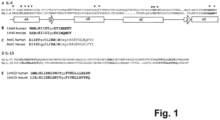
- the amino acid sequence of human and murine IL-4 covering the four ⁇ A to ⁇ D alpha helices is shown in Fig. 1A .
- the peptides of the present invention are derived from selected ⁇ A, ⁇ B, ⁇ C ⁇ D helical regions of mammalian IL-13.
- the amino acid sequence of human and murine IL-13 covering the four ⁇ A to ⁇ D alpha helices is shown in Fig. 1D .
- A corresponds to the ⁇ C helix of IL-4 or IL-13 followed by a first linker sequence which is connected to a selected amino acid sequence of the ⁇ A helix of IL-4 or IL-13 followed by a second linker sequence which is connected to a selected amino acid sequence derived from the ⁇ D helix of IL-4 or IL-13.
- the linker sequences are necessary for the 3-D structure of the peptides of the invention.
- A corresponds to selected amino acids derived from the ⁇ A helix of IL-4 followed by the first linker sequence which is connected to a selected amino acid sequence of the ⁇ C helix of IL-4 followed by a second linker sequence which is connected to a selected amino acid sequence of the ⁇ B helix of IL-4.
- the selected amino acids derived from one or more, preferably from at least three amino acid stretches in the ⁇ A, ⁇ B, ⁇ C ⁇ D helical regions are contiguous amino acids that can be found in said region of a selected species, preferably IL-4 or IL-13 of a human or other mammalian species.
- Preferred compounds of the present invention are peptides, wherein
- a variant according to the present invention may comprise an amino acid sequence which has at least 70% positive amino acid matches with a selected sequence of the ⁇ A, ⁇ B, ⁇ C ⁇ D helical regions, such as 71-80% positive amino acid matches, preferably at least 80%, more preferably at least 90% positive amino acid matches, for example 91 to 99% positive amino acid matches with a selected sequence of the oA, ⁇ B, ⁇ C ⁇ D helical regions.
- a positive amino acid match is defined as the presence at the same position in two compared sequences of amino acid residues which has similar physical, biological and/or chemical properties.
- Preferred positive amino acid matches that could be used for substitutions are K to R, E to D, L to M, Q to E, I to V, I to L, A to S, Y to W, K to Q, S to T, N to S and Q to R. It is required that a peptide or variant or the present invention has the capability of axon outgrowth which can be measured by an axon outgrowth assay described herein.
- a peptide or variant according to the present invention may also comprise other chemical moieties such as phosphoryl, sulphur, acetyl, or glycosyl moieties.
- a given peptide sequence may be modified, for example by addition, deletion, substitution or chemical modification of one or more of the amino acid residues.
- L-amino acids and D-amino acids may be used.
- Possible chemical modifications may comprise derivatives such as sugars or esters, for example methyl or acetyl esters, or polyethylene glycol modifications.
- an amine group of the peptide may be converted to an amide, which comprises a fatty acid.
- a peptide or variant of the invention can also be modified by biotin at it C-terminus or by a His-Tag at its N-terminus.
- variants of the amino acid sequences may comprise one or more conservative amino acid substitutions, which are independent of one another, wherein (i) at least one glycine (Gly) of said variant is substituted with an amino acid selected from the group of amino acids consisting of Ala, Val, Leu, and lie
- a variant of a peptide or a fragment thereof may comprise more than one conservative or homologous amino acid substitution from more than one group of conservative amino acids as defined herein above.
- Conservative amino acid substitutions may be introduced in any position of a peptide or variant of the present invention. It may however also be desirable to introduce non-conservative substitutions, particularly, but not limited to, a non-conservative substitution at one or more positions. Substitution of amino acids may be made based upon their hydrophobicity and hydrophilicity values and the relative similarity of the amino acid side-chain substituents such as size and charge.
- the groups of conservative amino acids are preferably the following, depending on their known chemical properties:
- Preferred peptides of the present invention are derived from human IL-4, wherein
- Preferred peptides of the present invention are peptides derived from human IL-13, wherein
- Preferred peptides of the present invention are IL-4 derivatives, wherein
- the biological activity of a peptide of the present invention is defined by its capability to bind to IL-4R type I or II, wherein the binding of the peptide or variant of the invention results in the desired neuroprotective and neuroregenerative effects.
- These biological effects can be measured by in vitro or in vivo model systems such as experimental autoimmune encephalomyelitis (EAE) or other mouse models for multiple sclerosis (MS).
- EAE experimental autoimmune encephalomyelitis
- MS multiple sclerosis
- biological activity of a peptide or variant of the invention can be measured by a cortex growth assay.
- linker sequences are used that are preferably comprised of one or more amino acids, preferably the linker consists of 1 to 10, more preferably 1 to 5 amino acids.
- a first linker sequence connects the amino acids of A and B, whereas a second linker sequence connects the amino acids of B and C in the above formula.
- the first linker sequence (L1) and/or the second linker sequence (L2) correspond to S, GS, SGS, P, GP or PGP. It is apparent for the person skilled in the art that also other amino acids or linkers can be used in order to connect the amino acid stretches derived from the ⁇ helical regions of IL-4 and IL-13. Any linker that is suitable for this purpose falls within the definition of the present invention.
- the linker is necessary to combine the selected alpha helical regions to each other and to mimic the 3-D structure of the receptor binding region.
- the peptide of the present invention is a human IL-4 derivative comprising an amino acid sequence WNRSEIIKTGSKTIMREKY (SEQ ID NO: 1), or a variant thereof having a different amino acid at one or more positions, wherein said peptide is capable of stimulating neuronal axon outgrowth.
- This peptide is composed of the ⁇ C, ⁇ A and ⁇ D helical regions linked together by a first and second linker acid sequence consisting of one or more amino acids.
- the peptide of the present invention is a human IL-13 derivative comprising an amino acid sequence LMRSELIEELVNITGSFVKDLLLHLKK (SEQ ID NO: 2), or a variant thereof having a different amino acid at one or more positions, wherein said peptide is capable of stimulating neuronal axon outgrowth.
- This peptide is composed of the ⁇ C, ⁇ A and ⁇ D helical regions linked together by a first and second linker acid sequence consisting of one or more amino acids.
- the peptide of the present invention is a human IL-4 derivative comprising an amino acid sequence EIIKTGSRLDRNLWGSGSRAATVLRQFYS (SEQ ID NO: 3), or a variant thereof having a different amino acid at one or more positions, wherein said peptide is capable of stimulating neuronal axon outgrowth.
- This peptide is composed of the ⁇ A, ⁇ C, and ⁇ B helical regions linked together by a first and second linker acid sequence consisting of one or more amino acids.
- the peptide of the present invention is a murine IL-4 derivative comprising an amino acid sequence RARSEIIGIGSKSIMQMDY (SEQ ID NO: 4), or a variant thereof having a different amino acid at one or more positions, wherein said peptide is capable of stimulating neuronal axon outgrowth.
- This peptide is composed of the ⁇ C, ⁇ A and ⁇ D helical regions linked together by a first and second linker acid sequence consisting of one or more amino acids.
- the peptide of the present invention is a murine IL-13 derivative comprising an amino acid sequence LIRSELIEELSNITGSFITKLLSYTKQ (SEQ ID NO: 5), or a variant thereof having a different amino acid at one or more positions, wherein said peptide is capable of stimulating neuronal axon outgrowth.
- This peptide is composed of the ⁇ C, ⁇ A and ⁇ D helical regions linked together by a first and second linker acid sequence consisting of one or more amino acids.
- the peptide of the present invention is a murine IL-4 derivative comprising an amino acid sequence EIIGIGPRLFRAFRCSGSRASKVLRIFYL (SEQ ID NO: 6), or a variant thereof having a different amino acid at one or more positions, wherein said peptide is capable of stimulating neuronal axon outgrowth.
- This peptide is composed of the ⁇ A, ⁇ C, and ⁇ B helical regions linked together by a first and second linker acid sequence consisting of one or more amino acids.
- the IL-4 and IL-13 derivatives of the present invention are able to act on neurons in the same way as IL-4 but without the side effects of affecting lymphocyte populations or myeloid cells. It is also shown by the present invention that IL-4 and IL-13 derivatives are not toxic and exhibit beneficial effects on autoimmune encephalomyelitis in vivo as shown by the EAE model. The compounds also show beneficial effects on axon growth and neuronal signalling and have only minimal effects on inflammatory cells. As shown herein, the IL-4 and IL-13 derivatives of the present invention led to a significant amelioration of the clinical score similar to native IL-4.
- the present invention also covers a pharmaceutical composition
- a pharmaceutical composition comprising at least one compound of the present invention, and a pharmaceutically suitable carrier, vehicle or agent.
- a pharmaceutically suitable carrier, vehicle or agent is suitable for administration of a pharmaceutically active ingredient, for example transmucosal administration via the nasal mucosa.
- a vehicle as used in the pharmaceutical composition may comprise solvents, cosolvents, enhancers, pH buffering agents, antioxidants, additives or the like.
- the various components of the vehicle are non-toxic and do not interact with other components of the total composition in a deleterious manner.
- the compound of the present invention is contained in a therapeutically effective amount in the pharmaceutical composition, i.e. in a concentration that is non-toxic, but sufficient to act as a drug or active agent to provide a desired therapeutic effect.
- a compound of the present invention will be effective in treatment of a neuroinflammatory or neurodegenerative disorder, or neuropathies or traumatic nervous system injuries.
- the compounds of the present invention act on neurons without effecting T-cells or myeloid cells.
- the compounds of the present invention are suitable for use in the treatment or prevention of a neuroinflammatory or neurodegenerative disorder.
- Preferred neuroinflammatory or neurodegenerative disorders include all forms of multiple sclerosis (MS), neuromyelitis optica (NMO), Parkinson's disease,
- Alzheimer's disease or other forms of dementia amyotrophic lateral sclerosis (ALS) and Huntington's disease.
- ALS amyotrophic lateral sclerosis
- the compounds of the present invention are also suitable for use in the treatment or prevention of neuropathies or traumatic nervous system injuries.
- Preferred neuropathies are Charcot Marie Tooth disease, Guillain Barre Syndrome, Chronic inflammatory demyelinating polyneuropathy and diabetic neuropathies.
- Preferred traumatic nervous system injuries are spinal cord injuries, traumatic brain injuries, stroke, peripheral nerve injuries.
- the pharmaceutical applicability is exemplified herein by lumbar puncture (intrathecal injection), nasal application and systemic injection.
- the IL-4 derivatives and IL-13 derivatives of the invention are compounds that are defined by the structure A - L1 - B - L2 - C. Following this structure, the inventors tested various IL-4 derivatives that they derived from different a helical regions of human and murine IL-4. These newly generated IL-4 derivatives are named as "Link4" and "AvoC" herein.
- the inventors also tested various IL-13 derivatives that are derived from the ⁇ helical regions of human and murine IL-13 and follow the above formula. These newly generated IL-13 derivatives are named "Link13" herein.
- Fig. 1 the design of the derivatives Link4 and Link13 is described. Based on the known 3-D structure of IL-4 and the IL-4 receptor, the inventors combined the amino acid stretches that are required to bind to IL-4R. The inventors then identified which amino acids were located on the surface of the IL-4 protein to decide which combinations of the ⁇ A to ⁇ D helices to make. A part of the ⁇ C helix was turned around and connected with one linking amino acid to a part of the ⁇ A helix which was bound with two linking amino acids to a part of the ⁇ D helix. The receptor-binding amino acids have been identified and coupled, which yielded IL-4 and IL-13 derivatives in which the co-receptor chains were linked to each other. The derivatives of IL-4 and IL-13 were designed in a similar manner based upon the sequence homology of IL-4 and IL-13.
- the IL-4 derivative AvoC was designed based upon another binding principle of IL-4 to its receptor.
- the binding sequence of IL-4 is defined by so-called avocado clusters in which a core is surrounded by hydrophobic residues ( T. D. Mueller, J. L. Zhang, W. Sebald, A. Duschl, Structure, binding and antagonists in the IL-4/IL-13 receptor system, Biochimica Biophysica Acta 1592, 237-250 (2002 )).
- Stretches of amino acids were arranged in such a way to mimic the surface structure of IL-4.
- this derivative is likely to link the two receptor chains, since the sequence derived from the ⁇ A helix binds to both receptor chains.
- Fig. 1A shows the amino acid sequences of human and murine IL-4 aligned with the location of the ⁇ -helices ⁇ A, ⁇ B, ⁇ C, ⁇ D and the ⁇ -linkers.
- Black arrowheads indicate binding sites to the IL-4Ra chain, grey arrowheads point to binding sites to the co-chains, either IL-13R ⁇ 1 or common ⁇ -chain.
- the amino acids in bold letters are the amino acids that are used for the construction of the IL-4 derivatives of the present invention as shown in Fig. 1B and 1C .
- Fig. 1B shows the IL-4 derivative Link4 with the selected amino acids from the ⁇ C, ⁇ A and ⁇ D helical regions in bold letters.
- Fig. 1C shows the IL-4 derivative AvoC with the selected amino acids from the ⁇ A, ⁇ C, and ⁇ B helical regions in bold letters.
- Fig. 1D shows the aligned amino acid sequences of human and murine IL-13 comprising the ⁇ -helices ⁇ A, ⁇ B, ⁇ C, ⁇ D.
- the amino acids used to design the IL-13 derivative Link13 of the present invention are depicted.
- Fig. 1E shows the IL-13 derivative Link13 with the selected amino acids from the ⁇ C, ⁇ A and ⁇ D helical regions in bold letters.
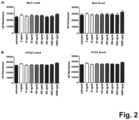
- Fig. 2 shows a toxicity assay for mouse embryonic fibroblasts (Met) ( Fig. 2A ) and hippocampal neurons (HT22) ( Fig. 2B ). Toxicity was checked by subjecting mouse embryonic fibroblasts (Mef) and the hippocampal cell line HT22 to a CellTiter-blue cell viability assay (ctb). Link4 and AvoC, applied in increasing concentrations, had no toxic effects on fibroblasts ( Fig. 2A )or hippocampal neurons ( Fig. 2B ).
- Fig. 3 shows the in vivo effects of the IL-4 derivative Link4.
- Treatment of mice during the chronic phase of EAE (grey bar) via lumbar (A) intrathecal injection or (B) nasal application showed a significant improvement in the clinical score of IL-4- and Link4-treated animals, as compared to PBS controls that remained at a high sickness level.
- Also shown is the lumbar treatment with the Ph8 peptide which had no effect on the disease course.
- Nasally applied treatments can enter the brain through the cribriform plate, where olfactory nerve fibers cross through the bone, resulting in a connection between the roof of the nasal cavity and the brain ( C. F. Xiao, F. J. Davis, B. C. Chauhan, K. L. Viola, P. N. Lacor, P. T. Velasco, W. L. Klein, and N. B. Chauhan, Brain transit and ameliorative effects of intranasally delivered anti-amyloid-beta oligomer antibody in 5XFAD mice. J Alzheimers Dis 35, 777-788 (2013 )). Again, both IL-4 and Link4 treatments were beneficial.
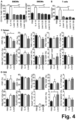
- Fig. 4 shows the effects of the inventive IL-4 and IL-13 derivatives on the immune system.
- A-B Effects of incubation with IL-4 and different concentrations of Link4 and Link13 on the differentiation of A: CD11b + bone marrow-derived macrophages (BMDMs) into F80 + CD206 + cells, and B: CD4 + T cells into Gata3 + cells.
- C-D FACS results for different populations of T cells and CD11b + MHCII + monocytes/macrophages/microglia of immune cells isolated from C: spleen and D: central nervous system (CNS) of EAE mice treated with PBS, IL-4 or Link4.
- CNS central nervous system
- IL-4 and Link4 were analysed when applied intranasally, similarly as in Fig. 3B . Since nasally applied treatments can enter the periphery (lungs, blood stream) it was of utmost importance to check whether the substances affected the lymphocyte populations in the spleen. A reduction was found of CD8 + cytotoxic T-cells for Link4, whereas all CD4 + T helper cell types were unchanged. The CD11b+ MHCII+ population of monocytes/macrophages was also not changed. For the populations of lymphocytes entering the brain and spinal cord (taken together as CNS, central nervous system), only a significant rise in IL-10 + cells was observed.
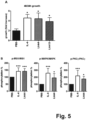
- Fig. 5 shows the effects of the IL-4 and IL-13 derivatives of the invention on neurons.
- A Cortical outgrowth in response to 50 ng/ml IL-4, Link4, or Link13, compared to PBS control. The increase in growth at 48h was calculated over the basal (untreated) growth at 24h.
- B Effects on phosphorylation of signalling molecules after 10 min treatment of dissociated cortical neurons with IL-4, Link4 or PBS. Link4 showed the same neuronal signalling effects as IL-4
- EAE Experimental autoimmune encephalomyelitis
- CNS and spleens were removed from EAE mice treated with nasal IL-4, Link4 or PBS at d35 and immune cells were isolated as previously described ( M. Paterka, J. O. Voss, J. Werr, E. Reuter, S. Franck, T. Leuenberger, J. Herz, H. Radbruch, T. Bopp, V. Siffrin, and F. Zipp, Dendritic cells tip the balance towards induction of regulatory T cells upon priming in experimental autoimmune encephalomyelitis. J Autoimmun 67, 108-114 (2017 )).
- anti-CD3 145-2C11
- anti-CD28 37.51
- anti-CD4 PEcy7 (RM4-5), anti-CD8 FITC (53-6.7), anti-CD3APC (145-2c11), anti-CD11b bio (M1/70), anti-MHCII PE (AF6-120.1), anti-CD11b V450 (HL311B), anti-CD45 AF605 (30-F11), anti-GM-CSF PE (MP1-22E9), anti-IL17 APC (eBio17B7), anti-TNF ⁇ AF700 (MP6-XT22), anti-IFN- ⁇ V450 (XMG1.2), anti-GATA-3 PE (TWAZ), anti-FOXP3 PEcy7(FZK-16s), anti-IL-10 APC (JES5-16E3), anti-CD4 V450 (RM4-5). All antibodies were purchased from eBioscience or Biolegend.
- T lymphocytes For the isolation of T lymphocytes 5-8 week old C57BL/6 mice were sacrificed by cervical dislocation and the spleens and lymph nodes (LN) were isolated and rubbed trough a 100 ⁇ m cell strainer into a 50 ml tube with washing medium (5% FCS, 1% P/S,1 %HEPES in PBS). After washing, the cells were centrifuged for 5 min at 550 g at 4°C. To remove the red blood cells the supernatant was re-suspended in lysis buffer followed by centrifugation (5 min, 550 g, 4°C).
- washing medium 5% FCS, 1% P/S,1 %HEPES in PBS
- the cells were resuspended in MACS buffer and magnetic lymphocyte sorting was performed on ice, using the MidiMACS and QuadroMACS Seperators.
- a CD4 untouched and CD8 touched cell sort was performed a washing step in ml MACS buffer (5 min, 550 g, 4°C).
- CD4 T cell biotin antibody cocktail (Miltenyi Biotec) in MACS buffer for 5 min at 4°C. Subsequently, anti-biotin microbeads and CD8 microbeads in MACS buffer was added. CD8 microbeads were added to reduce the possible contamination of CD8 + lymphocytes. After 10 min of incubation at 4°C the cells were washed again and resuspended in MACS buffer. MACS columns were pre equilibrated and topped with pre-separation filters (30 ⁇ m). A maximum of 300 ⁇ 10 6 cells were added to each column followed by 3 consecutive washing steps with MACS buffer.
- CD3 + CD4 + CD8 - enriched flow-through was collected for the following CD62L touched sort. After centrifugation (5 min, 550 g, 4°C) CD62L microbeads in MACS buffer were added to the cells and incubated for 15 min at 4°C. After washing the cells were resuspended in MACS buffer and loaded on a new column. The positive labeled CD4 + CD62L + cells were enriched in the column and collected in MACS buffer. The purity of the magnetic cells sorts was assessed by comparing pre- and post-sort samples by flow cytometry. The cells were stained with CD4-Horizon (1:400), CD3-APC (1:600) and CD62L-APC (1:200). CD4 + CD62L + purity out of the CD4 + cells was usually about >97%.
- Antigen-presenting cells were isolated by lysis of adult C57BL/6 mice spleen and magnetic immune cell sorting with MidiMACS and QuadroMACS Separators. The cell suspension was washed with MACS buffer and centrifuged (5 min, 550 g, 4°C). Subsequently the cells were resuspended in 95 ⁇ l MACS buffer and CD90.2 untouched microbeads and incubated for 15 min at 4°C. After washing with MACS buffer and centrifugation (5 min, 550 g, 4°C) the cells were resuspended in MACS buffer, loaded on the columns and collected in MACS buffer. To stop their proliferation cycle the purified APCs were irradiated at 30 Gy/3000 rad.
- the CD4 + CD62L + cells were co-cultured with antigen-presenting cells (APCs) in a 1:5 ratio in a concentration of 6 million cells in 2 ml mouse medium (10% FCS, 1% P/S, 1% L-glutamine, 0.1% ⁇ -mercaptoethanol, 1% HEPES in RPMI buffer) per well on a 24-well plate.
- APCs antigen-presenting cells
- 2 ml mouse medium 10% FCS, 1% P/S, 1% L-glutamine, 0.1% ⁇ -mercaptoethanol, 1% HEPES in RPMI buffer
- IL-4 10 ng/ml
- ⁇ -IL-12 10 ⁇ g/ml
- ⁇ -tFND 10 ⁇ g/ml
- the cells were split and plated in fresh medium containing 10 ⁇ g/ml IL-2 and 10 ng/ml IL-4.
- cells were stimulated with anti-CD3/anti-CD28 and treated with Brefeldin A to block secretion.
- a cytokine check of the different T lymphocyte cultures was performed by flow cytometry using CD4-PECy7 (1:1000) for extracellular staining, Fc-receptor-block (1:100) and IFN-g-Horizon (1:200), TNFa-AF700 (1:200) and IL-10-APC (1:200) for intracellular staining.
- T H 2 cells were additionally stained for intranuclear Gata3-PE (1:100).
- BMDMs Bone marrow derived macrophages
- Murine BMDMs were isolated from adult C57BL/6 mice. The tibia and femur bones were flushed with sterile PBS and the bone marrow was collected in washing medium. After filtering the cell suspension trough a 100 ⁇ m nylon mesh, the cells were centrifuged (5 min, 550 g, 4°C) and resuspended in mouse medium (10% FCS, 1% P/S, 1% L-glutamine, 0.1% ⁇ -mercaptoethanol, 1% HEPES in RPMI buffer). For the in vitro generation of BMDMs cells were plated in 6 well-plates and exposed to 20 ng/ml Macrophage stimulating factor (M-CSF) for 4 days. For the activation of the cells, Dexametason (5 ⁇ 10 -7 M), LPS (10 ⁇ g/ml) and IL-4 (10 ng/ml) were added to the culture for the following 3 days.
- M-CSF Macrophage stimulating factor
- Mouse embryonic fibroblasts (Mef) (Sigma-Aldrich) and hippocampal HT22 (ThermoScientific) cells were cultured according to the manufacturer's protocols. Ctb assays were performed according to the manufacturer's protocols (Promega).
- Neonatal (P1-3) cortex explants were dissected from 250 ⁇ m thick vibratome (HM650V, Thermo Fisher) sections from Bregma 0 to -1.5 (motor cortex). Cortical layer V was micro-dissected, plated on poly-D-lysine (0.5 mg/ml) and laminin (1 mg/ml)-coated glass coverslips and grown for 24h in neurobasal medium with 2% horse serum, 2% B27, 1% glutamax and 0.5% penicillin/streptomycin. Explants were treated for 48h with rIL-4 (50 ng/ml), Link4 (50 ng/ml), Link13 (50 ng/ml) or PBS.
- rIL-4 50 ng/ml
- Link4 50 ng/ml
- Link13 50 ng/ml
- Axon length was assessed using Adobe Photoshop by measuring the distance of the 40 longest axons, corrected for the initial growth at 24h.
- Dissociated cortical neurons were prepared as previously described ( J. T. Walsh, S. Hendrix, F. Boato, I. Smirnov, J. Zheng, J. R. Lukens, S. Gadani, D. Hechler, G. Golz, K. Rosenberger, T. Kammertons, J. Vogt, C. Vogelaar, V. Siffrin, A. Radjavi, A. Fernandez-Castaneda, A. Gaultier, R. Gold, T. D. Kanneganti, R. Nitsch, F. Zipp, and J.
- Kipnis MHCII-independent CD4+ T cells protect injured CNS neurons via IL-4. J Clin Invest 125, 699-714 (2015 )). Cortices of embryonic day 18 (E18) mice were incubated with Trypsin/DNase solution and dissociated by trituration. Cells were resuspended in plating medium (1x MEM-Glutamax, 20% glucose, 10% HS, 1x PenStrep), filter-sterilize 600,000 cells per well in a 6-well-plate. At 5h after plating, medium was aspirated, wells were washed 2x with warm PBS and cells were cultured in NB-medium.
- plating medium (1x MEM-Glutamax, 20% glucose, 10% HS, 1x PenStrep
- Cultures were allowed to expand for 3 days, before treatment with 50 ng/ml IL-4, 50 ng/ml Link4 or equivalent volumes of PBS. After 10 min, cells were harvested in lysis buffer and processed for Western blotting. Cell culture reagents were obtained from Fisher Scientific and Sigma. For the signaling experiments, cells were incubated with 50 ng/ml IL-4 (Peprotech) or equivalent volumes of PBS for 10 min.
- the following primary antibodies were used: anti-IRS1 (EMD Millipore), anti-phospho-IRS1 (Cell Signaling Technology), anti-MAPK and anti-phospho-MAPK (Cell Signaling Technology), anti-PKC ⁇ (Santa-Cruz), anti-phospho-PKC ⁇ (Biozol).
- DyLight 800/600-coupled secondary antibodies were used for quantitative analysis of the proteins using the Li-Cor Odyssey FC imaging system (Li-Cor Bioscience). Blots probed with the phospho-antibodies were stripped after visualization, to allow incubation with the total antibodies for parallel detection in the same samples.
Landscapes
- Health & Medical Sciences (AREA)
- Chemical & Material Sciences (AREA)
- Organic Chemistry (AREA)
- Life Sciences & Earth Sciences (AREA)
- General Health & Medical Sciences (AREA)
- Medicinal Chemistry (AREA)
- Neurosurgery (AREA)
- Neurology (AREA)
- Biomedical Technology (AREA)
- Bioinformatics & Cheminformatics (AREA)
- Engineering & Computer Science (AREA)
- Biophysics (AREA)
- Toxicology (AREA)
- Molecular Biology (AREA)
- Genetics & Genomics (AREA)
- Biochemistry (AREA)
- Gastroenterology & Hepatology (AREA)
- Proteomics, Peptides & Aminoacids (AREA)
- Zoology (AREA)
- Pharmacology & Pharmacy (AREA)
- Chemical Kinetics & Catalysis (AREA)
- General Chemical & Material Sciences (AREA)
- Nuclear Medicine, Radiotherapy & Molecular Imaging (AREA)
- Animal Behavior & Ethology (AREA)
- Public Health (AREA)
- Veterinary Medicine (AREA)
- Psychiatry (AREA)
- Hospice & Palliative Care (AREA)
- Peptides Or Proteins (AREA)
- Medicines That Contain Protein Lipid Enzymes And Other Medicines (AREA)
Description
- The present invention relates to novel peptide compounds that are derived from human or animal interleukin-4 (IL-4) or interleukin-13 (IL-13) and the uses in a treatment or prevention of neuroinflammatory or neurodegenerative disorders, neuropathies or traumatic nervous system injuries.
- Ongoing and accumulating axon pathology is considered the main feature underlying disability, especially during the progressive disease phase of neurodegenerative disorders (V. Siffrin, H. Radbruch, R. Glumm, R. Niesner, M. Paterka, J. Herz, T. Leuenberger, S. M. Lehmann, S. Luenstedt, J. L. Rinnenthal, G. Laube, H. Luche, S. Lehnhardt, H. J. Fehling, O. Griesbeck, F. Zipp, In vivo imaging of partially reversible th17 cell-induced neuronal dysfunction in the course of encephalomyelitis. Immunity 33, 424-436 (2010); I. Nikic, D. Merkler, C. Sorbara, M. Brinkoetter, M. Kreutzfeld, F. M. Bareyre, W. Bruck, D. Bishop, T. Misgeld, M. Kerschensteiner, A reversible form of axon damage in experimental autoimmune encephalomyelitis and multiple sclerosis. Nat. Med. 17, 495-499 (2011)). Upon an inflammatory attack, axonal swelling and persisting upregulation of calcium eventually culminate in beading and degeneration These processes of inflammatory neuronal injury can at least partly be reversed. To date, the axon compartment has not been sufficiently targeted by MS treatment strategies (C. Larochelle, T. Uphaus, A. Prat, F. Zipp, Secondary Progression in Multiple Sclerosis: Neuronal Exhaustion or Distinct Pathology? Trends Neurosci. 39, 325-339 (2016); R. J. M. Franklin, C. ffrench-Constant, J. M. Edgar, K. J. Smith, Neuroprotection and repair in multiple sclerosis. Nat. Rev. Neurol. 8, 624-634 (2012), F. Zipp, R. Gold, H. Wiendl, Identification of inflammatory neuronal injury and prevention of neuronal damage in multiple sclerosis: hope for novel therapies? JAMA Neurol 70, 1569-1574 (2013)).
- Interleukin-4 (IL-4) and interleukin-13 (IL-13) are canonical type 2 cytokines that play overlapping but distinct roles in mammalian immune responses to extracellular parasites by stimulating production of high affinity IgE antibodies, the generation of alternatively activated macrophages and the differentiation of Th2 cells. IL-4 is an anti-inflammatory cytokine with respect to effects on the central nervous system (CNS), but systemic IL-4 plays a role in allergies, in particular asthma. IL-4 has been reported to have beneficial effects on neurons upon traumatic CNS injury (J. T. Walsh, S. Hendrix, F. Boato, I. Smirnov, J. Zheng, J. R. Lukens, S. Gadani, D. Hechler, G. Golz, K. Rosenberger, T. Kammertons, J. Vogt, C. Vogelaar, V. Siffrin, A. Radjavi, A. Fernandez-Castaneda, A. Gaultier, R. Gold, T. D. Kanneganti, R. Nitsch, F. Zipp, J. Kipnis, MHCII-independent CD4+ T cells protect injured CNS neurons via IL-4. J. Clin. Invest. 125, 699-714 (2015)). Both an immune regulatory function of systematically applied IL-4 in experimental autoimmune encephalomyelitis (EAE), the murine model of multiple sclerosis (MS), and a destructive role in an asthma model have been reported (N. L. Payne, A. Dantanarayana, G. Sun, L. Moussa, S. Caine, C. McDonald, D. Herszfeld, C. C. Bernard, C. Siatskas, Early intervention with gene-modified mesenchymal stem cells overexpressing interleukin-4 enhances anti-inflammatory responses and functional recovery in experimental autoimmune demyelination. Cell Adh. Migr. 6, 179-189 (2012); M. K. Racke, A. Bonomo, D. E. Scott, B. Cannella, A. Levine, C. S. Raine, E. M. Shevach, M. Rocken, Cytokine-induced immune deviation as a therapy for inflammatory autoimmune disease. J. Exp. Med. 180, 1961-1966 (1994); J. I. Inobe, Y. Chen, H. L. Weiner, In vivo administration of IL-4 induces TGF-beta-producing cells and protects animals from experimental autoimmune encephalomyelitis. Ann. N. Y. Acad. Sci. 778, 390-392 (1996); S. T. Holgate, Innate and adaptive immune responses in asthma. Nat. Med. 18, 673-683 (2012); C. M. Lloyd, E. M. Hessel, Functions of T cells in asthma: more than just T(H)2 cells. Nat. Rev. Immunol. 10, 838-848 (2010)).
- It is known that IL-4 potentially has side effects due to its effects on the immune system (S. T. Holgate, Innate and adaptive immune responses in asthma. Nat Med 18, 673-683 (2012); C. M. Lloyd, and E. M. Hessel, Functions of T-cells in asthma: more than just T(H)2 cells. Nat Rev Immunol 10, 838-848 (2010)). Furthermore, it would be extremely expensive to produce large amounts of recombinant IL-4 for clinical purposes in humans. In addition, IL-4 has a very short half-life in blood plasma (S. Gea-Sorli, and D. Closa, In vitro, but not in vivo, reversibility of peritoneal macrophages activation during experimental acute pancreatitis. BMC Immunol 10, 42 (2009); M. Khodoun, C. C. Lewis, J. Q. Yang, T. Orekov, C. Potter, T. Wynn, M. Mentink-Kane, G. K. Hershey, M. Wills-Karp, and F. D. Finkelman, Differences in expression, affinity, and function of soluble (s)IL-4Rα and sIL-13Rα2 suggest opposite effects on allergic responses. J Immunol 179, 6429-6438 (2007)). It is therefore desirable to be in possession of compounds that could be produced cost-effectively in large amounts and that would be more stable than recombinant full-length IL-4.
- Whilst their amino acid identity is low (23%), IL-4 and IL-13 can bind to a common receptor composed of the IL-4Ra and IL-13Rα1 subunits (type II IL-4R) and they are the only cytokines known to bind to the receptor chain IL-4Rα. In addition, IL-4 can bind to the IL-4R type I, which is composed of IL-4Rα and the common γ chain (T. Wang, and C. J. Secombes, The evolution of IL-4 and IL-13 and their receptor subunits. Cytokine 75, 8-13 (2015)). For signal transduction, both IL-4 and IL-13 require the same receptor sub-unit, IL-4Ra (T. D. Mueller, J. L. Zhang, W. Sebald, A. Duschl, Structure, binding and antagonists in the IL-4/IL-13 receptor system, Biochimica Biophysica Acta 1592, 237-250 (2002)). IL-4Ra is part of both functional heterodimeric receptor complexes. It organizes signal transduction through signalling molecules associated with its large intracellular domain. IL-4 and IL-13 have an identical dimeric receptor subunit assembly characterized by antiparallel juxtaposed helices αA, αC, αB, αD and two long end-to-end loops, loop AB and CD, which are connected by a short β-sheet packed against helices B and D. Helix A, the AB loop, the helix BC hairpin and the loop CD plus helix D are encoded by four different axons. Multiple alignments of the aa sequences of selected IL-4, IL-13 and IL-4/13 proteins reveal that in general four cysteine residues are present in each protein but the patterns of the cysteine residues are lineage-specific, i.e. mammalian IL-4 and IL-13, teleost fish IL-4/13, and other vertebrate IL-4/13 (T. Wang, and C. J Secombes, The evolution of IL-4 and IL-13 and their receptor subunits. Cytokine 75, 8-13 (2015); F. J. Moy et al., Solution structure of human IL-13 and implication for receptor binding. Journal of Molecular Bio 310, 219-230 (2001); J. Zuegg et al., Structural model of human IL-13 defines the spatial interactions with the IL-13Ralpha/lL-4Ralpha receptor. Immunology and cell biology 79, 332-339 (2001)).
- The IL-4 and IL-13 cytokines are dominated by a 4α-helix bundle with a left-handed twist (M. L. Walter, W. J. Cook, B. G. Zhao, R. P. Cameron Jr, S. E. Ealick, R. L. Walter Jr, P. Reichert, T. L. Nagabhushan, P.P Trotta, C. E. Bugg, Crystal structure of recombinant human interleukin-4. J Biol Chem 267, 20371-6 (1992)). The secondary structural features of IL-13 are similar to that of IL-4. Similarly, IL-13 contains 4α-helical bundles (E. L. Rael, R. F. Lockey, Interleukin-13 signaling and its role in asthma. World )).
- Both the IL-4 and IL-13 cytokines share a common heterodimeric receptor. Both can downregulate the synthesis of T-helper type 1 pro-inflammatory cytokines. Both neuroprotective or neurotoxic effects have been proposed based on evidence that
interleukin -
WO 2006/036878 A2 discloses chimeric polypeptide antagonists that include an interleukin-4 mutein linked to an IL-9 mutein to reduce or inhibit the responsiveness of a cell to IL-4, IL-9 and/or IL-13. - Given the role of IL-4/IL-13 in immune responses and neuroinflammatory and neurodegenerative disorders, the possession of agents that are able to bind to IL-4R type I and/or type II and to ameliorate clinical signs, would be highly desirable. The patent
US 5,017,691 describes IL-4 polypeptides, which were tested for IL-4 activity on B-cell and T-cell growth. Native human and murine IL-4 proteins and muteins thereof, and their cDNAs coding for mammalian IL-4s and their muteins are described. However, these IL-4 polypeptides cause undesired immune responses that are not wanted for the treatment of neurodegenerative disorders. -
EP 2365 983 A1 describes IL-4-derived peptides for modulation of a chronic inflammatory response and treatment of autoimmune diseases. The peptide comprises at most 35 contiguous amino acids, which are derived from an α-helix of IL-4, each peptide consisting of the amino acids AQFHRHKQLIRFLKRA. - Furthermore, novel synthetic peptides, termed Ph8, derived from the α-helix C of IL-4, which interacts with IL-4 receptor α (IL-4 Rα), have been described and it was found that Ph-bound IL-4 Rα mimicked the anti-inflammatory effects of IL-4 by inhibiting TNF-α production by macrophages in vitro. Ph8 inhibited the proliferation of Th1/2 cells and downregulated the production of EFN-γ in stimulated Th1 cells. It was also found that Ph8 did not induce general T-cell activation and inflammatory responses without further inducing the side effects generally associated with IL-4 signalling (B. Klementiev, M. N. Enevoldsen, S. Li, R. Carlsson, Y. Liu, S. Issazadeh-Navikas, E. Bock, V. Berezin, Antiinflammatory properties of a peptide derived from interleukin-4. Cytokine 64, 112-121 (2013)). Ph8 peptides, however, are not suitable for neuroprotective or neuroregenerative purposes as the peptides have an effect on lymphocytes and bone marrow-derived macrophages.
- The inventors surprisingly discovered that IL-4 could ameliorate clinical symptoms in mice subjected to experimental autoimmune encephalomyelitis (EAE), a mouse model of multiple sclerosis (MS), when applied intrathecally during the chronic phase of the disease. The effect of IL-4 and the inventive derivatives of IL-4 was accompanied by improved axonal morphology as well as increased regenerative sprouting. Using in vitro models, it has been observed by the inventors that IL-4 plays a role in neuroprotection, axon regeneration and growth on inhibitory substrates. In particular, it was discovered that IL-4 effects are abolished in neuron-specific IL-4 receptor (IL-4R) knock-out mice. A fast direct IL-4R signalling pathway has been identified. In addition, the nasal application IL-4 was equally effective, providing a more clinically relevant route of administration for the treatment of neuronal disorders (C. F. Vogelaar, S. Mandal, S. Lerch, K. Birkner, J. Birkenstock, U. Bühler, A. Schnatz, C. S. Raine, S. Bittner, J. Vogt, J. Kipnis, R. Nitsch, F. Zipp, Fast direct neuronal signaling via the IL-4 receptor as therapeutic target in neuroinflammation. Sci Transl Med doi: 10.1 126/scitranslmed.aao2304 (2018)).
- The role of IL-4 in neuroinflammation, combined with the neuroprotective role in traumatic injury and the identified neuronal signalling pathway suggests that IL-4 and its IL-4 derivatives and IL-13 derivatives are suitable for the treatment or prevention of neuroinflammatory and neurodegenerative diseases, in particular for the prevention or treatment of multiple sclerosis (MS).
- Against this background, it is the object of the present invention to provide alternative compounds that act positively on neurons, have no side effect on lymphocytes or bone marrow-derived macrophages and are suitable for the prevention or treatment of neuronal disorders.
- This object is solved by the claimed compounds and their uses in the prevention or treatment of neuroinflammatory or neurodegenerative disorders, neuropathies or traumatic nervous system injuries. Preferred embodiments of the invention are claimed in the sub-claims.
- Due to the high structural similarity of the secondary structural features of IL-4 and IL-13 and the fact that both cytokines contain 4α-helical bundles, herein designated with the letters αA, αD, αC, αD, the inventive compounds have in common that the crucial amino acids are derived from the αA to αD alpha helical regions of IL-4 and IL-13, respectively.
- The term "IL-4 derivative" as used in the context of the present invention designates a compound, preferably a peptide compound, that is based on native IL-4. Preferably, a IL-4 derivative of the present invention has an identical or highly similar amino acid sequence and/or structure as at least three selected domains from the relevant αA to αD alpha helical binding regions of IL-4.
- The term "IL-13 derivative" as used in the context of the present invention designates a compound, preferably a peptide compound, that is based on native IL-13. Preferably, a IL-13 derivative of the present invention has an identical or highly similar amino acid sequence and/or structure as at least three selected domains from the relevant αA to αD alpha helical binding regions of IL-13.
- The compounds of the present invention consist of one or more peptides that are derived from the αA to αD alpha helical regions of IL-4 or IL-13 comprising the following general structure:
A - L1 - B - L2 - C
wherein - A corresponds to a first amino acid sequence that is derived from αA or αC alpha helical region of human or animal IL-4 or IL-13,
- B corresponds to a second amino acid sequence that is derived from αA or αC alpha helical region of human or animal IL-4 or IL-13,
- C corresponds to a third amino acid sequence that is derived from αD or αB alpha helical region of human or animal IL-4, or αD alpha helical region of human or animal IL-13,
- L1 and L2 correspond to one or more linking amino acids
- The term "alpha-helix" (α-helix) designates a common motif in the secondary structure of the peptides. The α-helix can be in a right- or left-handed coiled conformation, in which every backbone N-H group donates a hydrogen bond to the backbone C=O group of the amino acid four residues earlier.
- Accordingly, one or more amino acid sequences of the αA to αD alpha helical regions of IL-4 or IL-13 may be selected to form the parts A, B and C of the peptides of the present invention. Preferably, the selected amino acids are contiguous amino acids that are found in the corresponding α-helical regions of human or animal IL-4 or IL-13, or variants thereof in which one or more amino acids in a given amino acid sequence are deleted, added, substituted or modified. Preferred peptides of the invention comprise amino acid sequences derived from the αA-αC-αD helical regions of IL-4 and linked to each other as indicated. Alternative preferred peptides are composed of amino acid sequences derived from the αC-αA-αD helical regions of IL-4 or IL-13 and linked to each other as indicated.
- It is apparent that one or more amino acids within the peptide residues A, B or C can be changed by an alternative amino acid, either modified or unmodified, or substituted by one or more amino acids without significantly changing the binding capabilities and/or biological activity. Therefore, any peptide or variant thereof comprising the above structure but having a different amino acid at one or more positions and which is capable of stimulating neuronal axon outgrowth is encompassed by the present invention. The neuronal axon outgrowth as defined herein can be measured by the cortex growth assay described herein.
- In the context of the present invention, the standard one-letter code for amino acid residues as well as the standard three-letter code are applied. Abbreviations for amino acids are in accordance with the recommendations in the IUPAC-IUB Joint Commission on Biochemical Nomenclature Eur. J. Biochem, 1984, vol. 184, pp 9-37. Throughout the description and claims either the three letter code or the one letter code for natural amino acids are used. Where the L or D form has not been specified it is to be understood that the amino acid in question has the natural L form, cf. Pure & Appl. Chem. Vol. (56(5) pp 595-624 (1984) or the D form, so that the peptides formed may be constituted of amino acids of L form, D form, or a sequence of mixed L forms and D forms.
- The C-terminal amino acid of a peptide usually exists as a free carboxylic acid, which may also be specified as "-OH". However, the C-terminal amino acid of a peptide for use according to the present invention may also be an amidated derivative, which is specified as "-NH-2". Where nothing else is stated, the N-terminal amino acid of a polypeptide comprises a free amino-group, sometimes also specified as "H-". A peptide, fragment or variant thereof according to the present invention can also comprise one or several unnatural or modified natural amino acids.
- Preferred compounds of the present invention are peptides which are IL-4 derivatives or IL-13 derivatives that are able to specifically bind to the IL-4 receptor type I and II by including the amino acids within the α-helices αA, αB, αC and αD that are required for binding to IL-4Rα combined with the amino acids that are required for binding to the co-chains IL-13Rα1 or common γ chain.
- In order to obtain the compounds of the present invention, the inventors coupled the most important receptor-binding amino acids and linked the co-receptor chains to each other. The amino acid stretches were selected based upon their binding to the IL-4Ra chain and either of the IL-13Rα1 or common γ chain, thereby linking the chains to form either IL-4R type I or type II. All compounds are based on the same principle of receptor chain linking and all IL4- and IL-13 derivatives have similar mechanisms. The selected amino acids derived from the αA, αB, αC αD helical region of human or animal IL-4 or IL-13 are the most essential amino acids required for binding of the inventive compound to IL-4Rα or IL-13Rα.
- The present invention covers any peptide or polypeptide, both in modified or un-modified form, that is based on a mammalian amino acid sequence of one or more of the αA, αB, αC αD helical regions of mammalian (e.g. human or murine) IL-4 or IL-13. The compound of the present invention can comprise one or more of said peptides, optionally bridged by structurally neutral amino acids. Specifically, the present invention covers the combination of amino acid stretches found in the αA, αB, αC αD helical regions of IL-4 or IL-13 in mammals, which are required for binding to IL-4Ra and IL-13Rα1 or common γ chain. Although the present invention is exemplified herein using human and murine IL-4 and IL-13, the invention also covers homologous amino acids and amino acid stretches found in other species in which the same principles of IL-4/ IL-4Rα and IL-13/ IL-13Rα interaction apply.
- Preferably, the amino acid sequences of the αA, αB, αC αD helical regions are derived from mammalian IL-4. The amino acid sequence of human and murine IL-4 covering the four α A to α D alpha helices is shown in
Fig. 1A . In an alternative embodiment, the peptides of the present invention are derived from selected αA, αB, αC αD helical regions of mammalian IL-13. The amino acid sequence of human and murine IL-13 covering the four α A to α D alpha helices is shown inFig. 1D . - The arrangement of the different helical sections for generation of the compounds of the invention is shown. Given the general structure of the IL-4- or IL-13-derived peptides of the present invention, A - L1 - B - L2 - C, it is preferred that A corresponds to the αC helix of IL-4 or IL-13 followed by a first linker sequence which is connected to a selected amino acid sequence of the αA helix of IL-4 or IL-13 followed by a second linker sequence which is connected to a selected amino acid sequence derived from the αD helix of IL-4 or IL-13. The linker sequences are necessary for the 3-D structure of the peptides of the invention.
- In an alternative embodiment, A corresponds to selected amino acids derived from the αA helix of IL-4 followed by the first linker sequence which is connected to a selected amino acid sequence of the αC helix of IL-4 followed by a second linker sequence which is connected to a selected amino acid sequence of the αB helix of IL-4. Preferably, the selected amino acids derived from one or more, preferably from at least three amino acid stretches in the αA, αB, αC αD helical regions, are contiguous amino acids that can be found in said region of a selected species, preferably IL-4 or IL-13 of a human or other mammalian species.
- Preferred compounds of the present invention are peptides, wherein
- A corresponds to the amino acids WNR, RAR, LMR, LIR, EIIKT, or EIIGI
- B corresponds to the amino acids EIIKT, EIIGI, ELIEELVNIT, ELIEELSNIT, RLDRNLWG, or RLFRAFRC
- C corresponds to the amino acids KTIMREKY, FVKDLLLHLKK, RAATVLRQFYS, KSIMQMDY, FITKLlSYTKQ, or RASKVLRIFYL,
- or a variant thereof having a different amino acid at one position, wherein said peptide is capable of stimulating neuronal axon outgrowth.
- A variant according to the present invention may comprise an amino acid sequence which has at least 70% positive amino acid matches with a selected sequence of the αA, αB, αC αD helical regions, such as 71-80% positive amino acid matches, preferably at least 80%, more preferably at least 90% positive amino acid matches, for example 91 to 99% positive amino acid matches with a selected sequence of the oA, αB, αC αD helical regions. A positive amino acid match is defined as the presence at the same position in two compared sequences of amino acid residues which has similar physical, biological and/or chemical properties. Preferred positive amino acid matches that could be used for substitutions are K to R, E to D, L to M, Q to E, I to V, I to L, A to S, Y to W, K to Q, S to T, N to S and Q to R. It is required that a peptide or variant or the present invention has the capability of axon outgrowth which can be measured by an axon outgrowth assay described herein.
- A peptide or variant according to the present invention may also comprise other chemical moieties such as phosphoryl, sulphur, acetyl, or glycosyl moieties. As such, a given peptide sequence may be modified, for example by addition, deletion, substitution or chemical modification of one or more of the amino acid residues. For such modifications, both L-amino acids and D-amino acids may be used. Possible chemical modifications may comprise derivatives such as sugars or esters, for example methyl or acetyl esters, or polyethylene glycol modifications. Furthermore, an amine group of the peptide may be converted to an amide, which comprises a fatty acid. A peptide or variant of the invention can also be modified by biotin at it C-terminus or by a His-Tag at its N-terminus.
- According to the present invention, variants of the amino acid sequences may comprise one or more conservative amino acid substitutions, which are independent of one another, wherein (i) at least one glycine (Gly) of said variant is substituted with an amino acid selected from the group of amino acids consisting of Ala, Val, Leu, and lie
- (ii) at least one alanine (Ala) of said variant is substituted with an amino acid selected from the group of amino acids consisting of Gly, Val, Leu,
- (iii) at least one valine (Val) of said variant is substituted with an amino acid selected from the group of amino acids consisting of Gly, Ala, Leu, and Ile,
- (iv) at least one leucine (Leu) of said variant is substituted with an amino acid selected from the group of amino acids consisting of Gly, Ala, Val, and IIe,
- (v) at least one isoleucine (IIe) of said variant is substituted with an amino acid selected from the group of amino acids consisting of Gly, Ala, Val and Leu,
- (vi) at least one aspartic acids (Asp) of said variant is substituted with an amino acid selected from the group of amino acids consisting of Glu, Asn, and Gin,
- (vii) at least one aspargine (Asn) of said variant is substituted with an amino acid selected from the group of amino acids consisting of Asp, Glu, and Gln,
- (viii) at least one glutamine (GIn) of said variant is substituted with an amino acid selected from the group of amino acids consisting of Asp, Glu, and Asn,
- (ix) at least one phenylalanine (Phe) of said variant is substituted with an amino acid selected from the group of amino acids consisting of Tyr, Trp, His, Pro, preferably selected from the group of amino acids consisting of Tyr and Trp,
- (x) at least one tyrosine (Tyr) of said variant is substituted with an amino acid selected from the group of amino acids consisting of Phe, Trp, His, Pro, preferably an amino acid selected from the group of amino acids consisting of Phe and Trp,
- (xi) at least one arginine (Arg) of said variant is substituted with an amino acid selected from the group of amino acids consisting of Lys and His,
- (xii) at least one lysine (Lys) of said variant is substituted with an amino acid selected from the group of amino acids consisting of Arg and His
- (xiii) at least one proline (Pro) of said variant is substituted with an amino acid selected from the group of amino acids consisting of Phe, Tyr, Trp, and His,
- (xiv) at least one cysteine (Cys) of said variant is substituted with an amino acid selected from the group of amino acids consisting of Asp, Glu, Lys, Arg, His, Asn, GIn, Ser, Thr, and Tyr.
- It thus follows from the above that the same variant of a peptide or a fragment thereof may comprise more than one conservative or homologous amino acid substitution from more than one group of conservative amino acids as defined herein above.
- Conservative amino acid substitutions may be introduced in any position of a peptide or variant of the present invention. It may however also be desirable to introduce non-conservative substitutions, particularly, but not limited to, a non-conservative substitution at one or more positions. Substitution of amino acids may be made based upon their hydrophobicity and hydrophilicity values and the relative similarity of the amino acid side-chain substituents such as size and charge.
- The groups of conservative amino acids are preferably the following, depending on their known chemical properties:
- (i) A, G; (ii) Q, N, S, T; (iii) E, D; (iv) Q, N, S, T; (v) H, K, R; (vi) L, P, I, V, M, F, Y, W
- Preferred peptides of the present invention are derived from human IL-4, wherein
- A corresponds to the amino acids WNR,
- B corresponds to the amino acids EIIKT,
- C corresponds to the amino acids KTIMREKY,
- or a variant thereof having a different amino acid at one position, wherein said peptide is capable of stimulating neuronal axon outgrowth.
- Preferred peptides of the present invention are peptides derived from human IL-13, wherein
- A corresponds to the amino acids LMR,
- B corresponds to the amino acids ELIEELVNIT,
- C corresponds to the amino acids FVKDLLLHLKK,
- or a variant thereof having a different amino acid at one position, wherein said peptide is capable of stimulating neuronal axon outgrowth.
- Preferred peptides of the present invention are IL-4 derivatives, wherein
- A corresponds to the amino acids EIIKT,
- B corresponds to the amino acids RLDRNLWG,
- C corresponds to the amino acids RAATVLRQFYS,
- or a variant thereof having a different amino acid at one position, wherein said peptide is capable of stimulating neuronal axon outgrowth.
- The biological activity of a peptide of the present invention is defined by its capability to bind to IL-4R type I or II, wherein the binding of the peptide or variant of the invention results in the desired neuroprotective and neuroregenerative effects. These biological effects can be measured by in vitro or in vivo model systems such as experimental autoimmune encephalomyelitis (EAE) or other mouse models for multiple sclerosis (MS). In addition, biological activity of a peptide or variant of the invention can be measured by a cortex growth assay.
- In order to connect the amino acid stretches A, B, C of a compound comprising the above formula, linker sequences are used that are preferably comprised of one or more amino acids, preferably the linker consists of 1 to 10, more preferably 1 to 5 amino acids. A first linker sequence connects the amino acids of A and B, whereas a second linker sequence connects the amino acids of B and C in the above formula. Preferably, the first linker sequence (L1) and/or the second linker sequence (L2) correspond to S, GS, SGS, P, GP or PGP. It is apparent for the person skilled in the art that also other amino acids or linkers can be used in order to connect the amino acid stretches derived from the α helical regions of IL-4 and IL-13. Any linker that is suitable for this purpose falls within the definition of the present invention. The linker is necessary to combine the selected alpha helical regions to each other and to mimic the 3-D structure of the receptor binding region.
- In a preferred embodiment, the peptide of the present invention is a human IL-4 derivative comprising an amino acid sequence WNRSEIIKTGSKTIMREKY (SEQ ID NO: 1), or a variant thereof having a different amino acid at one or more positions, wherein said peptide is capable of stimulating neuronal axon outgrowth. This peptide is composed of the αC, αA and αD helical regions linked together by a first and second linker acid sequence consisting of one or more amino acids.
- In an alternative embodiment, the peptide of the present invention is a human IL-13 derivative comprising an amino acid sequence LMRSELIEELVNITGSFVKDLLLHLKK (SEQ ID NO: 2), or a variant thereof having a different amino acid at one or more positions, wherein said peptide is capable of stimulating neuronal axon outgrowth. This peptide is composed of the αC, αA and αD helical regions linked together by a first and second linker acid sequence consisting of one or more amino acids.
- In an alternative embodiment, the peptide of the present invention is a human IL-4 derivative comprising an amino acid sequence EIIKTGSRLDRNLWGSGSRAATVLRQFYS (SEQ ID NO: 3), or a variant thereof having a different amino acid at one or more positions, wherein said peptide is capable of stimulating neuronal axon outgrowth. This peptide is composed of the αA, αC, and αB helical regions linked together by a first and second linker acid sequence consisting of one or more amino acids.
- In an alternative embodiment, the peptide of the present invention is a murine IL-4 derivative comprising an amino acid sequence RARSEIIGIGSKSIMQMDY (SEQ ID NO: 4), or a variant thereof having a different amino acid at one or more positions, wherein said peptide is capable of stimulating neuronal axon outgrowth. This peptide is composed of the αC, αA and αD helical regions linked together by a first and second linker acid sequence consisting of one or more amino acids.
- In an alternative embodiment, the peptide of the present invention is a murine IL-13 derivative comprising an amino acid sequence LIRSELIEELSNITGSFITKLLSYTKQ (SEQ ID NO: 5), or a variant thereof having a different amino acid at one or more positions, wherein said peptide is capable of stimulating neuronal axon outgrowth. This peptide is composed of the αC, αA and αD helical regions linked together by a first and second linker acid sequence consisting of one or more amino acids.
- In an alternative embodiment, the peptide of the present invention is a murine IL-4 derivative comprising an amino acid sequence EIIGIGPRLFRAFRCSGSRASKVLRIFYL (SEQ ID NO: 6), or a variant thereof having a different amino acid at one or more positions, wherein said peptide is capable of stimulating neuronal axon outgrowth. This peptide is composed of the αA, αC, and αB helical regions linked together by a first and second linker acid sequence consisting of one or more amino acids.
- The IL-4 and IL-13 derivatives of the present invention are able to act on neurons in the same way as IL-4 but without the side effects of affecting lymphocyte populations or myeloid cells. It is also shown by the present invention that IL-4 and IL-13 derivatives are not toxic and exhibit beneficial effects on autoimmune encephalomyelitis in vivo as shown by the EAE model. The compounds also show beneficial effects on axon growth and neuronal signalling and have only minimal effects on inflammatory cells. As shown herein, the IL-4 and IL-13 derivatives of the present invention led to a significant amelioration of the clinical score similar to native IL-4.
- As such, the present invention also covers a pharmaceutical composition comprising at least one compound of the present invention, and a pharmaceutically suitable carrier, vehicle or agent. Preferably such a carrier, vehicle or agent is suitable for administration of a pharmaceutically active ingredient, for example transmucosal administration via the nasal mucosa. A vehicle as used in the pharmaceutical composition may comprise solvents, cosolvents, enhancers, pH buffering agents, antioxidants, additives or the like. The various components of the vehicle are non-toxic and do not interact with other components of the total composition in a deleterious manner.
- Preferably, the compound of the present invention is contained in a therapeutically effective amount in the pharmaceutical composition, i.e. in a concentration that is non-toxic, but sufficient to act as a drug or active agent to provide a desired therapeutic effect. For example, one or more doses of a compound of the present invention will be effective in treatment of a neuroinflammatory or neurodegenerative disorder, or neuropathies or traumatic nervous system injuries. The compounds of the present invention act on neurons without effecting T-cells or myeloid cells.
- As exemplified by the in vitro and in vivo data described herein, the compounds of the present invention are suitable for use in the treatment or prevention of a neuroinflammatory or neurodegenerative disorder. Preferred neuroinflammatory or neurodegenerative disorders include all forms of multiple sclerosis (MS), neuromyelitis optica (NMO), Parkinson's disease,
- Alzheimer's disease or other forms of dementia, amyotrophic lateral sclerosis (ALS) and Huntington's disease.
- The compounds of the present invention are also suitable for use in the treatment or prevention of neuropathies or traumatic nervous system injuries. Preferred neuropathies are Charcot Marie Tooth disease, Guillain Barre Syndrome, Chronic inflammatory demyelinating polyneuropathy and diabetic neuropathies.
- Preferred traumatic nervous system injuries are spinal cord injuries, traumatic brain injuries, stroke, peripheral nerve injuries.
- The pharmaceutical applicability is exemplified herein by lumbar puncture (intrathecal injection), nasal application and systemic injection.
- The present invention is further illustrated in the following examples:
- The IL-4 derivatives and IL-13 derivatives of the invention are compounds that are defined by the structure A - L1 - B - L2 - C. Following this structure, the inventors tested various IL-4 derivatives that they derived from different a helical regions of human and murine IL-4. These newly generated IL-4 derivatives are named as "Link4" and "AvoC" herein.
- The inventors also tested various IL-13 derivatives that are derived from the α helical regions of human and murine IL-13 and follow the above formula. These newly generated IL-13 derivatives are named "Link13" herein.
- In
Fig. 1 , the design of the derivatives Link4 and Link13 is described. Based on the known 3-D structure of IL-4 and the IL-4 receptor, the inventors combined the amino acid stretches that are required to bind to IL-4R. The inventors then identified which amino acids were located on the surface of the IL-4 protein to decide which combinations of the αA to αD helices to make. A part of the αC helix was turned around and connected with one linking amino acid to a part of the αA helix which was bound with two linking amino acids to a part of the αD helix. The receptor-binding amino acids have been identified and coupled, which yielded IL-4 and IL-13 derivatives in which the co-receptor chains were linked to each other. The derivatives of IL-4 and IL-13 were designed in a similar manner based upon the sequence homology of IL-4 and IL-13. - The IL-4 derivative AvoC was designed based upon another binding principle of IL-4 to its receptor. The binding sequence of IL-4 is defined by so-called avocado clusters in which a core is surrounded by hydrophobic residues (T. D. Mueller, J. L. Zhang, W. Sebald, A. Duschl, Structure, binding and antagonists in the IL-4/IL-13 receptor system, Biochimica Biophysica Acta 1592, 237-250 (2002)). Stretches of amino acids were arranged in such a way to mimic the surface structure of IL-4. Also this derivative is likely to link the two receptor chains, since the sequence derived from the αA helix binds to both receptor chains.
-
Fig. 1A shows the amino acid sequences of human and murine IL-4 aligned with the location of the α-helices αA, αB, αC, αD and the β-linkers. Black arrowheads indicate binding sites to the IL-4Ra chain, grey arrowheads point to binding sites to the co-chains, either IL-13Rα1 or common γ-chain. The amino acids in bold letters are the amino acids that are used for the construction of the IL-4 derivatives of the present invention as shown inFig. 1B and 1C . -
Fig. 1B shows the IL-4 derivative Link4 with the selected amino acids from the αC, αA and αD helical regions in bold letters. -
Fig. 1C shows the IL-4 derivative AvoC with the selected amino acids from the αA, αC, and αB helical regions in bold letters. -
Fig. 1D shows the aligned amino acid sequences of human and murine IL-13 comprising the α-helices αA, αB, αC, αD. The amino acids used to design the IL-13 derivative Link13 of the present invention are depicted. -
Fig. 1E shows the IL-13 derivative Link13 with the selected amino acids from the αC, αA and αD helical regions in bold letters. -
Fig. 2 shows a toxicity assay for mouse embryonic fibroblasts (Met) (Fig. 2A ) and hippocampal neurons (HT22) (Fig. 2B ). Toxicity was checked by subjecting mouse embryonic fibroblasts (Mef) and the hippocampal cell line HT22 to a CellTiter-blue cell viability assay (ctb). Link4 and AvoC, applied in increasing concentrations, had no toxic effects on fibroblasts (Fig. 2A )or hippocampal neurons (Fig. 2B ). -
Fig. 3 shows the in vivo effects of the IL-4 derivative Link4. Treatment of mice during the chronic phase of EAE (grey bar) via lumbar (A) intrathecal injection or (B) nasal application showed a significant improvement in the clinical score of IL-4- and Link4-treated animals, as compared to PBS controls that remained at a high sickness level. Also shown is the lumbar treatment with the Ph8 peptide which had no effect on the disease course. - To test whether Link4 has similar effects to IL-4 in vivo, two pilot experiments were performed. In the first experiment (
Fig. 3A ), BI6 mice were subjected to EAE and treated with IL-4, Link4, Ph8 and PBS (n = 6-7 animals per group) via lumbar intrathecal injection directly into the cerebrospinal fluid (CSF) every other day for 14 days, in the chronic phase of the disease starting fromday 5 after the first disease peak (grey bar). The treatment with Link4 led to a significant amelioration of the clinical score, similar to IL-4, whereas the known partial agonist Ph8 did not improve clinical signs. For better clinical translation, the treatment was then switched to nasal treatment with IL-4 and Link4 (Fig. 3B ;2 pooled experiments, n = 15-16 per group). Nasally applied treatments can enter the brain through the cribriform plate, where olfactory nerve fibers cross through the bone, resulting in a connection between the roof of the nasal cavity and the brain (C. F. Xiao, F. J. Davis, B. C. Chauhan, K. L. Viola, P. N. Lacor, P. T. Velasco, W. L. Klein, and N. B. Chauhan, Brain transit and ameliorative effects of intranasally delivered anti-amyloid-beta oligomer antibody in 5XFAD mice. J Alzheimers Dis 35, 777-788 (2013)). Again, both IL-4 and Link4 treatments were beneficial. -
Fig. 4 shows the effects of the inventive IL-4 and IL-13 derivatives on the immune system. A-B: Effects of incubation with IL-4 and different concentrations of Link4 and Link13 on the differentiation of A: CD11b+ bone marrow-derived macrophages (BMDMs) into F80+ CD206+ cells, and B: CD4+ T cells into Gata3+ cells. C-D: FACS results for different populations of T cells and CD11b+ MHCII+ monocytes/macrophages/microglia of immune cells isolated from C: spleen and D: central nervous system (CNS) of EAE mice treated with PBS, IL-4 or Link4. - In order to investigate whether Link4 and Link13 are able to modulate immune cells, in vitro assays were performed on bone marrow-derived macrophages (BDMBs) and on naïve T cells. Treatment of BDMBs with IL-4 increased the expression of the differentiation markers F80 and CD206 on CD11b+ BMDMs. This differentiation did not occur in response to Link4 or Link13 (
Fig. 4A ). The expected differentiation into Gata3+ CD4+ T cells observed with IL-4 again did not take place when cells were incubated with Link4, or Link13 (Fig. 4B ). To rule out that the Link-analogues were needed in a higher concentration than IL-4, the assays were performed with increasing amounts, which did not make a difference. - Subsequently, the effects of IL-4 and Link4 on immune cells were analysed when applied intranasally, similarly as in
Fig. 3B . Since nasally applied treatments can enter the periphery (lungs, blood stream) it was of utmost importance to check whether the substances affected the lymphocyte populations in the spleen. A reduction was found of CD8+ cytotoxic T-cells for Link4, whereas all CD4+ T helper cell types were unchanged. The CD11b+ MHCII+ population of monocytes/macrophages was also not changed. For the populations of lymphocytes entering the brain and spinal cord (taken together as CNS, central nervous system), only a significant rise in IL-10+ cells was observed. -
Fig. 5 shows the effects of the IL-4 and IL-13 derivatives of the invention on neurons. A: Cortical outgrowth in response to 50 ng/ml IL-4, Link4, or Link13, compared to PBS control. The increase in growth at 48h was calculated over the basal (untreated) growth at 24h. B: Effects on phosphorylation of signalling molecules after 10 min treatment of dissociated cortical neurons with IL-4, Link4 or PBS. Link4 showed the same neuronal signalling effects as IL-4 - For active EAE, female 9-10-weeks-old C57BI6 mice were immunized as previously described (M. Paterka, J. O. Voss, J. Werr, E. Reuter, S. Franck, T. Leuenberger, J. Herz, H. Radbruch, T. Bopp, V. Siffrin, and F. Zipp, Dendritic cells tip the balance towards induction of regulatory T cells upon priming in experimental autoimmune encephalomyelitis. J Autoimmun 67, 108-114 (2017)) by subcutaneous injection of 200 µg myelin oligodendrocyte protein 35-55 (MOG35-55) mixed with complete Freund adjuvant (CFA). Following the MOG35-55 immunization 400 ng pertussis toxin (PTX) was administered intraperitoneally at the day of immunizaton and after 24 h. Clinical signs were scored using the following parameters:
Score Signs of EAE 0 no detectable signs 0.5 tail weakness 1 complete tail paralysis 2 partial hind limb paralysis 2.5 unilateral complete hind limb paralysis 3 complete bilateral limb paralysis 3.5 complete hind limb paralysis and parti forelimb paralysis 4 total paralysis of forelimbs and hind limbs 5 death - Treatment with rIL-4 (1µg, Peprotech), Ph8 (1 µg, custom synthesized, Schafer N), Link4 (1 µg, custom synthesized, Schafer N) or vehicle (PBS) was performed during the chronic phase of the disease models by lumbar intrathecal injection (R. Lu and A. Schmidtko, Direct intrathecal drug delivery in mice for detecting in vivo effects of cGMP on pain processing. Methods Mol Biol 1020, 215-221 (2013)) or nasal application of IL-4 and Link4 was performed according to published procedures (C. F. Xiao, F. J. Davis, B. C. Chauhan, K. L. Viola, P. N. Lacor, P. T. Velasco, W. L. Klein, and N. B. Chauhan, Brain transit and ameliorative effects of intranasally delivered anti-amyloid-beta oligomer antibody in 5XFAD mice. J Alzheimers Dis 35, 777-788 (2013)). Mice were pre-trained to avoid stress and held at a 45 degree angle to apply IL-4 solution (1 µg, Peprotech) to the nostrils using a pipette tip.
- CNS and spleens were removed from EAE mice treated with nasal IL-4, Link4 or PBS at d35 and immune cells were isolated as previously described (M. Paterka, J. O. Voss, J. Werr, E. Reuter, S. Franck, T. Leuenberger, J. Herz, H. Radbruch, T. Bopp, V. Siffrin, and F. Zipp, Dendritic cells tip the balance towards induction of regulatory T cells upon priming in experimental autoimmune encephalomyelitis. J Autoimmun 67, 108-114 (2017)). For in vitro stimulation of T cells, anti-CD3 (145-2C11) and anti-CD28 (37.51) were used. The following antibodies were used for flow cytometry with the BD FACSCanto II (BD Bioscience): anti-CD4 PEcy7 (RM4-5), anti-CD8 FITC (53-6.7), anti-CD3APC (145-2c11), anti-CD11b bio (M1/70), anti-MHCII PE (AF6-120.1), anti-CD11b V450 (HL311B), anti-CD45 AF605 (30-F11), anti-GM-CSF PE (MP1-22E9), anti-IL17 APC (eBio17B7), anti-TNFα AF700 (MP6-XT22), anti-IFN-γV450 (XMG1.2), anti-GATA-3 PE (TWAZ), anti-FOXP3 PEcy7(FZK-16s), anti-IL-10 APC (JES5-16E3), anti-CD4 V450 (RM4-5). All antibodies were purchased from eBioscience or Biolegend.
- For the isolation of T lymphocytes 5-8 week old C57BL/6 mice were sacrificed by cervical dislocation and the spleens and lymph nodes (LN) were isolated and rubbed trough a 100 µm cell strainer into a 50 ml tube with washing medium (5% FCS, 1% P/S,1 %HEPES in PBS). After washing, the cells were centrifuged for 5 min at 550 g at 4°C. To remove the red blood cells the supernatant was re-suspended in lysis buffer followed by centrifugation (5 min, 550 g, 4°C). The cells were resuspended in MACS buffer and magnetic lymphocyte sorting was performed on ice, using the MidiMACS and QuadroMACS Seperators. A CD4 untouched and CD8 touched cell sort was performed a washing step in ml MACS buffer (5 min, 550 g, 4°C).
- Cells were incubated with CD4 T cell biotin antibody cocktail (Miltenyi Biotec) in MACS buffer for 5 min at 4°C. Subsequently, anti-biotin microbeads and CD8 microbeads in MACS buffer was added. CD8 microbeads were added to reduce the possible contamination of CD8+ lymphocytes. After 10 min of incubation at 4°C the cells were washed again and resuspended in MACS buffer. MACS columns were pre equilibrated and topped with pre-separation filters (30 µm). A maximum of 300 × 106 cells were added to each column followed by 3 consecutive washing steps with MACS buffer. The CD3+CD4+CD8- enriched flow-through was collected for the following CD62L touched sort. After centrifugation (5 min, 550 g, 4°C) CD62L microbeads in MACS buffer were added to the cells and incubated for 15 min at 4°C. After washing the cells were resuspended in MACS buffer and loaded on a new column. The positive labeled CD4+CD62L+ cells were enriched in the column and collected in MACS buffer. The purity of the magnetic cells sorts was assessed by comparing pre- and post-sort samples by flow cytometry. The cells were stained with CD4-Horizon (1:400), CD3-APC (1:600) and CD62L-APC (1:200). CD4+CD62L+ purity out of the CD4+ cells was usually about >97%.
- Antigen-presenting cells were isolated by lysis of adult C57BL/6 mice spleen and magnetic immune cell sorting with MidiMACS and QuadroMACS Separators. The cell suspension was washed with MACS buffer and centrifuged (5 min, 550 g, 4°C). Subsequently the cells were resuspended in 95 µl MACS buffer and CD90.2 untouched microbeads and incubated for 15 min at 4°C. After washing with MACS buffer and centrifugation (5 min, 550 g, 4°C) the cells were resuspended in MACS buffer, loaded on the columns and collected in MACS buffer. To stop their proliferation cycle the purified APCs were irradiated at 30 Gy/3000 rad.
- For the initial stimulation the CD4+CD62L+ cells were co-cultured with antigen-presenting cells (APCs) in a 1:5 ratio in a concentration of 6 million cells in 2 ml mouse medium (10% FCS, 1% P/S, 1% L-glutamine, 0.1% β-mercaptoethanol, 1% HEPES in RPMI buffer) per well on a 24-well plate. For unspecific T cell receptor activation 2 µg/ml anti-CD3 was added to the culture. For differentiation into TH2 cells, IL-4 (10 ng/ml), α-IL-12 (10 µg/ml) and α-tFND (10 µg/ml) were added. At
day 3 and 5 the cells were split and plated in fresh medium containing 10 µg/ml IL-2 and 10 ng/ml IL-4. At day 7 cells were stimulated with anti-CD3/anti-CD28 and treated with Brefeldin A to block secretion. After 4 hours incubation, a cytokine check of the different T lymphocyte cultures was performed by flow cytometry using CD4-PECy7 (1:1000) for extracellular staining, Fc-receptor-block (1:100) and IFN-g-Horizon (1:200), TNFa-AF700 (1:200) and IL-10-APC (1:200) for intracellular staining. TH2 cells were additionally stained for intranuclear Gata3-PE (1:100). - Murine BMDMs were isolated from adult C57BL/6 mice. The tibia and femur bones were flushed with sterile PBS and the bone marrow was collected in washing medium. After filtering the cell suspension trough a 100 µm nylon mesh, the cells were centrifuged (5 min, 550 g, 4°C) and resuspended in mouse medium (10% FCS, 1% P/S, 1% L-glutamine, 0.1% β-mercaptoethanol, 1% HEPES in RPMI buffer). For the in vitro generation of BMDMs cells were plated in 6 well-plates and exposed to 20 ng/ml Macrophage stimulating factor (M-CSF) for 4 days. For the activation of the cells, Dexametason (5 × 10⁻⁷M), LPS (10 µg/ml) and IL-4 (10 ng/ml) were added to the culture for the following 3 days.
- Mouse embryonic fibroblasts (Mef) (Sigma-Aldrich) and hippocampal HT22 (ThermoScientific) cells were cultured according to the manufacturer's protocols. Ctb assays were performed according to the manufacturer's protocols (Promega).
- Neonatal (P1-3) cortex explants were dissected from 250 µm thick vibratome (HM650V, Thermo Fisher) sections from
Bregma 0 to -1.5 (motor cortex). Cortical layer V was micro-dissected, plated on poly-D-lysine (0.5 mg/ml) and laminin (1 mg/ml)-coated glass coverslips and grown for 24h in neurobasal medium with 2% horse serum, 2% B27, 1% glutamax and 0.5% penicillin/streptomycin. Explants were treated for 48h with rIL-4 (50 ng/ml), Link4 (50 ng/ml), Link13 (50 ng/ml) or PBS. Axon length was assessed using Adobe Photoshop by measuring the distance of the 40 longest axons, corrected for the initial growth at 24h. Dissociated cortical neurons were prepared as previously described (J. T. Walsh, S. Hendrix, F. Boato, I. Smirnov, J. Zheng, J. R. Lukens, S. Gadani, D. Hechler, G. Golz, K. Rosenberger, T. Kammertons, J. Vogt, C. Vogelaar, V. Siffrin, A. Radjavi, A. Fernandez-Castaneda, A. Gaultier, R. Gold, T. D. Kanneganti, R. Nitsch, F. Zipp, and J. Kipnis, MHCII-independent CD4+ T cells protect injured CNS neurons via IL-4. J Clin Invest 125, 699-714 (2015)). Cortices of embryonic day 18 (E18) mice were incubated with Trypsin/DNase solution and dissociated by trituration. Cells were resuspended in plating medium (1x MEM-Glutamax, 20% glucose, 10% HS, 1x PenStrep), filter-sterilize 600,000 cells per well in a 6-well-plate. At 5h after plating, medium was aspirated, wells were washed 2x with warm PBS and cells were cultured in NB-medium. Cultures were allowed to expand for 3 days, before treatment with 50 ng/ml IL-4, 50 ng/ml Link4 or equivalent volumes of PBS. After 10 min, cells were harvested in lysis buffer and processed for Western blotting. Cell culture reagents were obtained from Fisher Scientific and Sigma. For the signaling experiments, cells were incubated with 50 ng/ml IL-4 (Peprotech) or equivalent volumes of PBS for 10 min. - For Western blotting, the following primary antibodies were used: anti-IRS1 (EMD Millipore), anti-phospho-IRS1 (Cell Signaling Technology), anti-MAPK and anti-phospho-MAPK (Cell Signaling Technology), anti-PKCγ (Santa-Cruz), anti-phospho-PKCγ (Biozol). DyLight 800/600-coupled secondary antibodies were used for quantitative analysis of the proteins using the Li-Cor Odyssey FC imaging system (Li-Cor Bioscience). Blots probed with the phospho-antibodies were stripped after visualization, to allow incubation with the total antibodies for parallel detection in the same samples.
- Statistical analysis was performed using Graphpad Prism 5 (GraphPad Software Inc). Clinical scores were analyzed using repeated-measures two-way ANOVA with posthoc Bonferroni correction. Data obtained from in vitro assays and Western blots were subjected to unpaired t-test or one-way ANOVA with Tukey's test for multiple comparison.
- The following amino acid sequences were determined for the IL-4 and IL-13 derivatives:
- huLink4 (SEQ ID NO 1):
Trp Asn Arg Ser Glu lie lie Lys Thr Gly Ser Lys Thr lie Met Arg Glu Lys Tyr - huLink13 (SEQ ID NO 2):

- huAvoC (SEQ ID NO 3):

- muLink4 (SEQ ID NO 4):
Arg Ala Arg Ser Glu IIe Ile Gly IIe Gly Ser Lys Ser IIe Met Gln - muLink13 (SEQ ID NO 5):

- muAvoC (SEQ ID NO 6):

-
- <110> Universitatsmedizin der Johannes Gutenberg-Universität Mainz
- <120> Novel IL-4-/IL-13-derived peptide compounds for the treatment or prevention of neurodegenerative or neuroinflammatory diseases
- <130> LINK4
- <160> 6
- <170> PatentIn version 3.5
- <210> 1
<211> 19
<212> PRT
<213> Homo sapiens - <400> 1

- <210> 2
<211> 27
<212> PRT
<213> Homo sapiens - <400> 2


- <210> 3
<211> 29
<212> PRT
<213> Homo sapiens - <400> 3


- <210> 4
<211> 19
<212> PRT
<213> Mus musculus - <400> 4


- <210> 5
<211> 27
<212> PRT
<213> Mus musculus - <400> 5


- <210> 6
<211> 29
<212> PRT
<213> Mus musculus - <400> 6


Claims (12)
- A compound consisting of one or more peptides consisting of the following general structure
A - L1 - B - L2 - C
whereinA corresponds to a first amino acid sequence that is derived from αA or αC alpha helical region of human IL-4 or IL-13,B corresponds to a second amino acid sequence that is derived from αA or αC alpha helical region of human IL-4 or IL-13,C corresponds to a third amino acid sequence that is derived from αD or αB alpha helical region of human IL-4, or αD alpha helical region of human IL-13,L1 and L2 correspond to 1 to 10 linking amino acids,whereinA corresponds to the amino acids WNR,B corresponds to the amino acids EIIKT,C corresponds to the amino acids KTIMREKY,
orA corresponds to the amino acids LMR,B corresponds to the amino acids ELIEELVNIT,C corresponds to the amino acids FVKDLLLHLKK,
orA corresponds to the amino acids EIIKT,B corresponds to the amino acids RLDRNLWG,C corresponds to the amino acids RAATVLRQFYS,wherein said peptide is capable of stimulating neuronal axon outgrowth and has no side effect on lymphocytes or bone marrow-derived macrophages. - A compound consisting of one or more peptides consisting of the following general structure
A - L1 - B - L2 - C
whereinA corresponds to a first amino acid sequence that is derived from αA or αC alpha helical region of animal IL-4 or IL-13,B corresponds to a second amino acid sequence that is derived from αA or αC alpha helical region of animal IL-4 or IL-13,C corresponds to a third amino acid sequence that is derived from αD or αB alpha helical region of animal IL-4, or αD alpha helical region of animal IL-13,L1 and L2 correspond to 1 to 10 linking amino acids,whereinA corresponds to the amino acids RAR,B corresponds to the amino acids EIIGI,C corresponds to the amino acids KSIMQMDY,
orA corresponds to the amino acids LIR,B corresponds to the amino acids ELIEELSNIT,C corresponds to the amino acids FITKLISYTKQ,
orA corresponds to the amino acids EIIGIB corresponds to the amino acids RLFRAFRC,C corresponds to the amino acids RASKVLRIFYL,wherein said peptide is capable of stimulating neuronal axon outgrowth and has no side effect on lymphocytes or bone marrow-derived macrophages. - The compound according to claim 1 or claim 2, wherein L1 and/or L2 correspond(s) to S, GS, SGS, P, GP or PGP.
- The compound according to claim 1, wherein the peptide is a human IL-4 derivative comprising an amino acid sequence WNRSEIIKTGSKTIMREKY (SEQ ID NO: 1), or a variant thereof having a different amino acid at one position, wherein said peptide is capable of stimulating neuronal axon outgrowth.
- The compound according to claim 1, wherein the peptide is a human IL-13 derivative comprising an amino acid sequence LMRSELIEELVNITGSFVKDLLLHLKK (SEQ ID NO: 2), or a variant thereof having a different amino acid at one position, wherein said peptide is capable of stimulating neuronal axon outgrowth.
- The compound according to claim 1, wherein the peptide is a human IL-4 derivative comprising an amino acid sequence EIIKTGSRLDRNLWGSGSRAATVLRQFYS (SEQ ID NO: 3), or a variant thereof having a different amino acid at one position, wherein said peptide is capable of stimulating neuronal axon outgrowth.
- The compound according to claim 2, wherein the peptide is a murine IL-4 derivative comprising an amino acid sequence RARSEIIGIGSKSIMQMDY (SEQ ID NO: 4), or a variant thereof having a different amino acid at one position, wherein said peptide is capable of stimulating neuronal axon outgrowth.
- The compound according to claim 2, wherein the peptide is a murine IL-13 derivative comprising an amino acid sequence LIRSELIEELSNITGSFITKLLSYTKQ (SEQ ID NO: 5), or a variant thereof having a different amino acid at one position, wherein said peptide is capable of stimulating neuronal axon outgrowth.
- The compound according to claim 2, wherein the peptide is a murine IL-4 derivative comprising an amino acid sequence EIIGIGPRLFRAFRCSGSRASKVLRIFYL (SEQ ID NO: 6), or a variant thereof having a different amino acid at one position, wherein said peptide is capable of stimulating neuronal axon outgrowth.
- A pharmaceutical composition comprising at least one compound according to any one of claims 1 to 9 and a pharmaceutically suitable carrier, vehicle or agent.
- A compound according to any one of claims 1 to 9 for use in the treatment or prevention of a neuroinflammatory or neurodegenerative disorder.
- A compound according to any one of claims 1 to 9 for use in the treatment or prevention of neuropathies or traumatic nervous system injuries.
Priority Applications (6)
| Application Number | Priority Date | Filing Date | Title |
|---|---|---|---|
| EP18158758.5A EP3530320B1 (en) | 2018-02-27 | 2018-02-27 | Novel il-4-/il-13-derived peptide compounds for the treatment or prevention of neurodegenerative or neuroinflammatory diseases |
| ES18158758T ES2971898T3 (en) | 2018-02-27 | 2018-02-27 | New peptide compounds obtained from IL-4-/IL-13 for the treatment or prevention of neurodegenerative or neuroinflammatory diseases |
| CA3091456A CA3091456A1 (en) | 2018-02-27 | 2019-02-25 | Novel il-4-/il-13-derived peptide compounds for the treatment or prevention of neurodegenerative or neuroinflammatory diseases |
| JP2020544600A JP7520365B2 (en) | 2018-02-27 | 2019-02-25 | Novel IL-4-/IL-13-derived peptide compounds for the treatment or prevention of neurodegeneration or neuroinflammation - Patents.com |
| PCT/EP2019/054532 WO2019166355A1 (en) | 2018-02-27 | 2019-02-25 | Novel il-4-/il-13-derived peptide compounds for the treatment or prevention of neurodegenerative or neuroinflammatory diseases |
| US16/970,688 US20200377568A1 (en) | 2018-02-27 | 2019-02-25 | Novel IL-4-/IL-13-derived peptide compounds for the treatment or prevention of neurodegenerative or neuroinflammatory diseases |
Applications Claiming Priority (1)
| Application Number | Priority Date | Filing Date | Title |
|---|---|---|---|
| EP18158758.5A EP3530320B1 (en) | 2018-02-27 | 2018-02-27 | Novel il-4-/il-13-derived peptide compounds for the treatment or prevention of neurodegenerative or neuroinflammatory diseases |
Publications (3)
| Publication Number | Publication Date |
|---|---|
| EP3530320A1 EP3530320A1 (en) | 2019-08-28 |
| EP3530320B1 true EP3530320B1 (en) | 2023-11-15 |
| EP3530320C0 EP3530320C0 (en) | 2023-11-15 |
Family
ID=61386752
Family Applications (1)
| Application Number | Title | Priority Date | Filing Date |
|---|---|---|---|
| EP18158758.5A Active EP3530320B1 (en) | 2018-02-27 | 2018-02-27 | Novel il-4-/il-13-derived peptide compounds for the treatment or prevention of neurodegenerative or neuroinflammatory diseases |
Country Status (6)
| Country | Link |
|---|---|
| US (1) | US20200377568A1 (en) |
| EP (1) | EP3530320B1 (en) |
| JP (1) | JP7520365B2 (en) |
| CA (1) | CA3091456A1 (en) |
| ES (1) | ES2971898T3 (en) |
| WO (1) | WO2019166355A1 (en) |
Families Citing this family (3)
| Publication number | Priority date | Publication date | Assignee | Title |
|---|---|---|---|---|
| EP3955955B1 (en) | 2019-04-19 | 2025-02-26 | Synerkine Pharma B.V. | A fusion protein comprising il13 |
| EP4419130B1 (en) * | 2022-01-05 | 2025-05-28 | Serodus ApS | Il-4 derived peptides for use in the treatment of obesity |
| CN118475362A (en) | 2022-04-29 | 2024-08-09 | 塞罗德斯有限公司 | IL-4 derived peptide fragments for the treatment of diabetic nephropathy |
Family Cites Families (3)
| Publication number | Priority date | Publication date | Assignee | Title |
|---|---|---|---|---|
| US5017691A (en) | 1986-07-03 | 1991-05-21 | Schering Corporation | Mammalian interleukin-4 |
| US7635754B2 (en) * | 2004-09-22 | 2009-12-22 | Aerovance, Inc. | Interleukin-9 and interleukin-4 chimeric antagonist muteins and methods of using same |
| CA2743394C (en) | 2008-11-17 | 2018-01-02 | Koebenhavns Universitet | Il-4-derived peptides for modulation of the chronic inflammatory response and treatment of autoimmune diseases |
-
2018
- 2018-02-27 EP EP18158758.5A patent/EP3530320B1/en active Active
- 2018-02-27 ES ES18158758T patent/ES2971898T3/en active Active
-
2019
- 2019-02-25 WO PCT/EP2019/054532 patent/WO2019166355A1/en not_active Ceased
- 2019-02-25 JP JP2020544600A patent/JP7520365B2/en active Active
- 2019-02-25 CA CA3091456A patent/CA3091456A1/en active Pending
- 2019-02-25 US US16/970,688 patent/US20200377568A1/en active Pending
Also Published As
| Publication number | Publication date |
|---|---|
| EP3530320A1 (en) | 2019-08-28 |
| EP3530320C0 (en) | 2023-11-15 |
| JP7520365B2 (en) | 2024-07-23 |
| JP2021514961A (en) | 2021-06-17 |
| US20200377568A1 (en) | 2020-12-03 |
| CA3091456A1 (en) | 2019-09-06 |
| ES2971898T3 (en) | 2024-06-10 |
| WO2019166355A1 (en) | 2019-09-06 |
Similar Documents
| Publication | Publication Date | Title |
|---|---|---|
| AU2018372167B2 (en) | Partial agonists of interleukin-2 | |
| CN102665754B (en) | Immunomodulatory polypeptides derived from IL-2 and their use in the treatment of cancer and chronic infections | |
| CN103201284B (en) | IL-2-derived polypeptides having agonist activity for the treatment of cancer and chronic infection | |
| US9044428B2 (en) | Neuritogenic peptides | |
| CA2743394C (en) | Il-4-derived peptides for modulation of the chronic inflammatory response and treatment of autoimmune diseases | |
| Rangel-Santos et al. | Immunosuppresive role of principal toxin (crotoxin) of Crotalus durissus terrificus venom | |
| KR20230006905A (en) | Peptides and methods for the treatment of multiple sclerosis | |
| O'HEHIR et al. | House dust mite allergy: from T‐cell epitopes to immuno‐therapy | |
| JP7520365B2 (en) | Novel IL-4-/IL-13-derived peptide compounds for the treatment or prevention of neurodegeneration or neuroinflammation - Patents.com | |
| CN114901684B (en) | Modified extracellular domains of granulocyte colony-stimulating factor receptor (G-CSFR) and cytokines binding thereto | |
| US8008259B2 (en) | Neurotrophin-derived peptide sequences | |
| AU2005223469A1 (en) | Immunosuppressive cytokine | |
| US20240376172A1 (en) | Interleukin 2 chimeric constructs with targeting specificy to inflamed tissues | |
| KR20240025673A (en) | Peptides and methods for treatment of neuromyelitis optica | |
| CN101287747A (en) | GDNF-derived peptide | |
| US20100040623A1 (en) | Neuritogenic and neuronal survival promoting peptides derived from the family of s-100 proteins | |
| Galoyan | The brain immune system: chemistry and biology of the signal molecules | |
| WO2003086457A2 (en) | Method of treating or preventing autoimmune disease | |
| HK1211596A1 (en) | Peptide | |
| HK1211596B (en) | Peptide | |
| IE19990007A1 (en) | Cytotoxic Lymphocyte Maturation Factor |
Legal Events
| Date | Code | Title | Description |
|---|---|---|---|
| STAA | Information on the status of an ep patent application or granted ep patent |
Free format text: STATUS: EXAMINATION IS IN PROGRESS |
|
| PUAI | Public reference made under article 153(3) epc to a published international application that has entered the european phase |
Free format text: ORIGINAL CODE: 0009012 |
|
| 17P | Request for examination filed |
Effective date: 20190225 |
|
| AK | Designated contracting states |
Kind code of ref document: A1 Designated state(s): AL AT BE BG CH CY CZ DE DK EE ES FI FR GB GR HR HU IE IS IT LI LT LU LV MC MK MT NL NO PL PT RO RS SE SI SK SM TR |
|
| AX | Request for extension of the european patent |
Extension state: BA ME |
|
| GRAP | Despatch of communication of intention to grant a patent |
Free format text: ORIGINAL CODE: EPIDOSNIGR1 |
|
| STAA | Information on the status of an ep patent application or granted ep patent |
Free format text: STATUS: GRANT OF PATENT IS INTENDED |
|
| INTG | Intention to grant announced |
Effective date: 20210305 |
|
| GRAS | Grant fee paid |
Free format text: ORIGINAL CODE: EPIDOSNIGR3 |
|
| GRAJ | Information related to disapproval of communication of intention to grant by the applicant or resumption of examination proceedings by the epo deleted |
Free format text: ORIGINAL CODE: EPIDOSDIGR1 |
|
| GRAL | Information related to payment of fee for publishing/printing deleted |
Free format text: ORIGINAL CODE: EPIDOSDIGR3 |
|
| STAA | Information on the status of an ep patent application or granted ep patent |
Free format text: STATUS: EXAMINATION IS IN PROGRESS |
|
| INTC | Intention to grant announced (deleted) | ||
| GRAP | Despatch of communication of intention to grant a patent |
Free format text: ORIGINAL CODE: EPIDOSNIGR1 |
|
| STAA | Information on the status of an ep patent application or granted ep patent |
Free format text: STATUS: GRANT OF PATENT IS INTENDED |
|
| INTG | Intention to grant announced |
Effective date: 20230607 |
|
| GRAS | Grant fee paid |
Free format text: ORIGINAL CODE: EPIDOSNIGR3 |
|
| GRAA | (expected) grant |
Free format text: ORIGINAL CODE: 0009210 |
|
| STAA | Information on the status of an ep patent application or granted ep patent |
Free format text: STATUS: THE PATENT HAS BEEN GRANTED |
|
| AK | Designated contracting states |
Kind code of ref document: B1 Designated state(s): AL AT BE BG CH CY CZ DE DK EE ES FI FR GB GR HR HU IE IS IT LI LT LU LV MC MK MT NL NO PL PT RO RS SE SI SK SM TR |
|
| REG | Reference to a national code |
Ref country code: CH Ref legal event code: EP Ref country code: GB Ref legal event code: FG4D |
|
| REG | Reference to a national code |
Ref country code: DE Ref legal event code: R096 Ref document number: 602018061040 Country of ref document: DE |
|
| REG | Reference to a national code |
Ref country code: IE Ref legal event code: FG4D |
|
| U01 | Request for unitary effect filed |
Effective date: 20231215 |
|
| U07 | Unitary effect registered |
Designated state(s): AT BE BG DE DK EE FI FR IT LT LU LV MT NL PT SE SI Effective date: 20231221 |
|
| U20 | Renewal fee for the european patent with unitary effect paid |
Year of fee payment: 7 Effective date: 20240117 |
|
| PG25 | Lapsed in a contracting state [announced via postgrant information from national office to epo] |
Ref country code: GR Free format text: LAPSE BECAUSE OF FAILURE TO SUBMIT A TRANSLATION OF THE DESCRIPTION OR TO PAY THE FEE WITHIN THE PRESCRIBED TIME-LIMIT Effective date: 20240216 |
|
| PG25 | Lapsed in a contracting state [announced via postgrant information from national office to epo] |
Ref country code: IS Free format text: LAPSE BECAUSE OF FAILURE TO SUBMIT A TRANSLATION OF THE DESCRIPTION OR TO PAY THE FEE WITHIN THE PRESCRIBED TIME-LIMIT Effective date: 20240315 |
|
| PG25 | Lapsed in a contracting state [announced via postgrant information from national office to epo] |
Ref country code: IS Free format text: LAPSE BECAUSE OF FAILURE TO SUBMIT A TRANSLATION OF THE DESCRIPTION OR TO PAY THE FEE WITHIN THE PRESCRIBED TIME-LIMIT Effective date: 20240315 Ref country code: GR Free format text: LAPSE BECAUSE OF FAILURE TO SUBMIT A TRANSLATION OF THE DESCRIPTION OR TO PAY THE FEE WITHIN THE PRESCRIBED TIME-LIMIT Effective date: 20240216 |
|
| PG25 | Lapsed in a contracting state [announced via postgrant information from national office to epo] |
Ref country code: RS Free format text: LAPSE BECAUSE OF FAILURE TO SUBMIT A TRANSLATION OF THE DESCRIPTION OR TO PAY THE FEE WITHIN THE PRESCRIBED TIME-LIMIT Effective date: 20231115 Ref country code: PL Free format text: LAPSE BECAUSE OF FAILURE TO SUBMIT A TRANSLATION OF THE DESCRIPTION OR TO PAY THE FEE WITHIN THE PRESCRIBED TIME-LIMIT Effective date: 20231115 Ref country code: NO Free format text: LAPSE BECAUSE OF FAILURE TO SUBMIT A TRANSLATION OF THE DESCRIPTION OR TO PAY THE FEE WITHIN THE PRESCRIBED TIME-LIMIT Effective date: 20240215 Ref country code: HR Free format text: LAPSE BECAUSE OF FAILURE TO SUBMIT A TRANSLATION OF THE DESCRIPTION OR TO PAY THE FEE WITHIN THE PRESCRIBED TIME-LIMIT Effective date: 20231115 |
|
| REG | Reference to a national code |
Ref country code: ES Ref legal event code: FG2A Ref document number: 2971898 Country of ref document: ES Kind code of ref document: T3 Effective date: 20240610 |
|
| PG25 | Lapsed in a contracting state [announced via postgrant information from national office to epo] |
Ref country code: CZ Free format text: LAPSE BECAUSE OF FAILURE TO SUBMIT A TRANSLATION OF THE DESCRIPTION OR TO PAY THE FEE WITHIN THE PRESCRIBED TIME-LIMIT Effective date: 20231115 |
|
| PG25 | Lapsed in a contracting state [announced via postgrant information from national office to epo] |
Ref country code: SK Free format text: LAPSE BECAUSE OF FAILURE TO SUBMIT A TRANSLATION OF THE DESCRIPTION OR TO PAY THE FEE WITHIN THE PRESCRIBED TIME-LIMIT Effective date: 20231115 |
|
| PG25 | Lapsed in a contracting state [announced via postgrant information from national office to epo] |
Ref country code: SM Free format text: LAPSE BECAUSE OF FAILURE TO SUBMIT A TRANSLATION OF THE DESCRIPTION OR TO PAY THE FEE WITHIN THE PRESCRIBED TIME-LIMIT Effective date: 20231115 Ref country code: SK Free format text: LAPSE BECAUSE OF FAILURE TO SUBMIT A TRANSLATION OF THE DESCRIPTION OR TO PAY THE FEE WITHIN THE PRESCRIBED TIME-LIMIT Effective date: 20231115 Ref country code: RO Free format text: LAPSE BECAUSE OF FAILURE TO SUBMIT A TRANSLATION OF THE DESCRIPTION OR TO PAY THE FEE WITHIN THE PRESCRIBED TIME-LIMIT Effective date: 20231115 Ref country code: CZ Free format text: LAPSE BECAUSE OF FAILURE TO SUBMIT A TRANSLATION OF THE DESCRIPTION OR TO PAY THE FEE WITHIN THE PRESCRIBED TIME-LIMIT Effective date: 20231115 |
|
| REG | Reference to a national code |
Ref country code: DE Ref legal event code: R097 Ref document number: 602018061040 Country of ref document: DE |
|
| PLBE | No opposition filed within time limit |
Free format text: ORIGINAL CODE: 0009261 |
|
| STAA | Information on the status of an ep patent application or granted ep patent |
Free format text: STATUS: NO OPPOSITION FILED WITHIN TIME LIMIT |
|
| PG25 | Lapsed in a contracting state [announced via postgrant information from national office to epo] |
Ref country code: MC Free format text: LAPSE BECAUSE OF FAILURE TO SUBMIT A TRANSLATION OF THE DESCRIPTION OR TO PAY THE FEE WITHIN THE PRESCRIBED TIME-LIMIT Effective date: 20231115 |
|
| 26N | No opposition filed |
Effective date: 20240819 |
|
| PG25 | Lapsed in a contracting state [announced via postgrant information from national office to epo] |
Ref country code: IE Free format text: LAPSE BECAUSE OF NON-PAYMENT OF DUE FEES Effective date: 20240227 |
|
| PG25 | Lapsed in a contracting state [announced via postgrant information from national office to epo] |
Ref country code: IE Free format text: LAPSE BECAUSE OF NON-PAYMENT OF DUE FEES Effective date: 20240227 |
|
| U20 | Renewal fee for the european patent with unitary effect paid |
Year of fee payment: 8 Effective date: 20250214 |
|
| PG25 | Lapsed in a contracting state [announced via postgrant information from national office to epo] |
Ref country code: CY Free format text: LAPSE BECAUSE OF FAILURE TO SUBMIT A TRANSLATION OF THE DESCRIPTION OR TO PAY THE FEE WITHIN THE PRESCRIBED TIME-LIMIT; INVALID AB INITIO Effective date: 20180227 |
|
| PG25 | Lapsed in a contracting state [announced via postgrant information from national office to epo] |
Ref country code: HU Free format text: LAPSE BECAUSE OF FAILURE TO SUBMIT A TRANSLATION OF THE DESCRIPTION OR TO PAY THE FEE WITHIN THE PRESCRIBED TIME-LIMIT; INVALID AB INITIO Effective date: 20180227 |
|
| PG25 | Lapsed in a contracting state [announced via postgrant information from national office to epo] |
Ref country code: TR Free format text: LAPSE BECAUSE OF FAILURE TO SUBMIT A TRANSLATION OF THE DESCRIPTION OR TO PAY THE FEE WITHIN THE PRESCRIBED TIME-LIMIT Effective date: 20231115 |
|
| U20 | Renewal fee for the european patent with unitary effect paid |
Year of fee payment: 9 Effective date: 20260120 |
|
| REG | Reference to a national code |
Ref country code: CH Ref legal event code: U11 Free format text: ST27 STATUS EVENT CODE: U-0-0-U10-U11 (AS PROVIDED BY THE NATIONAL OFFICE) Effective date: 20260301 |
|
| PGFP | Annual fee paid to national office [announced via postgrant information from national office to epo] |
Ref country code: GB Payment date: 20260219 Year of fee payment: 9 |
|
| PGFP | Annual fee paid to national office [announced via postgrant information from national office to epo] |
Ref country code: ES Payment date: 20260319 Year of fee payment: 9 |
|
| PGFP | Annual fee paid to national office [announced via postgrant information from national office to epo] |
Ref country code: CH Payment date: 20260301 Year of fee payment: 9 |