EP3529739B1 - Method and system for protecting user data using individualized keys to enable secure compartmentalized data backup/restore - Google Patents
Method and system for protecting user data using individualized keys to enable secure compartmentalized data backup/restore Download PDFInfo
- Publication number
- EP3529739B1 EP3529739B1 EP17862993.7A EP17862993A EP3529739B1 EP 3529739 B1 EP3529739 B1 EP 3529739B1 EP 17862993 A EP17862993 A EP 17862993A EP 3529739 B1 EP3529739 B1 EP 3529739B1
- Authority
- EP
- European Patent Office
- Prior art keywords
- data
- domain
- key
- encrypted
- protection key
- Prior art date
- Legal status (The legal status is an assumption and is not a legal conclusion. Google has not performed a legal analysis and makes no representation as to the accuracy of the status listed.)
- Active
Links
Images



Classifications
-
- H—ELECTRICITY
- H04—ELECTRIC COMMUNICATION TECHNIQUE
- H04L—TRANSMISSION OF DIGITAL INFORMATION, e.g. TELEGRAPHIC COMMUNICATION
- H04L63/00—Network architectures or network communication protocols for network security
- H04L63/06—Network architectures or network communication protocols for network security for supporting key management in a packet data network
- H04L63/061—Network architectures or network communication protocols for network security for supporting key management in a packet data network for key exchange, e.g. in peer-to-peer networks
-
- G—PHYSICS
- G06—COMPUTING OR CALCULATING; COUNTING
- G06F—ELECTRIC DIGITAL DATA PROCESSING
- G06F12/00—Accessing, addressing or allocating within memory systems or architectures
- G06F12/14—Protection against unauthorised use of memory or access to memory
- G06F12/1408—Protection against unauthorised use of memory or access to memory by using cryptography
-
- G—PHYSICS
- G06—COMPUTING OR CALCULATING; COUNTING
- G06F—ELECTRIC DIGITAL DATA PROCESSING
- G06F12/00—Accessing, addressing or allocating within memory systems or architectures
- G06F12/14—Protection against unauthorised use of memory or access to memory
- G06F12/1416—Protection against unauthorised use of memory or access to memory by checking the object accessibility, e.g. type of access defined by the memory independently of subject rights
- G06F12/1425—Protection against unauthorised use of memory or access to memory by checking the object accessibility, e.g. type of access defined by the memory independently of subject rights the protection being physical, e.g. cell, word, block
- G06F12/1441—Protection against unauthorised use of memory or access to memory by checking the object accessibility, e.g. type of access defined by the memory independently of subject rights the protection being physical, e.g. cell, word, block for a range
-
- H—ELECTRICITY
- H04—ELECTRIC COMMUNICATION TECHNIQUE
- H04L—TRANSMISSION OF DIGITAL INFORMATION, e.g. TELEGRAPHIC COMMUNICATION
- H04L9/00—Cryptographic mechanisms or cryptographic arrangements for secret or secure communications; Network security protocols
- H04L9/08—Key distribution or management, e.g. generation, sharing or updating, of cryptographic keys or passwords
- H04L9/0894—Escrow, recovery or storing of secret information, e.g. secret key escrow or cryptographic key storage
-
- G—PHYSICS
- G06—COMPUTING OR CALCULATING; COUNTING
- G06F—ELECTRIC DIGITAL DATA PROCESSING
- G06F2212/00—Indexing scheme relating to accessing, addressing or allocation within memory systems or architectures
- G06F2212/10—Providing a specific technical effect
- G06F2212/1052—Security improvement
-
- H—ELECTRICITY
- H04—ELECTRIC COMMUNICATION TECHNIQUE
- H04L—TRANSMISSION OF DIGITAL INFORMATION, e.g. TELEGRAPHIC COMMUNICATION
- H04L63/00—Network architectures or network communication protocols for network security
- H04L63/04—Network architectures or network communication protocols for network security for providing a confidential data exchange among entities communicating through data packet networks
- H04L63/0428—Network architectures or network communication protocols for network security for providing a confidential data exchange among entities communicating through data packet networks wherein the data content is protected, e.g. by encrypting or encapsulating the payload
- H04L63/0435—Network architectures or network communication protocols for network security for providing a confidential data exchange among entities communicating through data packet networks wherein the data content is protected, e.g. by encrypting or encapsulating the payload wherein the sending and receiving network entities apply symmetric encryption, i.e. same key used for encryption and decryption
-
- H—ELECTRICITY
- H04—ELECTRIC COMMUNICATION TECHNIQUE
- H04L—TRANSMISSION OF DIGITAL INFORMATION, e.g. TELEGRAPHIC COMMUNICATION
- H04L67/00—Network arrangements or protocols for supporting network services or applications
- H04L67/01—Protocols
- H04L67/10—Protocols in which an application is distributed across nodes in the network
- H04L67/1097—Protocols in which an application is distributed across nodes in the network for distributed storage of data in networks, e.g. transport arrangements for network file system [NFS], storage area networks [SAN] or network attached storage [NAS]
Definitions
- the document US6144744A discloses a method for the secure transfer of objects between cryptographic processors and the document US2015/172046A1 discloses a key manager which provides a way to separate out the management of encryption keys and policies from application domains. Therefore, there is a need in the art for a solution which overcomes the drawbacks described above and improves protection of user data that is moved from one location or system to another and stored.
- the invention is defined by a system according to claim 1, a computer readable media according to claim 5 and a method according to claim 9. Preferred embodiments are defined by the dependent claims.
- Embodiments of a data management system manage multiple domains in storage memory, using domain protection keys specific to domains, and multiple levels of keys.
- Exporting of data, data migration, data backup and data restore to or from a domain make use of data storage and transmission of data that is encrypted by the domain protection key for that domain, without decrypting and re-encrypting the data.
- Domain protection keys are secured by a system protection key, which is in turn secured by a master key.
- a domain wrapper key, specific to each domain is used for wrapping encrypted data and one or more keys, as an object for exporting data.
- keys are managed using the key management interoperability protocol.
- Fig. 1 is a system diagram for a data management system 102 that manages multiple domains 108 in storage memory 104, with data 110 stored in encrypted form in the domains 108 and each domain 108 having its own domain protection key 114.
- the data management system 102 and/or the storage memory 104 interacts with a key management interoperability protocol server 120, for managing various keys.
- the data management system 102 partitions or divides the storage memory 104 into various domains 108, for example domains 108 labeled "domain 1" through "domain N" as shown in Fig. 1 .
- Data 110 stored in the domain 108 labeled "domain 1” and encrypted by the domain protection key 114 labeled “domain protection key 1” is labeled "data 1”
- data 110 stored in the domain 108 labeled "domain N” and encrypted by the domain protection key 114 labeled "domain protection key N” is labeled "data N”.
- Securing by encryption is symbolized by a lock 112, with dashed lines leading from the lock 112 to the corresponding key, i.e., the encryption and decryption key for that securing of data or securing of a key.
- the domain protection keys 114 in the storage memory 104 are secured or encrypted by the system protection key 116.
- the system protection key is encrypted or secured by the master key 118.
- Each domain protection key 114 is specific to one and only one domain 108, and each domain 108 has one and only one domain protection key 114. In further embodiments, other keys are used for securing the domain protection keys 114, or keys may have multiple uses.
- Various functions that the data management system 102 performs can be implemented as software executing on the processor 106, hardware, firmware, or combinations thereof. Some functions can be shared between the data management system 102 and the storage memory 104, or performed by the storage memory 104. Key management, in various embodiments, is performed by the data management system 102 and the storage memory 104 in cooperation with the key management interoperability protocol server 120, or a subset of these in various subcombinations.
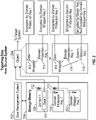
- Fig. 2 depicts exporting data 110 from the domain management system 102 of Fig. 1 to a target system.
- the data 110 is stored in encrypted form, secured by a domain protection key 114, for example "domain protection key 1", in a corresponding domain 108 in storage memory 104, for example "domain 1".
- the data management system 102 prepares the encrypted data 110 to be exported to a target system as an object 204. This is done by wrapping the data 110, encrypted by the domain protection key 114 labeled "domain protection key 1" along with that domain protection key, which is encrypted by a domain wrapper key 202 labeled "domain wrapper key 1".
- domain protection key 1 For exporting, that domain protection key 114, which is secured or encrypted by the system protection key 116, is decrypted by the system protection key 116 and re-encrypted by "domain wrapper key 1". This is shown in the upper right part of Fig. 2 .
- the wrapping is done by wrapping the data 110, encrypted by "domain protection key 1", the domain protection key 1 encrypted by the system protection key 116 (see Fig. 1 ), and the system protection key 116 encrypted by the domain wrapper key 202 labeled "domain wrapper key 1".
- the system protection key 116 which is secured or encrypted by the master key 1 18, is decrypted by the master key 118 (see Fig. 1 ), and re-encrypted by "domain wrapper key 1".
- Each domain 108 has one domain wrapper key 202, and each domain wrapper key 202 belongs to one domain 108. That is, each domain protection key 114 and each domain wrapper key is specific and exclusive to one domain 108.
- the data management system 102 exports the data 110, the data 110 remains encrypted as the data 110 was while stored. It should be appreciated that in the embodiments, at no time during the exporting is the data 110 decrypted and re-encrypted.
- Exporting can be used for data transfer, data migration, backup, restore, and further operations. Importing can be performed by receiving the exported data, by receiving migrating data, by receiving backup data, or receiving restored backup data, for example as depicted in Figs. 3 and 4 .
- Fig. 3 depicts data migration from a legacy system 316 to the domain management system 102 of Fig. 1 as an upgrade system 318.
- the data is migrating from a first data management system 302, with domains 306 secured by a data protection key 308 (i.e., all domains 306 secured by the same, single, data protection key 308), to a second data management system 302, with domains 108 secured by individual domainspecific domain protection keys 114 as shown in Fig. 1 .
- the legacy system 316 data management system 302 sends the data 312, for example in an object 314 which could be a file including the data 312 and one or more keys such as shown in Fig. 2 , or in some other format.
- the data 312 is sent in encrypted form, i.e., encrypted by the data protection key 314 of the legacy system 316.
- the upgrade system 318 as the target system stores the still-encrypted data 312 in a domain 108, for example "domain 1".
- the data protection key 308 is stored as the domain protection key 114, for example "domain protection key 1" for "domain 1".
- the data management system 102 (of the upgrade system 318) encrypts the data protection key 308 with itself, then stores the self-encrypted data protection key 308 as the domain protection key 114 for the domain 108 into which the migrated, encrypted data 312 is written, e.g., "domain protection key 1" for "domain 1". And, the data management system 102 (of the upgrade system 318) encrypts the data protection key 308 with the master key 118, and stores the encrypted data protection key 308 as the system protection key 116.
- the data protection key 308 from the legacy system 316 is thus used at different levels in the upgrade system 318, as the domain protection key 114 for a domain 108, and as the system protection key 116 securing domain protection keys 114.
- the same data protection key 308 is used as the domain protection key 114 for each of these domains 108 in the upgrade system 318, and is also used as the system protection key 116 to secure all domain protection keys 114.
- encrypted data is stored in the legacy system 316, encrypted data is sent in the data migration, and encrypted data is stored in the upgrade system 318. There is no need to decrypt data and re-encrypt the data, when migrating.
- Fig. 4 depicts data backup and restore, using the data management system 102 of Fig. 1 . These operations are combined in the drawing for purposes of illustration, but would usually occur at separate times. Also, although the backup management system 402, as the source or sending system in the backup scenario (left half of Fig. 4 ), is depicted as separate from the receiving target system in the restore scenario (right half of Fig. 4 ), these could be combined into the same system, as when a backup data set is restored to a system that originated the backup, but has later failed.
- the source or sending system is the backup management system 402
- the target or receiving system is the data management system 102, including storage memory 104.
- the backup management system sends data 404, encrypted by "domain protection key 1", which could have some other name in further examples.
- the data management system 102 stores the data 404, still in encrypted form, in a domain 108, for example "domain 1".
- the domain protection key 114 labeled "domain protection key 1" is stored, for example encrypted by the system protection key 116 as shown in Fig. 1 .
- the backup management system 402 and the data management system 102 could cooperate regarding the "domain protection key 1", for example using the key management interoperability protocol server 120.
- the source or sending system is the first data management system 102 (i.e., middle of Fig. 4 ), and the target or receiving system is another or second data management system 102 (i.e., far right of Fig. 4 ).
- the source data management system 102 sends data 404, encrypted by "domain protection key 1”, and also sends the domain protection key 114, e.g. "domain protection key 1", encrypted by the domain wrapper key 202, e.g., "domain wrapper key 1", for example with the data and the key wrapped in an object 204 as shown in Fig. 2 .
- the target data management system 102 Upon receiving the backup data for restoration to the target system, the target data management system 102 stores the data 404, still in encrypted form as encrypted by "domain protection key 1", in a domain 108 in storage memory 104 of the target system, for example "domain 1". Also, the target or receiving data management system 102 decrypts the domain protection key 1 14, by the domain wrapper key 202, and re- encrypts the domain protection key 114 with the system protection key 116, storing the now re-encrypted domain protection key 114, e.g. "domain protection key 1". Similarly to data migration shown in Fig. 3 , there is no need to decrypt data and re-encrypt the data, in either the backup or the restore operation. Keys, in some embodiments, are handled by cooperation with the key management interoperability protocol server 120 shown in Fig. 1 .
- Fig. 5 is a flow diagram of a method for protecting data, performed by the data management system of Figs. 1-4 or variations thereof.
- an action 502 multiple domains of storage memory are established.
- domain protection keys with one domain protection key per domain, are established. It should be appreciated that the establishment of domain protection keys can be done by receiving keys or generating keys, and in some embodiments can be done in cooperation with a key management interoperability protocol server.
- data is stored in the domains of storage memory. Data in each domain is encrypted and thereby secured by a corresponding domain protection key.
- the domain protection keys are encrypted with (or by) a system protection key, securing the domain protection keys. That is, the system protection key secures the domain protection keys.
- the system protection key is encrypted with a master key. This secures the system protection key, i.e., the system protection key is secured by the master key.
- the system imports, exports, migrates, backs up or restores data, without decrypting and re-encrypting the data.
- Fig. 6 is an illustration showing an exemplary computing device which may implement the embodiments described herein.
- the computing device of Fig. 6 may be used to perform embodiments of the functionality for protecting data in multiple domains of storage memory in accordance with some embodiments.
- the computing device includes a central processing unit (CPU) 601, which is coupled through a bus 605 to a memory 603, and mass storage device 607.
- Mass storage device 607 represents a persistent data storage device such as a floppy disc drive or a fixed disc drive, which may be local or remote in some embodiments.
- the mass storage device 607 could implement a backup storage, in some embodiments.
- Memory 603 may include read only memory, random access memory, etc.
- Applications resident on the computing device may be stored on or accessed via a computer readable medium such as memory 603 or mass storage device 607 in some embodiments. Applications may also be in the form of modulated electronic signals modulated accessed via a network modem or other network interface of the computing device.
- CPU 601 may be embodied in a general-purpose processor, a special purpose processor, or a specially programmed logic device in some embodiments.
- Display 611 is in communication with CPU 601, memory 603, and mass storage device 607, through bus 605. Display 611 is configured to display any visualization tools or reports associated with the system described herein.
- Input/output device 609 is coupled to bus 605 in order to communicate information in command selections to CPU 601. It should be appreciated that data to and from external devices may be communicated through the input/output device 609.
- CPU 601 can be defined to execute the functionality described herein to enable the functionality described with reference to Figs. 1-5 .
- the code embodying this functionality may be stored within memory 603 or mass storage device 607 for execution by a processor such as CPU 601 in some embodiments.
- the operating system on the computing device may be MS DOS TM , MS-WINDOWS TM , OS/2 TM , UNLX TM , LINUX TM , or other known operating systems. It should be appreciated that the embodiments described herein may also be integrated with a virtualized computing system implemented with physical computing resources.
- first, second, etc. may be used herein to describe various steps or calculations, these steps or calculations should not be limited by these terms. These terms are only used to distinguish one step or calculation from another. For example, a first calculation could be termed a second calculation, and, similarly, a second step could be termed a first step, without departing from the scope of this disclosure.
- the term "and/or" and the "/" symbol includes any and all combinations of one or more of the associated listed items.
- the embodiments might employ various computer-implemented operations involving data stored in computer systems. These operations are those requiring physical manipulation of physical quantities. Usually, though not necessarily, these quantities take the form of electrical or magnetic signals capable of being stored, transferred, combined, compared, and otherwise manipulated. Further, the manipulations performed are often referred to in terms, such as producing, identifying, determining, or comparing. Any of the operations described herein that form part of the embodiments are useful machine operations.
- the embodiments also relate to a device or an apparatus for performing these operations.
- the apparatus can be specially constructed for the required purpose, or the apparatus can be a general-purpose computer selectively activated or configured by a computer program stored in the computer.
- various general-purpose machines can be used with computer programs written in accordance with the teachings herein, or it may be more convenient to construct a more specialized apparatus to perform the required operations.
- a module, an application, a layer, an agent or other method-operable entity could be implemented as hardware, firmware, or a processor executing software, or combinations thereof. It should be appreciated that, where a software-based embodiment is disclosed herein, the software can be embodied in a physical machine such as a controller. For example, a controller could include a first module and a second module. A controller could be configured to perform various actions, e.g., of a method, an application, a layer or an agent.
- the embodiments can also be embodied as computer readable code on a tangible non-transitory computer readable medium.
- the computer readable medium is any data storage device that can store data, which can be thereafter read by a computer system. Examples of the computer readable medium include hard drives, network attached storage (NAS), read-only memory, random-access memory, CD-ROMs, CD-Rs, CD-RWs, magnetic tapes, and other optical and non-optical data storage devices.
- the computer readable medium can also be distributed over a network coupled computer system so that the computer readable code is stored and executed in a distributed fashion.
- Embodiments described herein may be practiced with various computer system configurations including hand-held devices, tablets, microprocessor systems, microprocessor-based or programmable consumer electronics, minicomputers, mainframe computers and the like.
- the embodiments can also be practiced in distributed computing environments where tasks are performed by remote processing devices that are linked through a wire-based or wireless network.
- one or more portions of the methods and mechanisms described herein may form part of a cloud-computing environment.
- resources may be provided over the Internet as services according to one or more various models.
- models may include Infrastructure as a Service (laaS), Platform as a Service (PaaS), and Software as a Service (SaaS).
- laaS Infrastructure as a Service
- PaaS Platform as a Service
- SaaS Software as a Service
- software tools and underlying equipment used by developers to develop software solutions may be provided as a service and hosted by the service provider.
- SaaS typically includes a service provider licensing software as a service on demand. The service provider may host the software, or may deploy the software to a customer for a given period of time. Numerous combinations of the above models are possible and are contemplated.
- Various units, circuits, or other components may be described or claimed as “configured to” perform a task or tasks.
- the phrase “configured to” is used to connote structure by indicating that the units/circuits/components include structure (e.g., circuitry) that performs the task or tasks during operation.
- the unit/circuit/component can be said to be configured to perform the task even when the specified unit/circuit/component is not currently operational (e.g., is not on).
- the units/circuits/components used with the "configured to” language include hardware-for example, circuits, memory storing program instructions executable to implement the operation, etc.
- a unit/circuit/component is “configured to” perform one or more tasks is expressly intended not to invoke 35 U.S.C. 112, sixth paragraph, for that unit/circuit/component.
- "configured to” can include generic structure (e.g., generic circuitry) that is manipulated by software and/or firmware (e.g., an FPGA or a general -purpose processor executing software) to operate in manner that is capable of performing the task(s) at issue.
- "Configured to” may also include adapting a manufacturing process (e.g., a semiconductor fabrication facility) to fabricate devices (e.g., integrated circuits) that are adapted to implement or perform one or more tasks.
Landscapes
- Engineering & Computer Science (AREA)
- Computer Security & Cryptography (AREA)
- Theoretical Computer Science (AREA)
- General Engineering & Computer Science (AREA)
- Computer Networks & Wireless Communication (AREA)
- Signal Processing (AREA)
- Physics & Mathematics (AREA)
- General Physics & Mathematics (AREA)
- Computer Hardware Design (AREA)
- Computing Systems (AREA)
- Storage Device Security (AREA)
- Information Retrieval, Db Structures And Fs Structures Therefor (AREA)
Description
- Data encryption and decryption, using keys, have long been available for protecting data. Secure storage systems store data in encrypted form, and secure communications send and receive data in encrypted form. Key management interoperability protocol is applied in many systems for managing keys. However, storage of all data in a storage system under a single key makes the storage system vulnerable to theft of that key. And, decrypting and re-encrypting data when multiple keys are in use in communications and storage is resource intensive and timeconsuming, producing system bottlenecks. Also, decrypting and re-encrypting data for data migration, backup and/or restore operations is problematic. The document
US6144744A discloses a method for the secure transfer of objects between cryptographic processors and the documentUS2015/172046A1 discloses a key manager which provides a way to separate out the management of encryption keys and policies from application domains. Therefore, there is a need in the art for a solution which overcomes the drawbacks described above and improves protection of user data that is moved from one location or system to another and stored. - The invention is defined by a system according to
claim 1, a computer readable media according to claim 5 and a method according to claim 9. Preferred embodiments are defined by the dependent claims. - Other aspects and advantages of the embodiments will become apparent from the following detailed description taken in conjunction with the accompanying drawings which illustrate, by way of example, the principles of the described embodiments.
- The described embodiments and the advantages thereof may best be understood by reference to the following description taken in conjunction with the accompanying drawings.
-
Fig. 1 is a system diagram for a data management system that manages multiple domains in storage memory, with data stored in encrypted form in the domains and each domain having its own domain protection key in accordance with some embodiments. -
Fig. 2 depicts exporting data from the domain management system ofFig. 1 to a target system in accordance with some embodiments. -
Fig. 3 depicts data migration from a legacy system to the domain management system ofFig. 1 as an upgrade system in accordance with some embodiments. -
Fig. 4 depicts data backup and restore, using the data management system ofFig. 1 in accordance with some embodiments. -
Fig. 5 is a flow diagram of a method for protecting data, performed by the data management system ofFigs. 1-4 or variations thereof in accordance with some embodiments. -
Fig. 6 is an illustration showing an exemplary computing device which may implement the embodiments described herein. - Embodiments of a data management system, disclosed herein, manage multiple domains in storage memory, using domain protection keys specific to domains, and multiple levels of keys. Exporting of data, data migration, data backup and data restore to or from a domain make use of data storage and transmission of data that is encrypted by the domain protection key for that domain, without decrypting and re-encrypting the data. Domain protection keys are secured by a system protection key, which is in turn secured by a master key. A domain wrapper key, specific to each domain, is used for wrapping encrypted data and one or more keys, as an object for exporting data. In some embodiments, keys are managed using the key management interoperability protocol.
-
Fig. 1 is a system diagram for adata management system 102 that managesmultiple domains 108 instorage memory 104, withdata 110 stored in encrypted form in thedomains 108 and eachdomain 108 having its owndomain protection key 114. In some embodiments, thedata management system 102 and/or thestorage memory 104 interacts with a key managementinteroperability protocol server 120, for managing various keys. Thedata management system 102 partitions or divides thestorage memory 104 intovarious domains 108, forexample domains 108 labeled "domain 1" through "domain N" as shown inFig. 1 .Data 110 stored in thedomain 108 labeled "domain 1" and encrypted by thedomain protection key 114 labeled "domain protection key 1" is labeled "data 1", anddata 110 stored in thedomain 108 labeled "domain N" and encrypted by thedomain protection key 114 labeled "domain protection key N" is labeled "data N". Securing by encryption is symbolized by alock 112, with dashed lines leading from thelock 112 to the corresponding key, i.e., the encryption and decryption key for that securing of data or securing of a key. - The
domain protection keys 114 in thestorage memory 104 are secured or encrypted by thesystem protection key 116. In turn, the system protection key is encrypted or secured by themaster key 118. Eachdomain protection key 114 is specific to one and only onedomain 108, and eachdomain 108 has one and only onedomain protection key 114. In further embodiments, other keys are used for securing thedomain protection keys 114, or keys may have multiple uses. Various functions that thedata management system 102 performs can be implemented as software executing on theprocessor 106, hardware, firmware, or combinations thereof. Some functions can be shared between thedata management system 102 and thestorage memory 104, or performed by thestorage memory 104. Key management, in various embodiments, is performed by thedata management system 102 and thestorage memory 104 in cooperation with the key managementinteroperability protocol server 120, or a subset of these in various subcombinations. -
Fig. 2 depicts exportingdata 110 from thedomain management system 102 ofFig. 1 to a target system. As inFig. 1 , thedata 110 is stored in encrypted form, secured by adomain protection key 114, for example "domain protection key 1", in acorresponding domain 108 instorage memory 104, for example "domain 1". In one embodiment, thedata management system 102 prepares theencrypted data 110 to be exported to a target system as anobject 204. This is done by wrapping thedata 110, encrypted by thedomain protection key 114 labeled "domain protection key 1" along with that domain protection key, which is encrypted by adomain wrapper key 202 labeled "domain wrapper key 1". To prepare "domain protection key 1" for exporting, thatdomain protection key 114, which is secured or encrypted by thesystem protection key 116, is decrypted by thesystem protection key 116 and re-encrypted by "domain wrapper key 1". This is shown in the upper right part ofFig. 2 . - In a further embodiment, shown in the lower right part of
Fig. 2 , the wrapping is done by wrapping thedata 110, encrypted by "domain protection key 1", thedomain protection key 1 encrypted by the system protection key 116 (seeFig. 1 ), and thesystem protection key 116 encrypted by thedomain wrapper key 202 labeled "domain wrapper key 1". To prepare thesystem protection key 116 for exporting, thesystem protection key 116, which is secured or encrypted by themaster key 1 18, is decrypted by the master key 118 (seeFig. 1 ), and re-encrypted by "domain wrapper key 1". - Each
domain 108 has onedomain wrapper key 202, and eachdomain wrapper key 202 belongs to onedomain 108. That is, eachdomain protection key 114 and each domain wrapper key is specific and exclusive to onedomain 108. While thedata management system 102 exports thedata 110, thedata 110 remains encrypted as thedata 110 was while stored. It should be appreciated that in the embodiments, at no time during the exporting is thedata 110 decrypted and re-encrypted. Exporting can be used for data transfer, data migration, backup, restore, and further operations. Importing can be performed by receiving the exported data, by receiving migrating data, by receiving backup data, or receiving restored backup data, for example as depicted inFigs. 3 and4 . -
Fig. 3 depicts data migration from alegacy system 316 to thedomain management system 102 ofFig. 1 as anupgrade system 318. In this example, the data is migrating from a firstdata management system 302, withdomains 306 secured by a data protection key 308 (i.e., alldomains 306 secured by the same, single, data protection key 308), to a seconddata management system 302, withdomains 108 secured by individual domainspecificdomain protection keys 114 as shown inFig. 1 . As a source, thelegacy system 316data management system 302 sends thedata 312, for example in anobject 314 which could be a file including thedata 312 and one or more keys such as shown inFig. 2 , or in some other format. Thedata 312 is sent in encrypted form, i.e., encrypted by thedata protection key 314 of thelegacy system 316. Upon receipt of thedata 312, e.g., in theobject 314 or other format, theupgrade system 318 as the target system stores the still-encrypted data 312 in adomain 108, for example "domain 1". Thedata protection key 308 is stored as thedomain protection key 114, for example "domain protection key 1" for "domain 1". - To prepare the
data protection key 308 for storing as thedomain protection key 114, the data management system 102 (of the upgrade system 318) encrypts thedata protection key 308 with itself, then stores the self-encrypteddata protection key 308 as thedomain protection key 114 for thedomain 108 into which the migrated,encrypted data 312 is written, e.g., "domain protection key 1" for "domain 1". And, the data management system 102 (of the upgrade system 318) encrypts thedata protection key 308 with themaster key 118, and stores the encrypteddata protection key 308 as thesystem protection key 116. Thedata protection key 308 from thelegacy system 316 is thus used at different levels in theupgrade system 318, as thedomain protection key 114 for adomain 108, and as thesystem protection key 116 securingdomain protection keys 114. In some embodiments, if data is migrated frommultiple domains 306 of thelegacy system 316 tomultiple domains 108 in theupgrade system 318, the samedata protection key 308 is used as thedomain protection key 114 for each of thesedomains 108 in theupgrade system 318, and is also used as thesystem protection key 116 to secure alldomain protection keys 114. As noted at the bottom ofFig. 3 , encrypted data is stored in thelegacy system 316, encrypted data is sent in the data migration, and encrypted data is stored in theupgrade system 318. There is no need to decrypt data and re-encrypt the data, when migrating. -
Fig. 4 depicts data backup and restore, using thedata management system 102 ofFig. 1 . These operations are combined in the drawing for purposes of illustration, but would usually occur at separate times. Also, although thebackup management system 402, as the source or sending system in the backup scenario (left half ofFig. 4 ), is depicted as separate from the receiving target system in the restore scenario (right half ofFig. 4 ), these could be combined into the same system, as when a backup data set is restored to a system that originated the backup, but has later failed. - For backup, the source or sending system is the
backup management system 402, and the target or receiving system is thedata management system 102, includingstorage memory 104. The backup management system sendsdata 404, encrypted by "domain protection key 1", which could have some other name in further examples. Upon receiving the backup data, thedata management system 102 stores thedata 404, still in encrypted form, in adomain 108, for example "domain 1". Thedomain protection key 114 labeled "domain protection key 1" is stored, for example encrypted by thesystem protection key 116 as shown inFig. 1 . In various embodiments, thebackup management system 402 and thedata management system 102 could cooperate regarding the "domain protection key 1", for example using the key managementinteroperability protocol server 120. - For restore, the source or sending system is the first data management system 102 (i.e., middle of
Fig. 4 ), and the target or receiving system is another or second data management system 102 (i.e., far right ofFig. 4 ). The sourcedata management system 102 sendsdata 404, encrypted by "domain protection key 1", and also sends thedomain protection key 114, e.g. "domain protection key 1", encrypted by thedomain wrapper key 202, e.g., "domain wrapper key 1", for example with the data and the key wrapped in anobject 204 as shown inFig. 2 . Upon receiving the backup data for restoration to the target system, the targetdata management system 102 stores thedata 404, still in encrypted form as encrypted by "domain protection key 1", in adomain 108 instorage memory 104 of the target system, for example "domain 1". Also, the target or receivingdata management system 102 decrypts thedomain protection key 1 14, by thedomain wrapper key 202, and re- encrypts thedomain protection key 114 with thesystem protection key 116, storing the now re-encrypteddomain protection key 114, e.g. "domain protection key 1". Similarly to data migration shown inFig. 3 , there is no need to decrypt data and re-encrypt the data, in either the backup or the restore operation. Keys, in some embodiments, are handled by cooperation with the key managementinteroperability protocol server 120 shown inFig. 1 . -
Fig. 5 is a flow diagram of a method for protecting data, performed by the data management system ofFigs. 1-4 or variations thereof. In anaction 502, multiple domains of storage memory are established. In anaction 504, domain protection keys, with one domain protection key per domain, are established. It should be appreciated that the establishment of domain protection keys can be done by receiving keys or generating keys, and in some embodiments can be done in cooperation with a key management interoperability protocol server. In anaction 506, data is stored in the domains of storage memory. Data in each domain is encrypted and thereby secured by a corresponding domain protection key. In anaction 508, the domain protection keys are encrypted with (or by) a system protection key, securing the domain protection keys. That is, the system protection key secures the domain protection keys. Still referring toFig. 5 , in anaction 510, the system protection key is encrypted with a master key. This secures the system protection key, i.e., the system protection key is secured by the master key. In anaction 512, the system imports, exports, migrates, backs up or restores data, without decrypting and re-encrypting the data. - It should be appreciated that the methods described herein may be performed with a digital processing system, such as a conventional, general-purpose computer system. Special purpose computers, which are designed or programmed to perform only one function may be used in the alternative.
Fig. 6 is an illustration showing an exemplary computing device which may implement the embodiments described herein. The computing device ofFig. 6 may be used to perform embodiments of the functionality for protecting data in multiple domains of storage memory in accordance with some embodiments. The computing device includes a central processing unit (CPU) 601, which is coupled through abus 605 to amemory 603, andmass storage device 607.Mass storage device 607 represents a persistent data storage device such as a floppy disc drive or a fixed disc drive, which may be local or remote in some embodiments. Themass storage device 607 could implement a backup storage, in some embodiments.Memory 603 may include read only memory, random access memory, etc. Applications resident on the computing device may be stored on or accessed via a computer readable medium such asmemory 603 ormass storage device 607 in some embodiments. Applications may also be in the form of modulated electronic signals modulated accessed via a network modem or other network interface of the computing device. It should be appreciated thatCPU 601 may be embodied in a general-purpose processor, a special purpose processor, or a specially programmed logic device in some embodiments. -
Display 611 is in communication withCPU 601,memory 603, andmass storage device 607, throughbus 605.Display 611 is configured to display any visualization tools or reports associated with the system described herein. Input/output device 609 is coupled tobus 605 in order to communicate information in command selections toCPU 601. It should be appreciated that data to and from external devices may be communicated through the input/output device 609.CPU 601 can be defined to execute the functionality described herein to enable the functionality described with reference toFigs. 1-5 . The code embodying this functionality may be stored withinmemory 603 ormass storage device 607 for execution by a processor such asCPU 601 in some embodiments. The operating system on the computing device may be MS DOS™, MS-WINDOWS™, OS/2™, UNLX™, LINUX™, or other known operating systems. It should be appreciated that the embodiments described herein may also be integrated with a virtualized computing system implemented with physical computing resources. - Detailed illustrative embodiments are disclosed herein. However, specific functional details disclosed herein are merely representative for purposes of describing embodiments. Embodiments may, however, be embodied in many alternate forms and should not be construed as limited to only the embodiments set forth herein.
- It should be understood that although the terms first, second, etc. may be used herein to describe various steps or calculations, these steps or calculations should not be limited by these terms. These terms are only used to distinguish one step or calculation from another. For example, a first calculation could be termed a second calculation, and, similarly, a second step could be termed a first step, without departing from the scope of this disclosure. As used herein, the term "and/or" and the "/" symbol includes any and all combinations of one or more of the associated listed items.
- As used herein, the singular forms "a", "an" and "the" are intended to include the plural forms as well, unless the context clearly indicates otherwise. It will be further understood that the terms "comprises", "comprising", "includes", and/or "including", when used herein, specify the presence of stated features, integers, steps, operations, elements, and/or components, but do not preclude the presence or addition of one or more other features, integers, steps, operations, elements, components, and/or groups thereof. Therefore, the terminology used herein is for the purpose of describing particular embodiments only and is not intended to be limiting.
- It should also be noted that in some alternative implementations, the functions/acts noted may occur out of the order noted in the figures. For example, two figures shown in succession may in fact be executed substantially concurrently or may sometimes be executed in the reverse order, depending upon the functionality/acts involved.
- With the above embodiments in mind, it should be understood that the embodiments might employ various computer-implemented operations involving data stored in computer systems. These operations are those requiring physical manipulation of physical quantities. Usually, though not necessarily, these quantities take the form of electrical or magnetic signals capable of being stored, transferred, combined, compared, and otherwise manipulated. Further, the manipulations performed are often referred to in terms, such as producing, identifying, determining, or comparing. Any of the operations described herein that form part of the embodiments are useful machine operations. The embodiments also relate to a device or an apparatus for performing these operations. The apparatus can be specially constructed for the required purpose, or the apparatus can be a general-purpose computer selectively activated or configured by a computer program stored in the computer. In particular, various general-purpose machines can be used with computer programs written in accordance with the teachings herein, or it may be more convenient to construct a more specialized apparatus to perform the required operations.
- A module, an application, a layer, an agent or other method-operable entity could be implemented as hardware, firmware, or a processor executing software, or combinations thereof. It should be appreciated that, where a software-based embodiment is disclosed herein, the software can be embodied in a physical machine such as a controller. For example, a controller could include a first module and a second module. A controller could be configured to perform various actions, e.g., of a method, an application, a layer or an agent.
- The embodiments can also be embodied as computer readable code on a tangible non-transitory computer readable medium. The computer readable medium is any data storage device that can store data, which can be thereafter read by a computer system. Examples of the computer readable medium include hard drives, network attached storage (NAS), read-only memory, random-access memory, CD-ROMs, CD-Rs, CD-RWs, magnetic tapes, and other optical and non-optical data storage devices. The computer readable medium can also be distributed over a network coupled computer system so that the computer readable code is stored and executed in a distributed fashion. Embodiments described herein may be practiced with various computer system configurations including hand-held devices, tablets, microprocessor systems, microprocessor-based or programmable consumer electronics, minicomputers, mainframe computers and the like. The embodiments can also be practiced in distributed computing environments where tasks are performed by remote processing devices that are linked through a wire-based or wireless network.
- Although the method operations were described in a specific order, it should be understood that other operations may be performed in between described operations, described operations may be adjusted so that they occur at slightly different times or the described operations may be distributed in a system which allows the occurrence of the processing operations at various intervals associated with the processing.
- In various embodiments, one or more portions of the methods and mechanisms described herein may form part of a cloud-computing environment. In such embodiments, resources may be provided over the Internet as services according to one or more various models. Such models may include Infrastructure as a Service (laaS), Platform as a Service (PaaS), and Software as a Service (SaaS). In laaS, computer infrastructure is delivered as a service. In such a case, the computing equipment is generally owned and operated by the service provider. In the PaaS model, software tools and underlying equipment used by developers to develop software solutions may be provided as a service and hosted by the service provider. SaaS typically includes a service provider licensing software as a service on demand. The service provider may host the software, or may deploy the software to a customer for a given period of time. Numerous combinations of the above models are possible and are contemplated.
- Various units, circuits, or other components may be described or claimed as "configured to" perform a task or tasks. In such contexts, the phrase "configured to" is used to connote structure by indicating that the units/circuits/components include structure (e.g., circuitry) that performs the task or tasks during operation. As such, the unit/circuit/component can be said to be configured to perform the task even when the specified unit/circuit/component is not currently operational (e.g., is not on). The units/circuits/components used with the "configured to" language include hardware-for example, circuits, memory storing program instructions executable to implement the operation, etc. Reciting that a unit/circuit/component is "configured to" perform one or more tasks is expressly intended not to invoke 35 U.S.C. 112, sixth paragraph, for that unit/circuit/component. Additionally, "configured to" can include generic structure (e.g., generic circuitry) that is manipulated by software and/or firmware (e.g., an FPGA or a general -purpose processor executing software) to operate in manner that is capable of performing the task(s) at issue. "Configured to" may also include adapting a manufacturing process (e.g., a semiconductor fabrication facility) to fabricate devices (e.g., integrated circuits) that are adapted to implement or perform one or more tasks.
- The foregoing description, for the purpose of explanation, has been described with reference to specific embodiments. Said embodiments are meant to be examples useful for understanding the invention. The present invention is only defined by the appended claims.
Claims (12)
- A data management system (102), comprising:at least one processor (106), configured to couple to a plurality of domains (108) of a storage memory (104); andthe at least one processor configured to perform actions comprising:encrypting data (110) in each of the plurality of domains, using a plurality of domain protection keys (114), each domain protection key specific to one of the plurality of domains;encrypting the plurality of domain protection keys, using a system protection key (116);securing the system protection key, using a master key (118); creating an object (204) by wrapping encrypted data (110) of a first one of the plurality of domains and a domain protection key (114) specific to the first one of the plurality of domains, with the domain protection key encrypted using a domain wrapper key (202), wherein the domain wrapper key (202) is specific to the first one of the plurality of domains; andexporting the object and the domain wrapper key; said exporting being used for at least one operation of transferring said data (110), migrating said data (110), saving said data (110) as backup data or restoring said data (110).
- The data management system of claim 1, wherein the at least one processor is configured to perform data migration by performing further actions comprising:receiving migrating data from a further data management system, with the migrating data as first data encrypted by a first key;storing the first data encrypted by the first key in a first one of the plurality of domains of the data management system; andone of a) or b):a) encrypting the first key with the first key, the first key securing the first data as a first domain protection key specific to the first domain and the first key further acting as the system protection key to secure the first domain protection key;b) encrypting the first key with the system protection key, the first key securing the first data as a first domain protection key specific to the first domain, and the system protection key securing the first domain protection key.
- The data management system of claim 1, wherein the at least one processor is configured to restore backup data from the data management system to a further data management system by performing further actions comprising:encrypting a first one of the plurality of domain protection keys, specific to a first one of the plurality of domains, using a domain wrapper key specific to the first one of the plurality of domains; andsending backup data, encrypted by the first one of the plurality of domain protection keys, and the encrypted first one of the plurality of domain protection keys, from the first one of the plurality of domains in the data management system to the further data management system.
- The data management system of claim 1, wherein the at least one processor is configured to restore backup data from a further data management system to the data management system by performing further actions comprising:receiving backup data encrypted by a first domain protection key, and the first domain protection key encrypted by a first domain wrapper key, from the further data management system;storing the encrypted backup data in a first one of the plurality of domains;decrypting the encrypted first domain protection key, using the first domain wrapper key;re-encrypting the first domain protection key, using the system protection key; andstoring the re-encrypted first domain protection key, secured by the system protection key, as a domain protection key specific to the first one of the plurality of domains.
- A tangible, non-transitory, computer-readable media having instructions thereupon which, when executed by a processor, cause the processor to perform a method comprising:creating a plurality of domains (108) in a storage memory (104), with each domain associated with a domain protection key (114) specific to the domain;encrypting data (110) in the plurality of domains with a plurality of such domain protection keys;encrypting the plurality of domain protection keys with a system protection key (116);encrypting the system protection key with a master key (118);creating an object (204) that includes encrypted data of a first one of the plurality of domains and a domain protection key specific to the first one of the plurality of domains, with the domain protection key encrypted by a domain wrapper key (202), wherein the domain wrapper key (202) is specific to the first one of the plurality of domains; andexporting the object, along with the domain wrapper key (202), said exporting being used for at least one operation of transferring said data (110), migrating said data (110), saving said data (110) as backup data or restoring said data (110) .
- The computer-readable media of claim 5, wherein the method further comprises:receiving migrating data that is encrypted by a first domain protection key;storing the encrypted migrating data in a first one of the plurality of domains; andencrypting the first domain protection key with itself, so that the first domain protection key secures the encrypted migrating data in the first one of the plurality of domains and the first domain protection key acts as the system protection key to secure the first domain protection key.
- The computer-readable media of claim 5, wherein the method includes restoring backup data from a first data management system to a second data management system, comprising:encrypting a first one of the plurality of domain protection keys with a domain wrapper key specific to the first one of the plurality of domains; andsending the backup data, encrypted by the first one of the plurality of domain protection keys, and the encrypted first one of the plurality of domain protection keys, from the first data management system to the second data management system.
- The computer-readable media of claim 5, wherein the method further includes restoring backup data from a second data management system to a first data management system, comprising:storing backup data, encrypted by a first domain protection key, in a first one of the plurality of domains in the first data management system, the encrypted backup data received from the second data management system;decrypting an encrypted first domain protection key, using a first domain wrapper key specific to the first one of the plurality of domains, the encrypted first domain protection key received from the second data management system;encrypting the decrypted first domain protection key, using the system protection key; andstoring the system protection key-encrypted first domain protection key, as one of the plurality of domain protection keys, specific to the first one of the plurality of domains.
- A method for protecting user data, performed by a data management system (102), comprising:establishing a plurality of domains (108) of a storage memory (104);encrypting data (110) in the plurality of domains with a plurality of domain protection keys (114), each domain protection key specific to one of the plurality of domains;encrypting the plurality of domain protection keys with a system protection key (116);encrypting the system protection key with a master key (118);creating an object (204) by wrapping encrypted data of a first one of the plurality of domains and a domain protection key specific to the first one of the plurality of domains, with a domain wrapper key (202),wherein the domain wrapper key (202) is specific to the first one of the plurality of domains; andexporting the object along with the domain wrapper key (202), said exporting being used for at least one operation of transferring said data (110), migrating said data (110), saving said data (110) as backup data or restoring said data (110) .
- The method of claim 9, further comprising:receiving migrating data from a further data management system, with the migrating data as first data encrypted by a first domain protection key;storing the first data encrypted by the first domain protection key in a first one of the plurality of domains of the data management system; andone of a) or b):a) encrypting the first domain protection key with the first domain protection key, the first domain protection key securing the first data and further acting as the system protection key to secure the first domain protection key;b) encrypting the first domain protection key with the system protection key to secure the first domain protection key.
- The method of claim 9, further comprising:
restoring backup data from the data management system to a further data management system, wherein the backup data is encrypted by a first one of the plurality of domain protection keys and stored in a first one of the plurality of domains, the restoring comprising:encrypting the first one of the plurality of domain protection keys with a domain wrapper key specific to the first one of the plurality of domains; andsending the backup data, encrypted by the first one of the plurality of domain protection keys, and the encrypted first one of the plurality of domain protection keys, from the data management system to the further data management system. - The method of claim 9, further comprising:
restoring backup data from a further data management system to the data management system, wherein the backup data is stored encrypted in the further data management system by a first domain protection key and the first domain protection key is encrypted in the further data management system by a first domain wrapper key, the restoring comprising:storing the encrypted backup data in a first one of the plurality of domains in the data management system;decrypting the encrypted first domain protection key, with the first domain wrapper key;re-encrypting the first domain protection key, with the system protection key; andstoring the re-encrypted first domain protection key, as one of the plurality of domain protection keys, specific to the first one of the plurality of domains.
Applications Claiming Priority (2)
| Application Number | Priority Date | Filing Date | Title |
|---|---|---|---|
| US15/331,576 US10523645B2 (en) | 2016-10-21 | 2016-10-21 | Method and system for protecting user data using individualized keys to enable secure compartmentalized data backup/restore |
| PCT/US2017/057627 WO2018075912A1 (en) | 2016-10-21 | 2017-10-20 | Method and system for protecting user data using individualized keys to enable secure compartmentalized data backup/restore |
Publications (3)
| Publication Number | Publication Date |
|---|---|
| EP3529739A1 EP3529739A1 (en) | 2019-08-28 |
| EP3529739A4 EP3529739A4 (en) | 2020-05-20 |
| EP3529739B1 true EP3529739B1 (en) | 2022-04-27 |
Family
ID=61970026
Family Applications (1)
| Application Number | Title | Priority Date | Filing Date |
|---|---|---|---|
| EP17862993.7A Active EP3529739B1 (en) | 2016-10-21 | 2017-10-20 | Method and system for protecting user data using individualized keys to enable secure compartmentalized data backup/restore |
Country Status (5)
| Country | Link |
|---|---|
| US (1) | US10523645B2 (en) |
| EP (1) | EP3529739B1 (en) |
| CA (1) | CA3041102C (en) |
| ES (1) | ES2920957T3 (en) |
| WO (1) | WO2018075912A1 (en) |
Families Citing this family (12)
| Publication number | Priority date | Publication date | Assignee | Title |
|---|---|---|---|---|
| US9729577B2 (en) | 2013-10-07 | 2017-08-08 | Fornetix Llc | System and method for encryption key management, federation and distribution |
| US10630686B2 (en) | 2015-03-12 | 2020-04-21 | Fornetix Llc | Systems and methods for organizing devices in a policy hierarchy |
| US10965459B2 (en) | 2015-03-13 | 2021-03-30 | Fornetix Llc | Server-client key escrow for applied key management system and process |
| US10931653B2 (en) | 2016-02-26 | 2021-02-23 | Fornetix Llc | System and method for hierarchy manipulation in an encryption key management system |
| US10860086B2 (en) | 2016-02-26 | 2020-12-08 | Fornetix Llc | Policy-enabled encryption keys having complex logical operations |
| US10917239B2 (en) | 2016-02-26 | 2021-02-09 | Fornetix Llc | Policy-enabled encryption keys having ephemeral policies |
| US10880281B2 (en) | 2016-02-26 | 2020-12-29 | Fornetix Llc | Structure of policies for evaluating key attributes of encryption keys |
| US11063980B2 (en) | 2016-02-26 | 2021-07-13 | Fornetix Llc | System and method for associating encryption key management policy with device activity |
| JP7393209B2 (en) | 2017-01-26 | 2023-12-06 | センパー フォーティス ソリューションズ リミテッド ライアビリティ カンパニー | Multiple single-level security (MSLS) in multi-tenant clouds |
| US10833857B2 (en) * | 2018-01-29 | 2020-11-10 | International Business Machines Corporation | Encryption key management in a data storage system communicating with asynchronous key servers |
| US10956600B2 (en) * | 2018-10-31 | 2021-03-23 | Salesforce.Com, Inc. | Highly available encryption framework for multiple different computing environments |
| US11573711B2 (en) * | 2020-03-23 | 2023-02-07 | Vmware, Inc. | Enhanced data encryption in distributed datastores using random tweaks stored in data blocks |
Family Cites Families (7)
| Publication number | Priority date | Publication date | Assignee | Title |
|---|---|---|---|---|
| US6144744A (en) * | 1997-06-30 | 2000-11-07 | International Business Machines Corporation | Method and apparatus for the secure transfer of objects between cryptographic processors |
| US8971535B2 (en) * | 2010-05-27 | 2015-03-03 | Bladelogic, Inc. | Multi-level key management |
| US10230738B2 (en) * | 2013-05-13 | 2019-03-12 | Telefonaktiebolaget Lm Ericsson (Publ) | Procedure for platform enforced secure storage in infrastructure clouds |
| US9465947B2 (en) * | 2013-08-05 | 2016-10-11 | Samsung Sds America, Inc. | System and method for encryption and key management in cloud storage |
| US9607177B2 (en) * | 2013-09-30 | 2017-03-28 | Qualcomm Incorporated | Method for securing content in dynamically allocated memory using different domain-specific keys |
| US9792063B2 (en) * | 2014-01-15 | 2017-10-17 | Intel Corporation | Deduplication-based data security |
| US9992172B2 (en) * | 2015-05-01 | 2018-06-05 | Microsoft Technology Licensing, Llc | Secure key management in a data storage system |
-
2016
- 2016-10-21 US US15/331,576 patent/US10523645B2/en active Active
-
2017
- 2017-10-20 CA CA3041102A patent/CA3041102C/en active Active
- 2017-10-20 WO PCT/US2017/057627 patent/WO2018075912A1/en not_active Ceased
- 2017-10-20 ES ES17862993T patent/ES2920957T3/en active Active
- 2017-10-20 EP EP17862993.7A patent/EP3529739B1/en active Active
Also Published As
| Publication number | Publication date |
|---|---|
| CA3041102C (en) | 2023-08-22 |
| EP3529739A4 (en) | 2020-05-20 |
| US20180115537A1 (en) | 2018-04-26 |
| CA3041102A1 (en) | 2018-04-26 |
| ES2920957T3 (en) | 2022-08-12 |
| EP3529739A1 (en) | 2019-08-28 |
| WO2018075912A1 (en) | 2018-04-26 |
| US10523645B2 (en) | 2019-12-31 |
Similar Documents
| Publication | Publication Date | Title |
|---|---|---|
| CA3041102C (en) | Method and system for protecting user data using individualized keys to enable secure compartmentalized data backup/restore | |
| US11489668B2 (en) | Secret regeneration in a storage system | |
| EP3580688B1 (en) | Abstracted cryptographic material management across multiple service providers | |
| US11159518B2 (en) | Container independent secure file system for security application containers | |
| US11200327B1 (en) | Protecting virtual machine data in cloud environments | |
| EP3210156B1 (en) | Access control for data blocks in a distributed filesystem | |
| US9373003B2 (en) | Systems and methods for automatically handling multiple levels of encryption and decryption | |
| US20130086383A1 (en) | Virtual machine images encryption using trusted computing group sealing | |
| US11455429B2 (en) | Container-based cryptography hardware security module management | |
| EP3568796A1 (en) | Bootloader level encryption for system boot data | |
| CN112513855B (en) | Secure operation of encrypted data | |
| US10979223B2 (en) | Separate encryption for a solid-state drive | |
| US11055424B2 (en) | I/O encryption device protected against malicious hypervisors | |
| CN115391804A (en) | File transfer protocol command execution method and device |
Legal Events
| Date | Code | Title | Description |
|---|---|---|---|
| STAA | Information on the status of an ep patent application or granted ep patent |
Free format text: STATUS: THE INTERNATIONAL PUBLICATION HAS BEEN MADE |
|
| PUAI | Public reference made under article 153(3) epc to a published international application that has entered the european phase |
Free format text: ORIGINAL CODE: 0009012 |
|
| STAA | Information on the status of an ep patent application or granted ep patent |
Free format text: STATUS: REQUEST FOR EXAMINATION WAS MADE |
|
| 17P | Request for examination filed |
Effective date: 20190429 |
|
| AK | Designated contracting states |
Kind code of ref document: A1 Designated state(s): AL AT BE BG CH CY CZ DE DK EE ES FI FR GB GR HR HU IE IS IT LI LT LU LV MC MK MT NL NO PL PT RO RS SE SI SK SM TR |
|
| AX | Request for extension of the european patent |
Extension state: BA ME |
|
| DAV | Request for validation of the european patent (deleted) | ||
| DAX | Request for extension of the european patent (deleted) | ||
| A4 | Supplementary search report drawn up and despatched |
Effective date: 20200422 |
|
| RIC1 | Information provided on ipc code assigned before grant |
Ipc: G06F 21/62 20130101AFI20200416BHEP Ipc: H04L 9/08 20060101ALI20200416BHEP Ipc: H04L 29/08 20060101ALI20200416BHEP Ipc: H04L 29/06 20060101ALI20200416BHEP Ipc: G06F 12/14 20060101ALI20200416BHEP Ipc: H04L 9/14 20060101ALI20200416BHEP Ipc: G06F 21/60 20130101ALI20200416BHEP |
|
| RAP1 | Party data changed (applicant data changed or rights of an application transferred) |
Owner name: THALES DIS CPL USA, INC. |
|
| GRAP | Despatch of communication of intention to grant a patent |
Free format text: ORIGINAL CODE: EPIDOSNIGR1 |
|
| STAA | Information on the status of an ep patent application or granted ep patent |
Free format text: STATUS: GRANT OF PATENT IS INTENDED |
|
| INTG | Intention to grant announced |
Effective date: 20211129 |
|
| GRAS | Grant fee paid |
Free format text: ORIGINAL CODE: EPIDOSNIGR3 |
|
| GRAA | (expected) grant |
Free format text: ORIGINAL CODE: 0009210 |
|
| STAA | Information on the status of an ep patent application or granted ep patent |
Free format text: STATUS: THE PATENT HAS BEEN GRANTED |
|
| AK | Designated contracting states |
Kind code of ref document: B1 Designated state(s): AL AT BE BG CH CY CZ DE DK EE ES FI FR GB GR HR HU IE IS IT LI LT LU LV MC MK MT NL NO PL PT RO RS SE SI SK SM TR |
|
| REG | Reference to a national code |
Ref country code: GB Ref legal event code: FG4D |
|
| REG | Reference to a national code |
Ref country code: CH Ref legal event code: EP |
|
| REG | Reference to a national code |
Ref country code: AT Ref legal event code: REF Ref document number: 1487501 Country of ref document: AT Kind code of ref document: T Effective date: 20220515 |
|
| REG | Reference to a national code |
Ref country code: DE Ref legal event code: R096 Ref document number: 602017056698 Country of ref document: DE |
|
| REG | Reference to a national code |
Ref country code: IE Ref legal event code: FG4D |
|
| REG | Reference to a national code |
Ref country code: NL Ref legal event code: FP |
|
| RAP4 | Party data changed (patent owner data changed or rights of a patent transferred) |
Owner name: THALES DIS CPL USA, INC. |
|
| REG | Reference to a national code |
Ref country code: ES Ref legal event code: FG2A Ref document number: 2920957 Country of ref document: ES Kind code of ref document: T3 Effective date: 20220812 |
|
| REG | Reference to a national code |
Ref country code: LT Ref legal event code: MG9D |
|
| REG | Reference to a national code |
Ref country code: AT Ref legal event code: MK05 Ref document number: 1487501 Country of ref document: AT Kind code of ref document: T Effective date: 20220427 |
|
| PG25 | Lapsed in a contracting state [announced via postgrant information from national office to epo] |
Ref country code: SE Free format text: LAPSE BECAUSE OF FAILURE TO SUBMIT A TRANSLATION OF THE DESCRIPTION OR TO PAY THE FEE WITHIN THE PRESCRIBED TIME-LIMIT Effective date: 20220427 Ref country code: PT Free format text: LAPSE BECAUSE OF FAILURE TO SUBMIT A TRANSLATION OF THE DESCRIPTION OR TO PAY THE FEE WITHIN THE PRESCRIBED TIME-LIMIT Effective date: 20220829 Ref country code: NO Free format text: LAPSE BECAUSE OF FAILURE TO SUBMIT A TRANSLATION OF THE DESCRIPTION OR TO PAY THE FEE WITHIN THE PRESCRIBED TIME-LIMIT Effective date: 20220727 Ref country code: LT Free format text: LAPSE BECAUSE OF FAILURE TO SUBMIT A TRANSLATION OF THE DESCRIPTION OR TO PAY THE FEE WITHIN THE PRESCRIBED TIME-LIMIT Effective date: 20220427 Ref country code: HR Free format text: LAPSE BECAUSE OF FAILURE TO SUBMIT A TRANSLATION OF THE DESCRIPTION OR TO PAY THE FEE WITHIN THE PRESCRIBED TIME-LIMIT Effective date: 20220427 Ref country code: GR Free format text: LAPSE BECAUSE OF FAILURE TO SUBMIT A TRANSLATION OF THE DESCRIPTION OR TO PAY THE FEE WITHIN THE PRESCRIBED TIME-LIMIT Effective date: 20220728 Ref country code: FI Free format text: LAPSE BECAUSE OF FAILURE TO SUBMIT A TRANSLATION OF THE DESCRIPTION OR TO PAY THE FEE WITHIN THE PRESCRIBED TIME-LIMIT Effective date: 20220427 Ref country code: BG Free format text: LAPSE BECAUSE OF FAILURE TO SUBMIT A TRANSLATION OF THE DESCRIPTION OR TO PAY THE FEE WITHIN THE PRESCRIBED TIME-LIMIT Effective date: 20220727 Ref country code: AT Free format text: LAPSE BECAUSE OF FAILURE TO SUBMIT A TRANSLATION OF THE DESCRIPTION OR TO PAY THE FEE WITHIN THE PRESCRIBED TIME-LIMIT Effective date: 20220427 |
|
| PG25 | Lapsed in a contracting state [announced via postgrant information from national office to epo] |
Ref country code: RS Free format text: LAPSE BECAUSE OF FAILURE TO SUBMIT A TRANSLATION OF THE DESCRIPTION OR TO PAY THE FEE WITHIN THE PRESCRIBED TIME-LIMIT Effective date: 20220427 Ref country code: PL Free format text: LAPSE BECAUSE OF FAILURE TO SUBMIT A TRANSLATION OF THE DESCRIPTION OR TO PAY THE FEE WITHIN THE PRESCRIBED TIME-LIMIT Effective date: 20220427 Ref country code: LV Free format text: LAPSE BECAUSE OF FAILURE TO SUBMIT A TRANSLATION OF THE DESCRIPTION OR TO PAY THE FEE WITHIN THE PRESCRIBED TIME-LIMIT Effective date: 20220427 Ref country code: IS Free format text: LAPSE BECAUSE OF FAILURE TO SUBMIT A TRANSLATION OF THE DESCRIPTION OR TO PAY THE FEE WITHIN THE PRESCRIBED TIME-LIMIT Effective date: 20220827 |
|
| REG | Reference to a national code |
Ref country code: DE Ref legal event code: R097 Ref document number: 602017056698 Country of ref document: DE |
|
| PG25 | Lapsed in a contracting state [announced via postgrant information from national office to epo] |
Ref country code: SM Free format text: LAPSE BECAUSE OF FAILURE TO SUBMIT A TRANSLATION OF THE DESCRIPTION OR TO PAY THE FEE WITHIN THE PRESCRIBED TIME-LIMIT Effective date: 20220427 Ref country code: SK Free format text: LAPSE BECAUSE OF FAILURE TO SUBMIT A TRANSLATION OF THE DESCRIPTION OR TO PAY THE FEE WITHIN THE PRESCRIBED TIME-LIMIT Effective date: 20220427 Ref country code: RO Free format text: LAPSE BECAUSE OF FAILURE TO SUBMIT A TRANSLATION OF THE DESCRIPTION OR TO PAY THE FEE WITHIN THE PRESCRIBED TIME-LIMIT Effective date: 20220427 Ref country code: EE Free format text: LAPSE BECAUSE OF FAILURE TO SUBMIT A TRANSLATION OF THE DESCRIPTION OR TO PAY THE FEE WITHIN THE PRESCRIBED TIME-LIMIT Effective date: 20220427 Ref country code: DK Free format text: LAPSE BECAUSE OF FAILURE TO SUBMIT A TRANSLATION OF THE DESCRIPTION OR TO PAY THE FEE WITHIN THE PRESCRIBED TIME-LIMIT Effective date: 20220427 Ref country code: CZ Free format text: LAPSE BECAUSE OF FAILURE TO SUBMIT A TRANSLATION OF THE DESCRIPTION OR TO PAY THE FEE WITHIN THE PRESCRIBED TIME-LIMIT Effective date: 20220427 |
|
| PLBE | No opposition filed within time limit |
Free format text: ORIGINAL CODE: 0009261 |
|
| STAA | Information on the status of an ep patent application or granted ep patent |
Free format text: STATUS: NO OPPOSITION FILED WITHIN TIME LIMIT |
|
| PG25 | Lapsed in a contracting state [announced via postgrant information from national office to epo] |
Ref country code: AL Free format text: LAPSE BECAUSE OF FAILURE TO SUBMIT A TRANSLATION OF THE DESCRIPTION OR TO PAY THE FEE WITHIN THE PRESCRIBED TIME-LIMIT Effective date: 20220427 |
|
| 26N | No opposition filed |
Effective date: 20230130 |
|
| PG25 | Lapsed in a contracting state [announced via postgrant information from national office to epo] |
Ref country code: SI Free format text: LAPSE BECAUSE OF FAILURE TO SUBMIT A TRANSLATION OF THE DESCRIPTION OR TO PAY THE FEE WITHIN THE PRESCRIBED TIME-LIMIT Effective date: 20220427 Ref country code: MC Free format text: LAPSE BECAUSE OF FAILURE TO SUBMIT A TRANSLATION OF THE DESCRIPTION OR TO PAY THE FEE WITHIN THE PRESCRIBED TIME-LIMIT Effective date: 20220427 |
|
| REG | Reference to a national code |
Ref country code: CH Ref legal event code: PL |
|
| P01 | Opt-out of the competence of the unified patent court (upc) registered |
Effective date: 20230428 |
|
| REG | Reference to a national code |
Ref country code: BE Ref legal event code: MM Effective date: 20221031 |
|
| P02 | Opt-out of the competence of the unified patent court (upc) changed |
Effective date: 20230523 |
|
| PG25 | Lapsed in a contracting state [announced via postgrant information from national office to epo] |
Ref country code: LU Free format text: LAPSE BECAUSE OF NON-PAYMENT OF DUE FEES Effective date: 20221020 |
|
| PG25 | Lapsed in a contracting state [announced via postgrant information from national office to epo] |
Ref country code: LI Free format text: LAPSE BECAUSE OF NON-PAYMENT OF DUE FEES Effective date: 20221031 Ref country code: CH Free format text: LAPSE BECAUSE OF NON-PAYMENT OF DUE FEES Effective date: 20221031 |
|
| PG25 | Lapsed in a contracting state [announced via postgrant information from national office to epo] |
Ref country code: BE Free format text: LAPSE BECAUSE OF NON-PAYMENT OF DUE FEES Effective date: 20221031 |
|
| PG25 | Lapsed in a contracting state [announced via postgrant information from national office to epo] |
Ref country code: HU Free format text: LAPSE BECAUSE OF FAILURE TO SUBMIT A TRANSLATION OF THE DESCRIPTION OR TO PAY THE FEE WITHIN THE PRESCRIBED TIME-LIMIT; INVALID AB INITIO Effective date: 20171020 |
|
| PG25 | Lapsed in a contracting state [announced via postgrant information from national office to epo] |
Ref country code: CY Free format text: LAPSE BECAUSE OF FAILURE TO SUBMIT A TRANSLATION OF THE DESCRIPTION OR TO PAY THE FEE WITHIN THE PRESCRIBED TIME-LIMIT Effective date: 20220427 |
|
| PG25 | Lapsed in a contracting state [announced via postgrant information from national office to epo] |
Ref country code: MK Free format text: LAPSE BECAUSE OF FAILURE TO SUBMIT A TRANSLATION OF THE DESCRIPTION OR TO PAY THE FEE WITHIN THE PRESCRIBED TIME-LIMIT Effective date: 20220427 |
|
| PG25 | Lapsed in a contracting state [announced via postgrant information from national office to epo] |
Ref country code: TR Free format text: LAPSE BECAUSE OF FAILURE TO SUBMIT A TRANSLATION OF THE DESCRIPTION OR TO PAY THE FEE WITHIN THE PRESCRIBED TIME-LIMIT Effective date: 20220427 |
|
| PG25 | Lapsed in a contracting state [announced via postgrant information from national office to epo] |
Ref country code: MT Free format text: LAPSE BECAUSE OF FAILURE TO SUBMIT A TRANSLATION OF THE DESCRIPTION OR TO PAY THE FEE WITHIN THE PRESCRIBED TIME-LIMIT Effective date: 20220427 |
|
| PG25 | Lapsed in a contracting state [announced via postgrant information from national office to epo] |
Ref country code: BG Free format text: LAPSE BECAUSE OF FAILURE TO SUBMIT A TRANSLATION OF THE DESCRIPTION OR TO PAY THE FEE WITHIN THE PRESCRIBED TIME-LIMIT Effective date: 20220427 |
|
| PG25 | Lapsed in a contracting state [announced via postgrant information from national office to epo] |
Ref country code: BG Free format text: LAPSE BECAUSE OF FAILURE TO SUBMIT A TRANSLATION OF THE DESCRIPTION OR TO PAY THE FEE WITHIN THE PRESCRIBED TIME-LIMIT Effective date: 20220427 |
|
| PGFP | Annual fee paid to national office [announced via postgrant information from national office to epo] |
Ref country code: NL Payment date: 20250923 Year of fee payment: 9 Ref country code: IT Payment date: 20250923 Year of fee payment: 9 |
|
| PGFP | Annual fee paid to national office [announced via postgrant information from national office to epo] |
Ref country code: GB Payment date: 20250923 Year of fee payment: 9 |
|
| PGFP | Annual fee paid to national office [announced via postgrant information from national office to epo] |
Ref country code: FR Payment date: 20250924 Year of fee payment: 9 |
|
| PGFP | Annual fee paid to national office [announced via postgrant information from national office to epo] |
Ref country code: IE Payment date: 20250925 Year of fee payment: 9 |
|
| PGFP | Annual fee paid to national office [announced via postgrant information from national office to epo] |
Ref country code: DE Payment date: 20250923 Year of fee payment: 9 |
|
| PGFP | Annual fee paid to national office [announced via postgrant information from national office to epo] |
Ref country code: ES Payment date: 20251103 Year of fee payment: 9 |