EP3528690B1 - Accessory device and imaging device - Google Patents
Accessory device and imaging device Download PDFInfo
- Publication number
- EP3528690B1 EP3528690B1 EP17783884.4A EP17783884A EP3528690B1 EP 3528690 B1 EP3528690 B1 EP 3528690B1 EP 17783884 A EP17783884 A EP 17783884A EP 3528690 B1 EP3528690 B1 EP 3528690B1
- Authority
- EP
- European Patent Office
- Prior art keywords
- skin
- image
- accessory device
- gloss
- capturing device
- Prior art date
- Legal status (The legal status is an assumption and is not a legal conclusion. Google has not performed a legal analysis and makes no representation as to the accuracy of the status listed.)
- Active
Links
Images



Classifications
-
- A—HUMAN NECESSITIES
- A61—MEDICAL OR VETERINARY SCIENCE; HYGIENE
- A61B—DIAGNOSIS; SURGERY; IDENTIFICATION
- A61B5/00—Measuring for diagnostic purposes; Identification of persons
- A61B5/0059—Measuring for diagnostic purposes; Identification of persons using light, e.g. diagnosis by transillumination, diascopy, fluorescence
- A61B5/0077—Devices for viewing the surface of the body, e.g. camera, magnifying lens
-
- A—HUMAN NECESSITIES
- A61—MEDICAL OR VETERINARY SCIENCE; HYGIENE
- A61B—DIAGNOSIS; SURGERY; IDENTIFICATION
- A61B5/00—Measuring for diagnostic purposes; Identification of persons
-
- A—HUMAN NECESSITIES
- A61—MEDICAL OR VETERINARY SCIENCE; HYGIENE
- A61B—DIAGNOSIS; SURGERY; IDENTIFICATION
- A61B5/00—Measuring for diagnostic purposes; Identification of persons
- A61B5/44—Detecting, measuring or recording for evaluating the integumentary system, e.g. skin, hair or nails
- A61B5/441—Skin evaluation, e.g. for skin disorder diagnosis
-
- A—HUMAN NECESSITIES
- A61—MEDICAL OR VETERINARY SCIENCE; HYGIENE
- A61B—DIAGNOSIS; SURGERY; IDENTIFICATION
- A61B5/00—Measuring for diagnostic purposes; Identification of persons
- A61B5/68—Arrangements of detecting, measuring or recording means, e.g. sensors, in relation to patient
- A61B5/6887—Arrangements of detecting, measuring or recording means, e.g. sensors, in relation to patient mounted on external non-worn devices, e.g. non-medical devices
- A61B5/6898—Portable consumer electronic devices, e.g. music players, telephones, tablet computers
-
- A—HUMAN NECESSITIES
- A61—MEDICAL OR VETERINARY SCIENCE; HYGIENE
- A61B—DIAGNOSIS; SURGERY; IDENTIFICATION
- A61B2576/00—Medical imaging apparatus involving image processing or analysis
- A61B2576/02—Medical imaging apparatus involving image processing or analysis specially adapted for a particular organ or body part
-
- A—HUMAN NECESSITIES
- A61—MEDICAL OR VETERINARY SCIENCE; HYGIENE
- A61B—DIAGNOSIS; SURGERY; IDENTIFICATION
- A61B5/00—Measuring for diagnostic purposes; Identification of persons
- A61B5/05—Detecting, measuring or recording for diagnosis by means of electric currents or magnetic fields; Measuring using microwaves or radio waves
- A61B5/053—Measuring electrical impedance or conductance of a portion of the body
- A61B5/0531—Measuring skin impedance
-
- A—HUMAN NECESSITIES
- A61—MEDICAL OR VETERINARY SCIENCE; HYGIENE
- A61B—DIAGNOSIS; SURGERY; IDENTIFICATION
- A61B5/00—Measuring for diagnostic purposes; Identification of persons
- A61B5/103—Measuring devices for testing the shape, pattern, colour, size or movement of the body or parts thereof, for diagnostic purposes
- A61B5/1032—Determining colour of tissue for diagnostic purposes
-
- A—HUMAN NECESSITIES
- A61—MEDICAL OR VETERINARY SCIENCE; HYGIENE
- A61B—DIAGNOSIS; SURGERY; IDENTIFICATION
- A61B5/00—Measuring for diagnostic purposes; Identification of persons
- A61B5/42—Detecting, measuring or recording for evaluating the gastrointestinal, the endocrine or the exocrine systems
- A61B5/4261—Evaluating exocrine secretion production
- A61B5/4272—Evaluating exocrine secretion production sebum secretion
-
- A—HUMAN NECESSITIES
- A61—MEDICAL OR VETERINARY SCIENCE; HYGIENE
- A61B—DIAGNOSIS; SURGERY; IDENTIFICATION
- A61B5/00—Measuring for diagnostic purposes; Identification of persons
- A61B5/44—Detecting, measuring or recording for evaluating the integumentary system, e.g. skin, hair or nails
- A61B5/441—Skin evaluation, e.g. for skin disorder diagnosis
- A61B5/442—Evaluating skin mechanical properties, e.g. elasticity, hardness, texture, wrinkle assessment
-
- A—HUMAN NECESSITIES
- A61—MEDICAL OR VETERINARY SCIENCE; HYGIENE
- A61B—DIAGNOSIS; SURGERY; IDENTIFICATION
- A61B5/00—Measuring for diagnostic purposes; Identification of persons
- A61B5/44—Detecting, measuring or recording for evaluating the integumentary system, e.g. skin, hair or nails
- A61B5/441—Skin evaluation, e.g. for skin disorder diagnosis
- A61B5/443—Evaluating skin constituents, e.g. elastin, melanin, water
-
- A—HUMAN NECESSITIES
- A61—MEDICAL OR VETERINARY SCIENCE; HYGIENE
- A61B—DIAGNOSIS; SURGERY; IDENTIFICATION
- A61B5/00—Measuring for diagnostic purposes; Identification of persons
- A61B5/48—Other medical applications
- A61B5/4836—Diagnosis combined with treatment in closed-loop systems or methods
-
- A—HUMAN NECESSITIES
- A61—MEDICAL OR VETERINARY SCIENCE; HYGIENE
- A61B—DIAGNOSIS; SURGERY; IDENTIFICATION
- A61B5/00—Measuring for diagnostic purposes; Identification of persons
- A61B5/48—Other medical applications
- A61B5/4869—Determining body composition
- A61B5/4875—Hydration status, fluid retention of the body
-
- A—HUMAN NECESSITIES
- A61—MEDICAL OR VETERINARY SCIENCE; HYGIENE
- A61B—DIAGNOSIS; SURGERY; IDENTIFICATION
- A61B5/00—Measuring for diagnostic purposes; Identification of persons
- A61B5/68—Arrangements of detecting, measuring or recording means, e.g. sensors, in relation to patient
- A61B5/6801—Arrangements of detecting, measuring or recording means, e.g. sensors, in relation to patient specially adapted to be attached to or worn on the body surface
- A61B5/6843—Monitoring or controlling sensor contact pressure
-
- A—HUMAN NECESSITIES
- A61—MEDICAL OR VETERINARY SCIENCE; HYGIENE
- A61B—DIAGNOSIS; SURGERY; IDENTIFICATION
- A61B5/00—Measuring for diagnostic purposes; Identification of persons
- A61B5/72—Signal processing specially adapted for physiological signals or for diagnostic purposes
- A61B5/7235—Details of waveform analysis
- A61B5/7264—Classification of physiological signals or data, e.g. using neural networks, statistical classifiers, expert systems or fuzzy systems
Definitions
- the present invention relates to an accessory device for an image-capturing device for capturing a skin image of a subject's skin. Further, the present invention relates to an imaging device.
- Skin is the largest organ of a human body. It has multiple properties which are influenced by many factors and it can tell a lot about a person's health. Its appearance is important for how a person is perceived by other people. Usually (but not only) in Asia many people suffer from "Oily skin", where a combination of productive sebum glands together with a warm, moist climate lead to a non-hygienic shiny appearance. Though the issue occurs at both male and female, male mostly have no clue how to deal with their oily skin. They do not know when to cleanse, how frequent to cleanse, with what to cleanse and how to cleanse. One of the typical issues that occur is that men cleanse too often, with too aggressive products, resulting in a very dry skin, stimulating the sebum gland activity even more.
- Defining the optimal skin care routine could for instance be executed via a guiding/coaching app that is installed on a person's smartphone, using the data from a gloss and hydration measurement.
- Gloss (specular reflection) measurement is a known method to assess a person's skin oiliness, but is only partly reflecting it. Other physiological properties like skin roughness and facial shape have a substantial effect on gloss, leading to substantial differences in absolute gloss levels between people, without direct relation to oiliness. Besides that, methods for removing facial oil, like cleansing, can also lead to a smoother skin surface and for that to more gloss, while still improving the hygienic appearance of that person.
- US 2003/026110 A1 discloses an illumination system previously determined for an illumination direction and an illumination position to an object to be observed which is disposed to an imaging head, while a lens is disposed to an apparatus body, so that the number of parts for the imaging head mounted to an apparatus body can be reduced, precision fabrication such as alignment of lens optical axis is no more necessary upon manufacture of the imaging head and optimum illumination can be illuminated in accordance with the magnification ratio or the object to be observed by merely exchanging the imaging head, illumination light optimal to the magnification ratio or object to be observed can be obtained with no provision of various kinds of expositive lens units.
- US 2001/050765 A1 discloses a fingerprint optical input apparatus comprising a contact image sensor for viewing a moving finger and providing a high contrast image.
- a narrow strip of the fingerprint touching a transparent platen is illuminated by sheet of collimated light normal to or at an oblique angle to the surface.
- the fingerprint image is viewed at an oblique angle by partially scattered light or by frustrated total internal reflection.
- Various embodiments of the platen provide a compact design by using TIR or mirror reflections of the fingerprint image.
- an accessory device for an image-capturing device for capturing a skin image of a subject's skin comprising:
- an imaging device comprising:
- the present invention is based on the idea to enable measurement of a desired skin parameter, such as gloss and hydration, by making use of the resources of a person's user device, such as a user's smartphone or smart watch (representing the image-capturing device in an embodiment), together with an add-on tool, i.e. an accessory device, preferably comprising only cheap components, making skin parameter measurement accessible for most consumers.
- a desired skin parameter such as gloss and hydration
- the mirrors are provided with one or more markers that are detectable in images taken by the image sensor. This enables easy detection of an image portion used for the evaluation and determination of a skin parameter.
- the markers are preferably configured such that they are easily detectable with image processing means, e.g. they may be configured in color, size and/or texture such that they can be easily distinguished from skin.
- the accessory device may further comprise a mounting mechanism to mount the accessory device to the image-capturing device.
- a clamping mechanism may be provided for clamping or otherwise fixing (preferably in an easily attachable and detachable manner) the accessory device to the image-capturing device, e.g. a smartphone.
- the accessory device further comprises a hydration sensor for detecting skin hydration, said hydration sensor being arranged at or within the tubular member at its second end to contact the skin portion when the second end of the accessory device is pressed against the skin. This provides additional functionality for the imaging device.
- Said hydration sensor preferably comprises a base, an electrode mounted on the base and a guidance mechanism for controlling the electrode pressure on the skin. This represents a simple and space saving embodiment.
- the accessory device may further comprise an audio interface for input of an input audio signal, in particular from the image-capturing device, provided to the electrode and for output of an output audio signal captured by the electrode in response to the input audio signal, in particular to the image-capturing device.
- the input audio signal may thus be transferred via part of the electrode (connected e.g. to the headphone part of an audio port of the image-capturing device) to the skin, and the other part of the electrode (connected e.g. to the microphone part of the audio port of the image-capturing device) receives the output audio signal.
- the ratio between the input audio signal and the output audio signal is a measure for skin capacitance and/or conductance (depending on the frequency or frequencies of the signal), which relates to skin hydration. Further, the hydration measure may be modified by taking into account the ambient parameters like humidity, weather, etc.
- the disclosed imaging device comprises an image capturing device including a light source for emitting light and an image sensor for receiving light and generating an image. Further, the imaging device comprises an accessory device as disclosed herein.
- the image-capturing device may generally be any mobile user device having a light source (also called illumination unit) and an image sensor (also called imaging unit).
- a light source also called illumination unit
- an image sensor also called imaging unit
- Exemplary (but non-limiting) embodiments include a smartphone, a smart watch, a camera, a tablet, a laptop, etc., which is able to provide the desired functionalities and to which the accessory device may be coupled, preferably such that it can be easily attached to it and detached from it.
- the imaging device may further comprise a processing unit for processing the image to determine a skin parameter of the skin portion, from which the light has been received by the image sensor and/or a data interface for transmitting the image to processing device for processing it to determine a skin parameter of said skin portion.
- the processing is preferably done within the imaging device, in particular within the image-capturing device (e.g. a processor available as part of the image-capturing device).
- the captured image data may be sent to an external entity, preferably in a wireless manner (e.g. via Bluetooth, WiFi, a mobile communications network, etc.), or in a wired manner (e.g. by coupling the imaging device with a computer).
- the disclosed method for determining a subject's skin parameter is based on the idea to evaluate the amount of white pixels in the obtained image, which has been found to be a useful measure for determining certain skin parameters, such as skin gloss and/or skin hydration.
- white pixel shall not be understood in the strict sense of optics as having a pixel that exactly has the color white, but shall be understood more broadly as pixel having a pixel value representing white or almost white.
- a threshold for the pixel value is used for determining the amount of the white pixels in the obtained image, i.e. the threshold is used for interpreting a certain pixel as white pixel or as non-white pixel.
- the threshold may include in another embodiment one or more fixed or adaptable thresholds for pixel brightness and/or pixel colors, in particular one or more adaptable thresholds that are set based on average brightness and/or average color information in the image and/or based on the subject and/or type of subject.
- the step of obtaining an image of a skin portion includes obtaining a skin image captured by an imaging device as disclosed herein, and extracting from the obtained skin image an image portion reflected by one of the mirrors of the accessory device for further processing as image to determine the subject's skin parameter.
- extraction image processing means may be used, for instance by detecting markers provided on the mirrors as explained above.
- the skin gloss is determined as skin parameter based on the amount of white pixels in the obtained image.
- the distribution of specular reflection in an image is interpreted to detect the character of the gloss (e.g. oily vs. clean).
- the method may further comprise determining a gloss score indicating the amount and/or character of skin gloss based on two or more parameters selected from the group of parameters comprising the amount of white pixels, the amount of clusters of adjacent white pixels, the average cluster size, and the maximum cluster size, in particular by a weighted combination of all parameters.
- the weights are hereby determined by a best fit analysis, i.e. the disclosed method may further comprise performing a best fit analysis by determining weights used in a weighted combination of two or more of said parameters to one or more predetermined combinations obtained for a set of different images showing different amounts and/or characters of skin gloss.
- a skin gloss map may be determined of the skin area indicating the amount of skin gloss per pixel or per group of pixels. This skin gloss map may then be outputted to the user, e.g. on a display, or an average skin gloss value may be determined for the skin areas for which the skin gloss map is determined.
- the method may further comprise the steps of obtaining an average value of a skin parameter from determinations of said skin parameter for different subject's over a time period, and comparing a currently determined value of the skin parameter determined for the current subject with the average value to classify the currently determined value of the skin parameter. This provides that the user gets more and/or better information regarding the determined skin parameter supporting a better interpretation and understanding of the actual measurement.
- Fig. 1 shows a front view ( Fig. 1A ) and a rear view ( Fig. 1B ) of an exemplary implementation of a first embodiment of an imaging device 1 according to the present invention.
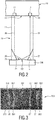
- Fig. 2 shows a schematic diagram illustrating the principle of the present invention.
- the imaging device 1 comprises an image-capturing device 10 including a light source 11 for emitting light 30 and an image sensor 12 for receiving light 31 and generating an image.
- the image-capturing device 10 is a smartphone that comprises a flash and/or torch light for use as light sensor 11 and a camera for use as image sensor 12.
- the image-capturing device 10 may further (optionally) comprise an audio interface 13 and a display 14.
- the image-capturing device 10 may comprise further optional elements, such as a control unit for controlling the light source 11 and/or the image sensor 12.
- the task of the control unit may, however, also be performed by a processor, or the tasks of the light source 11 and/or the image sensor 12 may be predetermined and fixed so that an active control unit may not be required.
- the device 1 may further comprise a user interface, e.g. the display 14, keypad, touchscreen, etc., allowing the user to enter information, e.g. to start and stop skin parameter detection, change settings, enter personal information, etc., and enabling output of information, e.g. the detected skin parameter information or user instructions.
- a user interface e.g. the display 14, keypad, touchscreen, etc.
- the accessory device 20 comprises a tubular member 21 having first opening 22 at its first end 23 configured to surround the light source 11 and the image sensor 12 of the image-capturing device 10 and a second opening 24 at its second end 25 configured to surround a skin portion 101 of a person's skin 100, e.g. a portion of the cheek or forehead of the person's face. Further, the accessory device 20 comprises two mirrors 26, 27 arranged within the tubular member 21 at its second end 25 to reflect light 30 emitted by the light source 11 towards the skin portion 101 and to reflect light 31 reflected from the skin portion 101 towards the image sensor 12.
- the accessory device is arranged between the skin portion 101 and the image-capturing device 10. For instance, it can be held by hand and pressed against the skin 100 or it can be mounted to the image-capturing device 10. From the image captured by the image-capturing device 10 a skin parameter can be determined, e.g. by the image-capturing device 10 or an external entity, e.g. a computer to which the image is sent. The method for determining a skin parameter will be explained below in more detail.
- the mirrors 26, 27 are arranged at an angle ⁇ in the range of 45°-75° (e.g. at about 60°) with respect to the measurement plane, i.e. the plane of the second opening 24 and thus the surface of the skin portion 101 visible for the image sensor 12 through the second opening 24.
- the mirror 26 reflects the light 30 under a shallow angle (e.g. in the range of 15°-45°) onto the skin. From the other mirror 27 the reflection image is acquired that is used to determine the skin parameter, e.g. to calculate a gloss score.
- Fig. 3 shows a diagram illustrating a view 200 through the second opening 24 of the accessory device 20.
- the view 200 shows a direct skin view 201 of the skin portion 101, the first (illuminating) mirror 26 and the second (reflecting) mirror 27 showing a mirror image 202 of the skin portion 101.
- marker 261 and 271 as provided on the mirrors 26, 27, in this embodiment as small triangles shown in two corners of each mirror 26, 27, as well as reflection 262, 272 of the markers 261, 271 in the respective other mirror are shown in the view 200.
- other kinds, positions and/or numbers of markers can be used that ensure that they can be recognized and used for identifying the different portions of the view 200.
- one mirror is used to illuminate the skin under a shallow angle
- the other mirror is used to capture the image of the specular reflected light (i.e. light having an angle of incidence identical to the angle of reflection according to Snellius' law).
- specular reflected light i.e. light having an angle of incidence identical to the angle of reflection according to Snellius' law.
- the specular reflected light i.e. light having an angle of incidence identical to the angle of reflection according to Snellius' law.
- the specular reflected light i.e. light having an angle of incidence identical to the angle of reflection according to Snellius' law.
- Fig. 4 shows an exemplary image 210 (corresponding to the view 200) acquired by the imaging device according to the present invention, i.e. of an image 210 as seen through the second opening 24 of the accessory device 20.
- a measurement area 203 may be defined which is used as image of the skin portion for evaluation and determination of the skin parameter.
- While taking the image, focal distance, shutter time, color correction, and/or torchlight/flashlight illumination settings may be all controlled to create, in combination of the exclusion of external light sources, reproducible images.
- FIG. 5 shows a perspective view of an exemplary implementation of a second embodiment of an accessory device 40 according to the present invention.
- This embodiment of the accessory device 40 comprises a base 41 onto which the tubular member 21 is mounted and a clamping mechanism 42 to secure and position the accessory device 40 to the image-capturing device 10, e.g. to a smartphone.
- the accessory device 40 comprises an optional hydration sensor 43 that is connected to an audio cable 44 with a jack-plug 45 that can be inserted into the audio socket of the image-capturing device 10, e.g. of a smartphone .
- the accessory device 40 clicks from one end on the image-capturing device 10 covering the light source 11 and the light sensor 12 of the image-capturing device 10, e.g. the camera and flash/torchlight of the smartphone as shown in Fig. 1 .
- the user may press the other end of the tubular member 21, containing the two mirrors 26, 27 onto his/her skin.
- the software will make a picture with controlled flash or controlled torchlight and analyzes the picture, e.g. the image in the measurement area 203 as show in the mirror 27 (see Fig. 4 ).
- a hydration sensor 43 is integrated into the tubular member 21 for gloss measurement.
- An embodiment of a hydration sensor 43 is shown in Fig. 6 . It comprises an electrode 431 mounted on a base 432 that has a linear guidance and spring mechanism 433 for controlling the electrode pressure on the skin during measurement.
- an audio interface 13 e.g. an audio jack headphone output
- an alternating signal for instance with a frequency of 16kHz
- the response is acquired via the audio interface, e.g. a microphone input of the same audio jack.
- the acquired input signal is a measure for skin impedance, which is mainly determined by skin hydration.
- Fig. 7 shows a schematic diagram of a second embodiment of an imaging device according to the present invention.
- the imaging device in particular the image-capturing device 50, comprises a processing unit 15 for processing the image to determine a skin parameter of the skin portion, from which the light has been received by the image sensor 12 and/or a data interface 16 for transmitting the image to an external processing device (not shown), e.g. a computer, a server, the cloud, etc., for processing it to determine a skin parameter of said skin portion.
- the processing unit 15 may e.g. be the main processor of the image-capturing device 50.
- the data interface 16 may be a an interface for outputting the image in wireless or wired manner.
- Fig. 8 shows a flow chart of an embodiment of a method 300 for skin parameter detection.
- a first step 301 an image of a skin portion 101 of the subject's skin 100 including specular reflection in response to light emitted onto said skin portion 101 is obtained.
- the amount of white pixels in the obtained image is determined using a threshold for the pixel value.
- a skin parameter is determined based on the amount of white pixels in the obtained image.
- the amount and distribution of the white pixels in the image is determined.
- the distribution of white pixels may include one or more of the parameters "amount of clusters of white pixels", “average cluster size”, “maximum cluster size” and "average intensity of the white pixels” in the image.
- the amount of white pixels in the image, together with the parameters mentioned before, may then be used in a transfer-function to calculate a gloss score. This score can then be used to give feedback and guidance to the consumer.
- the mirror image of one of the two mirrors is isolated, e.g. by an algorithm.
- This isolated mirror image shows the skin surface, including the specular reflection.
- a fixed threshold is set for defining white pixels, meaning a lower threshold for the R, G and B values of the pixels.
- this may be used as a measure for the specular reflection e.g. skin gloss.
- a fixed threshold for white pixel definition can be used (no compensation for other factors needed) and the amount of white pixels can be compared between images and used for a conclusion on more or less gloss.
- the amount of white pixels in the image is normalized with respect to the total amount of pixels in the isolated mirror image, to compensate for minor variation in hardware. Counting the amount of pixels in an image that comply with a certain color definition is a standard function, e.g. in open source computer vision software.
- Benefit of this method is its simplicity. Only low calculating power is needed, making it suitable for multiple low cost hardware platforms. This method makes particular sense in combination with image acquisition that creates reproducible images, as described in the above method for image acquisition.
- a fixed threshold is set.
- the threshold may be set based on average color information in the image.
- the advantage of this is that people with very white skin would not per definition have a higher white pixel count than people with very dark skin. However, this may require additional image analysis steps.
- a best parameter fit of the transfer function is created by finding the best fit of the output of the transfer function, e.g. with an expert panel assessment of a defined set of skin gloss images.
- the defined set comprises images of a group of people having varying skin types, wherein images are taken of a defined skin location, for instance the forehead and images are taken of several "states" of the skin, for instance a "natural" state, a state directly after cleansing and a state in which the skin is given an oily appearance (for instance by distribution of a cosmetic oil).
- the images of the various skin states are then ranked by an expert panel. After that, the GC function is optimized to a best fit with the expert panel assessment.
- the method disclosed herein can be used the parameter of skin gloss, but is not limited to that.
- Many other skin parameters can be determined, for instance skin roughness, elasticity, pigmentation, vary with changing location and measurement circumstances, like environmental conditions, but also pressure and angle of placement during use.
- edge detection can be used to discriminate deepened edges (shadows) from higher structure (illuminated). The distribution and size of shadow and light areas is a measure for roughness.
- Pigmentation areas with more melanin compared to surrounding skin
- color thresholding a pigment spot has a color within certain bandwidth (LAB and/or RGB, brown-reddish). The surrounding skin is lighter.
- the interpretation of the value is independent of the absolute value of the skin parameter. Because of that, it can be used for every single person, regardless of the absolute average value of the skin parameter.
- a person's average parameter e.g. gloss
- gloss e.g. gloss
- a moving average containing a limited set of values, can be used.
- the method may comprise the following steps as illustrated in Fig. 9 showing a flowchart of said method 400:
- This embodiment of the method may be further refined. For instance, when a variation is found (i.e. a variation bandwidth around average) that is small enough (i.e. below a threshold), the classification of a found value with respect to the average can be refined.
- One possible classification may be: lower, similar, or higher than the average.
- a finer classification may be: between xx and yy % lower or between xx and yy % higher than the average.
- the method of Kalman filtering (which is generally well known in signal processing) can be used.
- an assessment may be made of the measurement variation a person will encounter. Knowing the variation, the parameter settings for the Kalman filtering can be defined.
- the imaging device may be a mobile user device, for instance a smartphone, camera, laptop, smart watch or tablet, which is available to many users for everyday use and which is adapted for the desired purpose of detecting a skin parameter, e.g. by use of a software application ('app') that makes use of existing hardware components and evaluates data that are obtained by existing hardware components.
- the imaging device may also be a dedicated device made particularly for the purpose of skin parameter detection (and optionally other purposes).
- Known skin measurement devices meant for consumers may include hydration measurement, but do not contain a relevant and reliable gloss- or oil measurement at an affordable price. With that, it is difficult to give accurate personalized skin care advice for maintaining a hygienic appearance combined with a healthy skin hydration level.
- skin parameters such as skin gloss and skin hydration can be reliably determined making e.g. use of a person's own user device, such as a smartphone, in combination with an add-on tool. Hence, a proper skin care advice can be given to the user at a low price.
- the present invention can be applied in any personal care proposition where having knowledge on a desired skin parameter, e.g. skin gloss and hydration, is relevant for better guidance of the user on his or her skin care routine, or where info on a particular skin parameter, e.g. skin gloss and hydration, is relevant to change the settings of a personal care device.
- a desired skin parameter e.g. skin gloss and hydration
- info on a particular skin parameter e.g. skin gloss and hydration
- a computer program may be stored/distributed on a suitable non-transitory medium, such as an optical storage medium or a solid-state medium supplied together with or as part of other hardware, but may also be distributed in other forms, such as via the Internet or other wired or wireless telecommunication systems.
- a suitable non-transitory medium such as an optical storage medium or a solid-state medium supplied together with or as part of other hardware, but may also be distributed in other forms, such as via the Internet or other wired or wireless telecommunication systems.
Landscapes
- Health & Medical Sciences (AREA)
- Life Sciences & Earth Sciences (AREA)
- Engineering & Computer Science (AREA)
- Medical Informatics (AREA)
- Surgery (AREA)
- Biophysics (AREA)
- Biomedical Technology (AREA)
- Heart & Thoracic Surgery (AREA)
- Physics & Mathematics (AREA)
- Molecular Biology (AREA)
- Pathology (AREA)
- Animal Behavior & Ethology (AREA)
- General Health & Medical Sciences (AREA)
- Public Health (AREA)
- Veterinary Medicine (AREA)
- Dermatology (AREA)
- Multimedia (AREA)
- Measuring And Recording Apparatus For Diagnosis (AREA)
- Measurement Of The Respiration, Hearing Ability, Form, And Blood Characteristics Of Living Organisms (AREA)
Description
- The present invention relates to an accessory device for an image-capturing device for capturing a skin image of a subject's skin. Further, the present invention relates to an imaging device.
- Skin is the largest organ of a human body. It has multiple properties which are influenced by many factors and it can tell a lot about a person's health. Its appearance is important for how a person is perceived by other people. Mostly (but not only) in Asia many people suffer from "Oily skin", where a combination of productive sebum glands together with a warm, moist climate lead to a non-hygienic shiny appearance. Though the issue occurs at both male and female, male mostly have no clue how to deal with their oily skin. They do not know when to cleanse, how frequent to cleanse, with what to cleanse and how to cleanse. One of the typical issues that occur is that men cleanse too often, with too aggressive products, resulting in a very dry skin, stimulating the sebum gland activity even more. If these men would have quantified information on the shiny appearance of their skin, together with data on the hydration level of their skin, this would enable them to choose the optimal skin care routine for their skin. Defining the optimal skin care routine could for instance be executed via a guiding/coaching app that is installed on a person's smartphone, using the data from a gloss and hydration measurement.
- Gloss (specular reflection) measurement is a known method to assess a person's skin oiliness, but is only partly reflecting it. Other physiological properties like skin roughness and facial shape have a substantial effect on gloss, leading to substantial differences in absolute gloss levels between people, without direct relation to oiliness. Besides that, methods for removing facial oil, like cleansing, can also lead to a smoother skin surface and for that to more gloss, while still improving the hygienic appearance of that person.
- Currently, there are consumer products available for measuring hydration, however devices for measuring skin gloss are mainly for professional use and too expensive for most consumers. Hence, there is a need for efficient and simple solutions enabling measuring the amount of gloss (i.e. the gloss level of skin) or other skin parameter.
-
US 2003/026110 A1 discloses an illumination system previously determined for an illumination direction and an illumination position to an object to be observed which is disposed to an imaging head, while a lens is disposed to an apparatus body, so that the number of parts for the imaging head mounted to an apparatus body can be reduced, precision fabrication such as alignment of lens optical axis is no more necessary upon manufacture of the imaging head and optimum illumination can be illuminated in accordance with the magnification ratio or the object to be observed by merely exchanging the imaging head, illumination light optimal to the magnification ratio or object to be observed can be obtained with no provision of various kinds of expositive lens units. -
US 2001/050765 A1 discloses a fingerprint optical input apparatus comprising a contact image sensor for viewing a moving finger and providing a high contrast image. A narrow strip of the fingerprint touching a transparent platen is illuminated by sheet of collimated light normal to or at an oblique angle to the surface. The fingerprint image is viewed at an oblique angle by partially scattered light or by frustrated total internal reflection. Various embodiments of the platen provide a compact design by using TIR or mirror reflections of the fingerprint image. - It is an object of the present invention to provide an accessory device and an imaging device, which allow easily and efficiently capturing a skin image of a subject's skin, which can be used to determine a subject's skin parameter, such as gloss and/or hydration.
- In a first aspect of the present invention an accessory device for an image-capturing device for capturing a skin image of a subject's skin is presented comprising:
- a tubular member having a first opening at its first end configured to surround, when the accessory device is mounted to the image-capturing device, a light source and an image sensor included in the image-capturing device and a second opening at its second end configured to surround a skin portion;
- two mirrors arranged within the tubular member at its second end, wherein a first mirror is arranged to reflect, when the accessory device is mounted to the image-capturing device, light emitted by the light source towards the skin portion and a second mirror is arranged to reflect, when the accessory device is mounted to the image-capturing device, light reflected from the skin portion towards the image sensor.
- In a further aspect of the present invention an imaging device comprising:
- an image-capturing device including a light source for emitting light and an image sensor for receiving light and generating an image, and
- an accessory device as disclosed herein.
- Preferred embodiments of the invention are defined in the dependent claims. It shall be understood that the claimed image-capturing device has similar and/or identical preferred embodiments as the claimed accessory device, in particular as defined in the dependent claims and as disclosed herein.
- The present invention is based on the idea to enable measurement of a desired skin parameter, such as gloss and hydration, by making use of the resources of a person's user device, such as a user's smartphone or smart watch (representing the image-capturing device in an embodiment), together with an add-on tool, i.e. an accessory device, preferably comprising only cheap components, making skin parameter measurement accessible for most consumers. As the data (i.e. a skin image) is acquired by the user device, the method to determine a skin parameter may e.g. be seamlessly integrated in a skin care coaching application provided on the user device.
- In an embodiment of the accessory device, the mirrors are provided with one or more markers that are detectable in images taken by the image sensor. This enables easy detection of an image portion used for the evaluation and determination of a skin parameter. The markers are preferably configured such that they are easily detectable with image processing means, e.g. they may be configured in color, size and/or texture such that they can be easily distinguished from skin.
- The accessory device may further comprise a mounting mechanism to mount the accessory device to the image-capturing device. For instance, a clamping mechanism may be provided for clamping or otherwise fixing (preferably in an easily attachable and detachable manner) the accessory device to the image-capturing device, e.g. a smartphone.
- In another embodiment the accessory device further comprises a hydration sensor for detecting skin hydration, said hydration sensor being arranged at or within the tubular member at its second end to contact the skin portion when the second end of the accessory device is pressed against the skin. This provides additional functionality for the imaging device.
- Said hydration sensor preferably comprises a base, an electrode mounted on the base and a guidance mechanism for controlling the electrode pressure on the skin. This represents a simple and space saving embodiment.
- The accessory device may further comprise an audio interface for input of an input audio signal, in particular from the image-capturing device, provided to the electrode and for output of an output audio signal captured by the electrode in response to the input audio signal, in particular to the image-capturing device. The input audio signal may thus be transferred via part of the electrode (connected e.g. to the headphone part of an audio port of the image-capturing device) to the skin, and the other part of the electrode (connected e.g. to the microphone part of the audio port of the image-capturing device) receives the output audio signal. The ratio between the input audio signal and the output audio signal is a measure for skin capacitance and/or conductance (depending on the frequency or frequencies of the signal), which relates to skin hydration. Further, the hydration measure may be modified by taking into account the ambient parameters like humidity, weather, etc.
- The disclosed imaging device comprises an image capturing device including a light source for emitting light and an image sensor for receiving light and generating an image. Further, the imaging device comprises an accessory device as disclosed herein.
- The image-capturing device may generally be any mobile user device having a light source (also called illumination unit) and an image sensor (also called imaging unit). Exemplary (but non-limiting) embodiments include a smartphone, a smart watch, a camera, a tablet, a laptop, etc., which is able to provide the desired functionalities and to which the accessory device may be coupled, preferably such that it can be easily attached to it and detached from it.
- The imaging device may further comprise a processing unit for processing the image to determine a skin parameter of the skin portion, from which the light has been received by the image sensor and/or a data interface for transmitting the image to processing device for processing it to determine a skin parameter of said skin portion. Thus, the processing is preferably done within the imaging device, in particular within the image-capturing device (e.g. a processor available as part of the image-capturing device). Alternatively, the captured image data may be sent to an external entity, preferably in a wireless manner (e.g. via Bluetooth, WiFi, a mobile communications network, etc.), or in a wired manner (e.g. by coupling the imaging device with a computer).
- The disclosed method for determining a subject's skin parameter, which can be performed by the processing unit or the processing device, is based on the idea to evaluate the amount of white pixels in the obtained image, which has been found to be a useful measure for determining certain skin parameters, such as skin gloss and/or skin hydration. Hereby, the term "white pixel" shall not be understood in the strict sense of optics as having a pixel that exactly has the color white, but shall be understood more broadly as pixel having a pixel value representing white or almost white. Preferably, in an embodiment a threshold for the pixel value is used for determining the amount of the white pixels in the obtained image, i.e. the threshold is used for interpreting a certain pixel as white pixel or as non-white pixel.
- The threshold may include in another embodiment one or more fixed or adaptable thresholds for pixel brightness and/or pixel colors, in particular one or more adaptable thresholds that are set based on average brightness and/or average color information in the image and/or based on the subject and/or type of subject.
- In a further embodiment the step of obtaining an image of a skin portion includes obtaining a skin image captured by an imaging device as disclosed herein, and extracting from the obtained skin image an image portion reflected by one of the mirrors of the accessory device for further processing as image to determine the subject's skin parameter. For the extraction image processing means may be used, for instance by detecting markers provided on the mirrors as explained above.
- In another embodiment the skin gloss is determined as skin parameter based on the amount of white pixels in the obtained image. Hereby, the distribution of specular reflection in an image is interpreted to detect the character of the gloss (e.g. oily vs. clean).
- The method may further comprise determining a gloss score indicating the amount and/or character of skin gloss based on two or more parameters selected from the group of parameters comprising the amount of white pixels, the amount of clusters of adjacent white pixels, the average cluster size, and the maximum cluster size, in particular by a weighted combination of all parameters. The weights are hereby determined by a best fit analysis, i.e. the disclosed method may further comprise performing a best fit analysis by determining weights used in a weighted combination of two or more of said parameters to one or more predetermined combinations obtained for a set of different images showing different amounts and/or characters of skin gloss.
- In another embodiment a skin gloss map may be determined of the skin area indicating the amount of skin gloss per pixel or per group of pixels. This skin gloss map may then be outputted to the user, e.g. on a display, or an average skin gloss value may be determined for the skin areas for which the skin gloss map is determined.
- In still another embodiment the method may further comprise the steps of obtaining an average value of a skin parameter from determinations of said skin parameter for different subject's over a time period, and comparing a currently determined value of the skin parameter determined for the current subject with the average value to classify the currently determined value of the skin parameter. This provides that the user gets more and/or better information regarding the determined skin parameter supporting a better interpretation and understanding of the actual measurement.
- These and other aspects of the invention will be apparent from and elucidated with reference to the embodiments) described hereinafter. In the following drawings
-
Figs. 1A and 1B show a front view and a rear view of an exemplary implementation of a first embodiment of an imaging device including an accessory device according to the present invention, -
Fig. 2 shows a schematic diagram illustrating the principle of the present invention, -
Fig. 3 shows a diagram illustrating a view through the second opening of the accessory device according to the present invention, -
Fig. 4 shows an exemplary image acquired by an imaging device according to the present invention, -
Fig. 5 shows a perspective view of an exemplary implementation of a second embodiment of an accessory device according to the present invention, -
Fig. 6 shows an embodiment of a hydration sensor as optionally used in an embodiment of an accessory device according to the present invention, -
Fig. 7 shows a schematic diagram of a second embodiment of an imaging device according to the present invention, -
Fig. 8 shows a flow chart of a first embodiment of a method for skin parameter detection, and -
Fig. 9 shows a flow chart of a second embodiment of a method for skin parameter detection. -
Fig. 1 shows a front view (Fig. 1A ) and a rear view (Fig. 1B ) of an exemplary implementation of a first embodiment of an imaging device 1 according to the present invention.Fig. 2 shows a schematic diagram illustrating the principle of the present invention. - The imaging device 1 comprises an image-capturing
device 10 including alight source 11 for emitting light 30 and animage sensor 12 for receivinglight 31 and generating an image. In this exemplary embodiment the image-capturingdevice 10 is a smartphone that comprises a flash and/or torch light for use aslight sensor 11 and a camera for use asimage sensor 12. The image-capturingdevice 10 may further (optionally) comprise anaudio interface 13 and adisplay 14. - The image-capturing
device 10 may comprise further optional elements, such as a control unit for controlling thelight source 11 and/or theimage sensor 12. The task of the control unit may, however, also be performed by a processor, or the tasks of thelight source 11 and/or theimage sensor 12 may be predetermined and fixed so that an active control unit may not be required. - The device 1 may further comprise a user interface, e.g. the
display 14, keypad, touchscreen, etc., allowing the user to enter information, e.g. to start and stop skin parameter detection, change settings, enter personal information, etc., and enabling output of information, e.g. the detected skin parameter information or user instructions. - The
accessory device 20 comprises atubular member 21 having first opening 22 at itsfirst end 23 configured to surround thelight source 11 and theimage sensor 12 of the image-capturingdevice 10 and asecond opening 24 at itssecond end 25 configured to surround askin portion 101 of a person'sskin 100, e.g. a portion of the cheek or forehead of the person's face. Further, theaccessory device 20 comprises twomirrors tubular member 21 at itssecond end 25 to reflect light 30 emitted by thelight source 11 towards theskin portion 101 and to reflect light 31 reflected from theskin portion 101 towards theimage sensor 12. - As shown in
Fig. 2 , for performing a measurement the accessory device is arranged between theskin portion 101 and the image-capturingdevice 10. For instance, it can be held by hand and pressed against theskin 100 or it can be mounted to the image-capturingdevice 10. From the image captured by the image-capturing device 10 a skin parameter can be determined, e.g. by the image-capturingdevice 10 or an external entity, e.g. a computer to which the image is sent. The method for determining a skin parameter will be explained below in more detail. - In an embodiment the
mirrors second opening 24 and thus the surface of theskin portion 101 visible for theimage sensor 12 through thesecond opening 24. Themirror 26 reflects the light 30 under a shallow angle (e.g. in the range of 15°-45°) onto the skin. From theother mirror 27 the reflection image is acquired that is used to determine the skin parameter, e.g. to calculate a gloss score. -
Fig. 3 shows a diagram illustrating aview 200 through thesecond opening 24 of theaccessory device 20. Theview 200 shows adirect skin view 201 of theskin portion 101, the first (illuminating)mirror 26 and the second (reflecting)mirror 27 showing amirror image 202 of theskin portion 101. Further,marker mirrors mirror reflection markers view 200. Of course, other kinds, positions and/or numbers of markers can be used that ensure that they can be recognized and used for identifying the different portions of theview 200. - Hence, according to the present invention one mirror is used to illuminate the skin under a shallow angle, the other mirror is used to capture the image of the specular reflected light (i.e. light having an angle of incidence identical to the angle of reflection according to Snellius' law). At a shallow angle much more light is reflected from the surface of the skin and the oily substance on the skin. Light illuminating the skin under e.g. an angle of 90° is largely absorbed. When illuminating the skin under shallow angles, in order to see the specular reflected light, the same (but mirrored) angle is observed and evaluated.
- This is illustrated in
Fig. 4 showing an exemplary image 210 (corresponding to the view 200) acquired by the imaging device according to the present invention, i.e. of an image 210 as seen through thesecond opening 24 of theaccessory device 20. In the mirror image 202 ameasurement area 203 may be defined which is used as image of the skin portion for evaluation and determination of the skin parameter. - While taking the image, focal distance, shutter time, color correction, and/or torchlight/flashlight illumination settings may be all controlled to create, in combination of the exclusion of external light sources, reproducible images.
-
Fig. 5 shows a perspective view of an exemplary implementation of a second embodiment of anaccessory device 40 according to the present invention. This embodiment of theaccessory device 40 comprises a base 41 onto which thetubular member 21 is mounted and aclamping mechanism 42 to secure and position theaccessory device 40 to the image-capturingdevice 10, e.g. to a smartphone. - In this embodiment the
accessory device 40 comprises anoptional hydration sensor 43 that is connected to anaudio cable 44 with a jack-plug 45 that can be inserted into the audio socket of the image-capturingdevice 10, e.g. of a smartphone . Theaccessory device 40 clicks from one end on the image-capturingdevice 10 covering thelight source 11 and thelight sensor 12 of the image-capturingdevice 10, e.g. the camera and flash/torchlight of the smartphone as shown inFig. 1 . - For imaging the user may press the other end of the
tubular member 21, containing the twomirrors measurement area 203 as show in the mirror 27 (seeFig. 4 ). - As mentioned, it is also possible to integrate a
hydration sensor 43 into thetubular member 21 for gloss measurement. An embodiment of ahydration sensor 43 is shown inFig. 6 . It comprises anelectrode 431 mounted on a base 432 that has a linear guidance andspring mechanism 433 for controlling the electrode pressure on the skin during measurement. Via an audio interface 13 (seeFig. 1 ) of the image-capturingdevice 10, e.g. an audio jack headphone output, an alternating signal, for instance with a frequency of 16kHz, is transmitted and the response is acquired via the audio interface, e.g. a microphone input of the same audio jack. Given a defined output signal, the acquired input signal is a measure for skin impedance, which is mainly determined by skin hydration. -
Fig. 7 shows a schematic diagram of a second embodiment of an imaging device according to the present invention. In addition to the elements of the imaging device 1 shown inFig. 1 , theimaging device 2, in particular the image-capturingdevice 50, comprises aprocessing unit 15 for processing the image to determine a skin parameter of the skin portion, from which the light has been received by theimage sensor 12 and/or adata interface 16 for transmitting the image to an external processing device (not shown), e.g. a computer, a server, the cloud, etc., for processing it to determine a skin parameter of said skin portion. Theprocessing unit 15 may e.g. be the main processor of the image-capturingdevice 50. The data interface 16 may be a an interface for outputting the image in wireless or wired manner. -
Fig. 8 shows a flow chart of an embodiment of amethod 300 for skin parameter detection. In afirst step 301 an image of askin portion 101 of the subject'sskin 100 including specular reflection in response to light emitted onto saidskin portion 101 is obtained. In asecond step 302 the amount of white pixels in the obtained image is determined using a threshold for the pixel value. In a third step 303 a skin parameter is determined based on the amount of white pixels in the obtained image. - In an embodiment the amount and distribution of the white pixels in the image is determined. The distribution of white pixels may include one or more of the parameters "amount of clusters of white pixels", "average cluster size", "maximum cluster size" and "average intensity of the white pixels" in the image. The amount of white pixels in the image, together with the parameters mentioned before, may then be used in a transfer-function to calculate a gloss score. This score can then be used to give feedback and guidance to the consumer.
- In the following more details of an embodiment of the method according to the present invention are discussed. From the image taken by the imaging device, by using the markers (as shown in
Fig. 3 ), the mirror image of one of the two mirrors is isolated, e.g. by an algorithm. This isolated mirror image shows the skin surface, including the specular reflection. A fixed threshold is set for defining white pixels, meaning a lower threshold for the R, G and B values of the pixels. - When counting the amount of white pixels in the mirror image, this may be used as a measure for the specular reflection e.g. skin gloss. Because the external light sources are excluded due to the use of the
tubular member 21, a fixed threshold for white pixel definition can be used (no compensation for other factors needed) and the amount of white pixels can be compared between images and used for a conclusion on more or less gloss. - The amount of white pixels in the image is normalized with respect to the total amount of pixels in the isolated mirror image, to compensate for minor variation in hardware. Counting the amount of pixels in an image that comply with a certain color definition is a standard function, e.g. in open source computer vision software.
- Benefit of this method is its simplicity. Only low calculating power is needed, making it suitable for multiple low cost hardware platforms. This method makes particular sense in combination with image acquisition that creates reproducible images, as described in the above method for image acquisition.
- In the above described embodiment a fixed threshold is set. In another embodiment the threshold may be set based on average color information in the image. The advantage of this is that people with very white skin would not per definition have a higher white pixel count than people with very dark skin. However, this may require additional image analysis steps. A way to circumvent that is to have a user indicate his/her skin tone (for instance using the Fitzpatrick color scale), and based on that indication a skin color specific threshold may be set.
- Current skin gloss measurements give an absolute value for specular reflection. For measurement devices used by a specialist (skin expert, beautician), where the specialist does the interpretation, taking into account other physiologic aspects of the person (amongst others skin texture, age, shape of the measured area), this is sufficient. However, for a gloss measurement device used on a regular base by a consumer (e.g. laymen) an absolute value without interpretation is of less meaning. In the following another embodiment of the method is described that solves disadvantages of an absolute gloss measurement: it uses the distribution of the gloss in the image to assess if the gloss measured is "oily shine" or "hygienic", giving a higher value to oily gloss and a lower value to hygienic gloss. Furthermore it concludes on an "average" or "regular" parameter value for a specific person and compares a new measured value to that, enabling an action on the size of the difference instead of on the absolute value of the parameter.
- Knowing when a skin is glossy or not may be already be relevant information for a user, or as input for giving a user skin care coaching. However characterizing gloss into desired gloss (healthy clean radiation) or undesired gloss (oily, sweaty skin) has additional benefit. Besides having absolute levels of gloss, the distribution of gloss in the acquired image also contains information about the character of the gloss. Based on expert assessment it is believed that "oily" gloss has a more granular/ droplet like distribution and "clean" gloss has a more diffuse/egg gloss appearance.
- Parameters used in this embodiment for characterizing gloss may include one or more of pixel count (amount of white pixels in the image), blob count (blob = cluster of more than 4 white pixels), average blob size (amount of adherent white pixels), and maximum blob size.
- In this embodiment, a combined gloss score is defined by a transfer function of white pixel count, blob count, average blob size and maximum blob size:

- A best parameter fit of the transfer function is created by finding the best fit of the output of the transfer function, e.g. with an expert panel assessment of a defined set of skin gloss images. The defined set comprises images of a group of people having varying skin types, wherein images are taken of a defined skin location, for instance the forehead and images are taken of several "states" of the skin, for instance a "natural" state, a state directly after cleansing and a state in which the skin is given an oily appearance (for instance by distribution of a cosmetic oil). The images of the various skin states are then ranked by an expert panel. After that, the GC function is optimized to a best fit with the expert panel assessment.
- The method disclosed herein can be used the parameter of skin gloss, but is not limited to that. Many other skin parameters can be determined, for instance skin roughness, elasticity, pigmentation, vary with changing location and measurement circumstances, like environmental conditions, but also pressure and angle of placement during use. For instance, for determining roughness/texture of the skin, edge detection can be used to discriminate deepened edges (shadows) from higher structure (illuminated). The distribution and size of shadow and light areas is a measure for roughness. Pigmentation (areas with more melanin compared to surrounding skin) can be identified by color thresholding: a pigment spot has a color within certain bandwidth (LAB and/or RGB, brown-reddish). The surrounding skin is lighter.
- When measuring a skin parameter on a specific location on human skin, within a series of repeated measures within a short span of time (e.g. minutes), assuming the skin itself is not changing, still quite some variation between the measurements within a series can be found. However, when the average value and the measurement variation for a location is known, for each newly measured value the probability can be assessed if the value is statistically different from the average or not. Depending on the action intended when finding a value deviating from the average, the needed certainty of making the right call on that can be defined.
- The interpretation of the value is independent of the absolute value of the skin parameter. Because of that, it can be used for every single person, regardless of the absolute average value of the skin parameter.
- As skin changes over time, for instance due to aging and change of seasons, a person's average parameter (e.g. gloss) will also vary over time. It is known that for most people gloss values in winter are typically lower than gloss values in summertime. For that, according to an embodiment of the method, besides an absolute average based on all measurement values of a person, also a moving average, containing a limited set of values, can be used.
- In such an embodiment, the method may comprise the following steps as illustrated in
Fig. 9 showing a flowchart of said method 400: - Step 401: Acquire sufficient measurement values of a specific area, within a relative short period of time (for instance a week, limited skin changes) to calculate average and variation (for instance standard deviation).
- Step 402: Define the amount of values to include in the moving average (minimum 2 values, max all values)
- Step 403: Define the bandwidth around the moving average, based on variation found and certainty needed, for which a value is considered different (higher or lower) from average when being outside that bandwidth.
- Step 404: Based on a new value found: assess if it is different from the average.
- Step 405: Use the last value for recalculating the moving average.
- This embodiment of the method may be further refined. For instance, when a variation is found (i.e. a variation bandwidth around average) that is small enough (i.e. below a threshold), the classification of a found value with respect to the average can be refined. One possible classification may be: lower, similar, or higher than the average. A finer classification may be: between xx and yy % lower or between xx and yy % higher than the average.
- As alternative to the use of a moving average, the method of Kalman filtering (which is generally well known in signal processing) can be used. In this embodiment, also an assessment may be made of the measurement variation a person will encounter. Knowing the variation, the parameter settings for the Kalman filtering can be defined.
- The imaging device according to the present invention may be a mobile user device, for instance a smartphone, camera, laptop, smart watch or tablet, which is available to many users for everyday use and which is adapted for the desired purpose of detecting a skin parameter, e.g. by use of a software application ('app') that makes use of existing hardware components and evaluates data that are obtained by existing hardware components. Alternatively, the imaging device may also be a dedicated device made particularly for the purpose of skin parameter detection (and optionally other purposes).
- Known skin measurement devices meant for consumers may include hydration measurement, but do not contain a relevant and reliable gloss- or oil measurement at an affordable price. With that, it is difficult to give accurate personalized skin care advice for maintaining a hygienic appearance combined with a healthy skin hydration level. By use of the present invention, skin parameters such as skin gloss and skin hydration can be reliably determined making e.g. use of a person's own user device, such as a smartphone, in combination with an add-on tool. Hence, a proper skin care advice can be given to the user at a low price.
- The present invention can be applied in any personal care proposition where having knowledge on a desired skin parameter, e.g. skin gloss and hydration, is relevant for better guidance of the user on his or her skin care routine, or where info on a particular skin parameter, e.g. skin gloss and hydration, is relevant to change the settings of a personal care device.
- While the invention has been illustrated and described in detail in the drawings and foregoing description, such illustration and description are to be considered illustrative or exemplary and not restrictive; the invention is not limited to the disclosed embodiments. Other variations to the disclosed embodiments can be understood and effected by those skilled in the art in practicing the claimed invention, from a study of the drawings, the disclosure, and the appended claims.
- In the claims, the word "comprising" does not exclude other elements or steps, and the indefinite article "a" or "an" does not exclude a plurality. A single element or other unit may fulfill the functions of several items recited in the claims. The mere fact that certain measures are recited in mutually different dependent claims does not indicate that a combination of these measures cannot be used to advantage.
- A computer program may be stored/distributed on a suitable non-transitory medium, such as an optical storage medium or a solid-state medium supplied together with or as part of other hardware, but may also be distributed in other forms, such as via the Internet or other wired or wireless telecommunication systems.
- Any reference signs in the claims should not be construed as limiting the scope.
Claims (8)
- An accessory device (20) for an image-capturing device (10) for capturing a skin image of a subject's skin, said accessory device comprising:- a tubular member (21) having a first opening (22) at its first end (23) configured to surround, when the accessory device (20) is mounted to the image-capturing device (10), a light source (11) and an image sensor (12) included in the image-capturing device (10) and a second opening (24) at its second end (25) configured to surround a skin portion (101);- two mirrors (26, 27) arranged within the tubular member (21) at its second end (25), wherein a first mirror (26) is arranged to reflect, when the accessory device (20) is mounted to the image-capturing device (10), light (30) emitted by the light source (11) towards the skin portion (101) and a second mirror (27) is arranged to reflect, when the accessory device (20) is mounted to the image-capturing device (10), light (31) reflected from the skin portion (101) towards the image sensor (12).
- The accessory device as claimed in claim 1,
wherein the mirrors (26, 27) are provided with one or more markers (261, 271) that are detectable in images taken by the image sensor. - The accessory device as claimed in claim 1,
further comprising a mounting mechanism (42) to mount the accessory device (20) to the image-capturing device (10). - The accessory device as claimed in claim 1,
further comprising a hydration sensor (43) for detecting skin hydration, said hydration sensor being arranged at or within the tubular member (21) at its second end (25) to contact the skin portion when the second end (25) of the accessory device is pressed against the skin. - The accessory device as claimed in claim 4,
wherein said hydration sensor (43) comprises a base (432), an electrode (431) mounted on the base and a guidance mechanism (433) for controlling the electrode pressure on the skin. - The accessory device as claimed in claim 5,
further comprising an audio interface (44, 45) for input of an input audio signal, in particular from the image-capturing device (10), provided to the electrode and for output of an output audio signal captured by the electrode in response to the input audio signal, in particular to the image-capturing device (10). - An imaging device (1) comprising:- an image-capturing device (10) including a light source (11) for emitting light and an image sensor (12) for receiving light and generating an image, and- an accessory device (20) as claimed in claim 1.
- The imaging device as claimed in claim 7,
further comprising- a processing unit (15) for processing the image to determine a skin parameter of the skin portion, from which the light has been received by the image sensor and/or- a data interface (16) for transmitting the image to a processing device for processing it to determine a skin parameter of said skin portion.
Applications Claiming Priority (2)
| Application Number | Priority Date | Filing Date | Title |
|---|---|---|---|
| EP16194332 | 2016-10-18 | ||
| PCT/EP2017/076516 WO2018073266A1 (en) | 2016-10-18 | 2017-10-17 | Accessory device, imaging device and method for determining a subject's skin parameter |
Publications (2)
| Publication Number | Publication Date |
|---|---|
| EP3528690A1 EP3528690A1 (en) | 2019-08-28 |
| EP3528690B1 true EP3528690B1 (en) | 2021-05-26 |
Family
ID=57178283
Family Applications (1)
| Application Number | Title | Priority Date | Filing Date |
|---|---|---|---|
| EP17783884.4A Active EP3528690B1 (en) | 2016-10-18 | 2017-10-17 | Accessory device and imaging device |
Country Status (8)
| Country | Link |
|---|---|
| US (1) | US11730372B2 (en) |
| EP (1) | EP3528690B1 (en) |
| JP (1) | JP6974452B2 (en) |
| CN (1) | CN209032315U (en) |
| BR (1) | BR112019007568A2 (en) |
| ES (1) | ES2882498T3 (en) |
| RU (1) | RU2742966C2 (en) |
| WO (1) | WO2018073266A1 (en) |
Families Citing this family (7)
| Publication number | Priority date | Publication date | Assignee | Title |
|---|---|---|---|---|
| CN109199323B (en) * | 2017-06-29 | 2021-01-26 | 京东方科技集团股份有限公司 | Skin detection device, product information determination method, device and system |
| DE102018222122B4 (en) * | 2018-12-18 | 2025-11-27 | Henkel Ag & Co. Kgaa | METHOD FOR DETERMINING THE SHINE OF A SECTION OF A USER'S SKIN |
| EP3900574A1 (en) * | 2020-04-21 | 2021-10-27 | Koninklijke Philips N.V. | Personal care devices |
| KR102378195B1 (en) * | 2020-10-27 | 2022-03-28 | 주식회사 케이씨테크놀러지 | System of measuring and analysing skin and hair |
| IT202100006524A1 (en) * | 2021-03-18 | 2022-09-18 | Alma Magistra S R L S | DEVICE FOR CONDUCTING A MULTIPARAMETRIC EXAMINATION OF THE SKIN OF A PERSON AND SYSTEM INCLUDING SUCH DEVICE |
| KR102436130B1 (en) * | 2022-04-25 | 2022-08-26 | 주식회사 룰루랩 | Method and apparatus for determining fitness for skin analysis image |
| US11638553B1 (en) * | 2022-04-29 | 2023-05-02 | Lululab Inc. | Skin condition analyzing and skin disease diagnosis device |
Family Cites Families (29)
| Publication number | Priority date | Publication date | Assignee | Title |
|---|---|---|---|---|
| JP2993106B2 (en) * | 1990-11-15 | 1999-12-20 | オムロン株式会社 | Non-contact oral thermometer |
| US5530650A (en) * | 1992-10-28 | 1996-06-25 | Mcdonnell Douglas Corp. | Computer imaging system and method for remote in-flight aircraft refueling |
| JPH08182654A (en) * | 1994-12-28 | 1996-07-16 | Kao Corp | Skin light transmittance measurement device |
| US6259108B1 (en) * | 1998-10-09 | 2001-07-10 | Kinetic Sciences Inc. | Fingerprint image optical input apparatus |
| JP3626433B2 (en) * | 2001-08-06 | 2005-03-09 | 株式会社モリテックス | Imaging device |
| US20040110113A1 (en) * | 2002-12-10 | 2004-06-10 | Alice Huang | Tool and method of making a tool for use in applying a cosmetic |
| JP3954533B2 (en) * | 2003-06-17 | 2007-08-08 | 株式会社モリテックス | Skin observation device |
| JP4396387B2 (en) | 2004-05-13 | 2010-01-13 | オムロン株式会社 | Image correction device |
| FR2883154B1 (en) * | 2005-03-15 | 2008-02-08 | Oreal | DEVICE FOR MEASURING THE DYE |
| US7564990B2 (en) * | 2005-08-18 | 2009-07-21 | Nu Skin International, Inc. | Imaging system and method for physical feature analysis |
| RU2422081C2 (en) * | 2007-01-05 | 2011-06-27 | Майскин, Инк. | System, device and method of skin image |
| US20090245603A1 (en) | 2007-01-05 | 2009-10-01 | Djuro Koruga | System and method for analysis of light-matter interaction based on spectral convolution |
| US7894651B2 (en) | 2007-03-02 | 2011-02-22 | Mela Sciences, Inc. | Quantitative analysis of skin characteristics |
| US20120041282A1 (en) | 2010-08-13 | 2012-02-16 | Conopco, Inc., D/B/A Unilever | Device and system for evaluating condition of skin, scalp and hair |
| EP2633678A4 (en) * | 2010-10-29 | 2015-05-20 | Univ California | MICROSCOPE OR CELLSCOPE TELEPHONE TYPE APPARATUS AND IMAGING METHODS |
| JP5794629B2 (en) * | 2011-06-30 | 2015-10-14 | 国立研究開発法人産業技術総合研究所 | Surface inspection apparatus, surface inspection method, surface inspection program, and computer-readable recording medium |
| JP5657494B2 (en) | 2011-09-22 | 2015-01-21 | 富士フイルム株式会社 | Wrinkle detection method, wrinkle detection apparatus and wrinkle detection program, and wrinkle evaluation method, wrinkle evaluation apparatus and wrinkle evaluation program |
| TW201410203A (en) * | 2012-07-05 | 2014-03-16 | 松下電器產業股份有限公司 | Portable terminal and skin property measuring instrument |
| WO2014041585A1 (en) | 2012-09-13 | 2014-03-20 | テルモ株式会社 | Body water meter and display control method |
| JP2014078808A (en) | 2012-10-09 | 2014-05-01 | Toshiba Corp | Image processing apparatus and image processing method |
| JP6255351B2 (en) | 2012-12-27 | 2017-12-27 | マクセルホールディングス株式会社 | Portable photographing device and portable terminal |
| KR101713086B1 (en) | 2013-06-07 | 2017-03-07 | 후지필름 가부시키가이샤 | Transparency evaluation device, transparency evaluation method and transparency evaluation program |
| WO2014207003A1 (en) * | 2013-06-25 | 2014-12-31 | Koninklijke Philips N.V. | Measurement device for skin properties and non-invasive treatment device |
| US10182757B2 (en) | 2013-07-22 | 2019-01-22 | The Rockefeller University | System and method for optical detection of skin disease |
| EP3040939B1 (en) | 2013-08-30 | 2018-10-10 | Panasonic Intellectual Property Management Co., Ltd. | Makeup support device, makeup support method, and makeup support program |
| US9733460B2 (en) * | 2014-01-08 | 2017-08-15 | The General Hospital Corporation | Method and apparatus for microscopic imaging |
| JP2015197617A (en) * | 2014-04-02 | 2015-11-09 | 株式会社Cmサイト | close-up adapter |
| WO2016099099A1 (en) | 2014-12-15 | 2016-06-23 | Samsung Electronics Co., Ltd. | Image capturing device and sensing protection device |
| US10130301B2 (en) | 2015-01-22 | 2018-11-20 | Elwha Llc | Devices and methods for remote hydration measurement |
-
2017
- 2017-10-17 US US16/339,767 patent/US11730372B2/en active Active
- 2017-10-17 ES ES17783884T patent/ES2882498T3/en active Active
- 2017-10-17 CN CN201721334666.6U patent/CN209032315U/en active Active
- 2017-10-17 EP EP17783884.4A patent/EP3528690B1/en active Active
- 2017-10-17 WO PCT/EP2017/076516 patent/WO2018073266A1/en not_active Ceased
- 2017-10-17 RU RU2019114976A patent/RU2742966C2/en active
- 2017-10-17 JP JP2019520423A patent/JP6974452B2/en active Active
- 2017-10-17 BR BR112019007568A patent/BR112019007568A2/en not_active Application Discontinuation
Non-Patent Citations (1)
| Title |
|---|
| None * |
Also Published As
| Publication number | Publication date |
|---|---|
| CN209032315U (en) | 2019-06-28 |
| JP2019535354A (en) | 2019-12-12 |
| US20200037882A1 (en) | 2020-02-06 |
| RU2742966C2 (en) | 2021-02-12 |
| JP6974452B2 (en) | 2021-12-01 |
| EP3528690A1 (en) | 2019-08-28 |
| ES2882498T3 (en) | 2021-12-02 |
| RU2019114976A (en) | 2020-11-20 |
| WO2018073266A1 (en) | 2018-04-26 |
| RU2019114976A3 (en) | 2020-12-15 |
| BR112019007568A2 (en) | 2019-07-02 |
| US11730372B2 (en) | 2023-08-22 |
Similar Documents
| Publication | Publication Date | Title |
|---|---|---|
| US11730372B2 (en) | Accessory device and imaging device | |
| US9445087B2 (en) | Systems, devices, and methods for providing products and consultations | |
| ES3031452T3 (en) | Systems for skin analysis using electronic devices | |
| US10346601B2 (en) | Biometric information acquisition method and device for same | |
| JP2023052849A (en) | Apparatus and method for determining cosmetic skin attributes | |
| EP3466324A1 (en) | Skin diagnostic device and skin diagnostic method | |
| US20170319065A1 (en) | Information processing device, information processing method, and program | |
| KR20210084102A (en) | Electronic apparatus, scalp care system and method for controlling the electronic apparatus and the server | |
| KR20170132644A (en) | Method for obtaining care information, method for sharing care information, and electronic apparatus therefor | |
| CN104880412A (en) | Method for outputting freshness information and freshness information output apparatus | |
| US20180263551A1 (en) | Information processing apparatus, information processing method, and program | |
| CN110740679A (en) | Skin Gloss Measurements for Quantitative Estimation of Skin Gloss | |
| WO2020073392A1 (en) | Method, apparatus and mobile phone for evaluating skin, and computer device and storage medium | |
| CN106163384A (en) | Information processor, information processing method and program | |
| KR20180080140A (en) | Personalized skin diagnosis and skincare | |
| WO2018202065A1 (en) | Artificial intelligence-based system for recommending cosmetic product and service | |
| JPWO2019244586A1 (en) | A computer-readable recording medium containing a skin evaluation device, a skin evaluation system, a skin evaluation method, and a program for skin evaluation. | |
| WO2018003395A1 (en) | Image processing device and image processing method | |
| JP2021058361A (en) | Biological information acquisition device and program | |
| CN110505838A (en) | Use the skin gloss measurement of Brewster angle | |
| WO2006064635A1 (en) | Diagnosis system | |
| JP5544065B2 (en) | Evaluation method of skin condition | |
| US11191341B2 (en) | Notification device, notification method, and storage medium having program stored therein | |
| US20250000237A1 (en) | Advanced skyn | |
| US10955340B2 (en) | Method for determining glossiness of a portion of a skin of a user |
Legal Events
| Date | Code | Title | Description |
|---|---|---|---|
| STAA | Information on the status of an ep patent application or granted ep patent |
Free format text: STATUS: UNKNOWN |
|
| STAA | Information on the status of an ep patent application or granted ep patent |
Free format text: STATUS: THE INTERNATIONAL PUBLICATION HAS BEEN MADE |
|
| PUAI | Public reference made under article 153(3) epc to a published international application that has entered the european phase |
Free format text: ORIGINAL CODE: 0009012 |
|
| STAA | Information on the status of an ep patent application or granted ep patent |
Free format text: STATUS: REQUEST FOR EXAMINATION WAS MADE |
|
| 17P | Request for examination filed |
Effective date: 20190520 |
|
| AK | Designated contracting states |
Kind code of ref document: A1 Designated state(s): AL AT BE BG CH CY CZ DE DK EE ES FI FR GB GR HR HU IE IS IT LI LT LU LV MC MK MT NL NO PL PT RO RS SE SI SK SM TR |
|
| AX | Request for extension of the european patent |
Extension state: BA ME |
|
| DAV | Request for validation of the european patent (deleted) | ||
| DAX | Request for extension of the european patent (deleted) | ||
| RAP1 | Party data changed (applicant data changed or rights of an application transferred) |
Owner name: KONINKLIJKE PHILIPS N.V. |
|
| GRAP | Despatch of communication of intention to grant a patent |
Free format text: ORIGINAL CODE: EPIDOSNIGR1 |
|
| STAA | Information on the status of an ep patent application or granted ep patent |
Free format text: STATUS: GRANT OF PATENT IS INTENDED |
|
| INTG | Intention to grant announced |
Effective date: 20201216 |
|
| GRAS | Grant fee paid |
Free format text: ORIGINAL CODE: EPIDOSNIGR3 |
|
| GRAA | (expected) grant |
Free format text: ORIGINAL CODE: 0009210 |
|
| STAA | Information on the status of an ep patent application or granted ep patent |
Free format text: STATUS: THE PATENT HAS BEEN GRANTED |
|
| AK | Designated contracting states |
Kind code of ref document: B1 Designated state(s): AL AT BE BG CH CY CZ DE DK EE ES FI FR GB GR HR HU IE IS IT LI LT LU LV MC MK MT NL NO PL PT RO RS SE SI SK SM TR |
|
| REG | Reference to a national code |
Ref country code: GB Ref legal event code: FG4D |
|
| REG | Reference to a national code |
Ref country code: CH Ref legal event code: EP |
|
| REG | Reference to a national code |
Ref country code: AT Ref legal event code: REF Ref document number: 1395376 Country of ref document: AT Kind code of ref document: T Effective date: 20210615 |
|
| REG | Reference to a national code |
Ref country code: DE Ref legal event code: R096 Ref document number: 602017039331 Country of ref document: DE |
|
| REG | Reference to a national code |
Ref country code: IE Ref legal event code: FG4D |
|
| REG | Reference to a national code |
Ref country code: LT Ref legal event code: MG9D |
|
| REG | Reference to a national code |
Ref country code: AT Ref legal event code: MK05 Ref document number: 1395376 Country of ref document: AT Kind code of ref document: T Effective date: 20210526 |
|
| PG25 | Lapsed in a contracting state [announced via postgrant information from national office to epo] |
Ref country code: LT Free format text: LAPSE BECAUSE OF FAILURE TO SUBMIT A TRANSLATION OF THE DESCRIPTION OR TO PAY THE FEE WITHIN THE PRESCRIBED TIME-LIMIT Effective date: 20210526 Ref country code: FI Free format text: LAPSE BECAUSE OF FAILURE TO SUBMIT A TRANSLATION OF THE DESCRIPTION OR TO PAY THE FEE WITHIN THE PRESCRIBED TIME-LIMIT Effective date: 20210526 Ref country code: AT Free format text: LAPSE BECAUSE OF FAILURE TO SUBMIT A TRANSLATION OF THE DESCRIPTION OR TO PAY THE FEE WITHIN THE PRESCRIBED TIME-LIMIT Effective date: 20210526 Ref country code: BG Free format text: LAPSE BECAUSE OF FAILURE TO SUBMIT A TRANSLATION OF THE DESCRIPTION OR TO PAY THE FEE WITHIN THE PRESCRIBED TIME-LIMIT Effective date: 20210826 Ref country code: HR Free format text: LAPSE BECAUSE OF FAILURE TO SUBMIT A TRANSLATION OF THE DESCRIPTION OR TO PAY THE FEE WITHIN THE PRESCRIBED TIME-LIMIT Effective date: 20210526 |
|
| REG | Reference to a national code |
Ref country code: NL Ref legal event code: MP Effective date: 20210526 |
|
| PG25 | Lapsed in a contracting state [announced via postgrant information from national office to epo] |
Ref country code: RS Free format text: LAPSE BECAUSE OF FAILURE TO SUBMIT A TRANSLATION OF THE DESCRIPTION OR TO PAY THE FEE WITHIN THE PRESCRIBED TIME-LIMIT Effective date: 20210526 Ref country code: SE Free format text: LAPSE BECAUSE OF FAILURE TO SUBMIT A TRANSLATION OF THE DESCRIPTION OR TO PAY THE FEE WITHIN THE PRESCRIBED TIME-LIMIT Effective date: 20210526 Ref country code: LV Free format text: LAPSE BECAUSE OF FAILURE TO SUBMIT A TRANSLATION OF THE DESCRIPTION OR TO PAY THE FEE WITHIN THE PRESCRIBED TIME-LIMIT Effective date: 20210526 Ref country code: NO Free format text: LAPSE BECAUSE OF FAILURE TO SUBMIT A TRANSLATION OF THE DESCRIPTION OR TO PAY THE FEE WITHIN THE PRESCRIBED TIME-LIMIT Effective date: 20210826 Ref country code: PL Free format text: LAPSE BECAUSE OF FAILURE TO SUBMIT A TRANSLATION OF THE DESCRIPTION OR TO PAY THE FEE WITHIN THE PRESCRIBED TIME-LIMIT Effective date: 20210526 Ref country code: PT Free format text: LAPSE BECAUSE OF FAILURE TO SUBMIT A TRANSLATION OF THE DESCRIPTION OR TO PAY THE FEE WITHIN THE PRESCRIBED TIME-LIMIT Effective date: 20210927 Ref country code: IS Free format text: LAPSE BECAUSE OF FAILURE TO SUBMIT A TRANSLATION OF THE DESCRIPTION OR TO PAY THE FEE WITHIN THE PRESCRIBED TIME-LIMIT Effective date: 20210926 Ref country code: GR Free format text: LAPSE BECAUSE OF FAILURE TO SUBMIT A TRANSLATION OF THE DESCRIPTION OR TO PAY THE FEE WITHIN THE PRESCRIBED TIME-LIMIT Effective date: 20210827 |
|
| REG | Reference to a national code |
Ref country code: ES Ref legal event code: FG2A Ref document number: 2882498 Country of ref document: ES Kind code of ref document: T3 Effective date: 20211202 |
|
| PG25 | Lapsed in a contracting state [announced via postgrant information from national office to epo] |
Ref country code: NL Free format text: LAPSE BECAUSE OF FAILURE TO SUBMIT A TRANSLATION OF THE DESCRIPTION OR TO PAY THE FEE WITHIN THE PRESCRIBED TIME-LIMIT Effective date: 20210526 |
|
| PG25 | Lapsed in a contracting state [announced via postgrant information from national office to epo] |
Ref country code: RO Free format text: LAPSE BECAUSE OF FAILURE TO SUBMIT A TRANSLATION OF THE DESCRIPTION OR TO PAY THE FEE WITHIN THE PRESCRIBED TIME-LIMIT Effective date: 20210526 Ref country code: DK Free format text: LAPSE BECAUSE OF FAILURE TO SUBMIT A TRANSLATION OF THE DESCRIPTION OR TO PAY THE FEE WITHIN THE PRESCRIBED TIME-LIMIT Effective date: 20210526 Ref country code: CZ Free format text: LAPSE BECAUSE OF FAILURE TO SUBMIT A TRANSLATION OF THE DESCRIPTION OR TO PAY THE FEE WITHIN THE PRESCRIBED TIME-LIMIT Effective date: 20210526 Ref country code: EE Free format text: LAPSE BECAUSE OF FAILURE TO SUBMIT A TRANSLATION OF THE DESCRIPTION OR TO PAY THE FEE WITHIN THE PRESCRIBED TIME-LIMIT Effective date: 20210526 Ref country code: SK Free format text: LAPSE BECAUSE OF FAILURE TO SUBMIT A TRANSLATION OF THE DESCRIPTION OR TO PAY THE FEE WITHIN THE PRESCRIBED TIME-LIMIT Effective date: 20210526 Ref country code: SM Free format text: LAPSE BECAUSE OF FAILURE TO SUBMIT A TRANSLATION OF THE DESCRIPTION OR TO PAY THE FEE WITHIN THE PRESCRIBED TIME-LIMIT Effective date: 20210526 |
|
| PGFP | Annual fee paid to national office [announced via postgrant information from national office to epo] |
Ref country code: ES Payment date: 20211116 Year of fee payment: 5 |
|
| PGFP | Annual fee paid to national office [announced via postgrant information from national office to epo] |
Ref country code: IT Payment date: 20211020 Year of fee payment: 5 |
|
| REG | Reference to a national code |
Ref country code: DE Ref legal event code: R097 Ref document number: 602017039331 Country of ref document: DE |
|
| PLBE | No opposition filed within time limit |
Free format text: ORIGINAL CODE: 0009261 |
|
| STAA | Information on the status of an ep patent application or granted ep patent |
Free format text: STATUS: NO OPPOSITION FILED WITHIN TIME LIMIT |
|
| 26N | No opposition filed |
Effective date: 20220301 |
|
| REG | Reference to a national code |
Ref country code: CH Ref legal event code: PL |
|
| PG25 | Lapsed in a contracting state [announced via postgrant information from national office to epo] |
Ref country code: IS Free format text: LAPSE BECAUSE OF FAILURE TO SUBMIT A TRANSLATION OF THE DESCRIPTION OR TO PAY THE FEE WITHIN THE PRESCRIBED TIME-LIMIT Effective date: 20210926 Ref country code: AL Free format text: LAPSE BECAUSE OF FAILURE TO SUBMIT A TRANSLATION OF THE DESCRIPTION OR TO PAY THE FEE WITHIN THE PRESCRIBED TIME-LIMIT Effective date: 20210526 |
|
| REG | Reference to a national code |
Ref country code: BE Ref legal event code: MM Effective date: 20211031 |
|
| PG25 | Lapsed in a contracting state [announced via postgrant information from national office to epo] |
Ref country code: MC Free format text: LAPSE BECAUSE OF FAILURE TO SUBMIT A TRANSLATION OF THE DESCRIPTION OR TO PAY THE FEE WITHIN THE PRESCRIBED TIME-LIMIT Effective date: 20210526 |
|
| PG25 | Lapsed in a contracting state [announced via postgrant information from national office to epo] |
Ref country code: BE Free format text: LAPSE BECAUSE OF NON-PAYMENT OF DUE FEES Effective date: 20211031 Ref country code: LU Free format text: LAPSE BECAUSE OF NON-PAYMENT OF DUE FEES Effective date: 20211017 |
|
| PG25 | Lapsed in a contracting state [announced via postgrant information from national office to epo] |
Ref country code: LI Free format text: LAPSE BECAUSE OF NON-PAYMENT OF DUE FEES Effective date: 20211031 Ref country code: CH Free format text: LAPSE BECAUSE OF NON-PAYMENT OF DUE FEES Effective date: 20211031 |
|
| PG25 | Lapsed in a contracting state [announced via postgrant information from national office to epo] |
Ref country code: IE Free format text: LAPSE BECAUSE OF NON-PAYMENT OF DUE FEES Effective date: 20211017 |
|
| PG25 | Lapsed in a contracting state [announced via postgrant information from national office to epo] |
Ref country code: CY Free format text: LAPSE BECAUSE OF FAILURE TO SUBMIT A TRANSLATION OF THE DESCRIPTION OR TO PAY THE FEE WITHIN THE PRESCRIBED TIME-LIMIT Effective date: 20210526 |
|
| PG25 | Lapsed in a contracting state [announced via postgrant information from national office to epo] |
Ref country code: HU Free format text: LAPSE BECAUSE OF FAILURE TO SUBMIT A TRANSLATION OF THE DESCRIPTION OR TO PAY THE FEE WITHIN THE PRESCRIBED TIME-LIMIT; INVALID AB INITIO Effective date: 20171017 |
|
| PG25 | Lapsed in a contracting state [announced via postgrant information from national office to epo] |
Ref country code: IT Free format text: LAPSE BECAUSE OF NON-PAYMENT OF DUE FEES Effective date: 20221017 |
|
| REG | Reference to a national code |
Ref country code: ES Ref legal event code: FD2A Effective date: 20231129 |
|
| PG25 | Lapsed in a contracting state [announced via postgrant information from national office to epo] |
Ref country code: ES Free format text: LAPSE BECAUSE OF NON-PAYMENT OF DUE FEES Effective date: 20221018 |
|
| PG25 | Lapsed in a contracting state [announced via postgrant information from national office to epo] |
Ref country code: ES Free format text: LAPSE BECAUSE OF NON-PAYMENT OF DUE FEES Effective date: 20221018 |
|
| PG25 | Lapsed in a contracting state [announced via postgrant information from national office to epo] |
Ref country code: MK Free format text: LAPSE BECAUSE OF FAILURE TO SUBMIT A TRANSLATION OF THE DESCRIPTION OR TO PAY THE FEE WITHIN THE PRESCRIBED TIME-LIMIT Effective date: 20210526 |
|
| PG25 | Lapsed in a contracting state [announced via postgrant information from national office to epo] |
Ref country code: TR Free format text: LAPSE BECAUSE OF FAILURE TO SUBMIT A TRANSLATION OF THE DESCRIPTION OR TO PAY THE FEE WITHIN THE PRESCRIBED TIME-LIMIT Effective date: 20210526 |
|
| PG25 | Lapsed in a contracting state [announced via postgrant information from national office to epo] |
Ref country code: MT Free format text: LAPSE BECAUSE OF FAILURE TO SUBMIT A TRANSLATION OF THE DESCRIPTION OR TO PAY THE FEE WITHIN THE PRESCRIBED TIME-LIMIT Effective date: 20210526 |
|
| PGFP | Annual fee paid to national office [announced via postgrant information from national office to epo] |
Ref country code: DE Payment date: 20251028 Year of fee payment: 9 |
|
| PGFP | Annual fee paid to national office [announced via postgrant information from national office to epo] |
Ref country code: GB Payment date: 20251023 Year of fee payment: 9 |
|
| PGFP | Annual fee paid to national office [announced via postgrant information from national office to epo] |
Ref country code: FR Payment date: 20251027 Year of fee payment: 9 |