EP3528438A1 - Packet forwarding - Google Patents
Packet forwarding Download PDFInfo
- Publication number
- EP3528438A1 EP3528438A1 EP17871799.7A EP17871799A EP3528438A1 EP 3528438 A1 EP3528438 A1 EP 3528438A1 EP 17871799 A EP17871799 A EP 17871799A EP 3528438 A1 EP3528438 A1 EP 3528438A1
- Authority
- EP
- European Patent Office
- Prior art keywords
- tunnel
- notification message
- network device
- received
- packet
- Prior art date
- Legal status (The legal status is an assumption and is not a legal conclusion. Google has not performed a legal analysis and makes no representation as to the accuracy of the status listed.)
- Granted
Links
Images


Classifications
-
- H—ELECTRICITY
- H04—ELECTRIC COMMUNICATION TECHNIQUE
- H04L—TRANSMISSION OF DIGITAL INFORMATION, e.g. TELEGRAPHIC COMMUNICATION
- H04L49/00—Packet switching elements
- H04L49/90—Buffering arrangements
- H04L49/9057—Arrangements for supporting packet reassembly or resequencing
-
- H—ELECTRICITY
- H04—ELECTRIC COMMUNICATION TECHNIQUE
- H04L—TRANSMISSION OF DIGITAL INFORMATION, e.g. TELEGRAPHIC COMMUNICATION
- H04L12/00—Data switching networks
- H04L12/28—Data switching networks characterised by path configuration, e.g. LAN [Local Area Networks] or WAN [Wide Area Networks]
- H04L12/46—Interconnection of networks
- H04L12/4633—Interconnection of networks using encapsulation techniques, e.g. tunneling
-
- H—ELECTRICITY
- H04—ELECTRIC COMMUNICATION TECHNIQUE
- H04L—TRANSMISSION OF DIGITAL INFORMATION, e.g. TELEGRAPHIC COMMUNICATION
- H04L12/00—Data switching networks
- H04L12/28—Data switching networks characterised by path configuration, e.g. LAN [Local Area Networks] or WAN [Wide Area Networks]
- H04L12/46—Interconnection of networks
-
- H—ELECTRICITY
- H04—ELECTRIC COMMUNICATION TECHNIQUE
- H04L—TRANSMISSION OF DIGITAL INFORMATION, e.g. TELEGRAPHIC COMMUNICATION
- H04L45/00—Routing or path finding of packets in data switching networks
- H04L45/50—Routing or path finding of packets in data switching networks using label swapping, e.g. multi-protocol label switch [MPLS]
-
- H—ELECTRICITY
- H04—ELECTRIC COMMUNICATION TECHNIQUE
- H04L—TRANSMISSION OF DIGITAL INFORMATION, e.g. TELEGRAPHIC COMMUNICATION
- H04L45/00—Routing or path finding of packets in data switching networks
- H04L45/74—Address processing for routing
-
- H—ELECTRICITY
- H04—ELECTRIC COMMUNICATION TECHNIQUE
- H04L—TRANSMISSION OF DIGITAL INFORMATION, e.g. TELEGRAPHIC COMMUNICATION
- H04L47/00—Traffic control in data switching networks
- H04L47/10—Flow control; Congestion control
-
- H—ELECTRICITY
- H04—ELECTRIC COMMUNICATION TECHNIQUE
- H04L—TRANSMISSION OF DIGITAL INFORMATION, e.g. TELEGRAPHIC COMMUNICATION
- H04L47/00—Traffic control in data switching networks
- H04L47/70—Admission control; Resource allocation
- H04L47/82—Miscellaneous aspects
- H04L47/825—Involving tunnels, e.g. MPLS
-
- H—ELECTRICITY
- H04—ELECTRIC COMMUNICATION TECHNIQUE
- H04L—TRANSMISSION OF DIGITAL INFORMATION, e.g. TELEGRAPHIC COMMUNICATION
- H04L47/00—Traffic control in data switching networks
- H04L47/70—Admission control; Resource allocation
- H04L47/82—Miscellaneous aspects
- H04L47/826—Involving periods of time
Definitions
- a Generic Routing Encapsulation (GRE) protocol serves to encapsulate data packets of a certain protocol (such as Internet Protocol (IP), Multiprotocol Label Switching (MPLS), Ethernet and the like) so that the encapsulated data packets can be transmitted via another network layer protocol.
- IP Internet Protocol
- MPLS Multiprotocol Label Switching
- a path used for transmitting encapsulated data packets in a network is referred to as a GRE tunnel.
- the GRE tunnel is a virtual point-to-point connection, and devices at two ends of the tunnel may perform GRE encapsulation and decapsulation on the data packets, respectively.
- first, second, third, etc. in the present disclosure, the information should not be limited to these terms. These terms are used only to distinguish the same type of information from each other.
- first information may also be referred to as the second information without departing from the scope of the present disclosure, and similarly, the second information may also be referred to as the first information.
- word “if' as used herein may be interpreted as "when” or “as” or "determining in response to”.
- a process of GRE encapsulation is to be described as below.
- a raw packet may include a layer-2 header of 14 bytes, an original IP header of 20 bytes, and a payload of 30 bytes.
- a GRE header of 4 bytes and a new IP header of 20 bytes may be added to the raw packet.
- the length of the GRE-encapsulated packet is increased by 24 bytes compared to that of the raw packet.
- the data traffic of each link over a GRE tunnel is increased and more link bandwidth is occupied.
- a method of forwarding a packet and a network device to which the method is applied are provided according to the following examples of the present disclosure.
- the method in an example of the present disclosure may be executed by a network device such as a router.
- a network device such as a router.
- the network device which executes the method according to the example of the present disclosure is hereinafter referred to as a first device.
- a method of forwarding a packet executed by the first device may include the following blocks.
- the first device may receive a first notification message from a destination device of a first tunnel, where information relating the first tunnel is carried in the first notification message, and the first device serves as a previous-hop device of the destination device of the first tunnel.
- the information relating the first tunnel may include: an IP address of a source device of the first tunnel, an IP address of a destination device of the first tunnel, and an Identifier (ID) of a protocol to which the first tunnel conforms.
- ID Identifier
- the first tunnel may be a GRE tunnel, a Point-to-Point Protocol over Ethernet (PPPoE) tunnel, a Layer-2 Tunneling Protocol (L2TP) or the like, which is not limited in the example of the present disclosure.
- PPPoE Point-to-Point Protocol over Ethernet
- L2TP Layer-2 Tunneling Protocol
- the first device may configure a forwarding entry, where a match domain of the forwarding entry includes the information relating the first tunnel.
- the first device may configure the above forwarding entry on a software plane or a hardware plane, and also configure the match domain of the forwarding entry on the software plane and an action domain of the forwarding entry on the hardware plane, or configure the match domain on the hardware plane and the action domain on the software plane, which is not limited in the example of the present disclosure.
- the first device may configure a forwarding entry as shown in table 1 after obtaining the information relating the first tunnel from the first notification message: Table 1 Match Actions
- Source IP address an IP address of the source device of the first tunnel Decapsulating a packet and then forwarding it to the destination device of the first tunnel
- Destination IP address an IP address of the destination device of the first tunnel Protocol ID: an ID of the protocol to which the first tunnel conforms
- the first device may match the data packet with the forwarding entry as shown in table 1, and if they are matched, the first device may decapsulate the data packet to obtain a decapsulated data packet and then forward the decapsulated data packet to the destination device of the first tunnel.
- the first device when receiving the encapsulated data packet, may match the data packet with the match domain of the forwarding entry located on the software plane or the hardware plane, and if they are matched, the first device may decapsulate the data packet to obtain a raw data packet and forward the raw data packet to the destination device of the first tunnel based on the action domain of the forwarding entry.
- the destination device of a tunnel may transmit a notification message to a previous-hop device of the destination device, where the information relating the tunnel is carried in the notification message.
- the previous-hop device may configure a forwarding entry in which the match domain includes the information relating the tunnel.
- the previous-hop device may decapsulate the encapsulated data packet, and if the encapsulated data packet matches the forwarding entry, then the previous-hop device may forward the decapsulated data packet to the destination device of the tunnel.
- the previous-hop device of the destination device of the tunnel may decapsulate the data packet to obtain a raw data packet in advance and forward the raw data packet to the destination device.
- the decapsulation processing pressure of the destination device can be relieved, and when a plurality of tunnels are established between the source device and the destination device, the packet decapsulation processing work for a part of the tunnels can be shifted to the previous-hop device.
- the data traffic of the link can be reduced and the bandwidth of the link can be saved.
- an aging mechanism may be provided for a forwarding entry. For example, if the first notification message from the destination device of the first tunnel is not received within a predetermined time, the first device may delete the forwarding entry as shown in table 1. Therefore, when an encapsulated data packet is received from the source device of the first tunnel, the first device may directly forward the data packet to the destination device of the first tunnel instead of decapsulating the data packet. Subsequently, when receiving the first notification message from the destination device again, the first device may execute the method as shown in Fig. 1 to reconfigure the forwarding entry and perform the operation of decapsulating a packet and forwarding it to the destination device of the first tunnel according to the forwarding entry.
- a tunnel keepalive mechanism may be employed in an example of the present disclosure. For example, based on the keepalive mechanism of a GRE tunnel, when the GRE keepalive function is enabled, a source device may periodically transmit a keepalive request packet to a destination device over the GRE tunnel. If the source device has not received a keepalive response packet returned by the destination device after continuously transmitting a predetermined number of keepalive request packets, the source device may set the GRE tunnel in a down status.
- the source device may switch the status of the GRE tunnel into an up status if a keepalive response packet returned by the destination device is received, or otherwise maintain the GRE tunnel in the down status.
- such tunnels as a PPPoE tunnel and an L2TP tunnel are adapted to similar keepalive mechanisms.
- the destination device of the first tunnel may transmit the first notification message carrying the information relating the first tunnel to the previous-hop device (i.e., the first device) transmitting the keepalive request packet.
- the first device is allowed to perform the operation blocks as shown in Fig. 1 .
- commands may be configured, and according to the commands, the first device may configure a forwarding entry on the first device after receiving the first notification message from the destination device of the first tunnel.
- corresponding provisions may be set based on a protocol standard, which is not limited in the example of the present disclosure.
- the first device may also serve as a destination device of a particular tunnel.
- the first device may receive a keepalive request packet from a source device over the second tunnel, and then transmit a second notification message to a previous-hop device transmitting the keepalive request packet.
- Information relating the second tunnel is carried in the second notification message.
- the information relating the second tunnel may include an IP address of the first device, an IP address of the source device, and an ID of a protocol to which the second tunnel conforms.
- the second tunnel may be a GRE tunnel, a PPPoE tunnel, an L2TP tunnel or the like, which is not limited in the example of the present disclosure.
- the protocols and packet formats of the above-mentioned notification messages are not limited as long as they can carry the information relating a tunnel and can serve as a notification.
- the notification message may be a keepalive response packet with Time To Live (TTL) being 1.
- TTL indicates the maximum hops by which a data packet can be forwarded in a network.
- the first device may receive a keepalive request packet from the source device, and then return a keepalive response packet to the source device according to the tunnel keepalive mechanism.
- the previous-hop device may perform the operation blocks as shown in FIG. 1 .
- the tunnel keepalive mechanism may be employed.
- a GRE tunnel may be established between a device R_A 201 and a device R_D 204, where the device R_A 201 is a source device of the GRE tunnel, and the device R_D 204 is a destination device of the GRE tunnel, and a device R_C 203 is a previous-hop device of the destination device.
- the device R_A 201 has an IP address as IP-A and an MAC address as MAC-A; the IP address of the device R_C 203 is IP-C and its MAC address is MAC- C; and the IP address of the device R_D 204 is IP- D and its MAC address is MAC- D.
- the method of forwarding a packet in this case is as shown in FIG. 3 , which specifically includes the following blocks.
- the device R_A 201 may transmit a keepalive request packet to the device R_D 204 over a GRE tunnel.
- the format of the keepalive request packet is as shown in FIG. 4 , including: a layer-2 header, an outer layer IP header, an outer layer GRE header, an inner layer IP header, and an inner layer GRE header.
- the source IP address of the outer layer IP header of the keepalive request packet is IP-A and its destination IP address is IP-D
- the source IP address of the inner layer IP header is IP-D and its destination IP address is IP-A.
- the device R_D 204 may decapsulate the keepalive request packet and then construct two keepalive response packets: a keepalive response packet 1 and a keepalive response packet 2.
- the device R_D 204 may record an ingress port of the keepalive request packet as Port21 and parse the keepalive request packet to determine a source MAC address in the layer-2 header as MAC-C and a destination MAC address as MAC-D. Then, the device R_D 204 may pop out the outer layer IP header and the outer layer GRE header of the keepalive request packet to obtain the remaining layer-2 header, inner layer IP header and inner layer GRE header, and construct the keepalive response packet 1 and the keepalive response packet 2 with these obtained headers.
- the process of constructing the keepalive response packet 1 is as follows: setting the TTL in the IP header to 1, and interchanging the source MAC address MAC-C and the destination MAC address MAC-D in the layer-2 header, i.e., taking MAC-D as the source MAC address and MAC-C as the destination MAC address.
- the source MAC address of the layer-2 header of the constructed keepalive response packet 1 is MAC-D and its destination MAC address is MAC-C and the TTL in the IP header is 1.
- the keepalive response packet 1 is a notification message.
- the keepalive response packet 2 is a keepalive response packet with the TTL not being 1, and the source MAC address in the layer-2 header of the packet is MAC-D and the destination MAC address is the MAC address of a next-hop device to which the keepalive response packet 2 is forwarded and the TTL in the IP header is 254.
- Such information as an egress port of the keepalive response packet 2 and an MAC address of a next-hop device may be obtained by searching an IP route table for corresponding next-hop information based on the IP address IP-A of the device R_A 201.
- the device R_D 204 may transmit the keepalive response packet 1 to the device R_C 203 through a Port21.
- the keepalive response packet 1 may be transmitted through the ingress port Port21 of the keepalive request packet rather than an egress port obtained by searching in the IP route table. Thus, it can be ensured that the keepalive response packet 1 may be transmitted to the device R_C 203.
- the device R_D 204 may transmit the keepalive response packet 2 to the device R_A 201 through the egress port obtained by searching in the IP route table.
- the TTL values in the IP headers of the keepalive response packet 1 and the keepalive response packet 2 are different, and the manners of determining the egress ports are different.
- the egress port of the keepalive response packet 1 may be determined as the ingress port Port21 of the keepalive request packet.
- the keepalive response packet 1 is to be transmitted back to the second-to-last-hop device, i.e., the device R_C 203, in a forwarding path (i.e., device R_A 201 ⁇ device R_B 202 ⁇ device R_C 203 ⁇ device R_D 204) of the keepalive request packet, therefore, the keepalive response packet 1 must be transmitted from the ingress port of the keepalive request packet.
- the keepalive response packet 2 is to be transmitted to the device R_A 201; therefore, according to the GRE tunnel keepalive mechanism, a corresponding egress port may be obtained by searching the IP route table based on the IP address IP-A of the device R_A 201, and the keepalive response packet 2 may be forwarded to the device R_A 201 through the obtained egress port.
- the order of transmitting the keepalive response packet 1 and the keepalive response packet 2 may not be specified.
- the keepalive response packet 1 is a functional notification message for notifying the device R_C 203 of configuring a forwarding entry so as to decapsulate a packet in advance
- the keepalive response packet 2 is a keepalive maintenance message.
- it may be such an order in which block S303 is performed first and block S304 is then performed.
- it may also be such an order in which block S304 is performed first and block S303 is then performed.
- the device R_A 201 may maintain the GRE tunnel in an up status after receiving the keepalive response packet 2.
- the device R_A 201 may perform block S301 again when a predetermined transmitting time interval expires.
- the device R_C 203 may parse the packet to determine TTL in the IP header being 1, and directly transmit the packet to a CPU for process.
- the CPU may obtain the source IP address IP-D, the destination IP address IP-A and the protocol ID from the IP header of the keepalive response packet 1 and then configure a forwarding entry as shown in table 2 at the hardware plane: Table 2 Match Actions
- the device R_C 203 may start a timer to start timing from 0. Subsequently, the timer may be restarted every time the above keepalive response packet 1 is received, such that the timer restarts timing from 0. If the time of the timer reaches predetermined time T and the device R_C 203 does not receive a new keepalive response packet 1, the forwarding entry may be deleted.
- the device R_C 203 may match the GRE-encapsulated data packet with the forwarding entry as shown in table 2, and when the forwarding entry is hit, the device R_C 203 may decapsulate the GRE-encapsulated data packet according to the action domain of the forwarding entry and then forward it to the device R_D 204.
- the keepalive mechanism of the GRE tunnel is employed.
- the previous-hop device R_C 203 may configure a forwarding entry. According to the forwarding entry, an encapsulated data packet from the device R_A 201 may be decapsulated in advance and then forwarded to the device R_D 204. As a result, the decapsulation processing pressure of the destination device R_D 204 of the tunnel is reduced and the link overhead of the GRE tunnel is reduced.
- the device R_C 203 may also support security authentication processing of the tunnel when decapsulating the encapsulated data packet according to the forwarding entry as shown in table 2.
- the GRE tunnel may support two security authentication mechanisms: verification by key identification and end-to-end check.
- the device R_C 203 may obtain and store a Key of the GRE tunnel from the device R_D 204. Alternatively, when a Key is carried in the keepalive response packet 1, the device R_C 203 may directly obtain the key from the keepalive response packet 1 and store it.
- the device R_C 203 may configure the forwarding entry.
- the action domain of the forwarding entry may be: decapsulating the encapsulated data packet and then forwarding it to the device R_D 204 when determining that the Key carried in the encapsulated data packet is consistent with the locally stored Key.
- the device R_C 203 may match the GRE-encapsulated data packet with the forwarding entry, and when the forwarding entry is hit, the device R_C 203 may determine whether the Key carried in the GRE-encapsulated data packet is consistent with the locally stored Key according to the action domain of the forwarding entry. If the two keys are consistent, the device R_C 203 may decapsulate the GRE-encapsulated data packet and forwards the data packet to the device R_D 204.
- a check indication mark such as a checksum may be carried in the keepalive response packet 1.
- the device R_C 203 may configure the forwarding entry according to the check indication mark.
- the action domain of the forwarding entry may be: calculating the checksum of an encapsulated data packet, and decapsulating the encapsulated data packet and then forwarding it to the device R_D 204 when determining that the calculated checksum is consistent with the checksum carried in the encapsulated data packet.
- the device R_C 203 may match the GRE-encapsulated data packet with the forwarding entry.
- the device R_C 203 may calculate the checksum of the GRE-encapsulated data packet and determine whether the calculated checksum is consistent with the checksum carried in the GRE-encapsulated data packet according to the action domain of the forwarding entry. If the two checksums are consistent, the device R_C 203 may decapsulate the GRE-encapsulated data packet and then forwards it to the device R_D 204.
- the method as shown in FIG. 3 is also applicable to other tunnels supporting the keepalive mechanism, such as a PPPoE tunnel and an L2TP tunnel, which is not limited in the example of the present disclosure.
- the present disclosure also provides an example of a network device.
- the network device includes the following modules: a receiving unit 501, a configuring unit 502 and a transmitting unit 503, where:
- the receiving unit 501 is configured to receive a first notification message from a destination device of a first tunnel, where the network device serves as a previous-hop device of the destination device of the first tunnel, and information relating the first tunnel is carried in the first notification message;
- the configuring unit 502 is configured to configure a forwarding entry after the receiving unit 501 receives the first notification message, where a match domain of the forwarding entry includes the information relating the first tunnel;
- the transmitting unit 503 is configured to decapsulate an encapsulated data packet to obtain a decapsulated data packet when the encapsulated data packet matches the forwarding entry after the receiving unit 501 receives the encapsulated data packet over the first tunnel, and forward the decapsulated data packet to the destination device of the first tunnel.
- the receiving unit 501 is further configured to receive a keepalive request packet transmitted from a source device of a second tunnel over the second tunnel when the network device serves as a destination device of the second tunnel.
- the transmitting unit 503 is further configured to transmit a second notification message to the previous-hop device transmitting the keepalive request packet after the receiving unit 501 receives the keepalive request packet, where information relating the second tunnel is carried in the second notification message.
- the above-mentioned network device also includes: a deleting unit 504.
- the receiving unit 501 determines whether a third notification message from the destination device of the first tunnel is received within a predetermined time after receiving the first notification message, where the third notification message carries information relating the first tunnel. If the receiving unit 501 does not receive the third notification message within the predetermined time, the deleting unit 504 deletes the forwarding entry from the network device.
- the receiving unit 501 starts a timer to start timing when receiving the first notification message from the destination device of the first tunnel; and the receiving unit 501 may determine that the third notification message from the destination device of the first tunnel is not received within the predetermined time if the third notification message is still not received when the time of the timer reaches the predetermined time.
- the first notification message received by the receiving unit 501 and the second notification message transmitted by the transmitting unit 503 are keepalive response packets with Time to Live (TTL) being 1.
- TTL Time to Live
- the information relating the first tunnel includes: IP addresses of devices at two ends of the first tunnel and an Identifier (ID) of a protocol to which the first tunnel conforms.
- the information relating the second tunnel includes: IP addresses of devices at two ends of the second tunnel and an Identifier (ID) of a protocol to which the second tunnel conforms.
- the devices at the two ends of the first tunnel are the source device and the destination device of the first tunnel
- the devices at the two ends of the second tunnel are the network device and the source device of the second tunnel.
- the above-mentioned first tunnel or second tunnel is one of a GRE tunnel, a PPPoE tunnel and an L2TP tunnel.
- FIG. 7 illustrates a schematic diagram of a hardware structure of a network device according to an example of the present disclosure.
- the network device includes a processor 701 and a machine-readable storage medium 702 that stores machine-executable instructions.
- the processor 701 may communicate with the machine readable storage medium 702 via a system bus 703. Moreover, by reading and executing the machine-executable instructions on the machine-readable storage medium 702, the processor 701 may execute the method of forwarding a packet as described above.
- the network device may also include other hardware according to the actual functions of the network device, which will not be redundantly described herein.
- the machine readable storage medium 702 mentioned herein may be: any electronic, magnetic, optical or other physical storage device and may contain or store information such as executable instructions, data and so on.
- the machine-readable storage medium may be a Read-Only Memory (ROM), a volatile memory, a nonvolatile memory, a flash memory, a storage drive (e.g. hard disk drive), a solid state harddisk, or any type of storage disk.
- the processor 701 when reading and executing the machine-executable instructions on the machine-readable storage medium 702, the processor 701 is caused to perform the following operations:
- processor 701 is also caused by the machine-executable instructions to:
- processor 701 is also caused by the machine-executable instructions to:
- processor 701 is also caused by the machine-executable instructions to:
- the first notification message and the second notification message are keepalive response packets with Time to Live (TTL) being 1.
- TTL Time to Live
- the information relating the first tunnel includes: Internet Protocol (IP) addresses of devices at two ends of the first tunnel and an Identifier (ID) of a protocol to which the first tunnel conforms; and the information relating the second tunnel includes: Internet Protocol (IP) addresses of devices at two ends of the second tunnel and an Identifier (ID) of a protocol to which the second tunnel conforms.
- IP Internet Protocol
- ID Identifier
- the device examples substantially correspond to the method examples, a reference may be made to part of the descriptions of the method examples for the related part.
- the device examples described above are merely illustrative, where the units described as separate members may be or not be physically separated, and the members displayed as units may be or not be physical units, i.e., may be located in one place, or may be distributed to a plurality of network units. Part or all of the modules may be selected according to actual requirements to implement the objectives of the solutions in the examples. Those of ordinary skill in the art may understand and carry out them without creative work.
Landscapes
- Engineering & Computer Science (AREA)
- Computer Networks & Wireless Communication (AREA)
- Signal Processing (AREA)
- Data Exchanges In Wide-Area Networks (AREA)
Abstract
Description
- This application claims priority to Chinese Patent Application No.
201611034213.1 - A Generic Routing Encapsulation (GRE) protocol serves to encapsulate data packets of a certain protocol (such as Internet Protocol (IP), Multiprotocol Label Switching (MPLS), Ethernet and the like) so that the encapsulated data packets can be transmitted via another network layer protocol. A path used for transmitting encapsulated data packets in a network is referred to as a GRE tunnel. The GRE tunnel is a virtual point-to-point connection, and devices at two ends of the tunnel may perform GRE encapsulation and decapsulation on the data packets, respectively.
-
-
FIG. 1 illustrates a flow diagram of a method of forwarding a packet according to an example of the present disclosure. -
FIG. 2 illustrates a schematic diagram of a network structure according to an example of the present disclosure. -
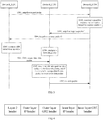
FIG. 3 illustrates a flow diagram of interaction of different devices shown inFig. 2 . -
FIG. 4 illustrates a schematic diagram of a format of a keepalive request packet according to an example of the present disclosure. -
FIG. 5 illustrates a schematic structure diagram of a network device according to an example of the present disclosure. -
FIG. 6 illustrates another schematic structure diagram of a network device according to an example of the present disclosure. -
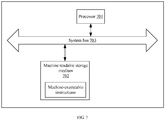
FIG. 7 illustrates yet another schematic structure diagram of a network device according to an example of the present disclosure. - Example embodiments will be described in detail herein with the examples thereof expressed in the drawings. When the following descriptions involve the drawings, like numerals in different drawings represent like or similar elements unless stated otherwise. The implementations described in the following example embodiments do not represent all implementations consistent with the present disclosure. On the contrary, they are examples of an apparatus and a method consistent with some aspects of the present disclosure described in detail in the appended claims.
- The terminology used in the present disclosure is for the purpose of describing a particular example only, and is not intended to be limiting of the present disclosure. The singular forms such as "a", 'said", and "the" used in the present disclosure and the appended claims are also intended to include multiple, unless the context clearly indicates otherwise. It is also to be understood that the term "and/or" as used herein refers to any or all possible combinations that include one or more associated recited items.
- It should be appreciated that although different information may be described using the terms such as first, second, third, etc. in the present disclosure, the information should not be limited to these terms. These terms are used only to distinguish the same type of information from each other. For example, the first information may also be referred to as the second information without departing from the scope of the present disclosure, and similarly, the second information may also be referred to as the first information. Depending on the context, the word "if' as used herein may be interpreted as "when" or "as" or "determining in response to".
- A process of GRE encapsulation is to be described as below. A raw packet may include a layer-2 header of 14 bytes, an original IP header of 20 bytes, and a payload of 30 bytes. In the GRE encapsulation process, a GRE header of 4 bytes and a new IP header of 20 bytes may be added to the raw packet. Thus, the length of the GRE-encapsulated packet is increased by 24 bytes compared to that of the raw packet. As a result, the data traffic of each link over a GRE tunnel is increased and more link bandwidth is occupied.
- A method of forwarding a packet and a network device to which the method is applied are provided according to the following examples of the present disclosure. The method in an example of the present disclosure may be executed by a network device such as a router. For convenience of description, the network device which executes the method according to the example of the present disclosure is hereinafter referred to as a first device.
- As shown in
Fig. 1 , a method of forwarding a packet executed by the first device may include the following blocks. - At block S101, the first device may receive a first notification message from a destination device of a first tunnel, where information relating the first tunnel is carried in the first notification message, and the first device serves as a previous-hop device of the destination device of the first tunnel.
- The information relating the first tunnel may include: an IP address of a source device of the first tunnel, an IP address of a destination device of the first tunnel, and an Identifier (ID) of a protocol to which the first tunnel conforms.
- The first tunnel may be a GRE tunnel, a Point-to-Point Protocol over Ethernet (PPPoE) tunnel, a Layer-2 Tunneling Protocol (L2TP) or the like, which is not limited in the example of the present disclosure.
- At block S102, the first device may configure a forwarding entry, where a match domain of the forwarding entry includes the information relating the first tunnel.
- The first device may configure the above forwarding entry on a software plane or a hardware plane, and also configure the match domain of the forwarding entry on the software plane and an action domain of the forwarding entry on the hardware plane, or configure the match domain on the hardware plane and the action domain on the software plane, which is not limited in the example of the present disclosure.
- In an example, the first device may configure a forwarding entry as shown in table 1 after obtaining the information relating the first tunnel from the first notification message:
Table 1 Match Actions Source IP address: an IP address of the source device of the first tunnel Decapsulating a packet and then forwarding it to the destination device of the first tunnel Destination IP address: an IP address of the destination device of the first tunnel Protocol ID: an ID of the protocol to which the first tunnel conforms - At block S103, when receiving an encapsulated data packet, the first device may match the data packet with the forwarding entry as shown in table 1, and if they are matched, the first device may decapsulate the data packet to obtain a decapsulated data packet and then forward the decapsulated data packet to the destination device of the first tunnel.
- In block S103, when receiving the encapsulated data packet, the first device may match the data packet with the match domain of the forwarding entry located on the software plane or the hardware plane, and if they are matched, the first device may decapsulate the data packet to obtain a raw data packet and forward the raw data packet to the destination device of the first tunnel based on the action domain of the forwarding entry.
- In the method of the above example, the destination device of a tunnel may transmit a notification message to a previous-hop device of the destination device, where the information relating the tunnel is carried in the notification message. After receiving the notification message, the previous-hop device may configure a forwarding entry in which the match domain includes the information relating the tunnel. Subsequently, when receiving an encapsulated data packet, the previous-hop device may decapsulate the encapsulated data packet, and if the encapsulated data packet matches the forwarding entry, then the previous-hop device may forward the decapsulated data packet to the destination device of the tunnel. Thus, the previous-hop device of the destination device of the tunnel may decapsulate the data packet to obtain a raw data packet in advance and forward the raw data packet to the destination device. In this way, on one hand, the decapsulation processing pressure of the destination device can be relieved, and when a plurality of tunnels are established between the source device and the destination device, the packet decapsulation processing work for a part of the tunnels can be shifted to the previous-hop device. On the other hand, since only the raw data packet rather than the encapsulated data packet is transmitted over the link between the previous-hop device and the destination device, the data traffic of the link can be reduced and the bandwidth of the link can be saved.
- In addition, an aging mechanism may be provided for a forwarding entry. For example, if the first notification message from the destination device of the first tunnel is not received within a predetermined time, the first device may delete the forwarding entry as shown in table 1. Therefore, when an encapsulated data packet is received from the source device of the first tunnel, the first device may directly forward the data packet to the destination device of the first tunnel instead of decapsulating the data packet. Subsequently, when receiving the first notification message from the destination device again, the first device may execute the method as shown in
Fig. 1 to reconfigure the forwarding entry and perform the operation of decapsulating a packet and forwarding it to the destination device of the first tunnel according to the forwarding entry. - To enable a destination device of a tunnel to transmit a notification message to a previous-hop device of the destination device, a tunnel keepalive mechanism may be employed in an example of the present disclosure. For example, based on the keepalive mechanism of a GRE tunnel, when the GRE keepalive function is enabled, a source device may periodically transmit a keepalive request packet to a destination device over the GRE tunnel. If the source device has not received a keepalive response packet returned by the destination device after continuously transmitting a predetermined number of keepalive request packets, the source device may set the GRE tunnel in a down status. In case that the GRE tunnel is in a down status, the source device may switch the status of the GRE tunnel into an up status if a keepalive response packet returned by the destination device is received, or otherwise maintain the GRE tunnel in the down status. Likewise, such tunnels as a PPPoE tunnel and an L2TP tunnel are adapted to similar keepalive mechanisms.
- By using the above-described tunnel keepalive mechanism, after receiving a keepalive request packet from the source device over the first tunnel, the destination device of the first tunnel may transmit the first notification message carrying the information relating the first tunnel to the previous-hop device (i.e., the first device) transmitting the keepalive request packet. Thus the first device is allowed to perform the operation blocks as shown in
Fig. 1 . In the actual implementation process, commands may be configured, and according to the commands, the first device may configure a forwarding entry on the first device after receiving the first notification message from the destination device of the first tunnel. Alternatively, corresponding provisions may be set based on a protocol standard, which is not limited in the example of the present disclosure. - In an example, the first device may also serve as a destination device of a particular tunnel. Thus, when serving as, for example, a destination device of a second tunnel, the first device may receive a keepalive request packet from a source device over the second tunnel, and then transmit a second notification message to a previous-hop device transmitting the keepalive request packet. Information relating the second tunnel is carried in the second notification message. The information relating the second tunnel may include an IP address of the first device, an IP address of the source device, and an ID of a protocol to which the second tunnel conforms. The second tunnel may be a GRE tunnel, a PPPoE tunnel, an L2TP tunnel or the like, which is not limited in the example of the present disclosure.
- In an example of the present disclosure, the protocols and packet formats of the above-mentioned notification messages (including the first notification message and the second notification message) are not limited as long as they can carry the information relating a tunnel and can serve as a notification. The notification message may be a keepalive response packet with Time To Live (TTL) being 1. The TTL indicates the maximum hops by which a data packet can be forwarded in a network. For example, when serving as the destination device of the second tunnel, the first device may receive a keepalive request packet from the source device, and then return a keepalive response packet to the source device according to the tunnel keepalive mechanism. In addition, the first device may transmit a keepalive response packet with TTL=1 as a notification message to the previous-hop device transmitting the keepalive request packet. Thus, the previous-hop device may perform the operation blocks as shown in
FIG. 1 . The TTL is set to 1, which may achieve two effects: one is to enable the keepalive response packet to terminate at the previous-hop device without being continuously forwarded, and the other one is to serve as an identifier of the notification message. That is, TTL=1 is used to identify the keepalive response packet as a notification message. - In an example of the present disclosure, the tunnel keepalive mechanism may be employed. After receiving a keepalive request packet, the destination device of the tunnel may additionally transmit a keepalive response packet with TTL=1 to a previous-hop device transmitting the keepalive request packet, so as to notify the previous-hop device to configure a forwarding entry so that a subsequent encapsulated data packet may be decapsulated on the previous-hop device in advance. Moreover, when using the keepalive response packet with TTL=1 as a notification message, there may be no need to define a new message type or modify the format of the keepalive response packet, which brings out a wide application range.
- The method of the above example is to be described in detail by taking an actual network shown in
FIG. 2 for example. As shown inFIG. 2 , a GRE tunnel may be established between adevice R_A 201 and adevice R_D 204, where thedevice R_A 201 is a source device of the GRE tunnel, and thedevice R_D 204 is a destination device of the GRE tunnel, and adevice R_C 203 is a previous-hop device of the destination device. Thedevice R_A 201 has an IP address as IP-A and an MAC address as MAC-A; the IP address of thedevice R_C 203 is IP-C and its MAC address is MAC- C; and the IP address of thedevice R_D 204 is IP- D and its MAC address is MAC- D. - The method of forwarding a packet in this case is as shown in
FIG. 3 , which specifically includes the following blocks. - At block S301, the
device R_A 201 may transmit a keepalive request packet to thedevice R_D 204 over a GRE tunnel. - The format of the keepalive request packet is as shown in
FIG. 4 , including: a layer-2 header, an outer layer IP header, an outer layer GRE header, an inner layer IP header, and an inner layer GRE header. In the block S301, the source IP address of the outer layer IP header of the keepalive request packet is IP-A and its destination IP address is IP-D, and the source IP address of the inner layer IP header is IP-D and its destination IP address is IP-A. - At block S302, after receiving the keepalive request packet, the
device R_D 204 may decapsulate the keepalive request packet and then construct two keepalive response packets: akeepalive response packet 1 and akeepalive response packet 2. - For example, after receiving the keepalive request packet, the
device R_D 204 may record an ingress port of the keepalive request packet as Port21 and parse the keepalive request packet to determine a source MAC address in the layer-2 header as MAC-C and a destination MAC address as MAC-D. Then, thedevice R_D 204 may pop out the outer layer IP header and the outer layer GRE header of the keepalive request packet to obtain the remaining layer-2 header, inner layer IP header and inner layer GRE header, and construct thekeepalive response packet 1 and thekeepalive response packet 2 with these obtained headers. - The process of constructing the
keepalive response packet 1 is as follows: setting the TTL in the IP header to 1, and interchanging the source MAC address MAC-C and the destination MAC address MAC-D in the layer-2 header, i.e., taking MAC-D as the source MAC address and MAC-C as the destination MAC address. Thus, the source MAC address of the layer-2 header of the constructedkeepalive response packet 1 is MAC-D and its destination MAC address is MAC-C and the TTL in the IP header is 1. Thekeepalive response packet 1 is a notification message. - The
keepalive response packet 2 is a keepalive response packet with the TTL not being 1, and the source MAC address in the layer-2 header of the packet is MAC-D and the destination MAC address is the MAC address of a next-hop device to which thekeepalive response packet 2 is forwarded and the TTL in the IP header is 254. Such information as an egress port of thekeepalive response packet 2 and an MAC address of a next-hop device may be obtained by searching an IP route table for corresponding next-hop information based on the IP address IP-A of thedevice R_A 201. - At block S303, the
device R_D 204 may transmit thekeepalive response packet 1 to thedevice R_C 203 through a Port21. - Since the next-hop device obtained according to the IP-A is possibly not the
device R_C 203, inblock 303, thekeepalive response packet 1 may be transmitted through the ingress port Port21 of the keepalive request packet rather than an egress port obtained by searching in the IP route table. Thus, it can be ensured that thekeepalive response packet 1 may be transmitted to thedevice R_C 203. - At block S304, the
device R_D 204 may transmit thekeepalive response packet 2 to thedevice R_A 201 through the egress port obtained by searching in the IP route table. - As can be seen from block S302 to block S304, the TTL values in the IP headers of the
keepalive response packet 1 and thekeepalive response packet 2 are different, and the manners of determining the egress ports are different. The TTL of thekeepalive response packet 1 is set to 1 rather than 254, which is intended to, on one hand, allow thekeepalive response packet 1 to be forwarded just by one hop and thus to be terminated on thedevice R_C 203 without being continuously forwarded, and on the other hand, use TTL=1 to identify thekeepalive response packet 1 as a notification message. In addition, the egress port of thekeepalive response packet 1, rather than the egress port obtained according to the IP-A, may be determined as the ingress port Port21 of the keepalive request packet. The reason is that: thekeepalive response packet 1 is to be transmitted back to the second-to-last-hop device, i.e., thedevice R_C 203, in a forwarding path (i.e.,device R_A 201→device R_B 202→device R_C 203→device R_D 204) of the keepalive request packet, therefore, thekeepalive response packet 1 must be transmitted from the ingress port of the keepalive request packet. Thekeepalive response packet 2 is to be transmitted to thedevice R_A 201; therefore, according to the GRE tunnel keepalive mechanism, a corresponding egress port may be obtained by searching the IP route table based on the IP address IP-A of thedevice R_A 201, and thekeepalive response packet 2 may be forwarded to thedevice R_A 201 through the obtained egress port. - In an actual implementation process, the order of transmitting the
keepalive response packet 1 and thekeepalive response packet 2 may not be specified. Thekeepalive response packet 1 is a functional notification message for notifying thedevice R_C 203 of configuring a forwarding entry so as to decapsulate a packet in advance, and thekeepalive response packet 2 is a keepalive maintenance message. In one implementation, it may be such an order in which block S303 is performed first and block S304 is then performed. In another implementation, it may also be such an order in which block S304 is performed first and block S303 is then performed. - At block S305, the
device R_A 201 may maintain the GRE tunnel in an up status after receiving thekeepalive response packet 2. - Subsequently, the
device R_A 201 may perform block S301 again when a predetermined transmitting time interval expires. - At block S306, after receiving the
keepalive response packet 1, thedevice R_C 203 may parse the packet to determine TTL in the IP header being 1, and directly transmit the packet to a CPU for process. The CPU may obtain the source IP address IP-D, the destination IP address IP-A and the protocol ID from the IP header of thekeepalive response packet 1 and then configure a forwarding entry as shown in table 2 at the hardware plane:Table 2 Match Actions Source IP address: IP-A Decapsulating a packet and then forwarding it to the device R_D 204Destination IP address: IP-D Protocol ID: ID of the GRE protocol - In addition, when receiving the above
keepalive response packet 1, thedevice R_C 203 may start a timer to start timing from 0. Subsequently, the timer may be restarted every time the abovekeepalive response packet 1 is received, such that the timer restarts timing from 0. If the time of the timer reaches predetermined time T and thedevice R_C 203 does not receive a newkeepalive response packet 1, the forwarding entry may be deleted. - At block S307, after receiving a GRE-encapsulated data packet from the
device R_A 201, thedevice R_C 203 may match the GRE-encapsulated data packet with the forwarding entry as shown in table 2, and when the forwarding entry is hit, thedevice R_C 203 may decapsulate the GRE-encapsulated data packet according to the action domain of the forwarding entry and then forward it to thedevice R_D 204. - As can be seen from the method as shown in
FIG. 3 , in the method of an example of the present disclosure, the keepalive mechanism of the GRE tunnel is employed. After receiving a keepalive request packet from thesource device R_A 201, thedestination device R_D 204 of the GRE tunnel may additionally transmit a keepalive response packet with TTL=1 to the previous-hop device R_C 203 transmitting the keepalive request packet when responding to the keepalive request packet. Thus, the previous-hop device R_C 203 may configure a forwarding entry. According to the forwarding entry, an encapsulated data packet from thedevice R_A 201 may be decapsulated in advance and then forwarded to thedevice R_D 204. As a result, the decapsulation processing pressure of thedestination device R_D 204 of the tunnel is reduced and the link overhead of the GRE tunnel is reduced. - Further, the
device R_C 203 may also support security authentication processing of the tunnel when decapsulating the encapsulated data packet according to the forwarding entry as shown in table 2. For example, the GRE tunnel may support two security authentication mechanisms: verification by key identification and end-to-end check. - In block S306, after receiving the
keepalive response packet 1 from thedevice R_D 204, thedevice R_C 203 may obtain and store a Key of the GRE tunnel from thedevice R_D 204. Alternatively, when a Key is carried in thekeepalive response packet 1, thedevice R_C 203 may directly obtain the key from thekeepalive response packet 1 and store it. - After obtaining the Key, the
device R_C 203 may configure the forwarding entry. The action domain of the forwarding entry may be: decapsulating the encapsulated data packet and then forwarding it to thedevice R_D 204 when determining that the Key carried in the encapsulated data packet is consistent with the locally stored Key. - Thus, in block S307, after receiving the GRE-encapsulated data packet from the
device R_A 201, thedevice R_C 203 may match the GRE-encapsulated data packet with the forwarding entry, and when the forwarding entry is hit, thedevice R_C 203 may determine whether the Key carried in the GRE-encapsulated data packet is consistent with the locally stored Key according to the action domain of the forwarding entry. If the two keys are consistent, thedevice R_C 203 may decapsulate the GRE-encapsulated data packet and forwards the data packet to thedevice R_D 204. - A check indication mark such as a checksum may be carried in the
keepalive response packet 1. In block S306, after receiving thekeepalive response packet 1, thedevice R_C 203 may configure the forwarding entry according to the check indication mark. The action domain of the forwarding entry may be: calculating the checksum of an encapsulated data packet, and decapsulating the encapsulated data packet and then forwarding it to thedevice R_D 204 when determining that the calculated checksum is consistent with the checksum carried in the encapsulated data packet. - Thus, in block S307, after receiving the GRE-encapsulated data packet from the
device R_A 201, thedevice R_C 203 may match the GRE-encapsulated data packet with the forwarding entry. When the forwarding entry is hit, thedevice R_C 203 may calculate the checksum of the GRE-encapsulated data packet and determine whether the calculated checksum is consistent with the checksum carried in the GRE-encapsulated data packet according to the action domain of the forwarding entry. If the two checksums are consistent, thedevice R_C 203 may decapsulate the GRE-encapsulated data packet and then forwards it to thedevice R_D 204. - Apparently, the method as shown in
FIG. 3 is also applicable to other tunnels supporting the keepalive mechanism, such as a PPPoE tunnel and an L2TP tunnel, which is not limited in the example of the present disclosure. - Corresponding to an example of the above method of forwarding a packet, the present disclosure also provides an example of a network device.
- Referring to
FIG. 5 , the network device according to an example of the present disclosure includes the following modules: a receivingunit 501, a configuringunit 502 and a transmittingunit 503, where: - the receiving
unit 501 is configured to receive a first notification message from a destination device of a first tunnel, where the network device serves as a previous-hop device of the destination device of the first tunnel, and information relating the first tunnel is carried in the first notification message; - the configuring
unit 502 is configured to configure a forwarding entry after the receivingunit 501 receives the first notification message, where a match domain of the forwarding entry includes the information relating the first tunnel; and - the transmitting
unit 503 is configured to decapsulate an encapsulated data packet to obtain a decapsulated data packet when the encapsulated data packet matches the forwarding entry after the receivingunit 501 receives the encapsulated data packet over the first tunnel, and forward the decapsulated data packet to the destination device of the first tunnel. - The receiving
unit 501 is further configured to receive a keepalive request packet transmitted from a source device of a second tunnel over the second tunnel when the network device serves as a destination device of the second tunnel. - The transmitting
unit 503 is further configured to transmit a second notification message to the previous-hop device transmitting the keepalive request packet after the receivingunit 501 receives the keepalive request packet, where information relating the second tunnel is carried in the second notification message. - Additionally, as shown in
Fig. 6 , the above-mentioned network device also includes: a deletingunit 504. The receivingunit 501 determines whether a third notification message from the destination device of the first tunnel is received within a predetermined time after receiving the first notification message, where the third notification message carries information relating the first tunnel. If the receivingunit 501 does not receive the third notification message within the predetermined time, the deletingunit 504 deletes the forwarding entry from the network device. - The receiving
unit 501 starts a timer to start timing when receiving the first notification message from the destination device of the first tunnel; and the receivingunit 501 may determine that the third notification message from the destination device of the first tunnel is not received within the predetermined time if the third notification message is still not received when the time of the timer reaches the predetermined time. - The first notification message received by the receiving
unit 501 and the second notification message transmitted by the transmittingunit 503 are keepalive response packets with Time to Live (TTL) being 1. - The information relating the first tunnel includes: IP addresses of devices at two ends of the first tunnel and an Identifier (ID) of a protocol to which the first tunnel conforms. The information relating the second tunnel includes: IP addresses of devices at two ends of the second tunnel and an Identifier (ID) of a protocol to which the second tunnel conforms. Specifically, the devices at the two ends of the first tunnel are the source device and the destination device of the first tunnel, and the devices at the two ends of the second tunnel are the network device and the source device of the second tunnel.
- The above-mentioned first tunnel or second tunnel is one of a GRE tunnel, a PPPoE tunnel and an L2TP tunnel.
- Details of the implementation process of the functions and effects of different units in the above-described device may be seen from the implementation process of corresponding blocks in the above-described method, which will not be redundantly described herein.
-
FIG. 7 illustrates a schematic diagram of a hardware structure of a network device according to an example of the present disclosure. The network device includes aprocessor 701 and a machine-readable storage medium 702 that stores machine-executable instructions. Theprocessor 701 may communicate with the machinereadable storage medium 702 via a system bus 703. Moreover, by reading and executing the machine-executable instructions on the machine-readable storage medium 702, theprocessor 701 may execute the method of forwarding a packet as described above. Typically, the network device may also include other hardware according to the actual functions of the network device, which will not be redundantly described herein. - The machine
readable storage medium 702 mentioned herein may be: any electronic, magnetic, optical or other physical storage device and may contain or store information such as executable instructions, data and so on. For example, the machine-readable storage medium may be a Read-Only Memory (ROM), a volatile memory, a nonvolatile memory, a flash memory, a storage drive (e.g. hard disk drive), a solid state harddisk, or any type of storage disk. - For example, when reading and executing the machine-executable instructions on the machine-
readable storage medium 702, theprocessor 701 is caused to perform the following operations: - receiving a first notification message from a destination device of a first tunnel, where the network device is a previous-hop device of the destination device of the first tunnel, and information relating the first tunnel is carried in the first notification message;
- configuring a forwarding entry, where a match domain of the forwarding entry includes the information relating the first tunnel;
- decapsulating a received encapsulated data packet to obtain a decapsulated data packet when the encapsulated data packet matches the forwarding entry; and
- forwarding the decapsulated data packet to the destination device of the first tunnel.
- In an example, the
processor 701 is also caused by the machine-executable instructions to: - receive a keepalive request packet transmitted from a source device of a second tunnel over the second tunnel, where the network device is a destination device of the second tunnel; and
- transmit a second notification message to a previous-hop device transmitting the keepalive request packet, where information relating the second tunnel is carried in the second notification message.
- In an example, the
processor 701 is also caused by the machine-executable instructions to: - determine whether a third notification message from the destination device of the first tunnel is received within a predetermined time after receiving the first notification message, where the third notification message carries the information relating the first tunnel; and
- delete the forwarding entry when the third notification message is not received within the predetermined time.
- In an example, the
processor 701 is also caused by the machine-executable instructions to: - start a timer to start timing when the first notification message from the destination device of the first tunnel is received; and
- determine that the third notification message from the destination device of the first tunnel is not received within the predetermined time if the third notification message is still not received when the time of the timer reaches the predetermined time.
- In an example, the first notification message and the second notification message are keepalive response packets with Time to Live (TTL) being 1.
- In an example, the information relating the first tunnel includes: Internet Protocol (IP) addresses of devices at two ends of the first tunnel and an Identifier (ID) of a protocol to which the first tunnel conforms; and
the information relating the second tunnel includes: Internet Protocol (IP) addresses of devices at two ends of the second tunnel and an Identifier (ID) of a protocol to which the second tunnel conforms. - Since the device examples substantially correspond to the method examples, a reference may be made to part of the descriptions of the method examples for the related part. The device examples described above are merely illustrative, where the units described as separate members may be or not be physically separated, and the members displayed as units may be or not be physical units, i.e., may be located in one place, or may be distributed to a plurality of network units. Part or all of the modules may be selected according to actual requirements to implement the objectives of the solutions in the examples. Those of ordinary skill in the art may understand and carry out them without creative work.
- It needs to be noted that the relational terms such as "first" and "second" used herein are merely intended to distinguish one entity or operation from another entity or operation rather than to require or imply any such actual relation or order existing between these entities or operations. Also, the term "including", "containing" or any variation thereof is intended to encompass non-exclusive inclusion, so that a process, method, article or device including a series of elements includes not only those elements but also other elements not recited explicitly or those elements inherent to such a process, method, article or device. Without more limitations, an element defined by the statement "including a..." shall not be precluded to include additional same elements present in a process, method, article or device including the elements.
- The above are detailed descriptions of a method and a device provided according to the examples of the present disclosure. Specific examples are used herein to set forth the principles and the implementing methods of the present disclosure, and the descriptions of the above examples are only meant to help understanding of the method and the core idea of the present disclosure. Meanwhile, those of ordinary skill in the art may make alterations to the specific examples and the scope of application in accordance with the idea of the present disclosure. In conclusion, the contents of the present specification shall not be interpreted as limiting to the present disclosure.
Claims (12)
- A method of forwarding a packet, comprising:receiving, by a network device, a first notification message from a destination device of a first tunnel, wherein the network device is a previous-hop device of the destination device of the first tunnel, and information relating the first tunnel is carried in the first notification message;configuring, by the network device, a forwarding entry, wherein a match domain of the forwarding entry comprises the information relating the first tunnel;decapsulating, by the network device, an encapsulated data packet to obtain a decapsulated data packet when the encapsulated data packet received by the network device matches the forwarding entry; andforwarding, by the network device, the decapsulated data packet to the destination device of the first tunnel.
- The method according to claim 1, further comprising:receiving, by the network device, a keepalive request packet transmitted from a source device of a second tunnel over the second tunnel, wherein the network device is a destination device of the second tunnel; andtransmitting, by the network device, a second notification message to a previous-hop device transmitting the keepalive request packet, wherein information relating the second tunnel is carried in the second notification message.
- The method according to claim 1, further comprising:determining, by the network device, whether a third notification message from the destination device of the first tunnel is received within a predetermined time after receiving the first notification message, wherein the third notification message carries the information relating the first tunnel; anddeleting, by the network device, the forwarding entry when the third notification message is not received within the predetermined time.
- The method according to claim 3, wherein determining whether the third notification message from the destination device of the first tunnel is received within the predetermined time comprises:starting, by the network device, a timer to start timing when the first notification message from the destination device of the first tunnel is received; anddetermining, by the network device, that the third notification message from the destination device of the first tunnel is not received within the predetermined time in the event that the third notification message is still not received when the timer reaches the predetermined time.
- The method according to claim 2, wherein the first notification message and the second notification message are a keepalive response packet with Time to Live, TTL, being 1.
- The method according to claim 2, whereinthe information relating the first tunnel comprises: Internet Protocol, IP, addresses of devices at two ends of the first tunnel and an Identifier, ID, of a protocol to which the first tunnel conforms; andthe information relating the second tunnel comprises: IP addresses of devices at two ends of the second tunnel and an ID of a protocol to which the second tunnel conforms.
- A network device, comprising:a processor; anda non-transitory machine-readable storage medium that stores machine-executable instructions, wherein by executing the machine-executable instructions, the processor is caused by the machine-executable instructions to:receive a first notification message from a destination device of a first tunnel, wherein the network device is a previous-hop device of the destination device of the first tunnel, and information relating the first tunnel is carried in the first notification message;configure a forwarding entry, wherein a match domain of the forwarding entry comprises the information relating the first tunnel;decapsulate a received encapsulated data packet to obtain a decapsulated data packet when the received encapsulated data packet matches the forwarding entry; andforward the decapsulated data packet to the destination device of the first tunnel.
- The network device according to claim 7, wherein the processor is further caused by the machine-executable instructions to:receive a keepalive request packet transmitted from a source device of a second tunnel over the second tunnel, wherein the network device is a destination device of the second tunnel; andtransmit a second notification message to a previous-hop device transmitting the keepalive request packet, wherein information relating the second tunnel is carried in the second notification message.
- The network device according to claim 7, wherein the processor is further caused by the machine-executable instructions to:determine whether a third notification message from the destination device of the first tunnel is received within a predetermined time after receiving the first notification message, wherein the third notification message carries the information relating the first tunnel; anddelete the forwarding entry when the third notification message is not received within the predetermined time.
- The network device according to claim 9, wherein when determining whether the third notification message from the destination device of the first tunnel is received within the predetermined time, the processor is further caused by the machine-executable instructions to:start a timer to start timing when the first notification message from the destination device of the first tunnel is received; anddetermine that the third notification message from the destination device of the first tunnel is not received within the predetermined time in the event that the third notification message is still not received when the timer reaches the predetermined time.
- The network device according to claim 8, wherein the first notification message and the second notification message are a keepalive response packet with Time to Live, TTL, being 1.
- The network device according to claim 8, wherein
the information relating the first tunnel comprises: Internet Protocol, IP, addresses of devices at two ends of the first tunnel and an Identifier, ID, of a protocol to which the first tunnel conforms;
and
the information relating the second tunnel comprises: IP addresses of devices at two ends of the second tunnel and an ID of a protocol to which the second tunnel conforms.
Applications Claiming Priority (2)
| Application Number | Priority Date | Filing Date | Title |
|---|---|---|---|
| CN201611034213.1A CN108075991B (en) | 2016-11-18 | 2016-11-18 | Message forwarding method and device |
| PCT/CN2017/111667 WO2018090980A1 (en) | 2016-11-18 | 2017-11-17 | Packet forwarding |
Publications (3)
| Publication Number | Publication Date |
|---|---|
| EP3528438A1 true EP3528438A1 (en) | 2019-08-21 |
| EP3528438A4 EP3528438A4 (en) | 2019-08-21 |
| EP3528438B1 EP3528438B1 (en) | 2021-08-11 |
Family
ID=62146178
Family Applications (1)
| Application Number | Title | Priority Date | Filing Date |
|---|---|---|---|
| EP17871799.7A Active EP3528438B1 (en) | 2016-11-18 | 2017-11-17 | Packet forwarding |
Country Status (5)
| Country | Link |
|---|---|
| US (1) | US10880122B2 (en) |
| EP (1) | EP3528438B1 (en) |
| JP (1) | JP6812549B2 (en) |
| CN (1) | CN108075991B (en) |
| WO (1) | WO2018090980A1 (en) |
Cited By (1)
| Publication number | Priority date | Publication date | Assignee | Title |
|---|---|---|---|---|
| CN114125910A (en) * | 2020-08-31 | 2022-03-01 | 华为技术有限公司 | Tunnel keep-alive method, network equipment, system and storage medium |
Families Citing this family (3)
| Publication number | Priority date | Publication date | Assignee | Title |
|---|---|---|---|---|
| CN110324165B (en) * | 2018-03-30 | 2021-05-11 | 华为技术有限公司 | Network equipment management method, device and system |
| CN112448912B (en) * | 2019-08-27 | 2023-08-01 | 中兴通讯股份有限公司 | Method, device and storage medium for preventing message attack |
| CN114301737B (en) * | 2021-12-29 | 2023-10-24 | 迈普通信技术股份有限公司 | Network configuration method, device, network equipment and computer readable storage medium |
Family Cites Families (20)
| Publication number | Priority date | Publication date | Assignee | Title |
|---|---|---|---|---|
| US7801021B1 (en) * | 2002-07-01 | 2010-09-21 | Cisco Technology, Inc. | Generic routing encapsulation tunnel keepalives |
| JP4093125B2 (en) | 2003-06-17 | 2008-06-04 | 株式会社日立製作所 | MPLS route management system |
| JP4947430B2 (en) * | 2005-08-18 | 2012-06-06 | 日本電気株式会社 | Communication path control method and communication terminal in wireless multi-hop network |
| US8526331B2 (en) * | 2008-05-23 | 2013-09-03 | Telefonaktiebolaget L M Ericsson (Publ) | Maintaining distributed hash tables in an overlay network |
| CN101695053B (en) * | 2009-09-30 | 2012-05-23 | 清华大学 | An IP fast rerouting method for improving intra-domain routing OSPF algorithm |
| US20120099602A1 (en) * | 2010-10-25 | 2012-04-26 | Brocade Communications Systems, Inc. | End-to-end virtualization |
| US8458344B2 (en) * | 2011-05-05 | 2013-06-04 | Blue Coat Systems, Inc. | Establishing tunnels between selective endpoint devices along communication paths |
| US20130022041A1 (en) | 2011-07-18 | 2013-01-24 | Sriganesh Kini | Signaling a label switched path (lsp) tunneling model |
| US9769116B2 (en) * | 2011-09-16 | 2017-09-19 | Wilmerding Communications Llc | Encapsulating traffic while preserving packet characteristics |
| US9338050B2 (en) * | 2012-03-27 | 2016-05-10 | Telefonaktiebolaget Lm Ericsson (Publ) | Shared keep-alive and failure detection mechanism in distributed network |
| WO2013177289A1 (en) * | 2012-05-23 | 2013-11-28 | Brocade Communications Systems, Inc. | Layer-3 overlay gateways |
| CN102739521B (en) | 2012-06-04 | 2016-03-02 | 杭州华三通信技术有限公司 | A kind of multicast service realizing method and equipment thereof |
| US8989192B2 (en) * | 2012-08-15 | 2015-03-24 | Futurewei Technologies, Inc. | Method and system for creating software defined ordered service patterns in a communications network |
| EP2907273B1 (en) * | 2012-10-09 | 2018-12-05 | Telefonaktiebolaget LM Ericsson (publ) | Method and apparatus for establishing and using pdn connections |
| US9036639B2 (en) | 2012-11-29 | 2015-05-19 | Futurewei Technologies, Inc. | System and method for VXLAN inter-domain communications |
| US9621460B2 (en) * | 2013-01-14 | 2017-04-11 | Versa Networks, Inc. | Connecting multiple customer sites over a wide area network using an overlay network |
| CN104348759B (en) * | 2013-07-23 | 2019-04-02 | 中兴通讯股份有限公司 | GRE packet encapsulation method, decapsulation method and corresponding device |
| US9548873B2 (en) * | 2014-02-10 | 2017-01-17 | Brocade Communications Systems, Inc. | Virtual extensible LAN tunnel keepalives |
| US10063473B2 (en) | 2014-04-30 | 2018-08-28 | Brocade Communications Systems LLC | Method and system for facilitating switch virtualization in a network of interconnected switches |
| CN105337881B (en) | 2014-06-27 | 2019-10-01 | 华为技术有限公司 | A kind of processing method of data message, service node and drainage point |
-
2016
- 2016-11-18 CN CN201611034213.1A patent/CN108075991B/en active Active
-
2017
- 2017-11-17 EP EP17871799.7A patent/EP3528438B1/en active Active
- 2017-11-17 WO PCT/CN2017/111667 patent/WO2018090980A1/en not_active Ceased
- 2017-11-17 JP JP2019526218A patent/JP6812549B2/en active Active
- 2017-11-17 US US16/462,402 patent/US10880122B2/en active Active
Cited By (3)
| Publication number | Priority date | Publication date | Assignee | Title |
|---|---|---|---|---|
| CN114125910A (en) * | 2020-08-31 | 2022-03-01 | 华为技术有限公司 | Tunnel keep-alive method, network equipment, system and storage medium |
| EP4192085A4 (en) * | 2020-08-31 | 2024-02-21 | Huawei Technologies Co., Ltd. | Tunnel keepalive method, network device, system and storage medium |
| CN114125910B (en) * | 2020-08-31 | 2025-02-25 | 华为技术有限公司 | Tunnel keep-alive method, network device, system and storage medium |
Also Published As
| Publication number | Publication date |
|---|---|
| CN108075991B (en) | 2020-09-08 |
| US20190305987A1 (en) | 2019-10-03 |
| US10880122B2 (en) | 2020-12-29 |
| WO2018090980A1 (en) | 2018-05-24 |
| EP3528438B1 (en) | 2021-08-11 |
| JP6812549B2 (en) | 2021-01-13 |
| EP3528438A4 (en) | 2019-08-21 |
| CN108075991A (en) | 2018-05-25 |
| JP2019536364A (en) | 2019-12-12 |
Similar Documents
| Publication | Publication Date | Title |
|---|---|---|
| EP3958521B1 (en) | Method and apparatus for providing service for service flow | |
| EP3451595B1 (en) | Method, device and system for data transmission | |
| EP3713162A1 (en) | Route processing method and apparatus, and data transmission method and apparatus | |
| US8351352B1 (en) | Methods and apparatus for RBridge hop-by-hop compression and frame aggregation | |
| EP3076612B1 (en) | Packet processing methods and nodes | |
| EP3528441B1 (en) | Message forwarding | |
| CN112187647B (en) | Message forwarding method, device and computer-readable storage medium | |
| CN112737954B (en) | Message processing method, device, system, equipment and storage medium | |
| EP3528438B1 (en) | Packet forwarding | |
| EP3767898A1 (en) | Packet forwarding method and apparatus | |
| WO2017054576A1 (en) | Unicast tunnel building method, apparatus and system | |
| CN107872332A (en) | The detection method and relevant apparatus of a kind of message forwarding path | |
| EP4044523B1 (en) | Packet forwarding method, first network device, and first device group | |
| WO2015144018A1 (en) | Information transmission method, device and communication system | |
| US9531564B2 (en) | Single hop overlay architecture for line rate performance in campus networks | |
| WO2016124049A1 (en) | Method and apparatus for obtaining port path | |
| CN111130982B (en) | Message forwarding method and device, gateway equipment and readable storage medium | |
| CN102801622B (en) | A kind of retransmission method of data message and retransmission unit | |
| CN101640635A (en) | Method for avoiding message recombination in 6over4 tunnel and system therefor | |
| WO2016101582A1 (en) | Method for configuring and implementing operations, administration and maintenance function, and forwarding device | |
| WO2017219868A1 (en) | Arp entry processing method and apparatus | |
| US20240323048A1 (en) | X-over-y tunnel signaling and configuration, and use of configured x-over-y tunnel(s) | |
| CN104283814B (en) | The method and logical switch of control data forwarding | |
| CN113132222B (en) | Message forwarding method, message forwarding equipment and computer readable storage medium | |
| US8891509B2 (en) | Proxy networking device for a router |
Legal Events
| Date | Code | Title | Description |
|---|---|---|---|
| STAA | Information on the status of an ep patent application or granted ep patent |
Free format text: STATUS: THE INTERNATIONAL PUBLICATION HAS BEEN MADE |
|
| PUAI | Public reference made under article 153(3) epc to a published international application that has entered the european phase |
Free format text: ORIGINAL CODE: 0009012 |
|
| STAA | Information on the status of an ep patent application or granted ep patent |
Free format text: STATUS: REQUEST FOR EXAMINATION WAS MADE |
|
| 17P | Request for examination filed |
Effective date: 20190517 |
|
| A4 | Supplementary search report drawn up and despatched |
Effective date: 20190710 |
|
| AK | Designated contracting states |
Kind code of ref document: A1 Designated state(s): AL AT BE BG CH CY CZ DE DK EE ES FI FR GB GR HR HU IE IS IT LI LT LU LV MC MK MT NL NO PL PT RO RS SE SI SK SM TR |
|
| AX | Request for extension of the european patent |
Extension state: BA ME |
|
| DAV | Request for validation of the european patent (deleted) | ||
| DAX | Request for extension of the european patent (deleted) | ||
| STAA | Information on the status of an ep patent application or granted ep patent |
Free format text: STATUS: EXAMINATION IS IN PROGRESS |
|
| 17Q | First examination report despatched |
Effective date: 20200703 |
|
| GRAP | Despatch of communication of intention to grant a patent |
Free format text: ORIGINAL CODE: EPIDOSNIGR1 |
|
| STAA | Information on the status of an ep patent application or granted ep patent |
Free format text: STATUS: GRANT OF PATENT IS INTENDED |
|
| INTG | Intention to grant announced |
Effective date: 20210317 |
|
| GRAS | Grant fee paid |
Free format text: ORIGINAL CODE: EPIDOSNIGR3 |
|
| GRAA | (expected) grant |
Free format text: ORIGINAL CODE: 0009210 |
|
| STAA | Information on the status of an ep patent application or granted ep patent |
Free format text: STATUS: THE PATENT HAS BEEN GRANTED |
|
| AK | Designated contracting states |
Kind code of ref document: B1 Designated state(s): AL AT BE BG CH CY CZ DE DK EE ES FI FR GB GR HR HU IE IS IT LI LT LU LV MC MK MT NL NO PL PT RO RS SE SI SK SM TR |
|
| REG | Reference to a national code |
Ref country code: CH Ref legal event code: EP |
|
| REG | Reference to a national code |
Ref country code: DE Ref legal event code: R096 Ref document number: 602017044038 Country of ref document: DE |
|
| REG | Reference to a national code |
Ref country code: IE Ref legal event code: FG4D Ref country code: AT Ref legal event code: REF Ref document number: 1420524 Country of ref document: AT Kind code of ref document: T Effective date: 20210915 |
|
| REG | Reference to a national code |
Ref country code: LT Ref legal event code: MG9D |
|
| REG | Reference to a national code |
Ref country code: NL Ref legal event code: MP Effective date: 20210811 |
|
| REG | Reference to a national code |
Ref country code: AT Ref legal event code: MK05 Ref document number: 1420524 Country of ref document: AT Kind code of ref document: T Effective date: 20210811 |
|
| PG25 | Lapsed in a contracting state [announced via postgrant information from national office to epo] |
Ref country code: BG Free format text: LAPSE BECAUSE OF FAILURE TO SUBMIT A TRANSLATION OF THE DESCRIPTION OR TO PAY THE FEE WITHIN THE PRESCRIBED TIME-LIMIT Effective date: 20211111 Ref country code: AT Free format text: LAPSE BECAUSE OF FAILURE TO SUBMIT A TRANSLATION OF THE DESCRIPTION OR TO PAY THE FEE WITHIN THE PRESCRIBED TIME-LIMIT Effective date: 20210811 Ref country code: LT Free format text: LAPSE BECAUSE OF FAILURE TO SUBMIT A TRANSLATION OF THE DESCRIPTION OR TO PAY THE FEE WITHIN THE PRESCRIBED TIME-LIMIT Effective date: 20210811 Ref country code: NO Free format text: LAPSE BECAUSE OF FAILURE TO SUBMIT A TRANSLATION OF THE DESCRIPTION OR TO PAY THE FEE WITHIN THE PRESCRIBED TIME-LIMIT Effective date: 20211111 Ref country code: PT Free format text: LAPSE BECAUSE OF FAILURE TO SUBMIT A TRANSLATION OF THE DESCRIPTION OR TO PAY THE FEE WITHIN THE PRESCRIBED TIME-LIMIT Effective date: 20211213 Ref country code: RS Free format text: LAPSE BECAUSE OF FAILURE TO SUBMIT A TRANSLATION OF THE DESCRIPTION OR TO PAY THE FEE WITHIN THE PRESCRIBED TIME-LIMIT Effective date: 20210811 Ref country code: SE Free format text: LAPSE BECAUSE OF FAILURE TO SUBMIT A TRANSLATION OF THE DESCRIPTION OR TO PAY THE FEE WITHIN THE PRESCRIBED TIME-LIMIT Effective date: 20210811 Ref country code: FI Free format text: LAPSE BECAUSE OF FAILURE TO SUBMIT A TRANSLATION OF THE DESCRIPTION OR TO PAY THE FEE WITHIN THE PRESCRIBED TIME-LIMIT Effective date: 20210811 Ref country code: ES Free format text: LAPSE BECAUSE OF FAILURE TO SUBMIT A TRANSLATION OF THE DESCRIPTION OR TO PAY THE FEE WITHIN THE PRESCRIBED TIME-LIMIT Effective date: 20210811 Ref country code: HR Free format text: LAPSE BECAUSE OF FAILURE TO SUBMIT A TRANSLATION OF THE DESCRIPTION OR TO PAY THE FEE WITHIN THE PRESCRIBED TIME-LIMIT Effective date: 20210811 |
|
| PG25 | Lapsed in a contracting state [announced via postgrant information from national office to epo] |
Ref country code: PL Free format text: LAPSE BECAUSE OF FAILURE TO SUBMIT A TRANSLATION OF THE DESCRIPTION OR TO PAY THE FEE WITHIN THE PRESCRIBED TIME-LIMIT Effective date: 20210811 Ref country code: LV Free format text: LAPSE BECAUSE OF FAILURE TO SUBMIT A TRANSLATION OF THE DESCRIPTION OR TO PAY THE FEE WITHIN THE PRESCRIBED TIME-LIMIT Effective date: 20210811 Ref country code: GR Free format text: LAPSE BECAUSE OF FAILURE TO SUBMIT A TRANSLATION OF THE DESCRIPTION OR TO PAY THE FEE WITHIN THE PRESCRIBED TIME-LIMIT Effective date: 20211112 |
|
| PG25 | Lapsed in a contracting state [announced via postgrant information from national office to epo] |
Ref country code: NL Free format text: LAPSE BECAUSE OF FAILURE TO SUBMIT A TRANSLATION OF THE DESCRIPTION OR TO PAY THE FEE WITHIN THE PRESCRIBED TIME-LIMIT Effective date: 20210811 |
|
| PG25 | Lapsed in a contracting state [announced via postgrant information from national office to epo] |
Ref country code: DK Free format text: LAPSE BECAUSE OF FAILURE TO SUBMIT A TRANSLATION OF THE DESCRIPTION OR TO PAY THE FEE WITHIN THE PRESCRIBED TIME-LIMIT Effective date: 20210811 |
|
| REG | Reference to a national code |
Ref country code: DE Ref legal event code: R097 Ref document number: 602017044038 Country of ref document: DE |
|
| PG25 | Lapsed in a contracting state [announced via postgrant information from national office to epo] |
Ref country code: SM Free format text: LAPSE BECAUSE OF FAILURE TO SUBMIT A TRANSLATION OF THE DESCRIPTION OR TO PAY THE FEE WITHIN THE PRESCRIBED TIME-LIMIT Effective date: 20210811 Ref country code: SK Free format text: LAPSE BECAUSE OF FAILURE TO SUBMIT A TRANSLATION OF THE DESCRIPTION OR TO PAY THE FEE WITHIN THE PRESCRIBED TIME-LIMIT Effective date: 20210811 Ref country code: RO Free format text: LAPSE BECAUSE OF FAILURE TO SUBMIT A TRANSLATION OF THE DESCRIPTION OR TO PAY THE FEE WITHIN THE PRESCRIBED TIME-LIMIT Effective date: 20210811 Ref country code: EE Free format text: LAPSE BECAUSE OF FAILURE TO SUBMIT A TRANSLATION OF THE DESCRIPTION OR TO PAY THE FEE WITHIN THE PRESCRIBED TIME-LIMIT Effective date: 20210811 Ref country code: CZ Free format text: LAPSE BECAUSE OF FAILURE TO SUBMIT A TRANSLATION OF THE DESCRIPTION OR TO PAY THE FEE WITHIN THE PRESCRIBED TIME-LIMIT Effective date: 20210811 Ref country code: AL Free format text: LAPSE BECAUSE OF FAILURE TO SUBMIT A TRANSLATION OF THE DESCRIPTION OR TO PAY THE FEE WITHIN THE PRESCRIBED TIME-LIMIT Effective date: 20210811 |
|
| PLBE | No opposition filed within time limit |
Free format text: ORIGINAL CODE: 0009261 |
|
| STAA | Information on the status of an ep patent application or granted ep patent |
Free format text: STATUS: NO OPPOSITION FILED WITHIN TIME LIMIT |
|
| PG25 | Lapsed in a contracting state [announced via postgrant information from national office to epo] |
Ref country code: MC Free format text: LAPSE BECAUSE OF FAILURE TO SUBMIT A TRANSLATION OF THE DESCRIPTION OR TO PAY THE FEE WITHIN THE PRESCRIBED TIME-LIMIT Effective date: 20210811 |
|
| REG | Reference to a national code |
Ref country code: CH Ref legal event code: PL |
|
| 26N | No opposition filed |
Effective date: 20220512 |
|
| PG25 | Lapsed in a contracting state [announced via postgrant information from national office to epo] |
Ref country code: LU Free format text: LAPSE BECAUSE OF NON-PAYMENT OF DUE FEES Effective date: 20211117 Ref country code: IT Free format text: LAPSE BECAUSE OF FAILURE TO SUBMIT A TRANSLATION OF THE DESCRIPTION OR TO PAY THE FEE WITHIN THE PRESCRIBED TIME-LIMIT Effective date: 20210811 Ref country code: BE Free format text: LAPSE BECAUSE OF NON-PAYMENT OF DUE FEES Effective date: 20211130 |
|
| REG | Reference to a national code |
Ref country code: BE Ref legal event code: MM Effective date: 20211130 |
|
| PG25 | Lapsed in a contracting state [announced via postgrant information from national office to epo] |
Ref country code: SI Free format text: LAPSE BECAUSE OF FAILURE TO SUBMIT A TRANSLATION OF THE DESCRIPTION OR TO PAY THE FEE WITHIN THE PRESCRIBED TIME-LIMIT Effective date: 20210811 Ref country code: CH Free format text: LAPSE BECAUSE OF NON-PAYMENT OF DUE FEES Effective date: 20211130 Ref country code: LI Free format text: LAPSE BECAUSE OF NON-PAYMENT OF DUE FEES Effective date: 20211130 |
|
| PG25 | Lapsed in a contracting state [announced via postgrant information from national office to epo] |
Ref country code: IE Free format text: LAPSE BECAUSE OF NON-PAYMENT OF DUE FEES Effective date: 20211117 |
|
| P01 | Opt-out of the competence of the unified patent court (upc) registered |
Effective date: 20230424 |
|
| PG25 | Lapsed in a contracting state [announced via postgrant information from national office to epo] |
Ref country code: CY Free format text: LAPSE BECAUSE OF FAILURE TO SUBMIT A TRANSLATION OF THE DESCRIPTION OR TO PAY THE FEE WITHIN THE PRESCRIBED TIME-LIMIT Effective date: 20210811 |
|
| PG25 | Lapsed in a contracting state [announced via postgrant information from national office to epo] |
Ref country code: HU Free format text: LAPSE BECAUSE OF FAILURE TO SUBMIT A TRANSLATION OF THE DESCRIPTION OR TO PAY THE FEE WITHIN THE PRESCRIBED TIME-LIMIT; INVALID AB INITIO Effective date: 20171117 |
|
| PG25 | Lapsed in a contracting state [announced via postgrant information from national office to epo] |
Ref country code: MK Free format text: LAPSE BECAUSE OF FAILURE TO SUBMIT A TRANSLATION OF THE DESCRIPTION OR TO PAY THE FEE WITHIN THE PRESCRIBED TIME-LIMIT Effective date: 20210811 |
|
| PG25 | Lapsed in a contracting state [announced via postgrant information from national office to epo] |
Ref country code: TR Free format text: LAPSE BECAUSE OF FAILURE TO SUBMIT A TRANSLATION OF THE DESCRIPTION OR TO PAY THE FEE WITHIN THE PRESCRIBED TIME-LIMIT Effective date: 20210811 |
|
| PG25 | Lapsed in a contracting state [announced via postgrant information from national office to epo] |
Ref country code: MT Free format text: LAPSE BECAUSE OF FAILURE TO SUBMIT A TRANSLATION OF THE DESCRIPTION OR TO PAY THE FEE WITHIN THE PRESCRIBED TIME-LIMIT Effective date: 20210811 |
|
| PGFP | Annual fee paid to national office [announced via postgrant information from national office to epo] |
Ref country code: GB Payment date: 20250922 Year of fee payment: 9 |
|
| PGFP | Annual fee paid to national office [announced via postgrant information from national office to epo] |
Ref country code: FR Payment date: 20250923 Year of fee payment: 9 |
|
| PGFP | Annual fee paid to national office [announced via postgrant information from national office to epo] |
Ref country code: DE Payment date: 20250122 Year of fee payment: 9 |