EP3526691B1 - File synchronization in computing systems - Google Patents
File synchronization in computing systems Download PDFInfo
- Publication number
- EP3526691B1 EP3526691B1 EP17784819.9A EP17784819A EP3526691B1 EP 3526691 B1 EP3526691 B1 EP 3526691B1 EP 17784819 A EP17784819 A EP 17784819A EP 3526691 B1 EP3526691 B1 EP 3526691B1
- Authority
- EP
- European Patent Office
- Prior art keywords
- server
- copy
- file
- local
- validation token
- Prior art date
- Legal status (The legal status is an assumption and is not a legal conclusion. Google has not performed a legal analysis and makes no representation as to the accuracy of the status listed.)
- Active
Links
Images






Classifications
-
- G—PHYSICS
- G06—COMPUTING OR CALCULATING; COUNTING
- G06F—ELECTRIC DIGITAL DATA PROCESSING
- G06F16/00—Information retrieval; Database structures therefor; File system structures therefor
- G06F16/10—File systems; File servers
- G06F16/17—Details of further file system functions
- G06F16/178—Techniques for file synchronisation in file systems
-
- H—ELECTRICITY
- H04—ELECTRIC COMMUNICATION TECHNIQUE
- H04L—TRANSMISSION OF DIGITAL INFORMATION, e.g. TELEGRAPHIC COMMUNICATION
- H04L67/00—Network arrangements or protocols for supporting network services or applications
- H04L67/01—Protocols
- H04L67/10—Protocols in which an application is distributed across nodes in the network
- H04L67/1095—Replication or mirroring of data, e.g. scheduling or transport for data synchronisation between network nodes
Definitions
- file servers are computers configured to provide shared storage of documents, sound files, photographs, movies, images, databases, or other suitable types of computer files over computer networks.
- File servers can facilitate multiple client devices to access the same computer files stored in an on-premises or remote repository. Users utilizing suitable client devices can retrieve, edit, save, or perform other suitable file operations on computer files while file servers track versions of the computer files, last edited date/time, users who edited and/or accessed the computer files, and/or other suitable information.
- US 2005/210079 A1 describes a method for synchronizing a client with a server.
- a document score is calculated for each document in a server database.
- the document score indicates the importance of the respective document to the client.
- Documents are transferred from the server to the client if their document scores exceed a threshold value.
- the calculation of the document score can be determined from time the document was created, the number of times the document has been read, the time the document was last accessed, the author of the document and one or more terms in the document. Relationships between the document and other documents on the server database can also affect the document score.
- AD 2 maintains the coherency of distributed objects via the token abstraction; support for tokens is implemented by the Token Module, a generic state-management facility that enables AD 2 services to efficiently control access to object state that is distributed across multiple nodes.
- the paper details the Token Module's architecture and functionality, including the features supporting scalability, piggybacking of tokens to avoid messages, and flexibility with respect to maintaining cache coherency and resolving conflicting accesses. Also described is how AD 2 services use tokens and the associated Token Module features to implement distributed access to UNIX files, mounted file systems, and shared open file structures.
- EP 0 694 839 A2 discloses techniques for providing replicated files in a distributed system.
- a replicated file has a set of copies in components of the distributed system. Operations on the copies have the same semantics for the application processes accessing them as operations on a single copy of a file in a system where all processes execute on the same host. These semantics are achieved by means of a distributed synchronization system.
- Each replicated file has a read token and a write token.
- the token required for the operation must be in the process's host and the process must have access to the token.
- Tokens are passed between hosts by token servers which respond to requests for tokens from application processes and from other token servers.
- the techniques are implemented using a library which replaces a standard I/O library, and may thus be employed without modification to hardware or the operating system.
- File synchronization is a process of ensuring that computer files in two or more file locations are updated according to certain rules.
- updated files are copied from a source location (e.g., a hard drive) to one or more target locations (e.g., a cloud storage location). However, no files are copied back from the target locations to the source location.
- target locations e.g., a cloud storage location.
- updated files are copied in both directions, usually with the purpose of maintaining identical copies at the all locations.
- file synchronization refers to two-way file synchronization.
- a synchronization conflict exists when two copies of a single computer file contain different changes based on the same or different versions of the computer file.
- a user can upload a computer file from a client device to a file server.
- the file server can store a server copy of the uploaded computer file on the file server or in a suitable storage location.
- the file server or other servers can insert various metadata (e.g., time of creation, uploaded by, priority, etc.) into the server copy based on certain metadata schema.
- the server copy can become "updated” and byte-wise different than a local copy of the computer file on the client device.
- the edited local copy would contain changes different than those (i.e., the inserted metadata) in the server copy.
- a synchronization conflict would be triggered during file synchronization between the local and server copies of the computer file. Resolving such conflicts can be time consuming, costly, and can negatively impact user experience.
- the read validation token is updated when a copy of a computer file is modified in any way to be byte-wise different than an original copy.
- the "updated" server copy can be associated with a new read validation token.
- the write validation token is updated only when a copy of a computer file contains changes that are to be preserved. Such changes can include, for example, user edits or other changes a user performs on a computer file.
- the write validation token is maintained even when the copy is byte-wise modified.
- metadata insertions can be machine modifications that are re-appliable and thus do not cause a write validation token to be updated.
- a file server can assign a read validation token and a write validation token to an uploaded computer file and notify the client device regarding the assigned read/write validation tokens.
- at least one of the read or write validation token can be generated and/or predicted based on a protocol followed by both a file server and client devices.
- the read or write validation token can include a hash (e.g., an XOR hash) of the computer file.
- the read or write validation token can be generated utilizing discrete numbers, random numbers, or in other suitable fashions.
- the client device can determine that the server copy has been updated and download the server copy to overwrite the local copy. For example, during creation of the server copy and/or file maintenance, insertion of metadata can cause the server copy to have a read validation token different than that of the local copy because the server copy with the inserted metadata is byte-wise different than the local copy. As such, once the client device detects such a difference during file synchronization, the client device can download the server copy to overwrite the local copy on the client device, and thus achieving overall synchronization of the computer file.
- the client device can upload the modified local copy to overwrite the server copy even when a read validation token of the local copy is different than that of the server copy.
- a read validation token of the local copy is different than that of the server copy.
- insertion of the metadata into the server copy can cause the server copy to have an updated read validation token different than that of the local copy.
- the inserted metadata can be indicated as re-appliable machine modifications (e.g., by a workflow server) and thus does not cause the write validation token associated with the server copy to change.
- the edited local copy and the server copy can still have the same write validation token.
- the client device can upload the edited local copy as a new server copy to overwrite the existing server copy with the previously inserted metadata. Subsequently, the metadata can be reapplied to the new server copy, and the client device can download the new server copy with the inserted metadata based on a difference of read validation token between the new server copy and the local copy to achieve synchronization of the computer file, as described above.
- Several embodiments of the disclosed technology can limit occurrences of synchronization conflicts due to re-appliable machine modifications to computer files by file servers, workflow servers, or other suitable computing devices. Instead of indicating a synchronization conflict exists between a user-edited local copy and a server copy with machine modifications, several embodiments of the disclosed technology allow the server copy be overwritten by the user-edited local copy along with the machine modifications. The same or similar machine modifications can later be re-applied to the overwritten server copy. The client device can then download the overwritten server copy with the reapplied machine modifications when no more user edits exist in the local copy to achieve overall synchronization of the computer file.
- file synchronization generally refers to a process of ensuring that copies of computer files in two or more file locations are updated in both directions according to certain rules.
- a new or updated copy of a computer file can be copied (e.g., uploaded) from a client device to a file server via a computer network, a direct wired/wireless connection, or other suitable communications channels.
- an updated copy of the same computer file can be copied (e.g., downloaded) from the file server to the client device via a suitable communications channel.
- a "synchronization conflict" can occur when copies of the same computer file include different changes based on the same or different versions of the computer file.
- file servers or other types of servers can insert, add, append, or otherwise modify a user-uploaded computer file.
- a client device can include a copy of a computer file (referred to as "local copy) to be uploaded to a file server.
- the file server can store the received copy of the computer file (referred to "server copy") in a network storage location, a server hard drive, or other suitable storage locations.
- server copy various metadata (e.g., time of creation, uploaded by, priority, etc.) can be inserted into the server copy based on metadata schema of the file sharing system.
- the server copy can become "updated,” i.e., containing new digital data, then the local copy on the client device. If the local copy is edited on the client device without downloading the "updated” server copy, the edited local copy can contain changes different than those (i.e., the inserted metadata) in the "updated” server copy, and thus causing a synchronization conflict. Resolving such conflicts can be time consuming, costly, and can negatively impact user experience.
- the invention limits occurrences of the foregoing synchronization conflicts by implementing a write validation token associated with individual copies of computer files in addition to a read validation token.
- the read validation token is updated when a server copy of a computer file is modified in any way to be byte-wise different than an original server copy.
- the server copy with the inserted metadata can have an updated read validation token.
- the write validation token is maintained when a server copy of a computer file is modified but the modification is indicated as re-appliable. For example, the insertion of metadata or other suitable types of machine modifications can be indicated as re-appliable and thus do not cause a write validation token to be updated.
- the disclosed technology allows the file server to overwrite the server copy with the machine modifications with the user-edited local copy.
- certain synchronization conflicts due to re-appliable machine modifications can be avoided, as described in more detail below with reference to Figures 1-5 .
- Figure 1 is a schematic diagram illustrating a file sharing computer system 100 implementing both read and write validation tokens in accordance with embodiments of the disclosed technology.
- the computer system 100 can include a file server 106 and a workflow server 126 interconnected with one or more client devices 102 via a computer network 104.
- the individual client devices 102 are associated with corresponding users 101.
- the computer network 104 can include an enterprise intranet, a wide area network, a local area network, the Internet, or other suitable types of network.
- the computer system 100 can include additional and/or different components.
- the computer system 100 includes three client devices 102 corresponding to different users 101.
- the computer system 100 can also include multiple client devices 102 associated with a single user 101.
- the computer system 100 can also include additional file servers, web servers, domain name servers, workflow servers, network storage facilities, or other suitable components.
- the client devices 102 can each include a computing device that facilitates corresponding users 101 to access to the file server 106 via the computer network 104.
- the client devices 102 individually include a desktop computer.
- the client devices 102 can also include laptop computers, tablet computers, smartphones, or other suitable computing devices.
- the computer system 100 can facilitate any suitable number of users 101 to access file server 106 via the computer network 104.
- the file server 106 can be configured to provide shared storage of documents, sound files, photographs, movies, images, databases, or other suitable types of computer files to the client devices 102 over the computer network 104.
- users 101 utilizing corresponding client devices 102 can retrieve, edit, save, or perform other suitable file operations on computer files managed by the file server 106.
- the file server 106 in turn can track versions of computer files, last edited date/time, users who edited and/or accessed the computer files, and/or other suitable information associated with the computer files.
- the file server 106 can include one or more servers having suitable software applications to provide file synchronization for users of an enterprise, company, corporations, government entities, or other suitable organizations.
- the file server 106 can also include one or more remote servers providing cloud-based storage services such as, for example, Google Drive ® , Dropbox ® , iCloud backup ® , etc.
- the file server 106 is configured to implement both a read validation token and a write validation token associated with copies of computer files on the file server 106 in order to limit occurrences of synchronization conflicts due to machine modifications.
- a read validation token indicates to a client device 102 that a server copy of a computer file has been updated on the file server 106.
- a write validation token indicates to a client device 102 that the server copy has not been updated with data (e.g., machine modifications) that cannot be re-applied.
- a read/write validation token can include an XOR hash value of a copy of a computer file.
- a read/write validation token can include numerical values, alphanumerical values, other types of hash values, or other suitable types of values. Example components and operations of the file server 106 and one of the client devices 102 are described in more detail below with reference to Figures 2A-2D .
- the workflow server 126 can be configured to apply machine modifications to copies of computer files managed by the file server 106.
- the workflow server 126 can include a server configured to facilitate processing and/or management of the computer files by, for example, supplementing metadata according to certain metadata schema.
- the workflow server 126 can be configured to perform other suitable operations related to storage, retrieval, and/or maintenance of the computer files.
- the workflow server 126 is shown in Figure 1 as a component of the computer system 100, in other embodiments, the workflow server 126 can be external to the computer network 100. In further embodiments, the workflow server 126 can be omitted and associated operations performed by the file server 106.
- Figures 2A-2D are schematic diagrams illustrating certain hardware/software components of the computer system 100 in Figure 1 during certain stages of a file synchronization process.
- certain components of the computer system 100 are omitted for clarity.
- only one client device 102 is shown in Figures 2A-2D for illustration purposes.
- Other client devices 102 can have similar components and associated operations, as those described in more detail below with reference to Figures 2A-2D .
- individual software components, objects, classes, modules, and routines may be a computer program, procedure, or process written as source code in C, C++, C#, Java, and/or other suitable programming languages.
- a component may include, without limitation, one or more modules, objects, classes, routines, properties, processes, threads, executables, libraries, or other components.
- Components may be in source or binary form.
- Components may include aspects of source code before compilation (e.g., classes, properties, procedures, routines), compiled binary units (e.g., libraries, executables), or artifacts instantiated and used at runtime (e.g., objects, processes, threads).
- the various components and modules described below can be implemented with actors.
- generation of the application and/or related services can also be implemented using monolithic applications, multi-tiered applications, or other suitable components.
- Components within a system can take different forms within the system.
- a system comprising a first component, a second component and a third component can, without limitation, encompass a system that has the first component being a property in source code, the second component being a binary compiled library, and the third component being a thread created at runtime.
- the computer program, procedure, or process may be compiled into object, intermediate, or machine code and presented for execution by one or more processors of a personal computer, a network server, a laptop computer, a smartphone, and/or other suitable computing devices.
- components may include hardware circuitry.
- hardware may be considered fossilized software, and software may be considered liquefied hardware.
- software instructions in a component may be burned to a Programmable Logic Array circuit, or may be designed as a hardware circuit with appropriate integrated circuits.
- hardware may be emulated by software.
- Various implementations of source, intermediate, and/or object code and associated data may be stored in a computer memory that includes read-only memory, random-access memory, magnetic disk storage media, optical storage media, flash memory devices, and/or other suitable computer readable storage media excluding propagated signals.
- the client device 102 and the file server 106 can both include a processor operatively coupled to a memory containing instructions executable by the processor to provide certain software components.
- the client device 102 can include a sync agent 108 interconnected to a sync folder 110.
- the sync agent 108 can be configured to perform synchronization state verification, file synchronization, file maintenance, or other suitable operations related to synchronization of computer files between the client device 102 and the file server 106.
- the sync folder 110 can be a file folder on the client device 102 designated to contain copies of computer files to be synchronized with corresponding copies on the file server 106.
- the sync folder 110 can be designated by default, for example, as related to a cloud-based storage.
- the sync folder 110 can be manually designed by the user 101, or designated in other suitable fashions.
- the file server 120 can include an interface component 122 and a sync controller 124 operatively coupled to a repository 121 for storing computer files.
- the interface component 122 can be configured to interact with the sync agent 108 on the client device 102 according to certain protocols.
- the interface component 122 can include an application programming interface configured to receive certain input and in response provide certain output to the client device 102.
- the interface component 122 can also include a computer network interface or other suitable components.
- the sync controller 124 can be configured to manage synchronization of copies of computer files in the repository 121. In certain embodiments, the sync controller 124 can be configured to implement a read validation token associated with each copy of the computer files. In other embodiments, the sync controller 124 can also be configured to implement a write validation token associated with each copy of the computer files to reduce certain synchronization conflicts between copies of computer files on the client device 102 and the repository 121, as described in more detail below with reference to Figures 2A-3D . In the following description, for ease of reference, a copy of a computer file in the sync folder 110 on the client device 102 is referred to as a "local copy" while a copy of the same computer file in the repository 121 is referred to as a "server copy.”
- Figure 2A illustrates a file synchronization stage in which the user 101 creates a local copy 112a of a computer file 112 in the sync folder 110 via a file operation 103.
- the user 101 can drag and drop the computer file 112 from another file folder (not shown) on the client device 102 into the sync folder 110.
- the computer file 112 can be a newly created computer file.
- the local copy 112a can include a stream of digital data referenced as by a stream number one for illustration purposes.
- the stream of digital data can be referenced using hash values, random numbers, or in other suitable ways.
- the sync agent 108 can detect the presence of the local copy 112a of the computer file 112 and determine that synchronization of the computer file 112 is needed based on, for example, metadata associated with the computer file 112 that indicates a lack of synchronization (e.g., having an empty last synchronized date/time) of the computer file 112.
- the sync agent 108 can be configured to transmit, via the computer network 104 ( Figure 1 ), a sync request 130a to the file server 106.
- the sync request 130a can include data representing certain information associated with the computer file 112. Such information can include, for example, file name, date/time created, authored by, file size, or other suitable information.
- the interface component 122 can receive the sync request 130a and provide the received sync request 130a to the sync controller 124 for further processing.
- the sync controller 124 can determine whether a corresponding server copy exists in the repository 121. In the illustrated embodiment of Figure 2A , a corresponding server copy does not exist in the repository 121.
- the file server 106 can provide a notification 131a informing the client device 102 that a server copy does not exist on the file server 106.
- the notification 131a can inform the client device 102 the existence of the server copy as well as associated read/write validation tokens associated with the server copy to the client device 102.
- the sync agent 108 can then determine whether to upload the local copy 112a or download the server copy as described in more detail below with reference to Figures 2B-2C .
- the client device 102 upon receiving the indication that a server copy of the computer file 112 does not exist in the repository 121, the client device 102 can upload the computer file 112 to the file server 106 via the computer network 104.
- the sync controller 124 can store a server copy 112a' of the computer file 112 in the repository 121.
- the sync controller 124 can also be configured to associate the received computer file 112 and the server copy 112a' with a read validation token (shown as "RVT”) and a write validation token (shown as "WVT").
- the sync controller 124 can provide the read/write tokens to the client device 102 as part of a sync report 132a that indicates to the client device 102 that the upload has completed successfully and/or other suitable related information.
- the client device 102 can predict the read/write validation tokens based on a protocol followed by both the client device 102 and the file server 106. As shown in Figure 2B , the read/write validation tokens for both the local copy 112a and the server copy 112a' of the computer file 112 are both assigned a value of one for illustration purposes. In other embodiments, the read/write validation tokens can have different hash values, random numbers, or other suitable values.
- a workflow server 126 can be configured to apply machine modifications 128 to the server copy 112a' ( Figure 2B ).
- the machine modifications 128 can include certain metadata supplemented to the server copy 112a' to generate an updated server copy 112b'.
- the machine modifications 128 can include other suitable machine applied changes to the server copy 112a'.
- administrative servers, database servers, or other suitable types of servers can also apply machine modifications 128 to the server copy 112a'.
- the sync controller 124 can detect the application and, in response, update the read validation token. For example, as shown in Figure 2C , the server copy 112b' can now have a read validation token value of two and a stream value of two due to the machine modifications 128.
- the sync controller 124 can also be configured to receive, for example, from programs executing on the workflow server 126, whether the applied machine modifications 128 are re-appliable. In certain embodiments, machine modifications 128 are re-appliable when such machine modifications 128 can be periodically applied if previous application is not detected. In other embodiments, machine modifications 128 are re-appliable when such machine modifications are repeatedly applied irrespective of previous applications.
- the sync controller 124 can maintain the write validation token, for example, at one in Figure 2C while updating the read validation token to two.
- the client device 102 can transmit another sync request 130b and in response receive another notification 131b from the file server 106, indicating that the server copy 112b' is now associated with a read validation token of two while the write validation token stays at one.
- the sync agent 108 can be configured to download the server copy 112b' from the file server 106 and overwrite the local copy 112a, as shown in Figure 2D .
- both the local copy 112b and the server copy 112b' have the same stream of digital data with the same read and write validation tokens.
- the file synchronization operations shown in Figures 2C and 2D can sometimes be interrupted when the user 101 edits the local copy 112a before the server copy 112b' can be downloaded from the file server 106.
- the user 101 can perform another file operation 103' to the local copy 112a ( Figure 2C ) to generate an updated local copy 112c.
- the local copy 112c can now have a stream number three different than the original local copy 112a.
- the sync agent 108 in response to detecting the updated local copy 112c, can transmit another sync request 130c to the file server 106 and receive in response, another notification 131c indicating that the server copy 112b' is currently associated with a read validation token of two and a write validation token of one.
- the sync agent 108 can determine that even though the server copy 112b' contains changes only included in the local copy 112c, such changes are deemed as re-appliable and thus can be overwritten because the write validation token associated with the local copy 112c and that associated with the server copy 112b' match.
- the sync agent 108 can upload the local copy 112c to the file server 106 to overwrite the server copy 112b' along with the machine modifications 128 ( Figure 2C ) previously applied.
- the sync agent 108 can simply upload the edited local copy 112c and the sync controller 124 can perform the foregoing operations to determine whether the server copy 112b' may be overwritten.
- the overwritten server copy 112c' now has a read validation token of three and a write validation token of 2, matching those of the local copy 112c, respectively.
- the workflow server 126 can then re-apply the machine modifications 128' to the server copy 112c' to generate another updated server copy 112d'. Because the machine modifications 128' are re-appliable, the sync controller 124 can update the associated read validation token to four while maintaining the write validation token at 2. Subsequently, the client device 102 can download the server copy 112d' from the file server 106 when the user 101 does not edit the local copy 112c. As shown in Figure 3D , the local copy 112c ( Figure 3C ) can then be overwritten with the server copy 112d' to achieve synchronization between the local copy 112d and the server copy 112d'.
- a read validation token can be updated when a server copy of a computer file is modified in any way to be byte-wise different than an original server copy.
- the write validation token can be maintained when the server copy is modified but the machine modifications are indicated as re-appliable.
- the disclosed technology allows the file server 106 to overwrite the server copy with the user-edited local copy.
- certain synchronization conflicts due to re-appliable machine modifications can be avoided.
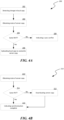
- FIGS 4A-4C are flowcharts illustrating processes of file synchronization in accordance with embodiments of the disclosed technology. Even though the processes are described below with reference to the computer system 100 of Figure 1 , in other embodiments, the processes can also be applied in other computer systems with similar or different components.
- Figure 4A is a flowchart illustrating a process 200 of file synchronization when a local copy is modified in accordance with embodiments of the disclosed technology.
- the process 200 includes detecting a change in a local copy of a computer file at stage 202.
- the detected change can include a user edit to the computer file.
- the detected change can include a user creating the computer file.
- the detected change can include other suitable user operations that create and/or modify the computer file.
- the process 200 can then include obtaining state information of a corresponding server copy of the computer file at stage 204.
- the state information includes an existence or non-existence of a server copy of the computer file in, for example, the repository 121 of Figure 2A .
- the state information includes a current read validation token and a current write validation token of a server copy in the repository 121.
- the state information can also include last modified by, last modification date/time, or other suitable information related to the server copy.
- the process 200 includes a decision stage 205 to determine whether the write validation token of the changed local copy matches that of the server copy. In response to determining that the write validation tokens match, the process 200 includes uploading the changed local copy to overwrite the server copy in the repository 121, irrespective of whether the read validation tokens match, at stage 206. In response to determining that the write validation tokens do not match, the process 200 can include indicating a synchronization conflict at stage 208. The process 200 can also further include requesting user intervention for resolving the synchronization conflict and/or perform other suitable operations to resolve the synchronization conflict.
- FIG. 4B is a flowchart illustrating a process 210 of file synchronization when a local copy is not modified in accordance with embodiments of the disclosed technology.
- the process 210 can include obtaining state information of a corresponding server copy at stage 204', generally similar to stage 204 described above with reference to Figure 4A .
- the process 21 includes a decision stage 211 to determine whether a read validation token of the local copy matches that of the server copy.
- the process 210 can include indicating that file synchronization of the computer file is complete at stage 214.
- the process 210 includes downloading the server copy to overwrite the local copy at stage 212 before indicating that file synchronization of the computer file is complete at stage 214.
- Figure 4C is a flowchart illustrating a process 220 of managing a server copy on a file server in accordance with embodiments of the disclosed technology.
- the process 220 can include receiving changes to a server copy at stage 222.
- the process 220 can then include a decision stage 224 to determine whether the received changes are re-appliable.
- the changes are re-appliable when the changes are machine modifications that can be repeatedly applied.
- the changes can be re-appliable based on other suitable criteria.
- the process 220 can include updating a read validation token associated with the server copy without updating a write validation token associated with the same server copy.
- the process 220 can include updating both the read validation token and the write validation token associated with the server copy.
- Figure 5 is a computing device 300 suitable for certain components of the computer system 100 in Figure 1 .
- the computing device 300 can be suitable for the file server 106, the workflow server 126, or the client devices 102 of Figure 1 .
- the computing device 300 can include one or more processors 304 and a system memory 306.
- a memory bus 308 can be used for communicating between processor 304 and system memory 306.
- the processor 304 can be of any type including but not limited to a microprocessor ( ⁇ P), a microcontroller ( ⁇ C), a digital signal processor (DSP), or any combination thereof.
- the processor 304 can include one more levels of caching, such as a level-one cache 310 and a level-two cache 312, a processor core 314, and registers 316.
- An example processor core 314 can include an arithmetic logic unit (ALU), a floating point unit (FPU), a digital signal processing core (DSP Core), or any combination thereof.
- An example memory controller 318 can also be used with processor 304, or in some implementations, memory controller 318 can be an internal part of processor 304.
- system memory 306 can be of any type including but not limited to volatile memory (such as RAM), non-volatile memory (such as ROM, flash memory, etc.) or any combination thereof.
- the system memory 306 can include an operating system 320, one or more applications 322, and program data 324. This described basic configuration 302 is illustrated in Figure 8 by those components within the inner dashed line.
- the computing device 300 can have additional features or functionality, and additional interfaces to facilitate communications between basic configuration 302 and any other devices and interfaces.
- a bus/interface controller 330 can be used to facilitate communications between the basic configuration 302 and one or more data storage devices 332 via a storage interface bus 334.
- the data storage devices 332 can be removable storage devices 336, non-removable storage devices 338, or a combination thereof. Examples of removable storage and non-removable storage devices include magnetic disk devices such as flexible disk drives and hard-disk drives (HDD), optical disk drives such as compact disk (CD) drives or digital versatile disk (DVD) drives, solid state drives (SSD), and tape drives to name a few.
- HDD hard-disk drives
- CD compact disk
- DVD digital versatile disk
- SSD solid state drives
- Example computer storage media can include volatile and nonvolatile, removable and non-removable media implemented in any method or technology for storage of information, such as computer readable instructions, data structures, program modules, or other data.
- the system memory 306, removable storage devices 336, and non-removable storage devices 338 are examples of computer readable storage media.
- Computer readable storage media include, but not limited to, RAM, ROM, EEPROM, flash memory or other memory technology, CD-ROM, digital versatile disks (DVD) or other optical storage, magnetic cassettes, magnetic tape, magnetic disk storage or other magnetic storage devices, or any other media which can be used to store the desired information and which can be accessed by computing device 300. Any such computer readable storage media can be a part of computing device 300.
- the term "computer readable storage medium” excludes propagated signals and communication media.
- the computing device 300 can also include an interface bus 340 for facilitating communication from various interface devices (e.g., output devices 342, peripheral interfaces 344, and communication devices 346) to the basic configuration 302 via bus/interface controller 330.
- Example output devices 342 include a graphics processing unit 348 and an audio processing unit 350, which can be configured to communicate to various external devices such as a display or speakers via one or more A/V ports 352.
- Example peripheral interfaces 344 include a serial interface controller 354 or a parallel interface controller 356, which can be configured to communicate with external devices such as input devices (e.g., keyboard, mouse, pen, voice input device, touch input device, etc.) or other peripheral devices (e.g., printer, scanner, etc.) via one or more I/O ports 358.
- An example communication device 346 includes a network controller 360, which can be arranged to facilitate communications with one or more other computing devices 362 over a network communication link via one or more communication ports 364.
- the network communication link can be one example of a communication media.
- Communication media can typically be embodied by computer readable instructions, data structures, program modules, or other data in a modulated data signal, such as a carrier wave or other transport mechanism, and can include any information delivery media.
- a "modulated data signal" can be a signal that has one or more of its characteristics set or changed in such a manner as to encode information in the signal.
- communication media can include wired media such as a wired network or direct-wired connection, and wireless media such as acoustic, radio frequency (RF), microwave, infrared (IR) and other wireless media.
- RF radio frequency
- IR infrared
- the term computer readable media as used herein can include both storage media and communication media.
- the computing device 300 can be implemented as a portion of a small-form factor portable (or mobile) electronic device such as a cell phone, a personal data assistant (PDA), a personal media player device, a wireless web-watch device, a personal headset device, an application specific device, or a hybrid device that include any of the above functions.
- a small-form factor portable (or mobile) electronic device such as a cell phone, a personal data assistant (PDA), a personal media player device, a wireless web-watch device, a personal headset device, an application specific device, or a hybrid device that include any of the above functions.
- PDA personal data assistant
- the computing device 300 can also be implemented as a personal computer including both laptop computer and non-laptop computer configurations.
Landscapes
- Engineering & Computer Science (AREA)
- Theoretical Computer Science (AREA)
- Data Mining & Analysis (AREA)
- Databases & Information Systems (AREA)
- Physics & Mathematics (AREA)
- General Engineering & Computer Science (AREA)
- General Physics & Mathematics (AREA)
- Computer Networks & Wireless Communication (AREA)
- Signal Processing (AREA)
- Information Retrieval, Db Structures And Fs Structures Therefor (AREA)
Description
- In computing, file servers are computers configured to provide shared storage of documents, sound files, photographs, movies, images, databases, or other suitable types of computer files over computer networks. File servers can facilitate multiple client devices to access the same computer files stored in an on-premises or remote repository. Users utilizing suitable client devices can retrieve, edit, save, or perform other suitable file operations on computer files while file servers track versions of the computer files, last edited date/time, users who edited and/or accessed the computer files, and/or other suitable information.
-
US 2005/210079 A1 describes a method for synchronizing a client with a server. A document score is calculated for each document in a server database. The document score indicates the importance of the respective document to the client. Documents are transferred from the server to the client if their document scores exceed a threshold value. The calculation of the document score can be determined from time the document was created, the number of times the document has been read, the time the document was last accessed, the author of the document and one or more terms in the document. Relationships between the document and other documents on the server database can also affect the document score. - Roy P. J. et al: "State Management in a Distributed UNIX System", System Sciences, 1996, Proceedings of the Twenty-Ninth Hawaii International Conference on System Sciences, Wailea, HI, USA 3-6 Jan. 1996, Los Alamitos, CA, USA, IEEE Comput. Soc, US, vol. 1, 3 January 1996, pages 170-179, discloses operating systems which maintain and manipulate objects that represent resources such as processes, flies, and I/O devices. In an operating system distributed across multiple nodes, management of object state and object references is a critical factor affecting the system's architecture, performance, and complexity. This paper discusses object state management and caching in
AD 2, a distributed, single system image UNIX OS that runs on multicomputers and clusters. AD 2 maintains the coherency of distributed objects via the token abstraction; support for tokens is implemented by the Token Module, a generic state-management facility that enablesAD 2 services to efficiently control access to object state that is distributed across multiple nodes. The paper details the Token Module's architecture and functionality, including the features supporting scalability, piggybacking of tokens to avoid messages, and flexibility with respect to maintaining cache coherency and resolving conflicting accesses. Also described is howAD 2 services use tokens and the associated Token Module features to implement distributed access to UNIX files, mounted file systems, and shared open file structures. -
EP 0 694 839 A2 discloses techniques for providing replicated files in a distributed system. A replicated file has a set of copies in components of the distributed system. Operations on the copies have the same semantics for the application processes accessing them as operations on a single copy of a file in a system where all processes execute on the same host. These semantics are achieved by means of a distributed synchronization system. Each replicated file has a read token and a write token. In order for an application process to perform an operation on a replicated file, the token required for the operation must be in the process's host and the process must have access to the token. Tokens are passed between hosts by token servers which respond to requests for tokens from application processes and from other token servers. The techniques are implemented using a library which replaces a standard I/O library, and may thus be employed without modification to hardware or the operating system. - It is the object of the present invention to provide a method and system for limiting occurrences of synchronization conflicts between computer files in two or more file locations.
- This object is solved by the subject matter of the independent claims.
- Embodiments are defined by the dependent claims.
- This Summary is provided to introduce a selection of concepts in a simplified form that are further described below in the Detailed Description. This Summary is not intended to identify key features or essential features of the claimed subject matter, nor is it intended to be used to limit the scope of the claimed subject matter.
- File synchronization is a process of ensuring that computer files in two or more file locations are updated according to certain rules. In one-way file synchronization, updated files are copied from a source location (e.g., a hard drive) to one or more target locations (e.g., a cloud storage location). However, no files are copied back from the target locations to the source location. In two-way file synchronization, updated files are copied in both directions, usually with the purpose of maintaining identical copies at the all locations. In the description herein, the term "file synchronization" refers to two-way file synchronization.
- One challenge of file synchronization is to limit occurrences of synchronization conflicts. A synchronization conflict exists when two copies of a single computer file contain different changes based on the same or different versions of the computer file. For example, a user can upload a computer file from a client device to a file server. In turn, the file server can store a server copy of the uploaded computer file on the file server or in a suitable storage location. During creation and/or file maintenance, the file server or other servers can insert various metadata (e.g., time of creation, uploaded by, priority, etc.) into the server copy based on certain metadata schema. Thus, the server copy can become "updated" and byte-wise different than a local copy of the computer file on the client device. If the user edits the local copy of the computer file without downloading the "updated" server copy, the edited local copy would contain changes different than those (i.e., the inserted metadata) in the server copy. Thus, a synchronization conflict would be triggered during file synchronization between the local and server copies of the computer file. Resolving such conflicts can be time consuming, costly, and can negatively impact user experience.
- Several embodiments of the disclosed technology can limit occurrences of synchronization conflicts by implementing both a read validation token and a write validation token associated with copies of computer files. The read validation token is updated when a copy of a computer file is modified in any way to be byte-wise different than an original copy. As such, when metadata is inserted into a server copy with an original read validation token, the "updated" server copy can be associated with a new read validation token. The write validation token is updated only when a copy of a computer file contains changes that are to be preserved. Such changes can include, for example, user edits or other changes a user performs on a computer file. When a copy of a computer file does not include preserved changes but instead those (e.g., machine modifications) that are re-appliable, the write validation token is maintained even when the copy is byte-wise modified. For example, metadata insertions can be machine modifications that are re-appliable and thus do not cause a write validation token to be updated.
- In certain implementations, a file server can assign a read validation token and a write validation token to an uploaded computer file and notify the client device regarding the assigned read/write validation tokens. In other implementations, at least one of the read or write validation token can be generated and/or predicted based on a protocol followed by both a file server and client devices. For example, in one embodiment, the read or write validation token can include a hash (e.g., an XOR hash) of the computer file. In other embodiments, the read or write validation token can be generated utilizing discrete numbers, random numbers, or in other suitable fashions.
- According to certain aspects of the disclosed technology, if a local copy is not modified and has a read validation token that is different than that of a server copy of the same computer file, the client device can determine that the server copy has been updated and download the server copy to overwrite the local copy. For example, during creation of the server copy and/or file maintenance, insertion of metadata can cause the server copy to have a read validation token different than that of the local copy because the server copy with the inserted metadata is byte-wise different than the local copy. As such, once the client device detects such a difference during file synchronization, the client device can download the server copy to overwrite the local copy on the client device, and thus achieving overall synchronization of the computer file.
- According to additional aspects of the disclosed technology, if the local copy is modified on the client device but has a write validation token that is the same as that of the server copy, the client device can upload the modified local copy to overwrite the server copy even when a read validation token of the local copy is different than that of the server copy. For instance, during creation and/or file maintenance, insertion of the metadata into the server copy can cause the server copy to have an updated read validation token different than that of the local copy. However, the inserted metadata can be indicated as re-appliable machine modifications (e.g., by a workflow server) and thus does not cause the write validation token associated with the server copy to change. When the user edits the local copy on the client device, the edited local copy and the server copy can still have the same write validation token. As such, the client device can upload the edited local copy as a new server copy to overwrite the existing server copy with the previously inserted metadata. Subsequently, the metadata can be reapplied to the new server copy, and the client device can download the new server copy with the inserted metadata based on a difference of read validation token between the new server copy and the local copy to achieve synchronization of the computer file, as described above.
- Several embodiments of the disclosed technology can limit occurrences of synchronization conflicts due to re-appliable machine modifications to computer files by file servers, workflow servers, or other suitable computing devices. Instead of indicating a synchronization conflict exists between a user-edited local copy and a server copy with machine modifications, several embodiments of the disclosed technology allow the server copy be overwritten by the user-edited local copy along with the machine modifications. The same or similar machine modifications can later be re-applied to the overwritten server copy. The client device can then download the overwritten server copy with the reapplied machine modifications when no more user edits exist in the local copy to achieve overall synchronization of the computer file.
-
-
Figure 1 is a schematic diagram of a computer system implementing both read and write validation tokens in accordance with embodiments of the disclosed technology. -
Figures 2A-2D are schematic diagrams illustrating certain hardware/software components of the computing system inFigure 1 during certain stages of a file synchronization process. -
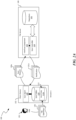
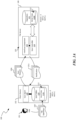
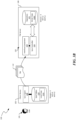
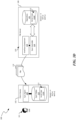
Figures 3A-3D are schematic diagrams illustrating certain hardware/software components of the computing system inFigure 1 during certain stages of another file synchronization process. -
Figures 4A-4C are flowcharts illustrating various aspects of processes of file synchronization in accordance with embodiments of the disclosed technology. -
Figure 5 is a computing device suitable for certain components of the computing system inFigure 1 . - Certain embodiments of computing systems, devices, components, modules, routines, and processes for limiting synchronization conflicts during file synchronization are described below. In the following description, specific details of components are included to provide a thorough understanding of certain embodiments of the disclosed technology. A person skilled in the relevant art can also understand that the disclosed technology may have additional embodiments or may be practiced without several of the details of the embodiments described below with reference to
Figures 1-5 . - As used herein, the term "file synchronization" generally refers to a process of ensuring that copies of computer files in two or more file locations are updated in both directions according to certain rules. In one example, a new or updated copy of a computer file can be copied (e.g., uploaded) from a client device to a file server via a computer network, a direct wired/wireless connection, or other suitable communications channels. In another example, an updated copy of the same computer file can be copied (e.g., downloaded) from the file server to the client device via a suitable communications channel. A "synchronization conflict" can occur when copies of the same computer file include different changes based on the same or different versions of the computer file.
- In certain file sharing computer systems, file servers or other types of servers can insert, add, append, or otherwise modify a user-uploaded computer file. For example, a client device can include a copy of a computer file (referred to as "local copy) to be uploaded to a file server. Once received, the file server can store the received copy of the computer file (referred to "server copy") in a network storage location, a server hard drive, or other suitable storage locations. During creation and/or file maintenance of the server copy, various metadata (e.g., time of creation, uploaded by, priority, etc.) can be inserted into the server copy based on metadata schema of the file sharing system. As such, the server copy can become "updated," i.e., containing new digital data, then the local copy on the client device. If the local copy is edited on the client device without downloading the "updated" server copy, the edited local copy can contain changes different than those (i.e., the inserted metadata) in the "updated" server copy, and thus causing a synchronization conflict. Resolving such conflicts can be time consuming, costly, and can negatively impact user experience.
- The invention limits occurrences of the foregoing synchronization conflicts by implementing a write validation token associated with individual copies of computer files in addition to a read validation token. The read validation token is updated when a server copy of a computer file is modified in any way to be byte-wise different than an original server copy. As such, when metadata is inserted into a server copy, the server copy with the inserted metadata can have an updated read validation token. The write validation token, on the other hand, is maintained when a server copy of a computer file is modified but the modification is indicated as re-appliable. For example, the insertion of metadata or other suitable types of machine modifications can be indicated as re-appliable and thus do not cause a write validation token to be updated. Instead of indicating a synchronization conflict exists between a user-edited local copy and a server copy with machine modifications, the disclosed technology allows the file server to overwrite the server copy with the machine modifications with the user-edited local copy. Thus, certain synchronization conflicts due to re-appliable machine modifications can be avoided, as described in more detail below with reference to
Figures 1-5 . -
Figure 1 is a schematic diagram illustrating a filesharing computer system 100 implementing both read and write validation tokens in accordance with embodiments of the disclosed technology. As shown inFigure 1 , thecomputer system 100 can include afile server 106 and aworkflow server 126 interconnected with one ormore client devices 102 via acomputer network 104. Theindividual client devices 102 are associated with correspondingusers 101. Thecomputer network 104 can include an enterprise intranet, a wide area network, a local area network, the Internet, or other suitable types of network. - Even though particular components and associated arrangements of the
computer system 100 are shown inFigure 1 , in other embodiments, thecomputer system 100 can include additional and/or different components. For example, in the illustrated embodiment, thecomputer system 100 includes threeclient devices 102 corresponding todifferent users 101. In other embodiments, thecomputer system 100 can also includemultiple client devices 102 associated with asingle user 101. In further embodiments, thecomputer system 100 can also include additional file servers, web servers, domain name servers, workflow servers, network storage facilities, or other suitable components. - The
client devices 102 can each include a computing device that facilitates correspondingusers 101 to access to thefile server 106 via thecomputer network 104. For example, in the illustrated embodiment, theclient devices 102 individually include a desktop computer. In other embodiments, theclient devices 102 can also include laptop computers, tablet computers, smartphones, or other suitable computing devices. Even though threeusers 101 are shown inFigure 1 for illustration purposes, in other embodiments, thecomputer system 100 can facilitate any suitable number ofusers 101 to accessfile server 106 via thecomputer network 104. - The
file server 106 can be configured to provide shared storage of documents, sound files, photographs, movies, images, databases, or other suitable types of computer files to theclient devices 102 over thecomputer network 104. For example,users 101 utilizingcorresponding client devices 102 can retrieve, edit, save, or perform other suitable file operations on computer files managed by thefile server 106. Thefile server 106, in turn can track versions of computer files, last edited date/time, users who edited and/or accessed the computer files, and/or other suitable information associated with the computer files. In certain embodiments, thefile server 106 can include one or more servers having suitable software applications to provide file synchronization for users of an enterprise, company, corporations, government entities, or other suitable organizations. In other embodiments, thefile server 106 can also include one or more remote servers providing cloud-based storage services such as, for example, Google Drive®, Dropbox®, iCloud backup®, etc. - The
file server 106 is configured to implement both a read validation token and a write validation token associated with copies of computer files on thefile server 106 in order to limit occurrences of synchronization conflicts due to machine modifications. A read validation token indicates to aclient device 102 that a server copy of a computer file has been updated on thefile server 106. A write validation token indicates to aclient device 102 that the server copy has not been updated with data (e.g., machine modifications) that cannot be re-applied. In certain implementations, a read/write validation token can include an XOR hash value of a copy of a computer file. In other implementations, a read/write validation token can include numerical values, alphanumerical values, other types of hash values, or other suitable types of values. Example components and operations of thefile server 106 and one of theclient devices 102 are described in more detail below with reference toFigures 2A-2D . - The
workflow server 126 can be configured to apply machine modifications to copies of computer files managed by thefile server 106. In certain embodiments, theworkflow server 126 can include a server configured to facilitate processing and/or management of the computer files by, for example, supplementing metadata according to certain metadata schema. In other embodiments, theworkflow server 126 can be configured to perform other suitable operations related to storage, retrieval, and/or maintenance of the computer files. Though theworkflow server 126 is shown inFigure 1 as a component of thecomputer system 100, in other embodiments, theworkflow server 126 can be external to thecomputer network 100. In further embodiments, theworkflow server 126 can be omitted and associated operations performed by thefile server 106. -
Figures 2A-2D are schematic diagrams illustrating certain hardware/software components of thecomputer system 100 inFigure 1 during certain stages of a file synchronization process. InFigures 2A-2D , certain components of thecomputer system 100 are omitted for clarity. For example, only oneclient device 102 is shown inFigures 2A-2D for illustration purposes.Other client devices 102 can have similar components and associated operations, as those described in more detail below with reference toFigures 2A-2D . - In addition, in
Figures 2A-2D and in other Figures herein, individual software components, objects, classes, modules, and routines may be a computer program, procedure, or process written as source code in C, C++, C#, Java, and/or other suitable programming languages. A component may include, without limitation, one or more modules, objects, classes, routines, properties, processes, threads, executables, libraries, or other components. Components may be in source or binary form. Components may include aspects of source code before compilation (e.g., classes, properties, procedures, routines), compiled binary units (e.g., libraries, executables), or artifacts instantiated and used at runtime (e.g., objects, processes, threads). In certain embodiments, the various components and modules described below can be implemented with actors. In other embodiments, generation of the application and/or related services can also be implemented using monolithic applications, multi-tiered applications, or other suitable components. - Components within a system can take different forms within the system. As one example, a system comprising a first component, a second component and a third component can, without limitation, encompass a system that has the first component being a property in source code, the second component being a binary compiled library, and the third component being a thread created at runtime. The computer program, procedure, or process may be compiled into object, intermediate, or machine code and presented for execution by one or more processors of a personal computer, a network server, a laptop computer, a smartphone, and/or other suitable computing devices. Equally, components may include hardware circuitry.
- A person of ordinary skill in the art would recognize that hardware may be considered fossilized software, and software may be considered liquefied hardware. As just one example, software instructions in a component may be burned to a Programmable Logic Array circuit, or may be designed as a hardware circuit with appropriate integrated circuits. Equally, hardware may be emulated by software. Various implementations of source, intermediate, and/or object code and associated data may be stored in a computer memory that includes read-only memory, random-access memory, magnetic disk storage media, optical storage media, flash memory devices, and/or other suitable computer readable storage media excluding propagated signals.
- Though not shown in
Figure 2A , theclient device 102 and thefile server 106 can both include a processor operatively coupled to a memory containing instructions executable by the processor to provide certain software components. For example, as shown inFigure 2A , theclient device 102 can include async agent 108 interconnected to async folder 110. Thesync agent 108 can be configured to perform synchronization state verification, file synchronization, file maintenance, or other suitable operations related to synchronization of computer files between theclient device 102 and thefile server 106. Thesync folder 110 can be a file folder on theclient device 102 designated to contain copies of computer files to be synchronized with corresponding copies on thefile server 106. In certain embodiments, thesync folder 110 can be designated by default, for example, as related to a cloud-based storage. In other embodiments, thesync folder 110 can be manually designed by theuser 101, or designated in other suitable fashions. - The
file server 120 can include aninterface component 122 and async controller 124 operatively coupled to arepository 121 for storing computer files. Theinterface component 122 can be configured to interact with thesync agent 108 on theclient device 102 according to certain protocols. In certain embodiments, theinterface component 122 can include an application programming interface configured to receive certain input and in response provide certain output to theclient device 102. In other embodiments, theinterface component 122 can also include a computer network interface or other suitable components. - The
sync controller 124 can be configured to manage synchronization of copies of computer files in therepository 121. In certain embodiments, thesync controller 124 can be configured to implement a read validation token associated with each copy of the computer files. In other embodiments, thesync controller 124 can also be configured to implement a write validation token associated with each copy of the computer files to reduce certain synchronization conflicts between copies of computer files on theclient device 102 and therepository 121, as described in more detail below with reference toFigures 2A-3D . In the following description, for ease of reference, a copy of a computer file in thesync folder 110 on theclient device 102 is referred to as a "local copy" while a copy of the same computer file in therepository 121 is referred to as a "server copy." -
Figure 2A illustrates a file synchronization stage in which theuser 101 creates alocal copy 112a of acomputer file 112 in thesync folder 110 via afile operation 103. For example, in certain embodiments, theuser 101 can drag and drop thecomputer file 112 from another file folder (not shown) on theclient device 102 into thesync folder 110. In other embodiments, thecomputer file 112 can be a newly created computer file. As shown inFigure 2A , thelocal copy 112a can include a stream of digital data referenced as by a stream number one for illustration purposes. In other embodiments, the stream of digital data can be referenced using hash values, random numbers, or in other suitable ways. - As shown in
Figure 2A , thesync agent 108 can detect the presence of thelocal copy 112a of thecomputer file 112 and determine that synchronization of thecomputer file 112 is needed based on, for example, metadata associated with thecomputer file 112 that indicates a lack of synchronization (e.g., having an empty last synchronized date/time) of thecomputer file 112. In response, thesync agent 108 can be configured to transmit, via the computer network 104 (Figure 1 ), async request 130a to thefile server 106. In certain embodiments, thesync request 130a can include data representing certain information associated with thecomputer file 112. Such information can include, for example, file name, date/time created, authored by, file size, or other suitable information. - The
interface component 122 can receive thesync request 130a and provide the receivedsync request 130a to thesync controller 124 for further processing. Upon receiving thesync request 130a, thesync controller 124 can determine whether a corresponding server copy exists in therepository 121. In the illustrated embodiment ofFigure 2A , a corresponding server copy does not exist in therepository 121. As such, thefile server 106 can provide anotification 131a informing theclient device 102 that a server copy does not exist on thefile server 106. In other embodiments, if a server copy (not shown) already exists in therepository 121, for example, having been uploaded by anotheruser 101, thenotification 131a can inform theclient device 102 the existence of the server copy as well as associated read/write validation tokens associated with the server copy to theclient device 102. Thesync agent 108 can then determine whether to upload thelocal copy 112a or download the server copy as described in more detail below with reference toFigures 2B-2C . - As shown in
Figure 2B , upon receiving the indication that a server copy of thecomputer file 112 does not exist in therepository 121, theclient device 102 can upload thecomputer file 112 to thefile server 106 via thecomputer network 104. Upon receiving the uploadedfile 112, thesync controller 124 can store aserver copy 112a' of thecomputer file 112 in therepository 121. Thesync controller 124 can also be configured to associate the receivedcomputer file 112 and theserver copy 112a' with a read validation token (shown as "RVT") and a write validation token (shown as "WVT"). In certain embodiments, thesync controller 124 can provide the read/write tokens to theclient device 102 as part of async report 132a that indicates to theclient device 102 that the upload has completed successfully and/or other suitable related information. In other embodiments, theclient device 102 can predict the read/write validation tokens based on a protocol followed by both theclient device 102 and thefile server 106. As shown inFigure 2B , the read/write validation tokens for both thelocal copy 112a and theserver copy 112a' of thecomputer file 112 are both assigned a value of one for illustration purposes. In other embodiments, the read/write validation tokens can have different hash values, random numbers, or other suitable values. - As shown in
Figure 2C , aworkflow server 126 can be configured to applymachine modifications 128 to theserver copy 112a' (Figure 2B ). In certain embodiments, themachine modifications 128 can include certain metadata supplemented to theserver copy 112a' to generate an updatedserver copy 112b'. In other embodiments, themachine modifications 128 can include other suitable machine applied changes to theserver copy 112a'. In further embodiments, administrative servers, database servers, or other suitable types of servers (not shown) can also applymachine modifications 128 to theserver copy 112a'. - During application of the
machine modifications 128, thesync controller 124 can detect the application and, in response, update the read validation token. For example, as shown inFigure 2C , theserver copy 112b' can now have a read validation token value of two and a stream value of two due to themachine modifications 128. Thesync controller 124 can also be configured to receive, for example, from programs executing on theworkflow server 126, whether the appliedmachine modifications 128 are re-appliable. In certain embodiments,machine modifications 128 are re-appliable whensuch machine modifications 128 can be periodically applied if previous application is not detected. In other embodiments,machine modifications 128 are re-appliable when such machine modifications are repeatedly applied irrespective of previous applications. Upon receiving an indication that the appliedmachine modifications 128 are re-appliable, or not to be preserved, thesync controller 124 can maintain the write validation token, for example, at one inFigure 2C while updating the read validation token to two. - During a subsequent synchronization cycle, the
client device 102 can transmit anothersync request 130b and in response receive anothernotification 131b from thefile server 106, indicating that theserver copy 112b' is now associated with a read validation token of two while the write validation token stays at one. In response to detecting a change of the read validation token and that thelocal copy 112a has not been modified, thesync agent 108 can be configured to download theserver copy 112b' from thefile server 106 and overwrite thelocal copy 112a, as shown inFigure 2D . Upon completion of overwriting thelocal copy 112a, both thelocal copy 112b and theserver copy 112b' have the same stream of digital data with the same read and write validation tokens. - The file synchronization operations shown in
Figures 2C and2D , however, can sometimes be interrupted when theuser 101 edits thelocal copy 112a before theserver copy 112b' can be downloaded from thefile server 106. For example, as shown inFigure 3A , theuser 101 can perform another file operation 103' to thelocal copy 112a (Figure 2C ) to generate an updatedlocal copy 112c. As such, thelocal copy 112c can now have a stream number three different than the originallocal copy 112a. - In certain embodiments, in response to detecting the updated
local copy 112c, thesync agent 108 can transmit anothersync request 130c to thefile server 106 and receive in response, anothernotification 131c indicating that theserver copy 112b' is currently associated with a read validation token of two and a write validation token of one. In response to receiving thenotification 131c, thesync agent 108 can determine that even though theserver copy 112b' contains changes only included in thelocal copy 112c, such changes are deemed as re-appliable and thus can be overwritten because the write validation token associated with thelocal copy 112c and that associated with theserver copy 112b' match. As such, thesync agent 108 can upload thelocal copy 112c to thefile server 106 to overwrite theserver copy 112b' along with the machine modifications 128 (Figure 2C ) previously applied. In other embodiments, thesync agent 108 can simply upload the editedlocal copy 112c and thesync controller 124 can perform the foregoing operations to determine whether theserver copy 112b' may be overwritten. As shown inFigure 3B , the overwrittenserver copy 112c' now has a read validation token of three and a write validation token of 2, matching those of thelocal copy 112c, respectively. - As shown in
Figure 3C , theworkflow server 126 can then re-apply the machine modifications 128' to theserver copy 112c' to generate another updatedserver copy 112d'. Because the machine modifications 128' are re-appliable, thesync controller 124 can update the associated read validation token to four while maintaining the write validation token at 2. Subsequently, theclient device 102 can download theserver copy 112d' from thefile server 106 when theuser 101 does not edit thelocal copy 112c. As shown inFigure 3D , thelocal copy 112c (Figure 3C ) can then be overwritten with theserver copy 112d' to achieve synchronization between thelocal copy 112d and theserver copy 112d'. - Several embodiments of the disclosed technology can thus limit occurrences of synchronization conflicts caused by machine modifications by implementing both a read validation token and a write validation token associated with individual copies of computer files in addition to a read validation token. The read validation token can be updated when a server copy of a computer file is modified in any way to be byte-wise different than an original server copy. As such, when machine modifications are applied to a server copy, the modified server copy can have an updated read validation token. The write validation token, on the other hand, can be maintained when the server copy is modified but the machine modifications are indicated as re-appliable. Thus, instead of indicating a synchronization conflict exists between a user-edited local copy and a server copy with machine modifications, the disclosed technology allows the
file server 106 to overwrite the server copy with the user-edited local copy. Thus, certain synchronization conflicts due to re-appliable machine modifications can be avoided. -
Figures 4A-4C are flowcharts illustrating processes of file synchronization in accordance with embodiments of the disclosed technology. Even though the processes are described below with reference to thecomputer system 100 ofFigure 1 , in other embodiments, the processes can also be applied in other computer systems with similar or different components. -
Figure 4A is a flowchart illustrating aprocess 200 of file synchronization when a local copy is modified in accordance with embodiments of the disclosed technology. As shown inFigure 4A , theprocess 200 includes detecting a change in a local copy of a computer file atstage 202. In one embodiment, the detected change can include a user edit to the computer file. In another embodiment, the detected change can include a user creating the computer file. In other embodiments, the detected change can include other suitable user operations that create and/or modify the computer file. - The
process 200 can then include obtaining state information of a corresponding server copy of the computer file atstage 204. In certain embodiments, the state information includes an existence or non-existence of a server copy of the computer file in, for example, therepository 121 ofFigure 2A . The state information includes a current read validation token and a current write validation token of a server copy in therepository 121. In further embodiments, the state information can also include last modified by, last modification date/time, or other suitable information related to the server copy. - The
process 200 includes adecision stage 205 to determine whether the write validation token of the changed local copy matches that of the server copy. In response to determining that the write validation tokens match, theprocess 200 includes uploading the changed local copy to overwrite the server copy in therepository 121, irrespective of whether the read validation tokens match, atstage 206. In response to determining that the write validation tokens do not match, theprocess 200 can include indicating a synchronization conflict atstage 208. Theprocess 200 can also further include requesting user intervention for resolving the synchronization conflict and/or perform other suitable operations to resolve the synchronization conflict. -
Figure 4B is a flowchart illustrating aprocess 210 of file synchronization when a local copy is not modified in accordance with embodiments of the disclosed technology. As shown inFigure 4B , theprocess 210 can include obtaining state information of a corresponding server copy at stage 204', generally similar to stage 204 described above with reference toFigure 4A . The process 21 includes adecision stage 211 to determine whether a read validation token of the local copy matches that of the server copy. In response to determining that the read validation token of the local copy matches that of the server copy, theprocess 210 can include indicating that file synchronization of the computer file is complete atstage 214. In response to determining that the read validation token of the local copy does not match that of the server copy, theprocess 210 includes downloading the server copy to overwrite the local copy atstage 212 before indicating that file synchronization of the computer file is complete atstage 214. -
Figure 4C is a flowchart illustrating aprocess 220 of managing a server copy on a file server in accordance with embodiments of the disclosed technology. As shown inFigure 4C , theprocess 220 can include receiving changes to a server copy atstage 222. Theprocess 220 can then include adecision stage 224 to determine whether the received changes are re-appliable. In certain embodiments, the changes are re-appliable when the changes are machine modifications that can be repeatedly applied. In other embodiments, the changes can be re-appliable based on other suitable criteria. In response to determining that the changes are re-appliable, theprocess 220 can include updating a read validation token associated with the server copy without updating a write validation token associated with the same server copy. In response to determining that the changes are not re-appliable, theprocess 220 can include updating both the read validation token and the write validation token associated with the server copy. -
Figure 5 is acomputing device 300 suitable for certain components of thecomputer system 100 inFigure 1 . For example, thecomputing device 300 can be suitable for thefile server 106, theworkflow server 126, or theclient devices 102 ofFigure 1 . In a very basic configuration 302, thecomputing device 300 can include one ormore processors 304 and asystem memory 306. A memory bus 308 can be used for communicating betweenprocessor 304 andsystem memory 306. - Depending on the desired configuration, the
processor 304 can be of any type including but not limited to a microprocessor (µP), a microcontroller (µC), a digital signal processor (DSP), or any combination thereof. Theprocessor 304 can include one more levels of caching, such as a level-onecache 310 and a level-twocache 312, a processor core 314, and registers 316. An example processor core 314 can include an arithmetic logic unit (ALU), a floating point unit (FPU), a digital signal processing core (DSP Core), or any combination thereof. Anexample memory controller 318 can also be used withprocessor 304, or in some implementations,memory controller 318 can be an internal part ofprocessor 304. - Depending on the desired configuration, the
system memory 306 can be of any type including but not limited to volatile memory (such as RAM), non-volatile memory (such as ROM, flash memory, etc.) or any combination thereof. Thesystem memory 306 can include anoperating system 320, one ormore applications 322, andprogram data 324. This described basic configuration 302 is illustrated in Figure 8 by those components within the inner dashed line. - The
computing device 300 can have additional features or functionality, and additional interfaces to facilitate communications between basic configuration 302 and any other devices and interfaces. For example, a bus/interface controller 330 can be used to facilitate communications between the basic configuration 302 and one or moredata storage devices 332 via a storage interface bus 334. Thedata storage devices 332 can be removable storage devices 336,non-removable storage devices 338, or a combination thereof. Examples of removable storage and non-removable storage devices include magnetic disk devices such as flexible disk drives and hard-disk drives (HDD), optical disk drives such as compact disk (CD) drives or digital versatile disk (DVD) drives, solid state drives (SSD), and tape drives to name a few. Example computer storage media can include volatile and nonvolatile, removable and non-removable media implemented in any method or technology for storage of information, such as computer readable instructions, data structures, program modules, or other data. The term "computer readable storage media" or "computer readable storage device" excludes propagated signals and communication media. - The
system memory 306, removable storage devices 336, andnon-removable storage devices 338 are examples of computer readable storage media. Computer readable storage media include, but not limited to, RAM, ROM, EEPROM, flash memory or other memory technology, CD-ROM, digital versatile disks (DVD) or other optical storage, magnetic cassettes, magnetic tape, magnetic disk storage or other magnetic storage devices, or any other media which can be used to store the desired information and which can be accessed by computingdevice 300. Any such computer readable storage media can be a part ofcomputing device 300. The term "computer readable storage medium" excludes propagated signals and communication media. - The
computing device 300 can also include an interface bus 340 for facilitating communication from various interface devices (e.g.,output devices 342,peripheral interfaces 344, and communication devices 346) to the basic configuration 302 via bus/interface controller 330.Example output devices 342 include agraphics processing unit 348 and anaudio processing unit 350, which can be configured to communicate to various external devices such as a display or speakers via one or more A/V ports 352. Exampleperipheral interfaces 344 include aserial interface controller 354 or a parallel interface controller 356, which can be configured to communicate with external devices such as input devices (e.g., keyboard, mouse, pen, voice input device, touch input device, etc.) or other peripheral devices (e.g., printer, scanner, etc.) via one or more I/O ports 358. An example communication device 346 includes anetwork controller 360, which can be arranged to facilitate communications with one or moreother computing devices 362 over a network communication link via one ormore communication ports 364. - The network communication link can be one example of a communication media. Communication media can typically be embodied by computer readable instructions, data structures, program modules, or other data in a modulated data signal, such as a carrier wave or other transport mechanism, and can include any information delivery media. A "modulated data signal" can be a signal that has one or more of its characteristics set or changed in such a manner as to encode information in the signal. By way of example, and not limitation, communication media can include wired media such as a wired network or direct-wired connection, and wireless media such as acoustic, radio frequency (RF), microwave, infrared (IR) and other wireless media. The term computer readable media as used herein can include both storage media and communication media.
- The
computing device 300 can be implemented as a portion of a small-form factor portable (or mobile) electronic device such as a cell phone, a personal data assistant (PDA), a personal media player device, a wireless web-watch device, a personal headset device, an application specific device, or a hybrid device that include any of the above functions. Thecomputing device 300 can also be implemented as a personal computer including both laptop computer and non-laptop computer configurations. - From the foregoing, it will be appreciated that specific embodiments of the disclosure have been described herein for purposes of illustration, but that various modifications may be made without deviating from the disclosure. Accordingly, the technology is not limited except as by the appended claims.
Claims (9)
- A method of facilitating file synchronization between a client device and a file server via a computer network, the method comprising:detecting (202) a change (103') to a local copy (112c) of a version of a computer file on the client device, the original local copy (112a) being associated with a local write validation token and a local read validation token;obtaining (204), via the computer network, a server read validation token and a server write validation token associated with a server copy (112b') of the same computer file on the file server, the server copy containing another change to the same version of the computer file, wherein the another change is different than the detected change to the local copy and triggers an update of the server read validation token but does not trigger an update of the server write validation token if it is determined at the file server that the another change is a machine modification performed by the file server or another server;determining (205) whether the local write validation token associated with the local copy matches the server write validation token associated with the server copy;in response to determining that the local and server write validation tokens match each other, uploading (206), via the computer network, the local copy having the detected change from the client device to the file server to overwrite the server copy even though the server copy contains the another change to the version of the computer file that is different than the detected change to the local copy of the same version of the computer file, irrespective of whether the local read validation token matches the server read validation token;subsequent to overwriting the server copy with the local copy having the detected change, detecting (211) that the local read validation token is different than the server read validation token; andin response to detecting that the local read validation token is different than the server read validation token, downloading (212), via the computer network, the server copy to overwrite the local copy when a further change to the local copy is absent,thereby limiting occurrences of synchronization conflicts between the local copy and the server copy of the computer file.
- The method of claim 1 wherein detecting the change to the local copy includes detecting a file operation performed by a user on the local copy of the version of the computer file.
- The method of claim 1 wherein subsequent to uploading the local copy having the detected change, receiving, via the computer network, information indicating an updated value for the local write validation token.
- The method of claim 1 wherein:the another change to the version of the computer file includes metadata inserted to the version of the computer file; anduploading the local copy includes uploading the local copy having the detected change from the client device to the file server to overwrite the server copy along with the inserted metadata.
- The method of claim 1, further comprising in response to determining that the local and server tokens do not match each other, indicating (208) a synchronization conflict is present between the local copy having the detected change and the server copy having the another change.
- The method of claim 1 wherein the local write validations token and the server write validation token individually includes a hash value of the local copy and the server copy, respectively.
- A computing device interconnected to a file server via a computer network, the computing device comprising:a processor (304); anda memory (306) containing a local copy (112c) of a version of a computer file having a user update (103'), the local copy being associated with a local write validation token and a local read validation token, wherein the memory also contains instructions executable by the processor to cause the processor to perform a process comprising:receiving, via the computer network, a server read validation token and a server write validation token associated with a server copy (112b') of the same computer file on the file server, the server copy containing a change to the same version of the computer file that is different than the user update to the local copy and that triggers an update of the server read validation token but does not trigger an update of the server write validation token if it is determined at the file server that the another change is a machine modification performed by the file server or another server;determining whether the local write validation token associated with the local copy matches the server write validation token associated with the server copy;in response to determining that the local and server write validation tokens match each other, uploading, via the computer network, the local copy having the detected change from the client device to the file server to overwrite the server copy even though the server copy contains the another change to the version of the computer file that is different than the detected change to the local copy of the same version of the computer file, irrespective of whether the local read validation token matches the server read validation token;subsequent to overwriting the server copy with the local copy having the detected change, detecting that the local read validation token is different than the server read validation token; andin response to detecting that the local read validation token is different than the server read validation token, downloading, via the computer network, the server copy to overwrite the local copy when a further change to the local copy is absent,thereby limiting occurrences of synchronization conflicts between the local copy and the server copy of the computer file.
- The computing device of claim 7 wherein the user update to the local copy includes a file operation performed by a user on the local copy of the version of the computer file.
- One or more computer-readable media storing thereon computer-executable instructions that, when carried out by a processor, cause the processor to perform the method of one of claims 1 to 6.
Applications Claiming Priority (3)
| Application Number | Priority Date | Filing Date | Title |
|---|---|---|---|
| US201662407166P | 2016-10-12 | 2016-10-12 | |
| US15/405,553 US10740298B2 (en) | 2016-10-12 | 2017-01-13 | File synchronization with reduced conflicts in computing systems |
| PCT/US2017/055452 WO2018071276A1 (en) | 2016-10-12 | 2017-10-06 | File synchronization in computing systems |
Publications (2)
| Publication Number | Publication Date |
|---|---|
| EP3526691A1 EP3526691A1 (en) | 2019-08-21 |
| EP3526691B1 true EP3526691B1 (en) | 2023-08-23 |
Family
ID=61829656
Family Applications (1)
| Application Number | Title | Priority Date | Filing Date |
|---|---|---|---|
| EP17784819.9A Active EP3526691B1 (en) | 2016-10-12 | 2017-10-06 | File synchronization in computing systems |
Country Status (4)
| Country | Link |
|---|---|
| US (1) | US10740298B2 (en) |
| EP (1) | EP3526691B1 (en) |
| CN (1) | CN109804361B (en) |
| WO (1) | WO2018071276A1 (en) |
Families Citing this family (16)
| Publication number | Priority date | Publication date | Assignee | Title |
|---|---|---|---|---|
| US10528700B2 (en) | 2017-04-17 | 2020-01-07 | Rockwell Automation Technologies, Inc. | Industrial automation information contextualization method and system |
| US10620612B2 (en) | 2017-06-08 | 2020-04-14 | Rockwell Automation Technologies, Inc. | Predictive maintenance and process supervision using a scalable industrial analytics platform |
| US11144042B2 (en) | 2018-07-09 | 2021-10-12 | Rockwell Automation Technologies, Inc. | Industrial automation information contextualization method and system |
| CN111327574B (en) * | 2018-12-14 | 2022-05-06 | 英业达科技有限公司 | Single-machine login system and method for allowing network address change |
| WO2020132842A1 (en) * | 2018-12-24 | 2020-07-02 | 深圳市柔宇科技有限公司 | Note synchronization method and system and related apparatus |
| US11403541B2 (en) | 2019-02-14 | 2022-08-02 | Rockwell Automation Technologies, Inc. | AI extensions and intelligent model validation for an industrial digital twin |
| US11086298B2 (en) | 2019-04-15 | 2021-08-10 | Rockwell Automation Technologies, Inc. | Smart gateway platform for industrial internet of things |
| US11226983B2 (en) * | 2019-06-18 | 2022-01-18 | Microsoft Technology Licensing, Llc | Sub-scope synchronization |
| CN110737722B (en) * | 2019-09-29 | 2022-07-05 | 国网福建省电力有限公司检修分公司 | Substation monitoring background database, SCD and RCD synchronization system and method |
| US11841699B2 (en) | 2019-09-30 | 2023-12-12 | Rockwell Automation Technologies, Inc. | Artificial intelligence channel for industrial automation |
| US11435726B2 (en) | 2019-09-30 | 2022-09-06 | Rockwell Automation Technologies, Inc. | Contextualization of industrial data at the device level |
| US11249462B2 (en) | 2020-01-06 | 2022-02-15 | Rockwell Automation Technologies, Inc. | Industrial data services platform |
| US11726459B2 (en) | 2020-06-18 | 2023-08-15 | Rockwell Automation Technologies, Inc. | Industrial automation control program generation from computer-aided design |
| US20220335010A1 (en) * | 2021-04-19 | 2022-10-20 | Core Scientific, Inc. | Synchronization system and method |
| CN113946883A (en) * | 2021-09-08 | 2022-01-18 | 卡斯柯信号有限公司 | Management method, equipment and medium for full electronic board card configuration data authorization |
| US20230195579A1 (en) * | 2021-12-16 | 2023-06-22 | Elasticsearch B.V. | Peer Recovery From Remote Storage |
Citations (1)
| Publication number | Priority date | Publication date | Assignee | Title |
|---|---|---|---|---|
| EP0694839A2 (en) * | 1994-07-29 | 1996-01-31 | AT&T Corp. | Distributed systems with replicated files |
Family Cites Families (20)
| Publication number | Priority date | Publication date | Assignee | Title |
|---|---|---|---|---|
| US6151708A (en) | 1997-12-19 | 2000-11-21 | Microsoft Corporation | Determining program update availability via set intersection over a sub-optical pathway |
| US9104689B2 (en) * | 2004-03-17 | 2015-08-11 | International Business Machines Corporation | Method for synchronizing documents for disconnected operation |
| US8086698B2 (en) | 2006-06-02 | 2011-12-27 | Google Inc. | Synchronizing configuration information among multiple clients |
| US7912916B2 (en) | 2006-06-02 | 2011-03-22 | Google Inc. | Resolving conflicts while synchronizing configuration information among multiple clients |
| US20080140732A1 (en) | 2006-12-11 | 2008-06-12 | Bentley System, Inc. | Method and system for sharing file based data |
| US8239345B2 (en) * | 2007-12-27 | 2012-08-07 | Microsoft Corporation | Asynchronous replication |
| US7991740B2 (en) | 2008-03-04 | 2011-08-02 | Apple Inc. | Synchronization server process |
| CN101783731B (en) * | 2009-12-28 | 2012-05-23 | 飞天诚信科技股份有限公司 | Display method of dynamic password and dynamic token |
| US8806656B2 (en) | 2011-02-18 | 2014-08-12 | Xerox Corporation | Method and system for secure and selective access for editing and aggregation of electronic documents in a distributed environment |
| US8510267B2 (en) | 2011-03-08 | 2013-08-13 | Rackspace Us, Inc. | Synchronization of structured information repositories |
| US8533165B2 (en) * | 2011-07-03 | 2013-09-10 | Microsoft Corporation | Conflict resolution via metadata examination |
| US20130041985A1 (en) * | 2011-08-10 | 2013-02-14 | Microsoft Corporation | Token based file operations |
| US9934229B2 (en) | 2011-10-23 | 2018-04-03 | Microsoft Technology Licensing, Llc | Telemetry file hash and conflict detection |
| US8504519B1 (en) | 2012-06-27 | 2013-08-06 | Dropbox, Inc. | Determining a preferred modified version from among multiple modified versions for synchronized files |
| US8862561B1 (en) | 2012-08-30 | 2014-10-14 | Google Inc. | Detecting read/write conflicts |
| US9268655B2 (en) | 2012-10-02 | 2016-02-23 | Nextbit Systems Inc. | Interface for resolving synchronization conflicts of application states |
| CN103248711B (en) | 2013-05-23 | 2016-08-24 | 华为技术有限公司 | A kind of method of files passe and server |
| US9390281B2 (en) | 2013-12-30 | 2016-07-12 | Open Invention Network, Llc | Protecting data in insecure cloud storage |
| US9754002B2 (en) * | 2014-10-07 | 2017-09-05 | Excalibur Ip, Llc | Method and system for providing a synchronization service |
| US9588849B2 (en) * | 2015-01-20 | 2017-03-07 | Commvault Systems, Inc. | Synchronizing selected portions of data in a storage management system |
-
2017
- 2017-01-13 US US15/405,553 patent/US10740298B2/en active Active
- 2017-10-06 WO PCT/US2017/055452 patent/WO2018071276A1/en not_active Ceased
- 2017-10-06 EP EP17784819.9A patent/EP3526691B1/en active Active
- 2017-10-06 CN CN201780062898.7A patent/CN109804361B/en active Active
Patent Citations (1)
| Publication number | Priority date | Publication date | Assignee | Title |
|---|---|---|---|---|
| EP0694839A2 (en) * | 1994-07-29 | 1996-01-31 | AT&T Corp. | Distributed systems with replicated files |
Non-Patent Citations (1)
| Title |
|---|
| ROY P J ET AL: "State management in a distributed UNIX system", SYSTEM SCIENCES, 1996., PROCEEDINGS OF THE TWENTY-NINTH HAWAII INTERNA TIONAL CONFERENCE ON , WAILEA, HI, USA 3-6 JAN. 1996, LOS ALAMITOS, CA, USA,IEEE COMPUT. SOC, US, vol. 1, 3 January 1996 (1996-01-03), pages 170 - 179, XP010156642, ISBN: 978-0-8186-7426-6, DOI: 10.1109/HICSS.1996.495460 * |
Also Published As
| Publication number | Publication date |
|---|---|
| WO2018071276A1 (en) | 2018-04-19 |
| US10740298B2 (en) | 2020-08-11 |
| CN109804361A (en) | 2019-05-24 |
| US20180101544A1 (en) | 2018-04-12 |
| EP3526691A1 (en) | 2019-08-21 |
| CN109804361B (en) | 2023-06-20 |
Similar Documents
| Publication | Publication Date | Title |
|---|---|---|
| US10740298B2 (en) | File synchronization with reduced conflicts in computing systems | |
| US11782949B2 (en) | Violation resolution in client synchronization | |
| US10747643B2 (en) | System for debugging a client synchronization service | |
| US10970193B2 (en) | Debugging a client synchronization service | |
| US11570229B2 (en) | Method and system for enforcing governance across multiple content repositories using a content broker | |
| JP7703652B2 (en) | Intent Tracking for Asynchronous Behavior |
Legal Events
| Date | Code | Title | Description |
|---|---|---|---|
| STAA | Information on the status of an ep patent application or granted ep patent |
Free format text: STATUS: UNKNOWN |
|
| STAA | Information on the status of an ep patent application or granted ep patent |
Free format text: STATUS: THE INTERNATIONAL PUBLICATION HAS BEEN MADE |
|
| PUAI | Public reference made under article 153(3) epc to a published international application that has entered the european phase |
Free format text: ORIGINAL CODE: 0009012 |
|
| STAA | Information on the status of an ep patent application or granted ep patent |
Free format text: STATUS: REQUEST FOR EXAMINATION WAS MADE |
|
| 17P | Request for examination filed |
Effective date: 20190404 |
|
| AK | Designated contracting states |
Kind code of ref document: A1 Designated state(s): AL AT BE BG CH CY CZ DE DK EE ES FI FR GB GR HR HU IE IS IT LI LT LU LV MC MK MT NL NO PL PT RO RS SE SI SK SM TR |
|
| AX | Request for extension of the european patent |
Extension state: BA ME |
|
| DAV | Request for validation of the european patent (deleted) | ||
| DAX | Request for extension of the european patent (deleted) | ||
| STAA | Information on the status of an ep patent application or granted ep patent |
Free format text: STATUS: EXAMINATION IS IN PROGRESS |
|
| 17Q | First examination report despatched |
Effective date: 20210209 |
|
| RAP3 | Party data changed (applicant data changed or rights of an application transferred) |
Owner name: MICROSOFT TECHNOLOGY LICENSING, LLC |
|
| REG | Reference to a national code |
Ref country code: DE Ref legal event code: R079 Free format text: PREVIOUS MAIN CLASS: G06F0017300000 Ipc: G06F0016178000 Ref country code: DE Ref legal event code: R079 Ref document number: 602017073129 Country of ref document: DE Free format text: PREVIOUS MAIN CLASS: G06F0017300000 Ipc: G06F0016178000 |
|
| RIC1 | Information provided on ipc code assigned before grant |
Ipc: G06F 16/178 20190101AFI20230216BHEP |
|
| GRAP | Despatch of communication of intention to grant a patent |
Free format text: ORIGINAL CODE: EPIDOSNIGR1 |
|
| STAA | Information on the status of an ep patent application or granted ep patent |
Free format text: STATUS: GRANT OF PATENT IS INTENDED |
|
| INTG | Intention to grant announced |
Effective date: 20230404 |
|
| GRAS | Grant fee paid |
Free format text: ORIGINAL CODE: EPIDOSNIGR3 |
|
| GRAA | (expected) grant |
Free format text: ORIGINAL CODE: 0009210 |
|
| STAA | Information on the status of an ep patent application or granted ep patent |
Free format text: STATUS: THE PATENT HAS BEEN GRANTED |
|
| AK | Designated contracting states |
Kind code of ref document: B1 Designated state(s): AL AT BE BG CH CY CZ DE DK EE ES FI FR GB GR HR HU IE IS IT LI LT LU LV MC MK MT NL NO PL PT RO RS SE SI SK SM TR |
|
| REG | Reference to a national code |
Ref country code: GB Ref legal event code: FG4D |
|
| REG | Reference to a national code |
Ref country code: CH Ref legal event code: EP |
|
| P01 | Opt-out of the competence of the unified patent court (upc) registered |
Effective date: 20230731 |
|
| REG | Reference to a national code |
Ref country code: IE Ref legal event code: FG4D |
|
| REG | Reference to a national code |
Ref country code: DE Ref legal event code: R096 Ref document number: 602017073129 Country of ref document: DE |
|
| REG | Reference to a national code |
Ref country code: LT Ref legal event code: MG9D |
|
| REG | Reference to a national code |
Ref country code: NL Ref legal event code: MP Effective date: 20230823 |
|
| REG | Reference to a national code |
Ref country code: AT Ref legal event code: MK05 Ref document number: 1603422 Country of ref document: AT Kind code of ref document: T Effective date: 20230823 |
|
| PG25 | Lapsed in a contracting state [announced via postgrant information from national office to epo] |
Ref country code: GR Free format text: LAPSE BECAUSE OF FAILURE TO SUBMIT A TRANSLATION OF THE DESCRIPTION OR TO PAY THE FEE WITHIN THE PRESCRIBED TIME-LIMIT Effective date: 20231124 |
|
| PG25 | Lapsed in a contracting state [announced via postgrant information from national office to epo] |
Ref country code: IS Free format text: LAPSE BECAUSE OF FAILURE TO SUBMIT A TRANSLATION OF THE DESCRIPTION OR TO PAY THE FEE WITHIN THE PRESCRIBED TIME-LIMIT Effective date: 20231223 |
|
| PG25 | Lapsed in a contracting state [announced via postgrant information from national office to epo] |
Ref country code: SE Free format text: LAPSE BECAUSE OF FAILURE TO SUBMIT A TRANSLATION OF THE DESCRIPTION OR TO PAY THE FEE WITHIN THE PRESCRIBED TIME-LIMIT Effective date: 20230823 Ref country code: RS Free format text: LAPSE BECAUSE OF FAILURE TO SUBMIT A TRANSLATION OF THE DESCRIPTION OR TO PAY THE FEE WITHIN THE PRESCRIBED TIME-LIMIT Effective date: 20230823 Ref country code: PT Free format text: LAPSE BECAUSE OF FAILURE TO SUBMIT A TRANSLATION OF THE DESCRIPTION OR TO PAY THE FEE WITHIN THE PRESCRIBED TIME-LIMIT Effective date: 20231226 Ref country code: NO Free format text: LAPSE BECAUSE OF FAILURE TO SUBMIT A TRANSLATION OF THE DESCRIPTION OR TO PAY THE FEE WITHIN THE PRESCRIBED TIME-LIMIT Effective date: 20231123 Ref country code: NL Free format text: LAPSE BECAUSE OF FAILURE TO SUBMIT A TRANSLATION OF THE DESCRIPTION OR TO PAY THE FEE WITHIN THE PRESCRIBED TIME-LIMIT Effective date: 20230823 Ref country code: LV Free format text: LAPSE BECAUSE OF FAILURE TO SUBMIT A TRANSLATION OF THE DESCRIPTION OR TO PAY THE FEE WITHIN THE PRESCRIBED TIME-LIMIT Effective date: 20230823 Ref country code: LT Free format text: LAPSE BECAUSE OF FAILURE TO SUBMIT A TRANSLATION OF THE DESCRIPTION OR TO PAY THE FEE WITHIN THE PRESCRIBED TIME-LIMIT Effective date: 20230823 Ref country code: IS Free format text: LAPSE BECAUSE OF FAILURE TO SUBMIT A TRANSLATION OF THE DESCRIPTION OR TO PAY THE FEE WITHIN THE PRESCRIBED TIME-LIMIT Effective date: 20231223 Ref country code: HR Free format text: LAPSE BECAUSE OF FAILURE TO SUBMIT A TRANSLATION OF THE DESCRIPTION OR TO PAY THE FEE WITHIN THE PRESCRIBED TIME-LIMIT Effective date: 20230823 Ref country code: GR Free format text: LAPSE BECAUSE OF FAILURE TO SUBMIT A TRANSLATION OF THE DESCRIPTION OR TO PAY THE FEE WITHIN THE PRESCRIBED TIME-LIMIT Effective date: 20231124 Ref country code: FI Free format text: LAPSE BECAUSE OF FAILURE TO SUBMIT A TRANSLATION OF THE DESCRIPTION OR TO PAY THE FEE WITHIN THE PRESCRIBED TIME-LIMIT Effective date: 20230823 Ref country code: AT Free format text: LAPSE BECAUSE OF FAILURE TO SUBMIT A TRANSLATION OF THE DESCRIPTION OR TO PAY THE FEE WITHIN THE PRESCRIBED TIME-LIMIT Effective date: 20230823 |
|
| PG25 | Lapsed in a contracting state [announced via postgrant information from national office to epo] |
Ref country code: PL Free format text: LAPSE BECAUSE OF FAILURE TO SUBMIT A TRANSLATION OF THE DESCRIPTION OR TO PAY THE FEE WITHIN THE PRESCRIBED TIME-LIMIT Effective date: 20230823 |
|
| PG25 | Lapsed in a contracting state [announced via postgrant information from national office to epo] |
Ref country code: ES Free format text: LAPSE BECAUSE OF FAILURE TO SUBMIT A TRANSLATION OF THE DESCRIPTION OR TO PAY THE FEE WITHIN THE PRESCRIBED TIME-LIMIT Effective date: 20230823 |
|
| PG25 | Lapsed in a contracting state [announced via postgrant information from national office to epo] |
Ref country code: SM Free format text: LAPSE BECAUSE OF FAILURE TO SUBMIT A TRANSLATION OF THE DESCRIPTION OR TO PAY THE FEE WITHIN THE PRESCRIBED TIME-LIMIT Effective date: 20230823 Ref country code: RO Free format text: LAPSE BECAUSE OF FAILURE TO SUBMIT A TRANSLATION OF THE DESCRIPTION OR TO PAY THE FEE WITHIN THE PRESCRIBED TIME-LIMIT Effective date: 20230823 Ref country code: ES Free format text: LAPSE BECAUSE OF FAILURE TO SUBMIT A TRANSLATION OF THE DESCRIPTION OR TO PAY THE FEE WITHIN THE PRESCRIBED TIME-LIMIT Effective date: 20230823 Ref country code: EE Free format text: LAPSE BECAUSE OF FAILURE TO SUBMIT A TRANSLATION OF THE DESCRIPTION OR TO PAY THE FEE WITHIN THE PRESCRIBED TIME-LIMIT Effective date: 20230823 Ref country code: DK Free format text: LAPSE BECAUSE OF FAILURE TO SUBMIT A TRANSLATION OF THE DESCRIPTION OR TO PAY THE FEE WITHIN THE PRESCRIBED TIME-LIMIT Effective date: 20230823 Ref country code: CZ Free format text: LAPSE BECAUSE OF FAILURE TO SUBMIT A TRANSLATION OF THE DESCRIPTION OR TO PAY THE FEE WITHIN THE PRESCRIBED TIME-LIMIT Effective date: 20230823 Ref country code: SK Free format text: LAPSE BECAUSE OF FAILURE TO SUBMIT A TRANSLATION OF THE DESCRIPTION OR TO PAY THE FEE WITHIN THE PRESCRIBED TIME-LIMIT Effective date: 20230823 |
|
| REG | Reference to a national code |
Ref country code: DE Ref legal event code: R097 Ref document number: 602017073129 Country of ref document: DE |
|
| PG25 | Lapsed in a contracting state [announced via postgrant information from national office to epo] |
Ref country code: IT Free format text: LAPSE BECAUSE OF FAILURE TO SUBMIT A TRANSLATION OF THE DESCRIPTION OR TO PAY THE FEE WITHIN THE PRESCRIBED TIME-LIMIT Effective date: 20230823 Ref country code: MC Free format text: LAPSE BECAUSE OF FAILURE TO SUBMIT A TRANSLATION OF THE DESCRIPTION OR TO PAY THE FEE WITHIN THE PRESCRIBED TIME-LIMIT Effective date: 20230823 |
|
| REG | Reference to a national code |
Ref country code: CH Ref legal event code: PL |
|
| REG | Reference to a national code |
Ref country code: BE Ref legal event code: MM Effective date: 20231031 |
|
| PG25 | Lapsed in a contracting state [announced via postgrant information from national office to epo] |
Ref country code: LU Free format text: LAPSE BECAUSE OF NON-PAYMENT OF DUE FEES Effective date: 20231006 |
|
| PLBE | No opposition filed within time limit |
Free format text: ORIGINAL CODE: 0009261 |
|
| STAA | Information on the status of an ep patent application or granted ep patent |
Free format text: STATUS: NO OPPOSITION FILED WITHIN TIME LIMIT |
|
| PG25 | Lapsed in a contracting state [announced via postgrant information from national office to epo] |
Ref country code: LU Free format text: LAPSE BECAUSE OF NON-PAYMENT OF DUE FEES Effective date: 20231006 |
|
| PG25 | Lapsed in a contracting state [announced via postgrant information from national office to epo] |
Ref country code: CH Free format text: LAPSE BECAUSE OF NON-PAYMENT OF DUE FEES Effective date: 20231031 |
|
| 26N | No opposition filed |
Effective date: 20240524 |
|
| PG25 | Lapsed in a contracting state [announced via postgrant information from national office to epo] |
Ref country code: CH Free format text: LAPSE BECAUSE OF NON-PAYMENT OF DUE FEES Effective date: 20231031 Ref country code: SI Free format text: LAPSE BECAUSE OF FAILURE TO SUBMIT A TRANSLATION OF THE DESCRIPTION OR TO PAY THE FEE WITHIN THE PRESCRIBED TIME-LIMIT Effective date: 20230823 |
|
| PG25 | Lapsed in a contracting state [announced via postgrant information from national office to epo] |
Ref country code: BE Free format text: LAPSE BECAUSE OF NON-PAYMENT OF DUE FEES Effective date: 20231031 |
|
| PG25 | Lapsed in a contracting state [announced via postgrant information from national office to epo] |
Ref country code: IE Free format text: LAPSE BECAUSE OF NON-PAYMENT OF DUE FEES Effective date: 20231006 |
|
| PG25 | Lapsed in a contracting state [announced via postgrant information from national office to epo] |
Ref country code: IE Free format text: LAPSE BECAUSE OF NON-PAYMENT OF DUE FEES Effective date: 20231006 |
|
| PG25 | Lapsed in a contracting state [announced via postgrant information from national office to epo] |
Ref country code: BG Free format text: LAPSE BECAUSE OF FAILURE TO SUBMIT A TRANSLATION OF THE DESCRIPTION OR TO PAY THE FEE WITHIN THE PRESCRIBED TIME-LIMIT Effective date: 20230823 |
|
| PG25 | Lapsed in a contracting state [announced via postgrant information from national office to epo] |
Ref country code: BG Free format text: LAPSE BECAUSE OF FAILURE TO SUBMIT A TRANSLATION OF THE DESCRIPTION OR TO PAY THE FEE WITHIN THE PRESCRIBED TIME-LIMIT Effective date: 20230823 |
|
| PG25 | Lapsed in a contracting state [announced via postgrant information from national office to epo] |
Ref country code: CY Free format text: LAPSE BECAUSE OF FAILURE TO SUBMIT A TRANSLATION OF THE DESCRIPTION OR TO PAY THE FEE WITHIN THE PRESCRIBED TIME-LIMIT; INVALID AB INITIO Effective date: 20171006 |
|
| PG25 | Lapsed in a contracting state [announced via postgrant information from national office to epo] |
Ref country code: HU Free format text: LAPSE BECAUSE OF FAILURE TO SUBMIT A TRANSLATION OF THE DESCRIPTION OR TO PAY THE FEE WITHIN THE PRESCRIBED TIME-LIMIT; INVALID AB INITIO Effective date: 20171006 |
|
| PGFP | Annual fee paid to national office [announced via postgrant information from national office to epo] |
Ref country code: GB Payment date: 20250923 Year of fee payment: 9 |
|
| PGFP | Annual fee paid to national office [announced via postgrant information from national office to epo] |
Ref country code: FR Payment date: 20250924 Year of fee payment: 9 |
|
| PG25 | Lapsed in a contracting state [announced via postgrant information from national office to epo] |
Ref country code: TR Free format text: LAPSE BECAUSE OF FAILURE TO SUBMIT A TRANSLATION OF THE DESCRIPTION OR TO PAY THE FEE WITHIN THE PRESCRIBED TIME-LIMIT Effective date: 20230823 |
|
| PGFP | Annual fee paid to national office [announced via postgrant information from national office to epo] |
Ref country code: DE Payment date: 20250923 Year of fee payment: 9 |