EP3525197A1 - Method and system for monitoring execution of conditional air traffic control clearances for an aircraft - Google Patents
Method and system for monitoring execution of conditional air traffic control clearances for an aircraft Download PDFInfo
- Publication number
- EP3525197A1 EP3525197A1 EP19152002.2A EP19152002A EP3525197A1 EP 3525197 A1 EP3525197 A1 EP 3525197A1 EP 19152002 A EP19152002 A EP 19152002A EP 3525197 A1 EP3525197 A1 EP 3525197A1
- Authority
- EP
- European Patent Office
- Prior art keywords
- aircraft
- atc
- clearances
- subject
- clearance
- Prior art date
- Legal status (The legal status is an assumption and is not a legal conclusion. Google has not performed a legal analysis and makes no representation as to the accuracy of the status listed.)
- Granted
Links
Images




Classifications
-
- G—PHYSICS
- G08—SIGNALLING
- G08G—TRAFFIC CONTROL SYSTEMS
- G08G5/00—Traffic control systems for aircraft
- G08G5/70—Arrangements for monitoring traffic-related situations or conditions
-
- G—PHYSICS
- G08—SIGNALLING
- G08G—TRAFFIC CONTROL SYSTEMS
- G08G5/00—Traffic control systems for aircraft
- G08G5/20—Arrangements for acquiring, generating, sharing or displaying traffic information
- G08G5/26—Transmission of traffic-related information between aircraft and ground stations
-
- G—PHYSICS
- G08—SIGNALLING
- G08G—TRAFFIC CONTROL SYSTEMS
- G08G5/00—Traffic control systems for aircraft
- G08G5/20—Arrangements for acquiring, generating, sharing or displaying traffic information
- G08G5/21—Arrangements for acquiring, generating, sharing or displaying traffic information located onboard the aircraft
-
- G—PHYSICS
- G08—SIGNALLING
- G08G—TRAFFIC CONTROL SYSTEMS
- G08G5/00—Traffic control systems for aircraft
- G08G5/50—Navigation or guidance aids
- G08G5/51—Navigation or guidance aids for control when on the ground, e.g. taxiing or rolling
-
- G—PHYSICS
- G08—SIGNALLING
- G08G—TRAFFIC CONTROL SYSTEMS
- G08G5/00—Traffic control systems for aircraft
- G08G5/70—Arrangements for monitoring traffic-related situations or conditions
- G08G5/72—Arrangements for monitoring traffic-related situations or conditions for monitoring traffic
- G08G5/723—Arrangements for monitoring traffic-related situations or conditions for monitoring traffic from the aircraft
Definitions
- the present invention generally relates to aircraft operations, and more particularly relates to a method and system for monitoring execution of conditional air traffic control (ATC) clearances for an aircraft.
- ATC conditional air traffic control
- Air traffic controllers are responsible for organizing and expediting aircraft traffic in a controlled airspace and on the ground by issuing instructions and clearances to pilots of aircraft.
- ATC may issue a "conditional clearance" where the pilot is cleared to act when the condition occurs.
- misunderstanding, ambiguity or other confusion may exist for conditional clearance.
- a method for monitoring execution of conditional air traffic control (ATC) clearances for a user aircraft comprises: monitoring ATC clearances transmitted to all subject aircraft across each communication channel from an airport; identifying the subject aircraft for each ATC clearance; transcribing relevant data from each ATC clearance; generating a dependency table for the user aircraft with the relevant data from each subject aircraft, where the dependency table identifies each dependent ATC clearance that must be completed by all subject aircraft before the user aircraft executes a conditional ATC clearance; monitoring the status of all subject aircraft with respect to the completion of dependent ATC clearances; and informing the user aircraft of the conditional ATC clearance upon completion of all dependent ATC clearances by all subject aircraft.
- ATC conditional air traffic control
- An apparatus for monitoring execution of conditional air traffic control (ATC) clearances for a user aircraft.
- the apparatus comprises: a communications receiver that monitors ATC clearances for all subject aircraft across each communications channel for an airport and monitors the status of all subject aircraft with respect to the completion of each respective ATC clearance; a central processor located on board the aircraft that receives the ATC clearances from the communications receiver and, identifies the subject aircraft for each ATC clearance, transcribes the relevant data for each ATC clearance, generates a dependency table for the user aircraft with the relevant data from each subject aircraft, where the dependency table identifies each dependent ATC clearance that must be completed by all subject aircraft before the user aircraft executes a conditional ATC clearance, and generates a notification for the user aircraft of the completion of all dependent ATC clearances by all subject aircraft; and a display device that receives the notification of the completion of all dependent ATC clearances by all subject aircraft, where the display device informs the user aircraft of the conditional ATC clearance.
- ATC conditional air traffic control
- ATC clearances are monitored as they are transmitted to all subject aircraft across each communication channel from an airport.
- the subject aircraft are identified and each ATC clearance is transcribed for relevant data for its subject aircraft.
- a dependency table is generated for the user aircraft using the relevant data for each subject aircraft.
- the dependency table identifies each dependent ATC clearance that must be completed by all subject aircraft before the user aircraft executes its conditional ATC clearance.
- the status of all the relevant subject aircraft is monitored for completion of their respective dependent ATC clearances. When these clearances are completed, the user aircraft is informed of permission to execute its conditional ATC clearance.
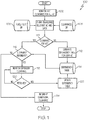
- FIG. 1 a flowchart 100 is shown of a method for monitoring execution of conditional ATC clearances for user aircraft.
- ATC clearances for all subject aircraft are monitored across each communication channel used at an airport 102.
- Each subject aircraft is identified and relevant data from its corresponding ATC clearance is transcribed 104 into a textual format.
- each subject aircraft is identified by an aircraft call sign.
- the relevant data from the ATC clearances may be received in either voice or data formats.
- the data format may comprise a text message.
- the data may be transmitted utilizing a Controller-Pilot Datalink Communication (CPDLC) protocol or a digital taxi system.
- CPDLC Controller-Pilot Datalink Communication
- the transmitted ATC clearances received in a voice message are transcribed into a text format and stored in an electronic database 106.
- the transcribed ATC clearances are matched with an appropriate clearance command retrieved from an electronic clearance database 108.
- Both the transcribed clearances along with clearances received in a text format are analyzed for their relevance to the present user aircraft by using the call sign and contextual information of the user aircraft. Non-relevant ATC clearances are typically ignored since they have no impact on operations of the user aircraft.
- each ATC clearance is analyzed to determine if it is directed towards the user aircraft 110. If the clearance is not directed to the user aircraft, a dependency table for the user aircraft is generated 112. The dependency table identifies each dependent ATC clearance that is "relevant". A relevant clearance is a clearance that must be completed by the corresponding subject aircraft before the user aircraft executes a conditional ATC clearance. Therefore, permission to execute the conditional ATC clearance is "dependent" upon completion of the dependent ATC clearance by the subject aircraft.
- the dependency table lists all dependent ATC clearances in order and it is stored in an electronic database 114.
- the dependency table is consulted to determine if the conditional ATC clearance is dependent upon the completion of a dependent ATC clearance by a subject aircraft 116. If the conditional ATC clearance is dependent, the dependency table is retrieved and the dependent ATC clearances are monitored for completion 118. Completion is determined by monitoring the status of the subject aircraft which may include information such as: the ground location of the subject aircraft; the altitude of the subject aircraft; the speed of the subject aircraft; and other relevant data regarding the subject aircraft.
- the dependency table is updated with the specific ATC dependent clearance being removed from the dependency table as it is completed 122.
- the dependency table is continually monitored until all dependent ATC clearances are cleared. Once the conditional ATC clearance for the user aircraft no longer has any uncleared dependent ATC clearances, the user aircraft is informed of permission to execute its conditional ATC clearance.
- the conditional ATC clearance may include permission for the user aircraft to perform: a final approach; a landing, taxiing; departure; runway crossing; push back from gate; and any other similar operations for the user aircraft.
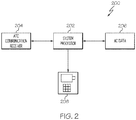
- FIG. 2 a block diagram 200 is shown of a system for monitoring of conditional ATC clearances for a user aircraft in accordance with some embodiments.
- the system includes a communications receiver 204 that continually monitors ATC clearances for all subject aircraft across each communications channel for an airport. The receiver also continually monitors the status of all subject aircraft with respect to the completion of each respective ATC clearance.
- the communications receiver 204 monitors both the voice and data communications. In some embodiments, the data communications are received via a Controller-Pilot Datalink Communication (CPDLC) protocol. Additionally, a voice to text translation capability may be included in the communications receiver 204 or alternatively within the system processor 202 in some embodiments.
- CPDLC Controller-Pilot Datalink Communication
- a voice to text translation capability may be included in the communications receiver 204 or alternatively within the system processor 202 in some embodiments.
- a central system processor 202 located on board the aircraft receives the ATC clearances from the communications receiver.
- the processor identifies the subject aircraft for each ATC clearance and transcribes the relevant data from the respective clearance.
- the relevant data is used to generate a dependency table for the user aircraft with relevant data from each subject aircraft.
- the dependency table identifies each dependent ATC clearance that must be completed before the user aircraft executes a conditional ATC clearance.
- the processor generates a notification for the user aircraft.
- a display device 208 on board the aircraft receives the notification from the system processor 202.
- the display device 208 informs the user aircraft of permission to execute its conditional ATC clearance.
- the display device may be a multi-function display (MFD) unit.
- MFD multi-function display
- FIG. 3 a diagram 300 is shown of an example of conditional ATC clearances for taxiing operations of a user aircraft in accordance with one embodiment.
- the user aircraft 302 has a conditional ATC clearance to pass through a taxiway intersection 305.
- a subject aircraft 304 has a dependent ATC clearance to pass through the same intersection 305 before the user aircraft 302.
- the progress of the subject aircraft 304 is monitored until it is through the intersection 305.
- the dependent ATC clearance for the subject aircraft 306 is completed.
- the user aircraft 302 is now given permission to proceed with its conditional ATC clearance and pass through the intersection 305.
- FIG. 4 electronic displays 400 are shown of examples of conditional ATC clearances for final approach and landing of a user aircraft in accordance with one embodiment.
- the user aircraft is given the conditional ATC clearance of "Cross DNAHO and Hold” along with the dependent ATC clearance of "SJ876 Take Off from RW21". These clearances instruct the user aircraft to cross waypoint DNAHO and take up a holding pattern after a subject aircraft with the call sign SJ876 completes its take off from Runway 21.
- the vertical situation display 404 the user aircraft is given the conditional ATC clearance of "Land in RW21" along with 3 separate dependent ATC clearances.
- the dependent ATC clearances are in order of completion: "UA765 Exits RW21”; "PL987 Take Off from RW21”; and "Fuel Truck Crosses Runway”. These clearances instruct the user aircraft to land on Runway 21 after a subject aircraft with the call sign of UA765 exits the runway, a subject aircraft with the call sign of PL987 takes off from the runway, and a fuel truck crosses the runway.
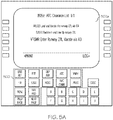
- FIGS. 5A-5C multiple views 500 are shown of a multi-function display (MFD) dependent and conditional ATC clearances for a user aircraft in accordance with one embodiment.
- MFD multi-function display
- FIGS. 5A-5C multiple views 500 are shown of a multi-function display (MFD) dependent and conditional ATC clearances for a user aircraft in accordance with one embodiment.
- MFD multi-function display
- the initial display 502a two separate dependent ATC clearances are shown ahead of a conditional ATC clearance for the user aircraft.
- the first dependent ATC clearance is completed, it is removed from the display 502b.
- the second dependent ATC clearance is also removed from the display 502c and the "Execute" command is shown for the conditional ATC clearance.
- the aircrew can track the progress of dependent ATC clearances in preparation for execution of the conditional ATC clearance of their aircraft.
- This display helps prevent any misunderstanding, ambiguity or other confusion may exist from manually tracking dependent and conditional clearances.
- Skilled artisans may implement the described functionality in varying ways for each particular application, but such implementation decisions should not be interpreted as causing a departure from the scope of the present invention.
- an embodiment of a system or a component may employ various integrated circuit components, e.g., memory elements, digital signal processing elements, logic elements, look-up tables, or the like, which may carry out a variety of functions under the control of one or more microprocessors or other control devices.
- integrated circuit components e.g., memory elements, digital signal processing elements, logic elements, look-up tables, or the like, which may carry out a variety of functions under the control of one or more microprocessors or other control devices.
- DSP digital signal processor
- ASIC application specific integrated circuit
- FPGA field programmable gate array
- a general-purpose processor may be a microprocessor, but in the alternative, the processor may be any conventional processor, controller, microcontroller, or state machine.
- a processor may also be implemented as a combination of computing devices, e.g., a combination of a DSP and a microprocessor, a plurality of microprocessors, one or more microprocessors in conjunction with a DSP core, or any other such configuration.
- a software module may reside in RAM memory, flash memory, ROM memory, EPROM memory, EEPROM memory, registers, hard disk, a removable disk, a CD-ROM, or any other form of storage medium known in the art.
- An exemplary storage medium is coupled to the processor such that the processor can read information from, and write information to, the storage medium.
- the storage medium may be integral to the processor.
- the processor and the storage medium may reside in an ASIC.
- the ASIC may reside in a user terminal.
- the processor and the storage medium may reside as discrete components in a user terminal
Landscapes
- Engineering & Computer Science (AREA)
- Aviation & Aerospace Engineering (AREA)
- Physics & Mathematics (AREA)
- General Physics & Mathematics (AREA)
- Traffic Control Systems (AREA)
- Radar, Positioning & Navigation (AREA)
- Remote Sensing (AREA)
Abstract
Description
- The present invention generally relates to aircraft operations, and more particularly relates to a method and system for monitoring execution of conditional air traffic control (ATC) clearances for an aircraft.
- Air traffic controllers (ATC) are responsible for organizing and expediting aircraft traffic in a controlled airspace and on the ground by issuing instructions and clearances to pilots of aircraft. To streamline operations of multiple aircraft, ATC may issue a "conditional clearance" where the pilot is cleared to act when the condition occurs. However, misunderstanding, ambiguity or other confusion may exist for conditional clearance. Hence, there is a need for a method and system for a contextual monitoring execution of ATC conditional clearances for an aircraft.
- This summary is provided to describe select concepts in a simplified form that are further described in the Detailed Description. This summary is not intended to identify key or essential features of the claimed subject matter, nor is it intended to be used as an aid in determining the scope of the claimed subject matter.
- A method is provided for monitoring execution of conditional air traffic control (ATC) clearances for a user aircraft. The method comprises: monitoring ATC clearances transmitted to all subject aircraft across each communication channel from an airport; identifying the subject aircraft for each ATC clearance; transcribing relevant data from each ATC clearance; generating a dependency table for the user aircraft with the relevant data from each subject aircraft, where the dependency table identifies each dependent ATC clearance that must be completed by all subject aircraft before the user aircraft executes a conditional ATC clearance; monitoring the status of all subject aircraft with respect to the completion of dependent ATC clearances; and informing the user aircraft of the conditional ATC clearance upon completion of all dependent ATC clearances by all subject aircraft.
- An apparatus is provided for monitoring execution of conditional air traffic control (ATC) clearances for a user aircraft. The apparatus comprises: a communications receiver that monitors ATC clearances for all subject aircraft across each communications channel for an airport and monitors the status of all subject aircraft with respect to the completion of each respective ATC clearance; a central processor located on board the aircraft that receives the ATC clearances from the communications receiver and, identifies the subject aircraft for each ATC clearance, transcribes the relevant data for each ATC clearance, generates a dependency table for the user aircraft with the relevant data from each subject aircraft, where the dependency table identifies each dependent ATC clearance that must be completed by all subject aircraft before the user aircraft executes a conditional ATC clearance, and generates a notification for the user aircraft of the completion of all dependent ATC clearances by all subject aircraft; and a display device that receives the notification of the completion of all dependent ATC clearances by all subject aircraft, where the display device informs the user aircraft of the conditional ATC clearance.
- Furthermore, other desirable features and characteristics of the method and system will become apparent from the subsequent detailed description and the appended claims, taken in conjunction with the accompanying drawings and the preceding background.
- The present invention will hereinafter be described in conjunction with the following drawing figures, wherein like numerals denote like elements, and wherein:
-
FIG. 1 shows a flowchart of a method of monitoring execution of ATC conditional clearances for a user aircraft in accordance with one embodiment; -
FIG.2 shows a block diagram of a system of monitoring execution of ATC conditional clearances for a user aircraft in accordance with one embodiment; -
FIG.3 shows a diagram of an example of ATC conditional clearances for taxiing of a user aircraft in accordance with one embodiment; -
FIG. 4 shows examples of an electronic display of ATC conditional clearances for final approach of a user aircraft in accordance with one embodiment; and -
FIGS. 5A-5C show views of a multifunction display (MFD) showing dependent ATC clearances in accordance with one embodiment. - The following detailed description is merely exemplary in nature and is not intended to limit the invention or the application and uses of the invention. As used herein, the word "exemplary" means "serving as an example, instance, or illustration." Thus, any embodiment described herein as "exemplary" is not necessarily to be construed as preferred or advantageous over other embodiments. All of the embodiments described herein are exemplary embodiments provided to enable persons skilled in the art to make or use the invention and not to limit the scope of the invention which is defined by the claims. Furthermore, there is no intention to be bound by any expressed or implied theory presented in the preceding technical field, background, brief summary, or the following detailed description.
- A method for monitoring execution of conditional air traffic control (ATC) clearances for user aircraft has been developed. ATC clearances are monitored as they are transmitted to all subject aircraft across each communication channel from an airport. The subject aircraft are identified and each ATC clearance is transcribed for relevant data for its subject aircraft. A dependency table is generated for the user aircraft using the relevant data for each subject aircraft. The dependency table identifies each dependent ATC clearance that must be completed by all subject aircraft before the user aircraft executes its conditional ATC clearance. The status of all the relevant subject aircraft is monitored for completion of their respective dependent ATC clearances. When these clearances are completed, the user aircraft is informed of permission to execute its conditional ATC clearance.
- Turning now to
FIG. 1 , aflowchart 100 is shown of a method for monitoring execution of conditional ATC clearances for user aircraft. First, ATC clearances for all subject aircraft are monitored across each communication channel used at anairport 102. Each subject aircraft is identified and relevant data from its corresponding ATC clearance is transcribed 104 into a textual format. Typically, each subject aircraft is identified by an aircraft call sign. The relevant data from the ATC clearances may be received in either voice or data formats. In some embodiments, the data format may comprise a text message. In other embodiments, the data may be transmitted utilizing a Controller-Pilot Datalink Communication (CPDLC) protocol or a digital taxi system. - The transmitted ATC clearances received in a voice message are transcribed into a text format and stored in an
electronic database 106. The transcribed ATC clearances are matched with an appropriate clearance command retrieved from anelectronic clearance database 108. Both the transcribed clearances along with clearances received in a text format, are analyzed for their relevance to the present user aircraft by using the call sign and contextual information of the user aircraft. Non-relevant ATC clearances are typically ignored since they have no impact on operations of the user aircraft. - Next, each ATC clearance is analyzed to determine if it is directed towards the
user aircraft 110. If the clearance is not directed to the user aircraft, a dependency table for the user aircraft is generated 112. The dependency table identifies each dependent ATC clearance that is "relevant". A relevant clearance is a clearance that must be completed by the corresponding subject aircraft before the user aircraft executes a conditional ATC clearance. Therefore, permission to execute the conditional ATC clearance is "dependent" upon completion of the dependent ATC clearance by the subject aircraft. The dependency table lists all dependent ATC clearances in order and it is stored in anelectronic database 114. - Once the user aircraft receives a conditional ATC clearance, the dependency table is consulted to determine if the conditional ATC clearance is dependent upon the completion of a dependent ATC clearance by a
subject aircraft 116. If the conditional ATC clearance is dependent, the dependency table is retrieved and the dependent ATC clearances are monitored forcompletion 118. Completion is determined by monitoring the status of the subject aircraft which may include information such as: the ground location of the subject aircraft; the altitude of the subject aircraft; the speed of the subject aircraft; and other relevant data regarding the subject aircraft. - As each dependent ATC clearance is resolved 120, the dependency table is updated with the specific ATC dependent clearance being removed from the dependency table as it is completed 122. The dependency table is continually monitored until all dependent ATC clearances are cleared. Once the conditional ATC clearance for the user aircraft no longer has any uncleared dependent ATC clearances, the user aircraft is informed of permission to execute its conditional ATC clearance. In various embodiments, the conditional ATC clearance may include permission for the user aircraft to perform: a final approach; a landing, taxiing; departure; runway crossing; push back from gate; and any other similar operations for the user aircraft.
- Turning now to
FIG. 2 , a block diagram 200 is shown of a system for monitoring of conditional ATC clearances for a user aircraft in accordance with some embodiments. The system includes acommunications receiver 204 that continually monitors ATC clearances for all subject aircraft across each communications channel for an airport. The receiver also continually monitors the status of all subject aircraft with respect to the completion of each respective ATC clearance. Thecommunications receiver 204 monitors both the voice and data communications. In some embodiments, the data communications are received via a Controller-Pilot Datalink Communication (CPDLC) protocol. Additionally, a voice to text translation capability may be included in thecommunications receiver 204 or alternatively within thesystem processor 202 in some embodiments. - A
central system processor 202 located on board the aircraft receives the ATC clearances from the communications receiver. The processor identifies the subject aircraft for each ATC clearance and transcribes the relevant data from the respective clearance. The relevant data is used to generate a dependency table for the user aircraft with relevant data from each subject aircraft. The dependency table identifies each dependent ATC clearance that must be completed before the user aircraft executes a conditional ATC clearance. Once all dependent ATC clearances have been completed, the processor generates a notification for the user aircraft. Adisplay device 208 on board the aircraft receives the notification from thesystem processor 202. Thedisplay device 208 informs the user aircraft of permission to execute its conditional ATC clearance. In some embodiments, the display device may be a multi-function display (MFD) unit. - Turning now to
FIG. 3 , a diagram 300 is shown of an example of conditional ATC clearances for taxiing operations of a user aircraft in accordance with one embodiment. In this example, theuser aircraft 302 has a conditional ATC clearance to pass through ataxiway intersection 305. However, asubject aircraft 304 has a dependent ATC clearance to pass through thesame intersection 305 before theuser aircraft 302. The progress of thesubject aircraft 304 is monitored until it is through theintersection 305. At this point, the dependent ATC clearance for the subject aircraft 306 is completed. Theuser aircraft 302 is now given permission to proceed with its conditional ATC clearance and pass through theintersection 305. - Turning now to
FIG. 4 ,electronic displays 400 are shown of examples of conditional ATC clearances for final approach and landing of a user aircraft in accordance with one embodiment. In theoverhead display 402, the user aircraft is given the conditional ATC clearance of "Cross DNAHO and Hold" along with the dependent ATC clearance of "SJ876 Take Off from RW21". These clearances instruct the user aircraft to cross waypoint DNAHO and take up a holding pattern after a subject aircraft with the call sign SJ876 completes its take off from Runway 21. In thevertical situation display 404, the user aircraft is given the conditional ATC clearance of "Land in RW21" along with 3 separate dependent ATC clearances. The dependent ATC clearances are in order of completion: "UA765 Exits RW21"; "PL987 Take Off from RW21"; and "Fuel Truck Crosses Runway". These clearances instruct the user aircraft to land on Runway 21 after a subject aircraft with the call sign of UA765 exits the runway, a subject aircraft with the call sign of PL987 takes off from the runway, and a fuel truck crosses the runway. - Turning now to
FIGS. 5A-5C ,multiple views 500 are shown of a multi-function display (MFD) dependent and conditional ATC clearances for a user aircraft in accordance with one embodiment. In theinitial display 502a, two separate dependent ATC clearances are shown ahead of a conditional ATC clearance for the user aircraft. As the first dependent ATC clearance is completed, it is removed from thedisplay 502b. Once the second dependent ATC clearance is completed, it is also removed from thedisplay 502c and the "Execute" command is shown for the conditional ATC clearance. In this manner, the aircrew can track the progress of dependent ATC clearances in preparation for execution of the conditional ATC clearance of their aircraft. This display helps prevent any misunderstanding, ambiguity or other confusion may exist from manually tracking dependent and conditional clearances. - Those of skill in the art will appreciate that the various illustrative logical blocks, modules, circuits, and algorithm steps described in-connection with the embodiments disclosed herein may be implemented as electronic hardware, computer software, or combinations of both. Some of the embodiments and implementations are described above in terms of functional and/or logical block components (or modules) and various processing steps. However, it should be appreciated that such block components (or modules) may be realized by any number of hardware, software, and/or firmware components configured to perform the specified functions. To clearly illustrate this interchangeability of hardware and software, various illustrative components, blocks, modules, circuits, and steps have been described above generally in terms of their functionality. Whether such functionality is implemented as hardware or software depends upon the particular application and design constraints imposed on the overall system. Skilled artisans may implement the described functionality in varying ways for each particular application, but such implementation decisions should not be interpreted as causing a departure from the scope of the present invention. For example, an embodiment of a system or a component may employ various integrated circuit components, e.g., memory elements, digital signal processing elements, logic elements, look-up tables, or the like, which may carry out a variety of functions under the control of one or more microprocessors or other control devices. In addition, those skilled in the art will appreciate that embodiments described herein are merely exemplary implementations.
- The various illustrative logical blocks, modules, and circuits described in connection with the embodiments disclosed herein may be implemented or performed with a general purpose processor, a digital signal processor (DSP), an application specific integrated circuit (ASIC), a field programmable gate array (FPGA) or other programmable logic device, discrete gate or transistor logic, discrete hardware components, or any combination thereof designed to perform the functions described herein. A general-purpose processor may be a microprocessor, but in the alternative, the processor may be any conventional processor, controller, microcontroller, or state machine. A processor may also be implemented as a combination of computing devices, e.g., a combination of a DSP and a microprocessor, a plurality of microprocessors, one or more microprocessors in conjunction with a DSP core, or any other such configuration.
- The steps of a method or algorithm described in connection with the embodiments disclosed herein may be embodied directly in hardware, in a software module executed by a processor, or in a combination of the two. A software module may reside in RAM memory, flash memory, ROM memory, EPROM memory, EEPROM memory, registers, hard disk, a removable disk, a CD-ROM, or any other form of storage medium known in the art. An exemplary storage medium is coupled to the processor such that the processor can read information from, and write information to, the storage medium. In the alternative, the storage medium may be integral to the processor. The processor and the storage medium may reside in an ASIC. The ASIC may reside in a user terminal. In the alternative, the processor and the storage medium may reside as discrete components in a user terminal
- In this document, relational terms such as first and second, and the like may be used solely to distinguish one entity or action from another entity or action without necessarily requiring or implying any actual such relationship or order between such entities or actions. Numerical ordinals such as "first," "second," "third," etc. simply denote different singles of a plurality and do not imply any order or sequence unless specifically defined by the claim language. The sequence of the text in any of the claims does not imply that process steps must be performed in a temporal or logical order according to such sequence unless it is specifically defined by the language of the claim. The process steps may be interchanged in any order without departing from the scope of the invention as long as such an interchange does not contradict the claim language and is not logically nonsensical.
- Furthermore, depending on the context, words such as "connect" or "coupled to" used in describing a relationship between different elements do not imply that a direct physical connection must be made between these elements. For example, two elements may be connected to each other physically, electronically, logically, or in any other manner, through one or more additional elements.
- While at least one exemplary embodiment has been presented in the foregoing detailed description of the invention, it should be appreciated that a vast number of variations exist. It should also be appreciated that the exemplary embodiment or exemplary embodiments are only examples, and are not intended to limit the scope, applicability, or configuration of the invention in any way. Rather, the foregoing detailed description will provide those skilled in the art with a convenient road map for implementing an exemplary embodiment of the invention. It being understood that various changes may be made in the function and arrangement of elements described in an exemplary embodiment without departing from the scope of the invention as set forth in the appended claims.
Claims (10)
- A method of monitoring execution of conditional air traffic control (ATC) clearances for a user aircraft, comprising:monitoring ATC clearances transmitted to all subject aircraft across each communication channel from an airport with a communications receiver onboard the user aircraft;identifying the subject aircraft for each ATC clearance with the communications receiver;transcribing relevant data from each ATC clearance with the communications receiver;generating a dependency table for the user aircraft with the relevant data from each subject aircraft, where the dependency table identifies each dependent ATC clearance that must be completed by all subject aircraft before the user aircraft executes a conditional ATC clearance with a central processor located on board the user aircraft;monitoring the status of all subject aircraft with respect to the completion of dependent ATC clearances with the communications receiver; andinforming the user aircraft of the conditional ATC clearance upon completion of all dependent ATC clearances by all subject aircraft with a graphical display device on board the aircraft.
- The method of Claim 1, where identifying the subject aircraft is done with an aircraft call sign.
- The method of Claim 1, where the relevant data is transcribed from a voice communication.
- The method of Claim 1, where the relevant data is transcribed from a data communication.
- The method of Claim 4, where the data communication comprises a text message.
- The method of Claim 4, where the data communication uses a Controller-Pilot Datalink Communication (CPDLC) protocol.
- The method of Claim 1, where the relevant data comprises a dependent ATC clearance.
- The method of Claim 1, where the status of the subject aircraft comprises a ground location of the subject aircraft.
- The method of Claim 1, where the status of the subject aircraft comprises an altitude of the subject aircraft.
- The method of Claim 1, where the status of the subject aircraft comprises a speed of the subject aircraft.
Applications Claiming Priority (1)
| Application Number | Priority Date | Filing Date | Title |
|---|---|---|---|
| US15/874,434 US10902732B2 (en) | 2018-01-18 | 2018-01-18 | Method and system for monitoring execution of conditional air traffic control clearances for an aircraft |
Publications (2)
| Publication Number | Publication Date |
|---|---|
| EP3525197A1 true EP3525197A1 (en) | 2019-08-14 |
| EP3525197B1 EP3525197B1 (en) | 2022-09-28 |
Family
ID=65033457
Family Applications (1)
| Application Number | Title | Priority Date | Filing Date |
|---|---|---|---|
| EP19152002.2A Active EP3525197B1 (en) | 2018-01-18 | 2019-01-15 | Method and system for monitoring execution of conditional air traffic control clearances for an aircraft |
Country Status (3)
| Country | Link |
|---|---|
| US (1) | US10902732B2 (en) |
| EP (1) | EP3525197B1 (en) |
| CN (1) | CN110060512B (en) |
Families Citing this family (4)
| Publication number | Priority date | Publication date | Assignee | Title |
|---|---|---|---|---|
| US11289094B2 (en) * | 2020-04-01 | 2022-03-29 | Honeywell International Inc. | System and method for assisting pilot through clearance playback |
| US20220147905A1 (en) * | 2020-11-12 | 2022-05-12 | Honeywell International Inc. | System and method for assisting flight crew with the execution of clearance messages |
| US11636768B2 (en) | 2020-12-09 | 2023-04-25 | Honeywell International Inc. | System and method for predicting ownship clearance and timing by modelling controller pilot conversations |
| US12347422B2 (en) | 2021-10-12 | 2025-07-01 | Honeywell International Inc. | Systems and methods for indicating communication efficiency or compliance with ATC phraseology |
Citations (2)
| Publication number | Priority date | Publication date | Assignee | Title |
|---|---|---|---|---|
| US8386167B2 (en) * | 2008-11-14 | 2013-02-26 | The Boeing Company | Display of taxi route control point information |
| US20170221369A1 (en) * | 2016-02-03 | 2017-08-03 | Honeywell International Inc. | System and method for monitoring a communication channel and displaying information |
Family Cites Families (16)
| Publication number | Priority date | Publication date | Assignee | Title |
|---|---|---|---|---|
| US6160497A (en) | 1998-12-29 | 2000-12-12 | Honeywell International Inc. | Visual display of aircraft data link information |
| US6828921B2 (en) * | 2001-12-05 | 2004-12-07 | The Boeing Company | Data link clearance monitoring and pilot alert sub-system (compass) |
| US7177731B2 (en) * | 2004-03-10 | 2007-02-13 | The Boeing Company | Systems and methods for handling aircraft information received from an off-board source |
| FR2931983B1 (en) | 2008-06-02 | 2018-04-06 | Airbus Operations | METHOD AND SYSTEM FOR AUTOMATICALLY MANAGING AN AIRCRAFT CONVEYOR ON THE GROUND. |
| US8704701B2 (en) | 2011-10-18 | 2014-04-22 | The Boeing Company | Automatic monitoring of flight related radio communications |
| US9592921B2 (en) | 2013-03-11 | 2017-03-14 | Honeywell International Inc. | Graphical representation of in-flight messages |
| US9718558B2 (en) * | 2014-02-26 | 2017-08-01 | Honeywell International Inc. | Pilot centered system and method for decluttering aircraft displays |
| US9704405B2 (en) * | 2014-06-12 | 2017-07-11 | Honeywell International Inc. | Aircraft display systems and methods for providing an aircraft display for use with airport departure and arrival procedures |
| US10026322B2 (en) | 2014-12-02 | 2018-07-17 | Honeywell International Inc. | Integrated controller-pilot datalink communication systems and methods for operating the same |
| US10330493B2 (en) | 2014-12-03 | 2019-06-25 | Honeywell International Inc. | Systems and methods for displaying position sensitive datalink messages on avionics displays |
| US9508262B2 (en) | 2015-03-26 | 2016-11-29 | Honeywell International Inc. | Systems and methods for voice enabled traffic prioritization |
| US10127821B2 (en) * | 2015-06-24 | 2018-11-13 | Honeywell International Inc. | Aircraft systems and methods to improve airport traffic management |
| US9530323B1 (en) * | 2015-07-15 | 2016-12-27 | Honeywell International Inc. | Aircraft systems and methods to monitor proximate traffic |
| US20170069213A1 (en) * | 2015-09-04 | 2017-03-09 | Raytheon Company | Method of flight plan filing and clearance using wireless communication device |
| US10043401B2 (en) * | 2016-05-17 | 2018-08-07 | Honeywell International Inc. | Methods and apparatus for detecting airport terminal area congestion |
| US10157617B2 (en) * | 2017-03-22 | 2018-12-18 | Honeywell International Inc. | System and method for rendering an aircraft cockpit display for use with ATC conditional clearance instructions |
-
2018
- 2018-01-18 US US15/874,434 patent/US10902732B2/en active Active
-
2019
- 2019-01-15 EP EP19152002.2A patent/EP3525197B1/en active Active
- 2019-01-17 CN CN201910043048.3A patent/CN110060512B/en active Active
Patent Citations (2)
| Publication number | Priority date | Publication date | Assignee | Title |
|---|---|---|---|---|
| US8386167B2 (en) * | 2008-11-14 | 2013-02-26 | The Boeing Company | Display of taxi route control point information |
| US20170221369A1 (en) * | 2016-02-03 | 2017-08-03 | Honeywell International Inc. | System and method for monitoring a communication channel and displaying information |
Also Published As
| Publication number | Publication date |
|---|---|
| US10902732B2 (en) | 2021-01-26 |
| CN110060512A (en) | 2019-07-26 |
| CN110060512B (en) | 2022-09-13 |
| EP3525197B1 (en) | 2022-09-28 |
| US20190221126A1 (en) | 2019-07-18 |
Similar Documents
| Publication | Publication Date | Title |
|---|---|---|
| US8386167B2 (en) | Display of taxi route control point information | |
| EP3474259B1 (en) | Method and system for contextually concatenating display, aural, and voice alerts | |
| CN105469646B (en) | System and method for converting taxiway voice commands to taxiway text commands | |
| CN110910677B (en) | System and method for contextual alerts during ground operations | |
| EP3525197B1 (en) | Method and system for monitoring execution of conditional air traffic control clearances for an aircraft | |
| CN108630019B (en) | System and method for rendering aircraft cockpit displays for use by ATC conditional approval instructions | |
| US10593214B2 (en) | System and method for real-time classification of NOTAMs messages | |
| US11676496B2 (en) | Methods and systems for querying for parameter retrieval | |
| US12431025B2 (en) | Contextual transcription augmentation methods and systems | |
| US12505751B2 (en) | Transcription systems and related supplementation methods | |
| US11955012B2 (en) | Transcription systems and message fusion methods | |
| EP3547284A1 (en) | Method and system for generating an alert for an aircraft potentially exceeding speed limits in restricted airspace | |
| US11749127B2 (en) | System and method to provide progressive taxi instructions and alerts on cockpit display | |
| US20130278628A1 (en) | Methods and systems for representing segmented circle airport marker information on a cockpit display | |
| US12437156B2 (en) | Transcription systems and methods for challenging clearances | |
| EP3961602B1 (en) | System and method to provide progressive taxi instructions and alerts on cockpit display | |
| US11790785B2 (en) | System and method of producing relative active flight voice tags on a graphical display unit | |
| US12008908B2 (en) | Systems and methods for providing radio transcription text in a limited display area | |
| EP4120222B1 (en) | Transcription systems and message fusion methods | |
| EP4053823B1 (en) | System amd method of producing relative active flight voice tags on a graphical display unit | |
| EP4276794A1 (en) | Transcription systems and related supplementation methods | |
| EP4105914A1 (en) | Contextual transcription augmentation methods and systems | |
| EP4152296A1 (en) | Systems and methods for providing radio transcription text in a limited display area | |
| EP3882889A1 (en) | Methods and systems for querying for parameter retrieval | |
| EP4685769A1 (en) | Method and system of pilot augmentation of transcribed audio messages |
Legal Events
| Date | Code | Title | Description |
|---|---|---|---|
| PUAI | Public reference made under article 153(3) epc to a published international application that has entered the european phase |
Free format text: ORIGINAL CODE: 0009012 |
|
| STAA | Information on the status of an ep patent application or granted ep patent |
Free format text: STATUS: THE APPLICATION HAS BEEN PUBLISHED |
|
| AK | Designated contracting states |
Kind code of ref document: A1 Designated state(s): AL AT BE BG CH CY CZ DE DK EE ES FI FR GB GR HR HU IE IS IT LI LT LU LV MC MK MT NL NO PL PT RO RS SE SI SK SM TR |
|
| AX | Request for extension of the european patent |
Extension state: BA ME |
|
| STAA | Information on the status of an ep patent application or granted ep patent |
Free format text: STATUS: REQUEST FOR EXAMINATION WAS MADE |
|
| 17P | Request for examination filed |
Effective date: 20190905 |
|
| RBV | Designated contracting states (corrected) |
Designated state(s): AL AT BE BG CH CY CZ DE DK EE ES FI FR GB GR HR HU IE IS IT LI LT LU LV MC MK MT NL NO PL PT RO RS SE SI SK SM TR |
|
| STAA | Information on the status of an ep patent application or granted ep patent |
Free format text: STATUS: EXAMINATION IS IN PROGRESS |
|
| 17Q | First examination report despatched |
Effective date: 20200610 |
|
| GRAP | Despatch of communication of intention to grant a patent |
Free format text: ORIGINAL CODE: EPIDOSNIGR1 |
|
| STAA | Information on the status of an ep patent application or granted ep patent |
Free format text: STATUS: GRANT OF PATENT IS INTENDED |
|
| RAP3 | Party data changed (applicant data changed or rights of an application transferred) |
Owner name: HONEYWELL INTERNATIONAL INC. |
|
| INTG | Intention to grant announced |
Effective date: 20220509 |
|
| GRAS | Grant fee paid |
Free format text: ORIGINAL CODE: EPIDOSNIGR3 |
|
| GRAA | (expected) grant |
Free format text: ORIGINAL CODE: 0009210 |
|
| STAA | Information on the status of an ep patent application or granted ep patent |
Free format text: STATUS: THE PATENT HAS BEEN GRANTED |
|
| AK | Designated contracting states |
Kind code of ref document: B1 Designated state(s): AL AT BE BG CH CY CZ DE DK EE ES FI FR GB GR HR HU IE IS IT LI LT LU LV MC MK MT NL NO PL PT RO RS SE SI SK SM TR |
|
| REG | Reference to a national code |
Ref country code: GB Ref legal event code: FG4D |
|
| REG | Reference to a national code |
Ref country code: CH Ref legal event code: EP |
|
| REG | Reference to a national code |
Ref country code: DE Ref legal event code: R096 Ref document number: 602019019915 Country of ref document: DE |
|
| REG | Reference to a national code |
Ref country code: AT Ref legal event code: REF Ref document number: 1521764 Country of ref document: AT Kind code of ref document: T Effective date: 20221015 |
|
| REG | Reference to a national code |
Ref country code: IE Ref legal event code: FG4D |
|
| REG | Reference to a national code |
Ref country code: LT Ref legal event code: MG9D |
|
| PG25 | Lapsed in a contracting state [announced via postgrant information from national office to epo] |
Ref country code: SE Free format text: LAPSE BECAUSE OF FAILURE TO SUBMIT A TRANSLATION OF THE DESCRIPTION OR TO PAY THE FEE WITHIN THE PRESCRIBED TIME-LIMIT Effective date: 20220928 Ref country code: RS Free format text: LAPSE BECAUSE OF FAILURE TO SUBMIT A TRANSLATION OF THE DESCRIPTION OR TO PAY THE FEE WITHIN THE PRESCRIBED TIME-LIMIT Effective date: 20220928 Ref country code: NO Free format text: LAPSE BECAUSE OF FAILURE TO SUBMIT A TRANSLATION OF THE DESCRIPTION OR TO PAY THE FEE WITHIN THE PRESCRIBED TIME-LIMIT Effective date: 20221228 Ref country code: LV Free format text: LAPSE BECAUSE OF FAILURE TO SUBMIT A TRANSLATION OF THE DESCRIPTION OR TO PAY THE FEE WITHIN THE PRESCRIBED TIME-LIMIT Effective date: 20220928 Ref country code: LT Free format text: LAPSE BECAUSE OF FAILURE TO SUBMIT A TRANSLATION OF THE DESCRIPTION OR TO PAY THE FEE WITHIN THE PRESCRIBED TIME-LIMIT Effective date: 20220928 Ref country code: FI Free format text: LAPSE BECAUSE OF FAILURE TO SUBMIT A TRANSLATION OF THE DESCRIPTION OR TO PAY THE FEE WITHIN THE PRESCRIBED TIME-LIMIT Effective date: 20220928 |
|
| REG | Reference to a national code |
Ref country code: NL Ref legal event code: MP Effective date: 20220928 |
|
| REG | Reference to a national code |
Ref country code: AT Ref legal event code: MK05 Ref document number: 1521764 Country of ref document: AT Kind code of ref document: T Effective date: 20220928 |
|
| PG25 | Lapsed in a contracting state [announced via postgrant information from national office to epo] |
Ref country code: HR Free format text: LAPSE BECAUSE OF FAILURE TO SUBMIT A TRANSLATION OF THE DESCRIPTION OR TO PAY THE FEE WITHIN THE PRESCRIBED TIME-LIMIT Effective date: 20220928 Ref country code: GR Free format text: LAPSE BECAUSE OF FAILURE TO SUBMIT A TRANSLATION OF THE DESCRIPTION OR TO PAY THE FEE WITHIN THE PRESCRIBED TIME-LIMIT Effective date: 20221229 |
|
| PG25 | Lapsed in a contracting state [announced via postgrant information from national office to epo] |
Ref country code: SM Free format text: LAPSE BECAUSE OF FAILURE TO SUBMIT A TRANSLATION OF THE DESCRIPTION OR TO PAY THE FEE WITHIN THE PRESCRIBED TIME-LIMIT Effective date: 20220928 Ref country code: RO Free format text: LAPSE BECAUSE OF FAILURE TO SUBMIT A TRANSLATION OF THE DESCRIPTION OR TO PAY THE FEE WITHIN THE PRESCRIBED TIME-LIMIT Effective date: 20220928 Ref country code: PT Free format text: LAPSE BECAUSE OF FAILURE TO SUBMIT A TRANSLATION OF THE DESCRIPTION OR TO PAY THE FEE WITHIN THE PRESCRIBED TIME-LIMIT Effective date: 20230130 Ref country code: ES Free format text: LAPSE BECAUSE OF FAILURE TO SUBMIT A TRANSLATION OF THE DESCRIPTION OR TO PAY THE FEE WITHIN THE PRESCRIBED TIME-LIMIT Effective date: 20220928 Ref country code: CZ Free format text: LAPSE BECAUSE OF FAILURE TO SUBMIT A TRANSLATION OF THE DESCRIPTION OR TO PAY THE FEE WITHIN THE PRESCRIBED TIME-LIMIT Effective date: 20220928 Ref country code: AT Free format text: LAPSE BECAUSE OF FAILURE TO SUBMIT A TRANSLATION OF THE DESCRIPTION OR TO PAY THE FEE WITHIN THE PRESCRIBED TIME-LIMIT Effective date: 20220928 |
|
| PG25 | Lapsed in a contracting state [announced via postgrant information from national office to epo] |
Ref country code: SK Free format text: LAPSE BECAUSE OF FAILURE TO SUBMIT A TRANSLATION OF THE DESCRIPTION OR TO PAY THE FEE WITHIN THE PRESCRIBED TIME-LIMIT Effective date: 20220928 Ref country code: PL Free format text: LAPSE BECAUSE OF FAILURE TO SUBMIT A TRANSLATION OF THE DESCRIPTION OR TO PAY THE FEE WITHIN THE PRESCRIBED TIME-LIMIT Effective date: 20220928 Ref country code: IS Free format text: LAPSE BECAUSE OF FAILURE TO SUBMIT A TRANSLATION OF THE DESCRIPTION OR TO PAY THE FEE WITHIN THE PRESCRIBED TIME-LIMIT Effective date: 20230128 Ref country code: EE Free format text: LAPSE BECAUSE OF FAILURE TO SUBMIT A TRANSLATION OF THE DESCRIPTION OR TO PAY THE FEE WITHIN THE PRESCRIBED TIME-LIMIT Effective date: 20220928 |
|
| REG | Reference to a national code |
Ref country code: DE Ref legal event code: R097 Ref document number: 602019019915 Country of ref document: DE |
|
| PG25 | Lapsed in a contracting state [announced via postgrant information from national office to epo] |
Ref country code: NL Free format text: LAPSE BECAUSE OF FAILURE TO SUBMIT A TRANSLATION OF THE DESCRIPTION OR TO PAY THE FEE WITHIN THE PRESCRIBED TIME-LIMIT Effective date: 20220928 Ref country code: AL Free format text: LAPSE BECAUSE OF FAILURE TO SUBMIT A TRANSLATION OF THE DESCRIPTION OR TO PAY THE FEE WITHIN THE PRESCRIBED TIME-LIMIT Effective date: 20220928 |
|
| P01 | Opt-out of the competence of the unified patent court (upc) registered |
Effective date: 20230525 |
|
| PG25 | Lapsed in a contracting state [announced via postgrant information from national office to epo] |
Ref country code: DK Free format text: LAPSE BECAUSE OF FAILURE TO SUBMIT A TRANSLATION OF THE DESCRIPTION OR TO PAY THE FEE WITHIN THE PRESCRIBED TIME-LIMIT Effective date: 20220928 |
|
| PLBE | No opposition filed within time limit |
Free format text: ORIGINAL CODE: 0009261 |
|
| STAA | Information on the status of an ep patent application or granted ep patent |
Free format text: STATUS: NO OPPOSITION FILED WITHIN TIME LIMIT |
|
| REG | Reference to a national code |
Ref country code: CH Ref legal event code: PL |
|
| 26N | No opposition filed |
Effective date: 20230629 |
|
| PG25 | Lapsed in a contracting state [announced via postgrant information from national office to epo] |
Ref country code: LU Free format text: LAPSE BECAUSE OF NON-PAYMENT OF DUE FEES Effective date: 20230115 |
|
| REG | Reference to a national code |
Ref country code: BE Ref legal event code: MM Effective date: 20230131 |
|
| PG25 | Lapsed in a contracting state [announced via postgrant information from national office to epo] |
Ref country code: LI Free format text: LAPSE BECAUSE OF NON-PAYMENT OF DUE FEES Effective date: 20230131 Ref country code: CH Free format text: LAPSE BECAUSE OF NON-PAYMENT OF DUE FEES Effective date: 20230131 |
|
| PG25 | Lapsed in a contracting state [announced via postgrant information from national office to epo] |
Ref country code: SI Free format text: LAPSE BECAUSE OF FAILURE TO SUBMIT A TRANSLATION OF THE DESCRIPTION OR TO PAY THE FEE WITHIN THE PRESCRIBED TIME-LIMIT Effective date: 20220928 Ref country code: BE Free format text: LAPSE BECAUSE OF NON-PAYMENT OF DUE FEES Effective date: 20230131 |
|
| PG25 | Lapsed in a contracting state [announced via postgrant information from national office to epo] |
Ref country code: IE Free format text: LAPSE BECAUSE OF NON-PAYMENT OF DUE FEES Effective date: 20230115 |
|
| PG25 | Lapsed in a contracting state [announced via postgrant information from national office to epo] |
Ref country code: IT Free format text: LAPSE BECAUSE OF FAILURE TO SUBMIT A TRANSLATION OF THE DESCRIPTION OR TO PAY THE FEE WITHIN THE PRESCRIBED TIME-LIMIT Effective date: 20220928 |
|
| PG25 | Lapsed in a contracting state [announced via postgrant information from national office to epo] |
Ref country code: MC Free format text: LAPSE BECAUSE OF FAILURE TO SUBMIT A TRANSLATION OF THE DESCRIPTION OR TO PAY THE FEE WITHIN THE PRESCRIBED TIME-LIMIT Effective date: 20220928 |
|
| PG25 | Lapsed in a contracting state [announced via postgrant information from national office to epo] |
Ref country code: MC Free format text: LAPSE BECAUSE OF FAILURE TO SUBMIT A TRANSLATION OF THE DESCRIPTION OR TO PAY THE FEE WITHIN THE PRESCRIBED TIME-LIMIT Effective date: 20220928 |
|
| PG25 | Lapsed in a contracting state [announced via postgrant information from national office to epo] |
Ref country code: BG Free format text: LAPSE BECAUSE OF FAILURE TO SUBMIT A TRANSLATION OF THE DESCRIPTION OR TO PAY THE FEE WITHIN THE PRESCRIBED TIME-LIMIT Effective date: 20220928 |
|
| PG25 | Lapsed in a contracting state [announced via postgrant information from national office to epo] |
Ref country code: BG Free format text: LAPSE BECAUSE OF FAILURE TO SUBMIT A TRANSLATION OF THE DESCRIPTION OR TO PAY THE FEE WITHIN THE PRESCRIBED TIME-LIMIT Effective date: 20220928 |
|
| PG25 | Lapsed in a contracting state [announced via postgrant information from national office to epo] |
Ref country code: CY Free format text: LAPSE BECAUSE OF FAILURE TO SUBMIT A TRANSLATION OF THE DESCRIPTION OR TO PAY THE FEE WITHIN THE PRESCRIBED TIME-LIMIT; INVALID AB INITIO Effective date: 20190115 |
|
| PG25 | Lapsed in a contracting state [announced via postgrant information from national office to epo] |
Ref country code: HU Free format text: LAPSE BECAUSE OF FAILURE TO SUBMIT A TRANSLATION OF THE DESCRIPTION OR TO PAY THE FEE WITHIN THE PRESCRIBED TIME-LIMIT; INVALID AB INITIO Effective date: 20190115 |
|
| PG25 | Lapsed in a contracting state [announced via postgrant information from national office to epo] |
Ref country code: TR Free format text: LAPSE BECAUSE OF FAILURE TO SUBMIT A TRANSLATION OF THE DESCRIPTION OR TO PAY THE FEE WITHIN THE PRESCRIBED TIME-LIMIT Effective date: 20220928 |
|
| PGFP | Annual fee paid to national office [announced via postgrant information from national office to epo] |
Ref country code: GB Payment date: 20260126 Year of fee payment: 8 |
|
| PGFP | Annual fee paid to national office [announced via postgrant information from national office to epo] |
Ref country code: DE Payment date: 20260127 Year of fee payment: 8 |
|
| PGFP | Annual fee paid to national office [announced via postgrant information from national office to epo] |
Ref country code: FR Payment date: 20260127 Year of fee payment: 8 |