EP3525124A1 - Fingerprint unlocking - Google Patents
Fingerprint unlocking Download PDFInfo
- Publication number
- EP3525124A1 EP3525124A1 EP19156928.4A EP19156928A EP3525124A1 EP 3525124 A1 EP3525124 A1 EP 3525124A1 EP 19156928 A EP19156928 A EP 19156928A EP 3525124 A1 EP3525124 A1 EP 3525124A1
- Authority
- EP
- European Patent Office
- Prior art keywords
- touch screen
- fingerprint
- electronic device
- sensor
- recognition function
- Prior art date
- Legal status (The legal status is an assumption and is not a legal conclusion. Google has not performed a legal analysis and makes no representation as to the accuracy of the status listed.)
- Granted
Links
Images


Classifications
-
- G—PHYSICS
- G06—COMPUTING OR CALCULATING; COUNTING
- G06F—ELECTRIC DIGITAL DATA PROCESSING
- G06F21/00—Security arrangements for protecting computers, components thereof, programs or data against unauthorised activity
- G06F21/30—Authentication, i.e. establishing the identity or authorisation of security principals
- G06F21/31—User authentication
- G06F21/32—User authentication using biometric data, e.g. fingerprints, iris scans or voiceprints
-
- G—PHYSICS
- G06—COMPUTING OR CALCULATING; COUNTING
- G06F—ELECTRIC DIGITAL DATA PROCESSING
- G06F1/00—Details not covered by groups G06F3/00 - G06F13/00 and G06F21/00
- G06F1/26—Power supply means, e.g. regulation thereof
- G06F1/32—Means for saving power
- G06F1/3203—Power management, i.e. event-based initiation of a power-saving mode
- G06F1/3206—Monitoring of events, devices or parameters that trigger a change in power modality
- G06F1/3231—Monitoring the presence, absence or movement of users
-
- G—PHYSICS
- G06—COMPUTING OR CALCULATING; COUNTING
- G06F—ELECTRIC DIGITAL DATA PROCESSING
- G06F1/00—Details not covered by groups G06F3/00 - G06F13/00 and G06F21/00
- G06F1/26—Power supply means, e.g. regulation thereof
- G06F1/32—Means for saving power
- G06F1/3203—Power management, i.e. event-based initiation of a power-saving mode
- G06F1/3234—Power saving characterised by the action undertaken
- G06F1/325—Power saving in peripheral device
- G06F1/3262—Power saving in digitizer or tablet
-
- G—PHYSICS
- G06—COMPUTING OR CALCULATING; COUNTING
- G06F—ELECTRIC DIGITAL DATA PROCESSING
- G06F21/00—Security arrangements for protecting computers, components thereof, programs or data against unauthorised activity
- G06F21/70—Protecting specific internal or peripheral components, in which the protection of a component leads to protection of the entire computer
- G06F21/81—Protecting specific internal or peripheral components, in which the protection of a component leads to protection of the entire computer by operating on the power supply, e.g. enabling or disabling power-on, sleep or resume operations
-
- G—PHYSICS
- G06—COMPUTING OR CALCULATING; COUNTING
- G06F—ELECTRIC DIGITAL DATA PROCESSING
- G06F3/00—Input arrangements for transferring data to be processed into a form capable of being handled by the computer; Output arrangements for transferring data from processing unit to output unit, e.g. interface arrangements
- G06F3/01—Input arrangements or combined input and output arrangements for interaction between user and computer
- G06F3/03—Arrangements for converting the position or the displacement of a member into a coded form
- G06F3/041—Digitisers, e.g. for touch screens or touch pads, characterised by the transducing means
-
- G—PHYSICS
- G06—COMPUTING OR CALCULATING; COUNTING
- G06F—ELECTRIC DIGITAL DATA PROCESSING
- G06F3/00—Input arrangements for transferring data to be processed into a form capable of being handled by the computer; Output arrangements for transferring data from processing unit to output unit, e.g. interface arrangements
- G06F3/01—Input arrangements or combined input and output arrangements for interaction between user and computer
- G06F3/03—Arrangements for converting the position or the displacement of a member into a coded form
- G06F3/041—Digitisers, e.g. for touch screens or touch pads, characterised by the transducing means
- G06F3/0414—Digitisers, e.g. for touch screens or touch pads, characterised by the transducing means using force sensing means to determine a position
- G06F3/04144—Digitisers, e.g. for touch screens or touch pads, characterised by the transducing means using force sensing means to determine a position using an array of force sensing means
-
- G—PHYSICS
- G06—COMPUTING OR CALCULATING; COUNTING
- G06V—IMAGE OR VIDEO RECOGNITION OR UNDERSTANDING
- G06V40/00—Recognition of biometric, human-related or animal-related patterns in image or video data
- G06V40/10—Human or animal bodies, e.g. vehicle occupants or pedestrians; Body parts, e.g. hands
- G06V40/12—Fingerprints or palmprints
- G06V40/1347—Preprocessing; Feature extraction
- G06V40/1359—Extracting features related to ridge properties; Determining the fingerprint type, e.g. whorl or loop
-
- G—PHYSICS
- G06—COMPUTING OR CALCULATING; COUNTING
- G06V—IMAGE OR VIDEO RECOGNITION OR UNDERSTANDING
- G06V40/00—Recognition of biometric, human-related or animal-related patterns in image or video data
- G06V40/10—Human or animal bodies, e.g. vehicle occupants or pedestrians; Body parts, e.g. hands
- G06V40/12—Fingerprints or palmprints
- G06V40/1365—Matching; Classification
-
- G—PHYSICS
- G06—COMPUTING OR CALCULATING; COUNTING
- G06V—IMAGE OR VIDEO RECOGNITION OR UNDERSTANDING
- G06V40/00—Recognition of biometric, human-related or animal-related patterns in image or video data
- G06V40/10—Human or animal bodies, e.g. vehicle occupants or pedestrians; Body parts, e.g. hands
- G06V40/12—Fingerprints or palmprints
- G06V40/1365—Matching; Classification
- G06V40/1376—Matching features related to ridge properties or fingerprint texture
Definitions
- the present disclosure relates to unlocking an electronic device with fingerprints.
- the terminal provides a password protection function, and unlocks the terminal when it detects that a password entered by the user matches an unlock password.
- the password protection function provided by the terminal may support biometric-based passwords such as fingerprint password, face password, and the like. Taking that the password protection function provided by the terminal supports the fingerprint password as an example, the terminal scans fingerprint information of a user through a fingerprint sensor, and determines whether the scanned fingerprint information matches pre-stored fingerprint information. If the scanned fingerprint information matches the pre-stored fingerprint information, the terminal is unlocked. If the scanned fingerprint information does not match the pre-stored fingerprint information, the terminal prompts the user that the entered password is incorrect.
- biometric-based passwords such as fingerprint password, face password, and the like.
- the present disclosure provides a method and an apparatus for unlocking an electronic device with fingerprints, an electronic device and a machine readable storage medium.
- a method of unlocking an electronic device with fingerprints may include: detecting a first contact parameter between an object and a touch screen of the electronic device; in response to determining that the first contact parameter meets a first preset condition to awaken a fingerprint recognition function of the electronic device, detecting a second contact parameter between the object and the touch screen; and awakening the fingerprint recognition function; in response to determining that the second contact parameter meets a second preset condition to perform the fingerprint recognition function, collecting fingerprint information of the object with a fingerprint sensor configured in the touch screen; and in response to determining that the fingerprint information matches pre-stored reference fingerprint information, unlocking the electronic device.
- an electronic device may include a processor; and a storage medium storing machine executable instructions; wherein, upon loading of the machine executable instructions, the processor is caused to execute: detecting a first contact parameter between an object and a touch screen of the electronic device; in response to determining that the first contact parameter meets a first preset condition to awaken a fingerprint recognition function of the electronic device, detecting a second contact parameter between the object and the touch screen; and awakening the fingerprint recognition function; in response to determining that the second contact parameter meets a second preset condition to perform the fingerprint recognition function, collecting fingerprint information of the object with a fingerprint sensor configured in the touch screen; and in response to determining that the fingerprint information matches pre-stored reference fingerprint information, unlocking the electronic device.
- a non-transitory machine readable medium may store machine executable instructions that cause a processor to execute the operations of: detecting a first contact parameter between an object and a touch screen of an electronic device; in response to determining that the first contact parameter meets a first preset condition to awaken a fingerprint recognition function of the electronic device, detecting a second contact parameter between the object and the touch screen; and awakening the fingerprint recognition function; in response to determining that the second contact parameter meets a second preset condition to perform the fingerprint recognition function, collecting fingerprint information of the object with a fingerprint sensor configured in the touch screen; and in response to determining that the fingerprint information matches pre-stored reference fingerprint information, unlocking the electronic device.
- first, second, third, and the like may be used herein to describe various information, the information should not be limited by these terms. These terms are only used to distinguish one category of information from another. For example, without departing from the scope of the present disclosure, first information may be termed as second information; and similarly, second information may also be termed as first information. As used herein, the term “if” may be understood to mean “when” or “upon” or “in response to” depending on the context.
- a finger-like object including a finger and an object similar to the finger
- the operating system of the electronic device is awakened, for example, the screen of the electronic device is lit up.
- a pressure sensor is started to detect a pressure value.
- a fingerprint sensor is started to collect fingerprint information.
- the electronic device determines whether the fingerprint information matches pre-stored reference fingerprint information to obtain a result. It is determined whether the electronic device is unlocked based on the result.
- the operations performed by the electronic device are serial or sequential, which may cause the unlocking time to be relatively long.
- a method of unlocking an electronic device with fingerprints is provided by examples of the present disclosure, so as to shorten the time for unlocking the electronic device with fingerprints.
- FIG. 1 is an application scenario diagram of a method of unlocking an electronic device with fingerprints according to an example.
- the method of unlocking an electronic device with fingerprints provided by examples of the present disclosure may be applied to the electronic device 11.
- the electronic device 11 refers to a device with the fingerprints recognition function, such as a smart phone, a tablet computer, a PDA (Personal Digital Assistant), an e-reader, a multimedia player, and so on.
- the electronic device 11 is provided with a touch screen 12 and a fingerprint sensor (not shown), which is configured to detect contact parameters between the object and the touch screen 12 (such as, a pressure value applied by the object on the touch screen 12 and a contact position of the object with the touch screen 12).
- a fingerprint sensor is configured in the touch screen 12 and thus a fingerprint sensing region 13 is formed at a corresponding position of the touch screen 12.
- the fingerprint sensor may include a capacitive fingerprint sensor, an optical fingerprint sensor, an ultrasonic fingerprint sensor, or the like. When a finger 14 contacts the fingerprint sensing region 13, the fingerprint sensor may collect fingerprint information of the finger 14 to unlock the electronic device.
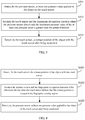
- FIG. 2 is a flowchart of a method of unlocking an electronic device with fingerprints according to an example. As shown in FIG. 2 , the method of unlocking an electronic device with fingerprints includes the following steps S201 to S203.
- step S201 in response to determining that a first contact parameter between an object and a touch screen meets a first preset condition to awaken a fingerprint recognition function of the electronic device, a second contact parameter between the object and the touch screen is detected and the fingerprint recognition function is awakened.
- step S202 in response to determining that the second contact parameter meets a second preset condition to perform the fingerprint recognition function, fingerprint information of the object is collected with a fingerprint sensor configured in the touch screen.
- step S203 in response to determining that the fingerprint information matches pre-stored reference fingerprint information, the electronic device is unlocked.
- an operation of detecting the second contact parameter between the object and the touch screen and an operation of awakening the fingerprint recognition function are performed in parallel, instead of serial operations.
- serial operations detecting the second contact parameter between the object and the touch screen is first performed and then when the second contact parameter meets the second preset condition, the fingerprint recognition function is awakened.
- the first contact parameter includes at least one pressure value applied by the object on the touch screen, and the first preset condition includes that a maximum pressure value of the at least one pressure value is greater than a preset threshold.
- the second contact parameter includes a contact position of the object with the touch screen, and the second preset condition includes that the contact position is located in the fingerprint sensing region.
- the fingerprint recognition function of the electronic device is awakened while it is determined whether the contact position of the object with the touch screen is located in the fingerprint sensing region, thereby saving the time for unlocking the electronic device with fingerprints.
- the fingerprint sensor is initialized, so that when it is detected that the contact position of the object with the touch screen is located in the fingerprint sensing region, the initialized fingerprint sensor may immediately perform the operation of collecting the fingerprint information of the object, thereby shortening the time for unlocking the electronic device with fingerprints.
- the fingerprint information of the object is collected by the initialized fingerprint sensor, and it is determined whether the fingerprint information matches the pre-stored reference fingerprint information.
- the electronic device is unlocked.
- the first contact parameter includes a contact position of the object with the touch screen, and the first preset condition includes that the contact position is located in the fingerprint sensing region.
- the second contact parameter includes at least one pressure value applied by the object on the touch screen, and the second preset condition includes that a maximum pressure value of the at least one pressure value is greater than a preset threshold.
- the fingerprint recognition function of the electronic device is awakened while it is determined whether the maximum pressure value of the at least one pressure value is greater than the preset threshold, thereby saving the time for unlocking the electronic device with fingerprints.
- the fingerprint sensor is initialized, so that when it is determined that the maximum pressure value of the at least one pressure value is greater than the preset threshold, the initialized fingerprint sensor may immediately perform the operation of collecting the fingerprint information of the object, thereby shortening the time for unlocking the electronic device with fingerprints.
- the fingerprint information of the object is collected by the initialized fingerprint sensor, and it is determined whether the fingerprint information matches the pre-stored reference fingerprint information.
- the electronic device is unlocked.
- the touch screen is provided with a single touch function to detect a pressure value applied by the object on the touch screen. In the example, since one pressure value is detected each time, the detected pressure value is the maximum pressure value.
- the touch screen is provided with a multi-touch function to detect two or more pressure values applied by the object on the touch screen. In the example, the detected two or more pressure values may be compared to obtain a maximum pressure value.
- awakening the fingerprint recognition function of the electronic device includes: first awakening an operating system of the electronic device and then awakening the fingerprint sensor through the operating system.
- the operating system is awakened while it is determined whether the second contact parameter meets the second preset condition to perform the fingerprint recognition function, thereby saving the time for unlocking the electronic device with fingerprints.
- the second contact parameter meets the second preset condition to perform the fingerprint recognition function the operating system and the fingerprint sensor are directly started.
- awakening the fingerprint recognition function of the electronic device includes sending an awakening instruction (such as a hardware interrupt signal) through the pressure sensor or the touch sensor to awaken the fingerprint sensor.
- the way for awakening the fingerprint recognition function has a relatively short response time and can shorten the time for unlocking the electronic device with fingerprints.
- the operation of "detecting second contact parameter between the object and the touch screen” and the operation of "awakening the fingerprint recognition function" are performed in parallel, instead of serial operations.
- serial operations detecting the second contact parameter between the object and the touch screen is first performed and when the second contact parameter meets the second preset condition, the fingerprint recognition function is then awakened.
- FIG. 3 is a flowchart of a method of unlocking an electronic device with fingerprints according to another example.
- the touch screen includes a touch sensor to detect a touch position or contact position of the object with the touch screen.
- the electronic device is further configured with a pressure sensor to detect a pressure value applied by the object on the touch screen.
- the first contact parameter includes at least one pressure value applied by the object on the touch screen, and the first preset condition includes that the maximum pressure value of the at least one pressure value is greater than a preset threshold;
- the second contact parameter includes a contact position of the object with the touch screen, and the second preset condition includes that the contact position is located in the fingerprint sensing region on the touch screen.
- the above step S201 includes the following steps S301 to S303.
- step S301 the pressure sensor detects at least one pressure value applied by the object on the touch screen.
- a pressure sensing range of the pressure sensor covers the fingerprint sensing region, instead of covering the entire touch screen, thereby saving cost.
- the pressure sensor is located near the fingerprint sensing region, but is not limited thereto.
- the pressure sensing range of the pressure sensor may also cover the entire touch screen.
- the pressure sensor may be a separate sensor, which may be located above a glass cover in the touch screen module (a front side of the electronic device) or under the touch screen module. In an example, the pressure sensor may also be integrated into the touch screen module.
- the touch screen is provided with a single touch function to detect a pressure value applied by the object on the touch screen.
- the touch screen is provided with a multi-touch function to detect two or more pressure values applied by an object on the touch screen.
- the method further includes: when detecting that the touch screen is in a screen-off state or the electronic device is in a sleeping state, a pressure sensor configured in the electronic device is controlled to enter an operating state. That is, when the electronic device is in the screen-off state or the electronic device is in the sleeping state, the pressure sensor may be started to detect the pressure value applied by the object on the touch screen in real time. For example, the pressure sensor continuously detects the pressure value applied by the object on the touch screen at a preset working frequency. To reduce power consumption, the pressure sensor may operate at relatively low operating frequencies.
- step S302 the touch sensor and the fingerprint recognition function are awakened when the pressure sensor detects that the maximum pressure value of the at least one pressure value is greater than the preset threshold.
- the pressure sensor when detecting that the maximum pressure value of the at least one pressure value applied by the object on the touch screen is greater than the preset threshold, the pressure sensor sends a first interrupt signal to the touch sensor.
- the first interrupt signal is used to trigger the touch sensor to work.
- the time for the pressure sensor to start the touch sensor through the hardware interrupt is less than the time for the operating system to start the touch sensor. In this way, the time for unlocking the electronic device with fingerprints can be further shortened.
- the fingerprint recognition function is also awakened when the pressure sensor detects that the maximum pressure value of the at least one pressure value applied by the object on the touch screen is greater than the preset threshold.
- the pressure sensor sends a second interrupt signal to the fingerprint sensor to awaken the fingerprint recognition function.
- the pressure sensor sends a second interrupt signal to the operating system of the electronic device to awaken the operating system, and after being awakened, the operating system awakens the fingerprint sensor to awaken the fingerprint recognition function.
- the first interrupt signal and the second interrupt signal may be sent by the pressure sensor in parallel, or simultaneously.
- step S303 the touch sensor detects a contact position of the object with the touch screen after being awakened.
- the pressure sensor when the touch screen is in a screen-off state or the electronic device is in a sleeping state, the pressure sensor is first started to detect at least one pressure value applied by the object on the touch screen, and when the maximum pressure value in the at least one pressure value is greater than a preset threshold, the touch sensor and fingerprint recognition function are awakened. Since the time for directly starting the touch sensor through the pressure sensor is less than the time for "awakening the operating system through the pressure sensor and then awakening the touch sensor through the operating system", the time for unlocking the electronic device with fingerprints can be further shortened.
- FIG. 4 is a flowchart of a method of unlocking an electronic device with fingerprints according to another example.
- the touch screen includes a touch sensor to detect a contact position of the object with the touch screen.
- the electronic device is further provided with a pressure sensor to detect a pressure value applied by the object on the touch screen.
- the first contact parameter includes a contact position of the object with the touch screen, and the first preset condition includes that the contact position is located in the fingerprint sensing region.
- the second contact parameter includes at least one pressure value applied by the object on the touch screen, and the second preset condition includes that the maximum pressure value of at least one of the pressure values is greater than a preset threshold.
- the above step S201 includes the following steps S401 to S403.
- step S401 the touch sensor detects the contact position of the object with the touch screen.
- the method may further include: when detecting that the touch screen is in a screen-off state or the electronic device is in a sleeping state, controlling the touch sensor configured in the touch screen to enter an operating state. That is, when the electronic device is in the screen-off state or the electronic device is in the sleeping state, the touch sensor is first started to detect the contact position of the object with the touch screen in real time. For example, the touch sensor continuously detects the contact position of the object with the touch screen at a preset operating frequency. To reduce power consumption, the touch sensor may operate at a relatively low operating frequency.
- step S402 the pressure sensor and the fingerprint recognition function of the electronic device are awakened when the touch sensor detects that the contact position is located in the fingerprint sensing region.
- the touch sensor when detecting that the contact position is located in the fingerprint sensing region, the touch sensor may send a first interrupt signal to the pressure sensor, and the first interrupt signal is used to trigger the pressure sensor to work.
- the time for the touch sensor to start the pressure sensor through the hardware interrupt is less than the time for the operating system to start the pressure sensor. In this way, the time for unlocking the electronic device with fingerprints can be further shortened.
- the fingerprint recognition function is also awakened when the touch sensor detects that the contact position is located in the fingerprint sensing region.
- the touch sensor sends a second interrupt signal to the fingerprint sensor to awaken the fingerprint recognition function.
- the touch sensor sends a second interrupt signal to the operating system of the electronic device to awaken the operating system, and after being awakened, the operating system awakens the fingerprint sensor to awaken the fingerprint recognition function.
- the first interrupt signal and the second interrupt signal may be sent by the touch sensor in parallel, or simultaneously.
- step S403 the pressure sensor detects at least one pressure value applied by the object on the touch screen after being awakened.
- a pressure sensing range of the pressure sensor covers the fingerprint sensing region, instead of covering the entire touch screen, thereby saving cost.
- the pressure sensor is located near the fingerprint sensing region, but is not limited thereto.
- the pressure sensing range of the pressure sensor may also cover the entire touch screen.
- the pressure sensor may be a separate sensor, which may be located above a glass cover in the touch screen module (a front side of the electronic device) or under the touch screen module. In an example, the pressure sensor may also be integrated into the touch screen module.
- the touch screen is provided with a single touch function to detect a pressure value applied by the object on the touch screen.
- the touch screen is provided with a multi-touch function to detect two or more pressure values applied by an object on the touch screen.
- the touch sensor when the touch screen is in the screen-off state or the electronic device is in the sleeping state, the touch sensor is first started to detect the contact position of the object with the touch screen, and when the contact position is located in the fingerprint sensing region, the pressure sensor and the fingerprint recognition function are awakened. Since the time for directly starting the pressure sensor through the touch sensor is less than the time for "awakening the operating system through the touch sensor and then awakening the pressure sensor through the operating system", the time for unlocking the electronic device with fingerprints can be further shortened.
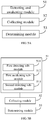
- FIG. 5A is a block diagram of an apparatus for unlocking an electronic device with fingerprints according to an example.
- the apparatus is applied to the electronic device.
- the electronic device is provided with a touch screen and a fingerprint sensor.
- the electronic device is to detect contact parameters between the object and the touch screen.
- the fingerprint sensor is configured in the touch screen and thus a fingerprint sensing region is formed at a corresponding position of the touch screen.
- the apparatus includes:
- FIG. 5B is a block diagram of an apparatus for unlocking an electronic device with fingerprints according to an example.
- the touch screen includes a touch sensor.
- the electronic device is further provided with a pressure sensor.
- the first contact parameter includes at least one pressure value applied by the object on the touch screen.
- the first preset condition includes that a maximum pressure value of the at least one pressure value is greater than a preset threshold.
- the second contact parameter includes a contact position of the object with the touch screen.
- the second preset condition includes that the contact position is located in the fingerprint sensing region.
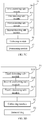
- the detecting and awakening module 51 may include:
- FIG. 5C is a block diagram of an apparatus for unlocking an electronic device with fingerprints according to an example.
- the detecting and awakening module 51 may further include: a first controlling sub-module 514, configured to control the pressure sensor to enter an operating state when detecting that the touch screen is in a screen-off state or the electronic device is in a sleeping state.
- FIG. 5D is a block diagram of an apparatus for unlocking an electronic device with fingerprints according to an example.
- the touch screen includes a touch sensor.
- the electronic device is further provided with a pressure sensor.
- the first contact parameter includes a contact position of the object with the touch screen.
- the first preset condition includes that the contact position is located in the fingerprint sensing region.
- the second contact parameter includes at least one pressure value applied by the object on the touch screen.
- the second preset condition comprises that a maximum pressure value of the at least one pressure value is greater than a preset threshold.
- the detecting and awakening module 51 may include:
- FIG. 5E is a block diagram of an apparatus for unlocking an electronic device with fingerprints according to an example.
- the detecting and awakening module 51 may further include: a second controlling sub-module 518, configured to control the touch sensor to enter an operating state when detecting that the touch screen is in a screen-off state or the electronic device is in a sleeping state.
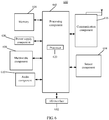
- FIG. 6 is a block diagram of an electronic device according to an example.
- the electronic device 600 may include a mobile phone, a computer, a digital broadcasting terminal, a message transceiver, a game console, a tablet device, a medical device, a fitness facility, or a personal digital assistant.
- the electronic device 600 may include one or more of: a processing component 602, a memory 604, a power supply component 606, a multimedia component 608, an audio component 610, an Input/Output (I/O) interface 612, a sensor component 614, and a communication component 616.
- the processing component 602 generally controls the overall operations of the electronic device 600, such as operations associated with display, calling, data communication, camera operation and recording operation.
- the processing component 602 may include one or more processors 620 for executing instructions to complete all or part of operations of the above-described method.
- the processing component 602 may include one or more modules to facilitate interactions between the processing component 602 and other components.
- the processing component 602 may include a multimedia module to facilitate the interaction between the multimedia component 608 and the processing component 602.
- the memory 604 is configured to store different types of data to support the operations of the electronic device 600. Examples of such data include instructions of any application program or method operable on the electronic device 600, contact data, telephone directory data, messages, pictures, videos, and the like.
- the memory 604 may be implemented by any type of volatile or non-volatile storage device or a combination thereof, such as a Static Random Access Memory (SRAM), an Electrically Erasable Programmable Read-Only Memory (EEPROM), an Electrically Programmable Read-Only-Memory (EPROM), a Programmable Read-Only-Memory (PROM), a Read-Only Memory (ROM), a magnetic memory, a flash memory, a magnetic disk or an optical disk.
- SRAM Static Random Access Memory
- EEPROM Electrically Erasable Programmable Read-Only Memory
- EPROM Electrically Programmable Read-Only-Memory
- PROM Programmable Read-Only-Memory
- ROM Read-Only Memory
- magnetic memory
- the power supply component 606 provides power for different components of the electronic device 600.
- the power supply component 606 may include a power management system, one or more power sources, and other components associated with generating, managing and distributing power for the electronic device 600.
- the multimedia component 608 may include a screen for providing an output interface between the device 600 and a user.
- the screen may include a Liquid Crystal Display (LCD) and/or a Touch Panel (TP). If the screen includes a touch panel, the screen may be implemented as a touch screen to receive input information from a user.
- the touch panel may include one or more touch sensors to sense touch, slide and gestures on the touch panel. The touch sensor may not only sense the boundary of a touch or slide motion but also detect duration and pressure related to the touch or slide operation.
- the multimedia component 608 includes a front-facing camera and/or a rear camera.
- the front-facing camera and/or the rear camera may receive external multimedia data.
- the front-facing camera and the rear camera may be a fixed optical lens system or be capable of focal length and optical zoom.
- the audio component 610 is configured to output and/or input an audio signal.
- the audio component 610 may include a microphone (MIC).
- the microphone When the electronic device 600 is in an operating mode, such as a call mode, a recording mode and a speech recognition mode, the microphone is configured to receive an external audio signal.
- the received audio signal may be further stored in the memory 604 or transmitted via the communication component 616.
- the audio component 610 may also include a speaker for outputting an audio signal.
- the I/O interface 612 provides an interface between the processing component 602 and a peripheral interface module.
- the peripheral interface module may be a keyboard, a click wheel, a button and the like.
- Such buttons may include but not limited to: a home button, a volume button, a start button and a lock button.
- the sensor component 614 may include one or more sensors for providing state assessments in different aspects for the device 600.
- the sensor component 614 may detect the on/off state of the electronic device 600, and relative locations of components, such as a display and a small keyboard of the electronic device 600.
- the sensor component 614 may also detect a position change of the electronic device 600 or a component of the device electronic 600, the presence or absence of contact of a user with the electronic device 600, an orientation or acceleration/deceleration of the electronic device 600 and a temperature change of the electronic device 600.
- the sensor component 614 may include a proximity sensor configured to detect a nearby object without any physical contact.
- the sensor component 614 may also include an optical sensor, such as a CMOS or CCD image sensor for being used in imaging application.
- the sensor component 614 may also include an acceleration sensor, a gyroscope sensor, a magnetic sensor, a pressure sensor, or a temperature sensor.
- the communication component 616 is configured to facilitate wired or wireless communication between the electronic device 600 and other devices.
- the electronic device 600 may access a wireless network based on a communication standard, such as WIFI, 2G or 3G, or a combination thereof.
- the communication component 616 receives a broadcast signal or broadcast related information from an external broadcast management system via a broadcast channel.
- the communication component 616 may also include a Near Field Communication (NFC) module to facilitate short-range communications.
- NFC Near Field Communication
- the NFC module may be implemented based on Radio Frequency Identification (RFID) technology, Infrared Data Association (IrDA) technology, Ultra-Wide Band (UWB) technology, Bluetooth (BT) technology and other technology.
- RFID Radio Frequency Identification
- IrDA Infrared Data Association
- UWB Ultra-Wide Band
- Bluetooth Bluetooth
- the electronic device 600 may be implemented by one or more of an Application Specific Integrated Circuit (ASIC), a Digital Signal Processor (DSP), a Digital Signal Processor (DSPD), a Programmable Logic Device (PLD), a Field Programmable Gate Array (FPGA), a controller, a microcontroller, a microprocessor or other electronic components to perform the above method.
- ASIC Application Specific Integrated Circuit
- DSP Digital Signal Processor
- DSPD Digital Signal Processor
- PLD Programmable Logic Device
- FPGA Field Programmable Gate Array
- controller a microcontroller, a microprocessor or other electronic components to perform the above method.
- a non-transitory machine readable storage medium storing machine executable instructions is provided, such as the memory 604 storing instructions.
- the instructions may cause the processor 620 in the electronic device 600 to perform the above method.
- the non-transitory machine readable storage medium includes ROM, RAM, CD-ROM, tape, floppy, optical data storage devices and so on.
- the present disclosure may include dedicated hardware implementations such as application specific integrated circuits, programmable logic arrays and other hardware devices.
- the hardware implementations can be constructed to implement one or more of the methods described herein.
- Applications that may include the apparatus and systems of various examples can broadly include a variety of electronic and computing systems.
- One or more examples described herein may implement functions using two or more specific interconnected hardware modules or devices with related control and data signals that can be communicated between and through the modules, or as portions of an application-specific integrated circuit. Accordingly, the computing system disclosed may encompass software, firmware, and hardware implementations.
- module may include memory (shared, dedicated, or group) that stores code or instructions that can be executed by one or more processors.
- the module refers herein may include one or more circuit with or without stored code or instructions.
- the module or circuit may include one or more components that are connected.
Landscapes
- Engineering & Computer Science (AREA)
- Theoretical Computer Science (AREA)
- Physics & Mathematics (AREA)
- General Physics & Mathematics (AREA)
- General Engineering & Computer Science (AREA)
- Computer Security & Cryptography (AREA)
- Human Computer Interaction (AREA)
- Computer Hardware Design (AREA)
- Software Systems (AREA)
- Multimedia (AREA)
- Computer Vision & Pattern Recognition (AREA)
- User Interface Of Digital Computer (AREA)
- Collating Specific Patterns (AREA)
- Image Input (AREA)
Abstract
Description
- The present disclosure relates to unlocking an electronic device with fingerprints.
- With the development of network technology, the security of electronic devices, such as terminals, is also increasing. For example, in order to better protect user privacy, the terminal provides a password protection function, and unlocks the terminal when it detects that a password entered by the user matches an unlock password.
- In some examples, the password protection function provided by the terminal may support biometric-based passwords such as fingerprint password, face password, and the like. Taking that the password protection function provided by the terminal supports the fingerprint password as an example, the terminal scans fingerprint information of a user through a fingerprint sensor, and determines whether the scanned fingerprint information matches pre-stored fingerprint information. If the scanned fingerprint information matches the pre-stored fingerprint information, the terminal is unlocked. If the scanned fingerprint information does not match the pre-stored fingerprint information, the terminal prompts the user that the entered password is incorrect.
- The present disclosure provides a method and an apparatus for unlocking an electronic device with fingerprints, an electronic device and a machine readable storage medium.
- According to a first aspect, a method of unlocking an electronic device with fingerprints is provided, which may include: detecting a first contact parameter between an object and a touch screen of the electronic device; in response to determining that the first contact parameter meets a first preset condition to awaken a fingerprint recognition function of the electronic device, detecting a second contact parameter between the object and the touch screen; and awakening the fingerprint recognition function; in response to determining that the second contact parameter meets a second preset condition to perform the fingerprint recognition function, collecting fingerprint information of the object with a fingerprint sensor configured in the touch screen; and in response to determining that the fingerprint information matches pre-stored reference fingerprint information, unlocking the electronic device.
- According to a second aspect, an electronic device is provided. The electronic device may include a processor; and a storage medium storing machine executable instructions; wherein, upon loading of the machine executable instructions, the processor is caused to execute: detecting a first contact parameter between an object and a touch screen of the electronic device; in response to determining that the first contact parameter meets a first preset condition to awaken a fingerprint recognition function of the electronic device, detecting a second contact parameter between the object and the touch screen; and awakening the fingerprint recognition function; in response to determining that the second contact parameter meets a second preset condition to perform the fingerprint recognition function, collecting fingerprint information of the object with a fingerprint sensor configured in the touch screen; and in response to determining that the fingerprint information matches pre-stored reference fingerprint information, unlocking the electronic device.
- According to a third aspect, a non-transitory machine readable medium is provided. The non-transitory machine readable medium may store machine executable instructions that cause a processor to execute the operations of: detecting a first contact parameter between an object and a touch screen of an electronic device; in response to determining that the first contact parameter meets a first preset condition to awaken a fingerprint recognition function of the electronic device, detecting a second contact parameter between the object and the touch screen; and awakening the fingerprint recognition function; in response to determining that the second contact parameter meets a second preset condition to perform the fingerprint recognition function, collecting fingerprint information of the object with a fingerprint sensor configured in the touch screen; and in response to determining that the fingerprint information matches pre-stored reference fingerprint information, unlocking the electronic device.
- It shall be appreciated that the above general descriptions and the following detailed descriptions are merely illustrative and explanatory and not intended to limit the present disclosure.
- The accompanying drawings, which are incorporated in and constitute a part of this specification, illustrate examples consistent with the present disclosure and, together with the description, serve to explain the principles of the disclosure.
-
FIG. 1 is an application scenario diagram of a method of unlocking an electronic device with fingerprints according to an example. -
FIG. 2 is a flowchart of a method of unlocking an electronic device with fingerprints according to an example. -
FIG. 3 is a flowchart of a method of unlocking an electronic device with fingerprints according to another example. -
FIG. 4 is a flowchart of a method of unlocking an electronic device with fingerprints according to still another example. -
FIG. 5A is a block diagram of a fingerprint unlocking apparatus according to an example. -
FIG. 5B is a block diagram of a fingerprint unlocking apparatus according to another example. -
FIG. 5C is a block diagram of a fingerprint unlocking apparatus according to another example. -
FIG. 5D is a block diagram of a fingerprint unlocking apparatus according to another example. -
FIG. 5E is a block diagram of a fingerprint unlocking apparatus according to another example. -
FIG. 6 is a block diagram of an electronic device according to an example. - Reference is made in detail to exemplary aspects, examples of which are illustrated in the accompanying drawings. The following description refers to the accompanying drawings in which the same numerals in different drawings represent the same or similar elements unless otherwise indicated. The implementations set forth in the following description of exemplary aspects do not represent all implementations consistent with the present disclosure. Instead, they are merely examples of apparatuses and methods consistent with aspects related to the present disclosure.
- The terminology used in the present disclosure is for the purpose of describing particular examples only and is not intended to limit the present disclosure. As used in this disclosure and the appended claims, the singular forms "a", "an", and "the" are intended to include the plural forms as well, unless the context clearly indicates otherwise. It should also be understood that the term "and/or" as used herein refers to and includes any and all possible combinations of one or more of the associated listed items.
- It shall be understood that, although the terms "first," "second," "third," and the like may be used herein to describe various information, the information should not be limited by these terms. These terms are only used to distinguish one category of information from another. For example, without departing from the scope of the present disclosure, first information may be termed as second information; and similarly, second information may also be termed as first information. As used herein, the term "if" may be understood to mean "when" or "upon" or "in response to" depending on the context.
- In an example of the fingerprint recognition technology, it is detected whether a finger-like object (including a finger and an object similar to the finger) contacts the touch screen. When it is detected that a contact position of the finger-like object with the touch screen is located in a fingerprint sensing region of the electronic device, the operating system of the electronic device is awakened, for example, the screen of the electronic device is lit up. After the operating system of the electronic device is awakened, a pressure sensor is started to detect a pressure value. When it is determined that the pressure value detected by the pressure sensor meets a preset condition, a fingerprint sensor is started to collect fingerprint information. The electronic device determines whether the fingerprint information matches pre-stored reference fingerprint information to obtain a result. It is determined whether the electronic device is unlocked based on the result. During the process of unlocking the electronic device, the operations performed by the electronic device are serial or sequential, which may cause the unlocking time to be relatively long.
- A method of unlocking an electronic device with fingerprints is provided by examples of the present disclosure, so as to shorten the time for unlocking the electronic device with fingerprints.
-
FIG. 1 is an application scenario diagram of a method of unlocking an electronic device with fingerprints according to an example. The method of unlocking an electronic device with fingerprints provided by examples of the present disclosure may be applied to theelectronic device 11. Theelectronic device 11 refers to a device with the fingerprints recognition function, such as a smart phone, a tablet computer, a PDA (Personal Digital Assistant), an e-reader, a multimedia player, and so on. Theelectronic device 11 is provided with atouch screen 12 and a fingerprint sensor (not shown), which is configured to detect contact parameters between the object and the touch screen 12 (such as, a pressure value applied by the object on thetouch screen 12 and a contact position of the object with the touch screen 12). A fingerprint sensor is configured in thetouch screen 12 and thus afingerprint sensing region 13 is formed at a corresponding position of thetouch screen 12. The fingerprint sensor may include a capacitive fingerprint sensor, an optical fingerprint sensor, an ultrasonic fingerprint sensor, or the like. When afinger 14 contacts thefingerprint sensing region 13, the fingerprint sensor may collect fingerprint information of thefinger 14 to unlock the electronic device. -
FIG. 2 is a flowchart of a method of unlocking an electronic device with fingerprints according to an example. As shown inFIG. 2 , the method of unlocking an electronic device with fingerprints includes the following steps S201 to S203. - In step S201, in response to determining that a first contact parameter between an object and a touch screen meets a first preset condition to awaken a fingerprint recognition function of the electronic device, a second contact parameter between the object and the touch screen is detected and the fingerprint recognition function is awakened.
- In step S202, in response to determining that the second contact parameter meets a second preset condition to perform the fingerprint recognition function, fingerprint information of the object is collected with a fingerprint sensor configured in the touch screen.
- In step S203, in response to determining that the fingerprint information matches pre-stored reference fingerprint information, the electronic device is unlocked.
- When it is detected that the first contact parameter meets the first preset condition to awaken the fingerprint recognition function, an operation of detecting the second contact parameter between the object and the touch screen and an operation of awakening the fingerprint recognition function are performed in parallel, instead of serial operations. In the serial operations, detecting the second contact parameter between the object and the touch screen is first performed and then when the second contact parameter meets the second preset condition, the fingerprint recognition function is awakened. By adopting the parallel operations, the time for unlocking the electronic device with fingerprints can be shortened.
- In an example, the first contact parameter includes at least one pressure value applied by the object on the touch screen, and the first preset condition includes that a maximum pressure value of the at least one pressure value is greater than a preset threshold. The second contact parameter includes a contact position of the object with the touch screen, and the second preset condition includes that the contact position is located in the fingerprint sensing region. In the example, when it is detected that the maximum pressure value of the at least one pressure value applied by the object on the touch screen is greater than the preset threshold, an operation of "detecting the contact position of the object with the touch screen" and an operation of "awakening the fingerprint recognition function" are performed in parallel or simultaneously. In this way, the fingerprint recognition function of the electronic device is awakened while it is determined whether the contact position of the object with the touch screen is located in the fingerprint sensing region, thereby saving the time for unlocking the electronic device with fingerprints. After the fingerprint recognition function is awakened, the fingerprint sensor is initialized, so that when it is detected that the contact position of the object with the touch screen is located in the fingerprint sensing region, the initialized fingerprint sensor may immediately perform the operation of collecting the fingerprint information of the object, thereby shortening the time for unlocking the electronic device with fingerprints. Then, when it is detected that the contact position of the object with the touch screen is located in the fingerprint sensing region, the fingerprint information of the object is collected by the initialized fingerprint sensor, and it is determined whether the fingerprint information matches the pre-stored reference fingerprint information. When the fingerprint information matches the pre-stored reference fingerprint information, the electronic device is unlocked.
- In another example, the first contact parameter includes a contact position of the object with the touch screen, and the first preset condition includes that the contact position is located in the fingerprint sensing region. The second contact parameter includes at least one pressure value applied by the object on the touch screen, and the second preset condition includes that a maximum pressure value of the at least one pressure value is greater than a preset threshold. In the example, when it is detected that the contact position of the object with the touch screen is located in the fingerprint sensing region, an operation of "detecting at least one pressure value applied by the object on the touch screen" and an operation of "awakening the fingerprint recognition function of the electronic device" are performed in parallel or simultaneously. In this way, the fingerprint recognition function of the electronic device is awakened while it is determined whether the maximum pressure value of the at least one pressure value is greater than the preset threshold, thereby saving the time for unlocking the electronic device with fingerprints. After the fingerprint recognition function is awakened, the fingerprint sensor is initialized, so that when it is determined that the maximum pressure value of the at least one pressure value is greater than the preset threshold, the initialized fingerprint sensor may immediately perform the operation of collecting the fingerprint information of the object, thereby shortening the time for unlocking the electronic device with fingerprints. Then, when it is detected that the maximum pressure value of the at least one pressure value is greater than the preset threshold, the fingerprint information of the object is collected by the initialized fingerprint sensor, and it is determined whether the fingerprint information matches the pre-stored reference fingerprint information. When the fingerprint information matches the pre-stored reference fingerprint information, the electronic device is unlocked.
- In an example, the touch screen is provided with a single touch function to detect a pressure value applied by the object on the touch screen. In the example, since one pressure value is detected each time, the detected pressure value is the maximum pressure value. In another example, the touch screen is provided with a multi-touch function to detect two or more pressure values applied by the object on the touch screen. In the example, the detected two or more pressure values may be compared to obtain a maximum pressure value.
- In an example, awakening the fingerprint recognition function of the electronic device includes: first awakening an operating system of the electronic device and then awakening the fingerprint sensor through the operating system. In the example, the operating system is awakened while it is determined whether the second contact parameter meets the second preset condition to perform the fingerprint recognition function, thereby saving the time for unlocking the electronic device with fingerprints. When the second contact parameter meets the second preset condition to perform the fingerprint recognition function, the operating system and the fingerprint sensor are directly started. In another example, awakening the fingerprint recognition function of the electronic device includes sending an awakening instruction (such as a hardware interrupt signal) through the pressure sensor or the touch sensor to awaken the fingerprint sensor. The way for awakening the fingerprint recognition function has a relatively short response time and can shorten the time for unlocking the electronic device with fingerprints.
- In the example, when detecting that the first contact parameter between the object and the touch screen meets the first preset condition to awaken the fingerprint recognition function, the operation of "detecting second contact parameter between the object and the touch screen" and the operation of "awakening the fingerprint recognition function" are performed in parallel, instead of serial operations. In serial operations, detecting the second contact parameter between the object and the touch screen is first performed and when the second contact parameter meets the second preset condition, the fingerprint recognition function is then awakened. By using the parallel operations, the time for unlocking the electronic device with fingerprints can be shortened.
-
FIG. 3 is a flowchart of a method of unlocking an electronic device with fingerprints according to another example. The touch screen includes a touch sensor to detect a touch position or contact position of the object with the touch screen. The electronic device is further configured with a pressure sensor to detect a pressure value applied by the object on the touch screen. The first contact parameter includes at least one pressure value applied by the object on the touch screen, and the first preset condition includes that the maximum pressure value of the at least one pressure value is greater than a preset threshold; the second contact parameter includes a contact position of the object with the touch screen, and the second preset condition includes that the contact position is located in the fingerprint sensing region on the touch screen. Based on examples shown inFIG. 2 , the above step S201 includes the following steps S301 to S303. - In step S301, the pressure sensor detects at least one pressure value applied by the object on the touch screen.
- In an example, a pressure sensing range of the pressure sensor covers the fingerprint sensing region, instead of covering the entire touch screen, thereby saving cost. In an example, the pressure sensor is located near the fingerprint sensing region, but is not limited thereto. In another example, the pressure sensing range of the pressure sensor may also cover the entire touch screen.
- In an example, the pressure sensor may be a separate sensor, which may be located above a glass cover in the touch screen module (a front side of the electronic device) or under the touch screen module. In an example, the pressure sensor may also be integrated into the touch screen module.
- In an example, the touch screen is provided with a single touch function to detect a pressure value applied by the object on the touch screen. In another example, the touch screen is provided with a multi-touch function to detect two or more pressure values applied by an object on the touch screen.
- In an example, before step S301, the method further includes: when detecting that the touch screen is in a screen-off state or the electronic device is in a sleeping state, a pressure sensor configured in the electronic device is controlled to enter an operating state. That is, when the electronic device is in the screen-off state or the electronic device is in the sleeping state, the pressure sensor may be started to detect the pressure value applied by the object on the touch screen in real time. For example, the pressure sensor continuously detects the pressure value applied by the object on the touch screen at a preset working frequency. To reduce power consumption, the pressure sensor may operate at relatively low operating frequencies.
- In step S302, the touch sensor and the fingerprint recognition function are awakened when the pressure sensor detects that the maximum pressure value of the at least one pressure value is greater than the preset threshold.
- In an example, when detecting that the maximum pressure value of the at least one pressure value applied by the object on the touch screen is greater than the preset threshold, the pressure sensor sends a first interrupt signal to the touch sensor. The first interrupt signal is used to trigger the touch sensor to work. The time for the pressure sensor to start the touch sensor through the hardware interrupt is less than the time for the operating system to start the touch sensor. In this way, the time for unlocking the electronic device with fingerprints can be further shortened.
- In an example, the fingerprint recognition function is also awakened when the pressure sensor detects that the maximum pressure value of the at least one pressure value applied by the object on the touch screen is greater than the preset threshold. In an example, the pressure sensor sends a second interrupt signal to the fingerprint sensor to awaken the fingerprint recognition function. In another example, the pressure sensor sends a second interrupt signal to the operating system of the electronic device to awaken the operating system, and after being awakened, the operating system awakens the fingerprint sensor to awaken the fingerprint recognition function. The first interrupt signal and the second interrupt signal may be sent by the pressure sensor in parallel, or simultaneously.
- In step S303, the touch sensor detects a contact position of the object with the touch screen after being awakened.
- In an example, when the touch screen is in a screen-off state or the electronic device is in a sleeping state, the pressure sensor is first started to detect at least one pressure value applied by the object on the touch screen, and when the maximum pressure value in the at least one pressure value is greater than a preset threshold, the touch sensor and fingerprint recognition function are awakened. Since the time for directly starting the touch sensor through the pressure sensor is less than the time for "awakening the operating system through the pressure sensor and then awakening the touch sensor through the operating system", the time for unlocking the electronic device with fingerprints can be further shortened.
-
FIG. 4 is a flowchart of a method of unlocking an electronic device with fingerprints according to another example. The touch screen includes a touch sensor to detect a contact position of the object with the touch screen. The electronic device is further provided with a pressure sensor to detect a pressure value applied by the object on the touch screen. The first contact parameter includes a contact position of the object with the touch screen, and the first preset condition includes that the contact position is located in the fingerprint sensing region. The second contact parameter includes at least one pressure value applied by the object on the touch screen, and the second preset condition includes that the maximum pressure value of at least one of the pressure values is greater than a preset threshold. Based on examples shown inFIG. 2 , the above step S201 includes the following steps S401 to S403. - In step S401, the touch sensor detects the contact position of the object with the touch screen.
- In an example, before step S401, the method may further include: when detecting that the touch screen is in a screen-off state or the electronic device is in a sleeping state, controlling the touch sensor configured in the touch screen to enter an operating state. That is, when the electronic device is in the screen-off state or the electronic device is in the sleeping state, the touch sensor is first started to detect the contact position of the object with the touch screen in real time. For example, the touch sensor continuously detects the contact position of the object with the touch screen at a preset operating frequency. To reduce power consumption, the touch sensor may operate at a relatively low operating frequency.
- In step S402, the pressure sensor and the fingerprint recognition function of the electronic device are awakened when the touch sensor detects that the contact position is located in the fingerprint sensing region.
- In an example, when detecting that the contact position is located in the fingerprint sensing region, the touch sensor may send a first interrupt signal to the pressure sensor, and the first interrupt signal is used to trigger the pressure sensor to work. The time for the touch sensor to start the pressure sensor through the hardware interrupt is less than the time for the operating system to start the pressure sensor. In this way, the time for unlocking the electronic device with fingerprints can be further shortened.
- In an example, the fingerprint recognition function is also awakened when the touch sensor detects that the contact position is located in the fingerprint sensing region. In an example, the touch sensor sends a second interrupt signal to the fingerprint sensor to awaken the fingerprint recognition function. In another example, the touch sensor sends a second interrupt signal to the operating system of the electronic device to awaken the operating system, and after being awakened, the operating system awakens the fingerprint sensor to awaken the fingerprint recognition function. The first interrupt signal and the second interrupt signal may be sent by the touch sensor in parallel, or simultaneously.
- In step S403, the pressure sensor detects at least one pressure value applied by the object on the touch screen after being awakened.
- In an example, a pressure sensing range of the pressure sensor covers the fingerprint sensing region, instead of covering the entire touch screen, thereby saving cost. In an example, the pressure sensor is located near the fingerprint sensing region, but is not limited thereto. In another example, the pressure sensing range of the pressure sensor may also cover the entire touch screen.
- In an example, the pressure sensor may be a separate sensor, which may be located above a glass cover in the touch screen module (a front side of the electronic device) or under the touch screen module. In an example, the pressure sensor may also be integrated into the touch screen module.
- In an example, the touch screen is provided with a single touch function to detect a pressure value applied by the object on the touch screen. In another example, the touch screen is provided with a multi-touch function to detect two or more pressure values applied by an object on the touch screen.
- In an example, when the touch screen is in the screen-off state or the electronic device is in the sleeping state, the touch sensor is first started to detect the contact position of the object with the touch screen, and when the contact position is located in the fingerprint sensing region, the pressure sensor and the fingerprint recognition function are awakened. Since the time for directly starting the pressure sensor through the touch sensor is less than the time for "awakening the operating system through the touch sensor and then awakening the pressure sensor through the operating system", the time for unlocking the electronic device with fingerprints can be further shortened.
-
FIG. 5A is a block diagram of an apparatus for unlocking an electronic device with fingerprints according to an example. The apparatus is applied to the electronic device. The electronic device is provided with a touch screen and a fingerprint sensor. The electronic device is to detect contact parameters between the object and the touch screen. The fingerprint sensor is configured in the touch screen and thus a fingerprint sensing region is formed at a corresponding position of the touch screen. The apparatus includes: - a detecting and
awakening module 51, configured to detect a second contact parameter between the object and the touch screen and awaken a fingerprint recognition function when it is determined that a first contact parameter between an object and a touch screen of the electronic device meets a first preset condition to awaken the fingerprint recognition function of the electronic device; - a collecting
module 52, configured to collect fingerprint information of the object with a fingerprint sensor configured in the touch screen when it is determined that the second contact parameter meets a second preset condition to perform the fingerprint recognition function; and - a determining
module 53, configured to determine whether the fingerprint information matches pre-stored reference fingerprint information, and unlock the electronic device when it is determined that the fingerprint information matches pre-stored reference fingerprint information. -
FIG. 5B is a block diagram of an apparatus for unlocking an electronic device with fingerprints according to an example. In the example, the touch screen includes a touch sensor. The electronic device is further provided with a pressure sensor. The first contact parameter includes at least one pressure value applied by the object on the touch screen. The first preset condition includes that a maximum pressure value of the at least one pressure value is greater than a preset threshold. The second contact parameter includes a contact position of the object with the touch screen. The second preset condition includes that the contact position is located in the fingerprint sensing region. As shown inFIG. 5B , the detecting andawakening module 51 may include: - a first detecting
sub-module 511, configured to detect at least one pressure value applied by the object on the touch screen with the pressure sensor; - a
first awakening sub-module 512, configured to awaken the touch sensor and the fingerprint recognition function when it is determined that a maximum pressure value of the at least one pressure value detected by the pressure sensor is greater than the preset threshold; and - a second detecting sub-module 513, configured to detect a contact position of the object with the touch screen after the touch sensor is awakened.
-
FIG. 5C is a block diagram of an apparatus for unlocking an electronic device with fingerprints according to an example. As shown inFIG. 5C , the detecting andawakening module 51 may further include:
a first controllingsub-module 514, configured to control the pressure sensor to enter an operating state when detecting that the touch screen is in a screen-off state or the electronic device is in a sleeping state. -
FIG. 5D is a block diagram of an apparatus for unlocking an electronic device with fingerprints according to an example. In the example, the touch screen includes a touch sensor. The electronic device is further provided with a pressure sensor. The first contact parameter includes a contact position of the object with the touch screen. The first preset condition includes that the contact position is located in the fingerprint sensing region. The second contact parameter includes at least one pressure value applied by the object on the touch screen. The second preset condition comprises that a maximum pressure value of the at least one pressure value is greater than a preset threshold. As shown inFIG. 5D , the detecting andawakening module 51 may include: - a third detecting sub-module 515, configured to detect a contact position of the object with the touch screen through the touch sensor;
- a
second awakening sub-module 516, configured to awaken the pressure sensor and the fingerprint recognition function of the electronic device when the touch sensor detects that the contact position is located in the fingerprint sensing region; - a fourth detecting sub-module 517, configured to detect at least one pressure value applied by the object on the touch screen after the pressure sensor is awakened.
-
FIG. 5E is a block diagram of an apparatus for unlocking an electronic device with fingerprints according to an example. As shown inFIG. 5E , the detecting andawakening module 51 may further include:
a second controlling sub-module 518, configured to control the touch sensor to enter an operating state when detecting that the touch screen is in a screen-off state or the electronic device is in a sleeping state. - With regard to the apparatus in the above examples, the specific manner in which the processor performs the operations has been described in detail in the method examples, and will not be explained in detail herein.
-
FIG. 6 is a block diagram of an electronic device according to an example. Theelectronic device 600 may include a mobile phone, a computer, a digital broadcasting terminal, a message transceiver, a game console, a tablet device, a medical device, a fitness facility, or a personal digital assistant. - With reference to
FIG. 6 , theelectronic device 600 may include one or more of: aprocessing component 602, amemory 604, apower supply component 606, amultimedia component 608, anaudio component 610, an Input/Output (I/O)interface 612, asensor component 614, and acommunication component 616. - The
processing component 602 generally controls the overall operations of theelectronic device 600, such as operations associated with display, calling, data communication, camera operation and recording operation. Theprocessing component 602 may include one ormore processors 620 for executing instructions to complete all or part of operations of the above-described method. Besides, theprocessing component 602 may include one or more modules to facilitate interactions between theprocessing component 602 and other components. For example, theprocessing component 602 may include a multimedia module to facilitate the interaction between themultimedia component 608 and theprocessing component 602. - The
memory 604 is configured to store different types of data to support the operations of theelectronic device 600. Examples of such data include instructions of any application program or method operable on theelectronic device 600, contact data, telephone directory data, messages, pictures, videos, and the like. Thememory 604 may be implemented by any type of volatile or non-volatile storage device or a combination thereof, such as a Static Random Access Memory (SRAM), an Electrically Erasable Programmable Read-Only Memory (EEPROM), an Electrically Programmable Read-Only-Memory (EPROM), a Programmable Read-Only-Memory (PROM), a Read-Only Memory (ROM), a magnetic memory, a flash memory, a magnetic disk or an optical disk. - The
power supply component 606 provides power for different components of theelectronic device 600. Thepower supply component 606 may include a power management system, one or more power sources, and other components associated with generating, managing and distributing power for theelectronic device 600. - The
multimedia component 608 may include a screen for providing an output interface between thedevice 600 and a user. In some examples, the screen may include a Liquid Crystal Display (LCD) and/or a Touch Panel (TP). If the screen includes a touch panel, the screen may be implemented as a touch screen to receive input information from a user. The touch panel may include one or more touch sensors to sense touch, slide and gestures on the touch panel. The touch sensor may not only sense the boundary of a touch or slide motion but also detect duration and pressure related to the touch or slide operation. In some examples, themultimedia component 608 includes a front-facing camera and/or a rear camera. When theelectronic device 600 is in an operating mode, such as a shooting mode or a video mode, the front-facing camera and/or the rear camera may receive external multimedia data. Each of the front-facing camera and the rear camera may be a fixed optical lens system or be capable of focal length and optical zoom. - The
audio component 610 is configured to output and/or input an audio signal. For example, theaudio component 610 may include a microphone (MIC). When theelectronic device 600 is in an operating mode, such as a call mode, a recording mode and a speech recognition mode, the microphone is configured to receive an external audio signal. The received audio signal may be further stored in thememory 604 or transmitted via thecommunication component 616. In some examples, theaudio component 610 may also include a speaker for outputting an audio signal. - The I/
O interface 612 provides an interface between theprocessing component 602 and a peripheral interface module. The peripheral interface module may be a keyboard, a click wheel, a button and the like. Such buttons may include but not limited to: a home button, a volume button, a start button and a lock button. - The
sensor component 614 may include one or more sensors for providing state assessments in different aspects for thedevice 600. For example, thesensor component 614 may detect the on/off state of theelectronic device 600, and relative locations of components, such as a display and a small keyboard of theelectronic device 600. Thesensor component 614 may also detect a position change of theelectronic device 600 or a component of the device electronic 600, the presence or absence of contact of a user with theelectronic device 600, an orientation or acceleration/deceleration of theelectronic device 600 and a temperature change of theelectronic device 600. Thesensor component 614 may include a proximity sensor configured to detect a nearby object without any physical contact. Thesensor component 614 may also include an optical sensor, such as a CMOS or CCD image sensor for being used in imaging application. In some examples, thesensor component 614 may also include an acceleration sensor, a gyroscope sensor, a magnetic sensor, a pressure sensor, or a temperature sensor. - The
communication component 616 is configured to facilitate wired or wireless communication between theelectronic device 600 and other devices. Theelectronic device 600 may access a wireless network based on a communication standard, such as WIFI, 2G or 3G, or a combination thereof. In an example, thecommunication component 616 receives a broadcast signal or broadcast related information from an external broadcast management system via a broadcast channel. In an example, thecommunication component 616 may also include a Near Field Communication (NFC) module to facilitate short-range communications. For example, the NFC module may be implemented based on Radio Frequency Identification (RFID) technology, Infrared Data Association (IrDA) technology, Ultra-Wide Band (UWB) technology, Bluetooth (BT) technology and other technology. - In an example, the
electronic device 600 may be implemented by one or more of an Application Specific Integrated Circuit (ASIC), a Digital Signal Processor (DSP), a Digital Signal Processor (DSPD), a Programmable Logic Device (PLD), a Field Programmable Gate Array (FPGA), a controller, a microcontroller, a microprocessor or other electronic components to perform the above method. - In an example, a non-transitory machine readable storage medium storing machine executable instructions is provided, such as the
memory 604 storing instructions. The instructions may cause theprocessor 620 in theelectronic device 600 to perform the above method. For example, the non-transitory machine readable storage medium includes ROM, RAM, CD-ROM, tape, floppy, optical data storage devices and so on. - The present disclosure may include dedicated hardware implementations such as application specific integrated circuits, programmable logic arrays and other hardware devices. The hardware implementations can be constructed to implement one or more of the methods described herein. Applications that may include the apparatus and systems of various examples can broadly include a variety of electronic and computing systems. One or more examples described herein may implement functions using two or more specific interconnected hardware modules or devices with related control and data signals that can be communicated between and through the modules, or as portions of an application-specific integrated circuit. Accordingly, the computing system disclosed may encompass software, firmware, and hardware implementations. The terms "module," "sub-module," "circuit," "sub-circuit," "circuitry," "sub-circuitry," "unit," or "sub-unit" may include memory (shared, dedicated, or group) that stores code or instructions that can be executed by one or more processors. The module refers herein may include one or more circuit with or without stored code or instructions. The module or circuit may include one or more components that are connected.
- After considering the description and practicing the present disclosure, those skilled in the prior art may easily conceive of other implementations of the present disclosure. The present disclosure is intended to encompass any variations, uses and adaptive changes of the present disclosure. These variations, uses and adaptive changes follow the general principle of the present disclosure and include common knowledge or conventional technical means in the prior art not disclosed in the present disclosure.
- It shall be appreciated that the present disclosure is not limited to the precise structures described above and shown in the accompanying drawings and may be modified or changed without departing from the scope of the present disclosure.
- The foregoing descriptions are merely part of examples of the present disclosure and not intended to limit the present disclosure. Any modifications, equivalent substitutions, adaptations made within the scope of the present disclosure shall be encompassed in the scope of protection the present disclosure.
Claims (15)
- A method for unlocking an electronic device with fingerprints, characterized in that, the method comprises:
detecting a first contact parameter between an object and a touch screen of the electronic device;(S201) in response to determining that the first contact parameter meets a first preset condition to awaken a fingerprint recognition function of the electronic device,detecting a second contact parameter between the object and the touch screen; andawakening the fingerprint recognition function;(S202) in response to determining that the second contact parameter meets a second preset condition to perform the fingerprint recognition function, collecting fingerprint information of the object with a fingerprint sensor configured in the touch screen; and(S203) in response to determining that the fingerprint information matches pre-stored reference fingerprint information, unlocking the electronic device. - The method of claim 1, wherein:the first contact parameter comprises at least one pressure value applied by the object on the touch screen;the first preset condition comprises that a maximum pressure value of the at least one pressure value is greater than a preset threshold;the second contact parameter comprises a contact position of the object with the touch screen; andthe second preset condition comprises that the contact position is located in a fingerprint sensing region on the touch screen.
- The method of claim 2, wherein detecting the second contact parameter and awakening the fingerprint recognition function comprises:
awakening a touch sensor configured in the touch screen and the fingerprint recognition function; wherein the touch sensor is to detect the contact position of the object with the touch screen after being awakened. - The method of claim 3, wherein before detecting the first contact parameter, the method further comprises:
controlling a pressure sensor configured in the electronic device to enter an operating state when detecting that the touch screen is in a screen-off state, so as to detect the at least one pressure value applied by the object on the touch screen. - The method of claim 4, wherein awakening the touch sensor and the fingerprint recognition function comprises:sending, by the pressure sensor, a first interrupt signal for awakening the touch sensor to the touch sensor; andsending, by the pressure sensor, a second interrupt signal for awakening the fingerprint sensor to the fingerprint sensor.
- The method of claim 1, wherein:the first contact parameter comprises a contact position of the object with the touch screen;the first preset condition comprises that the contact position is located in a fingerprint sensing region on the touch screen;the second contact parameter comprises at least one pressure value applied by the object on the touch screen; andthe second preset condition comprises that a maximum pressure value of the at least one pressure value is greater than a preset threshold.
- The method of claim 6, wherein detecting the second contact parameter and awakening the fingerprint recognition function comprises:
awakening a pressure sensor configured in the electronic device and the fingerprint recognition function; wherein the pressure sensor is to detect the at least one pressure value applied by the object on the touch screen after being awakened. - The method of claim 7, wherein before detecting the first contact parameter, the method further comprises:
controlling a touch sensor configured in the touch screen to enter an operating state when detecting that the touch screen is in a screen-off state, so as to detect the contact position of the object with the touch screen. - The method of claim 8, wherein awakening the pressure sensor and the fingerprint recognition function comprises:sending, by the touch sensor, a first interrupt signal for awakening the pressure sensor to the pressure sensor;sending, by the touch sensor, a second interrupt signal for awakening the fingerprint sensor to the fingerprint sensor.
- An electronic device (600), characterized in that, the device comprises:a processor (620); anda storage medium (604) storing machine executable instructions;wherein, upon loading of the machine executable instructions, the processor is caused to execute:detecting a first contact parameter between an object and a touch screen of the electronic device;in response to determining that the first contact parameter meets a first preset condition to awaken a fingerprint recognition function of the electronic device,detecting a second contact parameter between the object and the touch screen; andawakening the fingerprint recognition function;in response to determining that the second contact parameter meets a second preset condition to perform the fingerprint recognition function, collecting fingerprint information of the object with a fingerprint sensor configured in the touch screen; andin response to determining that the fingerprint information matches pre-stored reference fingerprint information, unlocking the electronic device.
- The device of claim 10, wherein:the first contact parameter comprises at least one pressure value applied by the object on the touch screen;the first preset condition comprises that a maximum pressure value of the at least one pressure value is greater than a preset threshold;the second contact parameter comprises a contact position of the object with the touch screen; andthe second preset condition comprises that the contact position is located in a fingerprint sensing region on the touch screen.
- The device of claim 11, wherein the processor (620) is caused to detect the second contact parameter and awaken the fingerprint recognition function by:
awakening a touch sensor configured in the touch screen and the fingerprint recognition function; wherein the touch sensor is to detect the contact position of the object with the touch screen after being awakened. - The device of claim 10, wherein:the first contact parameter comprises a contact position of the object with the touch screen;the first preset condition comprises that the contact position is located in a fingerprint sensing region on the touch screen;the second contact parameter comprises at least one pressure value applied by the object on the touch screen; andthe second preset condition comprises that a maximum pressure value of the at least one pressure value is greater than a preset threshold.
- The device of claim 13, wherein the processor (620) is caused to detect the second contact parameter and awaken the fingerprint recognition function by:
awakening a pressure sensor configured in the electronic device and the fingerprint recognition function; wherein the pressure sensor is to detect the at least one pressure value applied by the object on the touch screen after being awakened. - A non-transitory machine readable storage medium storing machine executable instructions, characterized in that, the machine executable instructions cause a processor to execute the method of any claims 1-9.
Applications Claiming Priority (1)
| Application Number | Priority Date | Filing Date | Title |
|---|---|---|---|
| CN201810150417.4A CN108388786A (en) | 2018-02-13 | 2018-02-13 | Unlocked by fingerprint method and device |
Publications (2)
| Publication Number | Publication Date |
|---|---|
| EP3525124A1 true EP3525124A1 (en) | 2019-08-14 |
| EP3525124B1 EP3525124B1 (en) | 2021-11-10 |
Family
ID=63069708
Family Applications (1)
| Application Number | Title | Priority Date | Filing Date |
|---|---|---|---|
| EP19156928.4A Active EP3525124B1 (en) | 2018-02-13 | 2019-02-13 | Fingerprint unlocking |
Country Status (3)
| Country | Link |
|---|---|
| US (1) | US11443019B2 (en) |
| EP (1) | EP3525124B1 (en) |
| CN (1) | CN108388786A (en) |
Families Citing this family (20)
| Publication number | Priority date | Publication date | Assignee | Title |
|---|---|---|---|---|
| KR102561736B1 (en) * | 2016-06-01 | 2023-08-02 | 삼성전자주식회사 | Method for activiating a function using a fingerprint and electronic device including a touch display supporting the same |
| US11048907B2 (en) * | 2017-09-22 | 2021-06-29 | Pix Art Imaging Inc. | Object tracking method and object tracking system |
| CN108345781A (en) * | 2018-02-13 | 2018-07-31 | 北京小米移动软件有限公司 | Unlocked by fingerprint method and device |
| US11010589B1 (en) * | 2018-03-16 | 2021-05-18 | Synaptics Incorporated | Defensive measures for residue re-imaging |
| US11120247B2 (en) | 2018-03-16 | 2021-09-14 | Synaptics Incorporated | Defensive measures for residue re-imaging |
| CN116257836B (en) * | 2018-03-26 | 2023-11-28 | 华为技术有限公司 | Fingerprint unlocking method and terminal |
| KR102759081B1 (en) * | 2018-11-22 | 2025-01-23 | 삼성전자주식회사 | Electronic device and method for obtaining information associated with fingerprint |
| CN110826479B (en) * | 2018-12-27 | 2022-07-19 | 神盾股份有限公司 | Electronic device and under-screen fingerprint sensing method thereof |
| CN109857470B (en) * | 2019-01-24 | 2022-05-13 | Oppo广东移动通信有限公司 | Fingerprint unlocking method and related equipment |
| CN109885998B (en) * | 2019-01-24 | 2022-04-29 | Oppo广东移动通信有限公司 | Fingerprint unlocking method and related equipment |
| US11394819B2 (en) * | 2019-09-04 | 2022-07-19 | Qualcomm Incorporated | Control of a user device under wet conditions |
| CN111159675A (en) * | 2019-11-15 | 2020-05-15 | 西安海的电子科技有限公司 | Unlocking method based on fingerprint sensor |
| CN111368281A (en) * | 2020-03-04 | 2020-07-03 | Oppo广东移动通信有限公司 | Electronic equipment and unlocking method thereof |
| US11087109B1 (en) * | 2020-07-27 | 2021-08-10 | Qualcomm Incorporated | Apparatus and method for ultrasonic fingerprint and force sensing |
| CN112381189B (en) * | 2020-10-19 | 2025-04-11 | 山东造物志食品科技有限公司 | Intelligent bottled beverage protection method and system based on fingerprint recognition |
| CN114518807A (en) * | 2020-11-20 | 2022-05-20 | 深圳市万普拉斯科技有限公司 | A fingerprint unlocking method, device and electronic device |
| CN113365259B (en) * | 2021-07-26 | 2022-12-27 | 北京小米移动软件有限公司 | Method for establishing communication connection, method, device, equipment and storage medium for controlling connection function |
| CN117519499A (en) * | 2022-07-29 | 2024-02-06 | 荣耀终端有限公司 | Fingerprint unlocking methods, electronic devices, readable storage media and chips |
| US12217547B2 (en) * | 2022-11-10 | 2025-02-04 | Samsung Electronics Co., Ltd. | Method for updating fingerprint information and electronic device for supporting the same |
| US20250348567A1 (en) * | 2024-05-08 | 2025-11-13 | Loft Labs, Llc | Apparatus and method for biometric access control |
Citations (4)
| Publication number | Priority date | Publication date | Assignee | Title |
|---|---|---|---|---|
| US20140198960A1 (en) * | 2013-01-11 | 2014-07-17 | Synaptics Incorporated | Tiered wakeup strategy |
| US20170220842A1 (en) * | 2016-01-29 | 2017-08-03 | Synaptics Incorporated | Initiating fingerprint capture with a touch screen |
| EP3211514A1 (en) * | 2015-11-09 | 2017-08-30 | Shenzhen Goodix Technology Co., Ltd. | Touch signal-based mobile terminal operation method, system and mobile terminal |
| EP3252644A1 (en) * | 2016-06-01 | 2017-12-06 | Samsung Electronics Co., Ltd | Method for activating function using fingerprint and electronic device including touch display supporting the same |
Family Cites Families (22)
| Publication number | Priority date | Publication date | Assignee | Title |
|---|---|---|---|---|
| KR20150073539A (en) * | 2013-12-23 | 2015-07-01 | 삼성전자주식회사 | Apparatus and method for sensing a touch input in electronic device |
| CN106104565B (en) * | 2014-03-21 | 2019-09-24 | 索尼公司 | Electronic device and method of reading fingerprint of user of electronic device |
| KR102290892B1 (en) * | 2014-12-12 | 2021-08-19 | 엘지전자 주식회사 | Mobile terminal and method for controlling the same |
| CN106815546B (en) * | 2015-12-01 | 2020-03-17 | 小米科技有限责任公司 | Fingerprint identification method and device |
| CN106909405A (en) * | 2015-12-22 | 2017-06-30 | 北京奇虎科技有限公司 | A kind of processing method and system of application program |
| CN107967419B (en) * | 2016-03-14 | 2021-08-24 | Oppo广东移动通信有限公司 | A kind of unlocking control method and mobile terminal |
| WO2017183910A2 (en) * | 2016-04-19 | 2017-10-26 | Samsung Electronics Co., Ltd. | Electronic device supporting fingerprint verification and method for operating the same |
| KR102468191B1 (en) * | 2016-04-27 | 2022-11-18 | 삼성전자주식회사 | Fingerprint verification method and electronic device performing thereof |
| KR20180026983A (en) * | 2016-09-05 | 2018-03-14 | 삼성전자주식회사 | Electronic device and control method thereof |
| KR102673702B1 (en) * | 2016-10-20 | 2024-06-12 | 삼성전자주식회사 | Providing Method for feedback and Electronic device supporting the same |
| KR20180066522A (en) * | 2016-12-09 | 2018-06-19 | 엘지전자 주식회사 | Mobile terminal and method for controlling the sagme |
| KR102386132B1 (en) * | 2017-03-30 | 2022-04-13 | 엘지전자 주식회사 | Electronic device |
| EP3410285B1 (en) * | 2017-04-17 | 2019-09-25 | Shenzhen Goodix Technology Co., Ltd. | Electronic device and detection method |
| WO2018199831A1 (en) * | 2017-04-24 | 2018-11-01 | Fingerprint Cards Ab | Method for transitioning a device controller of an electronic device |
| CN107103223A (en) * | 2017-04-28 | 2017-08-29 | 广东欧珀移动通信有限公司 | Unlock control method and related products |
| CN107015703B (en) * | 2017-04-28 | 2020-03-24 | Oppo广东移动通信有限公司 | Unlocking control method and related product |
| CN107194324A (en) * | 2017-04-28 | 2017-09-22 | 广东欧珀移动通信有限公司 | Fingerprint identification area display method and related products |
| ES2946003T3 (en) * | 2017-05-02 | 2023-07-11 | Huawei Tech Co Ltd | Method and electronic device for processing notices |
| CN107145886B (en) * | 2017-05-03 | 2020-01-14 | Oppo广东移动通信有限公司 | Optical fingerprint acquisition method and related product |
| KR20180135242A (en) * | 2017-06-12 | 2018-12-20 | 주식회사 하이딥 | Terminal and method for controlling the same |
| US10569302B2 (en) * | 2017-06-26 | 2020-02-25 | Qualcomm Incorporated | Biometric sensor with force detection and ultrasonic imaging capability |
| KR102518889B1 (en) * | 2017-10-30 | 2023-04-05 | 엘지디스플레이 주식회사 | Display device with display panel comprising force sensor and fingerprint sensor and method driving the display device |
-
2018
- 2018-02-13 CN CN201810150417.4A patent/CN108388786A/en active Pending
-
2019
- 2019-01-31 US US16/263,563 patent/US11443019B2/en active Active
- 2019-02-13 EP EP19156928.4A patent/EP3525124B1/en active Active
Patent Citations (4)
| Publication number | Priority date | Publication date | Assignee | Title |
|---|---|---|---|---|
| US20140198960A1 (en) * | 2013-01-11 | 2014-07-17 | Synaptics Incorporated | Tiered wakeup strategy |
| EP3211514A1 (en) * | 2015-11-09 | 2017-08-30 | Shenzhen Goodix Technology Co., Ltd. | Touch signal-based mobile terminal operation method, system and mobile terminal |
| US20170220842A1 (en) * | 2016-01-29 | 2017-08-03 | Synaptics Incorporated | Initiating fingerprint capture with a touch screen |
| EP3252644A1 (en) * | 2016-06-01 | 2017-12-06 | Samsung Electronics Co., Ltd | Method for activating function using fingerprint and electronic device including touch display supporting the same |
Also Published As
| Publication number | Publication date |
|---|---|
| CN108388786A (en) | 2018-08-10 |
| US11443019B2 (en) | 2022-09-13 |
| US20190251329A1 (en) | 2019-08-15 |
| EP3525124B1 (en) | 2021-11-10 |
Similar Documents
| Publication | Publication Date | Title |
|---|---|---|
| EP3525124B1 (en) | Fingerprint unlocking | |
| EP3525123B1 (en) | Method and apparatus for fingerprint unlocking | |
| US10610152B2 (en) | Sleep state detection method, apparatus and system | |
| EP3133528B1 (en) | Method and apparatus for fingerprint identification | |
| US10169634B2 (en) | Method, device and computer-readable storage medium for fingerprint recognition | |
| EP3232299B1 (en) | Physical key component, terminal, and touch response method and device | |
| EP3444752B1 (en) | Fingerprint recognition process | |
| EP3331226B1 (en) | Method and device for reading messages | |
| US20160210034A1 (en) | Method and apparatus for switching display mode | |
| US20170123587A1 (en) | Method and device for preventing accidental touch of terminal with touch screen | |
| EP3531240B1 (en) | Fingerprint acquisition method, apparatus and computer-readable storage medium | |
| US20170060320A1 (en) | Method for controlling a mobile terminal using a side touch panel | |
| CN108073328B (en) | Touch response method and device | |
| CN106357934B (en) | Screen locking control method and device | |
| EP3575917B1 (en) | Collecting fingerprints | |
| EP3249505B1 (en) | Method and electronic device for controlling a state of a touch screen | |
| CN108319836A (en) | The method and apparatus for executing processing based on fingerprint recognition | |
| US20160195992A1 (en) | Mobile terminal and method for processing signals generated from touching virtual keys | |
| CN120997913A (en) | Methods, devices, and electronic equipment for indicating fingerprint collection location | |
| CN106203048A (en) | A kind of method and apparatus being unlocked | |
| CN106503516A (en) | Terminal, unlocked by fingerprint method and device | |
| CN108388864A (en) | Fingerprint collecting method, device and computer readable storage medium | |
| CN107273173B (en) | Fingerprint sensor control method, device and storage medium | |
| CN109521899B (en) | Method and device for determining inputtable area of fingerprint | |
| CN107329604B (en) | A mobile terminal control method and device |
Legal Events
| Date | Code | Title | Description |
|---|---|---|---|
| PUAI | Public reference made under article 153(3) epc to a published international application that has entered the european phase |
Free format text: ORIGINAL CODE: 0009012 |
|
| STAA | Information on the status of an ep patent application or granted ep patent |
Free format text: STATUS: THE APPLICATION HAS BEEN PUBLISHED |
|
| AK | Designated contracting states |
Kind code of ref document: A1 Designated state(s): AL AT BE BG CH CY CZ DE DK EE ES FI FR GB GR HR HU IE IS IT LI LT LU LV MC MK MT NL NO PL PT RO RS SE SI SK SM TR |
|
| AX | Request for extension of the european patent |
Extension state: BA ME |
|
| STAA | Information on the status of an ep patent application or granted ep patent |
Free format text: STATUS: REQUEST FOR EXAMINATION WAS MADE |
|
| 17P | Request for examination filed |
Effective date: 20200214 |
|
| RBV | Designated contracting states (corrected) |
Designated state(s): AL AT BE BG CH CY CZ DE DK EE ES FI FR GB GR HR HU IE IS IT LI LT LU LV MC MK MT NL NO PL PT RO RS SE SI SK SM TR |
|
| STAA | Information on the status of an ep patent application or granted ep patent |
Free format text: STATUS: EXAMINATION IS IN PROGRESS |
|
| 17Q | First examination report despatched |
Effective date: 20210114 |
|
| GRAP | Despatch of communication of intention to grant a patent |
Free format text: ORIGINAL CODE: EPIDOSNIGR1 |
|
| STAA | Information on the status of an ep patent application or granted ep patent |
Free format text: STATUS: GRANT OF PATENT IS INTENDED |
|
| INTG | Intention to grant announced |
Effective date: 20210602 |
|
| GRAS | Grant fee paid |
Free format text: ORIGINAL CODE: EPIDOSNIGR3 |
|
| GRAA | (expected) grant |
Free format text: ORIGINAL CODE: 0009210 |
|
| STAA | Information on the status of an ep patent application or granted ep patent |
Free format text: STATUS: THE PATENT HAS BEEN GRANTED |
|
| AK | Designated contracting states |
Kind code of ref document: B1 Designated state(s): AL AT BE BG CH CY CZ DE DK EE ES FI FR GB GR HR HU IE IS IT LI LT LU LV MC MK MT NL NO PL PT RO RS SE SI SK SM TR |
|
| REG | Reference to a national code |
Ref country code: GB Ref legal event code: FG4D |
|
| REG | Reference to a national code |
Ref country code: AT Ref legal event code: REF Ref document number: 1446741 Country of ref document: AT Kind code of ref document: T Effective date: 20211115 Ref country code: CH Ref legal event code: EP |
|
| REG | Reference to a national code |
Ref country code: DE Ref legal event code: R096 Ref document number: 602019009033 Country of ref document: DE |
|
| REG | Reference to a national code |
Ref country code: IE Ref legal event code: FG4D |
|
| REG | Reference to a national code |
Ref country code: LT Ref legal event code: MG9D |
|
| REG | Reference to a national code |
Ref country code: NL Ref legal event code: MP Effective date: 20211110 |
|
| REG | Reference to a national code |
Ref country code: AT Ref legal event code: MK05 Ref document number: 1446741 Country of ref document: AT Kind code of ref document: T Effective date: 20211110 |
|
| PG25 | Lapsed in a contracting state [announced via postgrant information from national office to epo] |
Ref country code: RS Free format text: LAPSE BECAUSE OF FAILURE TO SUBMIT A TRANSLATION OF THE DESCRIPTION OR TO PAY THE FEE WITHIN THE PRESCRIBED TIME-LIMIT Effective date: 20211110 Ref country code: LT Free format text: LAPSE BECAUSE OF FAILURE TO SUBMIT A TRANSLATION OF THE DESCRIPTION OR TO PAY THE FEE WITHIN THE PRESCRIBED TIME-LIMIT Effective date: 20211110 Ref country code: FI Free format text: LAPSE BECAUSE OF FAILURE TO SUBMIT A TRANSLATION OF THE DESCRIPTION OR TO PAY THE FEE WITHIN THE PRESCRIBED TIME-LIMIT Effective date: 20211110 Ref country code: BG Free format text: LAPSE BECAUSE OF FAILURE TO SUBMIT A TRANSLATION OF THE DESCRIPTION OR TO PAY THE FEE WITHIN THE PRESCRIBED TIME-LIMIT Effective date: 20220210 Ref country code: AT Free format text: LAPSE BECAUSE OF FAILURE TO SUBMIT A TRANSLATION OF THE DESCRIPTION OR TO PAY THE FEE WITHIN THE PRESCRIBED TIME-LIMIT Effective date: 20211110 |
|
| PG25 | Lapsed in a contracting state [announced via postgrant information from national office to epo] |
Ref country code: IS Free format text: LAPSE BECAUSE OF FAILURE TO SUBMIT A TRANSLATION OF THE DESCRIPTION OR TO PAY THE FEE WITHIN THE PRESCRIBED TIME-LIMIT Effective date: 20220310 Ref country code: SE Free format text: LAPSE BECAUSE OF FAILURE TO SUBMIT A TRANSLATION OF THE DESCRIPTION OR TO PAY THE FEE WITHIN THE PRESCRIBED TIME-LIMIT Effective date: 20211110 Ref country code: PT Free format text: LAPSE BECAUSE OF FAILURE TO SUBMIT A TRANSLATION OF THE DESCRIPTION OR TO PAY THE FEE WITHIN THE PRESCRIBED TIME-LIMIT Effective date: 20220310 Ref country code: PL Free format text: LAPSE BECAUSE OF FAILURE TO SUBMIT A TRANSLATION OF THE DESCRIPTION OR TO PAY THE FEE WITHIN THE PRESCRIBED TIME-LIMIT Effective date: 20211110 Ref country code: NO Free format text: LAPSE BECAUSE OF FAILURE TO SUBMIT A TRANSLATION OF THE DESCRIPTION OR TO PAY THE FEE WITHIN THE PRESCRIBED TIME-LIMIT Effective date: 20220210 Ref country code: NL Free format text: LAPSE BECAUSE OF FAILURE TO SUBMIT A TRANSLATION OF THE DESCRIPTION OR TO PAY THE FEE WITHIN THE PRESCRIBED TIME-LIMIT Effective date: 20211110 Ref country code: LV Free format text: LAPSE BECAUSE OF FAILURE TO SUBMIT A TRANSLATION OF THE DESCRIPTION OR TO PAY THE FEE WITHIN THE PRESCRIBED TIME-LIMIT Effective date: 20211110 Ref country code: HR Free format text: LAPSE BECAUSE OF FAILURE TO SUBMIT A TRANSLATION OF THE DESCRIPTION OR TO PAY THE FEE WITHIN THE PRESCRIBED TIME-LIMIT Effective date: 20211110 Ref country code: GR Free format text: LAPSE BECAUSE OF FAILURE TO SUBMIT A TRANSLATION OF THE DESCRIPTION OR TO PAY THE FEE WITHIN THE PRESCRIBED TIME-LIMIT Effective date: 20220211 Ref country code: ES Free format text: LAPSE BECAUSE OF FAILURE TO SUBMIT A TRANSLATION OF THE DESCRIPTION OR TO PAY THE FEE WITHIN THE PRESCRIBED TIME-LIMIT Effective date: 20211110 |
|
| PG25 | Lapsed in a contracting state [announced via postgrant information from national office to epo] |
Ref country code: SM Free format text: LAPSE BECAUSE OF FAILURE TO SUBMIT A TRANSLATION OF THE DESCRIPTION OR TO PAY THE FEE WITHIN THE PRESCRIBED TIME-LIMIT Effective date: 20211110 Ref country code: SK Free format text: LAPSE BECAUSE OF FAILURE TO SUBMIT A TRANSLATION OF THE DESCRIPTION OR TO PAY THE FEE WITHIN THE PRESCRIBED TIME-LIMIT Effective date: 20211110 Ref country code: RO Free format text: LAPSE BECAUSE OF FAILURE TO SUBMIT A TRANSLATION OF THE DESCRIPTION OR TO PAY THE FEE WITHIN THE PRESCRIBED TIME-LIMIT Effective date: 20211110 Ref country code: EE Free format text: LAPSE BECAUSE OF FAILURE TO SUBMIT A TRANSLATION OF THE DESCRIPTION OR TO PAY THE FEE WITHIN THE PRESCRIBED TIME-LIMIT Effective date: 20211110 Ref country code: DK Free format text: LAPSE BECAUSE OF FAILURE TO SUBMIT A TRANSLATION OF THE DESCRIPTION OR TO PAY THE FEE WITHIN THE PRESCRIBED TIME-LIMIT Effective date: 20211110 Ref country code: CZ Free format text: LAPSE BECAUSE OF FAILURE TO SUBMIT A TRANSLATION OF THE DESCRIPTION OR TO PAY THE FEE WITHIN THE PRESCRIBED TIME-LIMIT Effective date: 20211110 |
|
| REG | Reference to a national code |
Ref country code: DE Ref legal event code: R097 Ref document number: 602019009033 Country of ref document: DE |
|
| PLBE | No opposition filed within time limit |
Free format text: ORIGINAL CODE: 0009261 |
|
| STAA | Information on the status of an ep patent application or granted ep patent |
Free format text: STATUS: NO OPPOSITION FILED WITHIN TIME LIMIT |
|
| PG25 | Lapsed in a contracting state [announced via postgrant information from national office to epo] |
Ref country code: MC Free format text: LAPSE BECAUSE OF FAILURE TO SUBMIT A TRANSLATION OF THE DESCRIPTION OR TO PAY THE FEE WITHIN THE PRESCRIBED TIME-LIMIT Effective date: 20211110 |
|
| REG | Reference to a national code |
Ref country code: CH Ref legal event code: PL |
|
| 26N | No opposition filed |
Effective date: 20220811 |
|
| REG | Reference to a national code |
Ref country code: BE Ref legal event code: MM Effective date: 20220228 |
|
| PG25 | Lapsed in a contracting state [announced via postgrant information from national office to epo] |
Ref country code: LU Free format text: LAPSE BECAUSE OF NON-PAYMENT OF DUE FEES Effective date: 20220213 Ref country code: AL Free format text: LAPSE BECAUSE OF FAILURE TO SUBMIT A TRANSLATION OF THE DESCRIPTION OR TO PAY THE FEE WITHIN THE PRESCRIBED TIME-LIMIT Effective date: 20211110 |
|
| PG25 | Lapsed in a contracting state [announced via postgrant information from national office to epo] |
Ref country code: SI Free format text: LAPSE BECAUSE OF FAILURE TO SUBMIT A TRANSLATION OF THE DESCRIPTION OR TO PAY THE FEE WITHIN THE PRESCRIBED TIME-LIMIT Effective date: 20211110 |
|
| PG25 | Lapsed in a contracting state [announced via postgrant information from national office to epo] |
Ref country code: LI Free format text: LAPSE BECAUSE OF NON-PAYMENT OF DUE FEES Effective date: 20220228 Ref country code: IE Free format text: LAPSE BECAUSE OF NON-PAYMENT OF DUE FEES Effective date: 20220213 Ref country code: CH Free format text: LAPSE BECAUSE OF NON-PAYMENT OF DUE FEES Effective date: 20220228 |
|
| PG25 | Lapsed in a contracting state [announced via postgrant information from national office to epo] |
Ref country code: BE Free format text: LAPSE BECAUSE OF NON-PAYMENT OF DUE FEES Effective date: 20220228 |
|
| PG25 | Lapsed in a contracting state [announced via postgrant information from national office to epo] |
Ref country code: IT Free format text: LAPSE BECAUSE OF FAILURE TO SUBMIT A TRANSLATION OF THE DESCRIPTION OR TO PAY THE FEE WITHIN THE PRESCRIBED TIME-LIMIT Effective date: 20211110 |
|
| P01 | Opt-out of the competence of the unified patent court (upc) registered |
Effective date: 20230523 |
|
| PG25 | Lapsed in a contracting state [announced via postgrant information from national office to epo] |
Ref country code: MK Free format text: LAPSE BECAUSE OF FAILURE TO SUBMIT A TRANSLATION OF THE DESCRIPTION OR TO PAY THE FEE WITHIN THE PRESCRIBED TIME-LIMIT Effective date: 20211110 Ref country code: CY Free format text: LAPSE BECAUSE OF FAILURE TO SUBMIT A TRANSLATION OF THE DESCRIPTION OR TO PAY THE FEE WITHIN THE PRESCRIBED TIME-LIMIT Effective date: 20211110 |
|
| PGFP | Annual fee paid to national office [announced via postgrant information from national office to epo] |
Ref country code: DE Payment date: 20240219 Year of fee payment: 6 |
|
| PG25 | Lapsed in a contracting state [announced via postgrant information from national office to epo] |
Ref country code: HU Free format text: LAPSE BECAUSE OF FAILURE TO SUBMIT A TRANSLATION OF THE DESCRIPTION OR TO PAY THE FEE WITHIN THE PRESCRIBED TIME-LIMIT; INVALID AB INITIO Effective date: 20190213 |
|
| PGFP | Annual fee paid to national office [announced via postgrant information from national office to epo] |
Ref country code: FR Payment date: 20240222 Year of fee payment: 6 |
|
| PG25 | Lapsed in a contracting state [announced via postgrant information from national office to epo] |
Ref country code: TR Free format text: LAPSE BECAUSE OF FAILURE TO SUBMIT A TRANSLATION OF THE DESCRIPTION OR TO PAY THE FEE WITHIN THE PRESCRIBED TIME-LIMIT Effective date: 20211110 |
|
| PG25 | Lapsed in a contracting state [announced via postgrant information from national office to epo] |
Ref country code: MT Free format text: LAPSE BECAUSE OF FAILURE TO SUBMIT A TRANSLATION OF THE DESCRIPTION OR TO PAY THE FEE WITHIN THE PRESCRIBED TIME-LIMIT Effective date: 20211110 |
|
| REG | Reference to a national code |
Ref country code: DE Ref legal event code: R119 Ref document number: 602019009033 Country of ref document: DE |
|
| PG25 | Lapsed in a contracting state [announced via postgrant information from national office to epo] |
Ref country code: DE Free format text: LAPSE BECAUSE OF NON-PAYMENT OF DUE FEES Effective date: 20250902 |
|
| PG25 | Lapsed in a contracting state [announced via postgrant information from national office to epo] |
Ref country code: FR Free format text: LAPSE BECAUSE OF NON-PAYMENT OF DUE FEES Effective date: 20250228 |
|
| PGFP | Annual fee paid to national office [announced via postgrant information from national office to epo] |
Ref country code: GB Payment date: 20260106 Year of fee payment: 8 |