EP3524724A1 - Washing machine dehydration method, apparatus and washing machine - Google Patents
Washing machine dehydration method, apparatus and washing machine Download PDFInfo
- Publication number
- EP3524724A1 EP3524724A1 EP17857808.4A EP17857808A EP3524724A1 EP 3524724 A1 EP3524724 A1 EP 3524724A1 EP 17857808 A EP17857808 A EP 17857808A EP 3524724 A1 EP3524724 A1 EP 3524724A1
- Authority
- EP
- European Patent Office
- Prior art keywords
- dehydration
- value
- rotational speed
- eccentricity
- speed value
- Prior art date
- Legal status (The legal status is an assumption and is not a legal conclusion. Google has not performed a legal analysis and makes no representation as to the accuracy of the status listed.)
- Pending
Links
- 230000018044 dehydration Effects 0.000 title claims abstract description 233
- 238000006297 dehydration reaction Methods 0.000 title claims abstract description 233
- 238000005406 washing Methods 0.000 title claims abstract description 47
- 238000000034 method Methods 0.000 title claims abstract description 26
- 238000001514 detection method Methods 0.000 claims description 21
- XLYOFNOQVPJJNP-UHFFFAOYSA-N water Substances O XLYOFNOQVPJJNP-UHFFFAOYSA-N 0.000 description 12
- 230000000694 effects Effects 0.000 description 9
- 238000010586 diagram Methods 0.000 description 4
- 230000004048 modification Effects 0.000 description 2
- 238000012986 modification Methods 0.000 description 2
- 125000004122 cyclic group Chemical group 0.000 description 1
Images


Classifications
-
- D—TEXTILES; PAPER
- D06—TREATMENT OF TEXTILES OR THE LIKE; LAUNDERING; FLEXIBLE MATERIALS NOT OTHERWISE PROVIDED FOR
- D06F—LAUNDERING, DRYING, IRONING, PRESSING OR FOLDING TEXTILE ARTICLES
- D06F33/00—Control of operations performed in washing machines or washer-dryers
- D06F33/30—Control of washing machines characterised by the purpose or target of the control
- D06F33/32—Control of operational steps, e.g. optimisation or improvement of operational steps depending on the condition of the laundry
- D06F33/40—Control of operational steps, e.g. optimisation or improvement of operational steps depending on the condition of the laundry of centrifugal separation of water from the laundry
-
- D—TEXTILES; PAPER
- D06—TREATMENT OF TEXTILES OR THE LIKE; LAUNDERING; FLEXIBLE MATERIALS NOT OTHERWISE PROVIDED FOR
- D06F—LAUNDERING, DRYING, IRONING, PRESSING OR FOLDING TEXTILE ARTICLES
- D06F33/00—Control of operations performed in washing machines or washer-dryers
- D06F33/30—Control of washing machines characterised by the purpose or target of the control
- D06F33/48—Preventing or reducing imbalance or noise
-
- D—TEXTILES; PAPER
- D06—TREATMENT OF TEXTILES OR THE LIKE; LAUNDERING; FLEXIBLE MATERIALS NOT OTHERWISE PROVIDED FOR
- D06F—LAUNDERING, DRYING, IRONING, PRESSING OR FOLDING TEXTILE ARTICLES
- D06F33/00—Control of operations performed in washing machines or washer-dryers
- D06F33/50—Control of washer-dryers characterised by the purpose or target of the control
- D06F33/76—Preventing or reducing imbalance or noise
-
- D—TEXTILES; PAPER
- D06—TREATMENT OF TEXTILES OR THE LIKE; LAUNDERING; FLEXIBLE MATERIALS NOT OTHERWISE PROVIDED FOR
- D06F—LAUNDERING, DRYING, IRONING, PRESSING OR FOLDING TEXTILE ARTICLES
- D06F35/00—Washing machines, apparatus, or methods not otherwise provided for
- D06F35/005—Methods for washing, rinsing or spin-drying
- D06F35/007—Methods for washing, rinsing or spin-drying for spin-drying only
-
- D—TEXTILES; PAPER
- D06—TREATMENT OF TEXTILES OR THE LIKE; LAUNDERING; FLEXIBLE MATERIALS NOT OTHERWISE PROVIDED FOR
- D06F—LAUNDERING, DRYING, IRONING, PRESSING OR FOLDING TEXTILE ARTICLES
- D06F2103/00—Parameters monitored or detected for the control of domestic laundry washing machines, washer-dryers or laundry dryers
- D06F2103/26—Imbalance; Noise level
-
- D—TEXTILES; PAPER
- D06—TREATMENT OF TEXTILES OR THE LIKE; LAUNDERING; FLEXIBLE MATERIALS NOT OTHERWISE PROVIDED FOR
- D06F—LAUNDERING, DRYING, IRONING, PRESSING OR FOLDING TEXTILE ARTICLES
- D06F2103/00—Parameters monitored or detected for the control of domestic laundry washing machines, washer-dryers or laundry dryers
- D06F2103/44—Current or voltage
-
- D—TEXTILES; PAPER
- D06—TREATMENT OF TEXTILES OR THE LIKE; LAUNDERING; FLEXIBLE MATERIALS NOT OTHERWISE PROVIDED FOR
- D06F—LAUNDERING, DRYING, IRONING, PRESSING OR FOLDING TEXTILE ARTICLES
- D06F2105/00—Systems or parameters controlled or affected by the control systems of washing machines, washer-dryers or laundry dryers
-
- D—TEXTILES; PAPER
- D06—TREATMENT OF TEXTILES OR THE LIKE; LAUNDERING; FLEXIBLE MATERIALS NOT OTHERWISE PROVIDED FOR
- D06F—LAUNDERING, DRYING, IRONING, PRESSING OR FOLDING TEXTILE ARTICLES
- D06F2105/00—Systems or parameters controlled or affected by the control systems of washing machines, washer-dryers or laundry dryers
- D06F2105/46—Drum speed; Actuation of motors, e.g. starting or interrupting
- D06F2105/48—Drum speed
-
- D—TEXTILES; PAPER
- D06—TREATMENT OF TEXTILES OR THE LIKE; LAUNDERING; FLEXIBLE MATERIALS NOT OTHERWISE PROVIDED FOR
- D06F—LAUNDERING, DRYING, IRONING, PRESSING OR FOLDING TEXTILE ARTICLES
- D06F33/00—Control of operations performed in washing machines or washer-dryers
- D06F33/50—Control of washer-dryers characterised by the purpose or target of the control
- D06F33/52—Control of the operational steps, e.g. optimisation or improvement of operational steps depending on the condition of the laundry
Definitions
- the embodiments of the disclosure relate to the technical field of dehydration, and in particular to a method and apparatus for washing machine dehydration, and a washing machine.
- the embodiments of the disclosure provide a method and apparatus for washing machine dehydration, and a washing machine to solve the problem of a poor dehydration effect when the washing machine washes a small load of clothes having good water absorbability in the conventional art.
- the embodiments of disclosure provide a method for washing machine dehydration, which may include: step 1, a current eccentricity value is detected to serve as a first eccentricity value, and a first dehydration rotational speed value corresponding to the first eccentricity value is determined; step 2, according to a comparison result between the first dehydration rotational speed value and a preset rotational speed value, a corresponding dehydration operation is performed; step 3, a current eccentricity value is detected to serve as a second eccentricity value, and a second dehydration rotational speed value corresponding to the second eccentricity value is determined; step 4, if the second eccentricity value is smaller than the first eccentricity value, according to a comparison result between the second dehydration rotational speed value and the preset rotational speed value, a corresponding dehydration operation is performed, the value of the second eccentricity value is assigned to the first eccentricity value and then the step 3 is performed; and step 5, if the second eccentricity value is greater than or equal to the first eccentricity value, a level
- the step 2 may include: step 21, magnitudes of the first dehydration rotational speed value and the preset rotational speed value are compared; step 22, if the first dehydration rotational speed value is smaller than the preset rotational speed value, a first dehydration operation is performed according to the first dehydration rotational speed value; and step 23, if the first dehydration rotational speed value is greater than or equal to the preset rotational speed value, a second dehydration operation is performed according to the preset rotational speed value.
- the step 3 may specifically include: after the first dehydration operation is performed, the current eccentricity value is detected to serve as the second eccentricity value.
- the step 4 may include: step 41, magnitudes of the second dehydration rotational speed value and the preset rotational speed value are compared; step 42, if the second dehydration rotational speed value is smaller than the preset rotational speed value, a third dehydration operation is performed according to the second dehydration rotational speed value, and the value of the second eccentricity value is assigned to the first eccentricity value; and step 43, if the second dehydration rotational speed value is greater than or equal to the preset rotational speed value, a fourth dehydration operation is performed according to the preset rotational speed value.
- the method may further include: step 42a, the second eccentricity value is assigned to the first eccentricity value, and then the step 3 is performed.
- the step 5 may include: after the number of times for performing the leveling operation exceeds a preset threshold value, the leveling operation is no longer performed.
- the disclosure further provides a apparatus for washing machine dehydration, which may include: a first detection component, configured to detect a current eccentricity value to serve as a first eccentricity value, and determine a first dehydration rotational speed value corresponding to the first eccentricity value; a first dehydration component, configured to perform, according to a comparison result between the first dehydration rotational speed value and a preset rotational speed value, a corresponding dehydration operation; a second detection component, configured to detect, after the dehydration operation, another current eccentricity value to serve as a second eccentricity value, and determine a second dehydration rotational speed value corresponding to the second eccentricity value; a second dehydration component, configured to perform, under a condition in which the second eccentricity value is smaller than the first eccentricity value, according to a comparison result between the second dehydration rotational speed value and the preset rotational speed value, a corresponding dehydration operation, and assign the value of the second eccentricity value to the first eccentricity value; and a leveling component,
- the first dehydration component may include: a first comparison unit, configured to compare magnitudes of the first dehydration rotational speed value and the preset rotational speed value; and a first processing unit, configured to perform, under a condition in which the first dehydration rotational speed value is smaller than the preset rotational speed value, a first dehydration operation according to the first dehydration rotational speed value; and perform, under a condition in which the first dehydration rotational speed value is greater than or equal to the preset rotational speed value, a second dehydration operation according to the preset rotational speed value.
- the second detection component is specifically configured to detect, after the first dehydration operation is performed, the current eccentricity value to serve as the second eccentricity value.
- the second dehydration component may include: a second comparison unit, configured to compare magnitudes of the second dehydration rotational speed value and the preset rotational speed value; and a second processing unit, configured to perform, under a condition in which the second dehydration rotational speed value is smaller than the preset rotational speed value, a third dehydration operation according to the second dehydration rotational speed value, and assign the value of the second eccentricity value to the first eccentricity value; and perform, under a condition in which the second dehydration rotational speed value is greater than or equal to the preset rotational speed value, a fourth dehydration operation according to the preset rotational speed value.
- the leveling component is specifically configured to no longer perform, after the number of times for performing the leveling operation exceeds a preset threshold value, the leveling operation.
- the disclosure further provides a washing machine, which may include the above-mentioned apparatus for washing machine dehydration.
- the washing machine may enter dehydration and dehydrate to the fullest extent when a small load of clothes having good water absorbability are washed, thereby improving a dehydration effect of the washing machine and improving the user experience.
- Fig. 1 is a flowchart of a method for washing machine dehydration according to an embodiment of the disclosure. As shown in Fig. 1 , the method may include the following steps (step 1 to step 5).
- Step 1 a current eccentricity value is detected to serve as a first eccentricity value, and a first dehydration rotational speed value corresponding to the first eccentricity value is determined.
- Step 2 according to a comparison result between the first dehydration rotational speed value and a preset rotational speed value, a corresponding dehydration operation is performed.
- Step 3 a current eccentricity value is detected to serve as a second eccentricity value, and a second dehydration rotational speed value corresponding to the second eccentricity value is determined.
- Step 4 if the second eccentricity value is smaller than the first eccentricity value, according to a comparison result between the second dehydration rotational speed value and the preset rotational speed value, a corresponding dehydration operation is performed, the value of the second eccentricity value is assigned to the first eccentricity value and then the step 3 is performed.
- Step 5 if the second eccentricity value is greater than or equal to the first eccentricity value, a leveling operation is performed, and then the step 3 is performed.
- the washing machine may enter dehydration and dehydrate to the fullest extent when a small load of clothes having good water absorbability are washed, thereby improving a dehydration effect of the washing machine and improving the user experience.
- the step 2 may include: step 21, magnitudes of the first dehydration rotational speed value and the preset rotational speed value are compared; step 22, if the first dehydration rotational speed value is smaller than the preset rotational speed value, a first dehydration operation is performed according to the first dehydration rotational speed value; and step 23, if the first dehydration rotational speed value is greater than or equal to the preset rotational speed value, a second dehydration operation is performed according to the preset rotational speed value, and the process is completed.
- the dehydration operation may be started, and may be performed according to a corresponding rotational speed value.
- the current eccentricity value is detected to serve as the second eccentricity value, thereby providing a basis to further perform the dehydration operation.
- the step 4 may include: step 41, magnitudes of the second dehydration rotational speed value and the preset rotational speed value are compared; step 42, if the second dehydration rotational speed value is smaller than the preset rotational speed value, a third dehydration operation is performed according to the second dehydration rotational speed value, and the value of the second eccentricity value is assigned to the first eccentricity value; and step 43, if the second dehydration rotational speed value is greater than or equal to the preset rotational speed value, a fourth dehydration operation is performed according to the preset rotational speed value.
- the second eccentricity value is assigned to the first eccentricity value, and then the step 3 is performed.
- the dehydration operation is performed again, and thus the eccentricity value is reduced gradually to improve the dehydration effect.
- step 5 after the number of times for performing the leveling operation exceeds a preset threshold value, the leveling operation is no longer performed, and thus the washing machine is prevented from infinitely circulating the leveling operation.
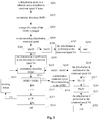
- Fig. 2 is a dehydration flowchart of a washing machine according to an embodiment of the disclosure. As shown in Fig. 2 , the method may include the following steps (step S201 to step S222).
- Step S201 a dehydration mode A is selected, and a dehydration rotational speed value V is preset.
- Step S202 initial eccentricity detection is performed, and a detected value is assigned as an initial eccentricity value OOB1.
- Step S203 a range Xi ⁇ OOB1 ⁇ Xi+1 of the initial eccentricity value OOB1 is determined.
- Step S205 whether Va ⁇ V is satisfied or not is judged; if yes, the step S209 is performed; and if no, the step S206 is performed.
- Step S207 the dehydration is performed at the assigned rotational speed Va.
- Step S208 the dehydration process is ended.
- Step S209 if Va ⁇ V, the dehydration is performed at the Va rotational speed.
- Step S210 the eccentricity detection is performed again, where the detected value at this time is OOB2.
- Step S211 whether OOB2 ⁇ OOB1 is satisfied or not is judged; if yes, the step S216 is performed; and if no, the step S212 is performed.
- Step S212 the number n of times for a leveling operation is added with 1.
- Step S213 whether n ⁇ N (a maximum number of times for levelling is preset, and N ⁇ 10 may be set) is satisfied or not is judged; if yes, the step S215 is performed; and if no, the step S214 is performed.
- Step S214 the process is ended.
- Step S215 the leveling operation is performed.
- Step S216 a dehydration rotational speed value Vb corresponding to the OOB1 is determined.
- Step S217 whether Vb ⁇ V is satisfied or not is judged; if yes, the step S218 is performed; and if no, the step S220 is performed.
- Step S218 the dehydration is performed at the Vb rotational speed.
- Step S221 the dehydration is performed at the assigned rotational speed Vb.
- Step S222 the dehydration process is ended.
- the existing washing machine enters a dehydration operation after the clothes are washed.
- the dehydration is divided into two times, namely, preliminary dehydration and final dehydration.
- Eccentricity detection is performed before the dehydration, and the magnitude of a dehydration speed is determined according to that of a detected eccentricity value.
- Table 1 illustrates a corresponding relationship table between an eccentricity value and a dehydration rotational speed. The smaller the eccentricity value, the greater the dehydration rotational speed; and the greater the eccentricity value, the smaller the dehydration rotational speed; therefore, it is assured that the dehydration operation is performed under the condition of small vibration.
- Table 1 Eccentricity value OOB1/OOB2 (0, X1) (X1, X2) ... (Xi, Xi+1) ... (Xn, Xn+1) Dehydration rotational speed value Va/Vb V0 V1 ... Vi ... Vn
- a dehydration mode A is selected for a special load.
- a dehydration rotational speed V is set before dehydration.
- Initial eccentricity detection is performed to obtain an eccentricity value OOB1, and accordingly an initial dehydration speed Va is selected.
- the Va is greater than or equal to the set dehydration rotational speed V, the Va is assigned as the V, then the dehydration is performed at the assigned rotational speed Va, and the dehydration is ended (such a situation is not occurred generally).
- the Va is smaller than the set dehydration rotational speed V, the dehydration is performed at the rotational speed Va, and then the eccentricity detection is entered again.
- the subsequent eccentricity value OOB2 is greater than the initial eccentricity value OOB1, the limited number N of times for a levelling operation is performed, an eccentricity value is detected after each time of levelling, and whether the dehydration operation or the levelling operation is entered is determined according to a comparison result between the eccentricity value and the initial eccentricity value, and the cycle is performed in this way till the number of times for levelling reaches to a preset number of times; at this moment, if the eccentricity value OOB2 is still greater than the initial eccentricity value, even though the previous dehydration rotational speed Vb is smaller than the set rotational speed V, the dehydration is still ended. Therefore, it is guaranteed that the small load of washed clothes having the good water absorbability can be dehydrated to the utmost extent and the dehydration can be performed at maximum.
- FIG. 3 is a structural block diagram of an apparatus for washing machine dehydration.
- the apparatus may include a first detection component 10, a first dehydration component 20, a second detection component 30, a second dehydration component 40 and a levelling component 50.
- the first detection component 10 is configured to detect a current eccentricity value to serve as a first eccentricity value, and determine a first dehydration rotational speed value corresponding to the first eccentricity value.
- the first dehydration component 20 is connected to the first detection component 10, and is configured to perform, according to a comparison result between the first dehydration rotational speed value and a preset rotational speed value, a corresponding dehydration operation.
- the second detection component 30 is connected to the first dehydration component 20, and is configured to detect, after the dehydration operation, another current eccentricity value to serve as a second eccentricity value, and determine a second dehydration rotational speed value corresponding to the second eccentricity value.
- the second dehydration component 40 is connected to the second detection component 30, and is configured to perform, under a condition in which the second eccentricity value is smaller than the first eccentricity value, according to a comparison result between the second dehydration rotational speed value and the preset rotational speed value, a corresponding dehydration operation, and assign the value of the second eccentricity value to the first eccentricity value.
- the leveling component 50 is connected to the second detection component 30, and is configured to perform, under a condition in which the second eccentricity value is greater than or equal to the first eccentricity value, a leveling operation.
- the washing machine may enter dehydration and dehydrate to the fullest extent when a small load of clothes having good water absorbability are washed, thereby improving a dehydration effect of the washing machine and improving the user experience
- the first dehydration component 20 may include: a first comparison unit, configured to compare magnitudes of the first dehydration rotational speed value and the preset rotational speed value; and a first processing unit, configured to perform, under a condition in which the first dehydration rotational speed value is smaller than the preset rotational speed value, a first dehydration operation according to the first dehydration rotational speed value; and perform, under a condition in which the first dehydration rotational speed value is greater than or equal to the preset rotational speed value, a second dehydration operation according to the preset rotational speed value.
- the dehydration operation may be started, and may be performed according to a corresponding rotational speed value.
- the second detection component 30 is specifically configured to detect, after the first dehydration operation is performed, the current eccentricity value to serve as the second eccentricity value. After the second dehydration operation is performed by the first processing unit, the dehydration process is ended.
- the second dehydration component 40 may include: a second comparison unit, configured to compare magnitudes of the second dehydration rotational speed value and the preset rotational speed value; and a second processing unit, configured to perform, under a condition in which the second dehydration rotational speed value is smaller than the preset rotational speed value, a third dehydration operation according to the second dehydration rotational speed value, and assign the value of the second eccentricity value to the first eccentricity value; and perform, under a condition in which the second dehydration rotational speed value is greater than or equal to the preset rotational speed value, a fourth dehydration operation according to the preset rotational speed value.
- the dehydration operation is performed again, and thus the eccentricity value is reduced gradually to improve the dehydration effect.
- the leveling component 50 is specifically configured to no longer perform, after the number of times for performing the leveling operation exceeds a preset threshold value, the leveling operation, and thus the washing machine is prevented from infinitely circulating the leveling operation.
- FIG. 4 is a structural block diagram of a washing machine.
- the washing machine includes the above-described apparatus for washing machine dehydration, thereby implementing smooth dehydration for a small load of clothes having water absorbability.
- the disclosure mainly implements the following several points: 1) when the small load of clothes having the good water absorbability are dehydrated, the dehydration is circulated for multiple times, the dehydration rotational speed is gradually increased and thus the clothes can be dehydrated completely; 2) because the eccentricity value detected before the dehydration is very high, in order to control the vibration, the washing machine enters low-speed dehydration; and 3) while the eccentricity value is reduced after the dehydration, the vibration at a higher dehydration rotational speed is controlled; by further increasing the dehydration rotational speed to be a rotational speed that is as high as possible or the set rotational speed, the clothes are dehydrated as much as possible.
Landscapes
- Engineering & Computer Science (AREA)
- Textile Engineering (AREA)
- Control Of Washing Machine And Dryer (AREA)
Abstract
Description
- The embodiments of the disclosure relate to the technical field of dehydration, and in particular to a method and apparatus for washing machine dehydration, and a washing machine.
- When an existing washing machine washes a small load of clothes having good water absorbability, a condition in which the water is not dehydrated or the water cannot be dehydrated completely is occurred. For example, one or two sweaters absorb a large amount of water after washing and a small amount of clothes cannot be uniformly distributed in a roller, so that an eccentricity value is very high and the washing machine cannot enter dehydration. Even though the washing machine enters the dehydration, due to the very high eccentricity value, a dehydration rotational speed is low and thus the clothes cannot be dehydrated completely.
- Concerning the problem of a poor dehydration effect when the washing machine washes the small load of clothes having the good water absorbability in the conventional art, an effective scheme hasn't been proposed till now.
- The embodiments of the disclosure provide a method and apparatus for washing machine dehydration, and a washing machine to solve the problem of a poor dehydration effect when the washing machine washes a small load of clothes having good water absorbability in the conventional art.
- In order to solve the above technical problem, the embodiments of disclosure provide a method for washing machine dehydration, which may include:
step 1, a current eccentricity value is detected to serve as a first eccentricity value, and a first dehydration rotational speed value corresponding to the first eccentricity value is determined;step 2, according to a comparison result between the first dehydration rotational speed value and a preset rotational speed value, a corresponding dehydration operation is performed;step 3, a current eccentricity value is detected to serve as a second eccentricity value, and a second dehydration rotational speed value corresponding to the second eccentricity value is determined; step 4, if the second eccentricity value is smaller than the first eccentricity value, according to a comparison result between the second dehydration rotational speed value and the preset rotational speed value, a corresponding dehydration operation is performed, the value of the second eccentricity value is assigned to the first eccentricity value and then thestep 3 is performed; andstep 5, if the second eccentricity value is greater than or equal to the first eccentricity value, a leveling operation is performed, and then thestep 3 is performed. - In some embodiments of the disclosure, the
step 2 may include: step 21, magnitudes of the first dehydration rotational speed value and the preset rotational speed value are compared; step 22, if the first dehydration rotational speed value is smaller than the preset rotational speed value, a first dehydration operation is performed according to the first dehydration rotational speed value; and step 23, if the first dehydration rotational speed value is greater than or equal to the preset rotational speed value, a second dehydration operation is performed according to the preset rotational speed value. - In some embodiments of the disclosure, the
step 3 may specifically include: after the first dehydration operation is performed, the current eccentricity value is detected to serve as the second eccentricity value. - In some embodiments of the disclosure, the step 4 may include: step 41, magnitudes of the second dehydration rotational speed value and the preset rotational speed value are compared; step 42, if the second dehydration rotational speed value is smaller than the preset rotational speed value, a third dehydration operation is performed according to the second dehydration rotational speed value, and the value of the second eccentricity value is assigned to the first eccentricity value; and step 43, if the second dehydration rotational speed value is greater than or equal to the preset rotational speed value, a fourth dehydration operation is performed according to the preset rotational speed value.
- In some embodiments of the disclosure, after the step 42, the method may further include: step 42a, the second eccentricity value is assigned to the first eccentricity value, and then the
step 3 is performed. - In some embodiments of the disclosure, the
step 5 may include: after the number of times for performing the leveling operation exceeds a preset threshold value, the leveling operation is no longer performed. - The disclosure further provides a apparatus for washing machine dehydration, which may include: a first detection component, configured to detect a current eccentricity value to serve as a first eccentricity value, and determine a first dehydration rotational speed value corresponding to the first eccentricity value; a first dehydration component, configured to perform, according to a comparison result between the first dehydration rotational speed value and a preset rotational speed value, a corresponding dehydration operation; a second detection component, configured to detect, after the dehydration operation, another current eccentricity value to serve as a second eccentricity value, and determine a second dehydration rotational speed value corresponding to the second eccentricity value; a second dehydration component, configured to perform, under a condition in which the second eccentricity value is smaller than the first eccentricity value, according to a comparison result between the second dehydration rotational speed value and the preset rotational speed value, a corresponding dehydration operation, and assign the value of the second eccentricity value to the first eccentricity value; and a leveling component, configured to perform, under a condition in which the second eccentricity value is greater than or equal to the first eccentricity value, a leveling operation.
- In some embodiments of the disclosure, the first dehydration component may include: a first comparison unit, configured to compare magnitudes of the first dehydration rotational speed value and the preset rotational speed value; and a first processing unit, configured to perform, under a condition in which the first dehydration rotational speed value is smaller than the preset rotational speed value, a first dehydration operation according to the first dehydration rotational speed value; and perform, under a condition in which the first dehydration rotational speed value is greater than or equal to the preset rotational speed value, a second dehydration operation according to the preset rotational speed value.
- In some embodiments of the disclosure, the second detection component is specifically configured to detect, after the first dehydration operation is performed, the current eccentricity value to serve as the second eccentricity value.
- In some embodiments of the disclosure, the second dehydration component may include: a second comparison unit, configured to compare magnitudes of the second dehydration rotational speed value and the preset rotational speed value; and a second processing unit, configured to perform, under a condition in which the second dehydration rotational speed value is smaller than the preset rotational speed value, a third dehydration operation according to the second dehydration rotational speed value, and assign the value of the second eccentricity value to the first eccentricity value; and perform, under a condition in which the second dehydration rotational speed value is greater than or equal to the preset rotational speed value, a fourth dehydration operation according to the preset rotational speed value.
- In some embodiments of the disclosure, the leveling component is specifically configured to no longer perform, after the number of times for performing the leveling operation exceeds a preset threshold value, the leveling operation.
- The disclosure further provides a washing machine, which may include the above-mentioned apparatus for washing machine dehydration.
- By applying the technical scheme of the disclosure, the washing machine may enter dehydration and dehydrate to the fullest extent when a small load of clothes having good water absorbability are washed, thereby improving a dehydration effect of the washing machine and improving the user experience.
-
-
Fig. 1 is a flowchart of a method for washing machine dehydration according to an embodiment of the disclosure. -
Fig. 2 is a dehydration flowchart of a washing machine according to an embodiment of the disclosure. -
Fig. 3 is a structural block diagram of an apparatus for washing machine dehydration according to an embodiment of the disclosure. -
Fig. 4 is a structural block diagram of a washing machine according to an embodiment of the disclosure. - The disclosure will be further described below in detail in combination with accompanying drawings and specific embodiments, all of which do not form a limit to the disclosure.
-
Fig. 1 is a flowchart of a method for washing machine dehydration according to an embodiment of the disclosure. As shown inFig. 1 , the method may include the following steps (step 1 to step 5). - At
Step 1, a current eccentricity value is detected to serve as a first eccentricity value, and a first dehydration rotational speed value corresponding to the first eccentricity value is determined. - At
Step 2, according to a comparison result between the first dehydration rotational speed value and a preset rotational speed value, a corresponding dehydration operation is performed. - At
Step 3, a current eccentricity value is detected to serve as a second eccentricity value, and a second dehydration rotational speed value corresponding to the second eccentricity value is determined. - At Step 4, if the second eccentricity value is smaller than the first eccentricity value, according to a comparison result between the second dehydration rotational speed value and the preset rotational speed value, a corresponding dehydration operation is performed, the value of the second eccentricity value is assigned to the first eccentricity value and then the
step 3 is performed. - At
Step 5, if the second eccentricity value is greater than or equal to the first eccentricity value, a leveling operation is performed, and then thestep 3 is performed. - Through this embodiment, the washing machine may enter dehydration and dehydrate to the fullest extent when a small load of clothes having good water absorbability are washed, thereby improving a dehydration effect of the washing machine and improving the user experience.
- For specific implementation of the
step 2, this embodiment provides a preferred implementation manner, i.e., thestep 2 may include: step 21, magnitudes of the first dehydration rotational speed value and the preset rotational speed value are compared; step 22, if the first dehydration rotational speed value is smaller than the preset rotational speed value, a first dehydration operation is performed according to the first dehydration rotational speed value; and step 23, if the first dehydration rotational speed value is greater than or equal to the preset rotational speed value, a second dehydration operation is performed according to the preset rotational speed value, and the process is completed. In view of this, no matter how high an eccentricity value of clothes in the washing machine is, the dehydration operation may be started, and may be performed according to a corresponding rotational speed value. - In the
step 3, specifically, after the first dehydration operation is performed, the current eccentricity value is detected to serve as the second eccentricity value, thereby providing a basis to further perform the dehydration operation. - For specific implementation of the
step 2, this embodiment provides a preferred implementation manner, i.e., the step 4 may include: step 41, magnitudes of the second dehydration rotational speed value and the preset rotational speed value are compared; step 42, if the second dehydration rotational speed value is smaller than the preset rotational speed value, a third dehydration operation is performed according to the second dehydration rotational speed value, and the value of the second eccentricity value is assigned to the first eccentricity value; and step 43, if the second dehydration rotational speed value is greater than or equal to the preset rotational speed value, a fourth dehydration operation is performed according to the preset rotational speed value. Herein, after the step 42, the second eccentricity value is assigned to the first eccentricity value, and then thestep 3 is performed. In view of this, when the previous dehydration operation does not achieve the best dehydration effect, the dehydration operation is performed again, and thus the eccentricity value is reduced gradually to improve the dehydration effect. - In the
step 5, after the number of times for performing the leveling operation exceeds a preset threshold value, the leveling operation is no longer performed, and thus the washing machine is prevented from infinitely circulating the leveling operation. -
Fig. 2 is a dehydration flowchart of a washing machine according to an embodiment of the disclosure. As shown inFig. 2 , the method may include the following steps (step S201 to step S222). - At Step S201, a dehydration mode A is selected, and a dehydration rotational speed value V is preset.
- At Step S202, initial eccentricity detection is performed, and a detected value is assigned as an initial eccentricity value OOB1.
- At Step S203, a range Xi≤OOB1<Xi+1 of the initial eccentricity value OOB1 is determined.
- At Step S204, a dehydration rotation value Va=Vi corresponding to the OOB1 is determined.
- At Step S205, whether Va<V is satisfied or not is judged; if yes, the step S209 is performed; and if no, the step S206 is performed.
- At Step S206, if Va≥V, the Va is assigned as the V, i.e., Va=V.
- At Step S207, the dehydration is performed at the assigned rotational speed Va. At Step S208, the dehydration process is ended.
- At Step S209, if Va<V, the dehydration is performed at the Va rotational speed.
- At Step S210, the eccentricity detection is performed again, where the detected value at this time is OOB2.
- At Step S211, whether OOB2<OOB1 is satisfied or not is judged; if yes, the step S216 is performed; and if no, the step S212 is performed.
- At Step S212, the number n of times for a leveling operation is added with 1.
- At Step S213, whether n<N (a maximum number of times for levelling is preset, and N<10 may be set) is satisfied or not is judged; if yes, the step S215 is performed; and if no, the step S214 is performed.
- At Step S214, the process is ended.
- At Step S215, the leveling operation is performed.
- At Step S216, a dehydration rotational speed value Vb corresponding to the OOB1 is determined.
- At Step S217, whether Vb<V is satisfied or not is judged; if yes, the step S218 is performed; and if no, the step S220 is performed.
- At Step S218, the dehydration is performed at the Vb rotational speed.
- At Step S219, the value of the OOB2 is assigned to the OOB1, i.e., OOB1=OOB2.
- At Step S220, the Vb is assigned as the V, i.e., Vb=V.
- At Step S221, the dehydration is performed at the assigned rotational speed Vb.
- At Step S222, the dehydration process is ended.
- The existing washing machine enters a dehydration operation after the clothes are washed. The dehydration is divided into two times, namely, preliminary dehydration and final dehydration. Eccentricity detection is performed before the dehydration, and the magnitude of a dehydration speed is determined according to that of a detected eccentricity value. Table 1 illustrates a corresponding relationship table between an eccentricity value and a dehydration rotational speed. The smaller the eccentricity value, the greater the dehydration rotational speed; and the greater the eccentricity value, the smaller the dehydration rotational speed; therefore, it is assured that the dehydration operation is performed under the condition of small vibration.
Table 1 Eccentricity value OOB1/OOB2 (0, X1) (X1, X2) ... (Xi, Xi+1) ... (Xn, Xn+1) Dehydration rotational speed value Va/Vb V0 V1 ... Vi ... Vn - This embodiment proposes a cyclic eccentricity detection and dehydration method. A dehydration mode A is selected for a special load. A dehydration rotational speed V is set before dehydration. Initial eccentricity detection is performed to obtain an eccentricity value OOB1, and accordingly an initial dehydration speed Va is selected. When the Va is greater than or equal to the set dehydration rotational speed V, the Va is assigned as the V, then the dehydration is performed at the assigned rotational speed Va, and the dehydration is ended (such a situation is not occurred generally). When the Va is smaller than the set dehydration rotational speed V, the dehydration is performed at the rotational speed Va, and then the eccentricity detection is entered again. To detect the magnitude of the eccentricity value OOB2 again, there are the following two cases: when the subsequent eccentricity value OOB2 is smaller than the initial eccentricity value OOB1, the dehydration is performed at a higher rotational speed Vb, and at this moment, two cases are provided: Vb≥V, the Vb is assigned as the V, the dehydration is performed at the rotational speed Vb and the dehydration process is ended; and if Vb<V, the dehydration is performed at the rotational speed Vb, the OOB1 is assigned as the OOB2, the eccentricity detection is performed again, and the cycle is performed in this way till the dehydration rotational speed reaches to the set dehydration rotational speed. If the subsequent eccentricity value OOB2 is greater than the initial eccentricity value OOB1, the limited number N of times for a levelling operation is performed, an eccentricity value is detected after each time of levelling, and whether the dehydration operation or the levelling operation is entered is determined according to a comparison result between the eccentricity value and the initial eccentricity value, and the cycle is performed in this way till the number of times for levelling reaches to a preset number of times; at this moment, if the eccentricity value OOB2 is still greater than the initial eccentricity value, even though the previous dehydration rotational speed Vb is smaller than the set rotational speed V, the dehydration is still ended. Therefore, it is guaranteed that the small load of washed clothes having the good water absorbability can be dehydrated to the utmost extent and the dehydration can be performed at maximum.
- Corresponding to the method for washing machine dehydration described in
Fig. 1 , this embodiment provides an apparatus for washing machine dehydration.Fig. 3 is a structural block diagram of an apparatus for washing machine dehydration. The apparatus may include afirst detection component 10, afirst dehydration component 20, asecond detection component 30, asecond dehydration component 40 and alevelling component 50. - The
first detection component 10 is configured to detect a current eccentricity value to serve as a first eccentricity value, and determine a first dehydration rotational speed value corresponding to the first eccentricity value. - The
first dehydration component 20 is connected to thefirst detection component 10, and is configured to perform, according to a comparison result between the first dehydration rotational speed value and a preset rotational speed value, a corresponding dehydration operation. - The
second detection component 30 is connected to thefirst dehydration component 20, and is configured to detect, after the dehydration operation, another current eccentricity value to serve as a second eccentricity value, and determine a second dehydration rotational speed value corresponding to the second eccentricity value. - The
second dehydration component 40 is connected to thesecond detection component 30, and is configured to perform, under a condition in which the second eccentricity value is smaller than the first eccentricity value, according to a comparison result between the second dehydration rotational speed value and the preset rotational speed value, a corresponding dehydration operation, and assign the value of the second eccentricity value to the first eccentricity value. - The leveling
component 50 is connected to thesecond detection component 30, and is configured to perform, under a condition in which the second eccentricity value is greater than or equal to the first eccentricity value, a leveling operation. - Through this embodiment, the washing machine may enter dehydration and dehydrate to the fullest extent when a small load of clothes having good water absorbability are washed, thereby improving a dehydration effect of the washing machine and improving the user experience
- For specific implementation of the
first dehydration component 20, this embodiment provides a preferred implementation manner, i.e., thefirst dehydration component 20 may include: a first comparison unit, configured to compare magnitudes of the first dehydration rotational speed value and the preset rotational speed value; and a first processing unit, configured to perform, under a condition in which the first dehydration rotational speed value is smaller than the preset rotational speed value, a first dehydration operation according to the first dehydration rotational speed value; and perform, under a condition in which the first dehydration rotational speed value is greater than or equal to the preset rotational speed value, a second dehydration operation according to the preset rotational speed value. In view of this, no matter how high an eccentricity value of clothes in the washing machine is, the dehydration operation may be started, and may be performed according to a corresponding rotational speed value. - It is to be noted that the
second detection component 30 is specifically configured to detect, after the first dehydration operation is performed, the current eccentricity value to serve as the second eccentricity value. After the second dehydration operation is performed by the first processing unit, the dehydration process is ended. - For specific implementation of the
second dehydration component 40, this embodiment provides a preferred implementation manner, i.e., thesecond dehydration component 40 may include: a second comparison unit, configured to compare magnitudes of the second dehydration rotational speed value and the preset rotational speed value; and a second processing unit, configured to perform, under a condition in which the second dehydration rotational speed value is smaller than the preset rotational speed value, a third dehydration operation according to the second dehydration rotational speed value, and assign the value of the second eccentricity value to the first eccentricity value; and perform, under a condition in which the second dehydration rotational speed value is greater than or equal to the preset rotational speed value, a fourth dehydration operation according to the preset rotational speed value. In view of this, when the previous dehydration operation does not achieve the best dehydration effect, the dehydration operation is performed again, and thus the eccentricity value is reduced gradually to improve the dehydration effect. - The leveling
component 50 is specifically configured to no longer perform, after the number of times for performing the leveling operation exceeds a preset threshold value, the leveling operation, and thus the washing machine is prevented from infinitely circulating the leveling operation. - This embodiment further provides a washing machine.
Fig. 4 is a structural block diagram of a washing machine. The washing machine includes the above-described apparatus for washing machine dehydration, thereby implementing smooth dehydration for a small load of clothes having water absorbability. - From the above description, the disclosure mainly implements the following several points: 1) when the small load of clothes having the good water absorbability are dehydrated, the dehydration is circulated for multiple times, the dehydration rotational speed is gradually increased and thus the clothes can be dehydrated completely; 2) because the eccentricity value detected before the dehydration is very high, in order to control the vibration, the washing machine enters low-speed dehydration; and 3) while the eccentricity value is reduced after the dehydration, the vibration at a higher dehydration rotational speed is controlled; by further increasing the dehydration rotational speed to be a rotational speed that is as high as possible or the set rotational speed, the clothes are dehydrated as much as possible.
- Certainly, the above are preferred implementation manners of the disclosure. It is to be noted that about those of ordinary skill in the art, under the precondition without departing from the basic principle of the disclosure, a plurality of improvements and modifications may be performed, and the improvements and modifications are also included within the scope of protection of the disclosure.
Claims (12)
- A method for washing machine dehydration, comprising:step 1, detecting a current eccentricity value to serve as a first eccentricity value, and determining a first dehydration rotational speed value corresponding to the first eccentricity value;step 2, performing a corresponding dehydration operation, according to a comparison result between the first dehydration rotational speed value and a preset rotational speed value;step 3, detecting a current eccentricity value to serve as a second eccentricity value, and determining a second dehydration rotational speed value corresponding to the second eccentricity value;step 4, if the second eccentricity value is smaller than the first eccentricity value, according to a comparison result between the second dehydration rotational speed value and the preset rotational speed value, performing a corresponding dehydration operation, assigning the value of the second eccentricity value to the first eccentricity value and then performing the step 3; andstep 5, if the second eccentricity value is greater than or equal to the first eccentricity value, performing a leveling operation, and then performing the step 3
- The method as claimed in claim 1, wherein the step 2 comprises:step 21, comparing magnitudes of the first dehydration rotational speed value and the preset rotational speed value;step 22, if the first dehydration rotational speed value is smaller than the preset rotational speed value, performing a first dehydration operation according to the first dehydration rotational speed value; andstep 23, if the first dehydration rotational speed value is greater than or equal to the preset rotational speed value, performing a second dehydration operation according to the preset rotational speed value.
- The method as claimed in claim 2, wherein the step 3 specifically comprises:
after the first dehydration operation is performed, detecting the current eccentricity value to serve as the second eccentricity value. - The method as claimed in claim 1, wherein the step 4 comprises:step 41, comparing magnitudes of the second dehydration rotational speed value and the preset rotational speed value;step 42, if the second dehydration rotational speed value is smaller than the preset rotational speed value, performing a third dehydration operation according to the second dehydration rotational speed value, and assigning the value of the second eccentricity value to the first eccentricity value; andstep 43, if the second dehydration rotational speed value is greater than or equal to the preset rotational speed value, performing a fourth dehydration operation according to the preset rotational speed value.
- The method as claimed in claim 4, wherein after the step 42, the method further comprises:
step 42a, assigning the second eccentricity value to the first eccentricity value, and then performing the step 3. - The method as claimed in claim 1, wherein the step 5 comprises:
after the number of times for performing the leveling operation exceeds a preset threshold value, no longer performing the leveling operation. - An apparatus for washing machine dehydration, comprising:a first detection component, configured to detect a current eccentricity value to serve as a first eccentricity value, and determine a first dehydration rotational speed value corresponding to the first eccentricity value;a first dehydration component, configured to perform, according to a comparison result between the first dehydration rotational speed value and a preset rotational speed value, a corresponding dehydration operation;a second detection component, configured to detect, after the dehydration operation, acurrent eccentricity value to serve as a second eccentricity value, and determine a second dehydration rotational speed value corresponding to the second eccentricity value;a second dehydration component, configured to perform, under a condition in which the second eccentricity value is smaller than the first eccentricity value, according to a comparison result between the second dehydration rotational speed value and the preset rotational speed value, a corresponding dehydration operation, and assign the value of the second eccentricity value to the first eccentricity value; anda leveling component, configured to perform, under a condition in which the second eccentricity value is greater than or equal to the first eccentricity value, a leveling operation.
- The apparatus as claimed in claim 7, wherein the first dehydration component comprises:a first comparison unit, configured to compare magnitudes of the first dehydration rotational speed value and the preset rotational speed value; anda first processing unit, configured to perform, under a condition in which the first dehydration rotational speed value is smaller than the preset rotational speed value, a first dehydration operation according to the first dehydration rotational speed value; and perform, under a condition in which the first dehydration rotational speed value is greater than or equal to the preset rotational speed value, a second dehydration operation according to the preset rotational speed value.
- The apparatus as claimed in claim 8, wherein the second detection component is specifically configured to detect, after the first dehydration operation is performed, the current eccentricity value to serve as the second eccentricity value.
- The apparatus as claimed in claim 7, wherein the second dehydration component comprises:a second comparison unit, configured to compare magnitudes of the second dehydration rotational speed value and the preset rotational speed value; anda second processing unit, configured to perform, under a condition in which the second dehydration rotational speed value is smaller than the preset rotational speed value, a third dehydration operation according to the second dehydration rotational speed value, and assign the value of the second eccentricity value to the first eccentricity value; and perform, under a condition in which the second dehydration rotational speed value is greater than or equal to the preset rotational speed value, a fourth dehydration operation according to the preset rotational speed value.
- The apparatus as claimed in claim 7, wherein the leveling component is specifically configured to no longer perform, after the number of times for performing the leveling operation exceeds a preset threshold value, the leveling operation.
- A washing machine, comprising the apparatus for washing machine dehydration as claimed in any one of claims 7 to 11.
Applications Claiming Priority (2)
| Application Number | Priority Date | Filing Date | Title |
|---|---|---|---|
| CN201610883646.8A CN106436155B (en) | 2016-10-08 | 2016-10-08 | Dehydration method, dehydration device and washing machine |
| PCT/CN2017/101207 WO2018064927A1 (en) | 2016-10-08 | 2017-09-11 | Washing machine dehydration method, apparatus and washing machine |
Publications (2)
| Publication Number | Publication Date |
|---|---|
| EP3524724A1 true EP3524724A1 (en) | 2019-08-14 |
| EP3524724A4 EP3524724A4 (en) | 2020-07-01 |
Family
ID=58172433
Family Applications (1)
| Application Number | Title | Priority Date | Filing Date |
|---|---|---|---|
| EP17857808.4A Pending EP3524724A4 (en) | 2016-10-08 | 2017-09-11 | Washing machine dehydration method, apparatus and washing machine |
Country Status (4)
| Country | Link |
|---|---|
| US (1) | US11479893B2 (en) |
| EP (1) | EP3524724A4 (en) |
| CN (1) | CN106436155B (en) |
| WO (1) | WO2018064927A1 (en) |
Families Citing this family (5)
| Publication number | Priority date | Publication date | Assignee | Title |
|---|---|---|---|---|
| CN106436155B (en) | 2016-10-08 | 2018-10-23 | 珠海格力电器股份有限公司 | Dehydration method, dehydration device and washing machine |
| CN107201626B (en) * | 2017-05-31 | 2020-08-04 | 广东威灵电机制造有限公司 | Drum washing machine and dehydration control method and device thereof and machine readable storage medium |
| CN112921586B (en) * | 2019-12-06 | 2024-03-15 | 青岛海尔洗衣机有限公司 | A washing machine and its dehydration control method |
| CN113389008A (en) * | 2021-07-06 | 2021-09-14 | 海信(山东)冰箱有限公司 | Drum washing machine dehydration control method and drum washing machine |
| CN114182490B (en) * | 2021-12-24 | 2022-12-16 | 珠海格力电器股份有限公司 | Eccentricity detection method for washing device and washing device |
Family Cites Families (13)
| Publication number | Priority date | Publication date | Assignee | Title |
|---|---|---|---|---|
| KR950007072B1 (en) * | 1992-12-24 | 1995-06-30 | 엘지전자주식회사 | Method of dehydration control and noise protection |
| IT1305553B1 (en) * | 1998-11-10 | 2001-05-09 | Electrolux Zanussi Elettrodome | METHOD FOR CHECKING THE UNBALANCING OF THE LOAD IN A WASHING MACHINE |
| KR100471350B1 (en) | 2002-05-17 | 2005-03-08 | 엘지전자 주식회사 | Control method of dehydration for a drum washing machine |
| CN1548611A (en) * | 2003-05-13 | 2004-11-24 | 乐金电子(天津)电器有限公司 | Dewatering control method for washing machine |
| US7451510B2 (en) | 2003-07-25 | 2008-11-18 | Lg Electronics, Inc. | Washing machine and method of performing spinning operation |
| KR100565530B1 (en) * | 2004-05-12 | 2006-03-30 | 엘지전자 주식회사 | How to control dehydration of the washing machine |
| KR101065690B1 (en) | 2004-06-25 | 2011-09-19 | 엘지전자 주식회사 | Dehydration Control Method of Drum Washing Machine |
| KR101241891B1 (en) * | 2006-06-21 | 2013-03-11 | 엘지전자 주식회사 | Laundry machine with stillness mode and method for operating the same |
| KR101028087B1 (en) | 2008-05-23 | 2011-04-08 | 엘지전자 주식회사 | Control method of laundry treatment equipment and laundry treatment equipment |
| EP2746444B1 (en) | 2012-12-21 | 2015-12-09 | Electrolux Home Products Corporation N.V. | Method for controlling a laundry washing machine and laundry washing machine |
| CN103233340B (en) | 2013-04-22 | 2015-09-16 | 海信容声(广东)冰箱有限公司 | The dehydration controlling method of roller washing machine |
| CN105970549B (en) | 2016-06-29 | 2019-04-16 | 无锡小天鹅股份有限公司 | Dehydration controlling method, device and the washing machine of washing machine |
| CN106436155B (en) | 2016-10-08 | 2018-10-23 | 珠海格力电器股份有限公司 | Dehydration method, dehydration device and washing machine |
-
2016
- 2016-10-08 CN CN201610883646.8A patent/CN106436155B/en active Active
-
2017
- 2017-09-11 EP EP17857808.4A patent/EP3524724A4/en active Pending
- 2017-09-11 US US16/326,537 patent/US11479893B2/en active Active
- 2017-09-11 WO PCT/CN2017/101207 patent/WO2018064927A1/en not_active Ceased
Also Published As
| Publication number | Publication date |
|---|---|
| WO2018064927A1 (en) | 2018-04-12 |
| EP3524724A4 (en) | 2020-07-01 |
| US11479893B2 (en) | 2022-10-25 |
| CN106436155B (en) | 2018-10-23 |
| US20210292955A1 (en) | 2021-09-23 |
| CN106436155A (en) | 2017-02-22 |
Similar Documents
| Publication | Publication Date | Title |
|---|---|---|
| US11479893B2 (en) | Method and apparatus for washing machine dehydration, and washing machine | |
| US11618987B2 (en) | Drum washing machine, and control method and apparatus for same | |
| JP6600841B2 (en) | Cascade type photovoltaic grid-connected inverter, control method and control apparatus therefor | |
| CN106297674B (en) | A kind of backlight brightness control method, device and display equipment | |
| CN107184105B (en) | Automatic cleaning method of cooking equipment | |
| CN106141427A (en) | Automatically the method obtaining laser spot | |
| US20220243949A1 (en) | Photovoltaic Air Conditioner Control Method and Apparatus and Photovoltaic Air Conditioner | |
| CN103049158B (en) | A kind of touch detecting method of capacitive touch screen and system | |
| EP3892770B1 (en) | Washing control method, apparatus and device for washing device, and storage medium | |
| EP3254366B1 (en) | Method for detecting a failing rectifier or rectifier source in a ups | |
| CN105813172A (en) | LTE slave mode network search method and system | |
| CN104092240B (en) | The recognition methods of a kind of photovoltaic module access module and system | |
| CN112663283A (en) | Eccentricity correction method and device | |
| WO2019228133A1 (en) | Weight measuring method for washing machine, and washing machine | |
| CN108447037B (en) | Method and device for enhancing dynamic range of image | |
| EP3330422A1 (en) | Roller washing machine and unbalance detection method and device thereof | |
| CN117904837A (en) | Washing machine dehydration control method, device, equipment and storage medium | |
| CN112709045A (en) | Control method and device of washing machine and washing machine | |
| CN104131439A (en) | Optical roller-collision-resistant detection system and method based on roller washing machine | |
| CN110824286B (en) | Charging abnormality detection method, charging device, computer device, and storage medium | |
| JP2025539233A (en) | Signal repeater control method and signal repeater control device | |
| CN109358279B (en) | Power detection method of ray tube, power detection method of ray machine and device | |
| CN113417111A (en) | Washing machine and control method | |
| CN112411126A (en) | Method and device for leveling load in barrel | |
| CN105573553A (en) | Information processing method, information processing device and electronic equipment |
Legal Events
| Date | Code | Title | Description |
|---|---|---|---|
| STAA | Information on the status of an ep patent application or granted ep patent |
Free format text: STATUS: THE INTERNATIONAL PUBLICATION HAS BEEN MADE |
|
| PUAI | Public reference made under article 153(3) epc to a published international application that has entered the european phase |
Free format text: ORIGINAL CODE: 0009012 |
|
| STAA | Information on the status of an ep patent application or granted ep patent |
Free format text: STATUS: REQUEST FOR EXAMINATION WAS MADE |
|
| 17P | Request for examination filed |
Effective date: 20190215 |
|
| AK | Designated contracting states |
Kind code of ref document: A1 Designated state(s): AL AT BE BG CH CY CZ DE DK EE ES FI FR GB GR HR HU IE IS IT LI LT LU LV MC MK MT NL NO PL PT RO RS SE SI SK SM TR |
|
| AX | Request for extension of the european patent |
Extension state: BA ME |
|
| DAV | Request for validation of the european patent (deleted) | ||
| DAX | Request for extension of the european patent (deleted) | ||
| REG | Reference to a national code |
Ref country code: DE Ref legal event code: R079 Free format text: PREVIOUS MAIN CLASS: D06F0033020000 Ipc: D06F0035000000 |
|
| A4 | Supplementary search report drawn up and despatched |
Effective date: 20200602 |
|
| RIC1 | Information provided on ipc code assigned before grant |
Ipc: D06F 33/40 20200101ALI20200526BHEP Ipc: D06F 33/48 20200101ALI20200526BHEP Ipc: D06F 105/48 20200101ALN20200526BHEP Ipc: D06F 103/26 20200101ALN20200526BHEP Ipc: D06F 35/00 20060101AFI20200526BHEP |
|
| P01 | Opt-out of the competence of the unified patent court (upc) registered |
Effective date: 20230530 |
|
| STAA | Information on the status of an ep patent application or granted ep patent |
Free format text: STATUS: EXAMINATION IS IN PROGRESS |
|
| 17Q | First examination report despatched |
Effective date: 20240708 |