EP3524559A2 - Maintenance monitoring of passenger carrying system - Google Patents
Maintenance monitoring of passenger carrying system Download PDFInfo
- Publication number
- EP3524559A2 EP3524559A2 EP18212845.4A EP18212845A EP3524559A2 EP 3524559 A2 EP3524559 A2 EP 3524559A2 EP 18212845 A EP18212845 A EP 18212845A EP 3524559 A2 EP3524559 A2 EP 3524559A2
- Authority
- EP
- European Patent Office
- Prior art keywords
- maintenance
- mobile terminal
- personal mobile
- time period
- radio
- Prior art date
- Legal status (The legal status is an assumption and is not a legal conclusion. Google has not performed a legal analysis and makes no representation as to the accuracy of the status listed.)
- Granted
Links
Images


Classifications
-
- B—PERFORMING OPERATIONS; TRANSPORTING
- B66—HOISTING; LIFTING; HAULING
- B66B—ELEVATORS; ESCALATORS OR MOVING WALKWAYS
- B66B5/00—Applications of checking, fault-correcting, or safety devices in elevators
- B66B5/0006—Monitoring devices or performance analysers
- B66B5/0018—Devices monitoring the operating condition of the elevator system
- B66B5/0025—Devices monitoring the operating condition of the elevator system for maintenance or repair
-
- B—PERFORMING OPERATIONS; TRANSPORTING
- B66—HOISTING; LIFTING; HAULING
- B66B—ELEVATORS; ESCALATORS OR MOVING WALKWAYS
- B66B5/00—Applications of checking, fault-correcting, or safety devices in elevators
- B66B5/0006—Monitoring devices or performance analysers
- B66B5/0037—Performance analysers
-
- B—PERFORMING OPERATIONS; TRANSPORTING
- B66—HOISTING; LIFTING; HAULING
- B66B—ELEVATORS; ESCALATORS OR MOVING WALKWAYS
- B66B5/00—Applications of checking, fault-correcting, or safety devices in elevators
- B66B5/0087—Devices facilitating maintenance, repair or inspection tasks
-
- H—ELECTRICITY
- H04—ELECTRIC COMMUNICATION TECHNIQUE
- H04L—TRANSMISSION OF DIGITAL INFORMATION, e.g. TELEGRAPHIC COMMUNICATION
- H04L67/00—Network arrangements or protocols for supporting network services or applications
- H04L67/01—Protocols
- H04L67/12—Protocols specially adapted for proprietary or special-purpose networking environments, e.g. medical networks, sensor networks, networks in vehicles or remote metering networks
-
- H—ELECTRICITY
- H04—ELECTRIC COMMUNICATION TECHNIQUE
- H04W—WIRELESS COMMUNICATION NETWORKS
- H04W4/00—Services specially adapted for wireless communication networks; Facilities therefor
- H04W4/02—Services making use of location information
- H04W4/021—Services related to particular areas, e.g. point of interest [POI] services, venue services or geofences
-
- H—ELECTRICITY
- H04—ELECTRIC COMMUNICATION TECHNIQUE
- H04W—WIRELESS COMMUNICATION NETWORKS
- H04W4/00—Services specially adapted for wireless communication networks; Facilities therefor
- H04W4/02—Services making use of location information
- H04W4/025—Services making use of location information using location based information parameters
- H04W4/027—Services making use of location information using location based information parameters using movement velocity, acceleration information
-
- H—ELECTRICITY
- H04—ELECTRIC COMMUNICATION TECHNIQUE
- H04W—WIRELESS COMMUNICATION NETWORKS
- H04W64/00—Locating users or terminals or network equipment for network management purposes, e.g. mobility management
-
- H—ELECTRICITY
- H04—ELECTRIC COMMUNICATION TECHNIQUE
- H04M—TELEPHONIC COMMUNICATION
- H04M1/00—Substation equipment, e.g. for use by subscribers
- H04M1/72—Mobile telephones; Cordless telephones, i.e. devices for establishing wireless links to base stations without route selection
- H04M1/724—User interfaces specially adapted for cordless or mobile telephones
-
- H—ELECTRICITY
- H04—ELECTRIC COMMUNICATION TECHNIQUE
- H04M—TELEPHONIC COMMUNICATION
- H04M1/00—Substation equipment, e.g. for use by subscribers
- H04M1/72—Mobile telephones; Cordless telephones, i.e. devices for establishing wireless links to base stations without route selection
- H04M1/724—User interfaces specially adapted for cordless or mobile telephones
- H04M1/72403—User interfaces specially adapted for cordless or mobile telephones with means for local support of applications that increase the functionality
-
- H—ELECTRICITY
- H04—ELECTRIC COMMUNICATION TECHNIQUE
- H04W—WIRELESS COMMUNICATION NETWORKS
- H04W88/00—Devices specially adapted for wireless communication networks, e.g. terminals, base stations or access point devices
- H04W88/02—Terminal devices
Definitions
- This invention belongs to the technical field of passenger transport systems and relates to maintenance monitoring of passenger transport systems.
- a maintenance monitoring device for passenger transport systems comprising:
- a maintenance monitoring device based on an embodiment of this invention, wherein it also comprises a maintenance management terminal, wherein the maintenance management terminal comprises:
- a maintenance monitoring device based on an embodiment of this invention, wherein the compliance determination unit is also configured to: determine that the maintenance operations of the maintenance worker at a corresponding on-site check point are in compliance when the length of time in the time period information is greater than or equal to a corresponding maintenance time threshold, and if not, determine that the maintenance operations of the maintenance worker at a corresponding on-site check point are not in compliance.
- a maintenance monitoring device based on an embodiment of this invention, wherein the personal mobile terminal or the maintenance management terminal also comprises: a maintenance track generation unit, which is configured to generate maintenance track information corresponding to multiple on-site check points based on the chronological relationships of the time period information corresponding to these multiple on-site check points.
- a maintenance track generation unit which is configured to generate maintenance track information corresponding to multiple on-site check points based on the chronological relationships of the time period information corresponding to these multiple on-site check points.
- a maintenance monitoring device based on an embodiment of this invention, wherein the compliance determination unit is also configured to compare the maintenance track information to predetermined maintenance track information to determine the compliance of the maintenance operations of maintenance workers.
- a maintenance monitoring device based on an embodiment of this invention, wherein the personal mobile terminal or the maintenance management terminal also comprises: a prompt information generation unit, which is used to generate corresponding prompt information when the determined compliance results are not in compliance.
- a maintenance monitoring device based on an embodiment of this invention, wherein the radio beacon has a corresponding first identifier, and the radio beacon broadcasts the first identifier while broadcasting the radio signals.
- a maintenance monitoring device based on an embodiment of this invention, wherein the personal mobile terminal is also configured to identify the first identifier while sensing the radio signals and determine the on-site check point corresponding to the time period information based on the identified first identifier.
- a maintenance monitoring device based on an embodiment of this invention, wherein the radio beacon has a corresponding first identifier, the personal mobile terminal has a corresponding second identifier, and the first identifier is broadcast when the radio signals are broadcast; the personal mobile terminal is also configured to identify the first identifier while sensing the radio signals and to generate and transmit time period information including the first identifier and second identifier.
- radio beacon is a Bluetooth module and the radio signals are Bluetooth signals
- the radio beacon is a low-power Bluetooth module and the radio signals are low-power Bluetooth signals
- the radio beacon is a Wifi module and the radio signals are Wifi signals.
- a maintenance monitoring device based on an embodiment of this invention, wherein the radio beacon is configured to broadcast the radio signals within a predetermined range toward its surroundings; the personal mobile terminal is also configured to determine whether it has entered the predetermined range by determining the signal strength of the radio signals it senses, thereby determining whether the maintenance worker is approaching the radio beacon.
- a maintenance monitoring device based on an embodiment of this invention, wherein the personal mobile terminal is configured to be able to automatically sense the radio signals when a wireless connection with the radio beacon has not been established.
- a maintenance monitoring method based on an embodiment of this invention, wherein it also comprises the following step: generating maintenance track information corresponding to multiple on-site check points based on the chronological relationships of the time period information corresponding to these multiple on-site check points.
- a maintenance monitoring method based on an embodiment of this invention, wherein it also comprises the following step: determining the compliance of the maintenance operations of the maintenance workers at an on-site check point of the corresponding radio beacon based on the time period information and/or the maintenance track information.
- a maintenance monitoring method based on an embodiment of this invention wherein, during the step of determining compliance based on time period information, it is determined that the maintenance operations of the maintenance worker at a corresponding on-site check point are in compliance when the length of time in the time period information is greater than or equal to a corresponding maintenance time threshold, and if not, it is determined that the maintenance operations of the maintenance worker at a corresponding on-site check point are not in compliance.
- a maintenance monitoring method based on an embodiment of this invention wherein, during the step of determining compliance based on maintenance track information, the maintenance track information is compared to predetermined maintenance track information to determine the compliance of the maintenance operations of maintenance workers.
- a maintenance monitoring method based on an embodiment of this invention, wherein it also comprises the following step: generating corresponding prompt information when the determined compliance results are not in compliance.
- a maintenance monitoring method based on an embodiment of this invention wherein the first identifier of the radio beacon is identified during the sensing step; during the step of calculating the time period information, time period information including the first identifier and the second identifier of the personal mobile terminal is generated.
- radio signals are Bluetooth signals, low-power Bluetooth signals, or Wifi signals.
- a maintenance monitoring method based on an embodiment of this invention, wherein the signal strength of the sensed radio signals is determined during the sensing step.
- a maintenance monitoring method based on an embodiment of this invention, wherein, during the step of sensing radio signals, the radio signals are automatically sensed when a wireless connection has not been established with the radio beacon.
- the third aspect of this invention provides a personal mobile terminal used to monitor the maintenance of passenger transport systems by maintenance workers, which can be carried by the maintenance workers; characterized in that the personal mobile terminal comprises:
- a personal mobile terminal based on an embodiment of this invention wherein the personal mobile terminal also comprises: a maintenance track generation unit, which is configured to generate maintenance track information corresponding to multiple on-site check points based on the chronological relationships of the time period information corresponding to these multiple on-site check points.
- a maintenance track generation unit which is configured to generate maintenance track information corresponding to multiple on-site check points based on the chronological relationships of the time period information corresponding to these multiple on-site check points.
- a personal mobile terminal based on an embodiment of this invention, wherein it also comprises: a compliance determination unit, which is configured to determine the compliance of the maintenance operations of the maintenance workers at an on-site check point of the corresponding radio beacon, based on the time period information and/or the maintenance track information.
- a compliance determination unit which is configured to determine the compliance of the maintenance operations of the maintenance workers at an on-site check point of the corresponding radio beacon, based on the time period information and/or the maintenance track information.
- a personal mobile terminal based on an embodiment of this invention wherein the compliance determination unit is also configured to: determine that the maintenance operations of the maintenance worker at a corresponding on-site check point are in compliance when the length of time in the time period information is greater than or equal to a corresponding maintenance time threshold, and if not, determine that the maintenance operations of the maintenance worker at a corresponding on-site check point are not in compliance.
- a personal mobile terminal based on an embodiment of this invention, wherein the compliance determination unit is also configured to compare the maintenance track information to predetermined maintenance track information to determine the compliance of the maintenance operations of maintenance workers.
- a personal mobile terminal based on an embodiment of this invention wherein the personal mobile terminal also comprises: a prompt information generation unit, which is used to generate corresponding prompt information when the determined compliance results are not in compliance.
- a personal mobile terminal based on an embodiment of this invention wherein the close-range communications unit is also configured to identify the first identifier of the radio beacon, and the time period information generation unit is also configured to generate time period information including the first identifier and the second identifier of the personal mobile terminal.
- a personal mobile terminal based on an embodiment of this invention wherein the close-range communications unit is a Bluetooth communication unit, low-power Bluetooth communications unit, or Wifi communications unit.
- a personal mobile terminal based on an embodiment of this invention, wherein it also comprises a signal strength determination unit, which is configured to determine the signal strength of the sensed radio signals.
- a personal mobile terminal based on an embodiment of this invention, wherein the personal mobile terminal is configured to be able to automatically sense the radio signals when a wireless connection with the radio beacon has not been established.
- the fourth aspect of this invention provides a computer device, comprising a memory, processor, and computer program stored in the memory and which can be run on the processor; when the processor runs the program, it implements the steps of any one of the methods from the second aspect of this invention.
- the fifth aspect of this invention provides a computer-readable storage medium, on which a computer program is stored; this program is run by a processor to implement the steps of any one of the methods from the second aspect of this invention.
- the radio beacon used to monitor the maintenance of passenger transport systems by maintenance workers, wherein the radio beacon is roughly installed at an on-site check point of the passenger transport system, and is configured to be able to broadcast radio signals toward its surroundings;
- the radio beacon comprises: A time period information generation unit, which is configured to calculate the time period information of the radio signals continuously sensed by the personal mobile terminals carried by the maintenance workers.
- a radio beacon based on an embodiment of this invention wherein it also comprises: a time period information transmission unit, which is configured to transmit the time period information to a maintenance management terminal.
- a radio beacon based on an embodiment of this invention wherein the radio beacon has a corresponding first identifier, and the radio beacon is also configured to receive the second identifier of the personal mobile terminal; the time period information generation unit is also configured to generate time period information including the first identifier and the second identifier.
- radio beacon based on an embodiment of this invention, wherein the radio beacon is a Bluetooth module, low-power Bluetooth module, or Wifi module.
- the seventh aspect of this invention provides a maintenance management terminal, which is used to monitor the maintenance of passenger transport systems by maintenance workers, wherein at a minimum, the maintenance management terminal can establish a wireless connection with a personal mobile terminal carried by a maintenance worker;
- the maintenance management terminal comprises a time period information acquisition unit, which is used to receive time period information from the personal mobile terminal or a radio beacon roughly installed at an on-site check point of the passenger transport system, wherein the time information is the time during which the personal mobile terminal continuously senses the radio signal broadcast by a corresponding radio beacon; and a compliance determination unit, which is used to determine the compliance of the maintenance operations of the maintenance workers at an on-site check point of the corresponding radio beacon based on the time period information.
- a maintenance management terminal based on an embodiment of this invention wherein the maintenance management terminal also comprises: maintenance track generation unit, which is configured to generate maintenance track information corresponding to multiple on-site check points based on the chronological relationships of the time period information corresponding to these multiple on-site check points.
- maintenance track generation unit which is configured to generate maintenance track information corresponding to multiple on-site check points based on the chronological relationships of the time period information corresponding to these multiple on-site check points.
- a maintenance management terminal based on an embodiment of this invention, wherein the compliance determination unit is also configured to compare the maintenance track information to predetermined maintenance track information to determine the compliance of the maintenance operations of maintenance workers.
- a maintenance management terminal based on an embodiment of this invention, wherein the compliance determination unit is also configured to: determine that the maintenance operations of the maintenance worker at a corresponding on-site check point are in compliance when the length of time in the time period information is greater than or equal to a corresponding maintenance time threshold, and if not, determine that the maintenance operations of the maintenance worker at a corresponding on-site check point are not in compliance.
- a maintenance management terminal based on an embodiment of this invention, wherein the maintenance management terminal also comprises: prompt information generation unit, which is used to generate corresponding prompt information when the determined compliance results are not in compliance.
- time information is time period information including a first identifier of the radio beacon and a second identifier of the personal mobile terminal.
- These computer program instructions can also be stored in computer-readable memory, and these instructions can direct a computer or other programmable processor to achieve functions in a given mode, causing the instructions stored in this computer-readable memory to form a product comprising instruction components achieving the functions/operations specified in one or more blocks of a flow diagram and/or block diagram.
- These computer program instructions can also be loaded onto a computer or other programmable data processor, enabling the execution of a series of operations steps on the computer or other programmable processor, to form a computer implementation process.
- these instructions executed on the computer or other programmable data processor provide steps for achieving the functions or operations specified in one or more blocks of these flow diagrams and/or block diagrams.
- the functions/operations in the blocks may take place in a sequence other than that shown in the flow diagrams. For example, two blocks presented successively may actually be executed at basically the same time, or these blocks may be executed in reverse order at times. The specifics depend on the functions/operations involved.
- the passenger transport system may be an elevator system, automatic escalator system, or moving walk system.
- elevator system an example based on elevator system is used to describe the personal mobile terminal, radio beacon, maintenance management terminal, maintenance monitoring device, and maintenance monitoring method of this invention.
- persons skilled in the art will understand that the personal mobile terminal, radio beacon, maintenance management terminal, device, and method of this invention may be analogically applied to use in the maintenance of other types of passenger transport systems, such as escalator systems and moving walk system.
- the changes, such as applicability, that may be required can be ascertained by persons skilled in the art, guided by the embodiments of this invention.
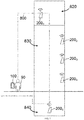
- Figure 1 is an application diagram of a maintenance monitoring device for passenger transport systems according to an embodiment of this invention
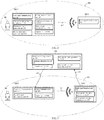
- Figure 2 is a schematic diagram of a maintenance monitoring device for passenger transport systems according to an embodiment of this invention, wherein a personal mobile terminal 100-1 and radio beacon 200-1 of an embodiment of this invention are presented
- Figure 3 is a schematic diagram of a maintenance monitoring device for passenger transport systems according to another embodiment of this invention, wherein a personal mobile terminal 100-2, radio beacon 200-2, and maintenance management terminal 300 of another embodiment of this invention are presented.
- the maintenance monitoring devices of the embodiments shown in Figure 2 and Figure 3 may be applied in the scenario shown in Figure 1 , to monitor the compliance of the maintenance operation flow of a maintenance operation individual 90.
- maintenance operation flows are predefined or set by corresponding standards or specifications, requiring maintenance workers to follow corresponding maintenance operation flows while performing maintenance operations.
- the specific standards or specifications are not restrictive in nature. For example, there may be different standards or specifications corresponding to different types of passenger transport system or different types of elevators.
- maintenance operation flows may be determined in advance. For example, maintenance operation tracks (i.e.: predetermined maintenance operation track information) and the maintenance operation times for performance at each on-site maintenance point may be determined in advance in accordance with standards or specifications.
- the maintenance operation may be said to be not in compliance.
- the maintenance monitoring device of the embodiment shown in Figure 2 may comprise the personal mobile terminal 100-1 and radio beacon 200-1 of an embodiment of this invention.
- the following gives detailed illustrations of the personal mobile terminal 100-1, radio beacon 200-1, and maintenance monitoring device of embodiments of this invention.
- the target of the maintenance operation i.e.: an elevator system
- the target of the maintenance operation i.e.: an elevator system
- it is installed in a building.
- a machine room 820 and elevator shaft 830 and has a corresponding landing area (e.g.: a lobby landing area); there are corresponding components requiring maintenance in the machine room 820 and/or elevator shaft 830, and a location where there is a concentration of one or more maintained components may be defined as an on-site maintenance point.
- the specific location and/or specific number of on-site maintenance points are not limited.
- radio beacons 200 are roughly installed at on-site check points in a machine room 820 and/or elevator shaft 830.
- radio beacons 200 1 , 200 2 , 200 3 , 200 4 and 200 5 may be separately installed on 5 different on-site check points.
- Each radio beacon 200 is used to continuously broadcast radio signals toward its surroundings.
- radio signals of a corresponding type or frequency may be broadcast through a radio signal broadcast unit 210. Through the broadcast radio signals, it is possible to interact with a personal mobile terminal 100 approach this radio beacon 200.
- Personal mobile terminals 100 are carried on maintenance workers 90.
- a maintenance worker 90 needs to perform maintenance operations on a given elevator system. If the maintenance operations are performed in accordance with maintenance operation specifications, the maintenance worker 90 needs to perform maintenance operations in accordance with the predetermined maintenance track 800 as shown in Figure 1 , e.g.: successively performing maintenance operations at the on-site check points where radio beacons 200 1 , 200 2 , 200 3 , 200 4 and 200 5 are located.
- a personal mobile terminal 100-1 is configured to sense radio signals as the maintenance worker 90 approaches each radio beacon 200-1, and the radio beacon 200-1 is configured to broadcast radio signals within a predetermined range 202 of its surroundings broadcast radio signals.
- the personal mobile terminal 100-1 is configured with a signal strength determination unit 170, and the signal strength determination unit 170 can determine the signal strength of the radio signals sensed by the personal mobile terminal 100-1.
- the predetermined range 202 represents the radio signal coverage range with a signal strength greater than or equal to a given predetermined value. When the signal strength of the radio signals sensed by the personal mobile terminal 100 is greater than or equal to this predetermined value, it means the personal mobile terminal 100 has entered this predetermined range 202. Therefore, the personal mobile terminal 100 can determine whether it has entered the predetermined range 202 by determining the strength of its sensed radio signals, thereby determining whether the maintenance worker 90 is performing maintenance operations at the on-site check point.
- the predetermined range 202 shown in Figure 2 may cover one or more components requiring maintenance at the corresponding on-site check point.
- the predetermined range 202 means that when the maintenance operation individual 90 performs maintenance operations in compliance at this on-site check point, the signal strength of the radio signals sensed by the personal mobile terminal 100-1 they carry will be greater than or equal to the predetermined value. This way, when the maintenance worker 90 enters the elevator system and performs maintenance operations, they will inevitably need to approach each radio beacon 200-1 (when in compliance with the maintenance operation flow) and sense radio signals.
- the predetermined range 202 will not necessarily have the kind of distinct boundary lines shown in Figure 2 . Its boundaries could be area coverage.
- the personal mobile terminal 100 is a smartphone, wearable smart device (e.g.: a smartband), or personal digital assistant (PAD [ sic ]), wherein it is set up with a processor and memory, and it can use installed applications (e.g.: APP) to help achieve the functions of the personal mobile terminal 100 in the embodiments of this invention.
- APP installed applications
- the personal mobile terminal 100-1 is configured with a close-range communications unit 110 which, at a minimum, is used to sense radio signals broadcast by radio beacons 200 roughly installed at on-site check points.
- the personal mobile terminal 100-1 is also configured with a time period information generation unit 130.
- the time period information generation unit 130 is configured to calculate the time period information of the radio signals broadcast by the corresponding radio beacon 200-1 and continuously sensed by the personal mobile terminal 100-1. It must be clarified that the personal mobile terminal 100-1 separately calculates corresponding time period information for the different radio beacons 200 of different on-site check points.
- radio beacon 200 3 As an example, if a maintenance operation individual 90 is performing maintenance operations at the on-site check point where radio beacon 200 3 is located, their carried personal mobile terminal 100-1 will be able to continuously sense the radio signals broadcast by radio beacon 200 3 , thus being able to calculate the time period information of the continuously sensed radio signals, e.g.: the length of the time period and points in time from the beginning of sensing radio signals broadcast by radio beacon 200 3 until the radio signals broadcast by radio beacon 200 3 are not sensed.
- the time period information of the continuously sensed radio signals e.g.: the length of the time period and points in time from the beginning of sensing radio signals broadcast by radio beacon 200 3 until the radio signals broadcast by radio beacon 200 3 are not sensed.
- the time period information may comprise the length of the time period and corresponding points in time.
- the length of the time period can reflect the actual maintenance operations time of the maintenance operation individual 90 at that on-site work point, and the points in time can reflect the time sequence of the locations of maintenance operations by the maintenance operation individual 90 at each on-site work point.
- the radio beacons 200 also have corresponding identifiers (ID) 201, and this ID 201 is broadcast at the same time the radio signals are broadcast.
- ID identifier
- the personal mobile terminal 100 e.g.: its close-range communications unit 110
- the time period information generation unit 130 generates and transmits time period information including the ID 201.
- the time period information generation unit 130 can generate and transmit time period information including ID 101 and ID 201. This way, the user of the time period information can ascertain the specific identities of the interacting personal mobile terminal 100 and radio beacon 200.
- the ID 201 of the radio beacons 200 can be uniformly allocated, e.g.: uniformly allocating digital footprints, thereby preventing the personal mobile terminal 100-1 from falsifying corresponding time period information.
- the radio beacon 200-1 is a Bluetooth module (e.g.: a low-power Bluetooth module BLE)
- the radio signals it broadcasts are Bluetooth signals (e.g.: low-power Bluetooth signals).
- the close-range communications unit 110 of the personal mobile terminal 100-1 is a Bluetooth communications unit; it can receive Bluetooth signals and simultaneously identify the ID 201 of the radio beacon 200-1 broadcasting these Bluetooth signals.
- the personal mobile terminal 100 or close-range communications unit 110 can automatically sense these Bluetooth signals when it has not established a Bluetooth connection with the radio beacon 200-1, and can identify the ID 201 of in the Bluetooth signals, and even the signal strength determination unit 170 can automatically detect the signal strength of the received Bluetooth signals when it has not established a Bluetooth connection with the radio beacon 200.
- the radio beacon 200-1 When, for example, the radio beacon 200-1 is a Wifi module, the radio signals it broadcasts are Wifi signals.
- the close-range communications unit 110 of the personal mobile terminal 100-1 is a Wifi communications unit; it can receive Wifi signals and simultaneously identify the ID 201 of the radio beacon 200 broadcasting these Wifi signals.
- the personal mobile terminal 100-1 or close-range communications unit 110-1 can automatically sense these Bluetooth [ sic ] signals when it has not established a Wifi connection with the radio beacon 200, and can identify the ID 201 of in the Wifi signals, and even the signal strength determination unit 170 can automatically detect the signal strength of the received Wifi signals when it has not established a Wifi connection with the radio beacon 200-1.
- the radio beacon 200-1 can be an infrared signal transmission component.
- the close-range communications unit 110 of the personal mobile terminal 100-1 can be configured as an infrared sensor.
- the radio beacon 200-1 can be a near field communication (NFC) signal transmission component.
- the close-range communications unit 110 of the personal mobile terminal 100-1 can be configured as an NFC communications unit.
- NFC near field communication
- radio beacon 200 is not limited to the preceding examples. It can be another type of radio beacon capable of achieving the same or similar functions.
- the personal mobile terminal 100-1 is correspondingly set up with a compliance determination unit 140.
- the compliance determination unit 140 can determine the compliance of the maintenance operations of the maintenance worker 90 at an on-site check point with a corresponding radio beacon 200, based on time period information.
- the personal mobile terminal 100-1 or compliance determination unit 140 can store set maintenance time thresholds T corresponding to each on-site check point (this maintenance time threshold may be determined based on maintenance operation specifications).
- the compliance determination unit 140 is also configured to determine that the maintenance operations of the maintenance worker 90 at a corresponding on-site check point are in compliance when the time length t in the time period information is greater than or equal to the corresponding maintenance time threshold T, and if not, it determines that the maintenance operations of the maintenance worker 90 at the corresponding on-site check point are not in compliance.
- the maintenance time threshold T3 of this on-site check point can be set as 30 minutes. If the duration of the maintenance worker's 90 maintenance operations at this on-site check point is less than 30 minutes, the time length t3 of the time period information calculated and generated by the personal mobile terminal 100-1 will be less than the maintenance time threshold T3, and the compliance determination unit 140 will automatically determine that the maintenance operations of the maintenance worker 90 at this on-site check point are not in compliance; conversely, it would automatically determine that they are in compliance.
- the personal mobile terminal 100-1 can also be set up with a maintenance track generation unit 150.
- the maintenance track generation unit 150 is configured to use the chronological relationships of the time period information for multiple on-site check points to generate maintenance track information corresponding to these multiple on-site check points. As shown in Figure 1 , based on the points in time in the time period information, it is possible to determine the chronological relationship in the sensing of radio signals from radio beacons 200 1 , 200 2 , 200 3 , 200 4 and 200 5 by a given personal mobile terminal 100-1. Thus, it is possible to determine the maintenance track of the maintenance worker 90 and generate corresponding maintenance track information.
- the compliance determination unit 140 can also determine the compliance of the maintenance operations of a maintenance worker 90 at the on-site check points of the corresponding radio beacons based on maintenance track information generated by the maintenance track generation unit 150.
- predetermined maintenance track information 800 for multiple on-site check points is stored in the personal mobile terminal 100-1 or compliance determination unit 140; these are compliant maintenance tracks.
- the compliance determination unit 140 compares the generated maintenance track information to the stored predetermined maintenance track information 800 to determine the compliance of the maintenance worker's maintenance operations.
- the personal mobile terminal 100-1 will successively sense the radio signals of radio beacons 200 5 , 200 4 , 200 3 , and 200 2 , and the points in time of the corresponding generated time period information will reflect the order relationship of these maintenance operations. Therefore, when the generated maintenance track information differs sharply from the predetermined maintenance track information 800, it can be determined that the maintenance operations of the maintenance worker 90 at the on-site check points of radio beacons 200 5 , 200 4 , 200 3 , and 200 2 are not in compliance. For example, this is primarily expressed as a compliance failure with regard to the sequence of maintenance operations.
- the personal mobile terminal 100-1 can also be set up with a prompt information generation unit 160.
- the prompt information generation unit 160 can receive the compliance results determined by the compliance determination unit 140, such as "in compliance” and "not in compliance”.
- the prompt information generation unit 160 can generate corresponding promptly information when the determined compliance results are "not in compliance", such as generating corresponding voice prompt information and/or vibration prompt information.
- the maintenance worker 90 can become aware of or ascertain this prompt information and its meaning in a timely fashion, which is beneficial to promptly correcting maintenance operation errors or making prompt maintenance operation compensations.
- the personal mobile terminal 100-1 can also be set up with a corresponding input/output unit 180.
- a corresponding input/output unit 180 For example, this could be a keyboard, display screen, or speech device.
- the prompt information can be output through the input/output unit 180, and the monitored maintenance operations process can be dynamically presented on the input/output unit 180 (such as a display screen).
- An example would be dynamically presenting completed maintenance track information, while also presenting the compliance status for each on-site check point (the compliance results determined by the compliance determination unit 140, such as "in compliance" and "not in compliance”).
- a timely prompt can be made through this output or presented information when the maintenance operations of a maintenance worker 90 are not in compliance, and the maintenance worker 90 can promptly grasp, on-site, the compliance status of their maintenance operations.
- the generated maintenance track information covers all on-site check points and the on-site check points are labeled as "in compliance" (for example, using color coding)
- the maintenance worker 90 can ascertain that the maintenance operations have basically
- the maintenance monitoring device of the embodiment shown in Figure 2 does not rely upon a third party maintenance management terminal 300, as does the embodiment shown in Figure 3 . Its implementation is relatively easy and low-cost.
- the generation and transmission of time period information may be carried out by a radio beacon 200-2.
- the radio beacon 200-2 has a time period information generation unit 220.
- the time period information generation unit 220 is configured to calculate time period information 410 based on the radio signals continuously sensed by the personal mobile terminal 100-2 carried by the maintenance worker 90.
- the time period information 410 can be transmitted by the time period information transmission unit 230 in the radio beacon 200-2 to the maintenance management terminal 300.
- the personal mobile terminal 100-2 when it successfully senses radio signals, it can establish a wireless connection with the radio beacon 200-2 (such as a Bluetooth connection), feedback corresponding signals to conduct a notification that the radio signals broadcast by the radio beacon 200-2 have been successfully sensed by the personal mobile terminal 100, and then trigger the time period information generation unit 220 to begin timekeeping (for example, generating a corresponding timestamp), until the personal mobile terminal's 100-2 sensing of radio signals fails, when it feeds back corresponding signals to conduct a notification that the radio signals broadcast by the radio beacon 200-2 are not being sensed by the personal mobile terminal 100, and then triggers the time period information generation unit 220 to halt timekeeping (for example, generating a corresponding timestamp).
- the radio beacon 200-2 such as a Bluetooth connection
- the time period information transmission unit 230 transmits the corresponding time period information 410. Because the time period information 410 is generated through each radio beacon 200-2, it avoids having the personal mobile terminal 100-2 circumvent monitoring through fake time period information.
- the radio beacon 200-2 can have a corresponding ID 201, enabling the radio beacon 200 to ascertain which personal mobile terminal 100-2 is sensing radio signals.
- the personal mobile terminal 100-2 also has a corresponding identifier (ID) 101, and this ID 101 is transmitted to the radio beacon 200-2 when the wireless connection is established.
- the radio beacon 200 receives this ID 101, and the time period information generation unit 220 can generate time period information 410 containing ID 101 and ID 201.
- the receiver or user of the time period information 410 can ascertain the specific identities of the interacting personal mobile terminal 100-2 and radio beacon 200-2.
- the maintenance monitoring device also comprises a maintenance management terminal 300.
- the corresponding functional units of the personal mobile terminal 100-1 of the embodiment shown in Figure 2 can be implemented in the maintenance management terminal 300.
- the maintenance operation compliance determination is implemented in the maintenance management terminal 300.
- the maintenance management terminal 300 can establish a connection with one or more elevator system radio beacons 200-2, and it can establish connections with one or more personal mobile terminals 100-2. For example, it can establish connections through a wireless network.
- the maintenance management terminal 300 can be implemented through a server or cloud terminal.
- Figure 3 only indicates the connection between the radio beacon 200-2 of an elevator system and the maintenance management terminal 300, or the connection between a personal mobile terminal 100-2 and the maintenance management terminal 300.
- the maintenance management terminal 300 can be used to manage the maintenance work of multiple elevator systems. For example, it can simultaneously establish connections with multiple personal mobile terminals 100 and/or multiple radio beacons 200.
- a time period information acquisition unit 310 is set up in the maintenance management terminal 300. It is used to receive time period information 410 from the radio beacon 200-2.
- the maintenance management terminal 300 may also be set up with one or more of the following: a compliance determination unit 340, maintenance track generation unit 350, and prompt information generation unit 360. It must be clarified that the compliance determination unit 340, maintenance track generation unit 350, and prompt information generation unit 360 of the maintenance management terminal 300 can have the functions and/or configurations corresponding to the compliance determination unit 140, maintenance track generation unit 150, and prompt information generation unit 160 of the personal mobile terminal 100-1 in the embodiment shown in Figure 2 . Therefore, the descriptions will not be repeated here.
- one or more of the compliance determination unit 140, maintenance track generation unit 150, and prompt information generation unit 160 of the personal mobile terminal 100-1 in the embodiment shown in Figure 2 may be omitted from the personal mobile terminal 100-2.
- the personal mobile terminal 100-2 can establish a wireless connection with the maintenance management terminal 300 through a remote communications unit 120.
- a wireless network connection can be established, thereby achieving data transmission between the two.
- the maintenance management terminal 300 can have a transmission unit 320.
- the transmission unit 320 can transmit results output by the compliance determination unit 340, maintenance track generation unit 350, and prompt information generation unit 360 to the corresponding personal mobile terminal 100-2 in real time.
- the personal mobile terminal 100-2 can have a corresponding input/output unit 180.
- personal mobile terminal 100-2 can output prompt information in real time and present the maintenance operations process.
- the maintenance monitoring device of the preceding embodiment can automatically perform monitoring of the maintenance times for each on-site check point, for example, when the maintenance worker 90 is performing maintenance operations.
- radio beacons such as Bluetooth modules, low-power Bluetooth modules, and WiFi modules are used, it is even possible to automatically perform monitoring of the maintenance operations of each maintenance operation individual in a manipulation-free fashion, without adding to the workload of the maintenance operation individual.
- Maintenance operations monitoring is simply implemented, thus it is beneficial to boosting compliance in maintenance operations and also boosting the quality and effects of maintenance operations.
- FIG 4 shows the flow diagram of a maintenance monitoring method for passenger transport systems according to an embodiment of this invention.
- time period information is calculated and generated by the personal mobile terminal 100.
- Figure 4 the following gives detailed illustrations of the maintenance monitoring method of this invention embodiment.
- a radio beacon 200-1 roughly installed at an on-site check point of an entry elevator system broadcasts radio signals toward its surroundings, i.e.: Step S11.
- the radio signals can be continuously broadcast.
- they can basically cover a predetermined range 202 as shown in Figure 2 .
- the radio beacon 200 has a corresponding ID 201.
- the ID 201 is broadcast simultaneously with the radio signals.
- the personal mobile terminal 100-1 carried by the maintenance worker 90 automatically senses these radio signals, i.e.: Step S21.
- the radio beacon 200-1 has a corresponding ID 201
- the personal mobile terminal 100-1 has a corresponding ID 101.
- Step S21 the ID 201 of the radio beacon 200-1 is also identified. In one embodiment, this sensing process can be automatically carried by the personal mobile terminal 100-1, e.g.: carried out without manipulation by the maintenance worker 90.
- time period information for the continuously sensed radio signals broadcast by the radio beacon 200-1 is automatically calculated, i.e.: Step S22.
- Step S22 time period information containing ID 201 and ID 101 is generated. This way, the user of the time period information can ascertain which maintenance worker 90 is performing maintenance operations at which on-site check point of which elevator system. Also, the authenticity of the time period information can be verified through authentication of the ID 201.
- Step S23 Maintenance track information corresponding to multiple on-site check points is generated based on the chronological relationships of the time period information corresponding to multiple on-site check points, i.e.: Step S23. This way, the personal mobile terminal 100 can automatically and dynamically obtain maintenance track information. For example, Step S23 can be carried out through the maintenance track generation unit 150 of the personal mobile terminal 100-1.
- Step S24 can be carried out through the compliance determination unit 140 of the personal mobile terminal 100-1.
- the compliance determination unit 140 is also configured to determine that the maintenance operations of the maintenance worker 90 at a corresponding on-site check point are in compliance when the time length t in the time period information is greater than or equal to the corresponding maintenance time threshold T, and if not, it determines that the maintenance operations of the maintenance worker 90 at the corresponding on-site check point are not in compliance.
- the generated maintenance track information is compared to stored predetermined maintenance track information 800 to determine the compliance of the maintenance operations of the maintenance worker 90.
- Step S25 When “no” is determined, that is, when the determined results are “not in compliance”, the process moves to Step S25 and corresponding prompt information is generated, such as generating corresponding voice prompt information and/or vibration prompt information.
- Step S25 may be carried out through the prompt information generation unit 160 of the personal mobile terminal 100-1.
- the maintenance worker 90 can become aware of or ascertain this prompt information and its meaning in a timely fashion, which is beneficial to promptly correcting maintenance operation errors or making prompt maintenance operation compensations.
- the personal mobile terminal 100-2 can output or present the results of Step S23 through S25, such as outputting prompt information and presenting the maintenance operations process, i.e.: S26.
- this prompt information can be output through the input/output unit 180, and the monitored maintenance operations process can be dynamically presented on the input/output unit 180 (such as a display screen).
- An example would be dynamically presenting completed maintenance track information, while also presenting the compliance status for each on-site check point (the compliance results determined by the compliance determination unit 140, such as "in compliance" and "not in compliance”).
- a timely prompt can be made through this output or presented information when the maintenance operations of a maintenance worker 90 are not in compliance, and the maintenance worker 90 can promptly grasp, on-site, the compliance status of their maintenance operations.
- the generated maintenance track information covers all on-site check points and the on-site check points are labeled as "in compliance" (for example, using color coding)
- the maintenance worker 90 can ascertain that the maintenance operations have basically been completed in a compliant fashion.
- FIG. 5 shows a flow diagram of a maintenance monitoring method for passenger transport systems according to another embodiment of this invention.
- time period information is transmitted by the radio beacon 200 to the maintenance management terminal 300, and the corresponding maintenance track information generation step (S32), compliance determination step (S33), and prompt information generation step (S34) are carried out at the maintenance management terminal 300.
- S32 maintenance track information generation step
- S33 compliance determination step
- S34 prompt information generation step
- a radio beacon 200-2 roughly installed at an on-site check point of an entry elevator system broadcasts radio signals toward its surroundings, i.e.: Step S11.
- the radio signals can be continuously broadcast.
- they can basically cover a predetermined range 202 as shown in Figure 3 .
- Step S21 When a maintenance worker 90 approaches the radio beacon 200-2 (for example, performing maintenance operations at this on-site check point), the personal mobile terminal 100-2 carried by the maintenance worker 90 automatically senses these radio signals, i.e.: Step S21.
- a wireless connection is established between the personal mobile terminal 100-2 and the radio beacon 200-2, i.e.: Step S211.
- a Bluetooth connection can be automatically established.
- the ID 101 of the personal mobile terminal 100-2 is also transmitted to the radio beacon 200-2.
- the radio beacon 200-2 can ascertain which personal mobile terminal 100-2 has successfully automatically sensed the radio signals it is broadcasting.
- the radio beacon 200-2 In response to the personal mobile terminal 100 successfully sensing the radio signals, the radio beacon 200-2 automatically calculates the time period information 420 for the continuously sensed radio signals broadcast by the radio beacon 200-2, i.e.: Step S12.
- Step S12 can be carried out in the time period information generation unit 220 of the radio beacon 200-2.
- time period information containing ID 201 and ID 101 is generated. This way, the receiver or user of the time period information (for example, the maintenance management terminal 300) can ascertain which maintenance worker 90 is performing maintenance operations at which on-site check point of which elevator system.
- this time period information 410 is transmitted to the maintenance management terminal 300, i.e.: Step S13.
- the maintenance management terminal 300 receives time period information 410 from the radio beacon 200-2, i.e.: Step S31.
- Step S23 can be carried out through the maintenance track generation unit 350 of the maintenance management terminal 300.
- Step S33 it is possible to determine the compliance of the maintenance operations performed by a maintenance worker 90 at the on-site check point of a corresponding radio beacon 200-2 based on time period information and/or maintenance track information, i.e.: Step S33.
- Step S33 can be carried out through the compliance determination unit 340 of the maintenance management terminal 300.
- Step S34 When “no” is determined, that is, when the determined results are “not in compliance”, the process moves to Step S34 and corresponding prompt information is generated, such as generating corresponding voice prompt information and/or vibration prompt information.
- Step S34 may be carried out through the prompt information generation unit 360 of the maintenance management terminal 300.
- the maintenance management terminal 300 can transmit the results from Steps S32 through S34 to the personal mobile terminal 100-2 in real time, i.e.: Step S35.
- the personal mobile terminal 100-2 correspondingly receives the results transmitted by the maintenance management terminal 300, outputs prompt information, and presents the maintenance operations process, i.e.: S26.
- maintenance monitoring device and maintenance monitoring method of the preceding embodiments may be applied to a corresponding elevator system, escalator system, or moving walk system.
- aspects of this invention can be embodied as systems, methods, or computer program products. Therefore, the aspects of this invention may employ the following forms: a purely hardware implementation scheme, purely software implementation scheme (comprising firmware, resident software, microcode, etc.), or what, in this text, could generally be called a "service”, “circuit”, “circuit system”, “module”, and/or "processing system” implementation scheme combining software and hardware aspects. Also, the aspects of this invention may employ the form of a computer program product in one or more computer-readable media with computer-readable program code.
- Computer-readable media may be computer-readable signal media or computer-readable storage media.
- Computer-readable storage media include but are not limited to electronic, magnetic, optical, electromagnetic, infrared, or semiconductor systems, apparatus, or devices, or any suitable combination of the above.
- the following are more specific examples of computer-readable storage media (this is a non-exhaustive list): an electrical connection with one or more electrical wires, portable computer disk, hard drive, random-access memory (RAM), read-only memory (ROM), erasable programmable read-only memory (EPROM or flash memory), optical fiber, portable compact disc read-only memory (CD-ROM), optical storage device, magnetic storage device, or any suitable combination of these.
- computer-readable storage media can contain or store any physical media for use by or in combination with an instruction execution system, apparatus or device.
- the program code and/or executable instructions on computer-readable media may use any suitable media for transmission, comprising but not limited to wireless, wired, fiber-optic cable, and RF options, or any suitable combination of these.
- the computer program code used to implement the operations of the aspects of this invention may be written using any combination of one or more programming languages, including object-oriented programming languages such as Java, Smalltalk, and C++, and traditional programming languages such as "C" programming language or a similar programming language.
- the program code may be entirely executed on the user's computer (device), partially executed on the user's computer, executed as an independent software bundle, partially executed on the user's computer and partially executed on a remote computer, or entirely executed on a remote computer or server.
- the remote computer may be connected to the user's computer through any type of network, including local area networks (LAN) or wide area networks (WAN), or it may be connected to an external computer (for example, using an Internet service provider for a connection through the Internet).
- LAN local area networks
- WAN wide area networks
- the computer program instructions may be provided to the processor of a general-purpose computer, special-purpose computer such as an image processor, or other programmable data processing apparatus to produce a machine, enabling the instructions executed by the computer's processor or other programmable data processing apparatus to create a mode used to achieve the function/actions specified in one or more blocks of the flow diagrams and/or block diagrams.
- the computer program instructions can also be loaded onto a computer, other programmable data processing apparatus, or other device, to cause a series of operation steps to be executed on the computer, other programmable apparatus, or other device, to produce a computer implementation process and cause the instructions executed on the computer or other programmable apparatus to provide a process used to achieve the functions and actions specified in this text.
- the functions/operations in the blocks may take place in a sequence other than that shown in the flow diagrams.
- two blocks presented successively may actually be executed at basically the same time, or these blocks may be executed in reverse order at times.
- the specifics depend on the functions/operations involved. Even though a specific sequence of steps is presented, disclosed, and required, it should be understood that the steps may be implemented in any order, separately, or combined, unless otherwise noted, and shall still benefit from this disclosure.
Landscapes
- Engineering & Computer Science (AREA)
- Computer Networks & Wireless Communication (AREA)
- Signal Processing (AREA)
- Medical Informatics (AREA)
- Computing Systems (AREA)
- General Health & Medical Sciences (AREA)
- Health & Medical Sciences (AREA)
- Mobile Radio Communication Systems (AREA)
- Management, Administration, Business Operations System, And Electronic Commerce (AREA)
- Telephone Function (AREA)
- Maintenance And Inspection Apparatuses For Elevators (AREA)
- Telephonic Communication Services (AREA)
- Vehicle Waterproofing, Decoration, And Sanitation Devices (AREA)
- Escalators And Moving Walkways (AREA)
Abstract
Description
- This invention belongs to the technical field of passenger transport systems and relates to maintenance monitoring of passenger transport systems.
- The installation and application of passenger transport systems (for example, elevators, escalators, and moving walks) to a variety of buildings is becoming increasingly widespread. Passenger transport system maintenance work is extremely important to the safe operation of passenger transport systems. Therefore, there are maintenance operation flows for various passenger transport systems stipulated or standardized by corresponding industry standards.
- Currently, passenger transport system maintenance operations heavily rely on individual maintenance operations personnel for execution. Due to personal discrepancies or subjectivity among maintenance operation individuals, it is difficult to monitor whether maintenance operation individuals are strictly following stipulated or standardized maintenance operation flows (e.g.: predetermined maintenance operation specifications) in their performance of maintenance operations, or the monitoring of the maintenance operation flows of maintenance operation individuals is carried out through manual monitoring.
- According to the first aspect of this invention, it provides a maintenance monitoring device for passenger transport systems, comprising:
- a radio beacon, which is roughly installed at an on-site check point of a passenger transport system and is used to broadcast radio signals toward its surroundings ; and
- a personal mobile terminal, which is carried by maintenance workers and is used to sense radio signals when the maintenance workers approach the corresponding radio beacon;
- wherein the personal mobile terminal and/or the radio beacon is configured to calculate the time period information of radio signals broadcast by the corresponding radio beacon and continuously sensed by the personal mobile terminal.
- A maintenance monitoring device based on an embodiment of this invention, wherein the personal mobile terminal comprises:
- a time period information generation unit, which is configured to calculate the time period information of radio signals broadcast by the corresponding radio beacon and continuously sensed by the personal mobile terminal; and
- a compliance determination unit, which is configured to determine the compliance of the maintenance operations of the maintenance workers at an on-site check point of the corresponding radio beacon based on the time period information.
- A maintenance monitoring device based on an embodiment of this invention, wherein it also comprises a maintenance management terminal, wherein the maintenance management terminal comprises:
- a time period information acquisition unit, which is used to receive the time period information from the personal mobile terminal or radio beacon; and
- a compliance determination unit, which is used to determine the compliance of the maintenance operations of the maintenance workers at an on-site check point of the corresponding radio beacon based on the time period information.
- A maintenance monitoring device based on an embodiment of this invention, wherein the compliance determination unit is also configured to: determine that the maintenance operations of the maintenance worker at a corresponding on-site check point are in compliance when the length of time in the time period information is greater than or equal to a corresponding maintenance time threshold, and if not, determine that the maintenance operations of the maintenance worker at a corresponding on-site check point are not in compliance.
- A maintenance monitoring device based on an embodiment of this invention, wherein the personal mobile terminal or the maintenance management terminal also comprises:
a maintenance track generation unit, which is configured to generate maintenance track information corresponding to multiple on-site check points based on the chronological relationships of the time period information corresponding to these multiple on-site check points. - A maintenance monitoring device based on an embodiment of this invention, wherein the compliance determination unit is also configured to compare the maintenance track information to predetermined maintenance track information to determine the compliance of the maintenance operations of maintenance workers.
- A maintenance monitoring device based on an embodiment of this invention, wherein the personal mobile terminal or the maintenance management terminal also comprises:
a prompt information generation unit, which is used to generate corresponding prompt information when the determined compliance results are not in compliance. - A maintenance monitoring device based on an embodiment of this invention, wherein the radio beacon has a corresponding first identifier, and the radio beacon broadcasts the first identifier while broadcasting the radio signals.
- A maintenance monitoring device based on an embodiment of this invention, wherein the personal mobile terminal is also configured to identify the first identifier while sensing the radio signals and determine the on-site check point corresponding to the time period information based on the identified first identifier.
- A maintenance monitoring device based on an embodiment of this invention, wherein the maintenance management terminal also comprises:
- a prompt information generation unit, which is used to generate corresponding prompt information when the determined compliance results are not in compliance; and
- a transmission unit, which is used to transmit at least the prompt information to the personal mobile terminal.
- A maintenance monitoring device based on an embodiment of this invention, wherein the radio beacon has a corresponding first identifier, the personal mobile terminal has a corresponding second identifier, and the first identifier is broadcast when the radio signals are broadcast;
the personal mobile terminal is also configured to identify the first identifier while sensing the radio signals and to generate and transmit time period information including the first identifier and second identifier. - A maintenance monitoring device based on an embodiment of this invention, wherein the radio beacon is a Bluetooth module and the radio signals are Bluetooth signals, or the radio beacon is a low-power Bluetooth module and the radio signals are low-power Bluetooth signals, or the radio beacon is a Wifi module and the radio signals are Wifi signals.
- A maintenance monitoring device based on an embodiment of this invention, wherein the radio beacon is configured to broadcast the radio signals within a predetermined range toward its surroundings;
the personal mobile terminal is also configured to determine whether it has entered the predetermined range by determining the signal strength of the radio signals it senses, thereby determining whether the maintenance worker is approaching the radio beacon. - A maintenance monitoring device based on an embodiment of this invention, wherein the personal mobile terminal is configured to be able to automatically sense the radio signals when a wireless connection with the radio beacon has not been established.
- According to the second aspect of this invention, it provides a maintenance monitoring method for passenger transport systems, comprising the following steps:
- sending radio signals broadcast by a radio beacon of an on-site check point roughly installed on the passenger transport system; and
- calculating the time period information of continuously sensed radio signals broadcast by the corresponding radio beacon.
- A maintenance monitoring method based on an embodiment of this invention, wherein it also comprises the following step:
generating maintenance track information corresponding to multiple on-site check points based on the chronological relationships of the time period information corresponding to these multiple on-site check points. - A maintenance monitoring method based on an embodiment of this invention, wherein it also comprises the following step:
determining the compliance of the maintenance operations of the maintenance workers at an on-site check point of the corresponding radio beacon based on the time period information and/or the maintenance track information. - A maintenance monitoring method based on an embodiment of this invention, wherein, during the step of determining compliance based on time period information, it is determined that the maintenance operations of the maintenance worker at a corresponding on-site check point are in compliance when the length of time in the time period information is greater than or equal to a corresponding maintenance time threshold, and if not, it is determined that the maintenance operations of the maintenance worker at a corresponding on-site check point are not in compliance.
- A maintenance monitoring method based on an embodiment of this invention, wherein, during the step of determining compliance based on maintenance track information, the maintenance track information is compared to predetermined maintenance track information to determine the compliance of the maintenance operations of maintenance workers.
- A maintenance monitoring method based on an embodiment of this invention, wherein it also comprises the following step: generating corresponding prompt information when the determined compliance results are not in compliance.
- A maintenance monitoring method based on an embodiment of this invention, wherein the first identifier of the radio beacon is identified during the sensing step;
during the step of calculating the time period information, time period information including the first identifier and the second identifier of the personal mobile terminal is generated. - A maintenance monitoring method based on an embodiment of this invention, wherein the radio signals are Bluetooth signals, low-power Bluetooth signals, or Wifi signals.
- A maintenance monitoring method based on an embodiment of this invention, wherein the signal strength of the sensed radio signals is determined during the sensing step.
- A maintenance monitoring method based on an embodiment of this invention, wherein, during the step of sensing radio signals, the radio signals are automatically sensed when a wireless connection has not been established with the radio beacon.
- According to the third aspect of this invention, it provides a personal mobile terminal used to monitor the maintenance of passenger transport systems by maintenance workers, which can be carried by the maintenance workers; characterized in that the personal mobile terminal comprises:
- a close-range communications unit, which is configured to sense radio signals broadcast by a radio beacon of an on-site check point roughly installed on the passenger transport system; and
- a time period information generation unit, which is configured to calculate the time period information of the radio signals broadcast by a corresponding radio beacon and continuously sensed by the close-range communications unit.
- A personal mobile terminal based on an embodiment of this invention, wherein the personal mobile terminal also comprises:
a maintenance track generation unit, which is configured to generate maintenance track information corresponding to multiple on-site check points based on the chronological relationships of the time period information corresponding to these multiple on-site check points. - A personal mobile terminal based on an embodiment of this invention, wherein it also comprises:
a compliance determination unit, which is configured to determine the compliance of the maintenance operations of the maintenance workers at an on-site check point of the corresponding radio beacon, based on the time period information and/or the maintenance track information. - A personal mobile terminal based on an embodiment of this invention, wherein the compliance determination unit is also configured to: determine that the maintenance operations of the maintenance worker at a corresponding on-site check point are in compliance when the length of time in the time period information is greater than or equal to a corresponding maintenance time threshold, and if not, determine that the maintenance operations of the maintenance worker at a corresponding on-site check point are not in compliance.
- A personal mobile terminal based on an embodiment of this invention, wherein the compliance determination unit is also configured to compare the maintenance track information to predetermined maintenance track information to determine the compliance of the maintenance operations of maintenance workers.
- A personal mobile terminal based on an embodiment of this invention, wherein the personal mobile terminal also comprises:
a prompt information generation unit, which is used to generate corresponding prompt information when the determined compliance results are not in compliance. - A personal mobile terminal based on an embodiment of this invention, wherein the close-range communications unit is also configured to identify the first identifier of the radio beacon, and the time period information generation unit is also configured to generate time period information including the first identifier and the second identifier of the personal mobile terminal.
- A personal mobile terminal based on an embodiment of this invention, wherein the close-range communications unit is a Bluetooth communication unit, low-power Bluetooth communications unit, or Wifi communications unit.
- A personal mobile terminal based on an embodiment of this invention, wherein it also comprises a signal strength determination unit, which is configured to determine the signal strength of the sensed radio signals.
- A personal mobile terminal based on an embodiment of this invention, wherein the personal mobile terminal is configured to be able to automatically sense the radio signals when a wireless connection with the radio beacon has not been established.
- According to the fourth aspect of this invention, it provides a computer device, comprising a memory, processor, and computer program stored in the memory and which can be run on the processor; when the processor runs the program, it implements the steps of any one of the methods from the second aspect of this invention.
- According to the fifth aspect of this invention, it provides a computer-readable storage medium, on which a computer program is stored; this program is run by a processor to implement the steps of any one of the methods from the second aspect of this invention.
- According to the sixth aspect of this invention, it provides a radio beacon, used to monitor the maintenance of passenger transport systems by maintenance workers, wherein the radio beacon is roughly installed at an on-site check point of the passenger transport system, and is configured to be able to broadcast radio signals toward its surroundings; the radio beacon comprises:
A time period information generation unit, which is configured to calculate the time period information of the radio signals continuously sensed by the personal mobile terminals carried by the maintenance workers. - A radio beacon based on an embodiment of this invention, wherein it also comprises: a time period information transmission unit, which is configured to transmit the time period information to a maintenance management terminal.
- A radio beacon based on an embodiment of this invention, wherein the radio beacon has a corresponding first identifier, and the radio beacon is also configured to receive the second identifier of the personal mobile terminal; the time period information generation unit is also configured to generate time period information including the first identifier and the second identifier.
- A radio beacon based on an embodiment of this invention, wherein the radio beacon is a Bluetooth module, low-power Bluetooth module, or Wifi module.
- According to the seventh aspect of this invention, it provides a maintenance management terminal, which is used to monitor the maintenance of passenger transport systems by maintenance workers, wherein at a minimum, the maintenance management terminal can establish a wireless connection with a personal mobile terminal carried by a maintenance worker; the maintenance management terminal comprises
a time period information acquisition unit, which is used to receive time period information from the personal mobile terminal or a radio beacon roughly installed at an on-site check point of the passenger transport system, wherein the time information is the time during which the personal mobile terminal continuously senses the radio signal broadcast by a corresponding radio beacon; and
a compliance determination unit, which is used to determine the compliance of the maintenance operations of the maintenance workers at an on-site check point of the corresponding radio beacon based on the time period information. - A maintenance management terminal based on an embodiment of this invention, wherein the maintenance management terminal also comprises:
maintenance track generation unit, which is configured to generate maintenance track information corresponding to multiple on-site check points based on the chronological relationships of the time period information corresponding to these multiple on-site check points. - A maintenance management terminal based on an embodiment of this invention, wherein the compliance determination unit is also configured to compare the maintenance track information to predetermined maintenance track information to determine the compliance of the maintenance operations of maintenance workers.
- A maintenance management terminal based on an embodiment of this invention, wherein the compliance determination unit is also configured to: determine that the maintenance operations of the maintenance worker at a corresponding on-site check point are in compliance when the length of time in the time period information is greater than or equal to a corresponding maintenance time threshold, and if not, determine that the maintenance operations of the maintenance worker at a corresponding on-site check point are not in compliance.
- A maintenance management terminal based on an embodiment of this invention, wherein the maintenance management terminal also comprises:
prompt information generation unit, which is used to generate corresponding prompt information when the determined compliance results are not in compliance. - A maintenance management terminal based on an embodiment of this invention, wherein the time information is time period information including a first identifier of the radio beacon and a second identifier of the personal mobile terminal.
- The preceding features and operations of this invention will become more evident based on the following description and attached drawings.
- Looking at the following detailed description of the attached drawings, the preceding and other objectives and advantages of this invention will become more fully clear, wherein the same or similar elements employ the same labels.
-
Figure 1 is an application diagram of a maintenance monitoring device for passenger transport systems according to an embodiment of this invention. -
Figure 2 is a schematic diagram of a maintenance monitoring device for passenger transport systems according to an embodiment of this invention, wherein a personal mobile terminal and radio beacon of an embodiment of this invention are presented. -
Figure 3 is a schematic diagram of a maintenance monitoring device for passenger transport systems according to another embodiment of this invention, wherein a personal mobile terminal, radio beacon, and maintenance management terminal of another embodiment of this invention are presented -
Figure 4 is a flow diagram of a maintenance monitoring method for passenger transport systems according to an embodiment of this invention. -
Figure 5 is a flow diagram of a maintenance monitoring method for passenger transport systems according to another embodiment of this invention - Here, a more complete description of this invention is given, referring to the attached drawings; the attached drawings present exemplary embodiments of this invention. However, this invention may be achieved in many different ways and should not be understood as being limited to the embodiments described here. On the contrary, providing these embodiments makes this disclosure more thorough and complete and fully conveys the concepts of this invention to persons skilled in the art. In the attached drawings, identical labels refer to identical elements or components, so their description will be omitted.
- Certain block diagrams shown in the drawings are functional entities, and they do not necessarily correspond to independent physical or logical entities. These functional entities can be achieved in software form, or these functional entities can be achieved in one or more hardware modules or integrated circuits, or these functional entities can be achieved in different network and/or processor devices and/or microcontroller devices.
- Below, this invention is described by referencing flow diagrams and/or block diagrams based on the methods and devices of the embodiments of this invention. It should be understood that computer program instructions can be used to achieve every flow and/or block in the flow diagrams and/or block diagrams, as well as combinations of flows and/or blocks in the flow diagrams and/or block diagrams. These computer program instructions can be provided to the processor of a general-purpose computer, special-purpose computer, or other programmable data processing device to form a machine, causing the instructions executed by the processor of a computer or other programmable data processing device to create a device used to achieve the specified function/operation components in these flow diagrams and/or blocks and/or multiple flow diagrams.
- These computer program instructions can also be stored in computer-readable memory, and these instructions can direct a computer or other programmable processor to achieve functions in a given mode, causing the instructions stored in this computer-readable memory to form a product comprising instruction components achieving the functions/operations specified in one or more blocks of a flow diagram and/or block diagram.
- These computer program instructions can also be loaded onto a computer or other programmable data processor, enabling the execution of a series of operations steps on the computer or other programmable processor, to form a computer implementation process. Thus, these instructions executed on the computer or other programmable data processor provide steps for achieving the functions or operations specified in one or more blocks of these flow diagrams and/or block diagrams. It should also be noted that in certain alternative implementations, the functions/operations in the blocks may take place in a sequence other than that shown in the flow diagrams. For example, two blocks presented successively may actually be executed at basically the same time, or these blocks may be executed in reverse order at times. The specifics depend on the functions/operations involved.
- In this invention, the passenger transport system may be an elevator system, automatic escalator system, or moving walk system. Below, an example based on elevator system is used to describe the personal mobile terminal, radio beacon, maintenance management terminal, maintenance monitoring device, and maintenance monitoring method of this invention. Based on the following examples, persons skilled in the art will understand that the personal mobile terminal, radio beacon, maintenance management terminal, device, and method of this invention may be analogically applied to use in the maintenance of other types of passenger transport systems, such as escalator systems and moving walk system. The changes, such as applicability, that may be required can be ascertained by persons skilled in the art, guided by the embodiments of this invention.
-
Figure 1 is an application diagram of a maintenance monitoring device for passenger transport systems according to an embodiment of this invention;Figure 2 is a schematic diagram of a maintenance monitoring device for passenger transport systems according to an embodiment of this invention, wherein a personal mobile terminal 100-1 and radio beacon 200-1 of an embodiment of this invention are presented;Figure 3 is a schematic diagram of a maintenance monitoring device for passenger transport systems according to another embodiment of this invention, wherein a personal mobile terminal 100-2, radio beacon 200-2, andmaintenance management terminal 300 of another embodiment of this invention are presented. It is to be understood that the maintenance monitoring devices of the embodiments shown inFigure 2 and Figure 3 may be applied in the scenario shown inFigure 1 , to monitor the compliance of the maintenance operation flow of amaintenance operation individual 90. - It should be explained that maintenance operation flows are predefined or set by corresponding standards or specifications, requiring maintenance workers to follow corresponding maintenance operation flows while performing maintenance operations. The specific standards or specifications are not restrictive in nature. For example, there may be different standards or specifications corresponding to different types of passenger transport system or different types of elevators. However, it should be understood that when standards or specifications have already been determined, maintenance operation flows may be determined in advance. For example, maintenance operation tracks (i.e.: predetermined maintenance operation track information) and the maintenance operation times for performance at each on-site maintenance point may be determined in advance in accordance with standards or specifications. When the current maintenance operation fails to satisfy its predetermined maintenance operation flow, the maintenance operation may be said to be not in compliance.
- The maintenance monitoring device of the embodiment shown in
Figure 2 may comprise the personal mobile terminal 100-1 and radio beacon 200-1 of an embodiment of this invention. In combination withFigure 1 andFigure 2 , the following gives detailed illustrations of the personal mobile terminal 100-1, radio beacon 200-1, and maintenance monitoring device of embodiments of this invention. - As shown in
Figure 1 , the target of the maintenance operation, i.e.: an elevator system, is installed in a building. For example, it is installed in amachine room 820 andelevator shaft 830, and has a corresponding landing area (e.g.: a lobby landing area); there are corresponding components requiring maintenance in themachine room 820 and/orelevator shaft 830, and a location where there is a concentration of one or more maintained components may be defined as an on-site maintenance point. The specific location and/or specific number of on-site maintenance points are not limited. - As shown in
Figure 1 , radio beacons 200 (including the radio beacon 200-1 of the embodiment shown inFigure 2 and the radio beacon 200-2 of the embodiment shown inFigure 3 ) are roughly installed at on-site check points in amachine room 820 and/orelevator shaft 830. For example, radio beacons 2001, 2002, 2003, 2004 and 2005 may be separately installed on 5 different on-site check points. Each radio beacon 200 is used to continuously broadcast radio signals toward its surroundings. In one embodiment, as shown inFigure 2 and Figure 3 , radio signals of a corresponding type or frequency may be broadcast through a radiosignal broadcast unit 210. Through the broadcast radio signals, it is possible to interact with a personalmobile terminal 100 approach this radio beacon 200. - Personal mobile terminals 100 (including the personal mobile terminal 100-1 of the embodiment shown in
Figure 2 and the personal mobile terminal 100-2 of the embodiment shown inFigure 3 ) are carried onmaintenance workers 90. In one application scenario, as shown inFigure 1 , amaintenance worker 90 needs to perform maintenance operations on a given elevator system. If the maintenance operations are performed in accordance with maintenance operation specifications, themaintenance worker 90 needs to perform maintenance operations in accordance with thepredetermined maintenance track 800 as shown inFigure 1 , e.g.: successively performing maintenance operations at the on-site check points where radio beacons 2001, 2002, 2003, 2004 and 2005 are located. In one embodiment, as shown inFigure 2 , a personal mobile terminal 100-1 is configured to sense radio signals as themaintenance worker 90 approaches each radio beacon 200-1, and the radio beacon 200-1 is configured to broadcast radio signals within apredetermined range 202 of its surroundings broadcast radio signals. Correspondingly, the personal mobile terminal 100-1 is configured with a signal strength determination unit 170, and the signal strength determination unit 170 can determine the signal strength of the radio signals sensed by the personal mobile terminal 100-1. As an example, thepredetermined range 202 represents the radio signal coverage range with a signal strength greater than or equal to a given predetermined value. When the signal strength of the radio signals sensed by the personalmobile terminal 100 is greater than or equal to this predetermined value, it means the personalmobile terminal 100 has entered thispredetermined range 202. Therefore, the personalmobile terminal 100 can determine whether it has entered thepredetermined range 202 by determining the strength of its sensed radio signals, thereby determining whether themaintenance worker 90 is performing maintenance operations at the on-site check point. - It is to be understood that the
predetermined range 202 shown inFigure 2 may cover one or more components requiring maintenance at the corresponding on-site check point. By defining thepredetermined range 202, it means that when themaintenance operation individual 90 performs maintenance operations in compliance at this on-site check point, the signal strength of the radio signals sensed by the personal mobile terminal 100-1 they carry will be greater than or equal to the predetermined value. This way, when themaintenance worker 90 enters the elevator system and performs maintenance operations, they will inevitably need to approach each radio beacon 200-1 (when in compliance with the maintenance operation flow) and sense radio signals. Of course, thepredetermined range 202 will not necessarily have the kind of distinct boundary lines shown inFigure 2 . Its boundaries could be area coverage. - It must be clarified that the
maintenance workers 90 typically are one or more maintenance personnel, or they could be robots capable of conducting maintenance work. The personalmobile terminal 100, optionally, is a smartphone, wearable smart device (e.g.: a smartband), or personal digital assistant (PAD [sic]), wherein it is set up with a processor and memory, and it can use installed applications (e.g.: APP) to help achieve the functions of the personalmobile terminal 100 in the embodiments of this invention. - In one embodiment, as shown in
Figure 2 , the personal mobile terminal 100-1 is configured with a close-range communications unit 110 which, at a minimum, is used to sense radio signals broadcast by radio beacons 200 roughly installed at on-site check points. The personal mobile terminal 100-1 is also configured with a time periodinformation generation unit 130. The time periodinformation generation unit 130 is configured to calculate the time period information of the radio signals broadcast by the corresponding radio beacon 200-1 and continuously sensed by the personal mobile terminal 100-1. It must be clarified that the personal mobile terminal 100-1 separately calculates corresponding time period information for the different radio beacons 200 of different on-site check points. As an example, if amaintenance operation individual 90 is performing maintenance operations at the on-site check point where radio beacon 2003 is located, their carried personal mobile terminal 100-1 will be able to continuously sense the radio signals broadcast by radio beacon 2003, thus being able to calculate the time period information of the continuously sensed radio signals, e.g.: the length of the time period and points in time from the beginning of sensing radio signals broadcast by radio beacon 2003 until the radio signals broadcast by radio beacon 2003 are not sensed. - It is to be understood that when the
maintenance operation individual 90 leaves a given on-site check point to a certain distance, the personal mobile terminal 100-1 will automatically be unable to sense the radio signals broadcast by the radio beacons 200 installed at that on-site check point. The time period information may comprise the length of the time period and corresponding points in time. The length of the time period can reflect the actual maintenance operations time of themaintenance operation individual 90 at that on-site work point, and the points in time can reflect the time sequence of the locations of maintenance operations by themaintenance operation individual 90 at each on-site work point. - Still looking at
Figure 2 , in one embodiment, to enable the personal mobile terminal 100-1 to ascertain which radio beacon 200-2 of which elevator system is transmitting the radio signals it senses, the radio beacons 200 also have corresponding identifiers (ID) 201, and thisID 201 is broadcast at the same time the radio signals are broadcast. Correspondingly, at the same time the personal mobile terminal 100 (e.g.: its close-range communications unit 110) automatically senses radio signals, it identifies thisID 201, and the time periodinformation generation unit 130 generates and transmits time period information including theID 201. When the personal mobile terminal 100-1 has a corresponding identifier (ID) 101, the time periodinformation generation unit 130 can generate and transmit time periodinformation including ID 101 andID 201. This way, the user of the time period information can ascertain the specific identities of the interacting personalmobile terminal 100 and radio beacon 200. - In one embodiment, the
ID 201 of the radio beacons 200 can be uniformly allocated, e.g.: uniformly allocating digital footprints, thereby preventing the personal mobile terminal 100-1 from falsifying corresponding time period information. - When, for example, the radio beacon 200-1 is a Bluetooth module (e.g.: a low-power Bluetooth module BLE), the radio signals it broadcasts are Bluetooth signals (e.g.: low-power Bluetooth signals). Correspondingly, the close-
range communications unit 110 of the personal mobile terminal 100-1 is a Bluetooth communications unit; it can receive Bluetooth signals and simultaneously identify theID 201 of the radio beacon 200-1 broadcasting these Bluetooth signals. In one embodiment, the personalmobile terminal 100 or close-range communications unit 110 can automatically sense these Bluetooth signals when it has not established a Bluetooth connection with the radio beacon 200-1, and can identify theID 201 of in the Bluetooth signals, and even the signal strength determination unit 170 can automatically detect the signal strength of the received Bluetooth signals when it has not established a Bluetooth connection with the radio beacon 200. This way, it is possible to achieve the automatic sensing (e.g.: it can be automatically carried out without manipulation) of radio signals, thereby making it possible to carry out the acquisition of the time interval information for each on-site check point in a manipulation-free manner, and even making it possible to carry this out without the knowledge of themaintenance operation individual 90. In addition, the completion of this process is swift and convenient; it is not necessary to take up the connection capacity or connection channels of the radio beacon 200-1. - When, for example, the radio beacon 200-1 is a Wifi module, the radio signals it broadcasts are Wifi signals. Correspondingly, the close-
range communications unit 110 of the personal mobile terminal 100-1 is a Wifi communications unit; it can receive Wifi signals and simultaneously identify theID 201 of the radio beacon 200 broadcasting these Wifi signals. In one embodiment, the personal mobile terminal 100-1 or close-range communications unit 110-1 can automatically sense these Bluetooth [sic] signals when it has not established a Wifi connection with the radio beacon 200, and can identify theID 201 of in the Wifi signals, and even the signal strength determination unit 170 can automatically detect the signal strength of the received Wifi signals when it has not established a Wifi connection with the radio beacon 200-1. This way, it is possible to achieve the automatic sensing (e.g.: it can be automatically carried out without manipulation) of radio signals, thereby making it possible to carry out the acquisition of the time interval information for each on-site check point in a manipulation-free manner, and even making it possible to carry this out without the knowledge of themaintenance operation individual 90. In addition, the completion of this process is swift and convenient; it is not necessary to take up the connection capacity or connection channels of the radio beacon 200-1. - In another example, the radio beacon 200-1 can be an infrared signal transmission component. Correspondingly, the close-
range communications unit 110 of the personal mobile terminal 100-1 can be configured as an infrared sensor. In another example, the radio beacon 200-1 can be a near field communication (NFC) signal transmission component. Correspondingly, the close-range communications unit 110 of the personal mobile terminal 100-1 can be configured as an NFC communications unit. Of course, in this example, the distance of the near field communications is relatively limited. - It must be understood that the specific type of radio beacon 200 is not limited to the preceding examples. It can be another type of radio beacon capable of achieving the same or similar functions.
- Still looking at
Figure 2 , in this embodiment, compliance determinations regarding maintenance operations are carried out in the personal mobile terminal 100-1. Therefore, the personal mobile terminal 100-1 is correspondingly set up with acompliance determination unit 140. At a minimum, thecompliance determination unit 140 can determine the compliance of the maintenance operations of themaintenance worker 90 at an on-site check point with a corresponding radio beacon 200, based on time period information. Specifically, the personal mobile terminal 100-1 orcompliance determination unit 140 can store set maintenance time thresholds T corresponding to each on-site check point (this maintenance time threshold may be determined based on maintenance operation specifications). Thecompliance determination unit 140 is also configured to determine that the maintenance operations of themaintenance worker 90 at a corresponding on-site check point are in compliance when the time length t in the time period information is greater than or equal to the corresponding maintenance time threshold T, and if not, it determines that the maintenance operations of themaintenance worker 90 at the corresponding on-site check point are not in compliance. - As an example, if the maintenance operation specifications stipulate that no less than 30 minutes of maintenance operations are required for components or apparatus at the on-site check point of radio beacon 2003, the maintenance time threshold T3 of this on-site check point can be set as 30 minutes. If the duration of the maintenance worker's 90 maintenance operations at this on-site check point is less than 30 minutes, the time length t3 of the time period information calculated and generated by the personal mobile terminal 100-1 will be less than the maintenance time threshold T3, and the
compliance determination unit 140 will automatically determine that the maintenance operations of themaintenance worker 90 at this on-site check point are not in compliance; conversely, it would automatically determine that they are in compliance. - Still looking at
Figure 2 , the personal mobile terminal 100-1 can also be set up with a maintenancetrack generation unit 150. The maintenancetrack generation unit 150 is configured to use the chronological relationships of the time period information for multiple on-site check points to generate maintenance track information corresponding to these multiple on-site check points. As shown inFigure 1 , based on the points in time in the time period information, it is possible to determine the chronological relationship in the sensing of radio signals from radio beacons 2001, 2002, 2003, 2004 and 2005 by a given personal mobile terminal 100-1. Thus, it is possible to determine the maintenance track of themaintenance worker 90 and generate corresponding maintenance track information. In one embodiment, thecompliance determination unit 140 can also determine the compliance of the maintenance operations of amaintenance worker 90 at the on-site check points of the corresponding radio beacons based on maintenance track information generated by the maintenancetrack generation unit 150. As an example, predeterminedmaintenance track information 800 for multiple on-site check points is stored in the personal mobile terminal 100-1 orcompliance determination unit 140; these are compliant maintenance tracks. Thecompliance determination unit 140 compares the generated maintenance track information to the stored predeterminedmaintenance track information 800 to determine the compliance of the maintenance worker's maintenance operations. For example, if themaintenance worker 90 performs maintenance operations from the top to the bottom of theelevator shaft 830, the personal mobile terminal 100-1 will successively sense the radio signals of radio beacons 2005, 2004, 2003, and 2002, and the points in time of the corresponding generated time period information will reflect the order relationship of these maintenance operations. Therefore, when the generated maintenance track information differs sharply from the predeterminedmaintenance track information 800, it can be determined that the maintenance operations of themaintenance worker 90 at the on-site check points of radio beacons 2005, 2004, 2003, and 2002 are not in compliance. For example, this is primarily expressed as a compliance failure with regard to the sequence of maintenance operations. - Still looking at
Figure 2 , the personal mobile terminal 100-1 can also be set up with a promptinformation generation unit 160. The promptinformation generation unit 160 can receive the compliance results determined by thecompliance determination unit 140, such as "in compliance" and "not in compliance". The promptinformation generation unit 160 can generate corresponding promptly information when the determined compliance results are "not in compliance", such as generating corresponding voice prompt information and/or vibration prompt information. Themaintenance worker 90 can become aware of or ascertain this prompt information and its meaning in a timely fashion, which is beneficial to promptly correcting maintenance operation errors or making prompt maintenance operation compensations. - Still looking at
Figure 2 , the personal mobile terminal 100-1 can also be set up with a corresponding input/output unit 180. For example, this could be a keyboard, display screen, or speech device. The prompt information can be output through the input/output unit 180, and the monitored maintenance operations process can be dynamically presented on the input/output unit 180 (such as a display screen). An example would be dynamically presenting completed maintenance track information, while also presenting the compliance status for each on-site check point (the compliance results determined by thecompliance determination unit 140, such as "in compliance" and "not in compliance"). A timely prompt can be made through this output or presented information when the maintenance operations of amaintenance worker 90 are not in compliance, and themaintenance worker 90 can promptly grasp, on-site, the compliance status of their maintenance operations. For example, when the generated maintenance track information covers all on-site check points and the on-site check points are labeled as "in compliance" (for example, using color coding), themaintenance worker 90 can ascertain that the maintenance operations have basically been completed in a compliant fashion. - The maintenance monitoring device of the embodiment shown in
Figure 2 does not rely upon a third partymaintenance management terminal 300, as does the embodiment shown inFigure 3 . Its implementation is relatively easy and low-cost. - In another embodiment, as shown in
Figure 3 , the generation and transmission of time period information may be carried out by a radio beacon 200-2. As shown inFigure 3 , the radio beacon 200-2 has a time periodinformation generation unit 220. The time periodinformation generation unit 220 is configured to calculatetime period information 410 based on the radio signals continuously sensed by the personal mobile terminal 100-2 carried by themaintenance worker 90. For example, thetime period information 410 can be transmitted by the time periodinformation transmission unit 230 in the radio beacon 200-2 to themaintenance management terminal 300. Specifically, when the personal mobile terminal 100-2 successfully senses radio signals, it can establish a wireless connection with the radio beacon 200-2 (such as a Bluetooth connection), feedback corresponding signals to conduct a notification that the radio signals broadcast by the radio beacon 200-2 have been successfully sensed by the personalmobile terminal 100, and then trigger the time periodinformation generation unit 220 to begin timekeeping (for example, generating a corresponding timestamp), until the personal mobile terminal's 100-2 sensing of radio signals fails, when it feeds back corresponding signals to conduct a notification that the radio signals broadcast by the radio beacon 200-2 are not being sensed by the personalmobile terminal 100, and then triggers the time periodinformation generation unit 220 to halt timekeeping (for example, generating a corresponding timestamp). Then it can calculate and generate correspondingtime period information 410, and the time periodinformation transmission unit 230 transmits the correspondingtime period information 410. Because thetime period information 410 is generated through each radio beacon 200-2, it avoids having the personal mobile terminal 100-2 circumvent monitoring through fake time period information. - Still looking at
Figure 3 , the radio beacon 200-2 can have acorresponding ID 201, enabling the radio beacon 200 to ascertain which personal mobile terminal 100-2 is sensing radio signals. The personal mobile terminal 100-2 also has a corresponding identifier (ID) 101, and thisID 101 is transmitted to the radio beacon 200-2 when the wireless connection is established. Correspondingly, the radio beacon 200 receives thisID 101, and the time periodinformation generation unit 220 can generatetime period information 410 containingID 101 andID 201. Thus, the receiver or user of thetime period information 410 can ascertain the specific identities of the interacting personal mobile terminal 100-2 and radio beacon 200-2. - Still looking at
Figure 3 , the maintenance monitoring device also comprises amaintenance management terminal 300. The corresponding functional units of the personal mobile terminal 100-1 of the embodiment shown inFigure 2 can be implemented in themaintenance management terminal 300. For example, the maintenance operation compliance determination is implemented in themaintenance management terminal 300. Themaintenance management terminal 300 can establish a connection with one or more elevator system radio beacons 200-2, and it can establish connections with one or more personal mobile terminals 100-2. For example, it can establish connections through a wireless network. Specifically, themaintenance management terminal 300 can be implemented through a server or cloud terminal. - It must be clarified, for the sake of a concise description,
Figure 3 only indicates the connection between the radio beacon 200-2 of an elevator system and themaintenance management terminal 300, or the connection between a personal mobile terminal 100-2 and themaintenance management terminal 300. It is to be understood that themaintenance management terminal 300 can be used to manage the maintenance work of multiple elevator systems. For example, it can simultaneously establish connections with multiple personalmobile terminals 100 and/or multiple radio beacons 200. - In one embodiment, as shown in
Figure 3 , a time periodinformation acquisition unit 310 is set up in themaintenance management terminal 300. It is used to receivetime period information 410 from the radio beacon 200-2. Themaintenance management terminal 300 may also be set up with one or more of the following: acompliance determination unit 340, maintenancetrack generation unit 350, and prompt information generation unit 360. It must be clarified that thecompliance determination unit 340, maintenancetrack generation unit 350, and prompt information generation unit 360 of themaintenance management terminal 300 can have the functions and/or configurations corresponding to thecompliance determination unit 140, maintenancetrack generation unit 150, and promptinformation generation unit 160 of the personal mobile terminal 100-1 in the embodiment shown inFigure 2 . Therefore, the descriptions will not be repeated here. - Correspondingly, one or more of the
compliance determination unit 140, maintenancetrack generation unit 150, and promptinformation generation unit 160 of the personal mobile terminal 100-1 in the embodiment shown inFigure 2 may be omitted from the personal mobile terminal 100-2. - Still looking at
Figure 3 , the personal mobile terminal 100-2 can establish a wireless connection with themaintenance management terminal 300 through aremote communications unit 120. For example, a wireless network connection can be established, thereby achieving data transmission between the two. Specifically, themaintenance management terminal 300 can have atransmission unit 320. Thetransmission unit 320 can transmit results output by thecompliance determination unit 340, maintenancetrack generation unit 350, and prompt information generation unit 360 to the corresponding personal mobile terminal 100-2 in real time. Correspondingly, the personal mobile terminal 100-2 can have a corresponding input/output unit 180. Thus, like personal mobile terminal 100-1, personal mobile terminal 100-2 can output prompt information in real time and present the maintenance operations process. - The maintenance monitoring device of the preceding embodiment can automatically perform monitoring of the maintenance times for each on-site check point, for example, when the
maintenance worker 90 is performing maintenance operations. When radio beacons such as Bluetooth modules, low-power Bluetooth modules, and WiFi modules are used, it is even possible to automatically perform monitoring of the maintenance operations of each maintenance operation individual in a manipulation-free fashion, without adding to the workload of the maintenance operation individual. Maintenance operations monitoring is simply implemented, thus it is beneficial to boosting compliance in maintenance operations and also boosting the quality and effects of maintenance operations. -
Figure 4 shows the flow diagram of a maintenance monitoring method for passenger transport systems according to an embodiment of this invention. In the maintenance monitoring method of this embodiment, time period information is calculated and generated by the personalmobile terminal 100. In combination withFigure 1 ,Figure 2 , andFigure 4 , the following gives detailed illustrations of the maintenance monitoring method of this invention embodiment. - During the maintenance process, a radio beacon 200-1 roughly installed at an on-site check point of an entry elevator system broadcasts radio signals toward its surroundings, i.e.: Step S11. Here, the radio signals can be continuously broadcast. For example, they can basically cover a
predetermined range 202 as shown inFigure 2 . In one embodiment, the radio beacon 200 has acorresponding ID 201. In Step S11, theID 201 is broadcast simultaneously with the radio signals. - When a
maintenance worker 90 approaches the radio beacon 200-1 (for example, performing maintenance operations at this on-site check point), the personal mobile terminal 100-1 carried by themaintenance worker 90 automatically senses these radio signals, i.e.: Step S21. In one embodiment, the radio beacon 200-1 has acorresponding ID 201, and the personal mobile terminal 100-1 has acorresponding ID 101. In Step S21, theID 201 of the radio beacon 200-1 is also identified. In one embodiment, this sensing process can be automatically carried by the personal mobile terminal 100-1, e.g.: carried out without manipulation by themaintenance worker 90. - In response to the personal
mobile terminal 100 successfully sensing the radio signals of the radio beacon 200-1, time period information for the continuously sensed radio signals broadcast by the radio beacon 200-1 is automatically calculated, i.e.: Step S22. In one embodiment, in Step S22, time periodinformation containing ID 201 andID 101 is generated. This way, the user of the time period information can ascertain whichmaintenance worker 90 is performing maintenance operations at which on-site check point of which elevator system. Also, the authenticity of the time period information can be verified through authentication of theID 201. - Maintenance track information corresponding to multiple on-site check points is generated based on the chronological relationships of the time period information corresponding to multiple on-site check points, i.e.: Step S23. This way, the personal
mobile terminal 100 can automatically and dynamically obtain maintenance track information. For example, Step S23 can be carried out through the maintenancetrack generation unit 150 of the personal mobile terminal 100-1. - At a minimum, it is possible to determine the compliance of the maintenance operations performed by a
maintenance worker 90 at the on-site check point of a corresponding radio beacon 200-1 based on time period information and/or maintenance track information, i.e.: Step S24. For example, Step S24 can be carried out through thecompliance determination unit 140 of the personal mobile terminal 100-1. In one embodiment, thecompliance determination unit 140 is also configured to determine that the maintenance operations of themaintenance worker 90 at a corresponding on-site check point are in compliance when the time length t in the time period information is greater than or equal to the corresponding maintenance time threshold T, and if not, it determines that the maintenance operations of themaintenance worker 90 at the corresponding on-site check point are not in compliance. The generated maintenance track information is compared to stored predeterminedmaintenance track information 800 to determine the compliance of the maintenance operations of themaintenance worker 90. - When "no" is determined, that is, when the determined results are "not in compliance", the process moves to Step S25 and corresponding prompt information is generated, such as generating corresponding voice prompt information and/or vibration prompt information. For example, Step S25 may be carried out through the prompt
information generation unit 160 of the personal mobile terminal 100-1. Themaintenance worker 90 can become aware of or ascertain this prompt information and its meaning in a timely fashion, which is beneficial to promptly correcting maintenance operation errors or making prompt maintenance operation compensations. - The personal mobile terminal 100-2 can output or present the results of Step S23 through S25, such as outputting prompt information and presenting the maintenance operations process, i.e.: S26. In one embodiment, this prompt information can be output through the input/
output unit 180, and the monitored maintenance operations process can be dynamically presented on the input/output unit 180 (such as a display screen). An example would be dynamically presenting completed maintenance track information, while also presenting the compliance status for each on-site check point (the compliance results determined by thecompliance determination unit 140, such as "in compliance" and "not in compliance"). A timely prompt can be made through this output or presented information when the maintenance operations of amaintenance worker 90 are not in compliance, and themaintenance worker 90 can promptly grasp, on-site, the compliance status of their maintenance operations. For example, when the generated maintenance track information covers all on-site check points and the on-site check points are labeled as "in compliance" (for example, using color coding), themaintenance worker 90 can ascertain that the maintenance operations have basically been completed in a compliant fashion. -
Figure 5 shows a flow diagram of a maintenance monitoring method for passenger transport systems according to another embodiment of this invention. In the maintenance monitoring method of this embodiment, time period information is transmitted by the radio beacon 200 to themaintenance management terminal 300, and the corresponding maintenance track information generation step (S32), compliance determination step (S33), and prompt information generation step (S34) are carried out at themaintenance management terminal 300. In combination withFigure 1 ,Figure 3 , andFigure 5 , the following gives detailed illustrations of the maintenance monitoring method of this invention embodiment. - During the maintenance process, a radio beacon 200-2 roughly installed at an on-site check point of an entry elevator system broadcasts radio signals toward its surroundings, i.e.: Step S11. Here, the radio signals can be continuously broadcast. For example, they can basically cover a
predetermined range 202 as shown inFigure 3 . - When a
maintenance worker 90 approaches the radio beacon 200-2 (for example, performing maintenance operations at this on-site check point), the personal mobile terminal 100-2 carried by themaintenance worker 90 automatically senses these radio signals, i.e.: Step S21. - A wireless connection is established between the personal mobile terminal 100-2 and the radio beacon 200-2, i.e.: Step S211. For example, a Bluetooth connection can be automatically established. In one embodiment, the
ID 101 of the personal mobile terminal 100-2 is also transmitted to the radio beacon 200-2. When this wireless connection is established, the radio beacon 200-2 can ascertain which personal mobile terminal 100-2 has successfully automatically sensed the radio signals it is broadcasting. - In response to the personal
mobile terminal 100 successfully sensing the radio signals, the radio beacon 200-2 automatically calculates thetime period information 420 for the continuously sensed radio signals broadcast by the radio beacon 200-2, i.e.: Step S12. This Step S12 can be carried out in the time periodinformation generation unit 220 of the radio beacon 200-2. In one embodiment, In steps S12, time periodinformation containing ID 201 andID 101 is generated. This way, the receiver or user of the time period information (for example, the maintenance management terminal 300) can ascertain whichmaintenance worker 90 is performing maintenance operations at which on-site check point of which elevator system. - Furthermore, this
time period information 410 is transmitted to themaintenance management terminal 300, i.e.: Step S13. Correspondingly, themaintenance management terminal 300 receivestime period information 410 from the radio beacon 200-2, i.e.: Step S31. - Maintenance track information corresponding to multiple on-site check points is generated based on the chronological relationships of the time period information corresponding to multiple on-site check points, i.e.: Step S32. For example, Step S23 can be carried out through the maintenance
track generation unit 350 of themaintenance management terminal 300. - At a minimum, it is possible to determine the compliance of the maintenance operations performed by a
maintenance worker 90 at the on-site check point of a corresponding radio beacon 200-2 based on time period information and/or maintenance track information, i.e.: Step S33. For example, Step S33 can be carried out through thecompliance determination unit 340 of themaintenance management terminal 300. - When "no" is determined, that is, when the determined results are "not in compliance", the process moves to Step S34 and corresponding prompt information is generated, such as generating corresponding voice prompt information and/or vibration prompt information. For example, Step S34 may be carried out through the prompt information generation unit 360 of the
maintenance management terminal 300. - Furthermore, the
maintenance management terminal 300 can transmit the results from Steps S32 through S34 to the personal mobile terminal 100-2 in real time, i.e.: Step S35. - The personal mobile terminal 100-2 correspondingly receives the results transmitted by the
maintenance management terminal 300, outputs prompt information, and presents the maintenance operations process, i.e.: S26. - It is to be understood that the maintenance monitoring device and maintenance monitoring method of the preceding embodiments may be applied to a corresponding elevator system, escalator system, or moving walk system.
- A person skilled in the art will understand that the aspects of this invention can be embodied as systems, methods, or computer program products. Therefore, the aspects of this invention may employ the following forms: a purely hardware implementation scheme, purely software implementation scheme (comprising firmware, resident software, microcode, etc.), or what, in this text, could generally be called a "service", "circuit", "circuit system", "module", and/or "processing system" implementation scheme combining software and hardware aspects. Also, the aspects of this invention may employ the form of a computer program product in one or more computer-readable media with computer-readable program code.
- Any combination of one or more computer-readable media may be used. Computer-readable media may be computer-readable signal media or computer-readable storage media. Computer-readable storage media include but are not limited to electronic, magnetic, optical, electromagnetic, infrared, or semiconductor systems, apparatus, or devices, or any suitable combination of the above. The following are more specific examples of computer-readable storage media (this is a non-exhaustive list): an electrical connection with one or more electrical wires, portable computer disk, hard drive, random-access memory (RAM), read-only memory (ROM), erasable programmable read-only memory (EPROM or flash memory), optical fiber, portable compact disc read-only memory (CD-ROM), optical storage device, magnetic storage device, or any suitable combination of these. In the context of this document, computer-readable storage media can contain or store any physical media for use by or in combination with an instruction execution system, apparatus or device.
- The program code and/or executable instructions on computer-readable media may use any suitable media for transmission, comprising but not limited to wireless, wired, fiber-optic cable, and RF options, or any suitable combination of these.
- The computer program code used to implement the operations of the aspects of this invention may be written using any combination of one or more programming languages, including object-oriented programming languages such as Java, Smalltalk, and C++, and traditional programming languages such as "C" programming language or a similar programming language. The program code may be entirely executed on the user's computer (device), partially executed on the user's computer, executed as an independent software bundle, partially executed on the user's computer and partially executed on a remote computer, or entirely executed on a remote computer or server. In the latter scenario, the remote computer may be connected to the user's computer through any type of network, including local area networks (LAN) or wide area networks (WAN), or it may be connected to an external computer (for example, using an Internet service provider for a connection through the Internet).
- The computer program instructions may be provided to the processor of a general-purpose computer, special-purpose computer such as an image processor, or other programmable data processing apparatus to produce a machine, enabling the instructions executed by the computer's processor or other programmable data processing apparatus to create a mode used to achieve the function/actions specified in one or more blocks of the flow diagrams and/or block diagrams.
- The computer program instructions can also be loaded onto a computer, other programmable data processing apparatus, or other device, to cause a series of operation steps to be executed on the computer, other programmable apparatus, or other device, to produce a computer implementation process and cause the instructions executed on the computer or other programmable apparatus to provide a process used to achieve the functions and actions specified in this text.
- It should also be noted that in certain alternative implementations, the functions/operations in the blocks may take place in a sequence other than that shown in the flow diagrams. For example, two blocks presented successively may actually be executed at basically the same time, or these blocks may be executed in reverse order at times. The specifics depend on the functions/operations involved. Even though a specific sequence of steps is presented, disclosed, and required, it should be understood that the steps may be implemented in any order, separately, or combined, unless otherwise noted, and shall still benefit from this disclosure.
- This Description uses examples to disclose this invention, including best modes, and it enables any persons skilled in the art to implement this invention, including fabricating or using any device or system and executing any method covered. The scope of patent protection of this invention is defined by the Claims, and it may include other examples envisioned by a person skilled in the art. If such other examples have structural elements that do not differ from the literal language of the Claims, or if they include equivalent structural elements with no substantive difference from the literal language of the Claims, they are intended to fall within the scope of the Claims.
Claims (15)
- A maintenance monitoring device for passenger transport systems, characterized in that it comprises:a radio beacon, which is roughly installed at an on-site check point of a passenger transport system and is used to broadcast radio signals toward its surroundings ; anda personal mobile terminal, which is carried by maintenance workers and is used to sense radio signals when the maintenance workers approach the corresponding radio beacon;wherein the personal mobile terminal and/or the radio beacon is configured to calculate the time period information of radio signals broadcast by the corresponding radio beacon and continuously sensed by the personal mobile terminal.
- The maintenance monitoring device according to Claim 1, characterized in that the personal mobile terminal comprises:a time period information generation unit, which is configured to calculate the time period information of radio signals broadcast by the corresponding radio beacon and continuously sensed by the personal mobile terminal; anda compliance determination unit, which is configured to determine the compliance of the maintenance operations of the maintenance workers at an on-site check point of the corresponding radio beacon based on the time period information.
- The maintenance monitoring device according to Claim 1 or 2, characterized in that it also comprises a maintenance management terminal, wherein the maintenance management terminal comprises:a time period information acquisition unit, which is used to receive the time period information from the personal mobile terminal or radio beacon; anda compliance determination unit, which is used to determine the compliance of the maintenance operations of the maintenance workers at an on-site check point of the corresponding radio beacon based on the time period information.
- The maintenance monitoring device according to Claim 3, characterized in that the compliance determination unit is also configured to: determine that the maintenance operations of the maintenance worker at a corresponding on-site check point are in compliance when the length of time in the time period information is greater than or equal to a corresponding maintenance time threshold, and if not, determine that the maintenance operations of the maintenance worker at a corresponding on-site check point are not in compliance.
- The maintenance monitoring device according to Claim 2, Claim 3 or Claim 4, characterized in that the personal mobile terminal or the maintenance management terminal also comprises:a maintenance track generation unit, which is configured to generate maintenance track information corresponding to multiple on-site check points based on the chronological relationships of the time period information corresponding to these multiple on-site check points; andpreferably wherein the compliance determination unit is also configured to compare the maintenance track information to predetermined maintenance track information to determine the compliance of the maintenance operations of maintenance workers.
- The maintenance monitoring device according to any preceding Claim, characterized in that the personal mobile terminal or the maintenance management terminal also comprises:a prompt information generation unit, which is used to generate corresponding prompt information when the determined compliance results are not in compliance.
- The maintenance monitoring device according to any preceding Claim, characterized in that the radio beacon has a corresponding first identifier, and the radio beacon broadcasts the first identifier while broadcasting the radio signals; andpreferably wherein the personal mobile terminal is also configured to identify the first identifier while sensing the radio signals and determine the on-site check point corresponding to the time period information based on the identified first identifier.
- The maintenance monitoring device according to Claim 3, characterized in that the maintenance management terminal also comprises:a prompt information generation unit, which is used to generate corresponding prompt information when the determined compliance results are not in compliance; anda transmission unit, which is used to transmit at least the prompt information to the personal mobile terminal.
- The maintenance monitoring device according to any preceding Claim, characterized in that the radio beacon has a corresponding first identifier, the personal mobile terminal has a corresponding second identifier, and the first identifier is broadcast when the radio signals are broadcast;the personal mobile terminal is also configured to identify the first identifier while sensing the radio signals and to generate and transmit time period information including the first identifier and second identifier.
- The maintenance monitoring device according to any preceding Claim, characterized in that the radio beacon is configured to broadcast the radio signals within a predetermined range toward its surroundings;the personal mobile terminal is also configured to determine whether it has entered the predetermined range by determining the signal strength of the radio signals it senses, thereby determining whether the maintenance worker is approaching the radio beacon.
- The maintenance monitoring device according to any preceding Claim, characterized in that the personal mobile terminal is configured to be able to automatically sense the radio signals when a wireless connection with the radio beacon has not been established.
- A maintenance monitoring method for passenger transport systems, characterized in that it comprises the following steps:sending radio signals broadcast by a radio beacon of an on-site check point roughly installed on the passenger transport system; andcalculating the time period information of continuously sensed radio signals broadcast by the corresponding radio beacon.
- A personal mobile terminal used to monitor the maintenance of passenger transport systems by maintenance workers, which can be carried by the maintenance workers; characterized in that the personal mobile terminal comprises:a close-range communications unit, which is configured to sense radio signals broadcast by a radio beacon of an on-site check point roughly installed on the passenger transport system; anda time period information generation unit, which is configured to calculate the time period information of the radio signals broadcast by a corresponding radio beacon and continuously sensed by the close-range communications unit.
- A radio beacon, used to monitor the maintenance of passenger transport systems by maintenance workers, characterized in that the radio beacon is roughly installed at an on-site check point of the passenger transport system, and is configured to be able to broadcast radio signals toward its surroundings; the radio beacon comprises:a time period information generation unit, which is configured to calculate the time period information of the radio signals continuously sensed by the personal mobile terminals carried by the maintenance workers.
- A maintenance management terminal, which is used to monitor the maintenance of passenger transport systems by maintenance workers, characterized in that, at a minimum, the maintenance management terminal can establish a wireless connection with a personal mobile terminal carried by a maintenance worker; the maintenance management terminal comprises:a time period information acquisition unit, which is used to receive time period information from the personal mobile terminal or a radio beacon roughly installed at an on-site check point of the passenger transport system, wherein the time information is the time during which the personal mobile terminal continuously senses the radio signal broadcast by a corresponding radio beacon; anda compliance determination unit, which is used to determine the compliance of the maintenance operations of the maintenance workers at an on-site check point of the corresponding radio beacon based on the time period information.
Applications Claiming Priority (1)
| Application Number | Priority Date | Filing Date | Title |
|---|---|---|---|
| CN201711345954.6A CN109928280B (en) | 2017-12-15 | 2017-12-15 | Maintenance monitoring of passenger transport systems |
Publications (3)
| Publication Number | Publication Date |
|---|---|
| EP3524559A2 true EP3524559A2 (en) | 2019-08-14 |
| EP3524559A3 EP3524559A3 (en) | 2019-11-20 |
| EP3524559B1 EP3524559B1 (en) | 2023-05-03 |
Family
ID=64665757
Family Applications (1)
| Application Number | Title | Priority Date | Filing Date |
|---|---|---|---|
| EP18212845.4A Active EP3524559B1 (en) | 2017-12-15 | 2018-12-17 | Maintenance monitoring of passenger carrying system |
Country Status (4)
| Country | Link |
|---|---|
| US (1) | US10589961B2 (en) |
| EP (1) | EP3524559B1 (en) |
| CN (1) | CN109928280B (en) |
| ES (1) | ES2944339T3 (en) |
Cited By (2)
| Publication number | Priority date | Publication date | Assignee | Title |
|---|---|---|---|---|
| EP3666710A1 (en) * | 2018-12-14 | 2020-06-17 | Otis Elevator Company | Safety system based on hoistway access detection |
| WO2021165564A1 (en) * | 2020-02-19 | 2021-08-26 | Kone Corporation | A solution for detecting a maintenance person within an area of a people flow equipment |
Families Citing this family (12)
| Publication number | Priority date | Publication date | Assignee | Title |
|---|---|---|---|---|
| KR102493117B1 (en) * | 2016-09-13 | 2023-01-27 | 인벤티오 아게 | How to monitor your elevator system |
| CN109928281B (en) * | 2017-12-15 | 2021-12-31 | 奥的斯电梯公司 | Maintenance of passenger transport system |
| EP3730441B1 (en) * | 2019-04-26 | 2022-11-09 | KONE Corporation | A solution for generating inspection information of a plurality of signalization elements of an elevator system |
| CN113135477B (en) | 2020-01-20 | 2024-10-29 | 奥的斯电梯公司 | Guiding of safety inspection operations of functional components of an elevator system |
| CN111710245B (en) | 2020-07-17 | 2022-05-20 | 京东方科技集团股份有限公司 | Flexible display panel, preparation method thereof, display device and display module |
| CN114194966A (en) * | 2021-01-06 | 2022-03-18 | 苏州优智达机器人有限公司 | Robot control method, interactive system, robot and storage medium |
| WO2022189691A1 (en) * | 2021-03-08 | 2022-09-15 | Kone Corporation | A solution for detecting at least one maintenance person in a proximity of a people conveyor system |
| WO2022188943A1 (en) | 2021-03-08 | 2022-09-15 | Kone Corporation | Detecting an arrival of a maintenance person to a maintenance site |
| JP7569749B2 (en) * | 2021-05-25 | 2024-10-18 | 株式会社日立ビルシステム | Elevator maintenance and inspection warning device and elevator maintenance and inspection warning method |
| JP7554717B2 (en) * | 2021-07-05 | 2024-09-20 | 株式会社日立ビルシステム | Elevator maintenance work performance registration system and elevator maintenance work performance registration method |
| US12509324B2 (en) | 2021-09-30 | 2025-12-30 | Otis Elevator Company | Auto range process for elevator wireless node |
| CN119894799A (en) * | 2022-09-20 | 2025-04-25 | 三菱电机楼宇解决方案株式会社 | Elevator device |
Family Cites Families (46)
| Publication number | Priority date | Publication date | Assignee | Title |
|---|---|---|---|---|
| US6202797B1 (en) | 1999-08-26 | 2001-03-20 | Otis Elevator Company | Automatic protection of elevator mechanics |
| US6603977B1 (en) | 2000-02-04 | 2003-08-05 | Sbc Properties, Lp | Location information system for a wireless communication device and method therefor |
| FR2814901B1 (en) | 2000-10-04 | 2003-01-31 | Jean Patrick Azpitarte | SYSTEM FOR REMOTE MANAGEMENT OF THE MAINTENANCE OF A SET OF EQUIPMENT |
| JP2003063750A (en) | 2001-08-27 | 2003-03-05 | Toshiba Elevator Co Ltd | Security system for elevator maintenance tool, portable terminal loaded on maintenance tool and monitoring center device |
| CA2402762A1 (en) | 2001-09-10 | 2003-03-10 | Fmc Technologies, Inc. | System and method for monitoring and managing equipment |
| US8400296B2 (en) | 2001-09-11 | 2013-03-19 | Zonar Systems, Inc. | Method and apparatus to automate data collection during a mandatory inspection |
| JP4130094B2 (en) | 2002-04-23 | 2008-08-06 | 東芝エレベータ株式会社 | Elevator remote monitoring system |
| FR2845223B1 (en) | 2002-09-26 | 2005-04-15 | Jean Patrick Azpitarte | ELECTRONIC MAINTENANCE CARNET SYSTEM OF AN EQUIPMENT SUCH AS AN ELEVATOR |
| CN1890992A (en) | 2003-06-06 | 2007-01-03 | 网状网络公司 | System and method for identifying the floor number where a firefighter in need of help is located using received signal strength indicator and signal propagation time |
| US20110112943A1 (en) | 2009-11-09 | 2011-05-12 | Dietz Jay B | Location-based mobile workforce management system |
| US8074797B2 (en) | 2010-01-12 | 2011-12-13 | Hitoshi Sakuragi | Storage receptacle for used suture needles |
| CA2752955A1 (en) | 2010-09-22 | 2012-03-22 | Delia Welty | Data-processing system and method |
| CN103596865B (en) | 2011-05-10 | 2015-11-25 | 奥的斯电梯公司 | Manage the remote control of the elevator system |
| FR2996340B1 (en) * | 2012-10-03 | 2014-10-31 | Commissariat Energie Atomique | ALARM TRANSMISSION SYSTEM |
| WO2014105893A1 (en) * | 2012-12-26 | 2014-07-03 | Ict Research Llc | Mobility extensions to industrial-strength wireless sensor networks |
| US9198003B2 (en) * | 2013-01-31 | 2015-11-24 | Apple Inc. | Survey techniques for generating location fingerprint data |
| WO2014143047A1 (en) | 2013-03-15 | 2014-09-18 | Intel Corporation | Computing device security |
| US20140336791A1 (en) | 2013-05-09 | 2014-11-13 | Rockwell Automation Technologies, Inc. | Predictive maintenance for industrial products using big data |
| US9556002B2 (en) | 2013-06-10 | 2017-01-31 | Otis Elevator Company | Elevator noise monitoring |
| TWI530917B (en) | 2013-08-23 | 2016-04-21 | 貝思親健康事業股份有限公司 | Safety alert apparatus for solitary persons |
| CN103626001A (en) * | 2013-11-06 | 2014-03-12 | 珠海顺泰电梯工程有限公司 | Maintenance method of elevator equipment |
| US20150284214A1 (en) | 2014-04-07 | 2015-10-08 | Thyssenkrupp Elevator Ag | Elevator health check |
| US9734693B2 (en) | 2014-07-09 | 2017-08-15 | Mckinley Equipment Corporation | Remote equipment monitoring and notification using a server system |
| US9767441B2 (en) | 2014-10-14 | 2017-09-19 | Xicore Inc. | System for monitoring elevators and maintaining elevators |
| US9398422B2 (en) * | 2014-11-05 | 2016-07-19 | Beco, Inc. | Systems, methods and apparatus for light enabled indoor positioning and reporting |
| JP6030169B2 (en) * | 2015-03-10 | 2016-11-24 | 東芝エレベータ株式会社 | Elevator maintenance work support apparatus, system, and method |
| JP2016169099A (en) | 2015-03-13 | 2016-09-23 | 株式会社日立ビルシステム | Elevator maintenance work monitoring device |
| US9906909B2 (en) * | 2015-05-01 | 2018-02-27 | Blazer and Flip Flops, Inc. | Map based beacon management |
| WO2016193077A1 (en) | 2015-06-02 | 2016-12-08 | Inventio Ag | Monitoring of a conveying system |
| CN104925606B (en) * | 2015-06-03 | 2018-06-15 | 成都纺织高等专科学校 | Elevator maintenance management system and method based on 4G networks |
| JP2017024871A (en) * | 2015-07-23 | 2017-02-02 | 株式会社日立ビルシステム | Elevator system |
| US10643175B2 (en) | 2015-08-07 | 2020-05-05 | Weir Group Ip Limited | Tracking parts in manufacturing and service facilities |
| CN108025889A (en) * | 2015-09-23 | 2018-05-11 | 因温特奥股份公司 | Electric wire bridge monitoring system |
| US9776847B2 (en) | 2015-10-14 | 2017-10-03 | Recon Dynamics, Llc | Comprehensive worksite and transportation safety system |
| US9980220B2 (en) * | 2016-02-01 | 2018-05-22 | Cisco Technology, Inc. | Low power wireless communication device and remote management techniques |
| CN105645209B (en) * | 2016-03-03 | 2018-05-11 | 宁夏电通物联网科技股份有限公司 | Elevator maintenance system and method based on the support of Internet of Things big data |
| CN105752784B (en) * | 2016-04-01 | 2018-09-28 | 安徽中科福瑞科技有限公司 | A kind of monitoring method for the monitoring device supervised automatically for elevator maintenance |
| US20180095155A1 (en) * | 2016-05-09 | 2018-04-05 | Kanishk Soni | Systems, methods, and apparatuses for implementing a smart beacon monitoring system |
| US11244355B2 (en) * | 2016-10-05 | 2022-02-08 | Abl Ip Holding, Llc | Geofencing with wireless beacon based consumer product marketing |
| CN206529176U (en) | 2017-01-05 | 2017-09-29 | 金海� | A kind of multifunctional internet of things intelligent monitor system |
| CN206407777U (en) * | 2017-01-19 | 2017-08-15 | 重庆和航物联网技术研究院有限公司 | elevator maintenance monitoring system |
| US10535262B2 (en) * | 2017-04-20 | 2020-01-14 | The Texas A&M University System | Active pedestrian warning system for rail and bus transit routes |
| CN107103370A (en) | 2017-05-22 | 2017-08-29 | 安徽奥里奥克科技股份有限公司 | A kind of elevator maintenance mobile terminal management system based on cloud platform |
| CN107187982A (en) * | 2017-06-26 | 2017-09-22 | 成都烽火源信息技术有限公司 | A kind of elevator maintenance monitoring and managing method and system |
| CN107187985A (en) * | 2017-07-14 | 2017-09-22 | 中山市云广电梯科技有限公司 | Method and system for monitoring elevator maintenance quality |
| US20190023528A1 (en) * | 2017-07-24 | 2019-01-24 | George Franco | Wireless beacon and sensor node network application for the optimization and automation of on-site hoist operation and vertical transportation |
-
2017
- 2017-12-15 CN CN201711345954.6A patent/CN109928280B/en active Active
-
2018
- 2018-12-13 US US16/219,061 patent/US10589961B2/en active Active
- 2018-12-17 ES ES18212845T patent/ES2944339T3/en active Active
- 2018-12-17 EP EP18212845.4A patent/EP3524559B1/en active Active
Non-Patent Citations (1)
| Title |
|---|
| None |
Cited By (5)
| Publication number | Priority date | Publication date | Assignee | Title |
|---|---|---|---|---|
| EP3666710A1 (en) * | 2018-12-14 | 2020-06-17 | Otis Elevator Company | Safety system based on hoistway access detection |
| CN111320047A (en) * | 2018-12-14 | 2020-06-23 | 奥的斯电梯公司 | Safety system based on well entry detection |
| CN111320047B (en) * | 2018-12-14 | 2022-05-31 | 奥的斯电梯公司 | Safety system based on well entry detection |
| US12351434B2 (en) | 2018-12-14 | 2025-07-08 | Otis Elevator Company | Safety system based on hoistway access detection |
| WO2021165564A1 (en) * | 2020-02-19 | 2021-08-26 | Kone Corporation | A solution for detecting a maintenance person within an area of a people flow equipment |
Also Published As
| Publication number | Publication date |
|---|---|
| EP3524559A3 (en) | 2019-11-20 |
| ES2944339T3 (en) | 2023-06-20 |
| CN109928280A (en) | 2019-06-25 |
| US10589961B2 (en) | 2020-03-17 |
| US20190185293A1 (en) | 2019-06-20 |
| EP3524559B1 (en) | 2023-05-03 |
| CN109928280B (en) | 2021-09-07 |
Similar Documents
| Publication | Publication Date | Title |
|---|---|---|
| EP3524559B1 (en) | Maintenance monitoring of passenger carrying system | |
| CN109928281B (en) | Maintenance of passenger transport system | |
| US10284299B2 (en) | Optimizing placement of a wireless range extender | |
| US9575477B2 (en) | Sensor installation in a building management system | |
| US10127740B2 (en) | Inspection apparatus, inspection system, and inspection method | |
| US10313892B2 (en) | Optimizing placement of a wireless range extender | |
| EP3657902A3 (en) | Method and apparatus for transmitting and receiving signals in wireless communication system | |
| US20140064199A1 (en) | Method and channel selector for selecting an operation channel, and wireless network connecting apparatus including the channel selector | |
| EP3418235B1 (en) | Determination for motion of passenger over elevator landing area | |
| EP3214891B1 (en) | Switching-on method, base station and storage medium | |
| RU2015107560A (en) | METHODS, TERMINALS, AND SYSTEMS FOR FACILITATING THE COMMON USE OF DATA | |
| US9389600B2 (en) | Central control system and method for setting control point thereof | |
| US10153913B1 (en) | Secondary radio for diagnostic/debug | |
| CN104581044A (en) | Information pushing system and method based on building interphone | |
| AU2020247061B2 (en) | Method and system for commissioning of a communication gateway | |
| CN106323287A (en) | Safe escape route selecting system and safe escape route selecting method | |
| CN121509857A (en) | FTTR Network Quality Inspection and Management System, Method, Apparatus and Equipment | |
| US20150181432A1 (en) | Remote configuration of digital video surveillance system elements | |
| US20170202034A1 (en) | System and method of establishing a connection to a wireless local area network through a personal area network connection | |
| CN106899364A (en) | A kind of apparatus and method of civil aviation wireless installation early warning | |
| KR101898486B1 (en) | Information collection and analysis system for industrial network monitor and remote control | |
| CN204013616U (en) | Intelligent instrument and intelligent monitor system | |
| CN105338470B (en) | Electronic equipment and its information processing method | |
| US20140161444A1 (en) | Remotely Controlled Fiber Testing Method | |
| CN102694661B (en) | On-time charging service monitoring method based on charging server |
Legal Events
| Date | Code | Title | Description |
|---|---|---|---|
| PUAI | Public reference made under article 153(3) epc to a published international application that has entered the european phase |
Free format text: ORIGINAL CODE: 0009012 |
|
| STAA | Information on the status of an ep patent application or granted ep patent |
Free format text: STATUS: THE APPLICATION HAS BEEN PUBLISHED |
|
| AK | Designated contracting states |
Kind code of ref document: A2 Designated state(s): AL AT BE BG CH CY CZ DE DK EE ES FI FR GB GR HR HU IE IS IT LI LT LU LV MC MK MT NL NO PL PT RO RS SE SI SK SM TR |
|
| AX | Request for extension of the european patent |
Extension state: BA ME |
|
| PUAL | Search report despatched |
Free format text: ORIGINAL CODE: 0009013 |
|
| AK | Designated contracting states |
Kind code of ref document: A3 Designated state(s): AL AT BE BG CH CY CZ DE DK EE ES FI FR GB GR HR HU IE IS IT LI LT LU LV MC MK MT NL NO PL PT RO RS SE SI SK SM TR |
|
| AX | Request for extension of the european patent |
Extension state: BA ME |
|
| RIC1 | Information provided on ipc code assigned before grant |
Ipc: B66B 5/00 20060101AFI20191014BHEP |
|
| STAA | Information on the status of an ep patent application or granted ep patent |
Free format text: STATUS: REQUEST FOR EXAMINATION WAS MADE |
|
| 17P | Request for examination filed |
Effective date: 20200406 |
|
| RBV | Designated contracting states (corrected) |
Designated state(s): AL AT BE BG CH CY CZ DE DK EE ES FI FR GB GR HR HU IE IS IT LI LT LU LV MC MK MT NL NO PL PT RO RS SE SI SK SM TR |
|
| STAA | Information on the status of an ep patent application or granted ep patent |
Free format text: STATUS: EXAMINATION IS IN PROGRESS |
|
| 17Q | First examination report despatched |
Effective date: 20210111 |
|
| GRAP | Despatch of communication of intention to grant a patent |
Free format text: ORIGINAL CODE: EPIDOSNIGR1 |
|
| STAA | Information on the status of an ep patent application or granted ep patent |
Free format text: STATUS: GRANT OF PATENT IS INTENDED |
|
| INTG | Intention to grant announced |
Effective date: 20221130 |
|
| GRAS | Grant fee paid |
Free format text: ORIGINAL CODE: EPIDOSNIGR3 |
|
| GRAA | (expected) grant |
Free format text: ORIGINAL CODE: 0009210 |
|
| STAA | Information on the status of an ep patent application or granted ep patent |
Free format text: STATUS: THE PATENT HAS BEEN GRANTED |
|
| AK | Designated contracting states |
Kind code of ref document: B1 Designated state(s): AL AT BE BG CH CY CZ DE DK EE ES FI FR GB GR HR HU IE IS IT LI LT LU LV MC MK MT NL NO PL PT RO RS SE SI SK SM TR |
|
| REG | Reference to a national code |
Ref country code: GB Ref legal event code: FG4D |
|
| REG | Reference to a national code |
Ref country code: DE Ref legal event code: R096 Ref document number: 602018049154 Country of ref document: DE |
|
| REG | Reference to a national code |
Ref country code: AT Ref legal event code: REF Ref document number: 1564455 Country of ref document: AT Kind code of ref document: T Effective date: 20230515 Ref country code: CH Ref legal event code: EP |
|
| REG | Reference to a national code |
Ref country code: IE Ref legal event code: FG4D |
|
| REG | Reference to a national code |
Ref country code: ES Ref legal event code: FG2A Ref document number: 2944339 Country of ref document: ES Kind code of ref document: T3 Effective date: 20230620 |
|
| REG | Reference to a national code |
Ref country code: LT Ref legal event code: MG9D |
|
| REG | Reference to a national code |
Ref country code: NL Ref legal event code: MP Effective date: 20230503 |
|
| REG | Reference to a national code |
Ref country code: AT Ref legal event code: MK05 Ref document number: 1564455 Country of ref document: AT Kind code of ref document: T Effective date: 20230503 |
|
| PG25 | Lapsed in a contracting state [announced via postgrant information from national office to epo] |
Ref country code: SE Free format text: LAPSE BECAUSE OF FAILURE TO SUBMIT A TRANSLATION OF THE DESCRIPTION OR TO PAY THE FEE WITHIN THE PRESCRIBED TIME-LIMIT Effective date: 20230503 Ref country code: PT Free format text: LAPSE BECAUSE OF FAILURE TO SUBMIT A TRANSLATION OF THE DESCRIPTION OR TO PAY THE FEE WITHIN THE PRESCRIBED TIME-LIMIT Effective date: 20230904 Ref country code: NO Free format text: LAPSE BECAUSE OF FAILURE TO SUBMIT A TRANSLATION OF THE DESCRIPTION OR TO PAY THE FEE WITHIN THE PRESCRIBED TIME-LIMIT Effective date: 20230803 Ref country code: NL Free format text: LAPSE BECAUSE OF FAILURE TO SUBMIT A TRANSLATION OF THE DESCRIPTION OR TO PAY THE FEE WITHIN THE PRESCRIBED TIME-LIMIT Effective date: 20230503 Ref country code: AT Free format text: LAPSE BECAUSE OF FAILURE TO SUBMIT A TRANSLATION OF THE DESCRIPTION OR TO PAY THE FEE WITHIN THE PRESCRIBED TIME-LIMIT Effective date: 20230503 |
|
| PG25 | Lapsed in a contracting state [announced via postgrant information from national office to epo] |
Ref country code: RS Free format text: LAPSE BECAUSE OF FAILURE TO SUBMIT A TRANSLATION OF THE DESCRIPTION OR TO PAY THE FEE WITHIN THE PRESCRIBED TIME-LIMIT Effective date: 20230503 Ref country code: PL Free format text: LAPSE BECAUSE OF FAILURE TO SUBMIT A TRANSLATION OF THE DESCRIPTION OR TO PAY THE FEE WITHIN THE PRESCRIBED TIME-LIMIT Effective date: 20230503 Ref country code: LV Free format text: LAPSE BECAUSE OF FAILURE TO SUBMIT A TRANSLATION OF THE DESCRIPTION OR TO PAY THE FEE WITHIN THE PRESCRIBED TIME-LIMIT Effective date: 20230503 Ref country code: LT Free format text: LAPSE BECAUSE OF FAILURE TO SUBMIT A TRANSLATION OF THE DESCRIPTION OR TO PAY THE FEE WITHIN THE PRESCRIBED TIME-LIMIT Effective date: 20230503 Ref country code: IS Free format text: LAPSE BECAUSE OF FAILURE TO SUBMIT A TRANSLATION OF THE DESCRIPTION OR TO PAY THE FEE WITHIN THE PRESCRIBED TIME-LIMIT Effective date: 20230903 Ref country code: HR Free format text: LAPSE BECAUSE OF FAILURE TO SUBMIT A TRANSLATION OF THE DESCRIPTION OR TO PAY THE FEE WITHIN THE PRESCRIBED TIME-LIMIT Effective date: 20230503 Ref country code: GR Free format text: LAPSE BECAUSE OF FAILURE TO SUBMIT A TRANSLATION OF THE DESCRIPTION OR TO PAY THE FEE WITHIN THE PRESCRIBED TIME-LIMIT Effective date: 20230804 |
|
| PG25 | Lapsed in a contracting state [announced via postgrant information from national office to epo] |
Ref country code: FI Free format text: LAPSE BECAUSE OF FAILURE TO SUBMIT A TRANSLATION OF THE DESCRIPTION OR TO PAY THE FEE WITHIN THE PRESCRIBED TIME-LIMIT Effective date: 20230503 |
|
| PG25 | Lapsed in a contracting state [announced via postgrant information from national office to epo] |
Ref country code: SK Free format text: LAPSE BECAUSE OF FAILURE TO SUBMIT A TRANSLATION OF THE DESCRIPTION OR TO PAY THE FEE WITHIN THE PRESCRIBED TIME-LIMIT Effective date: 20230503 |
|
| PG25 | Lapsed in a contracting state [announced via postgrant information from national office to epo] |
Ref country code: SM Free format text: LAPSE BECAUSE OF FAILURE TO SUBMIT A TRANSLATION OF THE DESCRIPTION OR TO PAY THE FEE WITHIN THE PRESCRIBED TIME-LIMIT Effective date: 20230503 Ref country code: SK Free format text: LAPSE BECAUSE OF FAILURE TO SUBMIT A TRANSLATION OF THE DESCRIPTION OR TO PAY THE FEE WITHIN THE PRESCRIBED TIME-LIMIT Effective date: 20230503 Ref country code: RO Free format text: LAPSE BECAUSE OF FAILURE TO SUBMIT A TRANSLATION OF THE DESCRIPTION OR TO PAY THE FEE WITHIN THE PRESCRIBED TIME-LIMIT Effective date: 20230503 Ref country code: EE Free format text: LAPSE BECAUSE OF FAILURE TO SUBMIT A TRANSLATION OF THE DESCRIPTION OR TO PAY THE FEE WITHIN THE PRESCRIBED TIME-LIMIT Effective date: 20230503 Ref country code: DK Free format text: LAPSE BECAUSE OF FAILURE TO SUBMIT A TRANSLATION OF THE DESCRIPTION OR TO PAY THE FEE WITHIN THE PRESCRIBED TIME-LIMIT Effective date: 20230503 Ref country code: CZ Free format text: LAPSE BECAUSE OF FAILURE TO SUBMIT A TRANSLATION OF THE DESCRIPTION OR TO PAY THE FEE WITHIN THE PRESCRIBED TIME-LIMIT Effective date: 20230503 |
|
| REG | Reference to a national code |
Ref country code: DE Ref legal event code: R097 Ref document number: 602018049154 Country of ref document: DE |
|
| PLBE | No opposition filed within time limit |
Free format text: ORIGINAL CODE: 0009261 |
|
| STAA | Information on the status of an ep patent application or granted ep patent |
Free format text: STATUS: NO OPPOSITION FILED WITHIN TIME LIMIT |
|
| 26N | No opposition filed |
Effective date: 20240206 |
|
| PGFP | Annual fee paid to national office [announced via postgrant information from national office to epo] |
Ref country code: ES Payment date: 20240102 Year of fee payment: 6 |
|
| PG25 | Lapsed in a contracting state [announced via postgrant information from national office to epo] |
Ref country code: SI Free format text: LAPSE BECAUSE OF FAILURE TO SUBMIT A TRANSLATION OF THE DESCRIPTION OR TO PAY THE FEE WITHIN THE PRESCRIBED TIME-LIMIT Effective date: 20230503 |
|
| PG25 | Lapsed in a contracting state [announced via postgrant information from national office to epo] |
Ref country code: SI Free format text: LAPSE BECAUSE OF FAILURE TO SUBMIT A TRANSLATION OF THE DESCRIPTION OR TO PAY THE FEE WITHIN THE PRESCRIBED TIME-LIMIT Effective date: 20230503 Ref country code: IT Free format text: LAPSE BECAUSE OF FAILURE TO SUBMIT A TRANSLATION OF THE DESCRIPTION OR TO PAY THE FEE WITHIN THE PRESCRIBED TIME-LIMIT Effective date: 20230503 |
|
| REG | Reference to a national code |
Ref country code: CH Ref legal event code: PL |
|
| PG25 | Lapsed in a contracting state [announced via postgrant information from national office to epo] |
Ref country code: LU Free format text: LAPSE BECAUSE OF NON-PAYMENT OF DUE FEES Effective date: 20231217 |
|
| PG25 | Lapsed in a contracting state [announced via postgrant information from national office to epo] |
Ref country code: MC Free format text: LAPSE BECAUSE OF FAILURE TO SUBMIT A TRANSLATION OF THE DESCRIPTION OR TO PAY THE FEE WITHIN THE PRESCRIBED TIME-LIMIT Effective date: 20230503 |
|
| GBPC | Gb: european patent ceased through non-payment of renewal fee |
Effective date: 20231217 |
|
| REG | Reference to a national code |
Ref country code: BE Ref legal event code: MM Effective date: 20231231 |
|
| PG25 | Lapsed in a contracting state [announced via postgrant information from national office to epo] |
Ref country code: MC Free format text: LAPSE BECAUSE OF FAILURE TO SUBMIT A TRANSLATION OF THE DESCRIPTION OR TO PAY THE FEE WITHIN THE PRESCRIBED TIME-LIMIT Effective date: 20230503 Ref country code: LU Free format text: LAPSE BECAUSE OF NON-PAYMENT OF DUE FEES Effective date: 20231217 |
|
| REG | Reference to a national code |
Ref country code: IE Ref legal event code: MM4A |
|
| PG25 | Lapsed in a contracting state [announced via postgrant information from national office to epo] |
Ref country code: IE Free format text: LAPSE BECAUSE OF NON-PAYMENT OF DUE FEES Effective date: 20231217 |
|
| PG25 | Lapsed in a contracting state [announced via postgrant information from national office to epo] |
Ref country code: GB Free format text: LAPSE BECAUSE OF NON-PAYMENT OF DUE FEES Effective date: 20231217 |
|
| PG25 | Lapsed in a contracting state [announced via postgrant information from national office to epo] |
Ref country code: BE Free format text: LAPSE BECAUSE OF NON-PAYMENT OF DUE FEES Effective date: 20231231 |
|
| PG25 | Lapsed in a contracting state [announced via postgrant information from national office to epo] |
Ref country code: CH Free format text: LAPSE BECAUSE OF NON-PAYMENT OF DUE FEES Effective date: 20231231 |
|
| PG25 | Lapsed in a contracting state [announced via postgrant information from national office to epo] |
Ref country code: IE Free format text: LAPSE BECAUSE OF NON-PAYMENT OF DUE FEES Effective date: 20231217 Ref country code: GB Free format text: LAPSE BECAUSE OF NON-PAYMENT OF DUE FEES Effective date: 20231217 Ref country code: CH Free format text: LAPSE BECAUSE OF NON-PAYMENT OF DUE FEES Effective date: 20231231 Ref country code: BE Free format text: LAPSE BECAUSE OF NON-PAYMENT OF DUE FEES Effective date: 20231231 |
|
| PG25 | Lapsed in a contracting state [announced via postgrant information from national office to epo] |
Ref country code: BG Free format text: LAPSE BECAUSE OF FAILURE TO SUBMIT A TRANSLATION OF THE DESCRIPTION OR TO PAY THE FEE WITHIN THE PRESCRIBED TIME-LIMIT Effective date: 20230503 |
|
| PG25 | Lapsed in a contracting state [announced via postgrant information from national office to epo] |
Ref country code: BG Free format text: LAPSE BECAUSE OF FAILURE TO SUBMIT A TRANSLATION OF THE DESCRIPTION OR TO PAY THE FEE WITHIN THE PRESCRIBED TIME-LIMIT Effective date: 20230503 |
|
| PG25 | Lapsed in a contracting state [announced via postgrant information from national office to epo] |
Ref country code: CY Free format text: LAPSE BECAUSE OF FAILURE TO SUBMIT A TRANSLATION OF THE DESCRIPTION OR TO PAY THE FEE WITHIN THE PRESCRIBED TIME-LIMIT; INVALID AB INITIO Effective date: 20181217 |
|
| PG25 | Lapsed in a contracting state [announced via postgrant information from national office to epo] |
Ref country code: HU Free format text: LAPSE BECAUSE OF FAILURE TO SUBMIT A TRANSLATION OF THE DESCRIPTION OR TO PAY THE FEE WITHIN THE PRESCRIBED TIME-LIMIT; INVALID AB INITIO Effective date: 20181217 |
|
| PG25 | Lapsed in a contracting state [announced via postgrant information from national office to epo] |
Ref country code: TR Free format text: LAPSE BECAUSE OF FAILURE TO SUBMIT A TRANSLATION OF THE DESCRIPTION OR TO PAY THE FEE WITHIN THE PRESCRIBED TIME-LIMIT Effective date: 20230503 |
|
| PGFP | Annual fee paid to national office [announced via postgrant information from national office to epo] |
Ref country code: DE Payment date: 20251126 Year of fee payment: 8 |
|
| PGFP | Annual fee paid to national office [announced via postgrant information from national office to epo] |
Ref country code: FR Payment date: 20251120 Year of fee payment: 8 |
|
| REG | Reference to a national code |
Ref country code: ES Ref legal event code: FD2A Effective date: 20260130 |
|
| PG25 | Lapsed in a contracting state [announced via postgrant information from national office to epo] |
Ref country code: ES Free format text: LAPSE BECAUSE OF NON-PAYMENT OF DUE FEES Effective date: 20241218 |