EP3522953B1 - Syringe with enteral connection feature - Google Patents
Syringe with enteral connection feature Download PDFInfo
- Publication number
- EP3522953B1 EP3522953B1 EP17784799.3A EP17784799A EP3522953B1 EP 3522953 B1 EP3522953 B1 EP 3522953B1 EP 17784799 A EP17784799 A EP 17784799A EP 3522953 B1 EP3522953 B1 EP 3522953B1
- Authority
- EP
- European Patent Office
- Prior art keywords
- syringe
- enteral
- engagement feature
- collar
- enteral collar
- Prior art date
- Legal status (The legal status is an assumption and is not a legal conclusion. Google has not performed a legal analysis and makes no representation as to the accuracy of the status listed.)
- Active
Links
Images




Classifications
-
- A—HUMAN NECESSITIES
- A61—MEDICAL OR VETERINARY SCIENCE; HYGIENE
- A61M—DEVICES FOR INTRODUCING MEDIA INTO, OR ONTO, THE BODY; DEVICES FOR TRANSDUCING BODY MEDIA OR FOR TAKING MEDIA FROM THE BODY; DEVICES FOR PRODUCING OR ENDING SLEEP OR STUPOR
- A61M39/00—Tubes, tube connectors, tube couplings, valves, access sites or the like, specially adapted for medical use
- A61M39/10—Tube connectors; Tube couplings
- A61M39/1011—Locking means for securing connection; Additional tamper safeties
-
- A—HUMAN NECESSITIES
- A61—MEDICAL OR VETERINARY SCIENCE; HYGIENE
- A61M—DEVICES FOR INTRODUCING MEDIA INTO, OR ONTO, THE BODY; DEVICES FOR TRANSDUCING BODY MEDIA OR FOR TAKING MEDIA FROM THE BODY; DEVICES FOR PRODUCING OR ENDING SLEEP OR STUPOR
- A61M5/00—Devices for bringing media into the body in a subcutaneous, intra-vascular or intramuscular way; Accessories therefor, e.g. filling or cleaning devices, arm-rests
- A61M5/178—Syringes
- A61M5/31—Details
- A61M5/3129—Syringe barrels
- A61M5/3134—Syringe barrels characterised by constructional features of the distal end, i.e. end closest to the tip of the needle cannula
-
- A—HUMAN NECESSITIES
- A61—MEDICAL OR VETERINARY SCIENCE; HYGIENE
- A61J—CONTAINERS SPECIALLY ADAPTED FOR MEDICAL OR PHARMACEUTICAL PURPOSES; DEVICES OR METHODS SPECIALLY ADAPTED FOR BRINGING PHARMACEUTICAL PRODUCTS INTO PARTICULAR PHYSICAL OR ADMINISTERING FORMS; DEVICES FOR ADMINISTERING FOOD OR MEDICINES ORALLY; BABY COMFORTERS; DEVICES FOR RECEIVING SPITTLE
- A61J15/00—Feeding-tubes for therapeutic purposes
- A61J15/0026—Parts, details or accessories for feeding-tubes
- A61J15/0076—Feeding pumps
-
- A—HUMAN NECESSITIES
- A61—MEDICAL OR VETERINARY SCIENCE; HYGIENE
- A61M—DEVICES FOR INTRODUCING MEDIA INTO, OR ONTO, THE BODY; DEVICES FOR TRANSDUCING BODY MEDIA OR FOR TAKING MEDIA FROM THE BODY; DEVICES FOR PRODUCING OR ENDING SLEEP OR STUPOR
- A61M39/00—Tubes, tube connectors, tube couplings, valves, access sites or the like, specially adapted for medical use
- A61M39/08—Tubes; Storage means specially adapted therefor
- A61M2039/085—Tubes; Storage means specially adapted therefor external enteral feeding tubes
-
- A—HUMAN NECESSITIES
- A61—MEDICAL OR VETERINARY SCIENCE; HYGIENE
- A61M—DEVICES FOR INTRODUCING MEDIA INTO, OR ONTO, THE BODY; DEVICES FOR TRANSDUCING BODY MEDIA OR FOR TAKING MEDIA FROM THE BODY; DEVICES FOR PRODUCING OR ENDING SLEEP OR STUPOR
- A61M39/00—Tubes, tube connectors, tube couplings, valves, access sites or the like, specially adapted for medical use
- A61M39/10—Tube connectors; Tube couplings
- A61M2039/1094—Tube connectors; Tube couplings at least partly incompatible with standard connectors, e.g. to prevent fatal mistakes in connection
-
- A—HUMAN NECESSITIES
- A61—MEDICAL OR VETERINARY SCIENCE; HYGIENE
- A61M—DEVICES FOR INTRODUCING MEDIA INTO, OR ONTO, THE BODY; DEVICES FOR TRANSDUCING BODY MEDIA OR FOR TAKING MEDIA FROM THE BODY; DEVICES FOR PRODUCING OR ENDING SLEEP OR STUPOR
- A61M2205/00—General characteristics of the apparatus
- A61M2205/27—General characteristics of the apparatus preventing use
- A61M2205/276—General characteristics of the apparatus preventing use preventing unwanted use
Definitions
- Enteral nutrition involves delivery of nutrient formula or medicine to the gastrointestinal tract.
- Administration of nutrients to a patient can be accomplished with an enteral feeding system, assembly or device.
- Enteral feeding systems typically utilize catheters inserted into a patient's nose or mouth, through which nutrients are administered to the gastrointestinal tract.
- a syringe or another device may be connected to the catheter to deliver the nutrients through the catheter.
- Nutrients and food may also be directly administered to a patient's mouth by a syringe, which may be referred to as an "oral syringe" or "oral delivery" of medication and does not require connection to a catheter or other device.
- US 2016/159635 A1 discloses a fluid transfer lid for removably coupling to pharmacy bottles or containers for withdrawing and/or delivering liquid medication or other fluid therefrom or thereto.
- WO 2015/146831 A1 discloses a cleaning adapter mounted in a removable manner to a male connecter to be cleaned.
- US 2012/022457 A1 discloses a connecter for use with a syringe or extension tubing, such as an enteral feeding syringe or tubing.
- a first aspect of the present disclosure pertains to a syringe comprising a syringe barrel having a distal end, an open proximal end, a sidewall extending between the distal end to the open proximal end, the sidewall defining a chamber, and an enteral collar engagement feature adjacent the distal end of the syringe barrel; a non-luer tip dimensioned such that the non-luer tip is not connectable to an intravenous device, the non-luer tip defining a fluid pathway in fluid communication with the chamber; and an enteral collar having a distal end and a proximal end, the proximal end having a syringe engagement feature complementary to and engagable with the enteral collar engagement feature, the enteral collar surrounding the non-luer tip when the syringe engagement feature is engaged with the enteral collar engagement feature, and the enteral collar being sized to permit connection to an enteral device and prevent connection to a device having a luer connector.
- a second aspect of the present disclosure pertains to a syringe comprising a syringe barrel having a distal end, an open proximal end, a sidewall extending between the distal end to the open proximal end, the sidewall defining a chamber, a distal extension wall extending from the distal end of the syringe barrel and an enteral collar engagement feature on the distal extension wall; a non-luer tip dimensioned such that the non-luer tip is not connectable to an intravenous device, the non-luer tip defining a fluid pathway in fluid communication with the chamber; and an enteral collar having a distal end and a proximal end, the proximal end having a syringe engagement feature complementary to and engagable with the enteral collar engagement feature, the enteral collar surrounding the non-luer tip when the syringe engagement feature is engaged with the enteral collar engagement feature, and the distal end of the collar includes an outwardly extending lug for
- a syringe comprising a syringe barrel having a distal end, an open proximal end, a sidewall extending between the distal end to the open proximal end, the sidewall defining a chamber; a non-luer tip dimensioned such that the non-luer tip is not connectable to an intravenous device, the non-luer tip defining a fluid pathway in fluid communication with the chamber; a peripheral enteral collar engagement feature between the distal end of the syringe barrel and the non-luer tip; and an enteral collar having a distal end and a proximal end, the proximal end having a syringe engagement feature complementary to and engagable with the enteral collar engagement feature, the enteral collar surrounding the non-luer tip when the syringe engagement feature is engaged with the enteral collar engagement feature, and the enteral collar sized and including internal threads to permit a threaded connection to an enteral device.
- the distal end of the device is the end closest to a patient and the proximal end of the device is the end away from the patient and closest to a practitioner.
- not connectable with respect to male and female connectors refers to a connector having a shape, size, dimension or structure that prevents connection to another connector.
- a female luer connector has a shape, size, dimension and/or structure that prevents it from forming a connection with a male non-luer connector and is thus not connectable with respect to the male non-luer connector.
- Such a female luer connector has a shape, size, dimension and/or structure that permits formation of a connection with a male luer connector and is, thus, connectable with respect to the male luer connector.
- a female non-luer connector has a shape, size, dimension and/or structure that prevents formation of a connection with a male luer connector and is, thus, not connectable with respect to the male luer connector.
- a female non-luer connector has a shape, size dimension and/or structure that permits formation of a connection with a male non-luer connector and is thus connectable connector with respect to the male non-luer connector.
- dimension shall include the length, diameter or width of a geometric shape or the geometrically shaped components described herein.
- cross-sectional diameter shall include the measurement of the longest distance or greatest distance between two points on an edge of a cross-section of an object or component with a circular or non-circular cross-section.
- the two points may be located on the inside surface or outside surface of the edge of the cross-section of the object.
- the cross-sectional diameter of two points located on the inside surface of the edge of the cross-section of the object shall be referred to as the "inside cross-sectional diameter” and the cross-sectional diameter of two points located on the outside surface of the edge of the cross-section of an object shall be referred to as the "outside cross-sectional diameter.”
- “cross-sectional diameter” of objects having a circular cross-section may be referred to as the "cross-sectional dimension” or “diameter” of the object.
- the terms "cross-sectional dimension,” “cross-sectional diameter” and “diameter” may be used interchangeably for objects having a circular cross-section.
- One or more embodiments provide a syringe that has an enteral collar that will enable the syringe meet ISO 80369-3 misconnection requirements.
- the syringe is a non-luer tapered oral syringe with features on the barrel to accept a collar that prevents connection to intravenous devices.
- the features include either threads or snap/lock features which will allow an enteral collar to be placed and locked onto the syringe.
- the collar after the enteral collar is attached to the syringe, the collar will not translate or rotate, however, in other embodiments, the collar may translate or rotate.
- the syringe can be utilized to draw-up, fill and administer oral medication and fluids as normal oral syringes are currently used, and after the enteral collar is attached the syringe, it will be compliant to ISO 80369-3 and able to be utilized for enteral administration.
- the syringe according to one or more embodiments does not require any work flow changes in the pharmacy or at patient bed side to deliver oral medication.
- one or more embodiments provide a syringe that can be used for two functions, namely oral administration and enteral administration.
- One or more embodiments provide a syringe that can be connected to enteral feeding sets and feeding tubes.
- the connection is referred to as ENFit and is compliant to ISO 80369-3.
- a syringe is provided that permits the syringe to be connected to enteral tubing and enteral devices such as feeding bags and prevents connection to non-enteral devices, such as intravenous lines, urinary catheters and ventilator tubing.
- One or more embodiments provide a syringe that is compliant with ENFit devices and ISO 80369-3 and the syringe is not be compatible with a luer connection, thus preventing misadministration of an enteral feeding or medication by the wrong route.
- a syringe when a collar is attached, it has a connector has a unique enteral-specific design that provides a simple way to reduce the risk of enteral tube feeding misconnections and improve patient safety. Furthermore, after the collar is connected, the collar does not allow connectivity with any other connector for any other clinical use such as intravenous devices.
- a syringe is provided that when a collar is attached, provides an enteral-specific syringe that can be used to administer medicine, flush, hydrate, or bolus feed through the new ENFit feeding tubes and extension sets compliant with ISO 80369-3.
- One or more embodiments provide a syringe having a collar that does not connect with standard luer connectors that are compliant with ISO Standard 594/1 and 594/2.
- an embodiment of the disclosure provides a syringe having a connector with a dimension that is not compatible with standard sized intravenous connectors and ports to keep the two from being inadvertently coupled mechanically.
- a male connector shall be defined herein as a male connector that has a shape, size, dimension or structure that differs from a non-compatible female connector.
- Non-compatible female connectors may include standard female luer connectors, which conform to ISO 594-1:1986 and 594-2:1998.
- non-compatible collars having female connectors may have a shape, size, dimension or structure that does not conform to ISO 594-1:1986 or ISO 594-2:1998.
- the non-compatible female connector may have a shape, size, dimension or structure that prevents it from being characterized or defined as a female luer connector as defined above or according ISO 594-1:1986 or ISO 594-2:1998.
- non-compatible female connectors may have length and/or cross-sectional diameter that differs from a female luer connector as defined above or according ISO 594-1:1986 or ISO 594-2:1998.
- a first embodiment of a syringe 10 which is shown as comprising a syringe barrel 12 having a distal end 14, an open proximal end 16, a sidewall 18 extending between the distal end 14 to the open proximal end 16, the sidewall 18 defining a chamber 20, and an enteral collar engagement feature 22 adjacent the distal end 14 of the syringe barrel 12.
- the syringe further includes a non-luer tip 24 dimensioned such that the non-luer tip 24 is not connectable to an intravenous device, the non-luer tip 24 defining a fluid pathway 26 in fluid communication with the chamber 20.
- the proximal end 34 of the enteral collar 30 includes the syringe engagement feature 36 and the distal end 32 of the enteral collar 30 includes a male thread or lug 40 extending outwardly for engaging a threaded, non-luer connector.
- the enteral collar 30 includes a pair of male threads or lugs 40, which can engage female threads of a threaded non-luer connector. Any number of male threads or lugs 50 could be on the distal end 32 of the enteral collar 30.
- the enteral collar 30 having the male thread or lug 40 provides a male connector that provides an ENfit connection that conforms to ISO 80369-3 and is connectable with a female ENfit connector that conforms to ISO 80369-3.
- the syringe 110 includes a syringe barrel 112 having a distal end 114, an open proximal end 116, a sidewall 118 extending between the distal end 114 to the open proximal end 116, the sidewall 118 defining a chamber1 20, and an enteral collar engagement feature 122 adjacent the distal end 114 of the syringe barrel 112.
Landscapes
- Health & Medical Sciences (AREA)
- Heart & Thoracic Surgery (AREA)
- Hematology (AREA)
- Engineering & Computer Science (AREA)
- Anesthesiology (AREA)
- Biomedical Technology (AREA)
- Life Sciences & Earth Sciences (AREA)
- Animal Behavior & Ethology (AREA)
- General Health & Medical Sciences (AREA)
- Public Health (AREA)
- Veterinary Medicine (AREA)
- Vascular Medicine (AREA)
- Pulmonology (AREA)
- Infusion, Injection, And Reservoir Apparatuses (AREA)
Description
- Aspects of the present disclosure relate to a syringe with an enteral connection feature that prevents connection to non-enteral devices.
- Enteral nutrition involves delivery of nutrient formula or medicine to the gastrointestinal tract. Administration of nutrients to a patient can be accomplished with an enteral feeding system, assembly or device. Enteral feeding systems typically utilize catheters inserted into a patient's nose or mouth, through which nutrients are administered to the gastrointestinal tract. A syringe or another device may be connected to the catheter to deliver the nutrients through the catheter. Nutrients and food may also be directly administered to a patient's mouth by a syringe, which may be referred to as an "oral syringe" or "oral delivery" of medication and does not require connection to a catheter or other device. Intravenous catheters are inserted into the vasculature of patients to effect intravascular treatment, which delivering medication through the circulatory or cardiovascular system by accessing any blood vessel. Such catheters catheters include intravenous (IV) catheters, which are inserted into veins, and intra-arterial catheters, which are inserted into arteries.
- Syringes are used to deliver fluids for a variety of medical applications, including, for example, oral delivery of nutrients, storage and delivery of fluid to enteral systems by connecting the syringe to an enteral connection, and intravenous delivery of fluids or medication. Delivery of medication through intravenous syringes involves connecting the distal end of a syringe to a catheter by a luer connection. A standard male luer tip or standard male connector has specifications as provided by the International Organization for Standardization (ISO) defined in ISO 594-1:1986 and 594-2:1998, including a 6% taper that increases from the open distal end to the proximal end and an outer cross-sectional diameter at the distal end of the tip measuring between about 0.1545 inches (3.925 mm) and about 0.1570 inches (3.990 mm) for rigid material and between about 0.1545 inches (3.925 mm) and about 0.1585 inches (4.027 mm) for semi-rigid material. A standard female luer hub or standard female luer connector may have a 6% taper that decreases from the open proximal end to the distal end and an inner cross-sectional diameter at the open proximal end measuring between about 0.168 inches (4.270 mm) to about 0.170 inches (4.315mm). In devices that have standard female luer connectors that incorporate tabs or lugs for connection to a corresponding male luer lock connector, the outer cross-sectional diameter of the standard female luer connector, including the lugs, is in the range from about 0.307 inches (7.80mm) to about 0.308 inches (7.83mm). In devices that have standard female luer connectors that do not incorporate tabs or lugs for connection to a corresponding male luer lock connector, the outer cross-sectional diameter may be about 0.224 inches (5.700mm) for rigid connectors and about 0.265 inches (6.730mm) for semi-rigid connectors, based on the maximum outside diameter of the standard female luer connector at the base of the lugs of ISO 594-2. The minimum length of the standard luer tip and/or the standard luer hub is 0.295 inches (7.500 mm), according to ISO 594-1. As used herein, the phrases "standard male luer connector," "standard male luer tip," "standard female luer hub" and "standard female luer connector" shall refer to connectors having the above dimensions.
- Delivery of enteral fluid such as breast milk or formula from a syringe having a barrel and a plunger in the barrel is achieved by advancing the plunger into the barrel to pressurize the fluid within the barrel and discharge the fluid from the distal tip of the syringe. Oral dose syringes have a barrel with distal tip defining a channel having a diameter substantially larger than the diameter of a needle cannula. For a typical oral syringe, the distal tip defines a smooth exterior surface that is insertable into the mouth of a patient to orally introduce medication or other fluids into a patient.
- Limiting the use of standard luer tips and connectors to use with vascular access systems is one consensus accepted by device manufacturers and regulatory bodies. For example, the recent adoption of ISO 80369-3 provides a uniform standard for small bore connectors for enteral applications. However, the adoption of ISO 830369-3 will result in a variety of syringe types to deliver fluids to patients intravenously, orally and enterally. It would be desirable to provide a syringe that could be used to connect to enteral systems having enteral connections meeting the ISO 80369-3 standard and also be used as on oral syringe, while preventing connection to standard luer tips and connectors.
US 2016/279032 A1 discloses an oral administration coupler for delivery of fluids such as medications and nutritional fluids.
US 2016/159635 A1 discloses a fluid transfer lid for removably coupling to pharmacy bottles or containers for withdrawing and/or delivering liquid medication or other fluid therefrom or thereto.
WO 2015/146831 A1 discloses a cleaning adapter mounted in a removable manner to a male connecter to be cleaned.
US 2012/022457 A1 discloses a connecter for use with a syringe or extension tubing, such as an enteral feeding syringe or tubing. - A first aspect of the present disclosure pertains to a syringe comprising a syringe barrel having a distal end, an open proximal end, a sidewall extending between the distal end to the open proximal end, the sidewall defining a chamber, and an enteral collar engagement feature adjacent the distal end of the syringe barrel; a non-luer tip dimensioned such that the non-luer tip is not connectable to an intravenous device, the non-luer tip defining a fluid pathway in fluid communication with the chamber; and an enteral collar having a distal end and a proximal end, the proximal end having a syringe engagement feature complementary to and engagable with the enteral collar engagement feature, the enteral collar surrounding the non-luer tip when the syringe engagement feature is engaged with the enteral collar engagement feature, and the enteral collar being sized to permit connection to an enteral device and prevent connection to a device having a luer connector.
- A second aspect of the present disclosure pertains to a syringe comprising a syringe barrel having a distal end, an open proximal end, a sidewall extending between the distal end to the open proximal end, the sidewall defining a chamber, a distal extension wall extending from the distal end of the syringe barrel and an enteral collar engagement feature on the distal extension wall; a non-luer tip dimensioned such that the non-luer tip is not connectable to an intravenous device, the non-luer tip defining a fluid pathway in fluid communication with the chamber; and an enteral collar having a distal end and a proximal end, the proximal end having a syringe engagement feature complementary to and engagable with the enteral collar engagement feature, the enteral collar surrounding the non-luer tip when the syringe engagement feature is engaged with the enteral collar engagement feature, and the distal end of the collar includes an outwardly extending lug for engaging a threaded, non-luer connector, and the enteral collar sized to permit connection to an enteral device.
- Another aspect of the present disclosure pertains to a syringe comprising a syringe barrel having a distal end, an open proximal end, a sidewall extending between the distal end to the open proximal end, the sidewall defining a chamber; a non-luer tip dimensioned such that the non-luer tip is not connectable to an intravenous device, the non-luer tip defining a fluid pathway in fluid communication with the chamber; a peripheral enteral collar engagement feature between the distal end of the syringe barrel and the non-luer tip; and an enteral collar having a distal end and a proximal end, the proximal end having a syringe engagement feature complementary to and engagable with the enteral collar engagement feature, the enteral collar surrounding the non-luer tip when the syringe engagement feature is engaged with the enteral collar engagement feature, and the enteral collar sized and including internal threads to permit a threaded connection to an enteral device.
-
-
Figure 1 is a perspective view of a syringe and collar according to one embodiment; -
Figure 2 is a side view of the syringe and collar shown inFigure 1 ; -
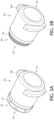
Figure 3A is a perspective view of a collar according to one embodiment; -
Figure 3B is a perspective view of a collar according to one embodiment; -
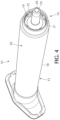
Figure 4 is a distal end view of the syringe shown inFigure 1 ; -
Figure 5 is a perspective view of the syringe and collar shown inFigure 1 with the collar connected to the syringe; -
Figure 6 is a perspective view of a syringe according to one embodiment; -
Figure 7 is a perspective view of a syringe and collar according to one embodiment; -
Figure 8 is perspective view of the collar shown inFigure 7 ; -
Figure 9 is a perspective view of the syringe and collar shown inFigure 7 with the collar connected to the syringe; -
Figure 10 is a perspective view of a syringe according to one embodiment; and -
Figure 11 is a view of a line set including tubing, which can be used for connection to a syringe according to one or more embodiments. - Before describing several exemplary embodiments of the disclosure, it is to be understood that the disclosure is not limited to the details of construction or process steps set forth in the following description. The disclosure is capable of other embodiments and of being practiced or being carried out in various ways. The invention is defined by the appended claims.
- In this disclosure, a convention is followed wherein the distal end of the device is the end closest to a patient and the proximal end of the device is the end away from the patient and closest to a practitioner.
- The term "not connectable" with respect to male and female connectors refers to a connector having a shape, size, dimension or structure that prevents connection to another connector. For example, a female luer connector has a shape, size, dimension and/or structure that prevents it from forming a connection with a male non-luer connector and is thus not connectable with respect to the male non-luer connector. Such a female luer connector, however, has a shape, size, dimension and/or structure that permits formation of a connection with a male luer connector and is, thus, connectable with respect to the male luer connector. In another example, a female non-luer connector has a shape, size, dimension and/or structure that prevents formation of a connection with a male luer connector and is, thus, not connectable with respect to the male luer connector. Such a female non-luer connector has a shape, size dimension and/or structure that permits formation of a connection with a male non-luer connector and is thus connectable connector with respect to the male non-luer connector.
- As used herein, the term "dimension" shall include the length, diameter or width of a geometric shape or the geometrically shaped components described herein. The term "cross-sectional diameter" shall include the measurement of the longest distance or greatest distance between two points on an edge of a cross-section of an object or component with a circular or non-circular cross-section.
- The two points may be located on the inside surface or outside surface of the edge of the cross-section of the object. The cross-sectional diameter of two points located on the inside surface of the edge of the cross-section of the object shall be referred to as the "inside cross-sectional diameter" and the cross-sectional diameter of two points located on the outside surface of the edge of the cross-section of an object shall be referred to as the "outside cross-sectional diameter." It should be recognized that "cross-sectional diameter" of objects having a circular cross-section may be referred to as the "cross-sectional dimension" or "diameter" of the object. The terms "cross-sectional dimension," "cross-sectional diameter" and "diameter" may be used interchangeably for objects having a circular cross-section.
- One or more embodiments provide a syringe that has an enteral collar that will enable the syringe meet ISO 80369-3 misconnection requirements. In one or more embodiments, the syringe is a non-luer tapered oral syringe with features on the barrel to accept a collar that prevents connection to intravenous devices. In one or more embodiments, the features include either threads or snap/lock features which will allow an enteral collar to be placed and locked onto the syringe. In one or more embodiments, after the enteral collar is attached to the syringe, the collar will not translate or rotate, however, in other embodiments, the collar may translate or rotate. According to one or more embodiments, the syringe can be utilized to draw-up, fill and administer oral medication and fluids as normal oral syringes are currently used, and after the enteral collar is attached the syringe, it will be compliant to ISO 80369-3 and able to be utilized for enteral administration. The syringe according to one or more embodiments does not require any work flow changes in the pharmacy or at patient bed side to deliver oral medication. Thus, one or more embodiments provide a syringe that can be used for two functions, namely oral administration and enteral administration.
- One or more embodiments provide a syringe that can be connected to enteral feeding sets and feeding tubes. In the industry, the connection is referred to as ENFit and is compliant to ISO 80369-3. According to one or more embodiments, a syringe is provided that permits the syringe to be connected to enteral tubing and enteral devices such as feeding bags and prevents connection to non-enteral devices, such as intravenous lines, urinary catheters and ventilator tubing. One or more embodiments provide a syringe that is compliant with ENFit devices and ISO 80369-3 and the syringe is not be compatible with a luer connection, thus preventing misadministration of an enteral feeding or medication by the wrong route. Thus, a syringe is provided that when a collar is attached, it has a connector has a unique enteral-specific design that provides a simple way to reduce the risk of enteral tube feeding misconnections and improve patient safety. Furthermore, after the collar is connected, the collar does not allow connectivity with any other connector for any other clinical use such as intravenous devices. According to one or more embodiments, a syringe is provided that when a collar is attached, provides an enteral-specific syringe that can be used to administer medicine, flush, hydrate, or bolus feed through the new ENFit feeding tubes and extension sets compliant with ISO 80369-3. One or more embodiments provide a syringe having a collar that does not connect with standard luer connectors that are compliant with ISO Standard 594/1 and 594/2. Thus, an embodiment of the disclosure provides a syringe having a connector with a dimension that is not compatible with standard sized intravenous connectors and ports to keep the two from being inadvertently coupled mechanically.
- Aspects of the present disclosure pertain a syringe having an enteral collar with a male connector that prevents misconnection to other non-compatible female connectors. A male connector shall be defined herein as a male connector that has a shape, size, dimension or structure that differs from a non-compatible female connector. Non-compatible female connectors may include standard female luer connectors, which conform to ISO 594-1:1986 and 594-2:1998.
- In one or more embodiments, non-compatible collars having female connectors may have a shape, size, dimension or structure that does not conform to ISO 594-1:1986 or ISO 594-2:1998. In such embodiments, the non-compatible female connector may have a shape, size, dimension or structure that prevents it from being characterized or defined as a female luer connector as defined above or according ISO 594-1:1986 or ISO 594-2:1998. In one or more specific embodiments, non-compatible female connectors may have length and/or cross-sectional diameter that differs from a female luer connector as defined above or according ISO 594-1:1986 or ISO 594-2:1998. In a more specific embodiment, the non-compatible female connector may have a taper that differs from a luer connector as defined above or according ISO 594-1:1986 or ISO 594-2:1998. In an even more specific embodiment, the non-compatible female connector may have a more gentle taper (for example, 5% taper) than a female luer connector as defined above or according ISO 594-1:1986 or ISO 594-2:1998, a cross-sectional diameter that is smaller than a female luer connector as defined above or according ISO 594-1:1986 or ISO 594-2:1998 and/or a longer length than a female luer connector as defined above or according ISO 594-1:1986 or ISO 594-2:1998.
- Referring now to
FIGS. 1-5 , a first embodiment of asyringe 10, which is shown as comprising asyringe barrel 12 having adistal end 14, an openproximal end 16, asidewall 18 extending between thedistal end 14 to the openproximal end 16, thesidewall 18 defining achamber 20, and an enteralcollar engagement feature 22 adjacent thedistal end 14 of thesyringe barrel 12. The syringe further includes anon-luer tip 24 dimensioned such that thenon-luer tip 24 is not connectable to an intravenous device, thenon-luer tip 24 defining afluid pathway 26 in fluid communication with thechamber 20. The syringe further comprises anenteral collar 30 having adistal end 32 and aproximal end 34. Theproximal end 34 of theenteral collar 30 has asyringe engagement feature 36 complementary to and engagable with the enteralcollar engagement feature 22, theenteral collar 30 surrounding thenon-luer tip 24 when thesyringe engagement feature 36 is engaged with the enteralcollar engagement feature 22. Theenteral collar 30 is sized to permit connection to an enteral device and prevent connection to a device having a luer connector. In the embodiment shown, thenon-luer tip 24 is at thedistal end 14 of thesyringe barrel 12 and the enteralcollar engagement feature 22 is located between the openproximal end 16 and thedistal end 14 of the syringe barrel. - As best shown in
FIG. 5 , in one or more embodiments, theenteral connection collar 30 is outside thefluid pathway 26 and not in fluid communication with thechamber 20. In other words, fluid contained in thechamber 20 of thesyringe 10 flows throughdistal tip 24, and fluid flowing through thedistal tip 24 is not in contact with thecollar 30. In an embodiment, the enteralcollar engagement feature 22 and thesyringe engagement feature 36 includes complementary mating features selected from detents, tabs, fingers, slots, a snap-fitting, depressions and threads. In the embodiment shown as best shown inFIG. 3A andFIG 4 , thesyringe engagement feature 36 is shown as a plurality of slots ordepressions 37 on theproximal end 34 of theenteral collar 30, which engage enteralcollar engagement feature 22 in the form of tabs on thedistal end 14 of thebarrel 12. This configuration could be reversed such that the depressions or slots are on the syringe and the tabs are on the collar. Alternatively, any type of complementary features that would allow thecollar 30 to be snap fit to thesyringe 10. Such complementary features could include fingers or detents or a threaded fitting between thecollar 30 and thesyringe 10. Thus, as shown inFIG. 3B the enteral collarsyringe engagement feature 36 can comprisescollar threads 39 engagable with syringe threads (not shown) adjacent thedistal end 14 of thesyringe barrel 12. - In an embodiment, after engagement of the
syringe engagement feature 36 and the enteralcollar engagement feature 22, theenteral collar 30 is not removable from thesyringe 10. In an embodiment, after engagement of thesyringe engagement feature 36 and the enteralcollar engagement feature 22, theenteral collar 30 is not rotatable with respect to thesyringe 10. In the embodiment shown inFIGs. 1-5 , thesyringe barrel 12distal end 14 includes adistal extension wall 15 including the enteralcollar engagement feature 22. In one embodiment, and as best seen inFIG. 4 , thedistal extension wall 15 includes aninterior surface 17 and anexterior surface 19, and the enteralcollar engagement feature 36 is located on theinterior surface 17. - As shown in
FIGs. 3A and 3B , theproximal end 34 of theenteral collar 30 includes thesyringe engagement feature 36 and thedistal end 32 of theenteral collar 30 includes a male thread or lug 40 extending outwardly for engaging a threaded, non-luer connector. In the embodiment shown, theenteral collar 30 includes a pair of male threads or lugs 40, which can engage female threads of a threaded non-luer connector. Any number of male threads or lugs 50 could be on thedistal end 32 of theenteral collar 30. In specific embodiments, theenteral collar 30 having the male thread or lug 40 provides a male connector that provides an ENfit connection that conforms to ISO 80369-3 and is connectable with a female ENfit connector that conforms to ISO 80369-3. - Syringes usually retain some volume of medication in spaces within the chamber between the plunger and the distal end of the chamber, and these spaces are typically referred to as the "dead space" of the syringe. In one or more embodiments, when the
chamber 20 of thesyringe 10 has a volume of less than 5 ml, and a dead space region that retains fluid in the chamber after fluid is expelled from the chamber, wherein the dead space region contains less than 0.07 ml of fluid. In one or more embodiments, asyringe 10 with achamber 20 having a volume in a range of 5 ml and less than 10 ml has a dead space region less than or equal to 0.075ml. In one or more embodiments, asyringe 10 with achamber 20 having a volume of less than 20 ml and greater than 10 ml has a dead space region less than or equal to 0.10ml. - Referring now to
FIGs. 6-10 , a second embodiment of asyringe 110 is shown. Similar to the syringe of the first embodiment, thesyringe 110 includes asyringe barrel 112 having adistal end 114, an openproximal end 116, asidewall 118 extending between thedistal end 114 to the openproximal end 116, thesidewall 118 defining achamber1 20, and an enteralcollar engagement feature 122 adjacent thedistal end 114 of thesyringe barrel 112. The syringe further includes anon-luer tip 124 dimensioned such that thenon-luer tip 124 is not connectable to an intravenous device, thenon-luer tip1 24 defining afluid pathway 126 in fluid communication with thechamber 120. The syringe further comprises anenteral collar 130 having adistal end 132 and aproximal end 134. Theproximal end 134 of theenteral collar 130 has a syringe engagement feature 136 complementary to and engagable with the enteralcollar engagement feature 122, theenteral collar 130 surrounding thenon-luer tip 124 when the syringe engagement feature 136 is engaged with the enteralcollar engagement feature 122. Theenteral collar 130 is sized to permit connection to an enteral device and prevent connection to a device having a luer connector. In the embodiment shown, thenon-luer tip 124 is at thedistal end 114 of thesyringe barrel 112 and the enteralcollar engagement feature 122 is located in aperipheral depression 125 adjacent the distal end of the syringe barrel. In the second embodiment, the enteralcollar engagement feature 122 is shown as projections ortabs 122 that engage complementary syringe engagement features 136, which is shown aschannels 137 formed by rampedtabs 138. Rampedtabs 138 also provide gaps 135, which allow thecollar 130 to be slidably mounted onto the distal end of thesyringe 110 such that the projections ortabs 122 are positioned between the gaps 135. When the projections ortabs 122 are positioned between the gaps 135 and theenteral collar 130 is rotated with respect to thesyringe 130, the projections ortabs 122 ride up the rampedtabs 138 on thecollar 130 and become locked in thechannels 137. The collar is not rotatable or removable after thecollar 130 is locked to thesyringe 110. In another embodiment shown inFig. 10 , thesyringe 110 includes threads 131 that cooperate with threads on the proximal end of the enteral collar 130 (not shown), and a threaded connection can be made between theenteral collar 130 and thesyringe 110. As best shown inFIG. 7 , theenteral collar 130 in the second embodiment has aninner surface 133 withinternal threads 129. Theenteral collar 130 is outside thefluid pathway 126 and not in fluid communication with thechamber 120. - In the embodiment shown, the
enteral collar 130 including theinternal threads 129 provides a female non-luer connector, which can engage a male non-luer connector. In specific embodiments, theenteral collar 130 having theinternal threads 129 provides a female connector that provides an ENfit connection that conforms to ISO 80369-3 and is connectable with a male ENfit connector that conforms to ISO 80369-3. - In one or more embodiments, the syringes described in this disclosure may be connected to a variety of enteral devices, for example, feeding bags and feeding catheters, which is typically accomplished by connecting the enteral collars described herein to flexible tubing.
Figure 11 shows an example of 290 tubing having amale adapter 240 and afemale adapter 210 connected to an enteral feeding extension set 290. Themale adapter 240 may be disposed at adistal end 292 and thefemale adapter 210 may be disposed at aproximal end 294. The enteral feeding extension set 290 comprises medical-gradeflexible tubing 296. While thetubing 296 is shown coiled inFIG. 11 , it will be appreciated that the flexible tubing may be uncoiled and extended the full length of thetubing 296. In use, themale adapter 240 can be connected to theenteral collar 130 having a female adapter coupled to thesyringe 110. In another embodiment, thefemale adapter 210 can be connected thecollar 30 ofsyringe 19 having a male adapter and luges orthreads 40 to engage the female adapter. The components of the syringes including the enteral collars may be fabricated of a variety of materials suitable for medical and health care applications. For example, the female or male adapters may be fabricated from a medical-grade material, such as, but not limited to, nylon, polypropylene, polycarbonate, polyvinylidene fluoride, acrylonitrile butadiene styrene, and polyvinyl chloride. - Reference throughout this specification to "one embodiment," "certain embodiments," "one or more embodiments" or "an embodiment" means that a particular feature, structure, material, or characteristic described in connection with the embodiment is included in at least one embodiment of the disclosure. Thus, the appearances of the phrases such as "in one or more embodiments," "in certain embodiments," "in one embodiment" or "in an embodiment" in various places throughout this specification are not necessarily referring to the same embodiment of the disclosure. Furthermore, the particular features, structures, materials, or characteristics may be combined in any suitable manner in one or more embodiments.
- Although the disclosure herein has been described with reference to particular embodiments, it is to be understood that these embodiments are merely illustrative of the principles and applications of the present disclosure.
Claims (13)
- A syringe comprising:a syringe barrel (12) having a distal end (14), an open proximal end (16), a sidewall extending between the distal end (14) to the open proximal end (16), the sidewall defining a chamber (20), and an enteral collar engagement feature (22) adjacent the distal end (14) of the syringe barrel (12);a non-luer tip (24) dimensioned such that the non-luer tip (24) is not connectable to an intravenous device having a luer connector, the non-luer tip (24) defining a fluid pathway (26) in fluid communication with the chamber (20); andan enteral collar (30) having a distal end and (32) a proximal end (34), the proximal end (34) of the enteral collar having a syringe engagement feature (36) complementary to and engageable with the enteral collar engagement feature (22), the enteral collar (30) surrounding the non-luer tip (24) when the syringe engagement feature (36) is engaged with the enteral collar engagement feature (22) wherein the non-luer tip (24) is at the distal end (14) of the syringe barrel (12) and the enteral collar engagement feature (22) is located between the open proximal end (16) and the distal end (14) of the syringe barrel (12), andwherein the enteral collar (30) is sized to permit a threaded connection of the syringe to an enteral device and prevent connection to a device having a luer connector;characterized in thatthe enteral collar is not removable from the syringe after engagement of the syringe engagement feature (36) and the enteral collar engagement feature (22).
- The syringe of claim 1, wherein the enteral collar is outside the fluid pathway (26) and not in fluid communication with the chamber (20).
- The syringe of claim 1, wherein the enteral collar engagement feature (22) and the syringe engagement feature (36) comprise complementary mating features selected from detents, tabs, fingers, slots, a snap-fitting, depressions and threads.
- The syringe of claim 1, wherein the syringe engagement feature (36) comprises collar threads (39) engageable with syringe threads adjacent the distal end (14) of the syringe barrel (12).
- The syringe of claim 1, wherein the syringe engagement feature (36) and the enteral collar engagement feature (22) engage via a snap-fitting.
- The syringe of claim 1, wherein after engagement of the syringe engagement feature (36) and the enteral collar engagement feature (22), the enteral collar (30) is not rotatable with respect to the syringe barrel (12).
- The syringe of claim 1, wherein the syringe barrel (12) distal end (14) includes an extension wall (15) including the enteral collar engagement feature (22).
- The syringe of claim 7, wherein the extension wall (15) includes an interior surface and an exterior surface, and the enteral collar engagement feature (22) is located on the interior surface.
- The syringe of claim 7, wherein the proximal end (16) of the enteral collar (30) includes the syringe engagement feature (36) and the distal end (14) of the enteral collar (30) includes a lug (40) for engaging a threaded, non-luer connector.
- The syringe of claim 1, wherein the enteral collar engagement feature (22) is located in a peripheral depression adjacent the distal end (14) of the syringe barrel (12).
- The syringe of claim 1, wherein the enteral collar (30) has an inner surface with threads.
- The syringe of claim 9, wherein the collar is not removable or rotatable after the collar has been engaged with the enteral collar engagement feature (22).
- The syringe of claim 9 or 1, wherein the chamber (20) has a volume of less than 5 ml, and a dead space region that retains fluid in the chamber (20) after fluid is expelled from the chamber (20), wherein the dead space region contains less than 0.07 ml of fluid.
Applications Claiming Priority (2)
| Application Number | Priority Date | Filing Date | Title |
|---|---|---|---|
| US15/286,655 US10842983B2 (en) | 2016-10-06 | 2016-10-06 | Syringe with enteral connection feature |
| PCT/US2017/055023 WO2018067629A1 (en) | 2016-10-06 | 2017-10-04 | Syringe with enteral connection feature |
Publications (3)
| Publication Number | Publication Date |
|---|---|
| EP3522953A1 EP3522953A1 (en) | 2019-08-14 |
| EP3522953C0 EP3522953C0 (en) | 2025-07-09 |
| EP3522953B1 true EP3522953B1 (en) | 2025-07-09 |
Family
ID=60117819
Family Applications (1)
| Application Number | Title | Priority Date | Filing Date |
|---|---|---|---|
| EP17784799.3A Active EP3522953B1 (en) | 2016-10-06 | 2017-10-04 | Syringe with enteral connection feature |
Country Status (8)
| Country | Link |
|---|---|
| US (2) | US10842983B2 (en) |
| EP (1) | EP3522953B1 (en) |
| JP (1) | JP6991205B2 (en) |
| CN (1) | CN109789274B (en) |
| AU (1) | AU2017339953B2 (en) |
| CA (1) | CA3037991A1 (en) |
| MX (1) | MX2019003910A (en) |
| WO (1) | WO2018067629A1 (en) |
Families Citing this family (14)
| Publication number | Priority date | Publication date | Assignee | Title |
|---|---|---|---|---|
| EP3402454A2 (en) * | 2016-01-15 | 2018-11-21 | Neomed, Inc. | Large bore enteral connector |
| US10842983B2 (en) | 2016-10-06 | 2020-11-24 | Becton, Dickinson And Company | Syringe with enteral connection feature |
| US20180126094A1 (en) * | 2016-11-07 | 2018-05-10 | Alan Reid | Methods and apparatus for syringe adapter |
| US11147956B2 (en) | 2018-06-21 | 2021-10-19 | Becton, Dickinson And Company | Enteral syringe with vented collar |
| CN113194903B (en) * | 2018-12-21 | 2024-10-18 | 雀巢产品有限公司 | Enteral nutrition container cover and method of making and using the cover |
| USD925730S1 (en) | 2019-06-20 | 2021-07-20 | Becton, Dickinson And Company | Enteral syringe |
| USD895793S1 (en) | 2019-06-20 | 2020-09-08 | Becton, Dickinson And Company | Enteral syringe |
| USD893019S1 (en) | 2019-06-20 | 2020-08-11 | Becton, Dickinson And Company | Enteral syringe |
| USD925731S1 (en) | 2019-06-20 | 2021-07-20 | Becton, Dickinson And Company | Enteral syringe |
| BR112021026099A2 (en) * | 2019-07-09 | 2022-02-15 | Becton Dickinson Co | neuraxial connector |
| US11554258B2 (en) * | 2020-02-26 | 2023-01-17 | Becton, Dickinson And Company | Syringe with snap-in enteral connection feature |
| USD954258S1 (en) * | 2020-07-02 | 2022-06-07 | Becton, Dickinson And Company | Syringe device |
| USD1105422S1 (en) | 2024-02-09 | 2025-12-09 | Icu Medical, Inc. | Medical connector cover |
| US12599544B2 (en) | 2024-05-09 | 2026-04-14 | Alsteni Medical, Inc. | Intraoral gastrointestinal access device and related methods |
Family Cites Families (46)
| Publication number | Priority date | Publication date | Assignee | Title |
|---|---|---|---|---|
| US4390017A (en) | 1981-08-07 | 1983-06-28 | Harrison Eugene O | Enteral feeding system |
| US4430080A (en) | 1982-06-09 | 1984-02-07 | Becton, Dickinson And Company | Syringe assembly with snap-fit components |
| US5609584A (en) | 1994-05-18 | 1997-03-11 | Gettig Technologies, Inc. | Adaptor system for use with a syringe |
| US6183421B1 (en) | 1999-08-20 | 2001-02-06 | Donald Eugene Bobo | Gas column device with a single use connector |
| US6599269B1 (en) | 1999-12-03 | 2003-07-29 | Becton Dickinson And Company | Single-use syringe |
| US6511474B1 (en) | 2000-07-12 | 2003-01-28 | Corpak, Inc. | Bolus for non-occluding high flow enteral feeding tube |
| US6500153B1 (en) | 2001-07-13 | 2002-12-31 | Children's And Women's Health Centre Of British Columbia | Syringe and needle for preventing inadvertent drug injection |
| US20060047251A1 (en) * | 2002-10-22 | 2006-03-02 | Philip Bickford Smith | Medical small-bore tubing system and kit |
| FR2863162B1 (en) | 2003-12-05 | 2006-12-08 | Vygon | MALE FITTINGS AND FEMALE FITTINGS FOR REALIZING LIQUID TRANSMISSION CONNECTIONS, IN PARTICULAR FOR ENTERALE NUTRITION LINES |
| US7556619B2 (en) * | 2004-04-16 | 2009-07-07 | Medrad, Inc. | Fluid delivery system having a fluid level sensor and a fluid control device for isolating a patient from a pump device |
| US8292875B2 (en) | 2006-09-12 | 2012-10-23 | Clay Kennard | Fluid delivery device |
| US20080140020A1 (en) | 2006-12-08 | 2008-06-12 | Utah Medical Products Inc. | Lockable enteral feeding adapter |
| US7842217B2 (en) | 2007-03-28 | 2010-11-30 | Benlan, Inc. | Enteral-only syringe and method of manufacturing same |
| US8888758B2 (en) | 2008-09-05 | 2014-11-18 | Carefusion 303, Inc. | Closed male luer device for minimizing leakage during connection and disconnection |
| US7955317B2 (en) | 2009-06-30 | 2011-06-07 | Tyco Healthcare Group Lp | Female adaptor for feeding line |
| EP2332610B1 (en) * | 2009-12-10 | 2013-02-13 | Fresenius Kabi Deutschland GmbH | Connection system for food containers for enteral feeding |
| CN103124581A (en) | 2010-07-23 | 2013-05-29 | 梅德拉控股公司 | Enteral feeding assembly |
| US9814870B2 (en) * | 2010-08-17 | 2017-11-14 | Becton, Dickinson And Company | Non-luer connectors |
| US20120078214A1 (en) | 2010-09-28 | 2012-03-29 | Tyco Healthcare Group Lp | Vial transfer needle assembly |
| IL209102A0 (en) | 2010-11-04 | 2011-01-31 | Medimop Medical Projects Ltd | Inline liquid drug medical device with handle operated flow control member |
| IL209290A0 (en) | 2010-11-14 | 2011-01-31 | Medimop Medical Projects Ltd | Inline liquid drug medical device having rotary flow control member |
| US9433768B2 (en) | 2011-03-25 | 2016-09-06 | Becton, Dickinson And Company | Drug delivery connectors |
| US20130030379A1 (en) | 2011-07-27 | 2013-01-31 | Neomed, Inc. | Female enteral coupling |
| US8784388B2 (en) * | 2011-09-30 | 2014-07-22 | Becton, Dickinson And Company | Syringe with disinfecting tip feature |
| GB2495492A (en) | 2011-10-10 | 2013-04-17 | Iden Shams | Syringe tip with non-luer fitting |
| EP2583715A1 (en) | 2011-10-19 | 2013-04-24 | Unomedical A/S | Infusion tube system and method for manufacture |
| US9259256B2 (en) | 2011-12-20 | 2016-02-16 | Biomet Sas | Method and apparatus for delivery of bone cement |
| USD711530S1 (en) | 2012-03-12 | 2014-08-19 | Biomet Sas | Nozzle |
| US10737087B2 (en) | 2012-04-17 | 2020-08-11 | Smiths Medical Asd, Inc. | Filling fitting |
| USD710499S1 (en) | 2012-12-19 | 2014-08-05 | Daikyo Seiko, Ltd. | Syringe barrel |
| USD714935S1 (en) | 2013-01-10 | 2014-10-07 | Fuso Pharmaeutical Industries, Ltd. | Adapter for connecting a needle to a syringe |
| USD765837S1 (en) | 2013-08-07 | 2016-09-06 | Medimop Medical Projects Ltd. | Liquid transfer device with integral vial adapter |
| USD767124S1 (en) | 2013-08-07 | 2016-09-20 | Medimop Medical Projects Ltd. | Liquid transfer device with integral vial adapter |
| US20150238747A1 (en) * | 2014-02-24 | 2015-08-27 | Dale Medical Products, Inc. | Connector with non-luer compatible access ports' |
| WO2015146831A1 (en) | 2014-03-27 | 2015-10-01 | 株式会社ジェイ・エム・エス | Cleaning adapter |
| US10773067B2 (en) | 2014-09-08 | 2020-09-15 | Neomed, Inc. | Enteral connectors having coupling features |
| WO2016040127A1 (en) | 2014-09-08 | 2016-03-17 | Neomed, Inc. | Vented connector for medical fluid vessels |
| US20160106928A1 (en) | 2014-10-16 | 2016-04-21 | Neomed, Inc. | Multi-stage mixing syringe |
| US9926185B2 (en) | 2014-12-08 | 2018-03-27 | Neomed, Inc. | Fluid transfer lid |
| EP3273927B1 (en) * | 2015-03-24 | 2020-09-16 | Neomed, Inc. | Oral administration fluid coupler |
| US9656022B1 (en) | 2015-04-22 | 2017-05-23 | Ronald D. Russo | Enteral medication diluting syringe infuser |
| USD785162S1 (en) | 2015-06-11 | 2017-04-25 | Covidien Lp | Enteral feeding syringe |
| JP6694501B2 (en) | 2015-07-14 | 2020-05-13 | ネオメッド, インクNeomed, Inc. | Dosage control joint for enteral fluid flow |
| US10842983B2 (en) | 2016-10-06 | 2020-11-24 | Becton, Dickinson And Company | Syringe with enteral connection feature |
| US10821053B2 (en) | 2016-10-07 | 2020-11-03 | Becton, Dickinson And Company | Syringe with connector |
| USD861161S1 (en) | 2017-06-22 | 2019-09-24 | Kpr U.S., Llc | Connector |
-
2016
- 2016-10-06 US US15/286,655 patent/US10842983B2/en active Active
-
2017
- 2017-10-04 CA CA3037991A patent/CA3037991A1/en active Pending
- 2017-10-04 EP EP17784799.3A patent/EP3522953B1/en active Active
- 2017-10-04 AU AU2017339953A patent/AU2017339953B2/en active Active
- 2017-10-04 MX MX2019003910A patent/MX2019003910A/en unknown
- 2017-10-04 CN CN201780061667.4A patent/CN109789274B/en active Active
- 2017-10-04 JP JP2019518380A patent/JP6991205B2/en active Active
- 2017-10-04 WO PCT/US2017/055023 patent/WO2018067629A1/en not_active Ceased
-
2019
- 2019-06-20 US US29/695,580 patent/USD909569S1/en active Active
Also Published As
| Publication number | Publication date |
|---|---|
| AU2017339953A1 (en) | 2019-04-11 |
| EP3522953C0 (en) | 2025-07-09 |
| CA3037991A1 (en) | 2018-04-12 |
| CN109789274A (en) | 2019-05-21 |
| USD909569S1 (en) | 2021-02-02 |
| MX2019003910A (en) | 2019-06-10 |
| US20180099136A1 (en) | 2018-04-12 |
| US10842983B2 (en) | 2020-11-24 |
| WO2018067629A1 (en) | 2018-04-12 |
| AU2017339953B2 (en) | 2022-05-26 |
| BR112019006784A2 (en) | 2019-07-09 |
| JP6991205B2 (en) | 2022-01-12 |
| JP2019528991A (en) | 2019-10-17 |
| EP3522953A1 (en) | 2019-08-14 |
| CN109789274B (en) | 2022-03-11 |
Similar Documents
| Publication | Publication Date | Title |
|---|---|---|
| AU2017339953B2 (en) | Syringe with enteral connection feature | |
| US11628262B2 (en) | Drug delivery connectors | |
| US20070060898A1 (en) | Enteral medical treatment assembly having a safeguard against erroneous connection with an intravascular treatment system | |
| AU2021228640B2 (en) | Syringe with snap-in enteral connection feature | |
| CN101299983A (en) | Needle-free additive control valve | |
| EP3810231B1 (en) | Enteral syringe with vented collar | |
| CA3167182C (en) | Syringe with snap-in enteral connection feature | |
| BR112019006784B1 (en) | SYRINGE WITH ENTERIC CONNECTION FEATURE |
Legal Events
| Date | Code | Title | Description |
|---|---|---|---|
| STAA | Information on the status of an ep patent application or granted ep patent |
Free format text: STATUS: UNKNOWN |
|
| STAA | Information on the status of an ep patent application or granted ep patent |
Free format text: STATUS: THE INTERNATIONAL PUBLICATION HAS BEEN MADE |
|
| PUAI | Public reference made under article 153(3) epc to a published international application that has entered the european phase |
Free format text: ORIGINAL CODE: 0009012 |
|
| STAA | Information on the status of an ep patent application or granted ep patent |
Free format text: STATUS: REQUEST FOR EXAMINATION WAS MADE |
|
| 17P | Request for examination filed |
Effective date: 20190506 |
|
| AK | Designated contracting states |
Kind code of ref document: A1 Designated state(s): AL AT BE BG CH CY CZ DE DK EE ES FI FR GB GR HR HU IE IS IT LI LT LU LV MC MK MT NL NO PL PT RO RS SE SI SK SM TR |
|
| AX | Request for extension of the european patent |
Extension state: BA ME |
|
| DAV | Request for validation of the european patent (deleted) | ||
| DAX | Request for extension of the european patent (deleted) | ||
| STAA | Information on the status of an ep patent application or granted ep patent |
Free format text: STATUS: EXAMINATION IS IN PROGRESS |
|
| 17Q | First examination report despatched |
Effective date: 20200526 |
|
| GRAP | Despatch of communication of intention to grant a patent |
Free format text: ORIGINAL CODE: EPIDOSNIGR1 |
|
| STAA | Information on the status of an ep patent application or granted ep patent |
Free format text: STATUS: GRANT OF PATENT IS INTENDED |
|
| INTG | Intention to grant announced |
Effective date: 20250414 |
|
| GRAS | Grant fee paid |
Free format text: ORIGINAL CODE: EPIDOSNIGR3 |
|
| GRAA | (expected) grant |
Free format text: ORIGINAL CODE: 0009210 |
|
| STAA | Information on the status of an ep patent application or granted ep patent |
Free format text: STATUS: THE PATENT HAS BEEN GRANTED |
|
| AK | Designated contracting states |
Kind code of ref document: B1 Designated state(s): AL AT BE BG CH CY CZ DE DK EE ES FI FR GB GR HR HU IE IS IT LI LT LU LV MC MK MT NL NO PL PT RO RS SE SI SK SM TR |
|
| REG | Reference to a national code |
Ref country code: GB Ref legal event code: FG4D |
|
| REG | Reference to a national code |
Ref country code: CH Ref legal event code: EP |
|
| REG | Reference to a national code |
Ref country code: IE Ref legal event code: FG4D |
|
| U01 | Request for unitary effect filed |
Effective date: 20250709 |
|
| U07 | Unitary effect registered |
Designated state(s): AT BE BG DE DK EE FI FR IT LT LU LV MT NL PT RO SE SI Effective date: 20250715 |
|
| PGFP | Annual fee paid to national office [announced via postgrant information from national office to epo] |
Ref country code: GB Payment date: 20250923 Year of fee payment: 9 |
|
| U20 | Renewal fee for the european patent with unitary effect paid |
Year of fee payment: 9 Effective date: 20250923 |
|
| PG25 | Lapsed in a contracting state [announced via postgrant information from national office to epo] |
Ref country code: IS Free format text: LAPSE BECAUSE OF FAILURE TO SUBMIT A TRANSLATION OF THE DESCRIPTION OR TO PAY THE FEE WITHIN THE PRESCRIBED TIME-LIMIT Effective date: 20251109 |
|
| PG25 | Lapsed in a contracting state [announced via postgrant information from national office to epo] |
Ref country code: NO Free format text: LAPSE BECAUSE OF FAILURE TO SUBMIT A TRANSLATION OF THE DESCRIPTION OR TO PAY THE FEE WITHIN THE PRESCRIBED TIME-LIMIT Effective date: 20251009 |
|
| PG25 | Lapsed in a contracting state [announced via postgrant information from national office to epo] |
Ref country code: HR Free format text: LAPSE BECAUSE OF FAILURE TO SUBMIT A TRANSLATION OF THE DESCRIPTION OR TO PAY THE FEE WITHIN THE PRESCRIBED TIME-LIMIT Effective date: 20250709 |
|
| PG25 | Lapsed in a contracting state [announced via postgrant information from national office to epo] |
Ref country code: GR Free format text: LAPSE BECAUSE OF FAILURE TO SUBMIT A TRANSLATION OF THE DESCRIPTION OR TO PAY THE FEE WITHIN THE PRESCRIBED TIME-LIMIT Effective date: 20251010 |
|
| PG25 | Lapsed in a contracting state [announced via postgrant information from national office to epo] |
Ref country code: PL Free format text: LAPSE BECAUSE OF FAILURE TO SUBMIT A TRANSLATION OF THE DESCRIPTION OR TO PAY THE FEE WITHIN THE PRESCRIBED TIME-LIMIT Effective date: 20250709 |
|
| PG25 | Lapsed in a contracting state [announced via postgrant information from national office to epo] |
Ref country code: RS Free format text: LAPSE BECAUSE OF FAILURE TO SUBMIT A TRANSLATION OF THE DESCRIPTION OR TO PAY THE FEE WITHIN THE PRESCRIBED TIME-LIMIT Effective date: 20251009 |
|
| PG25 | Lapsed in a contracting state [announced via postgrant information from national office to epo] |
Ref country code: ES Free format text: LAPSE BECAUSE OF FAILURE TO SUBMIT A TRANSLATION OF THE DESCRIPTION OR TO PAY THE FEE WITHIN THE PRESCRIBED TIME-LIMIT Effective date: 20250709 |
|
| PG25 | Lapsed in a contracting state [announced via postgrant information from national office to epo] |
Ref country code: SM Free format text: LAPSE BECAUSE OF FAILURE TO SUBMIT A TRANSLATION OF THE DESCRIPTION OR TO PAY THE FEE WITHIN THE PRESCRIBED TIME-LIMIT Effective date: 20250709 |
|
| PG25 | Lapsed in a contracting state [announced via postgrant information from national office to epo] |
Ref country code: CZ Free format text: LAPSE BECAUSE OF FAILURE TO SUBMIT A TRANSLATION OF THE DESCRIPTION OR TO PAY THE FEE WITHIN THE PRESCRIBED TIME-LIMIT Effective date: 20250709 |
|
| PG25 | Lapsed in a contracting state [announced via postgrant information from national office to epo] |
Ref country code: SK Free format text: LAPSE BECAUSE OF FAILURE TO SUBMIT A TRANSLATION OF THE DESCRIPTION OR TO PAY THE FEE WITHIN THE PRESCRIBED TIME-LIMIT Effective date: 20250709 |
|
| PLBE | No opposition filed within time limit |
Free format text: ORIGINAL CODE: 0009261 |
|
| STAA | Information on the status of an ep patent application or granted ep patent |
Free format text: STATUS: NO OPPOSITION FILED WITHIN TIME LIMIT |