EP3522880B1 - Methods of treating acute kidney injury - Google Patents
Methods of treating acute kidney injury Download PDFInfo
- Publication number
- EP3522880B1 EP3522880B1 EP17787773.5A EP17787773A EP3522880B1 EP 3522880 B1 EP3522880 B1 EP 3522880B1 EP 17787773 A EP17787773 A EP 17787773A EP 3522880 B1 EP3522880 B1 EP 3522880B1
- Authority
- EP
- European Patent Office
- Prior art keywords
- compound
- acceptable salt
- pharmaceutically acceptable
- patient
- kidney injury
- Prior art date
- Legal status (The legal status is an assumption and is not a legal conclusion. Google has not performed a legal analysis and makes no representation as to the accuracy of the status listed.)
- Active
Links
Images


Classifications
-
- A—HUMAN NECESSITIES
- A61—MEDICAL OR VETERINARY SCIENCE; HYGIENE
- A61K—PREPARATIONS FOR MEDICAL, DENTAL OR TOILETRY PURPOSES
- A61K31/00—Medicinal preparations containing organic active ingredients
- A61K31/33—Heterocyclic compounds
- A61K31/395—Heterocyclic compounds having nitrogen as a ring hetero atom, e.g. guanethidine or rifamycins
- A61K31/435—Heterocyclic compounds having nitrogen as a ring hetero atom, e.g. guanethidine or rifamycins having six-membered rings with one nitrogen as the only ring hetero atom
- A61K31/44—Non condensed pyridines; Hydrogenated derivatives thereof
- A61K31/4427—Non condensed pyridines; Hydrogenated derivatives thereof containing further heterocyclic ring systems
- A61K31/4439—Non condensed pyridines; Hydrogenated derivatives thereof containing further heterocyclic ring systems containing a five-membered ring with nitrogen as a ring hetero atom, e.g. omeprazole
-
- A—HUMAN NECESSITIES
- A61—MEDICAL OR VETERINARY SCIENCE; HYGIENE
- A61K—PREPARATIONS FOR MEDICAL, DENTAL OR TOILETRY PURPOSES
- A61K31/00—Medicinal preparations containing organic active ingredients
- A61K31/12—Ketones
-
- A—HUMAN NECESSITIES
- A61—MEDICAL OR VETERINARY SCIENCE; HYGIENE
- A61K—PREPARATIONS FOR MEDICAL, DENTAL OR TOILETRY PURPOSES
- A61K31/00—Medicinal preparations containing organic active ingredients
- A61K31/185—Acids; Anhydrides, halides or salts thereof, e.g. sulfur acids, imidic, hydrazonic or hydroximic acids
- A61K31/19—Carboxylic acids, e.g. valproic acid
- A61K31/192—Carboxylic acids, e.g. valproic acid having aromatic groups, e.g. sulindac, 2-aryl-propionic acids, ethacrynic acid
-
- A—HUMAN NECESSITIES
- A61—MEDICAL OR VETERINARY SCIENCE; HYGIENE
- A61K—PREPARATIONS FOR MEDICAL, DENTAL OR TOILETRY PURPOSES
- A61K31/00—Medicinal preparations containing organic active ingredients
- A61K31/33—Heterocyclic compounds
- A61K31/395—Heterocyclic compounds having nitrogen as a ring hetero atom, e.g. guanethidine or rifamycins
- A61K31/41—Heterocyclic compounds having nitrogen as a ring hetero atom, e.g. guanethidine or rifamycins having five-membered rings with two or more ring hetero atoms, at least one of which being nitrogen, e.g. tetrazole
- A61K31/4192—1,2,3-Triazoles
-
- A—HUMAN NECESSITIES
- A61—MEDICAL OR VETERINARY SCIENCE; HYGIENE
- A61K—PREPARATIONS FOR MEDICAL, DENTAL OR TOILETRY PURPOSES
- A61K9/00—Medicinal preparations characterised by special physical form
- A61K9/0012—Galenical forms characterised by the site of application
- A61K9/0019—Injectable compositions; Intramuscular, intravenous, arterial, subcutaneous administration; Compositions to be administered through the skin in an invasive manner
-
- A—HUMAN NECESSITIES
- A61—MEDICAL OR VETERINARY SCIENCE; HYGIENE
- A61K—PREPARATIONS FOR MEDICAL, DENTAL OR TOILETRY PURPOSES
- A61K9/00—Medicinal preparations characterised by special physical form
- A61K9/0012—Galenical forms characterised by the site of application
- A61K9/0053—Mouth and digestive tract, i.e. intraoral and peroral administration
-
- A—HUMAN NECESSITIES
- A61—MEDICAL OR VETERINARY SCIENCE; HYGIENE
- A61P—SPECIFIC THERAPEUTIC ACTIVITY OF CHEMICAL COMPOUNDS OR MEDICINAL PREPARATIONS
- A61P13/00—Drugs for disorders of the urinary system
- A61P13/12—Drugs for disorders of the urinary system of the kidneys
-
- A—HUMAN NECESSITIES
- A61—MEDICAL OR VETERINARY SCIENCE; HYGIENE
- A61P—SPECIFIC THERAPEUTIC ACTIVITY OF CHEMICAL COMPOUNDS OR MEDICINAL PREPARATIONS
- A61P9/00—Drugs for disorders of the cardiovascular system
- A61P9/10—Drugs for disorders of the cardiovascular system for treating ischaemic or atherosclerotic diseases, e.g. antianginal drugs, coronary vasodilators, drugs for myocardial infarction, retinopathy, cerebrovascula insufficiency, renal arteriosclerosis
-
- C—CHEMISTRY; METALLURGY
- C07—ORGANIC CHEMISTRY
- C07D—HETEROCYCLIC COMPOUNDS
- C07D401/00—Heterocyclic compounds containing two or more hetero rings, having nitrogen atoms as the only ring hetero atoms, at least one ring being a six-membered ring with only one nitrogen atom
- C07D401/02—Heterocyclic compounds containing two or more hetero rings, having nitrogen atoms as the only ring hetero atoms, at least one ring being a six-membered ring with only one nitrogen atom containing two hetero rings
- C07D401/04—Heterocyclic compounds containing two or more hetero rings, having nitrogen atoms as the only ring hetero atoms, at least one ring being a six-membered ring with only one nitrogen atom containing two hetero rings directly linked by a ring-member-to-ring-member bond
Definitions
- acute kidney injury can be characterized by the patient having a urine output of less than 0.5 mL/Kg over 6 hours, less than 0.5 mL/Kg over 12 hours, less than 0.3 mL/Kg over 12 hours, or anuria for 12 or more hours.
- Acute kidney injury can occur with specific kidney diseases (e.g ., acute interstitial nephritis, acute glomerular and vasculitic renal diseases); non-specific conditions (e.g ., ischemia, toxic injury); as well as extrarenal pathology (e.g., prerenal azotemia, and acute postrenal obstructive nephropathy). More than one of these conditions may coexist in the same patient and, more importantly, epidemiological evidence supports the notion that even mild, reversible AKI has important clinical consequences, including increased risk of death.
- specific kidney diseases e.g ., acute interstitial nephritis, acute glomerular and vasculitic renal diseases
- non-specific conditions e.g ischemia, toxic injury
- extrarenal pathology e.g., prerenal azotemia, and acute postrenal obstructive nephropathy
- the patient being treated for AKI has diabetes, underlying renal insufficiency, nephritic syndrome, atherosclerotic disease, sepsis, hypotension, hypoxia, myoglobinuria-hematuria, or liver disease.
- the patient is elderly, pregnant, a surgical patient, or has been exposed to a nephrotoxic agent.
- a patient with AKI from any of the conditions mentioned in the previous three paragraphs can be treated with Compound A, Compound B, or Compound C, or a pharmaceutically acceptable salt of Compound A, Compound B, or Compound C, in accordance with the disclosed methods.
- administer refers to methods that may be used to enable delivery of compositions to the desired site of biological action. These methods include, but are not limited to, intraarticular (in the joints), intravenous, intramuscular, intratumoral, intradermal, intraperitoneal, subcutaneous, orally, topically, intrathecally, inhalationally, transdermally, rectally, and the like. Oral and intravenous administration are commonly used, for example, when the condition being treated is acute kidney injury.
- Administration techniques that can be employed with the agents and methods described herein are found in e.g., Goodman and Gilman, The Pharmacological Basis of Therapeutics, current ed.; Pergamon ; and Remington's, Pharmaceutical Sciences (current edition), Mack Publishing Co., Easton, Pa .
- Step-3 Synthesis of 2-((5-methyl-2-(6-(trifluoromethyl)pyridin-3-yl)-1H-imidazol-1-yl) methyl)phenol:
- Results The data is shown in Figure 1 .
- Compound A dosed IV 4 hours after ischemia, reduces kidney injury.
- Compound A significantly reduces plasma creatinine, improves kidney function and reduces the early kidney injury biomarker NGAL when dosed at 0.3 mg/kg, 1 mg/kg or
- Urine collection all study animal groups were placed in metabolic cages immediately after surgery recovery and urine was collected for 24 hours. Urine volume was carefully measured and then was centrifuged at 3000 rpm for 10 min at 4 °C to remove sediments.
Landscapes
- Health & Medical Sciences (AREA)
- Chemical & Material Sciences (AREA)
- Public Health (AREA)
- Pharmacology & Pharmacy (AREA)
- Veterinary Medicine (AREA)
- General Health & Medical Sciences (AREA)
- Animal Behavior & Ethology (AREA)
- Medicinal Chemistry (AREA)
- Life Sciences & Earth Sciences (AREA)
- Epidemiology (AREA)
- Organic Chemistry (AREA)
- Engineering & Computer Science (AREA)
- Bioinformatics & Cheminformatics (AREA)
- Nuclear Medicine, Radiotherapy & Molecular Imaging (AREA)
- Chemical Kinetics & Catalysis (AREA)
- Urology & Nephrology (AREA)
- General Chemical & Material Sciences (AREA)
- Cardiology (AREA)
- Physiology (AREA)
- Dermatology (AREA)
- Vascular Medicine (AREA)
- Nutrition Science (AREA)
- Heart & Thoracic Surgery (AREA)
- Pharmaceuticals Containing Other Organic And Inorganic Compounds (AREA)
- Medicines That Contain Protein Lipid Enzymes And Other Medicines (AREA)
- Plural Heterocyclic Compounds (AREA)
- Medicinal Preparation (AREA)
- Acyclic And Carbocyclic Compounds In Medicinal Compositions (AREA)
- Saccharide Compounds (AREA)
- Pyridine Compounds (AREA)
Description
- The present invention is directed to methods of treating a human patient with acute kidney injury.
- Acute kidney injury (AKI), previously known as acute renal failure (ARF), is a clinical syndrome characterized by rapid deterioration of renal function that occurs within days. The principal feature of AKI is an abrupt decline in glomerular filtration rate (GFR), resulting in the retention of nitrogenous wastes (urea, creatinine). In the general world population, 170-200 cases of severe AKI per million population occur annually. To date, there is no specific treatment for established AKI. Several drugs have been found to prophylactically ameliorate toxic and ischemic experimental AKI, as manifested by lower serum creatinine levels, reduced histological damage and faster recovery of renal function in different animal models. These include anti-oxidants, calcium channel blockers, diuretics, vasoactive substances, growth factors, anti-inflammatory agents and more. However, these drugs have been studied in clinical trials and showed no benefit, and their use in clinical AKI has not been approved. Treatment once AKI has developed is even more difficult.
- Fedorova et al. (PLOS ONE 8 (2013), e64436) describes that an agonist of PPAR delta, HPP 593, prevents renal necrosis under chronic ischemia, which corresponds to what happens during acute kidney injury.
- Eun Young Lee et al. (Nephrol. Dial. Transplant. 27 (2012), 4069-4079) describes the efficacy of GW617042, an agonist for PPAR-δ for the treatment of diabetic nephropathy.
- The compounds disclosed herein are exemplary modulators of peroxisome proliferator-activated receptor delta (PPARδ). PPARδ is a nuclear receptor that is capable of regulating mitochondria biosynthesis. Modulating the activity of PPARδ has been shown to be useful for the treatment of diseases.
- It has now been found that a compound, (R)-3-methyl-6-(2-((5-methyl-2-(6-(trifluoromethyl)pyridin-3-yl)-1H-imidazol-1-yl)methyl)phenoxy)hexanoic acid, represented by the following structural formula:

- It has also been found that Compound B, represented by the following structural formula:
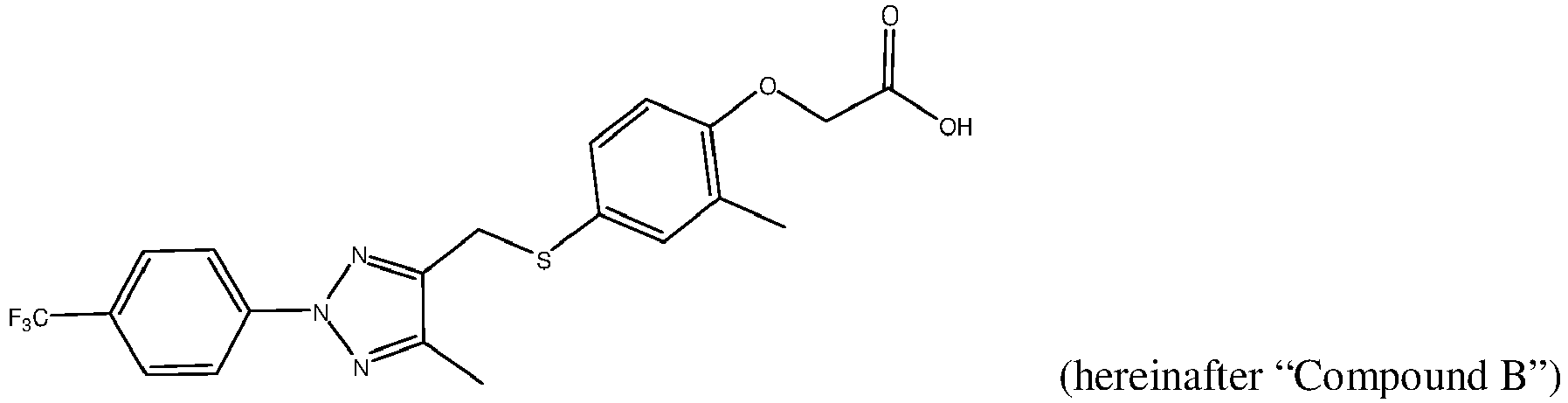
- Based on these discoveries, methods of treating acute kidney injury are disclosed herein.
- Described is a method of treating a human patient with acute kidney injury. The method comprises intravenously administering to the patient an effective amount of Compound A or a pharmaceutically acceptable salt thereof.
- Also described is a method of treating a human patient with acute kidney injury. The method comprises administering to the patient an effective amount of Compound B or a pharmaceutically acceptable salt thereof. In one embodiment, Compound B is administered orally; in another embodiment, it is administered intravenously.
- Further described is a method of treating a human patient with acute kidney injury. The method comprises administering to the patient an effective amount of Compound C:

- An embodiment of the invention is Compound A or a pharmaceutically acceptable salt thereof, for use in intravenously treating a human patient with acute kidney injury.
- Also described is Compound B, or a pharmaceutically acceptable salt thereof, for use in treating a human patient with acute kidney injury. In one embodiment, Compound B is for oral administration; in another embodiment, Compound B is for intravenous administration.
- Further described is Compound C, or a pharmaceutically acceptable salt thereof, for use in treating a human patient with acute kidney injury. In one embodiment, Compound C is for oral administration; in another embodiment, Compound C is for intravenous administration.
-
-
Figure 1 a ,b andc are bar graphs showing the therapeutic effect of Compound A administered intravenously in a rat model of acute kidney injury. The bar graph 1a shows the plasma creatinine levels in mg/dL in rats 24 hours after kidney injury. The bars from left to right represent plasma creatinine levels in rats with no kidney injury intravenously administered vehicle and in rats with kidney injury intravenously administered vehicle; 0.3 mpk of Compound A; 1 mpk of Compound A; and 3.0 mpk of Compound A. Similarly bar graph 1b shows the creatinine clearance levels, an estimation of kidney function or GFR (glomerular filtration rate) 24 hours after kidney injury and bar graph 1c shows the urinary levels of NGAL (Neutrophil Gelatinase-Associated Lipocalin) 48 hours after kidney injury. NGAL is an early kidney injury biomarker often used in the clinic. -
Figure 2 a and b are bar graphs showing the therapeutic effect of Compound B in a rat model of acute kidney injury. The bar graph 2a shows the plasma creatinine levels in mg/dL in rats 24 hours after kidney injury. The bars from left to right represent plasma creatinine levels in rats with sham surgery dosed with 30 mpk vehicle; rats with acute kidney injury dosed with 30 mpk vehicle; and rats with acute kidney injury dosed with 30 mpk of Compound B. Similarly bar graph 2b shows the creatinine clearance levels, an estimation of kidney function or GFR (glomerular filtration rate). - Described herein are methods for treating acute kidney injury in a human patient. Such methods comprise administering an effective amount of Compound A, Compound B, or Compound C, or a pharmaceutically acceptable salt of Compound A, Compound B, or Compound C, to the human patient. In one embodiment, Compound A, Compound B, or Compound C, or a pharmaceutically acceptable salt of Compound A, Compound B, or Compound C, is administered after the human patient develops acute kidney injury. Compound A is preferably administered intravenously.
- As used herein, the term "acute kidney injury" or "AKI", previously referred to as "acute renal failure" or "ARF", refers to an acute clinical syndrome characterized by rapid decline in renal functions, which is caused by a number of factors such as a reduction in renal blood flow, glomerulonephritis, use of nephrotoxic antibiotics and anticancer agents.
- Acute kidney injury is defined as an abrupt decrease in kidney function, and can be diagnosed based on a patient exhibit changes in one or more of serum creatinine level, glomerular filtration rate, or urine output. For example, acute kidney injury can be characterized by a serum creatinine level of at least 1.5 times baseline, wherein baseline refers to the patient's serum creatinine level no more than 7 days prior. For example, a patient having acute kidney injury can have a serum creatinine level is 1.5 to 1.9 times baseline, 2.0 to 2.9 times baseline, or 3.0 or more times baseline. Alternatively, acute kidney injury can be characterized by an increase in serum creatinine of at least 0.3 mg/dL or at least 0.4 mg/dL.
- Alternatively, acute kidney injury can be characterized by a glomerular filtration rate of less than 90 mL/min/1.73 m2. For example, a patient having acute kidney injury can have glomerular filtration rate of 60-89 mL/min/1.73 m2, 30-59 mL/min/1.73 m2, 15-29 mL/min/1.73 m2, or less than 15 mL/min/1.73 m2.
- Alternatively, acute kidney injury can be characterized by the patient having a urine output of less than 0.5 mL/Kg over 6 hours, less than 0.5 mL/Kg over 12 hours, less than 0.3 mL/Kg over 12 hours, or anuria for 12 or more hours.
- Acute kidney injury can occur with specific kidney diseases (e.g., acute interstitial nephritis, acute glomerular and vasculitic renal diseases); non-specific conditions (e.g., ischemia, toxic injury); as well as extrarenal pathology (e.g., prerenal azotemia, and acute postrenal obstructive nephropathy). More than one of these conditions may coexist in the same patient and, more importantly, epidemiological evidence supports the notion that even mild, reversible AKI has important clinical consequences, including increased risk of death. Furthermore, because the manifestations and clinical consequences of AKI can be quite similar (even indistinguishable) regardless of whether the etiology is predominantly within the kidney or predominantly from outside stresses on the kidney, the syndrome of AKI encompasses both direct injury to the kidney as well as acute impairment of function.
- In some embodiments, the patient being treated for AKI has diabetes, underlying renal insufficiency, nephritic syndrome, atherosclerotic disease, sepsis, hypotension, hypoxia, myoglobinuria-hematuria, or liver disease. In other embodiments, the patient is elderly, pregnant, a surgical patient, or has been exposed to a nephrotoxic agent.
- In a specific embodiment, the patient being treated for AKI is a surgical patient. Accordingly, in certain embodiments, the compound is be administered to a surgical patient after surgery.
- In another embodiment, the patient being treated for AKI has been exposed to a nephrotoxic agent. A nephrotoxic agent is a drug or chemical capable of causing AKI. Drugs or chemicals capable of causing acute kidney injury include, but are not limited to, cisplatin; gentamicin; cephaloridine; cyclosporine; amphotericin; carbon tetrachloride; trichloroethylene; and dichloroacetylene.
- As such, a patient with AKI from any of the conditions mentioned in the previous three paragraphs can be treated with Compound A, Compound B, or Compound C, or a pharmaceutically acceptable salt of Compound A, Compound B, or Compound C, in accordance with the disclosed methods.
- Pharmaceutically acceptable salts of Compound A, Compound B, and Compound C can be used in the disclosed methods. The term "pharmaceutically-acceptable salt" refers to pharmaceutical salts that are, within the scope of sound medical judgment, suitable for use in contact with the tissues of humans and lower animals without undue toxicity, irritation, and, allergic response, and are commensurate with a reasonable benefit/risk ratio. Pharmaceutically-acceptable salts are well known in the art. For example, S. M. Berge et al. describes pharmacologically acceptable salts in J. Pharm. Sci., 1977, 66, 1-19. Salts formed by addition with acids, e.g., hydrochloric acid, hydrobromic acid, phosphoric acid, nitric acid, sulfuric acid, acetic acid, benzenesulfonic acid, benzoic acid, methanesulfonic acid, p-toluenesulfonic acid, and meglumine acid; and by addition with bases, e.g., ammonium salts, alkali metal salts (such as sodium and potassium salts), alkaline earth metal salts (such as magnesium and calcium salts) and organic base salts (such as meglumine and L-lysine salts).
- Compound A, Compound B, or Compound C, or a pharmaceutically acceptable salt of Compound A, Compound B, or Compound C, can be used in combination with other agents known to have beneficial on AKI.
- The precise amount of compound administered to provide an "effective amount" to the subject will depend on the mode of administration, the type, and severity of the disease and/ or condition and on the characteristics of the subject, such as general health, age, sex, body weight, and tolerance to drugs. The skilled artisan will be able to determine appropriate dosages depending on these and other factors. The term "effective amount" means an amount when administered to the subject which results in beneficial or desired results, including clinical results, e.g., inhibits, suppresses or reduces the symptoms of the condition being treated in the subject as compared to a control. For example, an effective amount can be from 0.1 mg to about 50 g per day.
- The terms "administer", "administering", "administration", and the like, as used herein, refer to methods that may be used to enable delivery of compositions to the desired site of biological action. These methods include, but are not limited to, intraarticular (in the joints), intravenous, intramuscular, intratumoral, intradermal, intraperitoneal, subcutaneous, orally, topically, intrathecally, inhalationally, transdermally, rectally, and the like. Oral and intravenous administration are commonly used, for example, when the condition being treated is acute kidney injury. Administration techniques that can be employed with the agents and methods described herein are found in e.g., Goodman and Gilman, The Pharmacological Basis of Therapeutics, current ed.; Pergamon; and Remington's, Pharmaceutical Sciences (current edition), Mack Publishing Co., Easton, Pa.
- Pharmaceutical compositions used in the disclosed methods include Compound A, Compound B, or Compound C, or a pharmaceutically acceptable salt of Compound A, Compound B, or Compound C, and typically at least one additional substance, such as an excipient, a known therapeutic other than those of the present disclosure, and combinations thereof.
- The pharmaceutical compositions used in the disclosed methods are formulated to be compatible with its intended route of administration. In an embodiment, the composition is formulated in accordance with routine procedures as a pharmaceutical composition adapted for intravenous, subcutaneous, intramuscular, oral, intranasal, or topical administration to human beings.
- Administration of therapeutic agents by intravenous formulation is well known in the pharmaceutical industry. Intravenous formulations comprise the pharmaceutically active agent (e.g., Compound A, Compound B, or Compound C, or a pharmaceutically acceptable salt of Compound A, Compound B, or Compound C) dissolved in a pharmaceutically acceptable solvent or solution, such as sterile water, normal saline solutions, lactated Ringer's, or other salt solutions such as Ringer's solution. The formulation should promote the overall stability of the active ingredient(s), also, the manufacture of the formulation should be cost-effective. All of these factors ultimately determine the overall success and usefulness of an intravenous formulation.
- An oral formulation typically is prepared as a compressed preparation in, for example, the form of a tablet or pill. A tablet may contain, for example about 5-10% of the active ingredient (e.g., Compound A, Compound B, or Compound C, or a pharmaceutically acceptable salt of Compound A, Compound B, or Compound C) about 80% of fillers, disintegrants, lubricants, glidants, and binders; and 10% of compounds which ensure easy disintegration, disaggregation, and dissolution of the tablet in the stomach or the intestine. Pills can be coated with sugar, varnish, or wax to disguise the taste.
-


-

- In a 1 L round bottom flask, a solution of ethyl (R)-6-hydroxy-3-methylhexanoate (65.0 g, 373.56 mmol) in dichrolomethane (650 mL) was treated with PBr3 (101.0 g, 373.56 mmol) at room temperature (RT). The reaction mixture was stirred at RT for 3 h. Upon completion of reaction (monitored by TLC), the reaction mixture was diluted with water (500 mL) and extracted with diethyl ether (3 x 500 mL). The organic extract was separated and dried over anhydrous Na2SO4. The solvent was removed under reduced pressure to get the title compound (57.12 g).
-

- In a 100 mL round bottom flask, a stirred solution of 6-(trifluoromethyl)nicotinic acid (3 g, 15.70 mmol) and prop-2-yn-1-amine (1.05 g, 18.84 mmol) in dimethylformamide (DMF: 50 mL) was treated with 1-[bis(dimethylamino)methylene]-1H-1,2,3-triazolo[4,5-b]pyridinium 3-oxide hexafluorophosphate(7.2 g, 18.84 mmol) and triethylamine (3.1 mL, 23.55 mmol) at RT under nitrogen atmosphere. The resulting reaction mixture was stirred at RT for 3 h. Upon completion of reaction (monitored by TLC), the reaction mixture was diluted with cold water and solid precipitated was filtered, washed with water and dried under reduced pressure to get the title compound (2.6 g, 72.6 %).
1H NMR (300 MHz, CDCl3): δ 9.08 (d, J = 2.1 Hz, 1H), 8.32 (dd, J = 8.4, 2.4 Hz, 1H), 7.78 (d, J = 7.8 Hz, 1H), 6.62 (brs, 1H), 4.30-4.28 (m, 2H), 2.33 (t, J = 2.4 Hz, 1H).
LCMS (ESI+, m/z): 229.2 (M+H)+. -

- In a 50 mL resealable tube, a solution of N-(prop-2-yn-1-yl)-6-(trifluoromethyl)nicotinamide (1.0 g, 4.38 mmol) and 2-methoxyphenybenzyl amine (1.2 g, 8.77 mmol) in toluene (10 mL) was treated with zinc trifluoromethanesulfonate (0.16 g, 0.43 mmol) at RT under nitrogen atmosphere. The reaction mixture was heated at 120 °C for 12 h. Upon completion of reaction (monitored by TLC), the reaction mixture was diluted with water and extracted with EtOAc (3 x 20 mL). The organic extract was washed with saturated NaHCO3, brine and dried over anhydrous Na2SO4. The solution was concentrated under reduced pressure and residue obtained was purified by silica gel column chromatography (elution, 25% EtOAc in hexanes) to yield the title compound (0.8 g, 52.6%).
1H NMR (400 MHz, CDCl3): δ 8.79 (s, 1H), 8.07 (d, J = 8.1 Hz, 1H), 7.68 (d, J = 8.1 Hz, 1H), 7.31 (t, J = 8.4 Hz, 1H), 7.09 (s, 1H), 6.94-6.87 (m, 2H), 6.56 (d, J = 7.5 Hz, 1H), 5.16 (s, 2H), 3.87 (s, 3H). LCMS (ESI+, m/z): 348.3 (M+H)+. -

- In a 100 mL round bottom flask, a solution of 5-(1-(2-methoxybenzyl)-5-methyl-1H-imidazol-2-yl)-2-(trifluoromethyl)pyridine (0.8 g, 2.31 mmol) in dichloromethane (300 mL) was treated with BBr3 (0.8 mL, 2.31 mmol) drop wise at 0 °C. The reaction mixture was stirred at RT for 2 h. Upon completion of reaction (monitored by TLC), the reaction mixture was basified (pH ∼ 9) with aqueous NaHCO3 and extracted with ethyl acetate (EtOAc). The organic extract was dried over anhydrous Na2SO4 and concentrated under reduced pressure to afford the title compound (0.5 g, 65.1%)
1H NMR (400 MHz, DMSO-d6): δ 9.92 (s, 1H), 8.83 (s, 1H), 8.12 (d, J = 8.1 Hz, 1H), 7.94 (d, J = 8.1 Hz, 1H), 7.12 (d, J = 6.9 Hz, 1H), 7.02 (s, 1H), 6.87 (d, J = 7.8 Hz 1H), 6.73 (t, J = 7.2 Hz, 1H), 6.37 (d, J = 7.2 Hz, 1H), 5.20 (s, 2H), 2.15 (s, 3H).
LCMS (ESI+, m/z): 334.3 (M+H)+. -
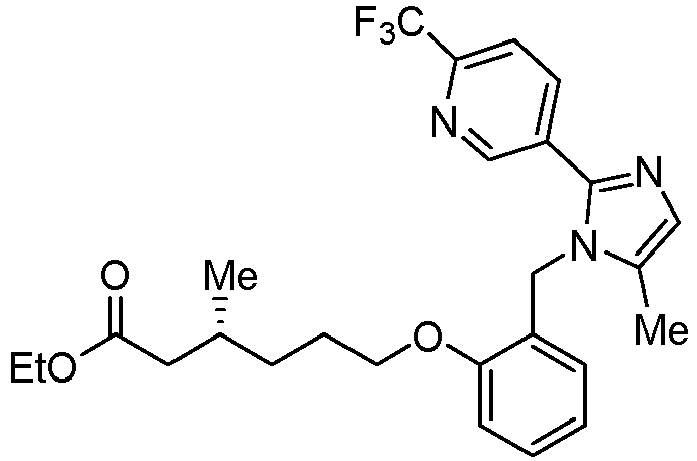
- In a 50 mL round bottom flask, a stirred solution of 2-((5-methyl-2-(6-(trifluoromethyl)pyridin-3-yl)-1H-imidazol-1-yl)methyl)phenol (0.5 g, 1.50 mmol) in DMF (10 mL) was treated with K2CO3 (0.41 g, 3.00 mmol) and ethyl (R)-6-bromo-3-methylhexanoate (0.710 g, 3.00 mmol) at RT under nitrogen atmosphere. The resulting reaction mixture was heated 60 °C for 12 h. Upon completion of the reaction (monitored by TLC), the reaction mixture was quenched with ice cold water and extracted with ethyl acetate (75 mL X 3). The combined organic extract was washed with brine, dried over anhydrous Na2SO4 and concentrated under reduced pressure. The residue obtained was purified by silica gel column chromatography (gradient elution, 15-30% EtOAc in hexanes) to afford the title compound (0.45 g, 61.3%).
Yield: 0.45 g (61.3%).
LCMS (ESI+, m/z): 491.0 (M+H)+. -

- In a 250 mL round bottom flask, a stirred solution of ethyl (R)-3-methyl-6-(2-((5-methyl-2-(6-(trifluoromethyl)pyridin-3-yl)-1H-imidazol-1-yl)methyl)phenoxy)hexanoate (0.45 g, 0.92 mmol) in tetrahydrofuran (THF: 5 mL), ethanol (2.5 mL) and water (2.5 mL) was treated with lithium hydroxide monohydrate (16.0 g, 74.33 mmol) at RT. The reaction mixture was stirred at RT for 12 h. Upon completion of reaction (monitored by TLC), the reaction mixture was concentrated under reduced pressure. The residue obtained was washed with EtOAc, diluted with cold water and acidified (pH ∼5) with 1N HCl. The solid was filtered and dried under reduced pressure to give the title compound (0.166 g, 39.2 %).
1H NMR (400 MHz, DMSO-d6): δ11.96 (brs, 1H), 8.79 (s, 1H), 8.05 (d, J = 8.0 Hz, 1H), 7.90 (d, J = 8.0 Hz, 1H), 7.24 (t, J = 7.6 Hz, 1H), 7.02 (d, J = 8.4 Hz, 1H), 7.00 (s, 1H), 6.84 (t, J = 7.6 Hz, 1H), 6.43 (d, J = 7.2 Hz, 1H), 5.21 (s, 2H), 3.98 (t, J = 6.0 Hz, 2H), 2.19-2.14 (m, 1H), 2.13 (s, 3H), 2.03-1.94 (m, 1H), 1.85-1.80 (m, 1H), 1.68-1.66 (m, 2H), 1.38-1.36 (m, 1H), 1.28-1.18 (m, 1H), 0.85 (d, J = 6.4 Hz, 3H).
19F NMR (400 MHz, DMSO-d6): δ -66.46
LCMS (ESI+, m/z): 462.3 (M+H)+.
HPLC: 95.11 % (210 nm). - Two separate methods were used to generate a meglumine salt of Compound A.
- Compound A (102.7 mg) was combined with meglumine (43.7 mg) and 2 mL of 2-propanol in a 4 mL glass vial. The vial was sealed with a cap and the contents were subjected to sonication at 25 °C for 20 minutes followed by stirring at 50 °C for 60 minutes. The vial was then moved to a new stir plate and the slurry in the vial was stirred at 25 °C.
- Compound A (102.2 mg) was combined with meglumine (43.2 mg) and 2 mL of acetonitrile in a 4 mL glass vial. The vial was sealed with a cap and the contents were subjected to sonication at 25 °C for 20 minutes followed by stirring at 50 °C for 60 minutes. The vial was then moved to a new stir plate and the slurry in the vial was stirred at 25 °C.
- For both
method 1 and method 2, after 2 days of stirring at 25 °C, both samples were centrifuged, supernatants discarded, and solids were air dried. - In a 500 mL round bottom flask, a stirred solution of Compound A (20 g, 43.33 mmol) in THF (100 mL) and water (100 mL) was treated meglumine (8.45 g, 43.33 mmol) at 0 °C. The resulting reaction mixture was stirred at RT for 6 h. The reaction mixture was concentrated under reduced pressure and solid obtained was dried under reduced pressure (3h) to afford the title compound as a white solid (28.5 g, 98.95%).
1H NMR (400 MHz, CD3OD): δ 8.75 (s, 1H), 8.02 (d, J = 8.4 Hz, 1H), 7.82 (d, J = 8.0 Hz 1H), 7.26 (t, J = 8.4 Hz, 1H), 7.03 (s, 1H), 6.99 (d, J = 8 Hz, 1H), 6.85 (t, J = 7.6 Hz, 1H), 6.50 (d, J = 7.6 Hz, 1H), 5.25 (s, 2H), 4.09-3.99 (m, 3H), 3.97-3.77 (m, 2H), 3.74-3.61 (m, 3H), 3.29-3.06 (m, 2H), 2.64 (s, 3H), 2.22 (s, 3H), 2.18-2.14 (m, 1H), 1.99 - 1.94 (m, 2H), 1.83 - 1.75 (m, 2H), 1.51 - 1.38 (m, 1H), 1.32-1.22 (m, 1H), 0.86 (d, J = 6.0 Hz, 3H).
19F NMR (400 MHz, CD3OD): δ -69.39
Elemental Analysis: Calcd for C31H43F3N4O8. H2O: C, 55.18; H, 6.72; N, 8.30. Found: C, 54.95; H, 6.89; N, 8.07
Moisture Content (Karl Fischer): 2.33% - Animals, surgery and dosing: Sprague-Dawley male rats approximately 280-300g, with ad libitum access to standard feed and water were used in these experiments. Rats (n=8/group) were anesthetized with isoflurane and placed ventrally on a temperature controlled heated surgical platform. A skin incision was made on the dorsal surface, exposing both kidneys through flank incisions. Vascular clips were applied to both renal pedicles and occlusion lasted 45 minutes. After 45 min, the clips were removed, kidneys were monitored for successful reperfusion, and surgical sites were then sutured. The sham group (n=4 rats) was subjected to similar surgical procedures, except that the occluding clamps were not applied. Compound A was formulated as a fresh daily clear solution of the hydrate of the meglumine salt of Compound A (1.5 Molar equivalent of Compound A) in 5% dextrose. Compound A was dosed IV via tail vein at 3 mg/kg, 1 mg/kg or 0.3 mg/kg 4 hours after animals awoke from surgery and sham surgery and IRI control animals were similarly dosed with vehicle. Blood collection: Twenty-four (24) hours after reperfusion, blood was collected in K2 EDTA tubes by retro-orbital bleeding from all groups under mild isoflurane anesthesia. Plasma was separated by centrifugation at 3000 rpm for 10 minutes at 4 °C.
- Urine collection: all study animal groups were placed in metabolic cages immediately after surgery recovery and urine was collected for 24 or 48 hours. Urine volume was carefully measured and then was centrifuged at 3000 rpm for 10 min at 4 °C to remove sediments. Plasma and urine creatinine were analyzed using a fully automated clinical biochemistry analyzer (Siemens Dimension ® Xpand ® Plus Integrated Chemistry System). Urinary NGAL was analyzed using a BioPorto ELISA kit. Creatinine clearance was calculated as follows:

- GraphPad Prism software, Version 6.05 was used for graphing and statistical testing. Creatinine was tested for normal distribution in all groups via a D'Agostino-Pearson omnibus normality test and a Shapiro-Wilk normality test. Statistical significance (p<0.05) is determined by an ordinary One-way ANOVA followed by Dunnett's multiple comparison using the IRI-treated group as the control group. **p<0.01, ***p<0.001 and ****p<0.0001 vs. IR-Vehicle.
- Results: The data is shown in
Figure 1 . Compound A, dosed IV 4 hours after ischemia, reduces kidney injury. Compound A significantly reduces plasma creatinine, improves kidney function and reduces the early kidney injury biomarker NGAL when dosed at 0.3 mg/kg, 1 mg/kg or - 3 mg/kg.
- Animals, surgery and dosing: Sprague-Dawley male rats approximately 280-300g, with ad libitum access to standard feed and water were used in these experiments. Rats (n=8/group) were anesthetized with isoflurane and placed ventrally on a temperature controlled heated surgical platform. A skin incision was made on the dorsal surface, exposing both kidneys through flank incisions. Vascular clips were applied to both renal pedicles and occlusion lasted 45 minutes. After 45 min, the clips were removed, kidneys were monitored for successful reperfusion, and surgical sites were sutured. The sham group (n=4 rats) was subjected to similar surgical procedures, except that the occluding clamps were not applied. Compound B was formulated as a fresh daily suspension in 0.25% sodium carboxymethylcellulose, 0.25% Tween-80 in purified water. Compound B was dosed orally at 30 mg/kg 4 hours after animals awoke from surgery and sham surgery and IRI control animals were similarly dosed with vehicle.
- Blood collection: Twenty-four (24) hours after reperfusion, blood was collected in K2 EDTA tubes by retro-orbital bleeding from all groups under mild isoflurane anesthesia. Plasma was separated by centrifugation at 3000 rpm for 10 minutes at 4 °C.
- Urine collection: all study animal groups were placed in metabolic cages immediately after surgery recovery and urine was collected for 24 hours. Urine volume was carefully measured and then was centrifuged at 3000 rpm for 10 min at 4 °C to remove sediments.
- Plasma and urine creatinine were analyzed using a fully automated clinical biochemistry analyzer (Siemens Dimension ® Xpand ® Plus Integrated Chemistry System). Creatinine clearance was calculated as follows:

- GraphPad Prism software, Version 6.05 was used for graphing and statistical testing. Data was tested for normal distribution in all groups via a D'Agostino-Pearson omnibus normality test and a Shapiro-Wilk normality test. Normally distributed data was subjected to an unpaired, two-tailed t test. Non-normally distributed data was subjected to a Mann-Whitney test (non-parametric). Statistical significance is determined by p<0.05 of IRI-vehicle compared to compound treated groups. **p<0.01 and ***p<0.001 vs. IR-Vehicle.
- Results: Compound B, dosed 4 hours after ischemia, reduces kidney injury. Compound B (
Figure 2 ) reduces plasma creatinine and improves kidney function when administered orally. The bar graph a shows the plasma creatinine levels in mg/dL in rats 24 hours after kidney injury reduce plasma creatinine when administered orally. The bars from left to right represent plasma creatinine levels in rats with sham surgery dosed with vehicle; rats with acute kidney injury dosed with vehicle; and rats with acute kidney injury dosed with 30 mpk of Compound B (Figure 2 a) . Similarly bar graph b shows the creatinine clearance levels, an estimation of kidney function or GFR (glomerular filtration rate) (Figure 2 b)
Claims (15)
- A compound represented by the following structural formula:

- The compound for use according to claim 1, wherein the pharmaceutical acceptable salt of the compound is a meglumine salt.
- The compound or pharmaceutically acceptable salt thereof for use of claim 1 or claim 2, wherein the patient is a surgical patient and the compound or the pharmaceutically acceptable salt thereof is administered to the patient after surgery.
- The compound or the pharmaceutically acceptable salt thereof for use of claims 1 to 3, wherein the compound or the pharmaceutically acceptable salt thereof is administered in an effective amount from 0.1 mg to about 50 g per day.
- The compound or the pharmaceutically acceptable salt thereof for use of any one of claims 1 to 4, wherein the patient is being treated for acute kidney injury from acute interstitial nephritis.
- The compound or the pharmaceutically acceptable salt thereof for use of any one of claims 1 to 4, wherein the patient is being treated for acute kidney injury from glomerular renal disease.
- The compound or the pharmaceutically acceptable salt thereof for use of any one of claims 1 to 4, wherein the patient is being treated for acute kidney injury from acute vasculitic renal disease.
- The compound or the pharmaceutically acceptable salt thereof for use of any one of claims 1 to 4, wherein the patient is being treated for acute kidney injury from ischemia.
- The compound or the pharmaceutically acceptable salt thereof for use of any one of claims 1 to 4, wherein the patient is being treated for acute kidney injury from toxic injury.
- The compound or the pharmaceutically acceptable salt thereof for use of any one of claims 1 to 4, wherein the patient is being treated for acute kidney injury from prerenal azotemia.
- The compound or the pharmaceutically acceptable salt thereof for use of any one of claims 1 to 4, wherein the patient is being treated for acute kidney injury from acute postrenal destructive nephropathy.
- The compound or the pharmaceutically acceptable salt thereof for use of any one of claims 1 to 4, wherein the patient is being treated for acute kidney injury from diabetes, underlying renal insufficiency, nephritic syndrome, atherosclerotic disease, sepsis, hypotension, hypoxia, myoglobinuria-hematuria, or liver disease.
- The compound or the pharmaceutically acceptable salt thereof for use of any one of claims 1 to 4, wherein the patient being treated for acute kidney injury is elderly, pregnant, a surgical patient, or has been exposed to a nephrotoxic agent.
- The compound or the pharmaceutically acceptable salt thereof for use of any one of claims 1 to 4, wherein the patient has been exposed to a nephrotoxic agent and the nephrotoxic agent is a drug or chemical capable of causing acute kidney injury.
- The compound or the pharmaceutically acceptable salt thereof for use of claim 14, wherein the drug or chemical is one or more of the compounds selected from the group consisting of cisplatin; gentamicin; cephaloridine; cyclosporine; amphotericin; carbon tetrachloride; trichloroethylene; and dichloroacetylene.
Priority Applications (5)
| Application Number | Priority Date | Filing Date | Title |
|---|---|---|---|
| PL17787773T PL3522880T3 (en) | 2016-10-05 | 2017-10-05 | METHODS OF TREATMENT OF ACUTE DAMAGE TO THE KIDNEYS |
| HRP20210294TT HRP20210294T1 (en) | 2016-10-05 | 2017-10-05 | Methods of treating acute kidney injury |
| SI201730653T SI3522880T1 (en) | 2016-10-05 | 2017-10-05 | Procedures for the treatment of acute kidney injury |
| RS20210203A RS61573B1 (en) | 2016-10-05 | 2017-10-05 | Methods of treating acute kidney injury |
| SM20210111T SMT202100111T1 (en) | 2016-10-05 | 2017-10-05 | Methods of treating acute kidney injury |
Applications Claiming Priority (2)
| Application Number | Priority Date | Filing Date | Title |
|---|---|---|---|
| US201662404390P | 2016-10-05 | 2016-10-05 | |
| PCT/US2017/055400 WO2018067857A1 (en) | 2016-10-05 | 2017-10-05 | Methods of treating acute kidney injury |
Publications (2)
| Publication Number | Publication Date |
|---|---|
| EP3522880A1 EP3522880A1 (en) | 2019-08-14 |
| EP3522880B1 true EP3522880B1 (en) | 2020-12-02 |
Family
ID=60153507
Family Applications (1)
| Application Number | Title | Priority Date | Filing Date |
|---|---|---|---|
| EP17787773.5A Active EP3522880B1 (en) | 2016-10-05 | 2017-10-05 | Methods of treating acute kidney injury |
Country Status (33)
| Country | Link |
|---|---|
| US (1) | US20210283116A1 (en) |
| EP (1) | EP3522880B1 (en) |
| JP (1) | JP7065839B2 (en) |
| KR (1) | KR20190062502A (en) |
| CN (1) | CN109789117B (en) |
| AU (1) | AU2017340760B2 (en) |
| BR (1) | BR112019005539A2 (en) |
| CA (1) | CA3036723A1 (en) |
| CO (1) | CO2019004561A2 (en) |
| CY (1) | CY1124759T1 (en) |
| DK (1) | DK3522880T3 (en) |
| ES (1) | ES2859487T3 (en) |
| HR (1) | HRP20210294T1 (en) |
| HU (1) | HUE053557T2 (en) |
| IL (1) | IL265749A (en) |
| JO (1) | JOP20190056B1 (en) |
| LT (1) | LT3522880T (en) |
| MA (1) | MA46459B1 (en) |
| MD (1) | MD3522880T2 (en) |
| MX (1) | MX387518B (en) |
| MY (1) | MY192385A (en) |
| PH (1) | PH12019500725A1 (en) |
| PL (1) | PL3522880T3 (en) |
| PT (1) | PT3522880T (en) |
| RS (1) | RS61573B1 (en) |
| RU (1) | RU2753607C2 (en) |
| SG (1) | SG11201901925RA (en) |
| SI (1) | SI3522880T1 (en) |
| SM (1) | SMT202100111T1 (en) |
| TW (1) | TWI778982B (en) |
| UA (1) | UA124019C2 (en) |
| WO (1) | WO2018067857A1 (en) |
| ZA (1) | ZA201901743B (en) |
Families Citing this family (8)
| Publication number | Priority date | Publication date | Assignee | Title |
|---|---|---|---|---|
| MX392524B (en) | 2015-10-07 | 2025-03-24 | Salk Inst Biological Studies | Ppar agonists, compounds, pharmaceutical compositions, and methods of use thereof |
| BR112018069930B1 (en) * | 2016-04-13 | 2024-02-20 | Mitobridge, Inc | PPAR AGONIST COMPOUNDS, USE THEREOF AND PHARMACEUTICAL COMPOSITION |
| EP3523283B1 (en) | 2016-10-05 | 2021-06-09 | Mitobridge, Inc. | Crystalline and salt forms of ppar agonist compounds |
| US20220323416A1 (en) * | 2019-07-19 | 2022-10-13 | Vifor (International) Ag | Ferroportin-Inhibitors For The Use In The Prevention And Treatment Of Kidney Injuries |
| US11634387B2 (en) | 2019-09-26 | 2023-04-25 | Abionyx Pharma Sa | Compounds useful for treating liver diseases |
| KR20240019753A (en) * | 2021-03-08 | 2024-02-14 | 아비오닉스 파마 에스에이 | Compounds useful in treating liver disease |
| WO2022189856A1 (en) | 2021-03-08 | 2022-09-15 | Abionyx Pharma Sa | Compounds useful for treating liver diseases |
| CN115813901B (en) * | 2022-10-20 | 2024-10-22 | 南京市儿童医院 | Application of 3-phenyl glutaric acid derivative small molecule in preparation of medicament for preventing and treating cisplatin-induced acute kidney injury |
Family Cites Families (13)
| Publication number | Priority date | Publication date | Assignee | Title |
|---|---|---|---|---|
| HUE028213T2 (en) * | 2003-09-19 | 2016-12-28 | Janssen Pharmaceutica Nv | 4-((phenoxyalkyl)thio)-phenoxyacetic acids for use in treating PPAR-delta mediated conditions |
| AU2005247473A1 (en) * | 2004-05-25 | 2005-12-08 | Metabolex, Inc. | Substituted triazoles as modulators of PPAR and methods of their preparation |
| RU2320341C1 (en) * | 2006-06-13 | 2008-03-27 | Государственное учреждение Научный центр реконструктивной и восстановительной хирургии Восточно-Сибирского научного центра Сибирского отделения Российской Академии медицинских наук | Preparation for treating acute obstruction of the upper urinary tract |
| KR20090071829A (en) * | 2007-12-28 | 2009-07-02 | 주식회사 머젠스 | Pharmaceutical composition for the treatment and prevention of kidney disease |
| BRPI0920170A2 (en) * | 2008-10-17 | 2016-06-21 | Metabolex Inc | methods for decreasing the amount of small, dense ldl particles and blood triglyceride and ldl levels in a human, and for identifying a candidate individual for treatment with a compound or salt, prodrug or isomer thereof, compound or salt, prodrug or isomer thereof, and method. |
| US7928067B2 (en) * | 2009-05-14 | 2011-04-19 | Ischemix Llc | Compositions and methods for treating ischemia and ischemia-reperfusion injury |
| WO2014138738A1 (en) * | 2013-03-08 | 2014-09-12 | Abbive Inc. | Methods of treating acute kidney injury |
| EP2981522A4 (en) * | 2013-04-05 | 2016-08-31 | Salk Inst For Biological Studi | ANTAGONISTS OF PPAR |
| EP2862574A1 (en) * | 2013-10-15 | 2015-04-22 | Sanofi | {4-[5-(3-chloro-phenoxy)-oxazolo[5,4 d]pyrimidin-2-yl]-2,6-dimethyl-phenoxy}-acetic acid for use in the prevention or treatment of acute kidney injury |
| CN110007084B (en) * | 2013-12-03 | 2022-11-18 | 阿斯图特医药公司 | Methods and compositions for diagnosis and prognosis of renal injury and renal failure |
| WO2016057656A1 (en) * | 2014-10-08 | 2016-04-14 | Mitobridge, Inc. | Ppar-delta agonists for use for treating mitochondrial, vascular, muscular, and demyelinating diseases |
| WO2016057658A1 (en) * | 2014-10-08 | 2016-04-14 | Mitobridge, Inc. | Ppar agonists, compounds, pharmaceutical compositions, and methods of use thereof |
| MX392524B (en) * | 2015-10-07 | 2025-03-24 | Salk Inst Biological Studies | Ppar agonists, compounds, pharmaceutical compositions, and methods of use thereof |
-
2017
- 2017-10-05 MY MYPI2019001558A patent/MY192385A/en unknown
- 2017-10-05 ES ES17787773T patent/ES2859487T3/en active Active
- 2017-10-05 LT LTEP17787773.5T patent/LT3522880T/en unknown
- 2017-10-05 RU RU2019111421A patent/RU2753607C2/en active
- 2017-10-05 MD MDE20190903T patent/MD3522880T2/en unknown
- 2017-10-05 SM SM20210111T patent/SMT202100111T1/en unknown
- 2017-10-05 EP EP17787773.5A patent/EP3522880B1/en active Active
- 2017-10-05 WO PCT/US2017/055400 patent/WO2018067857A1/en not_active Ceased
- 2017-10-05 KR KR1020197012516A patent/KR20190062502A/en not_active Ceased
- 2017-10-05 JP JP2019518278A patent/JP7065839B2/en active Active
- 2017-10-05 JO JOP/2019/0056A patent/JOP20190056B1/en active
- 2017-10-05 SG SG11201901925RA patent/SG11201901925RA/en unknown
- 2017-10-05 CN CN201780062021.8A patent/CN109789117B/en active Active
- 2017-10-05 US US16/334,384 patent/US20210283116A1/en not_active Abandoned
- 2017-10-05 BR BR112019005539-8A patent/BR112019005539A2/en not_active Application Discontinuation
- 2017-10-05 MA MA46459A patent/MA46459B1/en unknown
- 2017-10-05 AU AU2017340760A patent/AU2017340760B2/en not_active Ceased
- 2017-10-05 HR HRP20210294TT patent/HRP20210294T1/en unknown
- 2017-10-05 UA UAA201904011A patent/UA124019C2/en unknown
- 2017-10-05 PT PT177877735T patent/PT3522880T/en unknown
- 2017-10-05 RS RS20210203A patent/RS61573B1/en unknown
- 2017-10-05 PL PL17787773T patent/PL3522880T3/en unknown
- 2017-10-05 MX MX2019003949A patent/MX387518B/en unknown
- 2017-10-05 HU HUE17787773A patent/HUE053557T2/en unknown
- 2017-10-05 DK DK17787773.5T patent/DK3522880T3/en active
- 2017-10-05 SI SI201730653T patent/SI3522880T1/en unknown
- 2017-10-05 TW TW106134387A patent/TWI778982B/en active
- 2017-10-05 CA CA3036723A patent/CA3036723A1/en active Pending
-
2019
- 2019-03-20 ZA ZA2019/01743A patent/ZA201901743B/en unknown
- 2019-04-01 IL IL265749A patent/IL265749A/en unknown
- 2019-04-03 PH PH12019500725A patent/PH12019500725A1/en unknown
- 2019-05-03 CO CONC2019/0004561A patent/CO2019004561A2/en unknown
-
2021
- 2021-02-23 CY CY20211100148T patent/CY1124759T1/en unknown
Non-Patent Citations (1)
| Title |
|---|
| None * |
Also Published As
Similar Documents
| Publication | Publication Date | Title |
|---|---|---|
| AU2017340760B2 (en) | Methods of treating acute kidney injury | |
| EP3984996B1 (en) | Amino pyrimidine ssao inhibitors | |
| US11382915B2 (en) | Treatment of focal segmental glomerulosclerosis with CCR2 antagonists | |
| EP1630157A1 (en) | CaSR ANTAGONIST | |
| US20260070923A1 (en) | Method for preparing heterocyclic derivative compound, composition containing same compound, and hydrate of same compound | |
| EP4244221B1 (en) | Prodrug of pyrrolidone derivatives as glucokinase activator | |
| EP3883562A1 (en) | Purified forms of rofecoxib, methods of manufacture and use | |
| EP4238567A1 (en) | Novel treatment and prevention of sarcopenia-related diseases | |
| JP6738350B2 (en) | Urate transporter inhibitor sodium salt and its crystalline form | |
| US20220289749A1 (en) | Targeted therapeutics | |
| JP7050009B2 (en) | Halogen compounds and their axial chirality isomers | |
| HK40008682B (en) | Methods of treating acute kidney injury | |
| HK40008682A (en) | Methods of treating acute kidney injury | |
| CN111447932A (en) | Drugs for improving renal dysfunction containing optical isomers of 1,4-benzothiazepine*-1-oxide derivatives | |
| CZ182895A3 (en) | Lysine salt of 6-chloro-5-fluoro-3-(2-thenoyl)-2-oxindole-1-carboxamide per se and for treating diseases, and pharmaceutical composition based thereon | |
| US20090281083A1 (en) | Combination Product | |
| JP2011519877A (en) | Pharmaceutical composition comprising limepolido for treating diseases associated with insulin resistance and β-cell dysfunction | |
| HK40010499A (en) | Therapeutic drug or prophylactic drug for diabetic nephropathy |
Legal Events
| Date | Code | Title | Description |
|---|---|---|---|
| STAA | Information on the status of an ep patent application or granted ep patent |
Free format text: STATUS: UNKNOWN |
|
| STAA | Information on the status of an ep patent application or granted ep patent |
Free format text: STATUS: THE INTERNATIONAL PUBLICATION HAS BEEN MADE |
|
| PUAI | Public reference made under article 153(3) epc to a published international application that has entered the european phase |
Free format text: ORIGINAL CODE: 0009012 |
|
| STAA | Information on the status of an ep patent application or granted ep patent |
Free format text: STATUS: REQUEST FOR EXAMINATION WAS MADE |
|
| 17P | Request for examination filed |
Effective date: 20190503 |
|
| AK | Designated contracting states |
Kind code of ref document: A1 Designated state(s): AL AT BE BG CH CY CZ DE DK EE ES FI FR GB GR HR HU IE IS IT LI LT LU LV MC MK MT NL NO PL PT RO RS SE SI SK SM TR |
|
| AX | Request for extension of the european patent |
Extension state: BA ME |
|
| REG | Reference to a national code |
Ref country code: DE Ref legal event code: R079 Ref document number: 602017028889 Country of ref document: DE Free format text: PREVIOUS MAIN CLASS: A61K0031192000 Ipc: A61K0031443900 |
|
| GRAP | Despatch of communication of intention to grant a patent |
Free format text: ORIGINAL CODE: EPIDOSNIGR1 |
|
| STAA | Information on the status of an ep patent application or granted ep patent |
Free format text: STATUS: GRANT OF PATENT IS INTENDED |
|
| RIC1 | Information provided on ipc code assigned before grant |
Ipc: A61K 31/192 20060101ALI20200429BHEP Ipc: A61P 13/12 20060101ALI20200429BHEP Ipc: A61K 31/4439 20060101AFI20200429BHEP Ipc: A61K 31/4192 20060101ALI20200429BHEP |
|
| INTG | Intention to grant announced |
Effective date: 20200528 |
|
| GRAS | Grant fee paid |
Free format text: ORIGINAL CODE: EPIDOSNIGR3 |
|
| GRAA | (expected) grant |
Free format text: ORIGINAL CODE: 0009210 |
|
| STAA | Information on the status of an ep patent application or granted ep patent |
Free format text: STATUS: THE PATENT HAS BEEN GRANTED |
|
| AK | Designated contracting states |
Kind code of ref document: B1 Designated state(s): AL AT BE BG CH CY CZ DE DK EE ES FI FR GB GR HR HU IE IS IT LI LT LU LV MC MK MT NL NO PL PT RO RS SE SI SK SM TR |
|
| AX | Request for extension of the european patent |
Extension state: BA ME |
|
| REG | Reference to a national code |
Ref country code: GB Ref legal event code: FG4D |
|
| REG | Reference to a national code |
Ref country code: CH Ref legal event code: EP Ref country code: AT Ref legal event code: REF Ref document number: 1340130 Country of ref document: AT Kind code of ref document: T Effective date: 20201215 |
|
| REG | Reference to a national code |
Ref country code: DE Ref legal event code: R096 Ref document number: 602017028889 Country of ref document: DE |
|
| REG | Reference to a national code |
Ref country code: IE Ref legal event code: FG4D |
|
| REG | Reference to a national code |
Ref country code: DK Ref legal event code: T3 Effective date: 20210115 |
|
| REG | Reference to a national code |
Ref country code: SE Ref legal event code: TRGR |
|
| REG | Reference to a national code |
Ref country code: RO Ref legal event code: EPE |
|
| REG | Reference to a national code |
Ref country code: PT Ref legal event code: SC4A Ref document number: 3522880 Country of ref document: PT Date of ref document: 20210222 Kind code of ref document: T Free format text: AVAILABILITY OF NATIONAL TRANSLATION Effective date: 20210216 Ref country code: HR Ref legal event code: TUEP Ref document number: P20210294 Country of ref document: HR Ref country code: FI Ref legal event code: FGE |
|
| REG | Reference to a national code |
Ref country code: NL Ref legal event code: FP |
|
| REG | Reference to a national code |
Ref country code: CH Ref legal event code: NV Representative=s name: ISLER AND PEDRAZZINI AG, CH |
|
| REG | Reference to a national code |
Ref country code: MD Ref legal event code: VAGR Ref document number: 3522880 Country of ref document: MD Date of ref document: 20210331 Kind code of ref document: T2 Ref country code: MA Ref legal event code: VAGR Ref document number: 46459 Country of ref document: MA Kind code of ref document: B1 |
|
| REG | Reference to a national code |
Ref country code: SK Ref legal event code: T3 Ref document number: E 36615 Country of ref document: SK |
|
| REG | Reference to a national code |
Ref country code: EE Ref legal event code: FG4A Ref document number: E020383 Country of ref document: EE Effective date: 20210223 |
|
| REG | Reference to a national code |
Ref country code: HR Ref legal event code: T1PR Ref document number: P20210294 Country of ref document: HR |
|
| REG | Reference to a national code |
Ref country code: GR Ref legal event code: EP Ref document number: 20210400478 Country of ref document: GR Effective date: 20210416 |
|
| REG | Reference to a national code |
Ref country code: NO Ref legal event code: T2 Effective date: 20201202 |
|
| REG | Reference to a national code |
Ref country code: HU Ref legal event code: AG4A Ref document number: E053557 Country of ref document: HU |
|
| REG | Reference to a national code |
Ref country code: DE Ref legal event code: R097 Ref document number: 602017028889 Country of ref document: DE |
|
| REG | Reference to a national code |
Ref country code: AT Ref legal event code: UEP Ref document number: 1340130 Country of ref document: AT Kind code of ref document: T Effective date: 20201202 |
|
| REG | Reference to a national code |
Ref country code: ES Ref legal event code: FG2A Ref document number: 2859487 Country of ref document: ES Kind code of ref document: T3 Effective date: 20211004 |
|
| PLBE | No opposition filed within time limit |
Free format text: ORIGINAL CODE: 0009261 |
|
| STAA | Information on the status of an ep patent application or granted ep patent |
Free format text: STATUS: NO OPPOSITION FILED WITHIN TIME LIMIT |
|
| REG | Reference to a national code |
Ref country code: HR Ref legal event code: ODRP Ref document number: P20210294 Country of ref document: HR Payment date: 20210921 Year of fee payment: 5 |
|
| 26N | No opposition filed |
Effective date: 20210903 |
|
| VSFP | Annual fee paid to validation state [announced via postgrant information from national office to epo] |
Ref country code: MD Payment date: 20211005 Year of fee payment: 5 |
|
| REG | Reference to a national code |
Ref country code: DE Ref legal event code: R082 Ref document number: 602017028889 Country of ref document: DE Representative=s name: SIMMONS & SIMMONS LLP, DE |
|
| REG | Reference to a national code |
Ref country code: HR Ref legal event code: ODRP Ref document number: P20210294 Country of ref document: HR Payment date: 20220921 Year of fee payment: 6 |
|
| VSFP | Annual fee paid to validation state [announced via postgrant information from national office to epo] |
Ref country code: MD Payment date: 20220921 Year of fee payment: 6 |
|
| REG | Reference to a national code |
Ref country code: HR Ref legal event code: ODRP Ref document number: P20210294 Country of ref document: HR Payment date: 20230919 Year of fee payment: 7 |
|
| VSFP | Annual fee paid to validation state [announced via postgrant information from national office to epo] |
Ref country code: MD Payment date: 20230922 Year of fee payment: 7 |
|
| PGFP | Annual fee paid to national office [announced via postgrant information from national office to epo] |
Ref country code: IS Payment date: 20240923 Year of fee payment: 8 |
|
| PGFP | Annual fee paid to national office [announced via postgrant information from national office to epo] |
Ref country code: LT Payment date: 20240918 Year of fee payment: 8 Ref country code: MC Payment date: 20240920 Year of fee payment: 8 Ref country code: HR Payment date: 20240919 Year of fee payment: 8 |
|
| REG | Reference to a national code |
Ref country code: HR Ref legal event code: ODRP Ref document number: P20210294 Country of ref document: HR Payment date: 20240919 Year of fee payment: 8 |
|
| VSFP | Annual fee paid to validation state [announced via postgrant information from national office to epo] |
Ref country code: MD Payment date: 20240923 Year of fee payment: 8 |
|
| PGFP | Annual fee paid to national office [announced via postgrant information from national office to epo] |
Ref country code: PT Payment date: 20240918 Year of fee payment: 8 Ref country code: SM Payment date: 20240923 Year of fee payment: 8 |
|
| PGFP | Annual fee paid to national office [announced via postgrant information from national office to epo] |
Ref country code: CZ Payment date: 20240920 Year of fee payment: 8 Ref country code: EE Payment date: 20240918 Year of fee payment: 8 |
|
| PGFP | Annual fee paid to national office [announced via postgrant information from national office to epo] |
Ref country code: PL Payment date: 20240919 Year of fee payment: 8 |
|
| PGFP | Annual fee paid to national office [announced via postgrant information from national office to epo] |
Ref country code: SK Payment date: 20240918 Year of fee payment: 8 |
|
| PGFP | Annual fee paid to national office [announced via postgrant information from national office to epo] |
Ref country code: LV Payment date: 20240919 Year of fee payment: 8 |
|
| PGFP | Annual fee paid to national office [announced via postgrant information from national office to epo] |
Ref country code: RO Payment date: 20240919 Year of fee payment: 8 Ref country code: RS Payment date: 20240919 Year of fee payment: 8 |
|
| PGFP | Annual fee paid to national office [announced via postgrant information from national office to epo] |
Ref country code: NL Payment date: 20241026 Year of fee payment: 8 |
|
| PGFP | Annual fee paid to national office [announced via postgrant information from national office to epo] |
Ref country code: LU Payment date: 20241028 Year of fee payment: 8 |
|
| PGFP | Annual fee paid to national office [announced via postgrant information from national office to epo] |
Ref country code: HU Payment date: 20240927 Year of fee payment: 8 |
|
| PGFP | Annual fee paid to national office [announced via postgrant information from national office to epo] |
Ref country code: TR Payment date: 20240925 Year of fee payment: 8 Ref country code: MT Payment date: 20240918 Year of fee payment: 8 |
|
| PGFP | Annual fee paid to national office [announced via postgrant information from national office to epo] |
Ref country code: DE Payment date: 20241029 Year of fee payment: 8 |
|
| PGFP | Annual fee paid to national office [announced via postgrant information from national office to epo] |
Ref country code: NO Payment date: 20241029 Year of fee payment: 8 |
|
| PGFP | Annual fee paid to national office [announced via postgrant information from national office to epo] |
Ref country code: DK Payment date: 20241025 Year of fee payment: 8 |
|
| PGFP | Annual fee paid to national office [announced via postgrant information from national office to epo] |
Ref country code: BE Payment date: 20241028 Year of fee payment: 8 Ref country code: GR Payment date: 20241029 Year of fee payment: 8 Ref country code: FI Payment date: 20241025 Year of fee payment: 8 |
|
| PGFP | Annual fee paid to national office [announced via postgrant information from national office to epo] |
Ref country code: GB Payment date: 20241028 Year of fee payment: 8 |
|
| PGFP | Annual fee paid to national office [announced via postgrant information from national office to epo] |
Ref country code: BG Payment date: 20241016 Year of fee payment: 8 |
|
| PGFP | Annual fee paid to national office [announced via postgrant information from national office to epo] |
Ref country code: FR Payment date: 20241025 Year of fee payment: 8 Ref country code: AT Payment date: 20240919 Year of fee payment: 8 |
|
| PGFP | Annual fee paid to national office [announced via postgrant information from national office to epo] |
Ref country code: IE Payment date: 20241028 Year of fee payment: 8 |
|
| PGFP | Annual fee paid to national office [announced via postgrant information from national office to epo] |
Ref country code: IT Payment date: 20241021 Year of fee payment: 8 Ref country code: ES Payment date: 20241104 Year of fee payment: 8 |
|
| PGFP | Annual fee paid to national office [announced via postgrant information from national office to epo] |
Ref country code: SE Payment date: 20241027 Year of fee payment: 8 |
|
| PGFP | Annual fee paid to national office [announced via postgrant information from national office to epo] |
Ref country code: CH Payment date: 20241101 Year of fee payment: 8 |
|
| PGFP | Annual fee paid to national office [announced via postgrant information from national office to epo] |
Ref country code: AL Payment date: 20241003 Year of fee payment: 8 |
|
| PGFP | Annual fee paid to national office [announced via postgrant information from national office to epo] |
Ref country code: SI Payment date: 20240917 Year of fee payment: 8 |
|
| PGFP | Annual fee paid to national office [announced via postgrant information from national office to epo] |
Ref country code: CY Payment date: 20240919 Year of fee payment: 8 |
|
| VSFP | Annual fee paid to validation state [announced via postgrant information from national office to epo] |
Ref country code: MA Payment date: 20230927 Year of fee payment: 7 |
|
| VSFP | Annual fee paid to validation state [announced via postgrant information from national office to epo] |
Ref country code: MA Payment date: 20221004 Year of fee payment: 6 Ref country code: MA Payment date: 20210921 Year of fee payment: 5 |
|
| PGFP | Annual fee paid to national office [announced via postgrant information from national office to epo] |
Ref country code: MK Payment date: 20240919 Year of fee payment: 8 |
|
| VSFP | Annual fee paid to validation state [announced via postgrant information from national office to epo] |
Ref country code: MA Payment date: 20241009 Year of fee payment: 8 |
|
| REG | Reference to a national code |
Ref country code: HR Ref legal event code: PBON Ref document number: P20210294 Country of ref document: HR Effective date: 20251005 |
|
| PG25 | Lapsed in a contracting state [announced via postgrant information from national office to epo] |
Ref country code: CZ Free format text: LAPSE BECAUSE OF NON-PAYMENT OF DUE FEES Effective date: 20251005 |
|
| REG | Reference to a national code |
Ref country code: LT Ref legal event code: MM4D Effective date: 20251005 |