EP3522553A1 - Method and apparatus for switching bit stream type of video playing - Google Patents
Method and apparatus for switching bit stream type of video playing Download PDFInfo
- Publication number
- EP3522553A1 EP3522553A1 EP17854616.4A EP17854616A EP3522553A1 EP 3522553 A1 EP3522553 A1 EP 3522553A1 EP 17854616 A EP17854616 A EP 17854616A EP 3522553 A1 EP3522553 A1 EP 3522553A1
- Authority
- EP
- European Patent Office
- Prior art keywords
- bit stream
- stream type
- video presentation
- type
- switching
- Prior art date
- Legal status (The legal status is an assumption and is not a legal conclusion. Google has not performed a legal analysis and makes no representation as to the accuracy of the status listed.)
- Granted
Links
Images


Classifications
-
- H—ELECTRICITY
- H04—ELECTRIC COMMUNICATION TECHNIQUE
- H04N—PICTORIAL COMMUNICATION, e.g. TELEVISION
- H04N21/00—Selective content distribution, e.g. interactive television or video on demand [VOD]
- H04N21/40—Client devices specifically adapted for the reception of or interaction with content, e.g. set-top-box [STB]; Operations thereof
- H04N21/43—Processing of content or additional data, e.g. demultiplexing additional data from a digital video stream; Elementary client operations, e.g. monitoring of home network or synchronising decoder's clock; Client middleware
- H04N21/44—Processing of video elementary streams, e.g. splicing a video clip retrieved from local storage with an incoming video stream or rendering scenes according to encoded video stream scene graphs
- H04N21/4402—Processing of video elementary streams, e.g. splicing a video clip retrieved from local storage with an incoming video stream or rendering scenes according to encoded video stream scene graphs involving reformatting operations of video signals for household redistribution, storage or real-time display
-
- H—ELECTRICITY
- H04—ELECTRIC COMMUNICATION TECHNIQUE
- H04L—TRANSMISSION OF DIGITAL INFORMATION, e.g. TELEGRAPHIC COMMUNICATION
- H04L12/00—Data switching networks
- H04L12/02—Details
- H04L12/16—Arrangements for providing special services to substations
- H04L12/18—Arrangements for providing special services to substations for broadcast or conference, e.g. multicast
- H04L12/1813—Arrangements for providing special services to substations for broadcast or conference, e.g. multicast for computer conferences, e.g. chat rooms
-
- H—ELECTRICITY
- H04—ELECTRIC COMMUNICATION TECHNIQUE
- H04L—TRANSMISSION OF DIGITAL INFORMATION, e.g. TELEGRAPHIC COMMUNICATION
- H04L12/00—Data switching networks
- H04L12/02—Details
- H04L12/16—Arrangements for providing special services to substations
- H04L12/18—Arrangements for providing special services to substations for broadcast or conference, e.g. multicast
- H04L12/1813—Arrangements for providing special services to substations for broadcast or conference, e.g. multicast for computer conferences, e.g. chat rooms
- H04L12/1827—Network arrangements for conference optimisation or adaptation
-
- H—ELECTRICITY
- H04—ELECTRIC COMMUNICATION TECHNIQUE
- H04L—TRANSMISSION OF DIGITAL INFORMATION, e.g. TELEGRAPHIC COMMUNICATION
- H04L65/00—Network arrangements, protocols or services for supporting real-time applications in data packet communication
- H04L65/1066—Session management
- H04L65/1083—In-session procedures
- H04L65/1093—In-session procedures by adding participants; by removing participants
-
- H—ELECTRICITY
- H04—ELECTRIC COMMUNICATION TECHNIQUE
- H04L—TRANSMISSION OF DIGITAL INFORMATION, e.g. TELEGRAPHIC COMMUNICATION
- H04L65/00—Network arrangements, protocols or services for supporting real-time applications in data packet communication
- H04L65/40—Support for services or applications
- H04L65/403—Arrangements for multi-party communication, e.g. for conferences
-
- H—ELECTRICITY
- H04—ELECTRIC COMMUNICATION TECHNIQUE
- H04N—PICTORIAL COMMUNICATION, e.g. TELEVISION
- H04N21/00—Selective content distribution, e.g. interactive television or video on demand [VOD]
- H04N21/20—Servers specifically adapted for the distribution of content, e.g. VOD servers; Operations thereof
- H04N21/23—Processing of content or additional data; Elementary server operations; Server middleware
- H04N21/234—Processing of video elementary streams, e.g. splicing of video streams or manipulating encoded video stream scene graphs
- H04N21/2343—Processing of video elementary streams, e.g. splicing of video streams or manipulating encoded video stream scene graphs involving reformatting operations of video signals for distribution or compliance with end-user requests or end-user device requirements
- H04N21/23439—Processing of video elementary streams, e.g. splicing of video streams or manipulating encoded video stream scene graphs involving reformatting operations of video signals for distribution or compliance with end-user requests or end-user device requirements for generating different versions
-
- H—ELECTRICITY
- H04—ELECTRIC COMMUNICATION TECHNIQUE
- H04N—PICTORIAL COMMUNICATION, e.g. TELEVISION
- H04N21/00—Selective content distribution, e.g. interactive television or video on demand [VOD]
- H04N21/40—Client devices specifically adapted for the reception of or interaction with content, e.g. set-top-box [STB]; Operations thereof
- H04N21/43—Processing of content or additional data, e.g. demultiplexing additional data from a digital video stream; Elementary client operations, e.g. monitoring of home network or synchronising decoder's clock; Client middleware
- H04N21/431—Generation of visual interfaces for content selection or interaction; Content or additional data rendering
- H04N21/4312—Generation of visual interfaces for content selection or interaction; Content or additional data rendering involving specific graphical features, e.g. screen layout, special fonts or colors, blinking icons, highlights or animations
-
- H—ELECTRICITY
- H04—ELECTRIC COMMUNICATION TECHNIQUE
- H04N—PICTORIAL COMMUNICATION, e.g. TELEVISION
- H04N21/00—Selective content distribution, e.g. interactive television or video on demand [VOD]
- H04N21/40—Client devices specifically adapted for the reception of or interaction with content, e.g. set-top-box [STB]; Operations thereof
- H04N21/43—Processing of content or additional data, e.g. demultiplexing additional data from a digital video stream; Elementary client operations, e.g. monitoring of home network or synchronising decoder's clock; Client middleware
- H04N21/431—Generation of visual interfaces for content selection or interaction; Content or additional data rendering
- H04N21/4312—Generation of visual interfaces for content selection or interaction; Content or additional data rendering involving specific graphical features, e.g. screen layout, special fonts or colors, blinking icons, highlights or animations
- H04N21/4316—Generation of visual interfaces for content selection or interaction; Content or additional data rendering involving specific graphical features, e.g. screen layout, special fonts or colors, blinking icons, highlights or animations for displaying supplemental content in a region of the screen, e.g. an advertisement in a separate window
-
- H—ELECTRICITY
- H04—ELECTRIC COMMUNICATION TECHNIQUE
- H04N—PICTORIAL COMMUNICATION, e.g. TELEVISION
- H04N21/00—Selective content distribution, e.g. interactive television or video on demand [VOD]
- H04N21/40—Client devices specifically adapted for the reception of or interaction with content, e.g. set-top-box [STB]; Operations thereof
- H04N21/43—Processing of content or additional data, e.g. demultiplexing additional data from a digital video stream; Elementary client operations, e.g. monitoring of home network or synchronising decoder's clock; Client middleware
- H04N21/44—Processing of video elementary streams, e.g. splicing a video clip retrieved from local storage with an incoming video stream or rendering scenes according to encoded video stream scene graphs
- H04N21/4402—Processing of video elementary streams, e.g. splicing a video clip retrieved from local storage with an incoming video stream or rendering scenes according to encoded video stream scene graphs involving reformatting operations of video signals for household redistribution, storage or real-time display
- H04N21/440263—Processing of video elementary streams, e.g. splicing a video clip retrieved from local storage with an incoming video stream or rendering scenes according to encoded video stream scene graphs involving reformatting operations of video signals for household redistribution, storage or real-time display by altering the spatial resolution, e.g. for displaying on a connected PDA
-
- H—ELECTRICITY
- H04—ELECTRIC COMMUNICATION TECHNIQUE
- H04N—PICTORIAL COMMUNICATION, e.g. TELEVISION
- H04N21/00—Selective content distribution, e.g. interactive television or video on demand [VOD]
- H04N21/40—Client devices specifically adapted for the reception of or interaction with content, e.g. set-top-box [STB]; Operations thereof
- H04N21/45—Management operations performed by the client for facilitating the reception of or the interaction with the content or administrating data related to the end-user or to the client device itself, e.g. learning user preferences for recommending movies, resolving scheduling conflicts
- H04N21/4508—Management of client data or end-user data
- H04N21/4516—Management of client data or end-user data involving client characteristics, e.g. Set-Top-Box type, software version or amount of memory available
-
- H—ELECTRICITY
- H04—ELECTRIC COMMUNICATION TECHNIQUE
- H04N—PICTORIAL COMMUNICATION, e.g. TELEVISION
- H04N21/00—Selective content distribution, e.g. interactive television or video on demand [VOD]
- H04N21/40—Client devices specifically adapted for the reception of or interaction with content, e.g. set-top-box [STB]; Operations thereof
- H04N21/45—Management operations performed by the client for facilitating the reception of or the interaction with the content or administrating data related to the end-user or to the client device itself, e.g. learning user preferences for recommending movies, resolving scheduling conflicts
- H04N21/462—Content or additional data management e.g. creating a master electronic programme guide from data received from the Internet and a Head-end or controlling the complexity of a video stream by scaling the resolution or bit-rate based on the client capabilities
- H04N21/4621—Controlling the complexity of the content stream or additional data, e.g. lowering the resolution or bit-rate of the video stream for a mobile client with a small screen
-
- H—ELECTRICITY
- H04—ELECTRIC COMMUNICATION TECHNIQUE
- H04N—PICTORIAL COMMUNICATION, e.g. TELEVISION
- H04N21/00—Selective content distribution, e.g. interactive television or video on demand [VOD]
- H04N21/40—Client devices specifically adapted for the reception of or interaction with content, e.g. set-top-box [STB]; Operations thereof
- H04N21/45—Management operations performed by the client for facilitating the reception of or the interaction with the content or administrating data related to the end-user or to the client device itself, e.g. learning user preferences for recommending movies, resolving scheduling conflicts
- H04N21/462—Content or additional data management e.g. creating a master electronic programme guide from data received from the Internet and a Head-end or controlling the complexity of a video stream by scaling the resolution or bit-rate based on the client capabilities
- H04N21/4622—Retrieving content or additional data from different sources, e.g. from a broadcast channel and the Internet
-
- H—ELECTRICITY
- H04—ELECTRIC COMMUNICATION TECHNIQUE
- H04N—PICTORIAL COMMUNICATION, e.g. TELEVISION
- H04N21/00—Selective content distribution, e.g. interactive television or video on demand [VOD]
- H04N21/40—Client devices specifically adapted for the reception of or interaction with content, e.g. set-top-box [STB]; Operations thereof
- H04N21/47—End-user applications
-
- H—ELECTRICITY
- H04—ELECTRIC COMMUNICATION TECHNIQUE
- H04N—PICTORIAL COMMUNICATION, e.g. TELEVISION
- H04N21/00—Selective content distribution, e.g. interactive television or video on demand [VOD]
- H04N21/60—Network structure or processes for video distribution between server and client or between remote clients; Control signalling between clients, server and network components; Transmission of management data between server and client, e.g. sending from server to client commands for recording incoming content stream; Communication details between server and client
- H04N21/63—Control signaling related to video distribution between client, server and network components; Network processes for video distribution between server and clients or between remote clients, e.g. transmitting basic layer and enhancement layers over different transmission paths, setting up a peer-to-peer communication via Internet between remote STB's; Communication protocols; Addressing
- H04N21/637—Control signals issued by the client directed to the server or network components
- H04N21/6377—Control signals issued by the client directed to the server or network components directed to server
- H04N21/6379—Control signals issued by the client directed to the server or network components directed to server directed to encoder, e.g. for requesting a lower encoding rate
-
- H—ELECTRICITY
- H04—ELECTRIC COMMUNICATION TECHNIQUE
- H04N—PICTORIAL COMMUNICATION, e.g. TELEVISION
- H04N7/00—Television systems
- H04N7/14—Systems for two-way working
- H04N7/15—Conference systems
Definitions
- the present application relates to the field of techniques for videos, and in particular, to a method and an apparatus for switching a bit stream type of a video presentation.
- the bit stream type is a bit stream parameter rule composed by video quality parameters (e.g., resolutions, frame rates, code rates, etc.).
- the bit stream types may include, such as, high definition, standard definition, and smoothness.
- the bit stream types may be ordered by video quality as: high definition > standard definition > smoothness. The higher the video quality is, the higher the resolution, the code rate, the frame rate, and the bandwidth required for video presentation will be. The lower the video quality is, the lower the resolution, the code rate, the frame rate, and the bandwidth required for video presentation will be.
- a client In playing a video, a client often desires a bit stream type with high video quality. In a case that there is only one split screen, i.e., only a single video is presented, the bandwidth required is small, and a bit stream type with high video quality may be employed, such as the high definition bit stream type. However, in a case that there are multiple split screens in, i.e., multiple videos are presented, the bandwidth required is high, and using a bit stream type with high video quality is no longer proper.
- the client may be provided with a plurality of split screen modes, e.g., 1-split-screen mode, 4-split-screen mode, 9-split-screen mode, and 16-split-screen mode. When the client switches the split screen mode, if the video qualities of the video presentations in respective split screens are not properly adjusted, namely the bit stream types of the video presentations in respective split screens are not properly adjusted, it is possible to cause the client to run out of memory and to crash.
- the embodiments of the present application provide a method and an apparatus for switching a bit stream type of a video presentation, to prevent the client from running out of memory and crashing.
- an embodiment of the present application discloses a method for switching a bit stream type of a video presentation.
- the method includes:
- the preset correspondence between the split screen modes and the bit stream types includes a preset correspondence between the split screen modes and default bit stream types.
- the step of determining a bit stream type corresponding to the current split screen mode according to a preset correspondence between split screen modes and bit stream types includes: determining a default bit stream type corresponding to the current split screen mode according to the preset correspondence between the split screen modes and the default bit stream types.
- the step of switching a bit stream type of each started video presentation according to the determined bit stream type or bit stream types includes: switching the bit stream type of each started video presentation to the determined default bit stream type.
- the preset correspondence between the split screen modes and the bit stream types includes a preset correspondence between the split screen modes and default bit stream types and a preset correspondence between the split screen modes and supported bit stream types.
- the step of determining a bit stream type corresponding to the current split screen mode according to a preset correspondence between split screen modes and bit stream types includes:
- the step of switching a bit stream type of each started video presentation according to the determined bit stream type or bit stream types includes: switching the bit stream type of each started video presentation to one of the determined default bit stream type and the supported bit stream type.
- the step of switching the bit stream type of the previously started video presentation to a bit stream type in the determined supported bit stream type includes: switching the bit stream type of the previously started video presentation to a bit stream type with the highest video quality in the determined supported bit stream type.
- the step of switching the bit stream type of each started video presentation to one of the determined default bit stream type and the supported bit stream type include:
- the method further includes:
- the method further includes:
- an embodiment of the present application further discloses an apparatus for switching a bit stream type of a video presentation.
- the apparatus includes:
- the preset correspondence between the split screen modes and the bit stream types includes a preset correspondence between the split screen modes and default bit stream types.
- the type determining unit is specifically configured for: determining a default bit stream type corresponding to the current split screen mode according to the preset correspondence between the split screen modes and the default bit stream types.
- the first type switching unit is specifically configured for: switching the bit stream type of each started video presentation to the determined default bit stream type.
- the preset correspondence between the split screen modes and the bit stream types includes a preset correspondence between the split screen modes and default bit stream types and a preset correspondence between the split screen modes and supported bit stream types.
- the type determining unit is specifically configured for: determining a default bit stream type corresponding to the current split screen mode according to the preset correspondence between the split screen modes and the default bit stream types; and determining a supported bit stream type corresponding to the current split screen mode according to the preset correspondence between the split screen modes and the supported bit stream types, wherein the supported bit stream type includes at least one bit stream type.
- the first type switching unit is specifically configured for: switching the bit stream type of each started video presentation to one of the determined default bit stream type and the supported bit stream type.
- the first type switching unit includes:
- the second type switching sub-unit is specifically configured for: switching the bit stream type of the previously started video presentation to a bit stream type with the highest video quality in the determined supported bit stream type.
- the first type switching unit includes:
- the apparatus further includes:
- the apparatus further includes:
- an embodiment of the application further provides an electronic device.
- the electronic device includes a processor and a memory.
- the memory is configured for storing an application program.
- an embodiment of the application further provides an application program that, when executed, performs the method for switching a bit stream type of a video presentation discussed above.
- an embodiment of the application further provides a storage medium for storing an application program.
- the application program when executed, performs the method for switching a bit stream type of a video presentation discussed above.
- the embodiments of the present application provide a method and an apparatus for switching a bit stream type of a video presentation. After a plurality of video presentations that have been started are determined, the current split screen mode is determined according to the number of the started video presentations. The bit stream type corresponding to the current split screen mode is determined according to the preset correspondence between the split screen modes and the bit stream types. The bit stream types of the started video presentations are switched according to the determined bit stream type. In the embodiments of the present application, the correspondence between the split screen modes and the bit stream types is preset. The bit stream type corresponding to the current split screen mode may be determined according to the correspondence, and the bit stream type of each video presentation is then switched. This solves the problem that the bit stream types of video presentations in respective split screens cannot be properly adjusted because the bit stream types required are not known. The client is thus protected from crashing due to insufficient memory.
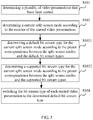
- FIG. 1 is a flow chart illustrating a method for switching a bit stream type of a video presentation according to an embodiment of the present application. The method includes:
- the preset correspondence between the split screen modes and the bit stream types may be a preset correspondence between the split screen modes and default bit stream types.
- S103 may be: determining a default bit stream type corresponding to the current split screen mode according to the preset correspondence between the split screen modes and the default bit stream types.
- S104 may be: switching the bit stream type of each started video presentation to the determined default bit stream type.
- Table 1 Split screen mode Default bit stream type 1-split-screen High definition 4-split-screen Standard definition 9- split-screen Smoothness 16- split-screen Smoothness
- the current split screen mode may be determined as the 1-split-screen mode.
- the default bit stream type corresponding to the 1-split-screen mode is high definition according to the Table 1.
- the bit stream type of the video presentation A is then switched to high definition.
- the current split screen mode may be determined as the 4-split-screen mode.
- the default bit stream type corresponding to the 4-split-screen mode is standard definition according to the Table 1.
- the bit stream types of the video presentations A and B are then switched to standard definition; and so on.
- the preset correspondence between the split screen modes and the bit stream types may include a preset correspondence between the split screen modes and the default bit stream types and a preset correspondence between the split screen modes and supported bit stream types.
- the supported bit stream types include at least one bit stream type.
- S103 may include:
- S1031 may be performed simultaneously as S1032, or may be performed before or after S1032, which is not limited herein.
- S104 may be: switching the bit stream type of each started video presentation to one of the determined default bit stream type and the supported bit stream type.
- a supported bit stream type is a bit stream type that is switchable.
- a default bit stream type may be one of the supported bit stream types.
- the current split screen mode determined each time may or may not be the same as the split screen mode determined last time. If they are the same, it means that the number of split screens corresponding to the current split screen mode is equal to the number of split screens corresponding to the split screen mode determined last time. If they are different, there are two situations: one is that the number of split screens corresponding to the current split screen mode is greater than the number of split screens corresponding to the split screen mode determined last time; the other is that the number of split screens corresponding to the current split screen mode is smaller than the number of split screens corresponding to the split screen mode determined last time.
- the adjustment of a bit stream type of each video presentation may be as shown in FIG. 3 .
- S104 may include:
- the preset correspondence between the split screen modes and the default bit stream types and the preset correspondence between the split screen modes and the supported bit stream types are as shown in Table 2.
- Table 2 Split screen mode Default bit stream type Supported bit stream type 1-split-screen High definition High definition, Standard definition, Smoothness 4- split-screen Standard definition High definition, Standard definition, Smoothness 9- split-screen Smoothness Standard definition, Smoothness 16-split-screen Smoothness Smoothness
- the current split screen mode may be determined as the 1-split-screen mode.
- the default bit stream type corresponding to the 1-split-screen mode is high definition according to Table 2.
- the bit stream type of the video presentation A is then switched to high definition, as shown in Table 3.
- the current split screen mode is determined as the 4-split-screen mode.
- the default bit stream type corresponding to the 4-split-screen mode is standard definition according to Table 2.
- the supported bit stream types corresponding to the 4-split-screen mode are high definition, standard definition, and smoothness according to Table 2.
- the video presentation B is a newly started video presentation, and the bit stream type of the video presentation B is switched to the default bit stream type, i.e., standard definition.
- the video presentation A is a previously started video presentation, and the bit stream type of the video presentation A is one of the determined supported bit stream types. Thus, the bit stream type of the video presentation A will not be switched, namely, the bit stream type of the video presentation A remains being high definition. These are shown in Table 4. Table 4 A. High definition B. Standard definition
- the current split screen mode is determined as the 4-split-screen mode, which is the same as the split screen mode determined last time.
- the video presentations C and/or D are newly started video presentations, and the bit stream types of the video presentations C and/or D are switched to the default bit stream type, i.e., standard definition.
- the video presentations A and B are previously started video presentations, and the bit stream types of both video presentations A and B (high definition and standard definition) are included in the supported bit stream types corresponding to the 4-split-screen mode. Thus, the bit stream types of the video presentations A and B will remain unchanged. These are shown in Table 5. Table 5 A. High definition B. Standard definition C. Standard definition D. Standard definition
- the current split screen mode is determined as the 9-split-screen mode.
- the default bit stream type corresponding to the 9-split-screen mode is smoothness according to Table 2.
- the supported bit stream types corresponding to the 9-split-screen mode are standard definition and smoothness according to Table 2.
- the video presentation E is a newly started video presentation, and the bit stream type of the video presentation E is switched to the default bit stream type, i.e., smoothness.
- the video presentations A, B, C and D are previously started video presentations.
- the bit stream types of the video presentations B, C and D are included in the determined supported bit stream types.
- bit stream types of the video presentations B, C and D will not be switched, namely, the bit stream types of the video presentations B, C and D remain being standard definition.
- the bit stream type of the video presentation A is not included in the determined supported bit stream types.
- the bit stream type of the video presentation A is switched to one of the determined supported bit stream types (such as standard definition). These are shown in Table 6.
- the bit stream types of other video presentations are switched similarly. Table 6 A. Standard definition B. Standard definition E. Smoothness C. Standard definition D. Standard definition
- the video quality may be identified by parameters including such as resolution, frame rate, and code rate.
- S1044 may be switching the bit stream type of the previously started video presentation to a bit stream type with the highest video quality in the determined supported bit stream type.
- the current split screen mode is changed from the 4-split-screen mode to the 9-split-screen mode.
- the supported bit stream types corresponding to the 9-split-screen mode are standard definition and smoothness, which can be ordered by video quality as standard definition > smoothness. Therefore, the bit stream type of the video presentation A is switched from high definition to standard definition.
- S104 may include:
- the preset correspondence between the split screen modes and the bit stream types are as shown in Table 2, and 16 channels of video presentations have been started, which are A, B, C, D, E, F, G, H, I, J, K, L, M, N, O, and P.
- the current split screen mode is thus determined as the 16-split-screen mode.
- Both the default bit stream type and the supported bit stream type corresponding to the 16-split-screen mode are determined as smoothness according to Table 2.
- the bit stream types of all of the video presentations are switched to smoothness, as shown in Table 7.
- Smoothness B Smoothness E. Smoothness J. Smoothness C. Smoothness D. Smoothness F. Smoothness K. Smoothness G. Smoothness H. Smoothness I. Smoothness L. Smoothness M. Smoothness N. Smoothness O. Smoothness P. Smoothness
- the current split screen mode is the 9-split-screen mode.
- the default bit stream type corresponding to the 9-split-screen mode is determined as smoothness according to Table 2.
- the supported bit stream types corresponding to the 9-split-screen mode are determined as smoothness and standard definition according to Table 2.
- the bit stream type of each started video presentation is the same as the determined default bit stream type. That is, the video quality corresponding to the bit stream type of each started video presentation is not less than the video quality for the determined default bit stream type.
- the bit stream type of each video presentation may be adjusted depending on the requirements of the user.
- the user inputs a request for switching the bit stream type of a started video presentation according to the supported bit stream types of the current split screen mode.
- the request for switching the type contains a target bit stream type.
- the target bit stream type is one of the supported bit stream types corresponding to the current split screen mode.
- the bit stream type of that started video presentation is switched to the target bit stream type.
- the supported bit stream types corresponding to the 4-split-screen mode are smoothness, standard definition, and high definition. If a request for switching the bit stream type of the video presentation A is received and the target bit stream type in this request is high definition, the bit stream type of the video presentation A is switched to high definition, as shown in Table 10. Table 10 A. High definition B. Standard definition C. Standard definition D. Standard definition
- the client may record a video presentation. Such recording may be interrupted by the switching between bit stream types. At this point, for the integrity of the recording of the video presentation, after switching the bit stream type of each started video presentation according to the determined bit stream types, it may determine whether each started video presentation is being recorded. For each video presentation being recorded, a video file for the video presentation is generated from the video being recorded, and the video presentation is recorded under the bit stream type that has been switched to. After the recording of the video presentation is finished, all video files of the video presentation are obtained and merged.
- the bit stream type of the video presentation A is switched to a bit stream type a.
- the recording of the video presentation A is thus interrupted or stopped, and a video file f1 is generated for the video presentation A which is recorded from 10:00 to 10:15.
- the recording of the video presentation A is restarted and proceeds under the bit stream type a.
- the bit stream type of the video presentation A is switched to a bit stream type b.
- the recording of the video presentation A is thus interrupted, and a video file f2 is generated for the video presentation A which is recorded from 10:15 to 10:25.
- the recording of the video presentation A is restarted and proceeds under the bit stream type b.
- the bit stream type of the video presentation A is switched to a bit stream type c.
- the recording of the video presentation A is thus interrupted, and a video file f3 is generated for the video presentation A which is recorded from 10:25 to 10:34.
- the recording of the video presentation A is restarted and proceeds under the bit stream type c.
- the recording of the video presentation A is stopped, and a video file f4 is generated for the video presentation A which is recorded from 10:34 to 10:50. All the video files (f1, f2, f3, and f4) of the video presentation A are obtained and are merged to create a complete video file of the video presentation A.
- the embodiments of the present application provide a method for switching a bit stream type of a video presentation. After a plurality of channels of video presentations that have been started are determined, the current split screen mode is determined according to the number of channels of the determined video presentations. The bit stream type corresponding to the current split screen mode is determined according to the preset correspondence between the split screen modes and the bit stream types. The bit stream type of each started video presentation is switched according to the determined bit stream type. In the embodiments of the present application, the correspondence between the split screen modes and the bit stream types is preset. The bit stream type corresponding to the current split screen mode may be determined according to the correspondence, and the bit stream type of each video presentation is then switched. This solves the problem that the bit stream types of video presentations in respective split screens cannot be properly adjusted because the bit stream types required are not known. The client is thus protected from crashing due to insufficient memory.
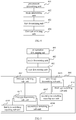
- FIG. 4 is a diagram illustrating the structure of an apparatus for switching the bit stream type of a video presentation according to an embodiment of the present application.
- the apparatus includes:
- the preset correspondence between the split screen modes and the bit stream types includes a preset correspondence between the split screen modes and default bit stream types.
- the type determining unit 403 may be specifically configured for: determining a default bit stream type corresponding to the current split screen mode according to the preset correspondence between the split screen modes and the default bit stream types.
- the first type switching unit 404 may be specifically configured for: switching the bit stream type of each started video presentation to the determined default bit stream type.
- the preset correspondence between the split screen modes and the bit stream types includes a preset correspondence between the split screen modes and default bit stream types and a preset correspondence between the split screen modes and supported bit stream types.
- the type determining unit 403 may be specifically configured for: determining a default bit stream type corresponding to the current split screen mode according to the preset correspondence between the split screen modes and the default bit stream types; and determining a supported bit stream type corresponding to the current split screen mode according to the preset correspondence between the split screen modes and the supported bit stream types, wherein the supported bit stream type includes at least one bit stream type.
- the first type switching unit 404 may be specifically configured for: switching the bit stream type of each started video presentation to one of the determined default bit stream type and the supported bit stream type.
- the first type switching unit 404 may include:
- the second type switching sub-unit 4044 may be specifically configured for: switching the bit stream type of the previously started video presentation to a bit stream type with the highest video quality in the determined supported bit stream type.
- the first type switching unit 404 may include:
- the apparatus for switching the bit stream type of a video presentation may further include:
- the apparatus for switching the bit stream type of a video presentation may further includes:
- the embodiments of the present application provide an apparatus for switching the bit stream type of a video presentation. After a plurality of channels of video presentations that have been started are determined, the current split screen mode is determined according to the number of channels of the determined video presentations. The bit stream type corresponding to the current split screen mode is determined according to the preset correspondence between the split screen modes and the bit stream types. The bit stream type of each started video presentation is switched according to the determined bit stream type. In the embodiments of the present application, the correspondence between the split screen modes and the bit stream types is preset. The bit stream type corresponding to the current split screen mode may be determined according to the correspondence, and the bit stream type of each video presentation is then switched. This solves the problem that the bit stream types of video presentations in respective split screens cannot be properly adjusted because the bit stream types required are not known. The client is thus protected from crashing due to insufficient memory.
- An embodiment of the application further provides an electronic device, which includes a processor and a memory.
- the memory is configured for storing an application program.
- the processor is configured for executing the application program stored in the memory to carry out the method for switching a bit stream type of a video presentation.
- the method for switching a bit stream type of a video presentation includes:
- the current split screen mode is determined according to the number of channels of the determined video presentations.
- the bit stream type corresponding to the current split screen mode is determined according to the preset correspondence between the split screen modes and the bit stream types.
- the bit stream type of each started video presentation is switched according to the determined bit stream type.
- the correspondence between the split screen modes and the bit stream types is preset.
- the bit stream type corresponding to the current split screen mode may be determined according to the correspondence, and the bit stream type of each video presentation is then switched.
- the communication bus may be a PCI (Peripheral Component Interconnect) bus, an EISA (Extended Industry Standard Architecture) bus, or the like.
- the communication bus can include an address bus, a data bus, a control bus, or the like.
- the communication interface is used for communication between the aforementioned electronic device and other devices.
- the memory may include an RAM (random access memory), or may include a NVM (non-volatile memory), for example at least one disk memory.
- the memory may also be at least one storage device located away from the processor described above.
- the processor may be a general-purpose processor, such as a CPU (central processing unit), an NP (network processor), or the like; it may also be a DSP (digital signal processor), an ASIC (application specific integrated circuit), an FPGA (field-programmable gate array) or other programmable logic devices, a discrete gate or transistor logic device, a discrete hardware component.
- a general-purpose processor such as a CPU (central processing unit), an NP (network processor), or the like; it may also be a DSP (digital signal processor), an ASIC (application specific integrated circuit), an FPGA (field-programmable gate array) or other programmable logic devices, a discrete gate or transistor logic device, a discrete hardware component.
- An embodiment of the application further provides an application program that, when executed, performs the method for switching a bit stream type of a video presentation.
- the method for switching a bit stream type of a video presentation includes:
- the current split screen mode is determined according to the number of channels of the determined video presentations.
- the bit stream type corresponding to the current split screen mode is determined according to the preset correspondence between the split screen modes and the bit stream types.
- the bit stream type of each started video presentation is switched according to the determined bit stream type.
- the correspondence between the split screen modes and the bit stream types is preset.
- the bit stream type corresponding to the current split screen mode may be determined according to the correspondence, and the bit stream type of each video presentation is then switched.
- An embodiment of the application further provides a storage medium for storing an application program.
- the application program when executed, performs the method for switching a bit stream type of a video presentation.
- the method for switching a bit stream type of a video presentation includes:
- the current split screen mode is determined according to the number of channels of the determined video presentations.
- the bit stream type corresponding to the current split screen mode is determined according to the preset correspondence between the split screen modes and the bit stream types.
- the bit stream type of each started video presentation is switched according to the determined bit stream type.
- the correspondence between the split screen modes and the bit stream types is preset.
- the bit stream type corresponding to the current split screen mode may be determined according to the correspondence, and the bit stream type of each video presentation is then switched.
- the description for the former are relatively simply.
- the related parts may be referred to the description of the embodiments of the method for switching a bit stream type of a video presentation shown in FIG. 1 - FIG. 3 .
Landscapes
- Engineering & Computer Science (AREA)
- Multimedia (AREA)
- Signal Processing (AREA)
- Databases & Information Systems (AREA)
- Computer Networks & Wireless Communication (AREA)
- Business, Economics & Management (AREA)
- General Engineering & Computer Science (AREA)
- General Business, Economics & Management (AREA)
- Marketing (AREA)
- Two-Way Televisions, Distribution Of Moving Picture Or The Like (AREA)
- Television Signal Processing For Recording (AREA)
- Signal Processing For Digital Recording And Reproducing (AREA)
Abstract
Description
- The present application claims the priority to a Chinese patent application No.
201610873098.0 - The present application relates to the field of techniques for videos, and in particular, to a method and an apparatus for switching a bit stream type of a video presentation.
- The bit stream type is a bit stream parameter rule composed by video quality parameters (e.g., resolutions, frame rates, code rates, etc.). The bit stream types may include, such as, high definition, standard definition, and smoothness. The bit stream types may be ordered by video quality as: high definition > standard definition > smoothness. The higher the video quality is, the higher the resolution, the code rate, the frame rate, and the bandwidth required for video presentation will be. The lower the video quality is, the lower the resolution, the code rate, the frame rate, and the bandwidth required for video presentation will be.
- In playing a video, a client often desires a bit stream type with high video quality. In a case that there is only one split screen, i.e., only a single video is presented, the bandwidth required is small, and a bit stream type with high video quality may be employed, such as the high definition bit stream type. However, in a case that there are multiple split screens in, i.e., multiple videos are presented, the bandwidth required is high, and using a bit stream type with high video quality is no longer proper. In addition, the client may be provided with a plurality of split screen modes, e.g., 1-split-screen mode, 4-split-screen mode, 9-split-screen mode, and 16-split-screen mode. When the client switches the split screen mode, if the video qualities of the video presentations in respective split screens are not properly adjusted, namely the bit stream types of the video presentations in respective split screens are not properly adjusted, it is possible to cause the client to run out of memory and to crash.
- The embodiments of the present application provide a method and an apparatus for switching a bit stream type of a video presentation, to prevent the client from running out of memory and crashing.
- To achieve the above objective, an embodiment of the present application discloses a method for switching a bit stream type of a video presentation. The method includes:
- determining a plurality of video presentations that have been started;
- determining a current split screen mode according to the number of the started video presentations;
- determining a bit stream type corresponding to the current split screen mode according to a preset correspondence between split screen modes and bit stream types; and
- switching a bit stream type of each started video presentation according to the determined bit stream type or bit stream types.
- Optionally, the preset correspondence between the split screen modes and the bit stream types includes a preset correspondence between the split screen modes and default bit stream types.
- The step of determining a bit stream type corresponding to the current split screen mode according to a preset correspondence between split screen modes and bit stream types includes:
determining a default bit stream type corresponding to the current split screen mode according to the preset correspondence between the split screen modes and the default bit stream types. - The step of switching a bit stream type of each started video presentation according to the determined bit stream type or bit stream types includes:
switching the bit stream type of each started video presentation to the determined default bit stream type. - Optionally, the preset correspondence between the split screen modes and the bit stream types includes a preset correspondence between the split screen modes and default bit stream types and a preset correspondence between the split screen modes and supported bit stream types.
- The step of determining a bit stream type corresponding to the current split screen mode according to a preset correspondence between split screen modes and bit stream types includes:
- determining a default bit stream type corresponding to the current split screen mode according to the preset correspondence between the split screen modes and the default bit stream types; and
- determining a supported bit stream type corresponding to the current split screen mode according to the preset correspondence between the split screen modes and the supported bit stream types, wherein the supported bit stream type includes at least one bit stream type.
- The step of switching a bit stream type of each started video presentation according to the determined bit stream type or bit stream types includes:
switching the bit stream type of each started video presentation to one of the determined default bit stream type and the supported bit stream type. - Optionally, if the number of split screens corresponding to the current split screen mode is greater than or equal to the number of split screens corresponding to a split screen mode determined last time, the step of switching the bit stream type of each started video presentation to one of the determined default bit stream type and the supported bit stream type includes:
- switching a bit stream type of each newly started video presentation to the determined default bit stream type;
- for each previously started video presentation, determining whether a bit stream type of the previously started video presentation is included in the determined supported bit stream type; and
- if it is determined that the bit stream type of the previously started video presentation is included in the determined supported bit stream type, rejecting the switching of the bit stream type of the previously started video presentation;
- if it is determined that the bit stream type of the previously started video presentation is not included in the determined supported bit stream type, switching the bit stream type of the previously started video presentation to a bit stream type in the determined supported bit stream type.
- Optionally, the step of switching the bit stream type of the previously started video presentation to a bit stream type in the determined supported bit stream type includes:
switching the bit stream type of the previously started video presentation to a bit stream type with the highest video quality in the determined supported bit stream type. - Optionally, if the number of split screens corresponding to the current split screen mode is less than the number of split screens corresponding to the split screen mode determined last time, the step of switching the bit stream type of each started video presentation to one of the determined default bit stream type and the supported bit stream type include:
- for each previously started video presentation, determining whether a video quality corresponding to the bit stream type of this video presentation is lower than a video quality corresponding to the determined default bit stream type; and
- if it is determined that the video quality corresponding to the bit stream type of this video presentation is lower than the video quality corresponding to the determined default bit stream type, switching the bit stream type of this video presentation to the determined default bit stream type;
- if it is determined that the video quality corresponding to the bit stream type of this video presentation is not lower than the video quality corresponding to the determined default bit stream type, rejecting the switching of the bit stream type of this video presentation.
- Optionally, the method further includes:
- receiving a request for switching a bit stream type of a started video presentation, wherein the request contains a target bit stream type that is a bit stream type in the supported bit stream types corresponding to the current split screen mode; and
- switching the bit stream type of the started video presentation to the target bit stream type.
- Optionally, after the step of switching a bit stream type of each started video presentation according to the determined bit stream type or bit stream types, the method further includes:
- determining whether each started video presentation is being recorded; and
- for each video presentation being recorded, generating a video file for the video presentation being recorded according to a video recorded, and recording the video presentation under the bit stream type that has been switched to; and obtaining and merging all video files of the video presentation after the recording of the video presentation is finished.
- To achieve the above objective, an embodiment of the present application further discloses an apparatus for switching a bit stream type of a video presentation. The apparatus includes:
- a presentation determining unit, configured for determining a plurality of video presentations that have been started;
- a mode determining unit, configured for determining a current split screen mode according to the number of the started video presentations;
- a type determining unit, configured for determining a bit stream type corresponding to the current split screen mode according to a preset correspondence between split screen modes and bit stream types; and
- a first type switching unit, configured for switching a bit stream type of each started video presentation according to the determined bit stream type or bit stream types.
- Optionally, the preset correspondence between the split screen modes and the bit stream types includes a preset correspondence between the split screen modes and default bit stream types.
- The type determining unit is specifically configured for:
determining a default bit stream type corresponding to the current split screen mode according to the preset correspondence between the split screen modes and the default bit stream types. - The first type switching unit is specifically configured for:
switching the bit stream type of each started video presentation to the determined default bit stream type. - Optionally, the preset correspondence between the split screen modes and the bit stream types includes a preset correspondence between the split screen modes and default bit stream types and a preset correspondence between the split screen modes and supported bit stream types.
- The type determining unit is specifically configured for:
determining a default bit stream type corresponding to the current split screen mode according to the preset correspondence between the split screen modes and the default bit stream types; and determining a supported bit stream type corresponding to the current split screen mode according to the preset correspondence between the split screen modes and the supported bit stream types, wherein the supported bit stream type includes at least one bit stream type. - The first type switching unit is specifically configured for:
switching the bit stream type of each started video presentation to one of the determined default bit stream type and the supported bit stream type. - Optionally, the first type switching unit includes:
- a first type switching sub-unit, configured for switching a bit stream type of each newly started video presentation to the determined default bit stream type, if the number of split screens corresponding to the current split screen mode is greater than or equal to the number of split screens corresponding to a split screen mode determined last time;
- a first type determining sub-unit, configured for, for each previously started video presentation, determining whether a bit stream type of the previously started video presentation is included in the determined supported bit stream type, if the number of split screens corresponding to the current split screen mode is greater than or equal to the number of split screens corresponding to the split screen mode determined last time;
- a first type-switching rejecting sub-unit, configured for rejecting the switching of the bit stream type of the previously started video presentation, when the first type determining sub-unit determines that the bit stream type of the previously started video presentation is included in the determined supported bit stream type; and
- a second type switching sub-unit, configured for switching the bit stream type of the previously started video presentation to a bit stream type in the determined supported bit stream type, when the first type determining sub-unit determines that the bit stream type of the previously started video presentation is not included in the determined supported bit stream type.
- Optionally, the second type switching sub-unit is specifically configured for:
switching the bit stream type of the previously started video presentation to a bit stream type with the highest video quality in the determined supported bit stream type. - Optionally, the first type switching unit includes:
- a second type determining sub-unit, configured for, for each previously started video presentation, determining whether a video quality corresponding to the bit stream type of the previously started video presentation is lower than a video quality corresponding to the determined default bit stream type, if the number of split screens corresponding to the current split screen mode is less than the number of split screens corresponding to the split screen mode determined last time;
- a third type switching sub-unit, configured for switching the bit stream type of this video presentation to the determined default bit stream type, when the second type determining sub-unit determines that the video quality corresponding to the bit stream type of this video presentation is lower than the video quality corresponding to the determined default bit stream type; and
- a second type-switching rejecting sub-unit, configured for rejecting the switching of the bit stream type of this video presentation, when the second type determining sub-unit determines that the video quality corresponding to the bit stream type of this video presentation is not lower than the video quality corresponding to the determined default bit stream type.
- Optionally, the apparatus further includes:
- a request receiving unit, configured for receiving a request for switching a bit stream type of a started video presentation, wherein the request contains a target bit stream type that is a bit stream type in the supported bit stream types corresponding to the current split screen mode; and
- a second type switching unit, configured for switching the bit stream type of the started video presentation to the target bit stream type.
- Optionally, the apparatus further includes:
- a record determining unit, configured for determining whether each started video presentation is being recorded, after switching the bit stream type of each started video presentation according to the determined bit stream type and bit stream types; and
- a record processing unit, configured for, for each video presentation being recorded, generating a video file for the video presentation being recorded according to a video recorded, and recording the video presentation under the bit stream type that has been switched to; and obtaining and merging all video files of the video presentation after the recording of the video presentation is finished.
- To achieve the objectives mentioned above, an embodiment of the application further provides an electronic device. The electronic device includes a processor and a memory.
- The memory is configured for storing an application program.
- The processor is configured for executing the application program stored in the memory to carry out the method for switching a bit stream type of a video presentation discussed above.
- To achieve the objectives mentioned above, an embodiment of the application further provides an application program that, when executed, performs the method for switching a bit stream type of a video presentation discussed above.
- To achieve the objectives mentioned above, an embodiment of the application further provides a storage medium for storing an application program. The application program, when executed, performs the method for switching a bit stream type of a video presentation discussed above.
- The embodiments of the present application provide a method and an apparatus for switching a bit stream type of a video presentation. After a plurality of video presentations that have been started are determined, the current split screen mode is determined according to the number of the started video presentations. The bit stream type corresponding to the current split screen mode is determined according to the preset correspondence between the split screen modes and the bit stream types. The bit stream types of the started video presentations are switched according to the determined bit stream type. In the embodiments of the present application, the correspondence between the split screen modes and the bit stream types is preset. The bit stream type corresponding to the current split screen mode may be determined according to the correspondence, and the bit stream type of each video presentation is then switched. This solves the problem that the bit stream types of video presentations in respective split screens cannot be properly adjusted because the bit stream types required are not known. The client is thus protected from crashing due to insufficient memory.
- In order to explain the technical solutions of embodiments of the present application or of the relevant art, a simple introduction of the drawings required in describing the embodiments and the relevant art will be given. Obviously, the drawings described below are just those for some embodiments of the present application and other drawings may be obtained by those of ordinary skills in the art without any creative efforts based on the drawings herein.
-
FIG. 1 is a flow chart illustrating a method for switching a bit stream type of a video presentation according to an embodiment of the present application; -
FIG. 2 is another flow chart illustrating a method for switching a bit stream type of a video presentation according to an embodiment of the present application; -
FIG. 3 is another flow chart illustrating a method for switching a bit stream type of a video presentation according to an embodiment of the present application; -
FIG. 4 is a diagram illustrating the structure of an apparatus for switching a bit stream type of a video presentation according to an embodiment of the present application; -
FIG. 5 is another diagram illustrating the structure of an apparatus for switching a bit stream type of a video presentation according to an embodiment of the present application. - The technical solution of the application will be described in detail with reference to the drawings of embodiments of the present application. Obviously, the embodiments described are only some instead of all of the embodiments of the present application. All further embodiments obtained by those of ordinary skills in the art based on the embodiments herein without any creative efforts are within the scope of the present application.
- The present application will be explained in detail with specific embodiments below.
- Referring to
FIG. 1, FIG. 1 is a flow chart illustrating a method for switching a bit stream type of a video presentation according to an embodiment of the present application. The method includes: - S101: determining a plurality of video presentations that have been started.
Generally, the video presentations that have been started may be determined based on the video content of several channels of video presentations that is received. For example, if the video content for1 video presentation is received, it is determined that 1 video presentation has been started; and if the video content for 4 channels of video presentations is received, it is determined that 4 channels of video presentations have been started. - S102: determining a current split screen mode according to the number of the started video presentations.
The client may be provided with a plurality of split screen modes, for example, a 1-split-screen mode, 4-split-screen mode, 9-split-screen mode, and 16-split screen mode. The current split screen mode may be determined according to the number of the channels of the started video presentations and a plurality of provided split screen modes.
For example, the split screen modes provided for the client are the 1-split-screen mode, 4-split-screen mode, 9-split-screen mode, and 16-split-screen mode. If 1 video presentation has been started, it may determine that the current split screen mode is the 1-split-screen mode. If 2, 3 or 4 channels of video presentations have been started, it may determine that the current split screen mode is the 4-split-screen mode. If 5, 6, 7, 8 or 9 channels of video presentations have been started, it may determine that the current split screen mode is the 9-split-screen mode. If 10, 11, 12, 13, 14, 15 or 16 channels of video presentations have been started, it may determine that the current split screen mode is the 16-split-screen mode, and so on. - S103: determining a bit stream type corresponding to the current split screen mode according to a preset correspondence between split screen modes and bit stream types.
- S104: switching a bit stream type of each started video presentation according to the determined bit stream type or bit stream types.
- In an embodiment of the present application, the preset correspondence between the split screen modes and the bit stream types may be a preset correspondence between the split screen modes and default bit stream types.
- In this case, S103 may be:
determining a default bit stream type corresponding to the current split screen mode according to the preset correspondence between the split screen modes and the default bit stream types. - S104 may be:
switching the bit stream type of each started video presentation to the determined default bit stream type. - For example, the preset correspondence between the split screen modes and the default bit stream types is as shown in Table 1.
Table 1 Split screen mode Default bit stream type 1-split-screen High definition 4-split-screen Standard definition 9- split-screen Smoothness 16- split-screen Smoothness - If it is determined that 1 video presentation A has been currently started, the current split screen mode may be determined as the 1-split-screen mode. The default bit stream type corresponding to the 1-split-screen mode is high definition according to the Table 1. The bit stream type of the video presentation A is then switched to high definition. In a next detection, if it is determined that 2 channels of video presentations A and B have been currently started, the current split screen mode may be determined as the 4-split-screen mode. The default bit stream type corresponding to the 4-split-screen mode is standard definition according to the Table 1. The bit stream types of the video presentations A and B are then switched to standard definition; and so on.
- In another embodiment of the present application, the preset correspondence between the split screen modes and the bit stream types may include a preset correspondence between the split screen modes and the default bit stream types and a preset correspondence between the split screen modes and supported bit stream types. The supported bit stream types include at least one bit stream type.
- In this case, referring to
FIG. 2 , S103 may include: - S1031: determining a default bit stream type corresponding to the current split screen mode according to the preset correspondence between the split screen modes and the default bit stream types; and
- S1032: determining a supported bit stream type corresponding to the current split screen mode according to the preset correspondence between the split screen modes and the supported bit stream types.
- Here, S1031 may be performed simultaneously as S1032, or may be performed before or after S1032, which is not limited herein.
- S104 may be:
switching the bit stream type of each started video presentation to one of the determined default bit stream type and the supported bit stream type. - It should be noted that a supported bit stream type is a bit stream type that is switchable. A default bit stream type may be one of the supported bit stream types.
- The current split screen mode determined each time may or may not be the same as the split screen mode determined last time. If they are the same, it means that the number of split screens corresponding to the current split screen mode is equal to the number of split screens corresponding to the split screen mode determined last time. If they are different, there are two situations: one is that the number of split screens corresponding to the current split screen mode is greater than the number of split screens corresponding to the split screen mode determined last time; the other is that the number of split screens corresponding to the current split screen mode is smaller than the number of split screens corresponding to the split screen mode determined last time.
- In an embodiment of the present application, for different situations, on the basis of
FIG. 2 , the adjustment of a bit stream type of each video presentation may be as shown inFIG. 3 . - If the number of split screens corresponding to the current split screen mode is greater than or equal to the number of split screens corresponding to the split screen mode determined last time, S104 may include:
- S1041: switching a bit stream type of each newly started video presentation to the determined default bit stream type.
Here, a newly started video presentation is a video presentation that has been started currently but has not been started during last determination. - S1042: for each previously started video presentation, determining whether a bit stream type of the each previously started video presentation is included in the determined supported bit stream type; and if it is determined that the bit stream type of the each previously started video presentation is included in the determined supported bit stream type, performing S1043, if it is determined that the bit stream type of the each previously started video presentation is not included in the determined supported bit stream type, performing S1044.
Here, the previously started video presentation is a video presentation that has been started during both current determination and last determination.
It should be noted that S1041 may be performed simultaneously as S1042, or may be performed before or after S1042, which is not limited herein. - S1043: rejecting the switching of the bit stream type of the previously started video presentation.
- S1044: switching the bit stream type of the previously started video presentation to a bit stream type in the determined supported bit stream type.
- For example, the preset correspondence between the split screen modes and the default bit stream types and the preset correspondence between the split screen modes and the supported bit stream types are as shown in Table 2.
Table 2 Split screen mode Default bit stream type Supported bit stream type 1-split-screen High definition High definition, Standard definition, Smoothness 4- split-screen Standard definition High definition, Standard definition, Smoothness 9- split-screen Smoothness Standard definition, Smoothness 16-split-screen Smoothness Smoothness - If it is determined that 1 video presentation A has been started, the current split screen mode may be determined as the 1-split-screen mode. The default bit stream type corresponding to the 1-split-screen mode is high definition according to Table 2. The bit stream type of the video presentation A is then switched to high definition, as shown in Table 3.
Table 3 A. High definition - In a next detection, if it is determined that 2 channels of video presentations A and B have been started, the current split screen mode is determined as the 4-split-screen mode. The default bit stream type corresponding to the 4-split-screen mode is standard definition according to Table 2. The supported bit stream types corresponding to the 4-split-screen mode are high definition, standard definition, and smoothness according to Table 2. The video presentation B is a newly started video presentation, and the bit stream type of the video presentation B is switched to the default bit stream type, i.e., standard definition. The video presentation A is a previously started video presentation, and the bit stream type of the video presentation A is one of the determined supported bit stream types. Thus, the bit stream type of the video presentation A will not be switched, namely, the bit stream type of the video presentation A remains being high definition. These are shown in Table 4.
Table 4 A. High definition B. Standard definition - In a next detection, if it is determined that 3 channels of video presentations A, B and C have been started or 4 channels of video presentations A, B, C and D have been started, the current split screen mode is determined as the 4-split-screen mode, which is the same as the split screen mode determined last time. The video presentations C and/or D are newly started video presentations, and the bit stream types of the video presentations C and/or D are switched to the default bit stream type, i.e., standard definition. The video presentations A and B are previously started video presentations, and the bit stream types of both video presentations A and B (high definition and standard definition) are included in the supported bit stream types corresponding to the 4-split-screen mode. Thus, the bit stream types of the video presentations A and B will remain unchanged. These are shown in Table 5.
Table 5 A. High definition B. Standard definition C. Standard definition D. Standard definition - In a next detection, if 5 channels of video presentations A, B, C, D and E have been started, the current split screen mode is determined as the 9-split-screen mode. The default bit stream type corresponding to the 9-split-screen mode is smoothness according to Table 2. The supported bit stream types corresponding to the 9-split-screen mode are standard definition and smoothness according to Table 2. The video presentation E is a newly started video presentation, and the bit stream type of the video presentation E is switched to the default bit stream type, i.e., smoothness. The video presentations A, B, C and D are previously started video presentations. Here, the bit stream types of the video presentations B, C and D are included in the determined supported bit stream types. Thus, the bit stream types of the video presentations B, C and D will not be switched, namely, the bit stream types of the video presentations B, C and D remain being standard definition. The bit stream type of the video presentation A is not included in the determined supported bit stream types. Thus, the bit stream type of the video presentation A is switched to one of the determined supported bit stream types (such as standard definition). These are shown in Table 6. The bit stream types of other video presentations are switched similarly.
Table 6 A. Standard definition B. Standard definition E. Smoothness C. Standard definition D. Standard definition - In an embodiment of the present application, the video quality may be identified by parameters including such as resolution, frame rate, and code rate. The higher the video quality is, the clearer the video presentation will be. Therefore, the client often desires a bit stream type with high video quality. As a result, S1044 may be switching the bit stream type of the previously started video presentation to a bit stream type with the highest video quality in the determined supported bit stream type. As noted above, when the video presentation E is started, the current split screen mode is changed from the 4-split-screen mode to the 9-split-screen mode. The supported bit stream types corresponding to the 9-split-screen mode are standard definition and smoothness, which can be ordered by video quality as standard definition > smoothness. Therefore, the bit stream type of the video presentation A is switched from high definition to standard definition.
- If the number of split screens corresponding to the current split screen mode is less than the number of split screens corresponding to the split screen mode determined last time, S104 may include:
- S1045: for each previously started video presentation, determining whether a video quality corresponding to the bit stream type of the each previously started video presentation is lower than a video quality corresponding to the determined default bit stream type; and if it is determined that the video quality corresponding to the bit stream type of the each previously started video presentation is lower than the video quality corresponding to the determined default bit stream type, performing
S 1046, if it is determined that the video quality corresponding to the bit stream type of the each previously started video presentation is not lower than the video quality corresponding to the determined default bit stream type, performing S1047. - S1046: switching the bit stream type of this video presentation to the determined default bit stream type.
- S1047: rejecting the switching of the bit stream type of this video presentation.
- For example, the preset correspondence between the split screen modes and the bit stream types are as shown in Table 2, and 16 channels of video presentations have been started, which are A, B, C, D, E, F, G, H, I, J, K, L, M, N, O, and P. The current split screen mode is thus determined as the 16-split-screen mode. Both the default bit stream type and the supported bit stream type corresponding to the 16-split-screen mode are determined as smoothness according to Table 2. Thus, the bit stream types of all of the video presentations are switched to smoothness, as shown in Table 7.
Table 7 A. Smoothness B. Smoothness E. Smoothness J. Smoothness C. Smoothness D. Smoothness F. Smoothness K. Smoothness G. Smoothness H. Smoothness I. Smoothness L. Smoothness M. Smoothness N. Smoothness O. Smoothness P. Smoothness - In a next detection, if the 7 channels of video presentations J, K, L, M, N, O and P are determined to have been closed, it is determined that 9 channels of video presentations have been started, which are A, B, C, D, E, F, G, H and I, and the current split screen mode is the 9-split-screen mode. The default bit stream type corresponding to the 9-split-screen mode is determined as smoothness according to Table 2. The supported bit stream types corresponding to the 9-split-screen mode are determined as smoothness and standard definition according to Table 2. The bit stream type of each started video presentation is the same as the determined default bit stream type. That is, the video quality corresponding to the bit stream type of each started video presentation is not less than the video quality for the determined default bit stream type. Thus, the bit stream type of each of the video presentations is not switched and remains being smoothness, as shown in Table 8.
Table 8 A. Smoothness B. Smoothness E. Smoothness C. Smoothness D. Smoothness F. Smoothness G. Smoothness H. Smoothness I. Smoothness - In a next detection, if 5 channels of video presentations E, F, G, H and I are determined to have been closed, it is determined that 4 channels of video presentations have been started, which are A, B, C and D, and the current split screen mode is thus the 4-split-screen mode. The default bit stream type corresponding to the 4-split-screen mode is determined as standard definition according to Table 2. The supported bit stream types corresponding to the 4-split-screen mode are determined as smoothness, standard definition and high definition according to Table 2. The video quality corresponding to smoothness is lower than the video quality corresponding to standard definition. That is, the video quality corresponding to the bit stream type of each started video presentation is less than the video quality for the determined default bit stream type. Thus, the bit stream type of each of the video presentations is switched to standard definition, as shown in Table 9. The bit stream types of other video presentations are switched similarly.
Table 9 A. Standard definition B. Standard definition C. Standard definition D. Standard definition - In an embodiment of the present application, the bit stream type of each video presentation may be adjusted depending on the requirements of the user. Generally, the user inputs a request for switching the bit stream type of a started video presentation according to the supported bit stream types of the current split screen mode. The request for switching the type contains a target bit stream type. The target bit stream type is one of the supported bit stream types corresponding to the current split screen mode. Upon receiving the request for switching the type, the bit stream type of that started video presentation is switched to the target bit stream type.
- For example, as shown in Table 9, the supported bit stream types corresponding to the 4-split-screen mode are smoothness, standard definition, and high definition. If a request for switching the bit stream type of the video presentation A is received and the target bit stream type in this request is high definition, the bit stream type of the video presentation A is switched to high definition, as shown in Table 10.
Table 10 A. High definition B. Standard definition C. Standard definition D. Standard definition - In an embodiment of the present application, the client may record a video presentation. Such recording may be interrupted by the switching between bit stream types. At this point, for the integrity of the recording of the video presentation, after switching the bit stream type of each started video presentation according to the determined bit stream types, it may determine whether each started video presentation is being recorded. For each video presentation being recorded, a video file for the video presentation is generated from the video being recorded, and the video presentation is recorded under the bit stream type that has been switched to. After the recording of the video presentation is finished, all video files of the video presentation are obtained and merged.
- For example, it is 10:00 currently, the current video presentation A is recorded from 10:00. At 10:15, the bit stream type of the video presentation A is switched to a bit stream type a. The recording of the video presentation A is thus interrupted or stopped, and a video file f1 is generated for the video presentation A which is recorded from 10:00 to 10:15. The recording of the video presentation A is restarted and proceeds under the bit stream type a. At 10:25, the bit stream type of the video presentation A is switched to a bit stream type b. The recording of the video presentation A is thus interrupted, and a video file f2 is generated for the video presentation A which is recorded from 10:15 to 10:25. The recording of the video presentation A is restarted and proceeds under the bit stream type b. At 10:34, the bit stream type of the video presentation A is switched to a bit stream type c. The recording of the video presentation A is thus interrupted, and a video file f3 is generated for the video presentation A which is recorded from 10:25 to 10:34. The recording of the video presentation A is restarted and proceeds under the bit stream type c. At 10:50, the recording of the video presentation A is stopped, and a video file f4 is generated for the video presentation A which is recorded from 10:34 to 10:50. All the video files (f1, f2, f3, and f4) of the video presentation A are obtained and are merged to create a complete video file of the video presentation A.
- The embodiments of the present application provide a method for switching a bit stream type of a video presentation. After a plurality of channels of video presentations that have been started are determined, the current split screen mode is determined according to the number of channels of the determined video presentations. The bit stream type corresponding to the current split screen mode is determined according to the preset correspondence between the split screen modes and the bit stream types. The bit stream type of each started video presentation is switched according to the determined bit stream type. In the embodiments of the present application, the correspondence between the split screen modes and the bit stream types is preset. The bit stream type corresponding to the current split screen mode may be determined according to the correspondence, and the bit stream type of each video presentation is then switched. This solves the problem that the bit stream types of video presentations in respective split screens cannot be properly adjusted because the bit stream types required are not known. The client is thus protected from crashing due to insufficient memory.
- Referring to
FIG. 4, FIG. 4 is a diagram illustrating the structure of an apparatus for switching the bit stream type of a video presentation according to an embodiment of the present application. The apparatus includes: - a
presentation determining unit 401, configured for determining a plurality of video presentations that have been started; - a
mode determining unit 402, configured for determining a current split screen mode according to the number of the started video presentations; - a
type determining unit 403, configured for determining a bit stream type corresponding to the current split screen mode according to a preset correspondence between split screen modes and bit stream types; and - a first
type switching unit 404, configured for switching a bit stream type of each started video presentation according to the determined bit stream type or bit stream types. - In an embodiment of the present application, the preset correspondence between the split screen modes and the bit stream types includes a preset correspondence between the split screen modes and default bit stream types.
- In this case, the
type determining unit 403 may be specifically configured for:
determining a default bit stream type corresponding to the current split screen mode according to the preset correspondence between the split screen modes and the default bit stream types. - The first
type switching unit 404 may be specifically configured for:
switching the bit stream type of each started video presentation to the determined default bit stream type. - In an embodiment of the present application, the preset correspondence between the split screen modes and the bit stream types includes a preset correspondence between the split screen modes and default bit stream types and a preset correspondence between the split screen modes and supported bit stream types.
- In this case, the
type determining unit 403 may be specifically configured for:
determining a default bit stream type corresponding to the current split screen mode according to the preset correspondence between the split screen modes and the default bit stream types; and determining a supported bit stream type corresponding to the current split screen mode according to the preset correspondence between the split screen modes and the supported bit stream types, wherein the supported bit stream type includes at least one bit stream type. - The first
type switching unit 404 may be specifically configured for:
switching the bit stream type of each started video presentation to one of the determined default bit stream type and the supported bit stream type. - In an embodiment of the present application, referring to
FIG. 5 , the firsttype switching unit 404 may include: - a first type switching sub-unit 4041, configured for switching a bit stream type of each newly started video presentation to the determined default bit stream type, if the number of split screens corresponding to the current split screen mode is greater than the number of split screens corresponding to the split screen mode determined last time;
- a first type determining sub-unit 4042, configured for, for each previously started video presentation, determining whether a bit stream type of the previously started video presentation is included in the determined supported bit stream type, if the number of split screens corresponding to the current split screen mode is greater than the number of split screens corresponding to the split screen mode determined last time;
- a first type-switching rejecting sub-unit 4043, configured for rejecting the switching of the bit stream type of the previously started video presentation, when the first type determining sub-unit 4042 determines that the bit stream type of of the previously started video presentation is included in the determined supported bit stream type; and
- a second type switching sub-unit 4044, configured for switching the bit stream type of the previously started video presentation to a bit stream type in the determined supported bit stream type, when the first type determining sub-unit 4042 determines that the bit stream type of the previously started video presentation is not included in the determined supported bit stream type.
- In an embodiment of the present application, the second type switching sub-unit 4044 may be specifically configured for:
switching the bit stream type of the previously started video presentation to a bit stream type with the highest video quality in the determined supported bit stream type. - In an embodiment of the present application, referring to
FIG. 5 , the firsttype switching unit 404 may include: - a second type determining sub-unit 4045, configured for, for each started video presentation, determining whether a video quality corresponding to the bit stream type of the video presentation is lower than a video quality corresponding to the determined default bit stream type, if the number of split screens corresponding to the current split screen mode is less than the number of split screens corresponding to the split screen mode determined last time;
- a third type switching sub-unit 4046, configured for switching the bit stream type of this video presentation to the determined default bit stream type, when the second type determining sub-unit 4045 determines that the video quality corresponding to the bit stream type of the video presentation is lower than the video quality corresponding to the determined default bit stream type; and
- a second type-switching rejecting sub-unit 4047, configured for rejecting the switching of the bit stream type of this video presentation, when the second type determining sub-unit 4045 determines that the video quality corresponding to the bit stream type of the video presentation is not lower than the video quality corresponding to the determined default bit stream type.
- In an embodiment of the present application, the apparatus for switching the bit stream type of a video presentation may further include:
- a request receiving unit (not shown in
FIG. 4 ), configured for receiving a request for switching a bit stream type of a started video presentation, wherein the request contains a target bit stream type that is a bit stream type in the supported bit stream types corresponding to the current split screen mode; and - a second type switching unit (not shown in
FIG. 4 ), configured for switching the bit stream type of the started video presentation to the target bit stream type. - In an embodiment of the present application, the apparatus for switching the bit stream type of a video presentation may further includes:
- a record determining unit (not shown in
FIG. 4 ), configured for determining whether each started video presentation is being recorded, after switching the bit stream type of each started video presentation according to the determined bit stream type; and - a record processing unit (not shown in
FIG. 4 ), configured for, for each video presentation being currently recorded, generating a video file for the video presentation according to a video recorded, and recording the video presentation under the bit stream type that has been switched to; and obtaining and merging all video files of the video presentation after the recording of the video presentation is finished. - The embodiments of the present application provide an apparatus for switching the bit stream type of a video presentation. After a plurality of channels of video presentations that have been started are determined, the current split screen mode is determined according to the number of channels of the determined video presentations. The bit stream type corresponding to the current split screen mode is determined according to the preset correspondence between the split screen modes and the bit stream types. The bit stream type of each started video presentation is switched according to the determined bit stream type. In the embodiments of the present application, the correspondence between the split screen modes and the bit stream types is preset. The bit stream type corresponding to the current split screen mode may be determined according to the correspondence, and the bit stream type of each video presentation is then switched. This solves the problem that the bit stream types of video presentations in respective split screens cannot be properly adjusted because the bit stream types required are not known. The client is thus protected from crashing due to insufficient memory.
- An embodiment of the application further provides an electronic device, which includes a processor and a memory.
- The memory is configured for storing an application program.
- The processor is configured for executing the application program stored in the memory to carry out the method for switching a bit stream type of a video presentation. The method for switching a bit stream type of a video presentation includes:
- determining a plurality of video presentations that have been started;
- determining a current split screen mode according to the number of the started video presentations;
- determining a bit stream type corresponding to the current split screen mode according to a preset correspondence between split screen modes and bit stream types; and
- switching a bit stream type of each started video presentation according to the determined bit stream type or bit stream types.
- In the embodiments above, after a plurality of channels of video presentations that have been started are determined, the current split screen mode is determined according to the number of channels of the determined video presentations. The bit stream type corresponding to the current split screen mode is determined according to the preset correspondence between the split screen modes and the bit stream types. The bit stream type of each started video presentation is switched according to the determined bit stream type. In the embodiments of the present application, the correspondence between the split screen modes and the bit stream types is preset. The bit stream type corresponding to the current split screen mode may be determined according to the correspondence, and the bit stream type of each video presentation is then switched. This solves the problem that the bit stream types of video presentations in respective split screens cannot be properly adjusted because the bit stream types required are not known. The client is thus protected from crashing due to insufficient memory.
- The communication bus may be a PCI (Peripheral Component Interconnect) bus, an EISA (Extended Industry Standard Architecture) bus, or the like. The communication bus can include an address bus, a data bus, a control bus, or the like.
- The communication interface is used for communication between the aforementioned electronic device and other devices.
- The memory may include an RAM (random access memory), or may include a NVM (non-volatile memory), for example at least one disk memory. Optionally, the memory may also be at least one storage device located away from the processor described above.
- The processor may be a general-purpose processor, such as a CPU (central processing unit), an NP (network processor), or the like; it may also be a DSP (digital signal processor), an ASIC (application specific integrated circuit), an FPGA (field-programmable gate array) or other programmable logic devices, a discrete gate or transistor logic device, a discrete hardware component.
- An embodiment of the application further provides an application program that, when executed, performs the method for switching a bit stream type of a video presentation. The method for switching a bit stream type of a video presentation includes:
- determining a plurality of video presentations that have been started;
- determining a current split screen mode according to the number of the started video presentations;
- determining a bit stream type corresponding to the current split screen mode according to a preset correspondence between split screen modes and bit stream types; and
- switching a bit stream type of each started video presentation according to the determined bit stream type or bit stream types.
- In the embodiments above, after a plurality of channels of video presentations that have been started are determined, the current split screen mode is determined according to the number of channels of the determined video presentations. The bit stream type corresponding to the current split screen mode is determined according to the preset correspondence between the split screen modes and the bit stream types. The bit stream type of each started video presentation is switched according to the determined bit stream type. In the embodiments of the present application, the correspondence between the split screen modes and the bit stream types is preset. The bit stream type corresponding to the current split screen mode may be determined according to the correspondence, and the bit stream type of each video presentation is then switched. This solves the problem that the bit stream types of video presentations in respective split screens cannot be properly adjusted because the bit stream types required are not known. The client is thus protected from crashing due to insufficient memory.
- An embodiment of the application further provides a storage medium for storing an application program. The application program, when executed, performs the method for switching a bit stream type of a video presentation. The method for switching a bit stream type of a video presentation includes:
- determining a plurality of video presentations that have been started;
- determining a current split screen mode according to the number of the started video presentations;
- determining a bit stream type corresponding to the current split screen mode according to a preset correspondence between split screen modes and bit stream types; and
- switching a bit stream type of each started video presentation according to the determined bit stream type or bit stream types.
- In the embodiments above, after a plurality of channels of video presentations that have been started are determined, the current split screen mode is determined according to the number of channels of the determined video presentations. The bit stream type corresponding to the current split screen mode is determined according to the preset correspondence between the split screen modes and the bit stream types. The bit stream type of each started video presentation is switched according to the determined bit stream type. In the embodiments of the present application, the correspondence between the split screen modes and the bit stream types is preset. The bit stream type corresponding to the current split screen mode may be determined according to the correspondence, and the bit stream type of each video presentation is then switched. This solves the problem that the bit stream types of video presentations in respective split screens cannot be properly adjusted because the bit stream types required are not known. The client is thus protected from crashing due to insufficient memory.
- Since the embodiments of the apparatus, the electronic device, the application, and the storage medium for switching a bit stream type of a video presentation are substantially the same as the embodiments of the method for switching a bit stream type of a video presentation, the description for the former are relatively simply. The related parts may be referred to the description of the embodiments of the method for switching a bit stream type of a video presentation shown in
FIG. 1 - FIG. 3 . - It should be noted that the relationship terms herein such as "first", "second", and the like are only used for distinguishing one entity or operation from another entity or operation, but do not necessarily require or imply that there is any actual relationship or order between these entities or operations. Moreover, the terms "include", "comprise" or any other variants thereof are intended to cover non-exclusive inclusions, so that processes, methods, articles or devices comprising a series of elements comprise not only those elements listed but also those not specifically listed or the elements intrinsic to these processes, methods, articles, or devices. Without further limitations, elements defined by the sentences "comprise(s) a." or "include(s) a." do not exclude that there are other identical elements in the processes, methods, articles, or devices which include these elements.
- It will be understood by those of ordinary skills in the art that all or some of the steps in the methods described above may be accomplished by a program to instruct the associated hardware. Said program may be stored in a computer-readable storage medium, such as ROMs/RAMs, magnetic disks, optical disks, etc.
- The embodiments described above are merely preferred embodiments of the present application, and not intended to limit the scope of the present application. Any modifications, equivalents, improvements or the like within the spirit and principle of the application should be included in the scope of the application.
Claims (19)
- A method for switching a bit stream type of a video presentation, comprising:determining a plurality of video presentations that have been started;determining a current split screen mode according to the number of the started video presentations;determining a bit stream type corresponding to the current split screen mode according to a preset correspondence between split screen modes and bit stream types; andswitching a bit stream type of each started video presentation according to the determined bit stream type or bit stream types.
- The method of claim 1, wherein the preset correspondence between the split screen modes and the bit stream types comprises a preset correspondence between the split screen modes and default bit stream types;
the step of determining a bit stream type corresponding to the current split screen mode according to a preset correspondence between split screen modes and bit stream types, comprises:determining a default bit stream type corresponding to the current split screen mode according to the preset correspondence between the split screen modes and the default bit stream types; andthe step of switching a bit stream type of each started video presentation according to the determined bit stream type or bit stream types, comprises:
switching the bit stream type of each started video presentation to the determined default bit stream type. - The method of claim 1, wherein the preset correspondence between the split screen modes and the bit stream types comprises a preset correspondence between the split screen modes and default bit stream types and a preset correspondence between the split screen modes and supported bit stream types;
the step of determining a bit stream type corresponding to the current split screen mode according to a preset correspondence between split screen modes and bit stream types, comprises:determining a default bit stream type corresponding to the current split screen mode according to the preset correspondence between the split screen modes and the default bit stream types; anddetermining a supported bit stream type corresponding to the current split screen mode according to the preset correspondence between the split screen modes and the supported bit stream types, wherein the supported bit stream type comprises at least one bit stream type; andthe step of switching a bit stream type of each started video presentation according to the determined bit stream type or bit stream types, comprises:
switching the bit stream type of each started video presentation to one of the determined default bit stream type and the supported bit stream type. - The method of claim 3, wherein if the number of split screens corresponding to the current split screen mode is greater than or equal to the number of split screens corresponding to a split screen mode determined last time, the step of switching the bit stream type of each started video presentation to one of the determined default bit stream type and the supported bit stream type, comprise:switching a bit stream type of each newly started video presentation to the determined default bit stream type;for each previously started video presentation, determining whether a bit stream type of the previously started video presentation is comprised in the determined supported bit stream type; andif it is determined that the bit stream type of the previously started video presentation is comprised in the determined supported bit stream type, rejecting the switching of the bit stream type of the previously started video presentation;if it is determined that the bit stream type of the previously started video presentation is not comprised in the determined supported bit stream type, switching the bit stream type of the previously started video presentation to a bit stream type in the determined supported bit stream type.
- The method of claim 4, wherein the step of switching the bit stream type of the previously started video presentation to a bit stream type in the determined supported bit stream type comprises:
switching the bit stream type of the previously started video presentation to a bit stream type with the highest video quality in the determined supported bit stream type. - The method of claim 3, wherein if the number of split screens corresponding to the current split screen mode is less than the number of split screens corresponding to a split screen mode determined last time, the step of switching the bit stream type of each started video presentation to one of the determined default bit stream type and the supported bit stream type comprises:for each previously started video presentation, determining whether a video quality corresponding to the bit stream type of the previously started video presentation is lower than a video quality corresponding to the determined default bit stream type; andif it is determined that the video quality corresponding to the bit stream type of the previously started video presentation is lower than the video quality corresponding to the determined default bit stream type, switching the bit stream type of this video presentation to the determined default bit stream type;if it is determined that the video quality corresponding to the bit stream type of the previously started video presentation is not lower than the video quality corresponding to the determined default bit stream type, rejecting the switching of the bit stream type of this video presentation.
- The method of one of claims 3-6, further comprising:receiving a request for switching a bit stream type of a started video presentation, wherein the request contains a target bit stream type that is a bit stream type in the supported bit stream types corresponding to the current split screen mode; andswitching the bit stream type of the started video presentation to the target bit stream type.
- The method of claim 1, wherein after the step of switching a bit stream type of each started video presentation according to the determined bit stream type or bit stream types, the method further comprises:determining whether each started video presentation is being recorded; andfor each video presentation being recorded, generating a video file for the video presentation being recorded according to a video recorded, and recording the video presentation under the bit stream type that has been switched to; and obtaining and merging all video files of the video presentation after the recording of the video presentation is finished.
- An apparatus for switching a bit stream type of a video presentation, comprising:a presentation determining unit, configured for determining a plurality of video presentations that have been started;a mode determining unit, configured for determining a current split screen mode according to the number of the started video presentations;a type determining unit, configured for determining a bit stream type corresponding to the current split screen mode according to a preset correspondence between split screen modes and bit stream types; anda first type switching unit, configured for switching a bit stream type of each started video presentation according to the determined bit stream type or bit stream types.
- The apparatus of claim 9, wherein the preset correspondence between the split screen modes and the bit stream types comprises a preset correspondence between the split screen modes and default bit stream types;
the type determining unit is further configured for:determining a default bit stream type corresponding to the current split screen mode according to the preset correspondence between the split screen modes and the default bit stream types; andthe first type switching unit is further configured for:
switching the bit stream type of each started video presentation to the determined default bit stream type. - The apparatus of claim 9, wherein the preset correspondence between the split screen modes and the bit stream types comprises a preset correspondence between the split screen modes and default bit stream types and a preset correspondence between the split screen modes and supported bit stream types;
the type determining unit is further configured for:determining a default bit stream type corresponding to the current split screen mode according to the preset correspondence between the split screen modes and the default bit stream types; and determining a supported bit stream type corresponding to the current split screen mode according to the preset correspondence between the split screen modes and the supported bit stream types, wherein the supported bit stream type comprises at least one bit stream type; andthe first type switching unit is further configured for:
switching the bit stream type of each started video presentation to one of the determined default bit stream type and the supported bit stream type. - The apparatus of claim 11, wherein the first type switching unit comprises
a first type switching sub-unit, configured for switching a bit stream type of each newly started video presentation to the determined default bit stream type, if the number of split screens corresponding to the current split screen mode is greater than or equal to the number of split screens corresponding to a split screen mode determined last time;
a first type determining sub-unit, configured for, for each previously started video presentation, determining whether a bit stream type of the previously started video presentation is comprised in the determined supported bit stream type, if the number of split screens corresponding to the current split screen mode is greater than or equal to the number of split screens corresponding to the split screen mode determined last time;
a first type-switching rejecting sub-unit, configured for rejecting the switching of the bit stream type of the previously started video presentation, when the first type determining sub-unit determines that the bit stream type of the previously started video presentation is comprised in the determined supported bit stream type; and
a second type switching sub-unit, configured for switching the bit stream type of the previously started video presentation to a bit stream type in the determined supported bit stream type, when the first type determining sub-unit determines that the bit stream type of the previously started video presentation is not comprised in the determined supported bit stream type. - The apparatus of claim 12, wherein the second type switching sub-unit is further configured for:
switching the bit stream type of the previously started video presentation to a bit stream type with the highest video quality in the determined supported bit stream type. - The apparatus of claim 11, wherein the first type switching unit comprises:a second type determining sub-unit, configured for, for each previously started video presentation, determining whether a video quality corresponding to the bit stream type of this video presentation is lower than a video quality corresponding to the determined default bit stream type, if the number of split screens corresponding to the current split screen mode is less than the number of split screens corresponding to a split screen mode determined last time;a third type switching sub-unit, configured for switching the bit stream type of this video presentation to the determined default bit stream type, when the second type determining sub-unit determines that the video quality corresponding to the bit stream type of this video presentation is lower than the video quality corresponding to the determined default bit stream type; anda second type-switching rejecting sub-unit, configured for rejecting the switching of the bit stream type of this video presentation, when the second type determining sub-unit determines that the video quality corresponding to the bit stream type of this video presentation is not lower than the video quality corresponding to the determined default bit stream type.
- The apparatus of one of claims 11-14, further comprising:a request receiving unit, configured for receiving a request for switching a bit stream type of a started video presentation, wherein the request contains a target bit stream type that is a bit stream type in the supported bit stream types corresponding to the current split screen mode; anda second type switching unit, configured for switching the bit stream type of the started video presentation to the target bit stream type.
- The apparatus of claim 9, further comprising:a record determining unit, configured for determining whether each started video presentation is being recorded, after switching the bit stream type of each started video presentation according to the determined bit stream type or bit stream types; anda record processing unit, configured for, for each video presentation being recorded, generating a video file for the video presentation being recorded according to a video recorded, and recording the video presentation under the bit stream type that has been switched to; and obtaining and merging all video files of the video presentation after the recording of the video presentation is finished.
- An electronic device, comprising a processor and a memory; wherein
the memory is configured for storing an application program; and
the processor is configured for executing the application program stored in the memory to carry out the method for switching a bit stream type of a video presentation of one of claims 1-8. - An application program that, when executed, performs the method for switching a bit stream type of a video presentation of one of claims 1-8.
- A storage medium for storing an application program that, when executed, performs the method for switching a bit stream type of a video presentation of one of claims 1-8.
Applications Claiming Priority (2)
| Application Number | Priority Date | Filing Date | Title |
|---|---|---|---|
| CN201610873098.0A CN107888964B (en) | 2016-09-30 | 2016-09-30 | A kind of code stream type switching method and device for video playback |
| PCT/CN2017/098649 WO2018059164A1 (en) | 2016-09-30 | 2017-08-23 | Method and apparatus for switching bit stream type of video playing |
Publications (3)
| Publication Number | Publication Date |
|---|---|
| EP3522553A4 EP3522553A4 (en) | 2019-08-07 |
| EP3522553A1 true EP3522553A1 (en) | 2019-08-07 |
| EP3522553B1 EP3522553B1 (en) | 2022-02-23 |
Family
ID=61763307
Family Applications (1)
| Application Number | Title | Priority Date | Filing Date |
|---|---|---|---|
| EP17854616.4A Active EP3522553B1 (en) | 2016-09-30 | 2017-08-23 | Method and apparatus for switching video bitstreams resolution based on a split screen mode |
Country Status (4)
| Country | Link |
|---|---|
| US (1) | US10827222B2 (en) |
| EP (1) | EP3522553B1 (en) |
| CN (1) | CN107888964B (en) |
| WO (1) | WO2018059164A1 (en) |
Families Citing this family (6)
| Publication number | Priority date | Publication date | Assignee | Title |
|---|---|---|---|---|
| CN111182352B (en) * | 2018-11-09 | 2022-06-14 | 浙江宇视科技有限公司 | Adaptive code stream control device and method for video playing |
| CN109712100B (en) * | 2018-11-27 | 2021-05-11 | Oppo广东移动通信有限公司 | Video enhancement control method and device and electronic equipment |
| CN111314650B (en) * | 2018-12-11 | 2021-04-20 | 浙江宇视科技有限公司 | Image display method and device |
| CN113867853A (en) * | 2020-06-30 | 2021-12-31 | 北京小米移动软件有限公司 | Application program display method and device and storage medium |
| CN112272270B (en) * | 2020-09-28 | 2022-03-01 | 北海天下为星科技有限公司 | Video data processing method |
| CN115174965B (en) * | 2022-06-30 | 2024-01-02 | 杭州海康威视数字技术股份有限公司 | Video preview method, device, electronic equipment and computer-readable storage medium |
Family Cites Families (21)
| Publication number | Priority date | Publication date | Assignee | Title |
|---|---|---|---|---|
| US5519438A (en) * | 1994-06-30 | 1996-05-21 | Intel Corporation | Computer with a video subsystem that contains timers which are used to create calibration tables correlating time intervals with the decoding and converting of video input signals |
| US6453336B1 (en) * | 1998-09-14 | 2002-09-17 | Siemens Information And Communication Networks, Inc. | Video conferencing with adaptive client-controlled resource utilization |
| US8065614B2 (en) * | 2003-04-09 | 2011-11-22 | Ati Technologies, Inc. | System for displaying video and method thereof |
| US7830409B2 (en) * | 2005-03-25 | 2010-11-09 | Cherng-Daw Hwang | Split screen video in a multimedia communication system |
| US8330866B2 (en) * | 2006-02-21 | 2012-12-11 | Qualcomm Incorporated | Multi-program viewing in a wireless apparatus |
| US7768543B2 (en) * | 2006-03-09 | 2010-08-03 | Citrix Online, Llc | System and method for dynamically altering videoconference bit rates and layout based on participant activity |
| KR20090022297A (en) * | 2007-08-30 | 2009-03-04 | 삼성전자주식회사 | Display control method, display device and display system using same |
| AU2007237357A1 (en) * | 2007-12-05 | 2009-06-25 | Canon Kabushiki Kaisha | Smooth resolution switching method in multipe window display system |
| US8208001B2 (en) * | 2008-09-12 | 2012-06-26 | Embarq Holdings Company, Llc | System and method for encoding changes for video conferencing through a set-top box |
| CN101557495B (en) | 2009-05-18 | 2011-01-26 | 上海华平信息技术股份有限公司 | Bandwidth control method of video conferencing system |
| US20120169883A1 (en) * | 2010-12-31 | 2012-07-05 | Avermedia Information, Inc. | Multi-stream video system, video monitoring device and multi-stream video transmission method |
| US9167013B2 (en) * | 2011-03-10 | 2015-10-20 | Telefonaktiebolaget L M Ericsson (Publ) | Method and apparatus for prioritizing media within an electronic conference according to utilization settings at respective conference participants |
| EP2555517A1 (en) | 2011-08-01 | 2013-02-06 | Hunt Electronic Co., Ltd. | Network video server and video control method thereof |
| US9288435B2 (en) * | 2013-03-27 | 2016-03-15 | Google Inc. | Speaker switching delay for video conferencing |
| CN103763505A (en) * | 2013-12-31 | 2014-04-30 | 华为技术有限公司 | Method and device suitable for screen direction switching in video call |
| US9332224B2 (en) * | 2014-05-29 | 2016-05-03 | International Business Machines Corporation | Adaptive video streaming for communication sessions |
| KR102288087B1 (en) | 2014-11-25 | 2021-08-10 | 엘지전자 주식회사 | Multimedia device and method for controlling the same |
| US9716913B2 (en) * | 2014-12-19 | 2017-07-25 | Texas Instruments Incorporated | Generation of a video mosaic display |
| US9762966B2 (en) | 2015-01-15 | 2017-09-12 | Mediatek Inc. | Video displaying method and video decoding method which can operate in multiple display mode and electronic system applying the method |
| CN105898370A (en) * | 2015-11-13 | 2016-08-24 | 乐视云计算有限公司 | Multi-camera video player, playing system and playing method |
| CN105407323B (en) * | 2015-11-17 | 2019-03-26 | 浙江大华技术股份有限公司 | A kind of split screen method and device of monitor video |
-
2016
- 2016-09-30 CN CN201610873098.0A patent/CN107888964B/en active Active
-
2017
- 2017-08-23 EP EP17854616.4A patent/EP3522553B1/en active Active
- 2017-08-23 US US16/335,530 patent/US10827222B2/en active Active
- 2017-08-23 WO PCT/CN2017/098649 patent/WO2018059164A1/en not_active Ceased
Also Published As
| Publication number | Publication date |
|---|---|
| WO2018059164A1 (en) | 2018-04-05 |
| EP3522553B1 (en) | 2022-02-23 |
| US20190349635A1 (en) | 2019-11-14 |
| EP3522553A4 (en) | 2019-08-07 |
| CN107888964A (en) | 2018-04-06 |
| CN107888964B (en) | 2021-04-02 |
| US10827222B2 (en) | 2020-11-03 |
Similar Documents
| Publication | Publication Date | Title |
|---|---|---|
| US10827222B2 (en) | Method and apparatus for switching bit stream type of video playing | |
| US11336953B2 (en) | Video processing method, electronic device, and computer-readable medium | |
| CN110996134B (en) | Video playback method, device and storage medium | |
| US8850055B1 (en) | Intelligently streaming portions of media at higher quality over a limited bandwidth connection | |
| US20150220620A1 (en) | Methods and systems of playing multi-source media content | |
| US11157233B1 (en) | Application subset selective audio capture | |
| US10944920B2 (en) | Video switching method, device and video patrol system | |
| US10432543B2 (en) | Dual jitter buffers | |
| US11907603B2 (en) | Screen projection control method and electronic device | |
| US10389785B2 (en) | Method for adaptively streaming an audio/visual material | |
| CN115361184A (en) | Privacy protection method and related product | |
| CN105654446A (en) | Method and device for adjusting video definition | |
| US10771733B2 (en) | Method and apparatus for processing video playing | |
| CN112667741B (en) | Data processing method and device and data processing device | |
| CN107645674B (en) | Video playing method and system | |
| CN109309805B (en) | A multi-window display method, device, device and system for a video conference | |
| US9456180B2 (en) | Image processing apparatus, communication system, and computer program | |
| CN109618121B (en) | Video conference information security processing method and device | |
| CN116339673B (en) | A method, apparatus, and electronic device for detecting the silent state of a UAC device. | |
| US20190208000A1 (en) | Media streaming control device and control method thereof | |
| US11463493B2 (en) | Method and apparatus for playing media file | |
| US20160241770A1 (en) | Ip camera and video playback method thereof | |
| CN111669539A (en) | A video playback method, device and electronic device | |
| CN108111900B (en) | Playing speed control method and device | |
| CN115883818B (en) | Video frame number automatic counting method and device, electronic equipment and storage medium |
Legal Events
| Date | Code | Title | Description |
|---|---|---|---|
| STAA | Information on the status of an ep patent application or granted ep patent |
Free format text: STATUS: THE INTERNATIONAL PUBLICATION HAS BEEN MADE |
|
| PUAI | Public reference made under article 153(3) epc to a published international application that has entered the european phase |
Free format text: ORIGINAL CODE: 0009012 |
|
| STAA | Information on the status of an ep patent application or granted ep patent |
Free format text: STATUS: REQUEST FOR EXAMINATION WAS MADE |
|
| 17P | Request for examination filed |
Effective date: 20190405 |
|
| A4 | Supplementary search report drawn up and despatched |
Effective date: 20190627 |
|
| AK | Designated contracting states |
Kind code of ref document: A1 Designated state(s): AL AT BE BG CH CY CZ DE DK EE ES FI FR GB GR HR HU IE IS IT LI LT LU LV MC MK MT NL NO PL PT RO RS SE SI SK SM TR |
|
| AX | Request for extension of the european patent |
Extension state: BA ME |
|
| DAV | Request for validation of the european patent (deleted) | ||
| DAX | Request for extension of the european patent (deleted) | ||
| STAA | Information on the status of an ep patent application or granted ep patent |
Free format text: STATUS: EXAMINATION IS IN PROGRESS |
|
| 17Q | First examination report despatched |
Effective date: 20200406 |
|
| REG | Reference to a national code |
Ref country code: DE Ref legal event code: R079 Ref document number: 602017053834 Country of ref document: DE Free format text: PREVIOUS MAIN CLASS: H04N0021637900 Ipc: H04N0021440200 |
|
| GRAP | Despatch of communication of intention to grant a patent |
Free format text: ORIGINAL CODE: EPIDOSNIGR1 |
|
| STAA | Information on the status of an ep patent application or granted ep patent |
Free format text: STATUS: GRANT OF PATENT IS INTENDED |
|
| RIC1 | Information provided on ipc code assigned before grant |
Ipc: H04N 21/431 20110101ALI20210824BHEP Ipc: H04N 21/2343 20110101ALI20210824BHEP Ipc: H04N 21/6379 20110101ALI20210824BHEP Ipc: H04N 21/462 20110101ALI20210824BHEP Ipc: H04N 21/45 20110101ALI20210824BHEP Ipc: H04L 29/06 20060101ALI20210824BHEP Ipc: H04N 21/4402 20110101AFI20210824BHEP |
|
| INTG | Intention to grant announced |
Effective date: 20210917 |
|
| GRAS | Grant fee paid |
Free format text: ORIGINAL CODE: EPIDOSNIGR3 |
|
| GRAA | (expected) grant |
Free format text: ORIGINAL CODE: 0009210 |
|
| STAA | Information on the status of an ep patent application or granted ep patent |
Free format text: STATUS: THE PATENT HAS BEEN GRANTED |
|
| AK | Designated contracting states |
Kind code of ref document: B1 Designated state(s): AL AT BE BG CH CY CZ DE DK EE ES FI FR GB GR HR HU IE IS IT LI LT LU LV MC MK MT NL NO PL PT RO RS SE SI SK SM TR |
|
| REG | Reference to a national code |
Ref country code: GB Ref legal event code: FG4D |
|
| REG | Reference to a national code |
Ref country code: CH Ref legal event code: EP |
|
| REG | Reference to a national code |
Ref country code: DE Ref legal event code: R096 Ref document number: 602017053834 Country of ref document: DE |
|
| REG | Reference to a national code |
Ref country code: AT Ref legal event code: REF Ref document number: 1471381 Country of ref document: AT Kind code of ref document: T Effective date: 20220315 |
|
| REG | Reference to a national code |
Ref country code: IE Ref legal event code: FG4D |
|
| REG | Reference to a national code |
Ref country code: NL Ref legal event code: FP |
|
| REG | Reference to a national code |
Ref country code: LT Ref legal event code: MG9D |
|
| REG | Reference to a national code |
Ref country code: AT Ref legal event code: MK05 Ref document number: 1471381 Country of ref document: AT Kind code of ref document: T Effective date: 20220223 |
|
| PG25 | Lapsed in a contracting state [announced via postgrant information from national office to epo] |
Ref country code: SE Free format text: LAPSE BECAUSE OF FAILURE TO SUBMIT A TRANSLATION OF THE DESCRIPTION OR TO PAY THE FEE WITHIN THE PRESCRIBED TIME-LIMIT Effective date: 20220223 Ref country code: RS Free format text: LAPSE BECAUSE OF FAILURE TO SUBMIT A TRANSLATION OF THE DESCRIPTION OR TO PAY THE FEE WITHIN THE PRESCRIBED TIME-LIMIT Effective date: 20220223 Ref country code: PT Free format text: LAPSE BECAUSE OF FAILURE TO SUBMIT A TRANSLATION OF THE DESCRIPTION OR TO PAY THE FEE WITHIN THE PRESCRIBED TIME-LIMIT Effective date: 20220623 Ref country code: NO Free format text: LAPSE BECAUSE OF FAILURE TO SUBMIT A TRANSLATION OF THE DESCRIPTION OR TO PAY THE FEE WITHIN THE PRESCRIBED TIME-LIMIT Effective date: 20220523 Ref country code: LT Free format text: LAPSE BECAUSE OF FAILURE TO SUBMIT A TRANSLATION OF THE DESCRIPTION OR TO PAY THE FEE WITHIN THE PRESCRIBED TIME-LIMIT Effective date: 20220223 Ref country code: HR Free format text: LAPSE BECAUSE OF FAILURE TO SUBMIT A TRANSLATION OF THE DESCRIPTION OR TO PAY THE FEE WITHIN THE PRESCRIBED TIME-LIMIT Effective date: 20220223 Ref country code: ES Free format text: LAPSE BECAUSE OF FAILURE TO SUBMIT A TRANSLATION OF THE DESCRIPTION OR TO PAY THE FEE WITHIN THE PRESCRIBED TIME-LIMIT Effective date: 20220223 Ref country code: BG Free format text: LAPSE BECAUSE OF FAILURE TO SUBMIT A TRANSLATION OF THE DESCRIPTION OR TO PAY THE FEE WITHIN THE PRESCRIBED TIME-LIMIT Effective date: 20220523 |
|
| PG25 | Lapsed in a contracting state [announced via postgrant information from national office to epo] |
Ref country code: PL Free format text: LAPSE BECAUSE OF FAILURE TO SUBMIT A TRANSLATION OF THE DESCRIPTION OR TO PAY THE FEE WITHIN THE PRESCRIBED TIME-LIMIT Effective date: 20220223 Ref country code: LV Free format text: LAPSE BECAUSE OF FAILURE TO SUBMIT A TRANSLATION OF THE DESCRIPTION OR TO PAY THE FEE WITHIN THE PRESCRIBED TIME-LIMIT Effective date: 20220223 Ref country code: GR Free format text: LAPSE BECAUSE OF FAILURE TO SUBMIT A TRANSLATION OF THE DESCRIPTION OR TO PAY THE FEE WITHIN THE PRESCRIBED TIME-LIMIT Effective date: 20220524 Ref country code: FI Free format text: LAPSE BECAUSE OF FAILURE TO SUBMIT A TRANSLATION OF THE DESCRIPTION OR TO PAY THE FEE WITHIN THE PRESCRIBED TIME-LIMIT Effective date: 20220223 Ref country code: AT Free format text: LAPSE BECAUSE OF FAILURE TO SUBMIT A TRANSLATION OF THE DESCRIPTION OR TO PAY THE FEE WITHIN THE PRESCRIBED TIME-LIMIT Effective date: 20220223 |
|
| PG25 | Lapsed in a contracting state [announced via postgrant information from national office to epo] |
Ref country code: IS Free format text: LAPSE BECAUSE OF FAILURE TO SUBMIT A TRANSLATION OF THE DESCRIPTION OR TO PAY THE FEE WITHIN THE PRESCRIBED TIME-LIMIT Effective date: 20220623 |
|
| PG25 | Lapsed in a contracting state [announced via postgrant information from national office to epo] |
Ref country code: SM Free format text: LAPSE BECAUSE OF FAILURE TO SUBMIT A TRANSLATION OF THE DESCRIPTION OR TO PAY THE FEE WITHIN THE PRESCRIBED TIME-LIMIT Effective date: 20220223 Ref country code: SK Free format text: LAPSE BECAUSE OF FAILURE TO SUBMIT A TRANSLATION OF THE DESCRIPTION OR TO PAY THE FEE WITHIN THE PRESCRIBED TIME-LIMIT Effective date: 20220223 Ref country code: RO Free format text: LAPSE BECAUSE OF FAILURE TO SUBMIT A TRANSLATION OF THE DESCRIPTION OR TO PAY THE FEE WITHIN THE PRESCRIBED TIME-LIMIT Effective date: 20220223 Ref country code: EE Free format text: LAPSE BECAUSE OF FAILURE TO SUBMIT A TRANSLATION OF THE DESCRIPTION OR TO PAY THE FEE WITHIN THE PRESCRIBED TIME-LIMIT Effective date: 20220223 Ref country code: DK Free format text: LAPSE BECAUSE OF FAILURE TO SUBMIT A TRANSLATION OF THE DESCRIPTION OR TO PAY THE FEE WITHIN THE PRESCRIBED TIME-LIMIT Effective date: 20220223 Ref country code: CZ Free format text: LAPSE BECAUSE OF FAILURE TO SUBMIT A TRANSLATION OF THE DESCRIPTION OR TO PAY THE FEE WITHIN THE PRESCRIBED TIME-LIMIT Effective date: 20220223 |
|
| REG | Reference to a national code |
Ref country code: DE Ref legal event code: R097 Ref document number: 602017053834 Country of ref document: DE |
|
| PG25 | Lapsed in a contracting state [announced via postgrant information from national office to epo] |
Ref country code: AL Free format text: LAPSE BECAUSE OF FAILURE TO SUBMIT A TRANSLATION OF THE DESCRIPTION OR TO PAY THE FEE WITHIN THE PRESCRIBED TIME-LIMIT Effective date: 20220223 |
|
| PLBE | No opposition filed within time limit |
Free format text: ORIGINAL CODE: 0009261 |
|
| STAA | Information on the status of an ep patent application or granted ep patent |
Free format text: STATUS: NO OPPOSITION FILED WITHIN TIME LIMIT |
|
| 26N | No opposition filed |
Effective date: 20221124 |
|
| PG25 | Lapsed in a contracting state [announced via postgrant information from national office to epo] |
Ref country code: SI Free format text: LAPSE BECAUSE OF FAILURE TO SUBMIT A TRANSLATION OF THE DESCRIPTION OR TO PAY THE FEE WITHIN THE PRESCRIBED TIME-LIMIT Effective date: 20220223 |
|
| PG25 | Lapsed in a contracting state [announced via postgrant information from national office to epo] |
Ref country code: MC Free format text: LAPSE BECAUSE OF FAILURE TO SUBMIT A TRANSLATION OF THE DESCRIPTION OR TO PAY THE FEE WITHIN THE PRESCRIBED TIME-LIMIT Effective date: 20220223 |
|
| REG | Reference to a national code |
Ref country code: CH Ref legal event code: PL |
|
| PG25 | Lapsed in a contracting state [announced via postgrant information from national office to epo] |
Ref country code: LU Free format text: LAPSE BECAUSE OF NON-PAYMENT OF DUE FEES Effective date: 20220823 Ref country code: LI Free format text: LAPSE BECAUSE OF NON-PAYMENT OF DUE FEES Effective date: 20220831 Ref country code: CH Free format text: LAPSE BECAUSE OF NON-PAYMENT OF DUE FEES Effective date: 20220831 |
|
| REG | Reference to a national code |
Ref country code: BE Ref legal event code: MM Effective date: 20220831 |
|
| P01 | Opt-out of the competence of the unified patent court (upc) registered |
Effective date: 20230424 |
|
| PG25 | Lapsed in a contracting state [announced via postgrant information from national office to epo] |
Ref country code: IT Free format text: LAPSE BECAUSE OF FAILURE TO SUBMIT A TRANSLATION OF THE DESCRIPTION OR TO PAY THE FEE WITHIN THE PRESCRIBED TIME-LIMIT Effective date: 20220223 Ref country code: IE Free format text: LAPSE BECAUSE OF NON-PAYMENT OF DUE FEES Effective date: 20220823 |
|
| PG25 | Lapsed in a contracting state [announced via postgrant information from national office to epo] |
Ref country code: BE Free format text: LAPSE BECAUSE OF NON-PAYMENT OF DUE FEES Effective date: 20220831 |
|
| PG25 | Lapsed in a contracting state [announced via postgrant information from national office to epo] |
Ref country code: HU Free format text: LAPSE BECAUSE OF FAILURE TO SUBMIT A TRANSLATION OF THE DESCRIPTION OR TO PAY THE FEE WITHIN THE PRESCRIBED TIME-LIMIT; INVALID AB INITIO Effective date: 20170823 |
|
| PG25 | Lapsed in a contracting state [announced via postgrant information from national office to epo] |
Ref country code: CY Free format text: LAPSE BECAUSE OF FAILURE TO SUBMIT A TRANSLATION OF THE DESCRIPTION OR TO PAY THE FEE WITHIN THE PRESCRIBED TIME-LIMIT Effective date: 20220223 |
|
| PG25 | Lapsed in a contracting state [announced via postgrant information from national office to epo] |
Ref country code: MK Free format text: LAPSE BECAUSE OF FAILURE TO SUBMIT A TRANSLATION OF THE DESCRIPTION OR TO PAY THE FEE WITHIN THE PRESCRIBED TIME-LIMIT Effective date: 20220223 |
|
| PG25 | Lapsed in a contracting state [announced via postgrant information from national office to epo] |
Ref country code: MT Free format text: LAPSE BECAUSE OF FAILURE TO SUBMIT A TRANSLATION OF THE DESCRIPTION OR TO PAY THE FEE WITHIN THE PRESCRIBED TIME-LIMIT Effective date: 20220223 |
|
| PGFP | Annual fee paid to national office [announced via postgrant information from national office to epo] |
Ref country code: NL Payment date: 20250724 Year of fee payment: 9 |
|
| PGFP | Annual fee paid to national office [announced via postgrant information from national office to epo] |
Ref country code: DE Payment date: 20250812 Year of fee payment: 9 |
|
| PGFP | Annual fee paid to national office [announced via postgrant information from national office to epo] |
Ref country code: GB Payment date: 20250826 Year of fee payment: 9 |
|
| PGFP | Annual fee paid to national office [announced via postgrant information from national office to epo] |
Ref country code: FR Payment date: 20250828 Year of fee payment: 9 |
|
| PG25 | Lapsed in a contracting state [announced via postgrant information from national office to epo] |
Ref country code: TR Free format text: LAPSE BECAUSE OF FAILURE TO SUBMIT A TRANSLATION OF THE DESCRIPTION OR TO PAY THE FEE WITHIN THE PRESCRIBED TIME-LIMIT Effective date: 20220223 |