EP3522525A1 - Method and apparatus for processing video playing - Google Patents
Method and apparatus for processing video playing Download PDFInfo
- Publication number
- EP3522525A1 EP3522525A1 EP17854617.2A EP17854617A EP3522525A1 EP 3522525 A1 EP3522525 A1 EP 3522525A1 EP 17854617 A EP17854617 A EP 17854617A EP 3522525 A1 EP3522525 A1 EP 3522525A1
- Authority
- EP
- European Patent Office
- Prior art keywords
- video
- bit stream
- instruction
- recorded
- stream type
- Prior art date
- Legal status (The legal status is an assumption and is not a legal conclusion. Google has not performed a legal analysis and makes no representation as to the accuracy of the status listed.)
- Granted
Links
Images


Classifications
-
- H—ELECTRICITY
- H04—ELECTRIC COMMUNICATION TECHNIQUE
- H04N—PICTORIAL COMMUNICATION, e.g. TELEVISION
- H04N5/00—Details of television systems
- H04N5/76—Television signal recording
-
- H—ELECTRICITY
- H04—ELECTRIC COMMUNICATION TECHNIQUE
- H04N—PICTORIAL COMMUNICATION, e.g. TELEVISION
- H04N5/00—Details of television systems
- H04N5/76—Television signal recording
- H04N5/91—Television signal processing therefor
- H04N5/92—Transformation of the television signal for recording, e.g. modulation, frequency changing; Inverse transformation for playback
-
- G—PHYSICS
- G11—INFORMATION STORAGE
- G11B—INFORMATION STORAGE BASED ON RELATIVE MOVEMENT BETWEEN RECORD CARRIER AND TRANSDUCER
- G11B27/00—Editing; Indexing; Addressing; Timing or synchronising; Monitoring; Measuring tape travel
- G11B27/36—Monitoring, i.e. supervising the progress of recording or reproducing
-
- H—ELECTRICITY
- H04—ELECTRIC COMMUNICATION TECHNIQUE
- H04N—PICTORIAL COMMUNICATION, e.g. TELEVISION
- H04N21/00—Selective content distribution, e.g. interactive television or video on demand [VOD]
- H04N21/40—Client devices specifically adapted for the reception of or interaction with content, e.g. set-top-box [STB]; Operations thereof
- H04N21/43—Processing of content or additional data, e.g. demultiplexing additional data from a digital video stream; Elementary client operations, e.g. monitoring of home network or synchronising decoder's clock; Client middleware
- H04N21/431—Generation of visual interfaces for content selection or interaction; Content or additional data rendering
- H04N21/4312—Generation of visual interfaces for content selection or interaction; Content or additional data rendering involving specific graphical features, e.g. screen layout, special fonts or colors, blinking icons, highlights or animations
- H04N21/4316—Generation of visual interfaces for content selection or interaction; Content or additional data rendering involving specific graphical features, e.g. screen layout, special fonts or colors, blinking icons, highlights or animations for displaying supplemental content in a region of the screen, e.g. an advertisement in a separate window
-
- H—ELECTRICITY
- H04—ELECTRIC COMMUNICATION TECHNIQUE
- H04N—PICTORIAL COMMUNICATION, e.g. TELEVISION
- H04N21/00—Selective content distribution, e.g. interactive television or video on demand [VOD]
- H04N21/40—Client devices specifically adapted for the reception of or interaction with content, e.g. set-top-box [STB]; Operations thereof
- H04N21/47—End-user applications
-
- H—ELECTRICITY
- H04—ELECTRIC COMMUNICATION TECHNIQUE
- H04N—PICTORIAL COMMUNICATION, e.g. TELEVISION
- H04N5/00—Details of television systems
- H04N5/222—Studio circuitry; Studio devices; Studio equipment
- H04N5/262—Studio circuits, e.g. for mixing, switching-over, change of character of image, other special effects ; Cameras specially adapted for the electronic generation of special effects
- H04N5/268—Signal distribution or switching
-
- H—ELECTRICITY
- H04—ELECTRIC COMMUNICATION TECHNIQUE
- H04N—PICTORIAL COMMUNICATION, e.g. TELEVISION
- H04N5/00—Details of television systems
- H04N5/76—Television signal recording
- H04N5/91—Television signal processing therefor
-
- H—ELECTRICITY
- H04—ELECTRIC COMMUNICATION TECHNIQUE
- H04N—PICTORIAL COMMUNICATION, e.g. TELEVISION
- H04N7/00—Television systems
- H04N7/01—Conversion of standards, e.g. involving analogue television standards or digital television standards processed at pixel level
-
- H—ELECTRICITY
- H04—ELECTRIC COMMUNICATION TECHNIQUE
- H04N—PICTORIAL COMMUNICATION, e.g. TELEVISION
- H04N7/00—Television systems
- H04N7/01—Conversion of standards, e.g. involving analogue television standards or digital television standards processed at pixel level
- H04N7/0117—Conversion of standards, e.g. involving analogue television standards or digital television standards processed at pixel level involving conversion of the spatial resolution of the incoming video signal
Definitions
- the application relates to the technology field of video, and in particular to a method and apparatus for processing video playing.
- the bit stream type is a bit stream parameter rules composed of parameters (for example: resolution, frame rate, code rate, etc.) of video quality, and may include high-definition, standard-definition, smoothness and other types.
- the bit stream types may be ordered by the video quality as: high-definition > standard-definition > smoothness.
- the lower the video quality is, the lower the resolution, the code rate and the frame rate will be, and the less the hardware resources required for playing the video will be.
- a client may be provided with many split screen modes, for example: 1-split screen mode, 4-split screen mode, 9-split screen mode, 16-split screen mode, and the like.
- the process of playing a video in a split screen may include: acquiring a bit stream (stream-acquiring), analyzing the bit stream (decoding), and rendering the bit stream (rendering).
- the client often needs to record a video being played, that is, store a bit stream of the video being played locally. In this case, if a video being-recorded is operated, the recording of the video will be stopped, thereby resulting in the incompletely recording of this video.
- Embodiments of the application disclose a method and apparatus for processing video playing, to ensure the complete recording of a video.
- an embodiment of the application discloses a method for processing video playing, including:
- the adjustment instruction for a first video being played is a hiding instruction for a first video being played; and the method further comprises: stopping the decoding and rendering of the first video.
- obtaining a hiding instruction for a first video being played comprises:
- determining whether a first video(s) being played that needs to be hidden exists comprises: when the number of split screens corresponding to a target split screen mode in the split screen mode switch instruction is smaller than the number of split screens corresponding to a current split screen mode, determining that the first video(s) being played that needs to be hidden exists.
- the method further comprises:
- the adjustment instruction for a first video being played is a bit stream type switch instruction for a first video being played; and the method further comprises: continuing the decoding and rendering of the first video.
- the method further includes:
- an embodiment of the application further discloses an apparatus for processing video playing, including:
- the instruction obtaining unit is configured for: obtaining a hiding instruction for a first video being played; and the video processing unit is further configured for stopping the decoding and rendering of the first video.
- the instruction obtaining unit is configured for:
- the instruction obtaining unit is configured for: when the play control instruction is a split screen mode switch instruction, if the number of split screens corresponding to a target split screen mode in the split screen mode switch instruction is smaller than the number of split screens corresponding to a current split screen mode, determining that the first video(s) being played that needs to be hidden exists.
- the apparatus further includes:
- the instruction obtaining unit is configured for: obtaining a bit stream type switch instruction for a first video being played; and the video processing unit is further configured for continuing the decoding and rendering of the first video.
- the apparatus further includes:
- an embodiment of the application further discloses an electronic device.
- the electronic device includes: a processor and a memory, wherein, the memory is configured for storing an application program; and the processor is configured for executing the application program stored in the memory, so as to implement the above-mentioned method for processing video playing.
- an embodiment of the application further discloses an application program which, when executed, implements the above-mentioned method for processing video playing.
- an embodiment of the application further discloses a storage medium configured for storing an application program which, when executed, implements the above-mentioned method for processing video playing.
- an adjustment instruction for a first video being played obtained; whether the first video is being recorded is determined; if the first video is being recorded, a bit stream of the first video is acquired and stored based on a current bit stream type of the first video. It can be seen that the acquiring of the bit stream of the first video being-recorded will not be stopped, that is, the recording of the first video will not be stopped, ensuring the complete recording of the video.
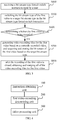
- Fig. 1 is a schematic flowchart of a method for processing a video playing according to an embodiment of the application. The method includes S100-S300.
- the adjustment instruction may be: a video hiding instruction and a bit stream type switch instruction.
- the bit stream type switch instruction may be generated based on a split screen mode switch instruction.
- the current split screen mode is a 4-split screen mode
- the target split screen mode for the split screen mode switch instruction is a 9-split screen mode. Since the number of channels for playing videos in the 9-split screen mode is increased, in order to decrease the load on a CPU, a memory and a network, the video quality of the videos played in the 9-split screen mode may be decreased. That is, a bit stream type switch instruction is generated, and the video quality of a target bit stream type in this bit stream type switch instruction is smaller than the video quality of a bit stream type in the 4-split screen mode.
- the current split screen mode is a 9-split screen mode
- the target split screen mode for the split screen mode switch instruction is a 4-split screen mode. Since the number of channels for playing videos in the 4-split screen mode is decreased, the video quality of the videos may be suitably increased. In order to obtain videos having better video quality, the video quality of the videos played in the 4-split screen mode may be increased. That is, a bit stream type switch instruction is generated based on the split screen mode switch instruction, and the video quality of a target bit stream type in this bit stream type switch instruction is larger than the video quality of a bit stream type in the 9-split screen mode.
- S200 determining whether the first video is being recorded; if the first video is being recorded, performing S300.
- the recording of the first video is interrupted.
- S300 acquiring and storing the bit stream of the first video based on the current bit stream type of the first video.
- the interruption of the recording of the first video is avoided and thus the complete recording of the video is ensured, by acquiring and storing the bit stream of the first video.
- the decoding and rendering of this first video are stopped.
- the decoding and rendering of this video may be stopped. In this way, the recording of each of hidden video(s) is ensured, and at the same time, the load on the CPU, the memory and the network is effectively decreased.
- the obtained adjustment instruction for a first video being played is a bit stream type switch instruction
- the current bit stream type of this first video is not switched, that is, the bit stream of this first video is acquired and stored based on this current bit stream type of this first video, and the first video continues to be decoded and rendered.
- the above-mentioned hiding instruction may be obtained based on a play control instruction.
- S100 in the method shown in Fig. 1 may include S110-S130.
- the play control instruction may include: a split screen mode switch instruction, a video hiding instruction and a bit stream type switch instruction.
- the bit stream type switch instruction may be generated based on the split screen mode switch instruction.
- S120 determining whether a first video(s) being played that needs to be hidden exists, based on the play control instruction; if the first video(s) being played that needs to be hidden exists, performing S130.
- the play control instruction when the play control instruction is a video hiding instruction, it may be determined that the target video in the video hiding instruction is a first video being played that needs to be hidden.
- the play control instruction is a split screen mode switch instruction
- the number of split screens corresponding to the target split screen mode in the split screen mode switch instruction is smaller than the number of split screens corresponding to the current split screen mode, for example, the 9-split screen mode is switched to the 4-split screen mode, the number of videos that can be displayed are decreased, and accordingly there is a first video being played that needs to be hidden.
- split screen modes in the client include: 1-split screen mode, 4-split screen mode, 9-split screen mode and 16-split screen mode.
- Five videos displayed in the current split screen mode (9-split screen mode) are denoted by A, B, C, D and E, respectively.
- the target split screen mode in the received split screen mode switch instruction is 1-split screen mode
- the number of split screens corresponding to the target split screen mode (1-split screen mode) in the split screen mode switch instruction is smaller than the number of split screens corresponding to the current split screen mode (9-split screen mode).
- an operation corresponding to the play control instruction may be directly performed.
- the play control instruction is a split screen mode switch instruction
- the current split screen mode is switched to the target split screen mode in the split screen mode switch instruction.
- the play control instruction is a bit stream type switch instruction
- the current bit stream type is switched to the target bit stream type in the bit stream type switch instruction.
- a hidden video may need to be displayed.
- the bit stream type of a video being played also needs to be switched. That is, it is necessary to generate a bit stream type switch instruction for a video being played (a first video) based on the split screen mode switch instruction.
- the correspondence between a split screen mode and a bit stream type may be preset.
- the correspondence may generally include: a correspondence between a preset split screen mode and a default bit stream type, and a correspondence between a preset split screen mode and a supported bit stream type.
- the supported bit stream type includes at least one bit stream type.
- the supported bit stream type indicates a bit stream type that is switchable, and the default bit stream type may be one of supported bit stream types.
- a default bit stream type corresponding to the target split screen mode in the split screen mode switch instruction is determined based on the correspondence between the preset split screen mode and the default bit stream type, and a supported bit stream type corresponding to the target split screen mode is determined based on the correspondence between the preset split screen mode and the supported bit stream type.
- a bit stream type switch instruction is generated based on the determined default bit stream type and supported bit stream type, and then the bit stream type of each video that has been started is switched to one of the determined default bit stream type or supported bit stream type.
- bit stream type of a first video when the bit stream type of a first video is switched, if this first video is being recorded, the recording of this first video will be stopped, thereby causing this first video not to be completely recorded.
- bit stream type switch instruction for the first video being played is obtained, if the bit stream type switch instruction is generated based on a split screen mode switch instruction, the bit stream type of this video may not be switched, and the first video continues to be decoded and rendered. In this way, the recording of the first video will not be stopped.
- the bit stream type of the video may be switched to the target bit stream type in the bit stream type switch instruction to obtain a video that has better video quality.
- a user may adjust the bit stream type of each video being played based on his requirements.
- an adjustment instruction for a first video being played is a bit stream type forced-switch instruction for a video being played (i.e., a first video) input by a user, and at this time, the bit stream type of the first video is switched.
- the above-mentioned method for processing video playing according to Fig. 1 may further include the following operations shown in Fig. 3 .
- S400 receiving a bit stream type forced-switch instruction input by a user.
- S600 determining whether the first video is being recorded; if the first video is being recorded, performing S700.
- S700 generating a video-recording file for the first video based on a video that is recorded based on the bit stream type of the first video, and acquiring and storing a bit stream of the first video based on the target bit stream type.
- S800 after the recording of the first video is closed, obtaining and merging all of the video-recording files for the first video.
- the bit stream type switch instruction is a bit stream type forced-switch instruction input by a user
- the recording of this first video will be stopped and then restarted.
- a video-recording file for the first video is generated based on a video that is recorded based on the bit stream type of the first video.
- multiple video-recording files for the first video will be generated.
- all of the video-recording files for this first video are obtained and merged.
- bit stream type of the first video A is switched to the bit stream type a, and thus the recording of the first video A will be interrupted, that is, stopped; and a video-recording file f1 for the first video A recorded in a period from 10:00 to 10:15 is generated and the recording of the first video A is restarted, that is, a bit stream of the first video A is acquired and stored based on the bit stream type a.
- the bit stream type of the first video A is switched to the bit stream type b, and thus the recording of the first video A is interrupted; and a video-recording file f2 for the first video A recorded in a period from 10:15 to 10:25 is generated and the recording of the first video A is restarted, that is, a bit stream of the first video A is acquired and stored based on the bit stream type b.
- the bit stream type of the first video A is switched to the bit stream type c, and thus the recording of the first video A is interrupted; and a video-recording file f3 for the first video A recorded in a period from 10:25 to 10:34 is generated and the recording of the first video A is restarted, that is, a bit stream of the first video A is acquired and stored based on the bit stream type c.
- the recording of the first video A is closed, and a video-recording file f4 for the first video A recorded in a period from 10:34 to 10:50 is generated. All of the video-recording files, including f1, f2, f3, and f4, for the first video A are obtained and merged, so as to obtain a complete video-recording file for the first video A.
- an adjustment instruction for a first video being played is obtained; whether the first video is being recorded is determined; if the first video is being recorded, a bit stream of the first video is acquired and stored based on a current bit stream type of the first video. It can be seen that the acquiring of the bit stream of the first video being-recorded will not be stopped, that is, the recording of the first video will not be stopped, ensuring the complete recording of the video.
- the embodiment of the application further provides an apparatus for processing video playing.
- Fig. 4 is a schematic structural diagram of an apparatus for processing video playing according to an embodiment of the application.
- the apparatus includes:
- the instruction obtaining unit 100 is specifically configured for: obtaining a hiding instruction for a first video being played; and the video processing unit is further configured for stopping the decoding and rendering of the first video.
- the instruction obtaining unit 100 is specifically configured for: obtaining a play control instruction; determining whether a first video(s) being played that needs to be hidden exists, based on the play control instruction; and if the first video(s) being played that needs to be hidden exists, generating a hiding instruction for each of the first video(s).
- the instruction obtaining unit 100 is specifically configured for: when the play control instruction is a split screen mode switch instruction, if the number of split screens corresponding to a target split screen mode in the split screen mode switch instruction is smaller than the number of split screens corresponding to a current split screen mode, determining that the first video(s) being played that needs to be hidden exists.
- the apparatus may further include:
- the instruction obtaining unit 100 is specifically configured for: obtaining a bit stream type switch instruction for a first video being played; the video processing unit 300 is further configured for continuing the decoding and rendering of the first video.
- the apparatus according to Fig. 4 may further include:
- an adjustment instruction for a first video being played is obtained; whether the first video is being recorded is determined; if the first video is being recorded, a bit stream of the first video is acquired and stored based on a current bit stream type of the first video. It can be seen that the acquiring of the bit stream of the first video being-recorded will not be stopped, that is, the recording of the first video will not be stopped, ensuring the complete recording of the video.
- An embodiment of the application further provides an electronic device.
- the electronic device includes a processor and a memory.
- the memory is configured for storing an application program.
- the processor is configured for executing the application program stored in the memory, so as to implement the method for processing video playing.
- the method for processing video playing includes:
- an adjustment instruction for a first video being played is obtained; whether the first video is being recorded is determined; if the first video is being recorded, a bit stream of the first video is acquired and stored based on a current bit stream type of the first video. It can be seen that the acquiring of the bit stream of the first video being-recorded will not be stopped, that is, the recording of the first video will not be stopped, ensuring the complete recording of the video.
- a communication bus may be PCI (Peripheral Component Interconnect) bus, EISA (Extended Industry Standard Architecture) bus or the like.
- This communication bus may include an address bus, a data bus, a control bus, and the like.
- a communication interface is configured for achieving communication between the above-mentioned electronic device and other devices.
- the memory may include RAM (Random Access Memory), or may include NVM a (Non-Volatile Memory), for example at least one disk memory.
- the memory may further be at least one storage apparatus located away from the above-mentioned processor.
- the above-mentioned processor may be a general processor including CPU (Central Processing Unit), NP (Network Processor) and the like.
- the above-mentioned processor may further be DSP (Digital Signal Processing), ASIC (Application Specific Integrated Circuit), FPGA (Field-Programmable Gate Array) or other programmable logic components, discrete gate or transistor logic component, discrete hardware assembly.
- An embodiment of the application further provides an application program which, when executed, implements the method for processing video playing.
- the method for processing video playing includes:
- an adjustment instruction for a first video being played is obtained; whether the first video is being recorded is determined; if the first video is being recorded, a bit stream of the first video is acquired and stored based on a current bit stream type of the first video. It can be seen that the acquiring of the bit stream of the first video being-recorded will not be stopped, that is, the recording of the first video will not be stopped, ensuring the complete recording of the video.
- An embodiment of the application further provides a storage medium configured for storing an application program which, when executed, implements the method for processing video playing.
- the method for processing video playing includes:
- an adjustment instruction for a first video being played is obtained; whether the first video is being recorded is determined; if the first video is being recorded, a bit stream of the first video is acquired and stored based on a current bit stream type of the first video. It can be seen that the acquiring of the bit stream of the first video being-recorded will not be stopped, that is, the recording of the first video will not be stopped, ensuring the complete recording of the video.
Landscapes
- Engineering & Computer Science (AREA)
- Multimedia (AREA)
- Signal Processing (AREA)
- Computer Graphics (AREA)
- Business, Economics & Management (AREA)
- Marketing (AREA)
- Television Signal Processing For Recording (AREA)
- Signal Processing For Digital Recording And Reproducing (AREA)
- Two-Way Televisions, Distribution Of Moving Picture Or The Like (AREA)
Abstract
Description
- The application claims the priority to a Chinese Patent Application No.
201610871962.3 - The application relates to the technology field of video, and in particular to a method and apparatus for processing video playing.
- The bit stream type is a bit stream parameter rules composed of parameters (for example: resolution, frame rate, code rate, etc.) of video quality, and may include high-definition, standard-definition, smoothness and other types. The bit stream types may be ordered by the video quality as: high-definition > standard-definition > smoothness. The higher the video quality is, the higher the resolution, the code rate and the frame rate will be, and the more the hardware resources (for example: CPU (Central Processing Unit), memory, bandwidth, etc.) required for playing the video will be. The lower the video quality is, the lower the resolution, the code rate and the frame rate will be, and the less the hardware resources required for playing the video will be.
- In addition, a client may be provided with many split screen modes, for example: 1-split screen mode, 4-split screen mode, 9-split screen mode, 16-split screen mode, and the like. Here, the process of playing a video in a split screen may include: acquiring a bit stream (stream-acquiring), analyzing the bit stream (decoding), and rendering the bit stream (rendering). In general, the client often needs to record a video being played, that is, store a bit stream of the video being played locally. In this case, if a video being-recorded is operated, the recording of the video will be stopped, thereby resulting in the incompletely recording of this video.
- Embodiments of the application disclose a method and apparatus for processing video playing, to ensure the complete recording of a video.
- To achieve the above-mentioned objective, an embodiment of the application discloses a method for processing video playing, including:
- obtaining an adjustment instruction for a first video being played;
- determining whether the first video is being recorded; and
- if the first video is being recorded, acquiring and storing a bit stream of the first video based on a current bit stream type of the first video.
- Optionally, the adjustment instruction for a first video being played is a hiding instruction for a first video being played; and
the method further comprises: stopping the decoding and rendering of the first video. - Optionally, obtaining a hiding instruction for a first video being played, comprises:
- obtaining a play control instruction;
- determining whether a first video(s) being played that needs to be hidden exists, based on the play control instruction; and
- if the first video(s) being played that needs to be hidden exists, generating a hiding instruction for each of the first video(s).
- Optionally, when the play control instruction is a split screen mode switch instruction, determining whether a first video(s) being played that needs to be hidden exists, based on the play control instruction, comprises:
when the number of split screens corresponding to a target split screen mode in the split screen mode switch instruction is smaller than the number of split screens corresponding to a current split screen mode, determining that the first video(s) being played that needs to be hidden exists. - Optionally, when a hidden first video is displayed, the method further comprises:
- determining whether the hidden first video is being recorded;
- if the hidden first video is being recorded, recovering the decoding and rendering of the hidden first video; and
- if the hidden first video is not being recorded, restarting the acquiring of the bit stream of the hidden first video, the decoding and rendering of the hidden first video.
- Optionally, the adjustment instruction for a first video being played is a bit stream type switch instruction for a first video being played; and
the method further comprises: continuing the decoding and rendering of the first video. - Optionally, the method further includes:
- receiving a bit stream type forced-switch instruction input by a user;
- switching the bit stream type of the first video to a target bit stream type in the bit stream type forced-switch instruction;
- determining whether the first video is being recorded; and
- if the first video is being recorded, generating a video-recording file for the first video based on a video that is recorded based on the bit stream type of the first video, and acquiring and storing the bit stream of the first video based on the target bit stream type; and
- after the recording of the first video is closed, obtaining and merging all of the video-recording files for the first video.
- To achieve the above-mentioned objective, an embodiment of the application further discloses an apparatus for processing video playing, including:
- an instruction obtaining unit, configured for obtaining an adjustment instruction for a first video being played;
- a first video-recording determining unit, configured for determining whether the first video is being recorded;
- a video processing unit, configured for, when the first video-recording determining unit determines that the first video is being recorded, acquiring and storing a bit stream of the first video based on a current bit stream type of the first video.
- Optionally, the instruction obtaining unit is configured for: obtaining a hiding instruction for a first video being played; and
the video processing unit is further configured for stopping the decoding and rendering of the first video. - Optionally, the instruction obtaining unit is configured for:
- obtaining a play control instruction;
- determining whether a first video(s) being played that needs to be hidden exists, based on the play control instruction; and
- if the first video(s) being played that needs to be hidden exists, generating a hiding instruction for each of the first video(s).
- Optionally, the instruction obtaining unit is configured for:
when the play control instruction is a split screen mode switch instruction, if the number of split screens corresponding to a target split screen mode in the split screen mode switch instruction is smaller than the number of split screens corresponding to a current split screen mode, determining that the first video(s) being played that needs to be hidden exists. - Optionally, the apparatus further includes:
- a second video-recording determining unit, configured for when a hidden first video is displayed, determining whether the hidden first video is being recorded;
- a video recovery unit, configured for, when the second video-recording determining unit determines that the hidden first video is being recorded, recovering the decoding and rendering of the hidden first video; and
- a video restarting unit, configured for, when the second video-recording determining unit determines that the first video is not being recorded, restarting the requiring of the bit stream of the first video, the decoding and rendering of the first video.
- Optionally, the instruction obtaining unit is configured for: obtaining a bit stream type switch instruction for a first video being played; and
the video processing unit is further configured for continuing the decoding and rendering of the first video. - Optionally, the apparatus further includes:
- an instruction reception unit, configured for receiving a bit stream type forced-switch instruction input by a user;
- a bit stream type switch unit, configured for switching the bit stream type of the first video to a target bit stream type in the bit stream type forced-switch instruction;
- a third video-recording determining unit, configured for determining whether the first video is being recorded;
- a file generation unit, configured for, when the third video-recording determining unit determines that the first video is being recorded, generating a video-recording file for the first video based on a video that is recorded based on the bit stream type of the first video, and acquiring and storing the bit stream of the first video based on the target bit stream type; and
- a file merging unit, configured for, after the recording of the first video is closed, obtaining and merging all of the video-recording files for the first video.
- To achieve the above-mentioned objective, an embodiment of the application further discloses an electronic device. The electronic device includes: a processor and a memory, wherein,
the memory is configured for storing an application program; and
the processor is configured for executing the application program stored in the memory, so as to implement the above-mentioned method for processing video playing. - To achieve the above-mentioned objective, an embodiment of the application further discloses an application program which, when executed, implements the above-mentioned method for processing video playing.
- To achieve the above-mentioned objective, an embodiment of the application further discloses a storage medium configured for storing an application program which, when executed, implements the above-mentioned method for processing video playing.
- In the embodiment of the application, an adjustment instruction for a first video being played obtained; whether the first video is being recorded is determined; if the first video is being recorded, a bit stream of the first video is acquired and stored based on a current bit stream type of the first video. It can be seen that the acquiring of the bit stream of the first video being-recorded will not be stopped, that is, the recording of the first video will not be stopped, ensuring the complete recording of the video.
- To describe the solutions of embodiments of the application or the prior art more clearly, the accompanying drawings to be used in the description of embodiments or the prior art will are described briefly below. Obviously, the accompanying drawings described below are merely drawings of some embodiments of the application. Those skilled in the art can obtain other drawings based on these accompanying drawings without creative efforts.
-
Fig. 1 is a schematic flowchart of a method for processing a video playing according to an embodiment of the application. -
Fig. 2 is another schematic flowchart of a method for processing a video playing according to an embodiment of the application. -
Fig. 3 is another schematic flowchart of a method for processing a video playing according to an embodiment of the application. -
Fig. 4 is a schematic structural diagram of an apparatus for processing a video playing according to an embodiment of the application. -
Fig. 5 is another schematic structural diagram of an apparatus for processing a video playing according to an embodiment of the application. - The technical solutions in the embodiments of the application will be described clearly and completely below in combination with the accompanying drawings of the application. Obviously, the embodiments described are merely a part, not all, of the embodiments of the application. All other embodiments obtained based on the embodiments of the application by those skilled in the art without any creative efforts fall into the scope of protection defined by the application.
- The application will be described in detail below through specific embodiments.
-
Fig. 1 is a schematic flowchart of a method for processing a video playing according to an embodiment of the application. The method includes S100-S300. - S100: obtaining an adjustment instruction for a first video being played.
- In an embodiment of the application, the adjustment instruction may be: a video hiding instruction and a bit stream type switch instruction. Here, the bit stream type switch instruction may be generated based on a split screen mode switch instruction.
- For example, the current split screen mode is a 4-split screen mode, and the target split screen mode for the split screen mode switch instruction is a 9-split screen mode. Since the number of channels for playing videos in the 9-split screen mode is increased, in order to decrease the load on a CPU, a memory and a network, the video quality of the videos played in the 9-split screen mode may be decreased. That is, a bit stream type switch instruction is generated, and the video quality of a target bit stream type in this bit stream type switch instruction is smaller than the video quality of a bit stream type in the 4-split screen mode.
- For another example, the current split screen mode is a 9-split screen mode, and the target split screen mode for the split screen mode switch instruction is a 4-split screen mode. Since the number of channels for playing videos in the 4-split screen mode is decreased, the video quality of the videos may be suitably increased. In order to obtain videos having better video quality, the video quality of the videos played in the 4-split screen mode may be increased. That is, a bit stream type switch instruction is generated based on the split screen mode switch instruction, and the video quality of a target bit stream type in this bit stream type switch instruction is larger than the video quality of a bit stream type in the 9-split screen mode.
- S200: determining whether the first video is being recorded; if the first video is being recorded, performing S300.
- In general, when an operation is performed on the first video being-recorded, for example, hiding the first video, switching the bit stream type of the first video, and so on, the recording of the first video is interrupted. In order to avoid the stop of the recording of the first video caused by the operation of the first video being-recorded, it is determined whether the first video is being recorded before the first video is adjusted based on the adjustment instruction.
- S300: acquiring and storing the bit stream of the first video based on the current bit stream type of the first video.
- For the first video being-recorded, the interruption of the recording of the first video is avoided and thus the complete recording of the video is ensured, by acquiring and storing the bit stream of the first video.
- In addition, other operations may be performed on the first video being-recorded based on the obtained adjustment instruction.
- In the event that the obtained adjustment instruction for a first video being played is a hiding instruction, while the bit stream of this first video is acquired and stored based on the current bit stream type of this first video, the decoding and rendering of this first video are stopped. However, for a video that is not recorded, the acquiring of the bit stream of this video, the decoding and rendering of this video may be stopped. In this way, the recording of each of hidden video(s) is ensured, and at the same time, the load on the CPU, the memory and the network is effectively decreased.
- When the obtained adjustment instruction for a first video being played is a bit stream type switch instruction, the current bit stream type of this first video is not switched, that is, the bit stream of this first video is acquired and stored based on this current bit stream type of this first video, and the first video continues to be decoded and rendered.
- In an embodiment of the application, the above-mentioned hiding instruction may be obtained based on a play control instruction. Referring to
Fig. 2 , S100 in the method shown inFig. 1 may include S110-S130. - S110: obtaining a play control instruction.
- In an embodiment of the application, the play control instruction may include: a split screen mode switch instruction, a video hiding instruction and a bit stream type switch instruction. The bit stream type switch instruction may be generated based on the split screen mode switch instruction.
- S120: determining whether a first video(s) being played that needs to be hidden exists, based on the play control instruction; if the first video(s) being played that needs to be hidden exists, performing S130.
- In an embodiment of the application, when the play control instruction is a video hiding instruction, it may be determined that the target video in the video hiding instruction is a first video being played that needs to be hidden.
- When the play control instruction is a split screen mode switch instruction, if the number of split screens corresponding to the target split screen mode in the split screen mode switch instruction is smaller than the number of split screens corresponding to the current split screen mode, for example, the 9-split screen mode is switched to the 4-split screen mode, the number of videos that can be displayed are decreased, and accordingly there is a first video being played that needs to be hidden.
- It is assumed that split screen modes in the client include: 1-split screen mode, 4-split screen mode, 9-split screen mode and 16-split screen mode. Five videos displayed in the current split screen mode (9-split screen mode) are denoted by A, B, C, D and E, respectively. If the target split screen mode in the received split screen mode switch instruction is 1-split screen mode, the number of split screens corresponding to the target split screen mode (1-split screen mode) in the split screen mode switch instruction is smaller than the number of split screens corresponding to the current split screen mode (9-split screen mode). Thus, it may be determined that first videos being played that need to be hidden exist. If the video A is displayed, it may be determined that first videos B, C, D and E being played need to be hidden.
- It should be noted that if it is determined that no first video being played that needs to be hidden exists, an operation corresponding to the play control instruction may be directly performed. For example, when the play control instruction is a split screen mode switch instruction, the current split screen mode is switched to the target split screen mode in the split screen mode switch instruction. When the play control instruction is a bit stream type switch instruction, the current bit stream type is switched to the target bit stream type in the bit stream type switch instruction.
- S130: generating a hiding instruction for each of the first video(s).
- If the first video(s) being played that needs to be hidden exists, a hiding instruction for each of the first video(s) is generated.
- In addition, a hidden video may need to be displayed. In this case, when a hidden first video is displayed, it is determined whether this first video is being recorded. If this first video is being recorded, which indicates that the acquiring of the bit stream of this first video is ongoing, only the decoding and rendering of this first video is recovered. If this first video is not recorded, the acquiring of the bit stream of this first video, the decoding and rendering of this first video is restarted.
- In general, with the switching of the split screen mode, the bit stream type of a video being played also needs to be switched. That is, it is necessary to generate a bit stream type switch instruction for a video being played (a first video) based on the split screen mode switch instruction. For example, the correspondence between a split screen mode and a bit stream type may be preset. The correspondence may generally include: a correspondence between a preset split screen mode and a default bit stream type, and a correspondence between a preset split screen mode and a supported bit stream type. The supported bit stream type includes at least one bit stream type. The supported bit stream type indicates a bit stream type that is switchable, and the default bit stream type may be one of supported bit stream types. After receiving the split screen mode switch instruction, a default bit stream type corresponding to the target split screen mode in the split screen mode switch instruction is determined based on the correspondence between the preset split screen mode and the default bit stream type, and a supported bit stream type corresponding to the target split screen mode is determined based on the correspondence between the preset split screen mode and the supported bit stream type. A bit stream type switch instruction is generated based on the determined default bit stream type and supported bit stream type, and then the bit stream type of each video that has been started is switched to one of the determined default bit stream type or supported bit stream type.
- However, in general, when the bit stream type of a first video is switched, if this first video is being recorded, the recording of this first video will be stopped, thereby causing this first video not to be completely recorded. In this case, in order to ensure the complete recording of a first video being played, when a bit stream type switch instruction for the first video being played is obtained, if the bit stream type switch instruction is generated based on a split screen mode switch instruction, the bit stream type of this video may not be switched, and the first video continues to be decoded and rendered. In this way, the recording of the first video will not be stopped.
- For a video that is not recorded, the bit stream type of the video may be switched to the target bit stream type in the bit stream type switch instruction to obtain a video that has better video quality.
- In an embodiment of the application, a user may adjust the bit stream type of each video being played based on his requirements. In other words, an adjustment instruction for a first video being played is a bit stream type forced-switch instruction for a video being played (i.e., a first video) input by a user, and at this time, the bit stream type of the first video is switched. In this case, in order to ensure the complete recording of a video, the above-mentioned method for processing video playing according to
Fig. 1 may further include the following operations shown inFig. 3 . - S400: receiving a bit stream type forced-switch instruction input by a user.
- S500: switching the bit stream type of the first video to a target bit stream type in the bit stream type forced-switch instruction.
- S600: determining whether the first video is being recorded; if the first video is being recorded, performing S700.
- S700: generating a video-recording file for the first video based on a video that is recorded based on the bit stream type of the first video, and acquiring and storing a bit stream of the first video based on the target bit stream type.
- S800: after the recording of the first video is closed, obtaining and merging all of the video-recording files for the first video.
- When the bit stream type switch instruction is a bit stream type forced-switch instruction input by a user, if a first video whose bit stream type is switched is being recorded, the recording of this first video will be stopped and then restarted. Furthermore, before the recording of the first video is restarted, a video-recording file for the first video is generated based on a video that is recorded based on the bit stream type of the first video. In this case, after the recording of the first video is closed, multiple video-recording files for the first video will be generated. In order to finally ensure the completeness of the video-recording files for the first video, that is, to ensure the complete recording of this first video, after the recording of this first video is closed, all of the video-recording files for this first video are obtained and merged.
- It is assumed that the current instant is 10:00, and the recording of a first video A starts from 10:00. At 10:15, the bit stream type of the first video A is switched to the bit stream type a, and thus the recording of the first video A will be interrupted, that is, stopped; and a video-recording file f1 for the first video A recorded in a period from 10:00 to 10:15 is generated and the recording of the first video A is restarted, that is, a bit stream of the first video A is acquired and stored based on the bit stream type a. At 10:25, the bit stream type of the first video A is switched to the bit stream type b, and thus the recording of the first video A is interrupted; and a video-recording file f2 for the first video A recorded in a period from 10:15 to 10:25 is generated and the recording of the first video A is restarted, that is, a bit stream of the first video A is acquired and stored based on the bit stream type b. At 10:34, the bit stream type of the first video A is switched to the bit stream type c, and thus the recording of the first video A is interrupted; and a video-recording file f3 for the first video A recorded in a period from 10:25 to 10:34 is generated and the recording of the first video A is restarted, that is, a bit stream of the first video A is acquired and stored based on the bit stream type c. At 10:50, the recording of the first video A is closed, and a video-recording file f4 for the first video A recorded in a period from 10:34 to 10:50 is generated. All of the video-recording files, including f1, f2, f3, and f4, for the first video A are obtained and merged, so as to obtain a complete video-recording file for the first video A.
- With the above-mentioned embodiment, an adjustment instruction for a first video being played is obtained; whether the first video is being recorded is determined; if the first video is being recorded, a bit stream of the first video is acquired and stored based on a current bit stream type of the first video. It can be seen that the acquiring of the bit stream of the first video being-recorded will not be stopped, that is, the recording of the first video will not be stopped, ensuring the complete recording of the video.
- Corresponding to the embodiment of the method, the embodiment of the application further provides an apparatus for processing video playing.
-
Fig. 4 is a schematic structural diagram of an apparatus for processing video playing according to an embodiment of the application. The apparatus includes: - an
instruction obtaining unit 100, configured for obtaining an adjustment instruction for a first video being played; - a first video-
recording determining unit 200, configured for determining whether the first video is being recorded; and - a
video processing unit 300, configured for, when the first video-recording determining unit 200 determines that the first video is being recorded, acquiring and storing a bit stream of the first video based on a current bit stream type of the first video. - In an embodiment of the application, the
instruction obtaining unit 100 is specifically configured for: obtaining a hiding instruction for a first video being played; and
the video processing unit is further configured for stopping the decoding and rendering of the first video. - In an embodiment of the application, the
instruction obtaining unit 100 is specifically configured for:
obtaining a play control instruction; determining whether a first video(s) being played that needs to be hidden exists, based on the play control instruction; and if the first video(s) being played that needs to be hidden exists, generating a hiding instruction for each of the first video(s). - In an embodiment of the application, the
instruction obtaining unit 100 is specifically configured for:
when the play control instruction is a split screen mode switch instruction, if the number of split screens corresponding to a target split screen mode in the split screen mode switch instruction is smaller than the number of split screens corresponding to a current split screen mode, determining that the first video(s) being played that needs to be hidden exists. - In an embodiment of the application, the apparatus may further include:
- a second video-recording determining unit (not shown in
Fig. 4 ), configured for when a hidden first video is displayed, determining whether the hidden first video is being recorded; - a video recovery unit (not shown in
Fig. 4 ), configured for, when the second video-recording determining unit determines that the hidden first video is being recorded, recovering the decoding and rendering of the hidden first video; - a video restarting unit (not shown in
Fig. 4 ), configured for, when the second video-recording determining unit determines that the first video is not being recorded, restarting the requiring of the bit stream of the first video, the decoding and rendering of the first video. - In an embodiment of the application, the
instruction obtaining unit 100 is specifically configured for: obtaining a bit stream type switch instruction for a first video being played;
thevideo processing unit 300 is further configured for continuing the decoding and rendering of the first video. - In an embodiment of the application, referring to
Fig. 5 , the apparatus according toFig. 4 may further include: - an
instruction reception unit 400, configured for receiving a bit stream type forced-switch instruction input by a user; - a bit stream
type switch unit 500, configured for switching the bit stream type of the first video to a target bit stream type in the bit stream type forced-switch instruction; - a third video-
recording determining unit 600, configured for determining whether the first video is being recorded; - a
file generation unit 700, configured for, when the third video-recording determining unit 600 determines that the first video is being recorded, generating a video-recording file for the first video based on a video that is recorded based on the bit stream type of the first video, and acquiring and storing the bit stream of the first video based on the target bit stream type; and - a
file merging unit 800, configured for, after the recording of the first video is closed, obtaining and merging all of the video-recording files for the first video. - With the above-mentioned embodiment, an adjustment instruction for a first video being played is obtained; whether the first video is being recorded is determined; if the first video is being recorded, a bit stream of the first video is acquired and stored based on a current bit stream type of the first video. It can be seen that the acquiring of the bit stream of the first video being-recorded will not be stopped, that is, the recording of the first video will not be stopped, ensuring the complete recording of the video.
- An embodiment of the application further provides an electronic device. The electronic device includes a processor and a memory.
- The memory is configured for storing an application program.
- The processor is configured for executing the application program stored in the memory, so as to implement the method for processing video playing. The method for processing video playing includes:
- obtaining an adjustment instruction for a first video being played;
- determining whether the first video is being recorded; and
- if the first video is being recorded, acquiring and storing a bit stream of the first video based on a current bit stream type of the first video.
- With the above-mentioned embodiment, an adjustment instruction for a first video being played is obtained; whether the first video is being recorded is determined; if the first video is being recorded, a bit stream of the first video is acquired and stored based on a current bit stream type of the first video. It can be seen that the acquiring of the bit stream of the first video being-recorded will not be stopped, that is, the recording of the first video will not be stopped, ensuring the complete recording of the video.
- A communication bus may be PCI (Peripheral Component Interconnect) bus, EISA (Extended Industry Standard Architecture) bus or the like. This communication bus may include an address bus, a data bus, a control bus, and the like.
- A communication interface is configured for achieving communication between the above-mentioned electronic device and other devices.
- The memory may include RAM (Random Access Memory), or may include NVM a (Non-Volatile Memory), for example at least one disk memory. Optionally, the memory may further be at least one storage apparatus located away from the above-mentioned processor.
- The above-mentioned processor may be a general processor including CPU (Central Processing Unit), NP (Network Processor) and the like. The above-mentioned processor may further be DSP (Digital Signal Processing), ASIC (Application Specific Integrated Circuit), FPGA (Field-Programmable Gate Array) or other programmable logic components, discrete gate or transistor logic component, discrete hardware assembly.
- An embodiment of the application further provides an application program which, when executed, implements the method for processing video playing. The method for processing video playing includes:
- obtaining an adjustment instruction for a first video being played;
- determining whether the first video is being recorded; and
- if the first video is being recorded, acquiring and storing a bit stream of the first video based on a current bit stream type of the first video.
- With the above-mentioned embodiment, an adjustment instruction for a first video being played is obtained; whether the first video is being recorded is determined; if the first video is being recorded, a bit stream of the first video is acquired and stored based on a current bit stream type of the first video. It can be seen that the acquiring of the bit stream of the first video being-recorded will not be stopped, that is, the recording of the first video will not be stopped, ensuring the complete recording of the video.
- An embodiment of the application further provides a storage medium configured for storing an application program which, when executed, implements the method for processing video playing. The method for processing video playing includes:
- obtaining an adjustment instruction for a first video being played;
- determining whether the first video is being recorded; and
- if the first video is being recorded, acquiring and storing a bit stream of the first video based on a current bit stream type of the first video.
- With the above-mentioned embodiment, an adjustment instruction for a first video being played is obtained; whether the first video is being recorded is determined; if the first video is being recorded, a bit stream of the first video is acquired and stored based on a current bit stream type of the first video. It can be seen that the acquiring of the bit stream of the first video being-recorded will not be stopped, that is, the recording of the first video will not be stopped, ensuring the complete recording of the video.
- The embodiments of the apparatus for processing video playing, the electronic device, the application program, the storage medium are described briefly since they are substantially similar to the embodiment of the method for processing video playing. Related contents refer to the part that describes the embodiment of the method for processing video playing shown in
Figs.1-3 . - It should be noted that the relationship terms used herein, such as "first", "second" and the like are only used to distinguish one entity or operation from another entity or operation, but do not necessarily require or imply that there is an actual relationship or order between these entities or operations. Moreover, the terms "include", "comprise", or any variants thereof are intended to cover a non-exclusive inclusion, such that processes, methods, articles, or devices, including a series of elements, include not only those elements that have been listed, but also other elements that is not specifically listed or the elements intrinsic to these processes, methods, articles, or devices. Without further limitations, elements defined by the wording "comprise(s) a/an..." and "include(s) a/an..." do not exclude additional identical elements in the processes, methods, articles, or devices that includes the listed elements.
- It can be understood by those with ordinary skills in the art that all or a part of steps in the implementations of the above method can be accomplished by instructing related hardware through programs, which can be stored in a computer-readable storage medium, such as in ROM/RAM, a disk, an optical disk, and so on.
- The embodiments described above are simply preferred embodiments of the application, and are not intended to limit the scope of protection of the application. Any modifications, alternatives, improvements, or the like within the spirit and principle of the application shall be included in the scope of protection of the application.
Claims (17)
- A method for processing video playing, comprising:obtaining an adjustment instruction for a first video being played;determining whether the first video is being recorded; andif the first video is being recorded, acquiring and storing a bit stream of the first video based on a current bit stream type of the first video.
- The method of claim 1, wherein, the adjustment instruction for a first video being played is a hiding instruction for a first video being played; and
the method further comprises: stopping the decoding and rendering of the first video. - The method of claim 2, wherein, obtaining a hiding instruction for a first video being played, comprises:obtaining a play control instruction;determining whether a first video(s) being played that needs to be hidden exists, based on the play control instruction; andif the first video(s) being played that needs to be hidden exists, generating a hiding instruction for each of the first video(s).
- The method of claim 3, wherein, when the play control instruction is a split screen mode switch instruction, determining whether a first video(s) being played that needs to be hidden exists, based on the play control instruction, comprises:
when the number of split screens corresponding to a target split screen mode in the split screen mode switch instruction is smaller than the number of split screens corresponding to a current split screen mode, determining that the first video(s) being played that needs to be hidden exists. - The method of claim 2, wherein, when a hidden first video is displayed, the method further comprises:determining whether the hidden first video is being recorded;if the hidden first video is being recorded, recovering the decoding and rendering of the hidden first video; andif the hidden first video is not being recorded, restarting the acquiring of the bit stream of the hidden first video, the decoding and rendering of the hidden first video.
- The method of claim 1, wherein, the adjustment instruction for a first video being played is a bit stream type switch instruction for a first video being played; and
the method further comprises: continuing the decoding and rendering of the first video. - The method of claim 1, further comprising:receiving a bit stream type forced-switch instruction input by a user;switching the bit stream type of the first video to a target bit stream type in the bit stream type forced-switch instruction;determining whether the first video is being recorded; andif the first video is being recorded, generating a video-recording file for the first video based on a video that is recorded based on the bit stream type of the first video, and acquiring and storing the bit stream of the first video based on the target bit stream type; andafter the recording of the first video is closed, obtaining and merging all of the video-recording files for the first video.
- An apparatus for processing video playing, comprising:an instruction obtaining unit, configured for obtaining an adjustment instruction for a first video being played;a first video-recording determining unit, configured for determining whether the first video is being recorded;a video processing unit, configured for, when the first video-recording determining unit determines that the first video is being recorded, acquiring and storing a bit stream of the first video based on a current bit stream type of the first video.
- The apparatus of claim 8, wherein, the instruction obtaining unit is configured for: obtaining a hiding instruction for a first video being played; and
the video processing unit is further configured for stopping the decoding and rendering of the first video. - The device of claim 9, wherein, the instruction obtaining unit is configured for:obtaining a play control instruction;determining whether a first video(s) being played that needs to be hidden exists, based on the play control instruction; andif the first video(s) being played that needs to be hidden exists, generating a hiding instruction for each of the first video(s).
- The device of claim 10, wherein, the instruction obtaining unit is configured for:
when the play control instruction is a split screen mode switch instruction, if the number of split screens corresponding to a target split screen mode in the split screen mode switch instruction is smaller than the number of split screens corresponding to a current split screen mode, determining that the first video(s) being played that needs to be hidden exists. - The apparatus of claim 9, further comprising:a second video-recording determining unit, configured for when a hidden first video is displayed, determining whether the hidden first video is being recorded;a video recovery unit, configured for, when the second video-recording determining unit determines that the hidden first video is being recorded, recovering the decoding and rendering of the hidden first video; anda video restarting unit, configured for, when the second video-recording determining unit determines that the first video is not being recorded, restarting the requiring of the bit stream of the first video, the decoding and rendering of the first video.
- The apparatus of claim 8, wherein, the instruction obtaining unit is configured for: obtaining a bit stream type switch instruction for a first video being played; and
the video processing unit is further configured for continuing the decoding and rendering of the first video. - The apparatus of claim 8, further comprising:an instruction reception unit, configured for receiving a bit stream type forced-switch instruction input by a user;a bit stream type switch unit, configured for switching the bit stream type of the first video to a target bit stream type in the bit stream type forced-switch instruction;a third video-recording determining unit, configured for determining whether the first video is being recorded;a file generation unit, configured for, when the third video-recording determining unit determines that the first video is being recorded, generating a video-recording file for the first video based on a video that is recorded based on the bit stream type of the first video, and acquiring and storing the bit stream of the first video based on the target bit stream type; anda file merging unit, configured for, after the recording of the first video is closed, obtaining and merging all of the video-recording files for the first video.
- An electronic device, comprising a memory and a processor, wherein,
the memory is configured for storing an application program; and
the processor is configured for executing the application program stored in the memory, so as to implement the method for processing video playing of any one of claims 1-7. - An application program which, when executed, implements the method for processing video playing of any one of claims 1-7.
- A storage medium, configured for storing an application program which, when executed, implements the method for processing video playing of any one of claims 1-7.
Applications Claiming Priority (2)
| Application Number | Priority Date | Filing Date | Title |
|---|---|---|---|
| CN201610871962.3A CN107888859B (en) | 2016-09-30 | 2016-09-30 | A method and device for processing video playback |
| PCT/CN2017/098664 WO2018059165A1 (en) | 2016-09-30 | 2017-08-23 | Method and apparatus for processing video playing |
Publications (3)
| Publication Number | Publication Date |
|---|---|
| EP3522525A1 true EP3522525A1 (en) | 2019-08-07 |
| EP3522525A4 EP3522525A4 (en) | 2020-05-27 |
| EP3522525B1 EP3522525B1 (en) | 2021-10-06 |
Family
ID=61763324
Family Applications (1)
| Application Number | Title | Priority Date | Filing Date |
|---|---|---|---|
| EP17854617.2A Active EP3522525B1 (en) | 2016-09-30 | 2017-08-23 | Method and apparatus for processing video playing |
Country Status (4)
| Country | Link |
|---|---|
| US (1) | US10771733B2 (en) |
| EP (1) | EP3522525B1 (en) |
| CN (1) | CN107888859B (en) |
| WO (1) | WO2018059165A1 (en) |
Families Citing this family (3)
| Publication number | Priority date | Publication date | Assignee | Title |
|---|---|---|---|---|
| CN112672079B (en) * | 2020-12-18 | 2023-01-06 | 北京飞讯数码科技有限公司 | Split screen switching method, device, equipment and storage medium |
| CN114339415B (en) * | 2021-12-23 | 2024-01-02 | 天翼云科技有限公司 | Client video playing method and device, electronic equipment and readable medium |
| CN115348405B (en) * | 2022-08-24 | 2025-04-18 | 维沃移动通信有限公司 | Video recording method, device, electronic device and storage medium |
Family Cites Families (17)
| Publication number | Priority date | Publication date | Assignee | Title |
|---|---|---|---|---|
| WO2005039157A1 (en) * | 2003-10-22 | 2005-04-28 | Sanyo Electric Co., Ltd. | Mobile telephone apparatus, display method, and program |
| JP2006310896A (en) * | 2005-04-26 | 2006-11-09 | Matsushita Electric Ind Co Ltd | Image processing device |
| JP4679289B2 (en) * | 2005-08-02 | 2011-04-27 | Necカシオモバイルコミュニケーションズ株式会社 | Television receiver and program |
| JP4585479B2 (en) * | 2006-03-30 | 2010-11-24 | 株式会社東芝 | Server apparatus and video distribution method |
| JP2008085545A (en) * | 2006-09-27 | 2008-04-10 | Funai Electric Co Ltd | Recording device |
| CN101207757B (en) * | 2006-12-22 | 2011-04-13 | 乐金电子(中国)研究开发中心有限公司 | Multi-picture recording TV set and display method thereof |
| CN201078853Y (en) * | 2007-02-07 | 2008-06-25 | 台湾视讯系统股份有限公司 | Multimedia digital recording playback machine |
| CN101094318A (en) * | 2007-06-26 | 2007-12-26 | 蔡斌毅 | Multifunctional pick-up head |
| CN101635828B (en) * | 2009-08-19 | 2011-09-21 | 中兴通讯股份有限公司 | Set-top box device, system and method for realizing IPTV channel recording and broadcasting |
| US9538229B2 (en) | 2010-09-15 | 2017-01-03 | Verizon Patent And Licensing Inc. | Media experience for touch screen devices |
| CN102611932B (en) * | 2011-01-25 | 2014-09-17 | 国基电子(上海)有限公司 | Set top box and method for recording television program by set-top box |
| EP2555517A1 (en) * | 2011-08-01 | 2013-02-06 | Hunt Electronic Co., Ltd. | Network video server and video control method thereof |
| CN103929611B (en) * | 2013-01-10 | 2017-04-05 | 杭州海康威视数字技术股份有限公司 | A kind of many picture paging player methods |
| CN103369139B (en) * | 2013-06-27 | 2015-03-04 | 广东欧珀移动通信有限公司 | Shooting and recording method as well as shooting and recording device used in mobile equipment |
| CN104184980A (en) * | 2014-07-21 | 2014-12-03 | 联想(北京)有限公司 | Data processing method and electronic device |
| CN105391965B (en) * | 2015-11-05 | 2018-09-07 | 广东欧珀移动通信有限公司 | Video recording method and device based on multiple cameras |
| CN106899817B (en) * | 2017-01-04 | 2019-09-17 | 深圳市广和通无线股份有限公司 | Media data method for recording and device |
-
2016
- 2016-09-30 CN CN201610871962.3A patent/CN107888859B/en active Active
-
2017
- 2017-08-23 US US16/335,577 patent/US10771733B2/en active Active
- 2017-08-23 EP EP17854617.2A patent/EP3522525B1/en active Active
- 2017-08-23 WO PCT/CN2017/098664 patent/WO2018059165A1/en not_active Ceased
Also Published As
| Publication number | Publication date |
|---|---|
| EP3522525A4 (en) | 2020-05-27 |
| WO2018059165A1 (en) | 2018-04-05 |
| CN107888859A (en) | 2018-04-06 |
| US10771733B2 (en) | 2020-09-08 |
| CN107888859B (en) | 2020-07-03 |
| US20200021773A1 (en) | 2020-01-16 |
| EP3522525B1 (en) | 2021-10-06 |
Similar Documents
| Publication | Publication Date | Title |
|---|---|---|
| US10225613B2 (en) | Method and apparatus for video playing processing and television | |
| EP2991361A1 (en) | Method, device, and system for improving channel change speed | |
| EP2854342A1 (en) | Multi-screen interaction method, apparatus, and terminal device | |
| US20130271637A1 (en) | Apparatus and method for controlling focus | |
| US10827222B2 (en) | Method and apparatus for switching bit stream type of video playing | |
| US20170195614A1 (en) | Method and electronic device for playing video | |
| US9652683B2 (en) | Automatic extraction of closed caption data from frames of an audio video (AV) stream using image filtering | |
| CN109167890B (en) | Sound and picture synchronization method and device and display equipment | |
| CN109361950B (en) | Video processing method, device, electronic device and storage medium | |
| US10771733B2 (en) | Method and apparatus for processing video playing | |
| WO2017166685A1 (en) | Method and apparatus for switching to external loudspeaker | |
| US10389785B2 (en) | Method for adaptively streaming an audio/visual material | |
| CN108882004B (en) | Video recording method, device, equipment and storage medium | |
| WO2018148101A1 (en) | Audio system maintenance using system call monitoring | |
| CN105245812B (en) | A kind of method and terminal of video record | |
| US20130191774A1 (en) | Method and apparatus for executing application file and screen capture method and apparatus therefor | |
| US9900665B2 (en) | Caption rendering automation test framework | |
| CN109922366B (en) | A device parameter adjustment method, device, device and medium | |
| US11463493B2 (en) | Method and apparatus for playing media file | |
| CN116781992A (en) | Video generation method, device, electronic equipment and storage medium | |
| CN108235089A (en) | Circuit switching control method, storage medium, electronic equipment and system | |
| US9665926B2 (en) | Method for object displaying and electronic device thereof | |
| US20240040231A1 (en) | Image capturing apparatus and control method | |
| CN115695898A (en) | Wireless screen projection method, system, electronic device and storage medium | |
| WO2025139421A1 (en) | Video screen mirroring method, electronic device, and computer-readable storage medium |
Legal Events
| Date | Code | Title | Description |
|---|---|---|---|
| STAA | Information on the status of an ep patent application or granted ep patent |
Free format text: STATUS: THE INTERNATIONAL PUBLICATION HAS BEEN MADE |
|
| PUAI | Public reference made under article 153(3) epc to a published international application that has entered the european phase |
Free format text: ORIGINAL CODE: 0009012 |
|
| STAA | Information on the status of an ep patent application or granted ep patent |
Free format text: STATUS: REQUEST FOR EXAMINATION WAS MADE |
|
| 17P | Request for examination filed |
Effective date: 20190405 |
|
| AK | Designated contracting states |
Kind code of ref document: A1 Designated state(s): AL AT BE BG CH CY CZ DE DK EE ES FI FR GB GR HR HU IE IS IT LI LT LU LV MC MK MT NL NO PL PT RO RS SE SI SK SM TR |
|
| AX | Request for extension of the european patent |
Extension state: BA ME |
|
| DAV | Request for validation of the european patent (deleted) | ||
| DAX | Request for extension of the european patent (deleted) | ||
| A4 | Supplementary search report drawn up and despatched |
Effective date: 20200424 |
|
| RIC1 | Information provided on ipc code assigned before grant |
Ipc: H04N 5/76 20060101AFI20200420BHEP |
|
| REG | Reference to a national code |
Ref country code: DE Ref legal event code: R079 Ref document number: 602017047334 Country of ref document: DE Free format text: PREVIOUS MAIN CLASS: H04N0005760000 Ipc: H04N0005268000 |
|
| RIC1 | Information provided on ipc code assigned before grant |
Ipc: H04N 5/268 20060101AFI20210422BHEP Ipc: H04N 7/01 20060101ALI20210422BHEP Ipc: H04N 5/76 20060101ALI20210422BHEP |
|
| GRAP | Despatch of communication of intention to grant a patent |
Free format text: ORIGINAL CODE: EPIDOSNIGR1 |
|
| STAA | Information on the status of an ep patent application or granted ep patent |
Free format text: STATUS: GRANT OF PATENT IS INTENDED |
|
| INTG | Intention to grant announced |
Effective date: 20210604 |
|
| GRAS | Grant fee paid |
Free format text: ORIGINAL CODE: EPIDOSNIGR3 |
|
| GRAA | (expected) grant |
Free format text: ORIGINAL CODE: 0009210 |
|
| STAA | Information on the status of an ep patent application or granted ep patent |
Free format text: STATUS: THE PATENT HAS BEEN GRANTED |
|
| AK | Designated contracting states |
Kind code of ref document: B1 Designated state(s): AL AT BE BG CH CY CZ DE DK EE ES FI FR GB GR HR HU IE IS IT LI LT LU LV MC MK MT NL NO PL PT RO RS SE SI SK SM TR |
|
| RAP3 | Party data changed (applicant data changed or rights of an application transferred) |
Owner name: HANGZHOU HIKVISION DIGITAL TECHNOLOGY CO., LTD. |
|
| REG | Reference to a national code |
Ref country code: GB Ref legal event code: FG4D |
|
| REG | Reference to a national code |
Ref country code: CH Ref legal event code: EP Ref country code: AT Ref legal event code: REF Ref document number: 1437250 Country of ref document: AT Kind code of ref document: T Effective date: 20211015 |
|
| REG | Reference to a national code |
Ref country code: DE Ref legal event code: R096 Ref document number: 602017047334 Country of ref document: DE |
|
| REG | Reference to a national code |
Ref country code: IE Ref legal event code: FG4D |
|
| REG | Reference to a national code |
Ref country code: LT Ref legal event code: MG9D |
|
| REG | Reference to a national code |
Ref country code: NL Ref legal event code: FP |
|
| REG | Reference to a national code |
Ref country code: AT Ref legal event code: MK05 Ref document number: 1437250 Country of ref document: AT Kind code of ref document: T Effective date: 20211006 |
|
| PG25 | Lapsed in a contracting state [announced via postgrant information from national office to epo] |
Ref country code: RS Free format text: LAPSE BECAUSE OF FAILURE TO SUBMIT A TRANSLATION OF THE DESCRIPTION OR TO PAY THE FEE WITHIN THE PRESCRIBED TIME-LIMIT Effective date: 20211006 Ref country code: LT Free format text: LAPSE BECAUSE OF FAILURE TO SUBMIT A TRANSLATION OF THE DESCRIPTION OR TO PAY THE FEE WITHIN THE PRESCRIBED TIME-LIMIT Effective date: 20211006 Ref country code: FI Free format text: LAPSE BECAUSE OF FAILURE TO SUBMIT A TRANSLATION OF THE DESCRIPTION OR TO PAY THE FEE WITHIN THE PRESCRIBED TIME-LIMIT Effective date: 20211006 Ref country code: BG Free format text: LAPSE BECAUSE OF FAILURE TO SUBMIT A TRANSLATION OF THE DESCRIPTION OR TO PAY THE FEE WITHIN THE PRESCRIBED TIME-LIMIT Effective date: 20220106 Ref country code: AT Free format text: LAPSE BECAUSE OF FAILURE TO SUBMIT A TRANSLATION OF THE DESCRIPTION OR TO PAY THE FEE WITHIN THE PRESCRIBED TIME-LIMIT Effective date: 20211006 |
|
| PG25 | Lapsed in a contracting state [announced via postgrant information from national office to epo] |
Ref country code: IS Free format text: LAPSE BECAUSE OF FAILURE TO SUBMIT A TRANSLATION OF THE DESCRIPTION OR TO PAY THE FEE WITHIN THE PRESCRIBED TIME-LIMIT Effective date: 20220206 Ref country code: SE Free format text: LAPSE BECAUSE OF FAILURE TO SUBMIT A TRANSLATION OF THE DESCRIPTION OR TO PAY THE FEE WITHIN THE PRESCRIBED TIME-LIMIT Effective date: 20211006 Ref country code: PT Free format text: LAPSE BECAUSE OF FAILURE TO SUBMIT A TRANSLATION OF THE DESCRIPTION OR TO PAY THE FEE WITHIN THE PRESCRIBED TIME-LIMIT Effective date: 20220207 Ref country code: PL Free format text: LAPSE BECAUSE OF FAILURE TO SUBMIT A TRANSLATION OF THE DESCRIPTION OR TO PAY THE FEE WITHIN THE PRESCRIBED TIME-LIMIT Effective date: 20211006 Ref country code: NO Free format text: LAPSE BECAUSE OF FAILURE TO SUBMIT A TRANSLATION OF THE DESCRIPTION OR TO PAY THE FEE WITHIN THE PRESCRIBED TIME-LIMIT Effective date: 20220106 Ref country code: LV Free format text: LAPSE BECAUSE OF FAILURE TO SUBMIT A TRANSLATION OF THE DESCRIPTION OR TO PAY THE FEE WITHIN THE PRESCRIBED TIME-LIMIT Effective date: 20211006 Ref country code: HR Free format text: LAPSE BECAUSE OF FAILURE TO SUBMIT A TRANSLATION OF THE DESCRIPTION OR TO PAY THE FEE WITHIN THE PRESCRIBED TIME-LIMIT Effective date: 20211006 Ref country code: GR Free format text: LAPSE BECAUSE OF FAILURE TO SUBMIT A TRANSLATION OF THE DESCRIPTION OR TO PAY THE FEE WITHIN THE PRESCRIBED TIME-LIMIT Effective date: 20220107 Ref country code: ES Free format text: LAPSE BECAUSE OF FAILURE TO SUBMIT A TRANSLATION OF THE DESCRIPTION OR TO PAY THE FEE WITHIN THE PRESCRIBED TIME-LIMIT Effective date: 20211006 |
|
| REG | Reference to a national code |
Ref country code: DE Ref legal event code: R097 Ref document number: 602017047334 Country of ref document: DE |
|
| PG25 | Lapsed in a contracting state [announced via postgrant information from national office to epo] |
Ref country code: SM Free format text: LAPSE BECAUSE OF FAILURE TO SUBMIT A TRANSLATION OF THE DESCRIPTION OR TO PAY THE FEE WITHIN THE PRESCRIBED TIME-LIMIT Effective date: 20211006 Ref country code: SK Free format text: LAPSE BECAUSE OF FAILURE TO SUBMIT A TRANSLATION OF THE DESCRIPTION OR TO PAY THE FEE WITHIN THE PRESCRIBED TIME-LIMIT Effective date: 20211006 Ref country code: RO Free format text: LAPSE BECAUSE OF FAILURE TO SUBMIT A TRANSLATION OF THE DESCRIPTION OR TO PAY THE FEE WITHIN THE PRESCRIBED TIME-LIMIT Effective date: 20211006 Ref country code: EE Free format text: LAPSE BECAUSE OF FAILURE TO SUBMIT A TRANSLATION OF THE DESCRIPTION OR TO PAY THE FEE WITHIN THE PRESCRIBED TIME-LIMIT Effective date: 20211006 Ref country code: DK Free format text: LAPSE BECAUSE OF FAILURE TO SUBMIT A TRANSLATION OF THE DESCRIPTION OR TO PAY THE FEE WITHIN THE PRESCRIBED TIME-LIMIT Effective date: 20211006 Ref country code: CZ Free format text: LAPSE BECAUSE OF FAILURE TO SUBMIT A TRANSLATION OF THE DESCRIPTION OR TO PAY THE FEE WITHIN THE PRESCRIBED TIME-LIMIT Effective date: 20211006 |
|
| PLBE | No opposition filed within time limit |
Free format text: ORIGINAL CODE: 0009261 |
|
| STAA | Information on the status of an ep patent application or granted ep patent |
Free format text: STATUS: NO OPPOSITION FILED WITHIN TIME LIMIT |
|
| 26N | No opposition filed |
Effective date: 20220707 |
|
| PG25 | Lapsed in a contracting state [announced via postgrant information from national office to epo] |
Ref country code: AL Free format text: LAPSE BECAUSE OF FAILURE TO SUBMIT A TRANSLATION OF THE DESCRIPTION OR TO PAY THE FEE WITHIN THE PRESCRIBED TIME-LIMIT Effective date: 20211006 |
|
| PG25 | Lapsed in a contracting state [announced via postgrant information from national office to epo] |
Ref country code: SI Free format text: LAPSE BECAUSE OF FAILURE TO SUBMIT A TRANSLATION OF THE DESCRIPTION OR TO PAY THE FEE WITHIN THE PRESCRIBED TIME-LIMIT Effective date: 20211006 |
|
| PG25 | Lapsed in a contracting state [announced via postgrant information from national office to epo] |
Ref country code: MC Free format text: LAPSE BECAUSE OF FAILURE TO SUBMIT A TRANSLATION OF THE DESCRIPTION OR TO PAY THE FEE WITHIN THE PRESCRIBED TIME-LIMIT Effective date: 20211006 |
|
| REG | Reference to a national code |
Ref country code: CH Ref legal event code: PL |
|
| PG25 | Lapsed in a contracting state [announced via postgrant information from national office to epo] |
Ref country code: LU Free format text: LAPSE BECAUSE OF NON-PAYMENT OF DUE FEES Effective date: 20220823 Ref country code: LI Free format text: LAPSE BECAUSE OF NON-PAYMENT OF DUE FEES Effective date: 20220831 Ref country code: CH Free format text: LAPSE BECAUSE OF NON-PAYMENT OF DUE FEES Effective date: 20220831 |
|
| REG | Reference to a national code |
Ref country code: BE Ref legal event code: MM Effective date: 20220831 |
|
| PG25 | Lapsed in a contracting state [announced via postgrant information from national office to epo] |
Ref country code: IT Free format text: LAPSE BECAUSE OF FAILURE TO SUBMIT A TRANSLATION OF THE DESCRIPTION OR TO PAY THE FEE WITHIN THE PRESCRIBED TIME-LIMIT Effective date: 20211006 |
|
| P01 | Opt-out of the competence of the unified patent court (upc) registered |
Effective date: 20230424 |
|
| PG25 | Lapsed in a contracting state [announced via postgrant information from national office to epo] |
Ref country code: IE Free format text: LAPSE BECAUSE OF NON-PAYMENT OF DUE FEES Effective date: 20220823 |
|
| PG25 | Lapsed in a contracting state [announced via postgrant information from national office to epo] |
Ref country code: BE Free format text: LAPSE BECAUSE OF NON-PAYMENT OF DUE FEES Effective date: 20220831 |
|
| PG25 | Lapsed in a contracting state [announced via postgrant information from national office to epo] |
Ref country code: HU Free format text: LAPSE BECAUSE OF FAILURE TO SUBMIT A TRANSLATION OF THE DESCRIPTION OR TO PAY THE FEE WITHIN THE PRESCRIBED TIME-LIMIT; INVALID AB INITIO Effective date: 20170823 |
|
| PG25 | Lapsed in a contracting state [announced via postgrant information from national office to epo] |
Ref country code: CY Free format text: LAPSE BECAUSE OF FAILURE TO SUBMIT A TRANSLATION OF THE DESCRIPTION OR TO PAY THE FEE WITHIN THE PRESCRIBED TIME-LIMIT Effective date: 20211006 |
|
| PG25 | Lapsed in a contracting state [announced via postgrant information from national office to epo] |
Ref country code: MK Free format text: LAPSE BECAUSE OF FAILURE TO SUBMIT A TRANSLATION OF THE DESCRIPTION OR TO PAY THE FEE WITHIN THE PRESCRIBED TIME-LIMIT Effective date: 20211006 |
|
| PG25 | Lapsed in a contracting state [announced via postgrant information from national office to epo] |
Ref country code: TR Free format text: LAPSE BECAUSE OF FAILURE TO SUBMIT A TRANSLATION OF THE DESCRIPTION OR TO PAY THE FEE WITHIN THE PRESCRIBED TIME-LIMIT Effective date: 20211006 |
|
| PG25 | Lapsed in a contracting state [announced via postgrant information from national office to epo] |
Ref country code: MT Free format text: LAPSE BECAUSE OF FAILURE TO SUBMIT A TRANSLATION OF THE DESCRIPTION OR TO PAY THE FEE WITHIN THE PRESCRIBED TIME-LIMIT Effective date: 20211006 |
|
| PGFP | Annual fee paid to national office [announced via postgrant information from national office to epo] |
Ref country code: NL Payment date: 20250724 Year of fee payment: 9 |
|
| PGFP | Annual fee paid to national office [announced via postgrant information from national office to epo] |
Ref country code: DE Payment date: 20250812 Year of fee payment: 9 |
|
| PGFP | Annual fee paid to national office [announced via postgrant information from national office to epo] |
Ref country code: GB Payment date: 20250826 Year of fee payment: 9 |
|
| PGFP | Annual fee paid to national office [announced via postgrant information from national office to epo] |
Ref country code: FR Payment date: 20250828 Year of fee payment: 9 |