EP3522447A1 - A method and apparatus for configuring a mobile communication network with tracking areas - Google Patents
A method and apparatus for configuring a mobile communication network with tracking areas Download PDFInfo
- Publication number
- EP3522447A1 EP3522447A1 EP19159911.7A EP19159911A EP3522447A1 EP 3522447 A1 EP3522447 A1 EP 3522447A1 EP 19159911 A EP19159911 A EP 19159911A EP 3522447 A1 EP3522447 A1 EP 3522447A1
- Authority
- EP
- European Patent Office
- Prior art keywords
- network entity
- radio access
- request
- access network
- entity
- Prior art date
- Legal status (The legal status is an assumption and is not a legal conclusion. Google has not performed a legal analysis and makes no representation as to the accuracy of the status listed.)
- Granted
Links
Images


Classifications
-
- H—ELECTRICITY
- H04—ELECTRIC COMMUNICATION TECHNIQUE
- H04W—WIRELESS COMMUNICATION NETWORKS
- H04W88/00—Devices specially adapted for wireless communication networks, e.g. terminals, base stations or access point devices
- H04W88/08—Access point devices
-
- H—ELECTRICITY
- H04—ELECTRIC COMMUNICATION TECHNIQUE
- H04L—TRANSMISSION OF DIGITAL INFORMATION, e.g. TELEGRAPHIC COMMUNICATION
- H04L12/00—Data switching networks
- H04L12/02—Details
- H04L12/16—Arrangements for providing special services to substations
- H04L12/18—Arrangements for providing special services to substations for broadcast or conference, e.g. multicast
- H04L12/189—Arrangements for providing special services to substations for broadcast or conference, e.g. multicast in combination with wireless systems
-
- H—ELECTRICITY
- H04—ELECTRIC COMMUNICATION TECHNIQUE
- H04L—TRANSMISSION OF DIGITAL INFORMATION, e.g. TELEGRAPHIC COMMUNICATION
- H04L12/00—Data switching networks
- H04L12/28—Data switching networks characterised by path configuration, e.g. LAN [Local Area Networks] or WAN [Wide Area Networks]
-
- H—ELECTRICITY
- H04—ELECTRIC COMMUNICATION TECHNIQUE
- H04W—WIRELESS COMMUNICATION NETWORKS
- H04W60/00—Affiliation to network, e.g. registration; Terminating affiliation with the network, e.g. de-registration
-
- H—ELECTRICITY
- H04—ELECTRIC COMMUNICATION TECHNIQUE
- H04W—WIRELESS COMMUNICATION NETWORKS
- H04W64/00—Locating users or terminals or network equipment for network management purposes, e.g. mobility management
-
- H—ELECTRICITY
- H04—ELECTRIC COMMUNICATION TECHNIQUE
- H04W—WIRELESS COMMUNICATION NETWORKS
- H04W80/00—Wireless network protocols or protocol adaptations to wireless operation
- H04W80/04—Network layer protocols, e.g. mobile IP [Internet Protocol]
Definitions
- the present invention generally relates to mobile communication networks.
- Such networks usually comprise a Radio Access Network (RAN) and a Core Network (CN), and usually have a hierarchical architecture.
- RAN Radio Access Network
- CN Core Network
- RAN nodes such as Base Station (BS) (respectively NodeB) are connected to RAN nodes such as Base Station Controller (BSC) (respectively Radio Network Controller (RNC)) in a hierarchical way.
- BSC Base Station Controller
- RNC Radio Network Controller
- RAN nodes such as BSC (respectively RNC) are connected in a hierarchical way to CN nodes such as Mobile Switching Center/Visitor Location Register (MSC/VLR) (for a Circuit-Switched (CS) domain) or Serving GPRS Support Nodes (SGSN) (for a Packet-Switched (PS) domain), in turn connected in a hierarchical way to other CN nodes such as Gateway Mobile Switching Center (GMSC) for CS domain, or Gateway GPRS Support Node (GGSN) for PS domain.
- RAN nodes such as BS/NodeB communicate with Mobile Stations (MS) (respectively User Equipment (UE)), not specifically illustrated, over a radio interface.
- CN nodes such as GMSC/GGSN communicate with other networks, not specifically illustrated.
- CN nodes such as MSC/VLR and/or SGSN are in charge of a number of functions, including in particular a Mobility Management (MM) function and a Paging Coordination (PC) function.
- MM Mobility Management
- PC Paging Coordination
- the Mobility Management (MM) function includes, for MS/UE which are not actively engaged in a connection (in particular MS/UE in idle mode) keeping track of MS/UE location with the accuracy of an area (usually called Location Area (LA) or Routing Area (RA)) made of a set of cells, and checking user access rights on said LA/RA basis, using subscription data held in a subscriber database such as Home Location Register (HLR) or Home Subscriber Server (HSS).
- LA Location Area
- RA Routing Area
- the Paging Coordination (PC) function includes contacting the appropriate RAN nodes for the sending of paging messages over the last LA/RA where a MS/UE has been registered, when there is a need to reach the MS/UE, such as for example for an incoming call or session.
- the corresponding LA/RA is broadcast on the radio interface so that a MS/UE moving from one cell to another cell can know whether the LA/RA has changed or not.
- MM procedures such as Location Update procedures
- LA/RA configuration is important for network optimization, in particular for optimizing the amount of signaling traffic in the network, in particular for Mobility Management and Paging Coordination functions.
- LA/RA configuration is generally performed via Operation & Maintenance (O&M) operations.
- O&M Operation & Maintenance
- such LA/RA configuration usually comprises two operations: the mapping between LA/RA and BSC/RNC nodes is configured by O&M in the CN, and the set of cells belonging to a given LA/RA is configured by O&M in the BSC/RNC.
- the RAN operator has to configure the RAN nodes (BSC/RNC) accordingly.
- BSC/RNC RAN nodes
- CN nodes can be configured on a permanent or semi-permanent basis.
- FIG. 2 An example of an architecture of such future generation networks is illustrated in figure 2 .
- the trend is to go from the above-recalled hierarchical architecture to a "flat" architecture, or in other words to reduce the number of "intermediate” nodes (such as BSC/RNC in the above-recalled hierarchical architecture), in order to reduce setup delays and user plane latency.
- the trend is to go from four nodes such as GGSN - SGSN - BSC/RNC - BS/ NodeB, to two nodes such as ASGW (Access System GateWay) - ENB (Enhanced NodeB), in the user plane and possibly in the control plane as well.
- ASGW Access System GateWay
- ENB Enhanced NodeB
- the MM function and the PC function can be hosted in the ASGW or in a separate node (such as the node noted MM/PC in figure 2 ).
- the PC function can be located in the CN or in the RAN.
- MME Mobility Management Entity
- PCE Paging Coordination Entity
- Nodes such as ENB, ASGW, MME, PCE are interconnected by an IP-based transport network or backbone.
- the present in particular enables to solve part or all of the above-mentioned problems, or to avoid part or all of the above-mentioned drawbacks. More generally, the present invention enables to improve and/or simplify network configuration operations, in particular in connection with Mobility Management and/or Paging Coordination functions.
- the method may comprise: performing said sending of a request and said receiving of an acceptation or a rejection of said request, at application level.
- the method may comprise: performing said sending of a request and said receiving of an acceptation or a rejection of said request, at startup of said radio access network entity.
- Said cellular mobile communication network may comprise a radio access network shared between different core network operators.
- Said radio access network entity may comprise an enhanced NodeB.
- Said core network entity may comprise a mobility management entity.
- a radio access network entity comprising means for:
- the radio access network entity may comprise means for: performing said sending of a request and said receiving of an acceptation or a rejection of said request, at application level.
- the radio access network entity may comprise means for: performing said sending of a request and said receiving of an acceptation or a rejection of said request, at startup of said radio access network entity.
- Said cellular mobile communication network may comprise a radio access network shared between different core network operators.
- Said radio access network entity may comprise an enhanced NodeB.
- a core network entity comprising means for:
- the core network entity may comprise means for: performing said receiving of a request and said sending of an acceptation or a rejection of said request, at application level.
- the core network entity may comprise means for: performing said receiving of a request and said sending of an acceptation or a rejection of said request, at startup of said radio access network entity.
- Said cellular mobile communication network may comprise a radio access network shared between different core network operators.
- Said core network entity may comprise a mobility management entity.
- a method for configuring a cellular mobile communication network with Tracking Areas comprising:
- said step of registering comprises: a step wherein said Radio Access Network entity registers onto at least one Mobility Management entity and/or Paging Coordination entity in charge of said Mobility Management function and/or Paging Coordination function, for said at least one Tracking Area.
- said step of registering onto said Mobility Management entity and/or Paging Coordination entity advantageously comprises: a step of sending a registration request to said Mobility Management entity and/or Paging Coordination entity.
- said step of configuring advantageously comprises: a step of configuring said Radio Access Network entity with a destination address for the sending of said registration request.
- said step of registering advantageously comprises: a step of performing mutual authentication between said RAN entity and said Mobility Management / Paging Coordination entity, upon reception of a registration request by said Mobility Management entity and/or Paging Coordination entity.
- said step of registering advantageously comprises: a step of, upon acceptation of a registration request, configuring said Mobility Management entity and/or Paging Coordination entity with a destination address for the sending of Mobility Management and/or Paging Coordination messages to said Radio Access Network entity.
- said step of registering comprises:
- said step of registering advantageously comprises: a step of associating an IP multicast address with said Tracking Area.
- said step of associating advantageously comprises: a step of interrogating a Domain Name Server for translation of a Domain Name associated with said Tracking Area into an IP multicast address.
- said step of associating advantageously comprises: a step of building automatically a DNS name associated with said Tracking Area based on a pre-defined pattern, configured on all RAN and Mobility Management and/or Paging Coordination entities, and on the identity of the tracking Area.
- a Radio Access Network entity comprising: means for, upon configuring said Radio Access Network entity with at least one Tracking Area it is to be associated with, registering said Radio Access Network entity onto a Mobility Management function and/or Paging Coordination function, for said at least one Tracking Area.
- said means for registering comprise: means for registering onto at least one Mobility Management entity and/or Paging Coordination entity in charge of said Mobility Management function and/or Paging Coordination function, for said at least one Tracking Area.
- said means for registering advantageously comprise: means for sending a registration request to said Mobility Management entity and/or Paging Coordination entity.
- said means for registering advantageously comprise: means for performing authentication between said RAN entity and said Mobility Management / Paging Coordination entity, upon reception of a registration request by a Mobility Management entity and/or Paging Coordination entity.
- said means for registering comprise: means for registering onto an IP multicast group, associated with said at least one Tracking Area, for the reception of Mobility Management and/or Paging Coordination messages.
- said means for registering advantageously comprise: means for associating an IP multicast address to said Tracking Area.
- said means for associating advantageously comprise: means for interrogating a Domain Name Server for translation of a Domain Name associated with said Tracking Area into an IP multicast address.
- said means for registering advantageously comprise: means for building automatically a DNS name associated with said Tracking Area based on a pre-defined pattern, configured on all RAN and Mobility Management and/or Paging Coordination entities, and on the identity of the tracking Area.
- an entity of a mobile communication network in charge of Mobility Management function and/or Paging Coordination function, for at least one Tracking Area, comprising, in a first embodiment: means for registering a Radio Access Network entity onto said entity, for said at least one Tracking Area.
- said means for registering comprise: means for receiving a registration request from said Radio Access Network entity.
- said means for registering advantageously comprise: means for performing authentication between the RAN entity and said Mobility Management / Paging Coordination entity, upon reception of a registration request from said Radio Access Network entity.
- said means for registering advantageously comprise: means for, upon acceptation of a registration request, configuring said entity by adding, or removing, the RAN entity destination address in the RAN entity list associated with the TA for the sending of Mobility Management and/or Paging Coordination messages to said Radio Access Network entity.
- an entity of a mobile communication network in charge of Mobility Management function and/or Paging Coordination function, for at least one Tracking Area, comprising, in a second embodiment, in an IP-based transport network having IP multicast capability: means for associating an IP multicast address with said Tracking Area.
- said means for associating advantageously comprise: means for interrogating a Domain Name Server for translation of a Domain Name associated with said Tracking Area into an IP multicast address.
- said means for associating advantageously comprise: means for building automatically a DNS name associated with said Tracking Area based on a pre-defined pattern, configured on all RAN and Mobility Management and/or Paging Coordination entities, and on the identity of the tracking Area.
- the present invention may also be explained as follows.
- the present invention recognizes that, in particular in the context of the evolution towards future generation architectures, there is a need to improve and/or simplify the configuration of mobile communication networks with Tracking Areas.
- the present invention recognizes that there is a need to introduce some automatism in the configuration process.
- the present invention introduces the concept of automatic registration of a RAN entity onto a Mobility Management function and/or a Paging Coordination function.
- the present invention proposes an automatic registration of an ENB (or Base Station or equivalent node) with its Tracking Area configuration data to the appropriate Paging Coordination Function (PC).
- This registration could be performed at ENB startup, periodically or at anytime.
- the ENB is configured by the RAN operator with the Tracking Area(s) corresponding to the cells it supports. Then the ENB registers onto the Paging Coordination Function, thereby indicating that it (the ENB) is to be associated with this/these TA(s) for paging purpose.
- the present invention further proposes different embodiments for such an automatic registration of a RAN entity such as for example ENB, onto a function such as PC function for example.
- the first embodiment is also referred to as registration at application level.
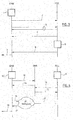
- An example of a method according to this first embodiment is illustrated in figure 3 .
- a ENB (or any RAN node) is configured by the RAN operator with the cells it supports and their associated Tracking Area(s).
- a Tracking Area may be any mobility area defined for mobile registration - paging purposes such as the Location Area and the Routing Area of a GSM network.
- the ENB is also configured by the RAN operator with the address of the PCE(s) that manage this Tracking Area.
- the ENB sends a Tracking Area(s) registration message, or registration request, to the PCE(s), as illustrated in step 2.
- Each PCE may perform appropriate authentication in order to prevent a fake ENB to register, as illustrated in step 3.
- the PCE accepts or rejects the Tracking Area(s) registration request from the ENB.
- the PCE adds (and/or possibly removes, depending on information within the registration message) the ENB address in the Radio Access Network entity list associated with the Tracking Area(s), as illustrated in step 5.
- the PCE is invoked to page the UE on a given TA.
- the PCE notifies all the ENBs that have registered for the Tracking Area, as illustrated in step 6.
- the ENB pages the UE on the cells corresponding to the Tracking Area, as illustrated in step 7.
- the second embodiment is also referred to as registration at transport level.
- An example of a method according to this second embodiment is illustrated in figure 4 .
- This second embodiment uses IP multicast capability of the transport network. Details on the IP protocol and its associated IP multicast capability will not be recalled here. Such details can be found in particular in documents published by the IETF (Internet Engineering Task Force), such as in particular in RFC 2236 for Internet Group Management Protocol (IGMP).
- IETF Internet Engineering Task Force
- IGMP Internet Group Management Protocol
- the ENB registers onto the IP multicast addresses(s) associated with the TA(s) of the cells it supports.
- An UE is paged via a paging message sent by the PCE to the IP Multicast address corresponding to the TA where the UE has been registered.
- this second embodiment uses IP multicast facility in order to perform this automatic registration.
- each Tracking Area is associated with a multicast address.
- Each ENB subscribes to each multicast address(es) associated with the Tracking Area(s) the ENB is associated with.
- the PCE wanting to page a UE in a Tracking Area sends a multicast IP message with the multicast destination address corresponding to this Tracking Area.
- the IP multicast address associated with a Location/ Tracking Area such as "LAxy" (where xy is the Location/ Tracking Area number) is automatically learnt by ENB/PCE from Domain Name Server (DNS).
- DNS Domain Name Server
- the ENB/PCE build automatically a DNS name associated with the Location/ Tracking Area "LAxy” (as illustrated in steps 10, 11), interrogate DNS for translation from this DNS name (as illustrated in steps 12, 13), and get as result (as illustrated in steps 14, 15), the IP multicast address to be associated with the Tracking Area.
- the IP multicast address to be associated with the Tracking Area is used by PCE to send paging request on this Location/ Tracking Area "LAxy" (as illustrated in step 17).
- the ENB(s) upon reception of the paging request on the IP multicast address associated with the Tracking Area page(s) the UE on the cells corresponding to this Tracking Area, as illustrated in step 18.
- the DNS name is made up by using a fixed pattern configured by O&M in all ENB/PCE (simple configuration as valid for all ENB/PCE) with a pattern like "LAxy".
- a benefit is that there is no need to define a specific IP multicast configuration message from PCE to ENB.
- the present invention also has for its object a Radio Access Network entity, and an entity in charge of Mobility Management function and/or Paging Coordination function, comprising means for carrying out a method according to the present invention, for example as disclosed above in connection with figure 3 or 4 .
Landscapes
- Engineering & Computer Science (AREA)
- Computer Networks & Wireless Communication (AREA)
- Signal Processing (AREA)
- Mobile Radio Communication Systems (AREA)
Abstract
Description
- The present invention generally relates to mobile communication networks.
- In a general way, mobile communication networks are subject to standardization; therefore details on such networks can be found in the corresponding standards, published by the corresponding standardization bodies.
- Such networks usually comprise a Radio Access Network (RAN) and a Core Network (CN), and usually have a hierarchical architecture.
- For example, as recalled in
figure 1 , in GSM (respectively UMTS), RAN nodes such as Base Station (BS) (respectively NodeB) are connected to RAN nodes such as Base Station Controller (BSC) (respectively Radio Network Controller (RNC)) in a hierarchical way. In the same way, RAN nodes such as BSC (respectively RNC) are connected in a hierarchical way to CN nodes such as Mobile Switching Center/Visitor Location Register (MSC/VLR) (for a Circuit-Switched (CS) domain) or Serving GPRS Support Nodes (SGSN) (for a Packet-Switched (PS) domain), in turn connected in a hierarchical way to other CN nodes such as Gateway Mobile Switching Center (GMSC) for CS domain, or Gateway GPRS Support Node (GGSN) for PS domain. RAN nodes such as BS/NodeB communicate with Mobile Stations (MS) (respectively User Equipment (UE)), not specifically illustrated, over a radio interface. CN nodes such as GMSC/GGSN communicate with other networks, not specifically illustrated. - Usually, CN nodes such as MSC/VLR and/or SGSN are in charge of a number of functions, including in particular a Mobility Management (MM) function and a Paging Coordination (PC) function.
- The Mobility Management (MM) function includes, for MS/UE which are not actively engaged in a connection (in particular MS/UE in idle mode) keeping track of MS/UE location with the accuracy of an area (usually called Location Area (LA) or Routing Area (RA)) made of a set of cells, and checking user access rights on said LA/RA basis, using subscription data held in a subscriber database such as Home Location Register (HLR) or Home Subscriber Server (HSS).
- The Paging Coordination (PC) function includes contacting the appropriate RAN nodes for the sending of paging messages over the last LA/RA where a MS/UE has been registered, when there is a need to reach the MS/UE, such as for example for an incoming call or session.
- In each cell, the corresponding LA/RA is broadcast on the radio interface so that a MS/UE moving from one cell to another cell can know whether the LA/RA has changed or not. When the LA/RA has changed, MM procedures (such as Location Update procedures) are carried out for registering the MS/UE in the new LA/RA.
- LA/RA configuration is important for network optimization, in particular for optimizing the amount of signaling traffic in the network, in particular for Mobility Management and Paging Coordination functions. LA/RA configuration is generally performed via Operation & Maintenance (O&M) operations.
- In a hierarchical architecture as recalled for example in
figure 1 , such LA/RA configuration usually comprises two operations: the mapping between LA/RA and BSC/RNC nodes is configured by O&M in the CN, and the set of cells belonging to a given LA/RA is configured by O&M in the BSC/RNC. - Each time there is a change in the RAN configuration, such as for example when a new BS/NodeB is added or removed, the RAN operator has to configure the RAN nodes (BSC/RNC) accordingly. This has no impact on the CN configuration, i.e. the CN operator does not have to configure the CN nodes (MSC/SGSN) accordingly, if at least one cell controlled by the BSC/RNC is in an existing LA/RA. In other words, while the configuration of RAN nodes may change relatively frequently, in the above-recalled hierarchical architecture CN nodes can be configured on a permanent or semi-permanent basis.
- Now, there is an evolution of the architecture of such networks towards future generation networks. An example of an architecture of such future generation networks is illustrated in
figure 2 . The trend is to go from the above-recalled hierarchical architecture to a "flat" architecture, or in other words to reduce the number of "intermediate" nodes (such as BSC/RNC in the above-recalled hierarchical architecture), in order to reduce setup delays and user plane latency. In particular, the trend is to go from four nodes such as GGSN - SGSN - BSC/RNC - BS/ NodeB, to two nodes such as ASGW (Access System GateWay) - ENB (Enhanced NodeB), in the user plane and possibly in the control plane as well. The MM function and the PC function (in the control plane) can be hosted in the ASGW or in a separate node (such as the node noted MM/PC infigure 2 ). The PC function can be located in the CN or in the RAN. Generally, the network entity in charge of MM function is called Mobility Management Entity (MME), and the network entity in charge of PC function is called Paging Coordination Entity (PCE), regardless of the physical network node(s) where these functions can be located. Nodes such as ENB, ASGW, MME, PCE are interconnected by an IP-based transport network or backbone. - As recognized by the present invention, in such architectures of future generation mobile networks, there is a need to improve and/or simplify the configuration of the network with Tracking Areas (where TA is a more general term covering in particular the term LA/ RA used heretofore).
- For example, in an architecture where the PC function is located in the CN, each time a ENB would be added to or removed from a TA, the CN operator would be obliged to change the PCE configuration accordingly. in other words this would result in a high number of ENB addresses to be configured in the CN, a high workload for the CN operator, and a risk of lack of coordination between configuration operations in the CN and in the RAN, in particular when these CN operator and the RAN operators are different (such as for example in the case of shared networks where the RAN network is shared between several different CN operators). Still in other words, CN nodes could no longer be configured on a permanent or semi-permanent basis, contrary to what is the case in the above-recalled hierarchical architecture.
- The present in particular enables to solve part or all of the above-mentioned problems, or to avoid part or all of the above-mentioned drawbacks. More generally, the present invention enables to improve and/or simplify network configuration operations, in particular in connection with Mobility Management and/or Paging Coordination functions.
- These and other objects are achieved, in one aspect of the present invention, by a method, comprising:
- a radio access network entity configured with at least one tracking area it is to be associated with, sending a request to a core network entity in charge of mobility management and/or paging coordination in a cellular mobile communication network for registering onto said core network entity, for said at least one tracking area,
- said radio access network entity receiving from said core network entity an acceptation or a rejection of said request.
- The method may comprise:
performing said sending of a request and said receiving of an acceptation or a rejection of said request, at application level. - The method may comprise:
performing said sending of a request and said receiving of an acceptation or a rejection of said request, at startup of said radio access network entity. - Said cellular mobile communication network may comprise a radio access network shared between different core network operators.
- Said radio access network entity may comprise an enhanced NodeB.
- Said core network entity may comprise a mobility management entity.
- These and other objects are achieved, in one aspect of the present invention, by a radio access network entity, comprising means for:
- sending a request to a core network entity in charge of mobility management and/or paging coordination in a cellular mobile communication network, for registering onto said core network entity, for at least one tracking area said radio access network entity is configured to be associated with,
- receiving an acceptation or a rejection of said request from said core network entity.
- The radio access network entity may comprise means for:
performing said sending of a request and said receiving of an acceptation or a rejection of said request, at application level. - The radio access network entity may comprise means for:
performing said sending of a request and said receiving of an acceptation or a rejection of said request, at startup of said radio access network entity. - Said cellular mobile communication network may comprise a radio access network shared between different core network operators.
- Said radio access network entity may comprise an enhanced NodeB.
- These and other objects are achieved, in one aspect of the present invention, by a core network entity, comprising means for:
- performing mobility management and/or paging coordination in a cellular mobile communication network,
- receiving a request from a radio access network entity, for registering said radio access network entity onto said core network entity for at least one tracking area said radio access network entity is to be associated with,
- sending to said radio access network entity an acceptation or a rejection of said request.
- The core network entity may comprise means for:
performing said receiving of a request and said sending of an acceptation or a rejection of said request, at application level. - The core network entity may comprise means for:
performing said receiving of a request and said sending of an acceptation or a rejection of said request, at startup of said radio access network entity. - Said cellular mobile communication network may comprise a radio access network shared between different core network operators.
- Said core network entity may comprise a mobility management entity.
- These and other objects are achieved, in one aspect of the present invention, by a method for configuring a cellular mobile communication network with Tracking Areas, comprising:
- a step of configuring a Radio Access Network entity, with at least one Tracking Area it is to be associated with,
- a step of registering a thus configured Radio Access Network entity onto a Mobility Management function and/or Paging Coordination function, for said at least one Tracking Area.
- In a first embodiment, said step of registering comprises:
a step wherein said Radio Access Network entity registers onto at least one Mobility Management entity and/or Paging Coordination entity in charge of said Mobility Management function and/or Paging Coordination function, for said at least one Tracking Area. - In said first embodiment, said step of registering onto said Mobility Management entity and/or Paging Coordination entity advantageously comprises:
a step of sending a registration request to said Mobility Management entity and/or Paging Coordination entity. - In said first embodiment, said step of configuring advantageously comprises:
a step of configuring said Radio Access Network entity with a destination address for the sending of said registration request. - In said first embodiment, said step of registering advantageously comprises:
a step of performing mutual authentication between said RAN entity and said Mobility Management / Paging Coordination entity, upon reception of a registration request by said Mobility Management entity and/or Paging Coordination entity. - In said first embodiment, said step of registering advantageously comprises:
a step of, upon acceptation of a registration request, configuring said Mobility Management entity and/or Paging Coordination entity with a destination address for the sending of Mobility Management and/or Paging Coordination messages to said Radio Access Network entity. - In a second embodiment, in a transport network having IP multicast capability, said step of registering comprises:
- a step wherein a Radio Access Network entity registers onto an IP multicast group,
- associated with said at least one Tracking Area, for the reception of Mobility Management and/or Paging Coordination messages.
- In said second embodiment, said step of registering advantageously comprises: a step of associating an IP multicast address with said Tracking Area.
- In said second embodiment, said step of associating advantageously comprises:
a step of interrogating a Domain Name Server for translation of a Domain Name associated with said Tracking Area into an IP multicast address. - In said second embodiment, said step of associating advantageously comprises:
a step of building automatically a DNS name associated with said Tracking Area based on a pre-defined pattern, configured on all RAN and Mobility Management and/or Paging Coordination entities, and on the identity of the tracking Area. - These and other objects are achieved, in another aspect of the present invention, by a Radio Access Network entity, comprising:
means for, upon configuring said Radio Access Network entity with at least one Tracking Area it is to be associated with, registering said Radio Access Network entity onto a Mobility Management function and/or Paging Coordination function, for said at least one Tracking Area. - In a first embodiment, said means for registering comprise:
means for registering onto at least one Mobility Management entity and/or Paging Coordination entity in charge of said Mobility Management function and/or Paging Coordination function, for said at least one Tracking Area. - In said first embodiment, said means for registering advantageously comprise: means for sending a registration request to said Mobility Management entity and/or Paging Coordination entity.
- In said first embodiment, said means for registering advantageously comprise: means for performing authentication between said RAN entity and said Mobility Management / Paging Coordination entity, upon reception of a registration request by a Mobility Management entity and/or Paging Coordination entity.
- In a second embodiment, in an IP-based transport network having IP multicast capability, said means for registering comprise:
means for registering onto an IP multicast group, associated with said at least one Tracking Area, for the reception of Mobility Management and/or Paging Coordination messages. - In said second embodiment, said means for registering advantageously comprise: means for associating an IP multicast address to said Tracking Area.
- In said second embodiment, said means for associating advantageously comprise: means for interrogating a Domain Name Server for translation of a Domain Name associated with said Tracking Area into an IP multicast address.
- In said second embodiment, said means for registering advantageously comprise: means for building automatically a DNS name associated with said Tracking Area based on a pre-defined pattern, configured on all RAN and Mobility Management and/or Paging Coordination entities, and on the identity of the tracking Area.
- These and other objects are achieved, in another aspect of the present invention, by an entity of a mobile communication network, in charge of Mobility Management function and/or Paging Coordination function, for at least one Tracking Area, comprising, in a first embodiment:
means for registering a Radio Access Network entity onto said entity, for said at least one Tracking Area. - In said first embodiment, said means for registering comprise:
means for receiving a registration request from said Radio Access Network entity. - In said first embodiment, said means for registering advantageously comprise: means for performing authentication between the RAN entity and said Mobility Management / Paging Coordination entity, upon reception of a registration request from said Radio Access Network entity.
- In said first embodiment, said means for registering advantageously comprise: means for, upon acceptation of a registration request, configuring said entity by adding, or removing, the RAN entity destination address in the RAN entity list associated with the TA for the sending of Mobility Management and/or Paging Coordination messages to said Radio Access Network entity.
- These and other objects are achieved, in another aspect of the present invention, by an entity of a mobile communication network, in charge of Mobility Management function and/or Paging Coordination function, for at least one Tracking Area, comprising, in a second embodiment, in an IP-based transport network having IP multicast capability: means for associating an IP multicast address with said Tracking Area.
- In said second embodiment, said means for associating advantageously comprise: means for interrogating a Domain Name Server for translation of a Domain Name associated with said Tracking Area into an IP multicast address.
- In said second embodiment, said means for associating advantageously comprise: means for building automatically a DNS name associated with said Tracking Area based on a pre-defined pattern, configured on all RAN and Mobility Management and/or Paging Coordination entities, and on the identity of the tracking Area.
- These and other objects of the present invention will become more apparent from the following description taken in conjunction with the accompanying drawings:
-
figure 1 is intended to recall an example of hierarchical architecture of a mobile communication network, -
figure 2 is intended to illustrate an example of architecture of future generation networks to which the present invention may be applied, -
figure 3 is intended to illustrate an example of a method according to the present invention, according to a first embodiment, -
figure 4 is intended to illustrate an example of a method according to the present invention, according to a second embodiment. - The present invention may also be explained as follows.
- The present invention recognizes that, in particular in the context of the evolution towards future generation architectures, there is a need to improve and/or simplify the configuration of mobile communication networks with Tracking Areas.
- In particular, the present invention recognizes that there is a need to introduce some automatism in the configuration process.
- In particular, the present invention introduces the concept of automatic registration of a RAN entity onto a Mobility Management function and/or a Paging Coordination function.
- In the following, the example of a RAN entity corresponding to ENB, and of a PC function, will be considered more particularly; however it should be noted that the present invention is not limited to such example.
- In such example, the present invention proposes an automatic registration of an ENB (or Base Station or equivalent node) with its Tracking Area configuration data to the appropriate Paging Coordination Function (PC). This registration could be performed at ENB startup, periodically or at anytime. The ENB is configured by the RAN operator with the Tracking Area(s) corresponding to the cells it supports. Then the ENB registers onto the Paging Coordination Function, thereby indicating that it (the ENB) is to be associated with this/these TA(s) for paging purpose.
- The present invention further proposes different embodiments for such an automatic registration of a RAN entity such as for example ENB, onto a function such as PC function for example.
- The first embodiment is also referred to as registration at application level. An example of a method according to this first embodiment is illustrated in
figure 3 . - As illustrated in step 1, a ENB (or any RAN node) is configured by the RAN operator with the cells it supports and their associated Tracking Area(s). A Tracking Area may be any mobility area defined for mobile registration - paging purposes such as the Location Area and the Routing Area of a GSM network. For each Tracking Area, the ENB is also configured by the RAN operator with the address of the PCE(s) that manage this Tracking Area. At ENB startup, periodically or at any other time, the ENB sends a Tracking Area(s) registration message, or registration request, to the PCE(s), as illustrated in
step 2. Each PCE may perform appropriate authentication in order to prevent a fake ENB to register, as illustrated instep 3. As illustrated instep 4, the PCE accepts or rejects the Tracking Area(s) registration request from the ENB. When the registration request is accepted, the PCE adds (and/or possibly removes, depending on information within the registration message) the ENB address in the Radio Access Network entity list associated with the Tracking Area(s), as illustrated instep 5. When the UE needs to be paged, the PCE is invoked to page the UE on a given TA. The PCE notifies all the ENBs that have registered for the Tracking Area, as illustrated instep 6. The ENB pages the UE on the cells corresponding to the Tracking Area, as illustrated instep 7. - The second embodiment is also referred to as registration at transport level. An example of a method according to this second embodiment is illustrated in
figure 4 . - This second embodiment uses IP multicast capability of the transport network. Details on the IP protocol and its associated IP multicast capability will not be recalled here. Such details can be found in particular in documents published by the IETF (Internet Engineering Task Force), such as in particular in RFC 2236 for Internet Group Management Protocol (IGMP).
- In this second embodiment, the ENB registers onto the IP multicast addresses(s) associated with the TA(s) of the cells it supports. An UE is paged via a paging message sent by the PCE to the IP Multicast address corresponding to the TA where the UE has been registered. In other words, this second embodiment uses IP multicast facility in order to perform this automatic registration.
- In other words, in this second embodiment, each Tracking Area is associated with a multicast address. Each ENB subscribes to each multicast address(es) associated with the Tracking Area(s) the ENB is associated with. The PCE wanting to page a UE in a Tracking Area sends a multicast IP message with the multicast destination address corresponding to this Tracking Area.
- Advantageously, as illustrated in
figure 4 , the IP multicast address associated with a Location/ Tracking Area such as "LAxy" (where xy is the Location/ Tracking Area number) is automatically learnt by ENB/PCE from Domain Name Server (DNS). The ENB/PCE build automatically a DNS name associated with the Location/ Tracking Area "LAxy" (as illustrated insteps 10, 11), interrogate DNS for translation from this DNS name (as illustrated insteps 12, 13), and get as result (as illustrated in steps 14, 15), the IP multicast address to be associated with the Tracking Area. The ENB registers (as illustrated in steps 16) to this IP multicast address using e.g. IGMP protocol (if IPv4 is used) or e.g. MLD (if IPv6 is used). The IP multicast address to be associated with the Tracking Area is used by PCE to send paging request on this Location/ Tracking Area "LAxy" (as illustrated in step 17). The ENB(s) upon reception of the paging request on the IP multicast address associated with the Tracking Area page(s) the UE on the cells corresponding to this Tracking Area, as illustrated instep 18. - Advantageously, the DNS name is made up by using a fixed pattern configured by O&M in all ENB/PCE (simple configuration as valid for all ENB/PCE) with a pattern like "LAxy". A benefit is that there is no need to define a specific IP multicast configuration message from PCE to ENB.
- The present invention also has for its object a Radio Access Network entity, and an entity in charge of Mobility Management function and/or Paging Coordination function, comprising means for carrying out a method according to the present invention, for example as disclosed above in connection with
figure 3 or 4 . - The detailed implementation of the above-mentioned means does not raise any special problem for a person skilled in the art, and therefore such means do not need to be more fully disclosed than has been made above, by their function, for a person skilled in the art.
Claims (16)
- A method, comprising:- a radio access network entity configured with at least one tracking area it is to be associated with, sending a request to a core network entity in charge of mobility management and/or paging coordination in a cellular mobile communication network for registering onto said core network entity, for said at least one tracking area,- said radio access network entity receiving from said core network entity an acceptation or a rejection of said request.
- A method according to claim 1, comprising:- performing said sending of a request and said receiving of an acceptation or a rejection of said request, at application level.
- A method according to claim 1 or 2, comprising:- performing said sending of a request and said receiving of an acceptation or a rejection of said request, at startup of said radio access network entity.
- A method according to any of claims 1 to 3, wherein said cellular mobile communication network comprises a radio access network shared between different core network operators.
- A method according to any of claims 1 to 4, wherein said radio access network entity comprises an enhanced NodeB.
- A method according to any of claims 1 to 5, wherein said core network entity comprises a mobility management entity.
- A radio access network entity, comprising means for:- sending a request to a core network entity in charge of mobility management and/or paging coordination in a cellular mobile communication network, for registering onto said core network entity, for at least one tracking area said radio access network entity is configured to be associated with,- receiving an acceptation or a rejection of said request from said core network entity.
- A radio access network entity according to claim 7, comprising means for:- performing said sending of a request and said receiving of an acceptation or a rejection of said request, at application level.
- A radio access network entity according to claim 7 or 8, comprising means for:- performing said sending of a request and said receiving of an acceptation or a rejection of said request, at startup of said radio access network entity.
- A radio access network entity according to any of claims 7 to 9, wherein said cellular mobile communication network comprises a radio access network shared between different core network operators.
- A radio access network entity according to any of claims 7 to 10, wherein said radio access network entity comprises an enhanced NodeB.
- A core network entity, comprising means for:- performing mobility management and/or paging coordination in a cellular mobile communication network,- receiving a request from a radio access network entity, for registering said radio access network entity onto said core network entity for at least one tracking area said radio access network entity is to be associated with,- sending to said radio access network entity an acceptation or a rejection of said request.
- A core network entity according to claim 12, comprising means for:- performing said receiving of a request and said sending of an acceptation or a rejection of said request, at application level.
- A core network entity according to claim 12 or 13, comprising means for:- performing said receiving of a request and said sending of an acceptation or a rejection of said request, at startup of said radio access network entity.
- A core network entity according to any of claims 12 to 14, wherein said cellular mobile communication network comprises a radio access network shared between different core network operators.
- A core network entity according to any of claims 12 to 15, wherein said core network entity comprises a mobility management entity.
Priority Applications (2)
| Application Number | Priority Date | Filing Date | Title |
|---|---|---|---|
| EP19159911.7A EP3522447B1 (en) | 2005-11-07 | 2005-11-07 | A method and apparatus for configuring a mobile communication network with tracking areas |
| ES19159911T ES2836180T3 (en) | 2005-11-07 | 2005-11-07 | Method and apparatus for setting up a mobile communication network with monitoring areas |
Applications Claiming Priority (2)
| Application Number | Priority Date | Filing Date | Title |
|---|---|---|---|
| EP19159911.7A EP3522447B1 (en) | 2005-11-07 | 2005-11-07 | A method and apparatus for configuring a mobile communication network with tracking areas |
| EP05292352.1A EP1783962B1 (en) | 2005-11-07 | 2005-11-07 | A method and apparatus for configuring a mobile communication network with tracking areas |
Related Parent Applications (2)
| Application Number | Title | Priority Date | Filing Date |
|---|---|---|---|
| EP05292352.1A Division EP1783962B1 (en) | 2005-11-07 | 2005-11-07 | A method and apparatus for configuring a mobile communication network with tracking areas |
| EP05292352.1A Division-Into EP1783962B1 (en) | 2005-11-07 | 2005-11-07 | A method and apparatus for configuring a mobile communication network with tracking areas |
Publications (2)
| Publication Number | Publication Date |
|---|---|
| EP3522447A1 true EP3522447A1 (en) | 2019-08-07 |
| EP3522447B1 EP3522447B1 (en) | 2020-11-04 |
Family
ID=36269385
Family Applications (2)
| Application Number | Title | Priority Date | Filing Date |
|---|---|---|---|
| EP19159911.7A Expired - Lifetime EP3522447B1 (en) | 2005-11-07 | 2005-11-07 | A method and apparatus for configuring a mobile communication network with tracking areas |
| EP05292352.1A Expired - Lifetime EP1783962B1 (en) | 2005-11-07 | 2005-11-07 | A method and apparatus for configuring a mobile communication network with tracking areas |
Family Applications After (1)
| Application Number | Title | Priority Date | Filing Date |
|---|---|---|---|
| EP05292352.1A Expired - Lifetime EP1783962B1 (en) | 2005-11-07 | 2005-11-07 | A method and apparatus for configuring a mobile communication network with tracking areas |
Country Status (7)
| Country | Link |
|---|---|
| US (2) | US10257883B2 (en) |
| EP (2) | EP3522447B1 (en) |
| JP (2) | JP5607305B2 (en) |
| KR (1) | KR101313383B1 (en) |
| CN (1) | CN1972514B (en) |
| ES (1) | ES2836180T3 (en) |
| WO (1) | WO2007051826A1 (en) |
Families Citing this family (19)
| Publication number | Priority date | Publication date | Assignee | Title |
|---|---|---|---|---|
| EP3522447B1 (en) | 2005-11-07 | 2020-11-04 | Alcatel Lucent | A method and apparatus for configuring a mobile communication network with tracking areas |
| CN101370235B (en) * | 2007-08-15 | 2012-05-23 | 中兴通讯股份有限公司 | Tracking area merging method and tracking area separation method |
| CN101370249B (en) | 2007-08-15 | 2012-06-06 | 电信科学技术研究院 | Distribution method and apparatus for user terminal mobile area list |
| JP5116509B2 (en) * | 2007-08-31 | 2013-01-09 | パナソニック株式会社 | Wireless communication terminal device, wireless communication base station device, and wireless communication method |
| US20090074000A1 (en) * | 2007-09-17 | 2009-03-19 | Integrated Device Technology, Inc. | Packet based switch with destination updating |
| CN101400153B (en) * | 2007-09-27 | 2013-01-16 | 北京三星通信技术研究有限公司 | Method for direct communication by user equipment through HNB access system |
| GB2454647B (en) * | 2007-10-05 | 2010-02-17 | Samsung Electronics Co Ltd | Mobile communications method and apparatus |
| KR100941755B1 (en) | 2007-10-18 | 2010-02-11 | 한국전자통신연구원 | Tracking Area Update Method in Mobile Communication System |
| US20100329150A1 (en) * | 2008-02-01 | 2010-12-30 | Johan Nielsen | Configuration of a node in a communications network |
| ES2431339T3 (en) * | 2008-04-04 | 2013-11-26 | Telefonaktiebolaget L M Ericsson (Publ) | A method to update information regarding network nodes that provide service to a tracking area |
| CN101272622B (en) * | 2008-05-04 | 2012-07-18 | 中兴通讯股份有限公司 | Disposition method and apparatus for tracing area |
| CN101272624B (en) * | 2008-05-04 | 2012-01-11 | 中兴通讯股份有限公司 | Disposition method and apparatus for evolution node |
| US8964636B2 (en) * | 2008-06-23 | 2015-02-24 | Qualcomm Incorporated | Concentrator for multiplexing access point to wireless network connections |
| EP2141942A1 (en) * | 2008-07-01 | 2010-01-06 | Nokia Siemens Networks Oy | Autonomous configuration of communication network |
| KR102094499B1 (en) * | 2012-10-31 | 2020-03-27 | 삼성전자주식회사 | Method and apparatus for managing connectivity of a packet data network in a wireless communication system |
| US9769792B2 (en) * | 2013-04-22 | 2017-09-19 | Nokia Solutions And Networks Oy | Incoming call |
| US9070275B1 (en) | 2014-02-21 | 2015-06-30 | Gearn Holdings LLC | Mobile entity tracking and analysis system |
| RU2019122315A (en) | 2016-06-20 | 2019-08-22 | Телефонактиеболагет Лм Эрикссон (Пабл) | ALLOCATION OF THE PERMITTED REGISTERED AREA |
| ES3053187T3 (en) * | 2020-10-01 | 2026-01-20 | Nokia Technologies Oy | Apparatus, methods, and computer programs |
Citations (6)
| Publication number | Priority date | Publication date | Assignee | Title |
|---|---|---|---|---|
| WO2001045333A1 (en) * | 1999-12-16 | 2001-06-21 | Telefonaktiebolaget Lm Ericsson (Publ) | Method of configuring an interface between a serving gprs support node and a base station system |
| US6292891B1 (en) * | 1999-01-05 | 2001-09-18 | Nokia Networks Ov | Method of connecting base station to cellular system |
| EP1318688A2 (en) * | 2001-12-07 | 2003-06-11 | NTT DoCoMo, Inc. | Location registration area configuring method, mobile communication system, base station and location information management server |
| US6738639B1 (en) * | 2000-02-28 | 2004-05-18 | Telefonaktiebolaget Lm Ericsson (Publ) | Reducing signaling traffic with multicasting in a wireless communication network |
| JP2004274174A (en) * | 2003-03-05 | 2004-09-30 | Ntt Docomo Inc | Location registration area setting method, base station and mobility management server |
| US6920116B1 (en) * | 1999-12-16 | 2005-07-19 | Telefonaktiebolaget Ln Ericsson | System and method for automatically configuring network service entity identifiers utilizing a Gb-over-IP interface in a GPRS network |
Family Cites Families (24)
| Publication number | Priority date | Publication date | Assignee | Title |
|---|---|---|---|---|
| US5488737A (en) * | 1992-11-17 | 1996-01-30 | Southwestern Bell Technology Resources, Inc. | Land-based wireless communications system having a scanned directional antenna |
| US5960356A (en) * | 1996-12-06 | 1999-09-28 | Ericsson, Inc. | Paging a mobile station within a public land mobile network (PLMN) |
| JP2853688B2 (en) * | 1996-12-26 | 1999-02-03 | 日本電気株式会社 | Mobility management method for personal communication system |
| US6088343A (en) * | 1997-03-11 | 2000-07-11 | Optimay Corporation | GSM transceiver controlling timing races in channel establishment in a GSM protocol stack and method of operation thereof |
| US6041228A (en) * | 1997-10-27 | 2000-03-21 | Telefonaktiebolaget Lm Ericsson | Open `plug and play` O and M architecture for a radio base station |
| US6665530B1 (en) * | 1998-07-31 | 2003-12-16 | Qualcomm Incorporated | System and method for preventing replay attacks in wireless communication |
| JP2001069151A (en) * | 1999-08-26 | 2001-03-16 | Matsushita Electric Ind Co Ltd | Base station device, identifier management device, and identifier assignment method |
| AU4219601A (en) * | 2000-03-31 | 2001-10-15 | Classwave Wireless Inc. | Dynamic protocol selection and routing of content to mobile devices |
| US6546247B1 (en) * | 2000-09-08 | 2003-04-08 | Telefonaktiebolaget L M Ericsson (Publ) | Home location server and call processing method in a hybrid second/third generation radio telecommunications network |
| WO2002049387A1 (en) * | 2000-12-11 | 2002-06-20 | Sharp Kabushiki Kaisha | Radio communication system |
| US6603968B2 (en) * | 2001-06-22 | 2003-08-05 | Level Z, L.L.C. | Roaming in wireless networks with dynamic modification of subscriber identification |
| US20030216140A1 (en) * | 2002-05-17 | 2003-11-20 | Georg Chambert | Universal identification system for access points of wireless access networks |
| EP1372349A1 (en) * | 2002-06-11 | 2003-12-17 | Alcatel | Radio access network architecture and paging method |
| US7254642B2 (en) * | 2003-01-30 | 2007-08-07 | International Business Machines Corporation | Method and apparatus for local IP address translation |
| US7415274B2 (en) * | 2003-02-19 | 2008-08-19 | Nokia Corporation | Routing procedure for a communication system |
| JP2004260445A (en) * | 2003-02-25 | 2004-09-16 | Ntt Docomo Inc | Network device management system and method, network device setting control device, network device |
| US7623876B2 (en) * | 2003-08-13 | 2009-11-24 | Alcatel Lucent | Apparatus, and an associated method, for performing link layer paging of a mobile station operable in a radio communication system |
| WO2005120101A1 (en) * | 2004-06-04 | 2005-12-15 | De Sousa Elvino Silveira Medin | Autonomous infrastructure wireless networks |
| US8090347B2 (en) * | 2004-06-08 | 2012-01-03 | Telefonaktiebolaget L M Ericsson (Publ) | Method and radio communication network for detecting the presence of fraudulent subscriber identity modules |
| WO2005125249A1 (en) * | 2004-06-18 | 2005-12-29 | Mitsubishi Denki Kabushiki Kaisha | Autonomous cell formation method |
| US7552670B2 (en) * | 2005-09-22 | 2009-06-30 | Alcatel-Lucent Usa Inc. | Mobile forced premature detonation of improvised explosive devices via wireless phone signaling |
| ES2799299T3 (en) * | 2005-10-31 | 2020-12-16 | Evolved Wireless Llc | Method of transmission and reception of radio access information in a wireless mobile communication system |
| EP3522447B1 (en) | 2005-11-07 | 2020-11-04 | Alcatel Lucent | A method and apparatus for configuring a mobile communication network with tracking areas |
| JP4913618B2 (en) * | 2007-02-02 | 2012-04-11 | 株式会社エヌ・ティ・ティ・ドコモ | Mobile communication system |
-
2005
- 2005-11-07 EP EP19159911.7A patent/EP3522447B1/en not_active Expired - Lifetime
- 2005-11-07 ES ES19159911T patent/ES2836180T3/en not_active Expired - Lifetime
- 2005-11-07 EP EP05292352.1A patent/EP1783962B1/en not_active Expired - Lifetime
-
2006
- 2006-11-02 WO PCT/EP2006/068050 patent/WO2007051826A1/en not_active Ceased
- 2006-11-02 JP JP2008539404A patent/JP5607305B2/en active Active
- 2006-11-02 KR KR1020087013647A patent/KR101313383B1/en active Active
- 2006-11-06 CN CN200610143796.1A patent/CN1972514B/en active Active
- 2006-11-06 US US11/556,730 patent/US10257883B2/en active Active
-
2012
- 2012-12-28 JP JP2012286703A patent/JP5758872B2/en active Active
-
2019
- 2019-04-04 US US16/375,188 patent/US10779361B2/en active Active
Patent Citations (6)
| Publication number | Priority date | Publication date | Assignee | Title |
|---|---|---|---|---|
| US6292891B1 (en) * | 1999-01-05 | 2001-09-18 | Nokia Networks Ov | Method of connecting base station to cellular system |
| WO2001045333A1 (en) * | 1999-12-16 | 2001-06-21 | Telefonaktiebolaget Lm Ericsson (Publ) | Method of configuring an interface between a serving gprs support node and a base station system |
| US6920116B1 (en) * | 1999-12-16 | 2005-07-19 | Telefonaktiebolaget Ln Ericsson | System and method for automatically configuring network service entity identifiers utilizing a Gb-over-IP interface in a GPRS network |
| US6738639B1 (en) * | 2000-02-28 | 2004-05-18 | Telefonaktiebolaget Lm Ericsson (Publ) | Reducing signaling traffic with multicasting in a wireless communication network |
| EP1318688A2 (en) * | 2001-12-07 | 2003-06-11 | NTT DoCoMo, Inc. | Location registration area configuring method, mobile communication system, base station and location information management server |
| JP2004274174A (en) * | 2003-03-05 | 2004-09-30 | Ntt Docomo Inc | Location registration area setting method, base station and mobility management server |
Also Published As
| Publication number | Publication date |
|---|---|
| US10779361B2 (en) | 2020-09-15 |
| JP5758872B2 (en) | 2015-08-05 |
| JP2009515452A (en) | 2009-04-09 |
| KR20080077152A (en) | 2008-08-21 |
| JP2013102488A (en) | 2013-05-23 |
| CN1972514B (en) | 2014-04-30 |
| ES2836180T3 (en) | 2021-06-24 |
| CN1972514A (en) | 2007-05-30 |
| US20190297672A1 (en) | 2019-09-26 |
| KR101313383B1 (en) | 2013-10-01 |
| US10257883B2 (en) | 2019-04-09 |
| EP1783962A1 (en) | 2007-05-09 |
| EP3522447B1 (en) | 2020-11-04 |
| WO2007051826A1 (en) | 2007-05-10 |
| US20070104173A1 (en) | 2007-05-10 |
| EP1783962B1 (en) | 2019-04-10 |
| JP5607305B2 (en) | 2014-10-15 |
Similar Documents
| Publication | Publication Date | Title |
|---|---|---|
| US10779361B2 (en) | Method for registering a radio access network entity with a core network for a tracking area, a radio access network entity thereof, and a core network entity thereof | |
| EP2022287B1 (en) | Mobility management in communication networks | |
| EP1340394B1 (en) | A method of performing an area update for a terminal equipment in a communication network | |
| US9277393B2 (en) | Communication supporting method and apparatus using non-access stratum protocol in mobile telecommunication system | |
| CN101931859B (en) | Mobile communication paging method, system and device | |
| US8831606B2 (en) | Mobile terminal registration method in a radio network | |
| US20140162640A1 (en) | System and method for subscription data optimization | |
| CN101646253A (en) | Paging method, network element, management network element and communication system | |
| CN1980252A (en) | Address-conflict detection realizing method and address conflict detection agent apparatus | |
| CN101453727A (en) | Method, system for combined registering, packet exchange domain network side equipment | |
| CN101489211B (en) | Method and apparatus for location registration, updating and paging across networks | |
| KR100539866B1 (en) | Method for paging in a mobile communication system | |
| CN103813452B (en) | Paging method, network element, management network element and communication system | |
| CN102006561B (en) | Method and system for judging necessity of downloading CSG (content service gateway) data | |
| GB2573027A (en) | Peer discovery in distributed EPC | |
| CN106686662B (en) | Method and system for realizing MME pool | |
| KR100934492B1 (en) | Network-Based Heterogeneous Vertical Handover Method | |
| CN101742487A (en) | Method for mobile user to access network, paging method and device |
Legal Events
| Date | Code | Title | Description |
|---|---|---|---|
| PUAI | Public reference made under article 153(3) epc to a published international application that has entered the european phase |
Free format text: ORIGINAL CODE: 0009012 |
|
| STAA | Information on the status of an ep patent application or granted ep patent |
Free format text: STATUS: THE APPLICATION HAS BEEN PUBLISHED |
|
| AC | Divisional application: reference to earlier application |
Ref document number: 1783962 Country of ref document: EP Kind code of ref document: P |
|
| AK | Designated contracting states |
Kind code of ref document: A1 Designated state(s): AT BE BG CH CY CZ DE DK EE ES FI FR GB GR HU IE IS IT LI LT LU LV MC NL PL PT RO SE SI SK TR |
|
| STAA | Information on the status of an ep patent application or granted ep patent |
Free format text: STATUS: REQUEST FOR EXAMINATION WAS MADE |
|
| 17P | Request for examination filed |
Effective date: 20200203 |
|
| RBV | Designated contracting states (corrected) |
Designated state(s): AT BE BG CH CY CZ DE DK EE ES FI FR GB GR HU IE IS IT LI LT LU LV MC NL PL PT RO SE SI SK TR |
|
| RIC1 | Information provided on ipc code assigned before grant |
Ipc: H04W 88/08 20090101ALI20200312BHEP Ipc: H04W 60/00 20090101ALI20200312BHEP Ipc: H04L 12/18 20060101AFI20200312BHEP Ipc: H04W 64/00 20090101ALN20200312BHEP Ipc: H04W 80/04 20090101ALN20200312BHEP |
|
| GRAP | Despatch of communication of intention to grant a patent |
Free format text: ORIGINAL CODE: EPIDOSNIGR1 |
|
| STAA | Information on the status of an ep patent application or granted ep patent |
Free format text: STATUS: GRANT OF PATENT IS INTENDED |
|
| RIC1 | Information provided on ipc code assigned before grant |
Ipc: H04W 80/04 20090101ALN20200406BHEP Ipc: H04W 88/08 20090101ALI20200406BHEP Ipc: H04W 60/00 20090101ALI20200406BHEP Ipc: H04L 12/18 20060101AFI20200406BHEP Ipc: H04W 64/00 20090101ALN20200406BHEP |
|
| INTG | Intention to grant announced |
Effective date: 20200513 |
|
| GRAS | Grant fee paid |
Free format text: ORIGINAL CODE: EPIDOSNIGR3 |
|
| GRAA | (expected) grant |
Free format text: ORIGINAL CODE: 0009210 |
|
| STAA | Information on the status of an ep patent application or granted ep patent |
Free format text: STATUS: THE PATENT HAS BEEN GRANTED |
|
| AC | Divisional application: reference to earlier application |
Ref document number: 1783962 Country of ref document: EP Kind code of ref document: P |
|
| AK | Designated contracting states |
Kind code of ref document: B1 Designated state(s): AT BE BG CH CY CZ DE DK EE ES FI FR GB GR HU IE IS IT LI LT LU LV MC NL PL PT RO SE SI SK TR |
|
| REG | Reference to a national code |
Ref country code: GB Ref legal event code: FG4D |
|
| REG | Reference to a national code |
Ref country code: CH Ref legal event code: EP |
|
| REG | Reference to a national code |
Ref country code: AT Ref legal event code: REF Ref document number: 1332233 Country of ref document: AT Kind code of ref document: T Effective date: 20201115 |
|
| REG | Reference to a national code |
Ref country code: DE Ref legal event code: R096 Ref document number: 602005057035 Country of ref document: DE |
|
| REG | Reference to a national code |
Ref country code: IE Ref legal event code: FG4D |
|
| REG | Reference to a national code |
Ref country code: NL Ref legal event code: MP Effective date: 20201104 |
|
| PG25 | Lapsed in a contracting state [announced via postgrant information from national office to epo] |
Ref country code: GR Free format text: LAPSE BECAUSE OF FAILURE TO SUBMIT A TRANSLATION OF THE DESCRIPTION OR TO PAY THE FEE WITHIN THE PRESCRIBED TIME-LIMIT Effective date: 20210205 Ref country code: FI Free format text: LAPSE BECAUSE OF FAILURE TO SUBMIT A TRANSLATION OF THE DESCRIPTION OR TO PAY THE FEE WITHIN THE PRESCRIBED TIME-LIMIT Effective date: 20201104 Ref country code: PT Free format text: LAPSE BECAUSE OF FAILURE TO SUBMIT A TRANSLATION OF THE DESCRIPTION OR TO PAY THE FEE WITHIN THE PRESCRIBED TIME-LIMIT Effective date: 20210304 |
|
| PG25 | Lapsed in a contracting state [announced via postgrant information from national office to epo] |
Ref country code: BG Free format text: LAPSE BECAUSE OF FAILURE TO SUBMIT A TRANSLATION OF THE DESCRIPTION OR TO PAY THE FEE WITHIN THE PRESCRIBED TIME-LIMIT Effective date: 20210204 Ref country code: LV Free format text: LAPSE BECAUSE OF FAILURE TO SUBMIT A TRANSLATION OF THE DESCRIPTION OR TO PAY THE FEE WITHIN THE PRESCRIBED TIME-LIMIT Effective date: 20201104 Ref country code: IS Free format text: LAPSE BECAUSE OF FAILURE TO SUBMIT A TRANSLATION OF THE DESCRIPTION OR TO PAY THE FEE WITHIN THE PRESCRIBED TIME-LIMIT Effective date: 20210304 Ref country code: PL Free format text: LAPSE BECAUSE OF FAILURE TO SUBMIT A TRANSLATION OF THE DESCRIPTION OR TO PAY THE FEE WITHIN THE PRESCRIBED TIME-LIMIT Effective date: 20201104 Ref country code: SE Free format text: LAPSE BECAUSE OF FAILURE TO SUBMIT A TRANSLATION OF THE DESCRIPTION OR TO PAY THE FEE WITHIN THE PRESCRIBED TIME-LIMIT Effective date: 20201104 |
|
| REG | Reference to a national code |
Ref country code: DE Ref legal event code: R119 Ref document number: 602005057035 Country of ref document: DE |
|
| REG | Reference to a national code |
Ref country code: LT Ref legal event code: MG9D |
|
| REG | Reference to a national code |
Ref country code: ES Ref legal event code: FG2A Ref document number: 2836180 Country of ref document: ES Kind code of ref document: T3 Effective date: 20210624 |
|
| REG | Reference to a national code |
Ref country code: CH Ref legal event code: PL |
|
| PG25 | Lapsed in a contracting state [announced via postgrant information from national office to epo] |
Ref country code: CZ Free format text: LAPSE BECAUSE OF FAILURE TO SUBMIT A TRANSLATION OF THE DESCRIPTION OR TO PAY THE FEE WITHIN THE PRESCRIBED TIME-LIMIT Effective date: 20201104 Ref country code: SK Free format text: LAPSE BECAUSE OF FAILURE TO SUBMIT A TRANSLATION OF THE DESCRIPTION OR TO PAY THE FEE WITHIN THE PRESCRIBED TIME-LIMIT Effective date: 20201104 Ref country code: EE Free format text: LAPSE BECAUSE OF FAILURE TO SUBMIT A TRANSLATION OF THE DESCRIPTION OR TO PAY THE FEE WITHIN THE PRESCRIBED TIME-LIMIT Effective date: 20201104 Ref country code: LT Free format text: LAPSE BECAUSE OF FAILURE TO SUBMIT A TRANSLATION OF THE DESCRIPTION OR TO PAY THE FEE WITHIN THE PRESCRIBED TIME-LIMIT Effective date: 20201104 Ref country code: LU Free format text: LAPSE BECAUSE OF NON-PAYMENT OF DUE FEES Effective date: 20201107 Ref country code: RO Free format text: LAPSE BECAUSE OF FAILURE TO SUBMIT A TRANSLATION OF THE DESCRIPTION OR TO PAY THE FEE WITHIN THE PRESCRIBED TIME-LIMIT Effective date: 20201104 |
|
| REG | Reference to a national code |
Ref country code: BE Ref legal event code: MM Effective date: 20201130 |
|
| PG25 | Lapsed in a contracting state [announced via postgrant information from national office to epo] |
Ref country code: DK Free format text: LAPSE BECAUSE OF FAILURE TO SUBMIT A TRANSLATION OF THE DESCRIPTION OR TO PAY THE FEE WITHIN THE PRESCRIBED TIME-LIMIT Effective date: 20201104 Ref country code: LI Free format text: LAPSE BECAUSE OF NON-PAYMENT OF DUE FEES Effective date: 20201130 Ref country code: MC Free format text: LAPSE BECAUSE OF FAILURE TO SUBMIT A TRANSLATION OF THE DESCRIPTION OR TO PAY THE FEE WITHIN THE PRESCRIBED TIME-LIMIT Effective date: 20201104 Ref country code: CH Free format text: LAPSE BECAUSE OF NON-PAYMENT OF DUE FEES Effective date: 20201130 |
|
| PLBE | No opposition filed within time limit |
Free format text: ORIGINAL CODE: 0009261 |
|
| STAA | Information on the status of an ep patent application or granted ep patent |
Free format text: STATUS: NO OPPOSITION FILED WITHIN TIME LIMIT |
|
| 26N | No opposition filed |
Effective date: 20210805 |
|
| GBPC | Gb: european patent ceased through non-payment of renewal fee |
Effective date: 20210204 |
|
| PG25 | Lapsed in a contracting state [announced via postgrant information from national office to epo] |
Ref country code: IE Free format text: LAPSE BECAUSE OF NON-PAYMENT OF DUE FEES Effective date: 20201107 Ref country code: FR Free format text: LAPSE BECAUSE OF NON-PAYMENT OF DUE FEES Effective date: 20210104 Ref country code: NL Free format text: LAPSE BECAUSE OF FAILURE TO SUBMIT A TRANSLATION OF THE DESCRIPTION OR TO PAY THE FEE WITHIN THE PRESCRIBED TIME-LIMIT Effective date: 20201104 |
|
| PG25 | Lapsed in a contracting state [announced via postgrant information from national office to epo] |
Ref country code: SI Free format text: LAPSE BECAUSE OF FAILURE TO SUBMIT A TRANSLATION OF THE DESCRIPTION OR TO PAY THE FEE WITHIN THE PRESCRIBED TIME-LIMIT Effective date: 20201104 Ref country code: DE Free format text: LAPSE BECAUSE OF NON-PAYMENT OF DUE FEES Effective date: 20210601 |
|
| PG25 | Lapsed in a contracting state [announced via postgrant information from national office to epo] |
Ref country code: GB Free format text: LAPSE BECAUSE OF NON-PAYMENT OF DUE FEES Effective date: 20210204 |
|
| PG25 | Lapsed in a contracting state [announced via postgrant information from national office to epo] |
Ref country code: IS Free format text: LAPSE BECAUSE OF FAILURE TO SUBMIT A TRANSLATION OF THE DESCRIPTION OR TO PAY THE FEE WITHIN THE PRESCRIBED TIME-LIMIT Effective date: 20210304 Ref country code: TR Free format text: LAPSE BECAUSE OF FAILURE TO SUBMIT A TRANSLATION OF THE DESCRIPTION OR TO PAY THE FEE WITHIN THE PRESCRIBED TIME-LIMIT Effective date: 20201104 Ref country code: CY Free format text: LAPSE BECAUSE OF FAILURE TO SUBMIT A TRANSLATION OF THE DESCRIPTION OR TO PAY THE FEE WITHIN THE PRESCRIBED TIME-LIMIT Effective date: 20201104 |
|
| PG25 | Lapsed in a contracting state [announced via postgrant information from national office to epo] |
Ref country code: BE Free format text: LAPSE BECAUSE OF NON-PAYMENT OF DUE FEES Effective date: 20201130 |
|
| PGFP | Annual fee paid to national office [announced via postgrant information from national office to epo] |
Ref country code: AT Payment date: 20241025 Year of fee payment: 20 |
|
| PGFP | Annual fee paid to national office [announced via postgrant information from national office to epo] |
Ref country code: IT Payment date: 20241010 Year of fee payment: 20 Ref country code: ES Payment date: 20241210 Year of fee payment: 20 |
|
| REG | Reference to a national code |
Ref country code: AT Ref legal event code: MK07 Ref document number: 1332233 Country of ref document: AT Kind code of ref document: T Effective date: 20251107 |