EP3522151A1 - Method and device for processing dual-source audio data - Google Patents
Method and device for processing dual-source audio data Download PDFInfo
- Publication number
- EP3522151A1 EP3522151A1 EP17854792.3A EP17854792A EP3522151A1 EP 3522151 A1 EP3522151 A1 EP 3522151A1 EP 17854792 A EP17854792 A EP 17854792A EP 3522151 A1 EP3522151 A1 EP 3522151A1
- Authority
- EP
- European Patent Office
- Prior art keywords
- accompaniment
- song
- pair
- same
- songs
- Prior art date
- Legal status (The legal status is an assumption and is not a legal conclusion. Google has not performed a legal analysis and makes no representation as to the accuracy of the status listed.)
- Granted
Links
Images


Classifications
-
- G—PHYSICS
- G10—MUSICAL INSTRUMENTS; ACOUSTICS
- G10L—SPEECH ANALYSIS TECHNIQUES OR SPEECH SYNTHESIS; SPEECH RECOGNITION; SPEECH OR VOICE PROCESSING TECHNIQUES; SPEECH OR AUDIO CODING OR DECODING
- G10L19/00—Speech or audio signals analysis-synthesis techniques for redundancy reduction, e.g. in vocoders; Coding or decoding of speech or audio signals, using source filter models or psychoacoustic analysis
- G10L19/0018—Speech coding using phonetic or linguistical decoding of the source; Reconstruction using text-to-speech synthesis
-
- G—PHYSICS
- G06—COMPUTING OR CALCULATING; COUNTING
- G06F—ELECTRIC DIGITAL DATA PROCESSING
- G06F16/00—Information retrieval; Database structures therefor; File system structures therefor
- G06F16/60—Information retrieval; Database structures therefor; File system structures therefor of audio data
- G06F16/68—Retrieval characterised by using metadata, e.g. metadata not derived from the content or metadata generated manually
- G06F16/683—Retrieval characterised by using metadata, e.g. metadata not derived from the content or metadata generated manually using metadata automatically derived from the content
- G06F16/685—Retrieval characterised by using metadata, e.g. metadata not derived from the content or metadata generated manually using metadata automatically derived from the content using automatically derived transcript of audio data, e.g. lyrics
-
- G—PHYSICS
- G06—COMPUTING OR CALCULATING; COUNTING
- G06F—ELECTRIC DIGITAL DATA PROCESSING
- G06F40/00—Handling natural language data
- G06F40/20—Natural language analysis
- G06F40/205—Parsing
-
- G—PHYSICS
- G10—MUSICAL INSTRUMENTS; ACOUSTICS
- G10H—ELECTROPHONIC MUSICAL INSTRUMENTS; INSTRUMENTS IN WHICH THE TONES ARE GENERATED BY ELECTROMECHANICAL MEANS OR ELECTRONIC GENERATORS, OR IN WHICH THE TONES ARE SYNTHESISED FROM A DATA STORE
- G10H1/00—Details of electrophonic musical instruments
- G10H1/36—Accompaniment arrangements
- G10H1/361—Recording/reproducing of accompaniment for use with an external source, e.g. karaoke systems
- G10H1/366—Recording/reproducing of accompaniment for use with an external source, e.g. karaoke systems with means for modifying or correcting the external signal, e.g. pitch correction, reverberation, changing a singer's voice
-
- G—PHYSICS
- G10—MUSICAL INSTRUMENTS; ACOUSTICS
- G10H—ELECTROPHONIC MUSICAL INSTRUMENTS; INSTRUMENTS IN WHICH THE TONES ARE GENERATED BY ELECTROMECHANICAL MEANS OR ELECTRONIC GENERATORS, OR IN WHICH THE TONES ARE SYNTHESISED FROM A DATA STORE
- G10H1/00—Details of electrophonic musical instruments
- G10H1/46—Volume control
-
- G—PHYSICS
- G10—MUSICAL INSTRUMENTS; ACOUSTICS
- G10H—ELECTROPHONIC MUSICAL INSTRUMENTS; INSTRUMENTS IN WHICH THE TONES ARE GENERATED BY ELECTROMECHANICAL MEANS OR ELECTRONIC GENERATORS, OR IN WHICH THE TONES ARE SYNTHESISED FROM A DATA STORE
- G10H2210/00—Aspects or methods of musical processing having intrinsic musical character, i.e. involving musical theory or musical parameters or relying on musical knowledge, as applied in electrophonic musical tools or instruments
- G10H2210/031—Musical analysis, i.e. isolation, extraction or identification of musical elements or musical parameters from a raw acoustic signal or from an encoded audio signal
-
- G—PHYSICS
- G10—MUSICAL INSTRUMENTS; ACOUSTICS
- G10H—ELECTROPHONIC MUSICAL INSTRUMENTS; INSTRUMENTS IN WHICH THE TONES ARE GENERATED BY ELECTROMECHANICAL MEANS OR ELECTRONIC GENERATORS, OR IN WHICH THE TONES ARE SYNTHESISED FROM A DATA STORE
- G10H2210/00—Aspects or methods of musical processing having intrinsic musical character, i.e. involving musical theory or musical parameters or relying on musical knowledge, as applied in electrophonic musical tools or instruments
- G10H2210/031—Musical analysis, i.e. isolation, extraction or identification of musical elements or musical parameters from a raw acoustic signal or from an encoded audio signal
- G10H2210/051—Musical analysis, i.e. isolation, extraction or identification of musical elements or musical parameters from a raw acoustic signal or from an encoded audio signal for extraction or detection of onsets of musical sounds or notes, i.e. note attack timings
-
- G—PHYSICS
- G10—MUSICAL INSTRUMENTS; ACOUSTICS
- G10H—ELECTROPHONIC MUSICAL INSTRUMENTS; INSTRUMENTS IN WHICH THE TONES ARE GENERATED BY ELECTROMECHANICAL MEANS OR ELECTRONIC GENERATORS, OR IN WHICH THE TONES ARE SYNTHESISED FROM A DATA STORE
- G10H2210/00—Aspects or methods of musical processing having intrinsic musical character, i.e. involving musical theory or musical parameters or relying on musical knowledge, as applied in electrophonic musical tools or instruments
- G10H2210/031—Musical analysis, i.e. isolation, extraction or identification of musical elements or musical parameters from a raw acoustic signal or from an encoded audio signal
- G10H2210/056—Musical analysis, i.e. isolation, extraction or identification of musical elements or musical parameters from a raw acoustic signal or from an encoded audio signal for extraction or identification of individual instrumental parts, e.g. melody, chords, bass; Identification or separation of instrumental parts by their characteristic voices or timbres
-
- G—PHYSICS
- G10—MUSICAL INSTRUMENTS; ACOUSTICS
- G10H—ELECTROPHONIC MUSICAL INSTRUMENTS; INSTRUMENTS IN WHICH THE TONES ARE GENERATED BY ELECTROMECHANICAL MEANS OR ELECTRONIC GENERATORS, OR IN WHICH THE TONES ARE SYNTHESISED FROM A DATA STORE
- G10H2210/00—Aspects or methods of musical processing having intrinsic musical character, i.e. involving musical theory or musical parameters or relying on musical knowledge, as applied in electrophonic musical tools or instruments
- G10H2210/031—Musical analysis, i.e. isolation, extraction or identification of musical elements or musical parameters from a raw acoustic signal or from an encoded audio signal
- G10H2210/061—Musical analysis, i.e. isolation, extraction or identification of musical elements or musical parameters from a raw acoustic signal or from an encoded audio signal for extraction of musical phrases, isolation of musically relevant segments, e.g. musical thumbnail generation, or for temporal structure analysis of a musical piece, e.g. determination of the movement sequence of a musical work
-
- G—PHYSICS
- G10—MUSICAL INSTRUMENTS; ACOUSTICS
- G10H—ELECTROPHONIC MUSICAL INSTRUMENTS; INSTRUMENTS IN WHICH THE TONES ARE GENERATED BY ELECTROMECHANICAL MEANS OR ELECTRONIC GENERATORS, OR IN WHICH THE TONES ARE SYNTHESISED FROM A DATA STORE
- G10H2240/00—Data organisation or data communication aspects, specifically adapted for electrophonic musical tools or instruments
- G10H2240/011—Files or data streams containing coded musical information, e.g. for transmission
- G10H2240/036—File multilingual, e.g. multilingual lyrics for karaoke
-
- G—PHYSICS
- G10—MUSICAL INSTRUMENTS; ACOUSTICS
- G10H—ELECTROPHONIC MUSICAL INSTRUMENTS; INSTRUMENTS IN WHICH THE TONES ARE GENERATED BY ELECTROMECHANICAL MEANS OR ELECTRONIC GENERATORS, OR IN WHICH THE TONES ARE SYNTHESISED FROM A DATA STORE
- G10H2240/00—Data organisation or data communication aspects, specifically adapted for electrophonic musical tools or instruments
- G10H2240/121—Musical libraries, i.e. musical databases indexed by musical parameters, wavetables, indexing schemes using musical parameters, musical rule bases or knowledge bases, e.g. for automatic composing methods
- G10H2240/131—Library retrieval, i.e. searching a database or selecting a specific musical piece, segment, pattern, rule or parameter set
- G10H2240/141—Library retrieval matching, i.e. any of the steps of matching an inputted segment or phrase with musical database contents, e.g. query by humming, singing or playing; the steps may include, e.g. musical analysis of the input, musical feature extraction, query formulation, or details of the retrieval process
-
- G—PHYSICS
- G10—MUSICAL INSTRUMENTS; ACOUSTICS
- G10H—ELECTROPHONIC MUSICAL INSTRUMENTS; INSTRUMENTS IN WHICH THE TONES ARE GENERATED BY ELECTROMECHANICAL MEANS OR ELECTRONIC GENERATORS, OR IN WHICH THE TONES ARE SYNTHESISED FROM A DATA STORE
- G10H2240/00—Data organisation or data communication aspects, specifically adapted for electrophonic musical tools or instruments
- G10H2240/325—Synchronizing two or more audio tracks or files according to musical features or musical timings
-
- G—PHYSICS
- G10—MUSICAL INSTRUMENTS; ACOUSTICS
- G10H—ELECTROPHONIC MUSICAL INSTRUMENTS; INSTRUMENTS IN WHICH THE TONES ARE GENERATED BY ELECTROMECHANICAL MEANS OR ELECTRONIC GENERATORS, OR IN WHICH THE TONES ARE SYNTHESISED FROM A DATA STORE
- G10H2250/00—Aspects of algorithms or signal processing methods without intrinsic musical character, yet specifically adapted for or used in electrophonic musical processing
- G10H2250/131—Mathematical functions for musical analysis, processing, synthesis or composition
- G10H2250/135—Autocorrelation
-
- G—PHYSICS
- G10—MUSICAL INSTRUMENTS; ACOUSTICS
- G10L—SPEECH ANALYSIS TECHNIQUES OR SPEECH SYNTHESIS; SPEECH RECOGNITION; SPEECH OR VOICE PROCESSING TECHNIQUES; SPEECH OR AUDIO CODING OR DECODING
- G10L19/00—Speech or audio signals analysis-synthesis techniques for redundancy reduction, e.g. in vocoders; Coding or decoding of speech or audio signals, using source filter models or psychoacoustic analysis
- G10L19/008—Multichannel audio signal coding or decoding using interchannel correlation to reduce redundancy, e.g. joint-stereo, intensity-coding or matrixing
Definitions
- the present disclosure relates to the field of computer information processing technologies, and specifically to a dual sound source audio data processing method and apparatus.
- Embodiments of the present invention provide a dual sound source audio data processing method and apparatus and a non-volatile computer readable storage medium that may make two songs having a same accompaniment but sung differently be automatically synthesized.
- An embodiment of the present invention provides a method for processing dual-source audio data, the method including:
- An embodiment of the present invention provides an apparatus for processing dual-source audio data, including a processor and a non-volatile storage medium, the non-volatile storage medium storing one or more computer readable instructions, and the processor executing the computer readable instructions to implement the following steps:
- An embodiment of the present invention provides a non-volatile computer readable storage medium that stores a computer program, and the computer program can cause a computer to execute the following steps:
- two songs having a same accompaniment but sung differently are used as a same-source song pair.
- Two pieces of mono audio data are obtained by decoding audio data of the same-source song pair, the two pieces of mono audio data are combined to one piece of two-channel audio data, play time corresponding to the two-channel audio are divided to multiple play periods, and energy suppression are performed on a left audio channel or a right audio channel of the two-channel audio in different play periods, so that an effect that the two songs having a same accompaniment but sung differently are sung alternately is achieved.
- the embodiments of the present invention provide a novelty solution that music is automatically synthesized, to provide a new function for a computer device.
- both lyrics information and accompaniment information of the two songs used for synthesizing is the same. Therefore, an obtained audio is relatively gentle, no abrupt sense is generated thereof, and a comfortable listening effect is achieved. Moreover, regardless of the same-source song pair is obtained or the audio data is processed, both are performed in background on a user terminal side. A user only needs to select a synthesized audio on a user terminal to play, and does not need to manually select the same-source song pair and process the audio data, so that an operation on the user terminal is simplified, and a processing resource of the user terminal is saved. In addition, compared with a manner that a music work is recorded by being sung live by a singer, the embodiments of the present invention have advantages of low costs and high synthetic efficiency.
- module used in the specification may be regarded as a software object executed in the calculation system. Different components, modules, engines, and services described in the specification may be regarded as objects implemented in the calculation system.
- the apparatus and method described in the specification is preferably implemented in a form of software, and definitely can be implemented in a form of hardware, both of which fall within the protection scope of the present disclosure.
- An embodiment of the present invention provides a dual sound source audio data processing method and apparatus.
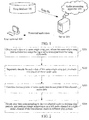
- FIG. 1 is a schematic scenario diagram of a dual sound source audio data processing method according to an embodiment of the present invention.
- the scenario may include an audio data processing apparatus running in a server 200, and the audio data processing apparatus is referred to as an audio processing apparatus 300 and mainly configured to obtain audio data of a same-source song pair, where the same-source song pair includes two songs having a same accompaniment but sung differently. Then, the audio data of the same-source song pair are separately decoded, to obtain two pieces of mono audio data. Afterwards, the two pieces of mono audio data are combined to one piece of two-channel audio data. Finally, play time corresponding to the two-channel audio are divided to multiple play periods, and energy suppression is performed on a left audio channel or a right audio channel of the two-channel audio in different play periods, to obtain processed audio data.
- the scenario may further include a song database 100.
- the song database stores a large quantity of pieces of song information, where accompaniment files, lyrics files and audio data corresponding to songs are included.
- the audio processing apparatus 300 according to lyrics files and accompaniment files of songs in the database 100, filters out a same-source song pair including two songs having a same accompaniment but sung differently.
- the scenario may further include a user terminal 400 such as a mobile phone or a tablet computer.
- the user terminal includes an input apparatus (such as a keyboard or a mouse) and an output apparatus (such as a screen and a power amplifier).
- a user selects audio data processed by the audio processing apparatus 300 by activating the input apparatus, and plays the processed audio data by using an output apparatus.
- the audio processing apparatus may specifically integrated on a network device such as a server or a gateway, to implement the dual sound source audio data processing method.
- the network device such as the server or the gateway may be a computer device.
- This embodiment of the present invention provides a dual sound source audio data processing method, including: obtaining audio data of a same-source song pair, the same-source song pair including two songs having a same accompaniment but sung in different manners; separately decoding the audio data of the same-source song pair, to obtain two pieces of mono audio data; combining the two pieces of mono audio data to one piece of two-channel audio data; and dividing play time corresponding to a two-channel audio to multiple play periods, and performing the energy suppression on a left audio channel or a right audio channel of the two-channel audio in different play periods.
- FIG. 2 is a schematic flowchart of a dual sound source audio data processing method according to an embodiment of the present invention. The method includes the following steps:
- the same-source song pair includes two songs having a same accompaniment but sung differently.
- the sung differently means singers are different or singing languages are different.
- a same-source song pair may include two songs obtained after a same song is sung in different languages by a same singer, for example, "Red Rose” sung in Mandarin and "White Rose” sung in Cantonese by Eason Chan.
- the "Red Rose” and the "White Rose” sung in different singing languages but having a same accompaniment may be used as the same-source song pair.
- the same-source song pair may also include two songs obtained after a song is sung by different singers.
- S202 Separately decode the audio data of the same-source song pair, to obtain two pieces of mono audio data.
- S203 Combine the two pieces of mono audio data to one piece of two-channel audio data.
- S204 Divide play time corresponding to a two-channel audio to multiple play periods, and perform energy suppression on a left audio channel or a right audio channel of the two-channel audio in different play periods.
- the play time corresponding to the two-channel audio includes time information of each sentence of lyrics.
- the time information may be a start time and an end time of each sentence of lyrics.
- the time information may also be a start time and duration of each sentence of lyrics.
- the play time may be divided to multiple play periods according to the time information of each sentence of lyrics, where a quantity of play periods are consistent with sentences included in the lyrics, so that an effect that a song is sung alternately by two types of sound is achieved.
- the lyrics may also be divided to multiple paragraphs, and the play periods are divided with reference to the paragraphs of the lyrics.
- one or more lyrics sentences are used as a paragraph, a start time of each sentence of lyrics in the paragraph is used as a start time of the play period, and an end time corresponding to a last sentence of the lyrics in the paragraph is used as an end time of the play period, to implement an effect that a song is sung alternately by two types of sound.
- Energy suppression is performed on the left audio channel and the right audio channel on the two-channel audio alternately in different play periods.
- suppression may be performed alternately on the left audio channel and the right audio channel in different play periods; or energy suppression may be performed separately on the left audio channel or the right audio channel with reference to a preset rule.
- a same audio channel is suppressed in continuous multiple play periods, or suppression is not performed on both of the left audio channel and the right audio channel in some play periods, or energy suppression is performed on the left audio channel or the right audio channel only in partial time of a play period.
- the energy suppression is performed on the left audio channel or the right audio channel only in partial time of a play period, so that it is achieved that a song part corresponding to a same play period is sung alternately by two types of sound. For example, sound A sings the former part of a lyrics sentence, sound B sings the latter part of the lyrics sentence.
- a specific method of performing the energy suppression on an audio in any play period includes the following steps: In a preset time period before a play period is entered, a fade-out effect is performed on an audio channel on which energy suppression needs to be performed. In the play period, audio collection points of the audio channel on which energy suppression needs to be performed are all set to be 0. In a preset time period after the play period is exited, the fade-out effect is performed on the audio channel.
- processed audio data may further be presented to a user, so that the user can listen to the audio.
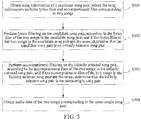
- FIG. 3 is a schematic flowchart of a method of obtaining a same-source song pair according to an embodiment of the present invention.
- the method includes the following steps: S301: Obtain song information of a candidate song pair, where the song information includes lyrics files and accompaniment files corresponding to two songs.
- a song pair list may be established according to the song information of the candidate song pair. Specifically, the song information of the candidate song pair may be obtained by using the method in the following embodiment.
- all songs having a same song name but sung by singers having different names are searched in a song database, all the obtained songs are combined into pairs each having two songs, so that the candidate song pair is obtained, and the song information of the candidate song pair is extracted.
- a search result includes "Love” sung by Little Tigers, "Love” sung by Karen Mok, and "Love” sung by TFBOYS.
- the "Love” sung by Little Tigers and the "Love” sung by Karen Mok may be used as a candidate song pair
- the "Love” sung by Little Tigers and the "Love” sung by TFBOYS may be used as a candidate song pair
- the "Love” sung by Karen Mok and the "Love” sung by TFBOYS may be used as a candidate song pair.
- songs marked with a language label are searched in all songs of a same singer, where the language label includes a song name and a language version.
- One of the songs marked with the language label and another song corresponding to the song name in the language label are used as a candidate song pair, and song information of the candidate song pair is obtained.
- a language label of a song "White Rose” is found to be “Red Rose” of a Cantonese version, so that the "White Rose” and the “Red Rose” corresponding to the language label may be used as a candidate song pair.
- S302 Perform lyrics filtering on the candidate song pair, according to the lyrics files of the two songs in the candidate song pair, and if the lyrics files of the two songs in the candidate song pair are the same, determine that the candidate song pair is an initially selected song pair.
- lyrics of the candidate song pair may be filtered by using the following method.
- the lyrics files of the two songs in the candidate song pair are parsed separately, to obtain a lyrics sentences quantity of each song and time information corresponding to each sentence of lyrics, where the time information may include a start time and an end time of each sentence of lyrics. Alternatively, the time information may also include a start time of each sentence of lyrics and duration that the lyrics being sung.
- lyrics sentences quantities in the two songs are the same are determined, and if not, a corresponding candidate song pair is abandoned, or if yes, lyrics sentences of the two songs are made to one by one, to determine whether the time information of the corresponding lyrics sentences in the two songs is the same, and if it is different, the corresponding candidate song pair is abandoned, or if it is the same, the candidate song pair is used as the initially selected song pair.
- S303 Perform accompaniment filtering on the initially selected song pair, according to the accompaniment files of the two songs in the initially selected song pair, and if the accompaniment files of the two songs in the initially selected song pair are the same, determine that the initially selected song pair is the same-source song pair.
- an accompaniment of the candidate song pair may be filtered by the following method.
- S401 Separately extract accompaniment files of the two songs in the initially selected song pair, where the accompaniment file includes at least an accompaniment audio and accompaniment time corresponding to the accompaniment audio.
- S402 Make accompaniment audios having same accompaniment time in the two songs one by one, to form at least one accompaniment pair.
- S403 Separately process the two accompaniment audios of each accompaniment pair, to obtain two binary sequences having a same length and corresponding to the accompaniment pair, calculate a matching probability of the two binary sequences, determine whether the matching probability is greater than a preset value, and if yes, determine that the two accompaniment audios of the accompaniment pair are the same.
- a specific method of determining whether the two accompaniment audios of the accompaniment pair are the same includes: separately performing Fourier transform on the two accompaniment audio data, to generate two spectrums; equally dividing the two spectrums to same quantities of frequency bands, separately calculating an average energy value of each frequency band in each spectrum, comparing sizes of each frequency band and a previous frequency band, and expressing a comparison result in a binary system, to obtain a binary sequence corresponding to the spectrum; calculating a matching probability of the two binary sequences, where the matching probability is m n , n represents a total quantity of digits in the binary sequences, and m represents a quantity of digit positions at which the two binary sequences have identical digits, determining whether the matching probability is greater than a preset value, and if yes, determining that the two accompaniment audios of the accompaniment pair are the same.
- S404 Determine whether the two accompaniment audios of each accompaniment pair are the same, and if yes, determine that the initially selected song pair is the same-source song pair.
- the audio data of the two songs forming the same-source song pair is obtained from a song database.
- FIG. 3 The manner shown in FIG. 3 is merely one of multiple methods of obtaining the same-source song pair, and should not be understood as to limit the present disclosure.
- This embodiment divides the dual sound source audio data processing method to two main aspects, where one aspect is about filtering the same-source song pair, and another aspect is about synthesizing the audio data of the same-source song pair.
- one aspect is about filtering the same-source song pair
- another aspect is about synthesizing the audio data of the same-source song pair.
- the same-source song pair is formed by two songs having a same accompaniment but sung differently. Filtering the same-source song pair is that, two songs having a same accompaniment but sung differently need to be found and combined into pairs each having two songs.
- candidate song pairs may be found in a song database when the same-source song pair is filtered, so that a song pair list is established. Searching for a candidate song in the song database may be performed by using the following methods.
- a first method is to, in a song list of a same singer, check whether a song has a language label. For example, a language label of a song "White Rose” is "Red Rose” of a Cantonese version, so that the "White Rose” and the “Red Rose” may be used as a candidate song pair, and are separately recorded as a song x and a song y.
- a second method is to search all songs having a same song name but sung by singers having different names in a song database, and combine all the obtained songs into pairs each having two songs. For example, “Love” sung by Little Tigers, "Love” sung by Karen Mok and “Love” sung by TFBOYS are combined into pairs each having two songs, to obtain three candidate song pairs, and two songs of each candidate song pair are separately recorded as a song x and a song y.
- lyrics files x l and y l are separately found in a song database, where a format of the lyrics files may specifically include lyrics corresponding to the songs, and time information corresponding to each sentence of lyrics.
- the time information may be a start time and an end time of each sentence of lyrics, and may be a start time and duration of each sentence of lyrics.
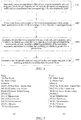
- FIG. 5(a) and FIG. 5(b) separately shows lyrics files of the "White Rose” and the "Red Rose".
- a format of the lyrics file is that, the start time is in the front of each line and corresponding lyrics are in the back of each line, and time information corresponding to each sentence of lyrics may be obtained by parsing the lyrics files.
- a start time of a first sentence of the lyrics of the "Red Rose” and a first sentence of the lyrics of the "White Rose” is both [00:16.28], and an end time is both [00:18.65].
- the first sentence of the lyrics of the "Red Rose” is represented by "aaaaaaaaa” and the first sentence of the lyrics of the "White Rose” is represented by "bbbbbbbb”, and other lyrics sentences are represented by "xx##”.
- lyrics sentences corresponding to the two songs are the same and both a start time and an end time of each sentence of lyrics are the same, it is determined that the songs x and y meet a lyrics filtering condition, and a candidate song pair including the songs x and y may be used as an initially selected song pair and enters accompaniment filtering of the next turn. On the contrary, the candidate song pair is deleted from the song pair list.
- An accompaniment of the initially selected song pair is filtered.
- a common song has several relatively long parts having no lyrics and in which only an accompaniment is played, such as a prelude, an interval of two paragraphs and an end part, and a lyrics file of the accompaniment part only displays time information without lyrics, as content in a line box shown in FIG. 6 .
- the song "Red Rose” there are four parts displaying only time but having no lyrics, and according to this feature, it can be directly parsed that the song only has an accompaniment in the part of [00:08.61] - [00:16.28].
- left song pairs in the song pair list are all same-source song pairs.
- synthesizing processing needs to be performed on audio data of the same-source song pair.
- a synthesizing processing method of a same-source song pair including two songs x and y is described below.
- synthesizing processing steps of the songs x and y are as follows:
- time of all lyrics sentences may be divided to n time period t i i ⁇ (1,n) according to time stamps of lyrics information, where n is a quantity of lyrics sentences (only sentences sung are included, and information of a lyrics writer and a composer and lines of an accompaniment are not included).
- n is a quantity of lyrics sentences (only sentences sung are included, and information of a lyrics writer and a composer and lines of an accompaniment are not included).
- t 1 is ([00:16.28] - [00:18.65])
- t 2 is ([00:18.65] - [00:23.53]).
- energy suppression is performed on a left audio channel in a t i (i is an odd number) time period
- energy suppression is performed on a right audio channel in a t i (i is an even number) time period. In this way, an effect that different person voices sing on the left and right audio channels alternately is achieved.
- two songs having a same accompaniment but sung differently are used as a same-source song pair.
- Two pieces of mono audio data are obtained by decoding audio data of the same-source song pair, and the two pieces of mono audio data are combined to one piece of two-channel audio data.
- Play time corresponding to the two-channel audio are divided into multiple play periods, and energy suppression are performed on a left audio channel or a right audio channel of the two-channel audio in different play periods, so that an effect that the two songs having a same accompaniment but sung differently are sung alternately is achieved.
- This embodiment of the present invention provides a novelty solution that music is automatically synthesized, to provide a new function for a computer device, and the solution has advantages of low costs and high synthesizing efficiency.
- an embodiment of the present invention further provides a dual sound source audio data processing apparatus.
- Nouns have meanings the same as that in the foregoing processing method of the audio data, and for specific implementation details, reference may be made to the description in the method embodiments.
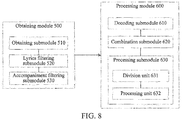
- FIG. 7 is a schematic structural diagram of a dual sound source audio data processing apparatus according to an embodiment of the present invention.
- the apparatus includes an obtaining module 500 and a processing module 600.
- the obtaining module 500 is configured to obtain audio data of a same-source song pair.
- the processing module 600 includes a decoding submodule 610, a combination submodule 620 and a processing submodule 630.
- the decoding submodule 610 is configured to separately decode the audio data of the same-source song pair, to obtain two pieces of mono audio data;
- the combination submodule 620 is configured to combine the two pieces of mono audio data to one piece of two-channel audio data;
- the processing submodule 630 is configured to divide play time corresponding to a two-channel audio to multiple play periods, and perform energy suppression on a left audio channel or a right audio channel of the two-channel audio in different play periods.
- the same-source song pair includes two songs having a same accompaniment but sung differently.
- the same-source song pair may include two songs obtained after a same song is sung by a same singer in different languages, or may include two songs obtained after a same song is sung by different singers.
- the obtaining module 500 used to obtain the same-source song pair specifically includes an obtaining submodule 510, a lyrics filtering submodule 520 and an accompaniment filtering submodule 530.
- the obtaining submodule 510 is configured to obtain song information of a candidate song pair, where the song information includes lyrics files and accompaniment files corresponding to the two songs; the lyrics filtering submodule 520 is configured to perform lyrics filtering on the candidate song pair, according to the lyrics files of the two songs in the candidate song pair, and if the lyrics files of the two songs in the candidate song pair are the same, determine that the candidate song pair is an initially selected song pair; and the accompaniment filtering submodule 530 is configured to perform accompaniment filtering on the initially selected song pair, according to the accompaniment files of the two songs in the initially selected song pair, and if the accompaniment files of the two songs in the initially selected song pair are the same, determine that the initially selected song pair is the same-source song pair.
- the lyrics file is lyrics sentences in a song and time information of each sentence of lyrics and the accompaniment file is the part including only music but having no lyrics and does not need to be sung.
- FIG. 9 is a schematic structural diagram of an obtaining module 500 of an audio data processing apparatus according to an embodiment of the present invention.
- the obtaining submodule 510 may include a first obtaining unit 511 and a second obtaining unit 512; the first obtaining unit 511 is configured to search all songs having a same song name and sung by singers having different names in a song database, and combine all the obtained songs into pairs each having two songs, to obtain a candidate song pair; the second obtaining unit 512 is configured to search songs marked with a language label in songs of a same singer, where the language label includes a song name and a language version, and use one of the songs marked with the language label and another song corresponding to the song name in the language label as the candidate song pair.
- the lyrics filtering submodule 520 may include a parsing unit 521 and a lyrics filtering unit 522, where the parsing unit is configured to separately parse lyrics files of the two songs in the candidate song pair, to obtain a quantity of lyrics sentences of each song and time information corresponding to each sentence of lyrics, where the time information includes a start time and an end time of each sentence of lyrics; and the lyrics filtering unit is configured to determine whether the quantities of lyrics sentences of the two songs in the candidate song pair are the same, and if yes, make the lyrics sentences of the two songs one by one, to determine whether the time information of the lyrics in a correspondence and in the two songs is the same, and if yes, use the candidate song pair as the initially selected song pair.
- the accompaniment filtering submodule 530 may include an extraction unit 531, a mapping unit 532, an accompaniment filtering unit 533 and a determining unit 534.
- the extraction unit 531 is configured to separately extract the accompaniment files of the two songs in the initially selected song pair, where the accompaniment files includes at least an accompaniment audio and accompaniment time corresponding to the accompaniment audio;
- the mapping unit 532 is configured to make accompaniment audios having same accompaniment time in the two songs one by one, to form at least one accompaniment pair;
- the accompaniment filtering unit 533 is configured to separately process the two accompaniment audios of each accompaniment pair, to obtain two binary sequences having a same length and corresponding to the accompaniment pair, calculate the matching probability of the two binary sequences, determine whether the matching probability is greater than a preset value, and if yes, determine that the tow accompaniment audios of the accompaniment pair are the same;
- the determining unit 534 is configured to determine whether the two accompaniment audios of each accompaniment pair are the same, and if yes, determine that the initially selected song pair is the same-source song pair
- the accompaniment filtering unit 533 includes a decoding subunit 5331, a spectrum generation subunit 5332, a conversion subunit 5333 and a calculation subunit 5334, where the decoding subunit 5331 is configured to decode the two accompaniment audios of each accompaniment pair, to obtain two pieces of accompaniment audio data; the spectrum generation subunit 5332 is configured to separately perform Fourier transform on the two pieces of accompaniment audio data, to generate two spectrums; and the conversion subunit 5333 is configured to equally divide the two spectrums to same quantities of frequency bands, separately calculate an average energy value of each frequency band in each spectrum, compare sizes of each frequency band and a previous frequency band, and express a comparison result in a binary system, to obtain a binary sequence corresponding to the spectrum; the calculation subunit 5334 is configured to calculate the matching probability of the two binary sequences, where the matching probability is m n , n represents a total quantity of digits in the binary sequences, and m represents a quantity of digit positions at which the two binary sequences have identical digits
- the processing submodule 630 includes a division unit 631 and a processing unit 632, where the division unit 631 is configured to divide play time of a two-channel audio to multiple play periods according to time information of each sentence of lyrics in the two-channel audio, and a quantity of play periods is consistent with a quantity of lyrics sentences; and the processing unit 632 is configured to perform energy suppression on a left audio channel and a right audio channel on the two-channel audio alternately in different play periods.
- obtained audio data may further be transmitted to a user terminal, and displayed to the user.
- the dual sound source audio data processing apparatus may specifically integrated on a network device such as a server or a gateway.
- the foregoing units may be implemented as independent entities, or may be combined arbitrarily, or may be implemented as a same entity or several entities.
- the foregoing units refer to the foregoing method embodiments. Details are not described herein again.
- the dual sound source audio data processing apparatus first filters two songs having a same accompaniment but sung differently in a song database as a same-source song pair, performs decoding and combining processing of audio data of the same-source song pair, to obtain two-channel audio data, divides play time corresponding to a two-channel audio into multiple play periods, and performs energy suppression on a left audio channel or a right audio channel of the two-channel audio in different play periods, so that an effect that a song is sung by two voices alternately is achieved.
- This embodiment of the present invention provides a novelty music synthesizing apparatus, to provide a new function for a computer device, and the solution has advantages of high synthesizing efficiency and low costs.
- an audio data processing apparatus such as a computer, a tablet computer, and a mobile phone having a touch function is provided.
- the audio data processing apparatus and the audio data processing method in the foregoing embodiment belong to a same conception, and any method provided in the audio data processing method embodiment may be performed on the audio data processing apparatus.
- a specific implementation process thereof is shown in the audio data processing method embodiment, and details are not described herein again.
- FIG. 10 is a schematic diagram of hardware structure of a dual sound source audio data processing apparatus according to an embodiment of the present invention.
- the apparatus may include: one or more (only one is shown in the figure) processors 1001, a storage medium 1002, a bus 1003 and an interface 1004.
- the storage medium 1002 may be used for storing one or more computer readable instructions, such as a software program and a module, and such as a program instruction/module corresponding to a dual sound source audio data processing method and apparatus in the embodiments of the present invention.
- the processor 1001 is connected to the storage medium 1002 by the bus 1003 and operates the software program and the module stored in the storage medium 1002, so that various function applications and data processing are executed. That is, the audio data processing method is implemented.
- the storage medium 1002 may include a high-speed random memory, and may also include a nonvolatile memory such as one or more magnetic storage devices, a flash memory, or another nonvolatile solid-state memory.
- the storage medium 1002 may further include memories remotely disposed relative to the processor 1001, and these remote memories may be connected to the terminal through a network.
- the network include but are not limited to, the Internet, an intranet, a local area network, a mobile communications network, and a combination thereof.
- the interface 1004 is connected to the processor 1001 by a bus, receives an instruction of the processor 1001, and receives data of an external device or sends data to the external device according to the instruction.
- the computer program may be stored in a computer readable storage medium, for example, being stored in a memory of the server shown in FIG. 1 , and is executed by at least one processor in the server.
- An execution process may include a procedure of the embodiment of the audio data processing method.
- the server may be a computer device.
- the foregoing storage medium may include a magnetic disk, an optical disc, a read-only memory (ROM, Read Only Memory), or a random access memory (RAM, Random Access Memory).
- an embodiment of the present invention provides a non-volatile computer readable storage medium that stores a computer program.
- the computer program can cause a computer to execute the step of the dual sound source audio data processing method described in the foregoing embodiment.
- the functional modules thereof may be integrated into one processing chip, or each of the modules may exist alone physically, or two or more modules may be integrated into one module.
- the integrated module may be implemented in a form of hardware, or may be implemented in a form of a software functional module.
- the integrated module When being implemented in the form of a software functional module and sold or used as an independent product, the integrated module may be stored in a computer readable storage medium.
- the storage medium is, for example, an ROM, a magnetic disk, or an optical disc.
- a dual sound source audio data processing method and apparatus provided in the embodiments of the present invention are described in detail above.
- the principle and implementations of the present disclosure are described herein by using specific examples.
- the descriptions of the embodiments of the present invention are merely used for helping understand the method and core ideas of the present disclosure.
- a person skilled in the art can make variations to the present disclosure in terms of the specific implementations and application scopes according to the ideas of the present disclosure. Therefore, the content of the specification shall not be construed as a limit to the present disclosure.
Landscapes
- Engineering & Computer Science (AREA)
- Physics & Mathematics (AREA)
- Multimedia (AREA)
- Acoustics & Sound (AREA)
- Theoretical Computer Science (AREA)
- Audiology, Speech & Language Pathology (AREA)
- Health & Medical Sciences (AREA)
- Library & Information Science (AREA)
- Artificial Intelligence (AREA)
- General Health & Medical Sciences (AREA)
- Computational Linguistics (AREA)
- General Engineering & Computer Science (AREA)
- General Physics & Mathematics (AREA)
- Human Computer Interaction (AREA)
- Signal Processing (AREA)
- Data Mining & Analysis (AREA)
- Databases & Information Systems (AREA)
- Mathematical Physics (AREA)
- Reverberation, Karaoke And Other Acoustics (AREA)
- Electrophonic Musical Instruments (AREA)
Abstract
Description
- This application claims priority to Chinese Patent Application No.
201610852918.8 - The present disclosure relates to the field of computer information processing technologies, and specifically to a dual sound source audio data processing method and apparatus.
- People expect more fun from music with the popularity of multimedia devices. In addition to listening to single music, remixed music and medley songs are also popular in people.
- Embodiments of the present invention provide a dual sound source audio data processing method and apparatus and a non-volatile computer readable storage medium that may make two songs having a same accompaniment but sung differently be automatically synthesized.
- The embodiments of the present invention adopt the following technical solutions:
- An embodiment of the present invention provides a method for processing dual-source audio data, the method including:
- obtaining audio data of a same-source song pair, the same-source song pair including a first song and a second song, the first and second songs having a same accompaniment audio but different voice audio;
- decoding the audio data to obtain first mono audio data and second mono audio data;
- combining the first and second mono audio data to one piece of two-channel audio data;
- dividing a play time of the two-channel audio data into a plurality of play periods, and performing energy suppression on a left audio channel and a right audio channel of the two-channel audio data in different play periods of the plurality of play periods.
- An embodiment of the present invention provides an apparatus for processing dual-source audio data, including a processor and a non-volatile storage medium, the non-volatile storage medium storing one or more computer readable instructions, and the processor executing the computer readable instructions to implement the following steps:
- obtaining audio data of a same-source song pair, the same-source song pair including a first song and a second song, the first and second songs having a same accompaniment audio but different voice audio;
- decoding the audio data to obtain first mono audio data and second mono audio data;
- combining the first and second mono audio data to one piece of two-channel audio data; and
- dividing a play time of the two-channel audio data into a plurality of play periods, and performing energy suppression on a left audio channel and a right audio channel of the two-channel audio data in different play periods of the plurality of play periods.
- An embodiment of the present invention provides a non-volatile computer readable storage medium that stores a computer program, and the computer program can cause a computer to execute the following steps:
- obtaining audio data of a same-source song pair, the same-source song pair including a first song and a second song, the first and second songs having a same accompaniment audio but different voice audio;
- decoding the audio data to obtain first mono audio data and second mono audio data;
- combining the first and second mono audio data to one piece of two-channel audio data; and
- dividing a play time of the two-channel audio data into a plurality of play periods, and performing energy suppression on a left audio channel and a right audio channel of the two-channel audio data in different play periods of the plurality of play periods.
- In the embodiments of the present invention, two songs having a same accompaniment but sung differently are used as a same-source song pair. Two pieces of mono audio data are obtained by decoding audio data of the same-source song pair, the two pieces of mono audio data are combined to one piece of two-channel audio data, play time corresponding to the two-channel audio are divided to multiple play periods, and energy suppression are performed on a left audio channel or a right audio channel of the two-channel audio in different play periods, so that an effect that the two songs having a same accompaniment but sung differently are sung alternately is achieved. The embodiments of the present invention provide a novelty solution that music is automatically synthesized, to provide a new function for a computer device. Both lyrics information and accompaniment information of the two songs used for synthesizing is the same. Therefore, an obtained audio is relatively gentle, no abrupt sense is generated thereof, and a comfortable listening effect is achieved. Moreover, regardless of the same-source song pair is obtained or the audio data is processed, both are performed in background on a user terminal side. A user only needs to select a synthesized audio on a user terminal to play, and does not need to manually select the same-source song pair and process the audio data, so that an operation on the user terminal is simplified, and a processing resource of the user terminal is saved. In addition, compared with a manner that a music work is recorded by being sung live by a singer, the embodiments of the present invention have advantages of low costs and high synthetic efficiency.
- To make the technical solutions of the present disclosure clearer, the accompanying drawings for illustrating the embodiments or the existing technology are given briefly below. Apparently, the accompanying drawings are only for the exemplary purpose, and a person of ordinary skill in the art can derive other drawings from the accompanying drawings without creative efforts.
-
FIG. 1 is a schematic scenario diagram of a dual sound source audio data processing method according to an embodiment of the present invention; -
FIG. 2 is a schematic flowchart of a dual sound source audio data processing method according to an embodiment of the present invention; -
FIG. 3 is a schematic flowchart of a method of obtaining a same-source song pair according to an embodiment of the present invention; -
FIG. 4 is a schematic flowchart of a method of filtering an accompaniment of an initially selected song pair according to an embodiment of the present invention; -
FIG. 5 is a schematic diagram of a lyrics file of a same-source song pair according to an embodiment of the present invention; -
FIG. 6 is a schematic diagram of an accompaniment file of a same-source song pair according to an embodiment of the present invention; -
FIG. 7 is a schematic structural diagram of a dual sound source audio data processing apparatus according to an embodiment of the present invention; -
FIG. 8 is a schematic structural diagram of a dual sound source audio data processing apparatus according to an embodiment of the present invention; -
FIG. 9 is a schematic structural diagram of an obtaining module of an audio data processing apparatus according to an embodiment of the present invention; and -
FIG. 10 is a schematic diagram of hardware structure of a dual sound source audio data processing apparatus according to an embodiment of the present invention. - The following further describes this application in detail with reference to the accompanying drawings and the embodiments. It may be understood that, the specific embodiments described herein are merely used for illustrating a related invention, but are not limited to the invention. In addition, it should be noted that, for ease of description, the accompanying drawings only show parts relevant to the related invention.
- In the following description, the specific embodiments of the present invention are described with reference to steps and symbols of operations performed by one or more computers, unless otherwise stated. As such, it will be understood that such steps and operations, which are at times referred to as being computer-executed, include the manipulation by the processing unit of the computer of electrical signals representing data in a structured form. This manipulation converts the data or maintains the location of the data in a memory system of the computer, which can be reconfigured, or otherwise a person skilled in this art changes the way of operation of the computer in a well-known manner. The data structure maintained in the physical location of the data in the memory has specific properties defined by the data format. However, the principle of the present disclosure described in the foregoing text does not lead to a limitation. A person skilled in the art may understand that the various steps and operations described below may also be implemented in hardware.
- A term "module" used in the specification may be regarded as a software object executed in the calculation system. Different components, modules, engines, and services described in the specification may be regarded as objects implemented in the calculation system. The apparatus and method described in the specification is preferably implemented in a form of software, and definitely can be implemented in a form of hardware, both of which fall within the protection scope of the present disclosure.
- An embodiment of the present invention provides a dual sound source audio data processing method and apparatus.
- Referring to
FIG. 1, FIG. 1 is a schematic scenario diagram of a dual sound source audio data processing method according to an embodiment of the present invention. The scenario may include an audio data processing apparatus running in aserver 200, and the audio data processing apparatus is referred to as an audio processing apparatus 300 and mainly configured to obtain audio data of a same-source song pair, where the same-source song pair includes two songs having a same accompaniment but sung differently. Then, the audio data of the same-source song pair are separately decoded, to obtain two pieces of mono audio data. Afterwards, the two pieces of mono audio data are combined to one piece of two-channel audio data. Finally, play time corresponding to the two-channel audio are divided to multiple play periods, and energy suppression is performed on a left audio channel or a right audio channel of the two-channel audio in different play periods, to obtain processed audio data. - In addition, the scenario may further include a
song database 100. The song database stores a large quantity of pieces of song information, where accompaniment files, lyrics files and audio data corresponding to songs are included. The audio processing apparatus 300, according to lyrics files and accompaniment files of songs in thedatabase 100, filters out a same-source song pair including two songs having a same accompaniment but sung differently. Certainly, the scenario may further include a user terminal 400 such as a mobile phone or a tablet computer. The user terminal includes an input apparatus (such as a keyboard or a mouse) and an output apparatus (such as a screen and a power amplifier). A user selects audio data processed by the audio processing apparatus 300 by activating the input apparatus, and plays the processed audio data by using an output apparatus. - Detailed descriptions are provided below separately.
- In this embodiment of the present invention, from points of view of the audio processing apparatus, the audio processing apparatus may specifically integrated on a network device such as a server or a gateway, to implement the dual sound source audio data processing method. The network device such as the server or the gateway may be a computer device.
- This embodiment of the present invention provides a dual sound source audio data processing method, including: obtaining audio data of a same-source song pair, the same-source song pair including two songs having a same accompaniment but sung in different manners; separately decoding the audio data of the same-source song pair, to obtain two pieces of mono audio data; combining the two pieces of mono audio data to one piece of two-channel audio data; and dividing play time corresponding to a two-channel audio to multiple play periods, and performing the energy suppression on a left audio channel or a right audio channel of the two-channel audio in different play periods.
- Referring to
FIG. 2, FIG. 2 is a schematic flowchart of a dual sound source audio data processing method according to an embodiment of the present invention. The method includes the following steps: - S201: Obtain audio data of a same-source song pair.
- The same-source song pair includes two songs having a same accompaniment but sung differently. The sung differently means singers are different or singing languages are different. In this embodiment of the present invention, a same-source song pair may include two songs obtained after a same song is sung in different languages by a same singer, for example, "Red Rose" sung in Mandarin and "White Rose" sung in Cantonese by Eason Chan. The "Red Rose" and the "White Rose" sung in different singing languages but having a same accompaniment may be used as the same-source song pair. In another embodiment of the present invention, the same-source song pair may also include two songs obtained after a song is sung by different singers. For example, Megan Nicole and Alex both have sung a song "Maps", and the song "Maps" sung by Megan Nicole and the song "Maps" sung by Alex may be used as the same-source song pair. In conclusion, two songs using a same accompaniment but sung differently in the song database need to be found to form a song pair.
- S202: Separately decode the audio data of the same-source song pair, to obtain two pieces of mono audio data.
- S203: Combine the two pieces of mono audio data to one piece of two-channel audio data.
- S204: Divide play time corresponding to a two-channel audio to multiple play periods, and perform energy suppression on a left audio channel or a right audio channel of the two-channel audio in different play periods.
- Specifically, the play time corresponding to the two-channel audio includes time information of each sentence of lyrics. In this embodiment of the present invention, the time information may be a start time and an end time of each sentence of lyrics. Alternatively, the time information may also be a start time and duration of each sentence of lyrics. Specifically, the play time may be divided to multiple play periods according to the time information of each sentence of lyrics, where a quantity of play periods are consistent with sentences included in the lyrics, so that an effect that a song is sung alternately by two types of sound is achieved. The lyrics may also be divided to multiple paragraphs, and the play periods are divided with reference to the paragraphs of the lyrics. That is, one or more lyrics sentences are used as a paragraph, a start time of each sentence of lyrics in the paragraph is used as a start time of the play period, and an end time corresponding to a last sentence of the lyrics in the paragraph is used as an end time of the play period, to implement an effect that a song is sung alternately by two types of sound.
- Energy suppression is performed on the left audio channel and the right audio channel on the two-channel audio alternately in different play periods. In this embodiment of the present invention, suppression may be performed alternately on the left audio channel and the right audio channel in different play periods; or energy suppression may be performed separately on the left audio channel or the right audio channel with reference to a preset rule. For example, a same audio channel is suppressed in continuous multiple play periods, or suppression is not performed on both of the left audio channel and the right audio channel in some play periods, or energy suppression is performed on the left audio channel or the right audio channel only in partial time of a play period. The energy suppression is performed on the left audio channel or the right audio channel only in partial time of a play period, so that it is achieved that a song part corresponding to a same play period is sung alternately by two types of sound. For example, sound A sings the former part of a lyrics sentence, sound B sings the latter part of the lyrics sentence.
- A specific method of performing the energy suppression on an audio in any play period includes the following steps:
In a preset time period before a play period is entered, a fade-out effect is performed on an audio channel on which energy suppression needs to be performed. In the play period, audio collection points of the audio channel on which energy suppression needs to be performed are all set to be 0. In a preset time period after the play period is exited, the fade-out effect is performed on the audio channel. - Further, after step S204 is performed, processed audio data may further be presented to a user, so that the user can listen to the audio.
- Referring to
FIG. 3, FIG. 3 is a schematic flowchart of a method of obtaining a same-source song pair according to an embodiment of the present invention. The method includes the following steps:
S301: Obtain song information of a candidate song pair, where the song information includes lyrics files and accompaniment files corresponding to two songs. - After song information of the candidate song pair is obtained, a song pair list may be established according to the song information of the candidate song pair. Specifically, the song information of the candidate song pair may be obtained by using the method in the following embodiment.
- In an embodiment, all songs having a same song name but sung by singers having different names are searched in a song database, all the obtained songs are combined into pairs each having two songs, so that the candidate song pair is obtained, and the song information of the candidate song pair is extracted.
- For example, all songs having a song name "Love" are searched in QQ Music library, and a search result includes "Love" sung by Little Tigers, "Love" sung by Karen Mok, and "Love" sung by TFBOYS. According to a rule of combining songs into pairs each having two songs, the "Love" sung by Little Tigers and the "Love" sung by Karen Mok may be used as a candidate song pair, the "Love" sung by Little Tigers and the "Love" sung by TFBOYS may be used as a candidate song pair, and the "Love" sung by Karen Mok and the "Love" sung by TFBOYS may be used as a candidate song pair.
- In another embodiment, songs marked with a language label are searched in all songs of a same singer, where the language label includes a song name and a language version. One of the songs marked with the language label and another song corresponding to the song name in the language label are used as a candidate song pair, and song information of the candidate song pair is obtained.
- For example, in a song list of a singer Eason Chan, a language label of a song "White Rose" is found to be "Red Rose" of a Cantonese version, so that the "White Rose" and the "Red Rose" corresponding to the language label may be used as a candidate song pair.
- S302: Perform lyrics filtering on the candidate song pair, according to the lyrics files of the two songs in the candidate song pair, and if the lyrics files of the two songs in the candidate song pair are the same, determine that the candidate song pair is an initially selected song pair.
- Specifically, lyrics of the candidate song pair may be filtered by using the following method.
- First, the lyrics files of the two songs in the candidate song pair are parsed separately, to obtain a lyrics sentences quantity of each song and time information corresponding to each sentence of lyrics, where the time information may include a start time and an end time of each sentence of lyrics. Alternatively, the time information may also include a start time of each sentence of lyrics and duration that the lyrics being sung. Then, whether the lyrics sentences quantities in the two songs are the same are determined, and if not, a corresponding candidate song pair is abandoned, or if yes, lyrics sentences of the two songs are made to one by one, to determine whether the time information of the corresponding lyrics sentences in the two songs is the same, and if it is different, the corresponding candidate song pair is abandoned, or if it is the same, the candidate song pair is used as the initially selected song pair.
- S303: Perform accompaniment filtering on the initially selected song pair, according to the accompaniment files of the two songs in the initially selected song pair, and if the accompaniment files of the two songs in the initially selected song pair are the same, determine that the initially selected song pair is the same-source song pair.
- Referring to
FIG. 4 , an accompaniment of the candidate song pair may be filtered by the following method. - S401: Separately extract accompaniment files of the two songs in the initially selected song pair, where the accompaniment file includes at least an accompaniment audio and accompaniment time corresponding to the accompaniment audio.
- S402: Make accompaniment audios having same accompaniment time in the two songs one by one, to form at least one accompaniment pair.
- S403: Separately process the two accompaniment audios of each accompaniment pair, to obtain two binary sequences having a same length and corresponding to the accompaniment pair, calculate a matching probability of the two binary sequences, determine whether the matching probability is greater than a preset value, and if yes, determine that the two accompaniment audios of the accompaniment pair are the same.
- A specific method of determining whether the two accompaniment audios of the accompaniment pair are the same includes: separately performing Fourier transform on the two accompaniment audio data, to generate two spectrums; equally dividing the two spectrums to same quantities of frequency bands, separately calculating an average energy value of each frequency band in each spectrum, comparing sizes of each frequency band and a previous frequency band, and expressing a comparison result in a binary system, to obtain a binary sequence corresponding to the spectrum; calculating a matching probability of the two binary sequences, where the matching probability is

- S404: Determine whether the two accompaniment audios of each accompaniment pair are the same, and if yes, determine that the initially selected song pair is the same-source song pair.
- S304: Obtain audio data of the two songs corresponding to the same-source song pair.
- The audio data of the two songs forming the same-source song pair is obtained from a song database.
- The manner shown in
FIG. 3 is merely one of multiple methods of obtaining the same-source song pair, and should not be understood as to limit the present disclosure. - According to the method described in a first embodiment, the following further provides detailed descriptions by using an example.
- This embodiment divides the dual sound source audio data processing method to two main aspects, where one aspect is about filtering the same-source song pair, and another aspect is about synthesizing the audio data of the same-source song pair. The two aspects are separately described below with reference to an example.
- The same-source song pair is formed by two songs having a same accompaniment but sung differently. Filtering the same-source song pair is that, two songs having a same accompaniment but sung differently need to be found and combined into pairs each having two songs.
- In this embodiment of the present invention, candidate song pairs may be found in a song database when the same-source song pair is filtered, so that a song pair list is established. Searching for a candidate song in the song database may be performed by using the following methods.
- A first method is to, in a song list of a same singer, check whether a song has a language label. For example, a language label of a song "White Rose" is "Red Rose" of a Cantonese version, so that the "White Rose" and the "Red Rose" may be used as a candidate song pair, and are separately recorded as a song x and a song y.
- A second method is to search all songs having a same song name but sung by singers having different names in a song database, and combine all the obtained songs into pairs each having two songs. For example, "Love" sung by Little Tigers, "Love" sung by Karen Mok and "Love" sung by TFBOYS are combined into pairs each having two songs, to obtain three candidate song pairs, and two songs of each candidate song pair are separately recorded as a song x and a song y.
- For all candidate song pairs found in the foregoing embodiment, it is uncertain that a same accompaniment is used. For example, "Love" sung by Little Tigers and "Love" sung by Karen Mok have a same title, but they are not a same song. Therefore, it is uncertain that a condition that the accompaniment is the same is met and accompaniments of the candidate song pairs need to be filtered. The following is a description of specific steps of filtering the accompaniments by using the "White Rose" and the "Red Rose" sung by Eason Chan as an example.
- For songs x and y, corresponding lyrics files xl and yl are separately found in a song database, where a format of the lyrics files may specifically include lyrics corresponding to the songs, and time information corresponding to each sentence of lyrics. The time information may be a start time and an end time of each sentence of lyrics, and may be a start time and duration of each sentence of lyrics. As shown in
FIG. 5(a) and FIG. 5(b), FIG. 5(a) and FIG. 5(b) separately shows lyrics files of the "White Rose" and the "Red Rose". A format of the lyrics file is that, the start time is in the front of each line and corresponding lyrics are in the back of each line, and time information corresponding to each sentence of lyrics may be obtained by parsing the lyrics files. As shown inFIG. 5 , except for a song name and information of a lyrics writer and a composer, a start time of a first sentence of the lyrics of the "Red Rose" and a first sentence of the lyrics of the "White Rose" is both [00:16.28], and an end time is both [00:18.65]. The first sentence of the lyrics of the "Red Rose" is represented by "aaaaaaaaa" and the first sentence of the lyrics of the "White Rose" is represented by "bbbbbbbbb", and other lyrics sentences are represented by "xx......". By means of similarity matching, if lyrics sentences corresponding to the two songs are the same and both a start time and an end time of each sentence of lyrics are the same, it is determined that the songs x and y meet a lyrics filtering condition, and a candidate song pair including the songs x and y may be used as an initially selected song pair and enters accompaniment filtering of the next turn. On the contrary, the candidate song pair is deleted from the song pair list. - An accompaniment of the initially selected song pair is filtered. A common song has several relatively long parts having no lyrics and in which only an accompaniment is played, such as a prelude, an interval of two paragraphs and an end part, and a lyrics file of the accompaniment part only displays time information without lyrics, as content in a line box shown in
FIG. 6 . In the song "Red Rose", there are four parts displaying only time but having no lyrics, and according to this feature, it can be directly parsed that the song only has an accompaniment in the part of [00:08.61] - [00:16.28]. It is assumed that the songs x and y use a same accompaniment, the two songs tend to be the same at the parts having no lyrics (because an amount of energy and encoding/decoding may both affect an accompaniment part, it has a relatively low probability that the accompaniment parts are totally the same). Based on this theory, comparison of audios of the songs x and y may be performed. In this embodiment of the present invention, specific steps for comparing audios of the songs x and y is as follows: - selecting audios only having time information but having no lyrics in lyrics files corresponding to the songs x and y, for example, four accompaniment parts may be selected from the "Red Rose", and the audios are respectively x i i ∈ (1.4) and y i i ∈ (1,4). Because lyrics filtering have been performed, it may be determined when i is determined, time of x i and y i is the same. Because a processing manner of each pair of x i and y i is the same, only x1 and y1 are used as an example subsequently;
- separately decoding x1 and y1 to an 8k16bit audio;
- performing Fourier transform by using 1024 collection points as a frame length, and using 32 collection points as a frame shift, to obtain a spectrum;
- equally dividing a 4k spectrum to 32 frequency bands, calculating an average value for each frequency band, and using the calculated average value as energy of the frequency band;
- comparing a size relationship between each frequency band and a frequency band corresponding to a former frame, and if a size of a frequency band is larger than that of a former frame, the size relationship is represented by 1, or if smaller, the size relationship is represented by 0, to obtain 32 bit values representing each frame, and separately performing an operation on x1 and y1, to obtain two binary sequences having a same length and corresponding to x1 and y1;
- making binary sequences of x1 and y1 be in one-to-one comparison, calculating a matching probability of the two binary sequences, where the matching probability may be represented as

- If all x i and y i of two songs x and y of an initially selected song pair are successful matched, accompaniments of the two songs in the initially selected song pair are the same, and the initially selected is used as a same-source song pair. On the contrary, the initially selected song pair is deleted from a song pair list.
- By means of lyrics filtering and accompaniment filtering, left song pairs in the song pair list are all same-source song pairs. To achieve an effect that each pair of same-source songs are sung by two types of sound alternately, synthesizing processing needs to be performed on audio data of the same-source song pair. For ease of description, a synthesizing processing method of a same-source song pair including two songs x and y is described below.
- In this embodiment of the present invention, synthesizing processing steps of the songs x and y are as follows:
- decoding the audio data of the song x and the song y to a piece of 44k16bit mono audio data;
- combining two pieces of mono audio data of x and y to one piece of two-channel audio data, where left and right audio channels can be randomly allocated. In this way, when listening to music by wearing a headset or a speaker, a user may find that music heard by two ears of the user has a same accompaniment but is sung differently.
- Music synthesized by the foregoing processing is listened to be noisy, to achieve an effect of being sung alternately, time of all lyrics sentences may be divided to n time period t i i ∈ (1,n) according to time stamps of lyrics information, where n is a quantity of lyrics sentences (only sentences sung are included, and information of a lyrics writer and a composer and lines of an accompaniment are not included). As "Red Rose" shown in
FIG. 5 , t1 is ([00:16.28] - [00:18.65]), t2 is ([00:18.65] - [00:23.53])..., energy suppression is performed on a left audio channel in a t i (i is an odd number) time period, and energy suppression is performed on a right audio channel in a t i (i is an even number) time period. In this way, an effect that different person voices sing on the left and right audio channels alternately is achieved. In this embodiment of the present invention, suppression for a t i time period includes three steps, and a specific method is as follows (using t1 as an example):
In a first step, fade-out is performed: a fade-out effect is generated one second before t1, a specific time period is ([00:15.28] - [00:16.28]), and a sampling rate is 44100, so that an audio on the left audio channel has 44100 collection points, an energy value is k i i ∈ (1,44100) in this second, and a new energy value after the fade-out is performed is
- In a second step, all collection points in t1 time period [00:16.28] - [00:18.65] are set to be 0;
- In a third step, fade-in is performed: a fade-in effect is generated one second after k i i ∈ (1,44100), a specific time period is ([00:18.65] - [00:19.65]), and a sampling rate is 44100, so that an audio on the left audio channel has 44100 collection points, an energy value is k i i ∈ (1,44100) in this second, and a new energy value after the fade-in is performed is

- In an embodiment of the present invention, two songs having a same accompaniment but sung differently are used as a same-source song pair. Two pieces of mono audio data are obtained by decoding audio data of the same-source song pair, and the two pieces of mono audio data are combined to one piece of two-channel audio data. Play time corresponding to the two-channel audio are divided into multiple play periods, and energy suppression are performed on a left audio channel or a right audio channel of the two-channel audio in different play periods, so that an effect that the two songs having a same accompaniment but sung differently are sung alternately is achieved. This embodiment of the present invention provides a novelty solution that music is automatically synthesized, to provide a new function for a computer device, and the solution has advantages of low costs and high synthesizing efficiency.
- To implement the dual sound source audio data processing method according to the embodiments of the present invention, an embodiment of the present invention further provides a dual sound source audio data processing apparatus. Nouns have meanings the same as that in the foregoing processing method of the audio data, and for specific implementation details, reference may be made to the description in the method embodiments.
- Referring to
FIG. 7, FIG. 7 is a schematic structural diagram of a dual sound source audio data processing apparatus according to an embodiment of the present invention. The apparatus includes an obtainingmodule 500 and aprocessing module 600. - The obtaining
module 500 is configured to obtain audio data of a same-source song pair. - The
processing module 600 includes adecoding submodule 610, a combination submodule 620 and aprocessing submodule 630. Thedecoding submodule 610 is configured to separately decode the audio data of the same-source song pair, to obtain two pieces of mono audio data; thecombination submodule 620 is configured to combine the two pieces of mono audio data to one piece of two-channel audio data; and theprocessing submodule 630 is configured to divide play time corresponding to a two-channel audio to multiple play periods, and perform energy suppression on a left audio channel or a right audio channel of the two-channel audio in different play periods. - The same-source song pair includes two songs having a same accompaniment but sung differently. In this embodiment of the present invention, the same-source song pair may include two songs obtained after a same song is sung by a same singer in different languages, or may include two songs obtained after a same song is sung by different singers. Referring to
FIG. 8 , the obtainingmodule 500 used to obtain the same-source song pair specifically includes an obtainingsubmodule 510, alyrics filtering submodule 520 and anaccompaniment filtering submodule 530. The obtainingsubmodule 510 is configured to obtain song information of a candidate song pair, where the song information includes lyrics files and accompaniment files corresponding to the two songs; thelyrics filtering submodule 520 is configured to perform lyrics filtering on the candidate song pair, according to the lyrics files of the two songs in the candidate song pair, and if the lyrics files of the two songs in the candidate song pair are the same, determine that the candidate song pair is an initially selected song pair; and theaccompaniment filtering submodule 530 is configured to perform accompaniment filtering on the initially selected song pair, according to the accompaniment files of the two songs in the initially selected song pair, and if the accompaniment files of the two songs in the initially selected song pair are the same, determine that the initially selected song pair is the same-source song pair. - The lyrics file is lyrics sentences in a song and time information of each sentence of lyrics and the accompaniment file is the part including only music but having no lyrics and does not need to be sung.
- Referring to
FIG. 9, FIG. 9 is a schematic structural diagram of an obtainingmodule 500 of an audio data processing apparatus according to an embodiment of the present invention. - In a possible implementation, the obtaining
submodule 510 may include a first obtainingunit 511 and a second obtainingunit 512; the first obtainingunit 511 is configured to search all songs having a same song name and sung by singers having different names in a song database, and combine all the obtained songs into pairs each having two songs, to obtain a candidate song pair; the second obtainingunit 512 is configured to search songs marked with a language label in songs of a same singer, where the language label includes a song name and a language version, and use one of the songs marked with the language label and another song corresponding to the song name in the language label as the candidate song pair. Thelyrics filtering submodule 520 may include aparsing unit 521 and alyrics filtering unit 522, where the parsing unit is configured to separately parse lyrics files of the two songs in the candidate song pair, to obtain a quantity of lyrics sentences of each song and time information corresponding to each sentence of lyrics, where the time information includes a start time and an end time of each sentence of lyrics; and the lyrics filtering unit is configured to determine whether the quantities of lyrics sentences of the two songs in the candidate song pair are the same, and if yes, make the lyrics sentences of the two songs one by one, to determine whether the time information of the lyrics in a correspondence and in the two songs is the same, and if yes, use the candidate song pair as the initially selected song pair. Theaccompaniment filtering submodule 530 may include anextraction unit 531, amapping unit 532, anaccompaniment filtering unit 533 and a determiningunit 534. Theextraction unit 531 is configured to separately extract the accompaniment files of the two songs in the initially selected song pair, where the accompaniment files includes at least an accompaniment audio and accompaniment time corresponding to the accompaniment audio; themapping unit 532 is configured to make accompaniment audios having same accompaniment time in the two songs one by one, to form at least one accompaniment pair; theaccompaniment filtering unit 533 is configured to separately process the two accompaniment audios of each accompaniment pair, to obtain two binary sequences having a same length and corresponding to the accompaniment pair, calculate the matching probability of the two binary sequences, determine whether the matching probability is greater than a preset value, and if yes, determine that the tow accompaniment audios of the accompaniment pair are the same; and the determiningunit 534 is configured to determine whether the two accompaniment audios of each accompaniment pair are the same, and if yes, determine that the initially selected song pair is the same-source song pair. - In a possible implementation, the
accompaniment filtering unit 533 includes adecoding subunit 5331, aspectrum generation subunit 5332, aconversion subunit 5333 and acalculation subunit 5334, where
thedecoding subunit 5331 is configured to decode the two accompaniment audios of each accompaniment pair, to obtain two pieces of accompaniment audio data; thespectrum generation subunit 5332 is configured to separately perform Fourier transform on the two pieces of accompaniment audio data, to generate two spectrums; and theconversion subunit 5333 is configured to equally divide the two spectrums to same quantities of frequency bands, separately calculate an average energy value of each frequency band in each spectrum, compare sizes of each frequency band and a previous frequency band, and express a comparison result in a binary system, to obtain a binary sequence corresponding to the spectrum;
thecalculation subunit 5334 is configured to calculate the matching probability of the two binary sequences, where the matching probability is
- Further, in a possible implementation, the
processing submodule 630 includes adivision unit 631 and aprocessing unit 632, where thedivision unit 631 is configured to divide play time of a two-channel audio to multiple play periods according to time information of each sentence of lyrics in the two-channel audio, and a quantity of play periods is consistent with a quantity of lyrics sentences; and theprocessing unit 632 is configured to perform energy suppression on a left audio channel and a right audio channel on the two-channel audio alternately in different play periods. - After dual sound source audio data is processed, obtained audio data may further be transmitted to a user terminal, and displayed to the user.
- The dual sound source audio data processing apparatus may specifically integrated on a network device such as a server or a gateway.
- During specific implementation, the foregoing units may be implemented as independent entities, or may be combined arbitrarily, or may be implemented as a same entity or several entities. For specific implementation of the foregoing units, refer to the foregoing method embodiments. Details are not described herein again.
- It can be learned from the above, the dual sound source audio data processing apparatus according to this embodiment first filters two songs having a same accompaniment but sung differently in a song database as a same-source song pair, performs decoding and combining processing of audio data of the same-source song pair, to obtain two-channel audio data, divides play time corresponding to a two-channel audio into multiple play periods, and performs energy suppression on a left audio channel or a right audio channel of the two-channel audio in different play periods, so that an effect that a song is sung by two voices alternately is achieved. This embodiment of the present invention provides a novelty music synthesizing apparatus, to provide a new function for a computer device, and the solution has advantages of high synthesizing efficiency and low costs.
- In the foregoing embodiments, the descriptions of the embodiments have respective focuses, for the part that is not described in detail in an embodiment, reference may be made to the foregoing detailed description of the dual sound source audio data processing method, and details are not described herein again.
- In this embodiment of the present invention, an audio data processing apparatus such as a computer, a tablet computer, and a mobile phone having a touch function is provided. The audio data processing apparatus and the audio data processing method in the foregoing embodiment belong to a same conception, and any method provided in the audio data processing method embodiment may be performed on the audio data processing apparatus. A specific implementation process thereof is shown in the audio data processing method embodiment, and details are not described herein again.
-
FIG. 10 is a schematic diagram of hardware structure of a dual sound source audio data processing apparatus according to an embodiment of the present invention. As shown inFIG. 10 , the apparatus may include: one or more (only one is shown in the figure)processors 1001, astorage medium 1002, abus 1003 and aninterface 1004. - The
storage medium 1002 may be used for storing one or more computer readable instructions, such as a software program and a module, and such as a program instruction/module corresponding to a dual sound source audio data processing method and apparatus in the embodiments of the present invention. Theprocessor 1001 is connected to thestorage medium 1002 by thebus 1003 and operates the software program and the module stored in thestorage medium 1002, so that various function applications and data processing are executed. That is, the audio data processing method is implemented. Thestorage medium 1002 may include a high-speed random memory, and may also include a nonvolatile memory such as one or more magnetic storage devices, a flash memory, or another nonvolatile solid-state memory. In some instances, thestorage medium 1002 may further include memories remotely disposed relative to theprocessor 1001, and these remote memories may be connected to the terminal through a network. Instances of the network include but are not limited to, the Internet, an intranet, a local area network, a mobile communications network, and a combination thereof. Theinterface 1004 is connected to theprocessor 1001 by a bus, receives an instruction of theprocessor 1001, and receives data of an external device or sends data to the external device according to the instruction. - It should be noted that, for the dual sound source audio data processing method described in the embodiments of the present invention, a person of ordinary skill in the art may understand that, implementing all or parts of procedures of the audio data processing method described in the embodiments of the present invention can be completed by controlling related hardware by using a computer program, where the computer program may be stored in a computer readable storage medium, for example, being stored in a memory of the server shown in
FIG. 1 , and is executed by at least one processor in the server. An execution process may include a procedure of the embodiment of the audio data processing method. The server may be a computer device. The foregoing storage medium may include a magnetic disk, an optical disc, a read-only memory (ROM, Read Only Memory), or a random access memory (RAM, Random Access Memory). - Therefore, an embodiment of the present invention provides a non-volatile computer readable storage medium that stores a computer program. The computer program can cause a computer to execute the step of the dual sound source audio data processing method described in the foregoing embodiment.
- For the audio data processing apparatus in the embodiments of the present invention, the functional modules thereof may be integrated into one processing chip, or each of the modules may exist alone physically, or two or more modules may be integrated into one module. The integrated module may be implemented in a form of hardware, or may be implemented in a form of a software functional module. When being implemented in the form of a software functional module and sold or used as an independent product, the integrated module may be stored in a computer readable storage medium. The storage medium is, for example, an ROM, a magnetic disk, or an optical disc.
- A dual sound source audio data processing method and apparatus provided in the embodiments of the present invention are described in detail above. The principle and implementations of the present disclosure are described herein by using specific examples. The descriptions of the embodiments of the present invention are merely used for helping understand the method and core ideas of the present disclosure. In addition, a person skilled in the art can make variations to the present disclosure in terms of the specific implementations and application scopes according to the ideas of the present disclosure. Therefore, the content of the specification shall not be construed as a limit to the present disclosure.
Claims (21)
- A method for processing dual-source audio data, comprising:obtaining audio data of a same-source song pair, the same-source song pair comprising a first song and a second song, the first and second songs having a same accompaniment audio but different voice audio;decoding the audio data to obtain first mono audio data and second mono audio data;combining the first and second mono audio data to one piece of two-channel audio data;dividing a play time of the two-channel audio data into a plurality of play periods, and performing energy suppression on a left audio channel and a right audio channel of the two-channel audio data in different play periods of the plurality of play periods.
- The method according to claim 1, wherein the obtaining audio data of a same-source song pair, the same-source song pair comprising a first song and a second song, the first and second songs having a same accompaniment audio but different voice audio comprises:obtaining song information of a candidate song pair, wherein the candidate song pair comprises a first candidate song and a second candidate song, the song information of each of the first and second candidate songs comprises a lyrics file and an accompaniment file;performing lyrics filtering on the first and second candidate songs, according to the lyrics files of the first and second candidate songs, and when the lyrics files are the same, determining the first and second candidate songs as an initial song pair;performing accompaniment filtering on the initial song pair, according to the accompaniment files of the first and second candidate songs, and when the accompaniment files are the same, determining the initial song pair is the same-source song pair; andobtaining audio data of the first and second candidate songs corresponding to the same-source song pair.
- The method according to claim 2, wherein obtaining the song information of the candidate song pair comprises at least one of:searching a song database for all songs having a same song name but sung by singers having different names, combining all the obtained songs into pairs each having two songs, to obtain the candidate song pair, and obtaining the song information of the candidate song pair; orsearching the song database to obtain songs that are marked with a language label among all songs of a same singer, wherein the language label comprises a song name and a language version, using one of the songs marked with the language label and another song corresponding to the song name in the language label as a candidate song pair, and obtaining the song information of the candidate song pair.
- The method according to claim 2, wherein performing the lyrics filtering on the first and second candidate songs, according to the lyrics files of the first and second candidate songs, and when the lyrics files are the same, determining the first and second candidate songs as an initial song pair comprises:separately parsing the lyrics files of the first and second candidate songs in the candidate song pair, to obtain a quantity of lyrics sentences of each of the first and second candidate songs, and time information corresponding to each lyrics sentence; anddetermining whether the quantities of the lyrics sentences are the same, if the quantities are the same, matching the lyrics sentences of the first and second candidate songs one by one, to determine whether the time information of the corresponding lyrics sentences of the first and second candidate songs is the same, and if the time information is the same, using the candidate song pair as the initial song pair.
- The method according to claim 2, wherein performing the accompaniment filtering on the initial song pair, according to the accompaniment files of the first and second candidate songs, and when the accompaniment files are the same, determining the initial song pair is the same-source song pair comprises:separately extracting the accompaniment files of the first and second candidate songs in the initial song pair, wherein each accompaniment file comprises at least an accompaniment audio and accompaniment time corresponding to the accompaniment audio;matching accompaniment audios of the first and second candidate songs in the initial song pair that have a same accompaniment time one by one, to form at least one accompaniment pair;separately processing the two accompaniment audios of each accompaniment pair, to obtain two binary sequences having a same length and corresponding to the accompaniment pair, calculating a matching probability of the two binary sequences, determining whether the matching probability is greater than a preset value, and if the matching probability is greater than the preset value, determining that the two accompaniment audios of the accompaniment pair are the same; anddetermining whether the two accompaniment audios of each accompaniment pair are the same, and if the two accompaniment audios of each accompaniment pair are the same, determining that the initial song pair is the same-source song pair.
- The method according to claim 5, wherein the separately processing the two accompaniment audios of each accompaniment pair, to obtain two binary sequences having a same length and corresponding to the accompaniment pair, calculating a matching probability of the two binary sequences, determining whether the matching probability is greater than a preset value, and if the matching probability is greater than the preset value, determining that the two accompaniment audios of the accompaniment pair are the same comprises:separately decoding the two accompaniment audios of each accompaniment pair, to obtain two pieces of accompaniment audio data;separately performing Fourier transform on the two pieces of the accompaniment audio data, to generate two spectrums;equally dividing the two spectrums to same quantities of frequency bands, separately calculating an average energy value of each frequency band in each spectrum, comparing sizes of each frequency band and a previous frequency band, and expressing a comparison result in a binary system, to obtain a binary sequence corresponding to the spectrum; andcalculating a matching probability of the two binary sequences, wherein the matching probability is

- The method according to claim 5, wherein dividing the play time of the two-channel audio data into a plurality of play periods, and performing the energy suppression on the left audio channel and the right audio channel of the two-channel audio data in different play periods of the plurality of play periods comprises:play time corresponding to the two-channel audio data comprising time information of each lyrics sentence, and dividing the play time to a plurality of play periods according to the time information of each lyrics sentence, wherein a quantity of the play periods is consistent with a quantity of the lyrics sentences; andperforming the energy suppression on the left audio channel and the right audio channel of the two-channel audio data alternately in different play periods.
- An apparatus for processing dual-source audio data, comprising a processor and a non-volatile storage medium, the non-volatile storage medium storing one or more computer readable instructions, and the processor executing the computer readable instructions to implement the following steps:obtaining audio data of a same-source song pair, the same-source song pair comprising a first song and a second song, the first and second songs having a same accompaniment audio but different voice audio;decoding the audio data to obtain first mono audio data and second mono audio data;combining the first and second mono audio data to one piece of two-channel audio data; anddividing a play time of the two-channel audio data into a plurality of play periods, and performing energy suppression on a left audio channel and a right audio channel of the two-channel audio data in different play periods of the plurality of play periods.
- The apparatus according to claim 8, wherein the processor executes the computer readable instructions to implement the following steps:obtaining song information of a candidate song pair, wherein the candidate song pair comprises a first candidate song and a second candidate song, the song information of each of the first and second candidate songs comprises a lyrics files and an accompaniment files;performing lyrics filtering on the first and second candidate songs, according to the lyrics files of the first and second candidate songs in the candidate song pair, and when the lyrics files are the same, determining the first and second candidate songs as an initial song pair; andperforming accompaniment filtering on the initial song pair, according to the accompaniment files of the first and second candidate songs in the initial song pair, and when the accompaniment files are the same, determining the initial song pair is the same-source song pair.
- The apparatus according to claim 9, wherein the processor executes the computer readable instructions to implement the following steps:searching a song database for all songs having a same song name but sung by singers having different names, combining all the obtained songs into pairs each having two songs, to obtain the candidate song pair; orsearching the song database to obtain songs that are marked with a language label among all songs of a same singer, wherein the language label comprises a song name and a language version, and using one of the songs marked with the language label and another song corresponding to the song name in the language label as a candidate song pair.
- The apparatus according to claim 9, wherein the processor executes the computer readable instructions to implement the following steps:separately parsing the lyrics files of the first and second candidate songs in the candidate song pair, to obtain a quantity of lyrics sentences of each of the first and second candidate songs, and time information corresponding to each lyrics sentence; anddetermining whether the quantities of the lyrics sentences are the same, if the quantities are the same, matching the lyrics sentences of the first and second candidate songs one by one, to determine whether the time information of the corresponding lyrics sentences of the first and second candidate songs is the same, and if the time information is the same, using the candidate song pair as the initial song pair.
- The apparatus according to claim 9, wherein the processor executes the computer readable instructions to implement the following steps:separately extracting the accompaniment files of the first and second candidate songs in the initial song pair, wherein each accompaniment file comprises at least an accompaniment audio and accompaniment time corresponding to the accompaniment audio;matching accompaniment audios of the first and second candidate songs in the initial song pair that have a same accompaniment time one by one, to form at least one accompaniment pair;separately processing the two accompaniment audios of each accompaniment pair, to obtain two binary sequences having a same length and corresponding to the accompaniment pair, calculating a matching probability of the two binary sequences, determining whether the matching probability is greater than a preset value, and if the matching probability is greater than the preset value, determining that the two accompaniment audios of the accompaniment pair are the same; anddetermining whether the two accompaniment audios of each accompaniment pair are the same, and if the two accompaniment audios of each accompaniment pair are the same, determining that the initial song pair is the same-source song pair.
- The apparatus according to claim 12, wherein the processor executes the computer readable instructions to implement the following steps:separately decoding the two accompaniment audios of each accompaniment pair, to obtain two pieces of accompaniment audio data;separately performing Fourier transform on the two pieces of accompaniment audio data, to generate two spectrums;equally dividing the two spectrums to same quantities of frequency bands, separately calculating an average energy value of each frequency band in each spectrum, comparing sizes of each frequency band and a previous frequency band, and expressing a comparison result in a binary system, to obtain binary sequences corresponding to the spectrums; andcalculating a matching probability of the two binary sequences, wherein the matching probability is

- The apparatus according to claim 8, wherein the processor executes the computer readable instructions to implement the following steps:dividing the play time of the two-channel audio data to a plurality of play periods according to the time information of each lyrics sentence, wherein a quantity of the play periods is consistent with a quantity of the lyrics sentences; andperforming the energy suppression on the left audio channel and the right audio channel of the two-channel audio data alternately in different play periods.
- A non-volatile computer readable storage medium, storing a computer program, and the computer program can cause a computer to execute the following steps:obtaining audio data of a same-source song pair, the same-source song pair comprising a first song and a second song, the first and second songs having a same accompaniment audio but different voice audio;decoding the audio data to obtain first mono audio data and second mono audio data;combining the first and second mono audio data to one piece of two-channel audio data; anddividing a play time of the two-channel audio data into a plurality of play periods, and performing energy suppression on a left audio channel and a right audio channel of the two-channel audio data in different play periods of the plurality of play periods.
- The non-volatile computer readable storage medium according to claim 15, wherein when the computer program causes the computer to perform the step of the obtaining audio data of a same-source song pair, the same-source song pair comprising a first song and a second song, the first and second songs having a same accompaniment audio but different voice audio, the computer program causes the computer to execute the following steps:obtaining song information of a candidate song pair, wherein the candidate song pair comprises a first candidate song and a second candidate song, the song information of each of the first and second candidate songs comprises a lyrics file and an accompaniment file;performing lyrics filtering on the first and second candidate songs, according to the lyrics files of the first and second candidate songs, and if the lyrics files are the same, determining the first and second candidate songs as an initial song pair;performing accompaniment filtering on the initial song pair, according to the accompanying files of the first and second candidate songs, and when the accompanying files are the same, determining the initial song pair is the same-source song pair; andobtaining audio data of the first and second candidate songs corresponding to the same-source song pair.
- The non-volatile computer readable storage medium according to claim 16, wherein when the computer program causes the computer to execute the step of obtaining the song information of the candidate song pair, the computer program causes the computer to execute one of the following steps:searching a song database for all songs having a same song name but sung by singers having different names, combining all the obtained songs into pairs each having two songs, to obtain the candidate song pair, and obtaining the song information of the candidate song pair; orsearching the song database to obtain songs that are marked with a language label among all songs of a same singer, wherein the language label comprises a song name and a language version, using one of the songs marked with the language label and another song corresponding to the song name in the language label as a candidate song pair, and obtaining the song information of the candidate song pair.
- The non-volatile computer readable storage medium according to claim 16, wherein the computer program causes the computer to execute the step of the performing the lyrics filtering on the first and second candidate songs, according to the lyrics files of the first and second candidate songs, and when the lyrics files are the same, determining the first and second candidate songs as an initial song pair, the computer program causes the computer to execute the following step:separately parsing the lyrics files of the first and second candidate songs in the candidate song pair, to obtain a quantity of lyrics sentences of each of the first and second candidate songs, and time information corresponding to each lyrics sentence; anddetermining whether the quantities of the lyrics sentences are the same, if the quantities are the same, matching the lyrics sentences of the first and second candidate songs one by one, to determine whether the time information of the corresponding lyrics sentences of the first and second candidate songs is the same, and if the time information is the same, using the candidate song pair as the initial song pair.
- The non-volatile computer readable storage medium according to claim 16, wherein the computer program causes the computer to execute the step of performing the accompaniment filtering on the initial song pair, according to the accompaniment files of the first and second candidate songs, when the accompaniment files are the same, determining the initial song pair is the same-source song pair, the computer program causes the computer to execute the following step:separately extracting the accompaniment files of the first and second candidate songs in the initial song pair, wherein each accompaniment file comprises at least an accompaniment audio and accompaniment time corresponding to the accompaniment audio;matching accompaniment audios of the first and second candidate songs in the initial song pair that have a same accompaniment time one by one, to form at least one accompaniment pair;separately processing the two accompaniment audios of each accompaniment pair, to obtain two binary sequences having a same length and corresponding to the accompaniment pair, calculating a matching probability of the two binary sequences, determining whether the matching probability is greater than a preset value, and if the matching probability is greater than the preset value, determining that the two accompaniment audios of the accompaniment pair are the same; anddetermining whether the two accompaniment audios of each accompaniment pair are the same, and if the two accompaniment audios of each accompaniment pair are the same, determining that the initial song pair is the same-source song pair.
- The method according to claim 19, wherein when the computer program causes the computer to execute the step of the separately processing the two accompaniment audios of each accompaniment pair, to obtain two binary sequences having a same length and corresponding to the accompaniment pair, calculating a matching probability of the two binary sequences, determining whether the matching probability is greater than a preset value, and if the matching probability is greater than the preset value, determining that the two accompaniment audios of the accompaniment pair are the same, the computer program causes the computer to execute the following steps:decoding the two accompaniment audios of each accompaniment pair, to obtain two pieces of accompaniment audio data;separately performing Fourier transform on the two pieces of accompaniment audio data, to generate two spectrums;equally dividing the two spectrums to same quantities of frequency bands, separately calculating an average energy value of each frequency band in each spectrum, comparing sizes of each frequency band and a previous frequency band, and expressing a comparison result in a binary system, to obtain binary sequences corresponding to the spectrums; andcalculating a matching probability of the two binary sequences, wherein the matching probability is

- The non-volatile computer readable storage medium according to claim 19, wherein when the computer program causes the computer to execute the step of dividing the play time of the two-channel audio data into a plurality of play periods, and performing the energy suppression on the left audio channel and the right audio channel of the two-channel audio data in different play periods of the plurality of play periods, the computer program causes the computer to execute the following steps:play time corresponding to the two-channel audio data comprising time information of each lyrics sentence, and dividing the play time to a plurality of play periods according to the time information of each lyrics sentence, wherein a quantity of the play periods is consistent with a quantity of the lyrics sentences; andperforming the energy suppression on the left audio channel and the right audio channel of the two-channel audio data alternately in different play periods.
Applications Claiming Priority (2)
| Application Number | Priority Date | Filing Date | Title |
|---|---|---|---|
| CN201610852918.8A CN106486128B (en) | 2016-09-27 | 2016-09-27 | Method and device for processing double-sound-source audio data |
| PCT/CN2017/103106 WO2018059342A1 (en) | 2016-09-27 | 2017-09-25 | Method and device for processing dual-source audio data |
Publications (3)
| Publication Number | Publication Date |
|---|---|
| EP3522151A1 true EP3522151A1 (en) | 2019-08-07 |
| EP3522151A4 EP3522151A4 (en) | 2019-10-16 |
| EP3522151B1 EP3522151B1 (en) | 2020-11-11 |
Family
ID=58267665
Family Applications (1)
| Application Number | Title | Priority Date | Filing Date |
|---|---|---|---|
| EP17854792.3A Active EP3522151B1 (en) | 2016-09-27 | 2017-09-25 | Method and device for processing dual-source audio data |
Country Status (4)
| Country | Link |
|---|---|
| US (1) | US10776422B2 (en) |
| EP (1) | EP3522151B1 (en) |
| CN (1) | CN106486128B (en) |
| WO (1) | WO2018059342A1 (en) |
Families Citing this family (20)
| Publication number | Priority date | Publication date | Assignee | Title |
|---|---|---|---|---|
| CN106024005B (en) * | 2016-07-01 | 2018-09-25 | 腾讯科技(深圳)有限公司 | A kind of processing method and processing device of audio data |
| CN106486128B (en) * | 2016-09-27 | 2021-10-22 | 腾讯科技(深圳)有限公司 | Method and device for processing double-sound-source audio data |
| TWI745338B (en) * | 2017-01-19 | 2021-11-11 | 香港商阿里巴巴集團服務有限公司 | Method and device for providing accompaniment music |
| CN108694203B (en) * | 2017-04-11 | 2021-08-13 | 北京雷石天地电子技术有限公司 | A method and device for continuously playing part of the content of a song |
| CN107506409B (en) * | 2017-08-09 | 2021-01-08 | 浪潮金融信息技术有限公司 | Method for processing multi-audio data |
| CN107665240A (en) * | 2017-09-01 | 2018-02-06 | 北京雷石天地电子技术有限公司 | audio file clustering method and device |
| US11487815B2 (en) * | 2019-06-06 | 2022-11-01 | Sony Corporation | Audio track determination based on identification of performer-of-interest at live event |
| CN110472094B (en) * | 2019-08-06 | 2023-03-31 | 沈阳大学 | Traditional music recording method |
| US11030914B2 (en) * | 2019-08-23 | 2021-06-08 | Hossein Zamanian | Learning device and method |
| CN110599989B (en) * | 2019-09-30 | 2022-11-29 | 腾讯音乐娱乐科技(深圳)有限公司 | Audio processing method, device and storage medium |
| CN110910917B (en) * | 2019-11-07 | 2021-08-31 | 腾讯音乐娱乐科技(深圳)有限公司 | Audio clip splicing method and device |
| CN110992970B (en) * | 2019-12-13 | 2022-05-31 | 腾讯音乐娱乐科技(深圳)有限公司 | Audio synthesis method and related device |
| CN111599328B (en) * | 2020-05-22 | 2024-04-09 | 广州酷狗计算机科技有限公司 | Song synthesis method, device, equipment and storage medium |
| CN111986715B (en) * | 2020-08-19 | 2024-05-31 | 科大讯飞股份有限公司 | A recording system and a recording method |
| CN111986696B (en) * | 2020-08-27 | 2023-07-07 | 湖南融视文化创意有限公司 | Method for efficiently processing song volume balance |
| CN112765396A (en) | 2021-01-28 | 2021-05-07 | 北京字节跳动网络技术有限公司 | Song recommendation method and device, electronic equipment and storage medium |
| CN113157968B (en) * | 2021-04-07 | 2024-10-11 | 腾讯音乐娱乐科技(深圳)有限公司 | Method, terminal and storage medium for acquiring same melody audio group |
| CN113936629B (en) * | 2021-10-12 | 2024-10-01 | 广州艾美网络科技有限公司 | Music file processing method and device, and music singing equipment |
| CN114566172B (en) * | 2022-02-25 | 2025-06-13 | 北京砍石高科技有限公司 | Audio data processing method, device, storage medium and electronic device |
| US20240241905A1 (en) * | 2022-12-09 | 2024-07-18 | Bellevue Investments Gmbh & Co. Kgaa | System and method for ai/xi based automatic song finding and adaptation method for videos |
Family Cites Families (31)
| Publication number | Priority date | Publication date | Assignee | Title |
|---|---|---|---|---|
| JP3952523B2 (en) * | 1996-08-09 | 2007-08-01 | ヤマハ株式会社 | Karaoke equipment |
| US7191023B2 (en) * | 2001-01-08 | 2007-03-13 | Cybermusicmix.Com, Inc. | Method and apparatus for sound and music mixing on a network |
| US8487176B1 (en) * | 2001-11-06 | 2013-07-16 | James W. Wieder | Music and sound that varies from one playback to another playback |
| JP2006330533A (en) * | 2005-05-30 | 2006-12-07 | Roland Corp | Electronic musical instruments |
| JP4364838B2 (en) * | 2005-06-06 | 2009-11-18 | Kddi株式会社 | Music reproducing apparatus capable of remixing music, and method and program for remixing music |
| US20090070420A1 (en) * | 2006-05-01 | 2009-03-12 | Schuyler Quackenbush | System and method for processing data signals |
| US20080184870A1 (en) * | 2006-10-24 | 2008-08-07 | Nokia Corporation | System, method, device, and computer program product providing for a multiple-lyric karaoke system |
| JP5007563B2 (en) * | 2006-12-28 | 2012-08-22 | ソニー株式会社 | Music editing apparatus and method, and program |
| US8138409B2 (en) * | 2007-08-10 | 2012-03-20 | Sonicjam, Inc. | Interactive music training and entertainment system |
| US7985915B2 (en) * | 2007-08-13 | 2011-07-26 | Sanyo Electric Co., Ltd. | Musical piece matching judging device, musical piece recording device, musical piece matching judging method, musical piece recording method, musical piece matching judging program, and musical piece recording program |
| WO2009138425A1 (en) * | 2008-05-16 | 2009-11-19 | Tonium Ab | Audio mix instruction file with timing information referring to unique patterns within audio tracks |
| CN101630507B (en) * | 2009-08-18 | 2014-03-05 | 华为终端有限公司 | Method, device and system for realizing remote karaoke |
| US20110126103A1 (en) * | 2009-11-24 | 2011-05-26 | Tunewiki Ltd. | Method and system for a "karaoke collage" |
| US9058797B2 (en) * | 2009-12-15 | 2015-06-16 | Smule, Inc. | Continuous pitch-corrected vocal capture device cooperative with content server for backing track mix |
| US9601127B2 (en) * | 2010-04-12 | 2017-03-21 | Smule, Inc. | Social music system and method with continuous, real-time pitch correction of vocal performance and dry vocal capture for subsequent re-rendering based on selectively applicable vocal effect(s) schedule(s) |
| EP2485213A1 (en) * | 2011-02-03 | 2012-08-08 | Fraunhofer-Gesellschaft zur Förderung der Angewandten Forschung e.V. | Semantic audio track mixer |
| JP2013135310A (en) * | 2011-12-26 | 2013-07-08 | Sony Corp | Information processor, information processing method, program, recording medium, and information processing system |
| US8912419B2 (en) * | 2012-05-21 | 2014-12-16 | Peter Sui Lun Fong | Synchronized multiple device audio playback and interaction |
| JP6203003B2 (en) * | 2012-12-20 | 2017-09-27 | 株式会社東芝 | Signal processing apparatus, signal processing method, and program |
| US9595932B2 (en) * | 2013-03-05 | 2017-03-14 | Nike, Inc. | Adaptive music playback system |
| CN103295568B (en) * | 2013-05-30 | 2015-10-14 | 小米科技有限责任公司 | A kind of asynchronous chorus method and apparatus |
| CN104053120B (en) * | 2014-06-13 | 2016-03-02 | 福建星网视易信息系统有限公司 | A kind of processing method of stereo audio and device |
| CN104143325B (en) * | 2014-07-18 | 2016-04-13 | 腾讯科技(深圳)有限公司 | Accompaniment/original singer's voice data changing method and system |
| US20160078853A1 (en) * | 2014-09-12 | 2016-03-17 | Creighton Strategies Ltd. | Facilitating Online Access To and Participation In Televised Events |
| CN104978973B (en) * | 2014-10-22 | 2019-08-13 | 广州酷狗计算机科技有限公司 | A kind of audio-frequency processing method and device |
| CN104269174B (en) * | 2014-10-24 | 2018-02-09 | 北京音之邦文化科技有限公司 | A kind of processing method and processing device of audio signal |
| CN104966527B (en) * | 2015-05-27 | 2017-04-19 | 广州酷狗计算机科技有限公司 | Karaoke processing method, apparatus, and system |
| CN108040497B (en) * | 2015-06-03 | 2022-03-04 | 思妙公司 | Method and system for automatically generating a coordinated audiovisual work |
| GB2581032B (en) * | 2015-06-22 | 2020-11-04 | Time Machine Capital Ltd | System and method for onset detection in a digital signal |
| CN105788589B (en) * | 2016-05-04 | 2021-07-06 | 腾讯科技(深圳)有限公司 | Method and device for processing audio data |
| CN106486128B (en) * | 2016-09-27 | 2021-10-22 | 腾讯科技(深圳)有限公司 | Method and device for processing double-sound-source audio data |
-
2016
- 2016-09-27 CN CN201610852918.8A patent/CN106486128B/en active Active
-
2017
- 2017-09-25 EP EP17854792.3A patent/EP3522151B1/en active Active
- 2017-09-25 WO PCT/CN2017/103106 patent/WO2018059342A1/en not_active Ceased
-
2018
- 2018-08-10 US US16/100,698 patent/US10776422B2/en active Active
Also Published As
| Publication number | Publication date |
|---|---|
| WO2018059342A1 (en) | 2018-04-05 |
| EP3522151A4 (en) | 2019-10-16 |
| US20180349493A1 (en) | 2018-12-06 |
| CN106486128B (en) | 2021-10-22 |
| EP3522151B1 (en) | 2020-11-11 |
| CN106486128A (en) | 2017-03-08 |
| US10776422B2 (en) | 2020-09-15 |
Similar Documents
| Publication | Publication Date | Title |
|---|---|---|
| EP3522151B1 (en) | Method and device for processing dual-source audio data | |
| CN108288468B (en) | Audio recognition method and device | |
| US11996084B2 (en) | Speech synthesis method and apparatus, device and computer storage medium | |
| US11295069B2 (en) | Speech to text enhanced media editing | |
| CN109086026B (en) | Broadcast voice determination method, device and equipment | |
| KR102128926B1 (en) | Method and device for processing audio information | |
| CN110428798B (en) | Method for synchronizing voice and accompaniment, Bluetooth device, terminal and storage medium | |
| CN104301771A (en) | Method and device for adjusting playing progress of video file | |
| CN104157285A (en) | Voice recognition method and device, and electronic equipment | |
| CN111741233A (en) | Video dubbing method and device, storage medium and electronic equipment | |
| CN105336329A (en) | Speech processing method and system | |
| JP2020003774A (en) | Method and apparatus for processing audio | |
| JP2018522288A (en) | Audio processing method, apparatus and terminal | |
| CN108305622A (en) | A kind of audio summary texts creation method and its creating device based on speech recognition | |
| CN107454346A (en) | Video data analysis method, video production template recommendation method, device and equipment | |
| US20240404548A1 (en) | Method, apparatus, device and storage medium for video recording | |
| JP7230085B2 (en) | Method and device, electronic device, storage medium and computer program for processing sound | |
| CN112634939A (en) | Audio identification method, device, equipment and medium | |
| KR20150112351A (en) | Apparatus and method for recommending music | |
| CN109213466B (en) | Court trial information display method and device | |
| CN110400559A (en) | A kind of audio synthetic method, device and equipment | |
| WO2023005193A1 (en) | Subtitle display method and device | |
| CN109495786B (en) | Pre-configuration method and device of video processing parameter information and electronic equipment | |
| KR100849848B1 (en) | Voice output device and method | |
| CN112201224A (en) | Method, device and system for simultaneous translation of instant calls |
Legal Events
| Date | Code | Title | Description |
|---|---|---|---|
| STAA | Information on the status of an ep patent application or granted ep patent |
Free format text: STATUS: THE INTERNATIONAL PUBLICATION HAS BEEN MADE |
|
| PUAI | Public reference made under article 153(3) epc to a published international application that has entered the european phase |
Free format text: ORIGINAL CODE: 0009012 |
|
| STAA | Information on the status of an ep patent application or granted ep patent |
Free format text: STATUS: REQUEST FOR EXAMINATION WAS MADE |
|
| 17P | Request for examination filed |
Effective date: 20180620 |
|
| AK | Designated contracting states |
Kind code of ref document: A1 Designated state(s): AL AT BE BG CH CY CZ DE DK EE ES FI FR GB GR HR HU IE IS IT LI LT LU LV MC MK MT NL NO PL PT RO RS SE SI SK SM TR |
|
| AX | Request for extension of the european patent |
Extension state: BA ME |
|
| A4 | Supplementary search report drawn up and despatched |
Effective date: 20190912 |
|
| RIC1 | Information provided on ipc code assigned before grant |
Ipc: G10H 1/36 20060101AFI20190906BHEP Ipc: G10H 1/46 20060101ALI20190906BHEP |
|
| DAV | Request for validation of the european patent (deleted) | ||
| DAX | Request for extension of the european patent (deleted) | ||
| GRAP | Despatch of communication of intention to grant a patent |
Free format text: ORIGINAL CODE: EPIDOSNIGR1 |
|
| STAA | Information on the status of an ep patent application or granted ep patent |
Free format text: STATUS: GRANT OF PATENT IS INTENDED |
|
| INTG | Intention to grant announced |
Effective date: 20200624 |
|
| GRAS | Grant fee paid |
Free format text: ORIGINAL CODE: EPIDOSNIGR3 |
|
| GRAA | (expected) grant |
Free format text: ORIGINAL CODE: 0009210 |
|
| STAA | Information on the status of an ep patent application or granted ep patent |
Free format text: STATUS: THE PATENT HAS BEEN GRANTED |
|
| AK | Designated contracting states |
Kind code of ref document: B1 Designated state(s): AL AT BE BG CH CY CZ DE DK EE ES FI FR GB GR HR HU IE IS IT LI LT LU LV MC MK MT NL NO PL PT RO RS SE SI SK SM TR |
|
| REG | Reference to a national code |
Ref country code: GB Ref legal event code: FG4D |
|
| REG | Reference to a national code |
Ref country code: CH Ref legal event code: EP |
|
| REG | Reference to a national code |
Ref country code: AT Ref legal event code: REF Ref document number: 1334237 Country of ref document: AT Kind code of ref document: T Effective date: 20201115 |
|
| REG | Reference to a national code |
Ref country code: DE Ref legal event code: R096 Ref document number: 602017027554 Country of ref document: DE |
|
| REG | Reference to a national code |
Ref country code: IE Ref legal event code: FG4D |
|
| REG | Reference to a national code |
Ref country code: NL Ref legal event code: MP Effective date: 20201111 |
|
| REG | Reference to a national code |
Ref country code: AT Ref legal event code: MK05 Ref document number: 1334237 Country of ref document: AT Kind code of ref document: T Effective date: 20201111 |
|
| PG25 | Lapsed in a contracting state [announced via postgrant information from national office to epo] |
Ref country code: PT Free format text: LAPSE BECAUSE OF FAILURE TO SUBMIT A TRANSLATION OF THE DESCRIPTION OR TO PAY THE FEE WITHIN THE PRESCRIBED TIME-LIMIT Effective date: 20210311 Ref country code: RS Free format text: LAPSE BECAUSE OF FAILURE TO SUBMIT A TRANSLATION OF THE DESCRIPTION OR TO PAY THE FEE WITHIN THE PRESCRIBED TIME-LIMIT Effective date: 20201111 Ref country code: FI Free format text: LAPSE BECAUSE OF FAILURE TO SUBMIT A TRANSLATION OF THE DESCRIPTION OR TO PAY THE FEE WITHIN THE PRESCRIBED TIME-LIMIT Effective date: 20201111 Ref country code: NO Free format text: LAPSE BECAUSE OF FAILURE TO SUBMIT A TRANSLATION OF THE DESCRIPTION OR TO PAY THE FEE WITHIN THE PRESCRIBED TIME-LIMIT Effective date: 20210211 Ref country code: GR Free format text: LAPSE BECAUSE OF FAILURE TO SUBMIT A TRANSLATION OF THE DESCRIPTION OR TO PAY THE FEE WITHIN THE PRESCRIBED TIME-LIMIT Effective date: 20210212 |
|
| PG25 | Lapsed in a contracting state [announced via postgrant information from national office to epo] |
Ref country code: AT Free format text: LAPSE BECAUSE OF FAILURE TO SUBMIT A TRANSLATION OF THE DESCRIPTION OR TO PAY THE FEE WITHIN THE PRESCRIBED TIME-LIMIT Effective date: 20201111 Ref country code: BG Free format text: LAPSE BECAUSE OF FAILURE TO SUBMIT A TRANSLATION OF THE DESCRIPTION OR TO PAY THE FEE WITHIN THE PRESCRIBED TIME-LIMIT Effective date: 20210211 Ref country code: SE Free format text: LAPSE BECAUSE OF FAILURE TO SUBMIT A TRANSLATION OF THE DESCRIPTION OR TO PAY THE FEE WITHIN THE PRESCRIBED TIME-LIMIT Effective date: 20201111 Ref country code: IS Free format text: LAPSE BECAUSE OF FAILURE TO SUBMIT A TRANSLATION OF THE DESCRIPTION OR TO PAY THE FEE WITHIN THE PRESCRIBED TIME-LIMIT Effective date: 20210311 Ref country code: LV Free format text: LAPSE BECAUSE OF FAILURE TO SUBMIT A TRANSLATION OF THE DESCRIPTION OR TO PAY THE FEE WITHIN THE PRESCRIBED TIME-LIMIT Effective date: 20201111 Ref country code: PL Free format text: LAPSE BECAUSE OF FAILURE TO SUBMIT A TRANSLATION OF THE DESCRIPTION OR TO PAY THE FEE WITHIN THE PRESCRIBED TIME-LIMIT Effective date: 20201111 |
|
| REG | Reference to a national code |
Ref country code: LT Ref legal event code: MG9D |
|
| PG25 | Lapsed in a contracting state [announced via postgrant information from national office to epo] |
Ref country code: HR Free format text: LAPSE BECAUSE OF FAILURE TO SUBMIT A TRANSLATION OF THE DESCRIPTION OR TO PAY THE FEE WITHIN THE PRESCRIBED TIME-LIMIT Effective date: 20201111 |
|
| PG25 | Lapsed in a contracting state [announced via postgrant information from national office to epo] |
Ref country code: SK Free format text: LAPSE BECAUSE OF FAILURE TO SUBMIT A TRANSLATION OF THE DESCRIPTION OR TO PAY THE FEE WITHIN THE PRESCRIBED TIME-LIMIT Effective date: 20201111 Ref country code: RO Free format text: LAPSE BECAUSE OF FAILURE TO SUBMIT A TRANSLATION OF THE DESCRIPTION OR TO PAY THE FEE WITHIN THE PRESCRIBED TIME-LIMIT Effective date: 20201111 Ref country code: SM Free format text: LAPSE BECAUSE OF FAILURE TO SUBMIT A TRANSLATION OF THE DESCRIPTION OR TO PAY THE FEE WITHIN THE PRESCRIBED TIME-LIMIT Effective date: 20201111 Ref country code: CZ Free format text: LAPSE BECAUSE OF FAILURE TO SUBMIT A TRANSLATION OF THE DESCRIPTION OR TO PAY THE FEE WITHIN THE PRESCRIBED TIME-LIMIT Effective date: 20201111 Ref country code: EE Free format text: LAPSE BECAUSE OF FAILURE TO SUBMIT A TRANSLATION OF THE DESCRIPTION OR TO PAY THE FEE WITHIN THE PRESCRIBED TIME-LIMIT Effective date: 20201111 Ref country code: LT Free format text: LAPSE BECAUSE OF FAILURE TO SUBMIT A TRANSLATION OF THE DESCRIPTION OR TO PAY THE FEE WITHIN THE PRESCRIBED TIME-LIMIT Effective date: 20201111 |
|
| REG | Reference to a national code |
Ref country code: DE Ref legal event code: R097 Ref document number: 602017027554 Country of ref document: DE |
|
| PG25 | Lapsed in a contracting state [announced via postgrant information from national office to epo] |
Ref country code: DK Free format text: LAPSE BECAUSE OF FAILURE TO SUBMIT A TRANSLATION OF THE DESCRIPTION OR TO PAY THE FEE WITHIN THE PRESCRIBED TIME-LIMIT Effective date: 20201111 |
|
| PLBE | No opposition filed within time limit |
Free format text: ORIGINAL CODE: 0009261 |
|
| STAA | Information on the status of an ep patent application or granted ep patent |
Free format text: STATUS: NO OPPOSITION FILED WITHIN TIME LIMIT |
|
| 26N | No opposition filed |
Effective date: 20210812 |
|
| PG25 | Lapsed in a contracting state [announced via postgrant information from national office to epo] |
Ref country code: IT Free format text: LAPSE BECAUSE OF FAILURE TO SUBMIT A TRANSLATION OF THE DESCRIPTION OR TO PAY THE FEE WITHIN THE PRESCRIBED TIME-LIMIT Effective date: 20201111 Ref country code: NL Free format text: LAPSE BECAUSE OF FAILURE TO SUBMIT A TRANSLATION OF THE DESCRIPTION OR TO PAY THE FEE WITHIN THE PRESCRIBED TIME-LIMIT Effective date: 20201111 Ref country code: AL Free format text: LAPSE BECAUSE OF FAILURE TO SUBMIT A TRANSLATION OF THE DESCRIPTION OR TO PAY THE FEE WITHIN THE PRESCRIBED TIME-LIMIT Effective date: 20201111 |
|
| PG25 | Lapsed in a contracting state [announced via postgrant information from national office to epo] |
Ref country code: SI Free format text: LAPSE BECAUSE OF FAILURE TO SUBMIT A TRANSLATION OF THE DESCRIPTION OR TO PAY THE FEE WITHIN THE PRESCRIBED TIME-LIMIT Effective date: 20201111 |
|
| PG25 | Lapsed in a contracting state [announced via postgrant information from national office to epo] |
Ref country code: ES Free format text: LAPSE BECAUSE OF FAILURE TO SUBMIT A TRANSLATION OF THE DESCRIPTION OR TO PAY THE FEE WITHIN THE PRESCRIBED TIME-LIMIT Effective date: 20201111 |
|
| REG | Reference to a national code |
Ref country code: CH Ref legal event code: PL |
|
| REG | Reference to a national code |
Ref country code: BE Ref legal event code: MM Effective date: 20210930 |
|
| PG25 | Lapsed in a contracting state [announced via postgrant information from national office to epo] |
Ref country code: IS Free format text: LAPSE BECAUSE OF FAILURE TO SUBMIT A TRANSLATION OF THE DESCRIPTION OR TO PAY THE FEE WITHIN THE PRESCRIBED TIME-LIMIT Effective date: 20210311 Ref country code: MC Free format text: LAPSE BECAUSE OF FAILURE TO SUBMIT A TRANSLATION OF THE DESCRIPTION OR TO PAY THE FEE WITHIN THE PRESCRIBED TIME-LIMIT Effective date: 20201111 |
|
| PG25 | Lapsed in a contracting state [announced via postgrant information from national office to epo] |
Ref country code: LU Free format text: LAPSE BECAUSE OF NON-PAYMENT OF DUE FEES Effective date: 20210925 Ref country code: IE Free format text: LAPSE BECAUSE OF NON-PAYMENT OF DUE FEES Effective date: 20210925 Ref country code: BE Free format text: LAPSE BECAUSE OF NON-PAYMENT OF DUE FEES Effective date: 20210930 |
|
| PG25 | Lapsed in a contracting state [announced via postgrant information from national office to epo] |
Ref country code: LI Free format text: LAPSE BECAUSE OF NON-PAYMENT OF DUE FEES Effective date: 20210930 Ref country code: CH Free format text: LAPSE BECAUSE OF NON-PAYMENT OF DUE FEES Effective date: 20210930 |
|
| PG25 | Lapsed in a contracting state [announced via postgrant information from national office to epo] |
Ref country code: CY Free format text: LAPSE BECAUSE OF FAILURE TO SUBMIT A TRANSLATION OF THE DESCRIPTION OR TO PAY THE FEE WITHIN THE PRESCRIBED TIME-LIMIT Effective date: 20201111 |
|
| PG25 | Lapsed in a contracting state [announced via postgrant information from national office to epo] |
Ref country code: HU Free format text: LAPSE BECAUSE OF FAILURE TO SUBMIT A TRANSLATION OF THE DESCRIPTION OR TO PAY THE FEE WITHIN THE PRESCRIBED TIME-LIMIT; INVALID AB INITIO Effective date: 20170925 |
|
| PG25 | Lapsed in a contracting state [announced via postgrant information from national office to epo] |
Ref country code: MK Free format text: LAPSE BECAUSE OF FAILURE TO SUBMIT A TRANSLATION OF THE DESCRIPTION OR TO PAY THE FEE WITHIN THE PRESCRIBED TIME-LIMIT Effective date: 20201111 |
|
| PG25 | Lapsed in a contracting state [announced via postgrant information from national office to epo] |
Ref country code: TR Free format text: LAPSE BECAUSE OF FAILURE TO SUBMIT A TRANSLATION OF THE DESCRIPTION OR TO PAY THE FEE WITHIN THE PRESCRIBED TIME-LIMIT Effective date: 20201111 |
|
| PG25 | Lapsed in a contracting state [announced via postgrant information from national office to epo] |
Ref country code: MT Free format text: LAPSE BECAUSE OF FAILURE TO SUBMIT A TRANSLATION OF THE DESCRIPTION OR TO PAY THE FEE WITHIN THE PRESCRIBED TIME-LIMIT Effective date: 20201111 |
|
| PGFP | Annual fee paid to national office [announced via postgrant information from national office to epo] |
Ref country code: DE Payment date: 20250702 Year of fee payment: 9 |
|
| PGFP | Annual fee paid to national office [announced via postgrant information from national office to epo] |
Ref country code: GB Payment date: 20250703 Year of fee payment: 9 |
|
| PGFP | Annual fee paid to national office [announced via postgrant information from national office to epo] |
Ref country code: FR Payment date: 20250808 Year of fee payment: 9 |