EP3521305A1 - Corynebacterium spp. strains having increased rates of growth and/or sugar uptake - Google Patents
Corynebacterium spp. strains having increased rates of growth and/or sugar uptake Download PDFInfo
- Publication number
- EP3521305A1 EP3521305A1 EP18000103.4A EP18000103A EP3521305A1 EP 3521305 A1 EP3521305 A1 EP 3521305A1 EP 18000103 A EP18000103 A EP 18000103A EP 3521305 A1 EP3521305 A1 EP 3521305A1
- Authority
- EP
- European Patent Office
- Prior art keywords
- host cell
- group
- rama
- glutamicum
- protein
- Prior art date
- Legal status (The legal status is an assumption and is not a legal conclusion. Google has not performed a legal analysis and makes no representation as to the accuracy of the status listed.)
- Ceased
Links
- 230000012010 growth Effects 0.000 title abstract description 49
- 241000186216 Corynebacterium Species 0.000 title abstract description 8
- 230000035772 mutation Effects 0.000 claims abstract description 31
- 108090000623 proteins and genes Proteins 0.000 claims abstract description 30
- 238000000034 method Methods 0.000 claims abstract description 25
- 102000004169 proteins and genes Human genes 0.000 claims abstract description 24
- 238000004519 manufacturing process Methods 0.000 claims abstract description 19
- 230000000694 effects Effects 0.000 claims abstract description 17
- 230000015572 biosynthetic process Effects 0.000 claims abstract description 11
- 241001591005 Siga Species 0.000 claims abstract description 9
- 241000186226 Corynebacterium glutamicum Species 0.000 claims description 46
- 101000584531 Corynebacterium glutamicum (strain ATCC 13032 / DSM 20300 / BCRC 11384 / JCM 1318 / LMG 3730 / NCIMB 10025) HTH-type transcriptional activator RamA Proteins 0.000 claims description 28
- WQZGKKKJIJFFOK-GASJEMHNSA-N Glucose Natural products OC[C@H]1OC(O)[C@H](O)[C@@H](O)[C@@H]1O WQZGKKKJIJFFOK-GASJEMHNSA-N 0.000 claims description 26
- 239000008103 glucose Substances 0.000 claims description 26
- 235000018102 proteins Nutrition 0.000 claims description 22
- 235000001014 amino acid Nutrition 0.000 claims description 15
- 150000001413 amino acids Chemical group 0.000 claims description 15
- 241001485655 Corynebacterium glutamicum ATCC 13032 Species 0.000 claims description 11
- 238000006467 substitution reaction Methods 0.000 claims description 9
- WHUUTDBJXJRKMK-VKHMYHEASA-N L-glutamic acid Chemical compound OC(=O)[C@@H](N)CCC(O)=O WHUUTDBJXJRKMK-VKHMYHEASA-N 0.000 claims description 6
- 229940024606 amino acid Drugs 0.000 claims description 6
- 239000002207 metabolite Substances 0.000 claims description 5
- 241000186249 Corynebacterium sp. Species 0.000 claims description 4
- SRBFZHDQGSBBOR-IOVATXLUSA-N D-xylopyranose Chemical compound O[C@@H]1COC(O)[C@H](O)[C@H]1O SRBFZHDQGSBBOR-IOVATXLUSA-N 0.000 claims description 4
- AHLPHDHHMVZTML-BYPYZUCNSA-N L-Ornithine Chemical compound NCCC[C@H](N)C(O)=O AHLPHDHHMVZTML-BYPYZUCNSA-N 0.000 claims description 4
- RHGKLRLOHDJJDR-BYPYZUCNSA-N L-citrulline Chemical compound NC(=O)NCCC[C@H]([NH3+])C([O-])=O RHGKLRLOHDJJDR-BYPYZUCNSA-N 0.000 claims description 4
- PYMYPHUHKUWMLA-UHFFFAOYSA-N arabinose Natural products OCC(O)C(O)C(O)C=O PYMYPHUHKUWMLA-UHFFFAOYSA-N 0.000 claims description 4
- SRBFZHDQGSBBOR-UHFFFAOYSA-N beta-D-Pyranose-Lyxose Natural products OC1COC(O)C(O)C1O SRBFZHDQGSBBOR-UHFFFAOYSA-N 0.000 claims description 4
- 230000002103 transcriptional effect Effects 0.000 claims description 4
- 150000008575 L-amino acids Chemical class 0.000 claims description 3
- 229960002989 glutamic acid Drugs 0.000 claims description 3
- WQZGKKKJIJFFOK-QTVWNMPRSA-N D-mannopyranose Chemical compound OC[C@H]1OC(O)[C@@H](O)[C@@H](O)[C@@H]1O WQZGKKKJIJFFOK-QTVWNMPRSA-N 0.000 claims description 2
- 229930091371 Fructose Natural products 0.000 claims description 2
- 239000005715 Fructose Substances 0.000 claims description 2
- RFSUNEUAIZKAJO-ARQDHWQXSA-N Fructose Chemical compound OC[C@H]1O[C@](O)(CO)[C@@H](O)[C@@H]1O RFSUNEUAIZKAJO-ARQDHWQXSA-N 0.000 claims description 2
- ONIBWKKTOPOVIA-BYPYZUCNSA-N L-Proline Chemical compound OC(=O)[C@@H]1CCCN1 ONIBWKKTOPOVIA-BYPYZUCNSA-N 0.000 claims description 2
- ODKSFYDXXFIFQN-BYPYZUCNSA-N L-arginine Chemical compound OC(=O)[C@@H](N)CCCN=C(N)N ODKSFYDXXFIFQN-BYPYZUCNSA-N 0.000 claims description 2
- 229930064664 L-arginine Natural products 0.000 claims description 2
- 235000014852 L-arginine Nutrition 0.000 claims description 2
- 229930182821 L-proline Natural products 0.000 claims description 2
- AHLPHDHHMVZTML-UHFFFAOYSA-N Orn-delta-NH2 Natural products NCCCC(N)C(O)=O AHLPHDHHMVZTML-UHFFFAOYSA-N 0.000 claims description 2
- CZMRCDWAGMRECN-UGDNZRGBSA-N Sucrose Chemical compound O[C@H]1[C@H](O)[C@@H](CO)O[C@@]1(CO)O[C@@H]1[C@H](O)[C@@H](O)[C@H](O)[C@@H](CO)O1 CZMRCDWAGMRECN-UGDNZRGBSA-N 0.000 claims description 2
- 229930006000 Sucrose Natural products 0.000 claims description 2
- PYMYPHUHKUWMLA-WDCZJNDASA-N arabinose Chemical compound OC[C@@H](O)[C@@H](O)[C@H](O)C=O PYMYPHUHKUWMLA-WDCZJNDASA-N 0.000 claims description 2
- 229960002173 citrulline Drugs 0.000 claims description 2
- 229960003104 ornithine Drugs 0.000 claims description 2
- 229960002429 proline Drugs 0.000 claims description 2
- 239000007858 starting material Substances 0.000 claims description 2
- WPLOVIFNBMNBPD-ATHMIXSHSA-N subtilin Chemical compound CC1SCC(NC2=O)C(=O)NC(CC(N)=O)C(=O)NC(C(=O)NC(CCCCN)C(=O)NC(C(C)CC)C(=O)NC(=C)C(=O)NC(CCCCN)C(O)=O)CSC(C)C2NC(=O)C(CC(C)C)NC(=O)C1NC(=O)C(CCC(N)=O)NC(=O)C(CC(C)C)NC(=O)C(NC(=O)C1NC(=O)C(=C/C)/NC(=O)C(CCC(N)=O)NC(=O)C(CC(C)C)NC(=O)C(C)NC(=O)CNC(=O)C(NC(=O)C(NC(=O)C2NC(=O)CNC(=O)C3CCCN3C(=O)C(NC(=O)C3NC(=O)C(CC(C)C)NC(=O)C(=C)NC(=O)C(CCC(O)=O)NC(=O)C(NC(=O)C(CCCCN)NC(=O)C(N)CC=4C5=CC=CC=C5NC=4)CSC3)C(C)SC2)C(C)C)C(C)SC1)CC1=CC=CC=C1 WPLOVIFNBMNBPD-ATHMIXSHSA-N 0.000 claims description 2
- 239000005720 sucrose Substances 0.000 claims description 2
- 239000003053 toxin Substances 0.000 claims description 2
- 231100000765 toxin Toxicity 0.000 claims description 2
- 125000002791 glucosyl group Chemical group C1([C@H](O)[C@@H](O)[C@H](O)[C@H](O1)CO)* 0.000 claims 1
- 230000001851 biosynthetic effect Effects 0.000 abstract description 2
- 239000000243 solution Substances 0.000 description 73
- XLYOFNOQVPJJNP-UHFFFAOYSA-N water Substances O XLYOFNOQVPJJNP-UHFFFAOYSA-N 0.000 description 51
- 229910001868 water Inorganic materials 0.000 description 49
- 239000002609 medium Substances 0.000 description 42
- 229960001031 glucose Drugs 0.000 description 25
- YQUVCSBJEUQKSH-UHFFFAOYSA-N 3,4-dihydroxybenzoic acid Chemical compound OC(=O)C1=CC=C(O)C(O)=C1 YQUVCSBJEUQKSH-UHFFFAOYSA-N 0.000 description 24
- 239000011550 stock solution Substances 0.000 description 24
- 239000002028 Biomass Substances 0.000 description 15
- 235000013343 vitamin Nutrition 0.000 description 13
- 239000011782 vitamin Substances 0.000 description 13
- 229940088594 vitamin Drugs 0.000 description 13
- 229930003231 vitamin Natural products 0.000 description 13
- 150000003722 vitamin derivatives Chemical class 0.000 description 13
- YBJHBAHKTGYVGT-ZKWXMUAHSA-N (+)-Biotin Chemical compound N1C(=O)N[C@@H]2[C@H](CCCCC(=O)O)SC[C@@H]21 YBJHBAHKTGYVGT-ZKWXMUAHSA-N 0.000 description 12
- CSNNHWWHGAXBCP-UHFFFAOYSA-L Magnesium sulfate Chemical compound [Mg+2].[O-][S+2]([O-])([O-])[O-] CSNNHWWHGAXBCP-UHFFFAOYSA-L 0.000 description 12
- 150000003839 salts Chemical class 0.000 description 12
- 238000013019 agitation Methods 0.000 description 11
- 230000014509 gene expression Effects 0.000 description 11
- 229910052799 carbon Inorganic materials 0.000 description 10
- 238000000855 fermentation Methods 0.000 description 10
- 230000004151 fermentation Effects 0.000 description 10
- 238000012365 batch cultivation Methods 0.000 description 9
- 230000001954 sterilising effect Effects 0.000 description 8
- 238000004659 sterilization and disinfection Methods 0.000 description 8
- 241000894006 Bacteria Species 0.000 description 7
- 239000007836 KH2PO4 Substances 0.000 description 7
- QVGXLLKOCUKJST-UHFFFAOYSA-N atomic oxygen Chemical compound [O] QVGXLLKOCUKJST-UHFFFAOYSA-N 0.000 description 7
- 239000000872 buffer Substances 0.000 description 7
- ZPWVASYFFYYZEW-UHFFFAOYSA-L dipotassium hydrogen phosphate Chemical compound [K+].[K+].OP([O-])([O-])=O ZPWVASYFFYYZEW-UHFFFAOYSA-L 0.000 description 7
- 229910000396 dipotassium phosphate Inorganic materials 0.000 description 7
- 229910000402 monopotassium phosphate Inorganic materials 0.000 description 7
- 239000001301 oxygen Substances 0.000 description 7
- 229910052760 oxygen Inorganic materials 0.000 description 7
- GNSKLFRGEWLPPA-UHFFFAOYSA-M potassium dihydrogen phosphate Chemical compound [K+].OP(O)([O-])=O GNSKLFRGEWLPPA-UHFFFAOYSA-M 0.000 description 7
- UXVMQQNJUSDDNG-UHFFFAOYSA-L Calcium chloride Chemical compound [Cl-].[Cl-].[Ca+2] UXVMQQNJUSDDNG-UHFFFAOYSA-L 0.000 description 6
- PEDCQBHIVMGVHV-UHFFFAOYSA-N Glycerine Chemical compound OCC(O)CO PEDCQBHIVMGVHV-UHFFFAOYSA-N 0.000 description 6
- 229910021586 Nickel(II) chloride Inorganic materials 0.000 description 6
- XSQUKJJJFZCRTK-UHFFFAOYSA-N Urea Chemical compound NC(N)=O XSQUKJJJFZCRTK-UHFFFAOYSA-N 0.000 description 6
- 238000007792 addition Methods 0.000 description 6
- WQZGKKKJIJFFOK-DVKNGEFBSA-N alpha-D-glucose Chemical compound OC[C@H]1O[C@H](O)[C@H](O)[C@@H](O)[C@@H]1O WQZGKKKJIJFFOK-DVKNGEFBSA-N 0.000 description 6
- BFNBIHQBYMNNAN-UHFFFAOYSA-N ammonium sulfate Chemical compound N.N.OS(O)(=O)=O BFNBIHQBYMNNAN-UHFFFAOYSA-N 0.000 description 6
- 229910052921 ammonium sulfate Inorganic materials 0.000 description 6
- 229960002685 biotin Drugs 0.000 description 6
- 235000020958 biotin Nutrition 0.000 description 6
- 239000011616 biotin Substances 0.000 description 6
- 239000001110 calcium chloride Substances 0.000 description 6
- 229910001628 calcium chloride Inorganic materials 0.000 description 6
- ARUVKPQLZAKDPS-UHFFFAOYSA-L copper(II) sulfate Chemical compound [Cu+2].[O-][S+2]([O-])([O-])[O-] ARUVKPQLZAKDPS-UHFFFAOYSA-L 0.000 description 6
- 229910000366 copper(II) sulfate Inorganic materials 0.000 description 6
- BAUYGSIQEAFULO-UHFFFAOYSA-L iron(2+) sulfate (anhydrous) Chemical compound [Fe+2].[O-]S([O-])(=O)=O BAUYGSIQEAFULO-UHFFFAOYSA-L 0.000 description 6
- 229910052943 magnesium sulfate Inorganic materials 0.000 description 6
- SQQMAOCOWKFBNP-UHFFFAOYSA-L manganese(II) sulfate Chemical compound [Mn+2].[O-]S([O-])(=O)=O SQQMAOCOWKFBNP-UHFFFAOYSA-L 0.000 description 6
- 229910000357 manganese(II) sulfate Inorganic materials 0.000 description 6
- QMMRZOWCJAIUJA-UHFFFAOYSA-L nickel dichloride Chemical compound Cl[Ni]Cl QMMRZOWCJAIUJA-UHFFFAOYSA-L 0.000 description 6
- 239000011148 porous material Substances 0.000 description 6
- 238000002360 preparation method Methods 0.000 description 6
- 230000008569 process Effects 0.000 description 6
- 239000011573 trace mineral Substances 0.000 description 6
- 235000013619 trace mineral Nutrition 0.000 description 6
- 230000007704 transition Effects 0.000 description 6
- NWONKYPBYAMBJT-UHFFFAOYSA-L zinc sulfate Chemical compound [Zn+2].[O-]S([O-])(=O)=O NWONKYPBYAMBJT-UHFFFAOYSA-L 0.000 description 6
- 229910000368 zinc sulfate Inorganic materials 0.000 description 6
- 239000011686 zinc sulphate Substances 0.000 description 6
- VHUUQVKOLVNVRT-UHFFFAOYSA-N Ammonium hydroxide Chemical compound [NH4+].[OH-] VHUUQVKOLVNVRT-UHFFFAOYSA-N 0.000 description 5
- 238000006243 chemical reaction Methods 0.000 description 5
- 238000012217 deletion Methods 0.000 description 5
- 230000037430 deletion Effects 0.000 description 5
- 229920001817 Agar Polymers 0.000 description 4
- OKTJSMMVPCPJKN-UHFFFAOYSA-N Carbon Chemical compound [C] OKTJSMMVPCPJKN-UHFFFAOYSA-N 0.000 description 4
- 239000007993 MOPS buffer Substances 0.000 description 4
- FAPWRFPIFSIZLT-UHFFFAOYSA-M Sodium chloride Chemical compound [Na+].[Cl-] FAPWRFPIFSIZLT-UHFFFAOYSA-M 0.000 description 4
- 239000008272 agar Substances 0.000 description 4
- 230000001580 bacterial effect Effects 0.000 description 4
- 101150026384 dtxR gene Proteins 0.000 description 4
- 239000011521 glass Substances 0.000 description 4
- 230000004190 glucose uptake Effects 0.000 description 4
- 239000001963 growth medium Substances 0.000 description 4
- 230000003287 optical effect Effects 0.000 description 4
- 101150055966 ramA gene Proteins 0.000 description 4
- QTBSBXVTEAMEQO-UHFFFAOYSA-M Acetate Chemical compound CC([O-])=O QTBSBXVTEAMEQO-UHFFFAOYSA-M 0.000 description 3
- 101100129336 Dictyostelium discoideum malA gene Proteins 0.000 description 3
- LFQSCWFLJHTTHZ-UHFFFAOYSA-N Ethanol Chemical compound CCO LFQSCWFLJHTTHZ-UHFFFAOYSA-N 0.000 description 3
- 230000005526 G1 to G0 transition Effects 0.000 description 3
- 101100190460 Shigella flexneri pic gene Proteins 0.000 description 3
- 230000033228 biological regulation Effects 0.000 description 3
- 239000004202 carbamide Substances 0.000 description 3
- 238000001816 cooling Methods 0.000 description 3
- 238000010438 heat treatment Methods 0.000 description 3
- 101150086151 hrdB gene Proteins 0.000 description 3
- 101150064958 ideR gene Proteins 0.000 description 3
- 230000004060 metabolic process Effects 0.000 description 3
- 239000002773 nucleotide Substances 0.000 description 3
- 125000003729 nucleotide group Chemical group 0.000 description 3
- 235000015097 nutrients Nutrition 0.000 description 3
- 101150114893 oxyR gene Proteins 0.000 description 3
- 239000013612 plasmid Substances 0.000 description 3
- 101150086612 ripA gene Proteins 0.000 description 3
- 101150102864 rpoD gene Proteins 0.000 description 3
- 101150087540 rpsD gene Proteins 0.000 description 3
- 101150041175 rshA gene Proteins 0.000 description 3
- 238000012163 sequencing technique Methods 0.000 description 3
- 101150117326 sigA gene Proteins 0.000 description 3
- 101150077142 sigH gene Proteins 0.000 description 3
- 101150027113 sigM gene Proteins 0.000 description 3
- -1 sufR Proteins 0.000 description 3
- 239000007160 ty medium Substances 0.000 description 3
- IJGRMHOSHXDMSA-UHFFFAOYSA-N Atomic nitrogen Chemical compound N#N IJGRMHOSHXDMSA-UHFFFAOYSA-N 0.000 description 2
- 108091026890 Coding region Proteins 0.000 description 2
- XEEYBQQBJWHFJM-UHFFFAOYSA-N Iron Chemical compound [Fe] XEEYBQQBJWHFJM-UHFFFAOYSA-N 0.000 description 2
- KDXKERNSBIXSRK-YFKPBYRVSA-N L-lysine Chemical compound NCCCC[C@H](N)C(O)=O KDXKERNSBIXSRK-YFKPBYRVSA-N 0.000 description 2
- 230000003698 anagen phase Effects 0.000 description 2
- 238000010923 batch production Methods 0.000 description 2
- 229940041514 candida albicans extract Drugs 0.000 description 2
- 230000008859 change Effects 0.000 description 2
- 239000008367 deionised water Substances 0.000 description 2
- 229910021641 deionized water Inorganic materials 0.000 description 2
- 238000004520 electroporation Methods 0.000 description 2
- 230000002503 metabolic effect Effects 0.000 description 2
- 230000037353 metabolic pathway Effects 0.000 description 2
- 230000004048 modification Effects 0.000 description 2
- 238000012986 modification Methods 0.000 description 2
- 230000037361 pathway Effects 0.000 description 2
- 239000002243 precursor Substances 0.000 description 2
- 101150065786 sigD gene Proteins 0.000 description 2
- 239000011780 sodium chloride Substances 0.000 description 2
- 101150079130 sopB gene Proteins 0.000 description 2
- 239000012137 tryptone Substances 0.000 description 2
- 239000012138 yeast extract Substances 0.000 description 2
- FWMNVWWHGCHHJJ-SKKKGAJSSA-N 4-amino-1-[(2r)-6-amino-2-[[(2r)-2-[[(2r)-2-[[(2r)-2-amino-3-phenylpropanoyl]amino]-3-phenylpropanoyl]amino]-4-methylpentanoyl]amino]hexanoyl]piperidine-4-carboxylic acid Chemical compound C([C@H](C(=O)N[C@H](CC(C)C)C(=O)N[C@H](CCCCN)C(=O)N1CCC(N)(CC1)C(O)=O)NC(=O)[C@H](N)CC=1C=CC=CC=1)C1=CC=CC=C1 FWMNVWWHGCHHJJ-SKKKGAJSSA-N 0.000 description 1
- 101000584535 Corynebacterium glutamicum (strain ATCC 13032 / DSM 20300 / BCRC 11384 / JCM 1318 / LMG 3730 / NCIMB 10025) HTH-type transcriptional regulator RamB Proteins 0.000 description 1
- 241000588724 Escherichia coli Species 0.000 description 1
- 241000620209 Escherichia coli DH5[alpha] Species 0.000 description 1
- 102100036263 Glutamyl-tRNA(Gln) amidotransferase subunit C, mitochondrial Human genes 0.000 description 1
- 101001001786 Homo sapiens Glutamyl-tRNA(Gln) amidotransferase subunit C, mitochondrial Proteins 0.000 description 1
- 235000019766 L-Lysine Nutrition 0.000 description 1
- 239000004472 Lysine Substances 0.000 description 1
- 229910019142 PO4 Inorganic materials 0.000 description 1
- LCTONWCANYUPML-UHFFFAOYSA-M Pyruvate Chemical compound CC(=O)C([O-])=O LCTONWCANYUPML-UHFFFAOYSA-M 0.000 description 1
- 108700005075 Regulator Genes Proteins 0.000 description 1
- 230000004075 alteration Effects 0.000 description 1
- 230000003321 amplification Effects 0.000 description 1
- 230000008901 benefit Effects 0.000 description 1
- WQZGKKKJIJFFOK-VFUOTHLCSA-N beta-D-glucose Chemical compound OC[C@H]1O[C@@H](O)[C@H](O)[C@@H](O)[C@@H]1O WQZGKKKJIJFFOK-VFUOTHLCSA-N 0.000 description 1
- 238000004113 cell culture Methods 0.000 description 1
- 238000005112 continuous flow technique Methods 0.000 description 1
- 238000012258 culturing Methods 0.000 description 1
- 230000034373 developmental growth involved in morphogenesis Effects 0.000 description 1
- 238000002474 experimental method Methods 0.000 description 1
- 235000013305 food Nutrition 0.000 description 1
- 238000012224 gene deletion Methods 0.000 description 1
- 102000034356 gene-regulatory proteins Human genes 0.000 description 1
- 108091006104 gene-regulatory proteins Proteins 0.000 description 1
- 230000013632 homeostatic process Effects 0.000 description 1
- 230000006872 improvement Effects 0.000 description 1
- 238000011090 industrial biotechnology method and process Methods 0.000 description 1
- 238000009776 industrial production Methods 0.000 description 1
- 229910052742 iron Inorganic materials 0.000 description 1
- 230000014759 maintenance of location Effects 0.000 description 1
- 239000000463 material Substances 0.000 description 1
- 238000005259 measurement Methods 0.000 description 1
- 108091005573 modified proteins Proteins 0.000 description 1
- 102000035118 modified proteins Human genes 0.000 description 1
- 229910052757 nitrogen Inorganic materials 0.000 description 1
- 238000003199 nucleic acid amplification method Methods 0.000 description 1
- 235000016709 nutrition Nutrition 0.000 description 1
- NBIIXXVUZAFLBC-UHFFFAOYSA-K phosphate Chemical compound [O-]P([O-])([O-])=O NBIIXXVUZAFLBC-UHFFFAOYSA-K 0.000 description 1
- 239000010452 phosphate Substances 0.000 description 1
- 230000006861 primary carbon metabolism Effects 0.000 description 1
- 230000019525 primary metabolic process Effects 0.000 description 1
- 230000004952 protein activity Effects 0.000 description 1
- 238000009877 rendering Methods 0.000 description 1
- 230000004044 response Effects 0.000 description 1
- 239000012266 salt solution Substances 0.000 description 1
- 238000012216 screening Methods 0.000 description 1
- 108091008023 transcriptional regulators Proteins 0.000 description 1
- 230000009466 transformation Effects 0.000 description 1
- 230000004102 tricarboxylic acid cycle Effects 0.000 description 1
- 238000011144 upstream manufacturing Methods 0.000 description 1
Images


Classifications
-
- C—CHEMISTRY; METALLURGY
- C07—ORGANIC CHEMISTRY
- C07K—PEPTIDES
- C07K14/00—Peptides having more than 20 amino acids; Gastrins; Somatostatins; Melanotropins; Derivatives thereof
- C07K14/195—Peptides having more than 20 amino acids; Gastrins; Somatostatins; Melanotropins; Derivatives thereof from bacteria
- C07K14/34—Peptides having more than 20 amino acids; Gastrins; Somatostatins; Melanotropins; Derivatives thereof from bacteria from Corynebacterium (G)
-
- C—CHEMISTRY; METALLURGY
- C12—BIOCHEMISTRY; BEER; SPIRITS; WINE; VINEGAR; MICROBIOLOGY; ENZYMOLOGY; MUTATION OR GENETIC ENGINEERING
- C12P—FERMENTATION OR ENZYME-USING PROCESSES TO SYNTHESISE A DESIRED CHEMICAL COMPOUND OR COMPOSITION OR TO SEPARATE OPTICAL ISOMERS FROM A RACEMIC MIXTURE
- C12P13/00—Preparation of nitrogen-containing organic compounds
- C12P13/04—Alpha- or beta- amino acids
-
- C—CHEMISTRY; METALLURGY
- C12—BIOCHEMISTRY; BEER; SPIRITS; WINE; VINEGAR; MICROBIOLOGY; ENZYMOLOGY; MUTATION OR GENETIC ENGINEERING
- C12P—FERMENTATION OR ENZYME-USING PROCESSES TO SYNTHESISE A DESIRED CHEMICAL COMPOUND OR COMPOSITION OR TO SEPARATE OPTICAL ISOMERS FROM A RACEMIC MIXTURE
- C12P21/00—Preparation of peptides or proteins
Definitions
- the present invention relates to recombinant Corynebacterium spp. host cells comprising, in relation to wild-type cells, at least one mutation selected from the group consisting of mutations that (i) reduce the activity of a protein, selected from the group consisting of RamA, SigH, RshA, SigM, SufR, OxyR, SigE, SigA, and SigD, or (ii) increase the activity of a protein, selected from the group consisting of RipA and DtxR.
- Said recombinant host cells are characterized by increased growth and/or sugar uptake rates, even showing increased sugar uptake rates without a proportional increase in growth rates, that lead to increased productivity when using said cells for the production of biosynthetic products.
- the present invention further relates to respective methods for the biosynthetic production of a product of interest using said host cells.
- Corynebacterium glutamicum ( C. glutamicum ) is a bacterium heavily used in industrial biotechnology, e.g. in the production of amino acids.
- the amount of amino acids produced in C. glutamicum surpasses two million tons per annum. This encompasses products such as L-glutamic acid, L-lysine and other L-amino acids finding a range of applications in biotechnology or the food and feed industry.
- C. glutamicum exhibits the intrinsic disadvantage that it's maximum growth rate of ⁇ 0.6 h -1 in complex media and ⁇ 0.3 h -1 in synthetic media is significantly lower than that of e.g. Escherichia coli.
- Raising the intrinsically low growth rate and sugar uptake rate of C. glutamicum would open new fields of application with higher production rates for this bacterium. This would include the growth-coupled production of higher-molecular products such as proteins.
- the technical problem underlying the present invention is the provision of recombinant Corynebacterium spp. host cells displaying significantly increased growth and sugar uptake rates, as well as production processes using the same.
- the present invention relates to a recombinant Corynebacterium sp. host cell, wherein said cell comprises at least one mutation in relation to a wild-type cell, wherein said mutation is selected from the group consisting of mutations that
- the term "recombinant cell” refers to a cell whose genome has been artificially altered as compared to a wild-type cell.
- the recombinant host cell is a C. glutamicum host cell, preferably derived from C. glutamicum strain C. glutamicum ATCC 13032.
- mutation as used herein relates to any permanent alteration of the nucleotide sequence of the genome of the host cell. Further, the term “mutation in relation to a wild-type cell” as used herein relates to the fact that said mutation is not present in a wild-type cell, but is present in the host cells of the present invention.
- C. glutamicum wild-type is C. glutamicum strain C. glutamicum ATCC 13032.
- the mutation present in the host cells of the present invention is selected from the group consisting of mutations that
- said mutation is selected from the group consisting of mutations that
- said mutation is the amino acid substitution S101C in RamA (RamA[S101C]); or the amino acid substitution R103H in DtxR (DtxR[R013H]).
- Mutations that reduce or increase the activity of a protein are not particularly limited and are known in the art. They include amino acid substitutions, additions and deletions, as well as deletion of the gene encoding the respective protein.
- the term "deletion” as used herein relates to the removal of any number of nucleotides that leads to a complete abolishment of the expression of functionally active protein.
- deletion of a gene may encompass removal of the entire gene or the entire coding sequence, or removal of only few or a single nucleotide(s) leading to a complete abolishment of expression or a total loss of protein activity.
- Methods for gene deletion in Corynebacterium spp. are not particularly limited and are known in the art. Further, methods for introducing amino acid substitutions, additions or deletions in a particular protein are not particularly limited and are known in the art. They include any methods of altering the respective coding sequence so that the modified protein instead of the wild-type protein is encoded.
- RamA and DtxR are transcriptional regulators found in a wide range of bacteria, including Corynebacterium spp. and in particular C . glutamicum, and are encoded by the ramA and dtxR gene, respectively. Sequence information for C. glutamicum can be found for RamA under UniProtKB/Swiss-Prot Accession Number Q8NML3.1 and for DtxR under UniProtKB/Swiss-Prot Accession Number Q8NP95. Whereas RamA has so far only been associated with the regulation of the central metabolism with respect to growth on acetate, DtxR represents the master regulator of iron homeostasis in C. glutamicum.
- SigH, RshA, SigM, SufR, OxyR, SigE, SigA, SigD, RipA and DtxR are encoded by the genes sigH, rshA, sigM, sufR, oxyR, sigE, sigA, sigD, ripA and dtxR, respectively.
- Respective sequence information for C are encoded by the genes sigH, rshA, sigM, sufR, oxyR, sigE, sigA, sigD, ripA and dtxR, respectively.
- glutamicum can be found under GenBank accession numbers CAD32033.1 ( sigH ) , ASW13468.1 ( rshA ), CAD32030.1 ( sigM ) , ASW14175.1 ( sufR ), CAD32032.1 ( oxyR ), CAD32043.1 ( sigE ), CAA89984.1 ( sigA ), BAU95001.1 ( sigD ), and L35906.1 ( dtxR ). Sequence information for C. glutamicum ripA can be found under UniProtKB/Swiss-Prot Accession Number Q8NRR3.
- the host cell of the present invention is a recombinant C. glutamicum host cell, wherein said cell comprises, in relation to a wild-type cell, i.e., in relation to C. glutamicum strain C. glutamicum ATCC 13032, (i) the amino acid substitution S101C in RamA (RamA[S101C]); or (ii) the amino acid substitution R103H in DtxR (DtxR[R013H]).
- Respective cells comprising RamA[S101C] are sometimes designated herein as C. glutamicum strain C. glutamicum FastA.
- the present invention relates to a method for the biosynthetic production of a product of interest (POI), wherein said POI is produced in a recombinant host cell according to the present invention.
- POI product of interest
- biosynthetic production as used herein relates to the fact that the POI is produced via endogenous biosynthesis in the host cells of the present invention or by help of said host cells.
- the POI does not underlie any specific restrictions, provided it can be biosynthetically produced in the host cells of the present inventions.
- the POI is a protein and said protein is expressed in the host cells of the present invention, wherein preferably the protein is a heterologous protein that is expressed in the host cells of the present invention in a growth-coupled manner.
- the POI is an organic molecule and said organic molecule is produced in the host cells of the present invention as a metabolite.
- the organic molecule is selected from the group consisting of amino acids, preferably L-amino acids, including e.g.
- the organic molecule is gamma-butyric acid (GABA).
- the term "produced in the host cells as a metabolite" relates to the fact that the POI is the result of a particular metabolic pathway of the host cells of the present invention.
- This metabolic pathway may be an endogenous pathway that is already present in wild-type cells, or an engineered pathway that is implemented or modified transgenically.
- the starting material for the production of said metabolite is a sugar, preferably a sugar selected from the group consisting of glucose, fructose, mannose, xylose, arabinose, and sucrose.
- the methods of the present invention as defined above comprise the steps of:
- Means of rendering a host cell capable of producing one or more particular POI do not underlie any specific restrictions and are known in the art.
- respective culture techniques and conditions are known in the art.
- such techniques include batch or continuous flow processes in bioreactors, fed-batch processes with our without cell retention, immobilized or submerged cultivated cells, and Corynebacterium sp. biofilms, optionally in an industrial scale.
- the present invention relates to the use of a recombinant host cell of the present invention for the biosynthetic production of a product of interest (POI).
- POI product of interest
- the present invention provides Corynebacterium spp. host cells having increased growth and sugar uptake rates, resulting in higher volumetric productivity and higher cell-specific production rates.
- C. glutamicum strain C. glutamicum FastA this can be achieved by targeted modification of RamA, in particular by introducing the single amino acid substitution S101C in RamA (RamA[S101C]).
- C. glutamicum FastA reaches growth rates of > 0.7 h -1 in complex media and > 0.4 h -1 in synthetic media, thus providing a growth rate increase of 15 to 30% as compared to the wild-type. Furthermore, a disproportionate increase of the biomass specific glucose uptake rate of 36% is observed which corresponds to a 25 % rise of the growth rate.
- the increased growth rate advantageously not only shortens the phase of accumulating biomass in production reactors, but also provides a respective increase in cell-specific productivity in growth-coupled production processes.
- the disproportionate raise of the glucose uptake rate provides improved availability of precursors even under moderate growth conditions which enables high substrate-to-product conversions via the precursor pyruvate. Since the mutations employed in the present invention are independent of the POI to be produced, the present invention provides a general interest production platform for all Corynebacterium spp.-based production processes.
- Plasmids were amplified in E. coli DH5 ⁇ cells after electroporation and purified using a commercially available kit ( E.Z.N.A. Plasmid Mini kit I, Omega Bio-Tek Inc., Norcross, Georgia, USA).
- the point mutation was eventually introduced in the genomic background of C. glutamicum ATCC 13032 by a cassette exchange using pK19mobsacB- ramA (S101C) as known in the art.
- Electrocompetent cells of C. glutamicum ATCC 13032 were prepared as known in the art. Briefly, cultures were harvested at an OD 600 of 1.75 and washed three times with 10 % (v/v) glycerol. Transformation of competent C. glutamicum cells with 5 ⁇ L of purified plasmid by electroporation (Eppendorf Eporator, 2500 V, 2 mm gap width, achieving time constants of 4.3 to 4.7 ms) was carried out following an optimized protocol known in the art.
- pre-culture minimal medium MM1 solutions A, B, C, and F described above were prepared separately and also separately sterilized at 121 °C for 20 min. Solutions D and E were separately prepared and sterile filtrated at 0.2 ⁇ m pore size.
- 137.4 mL salts 0.15 mL 1000 ⁇ Ca 2+ stock solution, 0.15 mL 1000 ⁇ Mg 2+ stock solution, 0.15 mL 1000 ⁇ TES, 0.15 mL 1000 ⁇ Vitamin stock solution, and 12 mL 50 % w/v glucose were mixed.
- solutions A, B, C, and F described above were prepared separately and also separately sterilized at 120 °C for 20 min.
- Solutions D and E were separately prepared and sterile filtrated at 0.2 ⁇ m pore size.
- 696 mL salts, 0.75 mL 1000 ⁇ Ca 2+ stock solution, 0.75 mL 1000 ⁇ Mg 2+ stock solution, 0.75 mL 1000 ⁇ TES, 0.75 mL 1000 ⁇ Vitamin stock solution, and 30 mL 50 % w/v glucose were mixed.
- pre-culture minimal medium MM3 To prepare the pre-culture minimal medium MM3, solutions A, B, C, and F described above were prepared separately and also separately sterilized at 120 °C for 20 min. Solutions D, E and G were separately prepared and sterile filtrated at 0.2 ⁇ m pore size.
- pre-culture minimal medium MM4 To prepare the pre-culture minimal medium MM4, solutions A, B, C, and F described above were prepared separately and also separately sterilized at 120 °C for 20 min. Solutions D, E and G were separately prepared and sterile filtrated at 0.2 ⁇ m pore size.
- 915 mL salts 1 mL 1000 ⁇ Ca 2+ stock solution, 1 mL 1000 ⁇ Mg 2+ stock solution, 1 mL 1000 ⁇ TES, 1 mL 1000 ⁇ Vitamin stock solution, 1mL of protocatechuic acid stock solution and 80 mL 50 % w/v glucose were mixed.
- Solution A Salts (NH 4 ) 2 SO 4 3.28 g/L Urea 1.64 g/L MOPS 6.88 g/L K 2 HPO 4 0.33 g/L KH 2 PO 4 0.33 g/L pH was adjusted to pH 6.5 with 5M KOH Solution
- B (1000 ⁇ Ca 2+ ) CaCl 2 ⁇ H 2 O 10.00 g/L
- C (1000 ⁇ Mg 2+ ) MgSO 4 ⁇ 7 H 2 O 250.00 g/L Solution
- F (50 % w/v
- pre-culture minimal medium MM5 To prepare the pre-culture minimal medium MM5, solutions A, B, C, and F described above were prepared separately and also separately sterilized at 120 °C for 20 min. Solutions D, E and G were separately prepared and sterile filtrated at 0.2 ⁇ m pore size.
- pre-culture medium MM5 For 300 mL of ready to use pre-culture medium MM5, 274.5 mL salts, 0.3 mL 1000 ⁇ Ca 2+ stock solution, 0.3 mL 1000 ⁇ Mg 2+ stock solution, 0.3 mL 1000 ⁇ TES, 0.3 mL 1000 ⁇ Vitamin stock solution, 0.3 mL of protocatechuic acid stock solution and 24 mL 50 % w/v glucose were mixed.
- Colonies extracted from agar plates of pre-culture cultivation I were used to inoculate the 2 ⁇ TY medium in glass reaction tubes and incubated for 8 h at 30 °C under constant agitation (120 min -1 ).
- Main cultivations I were carried out in a parallel cultivation system consisting of three identical HWS glass bioreactors with a working volume of 250 mL each. After assemblage of the cultivation system, every bioreactor was separately filled with 179.6 mL Solution A of the minimal medium MM2, 0.2 mL Solution B and 0.2 mL Solution C. This salt solution was sterilized in every bioreactor at 120 °C for 20 min. After sterilization a total volume of 8 mL 50% w/v glucose stock solution, 0.2 mL 1000 ⁇ TES, and 0.2 mL 1000 ⁇ Vitamin stock solution was added sterile to every vessel. Each bioreactor was inoculated with 12 mL of a concentrated pre-culture giving a starting Optical Density of 1.
- Fermentations were performed at a constant temperature of 30 °C, agitation and good oxygen supply. pH was kept at a constant level of 7.4 by addition of 25 % [V/V] NH 4 OH.
- the process length varied for the wild-type strain and the strain FastA. Individual fermentation durations are mentioned for the corresponding strains in Examples 1 and 2 below.
- Main cultivations II were carried out in a 3 L fermenter with a working volume of 1.75 liters.
- the reactor was equipped with one Rushton turbine, a pH, a pressure, and a dissolved oxygen sensor and a cooling and a heating rod.
- the fully assembled reactor was filled with sterilization buffer and autoclaved at 121 °C for 20 min.
- the sterilization buffer was then drained from the reactor in a sterile manner and the reactor was filled with 1.70 L of sterile minimal medium MM6.
- the reactor was then inoculated with 50 mL of concentrated pre-culture IV so that the resulting optical density OD 600 was 5.
- Fermentations were performed at a constant temperature of 30 °C and a positive pressure of 50 kPa. Agitation was controlled so that the dissolved oxygen never fell below 30 % of the maximum possible value and pH was kept at a constant level of 7.4 by addition of 25 % [V/V] NH 4 OH.
- Main cultivations III were carried out in a 3 L fermenter with a working volume of 1.75 liters.
- the reactor was equipped with one Rushton turbine, a pH, a pressure, and a dissolved oxygen sensor and a cooling and a heating rod.
- the fully assembled reactor was filled with sterilization buffer and autoclaved at 121 °C for 20 min.
- the sterilization buffer was then drained from the reactor in a sterile manner and the reactor was filled with 1.70 L of sterile minimal medium MM6.
- the reactor was then inoculated with 50 mL of concentrated pre-culture V so that the resulting optical density OD 600 was 5.
- Fermentations were performed at a constant temperature of 30 °C and a positive pressure of 50 kPa. Agitation was controlled so that the dissolved oxygen never fell below 30 % of the maximum possible value and pH was kept at a constant level of 7.4 by addition of 25 % NH 4 OH [V/V].
- Main cultivations IV were carried out in a 3 L fermenter with a working volume of 1.75 liters.
- the reactor was equipped with one Rushton turbine, a pH, a pressure, and a dissolved oxygen sensor and a cooling and a heating rod.
- the fully assembled reactor was filled with sterilization buffer and autoclaved at 121 °C for 20 min.
- the sterilization buffer was then drained from the reactor in a sterile manner and the reactor was filled with 1.70 L of sterile minimal medium MM6.
- the reactor was then inoculated with 50 mL of concentrated pre-culture VI so that the resulting optical density OD 600 was 5.
- Fermentations were performed at a constant temperature of 30 °C and a positive pressure of 50 kPa. Agitation was controlled so that the dissolved oxygen never fell below 30 % of the maximum possible value and pH was kept at a constant level of 7.4 by addition of 25 % [V/V] NH 4 OH.
- Example 1 Batch cultivations to screen growth rates of C. glutamicum wild-type
- Corynebacterium glutamicum ATCC13032 wild-type was cultivated under pre-culture conditions III in shaking flasks, as described above, for 12 hours with constant agitation. These bacterial cells were then transferred into the three bioreactors under sterile conditions to start the batch cultivation process.
- C. glutamicum wild-type cells were cultivated for a total period of 11 hours with the starting concentration of glucose being 20 g/L.
- the maximal biomass-specific growth rate was 0.324 ⁇ 0.003 h -1 and glucose was consumed at a biomass-specific rate of 0.66 ⁇ 0.04 g Glc /g cdw h (cdw: cell dry weight).
- Example 2 Batch cultivations to screen growth rates of C. glutamicum mutant FastA
- Corynebacterium glutamicum FastA was cultivated under pre-culture conditions III in shaking flasks, as described above, for 12 hours with constant agitation. These bacterial cells were then transferred into the three bioreactors under sterile conditions to start the batch cultivation process.
- C. glutamicum FastA cells were cultivated for a total period of 9.5 hours with the starting concentration of glucose being 20 g/L.
- the maximal biomass-specific growth rate was 0.40 ⁇ 0.02 h -1 and glucose was consumed at a biomass-specific rate of 0.90 ⁇ 0.06 g Glc /g cdw h (cdw: cell dry weight).
- Table 2 Strain Glucose uptake qS, g/g cdw h Growth ⁇ , h -1 ⁇ ⁇ ⁇ ⁇ C . glutamicum ATCC13032 wild-type 0.66 0.04 0.324 0.003 C. glutamicum FastA 0.90 0.06 0.40 0.02
- Example 3 Identification of regulators governing the growth rate transition in C. glutamicum A TCC13032
- the growth rate transitions took place during main cultures II, III, IV.
- the same minimal medium MM6 and the same conditions were used in these experiments.
- the growth rate transitions were induced by the conditions during the previous pre-culture.
- Three different limiting conditions were used during the pre-cultures: Nitrogen limitation in pre-culture IV, phosphate limitation in pre-culture V and carbon limitation in pre-culture IV.
- the transitions were sampled, the differential growth rate was determined via cell dry weight measurement and the transcriptome was measured at the growth rates of 0, 0.1, 0.2, 0.3 and 0.4 h -1 in case of main culture II (N-lim) and III (P-lim) and 0.1, 0.2, 0.3 and 0.4 h -1 in case of main culture IV (C-lim).
- an increased growth rate and increased sugar uptake rate have been achieved in exponentially growing cells by specific targeted interventions into C. glutamicum metabolism and metabolic regulation.
- the master regulator RamA plays a central role in the coordinated control of central carbon metabolism of C. glutamicum: it is involved in acetate metabolism, in ethanol utilization, and it regulates the TCA cycle. Furthermore, RamA negatively controls expression of its own gene and activates expression of ramB (encoding the master regulator RamB of acetate metabolism) and of sugR encoding SugR, a sugar-responsive global regulator.
Landscapes
- Chemical & Material Sciences (AREA)
- Organic Chemistry (AREA)
- Life Sciences & Earth Sciences (AREA)
- Health & Medical Sciences (AREA)
- Zoology (AREA)
- Engineering & Computer Science (AREA)
- Wood Science & Technology (AREA)
- Biochemistry (AREA)
- Genetics & Genomics (AREA)
- General Health & Medical Sciences (AREA)
- Bioinformatics & Cheminformatics (AREA)
- Molecular Biology (AREA)
- General Engineering & Computer Science (AREA)
- Biotechnology (AREA)
- Chemical Kinetics & Catalysis (AREA)
- General Chemical & Material Sciences (AREA)
- Microbiology (AREA)
- Biophysics (AREA)
- Proteomics, Peptides & Aminoacids (AREA)
- Medicinal Chemistry (AREA)
- Gastroenterology & Hepatology (AREA)
- Micro-Organisms Or Cultivation Processes Thereof (AREA)
Abstract
The present invention relates to recombinant Corynebacterium spp. host cells comprising, in relation to wild-type cells, at least one mutation selected from the group consisting of mutations that (i) reduce the activity of a protein, selected from the group consisting of RamA, SigH, RshA, SigM, SufR, OxyR, SigE, SigA, and SigD, or (ii) increase the activity of a protein, selected from the group consisting of RipA and DtxR. Said recombinant host cells are characterized by increased growth and/or sugar uptake rates, even showing increased sugar uptake rates without a proportional increase in growth rates, that lead to increased productivity when using said cells for the production of biosynthetic products. The present invention further relates to respective methods for the biosynthetic production of a product of interest using said host cells.
Description
- The present invention relates to recombinant Corynebacterium spp. host cells comprising, in relation to wild-type cells, at least one mutation selected from the group consisting of mutations that (i) reduce the activity of a protein, selected from the group consisting of RamA, SigH, RshA, SigM, SufR, OxyR, SigE, SigA, and SigD, or (ii) increase the activity of a protein, selected from the group consisting of RipA and DtxR. Said recombinant host cells are characterized by increased growth and/or sugar uptake rates, even showing increased sugar uptake rates without a proportional increase in growth rates, that lead to increased productivity when using said cells for the production of biosynthetic products. The present invention further relates to respective methods for the biosynthetic production of a product of interest using said host cells.
- Corynebacterium glutamicum (C. glutamicum) is a bacterium heavily used in industrial biotechnology, e.g. in the production of amino acids. The amount of amino acids produced in C. glutamicum surpasses two million tons per annum. This encompasses products such as L-glutamic acid, L-lysine and other L-amino acids finding a range of applications in biotechnology or the food and feed industry.
- The production of low-molecular products in bacteria can be closely coupled, partially coupled or decoupled with/from the growth of the production bacteria. As a host for the production of closely or partially growth-coupled products, C. glutamicum exhibits the intrinsic disadvantage that it's maximum growth rate of < 0.6 h-1 in complex media and < 0.3 h-1 in synthetic media is significantly lower than that of e.g. Escherichia coli.
- These relatively low growth rates and resulting low cell specific productivity leads to a lower volumetric productivity which so far can be countered only by using higher biomass concentrations or be using entirely different production systems. Thus, due to the lower productivity, the commercial potential cannot be fully realized. Further, increased biomass concentrations reduces the factual product yield. Furthermore, when forced to use different production systems, the advantages of C. glutamicum as industrial production strain, such as its superior robustness, cannot be utilized.
- So far, the genes encoding the above regulatory proteins have not yet been analyzed in a target-oriented manner with respect to increasing the growth rate and sugar uptake rate of C. glutamicum. In particular, there are no known mutations or targeted modifications in said bacterium that would specifically lead to such increased rates.
- Raising the intrinsically low growth rate and sugar uptake rate of C. glutamicum would open new fields of application with higher production rates for this bacterium. This would include the growth-coupled production of higher-molecular products such as proteins.
- Therefore, the technical problem underlying the present invention is the provision of recombinant Corynebacterium spp. host cells displaying significantly increased growth and sugar uptake rates, as well as production processes using the same.
- The solution to the above technical problem is achieved by the embodiments characterized in the claims.
- In particular, in a first aspect, the present invention relates to a recombinant Corynebacterium sp. host cell, wherein said cell comprises at least one mutation in relation to a wild-type cell, wherein said mutation is selected from the group consisting of mutations that
- (i) reduce the activity of a protein, selected from the group consisting of RamA, SigH, RshA, SigM, SufR, OxyR, SigE, SigA, and SigD; or
- (ii) increase the activity of a protein, selected from the group consisting of RipA and DtxR.
- As used herein, the term "recombinant cell" refers to a cell whose genome has been artificially altered as compared to a wild-type cell.
- Corynebacterium sp. that are encompassed in the present invention are not particularly limited and respective bacteria are known in the art. In preferred embodiments, the recombinant host cell is a C. glutamicum host cell, preferably derived from C. glutamicum strain C. glutamicum ATCC 13032.
- The term "mutation" as used herein relates to any permanent alteration of the nucleotide sequence of the genome of the host cell. Further, the term "mutation in relation to a wild-type cell" as used herein relates to the fact that said mutation is not present in a wild-type cell, but is present in the host cells of the present invention.
- In embodiments wherein the recombinant host cell of the present invention is a C. glutamicum host cell, C. glutamicum wild-type is C. glutamicum strain C. glutamicum ATCC 13032.
- The mutation present in the host cells of the present invention is selected from the group consisting of mutations that
- (i) reduce the activity of a protein, selected from the group consisting of RamA, SigH, RshA, SigM, SufR, OxyR, SigE, SigA, and SigD, preferably from the group consisting of RamA, SigH, RshA, SigM, SufR, OxyR, and SigE; or
- (ii) increase the activity of a protein, selected from the group consisting of RipA and DtxR.
- More preferably, said mutation is selected from the group consisting of mutations that
- (i) reduce the activity of the transcriptional regulator RamA (Regulator of acetate metabolism A); or
- (ii) increase the activity of the transcriptional regulator DtxR /Diphteria toxin repressor).
- In a particularly preferred embodiment, said mutation is the amino acid substitution S101C in RamA (RamA[S101C]); or the amino acid substitution R103H in DtxR (DtxR[R013H]).
- Mutations that reduce or increase the activity of a protein are not particularly limited and are known in the art. They include amino acid substitutions, additions and deletions, as well as deletion of the gene encoding the respective protein. The term "deletion" as used herein relates to the removal of any number of nucleotides that leads to a complete abolishment of the expression of functionally active protein. By way of example, deletion of a gene may encompass removal of the entire gene or the entire coding sequence, or removal of only few or a single nucleotide(s) leading to a complete abolishment of expression or a total loss of protein activity.
- Methods for gene deletion in Corynebacterium spp. are not particularly limited and are known in the art. Further, methods for introducing amino acid substitutions, additions or deletions in a particular protein are not particularly limited and are known in the art. They include any methods of altering the respective coding sequence so that the modified protein instead of the wild-type protein is encoded.
- RamA and DtxR are transcriptional regulators found in a wide range of bacteria, including Corynebacterium spp. and in particular C. glutamicum, and are encoded by the ramA and dtxR gene, respectively. Sequence information for C. glutamicum can be found for RamA under UniProtKB/Swiss-Prot Accession Number Q8NML3.1 and for DtxR under UniProtKB/Swiss-Prot Accession Number Q8NP95. Whereas RamA has so far only been associated with the regulation of the central metabolism with respect to growth on acetate, DtxR represents the master regulator of iron homeostasis in C. glutamicum.
- SigH, RshA, SigM, SufR, OxyR, SigE, SigA, SigD, RipA and DtxR are encoded by the genes sigH, rshA, sigM, sufR, oxyR, sigE, sigA, sigD, ripA and dtxR, respectively. Respective sequence information for C. glutamicum can be found under GenBank accession numbers CAD32033.1 (sigH), ASW13468.1 (rshA), CAD32030.1 (sigM), ASW14175.1 (sufR), CAD32032.1 (oxyR), CAD32043.1 (sigE), CAA89984.1 (sigA), BAU95001.1 (sigD), and L35906.1 (dtxR). Sequence information for C. glutamicum ripA can be found under UniProtKB/Swiss-Prot Accession Number Q8NRR3.
- In a particular embodiment, the host cell of the present invention is a recombinant C. glutamicum host cell, wherein said cell comprises, in relation to a wild-type cell, i.e., in relation to C. glutamicum strain C. glutamicum ATCC 13032, (i) the amino acid substitution S101C in RamA (RamA[S101C]); or (ii) the amino acid substitution R103H in DtxR (DtxR[R013H]). Respective cells comprising RamA[S101C] are sometimes designated herein as C. glutamicum strain C. glutamicum FastA.
- In a second aspect, the present invention relates to a method for the biosynthetic production of a product of interest (POI), wherein said POI is produced in a recombinant host cell according to the present invention.
- The term "biosynthetic production" as used herein relates to the fact that the POI is produced via endogenous biosynthesis in the host cells of the present invention or by help of said host cells.
- The POI does not underlie any specific restrictions, provided it can be biosynthetically produced in the host cells of the present inventions. In particular embodiments, the POI is a protein and said protein is expressed in the host cells of the present invention, wherein preferably the protein is a heterologous protein that is expressed in the host cells of the present invention in a growth-coupled manner. In other particular embodiments, the POI is an organic molecule and said organic molecule is produced in the host cells of the present invention as a metabolite. In preferred embodiments, the organic molecule is selected from the group consisting of amino acids, preferably L-amino acids, including e.g. L-glutamic acid, L-lysine, L-ornithine, L-proline, L-arginine, and L-citrulline, as well as derivatives thereof. In another preferred embodiment, the organic molecule is gamma-butyric acid (GABA).
- As used herein the term "produced in the host cells as a metabolite" relates to the fact that the POI is the result of a particular metabolic pathway of the host cells of the present invention. This metabolic pathway may be an endogenous pathway that is already present in wild-type cells, or an engineered pathway that is implemented or modified transgenically. In preferred embodiments, the starting material for the production of said metabolite is a sugar, preferably a sugar selected from the group consisting of glucose, fructose, mannose, xylose, arabinose, and sucrose.
- Preferably, the methods of the present invention as defined above comprise the steps of:
- (a) providing a host cell of the present invention, wherein said host cell is capable of producing the POI,
- (b) culturing said host cell under conditions allowing production of the POI.
- Means of rendering a host cell capable of producing one or more particular POI do not underlie any specific restrictions and are known in the art. Further, respective culture techniques and conditions are known in the art. By way of example, such techniques include batch or continuous flow processes in bioreactors, fed-batch processes with our without cell retention, immobilized or submerged cultivated cells, and Corynebacterium sp. biofilms, optionally in an industrial scale.
- In a third aspect, the present invention relates to the use of a recombinant host cell of the present invention for the biosynthetic production of a product of interest (POI).
- In this aspect, all relevant definitions and limitations defined above for the host cells and the methods of the present invention apply in an analogous manner. The term "comprise(s)/comprising" as used herein is expressly intended to encompass the terms "consist(s)/consisting essentially of" and "consist(s)/consisting of".
- The present invention provides Corynebacterium spp. host cells having increased growth and sugar uptake rates, resulting in higher volumetric productivity and higher cell-specific production rates. As demonstrated for the exemplary C. glutamicum strain C. glutamicum FastA, this can be achieved by targeted modification of RamA, in particular by introducing the single amino acid substitution S101C in RamA (RamA[S101C]). C. glutamicum FastA reaches growth rates of > 0.7 h-1 in complex media and > 0.4 h-1 in synthetic media, thus providing a growth rate increase of 15 to 30% as compared to the wild-type. Furthermore, a disproportionate increase of the biomass specific glucose uptake rate of 36% is observed which corresponds to a 25 % rise of the growth rate. The increased growth rate advantageously not only shortens the phase of accumulating biomass in production reactors, but also provides a respective increase in cell-specific productivity in growth-coupled production processes. The disproportionate raise of the glucose uptake rate provides improved availability of precursors even under moderate growth conditions which enables high substrate-to-product conversions via the precursor pyruvate. Since the mutations employed in the present invention are independent of the POI to be produced, the present invention provides a general interest production platform for all Corynebacterium spp.-based production processes.
- The figures show:
-
Figure 1 : Batch cultivation of Corynebacterium glutamicum ATCC 13032 wild-type strain in a minimal medium (CGXII) supplemented with 20 g/L glucose as sole C-source. The strain grew exponentially until glucose was totally consumed by the strain at 10.5 h. Data points and error bars derive from three parallel fermentations n=3. -
Figure 2 : Batch cultivation of Corynebacterium glutamicum FastA strain in a minimal medium (CGXII) supplemented with 20 g/L glucose as sole C-source. The strain grew exponentially until glucose was totally consumed by the strain at 8.5 h. Data points and error bars derive from three parallel fermentations n=3. -
Figure 3 : Biomass-specific glucose uptake rates (qS) versus exponential growth rates (µ) of Corynebacterium glutamicum strains ATCC 13032 wild-type and FastA. The mutated strain C. glutamicum FastA exhibits an increased µ of 25% and an increased qs of 36%. -
Figure 4 : Expression profiles of chosen regulator genes over the growth rate in C. glutamicum. Regulators ramA, sigA, sigE, oxyR, sigM, rshA, sigH, sufR exhibit a decrease in expression levels with increasing growth rate. The regulators dtxR, ripA show an increase in expression level with increasing growth rate. - The present invention will be further illustrated by the following examples without being limited thereto.
- To re-engineer the genomic ramA mutation (TCC->TGC) in C. glutamicum ATCC 13032 encoding RamA(S101C), the pK19mobsacB vector known in the art was applied. The 500 bp sequences flanking the point mutation were amplified with the primer pairs fw_ramA-flank1 (SEQ ID NO: 1) + rev_ramA-flank1 (SEQ ID NO: 2) (upstream region) and fw_ramA-flank2 (SEQ ID NO: 4) + rev_ramA-flank2 (SEQ ID NO: 4) (downstream region), respectively. The C->G mutation itself was encoded in the primer rev_ramA-flank1 and fw_ramA-flank2, respectively (cf. below, marked in bold).
- Both 500 bp amplification products were inserted simultaneously in Hindlll and BamHI linearized pK19mobsacB by isothermal assembling as known in the art, yielding pK19mobsacB-ramA(S101C).
- Plasmids were amplified in E. coli DH5α cells after electroporation and purified using a commercially available kit (E.Z.N.A. Plasmid Mini kit I, Omega Bio-Tek Inc., Norcross, Georgia, USA).
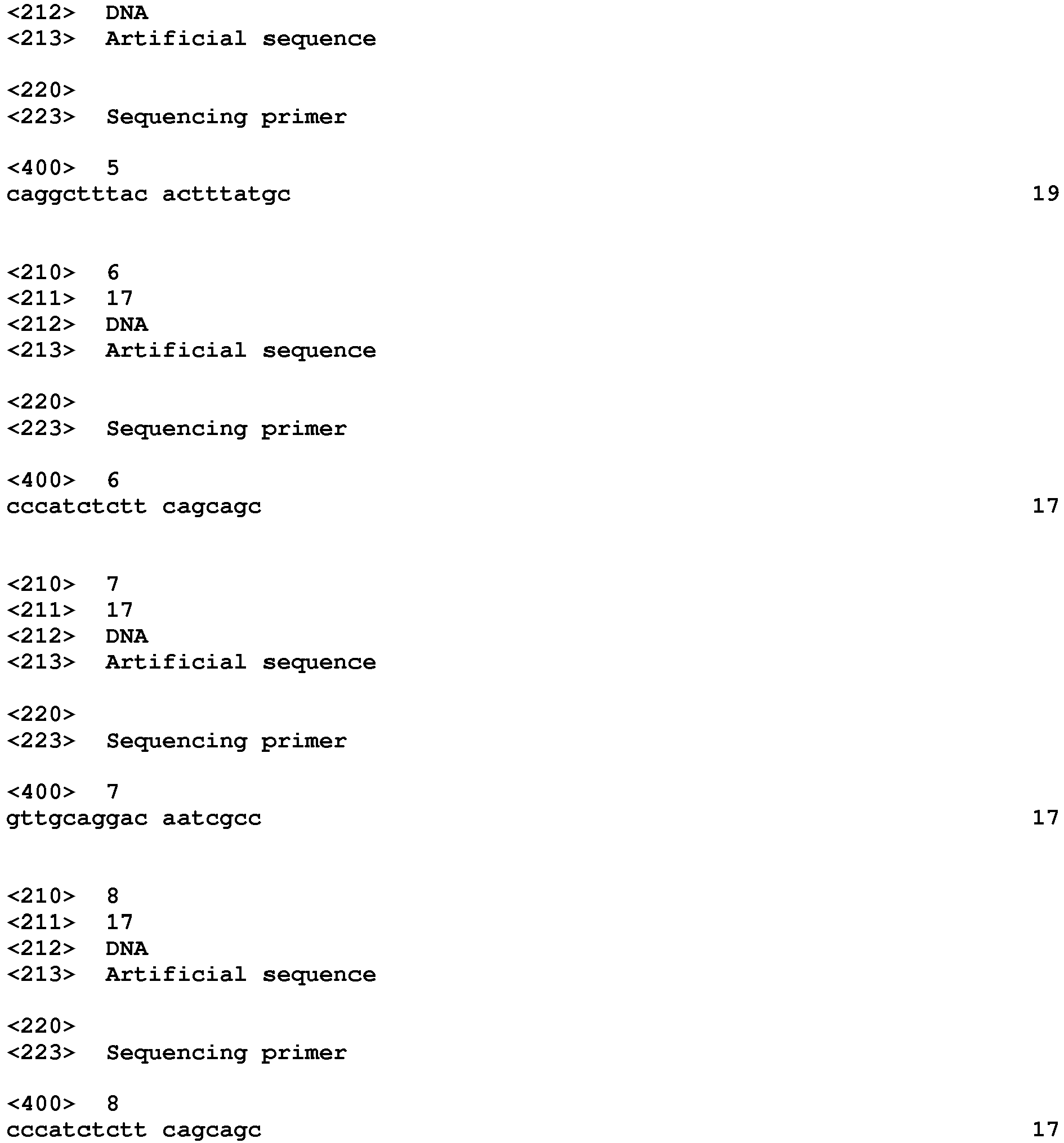
- Correct assembling of vector backbone and insert was double-checked by sequencing of the entire insert with primers fw_pK19-seq (SEQ ID NO: 5) and rev_pK19-seq (SEQ ID NO: 6) (GATC light run service).
- The point mutation was eventually introduced in the genomic background of C. glutamicum ATCC 13032 by a cassette exchange using pK19mobsacB-ramA(S101C) as known in the art. Electrocompetent cells of C. glutamicum ATCC 13032 were prepared as known in the art. Briefly, cultures were harvested at an OD600 of 1.75 and washed three times with 10 % (v/v) glycerol. Transformation of competent C. glutamicum cells with 5 µL of purified plasmid by electroporation (Eppendorf Eporator, 2500 V, 2 mm gap width, achieving time constants of 4.3 to 4.7 ms) was carried out following an optimized protocol known in the art.
- Strains carrying the correct ramA mutation were identified by sequencing the PCR product of the mutated region amplified with primers fw_ramA-flank1 and rev_ramA-flank2. For sequencing the primer pair fw_ramA-seq and rev_ramA-seq was used.
Table 1: Primers Primer Sequence (5'->3') SEQ ID NO. Fw_ramA- flank1 AACAGCTATGACCATGATTACGCCAAGCTTGGGGGTTAACTACCTCTTCGG 1 Rev_ramA- flank1 CGACAATGCAATGAAGGCCC 2 Fw_ramA- flank2 GGGCCTTCATTGCATTGTCG 3 Rev_ramA- flank2 AGTGAATTCGAGCTCGGTACCCGGGGATCCTTAAGGCAGTGCGCCGATC 4 Fw_pK19- seq CAGGCTTTACACTTTATGC 5 Rev_pK19- seq CCCATCTCTTCAGCAGC 6 Fw_ramA- seq GTTGCAGGACAATCGCC 7 Rev_ramA- seq CCCATCTCTTCAGCAGC 8 - Media for Batch cultivations with C. glutamicum wild-type and FastA.
-
Tryptone 16.00 g/L Yeast Extract 10.00 g/L NaCl 5.00 g/L Agar 18.00 g/L - All components described above were dissolved in ionized water and sterilized for 20 min at 121 °C. The still warm solution was poured into sterile into petri dishes and was allowed to solidify.
-
Tryptone 16.00 g/L Yeast Extract 10.00 g/L NaCl 5.00 g/L - All components of the 2 × TY complex medium described above were dissolved in deionized water, aliquoted to 5 mL in glass reaction tubes and sterilized for 20 min at 121 °C.
-
K2HPO4 174.20 g/L KH2PO4 136.09 g/L - All components described above were dissolved in deionized water.
-
NH4OH 25 % [V/V] - Solution A: Salts
(NH4)2SO4 1.64 g/L Urea 0.82 g/L MOPS 3.44 g/L K2HPO4 0.16 g/L KH2PO4 0.16 g/L
Solution B: (1000 × Ca2+)CaCl2 · H2O 10.00 g/L MgSO4 · 7 H2O 250.00 g/L Fe(II)SO4 · 7 H2O 16.40 g/L MnSO4 · H2O 10.00 g/L CuSO4 · 5 H2O 0.20 g/L ZnSO4 · 7 H2O 1.00 g/L NiCl2 · 6 H2O 0.02 g/L Biotin 0.20 g/L α-D(+)-Glucose · H2O 550.00 g/L - To prepare the pre-culture minimal medium MM1, solutions A, B, C, and F described above were prepared separately and also separately sterilized at 121 °C for 20 min. Solutions D and E were separately prepared and sterile filtrated at 0.2 µm pore size. For 150 mL of ready to use pre-culture medium MM1, 137.4 mL salts, 0.15 mL 1000 × Ca2+ stock solution, 0.15 mL 1000 × Mg2+ stock solution, 0.15 mL 1000 × TES, 0.15 mL 1000 × Vitamin stock solution, and 12 mL 50 % w/v glucose were mixed.
- Solution A: Salts
(NH4)2SO4 8.26 g/L K2HPO4 0.83 g/L KH2PO4 0.83 g/L CaCl2 · H2O 10.00 g/L MgSO4 · 7 H2O 250.00 g/L Fe(II)SO4 · 7 H2O 16.40 g/L MnSO4 · H2O 10.00 g/L CuSO4 · 5 H2O 0.20 g/L ZnSO4 · 7 H2O 1.00 g/L NiCl2 · 6 H2O 0.02 g/L Biotin 0.20 g/L α-D(+)-Glucose · H2O 550.00 g/L - To prepare the minimal medium MM2, solutions A, B, C, and F described above were prepared separately and also separately sterilized at 120 °C for 20 min. Solutions D and E were separately prepared and sterile filtrated at 0.2 µm pore size. For 714 mL of ready to use minimal medium MM2, 696 mL salts, 0.75 mL 1000 × Ca2+ stock solution, 0.75 mL 1000 × Mg2+ stock solution, 0.75 mL 1000 × TES, 0.75 mL 1000 × Vitamin stock solution, and 30 mL 50 % w/v glucose were mixed.
- Solution A: Salts
(NH4)2SO4 2.19 g/L MOPS 45.90 g/L K2HPO4 1.09 g/L KH2PO4 1.09 g/L
Solution B: (1000 × Ca2+)CaCl2 · H2O 10.00 g/L MgSO4 · 7 H2O 250.00 g/L Fe(II)SO4 · 7 H2O 16.40 g/L MnSO4 · H2O 10.00 g/L CuSO4 · 5 H2O 0.20 g/L ZnSO4 · 7 H2O 1.00 g/L NiCl2 · 6 H2O 0.02 g/L Biotin 0.20 g/L α-D(+)-Glucose · H2O 550.00 g/L Protocatechuic acid 30.00 g/L - To prepare the pre-culture minimal medium MM3, solutions A, B, C, and F described above were prepared separately and also separately sterilized at 120 °C for 20 min. Solutions D, E and G were separately prepared and sterile filtrated at 0.2 µm pore size. For 1 L of ready to use pre-culture medium MM3, 915 mL salts, 1 mL 1000 × Ca2+ stock solution, 1 mL 1000 × Mg2+ stock solution, 1 mL 1000 × TES, 1 mL 1000 × Vitamin stock solution, 1 mL of protocatechuic acid stock solution and 80 mL 50 % w/v glucose were mixed.
- Solution A: Salts
(NH4)2SO4 10.93 g/L Urea 5.46 g/L MOPS 22.95 g/L K2HPO4 0.011 g/L KH2PO4 0.011 g/L
Solution B: (1000 × Ca2+)CaCl2 · H2O 10.00 g/L MgSO4 · 7 H2O 250.00 g/L Fe(II)SO4 · 7 H2O 16.40 g/L MnSO4 · H2O 10.00 g/L CuSO4 · 5 H2O 0.20 g/L ZnSO4 · 7 H2O 1.00 g/L NiCl2 · 6 H2O 0.02 g/L Biotin 0.20 g/L α-D(+)-Glucose · H2O 550.00 g/L Protocatechuic acid 30.00 g/L - To prepare the pre-culture minimal medium MM4, solutions A, B, C, and F described above were prepared separately and also separately sterilized at 120 °C for 20 min. Solutions D, E and G were separately prepared and sterile filtrated at 0.2 µm pore size. For 1 L of ready to use pre-culture medium MM4, 915 mL salts, 1 mL 1000 × Ca2+ stock solution, 1 mL 1000 × Mg2+ stock solution, 1 mL 1000 × TES, 1 mL 1000 × Vitamin stock solution, 1mL of protocatechuic acid stock solution and 80 mL 50 % w/v glucose were mixed.
- Solution A: Salts
(NH4)2SO4 3.28 g/L Urea 1.64 g/L MOPS 6.88 g/L K2HPO4 0.33 g/L KH2PO4 0.33 g/L
Solution B: (1000 × Ca2+)CaCl2 · H2O 10.00 g/L MgSO4 · 7 H2O 250.00 g/L Fe(II)SO4 · 7 H2O 16.40 g/L MnSO4 · H2O 10.00 g/L CuSO4 · 5 H2O 0.20 g/L ZnSO4 · 7 H2O 1.00 g/L NiCl2 · 6 H2O 0.02 g/L Biotin 0.20 g/L α-D(+)-Glucose · H2O 550.00 g/L Protocatechuic acid 30.00 g/L - To prepare the pre-culture minimal medium MM5, solutions A, B, C, and F described above were prepared separately and also separately sterilized at 120 °C for 20 min. Solutions D, E and G were separately prepared and sterile filtrated at 0.2 µm pore size. For 300 mL of ready to use pre-culture medium MM5, 274.5 mL salts, 0.3 mL 1000 × Ca2+ stock solution, 0.3 mL 1000 × Mg2+ stock solution, 0.3 mL 1000 × TES, 0.3 mL 1000 × Vitamin stock solution, 0.3 mL of protocatechuic acid stock solution and 24 mL 50 % w/v glucose were mixed.
- Solution A: Salts
(NH4)2SO4 19.72 g/L K2HPO4 1.97 g/L KH2PO4 1.97 g/L CaCl2 · H2O 10.00 g/L MgSO4 · 7 H2O 250.00 g/L Fe(II)SO4 · 7 H2O 16.40 g/L MnSO4 · H2O 10.00 g/L CuSO4 · 5 H2O 0.20 g/L ZnSO4 · 7 H2O 1.00 g/L NiCl2 · 6 H2O 0.02 g/L Biotin 0.20 g/L α-D(+)-Glucose · H2O 550.00 g/L Protocatechuic acid 30.00 g/L - To prepare the minimal medium MM6, solutions A, B, C, and F described above were prepared separately and also separately sterilized at 120 °C for 20 min. Solutions D,E and G were separately prepared and sterile filtrated at 0.2 µm pore size. For 1.7 L of ready to use minimal medium MM6, 1553 mL salts, 1.75 mL 1000 × Ca2+ stock solution, 1.75 mL 1000 × Mg2+ stock solution, 1.75 mL 1000 × TES, 1.75 mL 1000 × Vitamin stock solution, 1.75 mL of protocatechuic acid stock solution and 140 mL 50 % w/v glucose were mixed.
- C. glutamicum cells from a glycerol cell culture stock where spread on the agar plate and the culture was incubated at 30 °C for 48 h.
- Colonies extracted from agar plates of pre-culture cultivation I were used to inoculate the 2 × TY medium in glass reaction tubes and incubated for 8 h at 30 °C under constant agitation (120 min-1).
- Sterile 500 mL Erlenmeyer shaking flasks with baffles were filled with 50 mL of the minimal medium MM1. Three individual pre-culture minimal medium flasks each were inoculated with 5 mL broth of pre-culture cultivation II and incubated overnight 30 °C and constant agitation (120 min-1).
- Sterile 3000 mL Erlenmeyer shaking flasks with baffles were filled with 333 mL of minimal medium MM3. Three individual pre-culture minimal medium flasks each were inoculated with 5 mL broth of pre-culture cultivation II and incubated for 84 h at 30 °C and constant agitation (120 min-1).
- Sterile 3000 mL Erlenmeyer shaking flasks with baffles were filled with 333 mL of minimal medium M4. Three individual pre-culture minimal medium flasks each were inoculated with 5 mL broth of pre-culture cultivation II and incubated for 48h at 30 °C and constant agitation (120 min-1).
- Sterile 500 mL Erlenmeyer shaking flasks with baffles were filled with 50 mL of the minimal medium MM5. Six individual pre-culture minimal medium flasks each were inoculated with 5 mL broth of pre-culture cultivation II and incubated 84 h at 30 °C and constant agitation (120 min-1).
- Main cultivations I were carried out in a parallel cultivation system consisting of three identical HWS glass bioreactors with a working volume of 250 mL each. After assemblage of the cultivation system, every bioreactor was separately filled with 179.6 mL Solution A of the minimal medium MM2, 0.2 mL Solution B and 0.2 mL Solution C. This salt solution was sterilized in every bioreactor at 120 °C for 20 min. After sterilization a total volume of 8 mL 50% w/v glucose stock solution, 0.2 mL 1000 × TES, and 0.2 mL 1000 × Vitamin stock solution was added sterile to every vessel. Each bioreactor was inoculated with 12 mL of a concentrated pre-culture giving a starting Optical Density of 1. Fermentations were performed at a constant temperature of 30 °C, agitation and good oxygen supply. pH was kept at a constant level of 7.4 by addition of 25 % [V/V] NH4OH. The process length varied for the wild-type strain and the strain FastA. Individual fermentation durations are mentioned for the corresponding strains in Examples 1 and 2 below.
- Main cultivations II were carried out in a 3 L fermenter with a working volume of 1.75 liters. The reactor was equipped with one Rushton turbine, a pH, a pressure, and a dissolved oxygen sensor and a cooling and a heating rod. The fully assembled reactor was filled with sterilization buffer and autoclaved at 121 °C for 20 min. The sterilization buffer was then drained from the reactor in a sterile manner and the reactor was filled with 1.70 L of sterile minimal medium MM6. The reactor was then inoculated with 50 mL of concentrated pre-culture IV so that the resulting optical density OD600 was 5.
- Fermentations were performed at a constant temperature of 30 °C and a positive pressure of 50 kPa. Agitation was controlled so that the dissolved oxygen never fell below 30 % of the maximum possible value and pH was kept at a constant level of 7.4 by addition of 25 % [V/V] NH4OH.
- Main cultivations III were carried out in a 3 L fermenter with a working volume of 1.75 liters. The reactor was equipped with one Rushton turbine, a pH, a pressure, and a dissolved oxygen sensor and a cooling and a heating rod. The fully assembled reactor was filled with sterilization buffer and autoclaved at 121 °C for 20 min. The sterilization buffer was then drained from the reactor in a sterile manner and the reactor was filled with 1.70 L of sterile minimal medium MM6.
- The reactor was then inoculated with 50 mL of concentrated pre-culture V so that the resulting optical density OD600 was 5.
- Fermentations were performed at a constant temperature of 30 °C and a positive pressure of 50 kPa. Agitation was controlled so that the dissolved oxygen never fell below 30 % of the maximum possible value and pH was kept at a constant level of 7.4 by addition of 25 % NH4OH [V/V].
- Main cultivations IV were carried out in a 3 L fermenter with a working volume of 1.75 liters. The reactor was equipped with one Rushton turbine, a pH, a pressure, and a dissolved oxygen sensor and a cooling and a heating rod. The fully assembled reactor was filled with sterilization buffer and autoclaved at 121 °C for 20 min. The sterilization buffer was then drained from the reactor in a sterile manner and the reactor was filled with 1.70 L of sterile minimal medium MM6. The reactor was then inoculated with 50 mL of concentrated pre-culture VI so that the resulting optical density OD600 was 5.
- Fermentations were performed at a constant temperature of 30 °C and a positive pressure of 50 kPa. Agitation was controlled so that the dissolved oxygen never fell below 30 % of the maximum possible value and pH was kept at a constant level of 7.4 by addition of 25 % [V/V] NH4OH.
- Every batch cultivation process with the aim to screen the strains started with identical conditions. The sole C-source glucose was always in vast excess at the beginning of every fermentation. This also extended to all additional nutrients in the batch minimal medium, as listed above. For the first couple of hours every C. glutamicum strain was growing exponentially at its very specific maximum growth rate and consumed glucose with its individual biomass-specific uptake rate under non-limited conditions. This state is termed as "Exponential Growth" in
Figures 1 and2 . The fixed glucose concentration in the minimal medium enables the bacterial cells to form a certain total biomass before entering carbon-depleted nutritional conditions. The subsequent phase is further termed as "Stationary Phase" inFigures 1 and2 . During this late state of the fermentation process bacterial growth stopped due to carbon-depletion and no further biomass formation occurred. However, all additional nutrients remained abundantly. - In this example, Corynebacterium glutamicum ATCC13032 wild-type was cultivated under pre-culture conditions III in shaking flasks, as described above, for 12 hours with constant agitation. These bacterial cells were then transferred into the three bioreactors under sterile conditions to start the batch cultivation process. C. glutamicum wild-type cells were cultivated for a total period of 11 hours with the starting concentration of glucose being 20 g/L. In the exponential growth phase the maximal biomass-specific growth rate was 0.324 ± 0.003 h-1 and glucose was consumed at a biomass-specific rate of 0.66 ± 0.04 gGlc/gcdwh (cdw: cell dry weight). As can be seen in
Figure 1 , these cells were growing exponentially during the first 10.5 hours of cultivation before all the carbon in the minimal medium was depleted and the stationary phase was reached. Subsequently, no further biomass formation occurred in the next half hour (process time 11 h) as can be seen inFigure 1 . - In this example, Corynebacterium glutamicum FastA was cultivated under pre-culture conditions III in shaking flasks, as described above, for 12 hours with constant agitation. These bacterial cells were then transferred into the three bioreactors under sterile conditions to start the batch cultivation process. C. glutamicum FastA cells were cultivated for a total period of 9.5 hours with the starting concentration of glucose being 20 g/L. In the exponential growth phase the maximal biomass-specific growth rate was 0.40 ± 0.02 h-1 and glucose was consumed at a biomass-specific rate of 0.90 ± 0.06 gGlc/gcdwh (cdw: cell dry weight). As can be seen in
Figure 2 , these cells were growing exponentially during the first 8.5 hours of cultivation before all the carbon in the minimal medium was depleted and the stationary phase was reached. Subsequently, no further biomass formation occurred in the next one hour (process time 9.5 h) as can be seen inFigure 2 . - Table 2 shows the comparison of biomass-specific rates in the Corynebacterium glutamicum wild-type and the FastA strain during the batch cultivation phase of exponential growth with all nutrients in excess. Values are calculated from three parallel fermentations n = 3. The respective data are illustrated in
Figure 3 .Table 2: Strain Glucose uptake qS, g/gcdwh Growth µ, h-1 Ø σ Ø σ C. glutamicum ATCC13032 wild-type 0.66 0.04 0.324 0.003 C. glutamicum FastA 0.90 0.06 0.40 0.02 - The growth rate transitions took place during main cultures II, III, IV. The same minimal medium MM6 and the same conditions were used in these experiments. The growth rate transitions were induced by the conditions during the previous pre-culture. Three different limiting conditions were used during the pre-cultures: Nitrogen limitation in pre-culture IV, phosphate limitation in pre-culture V and carbon limitation in pre-culture IV. The transitions were sampled, the differential growth rate was determined via cell dry weight measurement and the transcriptome was measured at the growth rates of 0, 0.1, 0.2, 0.3 and 0.4 h-1 in case of main culture II (N-lim) and III (P-lim) and 0.1, 0.2, 0.3 and 0.4 h-1 in case of main culture IV (C-lim). The log-fold changes of each gene, condition and growth rate were determined in reference to the sample with the highest growth rate. The resulting profiles of the gene expression levels were used to identify regulators which show a change in expression profile over the growth rate independent of the condition of the previous pre-culture.
- In this example the identification of the regulators with influence on the growth rate in Corynebacterium glutamicum ATCC13032 is shown. Examples of gene expression profiles of regulators over the growth rate are shown in
Figure 4 . The profiles of several regulators show a similar response to the increase of the growth rate during the transition independent of the pre-culture condition. The indicated log-fold values are calculated from three biological replicates per condition. - According to the present invention, an increased growth rate and increased sugar uptake rate have been achieved in exponentially growing cells by specific targeted interventions into C. glutamicum metabolism and metabolic regulation.
- Concerning metabolic regulation, it is known that the master regulator RamA plays a central role in the coordinated control of central carbon metabolism of C. glutamicum: it is involved in acetate metabolism, in ethanol utilization, and it regulates the TCA cycle. Furthermore, RamA negatively controls expression of its own gene and activates expression of ramB (encoding the master regulator RamB of acetate metabolism) and of sugR encoding SugR, a sugar-responsive global regulator.
- Several regulators which show a change in expression with an increase in the growth rate could be identified. One of these being RamA. These regulators could be identified as prime targets for strain improvement towards higher growth rates.

Claims (15)
- A recombinant Corynebacterium sp. host cell, wherein said cell comprises at least one mutation in relation to a wild-type cell, wherein said mutation is selected from the group consisting of mutations that(i) reduce the activity of a protein, selected from the group consisting of RamA, SigH, RshA, SigM, SufR, OxyR, SigE, SigA, and SigD; or(ii) increase the activity of a protein, selected from the group consisting of RipA and DtxR.
- The recombinant host cell according to claim 1, wherein said mutation is selected from the group consisting of mutations that(i) reduce the activity of a protein, selected from the group consisting of RamA, SigH, RshA, SigM, SufR, OxyR, and SigE; or(ii) increase the activity of a protein, selected from the group consisting of RipA and DtxR.
- The recombinant host cell according to claim 1 or claim 2, wherein said mutation is selected from the group consisting of mutations that(i) reduce the activity of the transcriptional regulator RamA (Regulator of acetate metabolism A); or(ii) increase the activity of the transcriptional regulator DtxR (Diphteria toxin repressor).
- The recombinant host cell according to claim 3, wherein said mutation is(i) the amino acid substitution S101C in RamA (RamA[S101C]); or(ii) the amino acid substitution R103H in DtxR (DtxR[R103H]).
- The recombinant host cell according to any one of claims 1 to 4, wherein said host cell is a Corynebacterium glutamicum (C. glutamicum) host cell.
- The host cell according to claim 5, wherein said host cell is derived from C. glutamicum strain C. glutamicum ATCC 13032.
- A method for the biosynthetic production of a product of interest (POI), wherein said POI is produced in a recombinant host cell according to any one of claims 1 to 6.
- The method according to claim 7, wherein said POI is a protein and said protein is expressed in said recombinant host cell.
- The method according to claim 7, wherein said POI is an organic molecule and said organic molecule is produced in said recombinant host cell as a metabolite.
- The method according to claim 9, wherein said organic molecule is an amino acid.
- The method according to claim 10, wherein said amino acid is an L-amino acid.
- The method according to claim 10 or claim 11, wherein said amino acid is selected from the group consisting of L-glutamic acid, L-lysine, L-ornithine, L-proline, L-arginine, L-citrulline, and gamma-butyric acid (GABA).
- The method according to any one of claims 10 to 12, wherein the starting material for the production of said metabolite is a sugar.
- The method of claim 13, wherein said sugar is selected from the group consisting of glucose, fructose, mannose, xylose, arabinose, and sucrose.
- Use of a recombinant host cell according to any one of claims 1 to 6 for the biosynthetic production of a product of interest (POI).
Priority Applications (2)
| Application Number | Priority Date | Filing Date | Title |
|---|---|---|---|
| EP18000103.4A EP3521305A1 (en) | 2018-02-06 | 2018-02-06 | Corynebacterium spp. strains having increased rates of growth and/or sugar uptake |
| PCT/EP2019/052064 WO2019154670A1 (en) | 2018-02-06 | 2019-01-29 | Corynebacterium spp. strains having increased rates of growth and/or sugar uptake |
Applications Claiming Priority (1)
| Application Number | Priority Date | Filing Date | Title |
|---|---|---|---|
| EP18000103.4A EP3521305A1 (en) | 2018-02-06 | 2018-02-06 | Corynebacterium spp. strains having increased rates of growth and/or sugar uptake |
Publications (1)
| Publication Number | Publication Date |
|---|---|
| EP3521305A1 true EP3521305A1 (en) | 2019-08-07 |
Family
ID=61249473
Family Applications (1)
| Application Number | Title | Priority Date | Filing Date |
|---|---|---|---|
| EP18000103.4A Ceased EP3521305A1 (en) | 2018-02-06 | 2018-02-06 | Corynebacterium spp. strains having increased rates of growth and/or sugar uptake |
Country Status (2)
| Country | Link |
|---|---|
| EP (1) | EP3521305A1 (en) |
| WO (1) | WO2019154670A1 (en) |
Cited By (1)
| Publication number | Priority date | Publication date | Assignee | Title |
|---|---|---|---|---|
| WO2021128465A1 (en) * | 2019-12-26 | 2021-07-01 | 江南大学 | Rama transcription factor mutant for promoting production of n-acetylglucosamine and application thereof |
Citations (1)
| Publication number | Priority date | Publication date | Assignee | Title |
|---|---|---|---|---|
| EP2690109A1 (en) * | 2012-07-25 | 2014-01-29 | Samsung Electronics Co., Ltd | Modified microorganism for high efficient production of 1,4-butanediol |
-
2018
- 2018-02-06 EP EP18000103.4A patent/EP3521305A1/en not_active Ceased
-
2019
- 2019-01-29 WO PCT/EP2019/052064 patent/WO2019154670A1/en not_active Ceased
Patent Citations (1)
| Publication number | Priority date | Publication date | Assignee | Title |
|---|---|---|---|---|
| EP2690109A1 (en) * | 2012-07-25 | 2014-01-29 | Samsung Electronics Co., Ltd | Modified microorganism for high efficient production of 1,4-butanediol |
Non-Patent Citations (10)
| Title |
|---|
| "GenBank", Database accession no. ASW13468.1 |
| "GenBank", Database accession no. ASW14175.1 |
| "GenBank", Database accession no. BAU95001.1 |
| "GenBank", Database accession no. CAA89984.1 |
| "GenBank", Database accession no. CAD32030.1 |
| "GenBank", Database accession no. CAD32032.1 |
| "GenBank", Database accession no. CAD32033.1 |
| "GenBank", Database accession no. CAD32043.1 |
| "GenBank", Database accession no. L35906.1 |
| A. CRAMER ET AL: "Identification of RamA, a Novel LuxR-Type Transcriptional Regulator of Genes Involved in Acetate Metabolism of Corynebacterium glutamicum", JOURNAL OF BACTERIOLOGY, vol. 188, no. 7, 1 April 2006 (2006-04-01), US, pages 2554 - 2567, XP055481721, ISSN: 0021-9193, DOI: 10.1128/JB.188.7.2554-2567.2006 * |
Cited By (2)
| Publication number | Priority date | Publication date | Assignee | Title |
|---|---|---|---|---|
| WO2021128465A1 (en) * | 2019-12-26 | 2021-07-01 | 江南大学 | Rama transcription factor mutant for promoting production of n-acetylglucosamine and application thereof |
| US12275763B2 (en) | 2019-12-26 | 2025-04-15 | Jiangnan University | RamA transcription factor mutant for promoting production of N-acetylglucosamine and use thereof |
Also Published As
| Publication number | Publication date |
|---|---|
| WO2019154670A1 (en) | 2019-08-15 |
Similar Documents
| Publication | Publication Date | Title |
|---|---|---|
| CN103215291B (en) | For the production of the carrier of C4H9NO2, engineering strain and method | |
| CN110241061B (en) | Method for improving gamma-aminobutyric acid synthesis ability of Lactobacillus brevis and its application | |
| EP2102347B1 (en) | Corynebacterium glutamicum variety producing l-arginine and method for fabricating the same | |
| EP1200553B1 (en) | Metabolic engineering of amino acid production | |
| CN109777763A (en) | One plant for the genetic engineering bacterium of L-thiamine production and its building and application | |
| CN116904379A (en) | Gene recombination strain for high yield tetrahydropyrimidine and construction method and application thereof | |
| JP2017023147A (en) | Method for producing target substance by fermentation process | |
| CN110055201B (en) | A kind of construction method of high-yield hyaluronic acid oligosaccharide recombinant Bacillus subtilis | |
| KR20240017394A (en) | Mutant of Corynebacterium glutamicum with enhanced L-citrulline productivity and method for preparing L-citrulline using the same | |
| CN111944857B (en) | Fermentation method for improving L-isoleucine yield | |
| WO2008088149A1 (en) | Corynebacterium glutamicum variety producing l-arginine and method for fabricating the same | |
| CN116004501B (en) | NADP-ferredoxin reductase mutant and application thereof in production of glutamic acid | |
| EP3119875B1 (en) | Microorganisms producing l-amino acids and process for producing l-amino acids using the same | |
| CN106029869A (en) | Recombinant microorganism of genus escherichia with l-threonine productivity, and method for producing l-threonine using same | |
| EP3239291A1 (en) | Bacterial strain and method for high throughput of sugar in the microbial conversion into biosynthetic products | |
| WO2008007914A1 (en) | A nucleotide sequence of a mutant argf with increased activity and a method for producing l-arginine using a transformed cell containing the same | |
| WO2019154670A1 (en) | Corynebacterium spp. strains having increased rates of growth and/or sugar uptake | |
| CN101250507B (en) | A Batch Fed-Fed Fermentation Process for Efficient Production of Pyruvate Oxidase Using Recombinant Escherichia coli | |
| US20260062724A1 (en) | MUTANT WICKERHAMMYCES CIFERRll STRAIN HAVING IMPROVED PRODUCTIVITY FOR TAPS, AND METHOD FOR PRODUCING TAPS USING SAME | |
| TW202307201A (en) | Microorganism with weakened activity of laci family dna-binding transcriptional regulator and production method of l-glutamic acid using the same | |
| CN115851802A (en) | Construction method of glutamic acid high-yielding strain and its application in glutamic acid production | |
| CN115725532B (en) | Biotin synthase mutant and application thereof in construction of glutamic acid production strain | |
| CN113528366A (en) | Yeast capable of producing beta-alanine and construction method thereof | |
| EP1860193A1 (en) | Promoter-activity modulation for branched-chain amino acid production | |
| CN119161416B (en) | Genetically engineered bacterium for efficiently synthesizing tetrahydropyrimidine and construction method thereof |
Legal Events
| Date | Code | Title | Description |
|---|---|---|---|
| PUAI | Public reference made under article 153(3) epc to a published international application that has entered the european phase |
Free format text: ORIGINAL CODE: 0009012 |
|
| AK | Designated contracting states |
Kind code of ref document: A1 Designated state(s): AL AT BE BG CH CY CZ DE DK EE ES FI FR GB GR HR HU IE IS IT LI LT LU LV MC MK MT NL NO PL PT RO RS SE SI SK SM TR |
|
| AX | Request for extension of the european patent |
Extension state: BA ME |
|
| STAA | Information on the status of an ep patent application or granted ep patent |
Free format text: STATUS: THE APPLICATION HAS BEEN REFUSED |
|
| 18R | Application refused |
Effective date: 20190913 |