EP3521086A1 - Power drive system for vehicle and vehicle - Google Patents
Power drive system for vehicle and vehicle Download PDFInfo
- Publication number
- EP3521086A1 EP3521086A1 EP17854576.0A EP17854576A EP3521086A1 EP 3521086 A1 EP3521086 A1 EP 3521086A1 EP 17854576 A EP17854576 A EP 17854576A EP 3521086 A1 EP3521086 A1 EP 3521086A1
- Authority
- EP
- European Patent Office
- Prior art keywords
- gear
- power
- shaft
- driven
- motor
- Prior art date
- Legal status (The legal status is an assumption and is not a legal conclusion. Google has not performed a legal analysis and makes no representation as to the accuracy of the status listed.)
- Withdrawn
Links
Images

Classifications
-
- B—PERFORMING OPERATIONS; TRANSPORTING
- B60—VEHICLES IN GENERAL
- B60K—ARRANGEMENT OR MOUNTING OF PROPULSION UNITS OR OF TRANSMISSIONS IN VEHICLES; ARRANGEMENT OR MOUNTING OF PLURAL DIVERSE PRIME-MOVERS IN VEHICLES; AUXILIARY DRIVES FOR VEHICLES; INSTRUMENTATION OR DASHBOARDS FOR VEHICLES; ARRANGEMENTS IN CONNECTION WITH COOLING, AIR INTAKE, GAS EXHAUST OR FUEL SUPPLY OF PROPULSION UNITS IN VEHICLES
- B60K6/00—Arrangement or mounting of plural diverse prime-movers for mutual or common propulsion, e.g. hybrid propulsion systems comprising electric motors and internal combustion engines
- B60K6/20—Arrangement or mounting of plural diverse prime-movers for mutual or common propulsion, e.g. hybrid propulsion systems comprising electric motors and internal combustion engines the prime-movers consisting of electric motors and internal combustion engines, e.g. HEVs
- B60K6/42—Arrangement or mounting of plural diverse prime-movers for mutual or common propulsion, e.g. hybrid propulsion systems comprising electric motors and internal combustion engines the prime-movers consisting of electric motors and internal combustion engines, e.g. HEVs characterised by the architecture of the hybrid electric vehicle
- B60K6/44—Series-parallel type
-
- B—PERFORMING OPERATIONS; TRANSPORTING
- B60—VEHICLES IN GENERAL
- B60K—ARRANGEMENT OR MOUNTING OF PROPULSION UNITS OR OF TRANSMISSIONS IN VEHICLES; ARRANGEMENT OR MOUNTING OF PLURAL DIVERSE PRIME-MOVERS IN VEHICLES; AUXILIARY DRIVES FOR VEHICLES; INSTRUMENTATION OR DASHBOARDS FOR VEHICLES; ARRANGEMENTS IN CONNECTION WITH COOLING, AIR INTAKE, GAS EXHAUST OR FUEL SUPPLY OF PROPULSION UNITS IN VEHICLES
- B60K17/00—Arrangement or mounting of transmissions in vehicles
- B60K17/02—Arrangement or mounting of transmissions in vehicles characterised by arrangement, location, or kind of clutch
-
- B—PERFORMING OPERATIONS; TRANSPORTING
- B60—VEHICLES IN GENERAL
- B60K—ARRANGEMENT OR MOUNTING OF PROPULSION UNITS OR OF TRANSMISSIONS IN VEHICLES; ARRANGEMENT OR MOUNTING OF PLURAL DIVERSE PRIME-MOVERS IN VEHICLES; AUXILIARY DRIVES FOR VEHICLES; INSTRUMENTATION OR DASHBOARDS FOR VEHICLES; ARRANGEMENTS IN CONNECTION WITH COOLING, AIR INTAKE, GAS EXHAUST OR FUEL SUPPLY OF PROPULSION UNITS IN VEHICLES
- B60K6/00—Arrangement or mounting of plural diverse prime-movers for mutual or common propulsion, e.g. hybrid propulsion systems comprising electric motors and internal combustion engines
- B60K6/20—Arrangement or mounting of plural diverse prime-movers for mutual or common propulsion, e.g. hybrid propulsion systems comprising electric motors and internal combustion engines the prime-movers consisting of electric motors and internal combustion engines, e.g. HEVs
- B60K6/22—Arrangement or mounting of plural diverse prime-movers for mutual or common propulsion, e.g. hybrid propulsion systems comprising electric motors and internal combustion engines the prime-movers consisting of electric motors and internal combustion engines, e.g. HEVs characterised by apparatus, components or means specially adapted for HEVs
- B60K6/24—Arrangement or mounting of plural diverse prime-movers for mutual or common propulsion, e.g. hybrid propulsion systems comprising electric motors and internal combustion engines the prime-movers consisting of electric motors and internal combustion engines, e.g. HEVs characterised by apparatus, components or means specially adapted for HEVs characterised by the combustion engines
-
- B—PERFORMING OPERATIONS; TRANSPORTING
- B60—VEHICLES IN GENERAL
- B60K—ARRANGEMENT OR MOUNTING OF PROPULSION UNITS OR OF TRANSMISSIONS IN VEHICLES; ARRANGEMENT OR MOUNTING OF PLURAL DIVERSE PRIME-MOVERS IN VEHICLES; AUXILIARY DRIVES FOR VEHICLES; INSTRUMENTATION OR DASHBOARDS FOR VEHICLES; ARRANGEMENTS IN CONNECTION WITH COOLING, AIR INTAKE, GAS EXHAUST OR FUEL SUPPLY OF PROPULSION UNITS IN VEHICLES
- B60K17/00—Arrangement or mounting of transmissions in vehicles
- B60K17/04—Arrangement or mounting of transmissions in vehicles characterised by arrangement, location or kind of gearing
- B60K17/06—Arrangement or mounting of transmissions in vehicles characterised by arrangement, location or kind of gearing of change-speed gearing
- B60K17/08—Arrangement or mounting of transmissions in vehicles characterised by arrangement, location or kind of gearing of change-speed gearing of mechanical type
-
- B—PERFORMING OPERATIONS; TRANSPORTING
- B60—VEHICLES IN GENERAL
- B60K—ARRANGEMENT OR MOUNTING OF PROPULSION UNITS OR OF TRANSMISSIONS IN VEHICLES; ARRANGEMENT OR MOUNTING OF PLURAL DIVERSE PRIME-MOVERS IN VEHICLES; AUXILIARY DRIVES FOR VEHICLES; INSTRUMENTATION OR DASHBOARDS FOR VEHICLES; ARRANGEMENTS IN CONNECTION WITH COOLING, AIR INTAKE, GAS EXHAUST OR FUEL SUPPLY OF PROPULSION UNITS IN VEHICLES
- B60K6/00—Arrangement or mounting of plural diverse prime-movers for mutual or common propulsion, e.g. hybrid propulsion systems comprising electric motors and internal combustion engines
- B60K6/20—Arrangement or mounting of plural diverse prime-movers for mutual or common propulsion, e.g. hybrid propulsion systems comprising electric motors and internal combustion engines the prime-movers consisting of electric motors and internal combustion engines, e.g. HEVs
- B60K6/22—Arrangement or mounting of plural diverse prime-movers for mutual or common propulsion, e.g. hybrid propulsion systems comprising electric motors and internal combustion engines the prime-movers consisting of electric motors and internal combustion engines, e.g. HEVs characterised by apparatus, components or means specially adapted for HEVs
- B60K6/26—Arrangement or mounting of plural diverse prime-movers for mutual or common propulsion, e.g. hybrid propulsion systems comprising electric motors and internal combustion engines the prime-movers consisting of electric motors and internal combustion engines, e.g. HEVs characterised by apparatus, components or means specially adapted for HEVs characterised by the motors or the generators
-
- B—PERFORMING OPERATIONS; TRANSPORTING
- B60—VEHICLES IN GENERAL
- B60K—ARRANGEMENT OR MOUNTING OF PROPULSION UNITS OR OF TRANSMISSIONS IN VEHICLES; ARRANGEMENT OR MOUNTING OF PLURAL DIVERSE PRIME-MOVERS IN VEHICLES; AUXILIARY DRIVES FOR VEHICLES; INSTRUMENTATION OR DASHBOARDS FOR VEHICLES; ARRANGEMENTS IN CONNECTION WITH COOLING, AIR INTAKE, GAS EXHAUST OR FUEL SUPPLY OF PROPULSION UNITS IN VEHICLES
- B60K6/00—Arrangement or mounting of plural diverse prime-movers for mutual or common propulsion, e.g. hybrid propulsion systems comprising electric motors and internal combustion engines
- B60K6/20—Arrangement or mounting of plural diverse prime-movers for mutual or common propulsion, e.g. hybrid propulsion systems comprising electric motors and internal combustion engines the prime-movers consisting of electric motors and internal combustion engines, e.g. HEVs
- B60K6/22—Arrangement or mounting of plural diverse prime-movers for mutual or common propulsion, e.g. hybrid propulsion systems comprising electric motors and internal combustion engines the prime-movers consisting of electric motors and internal combustion engines, e.g. HEVs characterised by apparatus, components or means specially adapted for HEVs
- B60K6/36—Arrangement or mounting of plural diverse prime-movers for mutual or common propulsion, e.g. hybrid propulsion systems comprising electric motors and internal combustion engines the prime-movers consisting of electric motors and internal combustion engines, e.g. HEVs characterised by apparatus, components or means specially adapted for HEVs characterised by the transmission gearings
-
- B—PERFORMING OPERATIONS; TRANSPORTING
- B60—VEHICLES IN GENERAL
- B60K—ARRANGEMENT OR MOUNTING OF PROPULSION UNITS OR OF TRANSMISSIONS IN VEHICLES; ARRANGEMENT OR MOUNTING OF PLURAL DIVERSE PRIME-MOVERS IN VEHICLES; AUXILIARY DRIVES FOR VEHICLES; INSTRUMENTATION OR DASHBOARDS FOR VEHICLES; ARRANGEMENTS IN CONNECTION WITH COOLING, AIR INTAKE, GAS EXHAUST OR FUEL SUPPLY OF PROPULSION UNITS IN VEHICLES
- B60K6/00—Arrangement or mounting of plural diverse prime-movers for mutual or common propulsion, e.g. hybrid propulsion systems comprising electric motors and internal combustion engines
- B60K6/20—Arrangement or mounting of plural diverse prime-movers for mutual or common propulsion, e.g. hybrid propulsion systems comprising electric motors and internal combustion engines the prime-movers consisting of electric motors and internal combustion engines, e.g. HEVs
- B60K6/42—Arrangement or mounting of plural diverse prime-movers for mutual or common propulsion, e.g. hybrid propulsion systems comprising electric motors and internal combustion engines the prime-movers consisting of electric motors and internal combustion engines, e.g. HEVs characterised by the architecture of the hybrid electric vehicle
-
- B—PERFORMING OPERATIONS; TRANSPORTING
- B60—VEHICLES IN GENERAL
- B60K—ARRANGEMENT OR MOUNTING OF PROPULSION UNITS OR OF TRANSMISSIONS IN VEHICLES; ARRANGEMENT OR MOUNTING OF PLURAL DIVERSE PRIME-MOVERS IN VEHICLES; AUXILIARY DRIVES FOR VEHICLES; INSTRUMENTATION OR DASHBOARDS FOR VEHICLES; ARRANGEMENTS IN CONNECTION WITH COOLING, AIR INTAKE, GAS EXHAUST OR FUEL SUPPLY OF PROPULSION UNITS IN VEHICLES
- B60K6/00—Arrangement or mounting of plural diverse prime-movers for mutual or common propulsion, e.g. hybrid propulsion systems comprising electric motors and internal combustion engines
- B60K6/20—Arrangement or mounting of plural diverse prime-movers for mutual or common propulsion, e.g. hybrid propulsion systems comprising electric motors and internal combustion engines the prime-movers consisting of electric motors and internal combustion engines, e.g. HEVs
- B60K6/42—Arrangement or mounting of plural diverse prime-movers for mutual or common propulsion, e.g. hybrid propulsion systems comprising electric motors and internal combustion engines the prime-movers consisting of electric motors and internal combustion engines, e.g. HEVs characterised by the architecture of the hybrid electric vehicle
- B60K6/44—Series-parallel type
- B60K6/442—Series-parallel switching type
-
- B—PERFORMING OPERATIONS; TRANSPORTING
- B60—VEHICLES IN GENERAL
- B60K—ARRANGEMENT OR MOUNTING OF PROPULSION UNITS OR OF TRANSMISSIONS IN VEHICLES; ARRANGEMENT OR MOUNTING OF PLURAL DIVERSE PRIME-MOVERS IN VEHICLES; AUXILIARY DRIVES FOR VEHICLES; INSTRUMENTATION OR DASHBOARDS FOR VEHICLES; ARRANGEMENTS IN CONNECTION WITH COOLING, AIR INTAKE, GAS EXHAUST OR FUEL SUPPLY OF PROPULSION UNITS IN VEHICLES
- B60K6/00—Arrangement or mounting of plural diverse prime-movers for mutual or common propulsion, e.g. hybrid propulsion systems comprising electric motors and internal combustion engines
- B60K6/20—Arrangement or mounting of plural diverse prime-movers for mutual or common propulsion, e.g. hybrid propulsion systems comprising electric motors and internal combustion engines the prime-movers consisting of electric motors and internal combustion engines, e.g. HEVs
- B60K6/50—Architecture of the driveline characterised by arrangement or kind of transmission units
- B60K6/54—Transmission for changing ratio
-
- B—PERFORMING OPERATIONS; TRANSPORTING
- B60—VEHICLES IN GENERAL
- B60K—ARRANGEMENT OR MOUNTING OF PROPULSION UNITS OR OF TRANSMISSIONS IN VEHICLES; ARRANGEMENT OR MOUNTING OF PLURAL DIVERSE PRIME-MOVERS IN VEHICLES; AUXILIARY DRIVES FOR VEHICLES; INSTRUMENTATION OR DASHBOARDS FOR VEHICLES; ARRANGEMENTS IN CONNECTION WITH COOLING, AIR INTAKE, GAS EXHAUST OR FUEL SUPPLY OF PROPULSION UNITS IN VEHICLES
- B60K6/00—Arrangement or mounting of plural diverse prime-movers for mutual or common propulsion, e.g. hybrid propulsion systems comprising electric motors and internal combustion engines
- B60K6/20—Arrangement or mounting of plural diverse prime-movers for mutual or common propulsion, e.g. hybrid propulsion systems comprising electric motors and internal combustion engines the prime-movers consisting of electric motors and internal combustion engines, e.g. HEVs
- B60K6/50—Architecture of the driveline characterised by arrangement or kind of transmission units
- B60K6/54—Transmission for changing ratio
- B60K6/547—Transmission for changing ratio the transmission being a stepped gearing
-
- F—MECHANICAL ENGINEERING; LIGHTING; HEATING; WEAPONS; BLASTING
- F16—ENGINEERING ELEMENTS AND UNITS; GENERAL MEASURES FOR PRODUCING AND MAINTAINING EFFECTIVE FUNCTIONING OF MACHINES OR INSTALLATIONS; THERMAL INSULATION IN GENERAL
- F16H—GEARING
- F16H3/00—Toothed gearings for conveying rotary motion with variable gear ratio or for reversing rotary motion
- F16H3/006—Toothed gearings for conveying rotary motion with variable gear ratio or for reversing rotary motion power being selectively transmitted by parallel flow paths, e.g. dual clutch transmissions
-
- B—PERFORMING OPERATIONS; TRANSPORTING
- B60—VEHICLES IN GENERAL
- B60K—ARRANGEMENT OR MOUNTING OF PROPULSION UNITS OR OF TRANSMISSIONS IN VEHICLES; ARRANGEMENT OR MOUNTING OF PLURAL DIVERSE PRIME-MOVERS IN VEHICLES; AUXILIARY DRIVES FOR VEHICLES; INSTRUMENTATION OR DASHBOARDS FOR VEHICLES; ARRANGEMENTS IN CONNECTION WITH COOLING, AIR INTAKE, GAS EXHAUST OR FUEL SUPPLY OF PROPULSION UNITS IN VEHICLES
- B60K17/00—Arrangement or mounting of transmissions in vehicles
- B60K17/04—Arrangement or mounting of transmissions in vehicles characterised by arrangement, location or kind of gearing
- B60K17/16—Arrangement or mounting of transmissions in vehicles characterised by arrangement, location or kind of gearing of differential gearing
-
- B—PERFORMING OPERATIONS; TRANSPORTING
- B60—VEHICLES IN GENERAL
- B60K—ARRANGEMENT OR MOUNTING OF PROPULSION UNITS OR OF TRANSMISSIONS IN VEHICLES; ARRANGEMENT OR MOUNTING OF PLURAL DIVERSE PRIME-MOVERS IN VEHICLES; AUXILIARY DRIVES FOR VEHICLES; INSTRUMENTATION OR DASHBOARDS FOR VEHICLES; ARRANGEMENTS IN CONNECTION WITH COOLING, AIR INTAKE, GAS EXHAUST OR FUEL SUPPLY OF PROPULSION UNITS IN VEHICLES
- B60K17/00—Arrangement or mounting of transmissions in vehicles
- B60K17/22—Arrangement or mounting of transmissions in vehicles characterised by arrangement, location, or type of main drive shafting, e.g. cardan shaft
-
- B—PERFORMING OPERATIONS; TRANSPORTING
- B60—VEHICLES IN GENERAL
- B60K—ARRANGEMENT OR MOUNTING OF PROPULSION UNITS OR OF TRANSMISSIONS IN VEHICLES; ARRANGEMENT OR MOUNTING OF PLURAL DIVERSE PRIME-MOVERS IN VEHICLES; AUXILIARY DRIVES FOR VEHICLES; INSTRUMENTATION OR DASHBOARDS FOR VEHICLES; ARRANGEMENTS IN CONNECTION WITH COOLING, AIR INTAKE, GAS EXHAUST OR FUEL SUPPLY OF PROPULSION UNITS IN VEHICLES
- B60K17/00—Arrangement or mounting of transmissions in vehicles
- B60K17/28—Arrangement or mounting of transmissions in vehicles characterised by arrangement, location, or type of power take-off
-
- B—PERFORMING OPERATIONS; TRANSPORTING
- B60—VEHICLES IN GENERAL
- B60Y—INDEXING SCHEME RELATING TO ASPECTS CROSS-CUTTING VEHICLE TECHNOLOGY
- B60Y2200/00—Type of vehicle
- B60Y2200/90—Vehicles comprising electric prime movers
- B60Y2200/92—Hybrid vehicles
-
- B—PERFORMING OPERATIONS; TRANSPORTING
- B60—VEHICLES IN GENERAL
- B60Y—INDEXING SCHEME RELATING TO ASPECTS CROSS-CUTTING VEHICLE TECHNOLOGY
- B60Y2300/00—Purposes or special features of road vehicle drive control systems
- B60Y2300/91—Battery charging
-
- B—PERFORMING OPERATIONS; TRANSPORTING
- B60—VEHICLES IN GENERAL
- B60Y—INDEXING SCHEME RELATING TO ASPECTS CROSS-CUTTING VEHICLE TECHNOLOGY
- B60Y2400/00—Special features of vehicle units
- B60Y2400/42—Clutches or brakes
-
- B—PERFORMING OPERATIONS; TRANSPORTING
- B60—VEHICLES IN GENERAL
- B60Y—INDEXING SCHEME RELATING TO ASPECTS CROSS-CUTTING VEHICLE TECHNOLOGY
- B60Y2400/00—Special features of vehicle units
- B60Y2400/43—Engines
-
- B—PERFORMING OPERATIONS; TRANSPORTING
- B60—VEHICLES IN GENERAL
- B60Y—INDEXING SCHEME RELATING TO ASPECTS CROSS-CUTTING VEHICLE TECHNOLOGY
- B60Y2400/00—Special features of vehicle units
- B60Y2400/80—Differentials
-
- F—MECHANICAL ENGINEERING; LIGHTING; HEATING; WEAPONS; BLASTING
- F16—ENGINEERING ELEMENTS AND UNITS; GENERAL MEASURES FOR PRODUCING AND MAINTAINING EFFECTIVE FUNCTIONING OF MACHINES OR INSTALLATIONS; THERMAL INSULATION IN GENERAL
- F16H—GEARING
- F16H3/00—Toothed gearings for conveying rotary motion with variable gear ratio or for reversing rotary motion
- F16H3/02—Toothed gearings for conveying rotary motion with variable gear ratio or for reversing rotary motion without gears having orbital motion
- F16H3/08—Toothed gearings for conveying rotary motion with variable gear ratio or for reversing rotary motion without gears having orbital motion exclusively or essentially with continuously meshing gears, that can be disengaged from their shafts
- F16H2003/0822—Toothed gearings for conveying rotary motion with variable gear ratio or for reversing rotary motion without gears having orbital motion exclusively or essentially with continuously meshing gears, that can be disengaged from their shafts characterised by the arrangement of at least one reverse gear
-
- F—MECHANICAL ENGINEERING; LIGHTING; HEATING; WEAPONS; BLASTING
- F16—ENGINEERING ELEMENTS AND UNITS; GENERAL MEASURES FOR PRODUCING AND MAINTAINING EFFECTIVE FUNCTIONING OF MACHINES OR INSTALLATIONS; THERMAL INSULATION IN GENERAL
- F16H—GEARING
- F16H3/00—Toothed gearings for conveying rotary motion with variable gear ratio or for reversing rotary motion
- F16H3/02—Toothed gearings for conveying rotary motion with variable gear ratio or for reversing rotary motion without gears having orbital motion
- F16H3/08—Toothed gearings for conveying rotary motion with variable gear ratio or for reversing rotary motion without gears having orbital motion exclusively or essentially with continuously meshing gears, that can be disengaged from their shafts
- F16H3/087—Toothed gearings for conveying rotary motion with variable gear ratio or for reversing rotary motion without gears having orbital motion exclusively or essentially with continuously meshing gears, that can be disengaged from their shafts characterised by the disposition of the gears
- F16H3/093—Toothed gearings for conveying rotary motion with variable gear ratio or for reversing rotary motion without gears having orbital motion exclusively or essentially with continuously meshing gears, that can be disengaged from their shafts characterised by the disposition of the gears with two or more countershafts
- F16H2003/0931—Toothed gearings for conveying rotary motion with variable gear ratio or for reversing rotary motion without gears having orbital motion exclusively or essentially with continuously meshing gears, that can be disengaged from their shafts characterised by the disposition of the gears with two or more countershafts each countershaft having an output gear meshing with a single common gear on the output shaft
-
- F—MECHANICAL ENGINEERING; LIGHTING; HEATING; WEAPONS; BLASTING
- F16—ENGINEERING ELEMENTS AND UNITS; GENERAL MEASURES FOR PRODUCING AND MAINTAINING EFFECTIVE FUNCTIONING OF MACHINES OR INSTALLATIONS; THERMAL INSULATION IN GENERAL
- F16H—GEARING
- F16H2200/00—Transmissions for multiple ratios
- F16H2200/003—Transmissions for multiple ratios characterised by the number of forward speeds
- F16H2200/0056—Transmissions for multiple ratios characterised by the number of forward speeds the gear ratios comprising seven forward speeds
-
- Y—GENERAL TAGGING OF NEW TECHNOLOGICAL DEVELOPMENTS; GENERAL TAGGING OF CROSS-SECTIONAL TECHNOLOGIES SPANNING OVER SEVERAL SECTIONS OF THE IPC; TECHNICAL SUBJECTS COVERED BY FORMER USPC CROSS-REFERENCE ART COLLECTIONS [XRACs] AND DIGESTS
- Y02—TECHNOLOGIES OR APPLICATIONS FOR MITIGATION OR ADAPTATION AGAINST CLIMATE CHANGE
- Y02T—CLIMATE CHANGE MITIGATION TECHNOLOGIES RELATED TO TRANSPORTATION
- Y02T10/00—Road transport of goods or passengers
- Y02T10/60—Other road transportation technologies with climate change mitigation effect
- Y02T10/62—Hybrid vehicles
Definitions
- the present disclosure relates to the technical field of vehicles, in particular to a power-driven system for a vehicle and a vehicle having the power-driven system.
- hybrid vehicles driven by engines and/or motors have multiple modes and can improve the drive efficiency and the fuel economy.
- the hybrid vehicles have a few drive modes, low drive efficiency, and low power generation efficiency under the stationary power generation condition.
- the present disclosure aims at resolving one of technical problems in related technologies at least to some extent. Accordingly, the embodiments of the present disclosure propose a power-driven system with rich drive modes, high drive efficiency and high stationary power generation efficiency for a vehicle.
- the embodiments of the present disclosure further propose a vehicle.
- a power-driven system for a vehicle comprising: an engine; a plurality of input shafts, a gear-position driving gear being arranged on each input shaft; a plurality of output shafts, a gear-position driven gear being arranged on each output shaft, the gear-position driven gears correspondingly meshing with the gear-position driving gears; a first clutch device, arranged between the engine and the plurality of input shafts, so that the engine selectively engages with at least one of the plurality of input shafts; a motor power shaft, a motor power shaft first gear that can be engaged to the motor power shaft being freely sleeved on the motor power shaft, the motor power shaft first gear linking with one gear-position driving gear in the same direction, and the plurality of output shafts and the motor power shaft linking with a differential of the vehicle; a first motor generator, configured to link with the motor power shaft; and a second motor generator, the second motor generator and the engine being located on an input side of the first clutch device, the plurality
- the power-driven system for a vehicle is rich in drive modes and high in drive efficiency in a pure electric mode and a hybrid mode, thereby improving the dynamic property and economic efficiency of the vehicle.
- the stationary power generation efficiency is high when the vehicle is parked.
- the first clutch device is a double-clutch device and has an input end, a first output end and a second output end, the input end selectively engaging with at least one of the first output end and the second output end.
- the input end is provided with input end outer teeth
- the second motor generator links with the input end outer teeth
- the second motor generator is coaxially connected with the input end.
- a second clutch device is arranged between the second motor generator and the engine.
- the second clutch device is arranged inside a rotor of the second motor generator.
- the engine, the second clutch device and the input end of the first clutch device are arranged coaxially.
- the rated power of the first motor generator is greater than that of the second motor generator.
- the rated power of the first motor generator is two or more times that of the second motor generator.
- the second motor generator is located between the first clutch device and the engine.
- the power-driven system further comprises: an intermediate idle gear, which links with the motor power shaft first gear and one of the gear-position driving gears respectively.
- the intermediate idle gear is a duplicate gear, and has a first gear portion meshing with one of the gear-position driving gears and a second gear portion meshing with the motor power shaft first gear.
- a motor power shaft synchronizer for engaging the motor power shaft first gear with the motor power shaft is further arranged on the motor power shaft.
- the motor power shaft synchronizer shares a first shift mechanism with a gear-position synchronizer corresponding to one gear-position driven gear.
- the plurality of input shafts comprises: a first input shaft and a second input shaft, the second input shaft being sleeved on the first input shaft, a first-gear driving gear, a third-gear driving gear, a fifth-gear driving gear and a seventh-gear driving gear being arranged on the first input shaft, and a second-gear driving gear and a fourth-sixth-gear driving gear being arranged on the second input shaft;
- the plurality of output shafts comprises: a first output shaft and a second output shaft, a first-gear driven gear, a second-gear driven gear, a third-gear driven gear and a fourth-gear driven gear being freely sleeved on the first output shaft, and a fifth-gear driven gear, a sixth-gear driven gear and a seventh-gear driven gear being freely sleeved on the second output shaft; a first-third-gear synchronizer is arranged between the first-gear driven gear and
- a motor power shaft synchronizer for engaging the motor power shaft first gear with the motor power shaft is further arranged on the motor power shaft, and the motor power shaft synchronizer shares a first shift mechanism with the sixth-gear synchronizer.
- a first output shaft output gear is fixedly arranged on the first output shaft
- a second output shaft output gear is fixedly arranged on the second output shaft
- a motor power shaft output gear is fixedly arranged on the motor power shaft
- the first output shaft output gear, the second output shaft output gear and the motor power shaft output gear mesh with a main reducer driven gear of the vehicle respectively.
- a vehicle according to an embodiment of the present disclosure comprises the power-driven system according to the above embodiments of the present disclosure.
- the vehicle according to the embodiment of the present disclosure has the same beneficial effects as the power-driven system according to the above embodiments of the present disclosure, and details are omitted herein.
- the power-driven system 100 can be applied to a vehicle 1000, e.g., a hybrid vehicle 1000.
- the power-driven system 100 may include: an engine 1, a plurality of input shafts, a plurality of output shafts, a first motor generator 4, a second motor generator 6 and a motor power shaft 41.
- the power-driven system 100 may also include other mechanical components, e.g., a first clutch device 5d, a second clutch device 7, and the like.
- the engine 1 is configured to selectively engage with at least one of the plurality of input shafts. That is to say, when the engine 1 outputs power, the engine 1 can engage with the one of the plurality of input shafts to transmit power. Of course, the engine 1 can also simultaneously engage with several of the plurality of input shafts to transmit power.
- a gear-position driving gear is arranged on each input shaft
- a gear-position driven gear is arranged on each output shaft
- the gear-position driven gears correspondingly mesh with the gear-position driving gears.
- Power transmission between the input shafts and the output shafts can be realized by engagement between the gear-position driving gears and the gear-position driven gears.
- the output speeds of the output shafts can be changed by selecting gear-position driving gears and gear-position driven gears with different drive ratios.
- the first clutch device 5d is arranged between the engine 1 and the plurality of input shafts, and the first clutch device 5d can allow the engine 1 to selectively engage with at least one of the plurality of input shafts.
- the first clutch device 5d may be a double-clutch device, and has an input end 51d, a first output end 52d and a second output end 53d.
- the input end 51d can selectively engage with at least one of the first output end 52d and the second output end 53d. That is, the input end 51d may engage with the first output end 52d, or engage with the second output end 53d, or simultaneously engage with the first output end 52d and the second output end 53d.
- the plurality of input shafts include a first input shaft 21 and a second input shaft 22, the first output end 52d is connected with the first input shaft 21, and the second output end 53d is connected with the second input shaft 22.
- a first-gear driving gear 1a, a third-gear driving gear 3a, a fifth-gear driving gear 5a and a seventh-gear driving gear 7a are arranged on the first input shaft 21.
- a second-gear driving gear 2a and a fourth-sixth-gear driving gear 46a are arranged on the second input shaft 22.
- the second input shaft 22 is sleeved on the first input shaft 21, thereby effectively shortening the axial length of the power-driven system 100, and reducing the space of the vehicle 1000 occupied by the power-driven system 100.
- the fourth-sixth-gear driving gear 46a means that the gear can be used as a fourth-gear driving gear or a sixth-gear driving gear, thereby shortening the axial length of the second input shaft 22, and better reducing the size of the power-driven system 100.
- the second-gear driving gear 2a, the fourth-sixth-gear driving gear 46a, the seventh-gear driving gear 7a, the third-gear driving gear 3a, the fifth-gear driving gear 5a and the first-gear driving gear 1a are arranged in sequence.
- the plurality of gear-position driving gears By properly arranging the plurality of gear-position driving gears, the plurality of gear-position driven gears and the plurality of output shafts can be arranged reasonably, so that the power-driven system 100 is simple in structure and small in size.
- the plurality of output shafts includes: a first output shaft 31 and a second output shaft 32.
- a first-gear driven gear 1b, a second-gear driven gear 2b, a third-gear driven gear 3b and a fourth-gear driven gear 4b are freely sleeved on the first output shaft 31.
- a fifth-gear driven gear 5b, a sixth-gear driven gear 6b and a seventh-gear driven gear 7b are freely sleeved on the second output shaft 32.
- the first-gear driving gear 1a meshes with the first-gear driven gear 1b
- the second-gear driving gear 2a meshes with the second-gear driven gear 2b
- the third-gear driving gear 3a meshes with the third-gear driven gear 3b
- the fourth-sixth-gear driving gear 46a meshes with the fourth-gear driven gear 4b
- the fifth-gear driving gear 5a meshes with the fifth-gear driven gear 5b
- the fourth-sixth-gear driving gear 46a meshes with the sixth-gear driven gear 6b
- the seventh-gear driving gear 7a meshes with the seventh-gear driven gear 7b.
- a first-third-gear synchronizer 13c is arranged between the first-gear driven gear 1b and the third-gear driven gear 3b, and the first-third-gear synchronizer 13c can be used for synchronizing the first-gear driven gear 1b with the first output shaft 31, and synchronizing the third-gear driven gear 3b with the first output shaft 31.
- a second-fourth-gear synchronizer 24c is arranged between the second-gear driven gear 2b and the fourth-gear driven gear 4b, and the second-fourth-gear synchronizer 24c can be used for synchronizing the second-gear driven gear 2b with the first output shaft 31, and synchronizing the fourth-gear driven gear 4b with the first output shaft 31.
- a fifth-seventh-gear synchronizer 57c is arranged between the fifth-gear driven gear 5b and the seventh-gear driven gear 7b, and the fifth-seventh-gear synchronizer 57c can be used for synchronizing the fifth-gear driven gear 5b with the second output shaft 32, and synchronizing the seventh-gear driven gear 7b with the second output shaft 32.
- a sixth-gear synchronizer 6c is arranged on one side of the sixth-gear driven gear 6b, and the sixth-gear synchronizer 6c can be used for synchronizing the sixth-gear driven gear 6b with the second output shaft 32.
- a motor power shaft first gear 42 may be freely sleeved on the motor power shaft 41, a motor power shaft output gear 47 may be fixedly arranged on the motor power shaft 41, and the motor power shaft first gear 42 may selectively engage with the motor power shaft 41.
- a motor power shaft synchronizer 42c may also be arranged on the motor power shaft 41, and the motor power shaft synchronizer 42c is used for engaging the motor power shaft first gear 42 with the motor power shaft 41.
- the motor power shaft 41 and the plurality of output shafts link with a differential of the vehicle 1000.
- link can be understood as associated movement of a plurality of components (e.g., two). Taking the linkage of two components as an example, when one of the components moves, the other component also moves.
- the linkage of a gear and a shaft can be understood as, when the gear rotates, the shaft linked with the gear also rotates, or when the shaft rotates, the gear linked with the shaft also rotates.
- the linkage of shafts can be understood as, when one of the shafts rotates, the other shaft linked with the shaft also rotates.
- the linkage of gears can be understood as, when one of the gears rotates, the other gear linked with the gear also rotates.
- the motor power shaft first gear 42 links with one gear-position driving gear in the same direction. It should be noted that the linking in the same direction indicates that the motor power shaft first gear 42 and the one gear-position driving gear rotate in the same direction, and move correlatively.
- an intermediate idle gear 43 may be arranged between the motor power shaft first gear 42 and the one gear-position driving gear, so that the intermediate idle gear 43 can ensure that the motor power shaft first gear 42 links with the one gear-position driving gear in the same direction.
- the power of the engine 1 can be transmitted to the differential through the one gear-position driving gear, the intermediate idle gear 43, the motor power shaft first gear 42, the motor power shaft 41 and the motor power shaft output gear 47, so as to achieve the reverse operation of the vehicle 1000.
- the intermediate idle gear 43 may be a duplicate gear, and has a first gear portion meshing with the one gear-position driving gear and a second gear portion meshing with the motor power shaft first gear 42.
- the intermediate idle gear 43 is sleeved on the second output shaft 32, whereby the position of the intermediate idle gear 43 is appropriate, and the structure of the power-driven system 100 is reliable.
- the one gear-position driving gear may be the second-gear driving gear 2a, that is, the intermediate idle gear 43 meshes with the second-gear driving gear 2a and the motor power shaft first gear 42 respectively, thus realizing the power transmission between the second-gear driving gear 2a and the motor power shaft first gear 42.
- the motor power shaft synchronizer 42c shares a first shift mechanism with a gear-position synchronizer corresponding to one gear-position driven gear. This can save a shift mechanism, so that the cost of the power-driven system 100 can be reduced, and the structure of the power-driven system 100 is simple and reliable.
- the motor power shaft synchronizer 42c shares a first shift mechanism with the sixth-gear synchronizer 6c.
- a first output shaft output gear 31e is fixedly arranged on the first output shaft 31
- a second output shaft output gear 32e is fixedly arranged on the second output shaft 32
- the motor power shaft output gear 47, the first output shaft output gear 31e and the second output shaft output gear 32e mesh with a main reducer driven gear 8 of the vehicle 1000 respectively.
- the power transmitted to the first output shaft 31 and the second output shaft 32 can be transmitted to the main reducer driven gear 8 through the first output shaft output gear 31e and the second output shaft output gear 32e respectively, thereby driving corresponding wheels to rotate.
- Power transmission exists between the main reducer driven gear 8 and the differential. Specifically, the main reducer driven gear 8 transmits power to the differential to drive the wheels to rotate.
- the first motor generator 4 links with the motor power shaft 41.
- the first motor generator 4 can transmit power to the motor power shaft 41.
- the motor power shaft 41 can transmit power to the first motor generator 4 for power generation.
- drive gears may be arranged between the first motor generator 4 and the motor power shaft.
- Three drive gears are provided, respectively a first drive gear 44, a second drive gear 45 and a third drive gear 46.
- the first drive gear 44 is fixed on a motor shaft of the first motor generator 4
- the third drive gear 46 is fixedly connected to the motor power shaft 41
- the second drive gear 45 is meshed between the first drive gear 44 and the third drive gear 46.
- the second motor generator 6 and the engine 1 are located on an input side of the first clutch device 5d, and the second motor generator 6 may be located between the first clutch device 5d and the engine 1.
- the second motor generator 6 is arranged on the input side of the first clutch device 5d, so that the axial length of the power-driven system 100 can be effectively reduced, and the second motor generator 6 can be arranged rationally to improve the structural compactness of the power-driven system 100.
- the second motor generator 6 can be a motor generator having small capacity and small size, thereby meeting the miniaturization requirement of a transmission.
- the internal structure of the transmission has strict requirements on the space, and the second motor generator 6 having small size occupies a small space of the transmission, so that the second motor generator 6 is prevented from interfering with other components (e.g., the first clutch device 5d), and the transmission is reasonable and compact in structure.
- the plurality of input shafts is located on the output side of the first clutch device 5d.
- the second motor generator 6 is configured to carry out stationary power generation using at least part of the power of the engine 1 when the vehicle 1000 is parked. When the vehicle 1000 is parked, at least part of the power of the engine 1 can be directly transferred to the second motor generator 6 for power generation, or at least part of the power of the engine 1 can be indirectly transmitted to the second motor generator 6 for power generation through the input end 51d.
- input end outer teeth 54d may be arranged on the input end 51d, and the second motor generator 6 links with the input end outer teeth 54d.
- the power of the engine 1 can be transmitted to the second motor generator 6 through the input end 51d and the input end outer teeth 54d, and the second motor generator 6 can be used as a generator for stationary power generation.
- the second motor generator 6 and the input end 51d can be coaxially connected.
- the second motor generator 6 may be arranged between the input end 51d and the engine 1, such that the power of the engine 1 necessarily passes through the second motor generator 6 when being transmitted to the input end 51d, whereby the second motor generator 6 can be used as a generator for stationary power generation.
- the second clutch device 7 is arranged inside a rotor of the second motor generator 6. In this way, the axial length of the power-driven system 100 can be better shortened, so that the size of the power-driven system 100 can be reduced, and the arrangement flexibility of the power-driven system 100 on the vehicle 1000 can be improved.
- the second motor generator 6 can also be used as a starter.
- the engine 1, the second clutch device 7, and the input end 51d of the first clutch device 5d are coaxially arranged.
- the power-driven system 100 is compact in structure and small in size.
- the second motor generator 6 is located between the engine 1 and the first clutch device 5d in the axial direction, so that the axial length of the power-driven system 100 can be effectively shortened, the second motor generator 6 can be reasonably arranged, and the structural compactness of the power-driven system 100 can be improved.
- the first motor generator 4 is a main drive motor of the power-driven system 100, so the capacity and size of the first motor generator 4 are large.
- the motor power shaft 41 is provided to minimize the size of the power-driven system 100, and to avoid the interference between the first motor generator 4 and the second motor generator 6.
- the rated power of the first motor generator 4 is greater than that of the second motor generator 6.
- the second motor generator 6 can be a motor generator having small size and small rated power, so that the power-driven system 100 is simple in structure and small in size.
- the transmission path between the second motor generator 6 and the engine 1 is short, the power generation efficiency is high, and a part of the power of the engine 1 can be efficiently converted into electric energy.
- the peak power of the first motor generator 4 is also greater than that of the second motor generator 6.
- the rated power of the first motor generator 4 is two or more times that of the second motor generator 6.
- the peak power of the first motor generator 4 is two or more times that of the second motor generator 6.
- the rated power of the first motor generator 4 may be 60 kW
- the rated power of the second motor generator 6 may be 24 kW
- the peak power of the first motor generator 4 may be 120 kW
- the peak power of the second motor generator 6 may be 44 kW.
- the power of the engine 1 is transmitted to the first input shaft 21 and/or the second input shaft 22 through the first clutch device 5d, then transmitted to the first output shaft 31 or the second output shaft 32 through a corresponding gear-position gear pair, and finally transmitted to the differential to drive the wheels to rotate.
- the gear-position gear pair includes a gear-position driving gear and a gear-position driven gear corresponding to each other.
- the input end 51d of the first clutch device 5d selectively engages with at least one of the two output ends.
- Hybrid mode a combination of the pure engine mode and the pure electric mode, the power of the engine 1 and the power of the first motor generator 4 are coupled at the main reducer driven gear 8.
- Stationary power generation mode the power of the engine 1 is all transmitted to the second motor generator 6 through the input end 51d of the first clutch device 5d, and the second motor generator 6 functions as a generator for stationary power generation.
- First driving power generation mode a part of the power of the engine 1 is transmitted to the differential through the first clutch device 5d, the input shaft and the output shaft to drive the wheels to rotate, and the other part of the power of the engine 1 is transmitted to the second motor generator 6 through the input end 51d of the first clutch device 5d for power generation.
- Second driving power generation mode the power of the engine 1 is transmitted to the differential through the first clutch device 5d, the input shaft and the output shaft to drive the wheels to rotate, and the main reducer driven gear 8 can transmit a part of the power to the first motor generator 4 through the motor power shaft output gear 47 and the motor power shaft 41 for power generation.
- the vehicle 1000 includes the power-driven system 100 for a vehicle 1000 according to the above embodiments of the present disclosure.
- references such as reference terms “an embodiment”, “some embodiments”, “example”, “specific example”, or “some examples” intend to indicate that specific features, structures, materials, or characteristics described with reference to embodiments or examples are included in at least one embodiment or example of this disclosure.
- schematic descriptions of the foregoing terms do not need to aim at a same embodiment or example.
- the specific features, the structures, the materials or the characteristics that are described may be combined in a proper manner in any one or more embodiments or examples.
- persons skilled in the art can combine or group different embodiments or examples that are described in this specification and features of the different embodiments or examples.
Landscapes
- Engineering & Computer Science (AREA)
- Mechanical Engineering (AREA)
- Chemical & Material Sciences (AREA)
- Combustion & Propulsion (AREA)
- Transportation (AREA)
- General Engineering & Computer Science (AREA)
- Electric Propulsion And Braking For Vehicles (AREA)
- Hybrid Electric Vehicles (AREA)
Abstract
Description
- The present disclosure relates to the technical field of vehicles, in particular to a power-driven system for a vehicle and a vehicle having the power-driven system.
- With constant consumption of energy, the development and utilization of new energy vehicles have gradually become a trend. As one of the new energy vehicles, hybrid vehicles driven by engines and/or motors have multiple modes and can improve the drive efficiency and the fuel economy.
- However, in related technologies, the hybrid vehicles have a few drive modes, low drive efficiency, and low power generation efficiency under the stationary power generation condition.
- The present disclosure aims at resolving one of technical problems in related technologies at least to some extent. Accordingly, the embodiments of the present disclosure propose a power-driven system with rich drive modes, high drive efficiency and high stationary power generation efficiency for a vehicle.
- The embodiments of the present disclosure further propose a vehicle.
- A power-driven system for a vehicle according to an embodiment of the present disclosure, comprising: an engine; a plurality of input shafts, a gear-position driving gear being arranged on each input shaft; a plurality of output shafts, a gear-position driven gear being arranged on each output shaft, the gear-position driven gears correspondingly meshing with the gear-position driving gears; a first clutch device, arranged between the engine and the plurality of input shafts, so that the engine selectively engages with at least one of the plurality of input shafts; a motor power shaft, a motor power shaft first gear that can be engaged to the motor power shaft being freely sleeved on the motor power shaft, the motor power shaft first gear linking with one gear-position driving gear in the same direction, and the plurality of output shafts and the motor power shaft linking with a differential of the vehicle; a first motor generator, configured to link with the motor power shaft; and a second motor generator, the second motor generator and the engine being located on an input side of the first clutch device, the plurality of input shafts being located on an output side of the first clutch device, and the second motor generator being configured to carry out stationary power generation using at least part of power of the engine when the vehicle is parked.
- The power-driven system for a vehicle according to an embodiment of the present disclosure is rich in drive modes and high in drive efficiency in a pure electric mode and a hybrid mode, thereby improving the dynamic property and economic efficiency of the vehicle. In addition, the stationary power generation efficiency is high when the vehicle is parked.
- In some examples of the present disclosure, the first clutch device is a double-clutch device and has an input end, a first output end and a second output end, the input end selectively engaging with at least one of the first output end and the second output end.
- In some examples of the present disclosure, the input end is provided with input end outer teeth, and the second motor generator links with the input end outer teeth.
- In some examples of the present disclosure, the second motor generator is coaxially connected with the input end.
- In some examples of the present disclosure, a second clutch device is arranged between the second motor generator and the engine.
- In some examples of the present disclosure, the second clutch device is arranged inside a rotor of the second motor generator.
- In some examples of the present disclosure, the engine, the second clutch device and the input end of the first clutch device are arranged coaxially.
- In some examples of the present disclosure, the rated power of the first motor generator is greater than that of the second motor generator.
- In some examples of the present disclosure, the rated power of the first motor generator is two or more times that of the second motor generator.
- In some examples of the present disclosure, the second motor generator is located between the first clutch device and the engine.
- In some examples of the present disclosure, the power-driven system further comprises: an intermediate idle gear, which links with the motor power shaft first gear and one of the gear-position driving gears respectively.
- In some examples of the present disclosure, the intermediate idle gear is a duplicate gear, and has a first gear portion meshing with one of the gear-position driving gears and a second gear portion meshing with the motor power shaft first gear.
- In some examples of the present disclosure, a motor power shaft synchronizer for engaging the motor power shaft first gear with the motor power shaft is further arranged on the motor power shaft.
- In some examples of the present disclosure, the motor power shaft synchronizer shares a first shift mechanism with a gear-position synchronizer corresponding to one gear-position driven gear.
- In some examples of the present disclosure, the plurality of input shafts comprises: a first input shaft and a second input shaft, the second input shaft being sleeved on the first input shaft, a first-gear driving gear, a third-gear driving gear, a fifth-gear driving gear and a seventh-gear driving gear being arranged on the first input shaft, and a second-gear driving gear and a fourth-sixth-gear driving gear being arranged on the second input shaft; the plurality of output shafts comprises: a first output shaft and a second output shaft, a first-gear driven gear, a second-gear driven gear, a third-gear driven gear and a fourth-gear driven gear being freely sleeved on the first output shaft, and a fifth-gear driven gear, a sixth-gear driven gear and a seventh-gear driven gear being freely sleeved on the second output shaft; a first-third-gear synchronizer is arranged between the first-gear driven gear and the third-gear driven gear, a second-fourth-gear synchronizer is arranged between the second-gear driven gear and the fourth-gear driven gear, a fifth-seventh-gear synchronizer is arranged between the fifth-gear driven gear and the seventh-gear driven gear, and a sixth-gear synchronizer is arranged on one side of the sixth-gear driven gear.
- In some examples of the present disclosure, a motor power shaft synchronizer for engaging the motor power shaft first gear with the motor power shaft is further arranged on the motor power shaft, and the motor power shaft synchronizer shares a first shift mechanism with the sixth-gear synchronizer.
- In some examples of the present disclosure, a first output shaft output gear is fixedly arranged on the first output shaft, a second output shaft output gear is fixedly arranged on the second output shaft, a motor power shaft output gear is fixedly arranged on the motor power shaft, and the first output shaft output gear, the second output shaft output gear and the motor power shaft output gear mesh with a main reducer driven gear of the vehicle respectively.
- A vehicle according to an embodiment of the present disclosure comprises the power-driven system according to the above embodiments of the present disclosure.
- The vehicle according to the embodiment of the present disclosure has the same beneficial effects as the power-driven system according to the above embodiments of the present disclosure, and details are omitted herein.
-
-
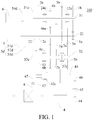
FIG. 1 is a schematic diagram of a power-driven system according to a first embodiment of the present disclosure; -
FIG. 2 is a schematic diagram of a power-driven system according to a second embodiment of the present disclosure; -
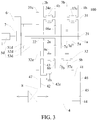
FIG. 3 is a schematic diagram of a power-driven system according to a third embodiment of the present disclosure; and -
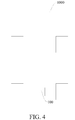
FIG. 4 is a structure diagram of a vehicle according to an embodiment of the present disclosure. - The embodiments of the present disclosure are described in detail below. Examples of the embodiments are illustrated in the accompanying drawings. The embodiments described below with reference to the accompanying drawings are exemplary, and are used for explaining rather than limiting the present disclosure.
- The following describes a power-driven
system 100 according to an embodiment of the present disclosure in detail below with reference to the accompanying drawings. The power-drivensystem 100 can be applied to avehicle 1000, e.g., ahybrid vehicle 1000. - The power-driven
system 100 according to an embodiment of the present disclosure may include: anengine 1, a plurality of input shafts, a plurality of output shafts, afirst motor generator 4, asecond motor generator 6 and amotor power shaft 41. Of course, the power-drivensystem 100 may also include other mechanical components, e.g., afirst clutch device 5d, asecond clutch device 7, and the like. - The
engine 1 is configured to selectively engage with at least one of the plurality of input shafts. That is to say, when theengine 1 outputs power, theengine 1 can engage with the one of the plurality of input shafts to transmit power. Of course, theengine 1 can also simultaneously engage with several of the plurality of input shafts to transmit power. A gear-position driving gear is arranged on each input shaft, a gear-position driven gear is arranged on each output shaft, and the gear-position driven gears correspondingly mesh with the gear-position driving gears. Power transmission between the input shafts and the output shafts can be realized by engagement between the gear-position driving gears and the gear-position driven gears. The output speeds of the output shafts can be changed by selecting gear-position driving gears and gear-position driven gears with different drive ratios. - The
first clutch device 5d is arranged between theengine 1 and the plurality of input shafts, and thefirst clutch device 5d can allow theengine 1 to selectively engage with at least one of the plurality of input shafts. As shown inFIGs. 1-3 , thefirst clutch device 5d may be a double-clutch device, and has aninput end 51d, a first output end 52d and a second output end 53d. Theinput end 51d can selectively engage with at least one of thefirst output end 52d and the second output end 53d. That is, theinput end 51d may engage with thefirst output end 52d, or engage with thesecond output end 53d, or simultaneously engage with thefirst output end 52d and thesecond output end 53d. - For example, as shown in
FIGs. 1-3 , the plurality of input shafts include afirst input shaft 21 and asecond input shaft 22, thefirst output end 52d is connected with thefirst input shaft 21, and thesecond output end 53d is connected with thesecond input shaft 22. - A first-gear driving gear 1a, a third-
gear driving gear 3a, a fifth-gear driving gear 5a and a seventh-gear driving gear 7a are arranged on thefirst input shaft 21. A second-gear driving gear 2a and a fourth-sixth-gear driving gear 46a are arranged on thesecond input shaft 22. Thesecond input shaft 22 is sleeved on thefirst input shaft 21, thereby effectively shortening the axial length of the power-drivensystem 100, and reducing the space of thevehicle 1000 occupied by the power-drivensystem 100. The fourth-sixth-gear driving gear 46a means that the gear can be used as a fourth-gear driving gear or a sixth-gear driving gear, thereby shortening the axial length of thesecond input shaft 22, and better reducing the size of the power-drivensystem 100. - In the direction gradually away from the
engine 1, the second-gear driving gear 2a, the fourth-sixth-gear driving gear 46a, the seventh-gear driving gear 7a, the third-gear driving gear 3a, the fifth-gear driving gear 5a and the first-gear driving gear 1a are arranged in sequence. By properly arranging the plurality of gear-position driving gears, the plurality of gear-position driven gears and the plurality of output shafts can be arranged reasonably, so that the power-drivensystem 100 is simple in structure and small in size. - The plurality of output shafts includes: a
first output shaft 31 and asecond output shaft 32. A first-gear drivengear 1b, a second-gear drivengear 2b, a third-gear drivengear 3b and a fourth-gear drivengear 4b are freely sleeved on thefirst output shaft 31. A fifth-gear drivengear 5b, a sixth-gear drivengear 6b and a seventh-gear drivengear 7b are freely sleeved on thesecond output shaft 32. - The first-gear driving gear 1a meshes with the first-gear driven
gear 1b, the second-gear driving gear 2a meshes with the second-gear drivengear 2b, the third-gear driving gear 3a meshes with the third-gear drivengear 3b, the fourth-sixth-gear driving gear 46a meshes with the fourth-gear drivengear 4b, the fifth-gear driving gear 5a meshes with the fifth-gear drivengear 5b, the fourth-sixth-gear driving gear 46a meshes with the sixth-gear drivengear 6b, and the seventh-gear driving gear 7a meshes with the seventh-gear drivengear 7b. - A first-third-
gear synchronizer 13c is arranged between the first-gear drivengear 1b and the third-gear drivengear 3b, and the first-third-gear synchronizer 13c can be used for synchronizing the first-gear drivengear 1b with thefirst output shaft 31, and synchronizing the third-gear drivengear 3b with thefirst output shaft 31. - A second-fourth-
gear synchronizer 24c is arranged between the second-gear drivengear 2b and the fourth-gear drivengear 4b, and the second-fourth-gear synchronizer 24c can be used for synchronizing the second-gear drivengear 2b with thefirst output shaft 31, and synchronizing the fourth-gear drivengear 4b with thefirst output shaft 31. - A fifth-seventh-
gear synchronizer 57c is arranged between the fifth-gear drivengear 5b and the seventh-gear drivengear 7b, and the fifth-seventh-gear synchronizer 57c can be used for synchronizing the fifth-gear drivengear 5b with thesecond output shaft 32, and synchronizing the seventh-gear drivengear 7b with thesecond output shaft 32. A sixth-gear synchronizer 6c is arranged on one side of the sixth-gear drivengear 6b, and the sixth-gear synchronizer 6c can be used for synchronizing the sixth-gear drivengear 6b with thesecond output shaft 32. - A motor power shaft
first gear 42 may be freely sleeved on themotor power shaft 41, a motor powershaft output gear 47 may be fixedly arranged on themotor power shaft 41, and the motor power shaftfirst gear 42 may selectively engage with themotor power shaft 41. Specifically, as shown inFIG. 1 to FIG. 3 , a motorpower shaft synchronizer 42c may also be arranged on themotor power shaft 41, and the motorpower shaft synchronizer 42c is used for engaging the motor power shaftfirst gear 42 with themotor power shaft 41. - The
motor power shaft 41 and the plurality of output shafts link with a differential of thevehicle 1000. - It should be noted that the above-mentioned "link" can be understood as associated movement of a plurality of components (e.g., two). Taking the linkage of two components as an example, when one of the components moves, the other component also moves.
- For example, in some embodiments of the present disclosure, the linkage of a gear and a shaft can be understood as, when the gear rotates, the shaft linked with the gear also rotates, or when the shaft rotates, the gear linked with the shaft also rotates.
- For another example, the linkage of shafts can be understood as, when one of the shafts rotates, the other shaft linked with the shaft also rotates.
- For another example, the linkage of gears can be understood as, when one of the gears rotates, the other gear linked with the gear also rotates.
- In the following description of the present disclosure, the "link" is understood as the same, unless otherwise specified.
- The motor power shaft
first gear 42 links with one gear-position driving gear in the same direction. It should be noted that the linking in the same direction indicates that the motor power shaftfirst gear 42 and the one gear-position driving gear rotate in the same direction, and move correlatively. - As shown in
FIG. 1 to FIG. 3 , an intermediateidle gear 43 may be arranged between the motor power shaftfirst gear 42 and the one gear-position driving gear, so that the intermediateidle gear 43 can ensure that the motor power shaftfirst gear 42 links with the one gear-position driving gear in the same direction. Thus, when thevehicle 1000 is reversed, the power of theengine 1 can be transmitted to the differential through the one gear-position driving gear, the intermediateidle gear 43, the motor power shaftfirst gear 42, themotor power shaft 41 and the motor powershaft output gear 47, so as to achieve the reverse operation of thevehicle 1000. - In some examples of the present disclosure, as shown in
FIG. 1 to FIG. 3 , the intermediateidle gear 43 may be a duplicate gear, and has a first gear portion meshing with the one gear-position driving gear and a second gear portion meshing with the motor power shaftfirst gear 42. The intermediateidle gear 43 is sleeved on thesecond output shaft 32, whereby the position of the intermediateidle gear 43 is appropriate, and the structure of the power-drivensystem 100 is reliable. - Specifically, the one gear-position driving gear may be the second-
gear driving gear 2a, that is, the intermediateidle gear 43 meshes with the second-gear driving gear 2a and the motor power shaftfirst gear 42 respectively, thus realizing the power transmission between the second-gear driving gear 2a and the motor power shaftfirst gear 42. - The motor
power shaft synchronizer 42c shares a first shift mechanism with a gear-position synchronizer corresponding to one gear-position driven gear. This can save a shift mechanism, so that the cost of the power-drivensystem 100 can be reduced, and the structure of the power-drivensystem 100 is simple and reliable. - Specifically, as shown in
FIG. 1 to FIG. 3 , the motorpower shaft synchronizer 42c shares a first shift mechanism with the sixth-gear synchronizer 6c. - As shown in
FIG. 1 , when the first shift mechanism shifts the motorpower shaft synchronizer 42c and the sixth-gear synchronizer 6c to the left, the sixth-gear drivengear 6b is disengaged from thesecond output shaft 32, and the motor power shaftfirst gear 42 is engaged with themotor power shaft 41. When the first shift mechanism shifts the motorpower shaft synchronizer 42c and the sixth-gear synchronizer 6c to the right, the sixth-gear drivengear 6b is engaged with thesecond output shaft 32, and the motor power shaftfirst gear 42 is disengaged from themotor power shaft 41. - As shown in
FIG. 1 to FIG. 3 , a first outputshaft output gear 31e is fixedly arranged on thefirst output shaft 31, a second outputshaft output gear 32e is fixedly arranged on thesecond output shaft 32, and the motor powershaft output gear 47, the first outputshaft output gear 31e and the second outputshaft output gear 32e mesh with a main reducer drivengear 8 of thevehicle 1000 respectively. It can be understood that the power transmitted to thefirst output shaft 31 and thesecond output shaft 32 can be transmitted to the main reducer drivengear 8 through the first outputshaft output gear 31e and the second outputshaft output gear 32e respectively, thereby driving corresponding wheels to rotate. Power transmission exists between the main reducer drivengear 8 and the differential. Specifically, the main reducer drivengear 8 transmits power to the differential to drive the wheels to rotate. - The
first motor generator 4 links with themotor power shaft 41. When thefirst motor generator 4 is used as a motor, thefirst motor generator 4 can transmit power to themotor power shaft 41. When thefirst motor generator 4 is used as a generator, themotor power shaft 41 can transmit power to thefirst motor generator 4 for power generation. - As shown in
FIG. 1 to FIG. 3 , drive gears may be arranged between thefirst motor generator 4 and the motor power shaft. Three drive gears are provided, respectively afirst drive gear 44, asecond drive gear 45 and athird drive gear 46. Thefirst drive gear 44 is fixed on a motor shaft of thefirst motor generator 4, thethird drive gear 46 is fixedly connected to themotor power shaft 41, and thesecond drive gear 45 is meshed between thefirst drive gear 44 and thethird drive gear 46. - The
second motor generator 6 and theengine 1 are located on an input side of the firstclutch device 5d, and thesecond motor generator 6 may be located between the firstclutch device 5d and theengine 1. Thesecond motor generator 6 is arranged on the input side of the firstclutch device 5d, so that the axial length of the power-drivensystem 100 can be effectively reduced, and thesecond motor generator 6 can be arranged rationally to improve the structural compactness of the power-drivensystem 100. - The
second motor generator 6 can be a motor generator having small capacity and small size, thereby meeting the miniaturization requirement of a transmission. The internal structure of the transmission has strict requirements on the space, and thesecond motor generator 6 having small size occupies a small space of the transmission, so that thesecond motor generator 6 is prevented from interfering with other components (e.g., the firstclutch device 5d), and the transmission is reasonable and compact in structure. - The plurality of input shafts is located on the output side of the first
clutch device 5d. Thesecond motor generator 6 is configured to carry out stationary power generation using at least part of the power of theengine 1 when thevehicle 1000 is parked. When thevehicle 1000 is parked, at least part of the power of theengine 1 can be directly transferred to thesecond motor generator 6 for power generation, or at least part of the power of theengine 1 can be indirectly transmitted to thesecond motor generator 6 for power generation through theinput end 51d. - The following describes the connection relationship between the
engine 1 and thesecond motor generator 6 with reference to the accompanying drawings. - As shown in
FIG. 1 , input endouter teeth 54d may be arranged on theinput end 51d, and thesecond motor generator 6 links with the input endouter teeth 54d. Thus, the power of theengine 1 can be transmitted to thesecond motor generator 6 through theinput end 51d and the input endouter teeth 54d, and thesecond motor generator 6 can be used as a generator for stationary power generation. - As shown in
FIG. 2 , thesecond motor generator 6 and theinput end 51d can be coaxially connected. Thesecond motor generator 6 may be arranged between theinput end 51d and theengine 1, such that the power of theengine 1 necessarily passes through thesecond motor generator 6 when being transmitted to theinput end 51d, whereby thesecond motor generator 6 can be used as a generator for stationary power generation. - As shown in
FIG. 3 , a secondclutch device 7 is arranged between thesecond motor generator 6 and theengine 1. The secondclutch device 7 is a single clutch, and the secondclutch device 7 can control the engagement and disengagement between theengine 1 and thesecond motor generator 6, and control the engagement and disengagement between theengine 1 and theinput end 51d. By providing the secondclutch device 7, the stationary power generation state of thesecond motor generator 6 can be reasonably controlled, so that the power-drivensystem 100 is simple in structure and reliable in drive mode conversion. - In some embodiments of the present disclosure, the second
clutch device 7 is arranged inside a rotor of thesecond motor generator 6. In this way, the axial length of the power-drivensystem 100 can be better shortened, so that the size of the power-drivensystem 100 can be reduced, and the arrangement flexibility of the power-drivensystem 100 on thevehicle 1000 can be improved. In addition, thesecond motor generator 6 can also be used as a starter. - In some embodiments of the present disclosure, the
engine 1, the secondclutch device 7, and theinput end 51d of the firstclutch device 5d are coaxially arranged. Thus, the power-drivensystem 100 is compact in structure and small in size. - It should be noted that, for the power-driven
system 100 according to the above three embodiments, thesecond motor generator 6 is located between theengine 1 and the firstclutch device 5d in the axial direction, so that the axial length of the power-drivensystem 100 can be effectively shortened, thesecond motor generator 6 can be reasonably arranged, and the structural compactness of the power-drivensystem 100 can be improved. - The
first motor generator 4 is a main drive motor of the power-drivensystem 100, so the capacity and size of thefirst motor generator 4 are large. Themotor power shaft 41 is provided to minimize the size of the power-drivensystem 100, and to avoid the interference between thefirst motor generator 4 and thesecond motor generator 6. - In an embodiment of the present disclosure, the rated power of the
first motor generator 4 is greater than that of thesecond motor generator 6. Thesecond motor generator 6 can be a motor generator having small size and small rated power, so that the power-drivensystem 100 is simple in structure and small in size. In addition, during the stationary power generation, the transmission path between thesecond motor generator 6 and theengine 1 is short, the power generation efficiency is high, and a part of the power of theengine 1 can be efficiently converted into electric energy. Furthermore, the peak power of thefirst motor generator 4 is also greater than that of thesecond motor generator 6. - In some embodiments of the present disclosure, the rated power of the
first motor generator 4 is two or more times that of thesecond motor generator 6. The peak power of thefirst motor generator 4 is two or more times that of thesecond motor generator 6. For example, the rated power of thefirst motor generator 4 may be 60 kW, the rated power of thesecond motor generator 6 may be 24 kW, the peak power of thefirst motor generator 4 may be 120 kW, and the peak power of thesecond motor generator 6 may be 44 kW. - The following describes the operating modes of the power-driven
system 100 for thevehicle 1000 according to an embodiment of the present disclosure in detail with reference to the accompanying drawings. The difference between the power-drivensystem 100 shown inFIG. 2 andFIG. 3 and the power-drivensystem 100 shown inFIG. 1 is mainly embodied in the arrangement of thesecond motor generator 6, but the arrangement of thesecond motor generator 6 has little influence on the operating mode, so the operating mode of the power-drivensystem 100 shown inFIG. 2 andFIG. 3 is substantially the same as the operating mode of the power-drivensystem 100 shown inFIG. 1 . The following describes the operating mode of the power-drivensystem 100 shown inFIG. 1 in detail as an example. - Pure engine mode: the power of the
engine 1 is transmitted to thefirst input shaft 21 and/or thesecond input shaft 22 through the firstclutch device 5d, then transmitted to thefirst output shaft 31 or thesecond output shaft 32 through a corresponding gear-position gear pair, and finally transmitted to the differential to drive the wheels to rotate. The gear-position gear pair includes a gear-position driving gear and a gear-position driven gear corresponding to each other. In this mode, theinput end 51d of the firstclutch device 5d selectively engages with at least one of the two output ends. - Pure electric mode: when the
first motor generator 4 is used as a motor, the power of thefirst motor generator 4 is transmitted to the differential through themotor power shaft 41 and the motor powershaft output gear 47 in sequence to drive the wheels to rotate. - Hybrid mode: a combination of the pure engine mode and the pure electric mode, the power of the
engine 1 and the power of thefirst motor generator 4 are coupled at the main reducer drivengear 8. - Stationary power generation mode: the power of the
engine 1 is all transmitted to thesecond motor generator 6 through theinput end 51d of the firstclutch device 5d, and thesecond motor generator 6 functions as a generator for stationary power generation. - First driving power generation mode: a part of the power of the
engine 1 is transmitted to the differential through the firstclutch device 5d, the input shaft and the output shaft to drive the wheels to rotate, and the other part of the power of theengine 1 is transmitted to thesecond motor generator 6 through theinput end 51d of the firstclutch device 5d for power generation. - Second driving power generation mode: the power of the
engine 1 is transmitted to the differential through the firstclutch device 5d, the input shaft and the output shaft to drive the wheels to rotate, and the main reducer drivengear 8 can transmit a part of the power to thefirst motor generator 4 through the motor powershaft output gear 47 and themotor power shaft 41 for power generation. - As shown in
FIG. 4 , thevehicle 1000 according to an embodiment of the present disclosure includes the power-drivensystem 100 for avehicle 1000 according to the above embodiments of the present disclosure. - In the descriptions of this specification, descriptions such as reference terms "an embodiment", "some embodiments", "example", "specific example", or "some examples" intend to indicate that specific features, structures, materials, or characteristics described with reference to embodiments or examples are included in at least one embodiment or example of this disclosure. In this specification, schematic descriptions of the foregoing terms do not need to aim at a same embodiment or example. Besides, the specific features, the structures, the materials or the characteristics that are described may be combined in a proper manner in any one or more embodiments or examples. In addition, in a case that is not mutually contradictory, persons skilled in the art can combine or group different embodiments or examples that are described in this specification and features of the different embodiments or examples.
- Although the embodiments of the present disclosure are shown and described above, it may be understood that the foregoing embodiments are examples, and cannot be understood as limitations to the present disclosure. A person of ordinary skill in the art may make changes, modifications, replacements, and variations to the foregoing embodiments without departing from the scope of the present disclosure.
Claims (18)
- A power-driven system for a vehicle, comprising:an engine;a plurality of input shafts, a gear-position driving gear being arranged on each input shaft;a plurality of output shafts, a gear-position driven gear being arranged on each output shaft, the gear-position driven gears correspondingly meshing with the gear-position driving gears;a first clutch device, arranged between the engine and the plurality of input shafts, so that the engine selectively engaging with at least one of the plurality of input shafts;a motor power shaft, a motor power shaft first gear that can be engaged to the motor power shaft being freely sleeved on the motor power shaft, the motor power shaft first gear linking with one gear-position driving gear in the same direction, and the plurality of output shafts and the motor power shaft linking with a differential of the vehicle;a first motor generator, configured to link with the motor power shaft; anda second motor generator, the second motor generator and the engine being located on an input side of the first clutch device, the plurality of input shafts being located on an output side of the first clutch device, and the second motor generator being configured to carry out stationary power generation using at least part of power of the engine when the vehicle is parked.
- The power-driven system for a vehicle according to claim 1, wherein the first clutch device is a double-clutch device and has an input end, a first output end and a second output end, the input end selectively engaging with at least one of the first output end and the second output end.
- The power-driven system for a vehicle according to claim 2, wherein the input end is provided with input end outer teeth, and the second motor generator links with the input end outer teeth.
- The power-driven system for a vehicle according to claim 2, wherein the second motor generator is coaxially connected with the input end.
- The power-driven system for a vehicle according to claim 2, wherein a second clutch device is arranged between the second motor generator and the engine.
- The power-driven system for a vehicle according to claim 5, wherein the second clutch device is arranged inside a rotor of the second motor generator.
- The power-driven system for a vehicle according to claim 5, wherein the engine, the second clutch device and the input end of the first clutch device are arranged coaxially.
- The power-driven system for a vehicle according to claim 1, wherein the rated power of the first motor generator is greater than that of the second motor generator.
- The power-driven system for a vehicle according to claim 8, wherein the rated power of the first motor generator is two or more times that of the second motor generator.
- The power-driven system for a vehicle according to claim 1, wherein the second motor generator is located between the first clutch device and the engine.
- The power-driven system for a vehicle according to claim 1, further comprising: an intermediate idle gear, which links with the motor power shaft first gear and one of the gear-position driving gears respectively.
- The power-driven system for a vehicle according to claim 11, wherein the intermediate idle gear is a duplicate gear, and has a first gear portion meshing with one of the gear-position driving gears and a second gear portion meshing with the motor power shaft first gear.
- The power-driven system for a vehicle according to claim 1, wherein a motor power shaft synchronizer for engaging the motor power shaft first gear with the motor power shaft is further arranged on the motor power shaft.
- The power-driven system for a vehicle according to claim 13, wherein the motor power shaft synchronizer shares a first shift mechanism with a gear-position synchronizer corresponding to one gear-position driven gear.
- The power-driven system for a vehicle according to any one of claims 1-14, wherein
the plurality of input shafts comprises: a first input shaft and a second input shaft, the second input shaft being sleeved on the first input shaft, a first-gear driving gear, a third-gear driving gear, a fifth-gear driving gear and a seventh-gear driving gear being arranged on the first input shaft, and a second-gear driving gear and a fourth-sixth-gear driving gear being arranged on the second input shaft;
the plurality of output shafts comprises: a first output shaft and a second output shaft, a first-gear driven gear, a second-gear driven gear, a third-gear driven gear and a fourth-gear driven gear being freely sleeved on the first output shaft, and a fifth-gear driven gear, a sixth-gear driven gear and a seventh-gear driven gear being freely sleeved on the second output shaft; and
a first-third-gear synchronizer is arranged between the first-gear driven gear and the third-gear driven gear, a second-fourth-gear synchronizer is arranged between the second-gear driven gear and the fourth-gear driven gear, a fifth-seventh-gear synchronizer is arranged between the fifth-gear driven gear and the seventh-gear driven gear, and a sixth-gear synchronizer is arranged on one side of the sixth-gear driven gear. - The power-driven system for a vehicle according to claim 15, wherein a motor power shaft synchronizer for engaging the motor power shaft first gear with the motor power shaft is further arranged on the motor power shaft, and the motor power shaft synchronizer shares a first shift mechanism with the sixth-gear synchronizer.
- The power-driven system for a vehicle according to claim 15, wherein a first output shaft output gear is fixedly arranged on the first output shaft, a second output shaft output gear is fixedly arranged on the second output shaft, a motor power shaft output gear is fixedly arranged on the motor power shaft, and the first output shaft output gear, the second output shaft output gear and the motor power shaft output gear mesh with a main reducer driven gear of the vehicle respectively.
- A vehicle, comprising the power-driven system according to any one of claims 1-17.
Applications Claiming Priority (2)
| Application Number | Priority Date | Filing Date | Title |
|---|---|---|---|
| CN201610858369.5A CN107867165A (en) | 2016-09-28 | 2016-09-28 | Power-driven system and vehicle for vehicle |
| PCT/CN2017/096040 WO2018059123A1 (en) | 2016-09-28 | 2017-08-04 | Power drive system for vehicle and vehicle |
Publications (2)
| Publication Number | Publication Date |
|---|---|
| EP3521086A1 true EP3521086A1 (en) | 2019-08-07 |
| EP3521086A4 EP3521086A4 (en) | 2019-10-16 |
Family
ID=61761241
Family Applications (1)
| Application Number | Title | Priority Date | Filing Date |
|---|---|---|---|
| EP17854576.0A Withdrawn EP3521086A4 (en) | 2016-09-28 | 2017-08-04 | Power drive system for vehicle and vehicle |
Country Status (5)
| Country | Link |
|---|---|
| US (1) | US11299041B2 (en) |
| EP (1) | EP3521086A4 (en) |
| KR (1) | KR20190040329A (en) |
| CN (1) | CN107867165A (en) |
| WO (1) | WO2018059123A1 (en) |
Families Citing this family (7)
| Publication number | Priority date | Publication date | Assignee | Title |
|---|---|---|---|---|
| CN107867169A (en) * | 2016-09-28 | 2018-04-03 | 比亚迪股份有限公司 | Power-driven system and vehicle for vehicle |
| WO2018102498A1 (en) * | 2016-11-30 | 2018-06-07 | Dana Limited | Electric axle transmission for electric and hybrid electric vehicles |
| DE102019202969A1 (en) * | 2019-03-05 | 2020-09-10 | Zf Friedrichshafen Ag | Hybrid transmission arrangement for a motor vehicle drive train and method for operating a hybrid drive train |
| CN112572127B (en) * | 2019-09-30 | 2022-06-14 | 比亚迪股份有限公司 | Hybrid power assembly and vehicle with same |
| CN112744067B (en) * | 2019-10-30 | 2022-08-05 | 比亚迪股份有限公司 | Hybrid system and vehicle having the same |
| CN115675056B (en) * | 2021-07-30 | 2025-01-14 | 比亚迪股份有限公司 | Powertrain and Vehicles |
| CN114475208A (en) * | 2021-12-20 | 2022-05-13 | 广西汽车集团有限公司 | Coaxial multi-gear front-drive hybrid power system |
Family Cites Families (31)
| Publication number | Priority date | Publication date | Assignee | Title |
|---|---|---|---|---|
| JP2003301897A (en) | 2002-04-12 | 2003-10-24 | Aisin Seiki Co Ltd | Transmission |
| JP3998016B2 (en) * | 2004-11-12 | 2007-10-24 | トヨタ自動車株式会社 | Vehicle drive device |
| JP4301212B2 (en) * | 2005-06-03 | 2009-07-22 | 日産自動車株式会社 | Vehicle control device |
| CN101209666A (en) * | 2006-12-25 | 2008-07-02 | 比亚迪股份有限公司 | Mixed power outputting device |
| DE102009059944A1 (en) * | 2009-01-19 | 2010-07-22 | Luk Lamellen Und Kupplungsbau Beteiligungs Kg | Hybrid module for a drive train of a vehicle |
| CN102107604B (en) | 2009-12-25 | 2013-12-18 | 比亚迪股份有限公司 | Hybrid driving system for automobile and gear operating method thereof |
| CN102114766B (en) * | 2009-12-31 | 2014-03-19 | 比亚迪股份有限公司 | Hybrid drive system and driving method thereof |
| CN102114770B (en) | 2009-12-31 | 2013-12-04 | 比亚迪股份有限公司 | Transmission mechanism, hybrid power driving system and control method for driving system |
| CN102259584B (en) * | 2010-05-31 | 2014-07-02 | 比亚迪股份有限公司 | Hybrid power driven system and vehicle comprising same |
| CN102259583B (en) * | 2010-05-31 | 2014-03-19 | 比亚迪股份有限公司 | Hybrid power-driven system and vehicle provided with same |
| JP5213914B2 (en) * | 2010-06-15 | 2013-06-19 | アイシン・エィ・ダブリュ株式会社 | Hybrid drive device |
| US9079583B2 (en) * | 2010-12-24 | 2015-07-14 | Toyota Jidosha Kabushiki Kaisha | Control device of hybrid vehicle |
| US9061684B2 (en) * | 2011-01-26 | 2015-06-23 | Toyota Jidosha Kabushiki Kaisha | Control device of hybrid vehicle |
| CN103748379B (en) * | 2011-08-24 | 2016-06-22 | 丰田自动车株式会社 | Vehicle travel controlling apparatus |
| CN103917424B (en) * | 2011-11-14 | 2016-08-17 | 丰田自动车株式会社 | The control device of vehicle driving apparatus |
| US9162667B2 (en) * | 2012-06-05 | 2015-10-20 | Hyundai Motor Company | Power transmitting apparatus for vehicle |
| JP6263889B2 (en) * | 2013-07-23 | 2018-01-24 | トヨタ自動車株式会社 | Hybrid vehicle drive device |
| CN104648144A (en) * | 2013-11-19 | 2015-05-27 | 贾新成 | Fuel saving type four-wheel drive of SUV (Sport Utility Vehicle) |
| CN204095490U (en) * | 2014-07-31 | 2015-01-14 | 比亚迪股份有限公司 | Power drive system and there is the vehicle of this power drive system |
| CN104608612B (en) | 2014-09-10 | 2015-12-02 | 比亚迪股份有限公司 | For vehicle power drive system and there is its vehicle |
| CN104608621B (en) * | 2014-09-10 | 2015-12-02 | 比亚迪股份有限公司 | Change-speed box, power drive system and vehicle |
| CN105459792B (en) | 2014-09-10 | 2018-04-20 | 比亚迪股份有限公司 | For vehicle power drive system and there is its vehicle |
| CN105644335B (en) * | 2014-11-14 | 2020-02-28 | 上海汽车集团股份有限公司 | Two-motor powertrains and two-motor hybrid powertrains for vehicles |
| CN204340646U (en) * | 2014-11-28 | 2015-05-20 | 安徽江淮汽车股份有限公司 | A kind of hybrid transmissions |
| CN104773063B (en) | 2015-01-16 | 2015-12-02 | 比亚迪股份有限公司 | Change-speed box, Power Train are unified vehicle |
| WO2016112655A1 (en) * | 2015-01-16 | 2016-07-21 | Byd Company Limited | Power transmission system and vehicle comprising the same |
| CN104773062B (en) * | 2015-01-16 | 2015-12-30 | 比亚迪股份有限公司 | Power drive system and there is its vehicle |
| CN104786814B (en) | 2015-01-16 | 2016-04-13 | 比亚迪股份有限公司 | Change-speed box, Power Train are unified vehicle |
| CN104786816B (en) | 2015-01-16 | 2016-03-30 | 比亚迪股份有限公司 | Power transmission system for vehicle and vehicle having same |
| CN105799668A (en) * | 2016-03-22 | 2016-07-27 | 山东理工大学 | Multi-shaft automobile energy recycling braking device |
| CN206201955U (en) * | 2016-06-29 | 2017-05-31 | 比亚迪股份有限公司 | Power-driven system and vehicle |
-
2016
- 2016-09-28 CN CN201610858369.5A patent/CN107867165A/en active Pending
-
2017
- 2017-08-04 EP EP17854576.0A patent/EP3521086A4/en not_active Withdrawn
- 2017-08-04 KR KR1020197008767A patent/KR20190040329A/en not_active Withdrawn
- 2017-08-04 US US16/335,843 patent/US11299041B2/en active Active
- 2017-08-04 WO PCT/CN2017/096040 patent/WO2018059123A1/en not_active Ceased
Also Published As
| Publication number | Publication date |
|---|---|
| US20200023733A1 (en) | 2020-01-23 |
| EP3521086A4 (en) | 2019-10-16 |
| CN107867165A (en) | 2018-04-03 |
| WO2018059123A1 (en) | 2018-04-05 |
| KR20190040329A (en) | 2019-04-17 |
| US11299041B2 (en) | 2022-04-12 |
Similar Documents
| Publication | Publication Date | Title |
|---|---|---|
| EP3521083B1 (en) | Power drive system for vehicle and vehicle | |
| US11273699B2 (en) | Power-driven system for vehicle and vehicle | |
| EP3521086A1 (en) | Power drive system for vehicle and vehicle | |
| RU2625689C2 (en) | Hybrid transmission for the motor vehicle | |
| CN102348568B (en) | Power transmitting device for hybrid vehicle | |
| US10899219B2 (en) | Power drive system and vehicle | |
| WO2018077273A1 (en) | Power train and vehicle having same | |
| CN110370916B (en) | Hybrid vehicle, hybrid drive system and gearbox | |
| CN107867164B (en) | Power driving system for vehicle and vehicle | |
| US20190225074A1 (en) | Power drive system and vehicle | |
| CN107867171B (en) | Power driving system for vehicle and vehicle | |
| US20190168600A1 (en) | Power drive system and vehicle | |
| WO2018077264A1 (en) | Power transmission system and vehicle having same | |
| CN107867172B (en) | Power driving system for vehicle and vehicle | |
| JP7275943B2 (en) | Drive system for hybrid vehicle | |
| CN107867167A (en) | Power-driven system and vehicle for vehicle | |
| CN116353329A (en) | A transmission structure, drive system and vehicle | |
| CN107867162B (en) | Power drive systems for vehicles and vehicles | |
| CN107867166B (en) | Power drive systems for vehicles and vehicles | |
| CN111251872B (en) | Power driving system and vehicle | |
| WO2018077274A1 (en) | Power transmission system and a vehicle having the same | |
| WO2018077248A1 (en) | Power train and vehicle having same | |
| WO2018077270A1 (en) | Power train and vehicle having same | |
| WO2018077271A1 (en) | Power train and vehicle having same |
Legal Events
| Date | Code | Title | Description |
|---|---|---|---|
| STAA | Information on the status of an ep patent application or granted ep patent |
Free format text: STATUS: THE INTERNATIONAL PUBLICATION HAS BEEN MADE |
|
| PUAI | Public reference made under article 153(3) epc to a published international application that has entered the european phase |
Free format text: ORIGINAL CODE: 0009012 |
|
| STAA | Information on the status of an ep patent application or granted ep patent |
Free format text: STATUS: REQUEST FOR EXAMINATION WAS MADE |
|
| 17P | Request for examination filed |
Effective date: 20190402 |
|
| AK | Designated contracting states |
Kind code of ref document: A1 Designated state(s): AL AT BE BG CH CY CZ DE DK EE ES FI FR GB GR HR HU IE IS IT LI LT LU LV MC MK MT NL NO PL PT RO RS SE SI SK SM TR |
|
| AX | Request for extension of the european patent |
Extension state: BA ME |
|
| A4 | Supplementary search report drawn up and despatched |
Effective date: 20190918 |
|
| RIC1 | Information provided on ipc code assigned before grant |
Ipc: F16H 3/00 20060101ALI20190912BHEP Ipc: B60K 6/547 20071001ALI20190912BHEP Ipc: B60K 6/36 20071001ALI20190912BHEP Ipc: B60K 6/44 20071001ALI20190912BHEP Ipc: B60K 6/54 20071001AFI20190912BHEP Ipc: F16H 3/08 20060101ALN20190912BHEP Ipc: B60K 6/442 20071001ALI20190912BHEP Ipc: F16H 3/093 20060101ALI20190912BHEP |
|
| DAV | Request for validation of the european patent (deleted) | ||
| DAX | Request for extension of the european patent (deleted) | ||
| STAA | Information on the status of an ep patent application or granted ep patent |
Free format text: STATUS: THE APPLICATION HAS BEEN WITHDRAWN |
|
| 18W | Application withdrawn |
Effective date: 20200103 |