EP3520967A1 - Gas combustion type driving tool - Google Patents
Gas combustion type driving tool Download PDFInfo
- Publication number
- EP3520967A1 EP3520967A1 EP19152474.3A EP19152474A EP3520967A1 EP 3520967 A1 EP3520967 A1 EP 3520967A1 EP 19152474 A EP19152474 A EP 19152474A EP 3520967 A1 EP3520967 A1 EP 3520967A1
- Authority
- EP
- European Patent Office
- Prior art keywords
- gas
- ejection valve
- type driving
- driving tool
- combustion type
- Prior art date
- Legal status (The legal status is an assumption and is not a legal conclusion. Google has not performed a legal analysis and makes no representation as to the accuracy of the status listed.)
- Pending
Links
- 238000002485 combustion reaction Methods 0.000 title claims abstract description 140
- 239000000446 fuel Substances 0.000 claims description 44
- 238000011144 upstream manufacturing Methods 0.000 claims description 7
- 239000007789 gas Substances 0.000 description 146
- 239000000567 combustion gas Substances 0.000 description 8
- 238000000034 method Methods 0.000 description 6
- 230000006835 compression Effects 0.000 description 3
- 238000007906 compression Methods 0.000 description 3
- 230000007423 decrease Effects 0.000 description 2
- 230000004048 modification Effects 0.000 description 2
- 238000012986 modification Methods 0.000 description 2
- 230000035939 shock Effects 0.000 description 2
- 238000006243 chemical reaction Methods 0.000 description 1
- 238000007599 discharging Methods 0.000 description 1
- 239000000428 dust Substances 0.000 description 1
- 230000000694 effects Effects 0.000 description 1
- 238000012423 maintenance Methods 0.000 description 1
- 230000002093 peripheral effect Effects 0.000 description 1
Images





Classifications
-
- B—PERFORMING OPERATIONS; TRANSPORTING
- B25—HAND TOOLS; PORTABLE POWER-DRIVEN TOOLS; MANIPULATORS
- B25C—HAND-HELD NAILING OR STAPLING TOOLS; MANUALLY OPERATED PORTABLE STAPLING TOOLS
- B25C1/00—Hand-held nailing tools; Nail feeding devices
- B25C1/08—Hand-held nailing tools; Nail feeding devices operated by combustion pressure
-
- B—PERFORMING OPERATIONS; TRANSPORTING
- B25—HAND TOOLS; PORTABLE POWER-DRIVEN TOOLS; MANIPULATORS
- B25D—PERCUSSIVE TOOLS
- B25D9/00—Portable percussive tools with fluid-pressure drive, i.e. driven directly by fluids, e.g. having several percussive tool bits operated simultaneously
- B25D9/06—Means for driving the impulse member
- B25D9/10—Means for driving the impulse member comprising a built-in internal-combustion engine
-
- F—MECHANICAL ENGINEERING; LIGHTING; HEATING; WEAPONS; BLASTING
- F02—COMBUSTION ENGINES; HOT-GAS OR COMBUSTION-PRODUCT ENGINE PLANTS
- F02B—INTERNAL-COMBUSTION PISTON ENGINES; COMBUSTION ENGINES IN GENERAL
- F02B63/00—Adaptations of engines for driving pumps, hand-held tools or electric generators; Portable combinations of engines with engine-driven devices
- F02B63/02—Adaptations of engines for driving pumps, hand-held tools or electric generators; Portable combinations of engines with engine-driven devices for hand-held tools
-
- F—MECHANICAL ENGINEERING; LIGHTING; HEATING; WEAPONS; BLASTING
- F01—MACHINES OR ENGINES IN GENERAL; ENGINE PLANTS IN GENERAL; STEAM ENGINES
- F01L—CYCLICALLY OPERATING VALVES FOR MACHINES OR ENGINES
- F01L9/00—Valve-gear or valve arrangements actuated non-mechanically
- F01L9/10—Valve-gear or valve arrangements actuated non-mechanically by fluid means, e.g. hydraulic
Definitions
- the present invention relates to a gas combustion type driving tool that drives a fastener by combustion pressure of combustible gas.
- a gas combustion type driving tool that drives a fastener by combustion pressure of combustible gas is known in the related art.
- As a method for improving output of such a gas combustion type driving tool there is an idea that a fastener is driven out by combustion pressure when mixed gas of combustible gas and compressed air is ignited. That is, although air and combustible gas are mixed in the gas combustion type driving tool in the related art, it is studied that, by using compressed air instead of air, a large output may be obtained by energy of compressed air and thermal energy of combustion gas.
- JP-A-S50-15177 discloses a method of adjusting output of a gas combustion type driving tool, in which an operation timing of a valve is changed by adjusting pressure operating on a member (the valve) provided between a combustion chamber and a cylinder.
- JP-A-S63-28574 discloses a method of adjusting output of a gas combustion type driving tool by changing a volume of a combustion chamber.
- JP-A-S50-15177 it is difficult to adjust the output as the operation timing of the valve and the output are not in a linear relationship. There is also a problem of wasting fuel as it is necessary to operate the valve at a timing of low energy conversion efficiency in order to lower the output.
- an object of the present invention is to provide a gas combustion type driving tool capable of accurately adjusting output with a simple structure.
- the present invention provides a gas combustion type driving tool that drives a fastener by combustion pressure when mixed gas of combustible gas and compressed air in a combustion chamber is ignited.
- the gas combustion type driving tool includes an air ejection valve, and a gas ejection valve.
- the air ejection valve is configured to eject compressed air into the combustion chamber.
- the gas ejection valve is configured to eject combustible gas into the combustion chamber.
- Output related to driving of a fastener is adjustable by adjusting at least one of filling pressure of compressed air or filling pressure of combustible gas.
- the gas combustion type driving tool includes the air ejection valve that ejects compressed air into the combustion chamber and the gas ejection valve that ejects combustible gas into the combustion chamber.
- the output related to driving of a fastener can be adjusted by adjusting at least one of the filling pressure of compressed air or the filling pressure of combustible gas.
- filling pressure of the mixed fuel container be changed by adjusting at least one of the filling pressure of the compressed air or the filling pressure of the combustible gas.
- the output can be accurately adjusted as filling pressure and output energy of the mixed gas are in a proportional relation. Fuel is not wasted as the combustible fuel container be burned with highest energy efficiency even in any output setting. Further, a simple structure can be obtained as there is no need for a structure that mechanically adjusts the output.
- Setting of the filling pressure of the mixed fuel container be manually changed by a user of the gas combustion type driving tool, or be automatically changed based on input from a sensor or the like.
- FIG. 1 a direction in which a fastener is driven out is described as "front”, and an opposite direction is described as “rear”.
- a direction in which an output unit 11 is located is described as "upper” and an opposite direction is described as “lower”.
- a gas combustion type driving tool 10 drives a fastener out by combustion pressure when mixed gas of combustible gas and compressed air is ignited.
- the gas combustion type driving tool 10 includes the output unit 11, the grip 30, a fuel container storage unit 37, a magazine 38, and a coupler 40.
- the output unit 11 includes a combustion chamber 12.
- the combustion chamber 12 is a space for burning combustible gas and is used as a space that can be sealed in rear (the direction opposite to the direction in which a fastener is driven out) of a piston 16 to be described below. Combustion pressure generated in the combustion chamber 12 is used to drive out a fastener by operating on the piston 16.
- a nose portion 18 is attached to guide a fastener to a workpiece.
- the fastener is driven to the workpiece from an ejection outlet 18a.
- the ejection outlet 18a opens to a front end of the nose portion 18.
- the nose portion 18 can be pushed into the output unit 11, and the driving operation is not performed even if the trigger operating unit 31 is operated, unless the nose portion 18 is pushed in.
- a safety switch (not illustrated) is turned on by pushing in the nose portion 18, and a signal of a trigger switch 32 to be described below is not enabled unless the safety switch is turned on. Therefore, the fastener is not driven out unless the nose portion 18 is pressed against the workpiece, so that safety is ensured.
- the output unit 11 houses, inside a housing thereof, an ignition device 13, a cylinder head 14, a cylinder 15, a piston 16, a driver 17, a cylindrical member 20, a movable plug 21, a compression spring 22, and the like.
- the ignition device 13 is used to generate a spark inside the combustion chamber 12.
- the ignition device 13 is a spark plug that generates a spark by raising a voltage of a battery pack 50 to be described below to a high voltage and discharging the high voltage.
- the ignition device 13 performs an ignition operation at a predetermined timing based on a signal from a control device 33 to be described below.
- a high-pressure combustion gas is generated in the combustion chamber 12, so that the piston 16 to be described below slides in an impacted manner by combustion pressure thus generated.
- the cylinder head 14 constitutes the combustion chamber 12 together with the cylinder 15 to be described below.
- the cylinder head 14 is fixed to close a rear end of the cylinder 15.
- the cylinder head 14 is provided with an air ejection unit 44 and a gas ejection unit 48 to be described below, so that compressed air and combustible fuel container be introduced into the combustion chamber 12 from the air ejection unit 44 and the gas ejection unit 48.
- the cylinder 15 is disposed in a longitudinal direction of the output unit 11.
- the cylinder 15 has two spaces in the front and rear.
- the space in the front guides the piston 16 to be described below to be slidable therein.
- the space in the rear constitutes the combustion chamber 12.
- the two spaces in the front and rear are connected with each other, and the cylindrical member 20 to be described below is attached between the two spaces.
- the front and rear two spaces can be shielded by the movable plug 21 housed in the cylindrical member 20.
- the piston 16 is slidably housed inside the cylinder 15. When the high-pressure combustion gas is generated in the combustion chamber 12, the combustion gas operates on the piston 16, so that the piston 16 is actuated forward.
- the driver 17 is used to hit a fastener and is coupled to front of the piston 16. When the driving operation is performed, the driver 17 slides along an ejection path of the fastener and drives the fastener in the ejection path out of the ejection outlet 18a.
- the cylindrical member 20 is fixed to the cylinder 15 in the combustion chamber 12.
- the cylindrical member 20 includes a pressure chamber 20b therein that actuates the movable plug 21 to be described below.
- a first opening 20a is provided to connect the combustion chamber 12 and the pressure chamber 20b.
- a second opening 20c is provided to connect the combustion chamber 12 and a space in rear of the piston 16.
- the movable plug 21 is a columnar member slidably disposed inside the cylindrical member 20.
- the movable plug 21 is biased in a direction toward the piston 16 by the compression spring 22, and closes the second opening 20c when in a natural state. Therefore, the combustion chamber 12 and the space in rear of the piston 16 are shielded by the movable plug 21 before the driving operation, resulting in a sealed space in the combustion chamber 12.
- the movable plug 21 includes a groove in an outer periphery thereof, so that the pressure chamber 20b is defined between the groove and an inner peripheral surface of the cylindrical member 20.
- the pressure chamber 20b is connected with the combustion chamber 12 when in a natural state, resulting in the same air pressure as air pressure in the combustion chamber 12.
- the groove of the movable plug 21 includes a first pressure receiving surface 21a and a second pressure receiving surface 21b respectively in upper and lower edges of the groove to receive air pressure in the pressure chamber 20b.
- the first pressure receiving surface 21a has an area larger than an area of the second pressure receiving surface 21b, so that the movable plug 21 is actuated by a difference in pressure receiving areas. That is, when the air pressure in the pressure chamber 20b is increased, a force acts to slide the movable plug 21 in a direction away from the piston 16. The movable plug 21 slides rearward when the force overcomes a biasing force of the compression spring 22.
- the movable plug 21 slides to open the second opening 20c when the air pressure in the pressure chamber 20b (that is, the combustion chamber 12) exceeds a certain level.
- the combustion chamber 12 is connected with the space in rear of the piston 16, so that air (combustion gas) in the combustion chamber 12 flows into rear of the piston 16.
- the movable plug 21 slides such that the combustion gas is allowed to flow into rear of the piston 16, and the piston 16 is driven by combustion pressure.
- the grip 30 is connected to a lower surface of the output unit 11, and is substantially orthogonal to the direction in which a fastener is driven out. A user of the gas combustion type driving tool 10 can hold the tool stably by gripping the grip 30.
- the grip 30 is provided with the trigger operating unit 31 that can be pulled.
- the trigger operating unit 31 is disposed at such a position that an index finger is applied to the trigger operating unit 31 when the grip 30 is gripped.
- the trigger switch 32 inside the grip 30 is pressed and turned on.
- a signal output from the trigger switch 32 turned on is transmitted to and processed by the control device 33 inside the grip 30.
- the control device 33 performs a predetermined driving operation (details of the driving operation is described below).
- a battery mounting unit 34 On a lower end surface of the grip 30, a battery mounting unit 34 is provided, to which a battery pack 50 can be detachably attached.
- the gas combustion type driving tool 10 according to the present embodiment is driven by electric power supplied from the battery pack 50 having a built-in secondary battery. Accordingly, the gas combustion type driving tool 10 is used in a state in which the battery pack 50 is mounted on the battery mounting unit 34.
- the battery pack 50 can be mounted on the battery mounting unit 34 by being slid from rear.
- the battery pack 50 can also be detached from the battery mounting unit 34 by being slid rearward.
- the fuel container storage unit 37 is used for mounting a fuel container that is a supply source of combustible gas to be supplied to the combustion chamber 12. As illustrated in FIG. 3 , the fuel container storage unit 37 according to the present embodiment is of a cylindrical shape and is disposed in front of the grip 30. A central axis of the fuel container storage unit 37 is substantially parallel to the grip 30.
- the fuel container storage unit 37 includes a cylindrical portion 37a in which a fuel container is held in a slidable manner, a connection portion 37b disposed at an innermost portion of the cylindrical portion 37a, and a lid 37d disposed in the front of the cylindrical portion 37a.
- connection portion 37b connects a nozzle of a fuel container.
- the connection portion 37b is connected to a first gas pipe 46 to be described below.
- the lid 37d is attached to the fuel container storage unit 37 and can be opened and closed. Specifically, the lid 37d is rotatably supported by the fuel container storage unit 37 via a hinge 37c, so that inside of the fuel container storage unit 37 can be opened or sealed by rotating the lid 37d. By opening the lid 37d, a fuel container stored in the fuel container storage unit 37 can be taken out, and a fuel container can also be inserted into the fuel container storage unit 37.
- the magazine 38 is used for loading a plurality of fasteners those can be driven out, and is connected to a lower side of the nose portion 18.
- the fasteners loaded in the magazine 38 are sequentially supplied to the nose portion 18, in which a leading fastener supplied to the nose portion 18 is hit and driven out by the driver 17.
- the magazine 38 according to the present embodiment allows connected fasteners to be aligned in a straight line.
- the coupler 40 connects, for example, a plug of a hose that is connected to an air supply source such as an air compressor, and is used for taking in compressed air from outside.
- the coupler 40 is disposed on a lower end side of the grip 30, and particularly at a position lower than the grip 30 that can be gripped by the user. Further, the coupler 40 is opened downward.
- the gas combustion type driving tool 10 according to the present embodiment is used for driving fasteners by transmitting the compressed air supplied from outside to the combustion chamber 12 through the coupler 40.
- the coupler 40 is provided at a position shifted to a side (left side as viewed from a user holding the grip 30) of the grip 30 as viewed with respect to the grip 30.
- the coupler 40 is on a lateral side of the fuel container storage unit 37.
- the coupler 40 is shifted forward from the battery mounting unit 34. In this manner, the coupler 40 is shifted from and close to the battery mounting unit 34 and the fuel container storage unit 37, so as not to interfere with the battery mounting unit 34 and the fuel container storage unit 37. Therefore, parts requiring attachment/detachment such as the battery mounting unit 34, the fuel container storage unit 37, and the coupler 40 are collectively disposed on the lower end side of the grip 30, resulting in good operability. Since the battery mounting unit 34, the fuel container storage unit 37, and the coupler 40 are arranged in a compact manner, the gas combustion type driving tool 10 is not large in size and is easy to handle.
- the coupler 40 does not protrude downward relative to the battery pack 50 mounted on the battery mounting unit 34. Therefore, the coupler 40 does not protrude beyond an outline of the gas combustion type driving tool 10, resulting in good operability of the tool when a hose is connected to the coupler 40. With the coupler 40 within the outline of the tool, the coupler 40 is less likely to come into contact with ground when the tool is placed on the ground or the like, so that dust or the like is less likely to adhere to the coupler 40.
- the compressed air supplied from outside is introduced into the tool through the coupler 40 as described above.
- the gas combustion type driving tool 10 includes a pipe for connecting the coupler 40 and the combustion chamber 12.
- the gas combustion type driving tool 10 includes a first air pipe 42 constituting an introduction path from the coupler 40 to an air ejection valve 41 (described below) and a second air pipe 43 constituting an introduction path from the air ejection valve 41 to the combustion chamber 12.
- the first air pipe 42 has an upstream end connected to the coupler 40, and a downstream end connected to the air ejection valve 41. As illustrated in FIGS. 1 and 8 , an upstream side of the first air pipe 42 is disposed along a lateral surface of the fuel container storage unit 37. A downstream side of the first air pipe 42 is disposed along a lateral surface of the output unit 11.
- the fuel container storage unit 37 and the output unit 11 are connected in a substantially L shape. Accordingly, the first air pipe 42 is bent into an L shape at a connection position of the fuel container storage unit 37 and the output unit 11.
- the first air pipe 42 according to the present embodiment is formed of an elastically bendable tube.
- a part of the first air pipe 42 is exposed outside a housing of the tool.
- the first air pipe 42 passes through a tunnel-shaped pipe holding unit 37e on the lateral surface of the fuel container storage unit 37, and is inserted into a pipe cover unit 25 on the lateral surface of the output unit 11, other parts of the first air pipe being exposed outside.
- the first air pipe 42 is inserted and assembled to the tool from outside of the housing, resulting in good assembling properties.
- the air ejection valve 41 is an electromagnetic valve that controls an amount of compressed air supplied to the combustion chamber 12.
- the air ejection valve 41 measures the compressed air supplied through the first air pipe 42, and ejects a certain amount of the compressed air into the combustion chamber 12.
- the air ejection valve 41 according to the present embodiment is adjacent to the combustion chamber 12. Therefore, a distance of the second air pipe 43 to be described below can be short, making it possible to improve a response of the tool.
- the second air pipe 43 has an upstream end connected to the air ejection valve 41 and a downstream end connected to the combustion chamber 12.
- the second air pipe 43 is used for introducing the compressed air ejected by the air ejection valve 41 into the combustion chamber 12.
- the second air pipe 43 is disposed to wrap the cylinder head 14 from rear.
- the cylinder head 14 is provided with an air ejection unit 44 for connecting the second air pipe 43, so that the compressed air passing through the second air pipe 43 flows into the combustion chamber 12 through the air ejection unit 44.
- the second air pipe 43 according to the present embodiment is formed of an elastically bendable tube. Accordingly, the second air pipe 43 is less likely to break or come off even when vibration and shocks occur during the driving operation.
- the gas combustion type driving tool 10 includes a pipe for connecting the connection portion 37b and the combustion chamber 12.
- the gas combustion type driving tool 10 includes a first gas pipe 46 constituting an introduction path from the connection portion 37b to a gas ejection valve 45 (described below), and a second gas pipe 47 constituting an introduction path from the gas ejection valve 45 to the combustion chamber 12.
- the first gas pipe 46 has an upstream end connected to the connection portion 37b, and a downstream end connected to the gas ejection valve 45. As illustrated in FIG. 3 , the first gas pipe 46 is disposed along the output unit 11.
- the gas ejection valve 45 is an electromagnetic valve that controls an amount of combustible gas supplied to the combustion chamber 12.
- the gas ejection valve 45 measures the combustible gas supplied through the first gas pipe 46, and ejects a certain amount of the combustible gas into the combustion chamber 12.
- the gas ejection valve 45 according to the present embodiment is adjacent to the combustion chamber 12. Therefore, a distance of the second gas pipe 47 to be described below can be short, making it possible to improve a response of the tool.
- the second gas pipe 47 has an upstream end connected to the gas ejection valve 45, and a downstream end connected to the combustion chamber 12.
- the second gas pipe 47 is used for introducing the combustible gas ejected by the gas ejection valve 45 into the combustion chamber 12.
- the second gas pipe 47 is disposed to wrap the cylinder head 14 from rear.
- the cylinder head 14 is provided with a gas ejection unit 48 for connecting the second gas pipe 47, so that the combustible gas passing through the second gas pipe 47 flows into the combustion chamber 12 through the gas ejection unit 48.
- the second gas pipe 47 according to the present embodiment is formed of an elastically bendable tube. Accordingly, the second gas pipe 47 is less likely to break or come off even when vibration and shocks occur during the driving operation.
- the control device 33 When the trigger operating unit 31 is operated to start the driving operation, the control device 33 first opens the gas ejection valve 45 at a timing indicated by A in FIG. 9 .
- the gas ejection valve 45 is opened for a predetermined time, and is closed at a timing indicated by B when the predetermined time elapses. Accordingly, a predetermined amount of combustible gas is supplied into the combustion chamber 12.
- the control device 33 opens the air ejection valve 41 at a timing indicated by C in FIG. 9 .
- the air ejection valve 41 is opened for a predetermined time, and is closed at a timing indicated by D when the predetermined time elapses. Accordingly, a predetermined amount of compressed air is supplied into the combustion chamber 12.
- the control device 33 When the combustible gas and the compressed air are introduced into the combustion chamber 12 to form mixed gas, the control device 33 operates the ignition device 13 at a timing indicated by E in FIG. 9 to ignite the mixed gas. Accordingly, pressure in the combustion chamber 12 is rapidly increased. When the pressure in the combustion chamber 12 is increased, the movable plug 21 is activated, so that the combustion gas flows into rear of the piston 16. Accordingly, the combustion pressure makes the piston 16 slide by operating on the piston 16, so that a fastener is driven out by the driver 17 that slides integrally with the piston 16.
- output related to driving of a fastener can be adjusted by adjusting filling pressure of compressed air and filling pressure of combustible gas in the combustion chamber 12.
- the output is adjusted by adjusting opening time of the air ejection valve 41 and opening time of the gas ejection valve 45.
- the adjustment of the opening time of the air ejection valve 41 and the opening time of the gas ejection valve 45 is realized by changing energizing time of the air ejection valve 41 and energizing time of the gas ejection valve 45 through the control device 33.
- the user of the gas combustion type driving tool 10 can set the output in multiple stages.
- the output can be selected from three stages of "high", “medium”, and "low”.
- the gas combustion type driving tool 10 according to the present embodiment includes an operation unit 35 (see FIG. 3 ) such as a button or a knob for changing the output, so that an external parameter based on a user input is obtained by operating the operation unit 35. The output is adjusted by referring to the external parameter.
- “medium” is a normal output
- the opening time of the air ejection valve 41 and the opening time of the gas ejection valve 45 when set to “medium” are “1" as a reference value.
- the opening time of the air ejection valve 41 and the opening time of the gas ejection valve 45 are 1.2 times of a value in “medium”, which is “1.2”.
- the opening time of the air ejection valve 41 and the opening time of the gas ejection valve 45 are 0.7 times of the value in "medium”, which is "0.7”. In this manner, in the present embodiment, both the opening time of the air ejection valve 41 and the opening time of the gas ejection valve 45 increase in proportion to the output.
- a ratio between the opening time of the air ejection valve 41 and the opening time of the gas ejection valve 45 is constant regardless of the output.
- the present invention is not limited thereto, and the ratio may be arbitrarily set in accordance with the set output.
- the opening time of the air ejection valve 41 and the opening time of the gas ejection valve 45 determined in this manner are used for control by the control device 33. That is, after opening the gas ejection valve 45 at the timing indicated by A in FIG. 9 , the control device 33 waits until the determined opening time of the gas ejection valve 45 elapses, and closes the gas ejection valve 45 at the timing indicated by B after the opening time elapses. After opening the air ejection valve 41 at the timing indicated by C in FIG. 9 , the control device 33 waits until the opening time of the air ejection valve 41 elapses, and closes the air ejection valve 41 at the timing indicated by D in FIG. 9 after the opening time elapses.
- the output in the present embodiment can be selected from the multiple stages.
- the present invention is not limited thereto, and the output may be selected in a stepless manner.
- the output in the present embodiment can be selected from three stages of "high”, “medium”, and “low”.
- the present invention is not limited thereto, and the user may be allowed to select an "operation mode" in which output suitable for a purpose can be obtained. Further, the user can select a nail or a driving member, and output adjustment may be performed based on a parameter set in advance in accordance with the selected condition.
- the opening time of the air ejection valve 41 and the opening time of the gas ejection valve 45 set by the user in accordance with the output may be further adjusted with reference to a use environment of the tool.
- the opening time may be adjusted according to one or a plurality of obtained factors such as environment temperature, tool temperature, supply pressure of compressed air to the air ejection valve 41, supply pressure of gas fuel to the gas ejection valve 45, pressure in a pipe, pressure in the combustion chamber 12, a flow rate in a pipe, and a power supply voltage. In this manner, a stable driving force can be always obtained even in different use environments.
- the present embodiment describes an example in which the user changes the output.
- the output may be automatically changed by the tool based on input from a sensor.
- the tool may include a pressure sensor 49 serving as a sensor on a downstream side of the air ejection valve 41 and the gas ejection valve 45.
- the control device 33 may close the air ejection valve 41 or the gas ejection valve 45.
- the pressure sensor 49 is provided on the downstream side of the air ejection valve 41 and the gas ejection valve 45.
- the present invention is not limited thereto, and the pressure sensor 49 may also be disposed on an upstream side of the air ejection valve 41 and the gas ejection valve 45.
- the above example describes an example of the pressure sensor 49 serving as a sensor.
- the tool may also include a flow sensor in a flow path where the air ejection valve 41 is disposed or a flow path where the gas ejection valve 45 is disposed.
- the control device 33 may close the air ejection valve 41 or the gas ejection valve 45.
- the tool may include a temperature sensor that detects environment temperature.
- the control device 33 may adjust the output by controlling the air ejection valve 41 or the gas ejection valve 45 using the environment temperature detected by the temperature sensor as the input parameter.
- the output may also be adjusted by adjusting supply pressure to the air ejection valve 41 or the gas ejection valve 45.
- the supply pressure may be constant as the output is not stable when the supply pressure to the air ejection valve 41 or the gas ejection valve 45 is unstable.
- the supply pressure to the gas ejection valve 45 may be adjusted by changing temperature of the fuel container which is a supply source of combustible gas. Vapor pressure of gas fuel increases with temperature, and accordingly the supply pressure to the gas ejection valve 45 also changes when the temperature of the fuel container changes. When such a change is not desired, the supply pressure to the gas ejection valve 45 can be stabilized by keeping the temperature of the fuel container storage unit 37 constant. The supply pressure to the gas ejection valve 45 can be changed by intentionally changing the temperature of the fuel container storage unit 37.
- the supply pressure to the air ejection valve 41 may also be adjusted by using a pressure reducing valve.
- the supply pressure to the air ejection valve 41 depends on internal pressure of a tank of an air compressor connected to outside. Accordingly, the supply pressure to the air ejection valve 41 also decreases when the internal pressure of the tank decreases due to an insufficient amount of remaining compressed air.
- the supply pressure can be made constant by the pressure reducing valve when compressed air supplied from the air compressor is supplied to the air ejection valve 41 through the pressure reducing valve.
- the supply pressure to the air ejection valve 41 can also be changed when the pressure reducing valve is detachable. When the pressure reducing valve is detachable, for example, a mechanism for attaching and detaching the pressure reducing valve may be provided to the coupler 40.
- the output in the above-described embodiment is adjusted by adjusting the opening time of the air ejection valve 41 and the opening time of the gas ejection valve 45.
- the output may also be adjusted by adjusting an area of a flow path for supplying the compressed air or the combustible gas to the combustion chamber 12.
- a flow rate of the compressed air or the combustible gas may be adjusted by adjusting an opening degree of the air ejection valve 41 or the gas ejection valve 45.
- an amount of compressed air or combustible gas supplied to the combustion chamber 12 may be adjusted by adjusting the opening degree of the air ejection valve 41 or the gas ejection valve 45.
- the flow rate of the compressed air or the combustible gas may also be adjusted by switching the flow path.
- a plurality of pipes having different areas may be provided, so that the flow rate may be adjusted in a stepwise manner by switching these pipes to connect the combustion chamber 12. Accordingly, the amount of compressed air or combustible gas supplied to the combustion chamber 12 is adjusted.
- the output may also be adjusted by changing an ignition timing. For example, as shown in FIG. 12 , by advancing the ignition timing (E'), ignition may be performed before the filling pressure in the combustion chamber 12 increases. Accordingly, the output is changed.
- the tool includes the air ejection valve 41 that ejects compressed air into the combustion chamber 12 and the gas ejection valve 45 that ejects combustible gas into the combustion chamber 12.
- a large output can be obtained by energy of the compressed air and thermal energy of the combustion gas even if a volume of the combustion chamber 12 is not extremely large.
- output comparable to a pyrotechnic type driving tool can be obtained with a tool size in a range that can be used as a hand-held tool.
- the tool can be used without a special license, and maintenance is also easy.
- the output related to driving of a fastener can be adjusted by adjusting at least one of the filling pressure of compressed air or the filling pressure of combustible gas. According to such a configuration, the output can be accurately adjusted as filling pressure and output energy of the mixed gas are in a proportional relation. Fuel is not wasted as the combustible fuel container be burned with highest energy efficiency even in any output setting. Further, a simple structure can be obtained as there is no need for a structure that mechanically adjusts the output.
Landscapes
- Engineering & Computer Science (AREA)
- Chemical & Material Sciences (AREA)
- Combustion & Propulsion (AREA)
- Mechanical Engineering (AREA)
- General Engineering & Computer Science (AREA)
- Physics & Mathematics (AREA)
- Fluid Mechanics (AREA)
- Portable Nailing Machines And Staplers (AREA)
Abstract
A gas combustion type driving tool (10) drives a fastener by combustion pressure when mixed gas of combustible gas and compressed air in a combustion chamber (12) is ignited. The gas combustion type driving tool includes an air ejection valve (41), and a gas ejection valve (45). The air ejection valve (41) is configured to eject compressed air into the combustion chamber. The gas ejection valve (45) is configured to eject combustible gas into the combustion chamber. Output related to driving of a fastener is adjustable by adjusting at least one of filling pressure of compressed air or filling pressure of combustible gas.

Description
- The present invention relates to a gas combustion type driving tool that drives a fastener by combustion pressure of combustible gas.
- A gas combustion type driving tool that drives a fastener by combustion pressure of combustible gas is known in the related art. As a method for improving output of such a gas combustion type driving tool, there is an idea that a fastener is driven out by combustion pressure when mixed gas of combustible gas and compressed air is ignited. That is, although air and combustible gas are mixed in the gas combustion type driving tool in the related art, it is studied that, by using compressed air instead of air, a large output may be obtained by energy of compressed air and thermal energy of combustion gas.
- Several methods of adjusting the output in such a gas combustion type driving tool are proposed.
- For example,
JP-A-S50-15177 -
JP-A-S63-28574 - There is also a method of adjusting output of a gas combustion type driving tool by using a known driving depth adjustment mechanism.
- In a configuration disclosed in
JP-A-S50-15177 - In a configuration disclosed in
JP-A-S63-28574 - In the method of using a driving depth adjusting mechanism, there is a problem of wasting fuel and a heavy load on a bumper or the tool as surplus energy is absorbed by the bumper or the like.
- Therefore, an object of the present invention is to provide a gas combustion type driving tool capable of accurately adjusting output with a simple structure.
- In order to solve the above-described problems, the present invention provides a gas combustion type driving tool that drives a fastener by combustion pressure when mixed gas of combustible gas and compressed air in a combustion chamber is ignited. The gas combustion type driving tool includes an air ejection valve, and a gas ejection valve. The air ejection valve is configured to eject compressed air into the combustion chamber. The gas ejection valve is configured to eject combustible gas into the combustion chamber. Output related to driving of a fastener is adjustable by adjusting at least one of filling pressure of compressed air or filling pressure of combustible gas.
- As described above, the gas combustion type driving tool includes the air ejection valve that ejects compressed air into the combustion chamber and the gas ejection valve that ejects combustible gas into the combustion chamber. The output related to driving of a fastener can be adjusted by adjusting at least one of the filling pressure of compressed air or the filling pressure of combustible gas. According to such a configuration, filling pressure of the mixed fuel container be changed by adjusting at least one of the filling pressure of the compressed air or the filling pressure of the combustible gas. The output can be accurately adjusted as filling pressure and output energy of the mixed gas are in a proportional relation. Fuel is not wasted as the combustible fuel container be burned with highest energy efficiency even in any output setting. Further, a simple structure can be obtained as there is no need for a structure that mechanically adjusts the output.
- Setting of the filling pressure of the mixed fuel container be manually changed by a user of the gas combustion type driving tool, or be automatically changed based on input from a sensor or the like.
-
-
FIG. 1 is a side view of a gas combustion type driving tool; -
FIG. 2 is a perspective view of the gas combustion type driving tool; -
FIG. 3 is a side cross-sectional view of the gas combustion type driving tool; -
FIG. 4 is an enlarged partial side sectional view of the gas combustion type driving tool; -
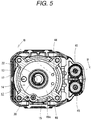
FIG. 5 is a cross-sectional view taken along a line A-A of the gas combustion type driving tool; -
FIG. 6 is a side view (partial sectional view taken along a line B-B) of the gas combustion type driving tool; -
FIG. 7 is an enlarged side view (partial sectional view taken along the line B-B) of the gas combustion type driving tool; -
FIG. 8 is a perspective view illustrating an internal structure of the gas combustion type driving tool; -
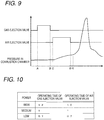
FIG. 9 is a timing chart showing operation of the gas combustion type driving tool; -
FIG. 10 is a table showing examples of output settings; -
FIG. 11 is an enlarged side view of a gas combustion type driving tool according to a modification (a partial sectional view taken along a line B-B); and -
FIG. 12 is a timing chart showing operation of the gas combustion type driving tool according to the modification. - Embodiments of the present invention are described with reference to the drawings. In the following description, as illustrated in
FIG. 1 , a direction in which a fastener is driven out is described as "front", and an opposite direction is described as "rear". When viewed in a direction orthogonal to the direction in which a fastener is driven out, that is, in a direction in which agrip 30 is extended, a direction in which anoutput unit 11 is located is described as "upper" and an opposite direction is described as "lower". - A gas combustion
type driving tool 10 according to the present embodiment drives a fastener out by combustion pressure when mixed gas of combustible gas and compressed air is ignited. As illustrated inFIGS. 1 and2 , the gas combustiontype driving tool 10 includes theoutput unit 11, thegrip 30, a fuelcontainer storage unit 37, amagazine 38, and acoupler 40. - As illustrated in
FIGS. 3 and4 , theoutput unit 11 includes acombustion chamber 12. Thecombustion chamber 12 is a space for burning combustible gas and is used as a space that can be sealed in rear (the direction opposite to the direction in which a fastener is driven out) of apiston 16 to be described below. Combustion pressure generated in thecombustion chamber 12 is used to drive out a fastener by operating on thepiston 16. - At a front end of the
output unit 11, anose portion 18 is attached to guide a fastener to a workpiece. When a driving operation is performed by operating atrigger operating unit 31 to be described below, the fastener is driven to the workpiece from anejection outlet 18a. Theejection outlet 18a opens to a front end of thenose portion 18. - The
nose portion 18 can be pushed into theoutput unit 11, and the driving operation is not performed even if thetrigger operating unit 31 is operated, unless thenose portion 18 is pushed in. Specifically, a safety switch (not illustrated) is turned on by pushing in thenose portion 18, and a signal of atrigger switch 32 to be described below is not enabled unless the safety switch is turned on. Therefore, the fastener is not driven out unless thenose portion 18 is pressed against the workpiece, so that safety is ensured. - As illustrated in
FIG. 4 and the like, theoutput unit 11 houses, inside a housing thereof, anignition device 13, acylinder head 14, acylinder 15, apiston 16, adriver 17, acylindrical member 20, amovable plug 21, acompression spring 22, and the like. - The
ignition device 13 is used to generate a spark inside thecombustion chamber 12. For example, theignition device 13 is a spark plug that generates a spark by raising a voltage of abattery pack 50 to be described below to a high voltage and discharging the high voltage. Theignition device 13 performs an ignition operation at a predetermined timing based on a signal from acontrol device 33 to be described below. When theignition device 13 ignites the mixed gas in thecombustion chamber 12, a high-pressure combustion gas is generated in thecombustion chamber 12, so that thepiston 16 to be described below slides in an impacted manner by combustion pressure thus generated. - The
cylinder head 14 constitutes thecombustion chamber 12 together with thecylinder 15 to be described below. Thecylinder head 14 is fixed to close a rear end of thecylinder 15. Thecylinder head 14 is provided with anair ejection unit 44 and agas ejection unit 48 to be described below, so that compressed air and combustible fuel container be introduced into thecombustion chamber 12 from theair ejection unit 44 and thegas ejection unit 48. - The
cylinder 15 is disposed in a longitudinal direction of theoutput unit 11. Thecylinder 15 has two spaces in the front and rear. The space in the front guides thepiston 16 to be described below to be slidable therein. The space in the rear constitutes thecombustion chamber 12. The two spaces in the front and rear are connected with each other, and thecylindrical member 20 to be described below is attached between the two spaces. The front and rear two spaces can be shielded by themovable plug 21 housed in thecylindrical member 20. - The
piston 16 is slidably housed inside thecylinder 15. When the high-pressure combustion gas is generated in thecombustion chamber 12, the combustion gas operates on thepiston 16, so that thepiston 16 is actuated forward. - The
driver 17 is used to hit a fastener and is coupled to front of thepiston 16. When the driving operation is performed, thedriver 17 slides along an ejection path of the fastener and drives the fastener in the ejection path out of theejection outlet 18a. - The
cylindrical member 20 is fixed to thecylinder 15 in thecombustion chamber 12. Thecylindrical member 20 includes apressure chamber 20b therein that actuates themovable plug 21 to be described below. On a side portion of thecylindrical member 20, afirst opening 20a is provided to connect thecombustion chamber 12 and thepressure chamber 20b. On an end surface of thecylindrical member 20 facing thepiston 16, asecond opening 20c is provided to connect thecombustion chamber 12 and a space in rear of thepiston 16. - The
movable plug 21 is a columnar member slidably disposed inside thecylindrical member 20. Themovable plug 21 is biased in a direction toward thepiston 16 by thecompression spring 22, and closes thesecond opening 20c when in a natural state. Therefore, thecombustion chamber 12 and the space in rear of thepiston 16 are shielded by themovable plug 21 before the driving operation, resulting in a sealed space in thecombustion chamber 12. - The
movable plug 21 includes a groove in an outer periphery thereof, so that thepressure chamber 20b is defined between the groove and an inner peripheral surface of thecylindrical member 20. Thepressure chamber 20b is connected with thecombustion chamber 12 when in a natural state, resulting in the same air pressure as air pressure in thecombustion chamber 12. The groove of themovable plug 21 includes a firstpressure receiving surface 21a and a secondpressure receiving surface 21b respectively in upper and lower edges of the groove to receive air pressure in thepressure chamber 20b. In the present embodiment, the firstpressure receiving surface 21a has an area larger than an area of the secondpressure receiving surface 21b, so that themovable plug 21 is actuated by a difference in pressure receiving areas. That is, when the air pressure in thepressure chamber 20b is increased, a force acts to slide themovable plug 21 in a direction away from thepiston 16. Themovable plug 21 slides rearward when the force overcomes a biasing force of thecompression spring 22. - Therefore, the
movable plug 21 slides to open thesecond opening 20c when the air pressure in thepressure chamber 20b (that is, the combustion chamber 12) exceeds a certain level. When thesecond opening 20c is opened, thecombustion chamber 12 is connected with the space in rear of thepiston 16, so that air (combustion gas) in thecombustion chamber 12 flows into rear of thepiston 16. Specifically, when the combustible gas burns in thecombustion chamber 12 and pressure in thecombustion chamber 12 increases, themovable plug 21 slides such that the combustion gas is allowed to flow into rear of thepiston 16, and thepiston 16 is driven by combustion pressure. - The
grip 30 is connected to a lower surface of theoutput unit 11, and is substantially orthogonal to the direction in which a fastener is driven out. A user of the gas combustiontype driving tool 10 can hold the tool stably by gripping thegrip 30. - The
grip 30 is provided with thetrigger operating unit 31 that can be pulled. Thetrigger operating unit 31 is disposed at such a position that an index finger is applied to thetrigger operating unit 31 when thegrip 30 is gripped. When thetrigger operating unit 31 is operated, thetrigger switch 32 inside thegrip 30 is pressed and turned on. A signal output from thetrigger switch 32 turned on is transmitted to and processed by thecontrol device 33 inside thegrip 30. Specifically, when both the safety switch and thetrigger switch 32 are turned ON, thecontrol device 33 performs a predetermined driving operation (details of the driving operation is described below). - On a lower end surface of the
grip 30, abattery mounting unit 34 is provided, to which abattery pack 50 can be detachably attached. The gas combustiontype driving tool 10 according to the present embodiment is driven by electric power supplied from thebattery pack 50 having a built-in secondary battery. Accordingly, the gas combustiontype driving tool 10 is used in a state in which thebattery pack 50 is mounted on thebattery mounting unit 34. In the present embodiment, thebattery pack 50 can be mounted on thebattery mounting unit 34 by being slid from rear. Thebattery pack 50 can also be detached from thebattery mounting unit 34 by being slid rearward. - The fuel
container storage unit 37 is used for mounting a fuel container that is a supply source of combustible gas to be supplied to thecombustion chamber 12. As illustrated inFIG. 3 , the fuelcontainer storage unit 37 according to the present embodiment is of a cylindrical shape and is disposed in front of thegrip 30. A central axis of the fuelcontainer storage unit 37 is substantially parallel to thegrip 30. - The fuel
container storage unit 37 according to the present embodiment includes acylindrical portion 37a in which a fuel container is held in a slidable manner, aconnection portion 37b disposed at an innermost portion of thecylindrical portion 37a, and alid 37d disposed in the front of thecylindrical portion 37a. - The
connection portion 37b connects a nozzle of a fuel container. Theconnection portion 37b is connected to afirst gas pipe 46 to be described below. By connecting the nozzle of a fuel container to theconnection portion 37b, combustible gas in the connected fuel container can be guided to thecombustion chamber 12. - The
lid 37d is attached to the fuelcontainer storage unit 37 and can be opened and closed. Specifically, thelid 37d is rotatably supported by the fuelcontainer storage unit 37 via ahinge 37c, so that inside of the fuelcontainer storage unit 37 can be opened or sealed by rotating thelid 37d. By opening thelid 37d, a fuel container stored in the fuelcontainer storage unit 37 can be taken out, and a fuel container can also be inserted into the fuelcontainer storage unit 37. - The
magazine 38 is used for loading a plurality of fasteners those can be driven out, and is connected to a lower side of thenose portion 18. The fasteners loaded in themagazine 38 are sequentially supplied to thenose portion 18, in which a leading fastener supplied to thenose portion 18 is hit and driven out by thedriver 17. Themagazine 38 according to the present embodiment allows connected fasteners to be aligned in a straight line. - The
coupler 40 connects, for example, a plug of a hose that is connected to an air supply source such as an air compressor, and is used for taking in compressed air from outside. Thecoupler 40 is disposed on a lower end side of thegrip 30, and particularly at a position lower than thegrip 30 that can be gripped by the user. Further, thecoupler 40 is opened downward. The gas combustiontype driving tool 10 according to the present embodiment is used for driving fasteners by transmitting the compressed air supplied from outside to thecombustion chamber 12 through thecoupler 40. - As illustrated in
FIG. 2 , thecoupler 40 is provided at a position shifted to a side (left side as viewed from a user holding the grip 30) of thegrip 30 as viewed with respect to thegrip 30. Specifically, thecoupler 40 is on a lateral side of the fuelcontainer storage unit 37. Further, thecoupler 40 is shifted forward from thebattery mounting unit 34. In this manner, thecoupler 40 is shifted from and close to thebattery mounting unit 34 and the fuelcontainer storage unit 37, so as not to interfere with thebattery mounting unit 34 and the fuelcontainer storage unit 37. Therefore, parts requiring attachment/detachment such as thebattery mounting unit 34, the fuelcontainer storage unit 37, and thecoupler 40 are collectively disposed on the lower end side of thegrip 30, resulting in good operability. Since thebattery mounting unit 34, the fuelcontainer storage unit 37, and thecoupler 40 are arranged in a compact manner, the gas combustiontype driving tool 10 is not large in size and is easy to handle. - As illustrated in
FIG. 1 , thecoupler 40 does not protrude downward relative to thebattery pack 50 mounted on thebattery mounting unit 34. Therefore, thecoupler 40 does not protrude beyond an outline of the gas combustiontype driving tool 10, resulting in good operability of the tool when a hose is connected to thecoupler 40. With thecoupler 40 within the outline of the tool, thecoupler 40 is less likely to come into contact with ground when the tool is placed on the ground or the like, so that dust or the like is less likely to adhere to thecoupler 40. - Next, an introduction path of compressed air and combustible gas into the
combustion chamber 12 is described. - The compressed air supplied from outside is introduced into the tool through the
coupler 40 as described above. The gas combustiontype driving tool 10 according to the present embodiment includes a pipe for connecting thecoupler 40 and thecombustion chamber 12. Specifically, the gas combustiontype driving tool 10 includes afirst air pipe 42 constituting an introduction path from thecoupler 40 to an air ejection valve 41 (described below) and asecond air pipe 43 constituting an introduction path from theair ejection valve 41 to thecombustion chamber 12. - The
first air pipe 42 has an upstream end connected to thecoupler 40, and a downstream end connected to theair ejection valve 41. As illustrated inFIGS. 1 and8 , an upstream side of thefirst air pipe 42 is disposed along a lateral surface of the fuelcontainer storage unit 37. A downstream side of thefirst air pipe 42 is disposed along a lateral surface of theoutput unit 11. The fuelcontainer storage unit 37 and theoutput unit 11 are connected in a substantially L shape. Accordingly, thefirst air pipe 42 is bent into an L shape at a connection position of the fuelcontainer storage unit 37 and theoutput unit 11. Thefirst air pipe 42 according to the present embodiment is formed of an elastically bendable tube. - A part of the
first air pipe 42 is exposed outside a housing of the tool. Specifically, thefirst air pipe 42 passes through a tunnel-shapedpipe holding unit 37e on the lateral surface of the fuelcontainer storage unit 37, and is inserted into apipe cover unit 25 on the lateral surface of theoutput unit 11, other parts of the first air pipe being exposed outside. According to such a configuration, thefirst air pipe 42 is inserted and assembled to the tool from outside of the housing, resulting in good assembling properties. - The
air ejection valve 41 is an electromagnetic valve that controls an amount of compressed air supplied to thecombustion chamber 12. Theair ejection valve 41 measures the compressed air supplied through thefirst air pipe 42, and ejects a certain amount of the compressed air into thecombustion chamber 12. As illustrated inFIG. 6 , theair ejection valve 41 according to the present embodiment is adjacent to thecombustion chamber 12. Therefore, a distance of thesecond air pipe 43 to be described below can be short, making it possible to improve a response of the tool. - The
second air pipe 43 has an upstream end connected to theair ejection valve 41 and a downstream end connected to thecombustion chamber 12. Thesecond air pipe 43 is used for introducing the compressed air ejected by theair ejection valve 41 into thecombustion chamber 12. As illustrated inFIGS. 6 and8 , thesecond air pipe 43 is disposed to wrap thecylinder head 14 from rear. As illustrated inFIGS. 5 and7 , thecylinder head 14 is provided with anair ejection unit 44 for connecting thesecond air pipe 43, so that the compressed air passing through thesecond air pipe 43 flows into thecombustion chamber 12 through theair ejection unit 44. - The
second air pipe 43 according to the present embodiment is formed of an elastically bendable tube. Accordingly, thesecond air pipe 43 is less likely to break or come off even when vibration and shocks occur during the driving operation. - As described above, combustible gas in the fuel container is introduced through the
connection portion 37b of the fuelcontainer storage unit 37. The gas combustiontype driving tool 10 according to the present embodiment includes a pipe for connecting theconnection portion 37b and thecombustion chamber 12. Specifically, the gas combustiontype driving tool 10 includes afirst gas pipe 46 constituting an introduction path from theconnection portion 37b to a gas ejection valve 45 (described below), and asecond gas pipe 47 constituting an introduction path from thegas ejection valve 45 to thecombustion chamber 12. - The
first gas pipe 46 has an upstream end connected to theconnection portion 37b, and a downstream end connected to thegas ejection valve 45. As illustrated inFIG. 3 , thefirst gas pipe 46 is disposed along theoutput unit 11. - The
gas ejection valve 45 is an electromagnetic valve that controls an amount of combustible gas supplied to thecombustion chamber 12. Thegas ejection valve 45 measures the combustible gas supplied through thefirst gas pipe 46, and ejects a certain amount of the combustible gas into thecombustion chamber 12. As illustrated inFIG. 4 , thegas ejection valve 45 according to the present embodiment is adjacent to thecombustion chamber 12. Therefore, a distance of thesecond gas pipe 47 to be described below can be short, making it possible to improve a response of the tool. - The
second gas pipe 47 has an upstream end connected to thegas ejection valve 45, and a downstream end connected to thecombustion chamber 12. Thesecond gas pipe 47 is used for introducing the combustible gas ejected by thegas ejection valve 45 into thecombustion chamber 12. As illustrated inFIGS. 4 and8 , thesecond gas pipe 47 is disposed to wrap thecylinder head 14 from rear. As illustrated inFIG. 5 , thecylinder head 14 is provided with agas ejection unit 48 for connecting thesecond gas pipe 47, so that the combustible gas passing through thesecond gas pipe 47 flows into thecombustion chamber 12 through thegas ejection unit 48. Thesecond gas pipe 47 according to the present embodiment is formed of an elastically bendable tube. Accordingly, thesecond gas pipe 47 is less likely to break or come off even when vibration and shocks occur during the driving operation. - Next, a driving operation of the gas combustion
type driving tool 10 according to the present embodiment is described with reference toFIG. 9 . - When the
trigger operating unit 31 is operated to start the driving operation, thecontrol device 33 first opens thegas ejection valve 45 at a timing indicated by A inFIG. 9 . Thegas ejection valve 45 is opened for a predetermined time, and is closed at a timing indicated by B when the predetermined time elapses. Accordingly, a predetermined amount of combustible gas is supplied into thecombustion chamber 12. - Next, the
control device 33 opens theair ejection valve 41 at a timing indicated by C inFIG. 9 . Theair ejection valve 41 is opened for a predetermined time, and is closed at a timing indicated by D when the predetermined time elapses. Accordingly, a predetermined amount of compressed air is supplied into thecombustion chamber 12. - When the combustible gas and the compressed air are introduced into the
combustion chamber 12 to form mixed gas, thecontrol device 33 operates theignition device 13 at a timing indicated by E inFIG. 9 to ignite the mixed gas. Accordingly, pressure in thecombustion chamber 12 is rapidly increased. When the pressure in thecombustion chamber 12 is increased, themovable plug 21 is activated, so that the combustion gas flows into rear of thepiston 16. Accordingly, the combustion pressure makes thepiston 16 slide by operating on thepiston 16, so that a fastener is driven out by thedriver 17 that slides integrally with thepiston 16. - In the gas combustion
type driving tool 10 according to the present embodiment, output related to driving of a fastener can be adjusted by adjusting filling pressure of compressed air and filling pressure of combustible gas in thecombustion chamber 12. Specifically, the output is adjusted by adjusting opening time of theair ejection valve 41 and opening time of thegas ejection valve 45. The adjustment of the opening time of theair ejection valve 41 and the opening time of thegas ejection valve 45 is realized by changing energizing time of theair ejection valve 41 and energizing time of thegas ejection valve 45 through thecontrol device 33. - In the present embodiment, the user of the gas combustion
type driving tool 10 can set the output in multiple stages. For example, as shown inFIG. 10 , the output can be selected from three stages of "high", "medium", and "low". The gas combustiontype driving tool 10 according to the present embodiment includes an operation unit 35 (seeFIG. 3 ) such as a button or a knob for changing the output, so that an external parameter based on a user input is obtained by operating theoperation unit 35. The output is adjusted by referring to the external parameter. - In the present embodiment, "medium" is a normal output, and the opening time of the
air ejection valve 41 and the opening time of thegas ejection valve 45 when set to "medium" are "1" as a reference value. When set to "high", the opening time of theair ejection valve 41 and the opening time of thegas ejection valve 45 are 1.2 times of a value in "medium", which is "1.2". When set to "low", the opening time of theair ejection valve 41 and the opening time of thegas ejection valve 45 are 0.7 times of the value in "medium", which is "0.7". In this manner, in the present embodiment, both the opening time of theair ejection valve 41 and the opening time of thegas ejection valve 45 increase in proportion to the output. In the present embodiment, a ratio between the opening time of theair ejection valve 41 and the opening time of thegas ejection valve 45 is constant regardless of the output. However, the present invention is not limited thereto, and the ratio may be arbitrarily set in accordance with the set output. - In the driving operation shown in
FIG. 9 , the opening time of theair ejection valve 41 and the opening time of thegas ejection valve 45 determined in this manner are used for control by thecontrol device 33. That is, after opening thegas ejection valve 45 at the timing indicated by A inFIG. 9 , thecontrol device 33 waits until the determined opening time of thegas ejection valve 45 elapses, and closes thegas ejection valve 45 at the timing indicated by B after the opening time elapses. After opening theair ejection valve 41 at the timing indicated by C inFIG. 9 , thecontrol device 33 waits until the opening time of theair ejection valve 41 elapses, and closes theair ejection valve 41 at the timing indicated by D inFIG. 9 after the opening time elapses. - The output in the present embodiment can be selected from the multiple stages. However, the present invention is not limited thereto, and the output may be selected in a stepless manner.
- The output in the present embodiment can be selected from three stages of "high", "medium", and "low". However, the present invention is not limited thereto, and the user may be allowed to select an "operation mode" in which output suitable for a purpose can be obtained. Further, the user can select a nail or a driving member, and output adjustment may be performed based on a parameter set in advance in accordance with the selected condition.
- The opening time of the
air ejection valve 41 and the opening time of thegas ejection valve 45 set by the user in accordance with the output may be further adjusted with reference to a use environment of the tool. For example, the opening time may be adjusted according to one or a plurality of obtained factors such as environment temperature, tool temperature, supply pressure of compressed air to theair ejection valve 41, supply pressure of gas fuel to thegas ejection valve 45, pressure in a pipe, pressure in thecombustion chamber 12, a flow rate in a pipe, and a power supply voltage. In this manner, a stable driving force can be always obtained even in different use environments. - The present embodiment describes an example in which the user changes the output. However, the output may be automatically changed by the tool based on input from a sensor.
- For example, as illustrated in
FIG. 11 , the tool may include apressure sensor 49 serving as a sensor on a downstream side of theair ejection valve 41 and thegas ejection valve 45. When pressure in the combustion chamber 12 (in the pipe) detected by thepressure sensor 49 reaches a predetermined pressure, thecontrol device 33 may close theair ejection valve 41 or thegas ejection valve 45. - In the above example, the
pressure sensor 49 is provided on the downstream side of theair ejection valve 41 and thegas ejection valve 45. However, the present invention is not limited thereto, and thepressure sensor 49 may also be disposed on an upstream side of theair ejection valve 41 and thegas ejection valve 45. - The above example describes an example of the
pressure sensor 49 serving as a sensor. However, in addition to or in place of thepressure sensor 49, the tool may also include a flow sensor in a flow path where theair ejection valve 41 is disposed or a flow path where thegas ejection valve 45 is disposed. When a flow rate detected by the flow sensor reaches a predetermined flow rate, thecontrol device 33 may close theair ejection valve 41 or thegas ejection valve 45. - In addition to or in place of the
pressure sensor 49 and the flow sensor, the tool may include a temperature sensor that detects environment temperature. Thecontrol device 33 may adjust the output by controlling theair ejection valve 41 or thegas ejection valve 45 using the environment temperature detected by the temperature sensor as the input parameter. - In addition to (or in place of) the above-described control, the output may also be adjusted by adjusting supply pressure to the
air ejection valve 41 or thegas ejection valve 45. For example, the supply pressure may be constant as the output is not stable when the supply pressure to theair ejection valve 41 or thegas ejection valve 45 is unstable. - Specifically, the supply pressure to the
gas ejection valve 45 may be adjusted by changing temperature of the fuel container which is a supply source of combustible gas. Vapor pressure of gas fuel increases with temperature, and accordingly the supply pressure to thegas ejection valve 45 also changes when the temperature of the fuel container changes. When such a change is not desired, the supply pressure to thegas ejection valve 45 can be stabilized by keeping the temperature of the fuelcontainer storage unit 37 constant. The supply pressure to thegas ejection valve 45 can be changed by intentionally changing the temperature of the fuelcontainer storage unit 37. - Further, the supply pressure to the
air ejection valve 41 may also be adjusted by using a pressure reducing valve. The supply pressure to theair ejection valve 41 depends on internal pressure of a tank of an air compressor connected to outside. Accordingly, the supply pressure to theair ejection valve 41 also decreases when the internal pressure of the tank decreases due to an insufficient amount of remaining compressed air. When such a change is not desired, the supply pressure can be made constant by the pressure reducing valve when compressed air supplied from the air compressor is supplied to theair ejection valve 41 through the pressure reducing valve. The supply pressure to theair ejection valve 41 can also be changed when the pressure reducing valve is detachable. When the pressure reducing valve is detachable, for example, a mechanism for attaching and detaching the pressure reducing valve may be provided to thecoupler 40. - The output in the above-described embodiment is adjusted by adjusting the opening time of the
air ejection valve 41 and the opening time of thegas ejection valve 45. However, in addition to (or in place of) this, the output may also be adjusted by adjusting an area of a flow path for supplying the compressed air or the combustible gas to thecombustion chamber 12. For example, a flow rate of the compressed air or the combustible gas may be adjusted by adjusting an opening degree of theair ejection valve 41 or thegas ejection valve 45. Specifically, with the opening degree of theair ejection valve 41 or thegas ejection valve 45 capable of being adjusted, an amount of compressed air or combustible gas supplied to thecombustion chamber 12 may be adjusted by adjusting the opening degree of theair ejection valve 41 or thegas ejection valve 45. Further, the flow rate of the compressed air or the combustible gas may also be adjusted by switching the flow path. Specifically, a plurality of pipes having different areas may be provided, so that the flow rate may be adjusted in a stepwise manner by switching these pipes to connect thecombustion chamber 12. Accordingly, the amount of compressed air or combustible gas supplied to thecombustion chamber 12 is adjusted. - In addition to the above-described control, the output may also be adjusted by changing an ignition timing. For example, as shown in
FIG. 12 , by advancing the ignition timing (E'), ignition may be performed before the filling pressure in thecombustion chamber 12 increases. Accordingly, the output is changed. - As described above, according to the present embodiment, the tool includes the
air ejection valve 41 that ejects compressed air into thecombustion chamber 12 and thegas ejection valve 45 that ejects combustible gas into thecombustion chamber 12. According to such a configuration, a large output can be obtained by energy of the compressed air and thermal energy of the combustion gas even if a volume of thecombustion chamber 12 is not extremely large. Specifically, output comparable to a pyrotechnic type driving tool can be obtained with a tool size in a range that can be used as a hand-held tool. Further, unlike the pyrotechnic type driving tool, the tool can be used without a special license, and maintenance is also easy. - The output related to driving of a fastener can be adjusted by adjusting at least one of the filling pressure of compressed air or the filling pressure of combustible gas. According to such a configuration, the output can be accurately adjusted as filling pressure and output energy of the mixed gas are in a proportional relation. Fuel is not wasted as the combustible fuel container be burned with highest energy efficiency even in any output setting. Further, a simple structure can be obtained as there is no need for a structure that mechanically adjusts the output.
Claims (13)
- A gas combustion type driving tool that drives a fastener by combustion pressure when mixed gas of combustible gas and compressed air in a combustion chamber is ignited, the gas combustion type driving tool comprising:an air ejection valve that is configured to eject compressed air into the combustion chamber; anda gas ejection valve that is configured to eject combustible gas into the combustion chamber,wherein output related to driving of a fastener is adjustable by adjusting at least one of filling pressure of compressed air or filling pressure of combustible gas.
- The gas combustion type driving tool according to claim 1,
wherein the output is adjusted by adjusting opening time of at least one of the air ejection valve and the gas ejection valve. - The gas combustion type driving tool according to claim 2,
wherein the opening time of the air ejection valve is adjusted by changing energizing time or an amount of electric power supplied to the air ejection valve, or
the opening time of the gas ejection valve is adjusted by changing energizing time or an amount of electric power supplied to the gas ejection valve. - The gas combustion type driving tool according to any one of claims 1 to 3,
wherein the output is adjusted by adjusting supply pressure to at least one of the air ejection valve and the gas ejection valve. - The gas combustion type driving tool according to claim 4,
wherein supply pressure to the gas ejection valve is adjusted by changing temperature of a fuel container which is a supply source of combustible gas. - The gas combustion type driving tool according to claim 4 or 5,
wherein supply pressure to the air ejection valve is adjusted by using a pressure reducing valve. - The gas combustion type driving tool according to any one of claims 1 to 6,
wherein the output is adjusted by adjusting an opening degree of at least one of the air ejection valve and the gas ejection valve. - The gas combustion type driving tool according to any one of claims 1 to 7,
wherein the output is adjusted by referring to an external parameter based on a sensor input or a user input. - The gas combustion type driving tool according to claim 8,
wherein the sensor includes a pressure sensor on an upstream side or a downstream side of at least one of the air ejection valve and the gas ejection valve. - The gas combustion type driving tool according to claim 8,
wherein the sensor includes a flow sensor in a flow path disposed in at least one of the air ejection valve and the gas ejection valve. - The gas combustion type driving tool according to claim 8,
wherein the sensor includes a temperature sensor configured to detect environment temperature. - The gas combustion type driving tool according to any one of claims 1 to 11,
wherein the output is adjusted by changing a timing of the ignition. - The gas combustion type driving tool according to any one of claims 1 to 12, further comprising:
an operation unit that is configured to adjust the output related to driving of a fastener.
Applications Claiming Priority (3)
| Application Number | Priority Date | Filing Date | Title |
|---|---|---|---|
| JP2018007520A JP7031324B2 (en) | 2018-01-19 | 2018-01-19 | Gas combustion type driving tool |
| JP2018007521A JP7004154B2 (en) | 2018-01-19 | 2018-01-19 | Gas combustion type driving tool |
| JP2018007633A JP7006298B2 (en) | 2018-01-19 | 2018-01-19 | Driving tool |
Publications (1)
| Publication Number | Publication Date |
|---|---|
| EP3520967A1 true EP3520967A1 (en) | 2019-08-07 |
Family
ID=65041609
Family Applications (2)
| Application Number | Title | Priority Date | Filing Date |
|---|---|---|---|
| EP19152463.6A Active EP3524391B1 (en) | 2018-01-19 | 2019-01-18 | Gas combustion type driving tool |
| EP19152474.3A Pending EP3520967A1 (en) | 2018-01-19 | 2019-01-18 | Gas combustion type driving tool |
Family Applications Before (1)
| Application Number | Title | Priority Date | Filing Date |
|---|---|---|---|
| EP19152463.6A Active EP3524391B1 (en) | 2018-01-19 | 2019-01-18 | Gas combustion type driving tool |
Country Status (2)
| Country | Link |
|---|---|
| US (2) | US11279014B2 (en) |
| EP (2) | EP3524391B1 (en) |
Families Citing this family (7)
| Publication number | Priority date | Publication date | Assignee | Title |
|---|---|---|---|---|
| KR102303861B1 (en) * | 2018-01-19 | 2021-09-23 | 마크스 가부시기가이샤 | Driving tool |
| US11279014B2 (en) * | 2018-01-19 | 2022-03-22 | Max Co., Ltd. | Gas combustion type driving tool |
| WO2023158729A1 (en) | 2022-02-18 | 2023-08-24 | Milwaukee Electric Tool Corporation | Powered fastener driver |
| US12318899B2 (en) | 2023-01-27 | 2025-06-03 | Milwaukee Electric Tool Corporation | Powered fastener driver |
| US12479075B2 (en) | 2023-01-27 | 2025-11-25 | Milwaukee Electric Tool Corporation | Powered fastener driver |
| DE102024112566A1 (en) | 2023-05-05 | 2024-11-07 | Milwaukee Electric Tool Corporation | POWER-OPERATED FASTENER DRIVER |
| FR3165664A1 (en) * | 2024-08-20 | 2026-02-27 | Illinois Tool Works Inc. | COMBUSTION TOOL |
Citations (5)
| Publication number | Priority date | Publication date | Assignee | Title |
|---|---|---|---|---|
| JPS5015177A (en) | 1973-05-11 | 1975-02-18 | ||
| JPS6328574A (en) | 1986-07-02 | 1988-02-06 | センコ、プロダクツ、インコ | Simple built-in internal combustion type fastener driving tool |
| US6722550B1 (en) * | 2003-05-09 | 2004-04-20 | Illinois Tool Works Inc. | Fuel level indicator for combustion tools |
| US20040134961A1 (en) * | 2002-12-23 | 2004-07-15 | Iwan Wolf | Combustion-engined setting tool |
| US20160144496A1 (en) * | 2013-07-16 | 2016-05-26 | Hilti Aktiengesellschaft | Control method and hand-held machine tool |
Family Cites Families (63)
| Publication number | Priority date | Publication date | Assignee | Title |
|---|---|---|---|---|
| US1855805A (en) * | 1928-03-26 | 1932-04-26 | Luxmore William | Internal-combustion engine |
| US3042008A (en) * | 1958-10-18 | 1962-07-03 | Liesse Maurice | Striking machine, chiefly nailing, clamping and the like percussion machines |
| US3381672A (en) * | 1965-04-06 | 1968-05-07 | Nat Res Dev | Impulse forming and like machines |
| US3638534A (en) * | 1969-08-18 | 1972-02-01 | Fastener Corp | Fastener driving tool with improved pneumatic piston retaining means |
| JPS5712673B2 (en) | 1974-11-20 | 1982-03-12 | ||
| US3967771A (en) * | 1974-12-16 | 1976-07-06 | Smith James E | Self-contained impact tool |
| US4290489A (en) * | 1974-12-18 | 1981-09-22 | Charles Leavell | Vibrationless pneumatic tools |
| US4075850A (en) | 1975-06-07 | 1978-02-28 | Max Co., Ltd. | Striking tool |
| JPS5649741Y2 (en) | 1976-06-30 | 1981-11-19 | ||
| US4131164A (en) * | 1977-11-23 | 1978-12-26 | Chambersburg Engineering Company | Adaptive valve control system for an impact device |
| US4483474A (en) * | 1981-01-22 | 1984-11-20 | Signode Corporation | Combustion gas-powered fastener driving tool |
| US4721240A (en) * | 1986-07-02 | 1988-01-26 | Senco Products, Inc. | Cam-controlled self-contained internal combustion fastener driving tool |
| US5119667A (en) * | 1991-06-21 | 1992-06-09 | Hollis Freddy C | Pneumatic hammer apparatus |
| US5191861A (en) * | 1991-07-12 | 1993-03-09 | Stanley-Bostitch, Inc. | Internal combustion actuated portable tool |
| US5363999A (en) | 1993-08-26 | 1994-11-15 | Stanley-Bostitch, Inc. | Fastener feeder having vibratory brush |
| CA2126943A1 (en) | 1993-08-26 | 1995-02-27 | David J. Simonelli | Feed mechanism for gravity feed tackers |
| US5370295A (en) | 1993-10-04 | 1994-12-06 | Stanley-Bostitch, Inc. | Feed mechanism for gravity feed tackers |
| US5752643A (en) * | 1995-05-23 | 1998-05-19 | Applied Tool Development Corporation | Internal combustion powered tool |
| US6123241A (en) * | 1995-05-23 | 2000-09-26 | Applied Tool Development Corporation | Internal combustion powered tool |
| US6237827B1 (en) | 1998-11-12 | 2001-05-29 | Senco Products, Inc. | Stapler and method for the attachment of steel framing |
| US6148507A (en) * | 1999-03-12 | 2000-11-21 | Swanson; Jeffery S | Machine for pressing a fastener through sheet metal studs |
| DE10007211C2 (en) | 2000-02-17 | 2003-03-20 | Hilti Ag | Internal combustion-powered working device, in particular setting device for fastening elements |
| US7494035B2 (en) * | 2001-04-30 | 2009-02-24 | Black & Decker Inc. | Pneumatic compressor |
| US6786379B2 (en) * | 2002-01-04 | 2004-09-07 | Ilinois Tool Works Inc. | Fastener driving tool having pressurized power source |
| US20040231865A1 (en) * | 2002-07-09 | 2004-11-25 | Giardino David A. | Retrofit kit for a modular control apparatus for a power impact tool |
| DE10232035B4 (en) | 2002-07-16 | 2021-10-14 | Hilti Aktiengesellschaft | Internal combustion-powered setting tool |
| DE10259816B4 (en) * | 2002-12-19 | 2005-01-20 | Hilti Ag | Internal combustion engine, in particular setting device with volumetric, gaseous dosage |
| US6796387B1 (en) * | 2003-03-19 | 2004-09-28 | Lund And Company Llc | Power driven equipment utilizing hydrogen from the electrolysis of water |
| US7150139B1 (en) * | 2003-03-19 | 2006-12-19 | Lund And Company Invention, L.L.C. | Lawnmower utilizing hydrogen from the electrolysis of water |
| JP4039371B2 (en) | 2004-02-09 | 2008-01-30 | マックス株式会社 | Compressed air tool end cap |
| JP2008531120A (en) * | 2005-02-22 | 2008-08-14 | ロイヤル アプライアンス マニュファクチュアリング カンパニー | High pressure washer |
| US7413027B2 (en) * | 2005-08-03 | 2008-08-19 | Glendo Corporation | Impact power tool with a precision controlled drive system |
| JP2007222989A (en) * | 2006-02-23 | 2007-09-06 | Max Co Ltd | Drive piston holding structure in gas nailer |
| JP2007237328A (en) | 2006-03-08 | 2007-09-20 | Hitachi Koki Co Ltd | Combustion power tool |
| JP4935978B2 (en) | 2006-08-09 | 2012-05-23 | マックス株式会社 | Valve device for combustion chamber in gas-fired driving tool |
| KR20090119872A (en) * | 2007-03-08 | 2009-11-20 | 마크스 가부시기가이샤 | Pneumatic tools |
| JP5100190B2 (en) | 2007-04-12 | 2012-12-19 | 株式会社マキタ | Driving tool |
| JP5003344B2 (en) | 2007-08-15 | 2012-08-15 | マックス株式会社 | Gas fired driving tool |
| JP5067110B2 (en) | 2007-10-17 | 2012-11-07 | マックス株式会社 | Gas fired driving tool |
| EP2367662A1 (en) * | 2008-12-24 | 2011-09-28 | Globalforce Ip Limited | Vaporisation system |
| JP5310311B2 (en) * | 2009-06-29 | 2013-10-09 | マックス株式会社 | Bumper for impact tool and impact tool |
| WO2011027540A1 (en) | 2009-09-02 | 2011-03-10 | パナソニック株式会社 | Semiconductor element and method for manufacturing same |
| DE102009041824A1 (en) * | 2009-09-18 | 2011-03-24 | Hilti Aktiengesellschaft | Device for transmitting energy to a fastener |
| US8523035B2 (en) * | 2009-11-11 | 2013-09-03 | Tricord Solutions, Inc. | Fastener driving apparatus |
| JP5360692B2 (en) * | 2010-03-31 | 2013-12-04 | 日立工機株式会社 | Combustion type driving machine |
| DE102010061973A1 (en) * | 2010-11-25 | 2012-05-31 | Hilti Aktiengesellschaft | tacker |
| DE102010063173A1 (en) * | 2010-12-15 | 2012-06-21 | Hilti Aktiengesellschaft | A bolt gun and method for operating a bolt gun |
| JP5648528B2 (en) | 2011-02-22 | 2015-01-07 | マックス株式会社 | Gas fired driving tool |
| FR2972666B1 (en) * | 2011-03-16 | 2014-04-25 | Prospection & Inventions | GAS SEALING TOOL WITH LIMITED FUEL LOSS |
| US9770818B2 (en) * | 2011-10-03 | 2017-09-26 | Illinois Tool Works Inc. | Fastener driving tool with portable pressurized power source |
| US9463560B2 (en) * | 2011-10-03 | 2016-10-11 | Illinois Tool Works Inc. | Portable pressurized power source for fastener driving tool |
| JP2013111719A (en) * | 2011-11-30 | 2013-06-10 | Makita Corp | Driving tool |
| DE102012206108A1 (en) * | 2012-04-13 | 2013-10-17 | Hilti Aktiengesellschaft | tacker |
| EP2851158A1 (en) * | 2013-09-19 | 2015-03-25 | HILTI Aktiengesellschaft | Driving device with heated pneumatic reservoir |
| EP2875902A1 (en) | 2013-11-26 | 2015-05-27 | HILTI Aktiengesellschaft | Setting device with temperature sensor |
| JP6524650B2 (en) * | 2014-11-28 | 2019-06-05 | 工機ホールディングス株式会社 | Driving machine |
| US20180243891A1 (en) | 2015-09-14 | 2018-08-30 | Hilti Aktiengesellschaft | Fuel gas-fired driving-in tool with charging function |
| EP3141348A1 (en) * | 2015-09-14 | 2017-03-15 | HILTI Aktiengesellschaft | Driving device powered by combustion gas with valve member |
| EP3524390B1 (en) * | 2018-01-19 | 2022-03-30 | Max Co., Ltd. | Driving tool |
| KR102303861B1 (en) * | 2018-01-19 | 2021-09-23 | 마크스 가부시기가이샤 | Driving tool |
| US11279014B2 (en) * | 2018-01-19 | 2022-03-22 | Max Co., Ltd. | Gas combustion type driving tool |
| EP3575040A1 (en) * | 2018-01-19 | 2019-12-04 | Max Co., Ltd. | Driving tool |
| TWM578770U (en) * | 2018-11-14 | 2019-06-01 | 蔡進琳 | Gas burner with combustion angle adjusting function |
-
2019
- 2019-01-18 US US16/251,187 patent/US11279014B2/en active Active
- 2019-01-18 US US16/251,202 patent/US11007629B2/en active Active
- 2019-01-18 EP EP19152463.6A patent/EP3524391B1/en active Active
- 2019-01-18 EP EP19152474.3A patent/EP3520967A1/en active Pending
Patent Citations (5)
| Publication number | Priority date | Publication date | Assignee | Title |
|---|---|---|---|---|
| JPS5015177A (en) | 1973-05-11 | 1975-02-18 | ||
| JPS6328574A (en) | 1986-07-02 | 1988-02-06 | センコ、プロダクツ、インコ | Simple built-in internal combustion type fastener driving tool |
| US20040134961A1 (en) * | 2002-12-23 | 2004-07-15 | Iwan Wolf | Combustion-engined setting tool |
| US6722550B1 (en) * | 2003-05-09 | 2004-04-20 | Illinois Tool Works Inc. | Fuel level indicator for combustion tools |
| US20160144496A1 (en) * | 2013-07-16 | 2016-05-26 | Hilti Aktiengesellschaft | Control method and hand-held machine tool |
Also Published As
| Publication number | Publication date |
|---|---|
| US20190224826A1 (en) | 2019-07-25 |
| US11007629B2 (en) | 2021-05-18 |
| US20190224827A1 (en) | 2019-07-25 |
| EP3524391A1 (en) | 2019-08-14 |
| US11279014B2 (en) | 2022-03-22 |
| EP3524391B1 (en) | 2022-05-04 |
Similar Documents
| Publication | Publication Date | Title |
|---|---|---|
| US11007629B2 (en) | Gas combustion type driving tool | |
| JP4673324B2 (en) | Repetitive cycle tool logic and mode indicators for combustion fastener driven tools | |
| EP1479483B1 (en) | Combustion apparatus having improved airflow | |
| KR19990083123A (en) | Fastener driving tool for trim applications | |
| AU2003204874B2 (en) | An improved fastener supply and positioning mechanism for a tool | |
| US8544710B2 (en) | Gas combustion type driving tool | |
| EP0927609A2 (en) | Internal combustion fastener driving tool shuttle valve | |
| JPS59196112A (en) | Portable power tool | |
| US20140299646A1 (en) | Hand held power tool for driving fasteners | |
| MXPA97000396A (en) | System of the stabilizer of the holder and speed control for tools with motorde combust | |
| AU2019200366B2 (en) | Driving tool | |
| US5960996A (en) | Gas-burned glue gun | |
| WO2007048006A2 (en) | Combustion-powered driving tool | |
| US4218888A (en) | Impact device | |
| CA2432312C (en) | Combustion mechanism for generating a flame jet | |
| JP7004154B2 (en) | Gas combustion type driving tool | |
| US7461766B2 (en) | Combustion power tool | |
| JP3677193B2 (en) | Tools with combustion power | |
| JP7031324B2 (en) | Gas combustion type driving tool | |
| EP1606081B1 (en) | Gas-operated apparatuses with precompression chamber and propulsion chamber | |
| EP3860807B1 (en) | Gas-operated fixing tool and method of operating it | |
| US20220048174A1 (en) | Fastener driving tool | |
| CA2387259C (en) | Fastener driving tool for trim applications | |
| JP2008221436A (en) | Combustion power tool | |
| EP3664969A1 (en) | All-direction valve and handheld power tool having same |
Legal Events
| Date | Code | Title | Description |
|---|---|---|---|
| PUAI | Public reference made under article 153(3) epc to a published international application that has entered the european phase |
Free format text: ORIGINAL CODE: 0009012 |
|
| STAA | Information on the status of an ep patent application or granted ep patent |
Free format text: STATUS: REQUEST FOR EXAMINATION WAS MADE |
|
| 17P | Request for examination filed |
Effective date: 20190118 |
|
| AK | Designated contracting states |
Kind code of ref document: A1 Designated state(s): AL AT BE BG CH CY CZ DE DK EE ES FI FR GB GR HR HU IE IS IT LI LT LU LV MC MK MT NL NO PL PT RO RS SE SI SK SM TR |
|
| AX | Request for extension of the european patent |
Extension state: BA ME |
|
| RBV | Designated contracting states (corrected) |
Designated state(s): AL AT BE BG CH CY CZ DE DK EE ES FI FR GB GR HR HU IE IS IT LI LT LU LV MC MK MT NL NO PL PT RO RS SE SI SK SM TR |