EP3518927B1 - 1-phenylpropanone compounds and use thereof - Google Patents
1-phenylpropanone compounds and use thereof Download PDFInfo
- Publication number
- EP3518927B1 EP3518927B1 EP17791160.9A EP17791160A EP3518927B1 EP 3518927 B1 EP3518927 B1 EP 3518927B1 EP 17791160 A EP17791160 A EP 17791160A EP 3518927 B1 EP3518927 B1 EP 3518927B1
- Authority
- EP
- European Patent Office
- Prior art keywords
- compound
- phenyl
- propan
- methylpiperazin
- piperidin
- Prior art date
- Legal status (The legal status is an assumption and is not a legal conclusion. Google has not performed a legal analysis and makes no representation as to the accuracy of the status listed.)
- Active
Links
- CIYAESDXUTVTAL-UHFFFAOYSA-N CCCC(c1ccc(C)cc1)=O Chemical compound CCCC(c1ccc(C)cc1)=O CIYAESDXUTVTAL-UHFFFAOYSA-N 0.000 description 1
- KKGQTZUTZRNORY-UHFFFAOYSA-N CCCCCCCCc1ccc(CCC(CO)(CO)N)cc1 Chemical compound CCCCCCCCc1ccc(CCC(CO)(CO)N)cc1 KKGQTZUTZRNORY-UHFFFAOYSA-N 0.000 description 1
- SPPTXAJILJYJLY-UHFFFAOYSA-N CCCCCCSc(cc1)ccc1C(CCN1CCCCC1)=O Chemical compound CCCCCCSc(cc1)ccc1C(CCN1CCCCC1)=O SPPTXAJILJYJLY-UHFFFAOYSA-N 0.000 description 1
- KAYLAACFSGZSCT-UHFFFAOYSA-N CCCCCSc(cc1)ccc1C(CCN1CCOCC1)=O Chemical compound CCCCCSc(cc1)ccc1C(CCN1CCOCC1)=O KAYLAACFSGZSCT-UHFFFAOYSA-N 0.000 description 1
- SQLCYDRQZZUEEX-UHFFFAOYSA-O CCCC[NH2+]C1=CC1 Chemical compound CCCC[NH2+]C1=CC1 SQLCYDRQZZUEEX-UHFFFAOYSA-O 0.000 description 1
- UTLDDSNRFHWERZ-UHFFFAOYSA-N CCN(C)C(C)C Chemical compound CCN(C)C(C)C UTLDDSNRFHWERZ-UHFFFAOYSA-N 0.000 description 1
Images

Classifications
-
- A—HUMAN NECESSITIES
- A61—MEDICAL OR VETERINARY SCIENCE; HYGIENE
- A61K—PREPARATIONS FOR MEDICAL, DENTAL OR TOILETRY PURPOSES
- A61K31/00—Medicinal preparations containing organic active ingredients
- A61K31/33—Heterocyclic compounds
- A61K31/395—Heterocyclic compounds having nitrogen as a ring hetero atom, e.g. guanethidine or rifamycins
- A61K31/435—Heterocyclic compounds having nitrogen as a ring hetero atom, e.g. guanethidine or rifamycins having six-membered rings with one nitrogen as the only ring hetero atom
- A61K31/44—Non condensed pyridines; Hydrogenated derivatives thereof
- A61K31/445—Non condensed piperidines, e.g. piperocaine
- A61K31/4453—Non condensed piperidines, e.g. piperocaine only substituted in position 1, e.g. propipocaine, diperodon
-
- A—HUMAN NECESSITIES
- A61—MEDICAL OR VETERINARY SCIENCE; HYGIENE
- A61K—PREPARATIONS FOR MEDICAL, DENTAL OR TOILETRY PURPOSES
- A61K31/00—Medicinal preparations containing organic active ingredients
- A61K31/33—Heterocyclic compounds
- A61K31/395—Heterocyclic compounds having nitrogen as a ring hetero atom, e.g. guanethidine or rifamycins
- A61K31/495—Heterocyclic compounds having nitrogen as a ring hetero atom, e.g. guanethidine or rifamycins having six-membered rings with two or more nitrogen atoms as the only ring heteroatoms, e.g. piperazine or tetrazines
- A61K31/4965—Non-condensed pyrazines
-
- A—HUMAN NECESSITIES
- A61—MEDICAL OR VETERINARY SCIENCE; HYGIENE
- A61K—PREPARATIONS FOR MEDICAL, DENTAL OR TOILETRY PURPOSES
- A61K31/00—Medicinal preparations containing organic active ingredients
- A61K31/33—Heterocyclic compounds
- A61K31/395—Heterocyclic compounds having nitrogen as a ring hetero atom, e.g. guanethidine or rifamycins
- A61K31/535—Heterocyclic compounds having nitrogen as a ring hetero atom, e.g. guanethidine or rifamycins having six-membered rings with at least one nitrogen and one oxygen as the ring hetero atoms, e.g. 1,2-oxazines
- A61K31/5375—1,4-Oxazines, e.g. morpholine
-
- A—HUMAN NECESSITIES
- A61—MEDICAL OR VETERINARY SCIENCE; HYGIENE
- A61P—SPECIFIC THERAPEUTIC ACTIVITY OF CHEMICAL COMPOUNDS OR MEDICINAL PREPARATIONS
- A61P35/00—Antineoplastic agents
-
- A—HUMAN NECESSITIES
- A61—MEDICAL OR VETERINARY SCIENCE; HYGIENE
- A61P—SPECIFIC THERAPEUTIC ACTIVITY OF CHEMICAL COMPOUNDS OR MEDICINAL PREPARATIONS
- A61P35/00—Antineoplastic agents
- A61P35/02—Antineoplastic agents specific for leukemia
-
- C—CHEMISTRY; METALLURGY
- C07—ORGANIC CHEMISTRY
- C07D—HETEROCYCLIC COMPOUNDS
- C07D211/00—Heterocyclic compounds containing hydrogenated pyridine rings, not condensed with other rings
- C07D211/04—Heterocyclic compounds containing hydrogenated pyridine rings, not condensed with other rings with only hydrogen or carbon atoms directly attached to the ring nitrogen atom
- C07D211/06—Heterocyclic compounds containing hydrogenated pyridine rings, not condensed with other rings with only hydrogen or carbon atoms directly attached to the ring nitrogen atom having no double bonds between ring members or between ring members and non-ring members
-
- C—CHEMISTRY; METALLURGY
- C07—ORGANIC CHEMISTRY
- C07D—HETEROCYCLIC COMPOUNDS
- C07D241/00—Heterocyclic compounds containing 1,4-diazine or hydrogenated 1,4-diazine rings
- C07D241/02—Heterocyclic compounds containing 1,4-diazine or hydrogenated 1,4-diazine rings not condensed with other rings
- C07D241/04—Heterocyclic compounds containing 1,4-diazine or hydrogenated 1,4-diazine rings not condensed with other rings having no double bonds between ring members or between ring members and non-ring members
-
- C—CHEMISTRY; METALLURGY
- C07—ORGANIC CHEMISTRY
- C07D—HETEROCYCLIC COMPOUNDS
- C07D295/00—Heterocyclic compounds containing polymethylene-imine rings with at least five ring members, 3-azabicyclo [3.2.2] nonane, piperazine, morpholine or thiomorpholine rings, having only hydrogen atoms directly attached to the ring carbon atoms
- C07D295/04—Heterocyclic compounds containing polymethylene-imine rings with at least five ring members, 3-azabicyclo [3.2.2] nonane, piperazine, morpholine or thiomorpholine rings, having only hydrogen atoms directly attached to the ring carbon atoms with substituted hydrocarbon radicals attached to ring nitrogen atoms
- C07D295/10—Heterocyclic compounds containing polymethylene-imine rings with at least five ring members, 3-azabicyclo [3.2.2] nonane, piperazine, morpholine or thiomorpholine rings, having only hydrogen atoms directly attached to the ring carbon atoms with substituted hydrocarbon radicals attached to ring nitrogen atoms substituted by doubly bound oxygen or sulphur atoms
- C07D295/104—Heterocyclic compounds containing polymethylene-imine rings with at least five ring members, 3-azabicyclo [3.2.2] nonane, piperazine, morpholine or thiomorpholine rings, having only hydrogen atoms directly attached to the ring carbon atoms with substituted hydrocarbon radicals attached to ring nitrogen atoms substituted by doubly bound oxygen or sulphur atoms with the ring nitrogen atoms and the doubly bound oxygen or sulfur atoms attached to the same carbon chain, which is not interrupted by carbocyclic rings
- C07D295/108—Heterocyclic compounds containing polymethylene-imine rings with at least five ring members, 3-azabicyclo [3.2.2] nonane, piperazine, morpholine or thiomorpholine rings, having only hydrogen atoms directly attached to the ring carbon atoms with substituted hydrocarbon radicals attached to ring nitrogen atoms substituted by doubly bound oxygen or sulphur atoms with the ring nitrogen atoms and the doubly bound oxygen or sulfur atoms attached to the same carbon chain, which is not interrupted by carbocyclic rings to an acyclic saturated chain
-
- C—CHEMISTRY; METALLURGY
- C07—ORGANIC CHEMISTRY
- C07F—ACYCLIC, CARBOCYCLIC OR HETEROCYCLIC COMPOUNDS CONTAINING ELEMENTS OTHER THAN CARBON, HYDROGEN, HALOGEN, OXYGEN, NITROGEN, SULFUR, SELENIUM OR TELLURIUM
- C07F11/00—Compounds containing elements of Groups 6 or 16 of the Periodic Table
Definitions
- the present invention concerns 1-phenylpropanone compounds effective in the induction of apoptosis in malignant B cells of patients affected by chronic lymphocytic leukemia and other cellular models of several tumor types in vitro.
- FTY720 also known as fingolimod, and marketed by Novartis as GilenyaTM
- 2-amino-2[2-(4-octylphenyl)ethyl]propane-1,3-diol hydrochloride having the formula reported below is a structural analogue of sphingosine, synthesized by modification of the natural compound, with immunosuppressive action, known as miriocine, alias ISP-I, a metabolite of the entomopathogenic fungus Isaria sinclairii, ( Fujita T et al, J Antibiot., 1994, 47:208-15 ).
- FTY720 was approved for the treatment of the latter, in particular the relapsing-remitting form, in 2010 and 2011, by FDA in USA and by the European Medicines Agency in Europe, respectively.
- FTY720-P The immunosuppressive activity of FTY720 is related to its transformation into the phosphorylated form (FTY720-P) in lymphocytes by the enzyme sphingosine kinase 2 (SphK2), which recognizes the drug because it is structurally similar to the natural substrate, sphingosine. Subsequently, FTY720-P is extruded from the cell, and it interacts with the G-protein coupled sphingosine-1-phosphate (S1P) receptors (especially the one called S1P1), causing their internalization and degradation.
- S1P G-protein coupled sphingosine-1-phosphate
- lymphosphingocyte being no longer able to interact with the natural ligand S1P, are sequestered in secondary lymphoid organs, resulting in lymphopenia in the general circulation [ Brinkmann et al. Nat Rev Drug Discov. 2010 Nov, 9(11):883-9 ; and patent application WO 2007/143081 A2 ].
- FTY720 is able to induce apoptosis in cells derived from both hematological [ Liu et al., Blood 2008, 111:275-84 ; Neviani et al., J Cin Invest 2007, 117: 2408-21 ], and solid neoplasm, such as prostate, bladder, kidney, pancreas, liver, breast, colon, stomach, and lungs [ Permpongkosol et al.
- caspase-dependent apoptotic pathways have been called into question, with the involvement of caspases 9 and 3 [ Zheng et al.,sfingo J Cell Biochem 111:218-228, 2010 ], sometimes associated with the increase in the expression of the proapoptotic proteins Bad, Bax, Bid, and Btf [ Ubai et al., Anticancer Res 27:75-88, 2007 ], and caspase-independent, in which a role is played by the activation state of protein kinases, such as Akt [ Liu et al., Clin Cancer Res 16:3182-3192, 2010 ] and ERK1/2 [ Liu et al., Blood 111:275-284 ; 200824], the generation of oxygen reactive species [ Wallington-Beddoe et al., Autophagy 7:707-715, 2011 ], and autophagy induction [ Liu et al., Clin Cancer Res 16:3182-3
- immunosuppression although indicated, for example, for the treatment of immunologically mediated diseases or the prevention of rejection, may increase susceptibility of the host to infections or even tumors; immunosuppression should therefore always be taken into account and, as far as possible, minimized.
- Molecules with structure analogous to FTY720 have already been described in the literature.
- dyclonine in breast cancer is investigated, while in the second the activity against multiple myeloma is investigated.
- in vitro studies conclude that dyclonine is able to significantly increase the cytotoxic efficacy of MG132 protease inhibitor (known in the treatment of breast cancer) and of drug bortezomib (known for the treatment of multiple myeloma) against target cells, but alone it has very limited cytotoxic effects.
- the inventors have also synthesized new 1-phenylpropanone derivative compounds that resulted to have apoptotic activity against tumor cells.
- the invention therefore concerns a compound of formula (I) wherein:
- the invention relates to a pharmaceutical composition
- a pharmaceutical composition comprising a compound of formula (I) as a medicament, and a pharmaceutically acceptable vehicle thereof.
- the invention concerns a compound of formula (I) wherein:
- the antitumoral treatment is against breast cancer, hepatocarcinoma, chronic lymphatic leukemia (LLC) or neuroblastoma.
- LLC chronic lymphatic leukemia
- Figure 1 shows the results of tests aimed at assessing the immunosuppression characteristics of compounds of the invention and, by comparison, of a compound of the prior art.
- the optional substituent C 3 -alkyl of substituent A may be either n-propyl or isopropyl.
- the invention relates to a 1-phenylpropanone compound of formula (I) wherein
- the compound of the invention is preferably NLC or neuroblastoma
- A is optionally substituted with a (C 1 -C 3 )alkyl or (C 1 -C 3 )acyl substituent.
- LLC chronic lymphatic leukemia
- neuroblastoma the compound of formula (I) is selected from the group consisting of:
- the compound of formula (I) is selected from the group consisting of:
- the compound of formula (I) is selected from the group consisting of:
- the inventors also synthesized new 1-phenylpropanone compounds that resulted to have apoptotic activity against tumor cells.
- the invention concerns a 1-phenylpropanone compound of formula (I) wherein:
- X is selected from the group consisting of S, Se or CH 2 , more preferably it is S.
- the compound of the invention is a compound wherein n is 5 or 6.
- the new compound of formula (I) is preferably a compound selected from the group consisting of:
- the new compound of formula (I) is preferably a compound selected from the group consisting of:
- the new compound of formula (I) is preferably a compound selected from the group consisting of:
- X is selected from the group consisting of S, Se or CH 2 , more preferably it is S.
- the compound as a medicament of the invention is a compound wherein n is 5 or 6.
- the compound of formula (I) as a medicament is preferably a compound selected from the group consisting of:
- the new compound of formula (I) as a medicament is preferably a compound selected from the group consisting of:
- the new compound of formula (I) as a medicament is preferably a compound selected from the group consisting of:
- the invention relates to a pharmaceutical composition
- a pharmaceutical composition comprising a compound of formula (I) as a medicament, and a pharmaceutically acceptable vehicle.
- the compounds of the invention may be employed in medicine. They can then be combined with a pharmaceutically acceptable vehicle, and optionally suitable excipients, to obtain pharmaceutical compositions.
- pharmaceutically acceptable vehicle it is meant to include solvents, technological aids, diluents, and the like that are employed in administering compounds of the invention.
- compositions may be administered by parenteral, oral, buccal, sublingual, nasal, rectal, topical, or transdermal route.
- compositions of the present invention suitable for oral administration will conveniently be in the form of discrete units, such as tablets, capsules, cachets, powders, or granules, or even as suspensions in a liquid.
- the tablets may also contain suitable pharmaceutical excipients, such as pregelatinized starch, microcrystalline cellulose, sodium glycol starch, talc, lactose, magnesium stearate, sucrose, stearic acid, mannitol.
- suitable pharmaceutical excipients such as pregelatinized starch, microcrystalline cellulose, sodium glycol starch, talc, lactose, magnesium stearate, sucrose, stearic acid, mannitol.
- compositions for parenteral administration will conveniently comprise sterile preparations.
- compositions for topical administration will conveniently be in the form of creams, pastes, oils, ointments, emulsions, foams, gels, drops, spray solutions, and transdermal patches.
- the invention concerns a compound of formula (I) wherein:
- the antitumoral treatment is against breast cancer, hepatocarcinoma, chronic lymphatic leukemia (LLC) or neuroblastoma.
- LLC chronic lymphatic leukemia
- X is selected from the group consisting of S, Se or CH 2 , more preferably it is S.
- A is optionally substituted with a (C 1 -C 3 )alkyl or (C 1 -C 3 )acyl substituent.
- the compound of the invention for use as an antitumoral agent is a compound wherein n is 5 or 6.
- the 1-phenylpropanone compound of the invention for use as an antitumoral agent is a compound selected from the group consisting of:
- the compound of formula (I) for use as an antitumoral agent is selected from the group consisting of:
- the novel compounds or the ones for use as a medicament or as antitumoral agents are obtained through a simple process, of easy industrial scalability, and avoiding the use of lengthy and expensive preparation steps, obtaining high yields of a stable pharmaceutically grade compound.
- the phenyl alkyl ether intermediate was obtained from the reaction between phenol and the appropriate 1-bromoalkane (for example, 1-bromopentane, 1-bromohexane, or 1-bromoheptane, in an amount of 1 equivalent) in acetonitrile in the presence of potassium carbonate (2 equivalents).
- 1-bromoalkane for example, 1-bromopentane, 1-bromohexane, or 1-bromoheptane, in an amount of 1 equivalent
- potassium carbonate 2 equivalents
- the obtained phenyl alkyl ether intermediate was reacted with 3-bromopropionyl chloride (2 equivalents) and aluminum trichloride (3 equivalents) in 1,2-dichloroethane in ice bath.
- the reaction was quenched by pouring it into water, and extracting the desired intermediate with diethyl ether.
- the organic layer was separated and subjected to rotary evaporation to obtain the phenyl alkyl ether derivative acylated in the para position.
- the intermediate thus synthesized was then treated with an appropriate cyclic amine (morpholine, piperidine or N-methyl piperazine, 2 equivalents), potassium iodide (2 equivalents) and calcium carbonate (3 equivalents) in toluene.
- the mixture was refluxed for 12 h. After cooling, the solid was removed by filtration, and the solvent evaporated by rotary evaporation.
- the residue was then dispersed into dichloromethane, and the mixture was washed with 10% sodium hydroxide solution.
- the organic layer was evaporated by rotary evaporation, affording the desired compound as indicated below. Yields: 68-78%.
- the phenyl alkyl thioether intermediate was obtained from the reaction between thiophenol and the appropriate 1-bromoalkane (for example, 1-bromopentane, 1-bromohexane, or 1-bromoheptane, 1 equivalent) in the presence of potassium hydroxide (2 equivalents) in ethanol at room temperature. The mixture was stirred for 5 h at room temperature, the solid thus formed was then removed by filtration, and the solvent evaporated by rotary evaporation. The obtained phenyl alkyl thioether intermediate was then reacted with 3-bromopropionyl chloride (2 equivalents) and aluminum trichloride (3 equivalents) in 1,2-dichloroethane in ice bath.
- 1-bromoalkane for example, 1-bromopentane, 1-bromohexane, or 1-bromoheptane, 1 equivalent
- the reaction was quenched by pouring it into water, and extracting the desired intermediate with diethyl ether.
- the organic layer was separated and subjected to rotary evaporation to obtain the phenyl alkyl thioether acylated in the para position.
- the intermediate thus synthesized was treated with an appropriate cyclic amine (morpholine, piperidine or N-methyl piperazine, 2 equivalents), potassium iodide (2 equivalents) and calcium carbonate (3 equivalents) in toluene.
- the mixture was refluxed for 12 h. After cooling, the solid was removed by filtration, and the solvent evaporated by rotary evaporation.
- the residue was dispersed into dichloromethane, and the mixture was washed with 10% sodium hydroxide solution.
- the organic layer was evaporated by rotary evaporation to afford the desired compound. Yields: 65-75%.
- alkylbenzene for example, pentylbenzene, hexylbenzene, or heptylbenzene
- 3-bromopropionyl chloride (2 equivalents)
- aluminum trichloride (3 equivalents)
- the reaction was quenched by pouring it into water, and extracting the desired intermediate with diethyl ether.
- the organic layer was separated and subjected to rotary evaporation.
- the intermediate thus synthesized was then treated with an appropriate cyclic amine (morpholine, piperidine or N-methyl piperazine, 2 equivalents), potassium iodide (2 equivalents) and calcium carbonate (3 equivalents) in toluene.
- Flow cytofluorometry was used to evaluate the ability of some compounds of the invention to induce cell death, with particular reference to apoptosis.
- This latter phenomenon is characterized by morphological modification of the plasmatic membrane as a result of the translocation of the phospholipid phosphatidylserine (PS) in the plasmatic membrane from the cytoplasmic side to the outer surface of the cell.
- PS phospholipid phosphatidylserine
- the annexin V protein exhibits high affinity for PS, becoming a reliable marker for apoptosis detection.
- Annexin is detected because it is conjugated to a specific fluorochrome, thus allowing to distinguish apoptosis from necrotic phenomena, which are instead measured by the fluorescent dye propidium iodide, which penetrates freely in the cell having a damaged plasmatic membrane.
- LLC chronic lymphatic leukemia
- SK-N-BE humanized cell lines of neuroblastoma
- HepG2 and HUH7.5 hepatocarcinoma
- MDA-MB- 231 breast cancer
- HepG2 (2x10 5 cells per well), HUH7.5 and MDA-MB-231 (1.5x10 5 cells per well) cells were seeded on a 6-well plate in Dulbecco's Modified Eagle Medium (DMEM), 10% FBS and cultured at 37 °C in a 5% CO 2 atmosphere. After 24 hours, the medium was removed and replaced by DMEM containing the test compounds, previously dissolved in 100% dimethylsulfoxide, and diluted such that the final concentration of the same in cell incubation solutions was 0.5% (v/v). After 30 minutes incubation, 10% FBS was added, and the cells were incubated for 24 hours, then detached with trypsin, and analyzed by cytofluorimeter.
- DMEM Dulbecco's Modified Eagle Medium
- FBS fetal bovine serum
- LLC cells (1x10 6 cells per well) were seeded and cultured on 12-well plates in RPMI-1640 medium, 10% FBS, at 37 °C in a humified atmosphere containing 5% CO 2 . To this medium, test compounds were added, and incubation was carried out for 24 hours, after which time the cells were analyzed by cytofluorimeter.
- Leukemic lymphocytes were isolated, following heparinized venous withdrawal from peripheral blood of LLC patients, diluted with saline in a 1:3 ratio, layered on a Ficoll/Hypaque (F/H) density gradient, centrifuged at 900 rpm for 20 minutes, at 20°C without brakes. Mononuclear cells and platelets, concentrating on top of the F/H gradient, were separated after 2 further washings, with centrifugation at 400 rpm at room temperature. The mononuclear cells thus obtained were washed 3 times with PBS, centrifuged for 10 minutes at 400 rpm, at 20 °C with brakes, and resuspended in RPMI 1640.
- F/H Ficoll/Hypaque
- the compound FTY720 exerts a cytotoxic action on tumor cells, while maintaining the molecular mechanism underlying the immunosuppressive effect that consists in the degradation of the S1P receptor.
- this mechanism undesirable for a potential use in antitumoral treatments, persisted in the presence of compounds of the present invention, some of these were tested by comparing them with FTY720 under the same conditions.
- LLC cells (5x10 5 per well) were seeded and cultured on 12-well plates in RPMI-1640 medium, 10% FBS, at 37 °C in a humidified atmosphere containing 5% CO 2 , adding to the culture the various test compounds.
Landscapes
- Chemical & Material Sciences (AREA)
- Health & Medical Sciences (AREA)
- Organic Chemistry (AREA)
- Life Sciences & Earth Sciences (AREA)
- Veterinary Medicine (AREA)
- Public Health (AREA)
- General Health & Medical Sciences (AREA)
- Medicinal Chemistry (AREA)
- Animal Behavior & Ethology (AREA)
- Pharmacology & Pharmacy (AREA)
- Epidemiology (AREA)
- Nuclear Medicine, Radiotherapy & Molecular Imaging (AREA)
- General Chemical & Material Sciences (AREA)
- Chemical Kinetics & Catalysis (AREA)
- Oncology (AREA)
- Hematology (AREA)
- Pharmaceuticals Containing Other Organic And Inorganic Compounds (AREA)
- Organic Low-Molecular-Weight Compounds And Preparation Thereof (AREA)
- Acyclic And Carbocyclic Compounds In Medicinal Compositions (AREA)
- Hydrogenated Pyridines (AREA)
Description
- The present invention concerns 1-phenylpropanone compounds effective in the induction of apoptosis in malignant B cells of patients affected by chronic lymphocytic leukemia and other cellular models of several tumor types in vitro.
- FTY720 (also known as fingolimod, and marketed by Novartis as Gilenya™), i.e. 2-amino-2[2-(4-octylphenyl)ethyl]propane-1,3-diol hydrochloride, having the formula reported below

- The immunosuppressive activity of FTY720 is related to its transformation into the phosphorylated form (FTY720-P) in lymphocytes by the enzyme sphingosine kinase 2 (SphK2), which recognizes the drug because it is structurally similar to the natural substrate, sphingosine. Subsequently, FTY720-P is extruded from the cell, and it interacts with the G-protein coupled sphingosine-1-phosphate (S1P) receptors (especially the one called S1P1), causing their internalization and degradation. In the absence of these receptors, lymphosphingocyte, being no longer able to interact with the natural ligand S1P, are sequestered in secondary lymphoid organs, resulting in lymphopenia in the general circulation [Brinkmann et al. Nat Rev Drug Discov. 2010 Nov, 9(11):883-9; and patent application
WO 2007/143081 A2 ]. During studies aimed to explore FTY720 induced lymphopenia, it was observed that this agent induced apoptosis in peripheral lymphocytes [Nagahara et al., Immunopharmacology 2000, 48:75-85; Nagahara et al., J Immunol 2000,165:3250-3259; Fufino M., Li X.K., Kitazawa Y. et al., J Pharmacol Exp Thar 2002, 300:939-45], and this led to assessment of its potential as antitumoral agent [Pinschewer D.D., Brinkmann V., Mender D., Neurology 2011, 76:515-9]. It was thus demonstrated that FTY720 is able to induce apoptosis in cells derived from both hematological [Liu et al., Blood 2008, 111:275-84; Neviani et al., J Cin Invest 2007, 117: 2408-21], and solid neoplasm, such as prostate, bladder, kidney, pancreas, liver, breast, colon, stomach, and lungs [Permpongkosol et al. Int J Cancer 2002, 98:167sfingo-72; Azuma et al., J Urol 2003, 169:2372-7; Ubel et al., Anticancer Res 2007, 27:75-88; Shen et al., Cancer Lett 2007, 254:288-97; Ho et al., Mol Cancer Thor 2005, 4:1430-8; Azuma et al., Cancer Res 2002, 62:1410-9; Nagaoka et al., Bid Pharm 2008, 31:117741; Meng et al., J Cell Biochem 2010, 111:218-28; Salinas et al. Int Immunopharmacol 2009, 9:689-93]. With regard to the molecular mechanism underlying cell death, caspase-dependent apoptotic pathways have been called into question, with the involvement of caspases 9 and 3 [Zheng et al.,sfingo J Cell Biochem 111:218-228, 2010], sometimes associated with the increase in the expression of the proapoptotic proteins Bad, Bax, Bid, and Btf [Ubai et al., Anticancer Res 27:75-88, 2007], and caspase-independent, in which a role is played by the activation state of protein kinases, such as Akt [Liu et al., Clin Cancer Res 16:3182-3192, 2010] and ERK1/2 [Liu et al., Blood 111:275-284; 200824], the generation of oxygen reactive species [Wallington-Beddoe et al., Autophagy 7:707-715, 2011], and autophagy induction [Liu et al., Clin Cancer Res 16:3182-3192, 2010; Liu et al., Blood 111:275-284, 2008], as well as autophagy [Zhang N. et al., Autophagy 6:1157-1167, 2010; Wallington-Beddoe et al., Autophagy 7:707-715, 2011; Liao et al., Eur J Pharm Sci 45:600-605, 2012], depending on the cell type. It is to be noted that the ability of FTY720 to induce cell death in tumor cells is independent of drug phosphorylation, and thus of immunosuppression mechanisms [Wallington-Beddoe et al., Autophagy 7:707-715, 2011]. Despite the fact that the mechanisms mediating cell death by FTY720 have not yet been fully clarified, molecular targets of the non-phosphorylated form of FTY720 have been proposed to explain this biological effect. While on one hand, the generation of reactive oxygen species in the induction of cell death by FTY720 in acute lymphoblastic leukemia [Wallington-Beddoe et al., Autophagy 7:707-715, 2011], mantle lymphoma [Liu et al., Clin Cancer Res 16:3182-3192, 2010] and multiple myeloma [Liao et al., Eur J Pharm Sci 45:600-605, 2012] was called into question, on the other hand this compound may adversely regulate the activity of critical protein factors of signal transduction pathways involved in the genesis and maintenance of the tumor phenotype, resulting in its activation, such as Protein Phosphatase 2A [Neviani et al., Cancer Cell 8:355-368, 2005; Neviani et al., J Clin Invest 117:2408-2421, 2007], the so-called MAPKs (Mitogen-activated protein kinase) pathway [Ubai et al., Anticancer Res 27:75-88, 2007; Estrada-Bernal et al., Neuro Oncol 14:405-415, 2012], the PI3K/AKT cascade [Zheng et al., J Cell Biochem 111:218-228, 2010; Liu et al., Clin Cancer Res 16:3182-3192, 2010] and the 14-3-3 adaptive protein [Woodcock et al., Cell Signal 22:1291-1299, 2010], to name just a few. - Although these observations indicate an antitumoral effect in pre-clinical models, thus allowing them to undergo further investigations to evaluate their use in human therapy, its contraindications since its approval into the market include indeed neoplasms in active phase, as well as immunodeficiencies, including the secondary ones that could be induced by chemotherapy agents.
- In addition, immunosuppression, although indicated, for example, for the treatment of immunologically mediated diseases or the prevention of rejection, may increase susceptibility of the host to infections or even tumors; immunosuppression should therefore always be taken into account and, as far as possible, minimized. Molecules with structure analogous to FTY720 have already been described in the literature.
- In the article "Inhibitors of the interaction of thyroid hormone receptor and coactivators: preliminary structure-activity relationships", L.A. Arnold et al., J Med Chem. 2007 Nov 1; 50(22): 5269-5280, 1-phenylpropanone derivatives exhibiting cytotoxic activity, although mainly against ARO cell lines (anaplastic thyroid cancer cells), are disclosed.
- The articles "Dyclonine and alverine citrate enhance the cytotoxic effects of proteasome inhibitor MG132 on breast cancer cells", D. Ju et al., Int J Mol Med. 2009 Feb, 23(2):205-9, and "Dyclonine enhances the cytotoxic effect of proteasome inhibitor bortezomib in multiple myeloma cells", D. Ju et al., MOLECULAR MEDICINE REPORTS 10: 2609-2612, 2014, report the properties of dyclonine molecule, having the formula below, as adjuvant in the treatment of cancer:
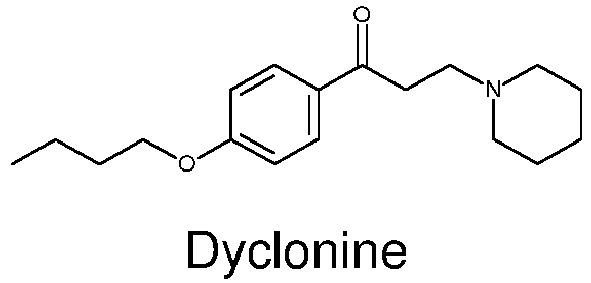
- Specifically, in the first of the two cited articles, the activity of dyclonine in breast cancer is investigated, while in the second the activity against multiple myeloma is investigated. In both cases, in vitro studies conclude that dyclonine is able to significantly increase the cytotoxic efficacy of MG132 protease inhibitor (known in the treatment of breast cancer) and of drug bortezomib (known for the treatment of multiple myeloma) against target cells, but alone it has very limited cytotoxic effects.
- It is therefore an object of the invention to provide alternative solutions through the design of molecules that exhibit a proapoptotic action against tumor cells, with high potency and at the same time without immunosuppressive properties.
- The above object is achieved by the synthesis and study of 1-phenylpropanone compounds of the general formula (I)

- X is a methylene group (-CH2-) or an atom selected from the group consisting of O, S and Se,
- n is an integer from 4 to 6,
- A is a substituent selected from the group consisting of 4-morpholyl, 1-piperidinyl and 4-methyl-1-piperazinyl, and it is optionally substituted with a (C1-C3)alkyl or (C1-C3)acyl radical,
- with the proviso that when X is CH2, n is equal to 5,
- for use as an antitumoral agent in the treatment of breast cancer, chronic lymphatic leukemia (LLC) or neuroblastoma.
- The inventors have also synthesized new 1-phenylpropanone derivative compounds that resulted to have apoptotic activity against tumor cells.
- In another aspect, the invention therefore concerns a compound of formula (I)

- X is a methylene group (-CH2-) or an atom selected from the group consisting of O, S and Se,
- n is an integer from 4 to 6,
- A is a substituent selected from the group consisting of 4-morpholyl, 1-piperidinyl and 4-methyl-1-piperazinyl, and it is optionally substituted with a (C1-C3)alkyl or (C1-C3)acyl radical,
- with the proviso that
- when X is O, A is 4-methyl-1-piperazinyl, and n is equal to 6,
- when X is S and n is 5, then A is 4-methyl-1-piperazinyl,
- when X is Se and A is 1-piperidinyl, then n is 6,
- when X is CH2, n is equal to 5, and A is 4-methyl-1 -piperazinyl or 4-morpholyl.
- In a further aspect the invention concerns a compound of formula (I)

- X is a methylene group (-CH2-) or an atom selected from the group consisting of O, S and Se,
- n is an integer from 4 to 6,
- A is a substituent selected from the group consisting of 4-morpholyl, 1-piperidinyl and 4-methyl-1-piperazinyl, and it is optionally substituted with a (C1-C3)alkyl or (C1-C3)acyl radical,
- with the proviso that
- when X is O, A is 4-methyl-1-piperazinyl, and n is equal to 6,
- when X is S and n is 5, then A is 4-methyl-1-piperazinyl o 4-morpholyl,
- when X is Se and A is 1-piperidinyl, then n is 6,
- when X is CH2, n is equal to 5, and A is 4-methyl-1-piperazinyl or 4-morpholyl for use as a medicament.
- In a further aspect the invention relates to a pharmaceutical composition comprising a compound of formula (I) as a medicament, and a pharmaceutically acceptable vehicle thereof.
- In yet a further aspect, the invention concerns a compound of formula (I)

- X is a methylene group (-CH2-) or an atom selected from the group consisting of O, S and Se,
- n is an integer from 4 to 6,
- A is a substituent selected from the group consisting of 4-morpholyl, 1-piperidinyl and 4-methyl-1-piperazinyl, and it is optionally substituted with a (C1-C3)alkyl or (C1-C3)acyl radical,
- with the proviso that
- when X is O, A is 4-methyl-1-piperazinyl or 1-piperidinyl, and n is equal to 6,
- when X is CH2, n is 5 for use as an antitumoral agent.
- Preferably, the antitumoral treatment is against breast cancer, hepatocarcinoma, chronic lymphatic leukemia (LLC) or neuroblastoma.
-
Figure 1 shows the results of tests aimed at assessing the immunosuppression characteristics of compounds of the invention and, by comparison, of a compound of the prior art. - In the compounds of the invention, the optional substituent C3-alkyl of substituent A may be either n-propyl or isopropyl.
- The invention relates to a 1-phenylpropanone compound of formula (I)

- X is a methylene group (-CH2-) or an atom selected from the group consisting of O, S and Se,
- n is an integer from 4 to 6,
- A is a substituent selected from the group consisting of 4-morpholyl, 1-piperidinyl and 4-methyl-1-piperazinyl, and it is optionally substituted with a (C1-C3)alkyl or (C1-C3)acyl radical,
- with the proviso that when X is CH2, n is equal to 5,
- for use as an antitumoral agent in the treatment of breast cancer, chronic lymphatic leukemia (LLC) or neuroblastoma.
- In the treatment of breast cancer, chronic lymphatic leukemia (LLC) or neuroblastoma, the compound of the invention is preferably
- a compound wherein X is S, Se or CH2, more preferably S;
- a compound wherein n is 5 or 6.
- A is optionally substituted with a (C1-C3)alkyl or (C1-C3)acyl substituent. Preferably, in the treatment of breast cancer, chronic lymphatic leukemia (LLC) or neuroblastoma, the compound of formula (I) is selected from the group consisting of:
- Compound 1 (AF08), 1-(4-(hexyloxy)phenyl)-3-morpholinopropan-1-one,

- Compound 2 (CC11) 1-(4-(heptyloxy)phenyl)-3-morpholinopropan-1-one

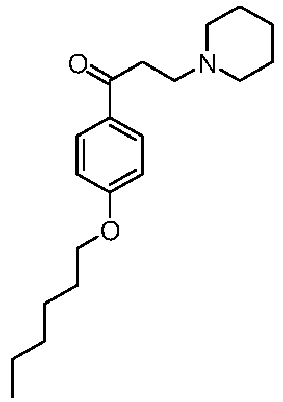
- Compound 3 (AF07), 1-(4-(hexyloxy)phenyl)-3-(piperidin-1-yl)propan-1-one,
- Compound 4 (CC12), 1-(4-(heptyloxy)phenyl)-3-(piperidin-1-yl)propan-1-one,

- Compound 5 (AI01), 1-(4-(heptyloxy)phenyl)-3-(4-methylpiperazin-1-yl)propan-1-one,

- Compound 6 (MD63), 3-morpholino-1-(4-(pentylthio)phenyl)propan-1-one,

- Compound 7 (VP158), 1-(4-(hexylthio)phenyl)-3-morpholinopropan-1-one,

- Compound 8 (FT017), 1-(4-(heptylthio)phenyl)-3-morpholinopropan-1-one,

- Compound 9 (MC12), 1-(4-(pentylthio)phenyl)-3-(piperidin-1-yl)propan-1-one,

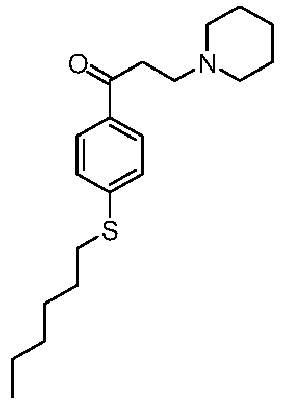
- Compound 10 (VP157), 1-(4-(hexylthio)phenyl)-3-(piperidin-1-yl)propan-1-one,
- Compound 11 (FT018), 1-(4-(heptylthio)phenyl)-3-(piperidin-1-yl)propan-1-one,

- Compound 12 (FT013), 3-(4-methylpiperazin-1-yl)-1-(4-(pentylthio)phenyl)propan-1-one,

- Compound 13 (FT016), 1-(4-(hexylthio)phenyl)-3-(4-methylpiperazin-1-yl)propan-1-one,

- Compound 14 (FT019), 1-(4-(heptylthio)phenyl)-3-(4-methylpiperazin-1-yl)propan-1-one,

- Compound 15 (GR376), 3-morpholino-1-(4-(pentylselenyl)phenyl)propan-1-one,

- Compound 16 (GR377), 1-(4-(hexylselenyl)phenyl)-3-morpholinopropan-1-one,

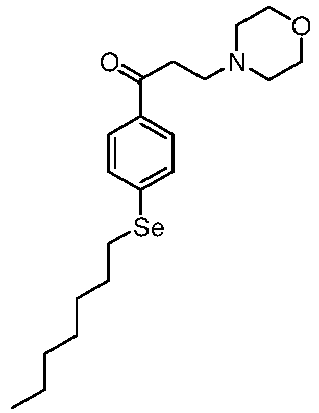
- Compound 17 (GR386), 1-(4-(heptylselenyl)phenyl)-3-morpholinopropan-1-one,
- Compound 18 (GR378), 1-(4-(pentylselenyl)phenyl)-3-(piperidin-1-yl)propan-1-one,

- Compound 19 (GR381), 1-(4-(hexylselenyl)phenyl)-3-(piperidin-1-yl)propan-1-one,

- Compound 20 (GR387), 1-(4-(heptylselenyl)phenyl)-3-(piperidin-1-yl)propan-1-one,

- Compound 21 (GR379), 3-(4-methylpiperazin-1-yl)-1-(4-(pentylselenyl)phenyl)propan-1-one,
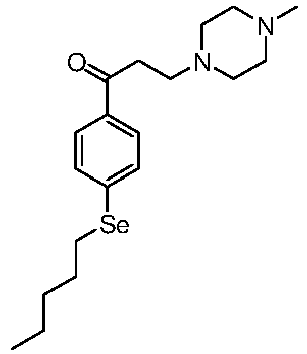
- Compound 22 (GR383), 1-(4-(hexylselenyl)phenyl)-3-(4-methylpiperazin-1-yl)propan-1-one,

- Compound 23 (GR388), 1-(4-(heptylselenyl)phenyl)-3-(4-methylpiperazin-1-yl)propan-1-one,

- Compound 24 (GR390), 1-(4-heptylphenyl)-3-morpholinopropan-1-one,

- Compound 25 (GR391), 1-(4-heptylphenyl)-3-(piperidin-1-yl)propan-1-one, and

- Compound 26 (GR392), 1-(4-heptylphenyl)-3-(4-methylpiperazin-1-yl)propan-1-one

- More preferably, in the treatment of breast cancer, chronic lymphatic leukemia (LLC) or neuroblastoma, the compound of formula (I) is selected from the group consisting of:
- Compound 1 (AF08), 1-(4-(hexyloxy)phenyl)-3-morpholinopropan-1-one,
- Compound 3 (AF07), 1-(4-(hexyloxy)phenyl)-3-(piperidin-1-yl)propan-1-one,
- Compound 4 (CC12), 1-(4-(heptyloxy)phenyl)-3-(piperidin-1-yl)propan-1-one,
- Compound 5 (AI01), 1-(4-(heptyloxy)phenyl)-3-(4-methylpiperazin-1-yl)propan-1-one,
- Compound 7 (VP158), 1-(4-(hexylthio)phenyl)-3-morpholinopropan-1-one,
- Compound 8 (FT017), 1-(4-(heptylthio)phenyl)-3-morpholinopropan-1-one,
- Compound 9 (MC12), 1-(4-(pentylthio)phenyl)-3-(piperidin-1-yl)propan-1-one,
- Compound 10 (VP157), 1-(4-(hexylthio)phenyl)-3-(piperidin-1-yl)propan-1-one,
- Compound 11 (FT018), 1-(4-(heptylthio)phenyl)-3-(piperidin-1-yl)propan-1-one,
- Compound 13 (FT016), 1-(4-(hexylthio)phenyl)-3-(4-methylpiperazin-1-yl)propan-1-one,
- Compound 14 (FT019), 1-(4-(heptylthio)phenyl)-3-(4-methylpiperazin-1-yl)propan-1-one,
- Compound 16 (GR377), 1-(4-(hexylselenyl)phenyl)-3-morpholinopropan-1-one,
- Compound 17 (GR386), 1-(4-(heptylselenyl)phenyl)-3-morpholinopropan-1-one,
- Compound 20 (GR387), 1-(4-(heptylselenyl)phenyl)-3-(piperidin-1-yl)propan-1-one,
- Compound 23 (GR388), 1-(4-(heptylselenyl)phenyl)-3-(4-methylpiperazin-1-yl)propan-1-one,
- Compound 24 (GR390), 1-(4-heptylphenyl)-3-morpholinopropan-1-one,
- Compound 25 (GR391), 1-(4-heptylphenyl)-3-(piperidin-1-yl)propan-1-one, and
- Compound 26 (GR392), 1-(4-heptylphenyl)-3-(4-methylpiperazin-1-yl)propan-1-one.
- Even more preferably, in the treatment of breast cancer, chronic lymphatic leukemia (LLC) or neuroblastoma, the compound of formula (I) is selected from the group consisting of:
- Compound 1 (AF08), 1-(4-(hexyloxy)phenyl)-3-morpholinopropan-1-one,
- Compound 5 (AI01), 1-(4-(heptyloxy)phenyl)-3-(4-methylpiperazin-1-yl)propan-1-one,
- Compound 7 (VP158), 1-(4-(hexylthio)phenyl)-3-morpholinopropan-1-one,
- Compound 8 (FT017), 1-(4-(heptylthio)phenyl)-3-morpholinopropan-1-one,
- Compound 9 (MC12) 1-(4-(pentylthio)phenyl)-3-(piperidin-1-yl)propan-1-one,
- Compound 10 (VP157), 1-(4-(hexylthio)phenyl)-3-(piperidin-1-yl)propan-1-one,
- Compound 11 (FT018), 1-(4-(heptylthio)phenyl)-3-(piperidin-1-yl)propan-1-one,
- Compound 13 (FT016), 1-(4-(hexylthio)phenyl)-3-(4-methylpiperazin-1-yl)propan-1-one,
- Compound 14 (FT019), 1-(4-(heptylthio)phenyl)-3-(4-methylpiperazin-1-yl)propan-1-one,
- Compound 17 (GR386), 1-(4-(heptylselenyl)phenyl)-3-morpholinopropan-1-one,
- Compound 20 (GR387), 1-(4-(heptylselenyl)phenyl)-3-(piperidin-1-yl)propan-1-one,
- Compound 23 (GR388), 1-(4-(heptylselenyl)phenyl)-3-(4-methylpiperazin-1-yl)propan-1-one,
- Compound 24 (GR390), 1-(4-heptylphenyl)-3-morpholinopropan-1-one,
- Compound 25 (GR391), 1-(4-heptylphenyl)-3-(piperidin-1-yl)propan-1-one, and
- Compound 26 (GR392), 1-(4-heptylphenyl)-3-(4-methylpiperazin-1-yl)propan-1-one.
- The inventors also synthesized new 1-phenylpropanone compounds that resulted to have apoptotic activity against tumor cells.
- In another aspect, the invention concerns a 1-phenylpropanone compound of formula (I)

- X is a methylene group (-CH2-) or an atom selected from the group consisting of O, S and Se,
- n is an integer from 4 to 6,
- A is a substituent selected from the group consisting of 4-morpholyl, 1-piperidinyl and 4-methyl-1-piperazinyl, and it is optionally substituted with a (C1-C3)alkyl or (C1-C3)acyl radical,
- with the proviso that
- when X is O, A is 4-methyl-1-piperazinyl, and n is equal to 6,
- when X is S and n is 5, then A is 4-methyl-1-piperazinyl,
- when X is Se and A is 1-piperidinyl, then n is 6,
- when X is CH2, n is equal to 5, and A is 4-methyl-1-piperazinyl or 4-morpholyl.
- Preferably, in the 1-phenylpropanone compound of the invention, X is selected from the group consisting of S, Se or CH2, more preferably it is S.
- A is optionally substituted with a (C1-C3)alkyl or (C1-C3)acyl substituent. Advantageously, the compound of the invention is a compound wherein n is 5 or 6. The new compound of formula (I) is preferably a compound selected from the group consisting of:
- Compound 5 (AI01), 1-(4-(heptyloxy)phenyl)-3-(4-methylpiperazin-1-yl)propan-1-one,
- Compound 6 (MD63), 3-morpholino-1-(4-(pentylthio)phenyl)propan-1-one,
- Compound 8 (FT017), 1-(4-(heptylthio)phenyl)-3-morpholinopropan-1-one,
- Compound 9 (MC12), 1-(4-(pentylthio)phenyl)-3-(piperidin-1-yl)propan-1-one,
- Compound 11 (FT018), 1-(4-(heptylthio)phenyl)-3-(piperidin-1-yl)propan-1-one,
- Compound 12 (FT013), 3-(4-methylpiperazin-1-yl)-1-(4-(pentylthio)phenyl)propan-1-one,
- Compound 13 (FT016), 1-(4-(hexylthio)phenyl)-3-(4-methylpiperazin-1-yl)propan-1-one,
- Compound 14 (FT019), 1-(4-(heptylthio)phenyl)-3-(4-methylpiperazin-1-yl)propan-1-one,
- Compound 15 (GR376), 3-morpholino-1-(4-(pentylselenyl)phenyl)propan-1-one,
- Compound 16 (GR377), 1-(4-(hexylselenyl)phenyl)-3-morpholinopropan-1-one,
- Compound 17 (GR386), 1-(4-(heptylselenyl)phenyl)-3-morpholinopropan-1-one,
- Compound 20 (GR387), 1-(4-(heptylselenyl)phenyl)-3-(piperidin-1-yl)propan-1-one,
- Compound 21 (GR379), 3-(4-methylpiperazin-1-yl)-1-(4-(pentylselenyl)phenyl)propan-1-one,
- Compound 22 (GR383), 1-(4-(hexylselenyl)phenyl)-3-(4-methylpiperazin-1-yl)propan-1-one,
- Compound 23 (GR388), 1-(4-(heptylselenyl)phenyl)-3-(4-methylpiperazin-1-yl)propan-1-one,
- Compound 24 (GR390), 1-(4-heptylphenyl)-3-morpholinopropan-1-one,
- Compound 26 (GR392), 1-(4-heptylphenyl)-3-(4-methylpiperazin-1-yl)propan-1-one.
- More preferably, the new compound of formula (I) is preferably a compound selected from the group consisting of:
- Compound 5 (AI01), 1-(4-(heptyloxy)phenyl)-3-(4-methylpiperazin-1-yl)propan-1-one,
- Compound 8 (FT017), 1-(4-(heptylthio)phenyl)-3-morpholinopropan-1-one,
- Compound 9 (MC12), 1-(4-(pentylthio)phenyl)-3-(piperidin-1-yl)propan-1-one,
- Compound 11 (FT018), 1-(4-(heptylthio)phenyl)-3-(piperidin-1-yl)propan-1-one,
- Compound 13 (FT016), 1-(4-(hexylthio)phenyl)-3-(4-methylpiperazin-1-yl)propan-1-one,
- Compound 14 (FT019), 1-(4-(heptylthio)phenyl)-3-(4-methylpiperazin-1-yl)propan-1-one,
- Compound 17 (GR386), 1-(4-(heptylselenyl)phenyl)-3-morpholinopropan-1-one,
- Compound 20 (GR387), 1-(4-(heptylselenyl)phenyl)-3-(piperidin-1-yl)propan-1-one,
- Compound 23 (GR388), 1-(4-(heptylselenyl)phenyl)-3-(4-methylpiperazin-1-yl)propan-1-one,
- Compound 24 (GR390), 1-(4-heptylphenyl)-3-morpholinopropan-1-one, and
- Compound 26 (GR392), 1-(4-heptylphenyl)-3-(4-methylpiperazin-1-yl)propan-1-one.
- Even more preferably, the new compound of formula (I) is preferably a compound selected from the group consisting of:
- Compound 8 (FT017), 1-(4-(heptylthio)phenyl)-3-morpholinopropan-1-one,
- Compound 11 (FT018), 1-(4-(heptylthio)phenyl)-3-(piperidin-1-yl)propan-1-one,
- Compound 13 (FT016), 1-(4-(hexylthio)phenyl)-3-(4-methylpiperazin-1-yl)propan-1-one,
- Compound 14 (FT019), 1-(4-(heptylthio)phenyl)-3-(4-methylpiperazin-1-yl)propan-1-one,
- Compound 17 (GR386), 1-(4-(heptylselenyl)phenyl)-3-morpholinopropan-1-one,
- Compound 24 (GR390), 1-(4-heptylphenyl)-3-morpholinopropan-1-one,
- Compound 26 (GR392), 1-(4-heptylphenyl)-3-(4-methylpiperazin-1-yl)propan-1-one.
- In a further aspect the invention concerns a compound of formula (I)

- X is a methylene group (-CH2-) or an atom selected from the group consisting of O, S and Se,
- n is an integer from 4 to 6,
- A is a substituent selected from the group consisting of 4-morpholyl, 1-piperidinyl and 4-methyl-1-piperazinyl, and it is optionally substituted with a (C1-C3)alkyl or (C1-C3)acyl radical,
- with the proviso that
- when X is O, A is 4-methyl-1-piperazinyl and n is equal to 6,
- when X is S and n is 5, then A is 4-methyl-1-piperazinyl or 4-morpholyl,
- when X is Se and A is 1-piperidinyl, then n is 6,
- when X is CH2, n is equal to 5, and A is 4-methyl-1-piperazinyl or 4-morpholyl for use as a medicament.
- Preferably, in the 1-phenylpropanone compound as a medicament of the invention, X is selected from the group consisting of S, Se or CH2, more preferably it is S.
- A is optionally substituted with a (C1-C3)alkyl or (C1-C3)acyl substituent. Advantageously, the compound as a medicament of the invention is a compound wherein n is 5 or 6.
- The compound of formula (I) as a medicament is preferably a compound selected from the group consisting of:
- Compound 5 (AI01), 1-(4-(heptyloxy)phenyl)-3-(4-methylpiperazin-1-yl)propan-1-one,
- Compound 6 (MD63), 3-morpholino-1-(4-(pentylthio)phenyl)propan-1-one,
- Compound 7 (VP158), 1-(4-(hexylthio)phenyl)-3-morpholinopropan-1-one,
- Compound 8 (FT017), 1-(4-(heptylthio)phenyl)-3-morpholinopropan-1-one,
- Compound 9 (MC12), 1-(4-(pentylthio)phenyl)-3-(piperidin-1-yl)propan-1-one,
- Compound 11 (FT018), 1-(4-(heptylthio)phenyl)-3-(piperidin-1-yl)propan-1-one,
- Compound 12 (FT013), 3-(4-methylpiperazin-1-yl)-1-(4-(pentylthio)phenyl)propan-1-one,
- Compound 13 (FT016), 1-(4-(hexylthio)phenyl)-3-(4-methylpiperazin-1-yl)propan-1-one,
- Compound 14 (FT019), 1-(4-(heptylthio)phenyl)-3-(4-methylpiperazin-1-yl)propan-1-one,
- Compound 15 (GR376), 3-morpholino-1-(4-(pentylselenyl)phenyl)propan-1-one,
- Compound 16 (GR377), 1-(4-(hexylselenyl)phenyl)-3-morpholinopropan-1-one,
- Compound 17 (GR386), 1-(4-(heptylselenyl)phenyl)-3-morpholinopropan-1-one,
- Compound 20 (GR387), 1-(4-(heptylselenyl)phenyl)-3-(piperidin-1-yl)propan-1-one,
- Compound 21 (GR379), 3-(4-methylpiperazin-1-yl)-1-(4-(pentylselenyl)phenyl)propan-1-one,
- Compound 22 (GR383), 1-(4-(hexylselenyl)phenyl)-3-(4-methylpiperazin-1-yl)propan-1-one,
- Compound 23 (GR388), 1-(4-(heptylselenyl)phenyl)-3-(4-methylpiperazin-1-yl)propan-1-one,
- Compound 24 (GR390), 1-(4-heptylphenyl)-3-morpholinopropan-1-one, and
- Compound 26 (GR392), 1-(4-heptylphenyl)-3-(4-methylpiperazin-1-yl)propan-1-one.
- More preferably, the new compound of formula (I) as a medicament is preferably a compound selected from the group consisting of:
- Compound 5 (AI01), 1-(4-(heptyloxy)phenyl)-3-(4-methylpiperazin-1-yl)propan-1-one,
- Compound 7 (VP158), 1-(4-(hexylthio)phenyl)-3-morpholinopropan-1-one,
- Compound 8 (FT017), 1-(4-(heptylthio)phenyl)-3-morpholinopropan-1-one,
- Compound 9 (MC12), 1-(4-(pentylthio)phenyl)-3-(piperidin-1-yl)propan-1-one,
- Compound 11 (FT018), 1-(4-(heptylthio)phenyl)-3-(piperidin-1-yl)propan-1-one,
- Compound 13 (FT016), 1-(4-(hexylthio)phenyl)-3-(4-methylpiperazin-1-yl)propan-1-one,
- Compound 14 (FT019), 1-(4-(heptylthio)phenyl)-3-(4-methylpiperazin-1-yl)propan-1-one,
- Compound 17 (GR386), 1-(4-(heptylselenyl)phenyl)-3-morpholinopropan-1-one,
- Compound 20 (GR387), 1-(4-(heptylselenyl)phenyl)-3-(piperidin-1-yl)propan-1-one,
- Compound 23 (GR388), 1-(4-(heptylselenyl)phenyl)-3-(4-methylpiperazin-1-yl)propan-1-one,
- Compound 24 (GR390), 1-(4-heptylphenyl)-3-morpholinopropan-1-one, and
- Compound 26 (GR392), 1-(4-heptylphenyl)-3-(4-methylpiperazin-1-yl)propan-1-one.
- Even more preferably, the new compound of formula (I) as a medicament is preferably a compound selected from the group consisting of:
- Compound 7 (VP158), 1-(4-(hexylthio)phenyl)-3-morpholinopropan-1-one,
- Compound 8 (FT017), 1-(4-(heptylthio)phenyl)-3-morpholinopropan-1-one,
- Compound 11 (FT018), 1-(4-(heptylthio)phenyl)-3-(piperidin-1-yl)propan-1-one,
- Compound 13 (FT016), 1-(4-(hexylthio)phenyl)-3-(4-methylpiperazin-1-yl)propan-1-one,
- Compound 14 (FT019), 1-(4-(heptylthio)phenyl)-3-(4-methylpiperazin-1-yl)propan-1-one,
- Compound 17 (GR386), 1-(4-(heptylselenyl)phenyl)-3-morpholinopropan-1-one,
- Compound 24 (GR390), 1-(4-heptylphenyl)-3-morpholinopropan-1-one,
- Compound 26 (GR392), 1-(4-heptylphenyl)-3-(4-methylpiperazin-1-yl)propan-1-one.
- In a further aspect, the invention relates to a pharmaceutical composition comprising a compound of formula (I) as a medicament, and a pharmaceutically acceptable vehicle.
- The compounds of the invention, as such or a pharmaceutically acceptable salt thereof, may be employed in medicine. They can then be combined with a pharmaceutically acceptable vehicle, and optionally suitable excipients, to obtain pharmaceutical compositions. By the term "pharmaceutically acceptable vehicle" it is meant to include solvents, technological aids, diluents, and the like that are employed in administering compounds of the invention.
- Such pharmaceutical compositions may be administered by parenteral, oral, buccal, sublingual, nasal, rectal, topical, or transdermal route.
- Compositions of the present invention suitable for oral administration will conveniently be in the form of discrete units, such as tablets, capsules, cachets, powders, or granules, or even as suspensions in a liquid.
- The tablets may also contain suitable pharmaceutical excipients, such as pregelatinized starch, microcrystalline cellulose, sodium glycol starch, talc, lactose, magnesium stearate, sucrose, stearic acid, mannitol.
- Compositions for parenteral administration will conveniently comprise sterile preparations.
- Compositions for topical administration will conveniently be in the form of creams, pastes, oils, ointments, emulsions, foams, gels, drops, spray solutions, and transdermal patches.
- In yet a further aspect, the invention concerns a compound of formula (I)

- X is a methylene group (-CH2-) or an atom selected from the group consisting of O, S and Se,
- n is an integer from 4 to 6,
- A is a substituent selected from the group consisting of 4-morpholyl, 1-piperidinyl and 4-methyl-1-piperazinyl, and it is optionally substituted with a (C1-C3)alkyl or (C1-C3)acyl radical,
- with the proviso that
- when X is O, A is 4-methyl-1-piperazinyl or 1-piperidinyl, and n is equal to 6,
- when X is C, n is 5 for use as an antitumoral agent.
- Preferably, the antitumoral treatment is against breast cancer, hepatocarcinoma, chronic lymphatic leukemia (LLC) or neuroblastoma.
- Preferably, in the 1-phenylpropanone compound of the invention for use as an antitumoral agent, X is selected from the group consisting of S, Se or CH2, more preferably it is S.
- A is optionally substituted with a (C1-C3)alkyl or (C1-C3)acyl substituent.
- Advantageously, the compound of the invention for use as an antitumoral agent is a compound wherein n is 5 or 6.
- Preferably, the 1-phenylpropanone compound of the invention for use as an antitumoral agent is a compound selected from the group consisting of:
- Compound 4 (CC12), 1-(4-(heptyloxy)phenyl)-3-(piperidin-1-yl)propan-1-one,
- Compound 5 (AI01), 1-(4-(heptyloxy)phenyl)-3-(4-methylpiperazin-1-yl)propan-1-one,
- Compound 6 (MD63), 3-morpholino-1-(4-(pentylthio)phenyl)propan-1-one,
- Compound 7 (VP158), 1-(4-(hexylthio)phenyl)-3-morpholinopropan-1-one,
- Compound 8 (FT017), 1-(4-(heptylthio)phenyl)-3-morpholinopropan-1-one,
- Compound 9 (MC12), 1-(4-(pentylthio)phenyl)-3-(piperidin-1-yl)propan-1-one,
- Compound 10 (VP157), 1-(4-(hexylthio)phenyl)-3-(piperidin-1-yl)propan-1-one,
- Compound 11 (FT018), 1-(4-(heptylthio)phenyl)-3-(piperidin-1-yl)propan-1-one,
- Compound 12 (FT013), 3-(4-methylpiperazin-1-yl)-1-(4-(pentylthio)phenyl)propan-1-one,
- Compound 13 (FT016), 1-(4-(hexylthio)phenyl)-3-(4-methylpiperazin-1-yl)propan-1-one,
- Compound 14 (FT019), 1-(4-(heptylthio)phenyl)-3-(4-methylpiperazin-1-yl)propan-1-one,
- Compound 15 (GR376), 3-morpholino-1-(4-(pentylselenyl)phenyl)propan-1-one,
- Compound 16 (GR377), 1-(4-(hexylselenyl)phenyl)-3-morpholinopropan-1-one,
- Compound 17 (GR386), 1-(4-(heptylselenyl)phenyl)-3-morpholinopropan-1-one,
- Compound 18 (GR378), 1-(4-(pentylselenyl)phenyl)-3-(piperidin-1-yl)propan-1-one,
- Compound 19 (GR381), 1-(4-(hexylselenyl)phenyl)-3-(piperidin-1-yl)propan-1-one,
- Compound 20 (GR387), 1-(4-(heptylselenyl)phenyl)-3-(piperidin-1-yl)propan-1-one,
- Compound 21 (GR379), 3-(4-methylpiperazin-1-yl)-1-(4-(pentylselenyl)phenyl)propan-1-one,
- Compound 22 (GR383), 1-(4-(hexylselenyl)phenyl)-3-(4-methylpiperazin-1-yl)propan-1-one,
- Compound 23 (GR388), 1-(4-(heptylselenyl)phenyl)-3-(4-methylpiperazin-1-yl)propan-1-one,
- Compound 24 (GR390), 1-(4-heptylphenyl)-3-morpholinopropan-1-one,
- Compound 25 (GR391), 1-(4-heptylphenyl)-3-(piperidin-1-yl)propan-1-one, and
- Compound 26 (GR392), 1-(4-heptylphenyl)-3-(4-methylpiperazin-1-yl)propan-1-one.
- More preferably it is a compound for antitumoral use selected from the group consisting of:
- Compound 4 (CC12), 1-(4-(heptyloxy)phenyl)-3-(piperidin-1-yl)propan-1-one,
- Compound 5 (AI01), 1-(4-(heptyloxy)phenyl)-3-(4-methylpiperazin-1-yl)propan-1-one,
- Compound 7 (VP158), 1-(4-(hexylthio)phenyl)-3-morpholinopropan-1-one,
- Compound 8 (FT017), 1-(4-(heptylthio)phenyl)-3-morpholinopropan-1-one,
- Compound 9 (MC12), 1-(4-(pentylthio)phenyl)-3-(piperidin-1-yl)propan-1-one,
- Compound 10 (VP157), 1-(4-(hexylthio)phenyl)-3-(piperidin-1-yl)propan-1-one,
- Compound 11 (FT018), 1-(4-(heptylthio)phenyl)-3-(piperidin-1-yl)propan-1-one,
- Compound 13 (FT016), 1-(4-(hexylthio)phenyl)-3-(4-methylpiperazin-1-yl)propan-1-one,
- Compound 14 (FT019), 1-(4-(heptylthio)phenyl)-3-(4-methylpiperazin-1-yl)propan-1-one,
- Compound 16 (GR377), 1-(4-(hexylselenyl)phenyl)-3-morpholinopropan-1-one,
- Compound 17 (GR386), 1-(4-(heptylselenyl)phenyl)-3-morpholinopropan-1-one,
- Compound 20 (GR387), 1-(4-(heptylselenyl)phenyl)-3-(piperidin-1-yl)propan-1-one,
- Compound 23 (GR388), 1-(4-(heptylselenyl)phenyl)-3-(4-methylpiperazin-1-yl)propan-1-one,
- Compound 24 (GR390), 1-(4-heptylphenyl)-3-morpholinopropan-1-one,
- Compound 25 (GR391), 1-(4-heptylphenyl)-3-(piperidin-1-yl)propan-1-one, and
- Compound 26 (GR392), 1-(4-heptylphenyl)-3-(4-methylpiperazin-1-yl)propan-1-one.
- Even more preferably, the compound of formula (I) for use as an antitumoral agent is selected from the group consisting of:
- Compound 5 (AI01), 1-(4-(heptyloxy)phenyl)-3-(4-methylpiperazin-1-yl)propan-1-one,
- Compound 7 (VP158), 1-(4-(hexylthio)phenyl)-3-morpholinopropan-1-one,
- Compound 8 (FT017), 1-(4-(heptylthio)phenyl)-3-morpholinopropan-1-one,
- Compound 9 (MC12), 1-(4-(pentylthio)phenyl)-3-(piperidin-1-yl)propan-1-one,
- Compound 10 (VP157), 1-(4-(hexylthio)phenyl)-3-(piperidin-1-yl)propan-1-one,
- Compound 11 (FT018), 1-(4-(heptylthio)phenyl)-3-(piperidin-1-yl)propan-1-one,
- Compound 13 (FT016), 1-(4-(hexylthio)phenyl)-3-(4-methylpiperazin-1-yl)propan-1-one,
- Compound 14 (FT019), 1-(4-(heptylthio)phenyl)-3-(4-methylpiperazin-1-yl)propan-1-one,
- Compound 17 (GR386), 1-(4-(heptylselenyl)phenyl)-3-morpholinopropan-1-one,
- Compound 20 (GR387), 1-(4-(heptylselenyl)phenyl)-3-(piperidin-1-yl)propan-1-one,
- Compound 23 (GR388), 1-(4-(heptylselenyl)phenyl)-3-(4-methylpiperazin-1-yl)propan-1-one,
- Compound 24 (GR390), 1-(4-heptylphenyl)-3-morpholinopropan-1-one,
- Compound 25 (GR391), 1-(4-heptylphenyl)-3-(piperidin-1-yl)propan-1-one, and
- Compound 26 (GR392), 1-(4-heptylphenyl)-3-(4-methylpiperazin-1-yl)propan-1-one.
- According to the invention, the novel compounds or the ones for use as a medicament or as antitumoral agents, preferably and specifically for breast cancer, chronic lymphatic leukemia, or neuroblastoma, are obtained through a simple process, of easy industrial scalability, and avoiding the use of lengthy and expensive preparation steps, obtaining high yields of a stable pharmaceutically grade compound.
- Now follows the experimental part for the preparation of compounds of the invention, and the assessment of the efficacy thereof, by way of illustration and not limitative of the invention.
- The phenyl alkyl ether intermediate was obtained from the reaction between phenol and the appropriate 1-bromoalkane (for example, 1-bromopentane, 1-bromohexane, or 1-bromoheptane, in an amount of 1 equivalent) in acetonitrile in the presence of potassium carbonate (2 equivalents). The mixture was stirred for 5 h at room temperature, the solid thus formed was then removed by filtration, and the solvent evaporated by rotary evaporation. The obtained phenyl alkyl ether intermediate was reacted with 3-bromopropionyl chloride (2 equivalents) and aluminum trichloride (3 equivalents) in 1,2-dichloroethane in ice bath. The reaction was quenched by pouring it into water, and extracting the desired intermediate with diethyl ether. The organic layer was separated and subjected to rotary evaporation to obtain the phenyl alkyl ether derivative acylated in the para position. The intermediate thus synthesized was then treated with an appropriate cyclic amine (morpholine, piperidine or N-methyl piperazine, 2 equivalents), potassium iodide (2 equivalents) and calcium carbonate (3 equivalents) in toluene. The mixture was refluxed for 12 h. After cooling, the solid was removed by filtration, and the solvent evaporated by rotary evaporation. The residue was then dispersed into dichloromethane, and the mixture was washed with 10% sodium hydroxide solution. The organic layer was evaporated by rotary evaporation, affording the desired compound as indicated below. Yields: 68-78%.
- 1H-NMR (400 MHz, CDCl3) δ: 7.95 (d, 2H, PhH), 6.92 (d, 2H, PhH), 4.00 (t, 2H, OCH2), 3.71 (m, 4H, OCH2), 3.15 (t, 2H, COCH2), 2.85 (t, 2H, NCH2), 2.54 (m, 4H, NCH2), 1.82 (m, 2H, CH2), 1.4-1.2 (m, 6H, CH2), 0.92 (t, 3H, CH3).
13C-NMR {1H} (100 MHz, CDCl3) δ: 196.5, 162.2, 129.3, 113.2, 76.2, 67.3, 65.9, 52.8, 52.7, 34.5, 30.5, 28.0, 24.6, 21.6, 13.0. m/z (ESI): 320.2.
Yield: 72%. Purity (HPLC): 97%. - 1H-NMR (400 MHz, CDCl3) δ: 7.95 (d, 2H, PhH), 6.94 (d, 2H, PhH), 4.04 (t, 2H, OCH2), 3.74 (m, 4H, OCH2), 3.16 (t, 2H, COCH2), 2.85 (t, 2H, NCH2), 2.54 (m, 4H, NCH2), 1.83 (m, 2H, CH2), 1.5-1.2 (m, 8H, CH2), 0.92 (t, 3H, CH3).
13C-NMR {1H} (100 MHz, CDCl3) δ: 197.5, 163.2, 130.3, 129.7, 114.2, 68.3, 67.0, 53.8, 53.7, 35.6, 31.7, 29.1, 29.0, 25.9, 22.6, 14.1. m/z (ESI): 334.2.
Yield: 68%. Purity (HPLC): 97%. - 1H-NMR (400 MHz, CDCl3) δ: 7.80 (d, 2H, PhH), 6.94 (d, 2H, PhH), 4.04 (t, 2H, OCH2), 3.18 (m, 4H, NCH2), 3.11 (t, 2H, COCH2), 2.82 (t, 2H, CH2), 1.82 (m, 2H, CH2), 1.63 (m, 4H, CH2), 1.49 (m, 4H, CH2), 1.37 (m, 4H, CH2), 0.93 (t, 3H, CH3). 13C-NMR {1H} (100 MHz, CDCl3) δ: 195.5, 161.8, 129.0, 128.5, 12.9, 75.9, 66.9, 53.3, 52.8, 30.3, 27.8, 24.6, 24.7, 21.3, 19.0, 12.8. m/z (ESI): 318.2.
Yield: 75%. Purity (HPLC): 98%. - 1H-NMR (400 MHz, CDCl3) δ: 7.81 (d, 2H, PhH), 6.92 (d, 2H, PhH), 4.01 (t, 2H, OCH2), 3.18 (m, 4H, NCH2), 3.10 (t, 2H, COCH2), 2.83 (t, 2H, CH2), 1.82 (m, 2H, CH2), 1.62 (m, 6H, CH2), 1.50 (m, 4H, CH2), 1.32 (m, 4H, CH2), 0.99 (t, 3H, CH3). 13C-NMR {1H} (100 MHz, CDCl3) δ: 198.0, 163.1, 130.3, 129.8, 114.2, 68.2, 54.6, 54.2, 36.1, 31.7, 29.1, 29.0, 26.0, 25.9, 24.3, 22.6, 14.1. m/z (ESI): 332.3.
Yield: 76%. Purity (HPLC): 97%. - 1H-NMR (400 MHz, CDCl3) δ: 7.89 (d, 2H, PhH), 6.90 (d, 2H, PhH), 4.03 (t, 2H, OCH2), 3.12 (t, 2H, COCH2), 2.83 (t, 2H, NCH2), 2.62 (m, 4H, NCH2), 2.50 (m, 4H, NCH2), 2.33 (s, 3H, CH3), 1.81 (m, 2H, CH2), 1.4-1.2 (m, 8H, CH2), 0.92 (t, 3H, CH3).
13C-NMR {1H} (100 MHz, CDCl3) δ: 196.2, 162.2, 129.1, 114.1, 76.9, 66.7, 65.1, 52.8, 51.1, 45.1, 32.5, 33.2, 29.4, 28.7, 24.6, 21.2, 13.1. m/z (ESI): 347.3.
Yield: 70%. Purity (HPLC): 97%. - The phenyl alkyl thioether intermediate was obtained from the reaction between thiophenol and the appropriate 1-bromoalkane (for example, 1-bromopentane, 1-bromohexane, or 1-bromoheptane, 1 equivalent) in the presence of potassium hydroxide (2 equivalents) in ethanol at room temperature. The mixture was stirred for 5 h at room temperature, the solid thus formed was then removed by filtration, and the solvent evaporated by rotary evaporation. The obtained phenyl alkyl thioether intermediate was then reacted with 3-bromopropionyl chloride (2 equivalents) and aluminum trichloride (3 equivalents) in 1,2-dichloroethane in ice bath. The reaction was quenched by pouring it into water, and extracting the desired intermediate with diethyl ether. The organic layer was separated and subjected to rotary evaporation to obtain the phenyl alkyl thioether acylated in the para position. The intermediate thus synthesized was treated with an appropriate cyclic amine (morpholine, piperidine or N-methyl piperazine, 2 equivalents), potassium iodide (2 equivalents) and calcium carbonate (3 equivalents) in toluene. The mixture was refluxed for 12 h. After cooling, the solid was removed by filtration, and the solvent evaporated by rotary evaporation. The residue was dispersed into dichloromethane, and the mixture was washed with 10% sodium hydroxide solution. The organic layer was evaporated by rotary evaporation to afford the desired compound. Yields: 65-75%.
- 1H-NMR (400 MHz, CDCl3) δ: 7.83 (d, 2H, PhH), 7.28 (d, 2H, PhH), 3.69 (t, 4H, OCH2), 3.12 (t, 2H, COCH2), 2.97 (t, 2H, CH2), 2.81 (t, 2H, SCH2), 2.49 (m, 4H, NCH2), 1.69 (m, 4H, CH2), 1.37 (m, 2H, CH2), 0.90 (t, 3H, CH3).
13C-NMR (100 MHz, CDCl3) δ: 197.9, 145.1, 133.5, 128.4, 126.3, 66.8, 53.7, 53.6, 35.8, 31.8, 31.0, 28.4, 22.1, 13.8. m/z (ESI): 322.2.
Yield: 72%. Purity (HPLC): 98%. - 1H-NMR (400 MHz, CDCl3) δ: 7.84 (d, 2H, PhH), 7.19 (d, 2H, PhH), 3.69 (t, 4H, OCH2), 3.10 (t, 2H, COCH2), 2.98 (t, 2H, CH2), 2.81 (t, 2H, SCH2), 2.44 (m, 4H, NCH2), 1.7-1.5 (m, 6H, CH2), 1.37 (m, 2H, CH2), 0.90 (t, 3H, CH3).
13C-NMR (100 MHz, CDCl3) δ: 197.9, 145.2, 137.1, 133.4, 128.8, 68.9, 53.7, 35.7, 33.6, 31.9, 31.3, 30.5, 29.1, 28.5, 22.5. m/z (ESI): 336.2.
Yield: 69%. Purity (HPLC): 97%. - 1H-NMR (400 MHz, CDCl3) δ: 7.82 (d, 2H, PhH), 7.22 (d, 2H, PhH), 3.66 (t, 4H, OCH2), 3.12 (t, 2H, COCH2), 2.92 (t, 2H, CH2), 2.79 (t, 2H, SCH2), 2.44 (m, 4H, NCH2), 1.6-1.5 (m, 8H, CH2), 1.34 (m, 2H, CH2), 0.98 (t, 3H, CH3).
13C-NMR (100 MHz, CDCl3) δ: 197.7, 145.1, 136.1, 133.2, 128.9, 69.9, 54.7, 36.7, 35.4, 33.6, 31.9, 31.0,30.1, 29.4, 28.4, 22.5. m/z (ESI): 350.2.
Yield: 65%. Purity (HPLC): 97%. - 1H-NMR (400 MHz, CDCl3) δ: 7.74 (d, 2H, PhH), 6.94 (d, 2H, PhH), 3.13 (m, 4H, NCH2), 3.11 (t, 2H, COCH2), 3.04 (t, 2H, SCH2), 2.72 (t, 2H, CH2), 1.82 (m, 2H, CH2), 1.63 (m, 4H, CH2), 1.49 (m, 2H, CH2), 1.37 (m, 2H, CH2), 0.93 (t, 3H, CH3). 13C-NMR {1H} (100 MHz, CDCl3) δ: 198.0, 163.1, 130.3, 129.8, 14.2, 68.2, 54.6, 54.2, 34.1, 31.7, 29.3, 26.7, 24.3, 22.6, 14.1 m/z (ESI): 320.2.
Yield: 72%. Purity (HPLC): 98%. - 1H-NMR (400 MHz, CDCl3) δ: 7.70 (d, 2H, PhH), 6.94 (d, 2H, PhH), 3.12 (m, 4H, NCH2), 3.09 (t, 2H, COCH2), 3.04 (t, 2H, SCH2), 2.71 (t, 2H, CH2), 1.81 (m, 2H, CH2), 1.6-1.5 (m, 4H, CH2), 1.49 (m, 4H, CH2), 1.37 (m, 2H, CH2), 0.93 (t, 3H, CH3).
13C-NMR (100 MHz, CDCl3) δ: 198.2, 145.1, 133.4, 128.8, 126.3, 54.5, 53.9, 45.1, 36.0, 33.6, 31.9, 31.3, 28.9, 28.5, 25.7, 22.5. m/z (ESI): 334.2.
Yield: 71%. Purity (HPLC): 97%. - 1H-NMR (400 MHz, CDCl3) δ: 7.72 (d, 2H, PhH), 6.93 (d, 2H, PhH), 3.11 (m, 4H, NCH2), 3.08 (t, 2H, COCH2), 3.00 (t, 2H, SCH2), 2.72 (t, 2H, CH2), 1.81 (m, 2H, CH2), 1.6-1.5 (m, 4H, CH2), 1.49 (m, 6H, CH2), 1.33 (m, 2H, CH2), 0.90 (t, 3H, CH3).
13C-NMR (100 MHz, CDCl3) δ: 197.9, 145.0, 136.0, 133.1, 128.8, 69.9, 62.3, 54.7, 36.2, 35.8, 33.5, 31.8, 31.1, 30.2, 29.7, 28.2, 22.4. m/z (ESI): 349.2.
Yield: 68%. Purity (HPLC): 97%. - 1H-NMR (400 MHz, CDCl3) δ: 7.75 (d, 2H, PhH), 6.90 (d, 2H, PhH), 3.16 (t, 2H, COCH2), 3.03 (t, 2H, SCH2), 2.84 (t, 2H, NCH2), 2.60 (m, 4H, NCH2), 2.51 (m, 4H, NCH2), 2.23 (s, 3H, CH3), 1.82 (m, 2H, CH2), 1.4-1.2 (m, 4H, CH2), 0.97 (t, 3H, CH3).
13C-NMR {1H} (100 MHz, CDCl3) δ: 193.2, 161.2, 132.3, 111.6, 75.3, 67.9, 65.1, 52.7, 51.6, 45.2, 34.5, 31.6, 29.2, 22.2, 13.8. m/z (ESI): 335.2.
Yield: 75%. Purity (HPLC): 98%. - 1H-NMR (400 MHz, CDCl3) δ: 7.75 (d, 2H, PhH), 6.92 (d, 2H, PhH), 3.15 (t, 2H, COCH2), 3.03 (t, 2H, SCH2), 2.84 (t, 2H, NCH2), 2.64 (m, 4H, NCH2), 2.52 (m, 4H, NCH2), 2.27 (s, 3H, CH3), 1.82 (m, 2H, CH2), 1.4-1.2 (m, 6H, CH2), 0.92 (t, 3H, CH3).
13C-NMR {1H} (100 MHz, CDCl3) δ: 196.1, 164.1, 130.3, 112.1, 75.2, 68.9, 65.3, 52.1, 51.7, 45.5, 34.9, 31.2, 28.0, 23.2, 21.2, 14.6. m/z (ESI): 349.2.
Yield: 72%. Purity (HPLC): 97%. - 1H-NMR (400 MHz, CDCl3) δ: 7.78 (d, 2H, PhH), 6.90 (d, 2H, PhH), 3.11 (t, 2H, COCH2), 3.01 (t, 2H, SCH2), 2.87 (t, 2H, NCH2), 2.63 (m, 4H, NCH2), 2.52 (m, 4H, NCH2), 2.23 (s, 3H, CH3), 1.82 (m, 2H, CH2), 1.4-1.2 (m, 8H, CH2), 0.99 (t, 3H, CH3).
13C-NMR {1H} (100 MHz, CDCl3) δ: 190.3, 168.2, 130.1, 111.4, 75.4, 69.0, 65.4, 52.8, 51.2, 49.3, 34.8, 31.0, 29.9, 28.4, 23.7, 21.2, 13.9. m/z (ESI): 363.2.
Yield: 70%. Purity (HPLC): 97%. - An appropriate amount of diphenyl diselenide was dissolved in ethanol, and the obtained solution was placed in an ice bath. Sodium borohydride (4 equivalents) was added cautiously, while keeping it cold and under stirring. After 20 minutes, the appropriate 1-bromoalkane (for example, 1-bromopentane, 1-bromohexane, or 1-bromoheptane, 1 equivalent) was added to the mixture. After 5 h, the reaction was quenched by adding water, and ethanol was removed by rotary evaporation. The resulting residue was dispersed in diethyl ether, and the organic layer was washed with water. Diethyl ether was removed by rotary evaporation to obtain phenyl alkyl selenoether. Such an intermediate was reacted with 3-bromopropionyl chloride (2 equivalents) and aluminum trichloride (3 equivalents) in 1,2-dichloroethane in an ice bath. The reaction was quenched by pouring it into water, and extracting the desired intermediate with diethyl ether. The organic layer was separated and subjected to rotary evaporation to obtain the phenyl alkyl selenoether acylated in the para position. The intermediate thus synthesized was treated with an appropriate cyclic amine (morpholine, piperidine or N-methyl piperazine, 2 equivalents), potassium iodide (2 equivalents) and calcium carbonate (3 equivalents) in toluene. The mixture was refluxed for 12 h. After cooling, the solid was removed by filtration, and the solvent evaporated by rotary evaporation. The residue was then dispersed into dichloromethane, and the mixture was washed with 10% sodium hydroxide solution. The organic layer was evaporated by rotary evaporation to obtain the desired compound. Yields: 72-80%.
- 1H-NMR (400 MHz, CDCl3) δ: 7.76 (d, 2H, PhH), 7.28 (d, 2H, PhH), 3.69 (t, 4H, OCH2), 3.12 (t, 2H, COCH2), 3.01 (t, 2H, SeCH2), 2.92 (t, 2H, NCH2), 2.49 (m, 4H, NCH2), 1.69 (m, 4H, CH2), 1.37 (m, 2H, CH2), 0.90 (t, 3H, CH3).
13C-NMR (100 MHz, CDCl3) δ: 196.2, 145.4, 133.5, 128.2, 126.3, 66.7, 53.2, 53.1, 35.2, 31.2, 31.1, 28.7, 22.2, 13.9. m/z (ESI): 370.2.
Yield: 73%. Purity (HPLC): 98%. - 1H-NMR (400 MHz, CDCl3) δ: 7.75 (d, 2H, PhH), 7.29 (d, 2H, PhH), 3.64 (t, 4H, OCH2), 3.12 (t, 2H, COCH2), 3.02 (t, 2H, SeCH2), 2.91 (t, 2H, NCH2), 2.49 (m, 4H, NCH2), 1.69 (m, 6H, CH2), 1.37 (m, 2H, CH2), 0.90 (t, 3H, CH3).
13C-NMR (100 MHz, CDCl3) δ: 196.2, 145.4, 132.5, 128.2, 125.2, 66.7, 53.6, 53.1, 35.1, 31.2, 31.1, 28.7, 25.2, 22.2, 13.9. m/z (ESI): 384.1.
Yield: 79%. Purity (HPLC): 97%. - 1H-NMR (400 MHz, CDCl3) δ: 7.73 (d, 2H, PhH), 7.29 (d, 2H, PhH), 3.62 (t, 4H, OCH2), 3.12 (t, 2H, COCH2), 3.03 (t, 2H, SeCH2), 2.91 (t, 2H, NCH2), 2.47 (m, 4H, NCH2), 1.7-1.5 (m, 8H, CH2), 1.38 (m, 2H, CH2), 0.91 (t, 3H, CH3).
13C-NMR (100 MHz, CDCl3) δ: 198.1, 145.2, 132.1, 128.6, 125.1, 66.8, 53.2, 49.5, 35.3, 31.0, 31.2, 28.9, 25.1, 22.0, 14.2. m/z (ESI): 398.2.
Yield: 80%. Purity (HPLC): 97%. - 1H-NMR (400 MHz, CDCl3) δ: 7.74 (d, 2H, PhH), 6.94 (d, 2H, PhH), 3.15 (m, 4H, NCH2), 3.11 (t, 2H, COCH2), 3.01 (m, 2H, SeCH2), 2.82 (t, 2H, CH2), 1.80 (m, 2H, CH2), 1.63 (m, 2H, CH2), 1.46 (m, 4H, CH2), 1.37 (m, 2H, CH2), 0.93 (t, 3H, CH3). 13C-NMR {1H} (100 MHz, CDCl3) δ: 198.0, 162.1, 131.2, 129.3, 140.1, 68.1, 53.2, 54.6, 34.2, 30.5, 29.2, 26.7, 24.2, 22.1, 14.0. m/z (ESI): 368.1.
Yield: 72%. Purity (HPLC): 97%. - 1H-NMR (400 MHz, CDCl3) δ: 7.74 (d, 2H, PhH), 6.92 (d, 2H, PhH), 3.11 (m, 4H, NCH2) 3.08 (t, 2H, COCH2), 3.02 (m, 2H, SeCH2), 2.81 (t, 2H, CH2), 1.79 (m, 2H, CH2), 1.62 (m, 4H, CH2), 1.45 (m, 6H, CH2), 1.32 (m, 2H, CH2), 0.91 (t, 3H, CH3). 13C-NMR {1H} (100 MHz, CDCl3) δ: 195.2, 161.6, 132.1, 130.2, 141.1, 67.4, 53.1, 51.4, 38.2, 33.1, 30.5, 29.8, 26.1, 23.9, 19.8, 14.1. m/z (ESI): 382.2.
Yield: 76%. Purity (HPLC): 98%. - 1H-NMR (400 MHz, CDCl3) δ: 7.74 (d, 2H, PhH), 6.92 (d, 2H, PhH), 3.12 (m, 4H, NCH2), 3.09 (t, 2H, COCH2), 3.01 (t, 2H, SeCH2), 2.81 (t, 2H, CH2), 1.79 (m, 4H, CH2), 1.7-1.4 (m, 10H, CH2), 0.91 (t, 3H, CH3).
13C-NMR {1H} (100 MHz, CDCl3) δ: 191.2, 162.2, 131.5, 132.1, 142.2, 68.2, 51.0, 50.4, 38.1, 35.2, 32.4, 31.5, 29.0, 26.2, 23.8, 19.7, 14.2. m/z (ESI): 396.2. - 1H-NMR (400 MHz, CDCl3) δ: 7.75 (d, 2H, PhH), 6.90 (d, 2H, PhH), 3.16 (t, 2H, COCH2), 3.01 (t, 2H, SeCH2), 2.84 (t, 2H, NCH2), 2.60 (m, 4H, NCH2), 2.51 (m, 4H, NCH2), 2.21 (s, 3H, CH3), 1.82 (m, 2H, CH2), 1.4-1.2 (m, 4H, CH2), 0.97 (t, 3H, CH3).
13C-NMR {1H} (100 MHz, CDCl3) δ: 195.8, 161.1, 132.2, 111.6, 75.2, 68.1, 64.2, 51.7, 51.5, 45.1, 33.2, 31.4, 29.1, 22.1, 14.8. m/z (ESI): 383.2.
Yield: 72%. Purity (HPLC): 97%. - 1H-NMR (400 MHz, CDCl3) δ: 7.74 (d, 2H, PhH), 6.91 (d, 2H, PhH), 3.13 (t, 2H, COCH2), 3.01 (t, 2H, SeCH2), 2.81 (t, 2H, NCH2), 2.60 (m, 4H, NCH2), 2.48 (m, 4H, NCH2), 2.22 (s, 3H, CH3), 1.81 (m, 2H, CH2), 1.5-1.2 (m, 6H, CH2), 0.93 (t, 3H, CH3).
13C-NMR {1H} (100 MHz, CDCl3) δ: 193.2, 161.0, 132.0, 111.5, 75.1, 68.4, 64.9, 52.9, 51.0, 45.2, 37.1, 33.1, 31.7, 29.1, 22.0, 13.8. m/z (ESI): 397.2.
Yield: 79%. Purity (HPLC): 98%. - 1H-NMR (400 MHz, CDCl3) δ: 7.74 (d, 2H, PhH), 6.91 (d, 2H, PhH), 3.13 (t, 2H, COCH2), 3.01 (t, 2H, SeCH2), 2.81 (t, 2H, NCH2), 2.60 (m, 4H, NCH2), 2.48 (m, 4H, NCH2), 2.22 (s, 3H, CH3), 1.81 (m, 2H, CH2), 1.5-1.2 (m, 8H, CH2), 0.93 (t, 3H, CH3).
13C-NMR {1H} (100 MHz, CDCl3) δ: 196.4, 160.2, 131.2, 111.2, 75.3, 68.2, 64.3, 52.1, 51.9, 45.1, 37.5, 33.3, 32.7, 31.4, 29.8, 22.2, 13.9. m/z (ESI): 411.2.
Yield: 76%. Purity (HPLC): 97%. - The appropriate alkylbenzene (for example, pentylbenzene, hexylbenzene, or heptylbenzene) was reacted with 3-bromopropionyl chloride (2 equivalents) and aluminum trichloride (3 equivalents) in 1,2-dichloroethane in ice bath. The reaction was quenched by pouring it into water, and extracting the desired intermediate with diethyl ether. The organic layer was separated and subjected to rotary evaporation. The intermediate thus synthesized was then treated with an appropriate cyclic amine (morpholine, piperidine or N-methyl piperazine, 2 equivalents), potassium iodide (2 equivalents) and calcium carbonate (3 equivalents) in toluene. The mixture was refluxed for 12 h. After cooling, the solid was removed by filtration, and the solvent evaporated by rotary evaporation. The residue was dispersed into dichloromethane, and the mixture was washed with 10% sodium hydroxide solution. The organic layer was evaporated by rotary evaporation to afford the desired compound. Yields: 61-75%.
- 1H-NMR (400 MHz, CDCl3) δ: 7.75 (d, 2H, PhH), 7.08 (d, 2H, PhH), 3.69 (t, 4H, OCH2), 3.12 (t, 2H, COCH2), 2.87 (t, 2H, NCH2), 2.62 (t, 2H, PhCH2), 2.48 (m, 4H, NCH2), 1.74 (m, 6H, CH2), 1.30 (m, 4H, CH2), 0.90 (t, 3H, CH3).
13C-NMR (100 MHz, CDCl3) δ: 191.5, 157.2, 143.1, 131.6, 124.3, 67.5, 53.2, 51.4, 34.3, 32.0, 31.3, 28.4, 25.6, 23.0, 22.8, 14.1. m/z (ESI): 318.2.
Yield: 61%. Purity (HPLC): 97%. - 1H-NMR (400 MHz, CDCl3) δ: 7.74 (d, 2H, PhH), 6.91 (d, 2H, PhH), 3.09 (t, 2H, COCH2), 2.99 (m, 4H, NCH2), 2.55 (t, 2H, PhCH2), 2.84 (t, 2H, CH2), 1.75 (m, 4H, CH2), 1.62 (m, 4H, CH2), 1.41 (m, 6H, CH2), 1.31 (m, 4H, CH2), 0.96 (t, 3H, CH3). 13C-NMR (100 MHz, CDCl3) δ: 190.4, 157.5, 142.2, 133.1, 125.2, 68.7, 54.1, 52.2, 37.0, 32.1, 31.5, 29.7, 28.4, 27.2, 25.0, 24.2, 13.5. m/z (ESI): 316.3.
Yield: 72%. Purity (HPLC): 98%. - 1H-NMR (400 MHz, CDCl3) δ: 7.72 (d, 2H, PhH), 6.90 (d, 2H, PhH), 3.12 (t, 2H, COCH2), 2.82 (t, 2H, NCH2), 2.62 (m, 4H, NCH2), 2.49 (t, 2H, PhCH2), 2.43 (m, 4H, NCH2), 2.21 (s, 3H, CH3), 1.81 (m, 2H, CH2), 1.5-1.2 (m, 8H, CH2), 0.93 (t, 3H, CH3).
13C-NMR {1H} (100 MHz, CDCl3) δ: 196.3, 161.4, 131.3, 111.6, 78.2, 67.1, 66.2, 54.2, 51.7, 45.2, 34.5, 33.3, 31.7, 31.5, 29.7, 21.2, 15.1. m/z (ESI): 331.3.
Yield: 75%. Purity (HPLC): 97%. - Flow cytofluorometry was used to evaluate the ability of some compounds of the invention to induce cell death, with particular reference to apoptosis. This latter phenomenon is characterized by morphological modification of the plasmatic membrane as a result of the translocation of the phospholipid phosphatidylserine (PS) in the plasmatic membrane from the cytoplasmic side to the outer surface of the cell. In the presence of calcium ions, the annexin V protein exhibits high affinity for PS, becoming a reliable marker for apoptosis detection. Annexin is detected because it is conjugated to a specific fluorochrome, thus allowing to distinguish apoptosis from necrotic phenomena, which are instead measured by the fluorescent dye propidium iodide, which penetrates freely in the cell having a damaged plasmatic membrane.
- Both primary lymphocytic tumor cells taken from patients with chronic lymphatic leukemia (LLC) and humanized cell lines of neuroblastoma (SK-N-BE), hepatocarcinoma (HepG2 and HUH7.5) and breast cancer (MDA-MB- 231) were used.
- HepG2 (2x10⁵ cells per well), HUH7.5 and MDA-MB-231 (1.5x10⁵ cells per well) cells were seeded on a 6-well plate in Dulbecco's Modified Eagle Medium (DMEM), 10% FBS and cultured at 37 °C in a 5% CO2 atmosphere. After 24 hours, the medium was removed and replaced by DMEM containing the test compounds, previously dissolved in 100% dimethylsulfoxide, and diluted such that the final concentration of the same in cell incubation solutions was 0.5% (v/v). After 30 minutes incubation, 10% FBS was added, and the cells were incubated for 24 hours, then detached with trypsin, and analyzed by cytofluorimeter. LLC cells (1x10⁶ cells per well) were seeded and cultured on 12-well plates in RPMI-1640 medium, 10% FBS, at 37 °C in a humified atmosphere containing 5% CO2. To this medium, test compounds were added, and incubation was carried out for 24 hours, after which time the cells were analyzed by cytofluorimeter.
- Leukemic lymphocytes were isolated, following heparinized venous withdrawal from peripheral blood of LLC patients, diluted with saline in a 1:3 ratio, layered on a Ficoll/Hypaque (F/H) density gradient, centrifuged at 900 rpm for 20 minutes, at 20°C without brakes. Mononuclear cells and platelets, concentrating on top of the F/H gradient, were separated after 2 further washings, with centrifugation at 400 rpm at room temperature. The mononuclear cells thus obtained were washed 3 times with PBS, centrifuged for 10 minutes at 400 rpm, at 20 °C with brakes, and resuspended in RPMI 1640.
- In most LLC cases, the percentage of leukemic B cells was higher than 85% with respect to all mononuclear cells from peripheral blood.
- The results obtained by cytofluorometry from three separate experiments executed in triplicate were tabulated, estimating the concentration required to cause 50% apoptosis (IC50), and standard deviation. The results are shown in Table 1 below.
Table 1 Compound IC50±S.D. (µM) LLC SK-N-BE HepG2 HUH7.5 MDA-MB-231 1 (AF08) 1.61 ±0.10 1.85±0.09 1.67±0.15 1.58±0.07 1.61±0.08 2 (CC11) 1.62±0.15 1.64±0.09 1.55±0.13 1.58±0.10 1.61±0.07 3 (AF07) 2.53±0.15 3.00±0.17 3.07±0.09 2.75±0.09 2.60±0.10 4 (CC12) 3.03±0.07 2.93±0.08 3.00±0.15 2.78±0.13 3.01±0.15 5 (Al01) 1.45±0.06 1.55±0.10 1.60±0.05 1.61±0.08 1.48±0.09 6 (MD63) 8.50±0.08 8.20±0.10 8.00±0.10 8.25±0.12 8.00±0.07 7 (VP158) 0.50±0.20 0.53±0.09 0.49±0.11 0.56±0.20 0.50±0.20 8 (FT017) 0.55±0.09 0.60±0.05 0.57±0.08 0.63±0.08 0.66±0.12 9 (MC12) 1.75±0.04 1.85±0.14 1.66±0.10 1.73±0.09 1.80±0.06 10 (VP157) 1.87±0.07 1.67±0.05 1.70±0.05 1.80±0.11 1.80±0.09 11 (FT018) 0.50±0.04 0.54±0.09 0.59±0.01 0.49±0.07 0.56±0.06 12 (FT013) 12.20±0.11 13.17±0.12 12.95±0.05 14.54±0.12 11.85±0.07 13 (FT016) 0.65±0.01 0.67±0.09 0.59±0.06 0.60±0.12 0.65±0.01 14 (FT019) 0.44±0.06 0.45±0.07 0.50±0.09 0.52±0.10 0.47±0.10 15 (GR376) 14.22±0.17 15.71±0.13 11.11±0.07 12.20±0.08 13.86±0.14 16 (GR377) 2.53±0.09 2.47±0.06 2.62±0.08 2.60±0.10 2.58±0.09 17 (GR386) 0.55±0.04 0.50±0.06 0.60±0.07 0.50±0.10 0.55±0.07 18 (GR378) 8.50±0.15 8.00±0.10 7.50±0.15 8.30±0.08 7.90±0.10 19 (GR381) 10.10±0.08 11.65±0.06 12.48±0.12 11.98±0.11 13.01±0.12 20 (GR387) 1.70±0.05 1.68±0.13 1.74±0.05 1.73±0.09 1.75±0.10 21 (GR379) 14.16±0.09 13.88±0.13 15.57±0.03 13.60±0.09 14.23±0.14 22 (GR383) 8.15±0.07 8.20±0.07 8.10±0.10 8.00±0.06 8.10±0.07 23 (GR388) 1.77±0.05 1.75±0.09 1.70±0.05 1.69±0.08 1.70±0.09 24 (GR390) 0.50±0.15 0.50±0.17 0.50±0.08 0.50±0.065 0.55±0.08 25 (GR391) 1.50±0.08 1.60±0.10 1.55±0.09 1.50±0.10 1.65±0.75 26 (GR392) 0.85±0.06 0.75±0.13 0.80±0.07 0.95±0.06 0.90±0.05 - As shown in Table 1, the exposure of cells to the compounds reveals that:
- the ideal alkyl chain is represented by 6 or 7 carbon atoms, thus n is preferably 5 or 6;
- for compound with heteroatom represented by Se, a higher efficacy is observed when the carbon chain contains 7 C atoms, i.e. with n equal to 6;
- the heteroatom conferring highest efficacy to the molecules is S, equally capable of inducing apoptosis irrespective from the piperidine, morpholine, and methylpiperazine groups;
- in compounds wherein the heteroatom is not S, the morpholine group is the one conferring a more effective apoptotic action.
- In addition, as discussed above, the two articles cited in the name of D. Ju et al. discuss the properties of dyclonine, a compound analogous to some compounds of the present invention, but with an alkoxyl chain of only 4 carbon atoms. These articles highlight the role of dyclonine solely as enhancer of the proteasome inhibitors effect in inducing apoptosis in breast cancer and multiple myeloma cells, and show efficacy in the induction of caspase-dependent apoptosis (IC50 values) only at concentration in the range 15-30 µM, much higher than the concentrations to which the compounds of the present invention are active (IC50 values from 0.55 up to a maximum of 14.23 µM, with most of the compounds showing IC50 values lower than 3).
- As discussed in the introduction, the compound FTY720 exerts a cytotoxic action on tumor cells, while maintaining the molecular mechanism underlying the immunosuppressive effect that consists in the degradation of the S1P receptor. In order to evaluate whether this mechanism, undesirable for a potential use in antitumoral treatments, persisted in the presence of compounds of the present invention, some of these were tested by comparing them with FTY720 under the same conditions. To this end, LLC cells (5x10⁵ per well) were seeded and cultured on 12-well plates in RPMI-1640 medium, 10% FBS, at 37 °C in a humidified atmosphere containing 5% CO2, adding to the culture the various test compounds. Incubation was conducted for discrete times, at the end of which the cells were lysed to submit the protein content to Western blot analysis with antibodies that specifically recognize the S1P1 receptor. The results shown in
Figure 1 clearly show that FTY720 induces a rapid decrease of S1P1 receptor, clear already at 3 hours and even more significant after 12 hours of incubation (S1P1 concentration decrease is the cause of immunosuppression); conversely, the compounds of the invention tested leave unchanged the expression profile of the same receptor at all time points of the test.
Claims (15)
- A 1-phenylpropanone compound of formula (I)

wherein:X is a methylene group (-CH2-) or an atom selected from the group consisting of O, S and Se,n is an integer from 4 to 6,A is a substituent selected from the group consisting of 4-morpholyl, 1-piperidinyl and 4-methyl-1-piperazinyl, and it is optionally substituted with a (C1-C3)alkyl or (C1-C3)acyl radical,with the proviso that when X is CH2, n is equal to 5,for use as an antitumoral agent in the treatment of breast cancer, chronic lymphatic leukemia or neuroblastoma. - Compound for use of claim 1, wherein X is S, Se or CH2, preferably S.
- Compound for use of claim 1 or 2, wherein n is 5 or 6.
- Compound for use of claim 1, wherein said compound is selected from the group consisting of:Compound 1 (AF08), 1-(4-(hexyloxy)phenyl)-3-morpholinopropan-1-one,Compound 2 (CC11) 1-(4-(heptyloxy)phenyl)-3-morpholinopropan-1-oneCompound 3 (AF07), 1-(4-(hexyloxy)phenyl)-3-(piperidin-1-yl)propan-1-one,Compound 4 (CC12), 1-(4-(heptyloxy)phenyl)-3-(piperidin-1-yl)propan-1-one,Compound 5 (AI01), 1-(4-(heptyloxy)phenyl)-3-(4-methylpiperazin-1-yl)propan-1-one,Compound 6 (MD63), 3-morpholino-1-(4-(pentylthio)phenyl)propan-1-one,Compound 7 (VP158), 1-(4-(hexylthio)phenyl)-3-morpholinopropan-1-one,Compound 8 (FT017), 1-(4-(heptylthio)phenyl)-3-morpholinopropan-1-one,Compound 9 (MC12), 1-(4-(pentylthio)phenyl)-3-(piperidin-1-yl)propan-1-one,Compound 10 (VP157), 1-(4-(hexylthio)phenyl)-3-(piperidin-1-yl)propan-1-one,Compound 11 (FT018), 1-(4-(heptylthio)phenyl)-3-(piperidin-1-yl)propan-1-one,Compound 12 (FT013), 3-(4-methylpiperazin-1-yl)-1-(4-(pentylthio)phenyl)propan-1-one,Compound 13 (FT016), 1-(4-(hexylthio)phenyl)-3-(4-methylpiperazin-1-yl)propan-1-one,Compound 14 (FT019), 1-(4-(heptylthio)phenyl)-3-(4-methylpiperazin-1-yl)propan-1-one,Compound 15 (GR376), 3-morpholino-1-(4-(pentylselenyl)phenyl)propan-1-one,Compound 16 (GR377), 1-(4-(hexylselenyl)phenyl)-3-morpholinopropan-1-one,Compound 17 (GR386), 1-(4-(heptylselenyl)phenyl)-3-morpholinopropan-1-one,Compound 18 (GR378), 1-(4-(pentylselenyl)phenyl)-3-(piperidin-1-yl)propan-1-one,Compound 19 (GR381), 1-(4-(hexylselenyl)phenyl)-3-(piperidin-1-yl)propan-1-one,Compound 20 (GR387), 1-(4-(heptylselenyl)phenyl)-3-(piperidin-1-yl)propan-1-one,Compound 21 (GR379), 3-(4-methylpiperazin-1-yl)-1-(4-(pentylselenyl)phenyl)propan-1-one,Compound 22 (GR383), 1-(4-(hexylselenyl)phenyl)-3-(4-methylpiperazin-1-yl)propan-1-one,Compound 23 (GR388), 1-(4-(heptylselenyl)phenyl)-3-(4-methylpiperazin-1-yl)propan-1-one,Compound 24 (GR390), 1-(4-heptylphenyl)-3-morpholinopropan-1-one,Compound 25 (GR391), 1-(4-heptylphenyl)-3-(piperidin-1-yl)propan-1-one, andCompound 26 (GR392), 1-(4-heptylphenyl)-3-(4-methylpiperazin-1-yl)propan-1-one.
- A 1-phenylpropanone compound of formula (I)

wherein:X is a methylene group (-CH2-) or an atom selected from the group consisting of O, S and Se,n is an integer from 4 to 6,A is a substituent selected from the group consisting of 4-morpholyl, 1-piperidinyl and 4-methyl-1-piperazinyl, and it is optionally substituted with a (C1-C3)alkyl or (C1-C3)acyl radical,with the proviso thatwhen X is O, A is 4-methyl-1-piperazinyl, and n is equal to 6,when X is S and n is 5, then A is 4-methyl-1-piperazinyl,when X is Se and A is 1-piperidinyl, then n is 6,when X is CH2, n is equal to 5, and A is 4-methyl-1-piperazinyl or 4-morpholyl. - Compound of claim 5, wherein X is selected from the group consisting of S, Se or CH2, preferably S.
- Compound of claim 5 or 6, wherein n is 5 or 6.
- Compound of claim 6, wherein said compound is selected from the group consisting of:Compound 5 (AI01), 1-(4-(heptyloxy)phenyl)-3-(4-methylpiperazin-1-yl)propan-1-one,Compound 6 (MD63), 3-morpholino-1-(4-(pentylthio)phenyl)propan-1-one,Compound 8 (FT017), 1-(4-(heptylthio)phenyl)-3-morpholinopropan-1-one,Compound 9 (MC12), 1-(4-(pentylthio)phenyl)-3-(piperidin-1-yl)propan-1-one,Compound 11 (FT018), 1-(4-(heptylthio)phenyl)-3-(piperidin-1-yl)propan-1-one,Compound 12 (FT013), 3-(4-methylpiperazin-1-yl)-1-(4-(pentylthio)phenyl)propan-1-one,Compound 13 (FT016), 1-(4-(hexylthio)phenyl)-3-(4-methylpiperazin-1-yl)propan-1-one,Compound 14 (FT019), 1-(4-(heptylthio)phenyl)-3-(4-methylpiperazin-1-yl)propan-1-one,Compound 15 (GR376), 3-morpholino-1-(4-(pentylselenyl)phenyl)propan-1-one,Compound 16 (GR377), 1-(4-(hexylselenyl)phenyl)-3-morpholinopropan-1-one,Compound 17 (GR386), 1-(4-(heptylselenyl)phenyl)-3-morpholinopropan-1-one,Compound 20 (GR387), 1-(4-(heptylselenyl)phenyl)-3-(piperidin-1-yl)propan-1-one,Compound 21 (GR379), 3-(4-methylpiperazin-1-yl)-1-(4-(pentylselenyl)phenyl)propan-1-one,Compound 22 (GR383), 1-(4-(hexylselenyl)phenyl)-3-(4-methylpiperazin-1-yl)propan-1-one,Compound 23 (GR388), 1-(4-(heptylselenyl)phenyl)-3-(4-methylpiperazin-1-yl)propan-1-one,Compound 24 (GR390), 1-(4-heptylphenyl)-3-morpholinopropan-1-one, andCompound 26 (GR392), 1-(4-heptylphenyl)-3-(4-methylpiperazin-1-yl)propan-1-one.
- Compound of claim 8, wherein said compound is selected from the group consisting of:Compound 5 (AI01), 1-(4-(heptyloxy)phenyl)-3-(4-methylpiperazin-1-yl)propan-1-one,Compound 8 (FT017), 1-(4-(heptylthio)phenyl)-3-morpholinopropan-1-one,Compound 9 (MC12), 1-(4-(pentylthio)phenyl)-3-(piperidin-1-yl)propan-1-one,Compound 11 (FT018), 1-(4-(heptylthio)phenyl)-3-(piperidin-1-yl)propan-1-one,Compound 13 (FT016), 1-(4-(hexylthio)phenyl)-3-(4-methylpiperazin-1-yl)propan-1-one,Compound 14 (FT019), 1-(4-(heptylthio)phenyl)-3-(4-methylpiperazin-1-yl)propan-1-one,Compound 17 (GR386), 1-(4-(heptylselenyl)phenyl)-3-morpholinopropan-1-one,Compound 20 (GR387), 1-(4-(heptylselenyl)phenyl)-3-(piperidin-1-yl)propan-1-one,Compound 23 (GR388), 1-(4-(heptylselenyl)phenyl)-3-(4-methylpiperazin-1-yl)propan-1-one,Compound 24 (GR390), 1-(4-heptylphenyl)-3-morpholinopropan-1-one, andCompound 26 (GR392), 1-(4-heptylphenyl)-3-(4-methylpiperazin-1-yl)propan-1-one.
- A compound of formula (I)

wherein:X is a methylene group (-CH2-) or an atom selected from the group consisting of O, S and Se,n is an integer from 4 to 6,A is a substituent selected from the group consisting of 4-morpholyl, 1-piperidinyl and 4-methyl-1-piperazinyl, and it is optionally substituted with a (C1-C3)alkyl or (C1-C3)acyl radical,with the proviso thatwhen X is O, A is 4-methyl-1-piperazinyl, and n is equal to 6,when X is S and n is 5, then A is 4-methyl-1-piperazinyl or 4-morpholyl, 5 when X is Se and A is 1-piperidinyl, then n is 6,when X is CH2, n is equal to 5, and A is 4-methyl-1-piperazinyl or 4-morpholyl for use as a medicament. - A pharmaceutical composition comprising a compound of formula of claim 10 or a pharmaceutically acceptable salt thereof and a pharmaceutically acceptable vehicle for use as a medicament.
- A compound of formula (I)

wherein:X is a methylene group (-CH2-) or an atom selected from the group consisting of O, S and Se,n is an integer from 4 to 6,A is a substituent selected from the group consisting of 4-morpholyl, 1-piperidinyl and 4-methyl-1-piperazinyl, and it is optionally substituted with a (C1-C3)alkyl or (C1-C3)acyl radical,with the proviso thatwhen X is O, A is 4-methyl-1-piperazinyl or 1-piperidinyl, and n is equal to 6,when X is CH2, n is 5for use as an antitumoral agent. - Compound for use of claim 12, wherein the antitumoral treatment is against breast cancer, hepatocarcinoma, chronic lymphatic leukemia or neuroblastoma.
- Compound for use of claim 12 or 13, wherein X is selected from the group consisting of S, Se or CH2, preferably S.
- Compound for use of claim 12, wherein the 1-phenylpropanone compound is selected from the group consisting of:Compound 4 (CC12), 1-(4-(heptyloxy)phenyl)-3-(piperidin-1-yl)propan-1-one,Compound 5 (AI01), 1-(4-(heptyloxy)phenyl)-3-(4-methylpiperazin-1-yl)propan-1-one,Compound 6 (MD63), 3-morpholino-1-(4-(pentylthio)phenyl)propan-1-one,Compound 7 (VP158), 1-(4-(hexylthio)phenyl)-3-morpholinopropan-1-one,Compound 8 (FT017), 1-(4-(heptylthio)phenyl)-3-morpholinopropan-1-one,Compound 9 (MC12), 1-(4-(pentylthio)phenyl)-3-(piperidin-1-yl)propan-1-one,Compound 10 (VP157), 1-(4-(hexylthio)phenyl)-3-(piperidin-1-yl)propan-1-one,Compound 11 (FT018), 1-(4-(heptylthio)phenyl)-3-(piperidin-1-yl)propan-1-one,Compound 12 (FT013), 3-(4-methylpiperazin-1-yl)-1-(4-(pentylthio)phenyl)propan-1-one,Compound 13 (FT016), 1-(4-(hexylthio)phenyl)-3-(4-methylpiperazin-1-yl)propan-1-one,Compound 14 (FT019), 1-(4-(heptylthio)phenyl)-3-(4-methylpiperazin-1-yl)propan-1-one,Compound 15 (GR376), 3-morpholino-1-(4-(pentylselenyl)phenyl)propan-1-one,Compound 16 (GR377), 1-(4-(hexylselenyl)phenyl)-3-morpholinopropan-1-one,Compound 17 (GR386), 1-(4-(heptylselenyl)phenyl)-3-morpholinopropan-1-one,Compound 18 (GR378), 1-(4-(pentylselenyl)phenyl)-3-(piperidin-1-yl)propan-1-one,Compound 19 (GR381), 1-(4-(hexylselenyl)phenyl)-3-(piperidin-1-yl)propan-1-one,Compound 20 (GR387), 1-(4-(heptylselenyl)phenyl)-3-(piperidin-1-yl)propan-1-one,Compound 21 (GR379), 3-(4-methylpiperazin-1-yl)-1-(4-(pentylselenyl)phenyl)propan-1-one,Compound 22 (GR383), 1-(4-(hexylselenyl)phenyl)-3-(4-methylpiperazin-1-yl)propan-1-one,Compound 23 (GR388), 1-(4-(heptylselenyl)phenyl)-3-(4-methylpiperazin-1-yl)propan-1-one,Compound 24 (GR390), 1-(4-heptylphenyl)-3-morpholinopropan-1-one,Compound 25 (GR391), 1-(4-heptylphenyl)-3-(piperidin-1-yl)propan-1-one, andCompound 26 (GR392), 1-(4-heptylphenyl)-3-(4-methylpiperazin-1-yl)propan-1-one.
Priority Applications (3)
| Application Number | Priority Date | Filing Date | Title |
|---|---|---|---|
| RS20201322A RS61109B1 (en) | 2016-09-30 | 2017-09-29 | 1-phenylpropanone compounds and use thereof |
| SI201730491T SI3518927T1 (en) | 2016-09-30 | 2017-09-29 | 1-phenylpropanone compounds and use thereof |
| HRP20201769TT HRP20201769T1 (en) | 2016-09-30 | 2017-09-29 | 1-PHENYL PROPANONE COMPOUNDS AND THEIR USES |
Applications Claiming Priority (2)
| Application Number | Priority Date | Filing Date | Title |
|---|---|---|---|
| IT102016000098338A IT201600098338A1 (en) | 2016-09-30 | 2016-09-30 | COMPOUNDS 1-PHENYLPROPANONE AND THEIR USE |
| PCT/IB2017/056010 WO2018060947A1 (en) | 2016-09-30 | 2017-09-29 | 1-phenylpropanone compounds and use thereof |
Publications (3)
| Publication Number | Publication Date |
|---|---|
| EP3518927A1 EP3518927A1 (en) | 2019-08-07 |
| EP3518927B1 true EP3518927B1 (en) | 2020-08-12 |
| EP3518927B9 EP3518927B9 (en) | 2021-04-07 |
Family
ID=57960639
Family Applications (1)
| Application Number | Title | Priority Date | Filing Date |
|---|---|---|---|
| EP17791160.9A Active EP3518927B9 (en) | 2016-09-30 | 2017-09-29 | 1-phenylpropanone compounds and use thereof |
Country Status (20)
| Country | Link |
|---|---|
| US (1) | US11345673B2 (en) |
| EP (1) | EP3518927B9 (en) |
| JP (1) | JP7016370B2 (en) |
| CN (1) | CN110035753B (en) |
| AU (1) | AU2017335421A1 (en) |
| BR (1) | BR112019006565A2 (en) |
| CA (1) | CA3038008A1 (en) |
| DK (1) | DK3518927T3 (en) |
| ES (1) | ES2830749T3 (en) |
| HR (1) | HRP20201769T1 (en) |
| HU (1) | HUE052039T2 (en) |
| IL (1) | IL265617B (en) |
| IT (1) | IT201600098338A1 (en) |
| LT (1) | LT3518927T (en) |
| PL (1) | PL3518927T3 (en) |
| PT (1) | PT3518927T (en) |
| RS (1) | RS61109B1 (en) |
| RU (1) | RU2765102C2 (en) |
| SI (1) | SI3518927T1 (en) |
| WO (1) | WO2018060947A1 (en) |
Family Cites Families (9)
| Publication number | Priority date | Publication date | Assignee | Title |
|---|---|---|---|---|
| JPS54125630A (en) * | 1978-02-22 | 1979-09-29 | Nippon Zoki Pharmaceutical Co | Novel propanone derivative*its manufacture and medical composition containing it as active component |
| DE2842091A1 (en) * | 1978-09-27 | 1980-04-10 | Dow Chemical Co | antiviral agents effective against coated viruses - comprising 2-benzoyl- or 2-phenyl-2-acetyl-ethylamine derivs. |
| JPS5549317A (en) * | 1978-10-02 | 1980-04-09 | Dow Chemical Co | Control of virus surrounded with phenylketones |
| US4931473A (en) * | 1989-02-15 | 1990-06-05 | Richardson-Vicks Inc. | Anesthetic oral compositions |
| WO2001028550A1 (en) * | 1999-10-15 | 2001-04-26 | Mayo Foundation For Medical Education And Research | Topical anesthetics useful for treating cancer, autoimmune diseases and ischemia |
| WO2007143081A2 (en) * | 2006-06-02 | 2007-12-13 | The Ohio State University Research Foundation | Therapeutic agents for the treatment of lymphoid malignancies |
| FR2902789A1 (en) | 2006-06-21 | 2007-12-28 | Genfit Sa | SUBSTITUTED 1,3-DIPHENYLPROPANE DERIVATIVES, PREPARATIONS AND USES |
| AU2008307544A1 (en) * | 2007-10-02 | 2009-04-09 | University Of Rochester | Methods and compositions related to synergistic responses to oncogenic mutations |
| US8309768B2 (en) * | 2010-11-29 | 2012-11-13 | The Ohio State University Research Foundation | FTY720-derived anticancer agents |
-
2016
- 2016-09-30 IT IT102016000098338A patent/IT201600098338A1/en unknown
-
2017
- 2017-09-29 AU AU2017335421A patent/AU2017335421A1/en not_active Abandoned
- 2017-09-29 CA CA3038008A patent/CA3038008A1/en active Pending
- 2017-09-29 BR BR112019006565A patent/BR112019006565A2/en active Search and Examination
- 2017-09-29 RS RS20201322A patent/RS61109B1/en unknown
- 2017-09-29 US US16/338,607 patent/US11345673B2/en active Active
- 2017-09-29 HR HRP20201769TT patent/HRP20201769T1/en unknown
- 2017-09-29 WO PCT/IB2017/056010 patent/WO2018060947A1/en not_active Ceased
- 2017-09-29 RU RU2019113064A patent/RU2765102C2/en active
- 2017-09-29 SI SI201730491T patent/SI3518927T1/en unknown
- 2017-09-29 LT LTEP17791160.9T patent/LT3518927T/en unknown
- 2017-09-29 PL PL17791160.9T patent/PL3518927T3/en unknown
- 2017-09-29 EP EP17791160.9A patent/EP3518927B9/en active Active
- 2017-09-29 CN CN201780075159.1A patent/CN110035753B/en not_active Expired - Fee Related
- 2017-09-29 ES ES17791160T patent/ES2830749T3/en active Active
- 2017-09-29 PT PT177911609T patent/PT3518927T/en unknown
- 2017-09-29 JP JP2019538741A patent/JP7016370B2/en not_active Expired - Fee Related
- 2017-09-29 HU HUE17791160A patent/HUE052039T2/en unknown
- 2017-09-29 DK DK17791160.9T patent/DK3518927T3/en active
-
2019
- 2019-03-26 IL IL265617A patent/IL265617B/en unknown
Also Published As
| Publication number | Publication date |
|---|---|
| CA3038008A1 (en) | 2018-04-05 |
| JP7016370B2 (en) | 2022-02-21 |
| AU2017335421A1 (en) | 2019-05-16 |
| WO2018060947A1 (en) | 2018-04-05 |
| DK3518927T3 (en) | 2020-11-09 |
| US20200039946A1 (en) | 2020-02-06 |
| PT3518927T (en) | 2020-11-12 |
| HRP20201769T1 (en) | 2021-03-19 |
| EP3518927A1 (en) | 2019-08-07 |
| EP3518927B9 (en) | 2021-04-07 |
| RU2765102C2 (en) | 2022-01-25 |
| IL265617A (en) | 2019-05-30 |
| RU2019113064A3 (en) | 2020-10-30 |
| IL265617B (en) | 2022-01-01 |
| PL3518927T3 (en) | 2021-03-22 |
| LT3518927T (en) | 2021-01-25 |
| CN110035753A (en) | 2019-07-19 |
| US11345673B2 (en) | 2022-05-31 |
| IT201600098338A1 (en) | 2018-03-30 |
| BR112019006565A2 (en) | 2019-07-02 |
| HUE052039T2 (en) | 2021-04-28 |
| RU2019113064A (en) | 2020-10-30 |
| CN110035753B (en) | 2022-08-05 |
| ES2830749T3 (en) | 2021-06-04 |
| RS61109B1 (en) | 2020-12-31 |
| JP2019529576A (en) | 2019-10-17 |
| SI3518927T1 (en) | 2021-01-29 |
Similar Documents
| Publication | Publication Date | Title |
|---|---|---|
| US11737992B2 (en) | Sphingosine kinase Type 1 inhibitors and uses thereof | |
| US20150166477A1 (en) | Compounds for the treatment of mtor pathway related diseases | |
| US11987568B2 (en) | Allosteric inhibitor of WEE1 kinase | |
| AU2009313315A1 (en) | Compounds and methods of promoting oligodendrocyte precursor differentiation | |
| Han et al. | Discovery of β-cyclocitral-derived mono-carbonyl curcumin analogs as anti-hepatocellular carcinoma agents via suppression of MAPK signaling pathway | |
| KR20140147111A (en) | Nitrile derivatives and their pharmaceutical use and compositions | |
| CA2868120C (en) | Kinase inhibitors for the treatment of cancer | |
| EP3518927B9 (en) | 1-phenylpropanone compounds and use thereof | |
| WO2012074960A2 (en) | Fty720-derived anticancer agents | |
| CN116143625B (en) | Design of griifolin prodrugs and their application in inhibiting DNMT1 gene |
Legal Events
| Date | Code | Title | Description |
|---|---|---|---|
| STAA | Information on the status of an ep patent application or granted ep patent |
Free format text: STATUS: UNKNOWN |
|
| STAA | Information on the status of an ep patent application or granted ep patent |
Free format text: STATUS: THE INTERNATIONAL PUBLICATION HAS BEEN MADE |
|
| PUAI | Public reference made under article 153(3) epc to a published international application that has entered the european phase |
Free format text: ORIGINAL CODE: 0009012 |
|
| STAA | Information on the status of an ep patent application or granted ep patent |
Free format text: STATUS: REQUEST FOR EXAMINATION WAS MADE |
|
| 17P | Request for examination filed |
Effective date: 20190429 |
|
| AK | Designated contracting states |
Kind code of ref document: A1 Designated state(s): AL AT BE BG CH CY CZ DE DK EE ES FI FR GB GR HR HU IE IS IT LI LT LU LV MC MK MT NL NO PL PT RO RS SE SI SK SM TR |
|
| AX | Request for extension of the european patent |
Extension state: BA ME |
|
| DAV | Request for validation of the european patent (deleted) | ||
| DAX | Request for extension of the european patent (deleted) | ||
| GRAP | Despatch of communication of intention to grant a patent |
Free format text: ORIGINAL CODE: EPIDOSNIGR1 |
|
| STAA | Information on the status of an ep patent application or granted ep patent |
Free format text: STATUS: GRANT OF PATENT IS INTENDED |
|
| INTG | Intention to grant announced |
Effective date: 20200323 |
|
| GRAS | Grant fee paid |
Free format text: ORIGINAL CODE: EPIDOSNIGR3 |
|
| GRAA | (expected) grant |
Free format text: ORIGINAL CODE: 0009210 |
|
| STAA | Information on the status of an ep patent application or granted ep patent |
Free format text: STATUS: THE PATENT HAS BEEN GRANTED |
|
| AK | Designated contracting states |
Kind code of ref document: B1 Designated state(s): AL AT BE BG CH CY CZ DE DK EE ES FI FR GB GR HR HU IE IS IT LI LT LU LV MC MK MT NL NO PL PT RO RS SE SI SK SM TR |
|
| REG | Reference to a national code |
Ref country code: CH Ref legal event code: EP |
|
| REG | Reference to a national code |
Ref country code: IE Ref legal event code: FG4D |
|
| REG | Reference to a national code |
Ref country code: DE Ref legal event code: R096 Ref document number: 602017021643 Country of ref document: DE |
|
| REG | Reference to a national code |
Ref country code: AT Ref legal event code: REF Ref document number: 1300846 Country of ref document: AT Kind code of ref document: T Effective date: 20200915 |
|
| REG | Reference to a national code |
Ref country code: HR Ref legal event code: TUEP Ref document number: P20201769T Country of ref document: HR Ref country code: FI Ref legal event code: FGE |
|
| REG | Reference to a national code |
Ref country code: DK Ref legal event code: T3 Effective date: 20201103 |
|
| REG | Reference to a national code |
Ref country code: PT Ref legal event code: SC4A Ref document number: 3518927 Country of ref document: PT Date of ref document: 20201112 Kind code of ref document: T Free format text: AVAILABILITY OF NATIONAL TRANSLATION Effective date: 20201106 |
|
| REG | Reference to a national code |
Ref country code: CH Ref legal event code: NV Representative=s name: VALIPAT S.A. C/O BOVARD SA NEUCHATEL, CH |
|
| REG | Reference to a national code |
Ref country code: SE Ref legal event code: TRGR |
|
| REG | Reference to a national code |
Ref country code: NL Ref legal event code: FP |
|
| REG | Reference to a national code |
Ref country code: NO Ref legal event code: T2 Effective date: 20200812 |
|
| REG | Reference to a national code |
Ref country code: HR Ref legal event code: ODRP Ref document number: P20201769T Country of ref document: HR Payment date: 20201223 Year of fee payment: 4 |
|
| REG | Reference to a national code |
Ref country code: GR Ref legal event code: EP Ref document number: 20200403104 Country of ref document: GR Effective date: 20201215 |
|
| REG | Reference to a national code |
Ref country code: EE Ref legal event code: FG4A Ref document number: E020016 Country of ref document: EE Effective date: 20201104 |
|
| REG | Reference to a national code |
Ref country code: SK Ref legal event code: T3 Ref document number: E 35963 Country of ref document: SK |
|
| PG25 | Lapsed in a contracting state [announced via postgrant information from national office to epo] |
Ref country code: BG Free format text: LAPSE BECAUSE OF FAILURE TO SUBMIT A TRANSLATION OF THE DESCRIPTION OR TO PAY THE FEE WITHIN THE PRESCRIBED TIME-LIMIT Effective date: 20201112 |
|
| PG25 | Lapsed in a contracting state [announced via postgrant information from national office to epo] |
Ref country code: IS Free format text: LAPSE BECAUSE OF FAILURE TO SUBMIT A TRANSLATION OF THE DESCRIPTION OR TO PAY THE FEE WITHIN THE PRESCRIBED TIME-LIMIT Effective date: 20201212 |
|
| REG | Reference to a national code |
Ref country code: CH Ref legal event code: PK Free format text: BERICHTIGUNG B9 |
|
| REG | Reference to a national code |
Ref country code: HR Ref legal event code: T1PR Ref document number: P20201769 Country of ref document: HR |
|
| REG | Reference to a national code |
Ref country code: HU Ref legal event code: AG4A Ref document number: E052039 Country of ref document: HU |
|
| PG25 | Lapsed in a contracting state [announced via postgrant information from national office to epo] |
Ref country code: SM Free format text: LAPSE BECAUSE OF FAILURE TO SUBMIT A TRANSLATION OF THE DESCRIPTION OR TO PAY THE FEE WITHIN THE PRESCRIBED TIME-LIMIT Effective date: 20200812 |
|
| REG | Reference to a national code |
Ref country code: DE Ref legal event code: R097 Ref document number: 602017021643 Country of ref document: DE |
|
| PG25 | Lapsed in a contracting state [announced via postgrant information from national office to epo] |
Ref country code: AL Free format text: LAPSE BECAUSE OF FAILURE TO SUBMIT A TRANSLATION OF THE DESCRIPTION OR TO PAY THE FEE WITHIN THE PRESCRIBED TIME-LIMIT Effective date: 20200812 Ref country code: MC Free format text: LAPSE BECAUSE OF FAILURE TO SUBMIT A TRANSLATION OF THE DESCRIPTION OR TO PAY THE FEE WITHIN THE PRESCRIBED TIME-LIMIT Effective date: 20200812 |
|
| REG | Reference to a national code |
Ref country code: ES Ref legal event code: FG2A Ref document number: 2830749 Country of ref document: ES Kind code of ref document: T3 Effective date: 20210604 |
|
| PLBE | No opposition filed within time limit |
Free format text: ORIGINAL CODE: 0009261 |
|
| STAA | Information on the status of an ep patent application or granted ep patent |
Free format text: STATUS: NO OPPOSITION FILED WITHIN TIME LIMIT |
|
| 26N | No opposition filed |
Effective date: 20210514 |
|
| REG | Reference to a national code |
Ref country code: HR Ref legal event code: ODRP Ref document number: P20201769 Country of ref document: HR Payment date: 20210928 Year of fee payment: 5 |
|
| PG25 | Lapsed in a contracting state [announced via postgrant information from national office to epo] |
Ref country code: MT Free format text: LAPSE BECAUSE OF FAILURE TO SUBMIT A TRANSLATION OF THE DESCRIPTION OR TO PAY THE FEE WITHIN THE PRESCRIBED TIME-LIMIT Effective date: 20200812 Ref country code: CY Free format text: LAPSE BECAUSE OF FAILURE TO SUBMIT A TRANSLATION OF THE DESCRIPTION OR TO PAY THE FEE WITHIN THE PRESCRIBED TIME-LIMIT Effective date: 20200812 |
|
| PG25 | Lapsed in a contracting state [announced via postgrant information from national office to epo] |
Ref country code: MK Free format text: LAPSE BECAUSE OF FAILURE TO SUBMIT A TRANSLATION OF THE DESCRIPTION OR TO PAY THE FEE WITHIN THE PRESCRIBED TIME-LIMIT Effective date: 20200812 |
|
| REG | Reference to a national code |
Ref country code: HR Ref legal event code: ODRP Ref document number: P20201769 Country of ref document: HR Payment date: 20220929 Year of fee payment: 6 |
|
| PGFP | Annual fee paid to national office [announced via postgrant information from national office to epo] |
Ref country code: TR Payment date: 20220929 Year of fee payment: 6 Ref country code: SK Payment date: 20220929 Year of fee payment: 6 Ref country code: SE Payment date: 20220929 Year of fee payment: 6 Ref country code: RO Payment date: 20220929 Year of fee payment: 6 Ref country code: PT Payment date: 20220929 Year of fee payment: 6 Ref country code: NL Payment date: 20220929 Year of fee payment: 6 Ref country code: LU Payment date: 20220929 Year of fee payment: 6 Ref country code: LT Payment date: 20220929 Year of fee payment: 6 Ref country code: HR Payment date: 20220929 Year of fee payment: 6 Ref country code: GB Payment date: 20220930 Year of fee payment: 6 Ref country code: FI Payment date: 20220929 Year of fee payment: 6 Ref country code: EE Payment date: 20220929 Year of fee payment: 6 Ref country code: DK Payment date: 20220929 Year of fee payment: 6 Ref country code: DE Payment date: 20220930 Year of fee payment: 6 Ref country code: CZ Payment date: 20220929 Year of fee payment: 6 Ref country code: AT Payment date: 20221011 Year of fee payment: 6 |
|
| PGFP | Annual fee paid to national office [announced via postgrant information from national office to epo] |
Ref country code: SI Payment date: 20220929 Year of fee payment: 6 Ref country code: PL Payment date: 20220929 Year of fee payment: 6 Ref country code: LV Payment date: 20220929 Year of fee payment: 6 Ref country code: GR Payment date: 20220929 Year of fee payment: 6 Ref country code: FR Payment date: 20220929 Year of fee payment: 6 |
|
| PGFP | Annual fee paid to national office [announced via postgrant information from national office to epo] |
Ref country code: RS Payment date: 20221003 Year of fee payment: 6 Ref country code: NO Payment date: 20221011 Year of fee payment: 6 Ref country code: IT Payment date: 20220929 Year of fee payment: 6 Ref country code: IE Payment date: 20221011 Year of fee payment: 6 Ref country code: ES Payment date: 20221025 Year of fee payment: 6 |
|
| PGFP | Annual fee paid to national office [announced via postgrant information from national office to epo] |
Ref country code: HU Payment date: 20221022 Year of fee payment: 6 Ref country code: CH Payment date: 20221103 Year of fee payment: 6 Ref country code: BE Payment date: 20220929 Year of fee payment: 6 |
|
| REG | Reference to a national code |
Ref country code: AT Ref legal event code: UEP Ref document number: 1300846 Country of ref document: AT Kind code of ref document: T Effective date: 20200812 |
|
| REG | Reference to a national code |
Ref country code: DE Ref legal event code: R119 Ref document number: 602017021643 Country of ref document: DE |
|
| REG | Reference to a national code |
Ref country code: HR Ref legal event code: PBON Ref document number: P20201769 Country of ref document: HR Effective date: 20230929 |
|
| REG | Reference to a national code |
Ref country code: EE Ref legal event code: MM4A Ref document number: E020016 Country of ref document: EE Effective date: 20230930 |
|
| REG | Reference to a national code |
Ref country code: LT Ref legal event code: MM4D Effective date: 20230929 |
|
| REG | Reference to a national code |
Ref country code: DK Ref legal event code: EBP Effective date: 20230930 |
|
| PG25 | Lapsed in a contracting state [announced via postgrant information from national office to epo] |
Ref country code: RO Free format text: LAPSE BECAUSE OF NON-PAYMENT OF DUE FEES Effective date: 20230929 Ref country code: FI Free format text: LAPSE BECAUSE OF NON-PAYMENT OF DUE FEES Effective date: 20230929 Ref country code: CZ Free format text: LAPSE BECAUSE OF NON-PAYMENT OF DUE FEES Effective date: 20230929 |
|
| REG | Reference to a national code |
Ref country code: CH Ref legal event code: PL Ref country code: SE Ref legal event code: EUG |
|
| REG | Reference to a national code |
Ref country code: NL Ref legal event code: MM Effective date: 20231001 |
|
| REG | Reference to a national code |
Ref country code: AT Ref legal event code: MM01 Ref document number: 1300846 Country of ref document: AT Kind code of ref document: T Effective date: 20230929 |
|
| PG25 | Lapsed in a contracting state [announced via postgrant information from national office to epo] |
Ref country code: LU Free format text: LAPSE BECAUSE OF NON-PAYMENT OF DUE FEES Effective date: 20230929 |
|
| REG | Reference to a national code |
Ref country code: SK Ref legal event code: MM4A Ref document number: E 35963 Country of ref document: SK Effective date: 20230929 |
|
| REG | Reference to a national code |
Ref country code: BE Ref legal event code: MM Effective date: 20230930 |
|
| GBPC | Gb: european patent ceased through non-payment of renewal fee |
Effective date: 20230929 |
|
| PG25 | Lapsed in a contracting state [announced via postgrant information from national office to epo] |
Ref country code: LV Free format text: LAPSE BECAUSE OF NON-PAYMENT OF DUE FEES Effective date: 20230929 Ref country code: LU Free format text: LAPSE BECAUSE OF NON-PAYMENT OF DUE FEES Effective date: 20230929 |
|
| PG25 | Lapsed in a contracting state [announced via postgrant information from national office to epo] |
Ref country code: NL Free format text: LAPSE BECAUSE OF NON-PAYMENT OF DUE FEES Effective date: 20231001 |
|
| PG25 | Lapsed in a contracting state [announced via postgrant information from national office to epo] |
Ref country code: NL Free format text: LAPSE BECAUSE OF NON-PAYMENT OF DUE FEES Effective date: 20231001 |
|
| PG25 | Lapsed in a contracting state [announced via postgrant information from national office to epo] |
Ref country code: IE Free format text: LAPSE BECAUSE OF NON-PAYMENT OF DUE FEES Effective date: 20230929 |
|
| PG25 | Lapsed in a contracting state [announced via postgrant information from national office to epo] |
Ref country code: GB Free format text: LAPSE BECAUSE OF NON-PAYMENT OF DUE FEES Effective date: 20230929 |
|
| PG25 | Lapsed in a contracting state [announced via postgrant information from national office to epo] |
Ref country code: LT Free format text: LAPSE BECAUSE OF NON-PAYMENT OF DUE FEES Effective date: 20230929 |
|
| PG25 | Lapsed in a contracting state [announced via postgrant information from national office to epo] |
Ref country code: GR Free format text: LAPSE BECAUSE OF NON-PAYMENT OF DUE FEES Effective date: 20240408 |
|
| PG25 | Lapsed in a contracting state [announced via postgrant information from national office to epo] |
Ref country code: HR Free format text: LAPSE BECAUSE OF NON-PAYMENT OF DUE FEES Effective date: 20230929 Ref country code: CH Free format text: LAPSE BECAUSE OF NON-PAYMENT OF DUE FEES Effective date: 20230930 Ref country code: RS Free format text: LAPSE BECAUSE OF NON-PAYMENT OF DUE FEES Effective date: 20230929 |
|
| PG25 | Lapsed in a contracting state [announced via postgrant information from national office to epo] |
Ref country code: AT Free format text: LAPSE BECAUSE OF NON-PAYMENT OF DUE FEES Effective date: 20230929 |
|
| PG25 | Lapsed in a contracting state [announced via postgrant information from national office to epo] |
Ref country code: SK Free format text: LAPSE BECAUSE OF NON-PAYMENT OF DUE FEES Effective date: 20230929 |
|
| PG25 | Lapsed in a contracting state [announced via postgrant information from national office to epo] |
Ref country code: SK Free format text: LAPSE BECAUSE OF NON-PAYMENT OF DUE FEES Effective date: 20230929 Ref country code: RS Free format text: LAPSE BECAUSE OF NON-PAYMENT OF DUE FEES Effective date: 20230929 Ref country code: NO Free format text: LAPSE BECAUSE OF NON-PAYMENT OF DUE FEES Effective date: 20230930 Ref country code: LT Free format text: LAPSE BECAUSE OF NON-PAYMENT OF DUE FEES Effective date: 20230929 Ref country code: IE Free format text: LAPSE BECAUSE OF NON-PAYMENT OF DUE FEES Effective date: 20230929 Ref country code: HR Free format text: LAPSE BECAUSE OF NON-PAYMENT OF DUE FEES Effective date: 20230929 Ref country code: GR Free format text: LAPSE BECAUSE OF NON-PAYMENT OF DUE FEES Effective date: 20240408 Ref country code: GB Free format text: LAPSE BECAUSE OF NON-PAYMENT OF DUE FEES Effective date: 20230929 Ref country code: FR Free format text: LAPSE BECAUSE OF NON-PAYMENT OF DUE FEES Effective date: 20230930 Ref country code: EE Free format text: LAPSE BECAUSE OF NON-PAYMENT OF DUE FEES Effective date: 20230930 Ref country code: DE Free format text: LAPSE BECAUSE OF NON-PAYMENT OF DUE FEES Effective date: 20240403 Ref country code: CH Free format text: LAPSE BECAUSE OF NON-PAYMENT OF DUE FEES Effective date: 20230930 Ref country code: AT Free format text: LAPSE BECAUSE OF NON-PAYMENT OF DUE FEES Effective date: 20230929 Ref country code: SI Free format text: LAPSE BECAUSE OF NON-PAYMENT OF DUE FEES Effective date: 20230930 |
|
| PG25 | Lapsed in a contracting state [announced via postgrant information from national office to epo] |
Ref country code: PT Free format text: LAPSE BECAUSE OF NON-PAYMENT OF DUE FEES Effective date: 20240401 |
|
| PG25 | Lapsed in a contracting state [announced via postgrant information from national office to epo] |
Ref country code: SE Free format text: LAPSE BECAUSE OF NON-PAYMENT OF DUE FEES Effective date: 20230930 Ref country code: PT Free format text: LAPSE BECAUSE OF NON-PAYMENT OF DUE FEES Effective date: 20240401 Ref country code: HU Free format text: LAPSE BECAUSE OF NON-PAYMENT OF DUE FEES Effective date: 20230930 Ref country code: BE Free format text: LAPSE BECAUSE OF NON-PAYMENT OF DUE FEES Effective date: 20230930 |
|
| REG | Reference to a national code |
Ref country code: SI Ref legal event code: KO00 Effective date: 20240715 |
|
| PG25 | Lapsed in a contracting state [announced via postgrant information from national office to epo] |
Ref country code: DK Free format text: LAPSE BECAUSE OF NON-PAYMENT OF DUE FEES Effective date: 20230930 |
|
| PG25 | Lapsed in a contracting state [announced via postgrant information from national office to epo] |
Ref country code: DK Free format text: LAPSE BECAUSE OF NON-PAYMENT OF DUE FEES Effective date: 20230930 |
|
| REG | Reference to a national code |
Ref country code: ES Ref legal event code: FD2A Effective date: 20241104 |
|
| PG25 | Lapsed in a contracting state [announced via postgrant information from national office to epo] |
Ref country code: IT Free format text: LAPSE BECAUSE OF NON-PAYMENT OF DUE FEES Effective date: 20230929 |
|
| PG25 | Lapsed in a contracting state [announced via postgrant information from national office to epo] |
Ref country code: IT Free format text: LAPSE BECAUSE OF NON-PAYMENT OF DUE FEES Effective date: 20230929 |
|
| PG25 | Lapsed in a contracting state [announced via postgrant information from national office to epo] |
Ref country code: ES Free format text: LAPSE BECAUSE OF NON-PAYMENT OF DUE FEES Effective date: 20230930 |
|
| PG25 | Lapsed in a contracting state [announced via postgrant information from national office to epo] |
Ref country code: ES Free format text: LAPSE BECAUSE OF NON-PAYMENT OF DUE FEES Effective date: 20230930 |
|
| PG25 | Lapsed in a contracting state [announced via postgrant information from national office to epo] |
Ref country code: PL Free format text: LAPSE BECAUSE OF NON-PAYMENT OF DUE FEES Effective date: 20230929 |