EP3518495A1 - Blockchain for the connected home - Google Patents
Blockchain for the connected home Download PDFInfo
- Publication number
- EP3518495A1 EP3518495A1 EP19153500.4A EP19153500A EP3518495A1 EP 3518495 A1 EP3518495 A1 EP 3518495A1 EP 19153500 A EP19153500 A EP 19153500A EP 3518495 A1 EP3518495 A1 EP 3518495A1
- Authority
- EP
- European Patent Office
- Prior art keywords
- distributed ledger
- user
- access
- entry
- public key
- Prior art date
- Legal status (The legal status is an assumption and is not a legal conclusion. Google has not performed a legal analysis and makes no representation as to the accuracy of the status listed.)
- Granted
Links
Images






Classifications
-
- H—ELECTRICITY
- H04—ELECTRIC COMMUNICATION TECHNIQUE
- H04L—TRANSMISSION OF DIGITAL INFORMATION, e.g. TELEGRAPHIC COMMUNICATION
- H04L9/00—Cryptographic mechanisms or cryptographic arrangements for secret or secure communications; Network security protocols
- H04L9/32—Cryptographic mechanisms or cryptographic arrangements for secret or secure communications; Network security protocols including means for verifying the identity or authority of a user of the system or for message authentication, e.g. authorization, entity authentication, data integrity or data verification, non-repudiation, key authentication or verification of credentials
- H04L9/3263—Cryptographic mechanisms or cryptographic arrangements for secret or secure communications; Network security protocols including means for verifying the identity or authority of a user of the system or for message authentication, e.g. authorization, entity authentication, data integrity or data verification, non-repudiation, key authentication or verification of credentials involving certificates, e.g. public key certificate [PKC] or attribute certificate [AC]; Public key infrastructure [PKI] arrangements
-
- H—ELECTRICITY
- H04—ELECTRIC COMMUNICATION TECHNIQUE
- H04L—TRANSMISSION OF DIGITAL INFORMATION, e.g. TELEGRAPHIC COMMUNICATION
- H04L63/00—Network architectures or network communication protocols for network security
- H04L63/10—Network architectures or network communication protocols for network security for controlling access to devices or network resources
-
- H—ELECTRICITY
- H04—ELECTRIC COMMUNICATION TECHNIQUE
- H04L—TRANSMISSION OF DIGITAL INFORMATION, e.g. TELEGRAPHIC COMMUNICATION
- H04L63/00—Network architectures or network communication protocols for network security
- H04L63/12—Applying verification of the received information
-
- H—ELECTRICITY
- H04—ELECTRIC COMMUNICATION TECHNIQUE
- H04L—TRANSMISSION OF DIGITAL INFORMATION, e.g. TELEGRAPHIC COMMUNICATION
- H04L67/00—Network arrangements or protocols for supporting network services or applications
- H04L67/01—Protocols
- H04L67/12—Protocols specially adapted for proprietary or special-purpose networking environments, e.g. medical networks, sensor networks, networks in vehicles or remote metering networks
-
- H—ELECTRICITY
- H04—ELECTRIC COMMUNICATION TECHNIQUE
- H04L—TRANSMISSION OF DIGITAL INFORMATION, e.g. TELEGRAPHIC COMMUNICATION
- H04L9/00—Cryptographic mechanisms or cryptographic arrangements for secret or secure communications; Network security protocols
- H04L9/32—Cryptographic mechanisms or cryptographic arrangements for secret or secure communications; Network security protocols including means for verifying the identity or authority of a user of the system or for message authentication, e.g. authorization, entity authentication, data integrity or data verification, non-repudiation, key authentication or verification of credentials
- H04L9/3236—Cryptographic mechanisms or cryptographic arrangements for secret or secure communications; Network security protocols including means for verifying the identity or authority of a user of the system or for message authentication, e.g. authorization, entity authentication, data integrity or data verification, non-repudiation, key authentication or verification of credentials using cryptographic hash functions
- H04L9/3239—Cryptographic mechanisms or cryptographic arrangements for secret or secure communications; Network security protocols including means for verifying the identity or authority of a user of the system or for message authentication, e.g. authorization, entity authentication, data integrity or data verification, non-repudiation, key authentication or verification of credentials using cryptographic hash functions involving non-keyed hash functions, e.g. modification detection codes [MDCs], MD5, SHA or RIPEMD
-
- H—ELECTRICITY
- H04—ELECTRIC COMMUNICATION TECHNIQUE
- H04L—TRANSMISSION OF DIGITAL INFORMATION, e.g. TELEGRAPHIC COMMUNICATION
- H04L9/00—Cryptographic mechanisms or cryptographic arrangements for secret or secure communications; Network security protocols
- H04L9/32—Cryptographic mechanisms or cryptographic arrangements for secret or secure communications; Network security protocols including means for verifying the identity or authority of a user of the system or for message authentication, e.g. authorization, entity authentication, data integrity or data verification, non-repudiation, key authentication or verification of credentials
- H04L9/3247—Cryptographic mechanisms or cryptographic arrangements for secret or secure communications; Network security protocols including means for verifying the identity or authority of a user of the system or for message authentication, e.g. authorization, entity authentication, data integrity or data verification, non-repudiation, key authentication or verification of credentials involving digital signatures
-
- H—ELECTRICITY
- H04—ELECTRIC COMMUNICATION TECHNIQUE
- H04L—TRANSMISSION OF DIGITAL INFORMATION, e.g. TELEGRAPHIC COMMUNICATION
- H04L9/00—Cryptographic mechanisms or cryptographic arrangements for secret or secure communications; Network security protocols
- H04L9/50—Cryptographic mechanisms or cryptographic arrangements for secret or secure communications; Network security protocols using hash chains, e.g. blockchains or hash trees
-
- H—ELECTRICITY
- H04—ELECTRIC COMMUNICATION TECHNIQUE
- H04L—TRANSMISSION OF DIGITAL INFORMATION, e.g. TELEGRAPHIC COMMUNICATION
- H04L2209/00—Additional information or applications relating to cryptographic mechanisms or cryptographic arrangements for secret or secure communication H04L9/00
- H04L2209/76—Proxy, i.e. using intermediary entity to perform cryptographic operations
-
- H—ELECTRICITY
- H04—ELECTRIC COMMUNICATION TECHNIQUE
- H04L—TRANSMISSION OF DIGITAL INFORMATION, e.g. TELEGRAPHIC COMMUNICATION
- H04L2209/00—Additional information or applications relating to cryptographic mechanisms or cryptographic arrangements for secret or secure communication H04L9/00
- H04L2209/80—Wireless
- H04L2209/805—Lightweight hardware, e.g. radio-frequency identification [RFID] or sensor
-
- H—ELECTRICITY
- H04—ELECTRIC COMMUNICATION TECHNIQUE
- H04L—TRANSMISSION OF DIGITAL INFORMATION, e.g. TELEGRAPHIC COMMUNICATION
- H04L9/00—Cryptographic mechanisms or cryptographic arrangements for secret or secure communications; Network security protocols
- H04L9/06—Cryptographic mechanisms or cryptographic arrangements for secret or secure communications; Network security protocols the encryption apparatus using shift registers or memories for block-wise or stream coding, e.g. DES systems or RC4; Hash functions; Pseudorandom sequence generators
- H04L9/0643—Hash functions, e.g. MD5, SHA, HMAC or f9 MAC
Definitions
- Network devices such as Internet of Things (IoT) devices, may comprise embedded electronics, software, or network connectivity components.
- An IoT device may require authorization from an authority to communicate with another IoT device or to access another IoT device.
- the authority may determine whether two or more devices are associated, for example, by querying a resource such as a database that stores device association data.
- a resource such as a database that stores device association data.
- maintaining such a resource may be costly, and scaling may be difficult, as additional devices or associations are added to the device association data.
- device association data may be misaligned, for example, during transfer or storage.
- a computing device may receive a request to access a destination device from a user device.
- the computing device may have authority to grant access to the destination device.
- the request may comprise a digital certificate associated with the user device. Based on the digital certificate, the computing device may determine an address of the user device.
- the computing device may determine to grant the user device access to the destination device.
- the computing device may cause a distributed ledger entry to be created on a distributed ledger.
- the distributed ledger entry may comprise an address of the destination device, the address of the user device, and/or a digital signature of the computing device.
- the distributed ledger entry may comprise an indication that the user device is authorized to access the destination device.
- the computing device may send, to the user device, information configured to enable the user device to communicate with the destination device, such as a public key of the destination device and/or a locator of the destination device on a network to the user device.
- the destination device may receive an access request from the user device.
- the request may comprise the public key of the user device.
- the destination device may determine the address of the user device by applying a deterministic function to the public key.
- the destination device may access the distributed ledger entry comprising the address of the user device.
- the destination device may grant, based on the distributed ledger entry, the user device access to a function of the destination device.
- a device such as a network device, an IoT device, and/or a user device, may be configured to communicate with other devices.
- a first device may require authorization from another device to communicate with a second device or to access the second device.
- the authority device may determine whether the devices are associated.
- the authority device may determine to grant the first device access to the second device.
- the authority device may generate a distributed ledger entry.
- the distributed ledger entry may comprise an address of the first device, an address of the second device, and/or a digital signature of the authority device.
- the authority device may send a public key of the second device and a locator of the second device on a network to the first device.
- the first device may communicate with the second device using the public key and the locator.
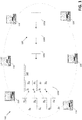
- FIG. 1 shows an example distributed system.
- the distributed system may comprise a network 100 of nodes 110.
- a node 110 may comprise, for example, a computing device, a central processing unit, a graphical processing unit, a field programmable gate array, or an application specific integrated circuit.
- a node 110 may comprise an Internet of Things ("IoT") device, such as a device with computing capabilities or network connectivity capabilities.
- IoT Internet of Things
- the network 100 of nodes 110 may comprise a decentralized database.
- the decentralized database may not have a central administrator or centralized storage.
- each node 110 in the network 100 may store a copy of a collection of data, such as a distributed ledger (e.g., distributed database, decentralized database, blockchain, etc.).
- a distributed ledger may comprise recorded entries, such as transactions.
- the entries may comprise parties to the transactions.
- the parties may comprise individuals, entities, or devices, for example.
- the data may be replicated, shared, or synchronized across the nodes 110.
- the decentralized database may be continually reconciled, such as to reflect changes to the collection of data.
- the nodes 110 may continually or periodically download the most recent version of the collection of data.
- the node 110 may automatically download the collection of data.
- the node 110 may download the collection of data based on a node 110 joining the network 100,
- a decentralized ledger may comprise a blockchain-type database 120 that utilizes, in whole or in part, blockchain-type data management techniques.
- a blockchain 120 may comprise one or more blocks 130 in which data is recorded.
- the blocks 130 in the blockchain 120 may function as a mechanism to organize the data in the chain 120.
- the blocks 130 may be linked in a sequence determined by a relationship of the data in the blocks 130, such as the chronology in which the data is recorded or validated.
- the blocks 130 may be linked to deter retroactive modification of data in the chain 120.
- the nodes 110 in the network 100 may build or modify the chain 120, such as by adding blocks 130 to the chain 120.
- the nodes 110 may perform several operations to build the chain 120. For example, based on the network 100 receiving new data D 0 , D 1 , D 2 , D 3 , the nodes 110 may validate the new data D 0 , D 1 , D 2 , D 3 . For example, if the new data D 0 , D 1 , D 2 , D 3 comprises data such as transactions or access rights, the nodes 110 may authenticate the identity of the parties to the transaction or recipients of the access rights. Authenticating the identity of one or more of the parties may comprise determining that a party is who they purport to be.
- a party may identify themselves by signing the transaction or the entry with a digital signature.
- the digital signature may comprise an encryption of at least a portion of the contents of the entry with a private key of the party.
- the private key may comprise a string of numbers.
- the private key may only be known to the party, accessible to the party, or possessed by the party.
- the entry may comprise a public key of the party.
- the public key may comprise a string of number.
- the public key may be used to decrypt data that has been encrypted with the private key.
- the nodes 110 may confirm that the party is associated with the public key by confirming that the party has the private key corresponding to the public key.
- the nodes 110 may confirm that the party has the private key by decrypting the portion of the transaction that was encrypted using the private key, such as using the public key.
- the nodes 110 may collate the new data D 0 , D 1 , D 2 , D 3 into a new block 130d.
- the nodes may record one data entry D 0 in a new block 130d.
- the nodes 110 may perform an operation to add the new block 130d to the chain 120. For example, if the data in the blocks 130 is related chronologically, such as where the first block 130a in the chain records older data than the data of subsequent blocks 130b, 130c, the nodes 110 may perform a timestamp function to log the sequence in which blocks 130 are added to and/or created on the chain 120.
- the nodes 110 may append a hash of the previous block 130c to the new bock 130d.
- the nodes 110 may insert an output of the previous block 130 in an input of the new block 130d.
- the chaining of the blocks may deter retroactive modification of data in a block 130 as the modification would require new functions to be performed for all of the subsequent blocks 130 in the chain 120.
- the nodes 110 may be incentivized to perform the operation to add a new block 130d to the chain 120.
- a block 130d may be assigned a value 140, such as a coin or unit of digital currency that will be transferred to one or more nodes 110 that perform part of all of the operation.
- a digital currency may comprise a cryptocurrency, such as Bitcoin, Litecoin, or TorCoin.
- the value 140 may depend on the difficulty of performing the operation for the block 130d.
- a transaction may assign a transaction fee TF 0 , TF 1 , TF 2 , TF 3 which may be transferred to one or more nodes 110 that perform the operation on the block 130d in which the transaction is recorded. If an incentive is provided for nodes 110 to perform the operation to add the new block 130d to the chain 120, performance of the operation may be referred to as mining.
- the nodes 110 may individually perform an operation to build the chain 120.
- the nodes 110 may lend or combine their processing power, such as in a pool, to perform an operation to build the chain 120. If the nodes 110 work in tandem, incentives, such as the value 140, may be divided amongst the nodes 110. For example, incentives may be divided proportionally to contribution of the nodes 110 to the work.
- the nodes 110 may communicate the new block 130d to the network 100.
- the nodes 110 may express their acceptance of the new block 130d to the chain 120 by working off the block 130d when performing the operation to add a subsequent block to the chain 120. If more than one version of the chain 120 exists, the nodes 110 may attempt to work off the longest chain 120.
- the longest chain 120 may be determined by an algorithm for scoring the chain 120. For example, a chain 120 may be assigned a score based on the computational work required to create the chain 120.
- a node 110 may communicate the longest chain 120 that the node 100 has observed to the network 100, such as with a gossip protocol.
- the network 100 may have self-correcting mechanisms, such as to address discrepancies between nodes 110 in the network 100. For example, if there is a fork in a blockchain 120, a node 110 working off one branch of the chain 120 may switch to a second branch of the chain 120 if the second branch becomes longer than the first branch. For example, if a node 110 does not receive a block 130, the node 110 may request the block 130 based on receiving the next block 130 and determining that it did not receive the previous block 130.
- One or more nodes 110 in the network 100 may not participate in building the blockchain 120.
- the operations that the nodes 110 in the network 100 may perform relating to the blockchain may not be limited to building the blockchain 120.
- one or more nodes 110 may monitor the blockchain 120 for particular transactions.
- the nodes 110 may monitor the blockchain 120 for transactions that comprise an identifier associated with a party.
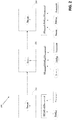
- FIG. 2 shows an example distributed ledger architecture.
- a distributed ledger e.g., a distributed database, decentralized database
- the blocks 210, 220, 230 may be linked in a sequence that represents the chronology of the execution, validation, or recording of the transactions.
- the blockchain 200 may comprise a genesis block 210 that records the earliest transaction in the chain 200 and comprises the first block 210 in the chain 200.
- Each block 220, 230 following the genesis block 210 may record a transaction that was executed or validated subsequent to the transaction of the preceding block 210, 220, 230 in the chain 200.
- Each block 210, 220, 230 may record a transaction that occurred prior to the transaction of the subsequent block in the chain 220, 230.
- the block 230 may record a transaction that occurred after the transaction recorded in the block 220.
- a new transaction may be recorded in a new block.
- the new block may be appended to the last block 230 in the chain 200.
- the example blockchain 200 is depicted as comprising three blocks 210, 220, 230, the chain may comprise less than three blocks or more than three blocks.
- the blocks 210, 220, 230 may record transactions as hashes of the transactions.
- the blocks 210, 220, 230 may function as a mechanism to implement a timestamp server to generate computational proof of the chronological order of the transactions in the blockchain 200.
- a timestamp of a block 210, 220, 230 may comprise a hash of the transaction in the block 210, 220, 230 and the transaction of the previous block 210, 220, 230 in the chain 200.
- the timestamp may be recorded, such as by recording and publishing.
- a distributed timestamp server may implement a protocol to achieve distributed chronological consensus, such as a proof protocol.
- a proof protocol may comprise a proof-of-work protocol, a proof-of-stake protocol, a proof-of-existence protocol, or another proof protocol.
- a proof-of-work protocol may comprise scanning for a proof (Proof 210 , Proof 220 , Proof 230 ), such as a string or value, that cryptographically hashed with the hash of the transaction of a block (Ft Transacuon ) and the hash of the transaction of the previous block 210, 220, 230 yields a hash (H Block ) with a pre-determined number of leading zero bits.
- a proof Proof 210 , Proof 220 , Proof 230
- a proof-of-work for the block 220 may comprise scanning for a proof (Proof 220 ) that hashed with the transaction T 0 , T 1 , T 2 , T 3 of the block 220 and the hash H Block210 of the previous block 210 yields an output H Block120 that has a pre-determined number of leading zero bits.
- the proof-of-work may be solved for a hash function in which a hash of the transaction (H Transaction ) is an input of the hash function.
- the next block 230 in the chain 200 will be appended to the chain 200 based on a proof-of-work being performed to identify a proof (Proof 230 ) which hashed with the transaction of the block 230 (or hash of the transaction H Transaction 230) and the hash of the block 220 (H Block220 ) yields an output (H Block230 ) with a pre-determined number of leading zero bits.
- the proof (Proof 230 ) Once the proof (Proof 230 ) is identified, the block 230 may be broadcast through the network. If the block 230 is accepted, the nodes may work on creating the next block in the chain 200 using the hash (H Block230 ) of the accepted block 230.
- An iterative proof-of-work protocol may deter modification of a block in the chain as it would require re-doing the proof-of-work for each proceeding block in the chain 200.
- modification of a transaction in the block 210 may require performance of a new proof-of-work for block 210, yielding a new hash (H Block210 ) for the block 210. Consequently, a new proof-of-work may be required for the block 220 using the new hash (H Block210 ) for the block 210, yielding a new hash (H Block220 ) for the block 220.
- Each subsequent block in the chain 200 may require a new proof-of-work.
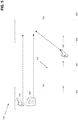
- FIG. 3 shows an example system for managing device association.
- the system may comprise a distributed ledger 300 (e.g., distributed database, decentralized database, blockchain, etc.).
- the distributed ledger may comprise blockchain data managing techniques.
- the distributed ledger 300 may comprise a register of devices.
- the distributed ledger 300 may comprise a register of associated devices.
- Associated devices may comprise devices associated with a common entity such as a user, a household, or a service provider for example.
- the devices may comprise computing devices, electronic devices, or Internet of Things (IoT) devices.
- An IoT device may comprise a device embedded with electronics, such as a circuitry part, a sensor, a camera, an audio input or output, or a lighting unit.
- An IoT device may comprise computing capabilities.
- An IoT device may comprise network connectivity capabilities.
- An IoT device may comprise capabilities to collect and exchange data.
- an IoT device may comprise a personal computer, a mobile phone, a household appliance, a wearable, a gateway device, a health appliance, a premises management system component, a content device, a display, and a vehicle.
- the distributed ledger 300 may be associated with an entity, such as a user, a household, or a service provider.
- entity such as a user, a household, or a service provider.
- the uniqueness of the distributed ledger 300 to the entity may disincentivize targeting of the distributed ledger 300, such as for tampering or breaching.
- Comprising device data associated with the entity the distributed ledger 300 may not comprise a honeypot of data for an authorized user to access. For example, a party attempting to tamper with a database to acquire private data, such as credit card information, may at best only obtain the credit card information of the entity from the distributed ledger 300.
- the distributed ledger 300 may be anonymous.
- the distributed ledger 300 may not comprise data identifying the associated entity, such as a name, identification number, or account number of the associated entity.
- the distributed ledger 300 may not comprise unsecured data identifying the associated entity.
- the distributed ledger 300 may comprise data identifying the associated entity in a secure or encrypted form.
- the data identifying the associated entity in the secure form may be opaque to users or devices examining the distributed ledger 300.
- the distributed ledger 300 may not require a user to divulge ownership information, such as to a central authority or backend authentication system.
- the distributed ledger 300 may achieve security through obscurity. For example, the anonymity of the distributed ledger 300 may deter unauthorized tampering with the distributed ledger 300.
- a party wishing to access a device or data of the entity may not be able to identify the distributed ledger 300 as being associated with the entity.
- the distributed ledger 300 may comprise a plurality of blocks 310, 320, 330, 340. Each block 310, 320, 330 may comprise a distributed ledger entry.
- the distributed ledger entry may comprise data associated with one or more devices, such as data identifying the devices.
- each of the blocks 310, 320, 330 may comprise a public key of a device.
- the block 310, 320, 330 may comprise an address A 310 , A 320 , A 330 of the device.
- the address may the output of a deterministic function applied to the public key of the device.
- the deterministic function may comprise an algorithm which, for a given input, provides the same output.
- various device may implement the deterministic algorithm such that each of the various devices can calculate the same output, which may be used as an identifier or address.
- the block 310, 320, 330 may comprise a timestamp TS 310 , TS 320 , TS 330 , TS 340 .
- the timestamp TS 310 , TS 320 , TS 330 , TS 340 may indicate when the block 310, 320, 330 was created.
- the inclusion of the timestamps TS 310 , TS 320 , TS 330 , TS 340 may link the blocks 310, 320,330, 340.
- the block 310, 320, 330 may comprise a hash H Block310, H Block320 , H Block330 of the previous block 310, 320, 330 in the distributed ledger 300.
- the inclusion of the hash H Block310, H Block320 , H Block330 of the previous block 310, 320, 330 in the distributed ledger 300 may link the blocks 310, 320, 330.
- the inclusion of the hash H Block310, H Block320 , H Block330 of the previous block 310, 320, 330 in the distributed ledger 300 may comprise an iterative chain of hash functions.
- the linking of the blocks 310, 320, 330, 340 may deter unauthorized tampering or breaching of the distributed ledger 300. For example, tampering with a block 310, such as retroactively modifying the block 310, may require modification of the subsequent blocks 320, 330, 340.
- the computing power or labor to tamper or breach the distributed ledger 300 may deter targeting of the distributed ledger 300 by an unauthorized entity.
- the block 310, 320, 330 may comprise a signature Sig 310 , Sig 320 , Sig 330 , Sig 340 .
- the signature Sig 310 , Sig 320 , Sig 330 , Sig 340 may comprise an encryption of at least a portion of the block, such as the address A 310 , A 320 , A 330 or the timestamp TS 310 , TS 320 , TS 330 , TS 340 .
- the digital signature may comprise an encryption of the portion of the block with a private key of a device or an entity, such as an administrator of the distributed ledger 300.
- the signature Sig 310 , Sig 320 , Sig 330 , Sig 340 may deter unauthorized tampering with the distributed ledger 300.
- the private key used to sign may be necessary to create or retroactively modify a block or entry of the distributed ledger 300. Only the device or entity with the private key may alter or add to the distributed ledger 300. The device or the entity may comprise an administrator of the distributed ledger 300.
- the distributed ledger 300 may comprise a genesis block 310.
- the genesis block 310 may comprise the first block of the distributed ledger 300.
- the genesis block 310 may comprise the oldest block or the first block created of the distributed ledger 300.
- the genesis block 310 may be associated with a device, such as a computing device.
- the genesis block 310 may comprise data identifying the computing device.
- the computing device may be associated with an entity, such as a user, a household, or a service provider.
- the computing device may create the genesis block 310.
- the computing device may create the distributed ledger entry of the genesis block 310.
- the computing device may send the distributed ledger entry to the distributed ledger 300 or to a network.
- the computing device may record the distributed ledger entry in the genesis block 310.
- the computing device may create the distributed ledger 300.
- the computing device may create the subsequent blocks 320, 330, 340 of the distributed ledger 300.
- the computing device may create the distributed ledger entries of the subsequent blocks 320, 330, 340.
- the computing device may send the distributed ledger entries of the subsequent blocks 320, 330, 340 to the distributed ledger 300 or to a network.
- the genesis block 310 may be associated with an application.
- the application may comprise a software program.
- the application may comprise a computing device application or a mobile device application, such as a premises security application for mobile devices.
- the application may be associated with an entity, such as a user, a household, or a service provider.
- the application may create the genesis block 310.
- the application may create the distributed ledger entry of the genesis block 310.
- the application may create the distributed ledger entry of the genesis block 310 or the genesis block 310 upon activation of the application. Activation of the application may comprise running the application, opening the application, or downloading the application.
- the application may send the distributed ledger entry of the genesis block 310 to the distributed ledger 300 or to a network.
- the application may record the distributed ledger entry in the genesis block 310.
- the application may create the distributed ledger 300.
- the application may create the subsequent blocks 320, 330, 340 of the distributed ledger 300.
- the application may create the distributed ledger entries of the subsequent blocks 320, 330, 340.
- the application may send the distributed ledger entries of the subsequent blocks 320, 330, 340 to the distributed ledger 300 or to a network.
- the distributed ledger 300 may comprise a component of a distributed ledger.
- the distributed ledger 300 may comprise a branch of another blockchain, such as a general blockchain.
- the general blockchain may comprise a plurality of branches. Each of the plurality of branches may comprise a blockchain or another plurality of blockchains.
- the general blockchain may comprise a plurality of blockchains. Each of the plurality of blockchains may comprise a register of associated devices. Each of the plurality of blockchains may be associated with a common entity, such as a user, a household, or a service provider.
- the general blockchain may comprise a register of devices associated with an entity and each of the plurality of blockchains may comprise a register of devices associated with a sub-entity of the entity.
- the general blockchain may be associated with a company.
- Each of the plurality of blockchains may comprise a register of devices associated with a department of the company.
- the general blockchain may be associated with a household.
- Each of the plurality of blockchains may comprise a register of devices associated with a member of the household.
- the distributed ledger 300 may be stored at a distributed network.
- the distributed ledger 300 may be stored across nodes, such as the nodes 110 of FIG. 1 , in a distributed network, such as the network 100 of FIG. 1 .
- the nodes may comprise computing devices.
- the nodes may comprise associated devices.
- the nodes may comprise devices associated with the blocks 310, 320, 330 of the distributed ledger 300.
- the nodes may comprise devices identified by the data in the blocks 310, 320, 330, 340 of the distributed ledger 300.
- the distributed ledger 300 may be updated. Updating the distributed ledger 300 may comprise creating a distributed ledger entry. Updating the distributed ledger 300 may comprise sending a distributed ledger entry to the distributed ledger 300 or a network. Updating the blockchain may comprise recording the distributed ledger entry in a block 310, 320, 330, 340 of the distributed ledger 300. Updating the blockchain may comprise creating a block 310, 320, 330, 340 of the distributed ledger 300.
- the distributed ledger 300 may be updated by a computing device or an application.
- the distributed ledger 300 may be updated by a computing device associated with the distributed ledger 300, such as a computing device identified by data in a block 310, 320, 330, 340 of the distributed ledger 300.
- the blockchain may be updated by a computing device associated with an entity associated with the blockchain.
- the distributed ledger 300 may be updated by a device comprising software to access the distributed ledger 300.
- the software may comprise an application or custom software.
- the software may comprise a custom software library.
- the software may comprise software configured to enable a device to create a distributed ledger entry.
- the software may comprise software configured to enable a device to submit the distributed ledger entry to the distributed ledger or to a network of nodes associated with the distributed ledger.
- the software may be configured to enable a device to compute a distributed ledger address of another device based on a public key of the other device.
- the software may be configured to enable a device to authenticate an entry, such as a block, of the distributed ledger.
- the software may be configured to enable a device to validate an entry, such as a block. For example, using the software, the device may validate that the entry is signed by another associated device.
- the distributed ledger 300 may be updated by a user.
- the distributed ledger 300 or a system may be configured such that a user has limited access to the distributed ledger 300.
- the distributed ledger 300 or the system may be configured such that a user may not update the distributed ledger 300 or may not directly update the distributed ledger 300.
- Updating the distributed ledger 300 may comprise creating a distributed ledger entry, such as using the custom software library. Updating the distributed ledger 300 may comprise sending the distributed ledger entry to the distributed ledger 300 or a network. Updating the distributed ledger 300 may comprise recording the distributed ledger entry in a new block of the distributed ledger 300. Updating the distributed ledger 300 may comprise creating a new block. Updating the distributed ledger 300 may comprise sending a new block to the distributed ledger 300 or a network. Updating the distributed ledger 300 may comprise performing underlying blockchain integration, such as validating a new block or performing a proof to add a new block to the blockchain.
- Updating the blockchain may comprise using custom software.
- the software may comprise a custom software library.
- the software may comprise software configured to enable a device to create a distributed ledger entry.
- the software may comprise software configured to enable a device to submit the distributed ledger entry to the distributed ledger or to a network of nodes associated with the distributed ledger.
- the software may be configured to enable a device to compute a distributed ledger address of another device based on a public key of the other device.
- the software may be configured to enable a device to authenticate an entry, such as a block, of the distributed ledger.
- the software may be configured to enable a device to validate an entry, such as a block. For example, using the software, the device may validate that the entry is signed by another associated device.
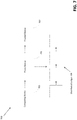
- FIG. 4 shows an example method for managing device association.
- a private key and a public key pair may be created for a computing device.
- the private key and the public key pair may be created for an application on the computing device.
- the private key and the public key may be paired.
- the public key and the private key may be mathematically related.
- the public key may be configured to decrypt data or content encrypted using the private key.
- the private key may be configured to decrypt data or content encrypted using the public key.
- the public key and the private key may be unique to the computing device or to the application on the computing device.
- the computing device may comprise, for example, a user device, a mobile device, a laptop computer, a desktop computer, or an IoT device.
- An IoT device may comprise a device embedded with electronics, such as a circuitry part, a sensor, a camera, an audio input or output, or a lighting unit.
- An IoT device may comprise computing capabilities.
- An IoT device may comprise network connectivity capabilities.
- An IoT device may comprise capabilities to collect and exchange data.
- an IoT device may comprise a personal computer, a mobile phone, a household appliance, a wearable, a gateway device, a health appliance, a premises management system component, a content device, a display, and a vehicle.
- the computing device may comprise an administrator of a distributed ledger (e.g., distributed database, decentralized database, blockchain, etc.).
- the application on the computing device may comprise an administrator of the distributed ledger.
- the administrator of the distributed ledger may comprise a creator of the distributed ledger.
- the administrator may update the distributed ledger, such as by adding a block, adding a distributed ledger entry, recording data, or executing a transaction on the distributed ledger.
- the administrator may manage the distributed ledger, such as by controlling access to the distributed ledger.
- the computing device may be associated with an entity, such as a user, a household, or a service provider.
- the private key and the public key pair may be created by the computing device.
- the private key and the public key pair may be created by a software program on the computing device, such as an application.
- the application may be associated with an entity, such as a user, a household, or a service provider.
- the application may create the private key and public key upon activation. Activation of the application may comprise running the application, opening the application, or downloading the application.
- the private key and the public key may be assigned by a manufacturer of the computing device.
- the private key and the public key may be embedded in the computing device by the manufacturer of the computing device.
- a distributed ledger (e.g., distributed database, decentralized database, blockchain, etc.) may be created.
- the computing device or the application on the computing device may create the distributed ledger.
- the application or the computing device may create the distributed ledger upon activation of the application or the computing device.
- the distributed ledger may be created on a pre-existing distributed ledger.
- creating the distributed ledger may comprise creating a branch on a larger distributed ledger, wherein the larger distributed ledger comprises a plurality of branches.
- the distributed ledger may comprise a blockchain, similar to the distributed ledger in FIG. 3 .
- the distributed ledger may comprise a register of associated devices.
- Associated devices may comprise devices associated with a common entity such as a user, a household, or a service provider, for example.
- a device may use the distributed ledger to determine whether another device is associated with the device.
- the device may use the distributed ledger to determine whether to respond to a communication from another device, such as based on association of the devices.
- the device may use the distributed ledger to determine whether to grant another device access to the device or to a proxied device, such as based on association of the devices.
- a distributed ledger entry may be created on and/or stored on the distributed ledger.
- the distributed ledger entry may be associated with the computing device.
- the computing device may create the distributed ledger entry.
- the application may create the distributed ledger entry.
- the distributed ledger entry may comprise data associated with the computing device or the application.
- the distributed ledger entry may comprise data identifying the computing device or the application.
- the distributed ledger entry may comprise an address of the computing device.
- the address may comprise the output of a deterministic function applied to the public key of the computing device, such as a hash of the public key of the computing device.
- the deterministic function may comprise an algorithm which, for a given input, provides the same output.
- the distributed ledger entry may comprise a timestamp.
- the timestamp may indicate when the distributed ledger entry was created or recorded in a block or on a distributed ledger.
- the distributed ledger entry may comprise a hash of a previous distributed ledger entry or block of a blockchain.
- the block may comprise a digital signature.
- the signature may comprise an encryption of at least a portion of the entry with a key of the computing device or the application on the computing device, such as an encryption with the private key.
- the signature may comprise an encryption of one or more of the address, the timestamp, and the hash of the previous block.
- the distributed ledger entry may be created by the computing device or the application on the computing device. Creating the distributed ledger entry may comprise sending an indication of the distributed ledger entry.
- the indication of the distributed ledger entry may be sent to a network, such as a distributed network.
- the indication of the distributed ledger entry may be sent to one or more nodes, such as computing devices. The nodes may validate the distributed ledger entry or record the distributed ledger entry on the distributed ledger.
- Creating the distributed ledger entry may comprise recording the distributed ledger entry.
- the distributed ledger entry may be recorded in a block of the distributed ledger.
- the distributed ledger entry may be recorded on the distributed ledger.
- Creating the distributed ledger entry may comprise creating adding a block to the distributed ledger.
- the block may comprise a genesis block, such as the first block or the oldest block in a blockchain.
- a public key and a private key for a user device may be received or accessed.
- the public key and the private key may be received or accessed by the computing device or the application on the computing device.
- the user device may comprise, for example, a mobile device, a laptop computer, a desktop computer, or an IoT device.
- the user device may comprise a software program, such as an application, on another device.
- the user device may comprise a device associated with the computing device or the application on the computing device.
- the user device may comprise a device associated with an entity.
- the user device and the computing device may be associated with a common entity.
- the user device may comprise a new device, such as a device newly acquired by the entity or newly associated with the entity or the computing device and application.
- the user device may comprise a device that is not identified in the distributed ledger.
- the user device may have access to the distributed ledger. For example, the user device may access the distributed ledger over a network.
- the user device may comprise capabilities to update
- the public key and the private key may define a key pair.
- the public key and the private key may be mathematically related.
- the public key may be configured to decrypt data or content encrypted using the private key.
- the private key may be configured to decrypt data or content encrypted using the public key.
- the public key and the private key may be unique to the user device.
- a device such as the user device may create the public key and the private key.
- the public key and the private key may be assigned by a manufacturer of the user device.
- the public key and the private key may be embedded in the device by the manufacturer of the user device.
- the user device may send the public key and the private key to the computing device.
- the user device may send the public key and the private key to the computing device upon activation of the user device. Activation of the user device may comprise, for example, turning the user device on or connecting the user device to a network.
- the user device may send the public key and the private key to the computing device in response to a request or a signal from the computing device.
- the computing device may send a request or a signal to the user device in response to receiving a signal from the user device.
- a proxy device may create the public key and the private key for the device.
- the proxy device may comprise, for example, a user device, a mobile device, a laptop computer, a desktop computer, or an IoT device.
- the proxy device may comprise a software program, such as an application, on another device.
- the proxy device may comprise a device associated with the computing device or the application on the computing device.
- the proxy device may comprise a device associated with an entity.
- the proxy device and the computing device may be associated with a common entity.
- the proxy device may have access to the distributed ledger. For example, the proxy device may access the distributed ledger over a network.
- the proxy device may comprise capabilities to update the distributed ledger.
- the user device may not comprise capabilities to create the public key and the private key.
- the proxy device may create the public key and the private key in response to a request from the user device, such as over a network.
- the proxy device may create the public key and the private key in response to a signal from the user device, such as a beacon from the user device.
- the proxy device may create the public key and the private key based on detecting the user device, such as upon activation of the user device.
- the proxy device may send the public key and the private key to the computing device.
- the proxy device may send the public key and the private key to the computing device in response to a request or a signal from the computing device.
- the computing device or the application on the computing device may create the public key and the private key for the user device.
- the computing device or the application may create the public key and the private key in response to a request from the user device, such as over a network.
- the computing device or the application may create the public key and the private key in response to a signal from the user device, such as a beacon from the user device.
- the computing device or the application may create the public key and the private key based on detecting the user device, such as upon activation of the user device.
- the computing device or the application may create the public key and the private key in response to a user input.
- the user input may comprise an identification of the user device, a request, or an update of device association data from a user, such as via the application on the computing device.
- a second distributed ledger entry may be created on and/or stored on the distributed ledger.
- the second distributed ledger entry may comprise a block of a blockchain.
- the distributed ledger entry may be associated with the user device.
- the second distributed ledger entry may be created by the computing device, the application on the computing device, the user device, or the proxy device, for example.
- the distributed ledger entry may comprise an address of the user device.
- the address of the user device may comprise an output of a deterministic function applied to the public key of the user device, such as a hash of the public key of the user device.
- the deterministic function may comprise an algorithm which, for a given input, provides the same output.
- various device may implement the deterministic algorithm such that each of the various devices can calculate the same output, which may be used as an identifier or address.
- the distributed ledger entry may comprise a timestamp. The timestamp may indicate when the distributed ledger entry was created or recorded in a block or on a distributed ledger.
- the distributed ledger entry may comprise a hash of a previous distributed ledger entry or block of a blockchain or a distributed ledger.
- the hash may comprise a hash of the distributed ledger entry created in step 420.
- the block may comprise a digital signature.
- the digital signature may comprise an encryption of at least a portion of the entry with a key of the creator of the distributed ledger entry, such as a private key.
- the signature may comprise an encryption of one or more of the address, the timestamp, and the hash of the previous block.
- the second distributed ledger entry may be created by the computing device, the application on the computing device, the user device, or the proxy device. Creating the second distributed ledger entry may comprise sending an indication of the distributed ledger entry. The indication of second distributed ledger entry may be sent to the distributed ledger. The indication of the second distributed ledger entry may be sent to a network, such as a distributed network. The indication of the second distributed ledger entry may be sent to one or more nodes, such as computing devices. The nodes may validate the second distributed ledger entry or record the second distributed ledger entry on the distributed ledger.
- Creating the second distributed ledger entry may comprise recording the second distributed ledger entry.
- the second distributed ledger entry may be recorded in a block of the distributed ledger.
- the block may comprise a block subsequent to a block comprising the distributed ledger entry created in step 420.
- the distributed ledger entry may be recorded on the distributed ledger.
- Steps 440, 450, and 460 may be repeated for one more other devices. For example, if a user acquires a new device or another device is identified, a public key and a private key may be created for the new device. A third distributed ledger entry may be created comprising data associated with the new device. The third distributed ledger entry may be added to and/or created in the distributed ledger.
- a device may be deleted from the distributed ledger. For example, a user may lose, sell, or replace the device. The user may indicate that the device is no longer associated with the user, the distributed ledger, or devices associated with the distributed ledger or the user. For example, the user may indicate the change in status of the device via the application on the computing device.
- a distributed ledger entry may be created indicating that the device is no longer associated with the entity, the distributed ledger, or the associated devices. The distributed ledger entry may be created by the computing device, the application on the computing device, or another device associated with the entity, the distributed ledger or the associated devices. The distributed ledger entry may be added to and/or created in the distributed ledger.
- the distributed ledger entry may be added to and/or created in the distributed ledger by the computing device, the application on the computing device, or another device associated with the entity, the distributed ledger or the associated devices. Adding the distributed ledger entry may be similar to the processes in Step 430 and Step 460.
- FIG. 5 shows an example system 500 for managing device association.
- a distributed ledger 503 (e.g., distributed database, decentralized database, etc.) may comprise a blockchain.
- the distributed ledger 503 may comprise a register of associated devices.
- the associated device may comprise devices associated with a common entity, such as a user, a household, or a service provider, for example.
- the distributed ledger 503 may be associated with an entity.
- the distributed ledger 503 may be unique to the entity.
- the distributed ledger 503 may be anonymous.
- the distributed ledger 503 may not comprise data identifying the associated entity.
- the distributed ledger 503 may not comprise unsecured data identifying the associated entity.
- the distributed ledger 503 may comprise data identifying the associated entity in a secure or encrypted form.
- the data identifying the associated entity in the secure form may be opaque to users or devices examining the distributed ledger 503.
- the distributed ledger 503 may comprise a system for establishing peer-to-peer trust among associated devices.
- a device may use the distributed ledger 503 to determine that another device is associated with the device.
- the distributed ledger 503 may be used for trusted peer-to-peer communication between devices.
- the distributed ledger 503 may be used for trusted peer-to-peer access between devices.
- the associated devices may each have a distributed ledger address.
- the distributed ledger addresses may comprise outputs of a deterministic function applied to a public key of one the associated devices.
- the address may comprise outputs of the same deterministic function.
- the deterministic function may comprise an algorithm which, for a given input, provides the same output.
- the distributed ledger 503 may comprise one or more entries comprising the distributed ledger addresses of the associated devices.
- a device, when communicating with another associated device may send the address of the device to the other device.
- a recipient device 501 may establish trust with a sender device 502 using the distributed ledger.
- the recipient device 501 and the sender device 502 may each comprise at least one of a user device, a mobile device, a laptop computer, a desktop computer, and an IoT device.
- An IoT device may comprise a device embedded with electronics, such as a circuitry part, a sensor, a camera, an audio input or output, or a lighting unit.
- An IoT device may comprise computing capabilities.
- An IoT device may comprise network connectivity capabilities.
- An IoT device may comprise capabilities to collect and exchange data.
- an IoT device may comprise at least one of a personal computer, a mobile phone, a household appliance, a wearable, a gateway device, a health appliance, a premises management system component, a content device, a display, and a vehicle.
- the recipient device 501 and the sender device may each comprise an application or software for accessing the distributed ledger 503.
- the software may comprise custom software.
- the software may comprise a custom software library.
- the software may comprise software configured to enable a device to create a distributed ledger entry.
- the software may comprise software configured to enable a device to submit the distributed ledger entry to the distributed ledger or to a network of nodes associated with the distributed ledger.
- the software may be configured to enable a device to compute the distributed ledger address of another device based on a public key of the other device.
- the software may be configured to enable a device to validate an entry, such as a block. For example, using the software, the device may validate that the entry is signed by another associated device.
- the recipient device 501 may receive the communication over a network.
- the communication may comprise a signal.
- the communication may comprise data.
- the communication may comprise a request.
- the communication may comprise a request to access the recipient device 501.
- the communication may comprise a request to access a user device and the recipient device 501 may comprise a proxy for the user device.
- a request to access a device may comprise a request to connect to the device, control the device, or use a function of the device.
- the recipient device 501 may comprise a thermostat and the sender device 502 may comprise a mobile device.
- the mobile device may send a communication to the thermostat requesting a change of a temperature setting of the thermostat.
- the sender device 502 may comprise a smart phone and the recipient device 501 may comprise a laptop computer.
- the smart phone may send a communication to the laptop computer requesting use of a camera installed on the laptop computer.
- the communication may comprise an identifier of the sender device 502, such as a public key of the sender device 502.
- the recipient device 501 may use the distributed ledger 503 and the public key 505 to determine whether the sender device 502 comprises a device associated with the recipient device 501.
- the recipient device 501 may access the distributed ledger 503.
- the recipient device 501 may be configured to access the distributed ledger 503 over a network.
- the recipient device 501 may be configured to access the distributed ledger 503 using a proxy device.
- the recipient device 501 may access the distributed ledger 503 using software of the recipient device 501 or a custom software library for accessing the distributed ledger 503.
- the recipient device 501 may search the distributed ledger 503 for the public key 505 of the sender device 502. Searching the distributed ledger may comprise scanning the distributed ledger or querying the distributed ledger.
- the recipient device 501 may determine the address of the sender device 502.
- the recipient device 501 may apply the deterministic function to the public key 505.
- the recipient device 501 may search the distributed ledger 503 for a distributed ledger entry 508 comprising the address of the sender device 502. Based on a distributed ledger entry comprising the address, the recipient device 501 may determine that the sender device 502 comprises a device associated with the recipient device 501.
- the distributed ledger entry 508 may indicate that the sender device 502 is associated with a common entity.
- the recipient device 501 may respond to the recipient device 501.
- the recipient device 501 may respond to the recipient device 501 based on the determining that the sender device 502 comprises a device associated with the recipient device 501.
- Responding to the device 501 may comprise sending a communication, such as to the sender device 502 or to another device.
- Responding to the device 501 may comprise running a device program or modifying a device setting, for example. If the recipient device 501 determines that the sender device 502 does not comprise an associated device, the recipient device 501 may not respond to the communication.
- the sender device 502 may deny a request of the recipient device 501.
- the recipient device 501 may grant the requesting device 502 access to the recipient device 501.
- the recipient device 501 may grant the requesting device 502 access to the recipient device 501 based on the determining that the requesting device 502 comprises a device associated with the recipient device 501.
- the recipient device 501 may grant the requesting device 502 access to another device, such as a proxied device.
- FIG. 6 shows an example flow diagram of a method for managing device association.
- a communication may be received from a device.
- the communication may be received by a first device from a second device.
- the first device and the second device may each comprise at least one of a user device, a mobile device, a laptop computer, a desktop computer, and an IoT device.
- An IoT device may comprise a device embedded with electronics, such as a circuitry part, a sensor, a camera, an audio input or output, or a lighting unit.
- An IoT device may comprise computing capabilities.
- An IoT device may comprise network connectivity capabilities.
- An IoT device may comprise capabilities to collect and exchange data.
- an IoT device may comprise at least one of a personal computer, a mobile phone, a household appliance, a wearable, a gateway device, a health appliance, a premises management system component, a content device, a display, and a vehicle.
- the first device and the second device may each comprise an application or software for accessing a distributed ledger.
- the software may comprise custom software.
- the software may comprise a custom software library.
- the communication may be received over a network, such as a local area network, a wide area network, a communication network, a data network, a content network, or a secure network.
- the communication may comprise a signal.
- the communication may comprise data.
- the communication may comprise a request.
- the communication may comprise a request to access the first device.
- the communication may comprise a request to access a user device.
- the first device may comprise a proxy for the user device.
- a request to access a device may comprise a request to connect to the device, control the device, or use a function of the device.
- the communication may comprise a public key of the second device.
- An address of the second device may be determined using the public key.
- the address may comprise the output of a deterministic function applied to the public key.
- the deterministic function may comprise an algorithm which, for a given input, provides the same output.
- the address may be determined by applying the deterministic function to the public key.
- the communication may comprise a digital certificate of the second device.
- the digital certificate may comprise an X.509 certificate.
- the digital certificate may comprise a secure socket layer (SSL), transport layer security (TLS), or hyper text transfer protocol secure (HTTPS) certificate, for example.
- SSL secure socket layer
- TLS transport layer security
- HTTPS hyper text transfer protocol secure
- the digital certificate may be installed, stored, or embedded on the second device.
- the digital certificate may be created by a certification authority.
- the second device may send the public key and the private key to the certification authority.
- the second device may send the public key and the private key to the certification authority based on the second device being initialized, turned on, and/or based on execution of a program on the second device, as examples.
- the certification authority may create the digital certificate for the second device in response to receiving the keys.
- the certification authority may send or install the digital certificate on the second device.
- Transmission of the digital certificate may trigger a secure protocol, such as SSL or TSL protocol.
- the secure protocol may encrypt communications between parties.
- the secure protocol may encrypt communications between the first device and the second device.
- the digital certificate may comprise the public key of the second device.
- the digital certificate may comprise one or more unique identifiers of the second device (e.g., a string of characters, a hash, a name, or an identification number).
- the digital certificate may comprise a subject of the public key, such as a serial number or a name (e.g., an X.500 Distinguished Name).
- the first device may validate the digital certificate of the second device.
- Validating the digital certificate may comprise proving that the digital certificate belongs to the second device.
- Validating the digital certificate may comprise proving that the public key is associated with the second device.
- Validating the digital signature may comprise inspecting an expiration date or time of the digital certificate.
- the digital certificate may comprise a start time or date and an expiration time or date.
- the first device may validate the digital certificate by inspecting the expiration time or date and confirming that the time or date is current or has not lapsed.
- Validating the digital certificate may comprise validating a digital signature of the digital certificate.
- the digital certificate may comprise a digital signature of an issuer of the digital certificate, such as a certificate authority, that has verified or guaranteed the contents of the electronic document, such as the public key.
- the certification authority may guarantee that the public key corresponds to the second device.
- the certification authority may guarantee the validity of the contents of the digital certificate by signing the digital certificate.
- the certification authority may sign the digital certificate by encrypting at least a portion of the contents of the digital certificate with a private key of the certification authority.
- Validating the digital certificate may comprise using a public key of the certification authority to decrypt the portion of the contents of the digital certificate that were encrypted using the private key of the certification authority.
- a distributed ledger (e.g., distributed database, decentralized database, blockchain, etc.) may be accessed.
- the first device may access a distributed ledger.
- the distributed ledger may be like the distributed ledger 300 in FIG. 3 .
- the distributed ledger may comprise a blockchain.
- the distributed ledger may comprise a register of associated devices.
- the distributed ledger may comprise a register of associated devices.
- the associated device may comprise devices associated with a common entity, such as a user, a household, or a service provider, for example.
- the distributed ledger may comprise data identifying the first device.
- the distributed ledger may be associated with an entity.
- the distributed ledger may be unique to the entity.
- the distributed ledger may be anonymous.
- the distributed ledger may not comprise data identifying the associated entity.
- the distributed ledger may not comprise unsecured data identifying the associated entity.
- the distributed ledger may comprise data identifying the associated entity in a secure or encrypted form.
- the data identifying the associated entity in the secure form may be opaque to users or devices examining the distributed ledger.
- the distributed ledger may be accessed over a network.
- the distributed ledger may be accessed using software, an application, or a custom software library for accessing the distributed ledger.
- the first device may access the distributed ledger via a proxy device.
- address of the second device may be located on the distributed ledger.
- the public key of the second device may be located on the distributed ledger.
- the first device may locate the address of the second device on the distributed ledger.
- the first device may locate the address by searching, scanning, or querying the distributed ledger, using the address, for example.
- the first device may locate the address by comparing the address to other addresses indicated in one or more distributed ledger entries.
- the address may be located in a distributed ledger entry.
- the distributed ledger entry may comprise a block, such as a block of a blockchain or a transaction. It may be determined that the second device comprises a device associated with the first device. Based on the distributed ledger entry comprising the address, it may be determined that the second device and the first device are associated with a common entity. It may be determined that the second device comprises a device authorized to access the first device or another device.
- the distributed ledger entry may be validated. Validating the distributed ledger entry may comprise confirming that the distributed ledger entry was created by a trusted device.
- the trusted device may comprise a device associated with the distributed ledger, a device that manages the distributed ledger, or a device that has rights to edit the distributed ledger, for example. Confirming that the distributed ledger entry was created by the trusted device may comprise validating a digital signature of the trusted device in the distributed ledger.
- the trusted device may have digitally signed at least a portion of the distributed ledger with a public key of the trusted device.
- a public key of the trusted device may be used to decrypt the portion of the distributed ledger and prove that the entry was created by a device having the private key corresponding to the public key of the trusted device.
- a response may be issued to the second device.
- the first device may respond to the second device.
- the response may comprise a response to the communication from the second device in step 610.
- the response may be based on the locating the identifier of the second device on the distributed ledger.
- the response may be based on the confirming that the second device comprises an associated device or an authorized device.
- Responding to the second device may comprise sending a communication to the second device.
- Responding may comprise running a device program or modifying a device setting, at the first device, for example.
- Responding may comprise granting the second device access to the first device or to a proxied device. If it is determined that the second device does not comprise an associated device or an authorized device, a response may not be issued.
- Responding may comprise denying access to the first device or to a proxied device.
- Responding may comprise declining a request.
- Responding may comprise blocking the second device, such as blocking communications from the second device to the first device.
- FIG. 7 shows an example system 700 for managing device association.
- a computing device 703 may attempt to connect to a proxied device 702 through a proxy device 701.
- the computing device 703, the proxied device 702, and the proxy device 701 may each comprise at least one of a server, user device, a mobile device, a laptop computer, a desktop computer, and an IoT device.
- An IoT device may comprise a device embedded with electronics, such as a circuitry part, a sensor, a camera, an audio input or output, or a lighting unit.
- An IoT device may comprise computing capabilities.
- An IoT device may comprise network connectivity capabilities.
- An IoT device may comprise capabilities to collect and exchange data.
- an IoT device may comprise at least one of a personal computer, a mobile phone, a household appliance, a wearable, a gateway device, a health appliance, a premises management system component, a content device, a display, and a vehicle.
- any of the devices 701, 702, 703 may comprise an application or software for accessing a distributed ledger (e.g., distributed database, decentralized database, blockchain, etc.).
- the software may comprise custom software.
- the software may comprise a custom software library.
- the software may comprise software configured to enable a device to create a distributed ledger entry.
- the software may comprise software configured to enable a device to submit the distributed ledger entry to the distributed ledger or to a network of nodes associated with the distributed ledger.
- the software may be configured to enable a device to compute a distributed ledger address of another device.
- the software may be configured to enable a device to compute a distributed ledger address of another device based on a public key of the other device.
- the software may be configured to enable a device to authenticate an entry, such as a block, of the distributed ledger.
- the software may be configured to enable a device to validate an entry, such as a block. For example, using the software, the device may validate that the entry is signed by another associated device.
- the proxied device 702 may comprise limited computing or communication capabilities.
- the proxy device 701 may be configured to perform operations on behalf of the proxied device 702.
- the proxy device 701 may comprise a relay server or a rendezvous server.
- the proxy device 701 may comprise a gateway device of a network of associated devices.
- the proxy device 701 may comprise an administrator of a network of associated devices.
- the proxy device 701 may manage the association of the devices.
- the proxy device 701 may manage access to the associated devices.
- the proxy device 701 may manage a distributed ledger 704 (e.g., distributed database, decentralized database, blockchain, etc.).
- a distributed ledger 704 e.g., distributed database, decentralized database, blockchain, etc.
- Attempting to connect to the proxied device 702 may comprise sending a request to the proxy device 701.
- the proxy device 701 may authorize the computing device 703 to access the proxied device 702.
- the proxy device 701 may authorize the computing device 703 to access the proxied device 702 based on whether the computing device 703 comprises an associated device. For example, the proxy device 701 may determine whether the computing device is associated with the proxy device 701 or the proxied device 702.
- the proxy device 701 may determine whether the computing device 703 is associated with an entity, such as a user, a household, or a service provider.
- the proxy device 701 may determine whether the computing device 703 is associated with the distributed ledger 704.
- the proxy device 701 may use the distributed ledger 704 to determine whether the computing device 703 comprises an associated device.
- the distributed ledger 704 may be like the distributed ledger 300 in FIG. 3 .
- the distributed ledger 704 may comprise a blockchain.
- the distributed ledger 704 may comprise a register of associated devices.
- the associated device may comprise devices associated with a common entity, such as a user, a household, or a service provider, for example.
- the distributed ledger 704 may be associated with an entity.
- the distributed ledger 704 may be unique to the entity.
- the distributed ledger 704 may be anonymous.
- the distributed ledger 704 may not comprise data identifying the associated entity.
- the distributed ledger 704 may not comprise unsecured data identifying the associated entity.
- the distributed ledger 704 may comprise data identifying the associated entity in a secure or encrypted form.
- the data identifying the associated entity in the secure form may be opaque to users or devices examining the distributed ledger 704.
- the distributed ledger 704 may be accessed over a network, such as a local area network, a wide area network, a data network, a content network, a communications network, or a secured network.
- the distributed ledger 704 may be accessed using software, an application, or a custom software library for accessing the distributed ledger 704.
- the proxy device 701 may receive a request from the computing device 703 to access the proxied device 702.
- the request may comprise a public key of the computing device 703.
- the request may comprise a digital certificate of the computing device 703.
- the digital certificate may comprise an X.509 certificate.
- the digital certificate may comprise a secure socket layer (SSL), transport layer security (TLS), or hyper text transfer protocol secure (HTTPS) certificate, for example.
- SSL secure socket layer
- TLS transport layer security
- HTTPS hyper text transfer protocol secure
- the digital certificate may be installed, stored, or embedded on the computing device 703.
- the digital certificate may be created by a certification authority.
- the computing device 703 may send its public key and private key to the certification authority.
- the computing device 703 may send its public key and private key to the certification authority based on the computing device 703 being initialized, turned on, and/or based on a program being executed on the computing device 703.
- the certification authority may create the digital certificate for the computing device 703 in response to receiving the keys.
- the certification authority may send or install the digital certificate on the computing device 703.
- Transmission of the digital certificate may trigger a secure protocol, such as SSL or TSL protocol.
- the secure protocol may encrypt communications between parties.
- the secure protocol may encrypt communications between the computing device 703 and proxy device 701.
- the digital certificate may comprise the public key of the computing device 703.
- the digital certificate may comprise a subject of the public key, such as a serial number or a name (e.g., an X.500 Distinguished Name).
- the proxy device 701 may validate the digital certificate of the computing device 703. Validating the digital certificate may comprise proving that the digital certificate belongs to the computing device 703. Validating the digital certificate may comprise proving that the public key belongs to the computing device 703. Validating the digital signature may comprise inspecting an expiration date or time of the digital certificate.
- the digital certificate may comprise a start time or date and an expiration time or date.
- the proxy device 701 may validate the digital certificate by inspecting the expiration time or date and confirming that the time or date is current or has not lapsed.
- Validating the digital certificate may comprise validating a digital signature of the digital certificate.
- the digital certificate may comprise a digital signature of an issuer of the digital certificate, such as a certificate authority, that has verified or guaranteed the contents of the electronic document, such as the public key.
- the certification authority may guarantee that the public key corresponds to the computing device 703.
- the certification authority may guarantee the validity of the contents of the digital certificate by signing the digital certificate.
- the certification authority may sign the digital certificate by encrypting at least a portion of the contents of the digital certificate with a private key of the certification authority.
- Validating the digital certificate may comprise using the public key of the certification authority to decrypt the portion of the contents of the digital certificate that were encrypted using the private key of the certification authority.
- the digital signature may be validated, such as by using the public key of the certification authority to decrypt the portion of the contents of the digital certificate that were encrypted using the private key of the certification authority.
- the public key of the computing device 703 may be obtained from the digital certificate.
- the proxy device 701 may calculate an address of the computing device 703 using the public key.
- the address of the computing device 703 may be calculated by applying a deterministic function to the public key.
- the deterministic function may comprise an algorithm which, for a given input, provides the same output. For example, the deterministic function may output a unique value for any input in its domain.
- the deterministic function may comprise a hash function, such as MD4, MD5, SHA-1, SHA-256, SHA-512 or SHA-3.
- the proxy device 701 may search the distributed ledger 704 for the address of the computing device 703.
- the proxy device 701 may search the distributed ledger 704 for an address that matches the address calculated for the computing device 703.
- the distributed ledger 704 may comprise access attributes.
- the access attributes may be associated with access of the proxied device 702.
- the access attributes may be associated with access granted to the computing device 703.
- the access attributes may comprise limitations or conditions on access.
- the proxy device 701 may deny the computing device 703 access to the proxied device 702.
- the proxy device 701 may deny the computing device 703 access to the proxied device 702 based on the distributed ledger 704.
- the proxy device 701 may determine not to authorize the computing device 703.
- the proxy device 701 may grant the computing device 703 access to the proxied device 702.
- the proxy device 701 may grant the computing device 703 access to the proxied device 702 based on the distributed ledger 704.
- the proxy device 701 may authorize the computing device 703 to access the proxied device 702. Accessing the proxied device 702 may comprise controlling, changing a setting, or using a function of the proxied device 702.
- FIG. 8 shows an example method for managing device association.
- a request to access a device may be received.
- the request may be received by a proxy device.
- the request may comprise a request to access a device proxied by the proxy device.
- the proxy device may be like the proxy device 701 in FIG. 7 .
- the proxied device may be like the proxied device 702 in FIG. 7 .
- the proxy device may receive the request from a computing device.
- the proxy may receive the request from an application on a computing device.
- the computing device, the proxied device, and the proxy device may each comprise at least one of a server, user device, a mobile device, a laptop computer, a desktop computer, and an IoT device.
- An IoT device may comprise a device embedded with electronics, such as a circuitry part, a sensor, a camera, an audio input or output, or a lighting unit.
- An IoT device may comprise computing capabilities.
- An IoT device may comprise network connectivity capabilities.
- An IoT device may comprise capabilities to collect and exchange data.
- an IoT device may comprise at least one of a personal computer, a mobile phone, a household appliance, a wearable, a gateway device, a health appliance, a premises management system component, a content device, a display, and a vehicle.
- any of the devices may comprise an application or software for accessing a distributed ledger (e.g., distributed database, decentralized database, blockchain, etc.).
- the software may comprise custom software.
- the software may comprise a custom software library.
- the software may comprise custom software.
- the software may comprise a custom software library.
- the software may comprise software configured to enable a device to create a distributed ledger entry.
- the software may comprise software configured to enable a device to submit the distributed ledger entry to the distributed ledger or to a network of nodes associated with the distributed ledger.
- the software may be configured to enable a device to compute a distributed ledger address of another device.
- the software may be configured to enable a device to compute a distributed ledger address of another device based on a public key of the other device.
- the software may be configured to enable a device to authenticate an entry, such as a block, of the distributed ledger.
- the software may be configured to enable a device to validate an entry, such as a block. For example, using the software, the device may validate that the entry is signed by another associated device.
- the proxied device may comprise limited computing or communication capabilities.
- the proxy device may be configured to perform operations on behalf of the proxied device.
- the proxy device may comprise a relay server or a rendezvous server.
- the proxy device may comprise a gateway device of a network of associated devices.
- the proxy device may comprise an administrator of a network of associated devices.
- the proxy device may manage the association of the devices.
- the proxy device may manage access to the associated devices.
- the proxy device may manage a distributed ledger.
- the proxy device and the proxied device may be connected.
- the proxy device and the proxied device may be connected over a network, such as a local area network, a wide area network, a data network, a content network, a communications network, or a secured network.
- the proxy device and the computing device may be connected, such as over the network.
- the request may a public key of the computing device.
- An address of the computing device may be determined.
- An address of the computing device may be determined based on the public key of the computing device.
- the address may be determined by applying a deterministic function to the public key.
- the deterministic function may comprise an algorithm which, for a given input, provides the same output.
- various device may implement the deterministic algorithm such that each of the various devices can calculate the same output, which may be used as an identifier or address.
- a distributed ledger (e.g., distributed database, decentralized database, blockchain, etc.) may be accessed.
- the distributed ledger may be accessed by the proxy device.
- the distributed ledger may be like the distributed ledger 300 in FIG. 3 .
- the distributed ledger may comprise a blockchain.
- the distributed ledger may comprise a register of associated devices.
- the associated device may comprise devices associated with a common entity, such as a user, a household, or a service provider, for example.
- the distributed ledger may be associated with an entity.
- the distributed ledger may be unique to the entity.
- the distributed ledger may be anonymous.
- the distributed ledger may not comprise data identifying the associated entity.
- the distributed ledger may not comprise unsecured data identifying the associated entity.
- the distributed ledger may comprise data identifying the associated entity in a secure or encrypted form.
- the data identifying the associated entity in the secure form may be opaque to users or devices examining the distributed ledger.
- the distributed ledger may be accessed over a network, such as a local area network, a wide area network, a data network, a content network, a communications network, or a secured network.
- the distributed ledger may be accessed using software, an application, or a custom software library for accessing the distributed ledger.
- the address of the computing device may be located on the distributed ledger.
- the address may be located by searching the distributed ledger for the address of the computing device. Searching the distributed ledger may comprise comparing the address to addresses indicated in one or more entries of the distributed ledger.
- the distributed ledger entry comprising the address of the computing device may be located.
- the distributed ledger entry may comprise access attributes. The access attributes may be associated with access to the proxied device. The access attributes may be associated with access granted to the computing device.
- a response to the request may be issued.
- the proxy device may respond to the request.
- a response may be issued to the computing device. Responding to the request may be based on validating the request. Responding to the request may be based on the distributed ledger or the distributed ledger entry.
- Responding may comprise sending a communication to the computing device.
- Responding may comprise denying the computing device access to the proxy device.
- Responding may comprise granting the computing device access to the proxied device.
- Responding may comprise authorizing the computing device, such as to access the proxied device.
- the computing device may access the proxied device by connecting to the proxied device.
- the computing device may connect to the proxied device directly, wirelessly, or via the proxy device.
- the proxy device may relay communications between the computing device and the proxied device.
- FIG. 9 shows an example system and method for managing device association.
- a distributed ledger 952 e.g., distributed database, decentralized database, blockchain, etc.
- the distributed ledger 952 may comprise or be part of a system for a device to grant trusted access to another device.
- the distributed ledger 952 may be like the distributed ledger 300 in FIG. 3 .
- the distributed ledger 952 may comprise a blockchain database and/or utilize blockchain data management techniques.
- the distributed ledger 952 may comprise a register of associated devices.
- the distributed ledger 952 may comprise a register of associated devices.
- the associated devices may comprise devices associated with a common entity, such as a user, a household, or a service provider, for example.
- a device A 950 may send a request to access a destination device 953.
- the destination device 953 may not be a trusted device of the device A 950.
- the destination device 953 may not be associated with the device A 950.
- the destination device 953 may be associated with the device A 950.
- the device A 950 may send the request to a device B 951.
- the device B 951 may comprise or act as a proxy for the destination device 953.
- the device B 951 may have capabilities that the destination device 953 does not, such as computing capabilities, communication capabilities, or capabilities to update the distributed ledger 952.
- the device B 951 may comprise a trusted device of the device A 950.
- the device A 950 may determine that the device B 951 comprises a device associated with the device A 950.
- the device A 950 may send the request to access the destination device 953 to the device B 951 to establish trust with the destination device 953.
- the device B 951 may act as a gatekeeper for a system of associated devices.
- the device B 951 may manage access to associated devices or devices associated with the distributed ledger 952.
- the device B 951 may comprise an administrator of the system, a network of associated devices, or the distributed ledger 952.
- the device B 951 may manage the distributed ledger 952 or may update the distributed ledger 952 based on new associated devices being identified.
- Any of the device A 950, the device B 951, and the destination device 953 may be or have associated devices. Any of the device A 950, the device B 951, and the destination device 953 may comprise a device associated with a distributed ledger 952. Any of the device A 950, the device B 951, and the destination device 953 may be associated with an entity or a common entity, such as a user, a household, or a service provider.
- any of the device A 950, the device B 951, and the destination device 953 may comprise at least one of a user device, a mobile device, a laptop computer, a desktop computer, and an IoT device.
- An IoT device may comprise a device embedded with electronics, such as a circuitry part, a sensor, a camera, an audio input or output, or a lighting unit.
- An IoT device may comprise computing capabilities.
- An IoT device may comprise network connectivity capabilities.
- An IoT device may comprise capabilities to collect and exchange data.
- an IoT device may comprise at least one of a personal computer, a mobile phone, a household appliance, a wearable, a gateway device, a health appliance, a premises management system component, a content device, a display, and a vehicle.
- a personal computer a mobile phone, a household appliance, a wearable, a gateway device, a health appliance, a premises management system component, a content device, a display, and a vehicle.
- Any of the device A 950, the device B 951, and the destination device 953 may comprise an application or software for accessing a distributed ledger.
- the software may comprise custom software.
- the software may comprise a custom software library.
- the software may comprise software configured to enable a device to create a distributed ledger entry.
- the software may comprise software configured to enable a device to submit the distributed ledger entry to the distributed ledger or to a network of nodes associated with the distributed ledger.
- the software may be configured to enable a device to compute a distributed ledger address of another device based on a public key of the other device.
- the software may be configured to enable a device to authenticate an entry, such as a block, of the distributed ledger.
- the software may be configured to enable a device to validate an entry, such as a block. For example, using the software, the device may validate that the entry is signed by another associated device.
- the device A 950 may send the request over a network.
- the network may comprise a local area network, a wide area network, a content delivery or access network, and may be a secure or public network.
- the device A 950 may send the request as a signal.
- the request may comprise an address of the device A 950.
- the request may comprise a digital certificate of the device A 950.
- the digital certificate may comprise an X.509 certificate.
- the digital certificate may comprise a secure socket layer (SSL), transport layer security (TLS), or hyper text transfer protocol secure (HTTPS) certificate, for example.
- SSL secure socket layer
- TLS transport layer security
- HTTPS hyper text transfer protocol secure
- the digital certificate may be created by a certification authority.
- the device A 950 may send the public key and the private key to the certification authority.
- the device A 950 may send the public key and the private key to the certification authority based on the device A 950 being initialized, turned on, and/or based on execution of a program on the device A 950.
- the certification authority may create the digital certificate for the device A 950, such as based on the keys.
- the certification authority may send or install the digital certificate on the device A 950.
- Transmission of the digital certificate may trigger a secure protocol, such as SSL or TSL protocol.
- the secure protocol may encrypt communications between parties.
- the secure protocol may encrypt communications between the computing device 703 and proxy device 701.
- the digital certificate may comprise an electronic document.
- the digital certificate may comprise one or more unique identifiers of the device A 950 (e.g., a string of characters, a hash, a name, or an identification number).
- the digital certificate may comprise a subject of the public key, such as a serial number or a name (e.g., an X.500 Distinguished Name).
- the device B 951 may validate the digital certificate.
- Validating the digital certificate may comprise proving that the digital certificate belongs to the device A 950.
- Validating the digital certificate may comprise proving that the one or more unique identifiers belong to the device A 950.
- Validating the digital signature may comprise inspecting an expiration date or time of the digital certificate.
- the digital certificate may comprise a start time or date and an expiration time or date.
- the device B 951 may validate the digital certificate by inspecting the expiration time or date and confirming that the time or date is current or has not lapsed.
- Validating the digital certificate may comprise validating a digital signature of the digital certificate.
- the digital certificate may comprise a digital signature of an issuer of the digital certificate, such as a certificate authority, that has verified or guaranteed the contents of the electronic document, such as the public key.
- the certification authority may sign the digital certificate by encrypting at least a portion of the contents of the digital certificate with a private key of the certification authority.
- a public key of the certification authority may be publicly known.
- the digital certificate may comprise the public key of the certification authority.
- Validating the digital certificate may comprise using the public key of the certification authority to decrypt the portion of the contents of the digital certificate that were encrypted using the private key of the certification authority.
- the device B 951 may determine whether the device A 950 comprises an associated device. For example, the device B 951 may determine whether the device A 950 comprises an associated device by determining an address of the device A 950 using the public key of the device A 950. The public key of the device A 950 may be obtained from the digital certificate. The address of the device A 950 may be calculated by applying a deterministic function to the public key.
- the deterministic function may comprise an algorithm which, for a given input, produces a same output.
- the deterministic function may comprise a hash function, such as MD4, MD5, SHA-1, SHA-256, SHA-512 or SHA-3.
- the device B 951 may determine whether the device A 950 comprises an associated device by searching the distributed ledger 952 for the calculated address of the device A 950.
- the device B 951 may access the distributed ledger 952.
- the device B 951 may search or scan the distributed ledger 952 for a distributed ledger entry comprising the address of the device A 950.
- the device B 951 may locate a distributed ledger entry comprising the calculated address of the device A 950.
- the calculated address of the device A 950 may be compared to one or more distributed ledger entries to locate a corresponding address or string in the one or more entries.
- the device B 951 may determine, based on locating the calculated address of the device A 950, that the device A 950 comprises a device associated with the device B 951.
- the device B 951 may decrypt the request.
- the device B 951 may decrypt the request with a key. For example, if the request is signed using the public key of the device B 951, the device B 951 may decrypt the request with the private key of the device B 951.
- the device B 951 may inspect the request.
- the device B 951 may create a distributed ledger entry.
- the distributed ledger entry may comprise the address of the destination device 953.
- the distributed ledger entry may comprise the address of the device A 950.
- the distributed ledger entry may comprise an indication that the address of the device A 950 comprises an allowed address.
- An allowed address may comprise an address of a device that has been approved or granted permission to access the destination device 953.
- the distributed ledger entry may comprise a digital signature of the device B 951.
- the digital signature may comprise an encryption of at least a portion of the distributed ledger entry with a key of the device B 951, such as the private key of the device B 951.
- the distributed ledger entry may be digitally signed with the private key of the device B 951 to validate that the distributed ledger entry was created by the device B 951.
- the distributed ledger entry may comprise a timestamp.
- the timestamp may comprise an indication of a time that the distributed ledger entry was created in and/or added to the distributed ledger 952.
- the distributed ledger entry may comprise an access attribute.
- the access attribute may comprise a condition or limitation for access of the destination device 953.
- the access attribute may comprise a time period for which the device A 950 may access the destination device 953.
- the distributed ledger entry may comprise a script. The script may resemble the following example script:
- ProxieddeviceAddress may comprise the address of the destination device 953. AllowedAddress may comprise the address of the device A 950. notBefore and exp may comprise access attributes. Signature may comprise the digital signature of the device B 951.
- the distributed ledger entry may comprise an identification of a prior distributed ledger entry of the distributed ledger 952.
- the prior distributed ledger entry may comprise the most recent or the last distributed ledger entry added to and/or created in the distributed ledger 952.
- the indication of the prior distributed ledger entry may comprise a hash of the prior distributed ledger entry.
- the hash may be appended to the distributed ledger entry created in step 903.
- the identification of the prior distributed ledger entry may comprise a mechanism to chain the prior distributed ledger entry to the distributed ledger entry created in step 903.
- the device B 951 may add the distributed ledger entry to the distributed ledger 952.
- Adding the distributed ledger entry may comprise sending the distributed ledger entry.
- the distributed ledger entry may be sent to a network, such as a distributed network.
- the distributed ledger entry may be sent to one or more nodes, such as computing devices. The nodes may validate the distributed ledger entry or record the distributed ledger entry on the distributed ledger.
- Adding the distributed ledger entry may comprise recording the distributed ledger entry.
- the distributed ledger entry may be recorded in a block of the distributed ledger 952.
- the distributed ledger entry may be recorded on the distributed ledger 952.
- Adding the distributed ledger entry may comprise creating adding a block to the distributed ledger 952.
- the block may comprise a genesis block, such as the first block or the oldest block in a blockchain.
- the block may comprise data identifying an entity associated with at least one of the device A 950, the device B 951, or the destination device 953, such as an address or an identifier.
- the device B 951 may send a key of the destination device 953 to the device A 950.
- the key may comprise a public key of the destination device 953.
- the public key of the destination device 953 may be associated with a private key of the destination device 953.
- the public key of the destination device 953 may be encrypted.
- the public key of the destination device 953 may be encrypted with the public key of the device A 950.
- the public key may be encrypted for secure transport of the public key.
- the public key may be encrypted for secure access to the public key.
- the key may be encrypted with the public key of the device A such that only the device A 950 may decrypt the key. Only the device A 950 may have access to the paired private key necessary to decrypt the key.
- the device B 951 may send a connection identifier of the destination device 953 to the device A 950.
- the connection identifier may facilitate access to the destination device 953.
- the connection identifier may comprise a locator of the destination device 953 on a network.
- the connection identifier may comprise a uniform resource locator (URL), a uniform resource identifier (URI), or a uniform resource name (URN) of the destination device 953.
- the connection identifier may comprise a locator of the destination device 953 on a local network.
- the connection identifier may comprise an indication of a mechanism to access the destination device 953.
- the connection identifier may comprise an indication of a protocol.
- the connection identifier of the destination device 953 may be encrypted.
- connection identifier may be encrypted with the public key of the device A 950.
- the encryption may be for secure transport and secure access of the connection identifier.
- the connection identifier may be encrypted with the public key of the device A such that only the device A 950 may decrypt the connection identifier. Only the device A 950 may have access to the paired private key necessary to decrypt the connection identifier.
- the device B 951 may send the key and the connection identifier of the destination device 953 to the device A 950 over a network.
- the network may comprise a local area network, a wide area network, a communication network, a data network, a content provider network, or a secure network, for example.
- the device B 951 may send the key and the connection identifier of the destination device 953 to the device A 950 directly.
- the device B 951 may send the key and the connection identifier directly if the device B 951 and the device A 950 may be connected physically, such as by a wired connection.
- the device A 950 may attempt to connect to the destination device 953.
- the device A 950 may attempt to connect to the destination device 953 using the connection identifier of the destination device 953 send by the device B 951 in Step 904.
- the device A 950 may send the digital certificate of the device A 950 to the destination device 953.
- the digital certificate may comprise the same digital certificate sent to the device B 951 in step 901.
- the destination device 953 may validate the digital certificate in order to authenticate the contents of the digital certificate.
- the destination device 953 may validate the digital certificate by validating the digital signature of the issuer of the digital certificate.
- the destination device 953 may validate the digital signature similar using a method similar to the method used by the device B 951 to validate the digital signature in step 902.
- the proxied device may calculate the address of the device A 950.
- the proxied device may calculate the address of the device A 950 using a method similar to the method used by the device B 951 to calculate the address of the device A 950 in step 902.
- the destination device 953 may access the distributed ledger 952.
- the device A 950 may access the distributed ledger 952 over the network.
- the device A 950 may access the distributed ledger 952 using software, such as custom software, an application, or a custom software library.
- the destination device 953 may validate the distributed ledger entry created by the device B 951 in step 903.
- the destination device 953 may decrypt one or more one or more entries of the distributed ledger 952, such as using the public key of the device B 951.
- Successful decryption of the one or more entries with the public key of the device B 951 may indicate that the one or more entries were created by the device B 951.
- Successful decryption may indicate that the one or more entries were signed with a private key of the device B 951.
- the destination device 953 may search for the distributed ledger entry using the address of the device A 950 calculated.
- the destination device 953 may search for the distributed ledger entry using the address of the device A 950 calculated based on the public key of the device A 950 received form the device B 951.
- the destination device 953 may determine that device A 950 comprises a device associated with the destination device 953.
- the destination device 953 may determine that device A 950 comprises a device associated with the destination device 953 based on the locating the calculated address of the device A 950 in the distributed ledger 952.
- the destination device 953 may grant the device A 950 access to the destination device 953. Access may comprise control, connection, or use, for example. Use may comprise use of a function of the destination device 953.
- the destination device 953 may grant the device A 950 access according to the access attributes in the distributed ledger entry. For example, the destination device 953 may allow the device A 950 to access the destination device 953 for the period of time specified in the access attributes.
- FIG. 10 shows an example method for managing device association.
- a request may be received to access a device.
- the request may be received at a first device.
- the request may comprise a request for a third device to access a second device.
- the request may be received from the third device.
- any of the first device, the second device, and the third device may comprise at least one of a user device, a mobile device, a laptop computer, a desktop computer, and an IoT device.
- An IoT device may comprise a device embedded with electronics, such as a circuitry part, a sensor, a camera, an audio input or output, or a lighting unit.
- An IoT device may comprise computing capabilities.
- An IoT device may comprise network connectivity capabilities.
- An IoT device may comprise capabilities to collect and exchange data.
- an IoT device may comprise at least one of a personal computer, a mobile phone, a household appliance, a wearable, a gateway device, a health appliance, a premises management system component, a content device, a display, and a vehicle.
- Any of the first device, the second device, and the third device may comprise an application or software for accessing a distributed ledger (e.g., distributed database, decentralized database, blockchain, etc.).
- the software may comprise custom software.
- any of the first device, the second device, or the third device may comprise associated devices.
- Associated devices may comprise devices associated with an entity or a common entity, such as a user, a household, or a service provider.
- Associated devices may comprise devices associated with a distributed ledger (e.g., distributed database, decentralized database, blockchain, etc.).
- the distributed ledger may comprise a register of associated devices.
- the first device may comprise a proxy for the second device.
- the first device may comprise a gatekeeper of a system of associated devices.
- the gatekeeper may manage a distributed ledger associated with the system of associated devices.
- the gatekeeper may manage access to associated devices.
- the request may comprise a digital certificate.
- the digital certificate may be associated with the third device.
- the digital certificate may comprise an X.509 certificate.
- the digital certificate may comprise a secure socket layer (SSL), transport layer security (TLS), or hyper text transfer protocol secure (HTTPS) certificate, for example.
- SSL secure socket layer
- TLS transport layer security
- HTTPS hyper text transfer protocol secure
- the digital certificate may be installed, stored, or embedded on the third device.
- the digital certificate may be created by a certification authority.
- the third device may send its public key and private key to the certification authority.
- the third device may send its public key and private key to the certification authority based on the third device being initialized or turned on or based on execution of a program on the third device.
- the certification authority may create the digital certificate for the third device in response to receiving the keys.
- the certification authority may send or install the digital certificate on the third device.
- Transmission of the digital certificate may trigger a secure protocol, such as SSL or TSL protocol.
- the secure protocol may encrypt communications between parties.
- the secure protocol may encrypt communications between the third device and a recipient device.
- the digital certificate may comprise an electronic document.
- the digital certificate may comprise one or more unique identifiers of the third device (e.g., a string of characters, a hash, a name, or an identification number).
- the digital certificate may comprise a subject of the public key, such as a serial number or a name of the third device (e.g., an X.500 Distinguished Name).
- the request may comprise an identification of at least one of the first device, the second device, or the third device.
- the digital certificate may be validated.
- Validating the digital certificate may comprise proving that the digital certificate belongs to the third device.
- Validating the digital certificate may comprise proving that the one or more unique identifiers belong to the third device.
- Validating the digital signature may comprise inspecting an expiration date or time of the digital certificate.
- the digital certificate may comprise a start time or date and an expiration time or date. The first may validate the digital certificate by inspecting the expiration time or date and confirming that the time or date is current or has not lapsed.
- Validating the digital certificate may comprise validating a digital signature of the digital certificate.
- the digital certificate may comprise a digital signature of an issuer of the digital certificate, such as the certificate authority.
- the digital signature may indicate that the certification authority guarantees that the public key corresponds to the third device.
- the certification authority may sign the digital certificate by encrypting at least a portion of the contents of the digital certificate with a private key of the certification authority.
- the public key of the certification authority may be publicly available.
- Validating the digital certificate may comprise using the public key of the certification authority to decrypt the portion of the contents of the digital certificate that were encrypted using the private key of the certification authority.
- the digital signature may be validated, such as by using the public key of the certification authority to decrypt the portion of the contents of the digital certificate that were encrypted using the private key of the certification authority.
- the request may be decrypted.
- the request may be decrypted by the first device.
- the request may be decrypted with a key. For example, if the request is signed with the public key of the first device or the second device, the request may be decrypted using the private key of the first device or the second device.
- a distributed ledger entry may be created.
- the first device may create the distributed ledger entry.
- the distributed ledger entry may be created for a distributed ledger (e.g., distributed database, decentralized database, blockchain, etc.).
- the distributed ledger may comprise the distributed ledger in step 1020.
- the distributed ledger may be like the distributed ledger 300 in FIG. 3 .
- the distributed ledger may comprise a blockchain.
- the distributed ledger may comprise a register of associated devices.
- the distributed ledger may comprise a register of associated devices.
- the associated device may comprise devices associated with a common entity, such as a user, a household, or a service provider, for example.
- the distributed ledger may comprise data identifying one or more devices, such as the first device, the second device, and the third device.
- the distributed ledger may be accessed using software, such as software, an application, or a custom software library.
- the distributed ledger entry may comprise an address of the second device.
- the address of the second device may comprise the output of a deterministic function applied to the public key of the second device.
- the distributed ledger entry may comprise an address of the third device.
- the address of the third device may comprise the output of a deterministic function applied to the public key of the third device.
- the distributed ledger entry may comprise an indication that the address of the third device comprises an allowed address.
- the distributed ledger entry may comprise a digital signature of the first device.
- the digital signature may comprise an encryption of at least a portion of the distributed ledger entry, such as the private key of the first device.
- the distributed ledger entry may be digitally signed with the private key of the first device to validate that the distributed ledger entry was created by the first device.
- the distributed ledger entry may comprise a timestamp.
- the timestamp may comprise an indication of a time that the distributed ledger entry was created or added to and/or created in the distributed ledger.
- the distributed ledger entry may comprise an access attribute.
- the access attribute may comprise a condition or limitation for access of the second device.
- the access attribute may comprise a time period for which the third device may access the second device.
- the distributed ledger entry may comprise a script. The script may resemble the following example script:
- SeconddeviceAddress may comprise the address of the second device. AllowedAddress may comprise the address of the third device. notBefore and exp may comprise access attributes. Signature may comprise the digital signature of the first device.
- the distributed ledger entry may comprise an identification of a prior distributed ledger entry of the distributed ledger.
- the prior distributed ledger entry may comprise the most recent or the last distributed ledger entry added to and/or created in the distributed ledger.
- the indication of the prior distributed ledger entry may comprise a hash of the prior distributed ledger entry.
- the hash may be appended to the distributed ledger entry.
- the identification of the prior distributed ledger entry may comprise a mechanism to chain the prior distributed ledger entry to the distributed ledger entry.
- the distributed ledger entry may be added to and/or created in the distributed ledger, such as by the first device.
- Creating the distributed ledger entry may comprise sending an indication of the distributed ledger entry.
- the indication of the distributed ledger entry may be sent to a network, such as a distributed network.
- the indication of the distributed ledger entry may be sent to one or more nodes, such as computing devices. The nodes may validate the distributed ledger entry or record the distributed ledger entry on the distributed ledger.
- Creating the distributed ledger entry may comprise recording the distributed ledger entry.
- the distributed ledger entry may be recorded in a block of the distributed ledger.
- the distributed ledger entry may be recorded on the distributed ledger.
- Adding the distributed ledger entry may comprise creating adding a block to the distributed ledger.
- the block may comprise data identifying an entity associated with at least one of the first device, the second device, and the third device, such as an address or an identifier.
- a key of the second device may be sent.
- the first device may send the key of the second device.
- the key of the second device may be sent to the third device.
- the key may comprise a public key of the second device.
- the public key of the second device may be encrypted.
- the public key of the second device may be encrypted with the public key of the third device.
- the public key may be encrypted for secure transport of the public key.
- the public key may be encrypted for secure access to the public key.
- the key may be encrypted with the public key of third device such that only the third device may decrypt the key. Only the third device may have access to the paired private key necessary to decrypt the key.
- a connection identifier of the second device may be sent.
- the first device may send a connection identifier of the second device to the third device.
- the connection identifier may facilitate access to the second device.
- the connection identifier may be sent over a network.
- the connection identifier may comprise a location of the second device on a network, such as a communication network.
- the connection identifier may comprise a uniform resource locator (URL), a uniform resource identifier (URI), or a uniform resource name (URN) of the second device.
- the connection identifier may comprise an indication of a mechanism to access the second device.
- the connection identifier may comprise an indication of a protocol.
- the connection identifier of the second device may be encrypted.
- the connection identifier may be encrypted with the public key of the device A 950.
- the encryption may be for secure transport and secure access of the connection identifier.
- the connection identifier may be encrypted with the public key of the third device such that only the third device may decrypt the connection identifier. Only the third device may have access to the paired private key necessary to decrypt the connection identifier.
- FIG. 11 shows an example method for managing device association.
- a request to access a first device may be received.
- the request may be received by the first device.
- the request may be sent from a second device.
- the request may comprise a digital certificate of the second device.
- the digital certificate may comprise an X.509 certificate.
- the digital certificate may comprise a secure socket layer (SSL), transport layer security (TLS), or hyper text transfer protocol secure (HTTPS) certificate, for example.
- SSL secure socket layer
- TLS transport layer security
- HTTPS hyper text transfer protocol secure
- the digital certificate may be installed or embedded on the second device.
- the digital certificate may be created by a certification authority.
- the second device may send a public key and a private key of the second device to the certification authority based on the second device being initialized or turned on, such as based on execution of a program on the second device.
- the certification authority may create the digital certificate for the second device.
- the certification authority may create the digital certificate for the second device
- Transmission of the digital certificate may trigger a secure protocol, such as SSL or TSL protocol.
- the secure protocol may encrypt communications between parties.
- the secure protocol may encrypt communications between the second device and the first device.
- the digital certificate may comprise the public key of the second device.
- the digital certificate may comprise one or more unique identifiers of the second device (e.g., a string of characters, a hash, a name, or an identification number).
- the digital certificate may comprise a subject of the public key, such as a serial number or a name of the second device (e.g., an X.500 Distinguished Name).
- the digital certificate may be validated.
- the digital certificate may be validated by the first device.
- Validating the digital certificate may comprise proving that the digital certificate belongs to the second device.
- Validating the digital certificate may comprise proving that the one or more unique identifiers belong to the second device.
- Validating the digital signature may comprise inspecting an expiration date or time of the digital certificate.
- the digital certificate may comprise a start time or date and an expiration time or date.
- the first device may validate the digital certificate by inspecting the expiration time or date and confirming that the time or date is current or has not lapsed.
- Validating the digital certificate may comprise validating a digital signature of the digital certificate.
- the digital certificate may comprise a digital signature of an issuer of the digital certificate.
- the certification authority may digitally sign the digital certificate as an indication of a guarantee of the validity of the contents of the digital certificate.
- the certification authority may sign the digital certificate by encrypting at least a portion of the contents of the digital certificate with a private key of the certification authority.
- the public key of the certification authority may be publicly available.
- the digital certificate may comprise the public key of the certification authority.
- Validating the digital certificate may comprise using the public key of the certification authority to decrypt the portion of the contents of the digital certificate that were encrypted using the private key of the certification authority.
- an address may be determined for the second device.
- the address may be determined using the public key.
- the first device may obtain the public key of the second device from the digital certificate.
- the first device may receive the public key of the second device, such as from an intermediary device.
- the address may be determined by applying a deterministic function to the public key.
- the deterministic function may comprise an algorithm which, for a given input, produces a same output.
- the deterministic function may comprise a hash function, such as MD4, MD5, SHA-1, SHA-256, SHA-512 or SHA-3.
- a distributed ledger may be accessed.
- the first device may access the distributed ledger.
- the distributed ledger may be like the distributed ledger 300 in FIG. 3 .
- the distributed ledger may comprise a blockchain.
- the distributed ledger may comprise a register of associated devices.
- the distributed ledger may comprise a register of associated devices.
- the associated device may comprise devices associated with a common entity, such as a user, a household, or a service provider, for example.
- the distributed ledger may comprise data identifying one or more devices, such as the first device and the second device.
- the distributed ledger may be accessed using software, such as software, an application, or a custom software library.
- the second device may be validated.
- the first device may validate the second device using the distributed ledger.
- the first device may decrypt one or more entries of the distribute database using a public key of a device associated with the first device.
- the device associated with the first device may comprise a trusted device.
- the device may comprise a proxy device, a gateway device, or an intermediary device.
- the first device may determine that the one or more entries were created by the associated device, such as based on successful decryption of the one or more entries.
- the first device may determine that the one or more entries were signed with a private key of the associated device, based on successful decryption of the one or more entries with the public key.
- the associated device may have created the distributed ledger entry in response to a request from the second device to access the first device.
- the distributed ledger may be searched for the address determined for the second device in step 1130.
- a distributed ledger entry comprising the address of the second device may be located.
- One or more entries decrypted with the public key of the associated device may be searched for address of the second device.
- the distributed ledger entry comprising the address of the second device may be indicative of a granting of access to the second device.
- the distributed ledger entry may comprise an address of one or more of the first device, the second device, and the third device.
- the distributed ledger entry may comprise an indication that the address of the second device comprises an allowed address.
- An allowed address may comprise an address of a device that has been approved or granted permission to access the first device.
- the distributed ledger entry may comprise a timestamp.
- the timestamp may comprise an indication of a time that the distributed ledger entry was created or added to and/or created in the distributed ledger.
- the distributed ledger entry may comprise an access attribute.
- the access attribute may comprise a condition or limitation for access to the first device.
- the distributed ledger entry may comprise a script. The script may resemble the following example script:
- FirstdeviceAddress may comprise the address of the first device.
- AllowedAddress may comprise the address of the second device.
- notBefore and exp may comprise access attributes.
- Signature may comprise the digital signature of the creator of the distributed ledger entry.
- access may be granted to second device.
- Access may be granted for the second device to access the first device.
- the first device may grant the second device access to the first device.
- Access may comprise control, connection, or use of the first device, for example. Use may comprise use of a function of the first device.
- Access to the first device may be granted or permitted according to the access attributes in the distributed ledger entry. For example, the first device may manage or limit access based on the access attributes.
- the second device may be denied access, such as by the first device. For example, if the address for the second device of the distributed ledger entry and the address calculated for the second device do not match, it may be determined that the second device is not authorized to access the first device. The first device may determine not to grant the second device access to the first device.
- the systems and method described in the present disclosure may be used to manage device association and security in one or more connected homes.
- the connected homes may comprise homes equipped with connected home devices, such as Internet of Things (IoT) devices or homes in areas equipped with connected home devices.
- the connected home devices may comprise devices with computing capabilities or network connectivity capabilities.
- the connected home devices may comprise premises management devices, such as premises management devices located at a home or subdivision.
- the connected home device may comprise automation devices, such as health monitoring devices or devices located at a home of a user requiring daily living assistance.
- the connected home devices may be configured to determine and assert their ownership.
- the connected home devices may be configured to make access decisions without a central authentication and authorization service.
- Central authentication and authorization services are often the target of concentrated attack.
- a distributed ledger e.g., distributed database, decentralized database, blockchain, etc.
- a distributed ledger associated with the connected homes may comprise a permissioned distributed ledger.
- the connected home devices may be configured to attach themselves to the distributed ledger.
- a connect home device user may download an application on the connect home device.
- the user may perform a log-in process on the application, such as a 2-step login process with out of band message validation.
- the application may generate a unique digital identity for the user.
- the application may generate a distributed ledger entry comprising the unique digital identity.
- the application may send the distributed ledger entry to a miner device.
- the application may send a digital certificate to the miner device.
- the miner device may validate the distributed ledger entry.
- the miner device may validate the distributed ledger entry by determining that the user is legitimate, such as based on a digital signature of the transaction or digital certificate of the connected home device.
- the miner device may determine that the digital certificate is not expired.
- the miner device may determine that the digital certificate is issued by a trusted certificate authority.
- the miner device may determine whether a pre-existing entry on the distributed ledger comprises an indication of the user.
- the miner device may determine whether a pre-existing entry on the distributed ledger comprises an indication of the user based on validating of the distributed ledger entry.
- the miner device may add the distributed ledger entry to the distributed ledger.
- the miner device may add the distributed ledger entry to the distributed ledger based on a determination that no pre-existing entry on the distributed ledger comprises an indication of the user.
- the distributed ledger entry may immutably bind the user to the distributed ledger.
- Additional connected home devices may be associated with the user and recorded on the distributed ledger.
- the application may receive an association request from a new connected home device.
- the application may generate a new distributed ledger entry comprising an indication of the new connected home device.
- the application may generate a new distributed ledger entry comprising an indication of the new connected home device.
- the application may generate a new distributed ledger entry comprising an indication of the new connected home device based on the association request.
- the new distributed ledger entry may be sent to the miner device.
- the miner device may add the new distributed ledger entry to the distributed ledger.
- the new distributed ledger entry added to and/or created in the distributed ledger may comprise a record of the association of the user, the application, and the new connected home device.
- the connected home devices may each store a copy of the aggregate distributed ledger. Alternatively or additionally, each connected home device may store a copy of the distributed ledger entries associated with the connected home device, such as the entries comprising an indication of an identifier of the connected home device.
- the connected home device may periodically access the aggregate distributed ledger to access updated entries associated with the connected home device.
- the connected home device may download new entries associated with the connected home device.
- the connected home devices may use the distributed ledger entries to determine whether to grant access to other connected home devices requesting access to the connected home devices, such as based on whether the entries indicate that the devices requesting devices are associated with the connected home devices.
- the connected home devices may determine whether the entries indicate time limits on the access granted to the requesting devices.
- a digital identity may be generated for a connected home user.
- the user may comprise an individual person or a group of people associated with one or more connected homes.
- the digital identity may be unique to the user.
- the digital identity may comprise a key associated with the user, such as a public key and a private key pair.
- the digital identity may comprise a distributed ledger wallet address, such as a Bitcoin wallet address ("BTC address").
- BTC address distributed ledger wallet address
- the address may comprise the outcome of a deterministic function applied to the public key.
- the deterministic function may comprise an algorithm which, for a given input, provides the same output.
- the deterministic function may comprise a hash function, such as MD4, MD5, SHA-1, SHA-256, SHA-512, or SHA-3.
- a distributed ledger entry may be generated comprising an indication that the user and the one or more connected homes are associated.
- the distributed ledger entry may comprise an indication of the digital identity of the user.
- the distributed ledger may comprise an indication of an identifier of a user device associated with the user.
- the identifier of the user device may comprise a public key of the user device, such as the device public key generated in step 410 of FIG. 4 .
- the identifier of the user device may comprise a distributed ledger address associated with the user device.
- the address may comprise the output of a deterministic function applied to the public key of the user device.
- the deterministic function may comprise an algorithm which, for a given input, produces a same output.
- the deterministic function may comprise a hash function, such as MD4, MD5, SHA-1, SHA-256, SHA-512, or SHA-3.
- the distributed ledger entry may be generated by the user device.
- the distributed ledger entry may be generated by a proxy device, such as based on an indication, received from the user device, to generate the entry.
- the distributed ledger entry may be generated by a connected home device.
- the distributed ledger entry may be configured for a distributed ledger associated with the one or more connected homes.
- the distributed ledger may comprise a blockchain.
- the distributed ledger may be created on a pre-existing distributed ledger. For example, creating the distributed ledger may comprise creating a branch or a fork on a larger distributed ledger, wherein the larger distributed ledger comprises a plurality of branches or forks.
- the distributed ledger may comprise a register of users associated with the connected homes.
- the distributed ledger may comprise a register of devices associated with the connected homes.
- the distributed ledger may comprise a plurality of entries comprising indications of user or the devices associated with the connected homes.
- the users associated with the connected homes may comprise a community of users, such as users who live within a geographic region, users who are friends or family members, users who are work for a common entity, or users who are customers of a service provider, as examples.
- the community of users may comprise users requiring assistance, such as in daily living activities, and users who provide assistance to the users requiring assistance.
- the device may comprise a home automation device in the home of an elderly person who needs assistance operating the home automation device.
- the community of users may comprise users who live in a subdivision.
- the devices associated with the connected homes may comprise devices shared by the subdivision residents, such as a surveillance camera on a street of the subdivision.
- the distributed ledger may be private, permissioned, or public.
- the distributed ledger may comprise a permissioned distributed ledger, only accessible by the user or devices associated with the connected homes.
- the distributed ledger entry may be added to and/or created in the distributed ledger.
- the distributed ledger entry may be added by one or more devices associated with the connected homes, for example.
- the distributed ledger entry may be added by a device that generated the digital identity for the user or a device that receives an indication of the digital identity of the user.
- the distributed ledger entry may be added by a device configured to manage the distributed ledger, like a device similar to the proxy device 701 in FIG. 7 .
- Adding the distributed ledger entry may comprise sending the distributed ledger entry.
- the distributed ledger entry may be sent to a network, such as a distributed network.
- the distributed ledger entry may be sent to one or more nodes, such as the nodes 110 in FIG. 1 .
- the nodes may validate the distributed ledger entry or record the distributed ledger entry on the distributed ledger.
- Adding the distributed ledger entry may comprise recording the distributed ledger entry.
- the distributed ledger entry may be recorded in a block of the distributed ledger.
- the distributed ledger entry may be recorded on the distributed ledger.
- Adding the distributed ledger entry may comprise adding a block to the distributed ledger.
- the connected home user may wish to grant access to a connected home device to another user associated with the connected homes.
- the connected home device comprises a premises management device at a home of the user
- the user may wish to grant access to the connected home device to someone who is watching over the home.
- the user may wish to grant access to the connected home device to an assisted living provider.
- a user may request access to a connected home device.
- a resident in a subdivision may request access to a premises management device of the subdivision, such as a streetlight or a surveillance camera.
- an assisted living services provider may request access to a home automation device in the home of a patient, such as a thermostat or a garage door opener.
- a request for access to the connected home device may be sent, such as to a user device of another user, to a proxy device, or to the connected home device.
- another user may determine to grant the user access to the connected home device.
- a device such as the user device, the proxy device, or the connected home device may determine to grant the user access to the connected home device, such as using the method in step 1150 of FIG. 11 .
- a distributed ledger entry may be generated.
- the distributed ledger entry may be generated by a user device of the user granting access.
- the distributed ledger entry may be generated by the connected home device.
- the distributed ledger entry may comprise an indication of the digital identity of the user.
- the distributed ledger entry may comprise an indication of an identifier of the connected home device.
- the distributed ledger entry may comprise an indication that the other user is authorized to access the connected home device, such as an indication of a digital identity of the other user or a condition of the access to the connected home device granted to the other user.
- the condition of the access to the connected home device may comprise an indication of a time in which the other user may access the connected home device.
- the condition of the access may comprise an indication of a period of time for which the user is going out of town.
- the condition of the access to the connected home device may comprise an indication of a function of the connected home device that the other user may access.
- the condition may comprise an indication that the other user may access a camera function of the premises management device, but not an arm or disarm function of the premises management device.
- the distributed ledger entry may be added to and/or created in the distributed ledger. Adding the distributed ledger entry to the distributed ledger may comprise sending an indication of the distributed ledger entry to one or more other devices associated with the distributed ledger. The other devices may validate the distributed ledger entry. Validating the distributed ledger entry may comprise determining that the distributed ledger comprises another entry comprising an indication that the user or the other user is associated with the connected homes. Validating the distributed ledger entry may comprise determining that the user is associated with the connected home device or that the user is authorized to grant access to the connected home device, such as by determining that the distributed ledger comprises another entry comprising an indication of the digital identity of the user and an indication of the identifier of the connected home device.
- Validating the distributed ledger entry may be based on a geographic location of the user, the other user, the user device of the user, the user device of the other user, or the connected home device.
- the geographic location may comprise coordinates indicative of a current geographic position of the user, the other user, the user device of the user, the user device of the other user, or the connected home device.
- the coordinates may comprise a latitude and a longitude.
- the geographic location of the user, the other user, the user device of the user, the user device of the other user, or the connected home device may comprise a distance relative to another of the user, the other user, the user device of the user, the user device of the other user, or the connected home device.
- the record may comprise one or more entries of the distributed ledger.
- GPS global positioning system
- Validating the distributed ledger entry may comprise determining that the geographic location is within a discrete geographic boundary. Users or devices located within the discrete geographic boundary may be authorized to access connected home devices.
- the discrete geographic boundary may comprise a subdivision, a city, a township, a county, an area assigned to a zip code, a state, or a country for example.
- the distributed ledger entry may be recorded on the distributed ledger.
- the distributed ledger entry may be recorded on the distributed ledger based on the validating the distributed ledger entry.
- the distributed ledger entry may be recorded in a block of the distributed ledger.
- the connected home device may receive an access request from the other user.
- the connected home device may receive the access request from the user device of the other user.
- a proxy device such as a device similar to the proxy device 701 in FIG. 7 , may receive the access request.
- the access request may comprise the digital identity of the other user.
- the access request may comprise a digital certificate associated with the other user or the user device of the other user.
- the digital certificate may be like the digital certificate used in the method described in FIG. 11 .
- the digital certificate may comprise an X.509 certificate.
- the digital certificate may comprise a secure socket layer (SSL), transport layer security (TLS), or hyper text transfer protocol secure (HTTPS) certificate, for example.
- SSL secure socket layer
- TLS transport layer security
- HTTPS hyper text transfer protocol secure
- the digital certificate may be created by a certification authority.
- the connected home device may determine the digital identity of the other user.
- the proxy device may determine the digital identity.
- the digital identity may be determined using the digital certificate.
- the digital certificate may comprise the digital identity of the other user.
- the digital certificate may comprise the public key of the other user.
- the device may calculate the digital identity using the public key from the certificate, such as by applying a deterministic function to the public key.
- the device may validate the digital certificate, such as by using the method in step 1120 of FIG. 11 .
- the connected home device may use the digital identity of the other user to determine to grant access to the device to the other user.
- the proxy device may use the digital identity of the other user to determine to grant access to the device to the other user.
- the connected home device or the proxy device may determine to grant access to the other user.
- the distributed ledger may be used to determine to grant access to the other user. For example, it may be determined that the distributed ledger comprises the entry comprising an indication that the other user is authorized to access the connected home device.
- the other user may be granted access to the device.
- the connected home device or the proxy device may grant access to the user.
- Access may comprise control, connection, or use of the device, for example. Use may comprise use of a function of the device.
- Access may comprise control, connection, or use of the device via another device, for example.
- Access to the first device may be granted or permitted according to the conditions indicated in the distributed ledger entry.
- FIG. 12 shows a block diagram illustrating an exemplary operating environment 1200 for performing the disclosed methods of managing digital rights.
- This exemplary operating environment is only an example of an operating environment and is not intended to suggest any limitation as to the scope of use or functionality of operating environment architecture. Neither should the operating environment be interpreted as having any dependency or requirement relating to any one or combination of components shown in the exemplary operating environment.
- the present methods and systems may be operational with numerous other general purpose or special purpose computing system environments or configurations.
- Examples of well-known computing systems, environments, and/or configurations that may be suitable for use with the systems and methods comprise, but are not limited to, personal computers, server computers, laptop devices, and multiprocessor systems. Additional examples comprise set top boxes, programmable consumer electronics, network PCs, minicomputers, mainframe computers, distributed computing environments that comprise any of the above systems or devices, and the like.
- the processing of the disclosed methods and systems may be performed by software components.
- the disclosed systems and methods may be described in the general context of computer-executable instructions, such as program modules, being executed by one or more computers or other devices.
- program modules comprise computer code, routines, programs, objects, components, data structures, etc. that performs particular tasks or implement particular abstract data types.
- the disclosed methods may also be practiced in grid-based and distributed computing environments where tasks are performed by remote processing devices that are linked through a communications network.
- program modules may be located in both local and remote computer storage media including memory storage devices.
- the components of the computing device 1201 may comprise, but are not limited to, one or more processors or processing units 1203, a system memory 1212, and a system bus 1213 that couples various system components including the processor 1203 to the system memory 1212. In the case of multiple processing units 1203, the system may utilize parallel computing.
- the system bus 1213 represents one or more of several possible types of bus structures, including a memory bus or memory controller, a peripheral bus, an accelerated graphics port, and a processor or local bus using any of a variety of bus architectures.
- bus architectures may comprise an Industry Standard Architecture (ISA) bus, a Micro Channel Architecture (MCA) bus, an Enhanced ISA (EISA) bus, a Video Electronics Standards Association (VESA) local bus, an Accelerated Graphics Port (AGP) bus, and a Peripheral Component Interconnects (PCI), a PCI-Express bus, a Personal Computer Memory Card Industry Association (PCMCIA), Universal Serial Bus (USB) and the like.
- ISA Industry Standard Architecture
- MCA Micro Channel Architecture
- EISA Enhanced ISA
- VESA Video Electronics Standards Association
- AGP Accelerated Graphics Port
- PCI Peripheral Component Interconnects
- PCI-Express PCI-Express
- PCMCIA Personal Computer Memory Card Industry Association
- USB Universal Serial Bus
- the bus 1213, and all buses specified in this description may also be implemented over a wired or wireless network connection and each of the subsystems, including the processor 1203, a mass storage device 1204, an operating system 1205, entitlement software 1206, entitlement data 1207, a network adapter 1208, system memory 1212, an Input/Output Interface 1210, a display adapter 1209, a display device 1211, and a human machine interface 1202, may be contained within one or more remote computing devices 1214a,b,c at physically separate locations, connected through buses of this form, in effect implementing a fully distributed system.
- the computing device 1201 typically comprises a variety of computer readable media. Exemplary readable media may be any available media that is accessible by the computing device 1201 and comprises, for example and not meant to be limiting, both volatile and non-volatile media, removable and non-removable media.
- the system memory 1212 comprises computer readable media in the form of volatile memory, such as random access memory (RAM), and/or non-volatile memory, such as read only memory (ROM).
- RAM random access memory
- ROM read only memory
- the system memory 1212 typically contains data such as entitlement data 1207 and/or program modules such as operating system 1205 and entitlement software 1206 that are immediately accessible to and/or are presently operated on by the processing unit 1203.
- the computing device 1301 may comprise other removable/non-removable, volatile/non-volatile computer storage media.
- FIG. 12 shows a mass storage device 1204 which may provide non-volatile storage of computer code, computer readable instructions, data structures, program modules, and other data for the computing device 1201.
- a mass storage device 1204 may be a hard disk, a removable magnetic disk, a removable optical disk, magnetic cassettes or other magnetic storage devices, flash memory cards, CD-ROM, digital versatile disks (DVD) or other optical storage, random access memories (RAM), read only memories (ROM), electrically erasable programmable read-only memory (EEPROM), and the like.
- any number of program modules may be stored on the mass storage device 1204, including by way of example, an operating system 1205 and entitlement software 1206.
- Each of the operating system 1205 and entitlement software 1206 (or some combination thereof) may comprise elements of the programming and the entitlement software 1206.
- Entitlement data 1207 may also be stored on the mass storage device 1204.
- Entitlement data 1207 may be stored in any of one or more databases known in the art. Examples of such databases comprise, DB2®, Microsoft® Access, Microsoft® SQL Server, Oracle®, mySQL, PostgreSQL, and the like. The databases may be centralized or distributed across multiple systems.
- the user may enter commands and information into the computing device 1201 via an input device (not shown).
- input devices comprise, but are not limited to, a keyboard, pointing device (e.g., a "mouse"), a microphone, a joystick, a scanner, tactile input devices such as gloves, and other body coverings, and the like
- a human machine interface 1202 that is coupled to the system bus 1213, but may be connected by other interface and bus structures, such as a parallel port, game port, an IEEE 1294 Port (also known as a Firewire port), a serial port, or a universal serial bus (USB).
- a display device 1211 may also be connected to the system bus 1213 via an interface, such as a display adapter 1209. It is contemplated that the computing device 1301 may have more than one display adapter 1209 and the computer 1201 may have more than one display device 1211.
- a display device may be a monitor, an LCD (Liquid Crystal Display), or a projector.
- other output peripheral devices may comprise components such as speakers (not shown) and a printer (not shown) which may be connected to the computing device 1201 via Input/Output Interface 1310. Any step and/or result of the methods may be output in any form to an output device. Such output may be any form of visual representation, including, but not limited to, textual, graphical, animation, audio, tactile, and the like.
- the display 1211 and computing device 1201 may be part of one device, or separate devices.
- the computing device 1201 may operate in a networked environment using logical connections to one or more remote computing devices 1214a,b,c.
- a remote computing device may be a personal computer, portable computer, a smart phone, a server, a router, a network computer, a peer device or other common network node, and so on.
- Logical connections between the computing device 1201 and a remote computing device 1214a,b,c may be made via a network 1215, such as a local area network (LAN) and a general wide area network (WAN).
- LAN local area network
- WAN general wide area network
- a network adapter 1208 may be implemented in both wired and wireless environments. Such networking environments are conventional and commonplace in dwellings, offices, enterprise-wide computer networks, intranets, and the Internet.
- Computer readable media may comprise “computer storage media” and “communications media.”
- “Computer storage media” comprise volatile and non-volatile, removable and non-removable media implemented in any methods or technology for storage of information such as computer readable instructions, data structures, program modules, or other data.
- Exemplary computer storage media comprises, but is not limited to, RAM, ROM, EEPROM, flash memory or other memory technology, CD-ROM, digital versatile disks (DVD) or other optical storage, magnetic cassettes, magnetic tape, magnetic disk storage or other magnetic storage devices, or any other medium which may be used to store the desired information and which may be accessed by a computer.
Landscapes
- Engineering & Computer Science (AREA)
- Computer Security & Cryptography (AREA)
- Computer Networks & Wireless Communication (AREA)
- Signal Processing (AREA)
- Computing Systems (AREA)
- Computer Hardware Design (AREA)
- General Engineering & Computer Science (AREA)
- Health & Medical Sciences (AREA)
- General Health & Medical Sciences (AREA)
- Medical Informatics (AREA)
- Financial Or Insurance-Related Operations Such As Payment And Settlement (AREA)
Abstract
Description
- Network devices, such as Internet of Things (IoT) devices, may comprise embedded electronics, software, or network connectivity components. An IoT device may require authorization from an authority to communicate with another IoT device or to access another IoT device. The authority may determine whether two or more devices are associated, for example, by querying a resource such as a database that stores device association data. However, maintaining such a resource may be costly, and scaling may be difficult, as additional devices or associations are added to the device association data. Moreover, device association data may be misaligned, for example, during transfer or storage.
- A computing device may receive a request to access a destination device from a user device. The computing device may have authority to grant access to the destination device. The request may comprise a digital certificate associated with the user device. Based on the digital certificate, the computing device may determine an address of the user device. The computing device may determine to grant the user device access to the destination device. The computing device may cause a distributed ledger entry to be created on a distributed ledger. The distributed ledger entry may comprise an address of the destination device, the address of the user device, and/or a digital signature of the computing device. The distributed ledger entry may comprise an indication that the user device is authorized to access the destination device. The computing device may send, to the user device, information configured to enable the user device to communicate with the destination device, such as a public key of the destination device and/or a locator of the destination device on a network to the user device.
- The destination device may receive an access request from the user device. The request may comprise the public key of the user device. The destination device may determine the address of the user device by applying a deterministic function to the public key. The destination device may access the distributed ledger entry comprising the address of the user device. The destination device may grant, based on the distributed ledger entry, the user device access to a function of the destination device.
- The following drawings show generally, by way of example, but not by way of limitation, various examples discussed in the present disclosure. In the drawings:
-
FIG. 1 shows an example distributed system architecture. -
FIG. 2 shows an example blockchain architecture. -
FIG. 3 shows an example distributed ledger architecture. -
FIG. 4 is a flow diagram of an example method for managing device association. -
FIG. 5 shows an example system for managing device association. -
FIG. 6 is a flow diagram of an example method for managing device association. -
FIG. 7 shows an example system for managing device association. -
FIG. 8 is a flow diagram of an example method for managing device association. -
FIG. 9 is a diagram of an example method and system for managing device association. -
FIG. 10 is a flow diagram of an example method for managing device association. -
FIG. 11 is a flow diagram of an example method for managing device association. -
FIG. 12 shows an example computing environment. - A device, such as a network device, an IoT device, and/or a user device, may be configured to communicate with other devices. A first device may require authorization from another device to communicate with a second device or to access the second device. The authority device may determine whether the devices are associated. The authority device may determine to grant the first device access to the second device. The authority device may generate a distributed ledger entry. The distributed ledger entry may comprise an address of the first device, an address of the second device, and/or a digital signature of the authority device. The authority device may send a public key of the second device and a locator of the second device on a network to the first device. The first device may communicate with the second device using the public key and the locator.
-
FIG. 1 shows an example distributed system. The distributed system may comprise anetwork 100 ofnodes 110. Anode 110 may comprise, for example, a computing device, a central processing unit, a graphical processing unit, a field programmable gate array, or an application specific integrated circuit. Anode 110 may comprise an Internet of Things ("IoT") device, such as a device with computing capabilities or network connectivity capabilities. - The
network 100 ofnodes 110 may comprise a decentralized database. The decentralized database may not have a central administrator or centralized storage. For example, eachnode 110 in thenetwork 100 may store a copy of a collection of data, such as a distributed ledger (e.g., distributed database, decentralized database, blockchain, etc.). A distributed ledger may comprise recorded entries, such as transactions. The entries may comprise parties to the transactions. The parties may comprise individuals, entities, or devices, for example. The data may be replicated, shared, or synchronized across thenodes 110. The decentralized database may be continually reconciled, such as to reflect changes to the collection of data. Thenodes 110 may continually or periodically download the most recent version of the collection of data. Thenode 110 may automatically download the collection of data. Thenode 110 may download the collection of data based on anode 110 joining thenetwork 100, - A decentralized ledger (e.g., distributed database, decentralized database, blockchain, etc.), may comprise a blockchain-
type database 120 that utilizes, in whole or in part, blockchain-type data management techniques. Ablockchain 120 may comprise one or more blocks 130 in which data is recorded. The blocks 130 in theblockchain 120 may function as a mechanism to organize the data in thechain 120. For example, the blocks 130 may be linked in a sequence determined by a relationship of the data in the blocks 130, such as the chronology in which the data is recorded or validated. The blocks 130 may be linked to deter retroactive modification of data in thechain 120. - The
nodes 110 in thenetwork 100 may build or modify thechain 120, such as by adding blocks 130 to thechain 120. Thenodes 110 may perform several operations to build thechain 120. For example, based on thenetwork 100 receiving new data D0, D1, D2, D3, thenodes 110 may validate the new data D0, D1, D2, D3. For example, if the new data D0, D1, D2, D3 comprises data such as transactions or access rights, thenodes 110 may authenticate the identity of the parties to the transaction or recipients of the access rights. Authenticating the identity of one or more of the parties may comprise determining that a party is who they purport to be. For example, a party may identify themselves by signing the transaction or the entry with a digital signature. The digital signature may comprise an encryption of at least a portion of the contents of the entry with a private key of the party. The private key may comprise a string of numbers. The private key may only be known to the party, accessible to the party, or possessed by the party. The entry may comprise a public key of the party. The public key may comprise a string of number. The public key may be used to decrypt data that has been encrypted with the private key. Thenodes 110 may confirm that the party is associated with the public key by confirming that the party has the private key corresponding to the public key. Thenodes 110 may confirm that the party has the private key by decrypting the portion of the transaction that was encrypted using the private key, such as using the public key. - The
nodes 110 may collate the new data D0, D1, D2, D3 into anew block 130d. The nodes may record one data entry D0 in anew block 130d. Thenodes 110 may perform an operation to add thenew block 130d to thechain 120. For example, if the data in the blocks 130 is related chronologically, such as where thefirst block 130a in the chain records older data than the data ofsubsequent blocks nodes 110 may perform a timestamp function to log the sequence in which blocks 130 are added to and/or created on thechain 120. Thenodes 110 may append a hash of theprevious block 130c to thenew bock 130d. Thenodes 110 may insert an output of the previous block 130 in an input of thenew block 130d. The chaining of the blocks, such as through iterative functions, may deter retroactive modification of data in a block 130 as the modification would require new functions to be performed for all of the subsequent blocks 130 in thechain 120. - The
nodes 110 may be incentivized to perform the operation to add anew block 130d to thechain 120. For example, ablock 130d may be assigned avalue 140, such as a coin or unit of digital currency that will be transferred to one ormore nodes 110 that perform part of all of the operation. A digital currency may comprise a cryptocurrency, such as Bitcoin, Litecoin, or TorCoin. Thevalue 140 may depend on the difficulty of performing the operation for theblock 130d. Also, if the data D0, D1, D2, D3 recorded in ablock 130d comprises transactions, a transaction may assign a transaction fee TF0, TF1, TF2, TF3 which may be transferred to one ormore nodes 110 that perform the operation on theblock 130d in which the transaction is recorded. If an incentive is provided fornodes 110 to perform the operation to add thenew block 130d to thechain 120, performance of the operation may be referred to as mining. - The
nodes 110 may individually perform an operation to build thechain 120. Thenodes 110 may lend or combine their processing power, such as in a pool, to perform an operation to build thechain 120. If thenodes 110 work in tandem, incentives, such as thevalue 140, may be divided amongst thenodes 110. For example, incentives may be divided proportionally to contribution of thenodes 110 to the work. - Once the operation is performed to add a
new block 130d to thechain 120, thenodes 110 may communicate thenew block 130d to thenetwork 100. Thenodes 110 may express their acceptance of thenew block 130d to thechain 120 by working off theblock 130d when performing the operation to add a subsequent block to thechain 120. If more than one version of thechain 120 exists, thenodes 110 may attempt to work off thelongest chain 120. Thelongest chain 120 may be determined by an algorithm for scoring thechain 120. For example, achain 120 may be assigned a score based on the computational work required to create thechain 120. Anode 110 may communicate thelongest chain 120 that thenode 100 has observed to thenetwork 100, such as with a gossip protocol. - The
network 100 may have self-correcting mechanisms, such as to address discrepancies betweennodes 110 in thenetwork 100. For example, if there is a fork in ablockchain 120, anode 110 working off one branch of thechain 120 may switch to a second branch of thechain 120 if the second branch becomes longer than the first branch. For example, if anode 110 does not receive a block 130, thenode 110 may request the block 130 based on receiving the next block 130 and determining that it did not receive the previous block 130. - One or
more nodes 110 in thenetwork 100 may not participate in building theblockchain 120. The operations that thenodes 110 in thenetwork 100 may perform relating to the blockchain may not be limited to building theblockchain 120. For example, one ormore nodes 110 may monitor theblockchain 120 for particular transactions. For example, thenodes 110 may monitor theblockchain 120 for transactions that comprise an identifier associated with a party. -
FIG. 2 shows an example distributed ledger architecture. A distributed ledger (e.g., a distributed database, decentralized database) may comprise ablockchain 200 in which one or more transactions are recorded inblocks blocks blockchain 200 may comprise agenesis block 210 that records the earliest transaction in thechain 200 and comprises thefirst block 210 in thechain 200. Eachblock genesis block 210 may record a transaction that was executed or validated subsequent to the transaction of thepreceding block chain 200. Eachblock chain block 230 may record a transaction that occurred after the transaction recorded in theblock 220. A new transaction may be recorded in a new block. The new block may be appended to thelast block 230 in thechain 200. Although theexample blockchain 200 is depicted as comprising threeblocks blocks - The
blocks blockchain 200. A timestamp of ablock block previous block chain 200. The timestamp may be recorded, such as by recording and publishing. To eliminate the requirement to publish the timestamp, a distributed timestamp server may implement a protocol to achieve distributed chronological consensus, such as a proof protocol. A proof protocol may comprise a proof-of-work protocol, a proof-of-stake protocol, a proof-of-existence protocol, or another proof protocol. - A proof-of-work protocol may comprise scanning for a proof (Proof210, Proof220, Proof230), such as a string or value, that cryptographically hashed with the hash of the transaction of a block (FtTransacuon) and the hash of the transaction of the
previous block - For example, a proof-of-work for the
block 220 may comprise scanning for a proof (Proof220) that hashed with the transaction T0, T1, T2, T3 of theblock 220 and the hash HBlock210 of theprevious block 210 yields an output HBlock120 that has a pre-determined number of leading zero bits. The proof-of-work may be solved for a hash function in which a hash of the transaction (HTransaction) is an input of the hash function. Thenext block 230 in thechain 200 will be appended to thechain 200 based on a proof-of-work being performed to identify a proof (Proof230) which hashed with the transaction of the block 230 (or hash of the transaction HTransaction230) and the hash of the block 220 (HBlock220) yields an output (HBlock230) with a pre-determined number of leading zero bits. Once the proof (Proof230) is identified, theblock 230 may be broadcast through the network. If theblock 230 is accepted, the nodes may work on creating the next block in thechain 200 using the hash (HBlock230) of the acceptedblock 230. - An iterative proof-of-work protocol may deter modification of a block in the chain as it would require re-doing the proof-of-work for each proceeding block in the
chain 200. For example, modification of a transaction in theblock 210 may require performance of a new proof-of-work forblock 210, yielding a new hash (HBlock210) for theblock 210. Consequently, a new proof-of-work may be required for theblock 220 using the new hash (HBlock210) for theblock 210, yielding a new hash (HBlock220) for theblock 220. Each subsequent block in thechain 200 may require a new proof-of-work. -
FIG. 3 shows an example system for managing device association. The system may comprise a distributed ledger 300 (e.g., distributed database, decentralized database, blockchain, etc.). The distributed ledger may comprise blockchain data managing techniques. The distributedledger 300 may comprise a register of devices. The distributedledger 300 may comprise a register of associated devices. Associated devices may comprise devices associated with a common entity such as a user, a household, or a service provider for example. The devices may comprise computing devices, electronic devices, or Internet of Things (IoT) devices. An IoT device may comprise a device embedded with electronics, such as a circuitry part, a sensor, a camera, an audio input or output, or a lighting unit. An IoT device may comprise computing capabilities. An IoT device may comprise network connectivity capabilities. An IoT device may comprise capabilities to collect and exchange data. For example, an IoT device may comprise a personal computer, a mobile phone, a household appliance, a wearable, a gateway device, a health appliance, a premises management system component, a content device, a display, and a vehicle. - The distributed
ledger 300 may be associated with an entity, such as a user, a household, or a service provider. The uniqueness of the distributedledger 300 to the entity may disincentivize targeting of the distributedledger 300, such as for tampering or breaching. Comprising device data associated with the entity, the distributedledger 300 may not comprise a honeypot of data for an authorized user to access. For example, a party attempting to tamper with a database to acquire private data, such as credit card information, may at best only obtain the credit card information of the entity from the distributedledger 300. - The distributed
ledger 300 may be anonymous. For example, the distributedledger 300 may not comprise data identifying the associated entity, such as a name, identification number, or account number of the associated entity. The distributedledger 300 may not comprise unsecured data identifying the associated entity. The distributedledger 300 may comprise data identifying the associated entity in a secure or encrypted form. The data identifying the associated entity in the secure form may be opaque to users or devices examining the distributedledger 300. The distributedledger 300 may not require a user to divulge ownership information, such as to a central authority or backend authentication system. The distributedledger 300 may achieve security through obscurity. For example, the anonymity of the distributedledger 300 may deter unauthorized tampering with the distributedledger 300. A party wishing to access a device or data of the entity may not be able to identify the distributedledger 300 as being associated with the entity. - The distributed
ledger 300 may comprise a plurality ofblocks block blocks block - The
block block blocks 310, 320,330, 340. Theblock previous block ledger 300. The inclusion of the hash HBlock310, HBlock320, HBlock330 of theprevious block ledger 300 may link theblocks previous block ledger 300 may comprise an iterative chain of hash functions. The linking of theblocks ledger 300. For example, tampering with ablock 310, such as retroactively modifying theblock 310, may require modification of thesubsequent blocks ledger 300 may deter targeting of the distributedledger 300 by an unauthorized entity. - The
block ledger 300. The signature Sig310, Sig320, Sig330, Sig340 may deter unauthorized tampering with the distributedledger 300. The private key used to sign may be necessary to create or retroactively modify a block or entry of the distributedledger 300. Only the device or entity with the private key may alter or add to the distributedledger 300. The device or the entity may comprise an administrator of the distributedledger 300. - The distributed
ledger 300 may comprise agenesis block 310. Thegenesis block 310 may comprise the first block of the distributedledger 300. Thegenesis block 310 may comprise the oldest block or the first block created of the distributedledger 300. Thegenesis block 310 may be associated with a device, such as a computing device. Thegenesis block 310 may comprise data identifying the computing device. The computing device may be associated with an entity, such as a user, a household, or a service provider. The computing device may create thegenesis block 310. The computing device may create the distributed ledger entry of thegenesis block 310. The computing device may send the distributed ledger entry to the distributedledger 300 or to a network. The computing device may record the distributed ledger entry in thegenesis block 310. The computing device may create the distributedledger 300. The computing device may create thesubsequent blocks ledger 300. The computing device may create the distributed ledger entries of thesubsequent blocks subsequent blocks ledger 300 or to a network. - The
genesis block 310 may be associated with an application. The application may comprise a software program. The application may comprise a computing device application or a mobile device application, such as a premises security application for mobile devices. The application may be associated with an entity, such as a user, a household, or a service provider. The application may create thegenesis block 310. The application may create the distributed ledger entry of thegenesis block 310. The application may create the distributed ledger entry of thegenesis block 310 or thegenesis block 310 upon activation of the application. Activation of the application may comprise running the application, opening the application, or downloading the application. The application may send the distributed ledger entry of thegenesis block 310 to the distributedledger 300 or to a network. The application may record the distributed ledger entry in thegenesis block 310. The application may create the distributedledger 300. The application may create thesubsequent blocks ledger 300. The application may create the distributed ledger entries of thesubsequent blocks subsequent blocks ledger 300 or to a network. - The distributed
ledger 300 may comprise a component of a distributed ledger. The distributedledger 300 may comprise a branch of another blockchain, such as a general blockchain. The general blockchain may comprise a plurality of branches. Each of the plurality of branches may comprise a blockchain or another plurality of blockchains. The general blockchain may comprise a plurality of blockchains. Each of the plurality of blockchains may comprise a register of associated devices. Each of the plurality of blockchains may be associated with a common entity, such as a user, a household, or a service provider. The general blockchain may comprise a register of devices associated with an entity and each of the plurality of blockchains may comprise a register of devices associated with a sub-entity of the entity. As an illustrative example, the general blockchain may be associated with a company. Each of the plurality of blockchains may comprise a register of devices associated with a department of the company. As another illustrative example, the general blockchain may be associated with a household. Each of the plurality of blockchains may comprise a register of devices associated with a member of the household. - The distributed
ledger 300 may be stored at a distributed network. The distributedledger 300 may be stored across nodes, such as thenodes 110 ofFIG. 1 , in a distributed network, such as thenetwork 100 ofFIG. 1 . The nodes may comprise computing devices. The nodes may comprise associated devices. For example, the nodes may comprise devices associated with theblocks ledger 300. The nodes may comprise devices identified by the data in theblocks ledger 300. - The distributed
ledger 300 may be updated. Updating the distributedledger 300 may comprise creating a distributed ledger entry. Updating the distributedledger 300 may comprise sending a distributed ledger entry to the distributedledger 300 or a network. Updating the blockchain may comprise recording the distributed ledger entry in ablock ledger 300. Updating the blockchain may comprise creating ablock ledger 300. - The distributed
ledger 300 may be updated by a computing device or an application. The distributedledger 300 may be updated by a computing device associated with the distributedledger 300, such as a computing device identified by data in ablock ledger 300. The blockchain may be updated by a computing device associated with an entity associated with the blockchain. The distributedledger 300 may be updated by a device comprising software to access the distributedledger 300. - The software may comprise an application or custom software. The software may comprise a custom software library. The software may comprise software configured to enable a device to create a distributed ledger entry. The software may comprise software configured to enable a device to submit the distributed ledger entry to the distributed ledger or to a network of nodes associated with the distributed ledger. The software may be configured to enable a device to compute a distributed ledger address of another device based on a public key of the other device. The software may be configured to enable a device to authenticate an entry, such as a block, of the distributed ledger. The software may be configured to enable a device to validate an entry, such as a block. For example, using the software, the device may validate that the entry is signed by another associated device.
- The distributed
ledger 300 may be updated by a user. Alternatively or additionally, the distributedledger 300 or a system may be configured such that a user has limited access to the distributedledger 300. For example, the distributedledger 300 or the system may be configured such that a user may not update the distributedledger 300 or may not directly update the distributedledger 300. - Updating the distributed
ledger 300 may comprise creating a distributed ledger entry, such as using the custom software library. Updating the distributedledger 300 may comprise sending the distributed ledger entry to the distributedledger 300 or a network. Updating the distributedledger 300 may comprise recording the distributed ledger entry in a new block of the distributedledger 300. Updating the distributedledger 300 may comprise creating a new block. Updating the distributedledger 300 may comprise sending a new block to the distributedledger 300 or a network. Updating the distributedledger 300 may comprise performing underlying blockchain integration, such as validating a new block or performing a proof to add a new block to the blockchain. - Updating the blockchain may comprise using custom software. The software may comprise a custom software library. The software may comprise software configured to enable a device to create a distributed ledger entry. The software may comprise software configured to enable a device to submit the distributed ledger entry to the distributed ledger or to a network of nodes associated with the distributed ledger. The software may be configured to enable a device to compute a distributed ledger address of another device based on a public key of the other device. The software may be configured to enable a device to authenticate an entry, such as a block, of the distributed ledger. The software may be configured to enable a device to validate an entry, such as a block. For example, using the software, the device may validate that the entry is signed by another associated device.
-
FIG. 4 shows an example method for managing device association. Atstep 410, a private key and a public key pair may be created for a computing device. The private key and the public key pair may be created for an application on the computing device. The private key and the public key may be paired. For example, the public key and the private key may be mathematically related. The public key may be configured to decrypt data or content encrypted using the private key. The private key may be configured to decrypt data or content encrypted using the public key. The public key and the private key may be unique to the computing device or to the application on the computing device. - The computing device may comprise, for example, a user device, a mobile device, a laptop computer, a desktop computer, or an IoT device. An IoT device may comprise a device embedded with electronics, such as a circuitry part, a sensor, a camera, an audio input or output, or a lighting unit. An IoT device may comprise computing capabilities. An IoT device may comprise network connectivity capabilities. An IoT device may comprise capabilities to collect and exchange data. For example, an IoT device may comprise a personal computer, a mobile phone, a household appliance, a wearable, a gateway device, a health appliance, a premises management system component, a content device, a display, and a vehicle.
- The computing device may comprise an administrator of a distributed ledger (e.g., distributed database, decentralized database, blockchain, etc.). The application on the computing device may comprise an administrator of the distributed ledger. The administrator of the distributed ledger may comprise a creator of the distributed ledger. The administrator may update the distributed ledger, such as by adding a block, adding a distributed ledger entry, recording data, or executing a transaction on the distributed ledger. The administrator may manage the distributed ledger, such as by controlling access to the distributed ledger.
- The computing device may be associated with an entity, such as a user, a household, or a service provider. The private key and the public key pair may be created by the computing device. The private key and the public key pair may be created by a software program on the computing device, such as an application. The application may be associated with an entity, such as a user, a household, or a service provider. The application may create the private key and public key upon activation. Activation of the application may comprise running the application, opening the application, or downloading the application. Alternatively or additionally, the private key and the public key may be assigned by a manufacturer of the computing device. The private key and the public key may be embedded in the computing device by the manufacturer of the computing device.
- At
step 420, a distributed ledger (e.g., distributed database, decentralized database, blockchain, etc.) may be created. The computing device or the application on the computing device may create the distributed ledger. The application or the computing device may create the distributed ledger upon activation of the application or the computing device. The distributed ledger may be created on a pre-existing distributed ledger. For example, creating the distributed ledger may comprise creating a branch on a larger distributed ledger, wherein the larger distributed ledger comprises a plurality of branches. - The distributed ledger may comprise a blockchain, similar to the distributed ledger in
FIG. 3 . The distributed ledger may comprise a register of associated devices. Associated devices may comprise devices associated with a common entity such as a user, a household, or a service provider, for example. A device may use the distributed ledger to determine whether another device is associated with the device. The device may use the distributed ledger to determine whether to respond to a communication from another device, such as based on association of the devices. The device may use the distributed ledger to determine whether to grant another device access to the device or to a proxied device, such as based on association of the devices. - At
step 430, a distributed ledger entry may be created on and/or stored on the distributed ledger. The distributed ledger entry may be associated with the computing device. The computing device may create the distributed ledger entry. The application may create the distributed ledger entry. The distributed ledger entry may comprise data associated with the computing device or the application. The distributed ledger entry may comprise data identifying the computing device or the application. The distributed ledger entry may comprise an address of the computing device. The address may comprise the output of a deterministic function applied to the public key of the computing device, such as a hash of the public key of the computing device. The deterministic function may comprise an algorithm which, for a given input, provides the same output. As an illustrative example, for a given key (e.g., public key), various device may implement the deterministic algorithm such that each of the various devices can calculate the same output, which may be used as an identifier or address. The distributed ledger entry may comprise a timestamp. The timestamp may indicate when the distributed ledger entry was created or recorded in a block or on a distributed ledger. The distributed ledger entry may comprise a hash of a previous distributed ledger entry or block of a blockchain. The block may comprise a digital signature. The signature may comprise an encryption of at least a portion of the entry with a key of the computing device or the application on the computing device, such as an encryption with the private key. The signature may comprise an encryption of one or more of the address, the timestamp, and the hash of the previous block. - The distributed ledger entry may be created by the computing device or the application on the computing device. Creating the distributed ledger entry may comprise sending an indication of the distributed ledger entry. The indication of the distributed ledger entry may be sent to a network, such as a distributed network. The indication of the distributed ledger entry may be sent to one or more nodes, such as computing devices. The nodes may validate the distributed ledger entry or record the distributed ledger entry on the distributed ledger.
- Creating the distributed ledger entry may comprise recording the distributed ledger entry. The distributed ledger entry may be recorded in a block of the distributed ledger. The distributed ledger entry may be recorded on the distributed ledger. Creating the distributed ledger entry may comprise creating adding a block to the distributed ledger. The block may comprise a genesis block, such as the first block or the oldest block in a blockchain.
- At
step 440, a public key and a private key for a user device may be received or accessed. The public key and the private key may be received or accessed by the computing device or the application on the computing device. The user device may comprise, for example, a mobile device, a laptop computer, a desktop computer, or an IoT device. The user device may comprise a software program, such as an application, on another device. The user device may comprise a device associated with the computing device or the application on the computing device. The user device may comprise a device associated with an entity. The user device and the computing device may be associated with a common entity. The user device may comprise a new device, such as a device newly acquired by the entity or newly associated with the entity or the computing device and application. The user device may comprise a device that is not identified in the distributed ledger. The user device may have access to the distributed ledger. For example, the user device may access the distributed ledger over a network. The user device may comprise capabilities to update the distributed ledger. - The public key and the private key may define a key pair. For example, the public key and the private key may be mathematically related. The public key may be configured to decrypt data or content encrypted using the private key. The private key may be configured to decrypt data or content encrypted using the public key. The public key and the private key may be unique to the user device.
- A device such as the user device may create the public key and the private key. The public key and the private key may be assigned by a manufacturer of the user device. The public key and the private key may be embedded in the device by the manufacturer of the user device. The user device may send the public key and the private key to the computing device. The user device may send the public key and the private key to the computing device upon activation of the user device. Activation of the user device may comprise, for example, turning the user device on or connecting the user device to a network. The user device may send the public key and the private key to the computing device in response to a request or a signal from the computing device. The computing device may send a request or a signal to the user device in response to receiving a signal from the user device.
- A proxy device may create the public key and the private key for the device. The proxy device may comprise, for example, a user device, a mobile device, a laptop computer, a desktop computer, or an IoT device. The proxy device may comprise a software program, such as an application, on another device. The proxy device may comprise a device associated with the computing device or the application on the computing device. The proxy device may comprise a device associated with an entity. The proxy device and the computing device may be associated with a common entity. The proxy device may have access to the distributed ledger. For example, the proxy device may access the distributed ledger over a network. The proxy device may comprise capabilities to update the distributed ledger.
- The user device may not comprise capabilities to create the public key and the private key. The proxy device may create the public key and the private key in response to a request from the user device, such as over a network. The proxy device may create the public key and the private key in response to a signal from the user device, such as a beacon from the user device. The proxy device may create the public key and the private key based on detecting the user device, such as upon activation of the user device. The proxy device may send the public key and the private key to the computing device. The proxy device may send the public key and the private key to the computing device in response to a request or a signal from the computing device.
- The computing device or the application on the computing device may create the public key and the private key for the user device. The computing device or the application may create the public key and the private key in response to a request from the user device, such as over a network. The computing device or the application may create the public key and the private key in response to a signal from the user device, such as a beacon from the user device. The computing device or the application may create the public key and the private key based on detecting the user device, such as upon activation of the user device. The computing device or the application may create the public key and the private key in response to a user input. The user input may comprise an identification of the user device, a request, or an update of device association data from a user, such as via the application on the computing device.
- At
step 450, a second distributed ledger entry may be created on and/or stored on the distributed ledger. The second distributed ledger entry may comprise a block of a blockchain. The distributed ledger entry may be associated with the user device. The second distributed ledger entry may be created by the computing device, the application on the computing device, the user device, or the proxy device, for example. - The distributed ledger entry may comprise an address of the user device. The address of the user device may comprise an output of a deterministic function applied to the public key of the user device, such as a hash of the public key of the user device. The deterministic function may comprise an algorithm which, for a given input, provides the same output. As an illustrative example, for a given key (e.g., public key), various device may implement the deterministic algorithm such that each of the various devices can calculate the same output, which may be used as an identifier or address. The distributed ledger entry may comprise a timestamp. The timestamp may indicate when the distributed ledger entry was created or recorded in a block or on a distributed ledger. The distributed ledger entry may comprise a hash of a previous distributed ledger entry or block of a blockchain or a distributed ledger. The hash may comprise a hash of the distributed ledger entry created in
step 420. The block may comprise a digital signature. The digital signature may comprise an encryption of at least a portion of the entry with a key of the creator of the distributed ledger entry, such as a private key. The signature may comprise an encryption of one or more of the address, the timestamp, and the hash of the previous block. - The second distributed ledger entry may be created by the computing device, the application on the computing device, the user device, or the proxy device. Creating the second distributed ledger entry may comprise sending an indication of the distributed ledger entry. The indication of second distributed ledger entry may be sent to the distributed ledger. The indication of the second distributed ledger entry may be sent to a network, such as a distributed network. The indication of the second distributed ledger entry may be sent to one or more nodes, such as computing devices. The nodes may validate the second distributed ledger entry or record the second distributed ledger entry on the distributed ledger.
- Creating the second distributed ledger entry may comprise recording the second distributed ledger entry. The second distributed ledger entry may be recorded in a block of the distributed ledger. The block may comprise a block subsequent to a block comprising the distributed ledger entry created in
step 420. The distributed ledger entry may be recorded on the distributed ledger. -
Steps - A device may be deleted from the distributed ledger. For example, a user may lose, sell, or replace the device. The user may indicate that the device is no longer associated with the user, the distributed ledger, or devices associated with the distributed ledger or the user. For example, the user may indicate the change in status of the device via the application on the computing device. A distributed ledger entry may be created indicating that the device is no longer associated with the entity, the distributed ledger, or the associated devices. The distributed ledger entry may be created by the computing device, the application on the computing device, or another device associated with the entity, the distributed ledger or the associated devices. The distributed ledger entry may be added to and/or created in the distributed ledger. The distributed ledger entry may be added to and/or created in the distributed ledger by the computing device, the application on the computing device, or another device associated with the entity, the distributed ledger or the associated devices. Adding the distributed ledger entry may be similar to the processes in
Step 430 and Step 460. -
FIG. 5 shows anexample system 500 for managing device association. A distributed ledger 503 (e.g., distributed database, decentralized database, etc.) may comprise a blockchain. The distributedledger 503 may comprise a register of associated devices. The associated device may comprise devices associated with a common entity, such as a user, a household, or a service provider, for example. The distributedledger 503 may be associated with an entity. The distributedledger 503 may be unique to the entity. The distributedledger 503 may be anonymous. For example, the distributedledger 503 may not comprise data identifying the associated entity. The distributedledger 503 may not comprise unsecured data identifying the associated entity. The distributedledger 503 may comprise data identifying the associated entity in a secure or encrypted form. The data identifying the associated entity in the secure form may be opaque to users or devices examining the distributedledger 503. - The distributed
ledger 503 may comprise a system for establishing peer-to-peer trust among associated devices. A device may use the distributedledger 503 to determine that another device is associated with the device. The distributedledger 503 may be used for trusted peer-to-peer communication between devices. The distributedledger 503 may be used for trusted peer-to-peer access between devices. The associated devices may each have a distributed ledger address. The distributed ledger addresses may comprise outputs of a deterministic function applied to a public key of one the associated devices. The address may comprise outputs of the same deterministic function. The deterministic function may comprise an algorithm which, for a given input, provides the same output. The distributedledger 503 may comprise one or more entries comprising the distributed ledger addresses of the associated devices. A device, when communicating with another associated device, may send the address of the device to the other device. - As an illustrative example, a
recipient device 501 may establish trust with asender device 502 using the distributed ledger. Therecipient device 501 and thesender device 502 may each comprise at least one of a user device, a mobile device, a laptop computer, a desktop computer, and an IoT device. An IoT device may comprise a device embedded with electronics, such as a circuitry part, a sensor, a camera, an audio input or output, or a lighting unit. An IoT device may comprise computing capabilities. An IoT device may comprise network connectivity capabilities. An IoT device may comprise capabilities to collect and exchange data. For example, an IoT device may comprise at least one of a personal computer, a mobile phone, a household appliance, a wearable, a gateway device, a health appliance, a premises management system component, a content device, a display, and a vehicle. - The
recipient device 501 and the sender device may each comprise an application or software for accessing the distributedledger 503. The software may comprise custom software. The software may comprise a custom software library. The software may comprise software configured to enable a device to create a distributed ledger entry. The software may comprise software configured to enable a device to submit the distributed ledger entry to the distributed ledger or to a network of nodes associated with the distributed ledger. The software may be configured to enable a device to compute the distributed ledger address of another device based on a public key of the other device. The software may be configured to enable a device to validate an entry, such as a block. For example, using the software, the device may validate that the entry is signed by another associated device. - The
recipient device 501 may receive the communication over a network. The communication may comprise a signal. The communication may comprise data. The communication may comprise a request. For example, the communication may comprise a request to access therecipient device 501. The communication may comprise a request to access a user device and therecipient device 501 may comprise a proxy for the user device. A request to access a device may comprise a request to connect to the device, control the device, or use a function of the device. As an illustrative example, therecipient device 501 may comprise a thermostat and thesender device 502 may comprise a mobile device. The mobile device may send a communication to the thermostat requesting a change of a temperature setting of the thermostat. As another illustrative example, thesender device 502 may comprise a smart phone and therecipient device 501 may comprise a laptop computer. The smart phone may send a communication to the laptop computer requesting use of a camera installed on the laptop computer. - The communication may comprise an identifier of the
sender device 502, such as a public key of thesender device 502. Therecipient device 501 may use the distributedledger 503 and thepublic key 505 to determine whether thesender device 502 comprises a device associated with therecipient device 501. Therecipient device 501 may access the distributedledger 503. Therecipient device 501 may be configured to access the distributedledger 503 over a network. Therecipient device 501 may be configured to access the distributedledger 503 using a proxy device. Therecipient device 501 may access the distributedledger 503 using software of therecipient device 501 or a custom software library for accessing the distributedledger 503. Therecipient device 501 may search the distributedledger 503 for thepublic key 505 of thesender device 502. Searching the distributed ledger may comprise scanning the distributed ledger or querying the distributed ledger. - The
recipient device 501 may determine the address of thesender device 502. Therecipient device 501 may apply the deterministic function to thepublic key 505. Therecipient device 501 may search the distributedledger 503 for a distributedledger entry 508 comprising the address of thesender device 502. Based on a distributed ledger entry comprising the address, therecipient device 501 may determine that thesender device 502 comprises a device associated with therecipient device 501. The distributedledger entry 508 may indicate that thesender device 502 is associated with a common entity. - The
recipient device 501 may respond to therecipient device 501. Therecipient device 501 may respond to therecipient device 501 based on the determining that thesender device 502 comprises a device associated with therecipient device 501. Responding to thedevice 501 may comprise sending a communication, such as to thesender device 502 or to another device. Responding to thedevice 501 may comprise running a device program or modifying a device setting, for example. If therecipient device 501 determines that thesender device 502 does not comprise an associated device, therecipient device 501 may not respond to the communication. Thesender device 502 may deny a request of therecipient device 501. - The
recipient device 501 may grant the requestingdevice 502 access to therecipient device 501. Therecipient device 501 may grant the requestingdevice 502 access to therecipient device 501 based on the determining that the requestingdevice 502 comprises a device associated with therecipient device 501. Therecipient device 501 may grant the requestingdevice 502 access to another device, such as a proxied device. -
FIG. 6 shows an example flow diagram of a method for managing device association. Atstep 610, a communication may be received from a device. The communication may be received by a first device from a second device. - The first device and the second device may each comprise at least one of a user device, a mobile device, a laptop computer, a desktop computer, and an IoT device. An IoT device may comprise a device embedded with electronics, such as a circuitry part, a sensor, a camera, an audio input or output, or a lighting unit. An IoT device may comprise computing capabilities. An IoT device may comprise network connectivity capabilities. An IoT device may comprise capabilities to collect and exchange data. For example, an IoT device may comprise at least one of a personal computer, a mobile phone, a household appliance, a wearable, a gateway device, a health appliance, a premises management system component, a content device, a display, and a vehicle. The first device and the second device may each comprise an application or software for accessing a distributed ledger. The software may comprise custom software. The software may comprise a custom software library.
- The communication may be received over a network, such as a local area network, a wide area network, a communication network, a data network, a content network, or a secure network. The communication may comprise a signal. The communication may comprise data. The communication may comprise a request. For example, the communication may comprise a request to access the first device. The communication may comprise a request to access a user device. The first device may comprise a proxy for the user device. A request to access a device may comprise a request to connect to the device, control the device, or use a function of the device.
- The communication may comprise a public key of the second device. An address of the second device may be determined using the public key. The address may comprise the output of a deterministic function applied to the public key. The deterministic function may comprise an algorithm which, for a given input, provides the same output. The address may be determined by applying the deterministic function to the public key.
- The communication may comprise a digital certificate of the second device. The digital certificate may comprise an X.509 certificate. The digital certificate may comprise a secure socket layer (SSL), transport layer security (TLS), or hyper text transfer protocol secure (HTTPS) certificate, for example. The digital certificate may be installed, stored, or embedded on the second device.
- The digital certificate may be created by a certification authority. The second device may send the public key and the private key to the certification authority. The second device may send the public key and the private key to the certification authority based on the second device being initialized, turned on, and/or based on execution of a program on the second device, as examples. The certification authority may create the digital certificate for the second device in response to receiving the keys. The certification authority may send or install the digital certificate on the second device.
- Transmission of the digital certificate may trigger a secure protocol, such as SSL or TSL protocol. The secure protocol may encrypt communications between parties. For example, the secure protocol may encrypt communications between the first device and the second device.
- The digital certificate may comprise the public key of the second device. The digital certificate may comprise one or more unique identifiers of the second device (e.g., a string of characters, a hash, a name, or an identification number). The digital certificate may comprise a subject of the public key, such as a serial number or a name (e.g., an X.500 Distinguished Name).
- The first device may validate the digital certificate of the second device. Validating the digital certificate may comprise proving that the digital certificate belongs to the second device. Validating the digital certificate may comprise proving that the public key is associated with the second device. Validating the digital signature may comprise inspecting an expiration date or time of the digital certificate. The digital certificate may comprise a start time or date and an expiration time or date. The first device may validate the digital certificate by inspecting the expiration time or date and confirming that the time or date is current or has not lapsed.
- Validating the digital certificate may comprise validating a digital signature of the digital certificate. The digital certificate may comprise a digital signature of an issuer of the digital certificate, such as a certificate authority, that has verified or guaranteed the contents of the electronic document, such as the public key. The certification authority may guarantee that the public key corresponds to the second device. The certification authority may guarantee the validity of the contents of the digital certificate by signing the digital certificate. The certification authority may sign the digital certificate by encrypting at least a portion of the contents of the digital certificate with a private key of the certification authority. Validating the digital certificate may comprise using a public key of the certification authority to decrypt the portion of the contents of the digital certificate that were encrypted using the private key of the certification authority.
- At
step 620, a distributed ledger (e.g., distributed database, decentralized database, blockchain, etc.) may be accessed. The first device may access a distributed ledger. The distributed ledger may be like the distributedledger 300 inFIG. 3 . The distributed ledger may comprise a blockchain. The distributed ledger may comprise a register of associated devices. The distributed ledger may comprise a register of associated devices. The associated device may comprise devices associated with a common entity, such as a user, a household, or a service provider, for example. The distributed ledger may comprise data identifying the first device. - The distributed ledger may be associated with an entity. The distributed ledger may be unique to the entity. The distributed ledger may be anonymous. For example, the distributed ledger may not comprise data identifying the associated entity. The distributed ledger may not comprise unsecured data identifying the associated entity. The distributed ledger may comprise data identifying the associated entity in a secure or encrypted form. The data identifying the associated entity in the secure form may be opaque to users or devices examining the distributed ledger.
- The distributed ledger may be accessed over a network. The distributed ledger may be accessed using software, an application, or a custom software library for accessing the distributed ledger. The first device may access the distributed ledger via a proxy device.
- At step 630, address of the second device may be located on the distributed ledger. Alternatively or additionally, the public key of the second device may be located on the distributed ledger. The first device may locate the address of the second device on the distributed ledger. The first device may locate the address by searching, scanning, or querying the distributed ledger, using the address, for example. The first device may locate the address by comparing the address to other addresses indicated in one or more distributed ledger entries. The address may be located in a distributed ledger entry. The distributed ledger entry may comprise a block, such as a block of a blockchain or a transaction. It may be determined that the second device comprises a device associated with the first device. Based on the distributed ledger entry comprising the address, it may be determined that the second device and the first device are associated with a common entity. It may be determined that the second device comprises a device authorized to access the first device or another device.
- The distributed ledger entry may be validated. Validating the distributed ledger entry may comprise confirming that the distributed ledger entry was created by a trusted device. The trusted device may comprise a device associated with the distributed ledger, a device that manages the distributed ledger, or a device that has rights to edit the distributed ledger, for example. Confirming that the distributed ledger entry was created by the trusted device may comprise validating a digital signature of the trusted device in the distributed ledger. For example, the trusted device may have digitally signed at least a portion of the distributed ledger with a public key of the trusted device. A public key of the trusted device may be used to decrypt the portion of the distributed ledger and prove that the entry was created by a device having the private key corresponding to the public key of the trusted device.
- At
step 640, a response may be issued to the second device. The first device may respond to the second device. The response may comprise a response to the communication from the second device instep 610. The response may be based on the locating the identifier of the second device on the distributed ledger. The response may be based on the confirming that the second device comprises an associated device or an authorized device. - Responding to the second device may comprise sending a communication to the second device. Responding may comprise running a device program or modifying a device setting, at the first device, for example. Responding may comprise granting the second device access to the first device or to a proxied device. If it is determined that the second device does not comprise an associated device or an authorized device, a response may not be issued. Responding may comprise denying access to the first device or to a proxied device. Responding may comprise declining a request. Responding may comprise blocking the second device, such as blocking communications from the second device to the first device.
-
FIG. 7 shows anexample system 700 for managing device association. Acomputing device 703 may attempt to connect to aproxied device 702 through aproxy device 701. Thecomputing device 703, theproxied device 702, and theproxy device 701 may each comprise at least one of a server, user device, a mobile device, a laptop computer, a desktop computer, and an IoT device. An IoT device may comprise a device embedded with electronics, such as a circuitry part, a sensor, a camera, an audio input or output, or a lighting unit. An IoT device may comprise computing capabilities. An IoT device may comprise network connectivity capabilities. An IoT device may comprise capabilities to collect and exchange data. For example, an IoT device may comprise at least one of a personal computer, a mobile phone, a household appliance, a wearable, a gateway device, a health appliance, a premises management system component, a content device, a display, and a vehicle. - Any of the
devices - The
proxied device 702 may comprise limited computing or communication capabilities. Theproxy device 701 may be configured to perform operations on behalf of theproxied device 702. Theproxy device 701 may comprise a relay server or a rendezvous server. Theproxy device 701 may comprise a gateway device of a network of associated devices. Theproxy device 701 may comprise an administrator of a network of associated devices. Theproxy device 701 may manage the association of the devices. Theproxy device 701 may manage access to the associated devices. Theproxy device 701 may manage a distributed ledger 704 (e.g., distributed database, decentralized database, blockchain, etc.). - Attempting to connect to the
proxied device 702 may comprise sending a request to theproxy device 701. Theproxy device 701 may authorize thecomputing device 703 to access theproxied device 702. Theproxy device 701 may authorize thecomputing device 703 to access theproxied device 702 based on whether thecomputing device 703 comprises an associated device. For example, theproxy device 701 may determine whether the computing device is associated with theproxy device 701 or theproxied device 702. Theproxy device 701 may determine whether thecomputing device 703 is associated with an entity, such as a user, a household, or a service provider. Theproxy device 701 may determine whether thecomputing device 703 is associated with the distributedledger 704. Theproxy device 701 may use the distributedledger 704 to determine whether thecomputing device 703 comprises an associated device. - The distributed
ledger 704 may be like the distributedledger 300 inFIG. 3 . The distributedledger 704 may comprise a blockchain. The distributedledger 704 may comprise a register of associated devices. The associated device may comprise devices associated with a common entity, such as a user, a household, or a service provider, for example. - The distributed
ledger 704 may be associated with an entity. The distributedledger 704 may be unique to the entity. The distributedledger 704 may be anonymous. For example, the distributedledger 704 may not comprise data identifying the associated entity. The distributedledger 704 may not comprise unsecured data identifying the associated entity. The distributedledger 704 may comprise data identifying the associated entity in a secure or encrypted form. The data identifying the associated entity in the secure form may be opaque to users or devices examining the distributedledger 704. - The distributed
ledger 704 may be accessed over a network, such as a local area network, a wide area network, a data network, a content network, a communications network, or a secured network. The distributedledger 704 may be accessed using software, an application, or a custom software library for accessing the distributedledger 704. - The
proxy device 701 may receive a request from thecomputing device 703 to access theproxied device 702. The request may comprise a public key of thecomputing device 703. The request may comprise a digital certificate of thecomputing device 703. The digital certificate may comprise an X.509 certificate. The digital certificate may comprise a secure socket layer (SSL), transport layer security (TLS), or hyper text transfer protocol secure (HTTPS) certificate, for example. The digital certificate may be installed, stored, or embedded on thecomputing device 703. - The digital certificate may be created by a certification authority. The
computing device 703 may send its public key and private key to the certification authority. Thecomputing device 703 may send its public key and private key to the certification authority based on thecomputing device 703 being initialized, turned on, and/or based on a program being executed on thecomputing device 703. The certification authority may create the digital certificate for thecomputing device 703 in response to receiving the keys. The certification authority may send or install the digital certificate on thecomputing device 703. - Transmission of the digital certificate may trigger a secure protocol, such as SSL or TSL protocol. The secure protocol may encrypt communications between parties. For example, the secure protocol may encrypt communications between the
computing device 703 andproxy device 701. - The digital certificate may comprise the public key of the
computing device 703. The digital certificate may comprise a subject of the public key, such as a serial number or a name (e.g., an X.500 Distinguished Name). - The
proxy device 701 may validate the digital certificate of thecomputing device 703. Validating the digital certificate may comprise proving that the digital certificate belongs to thecomputing device 703. Validating the digital certificate may comprise proving that the public key belongs to thecomputing device 703. Validating the digital signature may comprise inspecting an expiration date or time of the digital certificate. The digital certificate may comprise a start time or date and an expiration time or date. Theproxy device 701 may validate the digital certificate by inspecting the expiration time or date and confirming that the time or date is current or has not lapsed. - Validating the digital certificate may comprise validating a digital signature of the digital certificate. The digital certificate may comprise a digital signature of an issuer of the digital certificate, such as a certificate authority, that has verified or guaranteed the contents of the electronic document, such as the public key. The certification authority may guarantee that the public key corresponds to the
computing device 703. The certification authority may guarantee the validity of the contents of the digital certificate by signing the digital certificate. The certification authority may sign the digital certificate by encrypting at least a portion of the contents of the digital certificate with a private key of the certification authority. Validating the digital certificate may comprise using the public key of the certification authority to decrypt the portion of the contents of the digital certificate that were encrypted using the private key of the certification authority. The digital signature may be validated, such as by using the public key of the certification authority to decrypt the portion of the contents of the digital certificate that were encrypted using the private key of the certification authority. - The public key of the
computing device 703 may be obtained from the digital certificate. Theproxy device 701 may calculate an address of thecomputing device 703 using the public key. The address of thecomputing device 703 may be calculated by applying a deterministic function to the public key. The deterministic function may comprise an algorithm which, for a given input, provides the same output. For example, the deterministic function may output a unique value for any input in its domain. The deterministic function may comprise a hash function, such as MD4, MD5, SHA-1, SHA-256, SHA-512 or SHA-3. - The
proxy device 701 may search the distributedledger 704 for the address of thecomputing device 703. Theproxy device 701 may search the distributedledger 704 for an address that matches the address calculated for thecomputing device 703. The distributedledger 704 may comprise access attributes. The access attributes may be associated with access of theproxied device 702. The access attributes may be associated with access granted to thecomputing device 703. The access attributes may comprise limitations or conditions on access. - The
proxy device 701 may deny thecomputing device 703 access to theproxied device 702. Theproxy device 701 may deny thecomputing device 703 access to theproxied device 702 based on the distributedledger 704. Theproxy device 701 may determine not to authorize thecomputing device 703. Theproxy device 701 may grant thecomputing device 703 access to theproxied device 702. Theproxy device 701 may grant thecomputing device 703 access to theproxied device 702 based on the distributedledger 704. Theproxy device 701 may authorize thecomputing device 703 to access theproxied device 702. Accessing theproxied device 702 may comprise controlling, changing a setting, or using a function of theproxied device 702. -
FIG. 8 shows an example method for managing device association. Atstep 810, a request to access a device may be received. The request may be received by a proxy device. The request may comprise a request to access a device proxied by the proxy device. The proxy device may be like theproxy device 701 inFIG. 7 . The proxied device may be like theproxied device 702 inFIG. 7 . The proxy device may receive the request from a computing device. The proxy may receive the request from an application on a computing device. - The computing device, the proxied device, and the proxy device may each comprise at least one of a server, user device, a mobile device, a laptop computer, a desktop computer, and an IoT device. An IoT device may comprise a device embedded with electronics, such as a circuitry part, a sensor, a camera, an audio input or output, or a lighting unit. An IoT device may comprise computing capabilities. An IoT device may comprise network connectivity capabilities. An IoT device may comprise capabilities to collect and exchange data. For example, an IoT device may comprise at least one of a personal computer, a mobile phone, a household appliance, a wearable, a gateway device, a health appliance, a premises management system component, a content device, a display, and a vehicle.
- Any of the devices may comprise an application or software for accessing a distributed ledger (e.g., distributed database, decentralized database, blockchain, etc.). The software may comprise custom software. The software may comprise a custom software library. The software may comprise custom software. The software may comprise a custom software library. The software may comprise software configured to enable a device to create a distributed ledger entry. The software may comprise software configured to enable a device to submit the distributed ledger entry to the distributed ledger or to a network of nodes associated with the distributed ledger. The software may be configured to enable a device to compute a distributed ledger address of another device. The software may be configured to enable a device to compute a distributed ledger address of another device based on a public key of the other device. The software may be configured to enable a device to authenticate an entry, such as a block, of the distributed ledger. The software may be configured to enable a device to validate an entry, such as a block. For example, using the software, the device may validate that the entry is signed by another associated device.
- The proxied device may comprise limited computing or communication capabilities. The proxy device may be configured to perform operations on behalf of the proxied device. The proxy device may comprise a relay server or a rendezvous server. The proxy device may comprise a gateway device of a network of associated devices. The proxy device may comprise an administrator of a network of associated devices. The proxy device may manage the association of the devices. The proxy device may manage access to the associated devices. The proxy device may manage a distributed ledger.
- The proxy device and the proxied device may be connected. The proxy device and the proxied device may be connected over a network, such as a local area network, a wide area network, a data network, a content network, a communications network, or a secured network. The proxy device and the computing device may be connected, such as over the network.
- The request may a public key of the computing device. An address of the computing device may be determined. An address of the computing device may be determined based on the public key of the computing device. For example, the address may be determined by applying a deterministic function to the public key. The deterministic function may comprise an algorithm which, for a given input, provides the same output. As an illustrative example, for a given key (e.g., public key), various device may implement the deterministic algorithm such that each of the various devices can calculate the same output, which may be used as an identifier or address.
- At
step 820, a distributed ledger (e.g., distributed database, decentralized database, blockchain, etc.) may be accessed. The distributed ledger may be accessed by the proxy device. The distributed ledger may be like the distributedledger 300 inFIG. 3 . The distributed ledger may comprise a blockchain. The distributed ledger may comprise a register of associated devices. The associated device may comprise devices associated with a common entity, such as a user, a household, or a service provider, for example. - The distributed ledger may be associated with an entity. The distributed ledger may be unique to the entity. The distributed ledger may be anonymous. For example, the distributed ledger may not comprise data identifying the associated entity. The distributed ledger may not comprise unsecured data identifying the associated entity. The distributed ledger may comprise data identifying the associated entity in a secure or encrypted form. The data identifying the associated entity in the secure form may be opaque to users or devices examining the distributed ledger.
- The distributed ledger may be accessed over a network, such as a local area network, a wide area network, a data network, a content network, a communications network, or a secured network. The distributed ledger may be accessed using software, an application, or a custom software library for accessing the distributed ledger.
- At step 830, the address of the computing device may be located on the distributed ledger. The address may be located by searching the distributed ledger for the address of the computing device. Searching the distributed ledger may comprise comparing the address to addresses indicated in one or more entries of the distributed ledger. The distributed ledger entry comprising the address of the computing device may be located. The distributed ledger entry may comprise access attributes. The access attributes may be associated with access to the proxied device. The access attributes may be associated with access granted to the computing device.
- At
step 840, a response to the request may be issued. The proxy device may respond to the request. A response may be issued to the computing device. Responding to the request may be based on validating the request. Responding to the request may be based on the distributed ledger or the distributed ledger entry. - Responding may comprise sending a communication to the computing device. Responding may comprise denying the computing device access to the proxy device. Responding may comprise granting the computing device access to the proxied device. Responding may comprise authorizing the computing device, such as to access the proxied device. The computing device may access the proxied device by connecting to the proxied device. The computing device may connect to the proxied device directly, wirelessly, or via the proxy device. The proxy device may relay communications between the computing device and the proxied device.
-
FIG. 9 shows an example system and method for managing device association. A distributed ledger 952 (e.g., distributed database, decentralized database, blockchain, etc.) may comprise or be part of a system for a device to grant trusted access to another device. The distributedledger 952 may be like the distributedledger 300 inFIG. 3 . The distributedledger 952 may comprise a blockchain database and/or utilize blockchain data management techniques. The distributedledger 952 may comprise a register of associated devices. The distributedledger 952 may comprise a register of associated devices. The associated devices may comprise devices associated with a common entity, such as a user, a household, or a service provider, for example. - At
step 901, adevice A 950 may send a request to access adestination device 953. Thedestination device 953 may not be a trusted device of thedevice A 950. For example, thedestination device 953 may not be associated with thedevice A 950. Alternatively or additionally, thedestination device 953 may be associated with thedevice A 950. - The
device A 950 may send the request to adevice B 951. Thedevice B 951 may comprise or act as a proxy for thedestination device 953. Thedevice B 951 may have capabilities that thedestination device 953 does not, such as computing capabilities, communication capabilities, or capabilities to update the distributedledger 952. - The
device B 951 may comprise a trusted device of thedevice A 950. For example, thedevice A 950 may determine that thedevice B 951 comprises a device associated with thedevice A 950. Thedevice A 950 may send the request to access thedestination device 953 to thedevice B 951 to establish trust with thedestination device 953. - The
device B 951 may act as a gatekeeper for a system of associated devices. Thedevice B 951 may manage access to associated devices or devices associated with the distributedledger 952. Thedevice B 951 may comprise an administrator of the system, a network of associated devices, or the distributedledger 952. For example, thedevice B 951 may manage the distributedledger 952 or may update the distributedledger 952 based on new associated devices being identified. - Any of the
device A 950, thedevice B 951, and thedestination device 953 may be or have associated devices. Any of thedevice A 950, thedevice B 951, and thedestination device 953 may comprise a device associated with a distributedledger 952. Any of thedevice A 950, thedevice B 951, and thedestination device 953 may be associated with an entity or a common entity, such as a user, a household, or a service provider. - Any of the
device A 950, thedevice B 951, and thedestination device 953 may comprise at least one of a user device, a mobile device, a laptop computer, a desktop computer, and an IoT device. An IoT device may comprise a device embedded with electronics, such as a circuitry part, a sensor, a camera, an audio input or output, or a lighting unit. An IoT device may comprise computing capabilities. An IoT device may comprise network connectivity capabilities. An IoT device may comprise capabilities to collect and exchange data. For example, an IoT device may comprise at least one of a personal computer, a mobile phone, a household appliance, a wearable, a gateway device, a health appliance, a premises management system component, a content device, a display, and a vehicle. Any of thedevice A 950, thedevice B 951, and thedestination device 953 may comprise an application or software for accessing a distributed ledger. - The software may comprise custom software. The software may comprise a custom software library. The software may comprise software configured to enable a device to create a distributed ledger entry. The software may comprise software configured to enable a device to submit the distributed ledger entry to the distributed ledger or to a network of nodes associated with the distributed ledger. The software may be configured to enable a device to compute a distributed ledger address of another device based on a public key of the other device. The software may be configured to enable a device to authenticate an entry, such as a block, of the distributed ledger. The software may be configured to enable a device to validate an entry, such as a block. For example, using the software, the device may validate that the entry is signed by another associated device.
- The
device A 950 may send the request over a network. For example, the network may comprise a local area network, a wide area network, a content delivery or access network, and may be a secure or public network. Thedevice A 950 may send the request as a signal. The request may comprise an address of thedevice A 950. The request may comprise a digital certificate of thedevice A 950. The digital certificate may comprise an X.509 certificate. The digital certificate may comprise a secure socket layer (SSL), transport layer security (TLS), or hyper text transfer protocol secure (HTTPS) certificate, for example. The digital certificate may be created by a certification authority. Thedevice A 950 may send the public key and the private key to the certification authority. Thedevice A 950 may send the public key and the private key to the certification authority based on thedevice A 950 being initialized, turned on, and/or based on execution of a program on thedevice A 950. The certification authority may create the digital certificate for thedevice A 950, such as based on the keys. The certification authority may send or install the digital certificate on thedevice A 950. - Transmission of the digital certificate may trigger a secure protocol, such as SSL or TSL protocol. The secure protocol may encrypt communications between parties. For example, the secure protocol may encrypt communications between the
computing device 703 andproxy device 701. - The digital certificate may comprise an electronic document. The digital certificate may comprise one or more unique identifiers of the device A 950 (e.g., a string of characters, a hash, a name, or an identification number). The digital certificate may comprise a subject of the public key, such as a serial number or a name (e.g., an X.500 Distinguished Name).
- At
step 902, thedevice B 951 may validate the digital certificate. Validating the digital certificate may comprise proving that the digital certificate belongs to thedevice A 950. Validating the digital certificate may comprise proving that the one or more unique identifiers belong to thedevice A 950. Validating the digital signature may comprise inspecting an expiration date or time of the digital certificate. The digital certificate may comprise a start time or date and an expiration time or date. Thedevice B 951 may validate the digital certificate by inspecting the expiration time or date and confirming that the time or date is current or has not lapsed. - Validating the digital certificate may comprise validating a digital signature of the digital certificate. The digital certificate may comprise a digital signature of an issuer of the digital certificate, such as a certificate authority, that has verified or guaranteed the contents of the electronic document, such as the public key. The certification authority may sign the digital certificate by encrypting at least a portion of the contents of the digital certificate with a private key of the certification authority. A public key of the certification authority may be publicly known. The digital certificate may comprise the public key of the certification authority. Validating the digital certificate may comprise using the public key of the certification authority to decrypt the portion of the contents of the digital certificate that were encrypted using the private key of the certification authority.
- The
device B 951 may determine whether thedevice A 950 comprises an associated device. For example, thedevice B 951 may determine whether thedevice A 950 comprises an associated device by determining an address of thedevice A 950 using the public key of thedevice A 950. The public key of thedevice A 950 may be obtained from the digital certificate. The address of thedevice A 950 may be calculated by applying a deterministic function to the public key. The deterministic function may comprise an algorithm which, for a given input, produces a same output. The deterministic function may comprise a hash function, such as MD4, MD5, SHA-1, SHA-256, SHA-512 or SHA-3. - The
device B 951 may determine whether thedevice A 950 comprises an associated device by searching the distributedledger 952 for the calculated address of thedevice A 950. Thedevice B 951 may access the distributedledger 952. Thedevice B 951 may search or scan the distributedledger 952 for a distributed ledger entry comprising the address of thedevice A 950. Thedevice B 951 may locate a distributed ledger entry comprising the calculated address of thedevice A 950. For example, the calculated address of thedevice A 950 may be compared to one or more distributed ledger entries to locate a corresponding address or string in the one or more entries. Thedevice B 951 may determine, based on locating the calculated address of thedevice A 950, that thedevice A 950 comprises a device associated with thedevice B 951. - The
device B 951 may decrypt the request. Thedevice B 951 may decrypt the request with a key. For example, if the request is signed using the public key of thedevice B 951, thedevice B 951 may decrypt the request with the private key of thedevice B 951. Thedevice B 951 may inspect the request. - At
step 903, thedevice B 951 may create a distributed ledger entry. The distributed ledger entry may comprise the address of thedestination device 953. The distributed ledger entry may comprise the address of thedevice A 950. The distributed ledger entry may comprise an indication that the address of thedevice A 950 comprises an allowed address. An allowed address may comprise an address of a device that has been approved or granted permission to access thedestination device 953. - The distributed ledger entry may comprise a digital signature of the
device B 951. The digital signature may comprise an encryption of at least a portion of the distributed ledger entry with a key of thedevice B 951, such as the private key of thedevice B 951. The distributed ledger entry may be digitally signed with the private key of thedevice B 951 to validate that the distributed ledger entry was created by thedevice B 951. - The distributed ledger entry may comprise a timestamp. The timestamp may comprise an indication of a time that the distributed ledger entry was created in and/or added to the distributed
ledger 952. The distributed ledger entry may comprise an access attribute. The access attribute may comprise a condition or limitation for access of thedestination device 953. For example, the access attribute may comprise a time period for which thedevice A 950 may access thedestination device 953. The distributed ledger entry may comprise a script. The script may resemble the following example script:
 { seq = 2,
  ProxieddeviceAddress = Igertst56Y.....,
  AllowedAddress = 2rGtysgh7....., # this is Alice address
  notBefore = 1477853503,
  exp = 3600,
  Signature = eGhtyklld12Hbma .....,
  timestamp = 1477853500 }
 { seq = 2,
 SeconddeviceAddress = Igertst56Y.....,
  AllowedAddress = 2rGtysgh7....., # this is Alice address
  notBefore = 1477853503,
  exp = 3600,
  Signature = eGhtyklld12Hbma .....,
  timestamp = 1477853500 }
 { seq = 2,
 FirstdeviceAddress = 1gertst56Y.....,
  AllowedAddress = 2rGtysgh7.....,
  notBefore = 1477853503,
  exp = 3600,
  Signature = eGhtyklld12Hbma .....,
  timestamp = 1477853500 }
- Clause 1: A method comprising:
- receiving, by a computing device and from a user device, a request to access a destination device, wherein the computing device has authority to grant access to the destination device, and wherein the request comprises a digital certificate associated with the user device;
- determining to grant the user device access to the destination device;
- determining, based on the digital certificate, an address of the user device;
- causing, based on the determining to grant the user device access to the destination device, a distributed ledger entry to be created on a distributed ledger, wherein the distributed ledger entry comprises an indication that the user device is authorized to access the destination device and an indication of the address of the user device; and
- sending, to the user device and based on the determining to grant the user device access to the destination device, a locator of the destination device on a communication network.
- Clause 2: The method of
clause 1, wherein the destination device is associated with a user; and
wherein the determining to grant the user device access to the destination device is based on a determination that the user device is associated with a service provider of the user. - Clause 3: The method of any of the preceding clauses, wherein the destination device is associated with a community of users; and
wherein the determining to grant the user device access to the destination device is based on a determination that the user device is associated with a member of the community of users. - Clause 4: The method of any of the preceding clauses, wherein the determining to grant the user device access to the destination device is based on a geographic location of at least one of the computing device, the user device, or the destination device.
- Clause 5: The method of any of the preceding clauses, wherein the indication that the user device is authorized to access the destination device comprises at least one of an indication of an address of the destination device or a digital signature of the computing device.
- Clause 6: The method of any of the preceding clauses, wherein the digital certificate comprises a public key associated with the user device; and
wherein the determining the address of the user device comprises applying at least a deterministic function to the public key. - Clause 7: The method of any of the preceding clauses, wherein the sending the locator of the destination device on the communication network further comprises sending a public key of the destination device.
- Clause 8: A method to be performed alone, or in combination with any of the preceding clauses, the method comprising:
- receiving, from a user device and by a network device, a request to access the network device, wherein the request comprises a public key of the user device;
- determining, by applying at least a deterministic function to the public key, an address of the user device;
- accessing, using the address of the user device, a distributed ledger entry, wherein the distributed ledger entry comprises the address of the user device and an indication that the user device is authorized to access the network device; and
- granting, based on the distributed ledger entry, the user device access to the network device.
- Clause 9: The method of clause 8 , wherein the distributed ledger entry further comprises an indication of a time limit on access to the network device; and
wherein the granting the user device access to the network device comprises granting, based on the indication of the time limit, the user device access to the network device. - Clause 10: The method of any of clauses 8 - 9 , wherein the granting the user device access to the network device comprises enabling, by the network device, the user device to control or use a function of the network device.
- Clause 11: The method of any of clauses 8 - 10, wherein the distributed ledger entry is created by an intermediary device having authority to grant access to the network device, and wherein the distributed ledger entry is encrypted with a private key of the intermediary device; and
wherein the accessing the distributed ledger entry further comprises decrypting, by the network device and using a public key of the intermediary device, the distributed ledger entry. - Clause 12: The method of any of clauses 8 - 11, wherein the indication that the user device is authorized to access the network device comprises a digital signature of an intermediary device authorized to grant access to the network device.
- Clause 13: The method of any of clauses 8 - 12, wherein accessing the distributed ledger entry comprises comparing the address of the user device to a plurality of distributed ledger entries and determining that at least one of the plurality of distributed ledger entries corresponds to the address of the user device.
- Clause 14: A system comprising:
- an intermediary device authorized to grant access to a destination device, wherein the intermediary device is configured to:
receive, from a user device, a first request to access the destination device, wherein the first request comprises a public key of the user device,
determine, by applying at least a deterministic function to the public key of the user device, an address of the user device, - determine to grant the user device access to the destination device,
- cause, based on determining to grant the user device access to the destination device, a distributed ledger entry to be created on a distributed ledger, wherein the distributed ledger entry comprises an address of the destination device and the address of the user device, and send, to the user device, a public key of the destination device and a locator of the destination device on a network; and
- the destination device configured to:
- receive, from the user device, a second request to access the destination device, wherein the second request comprises the public key of the user device,
determine, by applying at least the deterministic function to the public key of the user device, the address of the user device, - access, using the address of the user device, the distributed ledger entry, and grant, based on the distributed ledger entry, the user device access to the destination device.
- receive, from the user device, a second request to access the destination device, wherein the second request comprises the public key of the user device,
- an intermediary device authorized to grant access to a destination device, wherein the intermediary device is configured to:
- Clause 15: The system of clause 14, wherein the intermediary device is associated with the distributed ledger; and
wherein the intermediary device is configured to determine to grant the user device access to the destination device further based on a second distributed ledger entry comprising an indication that the user device is associated with the distributed ledger. - Clause 16: The system of any of the preceding clauses, wherein the intermediary device is configured to create additional distributed ledger entries comprising identifiers of devices associated with the intermediary device.
- Clause 17: The system of any of the preceding clauses, wherein the destination device is configured to grant, based on the distributed ledger entry, the user device access to the destination device comprising enabling the user device to control or use a functionality of the destination device.
- Clause 18: The system of any of the preceding clauses, wherein the destination device is configured to:
- receive an indication of a device associated with the destination device;
- generate, responsive to receiving the indication of the associated device, a private key and a public key of the associated device; and
- generate a new distributed ledger entry comprising an identifier of the associated device.
- Clause 19: The system of any of the preceding clauses, wherein the user device is configured to:
- send, to the intermediary device, the first request to access the destination device, the first request comprising the public key of the user device;
- receive, from the intermediary device, the public key of the destination device and the locator of the destination device on the network;
- connect, using the locator, to the destination device; and
- responsive to the destination device granting the user device access, accessing the destination device.
- Clause 20: The system of any of the preceding clauses, wherein the user device is configured to grant the user device access to the destination device based on the distributed ledger entry being signed by the intermediary device.
Claims (15)
- A method comprising:receiving, by a computing device and from a user device, a request to access a destination device, wherein the computing device has authority to grant access to the destination device, and wherein the request comprises a digital certificate associated with the user device;determining to grant the user device access to the destination device;determining, based on the digital certificate, an address of the user device;causing, based on the determining to grant the user device access to the destination device, a distributed ledger entry to be created on a distributed ledger, wherein the distributed ledger entry comprises an indication that the user device is authorized to access the destination device and an indication of the address of the user device; andsending, to the user device and based on the determining to grant the user device access to the destination device, a locator of the destination device on a communication network.
- The method of claim 1, wherein the destination device is associated with a user; and
wherein the determining to grant the user device access to the destination device is based on a determination that the user device is associated with a service provider of the user. - The method of any one of the preceding claims, wherein the destination device is associated with a community of users; and
wherein the determining to grant the user device access to the destination device is based on a determination that the user device is associated with a member of the community of users. - The method of any one of the preceding claims, wherein the determining to grant the user device access to the destination device is based on a geographic location of at least one of the computing device, the user device, or the destination device.
- The method of any one of the preceding claims, wherein the indication that the user device is authorized to access the destination device comprises at least one of an indication of an address of the destination device or a digital signature of the computing device.
- The method of any one of the preceding claims, wherein the digital certificate comprises a public key associated with the user device; and
wherein the determining the address of the user device comprises applying at least a deterministic function to the public key. - The method of any one of the preceding claims, wherein the sending the locator of the destination device on the communication network further comprises sending a public key of the destination device.
- The method of any one of the preceding claims, wherein the distributed ledger entry further comprises an indication of a time limit on access to the destination device.
- The method of any one of the preceding claims, wherein the determining to grant the user device access to the destination device comprises determining to grant the user device control or use a function of the destination device.
- The method of any one of the preceding claims, wherein the distributed ledger entry is created by the computing device, and wherein the distributed ledger entry is encrypted with a private key of the computing device.
- The method of any one of the preceding claims, wherein the indication that the user device is authorized to access the destination device comprises a digital signature of an intermediary device authorized to grant access to the destination device.
- The method of any one of the preceding claims, wherein the determining to grant the user device access to the destination device is based on a geographic location of at least one of the computing device, the user device, or the destination device.
- The method of any one of the preceding claims, wherein the destination device is configured to:access the distributed ledger entry; andgrant, based on the distributed ledger entry, control or use of a function of the destination device.
- The computing device comprising:one or more processors; andmemory storing instructions that, when executed by the one or more processors, cause the computing device to implement the method of any one of the preceding claims.
- A system comprising:the destination device; andthe computing device, wherein the computing device is configured to implement the method of any one of claims 1-13.
Applications Claiming Priority (2)
| Application Number | Priority Date | Filing Date | Title |
|---|---|---|---|
| US201862621566P | 2018-01-24 | 2018-01-24 | |
| US16/254,817 US12149637B2 (en) | 2018-01-24 | 2019-01-23 | Blockchain for the connected home |
Publications (2)
| Publication Number | Publication Date |
|---|---|
| EP3518495A1 true EP3518495A1 (en) | 2019-07-31 |
| EP3518495B1 EP3518495B1 (en) | 2020-09-09 |
Family
ID=65241123
Family Applications (1)
| Application Number | Title | Priority Date | Filing Date |
|---|---|---|---|
| EP19153500.4A Active EP3518495B1 (en) | 2018-01-24 | 2019-01-24 | Blockchain for the connected home |
Country Status (3)
| Country | Link |
|---|---|
| US (2) | US12149637B2 (en) |
| EP (1) | EP3518495B1 (en) |
| CA (1) | CA3031503A1 (en) |
Families Citing this family (20)
| Publication number | Priority date | Publication date | Assignee | Title |
|---|---|---|---|---|
| US11979392B2 (en) * | 2017-07-17 | 2024-05-07 | Comcast Cable Communications, Llc | Systems and methods for managing device association |
| US11038676B2 (en) * | 2018-05-25 | 2021-06-15 | Incertrust Technologies Corporation | Cryptographic systems and methods using distributed ledgers |
| AU2019354735A1 (en) | 2018-10-02 | 2021-06-03 | Mutualink, Inc. | Consensus-based voting for network member identification employing blockchain-based identity signature mechanisms |
| US10970307B2 (en) * | 2018-11-03 | 2021-04-06 | International Business Machines Corporation | Information transparency control |
| US11070379B2 (en) * | 2019-04-18 | 2021-07-20 | Advanced New Technologies Co., Ltd. | Signature verification for a blockchain ledger |
| US11663347B2 (en) * | 2019-04-26 | 2023-05-30 | Jpmorgan Chase Bank, N.A. | Systems and methods for maintaining immutable data access logs with privacy |
| US10771241B2 (en) * | 2019-05-23 | 2020-09-08 | Alibaba Group Holding Limited | Time authentication method, apparatus and device in blockchain-type ledger |
| US10791122B2 (en) * | 2019-07-04 | 2020-09-29 | Alibaba Group Holding Limited | Blockchain user account data |
| US20210127985A1 (en) * | 2019-11-02 | 2021-05-06 | West Affum Holdings Corp. | Secure Patient Data |
| CN111191288B (en) * | 2019-12-30 | 2023-10-13 | 中电海康集团有限公司 | A method for controlling blockchain data access permissions based on proxy re-encryption |
| CN111064749B (en) * | 2019-12-30 | 2022-03-01 | 中国联合网络通信集团有限公司 | Network connection method, device and storage medium |
| US12099997B1 (en) | 2020-01-31 | 2024-09-24 | Steven Mark Hoffberg | Tokenized fungible liabilities |
| CN111427962B (en) * | 2020-04-10 | 2023-08-25 | 重庆新致金服信息技术有限公司 | Block chain-based enterprise internal incentive mechanism information processing method, system and equipment |
| CN111741062B (en) * | 2020-05-12 | 2023-04-18 | 湖南半岛医疗科技有限公司 | Electronic equipment local area management system based on block chain technology |
| WO2021237688A1 (en) | 2020-05-29 | 2021-12-02 | British Telecommunications Public Limited Company | Ris-assisted wireless communications |
| GB2596335A (en) * | 2020-06-25 | 2021-12-29 | British Telecomm | Network access determination for user device |
| CN113326327B (en) * | 2021-06-15 | 2022-04-19 | 支付宝(杭州)信息技术有限公司 | Block chain-based certificate query method, system and device |
| CN115694847B (en) * | 2021-07-22 | 2026-01-23 | 华为技术有限公司 | Equipment management method, system and device |
| CN114119235B (en) * | 2021-12-03 | 2023-05-30 | 西华大学 | Block chain-based platform anti-monopoly algorithm behavior self-evidence transaction method |
| US11323885B1 (en) * | 2021-12-27 | 2022-05-03 | Identity Technologies, Inc. | Systems and methods for permitting access to a party using a decentralized identity |
Citations (2)
| Publication number | Priority date | Publication date | Assignee | Title |
|---|---|---|---|---|
| WO2017107976A1 (en) * | 2015-12-23 | 2017-06-29 | 索尼公司 | Client apparatus, server apparatus and access control system for authorized access |
| US9858781B1 (en) * | 2016-09-09 | 2018-01-02 | Tyco Integrated Security, LLC | Architecture for access management |
Family Cites Families (8)
| Publication number | Priority date | Publication date | Assignee | Title |
|---|---|---|---|---|
| US7930755B1 (en) * | 2007-11-02 | 2011-04-19 | Miller Timothy T | System and method for ensuring security of data stored on electronic computing devices |
| US20090222517A1 (en) * | 2008-02-29 | 2009-09-03 | Dimitris Kalofonos | Methods, systems, and apparatus for using virtual devices with peer-to-peer groups |
| WO2011130211A1 (en) * | 2010-04-12 | 2011-10-20 | Interdigital Patent Holdings, Inc. | Staged control release in boot process |
| US9177125B2 (en) * | 2011-05-27 | 2015-11-03 | Microsoft Technology Licensing, Llc | Protection from unfamiliar login locations |
| FR2987964B1 (en) * | 2012-03-07 | 2014-05-09 | Commissariat Energie Atomique | METHOD FOR PRESELECTING A ROUTER IN A RPL NETWORK |
| US10454683B2 (en) * | 2016-06-17 | 2019-10-22 | Capital One Services, Llc | Blockchain systems and methods for user authentication |
| US11128528B2 (en) * | 2016-12-30 | 2021-09-21 | Intel Corporation | Decentralized data storage and processing for IoT devices |
| US10708070B2 (en) * | 2017-05-24 | 2020-07-07 | Nxm Labs Canada Inc. | System and method for utilizing connected devices to enable secure and anonymous electronic interaction in a decentralized manner |
-
2019
- 2019-01-23 US US16/254,817 patent/US12149637B2/en active Active
- 2019-01-24 EP EP19153500.4A patent/EP3518495B1/en active Active
- 2019-01-24 CA CA3031503A patent/CA3031503A1/en active Pending
-
2024
- 2024-10-29 US US18/930,700 patent/US20250055709A1/en active Pending
Patent Citations (3)
| Publication number | Priority date | Publication date | Assignee | Title |
|---|---|---|---|---|
| WO2017107976A1 (en) * | 2015-12-23 | 2017-06-29 | 索尼公司 | Client apparatus, server apparatus and access control system for authorized access |
| US20190020661A1 (en) * | 2015-12-23 | 2019-01-17 | Sony Corporation | Client apparatus, server apparatus and access control system for authorized access |
| US9858781B1 (en) * | 2016-09-09 | 2018-01-02 | Tyco Integrated Security, LLC | Architecture for access management |
Non-Patent Citations (1)
| Title |
|---|
| AZARIA ASAPH ET AL: "MedRec: Using Blockchain for Medical Data Access and Permission Management", 2016 2ND INTERNATIONAL CONFERENCE ON OPEN AND BIG DATA (OBD), IEEE, 22 August 2016 (2016-08-22), pages 25 - 30, XP032969608, DOI: 10.1109/OBD.2016.11 * |
Also Published As
| Publication number | Publication date |
|---|---|
| US12149637B2 (en) | 2024-11-19 |
| CA3031503A1 (en) | 2019-07-24 |
| US20190229930A1 (en) | 2019-07-25 |
| EP3518495B1 (en) | 2020-09-09 |
| US20250055709A1 (en) | 2025-02-13 |
Similar Documents
| Publication | Publication Date | Title |
|---|---|---|
| US20250055709A1 (en) | Blockchain for the connected home | |
| US12531848B2 (en) | Systems and methods for managing device association | |
| US12056227B2 (en) | Systems and methods for device and user authorization | |
| US12627670B2 (en) | Blockchain folding | |
| CN111213147B (en) | Systems and methods for blockchain-based cross-entity authentication | |
| TWI733867B (en) | Blockchain-implemented method and system | |
| CN111316303B (en) | Systems and methods for blockchain-based cross-entity authentication | |
| AU2008344384B2 (en) | Information distribution system and program for the same | |
| US12058122B2 (en) | Password concatenation for secure command execution in a secure network device | |
| RU2434340C2 (en) | Infrastructure for verifying biometric account data | |
| US9531533B2 (en) | Rule-based validity of cryptographic key material | |
| JP2017225054A (en) | Profile data distribution control device, profile data distribution control method, and profile data distribution control program | |
| JP6543743B1 (en) | Management program | |
| KR102189554B1 (en) | Teriminal apparatus, server apparatus, blockchain and method for fido universal authentication using the same | |
| US12160522B2 (en) | Security system | |
| WO2019163040A1 (en) | Access management system and program thereof | |
| US20140013116A1 (en) | Apparatus and method for performing over-the-air identity provisioning | |
| CN119922025B (en) | Internet of things data access control method and system | |
| JP2005202869A (en) | Personal information disclosure system, personal information disclosure method, and personal information disclosure program | |
| CN114996770B (en) | Identity recognition method based on sink management system | |
| KR100925638B1 (en) | Point of view token verification system and method | |
| WO2025015430A1 (en) | System and method for digital authorization verification | |
| CN121418107A (en) | Interface access methods, devices, electronic devices, storage media and program products |
Legal Events
| Date | Code | Title | Description |
|---|---|---|---|
| PUAI | Public reference made under article 153(3) epc to a published international application that has entered the european phase |
Free format text: ORIGINAL CODE: 0009012 |
|
| STAA | Information on the status of an ep patent application or granted ep patent |
Free format text: STATUS: THE APPLICATION HAS BEEN PUBLISHED |
|
| AK | Designated contracting states |
Kind code of ref document: A1 Designated state(s): AL AT BE BG CH CY CZ DE DK EE ES FI FR GB GR HR HU IE IS IT LI LT LU LV MC MK MT NL NO PL PT RO RS SE SI SK SM TR |
|
| AX | Request for extension of the european patent |
Extension state: BA ME |
|
| RIC1 | Information provided on ipc code assigned before grant |
Ipc: H04L 29/08 20060101ALI20190724BHEP Ipc: H04L 29/06 20060101AFI20190724BHEP Ipc: H04L 9/32 20060101ALI20190724BHEP |
|
| STAA | Information on the status of an ep patent application or granted ep patent |
Free format text: STATUS: REQUEST FOR EXAMINATION WAS MADE |
|
| 17P | Request for examination filed |
Effective date: 20191113 |
|
| RBV | Designated contracting states (corrected) |
Designated state(s): AL AT BE BG CH CY CZ DE DK EE ES FI FR GB GR HR HU IE IS IT LI LT LU LV MC MK MT NL NO PL PT RO RS SE SI SK SM TR |
|
| GRAP | Despatch of communication of intention to grant a patent |
Free format text: ORIGINAL CODE: EPIDOSNIGR1 |
|
| STAA | Information on the status of an ep patent application or granted ep patent |
Free format text: STATUS: GRANT OF PATENT IS INTENDED |
|
| INTG | Intention to grant announced |
Effective date: 20200327 |
|
| GRAS | Grant fee paid |
Free format text: ORIGINAL CODE: EPIDOSNIGR3 |
|
| GRAA | (expected) grant |
Free format text: ORIGINAL CODE: 0009210 |
|
| STAA | Information on the status of an ep patent application or granted ep patent |
Free format text: STATUS: THE PATENT HAS BEEN GRANTED |
|
| AK | Designated contracting states |
Kind code of ref document: B1 Designated state(s): AL AT BE BG CH CY CZ DE DK EE ES FI FR GB GR HR HU IE IS IT LI LT LU LV MC MK MT NL NO PL PT RO RS SE SI SK SM TR |
|
| REG | Reference to a national code |
Ref country code: GB Ref legal event code: FG4D |
|
| REG | Reference to a national code |
Ref country code: AT Ref legal event code: REF Ref document number: 1312989 Country of ref document: AT Kind code of ref document: T Effective date: 20200915 Ref country code: CH Ref legal event code: EP |
|
| REG | Reference to a national code |
Ref country code: DE Ref legal event code: R096 Ref document number: 602019000570 Country of ref document: DE |
|
| REG | Reference to a national code |
Ref country code: IE Ref legal event code: FG4D |
|
| REG | Reference to a national code |
Ref country code: LT Ref legal event code: MG4D |
|
| PG25 | Lapsed in a contracting state [announced via postgrant information from national office to epo] |
Ref country code: SE Free format text: LAPSE BECAUSE OF FAILURE TO SUBMIT A TRANSLATION OF THE DESCRIPTION OR TO PAY THE FEE WITHIN THE PRESCRIBED TIME-LIMIT Effective date: 20200909 Ref country code: BG Free format text: LAPSE BECAUSE OF FAILURE TO SUBMIT A TRANSLATION OF THE DESCRIPTION OR TO PAY THE FEE WITHIN THE PRESCRIBED TIME-LIMIT Effective date: 20201209 Ref country code: NO Free format text: LAPSE BECAUSE OF FAILURE TO SUBMIT A TRANSLATION OF THE DESCRIPTION OR TO PAY THE FEE WITHIN THE PRESCRIBED TIME-LIMIT Effective date: 20201209 Ref country code: FI Free format text: LAPSE BECAUSE OF FAILURE TO SUBMIT A TRANSLATION OF THE DESCRIPTION OR TO PAY THE FEE WITHIN THE PRESCRIBED TIME-LIMIT Effective date: 20200909 Ref country code: GR Free format text: LAPSE BECAUSE OF FAILURE TO SUBMIT A TRANSLATION OF THE DESCRIPTION OR TO PAY THE FEE WITHIN THE PRESCRIBED TIME-LIMIT Effective date: 20201210 Ref country code: HR Free format text: LAPSE BECAUSE OF FAILURE TO SUBMIT A TRANSLATION OF THE DESCRIPTION OR TO PAY THE FEE WITHIN THE PRESCRIBED TIME-LIMIT Effective date: 20200909 Ref country code: LT Free format text: LAPSE BECAUSE OF FAILURE TO SUBMIT A TRANSLATION OF THE DESCRIPTION OR TO PAY THE FEE WITHIN THE PRESCRIBED TIME-LIMIT Effective date: 20200909 |
|
| REG | Reference to a national code |
Ref country code: AT Ref legal event code: MK05 Ref document number: 1312989 Country of ref document: AT Kind code of ref document: T Effective date: 20200909 |
|
| REG | Reference to a national code |
Ref country code: NL Ref legal event code: MP Effective date: 20200909 |
|
| PG25 | Lapsed in a contracting state [announced via postgrant information from national office to epo] |
Ref country code: LV Free format text: LAPSE BECAUSE OF FAILURE TO SUBMIT A TRANSLATION OF THE DESCRIPTION OR TO PAY THE FEE WITHIN THE PRESCRIBED TIME-LIMIT Effective date: 20200909 Ref country code: PL Free format text: LAPSE BECAUSE OF FAILURE TO SUBMIT A TRANSLATION OF THE DESCRIPTION OR TO PAY THE FEE WITHIN THE PRESCRIBED TIME-LIMIT Effective date: 20200909 Ref country code: RS Free format text: LAPSE BECAUSE OF FAILURE TO SUBMIT A TRANSLATION OF THE DESCRIPTION OR TO PAY THE FEE WITHIN THE PRESCRIBED TIME-LIMIT Effective date: 20200909 |
|
| PG25 | Lapsed in a contracting state [announced via postgrant information from national office to epo] |
Ref country code: CZ Free format text: LAPSE BECAUSE OF FAILURE TO SUBMIT A TRANSLATION OF THE DESCRIPTION OR TO PAY THE FEE WITHIN THE PRESCRIBED TIME-LIMIT Effective date: 20200909 Ref country code: RO Free format text: LAPSE BECAUSE OF FAILURE TO SUBMIT A TRANSLATION OF THE DESCRIPTION OR TO PAY THE FEE WITHIN THE PRESCRIBED TIME-LIMIT Effective date: 20200909 Ref country code: PT Free format text: LAPSE BECAUSE OF FAILURE TO SUBMIT A TRANSLATION OF THE DESCRIPTION OR TO PAY THE FEE WITHIN THE PRESCRIBED TIME-LIMIT Effective date: 20210111 Ref country code: EE Free format text: LAPSE BECAUSE OF FAILURE TO SUBMIT A TRANSLATION OF THE DESCRIPTION OR TO PAY THE FEE WITHIN THE PRESCRIBED TIME-LIMIT Effective date: 20200909 Ref country code: SM Free format text: LAPSE BECAUSE OF FAILURE TO SUBMIT A TRANSLATION OF THE DESCRIPTION OR TO PAY THE FEE WITHIN THE PRESCRIBED TIME-LIMIT Effective date: 20200909 |
|
| PG25 | Lapsed in a contracting state [announced via postgrant information from national office to epo] |
Ref country code: IS Free format text: LAPSE BECAUSE OF FAILURE TO SUBMIT A TRANSLATION OF THE DESCRIPTION OR TO PAY THE FEE WITHIN THE PRESCRIBED TIME-LIMIT Effective date: 20210109 Ref country code: AT Free format text: LAPSE BECAUSE OF FAILURE TO SUBMIT A TRANSLATION OF THE DESCRIPTION OR TO PAY THE FEE WITHIN THE PRESCRIBED TIME-LIMIT Effective date: 20200909 Ref country code: AL Free format text: LAPSE BECAUSE OF FAILURE TO SUBMIT A TRANSLATION OF THE DESCRIPTION OR TO PAY THE FEE WITHIN THE PRESCRIBED TIME-LIMIT Effective date: 20200909 Ref country code: ES Free format text: LAPSE BECAUSE OF FAILURE TO SUBMIT A TRANSLATION OF THE DESCRIPTION OR TO PAY THE FEE WITHIN THE PRESCRIBED TIME-LIMIT Effective date: 20200909 |
|
| REG | Reference to a national code |
Ref country code: DE Ref legal event code: R097 Ref document number: 602019000570 Country of ref document: DE |
|
| PG25 | Lapsed in a contracting state [announced via postgrant information from national office to epo] |
Ref country code: SK Free format text: LAPSE BECAUSE OF FAILURE TO SUBMIT A TRANSLATION OF THE DESCRIPTION OR TO PAY THE FEE WITHIN THE PRESCRIBED TIME-LIMIT Effective date: 20200909 |
|
| PLBE | No opposition filed within time limit |
Free format text: ORIGINAL CODE: 0009261 |
|
| STAA | Information on the status of an ep patent application or granted ep patent |
Free format text: STATUS: NO OPPOSITION FILED WITHIN TIME LIMIT |
|
| 26N | No opposition filed |
Effective date: 20210610 |
|
| PG25 | Lapsed in a contracting state [announced via postgrant information from national office to epo] |
Ref country code: MC Free format text: LAPSE BECAUSE OF FAILURE TO SUBMIT A TRANSLATION OF THE DESCRIPTION OR TO PAY THE FEE WITHIN THE PRESCRIBED TIME-LIMIT Effective date: 20200909 Ref country code: SI Free format text: LAPSE BECAUSE OF FAILURE TO SUBMIT A TRANSLATION OF THE DESCRIPTION OR TO PAY THE FEE WITHIN THE PRESCRIBED TIME-LIMIT Effective date: 20200909 Ref country code: DK Free format text: LAPSE BECAUSE OF FAILURE TO SUBMIT A TRANSLATION OF THE DESCRIPTION OR TO PAY THE FEE WITHIN THE PRESCRIBED TIME-LIMIT Effective date: 20200909 |
|
| PG25 | Lapsed in a contracting state [announced via postgrant information from national office to epo] |
Ref country code: LU Free format text: LAPSE BECAUSE OF NON-PAYMENT OF DUE FEES Effective date: 20210124 |
|
| REG | Reference to a national code |
Ref country code: BE Ref legal event code: MM Effective date: 20210131 |
|
| PG25 | Lapsed in a contracting state [announced via postgrant information from national office to epo] |
Ref country code: IT Free format text: LAPSE BECAUSE OF FAILURE TO SUBMIT A TRANSLATION OF THE DESCRIPTION OR TO PAY THE FEE WITHIN THE PRESCRIBED TIME-LIMIT Effective date: 20200909 |
|
| REG | Reference to a national code |
Ref country code: DE Ref legal event code: R079 Ref document number: 602019000570 Country of ref document: DE Free format text: PREVIOUS MAIN CLASS: H04L0029060000 Ipc: H04L0065000000 |
|
| PG25 | Lapsed in a contracting state [announced via postgrant information from national office to epo] |
Ref country code: IE Free format text: LAPSE BECAUSE OF NON-PAYMENT OF DUE FEES Effective date: 20210124 |
|
| PG25 | Lapsed in a contracting state [announced via postgrant information from national office to epo] |
Ref country code: BE Free format text: LAPSE BECAUSE OF NON-PAYMENT OF DUE FEES Effective date: 20210131 |
|
| REG | Reference to a national code |
Ref country code: CH Ref legal event code: PL |
|
| PG25 | Lapsed in a contracting state [announced via postgrant information from national office to epo] |
Ref country code: LI Free format text: LAPSE BECAUSE OF NON-PAYMENT OF DUE FEES Effective date: 20220131 Ref country code: CH Free format text: LAPSE BECAUSE OF NON-PAYMENT OF DUE FEES Effective date: 20220131 |
|
| PG25 | Lapsed in a contracting state [announced via postgrant information from national office to epo] |
Ref country code: NL Free format text: LAPSE BECAUSE OF NON-PAYMENT OF DUE FEES Effective date: 20200923 Ref country code: CY Free format text: LAPSE BECAUSE OF FAILURE TO SUBMIT A TRANSLATION OF THE DESCRIPTION OR TO PAY THE FEE WITHIN THE PRESCRIBED TIME-LIMIT Effective date: 20200909 |
|
| P01 | Opt-out of the competence of the unified patent court (upc) registered |
Effective date: 20230525 |
|
| PG25 | Lapsed in a contracting state [announced via postgrant information from national office to epo] |
Ref country code: HU Free format text: LAPSE BECAUSE OF FAILURE TO SUBMIT A TRANSLATION OF THE DESCRIPTION OR TO PAY THE FEE WITHIN THE PRESCRIBED TIME-LIMIT; INVALID AB INITIO Effective date: 20190124 |
|
| PG25 | Lapsed in a contracting state [announced via postgrant information from national office to epo] |
Ref country code: MK Free format text: LAPSE BECAUSE OF FAILURE TO SUBMIT A TRANSLATION OF THE DESCRIPTION OR TO PAY THE FEE WITHIN THE PRESCRIBED TIME-LIMIT Effective date: 20200909 |
|
| PG25 | Lapsed in a contracting state [announced via postgrant information from national office to epo] |
Ref country code: MT Free format text: LAPSE BECAUSE OF FAILURE TO SUBMIT A TRANSLATION OF THE DESCRIPTION OR TO PAY THE FEE WITHIN THE PRESCRIBED TIME-LIMIT Effective date: 20200909 |
|
| PG25 | Lapsed in a contracting state [announced via postgrant information from national office to epo] |
Ref country code: TR Free format text: LAPSE BECAUSE OF FAILURE TO SUBMIT A TRANSLATION OF THE DESCRIPTION OR TO PAY THE FEE WITHIN THE PRESCRIBED TIME-LIMIT Effective date: 20200909 |
|
| PGFP | Annual fee paid to national office [announced via postgrant information from national office to epo] |
Ref country code: GB Payment date: 20260127 Year of fee payment: 8 |
|
| PGFP | Annual fee paid to national office [announced via postgrant information from national office to epo] |
Ref country code: DE Payment date: 20260128 Year of fee payment: 8 |
|
| PGFP | Annual fee paid to national office [announced via postgrant information from national office to epo] |
Ref country code: FR Payment date: 20260126 Year of fee payment: 8 |