EP3517525A1 - Naproxen-based non-steroidal anti-inflammatory drug with low gastric toxicity - Google Patents
Naproxen-based non-steroidal anti-inflammatory drug with low gastric toxicity Download PDFInfo
- Publication number
- EP3517525A1 EP3517525A1 EP17866960.2A EP17866960A EP3517525A1 EP 3517525 A1 EP3517525 A1 EP 3517525A1 EP 17866960 A EP17866960 A EP 17866960A EP 3517525 A1 EP3517525 A1 EP 3517525A1
- Authority
- EP
- European Patent Office
- Prior art keywords
- compound
- formula
- naproxen
- inflammatory
- dose
- Prior art date
- Legal status (The legal status is an assumption and is not a legal conclusion. Google has not performed a legal analysis and makes no representation as to the accuracy of the status listed.)
- Granted
Links
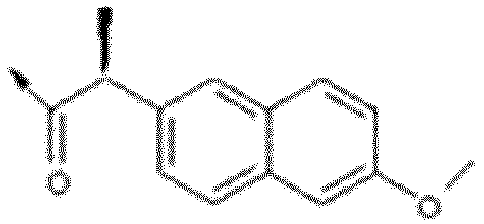
- CMWTZPSULFXXJA-VIFPVBQESA-N naproxen Chemical compound C1=C([C@H](C)C(O)=O)C=CC2=CC(OC)=CC=C21 CMWTZPSULFXXJA-VIFPVBQESA-N 0.000 title claims abstract description 47
- CMWTZPSULFXXJA-UHFFFAOYSA-N Naproxen Natural products C1=C(C(C)C(O)=O)C=CC2=CC(OC)=CC=C21 CMWTZPSULFXXJA-UHFFFAOYSA-N 0.000 title claims description 41
- 229960002009 naproxen Drugs 0.000 title claims description 40
- 229940021182 non-steroidal anti-inflammatory drug Drugs 0.000 title claims description 35
- 239000000041 non-steroidal anti-inflammatory agent Substances 0.000 title claims description 32
- 231100000419 toxicity Toxicity 0.000 title abstract description 4
- 230000001988 toxicity Effects 0.000 title abstract description 4
- 230000002496 gastric effect Effects 0.000 title abstract description 3
- 230000003110 anti-inflammatory effect Effects 0.000 claims abstract description 23
- 230000000202 analgesic effect Effects 0.000 claims abstract description 18
- 230000001754 anti-pyretic effect Effects 0.000 claims abstract description 17
- 231100000403 acute toxicity Toxicity 0.000 claims abstract description 9
- 230000007059 acute toxicity Effects 0.000 claims abstract description 9
- 231100000420 gastrotoxicity Toxicity 0.000 claims description 18
- 230000002829 reductive effect Effects 0.000 claims description 4
- 239000003814 drug Substances 0.000 abstract description 10
- ZRTVPFDBWJLLHP-LGIZJKRASA-N (2S)-2-(6-methoxynaphthalen-2-yl)propanoate [5-[(2S)-2-(6-methoxynaphthalen-2-yl)propanoyl]oxy-4-[[(2S)-2-(6-methoxynaphthalen-2-yl)propanoyl]oxymethyl]-6-methylpyridin-1-ium-3-yl]methyl (2S)-2-(6-methoxynaphthalen-2-yl)propanoate Chemical compound CC1=[NH+]C=C(C(=C1OC(=O)[C@@H](C)C2=CC3=C(C=C2)C=C(C=C3)OC)COC(=O)[C@@H](C)C4=CC5=C(C=C4)C=C(C=C5)OC)COC(=O)[C@@H](C)C6=CC7=C(C=C6)C=C(C=C7)OC.C[C@@H](C1=CC2=C(C=C1)C=C(C=C2)OC)C(=O)[O-] ZRTVPFDBWJLLHP-LGIZJKRASA-N 0.000 abstract 1
- 150000001875 compounds Chemical class 0.000 description 71
- 239000000243 solution Substances 0.000 description 47
- 241001465754 Metazoa Species 0.000 description 34
- 238000002360 preparation method Methods 0.000 description 24
- 239000000126 substance Substances 0.000 description 24
- 230000000694 effects Effects 0.000 description 23
- 241000700159 Rattus Species 0.000 description 22
- 235000010482 polyoxyethylene sorbitan monooleate Nutrition 0.000 description 22
- 229920000053 polysorbate 80 Polymers 0.000 description 22
- 102000004005 Prostaglandin-endoperoxide synthases Human genes 0.000 description 19
- 108090000459 Prostaglandin-endoperoxide synthases Proteins 0.000 description 19
- 239000000725 suspension Substances 0.000 description 16
- XLYOFNOQVPJJNP-UHFFFAOYSA-N water Substances O XLYOFNOQVPJJNP-UHFFFAOYSA-N 0.000 description 15
- CSCPPACGZOOCGX-UHFFFAOYSA-N Acetone Natural products CC(C)=O CSCPPACGZOOCGX-UHFFFAOYSA-N 0.000 description 14
- LXNHXLLTXMVWPM-UHFFFAOYSA-N pyridoxine Chemical class CC1=NC=C(CO)C(CO)=C1O LXNHXLLTXMVWPM-UHFFFAOYSA-N 0.000 description 12
- 206010061218 Inflammation Diseases 0.000 description 11
- 230000004054 inflammatory process Effects 0.000 description 11
- YZXBAPSDXZZRGB-DOFZRALJSA-N arachidonic acid Chemical compound CCCCC\C=C/C\C=C/C\C=C/C\C=C/CCCC(O)=O YZXBAPSDXZZRGB-DOFZRALJSA-N 0.000 description 10
- 206010030113 Oedema Diseases 0.000 description 9
- 238000002474 experimental method Methods 0.000 description 9
- 238000012360 testing method Methods 0.000 description 9
- CURLTUGMZLYLDI-UHFFFAOYSA-N Carbon dioxide Chemical compound O=C=O CURLTUGMZLYLDI-UHFFFAOYSA-N 0.000 description 8
- IAZDPXIOMUYVGZ-UHFFFAOYSA-N Dimethylsulphoxide Chemical compound CS(C)=O IAZDPXIOMUYVGZ-UHFFFAOYSA-N 0.000 description 8
- 235000010418 carrageenan Nutrition 0.000 description 8
- 229920001525 carrageenan Polymers 0.000 description 8
- 239000002270 dispersing agent Substances 0.000 description 8
- 210000004400 mucous membrane Anatomy 0.000 description 8
- 229940079593 drug Drugs 0.000 description 7
- 210000002683 foot Anatomy 0.000 description 7
- CGIGDMFJXJATDK-UHFFFAOYSA-N indomethacin Chemical compound CC1=C(CC(O)=O)C2=CC(OC)=CC=C2N1C(=O)C1=CC=C(Cl)C=C1 CGIGDMFJXJATDK-UHFFFAOYSA-N 0.000 description 7
- 230000005764 inhibitory process Effects 0.000 description 7
- 239000000523 sample Substances 0.000 description 7
- 102100038280 Prostaglandin G/H synthase 2 Human genes 0.000 description 6
- 108010029485 Protein Isoforms Proteins 0.000 description 6
- 102000001708 Protein Isoforms Human genes 0.000 description 6
- 230000001154 acute effect Effects 0.000 description 6
- 230000015572 biosynthetic process Effects 0.000 description 6
- 210000004027 cell Anatomy 0.000 description 6
- 238000006243 chemical reaction Methods 0.000 description 6
- 239000011677 pyridoxine Substances 0.000 description 6
- 235000008160 pyridoxine Nutrition 0.000 description 6
- 238000011160 research Methods 0.000 description 6
- 229940011671 vitamin b6 Drugs 0.000 description 6
- YMWUJEATGCHHMB-UHFFFAOYSA-N Dichloromethane Chemical compound ClCCl YMWUJEATGCHHMB-UHFFFAOYSA-N 0.000 description 5
- 208000032843 Hemorrhage Diseases 0.000 description 5
- HEFNNWSXXWATRW-UHFFFAOYSA-N Ibuprofen Chemical compound CC(C)CC1=CC=C(C(C)C(O)=O)C=C1 HEFNNWSXXWATRW-UHFFFAOYSA-N 0.000 description 5
- 208000002193 Pain Diseases 0.000 description 5
- 239000004793 Polystyrene Substances 0.000 description 5
- 108050003267 Prostaglandin G/H synthase 2 Proteins 0.000 description 5
- 241000700157 Rattus norvegicus Species 0.000 description 5
- 229940114079 arachidonic acid Drugs 0.000 description 5
- 235000021342 arachidonic acid Nutrition 0.000 description 5
- 239000000872 buffer Substances 0.000 description 5
- 229940121657 clinical drug Drugs 0.000 description 5
- 238000005516 engineering process Methods 0.000 description 5
- 230000002162 gastrotoxic effect Effects 0.000 description 5
- 238000001727 in vivo Methods 0.000 description 5
- WEVYAHXRMPXWCK-UHFFFAOYSA-N methyl cyanide Natural products CC#N WEVYAHXRMPXWCK-UHFFFAOYSA-N 0.000 description 5
- 125000002496 methyl group Chemical group [H]C([H])([H])* 0.000 description 5
- 229920002223 polystyrene Polymers 0.000 description 5
- 239000000047 product Substances 0.000 description 5
- 210000002784 stomach Anatomy 0.000 description 5
- 238000003786 synthesis reaction Methods 0.000 description 5
- 101150071146 COX2 gene Proteins 0.000 description 4
- 101100114534 Caenorhabditis elegans ctc-2 gene Proteins 0.000 description 4
- FKLJPTJMIBLJAV-UHFFFAOYSA-N Compound IV Chemical compound O1N=C(C)C=C1CCCCCCCOC1=CC=C(C=2OCCN=2)C=C1 FKLJPTJMIBLJAV-UHFFFAOYSA-N 0.000 description 4
- 101150000187 PTGS2 gene Proteins 0.000 description 4
- XBDQKXXYIPTUBI-UHFFFAOYSA-N Propionic acid Chemical compound CCC(O)=O XBDQKXXYIPTUBI-UHFFFAOYSA-N 0.000 description 4
- 240000004808 Saccharomyces cerevisiae Species 0.000 description 4
- HEDRZPFGACZZDS-MICDWDOJSA-N Trichloro(2H)methane Chemical compound [2H]C(Cl)(Cl)Cl HEDRZPFGACZZDS-MICDWDOJSA-N 0.000 description 4
- 101000942305 Zea mays Cytokinin dehydrogenase 1 Proteins 0.000 description 4
- 238000004458 analytical method Methods 0.000 description 4
- 239000007864 aqueous solution Substances 0.000 description 4
- 239000001569 carbon dioxide Substances 0.000 description 4
- 229910002092 carbon dioxide Inorganic materials 0.000 description 4
- 229960000590 celecoxib Drugs 0.000 description 4
- RZEKVGVHFLEQIL-UHFFFAOYSA-N celecoxib Chemical compound C1=CC(C)=CC=C1C1=CC(C(F)(F)F)=NN1C1=CC=C(S(N)(=O)=O)C=C1 RZEKVGVHFLEQIL-UHFFFAOYSA-N 0.000 description 4
- 239000013592 cell lysate Substances 0.000 description 4
- 239000003153 chemical reaction reagent Substances 0.000 description 4
- 230000003247 decreasing effect Effects 0.000 description 4
- 238000010828 elution Methods 0.000 description 4
- 150000002148 esters Chemical class 0.000 description 4
- 239000012634 fragment Substances 0.000 description 4
- 229960001680 ibuprofen Drugs 0.000 description 4
- 239000003112 inhibitor Substances 0.000 description 4
- 231100000053 low toxicity Toxicity 0.000 description 4
- 238000000034 method Methods 0.000 description 4
- 239000002244 precipitate Substances 0.000 description 4
- 239000011541 reaction mixture Substances 0.000 description 4
- 239000002904 solvent Substances 0.000 description 4
- 206010020843 Hyperthermia Diseases 0.000 description 3
- OKKJLVBELUTLKV-UHFFFAOYSA-N Methanol Chemical compound OC OKKJLVBELUTLKV-UHFFFAOYSA-N 0.000 description 3
- 206010037660 Pyrexia Diseases 0.000 description 3
- 229940124639 Selective inhibitor Drugs 0.000 description 3
- HEMHJVSKTPXQMS-UHFFFAOYSA-M Sodium hydroxide Chemical compound [OH-].[Na+] HEMHJVSKTPXQMS-UHFFFAOYSA-M 0.000 description 3
- 230000009471 action Effects 0.000 description 3
- 239000012491 analyte Substances 0.000 description 3
- 210000004556 brain Anatomy 0.000 description 3
- 230000006378 damage Effects 0.000 description 3
- 238000011161 development Methods 0.000 description 3
- 230000003628 erosive effect Effects 0.000 description 3
- 235000013305 food Nutrition 0.000 description 3
- 231100000487 gastrotoxic Toxicity 0.000 description 3
- 230000036031 hyperthermia Effects 0.000 description 3
- 229960000905 indomethacin Drugs 0.000 description 3
- 230000002757 inflammatory effect Effects 0.000 description 3
- 231100001231 less toxic Toxicity 0.000 description 3
- 239000000463 material Substances 0.000 description 3
- 238000005259 measurement Methods 0.000 description 3
- 239000000203 mixture Substances 0.000 description 3
- 229940094443 oxytocics prostaglandins Drugs 0.000 description 3
- 239000002599 prostaglandin synthase inhibitor Substances 0.000 description 3
- 238000007920 subcutaneous administration Methods 0.000 description 3
- 231100001274 therapeutic index Toxicity 0.000 description 3
- 210000001519 tissue Anatomy 0.000 description 3
- BSYNRYMUTXBXSQ-UHFFFAOYSA-N Aspirin Chemical compound CC(=O)OC1=CC=CC=C1C(O)=O BSYNRYMUTXBXSQ-UHFFFAOYSA-N 0.000 description 2
- IJGRMHOSHXDMSA-UHFFFAOYSA-N Atomic nitrogen Chemical compound N#N IJGRMHOSHXDMSA-UHFFFAOYSA-N 0.000 description 2
- RTZKZFJDLAIYFH-UHFFFAOYSA-N Diethyl ether Chemical compound CCOCC RTZKZFJDLAIYFH-UHFFFAOYSA-N 0.000 description 2
- 102000004190 Enzymes Human genes 0.000 description 2
- 108090000790 Enzymes Proteins 0.000 description 2
- WSFSSNUMVMOOMR-UHFFFAOYSA-N Formaldehyde Chemical compound O=C WSFSSNUMVMOOMR-UHFFFAOYSA-N 0.000 description 2
- 241000206672 Gelidium Species 0.000 description 2
- 208000004454 Hyperalgesia Diseases 0.000 description 2
- 208000035154 Hyperesthesia Diseases 0.000 description 2
- 102000003820 Lipoxygenases Human genes 0.000 description 2
- 108090000128 Lipoxygenases Proteins 0.000 description 2
- 208000004221 Multiple Trauma Diseases 0.000 description 2
- 208000023637 Multiple injury Diseases 0.000 description 2
- 102100038277 Prostaglandin G/H synthase 1 Human genes 0.000 description 2
- 108050003243 Prostaglandin G/H synthase 1 Proteins 0.000 description 2
- 208000027418 Wounds and injury Diseases 0.000 description 2
- 210000000683 abdominal cavity Anatomy 0.000 description 2
- 230000005856 abnormality Effects 0.000 description 2
- 238000010521 absorption reaction Methods 0.000 description 2
- 229960001138 acetylsalicylic acid Drugs 0.000 description 2
- 238000010171 animal model Methods 0.000 description 2
- 239000000730 antalgic agent Substances 0.000 description 2
- 239000002221 antipyretic Substances 0.000 description 2
- 238000004364 calculation method Methods 0.000 description 2
- 210000000170 cell membrane Anatomy 0.000 description 2
- 230000000052 comparative effect Effects 0.000 description 2
- DCOPUUMXTXDBNB-UHFFFAOYSA-N diclofenac Chemical compound OC(=O)CC1=CC=CC=C1NC1=C(Cl)C=CC=C1Cl DCOPUUMXTXDBNB-UHFFFAOYSA-N 0.000 description 2
- 229960001193 diclofenac sodium Drugs 0.000 description 2
- 201000010099 disease Diseases 0.000 description 2
- 208000037265 diseases, disorders, signs and symptoms Diseases 0.000 description 2
- 239000012153 distilled water Substances 0.000 description 2
- 238000011156 evaluation Methods 0.000 description 2
- 150000004676 glycans Chemical class 0.000 description 2
- 238000004128 high performance liquid chromatography Methods 0.000 description 2
- 230000006698 induction Effects 0.000 description 2
- 230000002401 inhibitory effect Effects 0.000 description 2
- 208000014674 injury Diseases 0.000 description 2
- 210000003734 kidney Anatomy 0.000 description 2
- 238000001819 mass spectrum Methods 0.000 description 2
- BDAGIHXWWSANSR-UHFFFAOYSA-N methanoic acid Natural products OC=O BDAGIHXWWSANSR-UHFFFAOYSA-N 0.000 description 2
- 210000004877 mucosa Anatomy 0.000 description 2
- 239000013642 negative control Substances 0.000 description 2
- 230000008533 pain sensitivity Effects 0.000 description 2
- 239000008188 pellet Substances 0.000 description 2
- 229960002895 phenylbutazone Drugs 0.000 description 2
- VYMDGNCVAMGZFE-UHFFFAOYSA-N phenylbutazonum Chemical compound O=C1C(CCCC)C(=O)N(C=2C=CC=CC=2)N1C1=CC=CC=C1 VYMDGNCVAMGZFE-UHFFFAOYSA-N 0.000 description 2
- 229920001282 polysaccharide Polymers 0.000 description 2
- 239000005017 polysaccharide Substances 0.000 description 2
- SGUKUZOVHSFKPH-YNNPMVKQSA-N prostaglandin G2 Chemical compound C1[C@@H]2OO[C@H]1[C@H](/C=C/[C@@H](OO)CCCCC)[C@H]2C\C=C/CCCC(O)=O SGUKUZOVHSFKPH-YNNPMVKQSA-N 0.000 description 2
- 150000003180 prostaglandins Chemical class 0.000 description 2
- ZUFQODAHGAHPFQ-UHFFFAOYSA-N pyridoxine hydrochloride Chemical compound Cl.CC1=NC=C(CO)C(CO)=C1O ZUFQODAHGAHPFQ-UHFFFAOYSA-N 0.000 description 2
- 238000004007 reversed phase HPLC Methods 0.000 description 2
- 150000003839 salts Chemical class 0.000 description 2
- VYPSYNLAJGMNEJ-UHFFFAOYSA-N silicon dioxide Inorganic materials O=[Si]=O VYPSYNLAJGMNEJ-UHFFFAOYSA-N 0.000 description 2
- 210000001626 skin fibroblast Anatomy 0.000 description 2
- JGMJQSFLQWGYMQ-UHFFFAOYSA-M sodium;2,6-dichloro-n-phenylaniline;acetate Chemical compound [Na+].CC([O-])=O.ClC1=CC=CC(Cl)=C1NC1=CC=CC=C1 JGMJQSFLQWGYMQ-UHFFFAOYSA-M 0.000 description 2
- 238000003756 stirring Methods 0.000 description 2
- 239000006228 supernatant Substances 0.000 description 2
- 210000000115 thoracic cavity Anatomy 0.000 description 2
- JNYAEWCLZODPBN-JGWLITMVSA-N (2r,3r,4s)-2-[(1r)-1,2-dihydroxyethyl]oxolane-3,4-diol Chemical class OC[C@@H](O)[C@H]1OC[C@H](O)[C@H]1O JNYAEWCLZODPBN-JGWLITMVSA-N 0.000 description 1
- WRIDQFICGBMAFQ-UHFFFAOYSA-N (E)-8-Octadecenoic acid Natural products CCCCCCCCCC=CCCCCCCC(O)=O WRIDQFICGBMAFQ-UHFFFAOYSA-N 0.000 description 1
- ADFXKUOMJKEIND-UHFFFAOYSA-N 1,3-dicyclohexylurea Chemical compound C1CCCCC1NC(=O)NC1CCCCC1 ADFXKUOMJKEIND-UHFFFAOYSA-N 0.000 description 1
- PKYCWFICOKSIHZ-UHFFFAOYSA-N 1-(3,7-dihydroxyphenoxazin-10-yl)ethanone Chemical compound OC1=CC=C2N(C(=O)C)C3=CC=C(O)C=C3OC2=C1 PKYCWFICOKSIHZ-UHFFFAOYSA-N 0.000 description 1
- 238000001644 13C nuclear magnetic resonance spectroscopy Methods 0.000 description 1
- 238000005160 1H NMR spectroscopy Methods 0.000 description 1
- MFSJSVNVUDQHLV-UHFFFAOYSA-N 2-(3-benzoylphenyl)propanoic acid Chemical compound OC(=O)C(C)C1=CC=CC(C(=O)C=2C=CC=CC=2)=C1.OC(=O)C(C)C1=CC=CC(C(=O)C=2C=CC=CC=2)=C1 MFSJSVNVUDQHLV-UHFFFAOYSA-N 0.000 description 1
- LQJBNNIYVWPHFW-UHFFFAOYSA-N 20:1omega9c fatty acid Natural products CCCCCCCCCCC=CCCCCCCCC(O)=O LQJBNNIYVWPHFW-UHFFFAOYSA-N 0.000 description 1
- OSWFIVFLDKOXQC-UHFFFAOYSA-N 4-(3-methoxyphenyl)aniline Chemical compound COC1=CC=CC(C=2C=CC(N)=CC=2)=C1 OSWFIVFLDKOXQC-UHFFFAOYSA-N 0.000 description 1
- QSBYPNXLFMSGKH-UHFFFAOYSA-N 9-Heptadecensaeure Natural products CCCCCCCC=CCCCCCCCC(O)=O QSBYPNXLFMSGKH-UHFFFAOYSA-N 0.000 description 1
- BQVORVOUKGDOGO-DUTNFGBUSA-N CC(CC1)C(C2)C11[C@]34C21C3CCC#CC4 Chemical compound CC(CC1)C(C2)C11[C@]34C21C3CCC#CC4 BQVORVOUKGDOGO-DUTNFGBUSA-N 0.000 description 1
- 0 CC(CC1)C1(C=N)*=C Chemical compound CC(CC1)C1(C=N)*=C 0.000 description 1
- 229940124638 COX inhibitor Drugs 0.000 description 1
- 206010048610 Cardiotoxicity Diseases 0.000 description 1
- 108010037464 Cyclooxygenase 1 Proteins 0.000 description 1
- 108010037462 Cyclooxygenase 2 Proteins 0.000 description 1
- 229940122204 Cyclooxygenase inhibitor Drugs 0.000 description 1
- 102000004127 Cytokines Human genes 0.000 description 1
- 108090000695 Cytokines Proteins 0.000 description 1
- QOSSAOTZNIDXMA-UHFFFAOYSA-N Dicylcohexylcarbodiimide Chemical compound C1CCCCC1N=C=NC1CCCCC1 QOSSAOTZNIDXMA-UHFFFAOYSA-N 0.000 description 1
- 206010015548 Euthanasia Diseases 0.000 description 1
- 102000003710 Histamine H2 Receptors Human genes 0.000 description 1
- 108090000050 Histamine H2 Receptors Proteins 0.000 description 1
- 206010020565 Hyperaemia Diseases 0.000 description 1
- 108010044467 Isoenzymes Proteins 0.000 description 1
- 102100037611 Lysophospholipase Human genes 0.000 description 1
- 239000005642 Oleic acid Substances 0.000 description 1
- ZQPPMHVWECSIRJ-UHFFFAOYSA-N Oleic acid Natural products CCCCCCCCC=CCCCCCCCC(O)=O ZQPPMHVWECSIRJ-UHFFFAOYSA-N 0.000 description 1
- 108091005804 Peptidases Proteins 0.000 description 1
- 108010058864 Phospholipases A2 Proteins 0.000 description 1
- 229920003171 Poly (ethylene oxide) Polymers 0.000 description 1
- 239000004365 Protease Substances 0.000 description 1
- 102100037486 Reverse transcriptase/ribonuclease H Human genes 0.000 description 1
- 208000025747 Rheumatic disease Diseases 0.000 description 1
- 238000000862 absorption spectrum Methods 0.000 description 1
- 239000002253 acid Substances 0.000 description 1
- 150000007513 acids Chemical class 0.000 description 1
- 208000038016 acute inflammation Diseases 0.000 description 1
- 230000006022 acute inflammation Effects 0.000 description 1
- 230000004075 alteration Effects 0.000 description 1
- 230000003444 anaesthetic effect Effects 0.000 description 1
- 239000005557 antagonist Substances 0.000 description 1
- 239000002260 anti-inflammatory agent Substances 0.000 description 1
- 229940124599 anti-inflammatory drug Drugs 0.000 description 1
- 229940125716 antipyretic agent Drugs 0.000 description 1
- 210000000436 anus Anatomy 0.000 description 1
- 230000036528 appetite Effects 0.000 description 1
- 235000019789 appetite Nutrition 0.000 description 1
- 206010003246 arthritis Diseases 0.000 description 1
- 125000003289 ascorbyl group Chemical class [H]O[C@@]([H])(C([H])([H])O*)[C@@]1([H])OC(=O)C(O*)=C1O* 0.000 description 1
- 238000003149 assay kit Methods 0.000 description 1
- 238000011888 autopsy Methods 0.000 description 1
- 238000012925 biological evaluation Methods 0.000 description 1
- 239000008280 blood Substances 0.000 description 1
- 210000004369 blood Anatomy 0.000 description 1
- 238000009835 boiling Methods 0.000 description 1
- 210000000988 bone and bone Anatomy 0.000 description 1
- 239000002775 capsule Substances 0.000 description 1
- 229910052799 carbon Inorganic materials 0.000 description 1
- 238000001460 carbon-13 nuclear magnetic resonance spectrum Methods 0.000 description 1
- 125000003178 carboxy group Chemical group [H]OC(*)=O 0.000 description 1
- 231100000259 cardiotoxicity Toxicity 0.000 description 1
- 210000000748 cardiovascular system Anatomy 0.000 description 1
- 230000008859 change Effects 0.000 description 1
- 230000001684 chronic effect Effects 0.000 description 1
- 238000004440 column chromatography Methods 0.000 description 1
- 230000006835 compression Effects 0.000 description 1
- 238000007906 compression Methods 0.000 description 1
- 210000000028 corpus adiposum pararenale Anatomy 0.000 description 1
- 230000001054 cortical effect Effects 0.000 description 1
- 229940111134 coxibs Drugs 0.000 description 1
- VFLDPWHFBUODDF-FCXRPNKRSA-N curcumin Chemical class C1=C(O)C(OC)=CC(\C=C\C(=O)CC(=O)\C=C\C=2C=C(OC)C(O)=CC=2)=C1 VFLDPWHFBUODDF-FCXRPNKRSA-N 0.000 description 1
- 239000003260 cyclooxygenase 1 inhibitor Substances 0.000 description 1
- 239000003255 cyclooxygenase 2 inhibitor Substances 0.000 description 1
- 229960001259 diclofenac Drugs 0.000 description 1
- 239000012895 dilution Substances 0.000 description 1
- 238000010790 dilution Methods 0.000 description 1
- 238000002224 dissection Methods 0.000 description 1
- 210000000613 ear canal Anatomy 0.000 description 1
- 239000003480 eluent Substances 0.000 description 1
- 210000001174 endocardium Anatomy 0.000 description 1
- 230000007071 enzymatic hydrolysis Effects 0.000 description 1
- 238000006047 enzymatic hydrolysis reaction Methods 0.000 description 1
- 210000003238 esophagus Anatomy 0.000 description 1
- 125000001495 ethyl group Chemical group [H]C([H])([H])C([H])([H])* 0.000 description 1
- 230000001747 exhibiting effect Effects 0.000 description 1
- 210000003414 extremity Anatomy 0.000 description 1
- 235000019197 fats Nutrition 0.000 description 1
- 239000000835 fiber Substances 0.000 description 1
- 210000002950 fibroblast Anatomy 0.000 description 1
- 239000012530 fluid Substances 0.000 description 1
- 235000019253 formic acid Nutrition 0.000 description 1
- 230000005714 functional activity Effects 0.000 description 1
- 210000001035 gastrointestinal tract Anatomy 0.000 description 1
- 210000004392 genitalia Anatomy 0.000 description 1
- 244000144993 groups of animals Species 0.000 description 1
- 230000036541 health Effects 0.000 description 1
- 238000010438 heat treatment Methods 0.000 description 1
- 210000000548 hind-foot Anatomy 0.000 description 1
- 230000002977 hyperthermial effect Effects 0.000 description 1
- 239000012535 impurity Substances 0.000 description 1
- 238000000338 in vitro Methods 0.000 description 1
- 230000028709 inflammatory response Effects 0.000 description 1
- 230000000977 initiatory effect Effects 0.000 description 1
- 238000002347 injection Methods 0.000 description 1
- 239000007924 injection Substances 0.000 description 1
- 210000004347 intestinal mucosa Anatomy 0.000 description 1
- 210000000936 intestine Anatomy 0.000 description 1
- 230000000622 irritating effect Effects 0.000 description 1
- 230000007794 irritation Effects 0.000 description 1
- QXJSBBXBKPUZAA-UHFFFAOYSA-N isooleic acid Natural products CCCCCCCC=CCCCCCCCCC(O)=O QXJSBBXBKPUZAA-UHFFFAOYSA-N 0.000 description 1
- DKYWVDODHFEZIM-UHFFFAOYSA-N ketoprofen Chemical compound OC(=O)C(C)C1=CC=CC(C(=O)C=2C=CC=CC=2)=C1 DKYWVDODHFEZIM-UHFFFAOYSA-N 0.000 description 1
- 229960000991 ketoprofen Drugs 0.000 description 1
- 231100000636 lethal dose Toxicity 0.000 description 1
- 210000003041 ligament Anatomy 0.000 description 1
- 239000007788 liquid Substances 0.000 description 1
- 210000004185 liver Anatomy 0.000 description 1
- 230000004807 localization Effects 0.000 description 1
- 210000004072 lung Anatomy 0.000 description 1
- 230000002934 lysing effect Effects 0.000 description 1
- 238000004519 manufacturing process Methods 0.000 description 1
- 238000004949 mass spectrometry Methods 0.000 description 1
- 239000011159 matrix material Substances 0.000 description 1
- 230000010534 mechanism of action Effects 0.000 description 1
- 238000002844 melting Methods 0.000 description 1
- 230000008018 melting Effects 0.000 description 1
- 238000002156 mixing Methods 0.000 description 1
- 230000004048 modification Effects 0.000 description 1
- 238000012986 modification Methods 0.000 description 1
- 210000003205 muscle Anatomy 0.000 description 1
- 229910052757 nitrogen Inorganic materials 0.000 description 1
- 238000000655 nuclear magnetic resonance spectrum Methods 0.000 description 1
- ZQPPMHVWECSIRJ-KTKRTIGZSA-N oleic acid Chemical compound CCCCCCCC\C=C/CCCCCCCC(O)=O ZQPPMHVWECSIRJ-KTKRTIGZSA-N 0.000 description 1
- 210000000056 organ Anatomy 0.000 description 1
- 210000001672 ovary Anatomy 0.000 description 1
- 230000035699 permeability Effects 0.000 description 1
- 102000013415 peroxidase activity proteins Human genes 0.000 description 1
- 108040007629 peroxidase activity proteins Proteins 0.000 description 1
- 239000003208 petroleum Substances 0.000 description 1
- 238000001050 pharmacotherapy Methods 0.000 description 1
- 210000003800 pharynx Anatomy 0.000 description 1
- 239000008363 phosphate buffer Substances 0.000 description 1
- 150000003904 phospholipids Chemical class 0.000 description 1
- 230000004962 physiological condition Effects 0.000 description 1
- 230000035790 physiological processes and functions Effects 0.000 description 1
- 229920000642 polymer Polymers 0.000 description 1
- -1 polyoxyethylene Polymers 0.000 description 1
- 230000008092 positive effect Effects 0.000 description 1
- 230000008569 process Effects 0.000 description 1
- 238000012545 processing Methods 0.000 description 1
- 230000002035 prolonged effect Effects 0.000 description 1
- 229940127293 prostanoid Drugs 0.000 description 1
- 150000003814 prostanoids Chemical class 0.000 description 1
- 238000000425 proton nuclear magnetic resonance spectrum Methods 0.000 description 1
- AOJFQRQNPXYVLM-UHFFFAOYSA-N pyridine hydrochloride Substances [Cl-].C1=CC=[NH+]C=C1 AOJFQRQNPXYVLM-UHFFFAOYSA-N 0.000 description 1
- 239000011764 pyridoxine hydrochloride Substances 0.000 description 1
- 229960004172 pyridoxine hydrochloride Drugs 0.000 description 1
- 235000019171 pyridoxine hydrochloride Nutrition 0.000 description 1
- 150000003227 pyridoxines Chemical class 0.000 description 1
- 239000010453 quartz Substances 0.000 description 1
- 239000013558 reference substance Substances 0.000 description 1
- 230000010076 replication Effects 0.000 description 1
- HSSLDCABUXLXKM-UHFFFAOYSA-N resorufin Chemical compound C1=CC(=O)C=C2OC3=CC(O)=CC=C3N=C21 HSSLDCABUXLXKM-UHFFFAOYSA-N 0.000 description 1
- 230000004044 response Effects 0.000 description 1
- 210000004706 scrotum Anatomy 0.000 description 1
- 239000000741 silica gel Substances 0.000 description 1
- 229910002027 silica gel Inorganic materials 0.000 description 1
- 241000894007 species Species 0.000 description 1
- 230000003595 spectral effect Effects 0.000 description 1
- 210000000952 spleen Anatomy 0.000 description 1
- 239000007921 spray Substances 0.000 description 1
- 238000007619 statistical method Methods 0.000 description 1
- 239000011550 stock solution Substances 0.000 description 1
- 239000000758 substrate Substances 0.000 description 1
- 230000001629 suppression Effects 0.000 description 1
- 230000008961 swelling Effects 0.000 description 1
- 208000024891 symptom Diseases 0.000 description 1
- 230000002195 synergetic effect Effects 0.000 description 1
- 230000002194 synthesizing effect Effects 0.000 description 1
- 239000013076 target substance Substances 0.000 description 1
- 210000002435 tendon Anatomy 0.000 description 1
- 210000001550 testis Anatomy 0.000 description 1
- 230000001225 therapeutic effect Effects 0.000 description 1
- 231100000816 toxic dose Toxicity 0.000 description 1
- 230000001562 ulcerogenic effect Effects 0.000 description 1
- 238000000825 ultraviolet detection Methods 0.000 description 1
- 238000000870 ultraviolet spectroscopy Methods 0.000 description 1
- 210000003932 urinary bladder Anatomy 0.000 description 1
- 210000002700 urine Anatomy 0.000 description 1
- 210000004291 uterus Anatomy 0.000 description 1
- 210000001835 viscera Anatomy 0.000 description 1
- 239000011726 vitamin B6 Substances 0.000 description 1
- 230000004584 weight gain Effects 0.000 description 1
- 235000019786 weight gain Nutrition 0.000 description 1
Classifications
-
- A—HUMAN NECESSITIES
- A61—MEDICAL OR VETERINARY SCIENCE; HYGIENE
- A61K—PREPARATIONS FOR MEDICAL, DENTAL OR TOILETRY PURPOSES
- A61K31/00—Medicinal preparations containing organic active ingredients
- A61K31/33—Heterocyclic compounds
- A61K31/395—Heterocyclic compounds having nitrogen as a ring hetero atom, e.g. guanethidine or rifamycins
- A61K31/435—Heterocyclic compounds having nitrogen as a ring hetero atom, e.g. guanethidine or rifamycins having six-membered rings with one nitrogen as the only ring hetero atom
- A61K31/44—Non condensed pyridines; Hydrogenated derivatives thereof
- A61K31/4412—Non condensed pyridines; Hydrogenated derivatives thereof having oxo groups directly attached to the heterocyclic ring
-
- A—HUMAN NECESSITIES
- A61—MEDICAL OR VETERINARY SCIENCE; HYGIENE
- A61K—PREPARATIONS FOR MEDICAL, DENTAL OR TOILETRY PURPOSES
- A61K31/00—Medicinal preparations containing organic active ingredients
- A61K31/33—Heterocyclic compounds
- A61K31/395—Heterocyclic compounds having nitrogen as a ring hetero atom, e.g. guanethidine or rifamycins
- A61K31/435—Heterocyclic compounds having nitrogen as a ring hetero atom, e.g. guanethidine or rifamycins having six-membered rings with one nitrogen as the only ring hetero atom
- A61K31/44—Non condensed pyridines; Hydrogenated derivatives thereof
- A61K31/4415—Pyridoxine, i.e. Vitamin B6
-
- A—HUMAN NECESSITIES
- A61—MEDICAL OR VETERINARY SCIENCE; HYGIENE
- A61P—SPECIFIC THERAPEUTIC ACTIVITY OF CHEMICAL COMPOUNDS OR MEDICINAL PREPARATIONS
- A61P29/00—Non-central analgesic, antipyretic or antiinflammatory agents, e.g. antirheumatic agents; Non-steroidal antiinflammatory drugs [NSAID]
-
- C—CHEMISTRY; METALLURGY
- C07—ORGANIC CHEMISTRY
- C07D—HETEROCYCLIC COMPOUNDS
- C07D213/00—Heterocyclic compounds containing six-membered rings, not condensed with other rings, with one nitrogen atom as the only ring hetero atom and three or more double bonds between ring members or between ring members and non-ring members
- C07D213/02—Heterocyclic compounds containing six-membered rings, not condensed with other rings, with one nitrogen atom as the only ring hetero atom and three or more double bonds between ring members or between ring members and non-ring members having three double bonds between ring members or between ring members and non-ring members
- C07D213/04—Heterocyclic compounds containing six-membered rings, not condensed with other rings, with one nitrogen atom as the only ring hetero atom and three or more double bonds between ring members or between ring members and non-ring members having three double bonds between ring members or between ring members and non-ring members having no bond between the ring nitrogen atom and a non-ring member or having only hydrogen or carbon atoms directly attached to the ring nitrogen atom
- C07D213/60—Heterocyclic compounds containing six-membered rings, not condensed with other rings, with one nitrogen atom as the only ring hetero atom and three or more double bonds between ring members or between ring members and non-ring members having three double bonds between ring members or between ring members and non-ring members having no bond between the ring nitrogen atom and a non-ring member or having only hydrogen or carbon atoms directly attached to the ring nitrogen atom with hetero atoms or with carbon atoms having three bonds to hetero atoms with at the most one bond to halogen, e.g. ester or nitrile radicals, directly attached to ring carbon atoms
- C07D213/62—Oxygen or sulfur atoms
- C07D213/63—One oxygen atom
- C07D213/65—One oxygen atom attached in position 3 or 5
- C07D213/66—One oxygen atom attached in position 3 or 5 having in position 3 an oxygen atom and in each of the positions 4 and 5 a carbon atom bound to an oxygen, sulphur, or nitrogen atom, e.g. pyridoxal
- C07D213/67—2-Methyl-3-hydroxy-4,5-bis(hydroxy-methyl)pyridine, i.e. pyridoxine
Definitions
- the invention refers to a new formula I naproxen derivative which has a high anti-inflammatory, analgesic and antipyretic activity, as well as low acute toxicity and gastrotoxicity and which can be used in the pharmaceutical industry, medicine and veterinary medicine.
- NSAIDs non-steroidal anti-inflammatory drugs
- NSAIDs are inflammatory processes of different nature and localization, pain and fever.
- NSAIDs are one of the most widely used groups of drugs.
- NSAIDs are prescribed to about 20% of inpatients with various diseases of internal organs [ Guidelines for Pre-clinical Drug Research. Part one / edited by A.N. Mironov. - M.: Grif and K Publ., 2012. p. 944 ].
- NSAIDs The main element of the mechanism of action of NSAIDs is the suppression of the synthesis of inflammatory mediators - prostaglandins.
- the cell membrane releases phospholipids which under the action of the enzyme of phospholipase A2 are metabolized to arachidonic acid.
- Arachidonic acid is metabolized in two ways: cyclooxygenase (COX) and lipoxygenase (LOX).
- COX cyclooxygenase
- LOX lipoxygenase
- COX-1 substitutional, normally existing
- COX-2 induced
- COX-2 is normally absent and is formed under the influence of tissue factors that induce an inflammatory response (cytokines, etc.). It is believed that the anti-inflammatory effect of NSAIDs is due to the inhibition of COX-2, and the side effects are due to the inhibition of COX-1 [ Guidelines for Pre-clinical Drug Research. Part one / edited by A.N. Mironov. - M.: Grif and K Publ., 2012. p. 944 ].
- ketoprofen (3-benzoyl-alpha-methylbenzene acetic acid), ibuprofen (( RS ) -2- (4-isobutylphenyl) propionic acid), diclofenac (2- [(2,6-dichlorophenyl) amino] benzene acetic acid), indomethacin (1- (4-chlorobenzoyl) -5-methoxy-2-methyl-1 H- indol-3-acetic acid) and naproxen (( S ) -6-methoxy- ⁇ -methyl-2-naphthalenacetic acid).
- Pillai // Expert. Opin. Drug Metab. Toxicol. - 2014. - V. 10, N. 2. - P. 143-156 .].
- NSAIDs esters are typical promedications, which in the gastrointestinal tract (hereinafter referred to as the GIT) undergo enzymatic hydrolysis with gradual release of NSAIDs, providing a prolonged effect of the drug.
- promedications based on esters better penetrate cytoplasmic membranes of cells, thus having less irritating effect on the mucous membrane of the GIT.
- Ascorbic acid esters with NSAIDs are known to be derivatives of arilacetic or arylpropionic acids, such as ibuprofen, ketoprofen, naproxen and their salts [ EP 2431361 , published on 21.03.2012].
- the prototype version containing three fragments of naproxen is an effective anti-inflammatory compound.
- it has a pronounced anti-inflammatory effect on the model of subacute (formalin) edema in vivo.
- the claimed technical solution for the claimed composition differs from that described in the prototype by the presence of an additional fragment of naproxen, which, in the applicant's experimentally grounded view, causes the appearance of pharmacologically significant positive effects.
- an additional fragment of naproxen which, in the applicant's experimentally grounded view, causes the appearance of pharmacologically significant positive effects.
- the combination in the claimed molecule of covalent ester bonds split under physiological conditions and non-covalent ionic bond linking fragments of naproxen and pyridoxine leads to the emergence of synergistic effects that are not obvious to a specialist. These effects are expressed in increased anti-inflammatory, analgesic and antipyretic activity, as well as in significantly reduced gastrotoxicity and acute toxicity.
- the claimed compound of formula I against the background of reduced gastrotoxicity and acute toxicity ensures a rapid onset of a pronounced anti-inflammatory effect on the model of both acute and subacute edema in vivo, whereby the applicant can resolve the seemingly insurmountable problem typical of both the prototype and many other NSAIDs including naproxen (the latter is also the prototype of the claimed technical solution).
- the objective of the claimed technical solution is to create a pharmaceutical drug based on naproxen, which has a high anti-inflammatory, analgesic and antipyretic activity in combination with low toxicity, including gastrotoxicity, significantly expanding the arsenal of known means of the specified destination.
- the technical result of the invention is a new non-steroidal anti-inflammatory drug based on pyridoxine and naproxen, exhibiting high anti-inflammatory, analgesic and antipyretic activity on the background of significantly lower toxicity, including gastrotoxicity, compared with the known NSAIDs, including the prototype.
- NMR spectra were recorded on the Bruker AVANCE-400 device. The chemical shift was determined with respect to the signals of residual protons of deuterated solvents ( 1 H and 13 C). Melt temperatures of products were determined using Stanford Research Systems MPA-100 OptiMelt at a heating rate of 1° C/min. The UV spectrophotometer Evolution 300 (Thermo scientific) was used to study the spectral characteristics of the solutions of the formula I compound. Specific rotation was determined on the automatic polarimeter ADP440 + (B&S) (England) using quartz matrix tube 100° Z.
- High-resolution mass spectra were recorded using TripleTOF 5600, AB Sciex (Germany) mass spectrometer from methanol solution by ionization - turboion spray (TIS) - at energy of impacts with nitrogen molecules equal to 10 eV.
- Determination of purity of compound of formula I was performed by reverse phase HPLC using the values of the gradient elution mode of Table 1, using a high performance liquid chromatograph LCMS-2010EV, Shimadzu (Japan) equipped with a XBridge C18 diode array detector (size 4.6 ⁇ 50 mm, 3.5 ⁇ m). The temperature of the column thermostat is + 40 ° C, the flow rate is 1 ml / min, the volume of the introduced sample is 1 mg / ml. UV detection was performed at an analytical wave length of 220 nm, as well as 254 and 330 nm to determine impurities.
- Example 1 Obtaining (2 S, 2' S )-(5-(( S ) -2-(6-methoxinaphth-2-yl)propanoiloxy)-6-methylpyridine-3,4-diyl)bis(methylene)bis(2-(6-methoxinaphtht-2-yl)propanoate) (compound IV).
- the round bottom flask is loaded with 28.35 g of pyridoxine hydrochloride II, 95.23 g of naproxene III, 50.52 g of 4- N , N -dimethylaminopyridine and 123.73 g of dicyclohexyl carbodiimide in 5 1 of acetone.
- the reaction mixture is stirred until the formation of the dicyclohexyl urea precipitate is stopped, then the precipitate is filtered, washed with 200 ml of acetone and the combined leachate is evaporated in a vacuum.
- the product is purified with column chromatography on silica gel (eluent ethyl acetate-petroleum ether 1:1).
- Product IV is obtained in the form of white crystalline substance (yield 82.0 g, 74%).
- the preparation of this compound and its properties are described in the invention under the patent RU 2513098 .
- the target substance I is a salt of compound IV with naproxen.
- table 1 under the conditions of reversed-phase HPLC (table 1) it appears on the chromatogram as two peaks corresponding to compound IV and naproxen, the mass spectra of which correspond to the calculated and literature data (806.3324 and 229.0870, respectively).
- the experiment was performed according to the fixed dose method in Wistar rats of both sexes, 6 animals per group.
- the initial dose for intragastric administration was 5000 mg/kg.
- the solvent used was a 0.5% Tween-80 solution (Tween 80 - polyoxyethylene, a derivative of sorbitan and oleic acid, a commercially available polymer), which was prepared by dissolving 0.5 g of Tween-80 in 100 ml of distilled water.
- the introduction was carried out to animals deprived of food (for a period of not less than 8 hours) with free access to water.
- the volume of administration was calculated individually for each animal, based on the body mass recorded immediately before the introduction of the substance. Access to the feed was renewed an hour after the introduction. Animals were observed individually after administration for 30 minutes, then at least once per hour for 4 hours, then daily once a day for 14 days. Body mass was recorded immediately before the administration of the preparation to calculate the volume of administration, then once every two days. If the animal died during the study, the time of death was determined and documented as accurately as possible. The animal was weighed and dissected as soon as possible. Dying animals were weighed, euthanized and dissected. Animals were euthanized by inhalation of carbon dioxide. Toxic doses LD 10 , LD 16 , LD 50 and LD 84 were calculated using probit analysis with IBM SPSS Statistics software.
- Table 2 Acute toxicity of formula I compound with intragastric administration Animal species Sex Dose, mg/kg Number of animals in the group / number of dead animals LD 10 LD 16 LD 50 LD 84 rat males 5000 6/0 > 5000 > 5000 > 5000 > 5000 females 5000 6/1 > 5000 > 5000 > 5000 > 5000 > 5000 > 5000
- the muscles are reddish, well developed, tendons and ligaments are white, elastic and durable.
- the configuration of bones and joints is not broken.
- the position of the organs of the thoracic and abdominal cavity is anatomically correct. There is no fluid in the thoracic and abdominal cavities.
- the patency of the pharynx and esophagus is not broken.
- the heart is not changed in volume.
- the cavities of the heart contain a small amount of non-clotted blood; the endocardium is smooth and shiny.
- the lungs are of pale pink color, evenly colored, with no signs of swelling, the lobulation is well expressed.
- the spleen is not enlarged, with sharp edges, oblong in shape, has elastic consistency, red-brown in color.
- the liver is not enlarged, with sharp edges, the shape is not changed, the consistency is dense, and the color is red-brown.
- the stomach contains a gray feed mass of a uniform consistency.
- the mucous membrane of the stomach is pale gray.
- the mucous membrane of the thin and thick parts of the intestine is of pale pink or pale gray color.
- the kidneys are bean-shaped, dark brown in color, in the paranephric body there is a moderate amount of fat, the capsule is easily separated, and the boundary between the cortical and brain zones is expressed.
- the urinary bladder is empty or filled up with urine of light yellow color, the mucous membrane is of pale pink color. Genitals are without abnormalities.
- Males' testicles are of elastic consistency, are in the cavity of the scrotum, have an elliptical shape.
- the females have normal ovaries and uterus.
- the brain is not edematic; the brain matter is elastic, without hemorrhages.
- the conducted studies showed that the claimed compound of the formula I after intragastric administration belongs to the 4th hazard class, i.e. to low-hazard substances (GOST 12.1.007-76 "Harmful substances. Classification and general safety requirements") and its safety in terms of LD 50 lethal dose exceeds most NSAIDs known to date (Table 3).
- the claimed compound is 8 times less toxic than naproxen.
- the compound of formula I was administered once intragastrically to rats deprived of food for 16 hours before the study. Three hours after the administration of the suspension of the test substance at a dose of 2000 mg / kg (in 0.5% aqueous solution of Tween-80), the animals were euthanized; their stomachs were removed, dissected along the lesser curvature, and washed in physiological solution to remove the contents.
- UD 50 was determined - the dose of the tested substance causing gastrotoxic (ulcerogenic) effect corresponding to 2 points.
- the UD 50 value is > 2000 mg / kg, which exceeds the similar parameter for most NSAIDs (Table 3).
- the claimed compound is 40 times less toxic than naproxen.
- cyclooxygenase 1 The structural enzyme cyclooxygenase 1 (COX 1) is expressed in various cell types and is involved in ensuring their normal (physiological) functional activity. Cyclooxygenase 2 (COX 2) is responsible for the synthesis of prostaglandins in severe inflammation conditions.
- COX activity consisted in measuring the peroxidase activity of cyclooxygenase.
- PGG2 prostaglandin G2
- ADHP 10-acetyl-3,7-dihydrofenoxazine
- kit used "Cyclooxygenase (COX) Activity Assay Kit (Fluorometric)" (Biovision, cat # K 549-100) as a COX probe
- a fluorescent component resorufin is formed, the absorption wavelength of which is 530-540 nm, the emission wavelength is (585-595) nm.
- the fluorescence intensity is directly proportional to the residual activity of COX in the sample.
- Skin fibroblast cells (HSF) were selected as a source of cyclooxygenase enzyme.
- the fibroblast cell lysate was shown to have a COX activity of 2.131 ⁇ U / mg.
- COX cofactors are dissolved 200 times by adding 2 ⁇ l of cofactors to 398 ⁇ l of buffer immediately before use. 65 ⁇ l of arachidonic acid and 65 ⁇ l of NaOH are mixed, and then diluted 10 times with 1170 ⁇ l of distilled water. The solution is stable for 1 hour.
- the reaction mixture is prepared (for 2 parallel wells) by mixing the following reagents indicated below:
- DMSO dimethyl sulfoxide
- reagents are added to the appropriate plate wells: first, the reaction mixture, then the solutions of the test substances in DMSO in a series of concentrations and control substances (inhibitor COX 1 SC560 and inhibitor COX 2 Celecoxib), pure solvent DMSO (for wells with higher activity). Two replications are used. They are incubated for 5 minutes.
- the percentage of COX inhibition is calculated according to the formula: 1 ⁇ Average Net Inhibitor RFU Average Net RFU for n ⁇ o ⁇ n ⁇ - ⁇ inhibited ⁇ 100
- the COX-1 inhibitor SC560 and the COX-2 inhibitor celecoxib are added to the reaction mixture in a volume of 2 ⁇ l (this amount is sufficient to completely inhibit the appropriate isoform).
- the residual activity of COX contained in cell lysate after treatment by SC560 and celecoxib is 72.8% and 32.0% respectively.
- the concentration of naproxen and the tested substance in the well is from 1.25 to 20 ⁇ M.
- the studied substances are tested in a concentration pattern in the presence of a selective inhibitor COX 1 SC560, as well as in the presence of a selective inhibitor COX 2 celecoxib.
- the inhibitor is added in sufficient quantities to completely inhibit the corresponding isoform of the enzyme, while the other isoform remains active.
- the naproxen IC 50 (prototype) is 9.56 ⁇ M, which is 1.25 times the IC 50 of the compound of formula I, equal to 7.7 ⁇ M. From the above, it can be concluded that the claimed compound of formula I is more effective as a cyclooxygenase inhibitor, since it acts at a lower concentration.
- the experiment was carried out using female and male Wistar rats aged 6-7 weeks with a body mass of 180-220 g.
- the number of animals in each group was 10.
- the acute inflammatory reaction was reproduced by subplantar (under plantar or plantar aponeurosis) administration of 0.1 ml of 1% carrageenin solution (sulfated polysaccharide from Irish sea moss).
- the severity of the inflammatory reaction was assessed 3 hours after the induction of inflammation by a change in the volume of the paw (oncometric).
- the substance of formula I was administered into the stomach with the probe 1 hour before the introduction of the 1% solution of carrageenin.
- a 0.5% Tween-80 solution was used as a negative control.
- the anti-inflammatory effect assessed by a decrease in edema, was expressed as a percentage of the control. According to the results of the action of four doses of the analyte, the calculation of ED 50 was performed.
- the ED 50 of the compound of formula I on males is 23 mg / kg, on females is 14 mg / kg.
- the mean value of ED 50 without sex distinction is 18.5 ( ⁇ 19) mg/kg.
- ED 50 of naproxen is 15 mg/kg, ibuprofen - 48 mg/kg, diclofenac sodium - 8 mg/kg, pyroxicam - 20 mg/kg, phenylbutazone - 56 mg/kg, indomethacin - 10 mg/kg, acetylsalicylic acid - 98 mg/kg
- the applicant experimentally proved the presence of a high anti-inflammatory activity of a compound of formula I, which is superior in its value (in four cases out of seven) or comparable to the anti-inflammatory activity of modern NSAIDs.
- Chronic immune inflammation was modeled in rats by subplantar administration of 0.1 ml of a 1% solution of carrageenin (a sulfated polysaccharide from Irish sea moss) into the right hind paw.
- the substance was administered intragastrically using a gastric probe.
- Naproxen was used as a comparison drug
- 0.5% Tween-80 solution was used as a negative control.
- the anti-inflammatory effect assessed by a decrease in edema, was expressed as a percentage relative to the control; according to the results of the action of four doses of the test substance, the calculation of ED 50 was performed.
- Inflammatory hyperalgesia increased pain sensitivity of inflamed tissues in rats was caused by carrageenin and was assessed by decrease of the pain sensitivity threshold - PST (by PST difference) to mechanical irritation (squeezing) of the paw tissue of the animal before the introduction of carrageenin and 3 hours after it. The measurement was performed on the inflamed paw.
- Used analgesimeter Ugo Basile S.R.L. (Italy) provides a gradual increased afterload on the rat's inflamed paw until a pain reaction appears (assessed by squeaking of animal or withdrawing the paw). The analyte was administered 2 h after carrageenin administration.
- the analgesic effect with evaluation of ED 50 was assessed by a decrease in hyperalgesia 1 h after intragastric administration of the analyte.
- An increase in the pain response threshold under the influence of the substances under study was expressed in an increase in the force of compression of the limb and characterized the intensity of the analgesic effect of the preparation.
- animals were euthanized by carbon dioxide inhalation method.
- the claimed compound of formula I exhibits a pronounced anesthetic effect already at a dose of 5 mg / kg, while naproxen (prototype) has a similar effect only at a dose of 15 mg / kg, which is a demonstrative fact of its higher efficiency.
- the therapeutic index (LD 50 / ED 50 ) of the claimed compound in terms of its analgesic activity is more than 1000 against 42 for naproxen
- the safety index (UD 50 / ED 50 ) is more than 400 against 3.2 for naproxen.
- the febrile reaction was caused by subcutaneous administration of a 20% suspension of baking yeast.
- the rectal temperature was measured with an electrothermometer prior to the introduction of yeast and 18 hours after it (the difference of these measurements is the estimated hyperthermic reaction).
- the preparation was administered to animals at the peak of hyperthermia once (after 18 hours).
- the antipyretic effect was evaluated by hyperthermia decrease 2 hours after the injection of the test substance, and then the effect dynamics was recorded at hourly intervals for 7 hours.
- Table 7 The antipyretic activity of the formula I compound Group Dose, mg/kg Sex of animals ⁇ t after 2 hours, (M ⁇ SD) ⁇ t after 3 hours, (M ⁇ SD) ⁇ t after 4 hours, (M ⁇ SD) ⁇ t after 5 hours, (M ⁇ SD) ⁇ t after 6 hours, (M ⁇ SD) ⁇ t after 7 hours, (M ⁇ SD) Compound of formula I 20 Males 0.13 ⁇ 0.31 0.24 ⁇ 0.37 0.02 ⁇ 0.25 0.1 ⁇ 0.26 -0.21 ⁇ 0.22 0.04 ⁇ 0.28 Females -0.07 ⁇ 0.17 -0.27 ⁇ 0.17 -0.35 ⁇ 0.16 0.34 ⁇ 0.18 -0.01 ⁇ 0.22 -0.08 ⁇ 0.19 50 Males 0.22 ⁇ 0.16 0.36 ⁇ 0.17* 0.39 ⁇ 0.11* 0.25 ⁇ 0.2 0.11 ⁇ 0.19 0.09 ⁇ 0.18 Females 0.87 ⁇ 0.09* 0.91
- the claimed compound has antipyretic properties at the level of naproxen dose of 15 mg / kg. It should be particularly noted that in molar terms these doses do not practically differ, since the molar mass of naproxen is significantly lower than the molar mass of the compound of formula I, and is equal to 230 g / mol versus 1036 g / mol of the claimed compound.
- the therapeutic index (LD 50 / ED 50 ) of the claimed compound in terms of its antipyretic activity is more than 67 against 42 for naproxen, and the safety index (UD 50 / ED 50 ) is more than 27 against 3.2 for naproxen.
- the claimed compound is 8 times less toxic and 40 times less gastrotoxic compared to naproxen (prototype).
- the claimed technical solution meets the criterion of "novelty" applied to inventions, because from the studied level of technology, no technical solutions were found that coincide with the claimed one on essential features leading to the realization of the stated technical results, which are new pyridoxine and naproxen derivatives having low toxicity, including gastrotoxicity.
- the claimed chemical compound expands the range of products for the treatment of rheumatic diseases, as well as diseases accompanied by inflammation, pain and fever, and is fundamentally new, unparalleled in the world in terms of its effectiveness and safety of use.
- the claimed technical solution meets the criterion of "inventive step" applied to inventions, because it is not obvious to specialists in this field of technology, namely, from the studied level of technology no anti-inflammatory, analgesic and antipyretic drugs of the claimed structure were identified.
- the claimed technical solution meets the criterion of "industrial applicability", as it can be implemented at any specialized enterprise using standard equipment, well-known domestic materials and technologies.
- the applicant obtained in the laboratory the target product - non-steroidal anti-inflammatory drug based on naproxen, with the claimed technical results and achieved all the claimed objectives.
Landscapes
- Health & Medical Sciences (AREA)
- Chemical & Material Sciences (AREA)
- Organic Chemistry (AREA)
- Medicinal Chemistry (AREA)
- Pharmacology & Pharmacy (AREA)
- Life Sciences & Earth Sciences (AREA)
- Animal Behavior & Ethology (AREA)
- General Health & Medical Sciences (AREA)
- Public Health (AREA)
- Veterinary Medicine (AREA)
- Epidemiology (AREA)
- Pain & Pain Management (AREA)
- Rheumatology (AREA)
- Chemical Kinetics & Catalysis (AREA)
- General Chemical & Material Sciences (AREA)
- Nuclear Medicine, Radiotherapy & Molecular Imaging (AREA)
- Pharmaceuticals Containing Other Organic And Inorganic Compounds (AREA)
- Acyclic And Carbocyclic Compounds In Medicinal Compositions (AREA)
- Pyridine Compounds (AREA)
Abstract
Description
- The invention refers to a new formula I naproxen derivative which has a high anti-inflammatory, analgesic and antipyretic activity, as well as low acute toxicity and gastrotoxicity and which can be used in the pharmaceutical industry, medicine and veterinary medicine.

- The main indications for the prescription of non-steroidal anti-inflammatory drugs (hereinafter NSAIDs) are inflammatory processes of different nature and localization, pain and fever. NSAIDs are one of the most widely used groups of drugs. For example, NSAIDs are prescribed to about 20% of inpatients with various diseases of internal organs [Guidelines for Pre-clinical Drug Research. Part one / edited by A.N. Mironov. - M.: Grif and K Publ., 2012. p. 944].
- The main element of the mechanism of action of NSAIDs is the suppression of the synthesis of inflammatory mediators - prostaglandins. During the process of alteration (the first stage of inflammation) the cell membrane releases phospholipids which under the action of the enzyme of phospholipase A2 are metabolized to arachidonic acid. Arachidonic acid, in turn, is metabolized in two ways: cyclooxygenase (COX) and lipoxygenase (LOX). NSAIDs inhibit only COX, so they block the development of only the second stage of inflammation [Guidelines for Pre-clinical Drug Research. Part one / edited by A.N. Mironov. - M.: Grif and K Publ., 2012. p. 944].
- There are 2 COX isoenzymes: COX-1 (constitutional, normally existing) controls the production of prostanoids that regulate physiological functions of the stomach, vessels and kidneys; COX-2 (induced) is involved in the synthesis of prostaglandins in inflammation. COX-2 is normally absent and is formed under the influence of tissue factors that induce an inflammatory response (cytokines, etc.). It is believed that the anti-inflammatory effect of NSAIDs is due to the inhibition of COX-2, and the side effects are due to the inhibition of COX-1 [Guidelines for Pre-clinical Drug Research. Part one / edited by A.N. Mironov. - M.: Grif and K Publ., 2012. p. 944].
- The most known NSAIDs are ketoprofen (3-benzoyl-alpha-methylbenzene acetic acid), ibuprofen ((RS) -2- (4-isobutylphenyl) propionic acid), diclofenac (2- [(2,6-dichlorophenyl) amino] benzene acetic acid), indomethacin (1- (4-chlorobenzoyl) -5-methoxy-2-methyl-1H-indol-3-acetic acid) and naproxen ((S) -6-methoxy-α-methyl-2-naphthalenacetic acid). Currently naproxen occupies one of the leading positions in the group of NSAIDs, because it has a longer effect than other NSAIDs and is well tolerated [Mashkovsky M.D. Lekarstvennye sredstva. [Medicinal Drugs.] 16th ed., revised and modified - M.: Novaya Volna [New Wave] Publ., 2012. p. 1216].
- The disadvantage of known to date NSAIDs, namely non-selective cyclooxygenase inhibitors, is their pronounced gastrotoxicity [Handa, O. The impact of non-steroidal anti-inflammatory drugs on the small intestinal epithelium / O. Handa, Y. Naito, A. Fukui, T. Omatsu, T. Yoshikawa // J. Clin. Biochem. Nutr. - 2014. - V. 54, N. 1. - P. 2 - 6.]. Selective inhibitors of COX-2 are less gastrotoxic, but their negative effects on the cardiovascular system are known [Singh, B.K. Assessment of nonsteroidal anti-inflammatory drug-induced cardiotoxicity / B.K. Singh, S.E. Haque, K.K. Pillai // Expert. Opin. Drug Metab. Toxicol. - 2014. - V. 10, N. 2. - P. 143-156.]. Thus, on the date of submission of the application materials, the problem of reducing the side effects of both types of NSAIDs - selective and non-selective cyclooxygenase inhibitors - remains unresolved.
- Thus, the development of safe and effective NSAIDs is one of the most important tasks of pharmacotherapy and health care in general.
- In the applicant view, based on the analysis of the level of technology, the most promising direction of development of anti-inflammatory drugs is search for non-selective NSAIDs. At the same time, as noted above, developers face the task of reducing side effects, the main of which is gastrotoxicity.
- Protection of carboxyl group of non-selective COX inhibitors is one of the main ways to reduce toxicity of this group of NSAIDs. Ester protection is the most frequently used for this purpose [Liu, W. Synthesis and biological evaluation of curcumin derivatives containing NSAIDs for their anti-inflammatory activity [Text] / W. Liu, Y. Li, Y. Yue, et al. // Bioorg. Med. Chem. Lett. - 2015. - V. 25, N. 15. - P. 3044 - 3051.]. NSAIDs esters are typical promedications, which in the gastrointestinal tract (hereinafter referred to as the GIT) undergo enzymatic hydrolysis with gradual release of NSAIDs, providing a prolonged effect of the drug. In addition, promedications based on esters better penetrate cytoplasmic membranes of cells, thus having less irritating effect on the mucous membrane of the GIT. Ascorbic acid esters with NSAIDs are known to be derivatives of arilacetic or arylpropionic acids, such as ibuprofen, ketoprofen, naproxen and their salts [
EP 2431361 , published on 21.03.2012]. For the treatment of arthritis, pain and inflammatory processes was proposed 2-methansulfonatethyl ester of naproxen together with H2 receptors antagonist [WO 200810106441 - The closest combination of coinciding features and achieved technical result to the claimed invention is the technical solution described in the invention under the patent
RU 2513089 
- when R2 + R3 = -C (CH3)2- or -CH (CH3) -; R1 =

- R1 = R2 = R3 =

- The prototype version containing three fragments of naproxen is an effective anti-inflammatory compound. In particular, it has a pronounced anti-inflammatory effect on the model of subacute (formalin) edema in vivo.
- However, on the model of acute (carrageenin) edema in vivo this prototype was not effective enough. It is important to note that the prototype does not have at the same time a set of properties inherent in the stated technical solution, namely high anti-inflammatory (on the model of acute (carrageenin) edema in vivo), analgesic and antipyretic activity combined with low toxicity, including gastrotoxicity. For this reason, the applicant does not consider this prototype as a comparison drug, instead of it a modern non-steroidal anti-inflammatory drug naproxen and its analogues are used for this purpose (table 3).
- The claimed technical solution for the claimed composition differs from that described in the prototype by the presence of an additional fragment of naproxen, which, in the applicant's experimentally grounded view, causes the appearance of pharmacologically significant positive effects. Thus, the combination in the claimed molecule of covalent ester bonds split under physiological conditions and non-covalent ionic bond linking fragments of naproxen and pyridoxine, leads to the emergence of synergistic effects that are not obvious to a specialist. These effects are expressed in increased anti-inflammatory, analgesic and antipyretic activity, as well as in significantly reduced gastrotoxicity and acute toxicity. In particular, the claimed compound of formula I against the background of reduced gastrotoxicity and acute toxicity ensures a rapid onset of a pronounced anti-inflammatory effect on the model of both acute and subacute edema in vivo, whereby the applicant can resolve the seemingly insurmountable problem typical of both the prototype and many other NSAIDs including naproxen (the latter is also the prototype of the claimed technical solution).
- The objective of the claimed technical solution is to create a pharmaceutical drug based on naproxen, which has a high anti-inflammatory, analgesic and antipyretic activity in combination with low toxicity, including gastrotoxicity, significantly expanding the arsenal of known means of the specified destination.
- The technical result of the invention is a new non-steroidal anti-inflammatory drug based on pyridoxine and naproxen, exhibiting high anti-inflammatory, analgesic and antipyretic activity on the background of significantly lower toxicity, including gastrotoxicity, compared with the known NSAIDs, including the prototype.
- The problem is solved, and the claimed technical result is achieved by synthesizing a compound of formula I and using it as an anti-inflammatory, analgesic and antipyretic agent with reduced gastrotoxicity:

- The claimed technical solution is illustrated by the following materials:
- Scheme - chemical scheme of synthesis of formula I compound;
- Table 1 - Parameters of gradient elution mode at analytical HPLC;
- Table 2 - Acute toxicity of formula I compound in intragastric administration;
- Table 3 - Comparative characteristics of formula I compound and some known NSAIDs;
- Table 4 - Gastrotoxicity of formula I compound with single administration at a dose of 2000 mg/kg;
- Table 5 - Effect of formula I compound on acute exudative inflammation in intragastric administration;
- Table 6 - Analgesic effect of formula I compound on rats;
- Table 7 - Antipyretic effect of formula I compound on rats.
- Information confirming the composition and structure of the claimed compound is shown in the examples of specific performance. The structure of the obtained compound was confirmed by 1H and 13C NMR spectroscopy, UV spectroscopy, chromatography-mass spectrometry.
- NMR spectra were recorded on the Bruker AVANCE-400 device. The chemical shift was determined with respect to the signals of residual protons of deuterated solvents (1H and 13C). Melt temperatures of products were determined using Stanford Research Systems MPA-100 OptiMelt at a heating rate of 1° C/min. The UV spectrophotometer Evolution 300 (Thermo scientific) was used to study the spectral characteristics of the solutions of the formula I compound. Specific rotation was determined on the automatic polarimeter ADP440 + (B&S) (England) using quartz matrix tube 100° Z. High-resolution mass spectra (HRMS) were recorded using TripleTOF 5600, AB Sciex (Germany) mass spectrometer from methanol solution by ionization - turboion spray (TIS) - at energy of impacts with nitrogen molecules equal to 10 eV.
- Determination of purity of compound of formula I was performed by reverse phase HPLC using the values of the gradient elution mode of Table 1, using a high performance liquid chromatograph LCMS-2010EV, Shimadzu (Japan) equipped with a XBridge C18 diode array detector (size 4.6 × 50 mm, 3.5 µm). The temperature of the column thermostat is + 40 ° C, the flow rate is 1 ml / min, the volume of the introduced sample is 1 mg / ml. UV detection was performed at an analytical wave length of 220 nm, as well as 254 and 330 nm to determine impurities. As a moving phase was used: channel A - 0.1% by volume of formic acid in water, channel B - acetonitrile. The mode of operation of the pump is gradient elution, analysis time is 22 minutes.
Table 1 Gradient elution mode parameters for analytical HPLC Time, min Volume fraction of channel B component,% 0.01 5 10.00 70 25.00 0 - Obtaining the claimed compound of formula I containing fragments of pyridoxine (vitamin B6) and naproxen is carried out in two stages using commercially available substrates, reagents and solvents according to the scheme below.

-
- I-3-((S)-2-(6-methoxynaphth-2-yl)propanoiloxy)-4,5-bis(((S)-2-(6-methoxinaphtht-2-yl)propanoiloxy)methyl)-2-methylpyridinium(S)-2-(6-methoxynaphth-2-yl)propanoate
- II-2-methyl-3-hydroxy-4,5-di-(hydroxymethyl) pyridine hydrochloride
- III-(S)-2-(6-methoxy-2-naphthyl)propionic acid
- IV-(2S,2'S)-(5-((S)-2-(6-methoxinaft-2-yl)propanoiloxy)-6-methylpyridine-3,4-diyl)bis(methylene)bis(2-(6-methoxynaphth-2-yl) propanoate)
- The round bottom flask is loaded with 28.35 g of pyridoxine hydrochloride II, 95.23 g of naproxene III, 50.52 g of 4-N, N-dimethylaminopyridine and 123.73 g of dicyclohexyl carbodiimide in 5 1 of acetone. The reaction mixture is stirred until the formation of the dicyclohexyl urea precipitate is stopped, then the precipitate is filtered, washed with 200 ml of acetone and the combined leachate is evaporated in a vacuum. The product is purified with column chromatography on silica gel (eluent ethyl acetate-petroleum ether 1:1). Product IV is obtained in the form of white crystalline substance (yield 82.0 g, 74%). In more detail, the preparation of this compound and its properties are described in the invention under the patent
RU 2513098 - Put 82.0 g of compound IV in a round bottom flask, add 1 1 of acetone and stir the mixture for 10 minutes. To the resulting solution add 18.22 g of (S) -2- (6-methoxy-2-naphthyl) propionic acid (naproxene) III and stir until the precipitate is completely dissolved. Acetone is removed in vacuum on the rotary evaporator (90 rpm, residual pressure 10 mbar, temperature 40° C). The precipitate is collected and dried under vacuum on a rotary evaporator (90 rpm, residual pressure 10 mbar, temperature 80 ° C). The yield of the claimed compound I is 100.1 g (99.9%).
- Melting T is 145 °C. [α] 24 D = + 22.8° (c = 3.01, CH2Cl2). Absorption spectra of solutions of formula I compounds are measured in acetonitrile and methylene chloride in the wave length range from 200 to 450 nm, in which case they have maximum absorption at 262, 272, 317 and 332 nm. Deviations of the position of the maxima are ± 2 nm. Concentration of solutions is 40 µg/ml. The following signals are observed in the 1H NMR spectrum (400 MHz, CDCl3, δ, ppm, J/Hz): 1.33 (br d, 3 H, CH3, 3 J = 3.7); 1.40 (d, 3H, CH3, 3 J = 7.1); 1.50 (d, 6H, 2CH3, 3 J = 7.1); 1.90 (br s, 3 H, CH3); 3.47 (br s, 1 H,); 3.65 (k, 1 H, CH, 3 J = 7.1); 3.74 - 3.87 (m, 13 H); 4.50 (br s, 1 N); 4.80 (br s, 1 N); 4.95 and 5.04 (AB, 2 H, CH2, 2 J = - 12.8); 6.95 - 7.66 (m, 20 N), 8.19 (s, 1 H, CH). The following signals are observed in the 13C NMR spectrum (100 MHz, CDCl3, δ, ppm): 17.96; 18.42; 18.52; 18.92; 45.02; 45.34; 45.38; 55.40; 57.13; 61.65; 105.66; 105.73; 119.09; 119.13; 119.18; 119.38; 125.96; 126.09; 126.16; 126.20; 126.38; 126.57; 127.30; 127.36; 127.49; 128.96; 129.01; 129.39; 129.64; 133.78; 133.81; 133.86; 134.05; 134.13; 135.18; 135.21; 135.42; 136.16; 144.78; 147.16; 152.75; 157.74; 157.79; 157.96; 171.95; 174.02; 179.30.
- The target substance I is a salt of compound IV with naproxen. In this regard, under the conditions of reversed-phase HPLC (table 1) it appears on the chromatogram as two peaks corresponding to compound IV and naproxen, the mass spectra of which correspond to the calculated and literature data (806.3324 and 229.0870, respectively).
- The experiment was performed according to the fixed dose method in Wistar rats of both sexes, 6 animals per group. The initial dose for intragastric administration was 5000 mg/kg. The solvent used was a 0.5% Tween-80 solution (Tween 80 - polyoxyethylene, a derivative of sorbitan and oleic acid, a commercially available polymer), which was prepared by dissolving 0.5 g of Tween-80 in 100 ml of distilled water.
- To prepare a dose of 5000 mg/kg 25 g of the test compound were weighed in polystyrene boats on scales Vibra (Shinko Denshi, Japan, cat. Nº AF225DRCE), transferred to a 100 ml measuring flask with accuracy class A, adjusted to 100 ml with 0.5% water solution of Tween-80 and the suspension of the preparation was stirred using a dispersant SilentCrusher (Heidolph, Germany, P / N 595-06000-00-3) to a homogeneous consistency.
- The introduction was carried out to animals deprived of food (for a period of not less than 8 hours) with free access to water. The volume of administration was calculated individually for each animal, based on the body mass recorded immediately before the introduction of the substance. Access to the feed was renewed an hour after the introduction. Animals were observed individually after administration for 30 minutes, then at least once per hour for 4 hours, then daily once a day for 14 days. Body mass was recorded immediately before the administration of the preparation to calculate the volume of administration, then once every two days. If the animal died during the study, the time of death was determined and documented as accurately as possible. The animal was weighed and dissected as soon as possible. Dying animals were weighed, euthanized and dissected. Animals were euthanized by inhalation of carbon dioxide. Toxic doses LD10, LD16, LD50 and LD84 were calculated using probit analysis with IBM SPSS Statistics software.
- When administered intragastrically with a dose of 5000 mg / kg, a slight inhibition of the activity of the animal was observed. In 20-30 minutes this symptom disappeared. After 1.5-2 hours, animals began to take food and water. Three days later 1 rat (female) fell dead. Further throughout the study there were no mortality cases.
- Throughout the experiment, all the main indicators of vital activity in experimental animals corresponded to the norm and did not differ from the control ones. The animals had a good appetite, shiny coat, visible mucous membranes were pale pink in color, the behavior corresponded to this species of animal, no abnormalities were observed during the observation period. The rats' body mass in 2 and 4 days after the start of the experiment increased by (1-4) % and (2-6) %, respectively, which approximately corresponds to the weight gain in the rats of the control group. On the eighth day of the study the weight of animals increased by (2-8) %. At the end of the experiment, the weight increase was (5-13) %. Acute toxicity parameters are presented in table 2.
Table 2 Acute toxicity of formula I compound with intragastric administration Animal species Sex Dose, mg/kg Number of animals in the group / number of dead animals LD10 LD16 LD50 LD84 rat males 5000 6/0 > 5000 > 5000 > 5000 > 5000 females 5000 6/1 > 5000 > 5000 > 5000 > 5000 - At the end of the experiment, euthanasia and pathomorphological dissection of control and experimental animals were performed. No changes were observed during the autopsy of rats. Corpses of animals were of the correct constitution, with average or above average fatness. Natural openings: the mouth is closed, the tongue is in the mouth, the mucous membrane of the lips and the gums are pale pink, smooth and shiny. Nasal openings - mucous membrane is pale pink, dry, no efflux, permeability is good. Ear shells are unchanged; the external auditory canal is clean. Anus is closed, mucous membrane is pale pink. The hair is kept well, the fleece is shiny. The skin is elastic; the subcutaneous fiber is well expressed, has yellowish color and is elastic. The muscles are reddish, well developed, tendons and ligaments are white, elastic and durable. The configuration of bones and joints is not broken. The position of the organs of the thoracic and abdominal cavity is anatomically correct. There is no fluid in the thoracic and abdominal cavities. The patency of the pharynx and esophagus is not broken. The heart is not changed in volume. The cavities of the heart contain a small amount of non-clotted blood; the endocardium is smooth and shiny. The lungs are of pale pink color, evenly colored, with no signs of swelling, the lobulation is well expressed. The spleen is not enlarged, with sharp edges, oblong in shape, has elastic consistency, red-brown in color. The liver is not enlarged, with sharp edges, the shape is not changed, the consistency is dense, and the color is red-brown. The stomach contains a gray feed mass of a uniform consistency. The mucous membrane of the stomach is pale gray. The mucous membrane of the thin and thick parts of the intestine is of pale pink or pale gray color. The kidneys are bean-shaped, dark brown in color, in the paranephric body there is a moderate amount of fat, the capsule is easily separated, and the boundary between the cortical and brain zones is expressed. The urinary bladder is empty or filled up with urine of light yellow color, the mucous membrane is of pale pink color. Genitals are without abnormalities. Males' testicles are of elastic consistency, are in the cavity of the scrotum, have an elliptical shape. The females have normal ovaries and uterus. The brain is not edematic; the brain matter is elastic, without hemorrhages.
- Thus, the conducted studies showed that the claimed compound of the formula I after intragastric administration belongs to the 4th hazard class, i.e. to low-hazard substances (GOST 12.1.007-76 "Harmful substances. Classification and general safety requirements") and its safety in terms of LD50 lethal dose exceeds most NSAIDs known to date (Table 3). For example, the claimed compound is 8 times less toxic than naproxen.
Table 3 Comparative characteristics of the compound of formula I and some known NSAIDs * The drug ED50 (mg/kg) acute inflammation UD50 (mg/kg) LD50 (mg/kg) UD50 / ED50 (safety index) LD50 / ED50 (therapeutic index) Compound of formula I 19 > 2000 > 5000 > 105 > 263 Ibuprofen 48 310 750 6.45 16 Diclofenac sodium 8 48 370 6 46 Naproxen 15 49 620 3.2 42 Pyroxicam 20 36 290 1.8 15 Phenylbutazone 56 120 430 2.1 7.7 Acetylsalicylic acid 98 240 1600 2.45 16 Indomethacin 10 10 47 1 4.7 * Guidelines for Pre-clinical Drug Research. Part one / edited by A.N. Mironov. - M.: Grif and K Publ., 2012. p. 944. - In the study of gastrotoxicity were taken female and male Wistar rats aged 6-7 weeks, with a body mass of 180-220 g. The number of animals in each group was 10.
- The compound of formula I was administered once intragastrically to rats deprived of food for 16 hours before the study. Three hours after the administration of the suspension of the test substance at a dose of 2000 mg / kg (in 0.5% aqueous solution of Tween-80), the animals were euthanized; their stomachs were removed, dissected along the lesser curvature, and washed in physiological solution to remove the contents.
- Evaluation of gastrotoxicity was performed on a 4-point scale:
- 0 - no damage;
- 0.5 - hyperemia;
- 1 - single minor injuries (1 or 2 point hemorrhages);
- 2 - multiple injuries (erosion, spot hemorrhages);
- 3 - significant and multiple injuries of the mucosa (erosion, hemorrhage);
- 4 - gross injuries covering the entire surface of the mucosa (massive hemorrhages, erosion, perforations).
- According to the results of the assessment, UD50 was determined - the dose of the tested substance causing gastrotoxic (ulcerogenic) effect corresponding to 2 points.
- To prepare a dose of 2000 mg/kg, 32.0 g of the formula 1 compound were weighed in polystyrene boats on scales Vibra (Shinko Denshi, Japan, cat. Nº AF225DRCE), transferred to a 400 ml measuring flask with accuracy class A, adjusted to 400 ml with 0.5% water solution of Tween-80 and the suspension of the preparation was stirred using a dispersant SilentCrusher (Heidolph, Germany, P / N 595-06000-00-3) to a homogeneous consistency. The introduction to rats is carried out in the amount of no more than 5 ml/200 g.
- Animals were euthanized by carbon dioxide inhalation method..
- At a single introduction of formula I compound at a dose of 2000 mg/kg, the gastrotoxic effect corresponded to an average of 0.6 points in male rats and 0.4 in females (Table 4).
Table 4 Gastrotoxicity of formula I compound with single administration at a dose of 2000 mg/kg; Group Number of animals Dose, mg/kg Gastrotoxic effect (averaged), points UD50 (mg/kg) males females males females Compound of formula I 10/10 2000 0.6 0.4 > 2000 > 2000 - Thus, for a compound of formula I, the UD50 value is > 2000 mg / kg, which exceeds the similar parameter for most NSAIDs (Table 3). For example, the claimed compound is 40 times less toxic than naproxen.
- The structural enzyme cyclooxygenase 1 (COX 1) is expressed in various cell types and is involved in ensuring their normal (physiological) functional activity. Cyclooxygenase 2 (COX 2) is responsible for the synthesis of prostaglandins in severe inflammation conditions.
- The analysis of COX activity consisted in measuring the peroxidase activity of cyclooxygenase. During the reaction of PGG2 (prostaglandin G2) with ADHP (10-acetyl-3,7-dihydrofenoxazine), presented in the kit used ("Cyclooxygenase (COX) Activity Assay Kit (Fluorometric)" (Biovision, cat # K 549-100) as a COX probe, a fluorescent component resorufin is formed, the absorption wavelength of which is 530-540 nm, the emission wavelength is (585-595) nm. The fluorescence intensity is directly proportional to the residual activity of COX in the sample. Skin fibroblast cells (HSF) were selected as a source of cyclooxygenase enzyme. The fibroblast cell lysate was shown to have a COX activity of 2.131 µU / mg.
- Preparation of cell lysate. The cells of the skin fibroblasts (2-6 x 10⁶) are washed once with 10 ml of phosphate buffer. The cells are resuspended in 5 ml of buffer and transferred to a 15 ml tube. They are centrifuged at 1500g for 4 minutes. The supernatant is then poured, the cell pellet is resuspended in 0.5-1 ml of cold lysing buffer with a protease cocktail (approximately 0.4 ml of buffer per 100 µl of cell pellet), and centrifuged at 4 ° C for 15 minutes at 10,000g. The supernatant is separated and used as a source of COX.
- Preparation of reagents. COX cofactors are dissolved 200 times by adding 2 µl of cofactors to 398 µl of buffer immediately before use. 65 µl of arachidonic acid and 65 µl of NaOH are mixed, and then diluted 10 times with 1170 µl of distilled water. The solution is stable for 1 hour.
- The reaction mixture is prepared (for 2 parallel wells) by mixing the following reagents indicated below:
- COX probe - 2 µl;
- dissolved cofactor - 4 µl (stable for 1 hour);
- cell lysate - 20 µl;
- with the help of COX buffer the volume is brought to 172 µl.
- Naproxen stock solutions and substances of the formula I in dimethyl sulfoxide (DMSO) with a concentration of 1000 µM are used to prepare preliminary dilutions in 2-step increments. Respectively, 5 concentrations from 62.5 to 1000 µM are obtained.
- Using a multichannel pipette, reagents are added to the appropriate plate wells: first, the reaction mixture, then the solutions of the test substances in DMSO in a series of concentrations and control substances (inhibitor COX 1 SC560 and inhibitor COX 2 Celecoxib), pure solvent DMSO (for wells with higher activity). Two replications are used. They are incubated for 5 minutes.
- Initiating a reaction. Before the start of the reaction, a single fluorescence measurement is performed in all wells of the plate to account for the own signal of the test and control substances. Then 10 µl of arachidonic acid solution is added to all wells of the plate using a multichannel pipette to initiate the reaction. After adding arachidonic acid, the fluorescence (Ex/Em = 535/587nm) is immediately measured in kinetic mode every 15 seconds for 30 minutes.
- The fluorescence parameter of images with control and tested substances is calculated according to the formula:

- The percentage of COX inhibition is calculated according to the formula:

- Further, using the available data points for the test substance and the reference substance (naproxen), we construct the most suitable sigmoid inhibition curve. Based on this curve, the IC50 of the test sample for COX is calculated.
- According to the recommendations of the manufacturer of the kit used, the COX-1 inhibitor SC560 and the COX-2 inhibitor celecoxib are added to the reaction mixture in a volume of 2 µl (this amount is sufficient to completely inhibit the appropriate isoform). The residual activity of COX contained in cell lysate after treatment by SC560 and celecoxib is 72.8% and 32.0% respectively.
- In the study of inhibitory activity, the concentration of naproxen and the tested substance in the well is from 1.25 to 20 µM.
- To determine the proportion of inhibition by the preparation of each of the isoforms, the studied substances are tested in a concentration pattern in the presence of a selective inhibitor COX 1 SC560, as well as in the presence of a selective inhibitor COX 2 celecoxib. The inhibitor is added in sufficient quantities to completely inhibit the corresponding isoform of the enzyme, while the other isoform remains active.
- Conventionally assuming the activity in the presence of only the test preparation as 100%, the residual activity of COX 1 and COX 2 and the percentage of inhibition of each isoform by the preparation are calculated. The compound of formula I exhibits preferential inhibitory activity against the isoform of COX-2.
- Thus, the naproxen IC50 (prototype) is 9.56 µM, which is 1.25 times the IC50 of the compound of formula I, equal to 7.7 µM. From the above, it can be concluded that the claimed compound of formula I is more effective as a cyclooxygenase inhibitor, since it acts at a lower concentration.
- The experiment was carried out using female and male Wistar rats aged 6-7 weeks with a body mass of 180-220 g. The number of animals in each group was 10.
- The acute inflammatory reaction (edema) was reproduced by subplantar (under plantar or plantar aponeurosis) administration of 0.1 ml of 1% carrageenin solution (sulfated polysaccharide from Irish sea moss). The severity of the inflammatory reaction was assessed 3 hours after the induction of inflammation by a change in the volume of the paw (oncometric). The substance of formula I was administered into the stomach with the probe 1 hour before the introduction of the 1% solution of carrageenin. A 0.5% Tween-80 solution was used as a negative control. The anti-inflammatory effect, assessed by a decrease in edema, was expressed as a percentage of the control. According to the results of the action of four doses of the analyte, the calculation of ED50 was performed.
- To prepare a dose of 50 mg/kg, 1000 mg of the formula 1 compound were weighed in polystyrene boats on scales Vibra (Shinko Denshi, Japan, cat. Nº AF225DRCE), transferred to a 200 ml measuring flask with accuracy class A, adjusted to 200 ml with 0.5% water solution of Tween-80 and the suspension of the preparation was stirred using a dispersant SilentCrusher (Heidolph, Germany, P / N 595-06000-00-3) to a homogeneous consistency. The introduction to rats was carried out in the amount of no more than 1 ml/100 g. The concentration of the resulting solution was 5 mg/ml.
- To prepare a dose of 20 mg/kg, 40 ml of solution with a concentration of 5 mg/ml (50 mg/kg) were taken, transferred to a 100 ml measuring flask with accuracy class A, adjusted to 100 ml with 0.5% water solution of Tween-80 and the suspension of the preparation was stirred using a dispersant to a homogeneous consistency.
- To prepare a dose of 10 mg/kg, 20 ml of solution with a concentration of 5 mg/ml (50 mg/kg) were taken, transferred to a 100 ml measuring flask with accuracy class A, adjusted to 100 ml with 0.5% aqueous solution of Tween -80 and the suspension of the preparation was stirred with a magnetic stirrer MR Hei-Standard (Heidolph, Germany) to a homogeneous consistency.
- To prepare a dose of 5 mg/kg, 4 ml of solution with a concentration of 5 mg/ml (50 mg/kg) were taken, transferred to a 100 ml measuring flask with accuracy class A, adjusted to 100 ml with 0.5% water solution of Tween-80 and the suspension of the preparation was stirred with a magnetic stirrer to a homogeneous consistency.
- Animals were observed individually after administration for 30 minutes, then at least once an hour for 4 hours. Body mass was recorded just before the administration of the preparation to calculate the volume of administration.
- Animals were euthanized by inhalation of carbon dioxide.
- When a dose of 50, 20, 10 and 5 mg / kg of the compound of formula I was administered to male rats, inflammatory edema decreased by 62.34, 51.25, 23.57 and 12.39%, respectively, in contrast to the control group. In female rats, with a dose of 50, 20, 10 and 5 mg / kg of the compound of formula I administered, the edema decreased by 65.47, 67.89, 38.64 and 13.37%, respectively. The results are presented in table 5.
Table 5 Effect of the compound of formula I on acute exudative inflammation after intragastric administration Group Dose, mg/kg Paw volume Anti-inflammatory effect,% 0 3 h Male rats Compound of formula I 50 mg/kg 1.04 ± 0.20 1.54 ± 0.45 37.66 ± 19.16 20 mg/kg 0.93 ± 0.05 1.51 ± 0.16 48.75± 16.39 10 mg/kg 0.93 ± 0.06 1.84 ±0.23 76.43 ± 22.74 5 mg/kg 0.89 ± 0.07 1.87 ± 0.21 87.61 ± 19.75 Control (Tween-80) - 0.98 ±0.09 2.23 ± 0.31 100.00 ± 16.92 Female rats Compound of formula I 50 mg/kg 0.91 ± 0.05 1.26 ± 0.23 34.53 ± 18.52 20 mg/kg 0.91 ± 0.09 1.23 ± 0.20 32.11 ± 15.06 10 mg/kg 0.96 ± 0.06 1.60 ± 0.16 61.36± 17.12 5 mg/kg 1.00 ± 0.03 1.94 ± 0.20 86.63 ± 17.71 Control (Tween-80) - 0.86 ± 0.10 1.80 ± 0.28 100.00 ± 19.39 - According to the results of statistical processing of the obtained data the ED50 of the compound of formula I on males is 23 mg / kg, on females is 14 mg / kg. The mean value of ED50 without sex distinction is 18.5 (∼ 19) mg/kg.
- According to the literature, ED50 of naproxen is 15 mg/kg, ibuprofen - 48 mg/kg, diclofenac sodium - 8 mg/kg, pyroxicam - 20 mg/kg, phenylbutazone - 56 mg/kg, indomethacin - 10 mg/kg, acetylsalicylic acid - 98 mg/kg [Guidelines for Pre-clinical Drug Research. Part one / edited by A.N. Mironov. - M.: Grif and K Publ., 2012. p. 944]. Thus, the applicant experimentally proved the presence of a high anti-inflammatory activity of a compound of formula I, which is superior in its value (in four cases out of seven) or comparable to the anti-inflammatory activity of modern NSAIDs.
- In the study of analgesic properties of the formula I compound, were taken female and male Wistar rats aged 6-7 weeks with a body mass of 180-220 g. The number of animals in each group was 10.
- Chronic immune inflammation was modeled in rats by subplantar administration of 0.1 ml of a 1% solution of carrageenin (a sulfated polysaccharide from Irish sea moss) into the right hind paw. The substance was administered intragastrically using a gastric probe. Naproxen was used as a comparison drug, 0.5% Tween-80 solution was used as a negative control. The anti-inflammatory effect, assessed by a decrease in edema, was expressed as a percentage relative to the control; according to the results of the action of four doses of the test substance, the calculation of ED50 was performed.
- Inflammatory hyperalgesia (increased pain sensitivity of inflamed tissues in rats) was caused by carrageenin and was assessed by decrease of the pain sensitivity threshold - PST (by PST difference) to mechanical irritation (squeezing) of the paw tissue of the animal before the introduction of carrageenin and 3 hours after it. The measurement was performed on the inflamed paw. Used analgesimeter Ugo Basile S.R.L. (Italy) provides a gradual increased afterload on the rat's inflamed paw until a pain reaction appears (assessed by squeaking of animal or withdrawing the paw). The analyte was administered 2 h after carrageenin administration. The analgesic effect with evaluation of ED50 was assessed by a decrease in hyperalgesia 1 h after intragastric administration of the analyte. An increase in the pain response threshold under the influence of the substances under study was expressed in an increase in the force of compression of the limb and characterized the intensity of the analgesic effect of the preparation. After the experiment, animals were euthanized by carbon dioxide inhalation method.
- To prepare a dose of 50 mg/kg, 1000 mg of the formula 1 compound were weighed in polystyrene boats on scales Vibra (Shinko Denshi, Japan, cat. Nº AF225DRCE), transferred to a 200 ml measuring flask with accuracy class A, adjusted to 200 ml with 0.5% water solution of Tween-80 and the suspension was dispersed using a dispersant SilentCrusher (Heidolph, Germany, P / N 595-06000-00-3) to a homogeneous consistency. The introduction to rats was carried out in the amount of no more than 1 ml/100 g. The concentration of the resulting solution was 5 mg/ml.
- To prepare a dose of 20 mg/kg, 40 ml of solution with a concentration of 5 mg/ml (50 mg/kg) were taken, transferred to a 100 ml measuring flask with accuracy class A, adjusted to 100 ml with 0.5% water solution of Tween-80 and the suspension was dispersed to a homogeneous consistency using a dispersant.
- To prepare a dose of 10 mg/kg, 20 ml of solution with a concentration of 5 mg/ml (50 mg/kg) were taken, transferred to a 100 ml measuring flask with accuracy class A, adjusted to 100 ml with 0.5% aqueous solution of Tween -80 and the suspension was stirred to a homogeneous consistency with a magnetic stirrer MR Hei-Standard (Heidolph, Germany).
- To prepare a dose of 5 mg/kg, 4 ml of solution with a concentration of 5 mg/ml (50 mg/kg) were taken, transferred to a 100 ml measuring flask with accuracy class A, adjusted to 100 ml with 0.5% water solution of Tween-80 and the suspension was stirred to a homogeneous consistency with a magnetic stirrer.
- The results of the experiment are presented in table 6.
Table 6 Analgesic effect of compound of formula I on rats Group Sex Dose, mg/kg Paw volume 0 hours Analgesic effect,% 3 hours Analgesic effect, total / analgesic effect Compound of formula I males 50 3.4±2.3 10.6±6.3 367.9±220.1 10/8 females 8.9±5.7 12.4±6.5 484.4±251.8 10/7 males 20 6.4±5.7 12.0±6.2 418.1±215.7 10/9 females 4.6±3.3 9.1±7.4 353.5±289.7 10/9 males 10 4.2±2.4 12.0±4.6 453.7±159.9 10/10 females 4.3±2.2 10.5±7.2 408.2±279.3 10/8 males 5 4.4±2.7 5.5±2.5 259.9±229.7 10/7 females 3.9±1.4 7.2±3.2 282.0±125.9 10/9 Control males 0 5.7±2.0 2.9±0.9 100.0±30.0 10/10 females 4.7±1.5 2.6±1.4 100.0±52.6 10/9 Naproxen males 15 5.0±2.9 6.7±4.6 234.5±160.2 10/7 females 5.0±6.2 5.0±3.2 195.3±125.3 10/7 - From the presented results, it follows that the claimed compound of formula I exhibits a pronounced anesthetic effect already at a dose of 5 mg / kg, while naproxen (prototype) has a similar effect only at a dose of 15 mg / kg, which is a demonstrative fact of its higher efficiency. Thus, the therapeutic index (LD50 / ED50) of the claimed compound in terms of its analgesic activity is more than 1000 against 42 for naproxen, and the safety index (UD50 / ED50) is more than 400 against 3.2 for naproxen.
- In the study of antipyretic properties of the formula I compound, were taken female and male Wistar rats aged 6-7 weeks, with a body mass of 180-220 g. The number of animals in each group was 10.
- The febrile reaction was caused by subcutaneous administration of a 20% suspension of baking yeast. The rectal temperature was measured with an electrothermometer prior to the introduction of yeast and 18 hours after it (the difference of these measurements is the estimated hyperthermic reaction). The preparation was administered to animals at the peak of hyperthermia once (after 18 hours). The antipyretic effect was evaluated by hyperthermia decrease 2 hours after the injection of the test substance, and then the effect dynamics was recorded at hourly intervals for 7 hours.
- To prepare a dose of 75 mg/kg, 1500 mg of the formula 1 compound were weighed in polystyrene boats on scales Vibra (Shinko Denshi, Japan, cat. Nº AF225DRCE), transferred to a 200 ml measuring flask with accuracy class A, adjusted to 200 ml with 0.5% water solution of Tween-80 and the suspension of the preparation was stirred to a homogeneous consistency using a dispersant SilentCrusher M (Heidolph, Germany). The introduction to rats was carried out in the amount of no more than 1 ml/100 g. The concentration of the resulting solution was 7.5 mg/ml.
- To prepare a dose of 50 mg/kg, 66.7 ml of solution with a concentration of 7.5 mg/ml (75 mg/kg) were taken, transferred to a 100 ml measuring flask with accuracy class A, adjusted to 100 ml with 0.5% water solution of Tween-80 and the suspension of the preparation was stirred to a homogeneous consistency using a dispersant.
- To prepare a dose of 20 mg/kg, 26.7 ml of solution with a concentration of 7.5 mg/ml (75 mg/kg) were taken, transferred to a 100 ml measuring flask with accuracy class A, adjusted to 100 ml with 0.5% aqueous solution of Tween -80 and the suspension of the preparation was stirred to a homogeneous consistency with a magnetic stirrer MR Hei-Standard (Heidolph, Germany). The difference in temperature after preparation administration and after 18 hours of induction with yeast was taken as the parameter of hyperthermia decrease.
- Animals were observed individually after administration throughout the study. Body mass was recorded just before the administration of the preparation to calculate the volume of administration. Descriptive statistics were used for all data: there were calculated the average value and the standard error of the mean, results were represented in the final table 7. Wilcoxon nonparametric criterion was used for statistical comparison of experimental groups. Differences were determined at the 0.05 level of significance. The statistical analysis was carried out using the R-studio program. The results of the study of antipyretic effects of various doses of formula I compound are presented in table 7.
Table 7 The antipyretic activity of the formula I compound Group Dose, mg/kg Sex of animals Δ t after 2 hours, (M ± SD) Δ t after 3 hours, (M ± SD) Δ t after 4 hours, (M ± SD) Δ t after 5 hours, (M ± SD) Δ t after 6 hours, (M ± SD) Δ t after 7 hours, (M ± SD) Compound of formula I 20 Males 0.13 ± 0.31 0.24 ± 0.37 0.02 ± 0.25 0.1 ± 0.26 -0.21 ± 0.22 0.04 ± 0.28 Females -0.07 ± 0.17 -0.27 ± 0.17 -0.35 ± 0.16 0.34 ± 0.18 -0.01 ± 0.22 -0.08 ± 0.19 50 Males 0.22 ± 0.16 0.36 ± 0.17* 0.39 ± 0.11* 0.25 ± 0.2 0.11 ± 0.19 0.09 ± 0.18 Females 0.87 ± 0.09* 0.91 ± 0.14* 0.66 ± 0.12* 0.53 ± 0.14* 0.61 ± 0.22* 0.5 ± 0.15* 75 Males 0.76 ± 0.15* 1.15 ± 0.18* 1.38 ± 0.14* 1.31 ± 0.25* 0.96 ± 0.16* 0.92 ± 0.19* Females 0.97 ± 0.19* 0.96 ± 0.15* 1.39 ± 0.09* 1.52 ± 0.22* 1.51 ± 0.17* 1.17 ± 0.2* Naproxen 15 Males 1.39 ± 0.25* 1.49 ± 0.21* 1.6 ± 0.19* 1.51 ± 0.25* 1.53 ± 0.19* 1.44 ± 0.24* 15 Females 1.64 ± 0.23* 1.35 ± 0.15* 1.58 ± 0.21* 1.21 ± 0.18* 1.09 ± 0.25* 0.74 ± 0.14* Control 0.5% Tween 80 - Males 0.08 ± 0.18 -0.49 ± 0.13 -0.46 ± 0.2 -0.68 ± 0.16 -0.28 ± 0.2 0.19 ± 0.21 - Females -0.31 ± 0.14 -0.36 ± 0.16 -0.42 ± 0.18 -0.65 ± 0.2 -0.25 ± 0.18 -0.47 ± 0.21 * - p < 0.05 in comparison with naproxen - 18 hours after the subcutaneous introduction of baking yeast suspension a positive increase in rectal temperature was observed in groups of animals on average by 1.5 ° C. No decrease in temperature was observed in the control group of animals during the entire observation period (up to 7 hours after preparation administration). With the introduction of the formula I compound to both males and females at a dose of 20 mg/kg no antipyretic action was observed. When the dose was increased to 50 mg / kg, a distinct decrease in temperature was observed in the group of females - so, 2 and 3 hours after the substance was introduced, the temperature was lower than before the introduction by 0.9 ° C, in 4, 5, 6 and 7 hours after the introduction the decrease was (0.5-0.7) ° C.
- With the introduction of formula I compound at a dose of 50 mg/kg, a significant decrease in temperature was observed in 3-4 hours after administration. The level of decrease was equal to (0.34-0.97) ° C
- The greatest effect was observed in animal groups which were administered formula I compound at a dose of 75 mg/kg. Thus, with the introduction of the substance at a dose of 75 mg/kg throughout the experiment, the temperature decreased significantly and was less than before the introduction for (0.76-1.5) ° C.
- With the introduction of naproxen at a dose of 15 mg / kg (or 65 µmol / kg), the temperature also decreased significantly. The level of temperature decrease was (0.74-1.6) ° C.
- Summarizing the results obtained, it should be concluded that, at a dose of 75 mg / kg, the claimed compound has antipyretic properties at the level of naproxen dose of 15 mg / kg. It should be particularly noted that in molar terms these doses do not practically differ, since the molar mass of naproxen is significantly lower than the molar mass of the compound of formula I, and is equal to 230 g / mol versus 1036 g / mol of the claimed compound. The therapeutic index (LD50 / ED50) of the claimed compound in terms of its antipyretic activity is more than 67 against 42 for naproxen, and the safety index (UD50 / ED50) is more than 27 against 3.2 for naproxen.
- Thus, it follows from the above that the applicant obtained a new compound based on pyridoxine and naproxen - 3 - ((S) -2- (6-methoxynaphth-2-yl) propanoyloxy) -4,5-bis (((S) - 2- (6-methoxynaphth-2-yl) -propanoyloxy) methyl) -2-methyl-pyridinium (S) -2- (6-methoxynaphth-2-yl) -propanoate, which simultaneously has high anti-inflammatory, analgesic and antipyretic properties that are superior or comparable with similar properties of naproxen (prototype), while maintaining extremely low toxicity (including gastrotoxicity).
- In general, the claimed compound is 8 times less toxic and 40 times less gastrotoxic compared to naproxen (prototype).
- The claimed technical solution meets the criterion of "novelty" applied to inventions, because from the studied level of technology, no technical solutions were found that coincide with the claimed one on essential features leading to the realization of the stated technical results, which are new pyridoxine and naproxen derivatives having low toxicity, including gastrotoxicity. The claimed chemical compound expands the range of products for the treatment of rheumatic diseases, as well as diseases accompanied by inflammation, pain and fever, and is fundamentally new, unparalleled in the world in terms of its effectiveness and safety of use.
- The claimed technical solution meets the criterion of "inventive step" applied to inventions, because it is not obvious to specialists in this field of technology, namely, from the studied level of technology no anti-inflammatory, analgesic and antipyretic drugs of the claimed structure were identified.
- The claimed technical solution meets the criterion of "industrial applicability", as it can be implemented at any specialized enterprise using standard equipment, well-known domestic materials and technologies. The applicant obtained in the laboratory the target product - non-steroidal anti-inflammatory drug based on naproxen, with the claimed technical results and achieved all the claimed objectives.

κ


Claims (1)
- Non-steroidal anti-inflammatory drug based on naproxen formula (I):

Applications Claiming Priority (2)
| Application Number | Priority Date | Filing Date | Title |
|---|---|---|---|
| RU2016143071A RU2629367C1 (en) | 2016-11-02 | 2016-11-02 | Nonsteroid anti-inflammatory agent on basis of naproxen with low gastrotoxicity |
| PCT/RU2017/000808 WO2018084748A1 (en) | 2016-11-02 | 2017-10-31 | Naproxen-based non-steroidal anti-inflammatory drug with low gastric toxicity |
Publications (3)
| Publication Number | Publication Date |
|---|---|
| EP3517525A1 true EP3517525A1 (en) | 2019-07-31 |
| EP3517525A4 EP3517525A4 (en) | 2019-11-06 |
| EP3517525B1 EP3517525B1 (en) | 2020-08-19 |
Family
ID=59797861
Family Applications (1)
| Application Number | Title | Priority Date | Filing Date |
|---|---|---|---|
| EP17866960.2A Active EP3517525B1 (en) | 2016-11-02 | 2017-10-31 | Naproxen-based non-steroidal anti-inflammatory drug with low gastric toxicity |
Country Status (7)
| Country | Link |
|---|---|
| US (2) | US10507202B2 (en) |
| EP (1) | EP3517525B1 (en) |
| JP (1) | JP6757858B2 (en) |
| CN (1) | CN109923103B (en) |
| EA (1) | EA034652B1 (en) |
| RU (1) | RU2629367C1 (en) |
| WO (1) | WO2018084748A1 (en) |
Families Citing this family (1)
| Publication number | Priority date | Publication date | Assignee | Title |
|---|---|---|---|---|
| CN112034074B (en) * | 2020-09-22 | 2022-07-26 | 杭州市食品药品检验研究院(杭州市医疗器械检验研究院、杭州市药品与医疗器械不良反应监测中心) | Method for determining seven nonselective cyclooxygenase inhibiting drug residues in livestock meat |
Family Cites Families (6)
| Publication number | Priority date | Publication date | Assignee | Title |
|---|---|---|---|---|
| IT1097601B (en) * | 1978-07-31 | 1985-08-31 | Crinos Industria Farmaco | PHYRACACOLOGICAL ACTIVITIES OF PYRIDOSIN |
| US4260613A (en) * | 1978-07-31 | 1981-04-07 | Crinos Industria Farmacobiologica S.P.A. | Pyridoxine derivatives |
| US6051587A (en) * | 1998-04-16 | 2000-04-18 | Medicure, Inc. | Treatment of iatrogenic and age-related hypertension and pharmaceutical compositions useful therein |
| WO2008101060A1 (en) * | 2007-02-14 | 2008-08-21 | Logical Therapeutics, Inc. | Method of treating arthritis, pain or inflammation with naproxen 2(methanesulfonyl)ethyl ester and a proton pump inhibitor |
| CN101550119B (en) * | 2009-05-11 | 2012-05-30 | 无锡宏瑞生物医药科技有限公司 | Ascorbic esters of aryl (ethyl) propionic acids, process for their preparation and medicaments containing them |
| RU2513089C1 (en) * | 2012-09-13 | 2014-04-20 | Федеральное государственное автономное образовательное учреждение высшего профессионального образования "Казанский (Приволжский) Федеральный Университет" (ФГАОУ ВПО КФУ) | Non-steroid anti-inflammatory agents based on pyridoxine derivatives |
-
2016
- 2016-11-02 RU RU2016143071A patent/RU2629367C1/en active
-
2017
- 2017-10-31 CN CN201780067702.3A patent/CN109923103B/en active Active
- 2017-10-31 EP EP17866960.2A patent/EP3517525B1/en active Active
- 2017-10-31 EA EA201900245A patent/EA034652B1/en unknown
- 2017-10-31 WO PCT/RU2017/000808 patent/WO2018084748A1/en not_active Ceased
- 2017-10-31 JP JP2019545236A patent/JP6757858B2/en active Active
-
2019
- 2019-04-30 US US16/399,590 patent/US10507202B2/en not_active Expired - Fee Related
- 2019-12-16 US US16/715,976 patent/US10688084B2/en not_active Expired - Fee Related
Also Published As
| Publication number | Publication date |
|---|---|
| US10688084B2 (en) | 2020-06-23 |
| EP3517525A4 (en) | 2019-11-06 |
| US20200147067A1 (en) | 2020-05-14 |
| EP3517525B1 (en) | 2020-08-19 |
| WO2018084748A1 (en) | 2018-05-11 |
| JP6757858B2 (en) | 2020-09-23 |
| RU2629367C1 (en) | 2017-08-29 |
| US20190255030A1 (en) | 2019-08-22 |
| EA201900245A1 (en) | 2019-09-30 |
| EA034652B1 (en) | 2020-03-03 |
| JP2019537627A (en) | 2019-12-26 |
| US10507202B2 (en) | 2019-12-17 |
| CN109923103A (en) | 2019-06-21 |
| CN109923103B (en) | 2022-08-30 |
Similar Documents
| Publication | Publication Date | Title |
|---|---|---|
| Abdelgawad et al. | Pyrazole-hydrazone derivatives as anti-inflammatory agents: Design, synthesis, biological evaluation, COX-1, 2/5-LOX inhibition and docking study | |
| Li et al. | Anti-inflammatory and gastrointestinal effects of a novel diclofenac derivative | |
| Abadi et al. | Synthesis of novel 4-substituted-7-trifluoromethylquinoline derivatives with nitric oxide releasing properties and their evaluation as analgesic and anti-inflammatory agents | |
| Bhandari et al. | Design, synthesis and evaluation of antiinflammatory, analgesic and ulcerogenicity studies of novel S-substituted phenacyl-1, 3, 4-oxadiazole-2-thiol and Schiff bases of diclofenac acid as nonulcerogenic derivatives | |
| Abdel-Aziz et al. | Synthesis of N-benzenesulfonamide-1H-pyrazoles bearing arylsulfonyl moiety: novel celecoxib analogs as potent anti-inflammatory agents | |
| Rakesh et al. | Schiff’s bases of quinazolinone derivatives: Synthesis and SAR studies of a novel series of potential anti-inflammatory and antioxidants | |
| Tozkoparan et al. | Preparation of 5-aryl-3-alkylthio-l, 2, 4-triazoles and corresponding sulfones with antiinflammatory–analgesic activity | |
| Tewari et al. | Synthesis, biological evaluation and molecular modeling study of pyrazole derivatives as selective COX-2 inhibitors and anti-inflammatory agents | |
| Pontiki et al. | Design, synthesis and pharmacobiological evaluation of novel acrylic acid derivatives acting as lipoxygenase and cyclooxygenase-1 inhibitors with antioxidant and anti-inflammatory activities | |
| Borik et al. | A novel quinazoline-4-one derivatives as a promising cytokine inhibitors: Synthesis, molecular docking, and structure-activity relationship | |
| Kumar et al. | Investigation of indole functionalized pyrazoles and oxadiazoles as anti-inflammatory agents: Synthesis, in-vivo, in-vitro and in-silico analysis | |
| Bandgar et al. | Synthesis and biological evaluation of orally active prodrugs of indomethacin | |
| CA2545479A1 (en) | Compounds comprising a nitric oxide moiety for inducing expression of apoa1 for the treatment of cardiovascular disorders | |
| Saraf et al. | Novel 5, 6-diphenyl-1, 2, 4-triazine-3-thiol derivatives as dual COX-2/5-LOX inhibitors devoid of cardiotoxicity | |
| US10450260B2 (en) | NO- and H2S-releasing compounds | |
| Abdellatif et al. | Synthesis, cyclooxygenase inhibition, anti-inflammatory evaluation and ulcerogenic liability of novel triarylpyrazoline derivatives as selective COX-2 inhibitors | |
| Kumar et al. | Synthesis, analgesic and anti-inflammatory activities of chalconyl-incorporated hydrazone derivatives of mefenamic acid | |
| Khanum et al. | Benzophenone-N-ethyl piperidine ether analogues—Synthesis and efficacy as anti-inflammatory agent | |
| Li et al. | Design and synthesis of 1, 3-benzothiazinone derivatives as potential anti-inflammatory agents | |
| Abdu-Allah et al. | Conjugation of 4-aminosalicylate with thiazolinones afforded non-cytotoxic potent in vitro and in vivo anti-inflammatory hybrids | |
| US10688084B2 (en) | Method of use of novel naproxen derivatives | |
| Dhingra et al. | Synthesis, evaluation, and molecular docking studies of cycloalkyl/aryl-3, 4, 5-trimethylgallates as potent non-ulcerogenic and gastroprotective anti-inflammatory agents | |
| Shrivastava et al. | Synthesis, evaluation and docking studies of some 4-thiazolone derivatives as effective lipoxygenase inhibitors | |
| Gupta et al. | Synthetic strategies towards safer NSAIDs through prodrug approach: a review | |
| Mahdi et al. | Synthesis, characterization and preliminary pharmacological evaluation of new naproxen containing 1, 3, 4-thiadiazole-2-thiol derivatives |
Legal Events
| Date | Code | Title | Description |
|---|---|---|---|
| STAA | Information on the status of an ep patent application or granted ep patent |
Free format text: STATUS: THE INTERNATIONAL PUBLICATION HAS BEEN MADE |
|
| PUAI | Public reference made under article 153(3) epc to a published international application that has entered the european phase |
Free format text: ORIGINAL CODE: 0009012 |
|
| STAA | Information on the status of an ep patent application or granted ep patent |
Free format text: STATUS: REQUEST FOR EXAMINATION WAS MADE |
|
| 17P | Request for examination filed |
Effective date: 20190424 |
|
| AK | Designated contracting states |
Kind code of ref document: A1 Designated state(s): AL AT BE BG CH CY CZ DE DK EE ES FI FR GB GR HR HU IE IS IT LI LT LU LV MC MK MT NL NO PL PT RO RS SE SI SK SM TR |
|
| AX | Request for extension of the european patent |
Extension state: BA ME |
|
| A4 | Supplementary search report drawn up and despatched |
Effective date: 20191004 |
|
| RIC1 | Information provided on ipc code assigned before grant |
Ipc: A61K 31/4415 20060101ALI20190927BHEP Ipc: A61P 29/00 20060101ALI20190927BHEP Ipc: C07D 213/67 20060101AFI20190927BHEP |
|
| GRAP | Despatch of communication of intention to grant a patent |
Free format text: ORIGINAL CODE: EPIDOSNIGR1 |
|
| STAA | Information on the status of an ep patent application or granted ep patent |
Free format text: STATUS: GRANT OF PATENT IS INTENDED |
|
| INTG | Intention to grant announced |
Effective date: 20200306 |
|
| GRAS | Grant fee paid |
Free format text: ORIGINAL CODE: EPIDOSNIGR3 |
|
| GRAA | (expected) grant |
Free format text: ORIGINAL CODE: 0009210 |
|
| STAA | Information on the status of an ep patent application or granted ep patent |
Free format text: STATUS: THE PATENT HAS BEEN GRANTED |
|
| AK | Designated contracting states |
Kind code of ref document: B1 Designated state(s): AL AT BE BG CH CY CZ DE DK EE ES FI FR GB GR HR HU IE IS IT LI LT LU LV MC MK MT NL NO PL PT RO RS SE SI SK SM TR |
|
| AX | Request for extension of the european patent |
Extension state: BA ME |
|
| REG | Reference to a national code |
Ref country code: CH Ref legal event code: EP |
|
| REG | Reference to a national code |
Ref country code: DE Ref legal event code: R096 Ref document number: 602017022173 Country of ref document: DE |
|
| REG | Reference to a national code |
Ref country code: AT Ref legal event code: REF Ref document number: 1303778 Country of ref document: AT Kind code of ref document: T Effective date: 20200915 |
|
| REG | Reference to a national code |
Ref country code: IE Ref legal event code: FG4D |
|
| REG | Reference to a national code |
Ref country code: LT Ref legal event code: MG4D |
|
| REG | Reference to a national code |
Ref country code: NL Ref legal event code: MP Effective date: 20200819 |
|
| PG25 | Lapsed in a contracting state [announced via postgrant information from national office to epo] |
Ref country code: BG Free format text: LAPSE BECAUSE OF FAILURE TO SUBMIT A TRANSLATION OF THE DESCRIPTION OR TO PAY THE FEE WITHIN THE PRESCRIBED TIME-LIMIT Effective date: 20201119 Ref country code: SE Free format text: LAPSE BECAUSE OF FAILURE TO SUBMIT A TRANSLATION OF THE DESCRIPTION OR TO PAY THE FEE WITHIN THE PRESCRIBED TIME-LIMIT Effective date: 20200819 Ref country code: HR Free format text: LAPSE BECAUSE OF FAILURE TO SUBMIT A TRANSLATION OF THE DESCRIPTION OR TO PAY THE FEE WITHIN THE PRESCRIBED TIME-LIMIT Effective date: 20200819 Ref country code: GR Free format text: LAPSE BECAUSE OF FAILURE TO SUBMIT A TRANSLATION OF THE DESCRIPTION OR TO PAY THE FEE WITHIN THE PRESCRIBED TIME-LIMIT Effective date: 20201120 Ref country code: LT Free format text: LAPSE BECAUSE OF FAILURE TO SUBMIT A TRANSLATION OF THE DESCRIPTION OR TO PAY THE FEE WITHIN THE PRESCRIBED TIME-LIMIT Effective date: 20200819 Ref country code: FI Free format text: LAPSE BECAUSE OF FAILURE TO SUBMIT A TRANSLATION OF THE DESCRIPTION OR TO PAY THE FEE WITHIN THE PRESCRIBED TIME-LIMIT Effective date: 20200819 Ref country code: PT Free format text: LAPSE BECAUSE OF FAILURE TO SUBMIT A TRANSLATION OF THE DESCRIPTION OR TO PAY THE FEE WITHIN THE PRESCRIBED TIME-LIMIT Effective date: 20201221 Ref country code: NO Free format text: LAPSE BECAUSE OF FAILURE TO SUBMIT A TRANSLATION OF THE DESCRIPTION OR TO PAY THE FEE WITHIN THE PRESCRIBED TIME-LIMIT Effective date: 20201119 |
|
| REG | Reference to a national code |
Ref country code: AT Ref legal event code: MK05 Ref document number: 1303778 Country of ref document: AT Kind code of ref document: T Effective date: 20200819 |
|
| PG25 | Lapsed in a contracting state [announced via postgrant information from national office to epo] |
Ref country code: NL Free format text: LAPSE BECAUSE OF FAILURE TO SUBMIT A TRANSLATION OF THE DESCRIPTION OR TO PAY THE FEE WITHIN THE PRESCRIBED TIME-LIMIT Effective date: 20200819 Ref country code: PL Free format text: LAPSE BECAUSE OF FAILURE TO SUBMIT A TRANSLATION OF THE DESCRIPTION OR TO PAY THE FEE WITHIN THE PRESCRIBED TIME-LIMIT Effective date: 20200819 Ref country code: RS Free format text: LAPSE BECAUSE OF FAILURE TO SUBMIT A TRANSLATION OF THE DESCRIPTION OR TO PAY THE FEE WITHIN THE PRESCRIBED TIME-LIMIT Effective date: 20200819 Ref country code: LV Free format text: LAPSE BECAUSE OF FAILURE TO SUBMIT A TRANSLATION OF THE DESCRIPTION OR TO PAY THE FEE WITHIN THE PRESCRIBED TIME-LIMIT Effective date: 20200819 Ref country code: IS Free format text: LAPSE BECAUSE OF FAILURE TO SUBMIT A TRANSLATION OF THE DESCRIPTION OR TO PAY THE FEE WITHIN THE PRESCRIBED TIME-LIMIT Effective date: 20201219 |
|
| PG25 | Lapsed in a contracting state [announced via postgrant information from national office to epo] |
Ref country code: EE Free format text: LAPSE BECAUSE OF FAILURE TO SUBMIT A TRANSLATION OF THE DESCRIPTION OR TO PAY THE FEE WITHIN THE PRESCRIBED TIME-LIMIT Effective date: 20200819 Ref country code: DK Free format text: LAPSE BECAUSE OF FAILURE TO SUBMIT A TRANSLATION OF THE DESCRIPTION OR TO PAY THE FEE WITHIN THE PRESCRIBED TIME-LIMIT Effective date: 20200819 Ref country code: CZ Free format text: LAPSE BECAUSE OF FAILURE TO SUBMIT A TRANSLATION OF THE DESCRIPTION OR TO PAY THE FEE WITHIN THE PRESCRIBED TIME-LIMIT Effective date: 20200819 Ref country code: RO Free format text: LAPSE BECAUSE OF FAILURE TO SUBMIT A TRANSLATION OF THE DESCRIPTION OR TO PAY THE FEE WITHIN THE PRESCRIBED TIME-LIMIT Effective date: 20200819 Ref country code: SM Free format text: LAPSE BECAUSE OF FAILURE TO SUBMIT A TRANSLATION OF THE DESCRIPTION OR TO PAY THE FEE WITHIN THE PRESCRIBED TIME-LIMIT Effective date: 20200819 |
|
| REG | Reference to a national code |
Ref country code: DE Ref legal event code: R097 Ref document number: 602017022173 Country of ref document: DE |
|
| PG25 | Lapsed in a contracting state [announced via postgrant information from national office to epo] |
Ref country code: AL Free format text: LAPSE BECAUSE OF FAILURE TO SUBMIT A TRANSLATION OF THE DESCRIPTION OR TO PAY THE FEE WITHIN THE PRESCRIBED TIME-LIMIT Effective date: 20200819 Ref country code: AT Free format text: LAPSE BECAUSE OF FAILURE TO SUBMIT A TRANSLATION OF THE DESCRIPTION OR TO PAY THE FEE WITHIN THE PRESCRIBED TIME-LIMIT Effective date: 20200819 Ref country code: ES Free format text: LAPSE BECAUSE OF FAILURE TO SUBMIT A TRANSLATION OF THE DESCRIPTION OR TO PAY THE FEE WITHIN THE PRESCRIBED TIME-LIMIT Effective date: 20200819 |
|
| VS25 | Lapsed in a validation state [announced via postgrant information from nat. office to epo] |
Ref country code: MD Free format text: LAPSE BECAUSE OF FAILURE TO SUBMIT A TRANSLATION OF THE DESCRIPTION OR TO PAY THE FEE WITHIN THE PRESCRIBED TIME-LIMIT Effective date: 20200819 Ref country code: MA Free format text: LAPSE BECAUSE OF FAILURE TO SUBMIT A TRANSLATION OF THE DESCRIPTION OR TO PAY THE FEE WITHIN THE PRESCRIBED TIME-LIMIT Effective date: 20200819 |
|
| PLBE | No opposition filed within time limit |
Free format text: ORIGINAL CODE: 0009261 |
|
| STAA | Information on the status of an ep patent application or granted ep patent |
Free format text: STATUS: NO OPPOSITION FILED WITHIN TIME LIMIT |
|
| PG25 | Lapsed in a contracting state [announced via postgrant information from national office to epo] |
Ref country code: SK Free format text: LAPSE BECAUSE OF FAILURE TO SUBMIT A TRANSLATION OF THE DESCRIPTION OR TO PAY THE FEE WITHIN THE PRESCRIBED TIME-LIMIT Effective date: 20200819 |
|
| 26N | No opposition filed |
Effective date: 20210520 |
|
| PG25 | Lapsed in a contracting state [announced via postgrant information from national office to epo] |
Ref country code: IT Free format text: LAPSE BECAUSE OF FAILURE TO SUBMIT A TRANSLATION OF THE DESCRIPTION OR TO PAY THE FEE WITHIN THE PRESCRIBED TIME-LIMIT Effective date: 20200819 |
|
| PG25 | Lapsed in a contracting state [announced via postgrant information from national office to epo] |
Ref country code: SI Free format text: LAPSE BECAUSE OF FAILURE TO SUBMIT A TRANSLATION OF THE DESCRIPTION OR TO PAY THE FEE WITHIN THE PRESCRIBED TIME-LIMIT Effective date: 20200819 |
|
| PGFP | Annual fee paid to national office [announced via postgrant information from national office to epo] |
Ref country code: IE Payment date: 20211021 Year of fee payment: 5 Ref country code: MC Payment date: 20211020 Year of fee payment: 5 Ref country code: LU Payment date: 20211021 Year of fee payment: 5 Ref country code: GB Payment date: 20211022 Year of fee payment: 5 Ref country code: DE Payment date: 20211020 Year of fee payment: 5 |
|
| PGFP | Annual fee paid to national office [announced via postgrant information from national office to epo] |
Ref country code: FR Payment date: 20211022 Year of fee payment: 5 Ref country code: CH Payment date: 20211022 Year of fee payment: 5 Ref country code: BE Payment date: 20211021 Year of fee payment: 5 |
|
| PGFP | Annual fee paid to national office [announced via postgrant information from national office to epo] |
Ref country code: MT Payment date: 20210929 Year of fee payment: 5 |
|
| PG25 | Lapsed in a contracting state [announced via postgrant information from national office to epo] |
Ref country code: TR Free format text: LAPSE BECAUSE OF FAILURE TO SUBMIT A TRANSLATION OF THE DESCRIPTION OR TO PAY THE FEE WITHIN THE PRESCRIBED TIME-LIMIT Effective date: 20200819 Ref country code: CY Free format text: LAPSE BECAUSE OF FAILURE TO SUBMIT A TRANSLATION OF THE DESCRIPTION OR TO PAY THE FEE WITHIN THE PRESCRIBED TIME-LIMIT Effective date: 20200819 |
|
| PG25 | Lapsed in a contracting state [announced via postgrant information from national office to epo] |
Ref country code: MK Free format text: LAPSE BECAUSE OF FAILURE TO SUBMIT A TRANSLATION OF THE DESCRIPTION OR TO PAY THE FEE WITHIN THE PRESCRIBED TIME-LIMIT Effective date: 20200819 |
|
| REG | Reference to a national code |
Ref country code: DE Ref legal event code: R119 Ref document number: 602017022173 Country of ref document: DE |
|
| PG25 | Lapsed in a contracting state [announced via postgrant information from national office to epo] |
Ref country code: MC Free format text: LAPSE BECAUSE OF NON-PAYMENT OF DUE FEES Effective date: 20221031 |
|
| REG | Reference to a national code |
Ref country code: CH Ref legal event code: PL |
|
| REG | Reference to a national code |
Ref country code: BE Ref legal event code: MM Effective date: 20221031 |
|
| GBPC | Gb: european patent ceased through non-payment of renewal fee |
Effective date: 20221031 |
|
| PG25 | Lapsed in a contracting state [announced via postgrant information from national office to epo] |
Ref country code: LU Free format text: LAPSE BECAUSE OF NON-PAYMENT OF DUE FEES Effective date: 20221031 |
|
| PG25 | Lapsed in a contracting state [announced via postgrant information from national office to epo] |
Ref country code: LI Free format text: LAPSE BECAUSE OF NON-PAYMENT OF DUE FEES Effective date: 20221031 Ref country code: FR Free format text: LAPSE BECAUSE OF NON-PAYMENT OF DUE FEES Effective date: 20221031 Ref country code: DE Free format text: LAPSE BECAUSE OF NON-PAYMENT OF DUE FEES Effective date: 20230503 Ref country code: CH Free format text: LAPSE BECAUSE OF NON-PAYMENT OF DUE FEES Effective date: 20221031 |
|
| PG25 | Lapsed in a contracting state [announced via postgrant information from national office to epo] |
Ref country code: BE Free format text: LAPSE BECAUSE OF NON-PAYMENT OF DUE FEES Effective date: 20221031 |
|
| PG25 | Lapsed in a contracting state [announced via postgrant information from national office to epo] |
Ref country code: IE Free format text: LAPSE BECAUSE OF NON-PAYMENT OF DUE FEES Effective date: 20221031 Ref country code: GB Free format text: LAPSE BECAUSE OF NON-PAYMENT OF DUE FEES Effective date: 20221031 |
|
| PG25 | Lapsed in a contracting state [announced via postgrant information from national office to epo] |
Ref country code: MT Free format text: LAPSE BECAUSE OF FAILURE TO SUBMIT A TRANSLATION OF THE DESCRIPTION OR TO PAY THE FEE WITHIN THE PRESCRIBED TIME-LIMIT Effective date: 20200819 |