EP3517349B1 - Terminal device, central device, train information management system, and train information management method - Google Patents
Terminal device, central device, train information management system, and train information management method Download PDFInfo
- Publication number
- EP3517349B1 EP3517349B1 EP16916800.2A EP16916800A EP3517349B1 EP 3517349 B1 EP3517349 B1 EP 3517349B1 EP 16916800 A EP16916800 A EP 16916800A EP 3517349 B1 EP3517349 B1 EP 3517349B1
- Authority
- EP
- European Patent Office
- Prior art keywords
- command information
- information
- central
- train
- terminal device
- Prior art date
- Legal status (The legal status is an assumption and is not a legal conclusion. Google has not performed a legal analysis and makes no representation as to the accuracy of the status listed.)
- Active
Links
Images




Classifications
-
- B—PERFORMING OPERATIONS; TRANSPORTING
- B60—VEHICLES IN GENERAL
- B60L—PROPULSION OF ELECTRICALLY-PROPELLED VEHICLES; SUPPLYING ELECTRIC POWER FOR AUXILIARY EQUIPMENT OF ELECTRICALLY-PROPELLED VEHICLES; ELECTRODYNAMIC BRAKE SYSTEMS FOR VEHICLES IN GENERAL; MAGNETIC SUSPENSION OR LEVITATION FOR VEHICLES; MONITORING OPERATING VARIABLES OF ELECTRICALLY-PROPELLED VEHICLES; ELECTRIC SAFETY DEVICES FOR ELECTRICALLY-PROPELLED VEHICLES
- B60L3/00—Electric devices on electrically-propelled vehicles for safety purposes; Monitoring operating variables, e.g. speed, deceleration or energy consumption
- B60L3/0023—Detecting, eliminating, remedying or compensating for drive train abnormalities, e.g. failures within the drive train
- B60L3/0084—Detecting, eliminating, remedying or compensating for drive train abnormalities, e.g. failures within the drive train relating to control modules
-
- B—PERFORMING OPERATIONS; TRANSPORTING
- B60—VEHICLES IN GENERAL
- B60L—PROPULSION OF ELECTRICALLY-PROPELLED VEHICLES; SUPPLYING ELECTRIC POWER FOR AUXILIARY EQUIPMENT OF ELECTRICALLY-PROPELLED VEHICLES; ELECTRODYNAMIC BRAKE SYSTEMS FOR VEHICLES IN GENERAL; MAGNETIC SUSPENSION OR LEVITATION FOR VEHICLES; MONITORING OPERATING VARIABLES OF ELECTRICALLY-PROPELLED VEHICLES; ELECTRIC SAFETY DEVICES FOR ELECTRICALLY-PROPELLED VEHICLES
- B60L15/00—Methods, circuits, or devices for controlling the traction-motor speed of electrically-propelled vehicles
- B60L15/42—Adaptation of control equipment on vehicle for actuation from alternative parts of the vehicle or from alternative vehicles of the same vehicle train
-
- B—PERFORMING OPERATIONS; TRANSPORTING
- B60—VEHICLES IN GENERAL
- B60L—PROPULSION OF ELECTRICALLY-PROPELLED VEHICLES; SUPPLYING ELECTRIC POWER FOR AUXILIARY EQUIPMENT OF ELECTRICALLY-PROPELLED VEHICLES; ELECTRODYNAMIC BRAKE SYSTEMS FOR VEHICLES IN GENERAL; MAGNETIC SUSPENSION OR LEVITATION FOR VEHICLES; MONITORING OPERATING VARIABLES OF ELECTRICALLY-PROPELLED VEHICLES; ELECTRIC SAFETY DEVICES FOR ELECTRICALLY-PROPELLED VEHICLES
- B60L3/00—Electric devices on electrically-propelled vehicles for safety purposes; Monitoring operating variables, e.g. speed, deceleration or energy consumption
-
- B—PERFORMING OPERATIONS; TRANSPORTING
- B61—RAILWAYS
- B61L—GUIDING RAILWAY TRAFFIC; ENSURING THE SAFETY OF RAILWAY TRAFFIC
- B61L15/00—Indicators provided on the vehicle or train for signalling purposes
- B61L15/0018—Communication with or on the vehicle or train
-
- B—PERFORMING OPERATIONS; TRANSPORTING
- B61—RAILWAYS
- B61L—GUIDING RAILWAY TRAFFIC; ENSURING THE SAFETY OF RAILWAY TRAFFIC
- B61L15/00—Indicators provided on the vehicle or train for signalling purposes
- B61L15/0018—Communication with or on the vehicle or train
- B61L15/0036—Conductor-based, e.g. using CAN-Bus, train-line or optical fibres
-
- B—PERFORMING OPERATIONS; TRANSPORTING
- B61—RAILWAYS
- B61L—GUIDING RAILWAY TRAFFIC; ENSURING THE SAFETY OF RAILWAY TRAFFIC
- B61L15/00—Indicators provided on the vehicle or train for signalling purposes
- B61L15/0072—On-board train data handling
-
- B—PERFORMING OPERATIONS; TRANSPORTING
- B61—RAILWAYS
- B61L—GUIDING RAILWAY TRAFFIC; ENSURING THE SAFETY OF RAILWAY TRAFFIC
- B61L15/00—Indicators provided on the vehicle or train for signalling purposes
- B61L15/0081—On-board diagnosis or maintenance
-
- B—PERFORMING OPERATIONS; TRANSPORTING
- B61—RAILWAYS
- B61L—GUIDING RAILWAY TRAFFIC; ENSURING THE SAFETY OF RAILWAY TRAFFIC
- B61L27/00—Central railway traffic control systems; Trackside control; Communication systems specially adapted therefor
- B61L27/30—Trackside multiple control systems, e.g. switch-over between different systems
- B61L27/37—Migration, e.g. parallel installations running simultaneously
-
- B—PERFORMING OPERATIONS; TRANSPORTING
- B60—VEHICLES IN GENERAL
- B60L—PROPULSION OF ELECTRICALLY-PROPELLED VEHICLES; SUPPLYING ELECTRIC POWER FOR AUXILIARY EQUIPMENT OF ELECTRICALLY-PROPELLED VEHICLES; ELECTRODYNAMIC BRAKE SYSTEMS FOR VEHICLES IN GENERAL; MAGNETIC SUSPENSION OR LEVITATION FOR VEHICLES; MONITORING OPERATING VARIABLES OF ELECTRICALLY-PROPELLED VEHICLES; ELECTRIC SAFETY DEVICES FOR ELECTRICALLY-PROPELLED VEHICLES
- B60L2200/00—Type of vehicles
- B60L2200/26—Rail vehicles
-
- Y—GENERAL TAGGING OF NEW TECHNOLOGICAL DEVELOPMENTS; GENERAL TAGGING OF CROSS-SECTIONAL TECHNOLOGIES SPANNING OVER SEVERAL SECTIONS OF THE IPC; TECHNICAL SUBJECTS COVERED BY FORMER USPC CROSS-REFERENCE ART COLLECTIONS [XRACs] AND DIGESTS
- Y02—TECHNOLOGIES OR APPLICATIONS FOR MITIGATION OR ADAPTATION AGAINST CLIMATE CHANGE
- Y02T—CLIMATE CHANGE MITIGATION TECHNOLOGIES RELATED TO TRANSPORTATION
- Y02T90/00—Enabling technologies or technologies with a potential or indirect contribution to GHG emissions mitigation
- Y02T90/10—Technologies relating to charging of electric vehicles
- Y02T90/16—Information or communication technologies improving the operation of electric vehicles
Definitions
- the present invention relates to a terminal device for communicating with a central device in a train information management system, the central device, the train information management system, and a train information management method.
- a train information management system central devices are mounted on a leading car and a last car of a train and transmit command information to terminal devices mounted on intermediate cars of the train.
- Some train information management systems include two systems. In the train information management system including the two systems, two central devices are mounted on a single car, and one of the central devices is operated as a main system, that is, a central device with a higher priority.
- Patent Literature 1 discloses a technique for exchanging an excitation signal between two central devices and for determining whether the other central device is normal or abnormal.
- Patent Literature 2 relates to a second-system terminal device installed in one vehicle.
- the second-system terminal device is connected to a first-system backbone transmission line and a second-system backbone transmission line, and when having received a status information packet B from a first-system terminal device installed in another vehicle from the first-system backbone transmission line or the second-system backbone transmission line, the second-system terminal device installed in the one vehicle transfers a control packet A to the second-system terminal device adjacent to a side farther from a central device than the second-system terminal device that has received the status information packet B, by using the backbone transmission line from which the status information packet B has been received.
- the present invention has been made in consideration of the above, and an object of the present invention is to obtain a terminal device capable of continuing a normal train operation even in a case where there is a central device that transmits command information including invalid management information.
- an effect can be obtained such that, even in a case where there is a central device which transmits command information including invalid management information, a terminal device can continue a normal train operation.
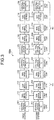
- FIG. 1 is a diagram illustrating an exemplary configuration of a train information management system 600 according to an embodiment of the present invention.
- the train information management system 600 includes: terminal devices 101 to 108 and 201 to 208; and central devices 301, 302, 401, and 402.
- the train information management system 600 manages a train composition 500 including eight cars, i.e., a first car to an eighth car.
- the train information management system 600 includes two systems, and two terminal devices being the same number as the systems are mounted on each car, and two central devices being the same number as the systems are mounted on a leading car and a last car.
- the first car is assumed as the leading car
- the eighth car is assumed as the last car.
- a system including the terminal devices 101 to 108 and the central devices 301 and 302 is a first system which is a master, and a system including the terminal devices 201 to 208 and the central devices 401 and 402 is a second system which is a slave.
- the train information management system 600 operates train information management by the terminal devices 101 to 108 and the central devices 301 and 302 in the first system in a state where each device is normally operated. Note that the terminal devices may be mounted only on intermediate cars without mounting on the leading car and the last car.
- the central devices 301, 302, 401 and 402 transmit control information concerning devices, which are connected to the terminal devices 101 to 108 and 201 to 208 and are not illustrated, to the terminal devices 101 to 108 and 201 to 208; and controls an operation of a device provided in each car, for example, an air conditioner.
- the central device periodically transmits command information including management information such as a train number for identifying each train composition in a current operation form and a mileage indicating a train position of the current train composition to each terminal device.
- management information such as a train number for identifying each train composition in a current operation form and a mileage indicating a train position of the current train composition
- a priority is set to each central device, and the central device with the highest priority transmits the command information to each terminal device.
- the central device having the next highest priority transmits the command information to each terminal device. Therefore, in a case where the central device with the highest priority is reset and restarted, a failure described at "Technical Problem" in the present description may occur.
- each of the central devices 301, 302, 401 and 402 periodically generates and transmits the command information.
- the terminal devices 101 to 108 and 201 to 208 receive the command information from the central devices 301, 302, 401 and 402.
- the terminal devices 101 to 108 and 201 to 208 determine whether the command information received from the central devices 301, 302, 401 and 402 is normal command information or abnormal command information.
- command information to be adopted is determined based on the priorities set to the central devices 301, 302, 401 and 402.
- the central devices 301, 302, 401 and 402 receive command information from other central devices.
- the central devices 301, 302, 401 and 402 determine whether the command information generated by the central devices and the command information received from the other central devices are normal command information or abnormal command. When there are a plurality of pieces of normal command information, command information to be adopted is determined based on the priorities set to the central devices 301, 302, 401 and 402. That is, in the train information management system 600, the terminal devices 101 to 108 and 201 to 208 and the central devices 301, 302, 401 and 402 which have received the command information determine the command information to be adopted.
- FIG. 2 is a block diagram illustrating an exemplary configuration of the terminal device 101 according to the present embodiment. Since the terminal devices 101 to 108 and 201 to 208 have similar configurations in the train information management system 600, the terminal device 101 will be described as an example.
- the terminal device 101 includes a transmission-reception unit 11, a control unit 12, and a storage unit 13.
- FIG. 2 components necessary for describing an operation of the present embodiment are illustrated, and description of general components of the terminal device 101 is omitted.
- the transmission-reception unit 11 transmits and receives the command information to and from the central device 301 and the terminal device 102.
- the transmission-reception unit 11 When receiving the command information generated by the central devices 301 and 401 from the central device 301, the transmission-reception unit 11 notifies the control unit 12 of the content of the command information and transfers the command information to the terminal device 102 of the adjacent car.
- the transmission-reception unit 11 when receiving the command information generated by the central devices 302 and 402 from the terminal device 102 of the adjacent car, notifies the control unit 12 of the content of the command information and transfers the command information to the central device 301.
- the transmission-reception unit 11 communicates with the other terminal device 201 mounted on the same car which is the first car.
- the transmission-reception unit 11 periodically receives the command information transmitted from the central devices 301, 302, 401 and 402.
- the control unit 12 determines whether each command information is normal command information or abnormal command information. For example, in a case where items of the train number and the mileage are included in the command information as the management information as described above, the control unit 12 determines that the command information to which the values of the train number and the mileage are set is normal command information and that the command information which cannot be determined as normal command information is abnormal command information.
- the abnormal command information is command information to which one or both of the values of the train number and the mileage is not set. In a case where only one of the train number or the mileage is set to the command information as the management information, the control unit 12 may make determination based on only one of the train number or the mileage.
- the control unit 12 adopts normal command information transmitted from the central device with the highest priority based on the priority set to each central device which is a transmission source of the normal command information. It is assumed that information for identifying the central device which is the transmission source is included in the command information. The information for identifying the central device which is the transmission source is, for example, an address specific to each central device.
- the control unit 12 refers to the priorities set to the central devices 301, 302, 401 and 402 and stored in the storage unit 13; and obtains information on the priority set to each central device which is the transmission source of the normal command information.
- the control unit 12 determines the command information to be adopted by similar processing each time when the command information is periodically transmitted from each central device. As far as the command information transmitted from the central device with the highest priority is normal command information, the control unit 12 continuously adopts the command information transmitted from the central device with the highest priority. The control unit 12 discards the command information which has not been adopted. In the example in FIG. 1 , the central device 301 has the highest priority, and the central devices 302 and 401 have higher priorities in this order, and the central device 402 has the lowest priority.
- the control unit 12 excludes the command information sent from the central device which has transmitted the abnormal command information from adoption candidates. It is considered that the central device which once has transmitted the abnormal command information may transmit abnormal command information in the future. Therefore, the control unit 12 can reduce a processing load when the command information is adopted by excluding the command information sent from the central device which has transmitted the abnormal command information from the adoption candidates in the future. In a case where the command information transmitted from all the central devices 301, 302, 401 and 402 has been determined as abnormal command information and the command information from all the central devices 301, 302, 401 and 402 has been excluded from the adoption candidates, the control unit 12 cannot adopt command information. In such a case, the control unit 12 expects that some central devices have returned to a normal operation and can transmit normal command information, and the control unit 12 cancels exclusion from the adoption candidate and assumes the command information from all the central devices as the adoption candidate.
- the control unit 12 cancels the exclusion of the central device, which is the transmission source of the command information and is excluded from the adoption candidate.
- the cancelation is conducted because the number of central devices for transmitting the command information is different from that before the cars are divided or joined.
- FIG. 3 is a diagram illustrating an exemplary configuration of another train information management system 600a according to the present embodiment.
- a train composition 501 having similar formation to the train composition 500 is joined to the train composition 500.
- Configurations of terminal devices 109 to 116 and 209 to 216 are similar to the configurations of the terminal devices 101 to 108 and 201 to 208.
- Configurations of central devices 303, 304, 403, and 404 are similar to the configurations of the central devices 301, 302, 401 and 402.
- priorities are set to the central devices 301 to 304 and 401 to 404 in a state where the train compositions 500 and 501 are joined to each other.
- the first car is assumed as the leading car
- the 16th car is assumed as the last car.
- the priorities of the central devices of the leading car and the last car of the train are high. Therefore, the priorities of the central devices 302 and 402 which are changed to intermediate cars are lower than those in the train information management system 600.
- the storage unit 13 stores information on the priority set to each of the central devices 301, 302, 401 and 402.
- the information on the priority may be stored by setting each terminal device by an administrator of the system before the train information management system 600 or the train information management system 600a is operated, or may be stored by being distributed from a system on a ground side via the central device.
- the storage unit 13 holds the management information included in the adopted command information, that is, the information such as a train number and a mileage under control of the control unit 12.
- FIG. 4 is a block diagram illustrating an exemplary configuration of the central device 301 according to the present embodiment. Since the configurations of the central devices 301 to 304 and 401 to 404 are similar to each other in the train information management system 600 and the train information management system 600a, the central device 301 will be described as an example.
- the central device 301 includes a transmission-reception unit 31, a control unit 32, a storage unit 33, a command information generation unit 34, and a management information exchange unit 35.
- FIG. 4 components necessary for describing an operation of the present embodiment are illustrated, and description of general components of the central device 301 is omitted.
- the transmission-reception unit 31 transmits and receives the command information to and from the central device 401 and the terminal device 101.
- the transmission-reception unit 31 transfers the command information generated by the command information generation unit 34 of the central device 301 to the central device 401 and the terminal device 101 and notifies the control unit 32 of the command information. Furthermore, when receiving the command information generated by the central device 401 from the central device 401, the transmission-reception unit 31 notifies the control unit 32 of the content of the command information and transfers the command information to the terminal device 101 of the adjacent car. Furthermore, when receiving the command information generated by the central devices 302 and 402 from the terminal device 101 of the adjacent car, the transmission-reception unit 31 notifies the control unit 32 of the content of the command information and transfers the command information to the central device 401.
- the transmission-reception unit 31 periodically receives the command information transmitted from the central devices 302, 401, and 402 and periodically obtains the command information generated by the command information generation unit 34 of the central device 301.
- control unit 32 and the storage unit 33 respectively have functions similar to the functions of the control unit 12 and the storage unit 13 of the terminal device 101 described above.
- the command information generation unit 34 periodically generates the command information to which the train number and the mileage are set as the management information.
- the command information generation unit 34 outputs the generated command information to the transmission-reception unit 31.
- the management information exchange unit 35 exchanges the management information to be set to the command information with the other central device 401 of the first car which is the same car.
- the management information exchange unit 35 exchanges the management information with the management information exchange unit 35 of the central device 401 via the transmission-reception unit 31 and notifies the command information generation unit 34 of the management information obtained from the central device 401.
- the command information generation unit 34 obtains the management information of the central device 401 from the management information exchange unit 35. In a case where an abnormality occurs in the management information set to the command information by the central device 301, the command information generation unit 34 generates the command information by using the management information obtained by the management information exchange unit 35. In a case where an abnormality occurs in the management information set to the command information by the command information generation unit 34 and a request is issued from the command information generation unit 34, in the central device 301, the management information exchange unit 35 may exchange the management information set to the command information with the central device 401.
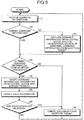
- FIG. 5 is a flowchart illustrating processing for determining the command information to be adopted in a case where the terminal device 101 receives the plurality of pieces of command information according to the present embodiment.
- the transmission-reception unit 11 receives the command information from the plurality of central devices 301, 302, 401 and 402 (step S1).
- the transmission-reception unit 11 notifies the control unit 12 of a content of the received command information.
- the control unit 12 determines whether or not each notified command information is normal command information (step S2). As described above, the control unit 12 determines the command information to which the train number or the mileage, or the train number and the mileage are set as the management information as the normal command information (step S2: Yes). The control unit 12 determines the command information which is not determined as the normal command information such as a case where the train number or the mileage is not set as abnormal command information (step S2: No). In the subsequent processing, the control unit 12 excludes the command information sent from the central device which is the transmission source of the abnormal command information from the adoption candidates (step S3).
- the control unit 12 confirms whether there is normal command information, that is, command information to be an adoption candidate (step S4). In a case where there is a candidate of the command information to be adopted (step S4: Yes), the control unit 12 refers to the storage unit 13, confirms the priority of the central device which is the transmission source of the command information to be a candidate to be adopted, and adopts the command information transmitted from the central device with the highest priority (step S5). The control unit 12 updates the information on the train number and the mileage held by the storage unit 13 based on the information on the train number and the mileage which are management information included in the adopted command information (step S6).
- the control unit 12 determines whether the cars are divided or joined in the train composition 500 based on the number of pieces of received command information notified from the transmission-reception unit 11 (step S7). In a case where the cars are not divided or joined (step S7: No), the terminal device 101 returns to the processing in step S1 and repeats the processing.
- step S4 the control unit 12 cancels the exclusion from the adoption candidate and assumes the command information from all the central devices as the adoption candidates (step S8). Furthermore, in a case where the cars are divided or joined in the train composition 500 (step S7: Yes), the control unit 12 cancels the exclusion of the central device, which are excluded from the adoption candidate, from the adoption candidate. Thus, the control unit 12 assumes the command information sent from all the central devices as the adoption candidate (step S8). Thereafter, the terminal device 101 returns to the processing in step S1 and repeats the processing.
- FIG. 6 is a flowchart illustrating processing for determining whether or not the cars are divided or joined in the train composition 500 by the terminal device 101 according to the present embodiment.
- the control unit 12 determines whether or not the number of pieces of command information notified from the transmission-reception unit 11, that is, the number of pieces of command information received by the terminal device 101 are the same as the previous number (step S11). In a case where the number of pieces of command information received by the terminal device 101 is different from the previous number (step S11: No), the control unit 12 confirms whether the number of pieces of command information is reduced in units of train composition (step S12) .
- each of the train compositions 500 and 501 including the first and second systems has four central devices mounted therein. Furthermore, the central devices are mounted on the leading car and the last car of each of the train compositions 500 and 501.
- the unit of the train composition is a multiple of four which is the number of central devices mounted on each train composition or a multiple of two which is the number of central devices mounted on the leading car or the last car.
- the control unit 12 determines that the cars are divided in the train composition 500 (step S13).
- step S14 Yes
- step S12 No
- step S11: Yes the control unit 12 determines that the cars are not divided or joined in the train composition 500 (step S16). Furthermore, in a case where the number of pieces of command information is increased in units of train composition (step S14: No), the control unit 12 determines that the cars are not divided or joined in the train composition 500 because the number of pieces of command information is not reduced or increased in units of train composition (step S16).
- the terminal device 101 includes a processing circuit for determining whether the command information is normal or abnormal and for determining the command information to be adopted based on the priority of the central device.
- the processing circuit may be a Central Processing Unit (CPU) for executing a program stored in the memory, a memory, or dedicated hardware.
- FIG. 7 is a diagram illustrating an example in a case where the processing circuit which is the control unit 12 of the terminal device 101 according to the embodiment includes a CPU and a memory.
- the processing circuit includes a CPU 91 and a memory 92
- each function of the control unit 12 of the terminal device 101 is realized by software, firmware, or a combination of software and firmware.
- the software and the firmware are written as a program and stored in the memory 92.
- the CPU 91 reads out and executes the program stored in the memory 92 to realize each function.
- the control unit 12 of the terminal device 101 includes the memory 92 for storing the program with which a step of determining whether the command information is normal or abnormal and a step of determining the command information to be adopted based on the priority of the central device are executed as a result when the program is executed by the processing circuit. Furthermore, it can be said that these programs makes a computer execute a procedure and a method of the control unit 12 of the terminal device 101.
- the CPU 91 may be a processing device, an operation device, a microprocessor, a microcomputer, a processor, a Digital Signal Processor (DSP) or the like.
- the memory 92 is, for example, a non-volatile or volatile semiconductor memory such as a Random Access Memory (RAM), a Read Only Memory (ROM), a flash memory, an Erasable Programmable ROM (EPROM), and an Electrically EPROM (EEPROM), a magnetic disk, a flexible disk, an optical disk, a compact disk, a mini disk, or a Digital Versatile Disc (DVD).
- RAM Random Access Memory
- ROM Read Only Memory
- EPROM Erasable Programmable ROM
- EEPROM Electrically EPROM
- FIG. 8 is a diagram illustrating an example in a case where a processing circuit which is the control unit 12 of the terminal device 101 includes dedicated hardware according to the embodiment.
- a processing circuit 93 illustrated in FIG. 8 is, for example, a single circuit, a composite circuit, a programmed processor, a parallel-programmed processor, an Application Specific Integrated Circuit (ASIC), a Field-Programmable Gate Array (FPGA), or a combination thereof.
- Functions of the control unit 12 of the terminal device 101 may be realized by the processing circuit 93 for each function, and the functions may be collectively realized by the processing circuit 93.
- Each function of the control unit 12 of the terminal device 101 may be partially realized by dedicated hardware and may be partially realized by software or firmware. In this way, the processing circuit can realize each function by dedicated hardware, software, firmware, or a combination thereof.
- the central devices 301 to 304 and 401 to 404 can be described as the similar configuration.
- the transmission-reception unit 31 and the storage unit 33 are respectively realized by similar configurations to the configurations of the transmission-reception unit 11 and the storage unit 13 described above.
- the control unit 32, the command information generation unit 34, and the management information exchange unit 35 of the central device 301 are realized by the processing circuit illustrated in FIG. 7 or FIG. 8 .
- each of the central devices 301 to 304 and 401 to 404 periodically transmits the command information.
- the terminal devices 101 to 116 and 201 to 216 and the central devices 301 to 304 and 401 to 404 determine whether the command information is normal or abnormal.
- the command information transmitted from the central device with the highest priority is adopted.
- the train information management system 600a includes a central device which transmits the command information including invalid management information, a normal train operation can be continued.
Landscapes
- Engineering & Computer Science (AREA)
- Mechanical Engineering (AREA)
- Power Engineering (AREA)
- Transportation (AREA)
- Life Sciences & Earth Sciences (AREA)
- Sustainable Development (AREA)
- Sustainable Energy (AREA)
- Health & Medical Sciences (AREA)
- Biomedical Technology (AREA)
- General Health & Medical Sciences (AREA)
- Electric Propulsion And Braking For Vehicles (AREA)
- Train Traffic Observation, Control, And Security (AREA)
Description
- The present invention relates to a terminal device for communicating with a central device in a train information management system, the central device, the train information management system, and a train information management method.
- In a train information management system, central devices are mounted on a leading car and a last car of a train and transmit command information to terminal devices mounted on intermediate cars of the train. Some train information management systems include two systems. In the train information management system including the two systems, two central devices are mounted on a single car, and one of the central devices is operated as a main system, that is, a central device with a higher priority.
Patent Literature 1 discloses a technique for exchanging an excitation signal between two central devices and for determining whether the other central device is normal or abnormal. -
Patent Literature 2, according to its abstract, relates to a second-system terminal device installed in one vehicle. The second-system terminal device is connected to a first-system backbone transmission line and a second-system backbone transmission line, and when having received a status information packet B from a first-system terminal device installed in another vehicle from the first-system backbone transmission line or the second-system backbone transmission line, the second-system terminal device installed in the one vehicle transfers a control packet A to the second-system terminal device adjacent to a side farther from a central device than the second-system terminal device that has received the status information packet B, by using the backbone transmission line from which the status information packet B has been received. -
- Patent Literature 1: Japanese Patent No.
4966888 - Patent Literature 2:
US 2015/341204 A1 - However, according to the conventional technique, in a case where the central device with the higher priority is reset and restarted due to time-up of a watchdog timer and the like, there is a possibility that a setting content is initialized and the central device transmits command information to which management information is not set, that is, including invalid management information to a train. Therefore, there has been a problem in that, even though a terminal device which has received the command information including the invalid management information holds normal management information based on command information received in the past, the held management information is updated, that is, initialized, and a normal train operation cannot be continued.
- The present invention has been made in consideration of the above, and an object of the present invention is to obtain a terminal device capable of continuing a normal train operation even in a case where there is a central device that transmits command information including invalid management information.
- To solve the above problems and to achieve the object, there is provided a terminal device, a central device, and a train information management method according to the independent claims.
- According to the present invention, an effect can be obtained such that, even in a case where there is a central device which transmits command information including invalid management information, a terminal device can continue a normal train operation.
-
-
FIG. 1 is a diagram illustrating an exemplary configuration of a train information management system. -
FIG. 2 is a block diagram illustrating an exemplary configuration of a terminal device. -
FIG. 3 is a diagram illustrating an exemplary configuration of another train information management system. -
FIG. 4 is a block diagram illustrating an exemplary configuration of a central device. -
FIG. 5 is a flowchart illustrating processing for determining command information to be adopted in a case where the terminal device receives a plurality of pieces of command information. -
FIG. 6 is a flowchart illustrating processing for determining by the terminal device whether or not cars are divided or joined in a train composition. -
FIG. 7 is a diagram illustrating an example in a case where a processing circuit being a control unit of the terminal device is configured by a CPU and a memory. -
FIG. 8 is a diagram illustrating an example in a case where the processing circuit being the control unit of the terminal device is configured by dedicated hardware. - Hereinafter, a terminal device, a central device, a train information management system, and a train information management method according to an embodiment of the present invention will be described in detail with reference to the drawings. The present invention is not limited to the embodiments.
-
FIG. 1 is a diagram illustrating an exemplary configuration of a traininformation management system 600 according to an embodiment of the present invention. The traininformation management system 600 includes:terminal devices 101 to 108 and 201 to 208; andcentral devices FIG. 1 , the traininformation management system 600 manages atrain composition 500 including eight cars, i.e., a first car to an eighth car. The traininformation management system 600 includes two systems, and two terminal devices being the same number as the systems are mounted on each car, and two central devices being the same number as the systems are mounted on a leading car and a last car. Here, for convenience, the first car is assumed as the leading car, and the eighth car is assumed as the last car. A system including theterminal devices 101 to 108 and thecentral devices terminal devices 201 to 208 and thecentral devices information management system 600 operates train information management by theterminal devices 101 to 108 and thecentral devices - In the train
information management system 600, thecentral devices terminal devices 101 to 108 and 201 to 208 and are not illustrated, to theterminal devices 101 to 108 and 201 to 208; and controls an operation of a device provided in each car, for example, an air conditioner. - Generally, in the train information management system, the central device periodically transmits command information including management information such as a train number for identifying each train composition in a current operation form and a mileage indicating a train position of the current train composition to each terminal device. In the train information management system in which the plurality of central devices are mounted on the train composition, a priority is set to each central device, and the central device with the highest priority transmits the command information to each terminal device. In such a train information management system, in a case where the central device with the highest priority cannot transmit the command information due to a failure and the like, the central device having the next highest priority transmits the command information to each terminal device. Therefore, in a case where the central device with the highest priority is reset and restarted, a failure described at "Technical Problem" in the present description may occur.
- According to the present embodiment, in the train
information management system 600, each of thecentral devices information management system 600, theterminal devices 101 to 108 and 201 to 208 receive the command information from thecentral devices terminal devices 101 to 108 and 201 to 208 determine whether the command information received from thecentral devices central devices central devices central devices central devices information management system 600, theterminal devices 101 to 108 and 201 to 208 and thecentral devices - Next, a configuration of each device will be described. First, configurations of the
terminal devices 101 to 108 and 201 to 208 will be described.FIG. 2 is a block diagram illustrating an exemplary configuration of theterminal device 101 according to the present embodiment. Since theterminal devices 101 to 108 and 201 to 208 have similar configurations in the traininformation management system 600, theterminal device 101 will be described as an example. Theterminal device 101 includes a transmission-reception unit 11, acontrol unit 12, and astorage unit 13. InFIG. 2 , components necessary for describing an operation of the present embodiment are illustrated, and description of general components of theterminal device 101 is omitted. - The transmission-reception unit 11 transmits and receives the command information to and from the
central device 301 and theterminal device 102. When receiving the command information generated by thecentral devices central device 301, the transmission-reception unit 11 notifies thecontrol unit 12 of the content of the command information and transfers the command information to theterminal device 102 of the adjacent car. Furthermore, when receiving the command information generated by thecentral devices terminal device 102 of the adjacent car, the transmission-reception unit 11 notifies thecontrol unit 12 of the content of the command information and transfers the command information to thecentral device 301. Furthermore, the transmission-reception unit 11 communicates with the otherterminal device 201 mounted on the same car which is the first car. The transmission-reception unit 11 periodically receives the command information transmitted from thecentral devices - When the content of the command information transmitted from each of the
central devices control unit 12 determines whether each command information is normal command information or abnormal command information. For example, in a case where items of the train number and the mileage are included in the command information as the management information as described above, thecontrol unit 12 determines that the command information to which the values of the train number and the mileage are set is normal command information and that the command information which cannot be determined as normal command information is abnormal command information. The abnormal command information is command information to which one or both of the values of the train number and the mileage is not set. In a case where only one of the train number or the mileage is set to the command information as the management information, thecontrol unit 12 may make determination based on only one of the train number or the mileage. - Furthermore, in a case where there are the plurality of pieces of normal command information, the
control unit 12 adopts normal command information transmitted from the central device with the highest priority based on the priority set to each central device which is a transmission source of the normal command information. It is assumed that information for identifying the central device which is the transmission source is included in the command information. The information for identifying the central device which is the transmission source is, for example, an address specific to each central device. The control unit 12: refers to the priorities set to thecentral devices storage unit 13; and obtains information on the priority set to each central device which is the transmission source of the normal command information. Thecontrol unit 12 determines the command information to be adopted by similar processing each time when the command information is periodically transmitted from each central device. As far as the command information transmitted from the central device with the highest priority is normal command information, thecontrol unit 12 continuously adopts the command information transmitted from the central device with the highest priority. Thecontrol unit 12 discards the command information which has not been adopted. In the example inFIG. 1 , thecentral device 301 has the highest priority, and thecentral devices central device 402 has the lowest priority. - Furthermore, in a case where determining that the received command information is abnormal command information, thereafter, the
control unit 12 excludes the command information sent from the central device which has transmitted the abnormal command information from adoption candidates. It is considered that the central device which once has transmitted the abnormal command information may transmit abnormal command information in the future. Therefore, thecontrol unit 12 can reduce a processing load when the command information is adopted by excluding the command information sent from the central device which has transmitted the abnormal command information from the adoption candidates in the future. In a case where the command information transmitted from all thecentral devices central devices control unit 12 cannot adopt command information. In such a case, thecontrol unit 12 expects that some central devices have returned to a normal operation and can transmit normal command information, and thecontrol unit 12 cancels exclusion from the adoption candidate and assumes the command information from all the central devices as the adoption candidate. - In a case where the cars are divided in the
train composition 500 including theterminal device 101 or where the other train composition is joined to thetrain composition 500, thecontrol unit 12 cancels the exclusion of the central device, which is the transmission source of the command information and is excluded from the adoption candidate. The cancelation is conducted because the number of central devices for transmitting the command information is different from that before the cars are divided or joined. -
FIG. 3 is a diagram illustrating an exemplary configuration of another traininformation management system 600a according to the present embodiment. In the traininformation management system 600a, atrain composition 501 having similar formation to thetrain composition 500 is joined to thetrain composition 500. Configurations ofterminal devices 109 to 116 and 209 to 216 are similar to the configurations of theterminal devices 101 to 108 and 201 to 208. Configurations ofcentral devices central devices information management system 600a, priorities are set to thecentral devices 301 to 304 and 401 to 404 in a state where thetrain compositions information management system 600 illustrated inFIG. 1 , the priorities of the central devices of the leading car and the last car of the train are high. Therefore, the priorities of thecentral devices information management system 600. - The
storage unit 13 stores information on the priority set to each of thecentral devices information management system 600 or the traininformation management system 600a is operated, or may be stored by being distributed from a system on a ground side via the central device. Furthermore, thestorage unit 13 holds the management information included in the adopted command information, that is, the information such as a train number and a mileage under control of thecontrol unit 12. - Next, the configurations of the
central devices 301 to 304 and 401 to 404 will be described.FIG. 4 is a block diagram illustrating an exemplary configuration of thecentral device 301 according to the present embodiment. Since the configurations of thecentral devices 301 to 304 and 401 to 404 are similar to each other in the traininformation management system 600 and the traininformation management system 600a, thecentral device 301 will be described as an example. Thecentral device 301 includes a transmission-reception unit 31, acontrol unit 32, astorage unit 33, a commandinformation generation unit 34, and a managementinformation exchange unit 35. InFIG. 4 , components necessary for describing an operation of the present embodiment are illustrated, and description of general components of thecentral device 301 is omitted. - The transmission-reception unit 31 transmits and receives the command information to and from the
central device 401 and theterminal device 101. The transmission-reception unit 31 transfers the command information generated by the commandinformation generation unit 34 of thecentral device 301 to thecentral device 401 and theterminal device 101 and notifies thecontrol unit 32 of the command information. Furthermore, when receiving the command information generated by thecentral device 401 from thecentral device 401, the transmission-reception unit 31 notifies thecontrol unit 32 of the content of the command information and transfers the command information to theterminal device 101 of the adjacent car. Furthermore, when receiving the command information generated by thecentral devices terminal device 101 of the adjacent car, the transmission-reception unit 31 notifies thecontrol unit 32 of the content of the command information and transfers the command information to thecentral device 401. The transmission-reception unit 31 periodically receives the command information transmitted from thecentral devices information generation unit 34 of thecentral device 301. - The
control unit 32 and thestorage unit 33 respectively have functions similar to the functions of thecontrol unit 12 and thestorage unit 13 of theterminal device 101 described above. - The command
information generation unit 34 periodically generates the command information to which the train number and the mileage are set as the management information. The commandinformation generation unit 34 outputs the generated command information to the transmission-reception unit 31. - The management
information exchange unit 35 exchanges the management information to be set to the command information with the othercentral device 401 of the first car which is the same car. The managementinformation exchange unit 35 exchanges the management information with the managementinformation exchange unit 35 of thecentral device 401 via the transmission-reception unit 31 and notifies the commandinformation generation unit 34 of the management information obtained from thecentral device 401. - The command
information generation unit 34 obtains the management information of thecentral device 401 from the managementinformation exchange unit 35. In a case where an abnormality occurs in the management information set to the command information by thecentral device 301, the commandinformation generation unit 34 generates the command information by using the management information obtained by the managementinformation exchange unit 35. In a case where an abnormality occurs in the management information set to the command information by the commandinformation generation unit 34 and a request is issued from the commandinformation generation unit 34, in thecentral device 301, the managementinformation exchange unit 35 may exchange the management information set to the command information with thecentral device 401. - Subsequently, processing for determining the command information to be adopted in a case where the
terminal devices 101 to 116 and 201 to 216 and thecentral devices 301 to 304 and 401 to 404 receive the command information from a plurality of central devices will be described. Since the processing for determining the command information to be adopted are similar to each other in all the above devices, here, theterminal device 101 in the traininformation management system 600 illustrated inFIG. 1 will be described as an example.FIG. 5 is a flowchart illustrating processing for determining the command information to be adopted in a case where theterminal device 101 receives the plurality of pieces of command information according to the present embodiment. - First, in the
terminal device 101, the transmission-reception unit 11 receives the command information from the plurality ofcentral devices control unit 12 of a content of the received command information. - The
control unit 12 determines whether or not each notified command information is normal command information (step S2). As described above, thecontrol unit 12 determines the command information to which the train number or the mileage, or the train number and the mileage are set as the management information as the normal command information (step S2: Yes). Thecontrol unit 12 determines the command information which is not determined as the normal command information such as a case where the train number or the mileage is not set as abnormal command information (step S2: No). In the subsequent processing, thecontrol unit 12 excludes the command information sent from the central device which is the transmission source of the abnormal command information from the adoption candidates (step S3). - The
control unit 12 confirms whether there is normal command information, that is, command information to be an adoption candidate (step S4). In a case where there is a candidate of the command information to be adopted (step S4: Yes), thecontrol unit 12 refers to thestorage unit 13, confirms the priority of the central device which is the transmission source of the command information to be a candidate to be adopted, and adopts the command information transmitted from the central device with the highest priority (step S5). Thecontrol unit 12 updates the information on the train number and the mileage held by thestorage unit 13 based on the information on the train number and the mileage which are management information included in the adopted command information (step S6). - The
control unit 12 determines whether the cars are divided or joined in thetrain composition 500 based on the number of pieces of received command information notified from the transmission-reception unit 11 (step S7). In a case where the cars are not divided or joined (step S7: No), theterminal device 101 returns to the processing in step S1 and repeats the processing. - In a case where there is no candidate of the command information to be adopted (step S4: No), the
control unit 12 cancels the exclusion from the adoption candidate and assumes the command information from all the central devices as the adoption candidates (step S8). Furthermore, in a case where the cars are divided or joined in the train composition 500 (step S7: Yes), thecontrol unit 12 cancels the exclusion of the central device, which are excluded from the adoption candidate, from the adoption candidate. Thus, thecontrol unit 12 assumes the command information sent from all the central devices as the adoption candidate (step S8). Thereafter, theterminal device 101 returns to the processing in step S1 and repeats the processing. -
FIG. 6 is a flowchart illustrating processing for determining whether or not the cars are divided or joined in thetrain composition 500 by theterminal device 101 according to the present embodiment. - The
control unit 12 determines whether or not the number of pieces of command information notified from the transmission-reception unit 11, that is, the number of pieces of command information received by theterminal device 101 are the same as the previous number (step S11). In a case where the number of pieces of command information received by theterminal device 101 is different from the previous number (step S11: No), thecontrol unit 12 confirms whether the number of pieces of command information is reduced in units of train composition (step S12) . - Here, as illustrated in
FIGS. 1 and3 , each of thetrain compositions train compositions control unit 12 determines that the cars are divided in the train composition 500 (step S13). - In a case where the number of pieces of command information is increased in units of train composition (step S14: Yes) although the number of pieces of command information is reduced in units of train composition (step S12: No), the
control unit 12 determines that the cars are joined in the train composition 500 (step S15). - In a case where the number of pieces of command information received by the
terminal device 101 is the same as the previous number (step S11: Yes), thecontrol unit 12 determines that the cars are not divided or joined in the train composition 500 (step S16). Furthermore, in a case where the number of pieces of command information is increased in units of train composition (step S14: No), thecontrol unit 12 determines that the cars are not divided or joined in thetrain composition 500 because the number of pieces of command information is not reduced or increased in units of train composition (step S16). - Here, hardware configurations of the
terminal devices 101 to 116 and 201 to 216 will be described. Since theterminal devices 101 to 116 and 201 to 216 have the similar configurations, theterminal device 101 will be described as an example. In theterminal device 101, the transmission-reception unit 11 is realized by an interface circuit which can transmit and receive the command information via wired communication. Thestorage unit 13 is realized by a memory. Thecontrol unit 12 is realized by a processing circuit. That is, theterminal device 101 includes a processing circuit for determining whether the command information is normal or abnormal and for determining the command information to be adopted based on the priority of the central device. The processing circuit may be a Central Processing Unit (CPU) for executing a program stored in the memory, a memory, or dedicated hardware. -
FIG. 7 is a diagram illustrating an example in a case where the processing circuit which is thecontrol unit 12 of theterminal device 101 according to the embodiment includes a CPU and a memory. In a case where the processing circuit includes aCPU 91 and amemory 92, each function of thecontrol unit 12 of theterminal device 101 is realized by software, firmware, or a combination of software and firmware. The software and the firmware are written as a program and stored in thememory 92. In the processing circuit, theCPU 91 reads out and executes the program stored in thememory 92 to realize each function. That is, thecontrol unit 12 of theterminal device 101 includes thememory 92 for storing the program with which a step of determining whether the command information is normal or abnormal and a step of determining the command information to be adopted based on the priority of the central device are executed as a result when the program is executed by the processing circuit. Furthermore, it can be said that these programs makes a computer execute a procedure and a method of thecontrol unit 12 of theterminal device 101. Here, theCPU 91 may be a processing device, an operation device, a microprocessor, a microcomputer, a processor, a Digital Signal Processor (DSP) or the like. Furthermore, thememory 92 is, for example, a non-volatile or volatile semiconductor memory such as a Random Access Memory (RAM), a Read Only Memory (ROM), a flash memory, an Erasable Programmable ROM (EPROM), and an Electrically EPROM (EEPROM), a magnetic disk, a flexible disk, an optical disk, a compact disk, a mini disk, or a Digital Versatile Disc (DVD). Note that thestorage unit 13 may be realized by thememory 92. -
FIG. 8 is a diagram illustrating an example in a case where a processing circuit which is thecontrol unit 12 of theterminal device 101 includes dedicated hardware according to the embodiment. In a case where the processing circuit is dedicated hardware, aprocessing circuit 93 illustrated inFIG. 8 is, for example, a single circuit, a composite circuit, a programmed processor, a parallel-programmed processor, an Application Specific Integrated Circuit (ASIC), a Field-Programmable Gate Array (FPGA), or a combination thereof. Functions of thecontrol unit 12 of theterminal device 101 may be realized by theprocessing circuit 93 for each function, and the functions may be collectively realized by theprocessing circuit 93. - Each function of the
control unit 12 of theterminal device 101 may be partially realized by dedicated hardware and may be partially realized by software or firmware. In this way, the processing circuit can realize each function by dedicated hardware, software, firmware, or a combination thereof. - Although the hardware configuration of the
terminal device 101 has been described, thecentral devices 301 to 304 and 401 to 404 can be described as the similar configuration. When thecentral device 301 is described as an example, the transmission-reception unit 31 and thestorage unit 33 are respectively realized by similar configurations to the configurations of the transmission-reception unit 11 and thestorage unit 13 described above. Thecontrol unit 32, the commandinformation generation unit 34, and the managementinformation exchange unit 35 of thecentral device 301 are realized by the processing circuit illustrated inFIG. 7 or FIG. 8 . - As described above, according to the present embodiment, in the train
information management system 600a, each of thecentral devices 301 to 304 and 401 to 404 periodically transmits the command information. When receiving the command information from the plurality of central devices, theterminal devices 101 to 116 and 201 to 216 and thecentral devices 301 to 304 and 401 to 404 determine whether the command information is normal or abnormal. In a case where there are a plurality of pieces of normal command information, the command information transmitted from the central device with the highest priority is adopted. As a result, in a case where the traininformation management system 600a includes a central device which transmits the command information including invalid management information, a normal train operation can be continued. - The structures illustrated in the above embodiment indicate exemplary contents of the present invention and can be combined with other known technique. Further, the structures illustrated in the embodiment can be partially omitted and changed without departing from the scope of the present invention.
- 11, 31 transmission-reception unit; 12, 32 control unit; 13, 33 storage unit; 34 command information generation unit; 35 management information exchange unit; 101 to 116, 201 to 216 terminal device; 301 to 304, 401 to 404 central device; 500, 501 train composition; 600, 600a train information management system.
Claims (12)
- A terminal device (101 to 116, 201 to 216) to receive command information from a central device (301 to 304, 401 to 404) in a train information management system (600, 600a), the terminal device comprising:a transmission-reception unit (11, 31) to transmit and receive the command information to and from the central device or other terminal device and periodically receive command information from a plurality of central devices; anda control unit (12, 32),characterized in that the control unit (12, 32) is configured:to determine whether or not management information, which is information on a train composition set by a central device that is a transmission source, regarding the received command information, is normal command information, wherein command information to which the values of the train number and the mileage are set is normal command information; andto determine command information to be adopted based on a priority set to the central device that is the transmission source when receiving the normal command information from the plurality of central devices, andwherein the terminal device further comprises a storage unit (13, 33) to store information on the priorities set to the plurality of central devices.
- The terminal device according to claim 1, wherein
in a case where there are a plurality of pieces of normal command information, the control unit (12, 32) adopts normal command information transmitted from a central device with the highest priority among the central devices that have transmitted the normal command information. - The terminal device according to claim 1 or 2, wherein
the control unit (12, 32) determines command information to which a train number or a mileage, or train number and mileage are set as the management information among the received command information as normal command information. - The terminal device according to claim 3, wherein
the control unit (12, 32) determines command information that has not determined as the normal command information among the received command information as abnormal command information and thereafter excludes command information from a central device that has transmitted the abnormal command information from adoption candidates. - The terminal device according to claim 4, wherein
in a case where command information transmitted from all the central devices is determined as the abnormal command information and the command information from all the central devices is excluded from the adoption candidate, the control unit (12, 32) cancels the exclusion from the adoption candidate and returns the command information from all the central devices to the adoption candidate. - The terminal device according to claim 4, wherein
in a case where cars are divided or joined to the other train composition in the train composition including a car to which the terminal device is mounted, the control unit (12, 32) cancels exclusion from the adoption candidate when there is a central device that has excluded from the adoption candidate of the command information. - The terminal device according to claim 6, wherein
the control unit (12, 32) detects that the cars are divided or joined to the other train composition based on the number of pieces of received command information. - A central device to transmit command information to the terminal device according to any one of claims 1 to 7 in a train information management system (600, 600a), the central device comprising:a command information generation unit (34) to periodically generate the command information;a transmission-reception unit (11, 31) to transmit the command information generated by the command information generation unit (34) to the terminal device or the other central device and receives command information generated by the other central device directly or via the terminal device; anda control unit (12, 32),characterized in that the control unit (12, 32) is configured:to determine whether or not management information, which is information on a train composition set by the other central device that is a transmission source, regarding the received command information, is normal command information, wherein command information to which the values of the train number and the mileage are set is normal command information; andto determine command information to be adopted based on a priority set to the other central device that is the transmission source when receiving the normal command information from the plurality of central devices, andwherein the central device further comprises a storage unit (13, 33) to store information on priorities set to the plurality of central devices.
- The central device according to claim 8, further comprising:a management information exchange unit (35) to exchange management information set to the command information with the other central device in the same car, whereinin a case where the management information set to the command information has an abnormality, the command information generation unit (34) generates the command information by using the management information obtained by the management information exchange unit (35).
- A train information management system (600, 600a) comprising:the terminal devices according to any one of claims 1 to 7 mounted on all train compositions or in intermediate cars except for a leading car and a last car in the train composition; andthe central devices according to claim 8 or 9 mounted on the leading car and the last car.
- The train information management system (600, 600a) according to claim 10, wherein
all the cars or the intermediate cars include the terminal devices as many as the number of systems included in the train information management system (600, 600a), and
the leading car and the last car include the central devices as many as the number of systems. - A train information management method of a terminal device to receive command information from a central device and a central device that receives command information from the other central device in a train information management system (600, 600a), the method comprising:a receiving step of receiving the command information by a transmission-reception unit (11, 31),wherein the method is characterized by:a determining step of determining whether or not management information, which is information on a train composition set by a central device that is a transmission source, regarding the received command information, is normal command information, by a control unit (12, 32), wherein command information to which the values of the train number and the mileage are set is normal command information; andan adopting step of determining command information to be adopted based on a priority set to the central device that is the transmission source, by the control unit (12, 32), in a case where the normal command information is received from the plurality of central devices.
Applications Claiming Priority (1)
| Application Number | Priority Date | Filing Date | Title |
|---|---|---|---|
| PCT/JP2016/078043 WO2018055732A1 (en) | 2016-09-23 | 2016-09-23 | Terminal device, central device, train information management system, and train information management method |
Publications (3)
| Publication Number | Publication Date |
|---|---|
| EP3517349A1 EP3517349A1 (en) | 2019-07-31 |
| EP3517349A4 EP3517349A4 (en) | 2019-09-25 |
| EP3517349B1 true EP3517349B1 (en) | 2021-01-27 |
Family
ID=61690374
Family Applications (1)
| Application Number | Title | Priority Date | Filing Date |
|---|---|---|---|
| EP16916800.2A Active EP3517349B1 (en) | 2016-09-23 | 2016-09-23 | Terminal device, central device, train information management system, and train information management method |
Country Status (4)
| Country | Link |
|---|---|
| US (1) | US11279235B2 (en) |
| EP (1) | EP3517349B1 (en) |
| JP (1) | JP6573726B2 (en) |
| WO (1) | WO2018055732A1 (en) |
Families Citing this family (1)
| Publication number | Priority date | Publication date | Assignee | Title |
|---|---|---|---|---|
| CN119330715B (en) * | 2024-10-14 | 2025-07-08 | 江苏师范大学 | A method for preparing high-purity and high-crystallinity CaLa2S4 infrared ceramic powder |
Family Cites Families (7)
| Publication number | Priority date | Publication date | Assignee | Title |
|---|---|---|---|---|
| DE502005004657D1 (en) * | 2004-07-06 | 2008-08-21 | Daimler Ag | REDUNDANT DATA SYSTEM |
| US9956974B2 (en) * | 2004-07-23 | 2018-05-01 | General Electric Company | Vehicle consist configuration control |
| JP4966888B2 (en) | 2008-02-25 | 2012-07-04 | 株式会社日立製作所 | Double series vehicle control system |
| JP2011240737A (en) * | 2010-05-14 | 2011-12-01 | Toshiba Corp | In-vehicle guide display system |
| JP5625766B2 (en) * | 2010-11-08 | 2014-11-19 | ソニー株式会社 | Arbitration circuit and control method thereof |
| HK1199777A1 (en) * | 2012-01-04 | 2015-07-17 | 三菱电机株式会社 | Train information management device |
| US20150341204A1 (en) * | 2013-03-11 | 2015-11-26 | Mitsubishi Electric Corporation | Train-informati0n management device |
-
2016
- 2016-09-23 US US16/320,727 patent/US11279235B2/en active Active
- 2016-09-23 WO PCT/JP2016/078043 patent/WO2018055732A1/en not_active Ceased
- 2016-09-23 JP JP2018540563A patent/JP6573726B2/en active Active
- 2016-09-23 EP EP16916800.2A patent/EP3517349B1/en active Active
Non-Patent Citations (1)
| Title |
|---|
| None * |
Also Published As
| Publication number | Publication date |
|---|---|
| EP3517349A1 (en) | 2019-07-31 |
| JP6573726B2 (en) | 2019-09-11 |
| US11279235B2 (en) | 2022-03-22 |
| WO2018055732A1 (en) | 2018-03-29 |
| EP3517349A4 (en) | 2019-09-25 |
| US20190202485A1 (en) | 2019-07-04 |
| JPWO2018055732A1 (en) | 2019-01-10 |
Similar Documents
| Publication | Publication Date | Title |
|---|---|---|
| US12177038B2 (en) | Anomaly determination method, anomaly determination device, and recording medium | |
| US20170149950A1 (en) | Communication system and control device | |
| US11768721B2 (en) | Processing device | |
| JP7394185B2 (en) | Communications system | |
| EP3517349B1 (en) | Terminal device, central device, train information management system, and train information management method | |
| US20140107863A1 (en) | Vehicle Control Device, Vehicle Control System | |
| US9191239B2 (en) | Wireless communication device and wireless communication system | |
| CN103106176A (en) | Method of providing high integrity processing | |
| US11550270B2 (en) | Redundant automation system, method for creating the automation system, computer program and computer readable medium | |
| CN103917961B (en) | Method for operating a control network and control network | |
| US20150256383A1 (en) | Method for transiting operation mode of routing processor | |
| US11463302B2 (en) | Information communicating device, information communicating method, information communicating system, and storage medium | |
| US20250178617A1 (en) | In-vehicle electronic device | |
| US10235045B2 (en) | Storage system and control apparatus | |
| JP2009026182A (en) | Program execution system and execution apparatus | |
| CN102722466A (en) | 16-bit multibus circuit in 2 in 3 or 2 in 2 control system | |
| JP4042790B2 (en) | Electrical device and method for determining normal communication function in electrical device | |
| CN114697320A (en) | Edge server and edge server system | |
| JP2008005290A (en) | Relay connection unit and electronic control unit | |
| US11150980B2 (en) | Node device, recovery operation control method, and non-transitory computer readable medium storing recovery operation control program | |
| JP5371123B2 (en) | Fault detection method, control device, and multiprocessor system | |
| JP2020129332A (en) | Electronic control system for automobile | |
| WO2022029823A1 (en) | Control device, method, and program | |
| JP2009213097A (en) | Information recording system and information recording method | |
| EP3113027A1 (en) | Data storage device |
Legal Events
| Date | Code | Title | Description |
|---|---|---|---|
| STAA | Information on the status of an ep patent application or granted ep patent |
Free format text: STATUS: THE INTERNATIONAL PUBLICATION HAS BEEN MADE |
|
| PUAI | Public reference made under article 153(3) epc to a published international application that has entered the european phase |
Free format text: ORIGINAL CODE: 0009012 |
|
| STAA | Information on the status of an ep patent application or granted ep patent |
Free format text: STATUS: REQUEST FOR EXAMINATION WAS MADE |
|
| 17P | Request for examination filed |
Effective date: 20190129 |
|
| AK | Designated contracting states |
Kind code of ref document: A1 Designated state(s): AL AT BE BG CH CY CZ DE DK EE ES FI FR GB GR HR HU IE IS IT LI LT LU LV MC MK MT NL NO PL PT RO RS SE SI SK SM TR |
|
| AX | Request for extension of the european patent |
Extension state: BA ME |
|
| A4 | Supplementary search report drawn up and despatched |
Effective date: 20190827 |
|
| RIC1 | Information provided on ipc code assigned before grant |
Ipc: B60L 15/42 20060101AFI20190821BHEP Ipc: B61L 15/00 20060101ALI20190821BHEP Ipc: B61L 27/00 20060101ALI20190821BHEP Ipc: B60L 3/00 20190101ALI20190821BHEP |
|
| DAV | Request for validation of the european patent (deleted) | ||
| DAX | Request for extension of the european patent (deleted) | ||
| GRAP | Despatch of communication of intention to grant a patent |
Free format text: ORIGINAL CODE: EPIDOSNIGR1 |
|
| STAA | Information on the status of an ep patent application or granted ep patent |
Free format text: STATUS: GRANT OF PATENT IS INTENDED |
|
| INTG | Intention to grant announced |
Effective date: 20200831 |
|
| GRAS | Grant fee paid |
Free format text: ORIGINAL CODE: EPIDOSNIGR3 |
|
| GRAA | (expected) grant |
Free format text: ORIGINAL CODE: 0009210 |
|
| STAA | Information on the status of an ep patent application or granted ep patent |
Free format text: STATUS: THE PATENT HAS BEEN GRANTED |
|
| AK | Designated contracting states |
Kind code of ref document: B1 Designated state(s): AL AT BE BG CH CY CZ DE DK EE ES FI FR GB GR HR HU IE IS IT LI LT LU LV MC MK MT NL NO PL PT RO RS SE SI SK SM TR |
|
| REG | Reference to a national code |
Ref country code: GB Ref legal event code: FG4D |
|
| REG | Reference to a national code |
Ref country code: CH Ref legal event code: EP |
|
| REG | Reference to a national code |
Ref country code: AT Ref legal event code: REF Ref document number: 1358045 Country of ref document: AT Kind code of ref document: T Effective date: 20210215 |
|
| REG | Reference to a national code |
Ref country code: IE Ref legal event code: FG4D |
|
| REG | Reference to a national code |
Ref country code: DE Ref legal event code: R096 Ref document number: 602016052284 Country of ref document: DE |
|
| REG | Reference to a national code |
Ref country code: NL Ref legal event code: MP Effective date: 20210127 |
|
| REG | Reference to a national code |
Ref country code: LT Ref legal event code: MG9D |
|
| REG | Reference to a national code |
Ref country code: AT Ref legal event code: MK05 Ref document number: 1358045 Country of ref document: AT Kind code of ref document: T Effective date: 20210127 |
|
| PG25 | Lapsed in a contracting state [announced via postgrant information from national office to epo] |
Ref country code: BG Free format text: LAPSE BECAUSE OF FAILURE TO SUBMIT A TRANSLATION OF THE DESCRIPTION OR TO PAY THE FEE WITHIN THE PRESCRIBED TIME-LIMIT Effective date: 20210427 Ref country code: LT Free format text: LAPSE BECAUSE OF FAILURE TO SUBMIT A TRANSLATION OF THE DESCRIPTION OR TO PAY THE FEE WITHIN THE PRESCRIBED TIME-LIMIT Effective date: 20210127 Ref country code: GR Free format text: LAPSE BECAUSE OF FAILURE TO SUBMIT A TRANSLATION OF THE DESCRIPTION OR TO PAY THE FEE WITHIN THE PRESCRIBED TIME-LIMIT Effective date: 20210428 Ref country code: HR Free format text: LAPSE BECAUSE OF FAILURE TO SUBMIT A TRANSLATION OF THE DESCRIPTION OR TO PAY THE FEE WITHIN THE PRESCRIBED TIME-LIMIT Effective date: 20210127 Ref country code: FI Free format text: LAPSE BECAUSE OF FAILURE TO SUBMIT A TRANSLATION OF THE DESCRIPTION OR TO PAY THE FEE WITHIN THE PRESCRIBED TIME-LIMIT Effective date: 20210127 Ref country code: NO Free format text: LAPSE BECAUSE OF FAILURE TO SUBMIT A TRANSLATION OF THE DESCRIPTION OR TO PAY THE FEE WITHIN THE PRESCRIBED TIME-LIMIT Effective date: 20210427 Ref country code: PT Free format text: LAPSE BECAUSE OF FAILURE TO SUBMIT A TRANSLATION OF THE DESCRIPTION OR TO PAY THE FEE WITHIN THE PRESCRIBED TIME-LIMIT Effective date: 20210527 |
|
| PG25 | Lapsed in a contracting state [announced via postgrant information from national office to epo] |
Ref country code: AT Free format text: LAPSE BECAUSE OF FAILURE TO SUBMIT A TRANSLATION OF THE DESCRIPTION OR TO PAY THE FEE WITHIN THE PRESCRIBED TIME-LIMIT Effective date: 20210127 Ref country code: LV Free format text: LAPSE BECAUSE OF FAILURE TO SUBMIT A TRANSLATION OF THE DESCRIPTION OR TO PAY THE FEE WITHIN THE PRESCRIBED TIME-LIMIT Effective date: 20210127 Ref country code: RS Free format text: LAPSE BECAUSE OF FAILURE TO SUBMIT A TRANSLATION OF THE DESCRIPTION OR TO PAY THE FEE WITHIN THE PRESCRIBED TIME-LIMIT Effective date: 20210127 Ref country code: PL Free format text: LAPSE BECAUSE OF FAILURE TO SUBMIT A TRANSLATION OF THE DESCRIPTION OR TO PAY THE FEE WITHIN THE PRESCRIBED TIME-LIMIT Effective date: 20210127 Ref country code: SE Free format text: LAPSE BECAUSE OF FAILURE TO SUBMIT A TRANSLATION OF THE DESCRIPTION OR TO PAY THE FEE WITHIN THE PRESCRIBED TIME-LIMIT Effective date: 20210127 |
|
| PG25 | Lapsed in a contracting state [announced via postgrant information from national office to epo] |
Ref country code: IS Free format text: LAPSE BECAUSE OF FAILURE TO SUBMIT A TRANSLATION OF THE DESCRIPTION OR TO PAY THE FEE WITHIN THE PRESCRIBED TIME-LIMIT Effective date: 20210527 |
|
| REG | Reference to a national code |
Ref country code: DE Ref legal event code: R097 Ref document number: 602016052284 Country of ref document: DE |
|
| PG25 | Lapsed in a contracting state [announced via postgrant information from national office to epo] |
Ref country code: CZ Free format text: LAPSE BECAUSE OF FAILURE TO SUBMIT A TRANSLATION OF THE DESCRIPTION OR TO PAY THE FEE WITHIN THE PRESCRIBED TIME-LIMIT Effective date: 20210127 Ref country code: EE Free format text: LAPSE BECAUSE OF FAILURE TO SUBMIT A TRANSLATION OF THE DESCRIPTION OR TO PAY THE FEE WITHIN THE PRESCRIBED TIME-LIMIT Effective date: 20210127 Ref country code: SM Free format text: LAPSE BECAUSE OF FAILURE TO SUBMIT A TRANSLATION OF THE DESCRIPTION OR TO PAY THE FEE WITHIN THE PRESCRIBED TIME-LIMIT Effective date: 20210127 |
|
| PG25 | Lapsed in a contracting state [announced via postgrant information from national office to epo] |
Ref country code: DK Free format text: LAPSE BECAUSE OF FAILURE TO SUBMIT A TRANSLATION OF THE DESCRIPTION OR TO PAY THE FEE WITHIN THE PRESCRIBED TIME-LIMIT Effective date: 20210127 Ref country code: RO Free format text: LAPSE BECAUSE OF FAILURE TO SUBMIT A TRANSLATION OF THE DESCRIPTION OR TO PAY THE FEE WITHIN THE PRESCRIBED TIME-LIMIT Effective date: 20210127 Ref country code: SK Free format text: LAPSE BECAUSE OF FAILURE TO SUBMIT A TRANSLATION OF THE DESCRIPTION OR TO PAY THE FEE WITHIN THE PRESCRIBED TIME-LIMIT Effective date: 20210127 |
|
| PLBE | No opposition filed within time limit |
Free format text: ORIGINAL CODE: 0009261 |
|
| STAA | Information on the status of an ep patent application or granted ep patent |
Free format text: STATUS: NO OPPOSITION FILED WITHIN TIME LIMIT |
|
| 26N | No opposition filed |
Effective date: 20211028 |
|
| PG25 | Lapsed in a contracting state [announced via postgrant information from national office to epo] |
Ref country code: AL Free format text: LAPSE BECAUSE OF FAILURE TO SUBMIT A TRANSLATION OF THE DESCRIPTION OR TO PAY THE FEE WITHIN THE PRESCRIBED TIME-LIMIT Effective date: 20210127 Ref country code: ES Free format text: LAPSE BECAUSE OF FAILURE TO SUBMIT A TRANSLATION OF THE DESCRIPTION OR TO PAY THE FEE WITHIN THE PRESCRIBED TIME-LIMIT Effective date: 20210127 |
|
| PG25 | Lapsed in a contracting state [announced via postgrant information from national office to epo] |
Ref country code: SI Free format text: LAPSE BECAUSE OF FAILURE TO SUBMIT A TRANSLATION OF THE DESCRIPTION OR TO PAY THE FEE WITHIN THE PRESCRIBED TIME-LIMIT Effective date: 20210127 |
|
| PG25 | Lapsed in a contracting state [announced via postgrant information from national office to epo] |
Ref country code: IT Free format text: LAPSE BECAUSE OF FAILURE TO SUBMIT A TRANSLATION OF THE DESCRIPTION OR TO PAY THE FEE WITHIN THE PRESCRIBED TIME-LIMIT Effective date: 20210127 |
|
| REG | Reference to a national code |
Ref country code: CH Ref legal event code: PL |
|
| REG | Reference to a national code |
Ref country code: BE Ref legal event code: MM Effective date: 20210930 |
|
| GBPC | Gb: european patent ceased through non-payment of renewal fee |
Effective date: 20210923 |
|
| PG25 | Lapsed in a contracting state [announced via postgrant information from national office to epo] |
Ref country code: IS Free format text: LAPSE BECAUSE OF FAILURE TO SUBMIT A TRANSLATION OF THE DESCRIPTION OR TO PAY THE FEE WITHIN THE PRESCRIBED TIME-LIMIT Effective date: 20210527 Ref country code: MC Free format text: LAPSE BECAUSE OF FAILURE TO SUBMIT A TRANSLATION OF THE DESCRIPTION OR TO PAY THE FEE WITHIN THE PRESCRIBED TIME-LIMIT Effective date: 20210127 |
|
| PG25 | Lapsed in a contracting state [announced via postgrant information from national office to epo] |
Ref country code: LU Free format text: LAPSE BECAUSE OF NON-PAYMENT OF DUE FEES Effective date: 20210923 Ref country code: IE Free format text: LAPSE BECAUSE OF NON-PAYMENT OF DUE FEES Effective date: 20210923 Ref country code: GB Free format text: LAPSE BECAUSE OF NON-PAYMENT OF DUE FEES Effective date: 20210923 Ref country code: FR Free format text: LAPSE BECAUSE OF NON-PAYMENT OF DUE FEES Effective date: 20210930 Ref country code: BE Free format text: LAPSE BECAUSE OF NON-PAYMENT OF DUE FEES Effective date: 20210930 |
|
| PG25 | Lapsed in a contracting state [announced via postgrant information from national office to epo] |
Ref country code: LI Free format text: LAPSE BECAUSE OF NON-PAYMENT OF DUE FEES Effective date: 20210930 Ref country code: CH Free format text: LAPSE BECAUSE OF NON-PAYMENT OF DUE FEES Effective date: 20210930 |
|
| P01 | Opt-out of the competence of the unified patent court (upc) registered |
Effective date: 20230512 |
|
| PG25 | Lapsed in a contracting state [announced via postgrant information from national office to epo] |
Ref country code: NL Free format text: LAPSE BECAUSE OF NON-PAYMENT OF DUE FEES Effective date: 20210127 Ref country code: CY Free format text: LAPSE BECAUSE OF FAILURE TO SUBMIT A TRANSLATION OF THE DESCRIPTION OR TO PAY THE FEE WITHIN THE PRESCRIBED TIME-LIMIT Effective date: 20210127 |
|
| REG | Reference to a national code |
Ref country code: DE Ref legal event code: R084 Ref document number: 602016052284 Country of ref document: DE |
|
| PG25 | Lapsed in a contracting state [announced via postgrant information from national office to epo] |
Ref country code: HU Free format text: LAPSE BECAUSE OF FAILURE TO SUBMIT A TRANSLATION OF THE DESCRIPTION OR TO PAY THE FEE WITHIN THE PRESCRIBED TIME-LIMIT; INVALID AB INITIO Effective date: 20160923 |
|
| PG25 | Lapsed in a contracting state [announced via postgrant information from national office to epo] |
Ref country code: MK Free format text: LAPSE BECAUSE OF FAILURE TO SUBMIT A TRANSLATION OF THE DESCRIPTION OR TO PAY THE FEE WITHIN THE PRESCRIBED TIME-LIMIT Effective date: 20210127 |
|
| PG25 | Lapsed in a contracting state [announced via postgrant information from national office to epo] |
Ref country code: MT Free format text: LAPSE BECAUSE OF FAILURE TO SUBMIT A TRANSLATION OF THE DESCRIPTION OR TO PAY THE FEE WITHIN THE PRESCRIBED TIME-LIMIT Effective date: 20210127 |
|
| PGFP | Annual fee paid to national office [announced via postgrant information from national office to epo] |
Ref country code: DE Payment date: 20250730 Year of fee payment: 10 |
|
| PG25 | Lapsed in a contracting state [announced via postgrant information from national office to epo] |
Ref country code: TR Free format text: LAPSE BECAUSE OF FAILURE TO SUBMIT A TRANSLATION OF THE DESCRIPTION OR TO PAY THE FEE WITHIN THE PRESCRIBED TIME-LIMIT Effective date: 20210127 |