EP3514940A1 - Alternate grounding of inverter midpoint for three level switching control - Google Patents
Alternate grounding of inverter midpoint for three level switching control Download PDFInfo
- Publication number
- EP3514940A1 EP3514940A1 EP19153043.5A EP19153043A EP3514940A1 EP 3514940 A1 EP3514940 A1 EP 3514940A1 EP 19153043 A EP19153043 A EP 19153043A EP 3514940 A1 EP3514940 A1 EP 3514940A1
- Authority
- EP
- European Patent Office
- Prior art keywords
- midpoint
- bus
- load
- level
- level inverter
- Prior art date
- Legal status (The legal status is an assumption and is not a legal conclusion. Google has not performed a legal analysis and makes no representation as to the accuracy of the status listed.)
- Withdrawn
Links
Images
Classifications
-
- H—ELECTRICITY
- H02—GENERATION; CONVERSION OR DISTRIBUTION OF ELECTRIC POWER
- H02M—APPARATUS FOR CONVERSION BETWEEN AC AND AC, BETWEEN AC AND DC, OR BETWEEN DC AND DC, AND FOR USE WITH MAINS OR SIMILAR POWER SUPPLY SYSTEMS; CONVERSION OF DC OR AC INPUT POWER INTO SURGE OUTPUT POWER; CONTROL OR REGULATION THEREOF
- H02M7/00—Conversion of AC power input into DC power output; Conversion of DC power input into AC power output
- H02M7/42—Conversion of DC power input into AC power output without possibility of reversal
- H02M7/44—Conversion of DC power input into AC power output without possibility of reversal by static converters
- H02M7/48—Conversion of DC power input into AC power output without possibility of reversal by static converters using discharge tubes with control electrode or semiconductor devices with control electrode
- H02M7/483—Converters with outputs that each can have more than two voltages levels
- H02M7/487—Neutral point clamped inverters
-
- H—ELECTRICITY
- H02—GENERATION; CONVERSION OR DISTRIBUTION OF ELECTRIC POWER
- H02M—APPARATUS FOR CONVERSION BETWEEN AC AND AC, BETWEEN AC AND DC, OR BETWEEN DC AND DC, AND FOR USE WITH MAINS OR SIMILAR POWER SUPPLY SYSTEMS; CONVERSION OF DC OR AC INPUT POWER INTO SURGE OUTPUT POWER; CONTROL OR REGULATION THEREOF
- H02M1/00—Details of apparatus for conversion
- H02M1/0064—Magnetic structures combining different functions, e.g. storage, filtering or transformation
-
- H—ELECTRICITY
- H02—GENERATION; CONVERSION OR DISTRIBUTION OF ELECTRIC POWER
- H02M—APPARATUS FOR CONVERSION BETWEEN AC AND AC, BETWEEN AC AND DC, OR BETWEEN DC AND DC, AND FOR USE WITH MAINS OR SIMILAR POWER SUPPLY SYSTEMS; CONVERSION OF DC OR AC INPUT POWER INTO SURGE OUTPUT POWER; CONTROL OR REGULATION THEREOF
- H02M1/00—Details of apparatus for conversion
- H02M1/0067—Converter structures employing plural converter units, other than for parallel operation of the units on a single load
- H02M1/007—Plural converter units in cascade
-
- H—ELECTRICITY
- H02—GENERATION; CONVERSION OR DISTRIBUTION OF ELECTRIC POWER
- H02M—APPARATUS FOR CONVERSION BETWEEN AC AND AC, BETWEEN AC AND DC, OR BETWEEN DC AND DC, AND FOR USE WITH MAINS OR SIMILAR POWER SUPPLY SYSTEMS; CONVERSION OF DC OR AC INPUT POWER INTO SURGE OUTPUT POWER; CONTROL OR REGULATION THEREOF
- H02M1/00—Details of apparatus for conversion
- H02M1/12—Arrangements for reducing harmonics from AC input or output
-
- H—ELECTRICITY
- H02—GENERATION; CONVERSION OR DISTRIBUTION OF ELECTRIC POWER
- H02M—APPARATUS FOR CONVERSION BETWEEN AC AND AC, BETWEEN AC AND DC, OR BETWEEN DC AND DC, AND FOR USE WITH MAINS OR SIMILAR POWER SUPPLY SYSTEMS; CONVERSION OF DC OR AC INPUT POWER INTO SURGE OUTPUT POWER; CONTROL OR REGULATION THEREOF
- H02M7/00—Conversion of AC power input into DC power output; Conversion of DC power input into AC power output
- H02M7/42—Conversion of DC power input into AC power output without possibility of reversal
- H02M7/44—Conversion of DC power input into AC power output without possibility of reversal by static converters
- H02M7/48—Conversion of DC power input into AC power output without possibility of reversal by static converters using discharge tubes with control electrode or semiconductor devices with control electrode
-
- H—ELECTRICITY
- H02—GENERATION; CONVERSION OR DISTRIBUTION OF ELECTRIC POWER
- H02M—APPARATUS FOR CONVERSION BETWEEN AC AND AC, BETWEEN AC AND DC, OR BETWEEN DC AND DC, AND FOR USE WITH MAINS OR SIMILAR POWER SUPPLY SYSTEMS; CONVERSION OF DC OR AC INPUT POWER INTO SURGE OUTPUT POWER; CONTROL OR REGULATION THEREOF
- H02M7/00—Conversion of AC power input into DC power output; Conversion of DC power input into AC power output
- H02M7/42—Conversion of DC power input into AC power output without possibility of reversal
- H02M7/44—Conversion of DC power input into AC power output without possibility of reversal by static converters
- H02M7/48—Conversion of DC power input into AC power output without possibility of reversal by static converters using discharge tubes with control electrode or semiconductor devices with control electrode
- H02M7/483—Converters with outputs that each can have more than two voltages levels
-
- H—ELECTRICITY
- H02—GENERATION; CONVERSION OR DISTRIBUTION OF ELECTRIC POWER
- H02M—APPARATUS FOR CONVERSION BETWEEN AC AND AC, BETWEEN AC AND DC, OR BETWEEN DC AND DC, AND FOR USE WITH MAINS OR SIMILAR POWER SUPPLY SYSTEMS; CONVERSION OF DC OR AC INPUT POWER INTO SURGE OUTPUT POWER; CONTROL OR REGULATION THEREOF
- H02M7/00—Conversion of AC power input into DC power output; Conversion of DC power input into AC power output
- H02M7/42—Conversion of DC power input into AC power output without possibility of reversal
- H02M7/44—Conversion of DC power input into AC power output without possibility of reversal by static converters
- H02M7/48—Conversion of DC power input into AC power output without possibility of reversal by static converters using discharge tubes with control electrode or semiconductor devices with control electrode
- H02M7/53—Conversion of DC power input into AC power output without possibility of reversal by static converters using discharge tubes with control electrode or semiconductor devices with control electrode using devices of a triode or transistor type requiring continuous application of a control signal
- H02M7/537—Conversion of DC power input into AC power output without possibility of reversal by static converters using discharge tubes with control electrode or semiconductor devices with control electrode using devices of a triode or transistor type requiring continuous application of a control signal using semiconductor devices only, e.g. single switched pulse inverters
- H02M7/5387—Conversion of DC power input into AC power output without possibility of reversal by static converters using discharge tubes with control electrode or semiconductor devices with control electrode using devices of a triode or transistor type requiring continuous application of a control signal using semiconductor devices only, e.g. single switched pulse inverters in a bridge configuration
-
- H—ELECTRICITY
- H02—GENERATION; CONVERSION OR DISTRIBUTION OF ELECTRIC POWER
- H02P—CONTROL OR REGULATION OF ELECTRIC MOTORS, ELECTRIC GENERATORS OR DYNAMO-ELECTRIC CONVERTERS; CONTROLLING TRANSFORMERS, REACTORS OR CHOKE COILS
- H02P27/00—Arrangements or methods for the control of AC motors characterised by the kind of supply voltage
- H02P27/04—Arrangements or methods for the control of AC motors characterised by the kind of supply voltage using variable-frequency supply voltage, e.g. inverter or converter supply voltage
- H02P27/06—Arrangements or methods for the control of AC motors characterised by the kind of supply voltage using variable-frequency supply voltage, e.g. inverter or converter supply voltage using DC to AC converters or inverters
-
- H—ELECTRICITY
- H02—GENERATION; CONVERSION OR DISTRIBUTION OF ELECTRIC POWER
- H02M—APPARATUS FOR CONVERSION BETWEEN AC AND AC, BETWEEN AC AND DC, OR BETWEEN DC AND DC, AND FOR USE WITH MAINS OR SIMILAR POWER SUPPLY SYSTEMS; CONVERSION OF DC OR AC INPUT POWER INTO SURGE OUTPUT POWER; CONTROL OR REGULATION THEREOF
- H02M1/00—Details of apparatus for conversion
- H02M1/0003—Details of control, feedback or regulation circuits
- H02M1/0012—Control circuits using digital or numerical techniques
-
- H—ELECTRICITY
- H02—GENERATION; CONVERSION OR DISTRIBUTION OF ELECTRIC POWER
- H02M—APPARATUS FOR CONVERSION BETWEEN AC AND AC, BETWEEN AC AND DC, OR BETWEEN DC AND DC, AND FOR USE WITH MAINS OR SIMILAR POWER SUPPLY SYSTEMS; CONVERSION OF DC OR AC INPUT POWER INTO SURGE OUTPUT POWER; CONTROL OR REGULATION THEREOF
- H02M1/00—Details of apparatus for conversion
- H02M1/12—Arrangements for reducing harmonics from AC input or output
- H02M1/123—Suppression of common mode voltage or current
-
- H—ELECTRICITY
- H02—GENERATION; CONVERSION OR DISTRIBUTION OF ELECTRIC POWER
- H02M—APPARATUS FOR CONVERSION BETWEEN AC AND AC, BETWEEN AC AND DC, OR BETWEEN DC AND DC, AND FOR USE WITH MAINS OR SIMILAR POWER SUPPLY SYSTEMS; CONVERSION OF DC OR AC INPUT POWER INTO SURGE OUTPUT POWER; CONTROL OR REGULATION THEREOF
- H02M5/00—Conversion of AC power input into AC power output, e.g. for change of voltage, for change of frequency, for change of number of phases
- H02M5/40—Conversion of AC power input into AC power output, e.g. for change of voltage, for change of frequency, for change of number of phases with intermediate conversion into DC
- H02M5/42—Conversion of AC power input into AC power output, e.g. for change of voltage, for change of frequency, for change of number of phases with intermediate conversion into DC by static converters
- H02M5/44—Conversion of AC power input into AC power output, e.g. for change of voltage, for change of frequency, for change of number of phases with intermediate conversion into DC by static converters using discharge tubes or semiconductor devices to convert the intermediate DC into AC
- H02M5/453—Conversion of AC power input into AC power output, e.g. for change of voltage, for change of frequency, for change of number of phases with intermediate conversion into DC by static converters using discharge tubes or semiconductor devices to convert the intermediate DC into AC using devices of a triode or transistor type requiring continuous application of a control signal
- H02M5/458—Conversion of AC power input into AC power output, e.g. for change of voltage, for change of frequency, for change of number of phases with intermediate conversion into DC by static converters using discharge tubes or semiconductor devices to convert the intermediate DC into AC using devices of a triode or transistor type requiring continuous application of a control signal using semiconductor devices only
-
- H—ELECTRICITY
- H02—GENERATION; CONVERSION OR DISTRIBUTION OF ELECTRIC POWER
- H02M—APPARATUS FOR CONVERSION BETWEEN AC AND AC, BETWEEN AC AND DC, OR BETWEEN DC AND DC, AND FOR USE WITH MAINS OR SIMILAR POWER SUPPLY SYSTEMS; CONVERSION OF DC OR AC INPUT POWER INTO SURGE OUTPUT POWER; CONTROL OR REGULATION THEREOF
- H02M7/00—Conversion of AC power input into DC power output; Conversion of DC power input into AC power output
- H02M7/42—Conversion of DC power input into AC power output without possibility of reversal
- H02M7/44—Conversion of DC power input into AC power output without possibility of reversal by static converters
- H02M7/48—Conversion of DC power input into AC power output without possibility of reversal by static converters using discharge tubes with control electrode or semiconductor devices with control electrode
- H02M7/53—Conversion of DC power input into AC power output without possibility of reversal by static converters using discharge tubes with control electrode or semiconductor devices with control electrode using devices of a triode or transistor type requiring continuous application of a control signal
- H02M7/537—Conversion of DC power input into AC power output without possibility of reversal by static converters using discharge tubes with control electrode or semiconductor devices with control electrode using devices of a triode or transistor type requiring continuous application of a control signal using semiconductor devices only, e.g. single switched pulse inverters
- H02M7/5387—Conversion of DC power input into AC power output without possibility of reversal by static converters using discharge tubes with control electrode or semiconductor devices with control electrode using devices of a triode or transistor type requiring continuous application of a control signal using semiconductor devices only, e.g. single switched pulse inverters in a bridge configuration
- H02M7/53871—Conversion of DC power input into AC power output without possibility of reversal by static converters using discharge tubes with control electrode or semiconductor devices with control electrode using devices of a triode or transistor type requiring continuous application of a control signal using semiconductor devices only, e.g. single switched pulse inverters in a bridge configuration with automatic control of output voltage or current
- H02M7/53875—Conversion of DC power input into AC power output without possibility of reversal by static converters using discharge tubes with control electrode or semiconductor devices with control electrode using devices of a triode or transistor type requiring continuous application of a control signal using semiconductor devices only, e.g. single switched pulse inverters in a bridge configuration with automatic control of output voltage or current with analogue control of three-phase output
- H02M7/53876—Conversion of DC power input into AC power output without possibility of reversal by static converters using discharge tubes with control electrode or semiconductor devices with control electrode using devices of a triode or transistor type requiring continuous application of a control signal using semiconductor devices only, e.g. single switched pulse inverters in a bridge configuration with automatic control of output voltage or current with analogue control of three-phase output based on synthesising a desired voltage vector via the selection of appropriate fundamental voltage vectors, and corresponding dwelling times
-
- H—ELECTRICITY
- H02—GENERATION; CONVERSION OR DISTRIBUTION OF ELECTRIC POWER
- H02P—CONTROL OR REGULATION OF ELECTRIC MOTORS, ELECTRIC GENERATORS OR DYNAMO-ELECTRIC CONVERTERS; CONTROLLING TRANSFORMERS, REACTORS OR CHOKE COILS
- H02P6/00—Arrangements for controlling synchronous motors or other dynamo-electric motors using electronic commutation dependent on the rotor position; Electronic commutators therefor
- H02P6/14—Electronic commutators
- H02P6/16—Circuit arrangements for detecting position
- H02P6/18—Circuit arrangements for detecting position without separate position detecting elements
- H02P6/187—Circuit arrangements for detecting position without separate position detecting elements using the star point voltage
Definitions
- the subject matter disclosed herein generally relates to a three level inverter and, more particularly, to controlling voltage at the midpoint of the three level inverter.
- Aircraft power systems commonly include a generator to generate AC power and a drive system connected the generator for providing excitation to an electric motor for powering actuators and the like.
- Such drive systems commonly employ rectifier or converter sections to receive the incoming AC power, rectify it, and supply it to a DC bus and an inverter.
- the drive also may include an inverter that receives DC power from the rectifier/converter and DC bus and provides excitation signals to a machine or load accordingly.
- Active front end (AFE) converters in drives are commonly multilevel configurations and employ a pulse width modulated (PWM) switching techniques to convert input AC power to DC output power and provide the output power to the bus.
- the inverter may also be a multilevel configuration and employ a pulse width modulation technique to then convert the voltage DC power on the bus to AC output currents to drive the load, e.g., a motor.
- Such active front end converters are typically coupled with input filters, such as LCL filter circuits connected to each power phase. Since the front end rectifier is a switching circuit, the input filter operates to prevent introduction of unwanted harmonic content into the power source.
- the inverters may also include filters on the output to provide filtering and isolate unwanted harmonics and common mode interference.
- Three level converters and/or inverters have a DC midpoint terminal in addition to a DC positive and a DC negative terminal. Because of the particular arrangement of the DC midpoint, the DC midpoint node voltage is not typically controlled by a power source in order to provide isolation and minimize filter requirements. Therefore, the DC midpoint node voltage can move relative to ground and be difficult to control with three phase loading, especially for unbalanced loads. This imbalance is preferably minimized in order to maintain output current power quality and limit insulated-gate bipolar transistor (IGBT) and DC capacitor voltage stress.
- IGBT insulated-gate bipolar transistor
- one method of controlling the DC midpoint voltage of a three-level inverter is to utilize a proportional-integral PI regulator.
- the input to the PI regulator is the error in the DC midpoint voltage.
- a zero-sequence voltage, proportional to the PI regulator output, is applied on the inverter output to reduce the error in the DC midpoint voltage.
- This loop gain increases as the output power of the inverter increases. Consequently the system may grow unstable at different operating points and present other difficulties for the inverter.
- Other ways of controlling the DC midpoint voltage in the inverter include filtering and partial isolation schemes. Other methods include direct control of the DC midpoint to selected voltage potential or sophisticated inverter switching techniques.
- Described herein in an embodiment is a method of controlling a DC midpoint of a multi-level inverter.
- the method includes receiving an input power signal from an AC power source at a multi-level motor control system that includes a DC bus and a multi-level inverter configured to supply a load, the DC bus having a DC midpoint, and operably connecting the DC midpoint of a DC bus to a neutral point of the AC power source, while isolating a neutral point of the load supplied by the multi-level inverter from the DC midpoint.
- Also described herein in another embodiment is a method of and system for controlling a DC midpoint of a multi-level inverter.
- the method includes receiving an input power signal from an AC power source at a multi-level motor control system that includes a DC bus and a multi-level inverter having a fourth phase leg, connecting a DC midpoint of a DC bus to a neutral point of the AC power source, while isolating a neutral point of a load supplied by the multi-level inverter from the DC midpoint, monitoring a voltage on the DC midpoint of the DC bus; and controlling a voltage of the neutral point of the AC load based on imbalances in the load supplied by the multi-level inverter.
- further embodiments may include receiving the input power signal at least one of a rectifier and a converter and supplying power to a DC bus; and In addition to one or more of the features described above, or as an alternative, further embodiments may include outputting an output power signal processed by the multi-level inverter, wherein the output power signal is a motor command signal.
- further embodiments may include that the converter is at least one of an active converter and a multi-level converter.
- multi-level inverter is a three level inverter.
- further embodiments may include filtering at least one of the input power signal from the AC power source and the output power signal processed by the multi-level inverter.
- further embodiments may include the a multi-level inverter having a fourth phase leg, monitoring a voltage on the DC midpoint of the DC bus, and controlling a voltage of the neutral point of the AC load based on imbalances in the load supplied by the multi-level inverter.
- further embodiments may include controlling the DC midpoint of the DC bus based on at least one of the imbalance in the load supplied by the multi-level inverter, the DC midpoint voltage, a voltage on the DC bus, and a current supplied to the load.
- control is based on commands provided to the fourth phase leg.
- further embodiments may include controlling the neutral point of the load relative to the DC midpoint based on at least one of the imbalance in the load supplied by the multi-level inverter, the DC midpoint voltage, a voltage on the DC bus, and a current supplied to the load.
- control is based on commands provided to the fourth phase leg.
- a multi-level motor control system operably connected to an AC power source and configured to power a load.
- the multi-level motor control system including a DC bus supplied by the AC power source, the DC bus having a DC midpoint operably connected to a multi-level inverter, the multi-level inverter having a fourth phase leg, where the DC midpoint of a DC bus is operably connected to a neutral point of an AC power source, while isolating a neutral point of a load supplied by the multi-level inverter from the DC midpoint.
- the system also includes a controller configured to provide control signals to the fourth phase leg of the multi-inverter to control a voltage of the neutral point of the AC load based on imbalances in the load supplied by the multi-level inverter.
- further embodiments may include at least one of a rectifier and a converter operably connected to an AC power source configured to supply power to the DC bus.
- further embodiments may include that the converter is at least one of an active converter and a multi-level converter.
- multi-level inverter is a three level inverter.
- further embodiments may include that the multi-level inverter generates output power signals to the load, wherein the output power signal is a motor command signal.
- further embodiments may include at least one of a first filtering element connected between the AC power source and DC bus and a second filtering element operably connected between AC output of the multi- level inverter and the load supplied by the multi-level inverter.
- further embodiments may include the controller configured to control the DC midpoint of the DC bus based on at least one of the imbalance in the load supplied by the multi-level inverter, the DC midpoint voltage, a voltage on the DC bus, and a current supplied to the load.
- control is based on commands provided to the fourth phase leg.
- further embodiments may include the controller configured to control the neutral point of the load relative to the DC midpoint based on at least one of the imbalance in the load supplied by the multi-level inverter, the DC midpoint voltage, a voltage on the DC bus, and a current supplied to the load.
- control is based on commands provided to the fourth phase leg.
- Embodiments described herein are directed to a building management system and utilizing a dynamically created color mapping data.
- the described embodiments permit a user, owner or manager of a building management system to construct one or more arbitrary sets of values that can be mapped to various colors using preselected or defined rules and/or functions for an arbitrary set of locations as a report.
- the report can then be assigned to one or more graphics associated with the building managements system, that each contain a defined set of location associations, for example, a building layout or campus.
- the graphic associations for each graphic e.g., the building layout, are then displayed with any set of colors as defined in the report with no additional configuration by the user.
- the user can dynamically select the data set to display.
- definable color scheme is accomplished using a tabular data definition combined with enhancing the existing "color map" control (widget) used in the building management system graphical user interface.
- Various color schemes may then be employed to identify any number of definable parameters or char associated with the building management system including, for example, temperatures, set points, deviation from set points, total energy usage, normalized energy usage, alarm counts, financial performance, and so on.
- controller refers to processing circuitry that may include an application specific integrated circuit (ASIC), an electronic circuit, an electronic processor (shared, dedicated, or group) and memory that executes one or more software or firmware programs, a combinational logic circuit, and/or other suitable interfaces and components that provide the described functionality.
- ASIC application specific integrated circuit
- processor shared, dedicated, or group
- memory that executes one or more software or firmware programs, a combinational logic circuit, and/or other suitable interfaces and components that provide the described functionality.
- connection can include an indirect “connection” and a direct “connection”.
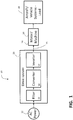
- FIG. 1 is a block diagram of components of a power system 10 as may be employed to power one or more systems or loads 18.
- Power system 10 includes a source of AC power 12, such as an electrical main line (e.g., 115 volt AC 400Hz, 3-phase).
- the AC power 12 is provided to a drive system 20.
- the drive 20 may include a filter 22 configured to limit inrush currents, stabilizes voltage levels and suppress electromagnetic interference (EMI).
- EMI electromagnetic interference
- the drive 20 may also include a converter 30 to convert the AC power 12 to a DC voltage.
- the illustrated drive 20 also includes an inverter 50 to convert the DC voltage to multiphase, AC drive signals.
- Command signals 15 from the inverter 50 of the drive system 20 are supplied to a multiphase machine 14.
- a motor 16 to impart motion to a control surface.
- machine 14 includes, but is not limited to a multiphase, permanent magnet synchronous motor 16. It should also be appreciated, that while the embodiments herein are described primarily with reference to an aircraft electrical system and application, this description is for example only. The embodiments described here are readily applied to any application employing a three phase drive with a multiphase phase power application including any type of three phase load, such as motor controls, environmental control, control surface actuation, and any other three phase power system and/or motor control application.
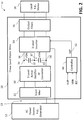
- FIG. 2 is a block diagram of a multi-level motor drive 20 for balancing and controlling a DC midpoint 37 of a multi-level inverter 50 in accordance with one or more embodiments of the present disclosure.
- the multi-level motor drive 20 receives input power signals 13 from the AC power source 12.
- the input power signals 13 may be supplied to an input filter 22 as described above.
- the input power signals 13, once filtered, are provided to a rectifier or converter 30.
- the rectifier or converter 30 may be passive or active and may be a single or multi-level configuration. In an embodiment, the converter 30 is active and a three-level configuration. In another embodiment, the converter/rectifier 30 is a simpler passive configuration of a diode bridge.
- the output of the converter 30 supplies a DC bus 34 having a positive terminal 36 and a negative terminal 38.
- the DC bus 34 also has a DC midpoint or neutral point 37.
- a filter including the DC link capacitors 32 and 33 are positioned between the positive terminal 36 and the DC midpoint 37 and the DC midpoint 37 and the negative terminal 38.
- the multi-level inverter 50 includes as inputs the positive DC terminal 36, the DC midpoint 37, and the negative DC terminal 38.
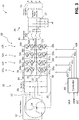
- drive 20 is shown in greater detail and includes inverter 50 having at 3 phase legs, 52r, 52s, and 52t also denoted as R, S, and T respectively.
- Each phase leg, R, S, and T, (52r, 52s, and 52t) includes at least two complementary switching devices 56r, 57r; 56s, 57s; and 56t, 57t respectively positioned between the positive terminal 36 and negative terminal 38 of the DC bus 34 and controlled by control signals 62r, 62s, and 62t respectively from a drive controller (60) to convert DC power from the a DC bus 34 into motor command signals 15 to control the motor 16 or other load.
- the inverter 50 may further employ a fourth phase leg 52u, which once again typically employs at least two complementary switching devices 56u, and 57u respectively and is controlled by a control signal 62u.
- the inverter 50 is a three-level inverter 50 employing the four phase legs comprising 52r, 52s, 52t, and 52u also denoted as R, S, T and U in a multi-level inverter configurations each of the switching devices 54r, 57r; 54s, 57s; 54t, 57t, and 54u, 57u is cascaded with a second switching device 54r, 59r; 54s, 59s; 54t, 59t, and 54u, 59u respectively.
- each of the phase legs 52r, 52s, 52t, and 52u include a diode isolated common point connected in common with the midpoint 37 of the DC bus 34.
- the outputs of the R, S, and T phase legs 52r, 52s, and 52t (e.g., the node of switching devices 56 and 57) provide the motor command signals 15 to the motor 16 or load via filter 26 as is conventionally known.
- the output of the U phase leg 52u (e.g., the node of switching devices 56u and 57u) is connected to the neutral point of the load e.g., motor 16) via filter 26.
- Multiple switching devices e.g., 54r, 57r; 54s, 57s; 54t, 57t, and 54u, 57u
- both rectifier/converter 30 (if an active type) and inverter 50, are controlled by a controller 60.
- converter 30 and inverter 50 may be controlled by separate drive controllers, 60.
- controller(s) 60 provides control signals 62r, 62s, 62t and in some embodiments 62u to the switching devices 56r, 57r; 56s, 57s; 56t, 57t, and 56u, 54u (as well as cascaded switching devices 54r, 59r; 54s, 59s; 54t, 59t and 54u, 59u for multilevel configurations) of the R, S, T and U phase legs 52r, 52s, 52t 52u respectively to control generation of the of the motor command signals 15.
- controller 60 may provide control signals (not shown) to the active rectifier or converter 30 to control generation and maintenance of the voltage on the DC bus 34.
- Drive controller 60 may be implemented using a general-purpose microprocessor executing a computer program stored on a storage medium to perform the operations described herein.
- drive controller 60 may be implemented in hardware (e.g., ASIC, FPGA) or in a combination of hardware/software.
- the controller 60 develops a DC current command for the converter 30 (if active) based on the operation the motor 16 and the inverter 50 generating the motor command signals 15.
- the DC current command is then employed to formulate the PWM control commands for the switching devices (not shown) of the converter 30 to provide a DC output current to the DC bus 34 accordingly.
- the controller 60 receives various input signals or values, including set point signals or values for desired output operation, such as motor speed, position, torque, etc., as well as feedback signals or values representing operational values of various portions of the motor drive 20.
- a passive rectifier configuration for the converter 20 is employed and no PWM commands from the controller 60 are needed.
- the controller 60 develops a command for the inverter 50 based on the operation the motor 16 e.g., speed, torque, and the like and the inverter 50 generating the motor command signals 15.
- the command is then employed to formulate the PWM control commands 62r, 62s, 62t for the switching devices 54r, 56r, 57r, 59r; 54s, 56s, 57s, 59s; and 54t, 56t, 57t 59t (hereinafter generally switching devices 54, 56, 57, 59) respectively of the inverter 50 to provide a formulate the motor command signals 15 accordingly.
- PWM pulse width modulation
- SVPWM space vector pulse width modulation
- DPWM current sensing is achieved via calculation via known methods of negative sum of two of the three phase legs. This computed phase current unfortunately results in some current distortion, acoustic noise, and the like. As a result, to protect the switching devices (e.g., 54, 56, 57, and 59), magnetics, and the like, DPWM is generally only be used in application where current control or distortion is less important and for short applications of high current (e.g., peak converter currents) periods of time.
- high current e.g., peak converter currents
- Hybrid SVPWM is effectively a combination or hybrid of SVPWM and DPWM techniques.
- Hybrid SVPWM allows the lower switching device(s) (e.g., 57r, 59r; 57s, 59s; and 57t, 59t) to be ON, i.e., switching, for a more prolonged time (e.g., on the order of about 2/3 of the AC voltage cycle), but it also includes a period of time where the lower switching devices (e.g., 57r, 59r; 57s, 59s; and 57t, 59t) are off. Therefore, it allows for both emitter series current sensing and facilitates reduced switching losses. The reduced switching losses are achieved due to the switching being interrupted (e.g., approximately 1/3 of an AC voltage cycle).
- inverter 50 in applications where torque/current control are important, low current distortion (and thereby low torque ripple) is desired. As such, continuous SVPWM or hybrid SVPWM techniques are employed to ensure good motor response. In addition, for the converter 30 (when an active converter is employed), continuous SVPWM or hybrid SVPWM techniques may be employed to ensure good motor response , but In applications where current control less critical and efficiency is more important and reducing switching losses and improve efficiency is more important hybrid SVPWM or DPWM may be employed.
- the inverter 50 is configured with a fourth leg 52u having switching devices 56u, and 57u, (as well as 54u and 59u for a multi-level implementation.
- the rectifier isolated common point of each of the phase legs 52r, 52s, 52t, and 52u is connected to the DC midpoint 37.
- the DC midpoint 37 is connected to the neutral point 14 of the AC power source 12 via line 39. This connection stabilizes the voltage on the DC midpoint 37 allowing some unbalanced currents at the DC midpoint 37 to be circulated back to the AC power source 12.
- the output of the phase leg 52u is connected via filter 26 to the neutral point 17 of the load (e.g., motor 16) to facilitate maintaining control of the voltage at the neutral point 17.
- the phase leg 52u also is controlling the neutral point 17 of the load, e.g., 16 to reduce or control circulating common mode currents and also to aide in balancing the DC midpoint voltage 37. That is, the isolation, voltage and imbalance between the neutral point 17 on the load e.g., motor 16 and the DC midpoint 37 is control through the fourth phase leg 52u.
- this approach of isolating the DC midpoint 37 and the neutral 14 of the AC power source 12 from the neutral point 17 of the load avoids circulation of common mode currents from the load e.g., motor 16 and minimizes the effects of imbalances in the load.
- the switching devices 54u, 56u, as well as 57u, 59u are controlled via a fourth control command 62u from the controller 60.
- the control command 62u is based on the operation the motor 16, imbalance of the load (e.g., motor 16) as well as the neutral point voltage 17, and the deviation of the midpoint 37.
- the controller 60 configures control command, which is then employed to formulate a PWM control commands for the switching devices 56u, and 57u, (as well as 54u and 59u) of the fourth phase leg 52u to facilitate the control.
- the controller 60 receives various input signals or values, including set point signals or values for desired output operation, such as motor speed, position, torque, etc., as well as feedback signals or values representing operational values of various portions of the motor drive 20 including but not limited to the midpoint voltage 37, the DC bus 34 voltages as well as the bus current and phase voltages and currents of the load e.g. motor 16 to formulate the control command 62u.
- desired output operation such as motor speed, position, torque, etc.
- feedback signals or values representing operational values of various portions of the motor drive 20 including but not limited to the midpoint voltage 37, the DC bus 34 voltages as well as the bus current and phase voltages and currents of the load e.g. motor 16 to formulate the control command 62u.
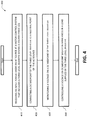
- FIG. 4 is a flowchart of a method 400 of alternative control of DC midpoint 37 of a three level inverter 50 in accordance with one or more embodiment.
- One or more steps of the method may be implemented by controller 60 of the control system 10 as described herein.
- some steps of the method 400 may be implemented as software or algorithms operating on the controller as is conventionally known.
- the method 400 includes receiving an input power signal at a control system 10 that includes a three level inverter 50 as depicted at process step 410.
- process step 420 the method continues with connecting the DC midpoint 37 of the DC bus 34 (and the multi-level inverter 50 with the neutral point 14 or the AC power source 12.
- the method 400 includes monitoring the voltage on the DC midpoint 37 as depicted at process step 430.
- the method 400 includes controlling the fourth phase leg 52u of the inverter 50 based on imbalances in the load supplied by the three level inverter 50.
- the control is implemented by adjusting the PWM control signals 62u that control the switching devices 54u, 56u, 57u, and 59u of the fourth phase leg 52u.
- the present embodiments may be a system, a method, and/or a computer program product at any possible technical detail level of integration
- the computer program product may include a computer readable storage medium (or media) having computer readable program instructions thereon for causing a processor to carry out aspects of the present disclosure
- Computer readable program instructions described herein can be downloaded to respective computing/processing devices from a computer readable storage medium or to an external computer or external storage device via a network, for example, the Internet, a local area network, a wide area network and/or a wireless network.
- the network may comprise copper transmission cables, optical transmission fibers, wireless transmission, routers, firewalls, switches, gateway computers and/or edge servers.
- a network adapter card or network interface in each computing/processing device receives computer readable program instructions from the network and forwards the computer readable program instructions for storage in a computer readable storage medium within the respective computing/processing device.
- each block in the flowchart or block diagrams may represent a module, segment, or portion of instructions, which comprises one or more executable instructions for implementing the specified logical function(s).
- the functions noted in the blocks may occur out of the order noted in the Figures.
- two blocks shown in succession may, in fact, be executed substantially concurrently, or the blocks may sometimes be executed in the reverse order, depending upon the functionality involved.
Landscapes
- Engineering & Computer Science (AREA)
- Power Engineering (AREA)
- Inverter Devices (AREA)
Abstract
Description
- The subject matter disclosed herein generally relates to a three level inverter and, more particularly, to controlling voltage at the midpoint of the three level inverter.
- Aircraft power systems commonly include a generator to generate AC power and a drive system connected the generator for providing excitation to an electric motor for powering actuators and the like. Such drive systems commonly employ rectifier or converter sections to receive the incoming AC power, rectify it, and supply it to a DC bus and an inverter. The drive also may include an inverter that receives DC power from the rectifier/converter and DC bus and provides excitation signals to a machine or load accordingly.
- Active front end (AFE) converters in drives are commonly multilevel configurations and employ a pulse width modulated (PWM) switching techniques to convert input AC power to DC output power and provide the output power to the bus. Furthermore, the inverter may also be a multilevel configuration and employ a pulse width modulation technique to then convert the voltage DC power on the bus to AC output currents to drive the load, e.g., a motor. Such active front end converters are typically coupled with input filters, such as LCL filter circuits connected to each power phase. Since the front end rectifier is a switching circuit, the input filter operates to prevent introduction of unwanted harmonic content into the power source. Likewise the inverters may also include filters on the output to provide filtering and isolate unwanted harmonics and common mode interference.
- Three level converters and/or inverters have a DC midpoint terminal in addition to a DC positive and a DC negative terminal. Because of the particular arrangement of the DC midpoint, the DC midpoint node voltage is not typically controlled by a power source in order to provide isolation and minimize filter requirements. Therefore, the DC midpoint node voltage can move relative to ground and be difficult to control with three phase loading, especially for unbalanced loads. This imbalance is preferably minimized in order to maintain output current power quality and limit insulated-gate bipolar transistor (IGBT) and DC capacitor voltage stress.
- Methods and system elements have been developed to control the DC midpoint voltage. For example, one method of controlling the DC midpoint voltage of a three-level inverter is to utilize a proportional-integral PI regulator. Specifically, the input to the PI regulator is the error in the DC midpoint voltage. A zero-sequence voltage, proportional to the PI regulator output, is applied on the inverter output to reduce the error in the DC midpoint voltage. This loop gain increases as the output power of the inverter increases. Consequently the system may grow unstable at different operating points and present other difficulties for the inverter. Other ways of controlling the DC midpoint voltage in the inverter include filtering and partial isolation schemes. Other methods include direct control of the DC midpoint to selected voltage potential or sophisticated inverter switching techniques.
- Accordingly for at least the above discussed reasons, as well as others, there is a desire to provide improved control methods for a multi-level inverter DC midpoint voltage.
- Described herein in an embodiment is a method of controlling a DC midpoint of a multi-level inverter. The method includes receiving an input power signal from an AC power source at a multi-level motor control system that includes a DC bus and a multi-level inverter configured to supply a load, the DC bus having a DC midpoint, and operably connecting the DC midpoint of a DC bus to a neutral point of the AC power source, while isolating a neutral point of the load supplied by the multi-level inverter from the DC midpoint.
- Also described herein in another embodiment is a method of and system for controlling a DC midpoint of a multi-level inverter. The method includes receiving an input power signal from an AC power source at a multi-level motor control system that includes a DC bus and a multi-level inverter having a fourth phase leg, connecting a DC midpoint of a DC bus to a neutral point of the AC power source, while isolating a neutral point of a load supplied by the multi-level inverter from the DC midpoint, monitoring a voltage on the DC midpoint of the DC bus; and controlling a voltage of the neutral point of the AC load based on imbalances in the load supplied by the multi-level inverter.
- In addition to one or more of the features described above, or as an alternative, further embodiments may include receiving the input power signal at least one of a rectifier and a converter and supplying power to a DC bus; and
In addition to one or more of the features described above, or as an alternative, further embodiments may include outputting an output power signal processed by the multi-level inverter, wherein the output power signal is a motor command signal. - In addition to one or more of the features described above, or as an alternative, further embodiments may include that the converter is at least one of an active converter and a multi-level converter.
- In addition to one or more of the features described above, or as an alternative, further embodiments may include that the multi-level inverter is a three level inverter.
- In addition to one or more of the features described above, or as an alternative, further embodiments may include filtering at least one of the input power signal from the AC power source and the output power signal processed by the multi-level inverter.
- In addition to one or more of the features described above, or as an alternative, further embodiments may include the a multi-level inverter having a fourth phase leg, monitoring a voltage on the DC midpoint of the DC bus, and controlling a voltage of the neutral point of the AC load based on imbalances in the load supplied by the multi-level inverter.
- In addition to one or more of the features described above, or as an alternative, further embodiments may include controlling the DC midpoint of the DC bus based on at least one of the imbalance in the load supplied by the multi-level inverter, the DC midpoint voltage, a voltage on the DC bus, and a current supplied to the load.
- In addition to one or more of the features described above, or as an alternative, further embodiments may include that controlling is based on commands provided to the fourth phase leg.
- In addition to one or more of the features described above, or as an alternative, further embodiments may include controlling the neutral point of the load relative to the DC midpoint based on at least one of the imbalance in the load supplied by the multi-level inverter, the DC midpoint voltage, a voltage on the DC bus, and a current supplied to the load.
- In addition to one or more of the features described above, or as an alternative, further embodiments may include that controlling is based on commands provided to the fourth phase leg.
- Also described herein in an embodiment is a multi-level motor control system operably connected to an AC power source and configured to power a load. The multi-level motor control system including a DC bus supplied by the AC power source, the DC bus having a DC midpoint operably connected to a multi-level inverter, the multi-level inverter having a fourth phase leg, where the DC midpoint of a DC bus is operably connected to a neutral point of an AC power source, while isolating a neutral point of a load supplied by the multi-level inverter from the DC midpoint. The system also includes a controller configured to provide control signals to the fourth phase leg of the multi-inverter to control a voltage of the neutral point of the AC load based on imbalances in the load supplied by the multi-level inverter.
- In addition to one or more of the features described above, or as an alternative, further embodiments may include at least one of a rectifier and a converter operably connected to an AC power source configured to supply power to the DC bus.
- In addition to one or more of the features described above, or as an alternative, further embodiments may include that the converter is at least one of an active converter and a multi-level converter.
- In addition to one or more of the features described above, or as an alternative, further embodiments may include that the multi-level inverter is a three level inverter.
- In addition to one or more of the features described above, or as an alternative, further embodiments may include that the multi-level inverter generates output power signals to the load, wherein the output power signal is a motor command signal.
- In addition to one or more of the features described above, or as an alternative, further embodiments may include at least one of a first filtering element connected between the AC power source and DC bus and a second filtering element operably connected between AC output of the multi- level inverter and the load supplied by the multi-level inverter.
- In addition to one or more of the features described above, or as an alternative, further embodiments may include the controller configured to control the DC midpoint of the DC bus based on at least one of the imbalance in the load supplied by the multi-level inverter, the DC midpoint voltage, a voltage on the DC bus, and a current supplied to the load.
- In addition to one or more of the features described above, or as an alternative, further embodiments may include that the control is based on commands provided to the fourth phase leg.
- In addition to one or more of the features described above, or as an alternative, further embodiments may include the controller configured to control the neutral point of the load relative to the DC midpoint based on at least one of the imbalance in the load supplied by the multi-level inverter, the DC midpoint voltage, a voltage on the DC bus, and a current supplied to the load.
- In addition to one or more of the features described above, or as an alternative, further embodiments may include that the control is based on commands provided to the fourth phase leg.
- The foregoing features and elements may be combined in various combinations without exclusivity, unless expressly indicated otherwise. These features and elements as well as the operation thereof will become more apparent in light of the following description and the accompanying drawings. It should be understood, however, that the following description and drawings are intended to be illustrative and explanatory in nature and non-limiting.
- The foregoing and other features, and advantages of the present disclosure are apparent from the following detailed description taken in conjunction with the accompanying drawings in which:
-
FIG. 1 depicts a high level block diagram of generator and three-level inverter for providing excitation to a load in accordance with one or more embodiments; -
FIG. 2 depicts a more detailed block diagram of generator and three-level inverter for providing excitation to a load in accordance with one or more embodiments; -
FIG. 3 is a block diagram of a three level motor controller system for balancing a DC midpoint of a three level inverter in accordance with one or more embodiments; and -
FIG.4 is a flowchart of a method of balancing a DC midpoint of a three level inverter in accordance with one or more embodiments. - Embodiments described herein are directed to a building management system and utilizing a dynamically created color mapping data. The described embodiments permit a user, owner or manager of a building management system to construct one or more arbitrary sets of values that can be mapped to various colors using preselected or defined rules and/or functions for an arbitrary set of locations as a report. The report can then be assigned to one or more graphics associated with the building managements system, that each contain a defined set of location associations, for example, a building layout or campus. The graphic associations for each graphic, e.g., the building layout, are then displayed with any set of colors as defined in the report with no additional configuration by the user. Advantageously, the user can dynamically select the data set to display. In one embodiment definable color scheme is accomplished using a tabular data definition combined with enhancing the existing "color map" control (widget) used in the building management system graphical user interface. Various color schemes may then be employed to identify any number of definable parameters or char associated with the building management system including, for example, temperatures, set points, deviation from set points, total energy usage, normalized energy usage, alarm counts, financial performance, and so on.
- For the purposes of promoting an understanding of the principles of the present disclosure, reference will now be made to the embodiments illustrated in the drawings, and specific language will be used to describe the same. It will nevertheless be understood that no limitation of the scope of this disclosure is thereby intended. The following description is merely illustrative in nature and is not intended to limit the present disclosure, its application or uses. It should be understood that throughout the drawings, corresponding reference numerals indicate like or corresponding parts and features. As used herein, the term controller refers to processing circuitry that may include an application specific integrated circuit (ASIC), an electronic circuit, an electronic processor (shared, dedicated, or group) and memory that executes one or more software or firmware programs, a combinational logic circuit, and/or other suitable interfaces and components that provide the described functionality.
- Additionally, the term "exemplary" is used herein to mean "serving as an example, instance or illustration." Any embodiment or design described herein as "exemplary" is not necessarily to be construed as preferred or advantageous over other embodiments or designs. The terms "at least one" and "one or more" are understood to include any integer number greater than or equal to one, i.e. one, two, three, four, etc. The terms "a plurality" are understood to include any integer number greater than or equal to two, i.e. two, three, four, five, etc. The term "connection" can include an indirect "connection" and a direct "connection".
-
FIG. 1 is a block diagram of components of apower system 10 as may be employed to power one or more systems or loads 18. Thepower system 10 is described with respect to an aircraft power system, however application to any system where a three phase or motor drive is employed may be envisioned.Power system 10 includes a source ofAC power 12, such as an electrical main line (e.g., 115 volt AC 400Hz, 3-phase). TheAC power 12 is provided to adrive system 20. Thedrive 20 may include afilter 22 configured to limit inrush currents, stabilizes voltage levels and suppress electromagnetic interference (EMI). Thedrive 20 may also include aconverter 30 to convert theAC power 12 to a DC voltage. The illustrateddrive 20 also includes aninverter 50 to convert the DC voltage to multiphase, AC drive signals. Command signals 15 from theinverter 50 of thedrive system 20 are supplied to amultiphase machine 14. For example, amotor 16 to impart motion to a control surface. In an exemplary embodiment,machine 14 includes, but is not limited to a multiphase, permanentmagnet synchronous motor 16. It should also be appreciated, that while the embodiments herein are described primarily with reference to an aircraft electrical system and application, this description is for example only. The embodiments described here are readily applied to any application employing a three phase drive with a multiphase phase power application including any type of three phase load, such as motor controls, environmental control, control surface actuation, and any other three phase power system and/or motor control application. -
FIG. 2 is a block diagram of amulti-level motor drive 20 for balancing and controlling aDC midpoint 37 of amulti-level inverter 50 in accordance with one or more embodiments of the present disclosure. Themulti-level motor drive 20 receives input power signals 13 from theAC power source 12. The input power signals 13 may be supplied to aninput filter 22 as described above. The input power signals 13, once filtered, are provided to a rectifier orconverter 30. The rectifier orconverter 30 may be passive or active and may be a single or multi-level configuration. In an embodiment, theconverter 30 is active and a three-level configuration. In another embodiment, the converter/rectifier 30 is a simpler passive configuration of a diode bridge. The output of theconverter 30 supplies aDC bus 34 having apositive terminal 36 and anegative terminal 38. TheDC bus 34 also has a DC midpoint orneutral point 37. A filter including theDC link capacitors positive terminal 36 and theDC midpoint 37 and theDC midpoint 37 and thenegative terminal 38. Themulti-level inverter 50 includes as inputs thepositive DC terminal 36, theDC midpoint 37, and thenegative DC terminal 38. - Turning now to
FIG. 3 as well asFIG. 2 , drive 20 is shown in greater detail and includesinverter 50 having at 3 phase legs, 52r, 52s, and 52t also denoted as R, S, and T respectively. Each phase leg, R, S, and T, (52r, 52s, and 52t) includes at least twocomplementary switching devices positive terminal 36 andnegative terminal 38 of theDC bus 34 and controlled bycontrol signals DC bus 34 into motor command signals 15 to control themotor 16 or other load. In an embodiment, theinverter 50 may further employ afourth phase leg 52u, which once again typically employs at least twocomplementary switching devices control signal 62u. In an embodiment, theinverter 50 is a three-level inverter 50 employing the four phase legs comprising 52r, 52s, 52t, and 52u also denoted as R, S, T and U in a multi-level inverter configurations each of theswitching devices second switching device phase legs midpoint 37 of theDC bus 34. The outputs of the R, S, andT phase legs motor 16 or load viafilter 26 as is conventionally known. The output of theU phase leg 52u (e.g., the node of switchingdevices filter 26. Multiple switching devices (e.g., 54r, 57r; 54s, 57s; 54t, 57t, and 54u, 57u) are employed in multi-level drives to facilitate voltage sharing and permit lower cost, higher voltage capability drives as is conventionally known. - According to one or more embodiments, both rectifier/converter 30 (if an active type) and
inverter 50, are controlled by acontroller 60. In an alternative embodiment,converter 30 andinverter 50 may be controlled by separate drive controllers, 60. As stated above controller(s) 60 providescontrol signals embodiments 62u to theswitching devices devices U phase legs 52t 52u respectively to control generation of the of the motor command signals 15. Likewise thecontroller 60 may provide control signals (not shown) to the active rectifier orconverter 30 to control generation and maintenance of the voltage on theDC bus 34.Drive controller 60 may be implemented using a general-purpose microprocessor executing a computer program stored on a storage medium to perform the operations described herein. Alternatively, drivecontroller 60 may be implemented in hardware (e.g., ASIC, FPGA) or in a combination of hardware/software. - In operation the
controller 60 develops a DC current command for the converter 30 (if active) based on the operation themotor 16 and theinverter 50 generating the motor command signals 15. The DC current command is then employed to formulate the PWM control commands for the switching devices (not shown) of theconverter 30 to provide a DC output current to theDC bus 34 accordingly. In addition, thecontroller 60 receives various input signals or values, including set point signals or values for desired output operation, such as motor speed, position, torque, etc., as well as feedback signals or values representing operational values of various portions of themotor drive 20. In another embodiment, a passive rectifier configuration for theconverter 20 is employed and no PWM commands from thecontroller 60 are needed. While such a configuration is advantageous because of its simplicity for employing passive rectifiers to supply theDC bus 34, other configurations with anactive converter 30 may be desirable for improved current and electromagnetic interference (EMI) control. Likewise, thecontroller 60 develops a command for theinverter 50 based on the operation themotor 16 e.g., speed, torque, and the like and theinverter 50 generating the motor command signals 15. The command is then employed to formulate the PWM control commands 62r, 62s, 62t for theswitching devices 57t 59t (hereinafter generally switching devices 54, 56, 57, 59) respectively of theinverter 50 to provide a formulate the motor command signals 15 accordingly. - Conventionally a pulse width modulation (PWM) control scheme is employed to command the switching devices 54, 56, 57, 59 respectively of the
inverter 50 to generate and control the motor command signals 15 to themotor 16. Conventionally, such a PWM control scheme employs space vector pulse width modulation SVPWM techniques. Moreover, conventionally the SVPWM for the converter 30 (if active) andinverter 50 would be operated at the same frequency and synchronized. Synchronization of the PWM for both theconverter 30 and theinverter 50 improves functions and reduces generated EMI from the operation of the switching devices (e.g., 54, 56, 57, and 59 of the inverter 50). - However, in some applications, other PWM techniques may be employed to address the advantages and constraints imposed by the construction or particular implementation of the
converter 30 orinverter 50 Moreover, while it is well known that increasing switching frequency facilitates reductions in the size of magnetics, filters, improves acoustics, and the like, though it does result in increased switching losses in the switching devices (not shown) for theconverter 30 or for the switching devices (e.g., 54, 56, 57, and 59) of theinverter 50. Therefore, in some embodiments, where anactive converter 30 is employed it may be advantageous to operate the converter switching devices (not shown) at a different PWM frequency than those of theinverter 50. - Increased operating frequencies also results in increased switching losses for the switching devices (e.g., 54, 56, 57, and 59) and reduces efficiency causing the switching devices (e.g., 54, 56, 57, and 59) to potentially overheat. As a result, while SVPWM is effective for most applications though it is less efficient. Conversely, employing conventional discontinuous (DPWM) improves efficiency, but makes measuring the current impossible in selected phase legs e.g. 52r, 52s, and 52t, (or the phase legs (not shown) of the converter 30) if emitter side current sensing is employed. DPWM, advantageously, can be used at the expense of current sensing quality. In DPWM, current sensing is achieved via calculation via known methods of negative sum of two of the three phase legs. This computed phase current unfortunately results in some current distortion, acoustic noise, and the like. As a result, to protect the switching devices (e.g., 54, 56, 57, and 59), magnetics, and the like, DPWM is generally only be used in application where current control or distortion is less important and for short applications of high current (e.g., peak converter currents) periods of time.
- Hybrid SVPWM is effectively a combination or hybrid of SVPWM and DPWM techniques. Hybrid SVPWM allows the lower switching device(s) (e.g., 57r, 59r; 57s, 59s; and 57t, 59t) to be ON, i.e., switching, for a more prolonged time (e.g., on the order of about 2/3 of the AC voltage cycle), but it also includes a period of time where the lower switching devices (e.g., 57r, 59r; 57s, 59s; and 57t, 59t) are off. Therefore, it allows for both emitter series current sensing and facilitates reduced switching losses. The reduced switching losses are achieved due to the switching being interrupted (e.g., approximately 1/3 of an AC voltage cycle).
- Moreover for the
inverter 50, in applications where torque/current control are important, low current distortion (and thereby low torque ripple) is desired. As such, continuous SVPWM or hybrid SVPWM techniques are employed to ensure good motor response. In addition, for the converter 30 (when an active converter is employed), continuous SVPWM or hybrid SVPWM techniques may be employed to ensure good motor response , but In applications where current control less critical and efficiency is more important and reducing switching losses and improve efficiency is more important hybrid SVPWM or DPWM may be employed. - Continuing with the
FIG. 3 , as described above, theinverter 50 is configured with afourth leg 52u havingswitching devices phase legs DC midpoint 37. In addition, in an embodiment theDC midpoint 37 is connected to theneutral point 14 of theAC power source 12 vialine 39. This connection stabilizes the voltage on theDC midpoint 37 allowing some unbalanced currents at theDC midpoint 37 to be circulated back to theAC power source 12. As described above, the output of thephase leg 52u is connected viafilter 26 to theneutral point 17 of the load (e.g., motor 16) to facilitate maintaining control of the voltage at theneutral point 17. In addition, thephase leg 52u also is controlling theneutral point 17 of the load, e.g., 16 to reduce or control circulating common mode currents and also to aide in balancing theDC midpoint voltage 37. That is, the isolation, voltage and imbalance between theneutral point 17 on the load e.g.,motor 16 and theDC midpoint 37 is control through thefourth phase leg 52u. Advantageously this approach of isolating theDC midpoint 37 and the neutral 14 of theAC power source 12 from theneutral point 17 of the load avoids circulation of common mode currents from the load e.g.,motor 16 and minimizes the effects of imbalances in the load. - The
switching devices fourth control command 62u from thecontroller 60. In an embodiment thecontrol command 62u is based on the operation themotor 16, imbalance of the load (e.g., motor 16) as well as theneutral point voltage 17, and the deviation of themidpoint 37. Thecontroller 60 configures control command, which is then employed to formulate a PWM control commands for theswitching devices fourth phase leg 52u to facilitate the control. Once again, thecontroller 60 receives various input signals or values, including set point signals or values for desired output operation, such as motor speed, position, torque, etc., as well as feedback signals or values representing operational values of various portions of themotor drive 20 including but not limited to themidpoint voltage 37, theDC bus 34 voltages as well as the bus current and phase voltages and currents of theload e.g. motor 16 to formulate thecontrol command 62u. -
FIG. 4 is a flowchart of amethod 400 of alternative control ofDC midpoint 37 of a threelevel inverter 50 in accordance with one or more embodiment. One or more steps of the method may be implemented bycontroller 60 of thecontrol system 10 as described herein. Moreover, some steps of themethod 400 may be implemented as software or algorithms operating on the controller as is conventionally known. Themethod 400 includes receiving an input power signal at acontrol system 10 that includes a threelevel inverter 50 as depicted atprocess step 410. Atprocess step 420 the method continues with connecting theDC midpoint 37 of the DC bus 34 (and themulti-level inverter 50 with theneutral point 14 or theAC power source 12. Further, themethod 400 includes monitoring the voltage on theDC midpoint 37 as depicted atprocess step 430. Finally, as depicted atprocess step 440, themethod 400 includes controlling thefourth phase leg 52u of theinverter 50 based on imbalances in the load supplied by the threelevel inverter 50. The control is implemented by adjusting the PWM control signals 62u that control theswitching devices fourth phase leg 52u. - The terminology used herein is for the purpose of describing particular embodiments only and is not intended to be limiting. As used herein, the singular forms "a", "an" and "the" are intended to include the plural forms as well, unless the context clearly indicates otherwise. It will be further understood that the terms "comprises" and/or "comprising," when used in this specification, specify the presence of stated features, integers, steps, operations, elements, and/or components, but do not preclude the presence or addition of one or more other features, integers, steps, operations, elements, components, and/or groups thereof.
- The present embodiments may be a system, a method, and/or a computer program product at any possible technical detail level of integration. The computer program product may include a computer readable storage medium (or media) having computer readable program instructions thereon for causing a processor to carry out aspects of the present disclosure.
- Computer readable program instructions described herein can be downloaded to respective computing/processing devices from a computer readable storage medium or to an external computer or external storage device via a network, for example, the Internet, a local area network, a wide area network and/or a wireless network. The network may comprise copper transmission cables, optical transmission fibers, wireless transmission, routers, firewalls, switches, gateway computers and/or edge servers. A network adapter card or network interface in each computing/processing device receives computer readable program instructions from the network and forwards the computer readable program instructions for storage in a computer readable storage medium within the respective computing/processing device.
- The flowchart and block diagrams in the figures illustrate the architecture, functionality, and operation of possible implementations of systems, methods, and computer program products according to various embodiments. In this regard, each block in the flowchart or block diagrams may represent a module, segment, or portion of instructions, which comprises one or more executable instructions for implementing the specified logical function(s). In some alternative implementations, the functions noted in the blocks may occur out of the order noted in the Figures. For example, two blocks shown in succession may, in fact, be executed substantially concurrently, or the blocks may sometimes be executed in the reverse order, depending upon the functionality involved. It will also be noted that each block of the block diagrams and/or flowchart illustration, and combinations of blocks in the block diagrams and/or flowchart illustration, can be implemented by special purpose hardware-based systems that perform the specified functions or acts or carry out combinations of special purpose hardware and computer instructions.
- While the present disclosure has been described in detail in connection with only a limited number of embodiments, it should be readily understood that the present disclosure is not limited to such disclosed embodiments. Rather, the present disclosure can be modified to incorporate any number of variations, alterations, substitutions, combinations, sub-combinations, or equivalent arrangements not heretofore described, but which are commensurate with the scope of the present disclosure. Additionally, while various embodiments of the present disclosure have been described, it is to be understood that aspects of the present disclosure may include only some of the described embodiments.
Claims (15)
- A method of controlling a DC midpoint of a multi-level inverter, the method comprising:receiving an input power signal from an AC power source (12) at a multi-level motor control system that includes a DC bus (34) and a multi-level inverter (50) configured to supply a load, the DC bus (34) having a DC midpoint (37); andoperably connecting the DC midpoint (37) of a DC bus (34) to a neutral point of the AC power source (12), while isolating a neutral point of the load supplied by the multi-level inverter from the DC midpoint (37).
- The method of claim 1, further comprising:receiving the input power signal at least one of a rectifier and a converter (30) and supplying power to a DC bus (34); andoutputting an output power signal processed by the multi-level inverter (50), wherein the output power signal is a motor command signal.
- The method of claim 2, wherein the converter is at least one of an active converter and a multi-level converter (50).
- The method of any preceding claim, further comprising filtering at least one of the input power signal from the AC power source (12) and the output power signal processed by the multi-level inverter (50).
- The method of any preceding claim, further comprising:the multi-level inverter (50) having a fourth phase leg;monitoring a voltage on the DC midpoint (37) of the DC bus (34); andcontrolling a voltage of the neutral point of the AC load based on imbalances in the load supplied by the multi-level inverter (50).
- The method of claim 5, further including controlling the DC midpoint (37) of the DC bus (34) based on at least one of the imbalance in the load supplied by the multi-level inverter, the DC midpoint voltage, a voltage on the DC bus (34), and a current supplied to the load.
- The method of claim 6, further comprising controlling the neutral point of the load relative to the DC midpoint (37) based on at least one of the imbalance in the load supplied by the multi-level inverter (50), the DC midpoint voltage, a voltage on the DC bus (34), and a current supplied to the load.
- A multi-level motor control system operably connected to an AC power source and configured to power a load, the multi-level motor control system comprising:a DC bus (34) supplied by the AC power source (12), the DC bus (34) having a DC midpoint operably connected to a multi-level inverter (50) configured to supply a load, the DC bus (34) having a DC midpoint (37),wherein the DC midpoint (37) of a DC bus (34) is operably connected to a neutral point of an AC power source (12), while isolating a neutral point of a load supplied by the multi-level inverter (50) from the DC midpoint (37).
- The multi-level motor control system of claim 8, further including at least one of a rectifier and a converter (30) operably connected to an AC power source (12) configured to supply power to the DC bus (34).
- The multi-level motor control system of claim 8 or 9, further comprising at least one of a first filtering element connected between an AC power source (12) and DC bus (34) and a second filtering element operably connected between AC output of the multi- level inverter (50) and the load supplied by the multi-level inverter (50).
- The multi-level motor control system of claim 8, 9 or 10, further including:the multi-level inverter (50) further including a fourth phase leg;a controller configured to provide control signals to the fourth phase leg of the multi-inverter (50) to control a voltage of the neutral point of the AC load based on imbalances in the load supplied by the multi-level inverter (50).
- The multi-level motor control system of claim 11, further including the controller (60) configured to control the DC midpoint (37) of the DC bus (34) based on at least one of the imbalance in the load supplied by the multi-level inverter (50), the DC midpoint voltage, a voltage on the DC bus (34), and a current supplied to the load.
- The multi-level motor control system of claim 12, wherein the control is based on commands provided to the fourth phase leg.
- The multi-level motor control system of claim 11, further comprising the controller (60) configured to control the neutral point of the load relative to the DC midpoint (37) based on at least one of the imbalance in the load supplied by the multi-level inverter (50), the DC midpoint voltage, a voltage on the DC bus (34), and a current supplied to the load.
- The multi-level motor control system of claim 14, wherein the controlling is based on commands provided to the fourth phase leg.
Applications Claiming Priority (1)
| Application Number | Priority Date | Filing Date | Title |
|---|---|---|---|
| US15/876,984 US10523130B2 (en) | 2018-01-22 | 2018-01-22 | Alternate grounding of inverter midpoint for three level switching control |
Publications (1)
| Publication Number | Publication Date |
|---|---|
| EP3514940A1 true EP3514940A1 (en) | 2019-07-24 |
Family
ID=65200630
Family Applications (1)
| Application Number | Title | Priority Date | Filing Date |
|---|---|---|---|
| EP19153043.5A Withdrawn EP3514940A1 (en) | 2018-01-22 | 2019-01-22 | Alternate grounding of inverter midpoint for three level switching control |
Country Status (3)
| Country | Link |
|---|---|
| US (1) | US10523130B2 (en) |
| EP (1) | EP3514940A1 (en) |
| KR (1) | KR102592846B1 (en) |
Cited By (3)
| Publication number | Priority date | Publication date | Assignee | Title |
|---|---|---|---|---|
| CN110943638A (en) * | 2019-12-12 | 2020-03-31 | 华中科技大学 | Method and system for controlling switching frequency of neutral point voltage balance transformer |
| WO2021148617A1 (en) * | 2020-01-24 | 2021-07-29 | Bucher Hydraulics Ag | Power converter, charging post and vehicle |
| EP4425771A1 (en) * | 2023-03-01 | 2024-09-04 | Hamilton Sundstrand Corporation | Controller |
Families Citing this family (22)
| Publication number | Priority date | Publication date | Assignee | Title |
|---|---|---|---|---|
| US10826381B2 (en) * | 2018-04-17 | 2020-11-03 | Abb Schweiz Ag | Method and control system for zero-sequence current compensation for ground current reduction |
| CN112313863B (en) * | 2018-11-13 | 2024-11-08 | 开利公司 | Single-stage two-level pulse width modulation strategy for active harmonic filters |
| EP3675345A1 (en) * | 2018-12-31 | 2020-07-01 | Solaredge Technologies Ltd. | Balanced capacitor power converter |
| CN110118127A (en) * | 2019-06-13 | 2019-08-13 | 烟台杰瑞石油装备技术有限公司 | A kind of electricity drives the power supply semitrailer of fracturing unit |
| US12326074B2 (en) | 2019-06-13 | 2025-06-10 | Yantai Jereh Petroleum Equipment & Technologies Co., Ltd. | Fracturing apparatus and control method thereof, fracturing system |
| US11746636B2 (en) | 2019-10-30 | 2023-09-05 | Yantai Jereh Petroleum Equipment & Technologies Co., Ltd. | Fracturing apparatus and control method thereof, fracturing system |
| US12173594B2 (en) | 2019-06-13 | 2024-12-24 | Yantai Jereh Petroleum Equipment & Technologies Co., Ltd. | Fracturing system |
| US11680474B2 (en) | 2019-06-13 | 2023-06-20 | Yantai Jereh Petroleum Equipment & Technologies Co., Ltd. | Fracturing apparatus and control method thereof, fracturing system |
| US11418141B2 (en) * | 2019-09-18 | 2022-08-16 | Eaton Intelligent Power Limited | Hybrid drive apparatus |
| CN111092562B (en) * | 2020-01-09 | 2023-06-27 | 东北农业大学 | Control method and system for mid-point voltage of three-level inverter based on three-partition type |
| US11387765B2 (en) | 2020-03-13 | 2022-07-12 | Hamilton Sundstrand Corporation | Speed based gain correction for three level inverter midpoint control |
| EP4214827A4 (en) * | 2020-09-18 | 2024-10-02 | Cummins Inc. | SYSTEM AND METHOD FOR OPERATING A THREE-PHASE INVERTER WITH FOUR OR MORE LEGS |
| US11611287B2 (en) * | 2021-02-10 | 2023-03-21 | Hamilton Sundstrand Corporation | Dual sourced common 3-level VSCF |
| CN113315111B (en) | 2021-04-26 | 2023-01-24 | 烟台杰瑞石油装备技术有限公司 | Power supply method and power supply system |
| CN215870792U (en) | 2021-10-12 | 2022-02-18 | 烟台杰瑞石油装备技术有限公司 | Power supply system for wellsite electric drive equipment |
| US12301147B2 (en) | 2022-01-20 | 2025-05-13 | Hamilton Sundstrand Corporation | Gate drive grounding scheme in motor drive systems for wide input DC link voltage |
| CN115087792B (en) | 2022-02-16 | 2023-06-13 | 烟台杰瑞石油装备技术有限公司 | Electric drive fracturing system |
| US11670945B1 (en) * | 2022-02-28 | 2023-06-06 | Lunar Energy, Inc. | Power optimizers in series with voltage sensors and a common reference signal |
| CN115085569B (en) * | 2022-06-07 | 2025-01-03 | 深圳市英威腾电气股份有限公司 | Zero vector starting SVPWM midpoint voltage balancing method and related components |
| KR102883480B1 (en) * | 2022-06-21 | 2025-11-07 | 성균관대학교산학협력단 | Device, method and computer program for controlling space vector pulse width modulation using 3-phase 4-leg inverter under sinlge line-to-ground faults in islanded microgrids |
| CN115833637B (en) * | 2023-02-23 | 2023-05-16 | 浙江飞旋科技有限公司 | Neutral point potential control method and device based on three-level DPWM (pulse width modulation) |
| CN119231463A (en) * | 2023-06-30 | 2024-12-31 | 台达电子工业股份有限公司 | Power system and circulating current suppression method thereof |
Citations (3)
| Publication number | Priority date | Publication date | Assignee | Title |
|---|---|---|---|---|
| CN101510736B (en) * | 2009-03-11 | 2010-12-08 | 南京航空航天大学 | A method for suppressing midpoint potential drift of a three-phase four-leg three-level inverter |
| EP2882088A1 (en) * | 2013-12-06 | 2015-06-10 | Siemens Aktiengesellschaft | 3-level inverter |
| US20160208781A1 (en) * | 2013-09-05 | 2016-07-21 | Vestas Wind Systems A/S | Speed management of a wind turbine when switching electrical configurations |
Family Cites Families (13)
| Publication number | Priority date | Publication date | Assignee | Title |
|---|---|---|---|---|
| US4922400A (en) * | 1989-08-03 | 1990-05-01 | Sundstrand Corporation | Neutral forming circuit |
| US5852558A (en) * | 1997-06-20 | 1998-12-22 | Wisconsin Alumni Research Foundation | Method and apparatus for reducing common mode voltage in multi-phase power converters |
| US6154378A (en) * | 1998-04-29 | 2000-11-28 | Lockheed Martin Corporation | Polyphase inverter with neutral-leg inductor |
| US6924993B2 (en) * | 2003-09-24 | 2005-08-02 | General Motors Corporation | Method and apparatus for controlling a stand-alone 4-leg voltage source inverter |
| US7920393B2 (en) * | 2007-06-01 | 2011-04-05 | Drs Power & Control Technologies, Inc. | Four pole neutral-point clamped three phase converter with low common mode voltage output |
| US20100172166A1 (en) * | 2009-01-07 | 2010-07-08 | Tejinder Singh | Plug-in neutral regulator for 3-phase 4-wire inverter/converter system |
| US8093746B2 (en) * | 2009-12-16 | 2012-01-10 | General Electric Company | Control of four-leg transformerless uninterruptible power supply |
| EP2469692B1 (en) | 2010-12-24 | 2019-06-12 | ABB Research Ltd. | Method for controlling a converter |
| US20130258725A1 (en) * | 2012-03-29 | 2013-10-03 | General Electric Company | Systems and Methods for Balancing UPS Source Currents During Unbalanced Load Transient Conditions |
| CN104221273B (en) | 2012-04-12 | 2016-10-05 | 株式会社日立制作所 | motor drive |
| US8982587B2 (en) * | 2012-04-23 | 2015-03-17 | Hamilton Sundstrand Corporation | Compensating ripple on pulse with modulator outputs |
| DE102013113000A1 (en) * | 2013-11-25 | 2015-05-28 | Sma Solar Technology Ag | Method for operating an inverter and inverter with a switch between a mid-point of a DC intermediate circuit and a connection for a neutral conductor of an AC network |
| CN105830332B (en) * | 2013-12-18 | 2019-10-18 | 奥的斯电梯公司 | Control strategy for multilevel line regenerative drivers |
-
2018
- 2018-01-22 US US15/876,984 patent/US10523130B2/en active Active
-
2019
- 2019-01-17 KR KR1020190006109A patent/KR102592846B1/en active Active
- 2019-01-22 EP EP19153043.5A patent/EP3514940A1/en not_active Withdrawn
Patent Citations (3)
| Publication number | Priority date | Publication date | Assignee | Title |
|---|---|---|---|---|
| CN101510736B (en) * | 2009-03-11 | 2010-12-08 | 南京航空航天大学 | A method for suppressing midpoint potential drift of a three-phase four-leg three-level inverter |
| US20160208781A1 (en) * | 2013-09-05 | 2016-07-21 | Vestas Wind Systems A/S | Speed management of a wind turbine when switching electrical configurations |
| EP2882088A1 (en) * | 2013-12-06 | 2015-06-10 | Siemens Aktiengesellschaft | 3-level inverter |
Non-Patent Citations (4)
| Title |
|---|
| CORTES PATRICIO ET AL: "Phase-oriented control of a modular 3-Phase 3-level 4-leg inverter AC power source supplying floating or grounded loads", 2013 IEEE ENERGY CONVERSION CONGRESS AND EXPOSITION, IEEE, 15 September 2013 (2013-09-15), pages 1357 - 1363, XP032516408, DOI: 10.1109/ECCE.2013.6646863 * |
| PREMGAMONE T ET AL: "Three-dimension space vector modulation for three-level four-leg inverters with DC-link capacitor voltage balancing and switching loss minimization", 2017 6TH INTERNATIONAL CONFERENCE ON CLEAN ELECTRICAL POWER (ICCEP), IEEE, 27 June 2017 (2017-06-27), pages 578 - 584, XP033139042, DOI: 10.1109/ICCEP.2017.8004746 * |
| SHARIFZADEH MOHAMMAD ET AL: "Hybrid SHM-SHE Modulation Technique for a Four-Leg NPC Inverter With DC Capacitor Self-Voltage Balan", IEEE TRANSACTIONS ON INDUSTRIAL ELECTRONICS, IEEE SERVICE CENTER, PISCATAWAY, NJ, USA, vol. 62, no. 8, 1 August 2015 (2015-08-01), pages 4890 - 4899, XP011585838, ISSN: 0278-0046, [retrieved on 20150626], DOI: 10.1109/TIE.2015.2405059 * |
| SHARMA SHAILENDRA KUMAR ET AL: "Control of three-level NPC converters in DFIG based off-grid wind energy conversion systems", IECON 2015 - 41ST ANNUAL CONFERENCE OF THE IEEE INDUSTRIAL ELECTRONICS SOCIETY, IEEE, 9 November 2015 (2015-11-09), pages 1008 - 1013, XP032855346, DOI: 10.1109/IECON.2015.7392231 * |
Cited By (4)
| Publication number | Priority date | Publication date | Assignee | Title |
|---|---|---|---|---|
| CN110943638A (en) * | 2019-12-12 | 2020-03-31 | 华中科技大学 | Method and system for controlling switching frequency of neutral point voltage balance transformer |
| WO2021148617A1 (en) * | 2020-01-24 | 2021-07-29 | Bucher Hydraulics Ag | Power converter, charging post and vehicle |
| US12451795B2 (en) | 2020-01-24 | 2025-10-21 | Bucher Hydraulics Ag | Power converter, charging post and vehicle |
| EP4425771A1 (en) * | 2023-03-01 | 2024-09-04 | Hamilton Sundstrand Corporation | Controller |
Also Published As
| Publication number | Publication date |
|---|---|
| US20190229643A1 (en) | 2019-07-25 |
| KR102592846B1 (en) | 2023-10-20 |
| US10523130B2 (en) | 2019-12-31 |
| KR20190089742A (en) | 2019-07-31 |
Similar Documents
| Publication | Publication Date | Title |
|---|---|---|
| EP3514940A1 (en) | Alternate grounding of inverter midpoint for three level switching control | |
| US6154378A (en) | Polyphase inverter with neutral-leg inductor | |
| JP5474772B2 (en) | Three-level neutral point fixed conversion device and control method thereof | |
| Prasad et al. | Comparison of different topologies of cascaded H-Bridge multilevel inverter | |
| US9991795B2 (en) | Power converter with controllable DC offset | |
| US10770987B2 (en) | Motor drive architecture for variable frequency alternating current loads | |
| CN107425758B (en) | Method and system for controlling a motor control device | |
| CN112542955A (en) | Power conversion system, controller, and computer readable medium | |
| Vancini et al. | Voltage balancing of the DC-link capacitors in three-level T-type multiphase inverters | |
| Jacobina et al. | Fault-tolerant reversible AC motor drive system | |
| CN110829870B (en) | Control method of modular multilevel converter in low-frequency operation state | |
| Sridharan et al. | A transfer function approach to active damping of an induction motor drive with LC filters | |
| Abarzadeh et al. | A modified static ground power unit based on active natural point clamped converter | |
| Yu et al. | Space vector pulse‐width modulation for single‐phase full‐bridge Z‐source inverter | |
| Ayyakrishnan | Fuzzy control based double switching fault tolerant control on four switch voltage source inverters | |
| Zhang | A simplified space vector PWM algorithm for Four-Switch three-phase inverters | |
| JP4132316B2 (en) | Control method of three-phase voltage source inverter | |
| Bhanuchandar et al. | A new single modulating and single carrier‐based predictive current control technique for single‐phase quadruple boost multilevel inverter topology | |
| KR102683108B1 (en) | 3 phase 4 wire inverter of independent power supply apparatus for vehicles | |
| EP4318907A1 (en) | Voltage control method and apparatus, household appliance, computer storage medium, and computer program | |
| Xie et al. | A voltage vector based model predictive control to suppress common-mode voltage with current ripple constraint for two-level PMSM inverters | |
| Shehada et al. | An improved CSI fed induction motor drive | |
| Ho et al. | Digital simulation of PWM induction motor drives for transient and steady-state performance | |
| JPH0417036B2 (en) | ||
| Reddy et al. | A Literature Review on Open End Windings Induction Motor Drives |
Legal Events
| Date | Code | Title | Description |
|---|---|---|---|
| PUAI | Public reference made under article 153(3) epc to a published international application that has entered the european phase |
Free format text: ORIGINAL CODE: 0009012 |
|
| STAA | Information on the status of an ep patent application or granted ep patent |
Free format text: STATUS: THE APPLICATION HAS BEEN PUBLISHED |
|
| AK | Designated contracting states |
Kind code of ref document: A1 Designated state(s): AL AT BE BG CH CY CZ DE DK EE ES FI FR GB GR HR HU IE IS IT LI LT LU LV MC MK MT NL NO PL PT RO RS SE SI SK SM TR |
|
| AX | Request for extension of the european patent |
Extension state: BA ME |
|
| STAA | Information on the status of an ep patent application or granted ep patent |
Free format text: STATUS: REQUEST FOR EXAMINATION WAS MADE |
|
| STAA | Information on the status of an ep patent application or granted ep patent |
Free format text: STATUS: EXAMINATION IS IN PROGRESS |
|
| 17P | Request for examination filed |
Effective date: 20200124 |
|
| RBV | Designated contracting states (corrected) |
Designated state(s): AL AT BE BG CH CY CZ DE DK EE ES FI FR GB GR HR HU IE IS IT LI LT LU LV MC MK MT NL NO PL PT RO RS SE SI SK SM TR |
|
| 17Q | First examination report despatched |
Effective date: 20200214 |
|
| STAA | Information on the status of an ep patent application or granted ep patent |
Free format text: STATUS: THE APPLICATION HAS BEEN WITHDRAWN |
|
| 18W | Application withdrawn |
Effective date: 20230206 |