EP3514793A1 - Predictive audio enhancement in a vehicle - Google Patents
Predictive audio enhancement in a vehicle Download PDFInfo
- Publication number
- EP3514793A1 EP3514793A1 EP19153002.1A EP19153002A EP3514793A1 EP 3514793 A1 EP3514793 A1 EP 3514793A1 EP 19153002 A EP19153002 A EP 19153002A EP 3514793 A1 EP3514793 A1 EP 3514793A1
- Authority
- EP
- European Patent Office
- Prior art keywords
- location
- vehicle
- noise
- processor
- audio
- Prior art date
- Legal status (The legal status is an assumption and is not a legal conclusion. Google has not performed a legal analysis and makes no representation as to the accuracy of the status listed.)
- Granted
Links
Images


Classifications
-
- G—PHYSICS
- G10—MUSICAL INSTRUMENTS; ACOUSTICS
- G10L—SPEECH ANALYSIS TECHNIQUES OR SPEECH SYNTHESIS; SPEECH RECOGNITION; SPEECH OR VOICE PROCESSING TECHNIQUES; SPEECH OR AUDIO CODING OR DECODING
- G10L21/00—Speech or voice signal processing techniques to produce another audible or non-audible signal, e.g. visual or tactile, in order to modify its quality or its intelligibility
- G10L21/02—Speech enhancement, e.g. noise reduction or echo cancellation
- G10L21/0208—Noise filtering
- G10L21/0216—Noise filtering characterised by the method used for estimating noise
-
- G—PHYSICS
- G10—MUSICAL INSTRUMENTS; ACOUSTICS
- G10L—SPEECH ANALYSIS TECHNIQUES OR SPEECH SYNTHESIS; SPEECH RECOGNITION; SPEECH OR VOICE PROCESSING TECHNIQUES; SPEECH OR AUDIO CODING OR DECODING
- G10L21/00—Speech or voice signal processing techniques to produce another audible or non-audible signal, e.g. visual or tactile, in order to modify its quality or its intelligibility
- G10L21/02—Speech enhancement, e.g. noise reduction or echo cancellation
- G10L21/0208—Noise filtering
- G10L21/0264—Noise filtering characterised by the type of parameter measurement, e.g. correlation techniques, zero crossing techniques or predictive techniques
-
- H—ELECTRICITY
- H04—ELECTRIC COMMUNICATION TECHNIQUE
- H04W—WIRELESS COMMUNICATION NETWORKS
- H04W4/00—Services specially adapted for wireless communication networks; Facilities therefor
- H04W4/02—Services making use of location information
- H04W4/025—Services making use of location information using location based information parameters
-
- H—ELECTRICITY
- H04—ELECTRIC COMMUNICATION TECHNIQUE
- H04W—WIRELESS COMMUNICATION NETWORKS
- H04W4/00—Services specially adapted for wireless communication networks; Facilities therefor
- H04W4/02—Services making use of location information
- H04W4/029—Location-based management or tracking services
-
- H—ELECTRICITY
- H04—ELECTRIC COMMUNICATION TECHNIQUE
- H04W—WIRELESS COMMUNICATION NETWORKS
- H04W4/00—Services specially adapted for wireless communication networks; Facilities therefor
- H04W4/30—Services specially adapted for particular environments, situations or purposes
- H04W4/40—Services specially adapted for particular environments, situations or purposes for vehicles, e.g. vehicle-to-pedestrians [V2P]
Definitions
- the present technology relates generally to audio enhancement and, in particular, to voice or speech enhancement techniques to cancel noise heard/measured in a moving vehicle.
- Road vehicles such as cars, trucks, vans, motorcycles, etc. are often equipped with various speech-based subsystems such as hands-free telephony and speech recognition.
- the perceptual quality of a speech signal can be significantly degraded by unwanted ambient noise from sources such as the powertrain, tires, wind and rain.
- Noise cancellation may be accomplished using microphones that detect noise.
- a speech enhancement processor can use the detected noise to suppress some of the noise to thereby enhance the speech signal.
- the speech-enhancement processor may not be able to react quickly enough to sudden changes in noise, thus degrading the quality of the speech signal. For example, a road with a rough surface, a grated bridge or a tunnel will all cause a sudden change in noise that may degrade the speech signal or other audio signal.
- an audio enhancement system for a vehicle, the system comprising: a location-determining subsystem configured to determine a first location of the vehicle and/or to generate location data representing the first location of the vehicle; and/or a speech-enhancement processor for processing an audio signal wherein the processor is communicatively coupled to the location-determining subsystem for receiving the location data.
- the processor may be configured to predict expected noise at a second location corresponding to a predicted location of the vehicle.
- the processor may be configured to suppress noise based on the expected noise when the vehicle is at the second location to thereby enhance the audio signal.
- the processor may be coupled to a memory to store noise data for a route.
- the processor may be configured to identify noise patterns in the route.
- the processor may be configured to predict the expected noise based on the noise patterns in the route.
- system may be further comprising a radiofrequency transceiver coupled to the processor for downloading noise patterns from a shared server.
- the location-determining subsystem may be a Global Navigation Satellite System receiver.
- the audio signal may be a speech signal.
- a non-transitory computer-readable medium comprising instructions in code which when loaded into a memory and executed by an audio-enhancement processor of a vehicle cause the processor to receive location data representing a first location of the vehicle from a location-determining subsystem; predict expected noise at a second location corresponding to a predicted location of the vehicle; and/or suppress noise based on the expected noise when the vehicle is at the second location to thereby enhance an audio signal.
- non-transitory computer-readable medium may be further comprising code to cause the memory to store noise data for a route.
- non-transitory computer-readable medium may be further comprising code to cause the processor to identify noise patterns in the route.
- the non-transitory computer-readable medium may be further comprising code to predict the expected noise based on the noise patterns in the route.
- the non-transitory computer-readable medium may be further comprising code to instruct a radiofrequency transceiver to download noise patterns from a shared server.
- the audio signal may be a speech signal.
- a method preferably executed by a processor, in particular an audio-enhancement processor, the method including receiving location data representing a first location of the vehicle from a location-determining subsystem; predicting expected noise at a second location corresponding to a predicted location of the vehicle; and/or suppressing noise based on the expected noise when the vehicle is at the second location to thereby enhance an audio signal.
- the method may be further comprising causing a memory to store noise data for a route.
- the method may be further comprising causing the processor to identify noise patterns in the route.
- the method may be further comprising predicting the expected noise based on the noise patterns in the route.
- the method may be further comprising instructing a radiofrequency transceiver to download noise patterns from a shared server.
- the audio signal may be a speech signal.
- a vehicle having an audio enhancement system that comprises: a location-determining subsystem configured to determine a first location of the vehicle and to generate location data representing the first location of the vehicle; and/or an audio-enhancement processor for processing an audio signal wherein the processor is communicatively coupled to the location-determining subsystem for receiving the location data;
- the processor may be configured to predict expected noise at a second location corresponding to a predicted location of the vehicle; and in some exemplary aspects, the processor may be configured to suppress noise based on the expected noise when the vehicle is at the second location to thereby enhance the audio signal.
- the processor may be coupled to a memory to store noise data for a route.
- the processor may be configured to identify noise patterns in the route.
- the processor may be configured to predict the expected noise based on the noise patterns in the route.
- the vehicle may further comprise a radiofrequency transceiver coupled to the processor for downloading noise patterns from a shared server.
- the location-determining subsystem may be a Global Navigation Satellite System receiver.
- the audio signal may be a speech signal.
- an audio enhancement system which may be more particularly a speech enhancement system (or voice enhancement system) for enhancing an audio signal such as a speech signal by suppressing unwanted noise that arises from the movement of a vehicle.
- the system predicts an expected noise at a location and then prepares an audio enhancement processor (which may be a speech enhancement processor in one main implementation) to cancel or suppress noise based on the expected noise (or predicted noise) when passing by the location.
- an audio enhancement processor which may be a speech enhancement processor in one main implementation
- the system eliminates, or at least significantly mitigates, unwanted noise in an audio signal such as a speech signal.
- the enhanced audio signal can thus improve the quality of hands-free telephony, in-vehicle speech recognition, an in-vehicle sound system, or other application that utilizes the audio or speech signal.
- one aspect of the present disclosure is an audio enhancement system for a vehicle that includes a location-determining subsystem configured to determine a first location of the vehicle and to generate location data representing the first location of the vehicle and an audio-enhancement processor for processing an audio signal.
- the processor is communicatively coupled to the location-determining subsystem for receiving the location data.
- the processor is configured to predict expected noise at a second location corresponding to a predicted location of the vehicle.
- the processor is further configured to suppress noise based on the expected noise when the vehicle is at the second location to thereby enhance the audio signal.
- Another aspect of the present disclosure is a non-transitory computer-readable medium comprising instructions in code which when loaded into a memory and executed by an audio-enhancement processor of a vehicle cause the processor to receive location data representing a first location of the vehicle from a location-determining subsystem, predict expected noise at a second location corresponding to a predicted location of the vehicle, and suppress noise based on the expected noise when the vehicle is at the second location to thereby enhance an audio signal.
- Yet another aspect of the present technology is a vehicle comprising an audio enhancement system that includes a location-determining subsystem configured to determine a first location of the vehicle and to generate location data representing the first location of the vehicle and an audio-enhancement processor for processing an audio signal.
- the processor is communicatively coupled to the location-determining subsystem for receiving the location data.
- the processor is configured to predict expected noise at a second location corresponding to a predicted location of the vehicle.
- the processor is further configured to suppress noise based on the expected noise when the vehicle is at the second location to thereby enhance the audio signal.
- a vehicle such as an automobile, is equipped with an audio-enhancement system (e.g. a speech-enhancement system) that is configured to predict noise at a location and to cancel the noise when the vehicle moves through the location to thereby enhance an audio signal (e.g. a speech signal).
- the vehicle may be a car, truck, van, sports utility vehicle, bus, minibus, recreational vehicle, motorcycle or any other land-based vehicle.
- the vehicle may have an internal combustion engine or an electric motor.
- the vehicle may be self-driving or human-driven.
- the vehicle generally designated by reference numeral 100 includes an audio enhancement system (e.g. a speech-enhancement system) 110.
- the audio/speech-enhancement system 110 includes an audio/speech-enhancement processor (e.g. a microprocessor) 112.
- the audio/speech-enhancement processor 112 (hereinafter referred to simply as the "processor") may be coupled to a memory 114 which may include volatile and non-volatile memory.
- the audio/speech-enhancement system 110 may be implemented in hardware, software or firmware or any suitable combination thereof.
- the audio/speech-enhancement system 110 may include a plurality of processors that execute separate tasks, e.g. one processor performing speech recognition, one processor performing prediction and another processor performing noise cancellation (i.e. speech signal enhancement). Alternatively, the audio/speech-enhancement system 110 may include one or more application-specific integrated circuits (ASICs). The audio/speech-enhancement system 110 may also be implemented on a computer, computing device or integrated into an existing vehicle processor or computer. Further details of the audio/speech-enhancement system 110 are illustrated schematically in FIG. 2 .
- the audio/speech-enhancement system 110 includes, or cooperates with, a location-determining subsystem 140 configured to determine a first location of the vehicle and to generate location data representing the first location of the vehicle.
- the location data may be, for example, coordinates of latitude and longitude.
- the location-determining subsystem is a Global Navigation Satellite System receiver such as, for example, a Global Positioning System (GPS) receiver.
- GPS Global Positioning System
- the GNSS receiver 140 decodes multiple GNSS signals from orbiting satellites 145 to determine the location of the vehicle. Positioning accuracy may be improved and augmented using techniques such as Aided-GPS and Assisted-GPS.
- the vehicle 100 may include one or more microphones 120 for generating an analog or digital speech signal from the sound waves of a user's voice.
- the microphones 120 may be used for hands-free telephony and/or speech recognition for voice commands.
- the vehicle may also include one or more speakers 130 for hands-free telephony.
- the audio/speech-enhancement system 110 cancels noise based solely on the predicted or expected noise (without measuring any actual in-cabin noise using the microphones 120). In another embodiment, the speech-enhancement system 110 cancels noise based on both the actual in-cabin noise measured by the microphones 120 and the expected/predicted noise.
- the audio/speech-enhancement system 110 implements a noise-predicting algorithm executed by the processor 112.
- the processor 112 is communicatively coupled to the location-determining subsystem 140 for receiving the location data from the location-determining subsystem.
- the processor is configured to predict expected noise at a second location corresponding to a predicted location of the vehicle.
- the processor 112 is further configured to suppress at least some of the expected noise to thereby enhance the audio/speech signal when the vehicle is at the second location.
- the memory 114 coupled to the processor 112 is used to store noise data for a route.
- the noise data may be collected by the vehicle or obtained from an external source, e.g. another vehicle, as will be described below.
- Noise data may be stored for a plurality of locations along a route.
- Noise data may include a noise frequency spectrum and location coordinates.
- the noise data may be time-specific as well. For example, some noise may only occur at certain times of day, e.g. a construction site that is only operational during the daytime but quiet at night.
- Noise data may be stored for frequently traveled routes such as a route between work and home.
- the processor is configured to identify noise patterns in the route to thus learn the noise profile along a given route to thus be able to predict the noise to be expected at various points along the route.
- the processor may be configured to predict the expected noise based on the noise patterns in the route.
- the processor is able to learn what to expect in terms of noise along a frequently traveled route. For example, if the route from home to work takes the vehicle through a tunnel, over a grated bridge, and past a construction site with loud jackhammers, the processor records these noises and notes their locations. On a subsequent drives to work, the processor predicts the noise to be encountered in the tunnel, over the grated bridge and past the construction site. As the vehicle approaches each of the predictably noisy locations, the audio/speech-enhancement system 110 predicts the noise that is imminently expected and enhances the audio/speech signal by suppressing the noise just as the vehicle passes the noisy location.
- the vehicle further includes a radio frequency transceiver 150, e.g. a cellular data transceiver, which is coupled to the processor for downloading noise patterns from a shared server 160, which may also be a server cluster, server farm or any cloud-based data storage system.
- the shared server 160 may be accessible via the internet 200 through a cellular base station transceiver 210 at a nearby cell tower or through other access points (not shown).
- Noise data may be uploaded and downloaded, i.e. shared, amongst other users.
- Noise data may be grouped according to vehicle type.
- Noise data may be downloaded for new routes yet to be traveled. The download may occur automatically or in response to a user command. For example, upon programming a destination in a navigation system, the noise data for the route may be downloaded.
- FIG. 3 depicts the vehicle 100 traveling along a section of roadway.
- the roadway has a smooth (relatively noiseless) segment R1 and a rough (relatively noisy) segment R2.
- the rough (noisy) segment R2 may be a section of unpaved road, cobblestones, grating, gravel, or merely a badly cracked portion of asphalt that is noisier than smooth asphalt.
- the vehicle 100 in FIG. 3 is at location L1 when it determines its position using the GNSS receiver 140 onboard the vehicle 100.
- the vehicle 100 may be continually or periodically updating its position using the GNSS receiver 140 and checking its memory 114 or database of noisy locations. Because the vehicle 100 is traveling in direction D1, the vehicle 100 determines that it will be arriving imminently or very soon at location L2.
- the processor 112 in the vehicle 100 determines that it will be at location L2 where the roadway has a rough (noisy) segment R2. The processor 112 in the vehicle 100 prepares to activate noise cancellation based on the expected noise to be encountered at L2. As the vehicle 100 arrives at L2, the processor 112 in the vehicle 100 initiates the noise cancellation based on the noise profile of R2 at location L2. When the vehicle 100 has passed L2, the noise cancellation may be terminated.
- This technique thus predicts the noise cancellation required at a given location prior to arriving at the noisy location, thus preparing the audio/speech enhancement system in advance so that the requisite cancellation signal is made ready to be applied to the audio/speech signal precisely at the time that the vehicle arrives at the noisy location. Predicting the noise in advance of arrival at the location where the noise is encountered enables the cancellation signal to be synchronized with the vehicle's arrival at the noisy location. As a result of this timely noise cancellation, the audio/speech signal is enhanced.
- FIG. 4 depicts a database of noisy locations which may be stored in the memory 114 of the vehicle 100 or in a shared server 160 remotely accessible by the vehicle 100 via a wireless connection, i.e. using RF transceiver 150.
- the database may be a table, library or other data structure that stores locations, e.g. denoted L1, L2, L3, L4, L5 and corresponding noise profile data, e.g. denoted N1, N2, N3, N4, N5.
- the processor 112 in the vehicle 100 can predict that it will encounter noise at L1 that has noise profile N1, then it will encounter noise at L2 having noise profile N2 and then it will encounter noise at L3 having noise profile N3.
- a vehicle taking a different route may also simultaneously encounter noise from two locations that are in close proximity to each other, such as L4 and L5.
- the audio/speech enhancement may be configured to enhance the speech signal by cancelling the noise from two noise profiles, e.g. N4 and N5, at the same time or in varying degrees depending on other factors such as time of day, vehicle speed, weather, prevailing wind direction, and how close each noisy location is to the vehicle as the vehicle passes by the two nearby locations.
- the enhancement is performed on a speech signal obtained from one or more the microphones within the vehicle (e.g. a speech signal derived from a telephone call or from voice commands spoken in the context of hands-free control of vehicle functions).
- the enhancement techniques described above may be applied to an audio signal carrying audio content played by the speakers into the car in order to counteract the unwanted noise.
- the audio signal (of the audio content) may come from, for example, the radio, compact disc (CD) player, MP3 player, onboard hard disk containing digital audio media, or music streamed from a vehicle-connected mobile device.
- the audio signal can be enhanced using the predicted or expected amount of noise at the upcoming location.
- the expression "audio” is meant to encompass "speech”.
- the processor of the system is coupled to a memory to store noise data for a route.
- the processor is configured to identify noise patterns in the route.
- the processor is configured to predict the expected noise based on the noise patterns in the route.
- the system further has a radiofrequency transceiver coupled to the processor for downloading noise patterns from a shared server.
- the location-determining subsystem is a Global Navigation Satellite System receiver.
- the computer-readable medium described above may further comprise code to cause the memory to store noise data for a route.
- the computer-readable medium may further have code to cause the processor to identify noise patterns in the route.
- the computer-readable medium further includes code to predict the expected noise based on the noise patterns in the route.
- the computer-readable medium further includes code to instruct a radiofrequency transceiver to download noise patterns from a shared server.
- the processor may be coupled to a memory to store noise data for a route.
- the processor may be configured to identify noise patterns in the route.
- the processor is optionally configured to predict the expected noise based on the noise patterns in the route.
- the vehicle includes a radiofrequency transceiver coupled to the processor for downloading noise patterns from a shared server.
- the location-determining subsystem of the vehicle is a Global Navigation Satellite System receiver.
- any of the methods disclosed herein may be implemented in hardware, software, firmware or any combination thereof.
- the method steps, acts or operations may be programmed or coded as computer-readable instructions and recorded electronically, magnetically or optically on a fixed, permanent, non-volatile or non-transitory computer-readable medium, computer-readable memory, machine-readable memory or computer program product.
- the computer-readable memory or computer-readable medium comprises instructions in code which when loaded into a memory and executed on a processor of a computing device cause the computing device to perform one or more of the foregoing method(s).
- a computer-readable medium can be any means that contain, store, communicate, propagate or transport the program for use by or in connection with the instruction execution system, apparatus or device.
- the computer-readable medium may be electronic, magnetic, optical, electromagnetic, infrared or any semiconductor system or device.
- computer executable code to perform the methods disclosed herein may be tangibly recorded on a computer-readable medium including, but not limited to, a floppy-disk, a CD-ROM, a DVD, RAM, ROM, EPROM, Flash Memory or any suitable memory card, etc.
- the method may also be implemented in hardware.
- a hardware implementation might employ discrete logic circuits having logic gates for implementing logic functions on data signals, an application-specific integrated circuit (ASIC) having appropriate combinational logic gates, a programmable gate array (PGA), a field programmable gate array (FPGA), etc.
Landscapes
- Engineering & Computer Science (AREA)
- Signal Processing (AREA)
- Computational Linguistics (AREA)
- Quality & Reliability (AREA)
- Health & Medical Sciences (AREA)
- Audiology, Speech & Language Pathology (AREA)
- Human Computer Interaction (AREA)
- Physics & Mathematics (AREA)
- Acoustics & Sound (AREA)
- Multimedia (AREA)
- Computer Networks & Wireless Communication (AREA)
- Navigation (AREA)
Abstract
Description
- The present technology relates generally to audio enhancement and, in particular, to voice or speech enhancement techniques to cancel noise heard/measured in a moving vehicle.
- Road vehicles such as cars, trucks, vans, motorcycles, etc. are often equipped with various speech-based subsystems such as hands-free telephony and speech recognition. The perceptual quality of a speech signal can be significantly degraded by unwanted ambient noise from sources such as the powertrain, tires, wind and rain. Noise cancellation may be accomplished using microphones that detect noise. A speech enhancement processor can use the detected noise to suppress some of the noise to thereby enhance the speech signal. However, due to the lag in activating a speech-enhancement processor to provide noise cancellation, the speech-enhancement processor may not be able to react quickly enough to sudden changes in noise, thus degrading the quality of the speech signal. For example, a road with a rough surface, a grated bridge or a tunnel will all cause a sudden change in noise that may degrade the speech signal or other audio signal.
- It would thus be highly desirable to mitigate the effect of sudden changes in noise in order to enhance a voice signal or other audio signal inside a moving vehicle. Improvements in speech and audio enhancement technology are thus highly desirable.
- According to an aspect of the present disclosure, there is proposed an audio enhancement system for a vehicle, the system comprising: a location-determining subsystem configured to determine a first location of the vehicle and/or to generate location data representing the first location of the vehicle; and/or a speech-enhancement processor for processing an audio signal wherein the processor is communicatively coupled to the location-determining subsystem for receiving the location data.
- In some exemplary aspects, the processor may be configured to predict expected noise at a second location corresponding to a predicted location of the vehicle.
- In some exemplary aspects, the processor may be configured to suppress noise based on the expected noise when the vehicle is at the second location to thereby enhance the audio signal.
- In some exemplary aspects, the processor may be coupled to a memory to store noise data for a route.
- In some exemplary aspects, the processor may be configured to identify noise patterns in the route.
- In some exemplary aspects, the processor may be configured to predict the expected noise based on the noise patterns in the route.
- In some exemplary aspects, the system may be further comprising a radiofrequency transceiver coupled to the processor for downloading noise patterns from a shared server.
- In some exemplary aspects, the location-determining subsystem may be a Global Navigation Satellite System receiver.
- In some exemplary aspects, the audio signal may be a speech signal.
- According to another aspect of the present disclosure, there is proposed a non-transitory computer-readable medium comprising instructions in code which when loaded into a memory and executed by an audio-enhancement processor of a vehicle cause the processor to receive location data representing a first location of the vehicle from a location-determining subsystem; predict expected noise at a second location corresponding to a predicted location of the vehicle; and/or suppress noise based on the expected noise when the vehicle is at the second location to thereby enhance an audio signal.
- In some exemplary aspects, the non-transitory computer-readable medium may be further comprising code to cause the memory to store noise data for a route.
- In some exemplary aspects, the non-transitory computer-readable medium may be further comprising code to cause the processor to identify noise patterns in the route.
- In some exemplary aspects, the non-transitory computer-readable medium may be further comprising code to predict the expected noise based on the noise patterns in the route.
- In some exemplary aspects, the non-transitory computer-readable medium may be further comprising code to instruct a radiofrequency transceiver to download noise patterns from a shared server.
- In some exemplary aspects, the audio signal may be a speech signal.
- According to another aspect of the present disclosure, there is proposed a method, preferably executed by a processor, in particular an audio-enhancement processor, the method including receiving location data representing a first location of the vehicle from a location-determining subsystem; predicting expected noise at a second location corresponding to a predicted location of the vehicle; and/or suppressing noise based on the expected noise when the vehicle is at the second location to thereby enhance an audio signal.
- In some exemplary aspects, the method may be further comprising causing a memory to store noise data for a route.
- In some exemplary aspects, the method may be further comprising causing the processor to identify noise patterns in the route.
- In some exemplary aspects, the method may be further comprising predicting the expected noise based on the noise patterns in the route.
- In some exemplary aspects, the method may be further comprising instructing a radiofrequency transceiver to download noise patterns from a shared server.
- In some exemplary aspects, the audio signal may be a speech signal.
- According to another aspect of the present disclosure, there is proposed a vehicle having an audio enhancement system that comprises: a location-determining subsystem configured to determine a first location of the vehicle and to generate location data representing the first location of the vehicle; and/or an audio-enhancement processor for processing an audio signal wherein the processor is communicatively coupled to the location-determining subsystem for receiving the location data;
In some exemplary aspects, the processor may be configured to predict expected noise at a second location corresponding to a predicted location of the vehicle; and
In some exemplary aspects, the processor may be configured to suppress noise based on the expected noise when the vehicle is at the second location to thereby enhance the audio signal. - In some exemplary aspects, the processor may be coupled to a memory to store noise data for a route.
- In some exemplary aspects, the processor may be configured to identify noise patterns in the route.
- In some exemplary aspects, the processor may be configured to predict the expected noise based on the noise patterns in the route.
- In some exemplary aspects, the vehicle may further comprise a radiofrequency transceiver coupled to the processor for downloading noise patterns from a shared server.
- In some exemplary aspects, the location-determining subsystem may be a Global Navigation Satellite System receiver.
- In some exemplary aspects, the audio signal may be a speech signal.
- Further features and advantages of the present technology will become apparent from the following detailed description, taken in combination with the appended drawings, in which:
-
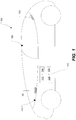
FIG. 1 is a schematic depiction of a vehicle equipped with a predictive audio enhancement system. -
FIG. 2 is a schematic depiction of the predictive audio enhancement system. -
FIG. 3 is a schematic depiction of a vehicle equipped with the predictive audio enhancement system predicting and cancelling noise along a section of roadway. -
FIG. 4 is a schematic depiction of a map showing various locations where noise has been predicted based upon self-learning or shared noise data. - It will be noted that throughout the appended drawings like features are identified by like reference numerals.
- Disclosed in this specification and illustrated in the drawings is an audio enhancement system, which may be more particularly a speech enhancement system (or voice enhancement system) for enhancing an audio signal such as a speech signal by suppressing unwanted noise that arises from the movement of a vehicle. In general, the system predicts an expected noise at a location and then prepares an audio enhancement processor (which may be a speech enhancement processor in one main implementation) to cancel or suppress noise based on the expected noise (or predicted noise) when passing by the location. By predicting the noise to be encountered, the system eliminates, or at least significantly mitigates, unwanted noise in an audio signal such as a speech signal. The enhanced audio signal can thus improve the quality of hands-free telephony, in-vehicle speech recognition, an in-vehicle sound system, or other application that utilizes the audio or speech signal.
- Accordingly, one aspect of the present disclosure is an audio enhancement system for a vehicle that includes a location-determining subsystem configured to determine a first location of the vehicle and to generate location data representing the first location of the vehicle and an audio-enhancement processor for processing an audio signal. The processor is communicatively coupled to the location-determining subsystem for receiving the location data. The processor is configured to predict expected noise at a second location corresponding to a predicted location of the vehicle. The processor is further configured to suppress noise based on the expected noise when the vehicle is at the second location to thereby enhance the audio signal.
- Another aspect of the present disclosure is a non-transitory computer-readable medium comprising instructions in code which when loaded into a memory and executed by an audio-enhancement processor of a vehicle cause the processor to receive location data representing a first location of the vehicle from a location-determining subsystem, predict expected noise at a second location corresponding to a predicted location of the vehicle, and suppress noise based on the expected noise when the vehicle is at the second location to thereby enhance an audio signal.
- Yet another aspect of the present technology is a vehicle comprising an audio enhancement system that includes a location-determining subsystem configured to determine a first location of the vehicle and to generate location data representing the first location of the vehicle and an audio-enhancement processor for processing an audio signal. The processor is communicatively coupled to the location-determining subsystem for receiving the location data. The processor is configured to predict expected noise at a second location corresponding to a predicted location of the vehicle. The processor is further configured to suppress noise based on the expected noise when the vehicle is at the second location to thereby enhance the audio signal.
- The details and particulars of these aspects of the technology will now be described below, by way of example, with reference to the drawings.
- As illustrated by way of example in
FIG. 1 , a vehicle, such as an automobile, is equipped with an audio-enhancement system (e.g. a speech-enhancement system) that is configured to predict noise at a location and to cancel the noise when the vehicle moves through the location to thereby enhance an audio signal (e.g. a speech signal). The vehicle may be a car, truck, van, sports utility vehicle, bus, minibus, recreational vehicle, motorcycle or any other land-based vehicle. The vehicle may have an internal combustion engine or an electric motor. The vehicle may be self-driving or human-driven. - In the embodiment depicted by way of example in
FIGS. 1 and2 , the vehicle generally designated byreference numeral 100 includes an audio enhancement system (e.g. a speech-enhancement system) 110. The audio/speech-enhancement system 110 includes an audio/speech-enhancement processor (e.g. a microprocessor) 112. The audio/speech-enhancement processor 112 (hereinafter referred to simply as the "processor") may be coupled to amemory 114 which may include volatile and non-volatile memory. The audio/speech-enhancement system 110 may be implemented in hardware, software or firmware or any suitable combination thereof. The audio/speech-enhancement system 110 may include a plurality of processors that execute separate tasks, e.g. one processor performing speech recognition, one processor performing prediction and another processor performing noise cancellation (i.e. speech signal enhancement). Alternatively, the audio/speech-enhancement system 110 may include one or more application-specific integrated circuits (ASICs). The audio/speech-enhancement system 110 may also be implemented on a computer, computing device or integrated into an existing vehicle processor or computer. Further details of the audio/speech-enhancement system 110 are illustrated schematically inFIG. 2 . - In the embodiment depicted in
FIGS. 1 and2 , the audio/speech-enhancement system 110 includes, or cooperates with, a location-determiningsubsystem 140 configured to determine a first location of the vehicle and to generate location data representing the first location of the vehicle. The location data may be, for example, coordinates of latitude and longitude. In various embodiments, the location-determining subsystem is a Global Navigation Satellite System receiver such as, for example, a Global Positioning System (GPS) receiver. TheGNSS receiver 140 decodes multiple GNSS signals from orbitingsatellites 145 to determine the location of the vehicle. Positioning accuracy may be improved and augmented using techniques such as Aided-GPS and Assisted-GPS. - In the embodiment illustrated in
FIG. 1 , thevehicle 100 may include one ormore microphones 120 for generating an analog or digital speech signal from the sound waves of a user's voice. Themicrophones 120 may be used for hands-free telephony and/or speech recognition for voice commands. The vehicle may also include one ormore speakers 130 for hands-free telephony. - In one embodiment, the audio/speech-
enhancement system 110 cancels noise based solely on the predicted or expected noise (without measuring any actual in-cabin noise using the microphones 120). In another embodiment, the speech-enhancement system 110 cancels noise based on both the actual in-cabin noise measured by themicrophones 120 and the expected/predicted noise. - In the embodiment depicted in
FIGS. 1 and2 , the audio/speech-enhancement system 110 implements a noise-predicting algorithm executed by theprocessor 112. Theprocessor 112 is communicatively coupled to the location-determiningsubsystem 140 for receiving the location data from the location-determining subsystem. The processor is configured to predict expected noise at a second location corresponding to a predicted location of the vehicle. Theprocessor 112 is further configured to suppress at least some of the expected noise to thereby enhance the audio/speech signal when the vehicle is at the second location. - In one embodiment, the
memory 114 coupled to theprocessor 112 is used to store noise data for a route. The noise data may be collected by the vehicle or obtained from an external source, e.g. another vehicle, as will be described below. Noise data may be stored for a plurality of locations along a route. Noise data may include a noise frequency spectrum and location coordinates. In a variant, the noise data may be time-specific as well. For example, some noise may only occur at certain times of day, e.g. a construction site that is only operational during the daytime but quiet at night. Noise data may be stored for frequently traveled routes such as a route between work and home. In one particular embodiment, the processor is configured to identify noise patterns in the route to thus learn the noise profile along a given route to thus be able to predict the noise to be expected at various points along the route. In other words, the processor may be configured to predict the expected noise based on the noise patterns in the route. As such, the processor is able to learn what to expect in terms of noise along a frequently traveled route. For example, if the route from home to work takes the vehicle through a tunnel, over a grated bridge, and past a construction site with loud jackhammers, the processor records these noises and notes their locations. On a subsequent drives to work, the processor predicts the noise to be encountered in the tunnel, over the grated bridge and past the construction site. As the vehicle approaches each of the predictably noisy locations, the audio/speech-enhancement system 110 predicts the noise that is imminently expected and enhances the audio/speech signal by suppressing the noise just as the vehicle passes the noisy location. - In one embodiment, the vehicle further includes a
radio frequency transceiver 150, e.g. a cellular data transceiver, which is coupled to the processor for downloading noise patterns from a sharedserver 160, which may also be a server cluster, server farm or any cloud-based data storage system. The sharedserver 160 may be accessible via theinternet 200 through a cellularbase station transceiver 210 at a nearby cell tower or through other access points (not shown). Noise data may be uploaded and downloaded, i.e. shared, amongst other users. Noise data may be grouped according to vehicle type. Noise data may be downloaded for new routes yet to be traveled. The download may occur automatically or in response to a user command. For example, upon programming a destination in a navigation system, the noise data for the route may be downloaded. -
FIG. 3 depicts thevehicle 100 traveling along a section of roadway. In this example scenario, the roadway has a smooth (relatively noiseless) segment R1 and a rough (relatively noisy) segment R2. The rough (noisy) segment R2 may be a section of unpaved road, cobblestones, grating, gravel, or merely a badly cracked portion of asphalt that is noisier than smooth asphalt. Thevehicle 100 inFIG. 3 is at location L1 when it determines its position using theGNSS receiver 140 onboard thevehicle 100. Thevehicle 100 may be continually or periodically updating its position using theGNSS receiver 140 and checking itsmemory 114 or database of noisy locations. Because thevehicle 100 is traveling in direction D1, thevehicle 100 determines that it will be arriving imminently or very soon at location L2. Knowing its direction of travel D1 and its speed (i.e. its velocity vector) and knowing the path of the roadway ahead in the direction of travel D1, theprocessor 112 in thevehicle 100 determines that it will be at location L2 where the roadway has a rough (noisy) segment R2. Theprocessor 112 in thevehicle 100 prepares to activate noise cancellation based on the expected noise to be encountered at L2. As thevehicle 100 arrives at L2, theprocessor 112 in thevehicle 100 initiates the noise cancellation based on the noise profile of R2 at location L2. When thevehicle 100 has passed L2, the noise cancellation may be terminated. This technique thus predicts the noise cancellation required at a given location prior to arriving at the noisy location, thus preparing the audio/speech enhancement system in advance so that the requisite cancellation signal is made ready to be applied to the audio/speech signal precisely at the time that the vehicle arrives at the noisy location. Predicting the noise in advance of arrival at the location where the noise is encountered enables the cancellation signal to be synchronized with the vehicle's arrival at the noisy location. As a result of this timely noise cancellation, the audio/speech signal is enhanced. -
FIG. 4 depicts a database of noisy locations which may be stored in thememory 114 of thevehicle 100 or in a sharedserver 160 remotely accessible by thevehicle 100 via a wireless connection, i.e. usingRF transceiver 150. The database may be a table, library or other data structure that stores locations, e.g. denoted L1, L2, L3, L4, L5 and corresponding noise profile data, e.g. denoted N1, N2, N3, N4, N5. Thus, for example, when the vehicle's projected or programmed route takes the vehicle past locations L1, L2 and L3, theprocessor 112 in thevehicle 100 can predict that it will encounter noise at L1 that has noise profile N1, then it will encounter noise at L2 having noise profile N2 and then it will encounter noise at L3 having noise profile N3. A vehicle taking a different route may also simultaneously encounter noise from two locations that are in close proximity to each other, such as L4 and L5. The audio/speech enhancement may be configured to enhance the speech signal by cancelling the noise from two noise profiles, e.g. N4 and N5, at the same time or in varying degrees depending on other factors such as time of day, vehicle speed, weather, prevailing wind direction, and how close each noisy location is to the vehicle as the vehicle passes by the two nearby locations. - In some embodiments, the enhancement is performed on a speech signal obtained from one or more the microphones within the vehicle (e.g. a speech signal derived from a telephone call or from voice commands spoken in the context of hands-free control of vehicle functions). In other embodiments, the enhancement techniques described above may be applied to an audio signal carrying audio content played by the speakers into the car in order to counteract the unwanted noise. The audio signal (of the audio content) may come from, for example, the radio, compact disc (CD) player, MP3 player, onboard hard disk containing digital audio media, or music streamed from a vehicle-connected mobile device. By predicting the amount of noise at an upcoming location, the audio signal can be enhanced using the predicted or expected amount of noise at the upcoming location. For the purposes of this specification, the expression "audio" is meant to encompass "speech".
- In at least one embodiment, the processor of the system is coupled to a memory to store noise data for a route. In this or other embodiments, the processor is configured to identify noise patterns in the route. In any of the foregoing embodiments, the processor is configured to predict the expected noise based on the noise patterns in the route. In any of the foregoing embodiments, the system further has a radiofrequency transceiver coupled to the processor for downloading noise patterns from a shared server. In any of the foregoing embodiments, the location-determining subsystem is a Global Navigation Satellite System receiver.
- The computer-readable medium described above may further comprise code to cause the memory to store noise data for a route. In this or other embodiments, the computer-readable medium may further have code to cause the processor to identify noise patterns in the route. In any of the foregoing embodiments, the computer-readable medium further includes code to predict the expected noise based on the noise patterns in the route. In any of the foregoing embodiments, the computer-readable medium further includes code to instruct a radiofrequency transceiver to download noise patterns from a shared server.
- In the vehicle described, the processor may be coupled to a memory to store noise data for a route. In this or other embodiments, the processor may be configured to identify noise patterns in the route. In any of the foregoing embodiments, the processor is optionally configured to predict the expected noise based on the noise patterns in the route. In any of the foregoing embodiments, the vehicle includes a radiofrequency transceiver coupled to the processor for downloading noise patterns from a shared server. In any of the foregoing embodiments, the location-determining subsystem of the vehicle is a Global Navigation Satellite System receiver.
- Any of the methods disclosed herein may be implemented in hardware, software, firmware or any combination thereof. Where implemented as software, the method steps, acts or operations may be programmed or coded as computer-readable instructions and recorded electronically, magnetically or optically on a fixed, permanent, non-volatile or non-transitory computer-readable medium, computer-readable memory, machine-readable memory or computer program product. In other words, the computer-readable memory or computer-readable medium comprises instructions in code which when loaded into a memory and executed on a processor of a computing device cause the computing device to perform one or more of the foregoing method(s).
- A computer-readable medium can be any means that contain, store, communicate, propagate or transport the program for use by or in connection with the instruction execution system, apparatus or device. The computer-readable medium may be electronic, magnetic, optical, electromagnetic, infrared or any semiconductor system or device. For example, computer executable code to perform the methods disclosed herein may be tangibly recorded on a computer-readable medium including, but not limited to, a floppy-disk, a CD-ROM, a DVD, RAM, ROM, EPROM, Flash Memory or any suitable memory card, etc. The method may also be implemented in hardware. A hardware implementation might employ discrete logic circuits having logic gates for implementing logic functions on data signals, an application-specific integrated circuit (ASIC) having appropriate combinational logic gates, a programmable gate array (PGA), a field programmable gate array (FPGA), etc.
- It is to be understood that the singular forms "a," "an," and "the" include plural referents unless the context clearly dictates otherwise. Thus, for example, reference to "a processor" includes reference to one or more of such processors.
- This invention has been described in terms of specific embodiments, implementations and configurations which are intended to be exemplary only. Persons of ordinary skill in the art will appreciate, having read this disclosure, that many obvious variations, modifications and refinements may be made without departing from the inventive concept(s) presented herein. The scope of the exclusive right sought by the Applicant(s) is therefore intended to be limited solely by the appended claims.
Claims (15)
- An audio enhancement system for a vehicle, the system comprising:a location-determining subsystem configured to determine a first location of the vehicle and to generate location data representing the first location of the vehicle;a speech-enhancement processor for processing an audio signal wherein the processor is communicatively coupled to the location-determining subsystem for receiving the location data;wherein the processor is configured to predict expected noise at a second location corresponding to a predicted location of the vehicle; andwherein the processor is further configured to suppress noise based on the expected noise when the vehicle is at the second location to thereby enhance the audio signal.
- The system of claim 1, wherein the processor is coupled to a memory to store noise data for a route.
- The system of claim 1 or 2, wherein the processor is configured to identify noise patterns in the route.
- The system of claim 3, wherein the processor is configured to predict the expected noise based on the noise patterns in the route.
- The system of any one of claims 1 to 4, further comprising a radiofrequency transceiver coupled to the processor for downloading noise patterns from a shared server.
- The system of any one of claims 1 to 5, wherein the location-determining subsystem is a Global Navigation Satellite System receiver.
- The system of any one of claims 1 to 6, wherein the audio signal is a speech signal.
- A method, executed by a processor, in particular an audio-enhancement processor of a vehicle, the method comprising:- receiving location data representing a first location of the vehicle from a location-determining subsystem, in particular a location-determining subsystem including a Global Navigation Satellite System receiver;- predicting expected noise at a second location corresponding to a predicted location of the vehicle; and- suppressing noise based on the expected noise when the vehicle is at the second location to thereby enhance an audio signal.
- The method of claim 8, further comprising causing a memory to store noise data for a route.
- The method of claim 8 or 9, further comprising causing the processor to identify noise patterns in the route.
- The method of claim 10, further comprising predicting the expected noise based on the noise patterns in the route.
- The method of any one of claims 8 to 11, further comprising instructing a radiofrequency transceiver to download noise patterns from a shared server.
- The method of any one of claims 8 to 12, wherein the audio signal is a speech signal.
- A non-transitory computer-readable medium comprising instructions in code which when loaded into a memory and executed by an audio-enhancement processor of a vehicle cause the processor to execute a method according any one of claims 8 to 13.
- A vehicle having an audio enhancement system according to any one of claims 1 to 7.
Applications Claiming Priority (1)
| Application Number | Priority Date | Filing Date | Title |
|---|---|---|---|
| US15/877,860 US20190228789A1 (en) | 2018-01-23 | 2018-01-23 | Predictive audio enhancement in a vehicle |
Publications (2)
| Publication Number | Publication Date |
|---|---|
| EP3514793A1 true EP3514793A1 (en) | 2019-07-24 |
| EP3514793B1 EP3514793B1 (en) | 2022-05-04 |
Family
ID=65200609
Family Applications (1)
| Application Number | Title | Priority Date | Filing Date |
|---|---|---|---|
| EP19153002.1A Active EP3514793B1 (en) | 2018-01-23 | 2019-01-22 | Predictive speech enhancement in a vehicle |
Country Status (2)
| Country | Link |
|---|---|
| US (1) | US20190228789A1 (en) |
| EP (1) | EP3514793B1 (en) |
Cited By (1)
| Publication number | Priority date | Publication date | Assignee | Title |
|---|---|---|---|---|
| CN110708477A (en) * | 2019-10-24 | 2020-01-17 | 博科达(北京)科技有限公司 | Audio relay broadcasting vehicle |
Families Citing this family (2)
| Publication number | Priority date | Publication date | Assignee | Title |
|---|---|---|---|---|
| DE102020104301A1 (en) * | 2020-02-19 | 2021-08-19 | Bayerische Motoren Werke Aktiengesellschaft | Method and control unit for operating a noise suppression unit of a vehicle |
| US20220051488A1 (en) * | 2020-04-16 | 2022-02-17 | KAMP Technologies, LLC | Communication device for managing one or more aspects of a vehicle through remote monitoring |
Citations (3)
| Publication number | Priority date | Publication date | Assignee | Title |
|---|---|---|---|---|
| US20160019890A1 (en) * | 2014-07-17 | 2016-01-21 | Ford Global Technologies, Llc | Vehicle State-Based Hands-Free Phone Noise Reduction With Learning Capability |
| US20170232915A1 (en) * | 2016-02-17 | 2017-08-17 | Toyota Motor Engineering & Manufacturing North America, Inc. | System and method for enhanced comfort prediction |
| EP3460790A1 (en) * | 2017-09-20 | 2019-03-27 | Ford Global Technologies, LLC | Selective sound system and method for a vehicle |
Family Cites Families (10)
| Publication number | Priority date | Publication date | Assignee | Title |
|---|---|---|---|---|
| US5809152A (en) * | 1991-07-11 | 1998-09-15 | Hitachi, Ltd. | Apparatus for reducing noise in a closed space having divergence detector |
| US6889189B2 (en) * | 2003-09-26 | 2005-05-03 | Matsushita Electric Industrial Co., Ltd. | Speech recognizer performance in car and home applications utilizing novel multiple microphone configurations |
| US20100172510A1 (en) * | 2009-01-02 | 2010-07-08 | Nokia Corporation | Adaptive noise cancelling |
| US8311686B2 (en) * | 2009-08-20 | 2012-11-13 | The Boeing Company | Onboard airplane community noise and emissions monitor |
| US9443511B2 (en) * | 2011-03-04 | 2016-09-13 | Qualcomm Incorporated | System and method for recognizing environmental sound |
| KR101383727B1 (en) * | 2012-12-24 | 2014-04-08 | 현대자동차(주) | Device and method for smart key recognition |
| US9530408B2 (en) * | 2014-10-31 | 2016-12-27 | At&T Intellectual Property I, L.P. | Acoustic environment recognizer for optimal speech processing |
| US10670417B2 (en) * | 2015-05-13 | 2020-06-02 | Telenav, Inc. | Navigation system with output control mechanism and method of operation thereof |
| US9738381B1 (en) * | 2016-02-23 | 2017-08-22 | General Electric Company | Industrial machine acoustic inspection using unmanned aerial vehicle |
| CN110621966A (en) * | 2017-05-16 | 2019-12-27 | 昕诺飞控股有限公司 | Noise flow monitoring and sound localization via smart lighting |
-
2018
- 2018-01-23 US US15/877,860 patent/US20190228789A1/en not_active Abandoned
-
2019
- 2019-01-22 EP EP19153002.1A patent/EP3514793B1/en active Active
Patent Citations (3)
| Publication number | Priority date | Publication date | Assignee | Title |
|---|---|---|---|---|
| US20160019890A1 (en) * | 2014-07-17 | 2016-01-21 | Ford Global Technologies, Llc | Vehicle State-Based Hands-Free Phone Noise Reduction With Learning Capability |
| US20170232915A1 (en) * | 2016-02-17 | 2017-08-17 | Toyota Motor Engineering & Manufacturing North America, Inc. | System and method for enhanced comfort prediction |
| EP3460790A1 (en) * | 2017-09-20 | 2019-03-27 | Ford Global Technologies, LLC | Selective sound system and method for a vehicle |
Cited By (1)
| Publication number | Priority date | Publication date | Assignee | Title |
|---|---|---|---|---|
| CN110708477A (en) * | 2019-10-24 | 2020-01-17 | 博科达(北京)科技有限公司 | Audio relay broadcasting vehicle |
Also Published As
| Publication number | Publication date |
|---|---|
| US20190228789A1 (en) | 2019-07-25 |
| EP3514793B1 (en) | 2022-05-04 |
Similar Documents
| Publication | Publication Date | Title |
|---|---|---|
| EP3514793B1 (en) | Predictive speech enhancement in a vehicle | |
| CN110389580B (en) | Method for drift correction for planning a path of an autonomous vehicle | |
| US12043263B2 (en) | Audio-based technique to sense and detect the road condition for autonomous driving vehicles | |
| CN111123906B (en) | Optimal Longitudinal Trajectory Generation Under Different Lateral Acceleration Constraints | |
| CN112084830B (en) | Detecting challenge samples by vision-based perception systems | |
| KR101526407B1 (en) | Virtual engine sound system for vehicle and control method thereof | |
| CN112793584B (en) | Emergency vehicle audio detection | |
| CN113799789B (en) | Machine learning model that fuses audio and visual detection of emergency vehicles | |
| US9037337B1 (en) | Secondary sources of navigation data for improved control of an automonous vehicle | |
| US10018477B2 (en) | Advanced driver assist system, vehicle including the same, and method for controlling the same | |
| PL1721127T3 (en) | Method for storing in a navigation system map data that represent traffic route sections and corresponding navigation system | |
| CN111033422A (en) | Drift correction between the planning and control phases of operating an autonomous vehicle | |
| CN111328313B (en) | Control-dominant three-point turn planning for autonomous vehicles | |
| US9127952B2 (en) | Estimation of vehicle location | |
| JP2021133923A (en) | Model reference adaptive control algorithm to deal with the dynamic behavior of vehicle operation | |
| US12112736B2 (en) | Apparatus, system, and method of neural-network (NN) based active acoustic control (AAC) | |
| KR102599790B1 (en) | Audio logging for model training and onboard validation utilizing autonomous driving vehicle | |
| CN110366852B (en) | Information processing apparatus, information processing method, and recording medium | |
| CN115136232A (en) | Method and control unit for operating a noise reduction unit of a vehicle | |
| US11104353B2 (en) | Computing system with autonomous operation mechanism and method of operation thereof | |
| US10382862B2 (en) | Noise testing in an autonomous vehicle | |
| CN112041637B (en) | Map-less and camera-based lane marker sampling method for 3-level autonomous vehicles | |
| CN111623766B (en) | Positioning system based on two inertial measurement units and GPS for autonomous trucks | |
| CN107444118B (en) | A vehicle control method and related equipment | |
| CN111857117B (en) | GPS message decoder for decoding GPS messages during autonomous driving |
Legal Events
| Date | Code | Title | Description |
|---|---|---|---|
| PUAI | Public reference made under article 153(3) epc to a published international application that has entered the european phase |
Free format text: ORIGINAL CODE: 0009012 |
|
| STAA | Information on the status of an ep patent application or granted ep patent |
Free format text: STATUS: THE APPLICATION HAS BEEN PUBLISHED |
|
| AK | Designated contracting states |
Kind code of ref document: A1 Designated state(s): AL AT BE BG CH CY CZ DE DK EE ES FI FR GB GR HR HU IE IS IT LI LT LU LV MC MK MT NL NO PL PT RO RS SE SI SK SM TR |
|
| AX | Request for extension of the european patent |
Extension state: BA ME |
|
| STAA | Information on the status of an ep patent application or granted ep patent |
Free format text: STATUS: REQUEST FOR EXAMINATION WAS MADE |
|
| 17P | Request for examination filed |
Effective date: 20200121 |
|
| RBV | Designated contracting states (corrected) |
Designated state(s): AL AT BE BG CH CY CZ DE DK EE ES FI FR GB GR HR HU IE IS IT LI LT LU LV MC MK MT NL NO PL PT RO RS SE SI SK SM TR |
|
| STAA | Information on the status of an ep patent application or granted ep patent |
Free format text: STATUS: EXAMINATION IS IN PROGRESS |
|
| RAP1 | Party data changed (applicant data changed or rights of an application transferred) |
Owner name: BLACKBERRY LIMITED |
|
| 17Q | First examination report despatched |
Effective date: 20200608 |
|
| GRAP | Despatch of communication of intention to grant a patent |
Free format text: ORIGINAL CODE: EPIDOSNIGR1 |
|
| STAA | Information on the status of an ep patent application or granted ep patent |
Free format text: STATUS: GRANT OF PATENT IS INTENDED |
|
| INTG | Intention to grant announced |
Effective date: 20220110 |
|
| GRAS | Grant fee paid |
Free format text: ORIGINAL CODE: EPIDOSNIGR3 |
|
| GRAA | (expected) grant |
Free format text: ORIGINAL CODE: 0009210 |
|
| STAA | Information on the status of an ep patent application or granted ep patent |
Free format text: STATUS: THE PATENT HAS BEEN GRANTED |
|
| AK | Designated contracting states |
Kind code of ref document: B1 Designated state(s): AL AT BE BG CH CY CZ DE DK EE ES FI FR GB GR HR HU IE IS IT LI LT LU LV MC MK MT NL NO PL PT RO RS SE SI SK SM TR |
|
| REG | Reference to a national code |
Ref country code: GB Ref legal event code: FG4D |
|
| REG | Reference to a national code |
Ref country code: CH Ref legal event code: EP |
|
| REG | Reference to a national code |
Ref country code: AT Ref legal event code: REF Ref document number: 1489969 Country of ref document: AT Kind code of ref document: T Effective date: 20220515 |
|
| REG | Reference to a national code |
Ref country code: IE Ref legal event code: FG4D Ref country code: DE Ref legal event code: R096 Ref document number: 602019014286 Country of ref document: DE |
|
| REG | Reference to a national code |
Ref country code: LT Ref legal event code: MG9D |
|
| REG | Reference to a national code |
Ref country code: NL Ref legal event code: MP Effective date: 20220504 |
|
| REG | Reference to a national code |
Ref country code: AT Ref legal event code: MK05 Ref document number: 1489969 Country of ref document: AT Kind code of ref document: T Effective date: 20220504 |
|
| PG25 | Lapsed in a contracting state [announced via postgrant information from national office to epo] |
Ref country code: SE Free format text: LAPSE BECAUSE OF FAILURE TO SUBMIT A TRANSLATION OF THE DESCRIPTION OR TO PAY THE FEE WITHIN THE PRESCRIBED TIME-LIMIT Effective date: 20220504 Ref country code: PT Free format text: LAPSE BECAUSE OF FAILURE TO SUBMIT A TRANSLATION OF THE DESCRIPTION OR TO PAY THE FEE WITHIN THE PRESCRIBED TIME-LIMIT Effective date: 20220905 Ref country code: NO Free format text: LAPSE BECAUSE OF FAILURE TO SUBMIT A TRANSLATION OF THE DESCRIPTION OR TO PAY THE FEE WITHIN THE PRESCRIBED TIME-LIMIT Effective date: 20220804 Ref country code: NL Free format text: LAPSE BECAUSE OF FAILURE TO SUBMIT A TRANSLATION OF THE DESCRIPTION OR TO PAY THE FEE WITHIN THE PRESCRIBED TIME-LIMIT Effective date: 20220504 Ref country code: LT Free format text: LAPSE BECAUSE OF FAILURE TO SUBMIT A TRANSLATION OF THE DESCRIPTION OR TO PAY THE FEE WITHIN THE PRESCRIBED TIME-LIMIT Effective date: 20220504 Ref country code: HR Free format text: LAPSE BECAUSE OF FAILURE TO SUBMIT A TRANSLATION OF THE DESCRIPTION OR TO PAY THE FEE WITHIN THE PRESCRIBED TIME-LIMIT Effective date: 20220504 Ref country code: GR Free format text: LAPSE BECAUSE OF FAILURE TO SUBMIT A TRANSLATION OF THE DESCRIPTION OR TO PAY THE FEE WITHIN THE PRESCRIBED TIME-LIMIT Effective date: 20220805 Ref country code: FI Free format text: LAPSE BECAUSE OF FAILURE TO SUBMIT A TRANSLATION OF THE DESCRIPTION OR TO PAY THE FEE WITHIN THE PRESCRIBED TIME-LIMIT Effective date: 20220504 Ref country code: ES Free format text: LAPSE BECAUSE OF FAILURE TO SUBMIT A TRANSLATION OF THE DESCRIPTION OR TO PAY THE FEE WITHIN THE PRESCRIBED TIME-LIMIT Effective date: 20220504 Ref country code: BG Free format text: LAPSE BECAUSE OF FAILURE TO SUBMIT A TRANSLATION OF THE DESCRIPTION OR TO PAY THE FEE WITHIN THE PRESCRIBED TIME-LIMIT Effective date: 20220804 Ref country code: AT Free format text: LAPSE BECAUSE OF FAILURE TO SUBMIT A TRANSLATION OF THE DESCRIPTION OR TO PAY THE FEE WITHIN THE PRESCRIBED TIME-LIMIT Effective date: 20220504 |
|
| PG25 | Lapsed in a contracting state [announced via postgrant information from national office to epo] |
Ref country code: RS Free format text: LAPSE BECAUSE OF FAILURE TO SUBMIT A TRANSLATION OF THE DESCRIPTION OR TO PAY THE FEE WITHIN THE PRESCRIBED TIME-LIMIT Effective date: 20220504 Ref country code: PL Free format text: LAPSE BECAUSE OF FAILURE TO SUBMIT A TRANSLATION OF THE DESCRIPTION OR TO PAY THE FEE WITHIN THE PRESCRIBED TIME-LIMIT Effective date: 20220504 Ref country code: LV Free format text: LAPSE BECAUSE OF FAILURE TO SUBMIT A TRANSLATION OF THE DESCRIPTION OR TO PAY THE FEE WITHIN THE PRESCRIBED TIME-LIMIT Effective date: 20220504 Ref country code: IS Free format text: LAPSE BECAUSE OF FAILURE TO SUBMIT A TRANSLATION OF THE DESCRIPTION OR TO PAY THE FEE WITHIN THE PRESCRIBED TIME-LIMIT Effective date: 20220904 |
|
| PG25 | Lapsed in a contracting state [announced via postgrant information from national office to epo] |
Ref country code: SM Free format text: LAPSE BECAUSE OF FAILURE TO SUBMIT A TRANSLATION OF THE DESCRIPTION OR TO PAY THE FEE WITHIN THE PRESCRIBED TIME-LIMIT Effective date: 20220504 Ref country code: SK Free format text: LAPSE BECAUSE OF FAILURE TO SUBMIT A TRANSLATION OF THE DESCRIPTION OR TO PAY THE FEE WITHIN THE PRESCRIBED TIME-LIMIT Effective date: 20220504 Ref country code: RO Free format text: LAPSE BECAUSE OF FAILURE TO SUBMIT A TRANSLATION OF THE DESCRIPTION OR TO PAY THE FEE WITHIN THE PRESCRIBED TIME-LIMIT Effective date: 20220504 Ref country code: EE Free format text: LAPSE BECAUSE OF FAILURE TO SUBMIT A TRANSLATION OF THE DESCRIPTION OR TO PAY THE FEE WITHIN THE PRESCRIBED TIME-LIMIT Effective date: 20220504 Ref country code: DK Free format text: LAPSE BECAUSE OF FAILURE TO SUBMIT A TRANSLATION OF THE DESCRIPTION OR TO PAY THE FEE WITHIN THE PRESCRIBED TIME-LIMIT Effective date: 20220504 Ref country code: CZ Free format text: LAPSE BECAUSE OF FAILURE TO SUBMIT A TRANSLATION OF THE DESCRIPTION OR TO PAY THE FEE WITHIN THE PRESCRIBED TIME-LIMIT Effective date: 20220504 |
|
| REG | Reference to a national code |
Ref country code: DE Ref legal event code: R097 Ref document number: 602019014286 Country of ref document: DE |
|
| PLBE | No opposition filed within time limit |
Free format text: ORIGINAL CODE: 0009261 |
|
| STAA | Information on the status of an ep patent application or granted ep patent |
Free format text: STATUS: NO OPPOSITION FILED WITHIN TIME LIMIT |
|
| PG25 | Lapsed in a contracting state [announced via postgrant information from national office to epo] |
Ref country code: AL Free format text: LAPSE BECAUSE OF FAILURE TO SUBMIT A TRANSLATION OF THE DESCRIPTION OR TO PAY THE FEE WITHIN THE PRESCRIBED TIME-LIMIT Effective date: 20220504 |
|
| 26N | No opposition filed |
Effective date: 20230207 |
|
| PG25 | Lapsed in a contracting state [announced via postgrant information from national office to epo] |
Ref country code: SI Free format text: LAPSE BECAUSE OF FAILURE TO SUBMIT A TRANSLATION OF THE DESCRIPTION OR TO PAY THE FEE WITHIN THE PRESCRIBED TIME-LIMIT Effective date: 20220504 |
|
| P01 | Opt-out of the competence of the unified patent court (upc) registered |
Effective date: 20230518 |
|
| REG | Reference to a national code |
Ref country code: CH Ref legal event code: PL |
|
| PG25 | Lapsed in a contracting state [announced via postgrant information from national office to epo] |
Ref country code: LU Free format text: LAPSE BECAUSE OF NON-PAYMENT OF DUE FEES Effective date: 20230122 |
|
| REG | Reference to a national code |
Ref country code: BE Ref legal event code: MM Effective date: 20230131 |
|
| PG25 | Lapsed in a contracting state [announced via postgrant information from national office to epo] |
Ref country code: LI Free format text: LAPSE BECAUSE OF NON-PAYMENT OF DUE FEES Effective date: 20230131 Ref country code: CH Free format text: LAPSE BECAUSE OF NON-PAYMENT OF DUE FEES Effective date: 20230131 |
|
| PG25 | Lapsed in a contracting state [announced via postgrant information from national office to epo] |
Ref country code: BE Free format text: LAPSE BECAUSE OF NON-PAYMENT OF DUE FEES Effective date: 20230131 |
|
| PG25 | Lapsed in a contracting state [announced via postgrant information from national office to epo] |
Ref country code: IT Free format text: LAPSE BECAUSE OF FAILURE TO SUBMIT A TRANSLATION OF THE DESCRIPTION OR TO PAY THE FEE WITHIN THE PRESCRIBED TIME-LIMIT Effective date: 20220504 Ref country code: IE Free format text: LAPSE BECAUSE OF NON-PAYMENT OF DUE FEES Effective date: 20230122 |
|
| PG25 | Lapsed in a contracting state [announced via postgrant information from national office to epo] |
Ref country code: MC Free format text: LAPSE BECAUSE OF FAILURE TO SUBMIT A TRANSLATION OF THE DESCRIPTION OR TO PAY THE FEE WITHIN THE PRESCRIBED TIME-LIMIT Effective date: 20220504 |
|
| PG25 | Lapsed in a contracting state [announced via postgrant information from national office to epo] |
Ref country code: MC Free format text: LAPSE BECAUSE OF FAILURE TO SUBMIT A TRANSLATION OF THE DESCRIPTION OR TO PAY THE FEE WITHIN THE PRESCRIBED TIME-LIMIT Effective date: 20220504 |
|
| PG25 | Lapsed in a contracting state [announced via postgrant information from national office to epo] |
Ref country code: BG Free format text: LAPSE BECAUSE OF FAILURE TO SUBMIT A TRANSLATION OF THE DESCRIPTION OR TO PAY THE FEE WITHIN THE PRESCRIBED TIME-LIMIT Effective date: 20220504 |
|
| PG25 | Lapsed in a contracting state [announced via postgrant information from national office to epo] |
Ref country code: BG Free format text: LAPSE BECAUSE OF FAILURE TO SUBMIT A TRANSLATION OF THE DESCRIPTION OR TO PAY THE FEE WITHIN THE PRESCRIBED TIME-LIMIT Effective date: 20220504 |
|
| PG25 | Lapsed in a contracting state [announced via postgrant information from national office to epo] |
Ref country code: CY Free format text: LAPSE BECAUSE OF FAILURE TO SUBMIT A TRANSLATION OF THE DESCRIPTION OR TO PAY THE FEE WITHIN THE PRESCRIBED TIME-LIMIT; INVALID AB INITIO Effective date: 20190122 |
|
| PG25 | Lapsed in a contracting state [announced via postgrant information from national office to epo] |
Ref country code: HU Free format text: LAPSE BECAUSE OF FAILURE TO SUBMIT A TRANSLATION OF THE DESCRIPTION OR TO PAY THE FEE WITHIN THE PRESCRIBED TIME-LIMIT; INVALID AB INITIO Effective date: 20190122 |
|
| PG25 | Lapsed in a contracting state [announced via postgrant information from national office to epo] |
Ref country code: TR Free format text: LAPSE BECAUSE OF FAILURE TO SUBMIT A TRANSLATION OF THE DESCRIPTION OR TO PAY THE FEE WITHIN THE PRESCRIBED TIME-LIMIT Effective date: 20220504 |
|
| PGFP | Annual fee paid to national office [announced via postgrant information from national office to epo] |
Ref country code: GB Payment date: 20260122 Year of fee payment: 8 |
|
| PGFP | Annual fee paid to national office [announced via postgrant information from national office to epo] |
Ref country code: DE Payment date: 20260120 Year of fee payment: 8 |
|
| PGFP | Annual fee paid to national office [announced via postgrant information from national office to epo] |
Ref country code: FR Payment date: 20260123 Year of fee payment: 8 |