EP3513857A1 - Extract of plant powder, and water purifier - Google Patents
Extract of plant powder, and water purifier Download PDFInfo
- Publication number
- EP3513857A1 EP3513857A1 EP17850893.3A EP17850893A EP3513857A1 EP 3513857 A1 EP3513857 A1 EP 3513857A1 EP 17850893 A EP17850893 A EP 17850893A EP 3513857 A1 EP3513857 A1 EP 3513857A1
- Authority
- EP
- European Patent Office
- Prior art keywords
- component
- water
- measurement
- fractionated
- ethanol
- Prior art date
- Legal status (The legal status is an assumption and is not a legal conclusion. Google has not performed a legal analysis and makes no representation as to the accuracy of the status listed.)
- Granted
Links
- VOZFDEJGHQWZHU-UHFFFAOYSA-N Cc1ccc(CO)[o]1 Chemical compound Cc1ccc(CO)[o]1 VOZFDEJGHQWZHU-UHFFFAOYSA-N 0.000 description 1
Images





Classifications
-
- C—CHEMISTRY; METALLURGY
- C02—TREATMENT OF WATER, WASTE WATER, SEWAGE, OR SLUDGE
- C02F—TREATMENT OF WATER, WASTE WATER, SEWAGE, OR SLUDGE
- C02F1/00—Treatment of water, waste water, or sewage
- C02F1/52—Treatment of water, waste water, or sewage by flocculation or precipitation of suspended impurities
- C02F1/54—Treatment of water, waste water, or sewage by flocculation or precipitation of suspended impurities using organic material
- C02F1/56—Macromolecular compounds
-
- B—PERFORMING OPERATIONS; TRANSPORTING
- B01—PHYSICAL OR CHEMICAL PROCESSES OR APPARATUS IN GENERAL
- B01D—SEPARATION
- B01D21/00—Separation of suspended solid particles from liquids by sedimentation
- B01D21/01—Separation of suspended solid particles from liquids by sedimentation using flocculating agents
-
- B—PERFORMING OPERATIONS; TRANSPORTING
- B01—PHYSICAL OR CHEMICAL PROCESSES OR APPARATUS IN GENERAL
- B01J—CHEMICAL OR PHYSICAL PROCESSES, e.g. CATALYSIS OR COLLOID CHEMISTRY; THEIR RELEVANT APPARATUS
- B01J20/00—Solid sorbent compositions or filter aid compositions; Sorbents for chromatography; Processes for preparing, regenerating or reactivating thereof
- B01J20/22—Solid sorbent compositions or filter aid compositions; Sorbents for chromatography; Processes for preparing, regenerating or reactivating thereof comprising organic material
-
- C—CHEMISTRY; METALLURGY
- C02—TREATMENT OF WATER, WASTE WATER, SEWAGE, OR SLUDGE
- C02F—TREATMENT OF WATER, WASTE WATER, SEWAGE, OR SLUDGE
- C02F1/00—Treatment of water, waste water, or sewage
- C02F1/28—Treatment of water, waste water, or sewage by sorption
- C02F1/286—Treatment of water, waste water, or sewage by sorption using natural organic sorbents or derivatives thereof
-
- C—CHEMISTRY; METALLURGY
- C02—TREATMENT OF WATER, WASTE WATER, SEWAGE, OR SLUDGE
- C02F—TREATMENT OF WATER, WASTE WATER, SEWAGE, OR SLUDGE
- C02F1/00—Treatment of water, waste water, or sewage
- C02F1/52—Treatment of water, waste water, or sewage by flocculation or precipitation of suspended impurities
- C02F1/5263—Treatment of water, waste water, or sewage by flocculation or precipitation of suspended impurities using natural chemical compounds
-
- C—CHEMISTRY; METALLURGY
- C02—TREATMENT OF WATER, WASTE WATER, SEWAGE, OR SLUDGE
- C02F—TREATMENT OF WATER, WASTE WATER, SEWAGE, OR SLUDGE
- C02F1/00—Treatment of water, waste water, or sewage
- C02F1/52—Treatment of water, waste water, or sewage by flocculation or precipitation of suspended impurities
- C02F1/5272—Treatment of water, waste water, or sewage by flocculation or precipitation of suspended impurities using specific organic precipitants
-
- C—CHEMISTRY; METALLURGY
- C02—TREATMENT OF WATER, WASTE WATER, SEWAGE, OR SLUDGE
- C02F—TREATMENT OF WATER, WASTE WATER, SEWAGE, OR SLUDGE
- C02F1/00—Treatment of water, waste water, or sewage
- C02F1/52—Treatment of water, waste water, or sewage by flocculation or precipitation of suspended impurities
- C02F1/54—Treatment of water, waste water, or sewage by flocculation or precipitation of suspended impurities using organic material
-
- C—CHEMISTRY; METALLURGY
- C02—TREATMENT OF WATER, WASTE WATER, SEWAGE, OR SLUDGE
- C02F—TREATMENT OF WATER, WASTE WATER, SEWAGE, OR SLUDGE
- C02F1/00—Treatment of water, waste water, or sewage
- C02F1/58—Treatment of water, waste water, or sewage by removing specified dissolved compounds
-
- A—HUMAN NECESSITIES
- A61—MEDICAL OR VETERINARY SCIENCE; HYGIENE
- A61K—PREPARATIONS FOR MEDICAL, DENTAL OR TOILETRY PURPOSES
- A61K31/00—Medicinal preparations containing organic active ingredients
- A61K31/70—Carbohydrates; Sugars; Derivatives thereof
- A61K31/715—Polysaccharides, i.e. having more than five saccharide radicals attached to each other by glycosidic linkages; Derivatives thereof, e.g. ethers, esters
- A61K31/716—Glucans
- A61K31/722—Chitin, chitosan
-
- A—HUMAN NECESSITIES
- A61—MEDICAL OR VETERINARY SCIENCE; HYGIENE
- A61K—PREPARATIONS FOR MEDICAL, DENTAL OR TOILETRY PURPOSES
- A61K47/00—Medicinal preparations characterised by the non-active ingredients used, e.g. carriers or inert additives; Targeting or modifying agents chemically bound to the active ingredient
- A61K47/30—Macromolecular organic or inorganic compounds, e.g. inorganic polyphosphates
- A61K47/36—Polysaccharides; Derivatives thereof, e.g. gums, starch, alginate, dextrin, hyaluronic acid, chitosan, inulin, agar or pectin
-
- A—HUMAN NECESSITIES
- A61—MEDICAL OR VETERINARY SCIENCE; HYGIENE
- A61K—PREPARATIONS FOR MEDICAL, DENTAL OR TOILETRY PURPOSES
- A61K47/00—Medicinal preparations characterised by the non-active ingredients used, e.g. carriers or inert additives; Targeting or modifying agents chemically bound to the active ingredient
- A61K47/50—Medicinal preparations characterised by the non-active ingredients used, e.g. carriers or inert additives; Targeting or modifying agents chemically bound to the active ingredient the non-active ingredient being chemically bound to the active ingredient, e.g. polymer-drug conjugates
- A61K47/69—Medicinal preparations characterised by the non-active ingredients used, e.g. carriers or inert additives; Targeting or modifying agents chemically bound to the active ingredient the non-active ingredient being chemically bound to the active ingredient, e.g. polymer-drug conjugates the conjugate being characterised by physical or galenical forms, e.g. emulsion, particle, inclusion complex, stent or kit
- A61K47/6921—Medicinal preparations characterised by the non-active ingredients used, e.g. carriers or inert additives; Targeting or modifying agents chemically bound to the active ingredient the non-active ingredient being chemically bound to the active ingredient, e.g. polymer-drug conjugates the conjugate being characterised by physical or galenical forms, e.g. emulsion, particle, inclusion complex, stent or kit the form being a particulate, a powder, an adsorbate, a bead or a sphere
- A61K47/6927—Medicinal preparations characterised by the non-active ingredients used, e.g. carriers or inert additives; Targeting or modifying agents chemically bound to the active ingredient the non-active ingredient being chemically bound to the active ingredient, e.g. polymer-drug conjugates the conjugate being characterised by physical or galenical forms, e.g. emulsion, particle, inclusion complex, stent or kit the form being a particulate, a powder, an adsorbate, a bead or a sphere the form being a solid microparticle having no hollow or gas-filled cores
- A61K47/6929—Medicinal preparations characterised by the non-active ingredients used, e.g. carriers or inert additives; Targeting or modifying agents chemically bound to the active ingredient the non-active ingredient being chemically bound to the active ingredient, e.g. polymer-drug conjugates the conjugate being characterised by physical or galenical forms, e.g. emulsion, particle, inclusion complex, stent or kit the form being a particulate, a powder, an adsorbate, a bead or a sphere the form being a solid microparticle having no hollow or gas-filled cores the form being a nanoparticle, e.g. an immuno-nanoparticle
- A61K47/6931—Medicinal preparations characterised by the non-active ingredients used, e.g. carriers or inert additives; Targeting or modifying agents chemically bound to the active ingredient the non-active ingredient being chemically bound to the active ingredient, e.g. polymer-drug conjugates the conjugate being characterised by physical or galenical forms, e.g. emulsion, particle, inclusion complex, stent or kit the form being a particulate, a powder, an adsorbate, a bead or a sphere the form being a solid microparticle having no hollow or gas-filled cores the form being a nanoparticle, e.g. an immuno-nanoparticle the material constituting the nanoparticle being a polymer
- A61K47/6939—Medicinal preparations characterised by the non-active ingredients used, e.g. carriers or inert additives; Targeting or modifying agents chemically bound to the active ingredient the non-active ingredient being chemically bound to the active ingredient, e.g. polymer-drug conjugates the conjugate being characterised by physical or galenical forms, e.g. emulsion, particle, inclusion complex, stent or kit the form being a particulate, a powder, an adsorbate, a bead or a sphere the form being a solid microparticle having no hollow or gas-filled cores the form being a nanoparticle, e.g. an immuno-nanoparticle the material constituting the nanoparticle being a polymer the polymer being a polysaccharide, e.g. starch, chitosan, chitin, cellulose or pectin
-
- A—HUMAN NECESSITIES
- A61—MEDICAL OR VETERINARY SCIENCE; HYGIENE
- A61K—PREPARATIONS FOR MEDICAL, DENTAL OR TOILETRY PURPOSES
- A61K49/00—Preparations for testing in vivo
- A61K49/06—Nuclear magnetic resonance [NMR] contrast preparations; Magnetic resonance imaging [MRI] contrast preparations
- A61K49/18—Nuclear magnetic resonance [NMR] contrast preparations; Magnetic resonance imaging [MRI] contrast preparations characterised by a special physical form, e.g. emulsions, microcapsules, liposomes
- A61K49/1818—Nuclear magnetic resonance [NMR] contrast preparations; Magnetic resonance imaging [MRI] contrast preparations characterised by a special physical form, e.g. emulsions, microcapsules, liposomes particles, e.g. uncoated or non-functionalised microparticles or nanoparticles
- A61K49/1821—Nuclear magnetic resonance [NMR] contrast preparations; Magnetic resonance imaging [MRI] contrast preparations characterised by a special physical form, e.g. emulsions, microcapsules, liposomes particles, e.g. uncoated or non-functionalised microparticles or nanoparticles coated or functionalised microparticles or nanoparticles
- A61K49/1824—Nuclear magnetic resonance [NMR] contrast preparations; Magnetic resonance imaging [MRI] contrast preparations characterised by a special physical form, e.g. emulsions, microcapsules, liposomes particles, e.g. uncoated or non-functionalised microparticles or nanoparticles coated or functionalised microparticles or nanoparticles coated or functionalised nanoparticles
- A61K49/1827—Nuclear magnetic resonance [NMR] contrast preparations; Magnetic resonance imaging [MRI] contrast preparations characterised by a special physical form, e.g. emulsions, microcapsules, liposomes particles, e.g. uncoated or non-functionalised microparticles or nanoparticles coated or functionalised microparticles or nanoparticles coated or functionalised nanoparticles having a (super)(para)magnetic core, being a solid MRI-active material, e.g. magnetite, or composed of a plurality of MRI-active, organic agents, e.g. Gd-chelates, or nuclei, e.g. Eu3+, encapsulated or entrapped in the core of the coated or functionalised nanoparticle
- A61K49/1851—Nuclear magnetic resonance [NMR] contrast preparations; Magnetic resonance imaging [MRI] contrast preparations characterised by a special physical form, e.g. emulsions, microcapsules, liposomes particles, e.g. uncoated or non-functionalised microparticles or nanoparticles coated or functionalised microparticles or nanoparticles coated or functionalised nanoparticles having a (super)(para)magnetic core, being a solid MRI-active material, e.g. magnetite, or composed of a plurality of MRI-active, organic agents, e.g. Gd-chelates, or nuclei, e.g. Eu3+, encapsulated or entrapped in the core of the coated or functionalised nanoparticle having a (super)(para)magnetic core coated or functionalised with an organic macromolecular compound, i.e. oligomeric, polymeric, dendrimeric organic molecule
- A61K49/1863—Nuclear magnetic resonance [NMR] contrast preparations; Magnetic resonance imaging [MRI] contrast preparations characterised by a special physical form, e.g. emulsions, microcapsules, liposomes particles, e.g. uncoated or non-functionalised microparticles or nanoparticles coated or functionalised microparticles or nanoparticles coated or functionalised nanoparticles having a (super)(para)magnetic core, being a solid MRI-active material, e.g. magnetite, or composed of a plurality of MRI-active, organic agents, e.g. Gd-chelates, or nuclei, e.g. Eu3+, encapsulated or entrapped in the core of the coated or functionalised nanoparticle having a (super)(para)magnetic core coated or functionalised with an organic macromolecular compound, i.e. oligomeric, polymeric, dendrimeric organic molecule the organic macromolecular compound being a polysaccharide or derivative thereof, e.g. chitosan, chitin, cellulose, pectin, starch
-
- A—HUMAN NECESSITIES
- A61—MEDICAL OR VETERINARY SCIENCE; HYGIENE
- A61K—PREPARATIONS FOR MEDICAL, DENTAL OR TOILETRY PURPOSES
- A61K8/00—Cosmetics or similar toiletry preparations
- A61K8/18—Cosmetics or similar toiletry preparations characterised by the composition
- A61K8/72—Cosmetics or similar toiletry preparations characterised by the composition containing organic macromolecular compounds
- A61K8/73—Polysaccharides
-
- C—CHEMISTRY; METALLURGY
- C02—TREATMENT OF WATER, WASTE WATER, SEWAGE, OR SLUDGE
- C02F—TREATMENT OF WATER, WASTE WATER, SEWAGE, OR SLUDGE
- C02F1/00—Treatment of water, waste water, or sewage
- C02F1/52—Treatment of water, waste water, or sewage by flocculation or precipitation of suspended impurities
- C02F1/5236—Treatment of water, waste water, or sewage by flocculation or precipitation of suspended impurities using inorganic agents
-
- C—CHEMISTRY; METALLURGY
- C02—TREATMENT OF WATER, WASTE WATER, SEWAGE, OR SLUDGE
- C02F—TREATMENT OF WATER, WASTE WATER, SEWAGE, OR SLUDGE
- C02F2101/00—Nature of the contaminant
- C02F2101/10—Inorganic compounds
- C02F2101/103—Arsenic compounds
-
- C—CHEMISTRY; METALLURGY
- C02—TREATMENT OF WATER, WASTE WATER, SEWAGE, OR SLUDGE
- C02F—TREATMENT OF WATER, WASTE WATER, SEWAGE, OR SLUDGE
- C02F2101/00—Nature of the contaminant
- C02F2101/10—Inorganic compounds
- C02F2101/12—Halogens or halogen-containing compounds
- C02F2101/14—Fluorine or fluorine-containing compounds
-
- C—CHEMISTRY; METALLURGY
- C02—TREATMENT OF WATER, WASTE WATER, SEWAGE, OR SLUDGE
- C02F—TREATMENT OF WATER, WASTE WATER, SEWAGE, OR SLUDGE
- C02F2101/00—Nature of the contaminant
- C02F2101/10—Inorganic compounds
- C02F2101/20—Heavy metals or heavy metal compounds
-
- C—CHEMISTRY; METALLURGY
- C02—TREATMENT OF WATER, WASTE WATER, SEWAGE, OR SLUDGE
- C02F—TREATMENT OF WATER, WASTE WATER, SEWAGE, OR SLUDGE
- C02F2101/00—Nature of the contaminant
- C02F2101/10—Inorganic compounds
- C02F2101/20—Heavy metals or heavy metal compounds
- C02F2101/203—Iron or iron compound
-
- C—CHEMISTRY; METALLURGY
- C02—TREATMENT OF WATER, WASTE WATER, SEWAGE, OR SLUDGE
- C02F—TREATMENT OF WATER, WASTE WATER, SEWAGE, OR SLUDGE
- C02F2101/00—Nature of the contaminant
- C02F2101/10—Inorganic compounds
- C02F2101/20—Heavy metals or heavy metal compounds
- C02F2101/22—Chromium or chromium compounds, e.g. chromates
Definitions
- the present invention relates to a plant powder extract and a water-purifying agent containing the extract, both used for purification of water such as industrial wastewater.
- waste liquids including environmentally hazardous substances such as metal ions and fluorine ions as inorganic ions have been generated in the processes for producing various products in plants.
- the flocculating precipitation method there has been proposed a method of performing a step of adding a base to wastewater in which heavy metal ions are dissolved, to make the wastewater basic, insolubilize at least part of the heavy metal ions, and form a suspended solid matter, a step of adding an inorganic flocculant to the wastewater to make the suspended solid matter flocculate and settle, a step of adding a polymeric flocculant to the wastewater to turn the suspended solid matter to a macrofloc, and an adsorbing step of passing the wastewater through an adsorption layer containing a cation exchanger formed of a leafy vegetable such as mulukhiya and Japanese mustard spinach (see, e.g., PTL 1).
- the present invention has an object to identify effective components in plant powders that contribute to water purification and provide a water-purifying agent that can exhibit an excellent water-purifying performance to wastewater efficiently even in a small amount and infallibly.
- the present invention can provide a water-purifying agent that can exhibit an excellent water-purifying performance to wastewater efficiently even in a small amount and infallibly.
- extracted components which are formed of a fractionated component 1 (may also be referred to as component 1 in the present invention) having a fractionation molecular weight of 12,000 or greater and a fractionated component 2 (may also be referred to as component 2 in the present invention) having a fractionation molecular weight of less than 3,400 illustrated in FIG. 1 , each have an excellent water-purifying action.
- the plant is not particularly limited and any plant that contains the component 1 and the component 2 in effective amounts respectively may be used.
- Preferable examples of the plant include Corchorus olitorius and mulukhiya.
- Corchorus olitorius for example, Corchorus olitorius produced in Nansha City of China, or "intermediate jute No. 4" under nationally identified hemp 2013, "intermediate jute No. 3" under varieties identification of registration No. 1209006 in Anhui province, “intermediate jute No. 1" under XPD005-2005, and "intermediate kenaf' under varieties identification of registration No. 1209001 in Anhui province, which are identification numbers in Institute of Bast Fiber Crops, Chinese Academy of Agricultural Sciences, can be suitably used.
- the "intermediate jute No. 4", the “intermediate jute No. 3", and the “intermediate kenaf' are more preferable, and the “intermediate jute No. 4" is particularly preferable.
- the identification number of the "intermediate jute No. 3" is indicated in FIG. 9 .
- the identification number of the "intermediate kenaf” is indicated in FIG. 10 .
- the "intermediate jute No. 4" has the following properties.
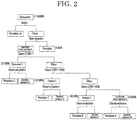
- the fractionated component 1 can be extracted according to a method illustrated in FIG. 2 . Specifically, a dry plant is ground and subjected to extraction using ethyl acetate. Subsequently, the extraction residue is further subjected to extraction using distilled water, to obtain a supernatant. The supernatant is subjected to dialysis, to separate a component having a fractionation molecular weight of 12,000 or greater. In this way, the fractionated component 1 is obtained.
- ethanol-undissolved component (denoted by component A in FIG. 1 ) of the fractionated component 1 was measured by a Fourier transform infrared spectroscopy (FT-IR) method. The result of the measurement is plotted in FIG. 6A .
- This FT-IR measurement was performed with FTS-7000e/UMA600, VARIAN, and microscopic diamond cells.
- FT-IR measurements of a component B, a component G, and a component H described below were also performed under the same conditions.
- the component A exhibited peaks attributable to carboxylic acid in the FT-IR measurement. That is, the component A exhibited peaks near 1,700 (cm -1 ) (ketone stretching) and near 1,600 (cm -1 ) (amide stretching).
- the component A was also measured by a gas chromatography mass spectrometry (GC-MS) method. The result of the measurement is plotted in FIG. 7A .
- GC-MS gas chromatography mass spectrometry
- This GC-MS measurement was performed with JMS-600H available from JEOL, using Ionization mode: EI+.
- GC-MS measurements of the component B, the component G, and the component H described below were also performed under the same conditions.
- the component A exhibited peaks attributable to cellulose in the GC-MS measurement.
- Attributions of the peaks (A1) to (A20) in FIG. 7A are estimated to be as follows.
- the component B exhibited peaks attributable to carboxylic acid in the FT-IR measurement. That is, the component B exhibited peaks near 1,700 (cm -1 ) (ketone stretching) and near 1,600 (cm -1 ) (amide stretching).
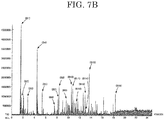
- the component B was also measured by GC-MS. The result of the measurement is plotted in FIG. 7B .
- the component B exhibited peaks attributable to a plant protein in the GC-MS measurement.
- Attributions of the peaks (B1) to (B16) in FIG. 7B are estimated to be as follows.
- the component 1 is considered to be formed of uronic acid or carboxylic acid that has a structure similar to galacturonic acid. Hence, the component 1 is considered to have inorganic ions adsorb thereto and exhibit an excellent effect in water purification.
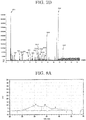
- the component 1 was also measured by gel permeation chromatograph (GPC). The result of the measurement is plotted in FIG. 8A .
- GPC measurement was performed with GPC SYSTEM 21, Shodex, and TSKgel GMPW.
- GPC measurement of the component 2 described below was also performed under the same conditions.
- the component 1 contains a substance having a weight average molecular weight (Mw) of 300,000 or greater by 50% (area) or greater.
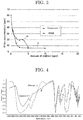
- FIG. 3 (i) plots the change of the Ni ion concentration when the extract formed of the component 1 was directly added in water containing N i .
- (ii) plots the change of the Ni ion concentration when a commercially available polymeric flocculant (polyacrylamide: PAM) was added as a water-purifying agent in water containing Ni.
- the component 1 was able to improve the water quality (reduction in the Ni ion concentration) in a smaller amount than the PAM.
- the fractionated component 2 can be extracted according to the method illustrated in FIG. 2 . Specifically, a component having a fractionation molecular weight of less than 12,000, which was obtained by the dialysis described above, is further subjected to dialysis, to obtain a component having a fractionation molecular weight of less than 6,000, which is further subjected to dialysis, to obtain and separate a component having a fractionation molecular weight of less than 3,400. In this way, the fractionated component 2 is obtained.
- the component G exhibits peaks attributable to an amide group in the FT-IR measurement. That is, the component G exhibits main peaks in a range of from 1,590 (cm -1 ) through 1,630 (cm -1 ) (amide stretching).
- the component G was also measured by GC-MS. The result of the measurement is plotted in FIG. 7C .
- the component G exhibits peaks of 1,8-diazacyclotetradecane-2,7-dione in the GC-MS measurement.
- Attributions of the peaks (C1) to (C13) in FIG. 7C are estimated to be as follows.
- ⁇ denotes a peak of a fragment attributable to polysaccharide such as chitin and chitosan.
- the component H exhibits peaks attributable to an amide group in the FT-IR measurement. That is, the component H exhibits main peaks in a range of from 1,590 (cm -1 ) through 1,630 (cm -1 ) (amide stretching).
- the component H was also measured by GC-MS. The result of the measurement is plotted in FIG. 7D .
- the component H exhibits peaks of 1,8-diazacyclotetradecane-2,7-dione in the GC-MS measurement.
- Attributions of the peaks (D1) to (D17) in FIG. 7C are estimated to be as follows.
- ⁇ denotes a peak of a fragment attributable to polysaccharide such as chitin and chitosan.
- the component 2 is considered to be a water-soluble chitosan.
- Chitosans (chitins) extracted from, for example, crustacean are typically water-insoluble, but water-soluble chitosan is considered to be effective in adsorption of inorganic ions.
- water solubility means solubility of 50% by mass of greater in water.
- the component 2 was also measured by GPC. The result of the measurement is plotted in FIG. 8B .
- the component 2 contains a substance having a weight average molecular weight (Mw) of from 200 through 2,500 by 90 % (area) or greater.
- FIG. 5 (i) plots the change of the Ni ion concentration when the extract formed of the component 2 was directly added in water containing Ni.
- FIG. 5 (ii) and (iii) plot the changes of the Ni ion concentration when a commercially available ZETAACE as a flocculant and chitosan were added in water containing Ni.
- the component 2 achieved a result similar to the case of adding chitosan in the wastewater. Also from this result, the component 2 is considered to be a chitosan.
- the water-purifying agent of the present invention contains a plant powder.
- the plant powder contain the component 1 or the component 2, or both thereof, which is/are (Extract of plant powder) described above.
- the water-purifying agent contain a plant powder that contains extracted component(s) formed of the component 1 or the component 2, or both thereof in predetermined effective amount(s).
- the water-purifying agent of the present invention contains the component 1 or the component 2, or both thereof extracted by the production method described above.
- the water-purifying agent of the present invention contain both of the component 1 and the component 2 extracted by the production method described above.
- the component 1 and the component 2 both have a water-purifying function but have different mechanisms of the water-purifying function.
- a water-purifying agent containing both of the component 1 and the component 2 is more preferable.
- the water-purifying agent of the present invention contains a plant powder containing extracted component(s) formed of the component 1 or the component 2, or both thereof.
- the component 1 is contained in the plant powder in an amount of 0.5% by mass or greater, more preferably in an amount of 0.7% by mass, and yet more preferably in an amount of 0.9% by mass as will be demonstrated by Examples.
- the component 2 is contained in the plant powder in an amount of 0.05% by mass or greater, and more preferably in an amount of 0.07% by mass.
- the component 1 and the component 2 were extracted from a dried product of Corchorus olitorius including all leaves, stalks, and roots.
- Table 1 the result presented in Table 1 below was achieved as a result of one experiment example.
- the numerals (1) to (5) in Table 1 correspond to the numerals (1) to (5) in FIG. 2 . That is, when the raw material of the plant powder is regarded as 100 parts by mass, the component 1 was extracted in an amount of 0.9 parts by mass, and the component 2 was extracted in an amount of 0.07 parts by mass (see the results of (2) and (5) in Table 1).
- the yields of the component 1 and the component 2 vary depending on the plant powder, which is the raw material. Hence, it is preferable to appropriately adjust the contents of the component 1 and the component 2 to desired ranges respectively, by varying the ratio among leaves, stalks, and roots of the plant.
- Table 1 Fractionation of molecular weight Yield of extracted component (relative to 100.00% of raw material (leaves, stalks, and roots) indicated by (1) in FIG. 2 ) 12,000 ⁇ 0.900% (indicated by (2) in FIG. 2 ) 6,000 ⁇ 12,000 0.600% (indicated by (4) in FIG. 2 ) 3,400 ⁇ 6,000 0.400% (indicated by (4) in FIG.
- the water-purifying agent may contain additives such as a polymeric flocculant, a filler, a thickener, a colorant, and a thixotropy imparting agent as other additives.
- additives such as a polymeric flocculant, a filler, a thickener, a colorant, and a thixotropy imparting agent as other additives.
- the polymeric flocculant is not particularly limited so long as the polymeric flocculant exhibits an effect of removing the inorganic unnecessary substance in wastewater like the powder of the plant described above.
- the polymeric flocculant include polyacrylamide (PAM), a salt obtained by partially hydrolyzing polyacrylamide, sodium alginate, sodium polyacrylate, and CMC sodium salt.
- PAM polyacrylamide
- polyacrylamide is preferable for use.
- commercially available products FLOPAN AN 956, FLOPAN AN 995SH, FA 920SH, FO 4490, and AN 923 available from SNF Japan Co., Ltd.
- the ratio of the component 1 in the water-purifying agent that also contains the other additives such as the polymeric flocculant be 0.5% by mass or greater relative to the total amount of the water-purifying agent.
- the ratio of the component 2 be 0.05% by mass or greater relative to the total amount of the water-purifying agent.
- a wastewater treatment method of the present invention is for removing the inorganic unnecessary substance in wastewater by feeding the water-purifying agent of the present invention described above to the wastewater.
- the inorganic unnecessary substance examples include an inorganic unnecessary substance that contains at least any one selected from the group consisting of nickel, fluorine, iron, copper, zinc, chromium, arsenic, cadmium, and lead.
- the wastewater treatment method of the present invention will be specifically described.
- the water-purifying agent of the present invention after an insolubilizing step of adding a base to wastewater to make the wastewater basic, insolubilize at least part of the heavy metal ions, and form a suspended solid matter.
- the water-purifying agent is fed to the wastewater to make the inorganic unnecessary substance flocculate and settle, and the settled, separated precipitate is removed. In this way, the wastewater is purified.
- a dried product (containing the component 1 in an amount of 0.56% by mass) of a plant including all leaves, stalks, and roots of the intermediate jute No. 4 (with a ratio of the leaves in the plant of 8% by mass) was used.
- the intermediate jute No. 4 was dried and ground, and then separated through a sieve, in order to use a product with a size of 250 micrometers or less.
- the component 1 being contained in an amount of 0.56% by mass in the dried product of the intermediate jute No. 4 used in the present Example was confirmed by performing the extracting operation described below.
- ethyl acetate was added to the dried product of the intermediate jute No. 4, to obtain a 10% by mass solution, which was left to stand still at room temperature (23 degrees C) for 8 hours, followed by filtration through a filter paper.
- the residue was washed with ethyl acetate, and then further subjected to extraction using distilled water, to obtain a supernatant, which was subjected to dialysis to separate a component having a fractionation molecular weight of 12,000 or greater, to obtain the component 1.
- the ratio of the component 1 relative to the dried product of the intermediate jute No. 4, which was the raw material was calculated.
- the initial Ni ion concentration was 60 ppm.
- the result of the nickel ion concentration when the water-purifying agent of the present invention was added is presented in Table 3 below. As presented in Table 3, reduction in the nickel ion concentration was confirmed. With a nickel ion concentration of 8 ppm or lower, it can be judged that the water-purifying agent is non-problematic in practical use.
- Example 2 An experiment was performed in the same manner as in Example 1, except that unlike in Example 1, the dried product of the intermediate jute No. 4 was changed to a dried product with a ratio of leaves of 10% by mass (containing the component 1 in an amount of 0.7% by mass). As presented in Table 3 below, reduction in the nickel ion concentration was confirmed in Example 2.
- Example 3 An experiment was performed in the same manner as in Example 1, except that unlike in Example 1, the dried product of the intermediate jute No. 4 was changed to a dried product with a ratio of leaves of 100% by mass (containing the component 1 in an amount of 7.0% by mass). As presented in Table 3 below, reduction in the nickel ion concentration was confirmed in Example 3.
- Example 2 An experiment was performed in the same manner as in Example 1, except that unlike in Example 1, the dried product of the intermediate jute No. 4 was changed to a dried product mainly containing stalks and roots but free of leaves (containing the component 1 in an amount of 0.1% by mass). As presented in Table 3 below, reduction in the nickel ion concentration was poor in Comparative Example 1.
- Example 2 An experiment was performed in the same manner as in Example 1, except that unlike in Example 1, the dried product of the intermediate jute No. 4 was changed to a dried product with a ratio of leaves of 3% by mass (containing the component 1 in an amount of 0.21% by mass). As presented in Table 3 below, a sufficient reduction in the nickel ion concentration was not achieved in Comparative Example 2.
- Example 3 An experiment was performed in the same manner as in Example 1, except that unlike in Example 1, the dried product of the intermediate jute No. 4 was changed to a dried product with a ratio of leaves of 5% by mass (containing the component 1 in an amount of 0.35% by mass). As presented in Table 3 below, a sufficient reduction in the nickel ion concentration was not achieved in Comparative Example 3.
- Example 4 An experiment was performed in the same manner as in Example 1, except that unlike in Example 1, an extract formed of the component 1, extracted from the dried product of the intermediate jute No. 4, was used instead of the dried product of the intermediate jute No. 4, and this extract was directly added in an amount of 50 ppm. As presented in Table 3 below, reduction in the nickel ion concentration was confirmed in Example 4.
- Example 4 An experiment was performed in the same manner as in Example 4, except that unlike in Example 4, the extract formed of the component 1, extracted from the dried product of the intermediate jute No. 4, was added with the amount of addition changed to 5 ppm. As presented in Table 3 below, an excellent reduction in the nickel ion concentration that is the same as in Example 4 was confirmed with even such a small amount of addition.
- Example 2 Part of plant Amount of water-purifying agent added (ppm) Content of component 1 in plant (% by mass) Ni ion concentration after treatment (ppm) Comp. Ex. 1 Other than leaves 50 0.1 35 Comp. Ex. 2 3% by mass of leaves 50 0.21 15 Comp. Ex. 3 5% by mass of leaves 50 0.35 10 Ex. 1 8% by mass of leaves 50 0.56 6 Ex. 2 10% by mass of leaves 50 0.7 5.6 Ex. 3 100% by mass of leaves 50 7.0 5 Ex. 4 Component 1 50 100 Lower than 5 Ex. 5 Component 1 5 100 Lower than 5
Landscapes
- Chemical & Material Sciences (AREA)
- Organic Chemistry (AREA)
- Environmental & Geological Engineering (AREA)
- Life Sciences & Earth Sciences (AREA)
- Hydrology & Water Resources (AREA)
- Engineering & Computer Science (AREA)
- Water Supply & Treatment (AREA)
- Chemical Kinetics & Catalysis (AREA)
- General Chemical & Material Sciences (AREA)
- Analytical Chemistry (AREA)
- Inorganic Chemistry (AREA)
- Separation Of Suspended Particles By Flocculating Agents (AREA)
- Removal Of Specific Substances (AREA)
- Peptides Or Proteins (AREA)
- Water Treatment By Sorption (AREA)
Abstract
Description
- The present invention relates to a plant powder extract and a water-purifying agent containing the extract, both used for purification of water such as industrial wastewater.
- In recent years, large amounts of waste liquids including environmentally hazardous substances such as metal ions and fluorine ions as inorganic ions have been generated in the processes for producing various products in plants.
- Meanwhile, regulations on effluence of such inorganic ions have been becoming gradually strict. In order to comply with the effluent control, an inorganic ion removing method that can effectively remove inorganic ions from wastewater including the inorganic ions and can be carried out as easily and inexpensively as possible is demanded.
- Hitherto, as the method for removing impurity ions from, for example, wastewater from plants, for example, a flocculating precipitation method, an ionexchange method, a method for adsorption to an adsorbent such as activated charcoal, an electrosorption method, and a magnetic adsorption method have been proposed.
- For example, as the flocculating precipitation method, there has been proposed a method of performing a step of adding a base to wastewater in which heavy metal ions are dissolved, to make the wastewater basic, insolubilize at least part of the heavy metal ions, and form a suspended solid matter, a step of adding an inorganic flocculant to the wastewater to make the suspended solid matter flocculate and settle, a step of adding a polymeric flocculant to the wastewater to turn the suspended solid matter to a macrofloc, and an adsorbing step of passing the wastewater through an adsorption layer containing a cation exchanger formed of a leafy vegetable such as mulukhiya and Japanese mustard spinach (see, e.g., PTL 1).
- There has also been proposed a flocculating method of flocculating and separating particles in a suspension by means of mixed use or combined use of a flocculant containing at least any one of mulukhiya, a dried product of mulukhiya, and an extract of mulukhiya with a polymeric flocculant (see, e.g., PTL 2).
- There have also been proposed a water-purifying agent formed of a granulated substance containing a mixture of a plant powder and a polymeric flocculant, and a water-purifying method using the water-purifying agent (see, e.g., PTL 3).
- However, although it hitherto has been known that plant powders can be used for water purification of wastewater, what contribute to water purification, or the specific contributing components have not been elucidated. Hence, there is a matter of study left in use of plant powders for water purification of wastewater.
-
- PTL 1: Japanese Patent Application Laid-Open (
JP-A) No. 2011-194385 - PTL 2:
JP-A No. 11-114313 - PTL 3:
JP-A No. 2016-73898 - The present invention has an object to identify effective components in plant powders that contribute to water purification and provide a water-purifying agent that can exhibit an excellent water-purifying performance to wastewater efficiently even in a small amount and infallibly.
- Means for solving the above problems are as follows.
- <1> An extract, being formed of:
- a fractionated component 1 (hereinafter, may also be referred to as
component 1 in the present invention) of a water extract of a plant powder, - wherein the fractionated
component 1 is a fractionated component having a fractionation molecular weight of 12,000 or greater, - wherein an ethanol-undissolved component of the fractionated
component 1 exhibits a peak attributable to carboxylic acid in a Fourier transform infrared spectroscopy (FT-IR) measurement and exhibits a peak attributable to cellulose in a gas chromatography mass spectrometry (GC-MS) measurement, and - wherein an ethanol-dissolved component of the fractionated
component 1 exhibits a peak attributable to carboxylic acid in the FT-IR measurement and exhibits a peak attributable to a plant protein in the GC-MS measurement.
- a fractionated component 1 (hereinafter, may also be referred to as
- <2> The extract according to <1>,
wherein the ethanol-undissolved component and the ethanol-dissolved component of the fractionatedcomponent 1 exhibit the peaks near 1,700 (cm-1) and near 1,600 (cm-1) in the FT-IR measurement. - <3> The extract according to <1> or <2>,
wherein the fractionatedcomponent 1 contains a substance having a weight average molecular weight (Mw) of 300,000 or greater by 50% or greater. - <4> The extract according to any one of <1> to <3>,
wherein the plant powder is a powder of Corchorus olitorius. - <5> An extract, being formed of:
- a fractionated component 2 (hereinafter, may also be referred to as
component 2 in the present invention) of a water extract of a plant powder, - wherein the fractionated
component 2 is a fractionated component having a fractionation molecular weight of less than 3,400, - wherein an ethanol-undissolved component of the fractionated
component 2 exhibits a peak attributable to an amide group in a FT-IR measurement, and - wherein an ethanol-dissolved component of the fractionated
component 2 exhibits a peak attributable to an amide group in the FT-IR measurement.
- a fractionated component 2 (hereinafter, may also be referred to as
- <6> The extract according to <5>,
wherein the ethanol-undissolved component and the ethanol-dissolved component of the fractionatedcomponent 2 exhibit main peaks in a range of from 1,590 (cm-1) through 1,630 (cm-1) in the FT-IR measurement. - <7> The extract according to <5> or <6>,
wherein the ethanol-undissolved component and the ethanol-dissolved component of the fractionatedcomponent 2 exhibit peaks of 1,8-diazacyclotetradecane-2,7-dione in a GC-MS measurement. - <8> The extract according to any one of <5> to <7>,
wherein the fractionatedcomponent 2 contains a substance having a weight average molecular weight (Mw) of from 200 through 2,500 by 90% or greater. - <9> The extract according to any one of <5> to <8>,
wherein the fractionatedcomponent 2 is a water-soluble chitosan. - <10> The extract according to any one of <5> to <9>,
wherein the plant powder is a powder of Corchorus olitorius. - <11> A water-purifying agent, including:
the extract according to any one of <1> to <4>. - <12> A water-purifying agent, including:
- the water-purifying agent according to <11>; and
- the extract according to any one of <5> to <10>.
- <13> A water-purifying agent, including:
the extract according to any one of <5> to <10>. - <14> A water-purifying agent, including:
- a plant powder,
- wherein when the plant powder is subjected to water extraction, an extracted component, which is formed of a fractionated
component 1 having a fractionation molecular weight of 12,000 or greater, is contained in the plant powder in an amount of 0.5% by mass or greater, - wherein an ethanol-undissolved component of the fractionated
component 1 exhibits a peak attributable to carboxylic acid in a FT-IR measurement and exhibits a peak attributable to cellulose in a GC-MS measurement, and - wherein an ethanol-dissolved component of the fractionated
component 1 exhibits a peak attributable to carboxylic acid in the FT-IR measurement and exhibits a peak attributable to a plant protein in the GC-MS measurement.
- <15> The water-purifying agent according to <14>,
wherein the ethanol-undissolved component and the ethanol dissolved component of the fractionatedcomponent 1 exhibit the peaks near 1,700 (cm-1) and near 1,600 (cm-1) in the FT-IR measurement. - <16> The water-purifying agent according to <14> or <15>,
wherein the fractionatedcomponent 1 contains a substance having a weight average molecular weight (Mw) of 300,000 or greater by 50% or greater. - <17> The water-purifying agent according to any one of <14> to <16>,
wherein the plant powder is a powder of Corchorus olitorius. - <18> A water-purifying agent, including:
- a plant powder,
- wherein when the plant powder is subjected to water extraction, an extracted component, which is formed of a fractionated
component 2 having a fractionation molecular weight of less than 3,400, is contained in the plant powder in an amount of 0.05% by mass or greater, - wherein an ethanol-undissolved component of the fractionated
component 2 exhibits a peak attributable to an amide group in a FT-IR measurement, and - wherein an ethanol-dissolved component of the fractionated
component 2 exhibits a peak attributable to an amide group in the FT-IR measurement.
- <19> The water-purifying agent according to <18>,
wherein the ethanol-undissolved component and the ethanol-dissolved component of the fractionatedcomponent 2 exhibit main peaks in a range of from 1,590 (cm-1) through 1,630 (cm-1) in the FT-IR measurement. - <20> The water-purifying agent according to <18> or <19>,
wherein the ethanol-undissolved component and the ethanol-dissolved component of the fractionatedcomponent 2 exhibit peaks of 1,8-diazacyclotetradecane-2,7-dione in a GC-MS measurement. - <21> The water-purifying agent according to any one of <18> to <20>,
wherein the fractionatedcomponent 2 contains a substance having a weight average molecular weight (Mw) of from 200 through 2,500 by 90% or greater. - <22> The water-purifying agent according to any one of <18> to <21>,
wherein the fractionatedcomponent 2 is a water-soluble chitosan. - <23> The water-purifying agent according to any one of <18> to <22>,
wherein the plant powder is a powder of Corchorus olitorius. - <24> The water-purifying agent according to any one of <14> to <17>,
wherein the water-purifying agent is the water-purifying agent according to any one of <18> to <23>. - <25> The water-purifying agent according to any one of <11> to <24>, including:
a polymeric flocculant. - <26> The water-purifying agent according to <25>,
wherein the polymeric flocculant is polyacrylamide. - <27> A wastewater treatment method, including:
feeding the water-purifying agent according to any one of <11> to <26> to wastewater, to remove an inorganic unnecessary substance in the wastewater. - <28> The wastewater treatment method according to <27>,
wherein the wastewater is wastewater including the inorganic unnecessary substance containing at least any one selected from the group consisting of nickel, fluorine, iron, copper, zinc, chromium, arsenic, cadmium, tin, and lead. - The present invention can provide a water-purifying agent that can exhibit an excellent water-purifying performance to wastewater efficiently even in a small amount and infallibly.
-
-
FIG. 1 is an image diagram illustrating a fractionated component 1 (may also be referred to as component 1) and a fractionated component 2 (may also be referred to as component 2), which are the subjects of the present invention among water extracts of a plant powder; -
FIG. 2 is an image diagram illustrating a method for extracting thecomponent 1 and thecomponent 2; -
FIG. 3 is a graph plotting a result of an experiment of a water-purifying effect of thecomponent 1; -
FIG. 4 plots a result of a microscopic IR measurement of thecomponent 2; -
FIG. 5 is a graph plotting a result of an experiment of a water-purifying effect of thecomponent 2; -
FIG. 6A plots a result of a Fourier transform infrared spectroscopy (FT-IR) measurement of an ethanol-undissolved component (component A) of thecomponent 1; -
FIG. 6B plots a result of a Fourier transform infrared spectroscopy (FT-IR) measurement of an ethanol-dissolved component (component B) of thecomponent 1; -
FIG. 6C plots a result of a Fourier transform infrared spectroscopy (FT-IR) measurement of an ethanol-undissolved component (component G) of thecomponent 2; -
FIG. 6D plots a result of a Fourier transform infrared spectroscopy (FT-IR) measurement of an ethanol-dissolved component (component H) of thecomponent 2; -
FIG. 7A plots a result of a gas chromatography mass spectrometry (GC-MS) measurement of the ethanol-undissolved component (component A) of thecomponent 1; -
FIG. 7B plots a result of a gas chromatography mass spectrometry (GC-MS) measurement of the ethanol-dissolved component (component B) of thecomponent 1; -
FIG. 7C plots a result of a gas chromatography mass spectrometry (GC-MS) measurement of the ethanol-undissolved component (component G) of thecomponent 2; -
FIG. 7D plots a result of a gas chromatography mass spectrometry (GC-MS) measurement of the ethanol-dissolved component (component H) of thecomponent 2; -
FIG. 8A plots a result of a gel permeation chromatograph (GPC) measurement of thecomponent 1; -
FIG. 8B plots a result of a gel permeation chromatograph (GPC) measurement of thecomponent 2; -
FIG. 9 is a diagram indicating an identification number of "intermediate jute No. 3" that may be used in the present invention; and -
FIG. 10 is a diagram indicating an identification number of "intermediate kenaf' that may be used in the present invention. - As a result of earnest studies into the water-purifying function of a plant powder, the present inventors have found effective components of a plant powder that contribute to water purification.
- It has been confirmed that among water extracts of the plant powder, extracted components, which are formed of a fractionated component 1 (may also be referred to as
component 1 in the present invention) having a fractionation molecular weight of 12,000 or greater and a fractionated component 2 (may also be referred to ascomponent 2 in the present invention) having a fractionation molecular weight of less than 3,400 illustrated inFIG. 1 , each have an excellent water-purifying action. - Here, the plant is not particularly limited and any plant that contains the
component 1 and thecomponent 2 in effective amounts respectively may be used. Preferable examples of the plant include Corchorus olitorius and mulukhiya. - Particularly, as Corchorus olitorius, for example, Corchorus olitorius produced in Nansha City of China, or "intermediate jute No. 4" under nationally identified hemp 2013, "intermediate jute No. 3" under varieties identification of registration No. 1209006 in Anhui province, "intermediate jute No. 1" under XPD005-2005, and "intermediate kenaf' under varieties identification of registration No. 1209001 in Anhui province, which are identification numbers in Institute of Bast Fiber Crops, Chinese Academy of Agricultural Sciences, can be suitably used.
- Above all, the "intermediate jute No. 4", the "intermediate jute No. 3", and the "intermediate kenaf' are more preferable, and the "intermediate jute No. 4" is particularly preferable.
- The identification number of the "intermediate jute No. 3" is indicated in
FIG. 9 . The identification number of the "intermediate kenaf" is indicated inFIG. 10 . - The "intermediate jute No. 4" has the following properties.
- Agricultural product type: Jute
- The fractionated
component 1 can be extracted according to a method illustrated inFIG. 2 . Specifically, a dry plant is ground and subjected to extraction using ethyl acetate. Subsequently, the extraction residue is further subjected to extraction using distilled water, to obtain a supernatant. The supernatant is subjected to dialysis, to separate a component having a fractionation molecular weight of 12,000 or greater. In this way, the fractionatedcomponent 1 is obtained. - An ethanol-undissolved component (denoted by component A in
FIG. 1 ) of the fractionatedcomponent 1 was measured by a Fourier transform infrared spectroscopy (FT-IR) method. The result of the measurement is plotted inFIG. 6A . This FT-IR measurement was performed with FTS-7000e/UMA600, VARIAN, and microscopic diamond cells. FT-IR measurements of a component B, a component G, and a component H described below were also performed under the same conditions. - As plotted in
FIG. 6A , the component A exhibited peaks attributable to carboxylic acid in the FT-IR measurement. That is, the component A exhibited peaks near 1,700 (cm-1) (ketone stretching) and near 1,600 (cm-1) (amide stretching). - The component A was also measured by a gas chromatography mass spectrometry (GC-MS) method. The result of the measurement is plotted in
FIG. 7A . This GC-MS measurement was performed with JMS-600H available from JEOL, using Ionization mode: EI+. GC-MS measurements of the component B, the component G, and the component H described below were also performed under the same conditions. - As plotted in
FIG. 7A , the component A exhibited peaks attributable to cellulose in the GC-MS measurement. - Attributions of the peaks (A1) to (A20) in
FIG. 7A are estimated to be as follows. - (A1): CO2
- (A2): acetaldehyde
- (A3) ○: ethanol
- (A4) ○: acetyl formaldehyde
- (A5) ○: diacetyl
- (A6) ○: acetic acid
- (A7) ○: acetol
- (A8) Δ: toluene
- (A9) ○: acetoxyacetic acid
- (A10) ○: 3-furaldehyde
- (A11) ○: pyruvic acid methyl ester
- (A12) ○: furfural (2-furaldehyde)
- (A13) ○: the compound below

- (A14) ○: the compound below

- (A15) ○: the compound below

- (A16) Δ: phenol
- (A17) Δ: 4-pyridinol
- (A18) Δ: cresol
- (A19) Δ: indole
- (A20): acetyl tributyl citrate
- The symbol "○" affixed to the above signs denotes a peak of a fragment attributable to cellulose.
- The symbol "Δ" affixed to the above signs denotes a peak of a fragment attributable to gluten (plant protein).
- An ethanol-dissolved component (denoted by component B in
FIG. 1 ) of the fractionatedcomponent 1 was measured by FT-IR. The result of the measurement is plotted inFIG. 6B . - As plotted in
FIG. 6B , the component B exhibited peaks attributable to carboxylic acid in the FT-IR measurement. That is, the component B exhibited peaks near 1,700 (cm-1) (ketone stretching) and near 1,600 (cm-1) (amide stretching). - The component B was also measured by GC-MS. The result of the measurement is plotted in
FIG. 7B . - As plotted in
FIG. 7B , the component B exhibited peaks attributable to a plant protein in the GC-MS measurement. - Attributions of the peaks (B1) to (B16) in
FIG. 7B are estimated to be as follows. - (B1): CO2
- (B2): acetaldehyde
- (B3) ○: diacetyl
- (B4) □: acetic acid
- (B5) ○: the compound below

- (B6) □: acetic anhydride
- (B7) ○: pyruvic acid methyl ester
- (B8) ○: furfural (2-furaldehyde)
- (B9) ○: the compound below

- (B10) ○: the compound below

- (B11) Δ: phenol
- (B12) Δ: cresol
- (B13) ○: the compound below

- (B14) Δ: indole
- (B15): hydroquinone
- (B16): oleamide
- The symbol "○" affixed to the above signs denotes a peak of a fragment attributable to cellulose.
- The symbol "□" affixed to the above signs denotes a peak of a fragment attributable to cellulose acetate.
- The symbol "Δ" affixed to the above signs denotes a peak of a fragment attributable to gluten (plant protein).
- From the results of the FT-IR measurements and the GC-MS measurements of the component A and the component B, the
component 1 is considered to be formed of uronic acid or carboxylic acid that has a structure similar to galacturonic acid. Hence, thecomponent 1 is considered to have inorganic ions adsorb thereto and exhibit an excellent effect in water purification. - The
component 1 was also measured by gel permeation chromatograph (GPC). The result of the measurement is plotted inFIG. 8A . This GPC measurement was performed with GPC SYSTEM 21, Shodex, and TSKgel GMPW. GPC measurement of thecomponent 2 described below was also performed under the same conditions. - From the result of
FIG. 8A , it can be seen that thecomponent 1 contains a substance having a weight average molecular weight (Mw) of 300,000 or greater by 50% (area) or greater. - An experiment of a water-purifying action was performed using the extract formed of the
component 1. The result is plotted inFIG. 3 . - In
FIG. 3 , (i) plots the change of the Ni ion concentration when the extract formed of thecomponent 1 was directly added in water containing Ni. On the other hand, inFIG. 3 , (ii) plots the change of the Ni ion concentration when a commercially available polymeric flocculant (polyacrylamide: PAM) was added as a water-purifying agent in water containing Ni. - From the result of
FIG. 3 , it was confirmed that thecomponent 1 was able to improve the water quality (reduction in the Ni ion concentration) in a smaller amount than the PAM. - The fractionated
component 2 can be extracted according to the method illustrated inFIG. 2 . Specifically, a component having a fractionation molecular weight of less than 12,000, which was obtained by the dialysis described above, is further subjected to dialysis, to obtain a component having a fractionation molecular weight of less than 6,000, which is further subjected to dialysis, to obtain and separate a component having a fractionation molecular weight of less than 3,400. In this way, the fractionatedcomponent 2 is obtained. - An ethanol-undissolved component (denoted by component G in
FIG. 1 ) of the fractionatedcomponent 2 was measured by FT-IR. The result of the measurement is plotted inFIG. 6C . - As plotted in
FIG. 6C , the component G exhibits peaks attributable to an amide group in the FT-IR measurement. That is, the component G exhibits main peaks in a range of from 1,590 (cm-1) through 1,630 (cm-1) (amide stretching). - The component G was also measured by GC-MS. The result of the measurement is plotted in
FIG. 7C . - As plotted in
FIG. 7C , the component G exhibits peaks of 1,8-diazacyclotetradecane-2,7-dione in the GC-MS measurement. - Attributions of the peaks (C1) to (C13) in
FIG. 7C are estimated to be as follows. - (Cl): CO2
- (C2): acetone
- (C3): acetol
- (C4) Δ: toluene
- (C5) ×: pyrrole
- (C6): cyclopentanone
- (C7): the compound below

- (C8) Δ: cresol
- (C9) ×: 2-pyrrolidinone
- (C10) ×: indole
- (C11): hydroquinone
- (C12): acetyl tributyl citrate
- (C13) ×: 1,8-diazacyclotetradecane-2,7-dione
- The symbol "×" affixed to the above signs denotes a peak of a fragment attributable to polysaccharide such as chitin and chitosan.
- The symbol "Δ" affixed to the above signs denotes a peak of a fragment attributable to gluten (plant protein).
- An ethanol-dissolved component (denoted by component H in
FIG. 1 ) of the fractionatedcomponent 2 was measured by FT-IR. The result of the measurement is plotted inFIG. 6D . - As plotted in
FIG. 6D , the component H exhibits peaks attributable to an amide group in the FT-IR measurement. That is, the component H exhibits main peaks in a range of from 1,590 (cm-1) through 1,630 (cm-1) (amide stretching). - The component H was also measured by GC-MS. The result of the measurement is plotted in
FIG. 7D . - As plotted in
FIG. 7D , the component H exhibits peaks of 1,8-diazacyclotetradecane-2,7-dione in the GC-MS measurement. - Attributions of the peaks (D1) to (D17) in
FIG. 7C are estimated to be as follows. - (D1): CO2
- (D2): methyl ethyl ketone
- (D3): acetic acid
- (D4) ○: acetol
- (D5) Δ: toluene
- (D6) × pyrrole
- (D7): styrene
- (D8) ×: 2-methyl-1H-pyrrole
- (D9) ×: the compound below
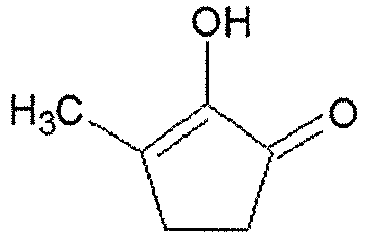
- (D10) Δ: phenol
- (D11): p-methoxytoluene
- (D12) Δ: cresol
- (D13): p-ethyl phenol
- (D14) ×: indole
- (D15): hydroquinone
- (D16): acetyl tributyl citrate
- (D17) ×: 1,8-diazacyclotetradecane-2,7-dione
- The symbol "○" affixed to the above sign denotes a peak of a fragment attributable to cellulose.
- The symbol "×" affixed to the above signs denotes a peak of a fragment attributable to polysaccharide such as chitin and chitosan.
- The symbol "Δ" affixed to the above signs denotes a peak of a fragment attributable to gluten (plant protein).
- The result of a microscopic infrared spectroscopy (microscopic IR) measurement in which the extract formed of the
component 2 was compared with chitosan is plotted inFIG. 4 . - From the results of the FT-IR measurements and the GC-MS measurements of the component G and the component H and the result of
FIG. 4 , thecomponent 2 is considered to be a water-soluble chitosan. Chitosans (chitins) extracted from, for example, crustacean are typically water-insoluble, but water-soluble chitosan is considered to be effective in adsorption of inorganic ions. - In the present invention, water solubility means solubility of 50% by mass of greater in water.
- The
component 2 was also measured by GPC. The result of the measurement is plotted inFIG. 8B . - From the result of
FIG. 8 , it can be seen that thecomponent 2 contains a substance having a weight average molecular weight (Mw) of from 200 through 2,500 by 90 % (area) or greater. - An experiment of a water-purifying action was performed using the extract formed of the
component 2. The result is plotted inFIG. 5 . - In
FIG. 5 , (i) plots the change of the Ni ion concentration when the extract formed of thecomponent 2 was directly added in water containing Ni. On the other hand, inFIG. 5 , (ii) and (iii) plot the changes of the Ni ion concentration when a commercially available ZETAACE as a flocculant and chitosan were added in water containing Ni. - From the results of
FIG. 5 , addition of ZETAACE in a higher amount led to greater suppression of floc growth and a poorer water quality level, whereas thecomponent 2 succeeded in improving the water quality (reducing the Ni ion concentration) regardless of the amount of addition. Thecomponent 2 is considered to exhibit a water-purifying effect based on a mechanism that cannot be explained only by the flocculating effect exhibited by ZETAACE, i.e., a mechanism different from a zeta potential. - Moreover, as plotted in
FIG. 5 , thecomponent 2 achieved a result similar to the case of adding chitosan in the wastewater. Also from this result, thecomponent 2 is considered to be a chitosan. - The water-purifying agent of the present invention contains a plant powder.
- As the first mode of the water-purifying agent of the present invention, it is preferable that the plant powder contain the
component 1 or thecomponent 2, or both thereof, which is/are (Extract of plant powder) described above. - This is because an effective water-purifying action can be exhibited efficiently even if the amount of addition is small.
- As the second mode of the water-purifying agent of the present invention, it is preferable that the water-purifying agent contain a plant powder that contains extracted component(s) formed of the
component 1 or thecomponent 2, or both thereof in predetermined effective amount(s). - The water-purifying agent of the present invention contains the
component 1 or thecomponent 2, or both thereof extracted by the production method described above. - Particularly, it is preferable that the water-purifying agent of the present invention contain both of the
component 1 and thecomponent 2 extracted by the production method described above. As plotted inFIG. 3 andFIG. 5 , it is inferred that thecomponent 1 and thecomponent 2 both have a water-purifying function but have different mechanisms of the water-purifying function. Hence, containing both of the components makes it possible to express the water-purifying function by a plurality of approaches. Therefore, a water-purifying agent containing both of thecomponent 1 and thecomponent 2 is more preferable. - The water-purifying agent of the present invention contains a plant powder containing extracted component(s) formed of the
component 1 or thecomponent 2, or both thereof. - Here, the
component 1 is contained in the plant powder in an amount of 0.5% by mass or greater, more preferably in an amount of 0.7% by mass, and yet more preferably in an amount of 0.9% by mass as will be demonstrated by Examples. - The
component 2 is contained in the plant powder in an amount of 0.05% by mass or greater, and more preferably in an amount of 0.07% by mass. - According to the flowchart illustrated in
FIG. 2 , thecomponent 1 and thecomponent 2 were extracted from a dried product of Corchorus olitorius including all leaves, stalks, and roots. As the yield of each extracted component, the result presented in Table 1 below was achieved as a result of one experiment example. The numerals (1) to (5) in Table 1 correspond to the numerals (1) to (5) inFIG. 2 . That is, when the raw material of the plant powder is regarded as 100 parts by mass, thecomponent 1 was extracted in an amount of 0.9 parts by mass, and thecomponent 2 was extracted in an amount of 0.07 parts by mass (see the results of (2) and (5) in Table 1). - Next, the
component 1 and thecomponent 2 were extracted from a dried product of Corchorus olitorius including only leaves. The results as the yields of the respective components are presented below (Table 2 below). - As can be seen from Table 1 below and Table 2 below, the yields of the
component 1 and thecomponent 2 vary depending on the plant powder, which is the raw material. Hence, it is preferable to appropriately adjust the contents of thecomponent 1 and thecomponent 2 to desired ranges respectively, by varying the ratio among leaves, stalks, and roots of the plant.Table 1 Fractionation of molecular weight Yield of extracted component (relative to 100.00% of raw material (leaves, stalks, and roots) indicated by (1) in FIG. 2 )12,000 ∼ 0.900% (indicated by (2) in FIG. 2 )6,000 ∼ 12,000 0.600% (indicated by (4) in FIG. 2 )3,400 ∼ 6,000 0.400% (indicated by (4) in FIG. 2 )∼ 3,400 0.070% (indicated by (5) in FIG. 2 )Table 2 Fractionation of molecular weight Yield of extracted component (relative to 100.00% of raw material (only leaves) indicated by (1) in FIG. 2 )12,000 ∼ 7.000% (indicated by (2) in FIG. 2 )6,000 ∼ 12,000 3.000% (indicated by (4) in FIG. 2 )3,400 ∼ 6,000 0.790% (indicated by (4) in FIG. 2 )∼ 3,400 5.666% (indicated by (5) in FIG. 2 ) - In addition to the powder of the plant, the water-purifying agent may contain additives such as a polymeric flocculant, a filler, a thickener, a colorant, and a thixotropy imparting agent as other additives.
- The polymeric flocculant is not particularly limited so long as the polymeric flocculant exhibits an effect of removing the inorganic unnecessary substance in wastewater like the powder of the plant described above. Examples of the polymeric flocculant include polyacrylamide (PAM), a salt obtained by partially hydrolyzing polyacrylamide, sodium alginate, sodium polyacrylate, and CMC sodium salt. Among these polymeric flocculants, polyacrylamide is preferable for use. As the polyacrylamide, for example, commercially available products FLOPAN AN 956, FLOPAN AN 995SH, FA 920SH, FO 4490, and AN 923 (available from SNF Japan Co., Ltd.) can be used.
- It is preferable that the ratio of the
component 1 in the water-purifying agent that also contains the other additives such as the polymeric flocculant be 0.5% by mass or greater relative to the total amount of the water-purifying agent. - It is preferable that the ratio of the
component 2 be 0.05% by mass or greater relative to the total amount of the water-purifying agent. - A wastewater treatment method of the present invention is for removing the inorganic unnecessary substance in wastewater by feeding the water-purifying agent of the present invention described above to the wastewater.
- Examples of the inorganic unnecessary substance include an inorganic unnecessary substance that contains at least any one selected from the group consisting of nickel, fluorine, iron, copper, zinc, chromium, arsenic, cadmium, and lead.
- The wastewater treatment method of the present invention will be specifically described.
- For example, it is possible to add the water-purifying agent of the present invention after an insolubilizing step of adding a base to wastewater to make the wastewater basic, insolubilize at least part of the heavy metal ions, and form a suspended solid matter.
- The water-purifying agent is fed to the wastewater to make the inorganic unnecessary substance flocculate and settle, and the settled, separated precipitate is removed. In this way, the wastewater is purified.
- The present invention will be described below by way of Examples. The present invention should not be construed as being limited to these Examples.
- As the plant, "intermediate jute No. 4", which was Corchorus olitorius having an identification number 2013 in Institute of Bast Fiber Crops, Chinese Academy of Agricultural Sciences, was used.
- A dried product (containing the
component 1 in an amount of 0.56% by mass) of a plant including all leaves, stalks, and roots of the intermediate jute No. 4 (with a ratio of the leaves in the plant of 8% by mass) was used. - The intermediate jute No. 4 was dried and ground, and then separated through a sieve, in order to use a product with a size of 250 micrometers or less.
- The
component 1 being contained in an amount of 0.56% by mass in the dried product of the intermediate jute No. 4 used in the present Example was confirmed by performing the extracting operation described below. - That is, ethyl acetate was added to the dried product of the intermediate jute No. 4, to obtain a 10% by mass solution, which was left to stand still at room temperature (23 degrees C) for 8 hours, followed by filtration through a filter paper. The residue was washed with ethyl acetate, and then further subjected to extraction using distilled water, to obtain a supernatant, which was subjected to dialysis to separate a component having a fractionation molecular weight of 12,000 or greater, to obtain the
component 1. Then, the ratio of thecomponent 1 relative to the dried product of the intermediate jute No. 4, which was the raw material, was calculated. - To wastewater containing nickel, FeCl3 was added by 250 ppm as a primary flocculant, and then the water-purifying agent containing the dried product of Corchorus olitorius containing the
component 1 in an amount of 0.56% by mass was added. - The initial Ni ion concentration was 60 ppm.
- The result of the nickel ion concentration when the water-purifying agent of the present invention was added is presented in Table 3 below. As presented in Table 3, reduction in the nickel ion concentration was confirmed. With a nickel ion concentration of 8 ppm or lower, it can be judged that the water-purifying agent is non-problematic in practical use.
- An experiment was performed in the same manner as in Example 1, except that unlike in Example 1, the dried product of the intermediate jute No. 4 was changed to a dried product with a ratio of leaves of 10% by mass (containing the
component 1 in an amount of 0.7% by mass). As presented in Table 3 below, reduction in the nickel ion concentration was confirmed in Example 2. - An experiment was performed in the same manner as in Example 1, except that unlike in Example 1, the dried product of the intermediate jute No. 4 was changed to a dried product with a ratio of leaves of 100% by mass (containing the
component 1 in an amount of 7.0% by mass). As presented in Table 3 below, reduction in the nickel ion concentration was confirmed in Example 3. - An experiment was performed in the same manner as in Example 1, except that unlike in Example 1, the dried product of the intermediate jute No. 4 was changed to a dried product mainly containing stalks and roots but free of leaves (containing the
component 1 in an amount of 0.1% by mass). As presented in Table 3 below, reduction in the nickel ion concentration was poor in Comparative Example 1. - An experiment was performed in the same manner as in Example 1, except that unlike in Example 1, the dried product of the intermediate jute No. 4 was changed to a dried product with a ratio of leaves of 3% by mass (containing the
component 1 in an amount of 0.21% by mass). As presented in Table 3 below, a sufficient reduction in the nickel ion concentration was not achieved in Comparative Example 2. - An experiment was performed in the same manner as in Example 1, except that unlike in Example 1, the dried product of the intermediate jute No. 4 was changed to a dried product with a ratio of leaves of 5% by mass (containing the
component 1 in an amount of 0.35% by mass). As presented in Table 3 below, a sufficient reduction in the nickel ion concentration was not achieved in Comparative Example 3. - An experiment was performed in the same manner as in Example 1, except that unlike in Example 1, an extract formed of the
component 1, extracted from the dried product of the intermediate jute No. 4, was used instead of the dried product of the intermediate jute No. 4, and this extract was directly added in an amount of 50 ppm. As presented in Table 3 below, reduction in the nickel ion concentration was confirmed in Example 4. - An experiment was performed in the same manner as in Example 4, except that unlike in Example 4, the extract formed of the
component 1, extracted from the dried product of the intermediate jute No. 4, was added with the amount of addition changed to 5 ppm. As presented in Table 3 below, an excellent reduction in the nickel ion concentration that is the same as in Example 4 was confirmed with even such a small amount of addition. - An experiment was performed in the same manner as in Example 1, except that unlike in Example 1, as the kind of the plant, "intermediate jute No. 3", which was Corchorus olitorius having an identification number in Institute of Bast Fiber Crops, Chinese Academy of Agricultural Sciences, i.e., varieties identification of registration No. 1209006 in Anhui province, was used instead of the intermediate jute No. 4.
- Although the nickel ion concentration reducing effect was better in Example 1, a good nickel ion concentration reducing effect, which was almost the same as in Example 1, was exhibited in Example 6.
Table 3 Part of plant Amount of water-purifying agent added (ppm) Content of component 1 in plant (% by mass)Ni ion concentration after treatment (ppm) Comp. Ex. 1 Other than leaves 50 0.1 35 Comp. Ex. 2 3% by mass of leaves 50 0.21 15 Comp. Ex. 3 5% by mass of leaves 50 0.35 10 Ex. 1 8% by mass of leaves 50 0.56 6 Ex. 2 10% by mass of leaves 50 0.7 5.6 Ex. 3 100% by mass of leaves 50 7.0 5 Ex. 4 Component 150 100 Lower than 5 Ex. 5 Component 15 100 Lower than 5
Claims (14)
- An extract, being formed of:a fractionated component 1 of a water extract of a plant powder,wherein the fractionated component 1 is a fractionated component having a fractionation molecular weight of 12,000 or greater,wherein an ethanol-undissolved component of the fractionated component 1 exhibits a peak attributable to carboxylic acid in a Fourier transform infrared spectroscopy (FT-IR) measurement and exhibits a peak attributable to cellulose in a gas chromatography mass spectrometry (GC-MS) measurement, andwherein an ethanol-dissolved component of the fractionated component 1 exhibits a peak attributable to carboxylic acid in the FT-IR measurement and exhibits a peak attributable to a plant protein in the GC-MS measurement.
- An extract, being formed of:a fractionated component 2 of a water extract of a plant powder,wherein the fractionated component 2 is a fractionated component having a fractionation molecular weight of less than 3,400,wherein an ethanol-undissolved component of the fractionated component 2 exhibits a peak attributable to an amide group in a FT-IR measurement, andwherein an ethanol-dissolved component of the fractionated component 2 exhibits a peak attributable to an amide group in the FT-IR measurement.
- The extract according to claim 2,
wherein the ethanol-undissolved component and the ethanol-dissolved component of the fractionated component 2 exhibit peaks of 1,8-diazacyclotetradecane-2,7-dione in a GC-MS measurement. - The extract according to claim 2 or 3,
wherein the fractionated component 2 is a water-soluble chitosan. - A water-purifying agent, comprising:
the extract according to any one of claims 1 to 4. - A water-purifying agent, comprising:a plant powder,wherein when the plant powder is subjected to water extraction, an extracted component, which is formed of a fractionated component 1 having a fractionation molecular weight of 12,000 or greater, is contained in the plant powder in an amount of 0.5% by mass or greater,wherein an ethanol-undissolved component of the fractionated component 1 exhibits a peak attributable to carboxylic acid in a FT-IR measurement and exhibits a peak attributable to cellulose in a GC-MS measurement, andwherein an ethanol-dissolved component of the fractionated component 1 exhibits a peak attributable to carboxylic acid in the FT-IR measurement and exhibits a peak attributable to a plant protein in the GC-MS measurement.
- A water-purifying agent, comprising:a plant powder,wherein when the plant powder is subjected to water extraction, an extracted component, which is formed of a fractionated component 2 having a fractionation molecular weight of less than 3,400, is contained in the plant powder in an amount of 0.05% by mass or greater,wherein an ethanol-undissolved component of the fractionated component 2 exhibits a peak attributable to an amide group in a FT-IR measurement, andwherein an ethanol-dissolved component of the fractionated component 2 exhibits a peak attributable to an amide group in the FT-IR measurement.
- The water-purifying agent according to claim 7,
wherein the ethanol-undissolved component and the ethanol-dissolved component of the fractionated component 2 exhibit peaks of 1,8-diazacyclotetradecane-2,7-dione in a GC-MS measurement. - The water-purifying agent according to claim 7 or 8,
wherein the fractionated component 2 is a water-soluble chitosan. - The water-purifying agent according to claim 6,
wherein the water-purifying agent is the water-purifying agent according to any one of claims 7 to 9. - The water-purifying agent according to any one of claims 5 to 10, comprising:
a polymeric flocculant. - The water-purifying agent according to claim 11,
wherein the polymeric flocculant is polyacrylamide. - A wastewater treatment method, comprising:
feeding the water-purifying agent according to any one of claims 5 to 12 to wastewater, to remove an inorganic unnecessary substance in the wastewater. - The wastewater treatment method according to claim 13,
wherein the wastewater is wastewater that comprises the inorganic unnecessary substance that comprises at least any one selected from the group consisting of nickel, fluorine, iron, copper, zinc, chromium, arsenic, cadmium, tin, and lead.
Applications Claiming Priority (3)
| Application Number | Priority Date | Filing Date | Title |
|---|---|---|---|
| JP2016181619 | 2016-09-16 | ||
| JP2017174021A JP7131894B2 (en) | 2016-09-16 | 2017-09-11 | Method for producing extract, extract, water purification agent, and wastewater treatment method |
| PCT/JP2017/032941 WO2018051992A1 (en) | 2016-09-16 | 2017-09-12 | Extract of plant powder, and water purifier |
Publications (3)
| Publication Number | Publication Date |
|---|---|
| EP3513857A1 true EP3513857A1 (en) | 2019-07-24 |
| EP3513857A4 EP3513857A4 (en) | 2020-06-03 |
| EP3513857B1 EP3513857B1 (en) | 2021-05-26 |
Family
ID=61765750
Family Applications (1)
| Application Number | Title | Priority Date | Filing Date |
|---|---|---|---|
| EP17850893.3A Active EP3513857B1 (en) | 2016-09-16 | 2017-09-12 | Extract of plant powder, and water purifier |
Country Status (7)
| Country | Link |
|---|---|
| US (2) | US20190256387A1 (en) |
| EP (1) | EP3513857B1 (en) |
| JP (1) | JP7131894B2 (en) |
| KR (1) | KR102438091B1 (en) |
| BR (1) | BR112019004936A2 (en) |
| RU (1) | RU2019110785A (en) |
| TW (1) | TWI734834B (en) |
Families Citing this family (3)
| Publication number | Priority date | Publication date | Assignee | Title |
|---|---|---|---|---|
| CN113233564B (en) | 2016-09-16 | 2023-08-08 | 迪睿合株式会社 | Plant powder extracts and water purifiers |
| JP6722807B1 (en) * | 2019-05-31 | 2020-07-15 | デクセリアルズ株式会社 | Water treatment agent and method for producing the same, and water treatment method |
| JP7833867B2 (en) * | 2020-10-01 | 2026-03-23 | デクセリアルズ株式会社 | Organic coagulant and method for producing the same, and water purification agent and method for producing the same |
Family Cites Families (22)
| Publication number | Priority date | Publication date | Assignee | Title |
|---|---|---|---|---|
| JPH0341014A (en) * | 1989-07-07 | 1991-02-21 | Ichimaru Pharcos Co Ltd | Corchorus olitorius extract-containing cosmetic |
| JPH0769910A (en) * | 1993-09-01 | 1995-03-14 | Otsuka Pharmaceut Co Ltd | Composition for improving lipid metabolism and suppressing blood sugar elevation |
| JPH0770208A (en) * | 1993-09-07 | 1995-03-14 | Kyodo Nyugyo Kk | Method for producing viscous polysaccharide of Moroheiya |
| KR19980081423A (en) * | 1997-04-16 | 1998-11-25 | 이데이노부유끼 | Polymer flocculant, the manufacturing method of this flocculant, and the water treatment method using this flocculant |
| JP3049279B2 (en) | 1997-08-19 | 2000-06-05 | 工業技術院長 | Chitosan, method for producing the same, and polymer flocculant |
| JP3876497B2 (en) * | 1997-10-09 | 2007-01-31 | ソニー株式会社 | Flocculant and flocculation method using the same |
| JP2000140509A (en) | 1998-11-16 | 2000-05-23 | Kansai Kako Kk | Novel flocculant and sludge treatment using the same |
| JPWO2005005485A1 (en) | 2003-05-07 | 2006-08-24 | 財団法人生産開発科学研究所 | Chitin oligomer composition and / or chitosan oligomer composition, and production method thereof |
| WO2004100969A1 (en) | 2003-05-19 | 2004-11-25 | Takara Bio Inc. | Remedy |
| JP2008126168A (en) | 2006-11-22 | 2008-06-05 | Fuji Eng Kk | Coagulating sedimentation method of waste water |
| JP5640419B2 (en) | 2010-03-24 | 2014-12-17 | ソニー株式会社 | Removal method of heavy metal ions in waste water |
| JP2011194385A (en) * | 2010-03-24 | 2011-10-06 | Sony Corp | Cation exchanger and method for removing heavy metal ion in wastewater |
| CN102583681B (en) * | 2011-01-14 | 2014-07-02 | 索尼公司 | Coagulant of plant origin, coagulant mixture, method of coagulation and method of preparing coagulant of plant origin |
| CN102247814A (en) | 2011-05-17 | 2011-11-23 | 中国农业科学院麻类研究所 | Biomass adsorbent for treatment of heavy metal wastewater and treatment method of heavy metal wastewater |
| GB201116050D0 (en) | 2011-09-16 | 2011-11-02 | Ntnu Technology Transfer As | Ionic gel |
| CN102432692A (en) | 2011-12-27 | 2012-05-02 | 西华师范大学 | Boletus speciosus polysaccharide |
| JP2014008428A (en) * | 2012-06-28 | 2014-01-20 | Sony Corp | Coagulant mixture and coagulation method |
| PE20160473A1 (en) | 2013-05-29 | 2016-05-22 | Aguas De Manizales S A E S P | COMPOSITIONS FOR WATER TREATMENT AND METHODS FOR THE USE OF THEM |
| CN103641936B (en) | 2013-12-09 | 2016-03-23 | 吴彪 | A kind of method adopting ultrafiltration and nanofiltration to prepare water-soluble chitosan oligosaccharide |
| JP6301802B2 (en) * | 2014-10-03 | 2018-03-28 | デクセリアルズ株式会社 | Water purification agent and water purification method |
| CN104562632B (en) * | 2015-01-12 | 2016-08-24 | 哈尔滨工业大学 | A kind of microwave quickly modified Corchorus olitorius L. prepares method and the application of heavy metal ion exchange fiber |
| JP6695662B2 (en) * | 2015-02-12 | 2020-05-20 | 国立大学法人京都大学 | Dispersion containing polysaccharide nanofibers, dispersion medium and monomer, and resin composition obtained from the dispersion |
-
2017
- 2017-09-11 JP JP2017174021A patent/JP7131894B2/en active Active
- 2017-09-12 KR KR1020197010107A patent/KR102438091B1/en active Active
- 2017-09-12 EP EP17850893.3A patent/EP3513857B1/en active Active
- 2017-09-12 RU RU2019110785A patent/RU2019110785A/en not_active Application Discontinuation
- 2017-09-12 US US16/333,440 patent/US20190256387A1/en not_active Abandoned
- 2017-09-12 BR BR112019004936A patent/BR112019004936A2/en not_active IP Right Cessation
- 2017-09-15 TW TW106131858A patent/TWI734834B/en active
-
2021
- 2021-08-24 US US17/410,356 patent/US11866354B2/en active Active
Also Published As
| Publication number | Publication date |
|---|---|
| KR102438091B1 (en) | 2022-08-31 |
| EP3513857A4 (en) | 2020-06-03 |
| US20190256387A1 (en) | 2019-08-22 |
| RU2019110785A (en) | 2020-10-16 |
| US11866354B2 (en) | 2024-01-09 |
| JP2018047454A (en) | 2018-03-29 |
| TW201813933A (en) | 2018-04-16 |
| US20210380444A1 (en) | 2021-12-09 |
| EP3513857B1 (en) | 2021-05-26 |
| KR20190046992A (en) | 2019-05-07 |
| BR112019004936A2 (en) | 2019-06-18 |
| JP7131894B2 (en) | 2022-09-06 |
| TWI734834B (en) | 2021-08-01 |
Similar Documents
| Publication | Publication Date | Title |
|---|---|---|
| US11866354B2 (en) | Extract of plant powder, and water purifier | |
| Sun et al. | Adsorption properties of N-succinyl-chitosan and cross-linked N-succinyl-chitosan resin with Pb (II) as template ions | |
| Qomi et al. | Manganese removal from aqueous media using polyaniline nanocomposite coated on wood sawdust | |
| FR2740055A1 (en) | BIOSORBENT FOR HEAVY METALS PREPARED FROM BIOMASS AND PROCESS FOR PREPARING SAME | |
| CN103097334A (en) | Compositions comprising shikimic acid obtained from oil palm-based materials and methods for their production | |
| CN107376857B (en) | Composite hydrogel material for adsorbing heavy metals and preparation method thereof | |
| US11952297B2 (en) | Extract of plant powder, and water purifier | |
| Alakayleh | From inactive biomass in removing amoxicillin to new active chitosan-biomass composite adsorbents | |
| EP3513856B1 (en) | Water purification dispersion, production method for water purification dispersion, and waste water treatment method | |
| WO2019194688A1 (en) | Methods of preparing modified biopolymer-silica nanocomposite materials for arsenic removal from contaminated water and compositions therefrom | |
| CN103599754B (en) | A kind of biomass adsorbent and Synthesis and applications thereof processing lead waste water | |
| Sundari et al. | Exploring the bioactive potential of chitosan extracted from Portunus trituberculatus crab shell for multifaceted applications: Antioxidant, antidiabetic, anti-inflammatory and cytotoxic activities | |
| Tayel et al. | The potentiality of cross-linked fungal chitosan to control water contamination through bioactive filtration | |
| CN1931960A (en) | Prepn process of refined bamboo vinegar liquid | |
| Ma et al. | Structural analysis and flocculation performance of ASP-1: A polysaccharide bioflocculant from asparagus root waste | |
| JP5046052B2 (en) | Metal ion adsorbent and adsorption method using the same | |
| Laskar et al. | Synthesis of aluminum oxide nanoparticles using seeds of Carica papaya and evaluation of it for antimicrobial, antioxidant, and photocatalysis activity | |
| CN105884928B (en) | A kind of method that ammonium exchange process prepares low-ester pectin | |
| Nyaisaba et al. | Water-soluble polysaccharide from Terminalia catappa seed coat: Physicochemical characterization, antioxidant and antibacterial potentials | |
| Alouiz et al. | Elimination of olive mill wastewater polyphenols through an olive pomace-derived activated charcoal | |
| CN101045697A (en) | Clausena lansium stone extraction and preparation method thereof | |
| CN108855014B (en) | Heavy metal adsorbent and preparation method and application thereof | |
| CN119708284B (en) | Anti-polymerization dissolution-promoting method for heat-drying RG-I pectin | |
| CN104587972A (en) | Preparation method and application of hydroximic acid functionalized cellulose adsorption material | |
| CN110343192B (en) | Extraction method of Melaleuca tower polysaccharide |
Legal Events
| Date | Code | Title | Description |
|---|---|---|---|
| STAA | Information on the status of an ep patent application or granted ep patent |
Free format text: STATUS: THE INTERNATIONAL PUBLICATION HAS BEEN MADE |
|
| PUAI | Public reference made under article 153(3) epc to a published international application that has entered the european phase |
Free format text: ORIGINAL CODE: 0009012 |
|
| STAA | Information on the status of an ep patent application or granted ep patent |
Free format text: STATUS: REQUEST FOR EXAMINATION WAS MADE |
|
| 17P | Request for examination filed |
Effective date: 20190329 |
|
| AK | Designated contracting states |
Kind code of ref document: A1 Designated state(s): AL AT BE BG CH CY CZ DE DK EE ES FI FR GB GR HR HU IE IS IT LI LT LU LV MC MK MT NL NO PL PT RO RS SE SI SK SM TR |
|
| AX | Request for extension of the european patent |
Extension state: BA ME |
|
| DAV | Request for validation of the european patent (deleted) | ||
| DAX | Request for extension of the european patent (deleted) | ||
| A4 | Supplementary search report drawn up and despatched |
Effective date: 20200506 |
|
| RIC1 | Information provided on ipc code assigned before grant |
Ipc: C02F 101/20 20060101ALN20200428BHEP Ipc: C02F 101/22 20060101ALN20200428BHEP Ipc: B01D 21/01 20060101AFI20200428BHEP Ipc: C02F 101/10 20060101ALN20200428BHEP Ipc: C02F 1/28 20060101ALI20200428BHEP Ipc: C02F 1/52 20060101ALI20200428BHEP Ipc: C02F 101/14 20060101ALN20200428BHEP Ipc: C02F 1/56 20060101ALI20200428BHEP Ipc: C02F 1/54 20060101ALI20200428BHEP |
|
| GRAP | Despatch of communication of intention to grant a patent |
Free format text: ORIGINAL CODE: EPIDOSNIGR1 |
|
| STAA | Information on the status of an ep patent application or granted ep patent |
Free format text: STATUS: GRANT OF PATENT IS INTENDED |
|
| RIC1 | Information provided on ipc code assigned before grant |
Ipc: C02F 1/56 20060101ALI20200925BHEP Ipc: C02F 101/22 20060101ALN20200925BHEP Ipc: C02F 1/52 20060101ALI20200925BHEP Ipc: C02F 101/20 20060101ALN20200925BHEP Ipc: B01D 21/01 20060101AFI20200925BHEP Ipc: C02F 1/28 20060101ALI20200925BHEP Ipc: C02F 101/14 20060101ALN20200925BHEP Ipc: C02F 1/54 20060101ALI20200925BHEP Ipc: C02F 101/10 20060101ALN20200925BHEP |
|
| RIC1 | Information provided on ipc code assigned before grant |
Ipc: C02F 1/52 20060101ALI20201012BHEP Ipc: C02F 101/10 20060101ALN20201012BHEP Ipc: C02F 1/54 20060101ALI20201012BHEP Ipc: C02F 1/56 20060101ALI20201012BHEP Ipc: C02F 1/28 20060101ALI20201012BHEP Ipc: C02F 101/22 20060101ALN20201012BHEP Ipc: C02F 101/14 20060101ALN20201012BHEP Ipc: B01D 21/01 20060101AFI20201012BHEP Ipc: C02F 101/20 20060101ALN20201012BHEP |
|
| INTG | Intention to grant announced |
Effective date: 20201026 |
|
| GRAJ | Information related to disapproval of communication of intention to grant by the applicant or resumption of examination proceedings by the epo deleted |
Free format text: ORIGINAL CODE: EPIDOSDIGR1 |
|
| STAA | Information on the status of an ep patent application or granted ep patent |
Free format text: STATUS: REQUEST FOR EXAMINATION WAS MADE |
|
| GRAJ | Information related to disapproval of communication of intention to grant by the applicant or resumption of examination proceedings by the epo deleted |
Free format text: ORIGINAL CODE: EPIDOSDIGR1 |
|
| STAA | Information on the status of an ep patent application or granted ep patent |
Free format text: STATUS: GRANT OF PATENT IS INTENDED |
|
| GRAP | Despatch of communication of intention to grant a patent |
Free format text: ORIGINAL CODE: EPIDOSNIGR1 |
|
| INTC | Intention to grant announced (deleted) | ||
| RIC1 | Information provided on ipc code assigned before grant |
Ipc: C02F 1/54 20060101ALI20201209BHEP Ipc: C02F 101/10 20060101ALN20201209BHEP Ipc: C02F 101/14 20060101ALN20201209BHEP Ipc: C02F 101/20 20060101ALN20201209BHEP Ipc: C02F 1/28 20060101ALI20201209BHEP Ipc: B01D 21/01 20060101AFI20201209BHEP Ipc: C02F 1/52 20060101ALI20201209BHEP Ipc: C02F 101/22 20060101ALN20201209BHEP Ipc: C02F 1/56 20060101ALI20201209BHEP |
|
| INTG | Intention to grant announced |
Effective date: 20210111 |
|
| GRAJ | Information related to disapproval of communication of intention to grant by the applicant or resumption of examination proceedings by the epo deleted |
Free format text: ORIGINAL CODE: EPIDOSDIGR1 |
|
| STAA | Information on the status of an ep patent application or granted ep patent |
Free format text: STATUS: REQUEST FOR EXAMINATION WAS MADE |
|
| INTC | Intention to grant announced (deleted) | ||
| GRAJ | Information related to disapproval of communication of intention to grant by the applicant or resumption of examination proceedings by the epo deleted |
Free format text: ORIGINAL CODE: EPIDOSDIGR1 |
|
| STAA | Information on the status of an ep patent application or granted ep patent |
Free format text: STATUS: GRANT OF PATENT IS INTENDED |
|
| GRAP | Despatch of communication of intention to grant a patent |
Free format text: ORIGINAL CODE: EPIDOSNIGR1 |
|
| RIC1 | Information provided on ipc code assigned before grant |
Ipc: C02F 101/10 20060101ALN20210216BHEP Ipc: C02F 1/54 20060101ALI20210216BHEP Ipc: C02F 1/56 20060101ALI20210216BHEP Ipc: C02F 1/52 20060101ALI20210216BHEP Ipc: C02F 101/22 20060101ALN20210216BHEP Ipc: C02F 101/20 20060101ALN20210216BHEP Ipc: C02F 1/28 20060101ALI20210216BHEP Ipc: B01D 21/01 20060101AFI20210216BHEP Ipc: C02F 101/14 20060101ALN20210216BHEP |
|
| GRAS | Grant fee paid |
Free format text: ORIGINAL CODE: EPIDOSNIGR3 |
|
| INTG | Intention to grant announced |
Effective date: 20210323 |
|
| GRAA | (expected) grant |
Free format text: ORIGINAL CODE: 0009210 |
|
| STAA | Information on the status of an ep patent application or granted ep patent |
Free format text: STATUS: THE PATENT HAS BEEN GRANTED |
|
| AK | Designated contracting states |
Kind code of ref document: B1 Designated state(s): AL AT BE BG CH CY CZ DE DK EE ES FI FR GB GR HR HU IE IS IT LI LT LU LV MC MK MT NL NO PL PT RO RS SE SI SK SM TR |
|
| REG | Reference to a national code |
Ref country code: GB Ref legal event code: FG4D |
|
| REG | Reference to a national code |
Ref country code: CH Ref legal event code: EP |
|
| REG | Reference to a national code |
Ref country code: AT Ref legal event code: REF Ref document number: 1395640 Country of ref document: AT Kind code of ref document: T Effective date: 20210615 |
|
| REG | Reference to a national code |
Ref country code: DE Ref legal event code: R096 Ref document number: 602017039445 Country of ref document: DE |
|
| REG | Reference to a national code |
Ref country code: IE Ref legal event code: FG4D |
|
| REG | Reference to a national code |
Ref country code: NL Ref legal event code: FP |
|
| REG | Reference to a national code |
Ref country code: LT Ref legal event code: MG9D |
|
| REG | Reference to a national code |
Ref country code: AT Ref legal event code: MK05 Ref document number: 1395640 Country of ref document: AT Kind code of ref document: T Effective date: 20210526 |
|
| PG25 | Lapsed in a contracting state [announced via postgrant information from national office to epo] |
Ref country code: FI Free format text: LAPSE BECAUSE OF FAILURE TO SUBMIT A TRANSLATION OF THE DESCRIPTION OR TO PAY THE FEE WITHIN THE PRESCRIBED TIME-LIMIT Effective date: 20210526 Ref country code: LT Free format text: LAPSE BECAUSE OF FAILURE TO SUBMIT A TRANSLATION OF THE DESCRIPTION OR TO PAY THE FEE WITHIN THE PRESCRIBED TIME-LIMIT Effective date: 20210526 Ref country code: HR Free format text: LAPSE BECAUSE OF FAILURE TO SUBMIT A TRANSLATION OF THE DESCRIPTION OR TO PAY THE FEE WITHIN THE PRESCRIBED TIME-LIMIT Effective date: 20210526 Ref country code: AT Free format text: LAPSE BECAUSE OF FAILURE TO SUBMIT A TRANSLATION OF THE DESCRIPTION OR TO PAY THE FEE WITHIN THE PRESCRIBED TIME-LIMIT Effective date: 20210526 Ref country code: BG Free format text: LAPSE BECAUSE OF FAILURE TO SUBMIT A TRANSLATION OF THE DESCRIPTION OR TO PAY THE FEE WITHIN THE PRESCRIBED TIME-LIMIT Effective date: 20210826 |
|
| PG25 | Lapsed in a contracting state [announced via postgrant information from national office to epo] |
Ref country code: RS Free format text: LAPSE BECAUSE OF FAILURE TO SUBMIT A TRANSLATION OF THE DESCRIPTION OR TO PAY THE FEE WITHIN THE PRESCRIBED TIME-LIMIT Effective date: 20210526 Ref country code: SE Free format text: LAPSE BECAUSE OF FAILURE TO SUBMIT A TRANSLATION OF THE DESCRIPTION OR TO PAY THE FEE WITHIN THE PRESCRIBED TIME-LIMIT Effective date: 20210526 Ref country code: LV Free format text: LAPSE BECAUSE OF FAILURE TO SUBMIT A TRANSLATION OF THE DESCRIPTION OR TO PAY THE FEE WITHIN THE PRESCRIBED TIME-LIMIT Effective date: 20210526 Ref country code: PL Free format text: LAPSE BECAUSE OF FAILURE TO SUBMIT A TRANSLATION OF THE DESCRIPTION OR TO PAY THE FEE WITHIN THE PRESCRIBED TIME-LIMIT Effective date: 20210526 Ref country code: NO Free format text: LAPSE BECAUSE OF FAILURE TO SUBMIT A TRANSLATION OF THE DESCRIPTION OR TO PAY THE FEE WITHIN THE PRESCRIBED TIME-LIMIT Effective date: 20210826 Ref country code: PT Free format text: LAPSE BECAUSE OF FAILURE TO SUBMIT A TRANSLATION OF THE DESCRIPTION OR TO PAY THE FEE WITHIN THE PRESCRIBED TIME-LIMIT Effective date: 20210927 Ref country code: GR Free format text: LAPSE BECAUSE OF FAILURE TO SUBMIT A TRANSLATION OF THE DESCRIPTION OR TO PAY THE FEE WITHIN THE PRESCRIBED TIME-LIMIT Effective date: 20210827 Ref country code: IS Free format text: LAPSE BECAUSE OF FAILURE TO SUBMIT A TRANSLATION OF THE DESCRIPTION OR TO PAY THE FEE WITHIN THE PRESCRIBED TIME-LIMIT Effective date: 20210926 |
|
| PG25 | Lapsed in a contracting state [announced via postgrant information from national office to epo] |
Ref country code: RO Free format text: LAPSE BECAUSE OF FAILURE TO SUBMIT A TRANSLATION OF THE DESCRIPTION OR TO PAY THE FEE WITHIN THE PRESCRIBED TIME-LIMIT Effective date: 20210526 Ref country code: CZ Free format text: LAPSE BECAUSE OF FAILURE TO SUBMIT A TRANSLATION OF THE DESCRIPTION OR TO PAY THE FEE WITHIN THE PRESCRIBED TIME-LIMIT Effective date: 20210526 Ref country code: DK Free format text: LAPSE BECAUSE OF FAILURE TO SUBMIT A TRANSLATION OF THE DESCRIPTION OR TO PAY THE FEE WITHIN THE PRESCRIBED TIME-LIMIT Effective date: 20210526 Ref country code: EE Free format text: LAPSE BECAUSE OF FAILURE TO SUBMIT A TRANSLATION OF THE DESCRIPTION OR TO PAY THE FEE WITHIN THE PRESCRIBED TIME-LIMIT Effective date: 20210526 Ref country code: ES Free format text: LAPSE BECAUSE OF FAILURE TO SUBMIT A TRANSLATION OF THE DESCRIPTION OR TO PAY THE FEE WITHIN THE PRESCRIBED TIME-LIMIT Effective date: 20210526 Ref country code: SK Free format text: LAPSE BECAUSE OF FAILURE TO SUBMIT A TRANSLATION OF THE DESCRIPTION OR TO PAY THE FEE WITHIN THE PRESCRIBED TIME-LIMIT Effective date: 20210526 Ref country code: SM Free format text: LAPSE BECAUSE OF FAILURE TO SUBMIT A TRANSLATION OF THE DESCRIPTION OR TO PAY THE FEE WITHIN THE PRESCRIBED TIME-LIMIT Effective date: 20210526 |
|
| REG | Reference to a national code |
Ref country code: DE Ref legal event code: R097 Ref document number: 602017039445 Country of ref document: DE |
|
| PLBE | No opposition filed within time limit |
Free format text: ORIGINAL CODE: 0009261 |
|
| STAA | Information on the status of an ep patent application or granted ep patent |
Free format text: STATUS: NO OPPOSITION FILED WITHIN TIME LIMIT |
|
| REG | Reference to a national code |
Ref country code: CH Ref legal event code: PL |
|
| 26N | No opposition filed |
Effective date: 20220301 |
|
| REG | Reference to a national code |
Ref country code: BE Ref legal event code: MM Effective date: 20210930 |
|
| PG25 | Lapsed in a contracting state [announced via postgrant information from national office to epo] |
Ref country code: IS Free format text: LAPSE BECAUSE OF FAILURE TO SUBMIT A TRANSLATION OF THE DESCRIPTION OR TO PAY THE FEE WITHIN THE PRESCRIBED TIME-LIMIT Effective date: 20210926 Ref country code: MC Free format text: LAPSE BECAUSE OF FAILURE TO SUBMIT A TRANSLATION OF THE DESCRIPTION OR TO PAY THE FEE WITHIN THE PRESCRIBED TIME-LIMIT Effective date: 20210526 Ref country code: AL Free format text: LAPSE BECAUSE OF FAILURE TO SUBMIT A TRANSLATION OF THE DESCRIPTION OR TO PAY THE FEE WITHIN THE PRESCRIBED TIME-LIMIT Effective date: 20210526 |
|
| PG25 | Lapsed in a contracting state [announced via postgrant information from national office to epo] |
Ref country code: LU Free format text: LAPSE BECAUSE OF NON-PAYMENT OF DUE FEES Effective date: 20210912 Ref country code: IE Free format text: LAPSE BECAUSE OF NON-PAYMENT OF DUE FEES Effective date: 20210912 Ref country code: BE Free format text: LAPSE BECAUSE OF NON-PAYMENT OF DUE FEES Effective date: 20210930 |
|
| PG25 | Lapsed in a contracting state [announced via postgrant information from national office to epo] |
Ref country code: LI Free format text: LAPSE BECAUSE OF NON-PAYMENT OF DUE FEES Effective date: 20210930 Ref country code: CH Free format text: LAPSE BECAUSE OF NON-PAYMENT OF DUE FEES Effective date: 20210930 |
|
| PG25 | Lapsed in a contracting state [announced via postgrant information from national office to epo] |
Ref country code: CY Free format text: LAPSE BECAUSE OF FAILURE TO SUBMIT A TRANSLATION OF THE DESCRIPTION OR TO PAY THE FEE WITHIN THE PRESCRIBED TIME-LIMIT Effective date: 20210526 |
|
| PG25 | Lapsed in a contracting state [announced via postgrant information from national office to epo] |
Ref country code: HU Free format text: LAPSE BECAUSE OF FAILURE TO SUBMIT A TRANSLATION OF THE DESCRIPTION OR TO PAY THE FEE WITHIN THE PRESCRIBED TIME-LIMIT; INVALID AB INITIO Effective date: 20170912 |
|
| PG25 | Lapsed in a contracting state [announced via postgrant information from national office to epo] |
Ref country code: MK Free format text: LAPSE BECAUSE OF FAILURE TO SUBMIT A TRANSLATION OF THE DESCRIPTION OR TO PAY THE FEE WITHIN THE PRESCRIBED TIME-LIMIT Effective date: 20210526 |
|
| PG25 | Lapsed in a contracting state [announced via postgrant information from national office to epo] |
Ref country code: MT Free format text: LAPSE BECAUSE OF FAILURE TO SUBMIT A TRANSLATION OF THE DESCRIPTION OR TO PAY THE FEE WITHIN THE PRESCRIBED TIME-LIMIT Effective date: 20210526 |
|
| PGFP | Annual fee paid to national office [announced via postgrant information from national office to epo] |
Ref country code: NL Payment date: 20250814 Year of fee payment: 9 |
|
| PGFP | Annual fee paid to national office [announced via postgrant information from national office to epo] |
Ref country code: DE Payment date: 20250730 Year of fee payment: 9 |
|
| PGFP | Annual fee paid to national office [announced via postgrant information from national office to epo] |
Ref country code: IT Payment date: 20250825 Year of fee payment: 9 |
|
| PGFP | Annual fee paid to national office [announced via postgrant information from national office to epo] |
Ref country code: GB Payment date: 20250731 Year of fee payment: 9 |
|
| PGFP | Annual fee paid to national office [announced via postgrant information from national office to epo] |
Ref country code: FR Payment date: 20250808 Year of fee payment: 9 |
|
| PG25 | Lapsed in a contracting state [announced via postgrant information from national office to epo] |
Ref country code: TR Free format text: LAPSE BECAUSE OF FAILURE TO SUBMIT A TRANSLATION OF THE DESCRIPTION OR TO PAY THE FEE WITHIN THE PRESCRIBED TIME-LIMIT Effective date: 20210526 |