EP3513292B1 - Multi-standard message processing - Google Patents
Multi-standard message processing Download PDFInfo
- Publication number
- EP3513292B1 EP3513292B1 EP18728422.9A EP18728422A EP3513292B1 EP 3513292 B1 EP3513292 B1 EP 3513292B1 EP 18728422 A EP18728422 A EP 18728422A EP 3513292 B1 EP3513292 B1 EP 3513292B1
- Authority
- EP
- European Patent Office
- Prior art keywords
- message
- envelope
- messages
- target
- standard
- Prior art date
- Legal status (The legal status is an assumption and is not a legal conclusion. Google has not performed a legal analysis and makes no representation as to the accuracy of the status listed.)
- Active
Links
Images




Classifications
-
- G—PHYSICS
- G06—COMPUTING OR CALCULATING; COUNTING
- G06F—ELECTRIC DIGITAL DATA PROCESSING
- G06F9/00—Arrangements for program control, e.g. control units
- G06F9/06—Arrangements for program control, e.g. control units using stored programs, i.e. using an internal store of processing equipment to receive or retain programs
- G06F9/46—Multiprogramming arrangements
- G06F9/54—Interprogram communication
-
- G—PHYSICS
- G06—COMPUTING OR CALCULATING; COUNTING
- G06F—ELECTRIC DIGITAL DATA PROCESSING
- G06F9/00—Arrangements for program control, e.g. control units
- G06F9/06—Arrangements for program control, e.g. control units using stored programs, i.e. using an internal store of processing equipment to receive or retain programs
- G06F9/46—Multiprogramming arrangements
- G06F9/54—Interprogram communication
- G06F9/546—Message passing systems or structures, e.g. queues
-
- G—PHYSICS
- G06—COMPUTING OR CALCULATING; COUNTING
- G06Q—INFORMATION AND COMMUNICATION TECHNOLOGY [ICT] SPECIALLY ADAPTED FOR ADMINISTRATIVE, COMMERCIAL, FINANCIAL, MANAGERIAL OR SUPERVISORY PURPOSES; SYSTEMS OR METHODS SPECIALLY ADAPTED FOR ADMINISTRATIVE, COMMERCIAL, FINANCIAL, MANAGERIAL OR SUPERVISORY PURPOSES, NOT OTHERWISE PROVIDED FOR
- G06Q10/00—Administration; Management
- G06Q10/02—Reservations, e.g. for tickets, services or events
Definitions
- the present invention generally relates to message processing. More specially, the present invention is directed to processing messages observing dependencies between messages and message order.
- US 7,240,097 B2 describes system that is able to preserve the order of messages for parallel processing.
- the message system processes input messages immediately once received and preserves the order of the input messages when sending the messages to destinations.
- US 8,200,765 B2 describes a centralized system where messages are put into an output queue in order based on a criticality value of messages, i.e. more critical messages are preferred over less critical messages. Both, input and output queues are employed.
- the proposed system is deployed in a distributed/parallel system manner with a centralized database connection, where output queues are employed in each farm node server. The message ordering is computed before the messages are put into the output queue.
- US 2007/0124398 A1 is able to send messages to receivers according to an assigned sequence identifier.
- the proposed method can prioritize the messages that are generated for one envelope, and envelopes are connected with each other by using the sequence identifiers.
- US 7,680,793 B2 sends messages in order based on a commit timestamp. Messages are sent in order based on both, a business value and the commit timestamp.
- EP 2 811 437 proposes a SOA (Service Oriented Architecture) system for sequencing incoming messages, in particular for HTTP (Hypertext Transfer Protocol), SOAP (Simple Object Access Protocol) or XML(Extensible Markup Language)-based messages.
- SOA Service Oriented Architecture
- HTTP Hypertext Transfer Protocol
- SOAP Simple Object Access Protocol
- XML Extensible Markup Language
- NDC is an airline distribution format for the development and market adoption of a XML-based data transmission standard between airlines and global distribution systems (GDS).
- GDS global distribution systems
- NDC enables airlines to respond directly to shopping requests from travel agents, to manage order processing and enables true comparison shopping.
- NDC is not a system or a software or a database, but a standard to exchange information between airlines and travel agents.
- NDC allows that one database change commit triggers multiple messages to one message target. These messages may be of different types, may be sent to different sending methods and may have a certain dependency and causality. It is thus an object to provide a message system which supports NDC message flows and, at the same time, is backward compatible in supporting legacy message systems with simpler functionalities, so that both types of message flows are supported in an integrated and unified manner, as opposed to two independent message systems. Furthermore, it is an object to provide a message system which is open and extensible and may thus support future message standards which may support even a wider range of functionalities than the NDC standard.
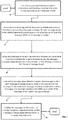
- a method is provided to process messages in a distributed messaging system by a message processing engine. At least one message target of the plurality of message targets operates according to a first standard and at least one message target of the plurality of message targets operates according to a second legacy standard. The method is performed by a message processing engine.
- a plurality of database commit indications is received, wherein each database commit indication indicates a change of a database record.
- a message envelope is generated for each message target to be notified operating according to the first standard and at least one message within each message envelope is generated.
- Message envelope dependencies between generated message envelopes for a same message target are computed.
- the message envelope dependencies define an order of the message envelopes for the same message target.
- Message dependencies between the messages within each message envelope are computed based at least on the standard of the messages of the respective message envelope and functions of the messages.
- the message dependencies define an order of the messages within each message envelope.
- the messages are sent to the respective message target in a sequence based on the message envelope dependencies and the message dependencies.
- a message system is provided which is arranged to implement the method above.
- a computer program product which implements the method above when being executed on a computer.
- a correct order of reservation messages is to be maintained for information flows in a GDS.
- a booking (reservation) at a database of a reservation system is modified in one or several change commits.
- a receiver is supposed to receive corresponding notifications of the booking modification in form of message exchange, namely of those change commits in order, in order to maintain system-wide data consistency. If the order of the change commits is changed, a discrepancy or inconsistency between the records among GDS instances and/or airline systems would occur. For example, a travel agency effects a flight cancellation and then rebooks the same flight on a different date, in two subsequent change commits.
- the customer i.e. the airline, needs to receive a cancel message first, and only then a message for the flight rebook, in order to have a correct synchronization. Therefore, a correct message sequence to the message target guarantees that the reservation is kept consistent between a booking source and a booking target, in order to avoid possible record discrepancy.
- Those multiple messages may have different message types (TTY, XML, or even future other types), different message functions (such as add or delete messages), sending methods (synchronous: the message is sent and a confirmation response is received in the same session, then session is closed after message delivery is known to be successful; or asynchronous: the session is closed at the sender side the message is sent, the confirmation response is sent back to the sender via another session), they may employ various transmission and network protocols (such as HTTP/SOAP) and also sending priorities which defines relations between the messages.
- legacy TTY message flows are still to be maintained by the message processing systems, i.e. the message processing systems have to be backward compatible as TTY flows and NDC flows will co-exist for synchronizing reservation records. In order to achieve robustness, backward compatibility and maintain stability, a new message processing mechanism is thus sought.
- this new message processing mechanism is to address the problem of message sequences in context of NDC reservations where multiple messages are triggered for one change commit which have a dependency relation to each other and thus need to be sent to message target in a well-defined order.
- the new message processing is also to address the problem to integrate NDC message flows and legacy TTY flows into one generic message processing framework that synchronizes booking record in a hybrid mode where TTY, XML and other message types are used.
- messages are processed in a distributed messaging system by a message processing engine.
- the distributed messaging system includes multiple types of message targets. At least one message target of the plurality of message targets operates according to a first standard and at least one message target of the plurality of message targets operates according to a second legacy standard.
- message target as used herein includes message destinations at various levels, including large systems such as a Global Distribution System (GDS), a Departure Control System (DCS), a wide area network (WAN) or local area network (LAN) of a certain organization such as an airline, as well as individual receiver stations.
- GDS Global Distribution System
- DCS Departure Control System
- WAN wide area network
- LAN local area network
- message targets operating according to the first standard are fully backward compatible and thus also operate according to the second standard, i.e. are arranged to process also messages in accordance with the second standard, while message targets operating according to the second standard are legacy message targets which do not implement the first standard and thus are unable to process messages according to the second standard.
- first standard mentioned herein in fact encompasses the first standard and the second standard and respective messages according to the first standard and the second standard, while reference to the second standard mentioned herein only encompasses message targets and messages according to the second standard.
- a plurality of database commit indications is received by the message processing engine.
- Each database commit indication indicates a change of a database record.
- a database commit indication is a container of all changes done to a database record such as a Passenger Name Record (PNR) between a retrieval query and a database commit finalizing the changes to the database record in the database located upstream to the message processing engine.
- PNR Passenger Name Record
- a message envelope is generated for each message target to be notified which operates according to the first standard and at least one message within each message envelope is generated at 4.
- a message envelope as used herein is considered as a special instance of a message that is not sent out but constitutes a reference grouping messages of a message envelope. This is similar to file systems where a directory or folder is a special instance of a file grouping all file located in the directory.
- the set of a message envelope and its messages is also referred to as a message list hereinafter.
- the message processing engine determines the message targets that are affected by a received database commit indication and generates a message envelope for each affected message target that is to be notified which operates according to the first standard. All messages within a message envelope are addressed to this message target and will be sent to the message target in a well-defined order.
- dependencies at two different levels are introduced herein, namely a message envelope dependency at the level of message envelopes and a message level dependency at the message level.
- Message envelope dependencies define an order among all message envelopes generated for a certain message target.
- Message dependencies define an order of the message within a certain message envelope.
- the generation of message envelopes and messages within the message envelopes also involves a computation of message envelope dependencies between the generated message envelopes for a same message target at 6 and of message dependencies between the messages within each message envelope at 8.
- a message envelope created for a database commit indication is computed to be dependent on other message envelopes already existing for the same message target at 6, i.e. message envelopes that have already been generated previously for that message target in response to the reception of an earlier database commit message.
- the message envelopes for a certain message target are ordered based on the reception order of database commit messages affecting the certain message target.
- message dependencies are computed at 8 based at least on the standard of the messages of the respective message envelope and functions of the messages.
- messages of the first standard can be classified into different functions (also referred to as "message name" below) such as add messages adding a record, delete messages deleting a record, split messages splitting a record, and others.
- Message dependency maps are maintained by the message processing engine in one or more database tables.
- the messages are sent by the message processing engine to the respective message target at 10 in a sequence based on the message envelope dependencies and the message dependencies.
- database systems generating the database commit indications may be present in the distributed messaging system.
- One type of database systems operates according to the first (new) standard and may output database commit indications already in compliance with the first standard (and for reasons of backward compatibility also database commit indications in compliance with the second standard).
- Another type of database systems still operates in accordance with the second legacy standard only and thus outputs legacy database commit indications only.
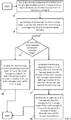
- a database commit indication received at 11 is a first database commit indication of the plurality database commit indications from a database system operating according to the first standard.
- this database commit indication is marked as a database commit indication according to the first standard, e.g. by a flag as explained further below.
- the message processing engine In response to receiving the database commit indication according to the first standard, the message processing engine generates a message envelope for each message target operating according to the first standard to be notified and generates at least one message within each message envelope.
- first message targets For each message target to be notified implementing the first standard, briefly referred to as first message targets, a respective first message envelope is generated at 12, each of which usually includes a plurality of interdependent first messages to be relayed to the respective first message target operating according to the first standard.
- the plurality of interdependent first messages is specified in accordance with the first standard (which generally also encompasses messages according to the second messages according to the second standard for reasons of backward compatibility as already explained above).
- second message targets For each message target to be notified implementing the second legacy standard, briefly referred to as second message targets, a (one per message target) second message to be relayed to the second message target operating according to the second standard is generated at 13.
- the second message is specified in accordance with the second legacy standard.
- the message processing engine then computes the message envelope dependencies between the first message envelope and other message envelopes already pending for the first message target at 14.
- the envelope dependencies define the order of the message envelopes for the first message target.
- the message processing engine further computes the message dependencies between the first messages of the first message envelope based at least on the first message target and the functions of the first messages at 15.
- the message dependencies define the order of the messages within each message envelope.
- the first messages are then sent to the first message target at 16 in a sequence based on the message envelope dependencies and the message dependencies.
- second messages generated for message targets implementing the second legacy standard are either sent out directly if no other message is pending for the message target concerned or a message level dependency is computed if other pending messages for the message target concerned are pending. In the latter case, second messages are sent out in a sequence in accordance with the message level dependency computer.
- a database commit indication received at 17 is a second database commit indication of the plurality database commit indications from a database system operating according to the second legacy standard.
- this database commit indication does not include a marking indicating the first standard and the message processing system thus recognizes the database commit indication to be an indication according to the second legacy standard.
- the message processing engine In response to receiving a second database commit indication of the plurality database commit indications from a legacy database system operating according to the second standard, the message processing engine generates, at 18, one message for each message target to be notified and potentially associates the message for each message target with an existing message envelope for the respective target, provided that at least one message envelope for the message target has been generated in the past and is still pending.
- the second database commit message is according to the second legacy standard, only respective messages according to the second legacy standards are generated by the message processing engine. In other words, a database commit indication according to the second legacy standard does neither cause a generation of message envelopes nor a generation of messages according to the first standard.
- the message processing engine For both, message targets operating according to the first standard and message targets operating according to the second legacy standard, the message processing engine generates one message formatted according to the second standard, hereinafter referred to as third message. For each message target without any pending message envelopes and/or messages, as determined at 19, the generated third message according to the second standard is sent immediately at 20, without any message dependency calculation.
- the generated message according to the second legacy standard is generally associated with the pending message envelope or, if no message envelope is pending, included in the sequence of pending messages.
- the message processing engine computes a message dependency of the third message based at least on the first message target and the fact that the third message is a message according to the second legacy standard.
- the computed message dependency defines the location of the third message in the sequence of the other messages of the pending message envelope for the message target considered.
- the message target considered operates according to the first standard, i.e. it is a first message target
- a first envelope with first messages may already be pending.
- the third message is generally included in the message envelope and a message dependency is computed relating the first messages with the third message.
- the first messages and the third message are sent to the first message target in a sequence based on the message envelope dependencies and the message dependencies.
- no message dependency is computed as the third message can be and is sent out directly.
- a given priority value is assigned at 24 to each of the plurality of interdependent messages depending at least on the standard of the message and a message type.
- the message dependency between the messages with each message envelope is computed at 25 based on the assigned priority values.
- An example of a table defining priority values will be given further below.
- a message is sent in response to determining that the message is independent from any other message within the message envelope of the message and the message envelope of the message is independent from any other message envelope.
- the message dependency of the message sent and the message dependency of the next message within the order of the message within the message envelope of the message are updated at 27. As will be explained in more detail below, this update might render the next message in the message envelope, if any, independent and thus ready to be sent.
- the message envelope dependency of the message envelope of the last message sent is updated and also the message envelope dependency of the next message envelope in the order of message envelopes is updated. This update renders the message envelope of the last message sent to be completely processed and the next message envelope to be independent and, consequently, the first message of the next message envelope to be independent as well and thus ready to be sent.
- the first standard is compliant with the New Distribution Capability (NDC) of the IATA.
- NDC New Distribution Capability
- the methodologies described herein extend e.g. a GDS reservation synchronization system from legacy TTY messages to a set of hybrid messages: TTY messages, XML messages and potentially other messages.
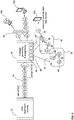
- FIG. 5 A high level view of message processing is depicted by FIG. 5 .
- Change commit indications B2 and B3 are received by a message generating and sequencing process 42 from a GDS reservation process 32.
- Change commit indication B2 indicates a cancellation of flight segment XX123 for reservation record B
- change commit indication B3 indicates an addition of flight segment XX123 to the reservation record B.
- the message generating and sequencing process 42 also receives change commits 34 for other reservation records kept by the GDS reservation process 32, such as change commits A0, A1, A2, and A3 relating to another reservation record A.
- change commit indications 34 are output by the GDS reservation process 32 in an ordered manner.
- this may not be always be the case, as exemplarily shown for the change commits related to reservation record A which are sent by the GDS reservation process 32 in the order A0, A3, A2, A1.
- GDS reservation process 32 may actually originate from two different database systems, namely a database system operating according to the first standard (e.g. managing reservation record B) and another database system operating according to the second legacy standard (e.g. managing reservation record A), as explained above.
- the message generating and sequencing process 42 recognizes that these change commit indications 34 of the exemplary "cancel-rebook" flow concerning reservation record B are change commits according to a state-of-the-art standard such as the NDC standard (i.e. the first standard as opposed to the second legacy standard).
- the change commit indications 34 of the exemplary "cancel-rebook" flow concerning reservation record B contain a special indicator identifying them as NDC change commit indications.
- the message generating and sequencing process 42 creates a message envelope 36 for each message target to be notified, here message target 49a operating in accordance with the first standard such as NDC, and one or multiple messages 38 belonging to the message envelope 36.
- the message envelope groups the one or multiple messages relating to the recognized NDC change commit 34 and to be sent to the message target 49a.
- the message generating and sequencing process 42 establishes dependencies at two levels, namely at a message envelope level as well as at a message level. The dependencies at both levels are also referred to as a dependency map hereinafter.
- a message envelope 36 The purpose of creating a message envelope 36 is to manage and determine whether and when messages of this message envelope can be sent, i.e. whether the messages of a message envelope 36 have no dependencies to other messages 38 that are generated for other change commits 34. In that sense, from a functional point of view, a message envelope 36 constitutes a reference node for all the messages 38 belonging to that message envelope 36 (message envelopes are therefore also abbreviated by "R" hereinafter).
- a newly created message envelope 36 is included in a potentially already existing message envelope level dependency map if one or more other message envelopes 36 for the reservation record concerned is/are already present for the message target 49a concerned.
- change commit indication B2 indicating the cancellation of flight segment XX123 is received by the message generating and sequencing process 42.
- the message generating and sequencing process 42 determines that message target 49a is to be notified and creates message envelope R2 and three messages 2.1 XML, 2.2 XML and 2.3 TTY belonging to the message envelope R2.
- change commit indication B3 is received.
- the message generating and sequencing process 42 again determines that message target 49a is to be notified and creates a further message envelope R3 with a set of messages 3.1 XML, 3.2 XML and 3.3 XML.
- a dependency between message envelopes R2 and R3 is established in that message envelope R3 depends on message envelope R2, as indicated by dotted arrow 37.
- a message level dependency map is established inside the message envelope 36.
- the message order inside message envelope R2 is 2.1 XML, 2.2 XML and 2.3 TTY and the message order inside message envelope R3 is 3.1 XML, 3.2 XML and 3.3 XML, as indicated by arrows 39.
- the message level dependency maps are established based on predefined message priority values, so that the messages with higher priority values located upstream in the message dependency map than messages with lower priority values.
- the message generating and sequencing process 42 receives the change commit indication B4 again related to reservation record B.
- Change commit indication B4 originates from a legacy reservation system and the message generating and sequencing process 42 determines that again message target 49a operating according to the first standard is to be notified.
- the message generating and sequencing process 42 generates a TTY message, message 4 TTY, and sorts it into the existing dependency map in accordance with the TTY framework mechanisms described by EP 2254046 B1 .
- a message level dependency is computed for message 4 TTY so that message 4 TTY depends on message 2.3 TTY (for reasons of presentation, it is assumed here that message 2.3 TTY could not have been sent yet, e.g. because other previous TTY messages related to reservation record B not shown in FIG. 5 are still pending for message target 49a).
- the dependency maps at the message envelope level and at the message level control the sequence of sending the messages to message targets 49.
- messages of a particular message envelope 36 are only sent to message targets 49 if the particular message envelope 36 does not depend on other message envelopes 36.
- messages 3.1 XML, 3.2 XML and 3.3 XML of message envelope R3 are only sent after message envelope R2 has been processed completely, i.e. all messages of message envelope R2 have been successfully sent to the message target 49a.
- the sending order of the messages is determined by the message level dependency. In the example of FIG.
- the message sending order within message envelope R2 is message 2.1 XML first, then message 2.2 XML and message 2.3 TTY at last.
- the message sending order is message 3.1 XML first, then message 3.2 XML and message 3.3 XML last.
- Message 4 TTY can be sent after message 2.3 TTY has been successfully been transmitted, i.e. message 4 TTY is sent in parallel to message 3.1 XML.
- Change commit indications 34 received from a legacy database system are generally converted into messages according to the second legacy standard only, in the example of FIG. 5 into TTY messages. In the event that no previous message is pending for a given message target concerned, these messages can be sent out immediately without computing a message envelope level dependency and message level dependency.
- reservation record A is maintained by a legacy database system and, thus, change commit indications A0, A1, A2 and A3 are only converted into TTY messages.
- the message generating and sequencing process 42 determines that message target 49b (which is a message target operating according to the second legacy standard) is to be notified and generates message 0 TTY which is then sent immediately since no other message is pending for message target 49b.
- change commit indication A1 triggers a generation of the message 1 TTY which is again sent immediately without computing a message level dependency, assuming that message 0 TTY has already been successfully delivered to the message target 49b.
- a message is determined to be eligible for being sent and to be passed to a message sending queue in response to determining that the message does not depend on the successful delivery of another message, wherein this dependency is defined by the dependency maps at the message envelope level and at the message level.
- this dependency is defined by the dependency maps at the message envelope level and at the message level.
- the particular message envelope 36 is considered to be completely processed and the dependency status at the message envelope level of the next message envelope depending on the particular message envelope 36 is updated from "dependent" to "independent". This renders the first message of message level dependency map of the next message envelope to be ready for sending and sending this first message of the next message envelope is initiated. This whole process continues in the same manner until all message of the message envelope have been sent to their message targets.
- TTY and XML used above are examples for different types of messages in accordance with different message standards.
- TTY is an example for a legacy standard employing one or more legacy message subtypes.
- XML is an example for a new-generation standard employing a plurality of message subtypes e.g. for different database manipulation functions.
- the different message types are generated for different types of message targets, namely message targets that implement the different message standards.
- the example of FIG. 5 shows two specific types of message targets, namely TTY message targets 49b implementing the legacy standard only (i.e. not the new-generation standard) and XML message targets 49a implementing the new-generation standard such as the NDC standard (as explained above, the XML message target 49a might potentially be backward compatible and thus capable of processing legacy messages as well).
- the present message processing system is not limited to processing messages of two message standards, but it extensible and generally suitable for processing messages according to one or more further standards and types for message targets 49c implementing such new standard.
- the concept of establishing dependencies at message envelope level and at message level can be utilized to handle any other new message standards and types, for example by assigning priority values to messages of the new standard/type that define a relation of the messages of the new standard/type to messages of the existing standards/types.
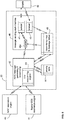
- FIG. 6 An exemplary process architecture for implementing the message processing engine 50 is illustrated by FIG. 6 .
- the system architecture includes the following components which are implemented by software using dedicated and/or shared hardware resources:
- the NDC reservation engine 40 creates a new database record e.g. in response to a new travel reservation or updates an existing data record in response to a change of an existing travel reservation.
- the creation of the new database record and the update of the existing database record respectively, generates change commit indications which the NDC reservation engine 40 publishes (arrow N01) to the NDC message generating and sequencing process 42.
- All publications originating from the NDC reservation engine 42 are marked (e.g. flagged) as NDC reservation change commits, i.e. as database change commit indications originating from the NDC reservation engine 40.
- the legacy GDS reservation engine 42 may create a new database record e.g. in response to a new travel reservation or updates an existing data record in response to a change of an existing travel reservation.
- the creation of the new database record and the update of the existing database record respectively, generate a change commit indication which the legacy GDS reservation engine 42 publishes (arrow N02) to the NDC message generating and sequencing process 42.
- the change commit indications published by the legacy GDS reservation engine 40 are not marked or flagged.
- the NDC message generating and sequencing process 42 In response to receiving a change commit indication from the legacy GDS reservation engine 42, the NDC message generating and sequencing process 42 generates only TTY messages for message targets to be notified.
- the NDC message generating and sequencing process 42 In response to receiving database change commit indications from the NDC reservation engine 40, the NDC message generating and sequencing process 42 generates message envelopes for NDC message targets to be notified and messages associated with the respective message envelopes. To this end, the NDC message generating and sequencing process 42 retrieves message priority values from the message priority table 44 (arrow N05 representing retrieval requests and arrow N06 representing retrieval responses), as well as retrieves information about current message envelopes and associated messages from the dependency map and message table 45 and inserts newly generated message envelopes and associated messages into the dependency map and message table 45 (arrow N03 representing retrieval and insertion requests and arrow N04 representing retrieval and insertion responses).
- the interactions of the NDC message generating and sequencing process 42 with the message priority table 44 and dependency map and message table 45 will be explained further below on the basis of a particular example.
- the NDC message generating and sequencing process 42 may determine that a particular message does not depend on any other message which means that this message is ready to be sent to the message target 49. In this situation, the NDC message generating and sequencing process 42 retrieves the particular message from the dependency map and message table 45 via operations N03 (retrieval request) and N04 (retrieval response), generates a message queue item representing the particular message and puts the message queue item to the message queue 46a of the message sending state machine 46 via operation N07.
- the message queue item is dequeued by the message sending state machine 46 by operation N08 and sent (arrow N09) by the message sender subprocess 47 to the correct message target 49.
- a message response (such as an acknowledgement of receipt) may be received (arrow N10) from the message target 49 by the message response receiver subprocess 48 of the message sending state machine 46.
- the message sending state machine 46 updates the message dependency status of the particular message in the dependency map and message table 45 (arrow N11). This update may render the next message or messages to be independent from any other message, i.e. sending of this next message or these next messages can be initiated next. To this end, the message that has become independent by successful delivery of the particular message beforehand is retrieved (arrow N12) by the message sending state machine 46 and queued into the message queues 46a. Operations N08, N09 and N10 are then executed in the same manner as described above.
- message priority table 44 is as follows: Message Target Message Type Message Name Priority Value YY XML DEL 90 YY TTY TTY 50 YY XML ADD 10 YY NEW GEN NULL ZZ XML DEL 95 ZZ TTY TTY 90 ZZ XML ADD 70 ZZ XML SPLIT 0
- the column "Message Target” defines the message destinations, i.e. lists all known message targets 49.
- the column "Message Type” indicates the message standard, i.e. either according to a legacy standard such as message type TTY or according to a current standard such as NDC which uses XML messages. Depending on the message standard/type, there may be messages of different message subtypes which are indicated in the column "Message Name”. As shown in the above example, the legacy standard may not provide for different message types so that all TTY messages are referred to as message name TTY. However, the new standard using XML-type messages may defines different messages such as delete messages ("DEL”) and add messages ("ADD"). Still a third standard (“NEW”) may define generic messages ("GEN").
- the column "Priority Value” defines the message priority value for all the messages of a given message type and message name to be addressed to a particular message target. Hence, the priority values allow differentiating between messages on the levels of message target, standard and message subtype/name.
- the values in the "Priority Value” column have the following meanings:
- a priority value of 0 means that the message is not to be sent out at all. This is sensible e.g. for cases where messages with a certain function are already specified by the first standard, but not yet supported by actually deployed message targets. In the above table 44 example, this is e.g. the case for the SPLIT message which is already generated internally by the message processing engine 50, but not (yet) sent out due to lack of implementation at the message targets.
- NULL no priority value
- the message can be sent when there is no dependency at the level of message envelopes. Messages of an envelope are interdependent according to their priority values priority values from higher value to lower value.
- the message priority table 44 is generally static, but configurable at any time. New target can be added, new message types can be added for the various targets and also new message names can be added for a given message type. Moreover, existing rows can be updated or deleted, e.g. when a particular target is to be removed. The priority values can be reconfigured as well.
- the message priority table 44 is not hosted by database system, but stored in form of memory cache file of e.g. a batch server.
- the cache file can be synchronized with any server as required or adequate. For example, changes to the message priority table 44 may be made by a content management system of the batch server and then broadcast to all deployed servers.
- the dependency map and message table 45 is highly dynamic because the dependency map and message table 45 represents the current status of the message processing system at any given point of time.
- the dependency map and message table 45 is hosted by a database system.
- the message processing system described herein may run multiple live sessions for reading, inserting and updating the dependency map and message table 45 in real-time.
- An exemplary definition of the columns of the dependency map and message table 45 is as follows: Column Name Definition ID Message identifier number. P Reference key identifying the associated reservation record of the NDC reservation engine 40 or legacy GDS reservation engine 41. P-Key-Order and/or a string of letters and numbers I Change commit number: P(i) represents the i th database change commit for reservation record P J Message target RD_STAT Dependency status at message envelope level D_STAT Dependency status at message level D_ID Dependency identifier indicating the message envelope or message on which the message envelope or message depends N Message name TYPE Message type Message The generated message itself. M j P i , n x represents the x th message to be sent to target j, generated for change commit i of reservation record P and the message name is n.
- Table entries represent message envelopes if the RD_STAT cell is filled and the D_STAT cell is kept empty.
- the message envelope for the messages list of M j P i , n x is denoted as R j P i .
- the message processing system 50 is deployed as an array of servers 52 with respective potentially multiple process instances 54, as shown in FIG. 7 .
- Load balance features may distribute the message processing loads across the process instances 54 of a server 52 and/or across the servers 52 of the server array. Therefore, the message processing system 50 is extendable in order to cope with a potential traffic increase.
- the message processing system 50 features at least one database server 56 (additional databases may be present for reasons of redundancy and/or performance) maintaining the dependency map and message table 45. All process instances 54 are connected to the database server 56. Globally seen, the message processing system 50 constitutes one stage in an information processing chain of a larger distributed system comprising all components shown in FIG. 6 and further components such as travel agency clients. On the other hand, the message processing system 50 performs parallel processing, as each individual process instance 54 is capable of processes one record envelope at a time.
- the NDC message generating and sequencing process 42 is the main process of the message processing system 50.
- the NDC message generating and sequencing process 42 contains the legacy TTY message sequencing engine 43 and interacts with message priority table 44 and dependency map and message table 45.
- the operations N01 to N07 shown by FIG. 6 may be implemented by the exemplary process flowchart of FIG. 8 as described next.
- the NDC message generating and sequencing process 42 firstly builds, at 604, a list of message targets 49 which are affected by the database change commit and thus will receive one or more messages informing the target about the reservation record change occurred in the NDC reservation engine 40 or the legacy GDS reservation engine 41.
- messages for different targets 49 are not of dependent relationship, i.e. a first message to a first target can be sent irrespective of the status of a second message directed to a second target.
- message envelope level dependencies are only established between message envelopes for the same message target and, naturally, message level dependencies are only established between messages of a message envelope and thus between message for one and the same message target. Consequently, as shown by FIG. 8 , the NDC message generating and sequencing process 42 processes the message targets 49 in the list one after another.
- a message dependency map is built or extended by either generating a new message envelope with one or more messages (right-hand side of FIG. 8 ) or a legacy message (left-hand side of FIG. 8 ) for each message target to be notified by the following activities shown by FIG. 8 .
- the NDC message generating and sequencing process 42 checks whether the end of the message target list established in 604 has been reached. If this is the case, the process of FIG. 8 terminates as the received database change commit indication has been processed completely. If this is not the case, the process proceeds to the next message target 49 on the message target list, reads this next target at 608 and determines whether the next target operates according to the first standard (i.e. NDC in this example) or according to the second legacy standard (i.e. only processes TTY messages in this example). The process then checks at 610 whether the received database change commit indication is marked as an NDC commit, i.e. whether it is a commit indication of the NDC reservation engine 40 or the legacy GDS reservation engine 41.
- the two determinations of boxes 608 and 610 determine whether the current receiver is processed via the left-hand side or via the right-hand side of FIG. 8 .
- the "yes branch” of box 610 is chosen.
- the "no branch” of box 610 is chosen. Both branches of the overall process depicted by FIG. 8 use the dependency map and message table 45.
- the left-hand side "no branch” of box 610 stores message level dependencies as well as the messages themselves in the dependency map and message table 45, unless TTY messages are sent directly as no other previously pending messages for the message target considered are pending.
- the right-hand "yes branch” of box 610 stores dependencies at message envelope level and at the message level as well as the messages themselves in the dependency map and message table 45
- the NDC message generating and sequencing process 42 For legacy / non-NDC message targets and/or legacy change commit indications, the NDC message generating and sequencing process 42, more specifically the TTY sequencing engine 43, generates a TTY message by activities 612 to 624.
- the TTY message is formatted at 612, a TTY dependency item it initialized at 614.
- message priority values for TTY messages are retrieved from the message priority table 44. If 616 determines that the current TTY message is the first message for the target picked from the lists at 606, i.e. there are no previous TTY messages pending for this target, the TTY message is passed to the message sending state machine 46 and directly put into the queue 46a.
- the dependency map and message table 45 is then committed at 620 and the overall process moves to the next target on the target list at 626. If the end of the target list is now reached, as verified at 606, the process terminates.
- the NDC message generating and sequencing process 42 computes a message level dependency status of the TTY message at 622, i.e. the parameter D_STAT is set for the TTY message. If D_STAT is computed to be "N", i.e. no dependency exists for the TTY message, the TTY message can be directly sent to the message target 49. Thus, similarly as described above, the TTY message is passed to the message sending state machine 46 and directly put into the queue 46a at 618 and the process proceeds as described above. If operation 624 determines any other dependency state of the message than "N", the dependency map and message table 45 is then committed at 620 and the overall process moves to the next target on the target list at 626.
- the NDC message generating and sequencing process 42 For message targets 49 that implement the NDC standard, as determined at 608, and provided that the currently processed change commit indication is NDC flagged, as determined at 610, the NDC message generating and sequencing process 42 generates one or more NDC messages by activities 612 to 624 of FIG. 8 .
- one or more messages are generated in accordance with the first standard (here: NDC on XML basis) and/or in accordance with the second standard (here: legacy message standard on TTY basis).
- the operations 630 and 632 are functionally similar to operations 614 and 616, but - different to 614 and 616 - relates to a dependency chain at the message envelope level.
- a message envelope for the one or more NDC messages is created and the dependency status of the message envelope, RD_STAT, is initialized.
- the check at 632 determines whether the created message envelope is the first message envelope for the current target 49 considered in the current loop in the message envelope dependency map stored in the dependency map and message table 45.
- the newly created message envelope has no dependency and the parameter RD_STAT is then set to N accordingly at 634.
- the parameter RD_STAT is then set to D accordingly at 636.
- the process 638 is called to store the message envelope present in the dependency map and message table 45.
- the process 640 is called to build a message dependency chain of M j P i , n x , i.e. the dependencies of the messages within the message envelope directed to the target 49 of the current loop. Operation 640 makes use of the predefined message priority values in the message priority table 44.
- FIG. 9 A detailed flowchart diagram of operation 640 is illustrated in FIG. 9 .
- the inputs of operation 640 of FIG. 8 as depicted at 702 of FIG. 9 , are:
- the outputs are the list of dependency items that are built for the inputs.
- the first processes, 704 and 706, aims to read the message priority table 44 and find out the priority values of the messages M j P i , n x in the message list.
- the input message list then is sorted from higher priority values to lower priority values.
- the sorted message list is denoted as M j P i , n x ′ .
- check 710 first determines if the currently considered message has a valid priority value defined in message priority table 44. In response to determining that the currently considered message has a valid priority value at 710, the further check 720 is called to determine whether the message is first message in the message list, M j P i , n 1 . If yes, the D_ID of message M j P i , n 1 ′ is assigned to the ID of R j P i , at 722. It is then further checked 724 if the RD_STAT value of R j P i is N or V, i.e. if the message envelope is independent from other message envelopes.
- the D_ID of message M j P i , n x ′ is assigned to the ID of the message M j P i , n x ⁇ 1 ′ , at 730.
- a further check 732 is then performed in order to determine if the priority value of the message of the current loop equals to 0.
- a priority value of 0 means that the message is not to be sent out at all.
- D_STAT of M j P i , n x ′ is set to V. If not, D STAT of M j P i , n x ′ is set to D in the operations 734 and 736, respectively.
- the process of FIG. 9 then moves to the next message in the message list at 738.
- the D_ID is always set to the ID of R j P i at 712 (which is identical with operation 722) and D_STAT of the message is set to D at 7126 or to V at 718, depending on whether RD_STAT of the message envelope is determined to be N or V at 714.
- the process of FIG. 9 then moves to the next message in the message list at 738.
- RD_STAT of the message envelope is determined at 642 to be not N
- a further check 646 is performed in order to determine if a TTY message is M j P i , n 1 ′ in the message dependency map for the message target 49 of the current loop. If this is affirmative, the message dependency map is updated at 648. More specifically, M j P i , n x ′ is updated in order to link the D_ID of M j P i , n 1 ′ to the TTY message of P ( i - 1) or to the message envelope R j P i ⁇ 1 , if no TTY is present, at 648.
- the NDC message generating and sequencing process 42 can be further explained with reference to an exemplary update history of the message list, for example in the illustrative Table I and Table II set out below, both of which are examples of the dependency map and message table 45 at a particular point of time.
- Message envelopes AAAAAA(0) and BBBBBB(0) are the first respective first message envelopes of the reservation records AAAAAA and BBBBBB.
- the table entries with the ID 001 and 002 are each detected as being the "first for sequence” in the check 632 in FIG. 8 .
- AAAAAA(1) is not the first message envelope, but the first message envelope related to the reservation record AAAAAA where at least one message is generated for the message target ZZ.
- the message envelope table entry with the ID 004 is detected as "first for sequence" at check 632 in FIG. 8 as well.
- M ZZ B 0 , TTY 1 ′ is the first message in the message list M ZZ B 0 , n x ′ , but it is computed as no need to be sent (for example, because this TTY message has no functional effects on the message target, or the message target is known to be unsubscribed to TTY message, etc., see EP 2254046 B1 , para. [0032] and Figure 7 ), hence its D_STAT is finally updated as V.
- message M ZZ B 0 , ADD 2 ′ is then sent and its D_STAT is updated to S.
- Messages M ZZ A 1 , TTY 2 ′ , M YY B 1 , TTY 1 ′ and M YY A 1 , XML 1 are computed and they are ready to be put into the message queue 46 a for sending.
- two further message lists namely M YY A 2 , TTY 1 , M YY A 2 , DEL 2 , M YY A 2 , NDC 3 and M ZZ A 2 , TTY 1 , M ZZ A 2 , SPLIT 2 , are generated by the NDC message generating and sequencing process 42 for change commit indication AAAAAA(2).
- one message list namely M YY A 10 , TTY 1 , M YY A 10 , ADD 2
- AAAAAA change commit indication
- M YY B 2 TTY 1 , M YY B 2 , ADD 2 , M YY B 2 , DEL 3
- Table II depicts the dependency map and message table 45 after all these message lists have been processed by the NDC message generating and sequencing process 42. Table II.
- the sorted list M YY A 2 , n x ′ is made based on the priority value definition of message priority table 44, as derivable from the table entries with IDs 019, 022 and 023.
- Their message envelope R YY A 2 is stored as table entry with ID 017.
- the two messages M YY A 2 , DEL 1 ′ and M YY A 2 , NDC 3 ′ have the same dependency parameter D_ID that links both messages to R YY A 2 , as caused by checks in 710 and 720 as well as operations 712 and 722 ( Fig. 9 ).
- the message envelope R ZZ A 2 and the sorted list M ZZ A 2 , n x ′ are stored as table entries with IDs 016, 018 and 021.
- M ZZ A 2 , TTY 1 ′ has its dependency status D_ID linked to M ZZ A 1 , TTY 2 ′ instead of R ZZ A 2 , having been output by checks 642 and 646 as well as operation 648 in FIG. 8 .
- the dependency status D ID of M ZZ A 2 , SPLIT 2 ′ is computed as 018 in operation 730 in FIG. 9 ), but the message status D_STAT is computed as V due to the check 732 and operation 736 ( FIG. 9 ).
- the message envelope R YY B 2 and the message list M YY B 2 , n x ′ are stored as the table entries with IDs 013, 014, 015 and 020.
- Message envelope R YY A 10 and the message list M YY A 10 , n x ′ are stored as table entries with IDs 024 to 026.
- the RD_STAT of the message envelope R YY A 10 is computed as U (Unknown) at 630 in FIG. 8 (e.g.
- the message sending state machine 46 is responsible for sending messages that are queued into the message queues 46a, updating the dependency status D_STAT of these messages from N to S as well as updating the status of their message envelopes and remaining messages in the message envelopes held in the dependency map and message table 45 after they have been sent to the target 49, i.e. in response to receipt confirmations received from the message targets, and finally putting further messages eligible for sending to the message queues 46a.
- the message sending state machine 46 is active whenever a message is present in the message queue 46a.
- the message sending state machine 46 dequeues the message and sender process 47 sends the message at 802 through an established communication channel defined for the message type to the correct message target 49.
- Legacy TTY messages and XML message may be sent through different communication channels (e.g. TTY messages in an asynchronous manner using a dedicated channel and XML messages in a synchronous manner by using SOAP/HTTP).
- the receiver process 48 checks at 804 whether a confirmation response from the target system (for synchronous mode) or e.g.
- a message is marked as "Sent" (S) at 812 only when a valid confirmation response is received from the message target 49 and no error code/information is presented inside the confirmation response.
- the retry operation constituted by operations 806, 808 and 810 is a secured method to repeat send operations for unsuccessfully delivered messages (no valid confirmation response received within a given time interval after message transmission or confirmation response with error code received), in asynchronous mode.
- messages exceeding a given maximum retry number are marked and stored in the queue for recovery at if they are not finally sent out (not shown by FIG. 10 ).
- the operation 820 is called to select eligible messages for sending: all messages whose D_ID is set to the ID of M j P i , n y ′ (i.e. all messages that depend on the current message that has been successfully delivered to the target) are selected from the dependency map and message table 45, their dependency status D_STAT is set to N and these messages are put into the message queue 46a for sending.
- the operation 822 is invoked to commit the dependency map and message table 45 in order to store the most recent changes to the message lists M j P i , n x ′ and M j P i + 1 , n x ′ .
- the message sending state machine 46 can be further illustrated with reference to Table II already discussed above. Firstly, dependency maps are updated after the successful sending of M ZZ A 1 , TTY 2 ′ , M ZZ B 1 , TTY 1 ′ and M YY A 1 , XML 1 ′ , as shown in FIG. 11 with Table III, depicting the state of the dependency map and message table 45 at that point.
- the message envelope table entry in the dependency map and message table 45 is updated to complete the message sending process for the current message envelope R j P i .
- the following table entries are updated at operation 816 in FIG. 10 , as visualized by arrows in FIG. 11 :
- the RD_STAT of next message envelope R j P i + 1 is updated to N whenever the message envelope R j P i on which message envelope R j P i + 1 depends is set to S.
- transitions are the following transitions (again indicated by the respective arrows in FIG. 11 ):
- the first messages of the updated message envelopes i.e. messages that have dependency on R j P i + 1 , are updated and queued for sending at operation 818 in FIG. 10 .
- the following messages are marked to be not dependent anymore:
- the dependency maps defined by the dependency map and message table 45 after the first messages mentioned above (messages with IDs 014, 019, 023 and 018) are successfully sent are shown in Table IV of FIG. 12 .
- the operation 820 of FIG. 10 updates the message level dependency status of the next messages in the respective message envelopes based on the message level dependency chain being defined by the dependency map and message table 45.
- the following dependency updates are done at the message level:
- FIG. 13 The dependency maps defined by the dependency map and message table 45 are shown in FIG. 13 with Table V after all messages mentioned above are sent.
- FIG. 13 also indicates the following updates of the message envelope level dependencies and message level dependencies:
- FIG. 14 is a diagrammatic representation of a computer system 100 which provides the functionality of message processing system 50 described above.
- the computer system 100 may include a set of instructions to cause the computer system 100 to perform any of the methods and activities of the message processing system 50 as elaborated above.
- the computer system 100 includes one or more processors 101, a main memory 102 and a network interface device 103 which communicate with each other via a bus 104.
- the at least one processor 101 includes at least one CPU cache holding the program instructions for performing the message processing methodologies described herein.
- the computer system 100 may further include a static memory 105 and a disk-drive unit 106.
- a video display 107, an alpha-numeric input device 108 and a cursor control device 109 constitute a man-machine interface in order to operate the computer system 100.
- the network interface device 103 is wired and/or wireless interface which connects the message processing system 50 to any number and sorts of other systems, including NDC reservation engine 40, legacy GDS reservation engine 41 and message targets 49.
- the message targets 49 may reside on the Internet and/or any other network.
- the network interface device 103 utilizes either standard communication protocols such as the HTTP/TCP/IP protocol stack, IEEE 802.11 and/or proprietary communication protocols.
- the instructions may implement the functions of the message processing system to process incoming database change commits, to generate message envelopes and messages as well as to queue and send messages as described in detail above.
- a machine-readable medium on which the software 110 resides may also be a non-volatile data carrier 111 (e.g. a non-removable magnetic hard disk or an optical or magnetic removable disk) which is part of disk drive unit 106.
- the software 110 may further be transmitted or received as a propagated signal 112 via the Internet through the network interface device 103.
- the methodologies described herein facilitate the generation of dependency chain at both, message envelope level and message level.
- the dependency relations between the message envelopes and messages are configurable by (re-)defining given message priority values.
- a generic framework is presented that supports both legacy message flows e.g. based on TTY messages as well as more sophisticated hybrid message flows according to a state-of-the art standard such as NDC.
- the framework is extendible as future even more sophisticated standards and message flows can be seamlessly added.
Landscapes
- Engineering & Computer Science (AREA)
- Theoretical Computer Science (AREA)
- Software Systems (AREA)
- Physics & Mathematics (AREA)
- General Physics & Mathematics (AREA)
- Business, Economics & Management (AREA)
- General Engineering & Computer Science (AREA)
- Tourism & Hospitality (AREA)
- Development Economics (AREA)
- Economics (AREA)
- Entrepreneurship & Innovation (AREA)
- Human Resources & Organizations (AREA)
- Marketing (AREA)
- Operations Research (AREA)
- Quality & Reliability (AREA)
- Strategic Management (AREA)
- General Business, Economics & Management (AREA)
- Information Retrieval, Db Structures And Fs Structures Therefor (AREA)
Applications Claiming Priority (3)
| Application Number | Priority Date | Filing Date | Title |
|---|---|---|---|
| US15/617,180 US10284515B2 (en) | 2017-06-08 | 2017-06-08 | Multi-standard message processing |
| FR1755105A FR3067490B1 (fr) | 2017-06-08 | 2017-06-08 | TRAITEMENT DE MESSAGES MULTlNORMES |
| PCT/EP2018/065192 WO2018224659A1 (en) | 2017-06-08 | 2018-06-08 | Multi-standard message processing |
Publications (2)
| Publication Number | Publication Date |
|---|---|
| EP3513292A1 EP3513292A1 (en) | 2019-07-24 |
| EP3513292B1 true EP3513292B1 (en) | 2021-10-20 |
Family
ID=62486604
Family Applications (1)
| Application Number | Title | Priority Date | Filing Date |
|---|---|---|---|
| EP18728422.9A Active EP3513292B1 (en) | 2017-06-08 | 2018-06-08 | Multi-standard message processing |
Country Status (7)
| Country | Link |
|---|---|
| EP (1) | EP3513292B1 (https=) |
| JP (1) | JP7083850B2 (https=) |
| KR (1) | KR102321860B1 (https=) |
| CN (1) | CN110709820B (https=) |
| AU (1) | AU2018280855B2 (https=) |
| ES (1) | ES2898755T3 (https=) |
| WO (1) | WO2018224659A1 (https=) |
Families Citing this family (1)
| Publication number | Priority date | Publication date | Assignee | Title |
|---|---|---|---|---|
| CN112260958B (zh) * | 2020-10-20 | 2023-08-18 | 中国民航信息网络股份有限公司 | 一种请求报文响应方法及装置 |
Citations (1)
| Publication number | Priority date | Publication date | Assignee | Title |
|---|---|---|---|---|
| EP3073682A1 (en) * | 2015-03-23 | 2016-09-28 | Samsung Electronics Co., Ltd. | Method and apparatus for transmitting integrated messages |
Family Cites Families (15)
| Publication number | Priority date | Publication date | Assignee | Title |
|---|---|---|---|---|
| US20020077134A1 (en) * | 2000-12-20 | 2002-06-20 | Nortel Networks Limited World Trade Center Of Montreal | Dual protocol GPRS mobile terminal and method therefor |
| GB0129672D0 (en) | 2001-12-12 | 2002-01-30 | Ibm | Method and system for preserving message order when parallel processing messages |
| US20030158883A1 (en) * | 2002-02-04 | 2003-08-21 | Drudis Antoni N. | Message processing |
| US7502843B2 (en) * | 2004-12-30 | 2009-03-10 | Microsoft Corporation | Server queuing system and method |
| WO2006080026A1 (en) | 2005-01-27 | 2006-08-03 | Infosys Technologies Limited | Protocol processing device and method |
| US7680793B2 (en) | 2005-10-07 | 2010-03-16 | Oracle International Corporation | Commit-time ordered message queue supporting arbitrary read and dequeue patterns from multiple subscribers |
| GB0524021D0 (en) | 2005-11-25 | 2006-01-04 | Ibm | A system for preserving message order |
| US8200765B2 (en) | 2009-01-12 | 2012-06-12 | International Business Machines Corporation | Preserving message order using a message ordering manager |
| ES2520941T3 (es) * | 2009-05-18 | 2014-11-12 | Amadeus S.A.S. | Método y sistema para gestionar el orden de mensajes |
| US8495656B2 (en) | 2010-10-15 | 2013-07-23 | Attivio, Inc. | Ordered processing of groups of messages |
| CN104428754B (zh) * | 2012-08-02 | 2018-04-06 | 艾玛迪斯简易股份公司 | 在分布式并行环境中对异步消息排序的方法、系统和计算机程序产品 |
| EP2693337B1 (en) | 2012-08-02 | 2017-05-17 | Amadeus S.A.S. | Method, system and computer program products for sequencing asynchronous messages in a distributed and parallel environment |
| KR101416280B1 (ko) | 2013-01-15 | 2014-07-08 | 주식회사 엘지씨엔에스 | 이벤트 처리 시스템 및 방법 |
| EP2811437A1 (en) | 2013-06-07 | 2014-12-10 | Accenture Global Services Limited | Computer system, computer-implemented method and computer program product for sequencing incoming messages for processing at an application |
| FR3021790B1 (fr) * | 2014-05-30 | 2022-10-14 | Amadeus Sas | Procede et systeme d'echange de contenu |
-
2018
- 2018-06-08 CN CN201880037254.7A patent/CN110709820B/zh active Active
- 2018-06-08 AU AU2018280855A patent/AU2018280855B2/en active Active
- 2018-06-08 KR KR1020197037423A patent/KR102321860B1/ko active Active
- 2018-06-08 ES ES18728422T patent/ES2898755T3/es active Active
- 2018-06-08 JP JP2019567541A patent/JP7083850B2/ja active Active
- 2018-06-08 WO PCT/EP2018/065192 patent/WO2018224659A1/en not_active Ceased
- 2018-06-08 EP EP18728422.9A patent/EP3513292B1/en active Active
Patent Citations (1)
| Publication number | Priority date | Publication date | Assignee | Title |
|---|---|---|---|---|
| EP3073682A1 (en) * | 2015-03-23 | 2016-09-28 | Samsung Electronics Co., Ltd. | Method and apparatus for transmitting integrated messages |
Also Published As
| Publication number | Publication date |
|---|---|
| JP2020524329A (ja) | 2020-08-13 |
| KR20200012901A (ko) | 2020-02-05 |
| CN110709820B (zh) | 2023-08-25 |
| AU2018280855B2 (en) | 2021-09-09 |
| WO2018224659A1 (en) | 2018-12-13 |
| KR102321860B1 (ko) | 2021-11-05 |
| AU2018280855A1 (en) | 2019-12-05 |
| CN110709820A (zh) | 2020-01-17 |
| ES2898755T3 (es) | 2022-03-08 |
| JP7083850B2 (ja) | 2022-06-13 |
| EP3513292A1 (en) | 2019-07-24 |
Similar Documents
| Publication | Publication Date | Title |
|---|---|---|
| CN102414663B (zh) | 用于管理报文排序的方法和系统 | |
| US7263698B2 (en) | Phased upgrade of a computing environment | |
| US9373102B2 (en) | System and method using a simplified XML format for real-time content publication | |
| US10728205B2 (en) | Multi-standard message processing | |
| EP1723584A1 (en) | Intelligent state engine system | |
| JP6198825B2 (ja) | 分散並列環境における非同期メッセージのシーケンシングの方法、システム、およびコンピュータプログラム製品 | |
| US20070234369A1 (en) | Policy based message aggregation framework | |
| US20140040194A1 (en) | Method, system and computer program product for sequencing asynchronous messages in a distributed and parallel environment | |
| CN111882258A (zh) | 物流服务的高性能区块链架构 | |
| JP6067714B2 (ja) | イベントデータを取得するスケールアウトシステム | |
| EP3513292B1 (en) | Multi-standard message processing | |
| US20140316830A1 (en) | Synchronized Resource Planning | |
| US7454425B2 (en) | System and method for assembling timing data in a multi-layer server environment | |
| EP1952318B1 (en) | Independent message stores and message transport agents | |
| JPH06290098A (ja) | 分散データベース処理方法 | |
| US20220269557A1 (en) | Corrupted data management in a system of services | |
| US20020133624A1 (en) | System and process for routing information in a data processing system | |
| EP3416109A1 (en) | Baggage messaging handling system and method | |
| JP2003316947A (ja) | 電子バンキングサービスシステム、電子バンキングサービス方法、この方法をコンピュータに実行させるプログラム、このプログラムを記録した記録媒体 | |
| HK1181579A (en) | Distributing multi-source push notifications to multiple targets |
Legal Events
| Date | Code | Title | Description |
|---|---|---|---|
| STAA | Information on the status of an ep patent application or granted ep patent |
Free format text: STATUS: UNKNOWN |
|
| STAA | Information on the status of an ep patent application or granted ep patent |
Free format text: STATUS: THE INTERNATIONAL PUBLICATION HAS BEEN MADE |
|
| PUAI | Public reference made under article 153(3) epc to a published international application that has entered the european phase |
Free format text: ORIGINAL CODE: 0009012 |
|
| STAA | Information on the status of an ep patent application or granted ep patent |
Free format text: STATUS: REQUEST FOR EXAMINATION WAS MADE |
|
| 17P | Request for examination filed |
Effective date: 20190416 |
|
| AK | Designated contracting states |
Kind code of ref document: A1 Designated state(s): AL AT BE BG CH CY CZ DE DK EE ES FI FR GB GR HR HU IE IS IT LI LT LU LV MC MK MT NL NO PL PT RO RS SE SI SK SM TR |
|
| AX | Request for extension of the european patent |
Extension state: BA ME |
|
| DAV | Request for validation of the european patent (deleted) | ||
| DAX | Request for extension of the european patent (deleted) | ||
| GRAP | Despatch of communication of intention to grant a patent |
Free format text: ORIGINAL CODE: EPIDOSNIGR1 |
|
| STAA | Information on the status of an ep patent application or granted ep patent |
Free format text: STATUS: GRANT OF PATENT IS INTENDED |
|
| RIC1 | Information provided on ipc code assigned before grant |
Ipc: G06Q 10/10 20120101ALI20210414BHEP Ipc: G06Q 10/02 20120101ALI20210414BHEP Ipc: G06F 9/54 20060101AFI20210414BHEP |
|
| INTG | Intention to grant announced |
Effective date: 20210429 |
|
| GRAS | Grant fee paid |
Free format text: ORIGINAL CODE: EPIDOSNIGR3 |
|
| GRAA | (expected) grant |
Free format text: ORIGINAL CODE: 0009210 |
|
| STAA | Information on the status of an ep patent application or granted ep patent |
Free format text: STATUS: THE PATENT HAS BEEN GRANTED |
|
| AK | Designated contracting states |
Kind code of ref document: B1 Designated state(s): AL AT BE BG CH CY CZ DE DK EE ES FI FR GB GR HR HU IE IS IT LI LT LU LV MC MK MT NL NO PL PT RO RS SE SI SK SM TR |
|
| REG | Reference to a national code |
Ref country code: GB Ref legal event code: FG4D |
|
| REG | Reference to a national code |
Ref country code: CH Ref legal event code: EP |
|
| REG | Reference to a national code |
Ref country code: IE Ref legal event code: FG4D |
|
| REG | Reference to a national code |
Ref country code: DE Ref legal event code: R096 Ref document number: 602018025314 Country of ref document: DE |
|
| REG | Reference to a national code |
Ref country code: AT Ref legal event code: REF Ref document number: 1440487 Country of ref document: AT Kind code of ref document: T Effective date: 20211115 |
|
| REG | Reference to a national code |
Ref country code: LT Ref legal event code: MG9D |
|
| REG | Reference to a national code |
Ref country code: NL Ref legal event code: MP Effective date: 20211020 |
|
| REG | Reference to a national code |
Ref country code: ES Ref legal event code: FG2A Ref document number: 2898755 Country of ref document: ES Kind code of ref document: T3 Effective date: 20220308 |
|
| REG | Reference to a national code |
Ref country code: AT Ref legal event code: MK05 Ref document number: 1440487 Country of ref document: AT Kind code of ref document: T Effective date: 20211020 |
|
| PG25 | Lapsed in a contracting state [announced via postgrant information from national office to epo] |
Ref country code: RS Free format text: LAPSE BECAUSE OF FAILURE TO SUBMIT A TRANSLATION OF THE DESCRIPTION OR TO PAY THE FEE WITHIN THE PRESCRIBED TIME-LIMIT Effective date: 20211020 Ref country code: LT Free format text: LAPSE BECAUSE OF FAILURE TO SUBMIT A TRANSLATION OF THE DESCRIPTION OR TO PAY THE FEE WITHIN THE PRESCRIBED TIME-LIMIT Effective date: 20211020 Ref country code: FI Free format text: LAPSE BECAUSE OF FAILURE TO SUBMIT A TRANSLATION OF THE DESCRIPTION OR TO PAY THE FEE WITHIN THE PRESCRIBED TIME-LIMIT Effective date: 20211020 Ref country code: BG Free format text: LAPSE BECAUSE OF FAILURE TO SUBMIT A TRANSLATION OF THE DESCRIPTION OR TO PAY THE FEE WITHIN THE PRESCRIBED TIME-LIMIT Effective date: 20220120 Ref country code: AT Free format text: LAPSE BECAUSE OF FAILURE TO SUBMIT A TRANSLATION OF THE DESCRIPTION OR TO PAY THE FEE WITHIN THE PRESCRIBED TIME-LIMIT Effective date: 20211020 |
|
| PG25 | Lapsed in a contracting state [announced via postgrant information from national office to epo] |
Ref country code: IS Free format text: LAPSE BECAUSE OF FAILURE TO SUBMIT A TRANSLATION OF THE DESCRIPTION OR TO PAY THE FEE WITHIN THE PRESCRIBED TIME-LIMIT Effective date: 20220220 Ref country code: SE Free format text: LAPSE BECAUSE OF FAILURE TO SUBMIT A TRANSLATION OF THE DESCRIPTION OR TO PAY THE FEE WITHIN THE PRESCRIBED TIME-LIMIT Effective date: 20211020 Ref country code: PT Free format text: LAPSE BECAUSE OF FAILURE TO SUBMIT A TRANSLATION OF THE DESCRIPTION OR TO PAY THE FEE WITHIN THE PRESCRIBED TIME-LIMIT Effective date: 20220221 Ref country code: PL Free format text: LAPSE BECAUSE OF FAILURE TO SUBMIT A TRANSLATION OF THE DESCRIPTION OR TO PAY THE FEE WITHIN THE PRESCRIBED TIME-LIMIT Effective date: 20211020 Ref country code: NO Free format text: LAPSE BECAUSE OF FAILURE TO SUBMIT A TRANSLATION OF THE DESCRIPTION OR TO PAY THE FEE WITHIN THE PRESCRIBED TIME-LIMIT Effective date: 20220120 Ref country code: NL Free format text: LAPSE BECAUSE OF FAILURE TO SUBMIT A TRANSLATION OF THE DESCRIPTION OR TO PAY THE FEE WITHIN THE PRESCRIBED TIME-LIMIT Effective date: 20211020 Ref country code: LV Free format text: LAPSE BECAUSE OF FAILURE TO SUBMIT A TRANSLATION OF THE DESCRIPTION OR TO PAY THE FEE WITHIN THE PRESCRIBED TIME-LIMIT Effective date: 20211020 Ref country code: HR Free format text: LAPSE BECAUSE OF FAILURE TO SUBMIT A TRANSLATION OF THE DESCRIPTION OR TO PAY THE FEE WITHIN THE PRESCRIBED TIME-LIMIT Effective date: 20211020 Ref country code: GR Free format text: LAPSE BECAUSE OF FAILURE TO SUBMIT A TRANSLATION OF THE DESCRIPTION OR TO PAY THE FEE WITHIN THE PRESCRIBED TIME-LIMIT Effective date: 20220121 |
|
| REG | Reference to a national code |
Ref country code: DE Ref legal event code: R097 Ref document number: 602018025314 Country of ref document: DE |
|
| PG25 | Lapsed in a contracting state [announced via postgrant information from national office to epo] |
Ref country code: SM Free format text: LAPSE BECAUSE OF FAILURE TO SUBMIT A TRANSLATION OF THE DESCRIPTION OR TO PAY THE FEE WITHIN THE PRESCRIBED TIME-LIMIT Effective date: 20211020 Ref country code: SK Free format text: LAPSE BECAUSE OF FAILURE TO SUBMIT A TRANSLATION OF THE DESCRIPTION OR TO PAY THE FEE WITHIN THE PRESCRIBED TIME-LIMIT Effective date: 20211020 Ref country code: RO Free format text: LAPSE BECAUSE OF FAILURE TO SUBMIT A TRANSLATION OF THE DESCRIPTION OR TO PAY THE FEE WITHIN THE PRESCRIBED TIME-LIMIT Effective date: 20211020 Ref country code: EE Free format text: LAPSE BECAUSE OF FAILURE TO SUBMIT A TRANSLATION OF THE DESCRIPTION OR TO PAY THE FEE WITHIN THE PRESCRIBED TIME-LIMIT Effective date: 20211020 Ref country code: DK Free format text: LAPSE BECAUSE OF FAILURE TO SUBMIT A TRANSLATION OF THE DESCRIPTION OR TO PAY THE FEE WITHIN THE PRESCRIBED TIME-LIMIT Effective date: 20211020 Ref country code: CZ Free format text: LAPSE BECAUSE OF FAILURE TO SUBMIT A TRANSLATION OF THE DESCRIPTION OR TO PAY THE FEE WITHIN THE PRESCRIBED TIME-LIMIT Effective date: 20211020 |
|
| PLBE | No opposition filed within time limit |
Free format text: ORIGINAL CODE: 0009261 |
|
| STAA | Information on the status of an ep patent application or granted ep patent |
Free format text: STATUS: NO OPPOSITION FILED WITHIN TIME LIMIT |
|
| 26N | No opposition filed |
Effective date: 20220721 |
|
| PG25 | Lapsed in a contracting state [announced via postgrant information from national office to epo] |
Ref country code: AL Free format text: LAPSE BECAUSE OF FAILURE TO SUBMIT A TRANSLATION OF THE DESCRIPTION OR TO PAY THE FEE WITHIN THE PRESCRIBED TIME-LIMIT Effective date: 20211020 |
|
| PG25 | Lapsed in a contracting state [announced via postgrant information from national office to epo] |
Ref country code: SI Free format text: LAPSE BECAUSE OF FAILURE TO SUBMIT A TRANSLATION OF THE DESCRIPTION OR TO PAY THE FEE WITHIN THE PRESCRIBED TIME-LIMIT Effective date: 20211020 |
|
| PG25 | Lapsed in a contracting state [announced via postgrant information from national office to epo] |
Ref country code: MC Free format text: LAPSE BECAUSE OF FAILURE TO SUBMIT A TRANSLATION OF THE DESCRIPTION OR TO PAY THE FEE WITHIN THE PRESCRIBED TIME-LIMIT Effective date: 20211020 |
|
| REG | Reference to a national code |
Ref country code: CH Ref legal event code: PL |
|
| REG | Reference to a national code |
Ref country code: BE Ref legal event code: MM Effective date: 20220630 |
|
| PG25 | Lapsed in a contracting state [announced via postgrant information from national office to epo] |
Ref country code: LU Free format text: LAPSE BECAUSE OF NON-PAYMENT OF DUE FEES Effective date: 20220608 Ref country code: LI Free format text: LAPSE BECAUSE OF NON-PAYMENT OF DUE FEES Effective date: 20220630 Ref country code: IE Free format text: LAPSE BECAUSE OF NON-PAYMENT OF DUE FEES Effective date: 20220608 Ref country code: CH Free format text: LAPSE BECAUSE OF NON-PAYMENT OF DUE FEES Effective date: 20220630 |
|
| PG25 | Lapsed in a contracting state [announced via postgrant information from national office to epo] |
Ref country code: IT Free format text: LAPSE BECAUSE OF FAILURE TO SUBMIT A TRANSLATION OF THE DESCRIPTION OR TO PAY THE FEE WITHIN THE PRESCRIBED TIME-LIMIT Effective date: 20211020 Ref country code: BE Free format text: LAPSE BECAUSE OF NON-PAYMENT OF DUE FEES Effective date: 20220630 |
|
| P01 | Opt-out of the competence of the unified patent court (upc) registered |
Effective date: 20230524 |
|
| PG25 | Lapsed in a contracting state [announced via postgrant information from national office to epo] |
Ref country code: HU Free format text: LAPSE BECAUSE OF FAILURE TO SUBMIT A TRANSLATION OF THE DESCRIPTION OR TO PAY THE FEE WITHIN THE PRESCRIBED TIME-LIMIT; INVALID AB INITIO Effective date: 20180608 |
|
| PG25 | Lapsed in a contracting state [announced via postgrant information from national office to epo] |
Ref country code: MK Free format text: LAPSE BECAUSE OF FAILURE TO SUBMIT A TRANSLATION OF THE DESCRIPTION OR TO PAY THE FEE WITHIN THE PRESCRIBED TIME-LIMIT Effective date: 20211020 Ref country code: CY Free format text: LAPSE BECAUSE OF FAILURE TO SUBMIT A TRANSLATION OF THE DESCRIPTION OR TO PAY THE FEE WITHIN THE PRESCRIBED TIME-LIMIT Effective date: 20211020 |
|
| PG25 | Lapsed in a contracting state [announced via postgrant information from national office to epo] |
Ref country code: MT Free format text: LAPSE BECAUSE OF FAILURE TO SUBMIT A TRANSLATION OF THE DESCRIPTION OR TO PAY THE FEE WITHIN THE PRESCRIBED TIME-LIMIT Effective date: 20211020 |
|
| PGFP | Annual fee paid to national office [announced via postgrant information from national office to epo] |
Ref country code: DE Payment date: 20250618 Year of fee payment: 8 |
|
| PGFP | Annual fee paid to national office [announced via postgrant information from national office to epo] |
Ref country code: GB Payment date: 20250618 Year of fee payment: 8 |
|
| PGFP | Annual fee paid to national office [announced via postgrant information from national office to epo] |
Ref country code: FR Payment date: 20250625 Year of fee payment: 8 |
|
| PGFP | Annual fee paid to national office [announced via postgrant information from national office to epo] |
Ref country code: ES Payment date: 20250728 Year of fee payment: 8 |
|
| PG25 | Lapsed in a contracting state [announced via postgrant information from national office to epo] |
Ref country code: TR Free format text: LAPSE BECAUSE OF FAILURE TO SUBMIT A TRANSLATION OF THE DESCRIPTION OR TO PAY THE FEE WITHIN THE PRESCRIBED TIME-LIMIT Effective date: 20211020 |