EP3508486B1 - Aryl-2,2'-tandem bisthiazole compound and preparation method and use thereof - Google Patents
Aryl-2,2'-tandem bisthiazole compound and preparation method and use thereof Download PDFInfo
- Publication number
- EP3508486B1 EP3508486B1 EP17845306.4A EP17845306A EP3508486B1 EP 3508486 B1 EP3508486 B1 EP 3508486B1 EP 17845306 A EP17845306 A EP 17845306A EP 3508486 B1 EP3508486 B1 EP 3508486B1
- Authority
- EP
- European Patent Office
- Prior art keywords
- alkyl
- compound
- aryl
- cells
- cancer
- Prior art date
- Legal status (The legal status is an assumption and is not a legal conclusion. Google has not performed a legal analysis and makes no representation as to the accuracy of the status listed.)
- Active
Links
Images

Classifications
-
- C—CHEMISTRY; METALLURGY
- C07—ORGANIC CHEMISTRY
- C07D—HETEROCYCLIC COMPOUNDS
- C07D277/00—Heterocyclic compounds containing 1,3-thiazole or hydrogenated 1,3-thiazole rings
- C07D277/02—Heterocyclic compounds containing 1,3-thiazole or hydrogenated 1,3-thiazole rings not condensed with other rings
- C07D277/20—Heterocyclic compounds containing 1,3-thiazole or hydrogenated 1,3-thiazole rings not condensed with other rings having two or three double bonds between ring members or between ring members and non-ring members
- C07D277/32—Heterocyclic compounds containing 1,3-thiazole or hydrogenated 1,3-thiazole rings not condensed with other rings having two or three double bonds between ring members or between ring members and non-ring members with hetero atoms or with carbon atoms having three bonds to hetero atoms with at the most one bond to halogen, e.g. ester or nitrile radicals, directly attached to ring carbon atoms
- C07D277/56—Carbon atoms having three bonds to hetero atoms with at the most one bond to halogen
-
- C—CHEMISTRY; METALLURGY
- C07—ORGANIC CHEMISTRY
- C07D—HETEROCYCLIC COMPOUNDS
- C07D417/00—Heterocyclic compounds containing two or more hetero rings, at least one ring having nitrogen and sulfur atoms as the only ring hetero atoms, not provided for by group C07D415/00
- C07D417/02—Heterocyclic compounds containing two or more hetero rings, at least one ring having nitrogen and sulfur atoms as the only ring hetero atoms, not provided for by group C07D415/00 containing two hetero rings
- C07D417/04—Heterocyclic compounds containing two or more hetero rings, at least one ring having nitrogen and sulfur atoms as the only ring hetero atoms, not provided for by group C07D415/00 containing two hetero rings directly linked by a ring-member-to-ring-member bond
-
- A—HUMAN NECESSITIES
- A61—MEDICAL OR VETERINARY SCIENCE; HYGIENE
- A61K—PREPARATIONS FOR MEDICAL, DENTAL OR TOILETRY PURPOSES
- A61K31/00—Medicinal preparations containing organic active ingredients
- A61K31/33—Heterocyclic compounds
- A61K31/395—Heterocyclic compounds having nitrogen as a ring hetero atom, e.g. guanethidine or rifamycins
- A61K31/41—Heterocyclic compounds having nitrogen as a ring hetero atom, e.g. guanethidine or rifamycins having five-membered rings with two or more ring hetero atoms, at least one of which being nitrogen, e.g. tetrazole
- A61K31/425—Thiazoles
- A61K31/427—Thiazoles not condensed and containing further heterocyclic rings
-
- A—HUMAN NECESSITIES
- A61—MEDICAL OR VETERINARY SCIENCE; HYGIENE
- A61P—SPECIFIC THERAPEUTIC ACTIVITY OF CHEMICAL COMPOUNDS OR MEDICINAL PREPARATIONS
- A61P35/00—Antineoplastic agents
-
- A—HUMAN NECESSITIES
- A61—MEDICAL OR VETERINARY SCIENCE; HYGIENE
- A61P—SPECIFIC THERAPEUTIC ACTIVITY OF CHEMICAL COMPOUNDS OR MEDICINAL PREPARATIONS
- A61P35/00—Antineoplastic agents
- A61P35/02—Antineoplastic agents specific for leukemia
-
- C—CHEMISTRY; METALLURGY
- C07—ORGANIC CHEMISTRY
- C07D—HETEROCYCLIC COMPOUNDS
- C07D277/00—Heterocyclic compounds containing 1,3-thiazole or hydrogenated 1,3-thiazole rings
- C07D277/60—Heterocyclic compounds containing 1,3-thiazole or hydrogenated 1,3-thiazole rings condensed with carbocyclic rings or ring systems
-
- C—CHEMISTRY; METALLURGY
- C07—ORGANIC CHEMISTRY
- C07D—HETEROCYCLIC COMPOUNDS
- C07D471/00—Heterocyclic compounds containing nitrogen atoms as the only ring hetero atoms in the condensed system, at least one ring being a six-membered ring with one nitrogen atom, not provided for by groups C07D451/00 - C07D463/00
- C07D471/02—Heterocyclic compounds containing nitrogen atoms as the only ring hetero atoms in the condensed system, at least one ring being a six-membered ring with one nitrogen atom, not provided for by groups C07D451/00 - C07D463/00 in which the condensed system contains two hetero rings
- C07D471/04—Ortho-condensed systems
-
- Y—GENERAL TAGGING OF NEW TECHNOLOGICAL DEVELOPMENTS; GENERAL TAGGING OF CROSS-SECTIONAL TECHNOLOGIES SPANNING OVER SEVERAL SECTIONS OF THE IPC; TECHNICAL SUBJECTS COVERED BY FORMER USPC CROSS-REFERENCE ART COLLECTIONS [XRACs] AND DIGESTS
- Y02—TECHNOLOGIES OR APPLICATIONS FOR MITIGATION OR ADAPTATION AGAINST CLIMATE CHANGE
- Y02P—CLIMATE CHANGE MITIGATION TECHNOLOGIES IN THE PRODUCTION OR PROCESSING OF GOODS
- Y02P20/00—Technologies relating to chemical industry
- Y02P20/50—Improvements relating to the production of bulk chemicals
- Y02P20/55—Design of synthesis routes, e.g. reducing the use of auxiliary or protecting groups
Definitions
- Epigenetics refers to the study of reversible, heritable changes in gene function without changes in nuclear DNA sequences. DNA methylation and post-transcriptional modification of histones are the two most common mechanisms of epigenetic regulation. Wherein histone acetylation modification is the most widely studied, which is regulated by the activity of histone acetyltransferase (HAT) and histone deacetylase (HDAC). ( Clinical epigenetics 2012, 4 (1), 5 ).
- HDAC inhibitors can achieve targeted treatment of tumors by remodeling epigenetic functions.
- HDAC HDAC inhibitor vorinostat
- SAHA HDAC inhibitor vorinostat
- romidepsin depsipeptide, FK2248
- panobinostat LH589, Farydak
- Belinostat Belinostat from Spectrum
- Chidamide Edamide
- the compound CFH367-C (bexanostat) showed good enzyme activity and tumor cell proliferation inhibitory activity (IC 50 ⁇ 400 nM).
- WO 2011/106632 A1 describes particularly defined substituted hydroxamic acids useful as inhibitors of HDAC6 and pharmaceutical compositions comprising these compounds as well as methods of using the compositions in the treatment of proliferative, inflammatory, infectious, neurological or cardiovascular diseases or disorders.
- One object of the present invention is to provide a novel class of aryl-2,2'-tandem bithiazole compounds or optical isomers thereof, or pharmaceutically acceptable salts thereof, which can be used in the preparation of HDAC inhibitors.
- Another object of the present invention is to provide a preparation method of the above compounds.
- Another object of the present invention is to provide the use of the above compounds in the preparation of histone deacetylase inhibitor medicine or the use thereof in the preparation of an antitumor drug .
- R 1 and R 2 are each independently H, C 1 -C 6 alkyl, C 6 -C 10 aryl; or R 1 and R 2 together with the carbon atom to which they are attached form a 5, 6 or 7 membered partially saturated ring.
- R 1 is phenyl
- R 2 is H
- R 3 is C1-C4 alkyl, C6-C10 aryl substituted C 1 -C4 alkyl or C 3 -C 6 cycloalkyl.
- R 3 is C 1 -C 4 alkyl, benzyl, or cyclopropyl.
- R 4 is C 1 -C 6 alkyl.
- R 4 is S configuration C 1 -C 6 alkyl.
- R 4 is S configuration methyl.
- Preferred embodiments are the following compounds H05 to H11.
- the compounds H01 to H04 and H12 are technical background for understanding the invention:
- the method is with a route shown in the route I, wherein, R 1 , R 2 , R 3 and R 4 are defined as above, comprising steps:
- the compound, or an optical isomer thereof, or a pharmaceutically acceptable salt thereof of the first aspect in use as an antitumor medicine or tumor cells inhibiting medicine is provided.
- the tumor is multiple myeloma, colon cancer, lung cancer, liver cancer, breast cancer, ovarian cancer, pancreatic cancer, rectal cancer, gastric cancer, lymphoma, leukemia .
- the tumor cells are multiple myeloma cells, colon cancer cells, lung cancer cells, embryo lung cells, liver cancer cells, breast cancer cells, ovarian cancer cells, pancreatic cancer cells, rectal cancer cells, gastric cancer cells, lymphoma cells or leukemia cells.
- the lymphoma is B cell lymphoma, T cell lymphoma or the like.
- the T cell lymphoma is cutaneous T cell lymphoma, peripheral T cell lymphoma, or the like.
- a pharmaceutical composition comprising a therapeutically effective amount of a compound or an optical isomer thereof, or a pharmaceutically acceptable salt thereof of the first aspect of the invention, and pharmaceutically acceptable carrier.
- Figure 1 shows the pharmacodynamic results of compound H08 in human myeloma RPMI 8226 NOD/SCID mouse xenografts.
- C 2 -C 6 alkenyl refers to a straight or branched alkenyl having 2 to 6 carbon atoms, such as ethenyl, propenyl, butenyl, isobutenyl, pentenyl, hexenyl, and the like.
- C 2 -C 6 alkynyl refers to a straight or branched alkynyl having 2 to 6 carbon atoms, such as ethynyl, propynyl, butynyl, pentynyl, hexynyl, and the like.
- C 3 -C 6 cycloalkyl refers to a cycloalkyl group having 3 to 6 carbon atoms such as cyclopropyl, cyclobutyl, cyclopentyl, cyclohexyl, and the like.
- C 5 -C 10 aryl refers to an aryl group having 5 to 10 carbon atoms, such as phenyl group, naphthyl group, and the like.
- 5-7 membered saturated or partially saturated ring refers to a saturated or partially saturated ring having 5 to 7 ring atoms, such as hexacyclic ring containing 1-2 double bonds.
- C 1 -C 6 alkoxy refers to straight or branched alkoxy having 1 to 6 carbon atoms, such as methoxy, ethoxy, propoxy, isopropoxy, butoxy, isobutoxy, tert-butoxy, pentyloxy, hexyloxy, and the like.
- halogenate refers to fluorinate, chlorinate, brominate, iodinate.
- the compound provided by the present invention has a significantly enhanced inhibitory effect on the proliferation of human multiple myeloma cell line RPMI 8226 compared with the existing compounds (such as beoxinostat ).
- IC 50 of compound H08 can reach 8 nM, of which the activity is higher than that those known HDAC inhibitors.
- the efficacy of the compounds provided by the present invention in an animal model of multiple myeloma is also better compared to existing compounds such as bexanostat .
- existing compounds such as bexanostat .
- T/C The relative tumor growth rate
- the compounds provided by the present invention not only greatly improves the in vitro and in vivo activity, but also improves the oral absorption characteristics.
- the preliminary metabolic experiments shows that the oral bioavailability of the compound H08 mice can reach 34.4%.
- the activity of the compound provided by the present invention has been greatly improved, and the compound is of lower toxicity, and better oral absorption property, thus having better development prospect.
- the compound of the present invention has excellent inhibitory activity against various solid tumors (e.g., breast cancer, liver cancer, lung cancer, stomach cancer, colon cancer, lymphoma, leukemia, etc.).
- solid tumors e.g., breast cancer, liver cancer, lung cancer, stomach cancer, colon cancer, lymphoma, leukemia, etc.
- NMR NMR was measured by Mercury-Vx 300M instrument manufactured by Varian, and NMR calibrations were: ⁇ H 7.26 ppm (CDCl 3 ), 2.50 ppm (DMSO- d 6 ), 3.31 ppm (CD 3 OD); all solvents were analytically pure reagents which were generally used without treatment.
- the anhydrous solvent was dried by standard methods.
- reagents were generally purchased from reagent companies such as Sinopharm Chemical Reagent Co., Ltd., Shaoyuan Chemical Technology (Shanghai) Co., Ltd., Jill Biochemical (Shanghai) Co., Ltd., Shenzhen Myrill Chemical Technology Co., reagent companies such as Aldrich, Alfa-Aesar, Acros, Fluka, Merck, TCI or Lancaster etc., while some of the reagents were purchased from the manufacturer. Unless otherwise specified, these reagents were used without treatment. Self-made reagents were generally subjected to NMR to determine their structure and approximate purity prior to use.
- TLC thin layer chromatography silica gel plate was produced by the Shandong Yantai Huiyou Silicone Development Co., Ltd., model HSGF 254; normal phase column chromatography silica gel used for the compounds purification was produced by the Qingdao Marine Chemical Factory factory production, model zcx-11, 200-300 mesh.
- the compound H08-a (1.18 g, 4.16 mmol) was dissolved in 5 mL of dichloromethane, and 10 mL of 2 N HCl/MeOH solution was added dropwise under ice bath, and then the mixture was warmed to room temperature. After 3 h, TLC detected that the reaction was completed, and the resulting residue after concentration was put into saturated NaHCO 3 solution, extracted three times with dichloromethane. The mixed organic phase was washed with saturated brine, and dried over anhydrous Na 2 SO 4 . The crude compound H08-b (700 mg, 94.0%, yellow oil) was obtained after concentration without being further purified.
- the compound H08-d (57 mg, 0.12 mmol) was dissolved in 4 mL of methanol and 1 mL water, and lithium hydroxide monohydrate (50 mg, 1.2 mmol) was added and allowed to react overnight at room temperature. The pH was adjusted to 2-3 with 1 N hydrochloric acid, and a white solid was precipitated, filtered, and dried under vacuum at 40 ° C to obtain the corresponding acid, which was directly used in the subsequent reaction without purification.
- the acid (41 mg, 0.084 mmol) was dissolved in 2 mL of re-distilling dichloromethane, and O-tert-butyldimethylsilylhydroxylamine (18 mg, 0.
- the compound H12-a (25 mg, 0.052 mmol) was dissolved in 4 mL of methanol and 1 mL water, and lithium hydroxide monohydrate (22 mg, 0.52 mmol) was added and reacted at 80 °C for 3 h.
- the pH was adjusted to 2-3 with 1 N hydrochloric acid, and a yellow solid was precipitated. It was filtered and dried under vacuum at 40 °C to obtain the corresponding acid, which was directly used in next step reaction without purification.
- the inhibitory activity of the example compounds against human histone deacetylases 1, 3 and 6 i.e., human HDAC1, HDAC3 and HDAC6 was tested.
- HDAC1 HDAC 3: Ac-Lys-Tyr-Lys (Ac)-AMC
- HDAC6 Boc-lys (Ac)-AMC; all purchased from Shanghai Jill Biochemical Co., Ltd..
- the 384 microplate was purchased from Perkin Elmer; and other common chemical reagents are domestic analytical pure (AR) reagents.
- the fluorescent signal detector Envision TM is a product of Perkin Elmer.
- HDAC1 and HDAC3 were detected using Ac-Lys-Tyr-Lys(Ac)-AMC as substrate, and the activity of HDAC6 was detected using Boc-Lys(Ac)-AMC as substrate, and both were detected by fluorescence detection.
- a fluorescent signal of the product AMC obtained by trypsin hydrolysis can be detected at 355 nm excitation light/460 nm emission light by the fluorescence signal detector Envision TM .
- the initial velocity of the reaction is calculated by detecting the change in the fluorescence signal over time.
- test compound The test compound, enzyme and reaction buffer were well mixed and the substrate was added to start the reaction. After incubated for 24 h at room temperature, trypsin was added to react for 1 h, and finally the fluorescent signal is detected at 355 nm excitation light 460 nm emission light of fluorescence signal detector Envision TM .
- the final reaction volume was 50 ⁇ L.
- the specific reaction system was: 2% DMSO, 20-200 nM HDACs (HDAC 1: 200 nM, HDAC3: 200 nM, HDAC6: 20 nM), 10 ⁇ M Ac-Lys-Tyr-Lys (Ac) - AMC, 50 ⁇ M Boc-lys (Ac)-AMC, 25 mM Hepes pH 8.0, 137 mM NaCl, 2.7 mM KCI, 4.9 mM MgCl 2 , 0.1% BSA, 0.156% trypsin.
- % Activity Compound fluorescence value ⁇ Enzyme free fluorescence value Negative control fluorescence value ⁇ Enzyme free fluorescence value ⁇ 1 %
- the logarithm of the concentration was plotted against the percentage of activity, and then the nonlinear regression was used to calculate the fit curve.
- the value of IC 50 was calculated by the software GraphPad Prism 5 formula log(inhibitor) vs. response - Variable slope.
- Table 1 ID IC 50 nM HDAC1 HDAC3 HDAC6 SAHA 210.98 ⁇ 114.33 232.08 ⁇ 146.87 179.62 ⁇ 85.59 bexanostat 95.14 ⁇ 48.53 108.24 ⁇ 59.72 67.82 ⁇ 30.09 CFH401 41.67 ⁇ 7.48 30.33 ⁇ 2.49 18.87 ⁇ 0.01 CFH455-C 80.17 ⁇ 15.38 75.16 ⁇ 8.79 74.30 ⁇ 41.76 H01 80.98 ⁇ 15.05 189.38 ⁇ 41.65 ⁇ 16.14 16.72 H02 40.92 ⁇ 0.41 42.51 ⁇ 3.04 14.02 ⁇ 1.74 H04 38.25 ⁇ 7.29 38.41 ⁇ 7.13 14.15 ⁇ 2.93 H05 19.87 ⁇ 0.47 17.06 ⁇ 0.34 18.51 ⁇ 0.45 H06 16.52 ⁇ 0.50 13.88 ⁇ 0.31 19.08 ⁇ 1.55 H07 14.68 ⁇ 0.67 11.35 ⁇
- the antitumor activity test of the example compounds was carried out, and the in vitro antitumor activities of the compounds were evaluated by measuring the growth inhibitory activities of the compounds against human multiple myeloma cell line 8266.
- CCK8 kit (Cat. CK04), purchased from Dongren Chemical Technology Co., Ltd. 96-well cell culture plates (Cat. 3599), purchased from Corning.
- Absorbance microplate reader molecular devices purchased from MD Corporation.
- the RPMI 8226 cell line was obtained from Professor Hou Jian of Shanghai Changzheng Hospital, cultivated under culture conditions: RPMI-1640+10% FBS, routinely cultured in a saturated humidity incubator (Forma Scientific, Inc.) containing 5% CO 2 at 37 °C.
- the multiple myeloma cells in the logarithmic growth phase were inoculated into the 96-well culture plate at 100 ⁇ L/well, and then 1 ⁇ L/well of compound solution was added, and three replicate wells were set for each concentration, and the DMSO solvent control at corresponding concentration was also set.
- Multiple myeloma cells were cultured for 72 h at 37 °C and 5% CO 2 .
- the RPMI 8226 cell was seeded at 5000/well density.
- CCK-8 staining method after the drug was applied, 10 ⁇ L of CCK-8 solution was added to each well, and incubated at 37 °C for 3 h. The OD value at 450 nm and 690 nm was measured by microplate reader.
- OD sample refers to the absorbance value of the administration hole (OD 450 - OD 690 ).
- OD DMSO refers to the absorbance of the DMSO control well (OD 450 - OD 690 ).
- % Inhibition 1 ⁇ OD Sample OD DMSO ⁇ 100
- Activity OD Sample OD DMSO ⁇ 100
- the logarithm of the concentration was plotted against the activity percentage (% Activity), and the fitted curve was calculated by nonlinear regression.
- the value of IC 50 was calculated by using the GraphPad Prism5 software log(inhibitor) vs response -Variable slope parameter setting. Each set of experiments was repeated three times independently, while 3 replicate wells per concentration.
- the compounds provided by the present invention all exhibited good tumor cell proliferation-inhibiting activity, and the activity at the cellular level was increased by different extent when compared to bexanostat, and the activities of the compounds H08 and H12 were improved by nearly one hundred times (IC 50 was around 8 nM), of which the result was consistent with the the enzyme level activity result.
- the antitumor activity test of the example compounds was carried out, and the in vitro antitumor activities of the compounds were evaluated by measuring the growth inhibitory activities of the compounds against a plurality of human tumor cell lines.
- CCK8 kit (Cat. CK04), purchased from Dongren Chemical Technology Co., Ltd.
- Sulfonhodamine B (SRB) protein staining method purchased from sigma company.
- Absorbance microplate reader molecular devices purchased from MD Corporation.
- Tumor cells except MDA-MB-231) were routinely cultured under 37°C, 5% CO 2 .
- the tumor cells in the logarithmic growth phase were inoculated into 96-well culture plates at 90 ⁇ L/well, and adherently grown for 24 h and then added with 10 ⁇ L/well, and each concentration was set to three replicate wells, and DMSO vehicle controls and cell-free wells at corresponding concentration were also set.
- Tumor cells except MDA-MB-231) were cultured for 72 h under conditions of 37°C and 5% CO 2 (MDA-MB-231 cells were cultured at 37 °C without CO 2 ).
- the inhibition rate of tumor cell proliferation was calculated according to the following formula.
- Each set of experiments was repeated three times independently, while 3 replicate wells per concentration.
- Table 4 Cell line IC 50 nM (mean ⁇ SD) GCJ490-A LBH589 SAHA Liver cancer BEL-7402 80.79 ⁇ 2.49 21.28 ⁇ 1. 61 2775.86 ⁇ 93.1 8 Liver cancer BEL-7404 85.34 ⁇ 22.8 7 18.55 ⁇ 1. 51 2809.75 ⁇ 187. 30 Lung Cancer A549 142.60 ⁇ 64. 06 48.90 ⁇ 7. 01 2906.92 ⁇ 678.
- lymphoma SU-DHL-6 11.41 ⁇ 7.56 5.80 ⁇ 0.3 4 787.46 ⁇ 23.69
- Dosage Dosing regimen 1 Solvent 12 p.o. - once/day, administrated for 3 weeks once/day, twice/week, 2 PS341 6 i.v. 1 mg/kg (equivalent to only two days a week, and only once a day) for 3 weeks 3 bexanostat 6 p.o. 100 mg/kg bid twice/day, administrated for 3 weeks 4 H08 6 p.o. 50 mg/kg once/day, administrated for 3 weeks 5 H08 6 p.o. 25 mg/kg once/day, administrated for 3 weeks
- PS341 Bortezomib, a proteasome inhibitor, is used for the treatment of multiple myeloma, and the structure is as follows:
- NOD/SCID mice female, 5-6 weeks old, body weight 20 ⁇ 3 g, provided by Shanghai Lingchang Biotechnology Co., Ltd., production certificate number: SCXK (Shanghai) 2013-0018. Number of animals per group: 6. IACUC number: 2013-0007 (Nanmo).
- Human myeloma RPMI 8226 cell line was preserved by Li Jia et al., Shanghai Institute of Materia Medica.
- the cell line was inoculated to the right axillary fossa of NOD/SCID mice, and the amount of cells inoculated was 1 ⁇ 10 7 cells each mouse. After the transplanted tumor was formed, it was used in NOD/SCID mice after 2 passages.
- the tumor tissue in the vigorous growth period was cut into 1.5 mm 3 , and inoculated subcutaneously in the right axilla of the NOD/SCID mice under aseptic conditions.
- the diameter of the transplanted tumor of NOD/SCID mice were measured with a vernier caliper and the animals were randomly grouped when the tumor growed up to 100-300 mm 3 .
- the grouping scheme is shown in Table 5, and the solvent control group was given an equal amount of blank solvent.
- the diameter of the transplanted tumor was measured twice a week during the entire experiment, and the body weight of the mice was weighed as well.
- Figure 1 shows the pharmacodynamic results of compound H08 in human myeloma RPMI 8226 NOD/SCID mouse xenografts.
- Table 6 Group body weight (g) TV ( mm 3 , average ⁇ SD) RTV (Average ⁇ SD) T/C (%) do d 21 do d 21 Solvent control p.o. 22.0 ⁇ 1.5 24.8 ⁇ 1.5 154 ⁇ 46 2,416 ⁇ 831 15.88 + 3.76 PS341 1mg/kg, i.v. 21.9 ⁇ 1.0 23.3 ⁇ 1.7 155 ⁇ 48 1,077 ⁇ 538 7.19 ⁇ 3.58 ⁇ 45.27 bexanostat 100mg/kg bid, p.o.
Landscapes
- Chemical & Material Sciences (AREA)
- Organic Chemistry (AREA)
- Health & Medical Sciences (AREA)
- General Health & Medical Sciences (AREA)
- Veterinary Medicine (AREA)
- Pharmacology & Pharmacy (AREA)
- Life Sciences & Earth Sciences (AREA)
- Animal Behavior & Ethology (AREA)
- Medicinal Chemistry (AREA)
- Public Health (AREA)
- Chemical Kinetics & Catalysis (AREA)
- General Chemical & Material Sciences (AREA)
- Nuclear Medicine, Radiotherapy & Molecular Imaging (AREA)
- Hematology (AREA)
- Oncology (AREA)
- Epidemiology (AREA)
- Pharmaceuticals Containing Other Organic And Inorganic Compounds (AREA)
- Thiazole And Isothizaole Compounds (AREA)
- Organic Low-Molecular-Weight Compounds And Preparation Thereof (AREA)
Description
- The present invention relates to a class of bisthiazole compounds, the preparation method and use thereof, and more particularly to a class of aryl-2,2'-tandem bithiazole compounds, a process for the preparation thereof, and the use as histone deacetylase inhibitors in the preparation of antitumor drugs.
- Epigenetics refers to the study of reversible, heritable changes in gene function without changes in nuclear DNA sequences. DNA methylation and post-transcriptional modification of histones are the two most common mechanisms of epigenetic regulation. Wherein histone acetylation modification is the most widely studied, which is regulated by the activity of histone acetyltransferase (HAT) and histone deacetylase (HDAC). (Clinical epigenetics 2012, 4 (1), 5).
- Abnormal expression or mutation of HDAC may lead to imbalance of histone acetylation, lead to changes in chromatin structure, inhibit cell growth, differentiation, and apoptosis-related gene expression, and help to improve tumor tolerance to chemotherapy, promote tumor cell proliferation, migration and angiogenesis, and at the same time inhibit the differentiation and apoptosis of tumor cells, thereby leading to tumorigenesis. (ANTIOXIDANTS & REDOX SIGNALING 2015, 23 (1), 99-126). HDAC inhibitors can achieve targeted treatment of tumors by remodeling epigenetic functions.
- According to the latest Thompson Reuters Integrity data, more than 1,000 HDACis are in different stages of drug development. Five of them have been approved to come into the market, which are: the first HDAC inhibitor vorinostat (SAHA, Zolinza) approved by the FDA in October in 2006, romidepsin (depsipeptide, FK228) from Gloucester, panobinostat (LBH589, Farydak) from Novartis, Belinostat from Spectrum, and Chidamide (Epidaza) from Shenzhen Micro Core company.
- The inventors disclosed a class of bithiazole compounds (
WO2012152208 ) which can be used as an HDAC inhibitor for the development of anti-tumor and multiple sclerosis drugs. Among them, the compound CFH367-C (bexanostat) showed good enzyme activity and tumor cell proliferation inhibitory activity (IC50 < 400 nM).
- Also,
EP3127903 disclosed a class of bithiazole HDAC inhibitors. These compounds not only have better inhibitory activity against HDAC (IC50=30 nM), but also have stronger inhibitory activity against multiple myeloma cell proliferation (IC50 can reach up to 100 nM level), and the therapeutic effect on clinical symptoms of EAE mice is obviously better than CFH367-C. However, subsequent studies have shown that the metabolic properties of this class of compounds are poor, in which the oral bioavailability of the representative compound GCJ403 is only 14.7%.
- Therefore, it is very meaningful to develop an HDAC inhibitor with good metabolic properties.
-
EP 2 708 534 A -
WO 2011/106632 A1 describes particularly defined substituted hydroxamic acids useful as inhibitors of HDAC6 and pharmaceutical compositions comprising these compounds as well as methods of using the compositions in the treatment of proliferative, inflammatory, infectious, neurological or cardiovascular diseases or disorders. -
CN 102 775 368 A concerns thiazole compounds, a preparation method and an application thereof. More specifically, it relates to a novel derivative of natural product largazole, the preparation method thereof and the application in anti-tumor and treatment of multiple sclerosis as a histone deacetylase inhibitor. - One object of the present invention is to provide a novel class of aryl-2,2'-tandem bithiazole compounds or optical isomers thereof, or pharmaceutically acceptable salts thereof, which can be used in the preparation of HDAC inhibitors.
- Another object of the present invention is to provide a preparation method of the above compounds.
- Another object of the present invention is to provide the use of the above compounds in the preparation of histone deacetylase inhibitor medicine or the use thereof in the preparation of an antitumor drug .
- Another object of the present invention is to provide a pharmaceutical composition comprising therapeutically effective amount of the above compound, and a pharmaceutically acceptable carrier.
- These objects have been achieved by the subject-matter of the independent claims.
- In the first aspect of the invention, an aryl-2,2'- tandem bithiazole compound of the formula I or an optical isomer thereof, or a pharmaceutically acceptable salt thereof is provided;

- R1 is selected from the group consisting of H, C1-C6 alkyl, C3-C6 cycloalkyl, or C5-C10 aryl; then R2 is C1-C6 alkyl, C3-C6 cycloalkyl, or C5-C10 aryl; or
- R1 is selected from the group consisting of C1-C6 alkyl, C3-C6 cycloalkyl, or C5-C10 aryl; then R2 is H or C1-C6 alkyl, C3-C6 cycloalkyl, or C5-C10 aryl;
- or R1 and R2 together with the carbon atoms to which they are attached from a 5-7 membered saturated or partially saturated ring;
- R3 is one of the following groups: H, C1-C6 alkyl, C3-C6 cycloalkyl, C5-C10 aryl;
- R4 is one of the following groups: C1-C6 alkyl;
- the above groups are unsubstituted or substituted with one or more groups selected from the group consisting of halogen, C1-C6 alkyl, halogenated C1-C6 alkyl, C2-C6 alkenyl, C2-C6 alkynyl, C1-C6 alkoxy, halogenated C1-C6 alkoxy, C3-C6 cycloalkyl, C5-C10 aryl.
- In another preferred embodiment, the compound is a compound of the formula II-2, wherein R1, R2, R3 and R4 are as defined above;

- In another preferred embodiment, R1 and R2 are each independently H, C1-C6 alkyl, C6-C10 aryl; or R1 and R2 together with the carbon atom to which they are attached form a 5, 6 or 7 membered partially saturated ring.
- In another preferred embodiment, R1 and R2 are each independently H or phenyl; the phenyl is unsubstituted or substituted by one or more groups selected from the group consisting of halogen, C1-C6 alkyl, halo C1-C6 alkyl, C1-C6 alkoxy, halo C1-C6 alkoxy, C3-C6 cycloalkyl;
- In another preferred embodiment, R1 is phenyl, and R2 is H.
- In another preferred embodiment, R3 is C1-C4 alkyl, C6-C10 aryl substituted C1-C4 alkyl or C3-C6 cycloalkyl.
- In another preferred embodiment, R3 is C1-C4 alkyl, benzyl, or cyclopropyl.
- In another preferred embodiment, R3 is cyclopropyl.
- R4 is C1-C6 alkyl.
- In another preferred embodiment, R4 is S configuration C1-C6 alkyl.
- In another preferred embodiment, R4 is S configuration methyl.
- Preferred embodiments are the following compounds H05 to H11. The compounds H01 to H04 and H12 are technical background for understanding the invention:


- In the second aspect of the present invention, a method for producing the compound, or an optical isomer thereof, or a pharmaceutically acceptable salt thereof of the first aspect is provided,
- The method is with a route shown in the route I,

- (1) condensing methyl 4-acetylbenzoate with tert-butyl sulfenamide to form tert-
butyl sulfoximine 1; - (2) adding tert-
butyl sulfinimide 1 and Grignard reagent to form tert-butyl sulfenamide 2; - (3) deprotecting tert-
butyl sulfinamide 2 to form amine 3; - (4) condensation reacting amine 3 with
acid 4 to form methyl ester 5; - (5) after hydrolysis reacting methyl ester 5 with alkali, exchanging with a hydroxylamine protected by a protecting group, and finally removing the protecting group to form a compound of the formula II-1.
- The method route shown in the route II is provided as background art for understanding the invention:

- (i)
condensation reacting acid 4 with methyl 4-aminomethylbenzoate to formmethyl ester 8; - (ii) after hydrolysis reacting
methyl ester 8 with alkali, reacting with a hydroxylamine protected by a protecting group, and finally removing the protecting group to form a compound of the formula II-2. - In the third aspect the use of the compound, or an optical isomer thereof, or a pharmaceutically acceptable salt thereof of the first aspect for the preparation of a histone deacetylase inhibitor is disclosed.
- In the fourth aspect of the present invention, the compound, or an optical isomer thereof, or a pharmaceutically acceptable salt thereof of the first aspect in use as an antitumor medicine or tumor cells inhibiting medicine is provided.
- In another preferred embodiment, the tumor is multiple myeloma, colon cancer, lung cancer, liver cancer, breast cancer, ovarian cancer, pancreatic cancer, rectal cancer, gastric cancer, lymphoma, leukemia .
- In another preferred embodiment, the tumor cells are multiple myeloma cells, colon cancer cells, lung cancer cells, embryo lung cells, liver cancer cells, breast cancer cells, ovarian cancer cells, pancreatic cancer cells, rectal cancer cells, gastric cancer cells, lymphoma cells or leukemia cells.
- In another preferred embodiment, the lymphoma is B cell lymphoma, T cell lymphoma or the like.
- In another preferred embodiment, the T cell lymphoma is cutaneous T cell lymphoma, peripheral T cell lymphoma, or the like.
- In the fifth aspect of the invention, a pharmaceutical composition is provided, wherein the pharmaceutical composition comprises a therapeutically effective amount of a compound or an optical isomer thereof, or a pharmaceutically acceptable salt thereof of the first aspect of the invention, and pharmaceutically acceptable carrier.
- It should be understood that, in the present invention, each of the technical features specifically described above and below (such as those in the Examples) can be combined with each other, thereby constituting new or preferred technical solutions which need not be specified again herein .
-
Figure 1 shows the pharmacodynamic results of compound H08 inhuman myeloma RPMI 8226 NOD/SCID mouse xenografts. - Through extensive and in-depth research, the inventors have found that when an aryl group is introduced into a thiazole ring, and the linking position is changed from alkane to phenyl group or benzyl group, the obtained aryl-2,2'-tandem bithiazole compound would possess significantly improved in vitro and in vivo activity than the existing compounds (such as CFH367-C). Also, the oral absorption characteristics are much more improved than the existing compounds (such as GCJ403) (the oral bioavailability of mice can reach up to 34.4%), and it is of better safety than the existing compounds such as CFH367-C, and therefore has better development prospects. The inventor has completed the present invention on this basis.
- As used herein, "C1-C6 alkyl" refers to a straight or branched alkyl having from 1 to 6 carbon atoms, such as methyl, ethyl, propyl, isopropyl, butyl, isobutyl, tert-butyl, pentyl, hexyl, and the like.
- As used herein, "C2-C6 alkenyl" refers to a straight or branched alkenyl having 2 to 6 carbon atoms, such as ethenyl, propenyl, butenyl, isobutenyl, pentenyl, hexenyl, and the like.
- As used herein, "C2-C6 alkynyl" refers to a straight or branched alkynyl having 2 to 6 carbon atoms, such as ethynyl, propynyl, butynyl, pentynyl, hexynyl, and the like.
- As used herein, "C3-C6 cycloalkyl" refers to a cycloalkyl group having 3 to 6 carbon atoms such as cyclopropyl, cyclobutyl, cyclopentyl, cyclohexyl, and the like.
- As used herein, "C5-C10 aryl" refers to an aryl group having 5 to 10 carbon atoms, such as phenyl group, naphthyl group, and the like.
- As used herein, "5-7 membered saturated or partially saturated ring" refers to a saturated or partially saturated ring having 5 to 7 ring atoms, such as hexacyclic ring containing 1-2 double bonds.
- As used herein, "C1-C6 alkoxy" refers to straight or branched alkoxy having 1 to 6 carbon atoms, such as methoxy, ethoxy, propoxy, isopropoxy, butoxy, isobutoxy, tert-butoxy, pentyloxy, hexyloxy, and the like.
- As used herein, "halogenate" refers to fluorinate, chlorinate, brominate, iodinate.
- The inventors studied the structure-activity relationship of such bithiazole HDAC inhibitors, and found that the activity of HDAC subtypes increased to a certain extent after the linker was changed from a long fat chain to a benzyl group; the introduction of a phenyl group at the 5-position of the thiazole made the inhibitory activity of the compound H12 to HDAC1, 3, 6 increase by several times, and the IC50 was about 6-10 nM; and the compound H08 obstained by the addition of a chiral S-methyl substitutent at benzyl position further improved the HDAC enzyme inhibitory activity, of which the IC50 can reach 2-3 nM, which was much more improved than bexanostat.
- The compound provided by the present invention has a significantly enhanced inhibitory effect on the proliferation of human multiple myeloma
cell line RPMI 8226 compared with the existing compounds (such as beoxinostat). For example, IC50 of compound H08 can reach 8 nM, of which the activity is higher than that those known HDAC inhibitors. - More importantly, the efficacy of the compounds provided by the present invention in an animal model of multiple myeloma is also better compared to existing compounds such as bexanostat. For example, after continuously oral administrate compound H08 50 mg/kg for three weeks, there would be a therapeutic effect on
human myeloma RPMI 8226 NOD/SCID mouse xenografts, and the proliferation of mouse xenografts would be effectively inhibited. The relative tumor growth rate T/C is 34.49 %, which was equivalent to the oral administration of bexanostat 100 mg/kg bid test group (T/C was 30.40%). There was no change in body weight of the mice during the experiment, which further indicated the safety of the compound H08. - Furthermore, the compounds provided by the present invention not only greatly improves the in vitro and in vivo activity, but also improves the oral absorption characteristics. The preliminary metabolic experiments shows that the oral bioavailability of the compound H08 mice can reach 34.4%.
- In summary, the activity of the compound provided by the present invention has been greatly improved, and the compound is of lower toxicity, and better oral absorption property, thus having better development prospect.
- Further, the compound of the present invention has excellent inhibitory activity against various solid tumors (e.g., breast cancer, liver cancer, lung cancer, stomach cancer, colon cancer, lymphoma, leukemia, etc.).
- The present invention will be further illustrated below with reference to the specific examples. It should be understood that these examples are only to illustrate the invention but not to limit the scope of the invention. The experimental methods with no specific conditions described in the following examples are generally performed under the conventional conditions, or according to the manufacturer's instructions. Unless indicated otherwise, parts and percentage are calculated by weight.
- In the following preparation examples, NMR was measured by Mercury-Vx 300M instrument manufactured by Varian, and NMR calibrations were: δ H 7.26 ppm (CDCl3), 2.50 ppm (DMSO-d6 ), 3.31 ppm (CD3OD); all solvents were analytically pure reagents which were generally used without treatment. The anhydrous solvent was dried by standard methods. Other reagents were generally purchased from reagent companies such as Sinopharm Chemical Reagent Co., Ltd., Shaoyuan Chemical Technology (Shanghai) Co., Ltd., Jill Biochemical (Shanghai) Co., Ltd., Shenzhen Myrill Chemical Technology Co., reagent companies such as Aldrich, Alfa-Aesar, Acros, Fluka, Merck, TCI or Lancaster etc., while some of the reagents were purchased from the manufacturer. Unless otherwise specified, these reagents were used without treatment. Self-made reagents were generally subjected to NMR to determine their structure and approximate purity prior to use. TLC thin layer chromatography silica gel plate was produced by the Shandong Yantai Huiyou Silicone Development Co., Ltd., model HSGF 254; normal phase column chromatography silica gel used for the compounds purification was produced by the Qingdao Marine Chemical Factory factory production, model zcx-11, 200-300 mesh.
-

- Methyl 4-formylbenzoate (5 g, 30.5 mmol) was dissolved in 150 mL dichloromethane, and S-tert-butyl sulfenamide (4.43 g, 36.6 mmol) and cesium carbonate (12.9 g, 36.6 mmol) were added, and refluxed to react for 18 h. After the reaction mixture was cooled to room temperature, the mixture was filtered though kieselguhr and evaporated, and purified by silica gel column chromatography (PE: acetone = 4:1) to obtain compound 1 (7.4 g, 91.0%, white crystals). 1H NMR (300 MHz, CDCl3) δ 8.63 (s, 1H), 8.13 (d, J= 8.4 Hz, 2H), 7.91 (d, J= 8.4 Hz, 2H), 3.94 (s, 3H), 1.27 (s, 9H). ESI-MS(m/z): 290.1 [M+Na] +.
- Dimethylzinc (17 mL, 1 M in toluene, 17 mmol) was dissolved in 50 mL of redistilled tetrahydrofuran, protected with N2, and methyl magnesium bromide (15 mL, 1 M in THF, 15 mmol) was added dropwise at room temperature, and then the mixture was reacted at room temperature for 30 min. The reaction solution was cooled to -78 ° C, and a solution of compound 1 (2.67 g, 10 mmol) in tetrahydrofuran (15 mL) was slowly added dropwise, and then the reaction was carried out at -78 °C for 4 h. The reaction was quenched with saturated ammonium chloride solution and the reaction was extracted three times with ethyl acetate. The organic phases were mixed and washed with saturated brine, dried over anhydrous Na2SO4. After concentrated, it was purified by silica gel column chromatography (PE:acetone = 5:1-4:1) to obtain compound H08-a (1.6 g, 56.5%, white solid). 1H NMR (300 MHz, CDCl3) δ 8.01 (d, J = 8.4 Hz, 2H), 7.42 (d, J= 8.4 Hz, 2H), 4.59 (dq, J = 6.6, 3.3 Hz, 1H), 3.91 (s, 3H), 3.44 (d, J = 2.7 Hz, 1H), 1.52 (d, J = 6.6 Hz, 3H), 1.23 (s, 9H). ESI-MS(m/z): 306.1[M+Na] +.
- The compound H08-a (1.18 g, 4.16 mmol) was dissolved in 5 mL of dichloromethane, and 10 mL of 2N HCl/MeOH solution was added dropwise under ice bath, and then the mixture was warmed to room temperature. After 3 h, TLC detected that the reaction was completed, and the resulting residue after concentration was put into saturated NaHCO3 solution, extracted three times with dichloromethane. The mixed organic phase was washed with saturated brine, and dried over anhydrous Na2SO4. The crude compound H08-b (700 mg, 94.0%, yellow oil) was obtained after concentration without being further purified. 1H NMR (300 MHz, DMSO-d6 ) δ 7.89 (d, J = 8.1 Hz, 2H), 7.51 (d, J = 8.1 Hz, 2H), 4.04 (q, J= 6.6 Hz, 1H), 3.83 (s, 3H), 1.24 (d, J= 6.6 Hz, 3H).
- The preparation of the compound H08-c has been reported in the patent
WO2012152208 , and the synthesis step will not be described here in detail. - The compound H08-c (122 mg, 0.37 mmol) was dissolved in 2 mL of redistallized dichloromethane, and H08-b (80 mg, 0.45 mmol) and DMAP (67 mg, 0.56 mmol) were added and stirred for 10 min; under N2 protection, EDCI (106 mg, 0.56 mmol) was added to the reaction mixture at 0 °C, then the reaction was carried out overnight at room temperature. The reaction mixture was acidified with IN hydrochloric acid and was extracted three times with ethyl acetate. The organic phases were mixed and washed with saturated brine, dried over anhydrous Na2SO4. After concentrated, it was purified by silica gel column chromatography (PE: acetone = 6:1-4:1) to obtain compound H08-d (57 mg, 26.1%, yellow solid). 1H NMR (300 MHz, CDCl3) δ 8.04 (d, J= 8.1 Hz, 2H), 8.00 (s, 1H), 7.67 (d, J = 7.8 Hz, 1H), 7.62 (dd, J= 8.1, 1.2 Hz, 2H), 7.51 (d, J= 8.1 Hz, 2H), 7.47 - 7.36 (m, 3H), 5.40 - 5.28 (m, 1H), 3.91 (s, 3H), 3.49 - 3.38 (m, 1H), 1.66 (d, J = 7.2 Hz, 3H), 1.34 - 1.28 (m, 2H), 0.83 - 0.78 (m, 2H). ESI-MS(m/z): 490.1[M+H]+.
- The compound H08-d (57 mg, 0.12 mmol) was dissolved in 4 mL of methanol and 1 mL water, and lithium hydroxide monohydrate (50 mg, 1.2 mmol) was added and allowed to react overnight at room temperature. The pH was adjusted to 2-3 with 1 N hydrochloric acid, and a white solid was precipitated, filtered, and dried under vacuum at 40 ° C to obtain the corresponding acid, which was directly used in the subsequent reaction without purification. The acid (41 mg, 0.084 mmol) was dissolved in 2 mL of re-distilling dichloromethane, and O-tert-butyldimethylsilylhydroxylamine (18 mg, 0. 13 mmol) and DMAP (15 mg, 0.13 mmol) were added and stirred for 10 min; under N2 protection, EDCI (24 mg, 0.13 mmol) was added to the reaction mixture at 0 °C, then the reaction was carried out overnight at room temperature. The reaction mixture was diluted with ethyl acetate and the organic phase was washed three times with 1 N hydrochloric acid. At this time, the TBS was removed found by TLC, and the organic phase was washed with water and saturated brine, respectively, and dried over anhydrous Na2SO4. After concentrated, it was purified on silica gel column chromatography (CHCl3:MeOH = 25:1) to obtain compound H08 (29 mg, 70.4%, yellow solid).

- The following compounds can be obtained by route 1 (compounds H01 to H04 are background art for understanding the invention):
Compound Structural formula 1H NMR and MS data H01 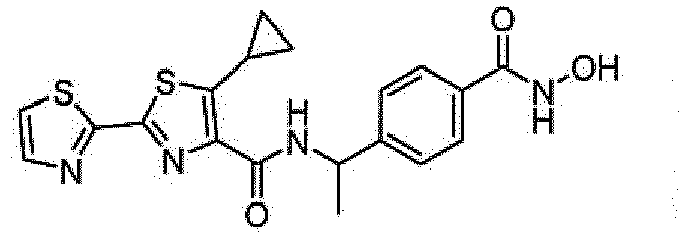
1H NMR (300 MHz, DMSO-d6) δ 11.16 (s, 1H), 9.00 (s, 1H), 8.61 (d, J = 7.5 Hz, 1H), 8.01 - 7.92 (m, 2H), 7.72 (d, J= 7.8 Hz, 2H), 7.50 (d, J= 7.8 Hz, 2H), 5.26 - 5.13 (m, 1H), 3.27 - 3.17 (m, 1H), 1.55 (d, J = 6.9 Hz, 3H), 1.30 - 1.21 (m, 2H), 0.82 - 0.75 (m, 2H). ESI-MS(m/z): 415.1 [M+H+], H02 
1H NMR (300 MHz, DMSO-d6 ) δ 11.17 (s, 1H), 9.01 (s, 1H), 8.63 (d, J = 8.4 Hz, 1H), 7.98 (s, 2H), 7.71 (d, J= 8.4 Hz, 2H), 7.50 (d, J = 8.4 Hz, 2H), 5.24 - 5.14 (m, 1H), 3.27 - 3.20 (m, 1 H), 1.55 (d, J = 6.9 Hz, 3H), 1.29 - 1.20 (m, 2H), 0.81 - 0.75 (m, 2H). ESI-MS(w/z): 437.1[M+Na]+. H03 
1H NMR (300 MHz, DMSO-d6 ) δ 11.17 (s, 1H), 9.01 (s, 1H), 8.64 (d, J = 8.1 Hz, 1H), 7.98 (s, 2H), 7.72 (d, J= 8.1 Hz, 2H), 7.50 (d, J = 8.1 Hz, 2H), 5.23 - 5.14 (m, 1H), 3.26 - 3.19 (m, 1H), 1.55 (d, J = 6.9 Hz, 3H), 1.29 - 1.21 (m, 2H), 0.81 - 0.75 (m, 2H). ESI-MS(m/z): 437.0[M+Na]+. H04 
1H NMR (300 MHz, DMSO-d6 ) δ 11.15 (s, 1H), 9.00 (s, 1H), 8.52 (d, J = 8.7 Hz, 1H), 7.98 (s, 2H), 7.72 (d, J = 7.8 Hz, 2H), 7.51 (d, J = 7.8 Hz, 2H), 4.72 (t, J= 9.0 Hz, 1H), 3.20 - 3.10 (m, 1H), 2.35 - 2.22 (m, 1H), 1.28 - 1.19 (m, 2H), 1.02 (d, J = 6.0 Hz, 3H), 0.88 - 0.81 (m, 2H), 0.77 (d, J = 6.0 Hz, 3H). ESI-MS(m/z): 465.1 [M+Na] +. H05 
1H NMR (300 MHz, CDCl3 δ 7.69 (d, J = 8.4 Hz, 2H), 7.48 (s, 1H), 7.36 (d, J = 8.4 Hz, 2H), 5.27 - 5.16 (m, 1H), 3.42 - 3.29 (m, 1H), 2.51 (s, 3H), 1.56 (d, J = 4.2 Hz, 3H), 1.31 - 1.21 (m, 2H), 0.79 - 0.71 (m, 2H). ESI-MS(m/z): 429.1[M+H]+. H06 
1H NMR (300 MHz, CDCl3) δ 7.71 (d, J = 8.4 Hz, 2H), 7.37 (d, J = 8.4 Hz, 2H), 6.98 (s, 1H), 5.34 - 5.17 (m, 1H), 3.43 - 3.30 (m, 1H), 2.47 (s, 3H), 1.56 (d, J = 4.2 Hz, 3H), 1.24 - 1.16 (m, 2H), 0.83 - 0.74 (m, 2H). ESI-MS(m/z): 429.2[M+H]+. H07 
1H NMR (300 MHz, CDCl3) δ 9.71 (br s, 1H), 7.69 (d, J= 8.1 Hz, 2H), 7.50 (d, J = 7.8 Hz, 1H), 7.38 (d, J = 8.1 Hz, 2H), 5.32 - 5.17 (m, 1H), 3.43 - 3.30 (m, 1H), 2.81 (s, 4H), 1.88 (s, 4H), 1.56 (d, J= 6.9 Hz, 3H), 1.30 - 1.21 (m, 2H), 0.81 - 0.72 (m, 2H). ESI-MS(m/z): 469.3 [M+H]+. H09 
1H NMR (300 MHz, CD3OD+CDCl3) δ 8.17 (d, J = 8.1 Hz, 1H), 8.01 (s, 1H), 7.75 (d, J = 8.1 Hz, 2H), 7.67 - 7.62 (m, 2H), 7.50 (d, J = 8.1 Hz, 2H), 7.16 (t, J = 8.4 Hz, 2H), 5.31 - 5.22 (m, 1H), 3.28 - 3.21 (m, 1H), 1.64 (d, J = 6.9 Hz, 3H), 1.30 - 1.25 (m, 2H), 0.84 - 0.78 (m, 2H). ESI-MS(m/z): 509.1 [M+H]+. H10 
1H NMR (300 MHz, DMSO-d6 ) δ 10.21 (s, 1H), 8.57 (d, J = 8.4 Hz, 1H), 8.24 (s, 1H), 7.70 (t, J= 7.2 Hz, 4H), 7.49 (d, J= 6.9 Hz, 2H), 7.03 (d, J = 6.9 Hz, 2H), 5.23 - 5.12 (m, 1H), 3.79 (s, 3H), 3.03 - 2.97 (m, 1H), 1.54 (d, J = 6.6 Hz, 3H), 1.27 - 1.21 (m, 2H), 0.80 - 0.74 (m, 2H). H11 
1H NMR (300 MHz, DMSO-d6 ) δ 11.16 (s, 1H), 8.99 (s, 1H), 8.62 (d, J = 7.8 Hz, 1H), 8.39 (s, 1H), 7.79 - 7.72 (m, 4H), 7.53 - 7.40 (m, 5H), 5.26 - 5.16 (m, 1H), 3.27 - 3.20 (m, 1H), 1.56 (d, J = 6.9 Hz, 3H), 1.31 - 1.23 (m, 2H), 0.83 - 0.75 (m, 2H). ESI-MS(m/z): 491.2[M+H]+. -

- The compound H08-c (50 mg, 0.15 mmol), 4-aminomethylbenzoic acid methyl ester hydrochloride (45 mg, 0.22 mmol) and HOBt (30 mg, 0.22 mmol) were dissolved in 2 mL DMF. Diisopropylethylamine (38 mg, 0.29 mmol) was added, and the mixture was stirred at 0 ° C for 10 min, then EDCI (34 mg, 0.18 mmol) was added and the reaction was allowed to warm and reacted overnight. The reaction solution was diluted with a large amount of water and extracted with EtOAc for three times. The mixed organic phase was washed with 1 N hydrochloric acid, saturated NaHCO3 solution and saturated brine, and dried over anhydrous Na2SO4. After concentrated, it was purified by silica gel column chromatography (PE:acetone = 3:1), and compound H12-a was obtained (25 mg, 35.2%, yellow solid). 1H NMR (300 MHz, CDCl3) δ 8.03 (d, J = 8.7 Hz, 2H), 7.99 (s, 1H), 7.82 (t, J = 6.9 Hz, 1H), 7.59 (d, J= 8.1 Hz, 2H), 7.63 - 7.56 (m, 5H), 4.73 (d, J = 6.3 Hz, 2H), 3.92 (s, 3H), 3.54 - 3.44 (m, 1H), 1.38 - 1.33 (m, 2H), 0.87 - 0.82 (m, 2H). ESI-MS(m/z): 476.1 [M+H]+.
- The compound H12-a (25 mg, 0.052 mmol) was dissolved in 4 mL of methanol and 1 mL water, and lithium hydroxide monohydrate (22 mg, 0.52 mmol) was added and reacted at 80 °C for 3 h. The pH was adjusted to 2-3 with 1 N hydrochloric acid, and a yellow solid was precipitated. It was filtered and dried under vacuum at 40 °C to obtain the corresponding acid, which was directly used in next step reaction without purification. The acid (25 mg, 0.054 mmol) was dissolved in 2 mL of re-distilling dichloromethane, O-(tetrahydro-2H-pyran-2-yl)hydroxylamine (19 mg, 0.16 mmol) and DMAP (10 mg, 0.081 mmol) were added and stirred for 10 min; under N2 protection, EDCI (15 mg, 0.078 mmol) was added to the reaction mixture at 0 °C, then the reaction was carried out overnight at room temperature. After directly concentrated and purified by silica gel column chromatography (CHCl3: MeOH = 30:1), the crude product THP-protected hydroxamic acid was obtained. This crude product was dissolved in 2 mL of 1,4-dioxane, and 2 mL of 3 N hydrochloric acid was added, and stirred at room temperature for 15 min, and filtered to obtain compound H12 (10 mg, 38.9%, yellow solid). 1H NMR (300 MHz, DMSO-d6 ) δ 11.18 (s, 1H), 9.00 (s, 2H), 8.39 (s, 1H), 7.79 - 7.66 (m, 4H), 7.48 - 7.39 (m, 5H), 4.51 (d, J = 6.3 Hz, 2H), 3.41 - 3.34 (m, 1H), 1.32 - 1.25 (m, 2H), 0.83 - 0.78 (m, 2H). ESI-MS(m/z): 499.1 [M+Na]+.
- The inhibitory activity of the example compounds against
human histone deacetylases 1, 3 and 6 (i.e., human HDAC1, HDAC3 and HDAC6) was tested. - The human HDAC1, HDAC3 and HDAC6 were all applied to the baculovirus expression system and purified by Dr. Li Jia et al. from the Shanghai Institute of Materia Medica.
- Substrates: HDAC1, HDAC 3: Ac-Lys-Tyr-Lys (Ac)-AMC; HDAC6: Boc-lys (Ac)-AMC; all purchased from Shanghai Jill Biochemical Co., Ltd..
- The 384 microplate was purchased from Perkin Elmer; and other common chemical reagents are domestic analytical pure (AR) reagents. The fluorescent signal detector Envision™ is a product of Perkin Elmer.
- The activity of HDAC1 and HDAC3 was detected using Ac-Lys-Tyr-Lys(Ac)-AMC as substrate, and the activity of HDAC6 was detected using Boc-Lys(Ac)-AMC as substrate, and both were detected by fluorescence detection. After the substrate Ac-Lys-Tyr-Lys(Ac)-AMC and Boc-Lys(Ac)-AMC were deacetylated by HDAC, a fluorescent signal of the product AMC obtained by trypsin hydrolysis can be detected at 355 nm excitation light/460 nm emission light by the fluorescence signal detector Envision™. The initial velocity of the reaction is calculated by detecting the change in the fluorescence signal over time.
- The test compound, enzyme and reaction buffer were well mixed and the substrate was added to start the reaction. After incubated for 24 h at room temperature, trypsin was added to react for 1 h, and finally the fluorescent signal is detected at 355 nm excitation light 460 nm emission light of fluorescence signal detector Envision ™.
- The following control groups were also set:
- blank control group without enzyme,
- solvent control in which DMSO was substituted for the test compound;
- bexanostat positive control group;
- CFH401 positive control group;
- CFH455-C positive control group;
- SAHA positive control group.
- The final reaction volume was 50 µL. The specific reaction system was: 2% DMSO, 20-200 nM HDACs (HDAC 1: 200 nM, HDAC3: 200 nM, HDAC6: 20 nM), 10 µM Ac-Lys-Tyr-Lys (Ac) - AMC, 50 µM Boc-lys (Ac)-AMC, 25 mM Hepes pH 8.0, 137 mM NaCl, 2.7 mM KCI, 4.9 mM MgCl2, 0.1% BSA, 0.156% trypsin.
- The fluorescence signal intensity at 460 nm was measured, and then the activity percentage (% Activity) of each concentration groups of the sample was calculated. The formula was as follows:

- The logarithm of the concentration was plotted against the percentage of activity, and then the nonlinear regression was used to calculate the fit curve. The value of IC50 was calculated by the software GraphPad Prism 5 formula log(inhibitor) vs. response - Variable slope.
- Each of the above experiments was repeated 3 times, and there were more than 3 replicate wells for each experiment. The average IC50 value of the three experiments was determined as the final indicator of the compound inhibition ability.
-
Table 1 ID IC50: nM HDAC1 HDAC3 HDAC6 SAHA 210.98±114.33 232.08 ± 146.87 179.62 ± 85.59 bexanostat 95.14 ± 48.53 108.24 ± 59.72 67.82 ± 30.09 CFH401 41.67 ± 7.48 30.33 ± 2.49 18.87 ± 0.01 CFH455-C 80.17 ± 15.38 75.16 ± 8.79 74.30 ± 41.76 H01 80.98 ± 15.05 189.38 ± 41.65 ± 16.14 16.72 H02 40.92 ± 0.41 42.51 ± 3.04 14.02 ± 1.74 H04 38.25 ± 7.29 38.41 ± 7.13 14.15 ± 2.93 H05 19.87 ± 0.47 17.06 ± 0.34 18.51 ± 0.45 H06 16.52 ± 0.50 13.88 ± 0.31 19.08 ± 1.55 H07 14.68 ± 0.67 11.35 ± 0.11 18.31 ± 0.84 H08 2.53 ± 0.54 3.21 ± 0.60 2.89 ± 0.04 H09 2.64 ± 0.02 2.54 ± 0.28 2.02 ± 0.10 H10 3.57 ± 0.40 3.78 ± 0.93 2.38 ± 0.17 H11 42.96 ± 10.33 39.27 ± 8.54 31.73 ± 4.10 H12 6.71 ± 0.11 6.15 ± 0.25 9.78 ± 0.02 - It can be seen from the experimental results of table 1 that the compounds provided by the present invention have good inhibitory activity against HDAC1, 3, and 6: by only changing the linker (Linker) of bexanostat from the fatty long chain to benzyl, the present invention has improved the activity of each subtype of HDAC by 2-3 times than that of bexanostat. Based on that, a phenyl substitution was introduced to the 5-position of thiazole, which made the inhibitory activity of compound H12 on HDAC1, 3 and 6 even more improved than the previously reported (
WO2012152208 ) compound CFH401 by 4-5 times, of which IC50 was only about 6-10 nM; while the compound H08 obtained by introducing a chiral S-methyl group at the benzyl position continued to improve the HDAC enzyme inhibition activity, IC50 of which can be reduced to 2-3 nM, which showed much higher activity than that of bexanostat.CFH455-C 
CFH401 
- The antitumor activity test of the example compounds was carried out, and the in vitro antitumor activities of the compounds were evaluated by measuring the growth inhibitory activities of the compounds against human multiple myeloma cell line 8266.
- CCK8 kit (Cat. CK04), purchased from Dongren Chemical Technology Co., Ltd. 96-well cell culture plates (Cat. 3599), purchased from Corning.
- Absorbance microplate reader molecular devices, purchased from MD Corporation.
- The
RPMI 8226 cell line was obtained from Professor Hou Jian of Shanghai Changzheng Hospital, cultivated under culture conditions: RPMI-1640+10% FBS, routinely cultured in a saturated humidity incubator (Forma Scientific, Inc.) containing 5% CO2 at 37 °C. - According to the cell growth rate, the multiple myeloma cells in the logarithmic growth phase were inoculated into the 96-well culture plate at 100 µL/well, and then 1 µL/well of compound solution was added, and three replicate wells were set for each concentration, and the DMSO solvent control at corresponding concentration was also set. Multiple myeloma cells were cultured for 72 h at 37 °C and 5% CO2. The
RPMI 8226 cell was seeded at 5000/well density. - CCK-8 staining method: after the drug was applied, 10 µL of CCK-8 solution was added to each well, and incubated at 37 °C for 3 h. The OD value at 450 nm and 690 nm was measured by microplate reader.
- The inhibition rate (% Inhibiton) and activity (% Activity) of the test substance on the proliferation of multiple myeloma cells were calculated according to the following formula, wherein ODsample refers to the absorbance value of the administration hole (OD450 - OD690). OD DMSO refers to the absorbance of the DMSO control well (OD450 - OD690).


- The logarithm of the concentration was plotted against the activity percentage (% Activity), and the fitted curve was calculated by nonlinear regression. The value of IC50 was calculated by using the GraphPad Prism5 software log(inhibitor) vs response -Variable slope parameter setting. Each set of experiments was repeated three times independently, while 3 replicate wells per concentration.
-
Table 2 ID IC50: µM ID IC50: µM SAHA 1.00 ± 0.35 bexanostat 0.69 ± 0.41 H01 0.182 ± 0.015 H02 0.028 ± 0.010 H05 0.123 ± 0.043 H06 0.050 ± 0.022 H07 0.139 ± 0.019 H08 0.008 ± 0.000 H09 0.018 ± 0.006 H10 0.012 ± 0.004 H11 0.326 ± 0.018 H12 0.008 ± 0.000 - As can be seen from Table 2, the compounds provided by the present invention all exhibited good tumor cell proliferation-inhibiting activity, and the activity at the cellular level was increased by different extent when compared to bexanostat, and the activities of the compounds H08 and H12 were improved by nearly one hundred times (IC50 was around 8 nM), of which the result was consistent with the the enzyme level activity result.
- The antitumor activity test of the example compounds was carried out, and the in vitro antitumor activities of the compounds were evaluated by measuring the growth inhibitory activities of the compounds against a plurality of human tumor cell lines.
- CCK8 kit (Cat. CK04), purchased from Dongren Chemical Technology Co., Ltd. Sulfonhodamine B (SRB) protein staining method, purchased from sigma company.
- 96-well cell culture plates (Cat. 3599), purchased from Corning.
- Absorbance microplate reader molecular devices, purchased from MD Corporation.
- Source of cell lines:
Table 3 Cell line source Culture conditions Liver cancer BEL-7402 SIBCB 1640+glucose+Ala+10% G fetal calf serum Liver cancer BEL-7404 SIBCB 1640+glucose+Ala+10% G fetal calf serum Lung Cancer A549 ATCC F12+Glu+10% G fetal calf serum Lung Cancer NCI-H1975 ATCC 1640+Ala+2.5g/L glucose+10%G fetal calf serum Lung Cancer EBC-1 JCRB MEM+10% G fetal calf serum Breast Cancer MCF-7 United States (Mongolia) DMEM+10%G fetal calf serum Breast Cancer MDA-MB-231 ATCC L-15 +10%G fetal calf serum Breast Cancer T47D Screening center 1640+10% fetal calf serum Stomach cancer NCI-N87 ATCC 1640+Ala+2.5g/L glucose+10%G fetal calf serum stomach cancer MKN-74 Japan 1640+10%G fetal calf serum colon cancer HT-29 ATCC 5A+10% FBS Embryonic lung cells MRC-5 ATCC EMEM +10% fetal calf serum lymphoma Ramos Shanghai Cell Bank RPMI-1640+10% G fetal calf promyeloid leukemia HL60 Shanghai Cell Bank RPMI-1640+10% G fetal calf Acute lymphoblastic leukemia MOLT-4 JCRB RPMI-1640+10% G fetal calf Human blood lymphoma Raji Shanghai Cell Bank RPMI-1640+10% G fetal calf Acute lymphocytic leukemia T lymphocyte CCRF Shanghai Cell Bank RPMI-1640+10% G fetal calf lymphoma SU-DHL-6 ATCC RPMI-1640+10% G fetal calf - Tumor cells (except MDA-MB-231) were routinely cultured under 37°C, 5% CO2.
- According to the cell growth rate, the tumor cells in the logarithmic growth phase were inoculated into 96-well culture plates at 90 µL/well, and adherently grown for 24 h and then added with 10 µL/well, and each concentration was set to three replicate wells, and DMSO vehicle controls and cell-free wells at corresponding concentration were also set. Tumor cells (except MDA-MB-231) were cultured for 72 h under conditions of 37°C and 5% CO2 (MDA-MB-231 cells were cultured at 37 °C without CO2). After the drug was applied, 10 µL of CCK-8 solution was added to each well in Ramos, HL-60, Molt-4, Raji, CCRF-CEM, and SU-DHL-6 tumor cell line experiments, and incubated at 37 °C for 2 h. The OD value at 450 nm was measured by a microplate reader. In the BEL-7402, BEL-7404, A549, NCI-H1975, EBC-1, MCF-7, MDA-MB-231, T47D, NCI-N87, MKN-74, HT-29 and MRC-5 tumor cell line experiments, the cell culture solution in the culture plate was discarded, and 10% (w/v) trichloroacetic acid (100 µL/wel)) was added and fixed at 4 °C for 1 h, and then rinsed with distilled water for five times. After dried by convert placing in an oven, the plate was taken out and 100 µL of SRB solution (4 mg/mL SRB powder dissolved in 1% glacial acetic acid) was added into each well. After standed at room temperature for 15 minutes, it was washed five times with 1% glacial acetic acid to completely remove the SRB which has not bounded to the plate protein. After dried by convert placing in an oven, 150 µL of 10 mM Tris solution was added into each well, and the OD value at 560 nm was measured by a microplate reader.
- The inhibition rate of tumor cell proliferation was calculated according to the following formula. The half-inhibition amount IC50 value was calculated by Logit method. Inhibition rate = (control group OD value - administration group OD value) / control group OD value × 100%. Each set of experiments was repeated three times independently, while 3 replicate wells per concentration.
Table 4 Cell line IC50 nM (mean±SD) GCJ490-A LBH589 SAHA Liver cancer BEL-7402 80.79±2.49 21.28±1. 61 2775.86±93.1 8 Liver cancer BEL-7404 85.34±22.8 7 18.55±1. 51 2809.75±187. 30 Lung Cancer A549 142.60±64. 06 48.90±7. 01 2906.92±678. 09 Lung Cancer NCI-H1975 66.38±24.5 5 17.51±2. 23 1989.99±301. 56 Lung Cancer EBC-1 109.91±45. 74 27.85±1. 72 1551.32±474. 44 Breast Cancer MCF-7 58,52±25.7 2 9.00±0.9 4 883.37±69.93 Breast Cancer MDA-MB-231 76.56±31.5 9 29.13±0. 42 3119.53±434. 29 Breast Cancer T47D 40.81±16.7 6 6.98±0.7 2 961.97±111.7 0 Stomach cancer NCI-N87 28.33±8.67 8.42±0.7 7 1075.17±86.1 8 stomach cancer MKN-74 106.43±7.4 9 29.16±0. 97 3023.42±253. 09 colon cancer HT-29 165.50±6.5 7 37.55±4. 81 1331.41±20.1 8 Embryonic lung cells MRC-5 183.04±18. 35 76.93=b7. 22 5099.39±828. 57 lymphoma Ramos 19.88±6.40 7.14±0.4 2 1616.73±35.6 0 promyeloid leukemia HL60 54.18±36.6 2 12.30±0. 24 1115.33±70.8 8 Acute lymphoblastic leukemia MOLT-4 22.46±15.8 9 15.02±8. 18 1208.44±33.0 7 Human blood lymphoma Raji 20.63±3.05 12.32±1. 61 1008.12±37.8 7 Acute lymphocytic leukemia T lymphocyte CCRF 57.97±33.5 8 13.72±0. 93 1530.30±170. 74 lymphoma SU-DHL-6 11.41±7.56 5.80±0.3 4 787.46±23.69 - The efficacy of compound H08 in an animal model of human multiple myeloma was investigated.
-
Table 5 Grou p Tested compound number of animals Route of administration Dosage Dosing regimen 1 Solvent 12 p.o. - once/day, administrated for 3 weeks once/day, twice/week, 2 PS341 6 i.v. 1 mg/kg (equivalent to only two days a week, and only once a day) for 3 weeks 3 bexanostat 6 p.o. 100 mg/kg bid twice/day, administrated for 3 weeks 4 H08 6 p.o. 50 mg/kg once/day, administrated for 3 weeks 5 H08 6 p.o. 25 mg/kg once/day, administrated for 3 weeks - PS341: Bortezomib, a proteasome inhibitor, is used for the treatment of multiple myeloma, and the structure is as follows:

- NOD/SCID mice, female, 5-6 weeks old,
body weight 20±3 g, provided by Shanghai Lingchang Biotechnology Co., Ltd., production certificate number: SCXK (Shanghai) 2013-0018. Number of animals per group: 6. IACUC number: 2013-0007 (Nanmo). -
Human myeloma RPMI 8226 cell line was preserved by Li Jia et al., Shanghai Institute of Materia Medica. The cell line was inoculated to the right axillary fossa of NOD/SCID mice, and the amount of cells inoculated was 1×10 7 cells each mouse. After the transplanted tumor was formed, it was used in NOD/SCID mice after 2 passages. - The tumor tissue in the vigorous growth period was cut into 1.5 mm3, and inoculated subcutaneously in the right axilla of the NOD/SCID mice under aseptic conditions. The diameter of the transplanted tumor of NOD/SCID mice were measured with a vernier caliper and the animals were randomly grouped when the tumor growed up to 100-300 mm3. The grouping scheme is shown in Table 5, and the solvent control group was given an equal amount of blank solvent. The diameter of the transplanted tumor was measured twice a week during the entire experiment, and the body weight of the mice was weighed as well. The tumor volume (TV) was calculated as: TV = 1/2 × a × b2, wherein a and b represent length and width, respectively. The relative tumor volume (RTV) was calculated based on the measured results and the formula was: RTV = V t / Vo. Wherein Vo is the tumor volume measured before grouping and dosing (do), and Vt is the tumor volume at each measurement.
- The evaluation indexes of antitumor activity were 1) relative tumor growth rate T/C (%), and the formula is as follows: T/C (%) = (T RTV / C RTV) × 100%, T RTV : treatment group RTV; C RTV: negative control RTV; 2) tumor volume growth inhibition rate GI%, and the formula is as follows: GI% = (1-(TVt-TV0) / (CVt-CTo)) × 100%, wherein TVt is the tumor volume measured in the therapeutic group at each time; TV0 is the tumor volume measured in the therapeutic group when grouping and dosing; CVt is the tumor volume measured in the control group at each time; CV0 is the tumor volume measured in the control group when grouping and dosing; 3) tumor weight inhibition rate was calculated as follows: tumor weight inhibition rate % = (WC-WT) / Wc × 100%, WC: control group tumor weight, WT: tumor weight of the therapeutic group.
-
Figure 1 shows the pharmacodynamic results of compound H08 inhuman myeloma RPMI 8226 NOD/SCID mouse xenografts.Table 6 Group body weight (g) TV (mm3 , average ± SD) RTV (Average ± SD) T/C (%) do d21 do d21 Solvent control p.o. 22.0 ± 1.5 24.8 ± 1.5 154 ± 46 2,416 ± 831 15.88 + 3.76 PS341 1mg/kg, i.v. 21.9 ± 1.0 23.3 ± 1.7 155 ± 48 1,077 ± 538 7.19 ± 3.58∗∗ 45.27 bexanostat 100mg/kg bid, p.o. 22.2 ± 1.4 19.8 ± 1.0 155 ± 46 620 ± 87 4.83 ± 0.51∗∗ 30.40 H08 50mg/kg, p.o. 22.2 ± 1.1 22.7 ± 0.9 154 ± 45 821 ± 406 5.48 ± 2.99∗∗ 34.49 H08 25mg/kg, p.o. 22.1 ± 1.3 23.7 ± 0.8 154 ± 44 1,279 ± 353 8.40 ± 1.35∗∗ 52.89 (t student's test vs control, ∗p<0.01) - It can be seen from
Fig. 1 and Table 6 that the continuous oral administrating of compound H08 50 mg/kg for three weeks has a certain therapeutic effect onhuman myeloma RPMI 8226 NOD/SCID mouse xenografts, and can effectively inhibit the proliferation of mouse xenografts. The relative tumor proliferation rate T/C was 34.49%, which was equivalent to effect of oral administrating of bexanostat 100 mg/kg bid group (T/C was 30.40%), which was superior to the positive compound PS341.
Claims (8)
- An aryl-2,2'- tandem bithiazole compound of the formula I or an optical isomer thereof, or a pharmaceutically acceptable salt thereof;
 R1 is selected from the group consisting of H, C1-C6 alkyl, C3-C6 cycloalkyl, or C5-C10 aryl; then R2 is C1-C6 alkyl, C3-C6 cycloalkyl, or C5-C10 aryl; orR1 is selected from the group consisting of C1-C6 alkyl, C3-C6 cycloalkyl, or C5-C10 aryl; then R2 is H or C1-C6 alkyl, C3-C6 cycloalkyl, or C5-C10 aryl;or R1 and R2 together with the carbon atom to which they are attached form a 5-7 membered saturated or partially saturated ring;R3 is one of the following groups: H, C1-C6 alkyl, C3-C6 cycloalkyl, C5-C10 aryl;R4 is one of the following groups: C1-C6 alkyl;the above groups are unsubstituted or substituted with one or more groups selected from the group consisting of halogen, C1-C6 alkyl, halogenated C1-C6 alkyl, C2-C6 alkenyl, C2-C6 alkynyl, C1-C6 alkoxy, halogenated C1-C6 alkoxy, C3-C6 cycloalkyl, C5-C10 aryl.
 - The compound or an optical isomer thereof, or a pharmaceutically acceptable salt thereof of claim 1, wherein, R1 is H, C1-C6 alkyl, C6-C10 aryl; then R2 is C1-C6 alkyl, C6-C10 aryl;or R1 is C1-C6 alkyl, C6-C10 aryl; then R2 is H, C1-C6 alkyl, C6-C10 aryl;or R1 and R2 together with the carbon atom to which they are attached form a 5, 6 or 7 membered partially saturated ring.
- The compound of or an optical isomer thereof, or a pharmaceutically acceptable salt thereof claim 1, wherein, R3 is C1-C4 alkyl, C6-C10 aryl substituted C1-C4 alkyl or C3-C6 cycloalkyl.
- The compound or an optical isomer thereof, or a pharmaceutically acceptable salt thereof of claim 1, wherein, R4 is S configuration C1-C6 alkyl.
- The compound or an optical isomer thereof, or a pharmaceutically acceptable salt thereof of claim 1, wherein the compound is selected from the group consisting of:


- A method for the preparation of the compound or an optical isomer thereof, or a pharmaceutically acceptable salt thereof of claim 1, wherein,
the method is with a route shown in the route I,
comprising steps:(1) condensing methyl 4-acetylbenzoate with tert-butyl sulfenamide to form tert-butyl sulfoximine 1;(2) adding tert-butyl sulfinimide 1 and Grignard reagent to form tert-butyl sulfenamide 2;(3) deprotecting tert-butyl sulfinamide 2 to form amine 3;(4) condensation reacting amine 3 with acid 4 to form methyl ester 5;(5) after hydrolysis reacting methyl ester 5 with alkali, exchanging with a hydroxylamine protected by a protecting group, and finally removing the protecting group to form a compound of the formula II-1.
- A compound or an optical isomer thereof, or a pharmaceutically acceptable salt thereof according to claim 1 for use as an antitumor drug.
- The compound for use of claim 7, wherein:the tumor is multiple myeloma, colon cancer, lung cancer, liver cancer, breast cancer, ovarian cancer, pancreatic cancer, rectal cancer, gastric cancer, lymphoma, or leukemia;the tumor cells are multiple myeloma cells, colon cancer cells, lung cancer cells, embryo lung cells, liver cancer cells, breast cancer cells, ovarian cancer cells, pancreatic cancer cells, rectal cancer cells, gastric cancer cells, lymphoma cells or leukemia cells.
Applications Claiming Priority (2)
| Application Number | Priority Date | Filing Date | Title |
|---|---|---|---|
| CN201610786392.8A CN107793375A (en) | 2016-08-31 | 2016-08-31 | A kind of series connection of aryl 2,2 ' double thiazole class compound and its production and use |
| PCT/CN2017/098883 WO2018041004A1 (en) | 2016-08-31 | 2017-08-24 | Aryl-2,2'-tandem bisthiazole compound and preparation method and use thereof |
Publications (4)
| Publication Number | Publication Date |
|---|---|
| EP3508486A1 EP3508486A1 (en) | 2019-07-10 |
| EP3508486A4 EP3508486A4 (en) | 2020-01-22 |
| EP3508486B1 true EP3508486B1 (en) | 2022-11-09 |
| EP3508486B8 EP3508486B8 (en) | 2023-05-10 |
Family
ID=61300078
Family Applications (1)
| Application Number | Title | Priority Date | Filing Date |
|---|---|---|---|
| EP17845306.4A Active EP3508486B8 (en) | 2016-08-31 | 2017-08-24 | Aryl-2,2'-tandem bisthiazole compound and preparation method and use thereof |
Country Status (8)
| Country | Link |
|---|---|
| US (1) | US10766889B2 (en) |
| EP (1) | EP3508486B8 (en) |
| JP (1) | JP6855566B2 (en) |
| KR (1) | KR102384406B1 (en) |
| CN (2) | CN107793375A (en) |
| AU (1) | AU2017319764B2 (en) |
| CA (1) | CA3035436C (en) |
| WO (1) | WO2018041004A1 (en) |
Family Cites Families (6)
| Publication number | Priority date | Publication date | Assignee | Title |
|---|---|---|---|---|
| EP2305643A1 (en) * | 2009-10-02 | 2011-04-06 | Ikerchem, S.L. | New histone deacetylase inhibitors based simultaneously on trisubstituted 1h-pyrroles and aromatic and heteroaromatic spacers |
| CN102106852B (en) * | 2009-12-23 | 2013-01-16 | 中国科学院上海药物研究所 | Medicinal use of 2'2-bithiazole non-nucleoside compounds serving as hepatitis C virus inhibitor |
| WO2011106632A1 (en) * | 2010-02-26 | 2011-09-01 | Millennium Pharmaceuticals, Inc. | Substituted hydroxamic acids and uses thereof |
| CN102199133B (en) * | 2010-03-24 | 2015-08-19 | 中国科学院上海药物研究所 | 2 ', 2-double thiazole non-nucleosides compound and preparation method thereof, pharmaceutical composition and the purposes as hepatitis virus inhibitor |
| CN102775368B (en) * | 2011-05-10 | 2016-08-17 | 上海驺虞医药科技有限公司 | One class thiazole compound and its production and use |
| CN104974108B (en) * | 2014-04-04 | 2017-11-17 | 中国科学院上海药物研究所 | Series connection double thiazole class compound of one kind 2,2 ' and its production and use |
-
2016
- 2016-08-31 CN CN201610786392.8A patent/CN107793375A/en active Pending
-
2017
- 2017-08-24 AU AU2017319764A patent/AU2017319764B2/en active Active
- 2017-08-24 EP EP17845306.4A patent/EP3508486B8/en active Active
- 2017-08-24 KR KR1020197007334A patent/KR102384406B1/en active Active
- 2017-08-24 US US16/329,336 patent/US10766889B2/en active Active
- 2017-08-24 JP JP2019511968A patent/JP6855566B2/en active Active
- 2017-08-24 CA CA3035436A patent/CA3035436C/en active Active
- 2017-08-24 CN CN201780053085.1A patent/CN109641888B/en active Active
- 2017-08-24 WO PCT/CN2017/098883 patent/WO2018041004A1/en not_active Ceased
Also Published As
| Publication number | Publication date |
|---|---|
| US10766889B2 (en) | 2020-09-08 |
| CN109641888B (en) | 2022-07-22 |
| JP2019528308A (en) | 2019-10-10 |
| CA3035436C (en) | 2022-05-31 |
| US20190211005A1 (en) | 2019-07-11 |
| NZ751226A (en) | 2021-02-26 |
| EP3508486B8 (en) | 2023-05-10 |
| CA3035436A1 (en) | 2018-03-08 |
| EP3508486A4 (en) | 2020-01-22 |
| AU2017319764B2 (en) | 2020-08-13 |
| JP6855566B2 (en) | 2021-04-07 |
| EP3508486A1 (en) | 2019-07-10 |
| CN109641888A (en) | 2019-04-16 |
| CN107793375A (en) | 2018-03-13 |
| KR20190038653A (en) | 2019-04-08 |
| KR102384406B1 (en) | 2022-04-06 |
| WO2018041004A1 (en) | 2018-03-08 |
| AU2017319764A1 (en) | 2019-03-21 |
Similar Documents
| Publication | Publication Date | Title |
|---|---|---|
| EP3070089B1 (en) | Aminomethyl tryptanthrin derivative, preparation method and application thereof | |
| JP4405602B2 (en) | Histone deacetylase inhibitor | |
| EP2908823B1 (en) | Methods of treating cancer | |
| EP3590920B1 (en) | 2-(substituted benzene matrix) aromatic formate fto inhibitor, preparation method therefor, and applications thereof | |
| CN115703736B (en) | Multi-target inhibitors targeting HDAC and NAD synthesis and uses thereof | |
| JP2003535078A (en) | Indole derivatives with vascular damage activity | |
| Han et al. | Design, synthesis and preliminary bioactivity studies of 1, 2-dihydrobenzo [d] isothiazol-3-one-1, 1-dioxide hydroxamic acid derivatives as novel histone deacetylase inhibitors | |
| Zhan et al. | Design and synthesis of a gossypol derivative with improved antitumor activities | |
| EP3085690B1 (en) | New urea compound, manufacturing method and application thereof | |
| US10766889B2 (en) | Aryl-2,2′-tandem bisthiazole compound and preparation method and use thereof | |
| JP6279145B2 (en) | 2,2'-bisthiazole-based compound, its production method and use | |
| EP3122735B1 (en) | 3-phenyl-7-hydroxy-isocoumarins as macrophage migration inhibitory factor (mif) inhibitors | |
| EP4629984A1 (en) | Development of potent dual hdac/brd4 inhibitors | |
| CN117820236A (en) | Histone acetyltransferase small molecule inhibitor and preparation method and use thereof | |
| CN107513064B (en) | A kind of purine hydroxamic acid derivative and its preparation method and application | |
| TW201922690A (en) | Inhibitors of cyclic-AMP response element-binding protein | |
| NZ751226B2 (en) | Aryl-2,2'-tandem bisthiazole compound and preparation method and use thereof | |
| CN118772107B (en) | HDAC inhibitors and uses thereof | |
| CN103936752A (en) | Isatin histone deacetylase inhibitors as well as preparation method and applications thereof | |
| WO2016206138A1 (en) | Histone deacetylase inhibitor and preparation method and use thereof | |
| EP3677581A1 (en) | Deuterated indoleamine 2,3-dioxygenase inhibitor and application thereof | |
| CN109134295B (en) | Anthracenedione derivatives and preparation method and application thereof | |
| PL247927B1 (en) | 2-(4-Hydroxy-3-nitrobenzoyl)-N-[(naphth-1-yl)methyl]hydrazinecarbothioamide, method of its production and its first medical application | |
| CN106432244B (en) | Crystal form of hedgehog signal pathway inhibitor and preparation method thereof | |
| PL247926B1 (en) | 2-(3-Hydroxy-4-nitrobenzoyl)-N-[(naphth-1-yl)methyl]hydrazinecarbothioamide, method of its production and its first medical application |
Legal Events
| Date | Code | Title | Description |
|---|---|---|---|
| STAA | Information on the status of an ep patent application or granted ep patent |
Free format text: STATUS: THE INTERNATIONAL PUBLICATION HAS BEEN MADE |
|
| PUAI | Public reference made under article 153(3) epc to a published international application that has entered the european phase |
Free format text: ORIGINAL CODE: 0009012 |
|
| STAA | Information on the status of an ep patent application or granted ep patent |
Free format text: STATUS: REQUEST FOR EXAMINATION WAS MADE |
|
| 17P | Request for examination filed |
Effective date: 20190321 |
|
| AK | Designated contracting states |
Kind code of ref document: A1 Designated state(s): AL AT BE BG CH CY CZ DE DK EE ES FI FR GB GR HR HU IE IS IT LI LT LU LV MC MK MT NL NO PL PT RO RS SE SI SK SM TR |
|
| AX | Request for extension of the european patent |
Extension state: BA ME |
|
| DAV | Request for validation of the european patent (deleted) | ||
| DAX | Request for extension of the european patent (deleted) | ||
| A4 | Supplementary search report drawn up and despatched |
Effective date: 20200103 |
|
| RIC1 | Information provided on ipc code assigned before grant |
Ipc: A61K 31/427 20060101ALI20191218BHEP Ipc: A61P 35/00 20060101ALI20191218BHEP Ipc: C07D 417/04 20060101AFI20191218BHEP Ipc: A61P 35/02 20060101ALI20191218BHEP |
|
| STAA | Information on the status of an ep patent application or granted ep patent |
Free format text: STATUS: EXAMINATION IS IN PROGRESS |
|
| 17Q | First examination report despatched |
Effective date: 20210816 |
|
| GRAP | Despatch of communication of intention to grant a patent |
Free format text: ORIGINAL CODE: EPIDOSNIGR1 |
|
| STAA | Information on the status of an ep patent application or granted ep patent |
Free format text: STATUS: GRANT OF PATENT IS INTENDED |
|
| INTG | Intention to grant announced |
Effective date: 20220622 |
|
| GRAS | Grant fee paid |
Free format text: ORIGINAL CODE: EPIDOSNIGR3 |
|
| GRAA | (expected) grant |
Free format text: ORIGINAL CODE: 0009210 |
|
| STAA | Information on the status of an ep patent application or granted ep patent |
Free format text: STATUS: THE PATENT HAS BEEN GRANTED |
|
| AK | Designated contracting states |
Kind code of ref document: B1 Designated state(s): AL AT BE BG CH CY CZ DE DK EE ES FI FR GB GR HR HU IE IS IT LI LT LU LV MC MK MT NL NO PL PT RO RS SE SI SK SM TR |
|
| REG | Reference to a national code |
Ref country code: GB Ref legal event code: FG4D |
|
| REG | Reference to a national code |
Ref country code: CH Ref legal event code: EP Ref country code: AT Ref legal event code: REF Ref document number: 1530296 Country of ref document: AT Kind code of ref document: T Effective date: 20221115 |
|
| REG | Reference to a national code |
Ref country code: DE Ref legal event code: R096 Ref document number: 602017063602 Country of ref document: DE |
|
| REG | Reference to a national code |
Ref country code: IE Ref legal event code: FG4D |
|
| REG | Reference to a national code |
Ref country code: LT Ref legal event code: MG9D |
|
| RAP4 | Party data changed (patent owner data changed or rights of a patent transferred) |
Owner name: SHANGHAI INSTITUTE OF MATERIA MEDICA, CHINESE ACADEMY OF SCIENCES |
|
| REG | Reference to a national code |
Ref country code: NL Ref legal event code: MP Effective date: 20221109 |
|
| REG | Reference to a national code |
Ref country code: CH Ref legal event code: PK Free format text: BERICHTIGUNG B8 |
|
| REG | Reference to a national code |
Ref country code: AT Ref legal event code: MK05 Ref document number: 1530296 Country of ref document: AT Kind code of ref document: T Effective date: 20221109 |
|
| PG25 | Lapsed in a contracting state [announced via postgrant information from national office to epo] |
Ref country code: SE Free format text: LAPSE BECAUSE OF FAILURE TO SUBMIT A TRANSLATION OF THE DESCRIPTION OR TO PAY THE FEE WITHIN THE PRESCRIBED TIME-LIMIT Effective date: 20221109 Ref country code: PT Free format text: LAPSE BECAUSE OF FAILURE TO SUBMIT A TRANSLATION OF THE DESCRIPTION OR TO PAY THE FEE WITHIN THE PRESCRIBED TIME-LIMIT Effective date: 20230309 Ref country code: NO Free format text: LAPSE BECAUSE OF FAILURE TO SUBMIT A TRANSLATION OF THE DESCRIPTION OR TO PAY THE FEE WITHIN THE PRESCRIBED TIME-LIMIT Effective date: 20230209 Ref country code: LT Free format text: LAPSE BECAUSE OF FAILURE TO SUBMIT A TRANSLATION OF THE DESCRIPTION OR TO PAY THE FEE WITHIN THE PRESCRIBED TIME-LIMIT Effective date: 20221109 Ref country code: FI Free format text: LAPSE BECAUSE OF FAILURE TO SUBMIT A TRANSLATION OF THE DESCRIPTION OR TO PAY THE FEE WITHIN THE PRESCRIBED TIME-LIMIT Effective date: 20221109 Ref country code: ES Free format text: LAPSE BECAUSE OF FAILURE TO SUBMIT A TRANSLATION OF THE DESCRIPTION OR TO PAY THE FEE WITHIN THE PRESCRIBED TIME-LIMIT Effective date: 20221109 Ref country code: AT Free format text: LAPSE BECAUSE OF FAILURE TO SUBMIT A TRANSLATION OF THE DESCRIPTION OR TO PAY THE FEE WITHIN THE PRESCRIBED TIME-LIMIT Effective date: 20221109 |
|
| PG25 | Lapsed in a contracting state [announced via postgrant information from national office to epo] |
Ref country code: RS Free format text: LAPSE BECAUSE OF FAILURE TO SUBMIT A TRANSLATION OF THE DESCRIPTION OR TO PAY THE FEE WITHIN THE PRESCRIBED TIME-LIMIT Effective date: 20221109 Ref country code: PL Free format text: LAPSE BECAUSE OF FAILURE TO SUBMIT A TRANSLATION OF THE DESCRIPTION OR TO PAY THE FEE WITHIN THE PRESCRIBED TIME-LIMIT Effective date: 20221109 Ref country code: LV Free format text: LAPSE BECAUSE OF FAILURE TO SUBMIT A TRANSLATION OF THE DESCRIPTION OR TO PAY THE FEE WITHIN THE PRESCRIBED TIME-LIMIT Effective date: 20221109 Ref country code: IS Free format text: LAPSE BECAUSE OF FAILURE TO SUBMIT A TRANSLATION OF THE DESCRIPTION OR TO PAY THE FEE WITHIN THE PRESCRIBED TIME-LIMIT Effective date: 20230309 Ref country code: HR Free format text: LAPSE BECAUSE OF FAILURE TO SUBMIT A TRANSLATION OF THE DESCRIPTION OR TO PAY THE FEE WITHIN THE PRESCRIBED TIME-LIMIT Effective date: 20221109 Ref country code: GR Free format text: LAPSE BECAUSE OF FAILURE TO SUBMIT A TRANSLATION OF THE DESCRIPTION OR TO PAY THE FEE WITHIN THE PRESCRIBED TIME-LIMIT Effective date: 20230210 |
|
| P01 | Opt-out of the competence of the unified patent court (upc) registered |
Effective date: 20230517 |
|
| PG25 | Lapsed in a contracting state [announced via postgrant information from national office to epo] |
Ref country code: NL Free format text: LAPSE BECAUSE OF FAILURE TO SUBMIT A TRANSLATION OF THE DESCRIPTION OR TO PAY THE FEE WITHIN THE PRESCRIBED TIME-LIMIT Effective date: 20221109 |
|
| PG25 | Lapsed in a contracting state [announced via postgrant information from national office to epo] |
Ref country code: SM Free format text: LAPSE BECAUSE OF FAILURE TO SUBMIT A TRANSLATION OF THE DESCRIPTION OR TO PAY THE FEE WITHIN THE PRESCRIBED TIME-LIMIT Effective date: 20221109 Ref country code: RO Free format text: LAPSE BECAUSE OF FAILURE TO SUBMIT A TRANSLATION OF THE DESCRIPTION OR TO PAY THE FEE WITHIN THE PRESCRIBED TIME-LIMIT Effective date: 20221109 Ref country code: EE Free format text: LAPSE BECAUSE OF FAILURE TO SUBMIT A TRANSLATION OF THE DESCRIPTION OR TO PAY THE FEE WITHIN THE PRESCRIBED TIME-LIMIT Effective date: 20221109 Ref country code: DK Free format text: LAPSE BECAUSE OF FAILURE TO SUBMIT A TRANSLATION OF THE DESCRIPTION OR TO PAY THE FEE WITHIN THE PRESCRIBED TIME-LIMIT Effective date: 20221109 Ref country code: CZ Free format text: LAPSE BECAUSE OF FAILURE TO SUBMIT A TRANSLATION OF THE DESCRIPTION OR TO PAY THE FEE WITHIN THE PRESCRIBED TIME-LIMIT Effective date: 20221109 |
|
| REG | Reference to a national code |
Ref country code: DE Ref legal event code: R097 Ref document number: 602017063602 Country of ref document: DE |
|
| PG25 | Lapsed in a contracting state [announced via postgrant information from national office to epo] |
Ref country code: SK Free format text: LAPSE BECAUSE OF FAILURE TO SUBMIT A TRANSLATION OF THE DESCRIPTION OR TO PAY THE FEE WITHIN THE PRESCRIBED TIME-LIMIT Effective date: 20221109 Ref country code: AL Free format text: LAPSE BECAUSE OF FAILURE TO SUBMIT A TRANSLATION OF THE DESCRIPTION OR TO PAY THE FEE WITHIN THE PRESCRIBED TIME-LIMIT Effective date: 20221109 |
|
| PLBE | No opposition filed within time limit |
Free format text: ORIGINAL CODE: 0009261 |
|
| STAA | Information on the status of an ep patent application or granted ep patent |
Free format text: STATUS: NO OPPOSITION FILED WITHIN TIME LIMIT |
|
| 26N | No opposition filed |
Effective date: 20230810 |
|
| PG25 | Lapsed in a contracting state [announced via postgrant information from national office to epo] |
Ref country code: SI Free format text: LAPSE BECAUSE OF FAILURE TO SUBMIT A TRANSLATION OF THE DESCRIPTION OR TO PAY THE FEE WITHIN THE PRESCRIBED TIME-LIMIT Effective date: 20221109 |
|
| PG25 | Lapsed in a contracting state [announced via postgrant information from national office to epo] |
Ref country code: MC Free format text: LAPSE BECAUSE OF FAILURE TO SUBMIT A TRANSLATION OF THE DESCRIPTION OR TO PAY THE FEE WITHIN THE PRESCRIBED TIME-LIMIT Effective date: 20221109 |
|
| REG | Reference to a national code |
Ref country code: CH Ref legal event code: PL |
|
| PG25 | Lapsed in a contracting state [announced via postgrant information from national office to epo] |
Ref country code: MC Free format text: LAPSE BECAUSE OF FAILURE TO SUBMIT A TRANSLATION OF THE DESCRIPTION OR TO PAY THE FEE WITHIN THE PRESCRIBED TIME-LIMIT Effective date: 20221109 |
|
| PG25 | Lapsed in a contracting state [announced via postgrant information from national office to epo] |
Ref country code: LU Free format text: LAPSE BECAUSE OF NON-PAYMENT OF DUE FEES Effective date: 20230824 |
|
| PG25 | Lapsed in a contracting state [announced via postgrant information from national office to epo] |
Ref country code: LU Free format text: LAPSE BECAUSE OF NON-PAYMENT OF DUE FEES Effective date: 20230824 Ref country code: CH Free format text: LAPSE BECAUSE OF NON-PAYMENT OF DUE FEES Effective date: 20230831 |
|
| REG | Reference to a national code |
Ref country code: BE Ref legal event code: MM Effective date: 20230831 |
|
| REG | Reference to a national code |
Ref country code: IE Ref legal event code: MM4A |
|
| PG25 | Lapsed in a contracting state [announced via postgrant information from national office to epo] |
Ref country code: IE Free format text: LAPSE BECAUSE OF NON-PAYMENT OF DUE FEES Effective date: 20230824 |
|
| PG25 | Lapsed in a contracting state [announced via postgrant information from national office to epo] |
Ref country code: IE Free format text: LAPSE BECAUSE OF NON-PAYMENT OF DUE FEES Effective date: 20230824 |
|
| PG25 | Lapsed in a contracting state [announced via postgrant information from national office to epo] |
Ref country code: BE Free format text: LAPSE BECAUSE OF NON-PAYMENT OF DUE FEES Effective date: 20230831 |
|
| PG25 | Lapsed in a contracting state [announced via postgrant information from national office to epo] |
Ref country code: BG Free format text: LAPSE BECAUSE OF FAILURE TO SUBMIT A TRANSLATION OF THE DESCRIPTION OR TO PAY THE FEE WITHIN THE PRESCRIBED TIME-LIMIT Effective date: 20221109 |
|
| PG25 | Lapsed in a contracting state [announced via postgrant information from national office to epo] |
Ref country code: BG Free format text: LAPSE BECAUSE OF FAILURE TO SUBMIT A TRANSLATION OF THE DESCRIPTION OR TO PAY THE FEE WITHIN THE PRESCRIBED TIME-LIMIT Effective date: 20221109 |
|
| PG25 | Lapsed in a contracting state [announced via postgrant information from national office to epo] |
Ref country code: CY Free format text: LAPSE BECAUSE OF FAILURE TO SUBMIT A TRANSLATION OF THE DESCRIPTION OR TO PAY THE FEE WITHIN THE PRESCRIBED TIME-LIMIT; INVALID AB INITIO Effective date: 20170824 |
|
| PG25 | Lapsed in a contracting state [announced via postgrant information from national office to epo] |
Ref country code: HU Free format text: LAPSE BECAUSE OF FAILURE TO SUBMIT A TRANSLATION OF THE DESCRIPTION OR TO PAY THE FEE WITHIN THE PRESCRIBED TIME-LIMIT; INVALID AB INITIO Effective date: 20170824 |
|
| PGFP | Annual fee paid to national office [announced via postgrant information from national office to epo] |
Ref country code: DE Payment date: 20250820 Year of fee payment: 9 |
|
| PGFP | Annual fee paid to national office [announced via postgrant information from national office to epo] |
Ref country code: IT Payment date: 20250825 Year of fee payment: 9 |
|
| PGFP | Annual fee paid to national office [announced via postgrant information from national office to epo] |
Ref country code: GB Payment date: 20250821 Year of fee payment: 9 |
|
| PGFP | Annual fee paid to national office [announced via postgrant information from national office to epo] |
Ref country code: FR Payment date: 20250828 Year of fee payment: 9 |
|
| PG25 | Lapsed in a contracting state [announced via postgrant information from national office to epo] |
Ref country code: TR Free format text: LAPSE BECAUSE OF FAILURE TO SUBMIT A TRANSLATION OF THE DESCRIPTION OR TO PAY THE FEE WITHIN THE PRESCRIBED TIME-LIMIT Effective date: 20221109 |