EP3508478A1 - Salt derivative of tetrahydroisoquinoline and crystalline thereof and preparation method therefor and application thereof - Google Patents
Salt derivative of tetrahydroisoquinoline and crystalline thereof and preparation method therefor and application thereof Download PDFInfo
- Publication number
- EP3508478A1 EP3508478A1 EP17845414.6A EP17845414A EP3508478A1 EP 3508478 A1 EP3508478 A1 EP 3508478A1 EP 17845414 A EP17845414 A EP 17845414A EP 3508478 A1 EP3508478 A1 EP 3508478A1
- Authority
- EP
- European Patent Office
- Prior art keywords
- acid
- methanesulfonamidobenzyl
- benzyloxy
- methoxy
- tetrahydroisoquinoline
- Prior art date
- Legal status (The legal status is an assumption and is not a legal conclusion. Google has not performed a legal analysis and makes no representation as to the accuracy of the status listed.)
- Granted
Links
Images









Classifications
-
- C—CHEMISTRY; METALLURGY
- C07—ORGANIC CHEMISTRY
- C07D—HETEROCYCLIC COMPOUNDS
- C07D217/00—Heterocyclic compounds containing isoquinoline or hydrogenated isoquinoline ring systems
- C07D217/12—Heterocyclic compounds containing isoquinoline or hydrogenated isoquinoline ring systems with radicals, substituted by hetero atoms, attached to carbon atoms of the nitrogen-containing ring
- C07D217/18—Aralkyl radicals
-
- A—HUMAN NECESSITIES
- A61—MEDICAL OR VETERINARY SCIENCE; HYGIENE
- A61K—PREPARATIONS FOR MEDICAL, DENTAL OR TOILETRY PURPOSES
- A61K31/00—Medicinal preparations containing organic active ingredients
- A61K31/33—Heterocyclic compounds
- A61K31/395—Heterocyclic compounds having nitrogen as a ring hetero atom, e.g. guanethidine or rifamycins
- A61K31/435—Heterocyclic compounds having nitrogen as a ring hetero atom, e.g. guanethidine or rifamycins having six-membered rings with one nitrogen as the only ring hetero atom
- A61K31/47—Quinolines; Isoquinolines
- A61K31/472—Non-condensed isoquinolines, e.g. papaverine
-
- A—HUMAN NECESSITIES
- A61—MEDICAL OR VETERINARY SCIENCE; HYGIENE
- A61P—SPECIFIC THERAPEUTIC ACTIVITY OF CHEMICAL COMPOUNDS OR MEDICINAL PREPARATIONS
- A61P9/00—Drugs for disorders of the cardiovascular system
- A61P9/06—Antiarrhythmics
-
- C—CHEMISTRY; METALLURGY
- C07—ORGANIC CHEMISTRY
- C07B—GENERAL METHODS OF ORGANIC CHEMISTRY; APPARATUS THEREFOR
- C07B2200/00—Indexing scheme relating to specific properties of organic compounds
- C07B2200/13—Crystalline forms, e.g. polymorphs
Definitions
- the present disclosure relates to a salt derivative of 1-(3-methanesulfonamidobenzyl)-6-methoxy,7-benzyloxy-1,2,3,4-tetrahydroisoquinoline and its preparation, as well as a pharmaceutical composition comprising same.
- SCD Sudden cardiac death
- VT sustained ventricular tachycardia
- VF ventricular fibrillation
- Antiarrhythmic drugs can be divided into four classes.
- Class I are sodium channel blockers, which can be further divided into subtypes a, b and c, wherein Class la, as represented by Quinidine, moderately block the sodium channel; Class Ib, as represented by Lidocaine, block the sodium channel in a milder way and Class Ic, as represented by Flecainide, significantly block the sodium channel.
- Class II are ⁇ -adrenoreceptor blockers, as represented by Propranolol.
- Class III as represented by Amiodarone, selectively prolong the repolarization process including action potential duration (APD) and effective refractory period (ERP).
- Class IV as represented by Verapamil, are calcium antagonists.
- Isoquinoline alkaloids are widely found in natural plants. Certain isoquinoline alkaloids, like bisbenzylisoquinoline alkaloids (eg, berbamine, dauricine, tetrandrine, cocculine, neferine) and monobenzylisoquinoline alkaloids (such as higenamine) and protoberberine (Huangliansu), have cardiovascular activities, like anti-arrhythmia activity. Berberine exhibits a class-III antiarrhythmic activity and has been reported as useful in treating ventricular arrhythmia in clinic.
- bisbenzylisoquinoline alkaloids eg, berbamine, dauricine, tetrandrine, cocculine, neferine
- monobenzylisoquinoline alkaloids such as higenamine
- protoberberine Huangliansu
- Berberine exhibits a class-III antiarrhythmic activity and has been reported as useful in treating ventricular arrhythmia in clinic.
- SIPI-409 and its hydrochloride salt were less soluble in water, as demonstrated by the solubility as low as 0.07 mg/mL (0.15 nmol/mL) and 0.51 mg/mL (1.05 nmol/mL), respectively.
- preliminary pharmacokinetic studies have shown that t 1/2 of SIPI-409 hydrochloride injection was close to that of Sotalol, while oral administration of SIPI-409 hydrochloride gave a bioavailability (24%) far lower than Sotalol (70%) in SD rats. This can be explained by the excessively low solubility of the salt.
- One object of the invention is to provide a salt derivative of SIPI-409 with improved solubility and preparation for same.
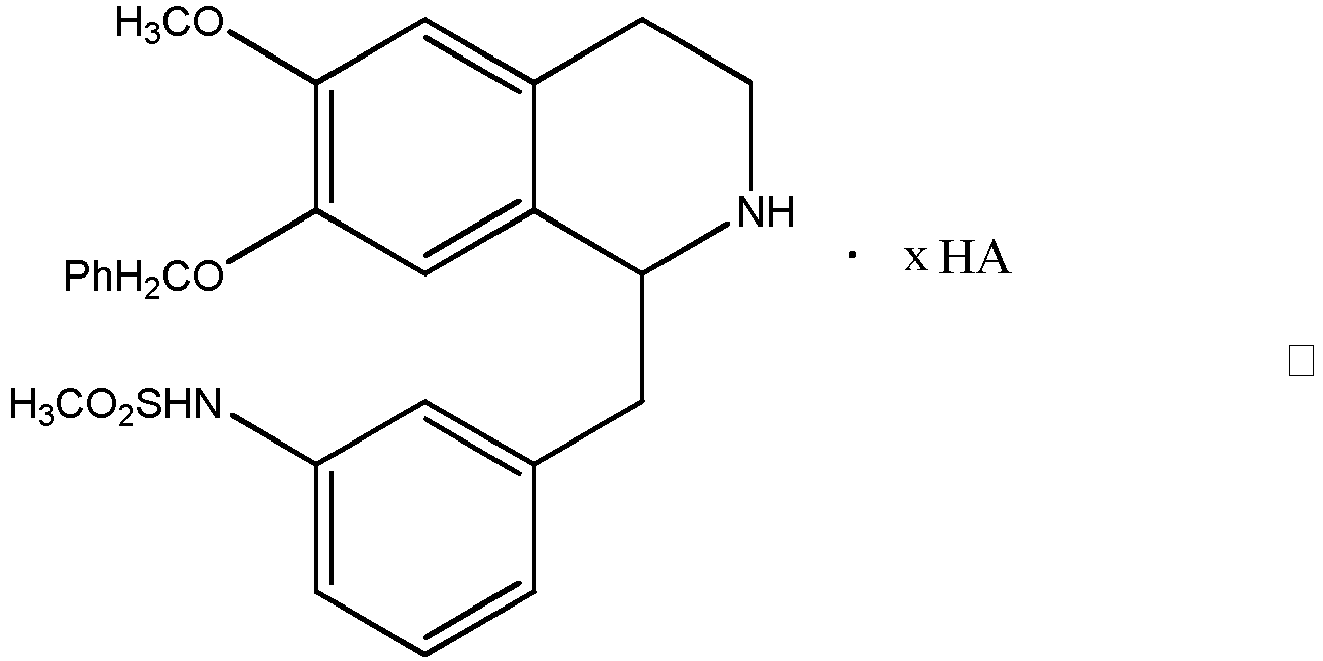
- the present invention provides a salt derivative of 1-(3-methanesulfonamidobenzyl)-6-methoxy,7-benzyloxy-1,2,3,4-tetrahydroisoquinoline having the structure of formula I:
- the salt derivative has a solubility of no less than 3.0 nmol/mL or 1.8 mg/mL in water.
- HA is selected from the group consisting of sulfuric acid, phosphoric acid, nicotinic acid, oxalic acid, glycolic acid, benzenesulfonic acid and orotic acid;
- X is a value of 1/3, 1/2 or 1.
- the salt derivative of 1-(3-methanesulfonamidobenzyl)-6-methoxy,7-benzyloxy-1,2,3,4-tetrahydroisoquinoline is in form of a crystal.
- HA is sulfuric acid
- X is 1/2 or 1.
- HA is oxalic acid
- X is 1/2 or 1.
- the crystal form of the crystal can be characterized by the following Bragg 2 ⁇ (Bragg 2-Theta) values as measured by X-ray powder diffraction (XRPD): 4.9 ⁇ 0.2°, 7.1 ⁇ 0.2°, 8.4 ⁇ 0.2°, 9.7 ⁇ 0.2°, 12.0 ⁇ 0.2°, 15.4 ⁇ 0.2°, 17.0 ⁇ 0.2°, 19.5° ⁇ 0.2°, 20.3 ⁇ 0.2°, 20.9 ⁇ 0.2°, 21.6 ⁇ 0.2°, 22.8 ⁇ 0.2°, 23.6 ⁇ 0.2°, 24.6 ⁇ 0.2°, 25.4 ⁇ 0.2°, 26.0 ⁇ 0.2°, 30.8 ⁇ 0.2°; or by an endothermic peak at 130 ⁇ 5 °C in a DSC spectrum as measured by differential scanning calorimetry (DSC).
- DSC differential scanning calorimetry
- the crystal form of the crystal can be characterized by the following Bragg 2 ⁇ (Bragg 2-Theta) values as measured by X-ray powder diffraction (XRPD): 4.6 ⁇ 0.2°, 7.6 ⁇ 0.2°, 9.8 ⁇ 0.2°, 10.2 ⁇ 0.2°, 13.9 ⁇ 0.2°, 14.4 ⁇ 0.2°, 15.3 ⁇ 0.2°, 18.1 ⁇ 0.2°, 16.8 ⁇ 0.2°, 20.5 ⁇ 0.2°, 20.9 ⁇ 0.2°, 21.9 ⁇ 0.2°, 23.1 ⁇ 0.2°, 23.5 ⁇ 0.2°, 24.3 ⁇ 0.2°, 27.1 ⁇ 0.2°; or preferably, the crystal has the X-ray powder diffraction spectrum in FIG.1 .
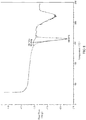
- the crystal when X is 1 and HA is phosphoric acid, the crystal exhibits an endothermic peak at 201 ⁇ 5 °C in a DSC spectrum as measured by differential scanning calorimetry (DSC); or preferably, the crystal has the DSC spectrum in FIG.2 .
- DSC differential scanning calorimetry
- the crystal form of the crystal can be characterized by the following Bragg 2 ⁇ (Bragg 2-Theta) values as measured by X-ray powder diffraction (XRPD): 5.0 ⁇ 0.2°, 5.9 ⁇ 0.2°, 7.2 ⁇ 0.2°, 8.2 ⁇ 0.2°, 10.9 ⁇ 0.2°, 12.2 ⁇ 0.2°, 13.4 ⁇ 0.2°, 14.4° ⁇ 0.2°, 15.1 ⁇ 0.2°, 15.5 ⁇ 0.2°, 17.0 ⁇ 0.2°, 17.4 ⁇ 0.2°, 17.8 ⁇ 0.2°, 18.7 ⁇ 0.2°, 19.9 ⁇ 0.2°, 20.5 ⁇ 0.2°, 20.8 ⁇ 0.2°, 21.9 ⁇ 0.2°, 23.1 ⁇ 0.2°, 23.5 ⁇ 0.2°, 24.8 ⁇ 0.2°, 25.1 ⁇ 0.2°, 25.6 ⁇ 0.2°, 27.0 ⁇ 0.2°, 27.6 ⁇ 0.2°; or by an endothermic peak at 152 ⁇ 5 °C in a DSC spectrum as measured by differential scanning calorimetry (DSC).
- DSC differential scanning calorimetry
- the crystal form of the crystal can be characterized by the following Bragg 2 ⁇ (Bragg 2-Theta) values as measured by X-ray powder diffraction (XRPD): 3.4 ⁇ 0.2°, 4.6 ⁇ 0.2°, 5.5 ⁇ 0.2°, 7.8 ⁇ 0.2°, 9.2 ⁇ 0.2°, 10.2 ⁇ 0.2°, 10.8 ⁇ 0.2°, 11.9° ⁇ 0.2°, 13.1 ⁇ 0.2°, 13.8 ⁇ 0.2°, 14.6 ⁇ 0.2°, 16.4 ⁇ 0.2°, 17.0 ⁇ 0.2°, 18.4 ⁇ 0.2°, 19.0 ⁇ 0.2°, 20.2 ⁇ 0.2°, 21.9 ⁇ 0.2°, 23.6 ⁇ 0.2°, 25.8 ⁇ 0.2°, 27.3 ⁇ 0.2°, 30.0 ⁇ 0.2°, 31.9 ⁇ 0.2°; or by an endothermic peak at 161 ⁇ 5 °C and a broad endothermic peak spanning 190 ⁇ 210 °C in a DSC spectrum as measured by differential scanning calorimetry (DSC).
- DSC differential scanning calorimetry
- the crystal form of the crystal can be characterized by the following Bragg 2 ⁇ (Bragg 2-Theta) values as measured by X-ray powder diffraction (XRPD): 4.7 ⁇ 0.2°, 7.5 ⁇ 0.2°, 9.9 ⁇ 0.2°, 10.3 ⁇ 0.2°, 13.7 ⁇ 0.2°, 14.3 ⁇ 0.2°, 14.9 ⁇ 0.2°, 15.3° ⁇ 0.2°, 16.1 ⁇ 0.2°, 16.9 ⁇ 0.2°, 17.6 ⁇ 0.2°, 18.1 ⁇ 0.2°, 18.9 ⁇ 0.2°, 19.3 ⁇ 0.2°, 20.4 ⁇ 0.2°, 20.8 ⁇ 0.2°, 21.8 ⁇ 0.2°, 22.5 ⁇ 0.2°, 22.9 ⁇ 0.2°, 24.3 ⁇ 0.2°, 24.9 ⁇ 0.2°, 25.3 ⁇ 0.2°, 25.9 ⁇ 0.2°, 27.7 ⁇ 0.2°; or by an endothermic peak at 187 ⁇ 5 °C in a DSC spectrum as measured by differential scanning calorimetry (DSC).
- DSC differential scanning calorimetry
- the crystal form of the crystal can be characterized by the following Bragg 2 ⁇ (Bragg 2-Theta) values as measured by X-ray powder diffraction (XRPD): 6.1 ⁇ 0.2°, 6.8 ⁇ 0.2°, 8.2 ⁇ 0.2°, 8.8 ⁇ 0.2°, 11.5 ⁇ 0.2°, 12.7 ⁇ 0.2°, 14.4 ⁇ 0.2°, 15.0° ⁇ 0.2°, 15.5 ⁇ 0.2°, 16.5 ⁇ 0.2°, 17.0 ⁇ 0.2°, 17.4 ⁇ 0.2°, 17.7 ⁇ 0.2°, 18.7 ⁇ 0.2°, 19.4 ⁇ 0.2°, 19.8 ⁇ 0.2°, 20.3 ⁇ 0.2°, 21.3 ⁇ 0.2°, 21.7 ⁇ 0.2°, 22.6 ⁇ 0.2°, 23.0 ⁇ 0.2°, 23.5 ⁇ 0.2°, 24.2 ⁇ 0.2°, 29.1 ⁇ 0.2°; or by an endothermic peak at 150 ⁇ 5 °C and a shoulder peak near 160 °C in a DSC spectrum as measured by differential scanning calorimetry (DSC).
- DSC differential scanning calorimetry
- the crystal form of the crystal can be characterized by the following Bragg 2 ⁇ (Bragg 2-Theta) values as measured by X-ray powder diffraction (XRPD): 5.8 ⁇ 0.2°, 8.7 ⁇ 0.2°, 9.9 ⁇ 0.2°, 11.2 ⁇ 0.2°, 12.5 ⁇ 0.2°, 13.9 ⁇ 0.2°, 14.1 ⁇ 0.2°, 15.2° ⁇ 0.2°, 16.2 ⁇ 0.2°, 17.0 ⁇ 0.2°, 17.4 ⁇ 0.2°, 17.8 ⁇ 0.2°, 18.7 ⁇ 0.2°, 19.0 ⁇ 0.2°, 20.4 ⁇ 0.2°, 21.9 ⁇ 0.2°, 23.5 ⁇ 0.2°, 24.0 ⁇ 0.2°, 24.9 ⁇ 0.2°, 25.9 ⁇ 0.2°, 27.6 ⁇ 0.2°, 29.5 ⁇ 0.2°, 31.0 ⁇ 0.2°, 31.4 ⁇ 0.2°; or by an endothermic peak at 138 ⁇ 5 °C in a DSC spectrum as measured by differential scanning calorimetry (DSC).
- DSC differential scanning calorimetry
- the present invention provides a method for preparing the provided salt derivative of 1-(3-methanesulfonamidobenzyl)-6-methoxy,7-benzyloxy-1,2,3,4-tetrahydroisoquinoline according to the present invention, comprising reacting 1-(3-methanesulfonamidobenzyl)-6-methoxy,7-benzyloxy-1,2,3,4-tetrahydroisoquinoline with the acid HA to form the salt derivative.
- the method comprises reacting 1-(3-methanesulfonamidobenzyl)-6-methoxy,7-benzyloxy-1,2,3,4-tetrahydroisoquinoline provided according to the present disclosure as described above with the acid in an organic solvent to form the salt derivative.
- the method comprises, when HA is nicotinic acid, oxalic acid, glycolic acid, benzenesulfonic acid or orotic acid, dissolving 1-(3-methanesulfonamidobenzyl)-6-methoxy,7-benzyloxy-1,2,3,4-tetrahydroisoquinoline in an organic solvent, adding the acid, and then cooling to crystallize to give the product.
- the method comprises, when HA is sulfuric acid or phosphoric acid, dissolving 1-(3-methanesulfonamidobenzyl)-6-methoxy,7-benzyloxy-1,2,3,4-tetrahydroisoquinoline in an organic solvent, adding the acid in a organic solvent, and then cooling to crystallize to give the product.
- the method further comprises washing and drying the obtained crystal or precipitate.
- the reaction is conducted at a temperature of 0-80 °C.
- the organic solvent is methanol, ethanol, isopropanol, acetone, 2-butanone, methyl acetate, isopropyl acetate, methyl tertbutyl ether, acetonitrile or toluene.
- the temperature of reaction is 10-60 °C; more preferably 40 °C.
- the present invention provides a pharmaceutical composition consisting of an effective amount of the provided salt derivative of 1-(3-methanesulfonamidobenzyl)-6-methoxy,7-benzyloxy-1,2,3,4-tetrahydroisoquinoline according to the present invention and one or more pharmaceutically acceptable auxiliary agent(s).
- the present invention provides use of the provided salt derivative of 1-(3-methanesulfonamidobenzyl)-6-methoxy,7-benzyloxy-1,2,3,4-tetrahydroisoquinoline according to the present invention in preparing an antiarrhythmic medicament.
- the present invention provides a salt derivative of the compound with improved solubility in water and thus also improved bioavailability and druggability.
- the present inventors find, trough extensive and intensive investigation, that the salt derivative of 1-(3-methanesulfonamidobenzyl)-6-methoxy,7-benzyloxy-1,2,3,4-tetrahydroisoquinoline according to formula I exhibits significantly improved solubility in water, compared to the existing SIPI-409 and its hydrochloride form. Further, pharmacokinetics show that the salt derivatives of SIPI-409 according to the present invention exhibit significantly improved bioavailability, compared to the existing SIPI-409 hydrochloride. For example, in the case of the phosphate, the bioavailability can be increased by 329%, compared to the existing SIPI-409 hydrochloride.
- the present invention provides a salt derivative of the compound SIPI-409 according to formula (I):
- the acid used to form the salt with SIPI-40 can be any of the organic or inorganic acids as commonly known in the art, such as one selected from the list below in Table 1.
- Table 1 Type Acids Acids of type I Hydrochloric acid Hexanedioic acid Hippuric acid Isoleucine Sulfuric acid Citric acid Decanoic acid Threonine Phosphoric acid Ferulic acid Lauric acid Lysine Acetic acid Phenylpropionic acid Palmitic acid Alanine Glycolic acid Phenylbutyric acid Stearic acid Cystine Lactic acid Valproic acid Succinic acid Arginine L-Lactic acid Iodic acid L-(-)-Malic acid Tyrosine L-Aspartic acid Methylsulfuric acid L-(+)-Tartaric acid Proline Gluconic acid Valeric acid Maleic acid Glutamic acid D-Glucuronic acid Valine Fumaric acid Hydrobromic acid Ascorbic acid Leucine Glutaric acid Sebacic
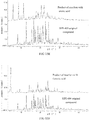
- XRPD spectra of the reaction products between SIPI-409 and the acids such as hydrochloric acid, succinic acid, fumaric acid, L-tartaric acid, ethionic acid, glycolic acid, orotic acid, DL-malic acid, hydrobromic acid, oxalic acid, phosphoric acid, nicotinic acid, sulfuric acid and benzenesulfonic acid were compared with the XRPD spectrum of the starting material SIPI-409 in FIG. 15 .
- the XRPD spectra of the fourteen (14) reaction products are significantly different in terms of diffraction pattern, position of the angles and diffraction intensity, as compared to SIPI-409.
- all the fourteen (14) acids form salts with SIPI-409.
- phosphoric acid, sulfuric acid, nicotinic acid, oxalic acid, glycolic acid, benzenesulfonic acid or orotic acid is used to form the salt with SIPI-409.
- sulfuric acid, phosphoric acid, nicotinic acid or oxalic acid is used.
- the provided SIPI-409 phosphate crystal according to the present invention comprises SIPI-409 and phosphoric acid at a ratio being 1:1, 2:1 or 3:1; wherein, when the ratio of SIPI-409 to phosphoric acid is 1:1, the resultant crystal, as measured via powder X-ray diffraction using a Cu target radiation source, has the following characteristic 2 ⁇ peaks: 4.6 ⁇ 0.2°, 7.6 ⁇ 0.2°, 9.8 ⁇ 0.2°, 10.2 ⁇ 0.2°, 13.9 ⁇ 0.2°, 14.4 ⁇ 0.2°, 15.3 ⁇ 0.2°, 18.1 ⁇ 0.2°, 16.8 ⁇ 0.2°, 20.5 ⁇ 0.2°, 20.9 ⁇ 0.2°, 21.9 ⁇ 0.2°, 23.1 ⁇ 0.2°, 23.5 ⁇ 0.2°, 24.3 ⁇ 0.2°, 27.1 ⁇ 0.2°; or more preferably, has the XRPD spectrum in FIG. 1 .
- the said SIPI-409 phosphate crystal as measured by differential scanning calorimetry, is observed with an endothermic peak at 201 ⁇ 5 °C in the DSC spectrum at a temperature rate of 10 °C/min, or preferably has the DSC spectrum in FIG. 2 .
- the provided SIPI-409 sulfate crystal according to the present invention comprises SIPI-409 and sulfuric acid at a ratio of 1:1 or 2:1; wherein, when the ratio of SIPI-409 to sulfuric acid is 1:1, the resultant crystal, as measured via powder X-ray diffraction using a Cu target radiation source, has the following characteristic 2 ⁇ peaks: 4.9 ⁇ 0.2°, 7.1 ⁇ 0.2°, 8.4 ⁇ 0.2°, 9.7 ⁇ 0.2°, 12.0 ⁇ 0.2°, 15.4 ⁇ 0.2°, 17.0 ⁇ 0.2°, 19.5° ⁇ 0.2°, 20.3 ⁇ 0.2°, 20.9 ⁇ 0.2°, 21.6 ⁇ 0.2°, 22.8 ⁇ 0.2°, 23.6 ⁇ 0.2°, 24.6 ⁇ 0.2°, 25.4 ⁇ 0.2°, 26.0 ⁇ 0.2°, 30.8 ⁇ 0.2°; or preferably, has the XRPD spectrum of FIG. 3 .
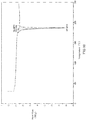
- the said SIPI-409 sulfate crystal as measured by differential scanning calorimetry (DSC), is observed with an endothermic peak at 130 ⁇ 5 °C in the DSC spectrum at a temperature rate of 10 °C/min, or preferably has the DSC spectrum in FIG. 4 .
- the provided SIPI-409 nicotinate crystal according to the present invention as measured via powder X-ray diffraction using a Cu target radiation source, has the following characteristic 2 ⁇ peaks: 5.0 ⁇ 0.2°, 5.9 ⁇ 0.2°, 7.2 ⁇ 0.2°, 8.2 ⁇ 0.2°, 10.9 ⁇ 0.2°, 12.2 ⁇ 0.2°, 13.4 ⁇ 0.2°, 14.4° ⁇ 0.2°, 15.1 ⁇ 0.2°, 15.5 ⁇ 0.2°, 17.0 ⁇ 0.2°, 17.4 ⁇ 0.2°, 17.8 ⁇ 0.2°, 18.7 ⁇ 0.2°, 19.9 ⁇ 0.2°, 20.5 ⁇ 0.2°, 20.8 ⁇ 0.2°, 21.9 ⁇ 0.2°, 23.1 ⁇ 0.2°, 23.5 ⁇ 0.2°, 24.8 ⁇ 0.2°, 25.1 ⁇ 0.2°, 25.6 ⁇ 0.2°, 27.0 ⁇ 0.2°, 27.6 ⁇ 0.2°; or preferably, has the XRPD spectrum of FIG. 5 .
- the provided SIPI-409 nicotinate crystale according to the present invention is observed with an endothermic peak at 152 ⁇ 5 °C in the DSC spectrum at a temperature rate of 10 °C/min, or preferably has the DSC spectrum in FIG. 6 .
- the provided SIPI-409 oxalate crystal according to the present invention comprises SIPI-409 and oxalic acid at a ratio being 1:1 or 2:1; wherein when the ratio of SIPI-409 to oxalic acid is 1:1, the resultant crystal, as measured via powder X-ray diffraction using a Cu target radiation source, has the following characteristic 2 ⁇ peaks: 3.4 ⁇ 0.2°, 4.6 ⁇ 0.2°, 5.5 ⁇ 0.2°, 7.8 ⁇ 0.2°, 9.2 ⁇ 0.2°, 10.2 ⁇ 0.2°, 10.8 ⁇ 0.2°, 11.9° ⁇ 0.2°, 13.1 ⁇ 0.2°, 13.8 ⁇ 0.2°, 14.6 ⁇ 0.2°, 16.4 ⁇ 0.2°, 17.0 ⁇ 0.2°, 18.4 ⁇ 0.2°, 19.0 ⁇ 0.2°, 20.2 ⁇ 0.2°, 21.9 ⁇ 0.2°, 23.6 ⁇ 0.2°, 25.8 ⁇ 0.2°, 27.3 ⁇ 0.2°, 30.0 ⁇ 0.2°, 31.9 ⁇ 0.2°; or preferably, has the XRPD spectrum of FIG. 7 .
- the said SIPI-409 oxalate crystal as measured by differential scanning calorimetry (DSC), is observed with an endothermic peak at 161 ⁇ 5 °C and a broad endothermic peak spanning 190 ⁇ 210 °C in the DSC spectrum at a temperature rate of 10 °C/min, or preferably has the DSC spectrum in FIG. 8
- the provided SIPI-409 glycolate crystal according to the present invention as measured via powder X-ray diffraction using a Cu target radiation source, has the following characteristic 2 ⁇ peaks: 4.7 ⁇ 0.2°, 7.5 ⁇ 0.2°, 9.9 ⁇ 0.2°, 10.3 ⁇ 0.2°, 13.7 ⁇ 0.2°, 14.3 ⁇ 0.2°, 14.9 ⁇ 0.2°, 15.3° ⁇ 0.2°, 16.1 ⁇ 0.2°, 16.9 ⁇ 0.2°, 17.6 ⁇ 0.2°, 18.1 ⁇ 0.2°, 18.9 ⁇ 0.2°, 19.3 ⁇ 0.2°, 20.4 ⁇ 0.2°, 20.8 ⁇ 0.2°, 21.8 ⁇ 0.2°, 22.5 ⁇ 0.2°, 22.9 ⁇ 0.2°, 24.3 ⁇ 0.2°, 24.9 ⁇ 0.2°, 25.3 ⁇ 0.2°, 25.9 ⁇ 0.2°, 27.7 ⁇ 0.2°; or preferably, has the XRPD spectrum of FIG. 9 .
- the provided SIPI-409 glycolate crystal according to the present invention as measured by differential scanning calorimetry (DSC), is observed with an endothermic peak at 187 ⁇ 5 °C in the DSC spectrum at a temperature rate of 10 °C/min, or preferably has the DSC spectrum in FIG. 10 .
- the provided SIPI-409 benzenesulfonate crystal according to the present invention as measured via powder X-ray diffraction using a Cu target radiation source, has the following characteristic 2 ⁇ peaks: 6.1 ⁇ 0.2°, 6.8 ⁇ 0.2°, 8.2 ⁇ 0.2°, 8.8 ⁇ 0.2°, 11.5 ⁇ 0.2°, 12.7 ⁇ 0.2°, 14.4 ⁇ 0.2°, 15.0° ⁇ 0.2°, 15.5 ⁇ 0.2°, 16.5 ⁇ 0.2°, 17.0 ⁇ 0.2°, 17.4 ⁇ 0.2°, 17.7 ⁇ 0.2°, 18.7 ⁇ 0.2°, 19.4 ⁇ 0.2°, 19.8 ⁇ 0.2°, 20.3 ⁇ 0.2°, 21.3 ⁇ 0.2°, 21.7 ⁇ 0.2°, 22.6 ⁇ 0.2°, 23.0 ⁇ 0.2°, 23.5 ⁇ 0.2°, 24.2 ⁇ 0.2°, 29.1 ⁇ 0.2°; or preferably, has the XRPD spectrum of FIG. 11 .
- the provided SIPI-409 benzenesulfonate crystal according to the present invention is observed with an endothermic peak at 150 ⁇ 5 °C and a shoulder peak near 160 °C in the DSC spectrum at a temperature rate of 10 °C/min, or preferably has the DSC spectrum in FIG 12 .
- the provided SIPI-409 orotate crystal according to the present invention as measured via powder X-ray diffraction using a Cu target radiation source, has the following characteristic 2 ⁇ peaks: 5.8 ⁇ 0.2°, 8.7 ⁇ 0.2°, 9.9 ⁇ 0.2°, 11.2 ⁇ 0.2°, 12.5 ⁇ 0.2°, 13.9 ⁇ 0.2°, 14.1 ⁇ 0.2°, 15.2° ⁇ 0.2°, 16.2 ⁇ 0.2°, 17.0 ⁇ 0.2°, 17.4 ⁇ 0.2°, 17.8 ⁇ 0.2°, 18.7 ⁇ 0.2°, 19.0 ⁇ 0.2°, 20.4 ⁇ 0.2°, 21.9 ⁇ 0.2°, 23.5 ⁇ 0.2°, 24.0 ⁇ 0.2°, 24.9 ⁇ 0.2°, 25.9 ⁇ 0.2°, 27.6 ⁇ 0.2°, 29.5 ⁇ 0.2°, 31.0 ⁇ 0.2°, 31.4 ⁇ 0.2°; or preferably, has the XRPD spectrum of FIG. 13 .
- the provided SIPI-409 orotate crystal according to the present invention is observed with an endothermic peak at 138 ⁇ 5 °C in the DSC spectrum at a temperature rate of 10 °C/min, or preferably has the DSC spectrum in FIG. 14 .
- Crytals of the SIPI-409 salt derivatives according to the present invention include monocrystals and polymorphisms.
- the present invention further provides methods for preparing the salt derivatives of SIPI-409 and crystals thereof, which comprise dissolving SIPI-409 in an organic solvent, adding an organic or inorganic acid to react under agitation, then cooling to crystallize to give the crystalline salt derivative of SIPI-409.
- Solvents useful here include, for example, alcohol solvents, ketone solvents, ether solvents, ester solvents, aromatic hydrocarbon solvents and nitrile solvents.
- Useful alcohol solvents include, for example, methanol, ethanol, and isopropanol, with methanol being preferred.
- Useful ketone solvents include, for example, acetone and 2-butanone.
- Useful ether solvents include, for example, methyl tertbutyl ether, tetrahydrofuran, and 2-methyltetrahydrofuran.
- Useful ester solvents include, for example, ethyl acetate, methyl acetate and isopropyl acetate.
- Useful aromatic hydrocarbon solvents include, for example, toluene and xylene.
- a useful nitrile solvent can be, for example, acetonitrile.
- the salt-forming reaction can be conducted at a temperature in the range of 0-80 °C, preferably 10-60 °C and most preferably 40 °C.
- the ratio of SIPI-409 to the acid and the manner of material feeding may vary depending on the desired salt derivative, without departing from the principle of the present invention.
- Typical dosage forms for oral administration include, for example, normal tablets, capsules, dispersible tablets, pellets, etc., which may optionally comprise one or more auxiliary agent(s) such as excipients, lubricants and binders, etc., as commonly known in the field.
- any of the features as described in the above or the examples below can be recombined as desirable. Any of the features in the present disclosure can be used in combination with any forms of composition. For any of the features in the present disclosure, it further includes the alternatives that can provide identical, equivalent or similar effects when being used instead. Therefore, unless otherwise stated, a feature as specified herein is just an example of the equivalent or similar features in general.
- Advantages of the present invention mainly include that the present invention provides novel salt derivatives of SIPI-409 and crystals thereof with significantly improved solubility in water, which further enables improved bioavailability and druggability.
- Stability of a salt derivative of SIPI-40 refers to stability against heat, humidity and light, as well as hygroscopicity of the crystalline salt derivative.
- SIPI-409 0.5g (0.11mmol) of SIPI-409 was placed in a 50mL flask, to which 20mL of methanol solvent was added, in a water-bath kept at 40 °C, and then 1M phosphoric acid solution in methanol (1.3mL, 0.13mmol) was added drop-wise. The system was kept under agitation for 2 hrs at 40 °C and then cooled to 5 ⁇ 15 °C to crystallize followed by filtration. Thereby a white powder of SIPI-409 phosphate was obtained at the amount of 0.52g and the yield of 86%.
- the values measured via elemental analysis are ⁇ 0.3% different from the theoretic values.
- Solubility of SIPI-409 and of the salt derivatives thereof in water was measured by liquid chromatography.
- the SIPI-409 phosphate, SIPI-409 sulfate, SIPI-409 nicotinate, SIPI-409 oxalate, SIPI-409 glycolate, SIPI-409 benzenesulfonate and SIPI-409 orotate according to the present invention exhibited significantly increased solubility in water, compared to SIPI-409 and SIPI-409 hydrochloride.
- SIPI-409 phosphate was observed with a significantly increased solubility in water compared to SIPI-409 and SIPI-409 hydrochloride in the measurement of solubility in water, it was further studied on pharmacokinetics, in comparison with SIPI-409 hydrochloride.
- SIPI-409 hydrochloride and SIPI-409 phosphate were administrated peros (PO), and were studied on in vivo pharmacokinetic parameters and bioavailability in SD rats. Concentrations of SIPI-409 hydrochloride and SIPI-409 phosphate in plasma were measured at intervals using Liquid Chromatography-Mass Spectrometry-Mass Spectrometry assay.
- the obtained plasma concentration data were processed using the pharmacokinetic processing software WinNonlin 5.2 to calculate the relevant pharmacokinetic parameters according to non-compartmental model.
- SIPI-409 hydrochloride and SIPI-409 phosphate were as set forth in Table 4.
- Table 4 Major Pharmacokinetic Parameters after a Single Dose of Oral Administration in SD Rats PO-10mg/kg AUC (0-t) AUC (0- ⁇ ) MRT (0- ⁇ ) t 1/2 Tmax Cmax F (based on SIPI-409) ( ⁇ g/L ⁇ h) ( ⁇ g/L ⁇ h) ( ⁇ g/L ⁇ h) h) (h) (h) ( ⁇ g/L) (%) SIPI-409 hydrochloride 482.88 503.82 2.71 1.8 0.33 191.96 24.63 SIPI-409 phosphate 1366.89 1437.93 4.23 2.66 0.33 376.24 79.33
- Phosphate, nicotinate, glycolate, oxalate, orotate, benzenesulfonate and sulfate of SIPI-409 were placed in an oven at 60 °C. XRPD measurements were carried out on samples taken out on day 0, 5, 10, 20 and 30.
- the phosphate, nicotinate, glycolate, oxalate, orotate, benzenesulfonate and sulfate of SIPI-409 were kept in a 92.5% RH (saturated KNO 3 ) atomosphere.
- RH saturated KNO 3
- the phosphate, nicotinate, glycolate, oxalate, orotate, benzenesulfonate and sulfate of SIPI-409 were placed in a light incubator. XRPD measurements were carried out on samples taken out on day 0, 5, 10, 20 and 30.
- Hygroscopicity was further investigated by placing the phosphate, nicotinate, glycolate, oxalate, orotate, benzenesulfonate and sulfate of SIPI-409 in a dynamic vapor sorption (DVS) analyzer.
- DVD dynamic vapor sorption
Landscapes
- Health & Medical Sciences (AREA)
- Chemical & Material Sciences (AREA)
- Organic Chemistry (AREA)
- Medicinal Chemistry (AREA)
- Pharmacology & Pharmacy (AREA)
- Life Sciences & Earth Sciences (AREA)
- Animal Behavior & Ethology (AREA)
- General Health & Medical Sciences (AREA)
- Public Health (AREA)
- Veterinary Medicine (AREA)
- Epidemiology (AREA)
- Bioinformatics & Cheminformatics (AREA)
- Cardiology (AREA)
- Heart & Thoracic Surgery (AREA)
- Chemical Kinetics & Catalysis (AREA)
- General Chemical & Material Sciences (AREA)
- Nuclear Medicine, Radiotherapy & Molecular Imaging (AREA)
- Engineering & Computer Science (AREA)
- Pharmaceuticals Containing Other Organic And Inorganic Compounds (AREA)
Abstract
Description
- The present disclosure relates to a salt derivative of 1-(3-methanesulfonamidobenzyl)-6-methoxy,7-benzyloxy-1,2,3,4-tetrahydroisoquinoline and its preparation, as well as a pharmaceutical composition comprising same.
- Sudden cardiac death (SCD) is a leading cause of deaths from cardiovascular diseases. SCD is resultant from regular loss of heart rhythm due to myocardial electrophysiological instability such as sustained ventricular tachycardia (VT) and ventricular fibrillation (VF) which are the most serious cases.
- Antiarrhythmic drugs can be divided into four classes. Class I are sodium channel blockers, which can be further divided into subtypes a, b and c, wherein Class la, as represented by Quinidine, moderately block the sodium channel; Class Ib, as represented by Lidocaine, block the sodium channel in a milder way and Class Ic, as represented by Flecainide, significantly block the sodium channel. Class II are β-adrenoreceptor blockers, as represented by Propranolol. Class III, as represented by Amiodarone, selectively prolong the repolarization process including action potential duration (APD) and effective refractory period (ERP). Class IV, as represented by Verapamil, are calcium antagonists.
- Isoquinoline alkaloids are widely found in natural plants. Certain isoquinoline alkaloids, like bisbenzylisoquinoline alkaloids (eg, berbamine, dauricine, tetrandrine, cocculine, neferine) and monobenzylisoquinoline alkaloids (such as higenamine) and protoberberine (Huangliansu), have cardiovascular activities, like anti-arrhythmia activity. Berberine exhibits a class-III antiarrhythmic activity and has been reported as useful in treating ventricular arrhythmia in clinic.
- Since 1985, Ms. Meihua Xie (Research Fellow) from Shanghai Institute of Pharmaceutical Industry has designed and synthesized nearly 1,000 compounds that were derived from higenamine and berberine as the leading compounds via structural reconfiguration. These compounds were tested on antiarrhythmic pharmacodynamics, Ames toxicity, acute toxicity and pharmacokinetics, whereby 1-(3-methanesulfonamidobenzyl)-6-methoxy,7-benzyloxy-1,2,3,4-tetrahydroisoquinoline (referred to as "SIPI-409" herein below) of formula (II) was picked out as a candidate for a new antiarrhythmic drug for preclinical studies:

- 1-(3-methanesulfonamidobenzyl)-6-methoxy,7-benzyloxy-1,2,3,4-tetrahydroisoquinoli ne (SIPI-409) and its hydrochloride salt, as well as the preparation and uses thereof were described in Chinese Patent No.
ZL200710181295.7 - However, further studies found that SIPI-409 and its hydrochloride salt were less soluble in water, as demonstrated by the solubility as low as 0.07 mg/mL (0.15 nmol/mL) and 0.51 mg/mL (1.05 nmol/mL), respectively. At the same time, preliminary pharmacokinetic studies have shown that t1/2 of SIPI-409 hydrochloride injection was close to that of Sotalol, while oral administration of SIPI-409 hydrochloride gave a bioavailability (24%) far lower than Sotalol (70%) in SD rats. This can be explained by the excessively low solubility of the salt.
- Therefore, there is a need for a salt derivative of the compound with improved water solubility, bioavailability and druggability.
- One object of the invention is to provide a salt derivative of SIPI-409 with improved solubility and preparation for same.
- In the first aspect, the present invention provides a salt derivative of 1-(3-methanesulfonamidobenzyl)-6-methoxy,7-benzyloxy-1,2,3,4-tetrahydroisoquinoline having the structure of formula I:

- The salt derivative has a solubility of no less than 3.0 nmol/mL or 1.8 mg/mL in water.
- In a preferred embodiment, HA is selected from the group consisting of sulfuric acid, phosphoric acid, nicotinic acid, oxalic acid, glycolic acid, benzenesulfonic acid and orotic acid; X is a value of 1/3, 1/2 or 1.
- In another preferred embodiment, the salt derivative of 1-(3-methanesulfonamidobenzyl)-6-methoxy,7-benzyloxy-1,2,3,4-tetrahydroisoquinoline is in form of a crystal.
- In another preferred embodiment, HA is sulfuric acid, and X is 1/2 or 1.
- In another preferred embodiment, HA is oxalic acid, and X is 1/2 or 1.
- In another preferred embodiment, when HA is sulfuric acid and X is 1, the crystal form of the crystal can be characterized by the following Bragg 2θ (Bragg 2-Theta) values as measured by X-ray powder diffraction (XRPD): 4.9±0.2°, 7.1±0.2°, 8.4±0.2°, 9.7±0.2°, 12.0±0.2°, 15.4±0.2°, 17.0±0.2°, 19.5°±0.2°, 20.3±0.2°, 20.9±0.2°, 21.6±0.2°, 22.8±0.2°, 23.6±0.2°, 24.6±0.2°, 25.4±0.2°, 26.0±0.2°, 30.8±0.2°; or by an endothermic peak at 130±5 °C in a DSC spectrum as measured by differential scanning calorimetry (DSC).
- In another preferred embodiment, when X is 1 and HA is phosphoric acid, the crystal form of the crystal can be characterized by the following Bragg 2θ (Bragg 2-Theta) values as measured by X-ray powder diffraction (XRPD): 4.6±0.2°, 7.6±0.2°, 9.8±0.2°, 10.2±0.2°, 13.9±0.2°, 14.4±0.2°, 15.3±0.2°, 18.1±0.2°, 16.8±0.2°, 20.5±0.2°, 20.9±0.2°, 21.9±0.2°, 23.1±0.2°, 23.5±0.2°, 24.3±0.2°, 27.1±0.2°; or preferably, the crystal has the X-ray powder diffraction spectrum in
FIG.1 . - In another preferred embodiment, when X is 1 and HA is phosphoric acid, the crystal exhibits an endothermic peak at 201±5 °C in a DSC spectrum as measured by differential scanning calorimetry (DSC); or preferably, the crystal has the DSC spectrum in
FIG.2 . - In another preferred embodiment, when HA is nicotinic acid, the crystal form of the crystal can be characterized by the following Bragg 2θ (Bragg 2-Theta) values as measured by X-ray powder diffraction (XRPD): 5.0±0.2°, 5.9±0.2°, 7.2±0.2°, 8.2±0.2°, 10.9±0.2°, 12.2±0.2°, 13.4±0.2°, 14.4°±0.2°, 15.1±0.2°, 15.5±0.2°, 17.0±0.2°, 17.4±0.2°, 17.8±0.2°, 18.7±0.2°, 19.9±0.2°, 20.5±0.2°, 20.8±0.2°, 21.9±0.2°, 23.1±0.2°, 23.5±0.2°, 24.8±0.2°, 25.1±0.2°, 25.6±0.2°, 27.0±0.2°, 27.6±0.2°; or by an endothermic peak at 152±5 °C in a DSC spectrum as measured by differential scanning calorimetry (DSC).
- In another preferred embodiment, when HA is oxalic acid and X is 1, the crystal form of the crystal can be characterized by the following Bragg 2θ (Bragg 2-Theta) values as measured by X-ray powder diffraction (XRPD): 3.4±0.2°, 4.6±0.2°, 5.5±0.2°, 7.8±0.2°, 9.2±0.2°, 10.2±0.2°, 10.8±0.2°, 11.9°±0.2°, 13.1±0.2°, 13.8±0.2°, 14.6±0.2°, 16.4±0.2°, 17.0±0.2°, 18.4±0.2°, 19.0±0.2°, 20.2±0.2°, 21.9±0.2°, 23.6±0.2°, 25.8±0.2°, 27.3±0.2°, 30.0±0.2°, 31.9±0.2°; or by an endothermic peak at 161±5 °C and a broad endothermic peak spanning 190∼210 °C in a DSC spectrum as measured by differential scanning calorimetry (DSC).
- In another preferred embodiment, when HA is glycolic acid, the crystal form of the crystal can be characterized by the following Bragg 2θ (Bragg 2-Theta) values as measured by X-ray powder diffraction (XRPD): 4.7±0.2°, 7.5±0.2°, 9.9±0.2°, 10.3±0.2°, 13.7±0.2°, 14.3±0.2°, 14.9±0.2°, 15.3°±0.2°, 16.1±0.2°, 16.9±0.2°, 17.6±0.2°, 18.1±0.2°, 18.9±0.2°, 19.3±0.2°, 20.4±0.2°, 20.8±0.2°, 21.8±0.2°, 22.5±0.2°, 22.9±0.2°, 24.3±0.2°, 24.9±0.2°, 25.3±0.2°, 25.9±0.2°, 27.7±0.2°; or by an endothermic peak at 187±5 °C in a DSC spectrum as measured by differential scanning calorimetry (DSC).
- In another preferred embodiment, when HA is benzenesulfonic acid, the crystal form of the crystal can be characterized by the following Bragg 2θ (Bragg 2-Theta) values as measured by X-ray powder diffraction (XRPD): 6.1±0.2°, 6.8±0.2°, 8.2±0.2°, 8.8±0.2°, 11.5±0.2°, 12.7±0.2°, 14.4±0.2°, 15.0°±0.2°, 15.5±0.2°, 16.5±0.2°, 17.0±0.2°, 17.4±0.2°, 17.7±0.2°, 18.7±0.2°, 19.4±0.2°, 19.8±0.2°, 20.3±0.2°, 21.3±0.2°, 21.7±0.2°, 22.6±0.2°, 23.0±0.2°, 23.5±0.2°, 24.2±0.2°, 29.1±0.2°; or by an endothermic peak at 150±5 °C and a shoulder peak near 160 °C in a DSC spectrum as measured by differential scanning calorimetry (DSC).
- In another preferred embodiment, when HA is orotic acid, the crystal form of the crystal can be characterized by the following Bragg 2θ (Bragg 2-Theta) values as measured by X-ray powder diffraction (XRPD): 5.8±0.2°, 8.7±0.2°, 9.9±0.2°, 11.2±0.2°, 12.5±0.2°, 13.9±0.2°, 14.1±0.2°, 15.2°±0.2°, 16.2±0.2°, 17.0±0.2°, 17.4±0.2°, 17.8±0.2°, 18.7±0.2°, 19.0±0.2°, 20.4±0.2°, 21.9±0.2°, 23.5±0.2°, 24.0±0.2°, 24.9±0.2°, 25.9±0.2°, 27.6±0.2°, 29.5±0.2°, 31.0±0.2°, 31.4±0.2°; or by an endothermic peak at 138±5 °C in a DSC spectrum as measured by differential scanning calorimetry (DSC).
- In the second aspect, the present invention provides a method for preparing the provided salt derivative of 1-(3-methanesulfonamidobenzyl)-6-methoxy,7-benzyloxy-1,2,3,4-tetrahydroisoquinoline according to the present invention, comprising reacting 1-(3-methanesulfonamidobenzyl)-6-methoxy,7-benzyloxy-1,2,3,4-tetrahydroisoquinoline with the acid HA to form the salt derivative.
- In another preferred embodiment, the method comprises reacting 1-(3-methanesulfonamidobenzyl)-6-methoxy,7-benzyloxy-1,2,3,4-tetrahydroisoquinoline provided according to the present disclosure as described above with the acid in an organic solvent to form the salt derivative.
- In another preferred embodiment, the method comprises, when HA is nicotinic acid, oxalic acid, glycolic acid, benzenesulfonic acid or orotic acid, dissolving 1-(3-methanesulfonamidobenzyl)-6-methoxy,7-benzyloxy-1,2,3,4-tetrahydroisoquinoline in an organic solvent, adding the acid, and then cooling to crystallize to give the product.
- In another preferred embodiment, the method comprises, when HA is sulfuric acid or phosphoric acid, dissolving 1-(3-methanesulfonamidobenzyl)-6-methoxy,7-benzyloxy-1,2,3,4-tetrahydroisoquinoline in an organic solvent, adding the acid in a organic solvent, and then cooling to crystallize to give the product.
- In another preferred embodiment, the method further comprises washing and drying the obtained crystal or precipitate.
- In another preferred embodiment, the reaction is conducted at a temperature of 0-80 °C.
- In another preferred embodiment, the organic solvent is methanol, ethanol, isopropanol, acetone, 2-butanone, methyl acetate, isopropyl acetate, methyl tertbutyl ether, acetonitrile or toluene.
- In another preferred embodiment, when HA is phosphoric acid, the temperature of reaction is 10-60 °C; more preferably 40 °C.
- In the third aspect, the present invention provides a pharmaceutical composition consisting of an effective amount of the provided salt derivative of 1-(3-methanesulfonamidobenzyl)-6-methoxy,7-benzyloxy-1,2,3,4-tetrahydroisoquinoline according to the present invention and one or more pharmaceutically acceptable auxiliary agent(s).
- In the fourth aspect, the present invention provides use of the provided salt derivative of 1-(3-methanesulfonamidobenzyl)-6-methoxy,7-benzyloxy-1,2,3,4-tetrahydroisoquinoline according to the present invention in preparing an antiarrhythmic medicament.
- Thereby, the present invention provides a salt derivative of the compound with improved solubility in water and thus also improved bioavailability and druggability.
-
-
FIG. 1 is an XRPD spectrum of SIPI-409 phosphate crystal measured using a Cu target radiation source, wherein the horizontal axis indicates positions (2θ value) and the vertical axis intensities of the diffraction peaks. -
FIG. 2 is a DSC spectrum of SIPI-409 phosphate crystal, wherein the endothermic peak is expressed downward. -
FIG. 3 is an XRPD spectrum of SIPI-409 sulfate crystal measured using a Cu target radiation source, wherein the horizontal axis indicates positions (2θ value) and the vertical axis intensities of the diffraction peaks. -
FIG. 4 is a DSC spectrum of SIPI-409 sulfate crystal, wherein the endothermic peak is expressed downward. -
FIG. 5 is an XRPD spectrum of SIPI-409 nicotinate crystal measured using a Cu target radiation source, wherein the horizontal axis indicates positions (2θ value) and the vertical axis intensities of the diffraction peaks. -
FIG. 6 is a DSC spectrum of SIPI-409 nicotinate crystal, wherein the endothermic peak is expressed downward. -
FIG. 7 is an XRPD spectrum of SIPI-409 oxalate crystal measured using a Cu target radiation source, wherein the horizontal axis indicates positions (2θ value) and the vertical axis intensities of the diffraction peaks. -
FIG. 8 is a DSC spectrum of SIPI-409 oxalate crystal, wherein the endothermic peak is expressed downward. -
FIG. 9 is an XRPD spectrum of SIPI-409 glycolate crystal measured using a Cu target radiation source, wherein the horizontal axis indicates positions (2θ value) and the vertical axis intensities of the diffraction peaks. -
FIG. 10 is a DSC spectrum of SIPI-409 glycolate crystal, wherein the endothermic peak is expressed downward. -
FIG. 11 is an XRPD spectrum of SIPI-409 benzenesulfonate crystal measured using a Cu target radiation source, wherein the horizontal axis indicates positions (2θ value) and the vertical axis intensities of the diffraction peaks. -
FIG. 12 is a DSC spectrum of SIPI-409 benzenesulfonate crystal, wherein the endothermic peak is expressed downward. -
FIG. 13 is an XRPD spectrum of SIPI-409 orotate crystal measured using a Cu target radiation source, wherein the horizontal axis indicates positions (2θ value) and the vertical axis intensities of the diffraction peaks. -
FIG. 14 is a DSC spectrum of SIPI-409 orotate crystal, wherein the endothermic peak is expressed downward. -
FIG. 15 is a comparison of XRPD spectra between the products of the reactions between SIPI-409 and the 14 acids and the starting material SIPI-409; wherein,- A: XRPD spectra of the starting material SIPI-409 and the product of its reaction with hydrochloric acid;
- B: XRPD spectra of the starting material SIPI-409 and the product of its reaction with succinic acid;
- C: XRPD spectra of the starting material SIPI-409 and the product of its reaction with glycolic acid;
- D: XRPD spectra of the starting material SIPI-409 and the product of its reaction with oxalic acid;
- E: XRPD spectra of the starting material SIPI-409 and the product of its reaction with orotic acid;
- F: XRPD spectra of the starting material SIPI-409 and the product of its reaction with fumaric acid;
- G: XRPD spectra of the starting material SIPI-409 and the product of its reaction with tartaric acid;
- H: XRPD spectra of the starting material SIPI-409 and the product of its reaction with ethionic acid;
- I: XRPD spectra of the starting material SIPI-409 and the product of its reaction with malic acid;
- J: XRPD spectra of the starting material SIPI-409 and the product of its reaction with hydrobromic acid;
- K: XRPD spectra of the starting material SIPI-409 and the product of its reaction with phosphoric acid;
- L: XRPD spectra of the starting material SIPI-409 and the product of its reaction with nicotinic acid;
- M: XRPD spectra of the starting material SIPI-409 and the product of its reaction with sulfuric acid; and
- N: XRPD spectra of the starting material SIPI-409 and the product of its reaction with benzenesulfonic acid.
-
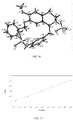
FIG. 16 is a projection of the monocrystal stereostructure of SIPI-409 sulfate crystal. -
FIG. 17 is the standard curve of solubility obtained with the SIPI-409 standard. The value of R is 0.999932. -
FIG. 18 exhibits the XRPD spectra obtained for each of the salt derivatives of SIPI-409 in investigations on crystalline stability, wherein,- A: XRPD spectra of SIPI-409 phosphate in the crystalline stability investigations;
- B: XRPD spectra of SIPI-409 nicotinate in the crystalline stability investigations;
- C: XRPD spectra of SIPI-409 glycolate in the crystalline stability investigations;
- D: XRPD spectra of SIPI-409 oxalate in the crystalline stability investigations;
- E: XRPD spectra of SIPI-409 orotate in the crystalline stability investigations;
- F: XRPD spectra of SIPI-409 benzenesulfonate in the crystalline stability investigations; and
- G: XRPD spectra of SIPI-409 sulfate in the crystalline stability investigations.
- The present inventors find, trough extensive and intensive investigation, that the salt derivative of 1-(3-methanesulfonamidobenzyl)-6-methoxy,7-benzyloxy-1,2,3,4-tetrahydroisoquinoline according to formula I exhibits significantly improved solubility in water, compared to the existing SIPI-409 and its hydrochloride form. Further, pharmacokinetics show that the salt derivatives of SIPI-409 according to the present invention exhibit significantly improved bioavailability, compared to the existing SIPI-409 hydrochloride. For example, in the case of the phosphate, the bioavailability can be increased by 329%, compared to the existing SIPI-409 hydrochloride.
- The present invention provides a salt derivative of the compound SIPI-409 according to formula (I):

- Therein, the acid used to form the salt with SIPI-40 can be any of the organic or inorganic acids as commonly known in the art, such as one selected from the list below in Table 1.
Table 1 Type Acids Acids of type I Hydrochloric acid Hexanedioic acid Hippuric acid Isoleucine Sulfuric acid Citric acid Decanoic acid Threonine Phosphoric acid Ferulic acid Lauric acid Lysine Acetic acid Phenylpropionic acid Palmitic acid Alanine Glycolic acid Phenylbutyric acid Stearic acid Cystine Lactic acid Valproic acid Succinic acid Arginine L-Lactic acid Iodic acid L-(-)-Malic acid Tyrosine L-Aspartic acid Methylsulfuric acid L-(+)-Tartaric acid Proline Gluconic acid Valeric acid Maleic acid Glutamic acid D-Glucuronic acid Valine Fumaric acid Hydrobromic acid Ascorbic acid Leucine Glutaric acid Sebacic acid D-glutamic acid L-Glutamic acid Mucic acid -- Acids type II Methane sulfonic acid Benzoic Acid 2- Ketoglutaric acid Toluene-4-sulfonic acid, monohydrate Hydroxyethanesulphonic acid Octanoic acid 1-hydroxy-2-naphthoic acid 2-naphthalenesulfonic acid (hydrate) Propionic acid Alginic acid (+)-camphoric acid 1,5-naphthalene disulfonic acid Iso-butyric acid Nicotinic acid Pamoic acid 2,5-dihydroxybenzoic acid Orotic acid Lactobionic acid Malonic acid Cyclohexane sulfanilic acid L-Pyroglutamic acid Oleic acid Oxalic acid dihydrate 1,2-ethionic acid Benzenesulfonic acid Anhydrous oxalic acid -- -- Acids of type III Nitric acid Formic acid P-aminosalicylic acid D-camphor-10-sulfonic acid Mandelic acid Salicylic acid Undecylenic acid 4-acetamidobenzoic acid Dichloroacetic acid Cinnamic acid -- -- - Products of a primary screening on salt type were subjected to an XRPD measurement. XRPD spectra of the reaction products between SIPI-409 and the acids such as hydrochloric acid, succinic acid, fumaric acid, L-tartaric acid, ethionic acid, glycolic acid, orotic acid, DL-malic acid, hydrobromic acid, oxalic acid, phosphoric acid, nicotinic acid, sulfuric acid and benzenesulfonic acid were compared with the XRPD spectrum of the starting material SIPI-409 in
FIG. 15 . As shown, the XRPD spectra of the fourteen (14) reaction products are significantly different in terms of diffraction pattern, position of the angles and diffraction intensity, as compared to SIPI-409. Thereby, it can be preliminarily concluded that all the fourteen (14) acids form salts with SIPI-409. Preferably, phosphoric acid, sulfuric acid, nicotinic acid, oxalic acid, glycolic acid, benzenesulfonic acid or orotic acid is used to form the salt with SIPI-409. And more preferably, sulfuric acid, phosphoric acid, nicotinic acid or oxalic acid is used. - The provided SIPI-409 phosphate crystal according to the present invention comprises SIPI-409 and phosphoric acid at a ratio being 1:1, 2:1 or 3:1; wherein, when the ratio of SIPI-409 to phosphoric acid is 1:1, the resultant crystal, as measured via powder X-ray diffraction using a Cu target radiation source, has the following characteristic 2θ peaks: 4.6±0.2°, 7.6±0.2°, 9.8±0.2°, 10.2±0.2°, 13.9±0.2°, 14.4±0.2°, 15.3±0.2°, 18.1±0.2°, 16.8±0.2°, 20.5±0.2°, 20.9±0.2°, 21.9±0.2°, 23.1±0.2°, 23.5±0.2°, 24.3±0.2°, 27.1±0.2°; or more preferably, has the XRPD spectrum in
FIG. 1 . - The said SIPI-409 phosphate crystal, as measured by differential scanning calorimetry, is observed with an endothermic peak at 201±5 °C in the DSC spectrum at a temperature rate of 10 °C/min, or preferably has the DSC spectrum in
FIG. 2 . - The provided SIPI-409 sulfate crystal according to the present invention comprises SIPI-409 and sulfuric acid at a ratio of 1:1 or 2:1; wherein, when the ratio of SIPI-409 to sulfuric acid is 1:1, the resultant crystal, as measured via powder X-ray diffraction using a Cu target radiation source, has the following characteristic 2θ peaks: 4.9±0.2°, 7.1±0.2°, 8.4±0.2°, 9.7±0.2°, 12.0±0.2°, 15.4±0.2°, 17.0±0.2°, 19.5°±0.2°, 20.3±0.2°, 20.9±0.2°, 21.6±0.2°, 22.8±0.2°, 23.6±0.2°, 24.6±0.2°, 25.4±0.2°, 26.0±0.2°, 30.8±0.2°; or preferably, has the XRPD spectrum of
FIG. 3 . - The said SIPI-409 sulfate crystal, as measured by differential scanning calorimetry (DSC), is observed with an endothermic peak at 130±5 °C in the DSC spectrum at a temperature rate of 10 °C/min, or preferably has the DSC spectrum in
FIG. 4 . - Monocrystal of said SIPI-409 sulfate crystal (C25H28N2O4S·H2SO4) is in the form of colorless transparent cakes and has a crystalline density of 1.361g/cm3, a space group of P-1, cell parameters of a=10.292 Å, b=11.499 Å, c=12.982Å, α=94.86°, β=106.70° and γ=110.95°, cell volume (V)=1343.85Å3 and the number of asymmetric units in cell (Z)=2. (
FIG. 16 ) - The provided SIPI-409 nicotinate crystal according to the present invention, as measured via powder X-ray diffraction using a Cu target radiation source, has the following characteristic 2θ peaks: 5.0±0.2°, 5.9±0.2°, 7.2±0.2°, 8.2±0.2°, 10.9±0.2°, 12.2±0.2°, 13.4±0.2°, 14.4°±0.2°, 15.1±0.2°, 15.5±0.2°, 17.0±0.2°, 17.4±0.2°, 17.8±0.2°, 18.7±0.2°, 19.9±0.2°, 20.5±0.2°, 20.8±0.2°, 21.9±0.2°, 23.1±0.2°, 23.5±0.2°, 24.8±0.2°, 25.1±0.2°, 25.6±0.2°, 27.0±0.2°, 27.6±0.2°; or preferably, has the XRPD spectrum of
FIG. 5 . - The provided SIPI-409 nicotinate crystale according to the present invention, as measured by differential scanning calorimetry (DSC), is observed with an endothermic peak at 152±5 °C in the DSC spectrum at a temperature rate of 10 °C/min, or preferably has the DSC spectrum in
FIG. 6 . - The provided SIPI-409 oxalate crystal according to the present invention comprises SIPI-409 and oxalic acid at a ratio being 1:1 or 2:1; wherein when the ratio of SIPI-409 to oxalic acid is 1:1, the resultant crystal, as measured via powder X-ray diffraction using a Cu target radiation source, has the following characteristic 2θ peaks: 3.4±0.2°, 4.6±0.2°, 5.5±0.2°, 7.8±0.2°, 9.2±0.2°, 10.2±0.2°, 10.8±0.2°, 11.9°±0.2°, 13.1±0.2°, 13.8±0.2°, 14.6±0.2°, 16.4±0.2°, 17.0±0.2°, 18.4±0.2°, 19.0±0.2°, 20.2±0.2°, 21.9±0.2°, 23.6±0.2°, 25.8±0.2°, 27.3±0.2°, 30.0±0.2°, 31.9±0.2°; or preferably, has the XRPD spectrum of
FIG. 7 . - The said SIPI-409 oxalate crystal, as measured by differential scanning calorimetry (DSC), is observed with an endothermic peak at 161±5 °C and a broad endothermic peak spanning 190∼210 °C in the DSC spectrum at a temperature rate of 10 °C/min, or preferably has the DSC spectrum in
FIG. 8 - The provided SIPI-409 glycolate crystal according to the present invention, as measured via powder X-ray diffraction using a Cu target radiation source, has the following characteristic 2θ peaks: 4.7±0.2°, 7.5±0.2°, 9.9±0.2°, 10.3±0.2°, 13.7±0.2°, 14.3±0.2°, 14.9±0.2°, 15.3°±0.2°, 16.1±0.2°, 16.9±0.2°, 17.6±0.2°, 18.1±0.2°, 18.9±0.2°, 19.3±0.2°, 20.4±0.2°, 20.8±0.2°, 21.8±0.2°, 22.5±0.2°, 22.9±0.2°, 24.3±0.2°, 24.9±0.2°, 25.3±0.2°, 25.9±0.2°, 27.7±0.2°; or preferably, has the XRPD spectrum of
FIG. 9 . - The provided SIPI-409 glycolate crystal according to the present invention, as measured by differential scanning calorimetry (DSC), is observed with an endothermic peak at 187±5 °C in the DSC spectrum at a temperature rate of 10 °C/min, or preferably has the DSC spectrum in
FIG. 10 . - The provided SIPI-409 benzenesulfonate crystal according to the present invention, as measured via powder X-ray diffraction using a Cu target radiation source, has the following characteristic 2θ peaks: 6.1±0.2°, 6.8±0.2°, 8.2±0.2°, 8.8±0.2°, 11.5±0.2°, 12.7±0.2°, 14.4±0.2°, 15.0°±0.2°, 15.5±0.2°, 16.5±0.2°, 17.0±0.2°, 17.4±0.2°, 17.7±0.2°, 18.7±0.2°, 19.4±0.2°, 19.8±0.2°, 20.3±0.2°, 21.3±0.2°, 21.7±0.2°, 22.6±0.2°, 23.0±0.2°, 23.5±0.2°, 24.2±0.2°, 29.1±0.2°; or preferably, has the XRPD spectrum of
FIG. 11 . - The provided SIPI-409 benzenesulfonate crystal according to the present invention, as measured by differential scanning calorimetry (DSC), is observed with an endothermic peak at 150±5 °C and a shoulder peak near 160 °C in the DSC spectrum at a temperature rate of 10 °C/min, or preferably has the DSC spectrum in
FIG 12 . - The provided SIPI-409 orotate crystal according to the present invention, as measured via powder X-ray diffraction using a Cu target radiation source, has the following characteristic 2θ peaks: 5.8±0.2°, 8.7±0.2°, 9.9±0.2°, 11.2±0.2°, 12.5±0.2°, 13.9±0.2°, 14.1±0.2°, 15.2°±0.2°, 16.2±0.2°, 17.0±0.2°, 17.4±0.2°, 17.8±0.2°, 18.7±0.2°, 19.0±0.2°, 20.4±0.2°, 21.9±0.2°, 23.5±0.2°, 24.0±0.2°, 24.9±0.2°, 25.9±0.2°, 27.6±0.2°, 29.5±0.2°, 31.0±0.2°, 31.4±0.2°; or preferably, has the XRPD spectrum of
FIG. 13 . - The provided SIPI-409 orotate crystal according to the present invention, as measured by differential scanning calorimetry (DSC), is observed with an endothermic peak at 138±5 °C in the DSC spectrum at a temperature rate of 10 °C/min, or preferably has the DSC spectrum in
FIG. 14 . - Crytals of the SIPI-409 salt derivatives according to the present invention include monocrystals and polymorphisms.
- The present invention further provides methods for preparing the salt derivatives of SIPI-409 and crystals thereof, which comprise dissolving SIPI-409 in an organic solvent, adding an organic or inorganic acid to react under agitation, then cooling to crystallize to give the crystalline salt derivative of SIPI-409. Solvents useful here include, for example, alcohol solvents, ketone solvents, ether solvents, ester solvents, aromatic hydrocarbon solvents and nitrile solvents. Useful alcohol solvents include, for example, methanol, ethanol, and isopropanol, with methanol being preferred. Useful ketone solvents include, for example, acetone and 2-butanone. Useful ether solvents include, for example, methyl tertbutyl ether, tetrahydrofuran, and 2-methyltetrahydrofuran. Useful ester solvents include, for example, ethyl acetate, methyl acetate and isopropyl acetate. Useful aromatic hydrocarbon solvents include, for example, toluene and xylene. A useful nitrile solvent can be, for example, acetonitrile. The salt-forming reaction can be conducted at a temperature in the range of 0-80 °C, preferably 10-60 °C and most preferably 40 °C. The ratio of SIPI-409 to the acid and the manner of material feeding may vary depending on the desired salt derivative, without departing from the principle of the present invention.
- The provided salt derivatives of SIPI-409 or crystals thereof according to the present invention are stable and useful as active ingredients in antiarrhythmic drugs for oral administration in clinic. Typical dosage forms for oral administration include, for example, normal tablets, capsules, dispersible tablets, pellets, etc., which may optionally comprise one or more auxiliary agent(s) such as excipients, lubricants and binders, etc., as commonly known in the field.
- Any of the features as described in the above or the examples below can be recombined as desirable. Any of the features in the present disclosure can be used in combination with any forms of composition. For any of the features in the present disclosure, it further includes the alternatives that can provide identical, equivalent or similar effects when being used instead. Therefore, unless otherwise stated, a feature as specified herein is just an example of the equivalent or similar features in general.
- Advantages of the present invention mainly include that the present invention provides novel salt derivatives of SIPI-409 and crystals thereof with significantly improved solubility in water, which further enables improved bioavailability and druggability.
- The present invention will be further described below by referring to the specific embodiments. It should be understood that these examples are only provided for the purpose of illustration, without intending to limit the scope of the invention in any sense. In the following examples, experiments with no conditions given particularly were conducted under the conditions according to general practices or manufacturer's instructions. Unless otherwise stated, all percentages, ratios, proportions or parts are by weight. Herein, percent by weight/volume is expressed in the unit as commonly known and refers to, for instance, the amount of a solute by weight in a volume of 100 ml of solution. Unless otherwise defined, all the professional and scientific terms used herein have the meanings familiar to those skilled in the art. In addition, any methods and materials similar or equivalent to those as described are also useful in the present invention method. The preferred embodiments and materials described herein are merely for the purpose of illustration.
- In the described experiments, the XRPD spectra were obtained under the condition using a Cu target radiation source.
- In the described experiments, the DSC spectra were obtained at a temperature rate of 10 °C/min.
- In the context of the present invention, "stability" of a salt derivative of SIPI-40 refers to stability against heat, humidity and light, as well as hygroscopicity of the crystalline salt derivative.
- 0.5g (0.11mmol) of SIPI-409 was placed in a 50mL flask, to which 20mL of methanol solvent was added, in a water-bath kept at 40 °C, and then 1M phosphoric acid solution in methanol (1.3mL, 0.13mmol) was added drop-wise. The system was kept under agitation for 2 hrs at 40 °C and then cooled to 5∼15 °C to crystallize followed by filtration. Thereby a white powder of SIPI-409 phosphate was obtained at the amount of 0.52g and the yield of 86%. For the obtained crystal, SIPI-409 : phosphoric acid = 1:1, the result of elemental analysis was as set forth in Table 2, the XRPD spectrum was as set forth in
FIG. 1 and the DSC spectrum as set forth inFIG. 2 .Table 2 Elemental Analysis: Analyte Measured /% Theoretic /% C 66.17 66.35 H 6.15 6.24 N 6.22 6.19 S 7.02 7.09 - The values measured via elemental analysis are <0.3% different from the theoretic values.
- 0.5g(0.1 1mmol) of SIPI-409 was placed in a 50mL flask, to which 20mL of methanol solvent was added, in a water-bath kept at 40 °C, and then 1M sulfuric acid solution in methanol (1.3mL, 0.13mmol) was added drop-wise. The system was kept under agitation for 2 hrs at 40 °C and then cooled to 5∼15 °C to crystallize followed by filtration. Thereby a white powder of SIPI-409 sulfate was obtained the amount of 0.54g and the yield of 90%. For the obtained crystal, SIPI-409 : sulfuric acid=1:1, the monocrystal parameters were as set forth in the figure, the XRPD spectrum was as set forth in
FIG. 3 and the DSC spectrum as set forth inFIG. 4 . - 0.5g (0.1 1mmol) of SIPI-409 was placed in a 50mL flask, to which 20mL of methanol solvent was added, in a water-bath kept at 40 °C, and then 0.16g of nicotinic acid (0.13mmol) was added. The system was kept under agitation for 2 hrs at 40 °C and then cooled to 5∼15 °C to crystallize followed by filtration. Thereby a white powder of SIPI-409 nicotinate was obtained at the amount of 0.49g and the yield of 78%. For the obtained crystal, the XRPD spectrum was as set forth in
FIG. 5 and the DSC spectrum as set forth inFIG. 6 . - 0.5g (0.1 1mmol) of SIPI-409 was placed in a 50mL flask, to which 20mL of methanol solvent was added, in a water-bath kept at 40 °C, and then 0.117g (0.13mmol) of oxalic acid was added. The system was kept under agitation for 2 hrs at 40 °C and then cooled to 5∼15 °C to crystallize followed by filtration. Thereby a white powder of SIPI-409 oxalate was obtained at the amout of 0.50g and the yield of 84%. For the obtained crystal, the XRPD spectrum was as set forth in
FIG. 7 and the DSC spectrum as set forth inFIG. 8 . - 0.5g (0.1 1mmol) of SIPI-409 was placed in a 50mL flask, to which 20mL of methanol solvent was added, in a water-bath kept at 40 °C, and then 0.098g (0.13mmol) of glycolic acid was added. The system was kept under agitation for 2 hrs at 40 °C and then cooled to 5∼15 °C to crystallize followed by filtration. Thereby a white powder of SIPI-409 glycolate was obtained at the amount of 0.47g and the yield of 81%. For the obtained crystal, the XRPD spectrum was as set forth in
FIG. 9 and the DSC spectrum as set forth inFIG. 10 . - 0.5g (0.11mmol) of SIPI-409 was placed in a 50mL flask, to which 20mL of methanol solvent was added, in a water-bath kept at 40 °C, and then 0.205g (0.13mmol) of benzenesulfonic acid was added. The system was kept under agitation for 2 hrs at 40 °C and then cooled to 5∼15 °C to crystallize followed by filtration. Thereby a white powder of SIPI-409 benzenesulfonate was obtained at the amount of 0.57g and the yield of 84%. For the obtained crystal, the XRPD spectrum was as set forth in
FIG. 11 and the DSC spectrum as set forth inFIG. 12 . - 0.5g (0.1 1mmol) of SIPI-409 was placed in a 50mL flask, to which 20mL of methanol solvent was added, in a water-bath kept at 40 °C, and then 0.226g (0.13mmol) of orotic acid monohydrate was added. The system was kept under agitation for 2 hrs at 40 °C and then cooled to 5∼15 °C to crystallize followed by filtration. Thereby a white powder of SIPI-409 orotate was obtained at the amount of 0.52g and the yield of 77%. For the obtained crystal, the XRPD spectrum was as set forth in
FIG. 13 and the DSC spectrum as set forth inFIG. 14 . - Solubility of SIPI-409 and of the salt derivatives thereof in water was measured by liquid chromatography.
- Main steps: preparing SIPI-409 standards at the concentrations of 5 g/mL, 10 g/mL, 50 g/mL, 100 g/mL, 200 g/mL and establishing the standard curve of these preparations. The result was as set forth in
FIG. 17 . - Chromatography conditions:
- Chromatography column: Phenomenex Luna 5u C18(2) 100A 4.6×200 mm
- Detection wave-length: 210 nm
- Mobile phase: acetonitrile/phosphate buffer (0.68 g/L monopotassium phosphate, pH was adjusted to 3.0 using triethylamine) = 68/32
- Column temperature: 30 °C
- Load volume: 10 L
- Residence time: around 6.3 min
- Sample treatment: the test samples were prepared into saturated solutions in water (suspensions) and shaken for 12 hrs at 30 °C, which were further ultrasonicated for 30s, followed by filtration and preparation of serial dilutions as appropriate, which were then analyzed by HPLC. Results were summarized in Table 3.
- As the results indicate, the SIPI-409 phosphate, SIPI-409 sulfate, SIPI-409 nicotinate, SIPI-409 oxalate, SIPI-409 glycolate, SIPI-409 benzenesulfonate and SIPI-409 orotate according to the present invention exhibited significantly increased solubility in water, compared to SIPI-409 and SIPI-409 hydrochloride.
- In view that SIPI-409 phosphate was observed with a significantly increased solubility in water compared to SIPI-409 and SIPI-409 hydrochloride in the measurement of solubility in water, it was further studied on pharmacokinetics, in comparison with SIPI-409 hydrochloride.
- SIPI-409 hydrochloride and SIPI-409 phosphate were administrated peros (PO), and were studied on in vivo pharmacokinetic parameters and bioavailability in SD rats. Concentrations of SIPI-409 hydrochloride and SIPI-409 phosphate in plasma were measured at intervals using Liquid Chromatography-Mass Spectrometry-Mass Spectrometry assay.
- The obtained plasma concentration data were processed using the pharmacokinetic processing software WinNonlin 5.2 to calculate the relevant pharmacokinetic parameters according to non-compartmental model.
- The primary pharmacokinetics of SIPI-409 hydrochloride and SIPI-409 phosphate were as set forth in Table 4.
Table 4 Major Pharmacokinetic Parameters after a Single Dose of Oral Administration in SD Rats PO-10mg/kg AUC(0-t) AUC(0-∞) MRT(0-∞) t1/2 Tmax Cmax F (based on SIPI-409) (µg/L·h) (µg/L·h) (µg/L·h) h) (h) (h) (µg/L) (%) SIPI-409 hydrochloride 482.88 503.82 2.71 1.8 0.33 191.96 24.63 SIPI-409 phosphate 1366.89 1437.93 4.23 2.66 0.33 376.24 79.33 - As the results indicate, in SD rats, intravenous administration of α-crystalline form of SIPI-409 phosphate provided pharmacokinetic parameters substantially comparable to SIPI-409 hydrochloride. In SD rats, via oral administration, the bioavailability was 24% for SIPI-409 hydrochloride and 79% for SIPI-409 phosphate. That is, the bioavailability of SIPI-409 phosphate according to the present invention was increased by 329% compared to SIPI-409 hydrochloride.
- Phosphate, nicotinate, glycolate, oxalate, orotate, benzenesulfonate and sulfate of SIPI-409 were placed in an oven at 60 °C. XRPD measurements were carried out on samples taken out on
day - The phosphate, nicotinate, glycolate, oxalate, orotate, benzenesulfonate and sulfate of SIPI-409 were kept in a 92.5% RH (saturated KNO3) atomosphere. XRPD measurements were carried out on samples taken out on
day - The phosphate, nicotinate, glycolate, oxalate, orotate, benzenesulfonate and sulfate of SIPI-409 were placed in a light incubator. XRPD measurements were carried out on samples taken out on
day - Hygroscopicity was further investigated by placing the phosphate, nicotinate, glycolate, oxalate, orotate, benzenesulfonate and sulfate of SIPI-409 in a dynamic vapor sorption (DVS) analyzer.
- Results of stability were as set forth in
FIG. 18 and Table 5.Table 5 Results of seven (7) SIPI-409 salt forms Compound Solubility in water Stability DVS (mg/mL) 60 °C 92.5%RH Light Max Hygroscopicity phosphate 9.69 Stable Stable Stable 0.7% nicotinate 4.26 Instable Hygroscopic (decreased crystallinity) Stable 4.5% glycolate 3.21 Stable Stable Stable 0.8% oxalate 3.52 Stable Hygroscopic (decreased crystallinity) Stable 9.5% orotate 1.93 Stable Stable Stable 1.1% benzenesulfonate 1.96 Stable Hygroscopic (decreased crystallinity) Stable 4.5% sulfate 5.76 Stable Hygroscopic (decrease in crystallinity) Stable 5.2% - As the results indicate, all the salt derivatives, except for nicotinate which was less stable against heat and degraded since
day 5 at the increased temperature of 60 °C, exhibited not only improved solubility in water but also fairly improved stability. Particularly, SIPI-409 phosphate had the highest solubility in water, which was as high as 9.69mg/mL, and also satisfactory stabilities under high temperature, humidity and light, as well as a maximum hygroscopicity of only 0.7% by DVS. - Described above are just preferred embodiments of the present invention, which were provided with no intention to limit the scope of the present invention in technique. The scope of the invention in technique is defined in a broad sense by the claims of the application. Any technical entity or method, which is the same as or an equivalent variation of a claim of the invention, is deemed as being included in the scope of the claim.
| Compound | Solubility (nmol/mL) | Solubility (mg/mL) |
| SIPI-409 | 0.15 | 0.07 |
| SIPI-409 Hydrochloride | 1.05 | 0.51 |
| SIPI-409 Succinate | 0.28 | 0.16 |
| SIPI-409 Fumarate | 0.21 | 0.12 |
| SIPI-409 Tartarate | 0.36 | 0.22 |
| SIPI-409 Ethionate | 0.68 | 0.44 |
| SIPI-409 Glycolate | 6.08 | 3.21 |
| SIPI-409 Orotate | 3.17 | 1.93 |
| SIPI-409 Malate | 0.65 | 0.38 |
| SIPI-409 Hydrobromate | 0.83 | 0.44 |
| SIPI-409 Oxalate | 7.23 | 3.52 |
| SIPI-409 Phosphate | 17.62 | 9.69 |
| SIPI-409 Nicotinate | 7.39 | 4.26 |
| SIPI-409 Benzenesulfonate | 3.21 | 1.96 |
| SIPI-409 Sulfate | 10.47 | 5.76 |
Claims (25)
- A salt derivative of 1-(3-methanesulfonamidobenzyl)-6-methoxy,7-benzyloxy-1,2,3,4-tetrahydroisoquinoline of formula I:
- The salt derivative of 1-(3-methanesulfonamidobenzyl)-6-methoxy,7-benzyloxy-1,2,3,4-tetrahydroisoquinoline according to claim 1, wherein, HA is selected from the group consisting of sulfuric acid, phosphoric acid, nicotinic acid, oxalic acid, glycolic acid, benzenesulfonic acid or orotic acid, and X is 1/3, 1/2 or 1.
- The salt derivative of 1-(3-methanesulfonamidobenzyl)-6-methoxy,7-benzyloxy-1,2,3,4-tetrahydroisoquinoline according to claim 1 or 2, characterized in being a crystal.
- The salt derivative of 1-(3-methanesulfonamidobenzyl)-6-methoxy,7-benzyloxy-1,2,3,4-tetrahydroisoquinoline according to claim 2, wherein HA is sulfuric acid, and X is 1/2 or 1.
- The salt derivative of 1-(3-methanesulfonamidobenzyl)-6-methoxy,7-benzyloxy-1,2,3,4-tetrahydroisoquinoline according to claim 2, wherein HA is oxalic acid, and X is 1/2 or 1.
- The salt derivative of 1-(3-methanesulfonamidobenzyl)-6-methoxy,7-benzyloxy-1,2,3,4-tetrahydroisoquinoline according to claim 4, wherein, when X is 1, the crystal form of said crystal is characterized by the following Bragg 2θ (Bragg 2-Theta) values as measured by X-ray powder diffraction (XRPD): 4.9±0.2°, 7.1±0.2°, 8.4±0.2°, 9.7±0.2°, 12.0±0.2°, 15.4±0.2°, 17.0±0.2°, 19.5°±0.2°, 20.3±0.2°, 20.9±0.2°, 21.6±0.2°, 22.8±0.2°, 23.6±0.2°, 24.6±0.2°, 25.4±0.2°, 26.0±0.2°, 30.8±0.2°; or by an endothermic peak at 130±5 °C in a DSC spectrum as measured by differential scanning calorimetry (DSC).
- The salt derivative of 1-(3-methanesulfonamidobenzyl)-6-methoxy,7-benzyloxy-1,2,3,4-tetrahydroisoquinoline according to claim 3, wherein, when X is 1 and HA is phosphoric acid, the crystal form of said crystal is characterized by the following Bragg 2θ (Bragg 2-Theta) values as measured by X-ray powder diffraction (XRPD): 4.6±0.2°, 7.6±0.2°, 9.8±0.2°, 10.2±0.2°, 13.9±0.2°, 14.4±0.2°, 15.3±0.2°, 18.1±0.2°, 16.8±0.2°, 20.5±0.2°, 20.9±0.2°, 21.9±0.2°, 23.1±0.2°, 23.5±0.2°, 24.3±0.2°, 27.1±0.2°.
- The salt derivative of 1-(3-methanesulfonamidobenzyl)-6-methoxy,7-benzyloxy-1,2,3,4-tetrahydroisoquinoline according to claim 7, wherein the X-powder diffraction spectrum of said crystal is as set forth in FIG. 1.
- The salt derivative of 1-(3-methanesulfonamidobenzyl)-6-methoxy,7-benzyloxy-1,2,3,4-tetrahydroisoquinoline according to claim 3, wherein, when X is 1 and HA is phosphoric acid, said crystal has an endothermic peak at 201±5 °C in a DSC spectrum as measured by differential scanning calorimetry (DSC).
- The salt derivative of 1-(3-methanesulfonamidobenzyl)-6-methoxy,7-benzyloxy-1,2,3,4-tetrahydroisoquinoline according to claim 9, wherein the DSC spectrum of said crystal is as set forth in FIG. 2.
- The salt derivative of 1-(3-methanesulfonamidobenzyl)-6-methoxy,7-benzyloxy-1,2,3,4-tetrahydroisoquinoline according to claim 3, wherein, when HA is nicotinic acid, the crystal form of said crystal is characterized by the following Bragg 2θ (Bragg 2-Theta) values as measured by X-ray powder diffraction (XRPD): 5.0±0.2°, 5.9±0.2°, 7.2±0.2°, 8.2±0.2°, 10.9±0.2°, 12.2±0.2°, 13.4±0.2°, 14.4°±0.2°, 15.1±0.2°, 15.5±0.2°, 17.0±0.2°, 17.4±0.2°, 17.8±0.2°, 18.7±0.2°, 19.9±0.2°, 20.5±0.2°, 20.8±0.2°, 21.9±0.2°, 23.1±0.2°, 23.5±0.2°, 24.8±0.2°, 25.1±0.2°, 25.6±0.2°, 27.0±0.2°, 27.6±0.2°; or by an endothermic peak at 152±5 °C in a DSC spectrum as measured by differential scanning calorimetry (DSC).
- The salt derivative of 1-(3-methanesulfonamidobenzyl)-6-methoxy,7-benzyloxy-1,2,3,4-tetrahydroisoquinoline according to claim 5, wherein, when X is 1, the crystal form of said crystal is characterized by the following Bragg 2θ (Bragg 2-Theta) values as measured by X-ray powder diffraction (XRPD): 3.4±0.2°, 4.6±0.2°, 5.5±0.2°, 7.8±0.2°, 9.2±0.2°, 10.2±0.2°, 10.8±0.2°, 11.9°±0.2°, 13.1±0.2°, 13.8±0.2°, 14.6±0.2°, 16.4±0.2°, 17.0±0.2°, 18.4±0.2°, 19.0±0.2°, 20.2±0.2°, 21.9±0.2°, 23.6±0.2°, 25.8±0.2°, 27.3±0.2°, 30.0±0.2°, 31.9±0.2°; or by an endothermic peak at 161±5 °C and a broad endothermic peak spanning 190∼210 °C in a DSC spectrum as measured by differential scanning calorimetry (DSC).
- The salt derivative of 1-(3-methanesulfonamidobenzyl)-6-methoxy,7-benzyloxy-1,2,3,4-tetrahydroisoquinoline according to claim 3, wherein, when HA is glycolic acid, the crystal form of said crystal is characterized by the following Bragg 2θ (Bragg 2-Theta) values as measured by X-ray powder diffraction (XRPD): 4.7±0.2°, 7.5±0.2°, 9.9±0.2°, 10.3±0.2°, 13.7±0.2°, 14.3±0.2°, 14.9±0.2°, 15.3°±0.2°, 16.1±0.2°, 16.9±0.2°, 17.6±0.2°, 18.1±0.2°, 18.9±0.2°, 19.3±0.2°, 20.4±0.2°, 20.8±0.2°, 21.8±0.2°, 22.5±0.2°, 22.9±0.2°, 24.3±0.2°, 24.9±0.2°, 25.3±0.2°, 25.9±0.2°, 27.7±0.2°; or by an endothermic peak at 187±5 °C in a DSC spectrum as measured by differential scanning calorimetry (DSC).
- The salt derivative of 1-(3-methanesulfonamidobenzyl)-6-methoxy,7-benzyloxy-1,2,3,4-tetrahydroisoquinoline according to claim 3, wherein, when HA is benzenesulfonic acid, the crystal form of said crystal is characterized by the following Bragg 2θ (Bragg 2-Theta) values as measured by X-ray powder diffraction (XRPD): 6.1±0.2°, 6.8±0.2°, 8.2±0.2°, 8.8±0.2°, 11.5±0.2°, 12.7±0.2°, 14.4±0.2°, 15.0°±0.2°, 15.5±0.2°, 16.5±0.2°, 17.0±0.2°, 17.4±0.2°, 17.7±0.2°, 18.7±0.2°, 19.4±0.2°, 19.8±0.2°, 20.3±0.2°, 21.3±0.2°, 21.7±0.2°, 22.6±0.2°, 23.0±0.2°, 23.5±0.2°, 24.2±0.2°, 29.1±0.2°; or by an endothermic peak at 150±5 °C and a shoulder peak near 160 °C in a DSC spectrum as measured by differential scanning calorimetry (DSC).
- The salt derivative of 1-(3-methanesulfonamidobenzyl)-6-methoxy,7-benzyloxy-1,2,3,4-tetrahydroisoquinoline according to claim 3, wherein, when HA is orotic acid, the crystal form of said crystal is characterized by the following Bragg 2θ (Bragg 2-Theta) values as measured by X-ray powder diffraction (XRPD): 5.8±0.2°, 8.7±0.2°, 9.9±0.2°, 11.2±0.2°, 12.5±0.2°, 13.9±0.2°, 14.1±0.2°, 15.2°±0.2°, 16.2±0.2°, 17.0±0.2°, 17.4±0.2°, 17.8±0.2°, 18.7±0.2°, 19.0±0.2°, 20.4±0.2°, 21.9±0.2°, 23.5±0.2°, 24.0±0.2°, 24.9±0.2°, 25.9±0.2°, 27.6±0.2°, 29.5±0.2°, 31.0±0.2°, 31.4±0.2°; or by an endothermic peak at 138±5 °C in a DSC spectrum as measured by differential scanning calorimetry (DSC).
- A method for preparing the salt derivative of 1-(3-methanesulfonamidobenzyl)-6-methoxy,7-benzyloxy-1,2,3,4-tetrahydroisoquinoline according to any one of claims 1-15, comprising: reacting 1-(3-methanesulfonamidobenzyl)-6-methoxy,7-benzyloxy-1,2,3,4-tetrahydroisoquinoline with the acid HA to form said salt derivative.
- The method according to claim 16 for preparing the salt derivative of 1-(3-methanesulfonamidobenzyl)-6-methoxy,7-benzyloxy-1,2,3,4-tetrahydroisoquinoline, comprising: reacting 1-(3-methanesulfonamidobenzyl)-6-methoxy,7-benzyloxy-1,2,3,4-tetrahydroisoquinoline with the acid in an organic solvent to form said salt derivative.
- The method according to claim 17 for preparing the salt derivative of 1-(3-methanesulfonamidobenzyl)-6-methoxy,7-benzyloxy-1,2,3,4-tetrahydroisoquinoline, comprising: when HA is nicotinic acid, oxalic acid, glycolic acid, benzenesulfonic acid or orotic acid , dissolving 1-(3-methanesulfonamidobenzyl)-6-methoxy,7-benzyloxy-1,2,3,4-tetrahydroisoquinoline in an organic solvent, adding said acid, and then cooling to crystallize to give the product.
- The method according to claim 17 for preparing the salt derivative of 1-(3-methanesulfonamidobenzyl)-6-methoxy,7-benzyloxy-1,2,3,4-tetrahydroisoquinoline, comprising: when HA is sulfuric acid or phosphoric acid, dissolving 1-(3-methanesulfonamidobenzyl)-6-methoxy,7-benzyloxy-1,2,3,4-tetrahydroisoquinoline in an organic solvent, adding said acid in an organic solvent, and then cooling to crystallize to give the product.
- The method according to claim 18 or 19 for preparing the salt derivative of 1-(3-methanesulfonamidobenzyl)-6-methoxy,7-benzyloxy-1,2,3,4-tetrahydroisoquinoline, further comprising washing and drying the obtained crystal or precipitate.
- The method of any one of claims 16-20 for preparing the salt derivative of 1-(3-methanesulfonamidobenzyl)-6-methoxy,7-benzyloxy-1,2,3,4-tetrahydroisoquinoline, wherein, the reaction is conducted at a temperature of 0-80 °C.
- The method of any one of claims 17-20 for preparing the salt derivative of 1-(3-methanesulfonamidobenzyl)-6-methoxy,7-benzyloxy-1,2,3,4-tetrahydroisoquinoline, wherein, said organic solvent is methanol, ethanol, isopropanol, acetone, 2-butanone, methyl acetate, isopropyl acetate, methyl tertbutyl ether acetonitrile or toluene.
- The method according to claim 21 for preparing the salt derivative of 1-(3-methanesulfonamidobenzyl)-6-methoxy,7-benzyloxy-1,2,3,4-tetrahydroisoquinoline, wherein, when HA is phosphoric acid, the temperature of said reaction is 10-60 °C, preferably 40 °C.
- A pharmaceutical composition, consisting of an effective amount of the salt derivative of 1-(3-methanesulfonamidobenzyl)-6-methoxy,7-benzyloxy-1,2,3,4-tetrahydroisoquinoline according to any one of claims 1-15 and one or more pharmaceutically acceptable auxiliary agent(s).
- Use of the salt derivative of 1-(3-methanesulfonamidobenzyl)-6-methoxy,7-benzyloxy-1,2,3,4-tetrahydroisoquinoline according to any one of claims 1-15 in preparing an antiarrhythmic medicament.
Applications Claiming Priority (3)
| Application Number | Priority Date | Filing Date | Title |
|---|---|---|---|
| CN201610786945.XA CN107793356B (en) | 2016-08-31 | 2016-08-31 | A kind of salt derivative of tetrahydroisoquinoline and preparation method and application of crystal thereof |
| CN201610786957.2A CN107778232B (en) | 2016-08-31 | 2016-08-31 | A kind of salt derivative of tetrahydroisoquinoline and preparation method and application of crystal thereof |
| PCT/CN2017/099549 WO2018041112A1 (en) | 2016-08-31 | 2017-08-30 | Salt derivative of tetrahydroisoquinoline and crystalline thereof and preparation method therefor and application thereof |
Publications (3)
| Publication Number | Publication Date |
|---|---|
| EP3508478A1 true EP3508478A1 (en) | 2019-07-10 |
| EP3508478A4 EP3508478A4 (en) | 2020-04-22 |
| EP3508478B1 EP3508478B1 (en) | 2022-12-21 |
Family
ID=61301254
Family Applications (1)
| Application Number | Title | Priority Date | Filing Date |
|---|---|---|---|
| EP17845414.6A Active EP3508478B1 (en) | 2016-08-31 | 2017-08-30 | Salt derivative of tetrahydroisoquinoline and crystalline thereof and preparation method therefor and application thereof |
Country Status (5)
| Country | Link |
|---|---|
| US (1) | US10676442B2 (en) |
| EP (1) | EP3508478B1 (en) |
| JP (1) | JP6823714B2 (en) |
| KR (1) | KR102346338B1 (en) |
| WO (1) | WO2018041112A1 (en) |
Cited By (1)
| Publication number | Priority date | Publication date | Assignee | Title |
|---|---|---|---|---|
| EP4129289A4 (en) * | 2020-03-31 | 2024-05-08 | Jiangsu Kanion Pharmaceutical Co., Ltd. | ANTI-ARRHYTHMIC PHARMACEUTICAL COMPOSITION AND PREPARATION METHOD THEREFOR |
Families Citing this family (1)
| Publication number | Priority date | Publication date | Assignee | Title |
|---|---|---|---|---|
| CN114989162B (en) | 2021-02-02 | 2024-12-24 | 江苏康缘药业股份有限公司 | A compound crystal form and its preparation method and application |
Family Cites Families (3)
| Publication number | Priority date | Publication date | Assignee | Title |
|---|---|---|---|---|
| CN100404509C (en) | 2003-07-02 | 2008-07-23 | 上海医药工业研究院 | Preparation method and application of isoquinoline compounds and salts thereof |
| CN101619038A (en) * | 2008-07-04 | 2010-01-06 | 上海医药工业研究院 | Isoquinoline compound or salt thereof, medicinal composition, preparation method and application thereof |
| CN104693115B (en) * | 2013-12-06 | 2017-06-16 | 上海医药工业研究院 | The derivative of chiral tetrahydroisoquinoline or its salt and its production and use |
-
2017
- 2017-08-30 KR KR1020197009017A patent/KR102346338B1/en active Active
- 2017-08-30 US US16/329,685 patent/US10676442B2/en active Active
- 2017-08-30 EP EP17845414.6A patent/EP3508478B1/en active Active
- 2017-08-30 WO PCT/CN2017/099549 patent/WO2018041112A1/en not_active Ceased
- 2017-08-30 JP JP2019512752A patent/JP6823714B2/en active Active
Cited By (2)
| Publication number | Priority date | Publication date | Assignee | Title |
|---|---|---|---|---|
| EP4129289A4 (en) * | 2020-03-31 | 2024-05-08 | Jiangsu Kanion Pharmaceutical Co., Ltd. | ANTI-ARRHYTHMIC PHARMACEUTICAL COMPOSITION AND PREPARATION METHOD THEREFOR |
| US12622902B2 (en) | 2020-03-31 | 2026-05-12 | Jiangsu Kanion Pharmaceutical Co., Ltd. | Anti-arrhythmic pharmaceutical composition and preparation method therefor |
Also Published As
| Publication number | Publication date |
|---|---|
| JP6823714B2 (en) | 2021-02-03 |
| EP3508478B1 (en) | 2022-12-21 |
| US20190177277A1 (en) | 2019-06-13 |
| EP3508478A4 (en) | 2020-04-22 |
| JP2019526594A (en) | 2019-09-19 |
| KR20190040069A (en) | 2019-04-16 |
| WO2018041112A1 (en) | 2018-03-08 |
| KR102346338B1 (en) | 2022-01-03 |
| US10676442B2 (en) | 2020-06-09 |
Similar Documents
| Publication | Publication Date | Title |
|---|---|---|
| EP2785691B1 (en) | Donepezil pamoate, preparation method and its use | |
| EP3647312B1 (en) | Crystal form of deuterated azd9291, preparation method therefor, and use thereof | |
| KR102788829B1 (en) | Crystalline forms of Janus kinase inhibitors | |
| JP2022529915A (en) | New formulation | |
| EP2768841B1 (en) | Acid addition salts of 5alpha-hydroxy-6beta -[2-(1h-imidazol-4-yl)ethylamino]cholestan-3beta -ol | |
| JP2025535889A (en) | Novel crystalline forms of pyrimidine compounds, pharmaceutical compositions containing same, and methods of use thereof | |
| EP3508478B1 (en) | Salt derivative of tetrahydroisoquinoline and crystalline thereof and preparation method therefor and application thereof | |
| EP3287466B1 (en) | Amorphous piceatannol 3'-o-glucoside and preparation method thereof | |
| EP3917921A1 (en) | Sulcardine salts | |
| KR20210008829A (en) | Solid forms of dihydropyrimidine compounds and methods for their preparation and uses thereof | |
| CA3035161C (en) | Crystals of cyclic amine derivative and pharmaceutical use thereof | |
| US10464946B2 (en) | Crystalline forms of thienopyrimidine compound | |
| KR20090061972A (en) | Crystalline Forms of Bepotastine VIII-Toluenesulfonate, Method for Preparing the Same, and Pharmaceutical Compositions Comprising the Same | |
| JP2024163194A (en) | Crystalline forms of acid addition salts of furopyrimidine compounds. | |
| WO2017020869A1 (en) | B crystal form of 2-[(2r)-2-methyl-2-pyrrolidinyl]-1h-benzimidazole-7-carboxamide, preparation method and use | |
| EP1362030B1 (en) | Novel benzoylguanidine salt | |
| CN107778232B (en) | A kind of salt derivative of tetrahydroisoquinoline and preparation method and application of crystal thereof | |
| CN107793356A (en) | A kind of salt derivative of tetrahydroisoquinoline and its preparation method and application of crystal | |
| US20240010646A1 (en) | Urea Co-Crystal of Apixaban, and Preparation Method Therefor | |
| US9181256B2 (en) | Salts of sitagliptin, process for the preparation and pharmaceutical composition therefore | |
| EP4674850A1 (en) | Crystal form of 8-chloro-3-pentyl-3,7-dihydro-1h-purin-2,6-dione compound and preparation method therefor | |
| EP3999035B1 (en) | Solid formulation of a 1,2,4-oxadiazole derivative | |
| EP4640676A1 (en) | Crystal form of fluorine-substituted indazole compound and use thereof | |
| TW202313617A (en) | Salts of a pi3kdelta inhibitor, crystalline forms, methods of preparation, and uses therefore | |
| KR102756414B1 (en) | Stemospironine in solid form and salts thereof |
Legal Events
| Date | Code | Title | Description |
|---|---|---|---|
| STAA | Information on the status of an ep patent application or granted ep patent |
Free format text: STATUS: THE INTERNATIONAL PUBLICATION HAS BEEN MADE |
|
| PUAI | Public reference made under article 153(3) epc to a published international application that has entered the european phase |
Free format text: ORIGINAL CODE: 0009012 |
|
| STAA | Information on the status of an ep patent application or granted ep patent |
Free format text: STATUS: REQUEST FOR EXAMINATION WAS MADE |
|
| 17P | Request for examination filed |
Effective date: 20190325 |
|
| AK | Designated contracting states |
Kind code of ref document: A1 Designated state(s): AL AT BE BG CH CY CZ DE DK EE ES FI FR GB GR HR HU IE IS IT LI LT LU LV MC MK MT NL NO PL PT RO RS SE SI SK SM TR |
|
| AX | Request for extension of the european patent |
Extension state: BA ME |
|
| DAV | Request for validation of the european patent (deleted) | ||
| DAX | Request for extension of the european patent (deleted) | ||
| A4 | Supplementary search report drawn up and despatched |
Effective date: 20200319 |
|
| RIC1 | Information provided on ipc code assigned before grant |
Ipc: A61P 9/06 20060101ALI20200313BHEP Ipc: C07D 217/18 20060101AFI20200313BHEP Ipc: A61K 31/472 20060101ALI20200313BHEP |
|
| STAA | Information on the status of an ep patent application or granted ep patent |
Free format text: STATUS: EXAMINATION IS IN PROGRESS |
|
| 17Q | First examination report despatched |
Effective date: 20210831 |
|
| GRAP | Despatch of communication of intention to grant a patent |
Free format text: ORIGINAL CODE: EPIDOSNIGR1 |
|
| STAA | Information on the status of an ep patent application or granted ep patent |
Free format text: STATUS: GRANT OF PATENT IS INTENDED |
|
| INTG | Intention to grant announced |
Effective date: 20220210 |
|
| GRAJ | Information related to disapproval of communication of intention to grant by the applicant or resumption of examination proceedings by the epo deleted |
Free format text: ORIGINAL CODE: EPIDOSDIGR1 |
|
| STAA | Information on the status of an ep patent application or granted ep patent |
Free format text: STATUS: EXAMINATION IS IN PROGRESS |
|
| INTC | Intention to grant announced (deleted) | ||
| GRAP | Despatch of communication of intention to grant a patent |
Free format text: ORIGINAL CODE: EPIDOSNIGR1 |
|
| STAA | Information on the status of an ep patent application or granted ep patent |
Free format text: STATUS: GRANT OF PATENT IS INTENDED |
|
| INTG | Intention to grant announced |
Effective date: 20220713 |
|
| GRAS | Grant fee paid |
Free format text: ORIGINAL CODE: EPIDOSNIGR3 |
|
| GRAA | (expected) grant |
Free format text: ORIGINAL CODE: 0009210 |
|
| STAA | Information on the status of an ep patent application or granted ep patent |
Free format text: STATUS: THE PATENT HAS BEEN GRANTED |
|
| AK | Designated contracting states |
Kind code of ref document: B1 Designated state(s): AL AT BE BG CH CY CZ DE DK EE ES FI FR GB GR HR HU IE IS IT LI LT LU LV MC MK MT NL NO PL PT RO RS SE SI SK SM TR |
|
| REG | Reference to a national code |
Ref country code: GB Ref legal event code: FG4D |
|
| REG | Reference to a national code |
Ref country code: DE Ref legal event code: R096 Ref document number: 602017064879 Country of ref document: DE |
|
| REG | Reference to a national code |
Ref country code: CH Ref legal event code: EP |
|
| REG | Reference to a national code |
Ref country code: AT Ref legal event code: REF Ref document number: 1539004 Country of ref document: AT Kind code of ref document: T Effective date: 20230115 |
|
| REG | Reference to a national code |
Ref country code: IE Ref legal event code: FG4D |
|
| REG | Reference to a national code |
Ref country code: LT Ref legal event code: MG9D |
|
| REG | Reference to a national code |
Ref country code: NL Ref legal event code: MP Effective date: 20221221 |
|
| PG25 | Lapsed in a contracting state [announced via postgrant information from national office to epo] |
Ref country code: SE Free format text: LAPSE BECAUSE OF FAILURE TO SUBMIT A TRANSLATION OF THE DESCRIPTION OR TO PAY THE FEE WITHIN THE PRESCRIBED TIME-LIMIT Effective date: 20221221 Ref country code: NO Free format text: LAPSE BECAUSE OF FAILURE TO SUBMIT A TRANSLATION OF THE DESCRIPTION OR TO PAY THE FEE WITHIN THE PRESCRIBED TIME-LIMIT Effective date: 20230321 Ref country code: LT Free format text: LAPSE BECAUSE OF FAILURE TO SUBMIT A TRANSLATION OF THE DESCRIPTION OR TO PAY THE FEE WITHIN THE PRESCRIBED TIME-LIMIT Effective date: 20221221 Ref country code: FI Free format text: LAPSE BECAUSE OF FAILURE TO SUBMIT A TRANSLATION OF THE DESCRIPTION OR TO PAY THE FEE WITHIN THE PRESCRIBED TIME-LIMIT Effective date: 20221221 |
|
| REG | Reference to a national code |
Ref country code: AT Ref legal event code: MK05 Ref document number: 1539004 Country of ref document: AT Kind code of ref document: T Effective date: 20221221 |
|
| PG25 | Lapsed in a contracting state [announced via postgrant information from national office to epo] |
Ref country code: RS Free format text: LAPSE BECAUSE OF FAILURE TO SUBMIT A TRANSLATION OF THE DESCRIPTION OR TO PAY THE FEE WITHIN THE PRESCRIBED TIME-LIMIT Effective date: 20221221 Ref country code: LV Free format text: LAPSE BECAUSE OF FAILURE TO SUBMIT A TRANSLATION OF THE DESCRIPTION OR TO PAY THE FEE WITHIN THE PRESCRIBED TIME-LIMIT Effective date: 20221221 Ref country code: HR Free format text: LAPSE BECAUSE OF FAILURE TO SUBMIT A TRANSLATION OF THE DESCRIPTION OR TO PAY THE FEE WITHIN THE PRESCRIBED TIME-LIMIT Effective date: 20221221 Ref country code: GR Free format text: LAPSE BECAUSE OF FAILURE TO SUBMIT A TRANSLATION OF THE DESCRIPTION OR TO PAY THE FEE WITHIN THE PRESCRIBED TIME-LIMIT Effective date: 20230322 |
|
| PG25 | Lapsed in a contracting state [announced via postgrant information from national office to epo] |
Ref country code: NL Free format text: LAPSE BECAUSE OF FAILURE TO SUBMIT A TRANSLATION OF THE DESCRIPTION OR TO PAY THE FEE WITHIN THE PRESCRIBED TIME-LIMIT Effective date: 20221221 |
|
| PG25 | Lapsed in a contracting state [announced via postgrant information from national office to epo] |
Ref country code: SM Free format text: LAPSE BECAUSE OF FAILURE TO SUBMIT A TRANSLATION OF THE DESCRIPTION OR TO PAY THE FEE WITHIN THE PRESCRIBED TIME-LIMIT Effective date: 20221221 Ref country code: RO Free format text: LAPSE BECAUSE OF FAILURE TO SUBMIT A TRANSLATION OF THE DESCRIPTION OR TO PAY THE FEE WITHIN THE PRESCRIBED TIME-LIMIT Effective date: 20221221 Ref country code: PT Free format text: LAPSE BECAUSE OF FAILURE TO SUBMIT A TRANSLATION OF THE DESCRIPTION OR TO PAY THE FEE WITHIN THE PRESCRIBED TIME-LIMIT Effective date: 20230421 Ref country code: ES Free format text: LAPSE BECAUSE OF FAILURE TO SUBMIT A TRANSLATION OF THE DESCRIPTION OR TO PAY THE FEE WITHIN THE PRESCRIBED TIME-LIMIT Effective date: 20221221 Ref country code: EE Free format text: LAPSE BECAUSE OF FAILURE TO SUBMIT A TRANSLATION OF THE DESCRIPTION OR TO PAY THE FEE WITHIN THE PRESCRIBED TIME-LIMIT Effective date: 20221221 Ref country code: CZ Free format text: LAPSE BECAUSE OF FAILURE TO SUBMIT A TRANSLATION OF THE DESCRIPTION OR TO PAY THE FEE WITHIN THE PRESCRIBED TIME-LIMIT Effective date: 20221221 Ref country code: AT Free format text: LAPSE BECAUSE OF FAILURE TO SUBMIT A TRANSLATION OF THE DESCRIPTION OR TO PAY THE FEE WITHIN THE PRESCRIBED TIME-LIMIT Effective date: 20221221 |
|
| PG25 | Lapsed in a contracting state [announced via postgrant information from national office to epo] |
Ref country code: SK Free format text: LAPSE BECAUSE OF FAILURE TO SUBMIT A TRANSLATION OF THE DESCRIPTION OR TO PAY THE FEE WITHIN THE PRESCRIBED TIME-LIMIT Effective date: 20221221 Ref country code: PL Free format text: LAPSE BECAUSE OF FAILURE TO SUBMIT A TRANSLATION OF THE DESCRIPTION OR TO PAY THE FEE WITHIN THE PRESCRIBED TIME-LIMIT Effective date: 20221221 Ref country code: IS Free format text: LAPSE BECAUSE OF FAILURE TO SUBMIT A TRANSLATION OF THE DESCRIPTION OR TO PAY THE FEE WITHIN THE PRESCRIBED TIME-LIMIT Effective date: 20230421 Ref country code: AL Free format text: LAPSE BECAUSE OF FAILURE TO SUBMIT A TRANSLATION OF THE DESCRIPTION OR TO PAY THE FEE WITHIN THE PRESCRIBED TIME-LIMIT Effective date: 20221221 |
|
| REG | Reference to a national code |
Ref country code: DE Ref legal event code: R097 Ref document number: 602017064879 Country of ref document: DE |
|
| PLBE | No opposition filed within time limit |
Free format text: ORIGINAL CODE: 0009261 |
|
| STAA | Information on the status of an ep patent application or granted ep patent |
Free format text: STATUS: NO OPPOSITION FILED WITHIN TIME LIMIT |
|
| PG25 | Lapsed in a contracting state [announced via postgrant information from national office to epo] |
Ref country code: DK Free format text: LAPSE BECAUSE OF FAILURE TO SUBMIT A TRANSLATION OF THE DESCRIPTION OR TO PAY THE FEE WITHIN THE PRESCRIBED TIME-LIMIT Effective date: 20221221 |
|
| 26N | No opposition filed |
Effective date: 20230922 |
|
| PG25 | Lapsed in a contracting state [announced via postgrant information from national office to epo] |
Ref country code: SI Free format text: LAPSE BECAUSE OF FAILURE TO SUBMIT A TRANSLATION OF THE DESCRIPTION OR TO PAY THE FEE WITHIN THE PRESCRIBED TIME-LIMIT Effective date: 20221221 |
|
| PG25 | Lapsed in a contracting state [announced via postgrant information from national office to epo] |
Ref country code: MC Free format text: LAPSE BECAUSE OF FAILURE TO SUBMIT A TRANSLATION OF THE DESCRIPTION OR TO PAY THE FEE WITHIN THE PRESCRIBED TIME-LIMIT Effective date: 20221221 |
|
| PG25 | Lapsed in a contracting state [announced via postgrant information from national office to epo] |
Ref country code: MC Free format text: LAPSE BECAUSE OF FAILURE TO SUBMIT A TRANSLATION OF THE DESCRIPTION OR TO PAY THE FEE WITHIN THE PRESCRIBED TIME-LIMIT Effective date: 20221221 |
|
| PG25 | Lapsed in a contracting state [announced via postgrant information from national office to epo] |
Ref country code: LU Free format text: LAPSE BECAUSE OF NON-PAYMENT OF DUE FEES Effective date: 20230830 |
|
| GBPC | Gb: european patent ceased through non-payment of renewal fee |
Effective date: 20230830 |
|
| PG25 | Lapsed in a contracting state [announced via postgrant information from national office to epo] |
Ref country code: LU Free format text: LAPSE BECAUSE OF NON-PAYMENT OF DUE FEES Effective date: 20230830 |
|
| REG | Reference to a national code |
Ref country code: BE Ref legal event code: MM Effective date: 20230831 |
|
| REG | Reference to a national code |
Ref country code: IE Ref legal event code: MM4A |
|
| PG25 | Lapsed in a contracting state [announced via postgrant information from national office to epo] |
Ref country code: IE Free format text: LAPSE BECAUSE OF NON-PAYMENT OF DUE FEES Effective date: 20230830 |
|
| PG25 | Lapsed in a contracting state [announced via postgrant information from national office to epo] |
Ref country code: GB Free format text: LAPSE BECAUSE OF NON-PAYMENT OF DUE FEES Effective date: 20230830 |
|
| PG25 | Lapsed in a contracting state [announced via postgrant information from national office to epo] |
Ref country code: IE Free format text: LAPSE BECAUSE OF NON-PAYMENT OF DUE FEES Effective date: 20230830 Ref country code: GB Free format text: LAPSE BECAUSE OF NON-PAYMENT OF DUE FEES Effective date: 20230830 |
|
| PG25 | Lapsed in a contracting state [announced via postgrant information from national office to epo] |
Ref country code: BE Free format text: LAPSE BECAUSE OF NON-PAYMENT OF DUE FEES Effective date: 20230831 |
|
| PG25 | Lapsed in a contracting state [announced via postgrant information from national office to epo] |
Ref country code: BG Free format text: LAPSE BECAUSE OF FAILURE TO SUBMIT A TRANSLATION OF THE DESCRIPTION OR TO PAY THE FEE WITHIN THE PRESCRIBED TIME-LIMIT Effective date: 20221221 |
|
| PG25 | Lapsed in a contracting state [announced via postgrant information from national office to epo] |
Ref country code: BG Free format text: LAPSE BECAUSE OF FAILURE TO SUBMIT A TRANSLATION OF THE DESCRIPTION OR TO PAY THE FEE WITHIN THE PRESCRIBED TIME-LIMIT Effective date: 20221221 |
|
| PG25 | Lapsed in a contracting state [announced via postgrant information from national office to epo] |
Ref country code: CY Free format text: LAPSE BECAUSE OF FAILURE TO SUBMIT A TRANSLATION OF THE DESCRIPTION OR TO PAY THE FEE WITHIN THE PRESCRIBED TIME-LIMIT; INVALID AB INITIO Effective date: 20170830 |
|
| PG25 | Lapsed in a contracting state [announced via postgrant information from national office to epo] |
Ref country code: HU Free format text: LAPSE BECAUSE OF FAILURE TO SUBMIT A TRANSLATION OF THE DESCRIPTION OR TO PAY THE FEE WITHIN THE PRESCRIBED TIME-LIMIT; INVALID AB INITIO Effective date: 20170830 |
|
| PGFP | Annual fee paid to national office [announced via postgrant information from national office to epo] |
Ref country code: DE Payment date: 20250722 Year of fee payment: 9 |
|
| PGFP | Annual fee paid to national office [announced via postgrant information from national office to epo] |
Ref country code: IT Payment date: 20250728 Year of fee payment: 9 |
|
| PGFP | Annual fee paid to national office [announced via postgrant information from national office to epo] |
Ref country code: FR Payment date: 20250721 Year of fee payment: 9 |
|
| PGFP | Annual fee paid to national office [announced via postgrant information from national office to epo] |
Ref country code: CH Payment date: 20250901 Year of fee payment: 9 |
|
| PG25 | Lapsed in a contracting state [announced via postgrant information from national office to epo] |
Ref country code: TR Free format text: LAPSE BECAUSE OF FAILURE TO SUBMIT A TRANSLATION OF THE DESCRIPTION OR TO PAY THE FEE WITHIN THE PRESCRIBED TIME-LIMIT Effective date: 20221221 |