EP3508258A1 - Method for calculating residual anaerobic work capacity, and device for calculating residual anaerobic work capacity - Google Patents
Method for calculating residual anaerobic work capacity, and device for calculating residual anaerobic work capacity Download PDFInfo
- Publication number
- EP3508258A1 EP3508258A1 EP17846570.4A EP17846570A EP3508258A1 EP 3508258 A1 EP3508258 A1 EP 3508258A1 EP 17846570 A EP17846570 A EP 17846570A EP 3508258 A1 EP3508258 A1 EP 3508258A1
- Authority
- EP
- European Patent Office
- Prior art keywords
- work capacity
- anaerobic work
- power
- heart rate
- residual
- Prior art date
- Legal status (The legal status is an assumption and is not a legal conclusion. Google has not performed a legal analysis and makes no representation as to the accuracy of the status listed.)
- Granted
Links
Images




Classifications
-
- A—HUMAN NECESSITIES
- A61—MEDICAL OR VETERINARY SCIENCE; HYGIENE
- A61B—DIAGNOSIS; SURGERY; IDENTIFICATION
- A61B5/00—Measuring for diagnostic purposes; Identification of persons
- A61B5/72—Signal processing specially adapted for physiological signals or for diagnostic purposes
- A61B5/7271—Specific aspects of physiological measurement analysis
- A61B5/7278—Artificial waveform generation or derivation, e.g. synthesizing signals from measured signals
-
- A—HUMAN NECESSITIES
- A61—MEDICAL OR VETERINARY SCIENCE; HYGIENE
- A61B—DIAGNOSIS; SURGERY; IDENTIFICATION
- A61B5/00—Measuring for diagnostic purposes; Identification of persons
- A61B5/02—Detecting, measuring or recording for evaluating the cardiovascular system, e.g. pulse, heart rate, blood pressure or blood flow
- A61B5/024—Measuring pulse rate or heart rate
-
- A—HUMAN NECESSITIES
- A61—MEDICAL OR VETERINARY SCIENCE; HYGIENE
- A61B—DIAGNOSIS; SURGERY; IDENTIFICATION
- A61B5/00—Measuring for diagnostic purposes; Identification of persons
- A61B5/02—Detecting, measuring or recording for evaluating the cardiovascular system, e.g. pulse, heart rate, blood pressure or blood flow
- A61B5/024—Measuring pulse rate or heart rate
- A61B5/0245—Measuring pulse rate or heart rate by using sensing means generating electric signals, i.e. ECG signals
-
- A—HUMAN NECESSITIES
- A61—MEDICAL OR VETERINARY SCIENCE; HYGIENE
- A61B—DIAGNOSIS; SURGERY; IDENTIFICATION
- A61B5/00—Measuring for diagnostic purposes; Identification of persons
- A61B5/22—Ergometry; Measuring muscular strength or the force of a muscular blow
- A61B5/224—Measuring muscular strength
-
- A—HUMAN NECESSITIES
- A61—MEDICAL OR VETERINARY SCIENCE; HYGIENE
- A61B—DIAGNOSIS; SURGERY; IDENTIFICATION
- A61B5/00—Measuring for diagnostic purposes; Identification of persons
- A61B5/48—Other medical applications
- A61B5/4866—Evaluating metabolism
-
- A—HUMAN NECESSITIES
- A63—SPORTS; GAMES; AMUSEMENTS
- A63B—APPARATUS FOR PHYSICAL TRAINING, GYMNASTICS, SWIMMING, CLIMBING, OR FENCING; BALL GAMES; TRAINING EQUIPMENT
- A63B69/00—Training appliances or apparatus for special sports
-
- A—HUMAN NECESSITIES
- A63—SPORTS; GAMES; AMUSEMENTS
- A63B—APPARATUS FOR PHYSICAL TRAINING, GYMNASTICS, SWIMMING, CLIMBING, OR FENCING; BALL GAMES; TRAINING EQUIPMENT
- A63B69/00—Training appliances or apparatus for special sports
- A63B69/16—Training appliances or apparatus for special sports for cycling, i.e. arrangements on or for real bicycles
-
- A—HUMAN NECESSITIES
- A63—SPORTS; GAMES; AMUSEMENTS
- A63B—APPARATUS FOR PHYSICAL TRAINING, GYMNASTICS, SWIMMING, CLIMBING, OR FENCING; BALL GAMES; TRAINING EQUIPMENT
- A63B71/00—Games or sports accessories not covered in groups A63B1/00 - A63B69/00
- A63B71/06—Indicating or scoring devices for games or players, or for other sports activities
-
- G—PHYSICS
- G16—INFORMATION AND COMMUNICATION TECHNOLOGY [ICT] SPECIALLY ADAPTED FOR SPECIFIC APPLICATION FIELDS
- G16H—HEALTHCARE INFORMATICS, i.e. INFORMATION AND COMMUNICATION TECHNOLOGY [ICT] SPECIALLY ADAPTED FOR THE HANDLING OR PROCESSING OF MEDICAL OR HEALTHCARE DATA
- G16H40/00—ICT specially adapted for the management or administration of healthcare resources or facilities; ICT specially adapted for the management or operation of medical equipment or devices
- G16H40/60—ICT specially adapted for the management or administration of healthcare resources or facilities; ICT specially adapted for the management or operation of medical equipment or devices for the operation of medical equipment or devices
- G16H40/63—ICT specially adapted for the management or administration of healthcare resources or facilities; ICT specially adapted for the management or operation of medical equipment or devices for the operation of medical equipment or devices for local operation
-
- A—HUMAN NECESSITIES
- A61—MEDICAL OR VETERINARY SCIENCE; HYGIENE
- A61B—DIAGNOSIS; SURGERY; IDENTIFICATION
- A61B2503/00—Evaluating a particular growth phase or type of persons or animals
- A61B2503/10—Athletes
-
- A—HUMAN NECESSITIES
- A63—SPORTS; GAMES; AMUSEMENTS
- A63B—APPARATUS FOR PHYSICAL TRAINING, GYMNASTICS, SWIMMING, CLIMBING, OR FENCING; BALL GAMES; TRAINING EQUIPMENT
- A63B2230/00—Measuring physiological parameters of the user
- A63B2230/04—Measuring physiological parameters of the user heartbeat characteristics, e.g. ECG, blood pressure modulations
- A63B2230/06—Measuring physiological parameters of the user heartbeat characteristics, e.g. ECG, blood pressure modulations heartbeat rate only
Definitions
- the present invention relates to a method and apparatus for calculating a residual anaerobic work capacity by using a heart rate.
- an anaerobic work capacity is used as an index representing an athletic ability. More specifically, athletic abilities can be compared by measuring power given to a bicycle by a person via pedals by using a power meter attached to the bicycle, and estimating an anaerobic work capacity from the measured power.
- non-patent literature 1 discloses a method of estimating the residual amount of an anaerobic work capacity (to be referred to as "a residual anaerobic work capacity" hereinafter) when a person is exercising. This method disclosed in non-patent literature 1 can calculate the residual anaerobic work capacity from the power measured by the power meter.
- non-patent literature 1 has the problem that the power meter which is a very expensive measurement device is necessary to measure the power.
- Non-Patent Literature 1 Skiba, Philip Friere (2014). The Kinetics of the Work Capacity Above Critical Power (Doctoral dissertation), University of Wales, pp.101-103 and pp.156-157. Retrieved from http://ore.exeter.ac.uk/repository/handle/10871/15727
- a residual anaerobic work capacity calculating method of the present invention includes a step of causing a processor to obtain a heart rate, and a step of causing the processor to calculate a residual anaerobic work capacity based on the obtained heart rate and a relationship between the residual anaerobic work capacity and the heart rate.
- a residual anaerobic work capacity calculating apparatus of the present invention includes a heart rate obtaining unit configured to obtain a heart rate, and an arithmetic unit configured to calculate a residual anaerobic work capacity based on a relationship between the residual anaerobic work capacity and the heart rate, and the heart rate obtained by the heart rate obtaining unit.
- the present invention makes it possible to calculate the residual anaerobic work capacity without using any expensive power meter.
- a residual anaerobic work capacity calculating apparatus 1 shown in Fig. 1 is, for example, an apparatus for estimating the residual anaerobic work capacity of a person who is exercising from his or her heart rate.
- the residual anaerobic work capacity calculating apparatus 1 can be implemented as one functional unit of a wearable device for measuring the biological information of a person wearing the device.
- the residual anaerobic work capacity calculating apparatus 1 is attached together with a heart rate monitor 2 for measuring the heart rate to, for example, the body of a person who is performing an anaerobic work such as bicycle racing, and calculates the residual anaerobic work capacity in real time based on the heart rate measured by the heart rate monitor 2.
- the residual anaerobic work capacity calculating apparatus 1 includes a heart rate obtaining unit 10, an arithmetic unit 11, and a storage unit 14.
- the heart rate obtaining unit 10 is a functional unit for sequentially obtaining data of the heart rate which is measured by the heart rate monitor 2 attached to a human body or the like, and is output from the heart rate monitor 2 at a predetermined time interval (for example, an interval of 1 sec).
- Heart rate data 141 obtained by the heart rate obtaining unit 10 are sequentially stored in the storage unit 14. Note that data exchange between the residual anaerobic work capacity calculating apparatus 1 and the heart rate monitor 2 can be performed by either wired communication or wireless communication, i.e., the data exchanging method is not particularly limited.
- the heart rate data 141 can directly be input from the heart rate monitor 2 to the residual anaerobic work capacity calculating apparatus 1 as described above, but the heart rate data 141 measured by the heart rate monitor 2 may also be stored once in an internal storage device of a terminal such as a personal computer, and read out from the storage device by the residual anaerobic work capacity calculating apparatus 1 after that.
- the storage unit 14 is a functional unit for storing various parameters pertaining to relations for calculating the residual anaerobic work capacity (to be described later), in addition to the heart rate data 141 described above.
- the arithmetic unit 11 is a functional unit for calculating the residual anaerobic work capacity based on the heart rate data 141 obtained by the heart rate obtaining unit 10, and the relationship between the residual anaerobic work capacity and heart rate. More specifically, the arithmetic unit 11 includes a power calculator 12 and a residual anaerobic work capacity calculator 13.
- the power calculator 12 is a functional unit for calculating the power from the heart rate.
- the "power” herein mentioned is power which a person gives to an operation target.
- the "power” is explained as power which a person pedaling a bicycle gives to the bicycle as an example.
- the power and heart rate have a correlation.
- the relationship between power P and a heart rate HR can be represented by a linear equation as indicated by equation (1).
- P a ⁇ HR + b
- equation (1) "a" and "b” are values which change from one person to another as a residual anaerobic work capacity calculation target.
- the following method is an example of the method of calculating the relation representing the relationship between the heart rate and power.
- the relation representing the relationship between the heart rate and power can be calculated by obtaining a calibration curve by the Conconi Test or the like. It is also possible to calculate the relation from a calibration curve obtained by measuring the power and heart rate during exercise and statistically analyzing the measured values. In this case, it is possible to measure the power by using a power meter, or indirectly obtain power data by measuring the speed in a state in which the relationship between the speed and power is already known such as bicycle trainer.
- the relation representing the relationship between the heart rate and power obtained by the above method is stored in the storage unit 14 in advance.
- equation (1) representing the relationship between the heart rate and power and the values of the parameters "a" and "b” are stored as relation data 142 in the storage unit 14 in advance.
- the power calculator 12 calculates the power based on equation (1), "a", and "b” stored in the storage unit 14, and the heart rate data 141 obtained by the heart rate obtaining unit 10. The power is calculated for each of sequentially obtained heart rates. Data 143 of the calculated power are sequentially stored in the storage unit 14, and used in arithmetic processing performed by the residual anaerobic work capacity calculator 13 (to be described below).
- the residual anaerobic work capacity calculator 13 is a functional unit which calculates a residual anaerobic work capacity W'bal based on the relationship between the power and the residual anaerobic work capacity, and the power calculated by the power calculator 12.
- W' EXP is a consumed anaerobic work amount.
- P be the power
- CP be a critical power
- the anaerobic work amount W' EXP is "P - CP” if the power P at that time is higher than the critical power CP, and is "0" if the power P at that time is lower than the critical power Cp.
- the critical power CP is a maximum power which can be sustained for a long time without fatigue.
- the time constant ⁇ can be represented by equation (4).
- D CP is the difference between an average value P avg of the power P and the critical power CP when the power P is equal to or lower than the critical power CP, and can be represented by equation (5).
- the residual anaerobic work capacity W'bal is represented as a function of the power P.
- the power P can be represented as a function of the heart rate HR as indicated by equation (1). Accordingly, the residual anaerobic work capacity W'bal can be calculated from the measured heart rate HR by using equations (1) to (5).
- the values of "Wo" and "CP” can be obtained by measuring the duration t lim at the power P at each of two points equal to or higher than the critical power CP, and solving two equations obtained by substituting the values of two sets of the measured power P and the duration t lim into equation (6).
- Equations (2) to (5) representing the anaerobic work capacity W 0 and the critical power CP thus calculated and the relationship between the residual anaerobic work capacity W'bal and the power P are prestored as relation data 144 in the storage unit 14.
- the residual anaerobic work capacity calculator 13 calculates the residual anaerobic work capacity W'bal and stores it as data 145 of the residual anaerobic work capacity in the storage unit 14.
- the heart rate obtaining unit 10 first obtains, for example, the measured value of the heart rate from the heart rate monitor 2, and stores the value (heart rate HR) in the storage unit 14 (step S1). Then, the power calculator 12 reads out the latest heart rate HR and equation (1) from the storage unit 14, calculates the power P by substituting the heart rate HR into equation (1), and stores the power P in the storage unit 14 (step S2).
- the residual anaerobic work capacity calculator 13 calculates the residual anaerobic work capacity W'bal based on the power P calculated in step S2 and equations (2) to (5) (step S3).
- the residual anaerobic work capacity calculator 13 first reads out the latest power P, the critical power CP, and equation (3) from the storage unit 14, and calculates the consumed anaerobic work amount W' EXP by calculating equation (3) by using the power P and the critical power CP (step S31).
- the residual anaerobic work capacity calculator 13 further reads out the power P in the past obtained in past processing from the storage unit 14, and calculates the power average value P avg when the power P is equal to or lower than the critical power CP by using the past power P and the latest power P. In this calculation, it is possible to use all the past power P or a predetermined number of values of the past power P in order from the newest one. Then, the residual anaerobic work capacity calculator 13 reads out equation (5) from the storage unit 14, and calculates the difference D CP between the power average value P avg and the critical power CP based on equation (5) (step S32).
- the residual anaerobic work capacity calculator 13 reads out equation (4) from the storage unit 14, and calculates equation (4) by using the difference D CP calculated in step S32, thereby calculating the time constant ⁇ (step S33).
- the residual anaerobic work capacity calculator 13 reads out the anaerobic work capacity W 0 and equation (2) from the storage unit 14, calculates the residual anaerobic work capacity W'bal by calculating equation (2) by using the anaerobic work amount W' EXP calculated in step S31 and the time constant ⁇ calculated in step S33, and stores the residual anaerobic work capacity W'bal in the storage unit 14 (step S34).
- the residual anaerobic work capacity data 145 stored in the storage unit 14 can be transmitted to, for example, an external device by wireless or wired communication, and can also be displayed on the screen of a display device (not shown) included in the residual anaerobic work capacity calculating apparatus 1.
- the residual anaerobic work capacity calculating apparatus 1 shown in Fig. 1 can estimate the residual anaerobic work capacity based on the measured heart rate, and the data of the anaerobic work capacity W 0 and the critical power CP and the relationship between the residual anaerobic work capacity and the heart rate (equations (1) to (5)) prestored in the storage unit 14. That is, the residual anaerobic work capacity calculating apparatus 1 need only measure the heart rate when calculating the residual anaerobic work capacity, and this obviates the need to measure the power by using an expensive power meter.
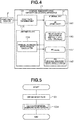
- a residual anaerobic work capacity calculating apparatus 1A shown in Fig. 4 differs from the residual anaerobic work capacity calculating apparatus 1 shown in Fig. 1 in that the residual anaerobic work capacity calculating apparatus 1A calculates the ratio of a residual anaerobic work capacity (to be referred to as "a residual anaerobic work capacity ratio" hereinafter) to an anaerobic work capacity without converting the heart rate into the power. More specifically, the residual anaerobic work capacity calculating apparatus 1A includes an arithmetic unit 11A including a residual anaerobic work capacity calculator 13A for calculating the residual anaerobic work capacity ratio to the anaerobic work capacity.
- Equation (7) indicates the relationship between the residual anaerobic work capacity and power, and estimates a residual anaerobic work capacity W'(t) at time t from a residual anaerobic work capacity W'(u) at time u.
- Equation (8) is derived by defining equation (7) indicating the relationship between the residual anaerobic work capacity and the power by the anaerobic work capacity W 0 .
- W ′ t W 0 1 ⁇ 1 ⁇ W ′ u W 0 e KD CP W 0 t ⁇ u
- Equation (8) Letting "F” be the ratio of a residual anaerobic work capacity W' to the anaerobic work capacity W 0 , equation (8) can be represented by equation (9) .
- F t 1 ⁇ 1 ⁇ F u e K HR CP ⁇ HR recovery HR n ⁇ HR CP t n lim t ⁇ u "HR CP " is HR when power P is a critical power CP.
- HR will be explained as a heart rate in this specification, but a value obtained by converting a heart rate into a percentage may also be used as HR.
- HR recovery is the average value of the heart rate HR when the power P is equal to or lower than the critical power CP, i.e., the average value of the heart rate HR equal to or lower than HR CP .
- HR n is a heart rate when a person exercises at a constant exercise intensity equal to or higher than HR CP
- t nlim is a maximum duration when a person exercises at a constant exercise intensity equal to or higher than HR CP .
- W 0HR can also be replaced with equation (11).
- equation (8) can be represented by equation (12) where " ⁇ t" is a data interval.
- F t 1 ⁇ 1 ⁇ F u e K
- HR CP HR max ⁇ HR min ⁇ 70 % ⁇ 80 % + HR min
- equation (9) data of a constant K, HR CP , and "(HR n - HR CP ) t nlim " are preobtained by the above-described method, and stored as relation data 146 in a storage unit 14 together with equation (9) or (12).
- equation (13) "70% to 80%” is a general value, and this value sometimes changes for another person.
- HR recovery is data calculated based on heart rate data 141 obtained by a heart rate obtaining unit 10.
- the residual anaerobic work capacity calculator 13A calculates the average value of the heart rate HR equal to or lower than HR CP based on the sequentially obtained heart rate data 141, and stores the value as HR recovery data 147 in the storage unit 14.
- the residual anaerobic work capacity calculator 13A calculates a ratio (residual anaerobic work capacity ratio) F(t) of the residual anaerobic work capacity W'(t) to the anaerobic work capacity Wo by calculating equation (9) based on the relation data 146 stored in the storage unit 14 and the calculated value of HR recovery , and stores the ratio F(t) as residual anaerobic work capacity ratio data 148 in the storage unit 14.
- the heart rate obtaining unit 10 first obtains, for example, a measured value of the heart rate from a heart rate monitor 2, and stores the value (heart rate HR) in the storage unit 14 (step S1).
- the residual anaerobic work capacity calculator 13A calculates the ratio F(t) of the residual anaerobic work capacity W'(t) to the anaerobic work capacity Wo based on the heart rate HR obtained in step S1 (step S3A). More specifically, as shown in Fig. 6 , the residual anaerobic work capacity calculator 13A first reads out a past heart rate HR obtained in the past processing, the latest heart rate HR obtained in step S1, and HR CP from the storage unit 14, and calculates the average value HR recovery of the heart rates HR equal to or lower than HP CP (step S31A). In this step, it is possible to use all the past heart rates HR, or use a predetermined number of past heart rates HR in order from the newest one.
- the residual anaerobic work capacity calculator 13A reads out the values of K, HR CP , and "(HR n - HR CP ) t nlim " and equation (9) or (12) from the storage unit 14, calculates the residual anaerobic work capacity ratio F(t) by calculating equation (9) or (12) by using the value of HR recovery calculated in step S31A, and stores the residual anaerobic work capacity ratio F(t) in the storage unit 14 (step S32A).
- the residual anaerobic work capacity ratio data 148 stored in the storage unit 14 can be, for example, transmitted to an external device by wireless or wired communication, and can also be displayed on the screen of a display device (not shown) included in the residual anaerobic work capacity calculating apparatus 1A.
- the residual anaerobic work capacity calculating apparatus 1A shown in Fig. 4 can estimate the residual anaerobic work capacity based on the measured heart rate.
- the residual anaerobic work capacity calculating apparatus 1A calculates the residual anaerobic work capacity ratio F(t) by using a numerical formula (equation (9) or (12)) standardized by the anaerobic work capacity W 0 . Accordingly, the residual anaerobic work capacity can be estimated without converting the heart rate into the power.
- the values of various parameters such as K, HR CP , and "(HR n - HR CP ) t nlim to be stored in the storage unit 14 in advance can be obtained by measuring the heart rate without using any power meter. This makes it possible to calculate the residual anaerobic work capacity with a lower cost.
- a residual anaerobic work capacity calculating apparatus 1B shown in Fig. 7 differs from the residual anaerobic work capacity calculating apparatus 1A shown in Fig. 4 in that the residual anaerobic work capacity calculating apparatus 1B calculates a residual anaerobic work capacity ratio based on a difference equation. More specifically, the residual anaerobic work capacity calculating apparatus 1B includes an arithmetic unit 11B including a residual anaerobic work capacity calculator 13B for calculating the residual anaerobic work capacity ratio based on a difference equation.
- Equation (14) is an approximation when P > CP
- equation (15) is an approximation when CP > P.
- dW ′ dt ⁇ P ⁇ CP + K 1 ⁇ W ′ W 0 D
- CP dW ′ dt K 1 ⁇ W ′ W 0 D
- Equations (14) and (15) represent the relationship between the residual anaerobic work capacity and the power.
- the first term on the right side of equation (14) represents a used anaerobic work amount
- the second term represents the recovery amount of an anaerobic work capacity W 0 .
- Equations (16) and (17) can be obtained by standardizing equations (14) and (15) representing the relationship between the residual anaerobic work capacity and the power by using the anaerobic work capacity Wo.
- Equation (16) is an equation when P > CP
- equation (17) is an equation when CP > P.
- Equation (18) is an equation when P > CP
- equation (19) is an equation when CP > P.
- Equation (20) and (21) are obtained by representing equations (18) and (19) by difference equations.
- Equation (20) is an equation when P > CP
- equation (21) is an equation when CP > P.
- F n F n ⁇ 1 ⁇ HR ⁇ HR CP HR n ⁇ HR CP t n lim ⁇ ⁇ t + K 1 ⁇ F n ⁇ 1 HR CP ⁇ HR recovery HR n ⁇ HR CP t n lim ⁇ ⁇ t
- F n F n ⁇ 1 + K 1 ⁇ F n ⁇ 1 HR CP ⁇ HR recovery HR n ⁇ HR CP t n lim ⁇ ⁇ t
- data of a constant K, HR CP , and "(HR n - HR CP ) t nlim are obtained beforehand and stored as relation data 149 in a storage unit 14 together with equations (20) and (21), in the same manner as in the second embodiment.
- equation (18) can be represented by equations (22) and (23), in the same manner as in the second embodiment.
- Equation (22) is an equation when P > CP
- equation (23) is an equation when CP > P.
- " ⁇ t" is a data interval.
- equations (20) and (21) equations (22) and (23) can be prestored as the relation data 149 in the storage unit 14.
- the residual anaerobic work capacity calculator 13B obtains data 147 of HR recovery by calculating the average value of heart rates HR equal to or lower than HR CP .
- the residual anaerobic work capacity calculator 13B calculates a residual anaerobic work capacity ratio Fn by calculating equation (17) or (18) by using the values of K, HR CP , "(HR n - HR CP ) t nlim " stored in the storage unit 14 and the calculated value of HR recovery , and stores the calculated residual anaerobic work capacity ratio Fn as data 150 of the residual anaerobic work capacity ratio in the storage unit 14.
- a heart rate obtaining unit 10 first obtains the measured value of the heart rate from, for example, a heart rate monitor 2, and stores the value (heart rate HR) in the storage unit 14 (step S1). Then, the residual anaerobic work capacity calculator 13B calculates the residual anaerobic work capacity ratio Fn based on the heart rate HR obtained in step S1 (step S3B).
- the residual anaerobic work capacity calculator 13B first calculates HR recovery based on a past heart rate HR, the latest heart rate HR, and HR CP (step S31A).
- the residual anaerobic work capacity calculator 13B reads out the values of K, HR CP , and "(HR n - HR CP ) t nlim " and one of equations (20) to (23) from the storage unit 14, calculates the residual anaerobic work capacity ratio Fn by calculating one of equations (20) to (23) by using the value of HR recovery calculated in step S31A, and stores the calculated residual anaerobic work capacity ratio Fn in the storage unit 14 (step S32B).
- the data 150 of the residual anaerobic work capacity ratio Fn stored in the storage unit 14 can be, for example, transmitted to an external device by wireless or wired communication, and can also be displayed on the screen of a display device (not shown) included in the residual anaerobic work capacity calculating apparatus 1B.
- the residual anaerobic work capacity calculating apparatus 1B shown in Fig. 7 calculates the residual anaerobic work capacity ratio Fn by using the numerical formula (one of equations (20) to (23)) standardized by the anaerobic work capacity W 0 . Therefore, various parameters to be stored in the storage unit 14 in advance can be obtained by measuring the heart rate without using any power meter, so the residual anaerobic work capacity can be calculated with a lower cost.
- the residual anaerobic work capacity calculating apparatus 1B uses the difference equation (one of equations (20) to (23)) as a numerical formula for calculating the residual anaerobic work capacity ratio Fn. This facilitates installing a program for calculating the residual anaerobic work capacity in the product.
- the functional units of the residual anaerobic work capacity calculating apparatus 1, 1A, or 1B shown in Fig. 1 , 4 , or 7 are implemented by the cooperation of software loaded into a computer and the hardware resources of the computer.
- a portable terminal such as a smartphone can be used as the computer.
- FIG. 10 shows the main hardware configuration of the computer.
- a computer 3 includes an MPU (Micro-Processing Unit) 31, a ROM (Read Only Memory) 32, a RAM (Random Access Memory) 33, an input/output interface (I/F) 34, a communication circuit 35, a display 36, and an input device 37. These devices are connected via a bus 38.
- MPU Micro-Processing Unit
- ROM Read Only Memory
- RAM Random Access Memory
- I/F input/output interface
- the MPU 31 is a processor for controlling the operation of the whole computer 3.
- a CPU Central Processing Unit
- a CPU can also be used in place of the MPU 31.
- the ROM 32 is a memory for storing an operating system, a control program to be executed by the computer 3, and various kinds of data.
- the control program includes a residual anaerobic work capacity calculation program for implementing the functional units of the residual anaerobic work capacity calculating apparatus 1, 1A, or 1B.
- the ROM 32 stores the data 141 to 145.
- the ROM 32 stores the data 141 and 146 to 148.
- the ROM 32 stores the data 141, 147, 149, and 150.
- the RAM 33 is a memory to be used as a work area of the MPU 31, and temporarily stores various kinds of data required to execute programs.
- the RAM 33 When executing the residual anaerobic work capacity calculation program, the RAM 33 temporarily stores values obtained during the calculation of the residual anaerobic work capacity W'bal or the residual anaerobic work capacity ratios F(t) and Fn.
- the RAM 33 stores the heart rate HR, the power P, the anaerobic work amount W' EXP , the average value P avg of power, the difference D CP between the average value P avg of power and the critical power CP, the time constant ⁇ , and the residual anaerobic work capacity W'bal.
- the RAM 33 stores the heart rate HR, the average value HR recovery of the heart rate HR, and the residual anaerobic work capacity ratio F(t).
- the RAM 33 stores the heart rate HR, the average value HR recovery of the heart rate HR, and the residual anaerobic work capacity ratio Fn.
- the input/output interface 34 is an interface for connecting a peripheral device to the computer 3, and is used to connect, for example, the heart rate monitor 2 to the computer 3 by wired connection.
- the communication circuit 35 is a device for exchanging data.
- the display 36 is formed by a touch panel or the like, and the input device 37 is formed by operation buttons or the like.
- the MPU 31 implements the functional units of the residual anaerobic work capacity calculating apparatus 1, 1A, or 1B by reading out the residual anaerobic work capacity calculation program from the ROM 32, and controlling each unit of the computer 3 by operating in accordance with the program.
- each of the above embodiments a case in which the process of calculating the residual anaerobic work capacity is implemented by program processing performed by the MPU or the like has been explained as an example.
- a dedicated hardware circuit may also implement a part or the whole of the above processing.
- each of the residual anaerobic work capacity calculating apparatuses 1, 1A, and 1B has been explained as a device different from the heart rate monitor 2, but the residual anaerobic work capacity calculating apparatus may also incorporate the heart rate monitor 2.
- the heart rate monitor 2 configures the heart rate obtaining unit 10.
- the residual anaerobic work capacity calculating method and apparatus according to the present invention are widely applicable to techniques for obtaining and managing human biological information in not only bicycle racing but also general sports of performing anaerobic work.
- 1, 1A, 1B residual anaerobic work capacity calculating apparatus, 2...heart rate monitor, 10...heart rate obtaining unit, 11, 11A, 11B...arithmetic unit, 12...power calculator, 13, 13A, 13B...residual anaerobic work capacity calculator, 14...storage unit, 141...heart rate data, 142, 144, 146, 149...relation data, 143...power data, 145...residual anaerobic work capacity data, 147... HR recovery data, 148, 150...residual anaerobic work capacity ratio data
Landscapes
- Health & Medical Sciences (AREA)
- Life Sciences & Earth Sciences (AREA)
- Engineering & Computer Science (AREA)
- General Health & Medical Sciences (AREA)
- Biomedical Technology (AREA)
- Public Health (AREA)
- Medical Informatics (AREA)
- Cardiology (AREA)
- Pathology (AREA)
- Biophysics (AREA)
- Heart & Thoracic Surgery (AREA)
- Molecular Biology (AREA)
- Surgery (AREA)
- Animal Behavior & Ethology (AREA)
- Physics & Mathematics (AREA)
- Veterinary Medicine (AREA)
- Physical Education & Sports Medicine (AREA)
- Physiology (AREA)
- Signal Processing (AREA)
- Obesity (AREA)
- Business, Economics & Management (AREA)
- General Business, Economics & Management (AREA)
- Epidemiology (AREA)
- Primary Health Care (AREA)
- Artificial Intelligence (AREA)
- Computer Vision & Pattern Recognition (AREA)
- Psychiatry (AREA)
- Measuring Pulse, Heart Rate, Blood Pressure Or Blood Flow (AREA)
Abstract
Description
- The present invention relates to a method and apparatus for calculating a residual anaerobic work capacity by using a heart rate.
- In sports such as bicycle racing, an anaerobic work capacity is used as an index representing an athletic ability. More specifically, athletic abilities can be compared by measuring power given to a bicycle by a person via pedals by using a power meter attached to the bicycle, and estimating an anaerobic work capacity from the measured power.
- For example, non-patent
literature 1 discloses a method of estimating the residual amount of an anaerobic work capacity (to be referred to as "a residual anaerobic work capacity" hereinafter) when a person is exercising. This method disclosed innon-patent literature 1 can calculate the residual anaerobic work capacity from the power measured by the power meter. - Unfortunately, the method disclosed in
non-patent literature 1 has the problem that the power meter which is a very expensive measurement device is necessary to measure the power. - Non-Patent Literature 1: Skiba, Philip Friere (2014). The Kinetics of the Work Capacity Above Critical Power (Doctoral dissertation), University of Exeter, pp.101-103 and pp.156-157. Retrieved from http://ore.exeter.ac.uk/repository/handle/10871/15727
- It is an object of the present invention to calculate the residual anaerobic work capacity without using any expensive power meter.
- A residual anaerobic work capacity calculating method of the present invention includes a step of causing a processor to obtain a heart rate, and a step of causing the processor to calculate a residual anaerobic work capacity based on the obtained heart rate and a relationship between the residual anaerobic work capacity and the heart rate.
- A residual anaerobic work capacity calculating apparatus of the present invention includes a heart rate obtaining unit configured to obtain a heart rate, and an arithmetic unit configured to calculate a residual anaerobic work capacity based on a relationship between the residual anaerobic work capacity and the heart rate, and the heart rate obtained by the heart rate obtaining unit.
- The present invention makes it possible to calculate the residual anaerobic work capacity without using any expensive power meter.
-
-
Fig. 1 is a block diagram of a residual anaerobic work capacity calculating apparatus according to the first embodiment of the present invention; -
Fig. 2 is a flowchart showing the procedure of a residual anaerobic work capacity calculating process performed by the residual anaerobic work capacity calculating apparatus shown inFig. 1 ; -
Fig. 3 is a flowchart showing the procedure of processing in step S3 ofFig. 2 ; -
Fig. 4 is a block diagram of a residual anaerobic work capacity calculating apparatus according to the second embodiment of the present invention; -
Fig. 5 is a flowchart showing the procedure of a residual anaerobic work capacity calculating process performed by the residual anaerobic work capacity calculating apparatus shown inFig. 4 ; -
Fig. 6 is a flowchart showing the procedure of processing in step S3A ofFig. 5 ; -
Fig. 7 is a block diagram of a residual anaerobic work capacity calculating apparatus according to the third embodiment of the present invention; -
Fig. 8 is a flowchart showing the procedure of a residual anaerobic work capacity calculating process performed by the residual anaerobic work capacity calculating apparatus shown inFig. 7 ; -
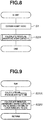
Fig. 9 is a flowchart showing the procedure of processing in step S3B ofFig. 8 ; and -
Fig. 10 is a block diagram showing the main hardware configuration of a computer. - Embodiments of the present invention will be explained below with reference to the accompanying drawings. Note that in the following explanation, the same reference numerals denote constituent elements common to the embodiments, and a repetitive explanation thereof will be omitted.
- A residual anaerobic work
capacity calculating apparatus 1 shown inFig. 1 is, for example, an apparatus for estimating the residual anaerobic work capacity of a person who is exercising from his or her heart rate. The residual anaerobic workcapacity calculating apparatus 1 can be implemented as one functional unit of a wearable device for measuring the biological information of a person wearing the device. The residual anaerobic workcapacity calculating apparatus 1 is attached together with aheart rate monitor 2 for measuring the heart rate to, for example, the body of a person who is performing an anaerobic work such as bicycle racing, and calculates the residual anaerobic work capacity in real time based on the heart rate measured by theheart rate monitor 2. - As shown in
Fig. 1 , the residual anaerobic workcapacity calculating apparatus 1 includes a heartrate obtaining unit 10, anarithmetic unit 11, and astorage unit 14. - The heart
rate obtaining unit 10 is a functional unit for sequentially obtaining data of the heart rate which is measured by theheart rate monitor 2 attached to a human body or the like, and is output from theheart rate monitor 2 at a predetermined time interval (for example, an interval of 1 sec).Heart rate data 141 obtained by the heartrate obtaining unit 10 are sequentially stored in thestorage unit 14. Note that data exchange between the residual anaerobic workcapacity calculating apparatus 1 and theheart rate monitor 2 can be performed by either wired communication or wireless communication, i.e., the data exchanging method is not particularly limited. Note also that theheart rate data 141 can directly be input from theheart rate monitor 2 to the residual anaerobic workcapacity calculating apparatus 1 as described above, but theheart rate data 141 measured by theheart rate monitor 2 may also be stored once in an internal storage device of a terminal such as a personal computer, and read out from the storage device by the residual anaerobic workcapacity calculating apparatus 1 after that. - The
storage unit 14 is a functional unit for storing various parameters pertaining to relations for calculating the residual anaerobic work capacity (to be described later), in addition to theheart rate data 141 described above. - The
arithmetic unit 11 is a functional unit for calculating the residual anaerobic work capacity based on theheart rate data 141 obtained by the heartrate obtaining unit 10, and the relationship between the residual anaerobic work capacity and heart rate. More specifically, thearithmetic unit 11 includes apower calculator 12 and a residual anaerobicwork capacity calculator 13. - The
power calculator 12 is a functional unit for calculating the power from the heart rate. The "power" herein mentioned is power which a person gives to an operation target. In this embodiment, the "power" is explained as power which a person pedaling a bicycle gives to the bicycle as an example. - The power and heart rate have a correlation. For example, the relationship between power P and a heart rate HR can be represented by a linear equation as indicated by equation (1).

In equation (1), "a" and "b" are values which change from one person to another as a residual anaerobic work capacity calculation target. - The following method is an example of the method of calculating the relation representing the relationship between the heart rate and power. For example, the relation representing the relationship between the heart rate and power can be calculated by obtaining a calibration curve by the Conconi Test or the like. It is also possible to calculate the relation from a calibration curve obtained by measuring the power and heart rate during exercise and statistically analyzing the measured values. In this case, it is possible to measure the power by using a power meter, or indirectly obtain power data by measuring the speed in a state in which the relationship between the speed and power is already known such as bicycle trainer.
- In the residual anaerobic work
capacity calculating apparatus 1 of this embodiment, the relation representing the relationship between the heart rate and power obtained by the above method is stored in thestorage unit 14 in advance. For example, equation (1) representing the relationship between the heart rate and power and the values of the parameters "a" and "b" are stored asrelation data 142 in thestorage unit 14 in advance. Thepower calculator 12 calculates the power based on equation (1), "a", and "b" stored in thestorage unit 14, and theheart rate data 141 obtained by the heartrate obtaining unit 10. The power is calculated for each of sequentially obtained heart rates.Data 143 of the calculated power are sequentially stored in thestorage unit 14, and used in arithmetic processing performed by the residual anaerobic work capacity calculator 13 (to be described below). - The residual anaerobic
work capacity calculator 13 is a functional unit which calculates a residual anaerobic work capacity W'bal based on the relationship between the power and the residual anaerobic work capacity, and the power calculated by thepower calculator 12. - As described in
non-patent literature 1, the relationship between the residual anaerobic work capacity W'bal and the power P can be represented by equations (2) to (5).


- "W'EXP" is a consumed anaerobic work amount. As indicated by equation (3), letting "P" be the power and "CP" be a critical power, the anaerobic work amount W'EXP is "P - CP" if the power P at that time is higher than the critical power CP, and is "0" if the power P at that time is lower than the critical power Cp. Note that the critical power CP is a maximum power which can be sustained for a long time without fatigue.
- The time constant τ can be represented by equation (4). In equation (4), "DCP" is the difference between an average value Pavg of the power P and the critical power CP when the power P is equal to or lower than the critical power CP, and can be represented by equation (5).
- As indicated by equations (2) to (5) above, the residual anaerobic work capacity W'bal is represented as a function of the power P. On the other hand, the power P can be represented as a function of the heart rate HR as indicated by equation (1). Accordingly, the residual anaerobic work capacity W'bal can be calculated from the measured heart rate HR by using equations (1) to (5).
- Data of the anaerobic work capacity W0 and the critical power CP contained in equations (1) to (5) must be obtained in advance. It is generally known that the relationship between the anaerobic work capacity Wo and the critical power CP is represented by equation (6).

In equation (6), "tlim" is a maximum duration. When a person keeps pedaling a bicycle with the same power P, the maximum duration tlim is inversely proportional to the power P. For a person as a measurement target of the residual anaerobic work capacity, therefore, the values of "Wo" and "CP" can be obtained by measuring the duration tlim at the power P at each of two points equal to or higher than the critical power CP, and solving two equations obtained by substituting the values of two sets of the measured power P and the duration tlim into equation (6). - Equations (2) to (5) representing the anaerobic work capacity W0 and the critical power CP thus calculated and the relationship between the residual anaerobic work capacity W'bal and the power P are prestored as
relation data 144 in thestorage unit 14. - Based on the
relation data 144 prestored in thestorage unit 14 and the power P calculated by thepower calculator 12, the residual anaerobicwork capacity calculator 13 calculates the residual anaerobic work capacity W'bal and stores it asdata 145 of the residual anaerobic work capacity in thestorage unit 14. - Next, the procedure of the residual anaerobic work capacity calculating process performed by the residual anaerobic work
capacity calculating apparatus 1 shown inFig. 1 will be explained with reference toFig. 2 . - In the residual anaerobic work
capacity calculating apparatus 1, the heartrate obtaining unit 10 first obtains, for example, the measured value of the heart rate from theheart rate monitor 2, and stores the value (heart rate HR) in the storage unit 14 (step S1). Then, thepower calculator 12 reads out the latest heart rate HR and equation (1) from thestorage unit 14, calculates the power P by substituting the heart rate HR into equation (1), and stores the power P in the storage unit 14 (step S2). - Subsequently, the residual anaerobic
work capacity calculator 13 calculates the residual anaerobic work capacity W'bal based on the power P calculated in step S2 and equations (2) to (5) (step S3). - More specifically, as shown in
Fig. 3 , the residual anaerobicwork capacity calculator 13 first reads out the latest power P, the critical power CP, and equation (3) from thestorage unit 14, and calculates the consumed anaerobic work amount W'EXP by calculating equation (3) by using the power P and the critical power CP (step S31). - Also, the residual anaerobic
work capacity calculator 13 further reads out the power P in the past obtained in past processing from thestorage unit 14, and calculates the power average value Pavg when the power P is equal to or lower than the critical power CP by using the past power P and the latest power P. In this calculation, it is possible to use all the past power P or a predetermined number of values of the past power P in order from the newest one. Then, the residual anaerobicwork capacity calculator 13 reads out equation (5) from thestorage unit 14, and calculates the difference DCP between the power average value Pavg and the critical power CP based on equation (5) (step S32). - Subsequently, the residual anaerobic
work capacity calculator 13 reads out equation (4) from thestorage unit 14, and calculates equation (4) by using the difference DCP calculated in step S32, thereby calculating the time constant τ (step S33). After that, the residual anaerobicwork capacity calculator 13 reads out the anaerobic work capacity W0 and equation (2) from thestorage unit 14, calculates the residual anaerobic work capacity W'bal by calculating equation (2) by using the anaerobic work amount W'EXP calculated in step S31 and the time constant τ calculated in step S33, and stores the residual anaerobic work capacity W'bal in the storage unit 14 (step S34). - The residual anaerobic
work capacity data 145 stored in thestorage unit 14 can be transmitted to, for example, an external device by wireless or wired communication, and can also be displayed on the screen of a display device (not shown) included in the residual anaerobic workcapacity calculating apparatus 1. - As described above, the residual anaerobic work
capacity calculating apparatus 1 shown inFig. 1 can estimate the residual anaerobic work capacity based on the measured heart rate, and the data of the anaerobic work capacity W0 and the critical power CP and the relationship between the residual anaerobic work capacity and the heart rate (equations (1) to (5)) prestored in thestorage unit 14. That is, the residual anaerobic workcapacity calculating apparatus 1 need only measure the heart rate when calculating the residual anaerobic work capacity, and this obviates the need to measure the power by using an expensive power meter. - A residual anaerobic work
capacity calculating apparatus 1A shown inFig. 4 differs from the residual anaerobic workcapacity calculating apparatus 1 shown inFig. 1 in that the residual anaerobic workcapacity calculating apparatus 1A calculates the ratio of a residual anaerobic work capacity (to be referred to as "a residual anaerobic work capacity ratio" hereinafter) to an anaerobic work capacity without converting the heart rate into the power. More specifically, the residual anaerobic workcapacity calculating apparatus 1A includes anarithmetic unit 11A including a residual anaerobicwork capacity calculator 13A for calculating the residual anaerobic work capacity ratio to the anaerobic work capacity. - As disclosed in
non-patent literature 1 described earlier, there is equation (7) as another approximation for estimating the residual anaerobic work capacity.

Equation (7) indicates the relationship between the residual anaerobic work capacity and power, and estimates a residual anaerobic work capacity W'(t) at time t from a residual anaerobic work capacity W'(u) at time u. In equation (7), "K" is a constant according to the recovery of an anaerobic work capacity W0, and K = 1 generally holds. - Equation (8) is derived by defining equation (7) indicating the relationship between the residual anaerobic work capacity and the power by the anaerobic work capacity W0.

- Letting "F" be the ratio of a residual anaerobic work capacity W' to the anaerobic work capacity W0, equation (8) can be represented by equation (9) .

"HRCP" is HR when power P is a critical power CP. HR will be explained as a heart rate in this specification, but a value obtained by converting a heart rate into a percentage may also be used as HR. "HRrecovery" is the average value of the heart rate HR when the power P is equal to or lower than the critical power CP, i.e., the average value of the heart rate HR equal to or lower than HRCP. "HRn" is a heart rate when a person exercises at a constant exercise intensity equal to or higher than HRCP, and "tnlim" is a maximum duration when a person exercises at a constant exercise intensity equal to or higher than HRCP. - The relationship between a value W0HR obtained by converting the anaerobic work capacity Wo by the heart rate HR, and HRCP, HRn, and tnlim can be represented by equation (10).

"W0HR = (HRn - HRCP)tnlim" is obtained by modifying equation (10). The value of W0HR, i.e., the value of "(HRn - HRCP) tnlim" can be obtained by, for example, pedaling a bicycle at a constant exercise intensity for the maximum duration tnlim. - W0HR can also be replaced with equation (11). In this case, equation (8) can be represented by equation (12) where "Δt" is a data interval.


- Note that the value of HRCP can be estimated from equation (10), and can also be calculated from equation (13) below. In equation (13), "HRmax" is a maximum value of the heart rate, and "HRmin" is a minimum value of the heart rate.

- Of parameters contained in equation (9) above, data of a constant K, HRCP, and "(HRn - HRCP) tnlim" are preobtained by the above-described method, and stored as
relation data 146 in astorage unit 14 together with equation (9) or (12). In equation (13), "70% to 80%" is a general value, and this value sometimes changes for another person. - HRrecovery is data calculated based on
heart rate data 141 obtained by a heartrate obtaining unit 10. For example, the residual anaerobicwork capacity calculator 13A calculates the average value of the heart rate HR equal to or lower than HRCP based on the sequentially obtainedheart rate data 141, and stores the value as HRrecovery data 147 in thestorage unit 14. - The residual anaerobic
work capacity calculator 13A calculates a ratio (residual anaerobic work capacity ratio) F(t) of the residual anaerobic work capacity W'(t) to the anaerobic work capacity Wo by calculating equation (9) based on therelation data 146 stored in thestorage unit 14 and the calculated value of HRrecovery, and stores the ratio F(t) as residual anaerobic workcapacity ratio data 148 in thestorage unit 14. - The procedure of the residual anaerobic work capacity calculating process performed by the residual anaerobic work
capacity calculating apparatus 1A shown inFig. 4 will be explained below with reference toFig. 5 . - In the residual anaerobic work
capacity calculating apparatus 1A, like the residual anaerobic workcapacity calculating apparatus 1 shown inFig. 1 , the heartrate obtaining unit 10 first obtains, for example, a measured value of the heart rate from aheart rate monitor 2, and stores the value (heart rate HR) in the storage unit 14 (step S1). - Then, the residual anaerobic
work capacity calculator 13A calculates the ratio F(t) of the residual anaerobic work capacity W'(t) to the anaerobic work capacity Wo based on the heart rate HR obtained in step S1 (step S3A). More specifically, as shown inFig. 6 , the residual anaerobicwork capacity calculator 13A first reads out a past heart rate HR obtained in the past processing, the latest heart rate HR obtained in step S1, and HRCP from thestorage unit 14, and calculates the average value HRrecovery of the heart rates HR equal to or lower than HPCP (step S31A). In this step, it is possible to use all the past heart rates HR, or use a predetermined number of past heart rates HR in order from the newest one. Subsequently, the residual anaerobicwork capacity calculator 13A reads out the values of K, HRCP, and "(HRn - HRCP) tnlim" and equation (9) or (12) from thestorage unit 14, calculates the residual anaerobic work capacity ratio F(t) by calculating equation (9) or (12) by using the value of HRrecovery calculated in step S31A, and stores the residual anaerobic work capacity ratio F(t) in the storage unit 14 (step S32A). - The residual anaerobic work
capacity ratio data 148 stored in thestorage unit 14 can be, for example, transmitted to an external device by wireless or wired communication, and can also be displayed on the screen of a display device (not shown) included in the residual anaerobic workcapacity calculating apparatus 1A. - Like the residual anaerobic work
capacity calculating apparatus 1 shown inFig. 1 , the residual anaerobic workcapacity calculating apparatus 1A shown inFig. 4 can estimate the residual anaerobic work capacity based on the measured heart rate. - Also, the residual anaerobic work
capacity calculating apparatus 1A calculates the residual anaerobic work capacity ratio F(t) by using a numerical formula (equation (9) or (12)) standardized by the anaerobic work capacity W0. Accordingly, the residual anaerobic work capacity can be estimated without converting the heart rate into the power. - Furthermore, the values of various parameters such as K, HRCP, and "(HRn - HRCP) tnlim to be stored in the
storage unit 14 in advance can be obtained by measuring the heart rate without using any power meter. This makes it possible to calculate the residual anaerobic work capacity with a lower cost. - A residual anaerobic work
capacity calculating apparatus 1B shown inFig. 7 differs from the residual anaerobic workcapacity calculating apparatus 1A shown inFig. 4 in that the residual anaerobic workcapacity calculating apparatus 1B calculates a residual anaerobic work capacity ratio based on a difference equation. More specifically, the residual anaerobic workcapacity calculating apparatus 1B includes anarithmetic unit 11B including a residual anaerobicwork capacity calculator 13B for calculating the residual anaerobic work capacity ratio based on a difference equation. - There are equations (14) and (15) as other approximations for estimating the residual anaerobic work capacity. Equation (14) is an approximation when P > CP, and equation (15) is an approximation when CP > P.


Equations (14) and (15) represent the relationship between the residual anaerobic work capacity and the power. The first term on the right side of equation (14) represents a used anaerobic work amount, and the second term represents the recovery amount of an anaerobic work capacity W0. - Equations (16) and (17) can be obtained by standardizing equations (14) and (15) representing the relationship between the residual anaerobic work capacity and the power by using the anaerobic work capacity Wo. Equation (16) is an equation when P > CP, and equation (17) is an equation when CP > P.


- Letting F be the ratio (the residual anaerobic work capacity ratio) of a residual anaerobic work capacity W' to the anaerobic work capacity W0, equations (16) and (17) can be represented by equations (18) and (19), respectively. Equation (18) is an equation when P > CP, and equation (19) is an equation when CP > P.


- Furthermore, equations (20) and (21) are obtained by representing equations (18) and (19) by difference equations. Equation (20) is an equation when P > CP, and equation (21) is an equation when CP > P.


In equations (20) and (21), data of a constant K, HRCP, and "(HRn - HRCP) tnlim" are obtained beforehand and stored asrelation data 149 in astorage unit 14 together with equations (20) and (21), in the same manner as in the second embodiment. - Also, when using equation (11), equation (18) can be represented by equations (22) and (23), in the same manner as in the second embodiment. Equation (22) is an equation when P > CP, and equation (23) is an equation when CP > P. In addition, "Δt" is a data interval. Instead of equations (20) and (21), equations (22) and (23) can be prestored as the
relation data 149 in thestorage unit 14.


- Like the residual anaerobic work
capacity calculating apparatus 1A shown inFig. 4 , the residual anaerobicwork capacity calculator 13B obtainsdata 147 of HRrecovery by calculating the average value of heart rates HR equal to or lower than HRCP. - The residual anaerobic
work capacity calculator 13B calculates a residual anaerobic work capacity ratio Fn by calculating equation (17) or (18) by using the values of K, HRCP, "(HRn - HRCP) tnlim" stored in thestorage unit 14 and the calculated value of HRrecovery, and stores the calculated residual anaerobic work capacity ratio Fn asdata 150 of the residual anaerobic work capacity ratio in thestorage unit 14. - The procedure of the residual anaerobic work capacity calculating process performed by the residual anaerobic work
capacity calculating apparatus 1B shown inFig. 7 will be explained below with reference toFig. 8 . - In the residual anaerobic work
capacity calculating apparatus 1B, as in the residual anaerobic workcapacity calculating apparatus 1 shown inFig. 1 , a heartrate obtaining unit 10 first obtains the measured value of the heart rate from, for example, aheart rate monitor 2, and stores the value (heart rate HR) in the storage unit 14 (step S1). Then, the residual anaerobicwork capacity calculator 13B calculates the residual anaerobic work capacity ratio Fn based on the heart rate HR obtained in step S1 (step S3B). - More specifically, as shown in
Fig. 9 , like the residual anaerobicwork capacity calculator 13A, the residual anaerobicwork capacity calculator 13B first calculates HRrecovery based on a past heart rate HR, the latest heart rate HR, and HRCP (step S31A). Then, the residual anaerobicwork capacity calculator 13B reads out the values of K, HRCP, and "(HRn - HRCP) tnlim" and one of equations (20) to (23) from thestorage unit 14, calculates the residual anaerobic work capacity ratio Fn by calculating one of equations (20) to (23) by using the value of HRrecovery calculated in step S31A, and stores the calculated residual anaerobic work capacity ratio Fn in the storage unit 14 (step S32B). - The
data 150 of the residual anaerobic work capacity ratio Fn stored in thestorage unit 14 can be, for example, transmitted to an external device by wireless or wired communication, and can also be displayed on the screen of a display device (not shown) included in the residual anaerobic workcapacity calculating apparatus 1B. - As described above, like the residual anaerobic work
capacity calculating apparatus 1A shown inFig. 4 , the residual anaerobic workcapacity calculating apparatus 1B shown inFig. 7 calculates the residual anaerobic work capacity ratio Fn by using the numerical formula (one of equations (20) to (23)) standardized by the anaerobic work capacity W0. Therefore, various parameters to be stored in thestorage unit 14 in advance can be obtained by measuring the heart rate without using any power meter, so the residual anaerobic work capacity can be calculated with a lower cost. - In addition, the residual anaerobic work
capacity calculating apparatus 1B uses the difference equation (one of equations (20) to (23)) as a numerical formula for calculating the residual anaerobic work capacity ratio Fn. This facilitates installing a program for calculating the residual anaerobic work capacity in the product. - The functional units of the residual anaerobic work
capacity calculating apparatus Fig. 1 ,4 , or7 are implemented by the cooperation of software loaded into a computer and the hardware resources of the computer. As the computer, a portable terminal such as a smartphone can be used. -
Fig. 10 shows the main hardware configuration of the computer. Acomputer 3 includes an MPU (Micro-Processing Unit) 31, a ROM (Read Only Memory) 32, a RAM (Random Access Memory) 33, an input/output interface (I/F) 34, acommunication circuit 35, adisplay 36, and aninput device 37. These devices are connected via abus 38. - The
MPU 31 is a processor for controlling the operation of thewhole computer 3. A CPU (Central Processing Unit) can also be used in place of theMPU 31. - The
ROM 32 is a memory for storing an operating system, a control program to be executed by thecomputer 3, and various kinds of data. The control program includes a residual anaerobic work capacity calculation program for implementing the functional units of the residual anaerobic workcapacity calculating apparatus capacity calculating apparatus 1 shown inFig. 1 , theROM 32 stores thedata 141 to 145. When implementing the functional units of the residual anaerobic workcapacity calculating apparatus 1A shown inFig. 4 , theROM 32 stores thedata capacity calculating apparatus 1B shown inFig. 7 , theROM 32 stores thedata - The
RAM 33 is a memory to be used as a work area of theMPU 31, and temporarily stores various kinds of data required to execute programs. When executing the residual anaerobic work capacity calculation program, theRAM 33 temporarily stores values obtained during the calculation of the residual anaerobic work capacity W'bal or the residual anaerobic work capacity ratios F(t) and Fn. When implementing the functional units of the residual anaerobic workcapacity calculating apparatus 1 shown inFig. 1 , theRAM 33 stores the heart rate HR, the power P, the anaerobic work amount W'EXP, the average value Pavg of power, the difference DCP between the average value Pavg of power and the critical power CP, the time constant τ, and the residual anaerobic work capacity W'bal. When implementing the functional units of the residual anaerobic workcapacity calculating apparatus 1A shown inFig. 4 , theRAM 33 stores the heart rate HR, the average value HRrecovery of the heart rate HR, and the residual anaerobic work capacity ratio F(t). When implementing the functional units of the residual anaerobic workcapacity calculating apparatus 1B shown inFig. 7 , theRAM 33 stores the heart rate HR, the average value HRrecovery of the heart rate HR, and the residual anaerobic work capacity ratio Fn. - The input/
output interface 34 is an interface for connecting a peripheral device to thecomputer 3, and is used to connect, for example, theheart rate monitor 2 to thecomputer 3 by wired connection. Thecommunication circuit 35 is a device for exchanging data. Thedisplay 36 is formed by a touch panel or the like, and theinput device 37 is formed by operation buttons or the like. - The
MPU 31 implements the functional units of the residual anaerobic workcapacity calculating apparatus ROM 32, and controlling each unit of thecomputer 3 by operating in accordance with the program. - The invention made by the present inventors has been explained in detail above based on the embodiments, but the present invention is not limited to these embodiments, and various changes can of course be made without departing from the spirit and scope of the invention.
- In each of the above embodiments, a case in which the process of calculating the residual anaerobic work capacity is implemented by program processing performed by the MPU or the like has been explained as an example. However, a dedicated hardware circuit may also implement a part or the whole of the above processing. For example, it is also possible to discretely configure the heart
rate obtaining unit 10,power calculator 12, and the residual anaerobicwork capacity calculator capacity calculating apparatuses heart rate monitor 2, but the residual anaerobic work capacity calculating apparatus may also incorporate theheart rate monitor 2. In this case, theheart rate monitor 2 configures the heartrate obtaining unit 10. - The residual anaerobic work capacity calculating method and apparatus according to the present invention are widely applicable to techniques for obtaining and managing human biological information in not only bicycle racing but also general sports of performing anaerobic work.
- 1, 1A, 1B... residual anaerobic work capacity calculating apparatus, 2...heart rate monitor, 10...heart rate obtaining unit, 11, 11A, 11B...arithmetic unit, 12...power calculator, 13, 13A, 13B...residual anaerobic work capacity calculator, 14...storage unit, 141...heart rate data, 142, 144, 146, 149...relation data, 143...power data, 145...residual anaerobic work capacity data, 147... HRrecovery data, 148, 150...residual anaerobic work capacity ratio data
Claims (15)
- A residual anaerobic work capacity calculating method characterized by comprising:a step of causing a processor to obtain a heart rate; anda step of causing the processor to calculate a residual anaerobic work capacity based on the obtained heart rate and a relationship between the residual anaerobic work capacity and the heart rate.
- The residual anaerobic work capacity calculating method according to claim 1, characterized in that the calculating step includes:a step of causing the processor to calculate power based on the obtained heart rate and a first relation indicating a relationship between the heart rate and the power; anda step of causing the processor to calculate the residual anaerobic work capacity based on the calculated power and a second relation indicating a relationship between the residual anaerobic work capacity and the power.
- The residual anaerobic work capacity calculating method according to claim 1, characterized in that the calculating step includes a step of causing the processor to calculate a ratio of the residual anaerobic work capacity to an anaerobic work capacity based on a relation in which a relationship between the residual anaerobic work capacity and the power is standardized by the anaerobic work capacity, and the obtained heart rate.
- The residual anaerobic work capacity calculating method according to claim 2, characterized in that, letting W'bal be the residual anaerobic work capacity, W'0 be an anaerobic work capacity, t and u be time, τ be a time constant according to recovery of the anaerobic work capacity W0, W'EXP be a consumed anaerobic work amount, P be power, CP be critical power, and Pavg be an average value of the power when the power is not more than the critical power, the second relation includes equations (A), (B), (C), and (D):


- The residual anaerobic work capacity calculating method according to claim 3, characterized in that, letting F be the ratio of the residual anaerobic work capacity to the anaerobic work capacity, t and u (u < t) be time, Δt be a data interval, K be a coefficient according to recovery of an anaerobic work capacity W0, HRCP be the heart rate when power is critical power, HRrecovery be an average value of the heart rate when the power is not more than the critical power, HRn be the heart rate when a person exercises at a constant exercise intensity not less than HRCP, and tnlim be a maximum duration when a person exercises at the constant exercise intensity, the relation is represented by one of equations (E) and (E'):


- The residual anaerobic work capacity calculating method according to claim 3, characterized in that, letting F be the ratio of the residual anaerobic work capacity to the anaerobic work capacity, t and u (u < t) be time, Δt be a data interval, K be a coefficient according to recovery of an anaerobic work capacity W0, HRCP be the heart rate when power is critical power, HRrecovery be an average value of the heart rate when the power is not more than the critical power, HRn be the heart rate when a person exercises at a constant exercise intensity not less than HRCP, and tnlim be a maximum duration when a person exercises at the constant exercise intensity, the relation is represented by one of equations (F) and (G) when P > CP, and represented by one of equations (H) and (I) when CP > P:


- A residual anaerobic work capacity calculating apparatus characterize by comprising:a heart rate obtaining unit configured to obtain a heart rate; andan arithmetic unit configured to calculate a residual anaerobic work capacity based on a relationship between the residual anaerobic work capacity and the heart rate, and the heart rate obtained by the heart rate obtaining unit.
- The residual anaerobic work capacity calculating apparatus according to claim 7, characterized in that the arithmetic unit includes:a power calculator configured to calculate power based on a first relation indicating a relationship between the heart rate and the power, and the heart rate obtained by the heart rate obtaining unit; anda residual anaerobic work capacity calculator configured to calculate the residual anaerobic work capacity based on a second relation indicating a relationship between the power and the residual anaerobic work capacity, and the power calculated by the power calculator.
- The residual anaerobic work capacity calculating apparatus according to claim 7, characterized in that the arithmetic unit includes a residual anaerobic work capacity calculator configured to calculate a ratio of the residual anaerobic work capacity to an anaerobic work capacity based on a relation in which a relationship between the residual anaerobic work capacity and the power is standardized by the anaerobic work capacity, and the heart rate obtained by the heart rate obtaining unit.
- The residual anaerobic work capacity calculating apparatus according to claim 8, characterized in that, letting W'bal be the residual anaerobic work capacity, W'0 be an anaerobic work capacity, t and u be time, τ be a time constant according to recovery of the anaerobic work capacity W0, W'EXP be a consumed anaerobic work amount, P be power, CP be critical power, and Pavg be an average value of the power when the power is not more than the critical power, the second relation includes equations (A), (B), (C), and (D):


- The residual anaerobic work capacity calculating apparatus according to claim 9, characterized in that, letting F be the ratio of the residual anaerobic work capacity to the anaerobic work capacity, t and u (u < t) be time, Δt be a data interval, K be a coefficient according to recovery of an anaerobic work capacity W0, HRCP be the heart rate when power is critical power, HRrecovery be an average value of the heart rate when the power is not more than the critical power, HRn be the heart rate when a person exercises at a constant exercise intensity not less than HRCP, and tnlim be a maximum duration when a person exercises at the constant exercise intensity, the relation is represented by one of equations (E) and (E'):


- The residual anaerobic work capacity calculating apparatus according to claim 9, characterized in that, letting F be the ratio of the residual anaerobic work capacity to the anaerobic work capacity, t and u (u < t) be time, Δt be a data interval, K be a coefficient according to recovery of an anaerobic work capacity W0, HRCP be the heart rate when power is critical power, HRrecovery be an average value of the heart rate when the power is not more than the critical power, HRn be the heart rate when a person exercises at a constant exercise intensity not less than HRCP, and tnlim be a maximum duration when a person exercises at the constant exercise intensity, the relation is represented by one of equations (F) and (G) when P > CP, and represented by one of equations (H) and (I) when CP > P:


- A residual anaerobic work capacity calculating apparatus characterized by comprising:a memory configured to store a relationship between a residual anaerobic work capacity and a heart rate; anda processor configured to obtain a heart rate, and calculate the residual anaerobic work capacity based on the obtained heart rate and the relationship stored in the memory.
- The residual anaerobic work capacity calculating apparatus according to claim 13, characterized in that
the memory is configured to store a first relation indicating a relationship between the heart rate and the power, and a second relation indicating a relationship between the power and the residual anaerobic work capacity, and
the processor is configured to calculate the power based on the obtained heart rate and the first relation stored in the memory, and calculate the residual anaerobic work capacity based on the calculated power and the second relation stored in the memory. - The residual anaerobic work capacity calculating apparatus according to claim 13, characterized in that
the memory is configured to store a relation in which a relationship between the residual anaerobic work capacity and power is standardized by an anaerobic work capacity, and
the processor is configured to calculate a ratio of the residual anaerobic work capacity to the anaerobic work capacity based on the obtained heart rate and the relation stored in the memory.
Applications Claiming Priority (3)
| Application Number | Priority Date | Filing Date | Title |
|---|---|---|---|
| JP2016170594 | 2016-09-01 | ||
| JP2017004010 | 2017-01-13 | ||
| PCT/JP2017/031158 WO2018043566A1 (en) | 2016-09-01 | 2017-08-30 | Method for calculating residual anaerobic work capacity, and device for calculating residual anaerobic work capacity |
Publications (3)
| Publication Number | Publication Date |
|---|---|
| EP3508258A1 true EP3508258A1 (en) | 2019-07-10 |
| EP3508258A4 EP3508258A4 (en) | 2020-05-06 |
| EP3508258B1 EP3508258B1 (en) | 2021-05-12 |
Family
ID=61300798
Family Applications (1)
| Application Number | Title | Priority Date | Filing Date |
|---|---|---|---|
| EP17846570.4A Active EP3508258B1 (en) | 2016-09-01 | 2017-08-30 | Method for calculating residual anaerobic work capacity, and device for calculating residual anaerobic work capacity |
Country Status (6)
| Country | Link |
|---|---|
| US (1) | US11090007B2 (en) |
| EP (1) | EP3508258B1 (en) |
| JP (1) | JP6692909B2 (en) |
| CN (1) | CN109641148B (en) |
| ES (1) | ES2870496T3 (en) |
| WO (1) | WO2018043566A1 (en) |
Family Cites Families (10)
| Publication number | Priority date | Publication date | Assignee | Title |
|---|---|---|---|---|
| JP3278808B2 (en) | 2000-01-18 | 2002-04-30 | オムロン株式会社 | Fat burning value calculating method, fat burning value calculating device and exercise equipment |
| FI114201B (en) * | 2000-02-23 | 2004-09-15 | Polar Electro Oy | Estimation of lactate in the body |
| CN1256064C (en) | 2001-06-05 | 2006-05-17 | 期美科技股份有限公司 | Apparatus for determining anaerobic threshold from data on heartbeat characteristics during exercise |
| US20110222668A1 (en) | 2011-05-23 | 2011-09-15 | Stephen Levenson | Method for In-Country Live Testing of International Telephone Numbers |
| WO2011149922A1 (en) | 2010-05-24 | 2011-12-01 | Saris Cycling Group, Inc | System and apparatus for correlating heart rate to exercise parameters |
| US20110288381A1 (en) | 2010-05-24 | 2011-11-24 | Jesse Bartholomew | System And Apparatus For Correlating Heart Rate To Exercise Parameters |
| US9433372B2 (en) * | 2010-12-23 | 2016-09-06 | Zephyr Technology Corporation | System method and device for providing an automated fitness test |
| KR101907089B1 (en) | 2012-11-16 | 2018-10-11 | 삼성전자주식회사 | Anaerovic threshold presume device and method |
| CN104056445B (en) | 2014-07-01 | 2017-01-18 | 杭州攻壳科技有限公司 | Human motion analytical method based on heart rate and acceleration sensor and device based on method |
| WO2016103198A1 (en) * | 2014-12-23 | 2016-06-30 | Performance Lab Technologies Limited | Parameter and context stabilisation |
-
2017
- 2017-08-30 WO PCT/JP2017/031158 patent/WO2018043566A1/en not_active Ceased
- 2017-08-30 EP EP17846570.4A patent/EP3508258B1/en active Active
- 2017-08-30 ES ES17846570T patent/ES2870496T3/en active Active
- 2017-08-30 US US16/327,761 patent/US11090007B2/en active Active
- 2017-08-30 JP JP2018537348A patent/JP6692909B2/en active Active
- 2017-08-30 CN CN201780052852.7A patent/CN109641148B/en active Active
Also Published As
| Publication number | Publication date |
|---|---|
| JP6692909B2 (en) | 2020-05-13 |
| CN109641148B (en) | 2021-07-27 |
| EP3508258B1 (en) | 2021-05-12 |
| ES2870496T3 (en) | 2021-10-27 |
| WO2018043566A1 (en) | 2018-03-08 |
| US20190231278A1 (en) | 2019-08-01 |
| EP3508258A4 (en) | 2020-05-06 |
| JPWO2018043566A1 (en) | 2019-02-14 |
| US11090007B2 (en) | 2021-08-17 |
| CN109641148A (en) | 2019-04-16 |
Similar Documents
| Publication | Publication Date | Title |
|---|---|---|
| RU2535615C2 (en) | Determining user energy consumption | |
| Tuarob et al. | How are you feeling?: A personalized methodology for predicting mental states from temporally observable physical and behavioral information | |
| EP3012757B1 (en) | Exercise managing method and apparatus | |
| EP3057505B1 (en) | Method and apparatus for assessing the performances of an athlete that performs a gymnastic exercise | |
| JP4521040B2 (en) | Calorie consumption measuring device and calorie consumption measuring method | |
| EP3913727B1 (en) | Battery residual value determination system | |
| RU2712949C2 (en) | Portable device and method of processing continuous monitoring data showing analyte content in physiological fluid, medical system and computer-readable data medium | |
| US11776419B2 (en) | Skill evaluation device, skill evaluation method, and storage medium | |
| WO2017025979A1 (en) | System and method for identifying posture details and evaluating athletes' performance | |
| US11700450B2 (en) | Motion analysis device, motion analysis method for improving motions of operator | |
| KR20170035586A (en) | Method and apparatus of evaluating exercise capability based on heart rate statistics | |
| JP2019107359A (en) | Computer system, cognitive function evaluation method, and program | |
| JP2015131049A5 (en) | ||
| US10613830B2 (en) | Data processing device, data processing method, and storage medium | |
| US20160183795A1 (en) | Electronic device system to display biometric feedback | |
| EP3508258B1 (en) | Method for calculating residual anaerobic work capacity, and device for calculating residual anaerobic work capacity | |
| JP2020162649A (en) | Health management equipment, health management system, health management program, and health management method | |
| CN108492879A (en) | Terminal device, sport health assessment system and method | |
| JP2012055564A (en) | Display processor and display processing method | |
| EP4247252B1 (en) | Scratching detection system | |
| US20240206825A1 (en) | Estimation device, estimation system, estimation method, and storage medium | |
| JP2006051158A (en) | Health index measuring method and measuring device | |
| CN113040752A (en) | Exercise amount monitoring method and system based on heart rate | |
| JP2026051748A (en) | Mathematical model generation device, fatigue estimation device, mathematical model generation method, fatigue estimation method, computer program, and fatigue estimation system | |
| EP4560642A1 (en) | A method for planning load values for a target hormonal response |
Legal Events
| Date | Code | Title | Description |
|---|---|---|---|
| STAA | Information on the status of an ep patent application or granted ep patent |
Free format text: STATUS: THE INTERNATIONAL PUBLICATION HAS BEEN MADE |
|
| PUAI | Public reference made under article 153(3) epc to a published international application that has entered the european phase |
Free format text: ORIGINAL CODE: 0009012 |
|
| STAA | Information on the status of an ep patent application or granted ep patent |
Free format text: STATUS: REQUEST FOR EXAMINATION WAS MADE |
|
| 17P | Request for examination filed |
Effective date: 20190228 |
|
| AK | Designated contracting states |
Kind code of ref document: A1 Designated state(s): AL AT BE BG CH CY CZ DE DK EE ES FI FR GB GR HR HU IE IS IT LI LT LU LV MC MK MT NL NO PL PT RO RS SE SI SK SM TR |
|
| AX | Request for extension of the european patent |
Extension state: BA ME |
|
| DAV | Request for validation of the european patent (deleted) | ||
| DAX | Request for extension of the european patent (deleted) | ||
| A4 | Supplementary search report drawn up and despatched |
Effective date: 20200402 |
|
| RIC1 | Information provided on ipc code assigned before grant |
Ipc: A61B 5/024 20060101ALI20200328BHEP Ipc: A63B 71/06 20060101AFI20200328BHEP Ipc: A63B 69/00 20060101ALI20200328BHEP Ipc: A61B 5/0245 20060101ALI20200328BHEP |
|
| GRAP | Despatch of communication of intention to grant a patent |
Free format text: ORIGINAL CODE: EPIDOSNIGR1 |
|
| STAA | Information on the status of an ep patent application or granted ep patent |
Free format text: STATUS: GRANT OF PATENT IS INTENDED |
|
| RIC1 | Information provided on ipc code assigned before grant |
Ipc: A61B 5/0245 20060101ALI20201113BHEP Ipc: A63B 71/06 20060101AFI20201113BHEP Ipc: A61B 5/024 20060101ALI20201113BHEP Ipc: A63B 69/00 20060101ALI20201113BHEP |
|
| INTG | Intention to grant announced |
Effective date: 20201202 |
|
| GRAS | Grant fee paid |
Free format text: ORIGINAL CODE: EPIDOSNIGR3 |
|
| GRAA | (expected) grant |
Free format text: ORIGINAL CODE: 0009210 |
|
| STAA | Information on the status of an ep patent application or granted ep patent |
Free format text: STATUS: THE PATENT HAS BEEN GRANTED |
|
| AK | Designated contracting states |
Kind code of ref document: B1 Designated state(s): AL AT BE BG CH CY CZ DE DK EE ES FI FR GB GR HR HU IE IS IT LI LT LU LV MC MK MT NL NO PL PT RO RS SE SI SK SM TR |
|
| REG | Reference to a national code |
Ref country code: GB Ref legal event code: FG4D |
|
| REG | Reference to a national code |
Ref country code: CH Ref legal event code: EP |
|
| REG | Reference to a national code |
Ref country code: DE Ref legal event code: R096 Ref document number: 602017038630 Country of ref document: DE |
|
| REG | Reference to a national code |
Ref country code: IE Ref legal event code: FG4D |
|
| REG | Reference to a national code |
Ref country code: AT Ref legal event code: REF Ref document number: 1391790 Country of ref document: AT Kind code of ref document: T Effective date: 20210615 |
|
| REG | Reference to a national code |
Ref country code: LT Ref legal event code: MG9D |
|
| REG | Reference to a national code |
Ref country code: AT Ref legal event code: MK05 Ref document number: 1391790 Country of ref document: AT Kind code of ref document: T Effective date: 20210512 |
|
| REG | Reference to a national code |
Ref country code: NL Ref legal event code: MP Effective date: 20210512 |
|
| REG | Reference to a national code |
Ref country code: ES Ref legal event code: FG2A Ref document number: 2870496 Country of ref document: ES Kind code of ref document: T3 Effective date: 20211027 |
|
| PG25 | Lapsed in a contracting state [announced via postgrant information from national office to epo] |
Ref country code: HR Free format text: LAPSE BECAUSE OF FAILURE TO SUBMIT A TRANSLATION OF THE DESCRIPTION OR TO PAY THE FEE WITHIN THE PRESCRIBED TIME-LIMIT Effective date: 20210512 Ref country code: AT Free format text: LAPSE BECAUSE OF FAILURE TO SUBMIT A TRANSLATION OF THE DESCRIPTION OR TO PAY THE FEE WITHIN THE PRESCRIBED TIME-LIMIT Effective date: 20210512 Ref country code: BG Free format text: LAPSE BECAUSE OF FAILURE TO SUBMIT A TRANSLATION OF THE DESCRIPTION OR TO PAY THE FEE WITHIN THE PRESCRIBED TIME-LIMIT Effective date: 20210812 Ref country code: FI Free format text: LAPSE BECAUSE OF FAILURE TO SUBMIT A TRANSLATION OF THE DESCRIPTION OR TO PAY THE FEE WITHIN THE PRESCRIBED TIME-LIMIT Effective date: 20210512 Ref country code: LT Free format text: LAPSE BECAUSE OF FAILURE TO SUBMIT A TRANSLATION OF THE DESCRIPTION OR TO PAY THE FEE WITHIN THE PRESCRIBED TIME-LIMIT Effective date: 20210512 |
|
| PG25 | Lapsed in a contracting state [announced via postgrant information from national office to epo] |
Ref country code: SE Free format text: LAPSE BECAUSE OF FAILURE TO SUBMIT A TRANSLATION OF THE DESCRIPTION OR TO PAY THE FEE WITHIN THE PRESCRIBED TIME-LIMIT Effective date: 20210512 Ref country code: RS Free format text: LAPSE BECAUSE OF FAILURE TO SUBMIT A TRANSLATION OF THE DESCRIPTION OR TO PAY THE FEE WITHIN THE PRESCRIBED TIME-LIMIT Effective date: 20210512 Ref country code: NO Free format text: LAPSE BECAUSE OF FAILURE TO SUBMIT A TRANSLATION OF THE DESCRIPTION OR TO PAY THE FEE WITHIN THE PRESCRIBED TIME-LIMIT Effective date: 20210812 Ref country code: PL Free format text: LAPSE BECAUSE OF FAILURE TO SUBMIT A TRANSLATION OF THE DESCRIPTION OR TO PAY THE FEE WITHIN THE PRESCRIBED TIME-LIMIT Effective date: 20210512 Ref country code: LV Free format text: LAPSE BECAUSE OF FAILURE TO SUBMIT A TRANSLATION OF THE DESCRIPTION OR TO PAY THE FEE WITHIN THE PRESCRIBED TIME-LIMIT Effective date: 20210512 Ref country code: PT Free format text: LAPSE BECAUSE OF FAILURE TO SUBMIT A TRANSLATION OF THE DESCRIPTION OR TO PAY THE FEE WITHIN THE PRESCRIBED TIME-LIMIT Effective date: 20210913 Ref country code: GR Free format text: LAPSE BECAUSE OF FAILURE TO SUBMIT A TRANSLATION OF THE DESCRIPTION OR TO PAY THE FEE WITHIN THE PRESCRIBED TIME-LIMIT Effective date: 20210813 Ref country code: IS Free format text: LAPSE BECAUSE OF FAILURE TO SUBMIT A TRANSLATION OF THE DESCRIPTION OR TO PAY THE FEE WITHIN THE PRESCRIBED TIME-LIMIT Effective date: 20210912 |
|
| PG25 | Lapsed in a contracting state [announced via postgrant information from national office to epo] |
Ref country code: NL Free format text: LAPSE BECAUSE OF FAILURE TO SUBMIT A TRANSLATION OF THE DESCRIPTION OR TO PAY THE FEE WITHIN THE PRESCRIBED TIME-LIMIT Effective date: 20210512 |
|
| PG25 | Lapsed in a contracting state [announced via postgrant information from national office to epo] |
Ref country code: RO Free format text: LAPSE BECAUSE OF FAILURE TO SUBMIT A TRANSLATION OF THE DESCRIPTION OR TO PAY THE FEE WITHIN THE PRESCRIBED TIME-LIMIT Effective date: 20210512 Ref country code: CZ Free format text: LAPSE BECAUSE OF FAILURE TO SUBMIT A TRANSLATION OF THE DESCRIPTION OR TO PAY THE FEE WITHIN THE PRESCRIBED TIME-LIMIT Effective date: 20210512 Ref country code: DK Free format text: LAPSE BECAUSE OF FAILURE TO SUBMIT A TRANSLATION OF THE DESCRIPTION OR TO PAY THE FEE WITHIN THE PRESCRIBED TIME-LIMIT Effective date: 20210512 Ref country code: SK Free format text: LAPSE BECAUSE OF FAILURE TO SUBMIT A TRANSLATION OF THE DESCRIPTION OR TO PAY THE FEE WITHIN THE PRESCRIBED TIME-LIMIT Effective date: 20210512 Ref country code: SM Free format text: LAPSE BECAUSE OF FAILURE TO SUBMIT A TRANSLATION OF THE DESCRIPTION OR TO PAY THE FEE WITHIN THE PRESCRIBED TIME-LIMIT Effective date: 20210512 Ref country code: EE Free format text: LAPSE BECAUSE OF FAILURE TO SUBMIT A TRANSLATION OF THE DESCRIPTION OR TO PAY THE FEE WITHIN THE PRESCRIBED TIME-LIMIT Effective date: 20210512 |
|
| REG | Reference to a national code |
Ref country code: DE Ref legal event code: R097 Ref document number: 602017038630 Country of ref document: DE |
|
| PLBE | No opposition filed within time limit |
Free format text: ORIGINAL CODE: 0009261 |
|
| STAA | Information on the status of an ep patent application or granted ep patent |
Free format text: STATUS: NO OPPOSITION FILED WITHIN TIME LIMIT |
|
| REG | Reference to a national code |
Ref country code: CH Ref legal event code: PL |
|
| PG25 | Lapsed in a contracting state [announced via postgrant information from national office to epo] |
Ref country code: MC Free format text: LAPSE BECAUSE OF FAILURE TO SUBMIT A TRANSLATION OF THE DESCRIPTION OR TO PAY THE FEE WITHIN THE PRESCRIBED TIME-LIMIT Effective date: 20210512 |
|
| 26N | No opposition filed |
Effective date: 20220215 |
|
| REG | Reference to a national code |
Ref country code: BE Ref legal event code: MM Effective date: 20210831 |
|
| PG25 | Lapsed in a contracting state [announced via postgrant information from national office to epo] |
Ref country code: LI Free format text: LAPSE BECAUSE OF NON-PAYMENT OF DUE FEES Effective date: 20210831 Ref country code: CH Free format text: LAPSE BECAUSE OF NON-PAYMENT OF DUE FEES Effective date: 20210831 |
|
| PG25 | Lapsed in a contracting state [announced via postgrant information from national office to epo] |
Ref country code: IS Free format text: LAPSE BECAUSE OF FAILURE TO SUBMIT A TRANSLATION OF THE DESCRIPTION OR TO PAY THE FEE WITHIN THE PRESCRIBED TIME-LIMIT Effective date: 20210912 Ref country code: LU Free format text: LAPSE BECAUSE OF NON-PAYMENT OF DUE FEES Effective date: 20210830 Ref country code: AL Free format text: LAPSE BECAUSE OF FAILURE TO SUBMIT A TRANSLATION OF THE DESCRIPTION OR TO PAY THE FEE WITHIN THE PRESCRIBED TIME-LIMIT Effective date: 20210512 |
|
| PG25 | Lapsed in a contracting state [announced via postgrant information from national office to epo] |
Ref country code: IE Free format text: LAPSE BECAUSE OF NON-PAYMENT OF DUE FEES Effective date: 20210830 Ref country code: BE Free format text: LAPSE BECAUSE OF NON-PAYMENT OF DUE FEES Effective date: 20210831 |
|
| PG25 | Lapsed in a contracting state [announced via postgrant information from national office to epo] |
Ref country code: CY Free format text: LAPSE BECAUSE OF FAILURE TO SUBMIT A TRANSLATION OF THE DESCRIPTION OR TO PAY THE FEE WITHIN THE PRESCRIBED TIME-LIMIT Effective date: 20210512 |
|
| PG25 | Lapsed in a contracting state [announced via postgrant information from national office to epo] |
Ref country code: HU Free format text: LAPSE BECAUSE OF FAILURE TO SUBMIT A TRANSLATION OF THE DESCRIPTION OR TO PAY THE FEE WITHIN THE PRESCRIBED TIME-LIMIT; INVALID AB INITIO Effective date: 20170830 |
|
| PG25 | Lapsed in a contracting state [announced via postgrant information from national office to epo] |
Ref country code: MK Free format text: LAPSE BECAUSE OF FAILURE TO SUBMIT A TRANSLATION OF THE DESCRIPTION OR TO PAY THE FEE WITHIN THE PRESCRIBED TIME-LIMIT Effective date: 20210512 |
|
| PG25 | Lapsed in a contracting state [announced via postgrant information from national office to epo] |
Ref country code: TR Free format text: LAPSE BECAUSE OF FAILURE TO SUBMIT A TRANSLATION OF THE DESCRIPTION OR TO PAY THE FEE WITHIN THE PRESCRIBED TIME-LIMIT Effective date: 20210512 |
|
| PG25 | Lapsed in a contracting state [announced via postgrant information from national office to epo] |
Ref country code: MT Free format text: LAPSE BECAUSE OF FAILURE TO SUBMIT A TRANSLATION OF THE DESCRIPTION OR TO PAY THE FEE WITHIN THE PRESCRIBED TIME-LIMIT Effective date: 20210512 |
|
| PGFP | Annual fee paid to national office [announced via postgrant information from national office to epo] |
Ref country code: ES Payment date: 20250926 Year of fee payment: 9 |
|
| PGFP | Annual fee paid to national office [announced via postgrant information from national office to epo] |
Ref country code: DE Payment date: 20250820 Year of fee payment: 9 |
|
| PGFP | Annual fee paid to national office [announced via postgrant information from national office to epo] |
Ref country code: IT Payment date: 20250825 Year of fee payment: 9 |
|
| PGFP | Annual fee paid to national office [announced via postgrant information from national office to epo] |
Ref country code: GB Payment date: 20250821 Year of fee payment: 9 |
|
| PGFP | Annual fee paid to national office [announced via postgrant information from national office to epo] |
Ref country code: FR Payment date: 20250828 Year of fee payment: 9 |
|
| REG | Reference to a national code |
Ref country code: DE Ref legal event code: R081 Ref document number: 602017038630 Country of ref document: DE Owner name: NTT, INC., JP Free format text: FORMER OWNER: NIPPON TELEGRAPH AND TELEPHONE CORPORATION, TOKYO, JP Ref country code: DE Ref legal event code: R082 Ref document number: 602017038630 Country of ref document: DE Representative=s name: DENNEMEYER & ASSOCIATES RECHTSANWALTSGESELLSCH, DE |