EP3503129A1 - Magnetic beads and the manufacturing method thereof - Google Patents
Magnetic beads and the manufacturing method thereof Download PDFInfo
- Publication number
- EP3503129A1 EP3503129A1 EP18214311.5A EP18214311A EP3503129A1 EP 3503129 A1 EP3503129 A1 EP 3503129A1 EP 18214311 A EP18214311 A EP 18214311A EP 3503129 A1 EP3503129 A1 EP 3503129A1
- Authority
- EP
- European Patent Office
- Prior art keywords
- copolymer
- knobby
- layer
- magnetic particle
- magnetic
- Prior art date
- Legal status (The legal status is an assumption and is not a legal conclusion. Google has not performed a legal analysis and makes no representation as to the accuracy of the status listed.)
- Granted
Links
Images


Classifications
-
- C—CHEMISTRY; METALLURGY
- C08—ORGANIC MACROMOLECULAR COMPOUNDS; THEIR PREPARATION OR CHEMICAL WORKING-UP; COMPOSITIONS BASED THEREON
- C08F—MACROMOLECULAR COMPOUNDS OBTAINED BY REACTIONS ONLY INVOLVING CARBON-TO-CARBON UNSATURATED BONDS
- C08F271/00—Macromolecular compounds obtained by polymerising monomers on to polymers of nitrogen-containing monomers as defined in group C08F26/00
- C08F271/02—Macromolecular compounds obtained by polymerising monomers on to polymers of nitrogen-containing monomers as defined in group C08F26/00 on to polymers of monomers containing heterocyclic nitrogen
-
- H—ELECTRICITY
- H01—ELECTRIC ELEMENTS
- H01F—MAGNETS; INDUCTANCES; TRANSFORMERS; SELECTION OF MATERIALS FOR THEIR MAGNETIC PROPERTIES
- H01F1/00—Magnets or magnetic bodies characterised by the magnetic materials therefor; Selection of materials for their magnetic properties
- H01F1/01—Magnets or magnetic bodies characterised by the magnetic materials therefor; Selection of materials for their magnetic properties of inorganic materials
- H01F1/03—Magnets or magnetic bodies characterised by the magnetic materials therefor; Selection of materials for their magnetic properties of inorganic materials characterised by their coercivity
- H01F1/12—Magnets or magnetic bodies characterised by the magnetic materials therefor; Selection of materials for their magnetic properties of inorganic materials characterised by their coercivity of soft-magnetic materials
- H01F1/14—Magnets or magnetic bodies characterised by the magnetic materials therefor; Selection of materials for their magnetic properties of inorganic materials characterised by their coercivity of soft-magnetic materials metals or alloys
- H01F1/20—Magnets or magnetic bodies characterised by the magnetic materials therefor; Selection of materials for their magnetic properties of inorganic materials characterised by their coercivity of soft-magnetic materials metals or alloys in the form of particles, e.g. powder
- H01F1/22—Magnets or magnetic bodies characterised by the magnetic materials therefor; Selection of materials for their magnetic properties of inorganic materials characterised by their coercivity of soft-magnetic materials metals or alloys in the form of particles, e.g. powder pressed, sintered, or bound together
- H01F1/24—Magnets or magnetic bodies characterised by the magnetic materials therefor; Selection of materials for their magnetic properties of inorganic materials characterised by their coercivity of soft-magnetic materials metals or alloys in the form of particles, e.g. powder pressed, sintered, or bound together the particles being insulated
- H01F1/26—Magnets or magnetic bodies characterised by the magnetic materials therefor; Selection of materials for their magnetic properties of inorganic materials characterised by their coercivity of soft-magnetic materials metals or alloys in the form of particles, e.g. powder pressed, sintered, or bound together the particles being insulated by macromolecular organic substances
-
- H—ELECTRICITY
- H01—ELECTRIC ELEMENTS
- H01F—MAGNETS; INDUCTANCES; TRANSFORMERS; SELECTION OF MATERIALS FOR THEIR MAGNETIC PROPERTIES
- H01F1/00—Magnets or magnetic bodies characterised by the magnetic materials therefor; Selection of materials for their magnetic properties
- H01F1/0036—Magnets or magnetic bodies characterised by the magnetic materials therefor; Selection of materials for their magnetic properties showing low dimensional magnetism, i.e. spin rearrangements due to a restriction of dimensions, e.g. showing giant magnetoresistivity
- H01F1/0045—Zero dimensional, e.g. nanoparticles, soft nanoparticles for medical/biological use
- H01F1/0054—Coated nanoparticles, e.g. nanoparticles coated with organic surfactant
-
- H—ELECTRICITY
- H01—ELECTRIC ELEMENTS
- H01F—MAGNETS; INDUCTANCES; TRANSFORMERS; SELECTION OF MATERIALS FOR THEIR MAGNETIC PROPERTIES
- H01F1/00—Magnets or magnetic bodies characterised by the magnetic materials therefor; Selection of materials for their magnetic properties
- H01F1/01—Magnets or magnetic bodies characterised by the magnetic materials therefor; Selection of materials for their magnetic properties of inorganic materials
- H01F1/03—Magnets or magnetic bodies characterised by the magnetic materials therefor; Selection of materials for their magnetic properties of inorganic materials characterised by their coercivity
- H01F1/12—Magnets or magnetic bodies characterised by the magnetic materials therefor; Selection of materials for their magnetic properties of inorganic materials characterised by their coercivity of soft-magnetic materials
- H01F1/34—Magnets or magnetic bodies characterised by the magnetic materials therefor; Selection of materials for their magnetic properties of inorganic materials characterised by their coercivity of soft-magnetic materials non-metallic substances, e.g. ferrites
- H01F1/36—Magnets or magnetic bodies characterised by the magnetic materials therefor; Selection of materials for their magnetic properties of inorganic materials characterised by their coercivity of soft-magnetic materials non-metallic substances, e.g. ferrites in the form of particles
- H01F1/37—Magnets or magnetic bodies characterised by the magnetic materials therefor; Selection of materials for their magnetic properties of inorganic materials characterised by their coercivity of soft-magnetic materials non-metallic substances, e.g. ferrites in the form of particles in a bonding agent
-
- G—PHYSICS
- G01—MEASURING; TESTING
- G01N—INVESTIGATING OR ANALYSING MATERIALS BY DETERMINING THEIR CHEMICAL OR PHYSICAL PROPERTIES
- G01N2446/00—Magnetic particle immunoreagent carriers
- G01N2446/10—Magnetic particle immunoreagent carriers the magnetic material being used to coat a pre-existing polymer particle but not being present in the particle core
-
- G—PHYSICS
- G01—MEASURING; TESTING
- G01N—INVESTIGATING OR ANALYSING MATERIALS BY DETERMINING THEIR CHEMICAL OR PHYSICAL PROPERTIES
- G01N33/00—Investigating or analysing materials by specific methods not covered by groups G01N1/00 - G01N31/00
- G01N33/48—Biological material, e.g. blood, urine; Haemocytometers
- G01N33/50—Chemical analysis of biological material, e.g. blood, urine; Testing involving biospecific ligand binding methods; Immunological testing
- G01N33/53—Immunoassay; Biospecific binding assay; Materials therefor
- G01N33/543—Immunoassay; Biospecific binding assay; Materials therefor with an insoluble carrier for immobilising immunochemicals
- G01N33/54313—Immunoassay; Biospecific binding assay; Materials therefor with an insoluble carrier for immobilising immunochemicals the carrier being characterised by its particulate form
- G01N33/54326—Magnetic particles
- G01N33/5434—Magnetic particles using magnetic particle immunoreagent carriers which constitute new materials per se
Definitions
- the disclosure is related to a bead and the manufacturing method thereof, and more particularly, to a magnetic bead and the manufacturing method thereof.
- Micron-sized magnetic particles have been widely used in the field of biomedicine, such as in immune-quantitative analysis, purification and separation, or cell stimulation and amplification.
- currently commercial magnetic particles are all spheres, and spheres provide only a minimum surface area in an equal volume object, which may not conform to the biomimetic concept in practical applications, and thus is not the most ideal type in many applications. Therefore, there is an urgent need to develop magnetic particles that provide larger surface area and conform to the biomimetic concept simultaneously.
- the disclosure provides a magnetic particle, which includes a knobby surface that may increase the surface area.
- the disclosure also provides a manufacturing method of a magnetic particle, in which the magnetic particle includes a knobby surface.
- the magnetic particle of the present disclosure includes a knobby copolymer core, a polymer layer, a magnetic substance layer and a silicon-based layer, in which the polymer layer covers the knobby copolymer core and has at least one functional group, the magnetic substance layer covers the polymer layer and the silicon-based layer covers the magnetic substance layer.
- an average diameter of the aforementioned magnetic particle is 1 ⁇ m to 50 ⁇ m.
- the aforementioned knobby copolymer core includes a plurality of protrusions and an average height of the plurality of protrusions is 100 nm to 5000 nm.
- the aforementioned knobby copolymer core includes a copolymer obtained by copolymerizing a monofunctional monomer and a bifunctional monomer.
- the volume percentage of the aforementioned bifunctional monomer relative to the monofunctional monomer is 0.4% to 2%.
- the aforementioned knobby copolymer core includes a styrene/divinylbenzene copolymer, a methyl methacrylate/triethylene glycol dimethacrylate copolymer, a methyl methacrylate/ethylene glycol dimethacrylate copolymer, a styrene/triethylene glycol dimethacrylate copolymer, a styrene/ethylene glycol dimethacrylate copolymer, or a methyl methacrylate/divinylbenzene copolymer.
- the aforementioned at least one functional group includes a carboxyl group, an amine group, or a combination thereof.
- the aforementioned magnetic substance layer includes a paramagnetic substance, a superparamagnetic substance, a ferromagnetic substance, a ferrite magnetic substance, or a combination thereof.
- a thickness of the aforementioned magnetic substance layer is 20 nm to 200 nm.
- the aforementioned silicon-based layer comprises siloxane, silica glass, silicon oxide, silicate salt or a combination thereof.
- a thickness of the aforementioned silicon-based layer is at least 1 nm to 50 nm.
- the manufacturing method of the magnetic particle of the present disclosure includes the following steps. First, polymerizing at least two monomers into a copolymer is performed to form a knobby copolymer core. Next, forming a polymer layer to cover the knobby copolymer core is performed, in which the polymer layer has at least one functional group. Thereafter, adsorbing a magnetic substance precursor is performed by the knobby copolymer core covered with the polymer layer to form a magnetic substance layer. Further, a silicon-based layer may be additionally formed to cover the magnetic substance layer.
- the aforementioned at least two monomers include monofunctional monomer and bifunctional monomer.
- the volume percentage of the aforementioned bifunctional monomer relative to the monofunctional monomer is 0.4% to 2%.
- the aforementioned knobby copolymer core includes a styrene/divinylbenzene copolymer, a methyl methacrylate/triethylene glycol dimethacrylate copolymer, a methyl methacrylate/ethylene glycol dimethacrylate copolymer, a styrene/triethylene glycol dimethacrylate copolymer, a styrene/ethylene glycol dimethacrylate copolymer, or a methyl methacrylate/divinylbenzene copolymer.
- the magnetic particle of an embodiment of the disclosure has multi-protrusive surface, so that the surface area of the magnetic particles can be greatly increased, thereby contributing to the close packing of the magnetic particles. Furthermore, since the surface of the knobby polymer particles is formed with a polymer layer containing at least one functional group and the functional group may be charged, it is advantageous for the knobby polymer particles to adsorb more magnetic substance precursors. Accordingly, the effect of high magnetic quantization is achieved.
- FIG. 1 is a schematic diagram of a magnetic particle in accordance with an embodiment of the present disclosure.
- the magnetic particle 100 includes in the order of a knobby copolymer core 110, a polymer layer 120, a magnetic substance layer 130, and a silicon-based layer 140 from the inside to the outside.
- the knobby copolymer core 110 is spherical and has a plurality of protrusions 112 on its surface.
- the aforementioned magnetic particle 100 has an average diameter D, that is, an average value of the shortest diameter (for example, D1) and the longest diameter (for example, D2) of the magnetic particles 100, and may range from 1 ⁇ m to 50 ⁇ m.
- the magnetic particle 100 may have an average diameter of 2 ⁇ m to 40 ⁇ m.
- the magnetic particle 100 may have an average diameter of 3 ⁇ m to 30 ⁇ m.
- the magnetic particle 100 may have an average diameter of 4 ⁇ m to 20 ⁇ m.
- the average height h of the aforementioned protrusions 112 that is, the average value of the vertical distance from the top side of each protrusion 112 to the connection line between the two bottom sides of each protrusion 112 (for example, height h1, h2, h3).
- the average height h of the protrusions 112 may range from 100 nm to 5000 nm, for example, 100 nm to 500 nm, 500 nm to 1000 nm, 1000 nm to 1500 nm, 1500 nm to 2000 nm, 2000 nm to 2500 nm, 2500 nm to 3000 nm, 3000 nm to 3500 nm, 3500 nm to 4000 nm, 4000 nm to 4500 nm or 4500 nm to 5000 nm.
- the protrusions 112 may have an average height h of 300 nm to 4000 nm.
- the protrusions 112 may have an average height h of 500 nm to 3000 nm. In yet another embodiment, the protrusions 112 may have an average height h of 800 nm to 2000 nm. In still another embodiment, the protrusions 112 may have an average height h of 1000 nm to 1800 nm.
- the protrusions 112 may be uniformly or non-uniformly distributed on the surface, and as a whole, the protrusions 112 are substantially irregular protrusions.
- the protrusion 112 may include, but are not limited to, a papillary shape or a spherical shape.
- the method for forming the knobby copolymer core 110 may include, but is not limited to, a dispersion polymerization method, a suspension polymerization method, or an emulsion polymerization method, that is, at least two monomers are polymerized into a copolymer via the above polymerization methods.
- the at least two monomers may be lipid-soluble monomers, and may include monofunctional monomer or bifunctional monomer, in which the volume percentage of the bifunctional monomer relative to the monofunctional monomer may be 0.4% to 2%, such as 0.5% to 1.8% or 0.6% to 1.5%.
- the aforementioned monofunctional monomer may be a monovinyl monomer, such as styrene, methyl methacrylate, or other monofunctional monomers.
- the bifunctional monomer may be a divinyl monomer, such as divinylbenzene, ethylene glycol dimethacrylate, triethylene glycol dimethacrylate, or other bifunctional monomers.
- the copolymer may include a styrene/divinylbenzene copolymer, a methyl methacrylate/triethylene glycol dimethacrylate copolymer, a methyl methacrylate/ethylene glycol dimethacrylate copolymer, a styrene/triethylene glycol dimethacrylate copolymer, a styrene/ethylene glycol dimethacrylate copolymer, or a methyl methacrylate/divinylbenzene copolymer, but is not limit thereto.
- the aforementioned polymer layer 120 may cover the knobby copolymer core 110, and the polymer layer 120 may include at least one functional group.
- the material of the polymer layer 120 is different from the knobby copolymer core 110.
- the functional group may be charged, so that the surface of the knobby copolymer core 110 may be charged, which facilitates the subsequent adsorption of the magnetic substance precursor to form the magnetic substance layer 130.
- the functional group may be negatively charged, and the functional group may be a carboxyl group, an amine group, or a combination thereof, but is not limited thereto.
- the polymer layer 120 and the knobby copolymer core 110 are depicted as distinguishable layers in FIG. 1 , the polymer layer 120 and the knobby copolymer core 110 actually do not exist clear boundaries.
- a film layer having a functional group and located on the surface of the knobby copolymer core is collectively referred to as a polymer layer, in practice, however, the polymer layer 120 may be the surface of the knobby copolymer core modified by a functional group, rather than specifically forming a film layer.
- the aforementioned magnetic substance layer 130 may cover the polymer layer 120.
- the knobby copolymer core 110 covered with the polymer layer 120 may adsorb the magnetic substance precursor to form the magnetic substance layer 130 on the polymer layer 120.
- the magnetic substance precursor may include, but is not limited to, an iron ion (Fe 2+ ), a cobalt ion (Co 2+ ), a nickel ion (Ni 2+ ), or a combination thereof.
- the magnetic substance precursor may be a salt of the aforementioned metal ions, such as ferrous chloride, cobalt chloride, nickel chloride, or the like.
- the surface of the magnetic substance layer 130 may have small protrusions, that is, have a rough surface.
- the magnetic substance layer 130 may include, but is not limited to, a paramagnetic substance, a superparamagnetic substance, a ferromagnetic substance, a ferrite magnetic substance, or a combination thereof.
- the magnetic substance layer 130 may be a ferromagnetic substance.
- the magnetic substance layer 130 may have a substantially uniform thickness and entirely cover the knobby copolymer core 110.
- the thickness of the magnetic substance layer 130 may be 20 nm to 200 nm, and may be, for example, 30 nm to 180 nm, 40 nm to 150 nm or 50 nm to 120 nm.
- the aforementioned silicon-based layer 140 may cover the magnetic substance layer 130.
- the material of the silicon-based layer 140 may include, but is not limited to, siloxane, silicon glass, silicon oxide, silicate, or a combination thereof.
- the silicon-based layer 140 may include a material such as tetramethoxysilane (TMOS), tetraethoxysilane (TEOS), 3-aminopropyltriethoxysilane (APTES), 3-glycidoxypropyltrimethoxysilane (GOPTS), or the like, but is not limited thereto.
- the thickness of the silicon-based layer 140 may be 1 nm to 50 nm, and may be 5 nm to 40 nm, 10 nm to 35 nm, or 15 nm to 30 nm.
- the resulting magnetic particles 100 still have knobby appearance.
- the surface area of the magnetic particles 100 can be greatly increased, and the close packing of the magnetic particles 100 is facilitated.
- the material constituting the magnetic particles 100 is substantially biocompatible, the magnetic particles 100 can be widely applied to the field of biomedicine.
- the manufacturing method of the magnetic particles may include the following steps. First, a knobby copolymer core is produced. Specifically, deionized water, an organic solvent, a hydrophilic polymer, a lipid-soluble initiator, a lipid-soluble monovinyl monomer and a lipid-soluble divinyl monomer are performed to place into a reactor. Next, the aforementioned mixture was stirred for at least 20 hours at 60 to 90°C under a nitrogen atmosphere.
- the aforementioned deionized water may be added in an amount of 0 to 10 ml.
- the aforementioned organic solvent may be added in an amount of 10 to 70 ml, and is, for example, an alcohol, an ether, or the like.
- the organic solvent used may include, but is not limited to, ethanol, propanol, isopropanol, tert-butanol, n-hexanol or ethylene glycol methyl ether.
- the aforementioned hydrophilic polymer may be added in an amount of 0.1 to 1 g, and is, for example, polyvinylpyrrolidone, polyvinyl alcohol, polyethylene glycol, a copolymer of vinyl acetate and vinylamine, cellulose and derivatives thereof, a saccharide, a collagen, a polyamino acid, or the like, but is not limited thereto.
- the aforementioned lipid-soluble initiator may be added in an amount of 0.3 to 1.5 g, and is, for example, Azobisisobutyronitrile (AIBN), Benzoyl peroxide (BPO), Lauroyl peroxide (LPO), or the like, but is not limited thereto.
- the aforementioned lipid-soluble monovinyl monomer may be added in an amount of 5 to 15 ml, and is, for example, styrene, methyl methacrylate (MMA), or the like, but is not limited thereto.
- the content of the aforementioned lipid-soluble divinyl monomer may be 0.4% to 2% by volume of the content of the lipid-soluble monovinyl monomer, and is, for example, Divinylbenzene (DVB), Ethyleneglycol dimethacrylate (EGDMA), Triethylene glycol dimethacrylate (TEDMA), or the like, but is not limited thereto.
- a polymer layer is formed on the knobby copolymer core.
- a charged water-soluble monovinyl monomer, deionized water, and a water-soluble initiator are added and continuously stirred for at least 2 hours at 60 to 90°C.
- the aforementioned charged water-soluble monovinyl monomer may be added in an amount of 0.1 to 1 g, and is, for example, acrylic acid, methacrylic acid, 3-aminopropylene/allylamine, sodium allylsulfonate, or the like, but is not limited thereto.
- the aforementioned deionized water may be added in an amount of 5 to 15 ml.
- the aforementioned water-soluble initiator may be added in an amount of 0.02 to 0.1 g, and is, for example, persulfate, hydrogen peroxide, or the like, but is not limited thereto.
- the mixture is cooled to room temperature, and after the reaction was completed, the product was washed with deionized water to obtain the knobby polymer particles having a charged polymer layer on the surface.
- a magnetic substance layer is formed on the knobby polymer particles having a charged polymer layer on the surface.
- the knobby polymer particles having a charged polymer layer on the surface deionized water, ethylene glycol, and a precursor of a magnetic substance are performed to place into a reactor.
- the aforementioned knobby polymer particles having a charged polymer layer on the surface may be added in an amount of 0.5 to 2 g.
- the aforementioned deionized water may be added in an amount of 200 to 600 ml.
- the aforementioned ethylene glycol may be added in an amount of 0 to 100 ml.
- the addition of ethylene glycol can be used to regulate the size of the particles coated with the magnetic substance layer.
- the aforementioned magnetic substance precursor may be added in an amount of 0.05 to 1 g, and is, for example, a precursor of ferrous chloride, cobaltous chloride nickel chloride, or the like, but is not limited thereto.
- the aforementioned mixture is stirred and heated to 50-90°C under a nitrogen atmosphere, and then an aqueous solution of potassium nitrate (KNO 3 ) and hexamethylenetetramine (HMTA) dissolved in deionized water is added. Thereafter, the reaction is performed by continuously stirring at 50 to 90°C for 0.5 hour or more under a nitrogen atmosphere. After the reaction is completed, the product is washed with deionized water to obtain the knobby polymer particles coated with a magnetic substance layer.
- KNO 3 potassium nitrate
- HMTA hexamethylenetetramine
- the aforementioned aqueous solution of potassium nitrate and hexamethylenetetramine may be added in an amount of 0.2 to 3 g of potassium nitrate and 2 to 30 g of hexamethylenetetramine dissolved in 20 to 100 ml of deionized water.
- a silicon-based layer is formed on the knobby polymer particles having the magnetic substance layer formed on the surface.
- the knobby polymer particles coated with the magnetic substance layer, deionized water, ethanol, ammonia water or glacial acetic acid, and silane are performed to place into a reactor.
- ammonia water or glacial acetic acid can be used to hydrolyze silane, so it can be substituted with other substances which can hydrolyze silane.
- the reaction is performed by stirring at room temperature for 0.5 hour or more. After the reaction is completed, the product was washed with deionized water to obtain the magnetic particles coated with a silicon-based layer.
- the aforementioned knobby polymer particles coated with the magnetic substance layer may be added in an amount of 0.3 to 2 g.
- the aforementioned deionized water may be added in an amount of 0 to 200 ml.
- the aforementioned ethanol may be added in an amount of 0 to 600 ml.
- at least one of deionized water and ethanol may be selected as needed.
- the aforementioned ammonia water or glacial acetic acid may be added in an amount of 10 to 50 ml.
- the aforementioned silane may be added in an amount of 0.1 to 1 ml, and is, for example, TMOS, TEOS, APTES, GOPTS, or the like, but is not limited thereto.
- Example 1-1 1.5 ml of deionized water, 39 ml of tert-butanol, 0.34 g of polyvinylpyrrolidone (PVP), 0.92 g of benzoyl peroxide, 10 ml of styrene and 0.1 ml of divinylbenzene are performed to place into a reactor, and the aforementioned mixture is stirred at 70°C for 22 hours under a nitrogen atmosphere. Thereafter, 0.3 ml of methylacrylic acid (MAA), 10 ml of deionized water and 0.05 g of potassium persulfate (K 2 S 2 O 8 ) are added, and the reaction is performed by continuously stirring at 70°C for 2 hours, followed by cooling to room temperature.
- PVP polyvinylpyrrolidone
- MAA methylacrylic acid
- K 2 S 2 O 8 potassium persulfate
- the product is washed with deionized water to obtain a knobby styrene/divinylbenzene copolymer core having a carboxyl polymer layer. Then, the average diameter D of these knobby copolymer cores and the average height h of the protrusions are observed and measured using a scanning electron microscope (SEM, FEI Quanta 400F).
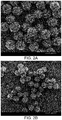
- the SEM photograph (10000x) of the polymer layer-coated knobby copolymer core obtained according to the aforementioned reaction conditions is as shown in FIG. 2A .
- the multi-protrusive appearance is illustrated, the average diameter D is measured about 4.5 ⁇ m, and average height h of the protrusions is measured about 1000 nm.
- Example 1-2 2.57 ml of deionized water, 30 ml of ethanol, 0.34 g of polyvinylpyrrolidone, 0.92 g of benzoyl peroxide, 9.5 ml of styrene, and 0.0666 ml of divinylbenzene are performed to place into a reactor, and then the aforementioned mixture is stirred at 70°C for 22 hours under a nitrogen atmosphere. Thereafter, 0.6 ml of methacrylic acid, 10 ml of deionized water and 0.05 g of potassium persulfate are added, and the reaction is performed by continuously stirring at 70°C for 2 hours, followed by cooling to room temperature.
- the product is washed with deionized water to obtain a knobby styrene/divinylbenzene copolymer core having a carboxyl polymer layer. Afterward, the average diameter D of these knobby copolymer cores and the average height h of the protrusions were observed and measured using a scanning electron microscope.
- the SEM photograph (10000x) of the polymer layer-coated knobby copolymer core obtained according to the aforementioned reaction conditions is as shown in FIG. 2B .
- the average diameter D is measured about 2.5 ⁇ m
- average height h of the protrusions is measured about 500 nm.
- Example 1-3 15 ml of ethanol, 21 ml of ethylene glycol methyl ether, 0.75 g of polyvinylpyrrolidone, 0.5 g of benzoyl peroxide, 7.5 ml of styrene, and 0.105 ml of divinylbenzene are performed to place into a reactor, and the aforementioned mixture is stirred at 70°C for 22 hours under a nitrogen atmosphere. Thereafter, 0.2 ml of methacrylic acid, 10 ml of deionized water and 0.05 g of potassium persulfate are added, and the reaction is performed by continuously stirring at 70°C for 2 hours, followed by cooling to room temperature.
- the product is washed with deionized water to obtain a knobby styrene/divinylbenzene copolymer core having a carboxyl polymer layer. Afterward, the average diameter D of these knobby copolymer cores and the average height h of the protrusions are observed and measured using a scanning electron microscope.
- the SEM photograph (10000x) of the polymer layer-coated knobby copolymer core obtained according to the aforementioned reaction conditions is as shown in FIG. 2C .
- the multi-protrusive appearance is illustrated, the average diameter D is measured about 8.5 ⁇ m, and average height h of the protrusions is measured about 900 nm.
- Example 1-1 1 g of the particles formed in Example 1-1, 400 ml of deionized water, 50 ml of ethylene glycol, and 0.3 g of iron (II) chloride (FeCl 2 ) are performed to place into a reactor, and the aforementioned mixture is stirred and heated to 60°C under a nitrogen atmosphere. Next, an aqueous solution of 2 g of potassium nitrate and 20 g of hexamethylenetetramine dissolved in 50 ml of deionized water is added, and the reaction is performed by continuously stirring at 60°C for 1 hour under a nitrogen atmosphere.
- the product is washed with deionized water to obtain the particles of knobby styrene/divinylbenzene copolymer core having a carboxyl group polymer layer and coated with a magnetic substance layer of iron oxide, and the SEM photograph (10000x) thereof is as shown in FIG. 3 .
- the magnetic substance layer does not substantially affect the surface morphology and diameter of the particles.
- the magnetic particle of the present disclosure has a multi-protrusive surface and includes in the order of a knobby copolymer core, a polymer layer, a magnetic substance layer, and a silicon-based layer from the inside to the outside. Since the magnetic particle has multi-protrusive surface, the surface area of the magnetic particle can be greatly increased, thereby contributing to the close packing of the magnetic particles. Furthermore, since the surface of the knobby polymer particles is formed with a polymer layer containing at least one functional group and the functional group may be charged, it is advantageous for the knobby polymer particles to adsorb more magnetic substance precursors. Accordingly, the effect of high magnetic quantization is achieved. In this way, the magnetic particles can be widely applied to the field of biomedicine, such as immune-quantitative analysis, purification and separation, or cell stimulation and amplification.
Landscapes
- Engineering & Computer Science (AREA)
- Chemical & Material Sciences (AREA)
- Power Engineering (AREA)
- Nanotechnology (AREA)
- Health & Medical Sciences (AREA)
- Dispersion Chemistry (AREA)
- Life Sciences & Earth Sciences (AREA)
- General Health & Medical Sciences (AREA)
- Molecular Biology (AREA)
- Biomedical Technology (AREA)
- Inorganic Chemistry (AREA)
- Physics & Mathematics (AREA)
- Spectroscopy & Molecular Physics (AREA)
- Chemical Kinetics & Catalysis (AREA)
- Medicinal Chemistry (AREA)
- Polymers & Plastics (AREA)
- Organic Chemistry (AREA)
- Soft Magnetic Materials (AREA)
- Hard Magnetic Materials (AREA)
- Solid-Sorbent Or Filter-Aiding Compositions (AREA)
Abstract
Description
- The disclosure is related to a bead and the manufacturing method thereof, and more particularly, to a magnetic bead and the manufacturing method thereof.
- Micron-sized magnetic particles have been widely used in the field of biomedicine, such as in immune-quantitative analysis, purification and separation, or cell stimulation and amplification. However, currently commercial magnetic particles are all spheres, and spheres provide only a minimum surface area in an equal volume object, which may not conform to the biomimetic concept in practical applications, and thus is not the most ideal type in many applications. Therefore, there is an urgent need to develop magnetic particles that provide larger surface area and conform to the biomimetic concept simultaneously.
- The disclosure provides a magnetic particle, which includes a knobby surface that may increase the surface area.
- The disclosure also provides a manufacturing method of a magnetic particle, in which the magnetic particle includes a knobby surface.
- The magnetic particle of the present disclosure includes a knobby copolymer core, a polymer layer, a magnetic substance layer and a silicon-based layer, in which the polymer layer covers the knobby copolymer core and has at least one functional group, the magnetic substance layer covers the polymer layer and the silicon-based layer covers the magnetic substance layer.
- In an embodiment of the present disclosure, an average diameter of the aforementioned magnetic particle is 1 µm to 50 µm.
- In an embodiment of the present disclosure, the aforementioned knobby copolymer core includes a plurality of protrusions and an average height of the plurality of protrusions is 100 nm to 5000 nm.
- In an embodiment of the present disclosure, the aforementioned knobby copolymer core includes a copolymer obtained by copolymerizing a monofunctional monomer and a bifunctional monomer.
- In an embodiment of the present disclosure, the volume percentage of the aforementioned bifunctional monomer relative to the monofunctional monomer is 0.4% to 2%.
- In an embodiment of the present disclosure, the aforementioned knobby copolymer core includes a styrene/divinylbenzene copolymer, a methyl methacrylate/triethylene glycol dimethacrylate copolymer, a methyl methacrylate/ethylene glycol dimethacrylate copolymer, a styrene/triethylene glycol dimethacrylate copolymer, a styrene/ethylene glycol dimethacrylate copolymer, or a methyl methacrylate/divinylbenzene copolymer.
- In an embodiment of the present disclosure, the aforementioned at least one functional group includes a carboxyl group, an amine group, or a combination thereof.
- In an embodiment of the present disclosure, the aforementioned magnetic substance layer includes a paramagnetic substance, a superparamagnetic substance, a ferromagnetic substance, a ferrite magnetic substance, or a combination thereof.
- In an embodiment of the present disclosure, a thickness of the aforementioned magnetic substance layer is 20 nm to 200 nm.
- In an embodiment of the present disclosure, the aforementioned silicon-based layer comprises siloxane, silica glass, silicon oxide, silicate salt or a combination thereof.
- In an embodiment of the present disclosure, a thickness of the aforementioned silicon-based layer is at least 1 nm to 50 nm.
- The manufacturing method of the magnetic particle of the present disclosure includes the following steps. First, polymerizing at least two monomers into a copolymer is performed to form a knobby copolymer core. Next, forming a polymer layer to cover the knobby copolymer core is performed, in which the polymer layer has at least one functional group. Thereafter, adsorbing a magnetic substance precursor is performed by the knobby copolymer core covered with the polymer layer to form a magnetic substance layer. Further, a silicon-based layer may be additionally formed to cover the magnetic substance layer.
- In an embodiment of the present disclosure, the aforementioned at least two monomers include monofunctional monomer and bifunctional monomer.
- In an embodiment of the present disclosure, the volume percentage of the aforementioned bifunctional monomer relative to the monofunctional monomer is 0.4% to 2%.
- In an embodiment of the present disclosure, the aforementioned knobby copolymer core includes a styrene/divinylbenzene copolymer, a methyl methacrylate/triethylene glycol dimethacrylate copolymer, a methyl methacrylate/ethylene glycol dimethacrylate copolymer, a styrene/triethylene glycol dimethacrylate copolymer, a styrene/ethylene glycol dimethacrylate copolymer, or a methyl methacrylate/divinylbenzene copolymer.
- Based on the above, the magnetic particle of an embodiment of the disclosure has multi-protrusive surface, so that the surface area of the magnetic particles can be greatly increased, thereby contributing to the close packing of the magnetic particles. Furthermore, since the surface of the knobby polymer particles is formed with a polymer layer containing at least one functional group and the functional group may be charged, it is advantageous for the knobby polymer particles to adsorb more magnetic substance precursors. Accordingly, the effect of high magnetic quantization is achieved.
- Several exemplary embodiments accompanied with figures are described in detail below to further describe the disclosure in details.
-
-
FIG. 1 is a schematic diagram of a magnetic particle in accordance with an embodiment of the present disclosure. -
FIG. 2A is a scanning electron micrograph of a knobby copolymer core covered with a polymer layer in accordance with the Example 1-1 of the present disclosure. -
FIG. 2B is a scanning electron micrograph of a knobby copolymer core covered with a polymer layer in accordance with the Example 1-2 of the present disclosure. -
FIG. 2C is a scanning electron micrograph of a knobby copolymer core covered with a polymer layer in accordance with the Example 1-3 of the present disclosure. -
FIG. 3 is a scanning electron micrograph of a knobby copolymer core covered with a polymer layer and a magnetic substance layer in accordance with the Example 2 of the present disclosure. -
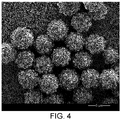
FIG. 4 is a scanning electron micrograph of a magnetic particle in accordance with the Example 3 of the present disclosure. -
FIG. 1 is a schematic diagram of a magnetic particle in accordance with an embodiment of the present disclosure. Themagnetic particle 100 includes in the order of aknobby copolymer core 110, apolymer layer 120, amagnetic substance layer 130, and a silicon-basedlayer 140 from the inside to the outside. In which, theknobby copolymer core 110 is spherical and has a plurality ofprotrusions 112 on its surface. - The aforementioned
magnetic particle 100 has an average diameter D, that is, an average value of the shortest diameter (for example, D1) and the longest diameter (for example, D2) of themagnetic particles 100, and may range from 1 µm to 50 µm. In an embodiment, themagnetic particle 100 may have an average diameter of 2 µm to 40 µm. In another embodiment, themagnetic particle 100 may have an average diameter of 3 µm to 30 µm. In still another embodiment, themagnetic particle 100 may have an average diameter of 4 µm to 20 µm. - Moreover, the average height h of the
aforementioned protrusions 112, that is, the average value of the vertical distance from the top side of eachprotrusion 112 to the connection line between the two bottom sides of each protrusion 112 (for example, height h1, h2, h3). The average height h of theprotrusions 112 may range from 100 nm to 5000 nm, for example, 100 nm to 500 nm, 500 nm to 1000 nm, 1000 nm to 1500 nm, 1500 nm to 2000 nm, 2000 nm to 2500 nm, 2500 nm to 3000 nm, 3000 nm to 3500 nm, 3500 nm to 4000 nm, 4000 nm to 4500 nm or 4500 nm to 5000 nm. In an embodiment, theprotrusions 112 may have an average height h of 300 nm to 4000 nm. In another embodiment, theprotrusions 112 may have an average height h of 500 nm to 3000 nm. In yet another embodiment, theprotrusions 112 may have an average height h of 800 nm to 2000 nm. In still another embodiment, theprotrusions 112 may have an average height h of 1000 nm to 1800 nm. - In an embodiment of the aforementioned magnetic particles, the
protrusions 112 may be uniformly or non-uniformly distributed on the surface, and as a whole, theprotrusions 112 are substantially irregular protrusions. For example, theprotrusion 112 may include, but are not limited to, a papillary shape or a spherical shape. In addition, in an embodiment, the method for forming theknobby copolymer core 110 may include, but is not limited to, a dispersion polymerization method, a suspension polymerization method, or an emulsion polymerization method, that is, at least two monomers are polymerized into a copolymer via the above polymerization methods. In an embodiment, the at least two monomers may be lipid-soluble monomers, and may include monofunctional monomer or bifunctional monomer, in which the volume percentage of the bifunctional monomer relative to the monofunctional monomer may be 0.4% to 2%, such as 0.5% to 1.8% or 0.6% to 1.5%. - The aforementioned monofunctional monomer may be a monovinyl monomer, such as styrene, methyl methacrylate, or other monofunctional monomers. The bifunctional monomer may be a divinyl monomer, such as divinylbenzene, ethylene glycol dimethacrylate, triethylene glycol dimethacrylate, or other bifunctional monomers. In an embodiment, the copolymer may include a styrene/divinylbenzene copolymer, a methyl methacrylate/triethylene glycol dimethacrylate copolymer, a methyl methacrylate/ethylene glycol dimethacrylate copolymer, a styrene/triethylene glycol dimethacrylate copolymer, a styrene/ethylene glycol dimethacrylate copolymer, or a methyl methacrylate/divinylbenzene copolymer, but is not limit thereto.
- The
aforementioned polymer layer 120 may cover theknobby copolymer core 110, and thepolymer layer 120 may include at least one functional group. In an embodiment, the material of thepolymer layer 120 is different from theknobby copolymer core 110. Further, the functional group may be charged, so that the surface of theknobby copolymer core 110 may be charged, which facilitates the subsequent adsorption of the magnetic substance precursor to form themagnetic substance layer 130. In addition, in an embodiment, the functional group may be negatively charged, and the functional group may be a carboxyl group, an amine group, or a combination thereof, but is not limited thereto. - It should be mentioned that, although the
polymer layer 120 and theknobby copolymer core 110 are depicted as distinguishable layers inFIG. 1 , thepolymer layer 120 and theknobby copolymer core 110 actually do not exist clear boundaries. Further, in the present disclosure, a film layer having a functional group and located on the surface of the knobby copolymer core is collectively referred to as a polymer layer, in practice, however, thepolymer layer 120 may be the surface of the knobby copolymer core modified by a functional group, rather than specifically forming a film layer. - The aforementioned
magnetic substance layer 130 may cover thepolymer layer 120. In an embodiment, theknobby copolymer core 110 covered with thepolymer layer 120 may adsorb the magnetic substance precursor to form themagnetic substance layer 130 on thepolymer layer 120. In an embodiment, the magnetic substance precursor may include, but is not limited to, an iron ion (Fe2+), a cobalt ion (Co2+), a nickel ion (Ni2+), or a combination thereof. Specifically, the magnetic substance precursor may be a salt of the aforementioned metal ions, such as ferrous chloride, cobalt chloride, nickel chloride, or the like. In an embodiment, the surface of themagnetic substance layer 130 may have small protrusions, that is, have a rough surface. Further, themagnetic substance layer 130 may include, but is not limited to, a paramagnetic substance, a superparamagnetic substance, a ferromagnetic substance, a ferrite magnetic substance, or a combination thereof. In an embodiment, themagnetic substance layer 130 may be a ferromagnetic substance. Also, in an embodiment, themagnetic substance layer 130 may have a substantially uniform thickness and entirely cover theknobby copolymer core 110. For example, the thickness of themagnetic substance layer 130 may be 20 nm to 200 nm, and may be, for example, 30 nm to 180 nm, 40 nm to 150 nm or 50 nm to 120 nm. - The aforementioned silicon-based
layer 140 may cover themagnetic substance layer 130. In an embodiment, the material of the silicon-basedlayer 140 may include, but is not limited to, siloxane, silicon glass, silicon oxide, silicate, or a combination thereof. Specifically, the silicon-basedlayer 140 may include a material such as tetramethoxysilane (TMOS), tetraethoxysilane (TEOS), 3-aminopropyltriethoxysilane (APTES), 3-glycidoxypropyltrimethoxysilane (GOPTS), or the like, but is not limited thereto. Moreover, in an embodiment, the thickness of the silicon-basedlayer 140 may be 1 nm to 50 nm, and may be 5 nm to 40 nm, 10 nm to 35 nm, or 15 nm to 30 nm. - In particular, since the
polymer layer 120, themagnetic substance layer 130, and the silicon-basedlayer 140 sequentially formed on theknobby copolymer core 110 do not substantially change the morphology of theknobby copolymer core 110, the resultingmagnetic particles 100 still have knobby appearance. As a result, the surface area of themagnetic particles 100 can be greatly increased, and the close packing of themagnetic particles 100 is facilitated. Furthermore, since the material constituting themagnetic particles 100 is substantially biocompatible, themagnetic particles 100 can be widely applied to the field of biomedicine. - In an embodiment, the manufacturing method of the magnetic particles may include the following steps. First, a knobby copolymer core is produced. Specifically, deionized water, an organic solvent, a hydrophilic polymer, a lipid-soluble initiator, a lipid-soluble monovinyl monomer and a lipid-soluble divinyl monomer are performed to place into a reactor. Next, the aforementioned mixture was stirred for at least 20 hours at 60 to 90°C under a nitrogen atmosphere.
- In an embodiment, the aforementioned deionized water may be added in an amount of 0 to 10 ml. Also, the aforementioned organic solvent may be added in an amount of 10 to 70 ml, and is, for example, an alcohol, an ether, or the like. For example, the organic solvent used may include, but is not limited to, ethanol, propanol, isopropanol, tert-butanol, n-hexanol or ethylene glycol methyl ether. Further, the aforementioned hydrophilic polymer may be added in an amount of 0.1 to 1 g, and is, for example, polyvinylpyrrolidone, polyvinyl alcohol, polyethylene glycol, a copolymer of vinyl acetate and vinylamine, cellulose and derivatives thereof, a saccharide, a collagen, a polyamino acid, or the like, but is not limited thereto. In addition, the aforementioned lipid-soluble initiator may be added in an amount of 0.3 to 1.5 g, and is, for example, Azobisisobutyronitrile (AIBN), Benzoyl peroxide (BPO), Lauroyl peroxide (LPO), or the like, but is not limited thereto. Moreover, the aforementioned lipid-soluble monovinyl monomer may be added in an amount of 5 to 15 ml, and is, for example, styrene, methyl methacrylate (MMA), or the like, but is not limited thereto. Furthermore, the content of the aforementioned lipid-soluble divinyl monomer may be 0.4% to 2% by volume of the content of the lipid-soluble monovinyl monomer, and is, for example, Divinylbenzene (DVB), Ethyleneglycol dimethacrylate (EGDMA), Triethylene glycol dimethacrylate (TEDMA), or the like, but is not limited thereto.
- Thereafter, a polymer layer is formed on the knobby copolymer core. In particular, a charged water-soluble monovinyl monomer, deionized water, and a water-soluble initiator are added and continuously stirred for at least 2 hours at 60 to 90°C. In an embodiment, the aforementioned charged water-soluble monovinyl monomer may be added in an amount of 0.1 to 1 g, and is, for example, acrylic acid, methacrylic acid, 3-aminopropylene/allylamine, sodium allylsulfonate, or the like, but is not limited thereto. Further, the aforementioned deionized water may be added in an amount of 5 to 15 ml. Moreover, the aforementioned water-soluble initiator may be added in an amount of 0.02 to 0.1 g, and is, for example, persulfate, hydrogen peroxide, or the like, but is not limited thereto.
- Next, the mixture is cooled to room temperature, and after the reaction was completed, the product was washed with deionized water to obtain the knobby polymer particles having a charged polymer layer on the surface.
- Thereafter, a magnetic substance layer is formed on the knobby polymer particles having a charged polymer layer on the surface. Specifically, the knobby polymer particles having a charged polymer layer on the surface, deionized water, ethylene glycol, and a precursor of a magnetic substance are performed to place into a reactor. In an embodiment, the aforementioned knobby polymer particles having a charged polymer layer on the surface may be added in an amount of 0.5 to 2 g. And, the aforementioned deionized water may be added in an amount of 200 to 600 ml. In addition, the aforementioned ethylene glycol may be added in an amount of 0 to 100 ml. In which, the addition of ethylene glycol can be used to regulate the size of the particles coated with the magnetic substance layer. Furthermore, the aforementioned magnetic substance precursor may be added in an amount of 0.05 to 1 g, and is, for example, a precursor of ferrous chloride, cobaltous chloride nickel chloride, or the like, but is not limited thereto.
- Subsequently, the aforementioned mixture is stirred and heated to 50-90°C under a nitrogen atmosphere, and then an aqueous solution of potassium nitrate (KNO3) and hexamethylenetetramine (HMTA) dissolved in deionized water is added. Thereafter, the reaction is performed by continuously stirring at 50 to 90°C for 0.5 hour or more under a nitrogen atmosphere. After the reaction is completed, the product is washed with deionized water to obtain the knobby polymer particles coated with a magnetic substance layer. In an embodiment, the aforementioned aqueous solution of potassium nitrate and hexamethylenetetramine may be added in an amount of 0.2 to 3 g of potassium nitrate and 2 to 30 g of hexamethylenetetramine dissolved in 20 to 100 ml of deionized water.
- Afterward, a silicon-based layer is formed on the knobby polymer particles having the magnetic substance layer formed on the surface. In particular, the knobby polymer particles coated with the magnetic substance layer, deionized water, ethanol, ammonia water or glacial acetic acid, and silane are performed to place into a reactor. In which, ammonia water or glacial acetic acid can be used to hydrolyze silane, so it can be substituted with other substances which can hydrolyze silane. Then, the reaction is performed by stirring at room temperature for 0.5 hour or more. After the reaction is completed, the product was washed with deionized water to obtain the magnetic particles coated with a silicon-based layer.
- In an embodiment, the aforementioned knobby polymer particles coated with the magnetic substance layer may be added in an amount of 0.3 to 2 g. And, the aforementioned deionized water may be added in an amount of 0 to 200 ml. In addition, the aforementioned ethanol may be added in an amount of 0 to 600 ml. In which, at least one of deionized water and ethanol may be selected as needed. Further, the aforementioned ammonia water or glacial acetic acid may be added in an amount of 10 to 50 ml. In addition, the aforementioned silane may be added in an amount of 0.1 to 1 ml, and is, for example, TMOS, TEOS, APTES, GOPTS, or the like, but is not limited thereto.
- Specific experimental examples are exemplified below to specifically describe a method of manufacturing the magnetic particles.
- Preparation of knobby styrene/divinylbenzene copolymer core with different ratios and carboxyl polymer layer are illustrated in Examples 1-1, 1-2 and 1-3, respectively.
- In Example 1-1, 1.5 ml of deionized water, 39 ml of tert-butanol, 0.34 g of polyvinylpyrrolidone (PVP), 0.92 g of benzoyl peroxide, 10 ml of styrene and 0.1 ml of divinylbenzene are performed to place into a reactor, and the aforementioned mixture is stirred at 70°C for 22 hours under a nitrogen atmosphere. Thereafter, 0.3 ml of methylacrylic acid (MAA), 10 ml of deionized water and 0.05 g of potassium persulfate (K2S2O8) are added, and the reaction is performed by continuously stirring at 70°C for 2 hours, followed by cooling to room temperature. After the reaction is completed, the product is washed with deionized water to obtain a knobby styrene/divinylbenzene copolymer core having a carboxyl polymer layer. Then, the average diameter D of these knobby copolymer cores and the average height h of the protrusions are observed and measured using a scanning electron microscope (SEM, FEI Quanta 400F).
- The SEM photograph (10000x) of the polymer layer-coated knobby copolymer core obtained according to the aforementioned reaction conditions is as shown in
FIG. 2A . In which, the multi-protrusive appearance is illustrated, the average diameter D is measured about 4.5 µm, and average height h of the protrusions is measured about 1000 nm. - In Example 1-2, 2.57 ml of deionized water, 30 ml of ethanol, 0.34 g of polyvinylpyrrolidone, 0.92 g of benzoyl peroxide, 9.5 ml of styrene, and 0.0666 ml of divinylbenzene are performed to place into a reactor, and then the aforementioned mixture is stirred at 70°C for 22 hours under a nitrogen atmosphere. Thereafter, 0.6 ml of methacrylic acid, 10 ml of deionized water and 0.05 g of potassium persulfate are added, and the reaction is performed by continuously stirring at 70°C for 2 hours, followed by cooling to room temperature. After the reaction is completed, the product is washed with deionized water to obtain a knobby styrene/divinylbenzene copolymer core having a carboxyl polymer layer. Afterward, the average diameter D of these knobby copolymer cores and the average height h of the protrusions were observed and measured using a scanning electron microscope.
- The SEM photograph (10000x) of the polymer layer-coated knobby copolymer core obtained according to the aforementioned reaction conditions is as shown in
FIG. 2B . In which, the multi-protrusive appearance is illustrated, the average diameter D is measured about 2.5 µm, and average height h of the protrusions is measured about 500 nm. It should be noted that, according toFIG. 2B , when the average diameter D of the magnetic particles is less than 1 µm, the protrusions formed on the surface of the knobby copolymer core are rather limited due to the surface area of the knobby copolymer core is relatively small. That is, it is actually difficult to manufacture the magnetic particles with an average diameter D of less than 1 µm. Therefore, the average diameter D of the magnetic particles of the present invention is, for example, greater than 1 µm. - In Example 1-3, 15 ml of ethanol, 21 ml of ethylene glycol methyl ether, 0.75 g of polyvinylpyrrolidone, 0.5 g of benzoyl peroxide, 7.5 ml of styrene, and 0.105 ml of divinylbenzene are performed to place into a reactor, and the aforementioned mixture is stirred at 70°C for 22 hours under a nitrogen atmosphere. Thereafter, 0.2 ml of methacrylic acid, 10 ml of deionized water and 0.05 g of potassium persulfate are added, and the reaction is performed by continuously stirring at 70°C for 2 hours, followed by cooling to room temperature. After the reaction is completed, the product is washed with deionized water to obtain a knobby styrene/divinylbenzene copolymer core having a carboxyl polymer layer. Afterward, the average diameter D of these knobby copolymer cores and the average height h of the protrusions are observed and measured using a scanning electron microscope.
- The SEM photograph (10000x) of the polymer layer-coated knobby copolymer core obtained according to the aforementioned reaction conditions is as shown in
FIG. 2C . In which, the multi-protrusive appearance is illustrated, the average diameter D is measured about 8.5 µm, and average height h of the protrusions is measured about 900 nm. - 1 g of the particles formed in Example 1-1, 400 ml of deionized water, 50 ml of ethylene glycol, and 0.3 g of iron (II) chloride (FeCl2) are performed to place into a reactor, and the aforementioned mixture is stirred and heated to 60°C under a nitrogen atmosphere. Next, an aqueous solution of 2 g of potassium nitrate and 20 g of hexamethylenetetramine dissolved in 50 ml of deionized water is added, and the reaction is performed by continuously stirring at 60°C for 1 hour under a nitrogen atmosphere. After the reaction is completed, the product is washed with deionized water to obtain the particles of knobby styrene/divinylbenzene copolymer core having a carboxyl group polymer layer and coated with a magnetic substance layer of iron oxide, and the SEM photograph (10000x) thereof is as shown in
FIG. 3 . According toFIG. 3 , it can be known that the magnetic substance layer does not substantially affect the surface morphology and diameter of the particles. - 1 g of the magnetic particles formed in Example 2, 100 ml of deionized water, 500 ml of ethanol, 30 ml of ammonia water, and 0.3 ml of TEOS are performed to place into a reactor, and the reaction is performed by stirring at room temperature for 2 hours. After the reaction is completed, the product was washed with deionized water to obtain the magnetic particles coated with a silicon-based layer, and the SEM photograph (10000x) thereof is as shown in
FIG. 4 . According toFIG. 4 , it can be known that the silicon-based layer does not substantially affect the surface morphology and diameter of the particles. - In summary, the magnetic particle of the present disclosure has a multi-protrusive surface and includes in the order of a knobby copolymer core, a polymer layer, a magnetic substance layer, and a silicon-based layer from the inside to the outside. Since the magnetic particle has multi-protrusive surface, the surface area of the magnetic particle can be greatly increased, thereby contributing to the close packing of the magnetic particles. Furthermore, since the surface of the knobby polymer particles is formed with a polymer layer containing at least one functional group and the functional group may be charged, it is advantageous for the knobby polymer particles to adsorb more magnetic substance precursors. Accordingly, the effect of high magnetic quantization is achieved. In this way, the magnetic particles can be widely applied to the field of biomedicine, such as immune-quantitative analysis, purification and separation, or cell stimulation and amplification.
Claims (15)
- A magnetic particle (100), comprising:a knobby copolymer core (110);a polymer layer (120), covering the knobby copolymer core (110) and having at least one functional group;a magnetic substance layer (130), covering the polymer layer (120); anda silicon-based layer (140), covering the magnetic substance layer (130).
- The magnetic particle (100) of claim 1, wherein an average diameter (D1-D2) of the magnetic particle (100) is 1 µm to 50 µm.
- The magnetic particle (100) of claim 1, wherein the knobby copolymer core (110) comprises a plurality of protrusions (112) and an average height (h1-h3) of the plurality of protrusions (112) is 100 nm to 5000 nm.
- The magnetic particle (100) of claim 1, wherein the knobby copolymer core (110) comprises a copolymer obtained by copolymerizing a monofunctional monomer and a bifunctional monomer.
- The magnetic particle (100) of claim 4, wherein a volume percentage of the bifunctional monomer relative to the monofunctional monomer is 0.4% to 2%.
- The magnetic particle (100) of claim 1, wherein the knobby copolymer core (110) comprises a styrene/divinylbenzene copolymer, a methyl methacrylate/triethylene glycol dimethacrylate copolymer, a methyl methacrylate/ethylene glycol dimethacrylate copolymer, a styrene/triethylene glycol dimethacrylate copolymer, a styrene/ethylene glycol dimethacrylate copolymer, or a methyl methacrylate/divinylbenzene copolymer.
- The magnetic particle (100) of claim 1, wherein the at least one functional group comprises a carboxyl group, an amine group, or a combination thereof.
- The magnetic particle (100) of claim 1, wherein the magnetic substance layer (130) comprises a paramagnetic substance, a superparamagnetic substance, a ferromagnetic substance, a ferrite magnetic substance, or a combination thereof.
- The magnetic particle (100) of claim 1, wherein a thickness of the magnetic substance layer (130) is 20 nm to 200 nm.
- The magnetic particle (100) of claim 1, wherein the silicon-based layer (140) comprises siloxane, silica glass, silicon oxide, silicate salt or a combination thereof.
- The magnetic particle (100) of claim 1, wherein a thickness of the silicon-based layer (140) is at least 1 nm to 50 nm.
- A manufacturing method of a magnetic particle (100), comprising:polymerizing at least two monomers into a copolymer to form a knobby copolymer core (110);forming a polymer layer (120) to cover the knobby copolymer core (110), wherein the polymer layer (120) has at least one functional group;adsorbing a magnetic substance precursor by the knobby copolymer core (110) covered with the polymer layer (120) to form a magnetic substance layer (130); andforming a silicon-based layer (140) to cover the magnetic substance layer (130).
- The manufacturing method of the magnetic particle (100) of claim 12, wherein the at least two monomers comprise monofunctional monomer and bifunctional monomer.
- The manufacturing method of the magnetic particle (100) of claim 13, wherein a volume percentage of the bifunctional monomer relative to the monofunctional monomer is 0.4% to 2%.
- The manufacturing method of the magnetic particle (100) of claim 13, wherein the copolymer core comprises a styrene/divinylbenzene copolymer, a methyl methacrylate/triethylene glycol dimethacrylate copolymer, a methyl methacrylate/ethylene glycol dimethacrylate copolymer, a styrene/triethylene glycol dimethacrylate copolymer, a styrene/ethylene glycol dimethacrylate copolymer, or a methyl methacrylate/divinylbenzene copolymer.
Applications Claiming Priority (1)
| Application Number | Priority Date | Filing Date | Title |
|---|---|---|---|
| US201762609343P | 2017-12-22 | 2017-12-22 |
Publications (2)
| Publication Number | Publication Date |
|---|---|
| EP3503129A1 true EP3503129A1 (en) | 2019-06-26 |
| EP3503129B1 EP3503129B1 (en) | 2020-08-12 |
Family
ID=65365759
Family Applications (1)
| Application Number | Title | Priority Date | Filing Date |
|---|---|---|---|
| EP18214311.5A Active EP3503129B1 (en) | 2017-12-22 | 2018-12-20 | Magnetic beads and the manufacturing method thereof |
Country Status (5)
| Country | Link |
|---|---|
| US (2) | US20190206598A1 (en) |
| EP (1) | EP3503129B1 (en) |
| JP (1) | JP6609026B2 (en) |
| CN (1) | CN109957071B (en) |
| TW (1) | TWI689409B (en) |
Cited By (1)
| Publication number | Priority date | Publication date | Assignee | Title |
|---|---|---|---|---|
| EP4019973A1 (en) * | 2020-12-28 | 2022-06-29 | Industrial Technology Research Institute | Detection method of multiple analytes |
Citations (2)
| Publication number | Priority date | Publication date | Assignee | Title |
|---|---|---|---|---|
| US20090017518A1 (en) * | 2007-07-11 | 2009-01-15 | Industrial Technology Research Institute | Magnetic particles and fabrication method thereof |
| CN106076288A (en) * | 2016-06-17 | 2016-11-09 | 江苏大学 | A kind of preparation method of porous ion/molecularly imprinted polymer |
Family Cites Families (8)
| Publication number | Priority date | Publication date | Assignee | Title |
|---|---|---|---|---|
| US5318797A (en) * | 1990-06-20 | 1994-06-07 | Clarkson University | Coated particles, hollow particles, and process for manufacturing the same |
| CN1302831A (en) * | 2001-01-09 | 2001-07-11 | 上海博纳科技发展有限公司 | Magnetic high-molecular microsphere and its preparing process |
| JP3738847B2 (en) * | 2002-03-25 | 2006-01-25 | Jsr株式会社 | Method for producing diagnostic particles |
| JP4614064B2 (en) * | 2004-11-04 | 2011-01-19 | Jsr株式会社 | Method for producing magnetic particles and biochemical carrier |
| TWI293113B (en) * | 2005-12-23 | 2008-02-01 | Ind Tech Res Inst | Magnetic nanoparticles with fluorescent and specific targeting functions |
| JP4716034B2 (en) * | 2006-03-24 | 2011-07-06 | Jsr株式会社 | Magnetic particles and method for producing the same |
| CN100425627C (en) * | 2007-01-04 | 2008-10-15 | 吉林大学 | Preparation process of magnetic partical/polymer/silicon dioxide structure magnetic microball |
| CN106622175B (en) * | 2016-12-29 | 2019-06-04 | 南京大学 | A kind of strong acid resistant magnetic adsorption particle |
-
2018
- 2018-12-20 TW TW107146031A patent/TWI689409B/en active
- 2018-12-20 EP EP18214311.5A patent/EP3503129B1/en active Active
- 2018-12-20 JP JP2018237954A patent/JP6609026B2/en active Active
- 2018-12-20 CN CN201811561866.4A patent/CN109957071B/en active Active
- 2018-12-20 US US16/226,651 patent/US20190206598A1/en not_active Abandoned
-
2023
- 2023-03-16 US US18/185,346 patent/US20230245808A1/en active Pending
Patent Citations (2)
| Publication number | Priority date | Publication date | Assignee | Title |
|---|---|---|---|---|
| US20090017518A1 (en) * | 2007-07-11 | 2009-01-15 | Industrial Technology Research Institute | Magnetic particles and fabrication method thereof |
| CN106076288A (en) * | 2016-06-17 | 2016-11-09 | 江苏大学 | A kind of preparation method of porous ion/molecularly imprinted polymer |
Cited By (1)
| Publication number | Priority date | Publication date | Assignee | Title |
|---|---|---|---|---|
| EP4019973A1 (en) * | 2020-12-28 | 2022-06-29 | Industrial Technology Research Institute | Detection method of multiple analytes |
Also Published As
| Publication number | Publication date |
|---|---|
| TWI689409B (en) | 2020-04-01 |
| CN109957071A (en) | 2019-07-02 |
| CN109957071B (en) | 2022-03-11 |
| US20190206598A1 (en) | 2019-07-04 |
| JP6609026B2 (en) | 2019-11-20 |
| US20230245808A1 (en) | 2023-08-03 |
| JP2019145783A (en) | 2019-08-29 |
| TW201927535A (en) | 2019-07-16 |
| EP3503129B1 (en) | 2020-08-12 |
Similar Documents
| Publication | Publication Date | Title |
|---|---|---|
| TWI376705B (en) | Magnetic particles and fabrication method thereof | |
| CN102142310B (en) | A kind of preparation method of nano magnetic polymer composite microsphere | |
| Perçin et al. | Poly (hydroxyethyl methacrylate) based magnetic nanoparticles for plasmid DNA purification from Escherichia coli lysate | |
| US11458448B2 (en) | Magnetic strong base anion exchange resin with high mechanical strength, and preparation method thereof | |
| Rahman et al. | Temperature and magnetic dual responsive microparticles for DNA separation | |
| US20230245808A1 (en) | Manufacturing method of magnetic particles | |
| CN101775112A (en) | Preparation method of magnetic fluorescence dual functional thermo-sensitive nano particle | |
| Tanjim et al. | Mesoporous magnetic silica particles modified with stimuli-responsive P (NIPAM–DMA) valve for controlled loading and release of biologically active molecules | |
| JP2012013687A (en) | Magnetic marker particles and method for manufacturing the same | |
| CN112592423B (en) | Monodisperse Magnetic Microspheres | |
| JP2026065027A (en) | Monodisperse superparamagnetic particles and method for producing the same | |
| Li et al. | Polymer-encapsulated γ-Fe2O3 nanoparticles prepared via RAFT-mediated emulsion polymerization | |
| CN115651264A (en) | Preparation method of silicon dioxide coated magnetic porous polystyrene microspheres | |
| Prai-In et al. | Azlactone functionalization of magnetic nanoparticles using ATRP and their bioconjugation | |
| CN110476064A (en) | Methods for the preparation of highly porous polymer particles for diagnostic applications | |
| CN114093586A (en) | Polymer-coated magnetic microsphere and preparation method thereof | |
| CN121402053A (en) | Amine-functionalized magnetic nanocomposites and their application in protein separation and purification | |
| CN105693918A (en) | Preparation method of magnetic hollow-structure molecularly imprinted polymer | |
| Omer-Mizrahi et al. | Synthesis and characterization of magnetic and non-magnetic core–shell polyepoxide micrometer-sized particles of narrow size distribution | |
| CN110935405B (en) | Preparation method of magnetic polystyrene microspheres with surfaces rich in double bonds | |
| CN101735367A (en) | Preparation method of nano magnetic polymer composite microspheres | |
| Lu et al. | Synthesis and characterization of magnetic polymer microspheres with a core–shell structure | |
| JPH08176461A (en) | Monodisperse fine particles and method for producing the same | |
| CN105646804B (en) | A kind of preparation method and application of the mesoporous nickel surface ion imprinted polymer of macropore | |
| Guo et al. | Grafting thermosensitive PNIPAM onto the surface of carbon spheres |
Legal Events
| Date | Code | Title | Description |
|---|---|---|---|
| PUAI | Public reference made under article 153(3) epc to a published international application that has entered the european phase |
Free format text: ORIGINAL CODE: 0009012 |
|
| STAA | Information on the status of an ep patent application or granted ep patent |
Free format text: STATUS: REQUEST FOR EXAMINATION WAS MADE |
|
| 17P | Request for examination filed |
Effective date: 20181220 |
|
| AK | Designated contracting states |
Kind code of ref document: A1 Designated state(s): AL AT BE BG CH CY CZ DE DK EE ES FI FR GB GR HR HU IE IS IT LI LT LU LV MC MK MT NL NO PL PT RO RS SE SI SK SM TR |
|
| AX | Request for extension of the european patent |
Extension state: BA ME |
|
| RBV | Designated contracting states (corrected) |
Designated state(s): AL AT BE BG CH CY CZ DE DK EE ES FI FR GB GR HR HU IE IS IT LI LT LU LV MC MK MT NL NO PL PT RO RS SE SI SK SM TR |
|
| GRAP | Despatch of communication of intention to grant a patent |
Free format text: ORIGINAL CODE: EPIDOSNIGR1 |
|
| STAA | Information on the status of an ep patent application or granted ep patent |
Free format text: STATUS: GRANT OF PATENT IS INTENDED |
|
| INTG | Intention to grant announced |
Effective date: 20200507 |
|
| GRAS | Grant fee paid |
Free format text: ORIGINAL CODE: EPIDOSNIGR3 |
|
| GRAA | (expected) grant |
Free format text: ORIGINAL CODE: 0009210 |
|
| STAA | Information on the status of an ep patent application or granted ep patent |
Free format text: STATUS: THE PATENT HAS BEEN GRANTED |
|
| AK | Designated contracting states |
Kind code of ref document: B1 Designated state(s): AL AT BE BG CH CY CZ DE DK EE ES FI FR GB GR HR HU IE IS IT LI LT LU LV MC MK MT NL NO PL PT RO RS SE SI SK SM TR |
|
| REG | Reference to a national code |
Ref country code: CH Ref legal event code: EP |
|
| REG | Reference to a national code |
Ref country code: IE Ref legal event code: FG4D |
|
| REG | Reference to a national code |
Ref country code: DE Ref legal event code: R096 Ref document number: 602018006894 Country of ref document: DE |
|
| REG | Reference to a national code |
Ref country code: AT Ref legal event code: REF Ref document number: 1302352 Country of ref document: AT Kind code of ref document: T Effective date: 20200915 |
|
| REG | Reference to a national code |
Ref country code: LT Ref legal event code: MG4D |
|
| REG | Reference to a national code |
Ref country code: NL Ref legal event code: MP Effective date: 20200812 |
|
| PG25 | Lapsed in a contracting state [announced via postgrant information from national office to epo] |
Ref country code: GR Free format text: LAPSE BECAUSE OF FAILURE TO SUBMIT A TRANSLATION OF THE DESCRIPTION OR TO PAY THE FEE WITHIN THE PRESCRIBED TIME-LIMIT Effective date: 20201113 Ref country code: NO Free format text: LAPSE BECAUSE OF FAILURE TO SUBMIT A TRANSLATION OF THE DESCRIPTION OR TO PAY THE FEE WITHIN THE PRESCRIBED TIME-LIMIT Effective date: 20201112 Ref country code: FI Free format text: LAPSE BECAUSE OF FAILURE TO SUBMIT A TRANSLATION OF THE DESCRIPTION OR TO PAY THE FEE WITHIN THE PRESCRIBED TIME-LIMIT Effective date: 20200812 Ref country code: SE Free format text: LAPSE BECAUSE OF FAILURE TO SUBMIT A TRANSLATION OF THE DESCRIPTION OR TO PAY THE FEE WITHIN THE PRESCRIBED TIME-LIMIT Effective date: 20200812 Ref country code: BG Free format text: LAPSE BECAUSE OF FAILURE TO SUBMIT A TRANSLATION OF THE DESCRIPTION OR TO PAY THE FEE WITHIN THE PRESCRIBED TIME-LIMIT Effective date: 20201112 Ref country code: HR Free format text: LAPSE BECAUSE OF FAILURE TO SUBMIT A TRANSLATION OF THE DESCRIPTION OR TO PAY THE FEE WITHIN THE PRESCRIBED TIME-LIMIT Effective date: 20200812 Ref country code: LT Free format text: LAPSE BECAUSE OF FAILURE TO SUBMIT A TRANSLATION OF THE DESCRIPTION OR TO PAY THE FEE WITHIN THE PRESCRIBED TIME-LIMIT Effective date: 20200812 |
|
| REG | Reference to a national code |
Ref country code: AT Ref legal event code: MK05 Ref document number: 1302352 Country of ref document: AT Kind code of ref document: T Effective date: 20200812 |
|
| PG25 | Lapsed in a contracting state [announced via postgrant information from national office to epo] |
Ref country code: IS Free format text: LAPSE BECAUSE OF FAILURE TO SUBMIT A TRANSLATION OF THE DESCRIPTION OR TO PAY THE FEE WITHIN THE PRESCRIBED TIME-LIMIT Effective date: 20201212 Ref country code: PL Free format text: LAPSE BECAUSE OF FAILURE TO SUBMIT A TRANSLATION OF THE DESCRIPTION OR TO PAY THE FEE WITHIN THE PRESCRIBED TIME-LIMIT Effective date: 20200812 Ref country code: NL Free format text: LAPSE BECAUSE OF FAILURE TO SUBMIT A TRANSLATION OF THE DESCRIPTION OR TO PAY THE FEE WITHIN THE PRESCRIBED TIME-LIMIT Effective date: 20200812 Ref country code: RS Free format text: LAPSE BECAUSE OF FAILURE TO SUBMIT A TRANSLATION OF THE DESCRIPTION OR TO PAY THE FEE WITHIN THE PRESCRIBED TIME-LIMIT Effective date: 20200812 Ref country code: LV Free format text: LAPSE BECAUSE OF FAILURE TO SUBMIT A TRANSLATION OF THE DESCRIPTION OR TO PAY THE FEE WITHIN THE PRESCRIBED TIME-LIMIT Effective date: 20200812 |
|
| PG25 | Lapsed in a contracting state [announced via postgrant information from national office to epo] |
Ref country code: EE Free format text: LAPSE BECAUSE OF FAILURE TO SUBMIT A TRANSLATION OF THE DESCRIPTION OR TO PAY THE FEE WITHIN THE PRESCRIBED TIME-LIMIT Effective date: 20200812 Ref country code: CZ Free format text: LAPSE BECAUSE OF FAILURE TO SUBMIT A TRANSLATION OF THE DESCRIPTION OR TO PAY THE FEE WITHIN THE PRESCRIBED TIME-LIMIT Effective date: 20200812 Ref country code: DK Free format text: LAPSE BECAUSE OF FAILURE TO SUBMIT A TRANSLATION OF THE DESCRIPTION OR TO PAY THE FEE WITHIN THE PRESCRIBED TIME-LIMIT Effective date: 20200812 Ref country code: RO Free format text: LAPSE BECAUSE OF FAILURE TO SUBMIT A TRANSLATION OF THE DESCRIPTION OR TO PAY THE FEE WITHIN THE PRESCRIBED TIME-LIMIT Effective date: 20200812 Ref country code: SM Free format text: LAPSE BECAUSE OF FAILURE TO SUBMIT A TRANSLATION OF THE DESCRIPTION OR TO PAY THE FEE WITHIN THE PRESCRIBED TIME-LIMIT Effective date: 20200812 |
|
| REG | Reference to a national code |
Ref country code: DE Ref legal event code: R097 Ref document number: 602018006894 Country of ref document: DE |
|
| PG25 | Lapsed in a contracting state [announced via postgrant information from national office to epo] |
Ref country code: ES Free format text: LAPSE BECAUSE OF FAILURE TO SUBMIT A TRANSLATION OF THE DESCRIPTION OR TO PAY THE FEE WITHIN THE PRESCRIBED TIME-LIMIT Effective date: 20200812 Ref country code: AT Free format text: LAPSE BECAUSE OF FAILURE TO SUBMIT A TRANSLATION OF THE DESCRIPTION OR TO PAY THE FEE WITHIN THE PRESCRIBED TIME-LIMIT Effective date: 20200812 Ref country code: AL Free format text: LAPSE BECAUSE OF FAILURE TO SUBMIT A TRANSLATION OF THE DESCRIPTION OR TO PAY THE FEE WITHIN THE PRESCRIBED TIME-LIMIT Effective date: 20200812 |
|
| PLBE | No opposition filed within time limit |
Free format text: ORIGINAL CODE: 0009261 |
|
| STAA | Information on the status of an ep patent application or granted ep patent |
Free format text: STATUS: NO OPPOSITION FILED WITHIN TIME LIMIT |
|
| PG25 | Lapsed in a contracting state [announced via postgrant information from national office to epo] |
Ref country code: SK Free format text: LAPSE BECAUSE OF FAILURE TO SUBMIT A TRANSLATION OF THE DESCRIPTION OR TO PAY THE FEE WITHIN THE PRESCRIBED TIME-LIMIT Effective date: 20200812 |
|
| 26N | No opposition filed |
Effective date: 20210514 |
|
| PG25 | Lapsed in a contracting state [announced via postgrant information from national office to epo] |
Ref country code: IT Free format text: LAPSE BECAUSE OF FAILURE TO SUBMIT A TRANSLATION OF THE DESCRIPTION OR TO PAY THE FEE WITHIN THE PRESCRIBED TIME-LIMIT Effective date: 20200812 |
|
| PG25 | Lapsed in a contracting state [announced via postgrant information from national office to epo] |
Ref country code: SI Free format text: LAPSE BECAUSE OF FAILURE TO SUBMIT A TRANSLATION OF THE DESCRIPTION OR TO PAY THE FEE WITHIN THE PRESCRIBED TIME-LIMIT Effective date: 20200812 Ref country code: MC Free format text: LAPSE BECAUSE OF FAILURE TO SUBMIT A TRANSLATION OF THE DESCRIPTION OR TO PAY THE FEE WITHIN THE PRESCRIBED TIME-LIMIT Effective date: 20200812 |
|
| REG | Reference to a national code |
Ref country code: BE Ref legal event code: MM Effective date: 20201231 |
|
| PG25 | Lapsed in a contracting state [announced via postgrant information from national office to epo] |
Ref country code: LU Free format text: LAPSE BECAUSE OF NON-PAYMENT OF DUE FEES Effective date: 20201220 Ref country code: IE Free format text: LAPSE BECAUSE OF NON-PAYMENT OF DUE FEES Effective date: 20201220 |
|
| PG25 | Lapsed in a contracting state [announced via postgrant information from national office to epo] |
Ref country code: TR Free format text: LAPSE BECAUSE OF FAILURE TO SUBMIT A TRANSLATION OF THE DESCRIPTION OR TO PAY THE FEE WITHIN THE PRESCRIBED TIME-LIMIT Effective date: 20200812 Ref country code: MT Free format text: LAPSE BECAUSE OF FAILURE TO SUBMIT A TRANSLATION OF THE DESCRIPTION OR TO PAY THE FEE WITHIN THE PRESCRIBED TIME-LIMIT Effective date: 20200812 Ref country code: CY Free format text: LAPSE BECAUSE OF FAILURE TO SUBMIT A TRANSLATION OF THE DESCRIPTION OR TO PAY THE FEE WITHIN THE PRESCRIBED TIME-LIMIT Effective date: 20200812 |
|
| PG25 | Lapsed in a contracting state [announced via postgrant information from national office to epo] |
Ref country code: MK Free format text: LAPSE BECAUSE OF FAILURE TO SUBMIT A TRANSLATION OF THE DESCRIPTION OR TO PAY THE FEE WITHIN THE PRESCRIBED TIME-LIMIT Effective date: 20200812 |
|
| PG25 | Lapsed in a contracting state [announced via postgrant information from national office to epo] |
Ref country code: PT Free format text: LAPSE BECAUSE OF FAILURE TO SUBMIT A TRANSLATION OF THE DESCRIPTION OR TO PAY THE FEE WITHIN THE PRESCRIBED TIME-LIMIT Effective date: 20200812 Ref country code: BE Free format text: LAPSE BECAUSE OF NON-PAYMENT OF DUE FEES Effective date: 20201231 |
|
| REG | Reference to a national code |
Ref country code: CH Ref legal event code: PL |
|
| PG25 | Lapsed in a contracting state [announced via postgrant information from national office to epo] |
Ref country code: LI Free format text: LAPSE BECAUSE OF NON-PAYMENT OF DUE FEES Effective date: 20211231 Ref country code: CH Free format text: LAPSE BECAUSE OF NON-PAYMENT OF DUE FEES Effective date: 20211231 |
|
| REG | Reference to a national code |
Ref country code: DE Ref legal event code: R081 Ref document number: 602018006894 Country of ref document: DE Owner name: INNOCELL TECHNOLOGY CO., LTD., TW Free format text: FORMER OWNER: INDUSTRIAL TECHNOLOGY RESEARCH INSTITUTE, CHUTUNG, HSINCHU, TW |
|
| PGFP | Annual fee paid to national office [announced via postgrant information from national office to epo] |
Ref country code: GB Payment date: 20251229 Year of fee payment: 8 |
|
| PGFP | Annual fee paid to national office [announced via postgrant information from national office to epo] |
Ref country code: FR Payment date: 20251226 Year of fee payment: 8 |
|
| PGFP | Annual fee paid to national office [announced via postgrant information from national office to epo] |
Ref country code: DE Payment date: 20251229 Year of fee payment: 8 |