EP3503004A1 - Method and system for evaluating user portrait data - Google Patents
Method and system for evaluating user portrait data Download PDFInfo
- Publication number
- EP3503004A1 EP3503004A1 EP17841024.7A EP17841024A EP3503004A1 EP 3503004 A1 EP3503004 A1 EP 3503004A1 EP 17841024 A EP17841024 A EP 17841024A EP 3503004 A1 EP3503004 A1 EP 3503004A1
- Authority
- EP
- European Patent Office
- Prior art keywords
- data
- user
- persona
- evaluation
- attribute dimension
- Prior art date
- Legal status (The legal status is an assumption and is not a legal conclusion. Google has not performed a legal analysis and makes no representation as to the accuracy of the status listed.)
- Ceased
Links
Images


Classifications
-
- G—PHYSICS
- G06—COMPUTING OR CALCULATING; COUNTING
- G06Q—INFORMATION AND COMMUNICATION TECHNOLOGY [ICT] SPECIALLY ADAPTED FOR ADMINISTRATIVE, COMMERCIAL, FINANCIAL, MANAGERIAL OR SUPERVISORY PURPOSES; SYSTEMS OR METHODS SPECIALLY ADAPTED FOR ADMINISTRATIVE, COMMERCIAL, FINANCIAL, MANAGERIAL OR SUPERVISORY PURPOSES, NOT OTHERWISE PROVIDED FOR
- G06Q10/00—Administration; Management
-
- G—PHYSICS
- G06—COMPUTING OR CALCULATING; COUNTING
- G06F—ELECTRIC DIGITAL DATA PROCESSING
- G06F16/00—Information retrieval; Database structures therefor; File system structures therefor
- G06F16/20—Information retrieval; Database structures therefor; File system structures therefor of structured data, e.g. relational data
- G06F16/24—Querying
- G06F16/245—Query processing
- G06F16/2458—Special types of queries, e.g. statistical queries, fuzzy queries or distributed queries
- G06F16/2465—Query processing support for facilitating data mining operations in structured databases
-
- G—PHYSICS
- G06—COMPUTING OR CALCULATING; COUNTING
- G06Q—INFORMATION AND COMMUNICATION TECHNOLOGY [ICT] SPECIALLY ADAPTED FOR ADMINISTRATIVE, COMMERCIAL, FINANCIAL, MANAGERIAL OR SUPERVISORY PURPOSES; SYSTEMS OR METHODS SPECIALLY ADAPTED FOR ADMINISTRATIVE, COMMERCIAL, FINANCIAL, MANAGERIAL OR SUPERVISORY PURPOSES, NOT OTHERWISE PROVIDED FOR
- G06Q30/00—Commerce
- G06Q30/02—Marketing; Price estimation or determination; Fundraising
- G06Q30/0201—Market modelling; Market analysis; Collecting market data
-
- G—PHYSICS
- G06—COMPUTING OR CALCULATING; COUNTING
- G06F—ELECTRIC DIGITAL DATA PROCESSING
- G06F16/00—Information retrieval; Database structures therefor; File system structures therefor
- G06F16/20—Information retrieval; Database structures therefor; File system structures therefor of structured data, e.g. relational data
- G06F16/23—Updating
- G06F16/2365—Ensuring data consistency and integrity
-
- G—PHYSICS
- G06—COMPUTING OR CALCULATING; COUNTING
- G06F—ELECTRIC DIGITAL DATA PROCESSING
- G06F16/00—Information retrieval; Database structures therefor; File system structures therefor
- G06F16/20—Information retrieval; Database structures therefor; File system structures therefor of structured data, e.g. relational data
- G06F16/28—Databases characterised by their database models, e.g. relational or object models
- G06F16/284—Relational databases
- G06F16/285—Clustering or classification
-
- G—PHYSICS
- G06—COMPUTING OR CALCULATING; COUNTING
- G06F—ELECTRIC DIGITAL DATA PROCESSING
- G06F7/00—Methods or arrangements for processing data by operating upon the order or content of the data handled
- G06F7/06—Arrangements for sorting, selecting, merging, or comparing data on individual record carriers
- G06F7/08—Sorting, i.e. grouping record carriers in numerical or other ordered sequence according to the classification of at least some of the information they carry
-
- G—PHYSICS
- G06—COMPUTING OR CALCULATING; COUNTING
- G06Q—INFORMATION AND COMMUNICATION TECHNOLOGY [ICT] SPECIALLY ADAPTED FOR ADMINISTRATIVE, COMMERCIAL, FINANCIAL, MANAGERIAL OR SUPERVISORY PURPOSES; SYSTEMS OR METHODS SPECIALLY ADAPTED FOR ADMINISTRATIVE, COMMERCIAL, FINANCIAL, MANAGERIAL OR SUPERVISORY PURPOSES, NOT OTHERWISE PROVIDED FOR
- G06Q30/00—Commerce
- G06Q30/02—Marketing; Price estimation or determination; Fundraising
-
- G—PHYSICS
- G06—COMPUTING OR CALCULATING; COUNTING
- G06Q—INFORMATION AND COMMUNICATION TECHNOLOGY [ICT] SPECIALLY ADAPTED FOR ADMINISTRATIVE, COMMERCIAL, FINANCIAL, MANAGERIAL OR SUPERVISORY PURPOSES; SYSTEMS OR METHODS SPECIALLY ADAPTED FOR ADMINISTRATIVE, COMMERCIAL, FINANCIAL, MANAGERIAL OR SUPERVISORY PURPOSES, NOT OTHERWISE PROVIDED FOR
- G06Q30/00—Commerce
- G06Q30/02—Marketing; Price estimation or determination; Fundraising
- G06Q30/0241—Advertisements
- G06Q30/0251—Targeted advertisements
- G06Q30/0254—Targeted advertisements based on statistics
-
- G—PHYSICS
- G06—COMPUTING OR CALCULATING; COUNTING
- G06Q—INFORMATION AND COMMUNICATION TECHNOLOGY [ICT] SPECIALLY ADAPTED FOR ADMINISTRATIVE, COMMERCIAL, FINANCIAL, MANAGERIAL OR SUPERVISORY PURPOSES; SYSTEMS OR METHODS SPECIALLY ADAPTED FOR ADMINISTRATIVE, COMMERCIAL, FINANCIAL, MANAGERIAL OR SUPERVISORY PURPOSES, NOT OTHERWISE PROVIDED FOR
- G06Q30/00—Commerce
- G06Q30/02—Marketing; Price estimation or determination; Fundraising
- G06Q30/0241—Advertisements
- G06Q30/0251—Targeted advertisements
- G06Q30/0255—Targeted advertisements based on user history
- G06Q30/0256—User search
-
- G—PHYSICS
- G06—COMPUTING OR CALCULATING; COUNTING
- G06F—ELECTRIC DIGITAL DATA PROCESSING
- G06F2216/00—Indexing scheme relating to additional aspects of information retrieval not explicitly covered by G06F16/00 and subgroups
- G06F2216/03—Data mining
Definitions
- This application relates to a field of data mining, and more particularly, to a method and a system for evaluating user persona data.
- mega-data technology enables enterprises to acquire multi-aspect information of users conveniently via Internet and learn behavior and consumption habits of users more precisely.
- User persona acquired by mega-data mining can be applied in precision marketing and market-oriented promotion of enterprises.
- User persona is an abstracted user model obtained through classifying and labeling collected user information.
- User persona can include categories to which various information of users belong, for example, the user persona of a user can include female, Beijing, born in 1980s, white collar, liking American TV series, having children, liking Lancome, and so on.
- the embodiments of this application provide a method and a system for evaluating user persona data, and sample data can be used to evaluate an accuracy rate of user persona data.
- evaluation data consistent with distribution of user persona data is selected from a sample data set, so that the extracted evaluation data has representativeness for user persona data, and an evaluation result is more impersonal and accurate.
- FIG. 1b is a flowchart of a method for evaluating user persona data. As shown in FIG. 1b , the method 10b can include the following steps.
- step S11 acquire distribution information of a user persona data set in at least one first attribute dimension.
- step S12 extract an evaluation data set from a sample data set according to the distribution information, distribution of data in the evaluation data set in the at least one first attribute dimension being consistent with distribution described by the distribution information.
- step S13 acquire an accuracy rate of data in the user persona data set in a second attribute dimension using data in the second attribute dimension in the evaluation data set.
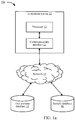
- FIG. 1a shows a system according to one embodiment of this application.
- the system 10a includes an evaluation system 11, a user persona database 15, a sample database 16, and a grid 14.
- the evaluation system 11 includes one or more computation devices, for example, a server and a server cluster. Therefore, the evaluation system 11 can include one or more processors 12 and one or more communications interfaces 13.
- at least one of the user persona database 15 and the sample database 16 can also be located in a device of the evaluation system 11.
- user persona data set refers to a set of persona data of multiple users.
- Persona data of one user includes multi-attribute dimensional information of the user, for example, user identifier, age, gender, birth place, location, educational background, occupation, hobby, and income situation.
- the user persona data set may be a set formed of user persona data extracted by a certain network service provider (for example, providers of instant communications service, social contact network service, network payment service, and online shopping service) from user information of users.
- User information can be registration information filled by users when registering for a network service, or user behaviors collected by service providers.
- User identifiers can be identity and contact information (for example, telephone numbers and E-mail addresses) of users, and user accounts (for example, instant communications account, social contact account, network payment service account, and shopping website account) registered by users in a server of a network service provider.
- identity and contact information for example, telephone numbers and E-mail addresses
- user accounts for example, instant communications account, social contact account, network payment service account, and shopping website account
- the sample data set refers to a data set of multiple users as samples.
- User data in the sample data set may be different from data in a user persona data set in terms of sources.
- the sample data set can contain user data collected by an entrusted research company through survey, user data obtained through questionnaire investigation, or data in an Enterprise Customer Relationship Management System (CRM).
- CRM Enterprise Customer Relationship Management System
- the evaluation data set is a set of user data extracted from the sample data set according to a distribution situation of a user persona data set in a first attribute dimension.
- the user data in the evaluation data set and the user persona data in the user persona data set have the same distribution in the first attribute dimension.
- Attribute dimension refers to a certain attribute of users, for example, age, gender, birth place, location, education background, occupation, hobby, and income situation. For example, if age, gender, and location are selected as the first attribute dimensions, user data is extracted from a sample data set according to the distribution situations of data in a user persona data set in age, gender, and location, so as to form an evaluation data set that has a consistent distribution in the attribute dimensions of age, gender, and location.
- evaluation data consistent with distribution of user persona data is selected from a sample data set, so that the extracted evaluation data has representativeness for user persona data, and an evaluation result is more impersonal and accurate.
- FIG. 2 is a flowchart of a method for extracting an evaluation data set from a sample data set. As shown in FIG. 2 , the method 20 includes the following steps.
- step S21 distribute data of each user in a user persona data set into multiple persona data groups according to the values of the data in at least one first attribute dimension.
- the multiple persona data groups are corresponding to different value ranges.
- the value range of each first attribute dimension can be divided into multiple sections, multiple layers are determined by using different combinations of each section of each first attribute dimension, and each layer is corresponding to a different value range of each first attribute dimension.
- the sum of layers is equal to a product of the numbers of sections of each first attribute dimension.
- the first attribute dimensions are gender
- two layers can be determined and respectively correspond to different values of gender, that is, male and female
- the first attribute dimensions are gender and age
- the first attribute dimensions can be divided into six layers
- each layer is corresponding a different combination of sections of gender and age, that is, male below 20, male from 20 to 50, male over 50, female below 20, female from 20 to 50, and female over 50.
- the number of layers can be determined by factors such as evaluation precision, sampling cost, sampling difficulty, and computation complexity according to actual demand.
- the persona data of each user in the user persona data set can be distributed into multiple persona data groups based on the values of the first attribute dimension according to value ranges corresponding to each layer, and each persona data group is corresponding to one layer.
- step S22 acquire the distribution information according to user information in each persona data group, the distribution information describing distributions of each user in various value ranges of the at least one first attribute dimension.
- step S23 distribute the data of each user in the sample data set into multiple evaluation data groups according to the values of the data in the at least one first attribute dimension.
- the multiple evaluation data groups are corresponding to different value ranges.
- the user data in the sample data set can be grouped in the same layering manner as grouping of user persona data.
- each persona data group and each evaluation data group are in a one-to-one correspondence relationship, and a persona data group and an evaluation data group that are in a correspondence relationship having a same or corresponding value range.
- the corresponding value range refers to that the expression modes of a value range or values therein are different, and they can be converted according to a certain rule.
- the data in the sample data set can also be grouped by using a layering method different from grouping of persona data.
- the persona data groups and the evaluation data groups can have a one-to-many relationship or many-to-one relationship, and the value ranges can have an including or included relationship.
- step S24 extract user data from each evaluation data group according to the distribution information, and use extracted user data to form the evaluation data set.
- Step S24 can include:
- the number of users that need to be extracted from an evaluation data group corresponding to each value range can be equal to a product of the number of users in the persona data group corresponding to each evaluation data group and the sampling proportion.
- three first attribute dimensions are selected, for example, gender, age, and location.
- the number of sections of the age attribute dimension is A
- the number of sections of gender attribute dimension is G
- the number of sections of location attribute dimension is L
- the total number of layers is A ⁇ G ⁇ L .
- the number of users in the sample data set is M
- the number of users in the user persona data set is N
- a i G j L k represents a layer corresponding to an age section i, a gender section j, and a location section k
- N A i G j L k represents the number of users in the persona data group corresponding to the layer A i G j L k .
- a lot of user persona data may possibly be distributed in a certain layer, while less or even no such user persona data is distributed in the sample data set, so sampling cannot be directly performed according to the aforementioned method, and the sampling proportion needs to be adjusted according to a distribution situation of users in the sample data set, so as to extract an evaluation data set that is consistent with the distribution of user persona data.
- the method for adjusting a sampling proportion can include: arranging ratios of the number of users in each evaluation data group to the number of users in a corresponding persona data group in a descending order and taking a first ratio at a preset position as a sampling proportion.
- the first ratio at the preset position is a minimum value, that is, the last ratio when arranging ratios of the number of users in each evaluation data group to the number of users in a corresponding persona data group in a descending order, or the first ratio when arranging ratios of the number of users in each evaluation data group to the number of users in a corresponding persona data group in an ascending order.
- a certain layer corresponding to a particularly small number of users in the sample data set becomes a sampling bottleneck.
- the number of users in the layer is M 0
- the ratio of the number of users in the layer to the number of users in the persona data group corresponding to the layer is M 0 N 0
- M 0 N 0 min M p N p
- M p is the number of users corresponding to the layer p in the sample data set (that is, the number of users in the evaluation data group p)
- N p is the number of users corresponding to the layer p in the user persona data set (that is, the number of users in the persona data group p).
- the sampling number of each layer can be reduced by M 0 N 0 in the same proportion according to the sampling bottleneck, so as to ensure that the sampled evaluation data set and user persona data set have consistent distribution.
- the sample data set may possibly have one or more layers, and the number of corresponding users is particularly small or even is zero, with a result that sampling cannot be performed. At this time, these layers may be neglected, after ratios of the number of users in each evaluation data group to the number of users in a corresponding persona data group are arranged in a descending order, the first ratio at the preset position is taken as the sampling proportion.
- a minimum value in the ratios in the preset proportion that is, a ratio in the preset proportion when arranging ratios corresponding to each evaluation data group in a descending or ascending order
- the ratio is M 0 N 0
- the number of users is smaller than layers of sampling quantity, and all user data can be extracted as the evaluation data in the evaluation data set.
- the method for adjusting the sampling proportion includes: taking a smaller value in two values as a sampling proportion:
- An expected sampling capacity refers to a preset total number of samples that are expected to be extracted.
- the expected sampling proportion is EM N .
- one or more layers may exist in the sample data set, and the number of corresponding users is particularly small or even is zero, with a result that sampling cannot be performed.
- the layers can be neglected, a first ratio at the preset position after arranging ratios of the number of users in each evaluation data group to the number of users in a corresponding persona data group in a descending order is taken, and the sampling proportion is adjusted according to the first ratio.
- a minimum value in each ratio in the preset proportion that is, a ratio in the preset proportion when arranging ratios corresponding to each evaluation data group in a descending or ascending order, is taken as the first ratio, for example, when arranging in a descending manner, the minimum value in the first 80% ratios is taken.
- FIG. 3 is a flowchart of a method for evaluating an accuracy rate of data in a user persona data set. As shown in FIG. 3 , the method 30 includes the following steps.
- step S31 select persona data of a user that has a same user identifier as each user in the evaluation data set from the user persona data set, and use persona data of each user and evaluation data of the user in the evaluation data set to form a sample pair corresponding to the user.
- the sample data set acquired by the provider of the service is a user data set acquired for the users of the service
- each user in the evaluation data set has corresponding persona data in the user persona set. Therefore, each user in the evaluation data set can be used as a sample, and the difference between the persona data and the evaluation date serves as a judgment basis for persona data of a whole user group.
- step S32 acquire an accuracy rate of data in the user persona data set in the second attribute dimension according to a difference between persona data and evaluation data in each sample pair in the second attribute dimension.
- the difference is compared with the preset threshold, and the accuracy rate is determined according to a comparison result. For example, if the difference is larger than a threshold, the accuracy rate of the user persona data is determined to be low; if the difference is smaller or equal to the threshold, the accuracy rate of the user persona data is determined to be high.
- the difference can be obtained using a hypotheses testing algorithm or an accuracy rate algorithm.
- the hypotheses testing algorithm can include a parameter hypotheses testing algorithm, a non-parameter hypotheses testing algorithm, for example, a Z testing algorithm, a T testing algorithm, an F testing algorithm, and a ratio testing algorithm.
- the parameter hypotheses testing algorithm is suitable for a situation that the value of data is a continuous value
- the non-parameter hypotheses testing algorithm is suitable for a situation that the value of data is a discrete value.
- x i represents persona data of a user i
- y i represents evaluation data of a user i
- x is an average value of persona data of each user
- y is an average value of evaluation data of each user.
- the values of the persona data and the evaluation data in the second attribute dimension are called as persona data and evaluation data in the following description.
- the difference between persona data and evaluation data in each sample pair in the second attribute dimension can be the difference of an average value of the persona data and an average value of the evaluation data in the second attribute dimension.
- a significance testing method for average value difference may be used.
- D X represents an average value of differences between x and y
- x is a vector formed by persona data of each user
- y is a vector formed by evaluation data of each user
- ⁇ DX represents a hypothetical average value of D X .
- a bilateral test critical value of a confidence degree ⁇ is preset as Z ⁇ /2 . If
- the difference between persona data and evaluation data in the second attribute dimension can be the difference between the variance of the persona data and the variance of the evaluation data in the second attribute dimension.
- the difference significance test of the between variances may be used.
- 4 S 1 2 S 2 2 1 ⁇ r 2 n ⁇ 2
- S 1 2 represents a variance of persona data
- S 2 2 represents a variance of evaluation data
- n represents a total number of users in an evaluation data set
- r represents a correlation coefficient obtained from above.
- the difference between persona data and evaluation data in each sample pair in the second attribute dimension may be the difference between the percentage of various values of the persona data in the second attribute dimension and the percentage of various values of various values of the evaluation data.
- the non-parameter hypotheses testing algorithm can be used.
- the value of the second attribute dimension is a discrete value, for example, the gender values are male and female, the nation values are different nations, the nationality values are different nationalities, physical state values are healthy and unhealthy, and furthermore, for example, school record, ability level, and attitude to a certain problem.
- the values of these user attributes are not in a relationship of large or small quantities, and refer to different categories.
- the classification data can use a method such as a percentage significance testing method.
- the McNemar testing method in the percentage significance testing method can be used.
- An McNemar testing matrix is generated according to persona data and evaluation data in each sample pair. When the data has two possible values, the McNemar testing matrix is shown in Table 2. Table 2 McNemar testing matrix Persona data Total Value 1 Value 2 Evaluation value Value 1 n 11 n 12 d 1 Value 2 n 21 n 22 d 2 Total c 1 c 2 n
- Value 1 and value 2 are two possible values of the data in the second attribute dimension, for example, male/female and liking/not liking.
- a bilateral test critical value of a confidence degree ⁇ is preset as Z ⁇ l 2 . If
- the difference of persona data and evaluation data in a sample pair in the second attribute dimension can be the difference between a first data group formed by data of persona data of each user in each of the sample pairs in the second attribute dimension and a second data group formed by data of the evaluation data of each user in the second attribute dimension.
- the accuracy rate of persona data can be measured according to an overall difference degree between persona data and evaluation data in each sample pair.
- D 1 represents a vector formed by the persona data of each user in each sample pair
- D 2 represents a vector formed by evaluation data of each user in each sample pair
- ⁇ represents an error that can be tolerated
- ⁇ represents 0 norm.
- FIG. 4 is a schematic view of the system for evaluating user persona data according to one embodiment of the present disclosure.
- the system 40 includes a processor 41, a communications interface 44, a storage device 46, and a bus 49.
- the storage device 46 includes an operating system 47, a communications module 48, a database 42, and a persona evaluation module 43.
- processors 41 There may be one or more processors 41 that are distributed in a same physical device or multiple physical devices.
- the system 40 acquires data through a certain communications connection through the communications interface 44, for example, user persona data and sample data, and an evaluation result can be provided to other devices via a certain communications connection through the communications interface.
- the communications connection may be wired or wireless, and may also be direct connection or network connection, and the network may be a local area network or Internet, and the communications interface 44 can support a corresponding communications protocol.
- the database 112 stores various data, for example, a user persona data set 421 and a sample data set 422.
- the persona evaluation module 43 includes a distribution acquisition module 431, a sample extraction module 432, and an evaluation module 433.
- the distribution acquisition module 431 acquires distribution information of the user persona data set in at least one first attribute dimension.
- the sample extraction module 432 extracts an evaluation data set from a sample data set according to the distribution information, and the distribution of the data in the evaluation data set in the at least one first attribute dimension is consistent with the distribution described by the distribution information.
- the evaluation module 433 can use the data of the evaluation data set in a second attribute dimension to acquire an accuracy rate of the data of the user persona data set in the second attribute dimension.
- the distribution acquisition module 431 includes a persona grouping module 4311 and a distribution determining unit 4312.
- the persona grouping module 4311 distributes the data of each user in the user persona data set into multiple persona data groups according to the values of the data in the at least one first attribute dimension, and the multiple persona data groups are corresponding to different value ranges.
- the distribution determining unit 4312 acquires the distribution information according to the user information in each persona data group, and the distribution information describes distribution of each user in various value ranges in the at least one first attribute dimension.
- the sample extraction module 432 includes a sample grouping module 4321 and a sampling module 4322.
- the sample grouping module 4321 distributes the data of each user in the sample data set into multiple evaluation data groups according to the values of the data in the at least one first attribute dimension, and the multiple evaluation data groups are corresponding to different value ranges.
- the sampling module 4322 extracts user data from each evaluation data group according to the distribution information, and use the extracted user data to compose the evaluation data set.
- the distribution information describes the number of users distributed in various value ranges of the at least one first attribute dimension
- the sampling module 4322 determines a sampling proportion according to the number of users distributed in various value ranges and the number of users in each evaluation data group; and determine the number of users that need to be extracted from the evaluation data group corresponding to each value range according to the number of users distributed in various value ranges and the sampling proportion.
- the sampling proportion can be one of the following values:
- the evaluation module 433 can include a pairing module 4331 and a difference testing module 4332.
- the pairing module 4331 is configured to select persona data of a user that has a same user identifier as each user in the evaluation data set from the user persona data set, and use the persona data of each user and the evaluation data of the user in the evaluation data set to compose a sample pair corresponding to the user.
- the difference testing module 4332 acquires an accuracy rate of the data in the user persona data set in the second attribute dimension according to the difference between persona data and evaluation data in each sample pair in the second attribute dimension.
- the difference testing module 4332 compares the difference and a preset threshold and determines an accuracy rate according to a comparison result.
- the difference testing module 4332 acquires one of the following differences as the difference between persona data and evaluation data in each sample pair in the second attribute dimension:
- each module can be realized by dedicated hardware or hardware executing readable instructions of a machine.
- the hardware can be a specially designed permanent circuit or logic device (for example, a dedicated processor such as FPGA and ASIC) for finishing specific operations.
- the hardware can also include a programmable logic device or circuit configured by software temporarily (for example, including a general processor or other programmable processors) for performing specific operations.
- a non-volatile computer readable storage medium can be a storage inserted in an extension board of a computer or written into a storage in an extension unit connected to a computer.
- a CPU installed on an extension board or extension unit can perform partial or all actual operations according to instructions.
- the non-volatile computer readable storage medium includes a floppy disk, a hard disk, a magneto-optical disk, an optical disk (such as CD-ROM, CD-R, CD-RW, DVD-ROM, DVD-RAM, DVD-RW, and DVD+RW), a tape, a non-volatile storage card, and ROM.
- program codes can be downloaded from a server computer via a communications network.
Landscapes
- Engineering & Computer Science (AREA)
- Business, Economics & Management (AREA)
- Strategic Management (AREA)
- Theoretical Computer Science (AREA)
- Finance (AREA)
- Development Economics (AREA)
- Accounting & Taxation (AREA)
- Physics & Mathematics (AREA)
- General Physics & Mathematics (AREA)
- Entrepreneurship & Innovation (AREA)
- Economics (AREA)
- General Business, Economics & Management (AREA)
- Marketing (AREA)
- Game Theory and Decision Science (AREA)
- Databases & Information Systems (AREA)
- Data Mining & Analysis (AREA)
- General Engineering & Computer Science (AREA)
- Probability & Statistics with Applications (AREA)
- Human Resources & Organizations (AREA)
- Tourism & Hospitality (AREA)
- Quality & Reliability (AREA)
- Operations Research (AREA)
- Computer Security & Cryptography (AREA)
- Computational Linguistics (AREA)
- Software Systems (AREA)
- Mathematical Physics (AREA)
- Fuzzy Systems (AREA)
- Information Retrieval, Db Structures And Fs Structures Therefor (AREA)
- Management, Administration, Business Operations System, And Electronic Commerce (AREA)
Abstract
Description
- This application claims priority to Chinese Patent Application No.
201610683111.6 - This application relates to a field of data mining, and more particularly, to a method and a system for evaluating user persona data.
- Compared with conventional off-line member management and questionnaire investigation, mega-data technology enables enterprises to acquire multi-aspect information of users conveniently via Internet and learn behavior and consumption habits of users more precisely. User persona acquired by mega-data mining can be applied in precision marketing and market-oriented promotion of enterprises. User persona is an abstracted user model obtained through classifying and labeling collected user information. User persona can include categories to which various information of users belong, for example, the user persona of a user can include female, Beijing, born in 1980s, white collar, liking American TV series, having children, liking Lancome, and so on.
- The embodiments of this application provide a method and a system for evaluating user persona data, and sample data can be used to evaluate an accuracy rate of user persona data.
- The method for evaluating user persona data according to one embodiment of this application includes:
- acquiring distribution information of a user persona data set in at least one first attribute dimension;
- extracting an evaluation data set from a sample data set according to the distribution information, distribution of data in the evaluation data set in the at least one first attribute dimension being consistent with distribution described by the distribution information;
- acquiring an accuracy rate of data in a second attribute dimension in the user persona data set using data in the second attribute dimension in the evaluation data set.
- The system for evaluating user persona data according to one embodiment of this application includes:
- a distribution acquisition module, configured to acquire distribution information of a user persona data set in at least one first attribute dimension;
- a sample extraction module, configured to extract an evaluation data set from a sample data set according to the distribution information, distribution of data in the evaluation data set in the at least one first attribute dimension being consistent with distribution described by the distribution information;
- an evaluation module, configured to acquire an accuracy rate of data in a second attribute dimension in the user persona data set using data in the second attribute dimension in the evaluation data set.
- In each embodiment of this application, evaluation data consistent with distribution of user persona data is selected from a sample data set, so that the extracted evaluation data has representativeness for user persona data, and an evaluation result is more impersonal and accurate.
-
-
FIG. 1a is a flowchart of a method for evaluating user persona data; -
FIG. 1b shows a system according to one embodiment of this application; -
FIG. 2 is a flowchart of a method for extracting an evaluation data set from a sample data set; -
FIG. 3 is a flowchart of a method for evaluating an accuracy rate of data in a user persona data set; and -
FIG. 4 is a system for evaluating user persona data according to one embodiment of the present disclosure. - Each embodiment of this application provides a method for evaluating user persona data that screens sample data according to a distribution condition of user persona data in a certain attribute dimension or some attribute dimensions to acquire evaluation data of which distribution is consistent with distribution of the user persona data, and evaluates an accuracy rate of persona data in another attribute dimension using the evaluation data.
FIG. 1b is a flowchart of a method for evaluating user persona data. As shown inFIG. 1b , themethod 10b can include the following steps. - In step S11, acquire distribution information of a user persona data set in at least one first attribute dimension.
- In step S12, extract an evaluation data set from a sample data set according to the distribution information, distribution of data in the evaluation data set in the at least one first attribute dimension being consistent with distribution described by the distribution information.
- In step S13, acquire an accuracy rate of data in the user persona data set in a second attribute dimension using data in the second attribute dimension in the evaluation data set.
- The method in various embodiments in this application can be performed by a system for evaluating persona data.
FIG. 1a shows a system according to one embodiment of this application. As shown inFIG. 1a , thesystem 10a includes anevaluation system 11, a user persona database 15, asample database 16, and agrid 14. Theevaluation system 11 includes one or more computation devices, for example, a server and a server cluster. Therefore, theevaluation system 11 can include one ormore processors 12 and one ormore communications interfaces 13. In some embodiments, at least one of the user persona database 15 and thesample database 16 can also be located in a device of theevaluation system 11. - In this application, user persona data set refers to a set of persona data of multiple users. Persona data of one user includes multi-attribute dimensional information of the user, for example, user identifier, age, gender, birth place, location, educational background, occupation, hobby, and income situation. The user persona data set may be a set formed of user persona data extracted by a certain network service provider (for example, providers of instant communications service, social contact network service, network payment service, and online shopping service) from user information of users. User information can be registration information filled by users when registering for a network service, or user behaviors collected by service providers. User identifiers can be identity and contact information (for example, telephone numbers and E-mail addresses) of users, and user accounts (for example, instant communications account, social contact account, network payment service account, and shopping website account) registered by users in a server of a network service provider.
- In the embodiments of this application, the sample data set refers to a data set of multiple users as samples. User data in the sample data set may be different from data in a user persona data set in terms of sources. For example, the sample data set can contain user data collected by an entrusted research company through survey, user data obtained through questionnaire investigation, or data in an Enterprise Customer Relationship Management System (CRM).
- The evaluation data set is a set of user data extracted from the sample data set according to a distribution situation of a user persona data set in a first attribute dimension. In some examples, the user data in the evaluation data set and the user persona data in the user persona data set have the same distribution in the first attribute dimension. Attribute dimension refers to a certain attribute of users, for example, age, gender, birth place, location, education background, occupation, hobby, and income situation. For example, if age, gender, and location are selected as the first attribute dimensions, user data is extracted from a sample data set according to the distribution situations of data in a user persona data set in age, gender, and location, so as to form an evaluation data set that has a consistent distribution in the attribute dimensions of age, gender, and location.
- In each embodiment of this application, evaluation data consistent with distribution of user persona data is selected from a sample data set, so that the extracted evaluation data has representativeness for user persona data, and an evaluation result is more impersonal and accurate.
- In order to ensure the screened evaluation data to have representativeness, some examples use layered sampling and coordinated sampling to extract evaluation data from the sample data set.
FIG. 2 is a flowchart of a method for extracting an evaluation data set from a sample data set. As shown inFIG. 2 , themethod 20 includes the following steps. - In step S21, distribute data of each user in a user persona data set into multiple persona data groups according to the values of the data in at least one first attribute dimension.
- The multiple persona data groups are corresponding to different value ranges.
- In some examples, the value range of each first attribute dimension can be divided into multiple sections, multiple layers are determined by using different combinations of each section of each first attribute dimension, and each layer is corresponding to a different value range of each first attribute dimension. The sum of layers is equal to a product of the numbers of sections of each first attribute dimension. For example, when the first attribute dimensions are gender, two layers can be determined and respectively correspond to different values of gender, that is, male and female; when the first attribute dimensions are gender and age, if gender is divided into two sections (male and female), and age is divided into three sections (below 20, from 20 to 50, and over 50), and the first attribute dimensions can be divided into six layers, each layer is corresponding a different combination of sections of gender and age, that is, male below 20, male from 20 to 50, male over 50, female below 20, female from 20 to 50, and female over 50. In each embodiment of this application, the number of layers can be determined by factors such as evaluation precision, sampling cost, sampling difficulty, and computation complexity according to actual demand.
- After layers are determined, the persona data of each user in the user persona data set can be distributed into multiple persona data groups based on the values of the first attribute dimension according to value ranges corresponding to each layer, and each persona data group is corresponding to one layer.
- In step S22, acquire the distribution information according to user information in each persona data group, the distribution information describing distributions of each user in various value ranges of the at least one first attribute dimension.
- In step S23, distribute the data of each user in the sample data set into multiple evaluation data groups according to the values of the data in the at least one first attribute dimension.
- The multiple evaluation data groups are corresponding to different value ranges.
- In some examples, the user data in the sample data set can be grouped in the same layering manner as grouping of user persona data. At this time, each persona data group and each evaluation data group are in a one-to-one correspondence relationship, and a persona data group and an evaluation data group that are in a correspondence relationship having a same or corresponding value range. The corresponding value range refers to that the expression modes of a value range or values therein are different, and they can be converted according to a certain rule.
- In some other examples, the data in the sample data set can also be grouped by using a layering method different from grouping of persona data. At this time, the persona data groups and the evaluation data groups can have a one-to-many relationship or many-to-one relationship, and the value ranges can have an including or included relationship.
- In step S24, extract user data from each evaluation data group according to the distribution information, and use extracted user data to form the evaluation data set.
- In some examples, the distribution information describes numbers of users distributed in various value ranges of the at least one first attribute dimension. Step S24 can include:
- determining a sampling proportion according to numbers of users distributed in various value ranges and a number of users in each evaluation data group;
- determining a number of users that need to be extracted from an evaluation data group corresponding to each value range according to the numbers of users distributed in the various value ranges and the sampling proportion.
- In some examples, the number of users that need to be extracted from an evaluation data group corresponding to each value range can be equal to a product of the number of users in the persona data group corresponding to each evaluation data group and the sampling proportion.
- For example, three first attribute dimensions are selected, for example, gender, age, and location. The number of sections of the age attribute dimension is A, the number of sections of gender attribute dimension is G, and the number of sections of location attribute dimension is L, so the total number of layers is A × G × L. According to the distribution proportion of the user persona data in each layer (that is, persona data group), the number of users that need to be extracted from each layer (that is, evaluation data group) of sample data is calculated and then each evaluation data group is sampled randomly.
- It is assumed that the number of users in the sample data set is M , the number of users in the user persona data set is N, M > { A,G,L } and M > A × G × L. Theoretically, the users can be sampled according to the proportion of the number of users in the persona data group in the number of users in the user persona data set, and the number of samples extracted from each evaluation data group is:

- Ai Gj Lk represents a layer corresponding to an age section i, a gender section j, and a location section k, and NA
i Gj Lk represents the number of users in the persona data group corresponding to the layer AiGjLk. - In an actual situation, a lot of user persona data may possibly be distributed in a certain layer, while less or even no such user persona data is distributed in the sample data set, so sampling cannot be directly performed according to the aforementioned method, and the sampling proportion needs to be adjusted according to a distribution situation of users in the sample data set, so as to extract an evaluation data set that is consistent with the distribution of user persona data.
- In some examples, the method for adjusting a sampling proportion can include: arranging ratios of the number of users in each evaluation data group to the number of users in a corresponding persona data group in a descending order and taking a first ratio at a preset position as a sampling proportion.
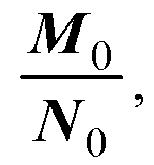
- In some examples, the first ratio at the preset position is a minimum value, that is, the last ratio when arranging ratios of the number of users in each evaluation data group to the number of users in a corresponding persona data group in a descending order, or the first ratio when arranging ratios of the number of users in each evaluation data group to the number of users in a corresponding persona data group in an ascending order. For example, a certain layer corresponding to a particularly small number of users in the sample data set becomes a sampling bottleneck. It is assumed that the number of users in the layer is M 0, the ratio of the number of users in the layer to the number of users in the persona data group corresponding to the layer is


- In some examples, the sample data set may possibly have one or more layers, and the number of corresponding users is particularly small or even is zero, with a result that sampling cannot be performed. At this time, these layers may be neglected, after ratios of the number of users in each evaluation data group to the number of users in a corresponding persona data group are arranged in a descending order, the first ratio at the preset position is taken as the sampling proportion. For example, a minimum value in the ratios in the preset proportion, that is, a ratio in the preset proportion when arranging ratios corresponding to each evaluation data group in a descending or ascending order, may be taken, for example, when arranging in a descending order, a minimum value in the first 80% ratios is taken (for example, when 100 ratios are arranged in a descending order, the minimum value in the first 80% ratios is taken, that is, the 100∗80%=80th ratio is taken). If the ratio is


- In some examples, the method for adjusting the sampling proportion includes: taking a smaller value in two values as a sampling proportion:
- a ratio of the preset number of expected samples to the number of users in the user persona data set;
- a ratio at the preset position after arranging ratios of the number of users in each evaluation data group to the number of users in a corresponding persona data group in a descending order.
- An expected sampling capacity refers to a preset total number of samples that are expected to be extracted.
- It is assumed that the total number of users in the user persona data set is N = ∑Np , and the expected sampling capacity is EM = ∑EMp . The number of users in each layer in each data set is described in Table 1
Table 1 Number of users in each layer in each data set Number of users in each layer of persona Ratio of users in each layer of persona Expected number of layered users Number of users of the sample layer Number of users actually extracted from each sample layer N 1 N 1 / N 
M 1 
N 2 N 2 / N 
M 2 
N 3 N 3 / N 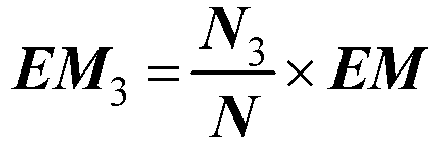
M 3 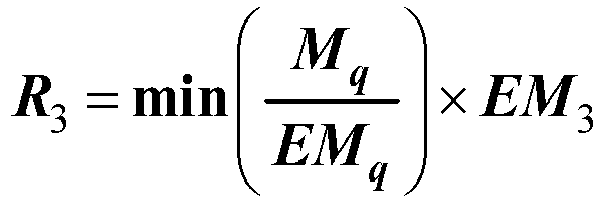
... ... ... ... ... Np Np / N 
Mp 
- An expected number of samples at a certain layer is


- The sampling bottleneck can be deduced and reduced as:

- It can be concluded that the final sampling proportion is determined by

- The expected sampling proportion is

- If


- If


- In some examples, one or more layers may exist in the sample data set, and the number of corresponding users is particularly small or even is zero, with a result that sampling cannot be performed. At this time, the layers can be neglected, a first ratio at the preset position after arranging ratios of the number of users in each evaluation data group to the number of users in a corresponding persona data group in a descending order is taken, and the sampling proportion is adjusted according to the first ratio. For example, a minimum value in each ratio in the preset proportion, that is, a ratio in the preset proportion when arranging ratios corresponding to each evaluation data group in a descending or ascending order, is taken as the first ratio, for example, when arranging in a descending manner, the minimum value in the first 80% ratios is taken.
- It is assumed that the first ratio is


- If


- If


- That is to say, the sampling quantity of the evaluation data group corresponding to each layer is

-
FIG. 3 is a flowchart of a method for evaluating an accuracy rate of data in a user persona data set. As shown inFIG. 3 , themethod 30 includes the following steps. - In step S31, select persona data of a user that has a same user identifier as each user in the evaluation data set from the user persona data set, and use persona data of each user and evaluation data of the user in the evaluation data set to form a sample pair corresponding to the user.
- In each embodiment of this application, since the user persona data set is a set of user persona data of all users of a certain service, the sample data set acquired by the provider of the service is a user data set acquired for the users of the service, and each user in the evaluation data set has corresponding persona data in the user persona set. Therefore, each user in the evaluation data set can be used as a sample, and the difference between the persona data and the evaluation date serves as a judgment basis for persona data of a whole user group.
- In step S32, acquire an accuracy rate of data in the user persona data set in the second attribute dimension according to a difference between persona data and evaluation data in each sample pair in the second attribute dimension.
- In some examples, the difference is compared with the preset threshold, and the accuracy rate is determined according to a comparison result. For example, if the difference is larger than a threshold, the accuracy rate of the user persona data is determined to be low; if the difference is smaller or equal to the threshold, the accuracy rate of the user persona data is determined to be high.
- The difference can be obtained using a hypotheses testing algorithm or an accuracy rate algorithm. The hypotheses testing algorithm can include a parameter hypotheses testing algorithm, a non-parameter hypotheses testing algorithm, for example, a Z testing algorithm, a T testing algorithm, an F testing algorithm, and a ratio testing algorithm. The parameter hypotheses testing algorithm is suitable for a situation that the value of data is a continuous value, and the non-parameter hypotheses testing algorithm is suitable for a situation that the value of data is a discrete value.
- The parameter hypotheses testing algorithm can acquire the correlation coefficient of each sample pair as follows:

- xi represents persona data of a user i, yi represents evaluation data of a user i,
x is an average value of persona data of each user, andy is an average value of evaluation data of each user. For simple description, the values of the persona data and the evaluation data in the second attribute dimension are called as persona data and evaluation data in the following description. - In some examples, the difference between persona data and evaluation data in each sample pair in the second attribute dimension can be the difference of an average value of the persona data and an average value of the evaluation data in the second attribute dimension. At this time, a significance testing method for average value difference may be used.
- For example, when the significance testing method for average value difference uses a Z testing algorithm, the standard error for the persona data and the evaluation data in the sample pair is:


- The Z testing for testing consistence of average value differences of the sample pair is:

- DX represents an average value of differences between x and y, x is a vector formed by persona data of each user, y is a vector formed by evaluation data of each user, and µDX represents a hypothetical average value of DX .

- When the tolerance difference is Δ, the aforementioned computation method for the value Z can be processed as follows:
- when abs (xi - yi ) ≤ Δ, it is considered (xi - yi ) = 0;
- when abs (xi - yi ) > Δ, (xi - yi ) = ( xi - yi ) .
- A bilateral test critical value of a confidence degree α is preset as Z α /2. If | Z | > Z α /2, it can be determined that persona data is significantly different from evaluation data, and the accuracy rate of user persona data is low; if | Z | ≤ Z α /2, it can be determined that persona data is not significantly different from evaluation data, and the accuracy rate of user persona data is high.
- In some examples, in each sample pair, the difference between persona data and evaluation data in the second attribute dimension can be the difference between the variance of the persona data and the variance of the evaluation data in the second attribute dimension. At this time, the difference significance test of the between variances may be used.
- For example, T test can be performed according to the following algorithm:


- Look up the table t with the free degree n-2. If t is larger than a critical value, the two variances have a significance difference, it is determined that the difference between persona data and evaluation data is significant, and the accuracy rate of the user persona data is low; and if t is smaller than or equal to the critical value, it is determined that the difference between the persona data and the evaluation data is not significant, and the accuracy rate of the user persona data is high.
- In some examples, the difference between persona data and evaluation data in each sample pair in the second attribute dimension may be the difference between the percentage of various values of the persona data in the second attribute dimension and the percentage of various values of various values of the evaluation data. At this time, the non-parameter hypotheses testing algorithm can be used.
- In some examples, when the value of the second attribute dimension is a discrete value, for example, the gender values are male and female, the nation values are different nations, the nationality values are different nationalities, physical state values are healthy and unhealthy, and furthermore, for example, school record, ability level, and attitude to a certain problem. The values of these user attributes are not in a relationship of large or small quantities, and refer to different categories. The classification data can use a method such as a percentage significance testing method.
- For example, the McNemar testing method in the percentage significance testing method can be used.
- An McNemar testing matrix is generated according to persona data and evaluation data in each sample pair. When the data has two possible values, the McNemar testing matrix is shown in Table 2.
Table 2 McNemar testing matrix Persona data Total Value 1 Value 2 Evaluation value Value 1 n 11 n 12 d 1 Value 2 n 21 n 22 d 2 Total c 1 c 2 n - Value 1 and value 2 are two possible values of the data in the second attribute dimension, for example, male/female and liking/not liking. nij ( i,j =1,2) is the number of users of value 1 and value 2 of persona data and evaluation data in each sample pair.

- A bilateral test critical value of a confidence degree α is preset as Z αl2. If | Z | > Z αl2, it can be determined that persona data is significantly different from evaluation data, and the accuracy rate of user persona data is low; if | Z | ≤ Z α /2, it can be determined that persona data is not significantly different from evaluation data, and the accuracy rate of the user persona data is high.
- In some examples, the difference of persona data and evaluation data in a sample pair in the second attribute dimension can be the difference between a first data group formed by data of persona data of each user in each of the sample pairs in the second attribute dimension and a second data group formed by data of the evaluation data of each user in the second attribute dimension. At this time, the accuracy rate of persona data can be measured according to an overall difference degree between persona data and evaluation data in each sample pair.
- For example, for second attribute dimension data with a continuous value, the formula of accuracy rate is as follows:

- For second attribute dimension data with a discrete value, the formula of accuracy rate is as follows:

- D 1 represents a vector formed by the persona data of each user in each sample pair, D 2 represents a vector formed by evaluation data of each user in each sample pair Δ represents an error that can be tolerated, and ∥∥ represents 0 norm.
- Each embodiment of this application further provides a system for evaluating user persona data, which can perform the method for evaluating user persona data in each embodiment.
FIG. 4 is a schematic view of the system for evaluating user persona data according to one embodiment of the present disclosure. As shown inFIG. 4 , thesystem 40 includes aprocessor 41, acommunications interface 44, astorage device 46, and abus 49. Thestorage device 46 includes anoperating system 47, acommunications module 48, adatabase 42, and apersona evaluation module 43. - There may be one or
more processors 41 that are distributed in a same physical device or multiple physical devices. - The
system 40 acquires data through a certain communications connection through thecommunications interface 44, for example, user persona data and sample data, and an evaluation result can be provided to other devices via a certain communications connection through the communications interface. The communications connection may be wired or wireless, and may also be direct connection or network connection, and the network may be a local area network or Internet, and thecommunications interface 44 can support a corresponding communications protocol. - The database 112 stores various data, for example, a user persona data set 421 and a
sample data set 422. - The
persona evaluation module 43 includes adistribution acquisition module 431, asample extraction module 432, and anevaluation module 433. - The
distribution acquisition module 431 acquires distribution information of the user persona data set in at least one first attribute dimension. - The
sample extraction module 432 extracts an evaluation data set from a sample data set according to the distribution information, and the distribution of the data in the evaluation data set in the at least one first attribute dimension is consistent with the distribution described by the distribution information. - The
evaluation module 433 can use the data of the evaluation data set in a second attribute dimension to acquire an accuracy rate of the data of the user persona data set in the second attribute dimension. - In some examples, the
distribution acquisition module 431 includes apersona grouping module 4311 and a distribution determining unit 4312. - The
persona grouping module 4311 distributes the data of each user in the user persona data set into multiple persona data groups according to the values of the data in the at least one first attribute dimension, and the multiple persona data groups are corresponding to different value ranges. - The distribution determining unit 4312 acquires the distribution information according to the user information in each persona data group, and the distribution information describes distribution of each user in various value ranges in the at least one first attribute dimension.
- At this time, the
sample extraction module 432 includes asample grouping module 4321 and asampling module 4322. - The
sample grouping module 4321 distributes the data of each user in the sample data set into multiple evaluation data groups according to the values of the data in the at least one first attribute dimension, and the multiple evaluation data groups are corresponding to different value ranges. - The
sampling module 4322 extracts user data from each evaluation data group according to the distribution information, and use the extracted user data to compose the evaluation data set. - In some examples, the distribution information describes the number of users distributed in various value ranges of the at least one first attribute dimension, the
sampling module 4322 determines a sampling proportion according to the number of users distributed in various value ranges and the number of users in each evaluation data group; and determine the number of users that need to be extracted from the evaluation data group corresponding to each value range according to the number of users distributed in various value ranges and the sampling proportion. - In some example, the sampling proportion can be one of the following values:
- the first ratio at a preset position after arranging ratios of the number of users in each evaluation data group to the number of users in a corresponding persona data group in a descending order; or
- a smaller value of the ratio of the preset number of expected samples to the number of users in the user persona data set and the first ratio.
- In some examples, the
evaluation module 433 can include apairing module 4331 and adifference testing module 4332. - The
pairing module 4331 is configured to select persona data of a user that has a same user identifier as each user in the evaluation data set from the user persona data set, and use the persona data of each user and the evaluation data of the user in the evaluation data set to compose a sample pair corresponding to the user. - The
difference testing module 4332 acquires an accuracy rate of the data in the user persona data set in the second attribute dimension according to the difference between persona data and evaluation data in each sample pair in the second attribute dimension. - In some examples, the
difference testing module 4332 compares the difference and a preset threshold and determines an accuracy rate according to a comparison result. - In some examples, the
difference testing module 4332 acquires one of the following differences as the difference between persona data and evaluation data in each sample pair in the second attribute dimension: - a difference between the average value of the persona data and the average data of the evaluation data in the second attribute dimension;
- a difference between the variance of the persona data and the variance of the evaluation data in the second attribute dimension;
- a difference between the percentage of various values of the persona data and the percentage of various data of the evaluation data in the second attribute dimension; and
- a difference between a first data group composed by the data of the persona data of each user in the sample pair in the second attribute dimension and a second data group composed by of the data of the evaluation data of each user in the second attribute dimension.
- It should be noted that, not all steps and modules in the aforementioned flow and structural diagram are necessary, and some steps and modules can be neglected according to actual need. The sequence of performing each step is not unchanged, and can be adjusted according to demand. Division of each module is for describing the functions conveniently. During actual implementation, one module can be realized by multiple modules, and the functions of multiple modules can also be realized by one module, these modules can be located in a same device or different devices. In addition, the terms "the first" and "the second" in the aforementioned description are to distinguish two objects of the same meaning conveniently and are not significantly different.
- In various embodiments of this application, each module can be realized by dedicated hardware or hardware executing readable instructions of a machine. For example, the hardware can be a specially designed permanent circuit or logic device (for example, a dedicated processor such as FPGA and ASIC) for finishing specific operations. The hardware can also include a programmable logic device or circuit configured by software temporarily (for example, including a general processor or other programmable processors) for performing specific operations.
- The machine readable instructions corresponding to each module in the accompanying drawings of this application can enable an operating system running in a computer to finish partial or all operations described in each embodiment of this application. A non-volatile computer readable storage medium can be a storage inserted in an extension board of a computer or written into a storage in an extension unit connected to a computer. A CPU installed on an extension board or extension unit can perform partial or all actual operations according to instructions.
- The non-volatile computer readable storage medium includes a floppy disk, a hard disk, a magneto-optical disk, an optical disk (such as CD-ROM, CD-R, CD-RW, DVD-ROM, DVD-RAM, DVD-RW, and DVD+RW), a tape, a non-volatile storage card, and ROM. Optionally, program codes can be downloaded from a server computer via a communications network.
- In view of the above, the scope of the claims should not be limited to the embodiments described in the examples, and shall be interpreted widely according to the description as a whole.
Claims (20)
- A method for evaluating user persona data, comprising:acquiring, by a computation device, distribution information of a user persona data set in at least one first attribute dimension;extracting, by the computation device, an evaluation data set from a sample data set according to the distribution information, distribution of data in the evaluation data set in the at least one first attribute dimension being consistent with distribution described by the distribution information;acquiring, by the computation device, an accuracy rate of data in the user persona data set in a second attribute dimension using data in the evaluation data set in the second attribute dimension.
- The method according to claim 1, wherein acquiring distribution information of a user persona data set in at least one first attribute dimension comprises:distributing data of each user in the user persona data set into multiple persona data groups according to values of the data in the at least one first attribute dimension, the multiple persona data groups being corresponding to different value ranges;acquiring the distribution information according to user information in each persona data group, the distribution information describing distribution of each user in various value ranges of the at least one first attribute dimension.
- The method according to claim 2, wherein the extracting an evaluation data set from a sample data set according to the distribution information comprises:distributing data of each user in the sample data set into multiple evaluation data groups according to values of the data in the at least one first attribute dimension, the multiple evaluation data groups being corresponding to different value ranges, each of the evaluation data groups and each of the persona data group being in a one-to-one correspondence relationship, and a persona data group and an evaluation data group that are in a correspondence relationship having a same or corresponding value range;extracting data of users from each evaluation data group according to the distribution information, and using extracted data of users to compose the evaluation data set.
- The method according to claim 3, wherein the distribution information describes numbers of users distributed in various value ranges of the at least one first attribute dimension;
and extracting data of users from each evaluation data group according to the distribution information comprises:determining a sampling proportion according to numbers of users distributed in the various value ranges and a number of users in each evaluation data group;determining a number of users that need to be extracted from an evaluation data group corresponding to each value range according to numbers of users distributed in the various value ranges and the sampling proportion. - The method according to claim 4, wherein the sampling proportion is one of following values:a first ratio at a preset position after arranging ratios of a number of users in each evaluation data group to a number of users in a corresponding persona data group in a descending order; ora smaller value of a ratio of a preset number of expected samples to a number of users in the user persona data set and the first ratio.
- The method according to claim 4, wherein the determining a number of users that need to be extracted from an evaluation data group corresponding to each value range according to numbers of users distributed in the various value ranges and the sampling proportion comprises:
the number of users that need to be extracted from an evaluation data group corresponding to each value range being equal to a product of a number of users in a persona data group corresponding to each evaluation data group and the sampling proportion. - The method according to claim 1, wherein acquiring an accuracy rate of data in the user persona data set in a second attribute dimension using data in the evaluation data set in the second attribute dimension comprises:selecting persona data of a user that has a same user identifier as each user in the evaluation data set from the user persona data set, and using persona data of each user and evaluation data of the user in the evaluation data set to form a sample pair corresponding to the user;acquiring an accuracy rate of data in the user persona data set in the second attribute dimension according to a difference between persona data and evaluation data in each sample pair in the second attribute dimension.
- The method according to claim 7, wherein a difference between persona data and evaluation data in each sample pair in the second attribute dimension comprises of following values:a difference between an average value of the persona data and an average data of the evaluation data in the second attribute dimension;a difference between a variance of the persona data and a variance of the evaluation data in the second attribute dimension;a difference between a percentage of various values of the persona data and a percentage of various values of the evaluation data in the second attribute dimension;a difference between a first data group composed by data of the persona data of each user in each sample pair in the second attribute dimension and a second data group composed by data of the evaluation data of each user in the second attribute dimension.
- The method according to claim 8, wherein acquiring an accuracy rate of data in the user persona data set in the second attribute dimension according to a difference between persona data and evaluation data in each sample pair in the second attribute dimension comprises:
comparing the difference and a preset threshold and determining the accuracy rate according to a comparison result. - A system for evaluating user persona data, comprising:a distribution acquisition module, configured to acquire distribution information of a user persona data set in at least one first attribute dimension;a sample extraction module, configured to extract an evaluation data set from a sample data set according to the distribution information, distribution of data in the evaluation data set in the at least one first attribute dimension being consistent with distribution described by the distribution information;an evaluation module, configured to acquire an accuracy rate of data in the user persona data set in a second attribute dimension using data in the evaluation data set in the second attribute dimension.
- The system according to claim 10, wherein the distribution acquisition module comprises:a persona grouping module, configured to distribute data of each user in the user persona data set into multiple persona data groups according to values of the data in the at least one first attribute dimension, the multiple persona data groups being corresponding to different value ranges;a distribution determining unit, configured to acquire the distribution information according to user information in each persona data group, the distribution information describing distribution of each user in various value ranges of the at least one first attribute dimension.
- The system according to claim 11, wherein the sample extraction module comprises:a sample grouping module, configured to distribute data of each user in the sample data set into multiple evaluation data groups according to values of the data in the at least one first attribute dimension, the multiple evaluation data groups being corresponding to different value ranges, each of the evaluation data groups and each of the persona data groups being in a one-to-one correspondence relationship, and a persona data group and an evaluation data group that are in a correspondence relationship having a same or corresponding value range;a sampling module, configured to extract data of users from each evaluation data group according to the distribution information, and use extracted data of users to compose the evaluation data set.
- The system according to claim 12, wherein the distribution information describes numbers of users distributed in various value ranges of the at least one first attribute dimension;
the sampling module is configured to:determine a sampling proportion according to numbers of users distributed in the various value ranges and a number of users in each evaluation data group;determine a number of users that need to be extracted from an evaluation data group corresponding to each value range according to numbers of users distributed in the various value ranges and the sampling proportion. - The system according to claim 13, wherein the sampling proportion is one of following values:a first ratio at a preset position after arranging ratios of a number of users in each evaluation data group to a number of users in a corresponding persona data group in a descending order; ora smaller value of a ratio of a preset number of expected samples to a number of users in the user persona data set and the first ratio.
- The system according to claim 10, wherein the evaluation module comprises:a pairing module, configured to select persona data of a user that has a same user identifier as each user in the evaluation data set from the user persona data set, and use persona data of each user and evaluation data of the user in the evaluation data set to form a sample pair corresponding to the user;a difference testing module, configured to acquire an accuracy rate of data in the user persona data set in the second attribute dimension according to a difference between persona data and evaluation data in each sample pair in the second attribute dimension.
- The system according to claim 15, wherein the difference testing module is configured to acquire one of following differences as the difference:a difference between an average value of the persona data and an average data of the evaluation data in the second attribute dimension;a difference between a variance of the persona data and a variance of the evaluation data in the second attribute dimension;a difference between a percentage of various values of the persona data and a percentage of various values of the evaluation data in the second attribute dimension;a difference between a first data group composed by data of the persona data of each user in the sample pair in the second attribute dimension and a second data group composed by data of the evaluation data of each user in the second attribute dimension.
- The system according to claim 16, wherein the difference testing module is configured to:
compare the difference and a preset threshold and determine the accuracy rate according to a comparison result. - A non-volatile storage medium, comprising computer readable instructions that are executed by one or more processors to:acquire distribution information of a user persona data set in at least one first attribute dimension;extract an evaluation data set from a sample data set according to the distribution information, distribution of data in the evaluation data set in the at least one first attribute dimension being consistent with distribution described by the distribution information;acquire an accuracy rate of data in the user persona data set in a second attribute dimension using data in the evaluation data set in the second attribute dimension.
- The non-volatile storage medium according to claim 18, wherein the computer readable instructions are executed by one or more processors to:distribute data of each user in the user persona data set into multiple persona data groups according to values of the data in the at least one first attribute dimension, the multiple persona data groups being corresponding to different value ranges;acquire the distribution information according to user information in each persona data group, the distribution information describing distribution of each user in various value ranges of the at least one first attribute dimension.
- The non-volatile storage medium according to claim 18, wherein the computer readable instructions are executed by one or more processors to:select persona data of a user that has a same user identifier as each user in the evaluation data set from the user persona data set, and use persona data of each user and evaluation data of the user in the evaluation data set to form a sample pair corresponding to the user;acquire an accuracy rate of data in the user persona data set in the second attribute dimension according to a difference between persona data and evaluation data in each sample pair in the second attribute dimension.
Applications Claiming Priority (2)
| Application Number | Priority Date | Filing Date | Title |
|---|---|---|---|
| CN201610683111.6A CN107767155B (en) | 2016-08-18 | 2016-08-18 | A method and system for evaluating user portrait data |
| PCT/CN2017/097455 WO2018033052A1 (en) | 2016-08-18 | 2017-08-15 | Method and system for evaluating user portrait data |
Publications (2)
| Publication Number | Publication Date |
|---|---|
| EP3503004A4 EP3503004A4 (en) | 2019-06-26 |
| EP3503004A1 true EP3503004A1 (en) | 2019-06-26 |
Family
ID=61196407
Family Applications (1)
| Application Number | Title | Priority Date | Filing Date |
|---|---|---|---|
| EP17841024.7A Ceased EP3503004A1 (en) | 2016-08-18 | 2017-08-15 | Method and system for evaluating user portrait data |
Country Status (4)
| Country | Link |
|---|---|
| US (1) | US10915540B2 (en) |
| EP (1) | EP3503004A1 (en) |
| CN (1) | CN107767155B (en) |
| WO (1) | WO2018033052A1 (en) |
Families Citing this family (7)
| Publication number | Priority date | Publication date | Assignee | Title |
|---|---|---|---|---|
| CN108595395B (en) * | 2018-03-21 | 2022-02-25 | 创新先进技术有限公司 | Nickname generation method, device and equipment |
| CN111341425A (en) * | 2020-02-28 | 2020-06-26 | 高猛 | Medical staff monitoring and management system and method based on big data |
| JP7241201B2 (en) * | 2020-11-09 | 2023-03-16 | バイドゥ オンライン ネットワーク テクノロジー(ペキン) カンパニー リミテッド | Sampling target identification method, device, electronic device and computer readable storage medium |
| CN115600945B (en) * | 2022-09-07 | 2023-06-30 | 淮阴工学院 | Cold chain loading user image construction method and device based on multiple granularities |
| US12278879B2 (en) | 2022-10-27 | 2025-04-15 | Cisco Technology, Inc. | Predicting future network issues for users with digital model personas |
| US12499405B2 (en) * | 2022-10-27 | 2025-12-16 | Cisco Technology, Inc. | Comparing network usage against digital model personas |
| CN119150158B (en) * | 2024-09-03 | 2025-06-03 | 北京亿家老小科技有限公司 | A method for constructing user portraits for O2O platforms based on deep learning |
Family Cites Families (19)
| Publication number | Priority date | Publication date | Assignee | Title |
|---|---|---|---|---|
| US20020184075A1 (en) * | 2001-05-31 | 2002-12-05 | Hertz Paul T. | Method and system for market segmentation |
| US20070112585A1 (en) | 2003-08-01 | 2007-05-17 | Breiter Hans C | Cognition analysis |
| US7653627B2 (en) * | 2005-05-13 | 2010-01-26 | Microsoft Corporation | System and method for utilizing the content of an online conversation to select advertising content and/or other relevant information for display |
| US20070239522A1 (en) * | 2006-03-30 | 2007-10-11 | Microsoft Corporation | User Persona Content Targeting |
| US9235848B1 (en) * | 2007-07-09 | 2016-01-12 | Groupon, Inc. | Implicitly associating metadata using user behavior |
| US7979362B2 (en) * | 2007-08-10 | 2011-07-12 | Motorola Solutions, Inc. | Interactive data mining system |
| US20100010872A1 (en) * | 2008-07-07 | 2010-01-14 | Glen Drummond | Persona-based customer relationship management tools and methods for sales support |
| US8996548B2 (en) * | 2011-01-19 | 2015-03-31 | Inmar Analytics, Inc. | Identifying consuming entity behavior across domains |
| US20130073335A1 (en) * | 2011-09-20 | 2013-03-21 | Ebay Inc. | System and method for linking keywords with user profiling and item categories |
| US9462313B1 (en) * | 2012-08-31 | 2016-10-04 | Google Inc. | Prediction of media selection consumption using analysis of user behavior |
| US20150156030A1 (en) * | 2012-09-21 | 2015-06-04 | Google Inc. | Handling specific visitor behavior at an entryway to a smart-home |
| CN103258054B (en) * | 2013-05-31 | 2017-01-25 | 闫朝升 | Method and device for processing data |
| CN104239351B (en) * | 2013-06-20 | 2017-12-19 | 阿里巴巴集团控股有限公司 | A kind of training method and device of the machine learning model of user behavior |
| JP5950284B2 (en) * | 2013-12-13 | 2016-07-13 | インターナショナル・ビジネス・マシーンズ・コーポレーションInternational Business Machines Corporation | Processing device, processing method, and program |
| US20150324811A1 (en) * | 2014-05-08 | 2015-11-12 | Research Now Group, Inc. | Scoring Tool for Research Surveys Deployed in a Mobile Environment |
| CN104317790A (en) * | 2014-07-22 | 2015-01-28 | 翔傲信息科技(上海)有限公司 | A method and system for controlling user behavior based on big data |
| US9703962B2 (en) * | 2014-10-09 | 2017-07-11 | Qualcomm Incorporated | Methods and systems for behavioral analysis of mobile device behaviors based on user persona information |
| US20160189201A1 (en) * | 2014-12-26 | 2016-06-30 | Yahoo! Inc. | Enhanced targeted advertising system |
| CN105574159B (en) * | 2015-12-16 | 2019-04-16 | 浙江汉鼎宇佑金融服务有限公司 | A kind of user's portrait method for building up and user's portrait management system based on big data |
-
2016
- 2016-08-18 CN CN201610683111.6A patent/CN107767155B/en active Active
-
2017
- 2017-08-15 WO PCT/CN2017/097455 patent/WO2018033052A1/en not_active Ceased
- 2017-08-15 EP EP17841024.7A patent/EP3503004A1/en not_active Ceased
-
2018
- 2018-06-12 US US16/006,156 patent/US10915540B2/en active Active
Also Published As
| Publication number | Publication date |
|---|---|
| US20180300376A1 (en) | 2018-10-18 |
| EP3503004A4 (en) | 2019-06-26 |
| US10915540B2 (en) | 2021-02-09 |
| WO2018033052A1 (en) | 2018-02-22 |
| CN107767155B (en) | 2021-06-18 |
| CN107767155A (en) | 2018-03-06 |
Similar Documents
| Publication | Publication Date | Title |
|---|---|---|
| EP3503004A1 (en) | Method and system for evaluating user portrait data | |
| Taherdoost | Sampling methods in research methodology; how to choose a sampling technique for research | |
| CN107944481B (en) | Method and apparatus for generating information | |
| CN107315824B (en) | Method and device for generating thermodynamic diagram | |
| CN107918618B (en) | Data processing method and device | |
| CN103164416A (en) | Identification method and device of user relationship | |
| CN109885597B (en) | User grouping processing method and device based on machine learning and electronic terminal | |
| CN111209538A (en) | Table data quality probing method and device | |
| CN106776873A (en) | A kind of recommendation results generation method and device | |
| CN111127222A (en) | Business service processing method, device, equipment and storage medium | |
| CN106355450B (en) | User behavior analysis system and method | |
| CN112307297B (en) | User identification unification method and system based on priority rule | |
| CN113807870B (en) | Vehicle information authentication method, device, computer equipment and storage medium | |
| CN108805603A (en) | Marketing activity method for evaluating quality, server and computer readable storage medium | |
| CN116362737B (en) | Account clustering method and device, computer readable storage medium and terminal | |
| CN109255079B (en) | Cloud service personality recommendation system and method based on sparse linear method | |
| CN111222923A (en) | A method and device for judging potential customers, electronic equipment and storage medium | |
| EP3142019A1 (en) | Data integration method and device | |
| CN106708873A (en) | Data integration method data integration device | |
| CN115249098B (en) | Methods, apparatus, equipment and storage media for determining data indicators | |
| AU2019202083A1 (en) | Real-time method and system for assessing and improving a presence and perception of an entity | |
| CN111291772B (en) | Information pushing method and device, electronic equipment and computer readable storage medium | |
| CN116206179A (en) | Method and device for evaluating performance of face recognition model | |
| Cruz Reyes et al. | Variable stars in Galactic globular clusters: II. Population II Cepheids | |
| CN116303342B (en) | Reverse model construction method and system |
Legal Events
| Date | Code | Title | Description |
|---|---|---|---|
| STAA | Information on the status of an ep patent application or granted ep patent |
Free format text: STATUS: THE INTERNATIONAL PUBLICATION HAS BEEN MADE |
|
| PUAI | Public reference made under article 153(3) epc to a published international application that has entered the european phase |
Free format text: ORIGINAL CODE: 0009012 |
|
| STAA | Information on the status of an ep patent application or granted ep patent |
Free format text: STATUS: REQUEST FOR EXAMINATION WAS MADE |
|
| 17P | Request for examination filed |
Effective date: 20181206 |
|
| A4 | Supplementary search report drawn up and despatched |
Effective date: 20190410 |
|
| AK | Designated contracting states |
Kind code of ref document: A1 Designated state(s): AL AT BE BG CH CY CZ DE DK EE ES FI FR GB GR HR HU IE IS IT LI LT LU LV MC MK MT NL NO PL PT RO RS SE SI SK SM TR |
|
| AX | Request for extension of the european patent |
Extension state: BA ME |
|
| DAV | Request for validation of the european patent (deleted) | ||
| DAX | Request for extension of the european patent (deleted) | ||
| STAA | Information on the status of an ep patent application or granted ep patent |
Free format text: STATUS: EXAMINATION IS IN PROGRESS |
|
| 17Q | First examination report despatched |
Effective date: 20200513 |
|
| REG | Reference to a national code |
Ref country code: DE Ref legal event code: R003 |
|
| STAA | Information on the status of an ep patent application or granted ep patent |
Free format text: STATUS: THE APPLICATION HAS BEEN REFUSED |
|
| 18R | Application refused |
Effective date: 20210701 |