EP3502915A1 - Computing data lineage across a network of heterogeneous systems - Google Patents
Computing data lineage across a network of heterogeneous systems Download PDFInfo
- Publication number
- EP3502915A1 EP3502915A1 EP18209401.1A EP18209401A EP3502915A1 EP 3502915 A1 EP3502915 A1 EP 3502915A1 EP 18209401 A EP18209401 A EP 18209401A EP 3502915 A1 EP3502915 A1 EP 3502915A1
- Authority
- EP
- European Patent Office
- Prior art keywords
- dataset
- lineage
- computation
- attribute
- node
- Prior art date
- Legal status (The legal status is an assumption and is not a legal conclusion. Google has not performed a legal analysis and makes no representation as to the accuracy of the status listed.)
- Ceased
Links
Images







Classifications
-
- G—PHYSICS
- G06—COMPUTING OR CALCULATING; COUNTING
- G06F—ELECTRIC DIGITAL DATA PROCESSING
- G06F16/00—Information retrieval; Database structures therefor; File system structures therefor
- G06F16/20—Information retrieval; Database structures therefor; File system structures therefor of structured data, e.g. relational data
- G06F16/25—Integrating or interfacing systems involving database management systems
- G06F16/254—Extract, transform and load [ETL] procedures, e.g. ETL data flows in data warehouses
-
- G—PHYSICS
- G06—COMPUTING OR CALCULATING; COUNTING
- G06F—ELECTRIC DIGITAL DATA PROCESSING
- G06F16/00—Information retrieval; Database structures therefor; File system structures therefor
- G06F16/20—Information retrieval; Database structures therefor; File system structures therefor of structured data, e.g. relational data
- G06F16/21—Design, administration or maintenance of databases
- G06F16/211—Schema design and management
-
- G—PHYSICS
- G06—COMPUTING OR CALCULATING; COUNTING
- G06F—ELECTRIC DIGITAL DATA PROCESSING
- G06F16/00—Information retrieval; Database structures therefor; File system structures therefor
- G06F16/20—Information retrieval; Database structures therefor; File system structures therefor of structured data, e.g. relational data
- G06F16/21—Design, administration or maintenance of databases
- G06F16/219—Managing data history or versioning
-
- G—PHYSICS
- G06—COMPUTING OR CALCULATING; COUNTING
- G06F—ELECTRIC DIGITAL DATA PROCESSING
- G06F16/00—Information retrieval; Database structures therefor; File system structures therefor
- G06F16/20—Information retrieval; Database structures therefor; File system structures therefor of structured data, e.g. relational data
- G06F16/25—Integrating or interfacing systems involving database management systems
-
- G—PHYSICS
- G06—COMPUTING OR CALCULATING; COUNTING
- G06F—ELECTRIC DIGITAL DATA PROCESSING
- G06F16/00—Information retrieval; Database structures therefor; File system structures therefor
- G06F16/20—Information retrieval; Database structures therefor; File system structures therefor of structured data, e.g. relational data
- G06F16/25—Integrating or interfacing systems involving database management systems
- G06F16/256—Integrating or interfacing systems involving database management systems in federated or virtual databases
-
- G—PHYSICS
- G06—COMPUTING OR CALCULATING; COUNTING
- G06F—ELECTRIC DIGITAL DATA PROCESSING
- G06F16/00—Information retrieval; Database structures therefor; File system structures therefor
- G06F16/90—Details of database functions independent of the retrieved data types
- G06F16/901—Indexing; Data structures therefor; Storage structures
- G06F16/9024—Graphs; Linked lists
-
- G—PHYSICS
- G06—COMPUTING OR CALCULATING; COUNTING
- G06F—ELECTRIC DIGITAL DATA PROCESSING
- G06F21/00—Security arrangements for protecting computers, components thereof, programs or data against unauthorised activity
- G06F21/60—Protecting data
- G06F21/62—Protecting access to data via a platform, e.g. using keys or access control rules
- G06F21/6218—Protecting access to data via a platform, e.g. using keys or access control rules to a system of files or objects, e.g. local or distributed file system or database
- G06F21/6236—Protecting access to data via a platform, e.g. using keys or access control rules to a system of files or objects, e.g. local or distributed file system or database between heterogeneous systems
-
- G—PHYSICS
- G06—COMPUTING OR CALCULATING; COUNTING
- G06Q—INFORMATION AND COMMUNICATION TECHNOLOGY [ICT] SPECIALLY ADAPTED FOR ADMINISTRATIVE, COMMERCIAL, FINANCIAL, MANAGERIAL OR SUPERVISORY PURPOSES; SYSTEMS OR METHODS SPECIALLY ADAPTED FOR ADMINISTRATIVE, COMMERCIAL, FINANCIAL, MANAGERIAL OR SUPERVISORY PURPOSES, NOT OTHERWISE PROVIDED FOR
- G06Q10/00—Administration; Management
- G06Q10/06—Resources, workflows, human or project management; Enterprise or organisation planning; Enterprise or organisation modelling
- G06Q10/063—Operations research, analysis or management
Definitions
- Data lineage information describes origins and history of data. More specifically, the data lineage information describes data life cycle stages including creation, transformation, and processing of data. Data may be represented in multiple ways, ranging from files to analytic datasets, key performance indicators (KPIs), and dashboards. Data management tasks such as data modeling, data administration, data integration, etc. rely on the data lineage information.
- the data lineage information is also valuable for big data projects as organizations increasingly adopt big data infrastructures such as Amazon S3® or Apache Hadoop® to store various types of datasets (logs, receipts, feeds, etc.). The organizations also utilize Apache Hadoop® as a development infrastructure for building software information, where raw datasets are transformed and combined into aggregated data.
- the data provided through Amazon S3® or Apache Hadoop® data pipelines may be loaded into business intelligence (BI) infrastructures.
- BI business intelligence
- Embodiments of techniques for computing data lineage across a network of heterogeneous systems are described herein.
- numerous specific details are set forth to provide a thorough understanding of the embodiments.
- One skilled in the relevant art will recognize, however, that the embodiments can be practiced without one or more of the specific details, or with other methods, components, materials, etc.
- well-known structures, materials, or operations are not shown or described in detail.
- a data lineage service provides data lineage and data impact analysis across a network of heterogeneous systems.
- the data lineage service is running on a data lineage server (DLS).
- the data lineage service creates table-based representations of heterogeneous datasets. Additionally, the data lineage service transforms lineage information in accordance with a data lineage metadata model that defines a unified representation of data manipulations. Based on the data lineage metadata model, the data lineage service translates heterogeneous computation specifications into data structures.
- the data lineage service provides data lineage information with varying granularity, including dataset level and attribute level lineage information.
- FIG. 1 illustrates a system 100 to provide data lineage information, according to one embodiment.
- the system 100 includes user interface (UI) 115, data source system (DSS) 105, and DLS 120.
- the DSS 105 is a system where data may be stored and manipulated. Examples of data source systems (DSSs) include file systems, database systems, data repositories, etc. Further, DSSs may provide functionality to systems that compute datasets on-demand, for example via executing queries over the stored data or via dynamic invocation of programs manipulating the data.
- the DSSs also include data platforms such as Web services, analytics applications, Business Intelligence (BI) platforms, etc.
- the DSS 105 may be accessed at a network location defined by a uniform resource locator (URL).
- URL uniform resource locator
- the DSS 105 includes metadata 155 and a number of datasets such as dataset 110.
- the dataset 110 is a named collection of organized individual data elements (or data items) that may be manipulated as a unit by a computer program. Examples of datasets include, but are not limited to, a table with columns and rows (a database table), a comma-separated values (CSV) file, a data matrix of dimension "n” by "p” in multivariate statistics, where "n” is the number of samples observed, and "p” is the number of variables (features) measured in samples, etc.
- datasets may be files containing sensor data, graphs, time series, images, files with nested structures like Extensible Markup Language (XML) files, multi-dimensional data cubes, etc.
- XML Extensible Markup Language
- the metadata 155 include metadata for the number of datasets stored at the DSS 105.
- the metadata 155 also include metadata for the dataset 110.
- Metadata of a dataset include computation specifications associated with the dataset and references to parent and child datasets.
- Computation specifications may include parent and child datasets from the DSS 105 and/or from other DSSs.
- the computation specifications describe how the dataset is computed from the parent datasets and how the child datasets are computed from the dataset.
- a computation specification may be a database procedure or a script program.
- the DLS 120 provides data lineage information to client computer programs such as the UI 115.
- the client computer programs include, but are not limited to, web browsers, voice browsers, application clients, and other software that may access, consume and display content.
- the UI 115 is running on a UI device (not illustrated). The UI device may access the DLS 120 remotely. It should be appreciated, however, that the UI 115 may be a computer program running on the DLS 120.
- the UI 115 includes one or more data objects such as data object 132.
- the data object 132 is provided for displaying to the UI 115 by the DLS 120.
- the data object 132 is a copy of data object 130 that is stored at the DLS 120.
- the DLS 120 includes lineage calculator 125 and storage 145. Through the data lineage calculator 125 and the storage 145, the DLS 120 provides a data lineage service that calculates data lineage information for data objects.
- the storage 145 includes metadata 150 and a number of source dataset tables such as source dataset table 140.
- the source dataset table 140 is a table-based representation of the dataset 110 within the DLS 120.
- the source dataset table 140 references the dataset 110 that is stored at the DSS 105.
- the source dataset table is created by translating the dataset 110 into one or more tables such as the source dataset table 140.
- the metadata 155 are extracted from the DSS 105 and stored at the storage 145 as the metadata 150.
- the storage 145 also includes a number of data objects such as the data object 130.
- the data object 130 is associated with the source dataset table 140.
- the data object 130 represents the source dataset table 140 on the UI 115.
- the data object 130 can be viewed as a proxy to data stored in the source dataset datable 140. That is, the data object 130 may include a portion of the data stored in the source dataset table 140.
- the storage 145 includes a number of lineage graphs generated for the number of data objects.
- lineage graph 135 is generated for the data object 130.
- the lineage graph 135 describes lineage relationships between the dataset 110 that corresponds to the data object 130 and one or more parent and child datasets of the dataset 110.
- the lineage calculator 125 is in communication with the storage 145 and the UI 115.
- the lineage calculator 125 receives requests to provide lineage information.
- the lineage calculator 125 may receive a request to provide lineage information for the data object 132 that is displayed on the UI 115.
- the data object 132 may be presented on the UI 115 either with granularity of a dataset or with a granularity of attributes of the dataset.
- the lineage calculator 125 responds to the requests by calculating the lineage information and generating data structures based on contents of the storage 145.
- the lineage calculator 125 may receive the request to provide lineage information for the data object 132 (or for one or more attributes of the data object 132) and search in the metadata 150 for metadata associated with the data object 132. Based on the metadata, the lineage calculator determines that the data object 132 is a copy of the data object 130 that is stored at the storage 145. The data object 132 may be based on one or more data objects stored at the storage 145. The one or more data objects may be combined to generate the data object 132 presented on the UI 115. Also, the lineage calculator 125 determines that the data object 130 is associated with the source dataset table 140 and with the dataset 110 that is stored at the DSS 105.
- the lineage calculator 125 generates data structure 160 based on the lineage graph 135 and the source dataset table 140.
- the data structure 160 is created in response to the request to provide lineage information.
- the data structure 160 provides lineage information for relations between the data object 130 and one or more other data objects at the storage 145.
- the data objects are associated with parent and child datasets of the dataset 110.
- the data objects may include portions of data stored in corresponding source dataset tables.
- the lineage calculator 125 provides the data structure 160 for displaying and analysis. For example, the lineage calculator 125 may render the data structure 160 on the UI 115. Alternatively, the data structure 160 may be provided for rendering on various graphical user interfaces (GUIs) (not illustrated) connected to the DLS 120.
- GUIs graphical user interfaces
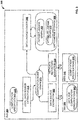
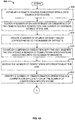
- FIG. 2 illustrates a process 200 to provide data lineage information for a data object, according to one embodiment.
- a number of lineage graphs is generated.
- the lineage graphs are generated at a DLS.
- the DLS is connected to a number of DSSs.
- the lineage graphs include lineage information for datasets stored at the DSSs.
- One or more lineage graphs may be generated for a dataset.
- a lineage graph with a dataset level granularity and a lineage graph with an attribute level granularity may be generated for the same dataset.
- the DLS extracts the lineage information from the DSSs via one or more lineage extractors running on the DLS.
- the lineage extractors are configured to continuously access the DSSs and return data and lineage information for the datasets.
- the lineage extractors may be configured in a pull mode and may, therefore, access the DSSs to pull the lineage information. Alternatively, the lineage information may be pushed to the lineage extractors by the DSSs.
- the lineage extractors connect to the DSSs through connections with various credentials.
- the lineage extractors may access the data and the lineage information at the DSSs based on privileges defined by the credentials of the connections.
- a number of data objects is provided for rendering.
- the data objects are associated with the datasets.
- One or more data objects may be associated with a dataset.
- the data objects may be created for the datasets during extraction of the lineage information from the DSSs.
- a request to provide lineage information for a data object is received at the DLS.
- the request may be triggered upon receiving a selection input including the data object from a user.
- the selection input may be with dataset level granularity or with attribute level granularity.
- the DLS storage stores metadata for the data objects.
- the metadata define correspondence between data objects and datasets.
- metadata of the data object are determined.
- the metadata of the data object include corresponding dataset, source dataset table, lineage graph, parent and child datasets of the corresponding dataset, etc.
- a dataset corresponding to the data object is determined within the DLS storage.
- the DLS storage may store a number of other source dataset tables associated with the data objects.
- a lineage graph corresponding to the data object is determined from the generated lineage graphs. Since the lineage graphs are generated for datasets, the lineage graph is determined to correspond to the data object based on the dataset associated with the data object. In one embodiment, the lineage graphs are generated when the lineage information, that is extracted from the DSSs, is loaded into the DLS storage.
- a data lineage structure is generated based on the data lineage graph. The data lineage structure provides information for the relation between the data object and data objects associated with the parent and child datasets. Optionally, the data lineage structure may be annotated with summary information.
- the summary information may include, for a node of the lineage structure that is not a table computation node, a description of how values of attributes of the node affect values of attributes of a descendent node, how the values of the attributes of the node are affected by values of attributes of an ascendant node, and types of computations applied to the attributes of the ascendant node and to the attributes of the node.
- the summary information may be computed when the computation node graph is loaded into the DLS storage.
- the data lineage structure includes data from source dataset tables corresponding to the data object and the data objects. An exemplary data lineage structure will be described below with reference to FIG. 11 .
- the data lineage structure is provided to the user.
- user privileges are examined when the lineage structure is created and, if it is determined that the user is not authorized to access one or more data objects from the lineage structure, the one or more data objects may be obfuscated before providing the lineage structure to the user.
- FIG. 3 illustrates a system 300 to extract data lineage information from heterogeneous systems, according to one embodiment.
- the system 300 includes DLS 305.
- the DLS 305 is similar to the DLS 120, described above with reference to FIG. 1 .
- the DLS 305 is in communication with DSS 335 and/or metadata repository system (MDS) 345, and extracts data lineage information from the DSS 335 and the MDS 345.
- MDS 345 is a system that offers data computation services to produce datasets persisted in another system. Examples of the MDS 345 include "extract, transform, load” (ETL) systems, "extract, load, transform” (ELT) systems, etc.
- the MDS 345 may be located on a server.
- the MDS 345 reads datasets from one data source system, performs local transformations, stores intermediate and temporary calculations on the server, and creates output datasets to be persisted in another data source system.
- the MDS 345 does not provide an access to datasets.
- the MDS 345 includes specification of data transformations that produce datasets. Computation specifications of datasets may be extracted from the MDS 345, while the datasets are accessible from a data source system.
- the DLS 305 includes local data source extractor 315, data source extractor 325, and metadata repository extractor 330.
- the local data source extractor 315 extracts lineage information from computation specifications 310 that are internal for the DLS 305.
- the local data source extractor 315 may extract lineage information from federated queries or other computation types that are executed at the DLS 305.
- the data source extractor 325 and the metadata repository extractor 330 periodically connect to the DSS 335 and the MDS 345, respectively.
- the data source extractor 325 extracts lineage information from data and computation specifications 340 stored at the DSS 335.
- the metadata repository extractor iteratively extracts lineage information from computation specifications 350 stored at the MDS 345.
- the local data source extractor 315, the data source extractor 325, and the metadata repository extractor 330 are configured to extract computation specifications in the form of computation node graph 320.
- the extractors may be configured via an administration tool (not illustrated).
- the configuration may identify data source and metadata repository systems to be accessed for extraction of lineage information.
- configuration of the extractors may include provision of credentials for creating a metadata connection, specifying types of data and computation specifications for which extraction of data lineage information is required, and specifying time schedule to determine how often the extraction to be performed.
- the computation node graph 320 is a data structure that describes relationships between datasets and transformation operations applied on datasets to calculate child datasets.
- the computation node graph 320 includes nodes that represent datasets or transformation operations, and edges that interconnect the nodes.
- the extractors create the computation node graph 320 based on a unified metadata model for generation of computation node graphs.
- the metadata model for creation of computation node graphs will be described in detail below, with reference to FIG. 5 and FIG. 6 .
- the computation node graph 320 is loaded in data lineage storage 360 through the data lineage loader 355.
- the data lineage storage 360 stores a number of lineage graphs associated with datasets.
- the data lineage storage 360 includes metadata for source dataset tables that are associated with datasets and store data from the datasets.
- the data lineage loader 355 processes the computation node graph 320. Based on the computation node graph 320, the data lineage loader 355 creates dataset lineage graph 365 and attribute lineage graph 370.
- the dataset lineage graph 365 is a data structure that describes lineage relationships on a dataset level.
- the dataset lineage graph 365 is created based on a metadata model that is described in details with reference to FIG. 7 below.
- the attribute lineage graph 370 is a data structure that describes lineage relationships between attributes of the datasets.
- the attribute lineage graph 370 is created based on a metadata model that is described in detail with reference to FIG. 8 below. Examples of generation of the dataset lineage graph 365 and the attribute lineage graph 370 will be described below, with reference to FIG. 15 and FIG. 16 , respectively.
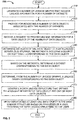
- FIGS. 4A-B are flow diagrams illustrating a process 400 to generate an attribute lineage graph, according to one embodiment.
- a remote source connection is established between a DLS and a DSS.
- the remote source connection may be established between the DLS 305, FIG. 3 , and the DSS 335, FIG .3 .
- the remote source connection is based on a set of credentials.
- the credentials may be pre-configured in the DLS by an administrator (e.g., through an administration tool that accesses an administration service of the DLS).
- the administrator may also associate a set of credentials with a role of a user in the DLS.
- the association may define one or more connections accessible to a particular user based on the role of the user and the corresponding set of credentials. Based on the association, various additional security filters may be configured.
- the credentials may be assigned by the administrator to a data source extractor that establishes the remote source connection.
- the data source extractor 325, FIG. 3 may establish the remote source connection.
- a number of datasets is accessed at the DSS.
- the datasets are accessed based on credentials of the remote source connection.
- the credentials of the remote source connection may limit the data source extractor to access a subset of the datasets stored at the DSS, or a subset of attributes of the datasets stored at the DSS.
- a number of source dataset tables is created.
- the source datasets tables correspond to the number of datasets.
- a dataset may be translated into one or more source dataset tables.
- the source dataset tables include data of the datasets.
- the DSS stores computation specifications associated with the datasets.
- a computation specification of a dataset includes one or more statements applied to attributes of the dataset to calculate one or more attributes of child datasets.
- the dataset may be associated with a number of computation specifications. For example, the dataset may be computed by one or more parent datasets based on a first computation specification, while the child datasets may be computed from the dataset based on a second computation specification.
- a metadata connection is established between the DLS and the DSS.
- the metadata connection may be created with different credentials than the remote source connection.
- the computation specifications are accessed. In one embodiment, access to the computation specifications may be restricted by the credentials of the metadata connection.
- the data source extractor may access one or more of the computation specifications depending on the credentials of the metadata connection.
- a number of transformation operations is identified within a computation specification that is accessed.
- the transformation operations may be applied over one or more attributes of the dataset to generate the attributes of the child datasets.
- a transformation node is generated for a transformation operation identified within the computation specification.
- an attribute computation node is created in the transformation node.
- the attribute computation node includes at least one statement that is defined within the transformation operation. The statement may be applied on a specific attribute of the dataset to generate a corresponding attribute of the child dataset.
- the transformation node includes a number of attribute computation nodes.
- a mapping is created between the attribute computation node and a column of a source dataset table associated with the attribute of the dataset.
- a mapping is created between the attribute computation node and a column of an output source dataset table associated with the child dataset.
- a computation node graph for the dataset is generated.
- the computation node graph includes an input node that represents the dataset, an output node that represents the child dataset, one or more transformation nodes that describe transformation operations applied on the dataset to generate the child dataset, and a number of edges that represent the generated mappings.
- an attribute lineage graph is generated. For example, the attribute lineage graph 370, FIG. 3 , is generated based on the computation node graph 320, FIG. 3 .
- FIG. 5 is a UML class diagram 500 illustrating a dataset level lineage model, according to one embodiment.
- a UML class diagram graphically represents a static view of one or more aspects of a system.
- the UML class diagram 500 is a graphical representation of a static view of a dataset level lineage model of the system 300, FIG. 3 .
- the system 300 extracts dataset level lineage information from heterogeneous systems. Based on the dataset level lineage model, the system 300 may extract data lineage information in the form of a computation node graph such as the computation node graph 320, FIG. 3 .
- the dataset level lineage model defines lineage data structures and dependencies between the data structures within the computation node graph 320.
- the dataset level lineage model is based on dataset tables and computation nodes.
- the UML class diagram 500 includes dataset table 546.
- the dataset table 546 is a named collection of data items associated with a set of zero or more attributes such as attribute 548.
- the attribute 548 is identified by a property "name" 550 that has a unique value within the dataset table 546.
- Computation node graphs extracted from various systems may include nodes that represent dataset tables of different types.
- a dataset table may be of type remote dataset table 524, source dataset table 528, or parameter 538.
- the source dataset table 528 is a table-based representation of a dataset 520.
- the dataset 520 may be represented by one or more source dataset tables such as the source dataset table 528.
- the source dataset table 528 has properties "name” 530 and "type” 532.
- the source dataset table 528 may be identified based on value of the property "name” 530.
- the value of the property "type” 532 is defined based on a corresponding data source system 502. For example, when a graph is considered as a dataset, the dataset may be represented by two tables, one table storing nodes and one table storing edges.
- value of the property "type” 532 may be "GRAPH.NODES", while for the second table, value of the property "type” 532 may be “GRAPH.EDGES”.
- the dataset 520 is a dataset within the data source system 502. Data of the dataset 520 may be queried or accessed from outside the data source system 502. The dataset 520 designates a runtime object 512 that is identified within the data source system 502 by a container 514 for the dataset 520, a property "name” 516 of the dataset 520 within the container, and a property "object type” 518 that depends on the type of data source system 502.
- the remote dataset table 524 represents the source dataset table 528 in a remote data source 506 defined at the data source system 502.
- the remote dataset table 524 is associated with a dataset in the data source system 502. Associations between remote dataset tables and datasets are based on a mapping logic implemented by extractors of the DLS that connect to the DSSs and extract the lineage data.
- the source dataset table 528 may be represented by zero or one remote dataset tables such as the remote dataset table 524.
- the remote dataset table 524 may be also referred to as a remote data object.
- the remote dataset table 524 is identified by value of a property "name" 526, a container that identifies a remote data source 506 within the DLS, and a reference to the source dataset table 528 from which the remote dataset table 524 is obtained.
- the remote dataset table 524 corresponds to a remote data source 506.
- a remote data source represents a remote source connection established between the DLS and the data source system 502.
- the remote data source 506 is a remote data connection to the data source system 502.
- the remote data source 506 is created by an extractor of the DLS.
- the remote data source 506 has properties "name” 510 and "credentials" 508. Value of the property "credentials" 508 defines one or more datasets within the data source system 502 that are accessible for the extractor of the DLS.
- the parameter 538 is defined by a computation specification 534.
- the parameter 538 may be of type "table” or “scalar".
- a “table” parameter has multiple values and has a predefined set of attributes.
- a “scalar” parameter has one value.
- the "scalar” parameter is modeled as a dataset table with a single attribute and a single row.
- the parameter 538 has properties "name” 540, "type” 542, and "mode” 544. Value of the property "mode” 544 indicates whether the parameter is an input parameter or an output parameter.
- the parameter 538 is a dataset table that represents an input or output parameter of an executable object 522.
- An executable object is a runtime object interpreted by an execution engine to produce one or more datasets from one or more datasets. For example, when the data source system 502 is a database system, the execution engine is a database engine.
- the executable object 522 is defined by a computation specification 534.
- a computation specification is an authored specification of computation of derived datasets, which may either be directly interpreted as the executable object 522, or compiled into one or more executable objects 522.
- the computation specification 534 is described by a container specifying location of the computation specification 534 within the data source system 502 (e.g., a folder or package path) and a name of the computation specification 534 within the container.
- the computation specification 534 has a property "computation type” 536. Value of the property "computation type” 536 specifies type of the computation specification 534. For example, when the computation specification 534 is a database SQL query or a database procedure, value of the property "computation type” 534 may be set to "database SQL query" or "database procedure", respectively.
- data lineage information may be extracted from the computation specification 534.
- the extracted data lineage information is represented by a computation node 552.
- the computation node 552 describes relationship between a set of input datasets, and a set of output datasets into which data items have been inserted, updated, or deleted from, when the executable object 522, defined by the computation specification 534 executes.
- the computation node 552 refers to a single computation specification 534 from which the data lineage information is extracted.
- the computation specification 534 may be referred to as lineage owner of the computation node 552.
- the executable object 522 created by compiling or interpreting the computation specification 534 represents execution of the computation node 552.
- FIG. 6 is a UML class diagram 600 illustrating an attribute level lineage model, according to one embodiment.
- the UML class diagram 600 graphically represents a static view of one or more aspects of the system 300, FIG. 3 .
- the UML class diagram 600 represents an attribute level lineage model of the system 300.
- the system 300 may extract attribute level lineage information in the form of a computation node graph such as the computation node graph 320, FIG. 3 .
- the UML class diagram 600 defines dependencies among attributes of data structures.
- the UML class diagram 600 includes dataset table 610.
- the dataset table 610 may be a remote dataset table 616, a source dataset table 614, or a parameter 612.
- the dataset table 610 is referenced by internal dataset table 602.
- Internal dataset tables represent intermediate dataset tables that are created during processing of executable objects such as the executable object 522, FIG 5 .
- the internal dataset tables are deleted when the processing of the executable objects is completed.
- Internal dataset tables are extracted from corresponding computation specifications.
- the computation specification is a lineage owner for the internal dataset table.
- the internal dataset table 602 may be extracted from the computation specification 534, FIG. 5 .
- the computation specification 534 is the lineage owner for the internal dataset table 602.
- the internal dataset table 602 has a property "internal reference" 604. Value of the property "internal reference" 604 identifies a variable or block of instructions corresponding to the internal dataset table 602 within the computation specification 534.
- bound parameter 606 when the computation specification 534, FIG. 5 , specifies a call to the executable object 522, bound parameter 606 is generated.
- the bound parameter 606 is a type of internal dataset table.
- Bound parameters represent input/output parameters (e.g., the parameter 612) of the executable object 522 that are bound to internal variables of the computation specification 534.
- the bound parameters are created within the computation node for calls occurring in the computation specification.
- the bound parameter 606 may be created within the computation node 642 for a call occurring in the computation specification 534.
- the bound parameter has a property "call_ID" 608. Value of the property "call_ID" 608 uniquely identifies the call to the executable object 522 within the computation specification 534.
- the dataset table 610 represents the dataset table 546, FIG. 5 .
- the dataset table 610 may have zero or more attributes such as attribute 632.
- the attribute 632 has a property "name" 634 and may be identified within the dataset table 610 via a value of the property "name” 634.
- the dataset table 610 is associated with the computation node 642.
- the computation node 642 is similar to the computation node 552 described above with reference to FIG. 5 .
- the computation node 642 describes relationship between a set of input datasets and a set of output datasets into which data items have been inserted, updated, or deleted from.
- the computation node 642 defines one or more transform operations such as the transform operation 644.
- the transform operation 644 takes one or more input datasets in the form of dataset tables such as the dataset table 610.
- the input dataset tables may include internal dataset tables such as the internal dataset table 602.
- the transform operation 644 has properties "internal reference” 646 and "type” 648.
- the property "internal reference” 646 refers to the computation specification 534 that is the lineage owner for the transformation operation 644.
- Value of the property "type” 648 defines a type of update mode for zero or more output datasets produced by the transformation operation 644.
- the output dataset 618 includes a property "update mode” 620.
- Value of the property "update mode” 620 defines a type of transformation applied on the input datasets to generate the output dataset.
- the property "update mode” 620 may have value “define”, “replace”, “update”, “upsert”, “insert”, or "delete.
- the value “define” is assigned to the property “update mode” 620 when data items produced by the transform operation 644 exclusively define the contents of the output dataset.
- the value “replace” is assigned to the property “update mode” 620 when data items of the output dataset are replaced by the data items produced by the transform operation 644.
- the value “update” is assigned to the property “update mode” 620 when data items produced by the transform operation 644 are used to update some data items of the output dataset.
- the value “upsert” is assigned to the property “update mode” 620 when data items produced by the transform operation 644 are used to either update existing data items or insert new data items in the output dataset.
- the value “insert” is assigned to the property “update mode” 620 when data items produced by the transform operation 644 are used to insert new data items in the output dataset.
- the value “delete” is assigned to the property “update mode” 620 when data items produced by the transform operation 644 are removed from the output dataset.
- the transform operation 644 is associated with one or more table computations such as table computation 650.
- a table computation describes an elementary operation that is applied on a set of rows of the one or more input dataset tables of the transform operation 644 to compute one or more sets of rows of the output dataset 618.
- the table computation 650 has properties "computation formula” 652, "type” 654, and "internal reference” 656.
- Value of the property "computation formula” 652 specifies an operation performed by the table computation 650. For example, when the table computation 650 performs a "relational join” operation, the value of the "computation formula” 652 may specify a join condition.
- the property "type” 654 may have value "bind” when the table computation 650 binds a bound parameter dataset with another dataset, or value “blackbox” when no input attribute is specified for the table computation 650 and the input datasets are directly related to a table computation of this type.
- the property "internal reference” 656 refers to the lineage owner that in this case is the computation specification 534.
- the property "computation formula” 652 of the table computation 650 refers to at least one referenced attribute 626.
- the referenced attribute 626 has properties "alias” 628 and "isLeft Side” 630.
- Value of the property "alias” 628 indicates a name of a variable that represents the attribute within the "computation formula” 652.
- the property "isLeft Side” 630 indicates that the referenced attribute 626 is the left operand of an operator within the "computation formula” 652.
- the referenced attribute 626 has a property "isRight Side” (not illustrated)
- the referenced attribute 626 would be the right operand of the operator.
- the table computation 650 utilizes a set of input datasets such as input dataset 622.
- the input dataset 622 includes a property "isLeftSide” 624.
- the transform operation 644 includes attribute computation 658.
- An attribute computation describes how value of a single attribute (named "output attribute") is computed from values of one or more "input attributes".
- An attribute computation may be of various types.
- Type of the attribute computation 658 is defined by the value of property "type” 662 of the attribute computation 658.
- the value of the property "type” 662 is "identity function” when each output attribute value is generated by applying the identity function to a value of a single input attribute.
- the value of the property “type” 662 is "scalar function” when each output attribute value is computed from an "n-ary” scalar function where each argument of the function is a value coming from an input attribute.
- the value of the property "type” 662 is "aggregate function" when each output attribute value is computed from an aggregate function applied over a set of values of a single input attribute.
- the value of the property "type” 662 is further defined as follows. If values of the output attribute are computed from a subset of the values of the input attribute, the value of the property "type” 662 is “restricted aggregate”. If each output attribute value is calculated by a window function applied over the set of values of a single input attribute, then the value of the property "type” 662 is "window function".
- the set of output attribute values is computed from a set operation (union, difference, intersection) over the set of values coming from one or more input attributes.
- the output attribute is mapped to a constant value.
- the attribute computation 658 has properties "computation formula” 660 and "internal reference” 664.
- the attribute computation 658 is associated with an attribute set computation node 668.
- the attribute set computation node 668 describes how values of one or more attributes of an output dataset are computed from the values of one or more attributes of an input dataset.
- the attribute set computation node 668 may be of a "row-oriented" computation type where a row of an output dataset is computed based on a set of rows of the input dataset, or a "set-oriented” computation type where a row of an output dataset is computed from a set of rows of the input dataset or the whole input dataset.
- FIG. 7 is a UML class diagram 700 illustrating a model of a dataset level lineage graph, according to one embodiment.
- Dataset level lineage graphs describe lineage relationships between datasets.
- the UML class diagram 700 graphically represents a static view of the model of the dataset level lineage graph.
- the system 300, FIG. 3 builds a dataset lineage graph based on the computation node graph 320 and in accordance with the model illustrated by the UML class diagram 700.
- the UML class diagram 700 includes dataset node 715 and dataset lineage edge 705.
- the dataset node 715 represents a dataset table extracted from a computation specification.
- the dataset lineage graph may include a number of dataset nodes like the dataset node 715.
- a node of the number of dataset nodes may be either a remote dataset table 730, a source dataset table 740, a parameter 750, or an internal dataset table 756.
- the remote dataset table 730, the source dataset table 740, the parameter 750, and the internal dataset table 756 represent different types of dataset tables for the dataset node 715.
- the dataset node 715 has a property "ID" 720.
- the dataset node 715 may be uniquely identified within the dataset lineage graph based on value of the property "ID" 720.
- the remote dataset table 730 has properties "remoteSourceName” 732 and "name” 734.
- value of the property "remoteSourceName” 732 specifies a name of a remote connection to a data source system.
- the remote dataset table 730 represents the source dataset table 740.
- the source dataset table 740 may be represented by zero or more remote dataset tables such as the remote dataset table 730.
- the source dataset table 740 has a property "type” 745.
- the parameter 750 has properties "parameterName” 752 and "mode” 754.
- the internal dataset table 756 has a property "internalReference” 758.
- the source dataset table 740 and the parameter 750 represent different types of runtime objects. Hence, the source dataset table 740 and the parameter 750 are associated with runtime object 770 in the UML class diagram 700.
- the runtime object 770 has a corresponding container 772 and properties "name” 774 and "type” 776.
- the internal dataset table 756 is extracted from computation specification 790.
- the value of the property "internalReference” 758 identifies a variable or block of instructions corresponding to the internal dataset table 756 within the computation specification 790.
- the internal dataset table 756 is associated with bound parameter 760.
- the bound parameter 760 is a type of internal dataset table.
- Bound parameters represent input/output parameters (e.g., the parameter 750) of the runtime object 770 that are bound to internal variables of the computation specification 790. Bound parameters are created for a call occurring in the computation specification 790.
- the bound parameter has a property "call_ID” 762. Value of the property "call_ID” 762 uniquely identifies the call to the runtime object 770 within the computation specification 790.
- the remote dataset table 730, the source dataset table 740, the runtime object 770, and the computation specification 790 are extracted from a hosting system 780.
- the hosting system 780 may be a data source system (DSS) or a metadata repository system (MDS).
- the hosting system 780 may be accessed based on a value of the property "URL" 782.
- the dataset lineage edge 705 is extracted from the computation specification 790.
- the dataset lineage edge 705 links an origin dataset node to a destination dataset node. Based on the dataset lineage edge 705, it may be determined that the contents of the origin dataset table contribute to produce the contents of the destination dataset table.
- the dataset lineage edge 705 has a property "ID” 710. Additionally, the dataset lineage edge 705 may have a property "lineage owner" (not illustrated) to refer to the corresponding computation specification.
- the computation specification 790 is described by a container 792 describing location of the computation specification 790 within the hosting system 780 (e.g., a folder or package path) and a name 794 of the computation specification 790 within the container.
- the computation specification 790 may have a number of properties including properties "computation type” 796 and "runtimeObjectType” 798.
- FIG. 8 is a UML class diagram 800 illustrating a model of an attribute level lineage graph, according to one embodiment. Attribute level lineage graphs describe lineage relationships between attributes of datasets.
- the UML class diagram 800 graphically represents a static view of the model of the attribute level lineage graph. In one embodiment, an attribute level lineage graph is built based on the computation node graph 320 and in accordance with the model illustrated by the UML class diagram 800.
- the UML class diagram 800 includes attribute lineage node 814 and attribute lineage edge 802.
- the attribute lineage node 814 has a property "ID" 816.
- the attribute lineage node 814 is associated with a number of types of attribute lineage nodes including remote dataset attribute 820, source dataset attribute 824, parameter attribute 828, and internal node 832.
- the source dataset attribute 824 is extracted from source dataset table 860.
- the source dataset attribute 824 represents a column within the source dataset table 860.
- the source dataset attribute 824 corresponds to a component of a dataset from which the source dataset table 860 is extracted.
- the source dataset attribute 824 may have additional property with a value pointing to the component of the dataset.
- the source dataset attribute 824 has a property "name" 826. Value of the property "name" 826 is unique within the source dataset table 860.
- the source dataset table 860 represents the source dataset table 740, FIG. 7 .
- the remote dataset attribute 820 is extracted from the remote dataset table 858.
- the remote dataset attribute 820 represents a column within the remote dataset table 858.
- the remote dataset attribute 820 has a property "name" 822.
- the remote dataset table 858 represents the remote dataset table 730, FIG. 7 .
- the remote source attribute 820 may be an input for a number of computation nodes including attribute computation 840 and table computation 848.
- the parameter attribute 828 is extracted from the parameter 862.
- the parameter attribute 828 represents a column within the parameter 862 table.
- the parameter attribute 828 includes a property "name" 830.
- the parameter 862 may be referred by multiple computation nodes.
- the parameter may be referred by a computation specification when the computation specification specifies a call to the runtime object 864 that owns the parameter 862.
- Bound parameters such as the bound parameter 870 are created within the extracted computation node for a call occurring in the computation specification.
- the bound parameter 870 includes a property "call_ID" 872.
- the bound parameter attribute 856 is created for an attribute of the bound parameter 870 and refers to the corresponding attribute of the bound parameter 870.
- the internal node 832 is extracted from the computation specification 834.
- the computation specification 834 is a lineage owner for the internal node 832.
- the internal node 832 represents a computation node.
- Computation nodes describe relationships between input datasets and output datasets into which data items have been inserted, updated, or deleted from, when an executable object defined by a computation specification executes.
- a computation node may be of type internal attribute 836, attribute computation 840, or table computation 848.
- a computation node may include one or more computation nodes.
- a node of the one or more nodes may be either an internal attribute 836, attribute computation 840, or table computation 848.
- the internal attribute 836 has a property "name" 838.
- the internal attribute 836 represents an attribute of an internal dataset.
- the internal attribute 836 may be described as a specific case of the bound parameter attribute 856 that represents a column of the bound parameter 870.
- the attribute computation 840 represents computation of an attribute or an attribute set within the internal node 832 that is extracted from the computation specification 834.
- the attribute computation 840 receives input data values from attribute lineage nodes.
- Types of attribute lineage nodes that may be input nodes for the attribute computation 840 include the remote dataset attribute 820, the source dataset attribute 824, and the parameter attribute 828.
- the attribute computation node 840 may receive input data from internal nodes of type "attribute computation".
- the attribute computation 840 computes a scalar value/a set of scalar values for a single output attribute (in the case of an attribute computation) or an array of scalar values/a set of arrays of scalar values, when there are multiple output attributes (in the case of an attribute set transformation).
- the values computed by the attribute computation 840 may be presented through one or more output nodes associated with the attribute computation 840.
- Types of attribute lineage nodes that may be output nodes for the attribute computation 840 include the remote dataset attribute 820, the source dataset attribute 824, the parameter attribute 828, another attribute computation node 840, and the table computation 848.
- the attribute computation 840 has properties "formula” 842, "type” 844, and "internalReference” 846.
- the value of the property "type” 844 indicates how output values are produced from input values.
- attribute computations of types "row-oriented” a list of scalar values computed by the attribute computation node is obtained through one scalar value from an input node
- set-oriented a list of scalar values computed by the attribute computation node is obtained through a set of scalar values from an input node
- the table computation 848 has properties "formula” 850, "type” 852, and "internalReference” 854.
- the table computation 848 is associated with a computation of a table within a computation node that is extracted from the computation specification 834.
- Input nodes for the table computation 848 may be attribute nodes (such as the remote dataset attribute 820, the source dataset attribute 824, the parameter attribute 828, etc) or attribute computation nodes (such as the attribute computation 840).
- the table computation 848 does not have an output node.
- attributes lineage edges such as the attribute lineage edge 802.
- the attribute lineage edges describe relationships between the table computation 848 and input nodes of the table computation 848.
- the attribute lineage edge 802 connects a first node (e.g., origin) with a second node (e.g., destination) within the attribute lineage graph represented in accordance with the attribute lineage data model defined by the UML class diagram 800.
- An origin of the attribute lineage edge 802 may be an internal dataset attribute node, a remote dataset table attribute node, a source dataset table attribute node, a parameter attribute node, or an attribute computation node.
- a destination of the attribute lineage edge 802 may be an internal dataset attribute node, a remote dataset table attribute node, a source dataset table attribute node, a parameter attribute node, an attribute computation node, or a table computation.
- the attribute lineage edge 802 has properties "ID” 804, "originDomainUsage” 806, “alias” 808, “UpdateMode” 810, and “isLeftSIde” 812.
- Value of the property "originDomainUsage” 806 indicates a domain of values of the origin node that contributes to the domain of values of the destination node. For example, when the value of the "originDomainUsage” 806 is “full", the whole domain of values of the origin node contributes to the domain of values of the destination node.
- Value of the property "alias” 808 indicates a variable name that represents an origin node within the text of the "formula” 850 property of a corresponding table computation 848.
- Value of the property "isLeftSide” 812 indicates whether the dataset to which the origin node belongs to is used as the left or right-side operator in the corresponding computation formula.
- FIG. 9 is a block diagram illustrating an exemplary network 900 of heterogeneous systems, according to one embodiment.
- the network 900 includes data source system (DSS) 910, DSS 920, DSS 940, and metadata repository system (MDS) 930.
- the data source systems (DSSs) 910, 920, and 940 provide programmatic access and manipulation capabilities over datasets. Datasets are stored at the DSSs 910, 920, and 940 in heterogeneous formats that are specific to the DSSs.
- the DSS 910 is an Apache Hadoop® cluster.
- the DSS 910 includes datasets S 914 and S 922 and computation specifications C 912, C 916, and C 918 that are associated with the datasets.
- the dataset S 914 is a Hadoop Distributed File System (HDFS) file with semi-structured JavaScript Object Notation (JSON) format.
- the dataset S 922 is a directory of unstructured HDFS files.
- the computation specifications C 912, C916, and C 922 are Apache Hadoop® data pipelines.
- the DSS 920 and the DSS 940 are database systems.
- the DSS 920 includes datasets S 924, S 926, S 928, S 932, and S 936 that are relational tables, and the computation specification C 934 that is a Structured Query Language (SQL) query.
- SQL Structured Query Language
- the DSS 940 includes datasets S 944, S 946, S 948, S 952, and S 956 that are relational tables, and computation specification 954 that is a database procedure.
- the MDS 930 is an ETL system that extracts datasets from one system, executes various computations over the datasets and stores calculations in another system.
- the MDS 930 provides access to computation specifications describing the computations. However, the MDS 930 does not provide access to datasets.
- the computation specifications C 938 and C 942 that are ETL scripts are stored at the MDS 930.
- S 914 and S 922 are non-derived datasets.
- Non-derived datasets include "native" data which are not computed from other datasets.
- a dataset that includes sensor data is a non-derived dataset.
- the dataset S 922 is associated with computation specification C 918.
- the computation specification C 918 is applied over the dataset S 922 to generate dataset S 926 that is stored at the DSS 920.
- the dataset 926 is derived from the dataset S 922 based on the computation specification C 918.
- dataset S 924 is derived from the dataset S 914 based on the computation specification C 916
- dataset S 944 is derived from the dataset S 914 based on the computation specification C 912.
- Derived datasets are datasets computed from one or more other datasets.
- a dataset generated by a query over one or more datasets is a derived dataset.
- Derived datasets in a data source system may be produced from datasets coming from other data source systems.
- FIG. 10 is a block diagram illustrating a system 1000 that federates lineage data from heterogeneous systems, according to one embodiment.
- the system 1000 includes DLS 1050.
- the DLS 1050 is similar to the DLS 305, FIG. 3 .
- the DLS 1050 provides a data lineage service.
- the DLS 1050 federates lineage data from a network of heterogeneous systems.
- the DLS 1050 federates heterogeneous lineage data from the network 900, FIG. 9 , and the DSS 1010, DSS 1020, MDS 1030, and DSS 1040 represent the DSS 910, DSS 920, MDS 930, and DSS 940, respectively, that were described above with reference to FIG. 9 .
- a remote source RS 1058 is defined within the DLS 1050 for the DSS 1020, and two remote sources RS 1068 and RS 1080 are defined within the DLS 1050 for the DSS 1040.
- a remote source represents a remote source connection established between the DLS 1050 and a DSS.
- the remote source connection RS 1058 may be established between the DLS 1050 and the DSS 1020.
- the RS 1058 includes a set of remote dataset tables, represented as rectangles with a header.
- a remote dataset table is associated with a dataset in the DSS 1020 (associations are shown as dotted lines).
- Associations between remote dataset tables and datasets are based on a mapping logic implemented by extractors (not illustrated) of the DLS 1050 that connect to the DSSs and extract the lineage data. This mapping is deterministic for a given extractor and a given dataset.
- the dataset tables that are returned by an extractor's mapping logic for a dataset may be referred to as source dataset tables. For example, for an extractor, the mapping of dataset S 1052 in DSS 1040 into one or more dataset tables will be identical for both remote sources RS 1068 and RS 1080 created with that extractor, if the extractor is authorized to access a full representation of the dataset S 1052.
- remote sources are defined with different credentials (e.g., configured by an administrator). Therefore, different source dataset tables may be returned by the extractor if the connection for RS 1068 or RS 1080 provide different restricted access to the representation of S 1052.
- the mapping may return one table with RS 1068 and two tables with RS 1080, or the same table may be returned for both RS 1068 and RS 1080 but some attributes may be missing for RS 1068.
- security within the remote sources may be defined on the level of dataset attributes. This way, two different users may be allowed to access different attributes of one dataset.
- source dataset tables returned by the extractor's mapping logic through defined connections may be merged at the DLS 1050 regardless of the different credentials of the connections utilized by the extractor. This way, a consolidated representation of the mapping of S 1052 into a set of dataset tables may be obtained at the DLS 1050.
- the consolidated representation may be referred to as a merged source dataset table.
- the DLS 1050 receives, for a given connection and a dataset, both a set of source dataset tables and a set of remote dataset tables (remote data objects), a remote data object being a "proxy" on a source dataset table.
- Remote data objects may include portions of data stored in the corresponding source dataset tables. Alternatively, the remote data objects may fully represent the data in the corresponding source dataset tables.
- the DLS 1050 may receive the remote data object (RDO) 1072 and a corresponding source dataset table (not illustrated) from the RS 1068.
- the DLS 1050 may receive the RDO 1082 and a corresponding source dataset table (not illustrated) from the RS 1080.
- Source dataset tables are merged while remote data objects are not.
- the RDO 1071 and the RDO 1082 may include different portions of data from S 1052.
- a merged source dataset table for S 1052 may be created at the DLS 1050.
- the merged source dataset table consolidating data of S 1052 that is accessible through the connections RS 1068 and RS 1080 that are defined with different credentials.
- the RDO 1072 and the RDO 1082 are "proxies" to data in the corresponding merged source dataset table because the RDO 1072 and the RDO 1082 include portions of the data within the merged source dataset table (not illustrated).
- datasets S 1024 and S 1026 are not visible from the RS 1058. That is, data and computation specifications of the datasets S 1024 and S 1026 are not accessible based on credentials of the RS 1058 and, hence, the data and computation specifications of the datasets S 1024 and S 1026 are not extracted through the RS 1058.
- S 1044, S 1046, and S 1048 are not accessible (hence not visible) based on credentials of the RS 1080. However, datasets S 1046 and S 1048 are both accessible (and visible) from the RS 1068.
- a user of the DLS 1050 is authorized to access the RS 1058 and the RS 1080.
- a lineage graph is automatically generated.
- the lineage graph depends on two factors: (1) the remote dataset tables accessible to the user, and (2) the content of the data lineage storage managed by the data lineage service.
- the first factor the user may be able to see a dependency of RDO 1066 on RDO 1062 and RDO 1064 since these are the impacting RDOs.
- the extractor accesses lineage information within the DSS 1020 through a metadata connection. Based on credentials of the metadata connection, the extractor accesses data or computation specifications in the DSS 1020.
- the extractor may return (1) a mapping of datasets S 1024 and S 1026 into source dataset tables based on the mapping logic, and (2) the data lineage information of S 1034 with respect to the source dataset tables that were returned.
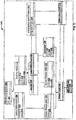
- FIG. 11 is a block diagram illustrating a data structure 1100 that provides lineage information for a data object, according to one embodiment.
- a user has privileges to access the RS 1058 and the RS 1068.
- the user requests data lineage information for the RDO 1074, FIG. 10 , with a data-oriented view.
- the data lineage extractor of the DLS 1050 (not illustrated) has a metadata connection to access computation specification C 1054, FIG. 10
- source dataset tables are created for datasets S 1044, S 1046, S 1048, and S 1052, and lineage relationships are created between the RDO 1074 and the created source dataset tables.
- merged source dataset tables will be created by merging the representations obtained from the connection of RS 1068 and the metadata connection created by the same extractor. Similarly, it is assumed that the data lineage extractor for system MDS 1030 is authorized to access computation specifications C 1038 and C 1042. During the extraction, source dataset tables are created for datasets S 1028, S 1032, S 1046, and S 1048, and lineage relationships are created between the created source dataset tables.
- mapping logic of the extractor for the MDS 1030 and mapping logic of the extractor for the RS 1068 are different. Therefore, the source dataset tables returned by the extractors for a given dataset, (e.g., S 1046) are different. Based on the reference that an attribute of a source dataset table has to the corresponding component of a dataset, lineage relationships between the attributes of the source dataset tables returned by an extractor are created. The lineage relationships are created during the loading of extracted data lineage information into the data lineage storage. Similarly, lineage relationships may be created between the source dataset tables returned by the extractor of the MDS 1030 and the extractor of the RS 1058 for datasets S 1028 and S 1032.
- the lineage relationships define data lineage dependencies between RDO 1074, and RDO 1062 and RDO 1064.
- the data lineage dependencies go through source dataset tables.
- privileges granted to the user are examined to determine whether the user is authorized to access RDOs from various remote data sources. When it is determined that the user is authorized to access the RS 1058 and the RS 1068, the lineage information for the RDO 1074 will be as illustrated by the data structure 1100.
- the data structure 1100 includes RDO 1110 and RDO 1120.
- the RDO 1110 represents the RDO 1062 and the RDO 1120 represents the RDO 1064, FIG. 10 .
- the RDOs 1110 and 1120 are associated with RDO 1140 and RDO 1150, respectively. Based on the association, the user may determine that the RDO 1140 is derived from the RDO 1110 and the RDO 1150 is derived from the RDO 1120.
- the RDOs 1140 and 1150 are associated with RDO 1170.
- the RDO 1170 represents the RDO 1074, FIG .10 . Based on the associations, it may be determined that the RDO 1170 is derived from the RDO 1140, the RDO 1150, RDO 1160, and INFO 1130. Based on the privileges of the user to access RS 1058 and RS 1068, RDOs included in the RS 1058 or the RS 1068 may be presented to the user. However, the RDO 1074 for which the user requests lineage information, is originally derived from four datasets, including the dataset S 1052 ( FIG. 10 ). The RDO 1082 is associated with the dataset S 1052 and is included in RS 1080. Since the user is not authorized to access the RS 1080, the RDO 1082 is obfuscated from the generated data structure 1100 and is replaced with the node INFO 1130 to indicate the RDO 1170 is derived from four RDOs in total.
- the data lineage structure 1100 providing lineage information for the RDO 1170 may be annotated with summary information.
- the summary information may include, for a node of the data lineage structure 1100 that is not a table computation node, a description of how values of attributes of the node affect values of attributes of a descendent node, how the values of the attributes of the node are affected by values of attributes of an ascendant node, and types of computations applied to the attributes of the ascendant node and to the attributes of the node.
- the summary information for node RDO 1140 may include a description of how values of attributes of the RDO 1140 are affected by values of attributes of nodes RDO 1110 and RDO 1120, how the values of the attributes of the RDO1140 affect values of attributes of the node RDO 1170, and types of computations applied over the attributes of RDO 1110 and RDO 1120 to compute the attributes of the RDO 1140 and types of computations applied over the attributes of the RDO 1140 to compute the attributes of the RDO 1170.
- the summary information is pre-computed when a computation node graph corresponding to the RDO 1170 is loaded into a DLS storage.
- the summary information is readily provided when the lineage data structure 1100 is provided for rendering at a UI such as the UI 115, FIG. 1 .
- the summary information may be attached to the RDO 1140, may be visible when a pointer on the UI is rolled over the RDO 1140, or may be displayed upon receiving a selection input from the UI.
- the summary information is computed based on one or more predefined rules.
- the one or more rules may include rules to compute impacting domain values, computation types, and impacted domain values.
- rules to compute computation types include (assuming a path from the RDO 1110 to the RDO 1140 traverses a computation of type "set difference", a left non-commutative binary operator (not illustrated)): Rule 1 - "IF each path of ALG.PATHS (RDO 1110, RDO 1140) traverses at least one left (resp. right) non-commutative binary attribute computation operation on its right (resp.
- ALG.INTER_NODES includes attribute computation nodes of type IDENTITY or set operations or AGGREGATE or WINDOW or RESTRICTED_AGGREGATE, or SCALAR"; 2. "Each path of ALG.PATHS (RDO 1110, RDO 1140) traverses at least one attribute computation node of type AGGREGATE or WINDOW, or RESTRICTED_AGGREGATE”; 3. "For each node of type AGGREGATE or WINDOW or RESTRICTED_AGGREGATE in ALG.
- examples of rules to compute impacted domain values may include: Rule 1 - "IF there exists one path in ALG.PATHS (RDO 1110, RDO 1140) such that include with value “define” for the property “updateMode” (i.e., property “UpdateMode” 810, FIG 8 ) and for each attribute lineage node of the path, one of the following conditions is true: 1. “ALG.IN_EDGES_NOTCOMING (lineage node of the path, RDO 1110) is empty”; 2. “The lineage node of the path is of type SCALAR”; 3. “The lineage node of the path is of type INTERSECT”; 4.
- the node is an attribute computation node of type UNION ALG.IN_EDGES_NOTCOMING (the node, RDO 1110) is empty"; 2. "The node is an attribute computation node of type SCALAR"; 3. “The node is an attribute computation node of type INTERSECT”; 4. "The node is an attribute computation node representing a left non-commutative binary operator and ALG.IN_EDGES_NOTCOMING (the node, RDO 1110) incldues the edge with the right argument of the node”; 5. "The node is an attribute node and both conditions are true: a.
- AG.IN_EDGES_COMING (the node, RDO 1110) includes edges with 'replace' update mode" and, b. "One of the following conditions are true: i. "ALG.IN_EDGES_NOTCOMING (the node, RDO 1110) is empty", ii.
- an attribute level analysis view may be annotated with the computed summary information based on a propagation algorithm.
- the propagation algorithm may start from an attribute node, traverse the data lineage structure 1100 forward and apply propagation functions on descendant nodes and edges.
- each node of the data lineage structure 1100 which is not a table computation node may be annotated with summary information including "impactingDomainValues", "computation type", and "impactedDomainValues”.
- the propagation functions may include mapping, reducing, and filtering functions, among others.
- the propagation functions may comply with the rules to compute the summary information.
- the propagation functions may be written in various programming languages and in accordance with various programming techniques.
- An attribute level impact analysis view may be annotated in accordance with various strategies. For example, propagation functions may be applied over the attribute level impact analysis view based on one of the following strategies: (1) follow the topological order to limit the number of propagations to the size of the graph or (2) apply functions in any order until a fixed point in reached (parallel execution). In an exemplary embodiment, the following propagation functions are applied to calculate summary information to annotate the attribute level impact analysis view:
- MAP (X, F) takes two arguments: X a list of objects, and F a unary function. It returns a collection computed as follows:
- REDUCE (X, F) takes two arguments: X a list of objects, and F a binary function. It returns a single value computed as follows:
- FILTER (X, F) takes two arguments: X a list of objects, and F a Boolean unary function. It returns a collection computed as follows:
- N be a node reachable from A other than a table computation node
- N a left non-commutative binary attribute computation node
- N an attribute computation node of type Union, Intersection or Identity
- MERGE_C (X,Y) is defined as follows in Table 3 for values of X and Y other than 'COMPLEX' and is equal to 'COMPLEX' when either X or Y has value 'COMPLEX' : Table 3 MERGE_C NONE IDENTITY SCALAR AGG AGG_SCALAR SCALAR_AGG NONE NONE IDENTITY SCALAR AGG AGG_SCALAR SCALAR_AGG IDENTITY IDENTITY SCALAR COMPLEX COMPLEX COMPLEX COMPLEX SCALAR SCALAR SCALAR COMPLEX COMPLEX AGG AGG COMPLEX COMPLEX AGG AGG_SCALAR SCALAR_AGG SCALAR_AGG SCALAR_AGG COMPLEX COMPLEX SCALAR_AGG COMPLEX SCALAR_AGG COMPLEX AGG_SCALAR AGG_SCALAR COMPLEX COMPLEX AGG_SCALAR AGG_SCALAR COMPLEX COMPLEX AGG_SCALAR COMPLEX
- N an attribute computation node of type AGGREGATE, WINDOW or RESTRICTED AGGREGATE, then:
- M2AGG (X) is defined as follows in Table 4: Table 4 M2AGG NONE NONE IDENTITY AGG SCALAR SCALAR_AGG AGG AGG AGG_SCALAR COMPLEX SCALAR_AGG SCALAR_AGG COMPLEX COMPLEX
- M2SCALAR (X) is defined as follows in Table 5 and MERGE_C is as before: Table 5 M2SCALAR NONE NONE IDENTITY SCALAR SCALAR SCALAR AGG AGG_SCALAR AGG_SCALAR AGG_SCALAR SCALAR_AGG COMPLEX COMPLEX COMPLEX
- N an attribute node of a source dataset table, remote dataset table or parameter
- attribute table computation nodes For other types of nodes, except attribute table computation nodes:
- N an attribute node of a source dataset table, remote dataset table or parameter
- U_EFFECT computes the effect of a concurrent update mode on the impactedDomainValues of an edge. By definition, note that there cannot be concurrent edges with a "define” update mode. U_EFFECT is define as follows in Table 7: Table 7 UM_EFFECT define/replace update/upsert/append/delete FULL FULL_OR_NOTHING PARTIAL PARTIAL PARTIAL FULL_OR_NOTHING FULL_OR_NOTHING PARTIAL
- MERGE_ATT computes the merged value of the impactedDomainValues of two concurrent edges.
- MERGE_ATT is defined as follows in Table 8: Table 8 MERGE_ATT FULL PARTIAL FULL_OR_NOTHING FULL FULL FULL FULL PARTIAL FULL PARTIAL PARTIAL FULL_OR_NOTHING FULL PARTIAL FULL_OR_NOTHING
- MERGE_UNION compute the effect of having attribute A contributing to the Union through two concurrent execution paths.
- MERGE_UNION is defined as follows in Table 9: Table 9 MERGE_UNION FULL PARTIAL FULL_OR_NOTHING FULL FULL PARTIAL PARTIAL PARTIAL PARTIAL PARTIAL FULL_OR_NOTHING PARTIAL PARTIAL PARTIAL PARTIAL
- MERGE_INTER is defined as follows in Table 10. A single edge with value 'FULL' is sufficient to get a resulting 'FULL' value. Table 10 MERGE_INTER FULL PARTIAL FULL_OR_NOTHING FULL FULL FULL FULL PARTIAL FULL PARTIAL PARTIAL FULL_OR_NOTHING FULL PARTIAL FULL_OR_NOTHING
- N a left non-commutative binary attribute computation node
- N be a computation node that is neither a left non-commutative binary attribute computation node, nor a union, nor an intersection node, then:
- MERGE_OTHER computes the merge of the impactedDomainValues of two concurrent input parameters. If values of some input parameter depend on values of A then the result of the attribute computation node depends on values of A.
- MERGE_OTHER is defined as follows in Table 11: Table 11 MERGE_OTHER FULL PARTIAL FULL_OR_NOTHING FULL FULL FULL FULL PARTIAL FULL PARTIAL PARTIAL FULL_OR_NOTHING FULL PARTIAL FULL_OR_NOTHING
- FIG. 12 illustrates an exemplary dataset represented as a number of dataset tables, according to one embodiment.
- FIG. 12 includes an XML FILE 1210, a dataset table STORE 1220, and a dataset table SALE 1240.
- the dataset table STORE 1220 and the dataset table SALE 1240 are table representations of parts of the XML FILE 1210.
- the dataset tables refer to specific components of the dataset. Components of the dataset include sets of elements of the XML FILE 1210.
- the dataset table STORE 1220 refers to elements "/sales/store”
- the dataset table SALE 1240 refers to elements "/sales/store/sales”.
- a column of a dataset table refers to a particular component of the dataset (e.g., an attribute of elements of the XML FILE 1210).
- columns “storeRef” 1222 and 1242 of the dataset tables STORE 1220 and SALE 1240, respectively, refer to attribute "/sales/store@storeRef" of the XML FILE 1210.
- columns “storeName” 1224, “storeType” 1226, “State” 1228, “Zip” 1230, “City” 1232, and “Country” 1234 of the dataset table STORE 1220 refer to attributes “/sales/store@storeName”, “/sales/store@storeType”, “/sales/store@State”, “/sales/store@Zip”, “/sales/store@City”, and “/sales/store@Country” of the XML FILE 1210, respectively.
- columns “unitPrice” 1244, “productReference” 1246, “Date” 1248, and “Quantity” 1252 of the dataset table “SALE” 1240 refer to attributes “/sales/store/sales@unitPrice", “/sales/store/sales@productReference”, “/sales/store/sales@Date”, and “/sales/store/sales@Quantity” of the XML FILE 1210, respectively.
- FIG. 13 illustrates an exemplary computation specification 1300, according to one embodiment.
- the exemplary computation specification 1300 may be extracted from the DSS 335 by the data source extractor 325, FIG. 3 .
- the exemplary computation specification 1300 is an SQL query.
- the data source extractor 325 may extract data lineage information from the SQL query 1300 in the form of a computation node graph (e.g., computation node graph 320, FIG. 3 ).
- the data source extractor 325 translates input and output datasets of the computation specification 1300 into source dataset tables (e.g., as described above with reference to FIG. 12 ).
- the data source extractor 325 When the input and output datasets are translated into source dataset tables, the data source extractor 325 generates a transformation node for a "SELECT" statement in the exemplary computation specification 1300.
- the transformation node defines a mapping between the input and the output source dataset tables.
- content of the "SELECT" statement is analyzed to define types of attribute or table computations to be included within the transformation node.
- FIG. 14 illustrates an exemplary computation node graph 1400, according to one embodiment.
- the exemplary computation node graph 1400 is generated based on the exemplary computation specification 1300, FIG. 13 , and in accordance with the attribute level lineage model illustrated by the UML class diagram 600, FIG. 6 .
- the exemplary computation node graph 1400 is a data structure that describes relationships between datasets and transformation operations applied on datasets to calculate child datasets.
- the exemplary computation node graph 1400 includes nodes representing datasets (or dataset tables associated with the datasets) and transformation operations, and edges interconnecting the nodes. Computation node graphs may be extracted from computation specifications or dataset metadata.
- the exemplary computation node graph 1400 describes relationships between datasets with attribute level granularity.
- the exemplary computation node graph 1400 includes dataset table (DT) 1402, DT 1404, DT 1406, and DT 1408 that are input dataset tables for the computation specification 1300, FIG. 13 .
- the DT 1402 is a source dataset table corresponding to the dataset "S20" that is specified in the exemplary computation specification 1300 as an input dataset.
- the DT 1404 is a source dataset table corresponding to the dataset "S4"
- the DT 1406 is a source dataset table corresponding to the dataset "S10”
- the DT 1408 is a source dataset table corresponding to the dataset "S3" that are specified in the exemplary computation specification 1300 as input datasets.
- the exemplary computation node graph includes attributes "C” 1410 and “FK” 1412 of the DT 1402, attributes “K” 1414. “B” 1416, and “A” 1418 of the DT 1404, attributes “B” 1420, “C” 1422, and “A” 1424 of the DT 1406, and attributes “A” 1426 and “B” 1428 of the DT 1408.
- the exemplary computation node graph 1400 defines lineage relationship between attributes of the input datasets and attributes "M” 1478, "B” 1480, and "A” 1482 of DT 1476 that is an output dataset for the exemplary computation node graph 1400.
- the dataset table DT 1476 is a source dataset table corresponding to the dataset "S7" specified as an output dataset in the exemplary computation specification 1300.
- the exemplary computation node graph 1400 includes internal dataset table (IDT) 1448 and IDT 1456 that capture intermediate values of the computation of the attributes of the output dataset DT 1476.
- the exemplary computation node graph 1400 includes transformation nodes T 1430, T 1442, and T 1460.
- a transformation node is generated for a "SELECT" statement of the exemplary computation specification 1300, FIG. 13 . Transformation nodes are created in accordance with the transform operation 644 described above with reference to the computation node graph metadata model. FIG. 6 .
- the transformation node 1430 corresponds to a "SELECT" statement starting at line 9 of the exemplary computation specification 1300.
- the transformation node T 1442 corresponds to a "SELECT" statement starting at line 23 of the exemplary computation specification 1300
- the transformation node T 1460 corresponds to a "SELECT" statement starting at line 2 of the exemplary computation specification 1300.
- the transformation node 1430 When the transformation nodes T 1430, T 1442, and T 1460 are created, contents of corresponding "SELECT" statements are analyzed to define types of attribute and/or table computations to be included in the transformation nodes T 1430, T 1442, and T 1460.
- the transformation node 1430 includes attribute computation nodes “AGGREGATE” 1432, "IDENTITY” 1438, and “IDENTITY” 1440, and table computation nodes "INNER JOIN" 1434 and "GROUP BY” 1436.
- the attribute computation nodes are generated based on a type of the attribute computation.
- the type of the attribute computation is defined by the value of property "type" 662 of the attribute computation 658, FIG. 6 .
- the value of the property "type” 662 is "identity”.
- the attribute computation node "IDENTITY” 1440 is generated for the attribute "A” 1418 based on line 10 of the exemplary computation specification 1300
- the attribute computation node "IDENTITY” 1438 is generated for the attribute "B" 1416 based on line 11 of the exemplary computation specification 1300.
- the table computation nodes are generated based on type of table computation.
- the table computation node "INNER JOIN” 1434 is generated based on line 14 of the exemplary computation specification 1300
- the table computation node "GROUP BY” 1436 is generated based on line 15 of the exemplary computation specification 1300.
- the transformation node 1442 includes table computation node “FILTER” 1444 generated based on line 22 of the exemplary computation specification, and an attribute computation node “AGGREGATE” 1446 generated based on line 20 of the exemplary computation specification 1300.
- the transformation node T 1460 includes attribute computation nodes “AGGREGATE” 1462 (generated based on line 5 of the exemplary computation specification 1300), "IDENTITY” 1472 (generated based on line 3 of the exemplary computation specification 1300), and "SCALAR” 1464 (generated based on line 4 of the exemplary computation specification).
- Attribute computation nodes that have value "scalar" of the property "type” 662 are generated when each output attribute value is computed by an "n-ary" scalar function where each argument of the function is a value coming from an input attribute.
- the transformation node T 1460 also includes table computation nodes “GROUP BY” 1468 (generated based on line 24 of the exemplary computation specification 1300), “LEFT OUTER JOIN” 1470 (generated based on lines 8 and 17 of the exemplary computation specification 1300), and “FILTER” 1474 (generated based on lines 18 and 19 of the exemplary computation specification 1300).
- FIG. 15 illustrates an exemplary dataset level lineage graph 1500, according to one embodiment.
- the dataset level lineage graph 1500 is generated based on the exemplary computation node graph 1400, FIG. 14 .
- the dataset level lineage graph 1500 is generated by the data lineage loader 355, FIG. 3 , when the exemplary computation node graph 1400 is loaded into the data lineage storage 360, FIG. 3 .
- the dataset level lineage graph 1500 includes dataset tables DT 1510, DT 1520, DT 1530, DT 1540, DT 1570, and intermediate dataset tables IDT 1550 and IDT 1560, that refer to DT 1402, DT 1404, DT 1406, DT 1408, DT 1476, and intermediate dataset tables IDT 1448 and IDT 1456 of the exemplary computation node graph 1400, respectively.
- the exemplary dataset lineage graph 1500 is generated by creating a dataset lineage edge between an input and output dataset of the transformation operations T 1430, T 1442, and T 1460, FIG. 14 .
- FIG. 16 illustrates an exemplary attribute level lineage graph 1600, according to one embodiment.
- the attribute level lineage graph 1600 is generated based on the exemplary computation node graph 1400, FIG. 14 .
- the attribute level lineage graph is generated by the data lineage loader 355 when the exemplary computation node graph 1400 is loaded into the data lineage storage 360.
- the attribute level lineage graph is generated by creating an attribute lineage edge for a lineage edge that connects an attribute node (e.g., "C” 1410, "FK” 1412, "K” 1414, "B” 1416, "A” 1418, etc.) with another node of the exemplary computation node graph 1400.
- an attribute node e.g., "C” 1410, "FK” 1412, "K” 1414, "B” 1416, "A” 1418, etc.
- attribute lineage edges are created between the attributes "C” 1602, “FK” 1604, “K” 1606, “B” 1608, “A” 1610, “B” 1612, “C” 1614, “A” 1616, “A” 1618, “B” 1620 and corresponding computation nodes “AGGREGATE” 1622, “INNER JOIN” 1624, “GROUP BY” 1626, "IDENTITY” 1628, “IDENTITY” 1630, “FILTER” 1632, and “AGGREGATE” 1634 that are the destination nodes of the attribute lineage edges.
- attribute lineage edges created among other attribute and computation nodes of the attribute level lineage graph 1600 are inherited from the exemplary computation node graph 1400.
- value of the "UpdateMode” property (property “UpdateMode” 810, FIG. 8 ) is set to "define”.
- the value of the property “UpdateMode” indicates impact that the values of an origin node have on the values of a destination node.
- Values of the properties "alias” (“alias” 808, FIG. 8 ) and “isLeftSide” (“isLeftSide” 812, FIG. 8 ) are also inherited from the exemplary computation node graph 1400.
- value of the property “originDomainUsage” (“originDomainUsage” 806, FIG.
- step 8 is calculated based on a domain usage algorithm including the following steps: step 1: If the transformation node includes a table computation of type 'Other' then return "PARTIAL”; step 2: If the transformation node includes a table computation that filters values of origin nodes then return "PARTIAL”; step3: If the transformation node includes a single table computation of type LEFT (resp. RIGHT) OUTER JOIN and the attribute lineage edge origin is an attribute node of the right (resp. left) side then return "PARTIAL”. If the transformation node includes several LEFT OUTER JOIN table computation nodes, then return "PARTIAL; step 4: return "FULL" for other cases.
- the value of the "originDomainUsage” is “full” when the whole domain of values of the origin node contributes to the domain of values of the destination node.
- the value of the "originDomainUsage” is “partial” when a subset of the domain of values of the origin node contributes to the domain of values of the destination node.
- destination of LE is an attribute node of an output dataset node of the transformation node linked to the transformation node through an update edge
- the origin and destination of the attribute lineage edge are inherited from the origin and destination of the LE.
- value of the "UpdateMode” property is inherited from the update mode of the update edge
- values of the properties "alias” and “isLeftSide” are undefined
- value of the property "originDomainUsage” is "FULL".
- FIG. 17 is a UML class diagram 1700 illustrating relationships between a dataset 1710, a source dataset table 1720, a mediated table 1730, a merged dataset table 1740, and an extractor 1750, according to one embodiment.
- Different extractors may create different table representations of the dataset 1710 in accordance with various known mapping algorithms. Therefore, source dataset tables created by different extractors as table based representations of the dataset 1710 may be different.
- Tables that represent datasets include a reference to a corresponding part of the dataset that is represented, and for an attribute, a reference to the component of the dataset that is represented. For example, the XML FILE 1210, FIG.
- the source dataset table STORE 1220 refers to the component "/sales/store” of the XML FILE 1210
- column “storeRef” 1222 refers to component "/sales/store@storeRef” of the XML FILE 1210.
- the single table may refer to the top element "/sales” of the XML FILE 1210 and there may be a column in the single table referring to the component "/sales/store@storeRef".
- a computation specification "C1” produces the XML FILE 1210 and a computation specification "C2" in another system consumes the XML FILE 1210.
- An extracted computation node graph "CN1” from “C1” has for output the SALES representation of the file
- an extracted computation node graph "CN2” from “C2” has for input the STORE representation of the file, and for output a source dataset table "T”.
- the STORE table and attributes are related to the SALES table and attributes.
- a computation specification "C3" consumes the XML FILE 1210.
- the corresponding extracted computation node graph "CN3" has SALES table representation for input and "T” as an output table.
- a mediated table-based representation (mediated table 1730) of the dataset 1710 is built to address the problem.
- the mediated table 1730 is a "hub” that relates alternative table-based representations.
- the mediated table 1730 consists of a single source dataset table.
- the mediated table 1730 has a property "name" 1732.
- the data lineage storage 355, FIG. 3 relates, based on the mediated table 1730, source dataset tables depending on whether they represent an input or output of a computation node graph. Mediated tables are stored in the data lineage storage 355.
- the mediated table 1730 is built by taking attributes of tables of a first set of merged source dataset tables (such as the merged dataset table 1740) for the dataset 1710 by the extractor 1750 and a set of merged source dataset tables (not illustrated) for the dataset 1710 by another extractor (not illustrated) and building a graph of containment relationships (not illustrated) based on the references to dataset components of an attribute. This way, an arc is created from one attribute to another if the reference of the first attribute is included in the reference of the second attribute (i.e., the first attribute refers to a subpart of the reference of the second attribute). Source attributes of the graph are added to the mediated table 1730 with corresponding references.
- the lineage information is extracted from data source systems and metadata repository systems by extractors in the form of computation node graphs.
- the extractors are dedicated to the systems based on system type. For example, there is at least one extractor dedicated for the data source systems and at least one extractor dedicated for the metadata repository systems.
- the extractors connect to the data source systems and the metadata repository systems through data connections and metadata connections.
- the data and metadata connections have different credentials.
- the lineage extractors may access the data and the lineage information at the DSSs based on privileges defined by the credentials of the connections.
- the datasets are translated into source dataset tables that store data from the datasets, the data accessible based on the credentials of the connections.
- the source dataset tables are stored at a storage.
- Source dataset tables that correspond to one dataset and are extracted by one extractor through different connections, are automatically merged together to create merged dataset tables.
- the merged dataset tables include data from corresponding datasets that are accessible through a number of connections with different credentials. Based on references to attributes of the datasets, the merged dataset tables are related to source dataset tables that refer to the attributes of the datasets but are extracted by different extractors. Thus, detailed lineage information from various systems is provided for a dataset.
- the computation node graphs are loaded in the storage by a data lineage loader that generates dataset level and attribute level lineage graphs based on the computation node graphs.
- a data structure is generated based on the dataset lineage graphs, the attribute lineage graphs, and the related source dataset tables.
- the data structure defines relationships between the data object and one or more data objects associated with one or more child or parent datasets of the dataset.
- the data structure provides access to data of the dataset and data of the one or more child of parent datasets.
- Some embodiments may include the above-described methods being written as one or more software components. These components, and the functionality associated with each, may be used by client, server, distributed, or peer computer systems. These components may be written in a computer language corresponding to one or more programming languages such as, functional, declarative, procedural, object-oriented, lower level languages and the like. They may be linked to other components via various application programming interfaces and then compiled into one complete application for a server or a client. Alternatively, the components maybe implemented in server and client applications. Further, these components may be linked together via various distributed programming protocols. Some example embodiments may include remote procedure calls being used to implement one or more of these components across a distributed programming environment.
- a logic level may reside on a first computer system that is remotely located from a second computer system containing an interface level (e.g., a graphical user interface).
- interface level e.g., a graphical user interface
- first and second computer systems can be configured in a server-client, peer-to-peer, or some other configuration.
- the clients can vary in complexity from mobile and handheld devices, to thin clients and on to thick clients or even other servers.
- the above-illustrated software components are tangibly stored on a computer readable storage medium as instructions.
- the term "computer readable storage medium” should be taken to include a single medium or multiple media that stores one or more sets of instructions.
- the term "computer readable storage medium” should be taken to include any physical article that is capable of undergoing a set of physical changes to physically store, encode, or otherwise carry a set of instructions for execution by a computer system which causes the computer system to perform any of the methods or process steps described, represented, or illustrated herein.
- a computer readable storage medium may be a non-transitory computer readable storage medium.
- Examples of a non-transitory computer readable storage media include, but are not limited to: magnetic media, such as hard disks, floppy disks, and magnetic tape; optical media such as CD-ROMs, DVDs and holographic devices; magneto-optical media; and hardware devices that are specially configured to store and execute, such as application-specific integrated circuits ("ASICs"), programmable logic devices ("PLDs”) and ROM and RAM devices.
- Examples of computer readable instructions include machine code, such as produced by a compiler, and files containing higher-level code that are executed by a computer using an interpreter. For example, an embodiment may be implemented using Java, C++, or other object-oriented programming language and development tools. Another embodiment may be implemented in hard-wired circuitry in place of, or in combination with machine readable software instructions.
- FIG. 18 is a block diagram of an exemplary computer system 1800.
- the computer system 1800 includes a processor 1805 that executes software instructions or code stored on a computer readable storage medium 1855 to perform the above-illustrated methods.
- the processor 1805 can include a plurality of cores.
- the computer system 1800 includes a media reader 1840 to read the instructions from the computer readable storage medium 1855 and store the instructions in storage 1810 or in random access memory (RAM) 1815.
- the storage 1810 provides a large space for keeping static data where at least some instructions could be stored for later execution.
- the RAM 1815 can have sufficient storage capacity to store much of the data required for processing in the RAM 1815 instead of in the storage 1810.
- all of the data required for processing may be stored in the RAM 1815.
- the stored instructions may be further compiled to generate other representations of the instructions and dynamically stored in the RAM 1815.
- the processor 1805 reads instructions from the RAM 1815 and performs actions as instructed.
- the computer system 1800 further includes an output device 1825 (e.g., a display) to provide at least some of the results of the execution as output including, but not limited to, visual information to users and an input device 1830 to provide a user or another device with means for entering data and/or otherwise interact with the computer system 1800.
- an output device 1825 e.g., a display
- an input device 1830 to provide a user or another device with means for entering data and/or otherwise interact with the computer system 1800.
- Each of these output devices 1825 and input devices 1830 could be joined by one or more additional peripherals to further expand the capabilities of the computer system 1800.
- a network communicator 1835 may be provided to connect the computer system 1800 to a network 1850 and in turn to other devices connected to the network 1850 including other clients, servers, data stores, and interfaces, for instance.
- the modules of the computer system 1800 are interconnected via a bus 1845.
- Computer system 1800 includes a data source interface 1820 to access data source 1860.
- the data source 1860 can be accessed via one or more abstraction layers implemented in hardware or software.
- the data source 1860 may be accessed by network 1850.
- the data source 1860 may be accessed via an abstraction layer, such as, a semantic layer.
- Data sources include sources of data that enable data storage and retrieval.
- Data sources may include databases, such as, relational, transactional, hierarchical, multi-dimensional (e.g., OLAP), object oriented databases, and the like.
- Further data sources include tabular data (e.g., spreadsheets, delimited text files), data tagged with a markup language (e.g., XML data), transactional data, unstructured data (e.g., text files, screen scrapings), hierarchical data (e.g., data in a file system, XML data), files, a plurality of reports, and any other data source accessible through an established protocol, such as, Open Data Base Connectivity (ODBC), produced by an underlying software system (e.g., ERP system), and the like.
- Data sources may also include a data source where the data is not tangibly stored or otherwise ephemeral such as data streams, broadcast data, and the like. These data sources can include associated data foundations, semantic layers, management systems, security
Landscapes
- Engineering & Computer Science (AREA)
- Theoretical Computer Science (AREA)
- Databases & Information Systems (AREA)
- Physics & Mathematics (AREA)
- General Physics & Mathematics (AREA)
- General Engineering & Computer Science (AREA)
- Business, Economics & Management (AREA)
- Data Mining & Analysis (AREA)
- Human Resources & Organizations (AREA)
- Entrepreneurship & Innovation (AREA)
- Economics (AREA)
- Strategic Management (AREA)
- Software Systems (AREA)
- Operations Research (AREA)
- Quality & Reliability (AREA)
- Development Economics (AREA)
- General Business, Economics & Management (AREA)
- Educational Administration (AREA)
- Tourism & Hospitality (AREA)
- Game Theory and Decision Science (AREA)
- Marketing (AREA)
- Computer Hardware Design (AREA)
- General Health & Medical Sciences (AREA)
- Health & Medical Sciences (AREA)
- Computer Security & Cryptography (AREA)
- Bioethics (AREA)
- Information Retrieval, Db Structures And Fs Structures Therefor (AREA)
Abstract
Description
- Data lineage information describes origins and history of data. More specifically, the data lineage information describes data life cycle stages including creation, transformation, and processing of data. Data may be represented in multiple ways, ranging from files to analytic datasets, key performance indicators (KPIs), and dashboards. Data management tasks such as data modeling, data administration, data integration, etc. rely on the data lineage information. The data lineage information is also valuable for big data projects as organizations increasingly adopt big data infrastructures such as Amazon S3® or Apache Hadoop® to store various types of datasets (logs, receipts, feeds, etc.). The organizations also utilize Apache Hadoop® as a development infrastructure for building software information, where raw datasets are transformed and combined into aggregated data. The data provided through Amazon S3® or Apache Hadoop® data pipelines may be loaded into business intelligence (BI) infrastructures. However, it is becoming more difficult to understand, manage and govern large amounts of data created for the big data projects. For example, conforming to government regulations and data policies becomes increasingly important for various industries. Since lack of data control constitutes a foundation level of data infrastructures of many industries, auditing and conformance to data management regulations are further complicated.
- Two main use cases of data lineage are impact and lineage analysis. For example, an impact analysis across connected systems is required when developers perform maintenance operations. Changing organization of a dataset to meet requirements of an application or changing definition of a computation specification that describes data transformations may require understanding of the impact such changes may have on associated computation specifications and datasets, possibly located at the connected systems. Conversely, when accessing the dataset, a user may request original datasets from which the dataset was produced and the successive chain of data transformations that were applied possibly across the connected systems to produce the dataset. In this case, a lineage analysis of the dataset across the connected systems is required. Thus, the growing amount of data that forms common data landscape of an organization, including both enterprise data and big data lakes, and the continuous trend of empowering users such as analysts and data scientists to access and prepare the data, has increased the necessity for lineage and impact analysis across networks of connected heterogeneous systems.
- The claims set forth the embodiments with particularity. The embodiments are illustrated by way of examples and not by way of limitation in the figures of the accompanying drawings in which like references indicate similar elements. The embodiments, together with its advantages, may be best understood from the following detailed description taken in conjunction with the accompanying drawings.
-
FIG. 1 is a block diagram illustrating a system to provide data lineage information for data objects, according to one embodiment. -
FIG. 2 is a flow diagram illustrating a process to provide data lineage information for a data object, according to one embodiment. -
FIG. 3 is a block diagram illustrating a system to extract data lineage information from heterogeneous systems, according to one embodiment. -
FIGS. 4A-4B are flow diagrams illustrating a process to generate an attribute lineage graph, according to one embodiment. -
FIG. 5 is a unified modelling language (UML) class diagram illustrating a dataset level lineage model, according to one embodiment. -
FIG. 6 is a UML class diagram illustrating an attribute level lineage model, according to one embodiment. -
FIG. 7 is a UML class diagram illustrating a model of a dataset level lineage graph, according to one embodiment. -
FIG. 8 is a UML class diagram illustrating a model of an attribute level lineage graph, according to one embodiment. -
FIG. 9 is a block diagram illustrating an exemplary network of heterogeneous systems, according to one embodiment. -
FIG. 10 is a block diagram illustrating a system that federates heterogeneous lineage data, according to one embodiment. -
FIG. 11 is a block diagram illustrating a data structure that provides lineage information for a data object, according to one embodiment. -
FIG. 12 is an exemplary dataset represented as a number of tables, according to one embodiment. -
FIG. 13 illustrates an exemplary computation specification, according to one embodiment. -
FIG. 14 illustrates an exemplary computation node graph, according to one embodiment. -
FIG. 15 illustrates an exemplary dataset level lineage graph, according to one embodiment. -
FIG. 16 illustrates an exemplary attribute level lineage graph, according to one embodiment. -
FIG. 17 is a UML class diagram illustrating relationships between datasets, source dataset tables, mediated tables, merged dataset tables, and extractors, according to one embodiment. -
FIG. 18 is a block diagram of an exemplary computer system, according to one embodiment. - Embodiments of techniques for computing data lineage across a network of heterogeneous systems are described herein. In the following description, numerous specific details are set forth to provide a thorough understanding of the embodiments. One skilled in the relevant art will recognize, however, that the embodiments can be practiced without one or more of the specific details, or with other methods, components, materials, etc. In other instances, well-known structures, materials, or operations are not shown or described in detail.
- Reference throughout this specification to "one embodiment", "this embodiment" and similar phrases, means that a particular feature, structure, or characteristic described in connection with the embodiment is included in at least one of the one or more embodiments. Thus, the appearances of these phrases in various places throughout this specification are not necessarily all referring to the same embodiment. Furthermore, the particular features, structures, or characteristics may be combined in any suitable manner in one or more embodiments.
- A data lineage service provides data lineage and data impact analysis across a network of heterogeneous systems. The data lineage service is running on a data lineage server (DLS). The data lineage service creates table-based representations of heterogeneous datasets. Additionally, the data lineage service transforms lineage information in accordance with a data lineage metadata model that defines a unified representation of data manipulations. Based on the data lineage metadata model, the data lineage service translates heterogeneous computation specifications into data structures. The data lineage service provides data lineage information with varying granularity, including dataset level and attribute level lineage information.
-
FIG. 1 illustrates asystem 100 to provide data lineage information, according to one embodiment. Thesystem 100 includes user interface (UI) 115, data source system (DSS) 105, andDLS 120. TheDSS 105 is a system where data may be stored and manipulated. Examples of data source systems (DSSs) include file systems, database systems, data repositories, etc. Further, DSSs may provide functionality to systems that compute datasets on-demand, for example via executing queries over the stored data or via dynamic invocation of programs manipulating the data. The DSSs also include data platforms such as Web services, analytics applications, Business Intelligence (BI) platforms, etc. TheDSS 105 may be accessed at a network location defined by a uniform resource locator (URL). - In one embodiment, the
DSS 105 includesmetadata 155 and a number of datasets such asdataset 110. Thedataset 110 is a named collection of organized individual data elements (or data items) that may be manipulated as a unit by a computer program. Examples of datasets include, but are not limited to, a table with columns and rows (a database table), a comma-separated values (CSV) file, a data matrix of dimension "n" by "p" in multivariate statistics, where "n" is the number of samples observed, and "p" is the number of variables (features) measured in samples, etc. Moreover, datasets may be files containing sensor data, graphs, time series, images, files with nested structures like Extensible Markup Language (XML) files, multi-dimensional data cubes, etc. - In one embodiment, the
metadata 155 include metadata for the number of datasets stored at theDSS 105. Themetadata 155 also include metadata for thedataset 110. Metadata of a dataset include computation specifications associated with the dataset and references to parent and child datasets. Computation specifications may include parent and child datasets from theDSS 105 and/or from other DSSs. The computation specifications describe how the dataset is computed from the parent datasets and how the child datasets are computed from the dataset. For example, a computation specification may be a database procedure or a script program. - In one embodiment, the
DLS 120 provides data lineage information to client computer programs such as the UI 115. The client computer programs include, but are not limited to, web browsers, voice browsers, application clients, and other software that may access, consume and display content. In one embodiment, the UI 115 is running on a UI device (not illustrated). The UI device may access theDLS 120 remotely. It should be appreciated, however, that the UI 115 may be a computer program running on theDLS 120. In one embodiment, the UI 115 includes one or more data objects such as data object 132. The data object 132 is provided for displaying to the UI 115 by theDLS 120. The data object 132 is a copy of data object 130 that is stored at theDLS 120. - In one embodiment, the
DLS 120 includeslineage calculator 125 andstorage 145. Through thedata lineage calculator 125 and thestorage 145, theDLS 120 provides a data lineage service that calculates data lineage information for data objects. Thestorage 145 includesmetadata 150 and a number of source dataset tables such as source dataset table 140. The source dataset table 140 is a table-based representation of thedataset 110 within theDLS 120. The source dataset table 140 references thedataset 110 that is stored at theDSS 105. The source dataset table is created by translating thedataset 110 into one or more tables such as the source dataset table 140. In one embodiment, themetadata 155 are extracted from theDSS 105 and stored at thestorage 145 as themetadata 150. Thestorage 145 also includes a number of data objects such as thedata object 130. The data object 130 is associated with the source dataset table 140. The data object 130 represents the source dataset table 140 on the UI 115. The data object 130 can be viewed as a proxy to data stored in the source dataset datable 140. That is, the data object 130 may include a portion of the data stored in the source dataset table 140. In addition, thestorage 145 includes a number of lineage graphs generated for the number of data objects. For example,lineage graph 135 is generated for the data object 130. Thelineage graph 135 describes lineage relationships between thedataset 110 that corresponds to the data object 130 and one or more parent and child datasets of thedataset 110. - In one embodiment, the
lineage calculator 125 is in communication with thestorage 145 and the UI 115. Thelineage calculator 125 receives requests to provide lineage information. For example, thelineage calculator 125 may receive a request to provide lineage information for the data object 132 that is displayed on the UI 115. The data object 132 may be presented on the UI 115 either with granularity of a dataset or with a granularity of attributes of the dataset. Thelineage calculator 125 responds to the requests by calculating the lineage information and generating data structures based on contents of thestorage 145. For example, thelineage calculator 125 may receive the request to provide lineage information for the data object 132 (or for one or more attributes of the data object 132) and search in themetadata 150 for metadata associated with the data object 132. Based on the metadata, the lineage calculator determines that the data object 132 is a copy of the data object 130 that is stored at thestorage 145. The data object 132 may be based on one or more data objects stored at thestorage 145. The one or more data objects may be combined to generate the data object 132 presented on the UI 115. Also, thelineage calculator 125 determines that the data object 130 is associated with the source dataset table 140 and with thedataset 110 that is stored at theDSS 105. - In one embodiment, the
lineage calculator 125 generatesdata structure 160 based on thelineage graph 135 and the source dataset table 140. Thedata structure 160 is created in response to the request to provide lineage information. Thedata structure 160 provides lineage information for relations between the data object 130 and one or more other data objects at thestorage 145. The data objects are associated with parent and child datasets of thedataset 110. Like the data object 130, the data objects may include portions of data stored in corresponding source dataset tables. In one embodiment, thelineage calculator 125 provides thedata structure 160 for displaying and analysis. For example, thelineage calculator 125 may render thedata structure 160 on the UI 115. Alternatively, thedata structure 160 may be provided for rendering on various graphical user interfaces (GUIs) (not illustrated) connected to theDLS 120. -
FIG. 2 illustrates aprocess 200 to provide data lineage information for a data object, according to one embodiment. At 210, a number of lineage graphs is generated. For example, the lineage graphs are generated at a DLS. The DLS is connected to a number of DSSs. The lineage graphs include lineage information for datasets stored at the DSSs. One or more lineage graphs may be generated for a dataset. For example, a lineage graph with a dataset level granularity and a lineage graph with an attribute level granularity may be generated for the same dataset. In one embodiment, the DLS extracts the lineage information from the DSSs via one or more lineage extractors running on the DLS. The lineage extractors are configured to continuously access the DSSs and return data and lineage information for the datasets. The lineage extractors may be configured in a pull mode and may, therefore, access the DSSs to pull the lineage information. Alternatively, the lineage information may be pushed to the lineage extractors by the DSSs. The lineage extractors connect to the DSSs through connections with various credentials. The lineage extractors may access the data and the lineage information at the DSSs based on privileges defined by the credentials of the connections. At 220, a number of data objects is provided for rendering. The data objects are associated with the datasets. One or more data objects may be associated with a dataset. The data objects may be created for the datasets during extraction of the lineage information from the DSSs. - At 230, a request to provide lineage information for a data object is received at the DLS. For example, the request may be triggered upon receiving a selection input including the data object from a user. The selection input may be with dataset level granularity or with attribute level granularity. In one embodiment, the DLS storage stores metadata for the data objects. The metadata define correspondence between data objects and datasets. At 240, metadata of the data object are determined. The metadata of the data object include corresponding dataset, source dataset table, lineage graph, parent and child datasets of the corresponding dataset, etc. At 250, a dataset corresponding to the data object is determined within the DLS storage. In addition, the DLS storage may store a number of other source dataset tables associated with the data objects.
- At 260, a lineage graph corresponding to the data object is determined from the generated lineage graphs. Since the lineage graphs are generated for datasets, the lineage graph is determined to correspond to the data object based on the dataset associated with the data object. In one embodiment, the lineage graphs are generated when the lineage information, that is extracted from the DSSs, is loaded into the DLS storage. At 270, a data lineage structure is generated based on the data lineage graph. The data lineage structure provides information for the relation between the data object and data objects associated with the parent and child datasets. Optionally, the data lineage structure may be annotated with summary information. The summary information may include, for a node of the lineage structure that is not a table computation node, a description of how values of attributes of the node affect values of attributes of a descendent node, how the values of the attributes of the node are affected by values of attributes of an ascendant node, and types of computations applied to the attributes of the ascendant node and to the attributes of the node. The summary information may be computed when the computation node graph is loaded into the DLS storage. Further, the data lineage structure includes data from source dataset tables corresponding to the data object and the data objects. An exemplary data lineage structure will be described below with reference to
FIG. 11 . - At 280, the data lineage structure is provided to the user. In one embodiment, user privileges are examined when the lineage structure is created and, if it is determined that the user is not authorized to access one or more data objects from the lineage structure, the one or more data objects may be obfuscated before providing the lineage structure to the user.
-
FIG. 3 illustrates asystem 300 to extract data lineage information from heterogeneous systems, according to one embodiment. Thesystem 300 includesDLS 305. In one embodiment, theDLS 305 is similar to theDLS 120, described above with reference toFIG. 1 . TheDLS 305 is in communication withDSS 335 and/or metadata repository system (MDS) 345, and extracts data lineage information from theDSS 335 and theMDS 345. TheMDS 345 is a system that offers data computation services to produce datasets persisted in another system. Examples of theMDS 345 include "extract, transform, load" (ETL) systems, "extract, load, transform" (ELT) systems, etc. TheMDS 345 may be located on a server. TheMDS 345 reads datasets from one data source system, performs local transformations, stores intermediate and temporary calculations on the server, and creates output datasets to be persisted in another data source system. TheMDS 345 does not provide an access to datasets. However, theMDS 345 includes specification of data transformations that produce datasets. Computation specifications of datasets may be extracted from theMDS 345, while the datasets are accessible from a data source system. - In one embodiment, the
DLS 305 includes localdata source extractor 315,data source extractor 325, andmetadata repository extractor 330. The localdata source extractor 315 extracts lineage information from computation specifications 310 that are internal for theDLS 305. For example, the localdata source extractor 315 may extract lineage information from federated queries or other computation types that are executed at theDLS 305. Thedata source extractor 325 and themetadata repository extractor 330 periodically connect to theDSS 335 and theMDS 345, respectively. Thedata source extractor 325 extracts lineage information from data andcomputation specifications 340 stored at theDSS 335. The metadata repository extractor iteratively extracts lineage information from computation specifications 350 stored at theMDS 345. - In one embodiment, the local
data source extractor 315, thedata source extractor 325, and themetadata repository extractor 330 are configured to extract computation specifications in the form ofcomputation node graph 320. For example, the extractors may be configured via an administration tool (not illustrated). The configuration may identify data source and metadata repository systems to be accessed for extraction of lineage information. In addition, configuration of the extractors may include provision of credentials for creating a metadata connection, specifying types of data and computation specifications for which extraction of data lineage information is required, and specifying time schedule to determine how often the extraction to be performed. - In one embodiment, the
computation node graph 320 is a data structure that describes relationships between datasets and transformation operations applied on datasets to calculate child datasets. Thecomputation node graph 320 includes nodes that represent datasets or transformation operations, and edges that interconnect the nodes. The extractors create thecomputation node graph 320 based on a unified metadata model for generation of computation node graphs. The metadata model for creation of computation node graphs will be described in detail below, with reference toFIG. 5 andFIG. 6 . - In one embodiment, the
computation node graph 320 is loaded indata lineage storage 360 through thedata lineage loader 355. Thedata lineage storage 360 stores a number of lineage graphs associated with datasets. In addition, thedata lineage storage 360 includes metadata for source dataset tables that are associated with datasets and store data from the datasets. - In one embodiment, the
data lineage loader 355 processes thecomputation node graph 320. Based on thecomputation node graph 320, thedata lineage loader 355 createsdataset lineage graph 365 and attributelineage graph 370. Thedataset lineage graph 365 is a data structure that describes lineage relationships on a dataset level. Thedataset lineage graph 365 is created based on a metadata model that is described in details with reference toFIG. 7 below. Theattribute lineage graph 370 is a data structure that describes lineage relationships between attributes of the datasets. Theattribute lineage graph 370 is created based on a metadata model that is described in detail with reference toFIG. 8 below. Examples of generation of thedataset lineage graph 365 and theattribute lineage graph 370 will be described below, with reference toFIG. 15 andFIG. 16 , respectively. -
FIGS. 4A-B are flow diagrams illustrating aprocess 400 to generate an attribute lineage graph, according to one embodiment. At 405 (FIG. 4A ), a remote source connection is established between a DLS and a DSS. For example, the remote source connection may be established between theDLS 305,FIG. 3 , and theDSS 335,FIG .3 . The remote source connection is based on a set of credentials. The credentials may be pre-configured in the DLS by an administrator (e.g., through an administration tool that accesses an administration service of the DLS). In one embodiment, the administrator may also associate a set of credentials with a role of a user in the DLS. The association may define one or more connections accessible to a particular user based on the role of the user and the corresponding set of credentials. Based on the association, various additional security filters may be configured. The credentials may be assigned by the administrator to a data source extractor that establishes the remote source connection. For example, thedata source extractor 325,FIG. 3 , may establish the remote source connection. At 410, a number of datasets is accessed at the DSS. The datasets are accessed based on credentials of the remote source connection. For example, the credentials of the remote source connection may limit the data source extractor to access a subset of the datasets stored at the DSS, or a subset of attributes of the datasets stored at the DSS. Upon accessing the datasets, at 415, a number of source dataset tables is created. The source datasets tables correspond to the number of datasets. A dataset may be translated into one or more source dataset tables. The source dataset tables include data of the datasets. - In one embodiment, the DSS stores computation specifications associated with the datasets. A computation specification of a dataset includes one or more statements applied to attributes of the dataset to calculate one or more attributes of child datasets. The dataset may be associated with a number of computation specifications. For example, the dataset may be computed by one or more parent datasets based on a first computation specification, while the child datasets may be computed from the dataset based on a second computation specification. At 420, a metadata connection is established between the DLS and the DSS. The metadata connection may be created with different credentials than the remote source connection. At 425, the computation specifications are accessed. In one embodiment, access to the computation specifications may be restricted by the credentials of the metadata connection. Accordingly, the data source extractor may access one or more of the computation specifications depending on the credentials of the metadata connection. Upon access, at 430, a number of transformation operations is identified within a computation specification that is accessed. The transformation operations may be applied over one or more attributes of the dataset to generate the attributes of the child datasets.
- At 435 (
FIG. 4B ), a transformation node is generated for a transformation operation identified within the computation specification. At 440, an attribute computation node is created in the transformation node. The attribute computation node includes at least one statement that is defined within the transformation operation. The statement may be applied on a specific attribute of the dataset to generate a corresponding attribute of the child dataset. In one embodiment, the transformation node includes a number of attribute computation nodes. At 445, a mapping is created between the attribute computation node and a column of a source dataset table associated with the attribute of the dataset. At 450, a mapping is created between the attribute computation node and a column of an output source dataset table associated with the child dataset. - At 455, a computation node graph for the dataset is generated. In one embodiment, the computation node graph includes an input node that represents the dataset, an output node that represents the child dataset, one or more transformation nodes that describe transformation operations applied on the dataset to generate the child dataset, and a number of edges that represent the generated mappings. Based on the computation node graph, at 460, an attribute lineage graph is generated. For example, the
attribute lineage graph 370,FIG. 3 , is generated based on thecomputation node graph 320,FIG. 3 . -
FIG. 5 is a UML class diagram 500 illustrating a dataset level lineage model, according to one embodiment. A UML class diagram graphically represents a static view of one or more aspects of a system. For example, the UML class diagram 500 is a graphical representation of a static view of a dataset level lineage model of thesystem 300,FIG. 3 . Thesystem 300 extracts dataset level lineage information from heterogeneous systems. Based on the dataset level lineage model, thesystem 300 may extract data lineage information in the form of a computation node graph such as thecomputation node graph 320,FIG. 3 . The dataset level lineage model defines lineage data structures and dependencies between the data structures within thecomputation node graph 320. In one embodiment, the dataset level lineage model is based on dataset tables and computation nodes. The UML class diagram 500 includes dataset table 546. The dataset table 546 is a named collection of data items associated with a set of zero or more attributes such asattribute 548. Theattribute 548 is identified by a property "name" 550 that has a unique value within the dataset table 546. - Computation node graphs extracted from various systems may include nodes that represent dataset tables of different types. A dataset table may be of type remote dataset table 524, source dataset table 528, or
parameter 538. The source dataset table 528 is a table-based representation of adataset 520. Thedataset 520 may be represented by one or more source dataset tables such as the source dataset table 528. The source dataset table 528 has properties "name" 530 and "type" 532. The source dataset table 528 may be identified based on value of the property "name" 530. The value of the property "type" 532 is defined based on a correspondingdata source system 502. For example, when a graph is considered as a dataset, the dataset may be represented by two tables, one table storing nodes and one table storing edges. For the first table, value of the property "type" 532 may be "GRAPH.NODES", while for the second table, value of the property "type" 532 may be "GRAPH.EDGES". Thedataset 520 is a dataset within thedata source system 502. Data of thedataset 520 may be queried or accessed from outside thedata source system 502. Thedataset 520 designates aruntime object 512 that is identified within thedata source system 502 by acontainer 514 for thedataset 520, a property "name" 516 of thedataset 520 within the container, and a property "object type" 518 that depends on the type ofdata source system 502. - The remote dataset table 524 represents the source dataset table 528 in a
remote data source 506 defined at thedata source system 502. The remote dataset table 524 is associated with a dataset in thedata source system 502. Associations between remote dataset tables and datasets are based on a mapping logic implemented by extractors of the DLS that connect to the DSSs and extract the lineage data. The source dataset table 528 may be represented by zero or one remote dataset tables such as the remote dataset table 524. The remote dataset table 524 may be also referred to as a remote data object. The remote dataset table 524 is identified by value of a property "name" 526, a container that identifies aremote data source 506 within the DLS, and a reference to the source dataset table 528 from which the remote dataset table 524 is obtained. In one embodiment, the remote dataset table 524 corresponds to aremote data source 506. A remote data source represents a remote source connection established between the DLS and thedata source system 502. Theremote data source 506 is a remote data connection to thedata source system 502. Theremote data source 506 is created by an extractor of the DLS. Theremote data source 506 has properties "name" 510 and "credentials" 508. Value of the property "credentials" 508 defines one or more datasets within thedata source system 502 that are accessible for the extractor of the DLS. - The
parameter 538 is defined by acomputation specification 534. Theparameter 538 may be of type "table" or "scalar". A "table" parameter has multiple values and has a predefined set of attributes. A "scalar" parameter has one value. The "scalar" parameter is modeled as a dataset table with a single attribute and a single row. Theparameter 538 has properties "name" 540, "type" 542, and "mode" 544. Value of the property "mode" 544 indicates whether the parameter is an input parameter or an output parameter. In one embodiment, theparameter 538 is a dataset table that represents an input or output parameter of anexecutable object 522. An executable object is a runtime object interpreted by an execution engine to produce one or more datasets from one or more datasets. For example, when thedata source system 502 is a database system, the execution engine is a database engine. - The
executable object 522 is defined by acomputation specification 534. A computation specification is an authored specification of computation of derived datasets, which may either be directly interpreted as theexecutable object 522, or compiled into one or moreexecutable objects 522. Thecomputation specification 534 is described by a container specifying location of thecomputation specification 534 within the data source system 502 (e.g., a folder or package path) and a name of thecomputation specification 534 within the container. Thecomputation specification 534 has a property "computation type" 536. Value of the property "computation type" 536 specifies type of thecomputation specification 534. For example, when thecomputation specification 534 is a database SQL query or a database procedure, value of the property "computation type" 534 may be set to "database SQL query" or "database procedure", respectively. - In one embodiment, data lineage information may be extracted from the
computation specification 534. The extracted data lineage information is represented by acomputation node 552. Thecomputation node 552 describes relationship between a set of input datasets, and a set of output datasets into which data items have been inserted, updated, or deleted from, when theexecutable object 522, defined by thecomputation specification 534 executes. Thecomputation node 552 refers to asingle computation specification 534 from which the data lineage information is extracted. Thecomputation specification 534 may be referred to as lineage owner of thecomputation node 552. In addition, theexecutable object 522 created by compiling or interpreting thecomputation specification 534 represents execution of thecomputation node 552. -
FIG. 6 is a UML class diagram 600 illustrating an attribute level lineage model, according to one embodiment. The UML class diagram 600 graphically represents a static view of one or more aspects of thesystem 300,FIG. 3 . In one embodiment, the UML class diagram 600 represents an attribute level lineage model of thesystem 300. In accordance with the attribute level lineage model, thesystem 300 may extract attribute level lineage information in the form of a computation node graph such as thecomputation node graph 320,FIG. 3 . The UML class diagram 600 defines dependencies among attributes of data structures. The UML class diagram 600 includes dataset table 610. The dataset table 610 may be a remote dataset table 616, a source dataset table 614, or aparameter 612. The dataset table 610 is referenced by internal dataset table 602. Internal dataset tables represent intermediate dataset tables that are created during processing of executable objects such as theexecutable object 522,FIG 5 . The internal dataset tables are deleted when the processing of the executable objects is completed. Internal dataset tables are extracted from corresponding computation specifications. When an internal dataset table is extracted from a computation specification, the computation specification is a lineage owner for the internal dataset table. For example, the internal dataset table 602 may be extracted from thecomputation specification 534,FIG. 5 . In this case, thecomputation specification 534 is the lineage owner for the internal dataset table 602. The internal dataset table 602 has a property "internal reference" 604. Value of the property "internal reference" 604 identifies a variable or block of instructions corresponding to the internal dataset table 602 within thecomputation specification 534. - In one embodiment, when the
computation specification 534,FIG. 5 , specifies a call to theexecutable object 522, boundparameter 606 is generated. The boundparameter 606 is a type of internal dataset table. Bound parameters represent input/output parameters (e.g., the parameter 612) of theexecutable object 522 that are bound to internal variables of thecomputation specification 534. The bound parameters are created within the computation node for calls occurring in the computation specification. For example, the boundparameter 606 may be created within thecomputation node 642 for a call occurring in thecomputation specification 534. The bound parameter has a property "call_ID" 608. Value of the property "call_ID" 608 uniquely identifies the call to theexecutable object 522 within thecomputation specification 534. - In one embodiment, the dataset table 610 represents the dataset table 546,
FIG. 5 . The dataset table 610 may have zero or more attributes such asattribute 632. Theattribute 632 has a property "name" 634 and may be identified within the dataset table 610 via a value of the property "name" 634. The dataset table 610 is associated with thecomputation node 642. Thecomputation node 642 is similar to thecomputation node 552 described above with reference toFIG. 5 . Thecomputation node 642 describes relationship between a set of input datasets and a set of output datasets into which data items have been inserted, updated, or deleted from. Thecomputation node 642 defines one or more transform operations such as thetransform operation 644. Thetransform operation 644 takes one or more input datasets in the form of dataset tables such as the dataset table 610. The input dataset tables may include internal dataset tables such as the internal dataset table 602. - The
transform operation 644 has properties "internal reference" 646 and "type" 648. The property "internal reference" 646 refers to thecomputation specification 534 that is the lineage owner for thetransformation operation 644. Value of the property "type" 648 defines a type of update mode for zero or more output datasets produced by thetransformation operation 644. For example, theoutput dataset 618 includes a property "update mode" 620. Value of the property "update mode" 620 defines a type of transformation applied on the input datasets to generate the output dataset. In various embodiments, the property "update mode" 620 may have value "define", "replace", "update", "upsert", "insert", or "delete. The value "define" is assigned to the property "update mode" 620 when data items produced by thetransform operation 644 exclusively define the contents of the output dataset. The value "replace" is assigned to the property "update mode" 620 when data items of the output dataset are replaced by the data items produced by thetransform operation 644. The value "update" is assigned to the property "update mode" 620 when data items produced by thetransform operation 644 are used to update some data items of the output dataset. The value "upsert" is assigned to the property "update mode" 620 when data items produced by thetransform operation 644 are used to either update existing data items or insert new data items in the output dataset. The value "insert" is assigned to the property "update mode" 620 when data items produced by thetransform operation 644 are used to insert new data items in the output dataset. The value "delete" is assigned to the property "update mode" 620 when data items produced by thetransform operation 644 are removed from the output dataset. - In addition, the
transform operation 644 is associated with one or more table computations such astable computation 650. A table computation describes an elementary operation that is applied on a set of rows of the one or more input dataset tables of thetransform operation 644 to compute one or more sets of rows of theoutput dataset 618. Thetable computation 650 has properties "computation formula" 652, "type" 654, and "internal reference" 656. Value of the property "computation formula" 652 specifies an operation performed by thetable computation 650. For example, when thetable computation 650 performs a "relational join" operation, the value of the "computation formula" 652 may specify a join condition. The property "type" 654 may have value "bind" when thetable computation 650 binds a bound parameter dataset with another dataset, or value "blackbox" when no input attribute is specified for thetable computation 650 and the input datasets are directly related to a table computation of this type. The property "internal reference" 656 refers to the lineage owner that in this case is thecomputation specification 534. - In one embodiment, the property "computation formula" 652 of the
table computation 650 refers to at least one referencedattribute 626. The referencedattribute 626 has properties "alias" 628 and "isLeft Side" 630. Value of the property "alias" 628 indicates a name of a variable that represents the attribute within the "computation formula" 652. The property "isLeft Side" 630 indicates that the referencedattribute 626 is the left operand of an operator within the "computation formula" 652. Respectively, when the referencedattribute 626 has a property "isRight Side" (not illustrated), the referencedattribute 626 would be the right operand of the operator. When a set of input attributes for thetable computation 650 is unknown, thetable computation 650 utilizes a set of input datasets such asinput dataset 622. Theinput dataset 622 includes a property "isLeftSide" 624. - In one embodiment, the
transform operation 644 includesattribute computation 658. An attribute computation describes how value of a single attribute (named "output attribute") is computed from values of one or more "input attributes". An attribute computation may be of various types. Type of theattribute computation 658 is defined by the value of property "type" 662 of theattribute computation 658. The value of the property "type" 662 is "identity function" when each output attribute value is generated by applying the identity function to a value of a single input attribute. The value of the property "type" 662 is "scalar function" when each output attribute value is computed from an "n-ary" scalar function where each argument of the function is a value coming from an input attribute. The value of the property "type" 662 is "aggregate function" when each output attribute value is computed from an aggregate function applied over a set of values of a single input attribute. In one embodiment, the value of the property "type" 662 is further defined as follows. If values of the output attribute are computed from a subset of the values of the input attribute, the value of the property "type" 662 is "restricted aggregate". If each output attribute value is calculated by a window function applied over the set of values of a single input attribute, then the value of the property "type" 662 is "window function". When the value of the property "type" 662 is "set operation", the set of output attribute values is computed from a set operation (union, difference, intersection) over the set of values coming from one or more input attributes. When the value of the property "type" 662 is "constant", the output attribute is mapped to a constant value. In addition, theattribute computation 658 has properties "computation formula" 660 and "internal reference" 664. - In one embodiment, the
attribute computation 658 is associated with an attribute setcomputation node 668. The attribute setcomputation node 668 describes how values of one or more attributes of an output dataset are computed from the values of one or more attributes of an input dataset. The attribute setcomputation node 668 may be of a "row-oriented" computation type where a row of an output dataset is computed based on a set of rows of the input dataset, or a "set-oriented" computation type where a row of an output dataset is computed from a set of rows of the input dataset or the whole input dataset. -
FIG. 7 is a UML class diagram 700 illustrating a model of a dataset level lineage graph, according to one embodiment. Dataset level lineage graphs describe lineage relationships between datasets. The UML class diagram 700 graphically represents a static view of the model of the dataset level lineage graph. In one embodiment, thesystem 300,FIG. 3 , builds a dataset lineage graph based on thecomputation node graph 320 and in accordance with the model illustrated by the UML class diagram 700. The UML class diagram 700 includesdataset node 715 anddataset lineage edge 705. Thedataset node 715 represents a dataset table extracted from a computation specification. The dataset lineage graph may include a number of dataset nodes like thedataset node 715. A node of the number of dataset nodes may be either a remote dataset table 730, a source dataset table 740, aparameter 750, or an internal dataset table 756. The remote dataset table 730, the source dataset table 740, theparameter 750, and the internal dataset table 756 represent different types of dataset tables for thedataset node 715. Thedataset node 715 has a property "ID" 720. Thedataset node 715 may be uniquely identified within the dataset lineage graph based on value of the property "ID" 720. - The remote dataset table 730 has properties "remoteSourceName" 732 and "name" 734. In one embodiment, value of the property "remoteSourceName" 732 specifies a name of a remote connection to a data source system. The remote dataset table 730 represents the source dataset table 740. The source dataset table 740 may be represented by zero or more remote dataset tables such as the remote dataset table 730. The source dataset table 740 has a property "type" 745. The
parameter 750 has properties "parameterName" 752 and "mode" 754. The internal dataset table 756 has a property "internalReference" 758. In one embodiment, the source dataset table 740 and theparameter 750 represent different types of runtime objects. Hence, the source dataset table 740 and theparameter 750 are associated withruntime object 770 in the UML class diagram 700. Theruntime object 770 has acorresponding container 772 and properties "name" 774 and "type" 776. - In one embodiment, the internal dataset table 756 is extracted from
computation specification 790. The value of the property "internalReference" 758 identifies a variable or block of instructions corresponding to the internal dataset table 756 within thecomputation specification 790. The internal dataset table 756 is associated withbound parameter 760. The boundparameter 760 is a type of internal dataset table. Bound parameters represent input/output parameters (e.g., the parameter 750) of theruntime object 770 that are bound to internal variables of thecomputation specification 790. Bound parameters are created for a call occurring in thecomputation specification 790. The bound parameter has a property "call_ID" 762. Value of the property "call_ID" 762 uniquely identifies the call to theruntime object 770 within thecomputation specification 790. - In one embodiment, the remote dataset table 730, the source dataset table 740, the
runtime object 770, and thecomputation specification 790 are extracted from a hostingsystem 780. The hostingsystem 780 may be a data source system (DSS) or a metadata repository system (MDS). The hostingsystem 780 may be accessed based on a value of the property "URL" 782. - In one embodiment, the
dataset lineage edge 705 is extracted from thecomputation specification 790. Thedataset lineage edge 705 links an origin dataset node to a destination dataset node. Based on thedataset lineage edge 705, it may be determined that the contents of the origin dataset table contribute to produce the contents of the destination dataset table. Thedataset lineage edge 705 has a property "ID" 710. Additionally, thedataset lineage edge 705 may have a property "lineage owner" (not illustrated) to refer to the corresponding computation specification. - In one embodiment, the
computation specification 790 is described by acontainer 792 describing location of thecomputation specification 790 within the hosting system 780 (e.g., a folder or package path) and a name 794 of thecomputation specification 790 within the container. Thecomputation specification 790 may have a number of properties including properties "computation type" 796 and "runtimeObjectType" 798. -
FIG. 8 is a UML class diagram 800 illustrating a model of an attribute level lineage graph, according to one embodiment. Attribute level lineage graphs describe lineage relationships between attributes of datasets. The UML class diagram 800 graphically represents a static view of the model of the attribute level lineage graph. In one embodiment, an attribute level lineage graph is built based on thecomputation node graph 320 and in accordance with the model illustrated by the UML class diagram 800. The UML class diagram 800 includesattribute lineage node 814 and attributelineage edge 802. Theattribute lineage node 814 has a property "ID" 816. Theattribute lineage node 814 is associated with a number of types of attribute lineage nodes includingremote dataset attribute 820,source dataset attribute 824,parameter attribute 828, andinternal node 832. - In one embodiment, the
source dataset attribute 824 is extracted from source dataset table 860. Thesource dataset attribute 824 represents a column within the source dataset table 860. Thesource dataset attribute 824 corresponds to a component of a dataset from which the source dataset table 860 is extracted. For example, thesource dataset attribute 824 may have additional property with a value pointing to the component of the dataset. Thesource dataset attribute 824 has a property "name" 826. Value of the property "name" 826 is unique within the source dataset table 860. In one embodiment, the source dataset table 860 represents the source dataset table 740,FIG. 7 . - In one embodiment, the
remote dataset attribute 820 is extracted from the remote dataset table 858. Theremote dataset attribute 820 represents a column within the remote dataset table 858. Theremote dataset attribute 820 has a property "name" 822. The remote dataset table 858 represents the remote dataset table 730,FIG. 7 . In one embodiment, theremote source attribute 820 may be an input for a number of computation nodes includingattribute computation 840 andtable computation 848. - In one embodiment, the
parameter attribute 828 is extracted from theparameter 862. Theparameter attribute 828 represents a column within theparameter 862 table. Theparameter attribute 828 includes a property "name" 830. Theparameter 862 may be referred by multiple computation nodes. For example, the parameter may be referred by a computation specification when the computation specification specifies a call to theruntime object 864 that owns theparameter 862. Bound parameters such as thebound parameter 870 are created within the extracted computation node for a call occurring in the computation specification. The boundparameter 870 includes a property "call_ID" 872. Thus, the boundparameter attribute 856 is created for an attribute of the boundparameter 870 and refers to the corresponding attribute of the boundparameter 870. - In one embodiment, the
internal node 832 is extracted from thecomputation specification 834. Hence, thecomputation specification 834 is a lineage owner for theinternal node 832. Theinternal node 832 represents a computation node. Computation nodes describe relationships between input datasets and output datasets into which data items have been inserted, updated, or deleted from, when an executable object defined by a computation specification executes. A computation node may be of typeinternal attribute 836, attributecomputation 840, ortable computation 848. In accordance with the UML class diagram 800, a computation node may include one or more computation nodes. A node of the one or more nodes may be either aninternal attribute 836, attributecomputation 840, ortable computation 848. In one embodiment, theinternal attribute 836 has a property "name" 838. Theinternal attribute 836 represents an attribute of an internal dataset. Theinternal attribute 836 may be described as a specific case of the boundparameter attribute 856 that represents a column of the boundparameter 870. - In one embodiment, the
attribute computation 840 represents computation of an attribute or an attribute set within theinternal node 832 that is extracted from thecomputation specification 834. Theattribute computation 840 receives input data values from attribute lineage nodes. Types of attribute lineage nodes that may be input nodes for theattribute computation 840 include theremote dataset attribute 820, thesource dataset attribute 824, and theparameter attribute 828. In addition, theattribute computation node 840 may receive input data from internal nodes of type "attribute computation". Based on the received input data values, theattribute computation 840 computes a scalar value/a set of scalar values for a single output attribute (in the case of an attribute computation) or an array of scalar values/a set of arrays of scalar values, when there are multiple output attributes (in the case of an attribute set transformation). The values computed by theattribute computation 840 may be presented through one or more output nodes associated with theattribute computation 840. Types of attribute lineage nodes that may be output nodes for theattribute computation 840 include theremote dataset attribute 820, thesource dataset attribute 824, theparameter attribute 828, anotherattribute computation node 840, and thetable computation 848. Theattribute computation 840 has properties "formula" 842, "type" 844, and "internalReference" 846. The value of the property "type" 844 indicates how output values are produced from input values. In addition to the types of attribute computations introduced earlier (seeFIG. 5 andFIG. 6 ), attribute computations of types "row-oriented" (a list of scalar values computed by the attribute computation node is obtained through one scalar value from an input node) and "set-oriented" (a list of scalar values computed by the attribute computation node is obtained through a set of scalar values from an input node) are utilized for attribute set computations. - In one embodiment, the
table computation 848 has properties "formula" 850, "type" 852, and "internalReference" 854. Thetable computation 848 is associated with a computation of a table within a computation node that is extracted from thecomputation specification 834. Input nodes for thetable computation 848 may be attribute nodes (such as theremote dataset attribute 820, thesource dataset attribute 824, theparameter attribute 828, etc) or attribute computation nodes (such as the attribute computation 840). In one embodiment, thetable computation 848 does not have an output node. - In one embodiment, relationships between the
attribute computation 840 and input or output nodes of theattribute computation 840 are described by attribute lineage edges such as theattribute lineage edge 802. In addition, the attribute lineage edges describe relationships between thetable computation 848 and input nodes of thetable computation 848. Theattribute lineage edge 802 connects a first node (e.g., origin) with a second node (e.g., destination) within the attribute lineage graph represented in accordance with the attribute lineage data model defined by the UML class diagram 800. An origin of theattribute lineage edge 802 may be an internal dataset attribute node, a remote dataset table attribute node, a source dataset table attribute node, a parameter attribute node, or an attribute computation node. A destination of theattribute lineage edge 802 may be an internal dataset attribute node, a remote dataset table attribute node, a source dataset table attribute node, a parameter attribute node, an attribute computation node, or a table computation. - In one embodiment, the
attribute lineage edge 802 has properties "ID" 804, "originDomainUsage" 806, "alias" 808, "UpdateMode" 810, and "isLeftSIde" 812. Value of the property "originDomainUsage" 806 indicates a domain of values of the origin node that contributes to the domain of values of the destination node. For example, when the value of the "originDomainUsage" 806 is "full", the whole domain of values of the origin node contributes to the domain of values of the destination node. Similarly, when the value of the "originDomainUsage" 806 is "partial", a subset of the domain of values of the origin node contributes to the domain of values of the destination node. Value of the property "UpdateMode" 810 indicates impact that the values of an origin node have on the values of a destination node. The update mode is similar to the update mode of the transform operation defined in an extracted computation node graph. Therefore, the value of the property "UpdateMode" 810 may be one of "define", "replace", "update", "upsert", "insert", and "delete". Value of the property "alias" 808 indicates a variable name that represents an origin node within the text of the "formula" 850 property of acorresponding table computation 848. Value of the property "isLeftSide" 812 indicates whether the dataset to which the origin node belongs to is used as the left or right-side operator in the corresponding computation formula. -
FIG. 9 is a block diagram illustrating anexemplary network 900 of heterogeneous systems, according to one embodiment. Thenetwork 900 includes data source system (DSS) 910,DSS 920,DSS 940, and metadata repository system (MDS) 930. The data source systems (DSSs) 910, 920, and 940 provide programmatic access and manipulation capabilities over datasets. Datasets are stored at theDSSs DSS 910 is an Apache Hadoop® cluster. TheDSS 910 includes datasets S 914 andS 922 andcomputation specifications C 912,C 916, andC 918 that are associated with the datasets. Thedataset S 914 is a Hadoop Distributed File System (HDFS) file with semi-structured JavaScript Object Notation (JSON) format. Thedataset S 922 is a directory of unstructured HDFS files. Thecomputation specifications C 912, C916, andC 922 are Apache Hadoop® data pipelines. TheDSS 920 and theDSS 940 are database systems. TheDSS 920 includes datasets S 924,S 926,S 928,S 932, andS 936 that are relational tables, and thecomputation specification C 934 that is a Structured Query Language (SQL) query. TheDSS 940 includes datasets S 944,S 946,S 948,S 952, andS 956 that are relational tables, andcomputation specification 954 that is a database procedure. TheMDS 930 is an ETL system that extracts datasets from one system, executes various computations over the datasets and stores calculations in another system. TheMDS 930 provides access to computation specifications describing the computations. However, theMDS 930 does not provide access to datasets. For example, thecomputation specifications C 938 andC 942 that are ETL scripts are stored at theMDS 930. - In one embodiment,
S 914 andS 922 are non-derived datasets. Non-derived datasets include "native" data which are not computed from other datasets. For example, a dataset that includes sensor data is a non-derived dataset. Thedataset S 922 is associated withcomputation specification C 918. Thecomputation specification C 918 is applied over thedataset S 922 to generatedataset S 926 that is stored at theDSS 920. Thedataset 926 is derived from thedataset S 922 based on thecomputation specification C 918. Similarly,dataset S 924 is derived from thedataset S 914 based on thecomputation specification C 916, anddataset S 944 is derived from thedataset S 914 based on thecomputation specification C 912. Derived datasets are datasets computed from one or more other datasets. For example, a dataset generated by a query over one or more datasets (e.g., a database query) is a derived dataset. In addition, a program that reads two datasets, applies data transformations and produces a new dataset as output, generates a derived dataset. Derived datasets in a data source system may be produced from datasets coming from other data source systems. -
FIG. 10 is a block diagram illustrating asystem 1000 that federates lineage data from heterogeneous systems, according to one embodiment. Thesystem 1000 includesDLS 1050. TheDLS 1050 is similar to theDLS 305,FIG. 3 . TheDLS 1050 provides a data lineage service. TheDLS 1050 federates lineage data from a network of heterogeneous systems. In one embodiment, theDLS 1050 federates heterogeneous lineage data from thenetwork 900,FIG. 9 , and theDSS 1010,DSS 1020,MDS 1030, andDSS 1040 represent theDSS 910,DSS 920,MDS 930, andDSS 940, respectively, that were described above with reference toFIG. 9 . - In one embodiment, a
remote source RS 1058 is defined within theDLS 1050 for theDSS 1020, and tworemote sources RS 1068 andRS 1080 are defined within theDLS 1050 for theDSS 1040. A remote source represents a remote source connection established between theDLS 1050 and a DSS. For example, the remotesource connection RS 1058 may be established between theDLS 1050 and theDSS 1020. TheRS 1058 includes a set of remote dataset tables, represented as rectangles with a header. A remote dataset table is associated with a dataset in the DSS 1020 (associations are shown as dotted lines). Associations between remote dataset tables and datasets are based on a mapping logic implemented by extractors (not illustrated) of theDLS 1050 that connect to the DSSs and extract the lineage data. This mapping is deterministic for a given extractor and a given dataset. The dataset tables that are returned by an extractor's mapping logic for a dataset may be referred to as source dataset tables. For example, for an extractor, the mapping ofdataset S 1052 inDSS 1040 into one or more dataset tables will be identical for bothremote sources RS 1068 andRS 1080 created with that extractor, if the extractor is authorized to access a full representation of thedataset S 1052. - In one embodiment, remote sources are defined with different credentials (e.g., configured by an administrator). Therefore, different source dataset tables may be returned by the extractor if the connection for
RS 1068 orRS 1080 provide different restricted access to the representation ofS 1052. Thus, the mapping may return one table withRS 1068 and two tables withRS 1080, or the same table may be returned for bothRS 1068 andRS 1080 but some attributes may be missing forRS 1068. For example, security within the remote sources may be defined on the level of dataset attributes. This way, two different users may be allowed to access different attributes of one dataset. Nevertheless, source dataset tables returned by the extractor's mapping logic through defined connections may be merged at theDLS 1050 regardless of the different credentials of the connections utilized by the extractor. This way, a consolidated representation of the mapping ofS 1052 into a set of dataset tables may be obtained at theDLS 1050. The consolidated representation may be referred to as a merged source dataset table. - In one embodiment, the
DLS 1050 receives, for a given connection and a dataset, both a set of source dataset tables and a set of remote dataset tables (remote data objects), a remote data object being a "proxy" on a source dataset table. Remote data objects may include portions of data stored in the corresponding source dataset tables. Alternatively, the remote data objects may fully represent the data in the corresponding source dataset tables. For example, forS 1052, theDLS 1050 may receive the remote data object (RDO) 1072 and a corresponding source dataset table (not illustrated) from theRS 1068. In addition, for theS 1052, theDLS 1050 may receive theRDO 1082 and a corresponding source dataset table (not illustrated) from theRS 1080. Source dataset tables are merged while remote data objects are not. Thus, when theRS 1068 and theRS 1080 are defined with different credentials, the RDO 1071 and the RDO 1082 (and corresponding source dataset tables) may include different portions of data fromS 1052. When source dataset tables corresponding to theRDO 1072 and theRDO 1082 are merged, a merged source dataset table forS 1052 may be created at theDLS 1050. The merged source dataset table consolidating data ofS 1052 that is accessible through theconnections RS 1068 andRS 1080 that are defined with different credentials. In this case, theRDO 1072 and theRDO 1082 are "proxies" to data in the corresponding merged source dataset table because theRDO 1072 and theRDO 1082 include portions of the data within the merged source dataset table (not illustrated). - In one embodiment,
datasets S 1024 andS 1026 are not visible from theRS 1058. That is, data and computation specifications of the datasets S 1024 andS 1026 are not accessible based on credentials of theRS 1058 and, hence, the data and computation specifications of the datasets S 1024 andS 1026 are not extracted through theRS 1058. Similarly,S 1044,S 1046, andS 1048 are not accessible (hence not visible) based on credentials of theRS 1080. However,datasets S 1046 andS 1048 are both accessible (and visible) from theRS 1068. - In one embodiment, a user of the
DLS 1050 is authorized to access theRS 1058 and theRS 1080. When the user requests lineage ofRDO 1066 with a data-oriented view, a lineage graph is automatically generated. The lineage graph depends on two factors: (1) the remote dataset tables accessible to the user, and (2) the content of the data lineage storage managed by the data lineage service. Regarding the first factor, the user may be able to see a dependency ofRDO 1066 onRDO 1062 andRDO 1064 since these are the impacting RDOs. Regarding the second factor, the extractor accesses lineage information within theDSS 1020 through a metadata connection. Based on credentials of the metadata connection, the extractor accesses data or computation specifications in theDSS 1020. When the extractor has sufficient privileges to access thecomputation specification C 1036, the extractor may return (1) a mapping of datasets S 1024 andS 1026 into source dataset tables based on the mapping logic, and (2) the data lineage information ofS 1034 with respect to the source dataset tables that were returned. -
FIG. 11 is a block diagram illustrating adata structure 1100 that provides lineage information for a data object, according to one embodiment. In an exemplary scenario, a user has privileges to access theRS 1058 and theRS 1068. The user requests data lineage information for theRDO 1074,FIG. 10 , with a data-oriented view. Assuming that the data lineage extractor of the DLS 1050 (not illustrated) has a metadata connection to accesscomputation specification C 1054,FIG. 10 , during the extraction source dataset tables are created for datasets S 1044,S 1046,S 1048, andS 1052, and lineage relationships are created between theRDO 1074 and the created source dataset tables. As explained above, merged source dataset tables will be created by merging the representations obtained from the connection ofRS 1068 and the metadata connection created by the same extractor. Similarly, it is assumed that the data lineage extractor forsystem MDS 1030 is authorized to accesscomputation specifications C 1038 andC 1042. During the extraction, source dataset tables are created for datasets S 1028,S 1032,S 1046, andS 1048, and lineage relationships are created between the created source dataset tables. - In one embodiment, the mapping logic of the extractor for the
MDS 1030 and mapping logic of the extractor for theRS 1068 are different. Therefore, the source dataset tables returned by the extractors for a given dataset, (e.g., S 1046) are different. Based on the reference that an attribute of a source dataset table has to the corresponding component of a dataset, lineage relationships between the attributes of the source dataset tables returned by an extractor are created. The lineage relationships are created during the loading of extracted data lineage information into the data lineage storage. Similarly, lineage relationships may be created between the source dataset tables returned by the extractor of theMDS 1030 and the extractor of theRS 1058 for datasets S 1028 andS 1032. The lineage relationships define data lineage dependencies betweenRDO 1074, andRDO 1062 andRDO 1064. The data lineage dependencies go through source dataset tables. In one embodiment, privileges granted to the user are examined to determine whether the user is authorized to access RDOs from various remote data sources. When it is determined that the user is authorized to access theRS 1058 and theRS 1068, the lineage information for theRDO 1074 will be as illustrated by thedata structure 1100. - In one embodiment, the
data structure 1100 includesRDO 1110 andRDO 1120. TheRDO 1110 represents theRDO 1062 and theRDO 1120 represents theRDO 1064,FIG. 10 . TheRDOs RDO 1140 andRDO 1150, respectively. Based on the association, the user may determine that theRDO 1140 is derived from theRDO 1110 and theRDO 1150 is derived from theRDO 1120. - In one embodiment, the
RDOs RDO 1170. TheRDO 1170 represents theRDO 1074,FIG .10 . Based on the associations, it may be determined that theRDO 1170 is derived from theRDO 1140, theRDO 1150,RDO 1160, andINFO 1130. Based on the privileges of the user to accessRS 1058 andRS 1068, RDOs included in theRS 1058 or theRS 1068 may be presented to the user. However, theRDO 1074 for which the user requests lineage information, is originally derived from four datasets, including the dataset S 1052 (FIG. 10 ). TheRDO 1082 is associated with thedataset S 1052 and is included inRS 1080. Since the user is not authorized to access theRS 1080, theRDO 1082 is obfuscated from the generateddata structure 1100 and is replaced with thenode INFO 1130 to indicate theRDO 1170 is derived from four RDOs in total. - In one embodiment, the
data lineage structure 1100 providing lineage information for theRDO 1170 may be annotated with summary information. The summary information may include, for a node of thedata lineage structure 1100 that is not a table computation node, a description of how values of attributes of the node affect values of attributes of a descendent node, how the values of the attributes of the node are affected by values of attributes of an ascendant node, and types of computations applied to the attributes of the ascendant node and to the attributes of the node. For example, the summary information fornode RDO 1140 may include a description of how values of attributes of theRDO 1140 are affected by values of attributes ofnodes RDO 1110 andRDO 1120, how the values of the attributes of the RDO1140 affect values of attributes of thenode RDO 1170, and types of computations applied over the attributes ofRDO 1110 andRDO 1120 to compute the attributes of theRDO 1140 and types of computations applied over the attributes of theRDO 1140 to compute the attributes of theRDO 1170. The summary information is pre-computed when a computation node graph corresponding to theRDO 1170 is loaded into a DLS storage. The summary information is readily provided when thelineage data structure 1100 is provided for rendering at a UI such as the UI 115,FIG. 1 . In various embodiments, the summary information may be attached to theRDO 1140, may be visible when a pointer on the UI is rolled over theRDO 1140, or may be displayed upon receiving a selection input from the UI. - In one embodiment, the summary information is computed based on one or more predefined rules. The one or more rules may include rules to compute impacting domain values, computation types, and impacted domain values. For example, a rule to compute impacting domain values may read: "IF there exists one path from
RDO 1110 toRDO 1140 that includes edges with value "FULL" for property "originDomainUsage" (i.e., "originDomainUsage" 806,FIG. 8 ), THEN "impactingDomainValues" (RDO 1110, RDO 1140) = "FULL"; ELSE "impactingDomainValues" (RDO 1110, RDO 1140) + "PARTIAL". - Further, examples of rules to compute computation types include (assuming a path from the
RDO 1110 to theRDO 1140 traverses a computation of type "set difference", a left non-commutative binary operator (not illustrated)): Rule 1 - "IF each path of ALG.PATHS (RDO 1110, RDO 1140) traverses at least one left (resp. right) non-commutative binary attribute computation operation on its right (resp. left) side OR an attribute computation of type 'constant', THEN computation_type (RDO 1110, RDO 1140) = NONE"; Rule 2 - "IF ALG.INTER_NODES (RDO 1110, RDO 1140) includes attribute computation nodes of type IDENTITY, or set operations (union, difference, intersection), THEN computation_type (RDO 1110, RDO 1140) = IDENTITY"; Rule 3 - "IF ALG.INTER_NODES (RDO 1110, RDO 1140) includes attribute computation nodes of type IDENTITY, or set operations, and at least one node of type SCALAR, THEN computation_type (RDO 1110, RDO 1140) = SCALAR"; Rule 4 - "IF the following conditions are true: 1. "ALG.INTER_NODES (RDO 1110, RDO 1140) includes attribute computation nodes of type IDENTITY or set operations or AGGREGATE or WINDOW or RESTRICTED_AGGREGATE, or SCALAR"; 2. "Each path of ALG.PATHS (RDO 1110, RDO 1140) traverses at least one attribute computation node of type AGGREGATE or WINDOW, or RESTRICTED_AGGREGATE"; 3. "For each node of type AGGREGATE or WINDOW or RESTRICTED_AGGREGATE in ALG. INTER_NODES (RDO 1110, RDO 1140), ALG.INTER_NODES (node type AGGREGATE, RDO 1140) does not contain any attribute computation node of type SCALAR", THEN computation_type (RDO 1110, RDO 1140) = SCALAR_AGG"; Rule 5 - "IF the following conditions are true: 1. "ALG.INTER_NODES (RDO 1110, RDO 1140) includes attribute computation nodes of type IDENTITY or set operations or AGGREGATE or WINDOW or RESTRICTED_AGGREGATE, or SCALAR"; 2. "Each path of ALG.PATHS (RDO 1110, RDO 1140) traverses at least one attribute computation node of type AGGREGATE or WINDOW, or RESTRICTED_AGGREGATE"; 3. "For each node of type SCALAR in ALG. INTER_NODES (RDO 1110, RDO 1140), ALG.INTER_NODES (node of type SCALAR, RDO 1140) does not contain any attribute computation node of type AGGREGATE, WINDOW, or RESTRICTED_AGGREGATE", THEN computation_type (RDO 1110, RDO 1140) = AGG_SCALAR"; Rule 6 - "IF the following conditions are true: 1. "ALG.INTER_NODES (RDO 1110, RDO 1140) includes attribute computation nodes of type IDENTITY or set operations or AGGREGATE or WINDOW, or RESTRICTED_AGGREGATE"; 2. "Each path of ALG.PATHS (RDO 1110, RDO 1140) traverses at least one attribute computation node with type AGGREGATE or WINDOW, or RESTRICTED_AGGREGATE", THEN computation_type (RDO 1110, RDO 1140) = AGG"; Rule 7: "computation_type (RDO 1110, RDO 1140) = COMPLEX in other cases". The rules may be applied in order (the first matching rule applies) to compute the computation type. - Moreover, examples of rules to compute impacted domain values may include: Rule 1 - "IF there exists one path in ALG.PATHS (
RDO 1110, RDO 1140) such that include with value "define" for the property "updateMode" (i.e., property "UpdateMode" 810,FIG 8 ) and for each attribute lineage node of the path, one of the following conditions is true: 1. "ALG.IN_EDGES_NOTCOMING (lineage node of the path, RDO 1110) is empty"; 2. "The lineage node of the path is of type SCALAR"; 3. "The lineage node of the path is of type INTERSECT"; 4. "The lineage node of the path is a left non-commutative binary operator and ALG.IN_EDGES_NOTCOMING (lineage node of the path, RDO 1110) include the edge with the right argument of lineage node of the path", THEN ImpactedDomainValues(RDO 1110, RDO 1140) = FULL"; Rule 2 - "IF there exist one path in ALG.PATHS (RDO 1110, RDO 1140) such that the path includes edges with updateMode IN ('define', 'replace') and the path includes at least one edge with update mode = 'replace' and for each node in the path, one of the following conditions is true: 1. "The node is an attribute computation node of type UNION ALG.IN_EDGES_NOTCOMING (the node, RDO 1110) is empty"; 2. "The node is an attribute computation node of type SCALAR"; 3. "The node is an attribute computation node of type INTERSECT"; 4. "The node is an attribute computation node representing a left non-commutative binary operator and ALG.IN_EDGES_NOTCOMING (the node, RDO 1110) incldues the edge with the right argument of the node"; 5. "The node is an attribute node and both conditions are true: a. "ALG.IN_EDGES_COMING (the node, RDO 1110) includes edges with 'replace' update mode" and, b. "One of the following conditions are true: i. "ALG.IN_EDGES_NOTCOMING (the node, RDO 1110) is empty", ii. "For each edge in ALG.IN_EDGES_NOTCOMING (the node, RDO 1110), updateMode = 'replace' andRule 1 orRule 2 applies betweenRDO 1110 and origin edge", THEN ImpactedDomainValues(RDO 1110, RDO 1140) = 'FULL_OR_NOTHING'; Rule 3: - "ImpactedDomainValues(RDO 1110, RDO 1140) = 'PARTIAL' in other cases". - In one embodiment, an attribute level analysis view may be annotated with the computed summary information based on a propagation algorithm. The propagation algorithm may start from an attribute node, traverse the
data lineage structure 1100 forward and apply propagation functions on descendant nodes and edges. Thus, each node of thedata lineage structure 1100 which is not a table computation node may be annotated with summary information including "impactingDomainValues", "computation type", and "impactedDomainValues". The propagation functions may include mapping, reducing, and filtering functions, among others. The propagation functions may comply with the rules to compute the summary information. The propagation functions may be written in various programming languages and in accordance with various programming techniques. - An attribute level impact analysis view may be annotated in accordance with various strategies. For example, propagation functions may be applied over the attribute level impact analysis view based on one of the following strategies: (1) follow the topological order to limit the number of propagations to the size of the graph or (2) apply functions in any order until a fixed point in reached (parallel execution). In an exemplary embodiment, the following propagation functions are applied to calculate summary information to annotate the attribute level impact analysis view:
- In the following, MAP, REDUCE and FILTER functions are defined as follows. MAP (X, F) takes two arguments: X a list of objects, and F a unary function. It returns a collection computed as follows:
var res = []; for (var i = 0; i < X.length; i++){res.append(F(X[i])} return res;
var res = X[0]; for (var i = 0; i < X.length; i++){res = F(res, X[i])} return res;
       var res = []; for (var i = 0; i < X.length; i++){if (F(X[i]) then res.append(X[i]);}
       return res;
      e.impactingDomainValues = DU_EDGE(e.origin.impactingDomainValues,
      e.originDomainUsage)
where DU_EDGE (X, Y) is defined using the following Table 1 (X argument is vertical):
| DU_EDGE | FULL | PARTIAL |
| FULL | FULL | PARTIAL |
| PARTIAL | PARTIAL | PARTIAL |
      // impactingDomainValues(A,N) is FULL if at least one incoming edge from A is
      FULL. By
      // definition of impact analysis view, each incoming edge into N is a descendant
      edge of A. N.impactingDomainvalues =
      REDUCE(G.IN_EDGES(N),
             (e1,e2) => MERGE_ING(e1.impactingDomainValues,
                    e2.impactingDomainValues)
             )
where MERGE_ING (X, Y) is defined using the following Table 2 (X argument is vertical):
| DU_EDGE | FULL | PARTIAL |
| FULL | FULL | FULL |
| PARTIAL | FULL | PARTIAL |
A.computationType = IDENTITY
e.computationType = e.origin.computationType
       // Function isLeftSide(e) is true when property e.isLeftSide is true and false
 otherwise.
       // computationType(A,N) is 'NONE' when left argument of N is not a descendant
 node of A. N.computationType =
       CASE
       WHEN FILTER(G.IN_EDGES(N), e=> isleftSide(e)) = Ø)
       THEN 'NONE'
       ELSE FILTER(G.IN_EDGES(N), e=> isleftSide(e))[0].computationType END
       // incoming edges to N that are descendent edges of A are merged
 N.computationType =
       REDUCE(G.IN_EDGES(N),
             (e1,e2) => MERGE_C(e1.computationType,
                    e2.computationType))
| MERGE_C | NONE | IDENTITY | SCALAR | AGG | AGG_SCALAR | SCALAR_AGG |
| NONE | NONE | IDENTITY | SCALAR | AGG | AGG_SCALAR | SCALAR_AGG |
| IDENTITY | IDENTITY | IDENTITY | SCALAR | COMPLEX | COMPLEX | COMPLEX |
| SCALAR | SCALAR | SCALAR | SCALAR | COMPLEX | COMPLEX | COMPLEX |
| AGG | AGG | COMPLEX | COMPLEX | AGG | AGG_SCALAR | SCALAR_AGG |
| SCALAR_AGG | SCALAR_AGG | COMPLEX | COMPLEX | SCALAR_AGG | COMPLEX | SCALAR_AGG |
| AGG_SCALAR | AGG_SCALAR | COMPLEX | COMPLEX | AGG_SCALAR | AGG_SCALAR | COMPLEX |
       // By definition there is no other incoming edge in N than the one visited from A
       N.computationType=
             MAP(G.IN_EDGES(N),
                    e => M2AGG(e.computationType))[0]
| M2AGG | |
| NONE | NONE |
| IDENTITY | AGG |
| SCALAR | SCALAR_AGG |
| AGG | AGG |
| AGG_SCALAR | COMPLEX |
| SCALAR_AGG | SCALAR_AGG |
| COMPLEX | COMPLEX |
      N.computationType=
      // incoming edges to N that are descendent edges of A are considered.
      Computation is
      // done in two steps:
             REDUCE(MAP(G.IN_EDGES(N),
      // 1. Computation type of each incoming edge is mapped to a scalar-like type if
      possible
             e => M2SCALAR(e.computationType)),
      // 2. Computation types of incoming edges are merged
             (e1,e2) => MERGE_C (e1.computationType, e2.computationType)
             )
| M2SCALAR | |
| NONE | NONE |
| IDENTITY | SCALAR |
| SCALAR | SCALAR |
| AGG | AGG_SCALAR |
| AGG_SCALAR | AGG_SCALAR |
| SCALAR_AGG | COMPLEX |
| COMPLEX | COMPLEX |
      N.computationType =
             REDUCE(G.IN_EDGES(N),
                    (e1,e2) => MERGE_C(e1.computationType, e2.computationType)
N.computationType = COMPLEX
A.impactedDomainValues = FULL
      // The proportion of values of e.origin that depend on values of A are propagated
      to
       // e.destination with an effect influenced by the update mode of the attribute
 lineage edge
       e.impactedDomainValues =
       UM_EDGE(e.origin.impactedDomainValues, e.updateMode)
where UM_EDGE (X, Y) is defined as follows in Table 6:
| UM_EDGE | define/replace | update/upsert/append/delete |
| FULL | FULL | PARTIAL |
| PARTIAL | PARTIAL | PARTIAL |
| FULL_OR_NOTHING | FULL_OR_NOTHING | PARTIAL |

| UM_EFFECT | define/replace | update/upsert/append/delete |
| FULL | FULL_OR_NOTHING | PARTIAL |
| PARTIAL | PARTIAL | PARTIAL |
| FULL_OR_NOTHING | FULL_OR_NOTHING | PARTIAL |
| MERGE_ATT | FULL | PARTIAL | FULL_OR_NOTHING |
| FULL | FULL | FULL | FULL |
| PARTIAL | FULL | PARTIAL | PARTIAL |
| FULL_OR_NOTHING | FULL | PARTIAL | FULL_OR_NOTHING |

| MERGE_UNION | FULL | PARTIAL | FULL_OR_NOTHING |
| FULL | FULL | PARTIAL | PARTIAL |
| PARTIAL | PARTIAL | PARTIAL | PARTIAL |
| FULL_OR_NOTHING | PARTIAL | PARTIAL | PARTIAL |
      N.impactedDomainValues =
      // By property of intersection, it is sufficient to consider incoming edges
      REDUCE(G.IN_EDGES(N),
             (e1,e2) => MERGE_INTER(e1.impactedDomainValues,
                                        e2.impactedDomainValues)
             )
| MERGE_INTER | FULL | PARTIAL | FULL_OR_NOTHING |
| FULL | FULL | FULL | FULL |
| PARTIAL | FULL | PARTIAL | PARTIAL |
| FULL_OR_NOTHING | FULL | PARTIAL | FULL_OR_NOTHING |
       N.impactedDomainValues =
       // value is 'NONE' when left argument of N is not a descendant node of A
             CASE WHEN FILTER(G.IN_EDGES(N), e=> isleftSide(e)) = Ø)
             THEN 'NONE'
             ELSE FILTER(G.IN_EDGES(N), e=>
       isleftSide(e))[0].impactedDomainValues
             END
       N.impactedDomainValues =
             REDUCE(G.IN_EDGES(N),
                    (e1,e2) => MERGE_OTHER(e1.impactedDomainValues,
                                              e2.impactedDomainValues)
                    )
| MERGE_OTHER | FULL | PARTIAL | FULL_OR_NOTHING |
| FULL | FULL | FULL | FULL |
| PARTIAL | FULL | PARTIAL | PARTIAL |
| FULL_OR_NOTHING | FULL | PARTIAL | FULL_OR_NOTHING |
| "for each table "T" of the first set of merged source dataset tables do |
| If T is an input table of CN then |
| for each attribute A of T do |
| If there exists an attribute B in MT such that B.ref = A.ref |
| then add an attribute computation node of type IDENTITY from B to A; |
| else If there exists an attribute B in MT such that B.ref is contained in A.ref |
| then if there exists an attribute set computation node with input B |
| then add a lineage edge from that node to A |
| else add an attribute set computation node from B to A; |
| Else |
| for each attribute A of T do |
| If there exists an attribute B in MT such that B.ref = A.ref |
| then add an attribute computation node of type IDENTITY from A to B; |
| else If there exists an attribute B in MT such that B.ref is contained in A.ref |
| then if there exists an attribute set computation node with input A |
| then add a lineage edge from that node to B |
| else add an attribute set computation node from B to A;" |
Claims (15)
- A computer implemented method comprising:generating a plurality of lineage graphs corresponding to a plurality of data objects, wherein data at a data object of the plurality of data objects is included in a source dataset table of a plurality of source dataset tables stored at a data lineage server (DLS), and wherein the data object represents a dataset of a plurality of datasets stored at a data source system (DSS);determining, from the plurality of lineage graphs, a lineage graph corresponding to the dataset; andbased on the lineage graph, providing one or more data lineage structures that define relationships between the data object and one or more data objects corresponding to one or more datasets related to the dataset, wherein the one or more data lineage structures comprise data from the dataset and from the one or more datasets.
- The method of claim 1, wherein the lineage graph is generated to include a plurality of edges and a plurality of nodes, wherein the plurality of nodes comprises a node referring to the source dataset table, one or more nodes referring to one or more source dataset tables corresponding to the one or more datasets, and one or more transformation nodes referring one or more transformation operations applied to the one or more datasets to generate the dataset.
- The method of claim 1 or 2, wherein generation of the lineage graph comprises:accessing a computation specification of a plurality of computation specifications, wherein the computation specification is associated with the dataset at the DSS;for a transformation operation identified in the computation specification:identifying one or more statements in the transformation operation;generating a transformation node corresponding to the transformation operation, wherein the transformation node comprises one or more attribute computation nodes, and wherein an attribute computation node of the one or more attribute computation nodes comprises a statement of the one or more statements; andcreating a mapping between a column of an input source dataset table associated with a parent dataset of the one or more datasets, the attribute computation node, and the column of the source dataset table, wherein the column of the input source dataset table corresponds to a component of the parent dataset, and wherein the component of the dataset is computed by applying the statement on the component of the parent dataset; andfor the computation specification, generating a computation node graph comprising a plurality of attribute nodes, one or more transformation nodes, and a plurality of edges, wherein the plurality of attribute nodes comprises an origin attribute node representing the column of the input source dataset table and a destination attribute node representing the column of the source dataset table, wherein the one or more transformation nodes comprise the transformation node, and wherein the plurality of edges comprises a first edge representing the mapping between the origin attribute node and the attribute computation node, and a second edge representing the mapping between the attribute computation node and the destination attribute node; andwherein optionally the generation of the lineage graph further comprises:
loading the computation node graph in a data lineage storage, wherein the loading comprises:for the transformation node:inheriting the origin attribute node and the destination attribute node from the plurality of attribute nodes in the computation node graph;inheriting the one or more attribute computation nodes comprising the one or more statements; andgenerating a plurality of lineage edges based on the plurality of edges,wherein a first lineage edge of the plurality of lineage edges connects the origin attribute node with the attribute computation node and a second lineage edge of the plurality of lineage edges connects the attribute computation node with the destination attribute node; andgenerating the lineage graph based on the plurality of transformation nodes. - The method of claim 3, further comprising:establishing a remote source connection between the DLS and the DSS;based on credentials of the remote source connection, accessing the plurality of datasets and metadata of the plurality of datasets;translating the plurality of source datasets into the plurality of source dataset tables;obtaining the plurality of data objects from the plurality of source dataset tables;storing the plurality of data objects and the plurality of source dataset tables at the DLS;establishing a metadata connection between the DLS and the DSS; andbased on credentials of the metadata connection, iteratively accessing the plurality of computation specifications.
- The method of claim 4, wherein storing the plurality of source dataset tables at the DLS comprises:merging a set of source dataset tables associated with the dataset, wherein the set of source dataset tables is provided by a lineage extractor of the DLS through a corresponding set of remote connections;storing a merged source dataset table at the DLS, wherein the merged source dataset table corresponds to the source dataset;relating the merged source dataset table to at least one source dataset table that is provided by a different lineage extractor of the DLS and comprises one or more components of the dataset; andcreating a mediated table corresponding to the dataset.
- The method of any one of the preceding claims further comprising:providing the plurality of data objects at a user interface (UI) device; andreceiving, through the UI device, a request from a user to provide data lineage information for the data object; andthe method optionally further comprising:examining privileges of the user; andobfuscating at least one data object in a data lineage structure of the one or more data lineage structures, wherein the at least one data object is inaccessible for the user based on the privileges of the user.
- A computer system to provide lineage information in a heterogeneous network, the system comprising:a processor; anda memory in association with the processor storing instructions related to:generating a plurality of lineage graphs corresponding to a plurality of data objects, wherein data at a data object of the plurality of data objects is included in a source dataset table of a plurality of source dataset tables stored at a data lineage server (DLS), and wherein the data object represents a dataset of a plurality of datasets stored at a data source system (DSS);determining, from the plurality of lineage graphs, a lineage graph corresponding to the dataset; andbased on the lineage graph, providing one or more data lineage structures that define relationships between the data object and one or more data objects corresponding to one or more datasets related to the dataset, wherein the one or more data lineage structures comprise data from the dataset and from the one or more datasets.
- The system of claim 7, wherein the lineage graph is generated to include a plurality of edges and a plurality of nodes, wherein the plurality of nodes comprises a node referring to the source dataset table, one or more nodes referring to one or more source dataset tables corresponding to the one or more datasets, and one or more transformation nodes referring one or more transformation operations applied to the one or more datasets to generate the dataset.
- The system of claim 7 or 8, wherein generation of the lineage graph comprises:accessing a computation specification of a plurality of computation specifications, wherein the computation specification is associated with the dataset at the DSS;for a transformation operation identified in the computation specification:identifying one or more statements in the transformation operation;generating a transformation node corresponding to the transformation operation, wherein the transformation node comprises one or more attribute computation nodes, and wherein an attribute computation node of the one or more attribute computation nodes comprises a statement of the one or more statements; andcreating a mapping between a column of an input source dataset table associated with a parent dataset of the one or more datasets, the attribute computation node, and the column of the source dataset table, wherein the column of the input source dataset table corresponds to a component of the parent dataset, and wherein the component of the dataset is computed by applying the statement on the component of the parent dataset; andfor the computation specification, generating a computation node graph comprising a plurality of attribute nodes, one or more transformation nodes, and a plurality of edges, wherein the plurality of attribute nodes comprises an origin attribute node representing the column of the input source dataset table and a destination attribute node representing the column of the source dataset table, wherein the one or more transformation nodes comprise the transformation node, and wherein the plurality of edges comprises a first edge representing the mapping between the origin attribute node and the attribute computation node, and a second edge representing the mapping between the attribute computation node and the destination attribute node; andwherein optionally the generation of the lineage graph further comprises:generating the lineage graph based on the plurality of transformation nodes.
loading the computation node graph in a data lineage storage, wherein the loading comprises:for the transformation node:inheriting the origin attribute node and the destination attribute node from the plurality of attribute nodes in the computation node graph;inheriting the one or more attribute computation nodes comprising the one or more statements; andgenerating a plurality of lineage edges based on the plurality of edges,wherein a first lineage edge of the plurality of lineage edges connects the origin attribute node with the attribute computation node and a second lineage edge of the plurality of lineage edges connects the attribute computation node with the destination attribute node; and - The system of claim 9, wherein the instructions further comprising:establishing a remote source connection between the DLS and the DSS;based on credentials of the remote source connection, accessing the plurality of datasets and metadata of the plurality of datasets;translating the plurality of source datasets into the plurality of source dataset tables;obtaining the plurality of data objects from the plurality of source dataset tables;storing the plurality of data objects and the plurality of source dataset tables at the DLS;establishing a metadata connection between the DLS and the DSS; andbased on credentials of the metadata connection, iteratively accessing the plurality of computation specifications.
- The system of claim 10, wherein storing the plurality of source dataset tables at the DLS comprises:merging a set of source dataset tables associated with the dataset, wherein the set of source dataset tables is provided by a lineage extractor of the DLS through a corresponding set of remote connections;storing a merged source dataset table at the DLS, wherein the merged source dataset table corresponds to the source dataset;relating the merged source dataset table to at least one source dataset table that is provided by a different lineage extractor of the DLS and comprises one or more components of the dataset; andcreating a mediated table corresponding to the dataset.
- The system of any one of claims 7-11, wherein the instructions further comprising:providing the plurality of data objects at a user interface (UI) device; andreceiving, through the UI device, a request from a user to provide data lineage information for the data object; andwherein optionally the instructions further comprising:examining privileges of the user; andobfuscating at least one data object in a data lineage structure of the one or more data lineage structures, wherein the at least one data object is inaccessible for the user based on the privileges of the user.
- A non-transitory computer readable medium storing instructions which when executed by at least processor cause a computer system to perform operations comprising:generate a plurality of lineage graphs corresponding to a plurality of data objects, wherein data at a data object of the plurality of data objects is included in a source dataset table of a plurality of source dataset tables stored at a data lineage server (DLS), and wherein the data object represents a dataset of a plurality of datasets stored at a data source system (DSS);determine, from the plurality of lineage graphs, a lineage graph corresponding to the dataset; andbased on the lineage graph, provide one or more data lineage structures that define relationships between the data object and one or more data objects corresponding to one or more datasets related to the dataset, wherein the one or more data lineage structures comprise data from the dataset and from the one or more datasets
- The computer readable medium of claim 13, wherein generation of the lineage graph comprises:access a computation specification of a plurality of computation specifications,
wherein the computation specification is associated with the dataset at the DSS;for a transformation operation identified in the computation specification:identify one or more statements in the transformation operation;generate a transformation node corresponding to the transformation operation, wherein the transformation node comprises one or more attribute computation nodes, and wherein an attribute computation node of the one or more attribute computation nodes comprises a statement of the one or more statements; andcreate a mapping between a column of an input source dataset table associated with a parent dataset of the one or more datasets, the attribute computation node, and the column of the source dataset table, wherein the column of the input source dataset table corresponds to a component of the parent dataset, and wherein the component of the dataset is computed by applying the statement on the component of the parent dataset; andfor the computation specification, generate a computation node graph comprising a plurality of attribute nodes, one or more transformation nodes, and a plurality of edges, wherein the plurality of attribute nodes comprises an origin attribute node representing the column of the input source dataset table and a destination attribute node representing the column of the source dataset table, wherein the one or more transformation nodes comprise the transformation node, and wherein the plurality of edges comprises a first edge representing the mapping between the origin attribute node and the attribute computation node, and a second edge representing the mapping between the attribute computation node and the destination attribute node. - The computer readable medium of claim 13 or 14, wherein the operations further comprising:establish a remote source connection between the DLS and the DSS;based on credentials of the remote source connection, access the plurality of datasets and metadata of the plurality of datasets;translate the plurality of source datasets into the plurality of source dataset tables;obtain the plurality of data objects from the plurality of source dataset tables;store the plurality of data objects and the plurality of source dataset tables at the DLS;establish a metadata connection between the DLS and the DSS; andbased on credentials of the metadata connection, iteratively access the plurality of computation specifications; andwherein optionally storing the plurality of source dataset tables at the DLS comprises:merge a set of source dataset tables associated with the dataset, wherein the set of source dataset tables is provided by a lineage extractor of the DLS through a corresponding set of remote connections;store a merged source dataset table at the DLS, wherein the merged source dataset table corresponds to the source dataset;relate the merged source dataset table to at least one source dataset table that is provided by a different lineage extractor of the DLS and comprises one or more components of the dataset; andcreate a mediated table corresponding to the dataset.
Applications Claiming Priority (1)
| Application Number | Priority Date | Filing Date | Title |
|---|---|---|---|
| US15/849,087 US10769165B2 (en) | 2017-12-20 | 2017-12-20 | Computing data lineage across a network of heterogeneous systems |
Publications (1)
| Publication Number | Publication Date |
|---|---|
| EP3502915A1 true EP3502915A1 (en) | 2019-06-26 |
Family
ID=64564616
Family Applications (1)
| Application Number | Title | Priority Date | Filing Date |
|---|---|---|---|
| EP18209401.1A Ceased EP3502915A1 (en) | 2017-12-20 | 2018-11-30 | Computing data lineage across a network of heterogeneous systems |
Country Status (3)
| Country | Link |
|---|---|
| US (1) | US10769165B2 (en) |
| EP (1) | EP3502915A1 (en) |
| CN (1) | CN109947998B (en) |
Cited By (2)
| Publication number | Priority date | Publication date | Assignee | Title |
|---|---|---|---|---|
| TWI862303B (en) * | 2023-11-27 | 2024-11-11 | 英業達股份有限公司 | Data processing method and data processing device |
| EP4560484A1 (en) * | 2023-11-21 | 2025-05-28 | Sap Se | Data object graph enhancement framework |
Families Citing this family (27)
| Publication number | Priority date | Publication date | Assignee | Title |
|---|---|---|---|---|
| US11030248B2 (en) | 2018-04-18 | 2021-06-08 | Palantir Technologies Inc. | Resource dependency system and graphical user interface |
| EP3850559A4 (en) * | 2018-09-20 | 2021-11-10 | Huawei Technologies Co., Ltd. | SYSTEMS AND METHODS FOR GRAPH-BASED QUERY ANALYSIS |
| US11087026B2 (en) * | 2019-02-19 | 2021-08-10 | International Business Machines Corporation | Data protection based on earth mover's distance |
| US11194845B2 (en) | 2019-04-19 | 2021-12-07 | Tableau Software, LLC | Interactive lineage analyzer for data assets |
| US11003645B1 (en) | 2019-10-04 | 2021-05-11 | Palantir Technologies Inc. | Column lineage for resource dependency system and graphical user interface |
| US12264301B2 (en) | 2019-11-08 | 2025-04-01 | Coors Brewing Company | Method of brewing non-alcoholic beer |
| CN111177244A (en) * | 2019-12-24 | 2020-05-19 | 四川文轩教育科技有限公司 | Data association analysis method for multiple heterogeneous databases |
| US11755536B1 (en) * | 2020-01-10 | 2023-09-12 | Amazon Technologies, Inc. | System-independent data lineage system |
| US11531687B2 (en) * | 2020-04-02 | 2022-12-20 | Jpmorgan Chase Bank, N.A. | Method and apparatus for application of an N-dimensional hypercube datatype |
| US11349957B2 (en) | 2020-05-14 | 2022-05-31 | Bank Of America Corporation | Automatic knowledge management for data lineage tracking |
| US11288281B2 (en) * | 2020-05-15 | 2022-03-29 | National Instruments Corporation | Data model for measurement data storage in databases |
| US11334593B2 (en) * | 2020-08-05 | 2022-05-17 | International Business Machines Corporation | Automated ETL workflow generation |
| US11520801B2 (en) * | 2020-11-10 | 2022-12-06 | Bank Of America Corporation | System and method for automatically obtaining data lineage in real time |
| US11544294B2 (en) * | 2020-12-10 | 2023-01-03 | Sap Se | Distributing tables in a distributed database using consolidated grouping sources |
| CN112769522B (en) * | 2021-01-20 | 2022-04-19 | 广西师范大学 | Partition structure-based encoding distributed computing method |
| US12229145B2 (en) | 2021-06-01 | 2025-02-18 | Tableau Software, LLC | Metadata inheritance for data assets |
| JP7760327B2 (en) * | 2021-06-14 | 2025-10-27 | 株式会社東芝 | Data collection system and remote control system |
| US12380071B2 (en) | 2021-06-23 | 2025-08-05 | Microsoft Technology Licensing, Llc | Tracking data lineage and applying data removal to enforce data removal policies |
| US12423333B2 (en) | 2021-07-08 | 2025-09-23 | Tableau Software, LLC | Data processing for visualizing hierarchical data |
| US11797574B2 (en) | 2021-07-30 | 2023-10-24 | Bank Of America Corporation | Hierarchic distributed ledger for data lineage |
| US20230059083A1 (en) | 2021-08-23 | 2023-02-23 | Tableau Software, LLC | Generating shortcut paths between related data types |
| US11853304B2 (en) | 2021-08-27 | 2023-12-26 | Striveworks Inc. | System and method for automated data and workflow lineage gathering |
| US12105742B2 (en) | 2021-08-31 | 2024-10-01 | Tableau Software, LLC | Providing data flow directions for data objects |
| US12619907B2 (en) | 2022-03-11 | 2026-05-05 | International Business Machines Corporation | Automated model lineage inference |
| US12141154B2 (en) * | 2022-11-30 | 2024-11-12 | Intuit Inc. | Dataset ranking based on composite score |
| US12393903B2 (en) | 2023-01-27 | 2025-08-19 | Tableau Software, LLC | Determining shortcut relationships in data models |
| US12339864B2 (en) * | 2023-07-18 | 2025-06-24 | Mastercard International Incorporated | Systems and methods for use in pointing of datasets |
Family Cites Families (11)
| Publication number | Priority date | Publication date | Assignee | Title |
|---|---|---|---|---|
| US7319945B1 (en) * | 2000-11-10 | 2008-01-15 | California Institute Of Technology | Automated methods for simulating a biological network |
| WO2006103659A2 (en) * | 2005-03-30 | 2006-10-05 | Yeda Research And Development Co. Ltd. | Methods and systems for generating cell lineage tree of multiple cell samples |
| US8886592B2 (en) * | 2011-01-20 | 2014-11-11 | Kent W. Huff | Efficient genealogy registry system |
| US8527547B2 (en) * | 2011-06-27 | 2013-09-03 | International Business Machines Corporation | Sampling the space of ancestral recombination graphs |
| US9659042B2 (en) * | 2012-06-12 | 2017-05-23 | Accenture Global Services Limited | Data lineage tracking |
| US9075860B2 (en) * | 2012-10-18 | 2015-07-07 | Oracle International Corporation | Data lineage system |
| EP2972770A4 (en) * | 2013-03-15 | 2016-11-16 | Ab Initio Technology Llc | METADATA MANAGEMENT SYSTEM |
| CN103902653B (en) * | 2014-02-28 | 2017-08-01 | 珠海多玩信息技术有限公司 | A kind of method and apparatus for building data warehouse table genetic connection figure |
| CA2956078C (en) * | 2014-07-24 | 2021-12-07 | Ab Initio Technology Llc | Data lineage summarization |
| US11657056B2 (en) * | 2016-09-15 | 2023-05-23 | Oracle International Corporation | Data serialization in a distributed event processing system |
| US11379537B2 (en) * | 2016-11-18 | 2022-07-05 | Accenture Global Solutions Limited | Closed-loop unified metadata architecture with universal metadata repository |
-
2017
- 2017-12-20 US US15/849,087 patent/US10769165B2/en active Active
-
2018
- 2018-11-30 EP EP18209401.1A patent/EP3502915A1/en not_active Ceased
- 2018-11-30 CN CN201811451779.3A patent/CN109947998B/en active Active
Non-Patent Citations (3)
| Title |
|---|
| ANONYMOUS: "SAP Information Steward Document Version: 4.2 Support Package 7 Patch 1 (14.2.7.1) - Administrator Guide", 24 January 2017 (2017-01-24), pages 1 - 310, XP055548898, Retrieved from the Internet <URL:https://help.sap.com/http.svc/rc/9e011d69406b436890d1da7b61ae1c6f/4.2.7/en-US/is_42_admin_en.pdf> [retrieved on 20190129] * |
| ANONYMOUS: "SAP Information Steward Document Version: 4.2 Support Package 8 (14.2.8.0) - User Guide, Chapter 3", 4 May 2017 (2017-05-04), pages 1 - 137, XP055549023, Retrieved from the Internet <URL:https://help.sap.com/doc/PRODUCTION/18ec99b2d06449c5b8b79c784d5a3af9/4.2.8/en-US/is_42_user_en.pdf> [retrieved on 20190129] * |
| RICH HAUSER: "Making SAP Information Steward a Key Part of Your Data Governance Strategy", SAP BI BLOG - ALL THINGS BUSINESS INTELLIGENCE, 4 February 2016 (2016-02-04), pages 1 - 8, XP055548669, Retrieved from the Internet <URL:https://web.archive.org/web/20160204085603if_/https://decisionfirst.files.wordpress.com/2015/12/part-3-making-sap-information-steward-a-key-part-of-your-data-governance-strategy.pdf> [retrieved on 20190129] * |
Cited By (3)
| Publication number | Priority date | Publication date | Assignee | Title |
|---|---|---|---|---|
| EP4560484A1 (en) * | 2023-11-21 | 2025-05-28 | Sap Se | Data object graph enhancement framework |
| US12423335B2 (en) | 2023-11-21 | 2025-09-23 | Sap Se | Data object graph enhancement framework |
| TWI862303B (en) * | 2023-11-27 | 2024-11-11 | 英業達股份有限公司 | Data processing method and data processing device |
Also Published As
| Publication number | Publication date |
|---|---|
| CN109947998A (en) | 2019-06-28 |
| US20190188308A1 (en) | 2019-06-20 |
| US10769165B2 (en) | 2020-09-08 |
| CN109947998B (en) | 2023-05-26 |
Similar Documents
| Publication | Publication Date | Title |
|---|---|---|
| US10769165B2 (en) | Computing data lineage across a network of heterogeneous systems | |
| US11615142B2 (en) | Mapping and query service between object oriented programming objects and deep key-value data stores | |
| CN110023923B (en) | Generate data transformation workflow | |
| JP7273045B2 (en) | Dimensional Context Propagation Techniques for Optimizing SQL Query Plans | |
| US10114859B2 (en) | Extensions of structured query language for database-native support of graph data | |
| US9275121B2 (en) | Interoperable shared query based on heterogeneous data sources | |
| US20110087708A1 (en) | Business object based operational reporting and analysis | |
| US9146979B2 (en) | Optimization of business warehouse queries by calculation engines | |
| US20140244680A1 (en) | Sql query parsing and translation | |
| US9348874B2 (en) | Dynamic recreation of multidimensional analytical data | |
| US9176997B2 (en) | Universe migration from one database to another | |
| US20140019889A1 (en) | Regenerating a user interface area | |
| US11893026B2 (en) | Advanced multiprovider optimization | |
| CN117999551A (en) | Querying and transactional consumption of result changes | |
| US9116953B2 (en) | Calculation engine with dynamic partitioning of intermediate results | |
| US20250355896A1 (en) | System and method for generating a network graph from analytic artifacts in an analytics environment | |
| US9613094B2 (en) | Constant mapping optimization in a database | |
| US10140335B2 (en) | Calculation scenarios with extended semantic nodes | |
| US10067980B2 (en) | Database calculation engine integrating hierarchy views | |
| US20140365464A1 (en) | Calculation Scenarios with Semantic Nodes | |
| US10713244B2 (en) | Calculation engine optimizations for join operations utilizing automatic detection of forced constraints | |
| US9037570B2 (en) | Optimization of business warehouse filters on complex calculation models | |
| US10970265B2 (en) | Enhanced table functions for database management systems | |
| US12271349B2 (en) | System and method for integrated function editor for use in data analytics environment | |
| Chytil | Adaptation of Relational Database Schema |
Legal Events
| Date | Code | Title | Description |
|---|---|---|---|
| PUAI | Public reference made under article 153(3) epc to a published international application that has entered the european phase |
Free format text: ORIGINAL CODE: 0009012 |
|
| STAA | Information on the status of an ep patent application or granted ep patent |
Free format text: STATUS: THE APPLICATION HAS BEEN PUBLISHED |
|
| AK | Designated contracting states |
Kind code of ref document: A1 Designated state(s): AL AT BE BG CH CY CZ DE DK EE ES FI FR GB GR HR HU IE IS IT LI LT LU LV MC MK MT NL NO PL PT RO RS SE SI SK SM TR |
|
| AX | Request for extension of the european patent |
Extension state: BA ME |
|
| STAA | Information on the status of an ep patent application or granted ep patent |
Free format text: STATUS: REQUEST FOR EXAMINATION WAS MADE |
|
| 17P | Request for examination filed |
Effective date: 20191219 |
|
| RBV | Designated contracting states (corrected) |
Designated state(s): AL AT BE BG CH CY CZ DE DK EE ES FI FR GB GR HR HU IE IS IT LI LT LU LV MC MK MT NL NO PL PT RO RS SE SI SK SM TR |
|
| STAA | Information on the status of an ep patent application or granted ep patent |
Free format text: STATUS: EXAMINATION IS IN PROGRESS |
|
| 17Q | First examination report despatched |
Effective date: 20210201 |
|
| STAA | Information on the status of an ep patent application or granted ep patent |
Free format text: STATUS: THE APPLICATION HAS BEEN REFUSED |
|
| 18R | Application refused |
Effective date: 20221118 |