EP3502913A2 - Backup information management - Google Patents
Backup information management Download PDFInfo
- Publication number
- EP3502913A2 EP3502913A2 EP19155582.0A EP19155582A EP3502913A2 EP 3502913 A2 EP3502913 A2 EP 3502913A2 EP 19155582 A EP19155582 A EP 19155582A EP 3502913 A2 EP3502913 A2 EP 3502913A2
- Authority
- EP
- European Patent Office
- Prior art keywords
- output
- protected data
- version
- data
- milestone
- Prior art date
- Legal status (The legal status is an assumption and is not a legal conclusion. Google has not performed a legal analysis and makes no representation as to the accuracy of the status listed.)
- Granted
Links
Images





Classifications
-
- G—PHYSICS
- G06—COMPUTING OR CALCULATING; COUNTING
- G06F—ELECTRIC DIGITAL DATA PROCESSING
- G06F16/00—Information retrieval; Database structures therefor; File system structures therefor
- G06F16/10—File systems; File servers
-
- G—PHYSICS
- G06—COMPUTING OR CALCULATING; COUNTING
- G06F—ELECTRIC DIGITAL DATA PROCESSING
- G06F11/00—Error detection; Error correction; Monitoring
- G06F11/07—Responding to the occurrence of a fault, e.g. fault tolerance
- G06F11/14—Error detection or correction of the data by redundancy in operations
- G06F11/1471—Error detection or correction of the data by redundancy in operations involving logging of persistent data for recovery
-
- G—PHYSICS
- G06—COMPUTING OR CALCULATING; COUNTING
- G06F—ELECTRIC DIGITAL DATA PROCESSING
- G06F16/00—Information retrieval; Database structures therefor; File system structures therefor
- G06F16/10—File systems; File servers
- G06F16/11—File system administration, e.g. details of archiving or snapshots
-
- G—PHYSICS
- G06—COMPUTING OR CALCULATING; COUNTING
- G06F—ELECTRIC DIGITAL DATA PROCESSING
- G06F11/00—Error detection; Error correction; Monitoring
- G06F11/07—Responding to the occurrence of a fault, e.g. fault tolerance
- G06F11/14—Error detection or correction of the data by redundancy in operations
- G06F11/1446—Point-in-time backing up or restoration of persistent data
- G06F11/1458—Management of the backup or restore process
-
- G—PHYSICS
- G06—COMPUTING OR CALCULATING; COUNTING
- G06F—ELECTRIC DIGITAL DATA PROCESSING
- G06F2201/00—Indexing scheme relating to error detection, to error correction, and to monitoring
- G06F2201/84—Using snapshots, i.e. a logical point-in-time copy of the data
Definitions
- the present invention relates generally to electronic information, more specifically to information management.
- Computer backup and recovery tools are typically used by scheduling a set number of backups, such as one backup per day.
- a potential problem with the traditional backup system is that if a user needs to recover data, the data that was created after the last backup will typically be lost. It would be desirable to efficiently protect and manage information so that the information can be recovered even in between scheduled backups.
- the invention can be implemented in numerous ways, including as a process, an apparatus, a system, a composition of matter, a computer readable medium such as a computer readable storage medium or a computer network wherein program instructions are sent over optical or electronic communication links.
- these implementations, or any other form that the invention may take, may be referred to as techniques.
- the order of the steps of disclosed processes may be altered within the scope of the invention.
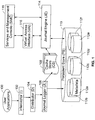
- Figure 1 is a block diagram of components for information protection and management in some embodiments. Figure 1 can be better understood when discussed in conjunction with Figures 2 and 3 .
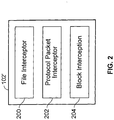
- Figure 2 is a block diagram of an interceptor in some embodiments.
- Figure 3 shows an example of the routing components that may be included in a distributor in some embodiments.
- user applications 100 are monitored by an interceptor 102.
- user applications include file systems, databases, and applications such as financial or word processing. All applications may be selected to be monitored by the interceptor 102 or a subset of the applications may be selected to be monitored.
- the interceptor may intercept input/output (I/O) from the application to the operating system. In some embodiments the interceptor 102 continuously monitors I/Os from the application.
- interceptor 102 if interceptor 102 resides on a host machine, the information may be captured before writing to storage. If interceptor 102 resides in a SAN, then the information can be captured when the operating system is about to write to storage. If interceptor 102 is in a NAS or on a TCP/IP switch, then the TCP/IP packets may be intercepted.
- interceptor 102' is shown to include a file interceptor 200, a protocol packet interceptor 202, and a block interceptor 204. In some embodiments only one of these interceptor components 200-204 are included in interceptor 102'. In some embodiments, two or more of these interceptor components 200-204 are included in interceptor 102'.
- interceptor 102' resides on a host machine and uses the file interceptor which may trap file I/O and generate meta-info on the file I/Os.
- the interceptor 102' resides in a NAS and uses the protocol packet interceptor which traps packets such as NFS, CIFS, or iSCSI packets in an IP platform.
- the interceptor 102' resides either in a SAN or on a host machine and uses a block interceptor which may intercept changes to data blocks. Further details of using the file interceptor 200 and block interceptor 204 will later be discussed in conjunction with Figure 12 .
- the interceptor 102 may generate meta-information packets herein referred to as a milestone marker, indicating a significant event of the information.
- Meta-information includes information about information. Examples of events that might trigger a milestone marker include the creation of a file, the deletion of a file, and a backup milestone marker. An example of when a backup milestone marker might be used is when backup markers are inserted according to a preset schedule. Another example is when backup milestone markers are used opportunistically, such as when the system is quiet and it may be determined that it is a good point to recover data.
- the interceptor 102 receives the information, puts it into a packet or packets, and passes it to the distributor 104.
- the distributor 104 may receive the packets and sends them to the journal logger 106 according various routing schemes. Examples of the different routing schemes that distributor 104 may use include network routing and SAN routing.
- distributor 104' is shown to include a network routing component 250 and a SAN routing component 252.
- distributor 104' may include a single routing component, such as network routing 250 or SAN routing 252.
- distributor 104' may include more than one routing component such as network routing 250 and SAN routing 252.
- protocols that may be used by network routing component 250 include RPC, TCP/IP, and iSCSI.
- protocols that may be used by the SAN routing component 252 include SCSCI and fiber channel protocol (FCP).
- distributor 104 can be either remotely located from interceptor 102 or local to interceptor 102. Accordingly, the information protection and management technique illustrated in Figure 1 can be applied to any operating system used by the applications 100, as well as being adaptable to any network configuration.
- the distributor 104 sends the information to journal logger 106.
- the journal logger 106 transforms and normalizes the intercepted packets so that further storage and management of these packets may be independent of the type of interceptor 102 and distributor 104.
- the journal logger may transform the received information into meta-information and filter out insignificant information. It may also normalize to a predetermined format using technologies such as XML or XDR.
- the distributor 104 may send packets in TCP/IP format and the journal logger 106 may transform the TCP/IP packets into a predetermined format such as XML.
- the interceptor 102, the distributor 104, and the journal logger 106 may be incorporated into high performing off-the-shelf components such as routers and multi-protocol switches such as those made by Cisco or Brocade.
- the information may be stored in the persistent store 110 which is shown to include multiple storage 112A-112F, including a metadata repository 112A.
- the data is stored in storage 112B-112F while the metadata associated with the data is stored in the metadata repository 112A.
- the persistent store 110 may be an intelligent persistent store with processing capabilities.
- the journal logger 106 may communication with the journal engine 114 using the cache store 108 and/or the persistent store 110.
- the persistent store 110 is an intelligent data storage device that can note and update version information regarding data that is stored and indexing data information such as time and version related to the stored data.
- the persistent store 110 may also work with virtualized storage such as a virtual LUN. It may also perform as a multi-versioning information system that can work with various implementations such as file system or object store using various technologies. This feature may be accomplished, for example, by adding a pluggable module and layer to support versioning, such as comprehensive versioning file system (CVFS) developed by Carnegie Mellon University, Reiser4 FS, or Versioning FS.
- CVFS comprehensive versioning file system
- Another example of technology that may be used to implement the multi-versioning information system is Multiple Version Access Structure as described in " An Efficient Multiversion Access Structure" by Peter J.
- the persistent store 110 can use any storage media such as SATA, ATA, SCSI, and FC discs.
- the journal engine 114 may manage the information stored in the persistent store 110.
- the journal engine 114 may include a query processing engine to respond to user requests. It may also determine and maintain the number of copies of a particular data as well as where those copies are located, and when various versions were created.
- the journal engine 114 may also include a policy engine that enforces policy such as enterprise policy or SEC compliance policy.
- the journal engine 114 may manage how many versions of data may be stored, when to move the data to another storage device, how many copies of a particular document to retain, etc. It may also maintain original data source information such as what program created the data and its various properties, such as who created it, when it was created, and its size, as well as storage entities associated with the data, and storage stack schema such as file system, volume manager, or LUNS.
- the journal engine 114 may also manage milestone markers by, for example, posting markers in persistent storage, and determining what the milestone markers mean. For example, a milestone marker may indicate that it is a good point to backup, or it may indicate a meaningful version.
- the journal engine 114 may also maintain metadata information. Examples of such metadata information include information such as two copies having been made of a particular document and one of them having been deleted and at what time and by whom.
- the journal engine 114 may also manage journal compaction for storage optimization as well as managing encryption of particular data.
- the journal engine 114 may also manage virtual snapshots to allow a user to view data at any point in time.
- the virtual snapshot options can be presented in various forms such as an NFS, CIFS file system, or as a LUN. For example, if a user requests to see D drive as it was at 2:00 p.m., the journal engine 114 may construct the complete set of data for D drive at 2:00 p.m. from persistent storage 110, and if necessary, from various secondary storage devices if data has been moved to these devices for optimization purposes. Further details of the journal engine 114 will be discussed later in conjunction with the remaining figures.
- the virtual access interface 116 may present requested information to a user in various forms, such as LUN, file system, or network file system, or application objects.
- the virtual access interface 116 may work in conjunction with services and management console 118 which may function as a user interface, such as a graphical user interface, to allow a user to set policies, configuration, query selection, and general interface with the user for browsing and recovery.
- FIG 4 is an illustration of a system for protecting and managing information in some embodiments.
- an application server 300A is shown to be coupled with a LAN 308A.
- the application server is also shown to be coupled with a host storage system 304A.
- the LAN 308A is also shown to be coupled with a data protection appliance 302A.
- the data protection appliance 302A may be any processing machine capable of hosting at least one data protection component 102-110 of Figure 4 .
- the data protection appliance 302A is also shown to be coupled with a storage 306A.
- Storage 306A may be a protection vault that includes multiple storage devices.
- the interceptor 102 and distributor 104 may reside in the application server 300A.
- the journal logger 106, journal engine 114, and persistent store 110 may reside in the data protection appliance.
- the virtual access interface 116 (of Figure 1 ) and services and management console 118 (also of Figure 1 ), may reside in the data protection appliance 302A.
- the interceptor 102 may reside in the host storage system 304A.
- FIG. 5 is an illustration of a SAN or switch-based configuration used in some embodiments.
- the LAN 308B is shown to be coupled with an application server 300B and the data protection appliance 302B.
- the application server 300B and data protection appliance 302B are both shown to be coupled with a switch 320.
- the switch 320 is shown to be coupled with the storage system 304B and protection vault 306B.
- the data protection appliance 302B may be directly coupled with the protection vault 306B.
- the interceptor 102, distributor 104, and journal logger 106 may reside in switch 320.
- the journal engine 114 and persistent store 110 may reside in the data protection appliance 302B.
- the interceptor 102, distributor 104, and journal logger 106 may reside in the storage system 304B. In some embodiments, the journal logger may reside in the data protection appliance 302B. In some embodiments, the interceptor 102, distributor 104, and journal logger 106 may reside in the application server 300B.
- Figure 6 shows another example of a system for information protection and management in some embodiments.
- the application server 300C is shown to be coupled with the LAN 308C, which in turn is shown to be coupled with the network attached storage 330A and the data protection appliance 302C.
- the data protection appliance 302C is shown to be coupled with protection vault 306C.
- the interceptor 102, distributor 104, journal logger 106, journal engine 114 and persistent store 110 may also reside in the data protection appliance 302C.
- the interceptor 102 and distributor 104 may reside in the application server 300C while the journal logger 106, journal engine 114 and persistent store 110 reside in the data protection appliance 302C.
- the interceptor 102, distributor 104, and journal logger 106 may reside in the network attached storage 330A, while the journal engine 114 and persistent store 110 reside in the data protection appliance 302C.
- the interceptor 102, distributor 104 and journal logger 106 may reside in the application server 300C.
- a switch (not shown) may also be coupled with the LAN 308C and the switch may have the interceptor 102 and distributor 104 residing in it.
- Figure 7 shows another example of a system for information protection and management in some embodiments.
- the LAN 308D is shown to be coupled with multiple application servers 300D-300E as well as the data protection appliance 302D and the network attached storage 330B.
- the application server 300D and data protection appliance 302D are shown to be coupled with a switch 340 which in turn is shown to be coupled with storage 306D and 304D.
- all of the protection components 102-114 may reside in the data protection appliance 302D.
- the interceptor 102 and distributor 104 may reside in one of the application servers 300D-E.
- the interceptor 102, distributor 104 and journal logger 106 may reside in the switch 340.
- a LAN switch (not shown) may be coupled with the LAN 308D and the interceptor 102 and distributor 104 may reside in the LAN switch.
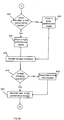
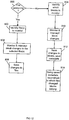
- FIGS 8A - 8C are flow diagrams of a method for protecting and managing information in some embodiments.
- I/O input/output
- the I/O is intercepted 402. For example, if drive D is to be continuously monitored, then I/O from the applications in drive D to the operating system are intercepted. Likewise, if a particular file is to be monitored, then the I/O associated with that file is continuously monitored and intercepted.
- a meaningful version it is determined whether a meaningful version has been created 404. For example, if a user is working on a word document, then the changes to that word document may be continuously monitored and intercepted. It is determined whether this particular change to the document is a meaningful version.
- An example of a meaningful version is when a user makes changes, saves the changes, and closes the document.
- Metadata as used herein refers to information related to the data. Examples of metadata include the time the data was created, who created it, what application it is associated with, etc.
- the storage metadata is then updated and maintained 408.
- Storage metadata as used herein refers to information related to data that is stored. Examples of storage metadata include the storage location of the data, how many copies of this particular data has been stored, how many versions of this document or file has been stored, etc.
- a milestone refers to significant events of information such as creation of a file, deletion of a file, and a good point for performing a backup. If it is a milestone event 410, then a milestone marker is associated with the data 412.
- the level of regular or frequent changes can be configured as a policy to determine at what level of usage a file should be stored in a lower performance, low cost storage. If data is not changing regularly, then it may be moved to a low cost, low performance storage 416. If, however, data is changing regularly 414, then the data is maintained in the high performance storage 420.
- policy does allow deletion of this file 456, then the file is deleted 460. It may also be determined whether the policy directs the deletion of all copies and versions of the file when the file is deleted on the user's machine 462. If the policy does not direct the deletion of all copies and versions, then copies and versions of the file are maintained 464. If, however, the policy directs deletion of all copies and versions 462, then all copies and versions of the file are deleted 466. For example, if a Power Point presentation is deleted by a user, and there are ten saved versions of that presentation, then all ten saved versions will be deleted when the user deletes the current presentation.
- the action may be performed according to policy 470.
- a company may have a policy to save all emails in a specific email repository. In that example, it would be determined whether the intercepted I/O is related to an email and if so it would be saved in the specified email repository.
- Figure 9 is a flow diagram of a method for intercepting and storing information in some embodiments.
- I/O is intercepted from the applications to the operating system 500.
- Metadata packets are generated 502. Examples of metadata include the time that a change occurred, which application it occurred in, and which computer system it occurred in. It is determined whether this event is a milestone 504. If it is a milestone, then a milestone marker is included in the metadata packet 506.
- the packets are sent to the journal logger, such as journal logger 106 of Figure 1 .
- the packets may be transformed to desired format 514.
- the packets may be transformed into XML and sent to the storage media in an FC packet format.
- the packets are then stored 516.
- Figure 10 is a flow diagram of a method for storage indexing in some embodiments.
- data packets are received for storage 600. It is determined whether these packets are metadata 602. If the packets are metadata 602, then the packets are stored in the metadata repository 604. If the packets are not metadata 602, then it is determined whether there is already a copy of this file 606.
- a file refers to any group of data, such as a file, a document, an Excel spreadsheet, a database, or a file system or directory.
- a storage index is maintained which includes information such as how many copies of a file are stored, how many versions of a file are stored, and the storage locations of each of these copies and versions.
- keeping track of this type of information facilitates answering queries related to the stored data as well as assisting in SEC compliance or enterprise policy compliance.
- Figures 11A-11B are flow diagrams of a method executed by a journal engine in some embodiments.
- it is determined whether a maximum number of versions has been reached 700.
- a policy may dictate that up to ten versions of a document can be saved. If the maximum number of versions has been reached, then the oldest version is deleted in this example 702.
- this particular situation is a good recovery point 704.
- a good recovery point is when all or most the applications are not active or in a quiescent state, such as the middle of the night when very few changes are occurring in the system.
- a scheduled recovery point such as scheduling a recovery point every two hours.
- the applications may be made quiescent 706.
- the I/Os are held during this time in order to obtain a clean point at which a backup can be made.
- a backup is not made at this time.
- the applications are made quiescent and a backup milestone marker is placed 708. Since an actual backup is not performed in some embodiments, the quiescing of the applications and placing of the backup milestone marker can be performed quickly and efficiently.
- the age at which data is deemed old can be specified in a policy. For example, data that is one week old may be determined to be old. If the data is old, then it may be archived in a lower performance storage 712.
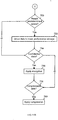
- Figure 12 is a flow diagram for a method of block and file versioning in some embodiments.
- it is determined whether to perform file versioning 800. If file versioning should occur then files to monitor are identified 802. For example, an entire file system may be designated to be monitored, or a particular file or group of files may be identified to be monitored. Block changes to the selected files are then monitored and intercepted 804. These changes are then saved such that the changes are associated with the file to which the change has been made.
- the blocks of data to be monitored are identified 808.
- the data blocks to be monitored are independent of the files to which the data is associated. Changes to these blocks are then monitored and intercepted 810. The changes to these blocks are saved, and the metadata associated with these changes are also updated 812. Examples of the metadata associated with the changed blocks include which file the data blocks are associated with. Using the saved metadata, the files to which the saved blocks belong may be reconstructed 814.
- both block and file versioning may be performed. This can be configured as part of setup by choosing appropriate strategy of using File or Block or combination of both.
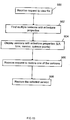
- Figure 13 is a flow diagram of a method for recovery of stored data in some embodiments.
- a request to view a file is received 900.
- a request to view a file named D:/A.Text may be received.
- Multiple versions with milestone properties may be found 902.
- a search may be conducted in the persistent store, such as the persistent storage 110 of Figure 1 , for multiple versions of the requested file.
- the milestone properties associated with those versions are also found. Examples of the milestone properties include date and time of the versions.
- These versions may be displayed with their milestone properties 904. Accordingly, the user may view a list of versions with the time, the version, and quiescent points indicating that this particular version is a backup quality version. A request to restore one of the versions may then be received 906 and the selected version is then restored 908.
- Figure 14 is a flow diagram of a method for backing up data in some embodiments.
- a request to perform a backup is received.
- Recovery point milestone markers are then located 952.
- a recovery point is then selected 954.
- versions with recovery point milestone markers may be located and displayed to a user and a user may select a recovery point to backup.
- backups may be scheduled so that versions from a particular time are automatically selected 954.
- the stored data associated with the selected recovery point milestone marker is located 956.
- the storage metadata may indicate where the selected data is stored.
- Backup is then performed with the selected stored data in this example 958.
- the backups are performed with the stored data, allowing the applications to perform at normal performance levels.
- the invention can provide for a method for information management comprising:
- the invention can be defined above but wherein the output is from the application to an operating system.
- the invention can be defined above but further comprising updating the storage metadata.
- the invention can be defined above but wherein saving data is associated with data protection.
- the invention can be defined above but wherein data is saved in a medium external to a device on which the application resides.
- the invention can be defined above but further comprising determining whether the data is associated with a milestone.
- the invention can be defined above but wherein the milestone is a candidate for a backup.
- the invention can be defined above but wherein the milestone is a meaningful version.
- the invention can further provide for a system for information management comprising: a processor configured to:
- the invention can be defined above but wherein the memory is remote from the processor.
- the invention can be defined above but wherein the memory is local to the processor.
- the invention can be defined above but wherein the memory is coupled to the processor via a LAN.
- the invention can yet further provide for a computer program product for information management, the computer program product being embodied in a computer readable medium and comprising computer instructions for:
- the invention can be defined above but wherein the predetermined type of version is a meaningful version.
- the invention can be defined above but wherein the output is associated with the predetermined type of version if a save and a close have been executed.
- the invention can be defined above but further comprising determining whether the data is associated with a milestone, and wherein the milestone is a candidate for a backup.
Landscapes
- Engineering & Computer Science (AREA)
- Theoretical Computer Science (AREA)
- Physics & Mathematics (AREA)
- General Engineering & Computer Science (AREA)
- General Physics & Mathematics (AREA)
- Data Mining & Analysis (AREA)
- Databases & Information Systems (AREA)
- Quality & Reliability (AREA)
- Information Retrieval, Db Structures And Fs Structures Therefor (AREA)
- Debugging And Monitoring (AREA)
- Hardware Redundancy (AREA)
Abstract
Description
- This application claims priority to
U.S. Provisional Patent Application No. 60/640,971 - The present invention relates generally to electronic information, more specifically to information management.
- Computer backup and recovery tools are typically used by scheduling a set number of backups, such as one backup per day. A potential problem with the traditional backup system is that if a user needs to recover data, the data that was created after the last backup will typically be lost. It would be desirable to efficiently protect and manage information so that the information can be recovered even in between scheduled backups.
- Various embodiments of the invention are disclosed in the following detailed description and the accompanying drawings.
-
Figure 1 is a block diagram of components for information protection and management in some embodiments. -
Figure 2 is a block diagram of an interceptor in some embodiments. -
Figure 3 shows an example of the routing components that may be included in a distributor in some embodiments. -
Figure 4 is an illustration of a system for protecting and managing information in some embodiments. -
Figure 5 is an illustration of a SAN or switch-based configuration used in some embodiments. -
Figure 6 shows another example of a system for information protection and management in some embodiments. -
Figure 7 shows another example of a system for information protection and management in some embodiments. -
Figures 8A - 8C are flow diagrams of a method for protecting and managing information in some embodiments. -
Figure 9 is a flow diagram of a method for intercepting and storing information in some embodiments. -
Figure 10 is a flow diagram of a method for storage indexing in some embodiments. -
Figures 11A-11B are flow diagrams of a method executed by a journal engine in some embodiments. -
Figure 12 is a flow diagram for a method of block and file versioning in some embodiments. -
Figure 13 is a flow diagram of a method for recovery of stored data in some embodiments. -
Figure 14 is a flow diagram of a method for backing up data in some embodiments. - The invention can be implemented in numerous ways, including as a process, an apparatus, a system, a composition of matter, a computer readable medium such as a computer readable storage medium or a computer network wherein program instructions are sent over optical or electronic communication links. In this specification, these implementations, or any other form that the invention may take, may be referred to as techniques. In general, the order of the steps of disclosed processes may be altered within the scope of the invention.
- A detailed description of one or more embodiments of the invention is provided below along with accompanying figures that illustrate the principles of the invention. The invention is described in connection with such embodiments, but the invention is not limited to any embodiment. The scope of the invention is limited only by the claims and the invention encompasses numerous alternatives, modifications and equivalents. Numerous specific details are set forth in the following description in order to provide a thorough understanding of the invention. These details are provided for the purpose of example and the invention may be practiced according to the claims without some or all of these specific details. For the purpose of clarity, technical material that is known in the technical fields related to the invention has not been described in detail so that the invention is not unnecessarily obscured.
-
Figure 1 is a block diagram of components for information protection and management in some embodiments.Figure 1 can be better understood when discussed in conjunction withFigures 2 and3 .Figure 2 is a block diagram of an interceptor in some embodiments.Figure 3 shows an example of the routing components that may be included in a distributor in some embodiments. - In the example shown in
Figure 1 ,user applications 100 are monitored by aninterceptor 102. Examples of user applications include file systems, databases, and applications such as financial or word processing. All applications may be selected to be monitored by theinterceptor 102 or a subset of the applications may be selected to be monitored. The interceptor may intercept input/output (I/O) from the application to the operating system. In some embodiments theinterceptor 102 continuously monitors I/Os from the application. - In some embodiments, if
interceptor 102 resides on a host machine, the information may be captured before writing to storage. Ifinterceptor 102 resides in a SAN, then the information can be captured when the operating system is about to write to storage. Ifinterceptor 102 is in a NAS or on a TCP/IP switch, then the TCP/IP packets may be intercepted. - In the example shown in
Figure 2 , interceptor 102' is shown to include afile interceptor 200, aprotocol packet interceptor 202, and ablock interceptor 204. In some embodiments only one of these interceptor components 200-204 are included in interceptor 102'. In some embodiments, two or more of these interceptor components 200-204 are included in interceptor 102'. - In one embodiment, interceptor 102' resides on a host machine and uses the file interceptor which may trap file I/O and generate meta-info on the file I/Os. In another embodiment, the interceptor 102' resides in a NAS and uses the protocol packet interceptor which traps packets such as NFS, CIFS, or iSCSI packets in an IP platform. In another embodiment, the interceptor 102' resides either in a SAN or on a host machine and uses a block interceptor which may intercept changes to data blocks. Further details of using the
file interceptor 200 andblock interceptor 204 will later be discussed in conjunction withFigure 12 . - Returning to
Figure 1 , theinterceptor 102 may generate meta-information packets herein referred to as a milestone marker, indicating a significant event of the information. Meta-information, as used herein, includes information about information. Examples of events that might trigger a milestone marker include the creation of a file, the deletion of a file, and a backup milestone marker. An example of when a backup milestone marker might be used is when backup markers are inserted according to a preset schedule. Another example is when backup milestone markers are used opportunistically, such as when the system is quiet and it may be determined that it is a good point to recover data. - In some embodiments, the
interceptor 102 receives the information, puts it into a packet or packets, and passes it to thedistributor 104. - The
distributor 104 may receive the packets and sends them to thejournal logger 106 according various routing schemes. Examples of the different routing schemes thatdistributor 104 may use include network routing and SAN routing. - In the example shown in
Figure 3 , distributor 104' is shown to include anetwork routing component 250 and aSAN routing component 252. In some embodiments, distributor 104' may include a single routing component, such asnetwork routing 250 or SANrouting 252. In some embodiments, distributor 104' may include more than one routing component such asnetwork routing 250 and SANrouting 252. Examples of protocols that may be used bynetwork routing component 250 include RPC, TCP/IP, and iSCSI. Examples of protocols that may be used by theSAN routing component 252 include SCSCI and fiber channel protocol (FCP). - Returning to
Figure 1 ,distributor 104 can be either remotely located frominterceptor 102 or local tointerceptor 102. Accordingly, the information protection and management technique illustrated inFigure 1 can be applied to any operating system used by theapplications 100, as well as being adaptable to any network configuration. - The
distributor 104 sends the information tojournal logger 106. In some embodiments, thejournal logger 106 transforms and normalizes the intercepted packets so that further storage and management of these packets may be independent of the type ofinterceptor 102 anddistributor 104. In some embodiments, the journal logger may transform the received information into meta-information and filter out insignificant information. It may also normalize to a predetermined format using technologies such as XML or XDR. For example, thedistributor 104 may send packets in TCP/IP format and thejournal logger 106 may transform the TCP/IP packets into a predetermined format such as XML. - The
interceptor 102, thedistributor 104, and thejournal logger 106 may be incorporated into high performing off-the-shelf components such as routers and multi-protocol switches such as those made by Cisco or Brocade. - The information may be stored in the
persistent store 110 which is shown to include multiple storage 112A-112F, including a metadata repository 112A. In some embodiments the data is stored in storage 112B-112F while the metadata associated with the data is stored in the metadata repository 112A. Thepersistent store 110 may be an intelligent persistent store with processing capabilities. - The
journal logger 106 may communication with thejournal engine 114 using thecache store 108 and/or thepersistent store 110. - In some embodiments, the
persistent store 110 is an intelligent data storage device that can note and update version information regarding data that is stored and indexing data information such as time and version related to the stored data. Thepersistent store 110 may also work with virtualized storage such as a virtual LUN. It may also perform as a multi-versioning information system that can work with various implementations such as file system or object store using various technologies. This feature may be accomplished, for example, by adding a pluggable module and layer to support versioning, such as comprehensive versioning file system (CVFS) developed by Carnegie Mellon University, Reiser4 FS, or Versioning FS. Another example of technology that may be used to implement the multi-versioning information system is Multiple Version Access Structure as described in "An Efficient Multiversion Access Structure" by Peter J. Varman, Rakesh M. Verma, IEEE Transactions on Knowledge and Data Engineering, Vol. 9, No. 3, pp. 391-409, May/June 1997. Thepersistent store 110 can use any storage media such as SATA, ATA, SCSI, and FC discs. - The
journal engine 114 may manage the information stored in thepersistent store 110. Thejournal engine 114 may include a query processing engine to respond to user requests. It may also determine and maintain the number of copies of a particular data as well as where those copies are located, and when various versions were created. - The
journal engine 114 may also include a policy engine that enforces policy such as enterprise policy or SEC compliance policy. For example, thejournal engine 114 may manage how many versions of data may be stored, when to move the data to another storage device, how many copies of a particular document to retain, etc. It may also maintain original data source information such as what program created the data and its various properties, such as who created it, when it was created, and its size, as well as storage entities associated with the data, and storage stack schema such as file system, volume manager, or LUNS. Thejournal engine 114 may also manage milestone markers by, for example, posting markers in persistent storage, and determining what the milestone markers mean. For example, a milestone marker may indicate that it is a good point to backup, or it may indicate a meaningful version. Thejournal engine 114 may also maintain metadata information. Examples of such metadata information include information such as two copies having been made of a particular document and one of them having been deleted and at what time and by whom. - The
journal engine 114 may also manage journal compaction for storage optimization as well as managing encryption of particular data. Thejournal engine 114 may also manage virtual snapshots to allow a user to view data at any point in time. The virtual snapshot options can be presented in various forms such as an NFS, CIFS file system, or as a LUN. For example, if a user requests to see D drive as it was at 2:00 p.m., thejournal engine 114 may construct the complete set of data for D drive at 2:00 p.m. frompersistent storage 110, and if necessary, from various secondary storage devices if data has been moved to these devices for optimization purposes. Further details of thejournal engine 114 will be discussed later in conjunction with the remaining figures. - The
virtual access interface 116 may present requested information to a user in various forms, such as LUN, file system, or network file system, or application objects. Thevirtual access interface 116 may work in conjunction with services andmanagement console 118 which may function as a user interface, such as a graphical user interface, to allow a user to set policies, configuration, query selection, and general interface with the user for browsing and recovery. -
Figure 4 is an illustration of a system for protecting and managing information in some embodiments. In this example, an application server 300A is shown to be coupled with a LAN 308A. The application server is also shown to be coupled with a host storage system 304A. The LAN 308A is also shown to be coupled with a data protection appliance 302A. The data protection appliance 302A may be any processing machine capable of hosting at least one data protection component 102-110 ofFigure 4 . The data protection appliance 302A is also shown to be coupled with a storage 306A. Storage 306A may be a protection vault that includes multiple storage devices. - In some embodiments, the
interceptor 102 anddistributor 104 may reside in the application server 300A. Thejournal logger 106,journal engine 114, andpersistent store 110 may reside in the data protection appliance. Additionally, the virtual access interface 116 (ofFigure 1 ) and services and management console 118 (also ofFigure 1 ), may reside in the data protection appliance 302A. - In another example, the
interceptor 102 may reside in the host storage system 304A. -
Figure 5 is an illustration of a SAN or switch-based configuration used in some embodiments. In this example, the LAN 308B is shown to be coupled with an application server 300B and the data protection appliance 302B. The application server 300B and data protection appliance 302B are both shown to be coupled with aswitch 320. Theswitch 320 is shown to be coupled with the storage system 304B and protection vault 306B. In one variation, the data protection appliance 302B may be directly coupled with the protection vault 306B. - In some embodiments, the
interceptor 102,distributor 104, andjournal logger 106 may reside inswitch 320. Thejournal engine 114 andpersistent store 110 may reside in the data protection appliance 302B. - In some embodiments, the
interceptor 102,distributor 104, andjournal logger 106 may reside in the storage system 304B. In some embodiments, the journal logger may reside in the data protection appliance 302B. In some embodiments, theinterceptor 102,distributor 104, andjournal logger 106 may reside in the application server 300B. -
Figure 6 shows another example of a system for information protection and management in some embodiments. In this example, the application server 300C is shown to be coupled with theLAN 308C, which in turn is shown to be coupled with the network attached storage 330A and the data protection appliance 302C. The data protection appliance 302C is shown to be coupled with protection vault 306C. - In some embodiments, the
interceptor 102,distributor 104,journal logger 106,journal engine 114 andpersistent store 110 may also reside in the data protection appliance 302C. In other embodiments, theinterceptor 102 anddistributor 104 may reside in the application server 300C while thejournal logger 106,journal engine 114 andpersistent store 110 reside in the data protection appliance 302C. In other embodiments, theinterceptor 102,distributor 104, andjournal logger 106 may reside in the network attached storage 330A, while thejournal engine 114 andpersistent store 110 reside in the data protection appliance 302C. In yet other embodiments, theinterceptor 102,distributor 104 andjournal logger 106 may reside in the application server 300C. In yet other embodiments, a switch (not shown) may also be coupled with theLAN 308C and the switch may have theinterceptor 102 anddistributor 104 residing in it. -
Figure 7 shows another example of a system for information protection and management in some embodiments. In this example, the LAN 308D is shown to be coupled with multiple application servers 300D-300E as well as the data protection appliance 302D and the network attached storage 330B. The application server 300D and data protection appliance 302D are shown to be coupled with aswitch 340 which in turn is shown to be coupled with storage 306D and 304D. - In some embodiments, all of the protection components 102-114 may reside in the data protection appliance 302D. In other embodiments, the
interceptor 102 anddistributor 104 may reside in one of the application servers 300D-E. In other embodiments, theinterceptor 102,distributor 104 andjournal logger 106 may reside in theswitch 340. In yet other embodiments, a LAN switch (not shown) may be coupled with the LAN 308D and theinterceptor 102 anddistributor 104 may reside in the LAN switch. - The systems described in
Figures 4-7 are merely examples of possible configurations. Other configurations are contemplated in other embodiments, including any combination of protection components 102-114 residing in any combination of devices. -
Figures 8A - 8C are flow diagrams of a method for protecting and managing information in some embodiments. In this example, input/output (I/O) is continuously monitored from the application to theoperating system 400. The I/O is intercepted 402. For example, if drive D is to be continuously monitored, then I/O from the applications in drive D to the operating system are intercepted. Likewise, if a particular file is to be monitored, then the I/O associated with that file is continuously monitored and intercepted. - In some embodiments, it is determined whether a meaningful version has been created 404. For example, if a user is working on a word document, then the changes to that word document may be continuously monitored and intercepted. It is determined whether this particular change to the document is a meaningful version. An example of a meaningful version is when a user makes changes, saves the changes, and closes the document.
- If it is determined that this is a
meaningful version 404, then the data and metadata are saved 406. Metadata as used herein refers to information related to the data. Examples of metadata include the time the data was created, who created it, what application it is associated with, etc. The storage metadata is then updated and maintained 408. Storage metadata as used herein refers to information related to data that is stored. Examples of storage metadata include the storage location of the data, how many copies of this particular data has been stored, how many versions of this document or file has been stored, etc. - It may also be determined whether this intercepted I/O is a
milestone 410. A milestone, as used herein, refers to significant events of information such as creation of a file, deletion of a file, and a good point for performing a backup. If it is amilestone event 410, then a milestone marker is associated with thedata 412. - It may also be determined whether to store in
high performance media 422. For example, a particular file may be designated as being important enough to always store in high performance media or certain types of documents, such as PowerPoint Presentations, may be designated to always be stored in lower performance media. Accordingly, if it is determined that this data should not be stored inhigh performance media 422, then it is stored in thelower performance media 424. If, however, it is determined that it should be stored in high performance media, then it is stored inhigh performance media 426. The storage metadata is then updated 428 to indicate the location of the data in the storage media. - It may also be determined as to whether the data is changing regularly 414. The level of regular or frequent changes can be configured as a policy to determine at what level of usage a file should be stored in a lower performance, low cost storage. If data is not changing regularly, then it may be moved to a low cost,
low performance storage 416. If, however, data is changing regularly 414, then the data is maintained in thehigh performance storage 420. - It may also be determined whether a file is being deleted 450. If the intercepted I/O is for deleting a file, then it is determined whether the policy allows the deletion of this
file 456. If the predetermined policy does not allow the deletion of this file, then a copy of the file is maintained 458. For example, an enterprise policy or an SEC policy might require that all financial documents be saved for a certain number of years. If the file that the user is attempting to delete is a financial document, then depending on the policy, the file may be deleted in the user's computer but a copy of the file may be maintained in low performance archival storage. - If policy does allow deletion of this
file 456, then the file is deleted 460. It may also be determined whether the policy directs the deletion of all copies and versions of the file when the file is deleted on the user'smachine 462. If the policy does not direct the deletion of all copies and versions, then copies and versions of the file are maintained 464. If, however, the policy directs deletion of all copies andversions 462, then all copies and versions of the file are deleted 466. For example, if a Power Point presentation is deleted by a user, and there are ten saved versions of that presentation, then all ten saved versions will be deleted when the user deletes the current presentation. - It may also be determined whether the policy requires a
particular action 468, in which case, the action may be performed according topolicy 470. For example, a company may have a policy to save all emails in a specific email repository. In that example, it would be determined whether the intercepted I/O is related to an email and if so it would be saved in the specified email repository. -
Figure 9 is a flow diagram of a method for intercepting and storing information in some embodiments. In this example, I/O is intercepted from the applications to theoperating system 500. Metadata packets are generated 502. Examples of metadata include the time that a change occurred, which application it occurred in, and which computer system it occurred in. It is determined whether this event is amilestone 504. If it is a milestone, then a milestone marker is included in themetadata packet 506. - It is also determined whether the data and metadata packets should be sent via a
network routing protocol 508. If it should not be sent via a network routing protocol, then a SAN routing protocol or Shared Memory strategy is used to send the packets in this example 510. If, however, a network routing protocol should be used 508, then network routing protocol is used to send thepackets 512. In some embodiments, the packets are sent to the journal logger, such asjournal logger 106 ofFigure 1 . - The packets may be transformed to desired
format 514. For example, the packets may be transformed into XML and sent to the storage media in an FC packet format. The packets are then stored 516. -
Figure 10 is a flow diagram of a method for storage indexing in some embodiments. In this example, data packets are received forstorage 600. It is determined whether these packets are metadata 602. If the packets are metadata 602, then the packets are stored in themetadata repository 604. If the packets are not metadata 602, then it is determined whether there is already a copy of thisfile 606. A file, as used herein, refers to any group of data, such as a file, a document, an Excel spreadsheet, a database, or a file system or directory. - It is then determined whether there is already a copy of this
data 606. If there is already a copy stored in thestorage media 606, then copy information and storage location are updated in thestorage index 608. In some embodiments, a storage index is maintained which includes information such as how many copies of a file are stored, how many versions of a file are stored, and the storage locations of each of these copies and versions. - It may also be determined whether there is an old version of this
data 610. If there is an old version, then version information and storage locations of the various versions are updated in thestorage index 612. - It may also be determined whether these received packets indicate that a file is being deleted 614. If it is being deleted, then the storage index is updated with which copy or version is being deleted 616.
- In some embodiments, keeping track of this type of information facilitates answering queries related to the stored data as well as assisting in SEC compliance or enterprise policy compliance.
-
Figures 11A-11B are flow diagrams of a method executed by a journal engine in some embodiments. In this example, it is determined whether a maximum number of versions has been reached 700. For example, a policy may dictate that up to ten versions of a document can be saved. If the maximum number of versions has been reached, then the oldest version is deleted in this example 702. - It may also be determined whether this particular situation is a
good recovery point 704. One example of a good recovery point is when all or most the applications are not active or in a quiescent state, such as the middle of the night when very few changes are occurring in the system. Another example of a recovery point is a scheduled recovery point such as scheduling a recovery point every two hours. - In some embodiments, if this situation is a
recovery point 704, then the applications may be made quiescent 706. When applications are made quiescent, the I/Os are held during this time in order to obtain a clean point at which a backup can be made. In some embodiments, a backup is not made at this time. The applications are made quiescent and a backup milestone marker is placed 708. Since an actual backup is not performed in some embodiments, the quiescing of the applications and placing of the backup milestone marker can be performed quickly and efficiently. - It may also be determined whether specific stored data is old 710. The age at which data is deemed old can be specified in a policy. For example, data that is one week old may be determined to be old. If the data is old, then it may be archived in a
lower performance storage 712. - It may also be determined whether data in the persistent store has reached a predetermined amount of
space 750. If the stored data has filled a predetermined amount of space, then data may be moved to alower performance storage 752, in some embodiments. In some embodiments, the data that is moved to a lower performance storage may be prioritized so that certain types of data are moved to the lower performance storage before other types of data. For example, PowerPoint Presentations may be moved to lower performance storage before emails are moved, which in turn, might be moved to lower performance storage before Word documents. - It may also be determined whether stored data is confidential 754. If data is confidential then encryption may be applied to
such data 756. - It may also be determined whether the stored data is compressible 758. If certain data are compressible, then compression may be applied to
such data 760. -
Figure 12 is a flow diagram for a method of block and file versioning in some embodiments. In this example, it is determined whether to performfile versioning 800. If file versioning should occur then files to monitor are identified 802. For example, an entire file system may be designated to be monitored, or a particular file or group of files may be identified to be monitored. Block changes to the selected files are then monitored and intercepted 804. These changes are then saved such that the changes are associated with the file to which the change has been made. - If it is determined that file versioning should not occur 800, then the blocks of data to be monitored are identified 808. In some embodiments the data blocks to be monitored are independent of the files to which the data is associated. Changes to these blocks are then monitored and intercepted 810. The changes to these blocks are saved, and the metadata associated with these changes are also updated 812. Examples of the metadata associated with the changed blocks include which file the data blocks are associated with. Using the saved metadata, the files to which the saved blocks belong may be reconstructed 814.
- Accordingly, both block and file versioning may be performed. This can be configured as part of setup by choosing appropriate strategy of using File or Block or combination of both.
-
Figure 13 is a flow diagram of a method for recovery of stored data in some embodiments. In this example, a request to view a file is received 900. For example, a request to view a file named D:/A.Text may be received. Multiple versions with milestone properties may be found 902. For example, a search may be conducted in the persistent store, such as thepersistent storage 110 ofFigure 1 , for multiple versions of the requested file. The milestone properties associated with those versions are also found. Examples of the milestone properties include date and time of the versions. - These versions may be displayed with their
milestone properties 904. Accordingly, the user may view a list of versions with the time, the version, and quiescent points indicating that this particular version is a backup quality version. A request to restore one of the versions may then be received 906 and the selected version is then restored 908. -
Figure 14 is a flow diagram of a method for backing up data in some embodiments. In this example, a request to perform a backup is received. Recovery point milestone markers are then located 952. A recovery point is then selected 954. For example, versions with recovery point milestone markers may be located and displayed to a user and a user may select a recovery point to backup. Alternatively, backups may be scheduled so that versions from a particular time are automatically selected 954. - Using the storage metadata, the stored data associated with the selected recovery point milestone marker is located 956. For example, the storage metadata may indicate where the selected data is stored. Backup is then performed with the selected stored data in this example 958. In some embodiments, the backups are performed with the stored data, allowing the applications to perform at normal performance levels.
- Although the foregoing embodiments have been described in some detail for purposes of clarity of understanding, the invention is not limited to the details provided. There are many alternative ways of implementing the invention. The disclosed embodiments are illustrative and not restrictive.
- It should be appreciated that the invention can provide for a method for information management comprising:
- monitoring output from an application, wherein the output is monitored substantially continuously;
- determining if the output is associated with a predetermined type of version; and
- saving data associated with the output if the output is associated with the predetermined type of version.
- The invention can be defined above but wherein the output is from the application to an operating system.
- The invention can be defined above but further comprising updating the storage metadata.
- The invention can be defined above but wherein saving data is associated with data protection.
- The invention can be defined above but wherein data is saved in a medium external to a device on which the application resides.
- The invention can be defined above but further comprising determining whether the data is associated with a milestone.
- The invention can be defined above but wherein the milestone is a candidate for a backup.
- The invention can be defined above but wherein the milestone is a meaningful version.
- The invention can further provide for a system for information management comprising:
a processor configured to: - monitor output from an application, wherein the output is monitored substantially continuously;
- determining if the output is associated with a predetermined type of version; and
- a memory coupled with the processor, wherein the memory is configured to: save data associated with the output if the output is associated with the predetermined type of version.
- The invention can be defined above but wherein the memory is remote from the processor.
- The invention can be defined above but wherein the memory is local to the processor.
- The invention can be defined above but wherein the memory is coupled to the processor via a LAN.
- The invention can yet further provide for a computer program product for information management, the computer program product being embodied in a computer readable medium and comprising computer instructions for:
- monitoring output from an application, wherein the output is monitored substantially continuously;
- determining if the output is associated with a predetermined type of version;
- saving data associated with the output if the output is associated with the predetermined type of version.
- The invention can be defined above but wherein the predetermined type of version is a meaningful version.
- The invention can be defined above but wherein the output is associated with the predetermined type of version if a save and a close have been executed.
- The invention can be defined above but further comprising determining whether the data is associated with a milestone, and wherein the milestone is a candidate for a backup.
Claims (15)
- A method for information management comprising:intercepting (402) output from an application (100) to a network storage but prior to arrival at the network storage, wherein the output is directed towards protected data, and the intercepting the output comprises intercepting an Internet Protocol network packet;using a processor to analyze (404) the intercepted output to determine whether a predetermined type of version of the protected data has been created;in response to a determination that the predetermined type of version of the protected data has been created at least in part because the analyzed intercepted output includes a modification to the protected data, automatically backing up (408) the protected data; andin response to a determination that the predetermined type of version of the protected data has not been created, not backing up the protected data.
- The method of claim 1, wherein to analyze the intercepted output includes determining whether to generate a milestone marker, and in response to determining to generate the milestone marker, generating the milestone marker, including sending a metadata packet with the milestone marker using a network routing protocol.
- The method of claim 1, wherein a version of the protected data that is backed up is the predetermined type of version.
- The method of claim 1, further comprising updating storage metadata.
- The method of claim 1, further comprising determining whether the data is associated with a milestone (410), and wherein the milestone (410) is a meaningful version (404).
- The method of claim 1, wherein the modification to the protected data includes a save and a close of the protected data.
- The method of claim 1, further comprising determining whether the output output is associated with a milestone, and storing a milestone marker and a time information in response to a determination that the output determined the file output is associated with the milestone.
- The method of claim 1, further comprising determining whether the intercepted output is associated with an instruction for deleting a file.
- The method of claim 8, further comprising:determining whether a policy permits deletion of the file if the intercepted output is associated with the instruction for deleting the file; andin response to a determination that the policy does not permit deletion of the file, saving at least one version of the file.
- A system for information management comprising:a processor configured to:intercept (402) output from an application (100) to a network storage but prior to arrival at the network storage, wherein the output is directed towards protected data, and to intercept the output comprises intercepting an Internet Protocol network packet;analyze (404) the intercepted output to determine whether a predetermined type of version of the protected data has been created;in response to a determination that the predetermined type of version of the protected data has been created at least in part because the analyzed intercepted output includes a modification to the protected data, automatically backup up (408) the protected data; andin response to a determination that the predetermined type of version of the protected data has not been created, not back up the protected data; anda memory (110) coupled to the processor and configured to provide the processor with instructions.
- A computer program product for information management, the computer program product being embodied in a computer readable medium and comprising computer instructions for:intercepting (402) output from an application (100) to a network storage but prior to arrival at the network storage, wherein the output is directed towards protected data, and the intercepting the output comprises intercepting an Internet Protocol network packet;analyzing (404) the intercepted output to determine whether a predetermined type of version of the protected data has been created;in response to a determination that the predetermined type of version of the protected data has been created at least in part because the analyzed intercepted output includes a modification to the protected data, automatically backing up (408) the protected data; andin response to a determination that the predetermined type of version of the protected data has not been created, not backing up the protected data.
- The method of claim 1 or the system of claim 10 or the computer program product of claim 11, wherein the predetermined type of version is a meaningful version (404).
- The method of claim 1 or the system of claim 10 or the computer program product of claim 11, wherein the output is associated with the predetermined type of version if a save and a close have been executed.
- The method of claim 1 or the system of claim 10 or the computer program product of claim 11, further comprising determining whether the data is associated with a milestone (410), and
wherein the milestone is a candidate for a backup. - The method of claim 1, wherein the intercepting (804) the output is performed on a block-level basis.
Applications Claiming Priority (4)
| Application Number | Priority Date | Filing Date | Title |
|---|---|---|---|
| US64097104P | 2004-12-31 | 2004-12-31 | |
| US11/084,179 US8260753B2 (en) | 2004-12-31 | 2005-03-18 | Backup information management |
| PCT/US2005/046111 WO2006073803A2 (en) | 2004-12-31 | 2005-12-19 | Backup information management |
| EP05854771.2A EP1839202B1 (en) | 2004-12-31 | 2005-12-19 | Backup information management |
Related Parent Applications (2)
| Application Number | Title | Priority Date | Filing Date |
|---|---|---|---|
| EP05854771.2A Division EP1839202B1 (en) | 2004-12-31 | 2005-12-19 | Backup information management |
| EP05854771.2A Division-Into EP1839202B1 (en) | 2004-12-31 | 2005-12-19 | Backup information management |
Publications (3)
| Publication Number | Publication Date |
|---|---|
| EP3502913A2 true EP3502913A2 (en) | 2019-06-26 |
| EP3502913A3 EP3502913A3 (en) | 2019-07-10 |
| EP3502913B1 EP3502913B1 (en) | 2023-11-22 |
Family
ID=36641945
Family Applications (2)
| Application Number | Title | Priority Date | Filing Date |
|---|---|---|---|
| EP19155582.0A Expired - Lifetime EP3502913B1 (en) | 2004-12-31 | 2005-12-19 | Backup information management |
| EP05854771.2A Expired - Lifetime EP1839202B1 (en) | 2004-12-31 | 2005-12-19 | Backup information management |
Family Applications After (1)
| Application Number | Title | Priority Date | Filing Date |
|---|---|---|---|
| EP05854771.2A Expired - Lifetime EP1839202B1 (en) | 2004-12-31 | 2005-12-19 | Backup information management |
Country Status (4)
| Country | Link |
|---|---|
| US (2) | US8260753B2 (en) |
| EP (2) | EP3502913B1 (en) |
| JP (1) | JP2008527494A (en) |
| WO (1) | WO2006073803A2 (en) |
Families Citing this family (36)
| Publication number | Priority date | Publication date | Assignee | Title |
|---|---|---|---|---|
| US7308263B2 (en) | 2001-02-26 | 2007-12-11 | Kineto Wireless, Inc. | Apparatus for supporting the handover of a telecommunication session between a licensed wireless system and an unlicensed wireless system |
| US7979656B2 (en) | 2004-06-01 | 2011-07-12 | Inmage Systems, Inc. | Minimizing configuration changes in a fabric-based data protection solution |
| US8055745B2 (en) * | 2004-06-01 | 2011-11-08 | Inmage Systems, Inc. | Methods and apparatus for accessing data from a primary data storage system for secondary storage |
| US7676502B2 (en) * | 2006-05-22 | 2010-03-09 | Inmage Systems, Inc. | Recovery point data view shift through a direction-agnostic roll algorithm |
| US7698401B2 (en) * | 2004-06-01 | 2010-04-13 | Inmage Systems, Inc | Secondary data storage and recovery system |
| US8949395B2 (en) | 2004-06-01 | 2015-02-03 | Inmage Systems, Inc. | Systems and methods of event driven recovery management |
| US8224786B2 (en) * | 2004-06-01 | 2012-07-17 | Inmage Systems, Inc. | Acquisition and write validation of data of a networked host node to perform secondary storage |
| US8868858B2 (en) | 2006-05-19 | 2014-10-21 | Inmage Systems, Inc. | Method and apparatus of continuous data backup and access using virtual machines |
| US9209989B2 (en) * | 2004-06-01 | 2015-12-08 | Inmage Systems, Inc. | Causation of a data read operation against a first storage system by a server associated with a second storage system according to a host generated instruction |
| US8676862B2 (en) | 2004-12-31 | 2014-03-18 | Emc Corporation | Information management |
| US8260753B2 (en) * | 2004-12-31 | 2012-09-04 | Emc Corporation | Backup information management |
| US9026512B2 (en) | 2005-08-18 | 2015-05-05 | Emc Corporation | Data object search and retrieval |
| US8683144B2 (en) * | 2005-09-16 | 2014-03-25 | Inmage Systems, Inc. | Causation of a data read against a first storage system to optionally store a data write to preserve the version to allow viewing and recovery |
| US8601225B2 (en) * | 2005-09-16 | 2013-12-03 | Inmage Systems, Inc. | Time ordered view of backup data on behalf of a host |
| US20070101256A1 (en) * | 2005-11-01 | 2007-05-03 | Charles Simonyi | Perfect source control |
| US8554727B2 (en) * | 2006-05-19 | 2013-10-08 | Inmage Systems, Inc. | Method and system of tiered quiescing |
| US8527470B2 (en) * | 2006-05-22 | 2013-09-03 | Rajeev Atluri | Recovery point data view formation with generation of a recovery view and a coalesce policy |
| US8527721B2 (en) * | 2008-12-26 | 2013-09-03 | Rajeev Atluri | Generating a recovery snapshot and creating a virtual view of the recovery snapshot |
| US8838528B2 (en) * | 2006-05-22 | 2014-09-16 | Inmage Systems, Inc. | Coalescing and capturing data between events prior to and after a temporal window |
| US20070294310A1 (en) * | 2006-06-06 | 2007-12-20 | Hitachi, Ltd. | Method and apparatus for storing and recovering fixed content |
| US20080027998A1 (en) * | 2006-07-27 | 2008-01-31 | Hitachi, Ltd. | Method and apparatus of continuous data protection for NAS |
| US7634507B2 (en) * | 2006-08-30 | 2009-12-15 | Inmage Systems, Inc. | Ensuring data persistence and consistency in enterprise storage backup systems |
| US8204502B2 (en) * | 2006-09-22 | 2012-06-19 | Kineto Wireless, Inc. | Method and apparatus for user equipment registration |
| US8073428B2 (en) * | 2006-09-22 | 2011-12-06 | Kineto Wireless, Inc. | Method and apparatus for securing communication between an access point and a network controller |
| US20090131263A1 (en) * | 2007-11-19 | 2009-05-21 | Longying Dong | Normalization methods for G-protein coupled receptor membrane array |
| US8028194B2 (en) * | 2008-07-25 | 2011-09-27 | Inmage Systems, Inc | Sequencing technique to account for a clock error in a backup system |
| US8069227B2 (en) * | 2008-12-26 | 2011-11-29 | Inmage Systems, Inc. | Configuring hosts of a secondary data storage and recovery system |
| US9898475B1 (en) | 2013-02-25 | 2018-02-20 | EMC IP Holding Company LLC | Tiering with pluggable storage system for parallel query engines |
| US9984083B1 (en) | 2013-02-25 | 2018-05-29 | EMC IP Holding Company LLC | Pluggable storage system for parallel query engines across non-native file systems |
| US20160162365A1 (en) * | 2013-07-31 | 2016-06-09 | Longsand Limited | Storing difference information in a backup system |
| US9189339B1 (en) * | 2014-03-28 | 2015-11-17 | Emc Corporation | Replication of a virtual distributed volume with virtual machine granualarity |
| US9558078B2 (en) | 2014-10-28 | 2017-01-31 | Microsoft Technology Licensing, Llc | Point in time database restore from storage snapshots |
| US9888014B2 (en) * | 2015-09-29 | 2018-02-06 | International Business Machines Corporation | Enforcing security for sensitive data on database client hosts |
| US10496493B1 (en) * | 2016-03-29 | 2019-12-03 | EMC IP Holding Company LLC | Method and system for restoring applications of particular point in time |
| US10866863B1 (en) | 2016-06-28 | 2020-12-15 | EMC IP Holding Company LLC | Distributed model for data ingestion |
| US11036675B1 (en) | 2016-06-28 | 2021-06-15 | EMC IP Holding Company LLC | Strong referencing between catalog entries in a non-relational database |
Family Cites Families (146)
| Publication number | Priority date | Publication date | Assignee | Title |
|---|---|---|---|---|
| US5371851A (en) * | 1989-04-26 | 1994-12-06 | Credence Systems Corporation | Graphical data base editor |
| US5233513A (en) * | 1989-12-28 | 1993-08-03 | Doyle William P | Business modeling, software engineering and prototyping method and apparatus |
| US5287496A (en) | 1991-02-25 | 1994-02-15 | International Business Machines Corporation | Dynamic, finite versioning for concurrent transaction and query processing |
| US5481701A (en) | 1991-09-13 | 1996-01-02 | Salient Software, Inc. | Method and apparatus for performing direct read of compressed data file |
| US5303042A (en) * | 1992-03-25 | 1994-04-12 | One Touch Systems, Inc. | Computer-implemented method and apparatus for remote educational instruction |
| US5403639A (en) | 1992-09-02 | 1995-04-04 | Storage Technology Corporation | File server having snapshot application data groups |
| US5477415A (en) * | 1993-11-12 | 1995-12-19 | Texas Instruments Incorporated | Automatic computer docking station having a motorized tray, cammed side connectors, motorized side connectors, and locking and unlocking guide pins |
| WO1995016237A1 (en) | 1993-12-10 | 1995-06-15 | Intelligence Quotient International Limited | Incremental backup system |
| US6658465B1 (en) * | 1997-08-25 | 2003-12-02 | Intel Corporation | Method and apparatus for monitoring and controlling programs in a network |
| US5625818A (en) * | 1994-09-30 | 1997-04-29 | Apple Computer, Inc. | System for managing local database updates published to different online information services in different formats from a central platform |
| US5675510A (en) | 1995-06-07 | 1997-10-07 | Pc Meter L.P. | Computer use meter and analyzer |
| WO1997008623A1 (en) * | 1995-08-23 | 1997-03-06 | Symantec Corporation | Coherent file system access during defragmentation operations on a storage media |
| US5778395A (en) | 1995-10-23 | 1998-07-07 | Stac, Inc. | System for backing up files from disk volumes on multiple nodes of a computer network |
| FR2751448B1 (en) | 1996-07-17 | 1999-01-15 | Bull Sa | METHOD FOR REAL-TIME MONITORING OF A COMPUTER SYSTEM FOR ITS ADMINISTRATION AND ASSISTANCE IN MAINTAINING IT IN OPERATION |
| US6052780A (en) * | 1996-09-12 | 2000-04-18 | Open Security Solutions, Llc | Computer system and process for accessing an encrypted and self-decrypting digital information product while restricting access to decrypted digital information |
| US6868495B1 (en) * | 1996-09-12 | 2005-03-15 | Open Security Solutions, Llc | One-time pad Encryption key Distribution |
| US5905988A (en) | 1996-11-13 | 1999-05-18 | Imaginon | Method and apparatus for database transformation and adaptive playback |
| US6223343B1 (en) * | 1997-04-04 | 2001-04-24 | State Farm Mutual Automobile Insurance Co. | Computer system and method to track and control element changes throughout application development |
| US5907678A (en) | 1997-05-07 | 1999-05-25 | International Business Machines Corporation | Client/server system in which protocol caches for multiple sessions are selectively copied into a common checkpoint cache upon receiving a checkpoint request |
| US6405049B2 (en) * | 1997-08-05 | 2002-06-11 | Symbol Technologies, Inc. | Portable data terminal and cradle |
| US6070228A (en) | 1997-09-30 | 2000-05-30 | International Business Machines Corp. | Multimedia data storage system and method for operating a media server as a cache device and controlling a volume of data in the media server based on user-defined parameters |
| US6141686A (en) | 1998-03-13 | 2000-10-31 | Deterministic Networks, Inc. | Client-side application-classifier gathering network-traffic statistics and application and user names using extensible-service provider plugin for policy-based network control |
| EP0952522B1 (en) | 1998-04-22 | 2011-08-24 | Nippon Telegraph And Telephone Corporation | Method and device for acquiring usage data of an application |
| US6253321B1 (en) * | 1998-06-19 | 2001-06-26 | Ssh Communications Security Ltd. | Method and arrangement for implementing IPSEC policy management using filter code |
| US6973455B1 (en) * | 1999-03-03 | 2005-12-06 | Emc Corporation | File server system providing direct data sharing between clients with a server acting as an arbiter and coordinator |
| US6173325B1 (en) | 1998-07-31 | 2001-01-09 | Microsoft Corporation | Method computer program product, and system for assessing the performance of a packet schedule |
| US6687436B2 (en) | 1998-09-01 | 2004-02-03 | Stephen Griffin | Optical fiber with numerical aperture compression |
| US6212512B1 (en) | 1999-01-06 | 2001-04-03 | Hewlett-Packard Company | Integration of a database into file management software for protecting, tracking and retrieving data |
| US6751604B2 (en) | 1999-01-06 | 2004-06-15 | Hewlett-Packard Development Company, L.P. | Method of displaying temporal and storage media relationships of file names protected on removable storage media |
| US7111290B1 (en) * | 1999-01-28 | 2006-09-19 | Ati International Srl | Profiling program execution to identify frequently-executed portions and to assist binary translation |
| US7275246B1 (en) * | 1999-01-28 | 2007-09-25 | Ati International Srl | Executing programs for a first computer architecture on a computer of a second architecture |
| US7065633B1 (en) * | 1999-01-28 | 2006-06-20 | Ati International Srl | System for delivering exception raised in first architecture to operating system coded in second architecture in dual architecture CPU |
| US7013456B1 (en) * | 1999-01-28 | 2006-03-14 | Ati International Srl | Profiling execution of computer programs |
| US6763452B1 (en) * | 1999-01-28 | 2004-07-13 | Ati International Srl | Modifying program execution based on profiling |
| US6978462B1 (en) * | 1999-01-28 | 2005-12-20 | Ati International Srl | Profiling execution of a sequence of events occuring during a profiled execution interval that matches time-independent selection criteria of events to be profiled |
| US6954923B1 (en) * | 1999-01-28 | 2005-10-11 | Ati International Srl | Recording classification of instructions executed by a computer |
| US6834276B1 (en) | 1999-02-25 | 2004-12-21 | Integrated Data Control, Inc. | Database system and method for data acquisition and perusal |
| US6453354B1 (en) * | 1999-03-03 | 2002-09-17 | Emc Corporation | File server system using connection-oriented protocol and sharing data sets among data movers |
| US6324581B1 (en) * | 1999-03-03 | 2001-11-27 | Emc Corporation | File server system using file system storage, data movers, and an exchange of meta data among data movers for file locking and direct access to shared file systems |
| EP1055990A1 (en) * | 1999-05-28 | 2000-11-29 | Hewlett-Packard Company | Event logging in a computing platform |
| US6779107B1 (en) * | 1999-05-28 | 2004-08-17 | Ati International Srl | Computer execution by opportunistic adaptation |
| JP2003503792A (en) | 1999-06-30 | 2003-01-28 | マイクロソフト コーポレイション | Recover your computer to a previous state |
| US6415300B1 (en) | 1999-07-06 | 2002-07-02 | Syncsort Incorporated | Method of performing a high-performance backup which gains efficiency by reading input file blocks sequentially |
| US6549959B1 (en) * | 1999-08-30 | 2003-04-15 | Ati International Srl | Detecting modification to computer memory by a DMA device |
| US6256773B1 (en) * | 1999-08-31 | 2001-07-03 | Accenture Llp | System, method and article of manufacture for configuration management in a development architecture framework |
| US6351776B1 (en) | 1999-11-04 | 2002-02-26 | Xdrive, Inc. | Shared internet storage resource, user interface system, and method |
| CN1088218C (en) * | 1999-11-14 | 2002-07-24 | 邓国顺 | Electronic flash storage method and device for data processing system |
| US6591377B1 (en) | 1999-11-24 | 2003-07-08 | Unisys Corporation | Method for comparing system states at different points in time |
| US6549992B1 (en) | 1999-12-02 | 2003-04-15 | Emc Corporation | Computer data storage backup with tape overflow control of disk caching of backup data stream |
| US6460055B1 (en) | 1999-12-16 | 2002-10-01 | Livevault Corporation | Systems and methods for backing up data files |
| DE19961499A1 (en) | 1999-12-20 | 2001-07-05 | Ericsson Telefon Ab L M | Caching objects in disk-based databases |
| US6934832B1 (en) * | 2000-01-18 | 2005-08-23 | Ati International Srl | Exception mechanism for a computer |
| US6658436B2 (en) | 2000-01-31 | 2003-12-02 | Commvault Systems, Inc. | Logical view and access to data managed by a modular data and storage management system |
| US6983317B1 (en) * | 2000-02-28 | 2006-01-03 | Microsoft Corporation | Enterprise management system |
| US20020032754A1 (en) | 2000-04-05 | 2002-03-14 | Gary Logston | Method and apparatus for profiling in a distributed application environment |
| US7113934B2 (en) * | 2000-05-25 | 2006-09-26 | Fujitsu Limited | Element management system with adaptive interfacing selected by last previous full-qualified managed level |
| US9213836B2 (en) | 2000-05-28 | 2015-12-15 | Barhon Mayer, Batya | System and method for comprehensive general electric protection for computers against malicious programs that may steal information and/or cause damages |
| US7134141B2 (en) | 2000-06-12 | 2006-11-07 | Hewlett-Packard Development Company, L.P. | System and method for host and network based intrusion detection and response |
| US7032031B2 (en) | 2000-06-23 | 2006-04-18 | Cloudshield Technologies, Inc. | Edge adapter apparatus and method |
| JP2002024285A (en) * | 2000-06-30 | 2002-01-25 | Sanyo Electric Co Ltd | Method and device for user support |
| US7139822B2 (en) | 2000-07-07 | 2006-11-21 | International Business Machines Corporation | Interception method and system for compensating disadvantageous characteristics of a communication protocol |
| US7072916B1 (en) * | 2000-08-18 | 2006-07-04 | Network Appliance, Inc. | Instant snapshot |
| US6606694B2 (en) | 2000-12-22 | 2003-08-12 | Bull Hn Information Systems Inc. | Write logging in mirrored disk subsystems |
| EP1217543A1 (en) | 2000-12-22 | 2002-06-26 | Hewlett-Packard Company, A Delaware Corporation | Process and apparatus for automatically indexing documents of a set of computers of a network |
| US6839721B2 (en) | 2001-01-12 | 2005-01-04 | Hewlett-Packard Development Company, L.P. | Integration of a database into file management software for protecting, tracking, and retrieving data |
| JP4250343B2 (en) | 2001-01-23 | 2009-04-08 | キヤノン株式会社 | Data processing device |
| US6769071B1 (en) | 2001-01-23 | 2004-07-27 | Adaptec, Inc. | Method and apparatus for intelligent failover in a multi-path system |
| US7516103B1 (en) | 2001-03-09 | 2009-04-07 | Whitefence, Inc. | Method and apparatus for facilitating electronic acquisition and maintenance of goods and services via the internet |
| US20030088536A1 (en) * | 2001-04-09 | 2003-05-08 | Afshin Behnia | Platform within an organization for providing knowledge management and decision support services |
| US20020145742A1 (en) * | 2001-04-10 | 2002-10-10 | Donna Koenig | Multimedia laboratory notebook |
| JP2002328828A (en) * | 2001-04-27 | 2002-11-15 | Fujitsu Ltd | Storage service method, storage service user and storage service provider |
| US6708175B2 (en) | 2001-06-06 | 2004-03-16 | International Business Machines Corporation | Program support for disk fencing in a shared disk parallel file system across storage area network |
| US6643654B1 (en) | 2001-06-25 | 2003-11-04 | Network Appliance, Inc. | System and method for representing named data streams within an on-disk structure of a file system |
| US7609829B2 (en) * | 2001-07-03 | 2009-10-27 | Apptera, Inc. | Multi-platform capable inference engine and universal grammar language adapter for intelligent voice application execution |
| US20030007609A1 (en) * | 2001-07-03 | 2003-01-09 | Yuen Michael S. | Method and apparatus for development, deployment, and maintenance of a voice software application for distribution to one or more consumers |
| US7149189B2 (en) | 2001-07-17 | 2006-12-12 | Mcafee, Inc. | Network data retrieval and filter systems and methods |
| US20030018657A1 (en) * | 2001-07-18 | 2003-01-23 | Imation Corp. | Backup of data on a network |
| JP2005503616A (en) | 2001-08-31 | 2005-02-03 | アルキヴィオ・インコーポレーテッド | Techniques for restoring data based on data content and attributes |
| DE60232165D1 (en) | 2001-09-28 | 2009-06-10 | Commvault Systems Inc | SYSTEM AND METHOD FOR PRODUCING AND MANAGING FAST RECOVERY VOLUME |
| US7047250B1 (en) | 2001-09-28 | 2006-05-16 | Oracle International Corporation | Indexing to efficiently manage versioned data in a database system |
| JP3876692B2 (en) | 2001-11-13 | 2007-02-07 | 株式会社日立製作所 | Network system failure analysis support method and method |
| US6606685B2 (en) * | 2001-11-15 | 2003-08-12 | Bmc Software, Inc. | System and method for intercepting file system writes |
| JP2003223440A (en) * | 2001-11-21 | 2003-08-08 | Ricoh Co Ltd | Document processing device |
| US7769876B2 (en) | 2001-12-06 | 2010-08-03 | International Business Machines Corporation | Apparatus and method of using XML documents to perform network protocol simulation |
| US6915456B2 (en) | 2001-12-06 | 2005-07-05 | International Business Machines Corporation | Apparatus and method of diagnosing network protocol errors using XML documents |
| US7023878B2 (en) | 2001-12-20 | 2006-04-04 | Sierra Wireless, Inc. | Architecture for emulating an Ethernet network interface card |
| US7120631B1 (en) * | 2001-12-21 | 2006-10-10 | Emc Corporation | File server system providing direct data sharing between clients with a server acting as an arbiter and coordinator |
| US7036043B2 (en) | 2001-12-28 | 2006-04-25 | Storage Technology Corporation | Data management with virtual recovery mapping and backward moves |
| US6732244B2 (en) | 2002-01-22 | 2004-05-04 | International Business Machines Corporation | Instant virtual copy technique with expedited creation of backup dataset inventory from source dataset inventory |
| US7237075B2 (en) | 2002-01-22 | 2007-06-26 | Columbia Data Products, Inc. | Persistent snapshot methods |
| US7096264B2 (en) | 2002-01-25 | 2006-08-22 | Architecture Technology Corp. | Network analyzer having distributed packet replay and triggering |
| WO2003067448A1 (en) * | 2002-02-02 | 2003-08-14 | E-Wings, Inc. | Distributed system for interactive collaboration |
| US6748504B2 (en) | 2002-02-15 | 2004-06-08 | International Business Machines Corporation | Deferred copy-on-write of a snapshot |
| US7475098B2 (en) | 2002-03-19 | 2009-01-06 | Network Appliance, Inc. | System and method for managing a plurality of snapshots |
| US7043485B2 (en) | 2002-03-19 | 2006-05-09 | Network Appliance, Inc. | System and method for storage of snapshot metadata in a remote file |
| US7328260B1 (en) | 2002-06-04 | 2008-02-05 | Symantec Operating Corporation | Mapping discovered devices to SAN-manageable objects using configurable rules |
| US20040078630A1 (en) | 2002-06-28 | 2004-04-22 | Niles Ronald Steven | System and method for protecting data |
| US7266553B1 (en) | 2002-07-01 | 2007-09-04 | Microsoft Corporation | Content data indexing |
| US20040107199A1 (en) * | 2002-08-22 | 2004-06-03 | Mdt Inc. | Computer application backup method and system |
| US7401338B1 (en) | 2002-09-27 | 2008-07-15 | Symantec Operating Corporation | System and method for an access layer application programming interface for managing heterogeneous components of a storage area network |
| US7051053B2 (en) * | 2002-09-30 | 2006-05-23 | Dinesh Sinha | Method of lazily replicating files and monitoring log in backup file system |
| US7664771B2 (en) | 2002-10-16 | 2010-02-16 | Microsoft Corporation | Optimizing defragmentation operations in a differential snapshotter |
| US6861951B2 (en) * | 2002-10-29 | 2005-03-01 | M.E.P. Cad, Inc. | Methods and apparatus for generating a data structure indicative of an alarm system circuit |
| US20040088334A1 (en) | 2002-11-01 | 2004-05-06 | Klein Ralph Wilhelm | System and method for generating reports for a versioned database |
| WO2004047078A2 (en) | 2002-11-20 | 2004-06-03 | Filesx Ltd. | Fast backup storage and fast recovery of data (fbsrd) |
| US8015161B2 (en) | 2003-09-06 | 2011-09-06 | Oracle International Corporation | Method and mechanism for determining life intervals for a key in an index |
| US7318163B2 (en) | 2003-01-07 | 2008-01-08 | International Business Machines Corporation | System and method for real-time detection of computer system files intrusion |
| US7475133B2 (en) | 2003-01-09 | 2009-01-06 | Ricoh Company, Ltd | Method for configuring a monitoring system to monitor selected network elements |
| CA2419883A1 (en) | 2003-02-26 | 2004-08-26 | Ibm Canada Limited - Ibm Canada Limitee | Discriminatory replay of log files during table space recovery in a database management system |
| US7409644B2 (en) * | 2003-05-16 | 2008-08-05 | Microsoft Corporation | File system shell |
| US7925682B2 (en) | 2003-03-27 | 2011-04-12 | Microsoft Corporation | System and method utilizing virtual folders |
| US7124243B2 (en) | 2003-05-16 | 2006-10-17 | Pillar Data Systems, Inc. | Methods and systems of cache memory management and snapshot operations |
| US7203711B2 (en) | 2003-05-22 | 2007-04-10 | Einstein's Elephant, Inc. | Systems and methods for distributed content storage and management |
| US20040243699A1 (en) | 2003-05-29 | 2004-12-02 | Mike Koclanes | Policy based management of storage resources |
| KR100696728B1 (en) | 2003-06-09 | 2007-03-20 | 가부시키가이샤 히다치 고쿠사이 덴키 | Surveillance information transmission device and surveillance information transmission method |
| US20040261070A1 (en) | 2003-06-19 | 2004-12-23 | International Business Machines Corporation | Autonomic software version management system, method and program product |
| US7567991B2 (en) | 2003-06-25 | 2009-07-28 | Emc Corporation | Replication of snapshot using a file system copy differential |
| US7899885B2 (en) | 2003-06-27 | 2011-03-01 | At&T Intellectual Property I, Lp | Business enterprise backup and recovery system and method |
| US6959313B2 (en) | 2003-07-08 | 2005-10-25 | Pillar Data Systems, Inc. | Snapshots of file systems in data storage systems |
| US7912892B2 (en) | 2003-07-25 | 2011-03-22 | Educational Testing Service | System and method for parallel conversion, compilation, and distribution of content |
| US7454443B2 (en) | 2003-08-26 | 2008-11-18 | Tamir Ram | Method, system, and program for personal data management using content-based replication |
| US7143112B2 (en) | 2003-09-10 | 2006-11-28 | Hitachi, Ltd. | Method and apparatus for data integration |
| US20050086342A1 (en) | 2003-09-19 | 2005-04-21 | Andrew Burt | Techniques for client-transparent TCP migration |
| US7555504B2 (en) | 2003-09-23 | 2009-06-30 | Emc Corporation | Maintenance of a file version set including read-only and read-write snapshot copies of a production file |
| US7225208B2 (en) | 2003-09-30 | 2007-05-29 | Iron Mountain Incorporated | Systems and methods for backing up data files |
| US7225308B2 (en) | 2003-10-30 | 2007-05-29 | International Business Machines Corporation | Inexpensive reliable computer storage via hetero-geneous architecture and a staged storage policy |
| WO2005050386A2 (en) | 2003-11-13 | 2005-06-02 | Commvault Systems, Inc. | System and method for performing a snapshot and for restoring data |
| CA2452251C (en) | 2003-12-04 | 2010-02-09 | Timothy R. Jewell | Data backup system and method |
| US7305529B1 (en) | 2003-12-19 | 2007-12-04 | Symantec Corporation | Cooperative data replication |
| JP2005190066A (en) | 2003-12-25 | 2005-07-14 | Hitachi Ltd | Information management system, information management server, information management system control method, and program |
| JP2005190259A (en) * | 2003-12-26 | 2005-07-14 | Hitachi Ltd | Managing multiple generations of backup data |
| US7487493B1 (en) * | 2003-12-30 | 2009-02-03 | Itt Manufacturing Enterprises, Inc. | Method and apparatus for developing standard architecture compliant software for programmable radios |
| US7756837B2 (en) | 2004-01-09 | 2010-07-13 | Index Engines, Inc. | Methods and apparatus for searching backup data based on content and attributes |
| US7216207B1 (en) * | 2004-03-08 | 2007-05-08 | International Business Machines Corporation | System and method for fast, secure removal of objects from disk storage |
| US7293044B2 (en) | 2004-04-09 | 2007-11-06 | Microsoft Corporation | Method and system for verifying integrity of storage |
| US7197520B1 (en) | 2004-04-14 | 2007-03-27 | Veritas Operating Corporation | Two-tier backup mechanism |
| US7698401B2 (en) | 2004-06-01 | 2010-04-13 | Inmage Systems, Inc | Secondary data storage and recovery system |
| US7330997B1 (en) | 2004-06-03 | 2008-02-12 | Gary Odom | Selective reciprocal backup |
| US7627724B2 (en) | 2004-06-21 | 2009-12-01 | Microsoft Corporation | Persistent, real-time determination of the freshness of changeable data associated with a container |
| US7661135B2 (en) | 2004-08-10 | 2010-02-09 | International Business Machines Corporation | Apparatus, system, and method for gathering trace data indicative of resource activity |
| US8260753B2 (en) | 2004-12-31 | 2012-09-04 | Emc Corporation | Backup information management |
| US8676862B2 (en) | 2004-12-31 | 2014-03-18 | Emc Corporation | Information management |
| US7899788B2 (en) | 2005-04-01 | 2011-03-01 | Microsoft Corporation | Using a data protection server to backup and restore data on virtual servers |
| US7490098B2 (en) | 2005-06-10 | 2009-02-10 | International Business Machines Corporation | Apparatus, system, and method for processing hierarchical data in disparate data repositories |
| US8615515B2 (en) | 2008-05-09 | 2013-12-24 | International Business Machines Corporation | System and method for social inference based on distributed social sensor system |
| US20100299213A1 (en) | 2009-05-21 | 2010-11-25 | Shervin Yeganeh | System and method for providing internet based advertising in a retail environment |
-
2005
- 2005-03-18 US US11/084,179 patent/US8260753B2/en active Active
- 2005-12-19 WO PCT/US2005/046111 patent/WO2006073803A2/en not_active Ceased
- 2005-12-19 EP EP19155582.0A patent/EP3502913B1/en not_active Expired - Lifetime
- 2005-12-19 EP EP05854771.2A patent/EP1839202B1/en not_active Expired - Lifetime
- 2005-12-19 JP JP2007549468A patent/JP2008527494A/en active Pending
-
2012
- 2012-08-07 US US13/568,909 patent/US8914328B2/en not_active Expired - Lifetime
Non-Patent Citations (1)
| Title |
|---|
| PETER J. VARMAN; RAKESH M. VERMA: "An Efficient Multiversion Access Structure", IEEE TRANSACTIONS ON KNOWLEDGE AND DATA ENGINEERING, vol. 9, no. 3, May 1997 (1997-05-01), pages 391 - 409 |
Also Published As
| Publication number | Publication date |
|---|---|
| US20060149793A1 (en) | 2006-07-06 |
| WO2006073803A3 (en) | 2007-11-01 |
| US8260753B2 (en) | 2012-09-04 |
| EP1839202A2 (en) | 2007-10-03 |
| EP3502913A3 (en) | 2019-07-10 |
| US8914328B2 (en) | 2014-12-16 |
| EP3502913B1 (en) | 2023-11-22 |
| EP1839202B1 (en) | 2019-03-13 |
| US20120303587A1 (en) | 2012-11-29 |
| JP2008527494A (en) | 2008-07-24 |
| WO2006073803A2 (en) | 2006-07-13 |
| EP1839202A4 (en) | 2008-10-01 |
Similar Documents
| Publication | Publication Date | Title |
|---|---|---|
| EP1839202B1 (en) | Backup information management | |
| US12216613B2 (en) | Image level copy or restore, such as image level restore without knowledge of data object metadata | |
| US8676862B2 (en) | Information management | |
| US10997035B2 (en) | Using a snapshot as a data source | |
| US11204710B2 (en) | Filtered reference copy of secondary storage data in a data storage system | |
| US10547678B2 (en) | Data transfer techniques within data storage devices, such as network attached storage performing data migration | |
| US9495382B2 (en) | Systems and methods for performing discrete data replication | |
| US9766987B2 (en) | Table level database restore in a data storage system |
Legal Events
| Date | Code | Title | Description |
|---|---|---|---|
| PUAI | Public reference made under article 153(3) epc to a published international application that has entered the european phase |
Free format text: ORIGINAL CODE: 0009012 |
|
| STAA | Information on the status of an ep patent application or granted ep patent |
Free format text: STATUS: THE APPLICATION HAS BEEN PUBLISHED |
|
| PUAL | Search report despatched |
Free format text: ORIGINAL CODE: 0009013 |
|
| AC | Divisional application: reference to earlier application |
Ref document number: 1839202 Country of ref document: EP Kind code of ref document: P |
|
| AK | Designated contracting states |
Kind code of ref document: A2 Designated state(s): DE FR GB |
|
| AK | Designated contracting states |
Kind code of ref document: A3 Designated state(s): DE FR GB |
|
| RIC1 | Information provided on ipc code assigned before grant |
Ipc: G06F 16/11 20190101AFI20190605BHEP |
|
| STAA | Information on the status of an ep patent application or granted ep patent |
Free format text: STATUS: REQUEST FOR EXAMINATION WAS MADE |
|
| 17P | Request for examination filed |
Effective date: 20191216 |
|
| RBV | Designated contracting states (corrected) |
Designated state(s): DE FR GB |
|
| STAA | Information on the status of an ep patent application or granted ep patent |
Free format text: STATUS: EXAMINATION IS IN PROGRESS |
|
| 17Q | First examination report despatched |
Effective date: 20210528 |
|
| REG | Reference to a national code |
Ref country code: DE Ref legal event code: R079 Ref document number: 602005057546 Country of ref document: DE Free format text: PREVIOUS MAIN CLASS: G06F0016110000 Ipc: G06F0011140000 Ref country code: DE Ref legal event code: R079 Free format text: PREVIOUS MAIN CLASS: G06F0016110000 Ipc: G06F0011140000 |
|
| GRAP | Despatch of communication of intention to grant a patent |
Free format text: ORIGINAL CODE: EPIDOSNIGR1 |
|
| STAA | Information on the status of an ep patent application or granted ep patent |
Free format text: STATUS: GRANT OF PATENT IS INTENDED |
|
| RIC1 | Information provided on ipc code assigned before grant |
Ipc: G06F 16/11 20190101ALI20230524BHEP Ipc: G06F 16/10 20190101ALI20230524BHEP Ipc: G06F 11/14 20060101AFI20230524BHEP |
|
| INTG | Intention to grant announced |
Effective date: 20230612 |
|
| GRAS | Grant fee paid |
Free format text: ORIGINAL CODE: EPIDOSNIGR3 |
|
| GRAA | (expected) grant |
Free format text: ORIGINAL CODE: 0009210 |
|
| STAA | Information on the status of an ep patent application or granted ep patent |
Free format text: STATUS: THE PATENT HAS BEEN GRANTED |
|
| AC | Divisional application: reference to earlier application |
Ref document number: 1839202 Country of ref document: EP Kind code of ref document: P |
|
| AK | Designated contracting states |
Kind code of ref document: B1 Designated state(s): DE FR GB |
|
| REG | Reference to a national code |
Ref country code: GB Ref legal event code: FG4D |
|
| REG | Reference to a national code |
Ref country code: DE Ref legal event code: R096 Ref document number: 602005057546 Country of ref document: DE |
|
| REG | Reference to a national code |
Ref country code: DE Ref legal event code: R097 Ref document number: 602005057546 Country of ref document: DE |
|
| PLBE | No opposition filed within time limit |
Free format text: ORIGINAL CODE: 0009261 |
|
| STAA | Information on the status of an ep patent application or granted ep patent |
Free format text: STATUS: NO OPPOSITION FILED WITHIN TIME LIMIT |
|
| PG25 | Lapsed in a contracting state [announced via postgrant information from national office to epo] |
Ref country code: FR Free format text: LAPSE BECAUSE OF NON-PAYMENT OF DUE FEES Effective date: 20240122 |
|
| 26N | No opposition filed |
Effective date: 20240823 |
|
| PG25 | Lapsed in a contracting state [announced via postgrant information from national office to epo] |
Ref country code: FR Free format text: LAPSE BECAUSE OF NON-PAYMENT OF DUE FEES Effective date: 20240122 |
|
| PGFP | Annual fee paid to national office [announced via postgrant information from national office to epo] |
Ref country code: DE Payment date: 20241121 Year of fee payment: 20 |
|
| PGFP | Annual fee paid to national office [announced via postgrant information from national office to epo] |
Ref country code: GB Payment date: 20241122 Year of fee payment: 20 |
|
| REG | Reference to a national code |
Ref country code: DE Ref legal event code: R071 Ref document number: 602005057546 Country of ref document: DE |
|
| REG | Reference to a national code |
Ref country code: GB Ref legal event code: PE20 Expiry date: 20251218 |