EP3499500B1 - Device including a digital assistant for personalized speech playback and method of using same - Google Patents
Device including a digital assistant for personalized speech playback and method of using same Download PDFInfo
- Publication number
- EP3499500B1 EP3499500B1 EP18212965.0A EP18212965A EP3499500B1 EP 3499500 B1 EP3499500 B1 EP 3499500B1 EP 18212965 A EP18212965 A EP 18212965A EP 3499500 B1 EP3499500 B1 EP 3499500B1
- Authority
- EP
- European Patent Office
- Prior art keywords
- user
- audio content
- module
- vocabulary
- digital assistant
- Prior art date
- Legal status (The legal status is an assumption and is not a legal conclusion. Google has not performed a legal analysis and makes no representation as to the accuracy of the status listed.)
- Active
Links
Images

Classifications
-
- G—PHYSICS
- G06—COMPUTING OR CALCULATING; COUNTING
- G06F—ELECTRIC DIGITAL DATA PROCESSING
- G06F3/00—Input arrangements for transferring data to be processed into a form capable of being handled by the computer; Output arrangements for transferring data from processing unit to output unit, e.g. interface arrangements
- G06F3/16—Sound input; Sound output
- G06F3/167—Audio in a user interface, e.g. using voice commands for navigating, audio feedback
-
- G—PHYSICS
- G10—MUSICAL INSTRUMENTS; ACOUSTICS
- G10L—SPEECH ANALYSIS TECHNIQUES OR SPEECH SYNTHESIS; SPEECH RECOGNITION; SPEECH OR VOICE PROCESSING TECHNIQUES; SPEECH OR AUDIO CODING OR DECODING
- G10L13/00—Speech synthesis; Text to speech systems
- G10L13/02—Methods for producing synthetic speech; Speech synthesisers
- G10L13/04—Details of speech synthesis systems, e.g. synthesiser structure or memory management
-
- G—PHYSICS
- G06—COMPUTING OR CALCULATING; COUNTING
- G06F—ELECTRIC DIGITAL DATA PROCESSING
- G06F3/00—Input arrangements for transferring data to be processed into a form capable of being handled by the computer; Output arrangements for transferring data from processing unit to output unit, e.g. interface arrangements
- G06F3/16—Sound input; Sound output
- G06F3/165—Management of the audio stream, e.g. setting of volume, audio stream path
-
- G—PHYSICS
- G06—COMPUTING OR CALCULATING; COUNTING
- G06F—ELECTRIC DIGITAL DATA PROCESSING
- G06F40/00—Handling natural language data
- G06F40/20—Natural language analysis
- G06F40/237—Lexical tools
- G06F40/242—Dictionaries
-
- G—PHYSICS
- G10—MUSICAL INSTRUMENTS; ACOUSTICS
- G10L—SPEECH ANALYSIS TECHNIQUES OR SPEECH SYNTHESIS; SPEECH RECOGNITION; SPEECH OR VOICE PROCESSING TECHNIQUES; SPEECH OR AUDIO CODING OR DECODING
- G10L13/00—Speech synthesis; Text to speech systems
-
- G—PHYSICS
- G10—MUSICAL INSTRUMENTS; ACOUSTICS
- G10L—SPEECH ANALYSIS TECHNIQUES OR SPEECH SYNTHESIS; SPEECH RECOGNITION; SPEECH OR VOICE PROCESSING TECHNIQUES; SPEECH OR AUDIO CODING OR DECODING
- G10L13/00—Speech synthesis; Text to speech systems
- G10L13/08—Text analysis or generation of parameters for speech synthesis out of text, e.g. grapheme to phoneme translation, prosody generation or stress or intonation determination
-
- G—PHYSICS
- G10—MUSICAL INSTRUMENTS; ACOUSTICS
- G10L—SPEECH ANALYSIS TECHNIQUES OR SPEECH SYNTHESIS; SPEECH RECOGNITION; SPEECH OR VOICE PROCESSING TECHNIQUES; SPEECH OR AUDIO CODING OR DECODING
- G10L15/00—Speech recognition
- G10L15/22—Procedures used during a speech recognition process, e.g. man-machine dialogue
-
- G—PHYSICS
- G10—MUSICAL INSTRUMENTS; ACOUSTICS
- G10L—SPEECH ANALYSIS TECHNIQUES OR SPEECH SYNTHESIS; SPEECH RECOGNITION; SPEECH OR VOICE PROCESSING TECHNIQUES; SPEECH OR AUDIO CODING OR DECODING
- G10L15/00—Speech recognition
- G10L15/26—Speech to text systems
-
- G—PHYSICS
- G10—MUSICAL INSTRUMENTS; ACOUSTICS
- G10L—SPEECH ANALYSIS TECHNIQUES OR SPEECH SYNTHESIS; SPEECH RECOGNITION; SPEECH OR VOICE PROCESSING TECHNIQUES; SPEECH OR AUDIO CODING OR DECODING
- G10L25/00—Speech or voice analysis techniques not restricted to a single one of groups G10L15/00 - G10L21/00
- G10L25/48—Speech or voice analysis techniques not restricted to a single one of groups G10L15/00 - G10L21/00 specially adapted for particular use
- G10L25/51—Speech or voice analysis techniques not restricted to a single one of groups G10L15/00 - G10L21/00 specially adapted for particular use for comparison or discrimination
- G10L25/63—Speech or voice analysis techniques not restricted to a single one of groups G10L15/00 - G10L21/00 specially adapted for particular use for comparison or discrimination for estimating an emotional state
Definitions
- the present disclosure generally relates to methods and devices for playback of audible information. More particularly, the disclosure relates to methods and devices that use a digital assistant to personalize playback of the audible information.
- Recorded audible information such as recorded speech
- audible speech recordings are left as voicemail messages, people listen to recorded books, podcasts, and the like, and recorded audible information can be used as a teaching tool-for example, to teach another language or for other subjects.
- An ability of a person to understand playback of audible content can depend on the user's/listener's command over a language, accent of a narrator of the recorded information (e.g., relative to an accent of a listener), and the like, along with the user's command of cultural and regional influences on a language.
- audible content e.g., speech
- the listener may have to slow down the playback of the speech and/or replay some or all of the recorded speech one or more, e.g., several times. Additionally or alternatively, the listener may resort to use dictionary to understand keywords. This results in delay in listening to the information and of understanding the subject matter of the recorded information.
- a speed of the spoken information, a tone of the voice that recorded the information, and even the recorded words can affect a listener's/user's understanding of the subject matter of the recorded information when listening to playback of the recorded information. The same can be true when listening to audible information derived from a text to speech converter.
- US2016/379638A1 discloses a system which uses trained models to detect a quality of an input spoken utterance and generates an indicator of the speech quality. The output of the system is then customized to the manner in which the utterance was spoken.
- US6446041B1 discloses a system for providing audio playback of a multi-source document.
- the system may speed up, slow down, or otherwise alter a text-to-speech entry prior to playback in order to match stored audio data.
- US2007/100628A1 discloses a method for voice-rendering synthesised data.
- a prosody setting is selected in dependence of user prosody history.
- US2005/261905A1 discloses a dialog prosody structure generating method and apparatus, and a speech synthesis method and system employing the dialog prosody structure generation method and apparatus.
- exemplary embodiments of the disclosure provide devices and methods for playback of recorded audible information and/or for playing information received from a text-to-speech converter. While the ways in which the present disclosure addresses various drawbacks of prior devices and methods, in general, various devices and methods described herein use a digital assistant that interacts with a user (listener) to form a digital vocabulary for the user.
- the digital vocabulary includes a list of the words most commonly used by the user.
- the assistant can learn about preferred speed and/or tone of speech of speech playback of a user and use (e.g., automatically) that speed and/or tone during playback of recorded speech and/or of text converted to speech.
- the digital assistant can continuously collect speed, tone, and other information to evolve as the user's command over a language evolves (e.g., improves) and/or indicate that a user's command of a language is not improving over time.
- the digital assistant can analyze additional information (e.g., a user's written content like emails, documents, text message or the like) or other audible information, such as live calls, to further analyze a listener's vocabulary (e.g., commonly used words and/or words that a listener has had to look up) and continuously evolve.
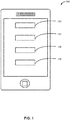
- FIG. 1 illustrates a device 100 for reviewing audio content in accordance with exemplary embodiments of the disclosure.
- Device 100 includes a processor 102, a speaker 104 coupled to processor 102, a microphone 106 coupled to the processor; and a computer usable medium 108 comprising a computer readable program code recorded in computer useable medium 108.
- the computer readable program code includes a digital assistant to analyze one or more of a tone and a speed of spoken content received from a user through microphone 106, to use speaker 104 to play the audio content, to update a personal vocabulary repository based on information received from the user interaction module, and to analyze information accessible by device 100 (on device 100 or elsewhere, such as in the cloud).
- the digital assistant acts as an intelligent, self-learning tool that creates a personalized repository for the user.
- the digital assistant can be configured to continually or periodically perform analysis of audio information and update the personalized repository with additional and/or updated information.
- device 100 can be used to help a user/listener understand content of playback of recorded audible or speech information or audile speech converted from text by personalizing the content based on the user's command of, for example a language or dialect, using a tone of the user, using a playback speed corresponding to the user's speed of speech, or the like.
- device 100 can include or be a smartphone, an iPod, a tablet, a computer, or the like.
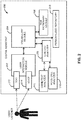
- Digital assistant 200 includes a user interaction module 202, a vocabulary module 204, a content analyzer 206, and optionally a web dictionary module 208, a personalized repository 210.
- module can refer to computer program instructions, encoded on computer storage medium for execution by, or to control the operation of, data processing apparatus.
- the program instructions can be encoded on an artificially-generated propagated signal, e.g., a machine-generated electrical, optical, or electromagnetic signal, which is generated to encode information for transmission to suitable receiver apparatus for execution by a data processing apparatus.
- a computer storage medium can be, or be included in, a computer-readable storage device, a computer-readable storage substrate, a random or serial access memory array or device, or a combination of one or more the substrates and devices. Moreover, while a computer storage medium is not a propagated signal, a computer storage medium can be a source or destination of computer program instructions encoded in an artificially-generated propagated signal. The computer storage medium can also be, or be included in, one or more separate physical components or media (e.g., multiple CDs, disks, or other storage devices). Device 100 can also include controls (e.g., a graphical and/or audible user interface) that allows a user to adjust a tone and/or speed of words during playback and store such information for use during the next playback.
- controls e.g., a graphical and/or audible user interface
- User interaction module 202 provides a user interface to a user/listener and uses information from vocabulary module 204 to play content in a personalized manner to the user.
- user interface module 202 analyzes a user's voice (e.g., speed and/or tone) and word choice, and creates and stores statistics for both. For example, interaction module 202 can determine a rate (e.g., words per minute) that a user speaks and/or a preferred speech rate (words/minute) that the user prefers to listen to, a tone of a user's voice (or a preferred playback//play tone), and words commonly used by the user and cause such information, including rate and tone to be stored.
- a rate e.g., words per minute
- User interaction module can further convert audio input into text to be stored. Once the audile information is converted to text, the text information is fed to vocabulary module 204.
- User interaction module 202 can include speech analytics to determine the complexity of words, the speed of speech of the user, and/or the tone of the user.
- User interaction module 202 can also receive input from vocabulary module 204 while audible information is provided to a user, such that the audible information is played in a personalized manner-e.g., at a desired rate of speed, using a desired tone, and/or using words familiar to the user (e.g., as determined using the statistics noted above).
- user interaction module 202 includes two sub modules: text submodule 212 and voice submodule 214.
- text submodule 212 and/or voice submodule 214 can be used to interact with a user to collect text information (via text submodule 212) and voice information (via voice submodule 214) and provide the text and voice information to user interaction module 202.
- Vocabulary module 204 updates personalized repository 210 based on information, including statistics (e.g., words, a number of times words are used, a percentage of number of times a word is used, a number of times a word is looked up (e.g., using an electronic thesaurus and/or dictionary, how many times a word or reword are replayed, and the like) received from user interaction module 202.
- Vocabulary module 204 also uses web dictionary 208 to fetch words (e.g., more-commonly used synonyms and/or synonyms with fewer syllables) and possibly images from web pages and send such content to a user via user interaction module during playback or playing of audio content.
- vocabulary module 204 can provide statistics, such as a number of times a word has been used, looked up, and the like, to user interaction module 202. Based on this information, user interaction module 202 automatically plays content at a personalized tone and speed, automatically uses words during the playback/provision of audio information that are more commonly used by the user and possibly automatically provides links to related information (e.g., as determined via use of keywords or the like).
- Content analyzer module 206 assists the digital assistant to evolve over time based on user's data.
- content analyzer module 206 will try to understand user's understanding of the language over time by analyzing emails, texts, chats, and listening to live calls.
- Each of these modes of analyzing can be independently authorized by a user-e.g., by requiring a password or the like.
- digital assistant 200 includes an email/text analyzer 216 to analyze written documents associated with a user and a voice call analyzer 218 to analyze voice calls (e.g., between the user and another party) and/or voicemail messages (e.g., left for the user).
- the information/data that is analyzed can be on one or more remote servers, such as an email server, or can be on a user's device, such as device 100.
- content analyzer can fetch real-time data about the user and provide information, including statistics regarding frequently-used words and the like (e.g., as noted above) to vocabulary module 204 for persistence.
- the analysis can be authorized each time a new analysis is performed, or a user can provide a single authorization for content analyzer to perform the analysis. Each time such analysis is done, vocabulary module 204 is updated. When the digital assistant is next used, the content is played using the current statistics.
- Web dictionary module 208 is used to (e.g., automatically) reach out to web to enable a user to fetch definitions, synonyms, antonyms, web images, and/or links for the subject of interest.
- Personalized repository 210 can be or include a database layer that persists the user's data and is referenced at runtime by other modules.
- Personalized repository 210 can reside on a user's device or in the cloud.
- FIG. 3 illustrates a method 300 in accordance with additional examples of the disclosure.
- Method 300 includes the steps of launching a digital assistant (step 302), determining whether a user is new to interacting with the digital assistant (step 304), interacting with the user to understand a user's comprehension of a language (step 308), building a personal repository (step 310), using a content analyzer to analyze user information (step 312), and using information from a vocabulary module, playing information to a user.
- Step 302 includes a user launching a client, agent or other application to launch a digital assistant, such as digital assistant 200. Once launched, a determination is made as to whether the user is a new user-or not. The determination can be made by submitting a question to the user-e.g., using a graphical and/or audible user interface.
- step 306 if the digital assistant receives a response from a user that the user is a new user, the digital assistant then interacts with the user to understand the user's command of a language. Before playing back a recorded media file or converting speech from text, the digital assistant forms a personalized repository. Once the user launches the digital assistant, a user can be prompted to select a language of interest. Then, the assistant will post questions to the user. In accordance with some examples, the user is expected to respond back in voice. Responding back in voice will allow the software to understand the speed and tone of voice that the user is most comfortable with.
- the questions posted by the assistant could be in text or voice, depending on a mode of operation of the running software. The questions can be as simple as: how do you do today; what is the current activity that you are working on; and the like.
- the digital assistant uses the help of vocabulary module to form statistics, such as those noted above for the user and updates the personalized repository.
- the user can play a recorded media or use the assistant for playing text to speech (step 310).
- the audible information is played to the user with a tone and speed that is familiar (e.g., the same or similar to (e.g., within +/- 10 % or +/- 5 % or +/- 2 %) of the user's and using words that are synonyms that the user is familiar with, rather than more difficult words (e.g., words that are less commonly used by the user, less commonly used by the general public, and/or that have fewer syllables).
- the digital assistant uses a content analyzer to analyze email, text, calls, audio recordings and/or video recordings to provide information to the personalized repository.
- the personalized repository can be (e.g., automatically) continuously updated.
- the digital assistant can continuously learn a user's command over a language, which can evolve over time.
- the digital assistant can not only manage the playback speed automatically but can also change the content read out based on an evolving user's -e.g., vocabulary or command of a language and/or accent of speakers.
- the digital assistant can be used to play speech from text or media file.
- the digital assistant e.g., digital assistant 200
- the digital assistant can be enhanced to interact with the user for the subject of interest. This will not only analyze the user's language skills but also skills relevant to the subject, giving the user more information in that area, e.g. via web links, videos, etc.
- a digital assistant and method described herein can additionally or alternatively be for the differently-abled people (e.g. users with a stammer or who cannot speak), and who have suitable hearing sense.
- the digital assistant could be provided a pre-recoding with which a user is comfortable hearing.
- a tone and/or speed of playback can be monitored and recorded using a digital assistant.
- the user interaction module in this case can analyze the recording and playback conditions (rather than asking queries) and create the vocabulary module based on this information.
Landscapes
- Engineering & Computer Science (AREA)
- Health & Medical Sciences (AREA)
- Audiology, Speech & Language Pathology (AREA)
- Physics & Mathematics (AREA)
- Human Computer Interaction (AREA)
- Multimedia (AREA)
- Computational Linguistics (AREA)
- Acoustics & Sound (AREA)
- Theoretical Computer Science (AREA)
- General Health & Medical Sciences (AREA)
- General Physics & Mathematics (AREA)
- General Engineering & Computer Science (AREA)
- Child & Adolescent Psychology (AREA)
- Hospice & Palliative Care (AREA)
- Psychiatry (AREA)
- Signal Processing (AREA)
- Artificial Intelligence (AREA)
- Two-Way Televisions, Distribution Of Moving Picture Or The Like (AREA)
- Electrically Operated Instructional Devices (AREA)
Description
- The present disclosure generally relates to methods and devices for playback of audible information. More particularly, the disclosure relates to methods and devices that use a digital assistant to personalize playback of the audible information.
- Recorded audible information, such as recorded speech, is used for a variety of applications. For example, audible speech recordings are left as voicemail messages, people listen to recorded books, podcasts, and the like, and recorded audible information can be used as a teaching tool-for example, to teach another language or for other subjects.
- An ability of a person to understand playback of audible content (e.g., speech) can depend on the user's/listener's command over a language, accent of a narrator of the recorded information (e.g., relative to an accent of a listener), and the like, along with the user's command of cultural and regional influences on a language. For example, when listening to playback of recorded audible information, if the user doesn't understand the language or dialect of the recorded speech, the listener may have to slow down the playback of the speech and/or replay some or all of the recorded speech one or more, e.g., several times. Additionally or alternatively, the listener may resort to use dictionary to understand keywords. This results in delay in listening to the information and of understanding the subject matter of the recorded information.
- A speed of the spoken information, a tone of the voice that recorded the information, and even the recorded words can affect a listener's/user's understanding of the subject matter of the recorded information when listening to playback of the recorded information. The same can be true when listening to audible information derived from a text to speech converter.
- As the listener becomes familiar with a language, dialect, tone, or the like over time, the listener's vocabulary builds, and as a result, the listener/user may be able to pick up content of recorded audible information at a much faster pace. Hence, a solution that can help a user/listener understand content of playback of recorded audible information by personalizing the content based on the user's command of, for example a language or dialect, is desired.
- Any discussion of problems provided in this section has been included in this disclosure solely for the purposes of providing a context for the present invention, and should not be taken as an admission that any or all of the discussion was known at the time the invention was made.
-
US2016/379638A1 discloses a system which uses trained models to detect a quality of an input spoken utterance and generates an indicator of the speech quality. The output of the system is then customized to the manner in which the utterance was spoken. -
US6446041B1 discloses a system for providing audio playback of a multi-source document. The system may speed up, slow down, or otherwise alter a text-to-speech entry prior to playback in order to match stored audio data. -
US2007/100628A1 discloses a method for voice-rendering synthesised data. A prosody setting is selected in dependence of user prosody history. -
US2005/261905A1 discloses a dialog prosody structure generating method and apparatus, and a speech synthesis method and system employing the dialog prosody structure generation method and apparatus. - The present invention is defined by the appended claims. A more complete understanding of the present invention may best be obtained by referring to the detailed description in connection with the figures, wherein like numerals denote like elements and wherein:
-
FIG. 1 illustrates a device in accordance with exemplary embodiments of the disclosure. -
FIG. 2 illustrates an exemplary digital assistant in accordance with exemplary embodiments of the disclosure. -
FIG. 3 illustrates a method in accordance with exemplary embodiments of the disclosure. - It will be appreciated that elements in the figures are illustrated for simplicity and clarity and have not necessarily been drawn to scale. For example, the dimensions of some of the elements in the figures may be exaggerated relative to other elements to help to improve understanding of illustrated embodiments of the present invention.
- The description of exemplary embodiments of the present invention provided below is merely exemplary and is intended for purposes of illustration only; the following description is not intended to limit the scope of the invention disclosed herein. Moreover, recitation of multiple embodiments having stated features is not intended to exclude other embodiments having additional features or other embodiments incorporating different combinations of the stated features.
- As set forth in more detail below, exemplary embodiments of the disclosure provide devices and methods for playback of recorded audible information and/or for playing information received from a text-to-speech converter. While the ways in which the present disclosure addresses various drawbacks of prior devices and methods, in general, various devices and methods described herein use a digital assistant that interacts with a user (listener) to form a digital vocabulary for the user. The digital vocabulary includes a list of the words most commonly used by the user. As set forth in more detail below, the assistant can learn about preferred speed and/or tone of speech of speech playback of a user and use (e.g., automatically) that speed and/or tone during playback of recorded speech and/or of text converted to speech. The digital assistant can continuously collect speed, tone, and other information to evolve as the user's command over a language evolves (e.g., improves) and/or indicate that a user's command of a language is not improving over time. With a user's consent, the digital assistant can analyze additional information (e.g., a user's written content like emails, documents, text message or the like) or other audible information, such as live calls, to further analyze a listener's vocabulary (e.g., commonly used words and/or words that a listener has had to look up) and continuously evolve.
- Turing now to the figures,
FIG. 1 illustrates adevice 100 for reviewing audio content in accordance with exemplary embodiments of the disclosure.Device 100 includes aprocessor 102, aspeaker 104 coupled toprocessor 102, amicrophone 106 coupled to the processor; and a computerusable medium 108 comprising a computer readable program code recorded in computeruseable medium 108. The computer readable program code includes a digital assistant to analyze one or more of a tone and a speed of spoken content received from a user throughmicrophone 106, to usespeaker 104 to play the audio content, to update a personal vocabulary repository based on information received from the user interaction module, and to analyze information accessible by device 100 (ondevice 100 or elsewhere, such as in the cloud). The digital assistant acts as an intelligent, self-learning tool that creates a personalized repository for the user. The digital assistant can be configured to continually or periodically perform analysis of audio information and update the personalized repository with additional and/or updated information. As set forth in more detail below,device 100 can be used to help a user/listener understand content of playback of recorded audible or speech information or audile speech converted from text by personalizing the content based on the user's command of, for example a language or dialect, using a tone of the user, using a playback speed corresponding to the user's speed of speech, or the like. By way of examples,device 100 can include or be a smartphone, an iPod, a tablet, a computer, or the like. - Turning now to
FIG. 2 , various components of an exemplarydigital assistant 200 are illustrated.Digital assistant 200 includes auser interaction module 202, avocabulary module 204, acontent analyzer 206, and optionally aweb dictionary module 208, a personalizedrepository 210. As used herein, "module" can refer to computer program instructions, encoded on computer storage medium for execution by, or to control the operation of, data processing apparatus. Alternatively or additionally, the program instructions can be encoded on an artificially-generated propagated signal, e.g., a machine-generated electrical, optical, or electromagnetic signal, which is generated to encode information for transmission to suitable receiver apparatus for execution by a data processing apparatus. A computer storage medium can be, or be included in, a computer-readable storage device, a computer-readable storage substrate, a random or serial access memory array or device, or a combination of one or more the substrates and devices. Moreover, while a computer storage medium is not a propagated signal, a computer storage medium can be a source or destination of computer program instructions encoded in an artificially-generated propagated signal. The computer storage medium can also be, or be included in, one or more separate physical components or media (e.g., multiple CDs, disks, or other storage devices).Device 100 can also include controls (e.g., a graphical and/or audible user interface) that allows a user to adjust a tone and/or speed of words during playback and store such information for use during the next playback. -
User interaction module 202 provides a user interface to a user/listener and uses information fromvocabulary module 204 to play content in a personalized manner to the user. In accordance with exemplary embodiments of the disclosure,user interface module 202 analyzes a user's voice (e.g., speed and/or tone) and word choice, and creates and stores statistics for both. For example,interaction module 202 can determine a rate (e.g., words per minute) that a user speaks and/or a preferred speech rate (words/minute) that the user prefers to listen to, a tone of a user's voice (or a preferred playback//play tone), and words commonly used by the user and cause such information, including rate and tone to be stored. User interaction module can further convert audio input into text to be stored. Once the audile information is converted to text, the text information is fed tovocabulary module 204.User interaction module 202 can include speech analytics to determine the complexity of words, the speed of speech of the user, and/or the tone of the user.User interaction module 202 can also receive input fromvocabulary module 204 while audible information is provided to a user, such that the audible information is played in a personalized manner-e.g., at a desired rate of speed, using a desired tone, and/or using words familiar to the user (e.g., as determined using the statistics noted above). - As illustrated in
FIG. 2 ,user interaction module 202 includes two sub modules:text submodule 212 andvoice submodule 214. As described in more detail below,text submodule 212 and/orvoice submodule 214 can be used to interact with a user to collect text information (via text submodule 212) and voice information (via voice submodule 214) and provide the text and voice information touser interaction module 202. -
Vocabulary module 204 updates personalizedrepository 210 based on information, including statistics (e.g., words, a number of times words are used, a percentage of number of times a word is used, a number of times a word is looked up (e.g., using an electronic thesaurus and/or dictionary, how many times a word or reword are replayed, and the like) received fromuser interaction module 202.Vocabulary module 204 also usesweb dictionary 208 to fetch words (e.g., more-commonly used synonyms and/or synonyms with fewer syllables) and possibly images from web pages and send such content to a user via user interaction module during playback or playing of audio content. Additionally,vocabulary module 204 can provide statistics, such as a number of times a word has been used, looked up, and the like, touser interaction module 202. Based on this information,user interaction module 202 automatically plays content at a personalized tone and speed, automatically uses words during the playback/provision of audio information that are more commonly used by the user and possibly automatically provides links to related information (e.g., as determined via use of keywords or the like). -
Content analyzer module 206 assists the digital assistant to evolve over time based on user's data. In accordance with some examples of the disclosure, based on user consent,content analyzer module 206 will try to understand user's understanding of the language over time by analyzing emails, texts, chats, and listening to live calls. Each of these modes of analyzing can be independently authorized by a user-e.g., by requiring a password or the like. In the illustrated example,digital assistant 200 includes an email/text analyzer 216 to analyze written documents associated with a user and avoice call analyzer 218 to analyze voice calls (e.g., between the user and another party) and/or voicemail messages (e.g., left for the user). The information/data that is analyzed can be on one or more remote servers, such as an email server, or can be on a user's device, such asdevice 100. Once authorized by user, content analyzer can fetch real-time data about the user and provide information, including statistics regarding frequently-used words and the like (e.g., as noted above) tovocabulary module 204 for persistence. The analysis can be authorized each time a new analysis is performed, or a user can provide a single authorization for content analyzer to perform the analysis. Each time such analysis is done,vocabulary module 204 is updated. When the digital assistant is next used, the content is played using the current statistics. -
Web dictionary module 208 is used to (e.g., automatically) reach out to web to enable a user to fetch definitions, synonyms, antonyms, web images, and/or links for the subject of interest. -
Personalized repository 210 can be or include a database layer that persists the user's data and is referenced at runtime by other modules.Personalized repository 210 can reside on a user's device or in the cloud. -
FIG. 3 illustrates amethod 300 in accordance with additional examples of the disclosure.Method 300 includes the steps of launching a digital assistant (step 302), determining whether a user is new to interacting with the digital assistant (step 304), interacting with the user to understand a user's comprehension of a language (step 308), building a personal repository (step 310), using a content analyzer to analyze user information (step 312), and using information from a vocabulary module, playing information to a user. - Step 302 includes a user launching a client, agent or other application to launch a digital assistant, such as
digital assistant 200. Once launched, a determination is made as to whether the user is a new user-or not. The determination can be made by submitting a question to the user-e.g., using a graphical and/or audible user interface. - In
step 306, if the digital assistant receives a response from a user that the user is a new user, the digital assistant then interacts with the user to understand the user's command of a language. Before playing back a recorded media file or converting speech from text, the digital assistant forms a personalized repository. Once the user launches the digital assistant, a user can be prompted to select a language of interest. Then, the assistant will post questions to the user. In accordance with some examples, the user is expected to respond back in voice. Responding back in voice will allow the software to understand the speed and tone of voice that the user is most comfortable with. The questions posted by the assistant could be in text or voice, depending on a mode of operation of the running software. The questions can be as simple as: how do you do today; what is the current activity that you are working on; and the like. - In
step 308, using the help of vocabulary module, the digital assistant forms statistics, such as those noted above for the user and updates the personalized repository. Once the primary interaction with the assistant ends and an early personalized repository is built, the user can play a recorded media or use the assistant for playing text to speech (step 310). The audible information is played to the user with a tone and speed that is familiar (e.g., the same or similar to (e.g., within +/- 10 % or +/- 5 % or +/- 2 %) of the user's and using words that are synonyms that the user is familiar with, rather than more difficult words (e.g., words that are less commonly used by the user, less commonly used by the general public, and/or that have fewer syllables). - At
step 312, the digital assistant uses a content analyzer to analyze email, text, calls, audio recordings and/or video recordings to provide information to the personalized repository. - In
step 314, the personalized repository can be (e.g., automatically) continuously updated. In other words, the digital assistant can continuously learn a user's command over a language, which can evolve over time. The digital assistant can not only manage the playback speed automatically but can also change the content read out based on an evolving user's -e.g., vocabulary or command of a language and/or accent of speakers. - This method and device of the present disclosure can be used in a variety of applications, including in the field of education to help students gain a better understanding of a subject and/or language. The digital assistant can be used to play speech from text or media file. When there is also contextual information associated with the content being played to the user, then the digital assistant (e.g., digital assistant 200) can be enhanced to interact with the user for the subject of interest. This will not only analyze the user's language skills but also skills relevant to the subject, giving the user more information in that area, e.g. via web links, videos, etc.
- A digital assistant and method described herein can additionally or alternatively be for the differently-abled people (e.g. users with a stammer or who cannot speak), and who have suitable hearing sense. In these cases, the digital assistant could be provided a pre-recoding with which a user is comfortable hearing. A tone and/or speed of playback can be monitored and recorded using a digital assistant. The user interaction module in this case can analyze the recording and playback conditions (rather than asking queries) and create the vocabulary module based on this information.
- The present invention has been described above with reference to a number of exemplary embodiments and examples. It should be appreciated that the particular embodiments shown and described herein are illustrative of the invention and its best mode and are not intended to limit in any way the scope of the invention as set forth in the claims. The features of the various embodiments may be stand alone or combined in any combination. Further, unless otherwise noted, various illustrated steps of a method can be performed sequentially or at the same time, and not necessarily be performed in the order illustrated. It will be recognized that changes and modifications may be made to the exemplary embodiments without departing from the scope of the present invention expressed in the following claims.
Claims (14)
- A method of reviewing audio content, the method comprising the steps of:providing a device (100) comprising a digital assistant (200);forming a personal vocabulary repository (210) using the digital assistant, comprising a list of words most commonly used by user;using a vocabulary module (204) of the digital assistant:determining one or more of a desired speed and a desired tone of playback of the audio content to the user;accessing a web dictionary module (208) to access text content corresponding to the audio content; andreplacing one or more words in the text content with synonyms more commonly used by the user,wherein the vocabulary module uses the personal vocabulary repository to fetchthe more commonly used synonyms; and
using a user interaction module (202) of the digital assistant, playing the audio content to the user using the one or more of the desired speed and the desired tone for the user, the audio content comprising the more commonly used synonyms. - A method of reviewing audio content according to claim 1, the vocabulary module updating the personal vocabulary repository based on information received from the user interaction module.
- A method of reviewing audio content according to claim 1 or claim 2, the user interaction module analyzing commonly-used words of the user and providing corresponding information to the vocabulary module.
- A method of reviewing audio content according to any preceding claim, the user interaction module presenting questions to the user and the device receiving audible answers from the user.
- A method of reviewing audio content according to any preceding claim, the vocabulary module further accessing the web dictionary module to access one or more of audio content, an image, and video content corresponding to the audio content and wherein the one or more of audio content, an image, and video content is provided to the user via a user interface of the device during playback of the audio content.
- A method of reviewing audio content according to claim 5, the user interaction module providing the image to the user interface during the step of playing audio content to the user.
- A method of reviewing audio content according to any preceding claim, further comprising a step of using a content analyzer module (206) to review electronic communication on the user's device to provide information to the vocabulary module.
- A method of reviewing audio content according to any preceding claim, wherein the audio content comprises audio information converted from text and wherein the audio information is converted from text using the digital assistant.
- A device (100) for reviewing audio content, the device comprising:a processor (102);a speaker (104) coupled to the processor;a microphone (106) coupled to the processor; anda computer usable medium (108) comprising a computer readable program code recorded in the computer useable medium, the computer readable program code comprising:a digital assistant configured to form a personal vocabulary repository (210), comprising a list of words most commonly used by a user;a vocabulary module (204) of the digital assistant configured to:determine one or more of a desired speed and a desired tone of playback of the audio content to the user;access a web dictionary module (208) to access text content corresponding to the audio content; andreplace one or more words in the text content with synonyms more commonly used by the user,wherein the vocabulary module uses the personal vocabulary repository to fetch the more commonly used synonyms; anda user interaction module (202) of the digital assistant configured to:
use the speaker to play the audio content to the user using the one or more of the desired speed and the desired tone for the user , the audio content comprising the more commonly used synonyms. - A device for reviewing audio content according to claim 9, further comprising a content analyzer (206) configured to analyze information on the device or accessible by the device.
- A device for reviewing audio content according to claim 9 or claim 10, wherein the vocabulary module is further configured to access the web dictionary module to fetch one or more of audio content, an image, and video content corresponding to the audio content and wherein the one or more of audio content, an image, and video content is provided to the user via a user interface of the device during playback of the audio content.
- A device for reviewing audio content according to any of claims 9 to 11, wherein the user interaction module is further configured to analyze words that are received by the microphone.
- A device for reviewing audio content according to any of claims 9 to 12, wherein the user interaction module is configured to analyze commonly-used words of the user and to provide corresponding information to the vocabulary module.
- A device for reviewing audio content according to any of claims 9 to 13, wherein the user interaction module is configured to present questions to the user using the speaker and to receive audible answers from the user via the microphone.
Applications Claiming Priority (1)
| Application Number | Priority Date | Filing Date | Title |
|---|---|---|---|
| US15/845,858 US10592203B2 (en) | 2017-12-18 | 2017-12-18 | Device including a digital assistant for personalized speech playback and method of using same |
Publications (2)
| Publication Number | Publication Date |
|---|---|
| EP3499500A1 EP3499500A1 (en) | 2019-06-19 |
| EP3499500B1 true EP3499500B1 (en) | 2021-12-29 |
Family
ID=65003087
Family Applications (1)
| Application Number | Title | Priority Date | Filing Date |
|---|---|---|---|
| EP18212965.0A Active EP3499500B1 (en) | 2017-12-18 | 2018-12-17 | Device including a digital assistant for personalized speech playback and method of using same |
Country Status (3)
| Country | Link |
|---|---|
| US (1) | US10592203B2 (en) |
| EP (1) | EP3499500B1 (en) |
| CA (1) | CA3027066C (en) |
Families Citing this family (5)
| Publication number | Priority date | Publication date | Assignee | Title |
|---|---|---|---|---|
| US11163959B2 (en) * | 2018-11-30 | 2021-11-02 | International Business Machines Corporation | Cognitive predictive assistance for word meanings |
| CN114999438B (en) * | 2021-05-08 | 2023-08-15 | 中移互联网有限公司 | Audio playback method and device |
| US20230402033A1 (en) * | 2022-06-08 | 2023-12-14 | Comcast Cable Communications, Llc | Device Language Configuration Based on Audio Data |
| US20240127374A1 (en) * | 2022-10-18 | 2024-04-18 | Direct Offer, Inc. | Methods and systems for providing interactive virtual tour of real estate property |
| US12639084B2 (en) * | 2023-06-27 | 2026-05-26 | Disney Enterprises, Inc. | Activity-based user interface personalization |
Family Cites Families (18)
| Publication number | Priority date | Publication date | Assignee | Title |
|---|---|---|---|---|
| US6446041B1 (en) | 1999-10-27 | 2002-09-03 | Microsoft Corporation | Method and system for providing audio playback of a multi-source document |
| US7305691B2 (en) * | 2001-05-07 | 2007-12-04 | Actv, Inc. | System and method for providing targeted programming outside of the home |
| GB0308395D0 (en) * | 2003-04-11 | 2003-05-21 | Hewlett Packard Development Co | Delivery context aware activity on networks:devices, software and methods |
| KR100590553B1 (en) | 2004-05-21 | 2006-06-19 | 삼성전자주식회사 | Method and apparatus for generating dialogue rhyme structure and speech synthesis system using the same |
| US8972444B2 (en) * | 2004-06-25 | 2015-03-03 | Google Inc. | Nonstandard locality-based text entry |
| US8392453B2 (en) * | 2004-06-25 | 2013-03-05 | Google Inc. | Nonstandard text entry |
| CA2474083C (en) * | 2004-06-25 | 2011-01-25 | Sivakumaran Sanmugasuntharam | Caller id call memo system |
| US8694319B2 (en) | 2005-11-03 | 2014-04-08 | International Business Machines Corporation | Dynamic prosody adjustment for voice-rendering synthesized data |
| GB2432744B (en) * | 2005-11-24 | 2011-01-12 | Data Connection Ltd | Telephone call processing method and apparatus |
| EP2095250B1 (en) * | 2006-12-05 | 2014-11-12 | Nuance Communications, Inc. | Wireless server based text to speech email |
| US20100064053A1 (en) | 2008-09-09 | 2010-03-11 | Apple Inc. | Radio with personal dj |
| US7925797B2 (en) * | 2008-07-03 | 2011-04-12 | Steelseries Hq | System and method for distributing user interface device configurations |
| US9858925B2 (en) * | 2009-06-05 | 2018-01-02 | Apple Inc. | Using context information to facilitate processing of commands in a virtual assistant |
| US10241752B2 (en) * | 2011-09-30 | 2019-03-26 | Apple Inc. | Interface for a virtual digital assistant |
| US8793118B2 (en) * | 2011-11-01 | 2014-07-29 | PES School of Engineering | Adaptive multimodal communication assist system |
| US9390706B2 (en) * | 2014-06-19 | 2016-07-12 | Mattersight Corporation | Personality-based intelligent personal assistant system and methods |
| US9307440B1 (en) * | 2015-05-05 | 2016-04-05 | Sprint Communications Company L.P. | Prioritized delivery for a collection of content |
| US20160379638A1 (en) | 2015-06-26 | 2016-12-29 | Amazon Technologies, Inc. | Input speech quality matching |
-
2017
- 2017-12-18 US US15/845,858 patent/US10592203B2/en active Active
-
2018
- 2018-12-11 CA CA3027066A patent/CA3027066C/en active Active
- 2018-12-17 EP EP18212965.0A patent/EP3499500B1/en active Active
Non-Patent Citations (1)
| Title |
|---|
| None * |
Also Published As
| Publication number | Publication date |
|---|---|
| CA3027066C (en) | 2026-07-28 |
| EP3499500A1 (en) | 2019-06-19 |
| CA3027066A1 (en) | 2019-06-18 |
| US20190187952A1 (en) | 2019-06-20 |
| US10592203B2 (en) | 2020-03-17 |
Similar Documents
| Publication | Publication Date | Title |
|---|---|---|
| EP3499500A1 (en) | Device including a digital assistant for personalized speech playback and method of using same | |
| Kavaliauskienė | Podcasting: A tool for improving listening skills | |
| KR20210156344A (en) | Tailoring an interactive dialog application based on creator provided content | |
| RU2692051C1 (en) | Method and system for speech synthesis from text | |
| Chukharev‐Hudilainen et al. | The development and evaluation of interactional competence elicitor for oral language assessments | |
| JP5580019B2 (en) | Language learning support system and language learning support method | |
| KR100930039B1 (en) | Apparatus and Method for Evaluating Performance of Speech Recognizer | |
| Daniels | Using web speech technology with language learning applications | |
| US20240257811A1 (en) | System and Method for Providing Real-time Speech Recommendations During Verbal Communication | |
| EP4032027A1 (en) | Structure-preserving attention mechanism in sequence-to-sequence neural models | |
| Yoshino et al. | Japanese dialogue corpus of information navigation and attentive listening annotated with extended iso-24617-2 dialogue act tags | |
| Cheng | Unfamiliar accented English negatively affects EFL listening comprehension: It helps to be a more able accent mimic | |
| Castillejo | Automatic speech recognition | |
| Niebuhr et al. | The Kiel Corpora of" Speech & Emotion"-A Summary | |
| JP6433765B2 (en) | Spoken dialogue system and spoken dialogue method | |
| KR100997255B1 (en) | Language learning system of simultaneous interpretation type using voice recognition | |
| US20240169999A1 (en) | Speech signal processing apparatus, speech signal reproduction system and method for outputting a de-emotionalized speech signal | |
| Altinkaya et al. | Assisted speech to enable second language | |
| Li et al. | Phantom in the opera: adversarial music attack for robot dialogue system | |
| CN115547296B (en) | Speech synthesis method, device, electronic equipment and storage medium | |
| Gittleman et al. | Effects of noise and talker intelligibility on judgments of accentedness | |
| Do et al. | VietSuperSpeech: A Large-Scale Vietnamese Conversational Speech Dataset for ASR Fine-Tuning in Chatbot, Customer Support, and Call Center Applications | |
| US7092884B2 (en) | Method of nonvisual enrollment for speech recognition | |
| Buchem et al. | From Screens to AI-Driven Human-Robot Interaction: Comparing Students’ Perceptions of the Robots Pepper and Furhat for ChatGPT-Based Exam Preparation | |
| Shamsi et al. | Mixing synthetic and recorded signals for audio-book generation |
Legal Events
| Date | Code | Title | Description |
|---|---|---|---|
| PUAI | Public reference made under article 153(3) epc to a published international application that has entered the european phase |
Free format text: ORIGINAL CODE: 0009012 |
|
| STAA | Information on the status of an ep patent application or granted ep patent |
Free format text: STATUS: THE APPLICATION HAS BEEN PUBLISHED |
|
| AK | Designated contracting states |
Kind code of ref document: A1 Designated state(s): AL AT BE BG CH CY CZ DE DK EE ES FI FR GB GR HR HU IE IS IT LI LT LU LV MC MK MT NL NO PL PT RO RS SE SI SK SM TR |
|
| AX | Request for extension of the european patent |
Extension state: BA ME |
|
| STAA | Information on the status of an ep patent application or granted ep patent |
Free format text: STATUS: REQUEST FOR EXAMINATION WAS MADE |
|
| 17P | Request for examination filed |
Effective date: 20191216 |
|
| RBV | Designated contracting states (corrected) |
Designated state(s): AL AT BE BG CH CY CZ DE DK EE ES FI FR GB GR HR HU IE IS IT LI LT LU LV MC MK MT NL NO PL PT RO RS SE SI SK SM TR |
|
| STAA | Information on the status of an ep patent application or granted ep patent |
Free format text: STATUS: EXAMINATION IS IN PROGRESS |
|
| 17Q | First examination report despatched |
Effective date: 20200424 |
|
| GRAP | Despatch of communication of intention to grant a patent |
Free format text: ORIGINAL CODE: EPIDOSNIGR1 |
|
| STAA | Information on the status of an ep patent application or granted ep patent |
Free format text: STATUS: GRANT OF PATENT IS INTENDED |
|
| INTG | Intention to grant announced |
Effective date: 20210729 |
|
| GRAS | Grant fee paid |
Free format text: ORIGINAL CODE: EPIDOSNIGR3 |
|
| GRAA | (expected) grant |
Free format text: ORIGINAL CODE: 0009210 |
|
| STAA | Information on the status of an ep patent application or granted ep patent |
Free format text: STATUS: THE PATENT HAS BEEN GRANTED |
|
| AK | Designated contracting states |
Kind code of ref document: B1 Designated state(s): AL AT BE BG CH CY CZ DE DK EE ES FI FR GB GR HR HU IE IS IT LI LT LU LV MC MK MT NL NO PL PT RO RS SE SI SK SM TR |
|
| REG | Reference to a national code |
Ref country code: GB Ref legal event code: FG4D |
|
| REG | Reference to a national code |
Ref country code: CH Ref legal event code: EP |
|
| REG | Reference to a national code |
Ref country code: AT Ref legal event code: REF Ref document number: 1459279 Country of ref document: AT Kind code of ref document: T Effective date: 20220115 |
|
| REG | Reference to a national code |
Ref country code: IE Ref legal event code: FG4D |
|
| REG | Reference to a national code |
Ref country code: DE Ref legal event code: R096 Ref document number: 602018028744 Country of ref document: DE |
|
| REG | Reference to a national code |
Ref country code: LT Ref legal event code: MG9D |
|
| PG25 | Lapsed in a contracting state [announced via postgrant information from national office to epo] |
Ref country code: RS Free format text: LAPSE BECAUSE OF FAILURE TO SUBMIT A TRANSLATION OF THE DESCRIPTION OR TO PAY THE FEE WITHIN THE PRESCRIBED TIME-LIMIT Effective date: 20211229 Ref country code: LT Free format text: LAPSE BECAUSE OF FAILURE TO SUBMIT A TRANSLATION OF THE DESCRIPTION OR TO PAY THE FEE WITHIN THE PRESCRIBED TIME-LIMIT Effective date: 20211229 Ref country code: FI Free format text: LAPSE BECAUSE OF FAILURE TO SUBMIT A TRANSLATION OF THE DESCRIPTION OR TO PAY THE FEE WITHIN THE PRESCRIBED TIME-LIMIT Effective date: 20211229 Ref country code: BG Free format text: LAPSE BECAUSE OF FAILURE TO SUBMIT A TRANSLATION OF THE DESCRIPTION OR TO PAY THE FEE WITHIN THE PRESCRIBED TIME-LIMIT Effective date: 20220329 |
|
| REG | Reference to a national code |
Ref country code: NL Ref legal event code: MP Effective date: 20211229 |
|
| REG | Reference to a national code |
Ref country code: AT Ref legal event code: MK05 Ref document number: 1459279 Country of ref document: AT Kind code of ref document: T Effective date: 20211229 |
|
| PG25 | Lapsed in a contracting state [announced via postgrant information from national office to epo] |
Ref country code: SE Free format text: LAPSE BECAUSE OF FAILURE TO SUBMIT A TRANSLATION OF THE DESCRIPTION OR TO PAY THE FEE WITHIN THE PRESCRIBED TIME-LIMIT Effective date: 20211229 Ref country code: NO Free format text: LAPSE BECAUSE OF FAILURE TO SUBMIT A TRANSLATION OF THE DESCRIPTION OR TO PAY THE FEE WITHIN THE PRESCRIBED TIME-LIMIT Effective date: 20220329 Ref country code: LV Free format text: LAPSE BECAUSE OF FAILURE TO SUBMIT A TRANSLATION OF THE DESCRIPTION OR TO PAY THE FEE WITHIN THE PRESCRIBED TIME-LIMIT Effective date: 20211229 Ref country code: HR Free format text: LAPSE BECAUSE OF FAILURE TO SUBMIT A TRANSLATION OF THE DESCRIPTION OR TO PAY THE FEE WITHIN THE PRESCRIBED TIME-LIMIT Effective date: 20211229 Ref country code: GR Free format text: LAPSE BECAUSE OF FAILURE TO SUBMIT A TRANSLATION OF THE DESCRIPTION OR TO PAY THE FEE WITHIN THE PRESCRIBED TIME-LIMIT Effective date: 20220330 |
|
| PG25 | Lapsed in a contracting state [announced via postgrant information from national office to epo] |
Ref country code: NL Free format text: LAPSE BECAUSE OF FAILURE TO SUBMIT A TRANSLATION OF THE DESCRIPTION OR TO PAY THE FEE WITHIN THE PRESCRIBED TIME-LIMIT Effective date: 20211229 |
|
| PG25 | Lapsed in a contracting state [announced via postgrant information from national office to epo] |
Ref country code: SM Free format text: LAPSE BECAUSE OF FAILURE TO SUBMIT A TRANSLATION OF THE DESCRIPTION OR TO PAY THE FEE WITHIN THE PRESCRIBED TIME-LIMIT Effective date: 20211229 Ref country code: SK Free format text: LAPSE BECAUSE OF FAILURE TO SUBMIT A TRANSLATION OF THE DESCRIPTION OR TO PAY THE FEE WITHIN THE PRESCRIBED TIME-LIMIT Effective date: 20211229 Ref country code: RO Free format text: LAPSE BECAUSE OF FAILURE TO SUBMIT A TRANSLATION OF THE DESCRIPTION OR TO PAY THE FEE WITHIN THE PRESCRIBED TIME-LIMIT Effective date: 20211229 Ref country code: PT Free format text: LAPSE BECAUSE OF FAILURE TO SUBMIT A TRANSLATION OF THE DESCRIPTION OR TO PAY THE FEE WITHIN THE PRESCRIBED TIME-LIMIT Effective date: 20220429 Ref country code: ES Free format text: LAPSE BECAUSE OF FAILURE TO SUBMIT A TRANSLATION OF THE DESCRIPTION OR TO PAY THE FEE WITHIN THE PRESCRIBED TIME-LIMIT Effective date: 20211229 Ref country code: EE Free format text: LAPSE BECAUSE OF FAILURE TO SUBMIT A TRANSLATION OF THE DESCRIPTION OR TO PAY THE FEE WITHIN THE PRESCRIBED TIME-LIMIT Effective date: 20211229 Ref country code: CZ Free format text: LAPSE BECAUSE OF FAILURE TO SUBMIT A TRANSLATION OF THE DESCRIPTION OR TO PAY THE FEE WITHIN THE PRESCRIBED TIME-LIMIT Effective date: 20211229 |
|
| PG25 | Lapsed in a contracting state [announced via postgrant information from national office to epo] |
Ref country code: PL Free format text: LAPSE BECAUSE OF FAILURE TO SUBMIT A TRANSLATION OF THE DESCRIPTION OR TO PAY THE FEE WITHIN THE PRESCRIBED TIME-LIMIT Effective date: 20211229 Ref country code: AT Free format text: LAPSE BECAUSE OF FAILURE TO SUBMIT A TRANSLATION OF THE DESCRIPTION OR TO PAY THE FEE WITHIN THE PRESCRIBED TIME-LIMIT Effective date: 20211229 |
|
| PG25 | Lapsed in a contracting state [announced via postgrant information from national office to epo] |
Ref country code: IS Free format text: LAPSE BECAUSE OF FAILURE TO SUBMIT A TRANSLATION OF THE DESCRIPTION OR TO PAY THE FEE WITHIN THE PRESCRIBED TIME-LIMIT Effective date: 20220429 |
|
| REG | Reference to a national code |
Ref country code: DE Ref legal event code: R097 Ref document number: 602018028744 Country of ref document: DE |
|
| PG25 | Lapsed in a contracting state [announced via postgrant information from national office to epo] |
Ref country code: DK Free format text: LAPSE BECAUSE OF FAILURE TO SUBMIT A TRANSLATION OF THE DESCRIPTION OR TO PAY THE FEE WITHIN THE PRESCRIBED TIME-LIMIT Effective date: 20211229 Ref country code: AL Free format text: LAPSE BECAUSE OF FAILURE TO SUBMIT A TRANSLATION OF THE DESCRIPTION OR TO PAY THE FEE WITHIN THE PRESCRIBED TIME-LIMIT Effective date: 20211229 |
|
| PLBE | No opposition filed within time limit |
Free format text: ORIGINAL CODE: 0009261 |
|
| STAA | Information on the status of an ep patent application or granted ep patent |
Free format text: STATUS: NO OPPOSITION FILED WITHIN TIME LIMIT |
|
| 26N | No opposition filed |
Effective date: 20220930 |
|
| PG25 | Lapsed in a contracting state [announced via postgrant information from national office to epo] |
Ref country code: SI Free format text: LAPSE BECAUSE OF FAILURE TO SUBMIT A TRANSLATION OF THE DESCRIPTION OR TO PAY THE FEE WITHIN THE PRESCRIBED TIME-LIMIT Effective date: 20211229 |
|
| PG25 | Lapsed in a contracting state [announced via postgrant information from national office to epo] |
Ref country code: IT Free format text: LAPSE BECAUSE OF FAILURE TO SUBMIT A TRANSLATION OF THE DESCRIPTION OR TO PAY THE FEE WITHIN THE PRESCRIBED TIME-LIMIT Effective date: 20211229 |
|
| REG | Reference to a national code |
Ref country code: CH Ref legal event code: PL |
|
| REG | Reference to a national code |
Ref country code: BE Ref legal event code: MM Effective date: 20221231 |
|
| PG25 | Lapsed in a contracting state [announced via postgrant information from national office to epo] |
Ref country code: LU Free format text: LAPSE BECAUSE OF NON-PAYMENT OF DUE FEES Effective date: 20221217 |
|
| PG25 | Lapsed in a contracting state [announced via postgrant information from national office to epo] |
Ref country code: LI Free format text: LAPSE BECAUSE OF NON-PAYMENT OF DUE FEES Effective date: 20221231 Ref country code: IE Free format text: LAPSE BECAUSE OF NON-PAYMENT OF DUE FEES Effective date: 20221217 Ref country code: CH Free format text: LAPSE BECAUSE OF NON-PAYMENT OF DUE FEES Effective date: 20221231 |
|
| PG25 | Lapsed in a contracting state [announced via postgrant information from national office to epo] |
Ref country code: BE Free format text: LAPSE BECAUSE OF NON-PAYMENT OF DUE FEES Effective date: 20221231 |
|
| PG25 | Lapsed in a contracting state [announced via postgrant information from national office to epo] |
Ref country code: HU Free format text: LAPSE BECAUSE OF FAILURE TO SUBMIT A TRANSLATION OF THE DESCRIPTION OR TO PAY THE FEE WITHIN THE PRESCRIBED TIME-LIMIT; INVALID AB INITIO Effective date: 20181217 |
|
| PG25 | Lapsed in a contracting state [announced via postgrant information from national office to epo] |
Ref country code: CY Free format text: LAPSE BECAUSE OF FAILURE TO SUBMIT A TRANSLATION OF THE DESCRIPTION OR TO PAY THE FEE WITHIN THE PRESCRIBED TIME-LIMIT Effective date: 20211229 |
|
| PG25 | Lapsed in a contracting state [announced via postgrant information from national office to epo] |
Ref country code: MK Free format text: LAPSE BECAUSE OF FAILURE TO SUBMIT A TRANSLATION OF THE DESCRIPTION OR TO PAY THE FEE WITHIN THE PRESCRIBED TIME-LIMIT Effective date: 20211229 |
|
| PG25 | Lapsed in a contracting state [announced via postgrant information from national office to epo] |
Ref country code: MC Free format text: LAPSE BECAUSE OF FAILURE TO SUBMIT A TRANSLATION OF THE DESCRIPTION OR TO PAY THE FEE WITHIN THE PRESCRIBED TIME-LIMIT Effective date: 20211229 |
|
| PG25 | Lapsed in a contracting state [announced via postgrant information from national office to epo] |
Ref country code: TR Free format text: LAPSE BECAUSE OF FAILURE TO SUBMIT A TRANSLATION OF THE DESCRIPTION OR TO PAY THE FEE WITHIN THE PRESCRIBED TIME-LIMIT Effective date: 20211229 Ref country code: MC Free format text: LAPSE BECAUSE OF FAILURE TO SUBMIT A TRANSLATION OF THE DESCRIPTION OR TO PAY THE FEE WITHIN THE PRESCRIBED TIME-LIMIT Effective date: 20211229 |
|
| PG25 | Lapsed in a contracting state [announced via postgrant information from national office to epo] |
Ref country code: MT Free format text: LAPSE BECAUSE OF FAILURE TO SUBMIT A TRANSLATION OF THE DESCRIPTION OR TO PAY THE FEE WITHIN THE PRESCRIBED TIME-LIMIT Effective date: 20211229 |
|
| PGFP | Annual fee paid to national office [announced via postgrant information from national office to epo] |
Ref country code: DE Payment date: 20250930 Year of fee payment: 8 |
|
| PGFP | Annual fee paid to national office [announced via postgrant information from national office to epo] |
Ref country code: GB Payment date: 20251001 Year of fee payment: 8 |
|
| PGFP | Annual fee paid to national office [announced via postgrant information from national office to epo] |
Ref country code: FR Payment date: 20251008 Year of fee payment: 8 |