EP3498741A1 - Vinylidene chloride-based resin film, wrap film using same, and method for producing said resin film - Google Patents
Vinylidene chloride-based resin film, wrap film using same, and method for producing said resin film Download PDFInfo
- Publication number
- EP3498741A1 EP3498741A1 EP17839114.0A EP17839114A EP3498741A1 EP 3498741 A1 EP3498741 A1 EP 3498741A1 EP 17839114 A EP17839114 A EP 17839114A EP 3498741 A1 EP3498741 A1 EP 3498741A1
- Authority
- EP
- European Patent Office
- Prior art keywords
- polymerization
- vinylidene chloride
- copolymer
- resin film
- vinyl chloride
- Prior art date
- Legal status (The legal status is an assumption and is not a legal conclusion. Google has not performed a legal analysis and makes no representation as to the accuracy of the status listed.)
- Withdrawn
Links
Images

Classifications
-
- C—CHEMISTRY; METALLURGY
- C08—ORGANIC MACROMOLECULAR COMPOUNDS; THEIR PREPARATION OR CHEMICAL WORKING-UP; COMPOSITIONS BASED THEREON
- C08F—MACROMOLECULAR COMPOUNDS OBTAINED BY REACTIONS ONLY INVOLVING CARBON-TO-CARBON UNSATURATED BONDS
- C08F214/00—Copolymers of compounds having one or more unsaturated aliphatic radicals, each having only one carbon-to-carbon double bond, and at least one being terminated by a halogen
- C08F214/02—Monomers containing chlorine
- C08F214/04—Monomers containing two carbon atoms
- C08F214/08—Vinylidene chloride
-
- B—PERFORMING OPERATIONS; TRANSPORTING
- B65—CONVEYING; PACKING; STORING; HANDLING THIN OR FILAMENTARY MATERIAL
- B65D—CONTAINERS FOR STORAGE OR TRANSPORT OF ARTICLES OR MATERIALS, e.g. BAGS, BARRELS, BOTTLES, BOXES, CANS, CARTONS, CRATES, DRUMS, JARS, TANKS, HOPPERS, FORWARDING CONTAINERS; ACCESSORIES, CLOSURES, OR FITTINGS THEREFOR; PACKAGING ELEMENTS; PACKAGES
- B65D65/00—Wrappers or flexible covers; Packaging materials of special type or form
- B65D65/02—Wrappers or flexible covers
-
- C—CHEMISTRY; METALLURGY
- C08—ORGANIC MACROMOLECULAR COMPOUNDS; THEIR PREPARATION OR CHEMICAL WORKING-UP; COMPOSITIONS BASED THEREON
- C08J—WORKING-UP; GENERAL PROCESSES OF COMPOUNDING; AFTER-TREATMENT NOT COVERED BY SUBCLASSES C08B, C08C, C08F, C08G or C08H
- C08J5/00—Manufacture of articles or shaped materials containing macromolecular substances
- C08J5/18—Manufacture of films or sheets
-
- C—CHEMISTRY; METALLURGY
- C08—ORGANIC MACROMOLECULAR COMPOUNDS; THEIR PREPARATION OR CHEMICAL WORKING-UP; COMPOSITIONS BASED THEREON
- C08F—MACROMOLECULAR COMPOUNDS OBTAINED BY REACTIONS ONLY INVOLVING CARBON-TO-CARBON UNSATURATED BONDS
- C08F214/00—Copolymers of compounds having one or more unsaturated aliphatic radicals, each having only one carbon-to-carbon double bond, and at least one being terminated by a halogen
- C08F214/02—Monomers containing chlorine
- C08F214/04—Monomers containing two carbon atoms
- C08F214/06—Vinyl chloride
Definitions
- the present invention relates to a vinylidene chloride-based resin film, a wrap film using the same, and a production method for the resin film.
- wrap films used in the packaging of food products, industrial materials, and the like are themselves required to have excellent adhesion.
- wrap films that have been designed to enhance adhesion. Examples of such wrap films include the films described in Patent Documents 1 to 3.
- Patent Document 1 describes an adhesive film made of a resin composition including a thermoplastic resin, an adhesive agent, and an adhesion imparting agent, wherein at least the adhesion imparting agent is in liquid form at normal temperatures, and the resin composition contains 100 parts by weight of the thermoplastic resin and from 0.01 to 3 parts by weight of each of the adhesive agent and the adhesion imparting agent.
- Patent Document 2 describes a vinylidene chloride-based resin wrap film containing an epoxidized vegetable oil, (1) one or more types of glycerin fatty acid esters, and (2) an aliphatic dibasic acid ester, wherein the total content of (1) and (2) is not less than 3 wt.%, and the content of (2) is from 0.05 to 0.5 wt.%.
- Patent Document 3 describes a vinylidene chloride-based resin wrap film containing from 0.2 to 10 wt.% of one or more types of propylene glycol fatty acid esters.
- the present invention has been conceived in light of this problem, and an object thereof is to provide a vinylidene chloride-based resin film exhibiting excellent adhesion, a wrap film using the same, and a production method for the resin film.
- the present inventors discovered that a wrap film with adhesive strength that is dramatically enhanced relative to conventional wrap films can be obtained by forming a vinylidene chloride-based resin film with a specific molecular composition, and the present inventors thereby completed the present invention.
- a first aspect of the present invention is a vinylidene chloride-based resin film containing a vinylidene chloride-vinyl chloride copolymer, wherein a molar ratio of diad sites in which one constituent unit derived from vinylidene chloride and one constituent unit derived from vinyl chloride are linked is not less than 25.3 mol% and not greater than 26.5 mol% relative to all constituent units in the copolymer.
- a second aspect of the present invention is a wrap film made of the resin film described above.
- FIG. 1 is a graph illustrating changes in polymerization temperature over time in examples and a comparative example.
- the vinylidene chloride-based resin film according to the present invention contains a vinylidene chloride-vinyl chloride copolymer, wherein a molar ratio of diad sites in which one constituent unit derived from vinylidene chloride and one constituent unit derived from vinyl chloride are linked is not less than 25.3 mol% and not greater than 26.5 mol% relative to all constituent units in the copolymer.
- the resin film described above exhibits excellent adhesion as a result of having the configuration described above.
- the vinylidene chloride-vinyl chloride copolymer (simply called a "copolymer” hereinafter) forming the vinylidene chloride-based resin film contains constituent units derived from vinylidene chloride and constituent units derived from vinyl chloride.
- the copolymer is produced by performing suspension polymerization or emulsion polymerization on from 60 to 98 mass% of vinylidene chloride and from 2 to 40 mass% of vinyl chloride, preferably from 70 to 95 mass% of vinylidene chloride and from 5 to 30 mass% of vinyl chloride, and more preferably from 80 to 90 mass% of vinylidene chloride and from 10 to 20 mass% of vinyl chloride.
- the copolymer includes, for example, from 60 to 98 mass% of constituent units derived from vinylidene chloride and from 2 to 40 mass% of constituent units derived from vinyl chloride, and from the perspective of more easily achieving a good balance between the extrusion processability at the time of film formation and gas barrier properties of the resulting film, the copolymer preferably includes from 70 to 95 mass% of constituent units derived from vinylidene chloride and from 5 to 30 mass% of constituent units derived from vinyl chloride, and more preferably from 80 to 90 mass% of constituent units derived from vinylidene chloride and from 10 to 20 mass% of constituent units derived from vinyl chloride.
- the molar ratio of diad sites in which one constituent unit derived from vinylidene chloride and one constituent unit derived from vinyl chloride are linked is not less than 25.3 mol% and not greater than 26.5 mol%, preferably not less than 25.6 mol% and not greater than 26.2 mol%, and more preferably not less than 25.9 mol% and not greater than 26.1 mol% relative to all constituent units.
- the molar ratio is within the range described above, the adhesion of the resulting film is easily enhanced.
- the molar ratio of diad sites refers to a value calculated based on the results of NMR measurements performed on the film described above, as described in detail in the examples.
- the molar ratio of diad sites in which two constituent units derived from vinyl chloride are linked is not less than 2.5 mol% and not greater than 3.5 mol%, preferably not less than 2.5 mol% and not greater than 3.0 mol%, and more preferably not less than 2.6 mol% and not greater than 2.9 mol% relative to all constituent units.
- the molar ratio is within the range described above, the adhesion of the resulting film is easily enhanced further.
- the proportion of molecular chains with a molecular weight of not greater than 20,000 is preferably not less than 7.9 mass% and not greater than 10.0 mass%, more preferably not less than 7.9 mass% and not greater than 9.8 mass%, and even more preferably not less than 8.0 mass% and not greater than 9.7 mass%.
- the proportion is within the range described above, the adhesion of the resulting film is easily enhanced further.
- the molecular weight refers to the molecular weight in terms of polystyrene measured by gel permeation chromatography.
- the vinylidene chloride-based resin film may further contain various additives.
- Organic substances (or polymers) and inorganic substances may both be used as additives.
- additives include plasticizers, stabilizers, surfactants, and lubricants. Additives may be used alone, or two or more types may be used in combination.
- plasticizers examples include dioctyl phthalate, acetyl tributyl citrate, dibutyl sebacate, dioctyl sebacate, acetylated monoglycerides (for example, diacetyl monolauryl glyceride), acetylated diglycerides, and acetylated triglycerides.
- Plasticizers may be used alone, or two or more types may be used in combination.
- stabilizers examples include epoxidized oils such as epoxidized soybean oil and epoxidized linseed oil; amide derivatives such as alkyl esters, and other stabilizers such as magnesium hydroxide and tetrasodium pyrophosphate. Stabilizers may be used alone, or two or more types may be used in combination.
- surfactants examples include nonionic surfactants such as glycerin fatty acid esters, polyglycerin fatty acid esters, sorbitan fatty acid esters, and polyoxyethylene sorbitan fatty acid esters. Surfactants may be used alone, or two or more types may be used in combination.
- lubricants examples include inorganic lubricants such as silicon dioxide, zeolite, and calcium carbonate; and organic lubricants such as saturated fatty acid amides, unsaturated fatty acid amides, substituted amides, and thioether-based compounds. Lubricants may be used alone, or two or more types may be used in combination.
- saturated fatty acids examples include butyl amides, valeric acid amides, caproic acid amides, caprylic acid amides, capric acid amides, lauric acid amides, myristic acid amides, palmitic acid amides, stearic acid amides, arachidic acid amides, and benehic acid amides.
- unsaturated fatty acid amides include oleic acid amides and erucic acid amides.
- substituted amides include N-oleyl palmitic acid amides, N-stearyl stearic acid amides, N-stearyl oleic acid amides, N-oleyl stearic acid amides, and N-stearyl erucic acid amides.
- thioether-based compounds include dilauryl thiodipropionate, ditridecyl thiodipropionate, dimyristyl thiodipropionate, distearyl thiodipropionate, pentaerithritol tetrakis(3-lauryl thiodipropionate), pentaerithritol tetrakis(3-dodecyl thiodipropionate), pentaerithritol tetrakis(3-octadecyl thiodipropionate), pentaerithritol tetrakis(3-myristyl thiodipropionate), and pentaerithritol tetrakis(3-stearyl thiodipropionate).
- the content of the additive is preferably in the range of from 0.05 to 15 parts by mass, more preferably in the range of from 0.5 to 10 parts by mass, and even more preferably within the range of from 1.0 to 9.0 parts by mass per 100 parts by mass of the vinylidene chloride-vinyl chloride copolymer.
- the upper range of the compounding ratio of a liquid additive is within the range described above, stickiness due to bleed-out can be effectively suppressed.
- the content of the additive is preferably in the range of from 0.1 to 15 parts by mass, more preferably in the range of from 0.5 to 10 parts by mass, and even more preferably within the range of from 1.0 to 9.0 parts by mass per 100 parts by mass of the vinylidene chloride-vinyl chloride copolymer.
- the production method for a vinylidene chloride-based resin film according to the present invention includes a polymerization step of obtaining a vinylidene chloride-vinyl chloride copolymer by copolymerizing vinylidene chloride and vinyl chloride, and a molding step of molding the copolymer.
- polymerization methods in the polymerization step include suspension polymerization and emulsion polymerization, which are non-uniform polymerization methods, and suspension polymerization is preferable from the perspectives of workability, productivity, resource conservation, and the purity of the vinylidene chloride-vinyl chloride copolymer.
- T at 2 + bt (wherein t represents time (units: hours), T represents a difference between a polymerization temperature and the polymerization initial temperature, that is, the heating range (units: °C), a represents a number not smaller than 0.0150 and not greater than 0.0300, and b represents
- the polymerization initial temperature is preferably not lower than 41°C and not higher than 46°C and more preferably not lower than 43°C and not higher than 45°C.
- Symbol a in formula (1) is preferably a number not smaller than 0.019 and not greater than 0.0285 and more preferably a number not smaller than 0.0216 and not greater than 0.0274.
- Symbol b in formula (1) is preferably a number not smaller than 0.1500 and not greater than 0.2350 and more preferably a number not smaller than 0.1764 and not greater than 0.2234.
- the polymerization late-stage temperature is preferably not lower than 59°C and not higher than 64°C, more preferably not lower than 61°C and not higher than 63°C, and particularly preferably 62°C.
- melt extrusion examples include melt extrusion, solution casting, and a calendar method, and melt extrusion is preferable from the perspectives of workability, productivity, resource conservation, and the properties of the resin film.
- melt extrusion methods include a T-die method and an inflation method, but an inflation method is preferable. In an inflation method, the required equipment itself is simple, and a wide film can be produced from a small mold.
- the wrap film according to the present invention is made of the resin film according to the present invention. Like the resin film, the wrap film also has excellent adhesion.
- a mixture which contains vinylidene chloride and vinyl chloride at a mass ratio of 82:18 as monomers to be polymerized.
- a total of 8.3 parts by mass including 2.5 parts by mass of acetyl tributyl citrate (ATBC), 3.0 parts by mass of diacetyl monolauryl glyceride, and 2.8 parts by mass of epoxidized soybean oil (ESBO) were added and mixed into 100 parts by mass of this mixture.
- ATBC acetyl tributyl citrate
- ESBO epoxidized soybean oil
- suspension polymerization was performed for 6 hours at a constant polymerization later-stage temperature of 62°C to obtain a vinylidene chloride-vinyl chloride copolymer.
- the total polymerization time was 27 hours.
- the copolymer described above was supplied to a ⁇ 40 single-screw extruder, and after the copolymer was melt-extruded into a ring shape at a resin temperature of approximately 170°C and then cooled in a cooling tank with a temperature of 10°C, the copolymer was heated in a heating bath with a temperature of 25°C.
- Biaxial stretching was performed by inflation to 4.0 times in the MD and 4.8 times in the TD at 28°C, and the tension was alleviated by 7% in the MD direction to produce a wrap film with a thickness of 15 ⁇ m.
- a mixture which contains vinylidene chloride and vinyl chloride at a mass ratio of 82:18 as monomers to be polymerized.
- a total of 8.3 parts by mass including 2.5 parts by mass of acetyl tributyl citrate (ATBC), 3.0 parts by mass of diacetyl monolauryl glyceride, and 2.8 parts by mass of epoxidized soybean oil (ESBO) were added and mixed into 100 parts by mass of this mixture.
- ATBC acetyl tributyl citrate
- ESBO epoxidized soybean oil
- suspension polymerization was performed for 3 hours at a constant polymerization later-stage temperature of 62°C to obtain a vinylidene chloride-vinyl chloride copolymer.
- the total polymerization time was 27 hours.
- the copolymer described above was supplied to a ⁇ 40 single-screw extruder, and after the copolymer was melt-extruded into a ring shape at a resin temperature of approximately 170°C and then cooled in a cooling tank with a temperature of 10°C, the copolymer was heated in a heating bath with a temperature of 25°C.
- Biaxial stretching was performed by inflation to 4.0 times in the MD and 4.7 times in the TD at 28°C, and the tension was alleviated by 7% in the MD direction to produce a wrap film with a thickness of 15 ⁇ m.
- a mixture which contains vinylidene chloride and vinyl chloride at a mass ratio of 82:18 as monomers to be polymerized.
- a total of 8.3 parts by mass including 2.5 parts by mass of acetyl tributyl citrate (ATBC), 3.0 parts by mass of diacetyl monolauryl glyceride, and 2.8 parts by mass of epoxidized soybean oil (ESBO) were added and mixed into 100 parts by mass of this mixture.
- ATBC acetyl tributyl citrate
- ESBO epoxidized soybean oil
- suspension polymerization was performed for 3 hours at a constant polymerization later-stage temperature of 62°C to obtain a vinylidene chloride-vinyl chloride copolymer.
- the total polymerization time was 27 hours.
- the copolymer described above was supplied to a ⁇ 40 single-screw extruder, and after the copolymer was melt-extruded into a ring shape at a resin temperature of approximately 170°C and then cooled in a cooling tank with a temperature of 10°C, the copolymer was heated in a heating bath with a temperature of 25°C.
- Biaxial stretching was performed by inflation to 4.0 times in the MD and 4.8 times in the TD at 28°C, and the tension was alleviated by 7% in the MD direction to produce a wrap film with a thickness of 15 ⁇ m.
- a mixture which contains vinylidene chloride and vinyl chloride at a mass ratio of 82:18 as monomers to be polymerized.
- a total of 8.3 parts by mass including 2.5 parts by mass of acetyl tributyl citrate (ATBC), 3.0 parts by mass of diacetyl monolauryl glyceride, and 2.8 parts by mass of epoxidized soybean oil (ESBO) were added and mixed into 100 parts by mass of this mixture.
- ATBC acetyl tributyl citrate
- ESBO epoxidized soybean oil
- suspension polymerization was performed for 2 hours at a constant polymerization later-stage temperature of 56.5°C to obtain a vinylidene chloride-vinyl chloride copolymer.
- the total polymerization time was 27 hours.
- the copolymer described above was supplied to a ⁇ 40 single-screw extruder, and after the copolymer was melt-extruded into a ring shape at a resin temperature of approximately 170°C and then cooled in a cooling tank with a temperature of 10°C, the copolymer was heated in a heating bath with a temperature of 25°C.
- Biaxial stretching was performed by inflation to 4.0 times in the MD and 4.5 times in the TD at 28°C, and the tension was alleviated by 7% in the MD direction to produce a wrap film with a thickness of 15 ⁇ m.
- the proportion of diad sites in which one constituent unit derived from vinylidene chloride and one constituent unit derived from vinyl chloride are linked were calculated as the molar ratio based on the results of measurements by NMR for the films that were produced.
- Signals 1, 2, and 3 obtained in the spectrum were assigned as follows, with a constituent unit derived from vinylidene chloride (-CH 2 -CCl 2 -) being expressed as A and a constituent unit derived from vinyl chloride (-CH 2 -CHCl-) being expressed as B.
- the molar ratios of the constituent units or the diad sites were determined from the spectrum area values of these signals (areas of signals in NMR spectrum). Note that each molar ratio is expressed as follows.
- the integrated values of the signals in the spectrum were assigned as follows from the area values (areas of peaks in the NMR spectrum) of the signals 1, 2, and 3 assigned as described above.
- P(A) and P(B) are determined from the following formula (Equation 3).
- P(AA) and P(BB) are determined from Equations 4 and 5.
- P AA : P AB integrated value of signal 2 : integrated value of signal 3 / 2
- the molecular weight of the copolymer was calculated using monodisperse polystyrene, which has a known molecular weight, as a standard substance.
- the proportion of molecular chains having a molecular weight of not greater than 20,000 was calculated from the resulting molecular weight distribution.
- This method evaluated the adhesive strength between wrap films when containers such as tableware or food products were covered with wrap films.
- the surface peel strength was measured as follows. Two cylinders with a base area of 25 cm 2 and a mass of 300 g were prepared. Wrap films were fixed to the bases of these two cylinders while being pulled so that no wrinkles were formed. One cylinder was then placed on top of the other cylinder so that the wrap film surfaces perfectly overlapped with one another, and they were then press bonded for one minute.
- the wrap films that were still fixed to the overlapping cylinders were pulled away from one another in a direction perpendicular to the surface at a speed of 100 mm/min with a Tensilon RTC-1210A tension/compression tester manufactured by Orientec Co., Ltd. Measurements were performed in an atmosphere at 23°C and 50% RH. Tests were performed five times, and the average values thereof were used as the measurement results. The results are shown in Table 1.
- Example 1 Example 2
- Example 3 Comparative Example 1 Molar ratio of diad sites in which one constituent unit derived from vinylidene chloride and one constituent unit derived from vinyl chloride are linked (mol%) 26.0 26.1 25.9 25.2 Molar ratio of diad sites in which two constituent units derived from vinyl chloride are linked (mol%) 2.6 2.9 2.8 2.4 Proportion of molecular chains having a molecular weight of not greater than 20,000 (mass%) 8.0 9.7 8.3 7.8 Surface peel strength (Relative value using the measurement of Comparative Example 1 as "1.0") 2.0 2.0 1.4 1.0
Landscapes
- Chemical & Material Sciences (AREA)
- Engineering & Computer Science (AREA)
- Organic Chemistry (AREA)
- Manufacturing & Machinery (AREA)
- Health & Medical Sciences (AREA)
- Chemical Kinetics & Catalysis (AREA)
- Medicinal Chemistry (AREA)
- Polymers & Plastics (AREA)
- Materials Engineering (AREA)
- Mechanical Engineering (AREA)
- Manufacture Of Macromolecular Shaped Articles (AREA)
- Addition Polymer Or Copolymer, Post-Treatments, Or Chemical Modifications (AREA)
- Wrappers (AREA)
Abstract
Description
- The present invention relates to a vinylidene chloride-based resin film, a wrap film using the same, and a production method for the resin film.
- To enhance the airtightness within a package, wrap films used in the packaging of food products, industrial materials, and the like are themselves required to have excellent adhesion. There are known wrap films that have been designed to enhance adhesion. Examples of such wrap films include the films described in
Patent Documents 1 to 3.Patent Document 1 describes an adhesive film made of a resin composition including a thermoplastic resin, an adhesive agent, and an adhesion imparting agent, wherein at least the adhesion imparting agent is in liquid form at normal temperatures, and the resin composition contains 100 parts by weight of the thermoplastic resin and from 0.01 to 3 parts by weight of each of the adhesive agent and the adhesion imparting agent.Patent Document 2 describes a vinylidene chloride-based resin wrap film containing an epoxidized vegetable oil, (1) one or more types of glycerin fatty acid esters, and (2) an aliphatic dibasic acid ester, wherein the total content of (1) and (2) is not less than 3 wt.%, and the content of (2) is from 0.05 to 0.5 wt.%.Patent Document 3 describes a vinylidene chloride-based resin wrap film containing from 0.2 to 10 wt.% of one or more types of propylene glycol fatty acid esters. -
- Patent Document 1:
JP 10-324809 A - Patent Document 2:
JP 11-199736 A - Patent Document 3:
JP 11-12422 A - Conventional wrap films aim to achieve an effect of enhancing adhesion using additives, but this effect is not necessarily sufficient, and there is a demand for further improvement.
- The present invention has been conceived in light of this problem, and an object thereof is to provide a vinylidene chloride-based resin film exhibiting excellent adhesion, a wrap film using the same, and a production method for the resin film.
- The present inventors discovered that a wrap film with adhesive strength that is dramatically enhanced relative to conventional wrap films can be obtained by forming a vinylidene chloride-based resin film with a specific molecular composition, and the present inventors thereby completed the present invention.
- A first aspect of the present invention is a vinylidene chloride-based resin film containing a vinylidene chloride-vinyl chloride copolymer, wherein a molar ratio of diad sites in which one constituent unit derived from vinylidene chloride and one constituent unit derived from vinyl chloride are linked is not less than 25.3 mol% and not greater than 26.5 mol% relative to all constituent units in the copolymer.
- A second aspect of the present invention is a wrap film made of the resin film described above.
- A third aspect of the present invention is a production method for a vinylidene chloride-based resin film, the method including: a polymerization step of obtaining a vinylidene chloride-vinyl chloride copolymer by polymerizing vinylidene chloride and vinyl chloride; and a molding step of molding the copolymer,
wherein in the polymerizing step, polymerization is initiated at a polymerization initial temperature of not lower than 40°C and not higher than 46°C;
polymerization is performed while heating under heating conditions expressed by the following formula (1):
- With the present invention, it is possible to provide a vinylidene chloride-based resin film exhibiting excellent adhesion, a wrap film using the same, and a production method for the resin film.
-
FIG. 1 is a graph illustrating changes in polymerization temperature over time in examples and a comparative example. - The vinylidene chloride-based resin film according to the present invention contains a vinylidene chloride-vinyl chloride copolymer, wherein a molar ratio of diad sites in which one constituent unit derived from vinylidene chloride and one constituent unit derived from vinyl chloride are linked is not less than 25.3 mol% and not greater than 26.5 mol% relative to all constituent units in the copolymer. The resin film described above exhibits excellent adhesion as a result of having the configuration described above.
- The vinylidene chloride-vinyl chloride copolymer (simply called a "copolymer" hereinafter) forming the vinylidene chloride-based resin film contains constituent units derived from vinylidene chloride and constituent units derived from vinyl chloride. The copolymer is produced by performing suspension polymerization or emulsion polymerization on from 60 to 98 mass% of vinylidene chloride and from 2 to 40 mass% of vinyl chloride, preferably from 70 to 95 mass% of vinylidene chloride and from 5 to 30 mass% of vinyl chloride, and more preferably from 80 to 90 mass% of vinylidene chloride and from 10 to 20 mass% of vinyl chloride. The copolymer includes, for example, from 60 to 98 mass% of constituent units derived from vinylidene chloride and from 2 to 40 mass% of constituent units derived from vinyl chloride, and from the perspective of more easily achieving a good balance between the extrusion processability at the time of film formation and gas barrier properties of the resulting film, the copolymer preferably includes from 70 to 95 mass% of constituent units derived from vinylidene chloride and from 5 to 30 mass% of constituent units derived from vinyl chloride, and more preferably from 80 to 90 mass% of constituent units derived from vinylidene chloride and from 10 to 20 mass% of constituent units derived from vinyl chloride.
- In the copolymer, the molar ratio of diad sites in which one constituent unit derived from vinylidene chloride and one constituent unit derived from vinyl chloride are linked is not less than 25.3 mol% and not greater than 26.5 mol%, preferably not less than 25.6 mol% and not greater than 26.2 mol%, and more preferably not less than 25.9 mol% and not greater than 26.1 mol% relative to all constituent units. When the molar ratio is within the range described above, the adhesion of the resulting film is easily enhanced. Note that in this specification, the molar ratio of diad sites refers to a value calculated based on the results of NMR measurements performed on the film described above, as described in detail in the examples.
- In the copolymer, the molar ratio of diad sites in which two constituent units derived from vinyl chloride are linked is not less than 2.5 mol% and not greater than 3.5 mol%, preferably not less than 2.5 mol% and not greater than 3.0 mol%, and more preferably not less than 2.6 mol% and not greater than 2.9 mol% relative to all constituent units. When the molar ratio is within the range described above, the adhesion of the resulting film is easily enhanced further.
- In the copolymer, the proportion of molecular chains with a molecular weight of not greater than 20,000 is preferably not less than 7.9 mass% and not greater than 10.0 mass%, more preferably not less than 7.9 mass% and not greater than 9.8 mass%, and even more preferably not less than 8.0 mass% and not greater than 9.7 mass%. When the proportion is within the range described above, the adhesion of the resulting film is easily enhanced further. Note that in this specification, the molecular weight refers to the molecular weight in terms of polystyrene measured by gel permeation chromatography.
- The vinylidene chloride-based resin film may further contain various additives. Organic substances (or polymers) and inorganic substances may both be used as additives. Examples of additives include plasticizers, stabilizers, surfactants, and lubricants. Additives may be used alone, or two or more types may be used in combination.
- Examples of plasticizers include dioctyl phthalate, acetyl tributyl citrate, dibutyl sebacate, dioctyl sebacate, acetylated monoglycerides (for example, diacetyl monolauryl glyceride), acetylated diglycerides, and acetylated triglycerides. Plasticizers may be used alone, or two or more types may be used in combination.
- Examples of stabilizers include epoxidized oils such as epoxidized soybean oil and epoxidized linseed oil; amide derivatives such as alkyl esters, and other stabilizers such as magnesium hydroxide and tetrasodium pyrophosphate. Stabilizers may be used alone, or two or more types may be used in combination.
- Examples of surfactants include nonionic surfactants such as glycerin fatty acid esters, polyglycerin fatty acid esters, sorbitan fatty acid esters, and polyoxyethylene sorbitan fatty acid esters. Surfactants may be used alone, or two or more types may be used in combination.
- Examples of lubricants include inorganic lubricants such as silicon dioxide, zeolite, and calcium carbonate; and organic lubricants such as saturated fatty acid amides, unsaturated fatty acid amides, substituted amides, and thioether-based compounds. Lubricants may be used alone, or two or more types may be used in combination.
- Examples of saturated fatty acids include butyl amides, valeric acid amides, caproic acid amides, caprylic acid amides, capric acid amides, lauric acid amides, myristic acid amides, palmitic acid amides, stearic acid amides, arachidic acid amides, and benehic acid amides. Examples of unsaturated fatty acid amides include oleic acid amides and erucic acid amides. Examples of substituted amides include N-oleyl palmitic acid amides, N-stearyl stearic acid amides, N-stearyl oleic acid amides, N-oleyl stearic acid amides, and N-stearyl erucic acid amides. Examples of thioether-based compounds include dilauryl thiodipropionate, ditridecyl thiodipropionate, dimyristyl thiodipropionate, distearyl thiodipropionate, pentaerithritol tetrakis(3-lauryl thiodipropionate), pentaerithritol tetrakis(3-dodecyl thiodipropionate), pentaerithritol tetrakis(3-octadecyl thiodipropionate), pentaerithritol tetrakis(3-myristyl thiodipropionate), and pentaerithritol tetrakis(3-stearyl thiodipropionate).
- When the additive is a liquid additive such as a plasticizer, the content of the additive is preferably in the range of from 0.05 to 15 parts by mass, more preferably in the range of from 0.5 to 10 parts by mass, and even more preferably within the range of from 1.0 to 9.0 parts by mass per 100 parts by mass of the vinylidene chloride-vinyl chloride copolymer. In particular, when the upper range of the compounding ratio of a liquid additive is within the range described above, stickiness due to bleed-out can be effectively suppressed. In addition, when the additive is a powder additive such as a surfactant or a lubricant, the content of the additive is preferably in the range of from 0.1 to 15 parts by mass, more preferably in the range of from 0.5 to 10 parts by mass, and even more preferably within the range of from 1.0 to 9.0 parts by mass per 100 parts by mass of the vinylidene chloride-vinyl chloride copolymer.
- The production method for a vinylidene chloride-based resin film according to the present invention includes a polymerization step of obtaining a vinylidene chloride-vinyl chloride copolymer by copolymerizing vinylidene chloride and vinyl chloride, and a molding step of molding the copolymer.
- Examples of polymerization methods in the polymerization step include suspension polymerization and emulsion polymerization, which are non-uniform polymerization methods, and suspension polymerization is preferable from the perspectives of workability, productivity, resource conservation, and the purity of the vinylidene chloride-vinyl chloride copolymer. In the polymerization step, polymerization is initiated at a polymerization initial temperature of not lower than 40°C and not higher than 46°C;
polymerization is performed while heating under heating conditions expressed by the following formula (1):
polymerization is then performed at a polymerization late-stage temperature of not lower than 57°C and not higher than 65°C. The polymerization initial temperature is preferably not lower than 41°C and not higher than 46°C and more preferably not lower than 43°C and not higher than 45°C. Symbol a in formula (1) is preferably a number not smaller than 0.019 and not greater than 0.0285 and more preferably a number not smaller than 0.0216 and not greater than 0.0274. Symbol b in formula (1) is preferably a number not smaller than 0.1500 and not greater than 0.2350 and more preferably a number not smaller than 0.1764 and not greater than 0.2234. The polymerization late-stage temperature is preferably not lower than 59°C and not higher than 64°C, more preferably not lower than 61°C and not higher than 63°C, and particularly preferably 62°C. When the polymerization initial temperature, a and b in formula (1), and the polymerization late-stage temperature are within the ranges described above, the adhesion of the resulting film is easily enhanced. - Examples of molding methods in the molding step include melt extrusion, solution casting, and a calendar method, and melt extrusion is preferable from the perspectives of workability, productivity, resource conservation, and the properties of the resin film. Examples of melt extrusion methods include a T-die method and an inflation method, but an inflation method is preferable. In an inflation method, the required equipment itself is simple, and a wide film can be produced from a small mold.
- The wrap film according to the present invention is made of the resin film according to the present invention. Like the resin film, the wrap film also has excellent adhesion.
- The present invention will be described in further detail hereinafter using examples, but the present invention is not limited to these examples.
- A mixture was used which contains vinylidene chloride and vinyl chloride at a mass ratio of 82:18 as monomers to be polymerized. As additives, a total of 8.3 parts by mass including 2.5 parts by mass of acetyl tributyl citrate (ATBC), 3.0 parts by mass of diacetyl monolauryl glyceride, and 2.8 parts by mass of epoxidized soybean oil (ESBO) were added and mixed into 100 parts by mass of this mixture. Polymerization was initiated at a polymerization initial temperature of 45°C, and polymerization was then performed while heating under heating conditions expressed by the following formula (1a) in terms of time (t: hours) and the temperature increase range (T: °C):

- Next, suspension polymerization was performed for 6 hours at a constant polymerization later-stage temperature of 62°C to obtain a vinylidene chloride-vinyl chloride copolymer. The total polymerization time was 27 hours. Next, the copolymer described above was supplied to a ϕ40 single-screw extruder, and after the copolymer was melt-extruded into a ring shape at a resin temperature of approximately 170°C and then cooled in a cooling tank with a temperature of 10°C, the copolymer was heated in a heating bath with a temperature of 25°C. Biaxial stretching was performed by inflation to 4.0 times in the MD and 4.8 times in the TD at 28°C, and the tension was alleviated by 7% in the MD direction to produce a wrap film with a thickness of 15 µm.
- A mixture was used which contains vinylidene chloride and vinyl chloride at a mass ratio of 82:18 as monomers to be polymerized. As additives, a total of 8.3 parts by mass including 2.5 parts by mass of acetyl tributyl citrate (ATBC), 3.0 parts by mass of diacetyl monolauryl glyceride, and 2.8 parts by mass of epoxidized soybean oil (ESBO) were added and mixed into 100 parts by mass of this mixture. Polymerization was initiated at a polymerization initial temperature of 45°C, and polymerization was then performed while heating under heating conditions expressed by the following formula (1b) in terms of time (t: hours) and the temperature increase range (T: °C):

- Next, suspension polymerization was performed for 3 hours at a constant polymerization later-stage temperature of 62°C to obtain a vinylidene chloride-vinyl chloride copolymer. The total polymerization time was 27 hours. Next, the copolymer described above was supplied to a ϕ40 single-screw extruder, and after the copolymer was melt-extruded into a ring shape at a resin temperature of approximately 170°C and then cooled in a cooling tank with a temperature of 10°C, the copolymer was heated in a heating bath with a temperature of 25°C. Biaxial stretching was performed by inflation to 4.0 times in the MD and 4.7 times in the TD at 28°C, and the tension was alleviated by 7% in the MD direction to produce a wrap film with a thickness of 15 µm.
- A mixture was used which contains vinylidene chloride and vinyl chloride at a mass ratio of 82:18 as monomers to be polymerized. As additives, a total of 8.3 parts by mass including 2.5 parts by mass of acetyl tributyl citrate (ATBC), 3.0 parts by mass of diacetyl monolauryl glyceride, and 2.8 parts by mass of epoxidized soybean oil (ESBO) were added and mixed into 100 parts by mass of this mixture. Polymerization was initiated at a polymerization initial temperature of 43°C, and polymerization was then performed while heating under heating conditions expressed by the following formula (1c) in terms of time (t: hours) and the temperature increase range (T: °C):

- Next, suspension polymerization was performed for 3 hours at a constant polymerization later-stage temperature of 62°C to obtain a vinylidene chloride-vinyl chloride copolymer. The total polymerization time was 27 hours. Next, the copolymer described above was supplied to a ϕ40 single-screw extruder, and after the copolymer was melt-extruded into a ring shape at a resin temperature of approximately 170°C and then cooled in a cooling tank with a temperature of 10°C, the copolymer was heated in a heating bath with a temperature of 25°C. Biaxial stretching was performed by inflation to 4.0 times in the MD and 4.8 times in the TD at 28°C, and the tension was alleviated by 7% in the MD direction to produce a wrap film with a thickness of 15 µm.
- A mixture was used which contains vinylidene chloride and vinyl chloride at a mass ratio of 82:18 as monomers to be polymerized. As additives, a total of 8.3 parts by mass including 2.5 parts by mass of acetyl tributyl citrate (ATBC), 3.0 parts by mass of diacetyl monolauryl glyceride, and 2.8 parts by mass of epoxidized soybean oil (ESBO) were added and mixed into 100 parts by mass of this mixture. Polymerization was initiated at a polymerization initial temperature of 47°C, and polymerization was then performed while heating under heating conditions expressed by the following formula (2) in terms of time (t: hours) and the temperature increase range (T: °C):

- Next, suspension polymerization was performed for 2 hours at a constant polymerization later-stage temperature of 56.5°C to obtain a vinylidene chloride-vinyl chloride copolymer. The total polymerization time was 27 hours. Next, the copolymer described above was supplied to a ϕ40 single-screw extruder, and after the copolymer was melt-extruded into a ring shape at a resin temperature of approximately 170°C and then cooled in a cooling tank with a temperature of 10°C, the copolymer was heated in a heating bath with a temperature of 25°C. Biaxial stretching was performed by inflation to 4.0 times in the MD and 4.5 times in the TD at 28°C, and the tension was alleviated by 7% in the MD direction to produce a wrap film with a thickness of 15 µm.
- The proportion of diad sites in which one constituent unit derived from vinylidene chloride and one constituent unit derived from vinyl chloride are linked were calculated as the molar ratio based on the results of measurements by NMR for the films that were produced.
- First, 1 g of the film was collected, and 50 ml of THF was added and dissolved at 50°C. Next, 300 mL of methanol was added gradually and reprecipitated. The reprecipitated product was filtered and dried to purify the reprecipitated product. Next, 35 mg of the purified reprecipitated product was collected and placed in a test tube, and 0.75 ml of deuterated THF was added as a measurement solvent and dissolved uniformly. Next, 0.35 ml of the solution was collected, and NMR measurements were performed with a high-resolution proton nuclear magnetic resonance device ("FT-NMR JNM-EX270" manufactured by JEOL RESONANCE). Measurements were performed under conditions with an interval time of 5 sec and a cumulative number of 128 times, and a spectrum was obtained with the horizontal axis representing the chemical shift based on a signal of tetramethyl silane.
-
Signals - Signal 1 (approximately 5.2 to 4.5 ppm) was assigned to a CH signal (methine (CH) group of a constituent unit derived from vinyl chloride) of B.
- Signal 2 (approximately 4.2 to 3.8 ppm) was assigned to a CH2 signal (methylene (CH2) group of a constituent unit derived from vinylidene chloride) of A on one side of AA.
- Signal 3 (approximately 3.5 to 2.8 ppm) was assigned to a CH2 signal (methylene (CH2) group of a constituent unit derived from vinylidene chloride) of A in both AB and BA.
- The molar ratios of the constituent units or the diad sites were determined from the spectrum area values of these signals (areas of signals in NMR spectrum). Note that each molar ratio is expressed as follows.
- Molar ratio of A (mol%): P(A)
- Molar ratio of B (mol%): P(B)
- Molar ratio of AA (diad sites in which two constituent units derived from vinylidene chloride are linked) (mol%): P(AA)
- Molar ratio of AB (diad sites in which one constituent unit derived from vinylidene chloride and one constituent unit derived from vinyl chloride are linked) (mol%): P(AB)
- Molar ratio of BB (diad sites in which two constituent units derived from vinyl chloride are linked) (mol%): P(BB)
- The integrated values of the signals in the spectrum were assigned as follows from the area values (areas of peaks in the NMR spectrum) of the
signals - The integrated value of signal 1 (approximately 5.2 to 4.5 ppm) was one1H unit of B.
- The integrated value of signal 2 (approximately 4.2 to 3.8 ppm) was two 1H units of A.
- The integrated value of signal 3 (approximately 3.5 to 2.8 ppm) was four 1H units of A.
- Each molar ratio was calculated using the formula that holds from among the following formulas.
- P(A)+P(B)=100
- P(AA)+P(BB)+P(AB)+P(BA)=100
- P(AB)=P(BA)
- P(A)=P(AA)+P(AB)
- P(B)=P(BB)+P(BA)
- P(A) and P(B) are determined from the following formula (Equation 3).

- P(AA) and P(BB) are determined from Equations 4 and 5.


- First, 5 g of the film was added to 300 ml of tetrahydrofuran and dissolved at 50°C, and a polymer was separated with methanol, filtered, and dried. Next, 7.5 mg of this dried polymer was added to 10 ml, dissolved at 50°C, cooled to room temperature, and then filtered with a 0.20 µm filter. The filtrate was injected into a liquid chromatogram, and the molecular weight was measured. A Shodex GPC-104 manufactured by Showa Denko K.K. was used as a measurement device, and an LF-404 manufactured by Showa Denko K.K. was used as a column. The molecular weight of the copolymer was calculated using monodisperse polystyrene, which has a known molecular weight, as a standard substance. The proportion of molecular chains having a molecular weight of not greater than 20,000 was calculated from the resulting molecular weight distribution.
- This method evaluated the adhesive strength between wrap films when containers such as tableware or food products were covered with wrap films. The surface peel strength was measured as follows. Two cylinders with a base area of 25 cm2 and a mass of 300 g were prepared. Wrap films were fixed to the bases of these two cylinders while being pulled so that no wrinkles were formed. One cylinder was then placed on top of the other cylinder so that the wrap film surfaces perfectly overlapped with one another, and they were then press bonded for one minute. After a prescribed amount of time passed, the wrap films that were still fixed to the overlapping cylinders were pulled away from one another in a direction perpendicular to the surface at a speed of 100 mm/min with a Tensilon RTC-1210A tension/compression tester manufactured by Orientec Co., Ltd. Measurements were performed in an atmosphere at 23°C and 50% RH. Tests were performed five times, and the average values thereof were used as the measurement results. The results are shown in Table 1.
[Table 1] Example 1 Example 2 Example 3 Comparative Example 1 Molar ratio of diad sites in which one constituent unit derived from vinylidene chloride and one constituent unit derived from vinyl chloride are linked (mol%) 26.0 26.1 25.9 25.2 Molar ratio of diad sites in which two constituent units derived from vinyl chloride are linked (mol%) 2.6 2.9 2.8 2.4 Proportion of molecular chains having a molecular weight of not greater than 20,000 (mass%) 8.0 9.7 8.3 7.8 Surface peel strength (Relative value using the measurement of Comparative Example 1 as "1.0") 2.0 2.0 1.4 1.0
Claims (5)
- A vinylidene chloride-based resin film containing a vinylidene chloride-vinyl chloride copolymer, wherein a molar ratio of diad sites in which one constituent unit derived from vinylidene chloride and one constituent unit derived from vinyl chloride are linked is not less than 25.3 mol% and not greater than 26.5 mol% relative to all constituent units in the copolymer.
- The resin film according to claim 1, wherein a molar ratio of diad sites in which two constituent units derived from vinyl chloride are linked is not less than 2.5 mol% and not greater than 3.5 mol% relative to all constituent units in the copolymer.
- The resin film according to claim 1 or 2, wherein a proportion of molecular chains having a molecular weight of not greater than 20,000 is not less than 7.9 mass% and not greater than 10.0 mass% in the copolymer.
- A wrap film comprising the resin film according to any one of claims 1 to 3.
- A production method for a vinylidene chloride-based resin film, the method comprising: a polymerization step of obtaining a vinylidene chloride-vinyl chloride copolymer by polymerizing vinylidene chloride and vinyl chloride; and a molding step of molding the copolymer,
wherein in the polymerizing step, polymerization is initiated at a polymerization initial temperature of not lower than 40°C and not higher than 46°C;
polymerization is performed while heating under heating conditions expressed by the following formula (1):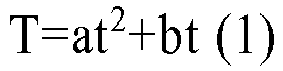 (wherein t represents time (units: hours), T represents a difference between a polymerization temperature and the polymerization initial temperature (units: °C), a represents a number not smaller than 0.0150 and not greater than 0.0300, and b represents a number not smaller than 0.1200 and not greater than 0.2500); andpolymerization is then performed at a polymerization late-stage temperature of not lower than 57°C and not higher than 65°C.
Applications Claiming Priority (2)
| Application Number | Priority Date | Filing Date | Title |
|---|---|---|---|
| JP2016155463A JP6795350B2 (en) | 2016-08-08 | 2016-08-08 | A vinylidene chloride-based resin film, a wrap film using the same, and a method for producing the resin film. |
| PCT/JP2017/024707 WO2018030040A1 (en) | 2016-08-08 | 2017-07-05 | Vinylidene chloride-based resin film, wrap film using same, and method for producing said resin film |
Publications (2)
| Publication Number | Publication Date |
|---|---|
| EP3498741A4 EP3498741A4 (en) | 2019-06-19 |
| EP3498741A1 true EP3498741A1 (en) | 2019-06-19 |
Family
ID=61162032
Family Applications (1)
| Application Number | Title | Priority Date | Filing Date |
|---|---|---|---|
| EP17839114.0A Withdrawn EP3498741A1 (en) | 2016-08-08 | 2017-07-05 | Vinylidene chloride-based resin film, wrap film using same, and method for producing said resin film |
Country Status (5)
| Country | Link |
|---|---|
| EP (1) | EP3498741A1 (en) |
| JP (1) | JP6795350B2 (en) |
| CN (1) | CN109071725B (en) |
| TW (1) | TWI633146B (en) |
| WO (1) | WO2018030040A1 (en) |
Cited By (2)
| Publication number | Priority date | Publication date | Assignee | Title |
|---|---|---|---|---|
| US12110385B2 (en) | 2019-03-29 | 2024-10-08 | Sekisui Chemical Co., Ltd. | Chlorinated vinyl chloride resin |
| US12486394B2 (en) | 2019-09-30 | 2025-12-02 | Sekisui Chemical Co., Ltd. | Molding resin composition and molded article |
Families Citing this family (7)
| Publication number | Priority date | Publication date | Assignee | Title |
|---|---|---|---|---|
| JP6913506B2 (en) * | 2017-05-16 | 2021-08-04 | 株式会社クレハ | Vinylidene chloride-based resin film and vinylidene chloride-based resin composition |
| JP7105713B2 (en) * | 2019-03-18 | 2022-07-25 | 株式会社クレハ | Resin film and its manufacturing method |
| CN112552622B (en) * | 2019-09-10 | 2023-03-10 | 旭化成株式会社 | Vinylidene chloride resin preservative film |
| JP7525360B2 (en) * | 2019-10-17 | 2024-07-30 | 旭化成株式会社 | Vinylidene chloride resin wrap film |
| JP2021080437A (en) * | 2019-11-14 | 2021-05-27 | 旭化成株式会社 | Wrap film |
| JP7809550B2 (en) * | 2022-03-04 | 2026-02-02 | 株式会社クレハ | plastic wrap |
| JP2025041343A (en) * | 2023-09-13 | 2025-03-26 | 株式会社キッチニスタ | Wrap film and wrap film container |
Family Cites Families (14)
| Publication number | Priority date | Publication date | Assignee | Title |
|---|---|---|---|---|
| JPS60163906A (en) * | 1984-02-07 | 1985-08-26 | Toyo Soda Mfg Co Ltd | Suspension polymerization of vinyl chloride |
| JPH0625313A (en) * | 1991-06-21 | 1994-02-01 | Sumitomo Chem Co Ltd | Suspension polymerization method of vinyl chloride monomer |
| JP4036348B2 (en) * | 1997-10-08 | 2008-01-23 | 旭化成ケミカルズ株式会社 | Vinylidene chloride resin thin film molded article and method for producing the same |
| BE1012318A3 (en) * | 1998-12-02 | 2000-09-05 | Solvay | Process for preparing copolymers halogenated, halogenated copolymers obtained and use thereof. |
| BE1013023A3 (en) * | 1998-12-02 | 2001-08-07 | Solvay | Process for the preparation of copolymers halogenated, halogenated copolymers obtained and use thereof. |
| CN101878115A (en) * | 2007-11-30 | 2010-11-03 | 尤尼吉可株式会社 | Polyamide film coated with vinylidene chloride copolymer mixture and method for producing same |
| US9828475B2 (en) * | 2009-11-20 | 2017-11-28 | Dow Global Technologies Llc | Printable monolayer polyvinylidene chloride structures |
| CN103797037B (en) * | 2012-06-04 | 2016-01-13 | Lg化学株式会社 | Water-dispersible halogen-terminated polyalkylacrylates, vinyl chloride-based block copolymers and methods for their preparation |
| EP2905310A4 (en) * | 2012-10-01 | 2016-02-24 | Kureha Corp | Vinylidene chloride-based copolymer resin composition and molded product thereof |
| JP6017579B2 (en) * | 2012-10-01 | 2016-11-02 | 株式会社クレハ | Vinylidene chloride copolymer resin composition and wrap film |
| JP6059005B2 (en) * | 2012-12-26 | 2017-01-11 | 株式会社クレハ | Plant-derived vinylidene chloride copolymer composition and heat-shrinkable film |
| TWI598382B (en) * | 2013-08-27 | 2017-09-11 | Kureha Corp | Vinylidene chloride resin film and its manufacturing method |
| JP6263128B2 (en) * | 2013-09-27 | 2018-01-17 | 積水化学工業株式会社 | Molding resin composition containing chlorinated vinyl chloride resin and molded article thereof |
| JP6339435B2 (en) * | 2014-07-23 | 2018-06-06 | 旭化成株式会社 | Vinylidene chloride resin wrap film |
-
2016
- 2016-08-08 JP JP2016155463A patent/JP6795350B2/en active Active
-
2017
- 2017-07-05 EP EP17839114.0A patent/EP3498741A1/en not_active Withdrawn
- 2017-07-05 WO PCT/JP2017/024707 patent/WO2018030040A1/en not_active Ceased
- 2017-07-05 CN CN201780025980.2A patent/CN109071725B/en active Active
- 2017-07-26 TW TW106125169A patent/TWI633146B/en active
Cited By (2)
| Publication number | Priority date | Publication date | Assignee | Title |
|---|---|---|---|---|
| US12110385B2 (en) | 2019-03-29 | 2024-10-08 | Sekisui Chemical Co., Ltd. | Chlorinated vinyl chloride resin |
| US12486394B2 (en) | 2019-09-30 | 2025-12-02 | Sekisui Chemical Co., Ltd. | Molding resin composition and molded article |
Also Published As
| Publication number | Publication date |
|---|---|
| EP3498741A4 (en) | 2019-06-19 |
| JP6795350B2 (en) | 2020-12-02 |
| WO2018030040A1 (en) | 2018-02-15 |
| JP2018024720A (en) | 2018-02-15 |
| TW201805356A (en) | 2018-02-16 |
| CN109071725A (en) | 2018-12-21 |
| CN109071725B (en) | 2020-04-03 |
| TWI633146B (en) | 2018-08-21 |
Similar Documents
| Publication | Publication Date | Title |
|---|---|---|
| JP6795350B2 (en) | A vinylidene chloride-based resin film, a wrap film using the same, and a method for producing the resin film. | |
| KR101966369B1 (en) | Polylactic acid resin composition and film for packaging comprising the same | |
| EP2905310A1 (en) | Vinylidene chloride-based copolymer resin composition and molded product thereof | |
| KR101298417B1 (en) | Polypropylene resin with Excellent stress whitening resistance, Impact strength and Transparency and its Film | |
| KR20100132253A (en) | Novel polyvinyl chloride plasticizer | |
| KR102296146B1 (en) | Flexible polylactic acid-based heat sealing film | |
| EP2905311A1 (en) | Vinylidene chloride-based copolymer resin composition and wrap film | |
| KR20190022675A (en) | Compositions stable to hydrolysis for films in solar cells | |
| CN103998452B (en) | Double ester admixture GC of anhydrous hexitol two | |
| TW202534113A (en) | Thermoplastic polyolefin film | |
| WO2013100420A1 (en) | Biodegradable resin composition and method using same for manufacturing a biodegradable sheet | |
| CN103224581B (en) | Vinylidene chloride analog copolymer, its composition and film thereof or sheet material | |
| KR102506279B1 (en) | Plasticizer composition and vinylchloride resin composition comprising the same | |
| JP7809550B2 (en) | plastic wrap | |
| KR101262833B1 (en) | Flame-retardant polyester compostion | |
| JP5598178B2 (en) | Weather resistant polyester film | |
| JP6913506B2 (en) | Vinylidene chloride-based resin film and vinylidene chloride-based resin composition | |
| KR102851991B1 (en) | Plasticizer composition, vinylchloride resin composition comprising the same and product comprising the same | |
| KR102181875B1 (en) | Polyolefin based resin composition and food packageing injection molding using the same | |
| KR20070082421A (en) | Plasticizer composition and vinyl chloride resin composition comprising the same | |
| KR100713101B1 (en) | Dipropyleneglycol ester plasticizer composition and process for preparing the same | |
| JP2023108944A (en) | 4-Methyl-1-pentene-based copolymer composition, molded article and film containing the 4-methyl-1-pentene-based copolymer composition | |
| JP2023092708A (en) | Vinylidene chloride resin wrap film | |
| KR20230068033A (en) | Plasticizer composition, vinylchloride resin composition comprising the same and product comprising the same | |
| JP2021138879A (en) | Olefinic resin composition and molded article |
Legal Events
| Date | Code | Title | Description |
|---|---|---|---|
| STAA | Information on the status of an ep patent application or granted ep patent |
Free format text: STATUS: THE INTERNATIONAL PUBLICATION HAS BEEN MADE |
|
| PUAI | Public reference made under article 153(3) epc to a published international application that has entered the european phase |
Free format text: ORIGINAL CODE: 0009012 |
|
| STAA | Information on the status of an ep patent application or granted ep patent |
Free format text: STATUS: REQUEST FOR EXAMINATION WAS MADE |
|
| 17P | Request for examination filed |
Effective date: 20181105 |
|
| A4 | Supplementary search report drawn up and despatched |
Effective date: 20190426 |
|
| AK | Designated contracting states |
Kind code of ref document: A1 Designated state(s): AL AT BE BG CH CY CZ DE DK EE ES FI FR GB GR HR HU IE IS IT LI LT LU LV MC MK MT NL NO PL PT RO RS SE SI SK SM TR |
|
| AX | Request for extension of the european patent |
Extension state: BA ME |
|
| DAV | Request for validation of the european patent (deleted) | ||
| DAX | Request for extension of the european patent (deleted) | ||
| STAA | Information on the status of an ep patent application or granted ep patent |
Free format text: STATUS: EXAMINATION IS IN PROGRESS |
|
| 17Q | First examination report despatched |
Effective date: 20200123 |
|
| GRAP | Despatch of communication of intention to grant a patent |
Free format text: ORIGINAL CODE: EPIDOSNIGR1 |
|
| STAA | Information on the status of an ep patent application or granted ep patent |
Free format text: STATUS: GRANT OF PATENT IS INTENDED |
|
| INTG | Intention to grant announced |
Effective date: 20210205 |
|
| STAA | Information on the status of an ep patent application or granted ep patent |
Free format text: STATUS: THE APPLICATION IS DEEMED TO BE WITHDRAWN |
|
| 18D | Application deemed to be withdrawn |
Effective date: 20210616 |