EP3498607A1 - Routable backup power control units - Google Patents
Routable backup power control units Download PDFInfo
- Publication number
- EP3498607A1 EP3498607A1 EP18206018.6A EP18206018A EP3498607A1 EP 3498607 A1 EP3498607 A1 EP 3498607A1 EP 18206018 A EP18206018 A EP 18206018A EP 3498607 A1 EP3498607 A1 EP 3498607A1
- Authority
- EP
- European Patent Office
- Prior art keywords
- power
- control
- circuit
- primary
- control circuits
- Prior art date
- Legal status (The legal status is an assumption and is not a legal conclusion. Google has not performed a legal analysis and makes no representation as to the accuracy of the status listed.)
- Granted
Links
Images


Classifications
-
- B—PERFORMING OPERATIONS; TRANSPORTING
- B64—AIRCRAFT; AVIATION; COSMONAUTICS
- B64D—EQUIPMENT FOR FITTING IN OR TO AIRCRAFT; FLIGHT SUITS; PARACHUTES; ARRANGEMENT OR MOUNTING OF POWER PLANTS OR PROPULSION TRANSMISSIONS IN AIRCRAFT
- B64D15/00—De-icing or preventing icing on exterior surfaces of aircraft
- B64D15/12—De-icing or preventing icing on exterior surfaces of aircraft by electric heating
-
- B—PERFORMING OPERATIONS; TRANSPORTING
- B64—AIRCRAFT; AVIATION; COSMONAUTICS
- B64D—EQUIPMENT FOR FITTING IN OR TO AIRCRAFT; FLIGHT SUITS; PARACHUTES; ARRANGEMENT OR MOUNTING OF POWER PLANTS OR PROPULSION TRANSMISSIONS IN AIRCRAFT
- B64D33/00—Arrangement in aircraft of power plant parts or auxiliaries not otherwise provided for
- B64D33/02—Arrangement in aircraft of power plant parts or auxiliaries not otherwise provided for of combustion air intakes
-
- H—ELECTRICITY
- H02—GENERATION; CONVERSION OR DISTRIBUTION OF ELECTRIC POWER
- H02J—ELECTRIC POWER NETWORKS; CIRCUIT ARRANGEMENTS OR SYSTEMS FOR SUPPLYING OR DISTRIBUTING ELECTRIC POWER; SYSTEMS FOR STORING ELECTRIC ENERGY
- H02J3/00—Circuit arrangements for AC mains or AC distribution networks
- H02J3/007—Arrangements for selectively connecting one or more loads to one or more power sources or power lines
- H02J3/0073—Arrangements for selectively connecting one or more loads to one or more power sources or power lines by providing alternative feeding paths when the main path fails
-
- H—ELECTRICITY
- H02—GENERATION; CONVERSION OR DISTRIBUTION OF ELECTRIC POWER
- H02J—ELECTRIC POWER NETWORKS; CIRCUIT ARRANGEMENTS OR SYSTEMS FOR SUPPLYING OR DISTRIBUTING ELECTRIC POWER; SYSTEMS FOR STORING ELECTRIC ENERGY
- H02J4/00—Circuit arrangements for mains or distribution networks not specified as AC or DC; Circuit arrangements for mains or distribution networks combining AC and DC sections or sub-networks
-
- H—ELECTRICITY
- H02—GENERATION; CONVERSION OR DISTRIBUTION OF ELECTRIC POWER
- H02J—ELECTRIC POWER NETWORKS; CIRCUIT ARRANGEMENTS OR SYSTEMS FOR SUPPLYING OR DISTRIBUTING ELECTRIC POWER; SYSTEMS FOR STORING ELECTRIC ENERGY
- H02J9/00—Circuit arrangements for emergency or stand-by power supply, e.g. for emergency lighting
- H02J9/02—Circuit arrangements for emergency or stand-by power supply, e.g. for emergency lighting in which an auxiliary distribution system and its associated lamps are brought into service
-
- H—ELECTRICITY
- H05—ELECTRIC TECHNIQUES NOT OTHERWISE PROVIDED FOR
- H05B—ELECTRIC HEATING; ELECTRIC LIGHT SOURCES NOT OTHERWISE PROVIDED FOR; CIRCUIT ARRANGEMENTS FOR ELECTRIC LIGHT SOURCES, IN GENERAL
- H05B1/00—Details of electric heating devices
- H05B1/02—Automatic switching arrangements specially adapted to apparatus ; Control of heating devices
- H05B1/0227—Applications
- H05B1/023—Industrial applications
- H05B1/0236—Industrial applications for vehicles
-
- B—PERFORMING OPERATIONS; TRANSPORTING
- B64—AIRCRAFT; AVIATION; COSMONAUTICS
- B64D—EQUIPMENT FOR FITTING IN OR TO AIRCRAFT; FLIGHT SUITS; PARACHUTES; ARRANGEMENT OR MOUNTING OF POWER PLANTS OR PROPULSION TRANSMISSIONS IN AIRCRAFT
- B64D33/00—Arrangement in aircraft of power plant parts or auxiliaries not otherwise provided for
- B64D33/02—Arrangement in aircraft of power plant parts or auxiliaries not otherwise provided for of combustion air intakes
- B64D2033/0233—Arrangement in aircraft of power plant parts or auxiliaries not otherwise provided for of combustion air intakes comprising de-icing means
-
- B—PERFORMING OPERATIONS; TRANSPORTING
- B64—AIRCRAFT; AVIATION; COSMONAUTICS
- B64D—EQUIPMENT FOR FITTING IN OR TO AIRCRAFT; FLIGHT SUITS; PARACHUTES; ARRANGEMENT OR MOUNTING OF POWER PLANTS OR PROPULSION TRANSMISSIONS IN AIRCRAFT
- B64D2221/00—Electric power distribution systems onboard aircraft
-
- H—ELECTRICITY
- H02—GENERATION; CONVERSION OR DISTRIBUTION OF ELECTRIC POWER
- H02J—ELECTRIC POWER NETWORKS; CIRCUIT ARRANGEMENTS OR SYSTEMS FOR SUPPLYING OR DISTRIBUTING ELECTRIC POWER; SYSTEMS FOR STORING ELECTRIC ENERGY
- H02J2105/00—Networks for supplying or distributing electric power characterised by their spatial reach or by the load
- H02J2105/30—Networks for supplying or distributing electric power characterised by their spatial reach or by the load the load networks being external to vehicles, i.e. exchanging power with vehicles
- H02J2105/32—Networks for supplying or distributing electric power characterised by their spatial reach or by the load the load networks being external to vehicles, i.e. exchanging power with vehicles for aircrafts
-
- H—ELECTRICITY
- H05—ELECTRIC TECHNIQUES NOT OTHERWISE PROVIDED FOR
- H05B—ELECTRIC HEATING; ELECTRIC LIGHT SOURCES NOT OTHERWISE PROVIDED FOR; CIRCUIT ARRANGEMENTS FOR ELECTRIC LIGHT SOURCES, IN GENERAL
- H05B2203/00—Aspects relating to Ohmic resistive heating covered by group H05B3/00
- H05B2203/035—Electrical circuits used in resistive heating apparatus
-
- H—ELECTRICITY
- H05—ELECTRIC TECHNIQUES NOT OTHERWISE PROVIDED FOR
- H05B—ELECTRIC HEATING; ELECTRIC LIGHT SOURCES NOT OTHERWISE PROVIDED FOR; CIRCUIT ARRANGEMENTS FOR ELECTRIC LIGHT SOURCES, IN GENERAL
- H05B2203/00—Aspects relating to Ohmic resistive heating covered by group H05B3/00
- H05B2203/037—Heaters with zones of different power density
Definitions
- the present invention relates generally to redundant power control, and in particular to a system and method for connecting redundant power controllers to loads.
- each power control unit is backed up by a dedicated spare power control unit, providing a one-to-one relationship between primary power control units and backup power control units.
- the respective backup power control unit assumes control. Requiring a backup control unit for each primary control unit greatly increased the size and complexity of the system. To reduce the size, weight and complexity of these systems, it is desirable to eliminate the need for each primary control unit to have a respective dedicated backup control unit.
- a system includes a power source, a plurality of primary control circuits, a load, at least one secondary control circuit, a switch circuit, and a control channel.
- the plurality of primary control circuits are connected to control load power from the power source to respective ones of a plurality of load power inputs.
- the load is configured to receive power from the plurality of load power inputs.
- the at least one secondary control circuit is connected to the power source, and the switch circuit is connected between the at least one secondary control circuit and the plurality of load power inputs.
- the control channel is configured to control the switch circuit to connect the at least one secondary control circuit to a selected one of the plurality of load power inputs.
- a method of controlling power to a load includes controlling, by a plurality of primary control circuits, power from a power source to respective ones of a plurality of load power inputs; monitoring, by a control channel, the plurality of primary control circuits for faults; detecting, by the control channel, a fault in one of the plurality of primary control circuits, wherein the one of the plurality of primary control circuits is connected to provide the power from the power source to one of the plurality of load power inputs; and controlling, by the control channel, a switch circuit to connect a secondary control circuit to provide the power from the power source to the one of the plurality of load power inputs.
- a redundant power control architecture is disclosed herein that includes spare power control circuits capable of providing redundant power control for multiple primary power control circuits.
- the power control system includes several primary power control circuits and at least one secondary power control circuit.
- the primary power control circuits are positioned to control power from a power bus to a load.
- the load may be a heater assembly that includes several heater zones.
- Each primary power control circuit may be configured to control power provided to a respective heater zone.
- a control channel is configured to monitor the primary control circuits and detect any faults or failures.
- the secondary control circuit is connected between the power bus and a switch circuit.
- the switch circuit is connected between the secondary control circuit and the power input lines to the load.
- the control channel controls the switch circuit to connect the secondary control circuit to the respective power input line of the load in place of the faulty primary control circuit.
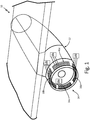
- FIG. 1 is a diagram illustrating an embodiment of an ice protection system 10 for an engine nacelle 12. Ice protection system 10 is configured to provide ice protection for inlet 14 of engine nacelle 12.
- heater assemblies 16a-16d are positioned circumferentially around inlet 14 to provide heating for inlet 14.
- Each heater assembly 16a-16d has multiple zones, each connected to a respective heater control unit 18a-18n. While illustrated as four heater assemblies 16a-16d each having three zones, any number of heater assemblies each having any number of zones may be utilized. While illustrated and described for an ice protection system, control units 18a-18n may be utilized for any critical power control system that requires redundant power control.
- Control units 18a-18d are configured to control power to respective zones of heater assemblies 16a-16n.
- each heater assembly 16a-16n may include three zones, one zone for each phase aircraft alternating current (AC) power.
- Control units 18a-18d may include individual controllers for each phase of power and selectively control each phase to control each zone of the respective heater assembly 16a-16n. This way, the ice protection system can actively control heating for each zone of each heater assembly 16a-16n for ice protection system 10.
- each heater assembly 16a-16n can include three zones that are each powered by all three phases of the AC power (e.g., connected in a wye or delta configuration).
- each of control units 18a-18d may include individual controllers that control the three-phase AC power to each of the separate zones.
- control units 18a-18d in FIG. 1 The positioning of control units 18a-18d in FIG. 1 is used to show the connection to heater assemblies 16a-16d.
- the actual physical location of control units 18a-18d may be anywhere on or in the aircraft engine, wing, or body. Ice protection system 10 may be a safety critical system and thus, control units 18a-18n may require redundant control for respective heater assemblies 16a-16d.
- FIG. 2 is a block diagram illustrating redundant power control system 18.
- Control system 18 may be utilized for each of control units 18a-18n of FIG. 1 , for example.
- Redundant power control system 18 includes primary control circuits 20a-20n, secondary control circuits 22a-22n, switch circuit 24, primary channel circuit 26a, secondary channel circuit 26b, power input 28, power bus 30, and load input power lines 32a-32c.
- Heater assembly 16 may be any of heater assemblies 16a-16n of FIG. 1 , or may be any other load that includes multiple zones or sub-loads, for example.
- Power input 28 may provide alternating current (AC) power or direct current (DC) power.
- power bus 30 may be an aircraft power bus that carries multiphase AC power from one of the engine generators. Power bus 30 is connected to supply power to primary control circuits 20a-20n and secondary control circuits 22a-22n. While illustrated as a single line, power bus 30 may include any number of input power lines. For example, if power input 28 is aircraft AC power, power bus 30 may include three input lines for the three phases of AC power.
- Heater assembly 16, or any other load may be divided into zones, or may include several separate loads, for example. Each zone or separate load may be powered separately through a dedicated primary control circuit 20a-20n.
- the respective primary control circuit 20a-20n may include a solid state switching device, for example, controlled to selectively provide power from power bus 30 to a respective one of load input power lines 32a-32c.
- Each load input power line 32a-32c may be connected to a respective zone of heater assembly 16, for example, while illustrated in FIG. 1 as three input power lines 32a-32c, any number of input power lines can be utilized.
- Primary channel circuit 26a and secondary channel circuit 26b may be configured to provide fully redundant zone activation, scheduling, and monitoring functions for heater assembly 16. For example, primary channel circuit 26a may be given control while secondary channel circuit 26b acts as a backup channel circuit. In the event of a disabling fault in primary channel circuit 26a, secondary channel circuit 26b may assume control. Hardware and/or software interlocks, for example, may be implemented to ensure that only one channel circuit 26a or 26b has active control at any given time. The channel circuit 26a or 26b that is currently in control determines when to turn on or off each zone and actively monitors primary control circuits 20a-20n for faults. If a fault is detected, the active channel circuit 26a or 26b may disconnect affected primary control zone 20a-20n from power bus 30.
- switch circuit 24 may be controlled to connect one of secondary control circuits 22a-22n in place of the faulty primary control circuit 20a-20n. For example, if a fault is detected in primary control circuit 20a, switch circuit 24 may be controlled to connect secondary control circuit 22a to load power input line 32a. This way, secondary control circuit 22a may assume control of power from power bus 30 to load power input line 32a.
- Switch circuit 24 is configured to allow connection of each secondary control circuit 22a-22n to any of load input power lines 32a-32c. This way, any secondary control circuit 22a-22n may be utilized in place of any primary control circuit 20a-20n.
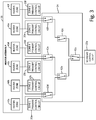
- FIG. 3 is a block diagram illustrating switch circuit 24 for redundant power control system 18.
- heater assembly 16 includes six heater zones 40a-40f, controlled by respective primary control circuits 20a-20f.
- a single secondary control circuit 22a acts as a backup power control circuit for all of primary control circuits 20a-20f.
- any number of heater zones 40 may be implemented with any number of secondary control circuits 22a-22n.
- Switch circuit 24 includes switches 42a-42f. While illustrated as six switches 42a-42f, any number of switches may be used to satisfy the number of secondary control circuits 22a-22n that must be routed to heater zones 40a-40f. Switches 42a-42f may be implemented using mechanical relays, power metal-oxide-semiconductor field-effect transistors (MOSFETs), or any other type of mechanical and/or electrical switching devices. While illustrated a switch matrix with six switches 42a-42f, switch circuit 24 may be configured in any way that allows selective connection of secondary control circuits 22a-22n to any heater zone 40a-40f.
- MOSFETs power metal-oxide-semiconductor field-effect transistors
- Channel control circuits 26a and 26b may control switches 42a-42f to connect secondary control circuit 22a to one of heater zones 40a-40f.
- FIG. 3 illustrates a default state in which all primary control circuits 20a-20n are functioning normally. In this default state, secondary control circuit 22a is not connected to any heater zone 40a-40f due to the open circuit created by switch 42c.
- switches 42a-42f are controlled to connect secondary control circuit in place of the faulty primary control circuit 20a-20f. For example, a fault in primary channel circuit 20b may be detected by primary channel circuit 26a.
- primary channel circuit 26a may control switch circuit 24 to connect secondary control circuit 22a to heater zone 40b.
- switch 42a is controlled to route power from secondary control circuit 22a to switch 42b.
- Switch 42b is controlled to route power to switch 42d, and switch 42d is controlled to route power to heater zone 40b.
- FIG. 4 is a block diagram illustrating control circuit 20 of a redundant power control system 18.
- Control circuit 20 may be any of primary control circuits 20a-20n, or secondary control circuits 22a-22n of FIGS. 2 and 3 .
- Control circuit 20 includes safety power cutout device 50, cutout device control logic 52, voltage monitors 54a and 54b, current sense circuits 56a and 56b, solid state switching device 58, and solid state switching device control logic 60.
- Safety power cutout device 50 may be a mechanical relay, or other mechanical or electrical device capable of terminating power flow from power bus 30. Cutout device control logic 52 receives input from both primary channel circuit 26a and secondary channel circuit 26b.
- Cutout device control logic 52 may be any digital and/or analog circuitry capable of controlling safety power cutout device 50 based on input from channel control circuits 26a and 26b. This way, primary channel circuit 26a and secondary channel circuit 26b are able to terminate power flow from power bus 30 upon detection of a fault, for example.
- Voltage monitors 54a and 54b, and current sense circuit circuits 56a and 56b are configured to monitor the voltage and current, respectively, within control circuit 20.
- Voltage monitor 54a and current sense circuit 56a are connected to provide outputs to primary channel circuit 26a
- voltage monitor 54b and current sense circuit 56b are connected to provide outputs to secondary channel circuit 26b.
- Voltage monitors 54a and 54b may be any analog and/or digital circuit elements capable of providing output signals indicative of voltage on power within control circuit 20.
- Current sense circuits 56a and 56b are any circuit elements capable of providing a signal indicative of current within control circuit 20 such as, for example, shunt resistors, Hall effect sensors, current transformers, or any other current sensing devices.
- Solid state power switching device 58 which may be a solid state metal-oxide-semiconductor field-effect transistor (MOSFET), for example, is controlled to connect power from power bus 30 to heater power input line 32.
- Channel control circuits 26a and 26b control solid state power switching device 58 through control logic 60 to selectively apply power to a respective heater zone 40a-40f ( FIG. 3 ).
- Control logic 60 may be any digital and/or analog circuitry configured to control solid state power switching device 58 based on input from channel control circuits 26a and 26b.
- Channel control circuits 26a and 26b may monitor respective outputs from voltage monitors 54a and 54b, and current sense circuits 56a and 56b to monitor for faults within control circuit 20. For example, a short circuit fault may occur, which may be detected by channel circuits 26a and 26b using respective current sense circuits 56a and 56b. Upon detection of the fault, channel control circuits 26a and 26b may control safety power cutout device 50 to terminate power to control circuit 20 from power bus 30. Following termination of power, channel control circuits 26a and 26b may control switch circuit 24 to connect a secondary control circuit 22a-22n in place of faulty control circuit 20.
- All primary control circuits 20a-20n and secondary control circuits 22a-22n may be implemented similar to the embodiment illustrated in FIG. 4 . This way, if a first secondary control circuit 22a is connected to a zone 40a-40f, and later has a fault, a second secondary control circuit 22b, for example, may be connected in place of the first, faulty, secondary control circuit 22a. Thus, by using secondary control circuits 22a-22n in conjunction with switch circuit 24, the size, weight, and cost of control system 18 may be reduced, while the flexibility of control system 18 may be increased.
- a system includes a power source, a plurality of primary control circuits, a load, at least one secondary control circuit, a switch circuit, and a control channel.
- the plurality of primary control circuits are connected to control load power from the power source to respective ones of a plurality of load power inputs.
- the load is configured to receive power from the plurality of load power inputs.
- the at least one secondary control circuit is connected to the power source, and the switch circuit is connected between the at least one secondary control circuit and the plurality of load power inputs.
- the control channel is configured to control the switch circuit to connect the at least one secondary control circuit to a selected one of the plurality of load power inputs.
- system of the preceding paragraph can optionally include, additionally and/or alternatively, any one or more of the following features, configurations and/or additional components:
- the system is an aircraft nacelle ice protection system
- the load is a heater assembly configured to generate heat for an inlet of the aircraft nacelle upon receipt of the load power.
- heater assembly includes a plurality of zones, and wherein the plurality of zones are connected to the plurality of load power inputs.
- each of the plurality of primary control circuits includes a solid state switching device
- the control channel is further configured to control the solid state switching device of each of the plurality of primary control circuits to control the load power from the power source to the respective ones of the plurality of load power inputs.
- control channel comprises a primary control channel circuit and a secondary control channel circuit
- each of the primary control channel circuit and the secondary control channel circuit are capable of controlling the solid state switching device of each of the plurality of primary control circuits, and controlling the switch circuit to connect the at least one secondary control circuit to the selected one of the plurality of load power inputs.
- control channel is further configured to detect a fault in one of the plurality of primary control circuits, and control the switch circuit to connect the at least one secondary control circuit to the selected one of the plurality of load power inputs upon detection of the fault.
- each of the plurality of primary control circuits comprise a voltage monitor configured to provide a sensed voltage to the control channel and a current sense circuit configured to provide a sensed current to the control channel, and wherein the control channel is further configured to detect the fault in the one of the plurality of primary control circuits based on the sensed current and the sensed voltage.
- each of the plurality of primary control circuits further comprise a safety power cutout device
- the control channel is further configured to control the safety power cutout device of the one of the plurality of primary control circuits to disconnect the one of the plurality of primary control circuits from the power input upon detection of the fault.
- switch circuit comprises a plurality of switches connected between the at least one secondary control circuit and the plurality of load power inputs
- control channel is further configured to control the plurality of switches to selectively connect the secondary control circuit to the selected one of the plurality of power inputs
- a method of controlling power to a load includes controlling, by a plurality of primary control circuits, power from a power source to respective ones of a plurality of load power inputs; monitoring, by a control channel, the plurality of primary control circuits for faults; detecting, by the control channel, a first fault in a first one of the plurality of primary control circuits, wherein the first one of the plurality of primary control circuits is connected to provide the power from the power source to a first one of the plurality of load power inputs; and controlling, by the control channel, a switch circuit to connect a first secondary control circuit to provide the power from the power source to the first one of the plurality of load power inputs.
- the method of the preceding paragraph can optionally include, additionally and/or alternatively, any one or more of the following features, configurations and/or additional components: A further embodiment of the foregoing method, wherein the load is a heater assembly of an aircraft nacelle ice protection system.
- controlling, by the plurality of primary control circuits, the power from the power source to the respective ones of the plurality of load power inputs includes providing the power from the respective ones of the plurality of load power inputs to a plurality of zones of the heater assembly.
- controlling, by the plurality of primary control circuits, the power from the power source to the respective ones of the plurality of load power inputs includes controlling a solid state switching device of each of the plurality of primary control circuits to control the power from the power source to the respective ones of the plurality of load power inputs.
- monitoring, by the control channel, the plurality of primary control circuits for faults includes monitoring, by a primary channel circuit, the plurality of primary control circuits for faults; and providing, by a secondary channel circuit, redundancy for the primary channel circuit.
- monitoring, by the control channel, the plurality of primary control circuits for faults comprises monitoring, from each of the plurality of primary control circuits, a sensed voltage and a sensed current.
- detecting, by the control channel, the first fault in the first one of the plurality of primary control circuits comprising detecting the first fault based on at least one of the sensed voltage and the sensed current.
- a further embodiment of any of the foregoing methods further including disconnecting, by the control channel, the first one of the plurality of primary control circuits using a safety power cutout device of the first one of the plurality of primary control circuits.
- a further embodiment of any of the foregoing methods further including detecting, by the control channel, a second fault in a second one of the plurality of primary control circuits, wherein the second one of the plurality of primary control circuits is connected to provide the power from the power source to a second one of the plurality of load power inputs; and controlling, by the control channel, the switch circuit to connect a second secondary control circuit to provide the power from the power source to the second one of the plurality of load power inputs.
Landscapes
- Engineering & Computer Science (AREA)
- Power Engineering (AREA)
- Aviation & Aerospace Engineering (AREA)
- Chemical & Material Sciences (AREA)
- Combustion & Propulsion (AREA)
- Business, Economics & Management (AREA)
- Emergency Management (AREA)
- Direct Current Feeding And Distribution (AREA)
- Supply And Distribution Of Alternating Current (AREA)
Abstract
Description
- The present invention relates generally to redundant power control, and in particular to a system and method for connecting redundant power controllers to loads.
- Safety critical systems, such as those found on aircraft, often require redundant control systems. For example, aircraft ice protection systems require redundant power control for heater assemblies. In prior redundant ice protection system, each power control unit is backed up by a dedicated spare power control unit, providing a one-to-one relationship between primary power control units and backup power control units. Upon failure of one of the primary power control units, the respective backup power control unit assumes control. Requiring a backup control unit for each primary control unit greatly increased the size and complexity of the system. To reduce the size, weight and complexity of these systems, it is desirable to eliminate the need for each primary control unit to have a respective dedicated backup control unit.
- A system includes a power source, a plurality of primary control circuits, a load, at least one secondary control circuit, a switch circuit, and a control channel. The plurality of primary control circuits are connected to control load power from the power source to respective ones of a plurality of load power inputs. The load is configured to receive power from the plurality of load power inputs. The at least one secondary control circuit is connected to the power source, and the switch circuit is connected between the at least one secondary control circuit and the plurality of load power inputs. The control channel is configured to control the switch circuit to connect the at least one secondary control circuit to a selected one of the plurality of load power inputs.
- A method of controlling power to a load includes controlling, by a plurality of primary control circuits, power from a power source to respective ones of a plurality of load power inputs; monitoring, by a control channel, the plurality of primary control circuits for faults; detecting, by the control channel, a fault in one of the plurality of primary control circuits, wherein the one of the plurality of primary control circuits is connected to provide the power from the power source to one of the plurality of load power inputs; and controlling, by the control channel, a switch circuit to connect a secondary control circuit to provide the power from the power source to the one of the plurality of load power inputs.
-
-
FIG. 1 is a diagram illustrating an embodiment of a nacelle inlet ice protection system. -
FIG. 2 is a block diagram illustrating a redundant power control system that includes primary control circuits and secondary control circuits. -
FIG. 3 is a block diagram illustrating a switch circuit for connecting a secondary control circuit in place of multiple primary control circuits. -
FIG. 4 is a block diagram illustrating a control unit of a redundant power control system. - A redundant power control architecture is disclosed herein that includes spare power control circuits capable of providing redundant power control for multiple primary power control circuits. The power control system includes several primary power control circuits and at least one secondary power control circuit. The primary power control circuits are positioned to control power from a power bus to a load. For example, the load may be a heater assembly that includes several heater zones. Each primary power control circuit may be configured to control power provided to a respective heater zone.
- A control channel is configured to monitor the primary control circuits and detect any faults or failures. The secondary control circuit is connected between the power bus and a switch circuit. The switch circuit is connected between the secondary control circuit and the power input lines to the load. Upon detection of a fault or failure in one of the primary control circuits, the control channel controls the switch circuit to connect the secondary control circuit to the respective power input line of the load in place of the faulty primary control circuit. By using the switch circuit, multiple primary control circuits may be backed up by a single secondary control circuit. This provides redundancy for all primary control circuits while reducing the size, weight, and complexity of the power system.
-
FIG. 1 is a diagram illustrating an embodiment of anice protection system 10 for anengine nacelle 12.Ice protection system 10 is configured to provide ice protection forinlet 14 ofengine nacelle 12. In the embodiment illustrated inFIG. 1 ,heater assemblies 16a-16d are positioned circumferentially aroundinlet 14 to provide heating forinlet 14. Eachheater assembly 16a-16d has multiple zones, each connected to a respectiveheater control unit 18a-18n. While illustrated as four heater assemblies 16a-16d each having three zones, any number of heater assemblies each having any number of zones may be utilized. While illustrated and described for an ice protection system,control units 18a-18n may be utilized for any critical power control system that requires redundant power control. -
Control units 18a-18d are configured to control power to respective zones ofheater assemblies 16a-16n. For example, eachheater assembly 16a-16n may include three zones, one zone for each phase aircraft alternating current (AC) power.Control units 18a-18d may include individual controllers for each phase of power and selectively control each phase to control each zone of therespective heater assembly 16a-16n. This way, the ice protection system can actively control heating for each zone of eachheater assembly 16a-16n forice protection system 10. In other examples, eachheater assembly 16a-16n can include three zones that are each powered by all three phases of the AC power (e.g., connected in a wye or delta configuration). In such examples, each ofcontrol units 18a-18d may include individual controllers that control the three-phase AC power to each of the separate zones. - The positioning of
control units 18a-18d inFIG. 1 is used to show the connection toheater assemblies 16a-16d. The actual physical location ofcontrol units 18a-18d may be anywhere on or in the aircraft engine, wing, or body.Ice protection system 10 may be a safety critical system and thus,control units 18a-18n may require redundant control forrespective heater assemblies 16a-16d. -
FIG. 2 is a block diagram illustrating redundantpower control system 18.Control system 18 may be utilized for each ofcontrol units 18a-18n ofFIG. 1 , for example. Redundantpower control system 18 includesprimary control circuits 20a-20n,secondary control circuits 22a-22n,switch circuit 24,primary channel circuit 26a,secondary channel circuit 26b,power input 28,power bus 30, and loadinput power lines 32a-32c.Heater assembly 16 may be any ofheater assemblies 16a-16n ofFIG. 1 , or may be any other load that includes multiple zones or sub-loads, for example. -
Power input 28 may provide alternating current (AC) power or direct current (DC) power. For example,power bus 30 may be an aircraft power bus that carries multiphase AC power from one of the engine generators.Power bus 30 is connected to supply power toprimary control circuits 20a-20n andsecondary control circuits 22a-22n. While illustrated as a single line,power bus 30 may include any number of input power lines. For example, ifpower input 28 is aircraft AC power,power bus 30 may include three input lines for the three phases of AC power. -
Heater assembly 16, or any other load, may be divided into zones, or may include several separate loads, for example. Each zone or separate load may be powered separately through a dedicatedprimary control circuit 20a-20n. The respectiveprimary control circuit 20a-20n may include a solid state switching device, for example, controlled to selectively provide power frompower bus 30 to a respective one of loadinput power lines 32a-32c. Each loadinput power line 32a-32c may be connected to a respective zone ofheater assembly 16, for example, while illustrated inFIG. 1 as threeinput power lines 32a-32c, any number of input power lines can be utilized. -
Primary channel circuit 26a andsecondary channel circuit 26b may be configured to provide fully redundant zone activation, scheduling, and monitoring functions forheater assembly 16. For example,primary channel circuit 26a may be given control whilesecondary channel circuit 26b acts as a backup channel circuit. In the event of a disabling fault inprimary channel circuit 26a,secondary channel circuit 26b may assume control. Hardware and/or software interlocks, for example, may be implemented to ensure that only onechannel circuit channel circuit primary control circuits 20a-20n for faults. If a fault is detected, theactive channel circuit primary control zone 20a-20n frompower bus 30. - Following disconnection of
power bus 30 from the respectiveprimary control circuit 20a-20n,switch circuit 24 may be controlled to connect one ofsecondary control circuits 22a-22n in place of the faultyprimary control circuit 20a-20n. For example, if a fault is detected inprimary control circuit 20a,switch circuit 24 may be controlled to connectsecondary control circuit 22a to loadpower input line 32a. This way,secondary control circuit 22a may assume control of power frompower bus 30 to loadpower input line 32a. - While illustrated as multiple
secondary control circuits 22a-22n, in other embodiments, a single secondary control circuit may be utilized.Switch circuit 24 is configured to allow connection of eachsecondary control circuit 22a-22n to any of loadinput power lines 32a-32c. This way, anysecondary control circuit 22a-22n may be utilized in place of anyprimary control circuit 20a-20n. -
FIG. 3 is a block diagram illustratingswitch circuit 24 for redundantpower control system 18. In the embodiment illustrated inFIG. 3 ,heater assembly 16 includes sixheater zones 40a-40f, controlled by respectiveprimary control circuits 20a-20f. A singlesecondary control circuit 22a acts as a backup power control circuit for all ofprimary control circuits 20a-20f. In other embodiments, any number of heater zones 40 may be implemented with any number ofsecondary control circuits 22a-22n. -
Switch circuit 24 includesswitches 42a-42f. While illustrated as sixswitches 42a-42f, any number of switches may be used to satisfy the number ofsecondary control circuits 22a-22n that must be routed toheater zones 40a-40f.Switches 42a-42f may be implemented using mechanical relays, power metal-oxide-semiconductor field-effect transistors (MOSFETs), or any other type of mechanical and/or electrical switching devices. While illustrated a switch matrix with sixswitches 42a-42f,switch circuit 24 may be configured in any way that allows selective connection ofsecondary control circuits 22a-22n to anyheater zone 40a-40f. -
Channel control circuits FIG. 2 ) may controlswitches 42a-42f to connectsecondary control circuit 22a to one ofheater zones 40a-40f.FIG. 3 illustrates a default state in which allprimary control circuits 20a-20n are functioning normally. In this default state,secondary control circuit 22a is not connected to anyheater zone 40a-40f due to the open circuit created byswitch 42c. Upon detection of a fault in any ofprimary control circuits 20a-20f, switches 42a-42f are controlled to connect secondary control circuit in place of the faultyprimary control circuit 20a-20f. For example, a fault inprimary channel circuit 20b may be detected byprimary channel circuit 26a. Upon detection of the fault inprimary control circuit 20b,primary channel circuit 26a may controlswitch circuit 24 to connectsecondary control circuit 22a toheater zone 40b. To do this,switch 42a is controlled to route power fromsecondary control circuit 22a to switch 42b.Switch 42b is controlled to route power to switch 42d, andswitch 42d is controlled to route power toheater zone 40b. -
FIG. 4 is a block diagram illustratingcontrol circuit 20 of a redundantpower control system 18.Control circuit 20 may be any ofprimary control circuits 20a-20n, orsecondary control circuits 22a-22n ofFIGS. 2 and3 .Control circuit 20 includes safetypower cutout device 50, cutoutdevice control logic 52, voltage monitors 54a and 54b,current sense circuits state switching device 58, and solid state switchingdevice control logic 60. Safetypower cutout device 50 may be a mechanical relay, or other mechanical or electrical device capable of terminating power flow frompower bus 30. Cutoutdevice control logic 52 receives input from bothprimary channel circuit 26a andsecondary channel circuit 26b. Cutoutdevice control logic 52 may be any digital and/or analog circuitry capable of controlling safetypower cutout device 50 based on input fromchannel control circuits primary channel circuit 26a andsecondary channel circuit 26b are able to terminate power flow frompower bus 30 upon detection of a fault, for example. - Voltage monitors 54a and 54b, and current
sense circuit circuits control circuit 20.Voltage monitor 54a andcurrent sense circuit 56a are connected to provide outputs toprimary channel circuit 26a, andvoltage monitor 54b andcurrent sense circuit 56b are connected to provide outputs tosecondary channel circuit 26b. Voltage monitors 54a and 54b may be any analog and/or digital circuit elements capable of providing output signals indicative of voltage on power withincontrol circuit 20.Current sense circuits control circuit 20 such as, for example, shunt resistors, Hall effect sensors, current transformers, or any other current sensing devices. - Solid state
power switching device 58, which may be a solid state metal-oxide-semiconductor field-effect transistor (MOSFET), for example, is controlled to connect power frompower bus 30 to heaterpower input line 32.Channel control circuits power switching device 58 throughcontrol logic 60 to selectively apply power to arespective heater zone 40a-40f (FIG. 3 ).Control logic 60 may be any digital and/or analog circuitry configured to control solid statepower switching device 58 based on input fromchannel control circuits -
Channel control circuits voltage monitors current sense circuits control circuit 20. For example, a short circuit fault may occur, which may be detected bychannel circuits current sense circuits channel control circuits power cutout device 50 to terminate power to controlcircuit 20 frompower bus 30. Following termination of power,channel control circuits switch circuit 24 to connect asecondary control circuit 22a-22n in place offaulty control circuit 20. - All
primary control circuits 20a-20n andsecondary control circuits 22a-22n may be implemented similar to the embodiment illustrated inFIG. 4 . This way, if a firstsecondary control circuit 22a is connected to azone 40a-40f, and later has a fault, a second secondary control circuit 22b, for example, may be connected in place of the first, faulty,secondary control circuit 22a. Thus, by usingsecondary control circuits 22a-22n in conjunction withswitch circuit 24, the size, weight, and cost ofcontrol system 18 may be reduced, while the flexibility ofcontrol system 18 may be increased. - The following are non-exclusive descriptions of possible embodiments of the present invention.
- A system includes a power source, a plurality of primary control circuits, a load, at least one secondary control circuit, a switch circuit, and a control channel. The plurality of primary control circuits are connected to control load power from the power source to respective ones of a plurality of load power inputs. The load is configured to receive power from the plurality of load power inputs. The at least one secondary control circuit is connected to the power source, and the switch circuit is connected between the at least one secondary control circuit and the plurality of load power inputs. The control channel is configured to control the switch circuit to connect the at least one secondary control circuit to a selected one of the plurality of load power inputs.
- The system of the preceding paragraph can optionally include, additionally and/or alternatively, any one or more of the following features, configurations and/or additional components:
A further embodiment of the foregoing system, wherein the system is an aircraft nacelle ice protection system, and wherein the load is a heater assembly configured to generate heat for an inlet of the aircraft nacelle upon receipt of the load power. - A further embodiment of any of the foregoing systems, wherein the heater assembly includes a plurality of zones, and wherein the plurality of zones are connected to the plurality of load power inputs.
- A further embodiment of any of the foregoing systems, wherein the power source is a three-phase alternating current power bus.
- A further embodiment of any of the foregoing systems, wherein each of the plurality of primary control circuits includes a solid state switching device, and wherein the control channel is further configured to control the solid state switching device of each of the plurality of primary control circuits to control the load power from the power source to the respective ones of the plurality of load power inputs.
- A further embodiment of any of the foregoing systems, wherein the control channel comprises a primary control channel circuit and a secondary control channel circuit, wherein each of the primary control channel circuit and the secondary control channel circuit are capable of controlling the solid state switching device of each of the plurality of primary control circuits, and controlling the switch circuit to connect the at least one secondary control circuit to the selected one of the plurality of load power inputs.
- A further embodiment of any of the foregoing systems, wherein the control channel is further configured to detect a fault in one of the plurality of primary control circuits, and control the switch circuit to connect the at least one secondary control circuit to the selected one of the plurality of load power inputs upon detection of the fault.
- A further embodiment of any of the foregoing systems, wherein each of the plurality of primary control circuits comprise a voltage monitor configured to provide a sensed voltage to the control channel and a current sense circuit configured to provide a sensed current to the control channel, and wherein the control channel is further configured to detect the fault in the one of the plurality of primary control circuits based on the sensed current and the sensed voltage.
- A further embodiment of any of the foregoing systems, wherein each of the plurality of primary control circuits further comprise a safety power cutout device, and wherein the control channel is further configured to control the safety power cutout device of the one of the plurality of primary control circuits to disconnect the one of the plurality of primary control circuits from the power input upon detection of the fault.
- A further embodiment of any of the foregoing systems, wherein the switch circuit comprises a plurality of switches connected between the at least one secondary control circuit and the plurality of load power inputs, and wherein the control channel is further configured to control the plurality of switches to selectively connect the secondary control circuit to the selected one of the plurality of power inputs.
- A method of controlling power to a load includes controlling, by a plurality of primary control circuits, power from a power source to respective ones of a plurality of load power inputs; monitoring, by a control channel, the plurality of primary control circuits for faults; detecting, by the control channel, a first fault in a first one of the plurality of primary control circuits, wherein the first one of the plurality of primary control circuits is connected to provide the power from the power source to a first one of the plurality of load power inputs; and controlling, by the control channel, a switch circuit to connect a first secondary control circuit to provide the power from the power source to the first one of the plurality of load power inputs.
- The method of the preceding paragraph can optionally include, additionally and/or alternatively, any one or more of the following features, configurations and/or additional components:
A further embodiment of the foregoing method, wherein the load is a heater assembly of an aircraft nacelle ice protection system. - A further embodiment of any of the foregoing methods, wherein controlling, by the plurality of primary control circuits, the power from the power source to the respective ones of the plurality of load power inputs includes providing the power from the respective ones of the plurality of load power inputs to a plurality of zones of the heater assembly.
- A further embodiment of any of the foregoing methods, wherein the power source is a three-phase alternating current power bus.
- A further embodiment of any of the foregoing methods, wherein controlling, by the plurality of primary control circuits, the power from the power source to the respective ones of the plurality of load power inputs includes controlling a solid state switching device of each of the plurality of primary control circuits to control the power from the power source to the respective ones of the plurality of load power inputs.
- A further embodiment of any of the foregoing methods, wherein monitoring, by the control channel, the plurality of primary control circuits for faults includes monitoring, by a primary channel circuit, the plurality of primary control circuits for faults; and providing, by a secondary channel circuit, redundancy for the primary channel circuit.
- A further embodiment of any of the foregoing methods, wherein monitoring, by the control channel, the plurality of primary control circuits for faults comprises monitoring, from each of the plurality of primary control circuits, a sensed voltage and a sensed current.
- A further embodiment of any of the foregoing methods, wherein detecting, by the control channel, the first fault in the first one of the plurality of primary control circuits comprising detecting the first fault based on at least one of the sensed voltage and the sensed current.
- A further embodiment of any of the foregoing methods, further including disconnecting, by the control channel, the first one of the plurality of primary control circuits using a safety power cutout device of the first one of the plurality of primary control circuits.
- A further embodiment of any of the foregoing methods, further including detecting, by the control channel, a second fault in a second one of the plurality of primary control circuits, wherein the second one of the plurality of primary control circuits is connected to provide the power from the power source to a second one of the plurality of load power inputs; and controlling, by the control channel, the switch circuit to connect a second secondary control circuit to provide the power from the power source to the second one of the plurality of load power inputs.
- While the invention has been described with reference to an exemplary embodiment(s), it will be understood by those skilled in the art that various changes may be made and equivalents may be substituted for elements thereof without departing from the scope of the invention. In addition, many modifications may be made to adapt a particular situation or material to the teachings of the invention without departing from the essential scope thereof. Therefore, it is intended that the invention not be limited to the particular embodiment(s) disclosed, but that the invention will include all embodiments falling within the scope of the appended claims.
Claims (15)
- A system comprising:a power source;a plurality of primary control circuits connected to control load power from the power source to respective ones of a plurality of load power inputs;a load configured to receive power from the plurality of load power inputs;at least one secondary control circuit connected to the power source;a switch circuit connected between the at least one secondary control circuit and the plurality of load power inputs; anda control channel configured to control the switch circuit to connect the at least one secondary control circuit to a selected one of the plurality of load power inputs.
- The system of claim 1, wherein the system is an aircraft nacelle ice protection system, and wherein the load is a heater assembly configured to generate heat for an inlet of the aircraft nacelle upon receipt of the load power.
- The system of claim 2, wherein the heater assembly includes a plurality of zones, and wherein the plurality of zones are connected to the plurality of load power inputs.
- The system of claim 1, 2 or 3, wherein the power source is a three-phase alternating current power bus.
- The system of any preceding claim, wherein each of the plurality of primary control circuits includes a solid state switching device, and wherein the control channel is further configured to control the solid state switching device of each of the plurality of primary control circuits to control the load power from the power source to the respective ones of the plurality of load power inputs.
- The system of claim 5, wherein the control channel comprises a primary control channel circuit and a secondary control channel circuit, wherein each of the primary control channel circuit and the secondary control channel circuit are capable of controlling the solid state switching device of each of the plurality of primary control circuits, and controlling the switch circuit to connect the at least one secondary control circuit to the selected one of the plurality of load power inputs.
- The system of any preceding claim, wherein the control channel is further configured to detect a fault in one of the plurality of primary control circuits, and control the switch circuit to connect the at least one secondary control circuit to the selected one of the plurality of load power inputs upon detection of the fault.
- The system of claim 7, wherein each of the plurality of primary control circuits comprise a voltage monitor configured to provide a sensed voltage to the control channel and a current sense circuit configured to provide a sensed current to the control channel, and wherein the control channel is further configured to detect the fault in the one of the plurality of primary control circuits based on the sensed current and the sensed voltage.
- The system of claim 8, wherein each of the plurality of primary control circuits further comprise a safety power cutout device, and wherein the control channel is further configured to control the safety power cutout device of the one of the plurality of primary control circuits to disconnect the one of the plurality of primary control circuits from the power input upon detection of the fault.
- The system of any preceding claim, wherein the switch circuit comprises a plurality of switches connected between the at least one secondary control circuit and the plurality of load power inputs, and wherein the control channel is further configured to control the plurality of switches to selectively connect the secondary control circuit to the selected one of the plurality of power inputs.
- A method of controlling power to a load, the method comprising:controlling, by a plurality of primary control circuits, power from a power source to respective ones of a plurality of load power inputs;monitoring, by a control channel, the plurality of primary control circuits for faults;detecting, by the control channel, a first fault in a first one of the plurality of primary control circuits, wherein the first one of the plurality of primary control circuits is connected to provide the power from the power source to a first one of the plurality of load power inputs; andcontrolling, by the control channel, a switch circuit to connect a first secondary control circuit to provide the power from the power source to the first one of the plurality of load power inputs.
- The method of claim 11, wherein the load is a heater assembly of an aircraft nacelle ice protection system, and / or wherein, optionally, the power source is a three-phase alternating current power bus, wherein, optionally, controlling, by the plurality of primary control circuits, the power from the power source to the respective ones of the plurality of load power inputs comprises providing the power from the respective ones of the plurality of load power inputs to a plurality of zones of the heater assembly.
- The method of claim 11 or 12, wherein controlling, by the plurality of primary control circuits, the power from the power source to the respective ones of the plurality of load power inputs comprising controlling a solid state switching device of each of the plurality of primary control circuits to control the power from the power source to the respective ones of the plurality of load power inputs,
wherein, optionally, monitoring, by the control channel, the plurality of primary control circuits for faults comprises:monitoring, by a primary channel circuit, the plurality of primary control circuits for faults; andproviding, by a secondary channel circuit, redundancy for the primary channel circuit. - The method of claim 11, 12 or 13, wherein monitoring, by the control channel, the plurality of primary control circuits for faults comprises monitoring, from each of the plurality of primary control circuits, a sensed voltage and a sensed current, wherein, optionally, detecting, by the control channel, the first fault in the first one of the plurality of primary control circuits comprising detecting the first fault based on at least one of the sensed voltage and the sensed current.
- The method of any of claims 11 to 14, further comprising disconnecting, by the control channel, the first one of the plurality of primary control circuits using a safety power cutout device of the first one of the plurality of primary control circuits, and / or
optionally further comprising:detecting, by the control channel, a second fault in a second one of the plurality of primary control circuits, wherein the second one of the plurality of primary control circuits is connected to provide the power from the power source to a second one of the plurality of load power inputs; andcontrolling, by the control channel, the switch circuit to connect a second secondary control circuit to provide the power from the power source to the second one of the plurality of load power inputs.
Applications Claiming Priority (1)
| Application Number | Priority Date | Filing Date | Title |
|---|---|---|---|
| US15/840,778 US10723465B2 (en) | 2017-12-13 | 2017-12-13 | Routable backup power control units |
Publications (2)
| Publication Number | Publication Date |
|---|---|
| EP3498607A1 true EP3498607A1 (en) | 2019-06-19 |
| EP3498607B1 EP3498607B1 (en) | 2022-03-16 |
Family
ID=64331664
Family Applications (1)
| Application Number | Title | Priority Date | Filing Date |
|---|---|---|---|
| EP18206018.6A Active EP3498607B1 (en) | 2017-12-13 | 2018-11-13 | Routable backup power control units |
Country Status (2)
| Country | Link |
|---|---|
| US (1) | US10723465B2 (en) |
| EP (1) | EP3498607B1 (en) |
Families Citing this family (5)
| Publication number | Priority date | Publication date | Assignee | Title |
|---|---|---|---|---|
| FR3085562B1 (en) * | 2018-08-30 | 2020-09-04 | Safran Nacelles | HIGH AVAILABILITY ELECTRIC NEEDLE: CONTROL OF A SIMPLEX DRIVE CHAIN BY A REDUNDANCY CONTROL |
| US20210129997A1 (en) * | 2019-11-05 | 2021-05-06 | Rohr, Inc. | Thermal anti-icing system with microwave system |
| US11975847B2 (en) | 2022-03-16 | 2024-05-07 | General Electric Company | Ice protection systems for aircraft |
| US12365466B1 (en) | 2024-01-23 | 2025-07-22 | General Electric Company | Power switching system of an anti-ice system for use with a main power supply and an auxiliary power supply |
| US12595765B2 (en) * | 2024-02-02 | 2026-04-07 | Rtx Corporation | Bifurcation integrated electrical system for hybrid aircraft propulsion system |
Citations (5)
| Publication number | Priority date | Publication date | Assignee | Title |
|---|---|---|---|---|
| WO1997018612A1 (en) * | 1995-11-14 | 1997-05-22 | The Boeing Company | Fault tolerant power distribution system |
| GB2449651A (en) * | 2007-05-29 | 2008-12-03 | Ultra Electronics Ltd | Power control system to reduce imbalances |
| US20110260534A1 (en) * | 2010-04-23 | 2011-10-27 | Hamilton Sundstrand Corporation | SSPC for AC Power Distribution |
| US8820683B2 (en) * | 2011-05-23 | 2014-09-02 | Ultra Electronics ICE Inc. | Electrothermal wing ice protection system |
| EP3220501A1 (en) * | 2016-03-14 | 2017-09-20 | Rosemount Aerospace Inc. | Dc power heater short-to-chassis ground detection circuit |
Family Cites Families (2)
| Publication number | Priority date | Publication date | Assignee | Title |
|---|---|---|---|---|
| US8550402B2 (en) | 2005-04-06 | 2013-10-08 | Sikorsky Aircraft Corporation | Dual-channel deicing system for a rotary wing aircraft |
| US7922121B2 (en) | 2007-10-15 | 2011-04-12 | Rosemount Aerospace Inc. | Power distribution architecture for an ice protection system |
-
2017
- 2017-12-13 US US15/840,778 patent/US10723465B2/en active Active
-
2018
- 2018-11-13 EP EP18206018.6A patent/EP3498607B1/en active Active
Patent Citations (5)
| Publication number | Priority date | Publication date | Assignee | Title |
|---|---|---|---|---|
| WO1997018612A1 (en) * | 1995-11-14 | 1997-05-22 | The Boeing Company | Fault tolerant power distribution system |
| GB2449651A (en) * | 2007-05-29 | 2008-12-03 | Ultra Electronics Ltd | Power control system to reduce imbalances |
| US20110260534A1 (en) * | 2010-04-23 | 2011-10-27 | Hamilton Sundstrand Corporation | SSPC for AC Power Distribution |
| US8820683B2 (en) * | 2011-05-23 | 2014-09-02 | Ultra Electronics ICE Inc. | Electrothermal wing ice protection system |
| EP3220501A1 (en) * | 2016-03-14 | 2017-09-20 | Rosemount Aerospace Inc. | Dc power heater short-to-chassis ground detection circuit |
Also Published As
| Publication number | Publication date |
|---|---|
| US10723465B2 (en) | 2020-07-28 |
| US20190176993A1 (en) | 2019-06-13 |
| EP3498607B1 (en) | 2022-03-16 |
Similar Documents
| Publication | Publication Date | Title |
|---|---|---|
| EP3498607B1 (en) | Routable backup power control units | |
| EP2388881B1 (en) | Bus-tie SSPCs for d.c. power distribution system | |
| US7626798B2 (en) | Electronic load control unit (ELCU) used as bus tie breaker in electrical power distribution systems | |
| US6590755B1 (en) | Apparatus for electronic monitoring of the supply current of modules connected to a bus | |
| EP1710890A2 (en) | Apparatus and methods for coordinated static switch operations for load transfers in uninterruptible power supply systems | |
| US11641106B2 (en) | Power distribution system | |
| EP3096435B1 (en) | Uninterruptable power supply system with fault clear capability | |
| EP2639918B1 (en) | Control architecture for power switching controller | |
| EP3618211B1 (en) | Direct current over voltage monitoring and protection | |
| US10804696B2 (en) | Power distribution system and method | |
| US11834193B2 (en) | Dual pole switch detection circuit | |
| US7122917B2 (en) | Control arrangement and isolated power supplies for power electronic system | |
| US8199448B2 (en) | Method and apparatus for protecting against reverse current flow | |
| EP3419133B1 (en) | Elimination of secondary fuses in high power solid state power controllers | |
| US6504696B1 (en) | Control arrangement and method for power electronic system | |
| EP3786735B1 (en) | Current limiting circuit and method for output modules | |
| CN115568291A (en) | Redundant power supply, in particular for a data center, and method and computer program for the operation thereof | |
| US20250079983A1 (en) | Aircraft power control device, aircraft comprising an aircraft power control device, and method of controlling an aircraft power control device | |
| US11616366B2 (en) | AC essential bus delta current and over current protection scheme | |
| JPH02290135A (en) | Emergency power supply device | |
| JPS62100026A (en) | Multiple analog output controller |
Legal Events
| Date | Code | Title | Description |
|---|---|---|---|
| PUAI | Public reference made under article 153(3) epc to a published international application that has entered the european phase |
Free format text: ORIGINAL CODE: 0009012 |
|
| STAA | Information on the status of an ep patent application or granted ep patent |
Free format text: STATUS: THE APPLICATION HAS BEEN PUBLISHED |
|
| AK | Designated contracting states |
Kind code of ref document: A1 Designated state(s): AL AT BE BG CH CY CZ DE DK EE ES FI FR GB GR HR HU IE IS IT LI LT LU LV MC MK MT NL NO PL PT RO RS SE SI SK SM TR |
|
| AX | Request for extension of the european patent |
Extension state: BA ME |
|
| STAA | Information on the status of an ep patent application or granted ep patent |
Free format text: STATUS: REQUEST FOR EXAMINATION WAS MADE |
|
| 17P | Request for examination filed |
Effective date: 20191219 |
|
| RBV | Designated contracting states (corrected) |
Designated state(s): AL AT BE BG CH CY CZ DE DK EE ES FI FR GB GR HR HU IE IS IT LI LT LU LV MC MK MT NL NO PL PT RO RS SE SI SK SM TR |
|
| STAA | Information on the status of an ep patent application or granted ep patent |
Free format text: STATUS: EXAMINATION IS IN PROGRESS |
|
| 17Q | First examination report despatched |
Effective date: 20200903 |
|
| GRAP | Despatch of communication of intention to grant a patent |
Free format text: ORIGINAL CODE: EPIDOSNIGR1 |
|
| STAA | Information on the status of an ep patent application or granted ep patent |
Free format text: STATUS: GRANT OF PATENT IS INTENDED |
|
| INTG | Intention to grant announced |
Effective date: 20211020 |
|
| GRAS | Grant fee paid |
Free format text: ORIGINAL CODE: EPIDOSNIGR3 |
|
| GRAA | (expected) grant |
Free format text: ORIGINAL CODE: 0009210 |
|
| STAA | Information on the status of an ep patent application or granted ep patent |
Free format text: STATUS: THE PATENT HAS BEEN GRANTED |
|
| AK | Designated contracting states |
Kind code of ref document: B1 Designated state(s): AL AT BE BG CH CY CZ DE DK EE ES FI FR GB GR HR HU IE IS IT LI LT LU LV MC MK MT NL NO PL PT RO RS SE SI SK SM TR |
|
| REG | Reference to a national code |
Ref country code: GB Ref legal event code: FG4D |
|
| REG | Reference to a national code |
Ref country code: CH Ref legal event code: EP |
|
| REG | Reference to a national code |
Ref country code: DE Ref legal event code: R096 Ref document number: 602018032252 Country of ref document: DE |
|
| REG | Reference to a national code |
Ref country code: IE Ref legal event code: FG4D |
|
| REG | Reference to a national code |
Ref country code: AT Ref legal event code: REF Ref document number: 1475716 Country of ref document: AT Kind code of ref document: T Effective date: 20220415 |
|
| REG | Reference to a national code |
Ref country code: LT Ref legal event code: MG9D |
|
| REG | Reference to a national code |
Ref country code: NL Ref legal event code: MP Effective date: 20220316 |
|
| PG25 | Lapsed in a contracting state [announced via postgrant information from national office to epo] |
Ref country code: SE Free format text: LAPSE BECAUSE OF FAILURE TO SUBMIT A TRANSLATION OF THE DESCRIPTION OR TO PAY THE FEE WITHIN THE PRESCRIBED TIME-LIMIT Effective date: 20220316 Ref country code: RS Free format text: LAPSE BECAUSE OF FAILURE TO SUBMIT A TRANSLATION OF THE DESCRIPTION OR TO PAY THE FEE WITHIN THE PRESCRIBED TIME-LIMIT Effective date: 20220316 Ref country code: NO Free format text: LAPSE BECAUSE OF FAILURE TO SUBMIT A TRANSLATION OF THE DESCRIPTION OR TO PAY THE FEE WITHIN THE PRESCRIBED TIME-LIMIT Effective date: 20220616 Ref country code: LT Free format text: LAPSE BECAUSE OF FAILURE TO SUBMIT A TRANSLATION OF THE DESCRIPTION OR TO PAY THE FEE WITHIN THE PRESCRIBED TIME-LIMIT Effective date: 20220316 Ref country code: HR Free format text: LAPSE BECAUSE OF FAILURE TO SUBMIT A TRANSLATION OF THE DESCRIPTION OR TO PAY THE FEE WITHIN THE PRESCRIBED TIME-LIMIT Effective date: 20220316 Ref country code: BG Free format text: LAPSE BECAUSE OF FAILURE TO SUBMIT A TRANSLATION OF THE DESCRIPTION OR TO PAY THE FEE WITHIN THE PRESCRIBED TIME-LIMIT Effective date: 20220616 |
|
| REG | Reference to a national code |
Ref country code: AT Ref legal event code: MK05 Ref document number: 1475716 Country of ref document: AT Kind code of ref document: T Effective date: 20220316 |
|
| PG25 | Lapsed in a contracting state [announced via postgrant information from national office to epo] |
Ref country code: LV Free format text: LAPSE BECAUSE OF FAILURE TO SUBMIT A TRANSLATION OF THE DESCRIPTION OR TO PAY THE FEE WITHIN THE PRESCRIBED TIME-LIMIT Effective date: 20220316 Ref country code: GR Free format text: LAPSE BECAUSE OF FAILURE TO SUBMIT A TRANSLATION OF THE DESCRIPTION OR TO PAY THE FEE WITHIN THE PRESCRIBED TIME-LIMIT Effective date: 20220617 Ref country code: FI Free format text: LAPSE BECAUSE OF FAILURE TO SUBMIT A TRANSLATION OF THE DESCRIPTION OR TO PAY THE FEE WITHIN THE PRESCRIBED TIME-LIMIT Effective date: 20220316 |
|
| PG25 | Lapsed in a contracting state [announced via postgrant information from national office to epo] |
Ref country code: NL Free format text: LAPSE BECAUSE OF FAILURE TO SUBMIT A TRANSLATION OF THE DESCRIPTION OR TO PAY THE FEE WITHIN THE PRESCRIBED TIME-LIMIT Effective date: 20220316 |
|
| PG25 | Lapsed in a contracting state [announced via postgrant information from national office to epo] |
Ref country code: SM Free format text: LAPSE BECAUSE OF FAILURE TO SUBMIT A TRANSLATION OF THE DESCRIPTION OR TO PAY THE FEE WITHIN THE PRESCRIBED TIME-LIMIT Effective date: 20220316 Ref country code: SK Free format text: LAPSE BECAUSE OF FAILURE TO SUBMIT A TRANSLATION OF THE DESCRIPTION OR TO PAY THE FEE WITHIN THE PRESCRIBED TIME-LIMIT Effective date: 20220316 Ref country code: RO Free format text: LAPSE BECAUSE OF FAILURE TO SUBMIT A TRANSLATION OF THE DESCRIPTION OR TO PAY THE FEE WITHIN THE PRESCRIBED TIME-LIMIT Effective date: 20220316 Ref country code: PT Free format text: LAPSE BECAUSE OF FAILURE TO SUBMIT A TRANSLATION OF THE DESCRIPTION OR TO PAY THE FEE WITHIN THE PRESCRIBED TIME-LIMIT Effective date: 20220718 Ref country code: ES Free format text: LAPSE BECAUSE OF FAILURE TO SUBMIT A TRANSLATION OF THE DESCRIPTION OR TO PAY THE FEE WITHIN THE PRESCRIBED TIME-LIMIT Effective date: 20220316 Ref country code: EE Free format text: LAPSE BECAUSE OF FAILURE TO SUBMIT A TRANSLATION OF THE DESCRIPTION OR TO PAY THE FEE WITHIN THE PRESCRIBED TIME-LIMIT Effective date: 20220316 Ref country code: CZ Free format text: LAPSE BECAUSE OF FAILURE TO SUBMIT A TRANSLATION OF THE DESCRIPTION OR TO PAY THE FEE WITHIN THE PRESCRIBED TIME-LIMIT Effective date: 20220316 Ref country code: AT Free format text: LAPSE BECAUSE OF FAILURE TO SUBMIT A TRANSLATION OF THE DESCRIPTION OR TO PAY THE FEE WITHIN THE PRESCRIBED TIME-LIMIT Effective date: 20220316 |
|
| PG25 | Lapsed in a contracting state [announced via postgrant information from national office to epo] |
Ref country code: PL Free format text: LAPSE BECAUSE OF FAILURE TO SUBMIT A TRANSLATION OF THE DESCRIPTION OR TO PAY THE FEE WITHIN THE PRESCRIBED TIME-LIMIT Effective date: 20220316 Ref country code: IS Free format text: LAPSE BECAUSE OF FAILURE TO SUBMIT A TRANSLATION OF THE DESCRIPTION OR TO PAY THE FEE WITHIN THE PRESCRIBED TIME-LIMIT Effective date: 20220716 Ref country code: AL Free format text: LAPSE BECAUSE OF FAILURE TO SUBMIT A TRANSLATION OF THE DESCRIPTION OR TO PAY THE FEE WITHIN THE PRESCRIBED TIME-LIMIT Effective date: 20220316 |
|
| REG | Reference to a national code |
Ref country code: DE Ref legal event code: R097 Ref document number: 602018032252 Country of ref document: DE |
|
| PLBE | No opposition filed within time limit |
Free format text: ORIGINAL CODE: 0009261 |
|
| STAA | Information on the status of an ep patent application or granted ep patent |
Free format text: STATUS: NO OPPOSITION FILED WITHIN TIME LIMIT |
|
| PG25 | Lapsed in a contracting state [announced via postgrant information from national office to epo] |
Ref country code: DK Free format text: LAPSE BECAUSE OF FAILURE TO SUBMIT A TRANSLATION OF THE DESCRIPTION OR TO PAY THE FEE WITHIN THE PRESCRIBED TIME-LIMIT Effective date: 20220316 |
|
| 26N | No opposition filed |
Effective date: 20221219 |
|
| PG25 | Lapsed in a contracting state [announced via postgrant information from national office to epo] |
Ref country code: SI Free format text: LAPSE BECAUSE OF FAILURE TO SUBMIT A TRANSLATION OF THE DESCRIPTION OR TO PAY THE FEE WITHIN THE PRESCRIBED TIME-LIMIT Effective date: 20220316 |
|
| PG25 | Lapsed in a contracting state [announced via postgrant information from national office to epo] |
Ref country code: MC Free format text: LAPSE BECAUSE OF FAILURE TO SUBMIT A TRANSLATION OF THE DESCRIPTION OR TO PAY THE FEE WITHIN THE PRESCRIBED TIME-LIMIT Effective date: 20220316 |
|
| REG | Reference to a national code |
Ref country code: CH Ref legal event code: PL |
|
| REG | Reference to a national code |
Ref country code: BE Ref legal event code: MM Effective date: 20221130 |
|
| PG25 | Lapsed in a contracting state [announced via postgrant information from national office to epo] |
Ref country code: LI Free format text: LAPSE BECAUSE OF NON-PAYMENT OF DUE FEES Effective date: 20221130 Ref country code: IT Free format text: LAPSE BECAUSE OF FAILURE TO SUBMIT A TRANSLATION OF THE DESCRIPTION OR TO PAY THE FEE WITHIN THE PRESCRIBED TIME-LIMIT Effective date: 20220316 Ref country code: CH Free format text: LAPSE BECAUSE OF NON-PAYMENT OF DUE FEES Effective date: 20221130 |
|
| PG25 | Lapsed in a contracting state [announced via postgrant information from national office to epo] |
Ref country code: LU Free format text: LAPSE BECAUSE OF NON-PAYMENT OF DUE FEES Effective date: 20221113 |
|
| PG25 | Lapsed in a contracting state [announced via postgrant information from national office to epo] |
Ref country code: IE Free format text: LAPSE BECAUSE OF NON-PAYMENT OF DUE FEES Effective date: 20221113 |
|
| PG25 | Lapsed in a contracting state [announced via postgrant information from national office to epo] |
Ref country code: BE Free format text: LAPSE BECAUSE OF NON-PAYMENT OF DUE FEES Effective date: 20221130 |
|
| PG25 | Lapsed in a contracting state [announced via postgrant information from national office to epo] |
Ref country code: HU Free format text: LAPSE BECAUSE OF FAILURE TO SUBMIT A TRANSLATION OF THE DESCRIPTION OR TO PAY THE FEE WITHIN THE PRESCRIBED TIME-LIMIT; INVALID AB INITIO Effective date: 20181113 |
|
| PG25 | Lapsed in a contracting state [announced via postgrant information from national office to epo] |
Ref country code: CY Free format text: LAPSE BECAUSE OF FAILURE TO SUBMIT A TRANSLATION OF THE DESCRIPTION OR TO PAY THE FEE WITHIN THE PRESCRIBED TIME-LIMIT Effective date: 20220316 |
|
| PG25 | Lapsed in a contracting state [announced via postgrant information from national office to epo] |
Ref country code: MK Free format text: LAPSE BECAUSE OF FAILURE TO SUBMIT A TRANSLATION OF THE DESCRIPTION OR TO PAY THE FEE WITHIN THE PRESCRIBED TIME-LIMIT Effective date: 20220316 |
|
| PG25 | Lapsed in a contracting state [announced via postgrant information from national office to epo] |
Ref country code: MT Free format text: LAPSE BECAUSE OF FAILURE TO SUBMIT A TRANSLATION OF THE DESCRIPTION OR TO PAY THE FEE WITHIN THE PRESCRIBED TIME-LIMIT Effective date: 20220316 |
|
| PG25 | Lapsed in a contracting state [announced via postgrant information from national office to epo] |
Ref country code: TR Free format text: LAPSE BECAUSE OF FAILURE TO SUBMIT A TRANSLATION OF THE DESCRIPTION OR TO PAY THE FEE WITHIN THE PRESCRIBED TIME-LIMIT Effective date: 20220316 |
|
| PGFP | Annual fee paid to national office [announced via postgrant information from national office to epo] |
Ref country code: DE Payment date: 20251022 Year of fee payment: 8 |
|
| PGFP | Annual fee paid to national office [announced via postgrant information from national office to epo] |
Ref country code: GB Payment date: 20251022 Year of fee payment: 8 |
|
| PGFP | Annual fee paid to national office [announced via postgrant information from national office to epo] |
Ref country code: FR Payment date: 20251022 Year of fee payment: 8 |
|
| P01 | Opt-out of the competence of the unified patent court (upc) registered |
Free format text: CASE NUMBER: UPC_APP_0017884_3498607/2025 Effective date: 20251217 |