EP3495948A1 - Method of operating an electronic device, electronic device and computer program - Google Patents
Method of operating an electronic device, electronic device and computer program Download PDFInfo
- Publication number
- EP3495948A1 EP3495948A1 EP17205497.5A EP17205497A EP3495948A1 EP 3495948 A1 EP3495948 A1 EP 3495948A1 EP 17205497 A EP17205497 A EP 17205497A EP 3495948 A1 EP3495948 A1 EP 3495948A1
- Authority
- EP
- European Patent Office
- Prior art keywords
- electronic device
- navigation application
- event
- notifications
- settings
- Prior art date
- Legal status (The legal status is an assumption and is not a legal conclusion. Google has not performed a legal analysis and makes no representation as to the accuracy of the status listed.)
- Granted
Links
Images


Classifications
-
- G—PHYSICS
- G06—COMPUTING OR CALCULATING; COUNTING
- G06F—ELECTRIC DIGITAL DATA PROCESSING
- G06F9/00—Arrangements for program control, e.g. control units
- G06F9/06—Arrangements for program control, e.g. control units using stored programs, i.e. using an internal store of processing equipment to receive or retain programs
- G06F9/44—Arrangements for executing specific programs
Definitions
- the present disclosure relates to a method of operating an electronic device, an electronic device and a computer program.
- Many mobile phones including in particular "smart phones", are equipped with navigation applications designed to calculate routes to a destination location, display maps showing a current location, provide turn by turn directions, estimate times of arrival, etc.
- Navigation applications are typically run in the foreground whilst other applications are run in the background. In this way, notifications indicative of various events can be generated and output by mobile phones whilst the navigation applications are running. Outputting these notifications is not always desirable as it may distract drivers and may cause dangerous behaviours.
- a method of operating an electronic device comprising:
- the activation of the notifications OFF mode is performed by software rather than hardware by adjusting the settings of the navigation based on a user input.
- the first event may comprise the reception of a phone call, the reception of a message, the availability of a software update, the publication of a comment on social media, the completion of a download operation or the state of a battery.
- the method may comprise receiving a user input to customize the first event in the settings of the navigation application
- the notifications OFF mode may permit outputting a notification indicative of a second event when the navigation application is running.
- Outputting of a notification may comprise displaying a visual element (e.g. text), playing back a sound element (e.g. ring tone), generating a haptic element (e.g. vibration) or other.
- a visual element e.g. text
- a sound element e.g. ring tone
- a haptic element e.g. vibration
- the second event may the reception of a phone call or the reception of a message from a predetermined electronic device.
- the method may comprise:
- the method may comprise:
- the method may comprise::
- the method may comprise:
- the method may comprise:
- the adjusted settings of the navigation application take priority over settings of another application permitting outputting a notification indicative of the at least first event.
- an electronic device comprising:
- the electronic device may for example a mobile phone, a tablet computer, a smart watch or other.
- a computer program for an electronic device comprising software code for performing the above methods.
- a mobile phone has been equipped with a Hall effect switch so that when the mobile phone is placed in a specific mount or support equipped with a magnetic plate and a Global Positioning System unit of the mobile phone detects that the driver is driving above a certain speed, the Hall effect switch switches off a communication unit to prevent the driver from receiving phone calls.
- a Hall effect switch switches off a communication unit to prevent the driver from receiving phone calls.
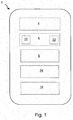
- FIG. 1 shows schematically an example of an electronic device 2 according to an embodiment.
- the electronic device 2 may be for example a mobile phone, including for example a smart phone, a tablet computer, a smart watch or other.
- the electronic device 2 comprises a communication unit 4 configured to receive and/or transmit data to corresponding electronic devices via a network.
- the communication unit 4 may be configured to receive and/or transmit Short Message System (SMS) data, a Multimedia Message System (MMS) data, phone call data and/or an Internet Protocol (IP) data.
- SMS Short Message System
- MMS Multimedia Message System
- IP Internet Protocol
- the electronic device 2 comprises a memory unit 6 and processing unit 8.
- the memory unit 6 stores a computer program which when executed by the processing unit 8 allows the processing unit 8 to perform the method of Figure 2 (described in further detail below).
- the memory unit 6 stores a navigation software application 10 designed to calculate routes to a destination location, display maps showing a current location, provide turn by turn directions, estimate times of arrival, etc.
- the navigation application 10 is also designed to operate in a notifications ON mode and a notifications OFF mode (explained in further detail below).
- the memory unit 6 stores applications 12 designed to detect an event and to generate notifications indicative of the detected event.
- the event may be the reception of a phone call, the reception of a message, the availability of a software update, the publication of a comment on social media, the completion of a download operation, the state of the battery unit or other.
- the notification may comprise a visual element (e.g. text), a sound element (e.g. ring tone) a haptic element (e.g. vibration) or other.
- the applications 12 can be run in the background whilst the navigation application 10 is run in the foreground. In this way, notifications indicative of various events can be generated in the background whilst the navigation application 10 is running in the foreground.
- an application running in the foreground may refer to an application that provides a user interface, for example to display information and/or to receive user inputs.
- a background application does not provide such user interface.
- the applications 12 comprise one or more of a social media application, a phone call application, an SMS application, an MMS application, a mail application, a dating application, a system management application or other.
- the notifications ON mode permits outputting all notifications generated by the applications 12 in the background when the navigation application 10 is running in the foreground.
- the notifications OFF mode prevents outputting at least some notifications generated by at least some of the applications 12 in the background when the navigation application 10 is running in the foreground.
- the notifications OFF mode authorises or permits outputting other notifications generated by at least some of the applications 12 in the background when the navigation application 10 is running in the foreground.
- the notifications OFF mode only permits outputting notifications indicating the reception of a message or the reception of a phone call from a predetermined electronice devie or contact.
- the notifications prevented or permitted in the notifications OFF mode may be set by default or customised by the user by adjusting the settings of the navigation application. That is, in this example, the setting of which notifications by other applications are prevented or permitted in the notifications OFF mode is carried out as part of the running of the navigation application, and those settings are used to override any related settings that were set in the individual other applications themselves. In other words, in this example, settings made in the navigation application for other applications on the electronic device 2 take priority over the same or corresponding settings that may have been set (manually or by default) in the other applications.
- the notifications OFF mode may be activated by default or by the user by adjusting the settings of the navigation application.
- the electronic device 2 comprises an output unit 14 configured to output notifications generated by the applications 12.
- the output unit 14 may comprise one or more of a display, a loudspeaker, a vibration motor or other.
- the electronic device 2 comprises a battery unit 16 to supply power to the communication unit 4, the memory unit 6, the processing unit 8 and the output unit 14.
- Figure 2 shows a flow diagram of an example of a method performed by the electronic device 2.
- step 200 the processing unit 8 receives a user input to adjust the settings of the navigation application and customise notifications prevented or permitted in the notifications OFF mode.
- the electronic device 2 then stores the adjusted settings of the navigation application 10.
- the user adjusts the settings so that the notifications OFF mode only permits outputting a notification indicating the reception of a SMS message or a phone call from a known contact "Amy” (i.e. "Amy” is saved as a contact in an address book or the like in the electronic device 2) when the navigation application 10 is running.
- a known contact "Amy” i.e. "Amy” is saved as a contact in an address book or the like in the electronic device 2
- step 202 the processing unit 8 receives user input to adjust the settings of the navigation application and activate the notifications OFF mode.
- the electronic device 2 stores the adjusted settings.
- step 204 the processing unit 8 receives a user input to start running the navigation application 10 in the foreground.
- the user opens the navigation application 10 and provides a destination location.
- the navigation application 10 calculates a route to the destination location, displays a map showing a current location, provides turn by turn directions to the destination location and estimates a time of arrival.
- step 206 the processing unit 8 detects an event via one of the applications 12 running in the background.
- the processing unit 8 detects the reception of an SMS message from a contact "John” via a SMS application. Moreover, the processing unit 8 detects the reception of a phone call from the contact "Amy” via a phone call application.
- step 208 the processing unit 8 generates a notification indicating the event detected via one of the applications 12 running in the background.
- the processing unit 8 generates a notification indicating the reception of an SMS message from "John” via the SMS application. Moreover, the processing unit 8 generates a notification indicating the reception of a message from "Amy” via the phone call application (see Figure 3 ).
- step 210 the processing unit 8 determines whether the generated notification is permitted to be output.
- the processing unit 8 checks the settings of the navigation application 10 and checks that the notifications OFF mode is activated. It further determines whether the notifications OFF mode prevents outputting the generated notification. If the notifications OFF mode permits outputting the generated notification, the method goes to step 212. If the notifications OFF mode does not permit the generated notification, the method goes to step 214.
- the processing unit 8 determines that the notifications OFF mode prevents outputting the notification indicating the reception of a SMS message from "John". The method goes to step 212.
- the processing unit 8 determines that that the notifications OFF mode permits outputting the notification indicating the reception of a message from "Amy". The method goes to step 214.
- step 212 i.e. the generated notification is not permitted to be output
- the processing unit 8 stores the generated notification in the memory unit 6.
- the processing unit 8 generates an automatic message and passes the automatic message to the communication unit 4 for transmission.
- the processing unit 8 stores the notification indicating that a message has been received from "John”, generates an automatic message and passes the automatic message to the communication unit 4 for transmission to "John".
- the automatic message may indicate that the user of the electronic device 2 is currently driving and cannot read the received SMS message.
- step 214 i.e. the generated notification is permitted to be output
- the processing unit 8 outputs the generated notification on the output unit 14.
- the processing unit 8 passes the notification indicating the reception of a phone call from "Am"y to the output unit 14.
- the output unit 14 may display a text, play back a ring tone, generate a vibration or other.
- step 216 the processing unit 8 receives a user input to stop running the navigation application 10. For example, the processing unit 8 receives a user input to close the displayed map and to exit the navigation application 10.
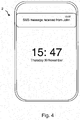
- step 218 as the navigation application is no longer running in the foreground, the processing unit 8 outputs the notification stored in the memory unit in step 212.
- the processing unit 8 passes the notification indicating the reception of a SMS message from "John "to the output unit 14.
- the output unit 14 may display a text, plays back a ring tone, generate a vibration or other (see Figure 4 ).
- An advantage of the proposed solution over existing solutions is that the activation of the notifications OFF mode is implemented in software rather than in hardware. Accordingly, it can be implemented by any electronic device and does not require the electronic device to be placed in any support. Moreover, the proposed solution provides flexibility to the user to tailor which notifications from which applications, and concerning specific other users, may be output immediately even if the navigation application is running or which for example may be only output once the navigation application has been shut down or at least moved to run in the background.
- the processing unit referred to herein may in practice be provided by a single chip or integrated circuit or plural chips or integrated circuits, optionally provided as a chipset, an application-specific integrated circuit (ASIC), field-programmable gate array (FPGA), digital signal processor (DSP), graphics processing units (GPUs), etc.
- the chip or chips may comprise circuitry (as well as possibly firmware) for embodying at least one or more of a data processor or processors, a digital signal processor or processors, baseband circuitry and radio frequency circuitry, which are configurable so as to operate in accordance with the exemplary embodiments.
- the exemplary embodiments may be implemented at least in part by computer software stored in (non-transitory) memory and executable by the processor, or by hardware, or by a combination of tangibly stored software and hardware (and tangibly stored firmware).
- memory unit This may be provided by a single device or by plural devices. Suitable devices include for example a hard disk and nonvolatile semiconductor memory.
- the invention also extends to computer programs, particularly computer programs on or in a carrier, adapted for putting the invention into practice.
- the program may be in the form of non-transitory source code, object code, a code intermediate source and object code such as in partially compiled form, or in any other non-transitory form suitable for use in the implementation of processes according to the invention.
- the carrier may be any entity or device capable of carrying the program.
- the carrier may comprise a storage medium, such as a solid-state drive (SSD) or other semiconductor-based RAM; a ROM, for example a CD ROM or a semiconductor ROM; a magnetic recording medium, for example a floppy disk or hard disk; optical memory devices in general; etc.
- SSD solid-state drive
- ROM read-only memory
- magnetic recording medium for example a floppy disk or hard disk
- optical memory devices in general etc.
Landscapes
- Engineering & Computer Science (AREA)
- Software Systems (AREA)
- Theoretical Computer Science (AREA)
- Physics & Mathematics (AREA)
- General Engineering & Computer Science (AREA)
- General Physics & Mathematics (AREA)
- Telephone Function (AREA)
- Navigation (AREA)
Abstract
Description
- The present disclosure relates to a method of operating an electronic device, an electronic device and a computer program.
- Many mobile phones, including in particular "smart phones", are equipped with navigation applications designed to calculate routes to a destination location, display maps showing a current location, provide turn by turn directions, estimate times of arrival, etc.
- Navigation applications are typically run in the foreground whilst other applications are run in the background. In this way, notifications indicative of various events can be generated and output by mobile phones whilst the navigation applications are running. Outputting these notifications is not always desirable as it may distract drivers and may cause dangerous behaviours.
- According to a first aspect disclosed herein, there is provided a method of operating an electronic device, the method comprising:
- receiving a user input to adjust the settings of a navigation application on the electronic device so that a notifications OFF mode is activated on the electronic device, wherein the notifications OFF mode prevents outputting a notification indicative of a first event by n the electronic device when the navigation application is running; and
- storing the adjusted settings of the navigation application on the electronic device.
- The activation of the notifications OFF mode is performed by software rather than hardware by adjusting the settings of the navigation based on a user input.
- The first event may comprise the reception of a phone call, the reception of a message, the availability of a software update, the publication of a comment on social media, the completion of a download operation or the state of a battery.
- The method may comprise receiving a user input to customize the first event in the settings of the navigation application
- The notifications OFF mode may permit outputting a notification indicative of a second event when the navigation application is running.
- Outputting of a notification may comprise displaying a visual element (e.g. text), playing back a sound element (e.g. ring tone), generating a haptic element (e.g. vibration) or other.
- The second event may the reception of a phone call or the reception of a message from a predetermined electronic device.
- The method may comprise:
- receiving a user input to customize the second event in the settings of the navigation application.
- The method may comprise:
- receiving a user input to start running the navigation application;
- detecting the at least one first event, wherein the first event comprises the reception of a phone call or the reception of a message from another electronic device; and
- generating an automatic response to the other electronic device indicating an unavailability of the user of the electronic device.
- The method may comprise::
- receiving a user input to start running the navigation application;
- detecting the at least one first event;
- generating a notification indicative of the first event; and
- storing the notification.
- The method may comprise:
- receiving a user input to stop running the navigation application; and
- outputting the stored notification.
- The method may comprise:
- receiving a user input to customize the first event and/or second event in the settings of the navigation application.
- The adjusted settings of the navigation application take priority over settings of another application permitting outputting a notification indicative of the at least first event.
- According to a second aspect disclosed herein, there is provided an electronic device comprising:
- a processor configured to:
- adjust the settings of a navigation application in response to receiving a user input so that a notifications OFF mode is activated, wherein the notifications OFF mode prevents outputting of a notification indicative of a first event when the navigation application is running; and
- storing the adjusted settings of the navigation application.
- The electronic device may for example a mobile phone, a tablet computer, a smart watch or other.
- According to a third aspect disclosed herein, there is provided a computer program for an electronic device, comprising software code for performing the above methods.
- To assist understanding of the present disclosure and to show how embodiments may be put into effect, reference is made by way of example to the accompanying drawings in which:
-
Figure 1 shows schematically an example of an electronic device according to an embodiment disclosed therein; -
Figure 2 shows schematically an example of a flow diagram of a method according to an embodiment disclosed therein; and -
Figures 3 and4 show schematically an example of an electronic device in operation according to an embodiment disclosed therein. - Solutions have been proposed to actively prevent a driver from receiving phone calls whilst a navigation application is running on a mobile phone. For example, a mobile phone has been equipped with a Hall effect switch so that when the mobile phone is placed in a specific mount or support equipped with a magnetic plate and a Global Positioning System unit of the mobile phone detects that the driver is driving above a certain speed, the Hall effect switch switches off a communication unit to prevent the driver from receiving phone calls. Such solution is not satisfying as it increases the complexity of existing mobile phones and requires mobile phones to be placed in specific mounts or supports.
-
Figure 1 shows schematically an example of anelectronic device 2 according to an embodiment. Theelectronic device 2 may be for example a mobile phone, including for example a smart phone, a tablet computer, a smart watch or other. - The
electronic device 2 comprises acommunication unit 4 configured to receive and/or transmit data to corresponding electronic devices via a network. For example, thecommunication unit 4 may be configured to receive and/or transmit Short Message System (SMS) data, a Multimedia Message System (MMS) data, phone call data and/or an Internet Protocol (IP) data. - The
electronic device 2 comprises amemory unit 6 andprocessing unit 8. Thememory unit 6 stores a computer program which when executed by theprocessing unit 8 allows theprocessing unit 8 to perform the method ofFigure 2 (described in further detail below). - The
memory unit 6 stores anavigation software application 10 designed to calculate routes to a destination location, display maps showing a current location, provide turn by turn directions, estimate times of arrival, etc. Thenavigation application 10 is also designed to operate in a notifications ON mode and a notifications OFF mode (explained in further detail below). - The
memory unit 6stores applications 12 designed to detect an event and to generate notifications indicative of the detected event. The event may be the reception of a phone call, the reception of a message, the availability of a software update, the publication of a comment on social media, the completion of a download operation, the state of the battery unit or other. The notification may comprise a visual element (e.g. text), a sound element (e.g. ring tone) a haptic element (e.g. vibration) or other. - The
applications 12 can be run in the background whilst thenavigation application 10 is run in the foreground. In this way, notifications indicative of various events can be generated in the background whilst thenavigation application 10 is running in the foreground. - It will be understood that an application running in the foreground may refer to an application that provides a user interface, for example to display information and/or to receive user inputs. To the contrary, a background application does not provide such user interface.
- The
applications 12 comprise one or more of a social media application, a phone call application, an SMS application, an MMS application, a mail application, a dating application, a system management application or other. - The notifications ON mode permits outputting all notifications generated by the
applications 12 in the background when thenavigation application 10 is running in the foreground. - The notifications OFF mode prevents outputting at least some notifications generated by at least some of the
applications 12 in the background when thenavigation application 10 is running in the foreground. The notifications OFF mode authorises or permits outputting other notifications generated by at least some of theapplications 12 in the background when thenavigation application 10 is running in the foreground. - For example, the notifications OFF mode only permits outputting notifications indicating the reception of a message or the reception of a phone call from a predetermined electronice devie or contact.
- The notifications prevented or permitted in the notifications OFF mode may be set by default or customised by the user by adjusting the settings of the navigation application. That is, in this example, the setting of which notifications by other applications are prevented or permitted in the notifications OFF mode is carried out as part of the running of the navigation application, and those settings are used to override any related settings that were set in the individual other applications themselves. In other words, in this example, settings made in the navigation application for other applications on the
electronic device 2 take priority over the same or corresponding settings that may have been set (manually or by default) in the other applications. - The notifications OFF mode may be activated by default or by the user by adjusting the settings of the navigation application.
- The
electronic device 2 comprises anoutput unit 14 configured to output notifications generated by theapplications 12. Theoutput unit 14 may comprise one or more of a display, a loudspeaker, a vibration motor or other. - The
electronic device 2 comprises abattery unit 16 to supply power to thecommunication unit 4, thememory unit 6, theprocessing unit 8 and theoutput unit 14. -
Figure 2 shows a flow diagram of an example of a method performed by theelectronic device 2. - In step 200, the
processing unit 8 receives a user input to adjust the settings of the navigation application and customise notifications prevented or permitted in the notifications OFF mode. Theelectronic device 2 then stores the adjusted settings of thenavigation application 10. - For example, the user adjusts the settings so that the notifications OFF mode only permits outputting a notification indicating the reception of a SMS message or a phone call from a known contact "Amy" (i.e. "Amy" is saved as a contact in an address book or the like in the electronic device 2) when the
navigation application 10 is running. - In step 202, the
processing unit 8 receives user input to adjust the settings of the navigation application and activate the notifications OFF mode. Theelectronic device 2 stores the adjusted settings. - In step 204, the
processing unit 8 receives a user input to start running thenavigation application 10 in the foreground. - For example, the user opens the
navigation application 10 and provides a destination location. Thenavigation application 10 then calculates a route to the destination location, displays a map showing a current location, provides turn by turn directions to the destination location and estimates a time of arrival. - In
step 206, theprocessing unit 8 detects an event via one of theapplications 12 running in the background. - For example, the
processing unit 8 detects the reception of an SMS message from a contact "John" via a SMS application. Moreover, theprocessing unit 8 detects the reception of a phone call from the contact "Amy" via a phone call application. - In
step 208, theprocessing unit 8 generates a notification indicating the event detected via one of theapplications 12 running in the background. - For example, the
processing unit 8 generates a notification indicating the reception of an SMS message from "John" via the SMS application. Moreover, theprocessing unit 8 generates a notification indicating the reception of a message from "Amy" via the phone call application (seeFigure 3 ). - In
step 210, theprocessing unit 8 determines whether the generated notification is permitted to be output. Theprocessing unit 8 checks the settings of thenavigation application 10 and checks that the notifications OFF mode is activated. It further determines whether the notifications OFF mode prevents outputting the generated notification. If the notifications OFF mode permits outputting the generated notification, the method goes to step 212. If the notifications OFF mode does not permit the generated notification, the method goes to step 214. - For example, the
processing unit 8 determines that the notifications OFF mode prevents outputting the notification indicating the reception of a SMS message from "John". The method goes to step 212. - Moreover, the
processing unit 8 determines that that the notifications OFF mode permits outputting the notification indicating the reception of a message from "Amy". The method goes to step 214. - In step 212 (i.e. the generated notification is not permitted to be output), the
processing unit 8 stores the generated notification in thememory unit 6. Optionally, theprocessing unit 8 generates an automatic message and passes the automatic message to thecommunication unit 4 for transmission. - For example, the
processing unit 8 stores the notification indicating that a message has been received from "John", generates an automatic message and passes the automatic message to thecommunication unit 4 for transmission to "John". The automatic message may indicate that the user of theelectronic device 2 is currently driving and cannot read the received SMS message. - In step 214 (i.e. the generated notification is permitted to be output), the
processing unit 8 outputs the generated notification on theoutput unit 14. - For example, the
processing unit 8 passes the notification indicating the reception of a phone call from "Am"y to theoutput unit 14. Theoutput unit 14 may display a text, play back a ring tone, generate a vibration or other. - In step 216, the
processing unit 8 receives a user input to stop running thenavigation application 10. For example, theprocessing unit 8 receives a user input to close the displayed map and to exit thenavigation application 10. - In
step 218, as the navigation application is no longer running in the foreground, theprocessing unit 8 outputs the notification stored in the memory unit instep 212. - For example, the
processing unit 8 passes the notification indicating the reception of a SMS message from "John "to theoutput unit 14. Theoutput unit 14 may display a text, plays back a ring tone, generate a vibration or other (seeFigure 4 ). - An advantage of the proposed solution over existing solutions is that the activation of the notifications OFF mode is implemented in software rather than in hardware. Accordingly, it can be implemented by any electronic device and does not require the electronic device to be placed in any support. Moreover, the proposed solution provides flexibility to the user to tailor which notifications from which applications, and concerning specific other users, may be output immediately even if the navigation application is running or which for example may be only output once the navigation application has been shut down or at least moved to run in the background.
- It will be understood that the processing unit referred to herein may in practice be provided by a single chip or integrated circuit or plural chips or integrated circuits, optionally provided as a chipset, an application-specific integrated circuit (ASIC), field-programmable gate array (FPGA), digital signal processor (DSP), graphics processing units (GPUs), etc. The chip or chips may comprise circuitry (as well as possibly firmware) for embodying at least one or more of a data processor or processors, a digital signal processor or processors, baseband circuitry and radio frequency circuitry, which are configurable so as to operate in accordance with the exemplary embodiments. In this regard, the exemplary embodiments may be implemented at least in part by computer software stored in (non-transitory) memory and executable by the processor, or by hardware, or by a combination of tangibly stored software and hardware (and tangibly stored firmware).
- Reference is made herein to memory unit. This may be provided by a single device or by plural devices. Suitable devices include for example a hard disk and nonvolatile semiconductor memory.
- Although at least some aspects of the embodiments described herein with reference to the drawings comprise computer processes performed in processing systems or processors, the invention also extends to computer programs, particularly computer programs on or in a carrier, adapted for putting the invention into practice. The program may be in the form of non-transitory source code, object code, a code intermediate source and object code such as in partially compiled form, or in any other non-transitory form suitable for use in the implementation of processes according to the invention. The carrier may be any entity or device capable of carrying the program. For example, the carrier may comprise a storage medium, such as a solid-state drive (SSD) or other semiconductor-based RAM; a ROM, for example a CD ROM or a semiconductor ROM; a magnetic recording medium, for example a floppy disk or hard disk; optical memory devices in general; etc.
- The examples described herein are to be understood as illustrative examples of embodiments of the invention. Further embodiments and examples are envisaged. Any feature described in relation to any one example or embodiment may be used alone or in combination with other features. In addition, any feature described in relation to any one example or embodiment may also be used in combination with one or more features of any other of the examples or embodiments, or any combination of any other of the examples or embodiments. Furthermore, equivalents and modifications not described herein may also be employed within the scope of the invention, which is defined in the claims.
Claims (13)
- A method of operating an electronic device, the method comprising:receiving a user input to adjust the settings of a navigation application on the electronic device so that a notifications OFF mode is activated on the electronic device, wherein the notifications OFF mode prevents outputting a notification indicative of at least a first event by the electronic device when the navigation application is running; andstoring the adjusted settings of the navigation application on the electronic device.
- A method according to claim 1, wherein the first event comprises the reception of a phone call, the reception of a message, the availability of a software update, the publication of a comment on social media, the completion of a download operation or the state of a battery.
- A method according to claim 1 or claim 2, comprising:receiving a user input to customize the first event in the settings of the navigation application.
- A method according to any of claims 1 to 3, wherein the notifications OFF mode permits outputting a notification indicative of a second event when the navigation application is running.
- A method according to claim 4, wherein the second event is the reception of a phone call or the reception of a message from a predetermined electronic device.
- A method according to claim 4 or claim 5, comprising:receiving a user input to customize the second event in the settings of the navigation application.
- A method according to any of claims 1 to 6, comprising:receiving a user input to start running the navigation application;detecting the at least one first event, wherein the first event comprises the reception of a phone call or the reception of a message from another electronic device; andgenerating an automatic response to the other electronic device indicating an unavailability of the user of the electronic device.
- A method according to any of claims 1 to 7, comprising:receiving a user input to start running the navigation application;detecting the at least one first event;generating a notification indicative of the first event; andstoring the notification.
- A method according to claim 8, comprising:receiving a user input to stop running the navigation application; andoutputting the stored notification.
- A method according to any of claims 1 to9, wherein the adjusted settings of the navigation application take priority over settings of another application permitting outputting a notification indicative of the at least first event.
- An electronic device comprising:a processor configured to:adjust the settings of a navigation application in response to receiving a user input so that a notifications OFF mode is activated, wherein the notifications OFF mode prevents outputting of a notification indicative of a first event when the navigation application is running; andstore the adjusted settings of the navigation application.
- An electronic device according to claim 11, wherein the electronic device is a mobile phone, a tablet computer, or a smart watch.
- A computer program for an electronic device, comprising software code for performing the method of any of claims 1 to 10 when said computer program is run on the apparatus.
Priority Applications (2)
| Application Number | Priority Date | Filing Date | Title |
|---|---|---|---|
| EP17205497.5A EP3495948B1 (en) | 2017-12-05 | 2017-12-05 | Method of operating an electronic device, electronic device and computer program |
| TR2017/22457A TR201722457A2 (en) | 2017-12-05 | 2017-12-28 | METHOD OF OPERATING AN ELECTRONIC DEVICE, ELECTRONIC DEVICE AND COMPUTER PROGRAM |
Applications Claiming Priority (1)
| Application Number | Priority Date | Filing Date | Title |
|---|---|---|---|
| EP17205497.5A EP3495948B1 (en) | 2017-12-05 | 2017-12-05 | Method of operating an electronic device, electronic device and computer program |
Publications (2)
| Publication Number | Publication Date |
|---|---|
| EP3495948A1 true EP3495948A1 (en) | 2019-06-12 |
| EP3495948B1 EP3495948B1 (en) | 2022-01-05 |
Family
ID=60661767
Family Applications (1)
| Application Number | Title | Priority Date | Filing Date |
|---|---|---|---|
| EP17205497.5A Active EP3495948B1 (en) | 2017-12-05 | 2017-12-05 | Method of operating an electronic device, electronic device and computer program |
Country Status (2)
| Country | Link |
|---|---|
| EP (1) | EP3495948B1 (en) |
| TR (1) | TR201722457A2 (en) |
Citations (2)
| Publication number | Priority date | Publication date | Assignee | Title |
|---|---|---|---|---|
| EP2400450A1 (en) * | 2010-06-23 | 2011-12-28 | Navteq North America, LLC | Method of operating a navigation system to block unwanted advertisements |
| US20130219409A1 (en) * | 2012-02-16 | 2013-08-22 | Kevin Michael Woley | Power efficient brokered communication supporting notification blocking |
-
2017
- 2017-12-05 EP EP17205497.5A patent/EP3495948B1/en active Active
- 2017-12-28 TR TR2017/22457A patent/TR201722457A2/en unknown
Patent Citations (2)
| Publication number | Priority date | Publication date | Assignee | Title |
|---|---|---|---|---|
| EP2400450A1 (en) * | 2010-06-23 | 2011-12-28 | Navteq North America, LLC | Method of operating a navigation system to block unwanted advertisements |
| US20130219409A1 (en) * | 2012-02-16 | 2013-08-22 | Kevin Michael Woley | Power efficient brokered communication supporting notification blocking |
Also Published As
| Publication number | Publication date |
|---|---|
| EP3495948B1 (en) | 2022-01-05 |
| TR201722457A2 (en) | 2019-06-21 |
Similar Documents
| Publication | Publication Date | Title |
|---|---|---|
| US8958853B1 (en) | Mobile device inactive mode and inactive mode verification | |
| US9294612B2 (en) | Adjustable mobile phone settings based on environmental conditions | |
| AU2010298650C1 (en) | User-selectable environments for mobile communications devices | |
| US8934879B2 (en) | Inconspicuous mode for mobile devices | |
| US8803697B2 (en) | Detecting movement for determining characteristics of user notification | |
| US20130137404A1 (en) | Method of responding to incoming calls and messages while driving | |
| US20100167712A1 (en) | Graphical user interface for mobile device | |
| US10348857B2 (en) | Dynamic creation of subservices | |
| US20120302214A1 (en) | Communication device, storage medium and method for avoiding unfinished phone calls | |
| WO2009005713A2 (en) | Integrated calendar and map applications in a mobile device | |
| KR20140024174A (en) | Method and apparatus for controlling vibration intensity according to situation awareness in electronic device | |
| US9225815B2 (en) | Method and device for loudness level determination | |
| EP3580921A1 (en) | System and method for controlling notifications in an electronic device according to user status | |
| EP2849392A1 (en) | Method for notifying arrival of incoming communication and electronic device thereof | |
| US9578165B2 (en) | Mobile terminal and non-transitory computer-readable recording medium storing computer-executable instructions | |
| US20130095889A1 (en) | Filtering Mobile Communications Device Messages For Presentation Within An Automobile | |
| US8983553B2 (en) | In coming call warning device and method using same | |
| US11477323B2 (en) | Managing queued voice calls | |
| EP3495948B1 (en) | Method of operating an electronic device, electronic device and computer program | |
| KR20140099589A (en) | Method and apparatus for providing short-cut number in a user device | |
| CN107256149B (en) | User interface update method and device | |
| US11887591B2 (en) | Methods and systems for enabling a digital assistant to generate an ambient aware response | |
| JP2004078100A (en) | Audio output control system and computer program | |
| EP3435641B1 (en) | Elecronic device, method of operation and computer program | |
| WO2014052334A1 (en) | Sending a video ringtone |
Legal Events
| Date | Code | Title | Description |
|---|---|---|---|
| PUAI | Public reference made under article 153(3) epc to a published international application that has entered the european phase |
Free format text: ORIGINAL CODE: 0009012 |
|
| STAA | Information on the status of an ep patent application or granted ep patent |
Free format text: STATUS: THE APPLICATION HAS BEEN PUBLISHED |
|
| AK | Designated contracting states |
Kind code of ref document: A1 Designated state(s): AL AT BE BG CH CY CZ DE DK EE ES FI FR GB GR HR HU IE IS IT LI LT LU LV MC MK MT NL NO PL PT RO RS SE SI SK SM TR |
|
| AX | Request for extension of the european patent |
Extension state: BA ME |
|
| STAA | Information on the status of an ep patent application or granted ep patent |
Free format text: STATUS: REQUEST FOR EXAMINATION WAS MADE |
|
| 17P | Request for examination filed |
Effective date: 20191212 |
|
| RBV | Designated contracting states (corrected) |
Designated state(s): AL AT BE BG CH CY CZ DE DK EE ES FI FR GB GR HR HU IE IS IT LI LT LU LV MC MK MT NL NO PL PT RO RS SE SI SK SM TR |
|
| RIC1 | Information provided on ipc code assigned before grant |
Ipc: G06F 9/44 20180101AFI20210330BHEP |
|
| GRAP | Despatch of communication of intention to grant a patent |
Free format text: ORIGINAL CODE: EPIDOSNIGR1 |
|
| STAA | Information on the status of an ep patent application or granted ep patent |
Free format text: STATUS: GRANT OF PATENT IS INTENDED |
|
| INTG | Intention to grant announced |
Effective date: 20210518 |
|
| GRAJ | Information related to disapproval of communication of intention to grant by the applicant or resumption of examination proceedings by the epo deleted |
Free format text: ORIGINAL CODE: EPIDOSDIGR1 |
|
| STAA | Information on the status of an ep patent application or granted ep patent |
Free format text: STATUS: REQUEST FOR EXAMINATION WAS MADE |
|
| INTC | Intention to grant announced (deleted) | ||
| GRAS | Grant fee paid |
Free format text: ORIGINAL CODE: EPIDOSNIGR3 |
|
| STAA | Information on the status of an ep patent application or granted ep patent |
Free format text: STATUS: GRANT OF PATENT IS INTENDED |
|
| GRAP | Despatch of communication of intention to grant a patent |
Free format text: ORIGINAL CODE: EPIDOSNIGR1 |
|
| GRAF | Information related to payment of grant fee modified |
Free format text: ORIGINAL CODE: EPIDOSCIGR3 |
|
| INTG | Intention to grant announced |
Effective date: 20211105 |
|
| GRAA | (expected) grant |
Free format text: ORIGINAL CODE: 0009210 |
|
| STAA | Information on the status of an ep patent application or granted ep patent |
Free format text: STATUS: THE PATENT HAS BEEN GRANTED |
|
| AK | Designated contracting states |
Kind code of ref document: B1 Designated state(s): AL AT BE BG CH CY CZ DE DK EE ES FI FR GB GR HR HU IE IS IT LI LT LU LV MC MK MT NL NO PL PT RO RS SE SI SK SM TR |
|
| REG | Reference to a national code |
Ref country code: GB Ref legal event code: FG4D |
|
| REG | Reference to a national code |
Ref country code: CH Ref legal event code: EP |
|
| REG | Reference to a national code |
Ref country code: AT Ref legal event code: REF Ref document number: 1461180 Country of ref document: AT Kind code of ref document: T Effective date: 20220115 |
|
| REG | Reference to a national code |
Ref country code: DE Ref legal event code: R096 Ref document number: 602017051839 Country of ref document: DE |
|
| REG | Reference to a national code |
Ref country code: IE Ref legal event code: FG4D |
|
| REG | Reference to a national code |
Ref country code: LT Ref legal event code: MG9D |
|
| REG | Reference to a national code |
Ref country code: NL Ref legal event code: MP Effective date: 20220105 |
|
| REG | Reference to a national code |
Ref country code: AT Ref legal event code: MK05 Ref document number: 1461180 Country of ref document: AT Kind code of ref document: T Effective date: 20220105 |
|
| PG25 | Lapsed in a contracting state [announced via postgrant information from national office to epo] |
Ref country code: NL Free format text: LAPSE BECAUSE OF FAILURE TO SUBMIT A TRANSLATION OF THE DESCRIPTION OR TO PAY THE FEE WITHIN THE PRESCRIBED TIME-LIMIT Effective date: 20220105 |
|
| PG25 | Lapsed in a contracting state [announced via postgrant information from national office to epo] |
Ref country code: SE Free format text: LAPSE BECAUSE OF FAILURE TO SUBMIT A TRANSLATION OF THE DESCRIPTION OR TO PAY THE FEE WITHIN THE PRESCRIBED TIME-LIMIT Effective date: 20220105 Ref country code: RS Free format text: LAPSE BECAUSE OF FAILURE TO SUBMIT A TRANSLATION OF THE DESCRIPTION OR TO PAY THE FEE WITHIN THE PRESCRIBED TIME-LIMIT Effective date: 20220105 Ref country code: PT Free format text: LAPSE BECAUSE OF FAILURE TO SUBMIT A TRANSLATION OF THE DESCRIPTION OR TO PAY THE FEE WITHIN THE PRESCRIBED TIME-LIMIT Effective date: 20220505 Ref country code: NO Free format text: LAPSE BECAUSE OF FAILURE TO SUBMIT A TRANSLATION OF THE DESCRIPTION OR TO PAY THE FEE WITHIN THE PRESCRIBED TIME-LIMIT Effective date: 20220405 Ref country code: LT Free format text: LAPSE BECAUSE OF FAILURE TO SUBMIT A TRANSLATION OF THE DESCRIPTION OR TO PAY THE FEE WITHIN THE PRESCRIBED TIME-LIMIT Effective date: 20220105 Ref country code: HR Free format text: LAPSE BECAUSE OF FAILURE TO SUBMIT A TRANSLATION OF THE DESCRIPTION OR TO PAY THE FEE WITHIN THE PRESCRIBED TIME-LIMIT Effective date: 20220105 Ref country code: ES Free format text: LAPSE BECAUSE OF FAILURE TO SUBMIT A TRANSLATION OF THE DESCRIPTION OR TO PAY THE FEE WITHIN THE PRESCRIBED TIME-LIMIT Effective date: 20220105 Ref country code: BG Free format text: LAPSE BECAUSE OF FAILURE TO SUBMIT A TRANSLATION OF THE DESCRIPTION OR TO PAY THE FEE WITHIN THE PRESCRIBED TIME-LIMIT Effective date: 20220405 |
|
| PG25 | Lapsed in a contracting state [announced via postgrant information from national office to epo] |
Ref country code: PL Free format text: LAPSE BECAUSE OF FAILURE TO SUBMIT A TRANSLATION OF THE DESCRIPTION OR TO PAY THE FEE WITHIN THE PRESCRIBED TIME-LIMIT Effective date: 20220105 Ref country code: LV Free format text: LAPSE BECAUSE OF FAILURE TO SUBMIT A TRANSLATION OF THE DESCRIPTION OR TO PAY THE FEE WITHIN THE PRESCRIBED TIME-LIMIT Effective date: 20220105 Ref country code: GR Free format text: LAPSE BECAUSE OF FAILURE TO SUBMIT A TRANSLATION OF THE DESCRIPTION OR TO PAY THE FEE WITHIN THE PRESCRIBED TIME-LIMIT Effective date: 20220406 Ref country code: FI Free format text: LAPSE BECAUSE OF FAILURE TO SUBMIT A TRANSLATION OF THE DESCRIPTION OR TO PAY THE FEE WITHIN THE PRESCRIBED TIME-LIMIT Effective date: 20220105 Ref country code: AT Free format text: LAPSE BECAUSE OF FAILURE TO SUBMIT A TRANSLATION OF THE DESCRIPTION OR TO PAY THE FEE WITHIN THE PRESCRIBED TIME-LIMIT Effective date: 20220105 |
|
| PG25 | Lapsed in a contracting state [announced via postgrant information from national office to epo] |
Ref country code: IS Free format text: LAPSE BECAUSE OF FAILURE TO SUBMIT A TRANSLATION OF THE DESCRIPTION OR TO PAY THE FEE WITHIN THE PRESCRIBED TIME-LIMIT Effective date: 20220505 |
|
| REG | Reference to a national code |
Ref country code: DE Ref legal event code: R097 Ref document number: 602017051839 Country of ref document: DE |
|
| PG25 | Lapsed in a contracting state [announced via postgrant information from national office to epo] |
Ref country code: SM Free format text: LAPSE BECAUSE OF FAILURE TO SUBMIT A TRANSLATION OF THE DESCRIPTION OR TO PAY THE FEE WITHIN THE PRESCRIBED TIME-LIMIT Effective date: 20220105 Ref country code: SK Free format text: LAPSE BECAUSE OF FAILURE TO SUBMIT A TRANSLATION OF THE DESCRIPTION OR TO PAY THE FEE WITHIN THE PRESCRIBED TIME-LIMIT Effective date: 20220105 Ref country code: RO Free format text: LAPSE BECAUSE OF FAILURE TO SUBMIT A TRANSLATION OF THE DESCRIPTION OR TO PAY THE FEE WITHIN THE PRESCRIBED TIME-LIMIT Effective date: 20220105 Ref country code: EE Free format text: LAPSE BECAUSE OF FAILURE TO SUBMIT A TRANSLATION OF THE DESCRIPTION OR TO PAY THE FEE WITHIN THE PRESCRIBED TIME-LIMIT Effective date: 20220105 Ref country code: DK Free format text: LAPSE BECAUSE OF FAILURE TO SUBMIT A TRANSLATION OF THE DESCRIPTION OR TO PAY THE FEE WITHIN THE PRESCRIBED TIME-LIMIT Effective date: 20220105 Ref country code: CZ Free format text: LAPSE BECAUSE OF FAILURE TO SUBMIT A TRANSLATION OF THE DESCRIPTION OR TO PAY THE FEE WITHIN THE PRESCRIBED TIME-LIMIT Effective date: 20220105 |
|
| PLBE | No opposition filed within time limit |
Free format text: ORIGINAL CODE: 0009261 |
|
| STAA | Information on the status of an ep patent application or granted ep patent |
Free format text: STATUS: NO OPPOSITION FILED WITHIN TIME LIMIT |
|
| PG25 | Lapsed in a contracting state [announced via postgrant information from national office to epo] |
Ref country code: AL Free format text: LAPSE BECAUSE OF FAILURE TO SUBMIT A TRANSLATION OF THE DESCRIPTION OR TO PAY THE FEE WITHIN THE PRESCRIBED TIME-LIMIT Effective date: 20220105 |
|
| 26N | No opposition filed |
Effective date: 20221006 |
|
| PG25 | Lapsed in a contracting state [announced via postgrant information from national office to epo] |
Ref country code: SI Free format text: LAPSE BECAUSE OF FAILURE TO SUBMIT A TRANSLATION OF THE DESCRIPTION OR TO PAY THE FEE WITHIN THE PRESCRIBED TIME-LIMIT Effective date: 20220105 |
|
| PG25 | Lapsed in a contracting state [announced via postgrant information from national office to epo] |
Ref country code: IT Free format text: LAPSE BECAUSE OF FAILURE TO SUBMIT A TRANSLATION OF THE DESCRIPTION OR TO PAY THE FEE WITHIN THE PRESCRIBED TIME-LIMIT Effective date: 20220105 |
|
| REG | Reference to a national code |
Ref country code: CH Ref legal event code: PL |
|
| REG | Reference to a national code |
Ref country code: BE Ref legal event code: MM Effective date: 20221231 |
|
| PG25 | Lapsed in a contracting state [announced via postgrant information from national office to epo] |
Ref country code: LU Free format text: LAPSE BECAUSE OF NON-PAYMENT OF DUE FEES Effective date: 20221205 |
|
| PG25 | Lapsed in a contracting state [announced via postgrant information from national office to epo] |
Ref country code: LI Free format text: LAPSE BECAUSE OF NON-PAYMENT OF DUE FEES Effective date: 20221231 Ref country code: IE Free format text: LAPSE BECAUSE OF NON-PAYMENT OF DUE FEES Effective date: 20221205 Ref country code: CH Free format text: LAPSE BECAUSE OF NON-PAYMENT OF DUE FEES Effective date: 20221231 |
|
| PG25 | Lapsed in a contracting state [announced via postgrant information from national office to epo] |
Ref country code: FR Free format text: LAPSE BECAUSE OF NON-PAYMENT OF DUE FEES Effective date: 20221231 Ref country code: BE Free format text: LAPSE BECAUSE OF NON-PAYMENT OF DUE FEES Effective date: 20221231 |
|
| PG25 | Lapsed in a contracting state [announced via postgrant information from national office to epo] |
Ref country code: HU Free format text: LAPSE BECAUSE OF FAILURE TO SUBMIT A TRANSLATION OF THE DESCRIPTION OR TO PAY THE FEE WITHIN THE PRESCRIBED TIME-LIMIT; INVALID AB INITIO Effective date: 20171205 |
|
| PG25 | Lapsed in a contracting state [announced via postgrant information from national office to epo] |
Ref country code: CY Free format text: LAPSE BECAUSE OF FAILURE TO SUBMIT A TRANSLATION OF THE DESCRIPTION OR TO PAY THE FEE WITHIN THE PRESCRIBED TIME-LIMIT Effective date: 20220105 |
|
| PG25 | Lapsed in a contracting state [announced via postgrant information from national office to epo] |
Ref country code: MK Free format text: LAPSE BECAUSE OF FAILURE TO SUBMIT A TRANSLATION OF THE DESCRIPTION OR TO PAY THE FEE WITHIN THE PRESCRIBED TIME-LIMIT Effective date: 20220105 |
|
| PG25 | Lapsed in a contracting state [announced via postgrant information from national office to epo] |
Ref country code: MC Free format text: LAPSE BECAUSE OF FAILURE TO SUBMIT A TRANSLATION OF THE DESCRIPTION OR TO PAY THE FEE WITHIN THE PRESCRIBED TIME-LIMIT Effective date: 20220105 |
|
| PG25 | Lapsed in a contracting state [announced via postgrant information from national office to epo] |
Ref country code: MC Free format text: LAPSE BECAUSE OF FAILURE TO SUBMIT A TRANSLATION OF THE DESCRIPTION OR TO PAY THE FEE WITHIN THE PRESCRIBED TIME-LIMIT Effective date: 20220105 |
|
| PG25 | Lapsed in a contracting state [announced via postgrant information from national office to epo] |
Ref country code: MT Free format text: LAPSE BECAUSE OF FAILURE TO SUBMIT A TRANSLATION OF THE DESCRIPTION OR TO PAY THE FEE WITHIN THE PRESCRIBED TIME-LIMIT Effective date: 20220105 |
|
| REG | Reference to a national code |
Ref country code: DE Ref legal event code: R082 Ref document number: 602017051839 Country of ref document: DE Representative=s name: WESTPHAL, MUSSGNUG & PARTNER PATENTANWAELTE MI, DE |
|
| PGFP | Annual fee paid to national office [announced via postgrant information from national office to epo] |
Ref country code: TR Payment date: 20251202 Year of fee payment: 9 |
|
| PGFP | Annual fee paid to national office [announced via postgrant information from national office to epo] |
Ref country code: GB Payment date: 20260128 Year of fee payment: 9 |
|
| PGFP | Annual fee paid to national office [announced via postgrant information from national office to epo] |
Ref country code: DE Payment date: 20260223 Year of fee payment: 9 |