EP3495928A1 - Candidate input determination method, input suggestion method, and electronic apparatus - Google Patents
Candidate input determination method, input suggestion method, and electronic apparatus Download PDFInfo
- Publication number
- EP3495928A1 EP3495928A1 EP17836348.7A EP17836348A EP3495928A1 EP 3495928 A1 EP3495928 A1 EP 3495928A1 EP 17836348 A EP17836348 A EP 17836348A EP 3495928 A1 EP3495928 A1 EP 3495928A1
- Authority
- EP
- European Patent Office
- Prior art keywords
- candidate
- sentence
- candidate sentence
- input
- texts
- Prior art date
- Legal status (The legal status is an assumption and is not a legal conclusion. Google has not performed a legal analysis and makes no representation as to the accuracy of the status listed.)
- Ceased
Links
Images





Classifications
-
- H—ELECTRICITY
- H04—ELECTRIC COMMUNICATION TECHNIQUE
- H04L—TRANSMISSION OF DIGITAL INFORMATION, e.g. TELEGRAPHIC COMMUNICATION
- H04L51/00—User-to-user messaging in packet-switching networks, transmitted according to store-and-forward or real-time protocols, e.g. e-mail
- H04L51/02—User-to-user messaging in packet-switching networks, transmitted according to store-and-forward or real-time protocols, e.g. e-mail using automatic reactions or user delegation, e.g. automatic replies or chatbot-generated messages
-
- G—PHYSICS
- G06—COMPUTING OR CALCULATING; COUNTING
- G06F—ELECTRIC DIGITAL DATA PROCESSING
- G06F17/00—Digital computing or data processing equipment or methods, specially adapted for specific functions
- G06F17/10—Complex mathematical operations
- G06F17/18—Complex mathematical operations for evaluating statistical data, e.g. average values, frequency distributions, probability functions, regression analysis
-
- G—PHYSICS
- G06—COMPUTING OR CALCULATING; COUNTING
- G06F—ELECTRIC DIGITAL DATA PROCESSING
- G06F3/00—Input arrangements for transferring data to be processed into a form capable of being handled by the computer; Output arrangements for transferring data from processing unit to output unit, e.g. interface arrangements
- G06F3/01—Input arrangements or combined input and output arrangements for interaction between user and computer
- G06F3/02—Input arrangements using manually operated switches, e.g. using keyboards or dials
- G06F3/023—Arrangements for converting discrete items of information into a coded form, e.g. arrangements for interpreting keyboard generated codes as alphanumeric codes, operand codes or instruction codes
- G06F3/0233—Character input methods
- G06F3/0236—Character input methods using selection techniques to select from displayed items
-
- G—PHYSICS
- G06—COMPUTING OR CALCULATING; COUNTING
- G06F—ELECTRIC DIGITAL DATA PROCESSING
- G06F3/00—Input arrangements for transferring data to be processed into a form capable of being handled by the computer; Output arrangements for transferring data from processing unit to output unit, e.g. interface arrangements
- G06F3/01—Input arrangements or combined input and output arrangements for interaction between user and computer
- G06F3/02—Input arrangements using manually operated switches, e.g. using keyboards or dials
- G06F3/023—Arrangements for converting discrete items of information into a coded form, e.g. arrangements for interpreting keyboard generated codes as alphanumeric codes, operand codes or instruction codes
- G06F3/0233—Character input methods
- G06F3/0237—Character input methods using prediction or retrieval techniques
-
- G—PHYSICS
- G06—COMPUTING OR CALCULATING; COUNTING
- G06F—ELECTRIC DIGITAL DATA PROCESSING
- G06F3/00—Input arrangements for transferring data to be processed into a form capable of being handled by the computer; Output arrangements for transferring data from processing unit to output unit, e.g. interface arrangements
- G06F3/01—Input arrangements or combined input and output arrangements for interaction between user and computer
- G06F3/048—Interaction techniques based on graphical user interfaces [GUI]
- G06F3/0481—Interaction techniques based on graphical user interfaces [GUI] based on specific properties of the displayed interaction object or a metaphor-based environment, e.g. interaction with desktop elements like windows or icons, or assisted by a cursor's changing behaviour or appearance
- G06F3/04812—Interaction techniques based on cursor appearance or behaviour, e.g. being affected by the presence of displayed objects
-
- G—PHYSICS
- G06—COMPUTING OR CALCULATING; COUNTING
- G06F—ELECTRIC DIGITAL DATA PROCESSING
- G06F3/00—Input arrangements for transferring data to be processed into a form capable of being handled by the computer; Output arrangements for transferring data from processing unit to output unit, e.g. interface arrangements
- G06F3/01—Input arrangements or combined input and output arrangements for interaction between user and computer
- G06F3/048—Interaction techniques based on graphical user interfaces [GUI]
- G06F3/0487—Interaction techniques based on graphical user interfaces [GUI] using specific features provided by the input device, e.g. functions controlled by the rotation of a mouse with dual sensing arrangements, or of the nature of the input device, e.g. tap gestures based on pressure sensed by a digitiser
- G06F3/0488—Interaction techniques based on graphical user interfaces [GUI] using specific features provided by the input device, e.g. functions controlled by the rotation of a mouse with dual sensing arrangements, or of the nature of the input device, e.g. tap gestures based on pressure sensed by a digitiser using a touch-screen or digitiser, e.g. input of commands through traced gestures
- G06F3/04886—Interaction techniques based on graphical user interfaces [GUI] using specific features provided by the input device, e.g. functions controlled by the rotation of a mouse with dual sensing arrangements, or of the nature of the input device, e.g. tap gestures based on pressure sensed by a digitiser using a touch-screen or digitiser, e.g. input of commands through traced gestures by partitioning the display area of the touch-screen or the surface of the digitising tablet into independently controllable areas, e.g. virtual keyboards or menus
-
- G—PHYSICS
- G06—COMPUTING OR CALCULATING; COUNTING
- G06F—ELECTRIC DIGITAL DATA PROCESSING
- G06F40/00—Handling natural language data
- G06F40/20—Natural language analysis
- G06F40/253—Grammatical analysis; Style critique
-
- G—PHYSICS
- G06—COMPUTING OR CALCULATING; COUNTING
- G06F—ELECTRIC DIGITAL DATA PROCESSING
- G06F40/00—Handling natural language data
- G06F40/20—Natural language analysis
- G06F40/274—Converting codes to words; Guess-ahead of partial word inputs
-
- G—PHYSICS
- G06—COMPUTING OR CALCULATING; COUNTING
- G06F—ELECTRIC DIGITAL DATA PROCESSING
- G06F40/00—Handling natural language data
- G06F40/20—Natural language analysis
- G06F40/279—Recognition of textual entities
- G06F40/289—Phrasal analysis, e.g. finite state techniques or chunking
-
- H—ELECTRICITY
- H04—ELECTRIC COMMUNICATION TECHNIQUE
- H04L—TRANSMISSION OF DIGITAL INFORMATION, e.g. TELEGRAPHIC COMMUNICATION
- H04L51/00—User-to-user messaging in packet-switching networks, transmitted according to store-and-forward or real-time protocols, e.g. e-mail
- H04L51/21—Monitoring or handling of messages
- H04L51/222—Monitoring or handling of messages using geographical location information, e.g. messages transmitted or received in proximity of a certain spot or area
Definitions
- the present disclosure relates to the technical field of Internet, and more particularly to a method for determining a candidate input, an input prompting method, and an electronic device.
- some input methods provide candidate inputs for the user according to a text input by the user. For example, when the user inputs "Hello", the input method provides the user with "?”, "! and other candidate inputs for the user to select.
- the candidate inputs provided by the input methods are generated according to common sentences and input records of the user, and are usually single words or phrases.
- the candidate options provided by the input method may include an option of "raining”, and after the user selects "raining”, the provided candidate options include an option of punctuation ",”.
- the user selects ",", no candidate option is provided, the user inputs "remember”, the candidate inputs provided by the input method do not include an option of "bring an umbrella” according to “remember” input by the user, and the user inputs "bring an umbrella” manually to complete input.
- a method for determining a candidate input, an input prompting method, and an electronic device are provided.
- a method for determining a candidate input includes:
- An input prompting method includes:
- An electronic device includes a memory and a processor, the memory storing a computer-readable instruction, when the computer-readable instruction is executed by the processor, the processor being enabled to execute the following steps:
- An electronic device includes a memory and a processor, the memory storing a computer-readable instruction, when the computer-readable instruction is executed by the processor, the processor being enabled to execute the following steps:
- FIG. 1 is an application environment diagram of a method for determining a candidate input in an embodiment.
- the application environment includes a first terminal 110, a server 120 and a second terminal 130.
- the first terminal 110 and the second terminal 130 communicate with the server 120 via a network.
- a first user logs in an application client on the first terminal 110 to chat with a second user logging in the second terminal 130.
- the terminals or the server acquires a preset number of preceding texts input by the first user at a current input location and an input text of an input box, candidate inputs are determined according to the input text of the input box and the preceding texts.
- FIG. 2 is an application environment diagram of a method for determining a candidate input in another embodiment.
- a first terminal 210 and a server 220 are included.
- a first user inputs, e.g., edits, a text on the first terminal 210.
- the terminal or the server acquires a preset number of preceding texts and/or following texts input by the first user at a current input location and an input text of a current sentence corresponding to the current input location
- candidate inputs are determined according to the input text of an input box, the preceding texts and/or the following texts. If the candidate inputs are determined on the server 220, the server 220 sends, after the candidate inputs are determined, the determined candidate inputs to the first terminal 210.
- An application environment of a method for determining a candidate input in another embodiment may only include a first terminal. For example, during text editing, when the terminal acquires a preset number of preceding texts and/or following texts input by a user at a current input location and an input text of a current sentence corresponding to the current input location, candidate inputs are determined according to the input text of an input box, the preceding texts and/or the following texts.
- FIG. 3 is an internal structure diagram of a terminal in an embodiment.
- the terminal includes a processor, a non-volatile storage medium, a display screen, an internal memory, a network interface and an input device, which are connected via a system bus.
- the storage medium of the terminal stores an operating system and also stores a computer-readable instruction.
- the processor is enabled to implement a method for determining a candidate input.
- the processor is configured to provide calculative and control abilities, and supports running of the whole terminal.
- the internal memory in the terminal provides a cached operating environment for the operating system and the computer-executable instruction in the non-volatile storage medium.
- the network interface is configured to perform network communication with a server, for example, sending a text input by a user to the server, and receiving an input text sent by a chat object and returned by the server.
- the input device is configured to accept the user input.
- the display screen of the terminal may be a liquid crystal display screen or an electronic ink display screen.
- the input device may be a touch layer overlaid on the display screen, may be a key, a trackball or a touchpad disposed on a housing of the terminal, or may be an external keyboard, touchpad or mouse.
- the terminal may be a mobile phone, a tablet computer, a personal digital assistant or a wearable device. Those skilled in the art may understand that the structure shown in FIG.
- FIG. 3 is merely a block diagram of a partial structure related to the solution of the present application, and does not constitute a limitation to the terminal to which the solution of the present application is applied, and a specific terminal may include components more or fewer than those shown in the figure, or some combined components, or different component arrangements.
- FIG. 4 is a flowchart of a method for determining a candidate input in an embodiment.
- the method for determining the candidate input is run on the first terminal 110 or the second terminal 130 as shown in FIG. 1 , or the first terminal 210 as shown in FIG. 2 .
- the method in this embodiment includes the following steps: S402: Acquire preceding texts and/or following texts, less than or equal to a preset number, at a current input location in an input interface, and an input text of a current sentence corresponding to the current input location in the preceding text.
- the current input location is the location of a cursor.
- a context at the location of the cursor includes the following several situations: the situation that the location of the cursor has preceding and following texts, e.g., in a text editing environment. At this time, a preset number of preceding texts and following texts at the current input location are acquired. The situation that the location of the cursor has only preceding texts, e.g., in a chat environment. At this time, a preset number of preceding texts at the current input location are acquired. The situation that the location of the cursor has only following texts, e.g., in a text editing environment. At this time, a preset number of following texts at the current input location are acquired. The preset number of the preceding texts may be the same as or different from the preset number of the following texts, which may be set by a user or a developer according to specific situations.
- the input text of the current sentence corresponding to the current input location in the preceding text is determined by using different methods.
- a non-chat environment such as a text editing environment
- it may be determined according to punctuations in the preceding texts at the location of the cursor.
- each sentence is distinguished with ".”, "?", or "!, or the like.
- a corresponding punctuation is searched forwards from the last word, and the input text of the current sentence starts from the corresponding punctuation to the last word of the preceding text.
- a text input in an input box is provided as the input text of the current sentence corresponding to the current input location in the preceding text.
- the situation that the input text of the current sentence is null may exist.
- the last word of a preceding text ends with ".”, "?", or "! ", or other punctuations.
- no input text exists in an input box.
- a candidate sentence set may be established, an input text being provided as an element in the candidate sentence set, i.e., a candidate sentence in the present embodiment.
- S406 Calculate, according to the candidate sentence, the preceding texts and/or the following texts, possible conjunctions of a preset number of corresponding candidate sentences having a maximum occurrence probability.
- a language model may be pre-trained based on a neural network by using different session sets or documents.
- the candidate sentence in the candidate sentence set is input into the pre-trained language model, and the possible conjunctions of the candidate sentence and the occurrence probabilities of the possible conjunctions are calculated, and the possible conjunctions of a preset number of candidate sentences having the maximum occurrence probability are selected.
- a specific preset number may be preset by a system developer or a user.
- step S408 Judge whether an end condition of updating a candidate sentence is satisfied or not, and if so, execute step S410.
- a start identifier and an end identifier are added into each of trained sentences.
- the start identifier and the end identifier in an implementation manner may be the same, and may be, for example, both ⁇ END> symbols. Understandably, when the preceding texts and/or the following texts and the input text of the current sentence corresponding to the current input location in the preceding text are input into the language model, the start identifier and the end identifier will be added to the sentence.
- the possible conjunction is calculated by using the language model, if the possible conjunction has the end identifier, it is considered that the possible conjunction is an end of the current sentence.
- the result set includes a candidate sentence updated at each time and the possible conjunction having the end identifier thereof.
- S412 Calculate an occurrence probability of each candidate sentence having the end identifier respectively according to the preceding texts and/or the following texts, and provide a preset number of candidate sentences having the end identifier and having the maximum occurrence probability as candidate inputs.
- all candidate sentences having the end identifier in the result set are input into the pre-trained language model respectively, occurrence probabilities of the candidate sentences having the end identifier are calculated, and a preset number of candidate sentences having the end identifier and having the maximum occurrence probability are selected as the candidate inputs.
- an initial candidate sentence is the input text of the current sentence; according to the input text of the current sentence, a preceding text and/or a following text, the possible conjunctions of the input text of the current sentence are calculated; when satisfying the end condition of updating a candidate sentence, each possible conjunction having the end identifier is connected to a corresponding candidate sentence respectively, so as to obtain each candidate sentence having the end identifier; the occurrence probability of the candidate sentence having the end identifier is calculated according to the preceding text and/or the following text; and a preset number of candidate sentences having the end identifier and having the maximum occurrence probability are provided as the candidate inputs.
- the calculated possible conjunctions can provide candidate inputs that conform to the context in consideration of preceding text and/or following text input conditions.
- step S409 is executed.
- the updated candidate sentence consists of a non-updated candidate sentence and a possible conjunction without an end identifier.
- all possible conjunctions without the end identifier of each candidate sentence in the candidate sentence set are connected to the corresponding candidate sentence to obtain an updated candidate sentence, all the updated candidate sentences constituting an updated candidate sentence set.
- step S406 is re-executed to calculate the possible conjunctions of the updated candidate sentences in the updated candidate sentence set, so as to obtain the possible conjunctions of a preset number of updated candidate sentences having the maximum occurrence probability.
- the candidate inputs are calculated according to the possible conjunctions of the candidate sentences, and the candidate sentences are updated according to the candidate sentences and the possible conjunctions without an end identifier, so the possible conjunctions of the candidate sentences are cyclically calculated.
- the number of words can be continuously increased to form the candidate inputs of a long sentence.
- Step S409 is a step of connecting each possible conjunction without an end identifier to a corresponding candidate sentence respectively and then updating the candidate sentence.
- the step of updating the candidate sentence includes:
- a plurality of updated candidate sentences may be correspondingly obtained. Because the possible conjunctions of the candidate sentences are cyclically executed when an end condition of updating a candidate sentence is not satisfied, in candidate sentences updated once, for each updated candidate sentence, a plurality of possible conjunctions without an end identifier may be obtained, so as to obtain a plurality of updated candidate sentences. When there are more updated candidate sentences, the calculated amount is increased, thereby resulting in slow calculation of candidate inputs.
- the occurrence probability of each preliminarily updated candidate sentence is calculated according to the preceding text and/or the following text respectively, and a preset number of preliminarily updated candidate sentences having the maximum occurrence probability are selected therefrom to serve as updated candidate sentences. It can be ensured that the number of the updated candidate sentences is within a certain number, thereby increasing the calculation speed of the possible conjunctions of the candidate sentences, and further increasing the calculation speed of the candidate inputs.
- the end condition of updating a candidate sentence may include: all possible conjunctions of each candidate sentence have an end identifier. In this embodiment, if all possible conjunctions of each candidate sentence have an end identifier (at this time, elements of a candidate sentence set are null), the end condition of updating a candidate sentence is satisfied, each possible conjunction having an end identifier is connected to a corresponding candidate sentence respectively, so as to obtain each candidate sentence having the end identifier.
- the method may further include: calculating an accumulative update count of a candidate sentence.
- the end condition of updating a candidate sentence may include: an update count of a candidate sentence reaches a set maximum value, so that when the update count of a candidate sentence reaches the set maximum value, i.e., the above-mentioned N is equal to the set maximum value, the end condition of updating a candidate sentence is satisfied, and executing the step of connecting each possible conjunction having an end identifier to a corresponding candidate sentence respectively, so as to obtain each candidate sentence having the end identifier.
- step S402 may include: acquiring preceding texts and/or following texts, less than or equal to a preset number, at a current input location in an input interface, and an input text and language style parameters of a current sentence corresponding to the current input location in the preceding text.
- a language style refers to a language expression pattern of an input text.
- the language style is related to word usage habits, professional fields and talking tones.
- the language style parameters may be used for presetting an input method application on a terminal device.
- the language style parameters of an implementation manner include: user habits being network catchwords, and talking tones being playfulness.
- step S406 may specifically include: calculating, according to the candidate sentence, the preceding texts and/or the following texts, possible conjunctions of a preset number of candidate sentences corresponding to the language style parameters and having a maximum occurrence probability.
- the obtained candidate inputs are candidate inputs corresponding to the language style.
- different language style models are trained by using different language style sets, preceding texts and/or following texts, less than or equal to a preset number, at an input location and an input text of a current sentence corresponding to a current input location in the preceding text are input into a language model corresponding to the language style, and the possible conjunctions corresponding to the language style parameters are calculated.
- the language style parameters by setting the language style parameters, it is possible to determine the candidate inputs that are the same as the language style parameters, and to make the candidate inputs more in line with language habits of a user, thereby implementing personalized setting of the language style of the user.
- the language model is pre-trained based on a neural network by using a plurality of sets of conversations and a plurality of documents.
- i where a j i is a j th sentence in an i th conversation.
- a document set consists of a plurality of documents ⁇ d 1 , d 2 , ..., d n ⁇ .
- i a j th sentence in an i th document.
- a cycle neural network model is trained.
- a start identifier ⁇ END> is separately added to the beginning and end of a sentence said by each person, on behalf of that a person begins to say a sentence and a person finishes a sentence, where p a j i
- a ⁇ j i may be further written as p a j i
- a ⁇ j i may be further written as p a j i
- the method for determining the candidate input in a non-chat environment by using a language model specifically includes: assuming that a user gives j -1 sentences ⁇ a 1 , a 2 , ... , a j-1 ⁇ in front of a current document editing location, 1 sentences ⁇ a j+1 , a j + 2 , ... , a j + 1 ⁇ behind the current document editing location, and z words ⁇ a j1 , a j2 , ...
- j -1 sentences in front of a current conversation and z words at the beginning of a current input sentence a j are input into a language model, or j -1 sentences in front of a current document editing location, 1 sentences behind the current document editing location and z words at the beginning of a current input sentence a j are input into a language model, and u possible conjunctions of z words at the beginning of the current input sentence a j having a maximum probability are calculated.
- each possible conjunction without an end identifier is connected to a corresponding candidate sentence respectively, and then the candidate sentences are updated.
- the updated candidate sentences are input into a language model respectively, and possible conjunctions of the updated candidate sentences are calculated until an update count of a candidate sentence reaches a set maximum value or all possible conjunctions of each updated candidate sentence have an end identifier.
- Each possible conjunction having an end identifier is connected to a corresponding candidate sentence respectively, so as to obtain a candidate sentence having the end identifier, the candidate sentence having the end identifier is input to a language model, and u candidate sentences having the end identifier and having a maximum probability are calculated as the candidate inputs.
- the above-mentioned method for determining the candidate input may also be run on the server 120 as shown in FIG. 1 or the server 220 as shown in FIG. 2 .
- the method may further include: S414: Send the candidate inputs to a terminal device corresponding to the input interface.
- the method for determining the candidate input in the present embodiment is run on the server. Understandably, the server receives preceding texts and/or following texts, which are sent by the terminal and less than or equal to a preset number, at a current input location in an input interface, and an input text of a current sentence corresponding to the current input location in the preceding text, and calculates and determines candidate inputs according to these acquired data. The determined candidate inputs are sent to a corresponding terminal device.
- a terminal device sends preceding texts and/or following texts, less than or equal to a preset number, at a current input location in an input interface, and an input text of a current sentence corresponding to the current input location in the preceding text to a server, and the server determines candidate inputs.
- the situation of low calculative ability of a local device can be solved, the candidate inputs are quickly calculated by using the calculative ability of the server, and the calculated candidate inputs are sent to the terminal device.
- the embodiment of the present invention also provides an input prompting method.
- the input prompting method is run on the first terminal 110 or the second terminal 130 as shown in FIG. 1 .
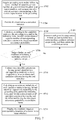
- the method may specifically include the following steps:
- step S709 connect each possible conjunction without an end identifier to a corresponding candidate sentence respectively, and then update the candidate sentence.
- step S706 is re-executed to calculate the possible conjunctions of the updated candidate sentences in an updated candidate sentence set, so as to obtain the possible conjunctions of a preset number of updated candidate sentences having the maximum occurrence probability.
- step S712 execute the following step: S714: Display the candidate inputs at corresponding locations of a cursor in the input interface.
- FIG. 8 shows an interface diagram of displaying a candidate input on a terminal device in a specific example.
- a user can check the candidate inputs visually and select a candidate input, thereby bringing convenience to an input operation of the user, and improving the input efficiency of the user.
- the method further includes the following steps: Acquire, if the input interface is in a chat environment, a candidate input having a maximum occurrence probability when the state of a corresponding chat account is in a set state and an automatic reply is set, input the candidate input having the maximum occurrence probability into an input box, and send the candidate input.
- the set state may include a state of LEAVE, BUSY or DO NOT DISTURB.
- a chat tool such as instant messaging
- a user may set whether an automatic reply is required in the state of LEAVE, BUSY or DO NOT DISTURB.
- an automatic reply is sent to a chat friend after a message sent by the chat friend is received.
- the existing automatic reply message is usually a reply message that has been set when the user sets an automatic reply. For example, the message is "I have gone to eat, and I will contact you later".
- FIG. 9 shows an interface diagram of an automatic reply in an implementation manner.
- a specific implementation process of the input prompting method includes the following steps:
- N in the present embodiment is an accumulative update count of a candidate sentence.
- S1008 Calculate, according to the candidate sentence and the preceding texts, possible conjunctions of a preset number of corresponding candidate sentences having a maximum occurrence probability.
- step S1008 is re-executed to calculate the possible conjunctions of the updated candidate sentences in the updated candidate sentence set, so as to obtain the possible conjunctions of a preset number of updated candidate sentences having the maximum occurrence probability.
- S1018 Calculate an occurrence probability of each candidate sentence having the end identifier respectively according to the preceding texts, and provide a preset number of candidate sentences having the end identifier and having the maximum occurrence probability as the candidate inputs.
- S1020 Display the candidate inputs at corresponding locations of a cursor in the input interface.
- a user can check the candidate inputs visually and select a candidate input, thereby bringing convenience to an input operation of the user, and improving the input efficiency of the user.
- FIG. 11 is a structure block diagram of an electronic device 111 in an embodiment.
- the internal structure of the electronic device 111 may correspond to the structure as shown in FIG. 3 , and the following modules may be implemented totally or partially by software, hardware or combinations thereof.
- the electronic device 111 includes: a data acquisition module 1102, a candidate sentence processing module 1104, a calculation module 1106, a judgment module 1108, and a conjunction processing module 1112.
- the data acquisition module 1102 is configured to acquire preceding texts and/or following texts, less than or equal to a preset number, at a current input location in an input interface, and an input text of a current sentence corresponding to the current input location in the preceding text.
- the candidate sentence processing module 1104 is configured to provide the input text as a candidate sentence.
- the calculation module 1106 is configured to calculate, according to the candidate sentence, the preceding texts and/or the following texts, possible conjunctions of a preset number of corresponding candidate sentences having a maximum occurrence probability, calculate an occurrence probability, determined by the conjunction processing module, of each candidate sentence having an end identifier respectively, and provide a preset number of candidate sentences having the end identifier and having the maximum occurrence probability as the candidate inputs.
- the judgment module 1108 is configured to judge whether an end condition of updating a candidate sentence is satisfied or not.
- the conjunction processing module 1112 is configured to connect, when the judgment result of the judgment module is YES, each possible conjunction having an end identifier to a corresponding candidate sentence respectively, so as to obtain each candidate sentence having the end identifier.
- an initial candidate sentence is an input text of a current sentence; according to the input text of the current sentence, a preceding text and/or a following text, the possible conjunctions of the input text of the current sentence are calculated; and when an end condition of updating a candidate sentence is not satisfied, a possible conjunction without an end identifier is connected to the candidate sentence, the candidate sentence is then updated, and the possible conjunctions of the updated candidate sentence are cyclically calculated. Because the possible conjunctions are determined according to the preceding text and/or the following text, the calculated possible conjunctions can provide candidate inputs that conform to the context in consideration of preceding text and/or following text input conditions. By determining the candidate inputs of a long sentence conforming to the context, a user does not need to obtain a long sentence by multiple times of inputting, so that the input efficiency can be improved.
- the electronic device further includes an update module 1110, configured to connect, when the judgment result of the judgment module is NOT, each possible conjunction without an end identifier to a corresponding candidate sentence respectively, and then update the candidate sentence.
- an update module 1110 configured to connect, when the judgment result of the judgment module is NOT, each possible conjunction without an end identifier to a corresponding candidate sentence respectively, and then update the candidate sentence.
- the candidate inputs are calculated according to the possible conjunctions of the candidate sentences, and the candidate sentences are updated according to the candidate sentences and the possible conjunctions without an end identifier, so the possible conjunctions of the candidate sentences are cyclically calculated.
- the number of words can be continuously increased to form the candidate inputs of a long sentence.
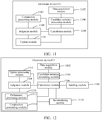
- the update module 1110 includes: a preliminary processing module 1111 and an update processing module 1112.
- the preliminary processing module 1111 is configured to connect each possible conjunction without an end identifier of each candidate sentence to a corresponding candidate sentence respectively, so as to obtain a preliminarily updated candidate sentence.
- the calculation module 1106 is configured to calculate an occurrence probability of each preliminarily updated candidate sentence according to the preceding text and/or the following text respectively.
- the update processing module 1112 is configured to update the candidate sentence according to a preset number of preliminarily updated candidate sentences having the maximum occurrence probability.
- an occurrence probability of each preliminarily updated candidate sentence is calculated according to the preceding text and/or the following text respectively, and a preset number of preliminarily updated candidate sentences having the maximum occurrence probability are selected therefrom to serve as updated candidate sentences. It can be ensured that the number of the updated candidate sentences is within a certain number, thereby increasing the calculation speed of the possible conjunctions of the candidate sentences, and further increasing the calculation speed of the candidate inputs.
- the end condition of updating a candidate sentence may include: all possible conjunctions of each candidate sentence have an end identifier.
- the apparatus may further include: an accumulating module 1114, configured to calculate an accumulative update count of a candidate sentence.
- the end condition of updating a candidate sentence includes: an accumulative update count of a candidate sentence, calculated by the accumulating module, reaches a set maximum value.
- the data acquisition module 1102 is configured to acquire language style parameters.
- the calculation module 1106 calculates, according to the candidate sentence, the preceding texts and/or the following texts, possible conjunctions of a preset number of corresponding candidate sentences corresponding to the language style parameters and having a maximum occurrence probability.
- the language style parameters by setting the language style parameters, it is possible to determine the candidate inputs that are the same as the language style parameters, and to make the candidate inputs more in line with language habits of a user, thereby implementing personalized setting of the language style of the user.
- an apparatus for determining a candidate input further includes a sending module 1116, configured to send the candidate inputs to a terminal device corresponding to the input interface.
- the method for determining the candidate input in the present embodiment is run on a server. Understandably, the server receives preceding texts and/or following texts, which are sent by the terminal and less than or equal to a preset number, at a current input location in an input interface, and an input text of a current sentence corresponding to the current input location in the preceding text, and calculates and determines candidate inputs according to these acquired data. The determined candidate inputs are sent to a corresponding terminal device.
- preceding texts and/or following texts are sent to a server, and the server determines candidate inputs.
- the situation of low calculative ability of a local device can be solved, the candidate inputs are quickly calculated by using the calculative ability of the server, and the calculated candidate inputs are sent to the terminal device.
- FIG. 13 is a structure block diagram of an electronic device 131 in an embodiment.
- the electronic device 131 includes: a text acquisition module 1302, a processing module 1304, a probability calculation module 1306, a judgment module 1308, a conjunction processing module 1312, and a display module 1314.
- the text acquisition module 1302 is configured to acquire preceding texts and/or following texts, less than or equal to a preset number, at a current input location in an input interface, and an input text of a current sentence corresponding to the current input location in the preceding text.
- the processing module 1304 is configured to provide the input text as a candidate sentence.
- the probability calculation module 1306 is configured to calculate, according to the candidate sentence, the preceding texts and/or the following texts, possible conjunctions of a preset number of corresponding candidate sentences having a maximum occurrence probability, calculate an occurrence probability, determined by the conjunction processing module, of each candidate sentence having an end identifier respectively, and provide a preset number of candidate sentences having the end identifier and having the maximum occurrence probability as candidate inputs.
- the judgment module 1308 is configured to judge whether an end condition of updating a candidate sentence is satisfied or not.
- the conjunction processing module 1312 is configured to connect, when the judgment result of the judgment module is YES, each possible conjunction having an end identifier to a corresponding candidate sentence respectively, so as to obtain each candidate sentence having the end identifier.
- the display module 1314 is configured to display the candidate inputs at corresponding locations of a cursor in the input interface.
- the electronic device further includes: a candidate update module 1310, configured to connect, when the judgment result of the judgment module is NOT, each possible conjunction without an end identifier to a corresponding candidate sentence respectively, and then update the candidate sentence.
- a candidate update module 1310 configured to connect, when the judgment result of the judgment module is NOT, each possible conjunction without an end identifier to a corresponding candidate sentence respectively, and then update the candidate sentence.
- FIG. 8 shows an interface diagram of displaying a candidate input on a terminal device in an implementation manner.
- a user can check the candidate inputs visually and select a candidate input, thereby bringing convenience to an input operation of the user, and improving the input efficiency of the user.
- an input prompting apparatus further includes:
- FIG. 9 shows an interface diagram of an automatic reply in an implementation manner.
- a person of ordinary skill in the art may understand that all or part of flows in the foregoing embodiment method may be completed by instructing relevant hardware via a computer program, wherein the program may be stored in a non-volatile computer-readable storage medium.
- the program may be stored in a storage medium of a computer system and executed by at least one processor in the computer system, so as to implement the flow of the embodiments including each of the foregoing method.
- the storage medium may be a magnetic disk, an optical disk, a read-only memory (ROM) or a random access memory (RAM).
Landscapes
- Engineering & Computer Science (AREA)
- Theoretical Computer Science (AREA)
- General Engineering & Computer Science (AREA)
- Physics & Mathematics (AREA)
- General Physics & Mathematics (AREA)
- Human Computer Interaction (AREA)
- Computational Linguistics (AREA)
- General Health & Medical Sciences (AREA)
- Audiology, Speech & Language Pathology (AREA)
- Artificial Intelligence (AREA)
- Health & Medical Sciences (AREA)
- Computer Networks & Wireless Communication (AREA)
- Signal Processing (AREA)
- Data Mining & Analysis (AREA)
- Mathematical Analysis (AREA)
- Mathematical Physics (AREA)
- Pure & Applied Mathematics (AREA)
- Computational Mathematics (AREA)
- Mathematical Optimization (AREA)
- Bioinformatics & Cheminformatics (AREA)
- Evolutionary Biology (AREA)
- Operations Research (AREA)
- Probability & Statistics with Applications (AREA)
- Bioinformatics & Computational Biology (AREA)
- Algebra (AREA)
- Life Sciences & Earth Sciences (AREA)
- Databases & Information Systems (AREA)
- Software Systems (AREA)
- Machine Translation (AREA)
- Document Processing Apparatus (AREA)
Abstract
Description
- This application claims priority to Chinese Patent Application No.
2016106303026 - The present disclosure relates to the technical field of Internet, and more particularly to a method for determining a candidate input, an input prompting method, and an electronic device.
- With the development of smart terminal devices such as personal computers and mobile phones, more and more occasions, such as chatting and report writing, require people to edit texts by using terminal devices.
- In order to improve the input efficiency of a user, some input methods provide candidate inputs for the user according to a text input by the user. For example, when the user inputs "Hello", the input method provides the user with "?", "!" and other candidate inputs for the user to select. The candidate inputs provided by the input methods are generated according to common sentences and input records of the user, and are usually single words or phrases. In the case where a user needs to input a longer sentence, e.g., the user needs to input "It is raining outside now, remember to bring an umbrella", when the user inputs "now", an input method provides candidate options for the user to input, but because "outside now" is not a regular word, the candidate options do not include an option of "outside", so the user inputs a word "out", and the candidate options provided by the input method will include a word "side" for the user to select according to the word "out" input by the user. After the user selects the word "side", if the user has repeatedly input "raining outside", the candidate options provided by the input method may include an option of "raining", and after the user selects "raining", the provided candidate options include an option of punctuation ",". After the user selects ",", no candidate option is provided, the user inputs "remember", the candidate inputs provided by the input method do not include an option of "bring an umbrella" according to "remember" input by the user, and the user inputs "bring an umbrella" manually to complete input.
- Thus, when a user inputs a longer sentence by using a conventional input method, multiple inputs and selections are required for completion, thereby resulting in low input efficiency.
- According to various embodiments of the present application, a method for determining a candidate input, an input prompting method, and an electronic device are provided.
- A method for determining a candidate input includes:
- acquiring preceding texts and/or following texts, less than or equal to a preset number, at a current input location in an input interface, and an input text of a current sentence corresponding to the current input location in the preceding text;
- providing the input text as a candidate sentence;
- calculating, according to the candidate sentence, the preceding texts and/or the following texts, possible conjunctions of a preset number of corresponding candidate sentences having a maximum occurrence probability;
- connecting, when satisfying an end condition of updating a candidate sentence, each possible conjunction having an end identifier to a corresponding candidate sentence respectively, so as to obtain each candidate sentence having the end identifier; and
- calculating an occurrence probability of each candidate sentence having the end identifier respectively according to the preceding texts and/or the following texts, and providing a preset number of candidate sentences having the end identifier and having the maximum occurrence probability as the candidate inputs.
- An input prompting method includes:
- acquiring preceding texts and/or following texts, less than or equal to a preset number, at a current input location in an input interface, and an input text of a current sentence corresponding to the current input location in the preceding text;
- providing the input text as a candidate sentence;
- calculating, according to the candidate sentence, the preceding texts and/or the following texts, possible conjunctions of a preset number of corresponding candidate sentences having a maximum occurrence probability;
- connecting, when satisfying an end condition of updating a candidate sentence, each possible conjunction having an end identifier to a corresponding candidate sentence respectively, so as to obtain each candidate sentence having the end identifier; and
- calculating an occurrence probability of each candidate sentence having the end identifier respectively according to the preceding texts and/or the following texts, and providing a preset number of candidate sentences having the end identifier and having the maximum occurrence probability as candidate inputs; and
- displaying the candidate inputs at corresponding locations of a cursor in the input interface.
- An electronic device includes a memory and a processor, the memory storing a computer-readable instruction, when the computer-readable instruction is executed by the processor, the processor being enabled to execute the following steps:
- acquiring preceding texts and/or following texts, less than or equal to a preset number, at a current input location in an input interface, and an input text of a current sentence corresponding to the current input location in the preceding text;
- providing the input text as a candidate sentence;
- calculating, according to the candidate sentence, the preceding texts and/or the following texts, possible conjunctions of a preset number of corresponding candidate sentences having a maximum occurrence probability;
- connecting, when satisfying an end condition of updating a candidate sentence, each possible conjunction having an end identifier to a corresponding candidate sentence respectively, so as to obtain each candidate sentence having the end identifier; and
- calculating an occurrence probability of each candidate sentence having the end identifier respectively according to the preceding texts and/or the following texts, and providing a preset number of candidate sentences having the end identifier and having the maximum occurrence probability as candidate inputs.
- An electronic device includes a memory and a processor, the memory storing a computer-readable instruction, when the computer-readable instruction is executed by the processor, the processor being enabled to execute the following steps:
- acquiring preceding texts and/or following texts, less than or equal to a preset number, at a current input location in an input interface, and an input text of a current sentence corresponding to the current input location in the preceding text;
- providing the input text as a candidate sentence;
- calculating, according to the candidate sentence, the preceding texts and/or the following texts, possible conjunctions of a preset number of corresponding candidate sentences having a maximum occurrence probability;
- connecting, when satisfying an end condition of updating a candidate sentence, each possible conjunction having an end identifier to a corresponding candidate sentence respectively, so as to obtain each candidate sentence having the end identifier; and
- calculating an occurrence probability of each candidate sentence having the end identifier respectively according to the preceding texts and/or the following texts, and providing a preset number of candidate sentences having the end identifier and having the maximum occurrence probability as candidate inputs; and
- displaying the candidate inputs at corresponding locations of a cursor in the input interface.
- The details of one or more embodiments of the present invention are set forth in the accompanying drawings and the description below. Other features, objectives, and advantages of the present disclosure will be apparent from the specification, the accompanying drawings and the claims.
- To describe the technical solutions of the embodiments of the present application or the existing technology more clearly, the following briefly introduces the accompanying drawings required for describing the embodiments or the existing technology. Apparently, the accompanying drawings in the following description show only some embodiments of the present application, and a person of ordinary skill in the art may still derive other drawings from these accompanying drawings without creative efforts.
-
FIG. 1 is an application environment diagram of a method for determining a candidate input in an embodiment. -
FIG. 2 is an application environment diagram of a method for determining a candidate input in another embodiment. -
FIG. 3 is an internal structure diagram of a terminal in an embodiment. -
FIG. 4 is a flowchart of a method for determining a candidate input in an embodiment. -
FIG. 5 is a flowchart of a step of updating a candidate sentence in an embodiment. -
FIG. 6 is a flowchart of a method for determining a candidate input in another embodiment. -
FIG. 7 is a flowchart of an input prompting method in an embodiment. -
FIG. 8 is an interface diagram of displaying a candidate input on an input interface in an embodiment. -
FIG. 9 is an interface diagram of an automatic reply according to a candidate input in an embodiment. -
FIG. 10 is a flowchart of an input prompting method in yet another embodiment. -
FIG. 11 is a structure block diagram of an electronic device in an embodiment. -
FIG. 12 is a structure block diagram of an electronic device in another embodiment. -
FIG. 13 is a structure block diagram of an electronic device in yet another embodiment. -
FIG. 14 is a structure block diagram of an electronic device in another embodiment. - To make the objectives, technical solutions, and advantages of the present disclosure clearer, the following further describes the present disclosure in detail with reference to the accompanying drawings and embodiments. It will be appreciated that the embodiments described herein are merely used to explain the present disclosure and do not limit the protection scope of the present disclosure.
-
FIG. 1 is an application environment diagram of a method for determining a candidate input in an embodiment. As shown inFIG. 1 , the application environment includes afirst terminal 110, aserver 120 and asecond terminal 130. Thefirst terminal 110 and thesecond terminal 130 communicate with theserver 120 via a network. A first user logs in an application client on thefirst terminal 110 to chat with a second user logging in thesecond terminal 130. When the terminals or the server acquires a preset number of preceding texts input by the first user at a current input location and an input text of an input box, candidate inputs are determined according to the input text of the input box and the preceding texts. -
FIG. 2 is an application environment diagram of a method for determining a candidate input in another embodiment. As shown inFIG. 2 , afirst terminal 210 and aserver 220 are included. A first user inputs, e.g., edits, a text on thefirst terminal 210. When the terminal or the server acquires a preset number of preceding texts and/or following texts input by the first user at a current input location and an input text of a current sentence corresponding to the current input location, candidate inputs are determined according to the input text of an input box, the preceding texts and/or the following texts. If the candidate inputs are determined on theserver 220, theserver 220 sends, after the candidate inputs are determined, the determined candidate inputs to thefirst terminal 210. An application environment of a method for determining a candidate input in another embodiment may only include a first terminal. For example, during text editing, when the terminal acquires a preset number of preceding texts and/or following texts input by a user at a current input location and an input text of a current sentence corresponding to the current input location, candidate inputs are determined according to the input text of an input box, the preceding texts and/or the following texts. -
FIG. 3 is an internal structure diagram of a terminal in an embodiment. As shown inFIG. 3 , the terminal includes a processor, a non-volatile storage medium, a display screen, an internal memory, a network interface and an input device, which are connected via a system bus. The storage medium of the terminal stores an operating system and also stores a computer-readable instruction. When the computer-readable instruction is executed by the processor, the processor is enabled to implement a method for determining a candidate input. The processor is configured to provide calculative and control abilities, and supports running of the whole terminal. The internal memory in the terminal provides a cached operating environment for the operating system and the computer-executable instruction in the non-volatile storage medium. The network interface is configured to perform network communication with a server, for example, sending a text input by a user to the server, and receiving an input text sent by a chat object and returned by the server. The input device is configured to accept the user input. The display screen of the terminal may be a liquid crystal display screen or an electronic ink display screen. The input device may be a touch layer overlaid on the display screen, may be a key, a trackball or a touchpad disposed on a housing of the terminal, or may be an external keyboard, touchpad or mouse. The terminal may be a mobile phone, a tablet computer, a personal digital assistant or a wearable device. Those skilled in the art may understand that the structure shown inFIG. 3 is merely a block diagram of a partial structure related to the solution of the present application, and does not constitute a limitation to the terminal to which the solution of the present application is applied, and a specific terminal may include components more or fewer than those shown in the figure, or some combined components, or different component arrangements. -
FIG. 4 is a flowchart of a method for determining a candidate input in an embodiment. As shown inFIG. 4 , the method for determining the candidate input is run on thefirst terminal 110 or thesecond terminal 130 as shown inFIG. 1 , or thefirst terminal 210 as shown inFIG. 2 . The method in this embodiment includes the following steps:
S402: Acquire preceding texts and/or following texts, less than or equal to a preset number, at a current input location in an input interface, and an input text of a current sentence corresponding to the current input location in the preceding text. - Specifically, the current input location is the location of a cursor. A context at the location of the cursor includes the following several situations: the situation that the location of the cursor has preceding and following texts, e.g., in a text editing environment. At this time, a preset number of preceding texts and following texts at the current input location are acquired. The situation that the location of the cursor has only preceding texts, e.g., in a chat environment. At this time, a preset number of preceding texts at the current input location are acquired. The situation that the location of the cursor has only following texts, e.g., in a text editing environment. At this time, a preset number of following texts at the current input location are acquired. The preset number of the preceding texts may be the same as or different from the preset number of the following texts, which may be set by a user or a developer according to specific situations.
- In different application environments, the input text of the current sentence corresponding to the current input location in the preceding text is determined by using different methods. In a non-chat environment such as a text editing environment, it may be determined according to punctuations in the preceding texts at the location of the cursor. For another example, in a text editing environment, when a Chinese input method is used, each sentence is distinguished with ".", "?", or "!", or the like. In a preceding text, a corresponding punctuation is searched forwards from the last word, and the input text of the current sentence starts from the corresponding punctuation to the last word of the preceding text. In a chat environment, a text input in an input box is provided as the input text of the current sentence corresponding to the current input location in the preceding text.
- Understandably, the situation that the input text of the current sentence is null may exist. For example, in a non-chat environment, the last word of a preceding text ends with ".", "?", or "! ", or other punctuations. For another example, in a chat environment, no input text exists in an input box.
- S404: Provide the input text as a candidate sentence.
- In a specific example, a candidate sentence set may be established, an input text being provided as an element in the candidate sentence set, i.e., a candidate sentence in the present embodiment.
- S406: Calculate, according to the candidate sentence, the preceding texts and/or the following texts, possible conjunctions of a preset number of corresponding candidate sentences having a maximum occurrence probability.
- In a specific example, a language model may be pre-trained based on a neural network by using different session sets or documents. The candidate sentence in the candidate sentence set is input into the pre-trained language model, and the possible conjunctions of the candidate sentence and the occurrence probabilities of the possible conjunctions are calculated, and the possible conjunctions of a preset number of candidate sentences having the maximum occurrence probability are selected. A specific preset number may be preset by a system developer or a user.
- S408: Judge whether an end condition of updating a candidate sentence is satisfied or not, and if so, execute step S410.
- When the language model is trained, a start identifier and an end identifier are added into each of trained sentences. The start identifier and the end identifier in an implementation manner may be the same, and may be, for example, both <END> symbols. Understandably, when the preceding texts and/or the following texts and the input text of the current sentence corresponding to the current input location in the preceding text are input into the language model, the start identifier and the end identifier will be added to the sentence. When the possible conjunction is calculated by using the language model, if the possible conjunction has the end identifier, it is considered that the possible conjunction is an end of the current sentence.
- S410: Connect each possible conjunction having an end identifier to a corresponding candidate sentence respectively, so as to obtain each candidate sentence having the end identifier.
- If satisfying the end condition of updating a candidate sentence, connecting each possible conjunction having an end identifier to a corresponding candidate sentence, so as to obtain each candidate sentence having the end identifier. A result set may be established, the candidate sentence having the end identifier is put into the result set, and the candidate sentence having the end identifier is provided as an element of the result set. Understandably, the result set includes a candidate sentence updated at each time and the possible conjunction having the end identifier thereof.
- S412: Calculate an occurrence probability of each candidate sentence having the end identifier respectively according to the preceding texts and/or the following texts, and provide a preset number of candidate sentences having the end identifier and having the maximum occurrence probability as candidate inputs.
- Specifically, all candidate sentences having the end identifier in the result set are input into the pre-trained language model respectively, occurrence probabilities of the candidate sentences having the end identifier are calculated, and a preset number of candidate sentences having the end identifier and having the maximum occurrence probability are selected as the candidate inputs.
- According to the above-mentioned method for determining the candidate input, an initial candidate sentence is the input text of the current sentence; according to the input text of the current sentence, a preceding text and/or a following text, the possible conjunctions of the input text of the current sentence are calculated; when satisfying the end condition of updating a candidate sentence, each possible conjunction having the end identifier is connected to a corresponding candidate sentence respectively, so as to obtain each candidate sentence having the end identifier; the occurrence probability of the candidate sentence having the end identifier is calculated according to the preceding text and/or the following text; and a preset number of candidate sentences having the end identifier and having the maximum occurrence probability are provided as the candidate inputs. Because the possible conjunctions are determined according to the preceding text and/or the following text, the calculated possible conjunctions can provide candidate inputs that conform to the context in consideration of preceding text and/or following text input conditions. By determining candidate inputs of a long sentence conforming to the context, a user does not need to obtain a long sentence by multiple times of inputting, so that the input efficiency can be improved.
- In another embodiment, referring to
FIG. 4 , if the judgment result of step S408 is NOT, step S409 is executed. - S409: Connect each possible conjunction without an end identifier to a corresponding candidate sentence respectively, and then update the candidate sentence.
- When the end condition of updating a candidate sentence is not satisfied, connecting each possible conjunction without the end identifier to a corresponding candidate sentence respectively, and updating the candidate sentence. The updated candidate sentence consists of a non-updated candidate sentence and a possible conjunction without an end identifier. In the present embodiment, all possible conjunctions without the end identifier of each candidate sentence in the candidate sentence set are connected to the corresponding candidate sentence to obtain an updated candidate sentence, all the updated candidate sentences constituting an updated candidate sentence set.
- After step S409, step S406 is re-executed to calculate the possible conjunctions of the updated candidate sentences in the updated candidate sentence set, so as to obtain the possible conjunctions of a preset number of updated candidate sentences having the maximum occurrence probability.
- According to the above-mentioned method for determining the candidate input, the candidate inputs are calculated according to the possible conjunctions of the candidate sentences, and the candidate sentences are updated according to the candidate sentences and the possible conjunctions without an end identifier, so the possible conjunctions of the candidate sentences are cyclically calculated. By repeatedly and cyclically calculating the possible conjunctions, the number of words can be continuously increased to form the candidate inputs of a long sentence.
- Step S409 is a step of connecting each possible conjunction without an end identifier to a corresponding candidate sentence respectively and then updating the candidate sentence. In another embodiment, as shown in
FIG. 5 , the step of updating the candidate sentence includes: - S4091: Connect each possible conjunction without an end identifier of each candidate sentence to a corresponding candidate sentence respectively, so as to obtain a preliminarily updated candidate sentence.
- S4092: Calculate an occurrence probability of each preliminarily updated candidate sentence according to the preceding text and/or the following text respectively.
- S4093: Update the candidate sentence according to a preset number of preliminarily updated candidate sentences having the maximum occurrence probability.
- Understandably, in the presence of multiple possible conjunctions, a plurality of updated candidate sentences may be correspondingly obtained. Because the possible conjunctions of the candidate sentences are cyclically executed when an end condition of updating a candidate sentence is not satisfied, in candidate sentences updated once, for each updated candidate sentence, a plurality of possible conjunctions without an end identifier may be obtained, so as to obtain a plurality of updated candidate sentences. When there are more updated candidate sentences, the calculated amount is increased, thereby resulting in slow calculation of candidate inputs. In order to increase a calculation speed, in the present embodiment, the occurrence probability of each preliminarily updated candidate sentence is calculated according to the preceding text and/or the following text respectively, and a preset number of preliminarily updated candidate sentences having the maximum occurrence probability are selected therefrom to serve as updated candidate sentences. It can be ensured that the number of the updated candidate sentences is within a certain number, thereby increasing the calculation speed of the possible conjunctions of the candidate sentences, and further increasing the calculation speed of the candidate inputs.
- In another embodiment, the end condition of updating a candidate sentence may include: all possible conjunctions of each candidate sentence have an end identifier. In this embodiment, if all possible conjunctions of each candidate sentence have an end identifier (at this time, elements of a candidate sentence set are null), the end condition of updating a candidate sentence is satisfied, each possible conjunction having an end identifier is connected to a corresponding candidate sentence respectively, so as to obtain each candidate sentence having the end identifier.
- In another embodiment, after step S409, the method may further include: calculating an accumulative update count of a candidate sentence.
- Specifically, calculation of an accumulative update count of a candidate sentence may be implemented by calculating an iterative update count. For example, after the step of providing the input text as a candidate sentence, set N=0, where N represents the accumulative update count of the candidate sentence (i.e., iterative update count). After the step of connecting each possible conjunction without an end identifier to the candidate sentence respectively and then updating the candidate sentence, set N=N+1, so as to implement accumulation of updated candidate sentences.
- In this embodiment, the end condition of updating a candidate sentence may include: an update count of a candidate sentence reaches a set maximum value, so that when the update count of a candidate sentence reaches the set maximum value, i.e., the above-mentioned N is equal to the set maximum value, the end condition of updating a candidate sentence is satisfied, and executing the step of connecting each possible conjunction having an end identifier to a corresponding candidate sentence respectively, so as to obtain each candidate sentence having the end identifier.
- In the present embodiment, by setting a maximum value for a sentence update count, low calculation speed of candidate inputs caused by multiple cycles can be avoided; and by defining a cyclic calculation count within a certain cycle, the calculation speed of the candidate inputs can be increased.
- In yet another embodiment, step S402 may include: acquiring preceding texts and/or following texts, less than or equal to a preset number, at a current input location in an input interface, and an input text and language style parameters of a current sentence corresponding to the current input location in the preceding text.
- A language style refers to a language expression pattern of an input text. The language style is related to word usage habits, professional fields and talking tones. The language style parameters may be used for presetting an input method application on a terminal device. The language style parameters of an implementation manner include: user habits being network catchwords, and talking tones being playfulness.
- In this embodiment, step S406 may specifically include: calculating, according to the candidate sentence, the preceding texts and/or the following texts, possible conjunctions of a preset number of candidate sentences corresponding to the language style parameters and having a maximum occurrence probability. Thus, the obtained candidate inputs are candidate inputs corresponding to the language style.
- Specifically, different language style models are trained by using different language style sets, preceding texts and/or following texts, less than or equal to a preset number, at an input location and an input text of a current sentence corresponding to a current input location in the preceding text are input into a language model corresponding to the language style, and the possible conjunctions corresponding to the language style parameters are calculated.
- In the present embodiment, by setting the language style parameters, it is possible to determine the candidate inputs that are the same as the language style parameters, and to make the candidate inputs more in line with language habits of a user, thereby implementing personalized setting of the language style of the user.
- In an embodiment, the language model is pre-trained based on a neural network by using a plurality of sets of conversations and a plurality of documents. When the language model is trained by using conversations, a set of conversations are


- When the language model is trained by using conversations, by aiming to maximize likelihood


- When the language model is trained by using documents, an aim is to maximize likelihood


- In an implementation manner, the method for determining the candidate input in a chat environment by using a language model specifically includes: assuming that a user gives j-1 sentences { a 1, a 2, ... ,a j-1 } in front of a current conversation, and z words {aj1, aj2, ... , ajz } at the beginning of a current input sentence a j, and calculating, by using a language model, u aj making


- Specifically, j-1 sentences in front of a current conversation and z words at the beginning of a current input sentence a j are input into a language model, or j-1 sentences in front of a current document editing location, 1 sentences behind the current document editing location and z words at the beginning of a current input sentence aj are input into a language model, and u possible conjunctions of z words at the beginning of the current input sentence a j having a maximum probability are calculated. When the end condition of updating a candidate sentence is not satisfied, each possible conjunction without an end identifier is connected to a corresponding candidate sentence respectively, and then the candidate sentences are updated. The updated candidate sentences are input into a language model respectively, and possible conjunctions of the updated candidate sentences are calculated until an update count of a candidate sentence reaches a set maximum value or all possible conjunctions of each updated candidate sentence have an end identifier. Each possible conjunction having an end identifier is connected to a corresponding candidate sentence respectively, so as to obtain a candidate sentence having the end identifier, the candidate sentence having the end identifier is input to a language model, and u candidate sentences having the end identifier and having a maximum probability are calculated as the candidate inputs.
- In an embodiment, the above-mentioned method for determining the candidate input may also be run on the
server 120 as shown inFIG. 1 or theserver 220 as shown inFIG. 2 . In this case, as shown inFIG. 6 , after step S412, the method may further include:
S414: Send the candidate inputs to a terminal device corresponding to the input interface. - The method for determining the candidate input in the present embodiment is run on the server. Understandably, the server receives preceding texts and/or following texts, which are sent by the terminal and less than or equal to a preset number, at a current input location in an input interface, and an input text of a current sentence corresponding to the current input location in the preceding text, and calculates and determines candidate inputs according to these acquired data. The determined candidate inputs are sent to a corresponding terminal device.
- In the present embodiment, a terminal device sends preceding texts and/or following texts, less than or equal to a preset number, at a current input location in an input interface, and an input text of a current sentence corresponding to the current input location in the preceding text to a server, and the server determines candidate inputs. The situation of low calculative ability of a local device can be solved, the candidate inputs are quickly calculated by using the calculative ability of the server, and the calculated candidate inputs are sent to the terminal device.
- In another embodiment, the embodiment of the present invention also provides an input prompting method. The input prompting method is run on the
first terminal 110 or thesecond terminal 130 as shown inFIG. 1 . As shown inFIG. 7 , the method may specifically include the following steps: - S702: Acquire preceding texts and/or following texts, less than or equal to a preset number, at a current input location in an input interface, and an input text of a current sentence corresponding to the current input location in the preceding text.
- S704: Provide the input text as a candidate sentence.
- S706: Calculate, according to the candidate sentence, the preceding texts and/or the following texts, possible conjunctions of a preset number of corresponding candidate sentences having a maximum occurrence probability.
- S708: Judge whether an end condition of updating a candidate sentence is satisfied or not, and if so, execute step S710.
- S710: Connect each possible conjunction having an end identifier to a corresponding candidate sentence respectively, so as to obtain each candidate sentence having the end identifier.
- S712: Calculate an occurrence probability of each candidate sentence having the end identifier respectively according to the preceding texts and/or the following texts, and provide a preset number of candidate sentences having the end identifier and having the maximum occurrence probability as the candidate inputs.
- Specific implementation methods of the above-mentioned steps may be the same as the implementation manners of the response steps in the above-mentioned method for determining the candidate input, and details are not described herein again.
- In another embodiment, referring to
FIG. 7 , if the judgment result of step S708 is NOT, execute step S709: connect each possible conjunction without an end identifier to a corresponding candidate sentence respectively, and then update the candidate sentence. - After step S709, step S706 is re-executed to calculate the possible conjunctions of the updated candidate sentences in an updated candidate sentence set, so as to obtain the possible conjunctions of a preset number of updated candidate sentences having the maximum occurrence probability.
- After step S712, execute the following step:
S714: Display the candidate inputs at corresponding locations of a cursor in the input interface. -
FIG. 8 shows an interface diagram of displaying a candidate input on a terminal device in a specific example. In the present embodiment, by displaying the candidate inputs at corresponding locations of a cursor in an input interface, a user can check the candidate inputs visually and select a candidate input, thereby bringing convenience to an input operation of the user, and improving the input efficiency of the user. - In another embodiment, after step S714, the method further includes the following steps:
Acquire, if the input interface is in a chat environment, a candidate input having a maximum occurrence probability when the state of a corresponding chat account is in a set state and an automatic reply is set, input the candidate input having the maximum occurrence probability into an input box, and send the candidate input. - The set state may include a state of LEAVE, BUSY or DO NOT DISTURB. In a chat tool such as instant messaging, a user may set whether an automatic reply is required in the state of LEAVE, BUSY or DO NOT DISTURB. When it is set that an automatic reply is required in the above-mentioned state, an automatic reply is sent to a chat friend after a message sent by the chat friend is received. The existing automatic reply message is usually a reply message that has been set when the user sets an automatic reply. For example, the message is "I have gone to eat, and I will contact you later". With the method of the present embodiment, when it is detected that a chat account is in the above-mentioned state and an automatic reply is set, a chat record with the other party is acquired, candidate inputs are calculated according to the chat record, and the candidate input having a maximum probability is input into an input box to be sent, so as to achieve an automatic chat with the other party. Moreover, the candidate inputs are determined according to the chat record from the perspective of the user, and are in line with the current chat context.
FIG. 9 shows an interface diagram of an automatic reply in an implementation manner. - In the present embodiment, in a chat environment, as shown in
FIG. 10 , a specific implementation process of the input prompting method includes the following steps: - S1002: Acquire a preset number of preceding texts at an input location and an input text in an input box.
- S1004: Provide the input text as a candidate sentence.
- S1006: SetN=0.
- N in the present embodiment is an accumulative update count of a candidate sentence.
- S1008: Calculate, according to the candidate sentence and the preceding texts, possible conjunctions of a preset number of corresponding candidate sentences having a maximum occurrence probability.
- S1010: Judge whether N is equal to a set maximum value, or whether all possible conjunctions of each candidate sentence have an end identifier or not, if not, execute step S1012, and if one of the judgment results is YES, execute step S1016.
- S1012: Connect each possible conjunction without an end identifier to a corresponding candidate sentence respectively, and then update the candidate sentence.
- S1014: Set N=N+1.
- Accumulation of updated candidate sentences is implemented by assigning N.
- After step S1014, step S1008 is re-executed to calculate the possible conjunctions of the updated candidate sentences in the updated candidate sentence set, so as to obtain the possible conjunctions of a preset number of updated candidate sentences having the maximum occurrence probability.
- S1016: Connect each possible conjunction having an end identifier to a corresponding candidate sentence respectively, so as to obtain each candidate sentence having the end identifier.
- S1018: Calculate an occurrence probability of each candidate sentence having the end identifier respectively according to the preceding texts, and provide a preset number of candidate sentences having the end identifier and having the maximum occurrence probability as the candidate inputs.
- S1020: Display the candidate inputs at corresponding locations of a cursor in the input interface.
- In this embodiment, a user can check the candidate inputs visually and select a candidate input, thereby bringing convenience to an input operation of the user, and improving the input efficiency of the user.
-
FIG. 11 is a structure block diagram of an electronic device 111 in an embodiment. The internal structure of the electronic device 111 may correspond to the structure as shown inFIG. 3 , and the following modules may be implemented totally or partially by software, hardware or combinations thereof. As shown inFIG. 11 , the electronic device 111 includes: adata acquisition module 1102, a candidatesentence processing module 1104, acalculation module 1106, ajudgment module 1108, and aconjunction processing module 1112. - The
data acquisition module 1102 is configured to acquire preceding texts and/or following texts, less than or equal to a preset number, at a current input location in an input interface, and an input text of a current sentence corresponding to the current input location in the preceding text. - The candidate
sentence processing module 1104 is configured to provide the input text as a candidate sentence. - The
calculation module 1106 is configured to calculate, according to the candidate sentence, the preceding texts and/or the following texts, possible conjunctions of a preset number of corresponding candidate sentences having a maximum occurrence probability, calculate an occurrence probability, determined by the conjunction processing module, of each candidate sentence having an end identifier respectively, and provide a preset number of candidate sentences having the end identifier and having the maximum occurrence probability as the candidate inputs. - The
judgment module 1108 is configured to judge whether an end condition of updating a candidate sentence is satisfied or not. - The
conjunction processing module 1112 is configured to connect, when the judgment result of the judgment module is YES, each possible conjunction having an end identifier to a corresponding candidate sentence respectively, so as to obtain each candidate sentence having the end identifier. - According to the above-mentioned electronic device, an initial candidate sentence is an input text of a current sentence; according to the input text of the current sentence, a preceding text and/or a following text, the possible conjunctions of the input text of the current sentence are calculated; and when an end condition of updating a candidate sentence is not satisfied, a possible conjunction without an end identifier is connected to the candidate sentence, the candidate sentence is then updated, and the possible conjunctions of the updated candidate sentence are cyclically calculated. Because the possible conjunctions are determined according to the preceding text and/or the following text, the calculated possible conjunctions can provide candidate inputs that conform to the context in consideration of preceding text and/or following text input conditions. By determining the candidate inputs of a long sentence conforming to the context, a user does not need to obtain a long sentence by multiple times of inputting, so that the input efficiency can be improved.
- In another embodiment, referring to
FIG. 11 , the electronic device further includes anupdate module 1110, configured to connect, when the judgment result of the judgment module is NOT, each possible conjunction without an end identifier to a corresponding candidate sentence respectively, and then update the candidate sentence. - According to the above-mentioned electronic device, the candidate inputs are calculated according to the possible conjunctions of the candidate sentences, and the candidate sentences are updated according to the candidate sentences and the possible conjunctions without an end identifier, so the possible conjunctions of the candidate sentences are cyclically calculated. By repeatedly and cyclically calculating the possible conjunctions, the number of words can be continuously increased to form the candidate inputs of a long sentence.
- In another embodiment, as shown in
FIG. 12 , theupdate module 1110 includes: apreliminary processing module 1111 and anupdate processing module 1112. - The
preliminary processing module 1111 is configured to connect each possible conjunction without an end identifier of each candidate sentence to a corresponding candidate sentence respectively, so as to obtain a preliminarily updated candidate sentence. - The
calculation module 1106 is configured to calculate an occurrence probability of each preliminarily updated candidate sentence according to the preceding text and/or the following text respectively. - The
update processing module 1112 is configured to update the candidate sentence according to a preset number of preliminarily updated candidate sentences having the maximum occurrence probability. - In the present embodiment, an occurrence probability of each preliminarily updated candidate sentence is calculated according to the preceding text and/or the following text respectively, and a preset number of preliminarily updated candidate sentences having the maximum occurrence probability are selected therefrom to serve as updated candidate sentences. It can be ensured that the number of the updated candidate sentences is within a certain number, thereby increasing the calculation speed of the possible conjunctions of the candidate sentences, and further increasing the calculation speed of the candidate inputs.
- In another embodiment, the end condition of updating a candidate sentence may include: all possible conjunctions of each candidate sentence have an end identifier.
- In an embodiment, the apparatus may further include: an accumulating
module 1114, configured to calculate an accumulative update count of a candidate sentence. - The end condition of updating a candidate sentence includes: an accumulative update count of a candidate sentence, calculated by the accumulating module, reaches a set maximum value.
- In the present embodiment, by setting a maximum value for a sentence update count, low calculation speed of candidate inputs caused by multiple cycles can be avoided; and by defining a cyclic calculation count within a certain cycle, the calculation speed of the candidate inputs can be increased.
- In yet another embodiment, the
data acquisition module 1102 is configured to acquire language style parameters. - The
calculation module 1106 calculates, according to the candidate sentence, the preceding texts and/or the following texts, possible conjunctions of a preset number of corresponding candidate sentences corresponding to the language style parameters and having a maximum occurrence probability. - In the present embodiment, by setting the language style parameters, it is possible to determine the candidate inputs that are the same as the language style parameters, and to make the candidate inputs more in line with language habits of a user, thereby implementing personalized setting of the language style of the user.
- In another embodiment, an apparatus for determining a candidate input further includes a
sending module 1116, configured to send the candidate inputs to a terminal device corresponding to the input interface. - The method for determining the candidate input in the present embodiment is run on a server. Understandably, the server receives preceding texts and/or following texts, which are sent by the terminal and less than or equal to a preset number, at a current input location in an input interface, and an input text of a current sentence corresponding to the current input location in the preceding text, and calculates and determines candidate inputs according to these acquired data. The determined candidate inputs are sent to a corresponding terminal device.
- In the present embodiment, preceding texts and/or following texts, less than or equal to a preset number, at a current input location in an input interface, and an input text of a current sentence corresponding to the current input location in the preceding text are sent to a server, and the server determines candidate inputs. The situation of low calculative ability of a local device can be solved, the candidate inputs are quickly calculated by using the calculative ability of the server, and the calculated candidate inputs are sent to the terminal device.
-
FIG. 13 is a structure block diagram of an electronic device 131 in an embodiment. As shown inFIG. 13 , the electronic device 131 includes: atext acquisition module 1302, aprocessing module 1304, aprobability calculation module 1306, ajudgment module 1308, aconjunction processing module 1312, and adisplay module 1314. - The
text acquisition module 1302 is configured to acquire preceding texts and/or following texts, less than or equal to a preset number, at a current input location in an input interface, and an input text of a current sentence corresponding to the current input location in the preceding text. - The
processing module 1304 is configured to provide the input text as a candidate sentence. - The
probability calculation module 1306 is configured to calculate, according to the candidate sentence, the preceding texts and/or the following texts, possible conjunctions of a preset number of corresponding candidate sentences having a maximum occurrence probability, calculate an occurrence probability, determined by the conjunction processing module, of each candidate sentence having an end identifier respectively, and provide a preset number of candidate sentences having the end identifier and having the maximum occurrence probability as candidate inputs. - The
judgment module 1308 is configured to judge whether an end condition of updating a candidate sentence is satisfied or not. - The
conjunction processing module 1312 is configured to connect, when the judgment result of the judgment module is YES, each possible conjunction having an end identifier to a corresponding candidate sentence respectively, so as to obtain each candidate sentence having the end identifier. - The
display module 1314 is configured to display the candidate inputs at corresponding locations of a cursor in the input interface. - In another embodiment, please refer to
FIG. 13 . The electronic device further includes: acandidate update module 1310, configured to connect, when the judgment result of the judgment module is NOT, each possible conjunction without an end identifier to a corresponding candidate sentence respectively, and then update the candidate sentence. -
FIG. 8 shows an interface diagram of displaying a candidate input on a terminal device in an implementation manner. In the present embodiment, by displaying the candidate inputs at corresponding locations of a cursor in an input interface, a user can check the candidate inputs visually and select a candidate input, thereby bringing convenience to an input operation of the user, and improving the input efficiency of the user. - In yet another embodiment, an input prompting apparatus further includes:
- an
acquisition module 1316, configured to acquire, if the input interface is in a chat environment, a candidate input having a maximum occurrence probability when the state of a corresponding chat account is in a set state and an automatic reply is set; and - a
message sending module 1318, configured to input the candidate input having the maximum occurrence probability into an input box, and send the candidate input. - With the electronic device of the present embodiment, when it is detected that a chat account is in the above-mentioned state and an automatic reply is set, a chat record with the other party is acquired, candidate inputs are calculated according to the chat record, and the candidate input having a maximum probability is input into an input box to be sent, so as to achieve an automatic chat with the other party. Moreover, the candidate inputs are determined according to the chat record from the perspective of the user, and are in line with the current chat context.
FIG. 9 shows an interface diagram of an automatic reply in an implementation manner. - A person of ordinary skill in the art may understand that all or part of flows in the foregoing embodiment method may be completed by instructing relevant hardware via a computer program, wherein the program may be stored in a non-volatile computer-readable storage medium. For example, in the embodiments of the present invention, the program may be stored in a storage medium of a computer system and executed by at least one processor in the computer system, so as to implement the flow of the embodiments including each of the foregoing method. The storage medium may be a magnetic disk, an optical disk, a read-only memory (ROM) or a random access memory (RAM).
- All technical features of the above-mentioned embodiments may be combined randomly. For a brief description, not all possible combinations of the technical features in the above-mentioned embodiments are described. However, as long as the combinations of these technical features do not contradict each other, they should be regarded as a scope recorded in the present specification.
- The above-mentioned embodiments only describe several implementation manners of the present disclosure, and their description is specific and detailed, but cannot therefore be understood as a limitation to the patent scope of the present disclosure. It should be noted that a person of ordinary skill in the art may further make variations and improvements without departing from the conception of the present disclosure, and these all fall within the protection scope of the present disclosure. Therefore, the patent protection scope of the present disclosure should be subject to the appended claims.
Claims (20)
- A method for determining a candidate input, comprising:acquiring preceding texts and/or following texts, less than or equal to a preset number, at a current input location in an input interface, and an input text of a current sentence corresponding to the current input location in the preceding text;providing the input text as a candidate sentence;calculating, according to the candidate sentence, the preceding texts and/or the following texts, possible conjunctions of a preset number of corresponding candidate sentences having a maximum occurrence probability;connecting, when satisfying an end condition of updating a candidate sentence, each possible conjunction having an end identifier to a corresponding candidate sentence respectively, so as to obtain each candidate sentence having the end identifier; andcalculating an occurrence probability of each candidate sentence having the end identifier respectively according to the preceding texts and/or the following texts, and providing a preset number of candidate sentences having the end identifier and having the maximum occurrence probability as candidate inputs.
- The method according to claim 1, wherein when the end condition of updating a candidate sentence is not satisfied, connecting each possible conjunction without an end identifier to a corresponding candidate sentence respectively, then updating the candidate sentence, and re-executing the step of calculating, according to the candidate sentence, the preceding texts and/or the following texts, the possible conjunctions of a preset number of corresponding candidate sentences having a maximum occurrence probability.
- The method according to claim 2, wherein the step of connecting each possible conjunction without an end identifier to a corresponding candidate sentence respectively and then updating the candidate sentence comprises:connecting each possible conjunction without an end identifier of each candidate sentence to a corresponding candidate sentence respectively, so as to obtain a preliminarily updated candidate sentence;calculating an occurrence probability of each preliminarily updated candidate sentence according to the preceding text and/or the following text respectively; andupdating the candidate sentence according to a preset number of preliminarily updated candidate sentences having the maximum occurrence probability.
- The method according to claim 1, wherein
the end condition of updating a candidate sentence comprises: all possible conjunctions of each candidate sentence have an end identifier. - The method according to claim 1 or 4, wherein after connecting each possible conjunction having an end identifier to a corresponding candidate sentence respectively so as to obtain each candidate sentence having the end identifier, the method further comprises: calculating an accumulative update count of a candidate sentence; and
the end condition of updating a candidate sentence comprising: an accumulative update count of a candidate sentence reaches a set maximum value. - The method according to claim 1, wherein the step of acquiring preceding texts and/or following texts, less than or equal to a preset number, at a current input location in an input interface, and an input text of a current sentence corresponding to the current input location in the preceding text comprises: acquiring preceding texts and/or following texts, less than or equal to a preset number, at a current input location in an input interface, and an input text and language style parameters of a current sentence corresponding to the current input location in the preceding text; and
the step of calculating, according to the candidate sentence, the preceding texts and/or the following texts, the possible conjunctions of a preset number of corresponding candidate sentences having a maximum occurrence probability comprises:
calculating, according to the candidate sentence, the preceding texts and/or the following texts, possible conjunctions of a preset number of corresponding candidate sentences corresponding to the language style parameters and having a maximum occurrence probability. - The method according to claim 1, wherein after calculating an occurrence probability of each candidate sentence having the end identifier respectively according to the preceding texts and/or the following texts and providing a preset number of candidate sentences having the end identifier and having the maximum occurrence probability as the candidate inputs, the method further comprises:
sending the candidate inputs to a terminal device corresponding to the input interface. - An input prompting method, comprising:acquiring preceding texts and/or following texts, less than or equal to a preset number, at a current input location in an input interface, and an input text of a current sentence corresponding to the current input location in the preceding text;providing the input text as a candidate sentence;calculating, according to the candidate sentence, the preceding texts and/or the following texts, possible conjunctions of a preset number of corresponding candidate sentences having a maximum occurrence probability;connecting, when satisfying an end condition of updating a candidate sentence, each possible conjunction having an end identifier to a corresponding candidate sentence respectively, so as to obtain each candidate sentence having the end identifier;calculating an occurrence probability of each candidate sentence having the end identifier respectively according to the preceding texts and/or the following texts, and providing a preset number of candidate sentences having the end identifier and having the maximum occurrence probability as candidate inputs; anddisplaying the candidate inputs at corresponding locations of a cursor in the input interface.
- The method according to claim 8, wherein when the end condition of updating a candidate sentence is not satisfied, connecting each possible conjunction without an end identifier to a corresponding candidate sentence respectively, then updating the candidate sentence, and re-executing the step of calculating, according to the candidate sentence, the preceding texts and/or the following texts, the possible conjunctions of a preset number of corresponding candidate sentences having a maximum occurrence probability.
- The method according to claim 8, wherein after displaying the candidate inputs at corresponding locations of a cursor in the input interface, the method further comprises:acquiring, if the input interface is in a chat environment, a candidate input having a maximum occurrence probability when the state of a corresponding chat account is in a set state and an automatic reply is set; andinputting the candidate input having the maximum occurrence probability into an input box, and sending the candidate input.
- An electronic device, comprising a memory and a processor, the memory storing a computer-readable instruction, when the computer-readable instruction is executed by the processor, the processor being enabled to execute the following steps:acquiring preceding texts and/or following texts, less than or equal to a preset number, at a current input location in an input interface, and an input text of a current sentence corresponding to the current input location in the preceding text;providing the input text as a candidate sentence;calculating, according to the candidate sentence, the preceding texts and/or the following texts, possible conjunctions of a preset number of corresponding candidate sentences having a maximum occurrence probability;connecting, when satisfying an end condition of updating a candidate sentence, each possible conjunction having an end identifier to a corresponding candidate sentence respectively, so as to obtain each candidate sentence having the end identifier; andcalculating an occurrence probability of each candidate sentence having the end identifier respectively according to the preceding texts and/or the following texts, and providing a preset number of candidate sentences having the end identifier and having the maximum occurrence probability as candidate inputs.
- The electronic device according to claim 11, wherein when the end condition of updating a candidate sentence is not satisfied, connecting each possible conjunction without an end identifier to a corresponding candidate sentence respectively, then updating the candidate sentence, and re-executing the step of calculating, according to the candidate sentence, the preceding texts and/or the following texts, the possible conjunctions of a preset number of corresponding candidate sentences having a maximum occurrence probability.
- The electronic device according to claim 12, wherein the step of connecting each possible conjunction without an end identifier to a corresponding candidate sentence respectively and then updating the candidate sentence comprises:connecting each possible conjunction without an end identifier of each candidate sentence to a corresponding candidate sentence respectively, so as to obtain a preliminarily updated candidate sentence;calculating an occurrence probability of each preliminarily updated candidate sentence according to the preceding text and/or the following text respectively; andupdating the candidate sentence according to a preset number of preliminarily updated candidate sentences having the maximum occurrence probability.
- The electronic device according to claim 11, wherein
the end condition of updating a candidate sentence comprises: all possible conjunctions of each candidate sentence have an end identifier. - The electronic device according to claim 11 or 14, wherein
after connecting each possible conjunction having an end identifier to a corresponding candidate sentence respectively so as to obtain each candidate sentence having the end identifier, the computer-readable instruction also enables the processor to execute: calculating an accumulative update count of a candidate sentence; and
the end condition of updating a candidate sentence comprising: an accumulative update count of a candidate sentence reaches a set maximum value. - The electronic device according to claim 11, wherein the step of acquiring preceding texts and/or following texts, less than or equal to a preset number, at a current input location in an input interface, and an input text of a current sentence corresponding to the current input location in the preceding text comprises: acquiring preceding texts and/or following texts, less than or equal to a preset number, at a current input location in an input interface, and an input text and language style parameters of a current sentence corresponding to the current input location in the preceding text; and
the step of calculating, according to the candidate sentence, the preceding texts and/or the following texts, the possible conjunctions of a preset number of corresponding candidate sentences having a maximum occurrence probability comprises:
calculating, according to the candidate sentence, the preceding texts and/or the following texts, possible conjunctions of a preset number of corresponding candidate sentences corresponding to the language style parameters and having a maximum occurrence probability. - The electronic device according to claim 11, wherein after calculating an occurrence probability of each candidate sentence having the end identifier respectively according to the preceding texts and/or the following texts and providing a preset number of candidate sentences having the end identifier and having the maximum occurrence probability as candidate inputs, the computer-readable instruction also enables the processor to execute:
sending the candidate inputs to a terminal device corresponding to the input interface. - An electronic device, comprising a memory and a processor, the memory storing a computer-readable instruction, when the computer-readable instruction is executed by the processor, the processor being enabled to execute the following steps:acquiring preceding texts and/or following texts, less than or equal to a preset number, at a current input location in an input interface, and an input text of a current sentence corresponding to the current input location in the preceding text;providing the input text as a candidate sentence;calculating, according to the candidate sentence, the preceding texts and/or the following texts, possible conjunctions of a preset number of corresponding candidate sentences having a maximum occurrence probability;connecting, when satisfying an end condition of updating a candidate sentence, each possible conjunction having an end identifier to a corresponding candidate sentence respectively, so as to obtain each candidate sentence having the end identifier; andcalculating an occurrence probability of each candidate sentence having the end identifier respectively according to the preceding texts and/or the following texts, and providing a preset number of candidate sentences having the end identifier and having the maximum occurrence probability as candidate inputs; anddisplaying the candidate inputs at corresponding locations of a cursor in the input interface.
- The electronic device according to claim 18, wherein when the end condition of updating a candidate sentence is not satisfied, connecting each possible conjunction without an end identifier to a corresponding candidate sentence respectively, then updating the candidate sentence, and re-executing the step of calculating, according to the candidate sentence, the preceding texts and/or the following texts, the possible conjunctions of a preset number of corresponding candidate sentences having a maximum occurrence probability.
- The electronic device according to claim 18, wherein after displaying the candidate inputs at corresponding locations of a cursor in the input interface, the computer-readable instruction also enables the processor to execute:acquiring, if the input interface is in a chat environment, a candidate input having a maximum occurrence probability when the state of a corresponding chat account is in a set state and an automatic reply is set; andinputting the candidate input having the maximum occurrence probability into an input box, and sending the candidate input.
Applications Claiming Priority (2)
| Application Number | Priority Date | Filing Date | Title |
|---|---|---|---|
| CN201610630302.6A CN107688398B (en) | 2016-08-03 | 2016-08-03 | It determines the method and apparatus of candidate input and inputs reminding method and device |
| PCT/CN2017/094953 WO2018024166A1 (en) | 2016-08-03 | 2017-07-28 | Candidate input determination method, input suggestion method, and electronic apparatus |
Publications (2)
| Publication Number | Publication Date |
|---|---|
| EP3495928A1 true EP3495928A1 (en) | 2019-06-12 |
| EP3495928A4 EP3495928A4 (en) | 2019-07-24 |
Family
ID=61072748
Family Applications (1)
| Application Number | Title | Priority Date | Filing Date |
|---|---|---|---|
| EP17836348.7A Ceased EP3495928A4 (en) | 2016-08-03 | 2017-07-28 | CANDIDATE ENTRY DETERMINATION METHOD, ENTRY SUGGESTION METHOD, AND ELECTRONIC APPARATUS |
Country Status (4)
| Country | Link |
|---|---|
| US (1) | US11050685B2 (en) |
| EP (1) | EP3495928A4 (en) |
| CN (1) | CN107688398B (en) |
| WO (1) | WO2018024166A1 (en) |
Cited By (1)
| Publication number | Priority date | Publication date | Assignee | Title |
|---|---|---|---|---|
| CN113361275A (en) * | 2021-08-10 | 2021-09-07 | 北京优幕科技有限责任公司 | Speech draft logic structure evaluation method and device |
Families Citing this family (15)
| Publication number | Priority date | Publication date | Assignee | Title |
|---|---|---|---|---|
| CN108075959B (en) * | 2016-11-14 | 2021-03-12 | 腾讯科技(深圳)有限公司 | A session message processing method and device |
| CN108897872B (en) * | 2018-06-29 | 2022-09-27 | 北京百度网讯科技有限公司 | Dialogue processing method, device, computer equipment and storage medium |
| CN109683727B (en) * | 2018-12-26 | 2021-07-16 | 联想(北京)有限公司 | Data processing method and device |
| US11190911B2 (en) * | 2019-07-11 | 2021-11-30 | International Business Machines Corporation | Automatic query-based communication system |
| CN110598222B (en) * | 2019-09-12 | 2023-05-30 | 北京金山数字娱乐科技有限公司 | Language processing method and device, training method and device of language processing system |
| CN110673748B (en) * | 2019-09-27 | 2023-04-28 | 北京百度网讯科技有限公司 | Method and device for providing candidate long sentences in input method |
| JP7419849B2 (en) * | 2020-02-06 | 2024-01-23 | 富士フイルムビジネスイノベーション株式会社 | Information processing equipment and programs |
| CN113589947B (en) * | 2020-04-30 | 2024-08-09 | 北京搜狗科技发展有限公司 | Data processing method and device and electronic equipment |
| CN113589949B (en) * | 2020-04-30 | 2025-08-01 | 北京搜狗科技发展有限公司 | Input method and device and electronic equipment |
| CN113625885B (en) * | 2020-05-08 | 2024-08-13 | 北京搜狗科技发展有限公司 | Input method, device and device for inputting |
| CN113703588B (en) * | 2020-05-20 | 2024-10-29 | 北京搜狗科技发展有限公司 | Input method, device and device for inputting |
| CN112000877B (en) * | 2020-07-15 | 2024-10-01 | 北京搜狗科技发展有限公司 | A data processing method, device and medium |
| CN114594863B (en) * | 2020-12-07 | 2025-12-12 | 北京搜狗科技发展有限公司 | Recommended methods, apparatus and media |
| CN112684907B (en) * | 2020-12-24 | 2024-04-26 | 科大讯飞股份有限公司 | Text input method, device, equipment and storage medium |
| US20220214801A1 (en) * | 2021-01-06 | 2022-07-07 | Typewise Ltd. | Methods and systems for modifying user input processes |
Family Cites Families (19)
| Publication number | Priority date | Publication date | Assignee | Title |
|---|---|---|---|---|
| US7657423B1 (en) * | 2003-10-31 | 2010-02-02 | Google Inc. | Automatic completion of fragments of text |
| CN101008864A (en) * | 2006-01-28 | 2007-08-01 | 北京优耐数码科技有限公司 | Multifunctional and multilingual input system for numeric keyboard and method thereof |
| CN100458795C (en) * | 2007-02-13 | 2009-02-04 | 北京搜狗科技发展有限公司 | Intelligent word input method and input method system and updating method thereof |
| CN101122901B (en) * | 2007-09-25 | 2011-11-09 | 腾讯科技(深圳)有限公司 | Chinese integral sentence generation method and device |
| CN101833547B (en) * | 2009-03-09 | 2015-08-05 | 三星电子(中国)研发中心 | The method of phrase level prediction input is carried out based on individual corpus |
| GB201016385D0 (en) * | 2010-09-29 | 2010-11-10 | Touchtype Ltd | System and method for inputting text into electronic devices |
| US10191654B2 (en) * | 2009-03-30 | 2019-01-29 | Touchtype Limited | System and method for inputting text into electronic devices |
| KR101612788B1 (en) * | 2009-11-05 | 2016-04-18 | 엘지전자 주식회사 | Mobile terminal and method for controlling the same |
| US9176941B2 (en) * | 2011-07-14 | 2015-11-03 | Tencent Technology (Shenzhen) Company Limited | Text inputting method, apparatus and system based on a cache-based language model and a universal language model |
| JP5852930B2 (en) * | 2012-06-29 | 2016-02-03 | Kddi株式会社 | Input character estimation apparatus and program |
| US8713433B1 (en) * | 2012-10-16 | 2014-04-29 | Google Inc. | Feature-based autocorrection |
| CN103870449B (en) * | 2012-12-10 | 2018-06-12 | 百度国际科技(深圳)有限公司 | The on-line automatic method and electronic device for excavating neologisms |
| CN104298672B (en) * | 2013-07-16 | 2018-09-11 | 北京搜狗科技发展有限公司 | A kind of error correction method and device of input |
| US9842101B2 (en) * | 2014-05-30 | 2017-12-12 | Apple Inc. | Predictive conversion of language input |
| WO2015183699A1 (en) * | 2014-05-30 | 2015-12-03 | Apple Inc. | Predictive messaging method |
| CN104102720B (en) * | 2014-07-18 | 2018-04-13 | 上海触乐信息科技有限公司 | The Forecasting Methodology and device efficiently input |
| US9606988B2 (en) * | 2014-11-04 | 2017-03-28 | Xerox Corporation | Predicting the quality of automatic translation of an entire document |
| US20170270092A1 (en) * | 2014-11-25 | 2017-09-21 | Nuance Communications, Inc. | System and method for predictive text entry using n-gram language model |
| CN109074354B (en) * | 2016-07-22 | 2024-04-02 | 荣耀终端有限公司 | Method and terminal equipment for displaying candidate items |
-
2016
- 2016-08-03 CN CN201610630302.6A patent/CN107688398B/en active Active
-
2017
- 2017-07-28 WO PCT/CN2017/094953 patent/WO2018024166A1/en not_active Ceased
- 2017-07-28 EP EP17836348.7A patent/EP3495928A4/en not_active Ceased
-
2018
- 2018-06-18 US US16/011,216 patent/US11050685B2/en active Active
Cited By (1)
| Publication number | Priority date | Publication date | Assignee | Title |
|---|---|---|---|---|
| CN113361275A (en) * | 2021-08-10 | 2021-09-07 | 北京优幕科技有限责任公司 | Speech draft logic structure evaluation method and device |
Also Published As
| Publication number | Publication date |
|---|---|
| CN107688398B (en) | 2019-09-17 |
| WO2018024166A1 (en) | 2018-02-08 |
| US20180302350A1 (en) | 2018-10-18 |
| US11050685B2 (en) | 2021-06-29 |
| CN107688398A (en) | 2018-02-13 |
| EP3495928A4 (en) | 2019-07-24 |
Similar Documents
| Publication | Publication Date | Title |
|---|---|---|
| EP3495928A1 (en) | Candidate input determination method, input suggestion method, and electronic apparatus | |
| EP3881317B1 (en) | System and method for accelerating user agent chats | |
| JP6594534B2 (en) | Text information processing method and device | |
| CN109863488B (en) | Device/Server Deployment for Neural Network Data Input System | |
| CN107609092B (en) | Intelligent response method and device | |
| US20230385543A1 (en) | Selective text prediction for electronic messaging | |
| US20140349690A1 (en) | Method and device for generating contact entry, and storage medium | |
| CN111753551B (en) | Information generation method and device based on word vector generation model | |
| CN105989084B (en) | A method and device for answering questions | |
| JP2015528968A (en) | Generating string prediction using context | |
| KR101695348B1 (en) | Apparatus for providing service based messenger and method using the same | |
| KR102102287B1 (en) | Method for crowdsourcing data of chat model for chatbot | |
| CN109074547B (en) | Text message ordering based on message content | |
| CN110246493A (en) | Address book contact lookup method, device and storage medium | |
| CN119537537B (en) | Method, device, electronic device and medium for generating recommendation questions based on large models | |
| CN111930884B (en) | A method, device and human-computer dialogue system for determining a reply sentence | |
| CN117313677A (en) | Review generation methods, devices, electronic devices and media | |
| CN116187301A (en) | Model generation, entity recognition method, device, electronic device and storage medium | |
| CN109388695B (en) | User intent recognition method, device, and computer-readable storage medium | |
| CN117556061B (en) | Text output method and device, electronic equipment and storage medium | |
| CN110738056B (en) | Method and device for generating information | |
| CN110765764B (en) | Text error correction method, electronic device, and computer-readable medium | |
| CN108664141B (en) | Input method with document context self-learning function | |
| US20200042104A1 (en) | System and Method for Cognitive User-Behavior Driven Messaging or Chat Applications | |
| WO2018203510A1 (en) | Question inference device |
Legal Events
| Date | Code | Title | Description |
|---|---|---|---|
| STAA | Information on the status of an ep patent application or granted ep patent |
Free format text: STATUS: THE INTERNATIONAL PUBLICATION HAS BEEN MADE |
|
| PUAI | Public reference made under article 153(3) epc to a published international application that has entered the european phase |
Free format text: ORIGINAL CODE: 0009012 |
|
| STAA | Information on the status of an ep patent application or granted ep patent |
Free format text: STATUS: REQUEST FOR EXAMINATION WAS MADE |
|
| 17P | Request for examination filed |
Effective date: 20181205 |
|
| AK | Designated contracting states |
Kind code of ref document: A1 Designated state(s): AL AT BE BG CH CY CZ DE DK EE ES FI FR GB GR HR HU IE IS IT LI LT LU LV MC MK MT NL NO PL PT RO RS SE SI SK SM TR |
|
| AX | Request for extension of the european patent |
Extension state: BA ME |
|
| A4 | Supplementary search report drawn up and despatched |
Effective date: 20190625 |
|
| RIC1 | Information provided on ipc code assigned before grant |
Ipc: G06F 17/27 20060101ALI20190618BHEP Ipc: G06F 3/023 20060101AFI20190618BHEP |
|
| DAV | Request for validation of the european patent (deleted) | ||
| DAX | Request for extension of the european patent (deleted) | ||
| STAA | Information on the status of an ep patent application or granted ep patent |
Free format text: STATUS: EXAMINATION IS IN PROGRESS |
|
| 17Q | First examination report despatched |
Effective date: 20211207 |
|
| RAP3 | Party data changed (applicant data changed or rights of an application transferred) |
Owner name: TENCENT TECHNOLOGY (SHENZHEN) COMPANY LIMITED |
|
| REG | Reference to a national code |
Ref country code: DE Ref legal event code: R003 |
|
| STAA | Information on the status of an ep patent application or granted ep patent |
Free format text: STATUS: THE APPLICATION HAS BEEN REFUSED |
|
| 18R | Application refused |
Effective date: 20250425 |