EP3495464A1 - Bearing device - Google Patents
Bearing device Download PDFInfo
- Publication number
- EP3495464A1 EP3495464A1 EP19154829.6A EP19154829A EP3495464A1 EP 3495464 A1 EP3495464 A1 EP 3495464A1 EP 19154829 A EP19154829 A EP 19154829A EP 3495464 A1 EP3495464 A1 EP 3495464A1
- Authority
- EP
- European Patent Office
- Prior art keywords
- wax
- lubricant
- temperature
- lubricating oil
- bearing
- Prior art date
- Legal status (The legal status is an assumption and is not a legal conclusion. Google has not performed a legal analysis and makes no representation as to the accuracy of the status listed.)
- Withdrawn
Links
Images


Classifications
-
- C—CHEMISTRY; METALLURGY
- C10—PETROLEUM, GAS OR COKE INDUSTRIES; TECHNICAL GASES CONTAINING CARBON MONOXIDE; FUELS; LUBRICANTS; PEAT
- C10M—LUBRICATING COMPOSITIONS; USE OF CHEMICAL SUBSTANCES EITHER ALONE OR AS LUBRICATING INGREDIENTS IN A LUBRICATING COMPOSITION
- C10M169/00—Lubricating compositions characterised by containing as components a mixture of at least two types of ingredient selected from base-materials, thickeners or additives, covered by the preceding groups, each of these compounds being essential
- C10M169/02—Mixtures of base-materials and thickeners
-
- C—CHEMISTRY; METALLURGY
- C10—PETROLEUM, GAS OR COKE INDUSTRIES; TECHNICAL GASES CONTAINING CARBON MONOXIDE; FUELS; LUBRICANTS; PEAT
- C10M—LUBRICATING COMPOSITIONS; USE OF CHEMICAL SUBSTANCES EITHER ALONE OR AS LUBRICATING INGREDIENTS IN A LUBRICATING COMPOSITION
- C10M171/00—Lubricating compositions characterised by purely physical criteria, e.g. containing as base-material, thickener or additive, ingredients which are characterised exclusively by their numerically specified physical properties, i.e. containing ingredients which are physically well-defined but for which the chemical nature is either unspecified or only very vaguely indicated
-
- C—CHEMISTRY; METALLURGY
- C10—PETROLEUM, GAS OR COKE INDUSTRIES; TECHNICAL GASES CONTAINING CARBON MONOXIDE; FUELS; LUBRICANTS; PEAT
- C10M—LUBRICATING COMPOSITIONS; USE OF CHEMICAL SUBSTANCES EITHER ALONE OR AS LUBRICATING INGREDIENTS IN A LUBRICATING COMPOSITION
- C10M171/00—Lubricating compositions characterised by purely physical criteria, e.g. containing as base-material, thickener or additive, ingredients which are characterised exclusively by their numerically specified physical properties, i.e. containing ingredients which are physically well-defined but for which the chemical nature is either unspecified or only very vaguely indicated
- C10M171/02—Specified values of viscosity or viscosity index
-
- F—MECHANICAL ENGINEERING; LIGHTING; HEATING; WEAPONS; BLASTING
- F16—ENGINEERING ELEMENTS AND UNITS; GENERAL MEASURES FOR PRODUCING AND MAINTAINING EFFECTIVE FUNCTIONING OF MACHINES OR INSTALLATIONS; THERMAL INSULATION IN GENERAL
- F16N—LUBRICATING
- F16N11/00—Arrangements for supplying grease from a stationary reservoir or the equivalent in or on the machine or member to be lubricated; Grease cups
-
- F—MECHANICAL ENGINEERING; LIGHTING; HEATING; WEAPONS; BLASTING
- F16—ENGINEERING ELEMENTS AND UNITS; GENERAL MEASURES FOR PRODUCING AND MAINTAINING EFFECTIVE FUNCTIONING OF MACHINES OR INSTALLATIONS; THERMAL INSULATION IN GENERAL
- F16N—LUBRICATING
- F16N39/00—Arrangements for conditioning of lubricants in the lubricating system
- F16N39/04—Arrangements for conditioning of lubricants in the lubricating system by heating
-
- F—MECHANICAL ENGINEERING; LIGHTING; HEATING; WEAPONS; BLASTING
- F16—ENGINEERING ELEMENTS AND UNITS; GENERAL MEASURES FOR PRODUCING AND MAINTAINING EFFECTIVE FUNCTIONING OF MACHINES OR INSTALLATIONS; THERMAL INSULATION IN GENERAL
- F16N—LUBRICATING
- F16N7/00—Arrangements for supplying oil or unspecified lubricant from a stationary reservoir or the equivalent in or on the machine or member to be lubricated
- F16N7/30—Arrangements for supplying oil or unspecified lubricant from a stationary reservoir or the equivalent in or on the machine or member to be lubricated the oil being fed or carried along by another fluid
-
- F—MECHANICAL ENGINEERING; LIGHTING; HEATING; WEAPONS; BLASTING
- F16—ENGINEERING ELEMENTS AND UNITS; GENERAL MEASURES FOR PRODUCING AND MAINTAINING EFFECTIVE FUNCTIONING OF MACHINES OR INSTALLATIONS; THERMAL INSULATION IN GENERAL
- F16N—LUBRICATING
- F16N7/00—Arrangements for supplying oil or unspecified lubricant from a stationary reservoir or the equivalent in or on the machine or member to be lubricated
- F16N7/38—Arrangements for supplying oil or unspecified lubricant from a stationary reservoir or the equivalent in or on the machine or member to be lubricated with a separate pump; Central lubrication systems
- F16N7/385—Central lubrication systems
-
- C—CHEMISTRY; METALLURGY
- C10—PETROLEUM, GAS OR COKE INDUSTRIES; TECHNICAL GASES CONTAINING CARBON MONOXIDE; FUELS; LUBRICANTS; PEAT
- C10M—LUBRICATING COMPOSITIONS; USE OF CHEMICAL SUBSTANCES EITHER ALONE OR AS LUBRICATING INGREDIENTS IN A LUBRICATING COMPOSITION
- C10M2205/00—Organic macromolecular hydrocarbon compounds or fractions, whether or not modified by oxidation as ingredients in lubricant compositions
- C10M2205/14—Synthetic waxes, e.g. polythene waxes
- C10M2205/146—Synthetic waxes, e.g. polythene waxes used as thickening agents
-
- C—CHEMISTRY; METALLURGY
- C10—PETROLEUM, GAS OR COKE INDUSTRIES; TECHNICAL GASES CONTAINING CARBON MONOXIDE; FUELS; LUBRICANTS; PEAT
- C10M—LUBRICATING COMPOSITIONS; USE OF CHEMICAL SUBSTANCES EITHER ALONE OR AS LUBRICATING INGREDIENTS IN A LUBRICATING COMPOSITION
- C10M2205/00—Organic macromolecular hydrocarbon compounds or fractions, whether or not modified by oxidation as ingredients in lubricant compositions
- C10M2205/16—Paraffin waxes; Petrolatum, e.g. slack wax
- C10M2205/166—Paraffin waxes; Petrolatum, e.g. slack wax used as thickening agent
-
- C—CHEMISTRY; METALLURGY
- C10—PETROLEUM, GAS OR COKE INDUSTRIES; TECHNICAL GASES CONTAINING CARBON MONOXIDE; FUELS; LUBRICANTS; PEAT
- C10M—LUBRICATING COMPOSITIONS; USE OF CHEMICAL SUBSTANCES EITHER ALONE OR AS LUBRICATING INGREDIENTS IN A LUBRICATING COMPOSITION
- C10M2205/00—Organic macromolecular hydrocarbon compounds or fractions, whether or not modified by oxidation as ingredients in lubricant compositions
- C10M2205/18—Natural waxes, e.g. ceresin, ozocerite, bees wax, carnauba; Degras
- C10M2205/186—Natural waxes, e.g. ceresin, ozocerite, bees wax, carnauba; Degras used as thickening agents
-
- C—CHEMISTRY; METALLURGY
- C10—PETROLEUM, GAS OR COKE INDUSTRIES; TECHNICAL GASES CONTAINING CARBON MONOXIDE; FUELS; LUBRICANTS; PEAT
- C10M—LUBRICATING COMPOSITIONS; USE OF CHEMICAL SUBSTANCES EITHER ALONE OR AS LUBRICATING INGREDIENTS IN A LUBRICATING COMPOSITION
- C10M2207/00—Organic non-macromolecular hydrocarbon compounds containing hydrogen, carbon and oxygen as ingredients in lubricant compositions
- C10M2207/28—Esters
- C10M2207/2805—Esters used as base material
-
- C—CHEMISTRY; METALLURGY
- C10—PETROLEUM, GAS OR COKE INDUSTRIES; TECHNICAL GASES CONTAINING CARBON MONOXIDE; FUELS; LUBRICANTS; PEAT
- C10M—LUBRICATING COMPOSITIONS; USE OF CHEMICAL SUBSTANCES EITHER ALONE OR AS LUBRICATING INGREDIENTS IN A LUBRICATING COMPOSITION
- C10M2207/00—Organic non-macromolecular hydrocarbon compounds containing hydrogen, carbon and oxygen as ingredients in lubricant compositions
- C10M2207/28—Esters
- C10M2207/282—Esters of (cyclo)aliphatic oolycarboxylic acids
- C10M2207/2825—Esters of (cyclo)aliphatic oolycarboxylic acids used as base material
-
- C—CHEMISTRY; METALLURGY
- C10—PETROLEUM, GAS OR COKE INDUSTRIES; TECHNICAL GASES CONTAINING CARBON MONOXIDE; FUELS; LUBRICANTS; PEAT
- C10N—INDEXING SCHEME ASSOCIATED WITH SUBCLASS C10M RELATING TO LUBRICATING COMPOSITIONS
- C10N2020/00—Specified physical or chemical properties or characteristics, i.e. function, of component of lubricating compositions
- C10N2020/01—Physico-chemical properties
- C10N2020/011—Cloud point
-
- C—CHEMISTRY; METALLURGY
- C10—PETROLEUM, GAS OR COKE INDUSTRIES; TECHNICAL GASES CONTAINING CARBON MONOXIDE; FUELS; LUBRICANTS; PEAT
- C10N—INDEXING SCHEME ASSOCIATED WITH SUBCLASS C10M RELATING TO LUBRICATING COMPOSITIONS
- C10N2040/00—Specified use or application for which the lubricating composition is intended
- C10N2040/02—Bearings
-
- C—CHEMISTRY; METALLURGY
- C10—PETROLEUM, GAS OR COKE INDUSTRIES; TECHNICAL GASES CONTAINING CARBON MONOXIDE; FUELS; LUBRICANTS; PEAT
- C10N—INDEXING SCHEME ASSOCIATED WITH SUBCLASS C10M RELATING TO LUBRICATING COMPOSITIONS
- C10N2050/00—Form in which the lubricant is applied to the material being lubricated
- C10N2050/10—Form in which the lubricant is applied to the material being lubricated semi-solid; greasy
Definitions
- the present invention relates to a lubricant which is supplied to a bearing and the like.
- the present invention also relates to a bearing device which includes a bearing and a lubricant supply device for supplying the lubricant to a bearing and to a lubricant supply device for supplying the lubricant stored therein to a bearing.
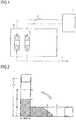
- a bearing device 10 for supporting a spindle of a machine tool includes a lubricant supply system which supplies a predetermined amount of lubricant to bearings 3 regularly or intermittently through supply pipes 2 from a lubricant supply device I installed outside.
- a lubricant supply system which supplies a predetermined amount of lubricant to bearings 3 regularly or intermittently through supply pipes 2 from a lubricant supply device I installed outside.
- grease compositions are used as lubricant because they can maintain lubricating property for a long time period.
- Patent Document I the present applicant has improved the configuration of the lubricant supply device 1 such that a grease composition is supplied stably.
- the problem that a thickener of a grease composition is solidified may not have been solved.
- Patent Document I JP-B-3,707,553
- an object of the present invention is to enable stable supply of a lubricant to a bearing from a lubricant supply device without a problem of hardening or solidifying of the lubricant due to separation of a thickener and a base oil as in a grease composition or the like.
- the present invention provides the following lubricant, bearing device and lubricant supply device for a bearing.
- the wax-containing lubricant according to the present invention does not contain a thickener, a situation where as in the case of a grease composition a thickener is separated from a base oil to clog a pipe and obstruct supply of a lubricant from a lubricant supply device to a bearing. Accordingly, the bearing device according to the present invention is supplied with the wax-containing lubricant from the lubricant supply device stably for a long time period, and thereof, the bearing device has a longer life than in the case of a grease supply method.
- Fig. 1 shows an example of a bearing device 10 for supporting a spindle of a machine tool.
- a lubricant supply device 1 there are no limitations on a lubricant supply device 1 as long as it discharges a predetermined amount of lubricant stored therein into a supply pipe 2 regularly, as in the conventional case. That is, although the lubricant supply device 1 according to the present invention includes a tank for storing a wax-containing lubricant, compression transport means for discharging a predetermined amount of wax-containing lubricant from the tank into the supply pipe 2 regularly, and the like, the specific configuration thereof may be same or similar to conventional lubricant supply device.
- wax-containing lubricant is discharged from the lubricant supply device 1 in semi-solid form and moves through the inside of the supply pipe 2 also in semi-solid form
- conventional lubricant supply device for grease compositions can be used for the wax-containing lubricant since it has lubricating property as containing a lubricating oil and a wax as basic components and has semi-solid form, and the wax functions like a thickener for a grease.
- the wax-containing lubricant has a lubricating oil and a wax as basic components.
- a wax is solidified or semi-solidified below its melting temperature and is in liquid form and flowable at or above its melting point. As such, a wax itself changes reversibly between a semi-solid state and a liquid state at around its melting temperature.
- the wax-containing lubricant according to the present invention is a mixture of a lubricating oil (liquid) and a wax (semi-solid) and corresponds to a diluted solution produced by adding a lubricating oil (dilution liquid) to a wax (solute).
- the wax-containing lubricant changes from a semi-solid state to a liquid state at a temperature which is lower than the melting temperature of the wax.
- the temperature at which such change occurs from a semi-solid state to a liquid state (hereinafter referred to as a "liquefaction temperature”) is closely related to the melting temperature of the wax contained and the mixing ratio of the wax and the lubricating oil. That is, since the melting temperature of the wax is higher than the liquefaction temperature, the liquefaction temperature can be controlled to a predetermined temperature which is lower than or equal to the melting temperature of the wax based on the mixing ratio of the wax and the lubricating oil.
- the difference between the liquefaction temperature and the wax melting point can be set in an approximate range of 10°C to 30°C by employing proper kinds of lubricating oil and wax and setting the their mixing ratio at a proper value. Further, a state change can be made reversibly between a liquid state and a semi-solid state according to the temperature by adjusting the kind of wax, the mixing ratio of the wax and the lubricating oil, and other factors.
- a liquid state and a liquefaction temperature is determined according to the following procedure (see Fig. 2 ).
- This method conforms to the rule defined in the Japanese Rules relating to the restriction of hazardous materials, Chapter 12 Miscellaneous rules and Article 69-2 (definition of a liquid state).
- the liquefaction temperature is not a single-point temperature unlike the solidification temperature of water (0°C; pure water, under atmospheric pressure) but is defined and quantified so as to be in an approximate range of (particular temperature) ⁇ 2°C.
- a liquefaction temperature may be defined as follows using a cone-and-plate viscometer (E-type viscometer). When the temperature is increased gradually, a temperature around which the viscosity variation becomes constant appears in the vicinity of a liquefaction temperature. This temperature can be regarded as a liquefaction temperature.
- a liquid wax-containing lubricant is caused to flow into the bearing 3 via a supply hole which is formed in the outer ring of the bearing 3.
- a cooling pipe is routed around the outer ring in a housing and cooling is performed to keep the bearing temperature in an approximate range of 40°C to 50°C.
- the wax-containing lubricant supplied from the lubricant supply device 1 needs to flow through the inside of the supply pipe 2 in a semi-solid state and to change into a liquid state at least immediately before reaching the supply hole which is formed in the outer ring of the bearing 3 (indicated by broken lines in the figure).
- the liquefaction temperature is set in a range of 10°C to 70°C.
- the wax-containing lubricant supplied is kept in a liquid state. Since the wax-containing lubricant does not contain a thickener and the lubricating oil and the wax are both lubricating components, it is in the same state as a grease composition in which the proportion of the base oil is increased. The wax-containing lubricant therefore exhibits better lubrication performance than grease compositions. Thus, the supply amount per one discharge can be made smaller and the supply interval can be made longer. As a result, the consumption of the wax-containing lubricant can be reduced, and thereof, the life of the overall lubricant supply system can be elongated.
- the wax-containing lubricant does not contain a thickener unlike grease compositions, it is not solidified even receiving pressure, and therefore, it can be supplied stably even if the supply pipe 2 is long or has bent portions.
- the wax-containing lubricant After serving for lubrication, the wax-containing lubricant is sent out of the housing through an ejection pipe 4 after being discharged from the bearing 3. Since the ejection pipe 4 is exposed to the external air (room temperature), during that course the wax-containing lubricant returns to a semi-solid state from a liquid state. In grease compositions, residues which are produced originating from the thickener due to long time use obstruct an air flow, possibly causing a temperature increase of the bearing 3. In contrast, the wax-containing lubricant is free of this problem since it remains in a liquid state until it reaches a certain distance from the bearing 3 after being discharged from it.
- the wax-containing lubricant contains the lubricating oil and the wax as basic components.
- the kinds of the lubricating oil and the wax there are no limitations on the kinds of the lubricating oil and the wax as long as the wax-containing lubricant has sufficient lubricating property and is in a liquid state in a temperature range of 10°C to 70°C and changes to a semi-solid state at a temperature which is lower than that range. It is preferable that the wax-containing lubricant be prepared to change reversibly between a liquid state and a semi-solid state as the temperature varies.
- the lubricating oil may be any of various lubricating oils which have been used for lubrication of bearings conventionally.
- the lubricating oil may be a paraffin-based or naphthene-based mineral oil or a synthetic oil such as an ester oil, a hydrocarbon oil, or an ether oil.
- the lubricating oil may also be a mixture of plural kinds of oils.
- the viscosity of the lubricating oil may be in a general range. However, considering lubricating property which is required for the bearing 3, it is preferable that its kinematic viscosity at 40°C be in a range of 5 to 200 mm 2 /s.
- the kinematic viscosity of the lubricating oil is set according to the use of a bearing.
- the kinematic viscosity of the lubricating oil be in a range of 10 to 130 mm 2 /s (at 40°C).
- the wax is an organic substance having an alkyl group which is in a solid state or a semi-solid state at normal temperature.
- the wax may be either of a natural wax or a synthetic wax.
- the wax forms a mixture with the lubricating oil inside the bearing 3, it is preferable that the wax be high in compatibility with the lubricating oil.
- Example natural waxes are an animal/vegetable wax, a mineral wax, and a petroleum wax
- example synthetic waxes are a Fischer-Tropsch wax, a polyethylene wax, oil and fat type synthetic waxes (ester, ketone, and amide), and a hydrogenated wax. Plural ones of the above examples may be used in mixture.
- the liquefaction temperature of the wax-containing lubricant is substantially determined by the melting temperature of the wax and the mixing ratio of the wax and the lubricating oil
- the wax should be selected from the above examples and mixed with the lubricating oil at a proper mixing ratio such that the liquefaction temperature of a resulting wax-containing lubricant falls within the range of 10°C to 70°C.
- the liquefaction temperature i.e., the temperature at which the wax-containing lubricant changes to a liquid state
- the liquefaction temperature be set according to the use of a bearing.
- the liquefaction temperature be set at a temperature in a range of 30°C to 70°C.
- a microcrystalline wax can be used to form a preferable combination of the lubricating oil and the wax.
- the mixing ratio of the lubricating oil and the wax be 10 to 40 mass% of the wax and 90 to 60 mass% of the lubricating oil with respect to the total mass of them.
- the proportion of the wax increases, the flowability of the wax-containing lubricant being in a semi-solid state becomes lower; if the proportion of the wax is higher than 40 mass%, its dischargeability from the lubricant supply device 1 and its transportability in the supply pipe 2 are low.
- the mixing proportion of the wax be higher than or equal to 10 mass% and lower than 20 mass% and the mixing proportion of the lubricating oil be lower than or equal to 90 mass% and higher than 80 mass%.
- a wax is added as an oiliness improver for a lubricating oil or a grease.
- the wax-containing lubricant according to the present invention is given a semi-solid property (thickener function) of the same level as the case of a grease by setting the addition proportion of the wax larger than the addition proportions of general additives, as described above.
- the liquefaction temperature of a wax-containing lubricant produced by mixing it with a lubricating oil can be set at a predetermine temperature in a range of 35°C to 50°C.
- the melting temperature of a paraffin wax is 47°C to 69°C
- the liquefaction temperature of a wax-containing lubricant produced by mixing it with a lubricating oil can be set at a predetermined temperature in a range of 20°C to 35°C.
- any of various additives can be added to the wax-containing lubricant according to its purpose.
- any of a known anti-oxidizing agent, anti-rust agent, extreme-pressure additive, and the like can be added at a proper proportion.
- a wax is heated to a temperature which is higher than or equal to its melting temperature so as to be changed into a liquid form, then a lubricating oil or a lubricating oil added with an additive is added to and mixed sufficiently with the wax, and the mixture is cooled to a temperature which is lower than the melting temperature of the wax (usually, approximately to a temperature which is lower than or equal to the liquefaction temperature).
- a lubricating oil or a lubricating oil added with an additive and a solid wax are put into a proper container, all of the components are mixed together by heating them to a temperature which is higher than or equal to the melting temperature of the wax, and the mixture is cooled to a temperature which is lower than or equal to the liquefaction temperature.
- the wax-containing lubricant according to the present invention be used for lubrication of a ball bearing.
- balls roll with a contact angle line as an equator, whereby the balls produce a pumping effect to create an air flow in the space where a lubricant is sealed.
- a highly flowable wax-containing lubricant makes it possible to prevent the lubricant from staying in the bearing, which provides advantageous that temperature increase of the bearing can be prevented.
- a wax-containing lubricant was produced by mixing together 78.5 mass% of diester oil (dioctyl sebacate), 15 mass% of microcrystalline wax (melting temperature: 82°C), and 6.5 mass% of additive mixture containing an anti-oxidizing agent and an extreme-pressure additive at a temperature which is higher than the melting temperature of the wax and cooling the mixture naturally to room temperature.
- the viscosity of the above wax-containing lubricant was measured using a cone-and-plate viscometer (E-type viscometer) by changing the temperature. Results are shown in Table 1 and Fig. 3 . It is seen that the viscosity decreases and the flowability increases as the temperature increases. Specifically, as shown in Fig. 4 , no movement of the sample surface occurred in a temperature range which is lower than 42°C. Movements of 5 mm and 17 mm were confirmed at 44°C and 46°C, respectively. At 48°C, the sample surface moved more than 50 mm and reached the tip of the container. It is thus concluded that the liquefaction temperature of the wax-containing lubricant having the composition of Example 1 is 47°C.
- this wax-containing lubricant starts to change from a semi-solid state to a liquid state at around 47°C and hence can be used for lubricant supply systems for bearing device for supporting a spindle of a general machine tool.
- a wax-containing lubricant was produced by mixing together 83 mass% of diester oil (dioctyl sebacate), 10.5 mass% of microcrystalline wax (melting temperature: 72°C), and 6.5 mass% of additive mixture containing an anti-oxidizing agent and an extreme-pressure additive at a temperature which is higher than the melting temperature of the wax and cooling the mixture naturally to room temperature.
- the viscosity of the above wax-containing lubricant was measured using the cone-and-plate viscometer (E-type viscometer) by changing the temperature in the same manner as in Example 1. Results are shown in Fig. 5 .
- the viscosity variation rate due to temperature increase starts to decrease at 38°C, which means that the liquefaction temperature is around 38°C. It is thus concluded that this wax-containing lubricant can be used for lubricant supply systems for bearing device that are used in an approximate range of 20°C to 40°C.
Landscapes
- Engineering & Computer Science (AREA)
- Chemical & Material Sciences (AREA)
- General Engineering & Computer Science (AREA)
- Mechanical Engineering (AREA)
- Oil, Petroleum & Natural Gas (AREA)
- Chemical Kinetics & Catalysis (AREA)
- General Chemical & Material Sciences (AREA)
- Organic Chemistry (AREA)
- Combustion & Propulsion (AREA)
- Lubricants (AREA)
- Rolling Contact Bearings (AREA)
- Sliding-Contact Bearings (AREA)
Abstract
Description
- The present invention relates to a lubricant which is supplied to a bearing and the like. The present invention also relates to a bearing device which includes a bearing and a lubricant supply device for supplying the lubricant to a bearing and to a lubricant supply device for supplying the lubricant stored therein to a bearing.
- As schematically show in
Fig. 1 , abearing device 10 for supporting a spindle of a machine tool includes a lubricant supply system which supplies a predetermined amount of lubricant to bearings 3 regularly or intermittently throughsupply pipes 2 from a lubricant supply device I installed outside. In general, grease compositions are used as lubricant because they can maintain lubricating property for a long time period. However, since a very small amount of grease composition is supplied to thebearings 3, in a case where grease composition which is low in penetration and relatively hard is used for a long piping route or a piping route which is bent (e.g., at a right angle) at several locations, it is very difficult to supply the grease composition stably in a predetermined very small amount due to a high piping resistance. Further, long time use of a grease composition causes a phenomenon that a thickener is separated from a base oil while receiving pressure during repeated occurrences of compression transport, and as a result, grease is wholly hardened or solidified to clog a pipe. This makes it even difficult to supply a predetermined amount of grease composition stably. - In Patent Document I, the present applicant has improved the configuration of the
lubricant supply device 1 such that a grease composition is supplied stably. However, the problem that a thickener of a grease composition is solidified may not have been solved. - Patent Document I :
JP-B-3,707,553 - Accordingly, an object of the present invention is to enable stable supply of a lubricant to a bearing from a lubricant supply device without a problem of hardening or solidifying of the lubricant due to separation of a thickener and a base oil as in a grease composition or the like.
- In order to solve the above problem, the present invention provides the following lubricant, bearing device and lubricant supply device for a bearing.
- (1) A lubricant which contains a lubricating oil and a wax in a ratio of 90 to 60 mass% of the lubricating oil and 10 to 40 mass% of the wax with respect to a total mass of both, and which changes into a liquid state at a predetermined temperature in a range of 10°C to 70°C.
- (2) The lubricant according to (1), wherein the lubricant changes into a semi-solid state at a temperature which is lower than a liquefaction temperature.
- (3) The lubricant according to (1) or (2), wherein the state change between the liquid state and a semi-solid state is reversible.
- (4) The lubricant according to any one of (1) to (3), wherein the lubricant contains the lubricating oil in a ratio of 90 to 80 mass% and the wax in a ratio of 10 mass% or more and lower than 20 mass%.
- (5) The lubricant according to any one of (1) to (4), wherein a viscosity of the lubricating oil is 5 to 200 mm2/s at 40°C.
- (6) The lubricant according to any one of (1) to (5), wherein the lubricating oil is an ester oil and the wax is a microcrystalline wax.
- (7) A bearing device comprising: a bearing; a lubricant supply device for supplying a lubricant to the bearing; and a pipe which connects the bearing and the lubricant supply device, wherein the lubricant supply device stores therein the lubricant according to any one of (1) to (6), causes the lubricant to flow through the pipe in a semi-solid state, and supplies the lubricant to the bearing while making the lubricant to change into the liquid state.
- (8) A lubricant supply device for storing a lubricant and to be installed outside a bearing to supply the lubricant to the bearing through a pipe, the lubricant supply device storing therein the lubricant according to any one of (1) to (6) and discharging the lubricant into the pipe in a semi-solid state.
- Since the wax-containing lubricant according to the present invention does not contain a thickener, a situation where as in the case of a grease composition a thickener is separated from a base oil to clog a pipe and obstruct supply of a lubricant from a lubricant supply device to a bearing. Accordingly, the bearing device according to the present invention is supplied with the wax-containing lubricant from the lubricant supply device stably for a long time period, and thereof, the bearing device has a longer life than in the case of a grease supply method.
-
-
Fig. 1 is a schematic diagram of a bearing device for supporting a spindle of a machine tool which is an example of a lubricant supply system. -
Fig. 2 shows a liquefaction temperature. -
Fig. 3 is a graph showing a measurement result of a temperature-dependent variation of a viscosity of a wax-containing lubricant which was prepared in Example 1. -
Fig. 4 is a graph showing a measurement result of a temperature-dependent variation of a movement distance of the wax-containing lubricant in a viscometer, which was prepared in Example 1. -
Fig. 5 is a graph showing a measurement result of a temperature-dependent variation of a viscosity of a wax-containing lubricant which was prepared in Example 2. - The present invention will be described in detail.
- In the present invention, there are no limitations on the bearing device as long as a lubricant supply device is connected to a bearing by a pipe.
Fig. 1 shows an example of abearing device 10 for supporting a spindle of a machine tool. - There are no limitations on a
lubricant supply device 1 as long as it discharges a predetermined amount of lubricant stored therein into asupply pipe 2 regularly, as in the conventional case. That is, although thelubricant supply device 1 according to the present invention includes a tank for storing a wax-containing lubricant, compression transport means for discharging a predetermined amount of wax-containing lubricant from the tank into thesupply pipe 2 regularly, and the like, the specific configuration thereof may be same or similar to conventional lubricant supply device. As described later, although a wax-containing lubricant is discharged from thelubricant supply device 1 in semi-solid form and moves through the inside of thesupply pipe 2 also in semi-solid form, conventional lubricant supply device for grease compositions can be used for the wax-containing lubricant since it has lubricating property as containing a lubricating oil and a wax as basic components and has semi-solid form, and the wax functions like a thickener for a grease. - The wax-containing lubricant has a lubricating oil and a wax as basic components. A wax is solidified or semi-solidified below its melting temperature and is in liquid form and flowable at or above its melting point. As such, a wax itself changes reversibly between a semi-solid state and a liquid state at around its melting temperature. In contrast, the wax-containing lubricant according to the present invention is a mixture of a lubricating oil (liquid) and a wax (semi-solid) and corresponds to a diluted solution produced by adding a lubricating oil (dilution liquid) to a wax (solute). Therefore, the wax-containing lubricant changes from a semi-solid state to a liquid state at a temperature which is lower than the melting temperature of the wax. The temperature at which such change occurs from a semi-solid state to a liquid state (hereinafter referred to as a "liquefaction temperature") is closely related to the melting temperature of the wax contained and the mixing ratio of the wax and the lubricating oil. That is, since the melting temperature of the wax is higher than the liquefaction temperature, the liquefaction temperature can be controlled to a predetermined temperature which is lower than or equal to the melting temperature of the wax based on the mixing ratio of the wax and the lubricating oil. Specifically, the difference between the liquefaction temperature and the wax melting point can be set in an approximate range of 10°C to 30°C by employing proper kinds of lubricating oil and wax and setting the their mixing ratio at a proper value. Further, a state change can be made reversibly between a liquid state and a semi-solid state according to the temperature by adjusting the kind of wax, the mixing ratio of the wax and the lubricating oil, and other factors.
- Incidentally, in the present invention, a liquid state and a liquefaction temperature is determined according to the following procedure (see
Fig. 2 ). This method conforms to the rule defined in the Japanese Rules relating to the restriction of hazardous materials, Chapter 12 Miscellaneous rules and Article 69-2 (definition of a liquid state). - (1) Put a test object (wax-containing lubricant) into two test tubes (diameter: 30 mm; height: 120 mm) to line A (height: 55 mm).
- (2) Seal one test tube (liquefaction determination test tube) tightly using a rubber stopper having no hole.
- (3) Seal the other test tube (temperature measurement test tube) tightly using a rubber stopper to which a thermometer is attached. The thermometer is inserted such that its tip is set at a depth of 30 mm from the surface of the test object and it is erected with respect to the test tube.
- (4) Place the two test tubes in a thermostat oven whose temperature is kept at (liquefaction check temperature) ± 0.1 °C such that they are erected and kept stationary and that line B (30 mm above the surface of the test object) is lower than the water surface of the thermostatic oven.
- (5) Keep the temperature measurement test tube as it is for 10 minutes after the temperature of the test object in the test tube becomes equal to (liquefaction check temperature) ± 0.1°C.
- (6) Take out the liquefaction determination test tube from the thermostat oven while being kept erected on a horizontal stage, make it fallen down immediately such that it comes to lie horizontally on the stage, and measure a time for the tip of the test object to reach line B.
- (7) Determine that the test object is in a liquid state if the time for the tip of the test object to reach line B is within 90 sec.
- (8) Perform steps (1)-(7) while varying the temperature of the thermostat oven and assume a temperature at which a liquid state is determined as a liquefaction temperature.
- The liquefaction temperature is not a single-point temperature unlike the solidification temperature of water (0°C; pure water, under atmospheric pressure) but is defined and quantified so as to be in an approximate range of (particular temperature) ± 2°C.
- Alternatively, as described in Examples later, a liquefaction temperature may be defined as follows using a cone-and-plate viscometer (E-type viscometer). When the temperature is increased gradually, a temperature around which the viscosity variation becomes constant appears in the vicinity of a liquefaction temperature. This temperature can be regarded as a liquefaction temperature.
- To supply the wax-containing lubricant to the inside of the
bearing 3 from thelubricant supply device 1, a liquid wax-containing lubricant is caused to flow into thebearing 3 via a supply hole which is formed in the outer ring of thebearing 3. In a bearing device for supporting a spindle of a general machine tool, in order to prevent seizing-up of the spindle, a cooling pipe is routed around the outer ring in a housing and cooling is performed to keep the bearing temperature in an approximate range of 40°C to 50°C. As a result, the wax-containing lubricant supplied from thelubricant supply device 1 needs to flow through the inside of thesupply pipe 2 in a semi-solid state and to change into a liquid state at least immediately before reaching the supply hole which is formed in the outer ring of the bearing 3 (indicated by broken lines in the figure). In the present invention, the liquefaction temperature is set in a range of 10°C to 70°C. - Since the temperature inside the
bearing 3 is in a range of 40°C to 50°C or higher than this range, the wax-containing lubricant supplied is kept in a liquid state. Since the wax-containing lubricant does not contain a thickener and the lubricating oil and the wax are both lubricating components, it is in the same state as a grease composition in which the proportion of the base oil is increased. The wax-containing lubricant therefore exhibits better lubrication performance than grease compositions. Thus, the supply amount per one discharge can be made smaller and the supply interval can be made longer. As a result, the consumption of the wax-containing lubricant can be reduced, and thereof, the life of the overall lubricant supply system can be elongated. - Further, since the wax-containing lubricant does not contain a thickener unlike grease compositions, it is not solidified even receiving pressure, and therefore, it can be supplied stably even if the
supply pipe 2 is long or has bent portions. - After serving for lubrication, the wax-containing lubricant is sent out of the housing through an
ejection pipe 4 after being discharged from thebearing 3. Since theejection pipe 4 is exposed to the external air (room temperature), during that course the wax-containing lubricant returns to a semi-solid state from a liquid state. In grease compositions, residues which are produced originating from the thickener due to long time use obstruct an air flow, possibly causing a temperature increase of thebearing 3. In contrast, the wax-containing lubricant is free of this problem since it remains in a liquid state until it reaches a certain distance from thebearing 3 after being discharged from it. - The wax-containing lubricant contains the lubricating oil and the wax as basic components. There are no limitations on the kinds of the lubricating oil and the wax as long as the wax-containing lubricant has sufficient lubricating property and is in a liquid state in a temperature range of 10°C to 70°C and changes to a semi-solid state at a temperature which is lower than that range. It is preferable that the wax-containing lubricant be prepared to change reversibly between a liquid state and a semi-solid state as the temperature varies.
- The lubricating oil may be any of various lubricating oils which have been used for lubrication of bearings conventionally. For example, the lubricating oil may be a paraffin-based or naphthene-based mineral oil or a synthetic oil such as an ester oil, a hydrocarbon oil, or an ether oil. The lubricating oil may also be a mixture of plural kinds of oils. The viscosity of the lubricating oil may be in a general range. However, considering lubricating property which is required for the
bearing 3, it is preferable that its kinematic viscosity at 40°C be in a range of 5 to 200 mm2/s. The kinematic viscosity of the lubricating oil is set according to the use of a bearing. When it is desired to satisfy both of a small temperature increase characteristic and high resistance to seizing-up as in the case of, for example, bearings for a spindle of a machine tool, it is preferable that the kinematic viscosity of the lubricating oil be in a range of 10 to 130 mm2/s (at 40°C). - On the other hand, the wax is an organic substance having an alkyl group which is in a solid state or a semi-solid state at normal temperature. In the present invention, the wax may be either of a natural wax or a synthetic wax. However, since the wax forms a mixture with the lubricating oil inside the
bearing 3, it is preferable that the wax be high in compatibility with the lubricating oil. Example natural waxes are an animal/vegetable wax, a mineral wax, and a petroleum wax, and example synthetic waxes are a Fischer-Tropsch wax, a polyethylene wax, oil and fat type synthetic waxes (ester, ketone, and amide), and a hydrogenated wax. Plural ones of the above examples may be used in mixture. However, since the liquefaction temperature of the wax-containing lubricant is substantially determined by the melting temperature of the wax and the mixing ratio of the wax and the lubricating oil, the wax should be selected from the above examples and mixed with the lubricating oil at a proper mixing ratio such that the liquefaction temperature of a resulting wax-containing lubricant falls within the range of 10°C to 70°C. It is preferable that the liquefaction temperature (i.e., the temperature at which the wax-containing lubricant changes to a liquid state) be set according to the use of a bearing. For example, in the case of bearings for machine tools, it is preferable that the liquefaction temperature be set at a temperature in a range of 30°C to 70°C. - Where an ester oil is used as the lubricating oil, from the viewpoint of compatibility, a microcrystalline wax can be used to form a preferable combination of the lubricating oil and the wax.
- It is preferable that the mixing ratio of the lubricating oil and the wax be 10 to 40 mass% of the wax and 90 to 60 mass% of the lubricating oil with respect to the total mass of them. As the proportion of the wax increases, the flowability of the wax-containing lubricant being in a semi-solid state becomes lower; if the proportion of the wax is higher than 40 mass%, its dischargeability from the
lubricant supply device 1 and its transportability in thesupply pipe 2 are low. In particular, where importance is attached to flowability, it is preferable that the mixing proportion of the wax be higher than or equal to 10 mass% and lower than 20 mass% and the mixing proportion of the lubricating oil be lower than or equal to 90 mass% and higher than 80 mass%. Incidentally, there are cases where a wax is added as an oiliness improver for a lubricating oil or a grease. The wax-containing lubricant according to the present invention is given a semi-solid property (thickener function) of the same level as the case of a grease by setting the addition proportion of the wax larger than the addition proportions of general additives, as described above. - For example, while the melting temperature of a microcrystalline wax is 67°C to 98°C, the liquefaction temperature of a wax-containing lubricant produced by mixing it with a lubricating oil can be set at a predetermine temperature in a range of 35°C to 50°C. While the melting temperature of a paraffin wax is 47°C to 69°C, the liquefaction temperature of a wax-containing lubricant produced by mixing it with a lubricating oil can be set at a predetermined temperature in a range of 20°C to 35°C.
- Further, any of various additives can be added to the wax-containing lubricant according to its purpose. For example, any of a known anti-oxidizing agent, anti-rust agent, extreme-pressure additive, and the like can be added at a proper proportion.
- To prepare the wax-containing lubricant, a wax is heated to a temperature which is higher than or equal to its melting temperature so as to be changed into a liquid form, then a lubricating oil or a lubricating oil added with an additive is added to and mixed sufficiently with the wax, and the mixture is cooled to a temperature which is lower than the melting temperature of the wax (usually, approximately to a temperature which is lower than or equal to the liquefaction temperature). Alternatively, a lubricating oil or a lubricating oil added with an additive and a solid wax are put into a proper container, all of the components are mixed together by heating them to a temperature which is higher than or equal to the melting temperature of the wax, and the mixture is cooled to a temperature which is lower than or equal to the liquefaction temperature.
- It is particularly preferable that the wax-containing lubricant according to the present invention be used for lubrication of a ball bearing. In a ball bearing, balls roll with a contact angle line as an equator, whereby the balls produce a pumping effect to create an air flow in the space where a lubricant is sealed. Thus, the use of a highly flowable wax-containing lubricant makes it possible to prevent the lubricant from staying in the bearing, which provides advantageous that temperature increase of the bearing can be prevented.
- The present invention will be further described below using Examples. However, the present invention is not limited to them.
- A wax-containing lubricant was produced by mixing together 78.5 mass% of diester oil (dioctyl sebacate), 15 mass% of microcrystalline wax (melting temperature: 82°C), and 6.5 mass% of additive mixture containing an anti-oxidizing agent and an extreme-pressure additive at a temperature which is higher than the melting temperature of the wax and cooling the mixture naturally to room temperature.
- The viscosity of the above wax-containing lubricant was measured using a cone-and-plate viscometer (E-type viscometer) by changing the temperature. Results are shown in Table 1 and
Fig. 3 . It is seen that the viscosity decreases and the flowability increases as the temperature increases. Specifically, as shown inFig. 4 , no movement of the sample surface occurred in a temperature range which is lower than 42°C. Movements of 5 mm and 17 mm were confirmed at 44°C and 46°C, respectively. At 48°C, the sample surface moved more than 50 mm and reached the tip of the container. It is thus concluded that the liquefaction temperature of the wax-containing lubricant having the composition of Example 1 is 47°C. That is, it is found that this wax-containing lubricant starts to change from a semi-solid state to a liquid state at around 47°C and hence can be used for lubricant supply systems for bearing device for supporting a spindle of a general machine tool.[Table 1] Temperature (°C) Viscosity (mPa·s) 36 10,590 38 10,310 40 7,650 42 7,380 44 5,510 46 4,400 48 3,000 50 2,570 52 2,345 54 2,300 56 2,260 58 520 - A wax-containing lubricant was produced by mixing together 83 mass% of diester oil (dioctyl sebacate), 10.5 mass% of microcrystalline wax (melting temperature: 72°C), and 6.5 mass% of additive mixture containing an anti-oxidizing agent and an extreme-pressure additive at a temperature which is higher than the melting temperature of the wax and cooling the mixture naturally to room temperature.
- The viscosity of the above wax-containing lubricant was measured using the cone-and-plate viscometer (E-type viscometer) by changing the temperature in the same manner as in Example 1. Results are shown in
Fig. 5 . In the wax-containing lubricant having the composition of Example 2, the viscosity variation rate due to temperature increase starts to decrease at 38°C, which means that the liquefaction temperature is around 38°C. It is thus concluded that this wax-containing lubricant can be used for lubricant supply systems for bearing device that are used in an approximate range of 20°C to 40°C. - Although the present invention is described in detail by referring to the particular embodiments, it is apparent to those skilled in the art that various changes and modifications are possible without departing from the spirit and scope of the invention.
- The present application is based on Japanese Patent Application No.
2014-220705 filed on October 29, 2014 -
- 1: Lubricant supply device
- 2: Supply pipe
- 3: Bearing
- 4: Ejection pipe
- 10: Bearing device
Claims (6)
- A lubricant supply device for storing a lubricant and to be installed outside a bearing to supply the lubricant to the bearing through a pipe, the lubricant containing a lubricating oil and a wax in a ratio of 90 to 60 mass% of the lubricating oil and 10 to 40 mass% of the wax with respect to a total mass of both, and changing into a liquid state at a predetermined temperature in a range of 10°C to 70°C.
- The lubricant supply device according to claim 1,
wherein the lubricant changes into a semi-solid state at a temperature which is lower than a liquefaction temperature. - The lubricant supply device according to claim 1 or 2,
wherein the state change between the liquid state and a semi-solid state is reversible. - The lubricant supply device according to any one of claims 1 to 3,
wherein the lubricant contains the lubricating oil in a ratio of 90 to 80 mass% and the wax in a ratio of 10 mass% or more and lower than 20 mass%. - The lubricant supply device according to any one of claims 1 to 4,
wherein a viscosity of the lubricating oil is 5 to 200 mm2/s at 40°C. - The lubricant supply device according to any one of claims 1 to 5,
wherein the lubricating oil is an ester oil and the wax is a microcrystalline wax.
Applications Claiming Priority (3)
| Application Number | Priority Date | Filing Date | Title |
|---|---|---|---|
| JP2014220705 | 2014-10-29 | ||
| EP15855093.9A EP3214160B1 (en) | 2014-10-29 | 2015-10-28 | Bearing device |
| PCT/JP2015/080467 WO2016068219A1 (en) | 2014-10-29 | 2015-10-28 | Lubricant, bearing device, and lubricant supply device |
Related Parent Applications (2)
| Application Number | Title | Priority Date | Filing Date |
|---|---|---|---|
| EP15855093.9A Division EP3214160B1 (en) | 2014-10-29 | 2015-10-28 | Bearing device |
| EP15855093.9A Division-Into EP3214160B1 (en) | 2014-10-29 | 2015-10-28 | Bearing device |
Publications (1)
| Publication Number | Publication Date |
|---|---|
| EP3495464A1 true EP3495464A1 (en) | 2019-06-12 |
Family
ID=55857554
Family Applications (2)
| Application Number | Title | Priority Date | Filing Date |
|---|---|---|---|
| EP15855093.9A Active EP3214160B1 (en) | 2014-10-29 | 2015-10-28 | Bearing device |
| EP19154829.6A Withdrawn EP3495464A1 (en) | 2014-10-29 | 2015-10-28 | Bearing device |
Family Applications Before (1)
| Application Number | Title | Priority Date | Filing Date |
|---|---|---|---|
| EP15855093.9A Active EP3214160B1 (en) | 2014-10-29 | 2015-10-28 | Bearing device |
Country Status (6)
| Country | Link |
|---|---|
| EP (2) | EP3214160B1 (en) |
| JP (1) | JP6668251B2 (en) |
| KR (1) | KR20170094130A (en) |
| CN (1) | CN107207990A (en) |
| TW (1) | TW201627491A (en) |
| WO (1) | WO2016068219A1 (en) |
Cited By (1)
| Publication number | Priority date | Publication date | Assignee | Title |
|---|---|---|---|---|
| US12454655B2 (en) | 2020-09-30 | 2025-10-28 | Kyodo Yushi Co., Ltd. | Lubricant composition comprising carbon nanotubes |
Families Citing this family (3)
| Publication number | Priority date | Publication date | Assignee | Title |
|---|---|---|---|---|
| CN106566648A (en) * | 2016-09-19 | 2017-04-19 | 新疆福克油品股份有限公司 | Compensation device for power outage self-saving of waste lubricating oil regeneration production line |
| CN109899668A (en) * | 2019-04-01 | 2019-06-18 | 国电联合动力技术有限公司 | The lubrication compensation method of wind generator set main shaft bearing and system |
| CN119855890A (en) * | 2022-08-05 | 2025-04-18 | 胜牌全球产品知识产权有限公司 | Structured packing lubricant |
Citations (5)
| Publication number | Priority date | Publication date | Assignee | Title |
|---|---|---|---|---|
| US3640858A (en) * | 1968-11-14 | 1972-02-08 | Texaco Inc | Dual purpose lubricating compositions |
| GB2055431A (en) * | 1979-05-15 | 1981-03-04 | Bosch Gmbh Robert | Relubrication device for shaft bearings |
| JP3707553B2 (en) | 2001-08-01 | 2005-10-19 | 日本精工株式会社 | Angular contact ball bearings for machine tools |
| EP2236592A1 (en) * | 2007-12-12 | 2010-10-06 | Tsubakimoto Chain Co. | Lubricant composition for chain and chain |
| JP2014220705A (en) | 2013-05-09 | 2014-11-20 | 株式会社リコー | Video output device and video input determination method |
Family Cites Families (10)
| Publication number | Priority date | Publication date | Assignee | Title |
|---|---|---|---|---|
| JPS54120606A (en) * | 1978-03-14 | 1979-09-19 | Nippon Koyu Kk | Lubricator for rail switch slide plate |
| JPS57139194A (en) * | 1981-02-23 | 1982-08-27 | Hitachi Ltd | Solid lubricant and lubricating device for elevator using same |
| CA2060226C (en) * | 1990-07-30 | 1996-02-13 | Yasuhisa Tajiri | Rust-preventive lubricant composition for zinc-plated steel material |
| JP3048710B2 (en) * | 1991-11-14 | 2000-06-05 | 日石三菱株式会社 | Lubricant for point sliding plate |
| JP2001050284A (en) * | 1999-08-02 | 2001-02-23 | Nsk Ltd | Rolling bearing with lubricant supply member |
| JP4569747B2 (en) * | 2004-07-07 | 2010-10-27 | 株式会社ジェイテクト | Lubricant supply device for bearings |
| JP2006117741A (en) * | 2004-10-20 | 2006-05-11 | Pooraito Kk | Gel lubricant composition and lubricant for sintered oil-impregnated bearing |
| JP5082869B2 (en) * | 2008-01-16 | 2012-11-28 | 株式会社ジェイテクト | Rolling bearing device |
| JP5600380B2 (en) * | 2008-03-06 | 2014-10-01 | Ntn株式会社 | Lubrication system |
| JP5845652B2 (en) * | 2011-06-23 | 2016-01-20 | 日本精工株式会社 | Bearing device and spindle device for machine tool |
-
2015
- 2015-10-28 CN CN201580059551.8A patent/CN107207990A/en active Pending
- 2015-10-28 EP EP15855093.9A patent/EP3214160B1/en active Active
- 2015-10-28 EP EP19154829.6A patent/EP3495464A1/en not_active Withdrawn
- 2015-10-28 JP JP2016556614A patent/JP6668251B2/en active Active
- 2015-10-28 WO PCT/JP2015/080467 patent/WO2016068219A1/en not_active Ceased
- 2015-10-28 KR KR1020177011754A patent/KR20170094130A/en not_active Ceased
- 2015-10-29 TW TW104135689A patent/TW201627491A/en unknown
Patent Citations (5)
| Publication number | Priority date | Publication date | Assignee | Title |
|---|---|---|---|---|
| US3640858A (en) * | 1968-11-14 | 1972-02-08 | Texaco Inc | Dual purpose lubricating compositions |
| GB2055431A (en) * | 1979-05-15 | 1981-03-04 | Bosch Gmbh Robert | Relubrication device for shaft bearings |
| JP3707553B2 (en) | 2001-08-01 | 2005-10-19 | 日本精工株式会社 | Angular contact ball bearings for machine tools |
| EP2236592A1 (en) * | 2007-12-12 | 2010-10-06 | Tsubakimoto Chain Co. | Lubricant composition for chain and chain |
| JP2014220705A (en) | 2013-05-09 | 2014-11-20 | 株式会社リコー | Video output device and video input determination method |
Cited By (1)
| Publication number | Priority date | Publication date | Assignee | Title |
|---|---|---|---|---|
| US12454655B2 (en) | 2020-09-30 | 2025-10-28 | Kyodo Yushi Co., Ltd. | Lubricant composition comprising carbon nanotubes |
Also Published As
| Publication number | Publication date |
|---|---|
| EP3214160A1 (en) | 2017-09-06 |
| JP6668251B2 (en) | 2020-03-18 |
| CN107207990A (en) | 2017-09-26 |
| WO2016068219A1 (en) | 2016-05-06 |
| TW201627491A (en) | 2016-08-01 |
| JPWO2016068219A1 (en) | 2018-01-18 |
| EP3214160A4 (en) | 2017-09-06 |
| KR20170094130A (en) | 2017-08-17 |
| EP3214160B1 (en) | 2019-03-06 |
Similar Documents
| Publication | Publication Date | Title |
|---|---|---|
| EP3214160B1 (en) | Bearing device | |
| Delgado et al. | Suitability of ethyl cellulose as multifunctional additive for blends of vegetable oil-based lubricants | |
| EP1995299B1 (en) | Method of lubricating a refrigerating machine oil | |
| JP6627773B2 (en) | Spindle device and spindle for machine tool spindle | |
| MX2009013879A (en) | Lubricating grease composition. | |
| CN108431187A (en) | Lubricant oil composite for automatic transmission | |
| BR112016010835B1 (en) | PROCESS FOR PREPARING A COMPLEX CALCIUM SULPHONATE GREASE | |
| Sánchez et al. | Rheology of oleogels based on sorbitan and glyceryl monostearates and vegetable oils for lubricating applications | |
| JP5701103B2 (en) | Antifoam composition for lubricating oil and defoaming method using the same | |
| EP0191608A2 (en) | Lubricating grease for rock drill bits and bits so lubricated | |
| JP2022000326A (en) | Spindle device | |
| JP2003027078A (en) | Grease supply device | |
| Nowak | Investigation of the Physicochemical Properties of a New Synthetic Lubricant for Passenger Car Internal Combustion Engines | |
| CN104058965A (en) | Dimer acid polyester, preparation method and application thereof in preparation of degradable trace cutting oil | |
| JP2006117741A (en) | Gel lubricant composition and lubricant for sintered oil-impregnated bearing | |
| Sellers | The selection of lubricants for use at low temperatures | |
| Regueira Muñiz | High pressure thermophysical behaviour of reference and new lubricants. Mineral, synthetic and vegetable oils and ionic liquids | |
| Wyllie | Grease pumpability | |
| TH73655A (en) | Oil mixtures for use with refrigeration | |
| TH72175B (en) | Oil mixtures for use with refrigeration | |
| JP2017197624A (en) | Flame-retardant semi-solid lubricant composition, and bearing and gear filled with the same |
Legal Events
| Date | Code | Title | Description |
|---|---|---|---|
| PUAI | Public reference made under article 153(3) epc to a published international application that has entered the european phase |
Free format text: ORIGINAL CODE: 0009012 |
|
| AC | Divisional application: reference to earlier application |
Ref document number: 3214160 Country of ref document: EP Kind code of ref document: P |
|
| AK | Designated contracting states |
Kind code of ref document: A1 Designated state(s): AL AT BE BG CH CY CZ DE DK EE ES FI FR GB GR HR HU IE IS IT LI LT LU LV MC MK MT NL NO PL PT RO RS SE SI SK SM TR |
|
| 17P | Request for examination filed |
Effective date: 20191212 |
|
| RBV | Designated contracting states (corrected) |
Designated state(s): AL AT BE BG CH CY CZ DE DK EE ES FI FR GB GR HR HU IE IS IT LI LT LU LV MC MK MT NL NO PL PT RO RS SE SI SK SM TR |
|
| GRAP | Despatch of communication of intention to grant a patent |
Free format text: ORIGINAL CODE: EPIDOSNIGR1 |
|
| INTG | Intention to grant announced |
Effective date: 20200311 |
|
| STAA | Information on the status of an ep patent application or granted ep patent |
Free format text: STATUS: THE APPLICATION IS DEEMED TO BE WITHDRAWN |
|
| 18D | Application deemed to be withdrawn |
Effective date: 20200722 |