EP3494998A1 - Glycosylated psma inhibitors for imaging and endoradiotherapy - Google Patents
Glycosylated psma inhibitors for imaging and endoradiotherapy Download PDFInfo
- Publication number
- EP3494998A1 EP3494998A1 EP17206498.2A EP17206498A EP3494998A1 EP 3494998 A1 EP3494998 A1 EP 3494998A1 EP 17206498 A EP17206498 A EP 17206498A EP 3494998 A1 EP3494998 A1 EP 3494998A1
- Authority
- EP
- European Patent Office
- Prior art keywords
- bond
- group
- formula
- compound
- psma
- Prior art date
- Legal status (The legal status is an assumption and is not a legal conclusion. Google has not performed a legal analysis and makes no representation as to the accuracy of the status listed.)
- Ceased
Links
- 238000003384 imaging method Methods 0.000 title abstract description 51
- 239000003112 inhibitor Substances 0.000 title description 30
- 150000001875 compounds Chemical class 0.000 claims abstract description 152
- 150000003839 salts Chemical class 0.000 claims description 84
- 206010060862 Prostate cancer Diseases 0.000 claims description 54
- 208000000236 Prostatic Neoplasms Diseases 0.000 claims description 53
- 125000001424 substituent group Chemical group 0.000 claims description 39
- 125000003710 aryl alkyl group Chemical group 0.000 claims description 34
- 125000003118 aryl group Chemical group 0.000 claims description 29
- RTZKZFJDLAIYFH-UHFFFAOYSA-N ether Substances CCOCC RTZKZFJDLAIYFH-UHFFFAOYSA-N 0.000 claims description 28
- 239000004202 carbamide Substances 0.000 claims description 27
- 230000002285 radioactive effect Effects 0.000 claims description 27
- 206010028980 Neoplasm Diseases 0.000 claims description 24
- 229910052799 carbon Inorganic materials 0.000 claims description 23
- 125000004432 carbon atom Chemical group C* 0.000 claims description 23
- 150000001768 cations Chemical class 0.000 claims description 23
- 125000003178 carboxy group Chemical group [H]OC(*)=O 0.000 claims description 21
- 239000000203 mixture Substances 0.000 claims description 18
- 125000004433 nitrogen atom Chemical group N* 0.000 claims description 17
- 239000000700 radioactive tracer Substances 0.000 claims description 17
- 229910052736 halogen Inorganic materials 0.000 claims description 16
- 150000002367 halogens Chemical class 0.000 claims description 16
- 238000000034 method Methods 0.000 claims description 16
- 229910052731 fluorine Inorganic materials 0.000 claims description 15
- 229910052760 oxygen Inorganic materials 0.000 claims description 12
- 125000001997 phenyl group Chemical group [H]C1=C([H])C([H])=C(*)C([H])=C1[H] 0.000 claims description 12
- 201000011510 cancer Diseases 0.000 claims description 10
- 125000003107 substituted aryl group Chemical group 0.000 claims description 10
- 125000001841 imino group Chemical group [H]N=* 0.000 claims description 8
- 125000002915 carbonyl group Chemical group [*:2]C([*:1])=O 0.000 claims description 7
- 230000008878 coupling Effects 0.000 claims description 7
- 238000010168 coupling process Methods 0.000 claims description 7
- 238000005859 coupling reaction Methods 0.000 claims description 7
- 125000001153 fluoro group Chemical group F* 0.000 claims description 7
- 230000000155 isotopic effect Effects 0.000 claims description 7
- 125000000217 alkyl group Chemical group 0.000 claims description 6
- 125000004430 oxygen atom Chemical group O* 0.000 claims description 6
- 125000004434 sulfur atom Chemical group 0.000 claims description 6
- 125000001624 naphthyl group Chemical group 0.000 claims description 5
- 125000004429 atom Chemical group 0.000 claims description 4
- 210000004899 c-terminal region Anatomy 0.000 claims description 4
- 239000003550 marker Substances 0.000 claims description 4
- 229910052698 phosphorus Inorganic materials 0.000 claims description 4
- 229910052717 sulfur Inorganic materials 0.000 claims description 4
- 206010029113 Neovascularisation Diseases 0.000 claims description 3
- 125000002015 acyclic group Chemical group 0.000 claims description 3
- 230000033115 angiogenesis Effects 0.000 claims description 3
- 125000005842 heteroatom Chemical group 0.000 claims description 3
- 125000006413 ring segment Chemical group 0.000 claims description 3
- 101000892862 Homo sapiens Glutamate carboxypeptidase 2 Proteins 0.000 abstract description 162
- 102100041003 Glutamate carboxypeptidase 2 Human genes 0.000 abstract description 161
- 238000000163 radioactive labelling Methods 0.000 abstract description 7
- 201000010099 disease Diseases 0.000 abstract description 4
- 208000037265 diseases, disorders, signs and symptoms Diseases 0.000 abstract description 4
- 230000027455 binding Effects 0.000 description 56
- -1 zinc(II) ions Chemical class 0.000 description 51
- 239000003446 ligand Substances 0.000 description 34
- 238000004007 reversed phase HPLC Methods 0.000 description 29
- WQZGKKKJIJFFOK-QTVWNMPRSA-N D-mannopyranose Chemical compound OC[C@H]1OC(O)[C@@H](O)[C@@H](O)[C@@H]1O WQZGKKKJIJFFOK-QTVWNMPRSA-N 0.000 description 27
- GYHNNYVSQQEPJS-YPZZEJLDSA-N Gallium-68 Chemical compound [68Ga] GYHNNYVSQQEPJS-YPZZEJLDSA-N 0.000 description 26
- XSQUKJJJFZCRTK-UHFFFAOYSA-N Urea Chemical compound NC(N)=O XSQUKJJJFZCRTK-UHFFFAOYSA-N 0.000 description 26
- 238000009206 nuclear medicine Methods 0.000 description 26
- 238000011156 evaluation Methods 0.000 description 23
- 108091006905 Human Serum Albumin Proteins 0.000 description 21
- 102000008100 Human Serum Albumin Human genes 0.000 description 21
- 230000015572 biosynthetic process Effects 0.000 description 21
- 210000004027 cell Anatomy 0.000 description 20
- 230000000694 effects Effects 0.000 description 20
- 239000000243 solution Substances 0.000 description 20
- 229910052796 boron Inorganic materials 0.000 description 19
- 229910052757 nitrogen Inorganic materials 0.000 description 19
- 238000003786 synthesis reaction Methods 0.000 description 19
- 229930182830 galactose Natural products 0.000 description 18
- 210000001519 tissue Anatomy 0.000 description 16
- 238000011160 research Methods 0.000 description 15
- 239000002738 chelating agent Substances 0.000 description 14
- ZMXDDKWLCZADIW-UHFFFAOYSA-N N,N-Dimethylformamide Chemical compound CN(C)C=O ZMXDDKWLCZADIW-UHFFFAOYSA-N 0.000 description 13
- 125000005647 linker group Chemical group 0.000 description 13
- LFQSCWFLJHTTHZ-UHFFFAOYSA-N Ethanol Chemical class CCO LFQSCWFLJHTTHZ-UHFFFAOYSA-N 0.000 description 12
- VCMJCVGFSROFHV-WZGZYPNHSA-N tenofovir disoproxil fumarate Chemical compound OC(=O)\C=C\C(O)=O.N1=CN=C2N(C[C@@H](C)OCP(=O)(OCOC(=O)OC(C)C)OCOC(=O)OC(C)C)C=NC2=C1N VCMJCVGFSROFHV-WZGZYPNHSA-N 0.000 description 12
- 0 C**C(C)C(CON=C*(C)C)=O Chemical compound C**C(C)C(CON=C*(C)C)=O 0.000 description 11
- GUBGYTABKSRVRQ-CUHNMECISA-N D-Cellobiose Chemical compound O[C@@H]1[C@@H](O)[C@H](O)[C@@H](CO)O[C@H]1O[C@@H]1[C@@H](CO)OC(O)[C@H](O)[C@H]1O GUBGYTABKSRVRQ-CUHNMECISA-N 0.000 description 11
- 210000004369 blood Anatomy 0.000 description 11
- 239000008280 blood Substances 0.000 description 11
- 238000002474 experimental method Methods 0.000 description 11
- 238000004128 high performance liquid chromatography Methods 0.000 description 11
- 108090000765 processed proteins & peptides Proteins 0.000 description 11
- 238000000746 purification Methods 0.000 description 11
- 125000004213 tert-butoxy group Chemical group [H]C([H])([H])C(O*)(C([H])([H])[H])C([H])([H])[H] 0.000 description 11
- 238000011579 SCID mouse model Methods 0.000 description 10
- DTQVDTLACAAQTR-UHFFFAOYSA-N Trifluoroacetic acid Chemical compound OC(=O)C(F)(F)F DTQVDTLACAAQTR-UHFFFAOYSA-N 0.000 description 10
- 150000001720 carbohydrates Chemical class 0.000 description 10
- 230000001419 dependent effect Effects 0.000 description 10
- 238000011161 development Methods 0.000 description 10
- 210000003734 kidney Anatomy 0.000 description 10
- 238000002372 labelling Methods 0.000 description 10
- 239000002953 phosphate buffered saline Substances 0.000 description 10
- 239000013589 supplement Substances 0.000 description 10
- JGFZNNIVVJXRND-UHFFFAOYSA-N N,N-Diisopropylethylamine (DIPEA) Chemical compound CCN(C(C)C)C(C)C JGFZNNIVVJXRND-UHFFFAOYSA-N 0.000 description 9
- 238000002059 diagnostic imaging Methods 0.000 description 9
- 239000002904 solvent Substances 0.000 description 9
- 238000002560 therapeutic procedure Methods 0.000 description 9
- WEVYAHXRMPXWCK-UHFFFAOYSA-N Acetonitrile Chemical compound CC#N WEVYAHXRMPXWCK-UHFFFAOYSA-N 0.000 description 8
- 239000002253 acid Substances 0.000 description 8
- 235000014633 carbohydrates Nutrition 0.000 description 8
- 239000012043 crude product Substances 0.000 description 8
- 238000000338 in vitro Methods 0.000 description 8
- 206010061289 metastatic neoplasm Diseases 0.000 description 8
- 102000004196 processed proteins & peptides Human genes 0.000 description 8
- 230000008685 targeting Effects 0.000 description 8
- 230000001225 therapeutic effect Effects 0.000 description 8
- XLYOFNOQVPJJNP-UHFFFAOYSA-N water Substances O XLYOFNOQVPJJNP-UHFFFAOYSA-N 0.000 description 8
- 238000005119 centrifugation Methods 0.000 description 7
- 238000010511 deprotection reaction Methods 0.000 description 7
- 238000001514 detection method Methods 0.000 description 7
- 238000001727 in vivo Methods 0.000 description 7
- 230000001394 metastastic effect Effects 0.000 description 7
- 239000012071 phase Substances 0.000 description 7
- 230000005855 radiation Effects 0.000 description 7
- 239000002287 radioligand Substances 0.000 description 7
- 239000000126 substance Substances 0.000 description 7
- 239000006228 supernatant Substances 0.000 description 7
- 238000001356 surgical procedure Methods 0.000 description 7
- KBPLFHHGFOOTCA-UHFFFAOYSA-N 1-Octanol Chemical compound CCCCCCCCO KBPLFHHGFOOTCA-UHFFFAOYSA-N 0.000 description 6
- SYFGLWDDLZQFNI-UHFFFAOYSA-N 2-[4-(carboxymethyl)-1,4,8,11-tetrazabicyclo[6.6.2]hexadecan-11-yl]acetic acid Chemical compound C1CN(CC(O)=O)CCCN2CCN(CC(=O)O)CCCN1CC2 SYFGLWDDLZQFNI-UHFFFAOYSA-N 0.000 description 6
- WVDDGKGOMKODPV-UHFFFAOYSA-N Benzyl alcohol Chemical compound OCC1=CC=CC=C1 WVDDGKGOMKODPV-UHFFFAOYSA-N 0.000 description 6
- OKKJLVBELUTLKV-UHFFFAOYSA-N Methanol Chemical compound OC OKKJLVBELUTLKV-UHFFFAOYSA-N 0.000 description 6
- 238000012879 PET imaging Methods 0.000 description 6
- 229940024606 amino acid Drugs 0.000 description 6
- 238000004458 analytical method Methods 0.000 description 6
- 238000006243 chemical reaction Methods 0.000 description 6
- 230000021615 conjugation Effects 0.000 description 6
- 210000003743 erythrocyte Anatomy 0.000 description 6
- 229910052739 hydrogen Inorganic materials 0.000 description 6
- 125000000538 pentafluorophenyl group Chemical group FC1=C(F)C(F)=C(*)C(F)=C1F 0.000 description 6
- 239000000523 sample Substances 0.000 description 6
- 238000003756 stirring Methods 0.000 description 6
- 238000011282 treatment Methods 0.000 description 6
- WDLRUFUQRNWCPK-UHFFFAOYSA-N Tetraxetan Chemical compound OC(=O)CN1CCN(CC(O)=O)CCN(CC(O)=O)CCN(CC(O)=O)CC1 WDLRUFUQRNWCPK-UHFFFAOYSA-N 0.000 description 5
- 230000008901 benefit Effects 0.000 description 5
- 210000000601 blood cell Anatomy 0.000 description 5
- 239000003814 drug Substances 0.000 description 5
- 230000014509 gene expression Effects 0.000 description 5
- 238000011534 incubation Methods 0.000 description 5
- 230000004048 modification Effects 0.000 description 5
- 238000012986 modification Methods 0.000 description 5
- 210000000056 organ Anatomy 0.000 description 5
- 238000012636 positron electron tomography Methods 0.000 description 5
- 230000002829 reductive effect Effects 0.000 description 5
- 238000002603 single-photon emission computed tomography Methods 0.000 description 5
- 235000000346 sugar Nutrition 0.000 description 5
- 150000003569 thioglycosides Chemical class 0.000 description 5
- OLWVRJUNLXQDSP-RYUDHWBXSA-N (2s)-2-[[(1s)-1-carboxy-5-[(6-fluoropyridine-3-carbonyl)amino]pentyl]carbamoylamino]pentanedioic acid Chemical compound OC(=O)CC[C@@H](C(O)=O)NC(=O)N[C@H](C(O)=O)CCCCNC(=O)C1=CC=C(F)N=C1 OLWVRJUNLXQDSP-RYUDHWBXSA-N 0.000 description 4
- GSRZVAGTAJGFRZ-UHFFFAOYSA-N 6-hydrazinyl-n-methylpyridine-3-carboxamide Chemical compound CNC(=O)C1=CC=C(NN)N=C1 GSRZVAGTAJGFRZ-UHFFFAOYSA-N 0.000 description 4
- 102000009027 Albumins Human genes 0.000 description 4
- 108010088751 Albumins Proteins 0.000 description 4
- OKTJSMMVPCPJKN-UHFFFAOYSA-N Carbon Chemical compound [C] OKTJSMMVPCPJKN-UHFFFAOYSA-N 0.000 description 4
- KFZMGEQAYNKOFK-UHFFFAOYSA-N Isopropanol Chemical class CC(C)O KFZMGEQAYNKOFK-UHFFFAOYSA-N 0.000 description 4
- 241001465754 Metazoa Species 0.000 description 4
- QPCDCPDFJACHGM-UHFFFAOYSA-N N,N-bis{2-[bis(carboxymethyl)amino]ethyl}glycine Chemical compound OC(=O)CN(CC(O)=O)CCN(CC(=O)O)CCN(CC(O)=O)CC(O)=O QPCDCPDFJACHGM-UHFFFAOYSA-N 0.000 description 4
- UBQYURCVBFRUQT-UHFFFAOYSA-N N-benzoyl-Ferrioxamine B Chemical compound CC(=O)N(O)CCCCCNC(=O)CCC(=O)N(O)CCCCCNC(=O)CCC(=O)N(O)CCCCCN UBQYURCVBFRUQT-UHFFFAOYSA-N 0.000 description 4
- KDLHZDBZIXYQEI-UHFFFAOYSA-N Palladium Chemical compound [Pd] KDLHZDBZIXYQEI-UHFFFAOYSA-N 0.000 description 4
- JUJWROOIHBZHMG-UHFFFAOYSA-N Pyridine Chemical compound C1=CC=NC=C1 JUJWROOIHBZHMG-UHFFFAOYSA-N 0.000 description 4
- 229930182475 S-glycoside Natural products 0.000 description 4
- 150000004945 aromatic hydrocarbons Chemical class 0.000 description 4
- 210000004556 brain Anatomy 0.000 description 4
- 125000002091 cationic group Chemical group 0.000 description 4
- 239000003795 chemical substances by application Substances 0.000 description 4
- 230000000052 comparative effect Effects 0.000 description 4
- 150000002148 esters Chemical class 0.000 description 4
- 230000013595 glycosylation Effects 0.000 description 4
- 238000006206 glycosylation reaction Methods 0.000 description 4
- 210000000265 leukocyte Anatomy 0.000 description 4
- 238000012417 linear regression Methods 0.000 description 4
- 230000014759 maintenance of location Effects 0.000 description 4
- 230000003211 malignant effect Effects 0.000 description 4
- 229960003330 pentetic acid Drugs 0.000 description 4
- 239000008194 pharmaceutical composition Substances 0.000 description 4
- 238000002360 preparation method Methods 0.000 description 4
- 229940002612 prodrug Drugs 0.000 description 4
- 239000000651 prodrug Substances 0.000 description 4
- 150000003384 small molecules Chemical class 0.000 description 4
- 239000011734 sodium Substances 0.000 description 4
- VZCYOOQTPOCHFL-UHFFFAOYSA-N trans-butenedioic acid Natural products OC(=O)C=CC(O)=O VZCYOOQTPOCHFL-UHFFFAOYSA-N 0.000 description 4
- FPIRBHDGWMWJEP-UHFFFAOYSA-N 1-hydroxy-7-azabenzotriazole Chemical compound C1=CN=C2N(O)N=NC2=C1 FPIRBHDGWMWJEP-UHFFFAOYSA-N 0.000 description 3
- 108010066465 177Lu-PSMA-617 Proteins 0.000 description 3
- RSTDSVVLNYFDHY-IOCOTODDSA-K 2-[4-[2-[[4-[[(2S)-1-[[(5S)-5-carboxy-5-[[(1S)-1,3-dicarboxypropyl]carbamoylamino]pentyl]amino]-3-naphthalen-2-yl-1-oxopropan-2-yl]carbamoyl]cyclohexyl]methylamino]-2-oxoethyl]-7,10-bis(carboxylatomethyl)-1,4,7,10-tetrazacyclododec-1-yl]acetate lutetium-177(3+) Chemical compound [177Lu+3].OC(=O)CC[C@H](NC(=O)N[C@@H](CCCCNC(=O)[C@H](Cc1ccc2ccccc2c1)NC(=O)C1CCC(CNC(=O)CN2CCN(CC([O-])=O)CCN(CC([O-])=O)CCN(CC([O-])=O)CC2)CC1)C(O)=O)C(O)=O RSTDSVVLNYFDHY-IOCOTODDSA-K 0.000 description 3
- USFZMSVCRYTOJT-UHFFFAOYSA-N Ammonium acetate Chemical compound N.CC(O)=O USFZMSVCRYTOJT-UHFFFAOYSA-N 0.000 description 3
- 102000004506 Blood Proteins Human genes 0.000 description 3
- 108010017384 Blood Proteins Proteins 0.000 description 3
- GAGWJHPBXLXJQN-UORFTKCHSA-N Capecitabine Chemical compound C1=C(F)C(NC(=O)OCCCCC)=NC(=O)N1[C@H]1[C@H](O)[C@H](O)[C@@H](C)O1 GAGWJHPBXLXJQN-UORFTKCHSA-N 0.000 description 3
- 239000007821 HATU Substances 0.000 description 3
- VEXZGXHMUGYJMC-UHFFFAOYSA-N Hydrochloric acid Chemical compound Cl VEXZGXHMUGYJMC-UHFFFAOYSA-N 0.000 description 3
- AFVFQIVMOAPDHO-UHFFFAOYSA-N Methanesulfonic acid Chemical compound CS(O)(=O)=O AFVFQIVMOAPDHO-UHFFFAOYSA-N 0.000 description 3
- ZMANZCXQSJIPKH-UHFFFAOYSA-N Triethylamine Chemical compound CCN(CC)CC ZMANZCXQSJIPKH-UHFFFAOYSA-N 0.000 description 3
- MIOPJNTWMNEORI-UHFFFAOYSA-N camphorsulfonic acid Chemical class C1CC2(CS(O)(=O)=O)C(=O)CC1C2(C)C MIOPJNTWMNEORI-UHFFFAOYSA-N 0.000 description 3
- 239000013522 chelant Substances 0.000 description 3
- ZBCBWPMODOFKDW-UHFFFAOYSA-N diethanolamine Chemical class OCCNCCO ZBCBWPMODOFKDW-UHFFFAOYSA-N 0.000 description 3
- 239000012636 effector Substances 0.000 description 3
- 238000005516 engineering process Methods 0.000 description 3
- CCIVGXIOQKPBKL-UHFFFAOYSA-M ethanesulfonate Chemical compound CCS([O-])(=O)=O CCIVGXIOQKPBKL-UHFFFAOYSA-M 0.000 description 3
- 230000029142 excretion Effects 0.000 description 3
- OVBPIULPVIDEAO-LBPRGKRZSA-N folic acid Chemical compound C=1N=C2NC(N)=NC(=O)C2=NC=1CNC1=CC=C(C(=O)N[C@@H](CCC(O)=O)C(O)=O)C=C1 OVBPIULPVIDEAO-LBPRGKRZSA-N 0.000 description 3
- XMBWDFGMSWQBCA-UHFFFAOYSA-N hydrogen iodide Chemical compound I XMBWDFGMSWQBCA-UHFFFAOYSA-N 0.000 description 3
- 238000002347 injection Methods 0.000 description 3
- 239000007924 injection Substances 0.000 description 3
- 229910052740 iodine Inorganic materials 0.000 description 3
- 230000003902 lesion Effects 0.000 description 3
- 230000002503 metabolic effect Effects 0.000 description 3
- 229910021645 metal ion Inorganic materials 0.000 description 3
- 208000010658 metastatic prostate carcinoma Diseases 0.000 description 3
- 239000008188 pellet Substances 0.000 description 3
- 239000002243 precursor Substances 0.000 description 3
- 102000004169 proteins and genes Human genes 0.000 description 3
- 108090000623 proteins and genes Proteins 0.000 description 3
- 238000001959 radiotherapy Methods 0.000 description 3
- 238000012552 review Methods 0.000 description 3
- 210000003079 salivary gland Anatomy 0.000 description 3
- JOXIMZWYDAKGHI-UHFFFAOYSA-N toluene-4-sulfonic acid Chemical compound CC1=CC=C(S(O)(=O)=O)C=C1 JOXIMZWYDAKGHI-UHFFFAOYSA-N 0.000 description 3
- 210000002700 urine Anatomy 0.000 description 3
- 210000003462 vein Anatomy 0.000 description 3
- ULPCAXORIFXUMN-QHCPKHFHSA-N (2s)-2-(9h-fluoren-9-ylmethoxycarbonylamino)-8-[(2-methylpropan-2-yl)oxy]-8-oxooctanoic acid Chemical compound C1=CC=C2C(COC(=O)N[C@@H](CCCCCC(=O)OC(C)(C)C)C(O)=O)C3=CC=CC=C3C2=C1 ULPCAXORIFXUMN-QHCPKHFHSA-N 0.000 description 2
- QVFLVLMYXXNJDT-CSBVGUNJSA-N (2s,3r)-2-[[(4r,7s,10s,13r,16s,19r)-10-(4-aminobutyl)-7-[(1r)-1-hydroxyethyl]-16-[(4-hydroxyphenyl)methyl]-13-(1h-indol-3-ylmethyl)-6,9,12,15,18-pentaoxo-19-[[(2r)-3-phenyl-2-[[2-[4,7,10-tris(carboxymethyl)-1,4,7,10-tetrazacyclododec-1-yl]acetyl]amino]pro Chemical compound C([C@H](C(=O)N[C@H]1CSSC[C@H](NC(=O)[C@H]([C@@H](C)O)NC(=O)[C@H](CCCCN)NC(=O)[C@@H](CC=2C3=CC=CC=C3NC=2)NC(=O)[C@H](CC=2C=CC(O)=CC=2)NC1=O)C(=O)N[C@@H]([C@H](O)C)C(O)=O)NC(=O)CN1CCN(CC(O)=O)CCN(CC(O)=O)CCN(CC(O)=O)CC1)C1=CC=CC=C1 QVFLVLMYXXNJDT-CSBVGUNJSA-N 0.000 description 2
- 125000003088 (fluoren-9-ylmethoxy)carbonyl group Chemical group 0.000 description 2
- KIUIVKNVSSLOAG-UHFFFAOYSA-N 1,4,7,10-tetrazacyclotridecan-11-one Chemical compound O=C1CCNCCNCCNCCN1 KIUIVKNVSSLOAG-UHFFFAOYSA-N 0.000 description 2
- 108700029902 177Lu-DKFZ-PSMA-617 Proteins 0.000 description 2
- RPNMGUBLKCLAEK-UHFFFAOYSA-N 2-(4-chlorophenyl)sulfanyl-n,n-diethylethanamine;hydrochloride Chemical compound [Cl-].CC[NH+](CC)CCSC1=CC=C(Cl)C=C1 RPNMGUBLKCLAEK-UHFFFAOYSA-N 0.000 description 2
- HZAXFHJVJLSVMW-UHFFFAOYSA-N 2-Aminoethan-1-ol Chemical compound NCCO HZAXFHJVJLSVMW-UHFFFAOYSA-N 0.000 description 2
- FHQWIXXRHHMBQL-UHFFFAOYSA-N 2-[1,3,10-tris(carboxymethyl)-1,3,6,10-tetrazacyclododec-6-yl]acetic acid Chemical compound OC(=O)CN1CCCN(CC(O)=O)CCN(CC(O)=O)CN(CC(O)=O)CC1 FHQWIXXRHHMBQL-UHFFFAOYSA-N 0.000 description 2
- GRUVVLWKPGIYEG-UHFFFAOYSA-N 2-[2-[carboxymethyl-[(2-hydroxyphenyl)methyl]amino]ethyl-[(2-hydroxyphenyl)methyl]amino]acetic acid Chemical compound C=1C=CC=C(O)C=1CN(CC(=O)O)CCN(CC(O)=O)CC1=CC=CC=C1O GRUVVLWKPGIYEG-UHFFFAOYSA-N 0.000 description 2
- SQKUFYLUXROIFM-UHFFFAOYSA-N 2-[2-[carboxymethyl-[[3-hydroxy-2-methyl-5-(phosphonooxymethyl)pyridin-4-yl]methyl]amino]ethyl-[[3-hydroxy-2-methyl-5-(phosphonooxymethyl)pyridin-4-yl]methyl]amino]acetic acid Chemical compound CC1=NC=C(COP(O)(O)=O)C(CN(CCN(CC(O)=O)CC=2C(=C(C)N=CC=2COP(O)(O)=O)O)CC(O)=O)=C1O SQKUFYLUXROIFM-UHFFFAOYSA-N 0.000 description 2
- JHALWMSZGCVVEM-UHFFFAOYSA-N 2-[4,7-bis(carboxymethyl)-1,4,7-triazonan-1-yl]acetic acid Chemical compound OC(=O)CN1CCN(CC(O)=O)CCN(CC(O)=O)CC1 JHALWMSZGCVVEM-UHFFFAOYSA-N 0.000 description 2
- 125000000022 2-aminoethyl group Chemical group [H]C([*])([H])C([H])([H])N([H])[H] 0.000 description 2
- VJKMLRQXXMFFCW-UHFFFAOYSA-N 2-methyl-4-(1,4,8,11-tetrazacyclotetradec-1-yl)benzoic acid Chemical compound C1=C(C(O)=O)C(C)=CC(N2CCNCCCNCCNCCC2)=C1 VJKMLRQXXMFFCW-UHFFFAOYSA-N 0.000 description 2
- 229940080296 2-naphthalenesulfonate Drugs 0.000 description 2
- 125000001622 2-naphthyl group Chemical group [H]C1=C([H])C([H])=C2C([H])=C(*)C([H])=C([H])C2=C1[H] 0.000 description 2
- ZRPLANDPDWYOMZ-UHFFFAOYSA-N 3-cyclopentylpropionic acid Chemical compound OC(=O)CCC1CCCC1 ZRPLANDPDWYOMZ-UHFFFAOYSA-N 0.000 description 2
- AKVUTLGWYOELLB-UHFFFAOYSA-N 4-amino-N,N'-bis[(3-hydroxy-1,6-dimethyl-4-oxopyridin-2-yl)methyl]-4-[3-[(3-hydroxy-1,6-dimethyl-4-oxopyridin-2-yl)methylamino]-3-oxopropyl]heptanediamide Chemical compound OC1=C(N(C(=CC1=O)C)C)CNC(CCC(CCC(=O)NCC=1N(C(=CC(C=1O)=O)C)C)(CCC(NCC=1N(C(=CC(C=1O)=O)C)C)=O)N)=O AKVUTLGWYOELLB-UHFFFAOYSA-N 0.000 description 2
- QTBSBXVTEAMEQO-UHFFFAOYSA-M Acetate Chemical compound CC([O-])=O QTBSBXVTEAMEQO-UHFFFAOYSA-M 0.000 description 2
- 108090000672 Annexin A5 Proteins 0.000 description 2
- 102000004121 Annexin A5 Human genes 0.000 description 2
- CIWBSHSKHKDKBQ-JLAZNSOCSA-N Ascorbic acid Chemical compound OC[C@H](O)[C@H]1OC(=O)C(O)=C1O CIWBSHSKHKDKBQ-JLAZNSOCSA-N 0.000 description 2
- IJGRMHOSHXDMSA-UHFFFAOYSA-N Atomic nitrogen Chemical compound N#N IJGRMHOSHXDMSA-UHFFFAOYSA-N 0.000 description 2
- FERIUCNNQQJTOY-UHFFFAOYSA-M Butyrate Chemical compound CCCC([O-])=O FERIUCNNQQJTOY-UHFFFAOYSA-M 0.000 description 2
- FERIUCNNQQJTOY-UHFFFAOYSA-N Butyric acid Natural products CCCC(O)=O FERIUCNNQQJTOY-UHFFFAOYSA-N 0.000 description 2
- 101100243399 Caenorhabditis elegans pept-2 gene Proteins 0.000 description 2
- GAGWJHPBXLXJQN-UHFFFAOYSA-N Capecitabine Natural products C1=C(F)C(NC(=O)OCCCCC)=NC(=O)N1C1C(O)C(O)C(C)O1 GAGWJHPBXLXJQN-UHFFFAOYSA-N 0.000 description 2
- KRKNYBCHXYNGOX-UHFFFAOYSA-K Citrate Chemical compound [O-]C(=O)CC(O)(CC([O-])=O)C([O-])=O KRKNYBCHXYNGOX-UHFFFAOYSA-K 0.000 description 2
- FEWJPZIEWOKRBE-JCYAYHJZSA-N Dextrotartaric acid Chemical compound OC(=O)[C@H](O)[C@@H](O)C(O)=O FEWJPZIEWOKRBE-JCYAYHJZSA-N 0.000 description 2
- VZCYOOQTPOCHFL-OWOJBTEDSA-N Fumaric acid Chemical compound OC(=O)\C=C\C(O)=O VZCYOOQTPOCHFL-OWOJBTEDSA-N 0.000 description 2
- 108090000369 Glutamate Carboxypeptidase II Proteins 0.000 description 2
- 102000003958 Glutamate Carboxypeptidase II Human genes 0.000 description 2
- 102000002068 Glycopeptides Human genes 0.000 description 2
- 108010015899 Glycopeptides Proteins 0.000 description 2
- CPELXLSAUQHCOX-UHFFFAOYSA-N Hydrogen bromide Chemical compound Br CPELXLSAUQHCOX-UHFFFAOYSA-N 0.000 description 2
- CKLJMWTZIZZHCS-REOHCLBHSA-N L-aspartic acid Chemical compound OC(=O)[C@@H](N)CC(O)=O CKLJMWTZIZZHCS-REOHCLBHSA-N 0.000 description 2
- WHUUTDBJXJRKMK-VKHMYHEASA-N L-glutamic acid Chemical compound OC(=O)[C@@H](N)CCC(O)=O WHUUTDBJXJRKMK-VKHMYHEASA-N 0.000 description 2
- JVTAAEKCZFNVCJ-UHFFFAOYSA-M Lactate Chemical compound CC(O)C([O-])=O JVTAAEKCZFNVCJ-UHFFFAOYSA-M 0.000 description 2
- 241000699670 Mus sp. Species 0.000 description 2
- 206010052399 Neuroendocrine tumour Diseases 0.000 description 2
- PVNIIMVLHYAWGP-UHFFFAOYSA-N Niacin Chemical compound OC(=O)C1=CC=CN=C1 PVNIIMVLHYAWGP-UHFFFAOYSA-N 0.000 description 2
- LSFODDNIDIWZCJ-UHFFFAOYSA-N OC(=O)CN1CCN(CC(O)=O)CCN(Cc2ccc(cc2)[N+]([O-])=O)N(CC(O)=O)CC1 Chemical compound OC(=O)CN1CCN(CC(O)=O)CCN(Cc2ccc(cc2)[N+]([O-])=O)N(CC(O)=O)CC1 LSFODDNIDIWZCJ-UHFFFAOYSA-N 0.000 description 2
- MUBZPKHOEPUJKR-UHFFFAOYSA-N Oxalic acid Chemical compound OC(=O)C(O)=O MUBZPKHOEPUJKR-UHFFFAOYSA-N 0.000 description 2
- 229910019142 PO4 Inorganic materials 0.000 description 2
- KFSLWBXXFJQRDL-UHFFFAOYSA-N Peracetic acid Chemical compound CC(=O)OO KFSLWBXXFJQRDL-UHFFFAOYSA-N 0.000 description 2
- NBIIXXVUZAFLBC-UHFFFAOYSA-N Phosphoric acid Chemical compound OP(O)(O)=O NBIIXXVUZAFLBC-UHFFFAOYSA-N 0.000 description 2
- NQRYJNQNLNOLGT-UHFFFAOYSA-N Piperidine Chemical compound C1CCNCC1 NQRYJNQNLNOLGT-UHFFFAOYSA-N 0.000 description 2
- XBDQKXXYIPTUBI-UHFFFAOYSA-M Propionate Chemical compound CCC([O-])=O XBDQKXXYIPTUBI-UHFFFAOYSA-M 0.000 description 2
- 239000012317 TBTU Substances 0.000 description 2
- 208000035896 Twin-reversed arterial perfusion sequence Diseases 0.000 description 2
- CYJYKTMBMMYRHR-UHFFFAOYSA-N acetic acid;1,4,7-triazonane Chemical compound CC(O)=O.CC(O)=O.CC(O)=O.C1CNCCNCCN1 CYJYKTMBMMYRHR-UHFFFAOYSA-N 0.000 description 2
- 230000002378 acidificating effect Effects 0.000 description 2
- WQZGKKKJIJFFOK-PHYPRBDBSA-N alpha-D-galactose Chemical compound OC[C@H]1O[C@H](O)[C@H](O)[C@@H](O)[C@H]1O WQZGKKKJIJFFOK-PHYPRBDBSA-N 0.000 description 2
- 150000001413 amino acids Chemical class 0.000 description 2
- 125000003277 amino group Chemical group 0.000 description 2
- 238000013459 approach Methods 0.000 description 2
- 239000000823 artificial membrane Substances 0.000 description 2
- 229940009098 aspartate Drugs 0.000 description 2
- 239000012298 atmosphere Substances 0.000 description 2
- 230000009286 beneficial effect Effects 0.000 description 2
- 229940077388 benzenesulfonate Drugs 0.000 description 2
- SRSXLGNVWSONIS-UHFFFAOYSA-M benzenesulfonate Chemical compound [O-]S(=O)(=O)C1=CC=CC=C1 SRSXLGNVWSONIS-UHFFFAOYSA-M 0.000 description 2
- 229940050390 benzoate Drugs 0.000 description 2
- WPYMKLBDIGXBTP-UHFFFAOYSA-N benzoic acid Chemical compound OC(=O)C1=CC=CC=C1 WPYMKLBDIGXBTP-UHFFFAOYSA-N 0.000 description 2
- 235000019445 benzyl alcohol Nutrition 0.000 description 2
- 239000000872 buffer Substances 0.000 description 2
- 229960004117 capecitabine Drugs 0.000 description 2
- 125000002843 carboxylic acid group Chemical group 0.000 description 2
- 230000015861 cell surface binding Effects 0.000 description 2
- 229940001468 citrate Drugs 0.000 description 2
- 239000012045 crude solution Substances 0.000 description 2
- 239000013078 crystal Substances 0.000 description 2
- 230000006196 deacetylation Effects 0.000 description 2
- 238000003381 deacetylation reaction Methods 0.000 description 2
- 230000003247 decreasing effect Effects 0.000 description 2
- 238000003745 diagnosis Methods 0.000 description 2
- LOKCTEFSRHRXRJ-UHFFFAOYSA-I dipotassium trisodium dihydrogen phosphate hydrogen phosphate dichloride Chemical compound P(=O)(O)(O)[O-].[K+].P(=O)(O)([O-])[O-].[Na+].[Na+].[Cl-].[K+].[Cl-].[Na+] LOKCTEFSRHRXRJ-UHFFFAOYSA-I 0.000 description 2
- 150000002016 disaccharides Chemical class 0.000 description 2
- MOTZDAYCYVMXPC-UHFFFAOYSA-N dodecyl hydrogen sulfate Chemical compound CCCCCCCCCCCCOS(O)(=O)=O MOTZDAYCYVMXPC-UHFFFAOYSA-N 0.000 description 2
- 229940043264 dodecyl sulfate Drugs 0.000 description 2
- 238000004980 dosimetry Methods 0.000 description 2
- 229940010982 dotatate Drugs 0.000 description 2
- 229940079593 drug Drugs 0.000 description 2
- 239000003937 drug carrier Substances 0.000 description 2
- 238000007876 drug discovery Methods 0.000 description 2
- 238000003379 elimination reaction Methods 0.000 description 2
- 239000000839 emulsion Substances 0.000 description 2
- 238000001704 evaporation Methods 0.000 description 2
- 230000008020 evaporation Effects 0.000 description 2
- 229940014144 folate Drugs 0.000 description 2
- 235000019152 folic acid Nutrition 0.000 description 2
- 239000011724 folic acid Substances 0.000 description 2
- 239000012634 fragment Substances 0.000 description 2
- 229940050411 fumarate Drugs 0.000 description 2
- 150000002256 galaktoses Chemical class 0.000 description 2
- 229930195712 glutamate Natural products 0.000 description 2
- 230000002440 hepatic effect Effects 0.000 description 2
- MNWFXJYAOYHMED-UHFFFAOYSA-N heptanoic acid Chemical compound CCCCCCC(O)=O MNWFXJYAOYHMED-UHFFFAOYSA-N 0.000 description 2
- FUZZWVXGSFPDMH-UHFFFAOYSA-N hexanoic acid Chemical compound CCCCCC(O)=O FUZZWVXGSFPDMH-UHFFFAOYSA-N 0.000 description 2
- NPZTUJOABDZTLV-UHFFFAOYSA-N hydroxybenzotriazole Substances O=C1C=CC=C2NNN=C12 NPZTUJOABDZTLV-UHFFFAOYSA-N 0.000 description 2
- 125000006289 hydroxybenzyl group Chemical group 0.000 description 2
- XMBWDFGMSWQBCA-OIOBTWANSA-N iodane Chemical compound [124IH] XMBWDFGMSWQBCA-OIOBTWANSA-N 0.000 description 2
- AMZMQXJQIYKBJU-UHFFFAOYSA-N iodo benzoate Chemical compound IOC(=O)C1=CC=CC=C1 AMZMQXJQIYKBJU-UHFFFAOYSA-N 0.000 description 2
- SUMDYPCJJOFFON-UHFFFAOYSA-N isethionic acid Chemical compound OCCS(O)(=O)=O SUMDYPCJJOFFON-UHFFFAOYSA-N 0.000 description 2
- YQNQTEBHHUSESQ-UHFFFAOYSA-N lithium aluminate Chemical compound [Li+].[O-][Al]=O YQNQTEBHHUSESQ-UHFFFAOYSA-N 0.000 description 2
- 229940049920 malate Drugs 0.000 description 2
- VZCYOOQTPOCHFL-UPHRSURJSA-N maleic acid Chemical compound OC(=O)\C=C/C(O)=O VZCYOOQTPOCHFL-UPHRSURJSA-N 0.000 description 2
- BJEPYKJPYRNKOW-UHFFFAOYSA-N malic acid Chemical compound OC(=O)C(O)CC(O)=O BJEPYKJPYRNKOW-UHFFFAOYSA-N 0.000 description 2
- 125000002496 methyl group Chemical group [H]C([H])([H])* 0.000 description 2
- KVBGVZZKJNLNJU-UHFFFAOYSA-M naphthalene-2-sulfonate Chemical compound C1=CC=CC2=CC(S(=O)(=O)[O-])=CC=C21 KVBGVZZKJNLNJU-UHFFFAOYSA-M 0.000 description 2
- 235000001968 nicotinic acid Nutrition 0.000 description 2
- 239000011664 nicotinic acid Substances 0.000 description 2
- 230000002018 overexpression Effects 0.000 description 2
- 229940039748 oxalate Drugs 0.000 description 2
- 229910052763 palladium Inorganic materials 0.000 description 2
- 210000000496 pancreas Anatomy 0.000 description 2
- 102000014187 peptide receptors Human genes 0.000 description 2
- 108010011903 peptide receptors Proteins 0.000 description 2
- 239000000546 pharmaceutical excipient Substances 0.000 description 2
- NBIIXXVUZAFLBC-UHFFFAOYSA-K phosphate Chemical compound [O-]P([O-])([O-])=O NBIIXXVUZAFLBC-UHFFFAOYSA-K 0.000 description 2
- 239000010452 phosphate Substances 0.000 description 2
- ACVYVLVWPXVTIT-UHFFFAOYSA-M phosphinate Chemical compound [O-][PH2]=O ACVYVLVWPXVTIT-UHFFFAOYSA-M 0.000 description 2
- 239000000047 product Substances 0.000 description 2
- 210000002307 prostate Anatomy 0.000 description 2
- 125000006239 protecting group Chemical group 0.000 description 2
- 238000000159 protein binding assay Methods 0.000 description 2
- 230000005588 protonation Effects 0.000 description 2
- UMJSCPRVCHMLSP-UHFFFAOYSA-N pyridine Natural products COC1=CC=CN=C1 UMJSCPRVCHMLSP-UHFFFAOYSA-N 0.000 description 2
- 238000003908 quality control method Methods 0.000 description 2
- 239000012217 radiopharmaceutical Substances 0.000 description 2
- 229940121896 radiopharmaceutical Drugs 0.000 description 2
- 230000002799 radiopharmaceutical effect Effects 0.000 description 2
- 230000000306 recurrent effect Effects 0.000 description 2
- 230000004044 response Effects 0.000 description 2
- YGSDEFSMJLZEOE-UHFFFAOYSA-M salicylate Chemical compound OC1=CC=CC=C1C([O-])=O YGSDEFSMJLZEOE-UHFFFAOYSA-M 0.000 description 2
- 229960001860 salicylate Drugs 0.000 description 2
- 229910052709 silver Inorganic materials 0.000 description 2
- 239000004332 silver Substances 0.000 description 2
- 239000007790 solid phase Substances 0.000 description 2
- 238000010532 solid phase synthesis reaction Methods 0.000 description 2
- 239000012453 solvate Substances 0.000 description 2
- 230000009870 specific binding Effects 0.000 description 2
- 238000001228 spectrum Methods 0.000 description 2
- 230000003068 static effect Effects 0.000 description 2
- TYFQFVWCELRYAO-UHFFFAOYSA-N suberic acid Chemical compound OC(=O)CCCCCCC(O)=O TYFQFVWCELRYAO-UHFFFAOYSA-N 0.000 description 2
- 230000004083 survival effect Effects 0.000 description 2
- 229940095064 tartrate Drugs 0.000 description 2
- GETQZCLCWQTVFV-UHFFFAOYSA-N trimethylamine Chemical compound CN(C)C GETQZCLCWQTVFV-UHFFFAOYSA-N 0.000 description 2
- 230000036326 tumor accumulation Effects 0.000 description 2
- ZDPHROOEEOARMN-UHFFFAOYSA-N undecanoic acid Chemical compound CCCCCCCCCCC(O)=O ZDPHROOEEOARMN-UHFFFAOYSA-N 0.000 description 2
- NQPDZGIKBAWPEJ-UHFFFAOYSA-N valeric acid Chemical compound CCCCC(O)=O NQPDZGIKBAWPEJ-UHFFFAOYSA-N 0.000 description 2
- 238000005406 washing Methods 0.000 description 2
- LSPHULWDVZXLIL-UHFFFAOYSA-N (+/-)-Camphoric acid Chemical compound CC1(C)C(C(O)=O)CCC1(C)C(O)=O LSPHULWDVZXLIL-UHFFFAOYSA-N 0.000 description 1
- DQJCDTNMLBYVAY-ZXXIYAEKSA-N (2S,5R,10R,13R)-16-{[(2R,3S,4R,5R)-3-{[(2S,3R,4R,5S,6R)-3-acetamido-4,5-dihydroxy-6-(hydroxymethyl)oxan-2-yl]oxy}-5-(ethylamino)-6-hydroxy-2-(hydroxymethyl)oxan-4-yl]oxy}-5-(4-aminobutyl)-10-carbamoyl-2,13-dimethyl-4,7,12,15-tetraoxo-3,6,11,14-tetraazaheptadecan-1-oic acid Chemical compound NCCCC[C@H](C(=O)N[C@@H](C)C(O)=O)NC(=O)CC[C@H](C(N)=O)NC(=O)[C@@H](C)NC(=O)C(C)O[C@@H]1[C@@H](NCC)C(O)O[C@H](CO)[C@H]1O[C@H]1[C@H](NC(C)=O)[C@@H](O)[C@H](O)[C@@H](CO)O1 DQJCDTNMLBYVAY-ZXXIYAEKSA-N 0.000 description 1
- QJUIUFGOTBRHKP-LQJZCPKCSA-N (2s)-2-[[(1s)-1-carboxy-5-[6-[3-[3-[[2-[[5-(2-carboxyethyl)-2-hydroxyphenyl]methyl-(carboxymethyl)amino]ethyl-(carboxymethyl)amino]methyl]-4-hydroxyphenyl]propanoylamino]hexanoylamino]pentyl]carbamoylamino]pentanedioic acid Chemical compound OC(=O)CC[C@@H](C(O)=O)NC(=O)N[C@H](C(O)=O)CCCCNC(=O)CCCCCNC(=O)CCC1=CC=C(O)C(CN(CCN(CC(O)=O)CC=2C(=CC=C(CCC(O)=O)C=2)O)CC(O)=O)=C1 QJUIUFGOTBRHKP-LQJZCPKCSA-N 0.000 description 1
- GHOKWGTUZJEAQD-ZETCQYMHSA-N (D)-(+)-Pantothenic acid Chemical compound OCC(C)(C)[C@@H](O)C(=O)NCCC(O)=O GHOKWGTUZJEAQD-ZETCQYMHSA-N 0.000 description 1
- FDKXTQMXEQVLRF-ZHACJKMWSA-N (E)-dacarbazine Chemical compound CN(C)\N=N\c1[nH]cnc1C(N)=O FDKXTQMXEQVLRF-ZHACJKMWSA-N 0.000 description 1
- BDNKZNFMNDZQMI-UHFFFAOYSA-N 1,3-diisopropylcarbodiimide Chemical compound CC(C)N=C=NC(C)C BDNKZNFMNDZQMI-UHFFFAOYSA-N 0.000 description 1
- ASOKPJOREAFHNY-UHFFFAOYSA-N 1-Hydroxybenzotriazole Chemical compound C1=CC=C2N(O)N=NC2=C1 ASOKPJOREAFHNY-UHFFFAOYSA-N 0.000 description 1
- LHCIROHUTQLZCZ-UHFFFAOYSA-N 10-(4-aminobutyl)-19-[(2-amino-3-phenylpropanoyl)amino]-n-(1,3-dihydroxybutan-2-yl)-7-(1-hydroxyethyl)-16-[(4-hydroxyphenyl)methyl]-13-(1h-indol-3-ylmethyl)-6,9,12,15,18-pentaoxo-1,2-dithia-5,8,11,14,17-pentazacycloicosane-4-carboxamide Chemical class O=C1NC(CC=2C=CC(O)=CC=2)C(=O)NC(CC=2C3=CC=CC=C3NC=2)C(=O)NC(CCCCN)C(=O)NC(C(C)O)C(=O)NC(C(=O)NC(CO)C(O)C)CSSCC1NC(=O)C(N)CC1=CC=CC=C1 LHCIROHUTQLZCZ-UHFFFAOYSA-N 0.000 description 1
- PXFBZOLANLWPMH-UHFFFAOYSA-N 16-Epiaffinine Natural products C1C(C2=CC=CC=C2N2)=C2C(=O)CC2C(=CC)CN(C)C1C2CO PXFBZOLANLWPMH-UHFFFAOYSA-N 0.000 description 1
- 108700036110 177Lu-DOTA-octreotate Proteins 0.000 description 1
- 108700040446 177Lu-octreotate Proteins 0.000 description 1
- XBNGYFFABRKICK-UHFFFAOYSA-N 2,3,4,5,6-pentafluorophenol Chemical compound OC1=C(F)C(F)=C(F)C(F)=C1F XBNGYFFABRKICK-UHFFFAOYSA-N 0.000 description 1
- MXDPZUIOZWKRAA-PRDSJKGBSA-K 2-[4-[2-[[(2r)-1-[[(4r,7s,10s,13r,16s,19r)-10-(4-aminobutyl)-4-[[(1s,2r)-1-carboxy-2-hydroxypropyl]carbamoyl]-7-[(1r)-1-hydroxyethyl]-16-[(4-hydroxyphenyl)methyl]-13-(1h-indol-3-ylmethyl)-6,9,12,15,18-pentaoxo-1,2-dithia-5,8,11,14,17-pentazacycloicos-19-y Chemical compound [177Lu+3].C([C@H](C(=O)N[C@H]1CSSC[C@H](NC(=O)[C@H]([C@@H](C)O)NC(=O)[C@H](CCCCN)NC(=O)[C@@H](CC=2C3=CC=CC=C3NC=2)NC(=O)[C@H](CC=2C=CC(O)=CC=2)NC1=O)C(=O)N[C@@H]([C@H](O)C)C(O)=O)NC(=O)CN1CCN(CC([O-])=O)CCN(CC([O-])=O)CCN(CC([O-])=O)CC1)C1=CC=CC=C1 MXDPZUIOZWKRAA-PRDSJKGBSA-K 0.000 description 1
- SCVJRXQHFJXZFZ-KVQBGUIXSA-N 2-amino-9-[(2r,4s,5r)-4-hydroxy-5-(hydroxymethyl)oxolan-2-yl]-3h-purine-6-thione Chemical compound C1=2NC(N)=NC(=S)C=2N=CN1[C@H]1C[C@H](O)[C@@H](CO)O1 SCVJRXQHFJXZFZ-KVQBGUIXSA-N 0.000 description 1
- BSKHPKMHTQYZBB-UHFFFAOYSA-N 2-methylpyridine Chemical class CC1=CC=CC=N1 BSKHPKMHTQYZBB-UHFFFAOYSA-N 0.000 description 1
- 125000003974 3-carbamimidamidopropyl group Chemical group C(N)(=N)NCCC* 0.000 description 1
- FEWJPZIEWOKRBE-UHFFFAOYSA-M 3-carboxy-2,3-dihydroxypropanoate Chemical compound OC(=O)C(O)C(O)C([O-])=O FEWJPZIEWOKRBE-UHFFFAOYSA-M 0.000 description 1
- ALKYHXVLJMQRLQ-UHFFFAOYSA-M 3-carboxynaphthalen-2-olate Chemical compound C1=CC=C2C=C(C([O-])=O)C(O)=CC2=C1 ALKYHXVLJMQRLQ-UHFFFAOYSA-M 0.000 description 1
- DKIDEFUBRARXTE-UHFFFAOYSA-N 3-mercaptopropanoic acid Chemical compound OC(=O)CCS DKIDEFUBRARXTE-UHFFFAOYSA-N 0.000 description 1
- XMIIGOLPHOKFCH-UHFFFAOYSA-M 3-phenylpropionate Chemical compound [O-]C(=O)CCC1=CC=CC=C1 XMIIGOLPHOKFCH-UHFFFAOYSA-M 0.000 description 1
- GHICCUXQJBDNRN-UHFFFAOYSA-N 4-iodobenzoic acid Chemical compound OC(=O)C1=CC=C(I)C=C1 GHICCUXQJBDNRN-UHFFFAOYSA-N 0.000 description 1
- FHVDTGUDJYJELY-UHFFFAOYSA-N 6-{[2-carboxy-4,5-dihydroxy-6-(phosphanyloxy)oxan-3-yl]oxy}-4,5-dihydroxy-3-phosphanyloxane-2-carboxylic acid Chemical compound O1C(C(O)=O)C(P)C(O)C(O)C1OC1C(C(O)=O)OC(OP)C(O)C1O FHVDTGUDJYJELY-UHFFFAOYSA-N 0.000 description 1
- HBAQYPYDRFILMT-UHFFFAOYSA-N 8-[3-(1-cyclopropylpyrazol-4-yl)-1H-pyrazolo[4,3-d]pyrimidin-5-yl]-3-methyl-3,8-diazabicyclo[3.2.1]octan-2-one Chemical class C1(CC1)N1N=CC(=C1)C1=NNC2=C1N=C(N=C2)N1C2C(N(CC1CC2)C)=O HBAQYPYDRFILMT-UHFFFAOYSA-N 0.000 description 1
- 239000005695 Ammonium acetate Substances 0.000 description 1
- 239000004475 Arginine Substances 0.000 description 1
- BVKZGUZCCUSVTD-UHFFFAOYSA-M Bicarbonate Chemical compound OC([O-])=O BVKZGUZCCUSVTD-UHFFFAOYSA-M 0.000 description 1
- BTBUEUYNUDRHOZ-UHFFFAOYSA-N Borate Chemical compound [O-]B([O-])[O-] BTBUEUYNUDRHOZ-UHFFFAOYSA-N 0.000 description 1
- 108091003079 Bovine Serum Albumin Proteins 0.000 description 1
- CPELXLSAUQHCOX-UHFFFAOYSA-M Bromide Chemical compound [Br-] CPELXLSAUQHCOX-UHFFFAOYSA-M 0.000 description 1
- CUMVRJWVEYYRJR-WHFBIAKZSA-N C[C@@H](C(O)=O)NC(N[C@@H](CCC(O)=O)C(O)=O)=O Chemical compound C[C@@H](C(O)=O)NC(N[C@@H](CCC(O)=O)C(O)=O)=O CUMVRJWVEYYRJR-WHFBIAKZSA-N 0.000 description 1
- OYPRJOBELJOOCE-UHFFFAOYSA-N Calcium Chemical compound [Ca] OYPRJOBELJOOCE-UHFFFAOYSA-N 0.000 description 1
- BVKZGUZCCUSVTD-UHFFFAOYSA-L Carbonate Chemical compound [O-]C([O-])=O BVKZGUZCCUSVTD-UHFFFAOYSA-L 0.000 description 1
- VEXZGXHMUGYJMC-UHFFFAOYSA-M Chloride anion Chemical compound [Cl-] VEXZGXHMUGYJMC-UHFFFAOYSA-M 0.000 description 1
- HZZVJAQRINQKSD-UHFFFAOYSA-N Clavulanic acid Natural products OC(=O)C1C(=CCO)OC2CC(=O)N21 HZZVJAQRINQKSD-UHFFFAOYSA-N 0.000 description 1
- 102100030851 Cortistatin Human genes 0.000 description 1
- RGHNJXZEOKUKBD-SQOUGZDYSA-M D-gluconate Chemical compound OC[C@@H](O)[C@@H](O)[C@H](O)[C@@H](O)C([O-])=O RGHNJXZEOKUKBD-SQOUGZDYSA-M 0.000 description 1
- SHZGCJCMOBCMKK-UHFFFAOYSA-N D-mannomethylose Natural products CC1OC(O)C(O)C(O)C1O SHZGCJCMOBCMKK-UHFFFAOYSA-N 0.000 description 1
- XBPCUCUWBYBCDP-UHFFFAOYSA-N Dicyclohexylamine Chemical compound C1CCCCC1NC1CCCCC1 XBPCUCUWBYBCDP-UHFFFAOYSA-N 0.000 description 1
- 239000006144 Dulbecco’s modified Eagle's medium Substances 0.000 description 1
- KCXVZYZYPLLWCC-UHFFFAOYSA-N EDTA Chemical compound OC(=O)CN(CC(O)=O)CCN(CC(O)=O)CC(O)=O KCXVZYZYPLLWCC-UHFFFAOYSA-N 0.000 description 1
- PIICEJLVQHRZGT-UHFFFAOYSA-N Ethylenediamine Chemical class NCCN PIICEJLVQHRZGT-UHFFFAOYSA-N 0.000 description 1
- BDAGIHXWWSANSR-UHFFFAOYSA-M Formate Chemical compound [O-]C=O BDAGIHXWWSANSR-UHFFFAOYSA-M 0.000 description 1
- PNNNRSAQSRJVSB-SLPGGIOYSA-N Fucose Natural products C[C@H](O)[C@@H](O)[C@H](O)[C@H](O)C=O PNNNRSAQSRJVSB-SLPGGIOYSA-N 0.000 description 1
- 239000012981 Hank's balanced salt solution Substances 0.000 description 1
- 206010019851 Hepatotoxicity Diseases 0.000 description 1
- 108090000604 Hydrolases Proteins 0.000 description 1
- 102000004157 Hydrolases Human genes 0.000 description 1
- DGAQECJNVWCQMB-PUAWFVPOSA-M Ilexoside XXIX Chemical compound C[C@@H]1CC[C@@]2(CC[C@@]3(C(=CC[C@H]4[C@]3(CC[C@@H]5[C@@]4(CC[C@@H](C5(C)C)OS(=O)(=O)[O-])C)C)[C@@H]2[C@]1(C)O)C)C(=O)O[C@H]6[C@@H]([C@H]([C@@H]([C@H](O6)CO)O)O)O.[Na+] DGAQECJNVWCQMB-PUAWFVPOSA-M 0.000 description 1
- PIWKPBJCKXDKJR-UHFFFAOYSA-N Isoflurane Chemical compound FC(F)OC(Cl)C(F)(F)F PIWKPBJCKXDKJR-UHFFFAOYSA-N 0.000 description 1
- 229930195714 L-glutamate Natural products 0.000 description 1
- KDXKERNSBIXSRK-YFKPBYRVSA-N L-lysine Chemical class NCCCC[C@H](N)C(O)=O KDXKERNSBIXSRK-YFKPBYRVSA-N 0.000 description 1
- 206010058467 Lung neoplasm malignant Diseases 0.000 description 1
- OFOBLEOULBTSOW-UHFFFAOYSA-L Malonate Chemical compound [O-]C(=O)CC([O-])=O OFOBLEOULBTSOW-UHFFFAOYSA-L 0.000 description 1
- 241000699666 Mus <mouse, genus> Species 0.000 description 1
- OTCCIMWXFLJLIA-BYPYZUCNSA-N N-acetyl-L-aspartic acid Chemical compound CC(=O)N[C@H](C(O)=O)CC(O)=O OTCCIMWXFLJLIA-BYPYZUCNSA-N 0.000 description 1
- MBBZMMPHUWSWHV-BDVNFPICSA-N N-methylglucamine Chemical class CNC[C@H](O)[C@@H](O)[C@H](O)[C@H](O)CO MBBZMMPHUWSWHV-BDVNFPICSA-N 0.000 description 1
- 229910002651 NO3 Inorganic materials 0.000 description 1
- NHNBFGGVMKEFGY-UHFFFAOYSA-N Nitrate Chemical compound [O-][N+]([O-])=O NHNBFGGVMKEFGY-UHFFFAOYSA-N 0.000 description 1
- 108010037516 PSMA-617 Proteins 0.000 description 1
- NBIIXXVUZAFLBC-UHFFFAOYSA-L Phosphate ion(2-) Chemical compound OP([O-])([O-])=O NBIIXXVUZAFLBC-UHFFFAOYSA-L 0.000 description 1
- 239000004793 Polystyrene Substances 0.000 description 1
- 108010072866 Prostate-Specific Antigen Proteins 0.000 description 1
- 208000025844 Prostatic disease Diseases 0.000 description 1
- VYPSYNLAJGMNEJ-UHFFFAOYSA-N Silicium dioxide Chemical compound O=[Si]=O VYPSYNLAJGMNEJ-UHFFFAOYSA-N 0.000 description 1
- 101710138332 Somatostatin-2 Proteins 0.000 description 1
- QAOWNCQODCNURD-UHFFFAOYSA-L Sulfate Chemical compound [O-]S([O-])(=O)=O QAOWNCQODCNURD-UHFFFAOYSA-L 0.000 description 1
- 229920002253 Tannate Polymers 0.000 description 1
- GSEJCLTVZPLZKY-UHFFFAOYSA-N Triethanolamine Chemical compound OCCN(CCO)CCO GSEJCLTVZPLZKY-UHFFFAOYSA-N 0.000 description 1
- 102000004142 Trypsin Human genes 0.000 description 1
- 108090000631 Trypsin Proteins 0.000 description 1
- CLZISMQKJZCZDN-UHFFFAOYSA-N [benzotriazol-1-yloxy(dimethylamino)methylidene]-dimethylazanium Chemical compound C1=CC=C2N(OC(N(C)C)=[N+](C)C)N=NC2=C1 CLZISMQKJZCZDN-UHFFFAOYSA-N 0.000 description 1
- 238000010521 absorption reaction Methods 0.000 description 1
- 230000035508 accumulation Effects 0.000 description 1
- 238000009825 accumulation Methods 0.000 description 1
- WNLRTRBMVRJNCN-UHFFFAOYSA-L adipate(2-) Chemical compound [O-]C(=O)CCCCC([O-])=O WNLRTRBMVRJNCN-UHFFFAOYSA-L 0.000 description 1
- 229940072056 alginate Drugs 0.000 description 1
- 235000010443 alginic acid Nutrition 0.000 description 1
- 229920000615 alginic acid Polymers 0.000 description 1
- 229910052783 alkali metal Inorganic materials 0.000 description 1
- 229910052784 alkaline earth metal Inorganic materials 0.000 description 1
- AWUCVROLDVIAJX-UHFFFAOYSA-N alpha-glycerophosphate Natural products OCC(O)COP(O)(O)=O AWUCVROLDVIAJX-UHFFFAOYSA-N 0.000 description 1
- 229940043376 ammonium acetate Drugs 0.000 description 1
- 235000019257 ammonium acetate Nutrition 0.000 description 1
- 150000003863 ammonium salts Chemical class 0.000 description 1
- 239000002246 antineoplastic agent Substances 0.000 description 1
- ODKSFYDXXFIFQN-UHFFFAOYSA-N arginine Natural products OC(=O)C(N)CCCNC(N)=N ODKSFYDXXFIFQN-UHFFFAOYSA-N 0.000 description 1
- 150000001483 arginine derivatives Chemical class 0.000 description 1
- 125000006615 aromatic heterocyclic group Chemical group 0.000 description 1
- 210000001367 artery Anatomy 0.000 description 1
- 229940072107 ascorbate Drugs 0.000 description 1
- 235000010323 ascorbic acid Nutrition 0.000 description 1
- 239000011668 ascorbic acid Substances 0.000 description 1
- 125000003289 ascorbyl group Chemical class [H]O[C@@]([H])(C([H])([H])O*)[C@@]1([H])OC(=O)C(O*)=C1O* 0.000 description 1
- OISFUZRUIGGTSD-LJTMIZJLSA-N azane;(2r,3r,4r,5s)-6-(methylamino)hexane-1,2,3,4,5-pentol Chemical compound N.CNC[C@H](O)[C@@H](O)[C@H](O)[C@H](O)CO OISFUZRUIGGTSD-LJTMIZJLSA-N 0.000 description 1
- 239000002585 base Substances 0.000 description 1
- 125000001797 benzyl group Chemical group [H]C1=C([H])C([H])=C(C([H])=C1[H])C([H])([H])* 0.000 description 1
- QSRFYFHZPSGRQX-UHFFFAOYSA-N benzyl(tributyl)azanium Chemical class CCCC[N+](CCCC)(CCCC)CC1=CC=CC=C1 QSRFYFHZPSGRQX-UHFFFAOYSA-N 0.000 description 1
- VBQDSLGFSUGBBE-UHFFFAOYSA-N benzyl(triethyl)azanium Chemical class CC[N+](CC)(CC)CC1=CC=CC=C1 VBQDSLGFSUGBBE-UHFFFAOYSA-N 0.000 description 1
- YOUGRGFIHBUKRS-UHFFFAOYSA-N benzyl(trimethyl)azanium Chemical class C[N+](C)(C)CC1=CC=CC=C1 YOUGRGFIHBUKRS-UHFFFAOYSA-N 0.000 description 1
- XMIIGOLPHOKFCH-UHFFFAOYSA-N beta-phenylpropanoic acid Natural products OC(=O)CCC1=CC=CC=C1 XMIIGOLPHOKFCH-UHFFFAOYSA-N 0.000 description 1
- 230000001588 bifunctional effect Effects 0.000 description 1
- 239000011230 binding agent Substances 0.000 description 1
- 230000004071 biological effect Effects 0.000 description 1
- 230000033228 biological regulation Effects 0.000 description 1
- 210000001124 body fluid Anatomy 0.000 description 1
- 239000010839 body fluid Substances 0.000 description 1
- 230000037396 body weight Effects 0.000 description 1
- 210000005013 brain tissue Anatomy 0.000 description 1
- 239000011575 calcium Substances 0.000 description 1
- 229910052791 calcium Inorganic materials 0.000 description 1
- FATUQANACHZLRT-KMRXSBRUSA-L calcium glucoheptonate Chemical compound [Ca+2].OC[C@@H](O)[C@@H](O)[C@H](O)[C@@H](O)C(O)C([O-])=O.OC[C@@H](O)[C@@H](O)[C@H](O)[C@@H](O)C(O)C([O-])=O FATUQANACHZLRT-KMRXSBRUSA-L 0.000 description 1
- 150000005323 carbonate salts Chemical class 0.000 description 1
- BVKZGUZCCUSVTD-UHFFFAOYSA-N carbonic acid Chemical class OC(O)=O BVKZGUZCCUSVTD-UHFFFAOYSA-N 0.000 description 1
- 150000001732 carboxylic acid derivatives Chemical class 0.000 description 1
- 239000000969 carrier Substances 0.000 description 1
- 230000003197 catalytic effect Effects 0.000 description 1
- 238000004113 cell culture Methods 0.000 description 1
- 230000003833 cell viability Effects 0.000 description 1
- 230000001413 cellular effect Effects 0.000 description 1
- 238000012512 characterization method Methods 0.000 description 1
- 230000009920 chelation Effects 0.000 description 1
- 239000003153 chemical reaction reagent Substances 0.000 description 1
- 238000002512 chemotherapy Methods 0.000 description 1
- 239000012829 chemotherapy agent Substances 0.000 description 1
- 238000004587 chromatography analysis Methods 0.000 description 1
- 230000007665 chronic toxicity Effects 0.000 description 1
- 231100000160 chronic toxicity Toxicity 0.000 description 1
- 229940090805 clavulanate Drugs 0.000 description 1
- HZZVJAQRINQKSD-PBFISZAISA-N clavulanic acid Chemical compound OC(=O)[C@H]1C(=C/CO)/O[C@@H]2CC(=O)N21 HZZVJAQRINQKSD-PBFISZAISA-N 0.000 description 1
- 238000002648 combination therapy Methods 0.000 description 1
- 238000012875 competitive assay Methods 0.000 description 1
- 238000010668 complexation reaction Methods 0.000 description 1
- 238000013170 computed tomography imaging Methods 0.000 description 1
- 230000002153 concerted effect Effects 0.000 description 1
- 238000012790 confirmation Methods 0.000 description 1
- 230000001268 conjugating effect Effects 0.000 description 1
- 238000007796 conventional method Methods 0.000 description 1
- 238000012937 correction Methods 0.000 description 1
- 230000001186 cumulative effect Effects 0.000 description 1
- 238000005947 deacylation reaction Methods 0.000 description 1
- ACYGYJFTZSAZKR-UHFFFAOYSA-J dicalcium;2-[2-[bis(carboxylatomethyl)amino]ethyl-(carboxylatomethyl)amino]acetate Chemical compound [Ca+2].[Ca+2].[O-]C(=O)CN(CC([O-])=O)CCN(CC([O-])=O)CC([O-])=O ACYGYJFTZSAZKR-UHFFFAOYSA-J 0.000 description 1
- 229940043237 diethanolamine Drugs 0.000 description 1
- 239000003085 diluting agent Substances 0.000 description 1
- SPCNPOWOBZQWJK-UHFFFAOYSA-N dimethoxy-(2-propan-2-ylsulfanylethylsulfanyl)-sulfanylidene-$l^{5}-phosphane Chemical compound COP(=S)(OC)SCCSC(C)C SPCNPOWOBZQWJK-UHFFFAOYSA-N 0.000 description 1
- 239000001177 diphosphate Substances 0.000 description 1
- XPPKVPWEQAFLFU-UHFFFAOYSA-J diphosphate(4-) Chemical compound [O-]P([O-])(=O)OP([O-])([O-])=O XPPKVPWEQAFLFU-UHFFFAOYSA-J 0.000 description 1
- 235000011180 diphosphates Nutrition 0.000 description 1
- 238000009826 distribution Methods 0.000 description 1
- POULHZVOKOAJMA-UHFFFAOYSA-M dodecanoate Chemical compound CCCCCCCCCCCC([O-])=O POULHZVOKOAJMA-UHFFFAOYSA-M 0.000 description 1
- 239000000975 dye Substances 0.000 description 1
- 229940009662 edetate Drugs 0.000 description 1
- 238000000119 electrospray ionisation mass spectrum Methods 0.000 description 1
- 230000008030 elimination Effects 0.000 description 1
- 229950005627 embonate Drugs 0.000 description 1
- 230000009088 enzymatic function Effects 0.000 description 1
- 229950000206 estolate Drugs 0.000 description 1
- 229940031098 ethanolamine Drugs 0.000 description 1
- 230000001747 exhibiting effect Effects 0.000 description 1
- 239000000284 extract Substances 0.000 description 1
- 238000000605 extraction Methods 0.000 description 1
- 230000002349 favourable effect Effects 0.000 description 1
- 239000012894 fetal calf serum Substances 0.000 description 1
- 239000012467 final product Substances 0.000 description 1
- 229940044170 formate Drugs 0.000 description 1
- 230000006870 function Effects 0.000 description 1
- AEBYHKKMCWUMKX-LNTZDJBBSA-K gallium (68Ga) gozetotide Chemical compound [68Ga+3].OC(=O)CC[C@@H](C(O)=O)NC(=O)N[C@H](C(O)=O)CCCCNC(=O)CCCCCNC(=O)CCC1=CC=C(O)C(CN(CCN(CC([O-])=O)CC=2C(=CC=C(CCC([O-])=O)C=2)O)CC([O-])=O)=C1 AEBYHKKMCWUMKX-LNTZDJBBSA-K 0.000 description 1
- CHPZKNULDCNCBW-UHFFFAOYSA-N gallium nitrate Inorganic materials [Ga+3].[O-][N+]([O-])=O.[O-][N+]([O-])=O.[O-][N+]([O-])=O CHPZKNULDCNCBW-UHFFFAOYSA-N 0.000 description 1
- 229960001731 gluceptate Drugs 0.000 description 1
- KWMLJOLKUYYJFJ-VFUOTHLCSA-N glucoheptonic acid Chemical compound OC[C@@H](O)[C@@H](O)[C@H](O)[C@@H](O)[C@@H](O)C(O)=O KWMLJOLKUYYJFJ-VFUOTHLCSA-N 0.000 description 1
- 229940050410 gluconate Drugs 0.000 description 1
- WHUUTDBJXJRKMK-VKHMYHEASA-L glutamate group Chemical group N[C@@H](CCC(=O)[O-])C(=O)[O-] WHUUTDBJXJRKMK-VKHMYHEASA-L 0.000 description 1
- 150000002306 glutamic acid derivatives Chemical class 0.000 description 1
- 229930182470 glycoside Natural products 0.000 description 1
- 150000002338 glycosides Chemical class 0.000 description 1
- 239000001963 growth medium Substances 0.000 description 1
- 231100000226 haematotoxicity Toxicity 0.000 description 1
- 230000036541 health Effects 0.000 description 1
- 231100000304 hepatotoxicity Toxicity 0.000 description 1
- 230000007686 hepatotoxicity Effects 0.000 description 1
- IPCSVZSSVZVIGE-UHFFFAOYSA-M hexadecanoate Chemical compound CCCCCCCCCCCCCCCC([O-])=O IPCSVZSSVZVIGE-UHFFFAOYSA-M 0.000 description 1
- 208000029824 high grade glioma Diseases 0.000 description 1
- 102000046689 human FOLH1 Human genes 0.000 description 1
- XGIHQYAWBCFNPY-AZOCGYLKSA-N hydrabamine Chemical compound C([C@@H]12)CC3=CC(C(C)C)=CC=C3[C@@]2(C)CCC[C@@]1(C)CNCCNC[C@@]1(C)[C@@H]2CCC3=CC(C(C)C)=CC=C3[C@@]2(C)CCC1 XGIHQYAWBCFNPY-AZOCGYLKSA-N 0.000 description 1
- 150000004677 hydrates Chemical class 0.000 description 1
- 125000001183 hydrocarbyl group Chemical group 0.000 description 1
- 125000004435 hydrogen atom Chemical group [H]* 0.000 description 1
- QAOWNCQODCNURD-UHFFFAOYSA-M hydrogensulfate Chemical compound OS([O-])(=O)=O QAOWNCQODCNURD-UHFFFAOYSA-M 0.000 description 1
- 230000002209 hydrophobic effect Effects 0.000 description 1
- 238000009169 immunotherapy Methods 0.000 description 1
- 238000000099 in vitro assay Methods 0.000 description 1
- 238000010348 incorporation Methods 0.000 description 1
- VBCVPMMZEGZULK-NRFANRHFSA-N indoxacarb Chemical compound C([C@@]1(OC2)C(=O)OC)C3=CC(Cl)=CC=C3C1=NN2C(=O)N(C(=O)OC)C1=CC=C(OC(F)(F)F)C=C1 VBCVPMMZEGZULK-NRFANRHFSA-N 0.000 description 1
- 230000006698 induction Effects 0.000 description 1
- 229910052500 inorganic mineral Inorganic materials 0.000 description 1
- 230000003993 interaction Effects 0.000 description 1
- 210000000936 intestine Anatomy 0.000 description 1
- 238000007918 intramuscular administration Methods 0.000 description 1
- 238000007912 intraperitoneal administration Methods 0.000 description 1
- 238000001990 intravenous administration Methods 0.000 description 1
- 238000010253 intravenous injection Methods 0.000 description 1
- 238000011835 investigation Methods 0.000 description 1
- 125000006480 iodobenzyl group Chemical group 0.000 description 1
- 150000002500 ions Chemical class 0.000 description 1
- 229960002725 isoflurane Drugs 0.000 description 1
- 150000002537 isoquinolines Chemical class 0.000 description 1
- 229940001447 lactate Drugs 0.000 description 1
- 229940099584 lactobionate Drugs 0.000 description 1
- JYTUSYBCFIZPBE-AMTLMPIISA-N lactobionic acid Chemical compound OC(=O)[C@H](O)[C@@H](O)[C@@H]([C@H](O)CO)O[C@@H]1O[C@H](CO)[C@H](O)[C@H](O)[C@H]1O JYTUSYBCFIZPBE-AMTLMPIISA-N 0.000 description 1
- 238000011031 large-scale manufacturing process Methods 0.000 description 1
- 229940070765 laurate Drugs 0.000 description 1
- 239000007788 liquid Substances 0.000 description 1
- 210000004185 liver Anatomy 0.000 description 1
- 201000005202 lung cancer Diseases 0.000 description 1
- 208000020816 lung neoplasm Diseases 0.000 description 1
- 159000000003 magnesium salts Chemical class 0.000 description 1
- 201000011614 malignant glioma Diseases 0.000 description 1
- 238000007726 management method Methods 0.000 description 1
- IWYDHOAUDWTVEP-UHFFFAOYSA-M mandelate Chemical compound [O-]C(=O)C(O)C1=CC=CC=C1 IWYDHOAUDWTVEP-UHFFFAOYSA-M 0.000 description 1
- 238000004519 manufacturing process Methods 0.000 description 1
- 239000000463 material Substances 0.000 description 1
- 108010082117 matrigel Proteins 0.000 description 1
- 230000001404 mediated effect Effects 0.000 description 1
- 239000002609 medium Substances 0.000 description 1
- 239000002207 metabolite Substances 0.000 description 1
- JZMJDSHXVKJFKW-UHFFFAOYSA-M methyl sulfate(1-) Chemical compound COS([O-])(=O)=O JZMJDSHXVKJFKW-UHFFFAOYSA-M 0.000 description 1
- ZUZLIXGTXQBUDC-UHFFFAOYSA-N methyltrioctylammonium Chemical class CCCCCCCC[N+](C)(CCCCCCCC)CCCCCCCC ZUZLIXGTXQBUDC-UHFFFAOYSA-N 0.000 description 1
- 239000011707 mineral Substances 0.000 description 1
- 150000007522 mineralic acids Chemical class 0.000 description 1
- 239000003607 modifier Substances 0.000 description 1
- 150000002771 monosaccharide derivatives Chemical class 0.000 description 1
- 230000000877 morphologic effect Effects 0.000 description 1
- 210000003205 muscle Anatomy 0.000 description 1
- ACTNHJDHMQSOGL-UHFFFAOYSA-N n',n'-dibenzylethane-1,2-diamine Chemical class C=1C=CC=CC=1CN(CCN)CC1=CC=CC=C1 ACTNHJDHMQSOGL-UHFFFAOYSA-N 0.000 description 1
- TVMXDCGIABBOFY-UHFFFAOYSA-N n-Octanol Natural products CCCCCCCC TVMXDCGIABBOFY-UHFFFAOYSA-N 0.000 description 1
- 231100000417 nephrotoxicity Toxicity 0.000 description 1
- 201000011519 neuroendocrine tumor Diseases 0.000 description 1
- 230000007935 neutral effect Effects 0.000 description 1
- 150000002823 nitrates Chemical class 0.000 description 1
- 235000016709 nutrition Nutrition 0.000 description 1
- 230000035764 nutrition Effects 0.000 description 1
- QIQXTHQIDYTFRH-UHFFFAOYSA-N octadecanoic acid Chemical compound CCCCCCCCCCCCCCCCCC(O)=O QIQXTHQIDYTFRH-UHFFFAOYSA-N 0.000 description 1
- WWZKQHOCKIZLMA-UHFFFAOYSA-M octanoate Chemical compound CCCCCCCC([O-])=O WWZKQHOCKIZLMA-UHFFFAOYSA-M 0.000 description 1
- 229940049964 oleate Drugs 0.000 description 1
- ZQPPMHVWECSIRJ-KTKRTIGZSA-N oleic acid Chemical compound CCCCCCCC\C=C/CCCCCCCC(O)=O ZQPPMHVWECSIRJ-KTKRTIGZSA-N 0.000 description 1
- 150000007524 organic acids Chemical class 0.000 description 1
- 239000003960 organic solvent Substances 0.000 description 1
- 238000002638 palliative care Methods 0.000 description 1
- 229940014662 pantothenate Drugs 0.000 description 1
- 235000019161 pantothenic acid Nutrition 0.000 description 1
- 239000011713 pantothenic acid Substances 0.000 description 1
- IZUPBVBPLAPZRR-UHFFFAOYSA-N pentachloro-phenol Natural products OC1=C(Cl)C(Cl)=C(Cl)C(Cl)=C1Cl IZUPBVBPLAPZRR-UHFFFAOYSA-N 0.000 description 1
- 239000000137 peptide hydrolase inhibitor Substances 0.000 description 1
- 238000011349 peptide receptor radionuclide therapy Methods 0.000 description 1
- 238000010647 peptide synthesis reaction Methods 0.000 description 1
- VLTRZXGMWDSKGL-UHFFFAOYSA-N perchloric acid Chemical class OCl(=O)(=O)=O VLTRZXGMWDSKGL-UHFFFAOYSA-N 0.000 description 1
- JRKICGRDRMAZLK-UHFFFAOYSA-L peroxydisulfate Chemical compound [O-]S(=O)(=O)OOS([O-])(=O)=O JRKICGRDRMAZLK-UHFFFAOYSA-L 0.000 description 1
- 239000008024 pharmaceutical diluent Substances 0.000 description 1
- 150000008298 phosphoramidates Chemical group 0.000 description 1
- 150000003013 phosphoric acid derivatives Chemical class 0.000 description 1
- 229940075930 picrate Drugs 0.000 description 1
- OXNIZHLAWKMVMX-UHFFFAOYSA-M picrate anion Chemical compound [O-]C1=C([N+]([O-])=O)C=C([N+]([O-])=O)C=C1[N+]([O-])=O OXNIZHLAWKMVMX-UHFFFAOYSA-M 0.000 description 1
- 229950010765 pivalate Drugs 0.000 description 1
- IUGYQRQAERSCNH-UHFFFAOYSA-N pivalic acid Chemical compound CC(C)(C)C(O)=O IUGYQRQAERSCNH-UHFFFAOYSA-N 0.000 description 1
- 229920001481 poly(stearyl methacrylate) Polymers 0.000 description 1
- 229920002223 polystyrene Polymers 0.000 description 1
- 159000000001 potassium salts Chemical class 0.000 description 1
- 238000001556 precipitation Methods 0.000 description 1
- MFDFERRIHVXMIY-UHFFFAOYSA-N procaine Chemical class CCN(CC)CCOC(=O)C1=CC=C(N)C=C1 MFDFERRIHVXMIY-UHFFFAOYSA-N 0.000 description 1
- 201000001514 prostate carcinoma Diseases 0.000 description 1
- 150000003222 pyridines Chemical class 0.000 description 1
- 150000003242 quaternary ammonium salts Chemical class 0.000 description 1
- 150000003248 quinolines Chemical class 0.000 description 1
- 239000011541 reaction mixture Substances 0.000 description 1
- 102000005962 receptors Human genes 0.000 description 1
- 108020003175 receptors Proteins 0.000 description 1
- 230000009467 reduction Effects 0.000 description 1
- 239000013558 reference substance Substances 0.000 description 1
- 239000011347 resin Substances 0.000 description 1
- 229920005989 resin Polymers 0.000 description 1
- 230000000717 retained effect Effects 0.000 description 1
- 230000002441 reversible effect Effects 0.000 description 1
- 229930195734 saturated hydrocarbon Natural products 0.000 description 1
- 238000000926 separation method Methods 0.000 description 1
- 210000002966 serum Anatomy 0.000 description 1
- 210000000813 small intestine Anatomy 0.000 description 1
- AWUCVROLDVIAJX-GSVOUGTGSA-N sn-glycerol 3-phosphate Chemical compound OC[C@@H](O)COP(O)(O)=O AWUCVROLDVIAJX-GSVOUGTGSA-N 0.000 description 1
- 229910052708 sodium Inorganic materials 0.000 description 1
- 239000007787 solid Substances 0.000 description 1
- 238000000935 solvent evaporation Methods 0.000 description 1
- NHXLMOGPVYXJNR-ATOGVRKGSA-N somatostatin Chemical class C([C@H]1C(=O)N[C@H](C(N[C@@H](CO)C(=O)N[C@@H](CSSC[C@@H](C(=O)N[C@@H](CCCCN)C(=O)N[C@@H](CC(N)=O)C(=O)N[C@@H](CC=2C=CC=CC=2)C(=O)N[C@@H](CC=2C=CC=CC=2)C(=O)N[C@@H](CC=2C3=CC=CC=C3NC=2)C(=O)N[C@@H](CCCCN)C(=O)N[C@H](C(=O)N1)[C@@H](C)O)NC(=O)CNC(=O)[C@H](C)N)C(O)=O)=O)[C@H](O)C)C1=CC=CC=C1 NHXLMOGPVYXJNR-ATOGVRKGSA-N 0.000 description 1
- 125000006850 spacer group Chemical group 0.000 description 1
- 239000008174 sterile solution Substances 0.000 description 1
- 238000007920 subcutaneous administration Methods 0.000 description 1
- KDYFGRWQOYBRFD-UHFFFAOYSA-L succinate(2-) Chemical compound [O-]C(=O)CCC([O-])=O KDYFGRWQOYBRFD-UHFFFAOYSA-L 0.000 description 1
- 150000008163 sugars Chemical class 0.000 description 1
- 150000008054 sulfonate salts Chemical class 0.000 description 1
- 150000003467 sulfuric acid derivatives Chemical class 0.000 description 1
- 239000012134 supernatant fraction Substances 0.000 description 1
- 239000000725 suspension Substances 0.000 description 1
- 230000002195 synergetic effect Effects 0.000 description 1
- 230000009885 systemic effect Effects 0.000 description 1
- 229950002757 teoclate Drugs 0.000 description 1
- DZLFLBLQUQXARW-UHFFFAOYSA-N tetrabutylammonium Chemical class CCCC[N+](CCCC)(CCCC)CCCC DZLFLBLQUQXARW-UHFFFAOYSA-N 0.000 description 1
- CBXCPBUEXACCNR-UHFFFAOYSA-N tetraethylammonium Chemical class CC[N+](CC)(CC)CC CBXCPBUEXACCNR-UHFFFAOYSA-N 0.000 description 1
- QEMXHQIAXOOASZ-UHFFFAOYSA-N tetramethylammonium Chemical class C[N+](C)(C)C QEMXHQIAXOOASZ-UHFFFAOYSA-N 0.000 description 1
- WROMPOXWARCANT-UHFFFAOYSA-N tfa trifluoroacetic acid Chemical compound OC(=O)C(F)(F)F.OC(=O)C(F)(F)F WROMPOXWARCANT-UHFFFAOYSA-N 0.000 description 1
- 230000003868 tissue accumulation Effects 0.000 description 1
- 230000000699 topical effect Effects 0.000 description 1
- 230000032258 transport Effects 0.000 description 1
- JBWKIWSBJXDJDT-UHFFFAOYSA-N triphenylmethyl chloride Chemical compound C=1C=CC=CC=1C(C=1C=CC=CC=1)(Cl)C1=CC=CC=C1 JBWKIWSBJXDJDT-UHFFFAOYSA-N 0.000 description 1
- 229960004418 trolamine Drugs 0.000 description 1
- 239000012588 trypsin Substances 0.000 description 1
- 238000000108 ultra-filtration Methods 0.000 description 1
- 230000036325 urinary excretion Effects 0.000 description 1
- 229940070710 valerate Drugs 0.000 description 1
- 210000005166 vasculature Anatomy 0.000 description 1
- JBHPLHATEXGMQR-LFWIOBPJSA-N vipivotide tetraxetan Chemical compound OC(=O)CC[C@H](NC(=O)N[C@@H](CCCCNC(=O)[C@H](CC1=CC=C2C=CC=CC2=C1)NC(=O)[C@H]1CC[C@H](CNC(=O)CN2CCN(CC(O)=O)CCN(CC(O)=O)CCN(CC(O)=O)CC2)CC1)C(O)=O)C(O)=O JBHPLHATEXGMQR-LFWIOBPJSA-N 0.000 description 1
- 238000012800 visualization Methods 0.000 description 1
- 239000000080 wetting agent Substances 0.000 description 1
- 229940053867 xeloda Drugs 0.000 description 1
- 230000004572 zinc-binding Effects 0.000 description 1
Images



Classifications
-
- A—HUMAN NECESSITIES
- A61—MEDICAL OR VETERINARY SCIENCE; HYGIENE
- A61K—PREPARATIONS FOR MEDICAL, DENTAL OR TOILETRY PURPOSES
- A61K51/00—Preparations containing radioactive substances for use in therapy or testing in vivo
- A61K51/02—Preparations containing radioactive substances for use in therapy or testing in vivo characterised by the carrier, i.e. characterised by the agent or material covalently linked or complexing the radioactive nucleus
- A61K51/04—Organic compounds
- A61K51/0474—Organic compounds complexes or complex-forming compounds, i.e. wherein a radioactive metal (e.g. 111In3+) is complexed or chelated by, e.g. a N2S2, N3S, NS3, N4 chelating group
- A61K51/0482—Organic compounds complexes or complex-forming compounds, i.e. wherein a radioactive metal (e.g. 111In3+) is complexed or chelated by, e.g. a N2S2, N3S, NS3, N4 chelating group chelates from cyclic ligands, e.g. DOTA
Definitions
- the present disclosure relates to imaging and endoradiotherapy of diseases involving prostate-specific membrane antigen (PSMA).
- PSMA prostate-specific membrane antigen
- compounds which bind or inhibit PSMA and furthermore carry at least one moiety which is amenable to radiolabeling are also medical uses of such compounds.
- Prostate Cancer (PCa) remained over the last decades the most common malignant disease in men with high incidence for poor survival rates. Due to its overexpression in prostate cancer ( Silver, D.A., et al., Prostate-specific membrane antigen expression in normal and malignant human tissues. Clinical Cancer Research, 1997. 3(1): p.
- PSMA prostate-specific membrane antigen
- GCP II glutamate carboxypeptidase II
- Prostate-specific membrane antigen is an extracellular hydrolase whose catalytic center comprises two zinc(II) ions with a bridging hydroxido ligand. It is highly upregulated in metastatic and hormone-refractory prostate carcinomas, but its physiologic expression has also been reported in kidneys, salivary glands, small intestine, brain and, to a low extent, also in healthy prostate tissue. In the intestine, PSMA facilitates absorption of folate by conversion of pteroylpoly- ⁇ -glutamate to the pteroylglutamate (folate).
- N-acetyl-Laspartyl- L-glutamate NAG
- NAG N-acetyl-Laspartyl- L-glutamate
- PSMA targeting molecules usually comprise a binding unit that encompasses a zinc-binding group (such as urea ( Zhou, J., et al., NAAG peptidase inhibitors and their potential for diagnosis and therapy. Nature Reviews Drug Discovery, 2005. 4(12): p. 1015-1026 ), phosphinate or phosphoramidate) connected to a P1' glutamate moiety, which warrants high affinity and specificity to PSMA and is typically further connected to an effector functionality ( Machulkin, A.E., et al., Small-molecule PSMA ligands. Current state, SAR and perspectives. Journal of drug targeting, 2016: p. 1-15 ).
- the effector part is more flexible and to some extent tolerant towards structural modifications.
- the entrance tunnel of PSMA accommodates two other prominent structural features, which are important for ligand binding.
- the first one is an arginine patch, a positively charged area at the wall of the entrance funnel and the structural explanation for the preference of negatively charged functionalities at the P1 position of PSMA.
- the concerted repositioning of the arginine side chains can lead to the opening of an S1 hydrophobic accessory pocket, the second important structure, that has been shown to accommodate an iodo-benzyl group of several urea based inhibitors, thus contributing to their high affinity for PSMA ( Barinka, C., et al., Interactions between Human Glutamate Carboxypeptidase II and Urea-Based Inhibitors: Structural Characterization ⁇ . Journal of medicinal chemistry, 2008. 51(24): p. 7737-7743 ).
- Zhang et al. discovered a remote binding site of PSMA, which can be employed for bidentate binding mode ( Zhang, A.X., et al., A remote arene-binding site on prostate specific membrane antigen revealed by antibody-recruiting small molecules. Journal of the American Chemical Society, 2010. 132(36): p. 12711-12716 ).
- the so called arene-binding site is a simple structural motif shaped by the side chains of Arg463, Arg511 and Trp541, and is part of the PSMA entrance lid.
- the engagement of the arene-binding site by a distal inhibitor moiety can result in a substantial increase in the inhibitor affinity for PSMA due to avidity effects.
- PSMA I&T (see Figure 1 ) was developed with the intention to interact this way with PSMA, albeit no crystal structure analysis of binding mode is available.
- a necessary feature according to Zhang et al. is a linker unit (suberic acid in the case of PSMA I&T) which facilitates an open conformation of the entrance lid of PSMA and thereby enabling the accessibility of the arene-binding site. It was further shown that the structural composition of the linker has a significant impact on the tumor-targeting and biologic activity as well as on imaging contrast and pharmacokinetics ( Liu, T., et al., Spacer length effects on in vitro imaging and surface accessibility of fluorescent inhibitors of prostate specific membrane antigen. Bioorganic & medicinal chemistry letters, 2011. 21(23): p. 7013-7016 ), properties which are crucial for both high imaging quality and efficient targeted endoradiotherapy.
- PSMA targeting inhibitors Two categories are currently used in clinical settings. On the one side are tracer with chelating units for radionuclide complexation as PSMA I&T or related compounds ( Kiess, A.P., et al., Prostate-specific membrane antigen as a target for cancer imaging and therapy. The quarterly journal of nuclear medicine and molecular imaging: official publication of the Italian Association of Nuclear Medicine (AIMN)[and] the International Association of Radiopharmacology (IAR),[and] Section of the Society of... 2015. 59(3): p. 241 ). On the other side are small molecules, comprising a targeting unit and effector molecules.
- AIMN Italian Association of Nuclear Medicine
- IAR International Association of Radiopharmacology
- the radiolabeled PSMA inhibitors may be used for imaging or endoradiotherapy.
- small molecule inhibitors with chelators for imaging the most often used agents for selective PSMA imaging are PSMA HBED-CC ( Eder, M., et al., 68Ga-complex lipophilicity and the targeting property of a urea-based PSMA inhibitor for PET imaging. Bioconjugate chemistry, 2012. 23(4): p.
- PSMA-617 Bene ⁇ ová, M., et al., Preclinical Evaluation of a Tailor-Made DOTA-Conjugated PSMA Inhibitor with Optimized Linker Moiety for Imaging and Endoradiotherapy of Prostate Cancer. Journal of Nuclear Medicine, 2015. 56(6): p. 914-920
- PSMA I&T Weineisen, M., et al., Development and first in human evaluation of PSMA I&T-A ligand for diagnostic imaging and endoradiotherapy of prostate cancer. Journal of Nuclear Medicine, 2014. 55(supplement 1): p. 1083-1083 ).
- PSMA HBED-CC was one the first PSMA inhibitors and is currently used for imaging since therapeutic applications are not possible with the chelator HBED-CC.
- 18 F for PET imaging like the longer half-life, the low positron energy, which results in higher image resolution and the possibility for largescale production in a cyclotron, several groups have focused on the development of 18 F-labeled urea-based Inhibitors for PCa imaging.
- the 18 F-labeled urea-based PSMA inhibitor [ 18 F]DCFPyl demonstrated promising results in detection of primary and metastatic PCa ( Rowe, S.P., et al., PSMA-Based [*8F] DCFPyL PET/CT Is Superior to Conventional Imaging for Lesion Detection in Patients with Metastatic Prostate Cancer. Molecular Imaging and Biology, 2016: p. 1-9 ) and superiority to [ 68 Ga]PSMA-HBED-CC in a comparative study ( Dietlein, M., et al., Comparison of [18F] DCFPyL and [68Ga] Ga-PSMA-HBED-CC for PSMA-PET imaging in patients with relapsed prostate cancer. Molecular Imaging and Biology, 2015. 17(4): p. 575-584 ).
- PSMA DKFZ 617 Bene ⁇ ová, M., et al., Preclinical Evaluation of a Tailor-Made DOTA-Conjugated PSMA Inhibitor with Optimized Linker Moiety for Imaging and Endoradiotherapy of Prostate Cancer. Journal of Nuclear Medicine, 2015. 56(6): p. 914-920 , Becker, A., et al., Nephro-and hepatotoxicity after radioligand therapy of metastatic castrate-resistant prostate cancer with 177Lu-PSMA-617. Journal of Nuclear Medicine, 2016. 57(supplement 2): p.
- the chelating unit DOTA and the related DOTAGA allow not only imaging but also therapeutical applications, since the scope for possible radiometal chelation encompasses 111 In, 177 Lu, 90 Y and 213 Bi amongst others.
- [ 111 In]PSMA I&T was already clinically implemented for radioguided surgery to assist the surgeon during excision of the malignant tissue ( Schottelius, M., et al., [111In] PSMA-I&T: expanding the spectrum of PSMA-I&T applications towards SPECT and radioguided surgery. EJNMMI research, 2015. 5(1): p. 1 ).
- the technical problem underlying the present invention can be seen in the provision of means and methods of alleviating radiation-induced side effects of PSMA-targeting radiolabeled diagnostics and therapeutics. More generally speaking, the technical problem can be seen in the provision of improved PSMA binding agents.
- the present invention provides in a first aspect a compound of formula (I), or a pharmaceutically acceptable salt thereof, wherein:
- the compounds in accordance with the first aspect comprise at least one site which is amenable to radiolabeling for diagnostic and/or therapeutic purposes. This site is the chelating group.
- the part of the linker connecting the chelating group and the PSMA-binding head group at the two ends of the compound is not linear or essential linear, but instead, and owing to the presence of the carbohydrate, branched.
- glycosylation is a means of modulating pharmacokinetics.
- the increasing hydrophilicity provides for a more favorable pharmacokinetics.
- the compounds of the invention exhibit accelerated tissue clearance and thus lower activity uptake in PSMA-unspecific tissue.
- improved tumor-to-tissue ratios are obtained with the glycosylated compound of the invention.
- sugar- or carbohydrate conjugation of peptides improves the urinary excretion of peptides by shifting the clearance route from hepatobiliary to renal excretion.
- they act as non-charged pharmacokinetic modifiers, thus offering the advantage of higher hydrophilicity while avoiding the negative effects of positively or negatively charged moieties (unspecific retention in kidneys, vasculature, or other tissues).
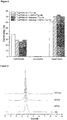
- Evidence in that respect is provided in Figure 8 .
- Low plasma protein binding might be beneficial in terms of low background activity for PET imaging quality with earlier acquisition after i.v. injection and reduced radiation doses during endoradiotherapy since radiolabeled PSMA tracer are retained at the target site.
- a higher unbound fraction in the blood pool should results in a faster plasma clearance, if the renal clearance into the bladder is considered as the primarily elimination process.
- the compounds provide for high imaging quality.
- the carbohydrates are highly hydrophilic residues, they are able to compensate high lipophilicity arising from lipophilic modifications e.g. with fluorescence dyes.
- carbohydrates remodel the clearance route from hepatic to renal excretion, which is beneficial for therapeutic applications with more lipophilic ligands which are more susceptible for hepatic clearance.
- salts of the compounds of the invention including compounds of formula (I) (and including their preferred embodiments) are also suitable for use in the context of the invention. It will be understood that these salts are generally pharmaceutically acceptable salt forms of these compounds which may be formed, e.g., by protonation of an atom carrying an electron lone pair which is susceptible to protonation, such as an amino group, with an inorganic or organic acid, or as a salt of a carboxylic acid group with a physiologically acceptable cation as they are well known in the art.
- Exemplary base addition salts comprise, for example, alkali metal salts such as sodium or potassium salts; alkaline-earth metal salts such as calcium or magnesium salts; ammonium salts; aliphatic amine salts such as trimethylamine, triethylamine, dicyclohexylamine, ethanolamine, diethanolamine, triethanolamine, procaine salts, meglumine salts, diethanol amine salts or ethylenediamine salts; aralkyl amine salts such as N,N-dibenzylethylenediamine salts, benetamine salts; heterocyclic aromatic amine salts such as pyridine salts, picoline salts, quinoline salts or isoquinoline salts; quaternary ammonium salts such as tetramethylammonium salts, tetraethylammonium salts, benzyltrimethylammonium salts, benzyltriethylammonium salts, benzyltribut
- Exemplary acid addition salts comprise, for example, mineral acid salts such as hydrochloride, hydrobromide, hydroiodide, sulfate salts, nitrate salts, phosphate salts (such as, e.g., phosphate, hydrogenphosphate, or dihydrogenphosphate salts), carbonate salts, hydrogencarbonate salts or perchlorate salts; organic acid salts such as acetate, propionate, butyrate, pentanoate, hexanoate, heptanoate, octanoate, cyclopentanepropionate, undecanoate, lactate, maleate, oxalate, fumarate, tartrate, malate, citrate, nicotinate, benzoate, salicylate or ascorbate salts; sulfonate salts such as methanesulfonate, ethanesulfonate, 2-hydroxyethanesulfonate, benzenesulfonate
- compositions include, but are not limited to, acetate, adipate, alginate, ascorbate, aspartate, benzenesulfonate, benzoate, bicarbonate, bisulfate, bitartrate, borate, bromide, butyrate, calcium edetate, camphorate, camphorsulfonate, camsylate, carbonate, chloride, citrate, clavulanate, cyclopentanepropionate, digluconate, dihydrochloride, dodecylsulfate, edetate, edisylate, estolate, esylate, ethanesulfonate, formate, fumarate, gluceptate, glucoheptonate, gluconate, glutamate, glycerophosphate, glycolylarsanilate, hemisulfate, heptanoate, hexanoate, hexylresorcinate, hydr
- the structure can contain solvent molecules.
- the solvents are typically pharmaceutically acceptable solvents and include, among others, water (hydrates) or organic solvents. Examples of possible solvates include ethanolates and iso-propanolates.
- codrug refers to two or more therapeutic compounds bonded via a covalent chemical bond.
- a detailed definition can be found, e.g., in N. Das et al., European Journal of Pharmaceutical Sciences, 41, 2010, 571-588 .
- cocrystal refers to a multiple component crystal in which all components are solid under ambient conditions when in their pure form. These components co-exist as a stoichiometric or non-stoichometric ratio of a target molecule or ion (i.e., compound of the present invention) and one or more neutral molecular cocrystal formers.
- the compounds of the present invention can also be provided in the form of a prodrug, namely a compound which is metabolized in vivo to the active metabolite.
- Suitable prodrugs are, for instance, esters. Specific examples of suitable groups are given, among others, in US 2007/0072831 in paragraphs [0082] to [0118] under the headings prodrugs and protecting groups.
- a preferred pH range in this regard is from 0 to 14.
- m is an integer of 2 to 6.
- m is 2 to 4, more preferably 2.
- R 1L is CH 2 , NH or O, preferably NH.
- R 2L is C or P(OH), preferably C.
- R 3L is CH 2 , NH or O, preferably NH.
- compounds of formula (I) or their salts are also preferred wherein m is 2, R 1L is NH, R 2L is C, and R 3L is NH.
- n is an integer of 2 to 6, preferably 2 to 4, more preferably 2 or 4.
- compounds of formula (I) or their salts are particularly preferred wherein m is 2, n is 2 or 4, R 1L is NH, R 2L is C, and R 3L is NH. More preferred are compounds of formula (I) or their salts wherein m is 2, n is 4, R 1L is NH, R 2L is C, and R 3L is NH.
- X 1 in formula (I) is selected from an amide bond (i.e. -C(O)-NH-), an ether bond (i.e. -O-), a thioether bond (i.e. -S-), an ester bond (i.e. -C(O)-O-, a thioester bond (i.e. -C(S)-O- or -C(O)-S-), a urea bridge (i.e. -NH-C(O)-NH-), and an amine bond (i.e. -NH-).
- Preferred as X 1 is the amide bond.
- X 1 is the amide bond with the nitrogen atom of -C(O)-NH- being attached to the group -(CH 2 ) n - in formula (I), wherein n is 4. Also more preferred as X 1 is the amide bond with the carbon atom of -C(O)-NH- being attached to the group -(CH 2 ) n - in formula (I), wherein n is 2.
- X 3 in formula (I) is selected from an amide bond (i.e. -C(O)-NH-), an ether bond (i.e. -O-), a thioether bond (i.e. -S-), an ester bond (i.e. -C(O)-O-, a thioester bond (i.e. -C(S)-O- or - C(O)-S-), a urea bridge (i.e. -NH-C(O)-NH-), and an amine bond (i.e. -NH-).
- Preferred as X 3 is the amide bond, and more preferred as X 3 is the amide bond with the nitrogen atom of -C(O)-NH- being attached to L 2 in formula (I).
- X 1 and X 3 both represent an amide bond, and it is more preferred that X 1 is an amide bond with the nitrogen atom of -C(O)-NH- being attached to the group -(CH 2 ) n - and X 3 is an amide bond with the nitrogen atom of -C(O)-NH- being attached to L 2 .
- L 1 in formula (I) is an alkanediyl group, preferably a C2-C10 alkanediyl group, more preferably a C3-C6 alkanediyl group, and most preferably a C3 or C5 alkanediyl group, which alkanediyl group is optionally substituted by a group selected from -COOH and -NH 2 .
- alkanediyl is used in line with established nomenclature to designate a divalent saturated hydrocarbon group which may be linear or branched.
- the alkanediyl group is preferably a linear alkanediyl group, which may also be represented by the formula -(CH 2 ) x -, wherein x is an integer corresponding to the number of carbon atoms and, in line with the above, is preferably 2-10, more preferably 3-6, and most preferably 3 or 5.
- the alkanediyl group represented by L 1 is optionally substituted by a group selected from -COOH and -NH 2 . It will be understood that this applies also for the preferred alkanediyl groups with a defined number of carbon atoms (which does not include the carbon atom of an optional -COOH substituent) and/or the linear structure. It will be also be understood that this includes the possibility that one or more than one, e.g. 2 or 3, substituent(s) selected from -COOH and -NH 2 is (are) attached to L 1 . However, it is preferred that L 1 is non-substituted.
- L 2 in formula (I) is an alkanediyl group, preferably a C2-C10 alkanediyl group, more preferably a C3-C6 alkanediyl group, and most preferably a C5 alkanediyl group, which alkanediyl group is optionally substituted by a group selected from -COOH and -NH 2 .
- the alkanediyl group is preferably a linear alkanediyl group, which may also be represented by the formula -(CH 2 ) x -, wherein x is an integer corresponding to the number of carbon atoms and, in line with the above, is preferably 2-10, more preferably 3-6, and most preferably 5.
- the alkanediyl group represented by L 2 is optionally substituted by a group selected from -COOH and -NH 2 , preferably with a group -COOH. It will be understood that this applies also for the preferred alkanediyl groups with a defined number of carbon atoms (which does not include the carbon atom of an optional -COOH substituent) and/or the linear structure. It will be also be understood that this includes the possibility that one or more than one, e.g. 2 or 3, substituent(s) selected from -COOH and -NH 2 is (are) attached to L 2 . However, it is preferred that L 2 carries one substituent which is a -COOH group. In a more preferred embodiment, L 2 carries one substituent which is a -COOH group and which is present on the carbon atom attached to X 3 .
- L 2 is a group of the formula -CH(COOH)-(CH 2 ) 4 -, with the carbon atom carrying the substituent -COOH being attached to X 3 in formula (I).
- R G in formula (I) is a group of the formula (IIa) or (IIb): wherein marks the bond which attaches R G to X 2 ; p is an integer of 1 to 5, preferably 2 or 3, and more preferably 2; R 1G is selected from -OH and -CH 2 -OH; R 2G is selected from -OH and -CH 2 -OH, and is preferably -CH 2 -OH; R 3G is selected from -OH and -CH 2 -OH, and is preferably -CH 2 -OH; X 1G is selected from S and O, and is preferably S; X 2G is selected from an amide bond, an ether bond, a thioether bond, an ester bond, a thioester bond, a urea bridge, and an amine bond, and is preferably an amide bond.
- R G is selected from the groups of formula (IIc) and (IId): wherein marks the bond which attaches R G to X 2 ; and R 1G is selected from -OH and -CH 2 -OH; R 2G is selected from -OH and -CH 2 -OH, and is preferably -CH 2 -OH; and R 3G is selected from -OH and -CH 2 -OH, and is preferably -CH 2 -OH.
- R G is selected from the groups of formula (IIe) to (IIh): wherein marks the bond which attaches R G to X 2 .
- X 2 in formula (I) is a trivalent coupling group carrying the substituent R G .
- the term "coupling group” reflects in particular the fact that the group X 2 functions to couple (i.e. to covalently bind) the substituent R G to the remainder of the compound of formula (I) or its salt.
- formula (I) is a group of formula wherein
- the moiety -X 3 -L 2 -X 2 (R G )-L 1 -X 1 - in formula (I) is a group of the formula -C(O)-NH-CH(COOH)-(CH 2 ) 4 -NH-C(O)-CH(R G )-(CH 2 ) 5 -C(O)-NH-, or of the formula -C(O)-NH-CH(COOH)-(CH 2 ) 4 -NH-C(O)-CH(R G )-NH-C(O)-(CH 2 ) 3 -C(O)-NH-, with the C-terminal being attached to the carbon atom in formula (I) carrying the substituent R 2 , and the N-terminal being attached to the group (CH 2 ) n in formula (I), and with R G being defined as above, including its preferred embodiments.
- a is 0 or 1, and is preferably 1.
- b is 0 or 1, and is preferably 1.
- a and b are both 1.
- R 2 is an optionally substituted aryl group or an optionally substituted aralkyl group, preferably an optionally substituted aralkyl group.
- aralkyl group refers to an alkyl group wherein a hydrogen atom is replaced by an aryl group as a substituent.
- the aralkyl group is a group wherein one aryl group is bound to an alkanediyl group.
- the aryl group or aralkyl group represented by R 2 may be substituted on its aromatic ring with a substituent selected from halogen, preferably I, and -OH.
- the aryl and the aryl portion of the aralkyl group are preferably selected from phenyl and naphthyl, such as 2-naphthyl. It is more preferred that the aryl and the aryl portion of the aralkyl are phenyl.
- the alkanediyl portion of the aralkyl group is preferably a C1-C4 alkanediyl group, more preferably a -CH 2 - group.
- R 2 is more preferably selected from optionally substituted -CH 2 -phenyl and optionally substituted -CH 2 -naphthyl, and is most preferably optionally substituted -CH 2 -phenyl.
- the optionally substituted aryl group and the aryl portion of the optionally substituted aralkyl group may be substituted with a substituent selected from halogen, preferably I, and -OH. It will be also be understood that this includes the possibility that one or more than one, e.g. 2 or 3, substituent(s) selected from halogen, preferably I, and -OH is (are) present. However, it is preferred that R 2 is non-substituted. Thus, R 2 is most preferably non-substituted -CH 2 -phenyl.
- R 3 is an optionally substituted aryl group or an optionally substituted aralkyl group, preferably an optionally substituted aralkyl group.
- the aryl group or aralkyl group may be substituted on its aromatic ring with a substituent selected from halogen, preferably I, and -OH.
- the aryl and the aryl portion of the aralkyl group are preferably selected from phenyl and naphthyl, such as 2-naphthyl. It is more preferred that the aryl and the aryl portion of the aralkyl are phenyl.
- the alkanediyl portion of the aralkyl group is preferably a C1-C4 alkanediyl group, more preferably a -CH 2 - group.
- R 3 is more preferably optionally substituted -CH 2 -phenyl.
- the optionally substituted aryl group and the aryl portion of the optionally substituted aralkyl group may be substituted with a substituent selected from halogen, preferably I, and -OH. It will be also be understood that this includes the possibility that one or more than one, e.g. 2 or 3, substituent(s) selected from halogen, preferably I, and -OH is (are) present.
- R 3 is substituted with one substituent which is -OH, or with a combination of one substituent -OH and one substituent -I.
- R 3 is -CH 2 -phenyl substituted with one substituent that is -OH, or with a combination of one substituent -OH and one substituent -I.
- the substituent -OH is present in the para-position of the phenyl ring relative to the -CH 2 - group.
- R 2 is a group of the formula and R 3 is a group of the formula wherein marks the bond which attaches R 2 and R 3 , respectively, to the remainder of the compound.
- R 2 is a group of the formula and R 3 is a group of the formula wherein marks the bond which attaches R 2 and R 3 , respectively, to the remainder of the compound.
- X 4 is selected from an amide bond, an ether bond, a thioether bond, an ester bond, a thioester bond, a urea bridge, an amine bond, a group of the formula wherein the marked bond at the carbonyl group attaches X 4 to R M and the other marked bond attaches X 4 to the remainder of the molecule, and a group of the formula wherein the marked bond at the imino group attaches X 4 to R M and the other marked bond attaches X 4 to the remainder of the molecule.
- X 4 is selected from an amide bond, a group of the formula wherein the marked bond at the carbonyl group attaches X 4 to R M and the other marked bond attaches X 4 to the remainder of the molecule, and a group of the formula wherein the marked bond at the imino group attaches X 4 to R M and the other marked bond attaches X 4 to the remainder of the molecule.
- X 4 is an amide bond -C(O)-NH- with the carbon atom attached to R M .
- R M is a marker group which comprises at least one of
- R M comprises either one of (i) or (ii), and it is not necessary that (i) and (ii) are both comprised in one compound or salt of formula (I) at the same time. It is preferred that R M comprises a chelating group optionally containing a chelated non-radioactive or radioactive cation.
- R M comprises at least one of the chelating group (i) and the radiotracer group (ii) encompasses the case that R M is a chelating group (i) or a radiotracer group (ii); in this case the chelating group group (i) or radiotracer group (ii) is typically directly bound to X 4 (if a is 1), to -C(O)-NH-CH(R 2 )- (if a is 0 and b is 1) or to X 3 (if a and b are 0), and the case that R M comprises, together with the chelating group (i) or a radiotracer group (ii), e.g.
- a further linker moiety in this case the chelating group (i) or radiotracer group (ii)can be indirectly bound via this further linker moiety to X 4 (if a is 1), to -C(O)-NH-CH(R 2 )- (if a is 0 and b is 1) or to X 3 (if a and b are 0).
- R M comprises a chelating group optionally containing a chelated non-radioactive or radioactive cation
- X 4 is an amide bond -C(O)-NH- with the carbon atom attached to R M , or a group of the formula wherein the marked bond at the carbonyl group attaches X 4 to R M and the other marked bond attaches X 4 to the remainder of the molecule, and it is more preferred that X 4 is the amide bond -C(O)-NH- with the carbon atom attached to R M .
- the chelating group provided by R M is suitable to form a chelate with a radioactive or non-radioactive cation.
- Suitable chelating groups for diverse cations are well known in the art, and can be used in the context of the present invention.
- the chelating group optionally containing a chelated non-radioactive or radioactive cation is preferably selected from a chelating group comprising at least one of
- An exemplary chelating group is a residue of a chelating agent selected from bis(carboxymethyl)-1,4,8,11-tetraazabicyclo[6.6.2]hexadecane (CBTE2a), cyclohexyl-1,2-diaminetetraacetic acid (CDTA), 4-(1,4,8,11-tetraazacyclotetradec-1-yl)-methylbenzoic acid (CPTA), N'-[5-[acetyl(hydroxy)amino]pentyl]-N-[5-[[4-[5-aminopentyl-(hydroxy)amino]-4-oxobutanoyl]amino]pentyl]-N-hydroxybutandiamide (DFO), 4,11-bis(carboxymethyl)-1,4,8,11-tetraazabicyclo[6.6.2]hexadecan (DO2A) 1,4,7,10-tetraaza
- this ester or amide bond can in this case be represented by or encompassed by X 4 (if a is 1), or by X 3 (if a and b are 0), or the amide bond can be represented by the -C(O)-NH- part of -C(O)-NH-CH(R 2 )- (if a is 0 and b is 1).
- DOTA and DOTAGA are preferred.
- a is 1, and X 4 is the amide bond -C(O)-NH- with the carbon atom attached to R M .
- R M -X 4 - is a group of the formula or wherein the bond marked with is attached to the remainder of the compound of formula (I), and wherein the chelating group may contain a chelated non-radioactive or radioactive cation.
- Exemplary radioactive cations that are optionally chelated by the chelating group are selected from the cations of 44 Sc, 47 Sc, 51 Cr, 52m Mn, 58 Co, 52 Fe, 56 Ni, 57 Ni, 62 Cu, 64 Cu, 67 Cu, 66 Ga, 68 Ga, 67 Ga, 89 Zr, 90 Y, 89 Y, 94m Tc, 99m Tc, 97 Ru, 105 Rh, 109 Pd, 111 Ag, 110m In, 111 In, 113m In, 114m In, 117m Sn, 121 Sn, 127 Te, 142 Pr, 143 Pr, 149 Pm, 151 Pm, 149 Tb, 153 Sm, 157 Gd, 161 Tb, 166 Ho, 165 Dy, 169 Er, 169 Yb, 175 Yb, 172 Tm, 177 Lu, 186 Re, 188 Re, 191 Pt, 197 Hg, 198 Au, 199 Au, 212 P
- More preferred chelated cations are selected from the cations of 44 Sc, 47 Sc, 64 Cu, 67 Cu, 68 Ga, 90 Y, 111 In, 161 Tb, 166 Ho, 177 Lu, 188 Re, 212 Pb, 212 Bi, 213 Bi, 225 Ac, and 227 Th, or a cationic molecule comprising 18 F.
- X 4 is a group of the formula wherein the marked bond at the imino group attaches X 4 to R M and the other marked bond attaches X 4 to the remainder of the molecule, and R M comprises a radiotracer group containing a covalently bound fluorine atom which can be labeled with 18 F by isotopic exchange of 19 F by 18 F or which is labeled with 18 F.
- R M comprising a radiotracer group is a phenyl ring which is substituted by -F, which F is preferably 18 F.
- the present invention relates to a pharmaceutical or diagnostic composition comprising or consisting of one or more compounds or salts in accordance with the present invention.
- the present invention provides a compound or salt in accordance with the invention for use in a method of diagnosing and/or treating
- Particularly preferred compounds of the invention are the following: or their pharmaceutically acceptable salts.
- the present invention provides a pharmaceutical composition comprising or consisting of one or more compounds or salts of the invention as disclosed herein above.
- the present invention provides a diagnostic composition comprising or consisting of one or more compounds or salts of the invention as disclosed herein above.
- the present invention provides a therapeutic composition comprising or consisting of one or more compounds or salts of the invention as disclosed herein above.
- the pharmaceutical composition may further comprise pharmaceutically acceptable carriers, excipients and/or diluents.
- suitable pharmaceutical carriers, excipients and/or diluents are well known in the art and include phosphate buffered saline solutions, water, emulsions, such as oil/water emulsions, various types of wetting agents, sterile solutions etc.
- Compositions comprising such carriers can be formulated by well known conventional methods. These pharmaceutical compositions can be administered to the subject at a suitable dose. Administration of the suitable compositions may be effected by different ways, e.g., by intravenous, intraperitoneal, subcutaneous, intramuscular, topical, intradermal, intranasal or intrabronchial administration.
- said administration is carried out by injection and/or delivery, e.g., to a site in the pancreas or into a brain artery or directly into brain tissue.
- the compositions may also be administered directly to the target site, e.g., by biolistic delivery to an external or internal target site, like the pancreas or brain.
- the dosage regimen will be determined by the attending physician and clinical factors. As is well known in the medical arts, dosages for any one patient depends upon many factors, including the patient's size, body surface area, age, the particular compound to be administered, sex, time and route of administration, general health, and other drugs being administered concurrently. Pharmaceutically active matter may be present in amounts between 0,1 ng and 10 mg/kg body weight per dose; however, doses below or above this exemplary range are envisioned, especially considering the aforementioned factors.
- diagnostic composition and therapeutic composition comprises one or more compounds of the invention, it is preferred that no further pharmaceutically active compounds, diagnostically active compounds or therapeutically active compounds are present. In the alternative, further therapeutically active, diagnostically active or pharmaceutically active compounds may be present, for example, anticancer agents.
- Combination of a therapeutic treatment with the compounds of the present invention might have a synergistic or cumulative treatment effect, similar to the treatment of neuroendocrine tumors with [ 177 Lu]DOTATATE radiotherapy in combination with chemotherapy or immunotherapies.
- a first phase 3 study comparing the combination of 177 Lu PRRT and capecitabine (Xeloda; Genentech), an oral chemotherapy agent, with [ 177 Lu]DOTATATE alone has been started at Erasmus MC, Rotterdam in 2017 ( van Essen M, Krenning EP, Kam BL, de Herder WW, van Aken MO, Kwekkeboom DJ.
- the present invention provides one or more compounds of the invention as disclosed herein above for use in medicine.
- nuclear diagnostic imaging also named nuclear molecular imaging
- targeted radiotherapy of diseases associated with an overexpression preferably of PSMA on the diseased tissue.
- the present invention provides a compound of the invention as defined herein above for use in a method of diagnosing and/or staging cancer, preferably prostate cancer.
- Preferred indications are the detection or staging of cancer, such as, but not limited high grade gliomas, lung cancer and especially prostate cancer and metastasized prostate cancer, the detection of metastatic disease in patients with primary prostate cancer of intermediate-risk to high-risk, and the detection of metastatic sites, even at low serum PSA values in patients with biochemically recurrent prostate cancer.
- Another preferred indication is the imaging and visualization of neoangiogensis.
- cancer is a preferred indication.
- Prostate cancer is a particularly preferred indication.
- the present invention provides a compound of the invention as defined herein above for use in a method of diagnosing and/or staging cancer, preferably prostate cancer.
- each embodiment mentioned in a dependent claim is combined with each embodiment of each claim (independent or dependent) said dependent claim depends from.
- a dependent claim 2 reciting 3 alternatives D, E and F and a claim 3 depending from claims 1 and 2 and reciting 3 alternatives G, H and I
- the specification unambiguously discloses embodiments corresponding to combinations A, D, G; A, D, H; A, D, I; A, E, G; A, E, H; A, E, I; A, F, G; A, F, H; A, F, I; B, D, G; B, D, H; B, D, I; B, E, G; B, E, H; B, E, I; B, F, G; B, F, H; B, F, I; C, D, G; C, D, H; C, D, I; C,
- the invention includes the following items:
- the Fmoc-(9-fluorenylmethoxycarbonyl-) and all other protected amino acid analogs were purchased from Bachem (Bubendorf, Switzerland) or Iris Biotech (Marktredwitz, Germany).
- the tritylchloride polystyrene (TCP) resin was obtained from PepChem (Tubingen, Germany). Chematech (Dijon, France) delivered the chelator DOTAGA-anhydride.
- HSA binding Human serum albumin (HSA) binding was determined using a Chiralpak HSA 50 x 3 mm 5 ⁇ m Analytical Column connected to a Chiralpak HSA 10 x 3 mm 5 ⁇ m Guard Cartridge (Daicel Chemical Industries) purchased from Chiral Technologies Europe (France). Non-linear regression for the HSA binding was performed using OriginPro 2016G. Both retention times t R as well as the capacity factors K' are cited in the text.
- Preparative RP-HPLC of the peptides was achieved on a Shimadzu HPLC system using a Multospher 100 RP 18-5 (250 x 20 mm) column (CS GmbH, Langerwehe, Germany) with a constant flow of 5 mL/min.
- DOTAGA-iodo-D-Tyr-D-Phe-D-Lys-OH (DOTAGA-(l-y)fk) ( 6 ) was synthesized through solid phase strategy as previously described ( Weineisen, M., et al., Development and first in human evaluation of PSMA I&T-A ligand for diagnostic imaging and endoradiotherapy of prostate cancer. Journal of Nuclear Medicine, 2014. 55(supplement 1): p. 1083-1083 ; Weineisen, M., et al., Synthesis and preclinical evaluation of DOTAGA-conjugated PSMA ligands for functional imaging and endoradiotherapy of prostate cancer. EJNMMI research, 2014. 4(1): p. 1 ).
- nat Ga- 13 , nat Ga- 14 and nat Ga- 15 complexes 50 ⁇ L of a 2 mM solution of 13, 14 or 15 in water and 50 ⁇ L of a 2 mM solution of Ga(NO 3 ) 3 in water were mixed and heated at 40°C for 30 min. The chelate formation was assessed using RP-HPLC and MS. The resulting 1 mM solution was diluted and used for in vitro IC 50 determination and HSA binding.
- the radioiodinated reference ligand ([ 125 I]I-BA)KuE was radio-synthesized in accordance to a previously published method ( Weineisen, M., et al., Synthesis and preclinical evaluation of DOTAGA-conjugated PSMA ligands for functional imaging and endoradiotherapy of prostate cancer. EJNMMI research, 2014. 4(1): p. 1 ) and fully described in the supplementary info.
- PSMA-positive LNCAP cells (200265; Cell Lines Service GmbH) were cultivated in Dulbecco modified Eagle medium/Nutrition Mixture F-12 (1:1) (DMEM-F12, Biochrom) supplemented with 10% fetal calf serum (Biochrom) and kept at 37°C in a humidified 5% CO 2 atmosphere.
- DMEM-F12 Dulbecco modified Eagle medium/Nutrition Mixture F-12 (1:1)
- fetal calf serum Biochrom
- the cultivated cells were harvested using a mixture of trypsin/ethylendiaminetetraacetate (0.05%/ 0.02%) and phosphate buffered saline and centrifuged. After centrifugation, the supernatant was disposed and the cell pellet resuspended in culture medium.
- IC 50 values were determined transferring 150,000 cells/mL per well into 24-well plates, whereas internalization rates were obtained by transferring 125,000 cells/mL into 24-well PLL-coated plates.
- HSA binding experiments were performed as previously described ( Valko, K., et al., Fast gradient HPLC method to determine compounds binding to human serum albumin. Relationships with octanol/water and immobilized artificial membrane lipophilicity. Journal of pharmaceutical sciences, 2003. 92(11): p. 2236-2248 ).
- the mobile phase consisted of a binary gradient system with a constant total flow rate of 0.5mL/min.
- Mobile phase A was a 50 mM pH 6.9 ammonium acetate solution
- mobile phase B was 2-Propanol (HPLC grade, VWR, Germany).
- the gradient, of mobile phase A was 100% from 0 to 3 min and from 3 min to the end of each run, mobile phase B was set 20%.
- the column was calibrated with nine reference substances to confirm the performance and non-linear regression. Afterwards, the actual PSMA inhibitors with unknown HSA binding were measured. More details are found in the supplementary info.
- Erythrocytes were gained after centrifugation at 700 g (1,400 rpm, Biofuge 15, Heraus Sepatech, Osterode, Germany) for 5 min and the pellet was rinsed with 500 ⁇ L of ice-cold PBS and again centrifuged. Leukocytes were gained by combination of the supernatant and subsequent centrifugation at 3,100 g (6,200 rpm) with a further washing step with 500 ⁇ L of ice-cold PBS and repeated centrifugation. The activities of the pellets (erythrocytes and leukocytes) and the supernatant were measured in a ⁇ -counter. PSMA specific binding was determined by co-incubation with PMPA solution (100 ⁇ M).
- LNCaP cells (approx. 10 7 cells) were suspended 1:1 in serum-free DMEM-F12 medium and Matrigel (BD Biosciences, Germany) and inoculated onto the right shoulder of male, 6 to 8 weeks old CB-17 SCID mice (Charles River Laboratories, Sulzfeld, Germany). Animals were used after the tumor size reached 4 to 8 mm in diameter for experiments.
- Imaging experiments were conducted using a Siemens Inveon small animal PET and data analyzed by the associated Inveon Research Workplace software. Mice were anaesthetised with isoflurane and the compounds [ 68 Ga]PSMA I&T ( 68 Ga- 18 ) and [ 68 Ga]PSMA I&T Galactose ( 68 Ga- 13 ) (0.2 nmol, 7.0 to 12 MBq) were injected via tail vein. Dynamic imaging was carried out after on-bed injection for 90 min. The static blockade image was obtained, after 1 h p.i. with 15 min acquisition time. Blockade was done by coinjection of 8mg/kg of PMPA. All images were reconstructed using an OSEM3D algorithm without scanner and attenuation correction.
- Readily production of the 68 Ga-labeled compounds was accomplished within 15 min after start of the radiosynthesis in a fully automated GMP-compliant system. Utilization of 5.0 nmol of the respective PSMA inhibitor yielded in specific activities ranging from 36 to 53 GBq/ ⁇ mol after cartridge purification. The determined radiochemical purity for all compounds was ⁇ 95% and was determined by radio-HPLC. Prior to in vitro and in vivo applications, the EtOH was evaporated and the 68 Ga-labeled compounds were diluted with PBS (pH 7.4).
- the IC 50 values of PSMA I&T ( 18 ) were taken from a previous publication ( Weineisen, M., et al., Development and first in human evaluation of PSMA I&T-A ligand for diagnostic imaging and endoradiotherapy of prostate cancer. Journal of Nuclear Medicine, 2014. 55(supplement 1): p. 1083-1083 ), in which the same binding assay was performed. The results are given in Table 1.
- the monosaccharide derivatives 13 and 14 displayed higher affinity to PSMA, whereas the introduction of the disaccharide cellubiose ( 15 ) decreased the affinity to PSMA.
- the glycosylated compounds, except for 15, showed the same trend as the reference ligand 18, in which the nat Lu-labeled compounds possessed higher affinity as their respective nat Ga analogs indicating the influence of the free carboxylic acid from the chelator ( Weineisen, M., et al., Development and first in human evaluation of PSMA I&T-A ligand for diagnostic imaging and endoradiotherapy of prostate cancer. Journal of Nuclear Medicine, 2014. 55(supplement 1): p.
- LNCaP cells were used to investigate the cell surface binding and internalization of the 68 Ga-and 177 Lu-labeled compounds 13, 14 and 15.
- the final peptide concentration was 0.2 nM and 0.5 nM for the 177 Lu-labeled analogs to assure comparability with the obtained data from 68 Ga-and 177 Lu- 18 (PSMA I&T) ( Weineisen, M., et al., Development and first in human evaluation of PSMA I&T-A ligand for diagnostic imaging and endoradiotherapy of prostate cancer. Journal of Nuclear Medicine, 2014. 55(supplement 1): p. 1083-1083 ).
- the cell surface bound fraction after 60 min incubation ranged from 0.6% to 1.0%, whereas the internalized fraction displayed values from 1.3% for 68 Ga- 15 to 11.3% for 177 Lu- 13 of total applied activity.
- ([ 125 I]I-BA)KuE the results are presented in Table 1. All glycosylated compounds exhibited lower values in comparison to 18 with the tendency of the 68 Ga-labeled compounds to internalize less by the factor of approximately four than the 177 Lu-analogs. Differences in stereochemistry in 13 and 14 resulted in slightly higher internalization of the galactose derivative.
- the highest obtained value of the 68 Ga-labeled compounds was 18.7% ⁇ 4.1% for 13, which is still more than three times lower than for [ 68 Ga]PSMA I&T, exhibiting 59.2% ⁇ 1.7% after 60 min.
- Albumin binding was determined using a HPLC-column with immobilized human albumin for analysis ( Valko, K., et al., Fast gradient HPLC method to determine compounds binding to human serum albumin. Relationships with octanol/water and immobilized artificial membrane lipophilicity. Journal of pharmaceutical sciences, 2003. 92(11): p. 2236-2248 ; Yamazaki, K. and M. Kanaoka, Computational prediction of the plasma protein-binding percent of diverse pharmaceutical compounds. Journal of pharmaceutical sciences, 2004. 93(6): p. 1480-1494 ).
- the values for the nat Ga-labeled analogs are lower than the nat Lu-species, indicating the influence of the complexed metal ion and the free carboxylic acid group of the chelator DOTAGA in the case of nat Ga-labeling.
- the disaccharide derivative 15 exhibited the lowest measured values irrespective of the metal ion. Comparing 13 and 14, stereochemistry had only a marginal influence on the albumin binding values, since their respective nat Ga-and nat Lu-labeled analogs displayed similar values. Overall, glycosylation reduced the albumin binding in comparison to the reference ligand 18.
- Table 2 Lipophilicity shown as log P and binding [%] to human serum albumin (HSA) of the labeled PSMA inhibitors PSMA Inhibitor log P HSA [%] [ 68/nat Ga]PSMA I&T ( 68/nat Ga- 18 ) -4.31 ⁇ 0.32 48.7 [ 177/nat Lu]PSMA I&T ( 177/nat Lu- 18 ) -4.12 ⁇ 0.1 78.6 [ 68/nat Ga]PSMA I&T Galactose ( 68/nat Ga- 13 ) -4.15 ⁇ 0.07 7.7 [ 177/nat Lu]PSMA I&T Galactose ( 177/nat Lu- 13 ) -3.95 ⁇ 0.12 23.3 [ 68/nat Ga]PSMA I&T Mannose ( 68/nat Ga- 14 ) -4.01 ⁇ 0.08 7.6 [ 177/nat Lu]PSMA I&T Mannose ( 177/nat Lu-
- the comparative linear TAC plot correlations for tumor and kidney uptake displayed a lower accumulation of 68 Ga- 13 in these PSMA-expressing tissues with earlier onset of kinetic elimination ( Figure 6 ).
- the biodistribution revealed a similar tendency with general lower or equal tissue accumulation 1 h p.i. of 68 Ga- 13 ( Figure 7 ) compared to 68 Ga- 18 except for the blood value.
- Ongoing clearance of 68 Ga- 13 from the kidneys and other tissues was visible 3 h after injection, whereas tumor uptake remained stable.
Landscapes
- Health & Medical Sciences (AREA)
- Life Sciences & Earth Sciences (AREA)
- Optics & Photonics (AREA)
- Physics & Mathematics (AREA)
- Chemical & Material Sciences (AREA)
- Medicinal Chemistry (AREA)
- Proteomics, Peptides & Aminoacids (AREA)
- Pharmacology & Pharmacy (AREA)
- Epidemiology (AREA)
- Animal Behavior & Ethology (AREA)
- General Health & Medical Sciences (AREA)
- Public Health (AREA)
- Veterinary Medicine (AREA)
- Medicines Containing Antibodies Or Antigens For Use As Internal Diagnostic Agents (AREA)
Abstract
The present disclosure relates to imaging and endoradiotherapy of diseases involving prostate-specific membrane antigen (PSMA). Provided are compounds which bind or inhibit PSMA and furthermore carry at least one moiety which is amenable to radiolabeling. Provided are also medical uses of such compounds.
Description
- The present disclosure relates to imaging and endoradiotherapy of diseases involving prostate-specific membrane antigen (PSMA). Provided are compounds which bind or inhibit PSMA and furthermore carry at least one moiety which is amenable to radiolabeling. Provided are also medical uses of such compounds.
- In this specification, a number of documents including patent applications and manufacturer's manuals are cited. The disclosure of these documents, while not considered relevant for the patentability of this invention, is herewith incorporated by reference in its entirety. More specifically, all referenced documents are incorporated by reference to the same extent as if each individual document was specifically and individually indicated to be incorporated by reference.
- Prostate Cancer (PCa) remained over the last decades the most common malignant disease in men with high incidence for poor survival rates. Due to its overexpression in prostate cancer (Silver, D.A., et al., Prostate-specific membrane antigen expression in normal and malignant human tissues. Clinical Cancer Research, 1997. 3(1): p. 81-85), prostate-specific membrane antigen (PSMA) or glutamate carboxypeptidase II (GCP II) proved its eligibility as excellent target for the development of highly sensitive radiolabeled agents for endoradiotherapy and imaging of PCa (Afshar-Oromieh, A., et al., The diagnostic value of PET/CT imaging with the 68Ga-labelled PSMA ligand HBED-CC in the diagnosis of recurrent prostate cancer. European journal of nuclear medicine and molecular imaging, 2015. 42(2): p. 197-209; Benešová, M., et al., Preclinical Evaluation of a Tailor-Made DOTA-Conjugated PSMA Inhibitor with Optimized Linker Moiety for Imaging and Endoradiotherapy of Prostate Cancer. Journal of Nuclear Medicine, 2015. 56(6): p. 914-920; Robu, S., et al., Preclinical evaluation and first patient application of 99mTc-PSMA-I&S for SPECT imaging and radioguided surgery in prostate cancer. Journal of Nuclear Medicine, 2016: p. jnumed. 116.178939; Weineisen, M., et al., Development and first in human evaluation of PSMA I&T-A ligand for diagnostic imaging and endoradiotherapy of prostate cancer. Journal of Nuclear Medicine, 2014. 55(supplement 1): p. 1083-1083; Rowe, S., et al., PET imaging of prostate-specific membrane antigen in prostate cancer: current state of the art and future challenges. Prostate cancer and prostatic diseases, 2016; Maurer, T., et al., Current use of PSMA-PET in prostate cancer management. Nature Reviews Urology, 2016). Prostate-specific membrane antigen is an extracellular hydrolase whose catalytic center comprises two zinc(II) ions with a bridging hydroxido ligand. It is highly upregulated in metastatic and hormone-refractory prostate carcinomas, but its physiologic expression has also been reported in kidneys, salivary glands, small intestine, brain and, to a low extent, also in healthy prostate tissue. In the intestine, PSMA facilitates absorption of folate by conversion of pteroylpoly-γ-glutamate to the pteroylglutamate (folate). In the brain, it hydrolyses N-acetyl-Laspartyl- L-glutamate (NAAG) to N-acetyl-L-aspartate and glutamate. The enzymatic function of PSMA in normal and diseased prostate has yet not been clarified.
- PSMA targeting molecules usually comprise a binding unit that encompasses a zinc-binding group (such as urea (Zhou, J., et al., NAAG peptidase inhibitors and their potential for diagnosis and therapy. Nature Reviews Drug Discovery, 2005. 4(12): p. 1015-1026), phosphinate or phosphoramidate) connected to a P1' glutamate moiety, which warrants high affinity and specificity to PSMA and is typically further connected to an effector functionality (Machulkin, A.E., et al., Small-molecule PSMA ligands. Current state, SAR and perspectives. Journal of drug targeting, 2016: p. 1-15). The effector part is more flexible and to some extent tolerant towards structural modifications. The entrance tunnel of PSMA accommodates two other prominent structural features, which are important for ligand binding. The first one is an arginine patch, a positively charged area at the wall of the entrance funnel and the structural explanation for the preference of negatively charged functionalities at the P1 position of PSMA. Upon binding the concerted repositioning of the arginine side chains can lead to the opening of an S1 hydrophobic accessory pocket, the second important structure, that has been shown to accommodate an iodo-benzyl group of several urea based inhibitors, thus contributing to their high affinity for PSMA (Barinka, C., et al., Interactions between Human Glutamate Carboxypeptidase II and Urea-Based Inhibitors: Structural Characterization†. Journal of medicinal chemistry, 2008. 51(24): p. 7737-7743).
- Zhang et al. discovered a remote binding site of PSMA, which can be employed for bidentate binding mode (Zhang, A.X., et al., A remote arene-binding site on prostate specific membrane antigen revealed by antibody-recruiting small molecules. Journal of the American Chemical Society, 2010. 132(36): p. 12711-12716). The so called arene-binding site is a simple structural motif shaped by the side chains of Arg463, Arg511 and Trp541, and is part of the PSMA entrance lid. The engagement of the arene-binding site by a distal inhibitor moiety can result in a substantial increase in the inhibitor affinity for PSMA due to avidity effects. PSMA I&T (see
Figure 1 ) was developed with the intention to interact this way with PSMA, albeit no crystal structure analysis of binding mode is available. A necessary feature according to Zhang et al. is a linker unit (suberic acid in the case of PSMA I&T) which facilitates an open conformation of the entrance lid of PSMA and thereby enabling the accessibility of the arene-binding site. It was further shown that the structural composition of the linker has a significant impact on the tumor-targeting and biologic activity as well as on imaging contrast and pharmacokinetics (Liu, T., et al., Spacer length effects on in vitro imaging and surface accessibility of fluorescent inhibitors of prostate specific membrane antigen. Bioorganic & medicinal chemistry letters, 2011. 21(23): p. 7013-7016), properties which are crucial for both high imaging quality and efficient targeted endoradiotherapy. - Two categories of PSMA targeting inhibitors are currently used in clinical settings. On the one side are tracer with chelating units for radionuclide complexation as PSMA I&T or related compounds (Kiess, A.P., et al., Prostate-specific membrane antigen as a target for cancer imaging and therapy. The quarterly journal of nuclear medicine and molecular imaging: official publication of the Italian Association of Nuclear Medicine (AIMN)[and] the International Association of Radiopharmacology (IAR),[and] Section of the Society of... 2015. 59(3): p. 241). On the other side are small molecules, comprising a targeting unit and effector molecules. Depending on the used radionuclide/halogen, the radiolabeled PSMA inhibitors may be used for imaging or endoradiotherapy. Among small molecule inhibitors with chelators for imaging, the most often used agents for selective PSMA imaging are PSMA HBED-CC (Eder, M., et al., 68Ga-complex lipophilicity and the targeting property of a urea-based PSMA inhibitor for PET imaging. Bioconjugate chemistry, 2012. 23(4): p. 688-697), PSMA-617 (Benešová, M., et al., Preclinical Evaluation of a Tailor-Made DOTA-Conjugated PSMA Inhibitor with Optimized Linker Moiety for Imaging and Endoradiotherapy of Prostate Cancer. Journal of Nuclear Medicine, 2015. 56(6): p. 914-920) and PSMA I&T (Weineisen, M., et al., Development and first in human evaluation of PSMA I&T-A ligand for diagnostic imaging and endoradiotherapy of prostate cancer. Journal of Nuclear Medicine, 2014. 55(supplement 1): p. 1083-1083). PSMA HBED-CC, or PSMA-11 was one the first PSMA inhibitors and is currently used for imaging since therapeutic applications are not possible with the chelator HBED-CC. However, due to the unique physical characteristics and the advantages of 18F for PET imaging, like the longer half-life, the low positron energy, which results in higher image resolution and the possibility for largescale production in a cyclotron, several groups have focused on the development of 18F-labeled urea-based Inhibitors for PCa imaging. The 18F-labeled urea-based PSMA inhibitor [18F]DCFPyl demonstrated promising results in detection of primary and metastatic PCa (Rowe, S.P., et al., PSMA-Based [*8F] DCFPyL PET/CT Is Superior to Conventional Imaging for Lesion Detection in Patients with Metastatic Prostate Cancer. Molecular Imaging and Biology, 2016: p. 1-9) and superiority to [68Ga]PSMA-HBED-CC in a comparative study (Dietlein, M., et al., Comparison of [18F] DCFPyL and [68Ga] Ga-PSMA-HBED-CC for PSMA-PET imaging in patients with relapsed prostate cancer. Molecular Imaging and Biology, 2015. 17(4): p. 575-584).
- PSMA DKFZ 617 (Benešová, M., et al., Preclinical Evaluation of a Tailor-Made DOTA-Conjugated PSMA Inhibitor with Optimized Linker Moiety for Imaging and Endoradiotherapy of Prostate Cancer. Journal of Nuclear Medicine, 2015. 56(6): p. 914-920, Becker, A., et al., Nephro-and hepatotoxicity after radioligand therapy of metastatic castrate-resistant prostate cancer with 177Lu-PSMA-617. Journal of Nuclear Medicine, 2016. 57(supplement 2): p. 1430-1430;Rahbar, K., et al., Response and tolerability of a single dose of 177Lu-PSMA-617 in patients with metastatic castration-resistant prostafe cancer: a multicenter retrospective analysis. Journal of Nuclear Medicine, 2016: p. jnumed. 116.173757) and PSMA I&T (Weineisen, M., et al., Development and first in human evaluation of PSMA I&T-A ligand for diagnostic imaging and endoradiotherapy of prostate cancer. Journal of Nuclear Medicine, 2014. 55(supplement 1): p. 1083-1083, Eiber, M., et al., Systemic radioligand therapy with 177Lu-PSMA I&T in patients with metastatic castration-resistant prostate cancer. Journal of Nuclear Medicine, 2016. 57(supplement 2): p. 61-61; Schottelius, M., et al., [111In] PSMA-I&T: expanding the spectrum of PSMA-I&T applications towards SPECT and radioguided surgery. EJNMMI research, 2015. 5(1): p. 1) are applied in clinical settings for palliative treatment of prostate cancer patients. The chelating unit DOTA and the related DOTAGA, allow not only imaging but also therapeutical applications, since the scope for possible radiometal chelation encompasses 111In, 177Lu, 90Y and 213Bi amongst others. [111In]PSMA I&T was already clinically implemented for radioguided surgery to assist the surgeon during excision of the malignant tissue (Schottelius, M., et al., [111In] PSMA-I&T: expanding the spectrum of PSMA-I&T applications towards SPECT and radioguided surgery. EJNMMI research, 2015. 5(1): p. 1). Likewise, the recent developed and clinically tested PSMA Inhibitor PSMA I&S (imaging and surgery) demonstrated highly encouraging results (Robu, S., et al., Preclinical evaluation and first patient application of 99mTc-PSMA-I&S for SPECT imaging and radioguided surgery in prostate cancer. Journal of Nuclear Medicine, 2016: p. jnumed. 116.178939).
- Endoradiotherapeutic approaches with [177Lu]PSMA I&T demonstrated efficiency, tolerability and high safety potential in patients receiving up to four cycles with 7.4 GBq. The obtained dosimetric values for organ radiation revealed, that especially the kidneys and the salivary glands receive the highest dose after tumor lesions. Similar radiation values were shown for PSMA DKFZ 617 and [18F]DCFPyL (Rowe, S.P., et al., PSMA-Based [18F] DCFPyL PET/CT Is Superior to Conventional Imaging for Lesion Detection in Patients with Metastatic Prostate Cancer. Molecular Imaging and Biology, 2016: p. 1-9; Delker, A., et al., Dosimetry for 177Lu-DKFZ-PSMA-617: a new radiopharmaceutical for the treatment of metastatic prostate cancer. European journal of nuclear medicine and molecular imaging, 2016. 43(1): p. 42-51; Kabasakal, L., et al., Pre-therapeutic dosimetry of normal organs and tissues of 177Lu-PSMA-617 prostate-specific membrane antigen (PSMA) inhibitor in patients with castration-resistant prostate cancer. European journal of nuclear medicine and molecular imaging, 2015. 42(13): p. 1976-1983; Yadav, M.P., et al., 177Lu-DKFZ-PSMA-617 therapy in metastatic castration resistant prostate cancer: safety, efficacy, and quality of life assessment. European Journal of Nuclear Medicine and Molecular Imaging, 2016: p. 1-11). These elevated numbers are explainable by the physiologic expression of PSMA (Silver, D.A., et al., Prostate-specific membrane antigen expression in normal and malignant human tissues. Clinical Cancer Research, 1997. 3(1): p. 81-85) and the renal excretion of the radiolabeled compound. The occasional occurring renal and hematological toxicities after administration are usually reversible, although is legitimate concern about chronic toxicity especially in patients with overall long survival rates, like in PCa patients. Therefore, a suitable concept is needed to reduce the unwanted radiation.
- In view of the above, the technical problem underlying the present invention can be seen in the provision of means and methods of alleviating radiation-induced side effects of PSMA-targeting radiolabeled diagnostics and therapeutics. More generally speaking, the technical problem can be seen in the provision of improved PSMA binding agents.
- This technical problem is solved by the subject-matter summarized in the attached claims and explained in further detail below.
- In particular, the present invention provides in a first aspect a compound of formula (I), or a pharmaceutically acceptable salt thereof,

- m
- is an integer of 2 to 6, preferably 2 to 4, more preferably 2;
- n
- is an integer of 2 to 6, preferably 2 to 4, more preferably 4;
- R1L
- is CH2, NH or O, preferably NH;
- R2L
- is C or P(OH), preferably C;
- R3L
- is CH2, NH or O, preferably NH;
- X1
- is selected from an amide bond, an ether bond, a thioether bond, an ester bond, a thioester bond, a urea bridge, and an amine bond; and is preferably an amide bond;
- L1
- is an alkanediyl group, preferably a C2-C10 alkanediyl group, more preferably a C3-C6 alkanediyl group, and most preferably a C5 alkanediyl group, which alkanediyl group is optionally substituted by a group selected from -COOH and -NH2;
- X2
- is a trivalent coupling group carrying the substituent RG;
- L2
- is an alkanediyl group, preferably a C2-C10 alkanediyl group, more preferably a C3-C6 alkanediyl group, and most preferably a C5 alkanediyl group, said alkanediyl group being optionally substituted by a group selected from -COOH and -NH2;
- X3
- is selected from an amide bond, an ether bond, a thioether bond, an ester bond, a thioester bond, a urea bridge, and an amine bond, and is preferably an amide bond;
- a
- is 0 or 1, preferably 1;
- b
- is 0 or 1, preferably 1;
- R2
- is an optionally substituted aryl group or an optionally substituted aralkyl group, which aryl group or aralkyl group may be substituted on its aromatic ring with a substituent selected from halogen, preferably I, and -OH;
- R3
- is an optionally substituted aryl group or an optionally substituted aralkyl group, which aryl group or aralkyl group may be substituted on its aromatic ring with a substituent selected from halogen, preferably I, and -OH;
- X4
- is selected from an amide bond, an ether bond, a thioether bond, an ester bond, a thioester bond, a urea bridge, an amine bond, a group of the formula


- RM
- is a marker group which comprises at least one of
- (i) a chelating group optionally containing a chelated non-radioactive or radioactive cation, and
- (ii) a radiotracer group containing a covalently bound fluorine atom which can be labeled with 18F by isotopic exchange of 19F by 18F or which is labeled with 18F; and
- RG
- is a group of the formula (IIa) or (IIb):

marks the bond which attaches RG to X2;
p is an integer of 1 to 5, preferably 2 or 3, and more preferably 2;
R1G is selected from -OH and -CH2-OH;
R2G is selected from -OH and -CH2-OH, and is preferably -CH2-OH;
R3G is selected from -OH and -CH2-OH, and is preferably -CH2-OH;
X1G is selected from S and O, and is preferably S;
X2G is selected from an amide bond, an ether bond, a thioether bond, an ester bond, a thioester bond, an urea bridge, and an amine bond, and is preferably an amide bond. - Similar to PSMA I&T (discussed further above and depicted in
Figure 1 ), which may be viewed as a parent compound, the compounds in accordance with the first aspect comprise at least one site which is amenable to radiolabeling for diagnostic and/or therapeutic purposes. This site is the chelating group. - Deviant from PSMA I&T, the part of the linker connecting the chelating group and the PSMA-binding head group at the two ends of the compound is not linear or essential linear, but instead, and owing to the presence of the carbohydrate, branched.
- This structural feature has to be properly gauged in view of the knowledge about the structure of the target molecule PSMA. As noted in the background section herein above, the entrance tunnel of PSMA which leads to the binding site for the head group has a funnel shape. This leads to the expectation that linear linkers in PSMA ligands should be used and that any branched linker would, owing to steric clashes, dramatically reduce or entirely abolish binding. Surprisingly, and contrary to all expectations, the opposite turned out to be the case. In particular, and as can be seen from the examples enclosed herewith, the introduction of carbohydrate moieties in the linear part of the linker allows to maintain or even increase affinity to PSMA. There was no expectation at all that the structure of PSMA would allow for the incorporation of hydrophilic bulky moieties as carbohydrates.
- In this regard, reference is made to Bouvet et al. (Targeting Prostate-Specific Membrane Antigen (PSMA) with F-18-Labeled Compounds: the Influence of Prosthetic Groups on Tumor Uptake and Clearance Profile. Molecular Imaging and Biology, 2017: p. 1-10). Their PSMA ligand exhibited only moderate binding to PSMA, while every other compound, modified with an aromatic residue, was found to be significantly more affine.
- Having said that, maintaining or even increasing the affinity to the target is not the only advantage of a carbohydrate moiety in a compound in accordance with the first aspect. Rather, glycosylation is a means of modulating pharmacokinetics. The increasing hydrophilicity provides for a more favorable pharmacokinetics.
- In particular, the compounds of the invention exhibit accelerated tissue clearance and thus lower activity uptake in PSMA-unspecific tissue. As a consequence, improved tumor-to-tissue ratios are obtained with the glycosylated compound of the invention.
- In more detail, sugar- or carbohydrate conjugation of peptides improves the urinary excretion of peptides by shifting the clearance route from hepatobiliary to renal excretion. In addition, they act as non-charged pharmacokinetic modifiers, thus offering the advantage of higher hydrophilicity while avoiding the negative effects of positively or negatively charged moieties (unspecific retention in kidneys, vasculature, or other tissues). Evidence in that respect is provided in
Figure 8 . - Sugar moieties conjugated to peptides can also reduce plasma protein binding and liver uptake. The advantages of carbohydration of peptide radioligands was recently demonstrated and reviewed for carbohydrated ligands of the somatostatin-2 receptor (sst2) (Cancer Biother Radiopharm. 2004 Apr;19(2):231-44. Radiolabeled carbohydrated somatostatin analogs: a review of the current status. Wester HJ, Schottelius M, Poethko T, Bruus-Jensen K, Schwaiger M.)
- Low plasma protein binding might be beneficial in terms of low background activity for PET imaging quality with earlier acquisition after i.v. injection and reduced radiation doses during endoradiotherapy since radiolabeled PSMA tracer are retained at the target site. A higher unbound fraction in the blood pool should results in a faster plasma clearance, if the renal clearance into the bladder is considered as the primarily elimination process.
- The introduction of the carbohydrates decreased the albumin binding drastically when compared to the parent compound PSMA I&T. This feature results in faster background clearance (lower radiation) in vivo; see the enclosed examples.
- Yet further, the compounds provide for high imaging quality.
- Further advantages include a reduced uptake in those tissues where PSMA is not expressed or only expressed in low amounts, especially kidneys and salivary glands. This latter effect provides for a significant reduction of radiation-induced side effects occurring in non-target tissues.
- Moreover, and since the carbohydrates are highly hydrophilic residues, they are able to compensate high lipophilicity arising from lipophilic modifications e.g. with fluorescence dyes.
- Also, carbohydrates remodel the clearance route from hepatic to renal excretion, which is beneficial for therapeutic applications with more lipophilic ligands which are more susceptible for hepatic clearance.
- As noted above, salts of the compounds of the invention including compounds of formula (I) (and including their preferred embodiments) are also suitable for use in the context of the invention. It will be understood that these salts are generally pharmaceutically acceptable salt forms of these compounds which may be formed, e.g., by protonation of an atom carrying an electron lone pair which is susceptible to protonation, such as an amino group, with an inorganic or organic acid, or as a salt of a carboxylic acid group with a physiologically acceptable cation as they are well known in the art. Exemplary base addition salts comprise, for example, alkali metal salts such as sodium or potassium salts; alkaline-earth metal salts such as calcium or magnesium salts; ammonium salts; aliphatic amine salts such as trimethylamine, triethylamine, dicyclohexylamine, ethanolamine, diethanolamine, triethanolamine, procaine salts, meglumine salts, diethanol amine salts or ethylenediamine salts; aralkyl amine salts such as N,N-dibenzylethylenediamine salts, benetamine salts; heterocyclic aromatic amine salts such as pyridine salts, picoline salts, quinoline salts or isoquinoline salts; quaternary ammonium salts such as tetramethylammonium salts, tetraethylammonium salts, benzyltrimethylammonium salts, benzyltriethylammonium salts, benzyltributylammonium salts, methyltrioctylammonium salts or tetrabutylammonium salts; and basic amino acid salts such as arginine salts or lysine salts. Exemplary acid addition salts comprise, for example, mineral acid salts such as hydrochloride, hydrobromide, hydroiodide, sulfate salts, nitrate salts, phosphate salts (such as, e.g., phosphate, hydrogenphosphate, or dihydrogenphosphate salts), carbonate salts, hydrogencarbonate salts or perchlorate salts; organic acid salts such as acetate, propionate, butyrate, pentanoate, hexanoate, heptanoate, octanoate, cyclopentanepropionate, undecanoate, lactate, maleate, oxalate, fumarate, tartrate, malate, citrate, nicotinate, benzoate, salicylate or ascorbate salts; sulfonate salts such as methanesulfonate, ethanesulfonate, 2-hydroxyethanesulfonate, benzenesulfonate, p-toluenesulfonate (tosylate), 2-naphthalenesulfonate, 3-phenylsulfonate, or camphorsulfonate salts; and acidic amino acid salts such as aspartate or glutamate salts.
- Further examples of pharmaceutically acceptable salts include, but are not limited to, acetate, adipate, alginate, ascorbate, aspartate, benzenesulfonate, benzoate, bicarbonate, bisulfate, bitartrate, borate, bromide, butyrate, calcium edetate, camphorate, camphorsulfonate, camsylate, carbonate, chloride, citrate, clavulanate, cyclopentanepropionate, digluconate, dihydrochloride, dodecylsulfate, edetate, edisylate, estolate, esylate, ethanesulfonate, formate, fumarate, gluceptate, glucoheptonate, gluconate, glutamate, glycerophosphate, glycolylarsanilate, hemisulfate, heptanoate, hexanoate, hexylresorcinate, hydrabamine, hydrobromide, hydrochloride, hydroiodide, 2-hydroxyethanesulfonate, hydroxynaphthoate, iodide, isothionate, lactate, lactobionate, laurate, lauryl sulfate, malate, maleate, malonate, mandelate, mesylate, methanesulfonate, methylsulfate, mucate, 2-naphthalenesulfonate, napsylate, nicotinate, nitrate, N-methylglucamine ammonium salt, oleate, oxalate, pamoate (embonate), palmitate, pantothenate, pectinate, persulfate, 3-phenylpropionate, phosphate/diphosphate, picrate, pivalate, polygalacturonate, propionate, salicylate, stearate, sulfate, subacetate, succinate, tannate, tartrate, teoclate, tosylate, triethiodide, undecanoate, valerate, and the like (see, for example, S. M. Berge et al., "Pharmaceutical Salts", J. Pharm. Sci., 66, pp. 1-19 (1977)).
- It is understood that throughout the present specification the term "compound" encompasses solvates, polymorphs, prodrugs, codrugs, cocrystals, tautomers, racemates, enantiomers, or diastereomers or mixtures thereof unless mentioned otherwise.
- When the compounds of the present invention are provided in crystalline form, the structure can contain solvent molecules. The solvents are typically pharmaceutically acceptable solvents and include, among others, water (hydrates) or organic solvents. Examples of possible solvates include ethanolates and iso-propanolates.
- The term "codrug" refers to two or more therapeutic compounds bonded via a covalent chemical bond. A detailed definition can be found, e.g., in N. Das et al., European Journal of Pharmaceutical Sciences, 41, 2010, 571-588.
- The term "cocrystal" refers to a multiple component crystal in which all components are solid under ambient conditions when in their pure form. These components co-exist as a stoichiometric or non-stoichometric ratio of a target molecule or ion (i.e., compound of the present invention) and one or more neutral molecular cocrystal formers. A detailed discussion can be found, for example, in Ning Shan et al., Drug Discovery Today, 13(9/10), 2008, 440-446 and in D. J. Good et al., Cryst. Growth Des., 9(5), 2009, 2252-2264.
- The compounds of the present invention can also be provided in the form of a prodrug, namely a compound which is metabolized in vivo to the active metabolite. Suitable prodrugs are, for instance, esters. Specific examples of suitable groups are given, among others, in
US 2007/0072831 in paragraphs [0082] to [0118] under the headings prodrugs and protecting groups. - To the extent compounds of the invention exhibit a pH-dependent charged state, it is understood that all possible charged states are embraced. A preferred pH range in this regard is from 0 to 14.
- To the extent a compound according to the invention bears a net charge, it is understood that the compound is provided in electroneutral form. This is achieved by one or more counterions, preferred counterions being defined in relation to the term "salt" herein above.
- In formula (I), m is an integer of 2 to 6. Preferably, m is 2 to 4, more preferably 2. R1L is CH2, NH or O, preferably NH. R2L is C or P(OH), preferably C. R3L is CH2, NH or O, preferably NH. Thus, compounds of formula (I) or their salts are also preferred wherein m is 2, R1L is NH, R2L is C, and R3L is NH.
- n is an integer of 2 to 6, preferably 2 to 4, more preferably 2 or 4.
- Thus, compounds of formula (I) or their salts are particularly preferred wherein m is 2, n is 2 or 4, R1L is NH, R2L is C, and R3L is NH. More preferred are compounds of formula (I) or their salts wherein m is 2, n is 4, R1L is NH, R2L is C, and R3L is NH.
- X1 in formula (I) is selected from an amide bond (i.e. -C(O)-NH-), an ether bond (i.e. -O-), a thioether bond (i.e. -S-), an ester bond (i.e. -C(O)-O-, a thioester bond (i.e. -C(S)-O- or -C(O)-S-), a urea bridge (i.e. -NH-C(O)-NH-), and an amine bond (i.e. -NH-). Preferred as X1 is the amide bond. More preferred as X1 is the amide bond with the nitrogen atom of -C(O)-NH- being attached to the group -(CH2)n- in formula (I), wherein n is 4. Also more preferred as X1 is the amide bond with the carbon atom of -C(O)-NH- being attached to the group -(CH2)n- in formula (I), wherein n is 2.
- X3 in formula (I) is selected from an amide bond (i.e. -C(O)-NH-), an ether bond (i.e. -O-), a thioether bond (i.e. -S-), an ester bond (i.e. -C(O)-O-, a thioester bond (i.e. -C(S)-O- or - C(O)-S-), a urea bridge (i.e. -NH-C(O)-NH-), and an amine bond (i.e. -NH-). Preferred as X3 is the amide bond, and more preferred as X3 is the amide bond with the nitrogen atom of -C(O)-NH- being attached to L2 in formula (I).
- Thus, it is preferred for the compounds of formula (I) or their salts that X1 and X3 both represent an amide bond, and it is more preferred that X1 is an amide bond with the nitrogen atom of -C(O)-NH- being attached to the group -(CH2)n- and X3 is an amide bond with the nitrogen atom of -C(O)-NH- being attached to L2.
- L1 in formula (I) is an alkanediyl group, preferably a C2-C10 alkanediyl group, more preferably a C3-C6 alkanediyl group, and most preferably a C3 or C5 alkanediyl group, which alkanediyl group is optionally substituted by a group selected from -COOH and -NH2. As will be understood, the term "alkanediyl" is used in line with established nomenclature to designate a divalent saturated hydrocarbon group which may be linear or branched. The alkanediyl group, including the preferred embodiments thereof with a defined number of carbon atoms, is preferably a linear alkanediyl group, which may also be represented by the formula -(CH2)x-, wherein x is an integer corresponding to the number of carbon atoms and, in line with the above, is preferably 2-10, more preferably 3-6, and most preferably 3 or 5.
- The alkanediyl group represented by L1 is optionally substituted by a group selected from -COOH and -NH2. It will be understood that this applies also for the preferred alkanediyl groups with a defined number of carbon atoms (which does not include the carbon atom of an optional -COOH substituent) and/or the linear structure. It will be also be understood that this includes the possibility that one or more than one, e.g. 2 or 3, substituent(s) selected from -COOH and -NH2 is (are) attached to L1. However, it is preferred that L1 is non-substituted.
- L2 in formula (I) is an alkanediyl group, preferably a C2-C10 alkanediyl group, more preferably a C3-C6 alkanediyl group, and most preferably a C5 alkanediyl group, which alkanediyl group is optionally substituted by a group selected from -COOH and -NH2. The alkanediyl group, including the preferred embodiments thereof with a defined number of carbon atoms, is preferably a linear alkanediyl group, which may also be represented by the formula -(CH2)x-, wherein x is an integer corresponding to the number of carbon atoms and, in line with the above, is preferably 2-10, more preferably 3-6, and most preferably 5.
- The alkanediyl group represented by L2 is optionally substituted by a group selected from -COOH and -NH2, preferably with a group -COOH. It will be understood that this applies also for the preferred alkanediyl groups with a defined number of carbon atoms (which does not include the carbon atom of an optional -COOH substituent) and/or the linear structure. It will be also be understood that this includes the possibility that one or more than one, e.g. 2 or 3, substituent(s) selected from -COOH and -NH2 is (are) attached to L2. However, it is preferred that L2 carries one substituent which is a -COOH group. In a more preferred embodiment, L2 carries one substituent which is a -COOH group and which is present on the carbon atom attached to X3.
- It is particularly preferred that L2 is a group of the formula -CH(COOH)-(CH2)4-, with the carbon atom carrying the substituent -COOH being attached to X3 in formula (I).
- RG in formula (I) is a group of the formula (IIa) or (IIb):

marks the bond which attaches RG to X2;
p is an integer of 1 to 5, preferably 2 or 3, and more preferably 2;
R1G is selected from -OH and -CH2-OH;
R2G is selected from -OH and -CH2-OH, and is preferably -CH2-OH;
R3G is selected from -OH and -CH2-OH, and is preferably -CH2-OH;
X1G is selected from S and O, and is preferably S;
X2G is selected from an amide bond, an ether bond, a thioether bond, an ester bond, a thioester bond, a urea bridge, and an amine bond, and is preferably an amide bond. - In line with the above, it is more preferred that RG is selected from the groups of formula (IIc) and (IId):

marks the bond which attaches RG to X2; and
R1G is selected from -OH and -CH2-OH;
R2G is selected from -OH and -CH2-OH, and is preferably -CH2-OH; and
R3G is selected from -OH and -CH2-OH, and is preferably -CH2-OH. - It is still further preferred that RG is selected from the groups of formula (IIe) to (IIh):
 marks the bond which attaches RG to X2.
- X2 in formula (I) is a trivalent coupling group carrying the substituent RG. As will be understood by the skilled reader, the term "coupling group" reflects in particular the fact that the group X2 functions to couple (i.e. to covalently bind) the substituent RG to the remainder of the compound of formula (I) or its salt.
- Preferably,


- X2A
- is absent or is selected from an amide bond, an ether bond, a thioether bond, an ester bond, a thioester bond, an urea bridge, and an amine bond, and is preferably an amide bond;
- X2B
- is absent or is selected from an amide bond, an ether bond, a thioether bond, an ester bond, a thioester bond, an urea bridge, and an amine bond, and is preferably absent or an amide bond; and
- RG
- is as defined as above, including its preferred embodiments.
- It will be understood that, in the formulae

- In the above preferred formula for -X2(RG)-, X2A attaches X2 to L2, and X2B attaches X2 to L1. It is thus more preferred that

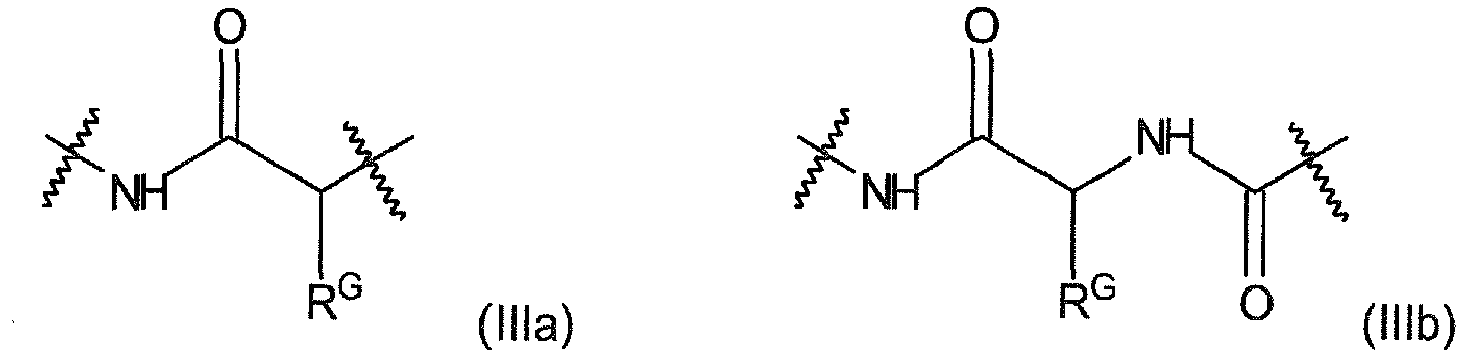
RG is defined as above, including its preferred embodiments, and wherein the bond marked withat the N atom attaches X2 to L2, and the other marked bond attaches X2 to L1.
- It is even more preferred that

 at the N atom attaches X2 to L2, and the other marked bond attaches X2 to L1.
- In line with the above, it will be understood that in particularly preferred compounds of formula (I) and their salts, the moiety -X3-L2-X2(RG)-L1-X1- in formula (I) is a group of the formula
-C(O)-NH-CH(COOH)-(CH2)4-NH-C(O)-CH(RG)-(CH2)5-C(O)-NH-,
or of the formula
-C(O)-NH-CH(COOH)-(CH2)4-NH-C(O)-CH(RG)-NH-C(O)-(CH2)3-C(O)-NH-,
with the C-terminal being attached to the carbon atom in formula (I) carrying the substituent R2, and the N-terminal being attached to the group (CH2)n in formula (I), and with RG being defined as above, including its preferred embodiments. - In formula (I), a is 0 or 1, and is preferably 1. b is 0 or 1, and is preferably 1. Thus, it is also preferred that a and b are both 1.
- R2 is an optionally substituted aryl group or an optionally substituted aralkyl group, preferably an optionally substituted aralkyl group. As will be understood, the term "aralkyl group" as used herein refers to an alkyl group wherein a hydrogen atom is replaced by an aryl group as a substituent. Preferably, the aralkyl group is a group wherein one aryl group is bound to an alkanediyl group. The aryl group or aralkyl group represented by R2 may be substituted on its aromatic ring with a substituent selected from halogen, preferably I, and -OH. The aryl and the aryl portion of the aralkyl group are preferably selected from phenyl and naphthyl, such as 2-naphthyl. It is more preferred that the aryl and the aryl portion of the aralkyl are phenyl. The alkanediyl portion of the aralkyl group is preferably a C1-C4 alkanediyl group, more preferably a -CH2- group. Thus, R2 is more preferably selected from optionally substituted -CH2-phenyl and optionally substituted -CH2-naphthyl, and is most preferably optionally substituted -CH2-phenyl.
- The optionally substituted aryl group and the aryl portion of the optionally substituted aralkyl group, including their preferred embodiments, may be substituted with a substituent selected from halogen, preferably I, and -OH. It will be also be understood that this includes the possibility that one or more than one, e.g. 2 or 3, substituent(s) selected from halogen, preferably I, and -OH is (are) present. However, it is preferred that R2 is non-substituted. Thus, R2 is most preferably non-substituted -CH2-phenyl.
- R3 is an optionally substituted aryl group or an optionally substituted aralkyl group, preferably an optionally substituted aralkyl group. The aryl group or aralkyl group may be substituted on its aromatic ring with a substituent selected from halogen, preferably I, and -OH. The aryl and the aryl portion of the aralkyl group are preferably selected from phenyl and naphthyl, such as 2-naphthyl. It is more preferred that the aryl and the aryl portion of the aralkyl are phenyl. The alkanediyl portion of the aralkyl group is preferably a C1-C4 alkanediyl group, more preferably a -CH2- group. Thus, R3 is more preferably optionally substituted -CH2-phenyl.
- The optionally substituted aryl group and the aryl portion of the optionally substituted aralkyl group, including their preferred embodiments, may be substituted with a substituent selected from halogen, preferably I, and -OH. It will be also be understood that this includes the possibility that one or more than one, e.g. 2 or 3, substituent(s) selected from halogen, preferably I, and -OH is (are) present. Preferably, R3 is substituted with one substituent which is -OH, or with a combination of one substituent -OH and one substituent -I. Thus, it is more preferred that R3 is -CH2-phenyl substituted with one substituent that is -OH, or with a combination of one substituent -OH and one substituent -I. Most preferably, the substituent -OH is present in the para-position of the phenyl ring relative to the -CH2- group.
- In line with the above, it is further preferred for the compounds of formula (I) and their salts that R2 is a group of the formula

 marks the bond which attaches R2 and R3, respectively, to the remainder of the compound.
- It is even further preferred that R2 is a group of the formula

 marks the bond which attaches R2 and R3, respectively, to the remainder of the compound.
- X4 is selected from an amide bond, an ether bond, a thioether bond, an ester bond, a thioester bond, a urea bridge, an amine bond, a group of the formula


Preferably, X4 is selected from an amide bond, a group of the formula

- RM is a marker group which comprises at least one of
- (i) a chelating group optionally containing a chelated non-radioactive or radioactive cation and
- (ii) a radiotracer group containing a covalently bound fluorine atom which can be labeled with 18F by isotopic exchange of 19F by 18F or which is labeled with 18F.
- Typically, RM comprises either one of (i) or (ii), and it is not necessary that (i) and (ii) are both comprised in one compound or salt of formula (I) at the same time. It is preferred that RM comprises a chelating group optionally containing a chelated non-radioactive or radioactive cation.
- As will be understood by the skilled reader, the above definition according to which RM comprises at least one of the chelating group (i) and the radiotracer group (ii) encompasses the case that RM is a chelating group (i) or a radiotracer group (ii); in this case the chelating group group (i) or radiotracer group (ii) is typically directly bound to X4 (if a is 1), to -C(O)-NH-CH(R2)- (if a is 0 and b is 1) or to X3 (if a and b are 0),
and the case that RM comprises, together with the chelating group (i) or a radiotracer group (ii), e.g. a further linker moiety; in this case the chelating group (i) or radiotracer group (ii)can be indirectly bound via this further linker moiety to X4 (if a is 1), to -C(O)-NH-CH(R2)- (if a is 0 and b is 1) or to X3 (if a and b are 0). - Incidentally, in the case where RM comprises a chelating group optionally containing a chelated non-radioactive or radioactive cation, it is preferred that X4 is an amide bond -C(O)-NH- with the carbon atom attached to RM, or a group of the formula

- The chelating group provided by RM is suitable to form a chelate with a radioactive or non-radioactive cation. Suitable chelating groups for diverse cations are well known in the art, and can be used in the context of the present invention.
- The chelating group optionally containing a chelated non-radioactive or radioactive cation is preferably selected from a chelating group comprising at least one of
- (i) a macrocyclic ring structure with 8 to 20 ring atoms of which 2 or more, preferably 3 or more, are selected from oxygen atoms, sulfur atoms and nitrogen atoms; and
- (ii) an acyclic, open chain chelating structure with 8 to 20 main chain atoms of which 2 or more, preferably 3 or more are heteroatoms selected from oxygen atoms, sulfur atoms and nitrogen atoms.
- An exemplary chelating group, and thus also an exemplary group RM, is a residue of a chelating agent selected from bis(carboxymethyl)-1,4,8,11-tetraazabicyclo[6.6.2]hexadecane (CBTE2a), cyclohexyl-1,2-diaminetetraacetic acid (CDTA), 4-(1,4,8,11-tetraazacyclotetradec-1-yl)-methylbenzoic acid (CPTA), N'-[5-[acetyl(hydroxy)amino]pentyl]-N-[5-[[4-[5-aminopentyl-(hydroxy)amino]-4-oxobutanoyl]amino]pentyl]-N-hydroxybutandiamide (DFO), 4,11-bis(carboxymethyl)-1,4,8,11-tetraazabicyclo[6.6.2]hexadecan (DO2A) 1,4,7,10-tetraazacyclododecan-N,N',N",N'''-tetraacetic acid (DOTA), 2-[1,4,7,10-tetraazacyclododecane-4,7,10-triacetic acid]-pentanedioic acid (DOTAGA), N,N'-dipyridoxylethylendiamine-N,N'-diacetate-5,5'-bis(phosphat) (DPDP), diethylenetriaminepentaacetic acid (DTPA), ethylenediamine-N,N'-tetraacetic acid (EDTA), ethyleneglykol-O,O-bis(2-aminoethyl)-N,N,N',N'-tetraacetic acid (EGTA), N,N-bis(hydroxybenzyl)-ethylenediamine-N,N'-diacetic acid (HBED), hydroxyethyldiaminetriacetic acid (HEDTA), 1-(p-nitrobenzyl)-1,4,7,10-tetraazacyclodecan-4,7,10-triacetate (HP-DOA3), 6-hydrazinyl-N-methylpyridine-3-carboxamide (HYNIC), 1,4,7-triazacyclononan-1-succinic acid-4,7-diacetic acid (NODASA), 1-(1-carboxy-3-carboxypropyl)-4,7-(carbooxy)-1,4,7-triazacyclononane (NODAGA), 1,4,7-triazacyclononanetriacetic acid (NOTA), 4,11-bis(carboxymethyl)-1,4,8,11-tetraazabicyclo[6.6.2]hexadecane (TE2A), 1,4,8,11-tetraazacyclododecane-1,4,8,11-tetraacetic acid (TETA), terpyridin-bis(methyleneamintetraacetic acid (TMT), 1,4,7,10-tetraazacyclotridecan-N,N',N",N'''-tetraacetic acid (TRITA), triethylenetetraaminehexaacetic acid (TTHA), N,N'-bis[(6-carboxy-2-pyridyl)methyl]-4,13-diaza-18-crown-6 (H2macropa), and 4-amino-4-{2-[(3-hydroxy-1,6-dimethyl-4-oxo-1,4-dihydro-pyridin-2-ylmethyl)-carbamoyl]-ethyl} heptanedioic acid bis-[(3-hydroxy-1,6-dimethyl-4-oxo-1,4-dihydro-pyridin-2-ylmethyl)-amide] (THP); which residue is provided by covalently binding a carboxyl group contained in the chelating agent to the remainder of the compound via an ester or an amide bond, preferably an amide bond. It will be understood by the skilled reader that, in formula (I), this ester or amide bond can in this case be represented by or encompassed by X4 (if a is 1), or by X3 (if a and b are 0), or the amide bond can be represented by the -C(O)-NH- part of -C(O)-NH-CH(R2)- (if a is 0 and b is 1).
- Among these chelating agents, DOTA and DOTAGA are preferred.
- It is also preferred that a is 1, and X4 is the amide bond -C(O)-NH- with the carbon atom attached to RM.
- Thus, it is also preferred that RM-X4- is a group of the formula

 is attached to the remainder of the compound of formula (I), and wherein the chelating group may contain a chelated non-radioactive or radioactive cation.
- Exemplary radioactive cations that are optionally chelated by the chelating group are selected from the cations of 44Sc, 47Sc, 51Cr, 52mMn, 58Co, 52Fe, 56Ni, 57Ni, 62Cu, 64Cu, 67Cu, 66Ga, 68Ga, 67Ga, 89Zr, 90Y, 89Y, 94mTc, 99mTc, 97Ru, 105Rh, 109Pd, 111Ag, 110mIn, 111In, 113mIn, 114mIn, 117mSn, 121Sn, 127Te, 142Pr, 143Pr, 149Pm, 151Pm, 149Tb, 153Sm, 157Gd, 161Tb, 166Ho, 165Dy, 169Er, 169Yb, 175Yb, 172Tm, 177Lu, 186Re, 188Re, 191Pt, 197Hg, 198Au, 199Au, 212Pb, 203Pb, 211At, 212Bi, 213Bi, 223Ra, 225Ac, and 227Th, or a cationic molecule comprising 18F, such as 18F-[AlF]2+.
- More preferred chelated cations are selected from the cations of 44Sc, 47Sc, 64Cu, 67Cu, 68Ga, 90Y, 111In, 161Tb, 166Ho, 177Lu, 188Re, 212Pb, 212Bi, 213Bi, 225Ac, and 227Th, or a cationic molecule comprising 18F.
- In a further preferred embodiment, X4 is a group of the formula

RM comprises a radiotracer group containing a covalently bound fluorine atom which can be labeled with 18F by isotopic exchange of 19F by 18F or which is labeled with 18F. A preferred group RM comprising a radiotracer group is a phenyl ring which is substituted by -F, which F is preferably 18F. - Particularly preferred in the context of the present invention are the compounds of the following formula (Ia) and their pharmaceutically acceptable salts:

- More preferred in the context of the present invention are the compounds of the following formula (Ib) and their pharmaceutically acceptable salts:

- Still more preferred in the context of the present invention are the compounds of the following formula (Ic) and their pharmaceutically acceptable salts:

- Even more preferred in the context of the present invention are the compounds of the following formula (Id) and their pharmaceutically acceptable salts:

- In a further aspect, the present invention relates to a pharmaceutical or diagnostic composition comprising or consisting of one or more compounds or salts in accordance with the present invention.
- In a further aspect, the present invention provides a compound or salt in accordance with the invention for use in a method of diagnosing and/or treating
- (a) cancer including prostate cancer; or
- (b) neoangiogenesis/angiogenesis.
- Particularly preferred compounds of the invention are the following:


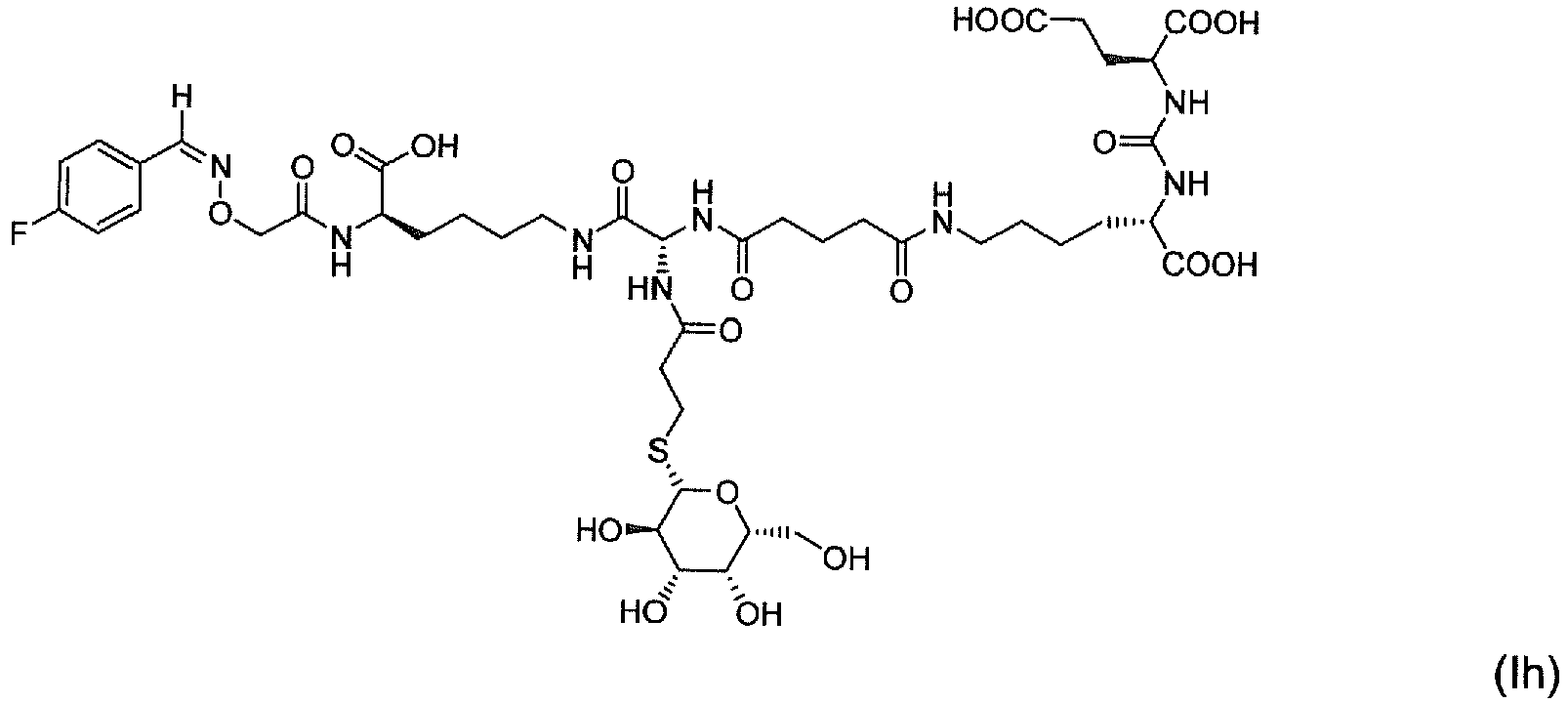


- Most preferred are the
above compounds - Preferred labeling schemes for these most preferred compounds are as defined herein above.
- In a further aspect, the present invention provides a pharmaceutical composition comprising or consisting of one or more compounds or salts of the invention as disclosed herein above.
- In a further aspect, the present invention provides a diagnostic composition comprising or consisting of one or more compounds or salts of the invention as disclosed herein above.
- In a further aspect, the present invention provides a therapeutic composition comprising or consisting of one or more compounds or salts of the invention as disclosed herein above.
- The pharmaceutical composition may further comprise pharmaceutically acceptable carriers, excipients and/or diluents. Examples of suitable pharmaceutical carriers, excipients and/or diluents are well known in the art and include phosphate buffered saline solutions, water, emulsions, such as oil/water emulsions, various types of wetting agents, sterile solutions etc. Compositions comprising such carriers can be formulated by well known conventional methods. These pharmaceutical compositions can be administered to the subject at a suitable dose. Administration of the suitable compositions may be effected by different ways, e.g., by intravenous, intraperitoneal, subcutaneous, intramuscular, topical, intradermal, intranasal or intrabronchial administration. It is particularly preferred that said administration is carried out by injection and/or delivery, e.g., to a site in the pancreas or into a brain artery or directly into brain tissue. The compositions may also be administered directly to the target site, e.g., by biolistic delivery to an external or internal target site, like the pancreas or brain. The dosage regimen will be determined by the attending physician and clinical factors. As is well known in the medical arts, dosages for any one patient depends upon many factors, including the patient's size, body surface area, age, the particular compound to be administered, sex, time and route of administration, general health, and other drugs being administered concurrently. Pharmaceutically active matter may be present in amounts between 0,1 ng and 10 mg/kg body weight per dose; however, doses below or above this exemplary range are envisioned, especially considering the aforementioned factors.
- The above applies mutatis mutandis also to diagnostic compositions.
- To the extent the above disclosed pharmaceutical composition, diagnostic composition and therapeutic composition comprises one or more compounds of the invention, it is preferred that no further pharmaceutically active compounds, diagnostically active compounds or therapeutically active compounds are present. In the alternative, further therapeutically active, diagnostically active or pharmaceutically active compounds may be present, for example, anticancer agents.
- Combination of a therapeutic treatment with the compounds of the present invention might have a synergistic or cumulative treatment effect, similar to the treatment of neuroendocrine tumors with [177Lu]DOTATATE radiotherapy in combination with chemotherapy or immunotherapies. A
first phase 3 study comparing the combination of 177Lu PRRT and capecitabine (Xeloda; Genentech), an oral chemotherapy agent, with [177Lu]DOTATATE alone has been started at Erasmus MC, Rotterdam in 2017 (van Essen M, Krenning EP, Kam BL, de Herder WW, van Aken MO, Kwekkeboom DJ. Report on short-term side effects of treatments with 177Lu-octreotate in combination with capecitabine in seven patients with gastroenteropancreatic neuroendocrine tumours. Eur J Nucl Med Mol Imaging. 2008;35:743-748). - Further studies on combination therapies, named peptide receptor chemoradionuclide therapy (PRCRT), have recently been published (Kong G, Callahan J, Hofman MS, et al. High clinical and morphologic response using 90Y-DOTA-octreotate sequenced with 177Lu-DOTA-octreotate induction peptide receptor chemoradionuclide therapy (PRCRT) for bulky neuroendocrine tumours. Eur J Nucl Med Mol Imaging. 2017;44:476-489). Similar "combined treatment approaches" will be carried out in the near future to improve the efficiency of PSMA-targeted radioligand therapies.
- In a further aspect, the present invention provides one or more compounds of the invention as disclosed herein above for use in medicine.
- Preferred uses in medicine are in nuclear medicine such as nuclear diagnostic imaging, also named nuclear molecular imaging, and/or targeted radiotherapy of diseases associated with an overexpression, preferably of PSMA on the diseased tissue.
- In a further aspect, the present invention provides a compound of the invention as defined herein above for use in a method of diagnosing and/or staging cancer, preferably prostate cancer.
- Preferred indications are the detection or staging of cancer, such as, but not limited high grade gliomas, lung cancer and especially prostate cancer and metastasized prostate cancer, the detection of metastatic disease in patients with primary prostate cancer of intermediate-risk to high-risk, and the detection of metastatic sites, even at low serum PSA values in patients with biochemically recurrent prostate cancer. Another preferred indication is the imaging and visualization of neoangiogensis.
- In terms of medical indications to be subjected to therapy, especially radiotherapy, cancer is a preferred indication. Prostate cancer is a particularly preferred indication.
- In a further aspect, the present invention provides a compound of the invention as defined herein above for use in a method of diagnosing and/or staging cancer, preferably prostate cancer.
- As regards the embodiments characterized in this specification, in particular in the claims, it is intended that each embodiment mentioned in a dependent claim is combined with each embodiment of each claim (independent or dependent) said dependent claim depends from. For example, in case of an
independent claim 1 reciting 3 alternatives A, B and C, adependent claim 2 reciting 3 alternatives D, E and F and aclaim 3 depending fromclaims - Similarly, and also in those cases where independent and/or dependent claims do not recite alternatives, it is understood that if dependent claims refer back to a plurality of preceding claims, any combination of subject-matter covered thereby is considered to be explicitly disclosed. For example, in case of an
independent claim 1, adependent claim 2 referring back toclaim 1, and adependent claim 3 referring back to bothclaims claims claims dependent claim 4 is present which refers to any one ofclaims 1 to 3, it follows that the combination of the subject-matter ofclaims claims claims claims - In particular, the invention includes the following items:
- 1. A compound of formula (I), or a pharmaceutically acceptable salt thereof,

- m
- is an integer of 2 to 6, preferably 2 to 4, more preferably 2;
- n
- is an integer of 2 to 6, preferably 2 to 4, more preferably 4;
- R1L
- is CH2, NH or O, preferably NH;
- R2L
- is C or P(OH), preferably C;
- R3L
- is CH2, NH or O, preferably NH;
- X1
- is selected from an amide bond, an ether bond, a thioether bond, an ester bond, a thioester bond, a urea bridge, and an amine bond; and is preferably an amide bond;
- L1
- is an alkanediyl group, preferably a C2-C10 alkanediyl group, more preferably a C3-C6 alkanediyl group, and most preferably a C3 or C5 alkanediyl group, which alkanediyl group is optionally substituted by a group selected from-COOH and -NH2;
- X2
- is a trivalent coupling group carrying the substituent RG;
- L2
- is an alkanediyl group, preferably a C2-C10 alkanediyl group, more preferably a C3-C6 alkanediyl group, and most preferably a C5 alkanediyl group, said alkanediyl group being optionally substituted by a group selected from -COOH and -NH2;
- X3
- is selected from an amide bond, an ether bond, a thioether bond, an ester bond, a thioester bond, a urea bridge, and an amine bond, and is preferably an amide bond;
- a
- is 0 or 1, preferably 1;
- b
- is 0 or 1, preferably 1;
- R2
- is an optionally substituted aryl group or an optionally substituted aralkyl group, which aryl group or aralkyl group may be substituted on its aromatic ring with a substituent selected from halogen, preferably I, and -OH;
- R3
- is an optionally substituted aryl group or an optionally substituted aralkyl group, which aryl group or aralkyl group may be substituted on its aromatic ring with a substituent selected from halogen, preferably I, and -OH;
- X4
- is selected from an amide bond, an ether bond, a thioether bond, an ester bond, a thioester bond, a urea bridge, an amine bond, a group of the formula


and is preferably an amide bond; - RM
- is a marker group which comprises at least one of
- (i) a chelating group optionally containing a chelated non-radioactive or radioactive cation and
- (ii) a radiotracer group containing a covalently bound fluorine atom which can be labeled with 18F by isotopic exchange of 19F by 18F or which is labeled with 18F; and
- RG
- is a group of the formula (IIa) or (IIb):

marks the bond which attaches RG to X2;
p is an integer of 1 to 5, preferably 2 or 3, and more preferably 2;
R1G is selected from -OH and -CH2-OH;
R2G is selected from -OH and -CH2-OH, and is preferably -CH2-OH;
R3G is selected from -OH and -CH2-OH, and is preferably -CH2-OH;
X1G is selected from S and O, and is preferably S;
X2G is selected from an amide bond, an ether bond, a thioether bond, an ester bond, a thioester bond, an urea bridge, and an amine bond, and is preferably an amide bond. - 2. The compound or salt of
item 1, wherein m is 2, n is 2 or 4, R1L is NH, R2L is C, and R3L is NH. - 3. The compound or salt of
item - 4. The compound or salt of any one of
items 1 to 3, wherein L1 is a linking group of the formula -(CH2)5-. - 5. The compound or salt of any of
items 1 to 4, wherein the alkanediyl group L2 carries one substituent which is a -COOH group. - 6. The compound or salt of
item 5, wherein the alkanediyl group L2 carries one substituent which is a -COOH group and which is present on the carbon atom attached to X3. - 7. The compound or salt of
item 6, wherein the alkanediyl group L2 is a group of the formula -CH(COOH)-(CH2)4-, with the carbon atom carrying the substitutent -COOH being attached to X3. - 8. The compound or salt of any of
items 1 to 7, wherein X1 and X3 are both amide bonds. - 9. The compound or salt of any of
items 1 to 8, wherein X1 is an amide bond -C(O)-NH-- (a) with the nitrogen atom attached to the group (CH2)n, wherein n is 4; or
- (b) with the carbon atom attached to the group (CH2)n, wherein n is 2; and
- 10. The compound or salt of any of
items 1 to 9, wherein

- X2A
- is absent or is selected from an amide bond, an ether bond, a thioether bond, an ester bond, a thioester bond, an urea bridge, and an amine bond, and is preferably an amide bond;
- X2B
- is absent or is selected from an amide bond, an ether bond, a thioether bond, an ester bond, a thioester bond, an urea bridge, and an amine bond, and is preferably absent or an amide bond;
- RG
- is as defined in the preceding items;
- 11. The compound or salt of
item 10, wherein

- RG
- is as defined in the preceding items;
at the N atom attaches X2 to L2, and the other marked bond attaches X2 to L1.
- 12. The compound or salt of any of
items 1 to 11, wherein -X3-L2-X2(RG)-L1-X1- is a group of the formula
-C(O)-NH-CH(COOH)-(CH2)4-NH-C(O)-CH(RG)-(CH2)5-C(O)-NH-
or of the formula
-C(O)-NH-CH(COOH)-(CH2)4-NH-C(O)-CH(RG)-NH-C(O)-(CH2)3-C(O)-NH-,
with the C-terminal in each formula being attached to the carbon atom in formula (I) carrying the substituent R2, and the N-terminal in each formula being attached to the group (CH2)n in formula (I), and with RG being defined as in the preceding items. - 13. The compound or salt of item 11, wherein


- RG
- is as defined in the preceding items;
at the N atom attaches X2 to L2, and the other marked bond attaches X2 to L1.
- 14. The compound or salt of any of
items 1 to 13, wherein RG is selected from the groups of formula (IIc) and (IId):
marks the bond which attaches RG to X2; and
R1G is selected from -OH and -CH2-OH;
R2G is selected from -OH and -CH2-OH, and is preferably -CH2-OH; and
R3G is selected from -OH and -CH2-OH, and is preferably -CH2-OH. - 15. The compound or salt of item 14, wherein RG is selected from the groups of formula (IIe) to (IIh):

 marks the bond which attaches RG to X2.
- 16. The compound or salt of any of
items 1 to 15, wherein a is 1 and b is 1. - 17. The compound or salt of any of
items 1 to 16, wherein R2 is an aralkyl group of the formula -CH2-phenyl or -CH2-naphthyl, wherein the phenyl and the naphtyl group are optionally substituted with a substituent selected from halogen, preferably I, and -OH. - 18. The compound or salt of any of
items 1 to 16, wherein R2 is an aralkyl group of the formula -CH2-phenyl. - 19. The compound or salt of any of
items 1 to 18, wherein R3 is an aralkyl group of the formula -CH2-phenyl or -CH2-naphthyl, wherein the phenyl and the naphtyl group are optionally substituted with a substituent selected from halogen, preferably I, and -OH. - 20. The compound or salt of any of
items 1 to 18, wherein R3 is an aralkyl group of the formula -CH2-phenyl, wherein the phenyl group is substituted with at least one substituent selected from -I and -OH, and is preferably substituted with -I and -OH. - 21. The compound or salt of any of
items 1 to 18, wherein R2 is a group of the formula
 marks the bond which attaches R2 and R3, respectively, to the remainder of the molecule.
- 22. The compound or salt of any of
items 1 to 21, wherein X4 is an amide bond or a group of the formula
- 23. The compound or salt of any of
items 1 to 21, wherein X4 is an amide bond -C(O)-NH-with the carbon atom attached to RM. - 24. The compound or salt of any of
items 1 to 23, wherein RM comprises a chelating group optionally containing a chelated non-radioactive or radioactive cation or is a chelating group optionally containing a chelated non-radioactive or radioactive cation. - 25. The compound or salt of any one of
items 1 to 24, wherein the chelating group comprises at least one of- (i) a macrocyclic ring structure with 8 to 20 ring atoms of which 2 or more, preferably 3 or more, are selected from oxygen atoms, sulfur atoms and nitrogen atoms; and
- (ii) an acyclic, open chain chelating structure with 8 to 20 main chain atoms of which 2 or more, preferably 3 or more are heteroatoms selected from oxygen atoms, sulfur atoms and nitrogen atoms.
- 26. The compound or salt of any one of items 1 to 25, wherein the chelating group is a residue of a chelating agent selected from bis(carboxymethyl)-1,4,8,11-tetraazabicyclo[6.6.2]hexadecane (CBTE2a), cyclohexyl-1,2-diaminetetraacetic acid (CDTA), 4-(1,4,8,11-tetraazacyclotetradec-1-yl)-methylbenzoic acid (CPTA), N'-[5-[acetyl(hydroxy)amino]pentyl]-N-[5-[[4-[5-aminopentyl-(hydroxy)amino]-4-oxobutanoyl]amino]pentyl]-N-hydroxybutandiamide (DFO), 4,11-bis(carboxymethyl)-1,4,8,11-tetraazabicyclo[6.6.2]hexadecan (DO2A) 1,4,7,10-tetraazacyclododecan-N,N',N",N'''-tetraacetic acid (DOTA), 2-[1,4,7,10-tetraazacyclododecane-4,7,10-triacetic acid]-pentanedioic acid (DOTAGA), N,N'-dipyridoxylethylendiamine-N,N'-diacetate-5,5'-bis(phosphat) (DPDP), diethylenetriaminepentaacetic acid (DTPA), ethylenediamine-N,N'-tetraacetic acid (EDTA), ethyleneglykol-O,O-bis(2-aminoethyl)-N,N,N',N'-tetraacetic acid (EGTA), N,N-bis(hydroxybenzyl)-ethylenediamine-N,N'-diacetic acid (HBED), hydroxyethyldiaminetriacetic acid (HEDTA), 1-(p-nitrobenzyl)-1,4,7,10-tetraazacyclodecan-4,7,10-triacetate (HP-DOA3), 6-hydrazinyl-N-methylpyridine-3-carboxamide (HYNIC), 1,4,7-triazacyclononan-1-succinic acid-4,7-diacetic acid (NODASA), 1-(1-carboxy-3-carboxypropyl)-4,7-(carbooxy)-1,4,7-triazacyclononane (NODAGA), 1,4,7-triazacyclononanetriacetic acid (NOTA), 4,11-bis(carboxymethyl)-1,4,8,11-tetraazabicyclo[6.6.2]hexadecane (TE2A), 1,4,8,11-tetraazacyclododecane-1,4,8,11-tetraacetic acid (TETA), terpyridin-bis(methyleneamintetraacetic acid (TMT), 1,4,7,10-tetraazacyclotridecan-N,N',N",N'''-tetraacetic acid (TRITA), and triethylenetetraaminehexaacetic acid (TTHA), N,N'-bis[(6-carboxy-2-pyridyl)methyl]-4,13-diaza-18-crown-6 (H2macropa), and 4-amino-4-{2-[(3-hydroxy-1,6-dimethyl-4-oxo-1,4-dihydro-pyridin-2-ylmethyl)-carbamoyl]-ethyl} heptanedioic acid bis-[(3-hydroxy-1,6-dimethyl-4-oxo-1,4-dihydro-pyridin-2-ylmethyl)-amide] (THP);
which residue is provided by covalently binding a carboxyl group contained in the chelating agent to the remainder of the compound via an ester or an amide bond. - 27. The compound or salt of item 26, wherein the chelating agent is selected from DOTA and DOTAGA.
- 28. The compound or salt of item 26 or 27, wherein a is 1, and X4 is the amide bond attaching the chelating group to the remainder of the molecule.
- 29. The compound or salt of any one of items 24 to 28, wherein a is 1 and RM-X4- is a group of the formula

 is attached to the remainder of the compound of formula (I), and wherein the chelating group may contain a chelated non-radioactive or radioactive cation.
- 30. The compound or salt of any of items 24 to 29, wherein the chelating group comprises a chelated cation, preferably a chelated radioactive cation selected from a cation of 44Sc, 47Sc, 51Cr, 52mMn, 58Co, 52Fe, 56Ni, 57Ni, 62Cu, 64Cu, 67Cu, 66Ga, 68Ga, 67Ga, 89Zr, 90Y, 89Y, 94mTc, 99mTc, 97Ru, 105Rh, 109Pd, 111Ag, 110mIn, 111In, 113mIn, 114mIn, 117mSn, 121Sn, 127Te, 142Pr, 143Pr, 149Pm, 151Pm, 149Tb, 153Sm, 157Gd, 161Tb, 166Ho, 165Dy, 169Er, 169Yb, 175Yb, 172Tm, 177Lu, 186Re, 188Re, 191Pt, 197Hg, 198Au, 199Au, 212Pb, 203Pb, 211At., 212Bi, 213Bi, 223Ra, 225Ac, and 227Th, or a cationic molecule comprising 18F, such as 18F-[AlF]2+.
- 31. The compound or salt of
item 30, wherein the chelating group comprises a chelated cation selected from a cation of 44Sc, 47Sc, 64Cu, 67Cu, 68Ga, 90Y, 111In, 161Tb, 166Ho, 177Lu, 188Re, 212Pb, 212Bi, 213Bi, 225Ac, and 227Th or a cationic molecule comprising 18F. - 32. The compound or salt of any of
items 1 to 21, wherein X4 is a group of the formula
RM is a radiotracer group containing a covalently bound fluorine atom which can be labeled with 18F by isotopic exchange of 19F by 18F or which is labeled with 18F. - 33. The compound or salt of item 32, wherein RM is a phenyl ring which is substituted with -F.
- 34. The compound or salt of any of
items 1 to 33, which has the formula (Ia):
- 35. The compound or salt of item 34, which has the formula (Ib):

- 36. The compound or salt of item 35, which has the formula (Ic):

- 37. The compound or salt of item 36, which has the formula (Id):

- 38. The compound of any one of the preceding items, wherein said compound is one of the following:


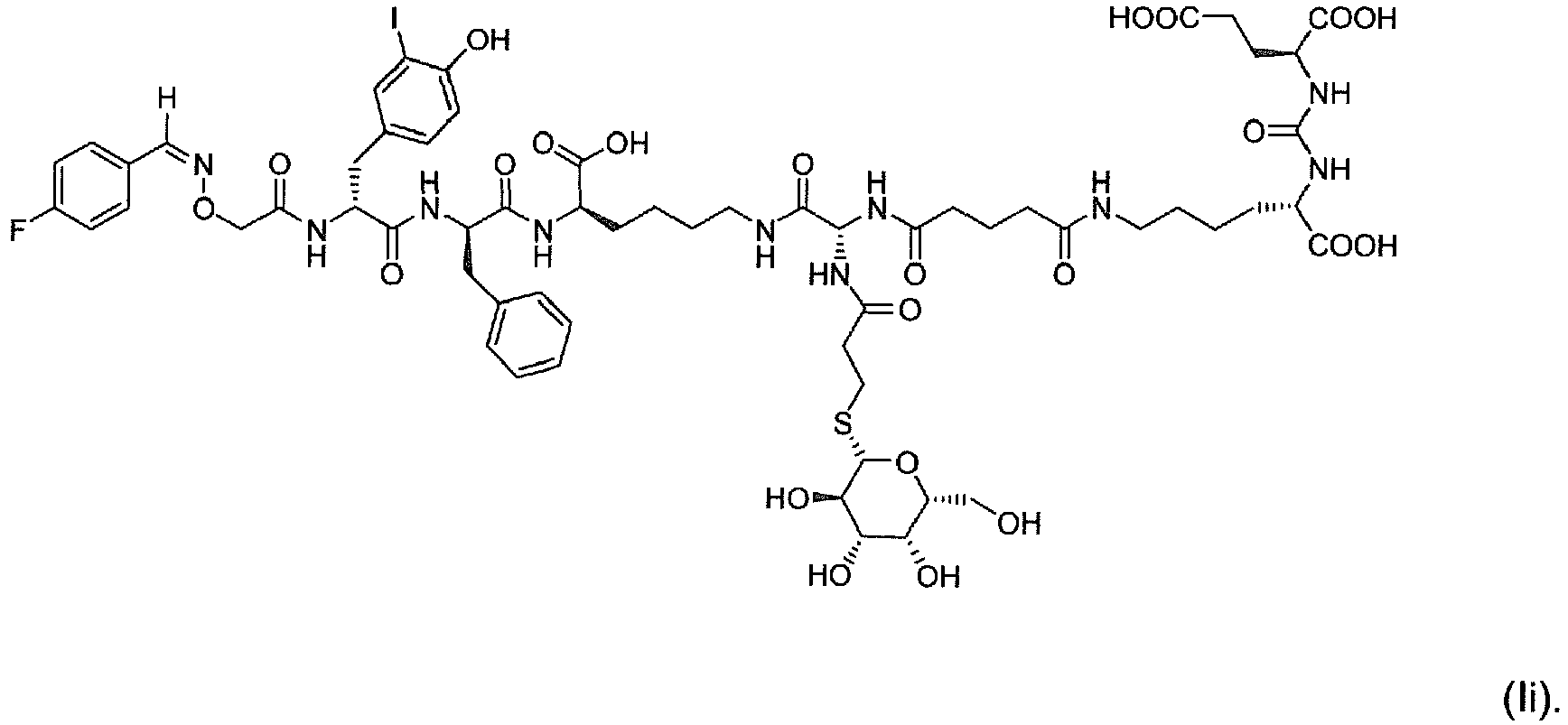
- 39. A pharmaceutical or diagnostic composition comprising or consisting of one or more compounds or salts in accordance with any one of
items 1 to 38. - 40. A compound or salt in accordance with any one of
items 1 to 38 for use in a method of diagnosing and/or treating- (a) cancer including prostate cancer; or
- (b) neoangiogenesis/angiogenesis.
- The figures show:
-
Figure 1 : Chemical Structure of PSMA I&T -
Figure 2 : (a) Preferred attachment site for further conjugation with carbohydrates; (b) Thio-linked cyclic carbohydrate derivatives of fucose, galactose, mannose and cellobiose. R in (a) designates fragments of (b) without R, and R in (b) designates the fragments (a) without R. -
Figure 3 : Blood cell binding of 177Lu-13 and 177Lu-18. Samples of 1 mL blood were incubated with appr. 1,0 MBq of the radiolabeled PSMA inhibitors or for blockade with 100 µM PMPA; Blood samples were stepwise centrifuged at 700 rpm for 5 min with two subsequent washing steps (PBS) to separate red blood cells (erythrocytes). The combined supernatant was centrifuged at 6200 rpm for 5 min and again washed twice to obtain the white cell (leukocytes) fraction and separated from the supernatant. Equal volumes of each fraction were measured in a γ-counter. -
Figure 4 : Metabolic stability of 177Lu-13. Radio-HPLC analyses of quality control (QC) and extracts from homogenized organs and body fluids from a male CB-17 SCID mouse (60 min p.i., 25 MBq 177Lu-13). Chromolith column, binary gradient, flowrate 3 mL/min, 3% MeCN to 95% MeCN in 6 min, 95% MeCN for 3 min. -
Figure 5 : Maximum intensity projections (MIP) of µPET scans in LNCaP xenograft bearing mice. Dynamic MIP (summed upframes 1 to 1.5 h p.i.) of A) 7 MBq 68Ga-18 (PSMA I&T) and B) 12 MBq 68Ga-13 (0.15 to 0.20 nmol peptide, respectively). C) Static MIP (1 h p.i. for 15 min) of 68Ga-13 + PMPA coinjection (8 mg/kg). -
Figure 6 : Time-activity-curves (logarithmic and linear plot) in % ID/mL. A) 68Ga-14 in selected organs. Comparison of 68Ga-14 vs. 68Ga-1 (PSMA I&T) in B) tumor and C) kidney uptake. Data obtained from µPET imaging in CB-17 SCID mice. -
Figure 7 : Biodistribution data (in %ID/g). Biodistribution in healthy CB-17 SCID mice for 68Ga-18 at 1 h p.i. and in LNCaP tumor xenograft bearing CB-17 SCID mice for 68Ga-13 at 1 h and 3 h p.i. (n = 4; respectively). -
Figure 8 : Tumor to tissue ratios of 68Ga-18 and 68Ga-13 after 1h p.i. in LNCaP xenograft bearing CB-17 SCID mice. - The examples illustrate the invention.
- The Fmoc-(9-fluorenylmethoxycarbonyl-) and all other protected amino acid analogs were purchased from Bachem (Bubendorf, Switzerland) or Iris Biotech (Marktredwitz, Germany). Dr. Schottelius from the laboratory of Prof. Wester kindly provided the thioglycosides of galactose, cellobiose and mannose and PSMA I&T was provided by Dr. Wirtz. The tritylchloride polystyrene (TCP) resin was obtained from PepChem (Tubingen, Germany). Chematech (Dijon, France) delivered the chelator DOTAGA-anhydride. All necessary solvents and other organic reagents were purchased from either Alfa Aesar (Karlsruhe, Germany), Sigma-Aldrich (Munich, Germany) or VWR (Darmstadt, Germany). Solid phase synthesis of the peptides was carried out by manual operation using an Intelli-Mixer syringe shaker (Neolab, Heidelberg, Germany). Analytical reversed-phase high performance liquid chromatography (RP-HPLC) was performed on a
Nucleosil 100 C18 (5 µm, 125 x 4.0 mm) column (CS GmbH, Langerwehe, Germany) using a Shimadzu gradient HPLC System (Shimadzu Deutschland GmbH, Neufahrn, Germany). Analysis of the peptides was performed by applying different gradients of 0.1% (v/v) trifluoroacetic acid (TFA) in H2O (solvent A) and 0.1% TFA (v/v) in acetonitrile (MeCN) (solvent B) with a constant flow of 1 mL/min (specific gradients are cited in the text). The Shimadzu SPD 20 A prominence UV/VIS detector (Shimadzu Deutschland GmbH) was used at 220 nm and 254 nm. Human serum albumin (HSA) binding was determined using a Chiralpak HSA 50 x 3 mm 5µm Analytical Column connected to a Chiralpak HSA 10 x 3 mm 5µm Guard Cartridge (Daicel Chemical Industries) purchased from Chiral Technologies Europe (France). Non-linear regression for the HSA binding was performed using OriginPro 2016G. Both retention times tR as well as the capacity factors K' are cited in the text. Preparative RP-HPLC of the peptides was achieved on a Shimadzu HPLC system using aMultospher 100 RP 18-5 (250 x 20 mm) column (CS GmbH, Langerwehe, Germany) with a constant flow of 5 mL/min. Analytical and preparative Radio RP-HPLC of the radioiodinated reference ligand was performed using aNucleosil 100 C18 (5 µm, 125 x 4.0 mm) column. Radioactivity was detected through connection of the outlet of the UV-photometer to a Nal(TI) well-type scintillation counter from EG&G Ortec (Munich, Germany). The 68Ga-and 177Lu-labeled compounds were analyzed as published previously (Weineisen, M., et al., Development and first in human evaluation of PSMA I&T-A ligand for diagnostic imaging and endoradiotherapy of prostate cancer. Journal of Nuclear Medicine, 2014. 55(supplement 1): p. 1083-1083; Šimeček, J., et al., A Monoreactive Bifunctional Triazacyclononane Phosphinate Chelator with High Selectivity for Gallium-68. ChemMedChem, 2012. 7(8): p. 1375-1378). ESI-mass spectra were acquired on an expressionL CMS mass spectrometer (Advion Ltd., Harlow, UK) and on a Varian 500-MS IT mass spectrometer (Agilent Technologies, Santa Clara, USA). For the HSA binding experiment a Chiralpak HSA 50 x 3 mm 5µm Analytical Column, (Daicel Chemical Industries, LTD) connected to a Chiralpak HSA 10 x 3 mm 5µm Guard Cartridge (Daicel Chemical Industries ; Chiral Technologies Europe) was used. Blood samples were collected from volunteers. - The synthesis of the carboxyl-protected Lys-urea-Glu binding motif (1) was synthesized as previously described by solution phase synthesis (Weineisen, M., et al., Synthesis and preclinical evaluation of DOTAGA-conjugated PSMA ligands for functional imaging and endoradiotherapy of prostate cancer. EJNMMI research, 2014. 4(1): p. 1).
- (S)-Fmoc-Asu(OtBu)-OBzl (2): To a solution of 50 mg (0.107 mmol, 1.0 eq) (S)-Fmoc-Asu(OtBu)-OH in N,N-dimethylformamide (DMF) was added 21.8 mg (0.16 mmol, 1.5 eq) of 1-Hydroxy-7-azabenzotriazol (HOAt), 61.0 mg (0.161 mmol, 1.5 eq) 1-[Bis(dimethylamino)methylene]-1H-1,2,3-triazolo[4,5-b]pyridinium 3-oxid hexafluorophosphate (HATU) and 73.2 µL (0.48 mmol, 4.5 eq) N,N-diisopropylethylamine (DIPEA). After 15 min of stirring at RT, 22.2 µL (0.32 mmol, 3.0 eq) of benzyl alcohol was further added and the solution stirred overnight. Finally, the solvent was removed in vacuo. Completion of reaction of 2 was analyzed by RP-HPLC (10% to 90% B in 15 min): tR = 17.1 min; K' = 7.55. Calculated monoisotopic mass for 2 (C34H39NO6): 557.28; found: m/z = 580.7 [M + Na]+.
- (S)-Fmoc-Asu-OBzl (3): tBu deprotection of the
crude product 2 was performed with a stirring mixture (v/v) of 95% TFA and 5% dichlomethane (DCM) at RT for 45 min. After evaporation of the solvent thecrude product 3 was purified using preparative RP-HPLC (60% to 80% B in 15 min): tR = 9.3 min; K' = 8.9. Calculated monoisotopic mass for 3 (C30H31NO6): 501.22; found: m/z = 524.5 [M + Na]+. - (OtBu)KuE(OtBu)2-(S)-Fmoc-Asu-OBzl (4): To a solution of 51.8 mg (10.3 µmol, 1.0 eq) 3 in DMF was added 20.9 mg (0.15 mmol, 1.5 eq) N-Hydroxybenzotriazole (HOBt), 36.3 mg (15.5 µmol, 1.5 eq) N,N,N',N'-Tetramethyl-O-(benzotriazol-1-yl)uronium tetrafluoroborate (TBTU) and 79.4 µL (59.7 mg, 0.46 mmol, 4.5 eq) DIPEA. After 15 min stirring, 75.6 mg (15.5 µmol, 1.5 eq) of 1 was added and further stirred for 20 h at RT. The
crude product 4 was purified using preparative RP-HPLC (70% to 80% B in 15 min): tR = 8.9 min; K' = 1.97. Calculated monoisotopic mass for 4 (C54H74N4O12): 970.53; found: m/z = 971.8 [M + H]+. - (OtBu)KuE(OtBu)2-(S)-Fmoc-Asu-OH (5): For Bzl deprotection, 57.2 mg (0.065 mmol, 1.0 eq) of 4 was dissolved in 2.0 mL of ethanol (EtOH) and 5.72 mg (9.0 µmol, 0.1 eq) of Palladium on activated charcoal (10%) was added. The flask was purged beforehand with H2 and the solution stirred under light H2-pressure (ballon). After 70 min stirring, the crude product was filtered through Celite, the EtOH evaporated in vacuo and the product purified using preparative RP-HPLC (70% to 70.5% B in 15 min): tR = 6.5 min; K' = 0.54. Calculated monoisotopic mass for 5 (C47H68N4O12): 880.48; found: m/z = 881.8 [M + H]+.
- DOTAGA-iodo-D-Tyr-D-Phe-D-Lys-OH (DOTAGA-(l-y)fk) (6) was synthesized through solid phase strategy as previously described (Weineisen, M., et al., Development and first in human evaluation of PSMA I&T-A ligand for diagnostic imaging and endoradiotherapy of prostate cancer. Journal of Nuclear Medicine, 2014. 55(supplement 1): p. 1083-1083; Weineisen, M., et al., Synthesis and preclinical evaluation of DOTAGA-conjugated PSMA ligands for functional imaging and endoradiotherapy of prostate cancer. EJNMMI research, 2014. 4(1): p. 1).
- (OtBu)KuE(OtBu)2-(S)-Fmoc-Asu-OPfp (7): To a solution of 13.6 mg (15.4 µmol, 1.0 eq) of 5 in dry DMF was added 4.77 µL (1.94 mg, 30.8 µmol, 2.0 eq) N,N'-Diisopropylcarbodiimide (DIC) and 5.67 mg (30.8 µmol, 2.0 eq) pentafluorophenol (PFP). After 5 min stirring, 2.49 µL (2.43 mg, 31.0 µmol, 2.0 eq) pyridine was added and the solution was allowed to stir overnight at RT. Completion of reaction of 7 was analyzed by RP-HPLC (10% to 90% B in 15 min): tR = 17.2 min; K' = 7.6. Calculated monoisotopic mass for 7 (C53H67F5N4O12): 1046.47; found: m/z = 1069.8 [M + Na]+.
- DOTAGA-(l-y)fk-(S)-Fmoc-Asu-(OtBu)KuE(OtBu)2 (8): To the crude solution of 7, 16.1 mg (0.0462 mmol, 3.0 eq) of the
peptidic scaffold 6 was drop-wise added and stirred overnight with consecutive evaporation of the solvent in vacuo. Completion of reaction of 8 was analyzed by RP-HPLC (10% to 90% B in 15 min): tR = 12.2 min; K' = 5.1. Calculated monoisotopic mass for 8 (C90H127IN12O25): 1902.81; found: m/z = 1904.8 [M + H]+. - DOTAGA-(l-y)fk-(S)-Asu(NH2)-KuE (9): Fmoc deprotection was achieved by dissolving the
crude product 8 in a mixture of (v/v) 20% Piperidine and 80% DMF for 20 min and concomitant solvent evaporation in vacuo. The consecutive removal of tBu-protecting groups was achieved by dissolving the crude product in TFA for 45 min. After precipitation in diethyl ether, thecrude product 9 was purified by RP-HPLC (20% to 35% B in 15 min): tR = 12.0 min; K' = 5.0. Calculated monoisotopic mass for 9 (C63H93IN12O23): 1512.55; found: m/z = 1514.1 [M + H]+. - Synthesis of the PFP activated thioglycoside-derivatives of galactose (10), mannose (11) and cellobiose (12) was carried out as previously published (Elofsson, M., B. Walse, and J. Kihlberg, Building blocks for glycopeptide synthesis: glycosylation of 3-mercaptopropionic acid and Fmoc amino acids with unprotected carboxyl groups. Tetrahedron letters, 1991. 32(51): p. 7613-7616; Kihlberg, J., M. Elofsson, and L.A. Salvador, [11] Direct synthesis of glycosylated amino acids from carbohydrate peracetates and Fmoc amino acids: Solid-phase synthesis of biomedicinally interesting glycopeptides, in Methods in Enzymology. 1997, Academic Press. p. 221-245; Schottelius, M., et al., N-Terminal Sugar Conjugation and C-Terminal Thr-for-Thr(ol) Exchange in Radioiodinated Tyr3-octreotide: Effect on Cellular Ligand Trafficking in Vitro and Tumor Accumulation in Vivo. Journal of Medicinal Chemistry, 2005. 48(8): p. 2778-2789) and kindly provided by the laboratory of Prof. Wester.
- For the synthesis of the final glycosylated compounds PSMA I&T Galactose (13), PSMA I&T Mannose (14) and PSMA I&T Cellubiose (15) the synthetic procedure was similar for each compound: 3 mg of 9 (2.0 µmol, 1.0 eq) and either 3.6 mg of 10 (6.0 µmol, 3.0 eq), 3.6 mg of 11 (6.0 µmol, 3.0 eq) or 5.3 mg of 12 (6.0 mmol, 3.0 eq) were dissolved in dry DMF. After addition of 1.0 µL DIPEA (6.0 µmol, 3.0 eq), the solution was stirred overnight at RT. The crude solutions were precipitated in ice-cold diethyl ether, centrifuged and the supernatant removed. Deacetylation was accomplished by dissolving the PSMA inhibitors in MeOH containing 0.5 eq of KCN (Herzig, J., et al., Studies in sugar chemistry. 2. A simple method for O-deacylation of polyacylated sugars. The Journal of Organic Chemistry, 1986. 51(5): p. 727-730) and each solution was again stirred overnight at RT. The
final products - (SnBu3-BA)(OtBu)KuE(OtBu)2 (17) was prepared as previously published (Weineisen, M., et al., and preclinical evaluation of DOTAGA-conjugated PSMA ligands for functional imaging and endoradiotherapy of prostate cancer. EJNMMI research, 2014. 4(1): p. 1; Maresca, K., et al., A series of halogenated heterodimeric inhibitors of prostate specific membrane antigen (PSMA) as radiolabeled probes for targeting prostate cancer. Journal of medicinal chemistry, 2008. 52(2): p. 347-357; Vaidyanathan, G. and M.R. Zalutsky, Preparation of N-succinimidyl 3-[* I] iodobenzoate: an agent for the indirect radioiodination of proteins. Nature protocols, 2006. 1(2): p. 707-713; Dekker, B., et al., Functional comparison of annexin V analogues labeled indirectly and directly with iodine-124. Nuclear medicine and biology, 2005. 32(4): p. 403-413).
- For the preparation of the respective natGa-13, natGa-14 and natGa-15 complexes, 50 µL of a 2 mM solution of 13, 14 or 15 in water and 50 µL of a 2 mM solution of Ga(NO3)3 in water were mixed and heated at 40°C for 30 min. The chelate formation was assessed using RP-HPLC and MS. The resulting 1 mM solution was diluted and used for in vitro IC50 determination and HSA binding.
- [natGa]PSMA I&T Galactose (natGa-13): RP-HPLC (10% to 60% B in 15 min): tR = 7.3 min; K' = 2.7. Calculated monoisotopic mass (C72H104GaIN12O29S): 1828.51; found: m/z = 1830.1 [M + H]+.
- [natGa]PSMA I&T Mannose (natGa-14): RP-HPLC (10% to 60% B in 15 min): tR = 8.0 min; K' = 3.0. Calculated monoisotopic mass (C72H104GaIN12O29S): 1828.51; found: m/z = 1830.1 [M + H]+.
- [natGa]PSMA I&T Cellubiose (natGa-15): RP-HPLC (10% to 60% B in 15 min): tR = 7.7 min; K' = 2.9. Calculated monoisotopic mass (C78H115GaIN12O34S): 1991.57; found: m/z = 1992.4 [M + H]+.
-
- natLu-13, natLu-14 and natLu-15 were prepared in a similar procedure as the natGa compounds, but with a 2.5 molar excess of natLu3+. The mixtures were heated for 30 min at 95°C and chelate formation was assessed by RP-HPLC and diluted for in vitro investigations.
- [natLu]PSMA I&T Galactose (natLu-13): RP-HPLC (10% to 60% B in 15 min): tR = 7.7 min; K' = 2.9. Calculated monoisotopic mass (C72H104ILuN12O29S): 1934.52; found: m/z = 1935.4 [M + H]+, 968.2 [M + 2H]2+
- [natLu]PSMA I&T Mannose (natLu-14): RP-HPLC (10% to 60% B in 15 min): tR = 7.4 min; K' = 2.7. Calculated monoisotopic mass (C72H104ILuN12O29S): 1934.52; found: m/z = 1936.4 [M + H]+, 968.3 [M + 2H]2+
- [natLu]PSMA I&T Cellobiose (natLu-15): RP-HPLC (10% to 60% B in 15 min): tR = 7.6 min; K' = 2.8. Calculated monoisotopic mass (C78H114ILuN12O34S): 2096.57; found: m/z = 1049.8 [M + 2H]2+.
- For in vitro and in vivo studies the 68Ga-compounds were prepared with in a fully automated system using a 68Ge/68Ga generator (iTHEMBA Labs, South Africa) connected to a GallElut+ system (SCINTOMICS GmbH, Germany). The radiolabeling was published in previous reports (Weineisen, M., et al., and preclinical evaluation of DOTAGA-conjugated PSMA ligands for functional imaging and endoradiotherapy of prostate cancer. EJNMMI research, 2014. 4(1): p. 1; Notni, J., et al., TRAP, a Powerful and Versatile Framework for Gallium-68 Radiopharmaceuticals. Chemistry-A European Journal, 2011. 17(52): p. 14718-14722; Notni, J., K. Pohle, and H.-J. Wester, Comparative gallium-68 labeling of TRAP-, NOTA-, and DOTA-peptides: practical consequences for the future of gallium-68-PET. EJNMMI research, 2012. 2(1): p. 1) and the experimental details are described in the supplementary info.
- The 177Lu-labeled compounds, for in vitro studies, were prepared as previously described (Sosabowski, J.K. and S.J. Mather, Conjugation of DOTA-like chelating agents to peptides and radiolabeling with trivalent metallic isotopes. Nat. Protocols, 2006. 1(2): p. 972-976) with minor modifications and used without further purification. In short, to a reaction volume of 10 µL 1.0 M NH4OAc buffer pH = 5.9 was added 0.75 to 1.0 nmol tracer (7.5 to 10 µL), 10 to 40 MBq 177LuCl3 (Specific Activity (As) > 3000 GBq/mg, 740 MBq/mL, 0.04 M HCl, ITG, Garching, Germany) and finally filled up to 100 µL with trace-pure Water (Merck, Darmstadt, Germany). The reaction mixture was heated for 30 min at 95°C and the radiochemical purity was determined using Radio-TLC.
- The radioiodinated reference ligand ([125I]I-BA)KuE was radio-synthesized in accordance to a previously published method (Weineisen, M., et al., Synthesis and preclinical evaluation of DOTAGA-conjugated PSMA ligands for functional imaging and endoradiotherapy of prostate cancer. EJNMMI research, 2014. 4(1): p. 1) and fully described in the supplementary info.
- PSMA-positive LNCAP cells (200265; Cell Lines Service GmbH) were cultivated in Dulbecco modified Eagle medium/Nutrition Mixture F-12 (1:1) (DMEM-F12, Biochrom) supplemented with 10% fetal calf serum (Biochrom) and kept at 37°C in a humidified 5% CO2 atmosphere. One day (24h ± 2h) prior to all experiments with LNCaP cells, the cultivated cells were harvested using a mixture of trypsin/ethylendiaminetetraacetate (0.05%/ 0.02%) and phosphate buffered saline and centrifuged. After centrifugation, the supernatant was disposed and the cell pellet resuspended in culture medium. Afterwards, cells were counted with a hemocytometer (Neubauer) and seeded in 24-well plates. IC50 values were determined transferring 150,000 cells/mL per well into 24-well plates, whereas internalization rates were obtained by transferring 125,000 cells/mL into 24-well PLL-coated plates.
- The determination of binding affinity (IC50) and internalization was performed using LNCaP cells and the respective 68/natGa- and 177/natLu-compounds. The experiments were conducted in similarity to a previously published protocol with only minor modifications (Weineisen, M., et al., Synthesis and preclinical evaluation of DOTAGA-conjugated PSMA ligands for functional imaging and endoradiotherapy of prostate cancer. EJNMMI research, 2014. 4(1): p. 1) and are found in detail in the supplementary info.
- HSA binding experiments were performed as previously described (Valko, K., et al., Fast gradient HPLC method to determine compounds binding to human serum albumin. Relationships with octanol/water and immobilized artificial membrane lipophilicity. Journal of pharmaceutical sciences, 2003. 92(11): p. 2236-2248). The mobile phase consisted of a binary gradient system with a constant total flow rate of 0.5mL/min. Mobile phase A was a 50 mM pH 6.9 ammonium acetate solution, mobile phase B was 2-Propanol (HPLC grade, VWR, Germany). The gradient, of mobile phase A was 100% from 0 to 3 min and from 3 min to the end of each run, mobile phase B was set 20%. At each experimental day, the column was calibrated with nine reference substances to confirm the performance and non-linear regression. Afterwards, the actual PSMA inhibitors with unknown HSA binding were measured. More details are found in the supplementary info.
- The logP values were determined as described (Weineisen, M., et al., Synthesis and preclinical evaluation of DOTAGA-conjugated PSMA ligands for functional imaging and endoradiotherapy of prostate cancer. EJNMMI research, 2014. 4(1): p. 1). The experimental details are described in the supplementary info.
- Approximately 1.0 mL human blood samples from EDTA coated vials, were incubated for 15 min with 225 µL of 1.0 nM solutions of either [177Lu]PSMA I&T Galactose (177Lu-13) or [177Lu]PSMA I&T (177Lu-18) and 25 µL of either PBS or PMPA solution (100 µM) in reaction vials. Separation of the different blood cells was accomplished by stepwise centrifugation. Erythrocytes were gained after centrifugation at 700 g (1,400 rpm,
Biofuge 15, Heraus Sepatech, Osterode, Germany) for 5 min and the pellet was rinsed with 500 µL of ice-cold PBS and again centrifuged. Leukocytes were gained by combination of the supernatant and subsequent centrifugation at 3,100 g (6,200 rpm) with a further washing step with 500 µL of ice-cold PBS and repeated centrifugation. The activities of the pellets (erythrocytes and leukocytes) and the supernatant were measured in a γ-counter. PSMA specific binding was determined by co-incubation with PMPA solution (100 µM). - All animal experiments were carried out in accordance with the general animal welfare regulations in Germany (Deutsches Tierschutzgesetz, approval #55.2-1-54-2532-71-13). For the tumor model, LNCaP cells (approx. 107 cells) were suspended 1:1 in serum-free DMEM-F12 medium and Matrigel (BD Biosciences, Germany) and inoculated onto the right shoulder of male, 6 to 8 weeks old CB-17 SCID mice (Charles River Laboratories, Sulzfeld, Germany). Animals were used after the tumor size reached 4 to 8 mm in diameter for experiments.
- 25 MBq of [177Lu]PSMA I&T Galactose (177Lu-13) was injected into the tail vein of a healthy CB17-SCID mouse, which was sacrificed after 60 min. Samples of the urine and blood were immediately taken. Kidneys were frozen with liquid nitrogen, homogenized and extracted with 500 µL PMPA Solution (400 µM in PBS). After centrifugation at 15,000 g for 5 min, the suspension was ultra-filtrated and analyzed by radio-HPLC. The blood sample was centrifuged at 6,000 g for 5 min to obtain the plasma. To remove the proteins from the plasma, ice-cold MeCN was added to the sample and incubated for 10 min at 4°C. After concomitant centrifugation and ultrafiltration, the sample was analyzed by radio-HPLC. The urine sample was used without any further purification.
- Imaging experiments were conducted using a Siemens Inveon small animal PET and data analyzed by the associated Inveon Research Workplace software. Mice were anaesthetised with isoflurane and the compounds [68Ga]PSMA I&T (68Ga-18) and [68Ga]PSMA I&T Galactose (68Ga-13) (0.2 nmol, 7.0 to 12 MBq) were injected via tail vein. Dynamic imaging was carried out after on-bed injection for 90 min. The static blockade image was obtained, after 1 h p.i. with 15 min acquisition time. Blockade was done by coinjection of 8mg/kg of PMPA. All images were reconstructed using an OSEM3D algorithm without scanner and attenuation correction.
- Approximately 10.0 to 11.0 MBq (0.2 nmol) of [68Ga]PSMA I&T Galactose (68Ga-13) were injected into the tail vein of LNCaP tumor-bearing male CB-17 SCID mice and sacrificed after 1 h and 3 h (n = 4, respectively). For [68Ga]PSMA I&T (68Ga-18), 6.3 to 7.0 MBq (0.2 nmol) were injected into healthy CB-17 SCID mice (n = 4) and sacrificed after 1 h. Selected organs were removed, weighted and measured in a γ-counter.
- The introduction of a thioglycoside into the linker region was achieved using (S)-Fmoc-Asu(OtBu)-OH as starting point (Scheme 1). In a first step, the free carboxylic group was protected by introduction of benzyl alcohol via HATU/ HOAt and DIPEA with concomitant acidic removal of the tBu protecting group with TFA, yielding 90% of 3 after RP-HPLC purification. After coupling of 3 with the
binding motif 1, benzyl deprotection was achieved with Palladium on activated charcoal (10%) in EtOH under H2 atmosphere in 92% yield. After RP-HPLC purification, 5 was activated with DIC, PFP and pyridine and condensed with DOTAGA-(l-y)fk, which was synthesized via solid phase peptide synthesis using standard Fmoc strategy according to a previous protocol (Weineisen, M., et al., Synthesis and preclinical evaluation of DOTAGA-conjugated PSMA ligands for functional imaging and endoradiotherapy of prostate cancer. EJNMMI research, 2014. 4(1): p. 1). Thecrude product 8 was at first Fmoc-deprotected with subsequent tBu removal. After RP-HPLC purification, DOTAGA-(l-y)fk-(S)-Asu(NH2)-KuE (9) was obtained in 41% yield. To obtain the finalglycosylated derivatives thioglycosides 10, 11 and 12 were coupled with 9 in an identical procedure using DIPEA to increase the nucleophilicity of the free amine group of 9. Utilization of KCN in MeOH resulted in mild deacetylation of the final compounds. After RP-HPLC purification of 13, 14 and 15, all glycosylated compounds were obtained in an overall yield of 3 to 10%.
- Readily production of the 68Ga-labeled compounds was accomplished within 15 min after start of the radiosynthesis in a fully automated GMP-compliant system. Utilization of 5.0 nmol of the respective PSMA inhibitor yielded in specific activities ranging from 36 to 53 GBq/µmol after cartridge purification. The determined radiochemical purity for all compounds was ≥ 95% and was determined by radio-HPLC. Prior to in vitro and in vivo applications, the EtOH was evaporated and the 68Ga-labeled compounds were diluted with PBS (pH 7.4).
- With minor modifications to the previously published protocol (Sosabowski, J.K. and S.J. Mather, Conjugation of DOTA-like chelating agents to peptides and radiolabeling with trivalent metallic isotopes. Nat. Protocols, 2006. 1(2): p. 972-976), the 177Lu-labeling was accomplished with radiochemical purities ≥ 97% and specific activities ranging from 10 to 53 GBq/µmol. The 177Lu-labeled compounds were diluted with PBS (pH 7.4) for further applications.
- For in vitro studies ([125I]I-BA)KuE was used as reference ligand and synthesized in solution. According to described literature (Weineisen, M., et al., Synthesis and preclinical evaluation of DOTAGA-conjugated PSMA ligands for functional imaging and endoradiotherapy of prostate cancer. EJNMMI research, 2014. 4(1): p. 1; Maresca, K., et al., A series of halogenated heterodimeric inhibitors of prostate specific membrane antigen (PSMA) as radiolabeled probes for targeting prostate cancer. Journal of medicinal chemistry, 2008. 52(2): p. 347-357; Vaidyanathan, G. and M.R. Zalutsky, Preparation of N-succinimidyl 3-[*I] iodobenzoate: an agent for the indirect radioiodination of proteins. Nature protocols, 2006. 1(2): p. 707-713; Dekker, B., et al., Functional comparison of annexin V analogues labeled indirectly and directly with iodine-124. Nuclear medicine and biology, 2005. 32(4): p. 403-413), the respective stannylated precursor 17 was treated with [125I]NaI and peracetic acid for 10 min at RT. Consecutive cartridge purification, tBu deprotection with TFA and purification by RP-HPLC resulted in the final product ([125I]I-BA)KuE in a radiochemical purity ≥ 99% and a radiochemical yield of 40 ± 10 %. The non-radioactive analog for chromatographic analysis was synthesized by conjugating 4-iodo-benzoic acid to 1 with following tBu deprotection and RP-HPLC purification.
- Binding to PSMA was determined using LNCaP human prostate cancer cells in a competitive binding assay with the respective natGa or natLu analogs of 13, 14 and 15 and ([125I]I-BA)KuE (c = 0.2 nM) as radioligand. For comparison, the IC50 values of PSMA I&T (18) were taken from a previous publication (Weineisen, M., et al., Development and first in human evaluation of PSMA I&T-A ligand for diagnostic imaging and endoradiotherapy of prostate cancer. Journal of Nuclear Medicine, 2014. 55(supplement 1): p. 1083-1083), in which the same binding assay was performed. The results are given in Table 1. Compared to the reference ligand (18) and irrespective of the complexed metal ion, the
monosaccharide derivatives 13 and 14 displayed higher affinity to PSMA, whereas the introduction of the disaccharide cellubiose (15) decreased the affinity to PSMA. The glycosylated compounds, except for 15, showed the same trend as thereference ligand 18, in which the natLu-labeled compounds possessed higher affinity as their respective natGa analogs indicating the influence of the free carboxylic acid from the chelator (Weineisen, M., et al., Development and first in human evaluation of PSMA I&T-A ligand for diagnostic imaging and endoradiotherapy of prostate cancer. Journal of Nuclear Medicine, 2014. 55(supplement 1): p. 1083-1083). The different stereochemistry of 13 and 14 had almost no effect on the binding affinity.Table 1: PSMA binding affinities (IC50 ) and internalization [%] of the investigated compounds PSMA Inhibitor IC50 [nM] Internalization [%] [nat/68Ga]PSMA I&T (nat/68Ga-18) 9.4 ± 2.9 59.2 ± 1.7 [nat/177Lu]PSMA I&T (nat/177Lu-18) 7.9 ± 2.4 75.5 ± 1.6 [nat/68Ga]PSMA I&T Galactose (nat/68Ga-13) 7.9 ± 3.9 18.7 ± 4.1 [nat/177Lu]PSMA I&T Galactose (nat/177Lu-13) 5.8 ± 0.6 60.2 ± 2.8 [nat/68Ga]PSMA I&T Mannose (nat/68Ga-14) 7.1 ± 0.3 8.4 ± 0.2 [nat/177Lu]PSMA I&T Mannose (nat/177Lu-14) 5.9 ± 0.5 35.3 ± 2.9 [nat/68Ga]PSMA I&T Cellobiose (nat/68Ga-15) 10.8 ± 1.7 4.0 ± 0.6 [nat/177Lu]PSMA I&T Cellobiose (nat/177Lu-15) 12.5 ± 2.3 22.3 ± 1.2 PSMA I Galactose 1 (21) 3.3 ± 0.6 - PSMA I Galactose 2 (22) 13.0 ± 1.4 - PSMA I Galactose 3 (23) 3.5 ± 0.3 - - Binding assays (IC50 ) were performed using LNCaP cells (150,000/well) and ([125I]I-BA)KuE (c = 0.2 nM) as the radioligand. Cells were incubated in HBSS (1% BSA) at 4°C for 1 h. Internalization values were corrected for unspecific binding and normalized to the reference ([125I]I-BA)-KuE (c = 0.2 nM for 68Ga and 0.5 nM for 177Lu compounds; 37°C, 1 h, 125,000 cells/well, PLL-coated plates). Data for binding (IC50 ) and internalization are expressed as mean ± SD (n = 3).
- LNCaP cells were used to investigate the cell surface binding and internalization of the 68Ga-and 177Lu-labeled
compounds radiolabeled compounds - Albumin binding was determined using a HPLC-column with immobilized human albumin for analysis (Valko, K., et al., Fast gradient HPLC method to determine compounds binding to human serum albumin. Relationships with octanol/water and immobilized artificial membrane lipophilicity. Journal of pharmaceutical sciences, 2003. 92(11): p. 2236-2248; Yamazaki, K. and M. Kanaoka, Computational prediction of the plasma protein-binding percent of diverse pharmaceutical compounds. Journal of pharmaceutical sciences, 2004. 93(6): p. 1480-1494). To diminish the influence of temperature and small pH fluctuations of the NH4OAc buffer on binding (retention time), a set of nine substances with known HSA binding coefficients was used to establish a calibration line by non-linear regression (log retention time vs. log HSA [%] binding). The calibration was always performed prior to the analysis of the actual natGa-and natLu-labeled
PSMA inhibitors disaccharide derivative 15 exhibited the lowest measured values irrespective of the metal ion. Comparing 13 and 14, stereochemistry had only a marginal influence on the albumin binding values, since their respective natGa-and natLu-labeled analogs displayed similar values. Overall, glycosylation reduced the albumin binding in comparison to thereference ligand 18.Table 2: Lipophilicity shown as logP and binding [%] to human serum albumin (HSA) of the labeled PSMA inhibitors PSMA Inhibitor logP HSA [%] [68/natGa]PSMA I&T (68/natGa-18) -4.31 ± 0.32 48.7 [177/natLu]PSMA I&T (177/natLu-18) -4.12 ± 0.1 78.6 [68/natGa]PSMA I&T Galactose (68/natGa-13) -4.15 ± 0.07 7.7 [177/natLu]PSMA I&T Galactose (177/natLu-13) -3.95 ± 0.12 23.3 [68/natGa]PSMA I&T Mannose (68/natGa-14) -4.01 ± 0.08 7.6 [177/natLu]PSMA I&T Mannose (177/natLu-14) -3.85 ± 0.04 25.1 [68/natGa]PSMA I&T Cellobiose (68/natGa-15) - 6.9 [177/natLu]PSMA I&T Cellobiose (177/natLu-15) -4.04 ± 0.1 19.9 Data are expressed as mean ± SD (n = 6) for logP. HSA binding [%] was determined via HPLC and non-linear regression calibration using the tR of the natGa-and natLu-labeled PSMA inhibitors - The determination of the logP was used to assess lipophilicity. The values for the respective radiolabeled compounds from Table 2 were obtained using the shake flask method (n = 6) in n-octanol and PBS (pH 7.4). Data for 68Ga-and 177Lu-18 were obtained from a previously published report (Robu, S., et al., Preclinical evaluation and first patient application of 99mTc-PSMA-I&S for SPECT imaging and radioguided surgery in prostate cancer. Journal of Nuclear Medicine, 2016: p. jnumed. 116.178939) and are added in Table 2 for comparison. For all compounds, the respective 177Lu-labeled analog was more lipophilic than the 68Ga-labeled counterpart. In comparison to PSMA I&T (18), the introduction of a sugar moiety altered hydrophilicity only to a negligible extent with 68Ga-13 being the most hydrophilic glycosylated PSMA inhibitor displaying a logP value of -4.15 ± 0.07.
- The influence of glycosylation on blood cell binding is shown in
Figure 3 . 177Lu-13 and 177Lu-18 were incubated in human blood samples and stepwise centrifuged. In addition, 1.0 MBq of the used radiolabeled PSMA ligands were incubated in the presence of PMPA solution (100 µM) to differentiate between specific and unspecific binding. Binding to erythrocytes for 177Lu-18 was reduced by simultaneous incubation with PMPA from 38.9% to 29.2%, the resulting difference was not visible in the leukocyte fraction (0.1% vs. 0.2%) but in the supernatant, which increased from 61.1% to 70.7%. Regarding 177Lu-13, incubation with PMPA had only minimal effect on the erythrocyte binding and increased, in contrary to 177Lu-18, the value from 26% to 29.5%. The difference was also found in the supernatant fraction. - Due to the longer half-life of Lutetium-177compared to Gallium-68, the in vivo stability of [177Lu]PSMA I&T Galactose was investigated in a
healthy mouse 60 min p.i. and samples extracted from urine, blood and the kidney were analyzed using radio-HPLC as depicted inFigure 4 . The extraction rate of 177Lu-13 using PMPA as competitor for specific binding was ≥ 31% and enabled reasonable detection. In all analyzed fractions, 177Lu-13 found to be stable over 60 min. - Over a period of 90 min, comparative dynamic µPET scans were performed with 68Ga-13 and 68Ga-18 in CB-17 SCID mice bearing LNCaP tumor xenografts to assess the kinetic tissue distribution. Maximum intensity projections of both tracer are depicted in
Figure 5 . 68Ga-13 exhibited a general lower uptake in non-PSMA-expressing tissue, but also with less tumor accumulation than 68Ga-18 (3.7 ± 0.5 %ID/mL vs. 5.8 ± 0.3 %ID/mL; 85 min p.i.;Figure 6 ). Confirmation of specific PSMA-mediated tissue uptake in kidneys and LNCaP tumor of 68Ga-13 was accomplished by coinjection of PMPA (8mg/kg), which reduced the uptake almost completely. - Additionally, the logarithmic plot of the time-activity curves (TAC) in
Figure 6 showed a linear decrease of the activity, resulting in a rapid clearance of 68Ga-13 from blood and muscle tissue. - The comparative linear TAC plot correlations for tumor and kidney uptake, displayed a lower accumulation of 68Ga-13 in these PSMA-expressing tissues with earlier onset of kinetic elimination (
Figure 6 ). The biodistribution revealed a similar tendency with general lower orequal tissue accumulation 1 h p.i. of 68Ga-13 (Figure 7 ) compared to 68Ga-18 except for the blood value. Ongoing clearance of 68Ga-13 from the kidneys and other tissues was visible 3 h after injection, whereas tumor uptake remained stable.
Claims (15)
- A compound of formula (I), or a pharmaceutically acceptable salt thereof,
 m is an integer of 2 to 6;n is an integer of 2 to 6;R1L is CH2, NH or O;R2L is C or P(OH);R3L is CH2, NH or O;X1 is selected from an amide bond, an ether bond, a thioether bond, an ester bond, a thioester bond, a urea bridge, and an amine bond,;L1 is an alkanediyl group, which alkanediyl group is optionally substituted by a group selected from -COOH and -NH2;X2 is a trivalent coupling group carrying the substituent RG;L2 is an alkanediyl group, said alkanediyl group being optionally substituted by a group selected from -COOH and -NH2;X3 is selected from an amide bond, an ether bond, a thioether bond, an ester bond, a thioester bond, a urea bridge, and an amine bond;a is 0 or 1;b is 0 or 1;R2 is an optionally substituted aryl group or an optionally substituted aralkyl group, which aryl group or aralkyl group may be substituted on its aromatic ring with a substituent selected from halogen and -OH;R3 is an optionally substituted aryl group or an optionally substituted aralkyl group, which aryl group or aralkyl group may be substituted on its aromatic ring with a substituent selected from halogen and -OH;X4 is selected from an amide bond, an ether bond, a thioether bond, an ester bond, a thioester bond, a urea bridge, an amine bond, a group of the formula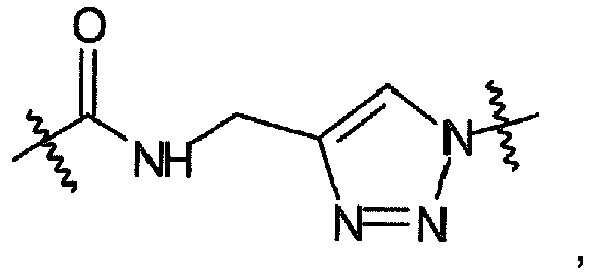
 RM is a marker group which comprises at least one of(i) a chelating group optionally containing a chelated non-radioactive or radioactive cation and(ii) a radiotracer group containing a covalently bound fluorine atom which can be labeled with 18F by isotopic exchange of 19F by 18F or which is labeled with 18F; andRG is a group of the formula (IIa) or (IIb):
 marks the bond which attaches RG to X2;
 p is an integer of 1 to 5;R1G is selected from -OH and -CH2-OH;R2G is selected from -OH and -CH2-OH;R3G is selected from -OH and -CH2-OH;X1G is selected from S and O;X2G is selected from an amide bond, an ether bond, a thioether bond, an ester bond, a thioester bond, an urea bridge, and an amine bond.
 - The compound or salt of claim 1, wherein m is 2, n is 2 or 4, R1L is NH, R2L is C, and R3L is NH.
- The compound or salt of claim 1 or 2, wherein X1 and X3 are both amide bonds.
- The compound or salt of any of claims 1 to 3, wherein

 X2A is absent or is selected from an amide bond, an ether bond, a thioether bond, an ester bond, a thioester bond, an urea bridge, and an amine bond;X2B is absent or is selected from an amide bond, an ether bond, a thioether bond, an ester bond, a thioester bond, an urea bridge, and an amine bond;RG is as defined in claim 1;and wherein X2A attaches X2 to L2, and X2B attaches X2 to L1.
 - The compound or salt of claim 4, wherein

 RG is as defined in claim 1;and wherein the bond marked withat the N atom attaches X2 to L2, and the other marked bond attaches X2 to L1.
- The compound or salt of any of claims 1 to 5, wherein -X3-L2-X2(RG)-L1-X1- is a group of the formula
-C(O)-NH-CH(COOH)-(CH2)4-NH-C(O)-CH(RG)-(CH2)5-C(O)-NH-
with the C-terminal being attached to the carbon atom in formula (I) carrying the substituent R2, and the N-terminal being attached to the group (CH2)n in formula (I), and with RG being defined as in claim 1. - The compound or salt of any of claims 1 to 6, wherein RG is selected from the groups of formula (IIc) and (IId):
 marks the bond which attaches RG to X2; and
 R1G is selected from -OH and -CH2-OH;R2G is selected from -OH and -CH2-OH; andR3G is selected from -OH and -CH2-OH.
- The compound or salt of any of claims 1 to 7, wherein R2 is an aralkyl group of the formula -CH2-phenyl or -CH2-(2-naphthyl), wherein the phenyl and the naphtyl group are optionally substituted with a substituent selected from halogen and -OH.
- The compound or salt of any of claims 1 to 8, wherein R3 is an aralkyl group of the formula -CH2-phenyl, wherein the phenyl group is substituted with at least one substituent selected from -I and -OH.
- The compound or salt of any one of claims 1 to 9, wherein the chelating group comprises at least one of(i) a macrocyclic ring structure with 8 to 20 ring atoms of which 2 or more are selected from oxygen atoms, sulfur atoms and nitrogen atoms; and(ii) an acyclic, open chain chelating structure with 8 to 20 main chain atoms of which 2 or more are heteroatoms selected from oxygen atoms, sulfur atoms and nitrogen atoms.
- The compound or salt of any of claims 1 to 9, wherein X4 is a group of the formula

- The compound or salt of any of claims 1 to 11, which has the formula (Ia):

- The compound of any one of the preceding claims, wherein said compound is one of the following:

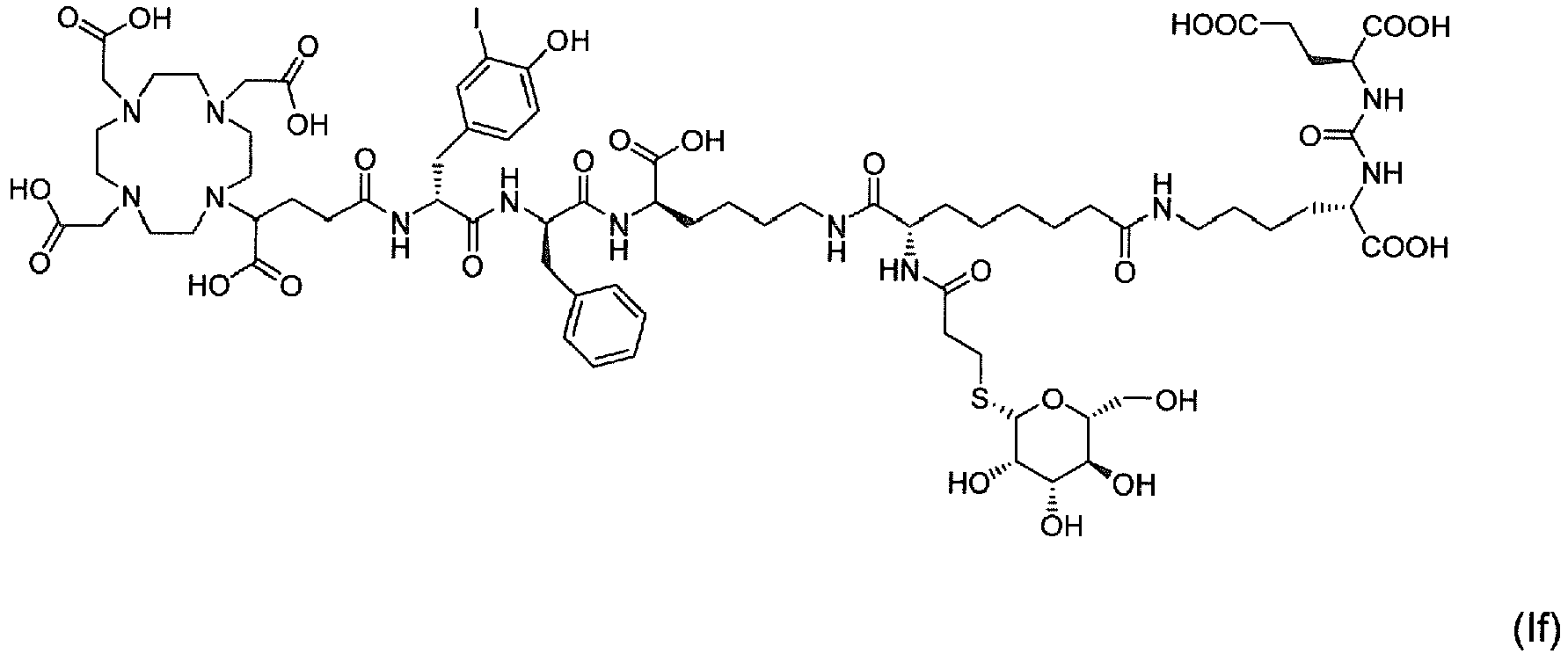


- A pharmaceutical or diagnostic composition comprising or consisting of one or more compounds or salts in accordance with any one of the preceding claims.
- A compound or salt in accordance with any one of claims 1 to 13 for use in a method of diagnosing and/or treating(a) cancer including prostate cancer; or(b) neoangiogenesis/angiogenesis.
Priority Applications (1)
| Application Number | Priority Date | Filing Date | Title |
|---|---|---|---|
| EP17206498.2A EP3494998A1 (en) | 2017-12-11 | 2017-12-11 | Glycosylated psma inhibitors for imaging and endoradiotherapy |
Applications Claiming Priority (1)
| Application Number | Priority Date | Filing Date | Title |
|---|---|---|---|
| EP17206498.2A EP3494998A1 (en) | 2017-12-11 | 2017-12-11 | Glycosylated psma inhibitors for imaging and endoradiotherapy |
Publications (1)
| Publication Number | Publication Date |
|---|---|
| EP3494998A1 true EP3494998A1 (en) | 2019-06-12 |
Family
ID=60654865
Family Applications (1)
| Application Number | Title | Priority Date | Filing Date |
|---|---|---|---|
| EP17206498.2A Ceased EP3494998A1 (en) | 2017-12-11 | 2017-12-11 | Glycosylated psma inhibitors for imaging and endoradiotherapy |
Country Status (1)
| Country | Link |
|---|---|
| EP (1) | EP3494998A1 (en) |
Cited By (1)
| Publication number | Priority date | Publication date | Assignee | Title |
|---|---|---|---|---|
| CN113354707A (en) * | 2021-06-07 | 2021-09-07 | 苏州思萃同位素技术研究所有限公司 | Synthetic method of three-function diagnosis and treatment integrated prodrug for prostate cancer and product thereof |
Citations (2)
| Publication number | Priority date | Publication date | Assignee | Title |
|---|---|---|---|---|
| US20070072831A1 (en) | 2005-05-16 | 2007-03-29 | Gilead Sciences, Inc. | Integrase inhibitor compounds |
| WO2017165473A1 (en) * | 2016-03-22 | 2017-09-28 | The Johns Hopkins University | Prostate-specific membrane antigen targeted high-affinity agents for endoradiotherapy of prostate cancer |
-
2017
- 2017-12-11 EP EP17206498.2A patent/EP3494998A1/en not_active Ceased
Patent Citations (2)
| Publication number | Priority date | Publication date | Assignee | Title |
|---|---|---|---|---|
| US20070072831A1 (en) | 2005-05-16 | 2007-03-29 | Gilead Sciences, Inc. | Integrase inhibitor compounds |
| WO2017165473A1 (en) * | 2016-03-22 | 2017-09-28 | The Johns Hopkins University | Prostate-specific membrane antigen targeted high-affinity agents for endoradiotherapy of prostate cancer |
Non-Patent Citations (55)
Cited By (1)
| Publication number | Priority date | Publication date | Assignee | Title |
|---|---|---|---|---|
| CN113354707A (en) * | 2021-06-07 | 2021-09-07 | 苏州思萃同位素技术研究所有限公司 | Synthetic method of three-function diagnosis and treatment integrated prodrug for prostate cancer and product thereof |
Similar Documents
| Publication | Publication Date | Title |
|---|---|---|
| JP7572080B2 (en) | PSMA Ligands for Imaging and Internal Radiotherapy - Patent application | |
| AU2024200440B2 (en) | Dual mode radiotracer and -therapeutics | |
| CN113573743B (en) | cancer diagnostic imaging agents | |
| KR20230162589A (en) | Dual-mode radioactive tracers and -therapeutics | |
| EP3494999A1 (en) | Psma ligands for imaging and endoradiotherapy | |
| RU2807076C2 (en) | Psma ligands for imaging and endoradiotherapy | |
| HK40031508B (en) | Psma ligands for imaging and endoradiotherapy | |
| HK40022705A (en) | Dual mode radiotracer and -therapeutics | |
| HK40022705B (en) | Dual mode radiotracer and -therapeutics | |
| EA046402B1 (en) | DUAL-MODE RADIOACTIVE LABEL AND RADIOTHERAPEUTIC DRUG | |
| WO2024023332A1 (en) | Silicon-based fluoride acceptor groups for radiopharmaceuticals |
Legal Events
| Date | Code | Title | Description |
|---|---|---|---|
| PUAI | Public reference made under article 153(3) epc to a published international application that has entered the european phase |
Free format text: ORIGINAL CODE: 0009012 |
|
| AK | Designated contracting states |
Kind code of ref document: A1 Designated state(s): AL AT BE BG CH CY CZ DE DK EE ES FI FR GB GR HR HU IE IS IT LI LT LU LV MC MK MT NL NO PL PT RO RS SE SI SK SM TR |
|
| AX | Request for extension of the european patent |
Extension state: BA ME |
|
| STAA | Information on the status of an ep patent application or granted ep patent |
Free format text: STATUS: THE APPLICATION HAS BEEN REFUSED |
|
| 18R | Application refused |
Effective date: 20190707 |