EP3492515A1 - Method for manufacturing resin particles - Google Patents
Method for manufacturing resin particles Download PDFInfo
- Publication number
- EP3492515A1 EP3492515A1 EP17889673.4A EP17889673A EP3492515A1 EP 3492515 A1 EP3492515 A1 EP 3492515A1 EP 17889673 A EP17889673 A EP 17889673A EP 3492515 A1 EP3492515 A1 EP 3492515A1
- Authority
- EP
- European Patent Office
- Prior art keywords
- curable composition
- semi
- polymer particles
- spherical
- diameter
- Prior art date
- Legal status (The legal status is an assumption and is not a legal conclusion. Google has not performed a legal analysis and makes no representation as to the accuracy of the status listed.)
- Granted
Links
Images


Classifications
-
- C—CHEMISTRY; METALLURGY
- C08—ORGANIC MACROMOLECULAR COMPOUNDS; THEIR PREPARATION OR CHEMICAL WORKING-UP; COMPOSITIONS BASED THEREON
- C08J—WORKING-UP; GENERAL PROCESSES OF COMPOUNDING; AFTER-TREATMENT NOT COVERED BY SUBCLASSES C08B, C08C, C08F, C08G or C08H
- C08J3/00—Processes of treating or compounding macromolecular substances
- C08J3/12—Powdering or granulating
-
- B—PERFORMING OPERATIONS; TRANSPORTING
- B29—WORKING OF PLASTICS; WORKING OF SUBSTANCES IN A PLASTIC STATE IN GENERAL
- B29C—SHAPING OR JOINING OF PLASTICS; SHAPING OF MATERIAL IN A PLASTIC STATE, NOT OTHERWISE PROVIDED FOR; AFTER-TREATMENT OF THE SHAPED PRODUCTS, e.g. REPAIRING
- B29C33/00—Moulds or cores; Details thereof or accessories therefor
- B29C33/42—Moulds or cores; Details thereof or accessories therefor characterised by the shape of the moulding surface, e.g. ribs or grooves
-
- B—PERFORMING OPERATIONS; TRANSPORTING
- B29—WORKING OF PLASTICS; WORKING OF SUBSTANCES IN A PLASTIC STATE IN GENERAL
- B29C—SHAPING OR JOINING OF PLASTICS; SHAPING OF MATERIAL IN A PLASTIC STATE, NOT OTHERWISE PROVIDED FOR; AFTER-TREATMENT OF THE SHAPED PRODUCTS, e.g. REPAIRING
- B29C39/00—Shaping by casting, i.e. introducing the moulding material into a mould or between confining surfaces without significant moulding pressure; Apparatus therefor
- B29C39/22—Component parts, details or accessories; Auxiliary operations
- B29C39/26—Moulds or cores
-
- B—PERFORMING OPERATIONS; TRANSPORTING
- B29—WORKING OF PLASTICS; WORKING OF SUBSTANCES IN A PLASTIC STATE IN GENERAL
- B29C—SHAPING OR JOINING OF PLASTICS; SHAPING OF MATERIAL IN A PLASTIC STATE, NOT OTHERWISE PROVIDED FOR; AFTER-TREATMENT OF THE SHAPED PRODUCTS, e.g. REPAIRING
- B29C41/00—Shaping by coating a mould, core or other substrate, i.e. by depositing material and stripping-off the shaped article; Apparatus therefor
- B29C41/34—Component parts, details or accessories; Auxiliary operations
- B29C41/36—Feeding the material on to the mould, core or other substrate
-
- B—PERFORMING OPERATIONS; TRANSPORTING
- B29—WORKING OF PLASTICS; WORKING OF SUBSTANCES IN A PLASTIC STATE IN GENERAL
- B29C—SHAPING OR JOINING OF PLASTICS; SHAPING OF MATERIAL IN A PLASTIC STATE, NOT OTHERWISE PROVIDED FOR; AFTER-TREATMENT OF THE SHAPED PRODUCTS, e.g. REPAIRING
- B29C41/00—Shaping by coating a mould, core or other substrate, i.e. by depositing material and stripping-off the shaped article; Apparatus therefor
- B29C41/34—Component parts, details or accessories; Auxiliary operations
- B29C41/38—Moulds, cores or other substrates
-
- C—CHEMISTRY; METALLURGY
- C08—ORGANIC MACROMOLECULAR COMPOUNDS; THEIR PREPARATION OR CHEMICAL WORKING-UP; COMPOSITIONS BASED THEREON
- C08F—MACROMOLECULAR COMPOUNDS OBTAINED BY REACTIONS ONLY INVOLVING CARBON-TO-CARBON UNSATURATED BONDS
- C08F2/00—Processes of polymerisation
- C08F2/38—Polymerisation using regulators, e.g. chain terminating agents, e.g. telomerisation
-
- C—CHEMISTRY; METALLURGY
- C08—ORGANIC MACROMOLECULAR COMPOUNDS; THEIR PREPARATION OR CHEMICAL WORKING-UP; COMPOSITIONS BASED THEREON
- C08F—MACROMOLECULAR COMPOUNDS OBTAINED BY REACTIONS ONLY INVOLVING CARBON-TO-CARBON UNSATURATED BONDS
- C08F2/00—Processes of polymerisation
- C08F2/44—Polymerisation in the presence of compounding ingredients, e.g. plasticisers, dyestuffs, fillers
-
- C—CHEMISTRY; METALLURGY
- C08—ORGANIC MACROMOLECULAR COMPOUNDS; THEIR PREPARATION OR CHEMICAL WORKING-UP; COMPOSITIONS BASED THEREON
- C08F—MACROMOLECULAR COMPOUNDS OBTAINED BY REACTIONS ONLY INVOLVING CARBON-TO-CARBON UNSATURATED BONDS
- C08F2/00—Processes of polymerisation
- C08F2/46—Polymerisation initiated by wave energy or particle radiation
- C08F2/48—Polymerisation initiated by wave energy or particle radiation by ultraviolet or visible light
-
- C—CHEMISTRY; METALLURGY
- C08—ORGANIC MACROMOLECULAR COMPOUNDS; THEIR PREPARATION OR CHEMICAL WORKING-UP; COMPOSITIONS BASED THEREON
- C08J—WORKING-UP; GENERAL PROCESSES OF COMPOUNDING; AFTER-TREATMENT NOT COVERED BY SUBCLASSES C08B, C08C, C08F, C08G or C08H
- C08J2333/00—Characterised by the use of homopolymers or copolymers of compounds having one or more unsaturated aliphatic radicals, each having only one carbon-to-carbon double bond, and only one being terminated by only one carboxyl radical, or of salts, anhydrides, esters, amides, imides, or nitriles thereof; Derivatives of such polymers
- C08J2333/02—Homopolymers or copolymers of acids; Metal or ammonium salts thereof
-
- C—CHEMISTRY; METALLURGY
- C08—ORGANIC MACROMOLECULAR COMPOUNDS; THEIR PREPARATION OR CHEMICAL WORKING-UP; COMPOSITIONS BASED THEREON
- C08J—WORKING-UP; GENERAL PROCESSES OF COMPOUNDING; AFTER-TREATMENT NOT COVERED BY SUBCLASSES C08B, C08C, C08F, C08G or C08H
- C08J2351/00—Characterised by the use of graft polymers in which the grafted component is obtained by reactions only involving carbon-to-carbon unsaturated bonds; Derivatives of such polymers
- C08J2351/08—Characterised by the use of graft polymers in which the grafted component is obtained by reactions only involving carbon-to-carbon unsaturated bonds; Derivatives of such polymers grafted on to macromolecular compounds obtained otherwise than by reactions only involving carbon-to-carbon unsaturated bonds
Definitions
- the present invention relates to a method for preparing spherical polymer particles.
- a curable composition was coated on a flat substrate, and then, cured and provided as a cured product in the form of a sheet.
- sheet-shaped cured product is limited in terms of its applications, due to the shape.
- the sheet-shaped cured product is unfavorable because of the narrow surface area.
- a spherical shape is advantageous in that it can reduce a volume but increase a surface area compared to other shapes such as polygons, etc.
- a particle size distribution of spherical particles is uniform, it has a wide specific surface area compared to an amorphous shape, and is easy to handle, thus increasing reaction efficiency.
- a method of preparing a spherical cured product with uniform particle size distribution has not been known yet.
- the present invention provides a method for preparing spherical polymer particles.
- a method for preparing polymer particles comprises the steps of: dropping a curable composition on a substrate having a water contact angle of 150° to 170°at 25°C, on which semi-spherical engraved patterns are formed, to form droplets; and curing the droplets.
- ⁇ contact angle ⁇ means an angle made by liquid, among the angles formed by tangent lines at the contact points of solid, liquid and gas phases and a solid surface, when the liquid is on the flat solid surface in the air.
- a contact angle to a specific liquid may mean an angle made by the liquid, among the angles formed by tangent lines at the points where the liquid and the air are in contact and a substrate, when 5 ⁇ l of the specific liquid is dropped on the flat surface of a specific substrate.
- Such a contact angle is measured at about 25°C using a measuring device (model name: DSA100, manufacturing company: KRUSS GmbH).
- a curable composition on a substrate that has a surface property wherein droplets having a large contact angle may be formed even if various kinds of curable compositions are dropped, and has semi-spherical engraved patterns formed thereon, and curing the same, polymer particles of almost complete spheres can be provided.
- the contact angle is influenced by the surface energy of a substrate and the surface tension of a droplet.
- the surface tension of a droplet should be large so as to form a droplet having a large contact angle, most curable compositions have smaller surface tensions than that of water.
- a substrate a substrate that simultaneously exhibits hydrophobicity and oleophobicity, and has sufficiently low surface energy is used.
- the present inventors confirmed that if a substrate having a water contact angle of 150°to 170° at 25°C is used, droplets having large contact angles can be formed from various kinds of curable compositions, and completed the present invention.
- a substrate wherein a contact angle to a curable composition for providing the aimed polymer particles is 125° to 170°, 130° to 170°, 140° to 170°, 150° to 170° or 160° to 170°, may be used. Within such ranges, polymer particles of almost complete spheres can be provided.
- droplets having large contact angles may be combined with neighboring droplets due to sliding, thus rendering it difficult to prepare spherical polymer particles.
- the present inventors compensated for the shape of a droplet by forming semi-spherical engraved patterns on a substrate and dropping a curable composition on the semi-spherical engraved patterns, and solved the problem of sliding of spherical droplets and combining with the neighboring droplets. Particularly, it was found that polymer particles of almost complete spheres can be provided, by controlling a rate of the diameter of the semi-spherical engraved pattern and the diameter of the droplet, in the step of forming droplets.
- a curable composition is dropped on the semi-spherical engraved patterns of the substrate such that the rate(D1/D2*100) of the diameter(D1) of the semi-spherical engraved pattern to the diameter(D2) of the droplet may become 50% to 90%, droplets of almost complete spheres can be formed.
- a curable composition is dropped on the semi-spherical engraved patterns of the substrate such that the rate(D1/D2*100) of the diameter(D1) of the semi-spherical engraved pattern to the diameter(D2) of the droplet may become 55% to 90%, 60% to 90%, 60% to 80%, 60% to 75%, or 65% to 75%, droplets closer to complete spheres can be formed.
- the diameter(D2) of the droplet may be defined as the length of a major axis, measured by a contact angle measuring device at about 25°C for a droplet formed by dropping a curable composition on the flat surface of a substrate. Since the diameter(D2) of the droplet is determined according to the amount of a curable composition dropped, the drop amount of a curable composition may be appropriately controlled according to the diameter of the semi-spherical engraved pattern formed on the substrate, thus forming droplets of almost complete spheres.
- the shape of the engraved pattern formed on the substrate is not limited to a complete semi-spherical shape.
- the rate(d1/r1*100) of the depth(d1) of the semi-spherical engraved pattern to the radius(r1) of the semi-spherical engraved pattern is controlled to 30% to 100%.
- the radius(r1) of the semi-spherical engraved pattern means a length from the middle point(p1) of a line segment(diameter) connecting the point where the engraved pattern begins and the point where it ends on the side of a substrate on which the semi-spherical engraved patterns are formed, by the shortest distance, to the point where the engraved pattern begins, and the depth(d1) means a length from the middle point(p1) to the lowest point(p2) of the engraved pattern.
- a substrate in order to provide spherical polymer particles using various kinds of curable compositions as possible, as a substrate, a substrate simultaneously exhibiting hydrophobicity and oleophobicity and having sufficiently low surface energy may be used.
- a substrate As the substrate exhibiting such surface properties, a substrate wherein a coating layer capable of realizing a low surface energy is formed on a support base may be used.
- semi-spherical engraved patterns may be formed on the support base, and then, a coating layer capable of realizing a low surface energy may be formed thereon.
- the support base various materials can be adopted as the support base.
- a base formed of metal-based materials that are easy to process such as aluminum, copper, Stainless Steel, or alloy, etc,; a plastic base such as a polyethylene terephthalate film, etc.; fabric such as non-woven fabric or tissue, etc.; a nylon mesh; or a Stainless Steel mesh, etc. may be used.
- semi-spherical engraved patterns are formed on the support base.
- various methods known in the art may be used.
- the diameter of the semi-spherical engraved pattern formed on the support base may be controlled according to the particle diameter of the polymer particle to be prepared. Specifically, the diameter of the semi-spherical engraved pattern may be controlled such that a rate(D1/D2*100) of the diameter(D1) of the semi-spherical engraved pattern to the diameter(D2) of the droplet may become 50% to 90%.
- a composition for the formation of a coating layer on the support base may be coated and dried and/or cured.
- the components and composition of the composition for the formation of a coating layer may be appropriately controlled such that the coating layer may exhibit appropriate surface energy, considering the surface tension of the curable composition to be used.
- a composition comprising fluorine-containing polymer may be coated on the support base and dried and/or cured to form a substrate. If necessary, in order to improve the adhesion between the support base and the coating layer, or durability of the substrate, etc., a primer layer may be formed on the support base, and then, a coating layer may be formed.
- fluorine-containing polymer polymer having a fluorinated hydrocarbon group and/or a perfluoroether group, etc. may be used.
- fluorine-containing polymer polymer including silicon; silicon and oxygen; or silicon and nitrogen may be used, and polymer into which a reactive functional group such as a hydrolyzable functional group, etc. are introduced, may be used.
- fluorine-containing polymer in the composition for the formation of a coating layer, other polymers that do not contain fluorine, for example, polysulfone, polyethersulfone, polyetherimide, polyamide, polyacrylonitriel, etc. may be included, and inorganic particles such as silica, etc. may be included.
- composition may be coated by a method known in the art, and as non-limiting examples, it may be coated by spray coating or dip coating.
- the curable composition a composition comprising various kinds of oligomers or monomers, an initiator, additives, a solvent may be used according to the polymer particles to be provided and the use purpose of the polymer particles.
- the curable composition photocurable, thermally curable or hybrid-curable composition may be used.
- a photocurable composition may be used in that it may be cured within a short time to enable continuous production at high speed, and it is environmentally-friendly because the amount of solvents discharged is small.
- curable composition a curable composition that can provide absorbent polymer particles may be used.
- the absorbent polymer particles is synthetic polymer material that can absorb moisture of 500 to 1000 times of self-weight, and it is being widely used as hygienic goods such as a disposable diaper and so on, water-holding material for soil, water stop material for civil engineering and architecture, sheets for raising seedling, freshness preservatives in the field of food circulation, fomentation material, etc.
- the curable composition that can provide absorbent polymer particles may comprise water soluble ethylenically unsaturated monomers, a crosslinking agent and a polymerization initiator.
- the water-soluble ethylenically unsaturated monomers may include one or more selected from the group consisting of anionic monomers and salts thereof such as (meth)acrylic acid, maleic acid, maleic anhydride, fumaric acid, crotonic acid, itaconic acid, sorbic acid, vinyl phosphinic acid, vinyl sulfonic acid, allyl sulfonic acid, 2-(meth)acryloylethane sulfonic acid, 2-(meth)acryloyloxy ethane sulfonic acid, 2-(meth)acryloyl propane sulfonic acid, or 2-(meth)acrylamido-2-methyl propane sulfonice acid; non-ionic hydrophilic group containing monomers such as (meth)acrylamide, N-substituted (meth)acrylate, 2-hydroxyethyl (meth)acrylate, 2-hydroxypropyl (meth)acrylate, methoxy polyethylene glycol (meth)acryl
- the water soluble ethylenically unsaturated monomers may consist of monomers having acid groups of which at least a part are neutralized. Specifically, at least a part of the water soluble ethylenically unsaturated monomers may consist of salts of the anionic monomers. More specifically, as the water soluble ethylenically unsaturated monomers, acrylic acid or salts thereof may be used, and in case acrylic acid is used, at least a part thereof may be neutralized before use. For example, in case an alkali metal salt of acrylic acid is used as the water soluble ethylenically unsaturated monomers, the acrylic acid may be neutralized with a neutralization agent such as caustic soda(NaOH) and used.
- a neutralization agent such as caustic soda(NaOH) and used.
- the degree of neutralization of the acrylic acid may be controlled to about 50 to 95 mol%, or about 60 to 85 mol%, and within this range, absorbent polymer particles with excellent centrifuge retention capacity can be provided without a concern of precipitation during neutralization.
- the concentration of the water soluble ethylenically unsaturated monomers may be controlled to about 20 to about 60 wt%, based on the total curable composition comprising monomers, a crosslinking agent, a polymerization initiator, additives and a solvent, etc.
- the crosslinking agent consists of compounds including two or more crosslinkable functional groups in the molecule so as to crosslink the water soluble ethylenically unsaturated monomers.
- the crosslinking agent may include a double bond between carbons as the crosslinkable functional group so as to progress smooth crosslinking polymerization of the above explained water soluble ethylenically unsaturated monomers.
- crosslinking agent may include one or more selected from the group consisting of polyethyleneglycol diacrylate(PEGDA), glycerin diacrylate, clygerin triacrylate, non-modified or ethoxylated trimethylolpropane triacrylate(TMPTA), hexanediol diacrylate and triethylene glycol diacryate.
- PEGDA polyethyleneglycol diacrylate
- TMPTA non-modified or ethoxylated trimethylolpropane triacrylate
- hexanediol diacrylate hexanediol diacrylate
- triethylene glycol diacryate triethylene glycol diacryate
- the concentration of the crosslinking agent may be controlled to about 0.01 to about 2 wt%, based on the total curable composition.
- the polymerization initiator may be appropriately selected according to polymerization methods, a thermal polymerization initiator may be used when a thermal polymerization method is used, and a photopolymerization initiator may be used when a photopolymerization method is used.
- a thermal polymerization initiator may be additionally included.
- the photopolymerization initiator is not limited in terms of its construction, as long as it is a compound capable of forming a radical by light such as UV.
- the photopolymerization initiator one or more selected from the group consisting of benzoin ether, dialkyl acetophenone, hydroxyl alkylketone, phenyl glyoxylate, benzyl dimethyl Ketal, acyl phosphine, and ⁇ -aminoketone may be used.
- acyl phosphine may include diphenyl(2,4,6-trimethylbenzoyl)phosphine oxide, phenylbis(2,4,6-trimethylbenzoyl)phosphine oxide, ethyl (2,4,6-trimethylbenzoyl)phenylphosphinate, etc. More various photopolymerization initiators are described in Reinhold Schwalm, "UV Coatings: Basics, Recent Developments and New Application(Elsevier 2007)", page 115 , and are not limited to the above described examples.
- the thermal polymerization initiator at least one selected from the group consisting of a persulfate initiator, an azo initiator, hydrogen peroxide, and ascorbic acid may be used.
- a persulfate initiator may include sodium persulfate (Na 2 S 2 O 8 ), potassium persulfate (K 2 S 2 O 8 ), ammonium persulfate ((NH 4 ) 2 S 2 O 8 ), etc.
- specific examples of the azo initiator may include 2,2-azobis(2-amidinopropane) dihydrochloride, 2,2-azobis-(N,N-dimethylene)isobutyramidine dihydrochloride, 2-(carbamoylazo)isobutylonitril, 2,2-azobis[2-(2-imidazolin-2-yl)propane] dihydrochloride, 4,4-azobis-(4-cyanovaleric acid), etc. More various thermal initiators are described in " Principle of Polymerization (W
- the concentration of the polymerization initiators in the curable composition may be controlled to about 0.0001 to about 1 wt%, based on the total curable composition.
- the curable composition may further comprise additives such as a thickener, a plasticizer, a preservation stabilizer, an antioxidant, etc., as necessary.
- raw materials such as water soluble ethylenically unsaturated monomers, a crosslinking agent, a polymerization initiator and additives may be prepared in the form of a solution dissolved in a solvent.
- the solvent that can be used is not limited in terms of its construction as long as it can dissolve or disperse the above explained components, and for example, one or more selected from water, ethanol, ethyleneglycol, diethyleneglycol, triethyleneglycol, 1,4-butanediol, propyleneglycol, ethyleneglycol monobutyl ether, propyleneglycol monomethyl ether, propyleneglycol monomethyl ether acetate, methylethylketone, acetone, methylamylketone, cyclohexanone, cyclopentanone, diethyleneglycol monomethyl ether, diethyleneglycol ethyl ether, toluene, xylene, butyrolactone, carbitol, methylcellosolve acetate and N,N-dimethylacetamide, etc. may be used alone or in combination.
- the solvent may be included in the remaining amount excluding the above-explained components, based on the
- the curable composition is not limited to a composition for the preparation of absorbent polymer particles, and it may be one of various curable compositions known in the art.
- a curable composition may be dropped on the semi-spherical engraved patterns of a substrate to form droplets.
- a method of dropping a curable composition is not specifically limited, and various methods known in the art may be used.
- the drop amount of the curable composition may be controlled such that a rate(D1/D2*100) of the diameter(D1) of the semi-spherical engraved pattern to the diameter(D2) of the droplet may be within the above explained range.
- the droplets may be cured under appropriate conditions according to the cure type of the curable composition, thus providing polymer particles.
- the curing method is not specifically limited, and it may be conducted according to various methods known in the art.
- the shape of a curable composition may be controlled while curing the curable composition.
- polymer particles close to a complete sphere can be provided.
- the polymer particles prepared by the above preparation method may have a rate of the minor axis to the major axis passing through the center, of 80% to 100%, 85% to 100%, 90% to 100%, 91% to 100%, 92% to 100% or 93% to 100%.
- the lengths of the major axis and the minor axis passing through the center are identical, and thus, a rate of the minor axis to the major axis becomes 100%.
- a rate of the minor axis to the major axis is closer to 100%, the polymer particle has a shape closer to a complete sphere.
- cured polymer particles having a spherical shape can be provided from a curable composition.
- Semi-spherical engraved patterns were formed using an Al substrate as a support base, and using NoneWet SE available from NoneWet, LLC, a primer layer and a top coating layer were formed on the support base. After coating, the diameter of the semi-spherical engraved pattern of the substrate was 1500 ⁇ m.
- each 10 ⁇ l, 8 ⁇ l, 7 ⁇ l, 4 ⁇ l and 2 ⁇ l of the curable composition was dropped on the flat surface of the substrate to form 5 droplets.
- the lengths of the major axis were measured at about 25°C, which were determined as the diameters according to the volume of the curable composition.
- the diameter for 10 ⁇ l was 3400 ⁇ m
- the diameter for 8 ⁇ l was 3000 ⁇ m
- the diameter for 7 ⁇ l was 2800 ⁇ m
- the diameter for 4 ⁇ l was 2500 ⁇ m
- the diameter for 2 ⁇ l was 2250 ⁇ m.
- each 10 ⁇ l of the curable composition was dropped to form spherical droplets.
- a rate(D1/D2*100) of the diameter(D1, 1500 ⁇ m) of the semi-spherical engraved pattern to the diameter(D2, 3400 ⁇ m) of the droplet was calculated to be about 44%.
- Polymer particles were prepared by the same method as Example 1, except that 8 ⁇ l of the curable composition was dropped on each semi-spherical engraved pattern of the substrate.
- a rate(D1/D2*100) of the diameter(D1, 1500 ⁇ m) of the semi-spherical engraved pattern to the diameter(D2, 3000 ⁇ m) of the droplet was calculated to be about 50%.
- Polymer particles were prepared by the same method as Example 1, except that 4 ⁇ l of the curable composition was dropped on each semi-spherical engraved pattern of the substrate.
- a rate(D1/D2*100) of the diameter(D1, 1500 ⁇ m) of the semi-spherical engraved pattern to the diameter(D2, 2500 ⁇ m) of the droplet was calculated to be about 60%.
- a substrate on which semi-spherical engraved patterns are formed was manufactured by the same method as Example 1, except that the diameter of the semi-spherical engraved pattern was 2000 ⁇ m.
- a rate(D1/D2*100) of the diameter(D1, 2000 ⁇ m) of the semi-spherical engraved pattern to the diameter(D2, 2800 ⁇ m) of the droplet was calculated to be about 71%.
- Polymer particles were prepared by the same method as Example 4, except that each 4 ⁇ l of the curable composition was dropped on each semi-spherical engraved pattern of the substrate.
- a rate(D1/D2*100) of the diameter(D1, 2000 ⁇ m) of the semi-spherical engraved pattern to the diameter(D2, 2500 ⁇ m) of the droplet was calculated to be about 80%.
- Polymer particles were prepared by the same method as Example 4, except that each 2 ⁇ l of the curable composition was dropped on each semi-spherical engraved pattern of the substrate.
- Example 1 the shapes of the polymer particles prepared in Example 1, Example 4 and Example 6 were observed using a contact angle measuring device(model name: DSA100, Manufacturing Company: KRUSS GmbH).
- spherical polymer particles can be provided, and particularly, it is confirmed that in case a rate(D1/D2*100) of the diameter(D1) of a semi-spherical engraved pattern to the diameter(D2) of a droplet is 50% to 90%, polymer particles close to a complete sphere can be provided.
Landscapes
- Chemical & Material Sciences (AREA)
- Health & Medical Sciences (AREA)
- Chemical Kinetics & Catalysis (AREA)
- Medicinal Chemistry (AREA)
- Polymers & Plastics (AREA)
- Organic Chemistry (AREA)
- Engineering & Computer Science (AREA)
- Mechanical Engineering (AREA)
- Polymerisation Methods In General (AREA)
- Addition Polymer Or Copolymer, Post-Treatments, Or Chemical Modifications (AREA)
- Compositions Of Macromolecular Compounds (AREA)
Abstract
Description
- This application claims the benefit of Korean Patent Application No.
10-2017-0000753 filed on January 3, 2017 - The present invention relates to a method for preparing spherical polymer particles.
- In general, a curable composition was coated on a flat substrate, and then, cured and provided as a cured product in the form of a sheet. However, such as sheet-shaped cured product is limited in terms of its applications, due to the shape. Particularly, in case a cured product is made in contact with other materials to induce a reaction, the sheet-shaped cured product is unfavorable because of the narrow surface area. Thus, there is a demand for the development of technology for providing a curable composition as cured products of other shapes instead of a sheet shape.
- Meanwhile, a spherical shape is advantageous in that it can reduce a volume but increase a surface area compared to other shapes such as polygons, etc. Particularly, in case the particle size distribution of spherical particles is uniform, it has a wide specific surface area compared to an amorphous shape, and is easy to handle, thus increasing reaction efficiency. However, a method of preparing a spherical cured product with uniform particle size distribution has not been known yet.
- The present invention provides a method for preparing spherical polymer particles.
- Hereinafter, a method for preparing spherical polymer particles according to specific embodiments will be explained.
- According to one embodiment of the invention, a method for preparing polymer particles is provided, which method comprises the steps of: dropping a curable composition on a substrate having a water contact angle of 150° to 170°at 25°C, on which semi-spherical engraved patterns are formed, to form droplets; and curing the droplets.
- Throughout the specification, the term ┌contact angle┘ means an angle made by liquid, among the angles formed by tangent lines at the contact points of solid, liquid and gas phases and a solid surface, when the liquid is on the flat solid surface in the air. Unless specifically limited, a contact angle to a specific liquid may mean an angle made by the liquid, among the angles formed by tangent lines at the points where the liquid and the air are in contact and a substrate, when 5 µℓ of the specific liquid is dropped on the flat surface of a specific substrate. Such a contact angle is measured at about 25°C using a measuring device (model name: DSA100, manufacturing company: KRUSS GmbH).
- According to the preparation method of one embodiment, by dropping a curable composition on a substrate that has a surface property wherein droplets having a large contact angle may be formed even if various kinds of curable compositions are dropped, and has semi-spherical engraved patterns formed thereon, and curing the same, polymer particles of almost complete spheres can be provided.
- The contact angle is influenced by the surface energy of a substrate and the surface tension of a droplet. Although the surface tension of a droplet should be large so as to form a droplet having a large contact angle, most curable compositions have smaller surface tensions than that of water. Thus, according to the preparation method of one embodiment, as a substrate, a substrate that simultaneously exhibits hydrophobicity and oleophobicity, and has sufficiently low surface energy is used.
- As the result of the experiments, the present inventors confirmed that if a substrate having a water contact angle of 150°to 170° at 25°C is used, droplets having large contact angles can be formed from various kinds of curable compositions, and completed the present invention.
- Specifically, in the preparation method, a substrate wherein a contact angle to a curable composition for providing the aimed polymer particles is 125° to 170°, 130° to 170°, 140° to 170°, 150° to 170° or 160° to 170°, may be used. Within such ranges, polymer particles of almost complete spheres can be provided.
- Meanwhile, since most curable compositions have small surface tensions as explained above, even if a droplet having a large contact angle is formed, the droplet has a hanging down shape rather than a complete sphere. For example, referring to
Fig. 1 and Fig. 2 , it is confirmed that water having a contact angle of 158° is closer to a more complete sphere, compared to a curable composition having a contact angle of 164°. Thus, even if a curable composition is dropped to form droplets having a large contact angle, if the droplets of hanging down shape are cured, elliptical polymer particles may be provided. - And, droplets having large contact angles may be combined with neighboring droplets due to sliding, thus rendering it difficult to prepare spherical polymer particles.
- Thus, the present inventors compensated for the shape of a droplet by forming semi-spherical engraved patterns on a substrate and dropping a curable composition on the semi-spherical engraved patterns, and solved the problem of sliding of spherical droplets and combining with the neighboring droplets. Particularly, it was found that polymer particles of almost complete spheres can be provided, by controlling a rate of the diameter of the semi-spherical engraved pattern and the diameter of the droplet, in the step of forming droplets.
- Specifically, if a curable composition is dropped on the semi-spherical engraved patterns of the substrate such that the rate(D1/D2*100) of the diameter(D1) of the semi-spherical engraved pattern to the diameter(D2) of the droplet may become 50% to 90%, droplets of almost complete spheres can be formed. Particularly, if a curable composition is dropped on the semi-spherical engraved patterns of the substrate such that the rate(D1/D2*100) of the diameter(D1) of the semi-spherical engraved pattern to the diameter(D2) of the droplet may become 55% to 90%, 60% to 90%, 60% to 80%, 60% to 75%, or 65% to 75%, droplets closer to complete spheres can be formed.
- The diameter(D2) of the droplet may be defined as the length of a major axis, measured by a contact angle measuring device at about 25°C for a droplet formed by dropping a curable composition on the flat surface of a substrate. Since the diameter(D2) of the droplet is determined according to the amount of a curable composition dropped, the drop amount of a curable composition may be appropriately controlled according to the diameter of the semi-spherical engraved pattern formed on the substrate, thus forming droplets of almost complete spheres.
- The shape of the engraved pattern formed on the substrate is not limited to a complete semi-spherical shape. In order to exhibit the rate of the diameter of a semi-spherical engraved pattern to the diameter of a droplet in the above explained range, it is appropriate that the rate(d1/r1*100) of the depth(d1) of the semi-spherical engraved pattern to the radius(r1) of the semi-spherical engraved pattern is controlled to 30% to 100%. Referring to
Fig. 3 , the radius(r1) of the semi-spherical engraved pattern means a length from the middle point(p1) of a line segment(diameter) connecting the point where the engraved pattern begins and the point where it ends on the side of a substrate on which the semi-spherical engraved patterns are formed, by the shortest distance, to the point where the engraved pattern begins, and the depth(d1) means a length from the middle point(p1) to the lowest point(p2) of the engraved pattern. - In the preparation method, in order to provide spherical polymer particles using various kinds of curable compositions as possible, as a substrate, a substrate simultaneously exhibiting hydrophobicity and oleophobicity and having sufficiently low surface energy may be used.
- As the substrate exhibiting such surface properties, a substrate wherein a coating layer capable of realizing a low surface energy is formed on a support base may be used.
- And, in order to form semi-spherical engraved patterns on the substrate, semi-spherical engraved patterns may be formed on the support base, and then, a coating layer capable of realizing a low surface energy may be formed thereon.
- Using this method, various materials can be adopted as the support base. As non-limiting examples, as the support base, a base formed of metal-based materials that are easy to process, such as aluminum, copper, Stainless Steel, or alloy, etc,; a plastic base such as a polyethylene terephthalate film, etc.; fabric such as non-woven fabric or tissue, etc.; a nylon mesh; or a Stainless Steel mesh, etc. may be used.
- And, semi-spherical engraved patterns are formed on the support base. For the formation the semi-spherical engraved patterns, various methods known in the art may be used. The diameter of the semi-spherical engraved pattern formed on the support base may be controlled according to the particle diameter of the polymer particle to be prepared. Specifically, the diameter of the semi-spherical engraved pattern may be controlled such that a rate(D1/D2*100) of the diameter(D1) of the semi-spherical engraved pattern to the diameter(D2) of the droplet may become 50% to 90%.
- After forming the semi-spherical engraved patterns on the support base, a composition for the formation of a coating layer on the support base may be coated and dried and/or cured. Here, the components and composition of the composition for the formation of a coating layer may be appropriately controlled such that the coating layer may exhibit appropriate surface energy, considering the surface tension of the curable composition to be used.
- Specifically, a composition comprising fluorine-containing polymer may be coated on the support base and dried and/or cured to form a substrate. If necessary, in order to improve the adhesion between the support base and the coating layer, or durability of the substrate, etc., a primer layer may be formed on the support base, and then, a coating layer may be formed.
- Specifically, as the fluorine-containing polymer, polymer having a fluorinated hydrocarbon group and/or a perfluoroether group, etc. may be used. And, as the fluorine- containing polymer, polymer including silicon; silicon and oxygen; or silicon and nitrogen may be used, and polymer into which a reactive functional group such as a hydrolyzable functional group, etc. are introduced, may be used.
- In addition to the fluorine- containing polymer, in the composition for the formation of a coating layer, other polymers that do not contain fluorine, for example, polysulfone, polyethersulfone, polyetherimide, polyamide, polyacrylonitriel, etc. may be included, and inorganic particles such as silica, etc. may be included.
- Using such a composition, excellent adhesion may be exhibited to a flexible support base and even to the curved surface of a support base. And, due to the coating layer exhibiting hydrophobicity and oleophobicity, the polymer particles cured according the preparation method may be easily separated from the substrate. As the composition, NeverWet SE commercially available from NeverWet, LLC, etc. may be used.
- The composition may be coated by a method known in the art, and as non-limiting examples, it may be coated by spray coating or dip coating.
- Meanwhile, as the curable composition, a composition comprising various kinds of oligomers or monomers, an initiator, additives, a solvent may be used according to the polymer particles to be provided and the use purpose of the polymer particles. As the curable composition, photocurable, thermally curable or hybrid-curable composition may be used. Among them, a photocurable composition may be used in that it may be cured within a short time to enable continuous production at high speed, and it is environmentally-friendly because the amount of solvents discharged is small.
- Meanwhile, as the curable composition, a curable composition that can provide absorbent polymer particles may be used.
- The absorbent polymer particles is synthetic polymer material that can absorb moisture of 500 to 1000 times of self-weight, and it is being widely used as hygienic goods such as a disposable diaper and so on, water-holding material for soil, water stop material for civil engineering and architecture, sheets for raising seedling, freshness preservatives in the field of food circulation, fomentation material, etc.
- The curable composition that can provide absorbent polymer particles may comprise water soluble ethylenically unsaturated monomers, a crosslinking agent and a polymerization initiator.
- The water-soluble ethylenically unsaturated monomers may include one or more selected from the group consisting of anionic monomers and salts thereof such as (meth)acrylic acid, maleic acid, maleic anhydride, fumaric acid, crotonic acid, itaconic acid, sorbic acid, vinyl phosphinic acid, vinyl sulfonic acid, allyl sulfonic acid, 2-(meth)acryloylethane sulfonic acid, 2-(meth)acryloyloxy ethane sulfonic acid, 2-(meth)acryloyl propane sulfonic acid, or 2-(meth)acrylamido-2-methyl propane sulfonice acid; non-ionic hydrophilic group containing monomers such as (meth)acrylamide, N-substituted (meth)acrylate, 2-hydroxyethyl (meth)acrylate, 2-hydroxypropyl (meth)acrylate, methoxy polyethylene glycol (meth)acrylate, or polyethylene glycol (meth)acrylate; and amino group containing unsaturated monomers such as (N,N)-dimethylaminoethyl (meth)acrylate, (N,N)-dimethylaminopropyl (meth)acrylamide, and quarternarized products thereof.
- The water soluble ethylenically unsaturated monomers may consist of monomers having acid groups of which at least a part are neutralized. Specifically, at least a part of the water soluble ethylenically unsaturated monomers may consist of salts of the anionic monomers. More specifically, as the water soluble ethylenically unsaturated monomers, acrylic acid or salts thereof may be used, and in case acrylic acid is used, at least a part thereof may be neutralized before use. For example, in case an alkali metal salt of acrylic acid is used as the water soluble ethylenically unsaturated monomers, the acrylic acid may be neutralized with a neutralization agent such as caustic soda(NaOH) and used. Here, the degree of neutralization of the acrylic acid may be controlled to about 50 to 95 mol%, or about 60 to 85 mol%, and within this range, absorbent polymer particles with excellent centrifuge retention capacity can be provided without a concern of precipitation during neutralization. In the curable composition, the concentration of the water soluble ethylenically unsaturated monomers may be controlled to about 20 to about 60 wt%, based on the total curable composition comprising monomers, a crosslinking agent, a polymerization initiator, additives and a solvent, etc.
- The crosslinking agent consists of compounds including two or more crosslinkable functional groups in the molecule so as to crosslink the water soluble ethylenically unsaturated monomers. The crosslinking agent may include a double bond between carbons as the crosslinkable functional group so as to progress smooth crosslinking polymerization of the above explained water soluble ethylenically unsaturated monomers. More specific examples of the crosslinking agent may include one or more selected from the group consisting of polyethyleneglycol diacrylate(PEGDA), glycerin diacrylate, clygerin triacrylate, non-modified or ethoxylated trimethylolpropane triacrylate(TMPTA), hexanediol diacrylate and triethylene glycol diacryate.
- In the curable composition, the concentration of the crosslinking agent may be controlled to about 0.01 to about 2 wt%, based on the total curable composition.
- The polymerization initiator may be appropriately selected according to polymerization methods, a thermal polymerization initiator may be used when a thermal polymerization method is used, and a photopolymerization initiator may be used when a photopolymerization method is used. However, even in the case of photopolymerization, since a certain amount of heat is generated by UV irradiation, etc., and heat is generated to some degree according to the progression of an exothermic polymerization reaction, a thermal polymerization initiator may be additionally included.
- The photopolymerization initiator is not limited in terms of its construction, as long as it is a compound capable of forming a radical by light such as UV. As the photopolymerization initiator, one or more selected from the group consisting of benzoin ether, dialkyl acetophenone, hydroxyl alkylketone, phenyl glyoxylate, benzyl dimethyl Ketal, acyl phosphine, and α-aminoketone may be used. Specific example of the acyl phosphine may include diphenyl(2,4,6-trimethylbenzoyl)phosphine oxide, phenylbis(2,4,6-trimethylbenzoyl)phosphine oxide, ethyl (2,4,6-trimethylbenzoyl)phenylphosphinate, etc. More various photopolymerization initiators are described in Reinhold Schwalm, "UV Coatings: Basics, Recent Developments and New Application(Elsevier 2007)", page 115, and are not limited to the above described examples.
- And, as the thermal polymerization initiator, at least one selected from the group consisting of a persulfate initiator, an azo initiator, hydrogen peroxide, and ascorbic acid may be used. Specific examples of the persulfate initiator may include sodium persulfate (Na2S2O8), potassium persulfate (K2S2O8), ammonium persulfate ((NH4)2S2O8), etc., and, specific examples of the azo initiator may include 2,2-azobis(2-amidinopropane) dihydrochloride, 2,2-azobis-(N,N-dimethylene)isobutyramidine dihydrochloride, 2-(carbamoylazo)isobutylonitril, 2,2-azobis[2-(2-imidazolin-2-yl)propane] dihydrochloride, 4,4-azobis-(4-cyanovaleric acid), etc. More various thermal initiators are described in "Principle of Polymerization (Wiley, 1981)", Odian, page 203, and are not limited to the above described examples.
- The concentration of the polymerization initiators in the curable composition may be controlled to about 0.0001 to about 1 wt%, based on the total curable composition.
- The curable composition may further comprise additives such as a thickener, a plasticizer, a preservation stabilizer, an antioxidant, etc., as necessary.
- The above explained raw materials such as water soluble ethylenically unsaturated monomers, a crosslinking agent, a polymerization initiator and additives may be prepared in the form of a solution dissolved in a solvent.
- Here, the solvent that can be used is not limited in terms of its construction as long as it can dissolve or disperse the above explained components, and for example, one or more selected from water, ethanol, ethyleneglycol, diethyleneglycol, triethyleneglycol, 1,4-butanediol, propyleneglycol, ethyleneglycol monobutyl ether, propyleneglycol monomethyl ether, propyleneglycol monomethyl ether acetate, methylethylketone, acetone, methylamylketone, cyclohexanone, cyclopentanone, diethyleneglycol monomethyl ether, diethyleneglycol ethyl ether, toluene, xylene, butyrolactone, carbitol, methylcellosolve acetate and N,N-dimethylacetamide, etc. may be used alone or in combination. The solvent may be included in the remaining amount excluding the above-explained components, based on the total amount of the curable composition.
- However, the curable composition is not limited to a composition for the preparation of absorbent polymer particles, and it may be one of various curable compositions known in the art.
- In the step of forming droplets, a curable composition may be dropped on the semi-spherical engraved patterns of a substrate to form droplets. A method of dropping a curable composition is not specifically limited, and various methods known in the art may be used.
- In the step of forming droplets, in order to provide polymer close to a complete sphere as explained above, the drop amount of the curable composition may be controlled such that a rate(D1/D2*100) of the diameter(D1) of the semi-spherical engraved pattern to the diameter(D2) of the droplet may be within the above explained range.
- Thereafter, in the step of curing droplets, the droplets may be cured under appropriate conditions according to the cure type of the curable composition, thus providing polymer particles. The curing method is not specifically limited, and it may be conducted according to various methods known in the art.
- Using the preparation method of one embodiment, without a need to adopt a separate process after the crosslinking polymerization of a curable composition, the shape of a curable composition may be controlled while curing the curable composition. Particularly, using the preparation method of one embodiment, polymer particles close to a complete sphere can be provided. Specifically, the polymer particles prepared by the above preparation method may have a rate of the minor axis to the major axis passing through the center, of 80% to 100%, 85% to 100%, 90% to 100%, 91% to 100%, 92% to 100% or 93% to 100%. Theoretically, in a complete sphere, the lengths of the major axis and the minor axis passing through the center are identical, and thus, a rate of the minor axis to the major axis becomes 100%. Thus, it is understood that as a rate of the minor axis to the major axis is closer to 100%, the polymer particle has a shape closer to a complete sphere.
- According to one embodiment of the invention, cured polymer particles having a spherical shape can be provided from a curable composition.
-
-
Fig. 1 is an image showing the shape of a droplet formed of water having a contact angle of 158°. -
Fig. 2 is an image showing the shape of a droplet formed of a curable composition having a contact angle of 164°. -
Fig. 3 is a drawing schematically showing the cross section of a substrate, for the explanation of the radius and depth of the semi-spherical engraved pattern formed on the substrate. -
Figs. 4 is a graph showing the rate(y axis) of the minor axis to the major axis of the polymer particles, according to the rate(x axis) of the diameter of the semi-spherical engraved pattern to the diameter of the droplet, in the polymer particle prepared in Examples 1 to 6. -
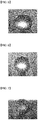
Figs. 5 to 7 are images showing the shapes of the polymer particles prepared in Examples 1, Example 4 and Example 6, respectively. - Hereinafter, preferable examples are presented for better understanding of the present invention. However, these examples are presented only as the illustrations of the present invention, and the present invention is not limited thereby.
- Semi-spherical engraved patterns were formed using an Al substrate as a support base, and using NeverWet SE available from NeverWet, LLC, a primer layer and a top coating layer were formed on the support base. After coating, the diameter of the semi-spherical engraved pattern of the substrate was 1500 µm.
- Meanwhile, to 500 g of acrylic acid, 1.5 g of polyethylene glycol diacrylate(PEGDA, molecular weight 400), 0.5 g of trimethylolpropane triacrylate including 9 mol% of ethylene oxide(Ethoxylated-TMPTA, TMP(EO)9TA, M-3190, Miwon Specialty Chemicals Co., Ltd.), and 0.4 g of IRGACURE 819 were added, and 800 g of a 24 wt% caustic soda solution was gradually added dropwise. The mixed solution heated by the neutralization heat was cooled to prepare a curable composition.
- And, the diameter according to the volume of the curable composition was obtained as follows
- Specifically, each 10 µℓ, 8 µℓ, 7 µℓ, 4 µℓ and 2 µℓ of the curable composition was dropped on the flat surface of the substrate to form 5 droplets. And, with a contact angle measuring device(model name: DSA100, Manufacturing Company: KRUSS GmbH), for the 5 droplets, the lengths of the major axis were measured at about 25°C, which were determined as the diameters according to the volume of the curable composition. As the result of measurement, the diameter for 10 µℓ was 3400 µm, the diameter for 8 µℓ was 3000 µm, the diameter for 7 µℓ was 2800 µm, the diameter for 4 µℓ was 2500 µm, and the diameter for 2 µℓ was 2250 µm.
- On each semi-spherical engraved pattern of the substrate, each 10 µℓ of the curable composition was dropped to form spherical droplets.
- From the measurement result of the diameter according to the volume of the curable composition, a rate(D1/D2*100) of the diameter(D1, 1500 µm) of the semi-spherical engraved pattern to the diameter(D2, 3400 µm) of the droplet was calculated to be about 44%.
- Thereafter, the droplets were cured by UV irradiation, thus preparing polymer particles.
- Polymer particles were prepared by the same method as Example 1, except that 8 µℓ of the curable composition was dropped on each semi-spherical engraved pattern of the substrate.
- From the measurement result of the diameter according to the volume of the curable composition of Example 1, a rate(D1/D2*100) of the diameter(D1, 1500 µm) of the semi-spherical engraved pattern to the diameter(D2, 3000 µm) of the droplet was calculated to be about 50%.
- Polymer particles were prepared by the same method as Example 1, except that 4 µℓ of the curable composition was dropped on each semi-spherical engraved pattern of the substrate.
- From the measurement result of the diameter according to the volume of the curable composition of Example 1, a rate(D1/D2*100) of the diameter(D1, 1500 µm) of the semi-spherical engraved pattern to the diameter(D2, 2500 µm) of the droplet was calculated to be about 60%.
- A substrate on which semi-spherical engraved patterns are formed was manufactured by the same method as Example 1, except that the diameter of the semi-spherical engraved pattern was 2000 µm.
- Each 7 µℓ of the curable composition identical to that of Example 1 was dropped on each semi-spherical engraved pattern of the substrate, to form spherical droplets.
- From the measurement result of the diameter according to the volume of the curable composition of Example 1, a rate(D1/D2*100) of the diameter(D1, 2000 µm) of the semi-spherical engraved pattern to the diameter(D2, 2800 µm) of the droplet was calculated to be about 71%.
- Thereafter, the droplets were cured by the same method as Example 1, thus preparing polymer particles.
- Polymer particles were prepared by the same method as Example 4, except that each 4 µℓ of the curable composition was dropped on each semi-spherical engraved pattern of the substrate.
- From the measurement result of the diameter according to the volume of the curable composition of Example 1, a rate(D1/D2*100) of the diameter(D1, 2000 µm) of the semi-spherical engraved pattern to the diameter(D2, 2500µm) of the droplet was calculated to be about 80%.
- Polymer particles were prepared by the same method as Example 4, except that each 2 µℓ of the curable composition was dropped on each semi-spherical engraved pattern of the substrate.
- From the measurement result of the diameter according to the volume of the curable composition of Example 1, a rate(D1/D2*100) of the diameter(D1, 2000 µm) of the semi-spherical engraved pattern to the diameter(D2, 2250µm) of the droplet was calculated to be about 89%.
- For the polymer particles prepared in Examples, a rate of the minor axis to the major axis passing through the center was measured, and the results were shown in the following Table 1 and
Fig. 4 . Theoretically, a complete sphere has identical lengths of the major axis and the minor axis passing through the center, and thus, as a rate of the minor axis to the major axis is closer to 100%, it means that the polymer particle has a shape closer to a complete sphere.[Table 1] Example 1 Example 2 Example 3 Example 4 Example 5 Example 6 D1/D2*100 44% 50% 60% 71% 80% 89% rate of the minor axis to the major axis 82% 86% 95% 95% 92% 91% - And, the shapes of the polymer particles prepared in Example 1, Example 4 and Example 6 were observed using a contact angle measuring device(model name: DSA100, Manufacturing Company: KRUSS GmbH).
- Referring to the Table 1 and
Figs. 4 to 7 , it is confirmed that according to the preparation method of one embodiment of the present invention, spherical polymer particles can be provided, and particularly, it is confirmed that in case a rate(D1/D2*100) of the diameter(D1) of a semi-spherical engraved pattern to the diameter(D2) of a droplet is 50% to 90%, polymer particles close to a complete sphere can be provided.
Claims (6)
- A method for preparing polymer particles comprising the steps of:dropping a curable composition on a substrate having a water contact angle of 150° to 170°at 25°C, on which semi-spherical engraved patterns are formed, to form droplets; andcuring the droplets.
- The method for preparing polymer particles according to claim 1, wherein the substrate has a contact angle of 125° to 170°to the curable composition.
- The method for preparing polymer particles according to claim 1, wherein the droplets are formed by dropping a curable composition on the semi-spherical engraved patterns of the substrate such that a rate(D1/D2*100) of the diameter(D1) of the semi-spherical engraved pattern to the diameter(D2) of the droplet becomes 50% to 90%.
- The method for preparing polymer particles according to claim 1, wherein a substrate has a rate(d1/r1*100) of the depth(d1) of the semi-spherical engraved pattern to the radius(r1) of the semi-spherical engraved pattern of 30% to 100%.
- The method for preparing polymer particles according to claim 1, wherein as the curable composition, a composition comprising water soluble ethylenically unsaturated monomers, a crosslinking agent and a polymerization initiator is used.
- The method for preparing polymer particles according to claim 1, wherein the polymer particle has a rate of the minor axis to the major axis passing through the center of 80% to 100%.
Applications Claiming Priority (2)
| Application Number | Priority Date | Filing Date | Title |
|---|---|---|---|
| KR1020170000753A KR102095003B1 (en) | 2017-01-03 | 2017-01-03 | Method for preparing resin particle |
| PCT/KR2017/014151 WO2018128279A1 (en) | 2017-01-03 | 2017-12-05 | Method for manufacturing resin particles |
Publications (3)
| Publication Number | Publication Date |
|---|---|
| EP3492515A1 true EP3492515A1 (en) | 2019-06-05 |
| EP3492515A4 EP3492515A4 (en) | 2019-10-09 |
| EP3492515B1 EP3492515B1 (en) | 2020-08-12 |
Family
ID=62790951
Family Applications (1)
| Application Number | Title | Priority Date | Filing Date |
|---|---|---|---|
| EP17889673.4A Active EP3492515B1 (en) | 2017-01-03 | 2017-12-05 | Method for manufacturing resin particles |
Country Status (6)
| Country | Link |
|---|---|
| US (1) | US11413794B2 (en) |
| EP (1) | EP3492515B1 (en) |
| JP (1) | JP6874929B2 (en) |
| KR (1) | KR102095003B1 (en) |
| CN (1) | CN109790298B (en) |
| WO (1) | WO2018128279A1 (en) |
Family Cites Families (31)
| Publication number | Priority date | Publication date | Assignee | Title |
|---|---|---|---|---|
| JPH0924970A (en) | 1995-05-08 | 1997-01-28 | Omori Mach Co Ltd | Package |
| JPH08311369A (en) | 1995-05-16 | 1996-11-26 | Dainippon Ink & Chem Inc | Powder coating and its manufacturing method |
| JPH09249720A (en) * | 1996-03-18 | 1997-09-22 | Kanebo Ltd | Water-absorbent resin particles and method for producing the same |
| JP4462675B2 (en) | 1999-10-01 | 2010-05-12 | 日本ペイント株式会社 | Spherical thermosetting powder clear paint particles, method for producing spherical thermosetting powder clear paint particles, multi-layer coating film forming method, and multi-layer coating film obtained therefrom |
| US6313221B1 (en) | 1999-05-28 | 2001-11-06 | Nippon Paint Co., Ltd. | Powder coating of epoxy-acrylic resin, polycarboxylic acid, crosslinked particles and liquid resin |
| JP3455523B2 (en) | 2000-02-16 | 2003-10-14 | 三洋化成工業株式会社 | Resin particles having a uniform particle size and method for producing the same |
| US7005480B2 (en) | 2000-02-16 | 2006-02-28 | Sanyo Chemical Industries, Ltd. | Resin dispersions having uniform particle diameters, resin particles and processes for producing both |
| JP3719431B2 (en) | 2002-09-25 | 2005-11-24 | セイコーエプソン株式会社 | OPTICAL COMPONENT, ITS MANUFACTURING METHOD, DISPLAY DEVICE, AND IMAGING ELEMENT |
| JP2005112945A (en) | 2003-10-06 | 2005-04-28 | Toyota Motor Corp | Method for producing polymer liquid crystal spherical fine particles, color material comprising polymer liquid crystal spherical fine particles, and paint |
| CN102016814B (en) | 2005-06-17 | 2013-10-23 | 北卡罗来纳大学查珀尔希尔分校 | Nanoparticle fabrication methods, systems, and materials |
| US8354160B2 (en) * | 2006-06-23 | 2013-01-15 | 3M Innovative Properties Company | Articles having durable hydrophobic surfaces |
| WO2008013952A2 (en) | 2006-07-27 | 2008-01-31 | The University Of North Carolina At Chapel Hill | Nanoparticle fabrication methods, systems, and materials for fabricating artificial red blood cells |
| KR100957127B1 (en) | 2008-04-14 | 2010-05-11 | 한국과학기술원 | Hemispherical patterning of photonic crystal using photopolymerizable colloidal dispersion medium and manufacturing method of photonic crystal of various shapes |
| JP2010204386A (en) | 2009-03-03 | 2010-09-16 | Fujifilm Corp | Method and device for manufacturing spherical structure |
| JP2010201560A (en) | 2009-03-03 | 2010-09-16 | Fujifilm Corp | Method and apparatus for manufacturing spherical structure |
| DE112010002076T5 (en) | 2009-05-25 | 2013-01-03 | Kawamura Institute Of Chemical Research | Hydrophobic film, structural film with hydrophobic and hydrophilic regions and a process for its preparation |
| KR100975658B1 (en) * | 2009-10-14 | 2010-08-17 | 한국과학기술원 | Hemispherical patterning of photonic crystal using photopolymerizable colloidal dispersion medium and manufacturing method of photonic crystal of various shapes |
| JP2012077147A (en) | 2010-09-30 | 2012-04-19 | Lintec Corp | Water-repellent sheet |
| KR20120039284A (en) | 2010-10-15 | 2012-04-25 | 주식회사 엘지화학 | Preparation method of super absorbent polymer |
| KR101275520B1 (en) | 2011-01-31 | 2013-06-20 | 한성전력(주) | fine solid pattern formation method |
| TWI586688B (en) | 2011-08-25 | 2017-06-11 | 積水化成品工業股份有限公司 | Irregular-shaped resin particle, method of producing the same, and usage thereof |
| US9102081B2 (en) * | 2011-11-21 | 2015-08-11 | Dr. Hielscher Gmbh | Method and apparatus for generating particles |
| KR101477252B1 (en) * | 2012-04-13 | 2014-12-29 | 주식회사 엘지화학 | Preparation method of super absorbent polymer |
| KR101408703B1 (en) | 2012-04-17 | 2014-06-17 | 충남대학교산학협력단 | Fabrication method for thin film having superhydrophobic surface and superhydrophobic thin film fabricated thereby |
| CN104334614B (en) | 2012-04-25 | 2016-05-25 | Lg化学株式会社 | Superabsorbent polymer and method for its preparation |
| KR101443981B1 (en) | 2012-11-29 | 2014-10-14 | 포항공과대학교 산학협력단 | The structure for the microdroplet control and microdroplet/microparticle made based on this |
| CN104059430A (en) | 2013-03-21 | 2014-09-24 | 中国科学院化学研究所 | Method for batch preparation of anisotropic particles by ink-jet printing and anisotropic particles thereof |
| KR20150067998A (en) | 2013-12-11 | 2015-06-19 | 한화케미칼 주식회사 | Apparatus for preparing super absorbent polymer and method for preparing super absorbent polymer using the same |
| US9763860B2 (en) * | 2014-11-04 | 2017-09-19 | The Procter & Gamble Company | Apparatus and process for forming particles |
| JP6552633B2 (en) | 2015-03-24 | 2019-07-31 | 国立大学法人九州大学 | Halogenated carbon and method for producing the same |
| US9878467B2 (en) * | 2015-06-19 | 2018-01-30 | The Procter & Gamble Company | Apparatus and process for forming particles |
-
2017
- 2017-01-03 KR KR1020170000753A patent/KR102095003B1/en active Active
- 2017-12-05 JP JP2019511389A patent/JP6874929B2/en active Active
- 2017-12-05 EP EP17889673.4A patent/EP3492515B1/en active Active
- 2017-12-05 WO PCT/KR2017/014151 patent/WO2018128279A1/en not_active Ceased
- 2017-12-05 CN CN201780059450.XA patent/CN109790298B/en active Active
- 2017-12-05 US US16/330,693 patent/US11413794B2/en active Active
Also Published As
| Publication number | Publication date |
|---|---|
| WO2018128279A1 (en) | 2018-07-12 |
| CN109790298B (en) | 2022-01-21 |
| CN109790298A (en) | 2019-05-21 |
| KR102095003B1 (en) | 2020-03-30 |
| EP3492515B1 (en) | 2020-08-12 |
| JP6874929B2 (en) | 2021-05-19 |
| US11413794B2 (en) | 2022-08-16 |
| JP2019529607A (en) | 2019-10-17 |
| EP3492515A4 (en) | 2019-10-09 |
| US20210284808A1 (en) | 2021-09-16 |
| KR20180079958A (en) | 2018-07-11 |
Similar Documents
| Publication | Publication Date | Title |
|---|---|---|
| CN102369254B (en) | Method for blocking subterranean formations | |
| CN102958944B (en) | Composition for colloidal crystal | |
| CN102803302A (en) | A process for producing water-absorbent polymer particles by polymerizing droplets of a monomer solution | |
| CN103224753B (en) | Light-cured antifog paint and light-cured quaternary ammonium salt used in the light-cured antifog paint | |
| CN107075028A (en) | Block copolymer | |
| TW201634504A (en) | Block copolymer | |
| CN101107335B (en) | Articles comprising a fluorochemical surface layer and related methods | |
| JP7277468B2 (en) | Compositions for producing support substructures for 3D photopolymer jetting | |
| JP2010519427A5 (en) | ||
| CN107075051A (en) | Block copolymer | |
| CN101277979B (en) | water-based curable resin composition | |
| CN102816268A (en) | A kind of preparation method of nanocomposite anti-fog film | |
| CN107207642A (en) | The method for preparing amphoteric ion copolymer | |
| Divandari et al. | Applying an oleophobic/hydrophobic fluorinated polymer monolayer coating from aqueous solutions | |
| CN101010346A (en) | Method for producing polymers by dispersion polymerisation | |
| EP3492515B1 (en) | Method for manufacturing resin particles | |
| JP5138632B2 (en) | Pregel solution and polymer composition, and method for producing polymer composition | |
| JP2022077707A (en) | Resin emulsion and resin emulsion production method | |
| JP2011144236A (en) | Organic inorganic composite dispersion and process for producing the same | |
| JP7013959B2 (en) | Manufacturing method of 3D model, 3D model, liquid set, and 3D model | |
| JP6848211B2 (en) | Manufacturing method and manufacturing equipment for three-dimensional objects | |
| TWI719113B (en) | Aqueous dispersion, its manufacturing method, water-based paint and coated articles | |
| JP2011252053A (en) | Active energy beam curable inkjet ink composition, and printed matter | |
| JP7555565B2 (en) | Fluororesin modifier, modified fluororesin molded body, and manufacturing method thereof | |
| CN110325582A (en) | Aqueous dispersion and method for producing the aqueous dispersion |
Legal Events
| Date | Code | Title | Description |
|---|---|---|---|
| STAA | Information on the status of an ep patent application or granted ep patent |
Free format text: STATUS: THE INTERNATIONAL PUBLICATION HAS BEEN MADE |
|
| PUAI | Public reference made under article 153(3) epc to a published international application that has entered the european phase |
Free format text: ORIGINAL CODE: 0009012 |
|
| STAA | Information on the status of an ep patent application or granted ep patent |
Free format text: STATUS: REQUEST FOR EXAMINATION WAS MADE |
|
| 17P | Request for examination filed |
Effective date: 20190226 |
|
| AK | Designated contracting states |
Kind code of ref document: A1 Designated state(s): AL AT BE BG CH CY CZ DE DK EE ES FI FR GB GR HR HU IE IS IT LI LT LU LV MC MK MT NL NO PL PT RO RS SE SI SK SM TR |
|
| AX | Request for extension of the european patent |
Extension state: BA ME |
|
| RIN1 | Information on inventor provided before grant (corrected) |
Inventor name: LEE, SOO JIN Inventor name: HER, EUN KYU Inventor name: AHN, TAEBIN Inventor name: PARK, JEONG HO Inventor name: HAN, CHANG SUN Inventor name: SHIN, BU GON |
|
| A4 | Supplementary search report drawn up and despatched |
Effective date: 20190910 |
|
| RIC1 | Information provided on ipc code assigned before grant |
Ipc: B29C 39/26 20060101ALI20190904BHEP Ipc: C08J 3/12 20060101AFI20190904BHEP Ipc: C08F 2/44 20060101ALI20190904BHEP Ipc: B29C 33/42 20060101ALI20190904BHEP Ipc: C08F 2/38 20060101ALI20190904BHEP |
|
| DAV | Request for validation of the european patent (deleted) | ||
| DAX | Request for extension of the european patent (deleted) | ||
| GRAP | Despatch of communication of intention to grant a patent |
Free format text: ORIGINAL CODE: EPIDOSNIGR1 |
|
| STAA | Information on the status of an ep patent application or granted ep patent |
Free format text: STATUS: GRANT OF PATENT IS INTENDED |
|
| INTG | Intention to grant announced |
Effective date: 20200508 |
|
| GRAS | Grant fee paid |
Free format text: ORIGINAL CODE: EPIDOSNIGR3 |
|
| GRAA | (expected) grant |
Free format text: ORIGINAL CODE: 0009210 |
|
| STAA | Information on the status of an ep patent application or granted ep patent |
Free format text: STATUS: THE PATENT HAS BEEN GRANTED |
|
| AK | Designated contracting states |
Kind code of ref document: B1 Designated state(s): AL AT BE BG CH CY CZ DE DK EE ES FI FR GB GR HR HU IE IS IT LI LT LU LV MC MK MT NL NO PL PT RO RS SE SI SK SM TR |
|
| REG | Reference to a national code |
Ref country code: CH Ref legal event code: EP |
|
| REG | Reference to a national code |
Ref country code: IE Ref legal event code: FG4D |
|
| REG | Reference to a national code |
Ref country code: DE Ref legal event code: R096 Ref document number: 602017021729 Country of ref document: DE |
|
| REG | Reference to a national code |
Ref country code: AT Ref legal event code: REF Ref document number: 1301514 Country of ref document: AT Kind code of ref document: T Effective date: 20200915 |
|
| REG | Reference to a national code |
Ref country code: LT Ref legal event code: MG4D |
|
| REG | Reference to a national code |
Ref country code: NL Ref legal event code: MP Effective date: 20200812 |
|
| PG25 | Lapsed in a contracting state [announced via postgrant information from national office to epo] |
Ref country code: GR Free format text: LAPSE BECAUSE OF FAILURE TO SUBMIT A TRANSLATION OF THE DESCRIPTION OR TO PAY THE FEE WITHIN THE PRESCRIBED TIME-LIMIT Effective date: 20201113 Ref country code: NO Free format text: LAPSE BECAUSE OF FAILURE TO SUBMIT A TRANSLATION OF THE DESCRIPTION OR TO PAY THE FEE WITHIN THE PRESCRIBED TIME-LIMIT Effective date: 20201112 Ref country code: BG Free format text: LAPSE BECAUSE OF FAILURE TO SUBMIT A TRANSLATION OF THE DESCRIPTION OR TO PAY THE FEE WITHIN THE PRESCRIBED TIME-LIMIT Effective date: 20201112 Ref country code: FI Free format text: LAPSE BECAUSE OF FAILURE TO SUBMIT A TRANSLATION OF THE DESCRIPTION OR TO PAY THE FEE WITHIN THE PRESCRIBED TIME-LIMIT Effective date: 20200812 Ref country code: LT Free format text: LAPSE BECAUSE OF FAILURE TO SUBMIT A TRANSLATION OF THE DESCRIPTION OR TO PAY THE FEE WITHIN THE PRESCRIBED TIME-LIMIT Effective date: 20200812 Ref country code: HR Free format text: LAPSE BECAUSE OF FAILURE TO SUBMIT A TRANSLATION OF THE DESCRIPTION OR TO PAY THE FEE WITHIN THE PRESCRIBED TIME-LIMIT Effective date: 20200812 Ref country code: SE Free format text: LAPSE BECAUSE OF FAILURE TO SUBMIT A TRANSLATION OF THE DESCRIPTION OR TO PAY THE FEE WITHIN THE PRESCRIBED TIME-LIMIT Effective date: 20200812 |
|
| REG | Reference to a national code |
Ref country code: AT Ref legal event code: MK05 Ref document number: 1301514 Country of ref document: AT Kind code of ref document: T Effective date: 20200812 |
|
| PG25 | Lapsed in a contracting state [announced via postgrant information from national office to epo] |
Ref country code: IS Free format text: LAPSE BECAUSE OF FAILURE TO SUBMIT A TRANSLATION OF THE DESCRIPTION OR TO PAY THE FEE WITHIN THE PRESCRIBED TIME-LIMIT Effective date: 20201212 Ref country code: LV Free format text: LAPSE BECAUSE OF FAILURE TO SUBMIT A TRANSLATION OF THE DESCRIPTION OR TO PAY THE FEE WITHIN THE PRESCRIBED TIME-LIMIT Effective date: 20200812 Ref country code: RS Free format text: LAPSE BECAUSE OF FAILURE TO SUBMIT A TRANSLATION OF THE DESCRIPTION OR TO PAY THE FEE WITHIN THE PRESCRIBED TIME-LIMIT Effective date: 20200812 Ref country code: NL Free format text: LAPSE BECAUSE OF FAILURE TO SUBMIT A TRANSLATION OF THE DESCRIPTION OR TO PAY THE FEE WITHIN THE PRESCRIBED TIME-LIMIT Effective date: 20200812 Ref country code: PL Free format text: LAPSE BECAUSE OF FAILURE TO SUBMIT A TRANSLATION OF THE DESCRIPTION OR TO PAY THE FEE WITHIN THE PRESCRIBED TIME-LIMIT Effective date: 20200812 |
|
| PG25 | Lapsed in a contracting state [announced via postgrant information from national office to epo] |
Ref country code: DK Free format text: LAPSE BECAUSE OF FAILURE TO SUBMIT A TRANSLATION OF THE DESCRIPTION OR TO PAY THE FEE WITHIN THE PRESCRIBED TIME-LIMIT Effective date: 20200812 Ref country code: CZ Free format text: LAPSE BECAUSE OF FAILURE TO SUBMIT A TRANSLATION OF THE DESCRIPTION OR TO PAY THE FEE WITHIN THE PRESCRIBED TIME-LIMIT Effective date: 20200812 Ref country code: RO Free format text: LAPSE BECAUSE OF FAILURE TO SUBMIT A TRANSLATION OF THE DESCRIPTION OR TO PAY THE FEE WITHIN THE PRESCRIBED TIME-LIMIT Effective date: 20200812 Ref country code: EE Free format text: LAPSE BECAUSE OF FAILURE TO SUBMIT A TRANSLATION OF THE DESCRIPTION OR TO PAY THE FEE WITHIN THE PRESCRIBED TIME-LIMIT Effective date: 20200812 Ref country code: SM Free format text: LAPSE BECAUSE OF FAILURE TO SUBMIT A TRANSLATION OF THE DESCRIPTION OR TO PAY THE FEE WITHIN THE PRESCRIBED TIME-LIMIT Effective date: 20200812 |
|
| REG | Reference to a national code |
Ref country code: DE Ref legal event code: R097 Ref document number: 602017021729 Country of ref document: DE |
|
| PG25 | Lapsed in a contracting state [announced via postgrant information from national office to epo] |
Ref country code: AL Free format text: LAPSE BECAUSE OF FAILURE TO SUBMIT A TRANSLATION OF THE DESCRIPTION OR TO PAY THE FEE WITHIN THE PRESCRIBED TIME-LIMIT Effective date: 20200812 Ref country code: AT Free format text: LAPSE BECAUSE OF FAILURE TO SUBMIT A TRANSLATION OF THE DESCRIPTION OR TO PAY THE FEE WITHIN THE PRESCRIBED TIME-LIMIT Effective date: 20200812 Ref country code: ES Free format text: LAPSE BECAUSE OF FAILURE TO SUBMIT A TRANSLATION OF THE DESCRIPTION OR TO PAY THE FEE WITHIN THE PRESCRIBED TIME-LIMIT Effective date: 20200812 |
|
| PLBE | No opposition filed within time limit |
Free format text: ORIGINAL CODE: 0009261 |
|
| STAA | Information on the status of an ep patent application or granted ep patent |
Free format text: STATUS: NO OPPOSITION FILED WITHIN TIME LIMIT |
|
| PG25 | Lapsed in a contracting state [announced via postgrant information from national office to epo] |
Ref country code: SK Free format text: LAPSE BECAUSE OF FAILURE TO SUBMIT A TRANSLATION OF THE DESCRIPTION OR TO PAY THE FEE WITHIN THE PRESCRIBED TIME-LIMIT Effective date: 20200812 |
|
| 26N | No opposition filed |
Effective date: 20210514 |
|
| PG25 | Lapsed in a contracting state [announced via postgrant information from national office to epo] |
Ref country code: IT Free format text: LAPSE BECAUSE OF FAILURE TO SUBMIT A TRANSLATION OF THE DESCRIPTION OR TO PAY THE FEE WITHIN THE PRESCRIBED TIME-LIMIT Effective date: 20200812 |
|
| REG | Reference to a national code |
Ref country code: CH Ref legal event code: PL |
|
| PG25 | Lapsed in a contracting state [announced via postgrant information from national office to epo] |
Ref country code: MC Free format text: LAPSE BECAUSE OF FAILURE TO SUBMIT A TRANSLATION OF THE DESCRIPTION OR TO PAY THE FEE WITHIN THE PRESCRIBED TIME-LIMIT Effective date: 20200812 Ref country code: SI Free format text: LAPSE BECAUSE OF FAILURE TO SUBMIT A TRANSLATION OF THE DESCRIPTION OR TO PAY THE FEE WITHIN THE PRESCRIBED TIME-LIMIT Effective date: 20200812 |
|
| REG | Reference to a national code |
Ref country code: BE Ref legal event code: MM Effective date: 20201231 |
|
| PG25 | Lapsed in a contracting state [announced via postgrant information from national office to epo] |
Ref country code: IE Free format text: LAPSE BECAUSE OF NON-PAYMENT OF DUE FEES Effective date: 20201205 Ref country code: LU Free format text: LAPSE BECAUSE OF NON-PAYMENT OF DUE FEES Effective date: 20201205 |
|
| PG25 | Lapsed in a contracting state [announced via postgrant information from national office to epo] |
Ref country code: CH Free format text: LAPSE BECAUSE OF NON-PAYMENT OF DUE FEES Effective date: 20201231 Ref country code: LI Free format text: LAPSE BECAUSE OF NON-PAYMENT OF DUE FEES Effective date: 20201231 |
|
| PG25 | Lapsed in a contracting state [announced via postgrant information from national office to epo] |
Ref country code: TR Free format text: LAPSE BECAUSE OF FAILURE TO SUBMIT A TRANSLATION OF THE DESCRIPTION OR TO PAY THE FEE WITHIN THE PRESCRIBED TIME-LIMIT Effective date: 20200812 Ref country code: MT Free format text: LAPSE BECAUSE OF FAILURE TO SUBMIT A TRANSLATION OF THE DESCRIPTION OR TO PAY THE FEE WITHIN THE PRESCRIBED TIME-LIMIT Effective date: 20200812 Ref country code: CY Free format text: LAPSE BECAUSE OF FAILURE TO SUBMIT A TRANSLATION OF THE DESCRIPTION OR TO PAY THE FEE WITHIN THE PRESCRIBED TIME-LIMIT Effective date: 20200812 |
|
| PG25 | Lapsed in a contracting state [announced via postgrant information from national office to epo] |
Ref country code: MK Free format text: LAPSE BECAUSE OF FAILURE TO SUBMIT A TRANSLATION OF THE DESCRIPTION OR TO PAY THE FEE WITHIN THE PRESCRIBED TIME-LIMIT Effective date: 20200812 |
|
| PG25 | Lapsed in a contracting state [announced via postgrant information from national office to epo] |
Ref country code: PT Free format text: LAPSE BECAUSE OF FAILURE TO SUBMIT A TRANSLATION OF THE DESCRIPTION OR TO PAY THE FEE WITHIN THE PRESCRIBED TIME-LIMIT Effective date: 20200812 Ref country code: BE Free format text: LAPSE BECAUSE OF NON-PAYMENT OF DUE FEES Effective date: 20201231 |
|
| PGFP | Annual fee paid to national office [announced via postgrant information from national office to epo] |
Ref country code: DE Payment date: 20251120 Year of fee payment: 9 |
|
| PGFP | Annual fee paid to national office [announced via postgrant information from national office to epo] |
Ref country code: GB Payment date: 20251120 Year of fee payment: 9 |
|
| PGFP | Annual fee paid to national office [announced via postgrant information from national office to epo] |
Ref country code: FR Payment date: 20251125 Year of fee payment: 9 |