EP3491563B1 - 3d printer interface lockout - Google Patents
3d printer interface lockout Download PDFInfo
- Publication number
- EP3491563B1 EP3491563B1 EP17746432.8A EP17746432A EP3491563B1 EP 3491563 B1 EP3491563 B1 EP 3491563B1 EP 17746432 A EP17746432 A EP 17746432A EP 3491563 B1 EP3491563 B1 EP 3491563B1
- Authority
- EP
- European Patent Office
- Prior art keywords
- user
- printer
- pin
- answer
- response
- Prior art date
- Legal status (The legal status is an assumption and is not a legal conclusion. Google has not performed a legal analysis and makes no representation as to the accuracy of the status listed.)
- Active
Links
Images

Classifications
-
- H—ELECTRICITY
- H04—ELECTRIC COMMUNICATION TECHNIQUE
- H04N—PICTORIAL COMMUNICATION, e.g. TELEVISION
- H04N1/00—Scanning, transmission or reproduction of documents or the like, e.g. facsimile transmission; Details thereof
- H04N1/44—Secrecy systems
- H04N1/4406—Restricting access, e.g. according to user identity
- H04N1/4413—Restricting access, e.g. according to user identity involving the use of passwords, ID codes or the like, e.g. PIN
-
- B—PERFORMING OPERATIONS; TRANSPORTING
- B29—WORKING OF PLASTICS; WORKING OF SUBSTANCES IN A PLASTIC STATE IN GENERAL
- B29C—SHAPING OR JOINING OF PLASTICS; SHAPING OF MATERIAL IN A PLASTIC STATE, NOT OTHERWISE PROVIDED FOR; AFTER-TREATMENT OF THE SHAPED PRODUCTS, e.g. REPAIRING
- B29C64/00—Additive manufacturing, i.e. manufacturing of three-dimensional [3D] objects by additive deposition, additive agglomeration or additive layering, e.g. by 3D printing, stereolithography or selective laser sintering
- B29C64/20—Apparatus for additive manufacturing; Details thereof or accessories therefor
-
- B—PERFORMING OPERATIONS; TRANSPORTING
- B33—ADDITIVE MANUFACTURING TECHNOLOGY
- B33Y—ADDITIVE MANUFACTURING, i.e. MANUFACTURING OF THREE-DIMENSIONAL [3D] OBJECTS BY ADDITIVE DEPOSITION, ADDITIVE AGGLOMERATION OR ADDITIVE LAYERING, e.g. BY 3D PRINTING, STEREOLITHOGRAPHY OR SELECTIVE LASER SINTERING
- B33Y30/00—Apparatus for additive manufacturing; Details thereof or accessories therefor
-
- G—PHYSICS
- G06—COMPUTING OR CALCULATING; COUNTING
- G06F—ELECTRIC DIGITAL DATA PROCESSING
- G06F21/00—Security arrangements for protecting computers, components thereof, programs or data against unauthorised activity
- G06F21/30—Authentication, i.e. establishing the identity or authorisation of security principals
- G06F21/31—User authentication
-
- G—PHYSICS
- G06—COMPUTING OR CALCULATING; COUNTING
- G06F—ELECTRIC DIGITAL DATA PROCESSING
- G06F21/00—Security arrangements for protecting computers, components thereof, programs or data against unauthorised activity
- G06F21/30—Authentication, i.e. establishing the identity or authorisation of security principals
- G06F21/31—User authentication
- G06F21/316—User authentication by observing the pattern of computer usage, e.g. typical user behaviour
-
- G—PHYSICS
- G06—COMPUTING OR CALCULATING; COUNTING
- G06F—ELECTRIC DIGITAL DATA PROCESSING
- G06F3/00—Input arrangements for transferring data to be processed into a form capable of being handled by the computer; Output arrangements for transferring data from processing unit to output unit, e.g. interface arrangements
- G06F3/12—Digital output to print unit, e.g. line printer, chain printer
- G06F3/1201—Dedicated interfaces to print systems
- G06F3/1202—Dedicated interfaces to print systems specifically adapted to achieve a particular effect
- G06F3/1222—Increasing security of the print job
-
- G—PHYSICS
- G06—COMPUTING OR CALCULATING; COUNTING
- G06F—ELECTRIC DIGITAL DATA PROCESSING
- G06F3/00—Input arrangements for transferring data to be processed into a form capable of being handled by the computer; Output arrangements for transferring data from processing unit to output unit, e.g. interface arrangements
- G06F3/12—Digital output to print unit, e.g. line printer, chain printer
- G06F3/1201—Dedicated interfaces to print systems
- G06F3/1223—Dedicated interfaces to print systems specifically adapted to use a particular technique
- G06F3/1237—Print job management
- G06F3/1238—Secure printing, e.g. user identification, user rights for device usage, unallowed content, blanking portions or fields of a page, releasing held jobs
-
- G—PHYSICS
- G06—COMPUTING OR CALCULATING; COUNTING
- G06F—ELECTRIC DIGITAL DATA PROCESSING
- G06F3/00—Input arrangements for transferring data to be processed into a form capable of being handled by the computer; Output arrangements for transferring data from processing unit to output unit, e.g. interface arrangements
- G06F3/12—Digital output to print unit, e.g. line printer, chain printer
- G06F3/1201—Dedicated interfaces to print systems
- G06F3/1278—Dedicated interfaces to print systems specifically adapted to adopt a particular infrastructure
- G06F3/1285—Remote printer device, e.g. being remote from client or server
- G06F3/1286—Remote printer device, e.g. being remote from client or server via local network
-
- H—ELECTRICITY
- H04—ELECTRIC COMMUNICATION TECHNIQUE
- H04L—TRANSMISSION OF DIGITAL INFORMATION, e.g. TELEGRAPHIC COMMUNICATION
- H04L63/00—Network architectures or network communication protocols for network security
- H04L63/08—Network architectures or network communication protocols for network security for authentication of entities
- H04L63/083—Network architectures or network communication protocols for network security for authentication of entities using passwords
-
- H—ELECTRICITY
- H04—ELECTRIC COMMUNICATION TECHNIQUE
- H04L—TRANSMISSION OF DIGITAL INFORMATION, e.g. TELEGRAPHIC COMMUNICATION
- H04L63/00—Network architectures or network communication protocols for network security
- H04L63/08—Network architectures or network communication protocols for network security for authentication of entities
- H04L63/0861—Network architectures or network communication protocols for network security for authentication of entities using biometrical features, e.g. fingerprint, retina-scan
-
- H—ELECTRICITY
- H04—ELECTRIC COMMUNICATION TECHNIQUE
- H04N—PICTORIAL COMMUNICATION, e.g. TELEVISION
- H04N1/00—Scanning, transmission or reproduction of documents or the like, e.g. facsimile transmission; Details thereof
- H04N1/0035—User-machine interface; Control console
- H04N1/00405—Output means
- H04N1/00408—Display of information to the user, e.g. menus
- H04N1/00411—Display of information to the user, e.g. menus the display also being used for user input, e.g. touch screen
-
- H—ELECTRICITY
- H04—ELECTRIC COMMUNICATION TECHNIQUE
- H04N—PICTORIAL COMMUNICATION, e.g. TELEVISION
- H04N1/00—Scanning, transmission or reproduction of documents or the like, e.g. facsimile transmission; Details thereof
- H04N1/44—Secrecy systems
- H04N1/4406—Restricting access, e.g. according to user identity
- H04N1/4433—Restricting access, e.g. according to user identity to an apparatus, part of an apparatus or an apparatus function
Definitions
- the present invention relates generally to authenticating a user of a 3D printer, and more specifically, to preventing unauthorized use of a 3D printer.
- 3D printing is a process of making three dimensional solid objects based on blueprints provided by digital files.
- the synthesis of the desired 3D solid object is achieved by strategically generating successive layers of an additive material in a pattern on a platform of a 3D printer until the entire object is created.
- the synthesis of the 3D object is driven by the digital files that provide the specifications that describe how to create the pattern of layers and the materials used to generate the object.
- the digital files specifying the design are provided by the user, and examples of the digital files read by the 3D printer include G-code files, computer-aided design (“CAD”) files, STereoLithography (“STL”) CAD files, and other file types generally used in additive manufacturing processes.
- the digital files refer to a 3D model of a new object, but alternatively, the digital files can refer to a copy of an object derived from the usage of a 3D scanner.
- the generation of the successive layers of the additive material can be performed, for example, according to any one of: (1) Vat Photopolymerisation, (2) Material Jetting, (3) Binder Jetting, (4) Direction Energy Deposition, (5) Powder Bed Fusion, (6) Sheet Lamination, or (7) Material Extrusion.
- Specific processes of Material Extrusion used to generate the successive layers can involve making sequential deposits using fused deposition modeling (“FDM”), fused filament fabrication (“FFF”), or Direct Ink Writing (“DIW”).
- FDM fused deposition modeling
- FFF fused filament fabrication
- DIW Direct Ink Writing
- the materials used as the "ink” of the 3D printer to generate the 3D object can include, for example, any of: powder material, polymer material, thermoplastics, eutectic metals, edible materials, rubbers, modeling clay, plasticine, metal clay, ceramic materials, metal alloys, papers, composite materials composed of ceramics and metallic materials ("cermet"), metal matrix composites, ceramic matrix composites, photopolymers, plaster, stainless steel, aluminum, plastic film, and metal foil.
- 3D printers are generally protected from external influences by a build cage, and, within the build cage, the 3-D printer typically includes the following: (1) at least one extruder, (2) a guide rail system, (3) a build platform, (4) at least one filament spool, (5) and at least one motor for maneuvering the at least one extruder.
- the extruder can include a cooling system to regulate the temperature of the extruder.
- a plastic filament is unwound from a filament spool and supplied to an extruder.
- the extruder applies heat at a specific temperature to the filament, which melts the plastic filament to start material flow.
- the motor for maneuvering the extruder uses the guide rail system to position (both horizontally and vertically) the extruder relative to the build platform to apply a first layer of the 3D object to the build platform. Due the characteristics of the filament and the cooling system of the extruder, the filament cools shortly after it has been extruded. Once the first layer has been applied, the extruder is repositioned, and a second layer is applied on the surface of the first layer. This process is repeated until the 3D object is fully constructed.
- Some 3D printers include a touch screen interface, which allows users to easily interact with the 3D printer.
- the touch screen interface typically includes a touch sensor panel, which may be a clear panel with a touch-sensitive surface, a display device that can be positioned behind the panel so that the touch-sensitive surface substantially covers the viewable area of the display device, and a computer processor to interpret signals from the touch-sensitive surface.
- the touch screen interface allow a user to provide various types of input to the 3D printer by touching the touch sensor panel using a finger, stylus, or other object at a location dictated by a user interface being displayed by a display device. This interaction can include, for example, inputting commands, adjusting settings, viewing information, etc.
- the touch screen interface can recognize a touch event (i.e., user interaction) and the position of the touch event on the touch sensor panel, can then interpret the touch event in accordance with the display appearing at the time of the touch event, and thereafter can perform one or more actions based on the touch event.
- a touch event i.e., user interaction
- the touch screen interface can interpret the touch event in accordance with the display appearing at the time of the touch event, and thereafter can perform one or more actions based on the touch event.
- Document D1 discloses a method for authenticating a user of a printer to prevent unauthorized use of the printer.
- D1 relates to how to print a confidential document using a PIN code comprising the obtaining, by processing circuitry, a user profile corresponding to a user including a stored multi-digit number e.g. a user name, a pin to print or a selection of a user ID.
- the method includes the input of a personal identification number (PIN) and comparing, by the processing circuitry, the input PIN to the multi-digit number of the obtained user profile. Use of the printer is prevented if the PIN does not match the stored multi-digit number.
- PIN personal identification number
- Document D2 discloses that verification questions are known in the art to provide an extra security layer in the context of banks, cable companies, wireless providers and also in widespread use on the Internet.
- Document D3 discloses a printer with a touch screen interface.
- the object of the present invention is to provide a method, a machine-readable storage medium, and a printer to prevent unauthorized use of a printer, e.g. a 3D printer, and to verify that an adult is operating the printer.
- this object of the present invention aims to provide an enhanced level of security for a printer.
- 3D printing requires precision during the printing process, since each layer must be precisely positioned relative to other, e.g., previously printed, layers. Therefore, it is desirable to prevent a user from interfering with the 3D printer during the printing process. Specifically, it is important that no external forces interfere with the motor, guiderail system, extruder, or the build platform as a 3D objected is printed.
- a 3D printer Furthermore, operating a 3D printer requires adult supervision. Therefore, it is desirable for a 3D printer to have the capabilities to prevent an unsupervised child from operating the 3D printer. In particular, it is desirable for a 3D printer to be capable of differentiating between a child user and an adult user.
- the invention provides a method of claim 1, a machine-readable storage medium according to claim 6, and a printer according to claim 11. Further advantageous embodiments and improvements of the invention are listed in the dependent claims. Hereinafter, some aspects of the invention are illustrated which contribute to the understanding of the invention.
- a method for authenticating a user of a 3D printer to prevent unauthorized use of the 3D printer includes, responsive to user manipulation of a touch screen interface for operating the 3D printer, obtaining a user profile from a set of user profiles, each user profile corresponding to a respective user and including a stored multi-digit number; prompting the user, by the touch screen interface of the 3D printer, to input a personal identification number (PIN); preventing use of the 3D printer if the PIN does not match the stored multi-digit number; and proceeding with an authentication procedure for authenticating the user if the PIN does match the stored multi-digit number.
- PIN personal identification number
- the user profile includes at least one of contact information of the user and an answer to at least one verification question.
- the method includes notifying the user of the incorrectly input PIN, using the contact information; and updating the user profile with an updated stored multi-digit number.
- the method proceeds with the authentication procedure, which, in an example aspect, includes prompting the user to input a response to the at least one verification question, where, if the response matches the stored answer to the at least one verification question, the user is authenticated and a processor allows the user to operate the 3D printer, but, if the response does not match the stored answer to the at least one verification question, the method locks the user out from using the 3D printer.
- the authentication procedure includes prompting the user to input a response to the at least one verification question, where, if the response matches the stored answer to the at least one verification question, the user is authenticated and a processor allows the user to operate the 3D printer, but, if the response does not match the stored answer to the at least one verification question, the method locks the user out from using the 3D printer.
- the processor uses the stored contact information, e.g., e-mail address, e.g., by transmitting an e-mail to the stored e-mail address, to notify the user that there has been an incident in which the 3D printer was attempted to be used with entry of an incorrect answer to the stored security question, that the previously stored PIN has been disabled, and that a temporary PIN has been assigned (and stored in the user profile).
- stored contact information e.g., e-mail address
- the user can then access an interface, e.g., via a computer terminal, to modify the user profile, e.g., by setting a new PIN, setting a new security question, and/or setting a new answer to the security question.
- the processor in the case of the lockout of the user from using the 3D printer due to entry of an incorrect answer to the security question, the processor also displays on the touch screen interface a message noting that the user has been locked out from use of the 3D printer and/or that a new PIN has been reassigned.
- that a new PIN has been reassigned is displayed on the touchscreen without display of the new PIN, so that user access to the new PIN is via the contact medium of the stored contact information.
- the authentication procedure even following correct input of the PIN is particularly advantageous because it can occur that a person with a relationship to the user to whom the PIN is assigned, e.g., a child, obtains access to the user's PIN, e.g., based on intimate knowledge of the user's life, characteristics, etc., but despite the relationship should not operate the printer due to safety reasons, e.g., a minor child.
- the authentication procedure can function as a precaution to lockout such a person, e.g., the minor child, and provide the user with an opportunity to reset the PIN to one unknown to the unauthorized person.
- the method includes detecting, by the touch screen interface, a force applied to the touch screen interface to operate the 3D printer; comparing the applied force to a force threshold value; and preventing use of the 3D printer if the applied force is less than the force threshold value. Furthermore, the method includes detecting, by the touch screen interface, a number of inputs used to apply the applied force; preventing use of the 3D printer if the number of inputs used to apply the applied force is greater than one, where the respectively applied forces of each of the individual inputs not meeting the force threshold value; and authenticating the user as an adult if 1) the applied force is greater than or equal to the force threshold value and 2) the number of inputs used to apply the applied force is equal to one.
- the force threshold value corresponds to an average force that an adult user can apply using a single input.
- the force threshold value corresponds to a value greater than an average force that a child can apply using a single input.
- the authentication procedure is particularly advantageous because it prevents a child, for whom it is unsafe to operate the 3D printer, from using the 3D printer, for example, even if authenticating a particular user is not required for using the 3D printer.
- the touch screen interface includes one or more pressure sensors (i.e., force sensors), configured to detect a force signal corresponding to an object exerting a force on the surface of the touch screen. In this manner, the touch screen interface can determine whether the touch event is creating a large force or a small force.
- the touch screen interface includes a plurality of force sensors arranged behind the touch sensor panel, with each sensor providing an electric signal based on the deflection of the touch sensor panel when a touch event occurs.
- FIG. 1 , FIG. 2 and FIG. 3 and their description relate to embodiments of the invention as claimed.
- FIG. 4 is a further example which contributes to the understanding of the invention, in particular regarding the construction of a printer which is usable with the invention.
- FIG. 1 shows a PIN generation method 100 for generating a PIN using a touch screen interface 101 of a 3D printer.
- touch screen interface 101 operates under control of a processor and a non-transitory storage medium on which are stored program instructions that are executable by the processor, and that, when executed by the processor, cause the process to perform methods of operating the touch screen interface 101, such as the example methods depicted in and described below with respect to FIGS. 1-4 .
- touch screen interface 101 includes pressure sensors, which are configured to detect a force signal corresponding to a force exerted by an object on the surface of the touch screen interface 101.
- PIN Generation method 100 includes displaying, by touch screen interface 101, Home Screen 102, which includes, for example, user selectable options 103, 104, 105, and 106.
- Options 103, 104, 105, and 106 include, for example, a "Build” option, a "Filament” option, a "Level” option, and a "Tool” option.
- Option 106 can, for example, correspond to the "Tool” option, in response to selection of which touch screen interface 101 displays Tool Screen 107.
- Tool Screen 107 includes, for example, user selectable options 108, 109, 110, 111, 112, 113, 114, and 115.
- Options 108, 109, 110, 111, 112, 113, 114, and 115 include, for example, a "Service” option, a "Wi-Fi” option, a "Calibrate” option, a "Jog Mode” option, a Settings” option, a "Preheat” option, an "About” option, and a "Back” option.
- option 112 can correspond to the "Settings” option
- option 115 can correspond to the "Back” option, in response to selection of which touch screen interface 101 displays Home Screen 102. If a user selects "Settings” option 112, touch screen interface 101 displays Settings Screen 116.
- Settings Screen 116 includes, for example, user selectable options 117, 118, 119, 115, and 120, where option 115 corresponds to "Back" option in response to selection of which Tool Screen 107 is displayed.
- Options 117, 118, 119, and 120 can include, for example, a "Set Pin Code” option, a "Lock After ___ Minutes” option, a "Renew Token” option, and a "Home” option.
- option 117 can correspond to the "Set Pin Code” option
- option 120 can correspond to the "Home” option, in response to selection of the latter of which touch screen interface 101 displays Home Screen 102.
- touch screen interface 101 displays Pin Creation Screen 121 via which a user can set a PIN to, going forward, require entry thereof for use of the 3D printer.
- Pin Creation Screen 121 includes, for example, numeric keypad 122, which allows a user to generate PIN 123.
- PIN 123 can be, for example, a multi-digit number.
- Alternative example embodiments support an alpha-numeric PIN.
- Pin Creation Screen 121 also includes, for example, "Back" option 115 (for re-display of Settings Screen 116) and "Home” option 120 (for redisplay of Home Screen 102).
- Pin creation Screen 121 also includes, for example, "Enter” option 124, which allows a user to set the theretofore entered number as the selected PIN 123.
- touch screen interface 101 displays, for example, Pin Verification Screen 125.
- Pin Verification Screen 125 includes a numeric keypad 122, "Back" option 115 for redisplay of PIN Creation Screen 121, "Home” Option 120 for redisplay of Home Screen 102, and option 126, which is, for example, a "Done” option.
- Pin Verification Screen 125 prompts a user to, using numeric keypad 122, enter PIN 127 that had previously been set in PIN Creation Screen 121. Once the user has entered PIN 127 and selected "Done" option 126, touch screen interface 101 verifies whether PIN 127 matches PIN 123 at step 128.
- touch screen interface 101 confirms that a user has properly entered PIN 123 and, for example, redisplays Home Screen 102, e.g., with a notification of success of setting the PIN.
- the method redisplays PIN Creation Screen 121 to a new entry of PIN 123.
- FIG. 2 is a flowchart that illustrates a method 200 for creating a User Profile 204 using touch screen interface 101 of a 3D printer, according to an example embodiment of the present invention. Method 200 beings at step 201.
- touch screen interface 101 prompts a user to input information of User Profile 204, e.g., user's email address 205, multi-digit number 206, answer to a verification question 207, and other user credential information 207.
- the touch screen interface 101 can prompt the creation of the profile, including setting of access information by which to limit future use of the printer to a particular user.
- the system permits use of an administrator profile by which to set multiple user profiles, each with respective access credentials.
- one or more of these informational elements can be entered by separate input methods instead of or in addition to by way of this illustrated flow.
- a method for generating a multi-digit number as a PIN has been described with respect to FIG. 1 .
- a modified version of the method described with respect to FIG. 1 can be used for the flow described with respect to FIG. 2 , whereby screen 121 is a user profile generation screen, by which the PIN can be generated in addition to other user profile information.
- Other user credential information 207 may include, for example, the user's telephone number, birthdate, etc.
- FIG. 3 is a flowchart for a user authentication method 300 using a touch screen interface 101 of a 3D printer, according to an example embodiment of the present invention. The method beings at step 301.
- touch screen interface 101 obtains one or more User Profile(s) 204.
- touch screen interface 101 prompts a user to enter PIN 209.
- authentication method 300 determines if PIN 209 matches multi-digit number 206. If PIN 209 does not match multi-digit number 206, authentication method 300 proceeds to step 307.
- authentication method 300 disables multi-digit number 206 and notifies the user associated with User Profile 204, for example, by using user email address 205.
- authentication method 300 prompts the user to enter an updated multi-digit number with which the User Profile 204 had been automatically updated and which had been indicated in the notification sent at step 307 or to enter an updated multi-digit number with which USER Profile 204 had been manually updated, e.g., in response to the notification sent 307.
- the notification is an e-mail that includes a link in response to selection of which an interface is displayed, e.g., on a screen of a remote terminal, e.g., at which the e-mail is displayed, which interface includes input fields for updating the multi-digit number 206 of User Profile 204.
- authentication method 300 proceeds to step 305 at which touch screen interface 101 prompts the user to provide response 210 to one or more of the at least one verification question. If response 210 does not match the stored answer to verification question 207, authentication method 300 proceeds to step 307, which disables multi-digit number 206 and notifies the user of the disablement.
- authentication method 300 proceeds to step 308, which authenticates the user as being permitted to operate the 3D printer. Method 300 ends at step 308.
- authentication method 300 proceeds to step 308 without asking the user to input response 210 to a verification question.
- FIG. 4 is a flowchart that illustrates a user authentication method 400 for preventing use of a 3D printer by a minor, using touch screen interface 101 of a 3D printer, according to an example embodiment of the present invention, which authentication method can be used in combination with requiring entry of a PIN code or even where operation of the 3D printer is not limited to only specifically identified persons by way of PIN or other identification methods.
- User authentication method 400 begins at step 401.
- authentication method 400 prompts a user to apply pressure to touch screen interface 101.
- authentication method 400 detects applied force 404 applied by the user.
- pressure applied by a user when selecting an option, via touch screen interface 101, requesting operation of the 3D printer is detected, the user-selection of the option beginning the authentication method 400 with step 403.
- authentication method 400 determines if applied force 404 is greater than or equal to force threshold value 406.
- force threshold value 406 is set to a force that an average adult can exert on touch screen interface 101 with one input, e.g., with a press of a single finger. Therefore, if applied force 405 is less than force threshold value 406, authentication method 400 determines that an adult is not applying pressure to the touch screen interface 101, and authentication method 400 returns to step 401.
- authentication method 400 determines if the user is using more than one input to apply applied force 404. If more than one input is used to apply applied force 404, then authentication method 400 determines that the user is not authenticated as an adult. In an example embodiment, where more than one pressure point is detected, the sensor detects whether pressure at any single one of the pressure points meets the threshold, in which case the user is authenticated but is otherwise not authenticated. The authentication method then returns to step 401.
- authentication method 400 authenticates the user who has applied force 404 as an adult. Authentication method 400 ends at step 409.
- the sensor for detecting the force includes a capacitor arrangement, where an external layer of the touch screen interface 101 is flexible and can be bent downward towards an underlying layer, where the distance between the external and underlying layers varies depending on the amount of pressure applied, which distance can be detected based on a change in capacitance in response to a change in distance between electrodes integrated in the external and underlying layers, respectively.
- a plurality of electrode pairs can be arranged, e.g., in a grid, so that a pattern of distance values are detectable by which to ascertain the number of pressure points used to apply pressure.
- a single pressure point is expected to match to a stored gradient of pressure over an applied area, e.g., with greatest pressure at the center of an applied pressure and gradually lower pressure in a direction that extends radially outward from the center. If a pressure pattern includes a center of greatest pressure, followed by gradually lower pressure, and then continuing further away from the initial center with a gradual increase in pressure to another center point of high pressure, such a pattern indicates presence of two pressure points.
- the external layer of the touch screen interface 101 can be formed of a glass or a flexible shape conforming polymer.
- An example embodiment of the present invention is directed to processing circuitry, e.g., including one or more processors, which may be implemented using any conventional processing circuit and device or combination thereof, e.g., a Central Processing Unit (CPU) of a Personal Computer (PC) or other workstation processor, to execute code provided, e.g., on a non-transitory computer-readable medium including any conventional memory device, to perform any of the methods described herein, alone or in combination.
- the one or more processors can be embodied in a server or user terminal or combination thereof.
- the user terminal can be embodied, for example, as a desktop, laptop, hand-held device, Personal Digital Assistant (PDA), television set-top Internet appliance, mobile telephone, smart phone, etc., or as a combination of one or more thereof.
- the memory device can include any conventional permanent and/or temporary memory circuits or combination thereof, a non-exhaustive list of which includes Random Access Memory (RAM), Read Only Memory (ROM), Compact Disks (CD), Digital Versatile Disk (DVD), and magnetic tape.
- An example embodiment of the present invention is directed to one or more non-transitory computer-readable media, e.g., as described above, on which are stored instructions that are executable by a processor and that, when executed by the processor, perform the various methods described herein, each alone or in combination or sub-steps thereof in isolation or in other combinations.
- An example embodiment of the present invention is directed to a method, e.g., of a hardware component or machine, of transmitting instructions executable by a processor to perform the various methods described herein, each alone or in combination or sub-steps thereof in isolation or in other combinations.
Landscapes
- Engineering & Computer Science (AREA)
- Theoretical Computer Science (AREA)
- General Engineering & Computer Science (AREA)
- Computer Security & Cryptography (AREA)
- Physics & Mathematics (AREA)
- Signal Processing (AREA)
- General Physics & Mathematics (AREA)
- Computer Hardware Design (AREA)
- Human Computer Interaction (AREA)
- Multimedia (AREA)
- Chemical & Material Sciences (AREA)
- Materials Engineering (AREA)
- Computer Networks & Wireless Communication (AREA)
- Computing Systems (AREA)
- Manufacturing & Machinery (AREA)
- Software Systems (AREA)
- Health & Medical Sciences (AREA)
- General Health & Medical Sciences (AREA)
- Biomedical Technology (AREA)
- Mechanical Engineering (AREA)
- Optics & Photonics (AREA)
- Social Psychology (AREA)
- User Interface Of Digital Computer (AREA)
- Accessory Devices And Overall Control Thereof (AREA)
Description
- The present invention relates generally to authenticating a user of a 3D printer, and more specifically, to preventing unauthorized use of a 3D printer.
- 3D printing, or additive manufacturing, is a process of making three dimensional solid objects based on blueprints provided by digital files. The synthesis of the desired 3D solid object is achieved by strategically generating successive layers of an additive material in a pattern on a platform of a 3D printer until the entire object is created. The synthesis of the 3D object is driven by the digital files that provide the specifications that describe how to create the pattern of layers and the materials used to generate the object. The digital files specifying the design are provided by the user, and examples of the digital files read by the 3D printer include G-code files, computer-aided design ("CAD") files, STereoLithography ("STL") CAD files, and other file types generally used in additive manufacturing processes. In some instances, the digital files refer to a 3D model of a new object, but alternatively, the digital files can refer to a copy of an object derived from the usage of a 3D scanner.
- The generation of the successive layers of the additive material can be performed, for example, according to any one of: (1) Vat Photopolymerisation, (2) Material Jetting, (3) Binder Jetting, (4) Direction Energy Deposition, (5) Powder Bed Fusion, (6) Sheet Lamination, or (7) Material Extrusion. Specific processes of Material Extrusion used to generate the successive layers can involve making sequential deposits using fused deposition modeling ("FDM"), fused filament fabrication ("FFF"), or Direct Ink Writing ("DIW").
- The materials used as the "ink" of the 3D printer to generate the 3D object can include, for example, any of: powder material, polymer material, thermoplastics, eutectic metals, edible materials, rubbers, modeling clay, plasticine, metal clay, ceramic materials, metal alloys, papers, composite materials composed of ceramics and metallic materials ("cermet"), metal matrix composites, ceramic matrix composites, photopolymers, plaster, stainless steel, aluminum, plastic film, and metal foil.
- 3D printers are generally protected from external influences by a build cage, and, within the build cage, the 3-D printer typically includes the following: (1) at least one extruder, (2) a guide rail system, (3) a build platform, (4) at least one filament spool, (5) and at least one motor for maneuvering the at least one extruder. In addition, the extruder can include a cooling system to regulate the temperature of the extruder.
- Typically, during the operation of an FFF 3D printer, a plastic filament is unwound from a filament spool and supplied to an extruder. The extruder applies heat at a specific temperature to the filament, which melts the plastic filament to start material flow. Once the plastic filament has begun to flow, the motor for maneuvering the extruder uses the guide rail system to position (both horizontally and vertically) the extruder relative to the build platform to apply a first layer of the 3D object to the build platform. Due the characteristics of the filament and the cooling system of the extruder, the filament cools shortly after it has been extruded. Once the first layer has been applied, the extruder is repositioned, and a second layer is applied on the surface of the first layer. This process is repeated until the 3D object is fully constructed.
- Some 3D printers include a touch screen interface, which allows users to easily interact with the 3D printer. The touch screen interface typically includes a touch sensor panel, which may be a clear panel with a touch-sensitive surface, a display device that can be positioned behind the panel so that the touch-sensitive surface substantially covers the viewable area of the display device, and a computer processor to interpret signals from the touch-sensitive surface. The touch screen interface allow a user to provide various types of input to the 3D printer by touching the touch sensor panel using a finger, stylus, or other object at a location dictated by a user interface being displayed by a display device. This interaction can include, for example, inputting commands, adjusting settings, viewing information, etc.
- In general, the touch screen interface can recognize a touch event (i.e., user interaction) and the position of the touch event on the touch sensor panel, can then interpret the touch event in accordance with the display appearing at the time of the touch event, and thereafter can perform one or more actions based on the touch event.
- In the prior art, the following documents relate to the technical background of the present invention:
- D1
- Fec: "How to Print a Confidential Document Using a PIN Code", , 26 June 2012 (2012-06-26), XP055402300
- D2
- Anonymous: "Security question - Wikipedia", , 22 April 2016 (2016-04-22), XP055402608
- D3
- Dremel: "DREMEL 3D IDEA BUILDER 3D20 Quick Start Guide", , 31 October 2014 (2014-10-31), XP055402085
- D4
-
US 2008/301792 A1 (HONG JIANG [US]) 4 December 2008 (2008-12-04) - Document D1 discloses a method for authenticating a user of a printer to prevent unauthorized use of the printer. In particular, D1 relates to how to print a confidential document using a PIN code comprising the obtaining, by processing circuitry, a user profile corresponding to a user including a stored multi-digit number e.g. a user name, a pin to print or a selection of a user ID. Further, the method includes the input of a personal identification number (PIN) and comparing, by the processing circuitry, the input PIN to the multi-digit number of the obtained user profile. Use of the printer is prevented if the PIN does not match the stored multi-digit number.
- Document D2 discloses that verification questions are known in the art to provide an extra security layer in the context of banks, cable companies, wireless providers and also in widespread use on the Internet.
- Document D3 discloses a printer with a touch screen interface.
- Furthermore, common practices for improving security particularly in the field of printers or other peripheral devices in general include the use of smart cards, biometrics authentication or a two-factor authentication in which a knowledge-based authentication factor is combined with a non-knowledge based authentication factor. Document D4 discloses in this connection the combined use of e.g. a Smart Card plus a PIN.
- The object of the present invention is to provide a method, a machine-readable storage medium, and a printer to prevent unauthorized use of a printer, e.g. a 3D printer, and to verify that an adult is operating the printer. In particular, this object of the present invention aims to provide an enhanced level of security for a printer.
- For example, 3D printing requires precision during the printing process, since each layer must be precisely positioned relative to other, e.g., previously printed, layers. Therefore, it is desirable to prevent a user from interfering with the 3D printer during the printing process. Specifically, it is important that no external forces interfere with the motor, guiderail system, extruder, or the build platform as a 3D objected is printed.
- Furthermore, it is advantageous to protect a user from dangerous conditions that occur during the printing process, since the operating temperature of the extruder can reach upwards of 397° F, which can cause serious injury to the user. Therefore, it is desirable for a 3D printer to prevent a user from inadvertently contacting the motor, guiderail system, extruder, or the build platform during the printing process.
- Furthermore, operating a 3D printer requires adult supervision. Therefore, it is desirable for a 3D printer to have the capabilities to prevent an unsupervised child from operating the 3D printer. In particular, it is desirable for a 3D printer to be capable of differentiating between a child user and an adult user.
- For solving the above object and the above described disadvantages, the invention provides a method of claim 1, a machine-readable storage medium according to
claim 6, and a printer according to claim 11. Further advantageous embodiments and improvements of the invention are listed in the dependent claims. Hereinafter, some aspects of the invention are illustrated which contribute to the understanding of the invention. - According to an example aspect of the present invention, a method for authenticating a user of a 3D printer to prevent unauthorized use of the 3D printer includes, responsive to user manipulation of a touch screen interface for operating the 3D printer, obtaining a user profile from a set of user profiles, each user profile corresponding to a respective user and including a stored multi-digit number; prompting the user, by the touch screen interface of the 3D printer, to input a personal identification number (PIN); preventing use of the 3D printer if the PIN does not match the stored multi-digit number; and proceeding with an authentication procedure for authenticating the user if the PIN does match the stored multi-digit number.
- In an example aspect, the user profile includes at least one of contact information of the user and an answer to at least one verification question. In an example aspect, if the PIN does not match the stored multi-digit number, the method
includes notifying the user of the incorrectly input PIN, using the contact information; and updating the user profile with an updated stored multi-digit number. Additionally, if the PIN matches the stored multi-digit number, in an example aspect, the method proceeds with the authentication procedure, which, in an example aspect, includes prompting the user to input a response to the at least one verification question, where, if the response matches the stored answer to the at least one verification question, the user is authenticated and a processor allows the user to operate the 3D printer, but, if the response does not match the stored answer to the at least one verification question, the method locks the user out from using the 3D printer. - In an example aspect, in the case of the lockout of the user from using the 3D printer due to entry of an incorrect answer to the security question, the processor uses the stored contact information, e.g., e-mail address, e.g., by transmitting an e-mail to the stored e-mail address, to notify the user that there has been an incident in which the 3D printer was attempted to be used with entry of an incorrect answer to the stored security question, that the previously stored PIN has been disabled, and that a temporary PIN has been assigned (and stored in the user profile). The user can then access an interface, e.g., via a computer terminal, to modify the user profile, e.g., by setting a new PIN, setting a new security question, and/or setting a new answer to the security question. In an example aspect, in the case of the lockout of the user from using the 3D printer due to entry of an incorrect answer to the security question, the processor also displays on the touch screen interface a message noting that the user has been locked out from use of the 3D printer and/or that a new PIN has been reassigned. In an example aspect, that a new PIN has been reassigned is displayed on the touchscreen without display of the new PIN, so that user access to the new PIN is via the contact medium of the stored contact information. The authentication procedure even following correct input of the PIN is particularly advantageous because it can occur that a person with a relationship to the user to whom the PIN is assigned, e.g., a child, obtains access to the user's PIN, e.g., based on intimate knowledge of the user's life, characteristics, etc., but despite the relationship should not operate the printer due to safety reasons, e.g., a minor child. The authentication procedure can function as a precaution to lockout such a person, e.g., the minor child, and provide the user with an opportunity to reset the PIN to one unknown to the unauthorized person.
- In an example aspect, the method includes detecting, by the touch screen interface, a force applied to the touch screen interface to operate the 3D printer; comparing the applied force to a force threshold value; and preventing use of the 3D printer if the applied force is less than the force threshold value. Furthermore, the method includes detecting, by the touch screen interface, a number of inputs used to apply the applied force; preventing use of the 3D printer if the number of inputs used to apply the applied force is
greater than one, where the respectively applied forces of each of the individual inputs not meeting the force threshold value; and authenticating the user as an adult if 1) the applied force is greater than or equal to the force threshold value and 2) the number of inputs used to apply the applied force is equal to one. For example, the force threshold value corresponds to an average force that an adult user can apply using a single input. In another example, the force threshold value corresponds to a value greater than an average force that a child can apply using a single input. The authentication procedure is particularly advantageous because it prevents a child, for whom it is unsafe to operate the 3D printer, from using the 3D printer, for example, even if authenticating a particular user is not required for using the 3D printer. - According to an example aspect, the touch screen interface includes one or more pressure sensors (i.e., force sensors), configured to detect a force signal corresponding to an object exerting a force on the surface of the touch screen. In this manner, the touch screen interface can determine whether the touch event is creating a large force or a small force. For example, in an example aspect, the touch screen interface includes a plurality of force sensors arranged behind the touch sensor panel, with each sensor providing an electric signal based on the deflection of the touch sensor panel when a touch event occurs.
- These and other features, aspects, and advantages of the present invention are described in the following detailed description in connection with certain exemplary embodiments and in view of the accompanying drawings, throughout which like characters represent like parts. However, the detailed description and the appended drawings describe and illustrate only particular example embodiments of the invention and are therefore not to be considered limiting of its scope, for the invention may encompass other equally effective embodiments.
-
-
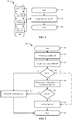
FIG. 1 is a diagram corresponding to a method of generating a PIN according to an example embodiment of the present invention. -
FIG. 2 is a flowchart depicting a method of creating a user profile according to an example embodiment of the present invention. -
FIG. 3 is a flowchart depicting a method of authenticating a user according to an example embodiment of the present invention. -
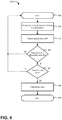
FIG. 4 is a flowchart depicting a method of authenticating a user according to an example embodiment of the present invention. - Whilst in the following description all figures are described as being "embodiments" of the invention, it should be noted that only
FIG. 1 ,FIG. 2 and FIG. 3 and their description relate to embodiments of the invention as claimed. The other description of the embodiment ofFIG. 4 is a further example which contributes to the understanding of the invention, in particular regarding the construction of a printer which is usable with the invention. -
FIG. 1 shows aPIN generation method 100 for generating a PIN using atouch screen interface 101 of a 3D printer. In an example embodiment,touch screen interface 101 operates under control of a processor and a non-transitory storage medium on which are stored program instructions that are executable by the processor, and that, when executed by the processor, cause the process to perform methods of operating thetouch screen interface 101, such as the example methods depicted in and described below with respect toFIGS. 1-4 . - In an example embodiment,
touch screen interface 101 includes pressure sensors, which are configured to detect a force signal corresponding to a force exerted by an object on the surface of thetouch screen interface 101. - In an example embodiment,
PIN Generation method 100 includes displaying, bytouch screen interface 101,Home Screen 102, which includes, for example, user selectableoptions Options Option 106 can, for example, correspond to the "Tool" option, in response to selection of whichtouch screen interface 101 displaysTool Screen 107. -
Tool Screen 107 includes, for example, user selectableoptions Options option 112 can correspond to the "Settings" option, andoption 115 can correspond to the "Back" option, in response to selection of whichtouch screen interface 101displays Home Screen 102. If a user selects "Settings"option 112,touch screen interface 101 displaysSettings Screen 116. - Settings Screen 116 includes, for example, user selectable
options option 115 corresponds to "Back" option in response to selection of whichTool Screen 107 is displayed.Options option 117 can correspond to the "Set Pin Code" option, andoption 120 can correspond to the "Home" option, in response to selection of the latter of whichtouch screen interface 101displays Home Screen 102. In an example embodiment, if a user selects "Set Pin Code"option 117,touch screen interface 101 displaysPin Creation Screen 121 via which a user can set a PIN to, going forward, require entry thereof for use of the 3D printer. - In an example embodiment,
Pin Creation Screen 121 includes, for example,numeric keypad 122, which allows a user to generatePIN 123.PIN 123 can be, for example, a multi-digit number. Alternative example embodiments support an alpha-numeric PIN.Pin Creation Screen 121 also includes, for example, "Back" option 115 (for re-display of Settings Screen 116) and "Home" option 120 (for redisplay of Home Screen 102).Pin creation Screen 121 also includes, for example, "Enter"option 124, which allows a user to set the theretofore entered number as the selectedPIN 123. In an example embodiment, once a user has enteredPIN 123,touch screen interface 101 displays, for example,Pin Verification Screen 125. - In an example embodiment,
Pin Verification Screen 125 includes anumeric keypad 122, "Back"option 115 for redisplay ofPIN Creation Screen 121, "Home"Option 120 for redisplay ofHome Screen 102, andoption 126, which is, for example, a "Done" option.Pin Verification Screen 125, for example, prompts a user to, usingnumeric keypad 122, enterPIN 127 that had previously been set inPIN Creation Screen 121. Once the user has enteredPIN 127 and selected "Done"option 126,touch screen interface 101 verifies whetherPIN 127matches PIN 123 atstep 128. IfPIN 127matches PIN 123,touch screen interface 101 confirms that a user has properly enteredPIN 123 and, for example, redisplaysHome Screen 102, e.g., with a notification of success of setting the PIN. On the other hand, if the compared PINs do not match, the method redisplaysPIN Creation Screen 121 to a new entry ofPIN 123. -
FIG. 2 is a flowchart that illustrates amethod 200 for creating a User Profile 204 usingtouch screen interface 101 of a 3D printer, according to an example embodiment of the present invention.Method 200 beings atstep 201. - At
step 202,touch screen interface 101 prompts a user to input information of User Profile 204, e.g., user's email address 205,multi-digit number 206, answer to averification question 207, and otheruser credential information 207. For example, upon first use of the printer, thetouch screen interface 101 can prompt the creation of the profile, including setting of access information by which to limit future use of the printer to a particular user. In an example embodiment, the system permits use of an administrator profile by which to set multiple user profiles, each with respective access credentials. According to alternative example embodiments, one or more of these informational elements can be entered by separate input methods instead of or in addition to by way of this illustrated flow. For example, a method for generating a multi-digit number as a PIN has been described with respect toFIG. 1 . In an example embodiment, a modified version of the method described with respect toFIG. 1 can be used for the flow described with respect toFIG. 2 , wherebyscreen 121 is a user profile generation screen, by which the PIN can be generated in addition to other user profile information. Otheruser credential information 207 may include, for example, the user's telephone number, birthdate, etc. Once the user has entered all required information for the creation of User Profile 204,method 200 ends atstep 203. In an alternative example embodiment, the PIN and/or other user profile information can be set remotely at a user terminal that is communicatively coupled to the 3D printer that includes itstouch screen interface 101. For example, the communicatively coupled terminals are assigned to respective users who have been given permission to use the 3D printer. -
FIG. 3 is a flowchart for auser authentication method 300 using atouch screen interface 101 of a 3D printer, according to an example embodiment of the present invention. The method beings atstep 301. - At
step 302, e.g., in response to a user input to begin operation of the 3D printer,touch screen interface 101 obtains one or more User Profile(s) 204. Atstep 303,touch screen interface 101 prompts a user to enter PIN 209. Atstep 304,authentication method 300 determines if PIN 209 matchesmulti-digit number 206. If PIN 209 does not matchmulti-digit number 206,authentication method 300 proceeds to step 307. Atstep 307,authentication method 300 disablesmulti-digit number 206 and notifies the user associated with User Profile 204, for example, by using user email address 205. Aftermulti-digit number 206 has been disabled,authentication method 300 prompts the user to enter an updated multi-digit number with which the User Profile 204 had been automatically updated and which had been indicated in the notification sent atstep 307 or to enter an updated multi-digit number with which USER Profile 204 had been manually updated, e.g., in response to the notification sent 307. For example, according to an example embodiment, the notification is an e-mail that includes a link in response to selection of which an interface is displayed, e.g., on a screen of a remote terminal, e.g., at which the e-mail is displayed, which interface includes input fields for updating themulti-digit number 206 of User Profile 204. - If PIN 209 matches
multi-digit number 206, thenauthentication method 300 proceeds to step 305 at whichtouch screen interface 101 prompts the user to provide response 210 to one or more of the at least one verification question. If response 210 does not match the stored answer toverification question 207,authentication method 300 proceeds to step 307, which disablesmulti-digit number 206 and notifies the user of the disablement. - If response 210 matches answer to
verification question 207,authentication method 300 proceeds to step 308, which authenticates the user as being permitted to operate the 3D printer.Method 300 ends atstep 308. - In an alternative example embodiment, if, at
step 304, PIN 209 matchesmulti-digit number 206,authentication method 300 proceeds to step 308 without asking the user to input response 210 to a verification question. -
FIG. 4 is a flowchart that illustrates auser authentication method 400 for preventing use of a 3D printer by a minor, usingtouch screen interface 101 of a 3D printer, according to an example embodiment of the present invention, which authentication method can be used in combination with requiring entry of a PIN code or even where operation of the 3D printer is not limited to only specifically identified persons by way of PIN or other identification methods.User authentication method 400 begins atstep 401. - At
step 402,authentication method 400 prompts a user to apply pressure totouch screen interface 101. Atstep 403,authentication method 400 detects appliedforce 404 applied by the user. Alternatively, instead of a dedicated prompt for application of pressure and subsequent detection of pressure applied in response to the prompt, pressure applied by a user when selecting an option, viatouch screen interface 101, requesting operation of the 3D printer, is detected, the user-selection of the option beginning theauthentication method 400 withstep 403. Next, atstep 405,authentication method 400 determines if appliedforce 404 is greater than or equal to force threshold value 406. For example, in an example embodiment, force threshold value 406 is set to a force that an average adult can exert ontouch screen interface 101 with one input, e.g., with a press of a single finger. Therefore, if appliedforce 405 is less than force threshold value 406,authentication method 400 determines that an adult is not applying pressure to thetouch screen interface 101, andauthentication method 400 returns to step 401. - If applied
force 405 is greater than or equal to force threshold value 406, thenauthentication method 400 proceeds to step 407. Atstep 407,authentication method 400 determines if the user is using more than one input to apply appliedforce 404. If more than one input is used to apply appliedforce 404, thenauthentication method 400 determines that the user is not authenticated as an adult. In an example embodiment, where more than one pressure point is detected, the sensor detects whether pressure at any single one of the pressure points meets the threshold, in which case the user is authenticated but is otherwise not authenticated. The authentication method then returns to step 401. - If
force 404 is sensed as having been applied by a single input, e.g., a single finger, then, atstep 408,authentication method 400 authenticates the user who has appliedforce 404 as an adult.Authentication method 400 ends atstep 409. - In an example embodiment, the sensor for detecting the force includes a capacitor arrangement, where an external layer of the
touch screen interface 101 is flexible and can be bent downward towards an underlying layer, where the distance between the external and underlying layers varies depending on the amount of pressure applied, which distance can be detected based on a change in capacitance in response to a change in distance between electrodes integrated in the external and underlying layers, respectively. A plurality of electrode pairs can be arranged, e.g., in a grid, so that a pattern of distance values are detectable by which to ascertain the number of pressure points used to apply pressure. For example, a single pressure point is expected to match to a stored gradient of pressure over an applied area, e.g., with greatest pressure at the center of an applied pressure and gradually lower pressure in a direction that extends radially outward from the center. If a pressure pattern includes a center of greatest pressure, followed by gradually lower pressure, and then continuing further away from the initial center with a gradual increase in pressure to another center point of high pressure, such a pattern indicates presence of two pressure points. - In an example embodiment, the external layer of the
touch screen interface 101 can be formed of a glass or a flexible shape conforming polymer. - An example embodiment of the present invention is directed to processing circuitry, e.g., including one or more processors, which may be implemented using any conventional processing circuit and device or combination thereof, e.g., a Central Processing Unit (CPU) of a Personal Computer (PC) or other workstation processor, to execute code provided, e.g., on a non-transitory computer-readable medium including any conventional memory device, to perform any of the methods described herein, alone or in combination. The one or more processors can be embodied in a server or user terminal or combination thereof. The user terminal can be embodied, for example, as a desktop, laptop, hand-held device, Personal Digital Assistant (PDA), television set-top Internet appliance, mobile telephone, smart phone, etc., or as a combination of one or more thereof. The memory device can include any conventional permanent and/or temporary memory circuits or combination thereof, a non-exhaustive list of which includes Random Access Memory (RAM), Read Only Memory (ROM), Compact Disks (CD), Digital Versatile Disk (DVD), and magnetic tape.
- An example embodiment of the present invention is directed to one or more non-transitory computer-readable media, e.g., as described above, on which are stored instructions that are executable by a processor and that, when executed by the processor, perform the various methods described herein, each alone or in combination or sub-steps thereof in isolation or in other combinations.
- An example embodiment of the present invention is directed to a method, e.g., of a hardware component or machine, of transmitting instructions executable by a processor to perform the various methods described herein, each alone or in combination or sub-steps thereof in isolation or in other combinations.
- The above description is intended to be illustrative, and not restrictive. Those skilled in the art can appreciate from the foregoing description that the present invention can be implemented in a variety of forms, and that the various embodiments can be implemented alone or in combination. Therefore, while the embodiments of the present invention have been described in connection with particular examples thereof, the true scope of the embodiments and/or methods of the present invention should not be so limited since other modifications will become apparent to the skilled practitioner upon a study of the drawings, specification, and following claims.
Claims (12)
- A method for authenticating a user of a printer to prevent unauthorized use of the printer, the method comprising the following steps:a) obtaining, by processing circuitry, a user profile corresponding to a user and including a stored multi-digit number;b) obtaining, via a touch screen interface of the printer, input of a personal identification number (PIN);c) comparing, by the processing circuitry, the input PIN to the multi-digit number of the obtained user profile; andd) executing, by the processing circuitry, an algorithm according to which use of the printer is prevented if the PIN does not match the stored multi-digit number, and the user is authenticated if the PIN does match the stored multi-digit number; whereine) the user profile further includes an answer to at least one verification question, and the authentication of the user if the PIN matches the stored multi-digit number includes:e1) prompting the user to input a response to the at least one verification question;e2) if the response matches the answer to the at least one verification question, enabling the user to operate the printer; ande3) if the response does not match the answer to the at least one verification question, preventing use of the printer.
- The method of claim 1, wherein the user profile further includes user contact information, and, if the response does not match the answer to the at least one verification question, the algorithm causes the processing circuitry to disable the PIN and transmit a communication using the contact information of the user profile informing of the disablement of the PIN.
- The method of claim 2, wherein, if the response does not match the answer to the at least one verification question, the algorithm causes the processing circuitry to generate a new PIN and include an identification of the new PIN in the transmitted communication.
- The method of claim 2, wherein, if the response does not match the answer to the at least one verification question, the algorithm causes the processing circuitry to include in the transmitted communication a link to an electronic location via which a new PIN and multi-digit number are settable.
- The method of claim 4, wherein the electronic location is a webpage, settings set at the webpage being updated in a central server communicatively coupled to the printer.
- A non-transitory, machine-readable storage medium on which are stored program instructions that are executable by a processor and that, when executed by the processor, cause the processor to perform a method for authenticating a user of a printer to prevent unauthorized use of the printer, the method comprising:a) obtaining a user profile corresponding to a user and including a stored multi-digit number;b) obtaining, via a touch screen interface of the printer, input of a personal identification number (PIN);c) comparing the input PIN to the multi-digit number of the obtained user profile; andd) executing an algorithm according to which use of the printer is prevented if the PIN does not match the stored multi-digit number, and the user is authenticated if the PIN does match the stored multi-digit number; whereine) the user profile further includes an answer to at least one verification question, and the authentication of the user if the PIN matches the stored multi-digit number includes:e1) prompting the user to input a response to the at least one verification question;e2) if the response matches the answer to the at least one verification question, enabling the user to operate the printer; ande3) if the response does not match the answer to the at least one verification question, preventing use of the printer.
- The machine-readable storage medium of claim 6, wherein the user profile further includes user contact information, and, if the response does not match the answer to the at least one verification question, the algorithm causes processing circuitry to disable the PIN and transmit a communication using the contact information of the user profile informing of the disablement of the PIN.
- The machine-readable storage medium of claim 7, wherein, if the response does not match the answer to the at least one verification question, the algorithm causes processing circuitry to generate a new PIN and include an identification of the new PIN in the transmitted communication.
- The machine-readable storage medium of claim 7, wherein, if the response does not match the answer to the at least one verification question, the algorithm causes processing circuitry to include in the transmitted communication a link to an electronic location via which a new PIN and multi-digit number are settable.
- The machine-readable storage medium of claim 9, wherein the electronic location is a webpage, settings set at the webpage being updated in a central server communicatively coupled to the printer.
- A printer, comprising:a) a processor to perform a method for authenticating a user of the printer to prevent unauthorized use of the printer;b) a touchscreen for user input; andc) the non-transitory, machine-readable storage medium according to claims 6-10, the processor adapted to execute the program instructions to cause the processor to perform the method for authenticating the user of the printer to prevent unauthorized use of the printer.
- The printer according to claim 11, wherein the printer is a 3D printer.
Applications Claiming Priority (2)
| Application Number | Priority Date | Filing Date | Title |
|---|---|---|---|
| US15/223,679 US11070703B2 (en) | 2016-07-29 | 2016-07-29 | 3D printer touchscreen interface lockout |
| PCT/EP2017/068582 WO2018019750A1 (en) | 2016-07-29 | 2017-07-24 | 3d printer interface lockout |
Publications (2)
| Publication Number | Publication Date |
|---|---|
| EP3491563A1 EP3491563A1 (en) | 2019-06-05 |
| EP3491563B1 true EP3491563B1 (en) | 2021-11-17 |
Family
ID=59506245
Family Applications (1)
| Application Number | Title | Priority Date | Filing Date |
|---|---|---|---|
| EP17746432.8A Active EP3491563B1 (en) | 2016-07-29 | 2017-07-24 | 3d printer interface lockout |
Country Status (4)
| Country | Link |
|---|---|
| US (2) | US11070703B2 (en) |
| EP (1) | EP3491563B1 (en) |
| CN (1) | CN109791580B (en) |
| WO (1) | WO2018019750A1 (en) |
Families Citing this family (7)
| Publication number | Priority date | Publication date | Assignee | Title |
|---|---|---|---|---|
| DE102013217422A1 (en) | 2013-09-02 | 2015-03-05 | Carl Zeiss Industrielle Messtechnik Gmbh | Coordinate measuring machine and method for measuring and at least partially producing a workpiece |
| EP3409004B1 (en) * | 2016-01-29 | 2021-03-03 | Y Soft Corporation | Secure 3d printer and 3d printer management network |
| CN108616501A (en) * | 2018-03-09 | 2018-10-02 | 海尔集团技术研发中心 | The data guard method and system of threedimensional model under a kind of cloud manufacturing environment |
| WO2019206903A1 (en) | 2018-04-23 | 2019-10-31 | Carl Zeiss Industrial Metrology, Llc | Method and arrangement for producing a workpiece by using adaptive closed-loop control of additive manufacturing techniques |
| JP7299972B2 (en) | 2019-04-24 | 2023-06-28 | 真旭 徳山 | Information processing system, information processing method, and program |
| JP7299973B2 (en) | 2019-04-26 | 2023-06-28 | 真旭 徳山 | Remote control device, information processing method and program |
| WO2021019807A1 (en) * | 2019-07-31 | 2021-02-04 | 真旭 徳山 | Terminal device, information processing method, and program |
Family Cites Families (36)
| Publication number | Priority date | Publication date | Assignee | Title |
|---|---|---|---|---|
| AT409379B (en) * | 1999-06-02 | 2002-07-25 | Baxter Ag | MEDIUM FOR PROTEIN- AND SERUM-FREE CELL CULTURE |
| JP2004297468A (en) * | 2003-03-27 | 2004-10-21 | Lg Electronics Inc | Remote control unit |
| US20060230286A1 (en) * | 2005-03-30 | 2006-10-12 | Hiroshi Kitada | System and method for authenticating a user of an image processing system |
| US20070002368A1 (en) * | 2005-06-30 | 2007-01-04 | Fatima Corona | System and method for sending a stored scanned job to printers or group of printers from a multi-function peripheral device |
| US20070245153A1 (en) * | 2006-04-18 | 2007-10-18 | Brent Richtsmeier | System and method for user authentication in a multi-function printer with a biometric scanning device |
| GB0621189D0 (en) * | 2006-10-25 | 2006-12-06 | Payfont Ltd | Secure authentication and payment system |
| JP4303746B2 (en) * | 2006-11-22 | 2009-07-29 | 株式会社シーイーシー | Secure print system and method |
| US20080288996A1 (en) * | 2007-05-15 | 2008-11-20 | At&T Knowledge Ventures, Lp | Method and apparatus for provisioning media content in a multi-user environment |
| US9159179B2 (en) | 2007-05-31 | 2015-10-13 | Ricoh Company, Ltd. | Common access card security and document security enhancement |
| US8826396B2 (en) * | 2007-12-12 | 2014-09-02 | Wells Fargo Bank, N.A. | Password reset system |
| US20100097324A1 (en) * | 2008-10-20 | 2010-04-22 | Dell Products L.P. | Parental Controls Based on Touchscreen Input |
| US8988191B2 (en) * | 2009-08-27 | 2015-03-24 | Symbol Technologies, Inc. | Systems and methods for pressure-based authentication of an input on a touch screen |
| GB201011146D0 (en) * | 2010-07-02 | 2010-08-18 | Vodafone Ip Licensing Ltd | Mobile computing device |
| US20120126941A1 (en) * | 2010-11-19 | 2012-05-24 | Research In Motion Limited | Pressure password for a touchscreen device |
| EP2463798A1 (en) * | 2010-11-19 | 2012-06-13 | Research In Motion Limited | Pressure password for a touchscreen device |
| US9526006B2 (en) * | 2010-11-29 | 2016-12-20 | Biocatch Ltd. | System, method, and device of detecting identity of a user of an electronic device |
| US9727886B2 (en) * | 2010-12-23 | 2017-08-08 | Facebook, Inc. | Predicting real-world connections based on interactions in social networking system |
| WO2011150851A2 (en) * | 2011-06-01 | 2011-12-08 | 华为终端有限公司 | Terminal authentication method and device thereof |
| US9354731B1 (en) * | 2012-06-20 | 2016-05-31 | Amazon Technologies, Inc. | Multi-dimension touch input |
| US10476821B2 (en) * | 2013-07-02 | 2019-11-12 | Atos Digital Health Solutions, Inc. | System and method for secure messaging |
| US9483628B2 (en) * | 2013-08-29 | 2016-11-01 | Paypal, Inc. | Methods and systems for altering settings or performing an action by a user device based on detecting or authenticating a user of the user device |
| US9594893B2 (en) * | 2014-01-15 | 2017-03-14 | Lenovo (Singapore) Pte. Ltd. | Multi-touch local device authentication |
| JP2015207034A (en) * | 2014-04-17 | 2015-11-19 | アルパイン株式会社 | information input device and information input method |
| US9389708B2 (en) * | 2014-05-08 | 2016-07-12 | Atmel Corporation | Active stylus with force sensor |
| DE202015006141U1 (en) * | 2014-09-02 | 2015-12-14 | Apple Inc. | Electronic touch communication |
| CN105635422A (en) * | 2014-11-07 | 2016-06-01 | 中兴通讯股份有限公司 | Intelligent terminal and state control method thereof |
| US20160328065A1 (en) * | 2015-01-12 | 2016-11-10 | Rockwell Collins, Inc. | Touchscreen with Dynamic Control of Activation Force |
| JP6413896B2 (en) * | 2015-03-31 | 2018-10-31 | ブラザー工業株式会社 | Server device and communication system including server device |
| US9612685B2 (en) * | 2015-04-09 | 2017-04-04 | Microsoft Technology Licensing, Llc | Force-sensitive touch sensor compensation |
| US10079687B2 (en) * | 2015-04-13 | 2018-09-18 | Ilantus Technologies Pvt. Ltd. | System and method for password recovery using fuzzy logic |
| CN104966011B (en) * | 2015-06-12 | 2018-07-17 | 西安交通大学 | Mobile terminal child user non-cooperating formula judges and the method for limitation operating right |
| JP6525781B2 (en) * | 2015-07-21 | 2019-06-05 | キヤノン株式会社 | Management system, control method of management system, and program |
| CN105224221B (en) * | 2015-09-09 | 2019-01-25 | 魅族科技(中国)有限公司 | A kind of terminal device and labeling method |
| CN105183360A (en) * | 2015-09-09 | 2015-12-23 | 魅族科技(中国)有限公司 | Method and device for lighting up screen and terminal |
| US9954867B1 (en) * | 2015-12-15 | 2018-04-24 | Amazon Technologies, Inc. | Verification of credential reset |
| US10180755B2 (en) * | 2016-02-29 | 2019-01-15 | Apple Inc. | Electronic device with dynamic thresholding for force detection |
-
2016
- 2016-07-29 US US15/223,679 patent/US11070703B2/en active Active
-
2017
- 2017-07-24 WO PCT/EP2017/068582 patent/WO2018019750A1/en not_active Ceased
- 2017-07-24 CN CN201780060108.1A patent/CN109791580B/en active Active
- 2017-07-24 EP EP17746432.8A patent/EP3491563B1/en active Active
- 2017-10-04 US US15/724,364 patent/US20180035013A1/en not_active Abandoned
Also Published As
| Publication number | Publication date |
|---|---|
| US11070703B2 (en) | 2021-07-20 |
| WO2018019750A1 (en) | 2018-02-01 |
| EP3491563A1 (en) | 2019-06-05 |
| CN109791580B (en) | 2023-12-12 |
| US20180035013A1 (en) | 2018-02-01 |
| CN109791580A (en) | 2019-05-21 |
| US20180035011A1 (en) | 2018-02-01 |
Similar Documents
| Publication | Publication Date | Title |
|---|---|---|
| US20180035013A1 (en) | 3d printer interface lockout | |
| CN105635107B (en) | authentication device and authentication method | |
| JP6706007B2 (en) | Authentication device, authentication method, and electronic device | |
| US9571621B2 (en) | Dynamic unlocking method and electronic apparatus using the same | |
| KR102778224B1 (en) | Image forming apparatus having multi-factor authentication function | |
| CN115118522A (en) | Account access recovery system, method and device | |
| US8136049B2 (en) | Image processing apparatus | |
| EP4145312B1 (en) | Information processing apparatus having multifactor authentication function, control method, and storage medium | |
| CN106530470A (en) | Vehicle unlocking method, locking and unlocking device, vehicle and vehicle system | |
| US8997257B2 (en) | Information processing apparatus and information processing method | |
| CN101388059B (en) | Screen keyboard input system and method for preventing Trojan horse program | |
| JP2016038758A (en) | Operation apparatus and operation method | |
| JP4623437B2 (en) | Authentication system, authentication method, and authentication program | |
| JP6551352B2 (en) | Password authentication device | |
| JP4314022B2 (en) | Image forming apparatus | |
| US9917962B1 (en) | Multifunction peripheral with avatar based login | |
| CN107770179B (en) | Method, system, and medium for resetting unique identifier | |
| JP2007310515A (en) | Password authentication system, password authentication server, password authentication method and program | |
| CN116016802A (en) | Information processing device, non-transitory storage medium and control method | |
| EP2921983B1 (en) | Login method with verification of password inadvertently inputted in username field | |
| JP6308144B2 (en) | Electronic device and authentication method in electronic device | |
| JP6515869B2 (en) | Image forming apparatus and information processing apparatus | |
| JP6414755B2 (en) | Authentication device, authentication method, and electronic device | |
| WO2014156693A1 (en) | Information terminal, lock disengage method, and lock disengage program | |
| CN108846272A (en) | Application security management method and device and electronic equipment |
Legal Events
| Date | Code | Title | Description |
|---|---|---|---|
| STAA | Information on the status of an ep patent application or granted ep patent |
Free format text: STATUS: UNKNOWN |
|
| STAA | Information on the status of an ep patent application or granted ep patent |
Free format text: STATUS: THE INTERNATIONAL PUBLICATION HAS BEEN MADE |
|
| PUAI | Public reference made under article 153(3) epc to a published international application that has entered the european phase |
Free format text: ORIGINAL CODE: 0009012 |
|
| STAA | Information on the status of an ep patent application or granted ep patent |
Free format text: STATUS: REQUEST FOR EXAMINATION WAS MADE |
|
| 17P | Request for examination filed |
Effective date: 20190228 |
|
| AK | Designated contracting states |
Kind code of ref document: A1 Designated state(s): AL AT BE BG CH CY CZ DE DK EE ES FI FR GB GR HR HU IE IS IT LI LT LU LV MC MK MT NL NO PL PT RO RS SE SI SK SM TR |
|
| AX | Request for extension of the european patent |
Extension state: BA ME |
|
| DAV | Request for validation of the european patent (deleted) | ||
| DAX | Request for extension of the european patent (deleted) | ||
| RAP1 | Party data changed (applicant data changed or rights of an application transferred) |
Owner name: ROBERT BOSCH GMBH |
|
| REG | Reference to a national code |
Ref country code: DE Ref legal event code: R079 Ref document number: 602017049456 Country of ref document: DE Free format text: PREVIOUS MAIN CLASS: G06F0021310000 Ipc: H04L0029060000 |
|
| RIC1 | Information provided on ipc code assigned before grant |
Ipc: H04N 1/44 20060101ALI20201210BHEP Ipc: H04N 1/00 20060101ALI20201210BHEP Ipc: G06F 21/31 20130101ALI20201210BHEP Ipc: H04L 29/06 20060101AFI20201210BHEP Ipc: G06F 3/12 20060101ALI20201210BHEP Ipc: B29C 64/20 20170101ALI20201210BHEP Ipc: B33Y 30/00 20150101ALI20201210BHEP |
|
| GRAP | Despatch of communication of intention to grant a patent |
Free format text: ORIGINAL CODE: EPIDOSNIGR1 |
|
| STAA | Information on the status of an ep patent application or granted ep patent |
Free format text: STATUS: GRANT OF PATENT IS INTENDED |
|
| INTG | Intention to grant announced |
Effective date: 20210120 |
|
| GRAJ | Information related to disapproval of communication of intention to grant by the applicant or resumption of examination proceedings by the epo deleted |
Free format text: ORIGINAL CODE: EPIDOSDIGR1 |
|
| STAA | Information on the status of an ep patent application or granted ep patent |
Free format text: STATUS: REQUEST FOR EXAMINATION WAS MADE |
|
| GRAP | Despatch of communication of intention to grant a patent |
Free format text: ORIGINAL CODE: EPIDOSNIGR1 |
|
| STAA | Information on the status of an ep patent application or granted ep patent |
Free format text: STATUS: GRANT OF PATENT IS INTENDED |
|
| INTC | Intention to grant announced (deleted) | ||
| INTG | Intention to grant announced |
Effective date: 20210622 |
|
| GRAS | Grant fee paid |
Free format text: ORIGINAL CODE: EPIDOSNIGR3 |
|
| GRAA | (expected) grant |
Free format text: ORIGINAL CODE: 0009210 |
|
| STAA | Information on the status of an ep patent application or granted ep patent |
Free format text: STATUS: THE PATENT HAS BEEN GRANTED |
|
| AK | Designated contracting states |
Kind code of ref document: B1 Designated state(s): AL AT BE BG CH CY CZ DE DK EE ES FI FR GB GR HR HU IE IS IT LI LT LU LV MC MK MT NL NO PL PT RO RS SE SI SK SM TR |
|
| REG | Reference to a national code |
Ref country code: GB Ref legal event code: FG4D |
|
| REG | Reference to a national code |
Ref country code: DE Ref legal event code: R079 Ref document number: 602017049456 Country of ref document: DE Free format text: PREVIOUS MAIN CLASS: H04L0029060000 Ipc: H04L0065000000 |
|
| REG | Reference to a national code |
Ref country code: IE Ref legal event code: FG4D |
|
| REG | Reference to a national code |
Ref country code: DE Ref legal event code: R096 Ref document number: 602017049456 Country of ref document: DE |
|
| REG | Reference to a national code |
Ref country code: AT Ref legal event code: REF Ref document number: 1448973 Country of ref document: AT Kind code of ref document: T Effective date: 20211215 |
|
| REG | Reference to a national code |
Ref country code: LT Ref legal event code: MG9D |
|
| REG | Reference to a national code |
Ref country code: NL Ref legal event code: MP Effective date: 20211117 |
|
| REG | Reference to a national code |
Ref country code: AT Ref legal event code: MK05 Ref document number: 1448973 Country of ref document: AT Kind code of ref document: T Effective date: 20211117 |
|
| PG25 | Lapsed in a contracting state [announced via postgrant information from national office to epo] |
Ref country code: RS Free format text: LAPSE BECAUSE OF FAILURE TO SUBMIT A TRANSLATION OF THE DESCRIPTION OR TO PAY THE FEE WITHIN THE PRESCRIBED TIME-LIMIT Effective date: 20211117 Ref country code: LT Free format text: LAPSE BECAUSE OF FAILURE TO SUBMIT A TRANSLATION OF THE DESCRIPTION OR TO PAY THE FEE WITHIN THE PRESCRIBED TIME-LIMIT Effective date: 20211117 Ref country code: FI Free format text: LAPSE BECAUSE OF FAILURE TO SUBMIT A TRANSLATION OF THE DESCRIPTION OR TO PAY THE FEE WITHIN THE PRESCRIBED TIME-LIMIT Effective date: 20211117 Ref country code: BG Free format text: LAPSE BECAUSE OF FAILURE TO SUBMIT A TRANSLATION OF THE DESCRIPTION OR TO PAY THE FEE WITHIN THE PRESCRIBED TIME-LIMIT Effective date: 20220217 Ref country code: AT Free format text: LAPSE BECAUSE OF FAILURE TO SUBMIT A TRANSLATION OF THE DESCRIPTION OR TO PAY THE FEE WITHIN THE PRESCRIBED TIME-LIMIT Effective date: 20211117 |
|
| PG25 | Lapsed in a contracting state [announced via postgrant information from national office to epo] |
Ref country code: IS Free format text: LAPSE BECAUSE OF FAILURE TO SUBMIT A TRANSLATION OF THE DESCRIPTION OR TO PAY THE FEE WITHIN THE PRESCRIBED TIME-LIMIT Effective date: 20220317 Ref country code: SE Free format text: LAPSE BECAUSE OF FAILURE TO SUBMIT A TRANSLATION OF THE DESCRIPTION OR TO PAY THE FEE WITHIN THE PRESCRIBED TIME-LIMIT Effective date: 20211117 Ref country code: PT Free format text: LAPSE BECAUSE OF FAILURE TO SUBMIT A TRANSLATION OF THE DESCRIPTION OR TO PAY THE FEE WITHIN THE PRESCRIBED TIME-LIMIT Effective date: 20220317 Ref country code: PL Free format text: LAPSE BECAUSE OF FAILURE TO SUBMIT A TRANSLATION OF THE DESCRIPTION OR TO PAY THE FEE WITHIN THE PRESCRIBED TIME-LIMIT Effective date: 20211117 Ref country code: NO Free format text: LAPSE BECAUSE OF FAILURE TO SUBMIT A TRANSLATION OF THE DESCRIPTION OR TO PAY THE FEE WITHIN THE PRESCRIBED TIME-LIMIT Effective date: 20220217 Ref country code: NL Free format text: LAPSE BECAUSE OF FAILURE TO SUBMIT A TRANSLATION OF THE DESCRIPTION OR TO PAY THE FEE WITHIN THE PRESCRIBED TIME-LIMIT Effective date: 20211117 Ref country code: LV Free format text: LAPSE BECAUSE OF FAILURE TO SUBMIT A TRANSLATION OF THE DESCRIPTION OR TO PAY THE FEE WITHIN THE PRESCRIBED TIME-LIMIT Effective date: 20211117 Ref country code: HR Free format text: LAPSE BECAUSE OF FAILURE TO SUBMIT A TRANSLATION OF THE DESCRIPTION OR TO PAY THE FEE WITHIN THE PRESCRIBED TIME-LIMIT Effective date: 20211117 Ref country code: GR Free format text: LAPSE BECAUSE OF FAILURE TO SUBMIT A TRANSLATION OF THE DESCRIPTION OR TO PAY THE FEE WITHIN THE PRESCRIBED TIME-LIMIT Effective date: 20220218 Ref country code: ES Free format text: LAPSE BECAUSE OF FAILURE TO SUBMIT A TRANSLATION OF THE DESCRIPTION OR TO PAY THE FEE WITHIN THE PRESCRIBED TIME-LIMIT Effective date: 20211117 |
|
| PG25 | Lapsed in a contracting state [announced via postgrant information from national office to epo] |
Ref country code: SM Free format text: LAPSE BECAUSE OF FAILURE TO SUBMIT A TRANSLATION OF THE DESCRIPTION OR TO PAY THE FEE WITHIN THE PRESCRIBED TIME-LIMIT Effective date: 20211117 Ref country code: SK Free format text: LAPSE BECAUSE OF FAILURE TO SUBMIT A TRANSLATION OF THE DESCRIPTION OR TO PAY THE FEE WITHIN THE PRESCRIBED TIME-LIMIT Effective date: 20211117 Ref country code: RO Free format text: LAPSE BECAUSE OF FAILURE TO SUBMIT A TRANSLATION OF THE DESCRIPTION OR TO PAY THE FEE WITHIN THE PRESCRIBED TIME-LIMIT Effective date: 20211117 Ref country code: EE Free format text: LAPSE BECAUSE OF FAILURE TO SUBMIT A TRANSLATION OF THE DESCRIPTION OR TO PAY THE FEE WITHIN THE PRESCRIBED TIME-LIMIT Effective date: 20211117 Ref country code: DK Free format text: LAPSE BECAUSE OF FAILURE TO SUBMIT A TRANSLATION OF THE DESCRIPTION OR TO PAY THE FEE WITHIN THE PRESCRIBED TIME-LIMIT Effective date: 20211117 Ref country code: CZ Free format text: LAPSE BECAUSE OF FAILURE TO SUBMIT A TRANSLATION OF THE DESCRIPTION OR TO PAY THE FEE WITHIN THE PRESCRIBED TIME-LIMIT Effective date: 20211117 |
|
| REG | Reference to a national code |
Ref country code: DE Ref legal event code: R097 Ref document number: 602017049456 Country of ref document: DE |
|
| PLBE | No opposition filed within time limit |
Free format text: ORIGINAL CODE: 0009261 |
|
| STAA | Information on the status of an ep patent application or granted ep patent |
Free format text: STATUS: NO OPPOSITION FILED WITHIN TIME LIMIT |
|
| 26N | No opposition filed |
Effective date: 20220818 |
|
| PG25 | Lapsed in a contracting state [announced via postgrant information from national office to epo] |
Ref country code: AL Free format text: LAPSE BECAUSE OF FAILURE TO SUBMIT A TRANSLATION OF THE DESCRIPTION OR TO PAY THE FEE WITHIN THE PRESCRIBED TIME-LIMIT Effective date: 20211117 |
|
| PG25 | Lapsed in a contracting state [announced via postgrant information from national office to epo] |
Ref country code: SI Free format text: LAPSE BECAUSE OF FAILURE TO SUBMIT A TRANSLATION OF THE DESCRIPTION OR TO PAY THE FEE WITHIN THE PRESCRIBED TIME-LIMIT Effective date: 20211117 |
|
| PG25 | Lapsed in a contracting state [announced via postgrant information from national office to epo] |
Ref country code: MC Free format text: LAPSE BECAUSE OF FAILURE TO SUBMIT A TRANSLATION OF THE DESCRIPTION OR TO PAY THE FEE WITHIN THE PRESCRIBED TIME-LIMIT Effective date: 20211117 |
|
| REG | Reference to a national code |
Ref country code: CH Ref legal event code: PL |
|
| REG | Reference to a national code |
Ref country code: BE Ref legal event code: MM Effective date: 20220731 |
|
| PG25 | Lapsed in a contracting state [announced via postgrant information from national office to epo] |
Ref country code: LU Free format text: LAPSE BECAUSE OF NON-PAYMENT OF DUE FEES Effective date: 20220724 Ref country code: LI Free format text: LAPSE BECAUSE OF NON-PAYMENT OF DUE FEES Effective date: 20220731 Ref country code: CH Free format text: LAPSE BECAUSE OF NON-PAYMENT OF DUE FEES Effective date: 20220731 |
|
| PG25 | Lapsed in a contracting state [announced via postgrant information from national office to epo] |
Ref country code: IT Free format text: LAPSE BECAUSE OF FAILURE TO SUBMIT A TRANSLATION OF THE DESCRIPTION OR TO PAY THE FEE WITHIN THE PRESCRIBED TIME-LIMIT Effective date: 20211117 Ref country code: BE Free format text: LAPSE BECAUSE OF NON-PAYMENT OF DUE FEES Effective date: 20220731 |
|
| PG25 | Lapsed in a contracting state [announced via postgrant information from national office to epo] |
Ref country code: IE Free format text: LAPSE BECAUSE OF NON-PAYMENT OF DUE FEES Effective date: 20220724 |
|
| PG25 | Lapsed in a contracting state [announced via postgrant information from national office to epo] |
Ref country code: HU Free format text: LAPSE BECAUSE OF FAILURE TO SUBMIT A TRANSLATION OF THE DESCRIPTION OR TO PAY THE FEE WITHIN THE PRESCRIBED TIME-LIMIT; INVALID AB INITIO Effective date: 20170724 |
|
| PG25 | Lapsed in a contracting state [announced via postgrant information from national office to epo] |
Ref country code: MK Free format text: LAPSE BECAUSE OF FAILURE TO SUBMIT A TRANSLATION OF THE DESCRIPTION OR TO PAY THE FEE WITHIN THE PRESCRIBED TIME-LIMIT Effective date: 20211117 Ref country code: CY Free format text: LAPSE BECAUSE OF FAILURE TO SUBMIT A TRANSLATION OF THE DESCRIPTION OR TO PAY THE FEE WITHIN THE PRESCRIBED TIME-LIMIT Effective date: 20211117 |
|
| PG25 | Lapsed in a contracting state [announced via postgrant information from national office to epo] |
Ref country code: TR Free format text: LAPSE BECAUSE OF FAILURE TO SUBMIT A TRANSLATION OF THE DESCRIPTION OR TO PAY THE FEE WITHIN THE PRESCRIBED TIME-LIMIT Effective date: 20211117 |
|
| PG25 | Lapsed in a contracting state [announced via postgrant information from national office to epo] |
Ref country code: MT Free format text: LAPSE BECAUSE OF FAILURE TO SUBMIT A TRANSLATION OF THE DESCRIPTION OR TO PAY THE FEE WITHIN THE PRESCRIBED TIME-LIMIT Effective date: 20211117 |
|
| PGFP | Annual fee paid to national office [announced via postgrant information from national office to epo] |
Ref country code: DE Payment date: 20250924 Year of fee payment: 9 |
|
| PGFP | Annual fee paid to national office [announced via postgrant information from national office to epo] |
Ref country code: GB Payment date: 20250724 Year of fee payment: 9 |
|
| PGFP | Annual fee paid to national office [announced via postgrant information from national office to epo] |
Ref country code: FR Payment date: 20250723 Year of fee payment: 9 |