EP3490224A1 - Data synchronization method and system - Google Patents
Data synchronization method and system Download PDFInfo
- Publication number
- EP3490224A1 EP3490224A1 EP17879651.2A EP17879651A EP3490224A1 EP 3490224 A1 EP3490224 A1 EP 3490224A1 EP 17879651 A EP17879651 A EP 17879651A EP 3490224 A1 EP3490224 A1 EP 3490224A1
- Authority
- EP
- European Patent Office
- Prior art keywords
- server room
- target
- data change
- service
- terminal
- Prior art date
- Legal status (The legal status is an assumption and is not a legal conclusion. Google has not performed a legal analysis and makes no representation as to the accuracy of the status listed.)
- Granted
Links
Images


Classifications
-
- H—ELECTRICITY
- H04—ELECTRIC COMMUNICATION TECHNIQUE
- H04L—TRANSMISSION OF DIGITAL INFORMATION, e.g. TELEGRAPHIC COMMUNICATION
- H04L67/00—Network arrangements or protocols for supporting network services or applications
- H04L67/01—Protocols
- H04L67/10—Protocols in which an application is distributed across nodes in the network
- H04L67/1095—Replication or mirroring of data, e.g. scheduling or transport for data synchronisation between network nodes
-
- G—PHYSICS
- G06—COMPUTING OR CALCULATING; COUNTING
- G06F—ELECTRIC DIGITAL DATA PROCESSING
- G06F16/00—Information retrieval; Database structures therefor; File system structures therefor
- G06F16/20—Information retrieval; Database structures therefor; File system structures therefor of structured data, e.g. relational data
- G06F16/27—Replication, distribution or synchronisation of data between databases or within a distributed database system; Distributed database system architectures therefor
-
- G—PHYSICS
- G06—COMPUTING OR CALCULATING; COUNTING
- G06F—ELECTRIC DIGITAL DATA PROCESSING
- G06F9/00—Arrangements for program control, e.g. control units
- G06F9/06—Arrangements for program control, e.g. control units using stored programs, i.e. using an internal store of processing equipment to receive or retain programs
- G06F9/46—Multiprogramming arrangements
- G06F9/48—Program initiating; Program switching, e.g. by interrupt
- G06F9/4806—Task transfer initiation or dispatching
- G06F9/4843—Task transfer initiation or dispatching by program, e.g. task dispatcher, supervisor, operating system
- G06F9/4881—Scheduling strategies for dispatcher, e.g. round robin, multi-level priority queues
-
- H—ELECTRICITY
- H04—ELECTRIC COMMUNICATION TECHNIQUE
- H04L—TRANSMISSION OF DIGITAL INFORMATION, e.g. TELEGRAPHIC COMMUNICATION
- H04L41/00—Arrangements for maintenance, administration or management of data switching networks, e.g. of packet switching networks
- H04L41/06—Management of faults, events, alarms or notifications
- H04L41/0654—Management of faults, events, alarms or notifications using network fault recovery
- H04L41/0668—Management of faults, events, alarms or notifications using network fault recovery by dynamic selection of recovery network elements, e.g. replacement by the most appropriate element after failure
-
- H—ELECTRICITY
- H04—ELECTRIC COMMUNICATION TECHNIQUE
- H04L—TRANSMISSION OF DIGITAL INFORMATION, e.g. TELEGRAPHIC COMMUNICATION
- H04L61/00—Network arrangements, protocols or services for addressing or naming
- H04L61/45—Network directories; Name-to-address mapping
- H04L61/4505—Network directories; Name-to-address mapping using standardised directories; using standardised directory access protocols
- H04L61/4511—Network directories; Name-to-address mapping using standardised directories; using standardised directory access protocols using domain name system [DNS]
-
- H—ELECTRICITY
- H04—ELECTRIC COMMUNICATION TECHNIQUE
- H04L—TRANSMISSION OF DIGITAL INFORMATION, e.g. TELEGRAPHIC COMMUNICATION
- H04L61/00—Network arrangements, protocols or services for addressing or naming
- H04L61/50—Address allocation
- H04L61/5007—Internet protocol [IP] addresses
-
- H—ELECTRICITY
- H04—ELECTRIC COMMUNICATION TECHNIQUE
- H04L—TRANSMISSION OF DIGITAL INFORMATION, e.g. TELEGRAPHIC COMMUNICATION
- H04L67/00—Network arrangements or protocols for supporting network services or applications
- H04L67/01—Protocols
- H04L67/10—Protocols in which an application is distributed across nodes in the network
- H04L67/1001—Protocols in which an application is distributed across nodes in the network for accessing one among a plurality of replicated servers
-
- H—ELECTRICITY
- H04—ELECTRIC COMMUNICATION TECHNIQUE
- H04L—TRANSMISSION OF DIGITAL INFORMATION, e.g. TELEGRAPHIC COMMUNICATION
- H04L67/00—Network arrangements or protocols for supporting network services or applications
- H04L67/01—Protocols
- H04L67/10—Protocols in which an application is distributed across nodes in the network
- H04L67/1001—Protocols in which an application is distributed across nodes in the network for accessing one among a plurality of replicated servers
- H04L67/1004—Server selection for load balancing
- H04L67/1008—Server selection for load balancing based on parameters of servers, e.g. available memory or workload
-
- H—ELECTRICITY
- H04—ELECTRIC COMMUNICATION TECHNIQUE
- H04L—TRANSMISSION OF DIGITAL INFORMATION, e.g. TELEGRAPHIC COMMUNICATION
- H04L67/00—Network arrangements or protocols for supporting network services or applications
- H04L67/01—Protocols
- H04L67/10—Protocols in which an application is distributed across nodes in the network
- H04L67/1001—Protocols in which an application is distributed across nodes in the network for accessing one among a plurality of replicated servers
- H04L67/1029—Protocols in which an application is distributed across nodes in the network for accessing one among a plurality of replicated servers using data related to the state of servers by a load balancer
-
- H—ELECTRICITY
- H04—ELECTRIC COMMUNICATION TECHNIQUE
- H04L—TRANSMISSION OF DIGITAL INFORMATION, e.g. TELEGRAPHIC COMMUNICATION
- H04L67/00—Network arrangements or protocols for supporting network services or applications
- H04L67/50—Network services
- H04L67/60—Scheduling or organising the servicing of application requests, e.g. requests for application data transmissions using the analysis and optimisation of the required network resources
Definitions
- the present disclosure generally relates to the field of data synchronization technology and, more particularly, relates to a data synchronization method and system.
- the cross server room architectures mostly use a deployment mode including a primary and a standby server rooms to provide external services.
- the primary server room provides external services, while the standby server room is in the standby mode.
- the primary server room periodically synchronizes service data with the standby server room.
- the standby server room is put into operation to continue to provide related services.
- the standby server room can provide external services only after its data is synchronized with the primary server room. In this way, even if the standby server room has the ability to independently provide external services, it will not provide services externally when the primary server room is operating normally. Therefore, the utilization rate for resources processing by the server rooms in the cross server room architecture is relatively low.
- a method for data synchronization includes:
- the method before acquiring, by the target terminal, the service domain name of the target server room, the method further includes:
- the method further includes:
- the executing, by the target server room, the service operation corresponding to the service request, updating, by the target server room, the first database, and generating, by the target server room, the data change message includes:
- the target server room performs the database operation in the first database, continues processing the service request based on a result of the database operation, and feeds back the service processing result to the target terminal.
- the target server room performs a data change operation in the first database, continues processing the service request based on a result of the data change, feeds back the service processing result to the target terminal, and generates the data change message based on the data change operation and stores the data change message in a preset message queue.
- the performing, by the associated server room, data synchronization based on the received data change message includes:
- a system for data synchronization comprises a target terminal, a target server room, and an associated server room of the target server room, where:
- system further comprises a load scheduling cluster, where:
- the target terminal is further configured to send a domain name acquisition request including a terminal identifier of the target terminal to a load scheduling cluster if a failure of the service request transmission is detected.
- the load scheduling cluster is further configured to determine the number of healthy VIPs among externally serving VIPs in all server rooms; the load scheduling cluster is further configured to determine a new VIP based on the terminal identifier and the number of healthy VIPs, and send a service domain name of a new server room corresponding to the new VIP to the target terminal; and the target terminal is further configured to receive and store the service domain name of the new server room sent by the load scheduling cluster.
- the target server room is specifically configured to:
- the database operation is performed in the first database, the service request continues to be processed based on a result of the database operation, and the service processing result is fed back to the target terminal.
- a data change operation is performed in the first database, the service request continues to be processed based on a result of the data change, the service processing result is fed back to the target terminal, and the data change message is generated based on the data change operation and the data change message is stored in a preset message queue.
- the associated server room is specifically configured to:
- a target terminal acquires a locally pre-stored service domain name of a target server room, and transmits a service request to the target server room through the service domain name; the target server room executes a service operation corresponding to the service request, updates a first database, and generates a data change message; the target server room sends the data change message to an associated server room of the target server room; and the associated server room performs data synchronization based on the received data change message.
- a corresponding data change message can be quickly generated so that data synchronization can be performed in time in the database of the associated server room based on the data change message. Accordingly, the feasibility of dual active of the server room and the associated server room is ensured, and the utilization rate of resources processing of the server rooms within a cross the server room architecture is improved.
- the database of the associated server room may perform data synchronization in time based on the data change message, so that the data with the same terminal identifier can be processed in the same thread, and the order of data processing in the same terminal is performed based on the order of the data requested by the terminal, to avoid abnormal service behavior caused by the out-of-order data processing.
- Embodiments of the present disclosure provide a method for data synchronization.
- the method may be implemented using a user terminal, a load scheduling cluster, and multiple server rooms, where the load scheduling cluster and the multiple server rooms belong to a service terminal of a network service.
- the load scheduling cluster may comprise network devices deployed in multiple server rooms, and be used to manage service operations in the multiple server rooms. For example, the load scheduling cluster may detect whether the VIP (Virtual IP Address) corresponding to the service domain name of each server room is active, or allocate service requests sent by different terminals among the multiple server rooms.
- VIP Virtual IP Address
- a server room may comprise multiple functional components, mainly including a managing component (may be Keepalived software, mainly used to detect the running statuses of various functional components and bind with externally serving VIPs in the server room), a load balancing component, a request processing component, a service execution component, a database, and a data synchronization component, etc.
- Each functional component may comprise multiple servers, where each server may be used to execute some or all the functions of the network service.
- Each server room has at least one associated server room, and the functions and the supported services of a server room are the same as its associated server room(s).
- a server room and its associated server room(s) may provide the same external network service at the same time.
- a server in the above functional components may include a processor, a memory, and a transceiver, where the processor may be configured to perform data synchronization in the following processes, the memory may be configured to store data required and generated in the following processes, and the transceiver may be configured to receive and transmit the relevant data in the following processes.
- Step 201 a target terminal acquires a locally pre-stored service domain name of a target server room and transmits a service request to the target server room through the service domain name.
- the user when a user wants to accomplish a certain network service through a terminal (e.g., a target terminal), the user may send a corresponding service request to a provider of the network service through the target terminal.
- the target terminal may first acquire a locally pre-stored service domain name of a server room (i.e., a target server room) that supports the corresponding service, establish a communication link with the target server room through the service domain name, and send the corresponding service request to the target server room through the established communication link.
- a server room i.e., a target server room
- the communication link between the target terminal and the target server room may have been established in advance, and thus only a process of the service request transmission is required here.
- the terminal may acquire the service domain name of the target server room from a load scheduling cluster, and the corresponding process may be as follows: the target terminal sends a domain name acquisition request to a load scheduling cluster, where the domain name acquisition request includes a terminal identifier of the target terminal; the load scheduling cluster determines the number of healthy VIPs among externally serving VIPs in all server rooms; the load scheduling cluster determines, for example, through a consistent hashing algorithm, a target VIP based on the terminal identifier and the number of healthy VIPs, and sends a service domain name of a target server room corresponding to the target VIP to the target terminal; and the target terminal receives and stores the service domain name of the target server room sent by the load scheduling cluster.
- the target terminal may first send a domain name acquisition request including a terminal identifier of the target terminal to the load scheduling cluster of the network service provider to acquire a service domain name of the server room that provides the related service.
- the load scheduling cluster may receive the domain name acquisition request sent by the target terminal and extract the terminal identifier of the target terminal included in the domain name acquisition request. Further, the load scheduling cluster may detect the operating statuses of VIPs offering external services in each server room, and determine the number of healthy VIPs in VIPs that offer external services in all the server rooms.
- the load scheduling cluster may determine a target VIP based on the terminal identifier of the target terminal and the determined number of healthy VIPs, for example, through a consistent hashing algorithm.
- a consistent hashing algorithm a simple example is provided here. For example, if the number of healthy VIPs is 10, a hash ring may be set up based on the 10 healthy VIPs, where each healthy VIP is a node on the hash ring. Terminal identifier and VIP mapping rules may be arbitrarily set. For example, a terminal having a terminal identifier with an ending number of 1 corresponds to VIP1, a terminal with an ending number of 2 corresponds to VIP2, and so on. In this way, a target VIP corresponding to the target terminal may be determined.
- the load scheduling cluster may send the service domain name of the target server room corresponding to the target VIP to the target terminal. After receiving the above service domain name, the target terminal may store the service domain name locally.
- the terminal may acquire the service domain name of a new server room from the load scheduling cluster, and the corresponding process may be as follows: if a failure of the service request transmission is detected, the target terminal sends a domain name acquisition request including a terminal identifier of the target terminal to the load scheduling cluster; the load scheduling cluster determines the number of healthy VIPs among externally serving VIPs in all server rooms; the load scheduling cluster determines a new VIP based on the terminal identifier and the number of healthy VIPs, for example, through a consistent hashing algorithm, and sends a service domain name of a new server room corresponding to the new VIP to the target terminal; and the target terminal receives and stores the service domain name of the new server room sent by the load scheduling cluster.
- the target terminal may detect whether the service request is successfully transmitted.
- detection methods exist, which may vary depending on different communication mechanisms. For example, one communication mechanism specifies that a server room needs to feed back a reception acknowledgment message when receiving a service request sent by the terminal. Then, after transmitting the service request to the target server room, the target terminal may determine that the transmission of the service request fails if it has not received the reception acknowledgment message fed back by the target server room within a predefined period. It may then be assumed that the running of the service domain name stored in the target terminal is abnormal, and the target terminal may acquire a service domain name again from the load scheduling cluster.
- the target terminal may send a domain name acquisition request including the terminal identifier of the target terminal to the load scheduling cluster.
- the load scheduling cluster may extract the terminal identifier after receiving the domain name acquisition request. Further, the load scheduling cluster may detect the operating statuses of VIPs offering external services in each server room, and determine the number of healthy VIPs in externally serving VIPs in all server rooms. Further, the load scheduling cluster may determine the new VIP based on the terminal identifier of the target terminal and the determined number of healthy VIPs, for example, through a consistent hashing algorithm. Thus, the load scheduling cluster may send the service domain name of the new server room corresponding to the new VIP to the target terminal. After receiving the above-mentioned service domain name, the target terminal may store the service domain name locally, and delete the locally pre-stored service domain name of the target server room.
- the above-described process of determining the service domain name of the target server room by the load scheduling cluster may refer to FIG. 3 .
- Step 202 the target server room executes a service operation corresponding to the service request, updates a first database, and generate a data change message.
- the first database is a database used by the target server room to record service data.
- the target server room may receive the corresponding service request.
- the load balancing component of the target server room may select a request processing component for processing the service request from multiple request processing components based on a predefined configuration, and send the service request to the above-described request processing component.
- the load balancing component may be specifically implemented using the software "HaProxy”.
- the request processing component may perform permission and format verification on the service request, decrypt the data of the service request, generate a to-be-processed message related to the service request, and send the to-be-processed message to a message queue.
- the service execution component may pull the above to-be-processed message from the message queue, and perform the corresponding service operation based on the to-be-processed message.
- the service execution component may monitor the operations in which the database is involved. If there is a data change operation, such as adding, modifying, deleting, etc., the local database (i.e., the first database) may be updated based on the data change operation. At the same time, a data change message corresponding to the data change operation may also be generated.
- the service execution component may feed back the execution result to the request processing component, and the request processing component may perform data encryption on the execution result, and send the encrypted execution result back to the target terminal.
- the server room may perform different processing depending on whether the service request includes a data change operation.
- the execution of Step 202 may be as follows: the target server room calls a service processing thread to start processing the service request, and monitors whether there is a database operation; if there is no database operation, the target server room feeds back a service processing result to the target terminal, and if there is a database operation, the target server room determines whether the database operation involves a data change; if no data change is involved, the target server room performs the database operation in the first database, continues processing the service request based on a result of the database operation, and feeds back the service processing result to the target terminal; and if a data change is involved, the target server room performs a data change operation in the first database, continues processing the service request based on a result of the data change, feeds back the service processing result to the target terminal, generates the data change message based on the data change operation, and stores the data change message in a preset
- the target server room may call a corresponding service processing thread to start processing the service request, and at the same time may monitor whether there is a database operation during the service execution. If no database operation has occurred till the service execution is completed, the target server room may feed back the service processing result of the service request to the target terminal. However, if a database operation occurs during the service execution, the target server room may first determine whether the database operation involves a data change. It is not difficult to understand that database operations include at least data query, copy, deletion, addition, modification, etc. While the data query and copy do not change the data in the database, data deletion, addition, and modification change the data in the database, and thus are called data change operations.
- the target server room may perform the database operation in the first database, continue processing the service request based on the result of the database operation, and feed back the service processing result to the target terminal after the processing is completed. If a data change is involved, the target server room may first perform the data change operation in the first database, continue processing the service request based on the result of the data change, and feed back the service processing result to the target terminal after the execution is completed. At the same time, the target server room may also generate a data change message based on the data change operation, and store the data change message in a preset message queue.
- the preset message queue may use message-oriented middleware "RocketMQ", in which a message that gets into the message queue earlier will have a priority to be processed, and thus the sequence of each data change message in the "RocketMQ" may be effectively guaranteed.
- RocketMQ message-oriented middleware
- Step 203 the target server room sends the data change message to the associated server room of the target server room.
- the target server room may send the data change message to the associated server room of the target server room. Specifically, the target server room may directly send the data change message to the data synchronization component of its associated server room.
- Step 204 the associated server room performs data synchronization based on the received data change message.
- the data synchronization component of the associated server room may receive the data change message sent by the target server room, and perform data synchronization based on the data change message.
- multiple data change operations occur when the target server room processes the service request, multiple data change messages will be generated.
- corresponding data change operations may be sequentially performed in the database of the associated server room based on the order of the data change messages, thereby accomplishing the synchronization of the data between the target server room and the associated server room.
- specific data synchronization performed by the associated server room may be as follows: the associated server room receives the data change message sent by the target server room, and determines a terminal identifier of a target terminal corresponding to the data change message; the associated server room determines a target data change thread corresponding to the terminal identifier based on the terminal identifier, for example, through a consistent hashing algorithm; and the associated server room calls the target data change thread to perform data synchronization in a second database based on the data change message.
- the data synchronization component in any server room may subscribe to the data change messages in the RocketMQ (i.e., the aforementioned preset message queue) of an associated server room. Therefore, after data change messages are added into the RocketMQ in the target server room, the target server room may send the data change messages to its associated server room in the order in which the data change messages were generated. In this way, the data synchronization component of the associated server room may receive the corresponding data change messages. Accordingly, the associated server room may first determine the terminal identifiers of the target terminals corresponding to the data change messages, and then determine the target data change threads corresponding to the terminal identifiers based on the terminal identifiers, for example, through a consistent hashing algorithm.
- the operation for determining the target data change threads may ensure that the data change messages corresponding to the same terminal identifier will be processed on the same data change thread, so that the sequence of the data synchronization operations in the same terminal may be guaranteed.
- the associated server room may call the above target data change threads to perform data change operations in a database (i.e., the second database) corresponding to the associated server room based on the data change messages, thereby accomplishing the data synchronization.
- a target terminal acquires a locally pre-stored service domain name of a target server room, and transmits a service request to the target server room through the service domain name; the target server room executes a service operation corresponding to the service request, updates a first database, and generates a data change message; the target server room sends the data change message to an associated server room of the target server room; and the associated server room performs data synchronization based on the received data change message.
- a data change occurs in the database of a certain server room, a corresponding data change message can be quickly generated so that data synchronization can be performed in time in the database of the associated server room based on the data change message.
- the database of the associated server room may perform data synchronization in time based on the data change message, so that the data with the same terminal identifier can be processed in the same thread, and the order of data processing in the same terminal is performed based on the order of the data requested by the terminal, to avoid abnormal service behavior caused by the out-of-order data processing.
- inventions of the present disclosure further provide a system for data synchronization.
- the system comprises a target terminal, a target server room, and an associated server room of the target server room, where:
- system further comprises a load scheduling cluster, where:
- the target terminal is further configured to send a domain name acquisition request including a terminal identifier of the target terminal to the load scheduling cluster if a failure of service request transmission is detected;
- the load scheduling cluster is further configured to determine the number of healthy VIPs among externally serving VIPs in all the server rooms;
- the load scheduling cluster is further configured to determine a new VIP based on the terminal identifier and the number of healthy VIPs, for example, through a consistent hashing algorithm, and send a service domain name of a new server room corresponding to the new VIP to the target terminal;
- the target terminal is further configured to receive and store the service domain name of the new server room sent by the load scheduling cluster.
- the target server room is specifically configured to:
- the associated server room is specifically configured to:
- a target terminal acquires a locally pre-stored service domain name of a target server room, and transmits a service request to the target server room through the service domain name; the target server room executes a service operation corresponding to the service request, updates a first database, and generates a data change message; the target server room sends the data change message to an associated server room of the target server room; and the associated server room performs data synchronization based on the received data change message.
- a corresponding data change message can be quickly generated so that data synchronization can be performed in time in the database of the associated server room based on the data change message. Accordingly, the feasibility of dual active of the server room and the associated server room is ensured, and the utilization rate of resources processing of the server rooms within a cross the server room architecture is improved.
- the database of the associated server room may perform data synchronization in time based on the data change message, so that the data with the same terminal identifier can be processed in the same thread, and the order of data processing in the same terminal is performed based on the order of the data requested by the terminal, to avoid abnormal service behavior caused by the out-of-order data processing.
Landscapes
- Engineering & Computer Science (AREA)
- Computer Networks & Wireless Communication (AREA)
- Signal Processing (AREA)
- Theoretical Computer Science (AREA)
- Databases & Information Systems (AREA)
- General Engineering & Computer Science (AREA)
- Physics & Mathematics (AREA)
- General Physics & Mathematics (AREA)
- Software Systems (AREA)
- Data Mining & Analysis (AREA)
- Computing Systems (AREA)
- Computer Hardware Design (AREA)
- Computer And Data Communications (AREA)
- Hardware Redundancy (AREA)
Abstract
Description
- The present disclosure generally relates to the field of data synchronization technology and, more particularly, relates to a data synchronization method and system.
- With the continuous development of the Internet technology, the amount of data in the network service has dramatically increased. Conventional single-server systems face many problems such as difficulty in operation and maintenance, low efficiency, low reliability, and difficulty in expansion under a large number of scenarios. More and more companies have performed functional modularization and distributed micro service architecture evolution for servers, and even adopted a cross server room-based cluster service architecture for improved service reliability.
- Currently, the cross server room architectures mostly use a deployment mode including a primary and a standby server rooms to provide external services. Under normal operations, the primary server room provides external services, while the standby server room is in the standby mode. The primary server room periodically synchronizes service data with the standby server room. When the primary server room fails and cannot continue providing external services, the standby server room is put into operation to continue to provide related services.
- In the process of implementing the present disclosure, the inventors found that the existing technology has at least the following problems:
- The standby server room can provide external services only after its data is synchronized with the primary server room. In this way, even if the standby server room has the ability to independently provide external services, it will not provide services externally when the primary server room is operating normally. Therefore, the utilization rate for resources processing by the server rooms in the cross server room architecture is relatively low.
- To solve the problems in the existing technology, a data synchronization method and system are provided in the embodiments of the present disclosure. The technical solutions are as follows:
In a first aspect, a method for data synchronization is provided. The method includes: - acquiring, by a target terminal, a locally pre-stored service domain name of a target server room, and transmitting, by the target terminal, a service request to the target server room through the service domain name;
- executing, by the target server room, a service operation corresponding to the service request, updating, by the target server room, a first database, and generating, by the target server room, a data change message;
- sending, by the target server room, the data change message to an associated server room of the target server room; and
- performing, by the associated server room, data synchronization based on the received data change message.
- Optionally, before acquiring, by the target terminal, the service domain name of the target server room, the method further includes:
- sending, by the target terminal, a domain name acquisition request to a load scheduling cluster, wherein the domain name acquisition request includes a terminal identifier of the target terminal;
- determining, by the load scheduling cluster, among externally serving virtual IP addresses (VIPs) in all server rooms, the number of healthy VIPs;
- determining, by the load scheduling cluster, a target VIP based on the terminal identifier and the number of healthy VIPs, and sending, by the load scheduling cluster, a server domain name of a target server room corresponding to the target VIP to the target terminal; and
- receiving and storing, by the target terminal, the service domain name of the target server room sent by the load scheduling cluster.
- Optionally, after transmitting, by the target terminal, the service request to the target server room through the service domain name, the method further includes:
- if a failure of the service request transmission is detected, sending, by the target terminal, a domain name acquisition request including a terminal identifier of the target terminal to the load scheduling cluster;
- determining, by the load scheduling cluster, the number of healthy VIPs among externally serving VIPs in all server rooms;
- determining, by the load scheduling cluster, a new VIP based on the terminal identifier and the number of healthy VIPs, and sending, by the load scheduling cluster, a service domain name of a new server room corresponding to the new VIP to the target terminal; and
- receiving and storing, by the target terminal, the service domain name of the new server room sent by the load scheduling cluster.
- Optionally, the executing, by the target server room, the service operation corresponding to the service request, updating, by the target server room, the first database, and generating, by the target server room, the data change message includes:
- calling, by the target server room, a service processing thread to start processing the service request, and monitoring, by the target server room, whether there is a database operation; and
- if there is no database operation, feeding back, by the target server room, a service processing result to the target terminal, and if there is a database operation, determining, by the target server room, whether the database operation involves a data change.
- Optionally, if no data change is involved, the target server room performs the database operation in the first database, continues processing the service request based on a result of the database operation, and feeds back the service processing result to the target terminal.
- Optionally, if a data change is involved, the target server room performs a data change operation in the first database, continues processing the service request based on a result of the data change, feeds back the service processing result to the target terminal, and generates the data change message based on the data change operation and stores the data change message in a preset message queue.
- Optionally, the performing, by the associated server room, data synchronization based on the received data change message includes:
- receiving, by the associated server room, the data change message sent by the target server room, and determining, by the associated server room, a terminal identifier of a target terminal corresponding to the data change message;
- determining, by the associated server room, a target data change thread corresponding to the terminal identifier based on the terminal identifier through a consistent hashing algorithm; and
- calling, by the associated server room, the target data change thread to perform data synchronization in a second database based on the data change message.
- In a second aspect, a system for data synchronization is provided. The system comprises a target terminal, a target server room, and an associated server room of the target server room, where:
- the target terminal is configured to acquire a locally pre-stored service domain name of the target server room, and transmit a service request to the target server room through the service domain name;
- the target server room is configured to execute a service operation corresponding to the service request, update a first database, and generate a data change message;
- the target server room is further configured to send the data change message to the associated server room; and
- the associated server room is configured to perform data synchronization based on the received data change message.
- Optionally, the system further comprises a load scheduling cluster, where:
- the target terminal is further configured to send a domain name acquisition request to the load scheduling cluster, wherein the domain name acquisition request includes a terminal identifier of the target terminal;
- the load scheduling cluster is configured to determine the number of healthy VIPs among externally serving VIPs in all server rooms;
- the load scheduling cluster is further configured to determine a target VIP based on the terminal identifier and the number of the health VIPs, and send a service domain name of a target server room corresponding to the target VIP to the target terminal; and
- the target terminal is further configured to receive and store the service domain name of the target server room sent by the load scheduling cluster.
- Optionally, the target terminal is further configured to send a domain name acquisition request including a terminal identifier of the target terminal to a load scheduling cluster if a failure of the service request transmission is detected.
- Optionally, the load scheduling cluster is further configured to determine the number of healthy VIPs among externally serving VIPs in all server rooms;
the load scheduling cluster is further configured to determine a new VIP based on the terminal identifier and the number of healthy VIPs, and send a service domain name of a new server room corresponding to the new VIP to the target terminal; and
the target terminal is further configured to receive and store the service domain name of the new server room sent by the load scheduling cluster. - Optionally, the target server room is specifically configured to:
- call a service processing thread to start processing the service request, and monitor whether there is a database operation; and
- if there is no database operation, feed back a service processing result to the target terminal, and if there is a database operation, determine whether the database operation involves a data change.
- Optionally, if no data change is involved, the database operation is performed in the first database, the service request continues to be processed based on a result of the database operation, and the service processing result is fed back to the target terminal.
- Optionally, if a data change is involved, a data change operation is performed in the first database, the service request continues to be processed based on a result of the data change, the service processing result is fed back to the target terminal, and the data change message is generated based on the data change operation and the data change message is stored in a preset message queue.
- Optionally, the associated server room is specifically configured to:
- receive the data change message sent by the target server room, and determine a terminal identifier of a target terminal corresponding to the data change message;
- determine a target data change thread corresponding to the terminal identifier based on the terminal identifier through a consistent hashing algorithm; and
- call the target data change thread to perform data synchronization in a second database based on the data change message.
- The technical solutions provided by the embodiments of the present disclosure give rise to the following beneficial effects:
In the embodiments of the present disclosure, a target terminal acquires a locally pre-stored service domain name of a target server room, and transmits a service request to the target server room through the service domain name; the target server room executes a service operation corresponding to the service request, updates a first database, and generates a data change message; the target server room sends the data change message to an associated server room of the target server room; and the associated server room performs data synchronization based on the received data change message. In this way, when a data change occurs in the database of a certain server room, a corresponding data change message can be quickly generated so that data synchronization can be performed in time in the database of the associated server room based on the data change message. Accordingly, the feasibility of dual active of the server room and the associated server room is ensured, and the utilization rate of resources processing of the server rooms within a cross the server room architecture is improved. Moreover, the database of the associated server room may perform data synchronization in time based on the data change message, so that the data with the same terminal identifier can be processed in the same thread, and the order of data processing in the same terminal is performed based on the order of the data requested by the terminal, to avoid abnormal service behavior caused by the out-of-order data processing. - To make the technical solutions in the embodiments of the present disclosure clearer, a brief introduction of the accompanying drawings consistent with descriptions of the embodiments will be provided hereinafter. It is to be understood that the following described drawings are merely some embodiments of the present disclosure. Based on the accompanying drawings and without creative efforts, persons of ordinary skill in the art may derive other drawings.
-
FIG. 1 is a schematic diagram of a specific framework of a data synchronization system consistent with one embodiment of the present disclosure; -
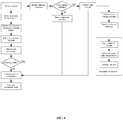
FIG. 2 is a flowchart of a data synchronization method consistent with one embodiment of the present disclosure; -
FIG. 3 is a schematic diagram of a process for determining a service domain name consistent with one embodiment of the present disclosure; and -
FIG. 4 is a schematic flowchart of data synchronization consistent with one embodiment of the present disclosure. - To make the objectives, technical solutions, and advantages of the present disclosure clearer, specific embodiments of the present disclosure will be made in detail with reference to the accompanying drawings.
- Embodiments of the present disclosure provide a method for data synchronization. The method may be implemented using a user terminal, a load scheduling cluster, and multiple server rooms, where the load scheduling cluster and the multiple server rooms belong to a service terminal of a network service. The load scheduling cluster may comprise network devices deployed in multiple server rooms, and be used to manage service operations in the multiple server rooms. For example, the load scheduling cluster may detect whether the VIP (Virtual IP Address) corresponding to the service domain name of each server room is active, or allocate service requests sent by different terminals among the multiple server rooms. A server room may comprise multiple functional components, mainly including a managing component (may be Keepalived software, mainly used to detect the running statuses of various functional components and bind with externally serving VIPs in the server room), a load balancing component, a request processing component, a service execution component, a database, and a data synchronization component, etc. Each functional component may comprise multiple servers, where each server may be used to execute some or all the functions of the network service. Each server room has at least one associated server room, and the functions and the supported services of a server room are the same as its associated server room(s). A server room and its associated server room(s) may provide the same external network service at the same time. When a server room fails, the network service in this server room can be transferred to its associated server room for continued execution. A specific framework may be shown in
FIG. 1 . A server in the above functional components may include a processor, a memory, and a transceiver, where the processor may be configured to perform data synchronization in the following processes, the memory may be configured to store data required and generated in the following processes, and the transceiver may be configured to receive and transmit the relevant data in the following processes. - The processing flow shown in
FIG. 2 is illustrated in detail hereinafter with reference to specific embodiments of the present disclosure, which may be as follows:
Step 201, a target terminal acquires a locally pre-stored service domain name of a target server room and transmits a service request to the target server room through the service domain name. - In the implementation, when a user wants to accomplish a certain network service through a terminal (e.g., a target terminal), the user may send a corresponding service request to a provider of the network service through the target terminal. Specifically, the target terminal may first acquire a locally pre-stored service domain name of a server room (i.e., a target server room) that supports the corresponding service, establish a communication link with the target server room through the service domain name, and send the corresponding service request to the target server room through the established communication link. It is to be understood that, under certain circumstances, the communication link between the target terminal and the target server room may have been established in advance, and thus only a process of the service request transmission is required here.
- Optionally, before
Step 201, the terminal may acquire the service domain name of the target server room from a load scheduling cluster, and the corresponding process may be as follows: the target terminal sends a domain name acquisition request to a load scheduling cluster, where the domain name acquisition request includes a terminal identifier of the target terminal; the load scheduling cluster determines the number of healthy VIPs among externally serving VIPs in all server rooms; the load scheduling cluster determines, for example, through a consistent hashing algorithm, a target VIP based on the terminal identifier and the number of healthy VIPs, and sends a service domain name of a target server room corresponding to the target VIP to the target terminal; and the target terminal receives and stores the service domain name of the target server room sent by the load scheduling cluster. - In the implementation, if the target terminal has not previously transmitted any service request to the target server room, before sending the present service request, it may first send a domain name acquisition request including a terminal identifier of the target terminal to the load scheduling cluster of the network service provider to acquire a service domain name of the server room that provides the related service. The load scheduling cluster may receive the domain name acquisition request sent by the target terminal and extract the terminal identifier of the target terminal included in the domain name acquisition request. Further, the load scheduling cluster may detect the operating statuses of VIPs offering external services in each server room, and determine the number of healthy VIPs in VIPs that offer external services in all the server rooms. Further, the load scheduling cluster may determine a target VIP based on the terminal identifier of the target terminal and the determined number of healthy VIPs, for example, through a consistent hashing algorithm. To understand the consistent hashing algorithm, a simple example is provided here. For example, if the number of healthy VIPs is 10, a hash ring may be set up based on the 10 healthy VIPs, where each healthy VIP is a node on the hash ring. Terminal identifier and VIP mapping rules may be arbitrarily set. For example, a terminal having a terminal identifier with an ending number of 1 corresponds to VIP1, a terminal with an ending number of 2 corresponds to VIP2, and so on. In this way, a target VIP corresponding to the target terminal may be determined. It is to be understood that the above description is merely for illustrative purpose and shall not be constructed as limiting specific processes of the consistent hashing algorithm. Further, the load scheduling cluster may send the service domain name of the target server room corresponding to the target VIP to the target terminal. After receiving the above service domain name, the target terminal may store the service domain name locally.
- Optionally, if the transmission of the service request fails, the terminal may acquire the service domain name of a new server room from the load scheduling cluster, and the corresponding process may be as follows: if a failure of the service request transmission is detected, the target terminal sends a domain name acquisition request including a terminal identifier of the target terminal to the load scheduling cluster; the load scheduling cluster determines the number of healthy VIPs among externally serving VIPs in all server rooms; the load scheduling cluster determines a new VIP based on the terminal identifier and the number of healthy VIPs, for example, through a consistent hashing algorithm, and sends a service domain name of a new server room corresponding to the new VIP to the target terminal; and the target terminal receives and stores the service domain name of the new server room sent by the load scheduling cluster.
- In the implementation, after transmitting the service request to the target server room, the target terminal may detect whether the service request is successfully transmitted. Here, a variety of detection methods exist, which may vary depending on different communication mechanisms. For example, one communication mechanism specifies that a server room needs to feed back a reception acknowledgment message when receiving a service request sent by the terminal. Then, after transmitting the service request to the target server room, the target terminal may determine that the transmission of the service request fails if it has not received the reception acknowledgment message fed back by the target server room within a predefined period. It may then be assumed that the running of the service domain name stored in the target terminal is abnormal, and the target terminal may acquire a service domain name again from the load scheduling cluster. Specifically, the target terminal may send a domain name acquisition request including the terminal identifier of the target terminal to the load scheduling cluster. The load scheduling cluster may extract the terminal identifier after receiving the domain name acquisition request. Further, the load scheduling cluster may detect the operating statuses of VIPs offering external services in each server room, and determine the number of healthy VIPs in externally serving VIPs in all server rooms. Further, the load scheduling cluster may determine the new VIP based on the terminal identifier of the target terminal and the determined number of healthy VIPs, for example, through a consistent hashing algorithm. Thus, the load scheduling cluster may send the service domain name of the new server room corresponding to the new VIP to the target terminal. After receiving the above-mentioned service domain name, the target terminal may store the service domain name locally, and delete the locally pre-stored service domain name of the target server room.
- The above-described process of determining the service domain name of the target server room by the load scheduling cluster may refer to
FIG. 3 . - Step 202: the target server room executes a service operation corresponding to the service request, updates a first database, and generate a data change message.
- The first database is a database used by the target server room to record service data.
- In the implementation, after the target terminal sends the service request to the target server room, the target server room may receive the corresponding service request. Afterward, the load balancing component of the target server room may select a request processing component for processing the service request from multiple request processing components based on a predefined configuration, and send the service request to the above-described request processing component. Here, the load balancing component may be specifically implemented using the software "HaProxy". After acquiring the service request, the request processing component may perform permission and format verification on the service request, decrypt the data of the service request, generate a to-be-processed message related to the service request, and send the to-be-processed message to a message queue. Further, the service execution component may pull the above to-be-processed message from the message queue, and perform the corresponding service operation based on the to-be-processed message. In the process of executing the service operation, the service execution component may monitor the operations in which the database is involved. If there is a data change operation, such as adding, modifying, deleting, etc., the local database (i.e., the first database) may be updated based on the data change operation. At the same time, a data change message corresponding to the data change operation may also be generated. After the service operation is completed, the service execution component may feed back the execution result to the request processing component, and the request processing component may perform data encryption on the execution result, and send the encrypted execution result back to the target terminal.
- Optionally, when processing a service request, the server room may perform different processing depending on whether the service request includes a data change operation. Correspondingly, the execution of
Step 202 may be as follows: the target server room calls a service processing thread to start processing the service request, and monitors whether there is a database operation; if there is no database operation, the target server room feeds back a service processing result to the target terminal, and if there is a database operation, the target server room determines whether the database operation involves a data change; if no data change is involved, the target server room performs the database operation in the first database, continues processing the service request based on a result of the database operation, and feeds back the service processing result to the target terminal; and if a data change is involved, the target server room performs a data change operation in the first database, continues processing the service request based on a result of the data change, feeds back the service processing result to the target terminal, generates the data change message based on the data change operation, and stores the data change message in a preset message queue. - In the implementation, after receiving the service request sent by the target terminal, the target server room may call a corresponding service processing thread to start processing the service request, and at the same time may monitor whether there is a database operation during the service execution. If no database operation has occurred till the service execution is completed, the target server room may feed back the service processing result of the service request to the target terminal. However, if a database operation occurs during the service execution, the target server room may first determine whether the database operation involves a data change. It is not difficult to understand that database operations include at least data query, copy, deletion, addition, modification, etc. While the data query and copy do not change the data in the database, data deletion, addition, and modification change the data in the database, and thus are called data change operations. If no data change is involved in the above-described process of service execution, the target server room may perform the database operation in the first database, continue processing the service request based on the result of the database operation, and feed back the service processing result to the target terminal after the processing is completed. If a data change is involved, the target server room may first perform the data change operation in the first database, continue processing the service request based on the result of the data change, and feed back the service processing result to the target terminal after the execution is completed. At the same time, the target server room may also generate a data change message based on the data change operation, and store the data change message in a preset message queue. Here, the preset message queue may use message-oriented middleware "RocketMQ", in which a message that gets into the message queue earlier will have a priority to be processed, and thus the sequence of each data change message in the "RocketMQ" may be effectively guaranteed.
-
Step 203, the target server room sends the data change message to the associated server room of the target server room. - In the implementation, after executing the service operation corresponding to the service request and generating the data change message, the target server room may send the data change message to the associated server room of the target server room. Specifically, the target server room may directly send the data change message to the data synchronization component of its associated server room.
-
Step 204, the associated server room performs data synchronization based on the received data change message. - In the implementation, the data synchronization component of the associated server room may receive the data change message sent by the target server room, and perform data synchronization based on the data change message. Here, if multiple data change operations occur when the target server room processes the service request, multiple data change messages will be generated. In this case, corresponding data change operations may be sequentially performed in the database of the associated server room based on the order of the data change messages, thereby accomplishing the synchronization of the data between the target server room and the associated server room.
- Optionally, specific data synchronization performed by the associated server room may be as follows: the associated server room receives the data change message sent by the target server room, and determines a terminal identifier of a target terminal corresponding to the data change message; the associated server room determines a target data change thread corresponding to the terminal identifier based on the terminal identifier, for example, through a consistent hashing algorithm; and the associated server room calls the target data change thread to perform data synchronization in a second database based on the data change message.
- In the implementation, the data synchronization component in any server room may subscribe to the data change messages in the RocketMQ (i.e., the aforementioned preset message queue) of an associated server room. Therefore, after data change messages are added into the RocketMQ in the target server room, the target server room may send the data change messages to its associated server room in the order in which the data change messages were generated. In this way, the data synchronization component of the associated server room may receive the corresponding data change messages. Accordingly, the associated server room may first determine the terminal identifiers of the target terminals corresponding to the data change messages, and then determine the target data change threads corresponding to the terminal identifiers based on the terminal identifiers, for example, through a consistent hashing algorithm. It is worth mentioning that, in order to ensure the efficiency of data synchronization, there are generally a large number of threads in a server room to synchronize data of different services at the same time. Therefore, the operation for determining the target data change threads may ensure that the data change messages corresponding to the same terminal identifier will be processed on the same data change thread, so that the sequence of the data synchronization operations in the same terminal may be guaranteed. Further, the associated server room may call the above target data change threads to perform data change operations in a database (i.e., the second database) corresponding to the associated server room based on the data change messages, thereby accomplishing the data synchronization.
- All of the above-described processes from receiving the service request in the target server room to accomplishing data synchronization in the associated server room may refer to
FIG.4 . - In the embodiments of the present disclosure, a target terminal acquires a locally pre-stored service domain name of a target server room, and transmits a service request to the target server room through the service domain name; the target server room executes a service operation corresponding to the service request, updates a first database, and generates a data change message; the target server room sends the data change message to an associated server room of the target server room; and the associated server room performs data synchronization based on the received data change message. In this way, when a data change occurs in the database of a certain server room, a corresponding data change message can be quickly generated so that data synchronization can be performed in time in the database of the associated server room based on the data change message. Accordingly, the feasibility of dual active of the server room and the associated server room is ensured, and the utilization rate of resources processing of the server rooms within a cross the server room architecture is improved. Moreover, the database of the associated server room may perform data synchronization in time based on the data change message, so that the data with the same terminal identifier can be processed in the same thread, and the order of data processing in the same terminal is performed based on the order of the data requested by the terminal, to avoid abnormal service behavior caused by the out-of-order data processing.
- Based on the similar technical concepts, embodiments of the present disclosure further provide a system for data synchronization. The system comprises a target terminal, a target server room, and an associated server room of the target server room, where:
- the target terminal is configured to acquire a locally pre-stored service domain name of the target server room, and transmit a service request to the target server room through the service domain name;
- the target server room is configured to execute a service operation corresponding to the service request, update a first database, and generate a data change message;
- the target server room is further configured to send the data change message to the associated server room; and
- the associated server room is configured to perform data synchronization based on the received data change message.
- Optionally, the system further comprises a load scheduling cluster, where:
- the target terminal is further configured to send a domain name acquisition request to the load scheduling cluster, wherein the domain name acquisition request includes a terminal identifier of the target terminal;
- the load scheduling cluster is configured to determine the number of healthy VIPs among externally serving VIPs in all server rooms;
- the load scheduling cluster is further configured to determine a target VIP based on the terminal identifier and the number of the health VIPs, for example, through a consistent hashing algorithm, and send a service domain name of a target server room corresponding to the target VIP to the target terminal; and
- the target terminal is further configured to receive and store the service domain name of the target server room sent by the load scheduling cluster.
- Optionally, the target terminal is further configured to send a domain name acquisition request including a terminal identifier of the target terminal to the load scheduling cluster if a failure of service request transmission is detected;
the load scheduling cluster is further configured to determine the number of healthy VIPs among externally serving VIPs in all the server rooms;
the load scheduling cluster is further configured to determine a new VIP based on the terminal identifier and the number of healthy VIPs, for example, through a consistent hashing algorithm, and send a service domain name of a new server room corresponding to the new VIP to the target terminal; and
the target terminal is further configured to receive and store the service domain name of the new server room sent by the load scheduling cluster. - Optionally, the target server room is specifically configured to:
- call a service processing thread to start processing the service request, and monitor whether there is a database operation;
- if there is no database operation, feed back a service process result to the target terminal, and if there is a database operation, determine whether the database operation involves a data change;
- if no data change is involved, perform the database operation in the first database, and continue processing the service request based on a result of the database operation, and feed back the service processing result to the target terminal; and
- if a data change is involved, perform a data change operation in the first database, continue processing the service request based on a result of the data change, feed back the service processing result to the target terminal, and generate the data change message based on the data change operation and store the data change message in a preset message queue.
- Optionally, the associated server room is specifically configured to:
- receive the data change message sent by the target server room, and determine a terminal identifier of a target terminal corresponding to the data change message;
- determine a target data change thread corresponding to the terminal identifier based on the terminal identifier, for example, through a consistent hashing algorithm;
- call the target data change thread to perform data synchronization in a second database based on the data change message.
- The technical solutions provided by the embodiments of the present disclosure give rise to the following beneficial effects:
In the embodiments of the present disclosure, a target terminal acquires a locally pre-stored service domain name of a target server room, and transmits a service request to the target server room through the service domain name; the target server room executes a service operation corresponding to the service request, updates a first database, and generates a data change message; the target server room sends the data change message to an associated server room of the target server room; and the associated server room performs data synchronization based on the received data change message. In this way, when a data change occurs in the database of a certain server room, a corresponding data change message can be quickly generated so that data synchronization can be performed in time in the database of the associated server room based on the data change message. Accordingly, the feasibility of dual active of the server room and the associated server room is ensured, and the utilization rate of resources processing of the server rooms within a cross the server room architecture is improved. Moreover, the database of the associated server room may perform data synchronization in time based on the data change message, so that the data with the same terminal identifier can be processed in the same thread, and the order of data processing in the same terminal is performed based on the order of the data requested by the terminal, to avoid abnormal service behavior caused by the out-of-order data processing. - It is to be understood by those of ordinary skill in the art that all or part of the steps of the embodiments of the present disclosure may be implemented by hardware, or may be implemented by programs that instruct the relevant hardware, where the programs may be stored in a computer-readable storage medium, in which the storage medium may be a read-only memory, a magnetic disk, or an optical disk, etc.
- Although the present disclosure has been described as above with reference to preferred embodiments, these embodiments are not constructed as limiting the present disclosure. Any modifications, equivalent replacements, and improvements made without departing from the spirit and principle of the present disclosure shall fall within the scope of the protection of the present disclosure.
Claims (15)
- A method for data synchronization, the method comprising:acquiring, by a target terminal, a locally pre-stored service domain name of a target server room, and transmitting, by the target terminal, a service request to the target server room through the service domain name;executing, by the target server room, a service operation corresponding to the service request, updating, by the target server room, a first database, and generating, by the target server room, a data change message;sending, by the target server room, the data change message to an associated server room of the target server room; andperforming, by the associated server room, data synchronization based on the received data change message.
- The method according to claim 1, wherein, before acquiring, by the target terminal, the service domain name of the target server room, the method further includes:sending, by the target terminal, a domain name acquisition request to a load scheduling cluster, wherein the domain name acquisition request includes a terminal identifier of the target terminal;determining, by the load scheduling cluster, among externally serving Virtual IP Addresses (VIPs) in all server rooms, the number of healthy VIPs;determining, by the load scheduling cluster, a target VIP based on the terminal identifier and the number of healthy VIPs, and sending, by the load scheduling cluster, a server domain name of a target server room corresponding to the target VIP to the target terminal; andreceiving and storing, by the target terminal, the service domain name of the target server room sent by the load scheduling cluster.
- The method according to claim 1, wherein, after transmitting, by the target terminal, the service request to the target server room through the service domain name, the method further includes:if a failure of the service request transmission is detected, sending, by the target terminal, a domain name acquisition request including a terminal identifier of the target terminal to a load scheduling cluster;determining, by the load scheduling cluster, the number of healthy VIPs among externally serving VIPs in all server rooms;determining, by the load scheduling cluster, a new VIP based on the terminal identifier and the number of healthy VIPs, and sending, by the load scheduling cluster, a service domain name of a new server room corresponding to the new VIP to the target terminal; andreceiving and storing, by the target terminal, the service domain name of the new server room sent by the load scheduling cluster.
- The method according to claim 1, wherein executing, by the target server room, the service operation corresponding to the service request, updating, by the target server room, the first database, and generating, by the target server room, the data change message include:calling, by the target server room, a service processing thread to start processing the service request, and monitoring, by the target server room, whether there is a database operation; andif there is no database operation, feeding back, by the target server room, a service processing result to the target terminal, and if there is a database operation, determining, by the target server room, whether the database operation involves a data change.
- The method according to claim 4, wherein, if no data change is involved, the target server room performs the database operation in the first database, continues processing the service request based on a result of the database operation, and feeds back the service processing result to the target terminal.
- The method according to claim 4, wherein, if a data change is involved, the target server room performs a data change operation in the first database, continues processing the service request based on a result of the data change, feeds back the service processing result to the target terminal, and generates the data change message based on the data change operation and stores the data change message in a preset message queue.
- The method according to claim 1, wherein performing, by the associated server room, data synchronization based on the received data change message includes:receiving, by the associated server room, the data change message sent by the target server room, and determining, by the associated server room, a terminal identifier of a target terminal corresponding to the data change message;determining, by the associated server room, a target data change thread corresponding to the terminal identifier based on the terminal identifier; andcalling, by the associated server room, the target data change thread to perform data synchronization in a second database based on the data change message.
- A system for data synchronization, the system comprising a target terminal, a target server room, and an associated server room of the target server room, wherein:the target terminal is configured to acquire a locally pre-stored service domain name of the target server room and transmit a service request to the target server room through the service domain name;the target server room is configured to execute a service operation corresponding to the service request, update a first database, and generate a data change message;the target server room is further configured to send the data change message to the associated server room; andthe associated server room is configured to perform data synchronization based on the received data change message.
- The system according to claim 8, further comprising a load scheduling cluster, wherein:the target terminal is further configured to send a domain name acquisition request to the load scheduling cluster, wherein the domain name acquisition request includes a terminal identifier of the target terminal;the load scheduling cluster is configured to determine the number of healthy VIPs among externally serving VIPs in all server rooms;the load scheduling cluster is further configured to determine a target VIP based on the terminal identifier and the number of the health VIPs, and send a service domain name of a target server room corresponding to the target VIP to the target terminal; andthe target terminal is further configured to receive and store the service domain name of the target server room sent by the load scheduling cluster.
- The system according to claim 8, wherein the target terminal is further configured to send a domain name acquisition request including a terminal identifier of the target terminal to a load scheduling cluster if a failure of the service request transmission is detected.
- The system according to claim 10, wherein:the load scheduling cluster is further configured to determine the number of healthy VIPs among externally serving VIPs in all server rooms;the load scheduling cluster is further configured to determine a new VIP based on the terminal identifier and the number of healthy VIPs, and send a service domain name of a new server room corresponding to the new VIP to the target terminal; andthe target terminal is further configured to receive and store the service domain name of the new server room sent by the load scheduling cluster.
- The system according to claim 8, wherein the target server room is specifically configured to:call a service processing thread to start processing the service request, and monitor whether there is a database operation; andif there is no database operation, feed back a service processing result to the target terminal, and if there is a database operation, determine whether the database operation involves a data change.
- The system according to claim 12, wherein, if no data change is involved, the database operation is performed in the first database, and the service request continues to be processed based on a result of the database operation, and the service processing result is fed back to the target terminal.
- The system according to claim 12, wherein, if a data change is involved, a data change operation is performed in the first database, the service request continues to be processed based on a result of the data change, the service processing result is fed back to the target terminal, and the data change message is generated based on the data change operation and the data change message is stored in a preset message queue.
- The system according to claim 8, wherein the associated server room is specifically configured to:receive the data change message sent by the target server room, and determine a terminal identifier of a target terminal corresponding to the data change message;determine a target data change thread corresponding to the terminal identifier based on the terminal identifier; andcall the target data change thread to perform data synchronization in a second database based on the data change message.
Applications Claiming Priority (2)
| Application Number | Priority Date | Filing Date | Title |
|---|---|---|---|
| CN201710911767.3A CN107465767B (en) | 2017-09-29 | 2017-09-29 | Data synchronization method and system |
| PCT/CN2017/110955 WO2019061720A1 (en) | 2017-09-29 | 2017-11-14 | Data synchronization method and system |
Publications (3)
| Publication Number | Publication Date |
|---|---|
| EP3490224A1 true EP3490224A1 (en) | 2019-05-29 |
| EP3490224A4 EP3490224A4 (en) | 2019-05-29 |
| EP3490224B1 EP3490224B1 (en) | 2020-04-08 |
Family
ID=60553882
Family Applications (1)
| Application Number | Title | Priority Date | Filing Date |
|---|---|---|---|
| EP17879651.2A Active EP3490224B1 (en) | 2017-09-29 | 2017-11-14 | Data synchronization method and system |
Country Status (4)
| Country | Link |
|---|---|
| US (1) | US11172023B2 (en) |
| EP (1) | EP3490224B1 (en) |
| CN (1) | CN107465767B (en) |
| WO (1) | WO2019061720A1 (en) |
Families Citing this family (31)
| Publication number | Priority date | Publication date | Assignee | Title |
|---|---|---|---|---|
| CN108055343B (en) * | 2017-12-26 | 2021-07-13 | 北京奇虎科技有限公司 | Data synchronization method and device for computer room |
| CN110377577B (en) * | 2018-04-11 | 2022-03-04 | 北京嘀嘀无限科技发展有限公司 | Data synchronization method, device, system and computer readable storage medium |
| CN109033235A (en) * | 2018-07-04 | 2018-12-18 | 北京量子保科技有限公司 | A kind of data storage dual-active framework construction method, system, medium and electronic equipment |
| CN108845867A (en) * | 2018-07-16 | 2018-11-20 | 郑州云海信息技术有限公司 | A kind of distributed transaction management method, apparatus, system and storage medium |
| CN109947614A (en) * | 2018-11-28 | 2019-06-28 | 阿里巴巴集团控股有限公司 | Multimachine room relies on monitoring method, device, equipment and computer readable storage medium |
| CN109634978A (en) * | 2018-12-18 | 2019-04-16 | 钛马信息网络技术有限公司 | Reading data consistency system and method |
| CN110362336B (en) * | 2019-06-21 | 2023-07-18 | 口碑(上海)信息技术有限公司 | Method for acquiring machine room routing information and method and device for configuring script data |
| CN110460664A (en) * | 2019-08-13 | 2019-11-15 | 深圳市商汤科技有限公司 | Information synchronization method and device, electronic equipment and storage medium |
| CN110807018A (en) * | 2019-10-17 | 2020-02-18 | 上海易点时空网络有限公司 | Method, device, equipment and storage medium for migrating master-slave architecture of business data to cluster architecture |
| CN110839023B (en) * | 2019-11-05 | 2022-03-25 | 北京中电普华信息技术有限公司 | A multi-channel customer service system for power marketing |
| CN111083204B (en) * | 2019-11-29 | 2022-11-15 | 广州市百果园信息技术有限公司 | File transmission method, device and storage medium |
| CN111147546B (en) * | 2019-11-29 | 2021-05-14 | 中科院计算技术研究所大数据研究院 | Method and system for processing edge cluster resources |
| CN111327680B (en) * | 2020-01-21 | 2023-01-03 | 数字广东网络建设有限公司 | Authentication data synchronization method, device, system, computer equipment and storage medium |
| CN112182095A (en) * | 2020-08-31 | 2021-01-05 | 福州智象信息技术有限公司 | Method, device, equipment and medium for synchronizing service data among multiple machine rooms |
| CN112052091B (en) * | 2020-09-04 | 2025-02-28 | 掌阅科技股份有限公司 | Processing method and computing device for service call request under multi-computer room deployment |
| CN114595233B (en) * | 2020-12-07 | 2026-01-27 | 网联清算有限公司 | Data updating method and device and computer equipment |
| CN112738182A (en) * | 2020-12-24 | 2021-04-30 | 海南车智易通信息技术有限公司 | Data pushing system, data pushing method and computing equipment |
| CN113760929A (en) * | 2021-03-24 | 2021-12-07 | 北京京东拓先科技有限公司 | Data synchronization method, apparatus, electronic device and computer readable medium |
| CN113157701A (en) * | 2021-04-27 | 2021-07-23 | 中国工商银行股份有限公司 | Dual-activity mechanism deployment method and device of ORACLE database |
| CN113407466B (en) * | 2021-08-18 | 2021-11-09 | 苏州浪潮智能科技有限公司 | IO path determination method, device, equipment and readable storage medium |
| CN113779143B (en) * | 2021-08-20 | 2024-08-16 | 中国邮政储蓄银行股份有限公司 | Dual active data center and business system |
| CN113849527B (en) * | 2021-08-26 | 2025-06-06 | 百果园技术(新加坡)有限公司 | Data stream processing method, device, computer readable storage medium and electronic device |
| CN114035983A (en) * | 2021-11-09 | 2022-02-11 | 首约科技(北京)有限公司 | Real-time data processing method |
| CN114328740B (en) * | 2021-12-30 | 2026-02-13 | 胜斗士(上海)科技技术发展有限公司 | A method and apparatus for cross-datacenter database synchronization |
| CN114780261B (en) * | 2022-04-28 | 2022-11-29 | 四川虹魔方网络科技有限公司 | Basic data micro-service sharing system and method in intelligent equipment operation management |
| CN114760348B (en) * | 2022-04-28 | 2024-06-25 | 青岛海尔科技有限公司 | Business processing method, device, storage medium and electronic device |
| CN114866799B (en) * | 2022-05-11 | 2024-04-05 | 北京奇艺世纪科技有限公司 | Server scheduling method and device |
| CN115396482B (en) * | 2022-08-15 | 2024-05-28 | 焦点科技股份有限公司 | Cross-machine-room single-point service calling method |
| CN116132377B (en) * | 2022-09-26 | 2025-09-23 | 北京有竹居网络技术有限公司 | CDN-based traffic scheduling method, device, system, terminal device and readable storage medium |
| CN116233127A (en) * | 2023-02-03 | 2023-06-06 | 北京有竹居网络技术有限公司 | CDN network request scheduling method, device, electronic equipment and storage medium |
| US12326876B1 (en) * | 2024-08-28 | 2025-06-10 | StoreConnect International Pty Ltd | Systems and methods for managing web, mobile, and point-of-sale servers with a customer relations management system |
Family Cites Families (26)
| Publication number | Priority date | Publication date | Assignee | Title |
|---|---|---|---|---|
| US6820088B1 (en) * | 2000-04-10 | 2004-11-16 | Research In Motion Limited | System and method for synchronizing data records between multiple databases |
| US8060581B2 (en) * | 2000-07-19 | 2011-11-15 | Akamai Technologies, Inc. | Dynamic image delivery system |
| US8239504B2 (en) * | 2007-01-07 | 2012-08-07 | Apple Inc. | Synchronization methods and systems |
| US8392591B2 (en) | 2007-12-28 | 2013-03-05 | Cellspinsoft Inc. | Automatic multimedia upload for publishing data and multimedia content |
| US9215275B2 (en) * | 2010-09-30 | 2015-12-15 | A10 Networks, Inc. | System and method to balance servers based on server load status |
| US8943315B1 (en) | 2011-06-08 | 2015-01-27 | Google Inc. | System and method for controlling the upload of data already accessible to a server |
| US8655955B2 (en) * | 2011-08-18 | 2014-02-18 | International Business Machines Corporation | Stream processing using a client-server architecture |
| CN103095769B (en) * | 2011-11-04 | 2015-12-09 | 阿里巴巴集团控股有限公司 | Across method of data synchronization and the system of machine room |
| US9641449B2 (en) | 2012-05-22 | 2017-05-02 | International Business Machines Corporation | Variable configurations for workload distribution across multiple sites |
| US9363313B2 (en) * | 2012-06-11 | 2016-06-07 | Cisco Technology, Inc. | Reducing virtual IP-address (VIP) failure detection time |
| CN103685583B (en) * | 2012-09-05 | 2018-02-23 | 阿里巴巴集团控股有限公司 | Domain name resolution method and system |
| CN103731451B (en) | 2012-10-12 | 2018-10-19 | 腾讯科技(深圳)有限公司 | A kind of method and system that file uploads |
| US9515955B2 (en) * | 2013-12-11 | 2016-12-06 | Verizon Patent And Licensing Inc. | Global server load balancing with queued messaging |
| CN104767603A (en) * | 2014-01-02 | 2015-07-08 | 北京思博途信息技术有限公司 | Method for providing network service, server and user terminal |
| CN104202375B (en) * | 2014-08-22 | 2017-10-24 | 广州华多网络科技有限公司 | The method and system of synchrodata |
| CN104320487B (en) * | 2014-11-11 | 2018-03-20 | 网宿科技股份有限公司 | The HTTP scheduling system and method for content distributing network |
| EP3241114B1 (en) * | 2014-12-31 | 2022-02-16 | ServiceNow, Inc. | Failure resistant distributed computing system |
| CN104980519B (en) * | 2015-06-29 | 2019-03-05 | 北京奇虎科技有限公司 | Multimachine room storage system |
| CN104967536A (en) * | 2015-06-29 | 2015-10-07 | 北京奇虎科技有限公司 | Method and device for realizing data consistency in multiple computer rooms |
| CN105872121A (en) * | 2015-12-15 | 2016-08-17 | 乐视移动智能信息技术(北京)有限公司 | Method for connecting terminal with server, terminal and domain name server |
| CN105635287A (en) | 2015-12-31 | 2016-06-01 | 深圳市网心科技有限公司 | File transmission system and method |
| CN105472035A (en) | 2016-01-04 | 2016-04-06 | 百度在线网络技术(北京)有限公司 | File transmission method and device |
| CN106980625B (en) * | 2016-01-18 | 2020-08-04 | 阿里巴巴集团控股有限公司 | A data synchronization method, device and system |
| CN106101291A (en) | 2016-08-26 | 2016-11-09 | 苏州蓝海彤翔系统科技有限公司 | A kind of transmit the method for file, system, server and client |
| CN106790648A (en) * | 2017-01-15 | 2017-05-31 | 网宿科技股份有限公司 | A kind of synchronous method and system of task data |
| US10581859B2 (en) * | 2017-08-07 | 2020-03-03 | International Business Machines Corporation | Detection and prevention of attempts to access sensitive information in real-time |
-
2017
- 2017-09-29 CN CN201710911767.3A patent/CN107465767B/en active Active
- 2017-11-14 WO PCT/CN2017/110955 patent/WO2019061720A1/en not_active Ceased
- 2017-11-14 EP EP17879651.2A patent/EP3490224B1/en active Active
- 2017-11-14 US US15/777,575 patent/US11172023B2/en not_active Expired - Fee Related
Also Published As
| Publication number | Publication date |
|---|---|
| CN107465767A (en) | 2017-12-12 |
| US11172023B2 (en) | 2021-11-09 |
| US20210176310A1 (en) | 2021-06-10 |
| WO2019061720A1 (en) | 2019-04-04 |
| EP3490224A4 (en) | 2019-05-29 |
| CN107465767B (en) | 2020-06-23 |
| EP3490224B1 (en) | 2020-04-08 |
Similar Documents
| Publication | Publication Date | Title |
|---|---|---|
| US11172023B2 (en) | Data synchronization method and system | |
| CN111615066B (en) | A broadcast-based distributed microservice registration and invocation method | |
| JP6026705B2 (en) | Update management system and update management method | |
| US9807178B2 (en) | Keep-alive hiatus declaration | |
| US20080183991A1 (en) | System and Method for Protecting Against Failure Through Geo-Redundancy in a SIP Server | |
| US11218541B2 (en) | Data storage method, storage server, and storage medium and system | |
| US9608831B2 (en) | Migrating a chat message service provided by a chat server to a new chat server | |
| CN104184756A (en) | Data synchronization method, device and system | |
| EP3817338B1 (en) | Method and apparatus for acquiring rpc member information, electronic device and storage medium | |
| US20240298196A1 (en) | Methods and Apparatuses for Enhanced 5GC Restoration When a Network Function (NF) Set is Deployed in the Network | |
| US10802896B2 (en) | Rest gateway for messaging | |
| CN101262369A (en) | Master/standby implementation method of dispatching server and dispatching server | |
| CN104144124A (en) | Data forwarding method, device and system | |
| CN112367182B (en) | Configuration method and device of disaster recovery main and standby equipment | |
| CN111385324A (en) | Data communication method, device, equipment and storage medium | |
| CN114422335B (en) | Communication method, device, server and storage medium | |
| CN111756780A (en) | Method for synchronizing connection information and load balancing system | |
| CN109344202B (en) | Data synchronization method and management node | |
| US9967163B2 (en) | Message system for avoiding processing-performance decline | |
| EP3554049A1 (en) | Method and system for adaptive service management | |
| CN115065686B (en) | Configuration method, device and system of distributed load balancing system | |
| CN111064618A (en) | Method, device, equipment and storage medium for realizing high availability of server | |
| WO2023077907A1 (en) | Methods and apparatuses for same event subscription for multi sessions of one ue | |
| CN114143730B (en) | Signaling processing method, communication system, electronic device, and storage medium | |
| US20230146880A1 (en) | Management system and management method |
Legal Events
| Date | Code | Title | Description |
|---|---|---|---|
| STAA | Information on the status of an ep patent application or granted ep patent |
Free format text: STATUS: UNKNOWN |
|
| STAA | Information on the status of an ep patent application or granted ep patent |
Free format text: STATUS: THE INTERNATIONAL PUBLICATION HAS BEEN MADE |
|
| PUAI | Public reference made under article 153(3) epc to a published international application that has entered the european phase |
Free format text: ORIGINAL CODE: 0009012 |
|
| STAA | Information on the status of an ep patent application or granted ep patent |
Free format text: STATUS: REQUEST FOR EXAMINATION WAS MADE |
|
| 17P | Request for examination filed |
Effective date: 20180619 |
|
| A4 | Supplementary search report drawn up and despatched |
Effective date: 20190218 |
|
| AK | Designated contracting states |
Kind code of ref document: A1 Designated state(s): AL AT BE BG CH CY CZ DE DK EE ES FI FR GB GR HR HU IE IS IT LI LT LU LV MC MK MT NL NO PL PT RO RS SE SI SK SM TR |
|
| AX | Request for extension of the european patent |
Extension state: BA ME |
|
| STAA | Information on the status of an ep patent application or granted ep patent |
Free format text: STATUS: EXAMINATION IS IN PROGRESS |
|
| 17Q | First examination report despatched |
Effective date: 20190927 |
|
| DAV | Request for validation of the european patent (deleted) | ||
| DAX | Request for extension of the european patent (deleted) | ||
| GRAP | Despatch of communication of intention to grant a patent |
Free format text: ORIGINAL CODE: EPIDOSNIGR1 |
|
| STAA | Information on the status of an ep patent application or granted ep patent |
Free format text: STATUS: GRANT OF PATENT IS INTENDED |
|
| INTG | Intention to grant announced |
Effective date: 20200123 |
|
| GRAS | Grant fee paid |
Free format text: ORIGINAL CODE: EPIDOSNIGR3 |
|
| GRAA | (expected) grant |
Free format text: ORIGINAL CODE: 0009210 |
|
| STAA | Information on the status of an ep patent application or granted ep patent |
Free format text: STATUS: THE PATENT HAS BEEN GRANTED |
|
| AK | Designated contracting states |
Kind code of ref document: B1 Designated state(s): AL AT BE BG CH CY CZ DE DK EE ES FI FR GB GR HR HU IE IS IT LI LT LU LV MC MK MT NL NO PL PT RO RS SE SI SK SM TR |
|
| REG | Reference to a national code |
Ref country code: CH Ref legal event code: EP Ref country code: AT Ref legal event code: REF Ref document number: 1255911 Country of ref document: AT Kind code of ref document: T Effective date: 20200415 |
|
| REG | Reference to a national code |
Ref country code: DE Ref legal event code: R096 Ref document number: 602017014592 Country of ref document: DE |
|
| REG | Reference to a national code |
Ref country code: IE Ref legal event code: FG4D |
|
| REG | Reference to a national code |
Ref country code: NL Ref legal event code: MP Effective date: 20200408 |
|
| REG | Reference to a national code |
Ref country code: LT Ref legal event code: MG4D |
|
| PG25 | Lapsed in a contracting state [announced via postgrant information from national office to epo] |
Ref country code: NL Free format text: LAPSE BECAUSE OF FAILURE TO SUBMIT A TRANSLATION OF THE DESCRIPTION OR TO PAY THE FEE WITHIN THE PRESCRIBED TIME-LIMIT Effective date: 20200408 Ref country code: GR Free format text: LAPSE BECAUSE OF FAILURE TO SUBMIT A TRANSLATION OF THE DESCRIPTION OR TO PAY THE FEE WITHIN THE PRESCRIBED TIME-LIMIT Effective date: 20200709 Ref country code: LT Free format text: LAPSE BECAUSE OF FAILURE TO SUBMIT A TRANSLATION OF THE DESCRIPTION OR TO PAY THE FEE WITHIN THE PRESCRIBED TIME-LIMIT Effective date: 20200408 Ref country code: PT Free format text: LAPSE BECAUSE OF FAILURE TO SUBMIT A TRANSLATION OF THE DESCRIPTION OR TO PAY THE FEE WITHIN THE PRESCRIBED TIME-LIMIT Effective date: 20200817 Ref country code: SE Free format text: LAPSE BECAUSE OF FAILURE TO SUBMIT A TRANSLATION OF THE DESCRIPTION OR TO PAY THE FEE WITHIN THE PRESCRIBED TIME-LIMIT Effective date: 20200408 Ref country code: IS Free format text: LAPSE BECAUSE OF FAILURE TO SUBMIT A TRANSLATION OF THE DESCRIPTION OR TO PAY THE FEE WITHIN THE PRESCRIBED TIME-LIMIT Effective date: 20200808 Ref country code: FI Free format text: LAPSE BECAUSE OF FAILURE TO SUBMIT A TRANSLATION OF THE DESCRIPTION OR TO PAY THE FEE WITHIN THE PRESCRIBED TIME-LIMIT Effective date: 20200408 Ref country code: NO Free format text: LAPSE BECAUSE OF FAILURE TO SUBMIT A TRANSLATION OF THE DESCRIPTION OR TO PAY THE FEE WITHIN THE PRESCRIBED TIME-LIMIT Effective date: 20200708 |
|
| REG | Reference to a national code |
Ref country code: AT Ref legal event code: MK05 Ref document number: 1255911 Country of ref document: AT Kind code of ref document: T Effective date: 20200408 |
|
| PG25 | Lapsed in a contracting state [announced via postgrant information from national office to epo] |
Ref country code: HR Free format text: LAPSE BECAUSE OF FAILURE TO SUBMIT A TRANSLATION OF THE DESCRIPTION OR TO PAY THE FEE WITHIN THE PRESCRIBED TIME-LIMIT Effective date: 20200408 Ref country code: RS Free format text: LAPSE BECAUSE OF FAILURE TO SUBMIT A TRANSLATION OF THE DESCRIPTION OR TO PAY THE FEE WITHIN THE PRESCRIBED TIME-LIMIT Effective date: 20200408 Ref country code: BG Free format text: LAPSE BECAUSE OF FAILURE TO SUBMIT A TRANSLATION OF THE DESCRIPTION OR TO PAY THE FEE WITHIN THE PRESCRIBED TIME-LIMIT Effective date: 20200708 Ref country code: LV Free format text: LAPSE BECAUSE OF FAILURE TO SUBMIT A TRANSLATION OF THE DESCRIPTION OR TO PAY THE FEE WITHIN THE PRESCRIBED TIME-LIMIT Effective date: 20200408 |
|
| PG25 | Lapsed in a contracting state [announced via postgrant information from national office to epo] |
Ref country code: AL Free format text: LAPSE BECAUSE OF FAILURE TO SUBMIT A TRANSLATION OF THE DESCRIPTION OR TO PAY THE FEE WITHIN THE PRESCRIBED TIME-LIMIT Effective date: 20200408 |
|
| REG | Reference to a national code |
Ref country code: DE Ref legal event code: R097 Ref document number: 602017014592 Country of ref document: DE |
|
| PG25 | Lapsed in a contracting state [announced via postgrant information from national office to epo] |
Ref country code: CZ Free format text: LAPSE BECAUSE OF FAILURE TO SUBMIT A TRANSLATION OF THE DESCRIPTION OR TO PAY THE FEE WITHIN THE PRESCRIBED TIME-LIMIT Effective date: 20200408 Ref country code: IT Free format text: LAPSE BECAUSE OF FAILURE TO SUBMIT A TRANSLATION OF THE DESCRIPTION OR TO PAY THE FEE WITHIN THE PRESCRIBED TIME-LIMIT Effective date: 20200408 Ref country code: DK Free format text: LAPSE BECAUSE OF FAILURE TO SUBMIT A TRANSLATION OF THE DESCRIPTION OR TO PAY THE FEE WITHIN THE PRESCRIBED TIME-LIMIT Effective date: 20200408 Ref country code: SM Free format text: LAPSE BECAUSE OF FAILURE TO SUBMIT A TRANSLATION OF THE DESCRIPTION OR TO PAY THE FEE WITHIN THE PRESCRIBED TIME-LIMIT Effective date: 20200408 Ref country code: EE Free format text: LAPSE BECAUSE OF FAILURE TO SUBMIT A TRANSLATION OF THE DESCRIPTION OR TO PAY THE FEE WITHIN THE PRESCRIBED TIME-LIMIT Effective date: 20200408 Ref country code: AT Free format text: LAPSE BECAUSE OF FAILURE TO SUBMIT A TRANSLATION OF THE DESCRIPTION OR TO PAY THE FEE WITHIN THE PRESCRIBED TIME-LIMIT Effective date: 20200408 Ref country code: RO Free format text: LAPSE BECAUSE OF FAILURE TO SUBMIT A TRANSLATION OF THE DESCRIPTION OR TO PAY THE FEE WITHIN THE PRESCRIBED TIME-LIMIT Effective date: 20200408 Ref country code: ES Free format text: LAPSE BECAUSE OF FAILURE TO SUBMIT A TRANSLATION OF THE DESCRIPTION OR TO PAY THE FEE WITHIN THE PRESCRIBED TIME-LIMIT Effective date: 20200408 |
|
| PLBE | No opposition filed within time limit |
Free format text: ORIGINAL CODE: 0009261 |
|
| STAA | Information on the status of an ep patent application or granted ep patent |
Free format text: STATUS: NO OPPOSITION FILED WITHIN TIME LIMIT |
|
| PG25 | Lapsed in a contracting state [announced via postgrant information from national office to epo] |
Ref country code: PL Free format text: LAPSE BECAUSE OF FAILURE TO SUBMIT A TRANSLATION OF THE DESCRIPTION OR TO PAY THE FEE WITHIN THE PRESCRIBED TIME-LIMIT Effective date: 20200408 Ref country code: SK Free format text: LAPSE BECAUSE OF FAILURE TO SUBMIT A TRANSLATION OF THE DESCRIPTION OR TO PAY THE FEE WITHIN THE PRESCRIBED TIME-LIMIT Effective date: 20200408 |
|
| 26N | No opposition filed |
Effective date: 20210112 |
|
| PG25 | Lapsed in a contracting state [announced via postgrant information from national office to epo] |
Ref country code: SI Free format text: LAPSE BECAUSE OF FAILURE TO SUBMIT A TRANSLATION OF THE DESCRIPTION OR TO PAY THE FEE WITHIN THE PRESCRIBED TIME-LIMIT Effective date: 20200408 |
|
| PG25 | Lapsed in a contracting state [announced via postgrant information from national office to epo] |
Ref country code: MC Free format text: LAPSE BECAUSE OF FAILURE TO SUBMIT A TRANSLATION OF THE DESCRIPTION OR TO PAY THE FEE WITHIN THE PRESCRIBED TIME-LIMIT Effective date: 20200408 |
|
| REG | Reference to a national code |
Ref country code: CH Ref legal event code: PL |
|
| PG25 | Lapsed in a contracting state [announced via postgrant information from national office to epo] |
Ref country code: LU Free format text: LAPSE BECAUSE OF NON-PAYMENT OF DUE FEES Effective date: 20201114 |
|
| REG | Reference to a national code |
Ref country code: BE Ref legal event code: MM Effective date: 20201130 |
|
| PG25 | Lapsed in a contracting state [announced via postgrant information from national office to epo] |
Ref country code: LI Free format text: LAPSE BECAUSE OF NON-PAYMENT OF DUE FEES Effective date: 20201130 Ref country code: CH Free format text: LAPSE BECAUSE OF NON-PAYMENT OF DUE FEES Effective date: 20201130 |
|
| PG25 | Lapsed in a contracting state [announced via postgrant information from national office to epo] |
Ref country code: IE Free format text: LAPSE BECAUSE OF NON-PAYMENT OF DUE FEES Effective date: 20201114 |
|
| REG | Reference to a national code |
Ref country code: DE Ref legal event code: R079 Ref document number: 602017014592 Country of ref document: DE Free format text: PREVIOUS MAIN CLASS: H04L0029080000 Ipc: H04L0065000000 |
|
| PGFP | Annual fee paid to national office [announced via postgrant information from national office to epo] |
Ref country code: GB Payment date: 20211122 Year of fee payment: 5 Ref country code: FR Payment date: 20211130 Year of fee payment: 5 Ref country code: DE Payment date: 20211110 Year of fee payment: 5 |
|
| PG25 | Lapsed in a contracting state [announced via postgrant information from national office to epo] |
Ref country code: TR Free format text: LAPSE BECAUSE OF FAILURE TO SUBMIT A TRANSLATION OF THE DESCRIPTION OR TO PAY THE FEE WITHIN THE PRESCRIBED TIME-LIMIT Effective date: 20200408 Ref country code: MT Free format text: LAPSE BECAUSE OF FAILURE TO SUBMIT A TRANSLATION OF THE DESCRIPTION OR TO PAY THE FEE WITHIN THE PRESCRIBED TIME-LIMIT Effective date: 20200408 Ref country code: CY Free format text: LAPSE BECAUSE OF FAILURE TO SUBMIT A TRANSLATION OF THE DESCRIPTION OR TO PAY THE FEE WITHIN THE PRESCRIBED TIME-LIMIT Effective date: 20200408 |
|
| PG25 | Lapsed in a contracting state [announced via postgrant information from national office to epo] |
Ref country code: MK Free format text: LAPSE BECAUSE OF FAILURE TO SUBMIT A TRANSLATION OF THE DESCRIPTION OR TO PAY THE FEE WITHIN THE PRESCRIBED TIME-LIMIT Effective date: 20200408 |
|
| PG25 | Lapsed in a contracting state [announced via postgrant information from national office to epo] |
Ref country code: BE Free format text: LAPSE BECAUSE OF NON-PAYMENT OF DUE FEES Effective date: 20201130 |
|
| REG | Reference to a national code |
Ref country code: DE Ref legal event code: R119 Ref document number: 602017014592 Country of ref document: DE |
|
| GBPC | Gb: european patent ceased through non-payment of renewal fee |
Effective date: 20221114 |
|
| PG25 | Lapsed in a contracting state [announced via postgrant information from national office to epo] |
Ref country code: GB Free format text: LAPSE BECAUSE OF NON-PAYMENT OF DUE FEES Effective date: 20221114 Ref country code: DE Free format text: LAPSE BECAUSE OF NON-PAYMENT OF DUE FEES Effective date: 20230601 |
|
| PG25 | Lapsed in a contracting state [announced via postgrant information from national office to epo] |
Ref country code: FR Free format text: LAPSE BECAUSE OF NON-PAYMENT OF DUE FEES Effective date: 20221130 |